
Last Updated: June 25, 2026
Thank you for visiting! By the way… any links on this page that lead to products on Amazon and other stores/partners are affiliate links Aquarium Store Depot earns a commission if you make a purchase.
Table of Contents
- What Care Guides Get Wrong
- Key Takeaways
- Species Overview
- Classification
- Origin & Natural Habitat
- Appearance & Identification
- Average Size & Lifespan
- Care Guide
- Is It Right for You?
- Tank Mates
- Food & Diet
- Breeding & Reproduction
- Common Health Issues
- Common Mistakes to Avoid
- Where to Buy
- Frequently Asked Questions
- Species Comparison
- Closing Thoughts
- Recommended Video
- References
If you’ve ever looked at a corydoras catfish and thought it looked like a tiny fish wearing a Zorro mask, you were probably looking at the bandit cory. Corydoras metae has one of the most distinctive markings in the entire genus — a thick dark band that runs across both eyes like a bandit’s mask. It’s a fish that earns its common name honestly, and it’s the kind of detail that makes you smile every time you look at the bottom of your tank.
What Most Care Guides Get Wrong About the Bandit Cory
The Bandit Cory gets its name from the dark eye mask pattern, and the biggest misconception is that this species is common and easy to find. It is actually less widely available than the Bronze, Peppered, or Sterbai, and many stores mislabel other corys as Bandits. The care misconception is simpler: people keep this species in water that is too warm. The Bandit Cory does best at 72 to 77F, making it better suited to standard tropical tanks than warm-water setups. It is also more sensitive to poor water quality than the Bronze or Peppered Cory, so regular water changes are not optional.
Beyond that signature mask, the bandit cory is a peaceful, hardy, and easy-to-keep bottom dweller that does well in most community setups. It hails from Colombia’s Meta River basin, part of the Orinoco drainage, and it’s been a steady presence in the hobby for decades. In my 25+ years in the hobby, I’ve always appreciated how reliably good these fish are for community tanks. They’re not flashy in the way some corydoras are, but they have genuine character and they’re about as trouble-free as bottom dwellers get. Here’s everything you need to know to keep them healthy and active.
Key Takeaways
- Named for its “bandit mask” — a bold dark band across both eyes that makes this one of the most recognizable corydoras species in the hobby
- Easy to care for and well-suited for beginners who provide the basics: sand substrate, clean water, and a proper group
- Keep in groups of 6 or more in a minimum 20-gallon (76 liter) tank for proper social behavior and reduced stress
- Sand substrate is non-negotiable — their delicate barbels are easily damaged by gravel, which leads to infections and inability to forage
- Moderate breeding difficulty — they deposit eggs on flat surfaces and glass, and spawning can be triggered with cool water changes
- Native to Colombia’s Meta River, part of the Orinoco basin, preferring soft, slightly acidic water in the 72 to 79°F (22 to 26°C) range
Species Overview
| Field | Details |
|---|---|
| Scientific Name | Corydoras metae |
| Common Names | Bandit Cory, Bandit Catfish, Meta Cory, Masked Cory |
| Family | Callichthyidae |
| Origin | Meta River basin, Colombia (Orinoco drainage) |
| Care Level | Easy |
| Temperament | Peaceful |
| Diet | Omnivore |
| Tank Level | Bottom |
| Maximum Size | 2 inches (5 cm) |
| Minimum Tank Size | 20 gallons (76 liters) |
| Temperature | 72 to 79°F (22 to 26°C) |
| pH | 6.0 to 7.5 |
| Hardness | 2 to 12 dGH |
| Lifespan | 5+ years |
| Breeding | Egg depositor (T-position spawning) |
| Breeding Difficulty | Moderate |
| Compatibility | Community |
| OK for Planted Tanks? | Yes |
Classification
| Taxonomic Level | Classification |
|---|---|
| Order | Siluriformes |
| Family | Callichthyidae |
| Subfamily | Corydoradinae |
| Genus | Corydoras |
| Species | C. metae (Eigenmann, 1914) |
The bandit cory was first described by Carl H. Eigenmann in 1914 and named after the Meta River in Colombia where it was collected. The species name metae is a direct geographical reference to its type locality. Unlike some corydoras that were reclassified into new genera during the 2024 Dias et al. revision, C. metae has remained within Corydoras sensu stricto. So the scientific name you’ve always known is still the correct one.
Origin & Natural Habitat
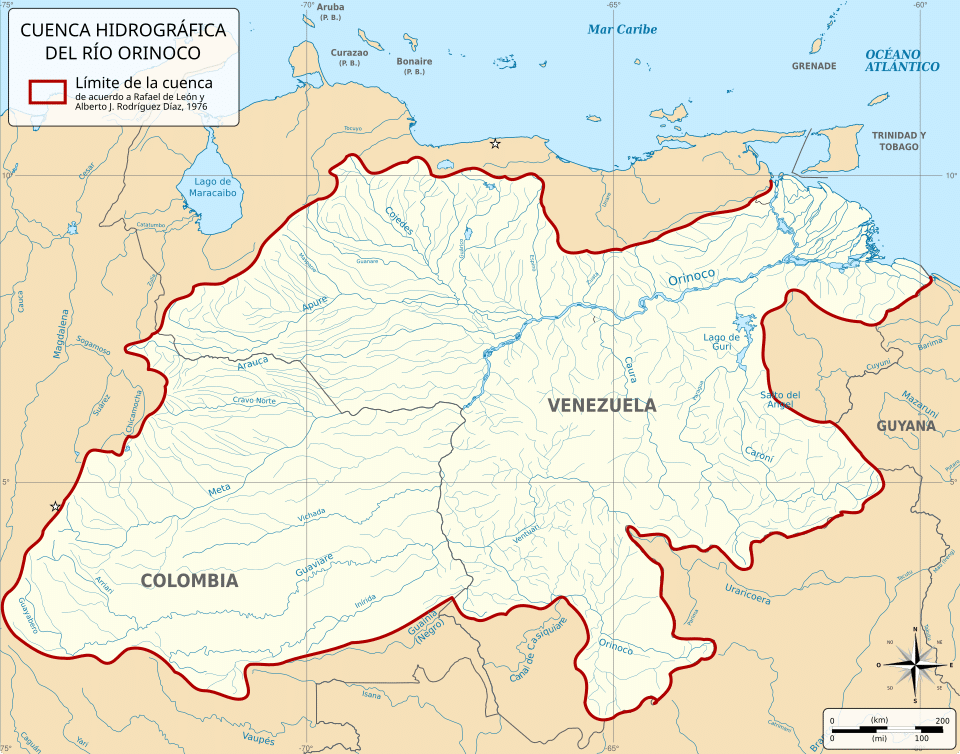
The bandit cory is native to the Meta River basin in Colombia, which is a major tributary of the Orinoco River. The Meta River flows eastward from the Andes through the Colombian llanos (tropical grasslands) before joining the Orinoco near the Venezuelan border. This region has a distinct wet-dry seasonal cycle that heavily influences water conditions throughout the year.
In their natural habitat, bandit corys inhabit slow-moving streams, shallow tributaries, and flooded areas with sandy or muddy bottoms. The water is typically soft and slightly acidic, with moderate temperatures that stay cooler than what you’d find in lowland Amazon species. Leaf litter, submerged wood, and marginal vegetation provide cover and create shaded areas where the fish feel secure.
Like all corydoras, they spend their time sifting through the substrate for food, turning over organic debris to find insect larvae, worms, and other small invertebrates. The soft, fine substrate of their natural environment is why providing sand in the aquarium is so important. Their barbels evolved for probing soft material, not grinding against sharp gravel.
Appearance & Identification
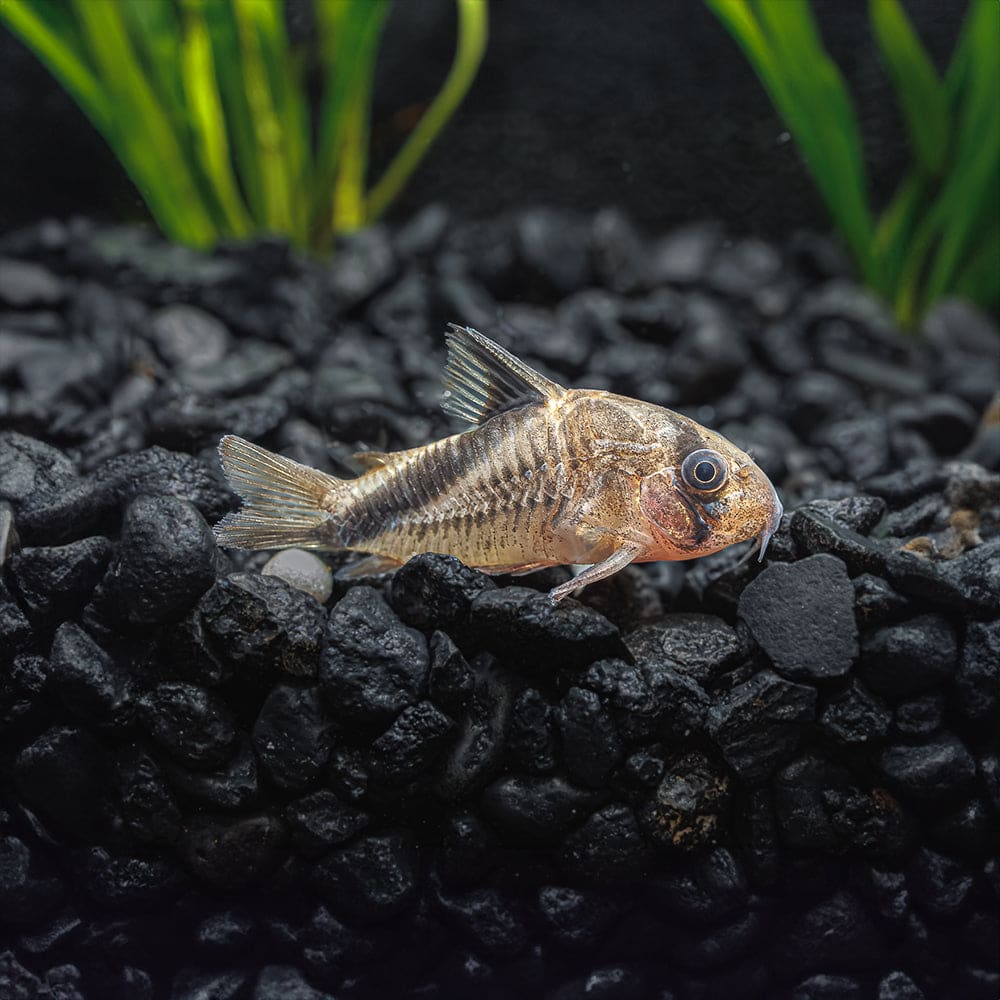
The bandit cory’s defining feature is right there in the name. A thick, dark band runs horizontally across both eyes, connecting them like a bandit’s mask or a blindfold. This marking is unmistakable and is the single easiest way to identify this species. No other commonly available corydoras has quite the same bold eye band.
The overall body color is a warm, creamy beige to light tan, which provides a clean backdrop that makes the dark mask really pop. There’s also a dark blotch at the base of the dorsal fin and a dark band running along the dorsal ridge from the back of the head toward the tail. The fins are mostly clear to pale, sometimes with a faint yellowish tint. The body shape is compact and rounded, typical of the genus, with two rows of overlapping bony scutes along each flank and two pairs of barbels on the downturned mouth.
One species that sometimes gets confused with the bandit cory is Corydoras melini, the false bandit cory. Both have a dark eye band, but C. melini has a diagonal dark stripe that runs from the dorsal fin down toward the base of the tail, which the true bandit cory lacks. If the stripe angles downward toward the caudal peduncle, you’re looking at melini, not metae.
Male vs. Female
Sexing bandit corys follows the same general rules as most corydoras. Females are noticeably rounder and wider when viewed from above, especially when they’re carrying eggs. They tend to be slightly larger overall. Males are slimmer and more streamlined, with a narrower body profile. Both sexes display the same coloration and mask pattern, so body shape is the primary way to differentiate them. The difference becomes much more obvious once the fish reach full maturity at around 12 to 18 months of age.
Average Size & Lifespan
Bandit corys are a small corydoras species, reaching a maximum size of about 2 inches (5 cm) in total length. Females are typically slightly larger and heavier-bodied than males. Most fish sold in stores are juveniles around 1 to 1.25 inches, so they still have some growing to do when you bring them home.
With proper care, bandit corys can live 5 years or more in captivity. Some hobbyists have reported specimens reaching 7 to 8 years in well-maintained tanks with consistent water quality and a varied diet. As with all corydoras, longevity depends heavily on substrate choice, water cleanliness, and being kept in a proper social group. A single bandit cory in a neglected tank won’t come close to its full lifespan potential.
Bandit corydoras (C. metae) are small, attractively marked cories from the Meta River in Colombia. They prefer softer water than some of the hardier species but are otherwise peaceful and community-compatible.
Care Guide
Tank Size
A 20-gallon (76 liter) tank is the minimum recommended size for a group of 6 bandit corys. A 20-gallon long is the better option because it provides more floor space than a standard 20-gallon tall, and floor space is what matters most for bottom-dwelling fish. If you’re planning a group of 10 or more, or want to include other bottom-dwelling species, step up to a 30-gallon (114 liter) tank or larger. More bottom real estate means less competition and more natural foraging behavior.
Water Parameters
| Parameter | Recommended Range |
|---|---|
| Temperature | 72 to 79°F (22 to 26°C) |
| pH | 6.0 to 7.5 |
| Hardness | 2 to 12 dGH |
| Ammonia / Nitrite | 0 ppm |
| Nitrate | Below 20 ppm |
Bandit corys prefer cooler temperatures compared to some tropical fish, so they do best in unheated tanks in warm rooms or with a heater set to the mid-70s°F. They’re not a good match for high-temperature setups like discus tanks. If you need a cory for warmer water, look at sterbai corys instead.
Soft to moderately hard water with a slightly acidic to neutral pH suits them well. They’re reasonably adaptable, but consistently hard, alkaline water isn’t ideal and can cause long-term stress. Keep ammonia and nitrite at zero, and nitrate below 20 ppm through regular water changes. Like all corydoras, they’re sensitive to poor water quality, especially elevated nitrates.
Filtration & Water Flow
A good hang-on-back filter or canister filter works well for bandit corys. They don’t need strong current and actually prefer moderate to gentle water flow along the bottom of the tank. Strong currents can make it difficult for them to rest and forage comfortably. If your filter creates too much flow at the substrate level, angle the output toward the surface or use a spray bar to diffuse it. A sponge filter is another solid option that provides excellent biological filtration without creating excessive water movement.
Good oxygenation matters. While bandit corys are facultative air breathers that regularly dart to the surface to gulp air (which is completely normal behavior), consistently poor oxygen levels will stress them. Surface agitation from your filter output helps with gas exchange.
Lighting
Bandit corys have no special lighting requirements. Standard aquarium lighting for a planted or community tank is fine. They tend to be more active in subdued lighting, so if your tank has very bright lights, providing shaded areas with floating plants or dense plant cover near the bottom will encourage more natural behavior. They’ll still come out to forage under bright lights, but you’ll see more activity with some dimmer zones available.
Plants & Decorations
Bandit corys are completely plant-safe. They don’t eat or uproot plants, making them ideal for planted tanks. Good plant choices include java fern, anubias, cryptocorynes, and vallisneria. These plants provide cover and create shaded resting spots without occupying too much of the bottom space where the corys forage.
Driftwood, smooth stones, and caves are all appreciated as hiding spots. Leaf litter (Indian almond leaves or dried oak leaves) is an excellent addition that mimics their natural environment and encourages foraging. The tannins released from the leaves also slightly acidify the water, which these fish appreciate. Just make sure decorations don’t have sharp edges that could injure the fish as they swim past.
Substrate
This is the most important care decision you’ll make for any corydoras. Sand substrate is absolutely essential for bandit corys. Their barbels are delicate sensory organs they use to probe and sift through the substrate for food. Rough gravel, sharp-edged substrates, or coarse materials will erode and damage these barbels over time, leading to bacterial infections, reduced ability to forage, and a significantly lower quality of life.
Fine play sand, pool filter sand, or aquarium-specific sand all work well. The grain should be smooth and small enough that the fish can comfortably sift through it. You’ll know you’ve got the right substrate when you see your bandit corys actively plunging their faces into it and blowing sand out through their gills. That’s natural, healthy foraging behavior. If they’re avoiding the substrate or their barbels look shortened, that’s a red flag.
Is the Bandit Cory Right for You?
Before you buy, run through this honest checklist. The Bandit Cory is a great fish for the right keeper, but it is not for everyone.
- You want a corydoras with a distinctive bandit mask eye pattern
- You keep your tank at 72 to 77F with consistent water quality
- You can commit to regular water changes and good maintenance practices
- You have a 20-gallon or larger tank with sand substrate and a group of 6+
- You want something more distinctive looking than the common Bronze or Peppered Cory
- You enjoy patterned corys and can verify identification before purchase
Tank Mates
Bandit corys are peaceful, non-aggressive fish that do well with a wide variety of community species. The main considerations are temperature compatibility (they prefer cooler water than some tropical species) and avoiding anything large or aggressive enough to harass them.
Best Tank Mates
- Tetras (ember, neon, cardinal, rummy-nose, glowlight)
- Rasboras (harlequin, chili, lambchop)
- Small peaceful barbs (cherry barbs)
- Dwarf gouramis and honey gouramis
- Other corydoras species (they’ll often shoal together)
- Otocinclus catfish
- Small peaceful livebearers (endlers, platies)
- Freshwater shrimp (amano, cherry shrimp)
- Nerite and mystery snails
Tank Mates to Avoid
- Cichlids (except very small, peaceful dwarf species)
- Large or aggressive fish (oscars, jack dempseys, green terrors)
- Aggressive bottom dwellers (red-tailed sharks, Chinese algae eaters)
- Fish that require very warm water (discus, rams) since bandit corys prefer cooler temps
- Crayfish or large crabs that may injure or eat small bottom dwellers
Food & Diet
Bandit corys are omnivores and not at all picky about food. The biggest mistake people make is assuming they’ll survive on whatever falls to the bottom from feeding the mid-water fish. They won’t thrive that way. Corydoras need their own dedicated feeding, not just leftovers.
A good staple diet includes high-quality sinking pellets or wafers designed for bottom feeders. Supplement with frozen or live foods like bloodworms, brine shrimp, daphnia, and tubifex worms. These protein-rich foods help with conditioning and overall health. Blanched vegetables like zucchini or cucumber slices are also appreciated occasionally.
Feed once or twice daily, offering only as much as they can consume in a few minutes. Drop the food in the same spot each time so the corys learn where to find it. Feeding in the evening or with lights dimmed often encourages more active feeding behavior since they’re naturally more active in low-light conditions.
Breeding & Reproduction
Breeding bandit corys is achievable for hobbyists with some experience, though it’s not quite as straightforward as breeding bronze or peppered corys. They use the classic corydoras T-position spawning method and deposit their eggs on flat surfaces throughout the tank.
Breeding Difficulty
Moderate. While not the easiest corydoras to breed, bandit corys will spawn in captivity when properly conditioned and given the right environmental triggers. Having a well-established group with a good ratio of males to females (2 to 3 males per female works well) gives you the best chance of success.
Spawning Tank Setup
A dedicated breeding tank of 10 to 15 gallons works well. Keep it simple: bare bottom or thin layer of sand, a sponge filter for gentle filtration, and some flat surfaces like broad-leaved plants (anubias), slate tiles, or the aquarium glass itself where the female can deposit eggs. The tank should be well-cycled before introducing the breeding group.
Water Conditions for Breeding
The classic technique for triggering corydoras spawning is a large, cool water change that simulates the onset of the rainy season. Replace 50 to 70% of the water with dechlorinated water that is several degrees cooler than the tank temperature. Dropping from 77°F down to 70 to 72°F (21 to 22°C) often does the trick. A slight drop in pH (toward the 6.0 to 6.5 range) during water changes can also help. Repeat this daily for several days if spawning doesn’t happen immediately.
Conditioning & Spawning
Condition the breeding group with protein-rich live and frozen foods for 2 to 3 weeks before attempting to trigger spawning. Bloodworms, brine shrimp, and daphnia are all excellent choices. Well-fed females will become noticeably rounder as they develop eggs.
When spawning begins, you’ll see the T-position behavior that’s characteristic of all corydoras. The female presses her mouth against the male’s vent area, and they form a T shape. The female collects sperm and then moves to a chosen surface to deposit a small clutch of adhesive eggs, often 2 to 4 at a time. She repeats this process with multiple males over the course of several hours, depositing eggs in small groups across different surfaces. Total egg counts typically range from 50 to 100 per spawn.
Egg & Fry Care
Remove the adults after spawning is complete, as they will eat the eggs if given the opportunity. The eggs are adhesive and can be gently rolled off the glass or surface with a finger and transferred to a separate hatching container with matching water parameters. Adding a few drops of methylene blue to the hatching container helps prevent fungal growth on the eggs.
Eggs typically hatch in 4 to 5 days depending on temperature. The fry are tiny and will absorb their yolk sacs over the first 2 to 3 days. Once free-swimming, feed them infusoria or commercially prepared liquid fry food initially, then transition to freshly hatched baby brine shrimp and microworms as they grow. Keep the water exceptionally clean during this stage with small, frequent water changes. Growth is slow but steady, and the fry will begin to show the characteristic bandit mask marking within a few weeks.
Common Health Issues
Barbel Erosion
This is the most common problem with corydoras and it’s almost always caused by inappropriate substrate. Gravel, sharp sand, or rough materials wear down the barbels over time, leaving them shortened or completely eroded. Once damaged, the barbels are vulnerable to secondary bacterial infections. The fix is prevention: use fine, smooth sand and maintain clean substrate conditions.
Ich (White Spot Disease)
Bandit corys can contract ich like any freshwater fish. The challenge with corydoras is that they’re sensitive to many common ich medications, particularly those containing copper or malachite green at full strength. If you need to treat, use half-strength medication or opt for the heat method by gradually raising the temperature to 86°F (30°C) over 48 hours while increasing aeration. Salt treatments should be avoided or used at very low concentrations, as corydoras are sensitive to salt.
Bacterial Infections
Red blotches on the belly, cloudy eyes, or fin rot are signs of bacterial infection, usually triggered by poor water quality. Corydoras sit directly on the substrate, so they’re the first fish exposed to waste buildup and dirty substrate conditions. Regular gravel vacuuming (or in this case, sand surface cleaning) and consistent water changes are the best prevention. Treat confirmed infections with a broad-spectrum antibiotic appropriate for scaleless fish.
Internal Parasites
Wild-caught bandit corys may carry internal parasites. Signs include weight loss despite eating, white stringy feces, and a sunken belly. Quarantining new arrivals for 2 to 4 weeks before adding them to your main tank is always recommended. If parasites are suspected, treat with a medication containing praziquantel or levamisole.
Common Mistakes to Avoid
- Using gravel instead of sand. This is the number one mistake and will lead to barbel damage and chronic health problems. There is no gravel that is “fine enough” for corydoras. Use sand.
- Keeping them alone or in pairs. Bandit corys are social fish that need a group of at least 6 to feel secure. Solitary corys are stressed, inactive, and hide constantly.
- Relying on leftovers for feeding. Corydoras need targeted feeding with sinking foods. They cannot survive on whatever scraps fall from the surface feeders.
- Skipping quarantine. Especially with wild-caught specimens, skipping quarantine is a good way to introduce parasites and disease to your display tank.
- Overstocking the bottom. Just because your tank’s mid-water zone is well-stocked doesn’t mean the bottom layer can handle more fish. Bandit corys need floor space for foraging.
- Ignoring water quality. Because they live on the bottom where waste settles, corydoras are often the first fish affected by deteriorating water conditions. Stay on top of your water changes.
- Pairing with warm-water fish. Bandit corys prefer cooler temperatures (72 to 79°F). Putting them in a tank heated to the mid-80s for discus or rams will stress them over time.
Where to Buy
Bandit corys are moderately common in the hobby. You won’t find them at every local fish store the way you would bronze or peppered corys, but they show up regularly from specialty retailers and online vendors. They’re available as both wild-caught and captive-bred, with captive-bred specimens generally acclimating more easily to aquarium life.
Here are two reputable online retailers where you can find quality corydoras:
- Flip Aquatics. Great selection of corydoras species with careful shipping practices.
- Dan’s Fish. Known for healthy, well-acclimated livestock and transparent sourcing.
When buying bandit corys, try to purchase a group of 6 or more at once from the same source. This ensures they settle in together and reduces the stress of integrating new fish into an existing group at different times. Look for active fish with intact barbels, clear eyes, and no signs of disease or damage.
Frequently Asked Questions
How many bandit corys should I keep together?
A minimum of 6 is recommended. Corydoras are social, shoaling fish that become stressed and inactive when kept alone or in small numbers. In a group of 6 or more, you’ll see much more natural behavior: active foraging, playful chasing, and the characteristic synchronized swimming that makes corydoras so enjoyable to watch. If your tank can support it, groups of 8 to 10 are even better.
Can bandit corys live with other corydoras species?
Yes, different corydoras species coexist peacefully and will often shoal together. Just make sure each species has enough of its own kind (ideally 6 or more per species) so they can engage in species-specific social behavior. Also verify that all the species in the tank have compatible temperature ranges.
Do bandit corys need sand substrate?
Yes, without exception. All corydoras species need fine, smooth sand substrate. Their barbels are delicate sensory organs used for foraging, and rough gravel or sharp substrates will damage them over time. Barbel erosion leads to infections, inability to forage, and reduced quality of life. Sand is the only appropriate choice.
What’s the difference between the bandit cory and the false bandit cory?
The true bandit cory (Corydoras metae) and the false bandit cory (Corydoras melini) both have a dark eye band, but the key difference is in the dorsal stripe. On C. metae, the dark coloring stays along the upper back. On C. melini, a diagonal dark stripe runs from the dorsal fin area downward toward the base of the tail. If the stripe angles down toward the tail, it’s a false bandit. Care requirements for both species are very similar.
Why do my bandit corys keep going to the surface?
Occasional dashes to the surface to gulp air are completely normal. Corydoras are facultative air breathers and can absorb oxygen through their intestinal lining. This is a natural adaptation, not a sign of distress. However, if your corys are doing it constantly and frantically, that can indicate low oxygen levels, poor water quality, or elevated temperatures. Test your water parameters and increase surface agitation if needed.
Are bandit corys good for beginners?
Yes, they’re one of the easier corydoras species to keep. As long as you provide the fundamentals (sand substrate, clean water, proper group size, and dedicated feeding), bandit corys are hardy and forgiving. They’re a great choice for beginners who are setting up their first community tank and want an active, interesting bottom-dwelling species.
How the Bandit Cory Compares to Similar Species
Bandit Cory vs. Panda Cory
Both have distinctive facial markings. The Panda has dark eye patches and saddle markings on a pale body, while the Bandit has a clean mask stripe. The Panda Cory is more sensitive to water quality and prefers slightly cooler water. The Bandit is moderately hardy. Both are excellent mid-range corys.
Bandit Cory vs. Schwartz’s Cory
The Schwartz’s Cory has a bold horizontal body stripe, while the Bandit Cory has the eye mask pattern. Both are similarly priced and hardy. They look completely different and can actually be combined in the same tank for visual variety, provided you keep proper group sizes of each.
Expert Take (Mark Valderrama, AquariumStoreDepot)
After 25 years in the hobby and time managing fish stores, the bandit cory is one of those species I always recommend to hobbyists ready to move beyond the basics. Bandit corydoras (C. metae) are small, attractively marked cories from the Meta River in Colombia. They prefer softer water than some of the hardier species but are otherwise peaceful and community-compatible. Soft substrate and clean water are not negotiable for bandit cories. Like all small corydoras, they are bottom foragers sensitive to substrate sharpness and ammonia spikes.
Closing Thoughts
The bandit cory is one of those fish that doesn’t need to be flashy to be appealing. That dark eye band gives it a personality before it even does anything, and once you watch a group of them working the substrate together, you’ll understand why corydoras fans love this species. They’re hardy, peaceful, and easy to care for, which is exactly what you want from a bottom-dwelling community fish.
If you get the substrate right and keep your water clean, the rest falls into place. Give them a group of their own kind, feed them well, and they’ll reward you with years of active, entertaining behavior at the bottom of your tank. They’re the kind of fish that makes you pay attention to a part of the aquarium most people overlook.
Looking for more corydoras species to explore? Check out our complete Corydoras species directory for care guides on sterbai corys, peppered corys, pygmy corys, and many more.
Have you kept bandit corys? Drop a comment below and share your experience!
Recommended Video
Check out our corydoras tier list video where we rank the most popular corydoras in the hobby, including the bandit cory:
References
- Seriously Fish, Corydoras metae species profile. seriouslyfish.com
- FishBase, Corydoras metae (Eigenmann, 1914). fishbase.se
- Planet Catfish, Corydoras metae. planetcatfish.com
- The Aquarium Wiki, Corydoras metae. theaquariumwiki.com
- About the Author
- Latest Posts

I’m Mark Valderrama, founder of Aquarium Store Depot and a fishkeeper with over 25 years of hands-on experience. I started in the hobby at age 11, worked at local fish stores, and have kept freshwater tanks, ponds, and reef tanks ever since. I’ve been featured in two best-selling aquarium books on Amazon and built this site to share practical, experience-based fish keeping knowledge.
Leave a Reply