Last Updated: June 25, 2026
Thank you for visiting! By the way… any links on this page that lead to products on Amazon and other stores/partners are affiliate links Aquarium Store Depot earns a commission if you make a purchase.
Table of Contents
- What Care Guides Get Wrong
- Key Takeaways
- Species Overview
- Classification
- Origin & Natural Habitat
- Appearance & Identification
- Average Size & Lifespan
- Care Guide
- Is It Right for You?
- Tank Mates
- Food & Diet
- Breeding & Reproduction
- Common Health Issues
- Common Mistakes to Avoid
- Where to Buy
- Frequently Asked Questions
- Species Comparison
- Closing Thoughts
- Recommended Video
- References
The gold ring danio is one of those fish that flies under the radar in the hobby, but absolutely shouldn’t. Danio tinwini is a tiny, strikingly patterned nano fish with a leopard-like spotted pattern that’s unlike anything else in the danio family. Instead of the stripes you’d expect from a danio, this species sports dark spots surrounded by golden rings — giving it a look that’s closer to a miniature jaguar than a typical schooling fish.
What Most Care Guides Get Wrong About the Gold Ring Danio
The Gold Ring Danio is a tiny species that gets lost in standard community tanks, and most care guides fail to communicate just how small it really is. At under 1 inch, this is a micro fish that needs a dedicated nano setup. The misconception is that any danio tank will work. It will not. These fish are too small to compete with larger danios for food, and they will be stressed in busy community tanks. The other mistake is confusing them with juvenile Zebra Danios, which they are not.
What makes the gold ring danio even more interesting is how recently it entered the hobby. It wasn’t formally described until 2003, when Kullander and Fang collected it from streams in northern Myanmar — the same region that gave us the celestial pearl danio. Despite being a relative newcomer, it’s quickly earned a following among nano tank enthusiasts and anyone who appreciates something a little different in their community setups. In my 25+ years in the hobby, I’ve always appreciated the danios that break the mold, and this one does exactly that. Let’s get into everything you need to know to keep gold ring danios happy and healthy.
Key Takeaways
- Distinctive spotted pattern — unlike most danios, the gold ring danio has dark spots ringed in gold rather than stripes, giving it a unique leopard-like appearance
- True nano fish that maxes out at about 1 inch (2.5 cm), making it an excellent choice for smaller aquariums starting at 10 gallons
- Keep in groups of 8 or more for the best behavior and coloration. Males spar and display constantly in groups — it’s harmless but genuinely entertaining to watch
- Peaceful community fish that pairs well with other small, non-aggressive species like celestial pearl danios, ember tetras, and small rasboras
- Easy to breed as an egg scatterer, though raising the tiny fry requires some preparation and the right first foods
- Relatively recent discovery — described in 2003 from northern Myanmar, the same region where celestial pearl danios were later found
Species Overview
| Field | Details |
|---|---|
| Scientific Name | Danio tinwini (Kullander & Fang, 2003) |
| Common Names | Gold Ring Danio, Gold Ring Spotted Danio |
| Family | Danionidae |
| Origin | Northern Myanmar |
| Care Level | Easy |
| Temperament | Peaceful |
| Diet | Omnivore |
| Tank Level | Middle to Top |
| Maximum Size | 1 inch (2.5 cm) |
| Minimum Tank Size | 10 gallons (38 liters) |
| Temperature | 68 to 79°F (20 to 26°C) |
| pH | 6.5 to 7.5 |
| Hardness | 2 to 10 dGH |
| Lifespan | 3 to 5 years |
| Breeding | Egg scatterer |
| Breeding Difficulty | Moderate |
| Compatibility | Community (nano) |
| OK for Planted Tanks? | Yes |
Classification
| Taxonomic Level | Classification |
|---|---|
| Order | Cypriniformes |
| Family | Danionidae (formerly placed in Cyprinidae) |
| Subfamily | Danioninae |
| Genus | Danio |
| Species | D. tinwini (Kullander & Fang, 2003) |
The gold ring danio was described in 2003 by Sven O. Kullander and Fang Fang from specimens collected in northern Myanmar. This makes it one of the more recently described danio species, entering the scientific literature decades after familiar relatives like the zebra danio and pearl danio. The species is named after Tin Win, a collector who contributed significantly to the discovery of new fish species from Myanmar.
Like all danios, D. tinwini was historically lumped into the massive family Cyprinidae before molecular studies separated the danios into their own family, Danionidae. Within the genus Danio, the gold ring danio belongs to the Danio rerio species group, making it a close relative of the zebra danio despite looking nothing like one. The spotted pattern is a notable departure from the striped body plan that defines most members of this group.
Origin & Natural Habitat
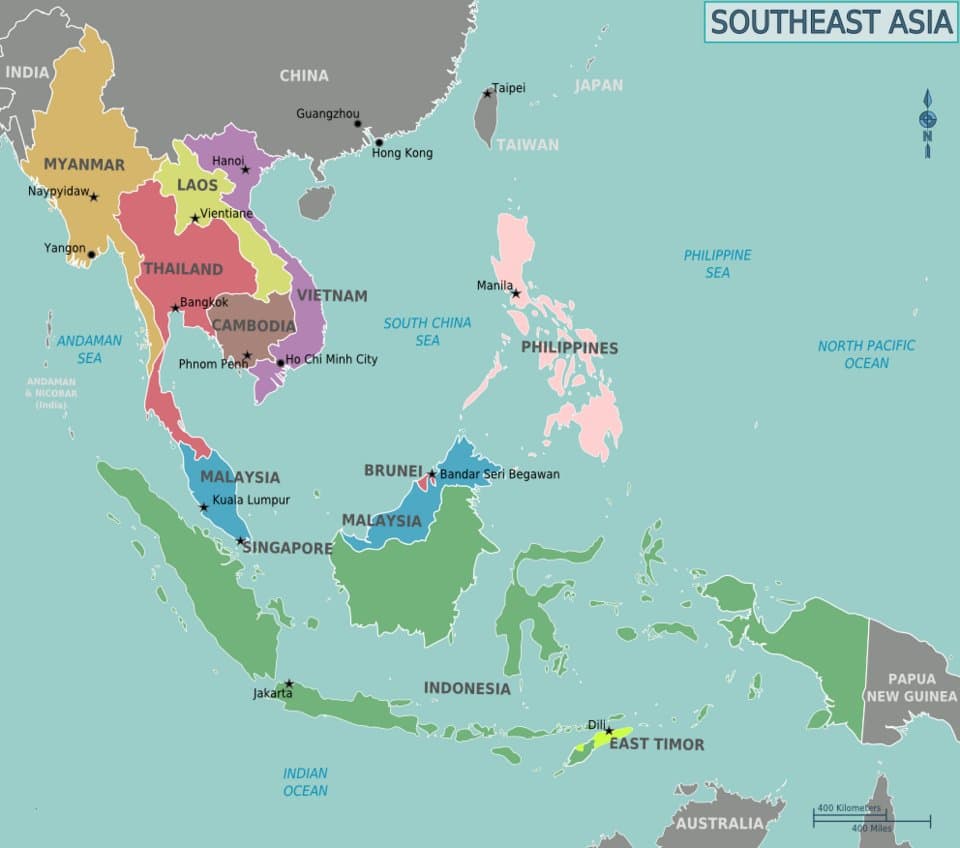
Gold ring danios come from a small region in northern Myanmar, specifically from streams and tributaries in the area around the town of Mogok in the Shan Plateau region. This is the same general area that produced the celestial pearl danio (Danio margaritatus), and the two species share similar habitat preferences. If you’re familiar with keeping CPDs, you already have a head start on understanding what gold ring danios need.
In the wild, these fish inhabit clear, shallow streams with moderate flow, often in hilly or mountainous terrain at moderate elevations. The substrate in these streams is typically a mix of sand, gravel, and small rocks, with submerged vegetation and leaf litter along the margins. The water tends to be well-oxygenated, slightly acidic to neutral, and relatively soft — typical of forest streams fed by rainfall rather than limestone-rich spring water.
The seasonal climate in northern Myanmar means these streams experience some temperature variation throughout the year, with water temperatures ranging from the upper 60s°F in cooler months to the upper 70s°F during the warmest periods. This gives the gold ring danio a comfortable temperature range that works well in most home aquariums without needing to push the heater to extremes in either direction.
Appearance & Identification
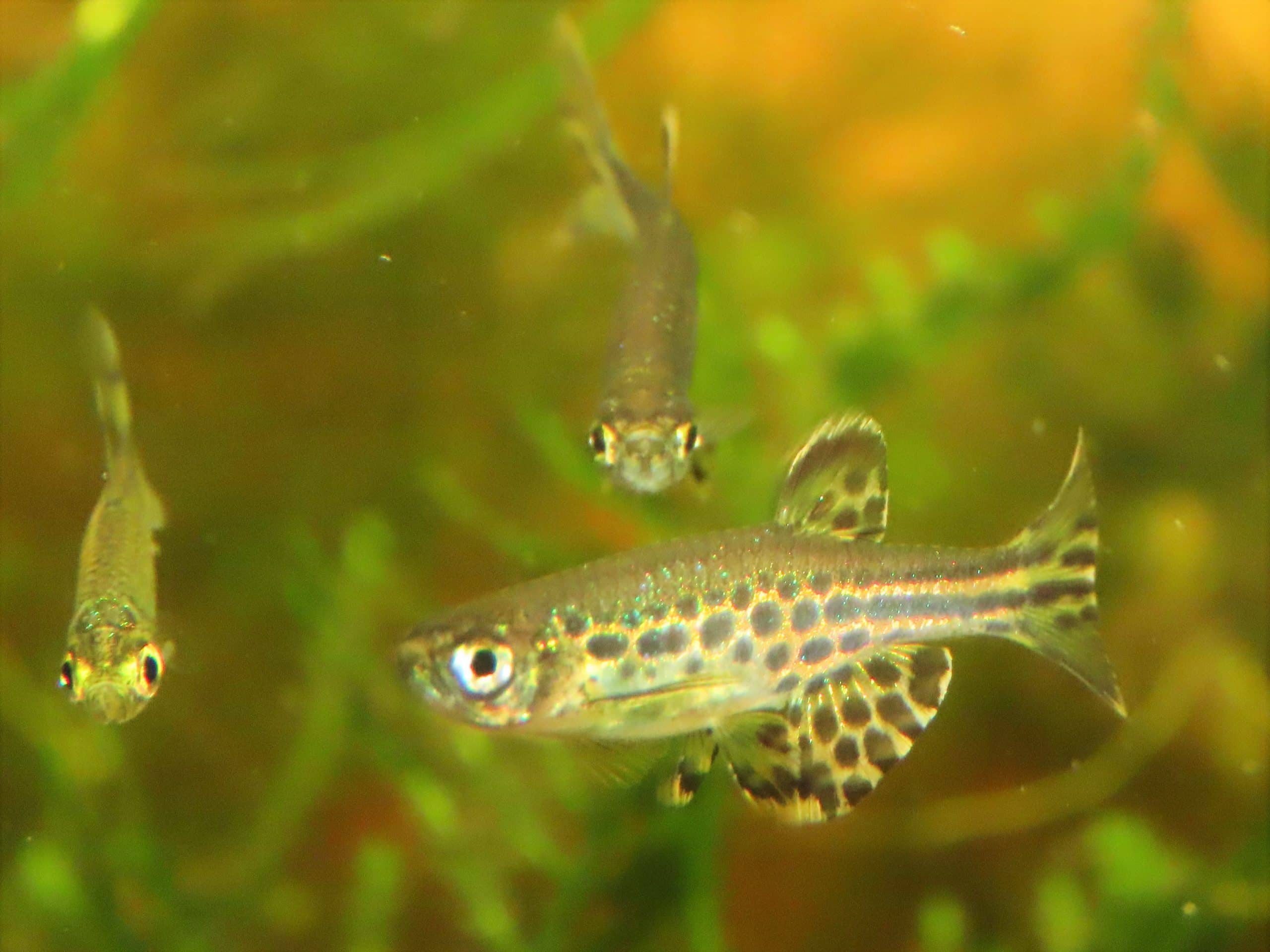
The gold ring danio has one of the most distinctive patterns in the entire danio family. Instead of the horizontal stripes that characterize most Danio species, D. tinwini sports a pattern of dark spots scattered across a golden-tan body. Each dark spot is surrounded by a ring of bright gold or golden-yellow, giving the fish its common name. The overall effect looks remarkably like a miniature leopard or jaguar, and it’s immediately recognizable once you’ve seen it.
The base body color ranges from pale gold to warm tan, with the spotted pattern extending from behind the gill cover all the way back to the caudal peduncle. The spots also continue onto the dorsal, anal, and caudal fins, which adds to the busy, intricate look. A faint dark lateral stripe may be visible running through the middle of the body, connecting some of the spots in a broken line. The belly is lighter, often silvery-white.
The body shape is classic danio — elongated, slightly laterally compressed, with a small upturned mouth designed for feeding at the surface and mid-water. At a maximum size of about 1 inch (2.5 cm), this is a genuinely small fish. You won’t appreciate the full beauty of the pattern from across the room — you need to get close to really see those golden rings in detail. That’s part of the charm of keeping nano fish.
Male vs. Female
Sexing gold ring danios can be a bit tricky until the fish are fully mature, but there are reliable differences once you know what to look for. Males tend to be slightly slimmer and more intensely colored, with bolder spotting and brighter gold rings. They’re also the ones you’ll see chasing each other and sparring — males display and joust constantly in groups, flaring their fins and circling each other in brief but spirited bouts. It’s completely harmless behavior and honestly one of the best things about keeping this species.
Females are a bit deeper-bodied, especially when carrying eggs. A gravid female will look noticeably rounder when viewed from above compared to the sleeker males. The coloration on females is slightly more muted, but still attractive. In a well-balanced group with both sexes, you’ll almost always see males putting on displays for the females, which makes for a very active and engaging aquarium.
Average Size & Lifespan
Gold ring danios are true nano fish, maxing out at about 1 inch (2.5 cm) in length. Most specimens available in the hobby are sold as juveniles at around 0.5 to 0.75 inches (1.3 to 2 cm) and will reach full adult size within a few months under good conditions. Their small size is part of what makes them so well-suited for nano tanks and smaller community setups where larger danios would feel cramped.
With proper care, gold ring danios typically live 3 to 5 years. That’s a solid lifespan for a fish this small. As with most nano species, the keys to longevity are stable water conditions, a varied diet, low stress, and avoiding overcrowding. Fish kept in well-maintained, appropriately sized groups tend to live longer and show better coloration throughout their lives compared to stressed individuals in poor conditions.
Gold ring danios (Danio tinwini) are a small, attractively spotted danio species from Myanmar. They are peaceful, hardy, and suitable for nano planted tanks from 10 gallons.
Care Guide
Tank Size
A 10-gallon (38-liter) tank is the minimum for a group of gold ring danios. At just 1 inch (2.5 cm) fully grown, they don’t need a massive aquarium, but they do need enough space to swim, school, and — most importantly — spar and display without running into each other constantly. A 10-gallon tank comfortably houses a group of 8 to 10 gold ring danios, which is really the minimum number you should keep to see their best behavior.
If you’re planning a nano community with other small species, bumping up to a 15 or 20-gallon tank gives everyone more room and makes the tank easier to maintain. Larger tanks also provide more stable water parameters, which matters with nano species that produce a light bioload. A 20-gallon long with a school of gold ring danios, some celestial pearl danios, and a few shrimp is about as perfect as a nano community gets.
Water Parameters
| Parameter | Ideal Range |
|---|---|
| Temperature | 68 to 79°F (20 to 26°C) |
| pH | 6.5 to 7.5 |
| Hardness | 2 to 10 dGH |
| Ammonia | 0 ppm |
| Nitrite | 0 ppm |
| Nitrate | Below 20 ppm |
Gold ring danios are fairly flexible when it comes to water parameters, but they do best in slightly acidic to neutral water on the softer side. Their native streams in Myanmar tend to be soft and mildly acidic, so a pH around 6.5 to 7.0 and hardness between 2 and 10 dGH hits the sweet spot. That said, they’re adaptable enough to thrive in most tap water that falls within the ranges listed above.
The temperature range is quite broad at 68 to 79°F (20 to 26°C), giving you a lot of flexibility. The middle of this range — around 72 to 76°F (22 to 24°C) — is where most keepers find them most active and colorful. They’ll tolerate the lower end of the range just fine, but they’re not as cold-hardy as zebra danios or white cloud mountain minnows. If your room temperature stays above 68°F, you may not need a heater, but having one for stability during winter months isn’t a bad idea.
Filtration & Water Flow
A gentle to moderate flow works best for gold ring danios. In the wild, they come from streams with some current, so they’re comfortable with water movement — but they’re small fish that can be overwhelmed by strong flow. A sponge filter is the ideal choice for a dedicated gold ring danio tank. It provides gentle filtration without creating currents that push these little fish around, and the sponge surface grows biofilm that the danios will pick at between meals.
For community setups, a small hang-on-back filter with an adjustable flow or a baffle works well. Just make sure the intake is covered with a sponge prefilter to prevent these tiny fish (or their fry) from getting sucked in. Good biological filtration is more important than powerful mechanical filtration for a nano tank — you want stable water chemistry, not a whirlpool.
Lighting
Standard aquarium lighting is perfectly fine for gold ring danios. They’re not particularly light-sensitive, and moderate lighting that supports live plant growth is ideal. If you’re running a planted nano tank (which is highly recommended for this species), adjust your lighting to suit the plants first and the fish will be happy.
One thing worth noting is that gold ring danios show their best coloration under moderate lighting with some shaded areas. The contrast between bright and shaded zones makes the spotted pattern pop, especially when the fish move between lit and dimmer areas. Floating plants are great for creating this effect naturally while also helping the fish feel secure.
Plants & Decorations
Gold ring danios look their absolute best in a well-planted tank, and live plants are strongly recommended. Dense planting along the back and sides with open swimming space through the middle and front gives the fish room to school and display while still having places to retreat when they want to feel secure. Java moss, java fern, Anubias nana, Bucephalandra, and various stem plants all work beautifully in a gold ring danio tank.
For hardscape, small pieces of driftwood and smooth river stones create a natural-looking stream biotope that mirrors their wild habitat. Leaf litter (Indian almond leaves or similar) adds tannins that slightly soften and acidify the water, which these fish appreciate. The leaves also grow a film of biofilm and microorganisms that the danios will graze on, providing a natural food supplement between feedings.
Floating plants like Amazon frogbit, red root floaters, or salvinia complete the look and provide shade that makes the fish feel comfortable. Just don’t let floaters cover more than about 50% of the surface so you maintain good light penetration for your rooted plants below.
Substrate
Gold ring danios aren’t bottom dwellers, so the substrate is more about aesthetics and plant health than fish preference. A dark substrate — black sand, dark gravel, or a planted tank soil like Fluval Stratum or ADA Amazonia — will make the gold and dark tones in their spotted pattern stand out much more than a light-colored substrate would. The contrast really matters with a fish this small and intricately patterned.
Fine sand or small-grained gravel works well if you want a natural stream look. If you’re running a planted tank, an active soil substrate gives your plants the nutrients they need while also helping maintain the slightly acidic, soft water conditions that gold ring danios prefer. It’s a win on both fronts.
Is the Gold Ring Danio Right for You?
Before you buy, run through this honest checklist. The Gold Ring Danio is a great fish for the right keeper, but it is not for everyone.
- You have a dedicated nano tank (10-15 gallons) for micro species
- You can keep a group of 10+ for visible schooling behavior
- Your tank has no fish large enough to eat a 1-inch adult
- You use sponge filtration or intake guards to prevent fish being sucked up
- You enjoy keeping rare, tiny species that most hobbyists have never seen
- You want a danio with warm golden ring markings on a tiny body
Tank Mates
Gold ring danios are peaceful nano fish that do best with other small, non-aggressive species. The most important consideration is size — at just 1 inch (2.5 cm), gold ring danios can be intimidated by or even become snacks for larger fish. Stick with similarly sized tank mates that share their temperament and water parameter preferences.
Best Tank Mates
- Celestial pearl danios — from the same region of Myanmar, nearly identical care requirements, and a beautiful contrast in pattern
- Ember tetras — tiny, peaceful, and their warm orange color complements the gold ring danio’s spotted pattern perfectly
- Chili rasboras and other Boraras species — another great nano fish that occupies similar tank levels without competing
- Pygmy corydoras — small bottom dwellers that stay out of the danios’ way and help clean up fallen food
- Otocinclus catfish — gentle algae eaters that add utility to a nano community without causing any conflict
- Cherry shrimp — safe with gold ring danios, though very small shrimplets may occasionally be picked off
- Amano shrimp and nerite snails — excellent cleanup crew members that gold ring danios will completely ignore
- Emerald dwarf rasboras — another small, peaceful species that thrives in similar water conditions
- Endler’s livebearers — colorful, active, and similarly sized nano fish that make lively tank mates
Tank Mates to Avoid
- Any fish large enough to eat them — this includes most medium-sized community fish like standard tetras, barbs, and gouramis. A 1-inch fish is a snack for anything with a big enough mouth.
- Aggressive or territorial species — cichlids (even small ones like rams) and aggressive barbs like tiger barbs will harass or eat gold ring danios
- Bettas — while a betta might not eat an adult gold ring danio, the temperament mismatch and risk of aggression makes this a pairing to avoid
- Large shrimp predators — if you’re keeping a shrimp-and-danio community, avoid anything that hunts invertebrates aggressively
- Very large or boisterous fish — even peaceful larger fish can outcompete gold ring danios for food simply by being faster and bigger
Food & Diet
Gold ring danios are omnivores with small mouths, so food size matters as much as food quality. They need small-particle foods that they can actually eat. Crushing standard flake food into a fine powder works in a pinch, but purpose-made micro pellets or nano fish foods are a much better daily staple. Brands that make foods specifically for small-mouthed fish will be your best bet.
Supplement the staple diet with frozen or live foods several times per week. Baby brine shrimp, micro worms, daphnia, and finely chopped bloodworms are all excellent options. Live foods in particular tend to trigger feeding excitement and bring out brighter coloration. Gold ring danios are surface and mid-water feeders by nature, so foods that float or sink slowly will be eaten more readily than anything that drops straight to the bottom.
Feed small amounts once or twice daily — just enough for the fish to consume within a minute or two. With nano fish, overfeeding is a bigger risk than underfeeding because excess food fouls the water quickly in a small tank. A varied diet that includes both dry and frozen/live foods will keep your gold ring danios healthy, colorful, and active.
Breeding & Reproduction
Gold ring danios are egg scatterers that can be bred in captivity, though it takes a bit more effort than breeding zebra danios. They’ll scatter eggs among fine-leaved plants or over substrate, and — like most danios — they’ll eat the eggs immediately if given the chance. Successful breeding requires separating the adults from the eggs quickly or using a setup designed to protect the eggs.
Breeding Difficulty
Moderate. Getting gold ring danios to spawn isn’t particularly difficult, especially in a well-conditioned group. The challenge is more about raising the very small fry, which need tiny first foods and careful attention to water quality during the first few weeks. If you’ve successfully bred other small danios or rasboras, you’ll have a good foundation for working with this species.
Spawning Tank Setup
Set up a small breeding tank of 5 to 10 gallons with a thin layer of glass marbles or a mesh grid over the bottom to catch eggs and prevent the adults from reaching them. Add generous clumps of java moss or spawning mops, which give the fish surfaces to scatter eggs on and provide additional protection for any eggs that stick. A gentle air-driven sponge filter is all you need for filtration — keep the flow minimal.
Keep the lighting low to moderate and provide some floating plants for cover. The idea is to create a calm, secure environment where the fish feel comfortable enough to spawn. Bare tanks stress nano fish, so a few plants and some structure go a long way.
Water Conditions for Breeding
Target slightly warmer water in the 75 to 78°F (24 to 26°C) range to encourage spawning activity. A pH around 6.5 to 7.0 and soft water between 2 and 6 dGH is ideal. If your tap water is harder than this, mixing with RO (reverse osmosis) water can help bring it into range. A small water change with slightly cooler water can sometimes act as a spawning trigger, simulating the rain events that prompt spawning in their native habitat.
Conditioning & Spawning
Condition your breeding group with frequent feedings of high-quality live and frozen foods for a week or two before moving them to the spawning tank. Baby brine shrimp, daphnia, and micro worms are all excellent conditioning foods. You’ll know females are ready when they appear visibly plumper with eggs. Use a ratio of about 2 males per female for the best results.
Introduce the conditioned fish to the breeding tank in the evening. Spawning usually occurs in the early morning hours, often right around dawn when the first light hits the tank. Males will actively chase and display for the females, and eggs are scattered among plants and across the substrate. The clutch size is relatively small compared to larger danio species — expect somewhere around 30 to 50 eggs per spawning event. Remove the adults immediately after spawning is complete to prevent egg predation.
Egg & Fry Care
Gold ring danio eggs are tiny, clear, and adhesive. They typically hatch in 48 to 72 hours at around 76°F (24°C). The newly hatched fry are extremely small — smaller than zebra danio fry — and will absorb their yolk sac over the first 24 to 48 hours before becoming free-swimming. At this point, they need the smallest foods available: infusoria, vinegar eels, or commercial liquid fry food for the first week to 10 days.
Once the fry are large enough (usually around 7 to 10 days old), they can transition to freshly hatched baby brine shrimp, which is the best food for rapid, healthy growth. Keep the fry tank scrupulously clean with small, gentle water changes every day or two. Use airline tubing to siphon carefully so you don’t suck up any fry. Growth is steady but not fast — expect the juveniles to reach recognizable color and pattern at around 4 to 6 weeks, and sellable size at around 2 to 3 months.
Common Health Issues
Gold ring danios are generally hardy little fish that don’t suffer from species-specific diseases. Like all small freshwater fish, they can run into the standard health problems when water quality slips or stress levels rise. Keeping their tank clean and stable is the best prevention against all of these issues.
Ich (White Spot Disease)
Ich is the most common freshwater fish disease and can affect gold ring danios just like any other species. You’ll see small white spots on the body and fins, along with scratching behavior and clamped fins. Treat with a quality ich medication at the first sign of symptoms. With nano fish, be cautious about dosing — follow instructions carefully and consider half-doses if the medication label suggests it for sensitive species. Gradually raising the temperature to 82°F (28°C) during treatment speeds up the parasite’s life cycle and makes the medication more effective.
Velvet Disease
Velvet is caused by the parasite Oodinium and presents as a fine, dusty gold or rust-colored coating on the skin. It can be easy to miss on gold ring danios specifically because the fish’s natural golden coloring can mask the early stages. Watch for behavioral cues like lethargy, loss of appetite, and clamped fins. Treat with a copper-based medication and dim the lights during treatment, since the parasite has a photosynthetic stage in its life cycle.
Fin Rot
Fin rot shows up as fraying, ragged, or disintegrating fin edges and is almost always a secondary condition caused by poor water quality or stress. In a nano tank, water quality can deteriorate quickly due to the smaller volume, so staying on top of water changes is critical. Improve water conditions first — that alone often resolves mild cases. For more advanced fin rot, an antibacterial medication may be necessary.
Internal Parasites
Wild-caught gold ring danios (and many still come from wild-collected stock) can sometimes carry internal parasites. Signs include a hollow belly despite regular feeding, stringy white feces, and gradual wasting. If you suspect parasites, treat with a medicated food containing an antiparasitic agent. Quarantining new fish for 2 to 4 weeks before adding them to an established tank is the best way to catch these issues before they spread.
Common Mistakes to Avoid
- Keeping too few. Gold ring danios need a group of at least 8 to feel secure and display natural behavior. In small numbers, they become shy, stressed, and lose their color. The sparring behavior between males — one of the best features of this species — only really emerges in larger groups.
- Tank mates that are too large. A 1-inch fish is vulnerable to predation from anything medium-sized or larger. Don’t house gold ring danios with fish that could fit them in their mouth. Stick to nano-appropriate tank mates.
- Feeding food that’s too large. Gold ring danios have tiny mouths. Standard-sized flake food and pellets won’t work. Use micro pellets, crushed flakes, or nano-specific foods to make sure they can actually eat what you’re offering.
- Skipping the lid. Danios are jumpers, and gold ring danios are no exception despite their small size. Always use a tight-fitting lid with no gaps large enough for a 1-inch fish to squeeze through.
- Neglecting water changes in nano tanks. Small tanks can swing in water chemistry much faster than larger ones. Consistent, weekly water changes of 20 to 30% are essential to keep conditions stable and healthy in a nano setup.
- No plants or cover. Gold ring danios come from well-vegetated streams. A bare tank with no plants or hiding spots will stress them out and wash out their coloration. Give them a planted environment and they’ll reward you with much better color and behavior.
Where to Buy
Gold ring danios are not a species you’ll find at most chain pet stores. They’re a specialty nano fish that tends to show up at well-stocked independent fish stores or through online retailers that focus on rare and unusual freshwater species. If your local fish store doesn’t carry them, ask if they can special order — some wholesalers do carry Danio tinwini, especially when seasonal shipments come in from Myanmar.
For the most reliable availability, I’d recommend checking Flip Aquatics or Dan’s Fish. Both are reputable online retailers that regularly stock nano and specialty species, and they ship healthy fish in excellent condition. Online ordering is honestly your best bet for a species like the gold ring danio that isn’t part of the standard big-box store inventory.
Frequently Asked Questions
Are gold ring danios the same as leopard danios?
No. The leopard danio is a spotted variant of the zebra danio (Danio rerio) that reaches about 2 inches and has a much larger, less defined spotted pattern. The gold ring danio (Danio tinwini) is a completely separate species — much smaller at just 1 inch, with a more refined, intricate spot pattern featuring the distinctive golden rings around each dark spot. They’re different fish with different care requirements and sizes.
How many gold ring danios should I keep?
A minimum of 8, and more is better. Gold ring danios are social schooling fish that become stressed and dull-colored in small groups. In groups of 10 or more, you’ll see the most natural behavior — including the entertaining sparring displays between males. The more fish in the group, the more confident they’ll be and the better they’ll look.
Can gold ring danios live with celestial pearl danios?
Absolutely. This is actually one of the best pairings in the nano fish hobby. Both species come from the same region of Myanmar, share nearly identical water parameter requirements, and are similarly sized. They also occupy slightly different areas of the tank — gold ring danios tend to swim more actively through the mid-water, while CPDs often hover closer to plants and cover. The visual contrast between the two species’ patterns is striking.
Do gold ring danios jump?
Yes. Like all danios, gold ring danios are capable jumpers and can leap out of uncovered tanks. Males chasing each other during sparring displays are especially prone to jumping. Always keep a tight-fitting lid on any tank housing danios. Even small gaps around filter intakes or airline tubing can be escape routes for a fish this small.
Are gold ring danios hard to keep?
Not at all. They’re hardy, adaptable, and tolerant of a broad range of water conditions. The only extra consideration compared to keeping larger community fish is the small food size they require and the importance of stable water parameters in a nano tank. If you can maintain a basic planted nano aquarium and feed appropriately sized foods, you can keep gold ring danios successfully. They’re a great species for someone stepping into nano fishkeeping for the first time.
What do gold ring danio males do when they spar?
Male gold ring danios engage in frequent but harmless sparring matches where they circle each other, flare their fins, and briefly chase one another around the tank. It looks intense if you’ve never seen it before, but no damage is done — it’s all posturing and display. These sparring bouts are one of the most entertaining behaviors you’ll see in a nano tank, and they happen multiple times throughout the day. It’s one of the main reasons hobbyists love this species.
How the Gold Ring Danio Compares to Similar Species
Gold Ring Danio vs. Glowlight Danio
The Glowlight Danio is significantly larger and works in standard community tanks. The Gold Ring Danio is a micro species that needs a dedicated nano setup. If you have a community tank, go Glowlight. If you have a nano tank, the Gold Ring is the more unique choice.
Gold Ring Danio vs. Exclamation Point Rasbora
Both are micro species that need dedicated nano tanks with sponge filtration. The Exclamation Point Rasbora is slightly smaller and more subtle, while the Gold Ring Danio has warmer coloring. Both are excellent choices for experienced nano keepers.
Expert Take (Mark Valderrama, AquariumStoreDepot)
After 25 years in the hobby and time managing fish stores, the gold ring danio is one of those species I always recommend to hobbyists ready to move beyond the basics. Gold ring danios (Danio tinwini) are a small, attractively spotted danio species from Myanmar. They are peaceful, hardy, and suitable for nano planted tanks from 10 gallons. Keep gold ring danios in groups of 8 or more. This small species shows visible stress in groups of 5 or fewer – larger schools produce calmer, bolder fish with better coloration.
Closing Thoughts
The gold ring danio is proof that you don’t need a big fish to make a big impression. Danio tinwini packs a remarkable amount of personality and visual interest into a 1-inch package. The spotted pattern is unlike anything else in the danio family, the sparring behavior between males is endlessly entertaining, and their compatibility with other popular nano species makes them a natural fit for small community setups.
If you’re into nano tanks, planted aquariums, or just want something a little different from the usual danio options, the gold ring danio deserves a spot on your shortlist. They’re hardy enough for beginners, interesting enough for experienced keepers, and visually striking enough to hold your attention every time you sit down in front of the tank. Give them a well-planted setup with a good group of their own kind, and they’ll reward you with some of the best micro-scale fishkeeping entertainment in the hobby.
Have you kept gold ring danios? How do they compare to celestial pearl danios in your experience? Drop a comment below!
Recommended Video
Check out our danio video for more on these fascinating nano fish, including the gold ring danio:
References
- Danio tinwini (Kullander & Fang, 2003) — FishBase
- Danio tinwini Profile — Seriously Fish
- Gold Ring Danio Care Guide — Practical Fishkeeping
- Danio tinwini — The Aquarium Wiki
- About the Author
- Latest Posts

I’m Mark Valderrama, founder of Aquarium Store Depot and a fishkeeper with over 25 years of hands-on experience. I started in the hobby at age 11, worked at local fish stores, and have kept freshwater tanks, ponds, and reef tanks ever since. I’ve been featured in two best-selling aquarium books on Amazon and built this site to share practical, experience-based fish keeping knowledge.
Leave a Reply