AquariumStoreDepot

Tag: Fishkeeping

  • How To Clean Betta Fish Tank (In 8 Simple Steps)

    How To Clean Betta Fish Tank (In 8 Simple Steps)

    Betta fish are awesome pets that can live for many years if given the right care. Their beautiful fins and spunky personality make them fascinating to watch, and a well-planned aquarium can make a great display feature in your home or office.

    One of the major pitfalls for new fish keepers is learning how to clean the aquarium. You may be wondering whether you’re cleaning enough or too often, or if you’re even doing it right. Well, if that’s you, you’ve come to the right place, because this guide will teach you everything you need to know to clean your betta fish tank like an expert!

    Let’s get our hands wet and learn how to clean betta fish tanks!

    Key Takeaways

    • Regular betta fish tank cleaning is essential for a healthy pet and a beautiful display tank
    • Clean your betta fish tank when your water parameters deteriorate. Monitor your water chemistry with a test kit to work out the perfect cleaning schedule for your tank.
    • Aquarium maintenance can be stressful for your fish, so work efficiently but gently when you clean your betta fish tank.
    • Never remove your fish during regular cleaning and maintenance. Leave your betta to swim in the remaining water while performing a water change.

    Why Do I Have To Do This?

    Many fish keepers make the mistake of waiting until their betta fish tank looks bad before cleaning it up, but fish tank cleaning is about more than just aesthetics. Betta fish need a clean and safe environment to live a long and healthy life.

    Cleaning a betta fish tank is the perfect opportunity to change out some of the old aquarium water and improve the water quality and parameters in your tank. You might not see the difference in your tank’s water, but your fish will definitely feel it!

    When To Work On Your Aquarium

    Weekly clean ups and water changes are generally a good idea, but in some cases that might not be enough. Meanwhile, other tanks might only need to be cleaned every second week. So how do you know how often to clean a betta fish aquarium?

    Regular Testing for A Science Based Approach

    Use your water test kit to take the guesswork out of the equation and give yourself the confidence that you’re caring for your pet just right. If you don’t already have a test kit, pick up a set of test strips or a liquid test kit.

    The most important parameters to test for are ammonia, nitrite, nitrate, and pH. Test weekly, at least for the first few months after setting up your betta’s tank.

    Suggested Betta Fish Water Parameters

    • Ammonia: Zero parts per million (ppm)
    • Nitrite: Zero ppm
    • Nitrate: Up to 20 ppm
    • Temperature: Bettas are tropical fish. Use a heater to maintain warm water temperatures of about 78 – 80 °F
    • pH: 6.5 to 7.5

    Water changes should be done based on your water parameters. While there are many blogs and pet sites that will tell you to just make a water change every week or bi-monthly, it’s not the best idea to just go off a rigid schedule. Your water changes should be based on your parameters.

    You should know over time with your test results, your tanks nutrient accumulation. This is especially true if you have a heavily planted tank where, depending on the type of plants you have – you may not need to do water changes as often and may actually need to dose nutrients instead!

    The Nitrogen Cycle – Watch Those Nitrates

    The chemistry of your betta fish tank water changes over time as fish poop, uneaten food, and dead plant matter accumulate in your aquarium water. Unfortunately, water quality gets worse, not better, and it can become dangerous to your fish if you go too long without water changes.

    Aquarium_Nitrogen_Cycle_medium

    Your ammonia and nitrite levels should always read zero, but your nitrate levels will rise and your pH may drop. Nitrates may be impossible to see or smell, but they make a big difference to your fish. Long-term exposure to high nitrates will stress your betta and even cause serious health problems in some cases.

    Clean your betta fish aquarium and perform a partial water change if your nitrates rise above about 40 parts per million or your pH drops below 6.5. Slightly higher nitrate levels aren’t the end of the world, but try to maintain your levels to the ones we mentioned earlier.

    As a biofilter cycles, ammonia will rise until sufficient nitrifying bacteria are present to consume the ammonia and convert it to nitrite. Ammonia levels will then begin to decrease while nitrite levels increase. Nitrite levels will continue to increase until sufficient bacteria are present to consume the nitrite and convert it to nitrate. Unless many plants are present, nitrate levels will rise slowly until a water change is performed.

    Source – Florida Department Of Agriculture

    Visual Inspection

    Of course, you want your betta fish tank to look great so that you can enjoy watching your fishy friend. An awesome fish tank also makes any room look so much better if you ask me!

    You can clean your betta fish tank to remove unsightly algae even if your water parameters are still safe. However, invading your betta fish’s home to clean too often will cause unnecessary stress on your pet, so it’s best to get on top of the cause of excess algae growth rather than continually clean it.

    How To Clean Betta Fish Tank – In 8 Simple Steps

    The best way to clean a betta fish tank is during a partial water change. Continue reading to learn all the steps to clean your betta fish aquarium like an expert!

    Equipment List

    • Gravel vacuum, also known as an aquarium siphon (mini size)
    • Dechlorinator
    • Algae scraper
    • Small brush, e.g. soft toothbrush
    • Two buckets
    • Thermometer
    • Heater (if not using tap water and you need to prep the water overnight)

    Cleaning Procedure Overview

    Basically, you’re going to be removing dirt and water from your betta tank, cleaning the glass and ornaments (if necessary), and then replacing the water you took out with clean new water that has been treated to make it safe for your fish.

    You’ll be doing all this with your fish in the aquarium, so you’ll want to work gently to minimize stress on your betta.

    It might take 30 minutes or more if this is your first time cleaning a betta tank, but don’t worry, you’ll get much faster with a little experience!

    Step 1: Get ready

    Start by collecting all the tools you’re going to need and put them all together. That way, you won’t need to go searching for bits and pieces halfway through the cleanup.

    • Pro tip

    You’re probably going to spill a few drops of water, so move any photographs, electrical devices, or anything else around the tank that you don’t want to get wet.

    Step 2. Prepare your replacement water

    Next up, it’s time to prepare some fresh water in a bucket to replace the amount that you’re going to remove. Many fishkeepers add water straight from the tap before adjusting the temperature and adding water conditioner, but I prefer to get the replacement water just right before adding it to the tank. You can do this by adjusting the temperature in the faucet and using a thermometer to measure the temperature. Aim to match your temperature in the bucket to the display within 1 degree.

    You might be using tap water, well water, remineralized RO water, or rainwater, but no matter the source, it’s a good idea to get this water up to the same water temperature as your betta tank water. That way, you won’t cause unnecessary temperature stress for your pet. For sources like RO or rainwater you will likely need a heater to heat up the water to the target temperature.

    It’s a good idea to test the parameters of your source water before you add it to your tank to give you some baseline readings. Remember, tap water and well water should be treated with a water conditioner, so follow the instructions on the product you have and mix it into the water in the bucket.

    • Pro Tip – How much water to change out

    You’ll need to do a little math to work out how much new water your tank will need. Use your nitrate levels to guide you in this step. For example, a nitrate level of 20 ppm can be brought down to 10 ppm by performing a 50% water change (if your source water measures 0 ppm nitrates).

    However, 25-30 percent water changes are less stressful for your fish. Therefore, a 25% water change when your nitrates get to about 15 ppm is a better choice.

    Step 3: Cut the Power

    Your next step is to switch off all your electric aquarium equipment because working with electrical equipment and water is never a good idea. While quality aquarium filters and heaters pose little danger, there’s always a chance, so what risk it?

    Oh, and you also risk damaging your equipment if it runs out of the water, so double-check that everything is switched off.

    • Pro Tip – Cleaning and Maintaining Equipment

    A clogged aquarium filter will not work effectively. Many aquarium filters are easy to clean and service at home, but it’s a good idea to consult an aquarium specialist if you’re not comfortable with DIY jobs.

    I also recommend keeping a spare heater and filter at home in case you get a serious malfunction, especially if you live a long way from the nearest fish store.

    Siphon out of the tank as long as the end of the hose is lower than the height of the submerged tube.

    Step 4: Clear the glass

    There’s nothing worse than a betta tank that’s covered in algae! Fortunately, soft algae are easy to remove from aquarium glass, but you need to take care to avoid scratches. Use a purpose made algae scraper for the best results, although you can also get great results with an algae cleaning pad, a razor blade, or an old credit card.

    My Pick
    Flipper Algae Scraper

    I love the Flipper. Just put it in your aquarium and clean from the outside. You can even move it to other sides of the tank with its flipper feature. Simply Amazing!

    Click For Best Price Buy On Amazon

    Glass doesn’t scratch easily with these tools, but trapping sand or gravel between your cleaning tool and the glass will leave nasty and permanent damage. Acrylic tanks scratch easily, so use a cleaner specifically designed for this material to avoid damage.

    Cleaning the Outside of Your Tank

    You’ll also want to clean the outside glass of your betta aquarium whenever necessary. You can do this at any time, so don’t wait for your weekly water change if you see a smudge or some dust on the glass.

    You can use warm water, but I find a weak solution of vinegar and water works great for cleaning glass! Simply spray some vinegar water on the glass and wipe it down with dry paper towels to get your betta aquarium looking brand new.

    • Pro Tip – Buy Right

    Look for cleaning equipment designed for small aquariums. Large gravel vacuums and magnetic glass cleaners are awkward to use in small tanks.

    Step 5: Tidy Up the Hardscape and Decorations

    Over time, dirt and algae can collect on the rocks, driftwood, and ornaments in your aquarium. Clean these items with a soft brush like an old toothbrush.

    Items covered in stubborn dirt can be removed from the tank and cleaned separately, just don’t use any harsh chemicals that could be toxic to your betta.

    Cleaning Artificial Plants

    Artificial plants are a great way to create a more natural look in your tank. However, you will want to clean them and remove algae on a regular basis. Silk plants are the best choice because hard plastic fake plants can damage your fish’s fins.

    You can soak your silk plants in mild vinegar water or a dilute mixture of water and hydrogen peroxide to clean off stubborn dirt. Test a small portion of your decoration to make sure they won’t bleach, and be sure to rinse your silk plants carefully before putting them back in your tank.

    • Pro Tip – Loosen Dirt Before You Siphon

    Clean your glass and hardscape before you remove water from your tank. That way, you can suck up the loosened dirt and algae with your gravel vacuum when performing the water change.

    Step 6: Siphon

    Grab your second bucket and set it next to your betta tank. The bottom of the bucket should be lower than the bottom of your betta fish tank so that your gravity siphon will keep running. Place the end of your gravel vacuum’s hose in the bucket to catch all the water you’re going to suck out of the tank, and then start the siphon.

    Python Cleaner

    The Python is a mainstay in the fish hobby. Easily clean your aquarium by connecting this to your sink!

    Buy On Amazon

    Suck up water from the substrate level of the tank to remove waste and organic material from between the particles. You’ll notice plenty of debris coming up into the pipe of your gravel vacuum, and that’s OK.

    Remove enough water to where you can reach the betta tank without causing any water to spill out. Move on to steps 5 and 6 if you’re going to be cleaning your glass and decorations. Otherwise, continue to remove the same amount of tank water as you will be replacing.

    Pro Tip – How to Start a Siphon

    Gravel vacuums with built in pumps are the easiest to use. Simply put the pipe section in the water, the end of the hose in the bucket, and squeeze the pump a few times to get the siphon running.

    You can start a siphon with standard gravel vacuums by submerging the pipe of your vacuum under the water to fill the thicker pipe section. Once full, lift the pipe section out of the water with the open end facing upwards, watch the water travel down the hose, and then submerge the pipe in the tank before all the water runs out.

    If you’ve been quick enough, water should continue to sip

    Step 7: Rinse the Filter

    Algae often grows on the outer walls of submersible and hang-on-back filters, and this can be cleaned using an aquarium sponge pad.

    Cleaning the inside of your filter is not something you need to do too often, but your filter media will clog up with waste eventually, which puts extra strain on the pump in your filter and reduces its effectiveness.

    Cleaning your filter media is easy. Simply rinse it out in the bucket full of water that you removed from the tank. Do not wash your filter media in tap water or use any sort of soap or detergent. Remember, your beneficial bacteria live in the filtration media, and killing them would disrupt the nitrogen cycle in your tank!

    If you use a cartridge based system, replace it at least monthly. If you have separate chemical filtration replace it at least monthly. Sponges can be cleaned out at any time as long as you clean them in used aquarium water to maintain the bacteria colony.

    Step 8: Refill the Aquarium

    After removing the old water, and cleaning the glass, equipment, and ornaments, it’s time to add new water to the aquarium.

    Adding water to the aquarium too fast will make a big mess. It blows the substrate all over the tank, uproots plants, and kicks a bunch of dirt back up into the water. Pouring water slowly is tough, though, especially when that bucket starts to feel really heavy!

    Use a small jug or a large, clean cup to pour the water into the tank in a slow and controlled way. If you have a large rock or other hardscape decoration in the tank, aim the jug over that to prevent a stream of water from reaching the substrate. Alternatively, float a plastic fish bag on the surface of the tank and pour the water onto that to slow the flow.

    For larger setups, a return pump is great to use. You can attach a spray bar to diffuse the the water or use the other methods mentioned above.

    Useful Tips – How to Minimize Maintenance

    Let’s face it, cleaning aquariums isn’t everyone’s idea of a good time. Follow these handy tips to minimize the amount of cleaning and maintenance required in your tank.

    1. Up your filtration

    Your betta fish tank needs a filter and a heater. An air powered sponge filter is great for a small tank, but HOB and canister filters work too, just make sure the water flow stays gentle.

    1. Grow some live plants

    Fast growing stem plants are the best for soaking up nitrates, but they need regular trimming in a nano betta fish tank. Choose smaller species of Anubias and Cryptocoryne plants for minimal maintenance. They’re not as effective as fast-growing species, but they look great and they will help.

    1. Avoid overfeeding

    Whatever food your betta fish doesn’t eat will simply go to waste and rot in your tank, causing increased nitrate levels and poor water quality. The correct portion size for one betta fish is roughly equal to the fish’s eye size.

    1. Balance your lighting

    Use weak lighting and set your lights on a timer for about six hours per day. This will minimize the growth of algae in your tank. Live plants may require stronger lighting, but healthy plants will mostly outcompete nuisance algae.

    1. Avoid bowls or tiny tanks

    Pick out a tank that’s at least 5 gallons to create an awesome home for your fishy friend. Maintaining high water quality in tiny aquariums can be tough, and your fish will definitely appreciate more room!

    1. Clean up crew

    Once your tank has matured for at least a few months, you can consider adding a Nerite snail or two to clean the glass for you. These beautiful creatures love to snack on algae, and they don’t breed in fresh water.

    For larger tanks with enough room, add a few more snails or consider a small school of otocinclus catfish. They’re more sensitive than snails, but they’re awesome little fish!

    Minimizing Stress

    Do not remove your fish when cleaning the tank. It just puts a whole lot of unnecessary stress on your betta and can cause injuries. Stressed fish often develop illnesses that can affect them days or even weeks later.

    Save your fish net for removing plant trimmings from your tank or for cases when you need to acclimate new fish or move them between your quarantine tank and display aquarium.

    Lastly, Betta fish can be very inquisitive and territorial, so take care not to suck your fish into the gravel vacuum. It happens!

    FAQs

    How often should I clean my betta fish tank?

    As a general rule, you can clean your tank lightly once per week. However, its best to do water changes based on your parameters and using water tests to determine if you need to make a water change. Typically, most tanks will need to do water changes once a week or bi-monthly. Tanks with lots of plants may be able to go longer without.

    How often do you change water for betta fish?

    Each tank is different, so there’s no right or wrong answer. The parameters of your source water (tap, well, rain, etc.) and the amount of fish you keep make a big difference to your water quality.

    I recommend a chemistry-based approach. Monitor your water parameters and design a schedule that keeps your nitrate levels below 40 parts per million while keeping your water changes to 30 percent of your tank volume or less.

    How do you clean a betta fish tank for beginners?

    The best way to clean a betta tank is to clean the glass with an algae scraper and suck out 20-30% of the water from your tank with a gravel vacuum. Suck up the water from the bottom of the tank to remove debris and waste on the substrate.

    You can remove dirt and algae from ornaments with a soft toothbrush. Lastly, refill the tank with clean, dechlorinated water.

    Is Dawn dish soap safe for betta fish?

    Never use soap to clean the inside of your fish tank. Soap residue is potentially harmful to your fish and could disrupt the balanced ecosystem within your tank. Remember, your betta fish shares its home with beneficial bacteria that are crucial for maintaining safe water quality.

    How often do you change the water in a betta fish bowl?

    You should not keep a betta fish in a bowl, as such a small tank would require frequent cleaning, resulting in serious swings in water quality and high stress for your fish. Pick out at minimum a tank size of 5 gallons from your local fish store or order a complete tank setup online to keep your pet much happier and healthier! That being said while you have a fish in a bowl you’ll want to make water changes every 2-3 days.

    How long after cleaning can I put my betta fish in the tank?

    You should not remove a betta fish from its tank while cleaning. It’s much safer to leave your pet in its home and work around it gently. If you’ve already taken your betta out of the tank, you may need to acclimate your pet slowly to avoid a temperature shock when returning it to the tank.

    Final Thoughts

    Betta fish are great low maintenance pets that can live for many years with regular tank cleaning and water changes. Follow this guide’s recommended steps and tips to keep your pet healthy and your tank looking great.

    How often do you clean your betta aquarium? Share your routine in the comments below!

  • All About Aquarium KH (What IS It And What’s Best For My Fish)

    All About Aquarium KH (What IS It And What’s Best For My Fish)

    KH, also known as carbonate hardness or buffering capacity, is one of the most important water parameters for maintaining a healthy aquarium. Getting to grips with aquarium water chemistry can be tough though, and terms like pH, GH, and KH often leave beginners scratching their heads.

    If that sounds familiar, don’t worry, you’ve come to the right place! This simple guide will teach you everything you need to know about KH in aquarium water and how you can adjust it to make your fish stay healthy.

    Key Takeaways

    • KH (Also known as carbonate hardness/ buffering capacity) is one of the most important water parameters in a fish tank.
    • Aquarium KH levels buffer the pH of your water and help to avoid pH swings that can harm your fish.
    • KH levels naturally decrease over time, so it’s important to test your tank water regularly.
    • You can raise or lower KH in your aquarium, but it may be better to choose fish that are suited to your natural water parameters if you’re new to the aquarium hobby.

    What Is Aquarium KH?

    Aquarium KH measures the concentrations of carbonates and bicarbonate ions dissolved in water. These concentrations vary depending on the geology of your area, so your tap water may have different levels to the next state or town.

    You can measure and adjust your KH levels at home using products that are easily available at pet and local fish stores. A range of about 4-8 degrees or 70-140 parts per million is generally recommended for most freshwater aquariums, although different fish and plants have different water parameter needs1.

    Why Does It Matter?

    Minerals are essential for fish health, but they also play a vital role in regulating your aquarium water chemistry. The minerals that determine your KH levels ‘absorb’ natural acids and prevent them from changing your water chemistry.

    Author Note: You can think of KH as a sort of safety net for your aquarium. Without the buffering effect of KH, acids in the water can have immediate effects on your water chemistry, and that can be harmful to your fish.

    So, the higher your KH, the more potential it has to neutralize or ‘buffer’ acids in the water before they can affect your pH.

    What Is The Difference Between KH and GH?

    GH (general hardness) is another important water chemistry parameter that is often confused with KH. While KH is a measure of carbonate and bicarbonate ions, GH describes the levels of magnesium ions and calcium ions dissolved in the water.

    General water hardness does not have such a direct effect on pH levels, although hard water typically measures higher on the pH scale.

    What is pH?

    pH-Scale

    pH (short for ‘Potential of Hydrogen’) is a chemical measure of the acidity or basicity of a liquid. All liquids have a pH level, including your tank water.

    The pH scale ranges from 0 to 14. Aquarium water between 0 and 6 on the pH scale is acidic, and from 8 to 14 is basic. Neutral water is right in the middle at 7 on the pH scale.

    You can measure pH at home using an aquarium test kit, and it is possible to adjust your pH levels, although it’s better to aim for a stable pH than to chase a specific number on the scale.

    Why Does pH matter?

    Each fish and aquatic plant species has a preferred pH range, although many species are pretty adaptable as long you can maintain a stable pH.

    Some aquarium fish do well in pH levels as low as 5 (discus) and as high as 8+ (African cichlids), but most freshwater fish prefer a stable pH level between roughly 6.5 and 8.

    Maintaining a stable pH level can be difficult if your water has a low KH or buffering capacity, and rapid swings in pH can cause major stress on your fish.

    What Affects pH Levels?

    KH and pH are usually related in the aquarium, so if you have a low KH, you’re likely to have a low pH too. If you’d like to adjust your pH to keep specific fish species, you’re going to need to change your KH first.

    pH levels tend to decrease over time, and the change can happen gradually or even suddenly in the case of a pH crash, but what causes these changes in water chemistry? Let’s take a look at four common causes of aquarium pH shifts.

    Nitrates

    You’re probably familiar with the aquarium nitrogen cycle, and how beneficial bacteria in your filter convert ammonia from fish waste into nitrite and nitrate. Well, nitrites and nitrates are acidic, which means they lower the pH of your water.

    The best way to manage the nitrates in a fish tank is by performing regular water changes to remove them from the system, but you can also reduce the build-up by understocking your tank, growing live aquatic plants, and avoiding overfeeding.

    Tannins

    Have you ever added a piece of driftwood or some almond leaves to your tank, only to see the water stain yellow or brown?

    Tannins are acidic chemical compounds found in plants that can leach into the water, causing the ‘black water’ seen in many tropical freshwater environments. The effect is usually pretty weak, but tannins can reduce the pH in a freshwater aquarium, especially if you have low KH levels.

    Carbon Dioxide

    Carbon dioxide is acidic, which means it lowers the pH of aquarium water. Many aquarists use pressurized CO2 to increase plant growth, which is perfectly safe as long as the system runs on a timer to switch off at night when plants no longer photosynthesize. During the night, pH levels rise as the CO2 leaves the system.

    Substrates and Rockwork

    Crushed coral or dolomite substrates and limestone-based rock work like texas holey rock can increase the pH of acidic water.

    Great For African Cichlids
    Texas Holey Rock Natural Limestone

    With its ability to raise pH and hardness, this rock is an excellent choice for African Cichlids

    Buy On Amazon

    How To Test Carbonate Hardness

    So now you know why KH is so important for maintaining healthy water chemistry, but how do you manage something you can’t see, touch, or smell?

    You can test your water’s KH levels or buffering capacity at home using water test kits. Most strip test kits will measure KH, and these are a good option for testing general water parameters. However, liquid test kits tend to be more accurate, even if they do take a little more effort.

    Start by measuring your source water, whether it comes from a tap, a well, or any other source. This will give you a good baseline reading that you can monitor over time.

    Now, KH levels tend to decrease over time as acids are released into the water, so you’re going to need to test regularly to find out how long you can go between water changes or treatments. Once a week is a good schedule if you’re starting out with naturally low KH levels.

    Suggested Carbonate Hardness

    So now that you know what carbonate hardness (KH) is and how to measure it, you’re probably wondering what your levels should be in your tank water. The answer depends on which kind of fish you keep, so keep reading to learn about suggested levels for specific fish types.

    • African Cichlid Tank: about 200 – 400 ppm/ 11-22 dKH
    • Discus Tank: about 50 ppm/ 0-3 dKH
    • Planted Tank: about 50 – 100 ppm/ 3 – 6 dKH
    • Brackish Water Tank: 200 – 400 ppm/ 11 – 22 dKH
    • Koi Pond: about 125 ppm/ 7 dKH
    • Shrimp Tank: 18 ppm or 1 dKH for Caridina shrimp. 54 – 180 ppm/ 3 – 10 dKH for Neocaridina
    • Typically Community Tank: 70 – 140 ppm/ 4 – 8 dKH
    • Saltwater Tank: 140 – 2000 ppm/ 8-12 dKH
    Author Note: KH is described either as parts per million (PPM) or degrees (dKH/°KH), and one degree is roughly equivalent to 18 ppm.

    The figures mentioned above are good general guidelines, but you should definitely research the preferred KH range of each fish species you keep to make sure you can provide a healthy tank environment. Remember, each fish in a community setup should be comfortable in the same tank.

    How To Adjust Levels

    Sometimes you need to adjust your KH to keep certain fish species or to increase your tank’s ‘safety net’ against pH swings. Continue reading to learn how.

    How to increase carbonate hardness

    Water Changes

    Carbonate hardness naturally decreases over time as acids are neutralized and carbon escapes the tank in the form of carbon dioxide. Performing regular water changes and sucking up decaying organic matter from the substrate will remove acidic nitrates from your water.

    Topping up your tank also reintroduces carbonate and bicarbonate ions to increase your KH levels. However, water changes are not going to increase your carbonate hardness above your source water’s (tap, well, etc.) natural KH level.

    So how do you increase KH above the levels of your source water? Continue reading to learn about five things you can add to the water to increase your KH.

    Alkaline Buffers

    Alkaline buffers, like the range produced by Seachem, make raising and maintaining your KH levels very easy. These products provide excellent dosage instructions to make your adjustments much safer and more precise.

    After regular water changes, alkaline buffers are the best option for beginners, and you might even find a product designed specifically for the type of fish you keep.

    Crushed Coral

    Crushed coral is mostly made up of calcium carbonate, which is great for increasing your water’s buffering capacity.

    It is easy to find and easy to use, simply pick up a bag from your local pet store or order it online and mix it in with your gravel at the bottom of the tank. Alternatively, add some to your filter’s media basket in a mesh bag.

    Aragonite and Dolomite Substrate

    Aragonite is a natural form of calcium carbonate, which is the same mineral that makes up crushed coral. It has a fine, sand-like texture and it makes an ideal substrate for raising KH levels in African Cichlid tanks.

    Great For African Cichlids
    Carib Sea Aragamax Sand

    Boosts pH

    Aragamax is great for African setups as it keeps pH and hardness levels stable

    Buy On Amazon Click For Best Price

    Dolomite is a mineral composed of calcium magnesium carbonate. It is another popular substrate that raises both the KH and general water hardness of your tank water.

    These substrates provide a long-lasting effect, but you can’t remove them without completely draining and re-scaping your tank.

    Baking Soda and Soda Ash

    Baking soda (sodium bicarbonate) and soda ash (sodium carbonate) are easily available and highly affordable minerals that can be used to raise KH and pH in aquariums.

    However, they must be used very carefully since they can cause sudden and powerful swings and may need frequent dosing to maintain stable KH levels. While they can be effective, they are not as safe or easy to use as purpose-made aquarium alkaline buffers.

    How to Decrease Carbonate Hardness

    Some animals, like Caridina shrimp and discus fish, need very soft water to stay healthy, so what do you do if the KH levels in your source water are too high?

    It’s not practical to remove carbonate hardness from your tap water, so your best option may be to cut your high KH water with something with a lower carbonate hardness. If you want to go really low, you may need to switch to a completely different water supply.

    Let’s take a look at some of the best options.

    Reverse osmosis water

    Reverse osmosis (RO) is a process that removes minerals from water by passing it through a membrane, leaving it with practically no carbonate hardness. It is safe for use in aquariums, but only if you add essential minerals to the water using products like Seachem equilibrium and Alkaline Buffers.

    My Pick
    Seachem Equilibrium

    A great remineralizer for freshwater tanks. Best used with RO, RODI, and distilled water. Completely aquarium safe

    Click For Best Price

    You can also mix RO water with your regular source water to reduce your KH levels, although you’ll need to use your test kit to work out the correct ratio for the type of fish you keep. A 50/50 mix of this pure water and your regular water will halve the KH and GH of your tank water.

    Reverse osmosis is often available for sale as drinking water, but using this in your aquarium will become expensive, especially if you have many fish tanks. RO filtration systems have become more affordable and easier to source, so it might make more economic sense to set up your own dedicated system in the long run.

    Distilled Water

    Distilled water has similar properties to reverse osmosis water but the purification method differs. This water is purified by boiling and collecting the evaporated H2O molecules.

    Pure distilled water contains none of the minerals that fish and aquatic plants need for healthy biological functions, so you should not use it without adding minerals or mixing it with tap or well water.

    Buying distilled water is a good option for small freshwater tanks, but it will get expensive for larger aquariums.

    Organic Matter

    You can also decrease your KH levels a little by adding aquasoils, driftwood, and peat moss to your tank, although the effect may last just a few weeks or months.

    Reducing the frequency of water changes is another possible option, but you will need to monitor your nitrate levels carefully to prevent any health issues in sensitive fish species.

    Acid Buffers

    You can also lower the KH levels in your water using purpose-made aquarium products. Acid buffers convert KH into carbon dioxide, which can be great for freshwater aquariums with live aquatic plants.

    FAQs

    What is KH in fish tanks?

    KH (also known as carbonate hardness or buffering capacity) is the measure of carbonates and bicarbonates dissolved in the water. It is an important water parameter in both saltwater aquariums and freshwater aquariums that stabilizes the pH levels.

    Is KH and GH the same thing?

    GH (general hardness) and KH (carbonate hardness) are both important water parameters, although they have different effects in a fish tank. General hardness measures the dissolved calcium and magnesium ions, rather than the carbonate and bicarbonate ions in the aquarium water. While KH and GH levels tend to be related, you should always test for both.

    Which fish can live in high KH?

    Many popular aquarium fish thrive in water with high KH levels. African Cichlids, livebearers like guppies and mollies, goldfish, and brackish water fish are all examples of fish that prefer water with high pH, GH, and KH water parameters.

    Final Thoughts

    KH is an important water parameter that all aquarists should understand, especially when keeping sensitive fish or species with very specific pH requirements. Fortunately, you don’t have to be a qualified chemist to understand the basics of aquarium water chemistry.

    A good quality water test kit and half an hour each week for a quick water change is usually all you need. However, there’s also a range of excellent products available to the modern hobbyist that can make managing high or low aquarium KH levels really easy.

    How do you manage the KH levels in your aquarium? Let us know in the comments below!

  • Can You Eat Goldfish? (Yes You Can And Here’s How)

    Can You Eat Goldfish? (Yes You Can And Here’s How)

    Can You Eat Goldfish? The quick answer is yes, you can. However, eating your pet goldfish might sound repulsive, but there are some genuine reasons why you should.

    Goldfish are a fan favorite in the aquarium hobby, but they also have a huge financial, historical, cultural, and ecological importance. For many, these fish are a domesticated species of wild carp that have made their way into the home aquarium, but some see them as a viable source of food while also controlling invasive populations.

    Ever wondered about whether or not you could eat a domesticated goldfish? Keep reading to find out why you should or shouldn’t take a bite of your fishy friend!

    Key Takeaways

    • Are goldfish edible? Yes, they are as long as they were raised in controlled conditions.
    • What do goldfish taste like? Goldfish aren’t the most delicious freshwater fish you can eat, but there are a few reasons why you might change your mind about sampling.
    • Goldfish are very invasive and some fisheries have taken advantage of their numbers by selling their harvest to commercial food industries.
    • With the right ingredients, goldfish can taste like a muddy white fish.

    The History First

    Before deciding whether or not to eat your goldfish, it is important to understand where these freshwater fish came from and why.

    Domesticated goldfish (Carassius auratus) are the result of thousands of years of selectively breeding various species of wild Asian carp for desired shapes and colors. These wild fish were kept throughout East Asia in sacred ponds for ornamental purposes as well as cultural and spiritual significance as they were thought to bring prosperity and luck.

    Common_Carp_large-1

    Eventually, this new fish became popular in other countries, namely Japan, where the desired traits were bred out even further to create some of the vibrant colors and unique shapes we have today. As the popularity of goldfish increased, European nobility adopted pet goldfish and eventually exported them to North America.

    Towards the 1800s, pet goldfish popularity exploded. This gave way to the many popular breeds we have today, but it also helped contribute to the exponential release and rise of goldfish as an invasive species to natural waterways.

    Culinary Usage

    While goldfish have mostly been seen as pets, close carp relatives have always been on the menu.

    Just like goldfish, carp were domesticated for consumption. The harvesting of carp can be dated back to early Chinese and Roman history. Dishes and methods of preparation undoubtedly spread across the world, though they were especially popular in rural areas.

    During the early 1900s, goldfish swallowing became a fun party trick fo college students in universities; the challenge was to swallow a live goldfish whole. This tradition of swallowing goldfish still lives among some campuses but has raised questions of ethics and safety. It’s also a very popular dare or bar trick done in colleges (most notably Matt Schulien4).

    The most-publicized college fad in history started on March 3, 1939, in the Harvard Union, when freshman Lothrop Withington, Jr., ’42, goaded by a bet with his roomates, downed a goldfish never to be upped again. Pocketing a wager of $10 in good 1939 currency for his efforts, the Yardling thus ushered in a two-month period, which “Time Magazine called “among the maddest in the annals of U.S. Undergraduates.”

    Source – The Harvard Crimson

    Today, carp fisheries are still in business, and dishes, like the Japanese nishikigoi nabe–a koi hot pot–are still popular. In fact, Lake Eerie, Michigan is one of the biggest producers of goldfish and carp meat, which has proven to be a very lucrative bycatch from local fisheries. The practice is starting to pickup in the United States:

    In 2015, Michigan and Ohio commercial fishermen netted 113,800 pounds of goldfish in western Lake Erie, the only Great Lake that yields enough to market. Michigan waters produced about 78 percent of that catch, or 88,791 pounds.

    Source – MLive

    But can you eat goldfish?

    The answer is yes, you can eat goldfish. There are actually a few good reasons why you should try eating goldfish, but also a few counterarguments as to why these fish should stay pets.

    Reasons For

    What makes goldfish different from any other freshwater fish? Anatomically, not much. This means that they’re technically edible and safe to eat as long as they’ve been raised in healthy conditions. While disease and illness are a real concern, whether or not to eat goldfish is largely a question of ethics.

    If you need help feeling better about choosing to eat a goldfish, though, here are a few reasons why you might take the chance.

    Controlling Populations

    The main reason to eat a goldfish is to control wild populations. Goldfish are one of the most invasive species of fish on all continents apart from Antarctica1. These fish reproduce quickly and adapt to imperfect conditions. On top of this, goldfish are regularly added to ponds and rivers by unprepared fish owners. This leads to them quickly outcompeting other native species.

    Reproduction

    During the peak spawning seasons, goldfish can reproduce almost every 3 weeks. These egg clutches can be anywhere from a few hundred fish to several thousand, depending on the maturity and health of the goldfish. While not all fry survive, many new goldfish enter the ecosystem and take away resources from other species.

    Habitat Destruction

    If you’ve ever kept a goldfish in an aquarium before, you’ll know that they’re very messy fish. Not only do these fish eat a lot and create a ton of waste in return, but they like to rummage through the substrate and uproot plants and decorations.

    Wild goldfish demonstrate these same behaviors. They are ravenous fish that will clear a habitat of its natural resources. In the beginning, this was used as a benefit as goldfish helped eliminate algae from waterways. However, as the fish processed the foods and created waste, they would actually increase the amount of nutrients and subsequent algae in the water.

    Not only do invasive goldfish outcompete other species by taking resources, but they also change the makeup of the entire environment.

    Hardiness And Adapting

    Goldfish are also incredibly hardy and adapting. These fish are a coldwater species that can survive a wide range of temperatures. They are also very prepared to hibernate over long, cold winters. While goldfish will still succumb to high levels of ammonia, nitrite, and nitrate, they are much more hardy than other fish species that might be present.

    While it might not seem like a significant amount at the local scale, hundreds if not thousands of ornamental goldfish are released in the wild every year around the world2. This leads to goldfish populations establishing in new ecosystems while also resupplying and adding to already existing ones.

    Both these factors, in addition to hobbyist releases, lead to exponential growth in populations. Many ecosystems lack a natural goldfish predator, and so populations are left uncontrolled.

    As mentioned before, some fisheries have started harvesting wild goldfish for commercial purposes, but recreational fishermen are also encouraged to try eating wild goldfish they may catch. The hope is that eating goldfish becomes as normalized as eating other freshwater fish species.

    Normalizing Eating Goldfish

    Another reason to eat goldfish is because there aren’t very many reasons not to if you’re careful. If you consider a goldfish like any other kind of fish species, then there are few differences. The main difference is that some goldfish are raised to be pets while other fish are raised to be food.

    The truth is that eating wild carp and goldfish is a cultural norm in some places. Expanding your appetite also helps support goldfish farming and carp fisheries that would otherwise lose profit to unusable bycatch.

    Reasons Against

    Can you eat goldfish? Yes. But justifying humans eating goldfish is another story.

    There are several reasons why you shouldn’t eat goldfish, including taste and proportion, disease and illness, and ethics. Not only are these fish members of the family, but they can also cause problems if not harvested correctly.

    Taste And Proportion

    One of the main reasons to not eat goldfish is due to their taste. While I’ve never personally tried these fish, I’ve heard goldfish taste similar to the worst parts of a muddy catfish, no matter how much seasoning you use.

    This makes sense, though. Members of the carp family are largely bottom-dwelling fish that eat a variety of vegetation, insects, and, sometimes, garbage. These are scavenging fish that will dig through the dirt for food and will likely end up eating some of that dirt along the way, resulting in a muddy taste. Raw fillets are also very smelly, and the smell does not fade even when you cook goldfish.

    Not only do goldfish taste muddy, but they’re also very bony fish. These fish vary greatly in size from one individual to the next, meaning that bones can be big or small. Even then, small bones are difficult to remove and often not worth the time of removing. Because of this, it’s often recommended to cook goldfish in a stew or soup to extract the flavor and easily remove the meat. It is safe to say goldfish raw dishes don’t exist and don’t expect goldfish sushi!

    Another aspect to consider is that goldfish have very little meat. Even though these fish can surpass a foot in length, the fillets cut are still very small. This, in addition to the muddy taste, smell, and many bones, makes eating a goldfish more work than it’s worth.

    However, the cooking process has a lot to do with whether goldfish taste good or bad. As mentioned before, many cultures eat and enjoy goldfish as a food source.

    Disease And Illness

    One of the main concerns about eating a domesticated or feral goldfish is disease and illness. Like other fish, goldfish carry harmful parasites, diseases, and illnesses – especially if you purchase feeder fish. There is also a risk of salmonella from eating fish from your fish tanks.

    If you decide to eat domesticated or wild goldfish, then it definitely shouldn’t be eaten raw. This is because goldfish are known to carry a specific disease, known as fish tuberculosis, caused by a harmful bacteria, Mycobacteriosis spp..3 This can be transferred to humans and cause many complications.

    Like other freshwater species, goldfish can also carry harmful parasites. Various worms and parasitic microorganisms are common in wild animals but are also likely to be found in the home aquarium. Consider all the possible illnesses ornamental aquarium species carry, like ich, velvet, and dropsy. All of these conditions can be found dormant or active in goldfish.

    As mentioned before, it is also possible that goldfish living in a backyard pond or other outside ecosystem can ingest garbage.

    It’s important to keep in mind that almost every fish harvested for commercial foods contains parasites. However, many fish are treated with antibiotics to prevent breakouts.

    Ethics

    The main reason why people don’t eat live goldfish is largely due to ethics. Whether you win your fish at a fair, catch it in a lake, or buy one from the pet store, these fish were bred to be pets. For too long, these fish were sold with the intent of being kept in a controlled environment. While they can survive and withstand harsher conditions in the wild, this is often seen as inhumane and irresponsible by most fishkeepers.

    It’s hard to think about eating a pet, and many fish owners would not even have the thought cross their mind. It is important to understand why some communities may rely on live goldfish as a food source and how their consumption could create a positive impact.

    Laws

    Even if you wanted to eat a goldfish, it might be illegal where you live. Several countries have laws surrounding animal preparation and consumption, including that of goldfish. Even more countries have strict regulations surrounding catching and harvesting both freshwater and marine life.

    If you do intend to eat goldfish, then always check with local laws and regulations.

    Bonus – Where To Learn How To Cook Them

    Okay so you weighed the options and are curious now. Where do you learn how to cook them? I’ll provide two sources for you. One is by Village Food Village and the other is from the MeatEater. Since I know several readers will be shocked seeing fish that look like their pets get cooked and eaten, I’ll leave you to clicking the links to see the video.

    FAQs

    Are goldfish good eating?

    No, goldfish are not usually good to eat unless the person has been acclimated to the taste. Most foreign goldfish consumers agree that goldfish taste bad. They say they taste like the worst parts of freshwater catfish, with tons of bones and a very fishy smell and taste that does not go away when cooked!

    How many edible goldfish should you eat?

    I cannot tell you how many goldfish you should eat. There are many factors surrounding the quality of goldfish at hand, including if they had access to healthy vegetation and a controlled environment as well as if they’ve been treated for diseases, like intestinal worms.

    Are goldfish and koi the same?

    No, goldfish and koi are not the same. Scientifically, goldfish are Carassius auratus, while koi are Cyprinus rubrofuscus. Both these fish share common ancestors, but koi are much larger fish.

    Like goldfish, koi were historically raised for commercial food and are still part of some common dishes throughout Asia. Most people say koi fish taste like oily and muddy white fish.

    Are goldfish edible?

    Yes, goldfish is safe to eat as long as the fish was raised in safe conditions. There are no anatomical features that would make a goldfish inedible, though don’t expect the meat to taste good!

    Do Chinese cultures eat goldfish?

    Yes, Chinese cultures have and do eat goldfish. More often, carp is more heavily farmed and processed than goldfish, but they are still sometimes eaten in more rural regions.

    Do adults eat goldfish?

    Yes, adults can eat goldfish. In fact, eating a goldfish is not limited to any age or culture as long as the fish has been fully treated and cooked.

    Are wild goldfish good to eat?

    Most consumers agree that goldfish taste like the bottom of the ponds they’re found in. However, there are many ways to prepare a goldfish dish so that they take on the desired flavors of the given spices and ingredients. For example, many cultures use goldfish and carp for soups and broths.

    References

    Final Thoughts

    Are goldfish edible? Yes. What do goldfish taste like? Well, not the best.

    Goldfish have a long history of being beloved pets in the aquarium hobby. These fish were bred over thousands of years for the best colors and patterns, and they largely rely on humans for their livelihood. However, exploding populations and normalized bycatch may just make these fish the next most popular dinner platter.

    As long as the goldfish are carefully curated for human consumption, then there is no reason they can’t be eaten. If you’re worried about taste, disease and illness, or just can’t seem to eat your scaly friend, then they still make fantastic pets.

  • 25+ Fish With Black Stripes (For Any Aquarium)

    25+ Fish With Black Stripes (For Any Aquarium)

    There are plenty of fish with bright colors and complicated patterns, but what if you want something more minimal, like a stripe design? Stripes are a common pattern seen in animals, including both saltwater and freshwater fish. A striped fish can help break up solid colors and shapes, making for an interesting addition to the home aquarium.

    Keep reading to discover some of the most popular striped fish species available for saltwater and freshwater aquariums!

    Key Takeaways

    • Stripes are just one of the many color patterns freshwater and saltwater fish use to help survive in the wild.
    • Fish with stripes can be black and white or feature other natural and vibrant colors, depending on the species.
    • Freshwater and saltwater fish should not be chosen on appearance alone, so make sure to research all the necessary care requirements before bringing home a new addition to your aquarium!

    Why Do They Have Them?

    Have you ever thought about why animals look the way they do? Animals, including fish, have evolved for millions of years to develop colors and patterns that not only keep them alive but also provide the best success for passing down their genes. This is a phenomenon known as natural selection, where evolutions determine the species’ success, meaning the most opportunistic and successful traits get passed down from one generation to the next.

    All this is to say that at one point in evolutionary history, stripes helped the given species survive better.

    There are several reasons why fish might have evolved stripes. The first reason is that stripes aid in camouflage. Stripes break up the shape of an otherwise solid colored fish, which can make them nearly invisible to predators. Other stripes can also mimic the environment of the fish, especially if plants or coral are abundant.

    Another use of stripes is for communication. This aspect is less understood, but it’s believed that fish can convey aggression, submission, or physical fitness for reproduction. In some cases, fish mimic the stripe patterns of other poisonous or venomous species to scare off potential predators, even if that specific species is harmless.

    Lastly, stripes may be selectively bred within the aquarium hobby. Many species, especially freshwater fish, have been modified to express the best colors and patterns. As a result, some fish may display nearly every color and pattern combination imaginable.

    Fish With Black Stripes

    Here are some of the most popular freshwater and saltwater fish with stripes for the home aquarium!

    1. Zebra Angelfish

    Zebra-Angelfish
    • Scientific Name: Pterophyllum scalare
    • Common Names: Zebra angelfish, Silver zebra angel
    • Minimum Tank Size: 30 gallons
    • Adult Size: 6 inches
    • Temperament: Semi-aggressive
    • Care Level: Easy
    • Diet: Omnivore
    • Origin: Selectively bred
    • Temperature: 75-82° F
    • Swimming Level: Middle

    Zebra angels are a selectively bred type of freshwater angelfish cichlid, Pterophyllum scalare. These fish have the same care requirements as other varieties of this species but feature a perfectly curated appearance.

    The zebra angel is silver with three to five black stripes that run from the dorsal fin to the stomach. These strips are usually solid but might have a misbar, or not-fully-connected, appearance. One special feature about these fish is that a stripe usually runs vertically through the eye, letting the pupil look like a part of the stripe.

    2. Zebra Pleco

    Zebra-Pleco
    • Scientific Name: Hypancistrus zebra
    • Common Names: Zebra pleco, Zebra altimira pleco, L-46
    • Minimum Tank Size: 30 gallons
    • Adult Size: 3-4 inches
    • Temperament: Peaceful
    • Care Level: Moderate
    • Diet: Omnivore
    • Origin: Brazil
    • Temperature: 79-86° F
    • Swimming Level: Bottom

    The zebra pleco is one of the most sought-after species of pleco, and their price tag reflects that. These are extremely unique fish with a pure white base with black stripes across the face, body, and fins.

    Though beautiful, this black-striped fish is nocturnal and might stay in the shady areas of the tank throughout the day. The zebra pleco is omnivorous and requires a diet of plant and protein-based foods, though they will not chew on driftwood, unlike other species of pleco.

    3. Skunk Cory

    • Scientific Name: Corydoras aracuatus
    • Common Names: Skunk cory, Sands’ cory
    • Minimum Tank Size: 20 gallons
    • Adult Size: 2-3 inches
    • Temperament: Peaceful
    • Care Level: Moderate
    • Diet: Omnivore
    • Origin: Brazil
    • Temperature: 68-77° F
    • Swimming Level: Bottom

    The skunk cory is one of the lesser common species of Corydoras available in the aquarium hobby, possibly due to its oversimplicity. That isn’t to say that these aren’t great nano fish to keep though!

    The skunk cory is named after the singular thin black stripe that runs along either side of the dorsal fin from the head to the end of the tail fin. The rest of the body is a light brown or grey color.

    Skunk cories are relatively easy to keep, like other species of cory. They are small, somewhat shy fish that do best with a soft substrate, plenty of hiding spots, and a school of at least 6 or more.

    4. Frontosa Cichlid

    Frontosa-Cichlid
    • Scientific Name: Cyphotilapia frontosa
    • Common Names: Frontosa cichlid, Front cichlid
    • Minimum Tank Size: 150+ gallons
    • Adult Size: 1.0-1.5 feet
    • Temperament: Semi-aggressive
    • Care Level: Moderate
    • Diet: Carnivore
    • Origin: Lake Tanganyika, Africa
    • Temperature: 72-82° F
    • Swimming Level: Middle to Bottom

    The frontosa cichlid is a large African cichlid that is relatively difficult to keep due to its potential adult size. These are large fish that need to be kept with other fish that are also endemic to Lake Tanganyika as pH needs to be higher, between 7.5 and 9.0.

    Frontosa cichlids are labeled as semi-aggressive but are more defensive of their territories than being openly aggressive to each other. It should be noted that these carnivorous fish can eat small fish once they reach larger sizes.

    These cichlids vary in appearance, especially if wild-caught from different locations within the lake. In general, frontosas feature five to seven broad black bands on top of a light or pale blue color.

    5. Tiger Barb

    Tiger-Barb
    • Scientific Name: Puntius tetrazona
    • Common Names: Tiger barb, Sumatra barb
    • Minimum Tank Size: 30 gallons
    • Adult Size: 2-4 inches
    • Temperament: Semi-aggressive
    • Care Level: Moderate
    • Diet: Omnivore
    • Origin: Sumatra and Borneo
    • Temperature: 74-79° F
    • Swimming Level: Middle

    For years, the tiger barb was one of the most popular freshwater fish available in the aquarium trade. These fish are honey-brown with red fins and four black stripes. These fish might look like a species of tetra, but they are semi-aggressive fish that can fin nip and attack other more peaceful species.

    A loose schooling fish, tiger barbs must be kept in groups of at least 6 or more. These are active fish that will move together throughout the tank looking for food or possibly to terrorize other fish.

    True tiger barbs are naturally colored. However, these fish have been genetically modified to exhibit bright colors by GloFish, like neon yellow, pink, and green. Some barbs keep their stripes while others are solid colors.

    6. Zebra Danio

    Zebra-Danio
    • Scientific Name: Danio rerio
    • Common Names: Zebra danio, Zebrafish, Striped danio
    • Minimum Tank Size: 10 gallons
    • Adult Size: 2-4 inches
    • Temperament: Peaceful
    • Care Level: Easy
    • Diet: Omnivore
    • Origin: Asia
    • Temperature: 64-75° F
    • Swimming Level: Top and Middle

    Zebra danios are very active striped fish that like to swim in schools at the top of the aquarium. Unlike the other fish listed, zebra danios are a coldwater fish species that prefers subtropical water temperatures.

    These fish are torpedo shaped with several horizontal black stripes that run from the end of the tail to the head. These fish are silvery-yellow underneath the stripes, though they might feature more vibrant yellow fins.

    Zebra danios are one of the least-demanding fish to keep in the aquarium hobby and easily adapt to a variety of aquarium setups.

    7. Siamese Algae Eater

    Siamese-Algae-Eater
    • Scientific Name: Crossocheilus siamensis
    • Common Names: Siamese algae eater, SAE, Siamese flying fox
    • Minimum Tank Size: 30 gallons
    • Adult Size: 4-6 inches
    • Temperament: Peaceful
    • Care Level: Moderate
    • Diet: Omnivore but mainly herbivorous
    • Origin: Southeast Asia
    • Temperature: 75-79° F
    • Swimming Level: Bottom

    The Siamese algae eater, not to be confused with the more aggressive Chinese algae eater (Gyrinocheilus aymonieri), is one of the best algae eaters for the freshwater aquarium. Siamese algae eaters have a brownish-silver body with one thick black band that goes from the mouth to the base of the forked caudal fin.

    These fish have an elongated body that helps them stay suctioned to rocks in their naturally fast-moving water environments. Siamese algae eaters may be present in groups as juveniles but can become slightly territorial as they age.

    8. Convict Cichlid

    Convict-Cichlid
    • Scientific Name: Amatitlania nigrofasciata
    • Common Names: Convict cichlid, Black convict cichlid, Zebra cichlid
    • Minimum Tank Size: 30 gallons
    • Adult Size: 4-6 inches
    • Temperament: Aggressive
    • Care Level: Moderate
    • Diet: Omnivore
    • Origin: Central America
    • Temperature: 72-82° F
    • Swimming Level: Middle

    An aggressive species of Central American cichlid, the convict cichlid is an attractive fish with a deep blue body and mottled vertical black bands. These stripes are not neat, have rigid edges, and might not connect across the width of the fish.

    Some special consideration is needed when housing these fish due to their aggressive nature. A minimum tank size of 30 gallons is recommended when keeping one or two, but at least 55 gallons is necessary when keeping other species.

    9. Black Neon Tetra

    Black Neon Tetra
    • Scientific Name: Hyphessobrycon herbertaxelrodi
    • Common Names: Black neon tetra
    • Minimum Tank Size: 10 gallons
    • Adult Size: 1-2 inches
    • Temperament: Peaceful
    • Care Level: Easy
    • Diet: Omnivore
    • Origin: South America
    • Temperature: 72-77° F
    • Swimming Level: Middle

    Not actually related to the famous neon tetra (Paracheirodon innesi), the black neon tetra is named after the two horizontal black and white stripes that run along the side of the fish; the white stripe is on top of the black stripe. Underneath, the fish is a yellowy-silver.

    A type of schooling fish, black neon tetras need to be kept in groups of at least 6 or more. They can be timid with bigger, more active species, but excel in a community tank setting.

    10. Clown Loach

    Clown-Loach
    • Scientific Name: Chromobotia macracantha
    • Common Names: Clown loach, Tiger botia
    • Minimum Tank Size: 125+ gallons
    • Adult Size: 1 foot
    • Temperament: Semi-aggressive
    • Care Level: Moderate
    • Diet: Omnivore
    • Origin: Sumatra and Borneo
    • Temperature: 72-86° F
    • Swimming Level: Bottom

    The clown loach should not be underestimated. For a long time, these colorful fish were considered to be beginner fish due to their relatively easy care and juvenile size. It wasn’t until recently that hobbyists discovered the true adult size of these fish, which is about a foot or more. Keep in mind that clown loaches like to school and need to be kept in large groups.

    Still, the clown loach is one of the most attractive bottom-dwellers for the freshwater aquarium. These are orange fish with black stripes along the sides of their body. The caudal, ventral, and anal fins are typically dark red while the dorsal fin is black.

    11. Golden Mbuna

    Melanochromis Auratus
    • Scientific Name: Melanochromis auratus
    • Common Names: Golden mbuna
    • Minimum Tank Size: 55 gallons
    • Adult Size: 4-5 inches
    • Temperament: Aggressive
    • Care Level: Moderate
    • Diet: Omnivore
    • Origin: Lake Malawi, Africa
    • Temperature: 75-82° F
    • Swimming Level: Middle

    The golden mbuna is an attractive African cichlid with varying appearances, but never without stripes! Male golden mbuna cichlids especially change colors between breeding periods. Juvenile males and females typically display a deep yellow base color with horizontal black stripes. A breeding male will invert his colors over a few days, switching to a largely black body, with a silvery dorsal and white lateral line.

    Golden mbunas are some of the most aggressive cichlids available and will need appropriate tank mates. Only one male should be kept per tank.

    12. Electric Blue Johanni

    Electric Blue Johanni
    • Scientific Name: Melanochromis johannii
    • Common Names: Electric blue johanni, Rock-dwelling mbuna
    • Minimum Tank Size: 55 gallons
    • Adult Size: 4-5 inches
    • Temperament: Semi-aggressive
    • Care Level: Moderate
    • Diet: Omnivore
    • Origin: Lake Malawi, Africa
    • Temperature: 75-82° F
    • Swimming Level: Middle

    Another striped cichlid, the electric blue johanni mbuna isn’t as aggressive as the golden mbuna. This makes them more appropriate for a mbuna community aquarium as long as the tank size allows.

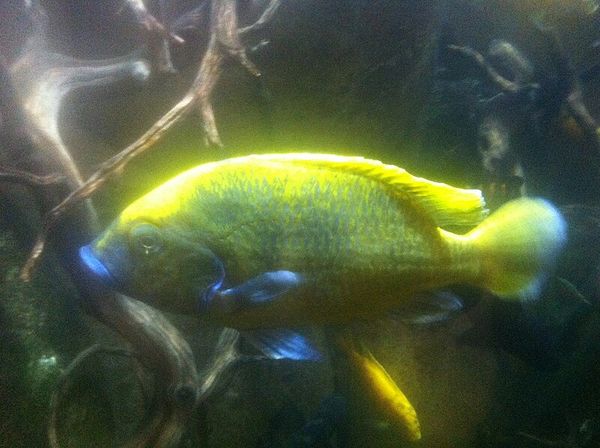
    While male electric blue johanni cichlids are striped tropical fish, with a shocking blue base color and vertical bars across their body, females look entirely different. Female electrics are fully yellow, which can make it slightly challenging to identify this species.

    13. Demasoni Cichlid

    Demasoni-Fish
    • Scientific Name: Pseudotropheus demasoni
    • Common Names: Demasoni cichlid
    • Minimum Tank Size: 55 gallons
    • Adult Size: 3-5 inches
    • Temperament: Aggressive
    • Care Level: Moderate
    • Diet: Omnivore
    • Origin: Lake Malawi, Africa
    • Temperature: 75-82° F
    • Swimming Level: Middle

    Specific to the Pombo Rock ecosystem in Tanzania, the Demasoni cichlid isn’t a common fish to see available. These fish stay in rocky areas, rarely swimming into open water. This means the aquarium should be filled with cracks and crevices for them to live.

    At first glance, this fish might resemble a front cichlid. These fish are light blue with vertical black stripes. There is no immediately noticeable difference between males and females, though males may be slightly larger and more territorial.

    14. Royal Heckel Cross Discus

    • Scientific Name: Symphysodon spp.
    • Common Names: Royal heckel cross discus
    • Minimum Tank Size: 55 gallons
    • Adult Size: 8-12 inches
    • Temperament: Generally peaceful
    • Care Level: Moderate to Expert
    • Diet: Omnivore
    • Origin: South America
    • Temperature: 84-86° F
    • Swimming Level: Middle

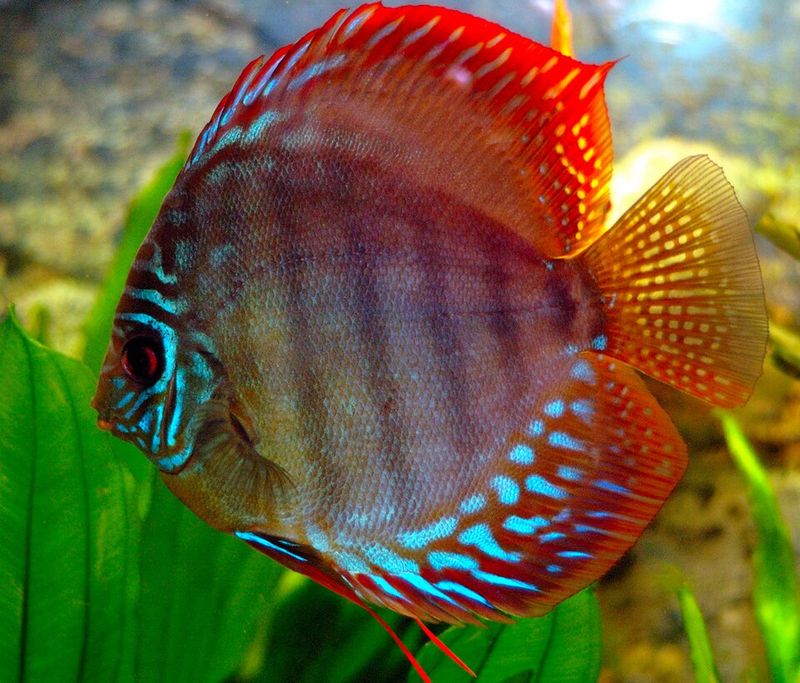
    Discus are beautiful fish that have been selectively bred to display a variety of colors and patterns. The royal heckel cross discus is a mixture of orange, red, and blue with several vertical black stripes that vary in width. These are a specific variety of discus, so they may be more difficult to find and more expensive.

    Discus are challenging aquarium fish. They do best when kept in small groups in a tank of their own. They are highly sensitive to improper water conditions and usually require more maintenance than other fish.

    15. Pencil Fish

    Pencil-Fish
    • Scientific Name: Nannostomus spp.
    • Common Names: Pencil fish
    • Minimum Tank Size: 20 gallons
    • Adult Size: 1-2 inches
    • Temperament: Peaceful
    • Care Level: Moderate
    • Diet: Omnivore
    • Origin: South America
    • Temperature: 75–80° F
    • Swimming Level: Middle to Top

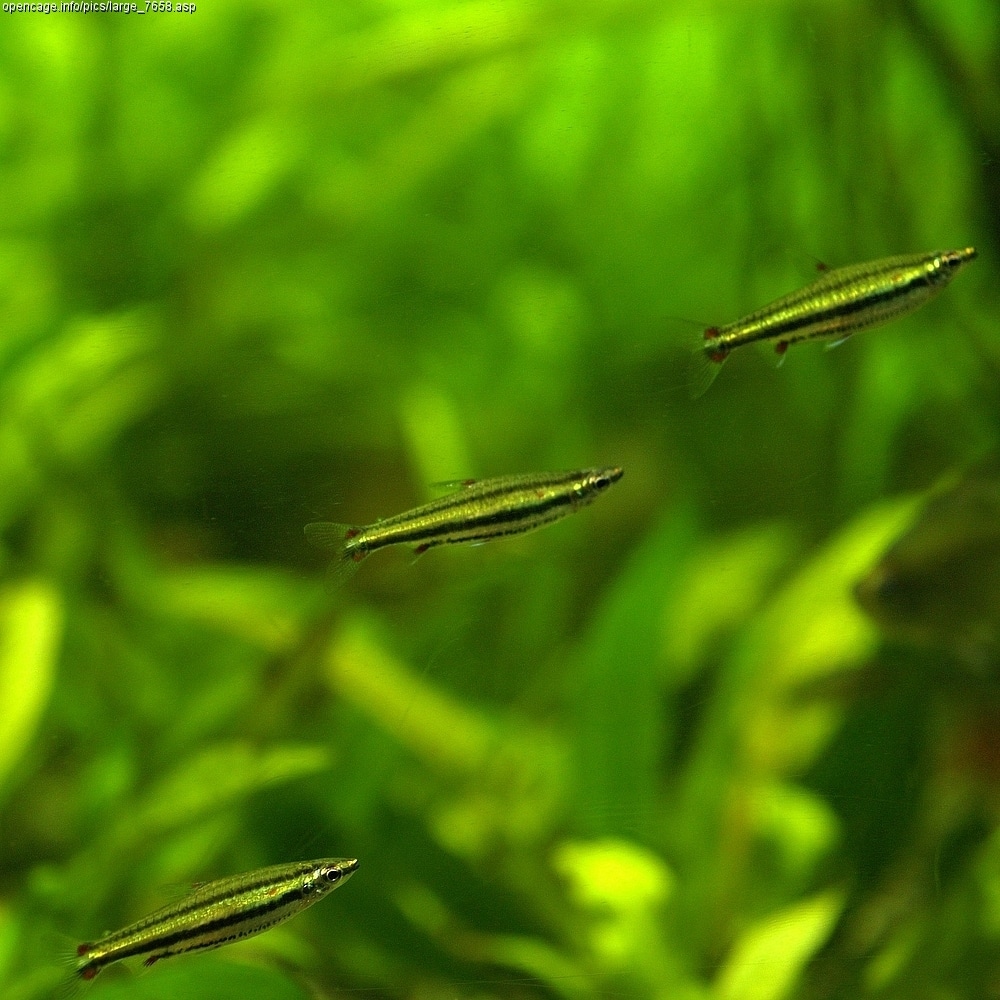
    An unusual schooling fish to find in the average hobbyist’s tank, the pencil fish is named after its swimming behavior that allows them to swim at a 45-degree angle. Pencil fish describes a genus of fish, in which there are almost 20 different species.

    Here are some that are available in the aquarium hobby:

    • Three-lined pencil fish (Nannostomus trifasciatus)
    • Beckford’s pencil fish (Nannostomus beckfordi)
    • Purple pencil fish (Nannostomus rubrocaudatus)

    These fish mostly feature natural coloration with various browns, yellows, whites, and reds. Most of the species also have one or more horizontal black stripes that trail from the head to the tail.

    16. Clown Killifish

    Gardneri-Killifish
    • Scientific Name: Epiplatys annulatus
    • Common Names: Clown killifish, Banded panchax
    • Minimum Tank Size: 10 gallons
    • Adult Size: 1-2 inches
    • Temperament: Peaceful
    • Care Level: Easy
    • Diet: Omnivore
    • Origin: West Africa
    • Temperature: 68-80° F
    • Swimming Level: Top

    Killifish are an often overlooked option for the freshwater aquarium. This black and white fish with red fins looks just like a painted clown face! Sometimes, the white is replaced with a pale yellow.

    Clown killis are small and easy-to-keep fish that are relatively forgiving of water parameters. They don’t school, but they like to be kept in small groups with one male and several females. Otherwise, clown killifish excel in a heavily planted aquarium with other peaceful tank mates.

    17. Black Banded Leporinus

    Leporinus fasciatus
    • Scientific Name: Leporinus fasciatus
    • Common Names: Black banded leporinus, Banded leporinus
    • Minimum Tank Size: 75 gallons
    • Adult Size: 1 foot
    • Temperament: Semi-aggressive
    • Care Level: Moderate
    • Diet: Omnivore
    • Origin: South America
    • Temperature: 72-82° F
    • Swimming Level: Middle to Bottom

    A very popular fish several years ago, the black banded leporinus is still a favorite fish with black stripes. These black and yellow fish increase stripes as they age, with juveniles having five bands and adults having ten.

    These are very interesting fish that can jump high out of the water. Because of this, a tight aquarium hood is necessary. They are also large fish that are aggressive towards their own species and other similar-looking fish. Black banded leporinus originate from high-flow rivers and need similar conditions in the aquarium setting.

    18. Convict Tang

    Convict-Tang
    • Family: Acanthuridae
    • Size: 8 inches
    • Origin: Indo-Pacific
    • Tank Size: 125 gallons
    • Reef Safe: Yes
    • Available As Tank Bred: No

    Convict tangs are a popular saltwater species, possibly because they don’t look like any other tang. These black and white fish have very delicate black stripes along their body. Some individuals may feature varying shades of yellow along their dorsal regions.

    Regardless of their appearance, these are still tangs that require a large tank for swimming and grazing. They are one of the more peaceful species of tang available, and other related species might be overly aggressive. It should also be noted that these fish are often sick or stressed when first introduced into the aquarium.

    19. Three And Four-Stripe Damselfish

    Stripped-Damselfish
    • Family: Pomacentridae
    • Size: 2-4 inches
    • Origin: Western Pacific
    • Tank Size: 10 gallons
    • Reef Safe: Yes
    • Available As Tank Bred: Yes

    Three and four stripe damselfish are a popular addition to the novice’s saltwater aquarium. These are hardy, inexpensive fish that are almost guaranteed to survive all beginner’s mistakes. However, hobbyists quickly find out that these black and white damsel fish are overly aggressive and often need to be rehomed after a few months.

    These are the most pure black and white fish available on this list, with white bodies and three or four broad black stripes accordingly. Aggression levels do not vary much between the two species. If you want a less aggressive damsels, try a yellow tail or azure.

    20. Black And Gold Chromis Damsel

    Black-And-Gold-Chromis
    • Family: Pomacentridae
    • Size: 3-5 inches
    • Origin: Indo-West Pacific
    • Tank Size: 30 gallons
    • Reef Safe: Yes
    • Available As Tank Bred: No

    The black and gold chromis damsel can look a lot different depending on how old your fish is. As a juvenile, this fish is yellow with black stripes that run parallel along the body. As adults, these fish’s faces turn brown while the end half of their body stays yellow.

    Black and gold chromis damsels aren’t commonly seen in the aquarium hobby but should be treated as another species of damsel. That means the same levels of aggression but also the same hardiness and ease of keeping.

    21. Lionfish

    Lionfish
    • Family: Scorpaenidae
    • Size: <18 inches
    • Origin: Indian and Western Pacific Oceans
    • Tank Size: 55 gallons
    • Reef Safe: Yes
    • Available As Tank Bred: No

    There is some discussion about keeping these striped marine fish in the aquarium. The lionfish is native to the Indian and Western Pacific Oceans but has since devastated portions of the Western Atlantic Ocean. Regardless, lionfish are a popular addition to the reef tank; these fish can be kept with colorful corals, but tank mates need to be carefully selected in return.

    There are many species of lionfish, but most are red and white striped. This coloration continues to the dorsal spines and other fins.

    22. Banded Angelfish

    • Family: Pomacanthidae
    • Size: 4-5 inches
    • Origin: Indo-Pacific
    • Tank Size: 75 gallons
    • Reef Safe: With caution
    • Available As Tank Bred: No

    The banded angelfish (video source) is one of the most obvious fish with black stripes on this list! These saltwater angelfish have evenly spaced black and white stripes along the sides of their body. Some individuals have shades of yellow on their bellies.

    The banded angelfish is a type of angel, meaning that they may or may not be reef-safe; they may pick at corals and small crustaceans. These black and white fish can be territorial and difficult to feed. Some helpful tips suggest feeding live sponges, making this a difficult fish to keep for inexperienced hobbyists.

    If you are looking for a more hardy stripped angelfish (though it’s a yellow not black stripe), you can check out the Asfur Angelfish from the red sea, it gets a lot larger, but adapts better in captivity. A Lamarck Angelfish is also another great alternative.

    23. Heniochus Butterflyfish

    Henochus-Butterfly
    • Family: Chaetodontidae
    • Size: 8-10 inches
    • Origin: Indo-Pacific
    • Tank Size: 125 gallons
    • Reef Safe: No
    • Available As Tank Bred: Yes

    The heniochus butterflyfish is an unassuming fish with some special requirements. This is a large black and white striped fish originating from the Indo-Pacific region that cannot be kept with corals. Other species should also be added alongside the heniochus butterfly fish or beforehand as these fish can become aggressive.

    If you have the space, the heniochus butterflyfish is bold with a white body, two broad vertical black stripes, and yellow fins.

    24. Banggai Cardinalfish

    Banggai Cardinal
    • Family: Apogonidae
    • Size: 2-3 inches
    • Origin: Banggai Islands, Indonesia
    • Tank Size: 10 gallons
    • Reef Safe: Yes
    • Available As Tank Bred: Yes

    An endangered species (though all fish purchased now are tank bred), the Banggai cardinal is a beautiful and easy-to-keep small fish with black stripes. These are signature fish of the reef tank and are perfectly compatible with a variety of corals and community fish. These cardinals can be paired and successfully bred at the hobbyist level.

    The Banggai cardinal has two high dorsal fins that extend the appearance of their vertical stripes. These dark stripes are also outlined in a pearlescent white, which further accentuates their appearance.

    25. Flame Angelfish

    Flame-Angel
    • Family: Pomacanthidae
    • Size: 4-6 inches
    • Origin: Pacific Ocean
    • Tank Size: 75 gallons
    • Reef Safe: With Caution
    • Available As Tank Bred: No

    If you’re looking for a fish with less obvious stripes, then the flame angel might spark some ideas. The flame angelfish is a fish with black stripes, but minimally. By this, we mean that the short, mottled black stripes are more like an accent than a feature of this fish’s bright red and orange coloration.

    The flame angelfish is a popular reef fish, though not every individual is safe with corals. Otherwise, these saltwater fish are relatively easy to keep as long as they are added last to the aquarium.

    Bonus Species

    Here are species we run out of space to write but also have black stripes:

    • Sergeant major
    • Kribensis
    • Bolivian Ram

    If we miss a fish you like add it in the comments and we will include it when we update the post.

    FAQs

    What fish has a black stripe?

    There are many fish with black stripes! Some popular freshwater fish include the zebra danio, zebra angelfish, and convict cichlid. Some marine life options are the convict tang, lionfish, and the black and white clownfish.

    What kind of fish is white with black stripes?

    Not all striped fish are black and white, but here are some of the most common species with that color combination: skunk cory, zebra danio, striped damselfish, and Banggai cardinals.

    What type of fish has stripes?

    Stripes are a common pattern to see on both freshwater and saltwater fish that live among plants or corals. This pattern can help break up the silhouette of the fish, helping protect them from predators.

    What is a small freshwater fish with black stripes?

    The smallest species of striped freshwater fish on this list is the clown killifish.

    What is the black and white striped fish called?

    There is no specific name for a black and white striped fish. Sometimes, there is an indication as to the color of the fish in the name, but most times they are named after a behavior, overall color, or scientist.

    What is the fish that looks like a zebra?

    The zebra pleco looks most like a zebra, with bright white and deep black alternating stripes.

    Final Thoughts

    Stripes are a great way to add interest and color to a freshwater or saltwater aquarium. While some striped fish are black and white, others feature bright colors and interesting patterns alongside defined lines. Before adding a striped fish to your aquarium, make sure that the species is compatible with the other fish in the aquarium.

  • Ich On Betta – How To Cure (AND Prevent It)

    Ich On Betta – How To Cure (AND Prevent It)

    Does your betta fish have ich? Fishkeepers all over the world deal with this common illness at one time or another but the good news is that you can save your fish. Ideally, you should always consult a veterinarian or aquarium expert for an accurate diagnosis and advice on a treatment plan. However, vets who specialize in aquarium fish are difficult to find.

    In this guide, I’ll give you some advice on how to diagnose and treat ich on bettas, and run through some practical tips on how to keep ich out of your tanks.

    Let’s get started!

    Key Takeaways

    • Ich is a common illness in betta fish that typically causes white spots on their skin and fins.
    • It is a highly contagious parasitic infection that is fatal to the host fish if left untreated and is easily spread to other tank mates.
    • Ich can be treated using various medications, aquarium salt, and heat treatments. Medications are available from pet stores, veterinarians, and online.
    • Treating aquarium fish without consulting a veterinarian is always risky. Seek assistance if you are not confident in your diagnosis or treatment plan.

    What Is ‘Ich’?

    Ich is a protozoan (single-celled) parasite known scientifically as Ichthyophthirius multifiliis. It is a common infection of Betta fish/ Siamese fighting fish that causes a condition commonly known as white spot disease.

    Ich is fatal if left untreated, so this is an infection that you will need to treat right away. Fortunately, it is often curable if you catch it on time. I’ll cover some treatment options a little later in this guide, but let’s start by getting to know more about the parasite.

    Ichthyophthirius multifiliis Lifecycle

    Ich parasites cannot survive without a freshwater fish to feed on, and their life cycles includes three stages. Understanding this lifecycle is essential for curing your fish and making sure it does not become reinfected.

    Continue reading to learn about the three major life stages of the ich protozoan.

    Life cycle of Ich. The life stages are shown as (A) adult feeding trophont (on fish) with horseshoe-shaped nucleus; (B) Tomites reproducing inside the tomont; (C) infective theronts searching for new fish host.
    Source
    • Trophont – The Feeding Stage

    During the trophont stage, the ich parasite is actively feeding on your fish’s tissues. Unfortunately, the parasite is protected by your betta’s body during this stage, so they are not affected by medicines and other treatments.

    • Tomont – The Reproductive Stage

    Once the ich parasite has finished feeding, it leaves the fish’s body and sinks down to the bottom or attaches to an object in the water. The tomont covers itself in a protective covering called a cyst and then multiplies into hundreds of new parasites. Yikes!

    Experts from the Southern Regional Aquaculture Center report that ich can occasionally form tomonts under the host fish’s mucus layer, which makes them much harder to control.

    • Theront – The Infective Stage

    The developing tomites are still safe from treatment within their protective cyst, but after a few days they hatch out and go in search of a new host. These free swimming parasites are called theronts, and they are not immune to treatment.

    The theronts must find a new fish to feed on to survive and start a new cycle. Therefore, any parasites left in a tank without live fish will eventually die.

    How Does it Spread?

    Ich is highly contagious. It can spread between fish or be introduced on plants or in water that is shared between aquariums. Your betta fish may already have ich when you bring it home from the pet store, or it may catch the parasite from any new fish you add to the tank.

    Diagnosis

    Infected-Betta

    Accurately diagnosing an ich infection requires a microscope and a trained expert, although this widespread freshwater fish illness causes some common symptoms that are usually visible to the naked eye. Let’s take a look at some of the typical signs of ich and symptoms in betta fish.

    Visual Signs

    An ich infection presents with white spots on your fish’s skin and fins, which is why this parasitic infection is often called white spot disease.

    It often shows up first around the gills and fins, but as the infection progresses you may see white spots on any part of the body, including the eye. These white spots are usually quite spread out, rather than clustered in small areas.

    Ich also causes stress which can cause clamped fins and loss of color.

    Behavioral Clues

    Your betta fish may show other symptoms like a lack of appetite and low activity levels. Infected fish will also try to scratch their skin against the substrate or other objects in the aquarium. This is known as flashing and it’s another common sign that your betta fish has ich.

    Treating Ich on Betta Fish

    Where, when, and how to tackle this common fish disease are questions I get frequently. Let’s break down each in detail.

    Where To Treat

    Your first consideration before starting treatment is choosing where to treat your fish. If you have a betta only aquarium without any other animals or live plants, you may simply treat your fish in its tank. However, you may need to move your fish to a separate hospital tank for treatment if you have other animals that are sensitive to ich medications.

    It may also be helpful to move your betta into a smaller hospital tank if your main aquarium is very large. That will give you the freedom to clean the tank more thoroughly and reduce the amount of medication you need to apply.

    Ich is highly contagious, so you should treat all the fish in your aquarium at the same time, even if they don’t look sick.

    When To Treat

    Act fast and begin your ich treatment as soon as possible. This will improve your chances of saving the host fish and preventing the parasite from spreading to other fish in the tank.

    The parasite takes less than a week to complete its life cycle at temperatures in the mid to low 80s, so you can treat this condition relatively quickly in a heated betta aquarium. However, ich cannot be treated during its feeding and reproductive stages so make sure to continue treating for several days to ensure that all the parasites are destroyed.

    How To Treat

    Treating your betta fish with a commercially prepared ich medication is the preferred method and one you can do yourself if you’re comfortable with the process. Some sources state that ich can be controlled through heat treatments alone, and this could be a good option if you don’t have access to medication.

    Continue reading to learn more about these methods.

    Treating with Medication

    Step 1. Clean the tank

    Start by cleaning your tank thoroughly and doing a large water change to improve your water quality and suck up any free swimming parasites in the water. Use a gravel vacuum to suck up as much waste from the substrate as possible. This helps to remove reproductive tomonts before the free swimming parasites can emerge.

    Next, clean your filter media in old aquarium water and remove any activated carbon media that may soak up your chemical treatments.

    In their guide to Ichthyophthirius multifiliis (White Spot) Infections in Fish, experts from The University of Florida’s IFAS Extension recommend cleaning the tank every second day when treating ich in aquarium fish. Just be sure to treat the new aquarium water with a dechlorinator and warm it to the correct temperature to avoid stressing your fish.

    Step 2. Raise the temperature

    The next step toward treating ich in betta fish is to heat up the tank. Raising the temperature of the aquarium slightly does not necessarily kill the ich parasites, but it does speed up their lifecycle, which is important because they can only be destroyed during the free-swimming stage.

    Betta fish live in tropical climates, but they cannot survive in very hot water. A temperature of 82 – 86 degrees Fahrenheit is generally recommended for betta fish ich treatment. Set your heater to this temperature and use a thermometer to ensure that your water remains within this temperature range.

    You may notice your fish breathing up at the surface after increasing water temperature. Increase oxygenation in your tank by aiming your filter outlet toward the surface or, even better, run an airstone.

    Step 3. Chemical treatment

    Treating ich in betta fish typically involves applying a chemical treatment at regular intervals. The recommended dosages and intervals will vary between products, so always follow the instructions and dosage of your chosen medicine.

    When measuring out the dosage, keep in mind that your tank does not only hold water. A 10-gallon tank may hold just 9 gallons, depending on the amount of substrate and decorations you have added.

    If your fish do not recover after treatment, you may be dealing with a different type of infection. In that case, consult a veterinarian for advice because some other conditions such as epistylis can also cause white spots on tropical fish.

    Choosing Ich Medicine

    There are many ich medications on the market, including popular products like Ich X, Interpet Anti-White Spot, and API Liquid Super Ick Cure. The products may be in liquid or tablet form, and their use and dosage varies.

    Best For Ich
    Hikari USA Ich-X

    Ich-X is the best all around medication when it comes to treating Ich

    Buy On Amazon

    The active ingredients in most ich medications include:

    • Malachite green
    • Formalin
    • Copper Sulphate
    • Aquarium Salt

    Method 2 – Heat Treatment

    According to experts from the University of Florida IFAS Extension, it is possible to treat ich in freshwater aquariums by gradually switching between colder water and higher temperatures.

    Their method involves gradually raising the temperature in the tank to 90 degrees Fahrenheit and keeping it there for a full day or 24 hours. The temperature is then gradually lowered to 70 degrees and held there for 48 hours. This sequence should be repeated for two weeks and combined with regular water changes.

    However, there are risks involved when changing water temperatures in your betta tank. Betta fish are pretty hardy, but they prefer temperatures between about 75 and 82 degrees Fahrenheit for long-term care. Lows of 70°F and highs of 90°F are outside of their comfort range and will cause them additional stress.

    Preventation

    Many new fish keepers discover that their fish is infected with ich parasites in the first few weeks after adopting their new betta fish. Unfortunately, you can’t always tell if your fish is infected when you pick it out at the store, but there are some steps you can take to prevent ich from infecting your pet fish.

    Buy Right

    First off, always buy your fish from a reputable breeder, trusted online retailer, or fish store that takes pride in their livestock. Ask the salesperson if they’ve had any problems with illness recently, and look around for any signs of illness in their tanks. Things like torn fins, heavily breathing, cloudy eyes, or white spots are clear signs. Fish should be eating before you purchase them.

    WYSIWYG Available!
    Betta Fish

    Use Coupon Code ASDFISH at Checkout

    Betta Fish are one of the most beautiful varieties of freshwater fish available in the hobby. Easy to care for with plenty of varieties!

    Buy Premium Varieties Buy On Petco Online

    Quarantine

    Ich parasites cannot infect your tank from the air but there’s always a chance of bringing them in with new fish or aquatic plants. Experts from the University of Florida Extension suggest you quarantine new fish for at least a month before adding them to your tank. That way you can keep an eye on them and treat any problems before they spread to your other pets.

    Setting Up A Quarantine Tank

    You can use a plastic container or a glass aquarium as your quarantine tank, but you should run a heater, filter, and airstone to keep your new fish comfortable during this time.

    A new quarantine tank will not be cycled, which can cause dangerous ammonia spikes in the water. Use your water test kit or test strips to monitor water quality and perform water changes when necessary.

    Contain The Infection

    Be careful not to spread the infection if you have more than one aquarium. The parasites can be introduced on equipment like gravel vacuums, aquarium nets, or aquascaping scissors. You should also avoid dumping affected water into or tanks or contaminating or tanks with equipment that has been in the diseased tank. Never dump treated water into local waterways or rivers.

    FAQs

    How do you treat ick on a betta fish?

    A number of medications are available for the treatment of ich on freshwater fish. These products should be used carefully by following the directions on the packaging. You can speed up the treatment process by heating the water in your betta fish tank to 82-86 degrees Fahrenheit, and remove some of the parasites by performing water changes.

    Is Ich fatal to betta fish?

    Betta fish ich is a highly contagious protozoan parasite that is generally fatal if left untreated. However, fish owners can save their pets if they catch the condition early enough and use appropriate medications and treatments.

    What does ick look like on a betta?

    The most common symptom of ich in betta fish is small white spots that look like salt grains. Each white dot is the site where an external parasite is feeding on the fish, causing irritation and a small injury. Infected bettas develop other symptoms like clamped fins and a lack of appetite as the infection affects their immune system.

    Why does my betta have a white spot on his head?

    White spots on a betta fish are often caused by ich. However, a white spot on its head is likely not ich if the spot is larger or fuzzy. These big spots are usually fungal infections or parasitic conditions lie hexamita. Careful observation and taking photos to check with an experienced hobbyist or vet will help determine what it might be.

    Can fish recover from white spot?

    Yes, many fish including Bettas can successfully recover from white spot as long as you treat the condition and catch it early. If you do not treat the condition in time, it’s likely that further damage can be done to the point where a bacterial infection occurs which will ultimately kill your fish. However, in saying that, on the freshwater side of the hobby the outlook is typically good for fish to recover from an ich infection.

    Why is my betta getting white spots?

    Bettas get white spots from being stressed than the parasite infecting them. However, they cannot get infected if the parasite does not exist in the tank. To completely eliminate the chance of ich ever entering your system, you must quarantine all fish, inverts, and plants before they go into your tank. The reality though is that the vast majority of hobbyist will not do this, so keeping stress low and not introducing an already infected fish will lessen your chances.

    Final Thoughts

    Ich is a very common condition that affects betta fish and their tank mates in aquariums all over the world. It is a serious situation, and it can be really distressing to find your pet betta fish covered in tiny white spots. However, betta fish ich is curable, and many fish keepers choose to treat their pets at home with great success.

    Remember to consult a veterinarian if you’re unsure about the diagnosis and treatment plan, and if you are going to treat your own pets, be sure to follow the instructions on the medication.

    Have you treated betta fish ich in your aquarium? Share your experiences in the comments below!

  • Veiltail Betta Fish – A Complete Care Guide

    Veiltail Betta Fish – A Complete Care Guide

    Are you ready to take a plunge into the amazing realm of veiltail betta fish? These mesmerizing creatures are famous for their glorious colors and unique fins that billow like a bridal veil. To ensure your Betta fish can thrive, it’s essential to give them proper care and attention. We will help you provide an ideal home environment with this post, which covers the characteristics, behavior, & requirements of these pretty aquarium fish!

    Let’s get started on our journey as we learn how to keep veiltail bettas happy in their new abode!

    Key Takeaways

    • Veiltail bettas are beautiful fish with long, flowing tails that come in many vibrant colors and can live up to 5 years and grow to 3 inches.
    • Like all bettas, they should be kept in adequate spaces, with 5 gallons being the best size for a solo fish
    • To create a suitable habitat for veiltail bettas, replicate their native environment of slow-moving or still waters with warm temperatures & almond leaves help maintain a healthy environment.
    • Bettas are insect eaters and need insect matter and high protein diets. Food like Fluval Bug bites are excellent for them
    • When choosing tank mates be sure to pick nonaggressive fish. Proper care and monitoring is essential for the health of your veiltail betta.

    Species Overview

    Scientific NameBetta splendens
    Common NamesVeiltail Betta Fish, Siamese Fighting Fish
    FamilyOsphronemidae
    OriginThailand (Southeast Asia)
    DietOmnivore
    Care LevelIntermediate 
    ActivitySlow to Moderate
    Lifespan2 – 5 years
    TemperamentPeaceful (Aggressive to own kind)
    Tank LevelMiddle to top
    Minimum Tank Size5 gallon
    Water Temperature Range76°-81°F
    Water Hardness5 to 20 DH
    pH Range6.5 – 8.0 (for most varieties)
    Filtration/Water FlowLow
    Water TypeFreshwater
    BreedingEgg-layer
    Difficulty to BreedEasy to breed
    CompatibilityCommunity fish (when with other species)
    OK, for Planted Tanks?Yes

    Understanding Them

    Betta splendens, otherwise known as Veiltail bettas or Fancy Bettas, are a popular variety of Siamese Fighting Fish widely recognized for their captivating coloring and long flowing fins. When these beautiful creatures are generally easy to care for in an aquarium, they must be given proper care to ensure their long term health. It is the most common type of betta you will come across in stores and is usually very affordable.

    A deeper understanding about where this type of fighting fish originated from can also aid us in caring for them better. Let’s dive into their background further to learn where they came from.

    Origins And Habitant

    Veiltail bettas are a Southeast Asian species found in countries like Thailand, Cambodia, Indonesia and Vietnam. They populate rice paddies in the wild and were originally kept by locals to breed to fight in betting competitions.

    These Siamese Fighting Fish require calm waters with hardly any current for optimal growth, exactly as it is in their natural habitat. To replicate this environment at home when setting up the tank, avoiding too much flow and maintaining an appropriate temperature range should be given top priority. This will ensure the healthy development of veiltail bettas over time.

    The Fighting Formula

    Thailand’s secret, when it came to fighting betta fish, was in the use of almond leaves. The introduction of almond leaves to a betta tank is incredibly beneficial for veiltail bettas. You can help maintain strong and healthy fish by treating water quality through the release of tannins that lower pH levels, thereby creating an ideal environment for these species1.

    The presence of antifungal and antibacterial agents in this natural resource serves as a mild disinfectant within tanks, which toughens the scales & skin of the fish, making them stronger competitors when it comes to fighting diseases or illnesses. Altogether, adding almond leaves to your aquarium will provide significant benefits to keep your finned friends happy & active!

    Appearance

    Veil-Tail-Betta

    The veiltail bettas are admired by many due to their long, flowing tails that dangle from the fins. Their magnificence is especially seen in the variety of colors they possess, such as royal blue, turquoise, emerald green, fire engine red, and orange, along with bright yellow and near purple for those looking for something different. The male fish boast spectacular colorings and elongated tails versus female fish that are more plain and have shorter fins.

    It’s very important when taking care of your precious veiltail betta to watch out for any signs or changes in coloration which might hint at stress levels being too high, or there might be underlying health issues requiring medical attention quickly if you hope to provide a healthy life environment.

    Size

    Veiltail bettas typically range from 3.8 – 7.6 cm (1.5 – 3 inches) in length, with the males usually being larger than females of this type of fish species. They are the usual size compared to other betta fish species. You may be able to find a giant subtype breed, but most giant types are created from other variants, not the Veiltail. Giants can grow up to 5 inches in length.

    Lifespan

    Caring for veiltail bettas correctly can extend their lives to a span of anywhere from two up to five years or even longer. Establishing and maintaining the ideal environment, providing them with balanced meals, and routinely performing tank maintenance are all key elements in ensuring they remain healthy, which is essential for prolonging the friendship you’ll have with your beautiful fish.

    Behavior And Temperament

    Veiltail bettas are a popular choice for aquarium pets due to their peaceful and calm personalities. They can become aggressive when around other male veiltails in particular. To ensure your tank environment is stress-free, it’s important to select suitable non-aggressive species as companions (more on this later in the post). This helps reduce any potential aggression between fish and encourages harmony among the inhabitants of your aquarium so that everyone remains healthy and happy.

    Veiltail Betta Care

    To ensure a healthy and comfortable living space for your veiltail betta, proper care requires creating an appropriate tank setup with suitable decorations as well as controlling the vital water parameters. These details will play a major role in keeping them healthy and contented.

    The following sections explain how to construct their home properly, pick out adequate furnishings, and regulate essential environmental conditions – all of which are necessary elements for providing the best environment possible for your beloved veiltail betta fish!

    Some advice on how to accommodate them with other fish includes providing plenty of cover such as plants which will create distinct territories lessening any aggression. Keeping male bettas separate from each other so fights don’t occur and selecting tankmates that have similar water temperature requirements along with pH levels. Finally, monitoring all activity carefully around the tank, especially if signs suggesting belligerent behavior start arising between two species living alongside one another.

    Tank Setup And Size

    Having its own tank is essential in providing a comfortable and stress-free environment for your veiltail bettas. This allows them to show off their beautiful colors and fascinating behavior, as well as preserve good health. When setting up the aquarium, it must have at least 4-5 gallons of capacity. Adding a heater will allow you to maintain an ideal temperature between 75°F – 81°F since these species are tropical fish by nature. Also include gentle filtration with slow flow rates that simulate natural conditions being experienced by the veiltail betta wild counterparts.

    Editor’s Choice!
    Fluval Spec V

    The Best Betta Fish Tank

    Best filtration, best light, perfect size and with everything you need to get started. It was made for Bettas!

    Buy On Petco Buy on Amazon

    Important Tank Conditions (Parameters)

    Note while Betta fish do have a labyrinth organ to survive in low oxygen environments, it will still be stressed in poor water. Keep track of these parameters below and consider making a water change if they exceed any of these recommended levels:

    Decorations

    For your veiltail betta’s tank, make sure to pick out gentle decorations that don’t harm its vulnerable fins. Providing suitable objects can encourage natural behavior and improve the health of your fish by offering stimulating activities – think logs, living or silk fake plants, as well as almond leaves. Creating a pleasant atmosphere for them is key!

    Important Water Parameters

    In order to keep your veiltail betta healthy, it is critical that the water parameters remain within certain ranges. The ideal temperature should be between 75-81°F, with a pH level of 6.8-7.5 and general hardness at 5-20 GH. Regular testing can ensure any potential issues are identified promptly so they can be resolved quickly for a safe habitat environment for your fish friend! Monitoring these settings will help you make sure everything stays perfect in this corner of their universe!

    Feeding

    A varied diet is essential for veiltail bettas to get the right amount of nutrients. Feed them twice a day with betta pellets, live food like blood worms and brine shrimp or frozen versions of these foods, as well as insect larvae such as daphnia. Keep in mind not to overfeed since this can lead to several health concerns later on down the line. A carefully balanced meal will help keep your fish happy and healthy overall.

    Choosing Tank Mates for Your Veiltail Betta

    Pygmy Cory

    When selecting tank mates for your veiltail betta, it is important to consider the fish’s temperament and choose suitable companions. The following are all great non aggressive options, as they will help create a peaceful atmosphere in the aquarium:

    These are just several possibilities for a tank mate. I have a better list in our best betta tank mates post.

    Male bettas often regard these types of fish with hostility. Picking compatible tank mates such as those mentioned before can provide an overall stress free habitat ideal for all your aquatic friends, including your beloved veiltail betta!

    Bad Tank Mates

    Tiger Barb Fish

    To ensure peace within the tank environment, steer away from brightly colored or long finned species. After that, avoid these other species as your betta will be bullied or eaten by them:

    Breeding

    If you’re keen on breeding veiltail bettas, a separate tank should be installed in order to guarantee the safety and comfort of the mating pair. Bubble nests are a key component needed for breeding to occur. The male needs to first build its bubble nest then will attract a female. When she lays her eggs, it is up to the male veiltail betta to guard them and put them into his built bubble nest. To save those little ones from being eaten remove the male once the eggs hatch. The female should be removed once mating occurs, as the male will chase away the female from the nest.

    For the successful raising of fry after they hatch out, we must provide an appropriate food supply and consider foods such as infusoria and baby brine shrimp until the fish are big enough to move onto regular foods.

    Common Health Issues

    Veiltail bettas are known to be hardy. Certain ailments can arise if proper care is not observed. Fin and tail rot, columnaris (mouth fungus), as well as fin rot are the main culprits. Other major diseases like vertical death hang also occur. Cleanliness in their tank environment with correct water parameters and an appropriate diet should work wonders when it comes to avoiding these possible health issues.

    Monitoring for any suspicious changes in behavior or physical appearance of your veiltail betta is essential. A healthy fish that looks cheerful will brighten up any aquarium! I have a full post on common betta fish diseases that you can read up on.

    Purchasing

    Find these betta fish is easy as they are very common in virtually any pet store you visit. However, because they are so common, they can also be sold in poor conditions. If you want a rarer variety, visit a specialized local pet store or consider visiting an online merchant.

    WYSIWYG Available!
    Betta Fish

    Use Coupon Code ASDFISH at Checkout

    Betta Fish are one of the most beautiful varieties of freshwater fish available in the hobby. Easy to care for with plenty of varieties!

    Buy Premium Varieties Buy On Petco Online

    When looking at your potential betta pet, look out for the following:

    • White spots
    • Torn up fins
    • Heavy breathing
    • Obvious loss of colors

    Also, note that specialized fish stores will usually not put bettas in tiny containers but will have them in separated out tanks. These are better conditions for them to sell as the water can be filtered, and the fish can be monitored better at the store. My recommendation would be to purchase bettas from a store that sells these fish in separate tanks versus tiny containers, as there is a better chance for you to find a healthy specimen.

    Frequently Asked Questions

    Are veiltail bettas aggressive?

    Veiltail bettas have a relatively low level of aggressiveness, making them favored among those who like to own betta fish. Although they are territorial and can be hostile to other creatures in the tank, they are less aggressive than other types of betta fish.

    What is the lifespan of a female veiltail betta fish?

    A female veiltail betta fish can live for a maximum of five to seven years if it is provided with adequate care, which includes feeding them properly and keeping the tank clean. The typical lifespan tends to be 2-4 years. By making sure that your veiltail betta gets everything they need, you are increasing their chances of living longer and healthier lives.

    How big do veiltail fish get?

    Veiltail fancy goldfish can measure between 2-3 inches in length. There are sometimes giant varieties available that could grow as large as 5 inches in length.

    Which betta is more aggressive?

    Plakat bettas, bred for combat and known to be notably hostile due to their temperamental traits, are the most aggressive variety of Bettas. They exhibit more aggress tendencies compared with other breeds.

    How can I tell if my veiltail betta is stressed or sick?

    Monitoring the color and swimming behavior of your veiltail betta is important, as any changes in either can be signs that they are stressed or unwell. Heavily breathing and unhealthy looking fins are other signs to watch out for.

    Closing Thoughts

    To sum up, veiltail bettas are remarkable creatures sound should be appreciated like any other betta fish breed. Through investigating their origin, habitat needs, behavior and care requirements, we can make sure they have an ideal home environment for them to prosper in. With the correct maintenance of a proper diet and set up your betta will provide you with moments filled with its special beauty as well as amazing behaviors.

    Have you kept this Betta before? If so, let us know in the comments below. We would love to learn more about your experiences with them. Until next time fish keepers!

  • Albino Bristlenose Pleco – A Complete Care Guide

    Albino Bristlenose Pleco – A Complete Care Guide

    Are you looking for a unique and easy to care fish to add to your aquarium? The Albino Bristlenose Pleco is the perfect choice! Not only are they beautiful with their albino coloring, but these plecos are also hardy creatures that will provide interesting activity. This blog post gives details about how to care for them, what diet works best, and even provides insight into breeding possibilities. Dive in now and learn everything there is to know about the Albino Bristlenose Pleco!

    Key Takeaways

    • Albino Bristlenose Plecos are peaceful, algae eaters that need moderate water flow and a balanced diet for optimal health.
    • They can grow to around 3-5 inches in length with the right care and have a lifespan of up to 7 years.
    • Suitable tank mates include guppies, platys, endlers & corydoras catfish – but avoid African cichlids & large aggressive fish!
    • They originate from South America and prefer a pH range of 6.5 – 7.5

    Species Overview

    Scientific NameAncistrus sp.
    Common NamesAlbino Bristlenose Pleco, Albino Bushynose Pleco, Bushy Nose Pleco
    FamilyLoricariidae
    OriginSouth America (Amazon River)
    DietOmnivore
    Care LevelEasy
    ActivitySlow to Moderate
    Lifespan5 to 10 years
    TemperamentPeaceful (males are territorial against other males)
    Tank LevelBottom Dwellers
    Minimum Tank Size20 gallons (76 liters)
    Water Temperature Range72°F to 86°F (22°C to 30°C)
    Water Hardness6 -10 dKH
    pH Range6.5 – 7.5
    Filtration/Water FlowModerate
    Water TypeFreshwater
    BreedingEgg layers
    Difficulty to BreedModerate
    CompatibilityCommunity fish
    OK, for Planted Tanks?Yes

    Understanding Them

    Albino Bristlenose Plecos, also known as bristlenose pleco ancistrus, are a peaceful species of freshwater fish native to South America. With their rare albino coloration and low maintenance requirements making them desirable additions to tanks around the world, these aquatic creatures make up for their sparse wild population by helping clean algae from aquariums with ease. Despite being uncommon in nature due to its restricted geographic range and susceptibility to predators, this does not take away from the appeal of having Albino Bristlenose Plecos living among one’s tank occupants.

    Origin And Habitat

    These adaptable tropical freshwater fish, which originate from the streams and rivers of South America, are easily acclimatized to different kinds of tank water conditions. They make great inhabitants for aquariums in homes around the globe. It’s important that their natural habitat is taken into consideration when setting up a tank. Moderate levels of flow should be maintained as these aquatic creatures prefer this kind of environment over anything else.

    To replicate optimal living standards, it’s best to stick with parameters like pH 6.5 – 7.5.

    Fun Fact: "Some Ancistrus can ingest atmospheric air and utilise it through their highly vascularised stomachs. In extreme cases, they can supplement their oxygen intake by swallowing air1." 

    Appearance

    Bristle Nose Pleco

    Albino bristlenose plecos, also known as albino bristlenose catfish, possess a marbled body. To distinct reddish eyes and tentacle-like appendages named “bristles” that offer protection. Males have longer, more visible bristle tentacles than females. These intriguing creatures are different from other pleco fish species due to their unique looks. The common bristlenose is brown with lighter spots for added interest. These fish will get brighter the healthier they are.

    The fish has a pair of long abdominal fins that are used to land on surfaces and rest. The pectoral fins can also stretch to the surface, make it appear that these fish have legs that can stand them up on surfaces.

    Average Size

    These entrancing fish reach and an adult size of 3-5 inches in length, making them an ideal choice for personal aquariums because they can thrive in tanks of various sizes without taking up too much space.

    Lifespan

    For albino bristlenose plecos, a balanced diet and the right environment will lead to them having an extended life span of up to seven years in your aquarium. On average, these fish live for around five years with proper care.

    Caring for Your Albino Bristlenose Pleco

    To ensure your albino bristlenose plecos live healthy, a balanced diet and a proper environment are paramount components of caring for them. Creating an appropriate habitat with optimal water quality is essential to provide adequate care. Let’s go into tank size, parameters, and the setup itself to learn more about what they need.

    Tank Size Requirements

    For a single Albino Bristlenose Pleco, it is suggested that you use at least 20 gallons for its tank. However, for a community tank setup, my recommendation would be to provide them a 30 gallon tank at a minimum so they have plenty of space. A long tank shape works best in order to maximize the surface space. Picking an appropriate substrate ensures their tentacles remain unharmed as they feed on food found inside the space. Substrates like sand, aquasoil, and gravel work well.

    Water Quality And Tank Parameters

    When it comes to parameters, it is not only important to have the correct parameters, but it is also important to keep them stable. Aim for a pH level between 6.5 and 7.5, a temperature range of 72 – 78°F, with hardness between 6-10 dKH would be optimal for your fishy friend!

    Also, maintain the following nutrient parameters to keep stress low:

    Remember, with these fish, it’s all about stability. Maintain your tank conditions and parameters. Fluctuations will have a negative effect on your fish’s health.

    Creating A Suitable Environment

    Creating a comfy habitat for the Albino Bristlenose Pleco is possible with driftwood, hideaways and objects that have a smooth surface. To make sure they’re contented and without stress, provide hiding spots such as caves, PVC pipes or other decor items.

    These fish take pleasure in basking around on tank bottoms, which means surface space is highly valued. This is why longer tanks are best suited for them.

    Feeding

    It is essential to feed your Albino Bristlenose Pleco a balanced diet in order for them to remain healthy and content. This aquarium species has an omnivorous appetite, largely consisting of algae and plants. There are a few things I want to address here:

    • Bristlenose plecos will eat surface algae and will eat food that falls to the bottom
    • They will not eat poop – no fish eats poop
    • Algae and leftover food is not enough for them. Cleaner fish need other foods to survive
    • Too much protein in their diets will lead to bloat and other health complications for your Pleco

    Plant Based Diet

    Albino bristlenose plecos naturally consume algae and vegetation in their habitat. In an aquarium, driftwood can be used as a source of sustenance for them. Blanched vegetable matter like carrots, cucumbers, zucchini, peas, cabbage leaves, or even parboiled lettuce are great alternatives to provide essential nutrients.

    Of all the vegetables listed, I’m the biggest fan of Zucchini. Albino bristlenose plecos go nuts for them and will happily chew them until there is nothing left. It’s the best set it and forget it food you can use for them aside from wafters.

    Spealing of, adding special types of wafers made from algae is also beneficial for the albino bristlenose plecos’ diet overall.

    Great For Bottom Feeders!
    Hikari Algae Wafers

    Algae wafers are a great way to directly feed your bottom feeding fish. They are especially effective for larger fish like plecos

    Buy On Amazon Buy On Petco

    Protein Sources

    Albino Bristlenose Plecos require a mostly plant based diet, with occasional bits of protein to maintain their health. Examples are live bloodworms, black worms, and brine shrimp. It is important to monitor these fish in order for them to be fed adequately without overfeeding, which can lead to digestive issues due to gastrointestinal blockages.

    Behavior And Compatibility

    Albino bristlenose plecos are peaceful fish that can be easily kept in a community tank alongside other non-aggressive species. It is important to keep an eye on aggressive or similarly shaped types of fish as they may pose some stress and rivalry for resources among the inhabitants.

    Bristle plecos are noctural fish. They will come out more at night to feed and will take their time during the day to rest in caves or under shelter provided for them. You can use this to your advantage to feed them wafers when your other fish are asleep in the tank.

    Suitable Tank Mates

    Fortunately, there are many great fish compatible with albino bristlenoses like:

    As long as the tankmates aren’t nippy or territorial to the same bottom space of the tank you have a good chance for them to be compatible tank mates

    Bad Tank Mates

    it’s best to avoid certain species such as African cichlids, angelfish or goldfish due to potential competition around food and territorial disputes. Large aggressive fish should also be avoided as they may attack or attempt to eat the smaller Albino Bristlenose Pleco. Stick to large pleco species for these types of fish instead.

    Also, avoid any fish that are bottom dwellers. Creatures like crustaceans and shrimp will create territorial disputes. Some cichlid species also prefer to be at the bottom, like shell dwelling dwarf cichlids which will become aggressive towards your pleco fish. However, snails are perfectly safe with these plecos. They will not brother or attempt to eat them.

    Breeding

    Breeding albino bristlenose plecos can be a rewarding experience, especially during the winter months when they usually spawn. Knowing how to identify their genders and provide them with ideal spawning conditions are important aspects of successfully breeding these fish.

    Here are a few points about the process when it comes to breeding these fish:

    • Fish need to be at least 1 year old in order to breed
    • You will need some form of cave for breeding to take place as the male will need to claim territory
    • Once the male claims a cave, he will attempt to attract the female to it
    • During this time, the female will eat more to gain weight and produce eggs
    • The male will then attract the female and trap her inside the cave
    • The female will then lay the eggs in the cave where the male will guard them until they hatch

    Once the fry venture out of the cave, they can be fed the same foods as their parents. The best food to provide would be Zucchini, as the fry will happily eat it.

    A breeding tank should be around 30 gallons in size to give space needed to raise fry. Note that plecos will only guard the eggs until they hatch. After the fry hatch, they are on their own. It is ideal to remove the adults once the fry hatch so that they can be raised without the parents. To roughly takes 10 days for the eggs to hatch once they are laid in the cave.

    Note that young fish are more prone to nutrient and pH swings. Extra care should be taken to ensure tank parameters stay ideal.

    Identifying Gender

    It is possible to tell the gender of a fish based on bristle length, with males displaying longer and more obvious bristles than females. Males also have a lot more bristles. The differences between the two will become more obvious as they get older.

    To ensure successful breeding, it’s suggested that one male be matched up with one or two females: this ratio increases chances for healthy offspring from the spawning process. Knowing how to identify your fish by gender can help you achieve these results.

    Common Health Problems

    Albino Bristlenose Plecos can be resilient creatures, yet they may still contract diseases if their habitat is not adequately maintained. Keeping a watchful eye on the fish and controlling water quality is key to protecting them from bacterial, fungal, or parasitic infections caused by high ammonia or nitrate concentrations. Thus, it’s essential that regular cleanings of tanks with appropriate levels of these elements in order to support health in Albino bristlenose species (and other types of fish).

    Some common diseases include:

    Also, look for warning signs from your pleco, such as them going to the surface to gulping air. This is them using their breathing ability for survival, which was mentioned earlier. Plecos should not be venturing to the surface unless they are trying to eat something. If you see this behavior, this is a warning sign that parameters are off or there is a lack of oxygen in the tank.

    Frequently Asked Questions

    How big do albino Bristlenose plecos get?

    The Albino Bristlenose Pleco, usually not growing larger than four inches in a home aquarium, is capable of reaching up to six inches max size in some cases.

    What size tank for albino Bristlenose catfish?

    For optimal breeding, keep your albino bristlenose catfish in a 30-gallon tank with water temperature between 73 and 85 degrees Fahrenheit and pH level of 7.

    How long do Bristlenose plecos live for?

    Your bristlenose pleco can be expected to live up to 10 years if it is cared for properly. Taking the appropriate measures with regard to your fish’s care will ensure that you get rewarded with its long lifespan.

    What color are albino Bristlenose plecos?

    The Albino Bristlenose Plecostomus is a freshwater fish species native to South America that has whisker like appendages around its mouth and nose, which help it search for food. It is purely white or with a yellowish hue with red eyes.

    What do Albino Bristlenose Plecos eat?

    Albino Bristlenose Plecos mainly consume algae and plant matter, sometimes supplemented by a bit of protein like bloodworms or brine shrimp. They primarily are plant based and enjoy bleached vegetables like Zucchini.

    Are Albino Plecos Rare?

    Yes, they are pretty rare in the wild. Their genetic mutation makes them easy to spot for predators so they are not as numerous as in the the aquarium hobby.

    Closing Thoughts

    In conclusion Albino Bristlenose Plecos are a charming species of freshwater fish that make an excellent addition to any aquarium. Owing to their attractive looks and amiable character in combination with the low maintenance upkeep required for them. They’re ideally suited for both experienced aquarists as well as those just beginning out.

    Have you kept these fish before? Let us know about your experience in the comments below. Thank you for reading and see you next time!

  • 15+ Types Of Blennies (That You Can Keep In Your Tank)

    15+ Types Of Blennies (That You Can Keep In Your Tank)

    Ask any saltwater hobbyist and you’ll find that one of their favorite fish belongs to the blenny family. Marine blennies are small yet full of personality and color that bring excitement to the lower portions of any reef tank. Not only are these fish the perfect size for any aquarium setup, but they are perfectly happy with almost any species of reef fish. They’re fun and easy to keep and might even clean up some nuisance algae along the way.

    Here are some of the best and most popular types of blennies available for the saltwater aquarium and how to take care of them!

    Takeaways

    • Blennies are some of the most popular marine aquarium fish due to their hardiness, personalities, and colors as well as their compatibility with tank mates and invertebrates.
    • Some popular choices include the Tail Spot, Lawnmower, Midas, and Stripped blennies
    • Some blennies have been known to pick at corals, so it’s important to choose the right species for your tank.
    • Other blennies are proficient algae eaters and can clear a tank of nuisance algae, like hair algae.
    • Blennies come in all shapes and sizes and are kept in pico, nano, or full reef setups.

    Introduction

    Blennies are some of the most popular fish available in the saltwater aquarium hobby. These fish usually stay under 5 inches long, have a peaceful demeanor, and are reef safe. This makes them perfect for pico, nano, and full sized setups. All species require at least 10 gallons.

    These fish are enormously varied in coloration, with some being bright yellow and others being pitch black. They are easily recognizable by their slender bodies and short faces with whisker-like appendages. These marine aquarium fish groups are even more identifiable by their unique behavior, including using their pectoral fins to perch on rocks and glide between crevices. These fish are full of personality as they hop from one rock to the next, watching as the world turns around them.

    It’s also something to note that many blennies do not actually have a swim bladder. These blennies exhibit a rock skipper type of behavior, which means rockwork important to have as pat of the tank.

    Some species of blenny excel at eating algae and can be used to control growth as long as dietary needs are met in the long term. On the other hand, there are more carnivorous species that require additional protein on top of a plant based diet. Regardless, these fish are hardy and adaptive and will readily accept most live, frozen, and freeze-dried foods.

    Types Of Blennies

    With so many different types of blenny available in the aquarium trade (Our channel source), there is a species that’s right for everyone! Just keep in mind that most blennies do not get along with each other or with similar-looking fish, so it’s generally best to keep one blenny per tank unless the system is especially large.

    1. Lawnmower

    • Scientific Name: Salarias fasciatus
    • Adult Size: 4-5 inches
    • Origin: Indo Pacific
    • Tank Size: 30 gallons

    The lawnmower blenny isn’t the most colorful marine aquarium fish species, but these nano-sized bottom-dwellers are easy to keep in a community tank setup.

    Also known as for it’s more common name the algae blenny or sailfin blenny, lawnmower blennies are a popular addition to aquariums struggling with algae problems. While eager herbivores, the aptly named lawnmower blenny can be picky about what kind of algae they eat. This can be frustrating to hobbyists looking to eradicate a hair algae problem and their blenny completely ignores it. It should be said that these preferences are largely based on an individual scale.

    The lawnmower blenny originates from the Indo-Pacific and can be found around reef ecosystems. They are often found alone but may form pairs in the wild. In the aquarium setting, they are generally aggressive towards their own species but are completely safe with other reef species.

    2. Tail Spot

    Tailspot-Blenny
    • Scientific Name: Ecsenius stigmatura
    • Size: 2-3 inches
    • Origin: Western Pacific Ocean
    • Tank Size: 10 gallons

    The tail spot blenny is one of the most popular species for the nano aquarium under 40 gallons. These fish stay relatively small and have a beautiful orange-brown coloration that other species can’t offer. The tail spot blenny is obviously named after its small black and white-outlined spot at the base of its tail fin.

    In the aquarium, tail spot blennies offer a burst of personality, which makes them easy to pair with other community saltwater species. However, these fish may become shy if kept with overly active or aggressive fish.

    These fish are labeled as herbivores but rely on small crustaceans and invertebrates for some protein as well. They are not generally considered algae eaters but may pick at some film algae and other tufts of longer algae that may be present.

    Tail spot blennies originate from the Western Pacific Ocean, along the coasts of the Philippines and Indonesia. There, they are found in sheltered reefs, sometimes in small groups.

    3. Bicolor

    Bicolor-Blenny
    • Scientific Name: Ecsenius bicolor
    • Size: 4 inches
    • Origin: Indo-Pacific
    • Tank Size: 30 gallons

    Similar to the tail spot blenny in personality and color, the bicolor blenny is another popular choice of blenny for reef tanks. These fish are half grey and half orange, which makes them camouflage among the rocks when facing forward and provide a splash of color once they turn away.

    The bicolor blenny is slightly larger than the tail spot blenny and needs a larger tank of 30 gallons or more. It should also be said that these fish have been known to nip at corals, especially if not provided with an adequate diet. Though this may be the result of mistaken identity of algae or messy eating of other food, some blennies might just have an appetite for corals. In general, though, these fish are perfectly reef-safe.

    Bicolor blennies originate from reef systems throughout the Indo-Pacific. They form distinct mating pairs in their natural habitat but can become aggressive towards similar-looking fish in the home aquarium.

    4. Midas

    Midas-Blenny
    • Scientific Name: Ecsenius midas
    • Size: 4-6 inches
    • Origin: Indo-Pacific
    • Tank Size: 30 gallons

    Another fan favorite, the Midas blenny is named after its bright gold appearance. These are one of the most boldly colored blenny species available. They also have a slight eel-like appearance, especially when they swim.

    Unlike the previous blenny species on this list, Midas blennies are omnivores that need a healthy balance between available algae and supplemented protein-based foods. These marine fish are also one of the larger aquarium blennies available, growing to be 6 inches long. While relatively long fish, Mids blennies claim a rock territory and tend to stick with it. They can become aggressive towards other fish that might try to invade their territory, especially in smaller tanks.

    The Midas blenny originates from a variety of reef ecosystems throughout the Indo-Pacific. Interestingly, these fish can be found living alongside other similar-looking species and may even change appearance when moving through the water column.

    5. Striped

    Stripped-Blenny
    • Scientific Name: Meiacanthus grammistes
    • Size: 5 inches
    • Origin: Western Pacific Ocean
    • Tank Size: 30 gallons

    Also known as the striped fang blenny, striped blennies are venomous blennies that can be safely kept in the home aquarium.

    These are very interesting fish that are generally harmless unless provoked. Striped fang blennies have fangs along with venom glands that are used to attack predators. This venom causes the predator to relax and release the fish. This unique venom is currently being studied for medical value.

    Otherwise, the striped blenny is a colorful fish with black and white alternating stripes and a faint yellow head. They live throughout the Western Pacific Ocean in schools, though they are mostly kept solitary in the aquarium setting.

    6. Orange Spotted

    Orange-Spot-Blenny
    • Scientific Name: Blenniella chrysospilos
    • Size: 5 inches
    • Origin: Indo-Pacific
    • Tank Size: 30 gallons

    Also known as the red spotted blenny fish, the orange spotted blenny is named after its white and orange-red mottled color. While this might seem like a high-end blenny due to its bright coloration, orange spotted blennies are widely available and affordable. They’re also very hardy and adapt well to full reef setups (image source).

    While a herbivorous species, the orange spotted blenny has been seen picking at some corals from time to time. Like other blennies, this may be an accident or on purpose, and appetite will vary from one fish to the next.

    Orange spotted blennies originate from the Indo-Pacific and feed on coral reefs covered with microalgae. Most often, these fish will claim a hole in their rockwork as their territory and live peacefully with other fish as long as they stay out of their space.

    7. Scooter

    Scooter-Blenny
    • Scientific Name: Synchiropus ocellatus
    • Size: 3-5 inches
    • Origin: Pacific Ocean
    • Tank Size: 30 gallons

    Though these fish are commonly known as scooter blennies, they are actually not true blennies and belong to the Callionymidae family instead. These fish are often seen alongside the red scooter blenny (Synchiropus stellatus) and green mandarin (Synchiropus splendidus).

    In recent years, marine hobbyists have fought to inform novice aquarists about the true care requirements these fish need. Unfortunately, scooter blennies and mandarins are often showcased alongside easy and hardy fish, which makes hobbyists believe that they are also easy to keep. They are also relatively inexpensive, which makes them more appealing.

    The truth is that scooter blennies are very difficult to keep for even the most experienced marine aquarist. These fish require a near-constant supply of copepods and other small invertebrates that they can pick at. In fact, they are named scooter blennies because of the stop-and-go motion they display while hunting for food along the substrate and rockwork.

    To successfully keep a scooter blenny in the saltwater aquarium, the tank must be fully mature and copepods must be farmed. Otherwise, these fish will slowly starve to death.

    8. Starry

    Starry-Blenny
    • Scientific Name: Salarias ramosus
    • Size: 5-6 inches
    • Origin: Western Central Pacific Ocean
    • Tank Size: 30 gallons

    The starry blenny, also known as the snowflake blenny, is a beautiful species of blenny that is easy to find and easy to keep. These fish have a reddish-brown base color that is spotted with tiny white dots that earn them their name.

    These fish are very similar in behavior to the lawnmower blenny and will hop from one rock to the next searching for food. They are mainly herbivorous and get a good amount of their nutrition from the algal films that are already growing in the tank. However, starry blennies will readily accept other common live and frozen foods.

    The starry blenny is native to the Western Central Pacific Ocean. They are found in groups in protected reefs and estuaries but do best as one of the only bottom-dwellers in an aquarium setup.

    9. Smith’s

    • Scientific Name: Meiacanthus smithii
    • Size: 3 inches
    • Origin: Indo-West Pacific
    • Tank Size: 10 gallons

    The life of the party, the Smith’s blenny (video source), also known as the disco blenny, is a small fish that can fit in many reef tank setups. These fish are yellowish-silver with a black stripe that runs along their dorsal fin. Like others in the Meiacanthus taxonomic group, the Smith’s blenny has venomous fangs that it can use to escape predators.

    Smith’s blennies do well in a minimum tank size of 10 gallons as long as there is plenty of live rock for them to hide. Otherwise, they will need at least 30 gallons or more.

    10. Harptail

    • Scientific Name: Meiacanthus mossambicus
    • Size: 3-4 inches
    • Origin: Western Indian Ocean
    • Tank Size: 30 gallons

    Harptails, also known as the Mozambique fangblenny (video from the Basement Reef), are venomous blennies originating from the eastern coast of Africa. They are found on small coral reefs that feature more live rock than coral. These fish use their venom to bite the mouths of other fish if ingested. The predator will then hopefully release the blenny, unharmed.

    Not much is known about the natural behavior of harptail blennies, but they are a good tank mate choice for reef aquariums with minimal invertebrates. While these fish mainly stay in tiny nooks in the rockwork, they will move through the tank looking to eat small crustaceans and other micro food. Harptail blennies are omnivores, but they are more likely to accept brine shrimp and mysis shrimp than blanched vegetables.

    11. Canary

    • Scientific Name: Meiacanthus oualanensis
    • Size: 5 inches
    • Origin: Western Central Pacific Ocean
    • Tank Size: 30 gallons

    The blenny with the brightest color, the canary blenny is a beautiful deep orangey-yellow. Another Meiacanthus spp., the canary blenny has venomous fangs that it can use to escape the mouths of predators. It should be noted that canary blennies can become aggressive fish if kept with other similar-looking species, like the Midas blenny.

    Canary blennies (video source) originate from the Western Central Pacific Ocean, specifically around the coasts of Fiji. They are omnivores and will appreciate a balanced diet of plant- and meat-based foods. High-quality food, like vitamin-enriched brine shrimp, will help increase your blenny’s already vibrant colors.

    12. Blackline

    • Scientific Name: Meiacanthus nigrolineatus
    • Size: 3 inches
    • Origin: Western Indian Ocean
    • Tank Size: 10 gallons

    The backline goby is named after its dark, black line that cuts across the dorsal of the fish. The front of the head is greyish-blue and the tail is pale yellow. This is a smaller species of blenny and can comfortably be kept in a 10 gallon size tank as long as there are plenty of hiding spots. Blackline blennies are reliably reef-safe and are unlikely to pick at present invertebrates.

    These fish are native to the Western Indian Ocean, namely in the Red Sea and the Gulf of Aden. They are a type of fang blenny and are capable of delivering a venomous bite.

    13. Black Sailfin

    Brown coral blenny (Atrosalarias fuscus)
    • Scientific Name: Atrosalarias fuscus
    • Size: 4-5 inches
    • Origin: Indo-Pacific
    • Tank Size: 30 gallons

    The black sailfin blenny moves in the crevices of an aquarium nearly undetected. These fish are very dark brown and sometimes black. They may have some dark red or yellow highlights.

    These fish are most aquarist’s favorite specimens as they can easily tackle a green hair algae problem. However, like most blennies that eat algae, appetite will vary from one individual to the next; while one black sailfin might clear a tank of hair algae, one might leave it untouched in another. That being said, these fish still require a mainly herbivorous diet, supplemented with spirulina and blanched vegetables.

    The black sailfin is native to sheltered reefs and estuarine ecosystems throughout the Indo-Pacific Ocean.

    14. Two Spot

    • Scientific Name: Ecsenius bimaculatus
    • Size: 1-2 inches
    • Origin: Western Pacific Ocean
    • Tank Size: 10 gallons

    The tail spot blenny, also known as the twin spot blenny, is a perfect fish for a nano or pico aquarium. These fish only grow to be a couple of inches big and stick to one spot in the tank, meaning that hobbyists have had luck keeping them in aquariums as small as 5 gallons. Bigger tanks may allow multiple two spots as these fish are generally peaceful to one another. However, they will easily be outcompeted and intimidated by more active and aggressive species.

    The two spot blenny is specific to parts of the Philippines and northeast Borneo. They are often found alone on shallow reefs and especially find shelter among marine sponges.

    15. Linear

    • Scientific Name: Ecsenius lineatus
    • Size: 3-4 inches
    • Origin: Indo-West Pacific
    • Tank Size: 30 gallons

    The linear blenny is identified by the white line that cuts through the segmented brown patches on its dorsal portion; the underside of the fish is nearly pure white, which is an unusual color to see on a bottom-dweller.

    This species is peaceful and reef-safe like other fish in its own taxonomic group. Some care should be given when placing these fish with corals though as they have been known to nip at small polyp stony (SPS) corals and immature colonies of large polyp stony (LPS) corals.

    The linear blenny can be found throughout much of the Indo-West Pacific in distinct pairs. They live in coral-rich shallow waters but may venture to greater depths in varying regions.

    16.Molly Miller

    • Scientific Name: Sartella cristata
    • Size: 4 inches
    • Origin: Carbbean Ocean
    • Tank Size: 30 gallons

    The Molly Miller Blenny (video source) also known as the Combtooth blenny, is a fish with a thick appearance than the others on this list. Their head has two hair like appendages and they have larger eyes. It’s also one of the few fish that are reported to eat Aiptasia as well as cyanobacteria. It’s one of the lesser known blennies that offer a lot of utility to their owners.

    Blenny Vs Goby

    It’s often common to mistaken both of these species if you are new to the hobby, but there are several signs to know that differentiate them. As described by Jeff Kurtz from TFH Magazine:

    Gobies typically have two distinct dorsal fins while blennies (with exceptions, of course) have one long continuous dorsal fin. The aforementioned cirri can also be a distinguishing characteristic, as they are not present on gobies.

    The pelvic fins of many gobies are fused together. In some species, the fins are fused to the extent that they form a suction disc, which helps secure the fish to its rocky purchase on the reef. However, one could argue that fused pelvic fins are not necessarily easy to spot while looking over a specimen that is resting on the bottom of a tank at your local aquarium store.

    TFH Magazine

    FAQs

    What is the best blenny for a reef tank?

    The best blenny will be the one that fits your tank best. In general, algae blennies, starry blennies, Midas blennies, and tail spot blennies seem to be the most commonly kept.

    There are a few things to consider before choosing a blenny for your tank though, like if the species is known for eating coral and invertebrates, and if they rely on natural-growing algae for a big chunk of their diet.

    What is the best blenny for eating algae?

    Lawnmower blennies are some of the best algae-eating fish available. That being said, some individuals can be picky eaters and might not even touch the algae growing in your tank.

    Another good alternative would be the starry blenny.

    Can you have 2 blennies in a tank?

    In general, it’s recommended to only keep one bottom-dwelling species of fish per aquarium, including blennies. Most species of blenny are aggressive towards similar-looking fish in terms of shape and color.

    It is possible to keep a bonded pair of blennies together though, and some hobbyists do keep multiple females or males of the same species together if the tank is big enough.

    What marine fish is similar to the blenny?

    Goby fish are sometimes mistaken as blennies, like the scooter goby. These fish belong to the Gobiidae family and feature the same blunt heads and elongated bodies that blennies do.

    What is the most peaceful blenny?

    Most species of blenny found within the aquarium hobby are peaceful and reef-safe. In fact, some blennies are so peaceful that they get overwhelmed by more active fish, like the two spot blenny.

    As long as you only keep one blenny species in the lower level of the water column, then these fish should get along with the majority of tank mates.

    What type of fish are blennies?

    Blennies are bottom-dwelling fish that belong to the Blenniiformes order. Nearly 900 different species of blenny have been described, though many aquarium blennies originate from the Meiacanthus and Ecsenius genera.

    Only certain members of this family are considered to be true blennies:

    • Blenniidae
    • Chaenopsidae
    • Clinidae
    • Dactyloscopidae
    • Labrisomidae
    • Tripterygiidae

    What do blenny fish do?

    Many species of blenny are bottom dwelling fish that originate from shallow water ecosystems, often with rich coral life and diversity. These fish swim from one rock to the next, perching and waiting until they find algae to graze on or small invertebrates.

    It is also not uncommon to find a blenny digging a crevice out from between a rock and the substrate as a home base.

    What does a blenny fish eat?

    Some blennies are only herbivores, while others have a meat-dependent omnivorous diet. What your blenny eats will depend entirely on the specific type of blenny. If keeping a mainly herbivorous species, then the aquarium should be mature with algae. Supplemental plant based foods may also need to be given.

    Final Thoughts

    Saltwater blennies are a staple of the marine hobby. These saltwater fish bring life and color to the bottom of the aquarium, get along with most tank mates, and can be safely kept with a variety of corals and invertebrates. That being said, some species of blenny have been known to pick at corals, but there are plenty of species that offer algae eating services as well.

  • Iridescent Shark Care Guide: Tank Mates, Housing, and Feeding

    Iridescent Shark Care Guide: Tank Mates, Housing, and Feeding

    Have you seen an Iridescent Shark at your local fish store? They usually are cute and at the store. However, they get massive and the vast majority of aquarist will not be able to keep them. This is an article much like the Redtail catfish I create on this blog so I educate others about how inappropriate they are for most tank setups.

    If you are still willing to take up the challenge after reading this article, I’ll provide all the information needed to successful keep one – from habitat specifics such as where they’re found naturally to details on how best to look after them, including feeding requirements, behaviors around other species plus any health worries associated with keeping them in captivity. Lastly there is even advice on tackling breeding challenges for those feeling confident enough! If you feel up for taking on caring for an iridescent shark then join us now!

    Key Takeaways

    • Iridescent sharks require proper tank setup, water parameters, and balanced diet to maintain health.
    • When selecting tank mates for iridescent sharks choose larger peaceful aquarim fish like silver dollars and tinfoil barbs.
    • Monitor water quality and exercise caution when approaching the tank as they can be startled easily.

    Species Overview

    Scientific NamePangasius hypophthalmus
    Common NamesIridescent Shark, Sutchi Catfish, ID Shark, Sutchi Catfish
    FamilyPangasiidae
    OriginMekong River Basin in Southeast Asia
    DietOmnivore
    Care LevelAdvanced
    ActivityActive
    Life span15 – 20 years
    TemperamentPeaceful (Will eat smaller fish)
    Tank LevelAll
    Minimum Tank Size300 gallons
    Water Temperature Range72°F to 79°F (22°C to 26°C)
    Water Hardness2-20 dKH
    pH Range6.5 – 7.5
    Filtration/Water FlowHigh
    Water TypeFreshwater
    BreedingMostly commerciality
    Difficulty to BreedDifficult
    CompatibilitySimilar sized fish only
    OK, for Planted Tanks?No

    Introduction

    The iridescent shark, otherwise known as the sutchi catfish or siamese shark (pangasianodon hypophthalmus) is a species of scaleless freshwater fish native to Southeast Asia’s Mekong and Chao Phraya river basins. It can grow up to an impressive 52 inches in length with weights over 40 kg, being one of the largest fish available in the aquarium trade.

    Despite its alluring appearance that attracts aquarists from around the world, most home tanks are simply too small for this animal, making it difficult for them to live their full lifespan in captivity due to inadequate space and care needed. Only experienced owners with large tanks should consider adding one of these sharks into their aquariums

    Natural Habitat And Distribution

    Iridescent sharks (also known as iridescent catfish) are typically found in the depths of Southeast Asia – specifically, Mekong and Chao Phraya rivers. Due to loss of habitat, contamination, as well as overfishing, these creatures now find themselves classified on the IUCN Red List’s endangered species list. Despite this tough situation they encounter out in nature, iridescent sharks remain popular in aquariums across the world today.

    Researchers and officials from the Wonders of the Mekong said that the Cambodia’s Upper Mekong River system is likely the last surviving natural habitat for the endangered Pangasianodon hypophthalmus or iridescent shark.

    Fishbio Report

    Their skill for getting around their natural environment even when it is difficult to see relies upon long barbels that produce sensory data, which helps them get by successfully during darker periods. The way they reproduce ties into their home surroundings considerably. Something we look into later throughout our guide.

    Appearance

    The iridescent shark is a captivating species, starting off its life with skin shimmering with an entrancing rainbow of colors that darken to solid grey as they age. Its defining features are the sail shaped dorsal fin and other fins, which become darker in shade. Juveniles will have a black stripe along their lateral line and a second stripe below it. It also has two pairs of barbels attached to their face along with large eyes and forked caudal fin.

    Iridescent-Shark

    A rare variant appears among these sharks – the albino iridescent sharks – completely white in coloration except for bright red eyes, making them highly sought out by aquarists wishing for something different from common aquarium dwellers. The albino iridescent shark care requirements remain unchanged when compared to regular non-albino counterparts, so make sure you’re ready before getting one!

    All the same characteristics give this unique creature great visual appeal. Regardless of whether it’s normal or not, certain shades may set apart some members more than others, like those striking albino versions.

    Size And Growth

    Iridescent sharks can reach up to a formidable 52 inches in length and weigh over 40 kg. They grow at an accelerated rate, quickly reaching adult size in just two or three years’ time. Consequently, these large fish need spacious tanks for their optimum welfare and comfort. I have see them outgrow their tanks in less than 4-5 month often times eating smaller fish on the way.

    Not many aquarists are able to accommodate such sizable creatures when they become adults! Unfortunately, some people buy juvenile iridescent sharks without realizing the space that they will eventually require as adults – something which often leads to cramped living conditions filled with stress, which can take its toll on the health of the shark catfish, adversely affecting lifespan expectancy.

    It is critical for prospective owners of this species to plan ahead before bringing one home so that you know what level of care (especially concerning adequate housing space) must be offered throughout their entire lifetime; otherwise, rehoming may prove challenging down the line if circumstances change unexpectedly later on.

    Caring for Your Iridescent Shark

    Caring for iridescent sharks requires a spacious, healthy tank with suitable water parameters and an appropriate environment to ensure their wellbeing. When selecting compatible tank mates it is also important to provide them with a balanced diet. In order to give your shark the best care possible these are some of the specifics you should be aware of:

    • Tank size and setup must meet specific guidelines;
    • Water filtration needs constant monitoring as well as careful management when maintaining certain conditions;
    • Feeding recommendations focus on delivering essential nutrients that improve overall health while avoiding overfeeding or malnutrition dangers;

    We’ll go over each point in the sections below.

    Tank Size And Setup

    When it comes to keeping iridescent sharks, a minimum tank size of 300 gallons is a must. For each additional shark, an extra 150 gallons should be provided for optimum comfort and safety. Undersized tanks can lead to harm or stress for the fish. Often fish in undersized tanks will also exhibit aggression.

    To recreate their natural environment inside your tank use soft substrate like sand or consider a bare bottom setup. These fish are too large for any type of planted tank setup, so consider leaving them out.

    Also, avoid decorations that may injure these animals. These fish are scaleless and are prone to injuries from running into large or sharp objects.

    Water Parameters And Filtration

    While these fish are big and hardy, they still need the proper parameters so they can thrive. Temperature should be kept between 72 to 79°F (22 to 26°C), while the ideal pH level is in a range from 6.5 and 7.5 with general hardness ranging 2-20dGH. Unfortunately, since they require at least room temperature water, they do not do well in outdoor ponds as they will get cooler than that.

    Since these species produce hefty amounts of waste, it’s important for efficient filtration processes to occur regularly. 25% per week through a electric pump or vacuuming system works best at maintaining good quality standards in the aquatic environment which they inhabit.

    This becomes especially important because you have no means of natural denitrification processes without plants so water changes are your best bet.

    Feeding

    It is important to maintain a healthy diet for iridescent sharks, as they need variety. This should include their staple food source of high-quality pellets and occasional supplements of live or frozen organisms such as worms, crickets and feeder fish in order to ensure proper nutrition. As the shark grows older, incorporating vegetable matter into its meals will also be beneficial. Thus it’s recommended that you offer them these fresh foods every two or three days on top of their regular pellet intake so they can remain lively and vibrant within your home aquarium environment!

    Behavior And Socialization

    Iridescent sharks are typically peaceful and social, living in groups. While they aren’t aggressive by nature, their size can make smaller fish feel intimidated. It is important to choose appropriate tank mates for them so that stress levels remain low. As these fish get larger, they will happily eat any fish that can fit in their mouths making it difficult to house many traditional tropical fish with it.

    Tank Mates

    Arowana Fish

    When it comes to choosing suitable Iridescent Shark tank mates for iridescent sharks, active fish such as:

    Aggressive fish like freshwater stingrays or large predatory cichlids like Oscars and peacock bass should also be considered due to their peaceful nature that won’t be easily intimidated by the size of an iridescent shark.

    It is important to monitor interactions between your iridescent shark and any new additions you may want in the aquarium, particularly those that could potentially harm them from being too aggressive or small compared its own size. Remember that every fish is different and the temperament listed on our post could be different than the fish you actually own.

    Startle Response And Precautions

    Iridescent sharks, due to their lack of sight and heightened sensitivity to noise and sudden movements, have a tendency towards startle reactions that can result in them inadvertently crashing into tank walls or equipment. To keep your fish calm, it is best to create an environment with little sound by placing the aquarium away from bustling areas of your home and approaching any interaction slowly so they are not disturbed. Below is an example of these fish jumping out of their tanks (video source).

    It is not uncommon for these fish to jump out of their tanks when startled. Given their size, they are hard to handle when they do jump out and will often damage lights and covers when they attempt.

    Health Concerns And Disease Prevention

    Keeping water quality up is essential for the well being and long life of iridescent sharks. They are at risk for things like fungal infections on their skin as well as “ich,” a protozoan parasite, which can be caused by poor water conditions, leading to stress and weakened immunity in the fish. Another challenge with these fish is that they are scaleless, they are certain medications that cannot be treated much like clown loaches.

    Monitoring your tank’s water parameters closely should help you identify any signs of illness early so that appropriate treatment options can be accessed from either your local fish store or veterinarian. These fish are one of the rare fish that are large enough that a vet may be willing to see them.

    Breeding Challenges And Considerations

    It is an ambitious project to try and breed iridescent sharks in captivity as they are migratory fish that need specific environmental requirements, along with a vast amount of space. In their natural habitat these schooling species count on seasonal changes together with movement patterns for breeding purposes, something difficult to reproduce at home.

    Although the chance of successfully breeding this type of shark in your aquarium might be slim, it’s still necessary you give them proper care nonetheless. Considering how awe-inspiring they look plus all its distinctive features, having one or more around will make any tank truly special regardless of whether there are plans for reproduction or not.

    Frequently Asked Questions

    How big can iridescent sharks grow?

    Iridescent sharks, which are quite sizable aquatic creatures, can measure up to 52 inches and weigh more than 40 kgs. These large fish make a definite statement in any environment they inhabit. They will eat any fish they can fit in their mouths!

    What is the minimum tank size for iridescent sharks?

    It’s best to have a 300 gallon aquarium for iridescent sharks. For some, an indoor pond is best suited for them.

    What do iridescent sharks eat?

    Iridescent sharks are omnivorous, needing a diet composed of top-notch pellets, both frozen and live foods, along with vegetables to remain in good shape. As they get larger, earthworms, mussels, crayfish, and whole shrimp are some great foods to feed.

    Are iridescent sharks aggressive?

    Iridescent sharks are non-threatening animals, with peaceful and social natures. However, they will eat anything that can fit in their mouths including other fish.

    Why is breeding iridescent sharks in captivity difficult?

    It is tricky to cultivate iridescent sharks in captivity due to their nomadic behavior and need for very precise environmental variables as well as ample living quarters.

    Closing Thoughts

    Keeping iridescent sharks is an enjoyable activity for aquarists who are willing to provide them with the necessary environment. Establishing a spacious aquarium and making sure that water parameters remain steady, as well as providing proper nutrition and comprehending their habits, can guarantee these fish a health life.

    Although it’s difficult to breed these stunning creatures in captivity, they represent remarkable pets due to their gentle temperament, which makes them perfect inhabitants of giant tanks. With adequate care, you will be able to relish the dazzling beauty of your iridescent shark friends throughout many years!

  • Top 10 Types Of Fish Tanks You Can Keep (And What Aquariums You Can Buy)

    Top 10 Types Of Fish Tanks You Can Keep (And What Aquariums You Can Buy)

    Are you setting up a new aquarium? If so, this guide is just for you! Relax, get comfortable, and read along to learn about 10 popular types of fish tanks you can set up and some important information about the different sizes, shapes, and materials to choose from.

    Let’s get started!

    Key Takeaways

    • All-in-one aquariums are ideal for beginners, but careful cleaning is necessary for tanks made of acrylic.
    • A freshwater tropical fish aquarium is a great choice for novice fish keepers, just make sure all the species you keep will get along and stay small enough for your tank size.
    • Basic saltwater aquariums can be suitable for beginners, but more equipment and technical knowledge is needed to keep live corals and sensitive marine fish.
    • All aquariums with live animals should have a quality filtration system to keep a clean and healthy environment for your fish. You’ll also need a heater to maintain warm water for tropical fish and good lighting to grow aquatic plants.

    Top 10 Types Of Fish Tanks

    In this section, we’ll learn about ten awesome types of fish tanks and the species that you can keep in them. Check out the video above from our YouTube Channel and read along! Let’s dive right in!

    1. Cold Water Aquarium

    Coldwater-Aquarium

    A cold water aquarium is the ideal choice for fish keepers who want to keep goldfish and other types of fish that prefer cooler aquarium water. Unlike tropical fish, coldwater species come from parts of the world where winter temperatures can drop pretty low, so these species do not need a heater to survive in most homes.

    Stocking Options:

    2. Brackish

    Archer-Fish

    Brackish fish live in coastal environments where freshwater rivers and lakes mix with salty water from the ocean. There are many awesome brackish fish to choose from, and most are tropical species that require stable, warm temperatures.

    These fish need aquarium water with a specific gravity of between about 1.005 and 1.012, so you’ll need to prepare their water with reef salt and monitor the salinity with a refractometer to keep them healthy.

    Stocking options:

    • Scats
    • Monos
    • Bumblebee goby
    • Brackish puffer fish species
    • Archer fish

    3. Tropical Community Setup

    Congo-Tetra

    The tropical community setup is probably the most popular choice in the aquarium hobby. This kind of aquarium houses a variety of different freshwater tropical fish together in the same tank.

    However, it’s very important to research each fish carefully because some prefer different water parameters and temperatures while others just don’t get along. Good filtration and heating are very important for this type of fish tank.

    Stocking options:

    4. Freshwater Aggressive

    Wolf-Cichlid

    There’s something really cool about big, aggressive fish, and these species can actually make the best pets! However, choosing their tank mates carefully is important because some of these fish are mean!

    Some experienced fishkeepers know how to mix various aggressive species together in the same tank, but it’s much safer to keep just one aggressive fish in its own tank if you’re just starting out.

    Stocking options:

    5. African Cichlids

    African-Cichlids

    African cichlids are some of the most colorful and fascinating freshwater fish on the planet. Most of the popular aquarium species come from huge East African Lakes like Lake Malawi and Tanganyika, and there are loads of options to choose from.

    These fish are often highly territorial, so you really need to do your research before mixing different species in the same tank. However, you can create a truly stunning display tank if you choose the right fish. African cichlids generally need hard, alkaline water to thrive.

    Stocking options:

    6. Planted Aquarium

    Planted-Aquarium-EI

    Did you know you can grow live plants in an aquarium? Hobbyists worldwide grow all sorts of beautiful aquatic plants in their tanks, often in amazing layouts called aquascapes that look like miniature scenes from nature.

    Whether you’re trying to create a magical underwater world or simply growing a few live plants to improve your water quality and create a more interesting home for your fish, a planted aquarium is always a great option!

    Stocking options:

    • Coldwater species
    • Tropical community species
    • Various aquascapes

    7. Paludarium

    Pal-Setup

    A paludarium is an interesting type of aquarium that includes both underwater and land environments in the same tank. This kind of setup usually imitates a swamp, a river bank, or the shore of a lake. Paludariums are a little more complicated to create, but they can be really fun to build!

    Stocking options:

    • Nano fish in the water section
    • Various aquatic and terrestrial plants
    • Frogs
    • Turtles

    8. Saltwater Aquariums

    Flame Angel

    Aquariums aren’t just for freshwater fish. You can keep all sorts of marine fish in a home aquarium, including some stunning tropical reef fish!

    Keeping a saltwater aquarium is not all that different from keeping freshwater species, although it does require some extra equipment and knowledge to keep the water salinity correct and maintain a healthy aquarium environment for the fish.

    Stocking options:

    • Huge variety of fish species

    9. Reef

    Aquatic_Life_T5_LED_Hybrid_Lights_Reef_Tank_large

    Reef tanks are special saltwater aquariums that recreate the habitat of a tropical coral reef. These tanks are not just about the fish. Instead, reef keepers maintain amazing underwater worlds with many different types of sea creatures.

    Stocking options:

    • Many colorful fish species
    • Live corals
    • Anemones, starfish, shrimp, snails, and other invertebrates

    10. Saltwater Predators

    Clown-Triggerfish

    Not all the colorful saltwater aquarium fishes are friendly creatures like nemo. You can also keep some awesome saltwater predators in a fish tank if you choose their tank mates carefully!

    This kind of tank is usually all about the fish because saltwater predators tend to snack on invertebrates. However, many species can live together with live corals.

    Stocking options:

    • Moray eels
    • Grouper
    • Lionfish
    • Marine pufferfish

    7 Types Of Aquariums You Can Buy

    Choosing which type of fish tank to create involves careful planning and research, especially when it comes to choosing the right fish. However, each kind of setup requires some important equipment, and the first choice you need to make is the actual aquarium and aquarium stand you are going to use.

    Aquarium tanks come in many shapes and sizes, and the materials used to build them vary too. From simple fish bowls to tanks big enough to fill a living room, there’s no limit to the kind of tank you can keep if you have the space and budget!

    Continue reading to learn about seven popular types of aquariums.

    1. Nanos

    Betta-Tank-Setup

    Nano aquariums are simply small tanks up to about 20 gallons or so. These are popular choices for small fish like guppies and betta fish, although there is a long list of amazing nano fish that you can keep and some aquarists even keep saltwater fish and reef tanks in nano aquariums!

    While nano aquariums might be cheaper to buy and easier to clean, they are not necessarily the easiest to maintain, so think twice before buying a tiny tank.

    You can keep invertebrates like snails and shrimp in 1-2 gallon tanks, but 5 gallons is about as small as you can go for fish, and only a few species will thrive in such a small space. However, a 15-gallon tank is great for beginners and allows you to keep many more fish species, including small tropical communities.

    2. All-In-Ones

    Waterbox Nano

    A classy rimless nano reef tank that won’t break the bank! Great design with a well design all in one chamber

    Click For Best Price Buy On Amazon

    Setting up an aquarium from scratch can save you a few dollars and be lots of fun, but buying the right equipment can be tricky if you’re just getting started.

    Fortunately, all-in-one setups with built-in chambers for heating, and filtration are available. The manufacturers put a lot of work into their designs, making these the most stylish and visually appealing options too, and models with built-in aquarium stands and cabinets make organizing your fish tank super convenient.

    All-in-one aquariums come in various shapes and sizes, including nano tanks perfect for shrimp or betta fish, medium setups for community fish, and even bigger tanks large enough for impressive African cichlid or saltwater predator displays.

    3. Reef Ready

    Reef_Ready_Rimless_Aquarium_large-1

    Reef-ready aquariums are a kind of tank designed for saltwater reef tanks. These aquariums may come pre-drilled so you can design and fit your own overflow and sump setup or they may come complete with everything needed for reef tank filtration systems.

    These all-in-one setups take a lot of the hassle and risk out of a complicated DIY job, leaving you more time to research and plan your new reef inhabitants!

    4. Glass And Acrylic

    Back in ancient China, fish were first kept in ponds and water gardens and could only be viewed from above. Thankfully, we have transparent aquarium materials today that give us a much better view!

    Most fish tanks are made from glass or acrylic (a clear plastic-like material), and each material has its own pros and cons. Let’s start with glass, the traditional option.

    • Glass fish tanks
    Low_Iron_vs_Traditional_Glass_Aquariums_large-1

    Glass tanks offer high clarity and visibility making them the best choice for enjoying crystal-clear views of your fish. They are widely available and come in standard sizes, so you can easily find a hood, stand, and equipment to match your setup.

    Glass is relatively scratch-resistant, but it is a brittle material that can crack and break if bumped or filled on an uneven surface. Glass is also a heavy material and this becomes an important consideration for large fish tanks.

    • Acrylic fish tanks

    Acrylic fish tanks come in a much wider range of shapes and sizes than glass tanks, and they are the go-to option when designing custom fish tanks. Acrylic is much lighter and tougher than real glass, although it does not offer the same viewing clarity, and it scratches easily if cleaned carelessly.

    While acrylic tanks may have some important benefits, they generally won’t last as long as a well-cared-for glass tank because they can become scratched and discolored with age.

    5. Cubes And Rectangles

    UNS-Shallow-Rimless-Aquarium

    Most fish tanks are rectangular, and this shape should be your first choice for most aquarium types. Rectangles offer more floor space for aquascaping and more horizontal swimming space for your fish. This is especially important for active, open-water species. Longer tanks also tend to decrease aggression as fish will become more aggressive in small environments. A statement from a study backs up this assertion below:

    Aggressive behavior was not correlated with small-scale changes in either group size or habitat size alone. However, a significant difference was observed in environments sufficiently large and complex: fish spent less time exhibiting aggressive behavior.

    Journal of Applied Animal Welfare Science – Volume 14 Issue 4

    Rectangular tanks are also strong, easy to construct from sheet glass or acrylic, and offer a large surface area for oxygenation. However, don’t be too quick to rule out a cube-shaped aquarium. Cube tanks are also readily available and offer a few benefits over the traditional rectangular tank.

    Firstly, there’s something undeniably elegant about a cube aquarium that makes them really pop. Their symmetrical shape also improves visibility, making them great for positions like the center of a room where you might view them from any direction.

    6. Tall And Shallow Aquariums

    Some common tank sizes come in more than one rectangular shape. A 20-gallon tank, for example, is available in a ‘long’ or ‘high’ shape, while a 40-gallon is available in a ‘long’ or ‘breeder’ shape.

    Long, shallow aquariums are generally the better choice because they offer more swimming distance for your fish and they have a greater surface area for oxygen and carbon dioxide to diffuse into the water. However, ‘high’ and ‘breeder’ tanks need less floor space and work better for some aquascapes and reef layouts.

    7. Rimmed And Rimless

    Rimless_Tank_large-1

    Traditionally, glass aquariums have been built with solid bracing around the top rim for added strength. However, many modern aquariums are designed to be rimless, with no plastic strip along the top edge of the glass.

    There are pros and cons to each design, and depending on your goals you may need to choose one over the other. Let’s take a look at the differences:

    • Rimmed tanks

    They might not look as good, but rimmed tanks are stronger than rimless tanks. They are also cheaper and the top edge of the glass is well protected from chipping. Rimmed tanks are supported by bracing, so they can be made with lighter glass which cuts down on their overall weight too.

    The rim of these tanks also hides the waterline at the top of the tank, an area that often shows hard water stains or bright light when your water level drops between water changes.

    • Rimless tanks

    The benefits of rimless tanks are not that obvious, especially since the hood of your aquarium may cover the rim anyway. However, there are some situations where a rimless tank is the obvious choice.

    Many aquarists prefer to keep open-top aquariums which allow the viewer to see the animals and plant life from a whole other dimension. A rimless tank creates a seamless blend between the walls and the surface of the water, which just looks so much better than a solid rim around the top.

    How To Choose a Fish Tank

    Choosing a fish tank is not something you should rush into. Fish can live for many years, and you’ll need to perform regular maintenance to keep your tank looking its best. So, how do you choose the right kind of tank for your needs?

    Size

    Most people will have limits on the amount of space they have for a tank, and the amount of money they are willing to spend. However, the size and shape of your tank need to be suitable for the kind of fish you plan to keep, so your options will be limited if you choose a very small aquarium.

    While a smaller tank is easier to clean, it does require more frequent maintenance, and it can be tough to maintain stable conditions, especially if you keep sensitive types of fish.

    Marine Vs. Freshwater Aquarium

    The bright colors and amazing shapes of a tropical coral reef aquarium make this kind of setup the ultimate display tank. Maintaining a vibrant tropical reef in your home is the pinnacle of achievement in the hobby, but the effort required and the costs involved are not suited to everyone. Fortunately, basic saltwater tanks or a fish-only brackish tank are easier to maintain and can be achieved by a dedicated beginner.

    A freshwater tank can have just as much color, and you can usually find a much wider range of fish species at your local fish store. These aquariums tend to be more forgiving too, since you don’t need to monitor the salinity of the water and it’s often safe to use dechlorinated tap water.

    Placement

    RImless-Setup

    Always choose a location in your home, office, or business before you buy the tank, taking care to consider factors like the distance to the nearest electrical point and faucet/tap, the amount of foot traffic and noise the area gets, and the distance from windows. You should avoid positioning your tank anywhere that receives direct sunlight.

    Fish tanks are surprisingly heavy when full of water, so you’ll need a strong stand to hold a medium-sized tank. However, small nano aquariums can be placed on a solid, level piece of furniture. Get your measuring tape out and make sure your tank will fit into the space you have available.

    Consult a professional to assist in setting up a custom design like a wall aquarium or a very large floor aquarium because they can affect the structure of your building.

    FAQs

    What type of fish tanks are there?

    Choosing types of fish tanks can be tough because there are so many options! Aquariums can be big or small, come in a wide range of shapes, and they can be made of different materials like acrylic or glass.

    Aquariums can also house many different types of fish, ranging from tiny tropical fish to huge saltwater species. Many freshwater fish keepers also plant aquatic plants in their tanks, and saltwater fish keepers can keep live corals and all sorts of interesting saltwater creatures.

    Which type of fish tank is best?

    With so many amazing options available to the modern aquarium hobbyist, choosing just one type of aquarium requires some careful thought.

    If you’re just getting started, consider an all-in-one, medium-sized cabinet aquarium. These types of fish tanks are the easiest to set up and they provide storage space for all your equipment and supplies. Cabinet-style aquariums even blend right into your home like a stylish piece of furniture!

    When it comes to size, larger fish tanks are generally better than smaller tanks because they require less aquarium maintenance to keep the fish healthy. However, very large tanks can be quite a chore to clean, so consider a 20 to 55-gallon starter setup before moving to something very large.

    What are the different types of freshwater aquariums?

    There are many different types of fish tanks that you can create. A tropical fish aquarium is one of the most popular choices, and there are hundreds of different types of fish to choose from in the hobby.

    Freshwater aquariums aren’t only for fish! You can even create a thriving aquatic world by including different forms of aquatic life such as shrimp, snails, and live aquatic plants. Temperature makes a difference too, and aquariums can hold tropical species that prefer warm water or cold water fish like goldfish that prefer a cooler environment.

    Final Thoughts

    The sky is the limit when it comes to setting up fish tanks, and that’s what I love so much about this hobby. From a small glass cube of live aquatic plants to a huge tank full of colorful saltwater predators, anything is possible with the right tank, knowledge, and vision. I hope this guide has helped you learn more about the different types of fish tanks and given you some great ideas for your next aquarium!

    Do you have a dream fish tank that you’d love to create? Tell us about it in the comments below!

  • How Big Do Betta Fish Get (And How Fast Do They Grow)

    How Big Do Betta Fish Get (And How Fast Do They Grow)

    In the aquarium hobby, betta fish is as old as the hills. And no wonder people love it so much that they always keep at least one in their aquarium. Out of many fascinating reasons why betta fish became so popular, one is their amazing size!

    So how big do Betta Fish Get? - Betta fish or Siamese fighting fish grow to an average length of 2.5 to 3 inches.

    However, you’ll be surprised to know that there are different parameters that influence betta fish size. In this article, we’ll discuss everything about betta fish growth.

    Stay with me!

    Key Takeaways

    • Most Betta fish species grow to around 2.5 to 3 inches in length maximum.
    • The wild bettas may seem smaller in size than the captive counterparts due to their short finnage.
    • The minimum tank size for healthy growth is at least a five-gallon aquarium.
    • Betta fish care with a balanced diet and a well-maintained clean tank is an essential factor in letting your betta grow to its full size.
    • During the first few days, the baby betta fish solely relies on the nutrients absorbed by the yolk sac and doesn’t need any additional food.

    How Big Do Betta Fish Get?

    As mentioned above, the average size of a full-grown betta fish is around 2.5 to 3 inches in length. However, some betta variants, like the giant betta fish tend to grow larger and can reach an average size of 4 inches in length and more. The size of your betta fish largely depends on many factors, such as water quality, food and diet, and a healthy environment.

    How About In The Wild?

    In their natural habitat, wild betta fish are the same size as their captive counterparts. However, due to their different colorful and body appearance (since wild bettas possess smaller fins), they might appear smaller in size.

    Also, betta fish in the wild, are always in the fight or flight response, hence, always in stress. Therefore, their capacity to grow is not enough as compared to the captive, colorful species of home aquariums.

    What Is The Minimum Tank Size For Them?

    Many aquarists believe that betta fish will grow to the size of their tank. However, this is not the case. Betta fish may require free swimming space because an inadequate living environment may lead to a range of other health issues, including stunted growth in the fish species1

    Generally speaking, a small tank size will hinder the betta fish growth, with internal organs growing to their full potential. This results in various health issues and reduced lifespan

    The minimum recommended tank size for a full-grown betta fish is a 5 gallon tank. The bigger, the better! That’s because smaller tanks accumulate waste products quickly, such as Ammonia, nitrites, and nitrates, that suppress the growth of fish and lead to more susceptible diseases.

    Betta fish living and thriving in larger tanks are known to have a healthy life and larger fins, contributing to their overall size. 

    How Fast Do They Get To Adult Size? 

    Like other fish, betta fish grow the most during their early life stages and reach their full potential after 6 to 7 months of birth. It doesn’t take very long for baby bettas to get to become fully grown betta fish if kept in the right conditions.

    Betta-in-Planted-Aquarium

    However, there are a variety of factors that play a crucial role in their overall growth. For example, water quality and water parameters. 

    After the first few days of hatching, betta fry absorbs the nutrients from the yolk sac and doesn’t need any additional food. However, after a few weeks, they begin to move and eat microscopic food, such as infusoria. During this time period, the growth is quick with high-quality feedings. Once your fish is 1 to 2 months of age, betta fish eat brine shrimp or blood worms

    However, 2 to 3 months is an important age for growth and development. During this time period, betta fish require a high amount of protein to become big with vibrant colors and healthy long fins. 

    After 6 months, the betta fish is considered an adult, and their growth rate will slow down at this point considerably. 

    How To Make Them Grow Faster

    We all know that betta fish are considerably smaller fish than many fish species. However, with the right and healthy fish environment, they get reach their maximum size; 3 inches in length. 

    Of course, to achieve a bigger and more beautiful betta fish, you need to work hard!

    Tank Size

    First of all, consider the tank size. Many pet stores keep betta fish in small containers, cups, or tiny bowl to save space because you can keep a single betta fish in a small container. This practice is detrimental to the mental and physical well-being of your betta fish and may affect their growth adversely. Therefore, it’s essential to provide at least 5-gallon fish tanks for your betta’s healthy survival. 

    Editor’s Choice!
    Fluval Spec V

    The Best Betta Fish Tank

    Best filtration, best light, perfect size and with everything you need to get started. It was made for Bettas!

    Buy On Petco Buy on Amazon

    Clean tank

    Make sure to do 20% water changes every other way for a healthy and bigger Betta fish. That’s because betta fish excrete a lot of waste and a hormone that inhibits their growth. Therefore, removing at least 20% of water every other day is crucial for their maximum growth. 

    Water temperature

    Maintaining a temperature range of 72 to 83 degrees is crucial to keep the body working properly because temperature changes can be stressful to your fish, inhibiting their growth.

    Balanced diet

    A balanced diet is key to the healthy survival of your betta fish. Make sure the diet of your fish contains lots of fiber and protein. You may feed your fish bloodworms, earthworms, freeze-dried bloodworms, and freeze-dried foods to encourage healthy growth. Only feed twice or thrice a day and remove the leftover food to prevent water contamination.

    Water quality

    Besides being a hardy fish, Betta splendens are still prone to many common aquatic diseases. Therefore, pristine water conditions combined with a balanced diet and well-maintained aquariums with live plants or fake plants can lower the stress.

    Lighting conditions

    The right lighting conditions are essential for the proper growth of your betta fish. Make sure to provide a natural light pattern for your bettas. i.e., natural day and light patterns. This means that only natural lighting is not enough.

    Proper artificial lighting that are dimmable or adjustable are highly recommended. Also, it’s important to place your tank in the right location where it doesn’t allow direct sunlight. For example, away from windows and doors because direct exposure to sunlight cause serious issues in water parameters. Ultimately affecting the health of your bettas. Additionally, natural sunlight may encourage algae infestation in your tank.

    Proper filtration

    Many aquarists believe betta fish grow just fine in an unfiltered tank, but I’ve noticed a significant difference in the health and growth of Bettas that grow in a filtered tank.

    I highly suggest installing a filter if your tank is bigger than 5 gallons to keep water conditions pristine and in optimal ranges for proper maintenance.

    Filters reduce the production of harmful bacteria and parasites in your tank and help with oxidation and nitrification.

    Choosing the best filter for your betta fish depends on various factors such as your tank size, the number of fish in your tank, etc. Just remember that Bettas are not good swimmers, so strong water currents may stress them out. Therefore, an adjustable power filter is highly recommended.

    FAQS

    Do betta fish grow in bigger tanks?

    Even though the tank size doesn’t influence the growth of betta fish much, bigger tanks are still recommended because lack of free swimming space may cause an inadequate living environment for the fish which may lead to many fish diseases, including stunted growth. 

    Is it better to have 1 or 2 betta fish?

    If you have a small tank—5 or 10 gallons, then it’s not recommended to keep more than one betta fish. However, if you have bigger tanks over 20 gallons, you can keep two betta fish in the same tank. 

    How big of a tank do I need for a betta fish?

    The minimum tank size for a single betta fish is 5 gallons. However, if you want to keep two or more, you should get a tank bigger than 20 gallons. 

    Can betta fish grow bigger?

    When provided with pristine water conditions and balanced food, betta fish grow to its full potential, 3 inches in length. But anything above 3 inches is nearly impossible. 

    Can a betta have too big of a tank?

    No. There’s nothing as a huge tank for Betta. Betta splendens are highly active fish with filters and heaters installed for their healthy and happy survival. Therefore, if you can accommodate and afford a bigger tank for your fish, happily provide them with all the space they deserve!

    How big should my betta fish grow when they breed?

    The best time for your betta fish to breed is around 6 to 18 months because they are now adults and in their fittest form. 

    Are female betta fish and male betta fish the same size?

    No, upon careful examination, you will notice that male betta fish have thicker bodies and larger fins and bodies than female betta fish. The average size of male bettas is around 2.5 inches to 3 inches. However, female bettas reach a maximum of 2.5 inches in size. 

    Final Thoughts 

    How big do bettas get is not a mystery anymore! The average betta fish grows around 3 inches in length, which is quite small as compared to other freshwater fish. However, make sure to provide them with the best water conditions, water temperature, and diet requirements and you’ll have beautiful happy friends for years to come. 

  • Betta Fish Water – Which Is Best (And How To Treat It)

    Betta Fish Water – Which Is Best (And How To Treat It)

    What is a fish tank without water?

    Most people know that fish can’t live without water, but not many know why. Out of water, a fish is unable to breathe and slowly suffocates. However, fish can also die if kept in water that isn’t suitable for them long-term.

    Bettas, also known as Siamese fighting fish, are easy fish to keep, but they need a good source of water for a long and healthy life. When it comes to aquarium water, not all sources are the same.

    Here are some of the best sources of water for betta fish and how that tank water might need to be treated to keep your fish safe.

    Key Takeaways

    • Not all water is created equal and a good source of water will impact the success of your betta fish tank.
    • Betta fish water conditions should be slightly acidic with a low general hardness.
    • Tap water, bottled spring water, and well water are some of the most popular source water options for betta fish.
    • The cleanest source waters are reverse osmosis water and reverse osmosis deionized water while the dirtiest come from nearby lakes and rivers.

    Why It Matters

    Like all fish, betta fish need water. Water provides the fish with dissolved oxygen and minerals that are essential for bodily processes. But betta fish can’t live in just any water.

    Betta fish are hardy fish that can adapt to a large range of water conditions. Even these small, endearing fish have limits.

    The best way to understand what kind of water betta fish need to thrive is by looking at their natural habitat. Betta fish live in stagnant, temporary pools throughout Southeast Asia. These floodplains and rice paddies are often filled with organics and other vegetation that lower pH levels and water hardness. The water temperature is nearly constant between 78-80° F1.

    At the same time, betta fish have been bred in standard aquarium water parameters for decades. Most of these freshwater fish have never experienced those conditions seen in their natural habitat. Still, their bodies are unable to adapt to some of the more extreme parameters outside of their preferred range.

    Many aquarium hobbyists find betta fish success in tap water, well water, distilled water, and bottled water.

    Betta Fish Water Sources

    There are many different types of water for betta fish. One of the most popular options is to use tap water, but the parameters of tap water vary greatly from one location to the next and may not be right for your aquarium. Luckily, there are other inexpensive options that can give the best betta fish water conditions.

    1. Tap Sources

    Tap-Water-Source

    Most hobbyists have access to running tap water. Tap water is convenient and readily available while also being temperature-ready when needed. There are a few problems with tap water, though.

    The parameters of tap water can vary greatly by location. Tap water is a public resource that is influenced by water facility treatments and storage. While water sits in a reservoir, it is influenced by its environment. This means that water parameters like hardness and pH can be changed by factors such as runoff and minerals. Phosphate and silicate may also be introduced, which are often related to algae problems in betta fish tanks.

    Tap water is also heavily processed in order to be safe for consumption. This means that chemicals such as chlorine, chloramine, fluoride, and others are added daily.

    Luckily, aquarium water conditioner products, like SeaChem Prime, remove chlorine and chloramine while detoxifying the ammonia that may come from that reaction. Not every water conditioner will treat tap water in the same way, though.

    Most water conditioner options won’t treat pH or hardness, so those parameters will need to be manually adjusted. That being said, there are many water conditioner brands that offer a stress coat additive that can help protect and repair the fish’s mucus layer. Always make sure you use a condition when using tap water as untreated water can quickly kill your fish!

    Another issue to consider with tap water is the quality of the pipes that the water is traveling through en route to your house. Unfortunately, many pipes contain rust and lead, which could unknowingly leach into the aquarium.

    Pros

    • Readily available and inexpensive
    • Contains important minerals that betta fish need
    • Water temperature can be easily adjusted for immediate use

    Cons

    • Contains harmful chemicals like chlorine and chloramine
    • Influenced by natural factors that can make for unideal parameters for betta fish tanks
    • Affected by water pipes

    2. Bottled Water

    Drinking-Water

    Bottled spring water is one of the oldest sources of water for betta fish. You might’ve been told to use bottled water when you won a goldfish from the fair, and that’s for a reason.

    Bottled water is considered to be one of the most consistent sources of water as it’s been treated to be 100% pure. This water has been specifically filtered to remove harmful chemicals while being adjusted for mineral levels. Bottled water is dechlorinated, but can vary greatly in pH levels across different brands.

    Some aquarium brands have taken the initiative to create specially prepared betta water that meets the parametric needs of bettas. This water is more expensive than usual, and some hobbyists may question how it differs from other popular bottled spring water brands meant for drinking.

    It’s also important to note that while water may be labeled as being purified water, this may be a marketing tactic that makes the water more appealing despite still containing contaminants. Even if using bottled water, it is still necessary to regularly use an aquarium test kit to test water parameters for fluctuations.

    Pros

    • Consistent parameters that meet the water brand’s standards
    • Pre-dechlorinated and filtered
    • Easy to store for long-term use
    • Betta-specific water brands

    Cons

    • Stored in plastic that could leach unknown toxins
    • pH and mineral levels may vary between brands
    • Contributes to single-use plastic waste
    • Expensive

    3. Well Water

    Well-Water

    Well water is one of the most inexpensive options on this list for good source water for betta fish. This water originates from an underground aquifer, which means that it’s affected by environmental factors.

    Again, well water parameters will depend on the minerals and nutrients of the aquifer that holds the water. Because of this, most well water has high hardness, which may need to be adjusted for before use in a betta tank. However, many beneficial natural minerals and nutrients also seep into the water, which can make for a healthy fish.

    Well water is some of the purest water you can get for a betta fish tank as it is untreated and free from chemicals and other additives.

    Pros

    • Contains natural minerals and nutrients that are beneficial to plants and betta fish
    • Relatively consistent water parameters
    • Betta owners have control over additives and parameters at the source
    • Readily available and free

    Cons

    • Needs to be tested and managed by individual hobbyists
    • Parameters and overall water quality are not officially regulated
    • Potential to temporarily dry up or run low during drought

    4. Distilled Water

    Distilled-Water-Facility

    Distillation is the process by which water is boiled and the steam is then collected and cooled. Through this process, this new distilled water is demineralized and purified of most other contaminants.

    For the most part, distilled water has only hydrogen and oxygen bonds. All other minerals and chemicals have likely been removed. While a good source of water, distilled water cannot be used by itself in the aquarium. This is because distilled water lacks important nutrients, like calcium and magnesium, that fish and plants need.

    There are two ways to successfully use distilled water. The first way is to remineralize it, which can be done by adding aquarium-specific liquid or dry products. This is especially appealing for hobbyists keeping sensitive species that need very specific parameters.

    The other way to use distilled water is by mixing it with another type of water that contains minerals, such as tap water or well water. This is especially effective if those sources introduce too many minerals at once, leaving the distilled water to dilute those amounts. This can also be a cost-effective solution for using distilled water as refills can become expensive over time.

    While distilled water usually doesn’t need to be dechlorinated, it is always a good idea to preemptively dose for chlorine and chloramine.

    Pros

    • Base water (hydrogen and oxygen) without minerals or other additives
    • Easy to dose with liquid and dry minerals for betta-specific water parameters
    • Easy to find at grocery stores

    Cons

    • Lacks essential nutrients and minerals necessary for aquatic life
    • Neutral pH which may need to be lowered for some bettas
    • More expensive than other sources of water

    5. Reverse Osmosis Water (RO)

    RO Filter

    Reverse osmosis water, otherwise referred to as RO water, is most commonly used for saltwater aquariums but can be used in betta tanks as well. This type of water is purified by being pressured through a semipermeable membrane that helps remove minerals and other toxins.

    While some fish stores may sell pre-processed RO water, most hobbyists install an RO system in their homes, which requires regular filter changes and replacements. Like distilled water, RO water provides a clean slate for hobbyists to add minerals and nutrients to their liking for bettas and other tank mates.

    Pros

    • All-in-one water purification system
    • Purified water with little to no nutrients, minerals, or chemicals
    • Easily remineralized for sensitive species

    Cons

    • Source water parameters need additional configuration
    • Regular filter replacements and other maintenance
    • Start-up costs are high

    6. Reverse Osmosis Deionized Water (RO/DI)

    Best Value
    LiquaGen – 5-Stage RODI

    Best Value

    A complete 5 stage RODI unit without the excessive price

    Buy On Amazon

    Reverse osmosis deionized (RO/DI) water is the purest water you can get for your aquarium. This water is similar to RO water but features an extra deionization stage that nearly eliminates all total dissolved solids (TDS). TDS are any dissolved solids, including most heavy metals, that are present in water. RO/DI water reduces TDS levels to nearly 0 ppm.

    However, betta fish, plants, and invertebrates cannot live in 0 ppm TDS. These levels, along with pH, micro, and macronutrient levels, would need to be adjusted accordingly for a betta. To be the most cost-effective, it’s only recommended to use RO/DI if keeping other fish tank systems or very sensitive species. The trade-off is that RO/DI can be completely customized for the given tank setup.

    Pros

    • All-in-one RO/DI system
    • The purest water with neutral pH, minimal nutrients and minerals, and low TDS
    • Water parameters can be adjusted as needed with dosing and other supplements

    Cons

    • Additional products needed for water parameter configuration
    • Regular maintenance is required for RO/DI system upkeep
    • High start-up cost and continued maintenance expenses

    7. Rain Water

    Rainwater System

    Bettas are hardy fish that can adapt to a wide range of water parameters. So much so that they find themselves in rain-filled puddles that come and go with the wet and dry seasons.

    If bettas can live in these far-from-perfect conditions then can they live in natural rain water?

    It’s not usually recommended to keep any fish in harvested rain water. Rain water can have very different water parameters from your tank as well as from one collection to the next. Harvested rain water is often softer and more acidic than other sources of water, which is ideal for betta fish. However, the exact levels for these parameters may be too extreme or vary too much.

    The bigger concern with using rain water for betta fish is pathogens. Wild betta fish have built up an immunity to naturally borne illnesses in their environment. Most betta fish available at your local pet store have been selectively bred for decades, which means they haven’t had to build up an immunity against those microorganisms and pathogens that might occur in rain water.

    Other unknown factors that could be in rain water include acid rain, fertilizers, pesticides, and other harmful contaminants.

    How to Make Betta Fish Water from Rain Water

    If you’re confident in the quality of your rain water, then there are a few suggested methods to make it safe for betta fish use.

    1. Collect the water from a trusted source. If you live in a polluted area, then the rain water will also likely be polluted. Collect water far from areas of pollution and treat it immediately.
    2. Screen the water. Passing the water through a fine strainer will remove large contaminants, like insect larvae, rocks, decaying organics, and other macroscopic pieces that need to be removed.
    3. Purify the water. There are many ways to purify rain water for betta fish water use: boiling the water, running it through activated carbon, placing a UV sterilizer in the container, or using a RO or RO/DI system. It’s recommended to use at least two of these methods whenever harvesting your own rain water. For good measure, it’s also recommended to use a water conditioner even though chlorine and chloramine might not be present.
    4. Test parameters. Use a trustworthy water test kit to test levels of all the nutrients present, including ammonia, nitrite, nitrate, pH, phosphate, and water hardness.
    5. Adjust the water accordingly. As mentioned before, rain water is typically soft and acidic. You may need to add in additional dosings to raise levels to the desired ranges.

    Pros

    • Easy to collect
    • Soft and acidic to match the preferred parameters of betta fish
    • Often free of harmful substances found in tap water, like chlorine and chloramine

    Cons

    • Contains many unknowns in regard to pathogens and nutrients
    • Rain water parameters can vary greatly
    • Somewhat difficult to make safe for betta fish
    • Limited by rainfall totals

    8 Natural Sources

    Lake Summertime

    If you’re somewhere it doesn’t rain a lot but are surrounded by bodies of water otherwise, you might consider using a local lake or river for your betta fish water. Unfortunately, natural sources cause many of the same problems that rain water can.

    In addition to harmful pathogens, bacteria, and viruses along with fluctuating parameters, natural lakes and rivers can also inadvertently introduce invasive species into your system. Unless you live in a perfectly protected area of wildlife preserve, chances are that there are invasive species at all levels of the food chain. The most common hitchhikers are insects and snails, especially if collecting live plants. However, much more harmful bacteria and viruses can also be introduced into the tank through natural sources.

    While natural water might look safe to use, it can be filled with pollution, fertilizers, and pesticides just as much as rain water can. As mentioned before, the organisms living in these ecosystems have likely built a tolerance to these harmful substances, allowing them to live there indefinitely. Domesticated betta fish, on the other hand, would quickly succumb to untreated water from these locations.

    In general, it is best to keep nature in nature and use tried and true sources of betta fish water.

    Pros

    • Using natural sources can make it feel like you’re making a natural aquarium biotope for your fish
    • Free from added chlorine and chloramine

    Cons

    • May contain harmful pathogens and other invasive species
    • Can be affected by pollution, fertilizers, and pesticides
    • Fluctuating water parameters

    FAQS

    What kind of water do you use for betta fish?

    Treated tap water is usually the best type of water to use for betta tanks. Tap water benefits include a relatively neutral pH, the presence of nutrients and minerals, and being readily available for use at any time. If doing frequent water changes, it is also very convenient to be able to adjust the water temperature without an aquarium heater before adding the water to the tank.

    Keep in mind that tap water parameters will vary by location. The parameters mostly affected by geographic location are pH and general hardness. If these levels are too high, you may be left to look for another source of water to use.

    Can betta fish survive in tap water?

    Yes! Betta fish can live in tap water perfectly safe. In fact, tap water is the most preferred water to use for betta fish aquariums.

    However, untreated tap water that hasn’t been dosed with a water conditioner can be deadly for betta fish. Tap water is regularly dosed with chlorine and chloramine which make water safe to drink. Unfortunately, these compounds are deadly to fish and invertebrates and need to be removed.

    How do you prepare the water for a betta fish?

    Depending on what kind of water for betta fish you choose to use, preparation will vary. If using tap water, bottled water, or well water, then you will likely only need to use water conditioners to remove chlorine and chloramine.

    If you decide to go natural with rain water or local rivers and lakes, then a lot more preparation is needed. Treating these sources will take several steps of filtration and processing.

    Though RO and RO/DI water shouldn’t contain harmful chemicals, it is still recommended to treat them as you would treat tap water with a water conditioner. These source waters will also need to be remineralized and adjusted for pH.

    Do betta fish need anything in their water?

    While you might think water is only hydrogen and oxygen, there is a lot more that is necessary for your betta fish’s success. Most importantly, minerals and nutrients, like calcium and magnesium, play important roles in the physiological processes of fish, plants, and invertebrates. Altogether, these minerals and nutrients play into the general hardness levels of the tank water.

    Dissolved oxygen is also essential for aquatic life. Oxygen levels can deteriorate in stagnant conditions or when there is a lot of decay in the ecosystem.

    What is the best bottled water for a fish tank?

    The best bottled water for betta fish is bottled spring water with a relatively neutral pH and soft general hardness. This can be difficult to find as these parameters are not usually listed on the bottles. You may need to purchase several brands of water and test parameters for ones that meet your desired levels.

    There are several aquarium products available for betta-specific water. One of these products is pre conditioned Fritz Betta Water. This water has been treated with a conditioner and has added tannins from Indian almond leaves for lowered pH and general hardness.

    While good in a pinch, these premade waters can become expensive to use over time. In addition, they are easily replicated at home with some extra preparation.

    Can I put spring water in my betta fish tank?

    Yes! The best spring water to put in a betta fish tank has been filtered and bottled. However, if you have a natural freshwater spring by your house, you may be tempted to take it directly from the source, which is not recommended.

    Though this water might look clear and refreshing, there is still a good chance that it contains pathogens and other harmful chemicals that can hurt your fish. If planning to take water from a natural spring, process it as much as you would for water from a lake or river.

    Final Thoughts

    A good fish tank starts with good water. Betta fish prefer slightly acidic and softer water than other tropical fish, so it’s important to pick a water that sets your fish up to thrive.

    In general, the most popular betta fish water is tap water. Well water and bottled water are also good alternatives that provide a good basis for dosing other additives as needed. If you want the purest water possible, RO or RO/DI water will provide a clean slate for however you choose to make your own water!