AquariumStoreDepot

Tag: Freshwater

  • 21 Best Electric Blue Acara Tank Mates (Compatible Species Guide)

    21 Best Electric Blue Acara Tank Mates (Compatible Species Guide)

    Electric Blue Acaras are one of the best cichlids you can put in a community setup — and I say that as someone who has kept African cichlids, which are a whole different story. Blue Acaras are South American cichlids with a much more manageable temperament. They’re semi-aggressive at most, they pair up nicely, and they add serious color without requiring you to build the whole tank around them. The main consideration for tankmates is size — don’t pair them with anything small enough to be eaten, and avoid overly nippy fish that will stress them out. Here are 21 solid options.

    Key Takeaways

    • Blue Acaras are semi-aggressive, medium-sized cichlids with carnivorous diets.
    • Due to their size, many potential tankmates exist, such as Angelfish to Convict Cichlids!
    • Create a harmonious environment by providing plenty of space and hiding spots.

    Understanding Them

    Electric Blue Acaras, originating from South America and a part of the cichlid family, are exquisite tropical fish admired by aquarists worldwide1. Growing to around 6-8 inches when fully matured, these blue acara beauties will be eye-catching to any aquarium setup if their specific needs for water parameters and tank mates are met. To ensure your electric blues remain happy in their new home, it is important that you get acquainted with all aspects pertaining to this wonderful species!

    Their Characteristics

    Blue Acaras are considered an ideal cichlid for community tanks and for aggressive tanks with the right tankmates. These freshwater fish typically measure 4-8 inches long and require a carnivorous diet that incorporates proteins such as bloodworms, brine shrimp, or tablets. They can make suitable inhabitants of community tanks if the tank mates are compatible with them. Due to their smaller size, more options exist for them than other cichlids.

    Electric Blue Acara in Planted Tank

    When it comes to breeding, female Blue Acaras will usually lay 150-200 eggs, which take 2-3 days before hatching into fry. This is when extra attention needs to be paid to monitoring interactions between tankmates since territorial behavior may occur during this period whilst they protect their young Electric Blues.

    It’s important when choosing tank mates to choose suitably sized specimens but also to factor temperament into consideration when selecting potential companions for your Blue Acara aquarium setup so as to keep everyone safe and happy! Feeding shouldn’t be a problem with tankmates. Just make sure the tankmates are big enough where they can consume live or frozen foods in larger qualities to keep everyone well fed.

    Tank Requirements And Water Parameters

    A tank with enough swimming area and places to hide among rocks and vegetation must be created for Blue Acaras in order to make a comfortable environment. This will give them security, help keep stress levels down, and ensure the tank has the peacefulness required of it as a community aquarium. A minimum 40 gallon tank is necessary for just the species, with 55 or a 60 gallon breeder being recommended.

    Great Beginner SW Tank
    Aqueon 60 Gallon Breeder

    This new 60 gallon breeder by Aqueon has the length and width of a 75 gallon tank, but at a shorter height. This is the most economical and effective 4 foot gallon tank for the saltwater hobby now.

    Buy on Petco

    This will allow for more spacing so other tankmates can live peacefully. pH should also be in the ranges of 6.5 – 8 pH with temperatures around 74 to 82 degrees Fahrenheit. Also, good substrates are fine sand or rounded gravel to resemble their natural habitat.

    21 Best Blue Acara Tank Mates

    Finding suitable tank mates for your Blue Acaras is essential to create a suitable aquarium habitat. Here are 21 fish species that can get along well with them and their key features – each featuring its own characteristics which must be taken into account when picking potential companions in order to ensure harmony between all inhabitants. We will have the following listed for each tankmate candidate:

    • Scientific Name
    • Adult Size
    • Water Temperature Range
    • Minimum tank size
    • Care Level
    • Diet
    • Origin
    • Swimming Level

    1. Angelfish

    Platinum Angelfish
    • Scientific Name: Pterophyllum scalare
    • Adult Size: 4 to 6 inches
    • Water Temperature: 75°F to 82°F
    • Minimum tank size: 40 gallons
    • Care Level: Easy
    • Diet – Omnivore
    • Origin – Amazon River
    • Swimming Level – All

    Angelfish, native to South America and of similar size/temperament to Blue Acaras, make great tank mates due to their charming looks & movement. Though they can be semi-aggressive at times – especially during breeding season – it is recommended that ample spots are accessible for them as a refuge from possible territorial aggression.

    2. Corydoras Catfish

    Albino Cory Catfish
    • Scientific Name: Corydoras spp.
    • Adult Size: 2 to 3 inches, usually
    • Water Temperature: 72°F to 79°F
    • Minimum tank size: 10 gallons
    • Care Level: Moderate
    • Diet – Omnivore
    • Origin – South America
    • Swimming Level – Bottom of the tank

    Corydoras Catfish are sociable creatures and enjoy living in groups of six or more. They remain quite peaceful when placed in the same tank as Blue Acaras, creating a calming aquarium atmosphere as they work to clean up the tank’s environment. These fish can come in various sizes and prefer soft sandy substrates to scavenge around. Maintaining their peace-seeking nature depends on providing enough companionship, so allocating space accordingly should be a high priority.

    3. Roseline Sharks

    Rosaline Shark
    • Scientific Name: Sahyadria denisonii
    • Adult Size: 4 inches
    • Water Temperature: 60°F to 77°F
    • Minimum tank size: 55 gallons
    • Care Level: Moderate
    • Diet – Omnivore
    • Origin – India
    • Swimming Level – Mid level

    These schooling fish, Roseline Sharks, have a striking red and silver coloration. They make an eye-catching addition to any aquarium! These active creatures prefer being in groups and are usually more lively during the day. They can coexist peacefully with Blue Acaras if there is ample space for them, as well as plenty of greenery in the tank.

    4. Silver Dollars

    Common Silver Dollar
    • Scientific Name: Metynnis argenteus / Metynnis hypsauchen
    • Adult Size: 6 inches
    • Water Temperature: 75°F to 82°F
    • Minimum tank size: 75 gallons
    • Care Level: Easy
    • Diet – Omnivore
    • Origin – South America
    • Swimming Level – Mid level to top

    Silver Dollars are a type of herbivorous fish from South America that are often kept with Blue Acaras, as they form peaceful groups in tanks, and their size is comparable. They have a distinctive disc-like shape, which makes them an excellent complement to the acara species. While they will get along with your Acara, if they are housed with live plants, they will likely consume them. They are best suited for a fish only environment as a result.

    5. Blood Parrot Cichlid

    Blood Parrots in Aquarium
    • Scientific Name: Hybrid
    • Adult Size: 6 inches
    • Water Temperature: 72°F to 82°F
    • Minimum tank size: 55 gallons
    • Care Level: Easy
    • Diet – Omnivore
    • Origin – Captivity
    • Swimming Level – All levels

    For those looking for compatible tank mates with their Blue Acaras, Blood Parrot Cichlids make an ideal choice. Having a gentle disposition and unique look, they will fit in well if given plenty of places to hide and stable water conditions. Nevertheless, it’s crucial that one keep watch over them during any interactions as these cichlids may act out territorially during spawning periods.

    6. Congo Tetra

    Congo-Tetra
    • Scientific Name: Phenacogrammus interruptus
    • Adult Size: 2.5 – 3.5 inches
    • Water Temperature: 73°F to 82°F
    • Minimum tank size: 30 gallons
    • Care Level: Moderate
    • Diet – Omnivore
    • Origin – Democratic Republic of Congo
    • Swimming Level – Middle to Top

    Due to their size and serene demeanor, congo tetras can be happily housed with blue acaras in an aquarium. For optimal health, it’s important for the fish to stay in groups, thus, a sizable tank furnished with plenty of plants would provide ideal conditions. Be careful when choosing other inhabitants as more aggressive species could potentially damage the delicate fins of these peaceful creatures.

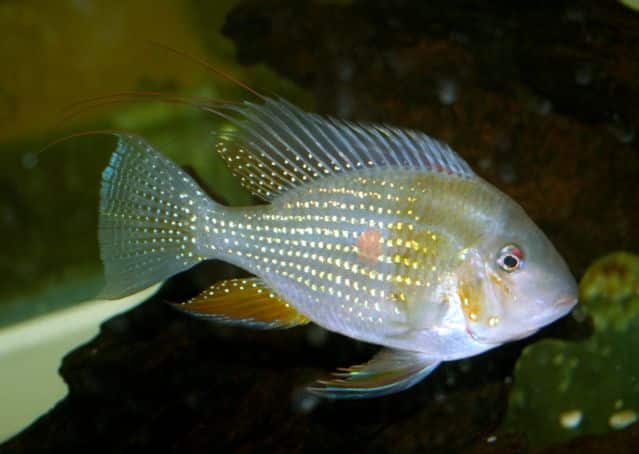
    7. Geophages

    Geophagus
    • Scientific Name: Geophagus spp.
    • Adult Size: 5-8 inches
    • Water Temperature: 76°F to 83°F
    • Minimum tank size: 55-75+ gallons
    • Care Level: Moderate
    • Diet – Omnivore
    • Origin – South America
    • Swimming Level – Middle to Bottom

    Geophages are mostly peaceful fish that can live in harmony with Blue Acaras. For them to peacefully coexist, it’s imperative to provide a proper habitat, one that offers plenty of space and sandy substrate for sifting, plus spots where they could find refuge like rocks or plants. To keep all the other species safe from potential risks while allowing geophages and acaras to share living environment, monitor their activity closely. Both creatures have an inclination towards rearranging things within the tank, which might cause distress among other fish if left unchecked.

    A special breeding tank is also necessary when keeping these two types of fish together, as both species can get aggressive when breeding and housed in undersized tanks.

    8. Clown Loach

    Clown Loach in Aquarium
    • Scientific Name: Chromobotia macracanthus
    • Adult Size: 12 inches
    • Water Temperature: 75°F to 86°F
    • Minimum tank size: 100+ gallons
    • Care Level: Moderate
    • Diet – Omnivore
    • Origin – Indonesia
    • Swimming Level – Bottom

    Clown Loaches are social and colorful fish that make great tankmates for Blue Acaras. They have very recognizable features, such as vibrant stripes of orange, black, and white. A slender body shape with antennae-like barbels near their mouth area. These traits, plus the fun behaviors they show in an aquarium, make them popular among aquarists alike who want to add life and color to their tanks!

    Keeping Clown Loaches is even more enjoyable if kept in groups of five or higher – it increases their chances of having healthy relationships while also being contented themselves. This should be considered when pairing these amazing creatures with other species like Blue Acara so everyone can swim peacefully together.

    Keeping clown loach pairs along with blue acara fishes creates gorgeous combinations not only aesthetically but also engaging since both demonstrate sociable natures yet remain charmingly unique from each other, making your entire aquarium one special treat to look out for!

    9. Synodontis Catfish

    Synodontis Catfish
    • Scientific Name: Synodontis alberti
    • Adult Size: 6 inches
    • Water Temperature: 72°F to 82°F
    • Minimum tank size: 30 gallons
    • Care Level: Easy
    • Diet – Omnivore
    • Origin – Republic of Congo
    • Swimming Level – Bottom

    Native to Africa, Synodontis Catfish are peaceful creatures that make great additions to a community tank. Requiring little maintenance and compatible with Blue Acaras, these bottom-dwelling fish with a unique dorsal fin do best in tanks featuring soft substrates and plenty of hiding spots. When the right conditions are provided for them, they can live up to 10 years or more!

    10. Severum

    Yellow Severum Cichlid
    • Scientific Name: Heros severus
    • Adult Size: 8 inches
    • Water Temperature: 75°F to 84°F
    • Minimum tank size: 55 gallons
    • Care Level: Moderate
    • Diet – Omnivore
    • Origin – South America
    • Swimming Level – Bottom to mid

    Severums are a suitable option for tank mates with Blue Acaras due to their similar size and mild temperament. Such companionship between the two species can live in tranquillity as long as there is adequate space dedicated solely for hiding purposes. This would enable them to evade any territorial disputes which may erupt otherwise. To maintain peace among these peaceful fish, providing many places where they could retreat will help ensure that the Severums get along with Blue Acaras harmoniously within one environment.

    11. Uaru Cichlids

    Uaru Cichlid
    • Scientific Name: Uaru amphiacanthoides
    • Adult Size: 10 inches
    • Water Temperature: 80°F to 84°F
    • Minimum tank size: 70 gallons
    • Care Level: Moderate
    • Diet – Herbivore
    • Origin – South America
    • Swimming Level – Bottom to mid

    Uaru Cichlids are serene, herbivorous fish that can live in harmony with Blue Acaras but may demonstrate defensive behavior. Give them a spacious and planted aquarium containing hidey-holes like rocks or crevices to guarantee their peaceful coexistence. For these aquatic creatures, a tank that is sizable and has a pH at 6.5 – 7.5 will provide for ideal conditions.

    12. Bala Shark

    How Does A Bala Shark Look Like
    • Scientific Name: Balantiocheilos melanopterus
    • Adult Size: 14 inches
    • Water Temperature: 75°F to 82°F
    • Minimum tank size: 125 gallons
    • Care Level: Moderate
    • Diet – Omnivore
    • Origin – Southeast Asia
    • Swimming Level – Mid to top level

    Bala Sharks are incredibly desirable due to their exotic look and peaceful nature, making any tank a soothing environment. This type of fish needs an ample amount of room so they can be active. With appropriate hiding places for Blue Acaras in the same aquarium as well. These vibrant species not only require plenty of open swimming areas, but also thrive under these conditions, creating a unique ecosystem full of life that glimmers delightfully.

    13. Firemouth Cichlids

    Firemouth Cichlid Aquarium
    • Scientific Name: Thorichthys meeki
    • Adult Size: 5 to 6 inches
    • Water Temperature: 75°F to 86°F
    • Minimum tank size: 40 gallons
    • Care Level: Easy
    • Diet – Omnivore
    • Origin – Central America
    • Swimming Level – Mid to bottom

    When housing Firemouth Cichlids together with Blue Acaras, a spacious tank is required to provide enough space for swimming and creating hiding spots. Such a setup allows similar-sized fish species to coexist and maintain harmony in the aquarium peacefully. When these two types of cichlids spawn, they may become aggressive towards each other, so monitoring their interactions closely is important. To make sure your tank mates live harmoniously, it’s necessary that you create comfortable living conditions, plenty of room for maneuverability, as well as hideaways.

    14. Jack Dempsey Cichlid

    Jack Dempsey Fish
    • Scientific Name: Rocio octofasciata
    • Adult Size: 10 inches
    • Water Temperature: 75°F to 86°F
    • Minimum tank size: 55 gallons
    • Care Level: Intermediate
    • Diet – Omnivore
    • Origin – Central America
    • Swimming Level – All levels

    Jack Dempsey Cichlids and Blue Acaras can live together, but caution is needed as the former may show signs of aggression. To have a peaceful atmosphere in an aquarium with these fish, it’s important to provide adequate hideaways and space for them both while keeping watch over their interactions.

    15. Medium Sized Gouramis

    Pearl Gourami Fish
    • Scientific Name: Trichopodus spp.
    • Adult Size: 4-5 inches
    • Water Temperature: 75°F to 82°F
    • Minimum tank size: 30 gallons
    • Care Level: Intermediate
    • Diet – Omnivore
    • Origin – Southeast Asia
    • Swimming Level – Mid to top

    These gentle fish, with their lovely colors, can cohabitate harmoniously in an aquarium alongside the Blue Acara, but should be removed from tanks containing hostile varieties. To ensure they flourish, provide them with a capacious and vegetation-rich abode brimming with secluded places for refuge. Your best option would be a Gourami fish like a Pearl Gourami.

    16. Rainbowfish

    Boesemani Rainbowfish
    • Scientific Name: Melanotaenia boesemani
    • Adult Size: 4-5 inches
    • Water Temperature: 72°F to 77°F
    • Minimum tank size: 40 gallons
    • Care Level: Intermediate
    • Diet – Omnivore
    • Origin – Indonesia
    • Swimming Level – Middle

    Rainbowfish are known for their vivid colors and peaceful demeanor, making them an ideal choice to keep in the same aquarium as Blue Acaras. The presence of these active creatures will add a stunning flair to any tank they inhabit as long as it provides enough swimming space where they can thrive. Make sure your aquatic home has lots of areas open for movement so that Rainbowfish live comfortably inside it. They need to be a group of at least 6 and their larger size keeps them from being targets for the Acara.

    17. Bristlenose Pleco

    • Scientific Name: Ancistrus Cirrhosus
    • Adult Size: 4-5 inches
    • Water Temperature: 73°F to 80°F
    • Minimum tank size: 30 gallons
    • Care Level: Easy
    • Diet – Herbivore
    • Origin – Amazon
    • Swimming Level – Bottom

    Peaceful bristlenose plecos make an attractive addition to any aquarium, given their unique appearance. They require enough space and places where they can hide, as these fish are not territorial. These algae-eaters cohabit with the Blue Acaras quite nicely in a spacious tank that offers some concealed areas for them to thrive better.

    18. Zebra Loach

    Zebra Loach in Aquarium
    • Scientific Name: Botia Striata
    • Adult Size: 3.5 inches
    • Water Temperature: 73°F to 79°F
    • Minimum tank size: 30 gallons
    • Care Level: Easy
    • Diet – Omnivore
    • Origin – India
    • Swimming Level – Bottom

    These peaceful fish, with their distinct looks, provide an attractive addition to any home aquarium. Zebra Loaches are compatible companions for Blue Acaras and need ample room as well as plenty of hiding spots in order to thrive. Water conditions should also be steady within the tank environment.

    19. Pictus Catfish

    Pictus Catfish Swimming
    • Scientific Name: Pimelodus pictus
    • Adult Size: 3 – 5 inches
    • Water Temperature: 75°F to 82°F
    • Minimum tank size: 75 gallons
    • Care Level: Intermediate
    • Diet – Omnivore
    • Origin – South America
    • Swimming Level – Bottom

    For those looking for an attractive addition to their aquarium, the Pictus Catfish is a great choice. They have unique physical characteristics and active personalities, which make them excellent tank mates for Blue Acaras! They need to be great in groups as they like the company of their own kind. When providing these peaceful fish a home, be sure to supply plenty of space as well as hiding spots in order for them to thrive.

    20. Giant Danio

    Giant Danio Fish in Aquarium
    • Scientific Name: Danio aequipinnatus
    • Adult Size: 4 inches
    • Water Temperature: 72°F to 75°F
    • Minimum tank size: 30 gallons
    • Care Level: Easy
    • Diet – Omnivore
    • Origin – India
    • Swimming Level – All

    A peaceful, eye-catching schooling fish, Giant Danios can easily be kept with Blue Acaras in a spacious and abundantly planted aquarium. As active swimmers, they require sufficient free swimming areas to feel comfortable. Their calm temperament serves as an asset for creating a serene underwater landscape. The exotic physical features of these impressive creatures will add beauty to any tank environment! This is the only danio species we recommended as others could be too small and may be eaten.

    21. Convict Cichlid

    Convict Cichlid Swimming
    • Scientific Name: Amatitlania nigrofasciata
    • Adult Size:
    • Water Temperature: 74°F to 84°F
    • Minimum tank size: 30 gallons
    • Care Level: Easy
    • Diet – Omnivore
    • Origin – South America
    • Swimming Level – Midwater

    Convict Cichlids are a cichlid that can dwell with Blue Acaras. They may demonstrate some territorial tendencies, but both are around the same size where they usually will not battle. Make sure the aquarium provides several havens for hiding and carefully monitor the interactions. Convicts are known to be aggressive when breeding – and these species of cichlids are known for breeding often!

    Tips For Creating A Harmonious Aquarium

    For a successful aquatic setup with your Blue Acaras and their tank mates, it’s important to gain knowledge on compatible species as well as individual needs. Tank size is your biggest factor. The larger the tank, the higher the chances of success. The more shelter you have will also help in curbing aggression.

    When mating occurs, keep watch over other occupants’ interactions because conflict levels may escalate. It is not uncommon for a hobbyist to keep a single Acara as a centerpiece fish. This removes the risk of aggression when breeding.

    Frequently Asked Questions

    What fish can you put with blue Acara?

    When looking for suitable companions to keep with the Blue Acara, it’s best to research which are optimal before making a decision. Those could include angelfish, plecos, medium sized gouramis, and corydoras catfish. Creating an ideal tank environment that works well for all involved will help ensure they thrive together happily. Avoid large aggressive fish or extremely territorial fish that could bully them to death.

    Is Electric Blue Acara a community fish?

    Electric Blue Acaras are ideal for some community fish tanks due to their amiable nature and hardy constitution. These fish don’t grow too large either, only reaching a maximum size of 6 inches, making them an excellent choice if your tank in medium sized tanks. However, they are a risk to small nano fish that could be eaten by them. It’s best to house them with either medium sized fish or fish larger than them that are peaceful.

    What size tank for a pair of blue acara?

    A minimum of 45 gallons should be provided for a pair of Blue Acara, 30 gallons as the initial requirement, and then an additional 15 gallon per extra fish.

    How big do Blue Acaras grow?

    Blue Acaras usually grow to be between 4-6 inches. They are considered a medium sized fish in the hobby.

    How can I create a harmonious aquarium for my Blue Acaras and their tank mates?

    When selecting tank mates for your Blue Acaras, do the necessary research to ensure they are compatible. Make sure there are sufficient hiding spots available in the aquarium, and continually observe their behavior to maintain peace. This will help make sure that your new fish have an enjoyable stay in their habitat.

    Closing Thoughts

    Creating the perfect habitat for your Blue Acaras means carefully selecting their tank mates. Paying attention to interactions and ensuring adequate hideaways will ensure that both species inhabit a thriving aquatic space filled with peace, vibrancy, and contentment. Every day, you can find joy in admiring the unique beauty of this harmonious ecosystem you have created!

    Have you tried to keep a Blue Acara in your aquarium? If so, let us know your experience in the comments below. We enjoy hearing from our readers. Until next time!


    📘 Want to learn more? This article is part of our complete Freshwater Fish Guide — your ultimate resource for freshwater species, care tips, tank setup, and more.

  • 21 African Dwarf Frog Tank Mates That Are Actually Compatible

    21 African Dwarf Frog Tank Mates That Are Actually Compatible

    African Dwarf Frogs are one of those underrated additions to a community tank — fully aquatic, peaceful, and genuinely fun to watch as they dart to the surface for air. The challenge with tankmates is that ADFs are slow, mostly bottom-dwelling, and can easily get outcompeted for food or picked on by nippy fish. I’ve seen people pair them with tiger barbs or larger cichlids and it never ends well. Stick to calm, similarly-sized tankmates and make sure the frogs are actually getting fed — they’re slower to react at feeding time than most fish. Here are 21 options that work.

    Key Takeaways

    • African Dwarf Frogs are small, peaceful, and hardy animals that need proper tank setup & diet of mainly meaty foods.
    • Choose tank mates with similar size & provide enough space in tanks of 10+ gallons for them to swim/explore.
    • Aim for a harmonious ecosystem by avoiding aggressive fish. Select from our list of 21 compatible species!

    Species Overview

    African Dwarf Frogs, native to African rivers and streams1, are small amphibians that can grow up to 1.8 inches. These hardy animals have adapted well to different water conditions and typically consume meat-based food (e.g. – brine shrimp, bloodworms), but will also eat high protein fish pellets or flakes as snacks. To ensure the health of your frogs, it is necessary for you to set up an aquarium with compatible tank mates, properly filtered water temperature settings, along with other beneficial factors which would help dwarf frogs thrive in their environment. Caring for them should be straightforward since these peaceful creatures aren’t choosy about what they munch on!

    Size And Space Requirements

    When looking for the right tank mates for African Dwarf Frogs, it is important to select animals of a similar size. This ensures compatibility and minimizes any threats between them. A 10-gallon aquarium should be sufficient if just two frogs are sharing the space. When adding other aquatic creatures like fish or additional dwarf frogs – then at least a 20-gallon tank would provide enough room without overcrowding your aquatic animals. When picking companions for these small amphibians, avoid anything that could pose as a predator, such as any fish that could fit them in their mouths.

    Water Conditions And Environment

    When housing African Dwarf Frogs, they must have warm filtered water with ideal temperatures between 72°F and 82°F. There should also be aquatic plants for places to hide, as well as low-level lighting in the tank so these frogs feel secure. When picking out any other creatures to live in this habitat, such as Nerite Snails or Mystery Snails, you need to make sure that their environment is suitable for them, too.

    The 21 Top African Dwarf Frog Tank Mates

    We now know enough about African Dwarf Frogs to start filling our tanks with compatible companions! To that end, let us discuss the list of 21 potential tank mates: think small and colorful fish alongside other aquatic critters. All share similar characteristics such as maintenance needs, eating habits, and personalities — perfect for a harmonious cohabitation in one aquarium! Ready to get started on your special African dwarf frog setup? I’ve included the following states for each candidate:

    • Scientific Name
    • Adult Size
    • Water Temperature Range
    • Minimum tank size
    • Care Level
    • Diet
    • Origin
    • Swimming Level

    1. Betta Fish

    WYSIWYG Available!
    Betta Fish

    Use Coupon Code ASDFISH at Checkout

    Betta Fish are one of the most beautiful varieties of freshwater fish available in the hobby. Easy to care for with plenty of varieties!

    Buy Premium Varieties Buy On Petco Online
    • Scientific Name: Corydoras spp.
    • Adult Size: 3 inches, usually
    • Water Temperature: 75°F to 80°F
    • Minimum tank size: 5 gallons
    • Care Level: Easy
    • Diet – Carnivore
    • Origin – Thailand
    • Swimming Level – Top to middle

    We start off the list with everyone’s favorite. While looking at color patterns and personalities, you may think they are one of the best tank mates for your fish, but that is not always the case. Males are at a higher risk of fighting, with Plakat breeds being the most risky. While it is possible to use them together, they are one of the riskiest on this list. However, they are extremely popular so I felt it was good to include them on the list. You will have your best luck with a female non plakat breed.

    2. Corydoras Catfish

    Habrosus Corydoras
    • Scientific Name: Corydoras spp.
    • Adult Size: 2 to 3 inches, usually
    • Water Temperature: 72°F to 79°F (22 to 26°C)
    • Minimum tank size: 10 gallons
    • Care Level: Moderate
    • Diet – Omnivore
    • Origin – South America
    • Swimming Level – Bottom

    Corydoras Catfish are good companions for African Dwarf Frogs, since they both demand similar levels of care and usually measure around the same size. These catfish have slender figures that come in either black or brown colors with a maximum length up to 2.5 inches. Their playful attitude makes them excellent tank mates for dwarf frogs.

    It is essential to provide plenty of places where they can hide away when needed – these fish enjoy taking refuge by burrowing into the substrate as well as finding snug spots elsewhere in their habitat.

    3. Kuhli Loach

    • Scientific Name: Pangio Kuhlii
    • Adult Size: 4 – 5 inches
    • Water Temperature: 73 to 86° F
    • Minimum tank size: 20 gallons
    • Care Level: Easy
    • Diet – Omnivore
    • Origin – Southeast Asia
    • Swimming Level – Bottom

    African Dwarf Frogs can benefit from having a Kuhli Loach as a tankmate. These fish have an eel-like appearance with their slender body and black stripe, growing up to 5 inches in size. They are peaceful creatures that prefer living in groups, which makes them great for community tanks. They are more active at night. They will hide among the plants or burrow deep down into substrate bedding during the day.

    4. Neon Tetras

    • Scientific Name: Paracheirodon innesi
    • Adult Size: 1.5 inches
    • Water Temperature: 70 ° to 79 °F
    • Minimum tank size: 10 gallons
    • Care Level: Moderate
    • Diet – Omnivore
    • Origin – South America
    • Swimming Level – Top to Middle

    The Neon Tetra is a small, eye-catching fish that can be kept in harmony with African Dwarf Frogs within the same tank. These species are renowned for their vibrant red and blue stripes, which bring vividness to any aquarium setup. In order to get the most out of these delightful creatures, it’s recommended they should always travel in packs of six or more – this makes them schooling fish naturally gravitating towards each other’s company.

    In terms of temperature preferences and pH needs, these little beauties require 70°F – 81°F water temperature range along with 6.0–7.0 on your pH scale. Being similar requirements between african dwarf frogs and neon tetras means coexistence together has proved easy, making for a great dwarf frog tank mate.

    5. Cardinal Tetra

    • Scientific Name: Paracheirodon axelrodi
    • Adult Size: 1.5 inches
    • Water Temperature: 73°F to 81°F
    • Minimum tank size: 20 gallons
    • Care Level: Moderate
    • Diet – Omnivore
    • Origin – South America
    • Swimming Level – Mid to Top

    Cardinal Tetras make for a cheerful addition to any community tank. These small, peaceful fish have striking coloration with red stripes that run along their bodies and are contrasted by vibrant blue streaks above them. Cardinal Tetras do best in temperatures between 73°F and 81°F. They are social creatures, too, so it is recommended to keep at least six of the same species together in one aquarium if you want an active atmosphere. African dwarfs frogs can be kept successfully alongside these schooling fish since they share similar needs, such as neutral to acidic pH levels ranging from 6.0-7.0.

    6. Rummy Nose Tetra

    • Scientific Name: Hemigrammus bleheri
    • Adult Size: 1.5 inches
    • Water Temperature: 75°F to 85°F
    • Minimum tank size: 10 gallons
    • Care Level: Easy
    • Diet – Omnivore
    • Origin – South America
    • Swimming Level – Mid to Top

    The Rummy Nose Tetra is a great fit for African Dwarf Frog tanks due to their peaceful demeanor and similar care requirements. These fish are distinctive thanks to the striking black and white stripes that form on its tail, as well as its bright red nose. When kept in schools with at least six members, these creatures will thrive within an environment that maintains temperatures between 75°F-85°F paired alongside a pH range 6.4-7.0., making them perfectly suitable tank mates for African Dwarfs! Their interesting colors add something special to any frog tank setup while taking little effort from you—an ideal companion species all around!

    7. Cherry Barb

    • Scientific Name: Puntius titteya
    • Adult Size: 2 inches
    • Water Temperature: 73°F to 81°F
    • Minimum tank size: 25 gallons
    • Care Level: Easy
    • Diet – Omnivore
    • Origin – Sri Lanka
    • Swimming Level – All

    Cherry Barbs are schooling fish that can coexist peacefully with African Dwarf Frogs. This species has a striking red coloring and is considered docile, making it an ideal tankmate for your dwarf frogs. When it comes to temperature range and pH level, they should have water between 73°F to 81°F and 6.0-7.0, respectively. The more colorful creatures there are in the group (at least six), the better! All things considered, the Cherry Barb, with their captivating features, plus their peaceful nature make them great companion animals for African Dwarves.

    8. White Cloud Minnow

    • Scientific Name: Tanichthys albonubes
    • Adult Size: 1 inch
    • Water Temperature: 64°F to 72°F
    • Minimum tank size: 10 gallons
    • Care Level: Easy
    • Diet – Omnivore
    • Origin – China
    • Swimming Level – Mid to Top

    White Cloud Minnows are a hardy species that can live in harmony with African Dwarf Frogs when kept together in the same tank. This small fish has an elegant silver body, decorated by a thin black line and radiant red fins. For them to thrive optimally, water temperature should be between 64°F and 72°F while pH levels ranging from 6.0 to 8.0 is recommended for optimal health of these aquatic dwellers.

    Given their schooling nature, at least six individuals must coexist simultaneously so they can feel relaxed around each other. Thanks also to its peaceful disposition, it will get along with your drawf frog just fine.

    9. Celestial Pearl Danio

    • Scientific Name: Danio margaritatus
    • Adult Size: 1 inch
    • Water Temperature: 72°F to 76°F
    • Minimum tank size: 10 gallons
    • Care Level: Moderate
    • Diet – Omnivore
    • Origin – South East Asia
    • Swimming Level – Midwater

    The Celestial Pearl Danio, also known as Galaxy Rasbora, is an attractive fish that can peacefully coexist with African Dwarf Frogs if given the right care. They have a blue body speckled with white spots resembling stars and require a temperature of 72°F to 76°F along with a pH range of 6.5-7.5 for ideal living conditions. These should be kept in groups at least six since they are schooling fish. It is a wonderful, colorful fish that compliments the African dwarf frog well.

    10. Harlequin Rasbora

    • Scientific Name: Trigonostigma heteromorpha
    • Adult Size: 2 inches
    • Water Temperature: 71°F to 80°F
    • Minimum tank size: 10 gallons
    • Care Level: Easy
    • Diet – Omnivore
    • Origin – South East Asia
    • Swimming Level – Midwater

    Harlequin Rasboras are schooling fish with silver bodies featuring a distinct triangular black patch. It is suggested to keep them in groups of six or more and they prefer water temperatures between 71°F – 80°F plus pH ranges from 6.0-7.0, making them an ideal addition to any African dwarf frog tank. Their peaceful nature makes it possible for the community tank setup as well! With its unique coloring, these vibrant creatures will make quite the splash in your frog tank habitat.

    11. Dwarf Rainbowfish (Praecox)

    • Scientific Name: Melanotaenia praecox
    • Adult Size: 2.5 to 3 inches
    • Water Temperature: 72°F to 82°F
    • Minimum tank size: 20 gallons
    • Care Level: Easy
    • Diet – Omnivore
    • Origin – Indonesia
    • Swimming Level – Top to Mid

    For a vibrant and compatible tankmate for your African Dwarf Frogs, the Dwarf Rainbowfish is an ideal choice. This colorful fish species can live harmoniously in well-planted tanks with its non-aggressive nature. These rainbowfish have bright blue bodies that are set off by orange or red fins. They shimmer like rainbows! To keep this species happy, you should provide water temperatures between 72°F – 82°F and maintain pH levels at 7.0 to 8.0. They need to in a group of at least six, which will pump up the tank requirements higher to at least 20 gallons to house them and frogs.

    12. Chili Rasbora

    • Scientific Name: Boraras brigittae
    • Adult Size: 1 inch
    • Water Temperature: 70°F to 82°F
    • Minimum tank size: 10 gallons
    • Care Level: Moderate
    • Diet – Carnivorous
    • Origin – Southeast Asia
    • Swimming Level – Midwater

    Chili Rasboras are tiny, peaceful fish with a bright red body featuring a black stripe down the side. The ideal environment for them is water between 70°F and 82°F. Recommended pH levels are from 6.0 to 7.0, though they have been known to tolerate lower pH levels. They and should be kept in groups of at least six so they exhibit their schooling behavior. They are peaceful fish that shouldn’t have issues with african dwarf frog and most other fish.

    13. Otocinclus

    • Scientific Name: Otocinclus spp.
    • Adult Size: 1.5 to 2 inches
    • Water Temperature: 74°F to 79°F
    • Minimum tank size: 20 gallons
    • Care Level: Moderate
    • Diet – Herbivore
    • Origin – Southeast Asia
    • Swimming Level – Bottom to Middle

    Otocinclus, a small and non-aggressive catfish species that can range from black to brown coloration with an average size of 2 inches in length. They are a great tankmate for your African dwarf frogs. These fish are good at scavenging uneaten food items and will also do an excellent job at eating algae. Their unique look adds even more visual interest to your community aquarium. Not competing with them over food resources, Otocinclus forms a safe relationship, enabling both species to thrive together peacefully. Just make sure you do supplemental feedings with food like algae wafers if you run out of algae in the tank!

    14. Zebra Danios

    What Does A Zebra Danio Look Like
    • Scientific Name: Danio rerio
    • Adult Size: 1 inch
    • Water Temperature: 72°F to 81°F
    • Minimum tank size: 10 gallons
    • Care Level: Easy
    • Diet – Omnivore
    • Origin – India
    • Swimming Level – All

    Zebra Danios are ideal for keeping in a community tank with African Dwarf Frogs. Peaceful and active, these fish have distinctive silver-blue stripes running along their bodies to make an interesting addition to the aquarium environment. With optimal water temperatures of 72°F – 81°F and pH levels of 6.5, 7.2, they should be kept in groups of six or more as schooling fish will bring out the playful side that makes them such great companions for your dwarf frog setup! Always feed these fish first before your frog as their fast nature will easily leave your frog short of food if you don’t!

    15. Honey Gourami

    • Scientific Name: Trichogaster chuna
    • Adult Size: 2 inches
    • Water Temperature: 74°F to 82°F
    • Minimum tank size: 10 gallons
    • Care Level: Easy
    • Diet – Omnivore
    • Origin – India
    • Swimming Level – Middle to top

    Honey Gourami is a peaceful, serene fish that could coexist with African Dwarf Frogs in an aquarium filled with plants. Their bodies have a golden hue and feature stripes running along the side from head to tail. This species of tropical fish prefers water temperatures between 74°F-82°F combined with pH levels ranging from 6.0 to 7.5.

    As peaceful as they may be, Honey Gouramis tend to prefer places where they can find refuge. Thus, it’s essential you give them adequate hiding spots within your tank by having enough decorations and greenery inside their environment so these shy creatures feel more at ease around their new African Dwarf Frog tank mates.

    16. Fancy Guppy

    • Scientific Name: Poecilia reticulata
    • Adult Size: 2 inches
    • Water Temperature: 72°F to 82°F
    • Minimum tank size: 10 gallons
    • Care Level: Easy
    • Diet – Omnivore
    • Origin – South America
    • Swimming Level – Middle to top

    Fancy Guppies, a breed of brilliantly colored fish, can be kept alongside African Dwarf Frogs in an aquarium. With males displaying more vivid colors than females, these live bearers require water temperatures between 72-82°F and pH levels from 6.8 to 7.8 for optimal health – making them ideal tank mates for your dwarf frogs due to their peaceful nature!

    As a word of caution with any livebearer, they reproduce rapidly. Actively monitor the number of Fancy Guppy individuals you have so that no overcrowding takes place within your aquascape ecosystem!

    17. Platies

    Platy Fish
    • Scientific Name: Xiphophorus maculatus
    • Adult Size: 2-3 inches
    • Water Temperature: 70°F to 82°F
    • Minimum tank size: 10 gallons
    • Care Level: Easy
    • Diet – Omnivore
    • Origin – South America
    • Swimming Level – Middle to top

    Platies make an attractive and colorful addition to any community tank. Their non-aggressive nature makes them perfect companions for African Dwarf Frogs, but due to their live-bearing status there is a need for regular monitoring in order not to overcrowd the aquarium with fry. The ideal environment should maintain water temperatures between 70°F – 82°F with a pH range of 7.0 to 8.5.

    18. Endler’s Livebearer

    • Scientific Name: Poecilia wingei
    • Adult Size: 1.5 inches
    • Water Temperature: 64°F to 82°F
    • Minimum tank size: 10 gallons
    • Care Level: Easy
    • Diet – Omnivore
    • Origin – South America
    • Swimming Level – Middle to top

    Endler’s Livebearer, a vivid-colored fish that is peaceful and non-aggressive in nature, may require a larger tank to prevent overpopulation when living with African Dwarf Frogs. These amazing creatures have various fluorescent hues, which makes them quite outstanding within the aquarium. Endlers prefer temperatures between 64°F and 82°F as well as a pH range of 5.5 to 8.0. These wide parameter tolerates make it feasible for these stunning creatures to be compatible cohabitants alongside your dwarf frogs!

    Though capable of multiplying quickly due to their live-bearing characteristic, proper population management would keep overcrowding from occurring where they are housed.

    19. Nerite Snails

    • Scientific Name: Neritina spp
    • Adult Size: 0.5 to 1 inch
    • Water Temperature: 65°F to 85°F
    • Minimum tank size: 5 gallons
    • Care Level: Easy
    • Diet – Herbivore
    • Origin – Atlantic
    • Swimming Level – All

    Nerite snails, with their diverse range of colors and patterns, are an interesting addition to any community tank. Ideal conditions for these peaceful non-aggressive creatures include a water temperature between 65°F – 85°F and pH 7.0 – 8.5. Their wide range makes them suitable companions alongside your African Dwarf Frogs who do not compete over food resources in the same habitat. Unfortunately, they may lay eggs around the aquarium. While they won’t hatch because babies need brackish water to survive, it may be become an eyesore if they are purchased from the pet store in large numbers.

    20. Cherry Shrimp

    Beginner Friendly
    Cherry Shrimp

    Great red color and very hardy. Cherry shrimp are the best beginner shrimp for shrimp tanks

    Click For Best Price Buy In Bulk
    • Scientific Name: Neocaridina davidi
    • Adult Size: 1 to 1.25 inches
    • Water Temperature: 65°F to 73°F
    • Minimum tank size: 5 gallons
    • Care Level: Easy
    • Diet – Omnivore
    • Origin – Taiwan
    • Swimming Level – All

    The Cherry Shrimp is a vivid, small-sized crustacean that can be placed in the same tank as African Dwarf Frogs but could also potentially become their prey. This appealing shrimp requires waters with temperatures between 65°F to 73°F and pH levels of 6.0 up to 7.5 for it to thrive. They are an amiable creature and make great companions when cohabitating with dwarf frogs. They need a lot plants and your frogs need to be well fed for them not to be seen as snacks to your frog. The next shrimp will be a better option.

    21. Amano Shrimp

    • Scientific Name: Caridina multidetata
    • Adult Size: 2 inches
    • Water Temperature: 65°F to 78°F
    • Minimum tank size: 5 gallons
    • Care Level: Easy
    • Diet – Omnivore
    • Origin – Japan
    • Swimming Level – All

    Amano shrimp are great candidates for tankmates to African Dwarf Frogs since they will not be eaten. These shrimps have a grey body with dark stripes across them and can survive comfortably in water temperatures between 70°F-80°F as well as pH of 6.0-7.0. These peaceful creatures help keep tanks clean by eating algae and other debris from the bottom substrate, making them perfect companions for your dwarf frogs! Bamboo shrimp also work great too.

    Tank Mates To Avoid

    When looking for tank mates to share your African Dwarf Frogs’ habitat, focus on compatible and non-aggressive species that require similar care requirements and environmental conditions. Avoid predators, aggressive fish such as territorial cichlids, large predators, and African Clawed Frogs.

    Creating A Balanced Community Tank

    How Does an African Dwarf Frog Look Like

    Creating a harmonious tank for your African dwarf frogs and their other inhabitants requires careful consideration of factors such as compatibility, tank size and environmental conditions. All the species in an African Dwarf Frog aquarium should have similar water parameters, including temperature and pH levels. Providing ample hiding places with plants is necessary to create an environment that mimics nature.

    It’s important to keep track of food consumption so that all occupants receive adequate nutrition. Ensure there are no overcrowding issues by keeping population numbers under control when needed. Here are some general tips to help:

    • Feed your fish first, then your frog, to ensure everyone gets enough food
    • Balance your tank our with bottom dwellers, mid swimmers, and surface dwelling fish
    • Keep lots of decor and/or plants so there are places to hide for everyone

    Frequently Asked Questions

    Do African dwarf frogs need a companion?

    African Dwarf Frogs require companionship to be healthy and happy. These social amphibians should live in a group of two or more. They will do best at minimum a 10 gallon tank with 20 gallons being recommended. It is best if they cohabit with peaceful, slow swimming fish species too.

    Can African dwarf frogs live in a fish tank?

    African dwarf frogs make great companions and can be kept with other species. They need a minimum of 10 gallons in order to live comfortably, though if you want multiple frogs or are adding fish into the mix then a 20-gallon tank is a better choice.

    Will African dwarf frogs eat guppies?

    African dwarf frogs are an excellent option if you need to curb the number of guppies in your tank since they can certainly consume any fry that is born in the tank. Kept this in mind if you actually want to breed guppies.

    What size should tank mates of African Dwarf Frogs be?

    Tankmates for African Dwarf Frogs should not be larger than 3 inches in order to protect them from potential harm. These frogs are timid and non-aggressive, so it is essential that their tankmates also exhibit these traits, as they could otherwise cause injury or distress to the dwarf frogs.

    How often should I feed beef heart to my African Dwarf Frogs?

    Once a month, African Dwarf Frogs should be given beef heart as their food source. These small amphibians will benefit from this treat.

    Closing Thoughts

    African dwarfs frogs are unique and easy to care for amphibians that can co-exist peacefully in a shared tank with compatible other species. If you carefully choose less aggressive pets who need similar water parameters, then your African Dwarf Frog’s aquarium will be an interesting spectacle of colors while simultaneously being balanced and healthy. You should pay attention to feeding patterns, water purity levels as well as quantity when making sure the environment is suitable for everyone living inside it. With adequate dedication, having an African Dwarf Frog Tank at home will be both rewarding and appealing.

    Have you keep frogs in your aquarium? Let us know in the comments below. Until next time fishkeepers!

  • Top 10 Pea Puffer Tank Mates (And 4 You Should Never Try)

    Top 10 Pea Puffer Tank Mates (And 4 You Should Never Try)

    Pea puffers are one of my favorite nano fish to recommend — they have enormous personality for a fish under an inch, and watching them hunt snails is genuinely entertaining. But I’ll be direct: they’re nippy, territorial, and will fin-nip slow or long-finned fish without hesitation. Most people are better off keeping them in a species-only tank or with very specific tankmates. The “and 4 to avoid” part of this guide matters just as much as the recommended list. Here’s what I’d actually put with them.

    Key Takeaways

    • Pea puffers are territorial and semi-aggressive fish
    • Provide enough space and hiding spots, as well as the right water parameters to create an ideal habitat.
    • Choose tank mates for your pea puffer – good options include Otocinclus Catfish, small Plecos & other Pea Puffers. Avoid Guppies, Rasboras & Betta Fish.
    • All fish are a potential risk – always have a back up plan

    Understanding Pea Puffers

    Pea puffers are renowned for their playful personalities and dainty size. Although these little fish may be small, they can still exhibit a great deal of aggression. Hence, it is essential to understand what type of environment will support them so that other aquatic life forms in the tank don’t come under attack from this active species!

    Pea Puffers have a number of traits that will make them a poor fit in community fish tanks. They are territorial and very curious creatures that regularly get bored. This boredom is what makes them nip other fish, similar to how tiger barbs do the same. Not only do they nip, but they have powerful jaws that can hurt, maim, or kill other fish species.

    Size and Space Requirements

    A minimum tank size requirement of a 20 long tank must be met to each consider other tankmates other than pea puffers. Furthermore, a heavily planted habitat combined with plenty of places to hide is a must so other fish have places to hide from your pea puffer’s aggression outbursts.

    The little pea puffers need room to be comfortable. For just one of them, the ideal is a 10-gallon tank. With six of these fish together, you’ll want no less than 20 gallons in order that they don’t become aggressive or hurt their aquarium companions. It’s essential to create plenty of space and hideaways so peace can reign under the water!

    While 20 is the minimum, a 29 gallon tank would be recommended or even a 40 gallon breeder. The larger the tank, the higher the chances of success. Males will also be more aggressive than females. While you won’t be able to tell the differences between the two when they are young, over time the female will become larger and rounder than the male.

    Water Conditions And Environment

    Providing a secure and comfortable environment is essential for the health of pea puffers and their tank mates. It’s best to keep warm, soft water with consistent pH levels in an fish tank filled with live plants that offer plenty of hiding spots. However, these fish are very adaptable. Pea puffers can live in hard water.

    The main thing with a tank setup with other fish is hiding places. Heavily planted tanks are ideal. You will want to utilize hardy plants such as Amazon Sword or Java Fern. Pea puffers will happily nip at plants out of boredom and less hardy plants will die or not thrive due to the beating taken from your puffers.

    Amazon Sword

    A classic background aquarium plant. Grows large and will be a centerpiece in your aquarium

    Click For Best Price Buy On Amazon

    A Word Of Caution

    When considering pea puffers for an aquarium, it is important to be aware of their potential aggression. The fish may act aggressively towards smaller species with slow or long-finned movement since they are prone to fin-nipping behavior and are territorial.

    Even with a larger tank, all puffers have different personalities. In this list, I have included a chance of success rating so you are aware of the risk. As a rule of thumb, here are a few general tips:

    • Introduce the pea puffers last or rehome temporarily while introducing the new fish
    • Observe the puffers in a breeding box in the tank to monitor interactions
    • Keep your puffers well fed, a well-fed fish will generally be less aggressive (e.g., brine shrimp, bloodworms, etc)
    • Always have a backup plan, and be prepared to remove the puffers right away if severe aggression occurs

    The 10 Best Pea Puffer Tank Mates

    Now on to our list. Here is in my mind, the top 10 options you can try to keep with Pea puffers. I have included the following stats for each species.

    • Scientific Name
    • Adult Size
    • Water Temperature Range
    • Minimum tank size
    • Care Level
    • Diet
    • Origin
    • Swimming Level
    • Change Of Success

    Let’s get started with our list!

    1. Other Pea Puffers

    Pea Puffer Eating Snail
    • Scientific Name: Carinotetraodon travancoricus
    • Adult Size: 1 inch
    • Water Temperature: 72° – 82° F
    • Minimum tank size: 10 gallons
    • Care Level: Moderate
    • Diet – Carnivore
    • Origin – India
    • Swimming Level – Top, middle, below
    • Change Of Success – Guaranteed

    The best tank mate is to just had more pea puffers! The ideal ratio for pea puffers is to have 3 females for every male, in order to reduce the chances of them displaying aggression. To ensure they cohabitate happily, a spacious and well-planted aquarium should be provided as it gives each puffer enough room and hiding places. Having at least three fish will give these critters companionship too!

    2. Otocinclus Catfish

    • Scientific Name: Otocinclus spp.
    • Adult Size: 1.5 to 2 iches
    • Water Temperature: 74°F to 79°F
    • Minimum tank size: 20 gallons
    • Care Level: Moderate
    • Diet – Herbivore
    • Origin – South America
    • Swimming Level – Bottom to middle
    • Change Of Success – High

    Otocinclus catfish make terrific tankmates for pea puffers due to their peaceful nature and efficient algae-eating capabilities. These small fish help keep the aquarium environment tidy by consuming excess vegetation, making them a highly beneficial addition to any community of aquatic animals.

    It is important that these fish have an abundance of plants and algae in order to survive while living alongside your pea puffer friends! Supplemental feeding is a must!

    3. Corydoras Catfish

    What Does A Cory Catfish Look Like
    • Scientific Name: Corydoras spp.
    • Adult Size: 2 to 3 inches, usually
    • Water Temperature: 72°F to 79°F (22 to 26°C)
    • Minimum tank size: 10 gallons
    • Care Level: Moderate
    • Diet – Omnivore
    • Origin – South America
    • Swimming Level – Bottom
    • Change Of Success – High

    Corydoras catfish provide a great addition to an aquarium with pea puffers due to their calm, placid nature. Their armored bodies help ensure they can live in harmony with the fish that make up this type of community tank with a lower risk of aggression occurring. In terms of maintaining cleanliness within the habitat, these bottom-feeders are invaluable as they consume bits and pieces left behind from feeding time for all living occupants. Their omnivorous nature makes them a great scavenger with the puffer’s messy nature.

    4. Bristlenose Pleco

    • Scientific Name: Ancistrus Cirrhosus
    • Adult Size: 4 to 5 inches usually
    • Water Temperature: 73°F to 80°F
    • Minimum tank size: 20 gallons
    • Care Level: Easy
    • Diet – Herbivore
    • Origin – South America
    • Swimming Level – Bottom
    • Change Of Success – High

    The Bristlenose Plecos are peaceful, algae-eating fish that can coexist happily with the pea puffers. Their armored body provides them protection, while their algae consumption helps to keep a puffer tank clean from unwanted growth. Hence, these small and unique looking creatures make for an excellent choice when setting up a friendly environment between your pea puffers and other aquatic animals in one’s home aquarium.

    5. Kuhli Loaches

    • Scientific Name: Pangio Kuhlii
    • Adult Size: 4 – 5 inches
    • Water Temperature: 73 to 86° F
    • Minimum tank size: 20 gallons
    • Care Level: Easy
    • Diet – Omnivore
    • Origin – Southeast Asia
    • Swimming Level – Bottom
    • Change Of Success – High

    Kuhli Loaches are not overly aggressive and spend most of their time at night. They can be easily kept with pea puffers in an aquarium, as long as they have a soft sand substrate that allows them to burrow comfortably and places to hide. An environment like this allows both species to thrive side by side, giving the tank owner plenty of interesting activity to observe underwater.

    6. Zebra Danios

    What Does A Zebra Danio Look Like
    • Scientific Name: Danio rerio
    • Adult Size: 1 inch
    • Water Temperature: 72 to 81° F
    • Minimum tank size: 10 gallons
    • Care Level: Easy
    • Diet – Omnivore
    • Origin – Eastern India
    • Swimming Level – All
    • Change Of Success – Medium

    Zebra Danios, a type of schooling fish known as being peaceful fish and swift in the water. They are fast enough to generally avoid the aggression of your pea puffer as long as the tank is large enough for them to maneuver.

    Given they are dither fish, their nature will help bring out your pea puffers out in the open more. There still is a chance these fish may be victims of nipping or being eaten (especially long finned types), but of all non bottom feeding fish, these danios have the best chance of success.

    7. White Cloud Minnow

    • Scientific Name: Tanichthys albonubes
    • Adult Size: 1 inch
    • Water Temperature: 57°F to 72°F
    • Minimum tank size: 10 gallons
    • Care Level: Easy
    • Diet – Omnivore
    • Origin – China
    • Swimming Level – Mid to Top
    • Change Of Success – Medium

    White Cloud Minnows are a great choice for an aquarium due to their peaceful temperament and fast speed. Like the Zebra danio, they are fast enough to avoid the aggression of your puffer. They do best in groups when it comes to swimming, creating even more harmony within community tanks as they scavenge. These hardy fish truly bring life into your tank! As another dither fish, they will encourage your dwarf pufferfish to be more active fish.

    They are still at risk of being nipped or eaten; these colorful fish species have a lower chance than others.

    8. Amano Shrimp

    • Scientific Name: Caridina multidetata
    • Adult Size: 2 inches
    • Water Temperature: 65°F to 78°F
    • Minimum tank size: 5 gallons
    • Care Level: Easy
    • Diet – Omnivore
    • Origin – Japan
    • Swimming Level – All
    • Change Of Success – Low

    Amano Shrimp can make good tank mate for pea puffers. These peaceful invertebrates are efficient algae eaters, consuming both the excess food in the tank as well as keeping it clean from an algae bloom. Due to their docile nature, they can live happily with a puffer without much trouble at all. They require minimal care while occupying various sized tanks just fine!

    However, if not placed in a heavily planted tank there’s a good chance your Amano will become a snack for the pea puffer. A larger tank and lots of plants are essential. Do not attempt if you have a mostly open aquascape setup!

    9. Molly Fish

    How Do Molly Fish Look Like
    • Scientific Name: Poecilia sphenops, P. latipinna, P. velifera, etc.
    • Adult Size: 4 inches
    • Water Temperature: 72 ° to 82 °F
    • Minimum tank size: 20 gallons
    • Care Level: Easy
    • Diet – Omnivore
    • Origin – North and South America
    • Swimming Level – Middle
    • Change Of Success – Low

    Molly Fish are potentially great companions for pea puffers in the same community tank. However, a large tank is needed to pull it off. While the dwarf puffer won’t eat the Mollies, it is possible for them to get nipped. A tank of at least 29 gallons is a must to attempt, with your highest success at a 40 gallon tank.

    This is the only livebearer that makes our list. All other livebearers are too small and could be mortally wounded or eaten.

    10. Neon Tetras

    • Scientific Name: Paracheirodon innesi
    • Adult Size: 1.5 inches
    • Water Temperature: 70 ° to 79 °F
    • Minimum tank size: 10 gallons
    • Care Level: Moderate
    • Diet – Omnivore
    • Origin – South America
    • Swimming Level – Top to Middle
    • Change Of Success – Low

    Neon Tetras are a type of aquarium fish known for their stunning colors and peaceful nature. While they are fast enough to avoid the pea puffer, they need a long enough tank and enough planted life to cohabitate with them safely.

    They also need to be housed in large numbers. Knowing this, I would not attempt housing them with a dwarf puffer in anything less than 29 gallons. You will have the most success in a 40 gallon breeder.

    Bad Choices

    When it comes to tank mates for pea puffers, some fish species are not recommended due to their size, temperament, or vulnerability. The following fish should be completely avoided in order to keep the inhabitants safe and happy. It’s important that these factors are taken into consideration before adding any other types of creatures into your pea puffer aquarium!

    1. Guppy Fish

    Guppy Fish, with their graceful fins and delicate swimming style, can make them attractive targets for pea puffers. These fish are also known to reproduce quickly, which could make the fry snacks for the puffer. However, guppies are too small to be housed with a pea puffer. While they are fast and can avoid the puffer, a nip could result in a moral wound given their size or they can be eaten all together.

    2. Rasboras

    School of Rasboras

    It’s best to steer clear of combining rasboras and pea puffers in the same tank. These small fish can become easy targets of aggression, inducing stress for both types of species. To create a more balanced habitat, it is advisable not to mix them together as this could be detrimental for the rasboras. Although these delicate little creatures are peaceful by nature, they’re often too vulnerable when exposed to attacks that come with pairing them up with predatory fish like pea puffers.

    As a side note, the Chilil Rasbora is often mentioned in blogs. I will tell you right now if your pea puffer manages to nip one of them they will be killed nearly instantly! Don’t risk it. Zebra Danios fare a much better chance.

    3. Angelfish

    Freshwater Angelfish

    Angelfish and pea puffers are a combo that will end up as a bloodbath. The pufferfish will enjoy nipping at the fins of the Angelfish, while the Angelfish is big enough to stand up on its own and fight back. It is even more disastrous if either fish is breeding. For both animals’ welfare, it’s recommended they remain separate inhabitants of different tanks/aquariums.

    4. Betta Fish

    WYSIWYG Available!
    Betta Fish

    Use Coupon Code ASDFISH at Checkout

    Betta Fish are one of the most beautiful varieties of freshwater fish available in the hobby. Easy to care for with plenty of varieties!

    Buy Premium Varieties Buy On Petco Online

    Housing a betta fish and pea puffers together is not advisable since both are territorial in nature. However, this is a battle the pea puffer will win as their beaks are powerful enough to heavily damage the Betta. Furthermore, fancy finned varieties will have zero chance against the pufferfish. Fights will easily result in an infection for the Betta and possibly death from stress. These are both species completely incompatible with each other and should not be housed together.

    Frequently Asked Questions

    What can be housed with pea puffers?

    Pea puffers are semi-aggressive, which makes them a challenge to be housed with other fish. The best fish to house with them are other pea puffers. One lower risk choices include Corydoras, small plecos, and kuhli loaches.

    Can a pea puffer be in a community tank?

    Keeping pea puffers in their own tank without other fish is the most beneficial for them since they are territorial and semi-aggressive. Your best option is to house them with their own kind in pea puffer tanks.

    Do pea puffers need friends?

    A 10 gallon tank is the perfect space for a single pea puffer. They are known to be territorial and don’t need any companions in order to stay healthy. Although it’s possible that two or more of them can live happily together with enough room, this isn’t essential.

    How big should a tank be for a single pea puffer?

    A 10 gallon tank is necessary for keeping a single pea puffer fish.

    How can I reduce aggression in my pea puffer tank?

    For your pea puffer tank to be a peaceful place, providing plenty of room for swimming as well as hiding spots and ensuring the water is kept clean are key. A longer tank that is longer than 2 feet is also helpful. All these aspects help prevent aggressive behaviors from occurring in this type of aquarium.

    Closing Thoughts

    To conclude, it is possible for pea puffers to live happily with other tank mates if their special needs and characters are taken into consideration. When looking at space requirements, hiding places, and water quality – which should be kept up to a high standard – as well as being aware of the puffer’s size and behavior, one can establish an enchanting underwater environment that everyone in the aquarium will thrive in! So don’t hesitate anymore. Bring home some amazing cohabitants for your precious little pea puffers today!

    If you like our content be sure to subscribe to our YouTube Channel. We post new videos every week. Let know your experience in the comments below!


    📘 Want to learn more? This article is part of our complete Freshwater Fish Guide — your ultimate resource for freshwater species, care tips, tank setup, and more.

  • Aquatic Turtles: Types, Tank Setup, and What They Actually Need

    Aquatic Turtles: Types, Tank Setup, and What They Actually Need

    Aquatic turtles appeal to a lot of people who come from a fishkeeping background — you already have the tank, the filtration knowledge, and the water maintenance habits. But turtles are a different challenge entirely. They’re messy, they need basking areas and UVB lighting, and they will eat fish tankmates given the chance. The care requirements are well-documented but consistently underestimated by first-time keepers. If you’re coming in with realistic expectations, this guide covers the main species and what each one actually needs.

    In this in-depth guide, we’ll introduce 15 of these amazing creatures, and learn more about how to care for them the right way. Read along to learn about their diet, habitat requirements, health precautions, conservation, and so much more.

    Key Takeaways

    • Aquatic turtles kept indoors need a temperature-controlled environment with access to a dry basking spot and UVB light.
    • Turtles need plenty of swimming space and strong filtration system to keep their water quality high.
    • Turtles can be pretty messy, so regular weekly water changes are important in aquariums and other small turtle tanks.
    • Most turtles are omnivorous. Commercial turtle foods are a great staple diet, but your pet will love supplements like live insects and vegetables.

    15 Popular Aquatic Turtle Species

    Are you ready to dive in and learn about 15 awesome aquatic turtle species (check out the video above from our YouTube Channel)? Whether you’re a beginner looking for an adorable musk turtle or an experienced enthusiast hoping to keep an impressive snapping turtle, there’s something here for everyone!

    Each species has different characteristics and care needs to stay healthy in captivity. That’s why I’ve included important stats like their temperament, diet requirements, tank size specifications, and other necessary information like ambient temperature and basking spot requirements.

    1. African Sideneck

    African Sideneck
    • Scientific Name: Pelusios spp.
    • Common Names: West African mud turtle
    • Family: Pelemodusidae
    • Origin: Africa
    • Diet: Omnivorous
    • Care level: Moderate
    • Lifespan: 25 to 50 years
    • Temperament: Calm but shy
    • Minimum Habitat Size: 100 gallons
    • Ambient Temperature Range: 75 – 85 °F or 24 – 29°C
    • Basking Spot: 95 °F or 35 °C
    • Water Temperature: 75 – 80 °F or 24 – 27 °C

    African sideneck turtles are one of the most adorable species in the hobby. These fascinating aquatic reptiles come from rivers, lakes, and ponds in Africa. Like false map turtles, these inquisitive creatures do not fully retract their heads into their shells.

    The diet for this long-lived omnivorous species should include meaty foods like cooked chicken, beef heart, and fish, which can be supplemented occasionally with vegetables and fruit to provide a balanced diet.

    2. Red Eared Slider

    Red Eared Slider
    • Scientific Name: Trachemys scripta elegans
    • Common Names: Red-eared terrapin
    • Family: Emydidae
    • Origin: Southeast USA
    • Diet: Omnivore
    • Care level: Moderate
    • Lifespan: 20 – 40 years
    • Temperament: Does not enjoy handling
    • Minimum Habitat Size: 50+ gallons
    • Ambient Temperature Range: 70 – 85 °F or 21 – 29 °C
    • Basking Spot: 85 – 90 °F or 29 – 32 °C
    • Water Temperature: 75 – 85 °F or 24 – 29 °C

    The Red Eared Slider is widespread in the southeast of the United States and has become one the most popular pet turtle species. These social creatures need plenty of space, UV lighting, and a quality water filtration system in their habitat to live to their full potential lifespan.

    They are omnivorous creatures that will thrive on a balanced diet of commercial turtle foods supplemented with vegetables and meaty foods like crickets and minnows. You could keep a young pair in a tank of thirty gallons or so but the minimum tank size for two adults would be about 100 gallons, along with enough basking sites.

    3. Caspian Pond

    Caspian-Turtle
    • Scientific Name: Mauremys caspica
    • Common Names: Caspian turtle
    • Family: Geoemydidae
    • Origin: Mediterranean, Middle-east, Russia
    • Diet: Omnivore
    • Care level: Easy
    • Lifespan: 20 – 40+ years
    • Temperament: Peaceful but does not enjoy being handled
    • Minimum Habitat Size: 50 gallons for a single specimen
    • Ambient Temperature Range: 60 – 80 °F or 16 – 27 °C
    • Basking Spot: 100 °F or 37 °C
    • Water Temperature: 60 – 82 °F or 16 – 28 °C

    Caspian pond turtles might not be the most colorful species, but their interesting tan markings and long tails still make them great aquatic display animals. Unfortunately, these reptiles have experienced a decrease in numbers out in nature1, so please ensure that your specimens are captive-bred and not wild-caught.

    4. River Cooter

    River Cooter
    • Scientific Name: Psuedemys concinna
    • Common Names: River cooter turtle
    • Family: Emydidae
    • Origin: Central & eastern USA
    • Diet: Omnivorous, mostly herbivorous as adults
    • Care level: Easy
    • Lifespan: 25 – 40+ years
    • Temperament: Peaceful
    • Minimum Habitat Size: 300 gallons for adults of 5 ft x 5ft
    • Ambient Temperature Range: 72 – 95°F or 22 – 35°C
    • Basking Spot: 85°F or 29°C
    • Water Temperature: 75°F or 24 °C

    Several cooter turtle species are native to North America, although the river cooter is one of the most popular pet species in the hobby.

    These large turtles can reach 16 inches and over ten pounds, so they need a big habitat and great filtration to keep their water clean. This aquatic species can live for over thirty years, and they will switch to a mostly vegetarian diet as they mature.

    5. Map

    Missippi Map
    • Scientific Name: Graptemys spp.
    • Common Names: Mississippi map turtle, northern map turtle, Ouachita map turtle, false map turtle
    • Family: Emydidae
    • Origin: North America
    • Diet: Omnivore
    • Care level: Moderate
    • Lifespan: 20 – 30 years
    • Temperament: Timid
    • Minimum Habitat Size: 3 ft or 75 gallons for males, 5 ft or 125 gallons for females
    • Ambient Temperature Range: 80 °F or 27 °C
    • Basking Spot: 86 – 90 °F or 30 – 32 °C
    • Water Temperature: 72 – 77 °F or 22 – 25 °C

    The Mississippi map turtle is a beautiful American species that makes a wonderful pet for more experienced keepers. These stunning reptiles have a unique pattern on their skin and shell that looks like the topographic lines on a map.

    Female map turtles grow larger than males, but both need plenty of swimming space and a land portion where they can hang out and bask. This species is easy to feed and will thrive on a diet of turtle pellets supplemented with some meaty insect foods and greens.

    6. Painted

    Painted-Turtle
    • Scientific Name: Chrysemys picta
    • Common Names: Painted turtle, Western painted turtle, eastern painted turtle, southern painted turtles
    • Family: Emydidae
    • Origin: Widespread in North America
    • Diet: Omnivorous
    • Care level: Easy
    • Lifespan: 25 – 50 years
    • Temperament: Tame & peaceful
    • Minimum Habitat Size: 100 gallons for an adult
    • Ambient Temperature Range: 80 – 85 °F or 27 – 29 °C
    • Basking Spot: 85 – 95 °F or 29 – 35 °C
    • Water Temperature: 75 – 80 °F or 24 – 27 °C

    Painted Turtles are an excellent choice for beginner turtle keepers, but only if you are ready for a long-term commitment. These colorful pet turtles are active and fascinating to observe if you keep them in a large enough habitat.

    The painted turtle is a great species for keepers who want to keep more than one turtle because they are so peaceful with other species.

    7. Snapping

    Snapping-Turtle
    • Scientific Name: Chelydra serpentina
    • Common Names: Common snapping turtle
    • Family: Chelydridae
    • Origin: Widespread in North America
    • Diet: Omnivorous
    • Care level: Expert
    • Lifespan: 30 – 40 years
    • Temperament: Aggressive
    • Minimum Habitat Size: 120 gallons +
    • Ambient Temperature Range: 75 – 85 °F or 24 – 29 °C
    • Basking Spot: 90 °F or 32 °C
    • Water Temperature: 75 – 78 °F or 24 – 26 °C

    Snapping Turtles are amazing creatures with a truly prehistoric look! However, these omnivorous turtles are probably best left in the wild unless you’re an experienced and dedicated reptile keeper.

    They might be cute when they are babies, but these reptiles grow huge and quickly outgrow most turtle habitats. Oh, and these turtles can give a nasty bite too!

    8. Razor-Backed Musk

    Razor Back Musk
    • Scientific Name: Sternotherus carinatus
    • Common Names: Razor-backed musk turtle, musk turtle
    • Family: Kinosternidae
    • Origin: Southeastern United States
    • Diet: Omnivore
    • Care level: Beginner
    • Lifespan: 20 – 50 years
    • Temperament: Shy
    • Minimum Habitat Size: 20 gallons
    • Ambient Temperature Range: 75 – 82 °F or 24 – 28 °C
    • Basking Spot: 82 – 90 °F or 28 – 32 °C
    • Water Temperature: 74 – 79 °F or 23 – 26 °C

    The razor-backed musk turtle is an ideal species to keep in a fish tank because it does not need much dry land. However, they will certainly appreciate a warm, dry rock where they can bask and soak up some UVB.

    These aquatic turtles spend most of their time down at the bottom and rise to the surface to breathe. They have a deep shell shape, with a distinctive ridge or keel that runs along the top of their carapace.

    These small pet turtles grow to just 6 inches, so they are suitable for smaller habitats with good-quality filtration. However, they need plenty of floor space and aquatic plants to really feel at home.

    9. Reeves

    Reeves Or Chinese Pond
    • Scientific Name: Mauremys reevesii
    • Common Names: Reeves turtle, Chinese pond turtle, Chinese three-keeled pond turtle
    • Family: Geoemydidae
    • Origin: East Asia
    • Diet: Omnivorous
    • Care level: Easy
    • Lifespan: 10 – 20 years
    • Temperament: Peaceful, can co-habit
    • Minimum Habitat Size: 55 gallons
    • Ambient Temperature Range: 75 – 85 °F °C
    • Basking Spot: 85 – 95 °F °C
    • Water Temperature: 70 – 80 °F or °C

    Chinese Pond Turtles, also known as Reeves turtles, are a small species that makes a wonderful pet. This hardy and adaptable turtle can be kept in a variety of turtle tanks, from glass aquariums to plastic containers, both indoors and outdoors.

    One of the great benefits of this species is its small adult size. With a maximum length of about 6 inches, most specimens will thrive in a standard 55-gallon aquarium with good filtration and a dry basking spot. Like all freshwater turtles, reeves turtle requires access to UVB light and heat to stay happy and healthy.

    10. Stinkpot Musk

    Stinkpot Musk
    • Scientific Name: Sternotherus odoratus
    • Common Names: Common musk turtle, stinkpot turtle
    • Family: Kinosternidae
    • Origin: Southeastern Canada and Eastern USA
    • Diet: Mostly carnivorous
    • Care level: Moderate
    • Lifespan: 30 – 50 years
    • Temperament: Semi-aggressive, may bite and scratch
    • Minimum Habitat Size: 30 gallons
    • Ambient Temperature Range: 83 – 86 °F or 28 – 30°C
    • Basking Spot: 90 °F or 32 °C
    • Water Temperature: 72 – 78 °F or 22 – 26 °C

    The stinkpot musk is one of the smallest turtle species, reaching just four inches in length. A full-grown adult should ideally have at least 40 gallons, although you can house this species in a 20-gallon at first.

    This is a highly aquatic species that spends most of its time in the water. However, you should still provide a small basking area in case your pet wants to catch some rays. Stinkpot musk turtles can excrete a nasty scent when handled, although they only do this if they feel threatened.

    11. Striped Mud

    Striped-Mud-Turtle
    • Scientific Name: Kinosternon baurii
    • Common Names: Striped mud turtle
    • Family: Kinosternidae
    • Origin: Southeastern United States
    • Diet: Omnivorous
    • Care level: Moderate
    • Lifespan: Up to 50 years
    • Temperament: Semi-aggressive, may bite and scratch
    • Minimum Habitat Size: 30 gallons
    • Ambient Temperature Range: 80 – 85 °F °C
    • Basking Spot: 87 – 92 °F °C
    • Water Temperature: 75 – 80 °F or 24 – 27 °C

    Striped mud turtles are a miniature species with yellow stripes that grow to just four inches or so. These adorable creatures are not the strongest swimmers and prefer to crawl around at the bottom of their tank. However, these tiny also turtles need a decent land section where they can crawl out to bask and warm up.

    Striped mud turtles are an excellent choice for keepers who want a fascinating pet that won’t need a big habitat. This makes them a better choice for indoor turtle care than some common species like red-eared sliders, which can grow surprisingly large.

    12. Spiny Softshell

    Spiny Softshell
    • Scientific Name: Apalone spinifera
    • Common Names: Spiny Softshell turtle
    • Family: Trionychidae
    • Origin: United States, Mexico, & Canada
    • Diet: Mostly carnivorous
    • Care level: Moderate to Advanced
    • Lifespan: up to 50 years
    • Temperament: Aggressive if handled
    • Minimum Habitat Size: 90 gallons for a male only. Females should be kept in ponds
    • Ambient Temperature Range: 80 – 85 °F or 27 – 29 °C
    • Basking Spot: 85 – 90 °F or 29 – 32 °C
    • Water Temperature: 75 °F or 24 °C

    The Softshell turtle is a unique aquatic reptile with a flat shell and long, pointed nose. Despite their goofy look, these large turtles can and will bite, so they are not pets that you should handle.

    Spiny softshells need loads of swimming space in their turtle tank, and since males stay much smaller, they are the better option for most keepers. These soft shell turtles are only suitable for more experienced turtle keepers.

    13. Wood

    Wood-Turtle
    • Scientific Name: Glyptemys insculpta/ Clemmys insculpta
    • Common Names: North American wood turtle
    • Family: Emydidae
    • Origin: Northeastern United States
    • Diet: Omnivorous
    • Care level: Easy
    • Lifespan: 40 to 58 years
    • Temperament: Peaceful & tame
    • Minimum Habitat Size: 5 ft x 5ft with 2 ft water depth
    • Ambient Temperature Range: 70 – 80 °F or 21 – 27 °C
    • Basking Spot: 85 °F or 29 °C
    • Water Temperature: 60 – 70 °F or 16 – 21 °C

    The wood turtle is an excellent choice for turtle keepers who live in cooler areas because this species needs cool water between 60 and 70 degrees Fahrenheit to survive.

    This medium-sized turtle can reach about 9 inches, so they need plenty of swimming space. An outdoor enclosure is usually the best choice, but only if you live in a cool climate. North American wood turtles are an endangered species, so insist on keeping captive-bred specimens that are legally sold.

    14. Spotted

    Spotted-Turtle
    • Scientific Name: Clemmys guttata
    • Common Names: Spotted turtle
    • Family: Emydidiae
    • Origin: Eastern United States
    • Diet: Omnivorous
    • Care level: Moderate
    • Lifespan: 30 – 50 years
    • Temperament: Active but shy
    • Minimum Habitat Size: 50 gallons
    • Ambient Temperature Range: 80 – 85 °F or 27 – 29 °C
    • Basking Spot: 95 °F or 35 °C
    • Water Temperature: 70 – 75 °F or 21 – 24 °C

    The spotted turtle is one of the most beautiful species, which explains its great popularity among reptile keepers. With a maximum size of just 5 inches, they are also a great option for medium to large fish tanks.

    Unfortunately, spotted turtles have become an endangered species in the wild, so you should only keep legal, captive-bred specimens or choose one of the other amazing species on this list.

    15. Snake Necked

    Snake-Necked-Turtle
    • Scientific Name: Chelodina longicollis
    • Common Names: Eastern snake-necked turtle, common snake-necked turtle
    • Family: Chelidae
    • Origin: Eastern Australia
    • Diet: Carnivorous
    • Care level: Moderate
    • Lifespan: 30 – 40 years
    • Temperament: Docile & peaceful
    • Minimum Habitat Size: 4ft x 4ft or 150 gallons
    • Ambient Temperature Range: 80 – 85 °F or 26 – 29 °C
    • Basking Spot: 85 °F or 29 °C
    • Water Temperature: 70 – 75 °F or 21 – 24°C

    Snake-necked turtles are a fascinating Australian species known for their strange, long necks. These are large and active turtles that can hit shell lengths of 12 inches, so full-grown adults will need a large habitat with plenty of swimming space and a dry spot under a UVB lamp where they can warm up and bask.

    Snake-necked turtles are fully carnivorous so feed your pet a commercial pellet food supplemented with meaty foods like insects. These turtles can emit a potent smell to deter predators, but fortunately, they tame up fairly quickly. Nevertheless, these animals should not be handled too often.

    Choosing Your Aquatic Turtle

    Before buying your first turtle, make sure you have the budget, space, and time available to care for your pet. Most turtles will easily live for over 25 years, making them a life-long pet! You will need to dedicate time to feeding your turtle and cleaning its habitat for all those years too, so buying a turtle is not something you should rush into.

    Be sure to study the care needs of your favorite species and start off with an easy species to ensure a fun relationship. It’s also important to consider the conservation status of your pet and avoid keeping wild-caught threatened species. Bear in mind that the legal status of each turtle species differs by state and country.

    Choose a healthy specimen from a reliable pet store or reputable breeder that only sells turtles bred in captivity. This will improve your chance of success, reduce the chance of illness, and ensure ethical practices and stamp out illegal poaching.

    Creating The Ideal Habitat

    Setting up a great turtle habitat from the start is the best way to go. Remember to take your time in planning your turtle tank and always buy the best quality equipment you can afford. Let’s take a closer look at how to create the perfect home for your pet turtle.

    Tank Setup

    The turtle’s shell length will determine the size and depth of your turtle’s tank. A great rule of thumb is go with a guideline of 10 gallons per inch of the turtle’s body measurement.

    The aquarium also needs to be two to two and a half times as deep as the length of your turtle’s shell in order for them to swim and bask comfortably. It’s very important to keep your tank deep enough for the turtle to right itself safely if it gets flipped over.

    In nature, turtles climb out of the water to bask in the sun. In captivity, your pet turtle will also need a dry basking spot above the water with a heat and UV light spot. This area should be large enough for the turtle to rest comfortably but can be as small as a single rock for the more aquatic species.

    Water Quality And Filtration

    Turtles are very messy creatures, so keeping their water clean and safe requires good equipment and some hard work. If you’re using tap water in your turtle habitat, make sure to dechlorinate it with a regular aquarium water conditioner.

    A powerful filter is essential for your turtle tank, although the type and size will vary depending on your setup. Canister and internal power filters are both good options, but make sure the model you choose can process the volume of water in your tank at least three times every hour.

    Best Value
    Fluval Canister Filters

    Our Subscriber’s Choice

    Top name brand, Italian made, and updated design. The next gen Fluval Canisters are a best buy!

    Buy On Amazon Buy On Petco

    You’ll also need to perform a weekly water change on your turtle tank to remove the excess waste and improve the general water quality in your tank. A weekly 50% water change is a good starting point, but you may need to perform more frequent maintenance if you notice the water turning cloudy.

    Temperature, Basking, And UV Lighting

    Aquatic turtles must have basking areas and UV lighting to stay healthy. They need this light to synthesize Vitamin D3, which is essential for bone growth and good health. Without it, they will die a slow and painful death, so please, do not skip this step!

    Aquatic turtles need a special UVB (2.5, 3, or 5%) light above their basking spot. It should not be more than 12 inches or 30 centimeters above the ground.

    Turtles are cold-blooded creatures, so they also need external heat to keep their body temperature in a comfortable range. You will need an aquarium water heater to keep their water warm and a heat lamp to keep the temperature at their preferred range on the basking spot.

    While all turtle species are cold-blooded, different types of turtles have different needs. Be sure to set your temperature to suit your pet.

    Diet & Feeding Requirements

    Feeding your aquatic turtle a healthy and balanced diet is critical for their health and happiness. Provide a well-rounded diet that includes staples, treats, and supplements to ensure that they are getting all of the essential nutrients they need. A varied diet will prevent any health deficiencies while also keeping your beloved pet vibrant and energetic!

    Staple Foods

    Specially formulated turtle pellets are a great staple diet for your pet. However, you should include natural foods like insects, fish, fruits, and leafy greens for a well-rounded diet. Remember that each species has a slightly different natural diet, so do your research when designing a healthy meal plan.

    Mazuri Turtle Food

    Mazuri is a brand of food started by Zoo professionals. This gel food is a great food staple for aquatic turtles

    Buy On Amazon Buy On Petco

    Treats And Supplements

    Aquatic turtles need various essential nutrients to keep them healthy, and you can provide these using treats as well as supplements.

    Fruits such as apple, cantaloupe, bananas, blueberries, and mango are great treats for omnivorous species, while non-toxic aquatic plants like water hyacinth or duckweed can also offer variety. Terrestrial plants like romaine lettuce will work too. Cooked meats like beef and chicken are also great if provided as an occasional treat.

    Providing supplements like calcium, Vitamin A, and Vitamin D3, are also helpful, but it’s worth consulting a veterinarian or experienced professional about what dosage suits your particular species.

    Feeding Schedule

    A regular feeding schedule is recommended for keeping your pet turtle well-fed. Remember, overfeeding can be just as unhealthy as underfeeding in the long run!

    Young turtles less than a year old should be fed every day, and you can provide them with as much food as they can eat in about 5 minutes. Older turtles should eat every two or three days, and you can provide about 75% as much food as they can finish in about 15 minutes. Remember to adjust their pellet and portion size as they grow.

    Health And Wellness

    Preventative Care

    Poor water quality, incorrect temperatures, lack of UVB light, and overfeeding are the major causes of poor health in aquatic turtles. If you have set up your turtle tank correctly and are keeping up with regular maintenance and a healthy feeding schedule, all you really need to do is monitor your pet’s health.

    Signs Of Illness

    The best way to monitor your pet turtle’s health is to observe its condition and behavior on a daily basis. It is important to be aware of any signs that your aquatic turtle may not be feeling their best. Look out for the following ‘red flags’ when observing your turtle:

    • Sluggishness
    • Lack of appetite
    • Difficulty swimming or staying afloat in the water
    • A discolored or darkened shell – A evidence of shell rot
    • Keratin shedding out of the ordinary pattern
    • Bleeding spots on its carapace, with a softer texture, and foul smell
    • Respiratory symptoms like struggling to breathe or excessive mucus production from mouth, nose, and eye areas

    Contact an experienced exotic pet or reptile veterinarian immediately if you notice any of these symptoms. Be sure to remove your turtle from the water if they are having trouble swimming because turtles can drown. Recognizing these warning signs early on will definitely improve your pet’s chance of survival.

    Turtles Vs Tortoises

    There is a difference between both of these species, namely that Turtles can go in water, while Tortoises are land based creatures. Tortoises also have more rounded and dome shaped shells, while the turtle’s body is shaped better for swimming. The feet are also difference with Tortoises having stumpy or scaly toes while the turtles have webbed feet or long claws used for swimming.

    Turtles are made to be in water while turtles are designed to be in water most of the time.

    Legal Considerations And Conservation

    It’s important to be aware of the legal matters as well as conservation efforts regarding turtles because many species are threatened by illegal collection, and some can be invasive when released outside of their natural range.

    Examples of endangered turtle species include:

    • Asian yellow pond turtles
    • Spotted turtle
    • Wood turtle

    Only buy turtles from legal sources, and avoid collecting wild animals or supporting the illegal trade in wildlife. As much as you might want that rare or endangered turtle, these animals are much better off left in the wild!

    FAQs

    What is the best type of aquatic turtle?

    The red-eared slider turtle is one of the most popular choices for its ease of care and amazing looks. These colorful turtles can be kept in a tank of about 60 gallons where they will keep you entertained with their active nature. They are long-lived too, so this is one pet you could call a life-long companion!

    Are there any fully aquatic turtles?

    The musk turtles of the genus Sternotherus are practically fully aquatic and spend almost all of their time in the water. These tiny turtles grow to just a few inches long, making them a great choice for a fish tank of about 30 gallons.

    How long do aquatic turtles live for?

    Most captive aquatic turtles have a life expectancy of 20 to 30 years, although some may live for over 50 years with good care! With such an impressive lifespan, it’s important to plan carefully before getting a pet turtle.

    What is the ideal tank size for an aquatic turtle?

    A 55-gallon tank is a good size for most small to medium-sized aquatic turtles, although some species are more active than others. As a general rule, allow 10 gallons of tank space per inch of your turtle’s shell length.

    How often should I change the water in my turtle’s tank?

    Change the water in your turtle’s tank at least once a week to keep it healthy and happy. If your turtle’s water is turning cloudy or smelly before the week is up, go ahead and change the water sooner.

    Final Thoughts

    Turtles are wonderful pets, but they need special care, equipment, and plenty of maintenance. Think carefully before staring out with a turtle, but be prepared for a fascinating and beautiful long-lived companion. This guide is a great starting point, but please research each species carefully before making the commitment, we support happy pets and happy pet owners here at Aquarium Store Depot!

    Do you keep freshwater turtles? Tell us about your favorite species in the comments below!

  • 15 Fish With Big Lips: Species Guide With Photos

    15 Fish With Big Lips: Species Guide With Photos

    Big lips in fish aren’t just for looks — they’re usually a highly functional adaptation tied to how that species feeds. Flowerhorn cichlids develop them as a secondary sexual trait, triggerfish use thick lips to handle spiny prey, and some wrasses use them to manipulate food with surprising precision. It’s one of those morphological features that tells you a lot about a fish’s natural behavior if you know what to look for. Here are 15 species where the lips are part of what makes them so distinctive.

    Key Takeaways

    • The shape and size of fish lips and mouths can tell a lot about the predatory behaviors of the species.
    • Fish can use their lips for predation, interactions, and reproductive purposes.
    • Fish lips are generally divided into four categories: terminal, inferior, superior, or protrusible.
    • Some of the most popular fish in the aquarium hobby have modified mouths that have special dietary considerations!

    Evolution Reasons

    Lips might not seem like an important of evolution, but most fish are predators that use their mouths every day to catch prey. This means that the mechanism for catching these prey should be as specialized as possible! At the same time, lips can act as a way to fight off competition or attract mates.

    When fish first evolved, they had a simple mouth that lacked a jaw. Today, some of those ancestors can be seen in jawless fish, like lampreys (Hyperoartia class). The development of a skeletal jaw allowed fish to diversify in both prey and lifestyle. Soon, mouth structure gave way to teeth, crushing palates, and suction cup-like structures.

    Different Mouths of Fish

    When looking at fish with big lips, consider the overall purpose of the mouth structure. A fish with decent-sized lips that preys on organisms in the substrate may not find it beneficial to have an upwards-pointing mouth. Because of this, we see 4 main types of mouths among freshwater and saltwater fish.

    1. Terminal mouth. Terminal mouths are commonly seen on most fish, including some of the most popular fish species (like freshwater angelfish) available to a fish enthusiast. A terminal mouth means that the mouth is at the same level as the fish in the front of the head.
    2. Inferior mouth. Mostly seen on bottom-dwelling fish species, inferior mouths point down. These mouths are specialized for catching prey underneath the fish.
    3. Superior mouth. Opposite to the inferior mouth, the superior mouth points up. This evolution is commonly seen in fish that stay near the surface of the water, like arowana, but can be found in fish at all levels. In some cases, superior mouth fish species use their large mouths as a trap door mechanism which creates a vacuum and quickly pulls prey into their mouth.
    4. Protrusible mouth. A protrusible mouth can have any of the previous features on this list, like a fish that has both a terminal and protrusible mouth. A protrusible mouth means that the fish can extend its mouth forward, oftentimes extending their lips in the process. This can be helpful for quick ambush attacks as well as for fighting with other fish.

    Why does your fish have big lips and a big mouth?

    There are a few reasons why the size and shape of the lips and mouth might vary across species. These are mainly due to predation, interactions, and reproductive purposes.

    Predation

    Predation is the main reason why fish lips look the way they do. While the mouth is the cavity that holds and processes food, the lips help catch the prey.

    One of the most extreme lip adaptations to predation can be seen in parrotfish (Scaridae family) in tropical and subtropical waters around the world. Most species within this scientific community live on coral reefs where algae and coral are abundant. In response, parrotfish evolved hard beaks that can crush, break, and scrape hard surfaces for food.

    As mentioned before, the overall orientation of the mouth also aids in predation. In the case of the parrotfish, their mouths are terminal, meaning straightforward. However, fish that live on the bottom of coral reefs, like saltwater blennies (Blenniiformes order), have downward-pointing inferior mouths.

    Interactions

    Another reason why lips might be the most notable feature of a fish is due to how they interact with one another.

    One of the most popular cases of lip-to-lip interaction is from a popular fish, the kissing gourami (Helostoma temminckii). These fish have terminal, protrusible mouths that they use to extend to meet with other kissing gouramis. This lip-to-lip contact might seem romantic, but it’s actually a way that the fish are competing and asserting dominance.

    If you notice this happening in your aquarium, it could be a sign that your fish are stressed or that the male-to-female ratio is imbalanced.

    Reproductive Purposes

    Lastly, big lips can be a way that fish use to attract mates. Reason stands that if predation is successful due to big lips, then the big-lipped fish must have good genes. This makes the fish very desirable to breed with.

    However, some fish, like freshwater cichlids, also use their lips and mouths to hold and protect fertilized eggs and fry. Male bettas even use their tiny mouth to create bubble nests and to transfer fertilized eggs to the surface of the water.

    Top Fish With Big Lips

    Here are some amazing marine creatures with the most obvious facial features!

    1. Koi Fish

    Bekko Koi Fish
    • Scientific Name: Cyprinus rubrofuscus var. “koi”
    • Diet: Omnivorous
    • Size: 1-3 feet
    • Origin: Japan (domesticated)
    • Type: Protrusible mouth
    • Available to Hobbyists: Yes

    If you’ve ever been to a koi pond, you may have been greeted by many large mouths gasping at the surface of the water for food. Koi fish have reasonably big protrusible mouths for what they eat, which consists of mostly plants, invertebrates, algae, and even fallen fruits that have made their way onto the bottom of the substrate.

    A protrusible mouth allows koi to extend their lips to quickly catch prey. These freshwater fish species do not have teeth in their mouth but have pharyngeal teeth towards the back of their mouth which help grind and break up food.

    Koi also have barbels around their mouth that can help them navigate and find prey in murky waters.

    2. Flowerhorn

    Flowerhorn Cichlid in Competition
    • Scientific Name: Hybrid
    • Diet: Omnivorous
    • Size: 8-16 inches
    • Origin: Southeast Asia (domesticated)
    • Type: Large mouth, prominent lips
    • Available to Hobbyists: Yes

    Flowerhorn fish are a hybrid cichlid available in the aquarium hobby. These are very colorful fish with big lips and big personalities.

    Flowerhorns are omnivorous fish that will willingly eat plants, insects, and small fish. They have teeth directly in their mouth as well as pharyngeal teeth further back to help process larger foods.

    As cichlids, flowerhorn fish can be aggressive. They have been known to lock lips with other fish in an attempt to defend their territory or overtake other males. They often chase fish around the tank and can inflict considerable damage with their large mouth.

    3. Grouper

    Panther Grouper with Cleaner Wrasse
    • Scientific Name: Serranidae family
    • Diet: Carnivorous
    • Size: 35-90 inches
    • Origin: Worldwide tropical and temperate oceans
    • Type: Protrusible mouth
    • Available to Hobbyists: Some

    Groupers are some of the largest fish in the marine world, it only makes sense that they have the mouth to match.

    Groupers are a large scientific family of fish, with some individuals, like the giant grouper or Queensland grouper (Epinephelus lanceolatus), growing upwards of 7 feet long. These saltwater fish are largely carnivores with strong jaws, preferring to eat large fish and crustaceans. Some species of grouper have teeth in their mouth to catch and devour prey, but most species swallow their prey whole.

    Most grouper fish are ambush predators. A protrusible mouth allows them to keep some distance from prey while also guaranteeing a successful hunt.

    4. Giant Gourami

    Giant Gourami Fish
    • Scientific Name: Osphronemus goramy
    • Diet: Omnivorous
    • Size: <2 feet
    • Origin: Southeast Asia
    • Type: Protrusible mouth
    • Available to Hobbyists: Yes, though not recommended

    The giant gourami fish is another species with a big mouth. These gourami fish should not be confused with the smaller popular aquarium fish, the kissing gourami, which uses its protrusible lips to lock with another fish in competition and defense. This behavior is not seen in giant gourami.

    While the giant gourami can also be territorial and aggressive, their mouth is a greater threat to prey. No worries though, as giant gouramis are herbivores that use pharyngeal teeth to grind plants and algae. However, they may sometimes eat smaller fish and invertebrates.

    5. Largemouth Bass

    Large Mouth Bass
    • Scientific Name: Micropterus salmoides
    • Diet: Carnivorous
    • Size: <2.5 feet
    • Origin: North America
    • Type: Large mouth
    • Available to Hobbyists: Yes, though not commercially

    The largemouth bass is a popular fish species among anglers, but less commonly seen in the aquarium hobby. These are big game fish that need a carnivorous diet and get very large, which make it difficult to keep in aquariums.

    The largemouth bass is typically the apex predator in its freshwater lake and pond ecosystems. These fish are ambush predators that capture their prey by creating a vacuum when they open their mouths. Largemouth bass use teeth in the front of their mouths as well as further back pharyngeal teeth to process their food.

    Unfortunately, the largemouth bass is an invasive species in some countries, namely Canada and Japan1.

    6. Lionfish

    Lionfish in Aquarium
    • Scientific Name: Pterois spp.
    • Diet: Carnivorous
    • Size: 4-18 inches
    • Origin: Worldwide tropical and temperate oceans
    • Type: Protrusible mouth
    • Available to Hobbyists: Yes

    Lionfish are very invasive fish, and their availability as aquarium fish is regularly questioned. These fish have large protrusible mouths lined with sharp teeth to catch smaller fish and invertebrates. They may even eat other lionfish.

    While hunting, lionfish will confuse their prey with jets of water until they attack. They also have specialized swim bladder muscles that help provide calculated movement for a guaranteed kill.

    7. Gulper Catfish

    • Scientific Name: Asterophysus batrachus
    • Diet: Carnivorous
    • Size: <1 foot
    • Origin: South America
    • Type: Inferior mouth
    • Available to Hobbyists: Yes

    The gulper catfish (video source), also known as the ogre catfish, is a medium-sized catfish capable of preying on fish the same size as itself. Like many other catfish species, the gulper catfish has an inferior mouth that is on the bottom of its head and pointed downwards to prey on substrate-dwelling organisms.

    While the gulper catfish will generally eat whatever it finds, it uses its large mouth to strike other fish by the head. The gulper’s mouth is lined with small sharp teeth that make it almost impossible for prey to escape its hold. Then, the catfish continues to swallow its prey whole, often stretching and distending the stomach. It is well known for eating fish larger than itself!

    8. Stonefish

    Stonefish
    • Scientific Name: Synanceia spp.
    • Diet: Carnivorous
    • Size: 14-20 inches
    • Origin: Indo-Pacific (Indian Ocean)
    • Type: Superior and protrusible mouth
    • Available to Hobbyists: Rarely

    Stonefish, a type of scorpionfish, are the most venomous fish known. These fish have deadly stings that keep them safe from predators. However, they are also adept predators with modified mouths.

    As bottom-dwellers, stonefish have superior mouths that point upwards toward prey. They also have protrusible mouths that quickly open and create suction to help complete an undetected ambush. They lack teeth but have a bony palate that can easily crush prey.

    9. Sarcastic Fringehead

    Fridgehead Fish
    • Scientific Name: Neoclinus blanchardi
    • Diet: Carnivorous
    • Size: <1 foot
    • Origin: Pacific Ocean
    • Type: Large and distended mouth
    • Available to Hobbyists: No

    Big lips are important to the sarcastic fringehead. These fish have very unique lips with a large mouth to go along with them.

    When open, a sarcastic fringehead’s mouth forms a rounded pentagon with bright colors along the edges. This large mouth is often used to fend off other males and competitors through mouth wrestling and gaping displays. This is a necessary behavior as these fish inhabit coral reefs and have very specific territories around caves and tight spaces.

    10. Arowana

    Arowana Fish
    • Scientific Name:Osteoglossidae family
    • Diet: Carnivorous
    • Size: 2-3 feet
    • Origin: South America, Southeast Asia, and Australia
    • Type: Upturned and protrusible mouth
    • Available to Hobbyists: Yes

    A lot can be deducted from looking at an arowana’s mouth. These freshwater fish are almost always seen in surface waters. This, in addition to their large and upturned mouth, shows that their diet consists of both aquatic and land animals, like smaller fish, insects, and even birds. In fact, these fish are capable of jumping considerable heights out of the water.

    Arowana also have sensory barbels that help them detect prey along with teeth that keep prey in their mouth.

    11. Oscars

    Albino Oscar
    • Scientific Name: Astronotus ocellatus
    • Diet: Omnivorous
    • Size: <1.5 feet
    • Origin: South America
    • Type: Protrusible mouth
    • Available to Hobbyists: Yes

    Oscars are the number one tropical freshwater fish for eating things they aren’t supposed to. These fish are very curious and very hungry and won’t hesitate to try eating something that isn’t food in their tank.

    In the wild, these fish are just as eager to eat other fish, plants, insects, and other food-shaped items. This means that they need a large mouth with a protrusible jaw and teeth to capture prey. Oscars have great natural camouflage, which allows them to wait for their prey to come to them and then ambush attack.

    12. Red Shoulder Peacock Cichlid

    • Scientific Name: Aulonocara stuartgranti
    • Diet: Omnivorous
    • Size: <1.5 feet
    • Origin: Lake Malawi
    • Type: Protrusible mouth
    • Available to Hobbyists: Yes

    These tropical freshwater fish (video source) use their mouth a lot! The red shoulder peacock cichlid is a benthophagous fish species. This means that they find their food in and around the substrate by taking mouthfuls of it and sifting through for small organisms; they actively hunt for small invertebrates on top of the substrate as well.

    In addition, red shoulder peacock cichlids are mouthbrooders, which means they raise their fry within their mouths. These African Cichlids are also naturally aggressive fish, which could lead to locking lips or gaping their mouths to warn off predators and potential competition.

    13. Napoleon Wrasse

    Humphead Wrasse
    • Scientific Name: Cheilinus undulatus
    • Diet: Omnivorous
    • Size: 3.0-6.5 feet
    • Origin: Indian and Pacific Oceans
    • Type: Protrusible mouth
    • Available to Hobbyists: No

    Also known as the humphead wrasse, the Napoleon wrasse is undoubtedly a fish with big lips and a big head! These marine fish can be found foraging for food in and around coral reefs. While primarily carnivores, they may graze on algae and seaweed.

    It is believed that part of the reason Napoleon fish have such big lips is for attracting mates; large lips indicate better fitness and a more desirable mate.

    Unfortunately, Humphead wrasses are endangered due to overconsumption, habitat loss and destruction, and lack of species management.

    14. Big Lip Damselfish

    • Scientific Name: Cheiloprion labiatus
    • Diet: Herbivorous
    • Size: 2.5 inches
    • Origin: Indo-Pacific
    • Type: Big lips and protrusible mouth
    • Available to Hobbyists: No

    Not all damselfish are created equal. For some reason, the big lip damselfish (video source) has evolved, especially large lips. But why?

    Unlike other damsels, the big lip damsel is primarily a herbivore. Their diet consists largely of coral, algae, and other flora growing on rocks around reefs in tropical waters. It is believed that these lips help the fish scrape fleshy coral and algae off hard surfaces. They are commonly seen during scuba diving expeditions.

    15. Sweetlips

    • Scientific Name: Plectorhinchus spp.
    • Diet: Carnivorous
    • Size: <2 feet
    • Origin: Worldwide tropical and temperate oceans
    • Type: Protrusible mouth
    • Available to Hobbyists: Yes

    Contrary to their name, sweetlips fish (video source) are predators with a big mouth. These saltwater fish likely get their name from their large, and often colorful, pouting lips. However, this mouth is used for catching small invertebrates and fish; caution is needed when keeping them in a home aquarium fish setting.

    Some sweetlips commonly kept by aquarium enthusiasts are:

    • Harlequin sweetlips (Plectorhinchus chaetodonoides)
    • Striped sweetlips (Plectorhinchus diagrammus)
    • Oriental sweetlips (Plectorhinchus vittatus)

    FAQs

    What are the fish with big lips called?

    There are many species of fish with big lips, but there is no scientific category for fish with especially large facial features.

    What fish has big pucker lips?

    While some fish might have big lips, some have puckered lips. Some species of pucker-lipped fish include the slippery dick wrasse (Halichoeres bivittatus), yellowhead jawfish (Opistognathus aurifrons), and warty frogfish (Antennarius maculatus).

    What is the name of the fish with the big face?

    The most recognizable fish with the biggest face is the Napoleon wrasse (Cheilinus undulatus).

    What is a slimy fish with big lips?

    One of the slimiest fishes known is the hagfish (Myxinidae family). Though these fish don’t have the biggest lips on this list, their unique mouth structure makes them a good candidate.

    What fish has big lips and front teeth?

    While there are many fish that fit the description of big lips and front teeth, we think that harlequin tusk wrasses (Choerodon fasciatus) have one of the most impressive mouths in the aquarium hobby!

    Closing Thoughts

    From small fish to big fish, every species has unique lips and mouth. Some are pointed upwards and others down, while some are lined with sharp teeth while others are designed to crush. Most popular aquarium fish have a terminal mouth that is relative to their body size, but others need special dietary and habitat considerations.

  • Vampire Shrimp Care Guide: The Fan Feeder That Surprises Everyone

    Vampire Shrimp Care Guide: The Fan Feeder That Surprises Everyone

    Vampire Shrimp are one of the most unique filter feeders you can keep in freshwater — those fan-like appendages they use to grab food particles out of the water column are unlike anything else in the hobby. They’re peaceful, relatively hardy, and compatible with the same water conditions I’d use for neocaridina shrimp. The one thing that trips people up is feeding: they need fine particulate food suspended in the water, not sinking pellets. Get the feeding right and they’re genuinely low-maintenance and fascinating to watch. Here’s everything you need to know.

    Key Takeaways

    • Vampire Shrimp are captivating freshwater shrimp species with fan-like setae, color changing abilities, and peaceful nature.
    • With proper care they can live up to 5 years in size
    • Choose tank mates carefully for a thriving aquarium ecosystem.
    • Vampire Shrimp range from $12-$25 and are widely available online or at pet stores.

    Species Overview

    Scientific NameAtya gabonensis
    Common NamesVampire Shrimp, African Filter Shrimp, Gabon Shrimp, Giant African Fan Shrimp, Giant African Filter Shrimp, Cameroon Shrimp, Rhino Shrimp
    FamilyAtyidae
    OriginWestern Africa and South America
    DietOmnivore – Filter Feeder
    Care LevelModerate
    ActivityModerate
    Lifespan3 to 6 years
    TemperamentPeaceful 
    Tank LevelBottom
    Minimum Tank Size30 gallons
    Temperature Range74-84 F (23-29 C)
    Water Hardness5-15 dKH
    pH Range6.5 – 7.8
    Filtration/Water FlowHigh
    Water TypeFreshwater
    BreedingEgg Layer
    Difficulty to BreedVery difficult
    CompatibilityCommunity Tanks
    OK, for Planted Tanks?Yes

    Introduction

    Atya gabonensis, commonly known as Vampire Shrimp or African Fan Shrimp and also referred to as Gabon Shrimp, Viper shrimp, and African Filter Shrimp, are freshwater crustaceans of West Africa and South America. These beautiful creatures can vary in color depending on the environment they inhabit, diet consumed, or the substrate where they are living. In the wild, these species can reach up to 6 inches long, but are usually maintained between 3-4 1/2 inches when captive, with a lifespan that lasts from three to six years in captivity, which is longer than most other shrimp species out there!

    Because of their gentle demeanor, the vampire shrimps have become very popular among fish hobbyists because, thanks to its fan-like setae, they filter food matter particles away from the water column. These invertebrates serve an important role for many ecosystems, and their largest size makes them one of the rare aquarium shrimp other than bamboo shrimp that are compatible with Betta Fish.

    Origin And Distribution

    Vampire Shrimp live in the wild in South America and West Africa, where they thrive in fast-moving, oxygenated coastal waters. They may be found taking refuge amid mangrove roots or dense foliage during the day as well as underneath rocks and logs..

    Their natural environment helps to keep them healthy by providing a wide range of water conditions for filter feeding. It’s vital that any tank setup endeavors to replicate this native habitat if you want your vampire shrimps to stay strong and healthy.

    Physical Characteristics

    Vampire Shrimp With Blue Velvet Shrimp

    The extraordinary vampire shrimp has many distinct features – their stocky bodies, pointy bumps on the legs and fan feeders called chela used for filter feeding. These chela, when not out, look like fangs in front of the shrimp, which is how it got its name vampire shrimp.

    Not only that, but these creatures go through color changes over time as they age, tending towards darkening shades like black or sometimes even getting lighter blues or even purples after molting when the exoskeleton is shed.

    Lifespan

    Vampire Shrimp lifespan is quite long when compared to other species. In captivity, these shrimp have been known to survive up to six years, much longer than many other freshwater shrimp varieties in the hobby.

    Correct care and suitable habitat are essential for the upkeep of your vampire shrimp so that it can enjoy a healthy life filled with vibrancy. Providing vampire shrimp care in accordance with their needs will guarantee longevity. Proper tankmate selection will also keep the shrimp in a stress free environment.

    Average Size

    The vampire shrimp can reach up to a remarkable 6 inches in size when they reside in their natural habitat. However, for those kept as pets, typical vampire shrimp size is 3.5 and 4.5 inches due to the variance of food sources and other conditions presented by a controlled aquarium environment compared with its wild counterpart. This is why considerable growth differences occur for these creatures depending on where they are living or thriving from day to day.

    Comparing Vampire Shrimp And Bamboo Shrimp

    Bamboo Shrimp on Driftwood

    Vampire Shrimp and Bamboo Shrimp bear strong resemblances in terms of size and look, yet their origins, habits, and life spans are much different. Lifespan is one main contrast: while the former’s lifespan stretches to 3-6 years usually found in southeastern Asia. That of the latter averages 1-2 years only. Bamboo shrimp are also brown in color, allowing them to blend into the background of the aquarium. Vampire Shrimp are generally white until they get older where they can get blue or purple hues.

    Care requirements also vary considerably between them, with vampire shrimps requiring a bit more attention compared to their bamboo shrimp counterpart. Nonetheless, both species have similar interesting ways of filter feeding behavior, which makes these pets ideal tankmates for each other if a compatible environment is provided.

    Creating The Ideal Habitat

    For a successful home for your vampire shrimps, it’s important to create an atmosphere that is similar to their natural living conditions. Maintaining the right water parameters and providing them with adequate tank decor as well as hideouts, are paramount in keeping these nocturnal creatures healthy.

    By crafting an environment suited just for your shrimp, you can guarantee they will have plenty of stimulation and live a long life, showcasing their remarkable habits such as filter feeding. As long as all requirements are met according to each individual species needs, you’ll be sure to observe its fascinating behavior too!

    These shrimp are based in at least a 30 gallon aquarium with a 40 gallon breeder being recommended.

    Aqueon 40 Gallon Breeder

    Your standard 40 gallon breeder tank. Great dimensions, easy to find, and well priced

    Buy On Petco Buy On Amazon

    Water Conditions And Parameters

    To ensure the optimal health of vampire shrimp, maintaining stable water parameters is key. Water temperature should be between 75-84° F (24-29° C) and pH ranging from 6.5 to 7.5 with KH levels at 3 to 10 are all needed for them to flourish in their environment. It’s also imperative that regular maintenance such as monthly filter maintenance and water changes happen regularly. As with all shrimp species, acclimation during introduction must occur correctly for minimal stress on your new pet! Any shrimp purchased locally should be drop accumulated to ensure a smooth transition into their new homes.

    Tank Decor And Hiding Places

    For your vampire shrimp to be healthy and safe, it is necessary that their water parameters are kept stable as well as providing suitable tank decorations. Sand substrate should be used for its digestion benefits, which emulate the natural environment of these creatures. There ought to exist a variety of hideouts. Live plants, rock/wood shelters or upturned logs provide shelter allowing them privacy throughout day and night when they scavenge around in search of food.

    Great For Bottom Feeders
    Fine Natural Sand

    Natural sand is excellent for bottom feeder fish to forage around in.

    Click For Best Price Buy On Amazon

    Another thing to note is due to their filter feeding habits, they prefer a stronger water current. They have large legs, which allow them to tolerate stronger currents. Just make sure you have plants anchored and have plants that can tolerate the higher water flow.

    Feeding And Diet

    Filter Feeding Shrimp, commonly referred to as vampire shrimp due to their unique feeding habits, are reliant upon a well-balanced diet. To ensure they obtain the necessary nutrition and retain their vibrant colors, it is important that both natural food sources in the water column be supplemented with additional options.

    One of the main foods these shrimp feed off of is copepods. Unfortunately, many freshwater aquarium lack this microfauna. This type of microfauna is typically only going to be introduced via live plants, and that in itself could be rare. The best way to get these animals into your aquarium would be to purchase a microfauna package from a breeder. One such breeder is Phillips Fish Works, who sells a package called bag of bugs. This microfauna culture has the perfect mix or organisms that your Vampire Shrimp would enjoy.

    Specialized shrimp foods designed for filter feeders can supply this requirement, but crushed flakes or fish pellets also serve quite nicely when mixed into meals regularly consumed by these critters. Keep a close watch on nitrates when using powdered fish food, as it’s easy to add excessive nutrients to the tank that can harm your shrimp. Lastly, plant matter particles are also ingested by your shrimp, which is why they will do well in planted tank setups.

    Filter Feeding Habits

    Vampire Shrimp (video source) stand apart from other shrimp due to their filter feeding behaviors. Through the use of fan-like setae on their chela, they can capture and ingest algae particles, detritus, and any tiny nutrients that drift through the water column. This particular method is a major benefit in keeping tanks clean while providing them with the necessary nutrition for sustaining health.

    To make sure your Vampire Shrimps feed properly, ensure there’s a powerful current present in your aquarium so they’ll be able to catch food quickly. They should also have access to both natural sources as well as supplements since it’ll help them live healthier lives and display these remarkable feeding habits regularly!

    Selecting Suitable Tank Mates

    When selecting compatible tank mates for your vampire shrimp, it’s essential to ensure that the species chosen are peaceful and compatible with their particular needs. Good invertebrate or fish companions include dwarf shrimp, snails and small non-aggressive fish which will create a tranquil atmosphere alongside your vampire shrimp. Choosing suitable tankmates guarantees that there will be an effective balance of aquatic creatures in harmony within the aquarium.

    Ideal Invertebrate And Fish Companions

    Cherry Barb Tank Mates

    Creating a healthy tank environment with suitable tank mates is key to keeping your vampire shrimp happy and thriving. Several types of shrimp (even dwarf shrimp) can make compatible companions, including:

    There are also several fish species that suite them well including:

    By selecting the right friends for their habitat, it’s possible to guarantee a stress free existence filled with joy.

    Tank Mates To Avoid

    Tiger Oscar Fish

    It is essential to provide a safe and harmonious environment for your vampire shrimp. To do so, it’s crucial to be mindful of the tank mates you select. Some species should never be included in their habitat. Such aggressive fish as:

    By being wise about selecting suitable companions, such as peaceful fish that can live in harmony with them without causing any harm, we create an ideal place where they can thrive without worries!

    Breeding Challenges And Techniques

    Breeding Vampire Shrimp can be a complex task, since their young need both brackish and freshwater for proper development. This is different from some other shrimp species (those similar to Amano Shrimp), which do not require this type of care while raising fry in captivity. The young also go through various stages of growth before they become adults.

    Despite these difficulties, successful reproduction is still achievable when the right conditions are set up by aquarists. The best way to successfully breed them and raise the young is to follow the same procedure as you would with Amano Shrimps. To provide you with a reference, here is a video by Avatar Aquatics that gives you a step by step. Mirroring the tactics outlined here should work the same with Vampire Shrimp.

    Price Range And Availability

    If you are looking to purchase vampire shrimp, they usually cost from $12-$15 for one individual and up to around $20 -$25 if bought in a group. You can easily find them at some online stores as well as local aquatic pet shops.

    It is important that when making your selection of these shrimps, the buyer should do their research thoroughly by asking questions about how the shrimp was cared for so far and make sure it looks healthy before purchasing it.

    Frequently Asked Questions

    Do Vampire Shrimp clean the tank?

    Vampire shrimp are natural filter feeders, however, they are not as great cleaners as an Amano shrimp would be. Their filter feeding habits are more suited to control microfauna, which is something many aquarists do not have unless they have a heavily planted aquarium. Adequate flow in their environment must exist for them to filter feed efficiently.

    What is the temperament of a Vampire Shrimp?

    These interesting creatures, known as vampire shrimp, prefer a peaceful environment and are typically shy. They will often retreat to small areas in the aquarium but can also be seen swimming with other filter shrimps or bamboo shrimp alongside them.

    Given their mellow nature and simple needs for caretaking, these critters make an excellent choice if you’re looking into bringing some life into your freshwater tank! They display dynamic activity, which adds vibrancy to your aquatic home. They are also large enough where many fish will not try to eat them. They are one of the few shrimp in the hobby that are 100% compatible with Betta Fish.

    What size tank for Vampire Shrimp?

    A 30 gallon tank is the ideal size for a Vampire shrimp habitat, providing them ample room to roam and delivering required flow of water that facilitates their nourishment. The spacious environment allows these shrimps enough space in which they can both explore and find refuge when needed. It ensures appropriate circulation necessary for feeding purposes too!

    Are Vampire Shrimp saltwater or freshwater?

    Vampire Shrimp, renowned for their large size and long lifespan of up to 10 years in captivity, can be found living naturally throughout South America as well as the Antilles and West Africa. They are freshwater shrimp and will not tolerate a saltwater environment.

    Are Vampire Shrimp saltwater or freshwater?

    Vampire Shrimp, renowned for their large size and long lifespan of up to 10 years in captivity, can be found living naturally throughout South America as well as the Antilles and West Africa. They are freshwater shrimp and will not tolerate a saltwater environment.

    What is the typical lifespan of Vampire Shrimp in captivity?

    Vampire Shrimp usually live between three to six years in captivity. They are one of the longest lived shrimp species in the freshwater aquarium hobby.

    Closing Thoughts

    At the end of it all, vampire shrimp are exceptionally captivating creatures that can be a unique part of any peaceful freshwater aquarium. By becoming informed on their behaviors and needs, one will have taken an important step in setting up an ideal habitat for them to thrive. With attention and devotion, you can observe these remarkable animals flourishing in your tank day after day.

    Have you tried keeping these shrimp in your fish tank? Let us know in the comments below as we love to hear from our readers. Until next time follow shrimp keepers!


    📘 Want to learn more? This article is part of our complete Freshwater Fish Guide — your ultimate resource for freshwater species, care tips, tank setup, and more.

  • Dragon Goby Care Guide: Why Brackish Water Actually Matters

    Dragon Goby Care Guide: Why Brackish Water Actually Matters

    Dragon Gobies are one of those fish that gets sold in freshwater sections of pet stores — and that’s the first problem. They’re actually brackish water fish, and keeping them in pure freshwater long-term causes chronic stress and a shortened lifespan. I’ve kept gobies in my saltwater setups and understand how important salinity is to these species. If you want a Dragon Goby to actually thrive rather than just survive, you need to know what they really need. Here’s the honest care guide.

    Key Takeaways

    • Dragon Gobies are freshwater aquarium fish from the Atlantic coast (usually) with a lifespan of up to 10 years.
    • Caring for your Dragon Goby involves providing an appropriate environment, suitable tank mates, and a high-protein varied diet.
    • Breeding them requires setting up separate tanks and caring for eggs/fry with small live foods.

    Species Overview

    Scientific NameGobioides broussonnetii
    Common NamesDragon Goby, Dragon Gobys, Violet Goby, Dragonfish
    FamilyGobiidae
    OriginWestern Atlantic, South America, Or Gulf Coast
    DietOmnivore
    Care LevelModerate
    ActivityLow to Moderate
    Lifespan6 – 10 years
    TemperamentPeaceful (Aggressive to own kind)
    Tank LevelBottom Dwelling
    Minimum Tank Size55 gallons (needs a 4 foot long tank)
    Water Temperature Range72-78 F (22-25 C)
    Water Hardness10-20 dKH
    pH Range6.5-8.5
    Filtration/Water FlowModerate
    Water TypeBrackish
    Salinity1.005 – 1.010
    BreedingRarely observed
    Difficulty to BreedVery difficult
    CompatibilityPeaceful fish of similar size
    OK, for Planted Tanks?With caution

    Introduction

    Origin And Habitat

    Dragon Gobies, native to estuaries and bays along the Atlantic coast of South Carolina up to Central America’s Amazon River Basin (some even come from the Gulf of Mexico), require brackish waters in order for them to thrive. In these environments, they can be seen lurking near muddy bottoms during night-time hunts for food while hiding away through daylight hours.

    To create an adequate home aquarium environment that mimics their natural habitat is crucial when caring for this species of fish as it permits full expression of its behaviors and appearance. Attention must also be paid when attempting to replicate its environment since Dragon Gobies are tailored well into life within brackish water habitats.

    Physical Characteristics

    Dragon Goby

    Dragon Gobies are truly unique in their eel-like shape and attractive coloration, which can range from grey or brown to a stunning silver blue with yellow patches when kept under optimal conditions within the brackish water aquarium. They almost have a prehistoric like look to them, which adds to their appeal.

    These fish also have sharp teeth that they use for eating small invertebrates as well as debris found in natural habitats. Their ventral fins enable them to remain stationary on rocks and foliage while scavenging for food sources too. When wanting to differentiate between male and female Dragon Gobies, look at the genital papilla1. This papilla is a small, fleshy tube behind the anus. Males possess more pointed ones than females who have shorter but yellower versions of this structure.

    Lifespan

    Dragon Gobies are renowned for their hardiness and adaptability, making them a rewarding addition to any aquarium with the right aquarium water conditions. To ensure that these creatures have an extended life expectancy of up to 10 years in captivity, they must be provided with quality care as well as nourishment from frozen brine shrimp or other suitable food sources. Compatible tank mates that won’t stress them out and having a longer tank that can provide enough surface space will help greatly.

    Average Size

    Dragon Gobies are an impressive species of fish that can reach a maximum length of 24 inches in the wild, making them one of the biggest among gobies. When kept as pets, their growth tends to be slower and they typically measure around 12 inches long. Beside of their size and their bottom dwelling nature, longer tanks are preferred for them.

    Caring For Your Dragon Goby

    The care of a Dragon Goby (AKA Violet Goby) requires an understanding of their brackish water needs, which can be difficult to meet in a standard freshwater aquarium. Providing the right environment with hiding places for them and sand substrates is critical for keeping your fish healthy and content. It’s imperative that they receive proper nutrition from a varied diet as well as have suitable tank mates – something mentioned before when we discussed these creatures’ requirements. Let’s look into acquiring the right tank size for them.

    Tank Setup Requirements

    When it comes to an aquarium for these fish, it’s more about the surface space of the bottom of the tank over gallon size. These fish are bottom dwellers and don’t do as well in tall tanks. They should be housed in tanks at least 48 inches in length, with a 60 gallon breeder or 75 gallon tank being the recommended tank size for them. This size offers plenty of room to swim and maneuver as well as places to hide away. Opting for a horizontal format will give them even more space to establish their territory.

    Great Beginner SW Tank
    Aqueon 60 Gallon Breeder

    This new 60 gallon breeder by Aqueon has the length and width of a 75 gallon tank, but at a shorter height. This is the most economical and effective 4 foot gallon tank for the saltwater hobby now.

    Buy on Petco

    That being said, Dragon gobies are fairly peaceful except for members of their own species once they reach adulthood. In order to house more than one in the tank, you will need at least a 6 foot long tank.

    Choosing an appropriate substrate a sand base (we will cover this more later in the post) being the most suitable as it mimics its natural environment.

    Substrate And Decorations

    As previously mentioned, an ideal tank for your Dragon Goby would include a dark sandy substrate that allows them to burrow and hide comfortably. Adding aragonite can also help regulate the hardness and alkalinity of the water, which are necessary elements for proper water conditions in order to keep your fish healthy.

    When it comes to decorating their habitat, you should opt for rocks, driftwood or live plants as these will give natural hiding places while creating more aesthetic appeal than other decorations such as sharp coral pieces. As sensitive skinned creatures, they must be protected from scraping against rough surfaces, which could lead to injuries and infections.

    Keep in mind that because of their shifting nature, rooted plants are going to be a bad idea. Attempt to use plants that are column feeders, like Java fern or Anubias as they feed on the water column and can tolerate hard water.

    Water Requirements (Water Parameters)

    Dragon Gobies are a brackish water species that require specific conditions for health and well-being. The ideal temperature is between 78° and 82° Fahrenheit with pH ranging from 6.5 to 8.5. Saline levels should be kept 1.006 -1.008 as these parameters create an appropriate environment for them to thrive in correctly maintained cleanliness through effective filtration systems being paramount too!

    Poorly managed quality of the aquatic world can lead your Dragon Gooby straight to disease, or worse, so regular monitoring of water changes as needed will help. Try to keep your water quality at these levels and do water changes if you see anything wrong when you test:

    Feeding

    Dragon Gobies shift sand to get food in the wild and will do the same in your aquarium. However, they shift sand in the world to eat microfauna, which is typically not going to exist in a fish tank. As such, you will need to feed your goby prepared foods so it can get enough to eat.

    As carnivores and scavengers, these creatures demand high amounts of protein for optimal development. To make sure they stay vibrant in color and full of energy, offering different types of fish foods will guarantee that all nutrients are consumed properly.

    Feeding Frequency And Food Options

    Dragon Gobies need to be fed once daily with a wide selection of small food items. Good choices include flakes, pellets that sink, algae wafers, bloodworms, and tubifex worms, as well as baby brine shrimp and vegetable pieces cut into tiny sizes. This variety in their diet provides them with all the necessary nutrients they require for optimal health.

    It’s important to keep an eye on your dragon gobby’s throat size while feeding – it can make it hard for them if large chunks are given – so ensure only smaller portions which will not cause any difficulty during feeding time! Feeding should happen at night when these creatures tend to be more awake and eager eaters than normal daylight hours would dictate. By offering the right kind of foods tailored specifically for nighttime consumption, you can maintain your goby’s well being through a carefully managed nutrition schedule!

    Social Behavior And Tank Mates

    The social behavior and choice of tank mates are key to the successful upkeep of a Dragon Goby. Whilst these fish tend to be territorial, getting along with other goby species or aggressive fish can prove difficult. Members of their own species they will fight with and aggressive fish will bully them. The sweet spot is finding fish that are relatively peaceful that they can’t fit in their own mouths and won’t occupy the bottom of the tank.

    Suitable Tank Mates

    Sailfin Molly in Aquarium

    When selecting a suitable tank for your Dragon Goby, it is essential to select peaceful and moderate-sized fish that won’t fight over resources or space. Possible companions include:

    One must be careful not to keep large predators with the dragon goby nor house them in an aquarium occupied by overly aggressive fish. Some blogs will also mention that you can keep other fish like guppy fish and platies with with your dragon fish. However, they are these are smaller fish and I believe Mollies and Swordtails are a better fit for the long term.

    Breeding Challenges

    Raising Dragon Gobies can be a rewarding pursuit for aquarists who are willing to give them the necessary attention and care. By providing optimal conditions in their habitat, it is possible to reproduce these remarkable fish under captive conditions successfully. However, it is very difficult to do for most aquarists as it requires a large tank. Still, I’ll explain what’s involved if you do happen to have a long enough tank to pull it and you are interested in trying.

    Caring For Eggs And Fry

    For optimal breeding of Dragon Gobies, the suggested ratio is 3 females for each male. Their food intake should be reduced temporarily and then gradually increased with live food to condition them before setting up a tank in semi-darkness and sand as a substrate, which will help encourage spawning.

    Optimal water conditions are necessary when it comes to nurturing these fry. Temperature ranging from 78 – 82°F while pH levels between 7.5 – 8.5. Providing plenty of small live foods such as baby brine shrimp, microworms or Daphnia would assure healthy growth and development among freshwater fish species like these guys here!

    That being said, most Dragon fish you purchase in pet stores will be wild caught as breeding is very difficult to do. I highly encourage you to seek guidance from a local breeder or your local aquarium society to see if anyone local has tried.

    Common Health Issues

    Dragon fish are mostly hardy but are prone to diseases if placed in a high stress environment or if a breakout occurs. Ich is the most common. They also can get fin rot if semi-aggressive or aggressive tank mates nip their fins. Bacterial infections will often occur if you place two gobies together, as injuries could be severe enough for an infection to take place.

    Frequently Asked Questions

    How big do Dragon Gobies get?

    Dragon Gobies can grow quite large when living in the wild, with some reaching a size of 24 inches. When kept as pets, they tend to max out at 15 inches. This is contingent on tank size, however.

    Can Dragon Gobies live in freshwater?

    Dragon Gobies are quite versatile, meaning they can live in both freshwater and brackish/marine aquariums. They have the ability to adjust their living environment so it’s feasible for them to exist within any water conditions. However, care must be taken, and you should know the water parameters they are housed in before attempting. It’s safe to assume they are being kept in brackish water parameters.

    What can live with a dragon goby?

    When searching for fish to join a Dragon Goby in the tank, it is important to choose species that are of medium size and peaceful temperament since this type of goby is quite shy yet big enough to eat smaller fish. It’s best to opt for those living in brackish water environments as well. Mollies and Swordtails are two of the best candidates to house with Dragon Gobies.

    What is the lifespan of a dragon goby?

    The lifespan of dragon gobies kept in captivity has been known to last up to 10 years on average. Some owners have had the privilege of witnessing their fish thrive even beyond this point. It is possible for these aquatic creatures to survive for longer than a decade when cared for properly by experienced aquarists.

    What is the ideal tank size for a single Dragon Goby?

    A 4 foot long tank is recommended with a 60 breeder or 75 gallon tank being the best fit for them. Some blogs you may come across say 25 gallons. I will tell you right now that these writers are confused as they are referring to the saltwater fish of the same name that can live in a 30 gallon tank. This fish WILL NOT do well in a 25 gallon tank. It grows a foot long and will become highly territorial in a cramped space as it becomes an adult!

    Closing Thoughts

    Owning Dragon Gobies can be an incredibly rewarding experience for any aquarist, especially those who enjoy keeping brackish water tanks. This species boasts a dazzling appearance and intriguing behavior that often makes them the center of conversation in most aquariums. Proper care must be taken into account if you want to keep your Dragon Goby healthy. With time and dedication, anyone can foster a successful environment where they are sure to thrive.

    Do you have a Dragon Goby in your aquarium? Let us know your experience in the comments. We love to hear from our readers and interact with them. Until next time!


    📘 Want to learn more? This article is part of our complete Freshwater Fish Guide — your ultimate resource for freshwater species, care tips, tank setup, and more.

  • Halfmoon Betta Care: How to Keep Those Fins Healthy and Stunning

    Halfmoon Betta Care: How to Keep Those Fins Healthy and Stunning

    The Halfmoon is one of the most visually striking betta varieties — that full 180-degree tail spread is genuinely impressive when the fish is flaring or displaying. I’ve always been a fan of the tail varieties that developed through selective breeding, though I’ll be honest: the more extreme the finnage, the more careful you need to be with flow, tankmates, and fin health. Halfmoons are more susceptible to fin tears and fin rot than shorter-tailed varieties like plakats, so the husbandry needs to match the fish. Here’s everything you need to know to keep them at their best.

    Species Overview

    Scientific NameBetta splendens
    Common NamesHalfmoon Betta Fish, Moon Betta, Siamese Fighting Fish
    FamilyOsphronemidae
    OriginThailand
    DietOmnivore
    Care LevelIntermediate 
    ActivitySlow to Moderate
    Lifespan2 – 5 years
    TemperamentPeaceful (Aggressive to own kind)
    Tank LevelMiddle to top
    Minimum Tank Size5 gallon
    Water Temperature Range76°-81°F
    Water Hardness5 to 20 DH
    pH Range6.5 – 8.0 (for most varieties)
    Filtration/Water FlowLow
    Water TypeFreshwater
    BreedingEgg-layer
    Difficulty to BreedEasy to breed
    CompatibilityCommunity fish (when with other species)
    OK, for Planted Tanks?Yes

    What Is A Halfmoon Betta Fish?

    Like other betta fish, Halfmoon bettas are known for their beautiful finnage and vibrant colors, and unique patterns that make them noticeable creatures in your fish tank. Like other betta fish strains, including Deltas and Super Delta, the halfmoon betta has large fins and D-shaped tails.

    These fish species are prone to fin rot, so ideal water quality should be maintained to avoid any health hazards. Since their long flowing tails carry so much weight, you might catch your half-moon bettas biting their own fins.

    What’s A True Breed

    Many novice aquarists confuse all the betta fish with a half-circle tail to be halfmoon betta. However, that’s not the case. There’s so much more to the true identity of a halfmoon betta than just the tail shape.

    The true definition of a halfmoon betta is the one that creates an entire circle where the dorsal fin, anal fin, and caudal fin overlap each other and make a complete circle. Also, the caudal fin of the Halfmoon betta fish shield flares out beyond 180 degrees to be considered true half-moons. Experts suggest the best halfmoon betta fish have straight caudal fins edges—but this condition is rare since many breeders fail to meet this requirement.

    In short, the caudal fins of a true halfmoon betta fish should form a perfect D in full flare and the sides should be absolutely vertical and create a clean corner with the outside edge. The irony is, halfmoon bettas do not produce true offspring, even if two true halfmoon betta breed, only a very small proportion of the offspring will have real half-moon tails.

    Origin & Habitat

    The existence of Bettas is as old as human civilization. But, they became the talk of the town in the 19th century when gambling on fish fights was at its peak. Particularly, male bettas were widely used among Thai and Malay people for fighting purposes.

    Halfmoon bettas are selectively bred varieties of the very popular Siamese fighting fish. Originally, they are from Southeast Asia, whereas the original bettas are usually from the Mekong basin of Thailand, Laos, and Cambodia. Since their natural habitat is shallow, slow-moving waters, they prefer water conditions

    Halfmoon bettas are a selectively bred variant of the Siamese Fighting Fish (Betta splendens), which originate from Southeast Asia. The original betta species are found in the Mekong basin in countries such as Thailand, Laos, Cambodia, and Vietnam. Their natural habitats are typically shallow, slow-moving waters such as rice paddies, marshes, ponds, and slow streams.

    Today, half-moon betta is a popular freshwater fish in the fishkeeping industry, including the white half-moon betta and albino varieties.

    Appearance

    Halfmoon Betta Fish

    Halfmoon betta fish is a beautiful variant of the most popular betta fish with exotic colors and a stunning appearance with an exquisite display of fins and tails. They have the unique semi-circular shape of fins and tails that fans out like a half-moon, like their name. When the fins are in their full flare, they should spread out and form a perfect 180 degrees, in the shape of the letter, D.

    The tails and fins are two of the most distinguishable characteristics of the Halfmoon betta. They have large fins that are long and flowy with clean and sharp edges. These fish species come in a variety of colors and patterns. You will find them in solid colors, marbled patterns, and multicolored variants—all look beautiful and elegant. However, some popular colors in Halfmoon betta are red, blue, black, white betta, metallic, and other iridescent varieties.

    Like most fish, the male halfmoon bettas are more vibrant and have longer fins than their female halfmoon betta counterparts.

    How Big They Can Get?

    When fully grown and developed, the average size of halfmoon betta is around three inches.

    Lifespan (How Long Do They Live?)

    The average lifespan of Halfmoon bettas depends on the water quality and other water conditions and parameters. However, under optimal conditions, the life expectancy of Halfmoon Betta is between two and four years.

    Types

    There are several types of Halfmoon betta that differ from one another in terms of appearance. 

    Plakat

    Fancy Marble Plakat Betta

    If true halfmoon betta baffles you for their long, high-maintenance fins and tail, you should definitely check out the Plakat version. Also known as HMPK in the trade, these fish species have shorter fins that fan out to 180 degrees, just like the standard halfmoon betta. However, the risk of fin rot is less likely than other halfmoon betta fish.

    Plakats are Betta species that were first found in Thailand with red, black, and blue coloration. However, today, they are available in various tail types, including Crowntail, Doubletail, Halfmoon, and others. They are active fish that do pretty well in a 10+ gallon tank. They are also known as been more aggressive than other betta types, so make sure they have plenty of space.

    Dumbo

    Elephant Ear Betta

    Dumbo betta or Elephant ear betta is a specially bred betta. These betta fish have a unique characteristic of huge pectoral fins, that resemble the Elephant’s ears. Hence, the name. Like other bettas, Dumbo bettas display a wide range of colors and patterns that grace your home aquariums. However, due to their large and delicate fins, they are high-maintenance and require more care. Nevertheless, they are a popular betta bred among aquarists. 

    Koi 

    Galaxy Koi Betta

    Koi fish under the betta category? Confusing, I know. However, if you love Koi but are short on huge space, then Koi bettas are the perfect pet for you!

    Koi betta is not some variant of the Carp family, but a true betta fish with marble coloration that resembles the great Koi fish. The only big difference is they are much smaller in size and well suited for smaller tanks.

    Appearance wise, Koi bettas are mostly white in color with a combo of black, red, yellow, or orange. However, in some rare cases, you might find unique color splotches, including blue and green. 

    Unlike most betta, Koi bettas are short-finned and are low-maintenance. You will often see Koi bettas with the desirable halfmoon tail trait in Plakats.

    Dragon Scale

    Dragon Betta

    The dragon scale betta is a beautiful breed as a result of selective breeding. Nowadays, Dragon scale bettas are gaining more popularity because of their stoic appearance.

    They have transparent scales with stunning metallic coloration and long flowing tails that drape like curtains in the water. But, because of excessive selective breeding, they may experience eventual blindness and other health problems. It is becoming one of the more controversial breeds to keep in the hobby.

    Mustard Gas

    Mustard Tail Betta

    If you want a showcase blue fish in your tank, go for mustard gas bettas because their long tails make and complimentary yellow tails pop. Because of their slow swimming behavior, they are an excellent choice for a nano tank as a sole species. 

    Mustard gas is a bi-colored fish that come in beautiful colors where the main color is mostly mustard combined with other striking colors such as blue, red, white, or yellow. Like their name, the behavior and temperament of Mustard gas are also very interesting. 

    Butterfly (Delta Tail)

    The butterfly betta fish has one color that spreads throughout their bodies into the base of the fins. While the fins and tails of Butterfly bettas are mostly white or translucent. 

    When the fins of butterfly bettas are in full flare, you will notice that they have a two-tone color band on the outer half of each fin, which is a beautiful sight to witness. 

    Butterfly betta has many color varieties that make them the popular choice for aquariums. However, the most common variety is the blue half-moon betta fish.

    Platinum

    In a tank full of betta colors, all that shimmers is a platinum betta or white halfmoon betta fish. As the name suggests, Platinum bettas have a striking appearance with pearl-white bodies that gleam and beam in your aquariums.

    Unlike the albino betta varieties, the Platinum betta has no traces of pink and displays a shimmery and metallic effect that beams in the dark. 

    Samurai

    Samurai Koi Betta

    Samurai bettas are short-finned versions of Halfmoon that are easy to maintain and keep, but they require a little upkeep to be healthy and thrive in your fish tank. They are a variant of the Dragonscale and have a half dragon scale pattern. Like dragon scale bettas, they too can also suffer from blindness due to diamond eye.

    Marble Dot

    Marble dot bettas (video source) have translucent solid bodies adorned with unique marbling on their bodies. The marbling on these fish is a genetic flaw, but it is flawless and looks like a dream in the fish tank. They are available in both plakat and full halfmoon varieties.

    Alien

    Alien Betta Male

    Alien bettas are not found in their natural environment because they are not wildly available. This fish is a result of crossbreeding two different types of betta fish in captivity. They have a black or dark body adorned with a metallic luster.

    Temperament & Activity Level

    As mentioned, the Halfmoon betta is a tropical fish species that does well in warm climate environments. These tropical fish are adapted to survive in water temperatures ranging from 72°-81° Fahrenheit (26- 28 degrees Celsius). However, all Betta prefer to be in temperatures of 76 – 78 degrees Fahrenheit

    Despite the relatively warm water environment characterized by low dissolved oxygen, these fighting fish can rise to the water surface to breathe atmospheric air. This feat is made possible by the labyrinth organ that allows them to survive in low-dissolved oxygen tropical waters.

    Consequently, the surface breathing ability makes betta fish one of the few species of fish that can survive in shallow water. This doesn’t mean you should keep them in a bowl long-term, though! Despite their hardiness, the Halfmoon betta thrives in fresh, soft water.

    Ideal Tank Mates

    What Does A Cory Catfish Look Like

    All Betta fish are territorial, especially the males. Males will set up a territory roughly two feet in length. Any fish that looks like them can be seen as a threat. This is something to remember if you want to keep your Betta with other fish.

    Therefore, beginner aquarists need to do some research before choosing the ideal tank mates for them. Some of the best tank mates are:

    I will note that Females are less aggressive, making the Female halfmoon betta suitable as a community fish. You will also increase your chances of success in a larger tank. Usually 20 gallon tanks will not have issues, especially if you opt for the 20 gallon long variant.

    Food & Diet (What Do They Eat?)

    Halfmoon betta is strictly carnivores and thrives on a protein-rich diet, derived from animal sources. In the wild, the Halfmoon betta normally feeds on mosquito larvae, small crustaceans, insects, and zooplankton.

    In captivity, they thrive on a diet similar to their wild diet. Therefore, frozen foods, including bloodworms, black worms, brine shrimp, insect matter, daphnia, and other foods should be incorporated. 

    You can also give them live food (such as live brine shrimp) inside the tank to nurture their natural intuition to hunt. Many aquarists rely on commercial fish food for their Halfmoon betta, but careful selection should be made and mixing of foods should be done to encourage a balanced diet.

    Tank Requirements

    Here are some suitable tank requirements for Halfmoon bettas:

    Temperature 

    Bettas are tropical fish and require a stable, warm environment. The water temperature should be maintained between 76-82 degrees Fahrenheit (24-28 degrees Celsius). If you live in a colder climate, you may need an aquarium heater to maintain this temperature range.

    Editor’s Choice
    Finnex STE Series

    Best Aquarium Heater

    Finnex has achieved what we as hobbyist have asked for decades. A reliable heater that won’t fail. Japanese components. Receives our top recommendation.

    Click For Best Price Buy On Amazon

    Filtration

    Bettas have a labyrinth organ, allowing them to breathe air, but they still benefit from a filtered tank. However, they prefer calm waters and can be stressed by strong currents. Thus, use a low-flow filter or adjust your filter’s flow rate to be gentle. Sponge filters are often a good choice for Betta tanks.

    However, a proper filtration system for larger community setups should be provided because, like other fish, halfmoon betta also produces waste that pollutes the tank and may disturb the nitrogen cycle. For a larger tank set up, you can use hang-on-back or canister filters. Make sure to adjust the water flow, reduce the currents, and put a sponge on the intake for a smooth setup. 

    For aeration, because Halfmoon betta is labyrinth fish, the use of traditional air pumps or air stones is not needed. In a betta tank, if you provide too much surface agitation, there can be adverse effects on your fish. 

    Covered Tank

    Bettas are known to jump, so a tank with a lid is important to prevent them from leaping out. However, ensure that there’s some gap between the water surface and the cover for the Betta to breathe air when needed. These fish are large enough that you could incorporate the use of mesh to cover the tank. You typically see this with a saltwater aquarium. However, this netting will not protect your other fish that are smaller, especially smaller schooling fish.

    Great For Rimless Tanks
    DIY Mesh Screen

    This mesh screen kit allows you to create your own custom mesh screen. Protect your fish from jumping with this screen. Does not affect your lighting and spread.

    Buy On Amazon

    Decorations

    Bettas like to explore and hide, so adding live plants, rocks, driftwood, and caves, can create a more enriching environment. However, avoid any sharp or rough decorations that could tear the delicate fins of your Halfmoon Betta. If you want to use artificial plants, consider using silk plants.

    Lighting

    Bettas do not require special lighting, but a moderate amount of light will help them follow a healthy day-night cycle. If live plants are used in the tank, they may need specific lighting requirements. If you want to keep a high tech high light setup, you will need to have darker areas for your Betta. Hides are helpful for this or having lots of plant density where your Betta can take shelter will be beneficial to them.

    Water Quality

    Bettas need clean water with a pH of around 7.0. Undetectable levels of ammonia and nitrites should be maintained. Nitrates should be kept below 40 PPM and can be regulated by making regular water changes and testing your water. Ensure to pre-condition the tap water to remove harmful chlorine before adding it to the tank.

    Tank Size

    Considering its small fish size and it’s ability to live in shallow waters, some newcomers to Betta fish keeping think it’s okay to place the in a bowl. That is not the best for their long-term health. Therefore, at least 5 gallons tank is recommended for a sole fish to keep them healthy. You will want to go to a minimum 10 gallons to consider other tankmates, which a 20 gallon tank being recommended for a community tank. 

    Aquatic Plants

    Plants are essential elements to maintain any aquarium as they provide oxygen, regulate water quality and provide hiding places for your fish. However, due to the special water and tank requirements of betta fish, choosing aquarium plants are challenging.

    Here are some of the best aquatic plants for your fish tank.

    1. Java fern
    2. Anubias Nana
    3. Marimo Moss balls
    4. Water sprite
    5. Amazon Sword
    6. Vallisneria
    7. Banana plant
    8. Java moss
    9. Anacharis

    If maintaining the plants is a task for you, you can also choose plastic plants to give your bettas shelter without caring and worrying about the plants. However, choose plastic plants with smooth leaves to avoid any fin damage. 

    Substrate

    For substrate, it is important to choose soft and smooth material that won’t damage your betta’s fins. Therefore, sand is the most viable option because it is smooth and soft. If you have live plants that need to be rooted down, provide a nutrient-rich substrate. 

    You can also opt for bare bottom without any substrate, as it will make it easy to clean the tank. However, this will limit your decoration and plant options, and tank decors and plants need substrate to root in. That being said, column feeding plants like Anubias are great for bare bottom style setups. Also, keep in mind that bare bottoms may also be a source of stress for a betta if they flare at their reflection. Consider putting a background on the bottom of the tank or painting the bottom to prevent this from occurring.

    Differences Between Male And Females

    For breeding purposes, it is important to differentiate between male and female halfmoon bettas carefully.

    Luckily, unlike other fish, it is not difficult to differentiate between the two genders in Halfmoon bettas. Male halfmoon betta are aggressive and territorial, while female bettas can go along pretty well with other fish species. 

    Furthermore, male halfmoon bettas have brighter colors and beautiful long fins as compared to female bettas that have dull colors, though some specific breeds of female bettas will be colorful in their own right. 

    Fish Diseases

    Halfmoon bettas, because of their beautiful and rather vulnerable long, flowing fins are more prone to fish diseases. Some of the common fish diseases found in Halfmoon bettas are:

    1. Fin rot
    2. Tail rot
    3. Swim bladder disease
    4. Dropsy
    5. Ich
    6. Velvet
    7. Popeye

    Therefore, proper care with suitable tank mates and water parameters should be provided to keep the disease at bay. Many diseases are usually a result of injuries with Bettas. Parasitic diseases are usually a result of not quarantining or high stress levels in the tank.

    FAQs

    Are half-moon bettas rare?

    Halfmoon bettas are not rare, but comparatively more challenging to breed and care for than their other betta counterparts. Halfmoon Plakat Bettas (HPMK) can be one of the more expensive bettas in the hobby if they have certain traits mixed with their halfmoon variety.

    Are Half Moon bettas aggressive?

    The male halfmoon betta can be particularly aggressive and territorial with other males. Therefore, two males should never be housed together in the same tank as a rule of thumb. You can place 2 males in a tank, but this is an advanced topic and requires a larger tank. If you want to know how to do this, check out our why bettas fish fight blog post. 

    What is the temperament of a Halfmoon betta fish?

    The temperament of Halfmoon betta fish depends on a lot of factors, including the individual fish’s personality. However, in general, Halfmoon betta, like all bettas, are semi-aggressive and territorial. 

    Can a betta be happy in a 2-gallon tank? 

    No, due to their small size, many people believe bettas can survive in small jars or tanks. However, betta fish is an active species that need at least a 5-gallon tank for long-term survival. 

    How big does a Half moon betta fish get?

    The Halfmoon betta is a small fish that can get around three inches in size. 

    What is the difference between Full moon and Half moon betta fish?

    Half-Moon bettas have a single tail that extends to 180 degrees, whilst Full-Moon bettas are renowned for having a double tail that extends beyond 180 degrees. Full moon bettas achieve this look by having a double tail that has two half moons creating the full moon like appearance.

    How long do halfmoon betta fish live?

    In captivity, the average lifespan of halfmoon betta is two and four years. The length of life can be extended with a quality diet, a low stress environment, and excellent water conditions.

    Final Thoughts 

    Halfmoon bettas are a beautiful, active member of the Osphronemidae family that is famous for their unique, stunning fins that drape gracefully as they swim in your home aquariums. They are easy to care for, provided that the tank conditions are taken care of, and a bigger tank is provided for their free-swimming behavior and hunting instincts.

    Make sure to maintain tank conditions and water parameters in control to keep your Halfmoon betta healthy and in good health. Have you kept these Bettas before? If so, let us know in the comments! Until next time.


    📘 Want to learn more? This article is part of our complete Betta Fish Guide — your ultimate resource for betta care, types, tank setup, feeding, tank mates, and more.

  • 30 Popular Freshwater Aquarium Plants: A Guide for Every Skill Level

    30 Popular Freshwater Aquarium Plants: A Guide for Every Skill Level

    Live plants transformed the way I keep freshwater tanks. Beyond the aesthetics, they compete with algae for nutrients, provide natural cover that reduces fish stress, and in a mature planted setup you can actually reduce water change frequency because the plants are doing real biological work. My approach is either CO2-injected with active substrate and Chihiros lighting for a proper planted tank, or fully natural using the Walstead method — but I’ve found the half-measures tend to disappoint. This list covers 30 popular species across beginner, intermediate, and advanced levels so you can find what fits your setup.

    Key Takeaways

    • Freshwater aquarium plants offer many benefits, including excellent shelter for small fish and other aquatic animals.
    • Growing live aquatic plants can also help to maintain high water quality and reduce the amount of maintenance you need to do.
    • Research the size, shape, and growth rate of each plant before adding it to your tank.
    • Choose tissue culture aquarium plants to avoid introducing unwanted pests.
    • Injected Carbon dioxide is not necessary for many plants, but most species will grow better with good light and increased CO2.

    Placement Categories

    Each aquarium plant species grows to a different size and shape, so it’s best to plan ahead before planting them in your tank. While you could grow plants in a random arrangement, it makes a lot more sense to structure your tank with the smallest plants in the front and the tallest in the back.

    Aquarium plants can be categorized by where they grow best in a display tank. Let’s take a look at the four most important placement options.

    Foreground

    Low-growing plants like Anubias nana petite make the best foreground plants because they add a splash of green without growing tall and blocking your view into the tank. Many species, like dwarf hair grass and micranthemum ‘Monte Carlo’, can also be used to create a beautiful lawn or ‘carpet’ in the front of your aquarium.

    Midground

    Mid-ground plants are generally medium-sized plant species that grow rooted in the substrate or attached to driftwood or rocks. Cryptocorynes and Ludwigias are excellent rooted plants for the middle of a planted aquarium. Choose epiphytes like anubias and Java ferns to attach to your hardscape.

    Background

    Choose tall, upright plants to cover the background of your aquarium and hide hardware like your heater. Fast-growing stem plants like water wisteria are an easy option, but large rosette plants like the Amazon sword or vallisneria which spreads by runners are also excellent choices.

    Floating

    Floating plants add a whole new dimension of interest to a display tank and also provide an excellent place for your fish to hide and explore.

    These plants look the best when grown in a tank without a hood, but remember that many fish will jump right out of an open aquarium. Floating plants also shade the plants below, so be cautious if you have rooted plants with high light requirements.

    Feeding Methods

    All plants need minerals and nutrients to grow and stay healthy. However, different plants gather these nutrients in different ways, so it’s important to choose the right type of fertilizer to suit your plant species. Let’s take a brief look at the two major plant feeding types.

    Column Feeders

    Epiphytes, floating plants, and many stem plants gather all the nutrients they need from particles dissolved in the water around them. That’s how these plants can survive in an aquarium without any substrate.

    They may gather all the nutrients they need from fish waste and uneaten food, but most will appreciate a regular application of liquid fertilizer.

    Editor’s Choice!
    APT Complete

    Editor’s Choice

    Made by an aquascaper for aquascapers. This is the best all around aquarium plant fertilizer on the market. Marco and micronutrients in one bottle!

    Use Coupon Code ASDComplete for 10% off your order!

    Click For Best Price Buy On Amazon

    Root Feeders

    Rosette plants and species that can survive for long periods outside of the water gather the nutrients they need from the soil. These plants develop strong root systems and need to be anchored to survive in the long term.

    Root-feeding plants should be grown in a nutrient-complete aqua soil or in an inert substrate (i.e. sand/ fine gravel) with added root tabs. These tablets slowly dissolve to release fertilizer directly at the plant’s root zone.

    The 4 Types

    Carpeting

    Sanzon Iwagumi

    Carpeting plants are low-growing plants that grow rooted in the substrate. They are planted densely or allowed to spread across the bottom of the tank, typically in the foreground of the aquascape. These plants are generally small species, although some require regular trimming to stay low and neat. Dwarf hair grass and dwarf baby tears are popular examples of aquarium carpet plants.

    Epiphytes

    Epiphytes are special plants that do not require soil to grow. These plants may develop a strong root system, but they use these roots to anchor themselves to rocks and wood rather than the substrate. Java fern is a typical example of an epiphyte that can be glued, wedged, or tied to a solid object in a freshwater aquarium.

    Stem Plants

    Stem plants are fast-growing species that grow upwards into the water column or simply float in the water near the surface. These plants have weak root systems and extract the nutrients they need from the water around them. Popular stem plants include water wisteria, hornwort, and anacharis.

    Mosses

    Mosses are versatile plants that can be left to drift in the water column or attached to driftwood and rocks. It’s also possible to use moss as a carpet plant by sandwiching it between two layers of fine mesh and allowing it to grow outwards.

    The fine structure of moss makes it a great place for fish to lay their eggs and for tiny fry and shrimp to hide away from predators.

    Low Tech Vs. High Tech

    Planted aquariums can be described as high or low-tech, and the difference really comes down to the type of equipment and maintenance that goes into the tank.

    High-tech planted tanks use powerful lighting, injected carbon dioxide, and carefully planned fertilization doses and schedules to improve plant growth and create amazing underwater aquascapes.

    Low-tech planted aquariums can be as simple as a regular fish tank, with standard lighting and little or no fertilizer. Most of the plants mentioned in this post will grow fine under low-tech conditions, although almost all of them will do even better in a high-tech setup.

    Tissue Culture Vs Traditional

    Many freshwater aquarium plant types are available for sale as tissue cultures that are grown under sterile laboratory conditions. While more expensive, tissue cultures are the best choice for aquarists concerned about introducing unwanted parasites, disease, or snails and their eggs into the aquarium.

    30 Types Of Freshwater Aquarium Plants

    Now that we have defined and explained the various classifications and terms for aquatic plants, let’s get into our list. For each of these plants, we will have the following listed for you:

    • Scientific Name
    • Common Name
    • Placement
    • Origin
    • Skill Level
    • Lighting
    • Temperature Range
    • Flow Rate
    • CO2 Requirement

    We have a video just for you below from our YouTube Channel. We go over more details in our blog post so please check out both. If you like our content, be sure to subscribe as we have no content uploaded every week!

    Let’s jump in!

    1. Java Fern

    • Scientific Name: Microsorum pteropus
    • Common Name: Java fern
    • Placement: Midground (epiphyte)
    • Origin: Southeast Asia
    • Skill Level: Easy
    • Lighting: Low – medium PAR, e.g. 40 – 150 μmols
    • Temperature Range: 64 – 82 °F
    • Flow Rate: Low – moderate
    • CO2 Requirement: Recommended but not required

    Java fern is an excellent plant for just about anyone with an aquarium! This Southeast Asian fern does not require high light, CO2 injection, or even substrate to grow. Its tough leaves are also resistant to damage from nibbling fish.

    2. Anubias

    Anubias

    Anubias is hardy and more fish and inverts won’t bother it. An excellent choice for beginners!

    Click For Best Price Buy On Amazon
    • Scientific Name: Anubias spp.
    • Common Name: Anubias
    • Placement: Foreground/midground (epiphyte)
    • Origin: Africa
    • Skill Level: Easy
    • Lighting: Low PAR, e.g. < 100 μmols
    • Temperature Range: 72 – 82 °F
    • Flow Rate: Low – moderate
    • CO2 Requirement: Optional

    Anubias is a group (genus) of low-light aquarium plants from the Araceae family. Like the Java Fern, these slow growers are epiphytes, which means they should be attached to your hardscape with glue or thread.

    There are several species available in the hobby, ranging from the tiny nana petite which makes a great foreground plant, to larger species like A. barteri for the midground.

    3. Bucephalandra

    Bucephalandra

    Bucephalandra is a slow-growing plant that’s perfect for anyone looking to grow their first aquatic plant. They are great for attaching to hardscape

    Click For Best Price Shop Tissue Culture
    • Scientific Name: Bucephalandra spp.
    • Common Name: Bucephalandra
    • Placement: Foreground/midground (epiphyte)
    • Origin: Indonesia
    • Skill Level: Easy – moderate
    • Lighting: Low – medium PAR, e.g. 40 – 100 μmols
    • Temperature Range: 71 – 79 °F
    • Flow Rate: Moderate
    • CO2 Requirement: Recommended but not required

    Bucephalandras are slow-growing epiphytes with beautiful colors. There are many species and varieties available, with many different leaf shapes, colors, and sizes. These plants are generally easy to grow and perfect for the midground hardscape of your aquarium.

    4. Cryptocoryne

    Cryptocoryne Parva

    Parva is one of the smallest Cypt plants available in the aquarium trade. A slow grower

    Click For Best Price
    • Scientific Name: Cryptocoryne spp.
    • Common Name: Crypts
    • Placement: Foreground/ midground
    • Origin: South & Southeast Asia
    • Skill Level: Easy
    • Lighting: Low – high PAR, e.g. 40 – 200 μmols
    • Temperature Range: 68 – 82 °F
    • Flow Rate: Low – moderate
    • CO2 Requirement: Recommended but not required

    Cryptocorynes, or crypts for short, are a large group of rosette plants that are mostly fairly similar in appearance. These plants grow rooted in the substrate and they are very easy to care for. Choose small species like C. parva for an interesting foreground or larger options like C. wendtii for the mid-ground.

    5. Amazon Sword

    Amazon Sword

    A classic background aquarium plant. Grows large and will be a centerpiece in your aquarium

    Click For Best Price Buy On Amazon
    • Scientific Name: Echinodorus bleheri/ grisebachii
    • Common Name: Amazon sword
    • Placement: Background – midground
    • Origin: Central & South America
    • Skill Level: Easy
    • Lighting: Low – high PAR, e.g. 40 – 250 μmols
    • Temperature Range: 72 – 82 °F
    • Flow Rate: Low-moderate
    • CO2 Requirement: Recommended but not required

    Amazon sword is an excellent background or midground plant for larger aquariums. This easy-going rosette plant has an upright growth form with large leaves – perfect for that lush tropical look.

    These plants grow rooted in the ground, so you will need a fairly deep layer of substrate to develop healthy roots.

    6. Java Moss

    • Scientific Name: Taxiphyllum barbieri
    • Common Name: Java moss
    • Placement: Foreground/hardscape/free floating
    • Origin: Southeast Asia
    • Skill Level: Easy-moderate
    • Lighting: Low to high PAR, e.g. 10 – 200 μmols
    • Temperature Range: 64 – 79 °F
    • Flow Rate: Moderate
    • CO2 Requirement: Recommended but not required

    Java moss is an easy and versatile species for the planted aquarium. This species will grow unanchored in the aquarium, but most aquarists prefer to attach it to their hardscape. Left to grow wild, this plant creates excellent places for shrimp and fry to shelter, which makes it a great species for breeding projects.

    7. Christmas Moss

    • Scientific Name: Vesicularia montagnei
    • Common Name: Christmas moss, Xmas moss
    • Placement: Attached to hardscape
    • Origin: Asia & Australia
    • Skill Level: Moderate
    • Lighting: Low – medium PAR, e.g. 40 – 150 μmols
    • Temperature Range: 65 – 77 °F
    • Flow Rate: Moderate
    • CO2 Requirement: Recommended but not required

    Christmas moss is a slower growing and more challenging moss species than Java moss, but with the right care, it can look truly amazing. It is named for its branching structure which makes it look like a miniature Christmas tree.

    8. Ludwigia Natans Super Red

    • Scientific Name: Ludwigia palustris
    • Common Name: Ludwigia natans ‘Super Red’, Water Purslane, Marsh Seedbox
    • Placement: Background – midground
    • Origin: Widespread
    • Skill Level: Easy
    • Lighting: Medium PAR, e.g. 150 μmols
    • Temperature Range: 65 – 82 °F
    • Flow Rate: Low – moderate
    • CO2 Requirement: Recommended but not required

    Ludwigia natans is a beautiful upright stem plant that can add vibrant red shades to your planted aquarium and it looks amazing when planted in dense grouping to create a fuller look. This is a very easy plant to grow and propagate, provided you can maintain stable water quality. This red plant can turn green under low light and CO2 conditions.

    9. Water Wisteria

    Water Wisteria

    An easy to grow and great beginner floating plant to try!

    Click For Best Price Buy Tissue Culture
    • Scientific Name: Hygrophila difformis
    • Common Name: Water Wisteria
    • Placement: Background – midground
    • Origin: India, Nepal, Bangladesh, & Bhutan
    • Skill Level: Easy
    • Lighting: Low – medium PAR, e.g. 40 – 150 μmols
    • Temperature Range: 65 – 86 °F
    • Flow Rate: Moderate
    • CO2 Requirement: Recommended but not required

    Water Wisteria is a fast-growing stem plant that can create a bushy green wall at the back of a planted aquarium or be used in a grouping as a feature in the midground of larger tanks.

    This interesting plant has rounded leaves with a toothed margin when grown emersed but changes to spiky feathered foliage when grown completely submerged in an aquarium.

    10. Ludwigia Repens

    My Pick
    Ludwigia Repens

    Buceplant offers both stem and tissue culture Ludwigia Repens at great prices. A great beginner red plant to try!

    Buy Stem Plants Buy Tissue Culture
    • Scientific Name: Ludwigia repens
    • Common Name: Creeping primrose-willow
    • Placement: Background – midground
    • Origin: North America
    • Skill Level: Easy – moderate
    • Lighting: Medium PAR, e.g. 150 μmols
    • Temperature Range: 72 – 82 °F
    • Flow Rate: Low – moderate
    • CO2 Requirement: Recommended but not required

    Ludwigia Repens is stem plant that can show various shades from bright green to red or gold. This plant grows quickly and is easy to propagate from cuttings. It looks best when planted in a dense bunch, and is perfect for the background of planted aquariums.

    11. Monte Carlo

    Monte Carlo Tissue Culture – UNS

    Tissue culture plants are grown in labs and are completely pest free and have great shelf lives

    Click For Best Price Buy On Amazon
    • Scientific Name: Micranthemum spp.
    • Common Name: Monte Carlo
    • Placement: Foreground, carpet
    • Origin: Argentina
    • Skill Level: Easy – moderate
    • Lighting: Medium – high PAR, e.g. 150 – 200+ μmols
    • Temperature Range: 68 – 77 °F
    • Flow Rate: Moderate
    • CO2 Requirement: Recommended but not required

    Micranthemum ‘Monte Carlo‘ is a small green spreading plant with delicate rounded leaves. It is one of the best carpet plants for the foreground of planted aquariums. This plant is easy to grow, but you will need high lighting and injected carbon dioxide for a dense, low carpet.

    12. Dwarf Hairgrass

    Easy To Grow Carpet!
    Dwarf Hairgrass

    Dwarf hairgrass is an easy to grow carpet that is great for beginners. Purchase tissue culture plants to ensure pest free plants!

    Click For Best Price Buy On Glass Aqua
    • Scientific Name: Eleocharis parvula
    • Common Name: Dwarf hairgrass, dwarf spikerush
    • Placement: Midground, foreground, carpet plant
    • Origin: Widespread
    • Skill Level: Easy – moderate
    • Lighting: Low – high PAR, e.g. 75 – 200+ μmols
    • Temperature Range: 50 – 85 °F
    • Flow Rate: Moderate
    • CO2 Requirement: Recommended but not required

    Dwarf Hairgrass is one of the best carpet plants for planted aquariums because it can look just like a real lawn. It will grow at its best with decent light and CO2 injection, but this is a carpet plant that can also be used in low-tech setups. This plant will grow in moderate water flow, but it will need a few weeks of low flow to establish a healthy root system.

    13. Floating Fern

    Salvinia Natans (Floating Fern)

    A floating plant that tolerates cold water. Does best in low flow tanks

    Click For Best Price Buy From Glass Aqua
    • Scientific Name: Salvinia natans
    • Common Name: Floating fern, floating watermoss
    • Placement: Floating plant
    • Origin: Africa, Europe, & Asia
    • Skill Level: Easy
    • Lighting: Low – high PAR, e.g. 75 – 200+ μmols
    • Temperature Range: °F
    • Flow Rate: Low – moderate
    • CO2 Requirement: No

    The floating fern is an interesting floating plant with bright green, wavy leaves covered in hairs. It is an excellent plant for open-top display aquariums or fish tanks with shy species like African killifish.

    Be aware that this fast-growing plant can multiply to cover up the surface of your aquarium, which can starve your other plants of the light they need to grow.

    14. Red Root Floater

    • Scientific Name: Phyllanthus fluitans
    • Common Name: Red root floater, apple duckweed
    • Placement: Floating plant
    • Origin: Amazon River Basin, South America
    • Skill Level: Easy
    • Lighting: Low – high PAR, e.g. 75 – 200+ μmols
    • Temperature Range: 70 – 82 °F
    • Flow Rate: Low
    • CO2 Requirement: No

    The red root floater is an attractive green or pinkish floating plant with striking red roots that hang down into the water. This is an ideal plant for open aquariums where you can enjoy its colorful rounded leaves from above. If it’s happy in your aquarium, this plant might even produce small white flowers!

    15. Subwassertang

    • Scientific Name: Lomariopsis lineata
    • Common Name: Subwassertang, susswassertang, Loma fern
    • Placement: Midground
    • Origin: Southeast Asia
    • Skill Level: Easy
    • Lighting: Low – medium PAR, e.g. 75 – 150 μmols
    • Temperature Range: 68 – 75 °F
    • Flow Rate: Moderate
    • CO2 Requirement: Recommended but not required

    The Subwassertang is a strange, seaweed-like moss that can be attached to your hardscape or left to drift around naturally in the tank. It is a great plant for fish or shrimp breeders who want to provide a healthy natural hiding place for young fry.

    16. Dwarf Water Lettuce

    Water Lettuce

    A popular floating plant that is used in ponds and aquariums!

    Click For Best Price Buy On Glass Aqua
    • Scientific Name: Pistia stratiotes
    • Common Name: Dwarf water lettuce, water cabbage, water lettuce, Nile cabbage
    • Placement: Floating plant
    • Origin: Uncertain. Africa or South America
    • Skill Level: Easy – moderate
    • Lighting: Low to high PAR e.g. 75 – 200+ μmols
    • Temperature Range: 66 – 80 °F
    • Flow Rate: Low – moderate
    • CO2 Requirement: No

    Dwarf water lettuce is a beautiful floating plant with pale green leaves and roots. It has low light requirements and will thrive in most aquariums, although this plant can grow pretty large. Unfortunately, water lettuce has a reputation for becoming invasive and is illegal in many states in the US, so check up on your local laws before ordering this attractive plant.

    17. Hornwort

    • Scientific Name: Ceratophyllum demersum
    • Common Name: Hornwort
    • Placement: Background – midground, floating plant
    • Origin: Widespread
    • Skill Level: Easy
    • Lighting: Medium – high, e.g. 150 – 200+ μmols
    • Temperature Range: 50 – 77 °F
    • Flow Rate: Low – moderate
    • CO2 Requirement: No

    Hornwort is a fast-growing stem plant with fine, needle-like leaves. This plant does not send roots down into the substrate, so you can leave it to float in the water column or anchor it in place with plant weights.

    Hornwort is super-easy to grow and needs no special care like high lighting or CO2. These plants are also great for soaking up extra nitrates in the water and reducing the amount of maintenance you need to do.

    18. Vallisneria

    • Scientific Name: Vallisneria spp.
    • Common Name: Vallisneria, tape grass, eel grass
    • Placement: Background
    • Origin: Various
    • Skill Level: Easy – moderate
    • Lighting: Medium – high PAR, e.g. 150 – 200+ μmols
    • Temperature Range: 59 – 86 °F
    • Flow Rate: Moderate – high
    • CO2 Requirement: Recommended but not required

    Vallisneria is a group of grass-like plants that can vary from about 8 inches to nearly 2 feet in height. These plants spread by sending a runner along the surface of the substrate and sending down roots.

    Vallisnerias are ideal for the background of your aquascape and they look amazing when left to grow up to the surface and curve over, especially when there is good water movement in the tank.

    19. Najas Indica (Guppy Grass)

    Guppy Grass (Najas indica)

    Guppy Grass is a great plant for breeders and beginners. It is stress free, grows fast, and helps remove nutrients in an aquarium

    Click For Best Price
    • Scientific Name: Najas indica
    • Common Name: Guppy grass
    • Placement: Background, midground, floating plant
    • Origin: Asia
    • Skill Level: Easy
    • Lighting: Low – medium PAR, e.g. 75 – 150 μmols
    • Temperature Range: 71 – 86 °F
    • Flow Rate: Low
    • CO2 Requirement: No

    Guppy grass is the perfect plant for aquarists who want something that will grow fast with minimal effort. This stem plant is ideal for breeding projects because it provides excellent hiding places for baby shrimp and fry. Guppy grass does not need substrate either, so you can even grow this plant in a bare aquarium.

    20. Pearl Weed

    Pearl Weed

    A carpet growing plant that is fast growing and will do well in low light

    Click For Best Price Buy On Amazon
    • Scientific Name: Hemianthus micranthemoides
    • Common Name: Pearl weed
    • Placement: Midground, foreground, carpet
    • Origin: United States of America
    • Skill Level: Easy
    • Lighting: Medium PAR, e.g. 150 μmols
    • Temperature Range: 66 – 82 °F
    • Flow Rate: Moderate
    • CO2 Requirement: Recommended but not required

    Pearl weed is a versatile species that can be grown as an upright stem plant or trimmed regularly to encourage a low carpet. It will grow fast in a fish tank, especially if provided with increased CO2 levels and high lighting. However, this low-maintenance plant can also be left to grow to its full size at the middle and back of smaller aquariums.

    21. Anacharis

    • Scientific Name: Egeria densa
    • Common Name: Anacharis, elodea, Brazilian waterweed
    • Placement: Background, floating
    • Origin: South America
    • Skill Level: Easy
    • Lighting: Low – medium PAR, e.g. 75 – 150 μmols
    • Temperature Range: 61 – 82 °F
    • Flow Rate: Low
    • CO2 Requirement: No

    Anacharis is a large, fast-growing plant that even beginners can grow. This versatile plant can be left to float freely in the aquarium or anchored in the substrate.

    Anacharis grows fast and large, so this is not the best choice for a nano tank. It has the potential to be highly invasive in local waterways, so always dispose of your trimmings responsibly

    22. Nymphaea Tiger Lotus

    Nymphaea Tiger Lotus

    The Nymphaea Tiger Lotus is a beautiful flowering plant perfect for any aquarium. This plant is easy to care for and will thrive in most aquariums.

    Click For Best Price
    • Scientific Name: Nymphaea zenkeri
    • Common Name: Red tiger lotus
    • Placement: Midground
    • Origin: Africa
    • Skill Level: Easy
    • Lighting: Medium to high PAR, e.g. 150 – 200+ μmols
    • Temperature Range: 72 – 86 °F
    • Flow Rate: Low
    • CO2 Requirement: No

    The red tiger lotus is a unique plant that will add color and interest to your freshwater tank. This African plant grows from a bulb and sends colorful leaves up to the surface. These plants even produce beautiful flowers if they receive enough light.

    23. Amazon Frogbit

    Amazon Frogbit

    A fast growing floating plant. Known to be invasive in North America. Handle with care!

    Buy On Amazon
    • Scientific Name: Limnobium laevigatum
    • Common Name: Amazon Frogbit, South American/ West Indian spongeplant
    • Placement: Floating plant
    • Origin: Central & South America
    • Skill Level: Easy
    • Lighting: Medium – high PAR, e.g. 150+ μmols
    • Temperature Range: 64 – 86 °F
    • Flow Rate: Low
    • CO2 Requirement: No

    Amazon frogbit is a beautiful floating plant for freshwater aquariums. It has smooth circular green leaves that float at the surface and interesting pale green roots that hang down into the water column. These plants shade the water and create the perfect environment for fish and shrimp to explore.

    24. Dwarf Sagittaria

    • Scientific Name: Sagittaria subulata
    • Common Name: Dwarf sag, narrow-leaf sagittaria, awl-leaf arrowhead
    • Placement: Foreground, midground
    • Origin: North & South America
    • Skill Level: Easy
    • Lighting: Medium PAR, e.g. 150 μmols
    • Temperature Range: 64 – 79°F
    • Flow Rate: Moderate
    • CO2 Requirement: Recommended but not required

    Dwarf sagittaria is one of the best freshwater aquarium plants for the foreground or midground. It does not have special growing requirements but is most likely to create a dense, low carpet if grown under high light and with injected CO2. This plant grows rooted in the substrate and will perform best in a good quality aquasoil or fertilized substrate.

    25. Water Sprite

    Water Sprite

    Readily available and easy to grow. This fast growing plant will soak up nutrients and thrive in low light

    Click For Best Price Buy On Amazon
    • Scientific Name: Ceratopteris thalictroides
    • Common Name: Water sprite, Indian water fern
    • Placement: Background, midground
    • Origin: Asia
    • Skill Level: Easy
    • Lighting: Medium – high PAR, e.g. 150 – 200+ μmols
    • Temperature Range: 72 – 82 °F
    • Flow Rate: Low
    • CO2 Requirement: Recommended but not required

    Water sprite is a fast-growing aquatic fern with fine, intricate leaves. This plant grows quickly and can reach over a foot tall, making it a great choice for the background of medium-sized aquariums. Water sprite can be left to float in the water column or be attached to the substrate with weights, but it does not develop a strong root system.

    26. Bacopa Caroliniana

    • Scientific Name: Bacopa caroliniana
    • Common Name: Water hyssop, giant red bacopa, lemon bacopa
    • Placement: Background, midground
    • Origin: United States of America
    • Skill Level: Easy
    • Lighting: Medium – high PAR, e.g. 150 – 200+ μmols
    • Temperature Range: 68 – 84 °F
    • Flow Rate: Low – moderate
    • CO2 Requirement: Recommended but not required

    Lemon bacopa is a slow-growing, upright stem plant that can be grown in the background or midground of your aquarium. This lemon-scented plant grows rooted in the substrate but is very easy to propagate by cuttings. It does not need high CO2 but will grow best with good light.

    27. Giant Ambulia

    • Scientific Name: Limnophila aquatica
    • Common Name: Giant ambulia
    • Placement: Background
    • Origin: South & Southeast Asia
    • Skill Level: Moderate
    • Lighting: Medium – high PAR, e.g. 150 – 200+ μmols
    • Temperature Range: 59 – 86 °F
    • Flow Rate: Low – moderate
    • CO2 Requirement: Recommended

    Giant ambulia (video source) is an impressive background plant with dense fine foliage. It has an upright growth form but will spread horizontally when grown under ideal conditions. This plant will grow best with good nutrient levels and increased carbon dioxide.

    28. Echinodorus muricatus

    Echinodorus Muricatus

    With its short stems and long, bright green leaves, this plant is sure to add some beautiful coverage to your background or mid-ground area.

    Click For Best Price
    • Scientific Name: Echinodorus sp.
    • Common Name: Radican sword
    • Placement: Background, midground
    • Origin: South America
    • Skill Level: Easy
    • Lighting: Medium PAR, e.g. 150 μmols
    • Temperature Range: 59 – 86 °F
    • Flow Rate: Low – moderate
    • CO2 Requirement: Recommended but not required

    Echinodorus sp. ‘muricatus’ is an attractive green rosette plant for medium to large aquariums. This all-green plant grows rooted in the substrate of the freshwater tank and does not have any special requirements. However, like most species, it will grow best under quality lighting and with sufficient access to carbon dioxide.

    29. Pennywort

    Brazilian Pennywort

    A floating plant that can also grow rooted. Easy to grow and maintain

    Click For Best Price Buy On Glass Aqua
    • Scientific Name: Hydrocotyle leucocephala
    • Common Name: Brazilian pennywort
    • Placement: Midground, floating plant
    • Origin: South America
    • Skill Level: Easy
    • Lighting: Medium PAR, e.g. 150 μmols
    • Temperature Range: 68 – 82 °F
    • Flow Rate: Low – moderate
    • CO2 Requirement: No

    Brazilian pennywort is a versatile and easy plant suitable for just about any freshwater tank. It can be grown rooted in the substrate or allowed to float on the surface and will thrive in a variety of temperatures and water parameters. This plant grows fast and is easy to propagate in the home aquarium.

    30. Rotala Rotundifolia

    • Scientific Name: Rotala rotundifolia
    • Common Name: Dwarf rotala
    • Placement: Background – midground
    • Origin: Asia
    • Skill Level: Easy
    • Lighting: Medium – high PAR, e.g. 150 – 200+ μmols
    • Temperature Range: 68 – 82 °F
    • Flow Rate: Low – moderate
    • CO2 Requirement: Recommended but not required

    Dwarf rotala is one of the most popular freshwater aquarium plants in the hobby and is available in many varieties and colors. This Asian stem plant grows quickly under good conditions and forms a lovely background or midground feature if grown in tight bunches.

    FAQs

    Are live plants good for a freshwater aquarium?

    Live aquarium plants are excellent for the health of the fish and other animals in your freshwater aquarium. Plants help to oxygenate the water, soak up excess nutrients, and provide food sources for fish fry. Of course, plants look great too and a tank full of healthy live plants can be a real showstopper!

    How do I keep my freshwater aquarium plants healthy?

    Like fish and other freshwater tank inhabitants, live plants have certain water parameter preferences and requirements that are specific to each species. However, all live aquarium plants need a regular daylight period, sufficient nutrients, and stable water conditions to thrive.

    Which live plant is best for an aquarium?

    There are so many amazing freshwater aquarium plants available in the hobby that choosing just one species is impossible! Fast-growing stem plants like guppy grass are usually the best choice for fishkeepers who want a lot of green growth and improved water quality. However, slow- growing epiphytes live Java ferns are better for low-maintenance display tanks.

    What helps plants grow in an aquarium?

    Providing regular fertilization, access to quality lighting in the correct spectrum for plant growth, and increased carbon dioxide levels are the best ways to increase plant health and growth in a freshwater aquarium.

    How long do real aquarium plants last?

    Live aquarium plants can live for many years if cared for correctly. Most aquarium plants are easy to propagate in the home aquarium, so live plants are usually great value for money!

    Do live aquarium plants need heat?

    Each plant has slightly different temperature needs depending on which part of the world it comes from. Most of the popular aquarium plants thrive in regular tropical fish tank temperatures, but some struggle in temperatures above about 80 °F.

    Final Thoughts

    Thanks for stopping by and reading through this list of 30 amazing freshwater aquarium plants! If you’re thinking of adding a few live plants to your tank then I highly recommend just going ahead and getting started. Trust me – you won’t look back!

    Do you keep live plants in your aquarium? Share your favorite species in the comments below!


    🌿 Want to learn more? This article is part of our complete Planted Tank & Aquascaping Guide — your ultimate resource for aquarium plants, aquascaping styles, substrates, and more.

  • Guppy Temperature Guide: Do They Actually Need a Heater?

    Guppy Temperature Guide: Do They Actually Need a Heater?

    Guppies are one of the most forgiving livebearers in the hobby — they tolerate a wider temperature range than most tropical fish, which leads a lot of people to skip the heater entirely. My take: a heater is still worth it, and here’s why. Consistent temperature matters more than the specific number. A tank that fluctuates between 68°F at night and 78°F during the day stresses fish more than a stable 74°F does, even if both fall within the “acceptable” range. A good titanium heater with a controller takes that variability out of the equation. Here’s the full breakdown on guppy temperature requirements.

    Key Takeaways

    • Maintaining the right temperature in your guppy tank is essential for keeping them healthy and happy, with an optimal range of 72-82°F (22 to 28°C).
    • Monitor water temperature regularly & choose the right heater to create a comfortable environment.
    • Take steps like adjusting heaters or using ice packs/fans when dealing with fluctuations, and move indoors during cold weather.

    Understanding Guppy Temperature Requirements

    Tropical guppy fish require a particular temperature range to be at their best, so the water temperature of your guppy tank is vitally important. Keeping this right will mean that these vivid creatures stay healthy and active while reducing their risk of illness. But what exactly should you look for in terms of optimum temperature for them? And how can you make sure there’s consistency?

    We got a video above all about it from our YouTube Channel. You can also follow along as our blog post goes into further detail.

    Tropical Fish Environment

    Guppies are native to South America1 and prefer water temperatures between 72-82 Fahrenheit (22 – 28 Celsius). Colder waters of 60 F or below can be very dangerous for guppies, as this temperature does not allow them to remain active and healthy when breeding, something that needs an ideal guppy water temperature range in order to achieve successful results. On the other hand, higher than optimal temp levels may lead to oxygen depletion, a weakened immune system response, and decreased ammonia tolerance and production. Thus, it is essential they have just enough heat without getting too warm.

    Optimal Range

    Guppy Fish In Aquarium

    For guppies to stay healthy, the optimal temperature range should be kept consistent and between 72-82°F (22 to 28°C). This environment allows them to coexist with other fish species without any difficulty or discomfort. If temperatures are higher than 90 F (32 C), it could lead to health complications for the guppy so this limit shouldn’t be exceeded. It is noteworthy that even though they prefer warmer water, as mentioned previously, these aquatic animals can still survive in lower 60s conditions too.

    What’s The Maximum Degree They Can Live In?

    The maximum temperature a guppy fish can live in is 90 degrees Fahrenheit. However, they cannot live in this temperature range for a long time. Typically, these high temperature ranges are used for therapeutic purposes, such as to relieve the fish from certain health issues. Typically, these procedures are done short term, such as a week. These temperatures are gradually raised and then adjusted down after treatment. Higher temperatures may also decrease the life span of your fish as increased metabolism levels will lead to shorter lives.

    It is important to know that your Guppy Fish cannot survive such high temperatures for a long period of time. Going past the therapeutic range will be stressful for your fish and could lead to death. Higher temperatures will also lead to decreased oxygen levels. You should always add extra oxygen in a hotter water temperature environment so your fish do not suffocate.

    Stabilizing Water Conditions

    Choosing the optimal heater and monitoring water temperature for your guppy tank is necessary to create a healthy, stable environment for your aquarium fish. Not only will this ensure that they remain contented and thriving. It also makes an attractive aquatic display! To make sure these needs are met, one must know how to select an appropriate heater, watch over the heat levels in their aquarium, as well as address any changes promptly. With all of these aspects cared for properly, you can guarantee both vibrant coloration from your livestock as well as a joyous viewing experience.

    Choosing The Right Heater

    To ensure a safe and comfortable habitat for guppies, selecting the right heater is very important. Heat can be provided through filter heaters, hang-on heaters or submersible varieties depending on your fish tank size, e.g., 100W would suit a 20 gallon aquarium best.

    Filter types are often used as they warm up the water while flowing back into the aquarium, which promotes even temperature distribution with no visibility. You will see this type of filter with modern filters like OASEs or with in-line heaters on Canister filters.

    Hang-on heaters are typically considered an older technology and harder to find unless you purchase used ones. They are prone to failure as the water levels are low compared to submersible heaters.

    Submersible heaters are the most common type of aquarium heater you will find for sale. They can be fully submersed and be placed anywhere in the aquarium.

    Monitoring For Stability

    Maintaining the water temperature in your guppy tank is of great importance to create a healthy atmosphere. To manage this, an aquarium thermometer can be used for regularly tracking and staying within the optimal range between 72°F – 82°F (22°C – 28°C). Consistently keeping tabs on the warm water temperature will let you spot any sudden changes immediately and make alterations accordingly. If it’s too cold, use a heater to raise it back up, whereas if it’s overheated, employ a fan as cooling mechanism or try to lower the temperature in your home. In doing so, not only are stressful conditions avoided, but also well-being is supported amongst all inhabitants in the tank environment.

    Another thing to keep in mind is that heaters often fail in our industry. Consider investing in a proper aquarium controller or use a heater that uses one, such as a titanium heating element.

    Editor’s Choice
    Finnex STE Series

    Best Aquarium Heater

    Finnex has achieved what we as hobbyist have asked for decades. A reliable heater that won’t fail. Japanese components. Receives our top recommendation.

    Click For Best Price Buy On Amazon

    Dealing With Fluctuations

    Many aquarium owners are familiar with the issue of temperature fluctuation in their guppy tank, making it essential to handle these issues as quickly as possible. To create a stable environment for your fish, try adding or removing water from the tank and conditioning new H2O with an appropriate conditioner and keeping the water change to your tank temperature before introducing into the system.

    You can use floating ice packs or fans to regulate temperatures that become too high. By taking swift action to control any changes in temperature within your aquarium space will help guarantee that all inhabitants remain healthy and contented.

    The Impact Of Cold Conditions On Guppies

    Guppies, as tropical fish, are prone to be adversely affected by cold temperatures. The drastic temperature change can cause their activity levels to dip and make them more susceptible to illness due to increased stress levels. It is important for guppies’ well being that one comprehends how such cold temperatures impact them.

    Activity Levels And Stress

    To keep your puppies healthy, the water temperature in their tank should stay within a specific range. Colder water causes them to be inactive and stressed, which can lead to health issues. This is because being cold-blooded creatures means they need warmth for activity. When it’s colder, they become sluggish and start feeling stress and discomfort. The result of this could eventually be sickness or death, so keeping tabs on the temperature ensures an active environment with no worries of affliction!

    Disease Susceptibility

    The water temperature range should be kept between 72°F and 82°F (22°C to 28 °C) for the well being of guppies since low temperatures can weaken their immunity, decrease activity levels, and increase susceptibility to illnesses. Cold conditions make these fish more prone to health problems, so it is important that they are held in an environment with ideal temperature parameters for them.

    Breeding Challenges

    Guppy Fish

    It can be difficult to breed guppies in cold water, as their activity levels decrease and they lack the energy for successful reproduction. The chilliness of the environment makes them sluggish and tends to inhibit breeding from taking place. Plus, there is a greater possibility that fry won’t survive because it increases the chances of illness occurring and deaths related to stress. To promote success when trying to bring out new generations within your tank waters, you need to maintain suitable temperature limits and maintain them in the range we have mentiond.

    The Impact Of Hot Temperatures

    Tropical fish, such as guppies, are usually accustomed to warm climates. They can suffer from excessive heat, leading to issues with oxygen levels and their immune systems being weakened due to ammonia build-up. All of this combined will damage the health of your precious guppy fish if left unchecked.

    It is important for you as an aquarist owner to take steps in order to maintain a suitable environment so that your pet fish stay healthy and happy!

    Oxygen Depletion

    Having a proper water temperature is essential for guppies to survive, as high heat can deplete oxygen levels in the water. When this occurs, it causes stress and decreased activity, leaving them vulnerable to illnesses and even death due to suffocation. If your fish tank gets above 82 degrees, consider getting additional oxygen in the tank via an air stone and air pump while also making efforts to bring the temperature down.

    Editor’s Choice!
    Eheim Air Pump

    The Quietest Air Pump

    Powerful, quiet, and German engineered. Even comes with an air stone! The best aquarium air pump you can buy today!

    Click For Best Price Buy On Amazon

    Immune System Compromise

    High temperatures will lead to stress, which can lead to an increase in susceptibility to common fish diseases. One such issue you run into is with fungal and bacterial related illnesses. Higher temperatures will increase the reproduction of these infections

    However, for parasites, higher temperatures are great for dealing with them. Hot temperatures are a common method to try to treat these pathogens. Just make sure you know what type of disease you are dealing with if you attempt to use this remedy to cure your fish.

    Ammonia Buildup

    Hot water can be dangerous for guppies due if ammonia is present. Ammonia is a byproduct of organic matter decomposition (such as fish waste and uneaten food). Elevated temperatures not only cause ammonia levels to be less tolerable due to increased metabolism rates, but it also causes the accumulation of ammonia levels to increase due to the fish’s increased activity levels.

    In order to avoid such outcomes, it’s essential that appropriate maintenance measures are taken regularly: replace some tank water at regular intervals, filter out all solid waste produced by the animals or excess feed given to them, and keep track of how much they eat every day.

    Guppies In Outdoor Ponds

    In temperate climates, guppies can be kept in outdoor ponds during warm weather as long as the water stays above 68°F (20°C). When colder months come around, it’s important to bring them indoors because temperature drops could negatively affect their health. Moving the fish within is necessary for safeguarding against any risks posed by frigid conditions. I have a video below from Non Dan Hdt that shows guppies being raised in a pond.

    Warm Weather Care

    When temperatures are warm, guppies can live outside in ponds as long as the water stays above the minimum water temperature of 68°F (20°C). To guarantee their health and happiness, it is important to provide a proper pond or tub equipped with appropriate filter/air stone if necessary. You should offer plants for shade & oxygenation and feed them weekly in order to prevent overfeeding, which could lead to contamination of the water.

    Guppy Grass (Najas indica)

    Guppy Grass is a great plant for breeders and beginners. It is stress free, grows fast, and helps remove nutrients in an aquarium

    Click For Best Price

    Following these steps will help create an inviting tropical habitat perfect for your guppies when warmer seasons occur!

    Cold Weather Precautions

    When temperatures outside dip, it is important to take care of your tropical fish by moving them indoors. Guppies require a specific temperature range in order for them to stay healthy. If the water temperature dips below 68° Fahrenheit outdoors, then they should be safely relocated inside. If you live in a cooler climate where outside temperatures regularly dip to near freezing, you may not want to consider keeping guppies outside.

    Water Quality And Guppy Health

    Water quality is important for the well-being of your guppies, so it’s essential to monitor pH levels, hardness, and minerals in their tank. Regular water changes are necessary too, as they help keep contaminants from harming them.

    In this section we will explain why maintaining good water quality matters for these fish and give advice on how to do that effectively. Keeping an eye on elements such as alkalinity can make a big difference when it comes to caring for your guppy tank’s inhabitants!

    pH Levels

    For healthy guppies, it is imperative to monitor and adjust the pH level of their water frequently. Guppy wellness depends on maintaining a range between 6.8-7.8. Being outside this can cause extreme stress or even death for these fishy friends! To keep a consistent environment that won’t change suddenly, using buffers (also known as chemical stabilizers) may be beneficial in regulating fluctuation caused by anything from temperature variances to waste removal processes via filters/water changes, etc. Being mindful of your pet’s special needs and following appropriate aquarium care practices will help ensure all critters are happy & thriving!

    Hardness And Minerals

    Aside from water temperature, proper hardness is important for their health. Hard water with minerals best reflects the natural environment of these fish, containing calcium, magnesium, and other necessary substances beneficial to their well being through osmoregulation. To keep optimal values, you can add aquarium salt as needed.

    Regular Water Changes

    Carrying out regular water changes is fundamental for keeping a constant temperature and creating an environment conducive to guppy health. Refreshing 30% of the tank’s water each week helps prevent increases in ammonia, suppress harmful bacteria buildup, and preserve oxygen levels. These frequent alterations minimize sudden variances in pH balance, alkalinity concentration, and nitrate amounts – all elements which are necessary considerations when managing guppies’ well being.

    When changing water, you should try to match the temperature of the display tank to avoid any temperature shock with your fish. Use a thermometer to keep as close as the same temperature as possible.

    Frequently Asked Questions

    What temp is too cold for guppies?

    Guppies can survive cold water temperatures as low as 60°F (16°C), but it is preferable to maintain the aquarium’s temperature between 72-82°F (22-28 °C) for their health. For optimal results, a steady range of these particular temperatures should be kept within the tank environment in order to give guppies a stress free living space.

    What is the ideal temperature for guppies to breed?

    The perfect temperature to breed guppies is between 78°-80°F. This can be achieved either with an aquarium heater or by having a home that is kept at a higher temperature.

    Do guppies need a heater?

    Guppies are tropical fish, need a heater to keep their water at warm temperatures. If your home is constantly kept at room temperature, however, it’s likely you can get away without a heater. If you decide to breed your fish though, it would be best to keep a heater to maintain them at a higher temperature.

    What temp can guppy survive?

    Guppy fish require stable temperatures of 72 to 82°F. However, they can tolerate higher or lower temperatures for a brief amount of time if the fluctuation occurs gradually versus suddenly. Temperature fluctuations should be avoided as they can negatively affect the well-being of these fish. Keeping this specific range is critical for guppy survival and health maintenance.

    How often should I perform water changes for my guppy tank?

    A weekly water change is an ideal way to care for your guppy tank, swapping out around 30% of its contents. You should do water changes based on the water test results. If water test show anything off with your ammonia, nitrites, or nitrates, you should consider making a water change to balance this out. You should also make a water change if your hardness parameters are way off, such has having water that is too soft for them.

    Closing Thoughts

    By caring for your guppy fish through adequate temperature management and clean water, you can foster a vibrant habitat in which they are sure to thrive. Their origins from tropical climates must be kept in mind while providing the right care and attention. This way, their vivacious colors will shine, as well as their lively personalities that bring such charm into your tank. Ultimately, it is essential to maintain proper levels of both warmth and purity if we wish our little friends all health & happiness!

    Have you kept guppies before? Let us know in the comments below. Let’s start a conversation. Until next time!


    📘 Want to learn more? This article is part of our complete Freshwater Fish Guide — your ultimate resource for freshwater species, care tips, tank setup, and more.

  • 21+ Best Centerpiece Fish: The Right Choice for Every Tank Size

    21+ Best Centerpiece Fish: The Right Choice for Every Tank Size

    A good centerpiece fish makes the whole tank. It’s the species everything else gets chosen around — the one that catches your eye from across the room. I’ve built a lot of community tanks over 25 years and the centerpiece decision is always the one I spend the most time on, because it determines your water parameters, your tank size, and what can actually coexist. The key thing most lists get wrong is ignoring tank size — a German Blue Ram and an Oscar are both “centerpiece fish” but they need completely different setups. This guide organizes them by tank size so you can actually find what fits.

    In this guide, I’ll cover everything from nano fish for 5-gallon tanks to foot-long fish for large aquariums, and there are also loads of handy tips for choosing the perfect species for your community.

    Key Takeaways

    • The best centerpiece fish are eyecatching species that get along peacefully with other tank mates
    • Each fish species prefers different water parameters, so choose a species that will be comfortable in your local water
    • Research the needs and adult size of any fish before having it bagged at your local fish store. Most fish are sold when they are very young
    • Avoid aggressive species unless you plan on keeping them in a species-only tank or with other aggressive fish

    What Are They?

    Have you ever looked into a fish tank and immediately noticed one fish that really stands out above all of its tank mates? Well, that’s a centerpiece fish! They are usually bigger, brighter, or even stranger than the other species, and they are always the main talking point of the tank.

    Centerpiece fish aren’t only for community tanks, either. Many aquarists prefer to keep just one centerpiece species in its own tank. Wondering how to choose the perfect centerpiece fish for your aquarium? Read on to find out!

    How to Choose the Right Species for Your Tank

    Choosing a good centerpiece fish for your tank requires you to ask a few questions. Firstly, Are you looking for a new fish for a community tank? If so, it’s very important that your new pet gets along with all its companions.

    Consider the following factors to make a smart choice:

    Size

    Centerpiece fish are usually larger than the other fish in their tank, creating a pretty obvious problem. Big fish eat little fish, so how do you prevent your fishy friends from turning into snacks?

    • Choose species with small mouths. Most fish will swallow anything they can fit in their mouths, so predatory fish with huge mouths are a big no-no.
    • Choose species that are similar-sized or just a little larger than their tank mates.

    Their size will also determine the tank size you need. For ease, I have included several categories when classifying these fish so you know where they fit in your aquarium size. They are:

    • Small – 5 – 20 gallons
    • Medium – 29 – 55 gallons
    • Large – 60 gallons and up

    Temperament

    Choose peaceful fish unless you’re setting up a species-only aquarium where your centerpiece fish will have the tank all to itself. Some fish are most peaceful when kept alone, while others need the company of their own species to stay healthy and confident.

    Water Parameters

    Freshwater fish are found in lakes, rivers, and swamps worldwide. However, the chemical properties of the water where they live can differ pretty dramatically from one place to another, and some fish are specifically adapted to certain conditions.

    • Choose fish that prefer similar pH and water hardness. Most species do well in neutral water, but some, like the West African cichlids, need hard, high-pH water to thrive. It’s always best to choose fish that will be comfortable in the kind of water you already have.
    • Temperature is very important too. Most tropical fish thrive in water in the mid-70s Fahrenheit, but some species need water above 80 degrees to survive long-term. Those species just aren’t going to work with something like a goldfish that prefers water in the upper 60s or lower 70s.

    The 21 Best Centerpiece Fish

    Now that you know what a centerpiece fish is and some of the most important factors for choosing the right species, let’s go ahead and meet some amazing species that could be the next star of your tank! We have an excellent video from our YouTube channel if you would like to follow along. Our blog post goes into further detail as well. Subscribe if you like our content, as we post new videos every week.

    Small (5 – 20 gallons)

    Starting out our list with fish that are best for nano tanks. These can either be housed alone or with other fish.

    1. Betta

    WYSIWYG Available!
    Betta Fish

    Use Coupon Code ASDFISH at Checkout

    Betta Fish are one of the most beautiful varieties of freshwater fish available in the hobby. Easy to care for with plenty of varieties!

    Buy Premium Varieties Buy On Petco Online
    • Scientific Name: Betta splendens
    • Size: 2.5 inches
    • Minimum Tank Size: 5 gallons
    • Water Temperature: 76 – 80 °F
    • pH: 6 – 8
    • Hardness requirements: 5 – 20 dGH
    • Diet: Carnivorous

    If you’re looking for a colorful species for a nano aquarium then look no further than the betta fish! No other centerpiece fish comes in such an amazing color variation, scale types, and fin shapes.

    Also known as the Siamese fighting fish, this colorful fish is the number one choice if you have a five-gallon aquarium. However, at that size, you’d want to give your betta the tank all to itself.

    That doesn’t mean you can’t set up a giant betta fish tank with loads of other peaceful fish! This popular labyrinth fish actually makes an excellent centerpiece fish in a tropical community tank.

    2. Apistogramma Dwarf Cichlids

    • Scientific Name: Apistogramma spp.
    • Size: 3 – 3.5 inches
    • Minimum Tank Size: 15 gallons
    • Water Temperature: 72 – 84 °F
    • pH: 6 – 7
    • Hardness requirements: 6 – 10 dGH
    • Diet: Carnivorous

    Apistogrammas are dwarf cichlids from South America with great colors and interactive nature. There are many species to choose from, including the popular Apistogramma agassizii and Apistogramma cacatuoides.

    You could keep these territorial fish with a group of small schooling fish like neon tetras in a 15-gallon or larger aquarium or you can step down to a ten-gallon and keep a breeding pair of Apistogrammas on their own.

    3. Bolivian Ram

    Bolivan Ram Cichlid
    • Scientific Name: Mikrogeophagus altispinosus
    • Size: 3 inches
    • Minimum Tank Size: 20 gallon aquarium
    • Water Temperature: 77 – 82 °F
    • pH: 6 – 7.5
    • Hardness requirements: 6 – 14 dGH
    • Diet: Omnivorous

    Bolivian Rams are another great choice for a smaller tank. These dwarf cichlids tend to hang out at the bottom of the aquarium, where they add a splash of color to your community tank.

    Cichlids have a reputation for aggression, but this peaceful fish species will get along perfectly with other peaceful schooling fish. It is considered one of the best community fish you can purchase in this size range.

    4. Dwarf Gourami

    Dwarf Gourami in Aquarium
    • Scientific Name: Trichogaster lalius
    • Size: 2.5 – 3 inches
    • Minimum Tank Size: 15 – 20 gallons
    • Water Temperature: 72 – 82 °F
    • pH: 6 – 7.5
    • Hardness requirements: 10 – 20 dGH
    • Diet: Omnivorous

    The dwarf gourami is one of my favorite centerpiece fish for smaller aquariums. This species is available in various color morphs, including the stunning powder blue gourami and the bright orange flame gourami.

    These popular aquarium fish are great for a community tank, although dwarf gouramis are not the best tankmates for shy fish in the same aquarium because they can get a little boisterous around meal times.

    5. Kribensis Dwarf Cichlids

    Kribensis Cichlid Male and Female
    • Scientific Name: Pelvicachromis pulcher
    • Size: 3 – 4 inches
    • Minimum Tank Size: 20 gallons
    • Water Temperature: 75 – 81 °F
    • pH: 5 – 7.5
    • Hardness requirements: 5 – 20 dGH
    • Diet: Omnivorous

    The kribensis is another dwarf cichlid species, this time from the tropical rivers of West Africa. Kribensis cichlids combine beautiful red, yellow, and orange colors with bold black stripes and spots.

    They do not require hard, alkaline water like East African cichlids so these colorful fish can be kept with a wide variety of other community fish. This species generally has a peaceful nature, but they can become aggressive when breeding, especially if kept in a small community tank. To keep with aggression, consider housing them in a 20 gallon long tank instead of a standard 20 gallon tank to give them enough space to maintain territory.

    6. Honey Gourami

    Honey Gourami in Fish Tank
    • Scientific Name: Trichogaster chuna
    • Size: 2 inches
    • Minimum Tank Size: 15 gallons
    • Water Temperature: 72 – 80 °F
    • pH: 6 – 7.5
    • Hardness requirements: 2 – 15 dGH
    • Diet: Carnivorous

    Honey gouramis are the smaller and more peaceful relative of the dwarf gourami. They are especially colorful during the breeding season, but even when they’re not super colorful, these fish still stand out with an interesting body shape and strange arm-like pelvic fins.

    Honey Gouramis are the ideal centerpiece fish for a nano community tank because they get along great with smaller schooling fish like neon tetras and bottom dwellers like cory cats.

    7. Splendid Killifish

    • Scientific Name: Aphyosemion splendopleure
    • Size: 2 inches
    • Minimum Tank Size: 10 gallon tank
    • Water Temperature: 72 – 78 °F
    • pH: 6 – 7.2
    • Hardness requirements: 3 – 15 dGH
    • Diet: Carnivore

    The male splendid killifish (video source) definitely lives up to its name with bright colors and fancy fins, although females have more understated colors. These West African nano fish are great for fish keepers who want something a little more unusual and rare for their tank.

    These small fish can be a little shy, so set them up in a well-planted tank with plenty of floating plants and low powered aquarium lights to simulate their natural environment and keep them happy and confident.

    8. German Rams

    Blue Ram Cichlid in Planted Tank
    • Scientific Name: Mikrogeophagus ramirezi
    • Size: 1.5 inches
    • Minimum Tank Size: 15 gallons
    • Water Temperature: 80 – 86 °F
    • pH: 4 – 7
    • Hardness requirements: 6 – 14 dGH
    • Diet: Omnivorous

    The German blue ram is a tropical fish from South America and not from Germany, in case you were wondering. This neon-colored dwarf cichlid is a great choice for experienced fish keepers looking for a great centerpiece fish in a small to medium-sized aquarium. Take note that German Blue Ram fish need relatively high water temperatures, which counts out a few of the more common community tank mates. They are also considered a more advanced fish to care for as they are more sensitive than many of the fish on this list.

    9. Scarlet Badis

    Scarlet Badis
    • Scientific Name: Dario dario
    • Size: 0.5 – 0.75 inches
    • Minimum Tank Size: 10 gallons
    • Water Temperature: 65 – 78 °F
    • pH: 6.5 – 8.5
    • Hardness requirements: 10 – 20 dGH
    • Diet: Carnivorous

    The scarlet badis is a true nano species and one of the smallest fish in the aquarium hobby! You could keep these micro fish in a tank of just 5 gallons, but maintaining high water quality will be much easier in a larger setup.

    These guys can be a little tricky to care for because they prefer live food like daphnia and micro worms. However, if you’re willing to make the effort, these adorable fish can be fascinating centerpiece fish for a well-planted nano tank, especially if kept with other nano fish like celestial pearl danios or chili rasboras.

    Medium (29 – 55 Gallons)

    The next step up is the 29-55 gallon range. Here we can get more creative with our choices and keep some really showcase fish.

    1. Freshwater Angelfish

    Leopard Angelfish
    • Scientific Name: Pterophyllum scalare
    • Size: 6 inches long and 8 inches tall
    • Minimum Tank Size: 29 gallons
    • Water Temperature: 76 – 86 °F
    • pH: 6 – 7.4
    • Hardness requirements: 4 – 12 dGH
    • Diet: Omnivorous

    Freshwater angelfish have earned their position as one of the most popular aquarium fish in the hobby. These South American Cichlids are the perfect centerpiece fish because they have great colors and a unique and dramatic body shape.

    Despite their impressive size, angelfish have very small mouths, so they can be kept with smaller fish like black skirt tetras and a few small algae eaters like otocinclus catfish. However, they are not too small to snack on smaller species like the neon tetra, so keep that in mind when choosing other tank mates.

    2. Pearl Gourami

    Pearl Gourami Fish
    • Scientific Name: Trichopodus leerii
    • Size: 4 – 4.5 inches
    • Minimum Tank Size: 29 gallons
    • Water Temperature: 75 – 86 °F
    • pH: 5.5 – 8
    • Hardness requirements: 5 – 15 dGH
    • Diet: Omnivorous

    The pearl gourami is a highly underrated centerpiece fish for medium-sized sized fish tanks. Males are more colorful than females, but both sexes have an amazing pearl-spotted pattern.

    Pearl gouramis are very peaceful fish and their tolerance for a wide pH range makes than a great tank mate for everything from the cardinal tetra to a group of fancy guppies (such as cobra guppies).

    3. Sajica Cichlid

    • Scientific Name: Cryptoheros sajica
    • Size: 5 inches
    • Minimum Tank Size: 29 gallons
    • Water Temperature: 75 – 82°F
    • pH: 7 – 8
    • Hardness requirements: 7 – 15 dGH
    • Diet: Omnivorous

    The sajica or T-bar cichlid (video source) is an awesome Central American cichlid that makes a great centerpiece fish for a medium-sized aquarium. These river-dwellers have a chunky rounded body-shape and males in particular have full flowing fins.

    Like many other cichlids, they will get a little aggressive when breeding. You could keep a pair of these interesting fish in their own tank or try a single male in a larger tank with a school of fish like like larger tetras and some bottom dwellers like corydoras catfish.

    4. Red Irian Rainbowfish

    Red Irian Rainbowfish
    • Scientific Name: Glossolepis incisus
    • Size: 6 inches
    • Minimum Tank Size: 55 gallons
    • Water Temperature: 72 – 77 °F
    • pH: 7 – 8
    • Hardness requirements: 10 – 20 dGH
    • Diet: Omnivorous

    The red Irian rainbowfish is a fish that turns heads. These humpbacked schooling fish have a deep scarlet-red body color with scattered silvery scales from their head to their tail.

    Red Irian rainbowfish usually stick to the mid and upper layers of your fish tank and will get along with other peaceful community fish. You will need a school of at least 6 of these active fish to see them at their confident best.

    5. Hemichromis exsul

    • Scientific Name: Hemichromis/ Rubricatochromis exsul
    • Size: 4 inches
    • Minimum Tank Size: 29 gallons
    • Water Temperature: 73 – 80°F
    • pH: 7 – 8
    • Diet: Omnivorous

    The Turkana jewel cichlid is a semi-aggressive East African cichlid with some of the most amazing colors in the hobby (video source). These small cichlids will brighten up any tank with their deep red color and neon blue spots.

    They are relatively peaceful as far as jewel cichlids go, but you’ll still need to choose their tank mates carefully since they can get pretty feisty when breeding.

    Large (60 gallons and up)

    Now we get to the big show stoppers. 4 foot tank minimums are required here. These are all standout fish that will be the topic of conversations with your house guests.

    1. Electric Blue Acara

    Electric Blue Acara in Planted Tank
    • Scientific Name: Andinoacara pulcher
    • Size: 5 – 6 inches
    • Minimum Tank Size: 40+ gallons
    • Water Temperature: 72 – 82 °F
    • pH: 6.5 – 8
    • Hardness requirements: 6 – 20 dGH
    • Diet: Carnivorous

    The electric blue acara is an excellent centerpiece fish for hobbyists with larger tanks. If you want a species that gets people talking, choose this neon blue South American cichlid!

    These fish are diggers, so keep that in mind when planning your fish tank layout. Live plants are recommended but stick to epiphytes like anubias and java moss that you can anchor to a sturdy piece of driftwood or rockwork.

    2. Discus

    Discus In An Aquarium
    • Scientific Name: Symphysodon aequifasciatus
    • Size: 5 – 6 inches
    • Minimum Tank Size: 55 gallons
    • Water Temperature: 84 – 86 °F
    • pH: 6 – 7
    • Hardness requirements: 2 – 8 dGH
    • Diet: Carnivorous

    The discus fish is arguably THE centerpiece showstopper fish in the entire aquarium hobby. These dinner plate-shaped cichlids boast some of the most exquisite colors in the whole animal kingdom!

    Discus fish are not recommended for beginners. They require excellent water quality, and they need warmer water than most species, which limits their tank mate selection.

    3. Geophagus Sveni

    • Scientific Name: Geophagus sveni
    • Size: 9 inches
    • Minimum Tank Size: 75 gallons
    • Water Temperature: 76 – 84 °F
    • pH: 6 – 7
    • Hardness requirements: 2 – 15 dGH
    • Diet: Omnivorous

    Geophagus sveni (video source) is an earth-eating cichlid from the tropical waters of Brazil. These fish have dazzling colors and the large head and eyes that are so typical of the earth-eaters.

    Geophagus sift through the substrate to find their food, so they are only suitable for aquariums with deep, fine sand. This habit makes them a poor choice for aquascapers, but perfect for fish keepers who want a large, eye-catching centerpiece fish!

    4. Severum Cichlid

    Yellow Severum Cichlid
    • Scientific Name: Heros efasciatus
    • Size: 6 – 10 inches
    • Minimum Tank Size: 55 gallons
    • Water Temperature: 72 – 84 °F
    • pH: 5.5 – 7
    • Hardness requirements: 4 – 15 dGH
    • Diet: Omnivorous

    Severums are large, round-bodied South American cichlids with a goofy look and a pretty peaceful nature. The wild form is olive green with dark vertical bars, but today they are available in many bright color morphs like the red tiger and the golden severum (pictured above).

    Severums can be kept with a wide range of peaceful community fish in a freshwater aquarium. Popular tankmate options include gouramis, angelfish, and plecos. Just ensure the fish is not small enough to fit in its mouth.

    5. Rainbow Shark

    What does a rainbow shark look like
    • Scientific Name: Epalzeorhynchos frenatum
    • Size: 5 – 6 inches
    • Minimum Tank Size: 55 gallons
    • Water Temperature: 68 – 78 °F
    • pH: 6.5 – 8
    • Hardness requirements: 5 – 11 dGH
    • Diet: Omnivorous

    The rainbow shark is a streamlined species from Asia with a jet-black body and bright red fins. The wild-type fish has bold enough colors, but these fish are also available in an exotic albino form and even Glofish® colors like Cosmic Blue® and Galactic Purple®!

    These active fish can make a real statement as a centerpiece fish for larger aquariums, but only when kept with the right companions. They are not really sharks, but they can be pretty aggressive and territorial, so it’s safest to keep just one and avoid any similar tank mates.

    6. Black Ghost Knifefish

    Black Ghost Knife Fish in Aquarium
    • Scientific Name: Apteronotus albifrons
    • Size: up to 20 inches
    • Minimum Tank Size: 120+ gallons for adults
    • Water Temperature: 75 – 82 °F
    • pH: 6.8 – 7.8
    • Hardness requirements: 5 – 19 dGH
    • Diet: Carnivorous

    If you’re looking for a true oddball fish, the black ghost knife fish can make an interesting choice! They are large, nocturnal fish with a very strange, knife-shaped body and the way their fins move as they cruise around their fish tank is truly mesmerizing!

    These strange fish use electrical signals to navigate the world around them and they are most active at night. They might not be the fastest fish in the tank, but these guys are predators so its best to keep them with larger and faster tank mates.

    7. Geophagus Altifrons

    • Scientific Name: Geophagus altifrons
    • Size: up to 10 inches
    • Minimum Tank Size: 150 gallons
    • Water Temperature: 79 – 89 °F
    • pH: 5 – 6.5
    • Hardness requirements: 10 – 20 dGH
    • Diet: Omnivore

    If you’re looking for a peaceful centerpiece fish for a large aquarium, Geophagus altifrons might be the perfect choice (video source). This South American cichlid stands out with beautiful glowing colors and long tassel-like extensions from the ends of its fins.

    One of the great things about this cichlid (apart from its amazing looks!) is its diet. They feed by filtering the substrate, so they are safe to keep in the same tank with much smaller fish. It’s best to keep these social fish in a school of at least six fish.

    8. Fancy Goldfish

    Ryukin Goldfish
    • Scientific Name: Carassius auratus
    • Size: 5 – 8 inches
    • Minimum Tank Size: 30 gallons
    • Water Temperature: 65 – 72 °F
    • pH: 7 – 8
    • Hardness requirements: 5 – 15 dGH
    • Diet: Omnivorous

    It’s only right that we wrap up this list of amazing fish with the world’s most popular aquarium species – The good old goldfish!

    These fancy goldfish are perfect centerpiece pets for a species only tank, but it is possible to keep them in a peaceful cool-water community tank. Suitable tank mates include small cold hardy fish like zebra danios and white cloud mountain minnows as well as algae eaters like bristlenose plecos and larger fish like dojo loaches.

    You might be wondering why the goldfish gets lumped in with large species like severums and ghost knife fish, but many people are surprised to learn that goldfish can reach 8 inches in length. While it’s possible to keep a single goldfish in a 30-gallon aquarium, you’re going to want a 75 gallon or larger for a group of three.

    FAQs

    What is the most peaceful centerpiece fish?

    Considering fish temperament is very important when choosing centerpiece fish for a community aquarium. Gouramis like the honey gourami and the pearl gourami are some of the most peaceful centerpiece fish if kept with the right tank mates.

    What are the best centerpiece fish for planted aquariums?

    Pretty much every freshwater aquarium fish will thrive in a planted tank, but some species are better choices than others. Colorful schooling species like the larger rainbowfish look amazing in well-planted aquariums.

    The only species you really want to avoid when stocking a planted tank are vegetarians like silver dollars and digging fish like larger cichlids that can uproot your plants.

    What is the best centerpiece fish for a 55-gallon tank?

    The freshwater angelfish ticks all the right boxes when picking a centerpiece fish for a 55-gallon community aquarium. You could keep up to four adult angels in a tank this size with plenty of room for other peaceful fish species like zebra danios or a cardinal tetra school.

    What’s a good centerpiece fish?

    The perfect centerpiece fish has bright colors, interesting features, and a peaceful nature. Peaceful cichlids make some of the best choices, but its important to match the species to the size of your tank, your water parameters, and the other fish in the aquarium.

    What is the best centerpiece fish 20 gal?

    It’s hard to beat the betta when choosing a stunning centerpiece fish for a 20-gallon tank. The secret is to keep just one male betta fish with peaceful tank mates like small community fish. Male bettas may fight with similar-shaped or colored fish, so avoid similar species like powder blue gouramis.

    What is a medium size fish tank?

    29 to 55 gallon aquariums are generally referred to as medium size tanks. Aquariums of this size are ideal starter tanks because they are easy to maintain and there are just so many species that you can keep in them.

    Final Thoughts

    Well, there you have it fellow fishkeepers, a centerpiece fish for any aquarium size! Buying new fish is a long-term commitment, so it’s worth spending a little extra time researching any species before adding it to your tank. Fortunately, we have in-depth guides on many of the fish mentioned in this article, so go ahead and explore the website for more useful tips and advice.

    What’s your favorite freshwater centerpiece species? Let us know in the comments below!


    📘 Want to learn more? This article is part of our complete Freshwater Fish Guide — your ultimate resource for freshwater species, care tips, tank setup, and more.

  • Dragon Scale Betta: The Stunning Beauty That Comes With a Real Trade-Off

    Dragon Scale Betta: The Stunning Beauty That Comes With a Real Trade-Off

    Dragon Scale Bettas are stunning — that thick, iridescent scaling really does look like armor — but they come with a trade-off that I think every buyer deserves to know upfront. The same gene that produces those dramatic scales can cause overgrowth onto the eyes, leading to partial or full blindness as the fish ages. It doesn’t happen to every Dragon Scale, but it’s common enough that it’s not a footnote — it’s a real consideration. I’ve always leaned toward less-modified betta varieties for this reason. That said, if you go in with eyes open, here’s how to keep them well.

    Key Takeaways

    • Dragon Scale Bettas have unique features and vibrant colors resembling dragon-like armor.
    • Provide a healthy environment for your fish by setting up a tank of at least 5 gallons, maintaining water parameters & temperature (78-80°F), and feeding them balanced dry/live/frozen foods.
    • Be aware of potential health issues like blindness in Dragon Scale Bettas and learn what to do about it
    • They are available in many finned betta fish varieties such as halfmoon and plakat varieties

    Species Overview

    Scientific NameBetta splendens
    Common NamesDragon Scale Betta, Dragonscale Betta, Samurai Betta, Dragon Betta
    FamilyGourami
    OriginThailand
    DietOmnivore
    Care LevelBeginner
    ActivitySlow to Moderate
    Lifespan2 – 5 years
    TemperamentPeaceful (Aggressive to own kind)
    Tank LevelMiddle to top
    Minimum Tank Size5 gallon
    Water Temperature Range76°-81°F
    Water Hardness5 to 20 DH
    pH Range6.5 – 8.0 (for most varieties)
    Filtration/Water FlowLow
    Water TypeFreshwater
    BreedingEgg-layer
    Difficulty to BreedEasy to breed
    CompatibilityCommunity fish (when with other species)
    OK, for Planted Tanks?Yes

    Introduction

    The majestic Dragon Scale Bettas are a rare and beautiful variation of Betta splendens (also known as siamese fighting fish), bred from different betta species through careful selection. This fish stands out among other types for its shimmering scales and long “streamers,” making them coveted by many aquarists in search of such special beauty. It is one of the few species where the female dragon scale bettas look amazing too. The first dragon scale betta fish were introduced in 2004 in Thailand.

    Owning these delightful creatures can be rather demanding due to possible health issues like blindness that might arise. Which is why it’s important to know how best they should be taken care of before taking on this challenge! In this guide we will learn more about their origins, distinctive traits, and ways you can ensure your beloved dragon scale betta remains safe and healthy.

    Origins And History

    The Betta splendens, known as the Dragon Scale Betta, originated in Southeast Asian countries like Thailand, Vietnam and Cambodia. This variety of betta was not found naturally. It is a result of cross breeding domesticated species with wild strains from the family, such as Betta mahachai back in 2004.

    Dragon Scales have become increasingly sought after for their spectacular appearance due to the line breeding techniques that make them stand out more than your average betta. This results in giving them an almost dragon-like armor look with thicker scales that gleam metallically compared to other members of its breed.

    Unique Features (Appearance)

    Dragon Betta

    Dragon Scale Bettas are quite extraordinary compared to the average betta fish when it comes to their physical appearance due to the shiny armor-like scales that give them a standout out aura rarely seen in other fish. Originally, these bettas showcased red on their bellies and white on top of metallic dragon scale coating – Nowadays they come with multiple colors, marks and tail types!

    It is important to make sure you purchase your Dragon Scale Betta from an experienced breeder so as not to get misled by others who may try passing off regular specimens for true ones possessing this distinct type of scaled armor. These incredible species have earned fame among aquarium enthusiasts, making them highly desirable, and expensive.

    Lifespan

    Dragon Scale Bettas can live an extended life of up to five years if provided the best care. Water quality, diet, and levels of stress are important for their well being. Thus, owners must ensure they keep tanks clean at all times while also maintaining a balanced diet in order to minimize any sources of worry that could affect them negatively.

    Average Size

    Dragon scale Bettas are quite the eye-catching addition to any aquarium thanks to their vibrant colors and metallic scales. These tropical freshwater fish measure between 2 and 3 inches in length (5 – 7.5 centimeters), making them a petite but impressive specimen compared with other bettas of similar size range.

    You can expect these beauties to come in shades ranging from royal blues to whites or blacks for an amazing display piece as your centerpiece!

    Types Of Dragonscale Bettas

    Dragon Scale Bettas are popular for their armor like scales that give them the distinctive “dragon” look. They can also come in a variety of other colors and some even have the marble gene, allowing them to change color over time. When selecting one, it is important to choose according to your preferences as well as the environment you will create for this fish, each type offering its own unique beauty! Here are examples of color types and fin types you can shop for:

    • Plakat Dragon Scale Betta
    • Black Copper Dragon
    • Red Dragon Betta (showed in the featured photo)
    • Blue Dragons – With a true dragon scale having white metallic scales with a blue base color
    • Halfmoon
    • Butterflies
    • Overhalfmoon
    • Fancy Dragons
    • Dragon Platinum

    Caring For Your Dragon Scale Betta

    Caring for your Dragon Scale Betta is essential in order to ensure their optimal health and well being. The setup of the tank, as well as proper filtration and maintenance of water parameters, are just some critical aspects when it comes to providing an ideal environment for these stunning fish.

    Tank Set Up And Size

    A safe environment for a Dragon Scale Betta should be no less than 5-10 gallons, with live plants and hiding spots. By providing more room to swim around in and explore, larger tanks are easier to keep stable as well. Not only do the greenery give your aquarium an attractive look, but they also provide places of refuge while keeping up good water quality as well.

    When setting the decor, watch out for sharp decorations. Fake plastic plants can pose a problem for your Dragon scale betta. Stick to silk plants instead. If you decide to use driftwood, make sure all the edges are smooth. Also, avoid rocks with sharp edges.

    Filtration

    Having a proper filtration system is absolutely essential for Dragon Scale Bettas to thrive in their environment. To ensure this, using either an internal or sponge filter works best due to its minimal current flow that won’t overly stress the scale betta. Remember, it’s important not to have too strong of currents as these fish cannot withstand them.

    Editor’s Choice
    Hikari Bacto Surge Sponge Filter

    The Best Sponge Filter

    With a name brand and high quality reputation, the Bacto Surge separates itself from the pack

    Buy On Chewy Buy On Amazon

    For planted tanks, you will need to put a sponge on the tank filter and give the betta plenty of shelter in the plants so they can live in the slower current sections of the tank and build their nests. It is still possible to keep these fish with a canister and hang on the back filtration if you take the proper precautions and set up the tank correctly.

    Water Parameters And Temperature

    Providing a suitable habitat for your Dragon Scale Betta is fundamental in order to ensure its comfort and good health. The ideal pH level of their aquarium should be within the 6.5-7.2 range with softer water. Acclimatizing them gradually by floating inside the tank while altering small amounts of water at a time can help reach these levels safely. Similarly, stabilizing their temperature needs to occur: an environment that ranges from 75°F – 80°F will facilitate optimal conditions necessary for keeping this kind of scale healthy and relaxed.

    For nutrient parameters, keep to these guidelines below to prevent your fish from getting stressed:

    Always do water changes to maintain these tank conditions. Regularly test your water to keep an eye to ensure nothing is off balance.

    Feeding And Nutrition

    Dragon Scale Bettas are carnivorous, meaning that their diet should be full of rich protein foods. This can be accomplished with live and frozen food items like worms, small crustaceans, insect larvae, or tiny fish such as brine shrimp and mosquito larvae.

    A healthy quantity for your Dragon Scale Betta is two to three pellets per feeding. Make sure you thaw any frozen fare before offering it up so the floating bits won’t end up on the tank floor decaying away! Our recommended staple food is Fluval bug bites, specifically designed for betta fish.

    Social Behavior And Tank Mates

    When it comes to dragon scale bettas, their territorial and aggressive fish behavior is something that needs to be taken into account when choosing compatible tank mates. The dragon scale betta male of this species can show aggression towards other male bettas as well as fish that look like like them. However, other territorial fish will often time be able to bully these fish and due to their flowy fins they are proned to getting nipped.

    It’s important for owners to pick peaceful non-aggressive varieties if they want a successful cohabitation environment with these stunning creatures.

    Compatible Tank Mates

    When it comes to tank mates for your Dragon Scale Betta, you should opt for smaller and placid creatures that won’t cause animosity or agitation in the fish. Some suitable options include:

    Bad Tank Mates

    There are various fish that are ill-suited to be housed with bettas. here are a fish bad choices:

    • Tiger barbs
    • Aggressive and territorial Cichlids
    • Gourami fish
    • Any surface dwelling fish such as hatchet fish
    • Any fish that can fit your dragon bettas in its mouth
    • Any fish that isn’t suited to tropical temperatures (76+ degrees F)

    Breeding Dragon Scale Bettas

    For fish enthusiasts, breeding Dragon Scale Bettas can be an enjoyable experience that comes with its own set of trials and genetic components to think over. The male betta will usually create a bubble nest where he’ll keep the eggs. After this point, he’ll watch the eggs until they hatch. Remove the female dragon scale betta as soon as mating is done and the eggs are placed in the nest.

    It is important to understand that these remarkable dragon-like scales are due only to careful selective breeding procedures, not all fry will possess such characteristics. Even so, if you invest time and energy into correctly executing their reproduction process, it’s achievable to produce offspring possessing those marvelous dragon-like armors – which are what makes them so mesmerizing!

    Potential Health Issues

    When selecting and caring for a Dragon Scale Betta, it is crucial to be aware of the potential health issues. I’ll discuss common fish diseases fish then move on to an aliment related to their breed.

    Like all betta fish species, they are prone to fin rot and tail rot. Ich is another disease you will run into as well as digestive issues or even swim bladder issues. Cover disease in detail in our betta fish disease article.

    Now let’s talk about an aliment that, while not super common, does happen with this breed – that is blindness.

    Blindness (AKA Diamond Eye)

    Caring for a Dragon Scale Betta can be complicated if its scales grow too quickly, as it has the potential to cover up and impair its vision. When selecting your betta fish, ensure both of their eyes are visible with no scaling on or near the face area in order to reduce the risk of blindness.

    However, there is no way to truly predict or prevent blindness from occurring. The fish isn’t truly blind, though. The scales grow over their eye, which blocks their vision. Along with this breed, you will run into this condition with other bettas such as Metallic, marbles, and platinum breeds. I have noticed the industry is starting to relabel this condition as snake eyes to market it as a designer fish. I’ll go further into my beliefs of the ethics of this later in this article.

    What To Do If Your Fish Goes Blind

    There are several things you can do if your Dragon scale betta goes blind. Here are a few things you try to make its life easier:

    • Start conditioning your fish now – feed your Betta fish in the same spot every day
    • Flash a light before feeding and tap the tank – train your fish to know when it’s time to eat
    • User fish feeders – these feeder accessories will force you to place food in the same spot everyday
    • Use high contrast colorful foods – food like bloodworms and colored flakes help a lot
    • Don’t rescape your tank
    • Keep a smooth aquascape to prevent injuries
    • Maintain a low current

    There is one way to cure blindness, which involves removing the overgrown scale. However, this is typically done by Betta breeders. We encourage you to research this procedure carefully and talk to other breeders about this, as it is a tricky procedure that could damage the eye of the fish and cause lots of stress (lots of fatalities occur with inexperienced hobbyists who have tried!).

    Ethics With Diamond Eye Sensitive Fish

    I’ll be honest: this article has been tough to write for me because I really feel for these fish. I know when I write articles and make YouTube videos, there is a high likelihood that you will find my articles in search. I believe it is the responsible thing to let you know about the risk. The practice of breeding this fish is not without controversy. There are several folks in the community who are highly against keeping them. Here is what you can do if you are not comfortable with this fish breed and others who are prone to diamond eye:

    • Stop breeding them
    • Don’t buy them from the pet stores
    • Encourage your store to stop selling them
    • Send a proposal to the IBC to encourage this breed to be disqualified from competitions

    Frequently Asked Questions

    What is dragon scale betta?

    A dragon scale betta is a specific breed of Betta Fish that has scales that resemble dragon like armor. They are specially bred to have this genetic mutation and come in various color variations and tail forms.

    Is dragon betta rare?

    Yes, Dragon Scale Bettas and White Dragon King Crown Bettas are some of the most unusual Betta varieties to obtain. Their distinct look makes them stand out, yet so rare that they are harder to find. They commanded higher prices than more common betta varieties as a result

    What betta fish is the rarest?

    The True Purple Betta is an incredibly rare and highly sought-after species of fish. Its unique coloring makes it particularly desirable to hobbyists, so much so that it can be extremely expensive due to the immense amount of time needed for its creation.

    It takes a considerable level of expertise and dedication in order to successfully produce one, leading many collectors striving after this elusive breed. The result, however. Is truly magnificent, a stunningly vivid purple hue that adds beauty and value on top of what was already great attributes from being part of the betta family making them even more desired by aquarists all over the world.

    What is the ideal tank size for a Dragon Scale Betta?

    A Dragon Scale Betta needs an aquarium that is 5-10 gallons in size to flourish. Larger tanks are preferred if you plan on keeping other fish with them

    What type of filtration is best for a Dragon Scale Betta’s tank?

    Sponge or internal filters are the optimal choices for a dragon scale betta’s tank. They provide an ideal environment to help keep these delicate fish healthy and vibrant!

    Closing Thoughts

    Caring for a Dragon Scale Betta can be challenging but is certainly rewarding. Providing the best possible environment, including appropriate tank size and compatible tankmates, as well as proper nutrition, are essential for this beautiful species to thrive in your aquarium. Taking these steps will ensure that you gain enjoyment from observing their spectacular presence each day they live there.

    Have you kept this fish in the past? Let us know your experience in the comments below. Thanks for reading!


    📘 Want to learn more? This article is part of our complete Betta Fish Guide — your ultimate resource for betta care, types, tank setup, feeding, tank mates, and more.