Tag: ReefKeeping

  • What Are Bloodworms? Everything Fishkeepers Need to Know

    What Are Bloodworms? Everything Fishkeepers Need to Know

    Bloodworms are a staple in my fish room โ€” I keep frozen bloodworms on hand for virtually every tank I run. They trigger feeding responses in fish that won’t always take dry food readily, and they’re especially useful for getting picky eaters or newly acquired fish eating. Despite the name, they’re actually midge larvae (Chironomus), not true worms, and the red color comes from hemoglobin. One thing worth knowing: some people develop allergies to bloodworms after repeated exposure, particularly to live or freeze-dried versions. Frozen is generally the safest form for both the fish and the keeper.

    Key Takeaways

    • Feed fresh and saltwater fish bloodworms as a tasty treat
    • freshwater bloodworms are small creatures used as fish food but marine bloodworms are more popular for fishing bait.
    • Use frozen and freeze-dried bloodworms as a supplement but not a primary food source for your fish
    • Wear gloves if you’re going to be handling bloodworms a lot because some people are allergic. It’s a good idea to wash your hands too!
    • Adding live bloodworms to your tank has the small risk of introducing parasites and other unwanted organisms

    So What Are Blood Worms?

    There are different creatures called bloodworms and this can be confusing for newcomers to the fishkeeping hobby.

    Aquarium bloodworms are the baby (larval) stage of small mosquito like flies called midges. These tiny worms are called bloodworms because they are red, not because they drink blood! Aquarium bloodworms are less than half an inch long.

    Much larger worms dwell along sandy and muddy shores in marine environments and they are also called bloodworms. These huge worms are the ultimate fish bait and most saltwater fish go crazy for them!

    Marine bloodworms aren’t used a lot in the aquarium hobby though, so we’ll be talking about the small freshwater midge larvae from now on.

    So why are they red?

    Bloodworms get their bright red color from the hemoglobin in their body – that’s the same stuff that makes our blood red by the way. Vertebrate animals like mammals, birds, reptiles, and frogs all have red blood, but its actually pretty unusual for an invertebrate.

    Are you wondering why their blood is red? Well, these worms live in a world with low oxygen (anoxic environment) and the hemoglobin helps them breathe!

    Life Cycle

    Bloodworms and midge flies have a pretty complicated life cycle and the worm we feed or fish is just one of them! Read on to learn more about each stage of their biology.

    Adult

    Midges are tiny flying insects that you might see swarming around near lakes and ponds. These guys are harmless except for being a little annoying when they fly around lights at night. Midges might look like mosquitos but they are actually vegetarians.

    Midge Fly

    The midge fly has a very short lifespan of just a few days. In this stage they must mate and find some freshwater to lay their eggs.

    Eggs

    The adult flies lay their eggs on the water’s surface in a gelatinous mass. These tiny eggs sink to the bottom and hatch after a just few days.

    Larvae

    Group of Bloodworms

    The newly hatched larvae feed on organic material in the water and live in tubes of fine sediment or burrow into the substrate. These larvae are the bloodworms that we feed our fish, and they become redder as they grow.

    Pupae

    Bloodworms live for several weeks, depending on the water temperature, and eventually change (metamorphose) into pupae. These pupae move up to the water surface and pupate into adult midge flies, ready to start their life cycle all over again!

    Where do they live?

    Blood worms are extremely common creatures in pretty much any freshwater environment. You can find them in freshwater ponds, rivers, lakes, and even gutters and buckets of rainwater. They can also live in very damp environments like wet soil.

    Where can you get them?

    You can purchase bloodworms online or from just about any fish-keeping store and many general pet stores too. Bloodworms are available in various forms, including frozen or freeze-dried packs. These worms are produced at a bloodworm farm.

    Live bloodworms are harder to find but speak to your local fish store or other aquarists in your area to find out if anyone is breeding them. You can also breed your own bloodworms, and we’ll cover that topic a little later in this article.

    What are they used for?

    Bloodworms are used as a supplementary diet for freshwater fish. There’s a lot of contradictory information out there about whether you should feed your fish bloodworms or not, and this article isn’t going to tell you what you should and shouldn’t feed your fish. Instead, we’ll cover the basic facts you need to know to make an informed decision.

    Bloodworms are an important natural food source for a huge variety of freshwater fish and other aquatic animals out in nature, so there’s no doubt that fish love bloodworms! These tiny creatures are a very important part of the aquatic food chain.

    Let’s take a look at some of the benefits of this natural food source:

    Benefits

    Bloodworms are a great food source for carnivorous and omnivorous fish. They are excellent for conditioning fish and can really bring out their colors. Bloodworms provide a natural, unprocessed food source, just like what your fish eat out in the wild, and fish just love hunting live bloodworms in their tank!

    Nutritional Information

    Bloodworms provide an iron-rich food source, but they contain loads of other important minerals and vitamins too, including essential amino acids, vitamins, and minerals. Bloodworms have the following approximate nutritional values from Omega One’s frozen blood worms package:

    • Protein: 8%
    • Fat: 1%
    • Fiber: 3-4%
    • Moisture: 82%

    In contrast, freeze-dried bloodworms have more nutritional value. See Omega’s freeze-dried product below:

    • Protein: 40%
    • Fat: 3%
    • Fiber: 5%
    • Moisture: 7%
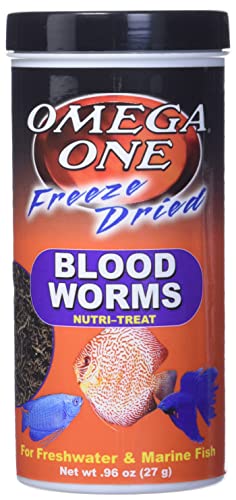
    Omega One Freeze Fried Blood Worms

    A great freeze dried product or tropical fish. Easy to supplement with vitamins

    Buy On Amazon Buy On Petco

    Cons

    Unfortunately, there are some downsides to feeding bloodworms too. Consider these facts before you feed bloodworms to your fish.

    Frozen and freeze-dried bloodworms are great as a supplementary food source or an occasional treat, but they do not provide the complete nutrition of carefully formulated commercial-dried foods. You should not feed bloodworms every day as this may cause health problems like constipation.

    Some people suffer from bloodworm allergies, especially those who feed them on a regular basis. Fish keepers report hypersensitivity to both frozen and freeze-dried bloodworms1.

    Exposure to these creatures can cause skin irritation, asthma, and other unpleasant side effects. Use gloves and wash your hands after working with this food source if you think you might be allergic. You should also avoid inhaling the dust of freeze-dried bloodworms to avoid these issues.

    Which Fish Eat Them?

    Pretty much every popular aquarium fish will eat bloodworms! The only species that won’t eat bloodworms are true vegetarians like otocinclus catfish. Here are a few examples of aquarium fish that love bloodworms:

    Types

    There are an estimated 20,000 midge species in the world and over 800 in North America alone, so there are a whole lot of different bloodworm types out there! What’s more important to us aquarists is the form they are in before we use them as fish food.

    Let’s take a look at the best options for feeding your fish bloodworms.

    Frozen

    Frozen bloodworms are the best choice for many aquarists because they provide a good compromise between convenience and quality.

    Unlike live bloodworms, frozen bloodworms lose some of their nutrients because they expand and burst their cell walls. However, the major producers of bloodworms feed a highly nutritious diet before freezing to increase their nutrient levels, so they are still full of goodness for your fishy friends.

    You can buy frozen bloodworm cubes in various sizes, and they are very easy to feed in your fish tank. Simply drop a cube into your tank and watch the fish enjoy this tasty treat as it quickly thaws.

    However, there are many frozen bloodworms in a single cube, and sometimes you may need to split up a cube before adding it if you have just a few fish.

    Another popular way of feeding frozen bloodworms is to thaw them out in a glass of tank water. You can then suck them up in a turkey baster and add them to your fish tank. The benefit of this method is that you can feed your fish directly and make sure each pet fish gets his or her fair share!

    Dried

    Freeze-dried bloodworms are the most convenient form of prepared bloodworms (and as we saw the most nutritious from the analysis earlier. They are super easy to use because you don’t need to thaw them, and you can control the amount you provide much easier.

    Freeze-dried bloodworms also have the benefit of being cheaper than frozen worms, and they keep for much longer if you keep them cool and dry.

    Some aquarists prefer to soak their freeze-dried bloodworm in water to soften them up. You can do this by adding them to a little tank water for a minute or so and then pouring it into your fish tank. You can enhance their value even further with vitamin dosing using an additive like Vita-Chem.

    My Pick
    Vita Chem

    One of the best nutritional supplements you can use for freshwater fish. Works great with pellet and fried dried foods.

    Buy On Amazon Buy On Chewy

    Live

    If you gave your fish the option they would choose live bloodworms all day long. Live is the ultimate choice because the worms still contain all their nutrients and fish love hunting the wriggling worms.

    One of the benefits of live worms is that you always know they are fresh. If you got them from a trusted source or raised them yourself then you’ll also know they don’t contain any toxic chemicals or nasty pesticides.

    Adding any live creature to your tank comes with a small risk of introducing unwanted pests and diseases though, so think carefully first.

    You can feed your fish live bloodworms by sucking them up in a turkey baster and then squeezing them out right in front of your fish. They will love it!

    Raising Bloodworms

    It is possible to grow your own bloodworms, and this may be your best option if you can’t source live bloodworms. However, growing live bloodworms takes a little more work, so this is not the easiest way to feed your aquarium fish. I supplied a video from Betta Guppy HAUS showing how to culture bloodworms. I’ll go into more detail below.

    Let’s take a look at the basic steps.

    • Create a habitat

    The simplest way of growing live bloodworms is to collect rainwater in a bucket and leave it out in the yard. Dust from the air, algae, and a few decaying leaves will create a natural food source for the bloodworms.

    A clean white bucket is ideal because you will be able to see the bloodworms and their tunnels much easier. Make sure your container has not been used to store any dangerous chemicals that could harm the worms or your fish.

    • Give it time

    You don’t need to buy bloodworm eggs to rear live worms for your fish. Adult midges will find the water and lay their gelatinous egg sacs all on their own! It could take just a few days or a week for the eggs to hatch, so check back regularly.

    • Harvesting

    Harvesting fresh bloodworms is much easier in clear water. Simply grab a turkey baster and suck them up one by one. Mosquito larvae, daphnia, and cyclops are all great food sources that you might find in your bucket but avoid sucking up other creatures that could be harmful in your fish tank.

    • Cleaning

    Once you have enough bloodworms, simply squeeze them out into a fine net like a brine shrimp net and run water through them to wash off any dirt. You can then put them in some tank water, and suck them back into your turkey baster to feed to your fish.

    You can feed them live or freeze them yourself, which could have the benefit of killing other unwanted organisms and parasites.

    Other Live & Frozen fish foods

    Bloodworms are one of the most popular live/frozen fish foods, but they are not the only natural food source for freshwater and saltwater fish. Let’s check out a few other great options.

    • Brine shrimp

    Pretty much any fish that eats bloodworms will love eating frozen or live brine shrimp too! These tiny crustaceans are available freeze-dried or as frozen blocks. You can also hatch and rear them yourself, and this is an amazing food source for fish fry and smaller fish species.

    • Ghost shrimp

    Ghost shrimp are another great food source. Many medium size fish will happily eat them. For smaller fish, they can be good tankmates instead of food. Better functional shrimp and ornamental shrimp would include ones like cherry, and Amano shrimp.

    • Tubifex Worms

    These tiny aquatic creatures appear similar to live bloodworms but have a very different larvae life cycle and are browner in color. They are available as freeze-dried and frozen food and can be fed to any fish that enjoy bloodworms.

    FAQs

    Are bloodworms harmful to humans?

    The freeze-dried, live, or frozen bloodworms used in the aquarium hobby can cause allergies in some people, although they have been used by fishkeepers for many years, and most people have no problems.

    The worms used as fishing bait are much larger creatures that can give a painful bite if handled and that makes these bloodworms dangerous. When some bloodworms bite they inject a venom that can feel like a bee or wasp sting, so take care when handling these creatures!

    What do blood worms turn into?

    Bloodworms are the larval (baby) stage of midges, which are small, mosquito-like flies with fluffy feathery antennae. The adult midge fly does not bite or suck blood, although they do form swarms which can be a nuisance, especially around lights at night.

    What is the purpose of blood worms?

    Bloodworms are a vital component of a healthy aquatic ecosystem, and they provide a natural food source for fish and many other aquatic animals.

    They are popular in the aquarium hobby because they provide a healthy varied diet and they can be very important for picky eaters that refuse prepared dried foods.

    What do bloodworms eat?

    The tiny bloodworms we feed our aquarium fish eat algae and decomposing organic material in the freshwater environments where they live.

    However, the hefty marine bloodworms that are so popular as fish bait are true predators. Those creepy critters use unique copper fangs and a venomous bite to catch and kill smaller creatures like worms and crustaceans.

    What are bloodworms good for?

    Bloodworms provide a tasty supplement to regular dried fish food. They are great for conditioning fish before breeding and for feeding picky fish that refuse flakes and pellets.

    Is it OK to touch bloodworms?

    Most people suffer no serious reactions after handling bloodworms, but some are allergic to these tiny creatures.

    The cause of bloodworm allergies aren’t very obvious but they seem to get worse over long periods of time. Even if you don’t show any symptoms at first, the safest route is to use caution and wear gloves or wash your hands thoroughly after handling them.

    Do bloodworms live in humans?

    Bloodworms live in freshwater and they can’t survive inside our bodies. These wiggly worms are not parasites but they do have a kind of creepy name! Bloodworms eat detritus, rotten plant material and algae down at the bottom of lakes and other freshwater bodies.

    Final Thoughts

    Live, freeze dried or frozen bloodworms are an excellent fish food if you limit your fish to helping every once in a while. These worms are packed with iron and protein and fish go crazy for them. Feeding bloodworms is easy too, just make sure you keep them fresh and avoid touching them with your bare skin just in case.

    Do you feed your fish bloodworms? Let us know if you prefer frozen, freeze-dried or live bloodworms in the comments below!

  • 8 Signs a Fish Is Dying (And What to Do Before It’s Too Late)

    8 Signs a Fish Is Dying (And What to Do Before It’s Too Late)

    After 25+ years in this hobby, I’ve lost more fish than I care to admit โ€” and the honest truth is that most of those early losses happened because I didn’t know what to look for. Fish that died slowly almost always showed warning signs first. I just wasn’t trained to recognize them yet.

    Catching these symptoms early is the difference between saving a fish and losing it. Some of the signs below are obvious, but a few are subtle enough that experienced keepers still miss them. Here’s what to watch for โ€” and what to do when you spot it.

    Key Takeaways

    • Losing a fish is hard, but it’s important to know what to do when that time comes.
    • There are many symptoms of a dying fish, including abnormal swimming patterns, differences in physical appearance, and trouble breathing.
    • Sick and dying fish are often the result of incorrect water parameters, extreme water temperature, stress, or injury. However, they may also die from old age.

    Is Your Fish Dying?

    If you ask this question, it’s likely too late to save your fish. A healthy fish is colorful, active, and eager to eat. A dying fish might have some obvious external symptoms like cut-up fins, abrasions, inflamed gills, or other signs of parasites. You can check out our video below on our YouTube channel. Subscribe if you like our content and follow along with our blog below. Our blog is more detailed than our video.

    Some behavioral changes might include erratic swimming around the tank, laying sideways on the substrate, gasping for air at the water’s surface, or scratching against hard surfaces. Sick fish may also lose weight from a poor appetite and turn pale in body color.

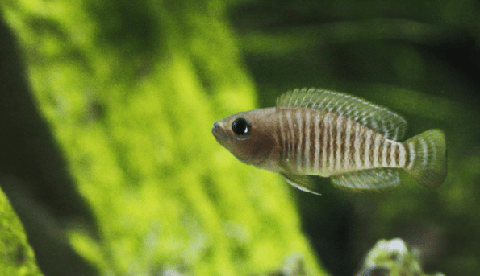
    Neolamprologus similis fish

    Many of these symptoms overlap with symptoms regularly displayed due to disease and illness. For example, common parasitic infections, like ich, cause the fish to scratch themselves against surfaces in the aquarium and gasp for air. Even though the fish may show these symptoms and look physically damaged, they can still be saved through relatively straightforward treatment methods.

    How do you know that your fish is past the point of being saved, though?

    This is a hard call to make, but it’s easy to know when your fish is on its final days either due to disease or age. That isn’t to say that you shouldn’t keep trying to save your fish until that day comes, though. But at some point, there is nothing you can do.

    Usually, there will be major changes in behavior and appearance. Some of the more foretelling symptoms of imminent death include:

    • staying out in the open once the fish tank lights have gone out
    • staying hidden in rockwork and decorations during the day
    • pale and tattered appearance
    • getting stuck in intake flows
    • getting picked on by other fish and invertebrates

    How To Tell Your Fish Is Dead

    It can be hard to tell when your fish is dead for certain. When they’re dying, it is common for fish to lay on the substrate motionless. Their breathing can be fast and shallow or slow and deep.

    A dead fish will be completely motionless. They may have stiff fins. They may have sunken-in and cloudy eyes. Their body may have started to deteriorate. If you have invertebrates in the tank, they may have even started to break down the body.

    If you’re unsure about whether or not your fish is dead, try to remove it with a fish net. If your fish is dead, then it will most likely be stiff and won’t put up a fight. If your fish is dying, it may be flexible and try to evade being caught.

    Do Fish Float or Sink When They Die?

    You’ve probably seen the cartoon of the dead fish floating upside with crosses over its eyes. Its tongue might have even been sticking out.

    No, this is not what happens!

    When your fish die, generally, they sink. Oftentimes you’ll turn on your aquarium light to find your sick fish nowhere in sight. Once you start checking between rocks and decorations, you’ll often find the dead fish laying on its side on the substrate. If you have invertebrates in the tank, it’s possible that they will have started to eat the fish.

    It is strongly recommended to remove the dead fish as soon as possible to prevent problems with water quality.

    Signs That A Fish Is Dying, Dead, Or Sick

    So what signs should you look out for in your fish? We’ve listed some of the less common symptoms of a dying, dead, or sick fish, but we haven’t listed the ones you’re most likely to see.

    Remember, these can result from a disease or illness and do not always indicate imminent death.

    Swimming Sideways Or Upside Down

    Swimming sideways or upside down is a very worrying symptom. This behavior can display itself in several ways.

    One, your fish may literally be swimming upside down or sideways. This is usually indicative of poor water quality but is also one of the leading symptoms of both swim bladder disease and fin rot (video source).

    Another way this symptom presents itself is your fish rapidly swimming up and down or side to side across the aquarium. This motion can be so fast that they look like they’re swimming upside down or sideways and can even lead to the fish jumping out of the aquarium.

    White Spots On Body

    A healthy fish has bright colors without any discoloration. A fish with white spots on its body is most likely suffering from parasitic, bacterial, or fungal infections. The leading cause for white spots to appear on a sick fish is ich, also known as white spot disease. However, velvet and various flukes can also present as this symptom.

    Loss Of Appetite

    Loss of appetite is seen in nearly all sick fish. However, as long as your fish eats, there is a good chance of recovery. It’s once your fish stops eating that it becomes difficult to keep them strong and bolster their immune system.

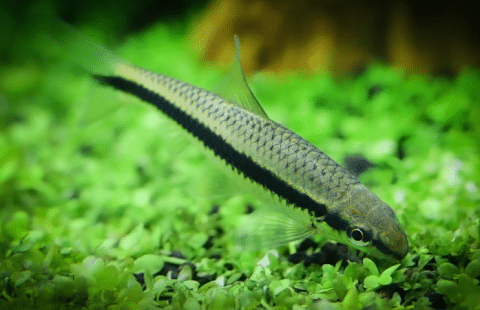
    Siamese Algae Eater

    This symptom can be difficult to treat. Hobbyists recommend soaking food in garlic to entice appetite as well as for garlic’s natural healing properties.

    Gasping For Air On The Water Surface

    Gasping for air is a sure sign your fish tank water is poor quality. This is your fish’s attempt to breathe fresh air and get away from harmful toxins. This could also mean that your fish’s gills are being affected either by parasites or bacterial infections.

    Unless your fish has a labyrinth organ, like betta fish or gourami, then it will not be able to breathe at the surface of the water.

    Betta in Fish Tank

    Swollen Or Distended Belly

    Out of all of these symptoms, a distended belly is probably the easiest to diagnose. A swollen belly can be a sign of constipation, which is easy to fix. It can also be a sign of swim bladder disease or dropsy, which are more challenging to fix but easy to diagnose.

    Gills Stop Moving

    This symptom is often paired with sick fish gasping for air at the water’s surface. The most common reasons your fish’s breathing is affected can be due to parasites and other infections.

    Breathing can also become difficult when exposed to poor water quality or other chemicals and toxins in the water.

    Redness On Body

    Redness, swelling, and inflammation of the body can be primary or secondary symptoms. Primary symptoms can be due to cuts and scrapes that your fish has received. Be mindful that redness can also indicate an infection in these areas.

    Secondary redness could be caused by parasites and related infections as well. Swelling and inflammation could even be a mix of a parasitic infection, your fish trying to scrape the parasites off its body, and infection.

    Why Is Your Fish Dying?

    Now that you can tell that your fish is dying, you need to find out why. Most fish species in the aquarium trade are hardy and can adapt to unfavorable conditions and even survive some diseases without treatment.

    Still, the most common reasons you might be dealing with a dying fish are:

    Also, consider how long you’ve had your fish. Most aquarium fish available at the pet store are at least 6 months to a year old. Tropical fish can live for surprisingly long times, with most species having the potential to live up to a decade. However, if you’ve had your fish a long time and nothing seems to be wrong with it, then your fish might be dying of old age.

    At this point, there’s nothing you can do for your fish but give it the best remaining days of its life.

    Common Causes

    Here are some of the most common reasons why your fish might be sick or dying. Keep in mind that many of these issues overlap with one another, along with the symptoms caused.

    Water Quality Issues

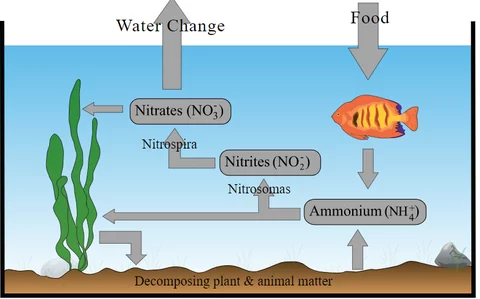
    There are many reasons why an otherwise healthy fish may die from water quality issues. One of the most obvious reasons for sudden fish death is adding a ton of fish to a brand-new, uncycled aquarium. This means that fish create ammonia through waste and respiration, which cannot be processed due to the absence of beneficial bacteria that make water conditions safe. As a result, the fish often succumb to ammonia or nitrite poisoning.

    Nitrogen Cycle

    Unfortunately, many new fish keeper enthusiasts make this mistake as they don’t understand the aquarium needs to go through the nitrogen cycle before adding fish. In some cases, the fish tank is cycled, but too many fish have been added at once, leading to overloading the current population of beneficial bacteria. Other times, a water conditioner isn’t used, leading to death from chlorine and chloramine.

    Even in a mature tank, water quality issues cause dead fish. Ammonia and nitrite poisoning are still very real threats for cycled aquariums if tank maintenance isn’t regular. This is especially true if leftover food and waste are left to rot at the bottom of the aquarium and if the filtration system is insufficient.

    An easy fix to water quality issues is performing a weekly or biweekly 10-25% water change. At the same time, siphon the substrate with an aquarium vacuum to remove any unprocessed waste. Regularly use an aquarium test kit to check water chemistry.

    However, one of the more challenging water parameters to keep in check is pH. This is because pH is a very sensitive parameter due to it being calculated on a logarithmic scale. Sudden changes exceeding more than a daily increase or decrease of .50 can cause a fish’s body to stop functioning correctly. This can lead to a very fast and painful death.

    Another parameter difficult to gauge is dissolved oxygen. Fish need oxygen to breathe. As they breathe, they also release carbon dioxide into the water. This is why aquarium water surface agitation and overall water circulation are so important.

    Water surface agitation helps facilitate gas exchange, meaning bringing in new oxygen and releasing used carbon dioxide. Water circulation helps carry both oxygen and carbon dioxide throughout the water column to prevent dead zones. If fish cannot breathe, then they can suffocate.

    Water surface agitation and circulation can be increased through the use of an air stone, pumps, increased filtration, or more regular tank maintenance.

    Water Temperature

    If water quality is correct, then you still need to worry about water temperature. Aquarium fish are very adaptable to both higher and lower temperatures, but sudden fluctuations and extreme temperatures can cause your fish to go into shock.

    The reality is that too high of a water temperature can cause your fish to cook, while a low temperature can cause your fish to slip into unconsciousness and eventual death. To prevent this from happening, an aquarium heater should always be used for stability for tropical fish and cold weather environments. As aquarium heaters are very prone to malfunctioning, some fishkeeper hobbyists replace their equipment yearly.

    At the very least, the temperature should be checked once a day.

    Stress

    Even if nothing is outwardly wrong with your fish’s body, it may still succumb to stress. There are many reasons why a fish could become stressed. This could be due to incorrect water parameters, incompatible tank mates, lack of space or hiding spots, or disease and illness.

    Even though fish might not die due to water parameters, they’ll still become stressed when conditions aren’t right or when they’re fluctuating. The effects of consistently low amounts of ammonia or nitrite can start to affect fish long-term, leading to early death.

    Fish compatibility is often an overlooked reason for a stressed fish. However, if your fish feels like it needs to fight for its life every day, then it can become injured or malnourished due to competition. The same is true if keeping a schooling fish that isn’t kept with enough related species.

    Keeping a big fish in a small tank can cause the fish to become stunted. This is a physical stress that can start to affect bodily functions over time. A lack of hiding spots can also make your fish feel like it needs to be in constant flight mode, which can cause stress on the body.

    Lastly, stress from having a disease can exacerbate the symptoms of the illness. This is why it’s strongly recommended to move fish to a quarantine tank that can be fully controlled with minimal lighting and other stressors.

    Injuries

    Just like you, getting injured causes extreme stress on a fish’s body. On top of that, many of the medications used to treat injuries can cause even greater stress. Oftentimes, this stress is less than what would be caused by staying untreated.

    Still, aquarium fish are very resilient and will quickly bounce back from an injury if given proper care. Fish can happily live with one eye if need be!

    Action Steps

    Now that you know why your fish is dying, how can you save them? Like any other aquarium problem, you need to treat the cause at the source. The best ways to give proper treatment to a sick fish are through water changes, medications, and lastly, euthanization.

    Water Changes

    Water changes are one of the best ways to treat water and sick fish. Even if your fish isn’t suffering from poor water quality, introducing new water through water changes can help bolster your fish’s immune system and get them on the right track to recovery.

    As mentioned before, regular tank maintenance should include weekly or biweekly 10-25% water changes. Some medications and disease treatments may require more frequent water changes, like one ich treatment method that requires daily water changes.

    Make sure that the source water being used is high-quality, meaning that there is no ammonia or nitrite with minimal nitrates.

    Medications

    Medications are readily available for almost any parasitic, bacterial, or fungal infection found in the aquarium. Medications are not always necessary for the recovery of the fish but can help aid in extreme cases. A gentle and indirect medication, like aquarium salt, can help make the recovery process smoother.

    Keep in mind that many medications are harsh on your fish’s immune system. If your fish is dying, heavy medications may ultimately cause the death of your fish. That being said, the appropriate treatment for some diseases is only through medication.

    Conclusion

    Sadly, losing fish is part of the hobby. It is pretty easy to tell when a fish is dying or not, but it can be harder to tell if they’re past the point of recovery. A few signs of a sick and dying fish are if they have trouble breathing, erratic movements, pale body color, or loss of appetite. These symptoms can be a result of incorrect water parameters, water temperature, stress, or injuries. Also, keep in mind that fish die of old age, too.

    Luckily, there are many medications available that can treat sick fish. But if you find that your fish is suffering, it may be time to humanely euthanize them.


    ๐ŸŸ Want to learn more? This article is part of our complete Aquarium Care Guide โ€” your ultimate resource for water chemistry, maintenance, feeding, disease prevention, and everything you need for a healthy tank.

  • Brown Algae in Your Fish Tank: 4 Causes and 9 Ways to Get Rid of It

    Brown Algae in Your Fish Tank: 4 Causes and 9 Ways to Get Rid of It

    Brown algae is one of the first things new tank keepers panic about โ€” and honestly, one of the least serious issues you’ll face. It looks alarming when it starts coating your substrate, glass, and decorations, but what you’re seeing is actually diatoms, not true algae. It’s extremely common in newly set up tanks as they cycle and silicate levels stabilize.

    The good news: in most cases, it resolves on its own as the tank matures. When it doesn’t, there are reliable fixes. Here are the 4 main reasons it shows up and 9 ways to clear it out for good.

    Key Takeaways

    • Brown algae (diatoms) are common in new aquariums and usually disappear on their own
    • If brown algae is a long-term problem, its cause can be managed
    • Brown algae is a common aquarium pest that thrives on high silicates, phosphates, and nitrates
    • Increasing regular tank maintenance is a good way to combat brown algae in many cases

    What Is It?

    Brown algae- also known as silicate algae or diatoms1, are single-celled algae found in fresh and saltwater all over the planet. These tiny algae use light to grow (photosynthesize) and silicate to form a protective ‘glass’ shell. Diatoms are not true brown algae, although they evolved from the same ancestor.

    Aquarists think of diatoms as a pest, but these algae are actually vital for life on earth. Like plants, they are the foundation of the food chain, which supports all living animals. These incredible life forms also provide the oxygen we breathe. In fact, diatoms in the ocean are said to produce more oxygen than all the world’s rainforests!

    So how do you identify brown algae? These algae settle on pretty much all tank surfaces, including rocks, glass, and substrate. They form a thin, rusty brown layer that is soft and easy to remove.

    Is It Bad?

    Diatoms are generally not bad for your aquarium. They often show up in new tanks after a few weeks or months and then disappear on their own. However, a slimy brown layer is not very attractive, so in that sense, they are bad.

    Despite the ‘dirty’ look, diatoms are a great food source for many aquatic animals, including algae-eating fish. Unfortunately, there are some situations where serious brown algae growth can have real negative effects on your aquarium.

    When Are Diatoms Bad?

    Sometimes diatoms do not disappear on their own, and they can be a concern in planted aquariums. Brown algae harm plants by covering their leaves and blocking their access to light.

    When plants are unhealthy, their leaves begin to decay. Decaying leaves break down and release even more phosphates and nitrates into the water, potentially making the problem even worse.

    Let’s take a look at some of the main causes of brown algae in aquariums

    Causes Of Diatoms

    Understanding the cause of any problem in your aquarium is the first step toward finding a solution. So, it’s time for a little detective work! This information is also useful to prevent brown algae in any other aquariums you put together.

    Freshwater Diatoms

    1. New Aquariums

    The most common cause of diatom growth is a water chemistry imbalance in a newly set-up aquarium. This problem usually happens in immature tanks without healthy populations of beneficial bacteria and other microorganisms.

    A covering of brown slime is a big surprise to many new fish keepers, and it’s easy to panic and start looking for complicated and expensive solutions. Rest assured, after a few weeks, other forms of algae will probably outcompete these diatoms, and you may never see them again.

    However, if the brown algae in fish tank water do not disappear on their own, or if you develop this problem in a mature aquarium, you may need to look for other causes.

    2. High Nitrates, Phosphates, and Silicates

    These three compounds are the usual cause of persistent brown algae problems in established aquariums. Let’s take a closer look at each one and how they encourage brown algae growth.

    • Nitrates

    Nitrates are the final product of the nitrogen cycle in an established aquarium. They can also be found in low concentrations in tap water and other water sources. Diatoms thrive in high nitrate environments because they use this compound as an energy source for growth.

    The best way to limit nitrate is to physically remove it from your aquarium by changing the water. However, you can also manage this nitrogen compound by limiting the amount of fish you keep or by growing aquatic plants.

    • Phosphates

    Diatoms and other algae thrive in water with high phosphate. These phosphorous compounds are another product of aquarium waste, like uneaten food and dead plant material.

    A lack of maintenance and overfeeding flake foods are major causes of high phosphate levels in aquarium water.

    • Silicates

    Brown algae (AKA silica algae) thrive in the aquarium water with high silicate levels because they use silicates to grow a protective shell.

    Silicates are salts formed by combining silicon and oxygen. They can come from water sources like tap water and hardscape materials like sand, gravel, and rocks. Silicate concentrations in tap water may vary depending on where you live.

    3. Stagnant Water

    Brown algae attach themselves very weakly or simply settle on surfaces in your aquarium. Stagnant water with no movement allows them to multiply, while flowing water keeps them suspended in the water column where they can be filtered.

    Aquariums should have healthy water flow to keep small waste particles suspended in the water column where your filter can collect them.

    4. Poor Water Quality

    Diatoms and aquarium algae tend to thrive in low water quality with high nutrient levels. Most nutrients come into your aquarium as fish food and never really leave the system.

    Sure, the fish eat the food, but they cannot absorb all of the nutrients, and whatever remains stays behind in the form of fish poop.

    Good quality filtration and beneficial bacteria turn these excess nutrients from highly toxic substances into mildly toxic substances known as nitrate. The most efficient way of removing nitrates is through regular partial water changes and growing live aquarium plants.

    Testing

    So now you know a little more about what diatoms are and what causes them, but how do you know which cause applies to your situation? The simple answer is by testing.

    A standard aquarium test kit measuring ammonia, nitrite, and nitrates is a ‘must-have’ for any fish tank. A silicate test kit is recommended for an older tank with a persistent brown algae problem.

    When To Test

    An important thing to remember about testing is that water parameters change over time. Testing once a year or once a month will not give you an accurate idea of what’s really going on with your water chemistry.

    Test your water every three days or so in a new aquarium to monitor changes in your water chemistry. You can reduce the frequency to once a week as things stabilize, but I recommend testing before and after water changes to work out a schedule with the right results.

    Once your aquarium is established and stable, you can slow down and test once a month or whenever you notice any potential problems like sick fish, algae growth, or unhealthy plants.

    How to Get Rid of Brown Algae in Fish Tank – 9 Best Ways

    Now that you know a little more about the causes of brown algae problems, let’s go ahead and learn how to get rid of brown algae in your aquarium. We have a video from our YouTube channel that you can also follow along.

    1. Give It Time

    Brown algae are usually a temporary problem, and the best course of action in many cases is to just watch and wait. The diatoms will clear up on their own in time as other algae establish themselves and the nitrogen cycle develops and matures in your tank.

    2. Clean It Up

    If your brown algae problem is not solving itself, or you really can’t stand the sight of it, you can always clean it off manually.

    Diatoms do not attach themselves firmly like some other algae species, so they are pretty easy to remove. Here’s how:

    Cleaning Aquarium Glass

    Let’s face it; no one likes dirty aquarium glass. Removing brown algae from tank walls is easy with an algae scraper or a non-scratch algae pad. Use a plastic scraper or a purpose-made algae pad to avoid scratches if you have an acrylic aquarium.

    Whatever you use to clean your aquarium glass, take care to never get sand or gravel between the glass and the cleaner because that’s how scratches happen.

    Cleaning Aquarium Ornaments

    You can carefully remove aquarium ornaments and clean them in old tank water, ideally when doing a water change. This is not necessary if your brown algae problem has just started in a new tank.

    Cleaning Aquarium Substrate

    Brown algae often settles on the bottom of fish tanks, and this can be pretty unsightly, especially if you have a light-colored substrate. These diatoms can be removed by suction with your gravel vacuum.

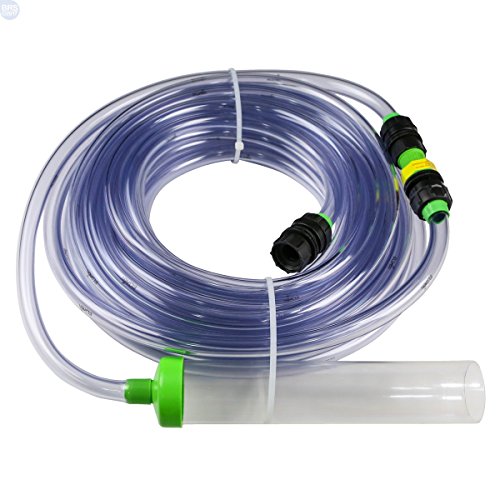
    Python Cleaner

    The Python is a mainstay in the fish hobby. Easily clean your aquarium by connecting this to your sink!

    Buy On Amazon

    Cleaning Aquarium Plants

    Cleaning brown algae on aquatic plants is difficult without damaging their leaves. This job is best left to the experts- the algae eaters!

    Keep reading to learn more about aquarium algae eaters later in this article or check out my in-depth guide to the best algae eaters for freshwater tanks.

    Cleaning Fake Plants

    Many aquarium owners prefer to use fake plants to create a more natural appearance, although cleaning them can be a challenge. You can scrub your plastic plants with a soft brush or cloth or dip them in a mild bleach solution (1/10 parts) or hydrogen peroxide.

    3. Change Your Substrate

    Brown algae require silicates to grow, but where do they get this material? While it is possible to reduce your silicate levels through filtration, sometimes you need to go straight to the source. Silicates can come in through your water, but they are also found in most substrates. Play sand, for example, is high in silicates.

    4. Increase Water Flow

    Increasing the water flow in your aquarium can prevent diatoms from settling. You can do this by installing a larger filter or a powerhead. In some cases, just rearranging your hardscape or moving your filter will have a big effect on water circulation.

    Of course, some fish don’t do well in strong water flow so this might not be an option with slow-swimming fish like bettas and fancy goldfish.

    5. Improve Water Quality

    Poor water quality is the cause of so many problems in the aquarium hobby that it’s usually the first place to start when anything goes wrong. But how do you improve water quality?

    Filtration

    All aquariums need adequate filtration to support the nitrogen cycle and remove waste particles from the water. There are many types of aquarium filters on the market, but it’s always a good idea to buy the best quality unit that you can afford.

    Designs like canister filters that provide more space for filter media can support larger beneficial bacteria colonies and ensure better filtration. Still, you can also use more than one filter in your aquarium as long as you do not create too much flow.

    Aquarium filters are usually rated by the tank size they can be used for, but manufacturers often overestimate this figure.

    Therefore, the filter’s gallon-per-hour rating is far more useful. As a general guideline, choose a filter that can process the total amount of water in your tank 4 to 6 times every hour.

    Adding a protein skimmer to your saltwater aquarium can improve the filtration by removing even more phosphates from the water.

    Maintenance

    The number one cause of poor water quality is a lack of aquarium maintenance. We all dream of an aquarium that takes care of itself, but the truth is that the water quality in our tanks changes in time, and the smaller the tank, the faster this happens.

    Excess nutrients cause water quality issues, and the two most effective ways of reducing these nutrients are to limit the amount that goes in and to remove as much as possible.

    If you have too many fish in your aquarium, you’ll need to feed them a lot, and they will produce a lot of waste. Consider stocking your tank with fewer fish if you want to minimize your maintenance needs.

    Water Changes

    Even with a low-stocking rate, nitrate levels will slowly climb, leading to algae outbreaks and many other issues. Performing more water changes is the simple solution to reducing these excess nutrients.

    But how often should you perform water changes? And how much water should you change each time?

    Nitrates and phosphates build up at different speeds in different tanks, so the only way to answer these questions is to test your water regularly. Nitrate levels of 20 ppm or lower are considered ideal for fish, although you can usually let them rise to double that without problems.

    Put simply, if your aquarium water has a nitrate reading of 30 ppm, a 50 percent water change will bring it down to about 15 ppm. If it takes two weeks to return to 30 ppm, then a 50% water change every two weeks may be necessary.

    6. Grow Plants

    Healthy plants will compete with brown and green algae to suppress their growth. Live plants use light and nutrients to grow, just like brown algae, and we can all agree that aquarium plants look much better than diatoms!

    Water Sprite

    Readily available and easy to grow. This fast growing plant will soak up nutrients and thrive in low light

    Click For Best Price Buy On Amazon

    However, growing healthy, vigorous plants is not as simple as throwing them into your tank and hoping for the best. Different aquarium plants have different needs, so while some plants will grow like weeds without any care, others will need experience, time, and some extra equipment to flourish.

    Here’s what you need to know about plant care:

    • Aquatic plants need light to grow

    Use purpose-made aquarium lights to provide the right spectrum of light for your plants, and run your lights on a timer for 6 – 8 hours each day to simulate a natural photoperiod (day/night cycle).

    • Plants need nutrients

    You’re probably wondering how adding nutrients could be beneficial when your goal is to reduce nutrients. Well, plants will use nutrients in the water from excess food and fish poop, but they also need other nutrients from fertilizers to perform at their best.

    Remember, healthy growing plants will use up the nutrients in the water column before the brown algae, and basically beat them at their own game.

    • Plants need Carbon Dioxide

    Did you know that plants breathe in carbon dioxide (CO2) and breath out oxygen? Fortunately, CO2 occurs naturally in our aquarium water column. But some plants need increased levels to thrive.

    If your goal is to simply get rid of algae, choose plants that do not need injected CO2 to thrive. If you want a jaw-dropping aquascape full of colorful plants, however, you will want to invest in some extra equipment.

    The Ultimate CO2 Kit
    CO2Art Pro Elite Series Bundle

    Use Offer Code ASD10%Off

    The highest end offering by CO2Art. This package includes everything you need to perform consistent and the highest quality CO2 injection in the industry!

    Click For Best Price
    • Plants attach themselves in different ways

    Aquarium plants fall into three categories; the fastest and easiest are the floating plants. Species like hornwort will float in the water column, soaking up nutrients and competing with diatoms and other algae types like blue-green algae.

    Epiphytes do not float or drift but rather anchor themselves to solid structures like rocks and driftwood. These plants use their roots to hold on and to capture nutrients from the water column. Epiphytes will compete with brown algae, although they tend to be slower growers than floating plants.

    Rosette plants and rooted stem plants send their roots down into the soil, sand, or gravel to anchor themselves and collect nutrients. Some rooted plants need quality aquarium soil to thrive.

    7. Add Animals That Eat Them

    Growing live plants is an excellent way to combat many algae species in the aquarium, but there’s another way to use aquatic life to your benefit. One of the easiest (and most fun) ways to control brown algae is to add algae eaters!

    Various fish and snail species eat brown algae, and these creatures can be fascinating to keep. While these animals will remove brown algae, they cannot solve the cause of the problem.

    Let’s quickly look at some great species that can help you eliminate brown algae.

    • Otocinclus catfish

    The otocinclus catfish is a small freshwater fish with a big appetite for algae and diatoms. These fish grow to just 2 inches, and they can be kept in tanks as small as 10 gallons.

    • Amano shrimp

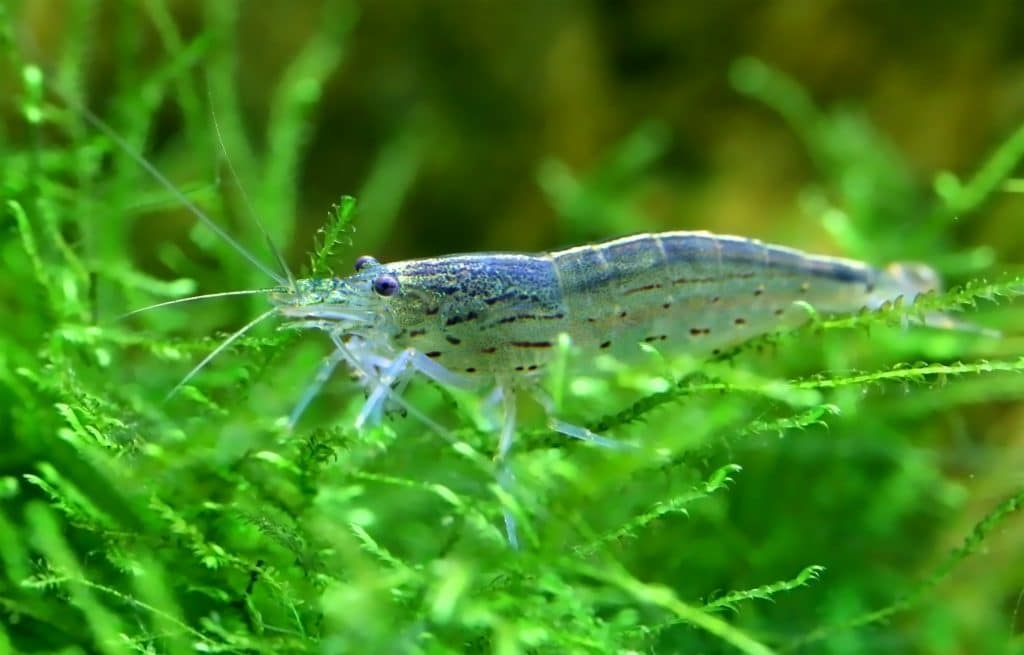
    Amano shrimp are another excellent option for diatom control in a freshwater aquarium. These interesting inverts are perfect for planted tanks, but beware, larger fish will eat them.

    • Nerite snails

    Nerite snails are hard-working creatures that love to eat diatoms. There are a few different species available, and most have awesome shell patterns or shapes.

    Some aquarium snails tend to breed out of control, but not the mighty nerite. These snails cannot breed in freshwater.

    • Plecostomus

    Plecos are armored catfish from South America that love to snack on brown algae. There are many species of plecostomus catfish, ranging from the strange bristle nose pleco at 4 to 5 inches to the common pleco that can reach 20 inches. Naturally, choosing the right species for your tank size is pretty important!

    • Lawnmower blenny

    So far we’ve only focused on freshwater species that eat brown algae, but there are many great options for marine aquariums too!

    The lawnmower blenny is a great little reef fish that grows to just a few inches and is suitable for reef tanks of 30 gallons or more. These expertly camouflaged bottom dwellers may take up to 3,000 bites each day, so they’re great for removing brown algae.

    • Trochus snails

    Trochus snails are another excellent option for marine tanks. These conical gastropods come in many patterns and colors, and the various species range from 1 to more than 3 inches across. Trochus snails are easy to care for, easy to breed, and they eat diatoms and blue-green algae.

    8. Try Phosphate Removers

    It is possible to control diatoms by reducing the amount of silicates in the water. Products like Phos-Zorb from API and Phosguard from Seachem remove both silicates and phosphates from the water to suppress brown algae growth.

    9. Use Reverse Osmosis Water

    If your tap or well water is very high in silicates, your best option might be to use reverse osmosis (RO) water or RODI water in your aquarium. Reverse osmosis water is pure water that has all contaminants and minerals removed through a filtration process.

    However, it is important to note that RODI water for freshwater fish is completely pure and unsafe for fish unless it has been remineralized. Another option is to simply ‘cut’ or mix your tap water with RO water to reduce the silicate levels.

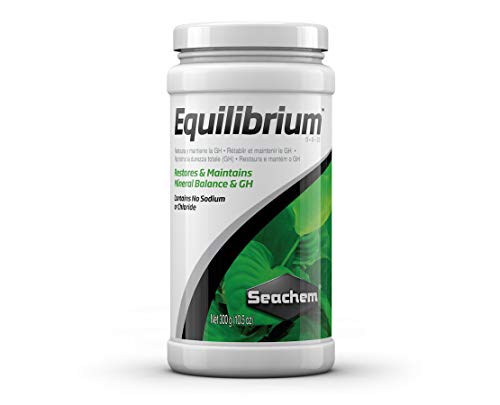
    My Pick
    Seachem Equilibrium

    A great remineralizer for freshwater tanks. Best used with RO, RODI, and distilled water. Completely aquarium safe

    Click For Best Price

    FAQs

    Why am I getting this in my Aquarium?

    The most common causes of brown algae in fish tank water are an imbalance of nutrients in a new tank, excess silicates, and excess nutrients like nitrates and phosphates. This kind of algae is very common in new aquariums and usually disappears after a few weeks.

    What eats it in an aquarium?

    Many aquarium algae eaters will happily feed on brown algae in fish tanks. Otos, plecos, and nerite snails are all great options for freshwater tanks. Saltwater clean-up crew like lawnmower blennies, trochus snails, and cerith snails are perfect for reef tanks.

    Is it okay to have it in an aquarium?

    Brown algae is usually harmless, except for extreme cases. A little brown algae in a new aquarium is perfectly normal, but abundant diatom growth in established tanks is a sign of nutrient imbalances or other problems.

    Does having it mean my aquarium is cycled?

    Brown algae is a sign that your tank is going through the cycling process rather than proof that cycling is complete. The best way to know if a new aquarium is cycled is to test the water parameters. A cycled aquarium will read zero ammonia and zero nitrites but show detectable nitrates.

    What causes it to grow in a freshwater aquarium?

    Brown algae loves fish tanks with high nitrate, phosphate, and silicate levels. Nitrates and phosphates increase as uneaten food and fish waste accumulate in your tank, and silicates usually occur in varying levels in well and tap water.

    What kills it in Aquariums?

    The best way to stop brown algae is to starve it by making your aquatic environment unsuitable for its needs. Simply killing the algae will not remove the cause of the problem, so avoid using any harsh chemical treatments.

    Final Thoughts

    Brown algae in fish tanks is something that most fish keepers will need to deal with from time to time. If you have a brown algae outbreak in a new aquarium, keep calm and allow it to work itself out. If your problem is in an established tank, run through the causes and solutions explained in this article for the best chance at removing brown algae for good!

    Have you gotten rid of brown algae in your tank? Tell us about your experiences in the comments below!


    ๐ŸŒฟ Want to learn more? This article is part of our complete Planted Tank & Aquascaping Guide โ€” your ultimate resource for aquarium plants, aquascaping styles, substrates, and more.


    ๐ŸŸ Want to learn more? This article is part of our complete Aquarium Care Guide โ€” your ultimate resource for water chemistry, maintenance, feeding, disease prevention, and everything you need for a healthy tank.

  • White “Algae” in Your Aquarium: What It Actually Is and How to Get Rid of It

    White “Algae” in Your Aquarium: What It Actually Is and How to Get Rid of It

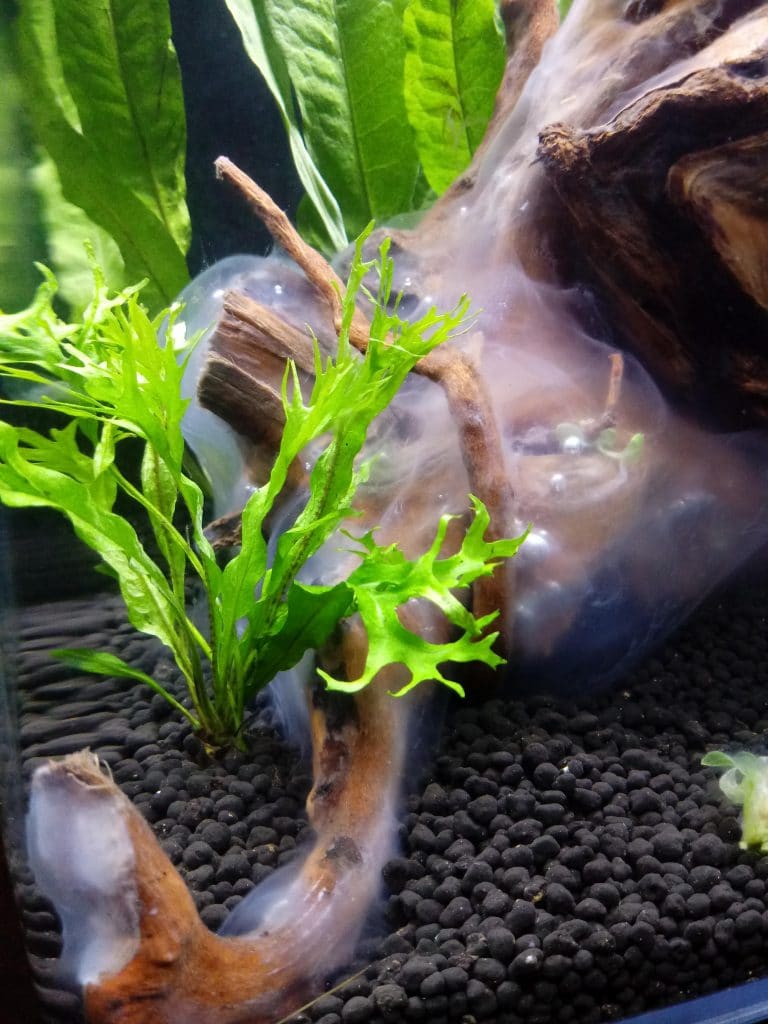
    If you’re seeing white fuzz in your tank, the most likely culprit is a benign fungus growing on new driftwood. It’s one of those things that freaks people out the first time they see it โ€” but it’s completely harmless to fish and almost always disappears on its own within a few weeks as the wood finishes leaching. I’ve seen it in nearly every tank I’ve set up with new driftwood. Don’t panic.

    “White algae” actually covers a few different things โ€” fungal growth, bacterial biofilm, and in some cases genuine white slime algae. Knowing which one you’re dealing with changes how you handle it. Here’s a breakdown of the causes and what to do about each.

    Key Takeaways

    • White algae isn’t actually a type of algae. Instead, it’s more likely to be a fungus.
    • This algae is most likely to appear on new driftwood and other organic aquarium additions but can be the leftovers of dead algae too.
    • There are a few ways to get read of this algae, including removing it by hand, adding different fish species and invertebrates that eat white algae, or using aquarium-safe chemicals.
    • The best way to get rid of white algae is by letting it leave on its own.

    Introduction To White Algae In Aquariums

    Everyone dreads getting green algae in their aquarium. But when you see something that appears to be white algae showing up, you might be more confused than ever.

    While algae is ugly, it’s a natural part of the ecosystem. However, we like our fish tanks to be perfect so it must go. There are a few reasons why you’re growing white algae over other green or red algae species. To get rid of white algae, you need to understand why it’s growing.

    But first, what is white algae, and how do you identify it?

    What Is It?

    To understand what white algae is, we must understand what it’s not.

    Biofilm In Aquariums

    The term white algae is a misnomer. This name comes from its plant-like appearance that covers aquarium decorations and causes hobbyists headaches. In fact, it’s more likely that white algae is a bunch of filamentous fungus-like organisms instead of true algae; white algae may also be described as white mold.

    But if it looks and acts like algae, then why isn’t it algae?

    Algae is a scientific group of photosynthetic eukaryotic organisms, or living things that have a nucleus and membrane-bound organelles they use to gather energy from the sun. There are many species of known algae with many different varieties growing in freshwater, saltwater, and brackish ecosystems.

    In nature and in the aquarium, species of algae thrive when given plenty of light, nutrients, and little competition. While unwanted in home fish tank setups, algae is a natural part of any aquatic system and aren’t inherently bad. However, it can smuggle other aquarium plants and corals, lessen light penetration, and become unsightly over time. Some algae growth is easy to control, while others quickly overtake an aquarium.

    That being said, there are only three main divisions of algae: Rhodophyta, Chlorophyta, and Heterokontophyta1. Simply put, Rhodophyta is red algae, Chlorophyta is green algae, and Heterokontophyta is largely recognized as brown algae. Though these associated colors don’t always tell the correct species of algae, you can see that there is no white algae mentioned.

    Plants get their green colors from how light interacts with their chlorophyll, or pigments of the plant; different plants produce other pigments, which can result in the red or brown coloring of algae outside of Chlorophyta.

    If the plant does not contain chlorophyll, then it will lack color and be unable to photosynthesize. While some parasitic plant species can survive without chlorophyll, white algae do not fit in this group. Thus, white algae is not considered a plant or a type of algae.

    What Is This Fuzzy Stuff In My Aquarium?

    Have you noticed a thick, white, slimy surface over your new driftwood or other aquarium decorations in your freshwater fish tank? You might be dealing with white algae.

    We established that white algae isn’t actually a type of algae and is, instead, a type of fungus. This means that it doesn’t thrive from high lighting or excess nutrients. Instead, we’ll see that it mostly originates from the availability of carbohydrates.

    Is It Harmful To Fish Or Invertebrates?

    Don’t worry, though! White algae is harmless to aquarium fish and invertebrates and is oftentimes a natural part of the tank’s changing ecosystem. The biggest problem about having white algae in your fish tank is its appearance.

    It’s important to note that there are a few other reasons why your freshwater aquarium has white fuzzy stuff growing in it. Some of which are not as safe or easy to deal with as white algae.

    Why It’s In Your Fish Tank (Causes)

    There are two main causes for white algae growing in your freshwater fish tank. Often, white algae appear around new driftwood and other organic structures placed in the aquarium. However, white algae growth may also appear to come from other aquarium plants or algae.

    New Driftwood

    One of the biggest problems new hobbyists face in their aquariums is the growth of white algae. This can happen simultaneously throughout the nitrogen cycle, with fish or without.

    A few days after adding new driftwood to the aquarium, beginner hobbyists may start to notice an unsightly white coating on their new driftwood. This progresses into a thick layer of white or transparent slime that covers the entire structure. As you can imagine, this can become concerning very quickly.

    This is perfectly natural and to be expected. In fact, there aren’t any ways to prevent it from happening. Even the most popular driftwood treatments, like leaving the pieces out in the sun, boiling them, or preserving them, will likely result in white algae growth.

    Why does white algae grow over new driftwood?

    Hobbyists must remember that everything they put into fish tanks affects the ecosystem. This is especially true when placing organic items into the aquarium, like plants, wood, or decorations, and filter media that have been transferred from another tank.

    In the case of driftwood, unfamiliar organics, , are introduced into the aquarium. The beneficial bacteria that help your fish tank run are determined to keep your aquarium safe from outside threats while also being highly attracted to carbohydrates. As a result, they start to process them and break them down. This results in the growth of white algae fungus and an unnecessary headache for hobbyists.

    Remember, a white algae invasion is not harmful to fish or invertebrates and does not immediately indicate an issue with nutrients or lighting. In about one to four weeks, all white algae should disappear from the aquarium; as quickly as it appeared, it will leave.

    Amano Shrimp Male

    In fact, it’s better to create stability during this time instead of trying to remove the white algae as quickly as possible. But if you really can’t stand the sight of it, then there are a few ways to get rid of white algae before it leaves on its own. These methods include manual removal, introducing a cleanup crew, and dosing aquarium products.

    Manual Removal

    In most cases, persistence and manual removal are the best ways to tackle any algae problem in both freshwater and saltwater aquariums. This holds true for a white algae problem–if you want to be proactive about it.

    We can’t lie. White algae is slimy and messy to remove. Because of this, we strongly recommend removing the affected driftwood from the aquarium and using a toothbrush or other scrubber to lightly detach the algae. Take a bucket of aquarium water from the fish tank to rinse off the driftwood. Remember that there are beneficial bacteria on these pieces of driftwood that you want to disturb as little as possible. Using tap water or other untreated water could kill the present bacteria, leading to even bigger problems than unwanted white algae growth.

    It is likely the white algae will grow back a couple of times more after being removed but will return as less and less every time. To help diminish returns, increase water circulation.

    If removing the white algae while still inside the main fish tank display, it’s strongly recommended to use an aquarium vacuum to help clean up the detached pieces in the water column. Unlike other algae, white algae will not self-propagate when transferred to other parts of the aquarium. Still, it’s recommended to remove any possible decaying organic matter that could lead to other issues.

    Python Cleaner

    The Python is a mainstay in the fish hobby. Easily clean your aquarium by connecting this to your sink!

    Buy On Amazon

    CleanUp Crew

    If you have white algae, you’re most likely in the beginning stages of your freshwater aquarium. At some point or another, you should add a cleanup crew and algae eaters to help keep your aquarium system running.

    A cleanup crew should not be seen as a way to solve the algae problems in your tank, but rather, a natural part of the ecosystem that helps remove decaying organic material before it can start to affect water parameters. Remember that snails and shrimp will not eat fish waste! Although freshwater snails and shrimp are great at what they do, some species can reproduce very quickly and add to the overall bioload of the aquarium.

    It’s true that there are some excellent algae eaters out there, though. Some of the best algae eaters belong to the Otocinclus genus. These fish are hungry for green algae and will clean up a tank in a few days. However, their green appetite can quickly lead to food shortages, so they’re only recommended for more experienced fish keepers. They also won’t take care of a white algae bloom.

    In fact, nothing really eats white algae while it’s developing. Fish and invertebrates will pick at it as it starts to die off, though. And keep in mind that algae eaters will help clean up after the other main cause of white algae: algae die-off. But we’ll get to that in a bit.

    Aquarium Products

    We never recommend using aquarium products to treat algae problems, and especially not to get rid of white algae from the fish tank. But if you’re desperate to get your tank clean and free from white algae, then there are some readily available solutions.

    Hydrogen peroxide is a household item that is very effective at treating algae problems in saltwater and freshwater aquariums. Specifically, spot treat with a mixture of 3 ml of 3% hydrogen peroxide for every 1 gallon of water. Use a syringe or turkey baster to target the affected area while the equipment is off.

    The white algae should start to recede in the next day or so, though several treatments may be needed.

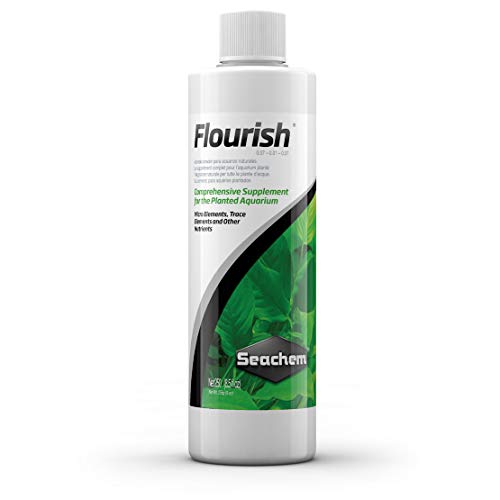
    The other readily available aquarium product is Seachem Flourish Excel. This is a bioavailable organic carbon that acts as an algaecide. The idea is that other plant species outcompete the algae with the added supplement, leaving the algae to die. While this is mainly meant for pest algae, like green hair algae, it has worked with white algae as well.

    Seachem Flourish

    An easy to use entry level fertilizer for freshwater planted tanks. Readily available at most stores

    Buy On Amazon

    If planning to keep aquarium plants long-term, then Seachem Flourish Excel can be a great supplement even after your algae problem is gone.

    Doing Nothing

    Our favorite method on this list, doing nothing, is one of the best, least expensive, and least time-consuming ways to deal with white algae growth in the aquarium.

    Remember that white algae is the result of beneficial bacteria feeding on new organics, including carbohydrates, entering the ecosystem. This means that these are limited resources that will be depleted over time. In fact, most white algae growth stops in a couple of weeks, with all remaining coverage receding by the end of the month.

    To help speed things up, we recommend continuing to do regular fish tank maintenance, including using an aquarium vacuum. While in the tank, feel free to suck up any loose white algae. Try to remove food residue and other waste on top of the algae to prevent poor water quality.

    Dead Algae

    While white algae is often the result of new driftwood being placed in the tank, it’s not the only reason.

    Sometimes, pieces of dead algae turn white. This is especially true if treating excess growth with chemicals that cause sudden death. Again, there is no reason to try to treat white algae as aquarium fish, and other invertebrates will often eat whatever is leftover. If they don’t, then a well-working mechanical filtration system will clean up the rest.

    There are some occasions when white algae growth actually indicates the growth of the algae. This can be seen in calcareous species of algae, like Halimeda. Halimeda is a saltwater genus of algae that grows a hard, white skeleton underneath its fleshy green cover; when Halimeda dies, the white skeleton may also be exposed, making it the truest species of white algae on this list!

    This growth and receding effect is very similar to that seen on the white tips of corals.

    How To Treat (If It’s the Other Species)

    If the cottony growth isn’t due to driftwood or dead algae, then you might have misidentified the initial problem. While it’s unlikely that a new type of algae appears in your fish tank, stranger things have happened.

    To treat algae, we need to understand what causes it. There are three main influences of algae growth:

    1) Too much light

    2) Excess nutrients

    3) Poor water quality

    Excess Or High Lighting

    Fish tanks need a lot of light, but not too much lighting. They also need a balance of intensity, spectrum, and photoperiod. Unfortunately, algae can be caused by one or all of these factors.

    There are many aquarium lights available for purchase today. Luckily, most models can be customized for the needs of the specific tank, allowing for intensity, spectrum, and photoperiod to be manually adjusted.

    Any adjustments made should be made over long periods of time. Plants need time to adjust to sudden changes in lighting, which can slow their rates of photosynthesis and allow algae to outcompete them.

    For saltwater fish tanks, remember that white, red, and green light highly contributes to algae growth.

    Excess Nutrients

    It’s hard to tell the water and tank conditions of your system if you’re not regularly testing parameters. Even if things are okay one day, the next, you can end up with an algae bloom due to high phosphates and nitrates.

    The best way to prevent excess nutrients in your fish tank is by regularly checking water parameters and performing aquarium maintenance accordingly. Make sure that you stock your aquarium correctly without adding too many fish. Have an adequately sized aquarium filter to help process waste and create water circulation throughout the tank. Remove leftover food and waste as needed.

    Poor Water Quality

    While excess nutrients can cause poor water quality, the quality of your water starts at its source.

    Freshwater aquariums can be filled with tap water as long as algae-causing nutrients, like phosphate and nitrate, are low (and the water is treated for chlorine). Unfortunately, many beginner hobbyists do not check their source water quality, causing them to do more fish tank maintenance that only introduces more excess nutrients.

    A good aquarium setup starts with good aquarium water.

    Fungal Infections

    If you start to notice a white fuzz growing on the body or fins of your fish, you’re most likely dealing with a fungal infection. This can look like a piece of white algae that is stuck to the side of the fish but is indicative of an open wound.

    Fungal infections are often secondary infections that are due to incorrect water parameters. Improving water quality and dosing medications can lead to a full recovery and a completely healthy fish.

    Final Thoughts

    Contrary to popular belief, there is no such this as white algae. But if you see white stuff growing from a new piece of driftwood you put in the tank, you’re most likely dealing with a type of harmless fungus that will leave on its own.

    If you don’t want to wait for it to clear up over the course of a few weeks, then you may manually remove it and keep the tank clean, add algae eaters, or use chemical intervention. We think it’s best to leave it alone, though!


    ๐ŸŒฟ Want to learn more? This article is part of our complete Planted Tank & Aquascaping Guide โ€” your ultimate resource for aquarium plants, aquascaping styles, substrates, and more.


    ๐ŸŸ Want to learn more? This article is part of our complete Aquarium Care Guide โ€” your ultimate resource for water chemistry, maintenance, feeding, disease prevention, and everything you need for a healthy tank.

  • Why Are There Bubbles In My Fish Tank? 9 Causes (and How to Read Them)

    Why Are There Bubbles In My Fish Tank? 9 Causes (and How to Read Them)

    Bubbles in a fish tank can mean a lot of different things โ€” some completely normal, some worth addressing, and at least one (gas bubble disease from supersaturated water) that’s a genuine emergency. After 25+ years of keeping tanks, I’ve learned to read bubbles the same way I read other water quality signals.

    The most common scenario: persistent foam or small bubbles clinging to the surface usually means elevated organic waste โ€” time for a water change. But betta bubble nests, plant pearling, and filter surface agitation are all healthy signs. Here’s how to tell them apart across all 9 common causes.

    Key Takeaways

    • Bubbles in your fish tank can be good, bad, or somewhere in between.
    • These bubbles can be the result of many factors, such as the aquarium filter, water quality, or labyrinth fish.
    • The best way to stop little bubbles from forming in your aquarium is by finding the thing that’s causing them.

    What Causes Air Bubbles In Your Tank?

    H2O, also known as water. The science behind our aquariums.

    In order to make the water for our fish tanks, hydrogen needs to bond with oxygen. This means that there is always oxygen available in your aquarium in the form of H2O! But sometimes oxygen can start to appear in the form of annoying microbubbles that stick to the sides of the aquarium and decorations and might even create a mat at the surface of the water.

    While they might look out of place, microbubbles are usually temporary in both freshwater and saltwater aquariums. In most cases, air bubbles will only stick around for a few days. But what causes these bubbles, and are they harmful to fish and invertebrates?

    1. New Fish Aquarium

    The most common time to see air bubbles form in the aquarium is in the few days following a new tank setup. Small bubbles clinging to the side of the aquarium and the surface of the water often leads new hobbyists asking “why are there bubbles in my fish tank”? It’s a good question!

    Bubbles in a new tank are nothing to worry about and should be expected. This is perfectly normal and is the result of oxygen escaping from the substrate, decorations, and surfaces of the aquarium. They should dissipate within a week.

    2. Air Stones And Filtration

    The next obvious source of air bubbles in your aquarium is direct oxygen inputs, like an air pump or your filtration system. This equipment pumps oxygen into your tank in an attempt to create surface water agitation, which facilitates the gas exchange of oxygen and carbon dioxide between the aquarium and the atmosphere.

    Both air stones and filters are great ways to introduce dissolved oxygen into the aquarium. The bubbles produced should be clear in color and pop almost immediately. Some bubbles created by the air pump may not pop right away and create an area of tiny bubbles on the surface of the water. This is usually nothing to worry about.

    3. Water Changes

    Water changes can also cause microbubbles. This can result from tank water agitation causing more oxygen to enter the tank, but it can also be due to differences in water temperature.

    Cold water holds more oxygen than warm water. If new aquarium water is cooler than that already in the tank, this oxygen may be released through tiny bubbles that stick to the aquarium glass. This is not ideal if there are fish and invertebrates present in the tank due to stressful changes in water temperature.

    Water change water should be the same water temperature as the existing aquarium water to prevent fish from going into shock. A several-degree difference can lead to tiny bubbles forming while also stressing out fish.

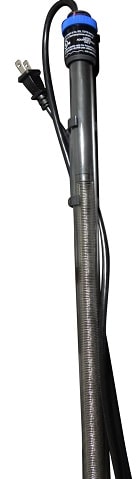
    To help prevent this, new water should be heated with an aquarium heater to the desired temperature.

    Best Value
    Eheim Jager Aquarium Heater

    Best Value

    Very accurate, durable, and German made. A great value buy for any aquarium

    Click For Best Price Buy On Amazon

    4. Medications

    Another reason why tiny air bubbles might form on the water’s surface is due to medication use. Many medications, like Hikari’s PraziPro1

    Thus, any bubbles that form in the aquarium during this time are thicker than usual, leading to longer-lasting bubbles. This effect can be decreased by increasing water agitation, which is normally recommended when using strong medications. The bubbles formed should be clear, though some medications can cause an unusual shimmer or foam bubbles.

    5. Oily Surface Layer

    Look down at your aquarium. Do you see a rainbow or off-white swirls? This could be a sign that a contaminant is in your fish tank. Don’t worry just yet, though.

    This contaminant can be organic or inorganic. The natural oil from fish food as well as from hobbyists’ arms and hands, can leak into the aquarium over time. Other organic waste and proteins can also build up and create an oily surface layer. In addition to the discoloration, this layer of oil and protein foam will prevent bubbles from rising all the way to the top of the aquarium.

    Some hobbyists use paper towels to remove this layer periodically, but this is a temporary fix. The best way to prevent this is by improving surface movement. Hands and arms should also be thoroughly washed before performing fish tank maintenance.

    The real problem happens if this sheen isn’t from a natural source and is the result of soap residue or contamination from other cleaning tools and products. Not only will this result in foamy bubbles on the water’s surface, but will also affect your fish’s ability to breathe, which can quickly prove to be deadly.

    Keep cleaning products far away from the tank (including out of the air) and never use soap to clean an aquarium!

    6. Poor Water Quality

    Bubbles forming in the aquarium can be a sign of poor water quality, specifically concerning ammonia. Ammonia is a toxic compound that can burn fish’s gills and cause them to suffocate. Excess ammonia greater than 5 ppm can also cause the nitrogen cycle to stall in the aquarium, preventing beneficial bacteria from detoxifying the compound.

    If bubbles seemingly appear out of nowhere in your fish tank, check for improper water conditions with a reliable water test kit.

    7. Fish Nest

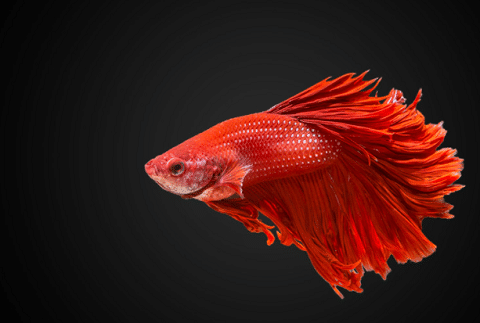
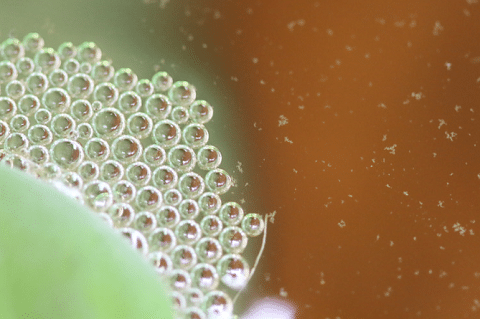
    Not all foamy bubbles are bad, though. In fact, creating a bubble nest is the main way labyrinth fish species reproduce. This is most commonly seen with male betta fish (Betta splendens), but can be seen in gouramis (Osphronemidae family) as well.

    Red Betta Fish

    Bubble nests are made up of many microbubbles on the surface of the water, usually attached to aquarium plants, aquarium glass, or other equipment. These nests can have a foamy appearance.

    It is often said that betta fish only make bubble nests when they’re perfectly happy in their environment. While this is largely true, bubble nests don’t always indicate that your fish is thriving. If your fish is creating bubble nests more than usual, make sure to check for poor water quality, as it might be a sign of stress.

    The male betta fish typically maintain bubble nests for several days; some hobbyists have noted a bubble nest lasting more than a week. Eventually, the bubbles will dissipate, even quicker if they’re near areas of water flow.

    8. Pearling

    Another good reason why you might have bubbles in your fish tank is due to a sought-after phenomenon called pearling. This is the visualization of aquarium plants releasing oxygen into the water column; the oxygen produced is released faster than it can dissolve into the water. This is regarded as a sign of a healthy tank with rapid aquarium plant growth.

    Pearling can result in bubbles covering the plant or floating to the surface of the water.

    Do They Hurt Your Aquarium?

    In general, air bubbles aren’t good or bad. There are many reasons for them to occur, with some reasons being neutral while others being good or bad. Small bubbles may be present in new fish tanks but they can also appear in well-established ones that have good a filtration system or that have regular water changes.

    At the same time, foam in your fish tank can either be a sign of recent medication use and bad water parameters or a healthy betta tank with pearling. If you aren’t expecting air bubbles to be present in your aquarium, then it’s worth questioning.

    9. Lookalikes

    It’s pretty easy to identify air bubbles in a fish tank, but there are one saltwater pest algae that you need to keep an eye out for bubble algae (Valonia ventricosa). This presents small, green jewel-like bubbles that cover the surface of rocks, corals, and equipment. These bubbles can even get stuck in the intake of a powerhead or aquarium filter.

    Newly-formed bubbles can have a more transparent appearance than older ones, making it confusing to realize they’re a type of algae. Some hobbyists like the appearance of bubble algae, but most try to eliminate it with regular maintenance as well as chemical and biological intervention.

    How To Get Rid Of These In The Aquarium

    Like anything in the aquarium hobby, to fix bubbles from appearing in your fish tank, you need to understand the root of the problem. Once that’s been discovered, small and large bubbles can be eliminated.

    1. Preventing Them In A New Aquarium

    There’s no reason to get upset over bubbles appearing in a new fish tank, but some hobbyists want to skip the waiting. There are a few ways to keep these bubbles out:

    1. Thoroughly rinse and soak all substrate, decorations, aquarium equipment, and filter media before use.
    2. Fill the aquarium with warm or hot water to lessen the amount of oxygen that enters the aquarium.
    3. Perform water changes to remove any foam bubbles that may appear on the water’s surface.
    4. Use an algae scrubber to wipe away any bubbles that form on the aquarium glass.

    2. Decreasing Due To Air Stones And Filtration

    Most hobbyists want to increase the amount of available oxygen in their fish tanks, just not in the form of microbubbles. While surface agitation is good, there are a few ways to prevent too many bubbles from entering your water column.

    1. Make sure equipment is securely installed. Connections and joints within the equipment should be fully submerged to prevent air from being introduced.
    2. Keep the air stone away from the filter. Bubbles can get sucked up and returned via the aquarium filter, creating additional bubbles.

    3. Increasing Oxygen And Dosing Medications

    Bubbles should be the least concern when dealing with dosing medications, but we understand that you want comfortable conditions for a sick fish.

    The best way to stop thick bubbles from forming in a medicated fish tank is by increasing water surface agitation. This will introduce some bubbles on its own but should help break up the viscosity caused by the medications. Increased oxygen and carbon dioxide exchange will also help combat lowered oxygen levels due to treatment.

    4. Removing An Oily Surface Layer

    Natural oils are to be expected in both freshwater and saltwater fish tanks. These can be removed through improved water surface agitation, manual removal, or physical removal through something like a protein skimmer.

    If your oily surface layer is due to a type of chemical, then there is more reason to be concerned. By the time these bubbles form, it’s usually too late for fish and invertebrates. However, a large water change can help save the remaining inhabitants.

    In the future, steer clear of traditional cleaning products in and around your fish tank. Instead, use hot water and vinegar to clean what you need to.

    5. Improving Water Quality

    Improving water quality and reaching more ideal water parameters is a long game. It takes time and patience, and the road to a healthy ecosystem isn’t linear.

    That being said, each fish tank is unique in how it runs. This means that the water parameters that work for one tank might not work for the next. However, no tank runs well with poor water quality.

    Here are a few ways to improve the overall health of your aquarium:

    1. Use good source water. Source water should be within the ideal parameters needed for your fish tank or a blank slate; many saltwater keepers use RO/DI water that is completely customizable for what their tank requires.
    2. Perform regular tank maintenance. The importance of aquarium maintenance cannot be overstated. Vacuuming the substrate, introducing fresh water, and rinsing filter media can easily keep waste down and parameters where you want them to be.
    3. Take regular water tests. As you understand your fish tank more, you won’t need to do water tests as often. However, in the beginning, stages, and future problems, you want to know how your tank operates across days. This will identify the problem and stop it from reoccurring in the future.
    4. Check on your fish tank daily. The best way to track your fish tank progress is by checking on it daily. Most problems happen over time and not overnight (though things can go south very quickly!). Be there to see it as it happens and stop it before it gets out of hand.

    6. Keeping Your Betta Fish Busy

    There is some discussion as to how to ‘treat’ bubble nests. Betta fish work hard on their nests and can get stressed when they’re prematurely disturbed or destroyed.

    What Is A Bubble Nest

    At the same time, bubble nests are a great form of enrichment for betta fish. By destroying your betta fish’s nest by removing it or breaking it up, you are giving your fish something to do. Still, this can stress out your fish and cause a change in their demeanor.

    7. Reduce Pearling

    In general, pearling from aquarium plants is never a bad thing; it’s a highly desirable effect that many hobbyists dream of! But if you don’t like the look of it, then there is an easy way to fix it.

    The best way to deal with aquatic plant pearling is by increasing water flow. This will dislodge and disperse any bubbles that form and rise. Be careful not to push your aquarium plants over with too much water flow, though.

    Final Thoughts

    Microbubbles can make a fish tank look unkempt and dirty. On the contrary, tiny bubbles are usually a good sign or the result of something else in the aquarium! Sometimes, bubbles are a sign that something is wrong in the aquarium, so any first or unexpected appearance of them should be taken into consideration.


    ๐ŸŸ Want to learn more? This article is part of our complete Aquarium Care Guide โ€” your ultimate resource for water chemistry, maintenance, feeding, disease prevention, and everything you need for a healthy tank.

  • 17 Real Fish From Finding Nemo: Which Ones Can You Actually Keep?

    17 Real Fish From Finding Nemo: Which Ones Can You Actually Keep?

    Finding Nemo had a real impact on the saltwater hobby โ€” I watched it happen firsthand. When the film came out in 2003, clownfish demand surged at fish stores everywhere. After Finding Dory in 2016, the spike in Blue Tang demand was actually concerning, because Hippo Tangs are large, water-quality-sensitive fish that need at least a 100-gallon tank. Not exactly a beginner fish, regardless of what a movie might suggest.

    Most of the species in the film are real, and several of them โ€” clownfish, royal grammas, blue tangs, yellow tangs โ€” are regulars in the saltwater hobby. Some are manageable for experienced reef keepers. Others are better appreciated on screen. Here’s the full breakdown of all 17 species.

    Let’s keep swimming!

    Key Takeaways

    • There are several fish featured in Finding Nemo including Clownfish, Hippo tang, Yellow tang, Royal Gramma, and the Moorish Idol
    • All fish featured in Finding Nemo and Finding Dory are saltwater fish that require specialized care
    • The easiest-to-care-for fish shown in the movie are the Clownfish and Royal Gramma
    • The only freshwater fish show in the movie was a Goldfish by the name of Chuckles

    Types Of Fish In Finding Nemo

    1. Clownfish (Nemo)

    • Scientific Name: Amphiprion ocellaris
    • Difficulty Level: Easy beginner fish
    • Temperament: Semi-aggressive
    • Adult Size: Up to 4 inches
    • Minimum Tank Size: 20 gallons
    • Diet: Omnivores
    • Origin: Indian Ocean, Red Sea and western Pacific Ocean.
    • Water temperature: 75 and 80 degrees Fahrenheit
    • Reef Safe: Yes
    • Available As Tank Bred: Yes

    The movie, Finding Nemo starts with three main characters of the clownfish, namely Marlin, Mother Coral, and Nemo, inhabiting the Great Barrier Reef.

    Clownfish are also called as anemonefish because they form symbiotic relationships with sea anemones within coral reef environments, are tropical fish that reside and breathe in sea anemonesโ€” just like the finding Nemo fish; Marlin and Mother Coral.

    They have a very striking appearance that becomes even more dazzling near sea anemones.

    In reality, there are around 30 different fish species of clownfish of various size, color, and patterns. However, the most popular among them is the fish from Finding Nemo1; with orange and white stripes.

    They are easy to look for and generally hardy, especially when provided with a balanced diet and ideal water conditions.

    Aquatic Dreams Metal Signs

    Discover the ultimate way to showcase your underwater masterpiece with custom, breathtaking personalized metal wall art. levate your marine paradise to a whole new level of artistry and let your underwater world shine like never before!

    Click For Best Price

    2. Blue Hippo Tang (Dory)

    Blue Tang
    • Scientific Name: Paracanthurus hepatus
    • Difficulty Level: Moderate
    • Temperament: Semi-aggressive
    • Adult Size: 12 inches
    • Minimum Tank Size: 180 gallons
    • Diet: Herbivore
    • Origin: Fiji, Indonesia, Maldives
    • Temperature: 72-78ยฐ F
    • Reef Safe: Yes
    • Available As Tank Bred: Yes

    No one motivated us like Dory did with her heroic lesson; “Just keep swimming!”

    Dory is a beautiful Blue Hippo Tang fish that is kind, friendly, and jolly. However, she suffers from short-term memory loss, a condition that adds humor and challenges to her journey through the vast and adventurous East Australian Current, alongside Nemo’s dad, Marlin and Crush the sea turtle.

    Blue Hippo tang are also called as Royal Blue Tang, Regal Rang, blue hippo tang, and Palette Surgeonfish. These fish are found in the reeds of Indian and Pacific oceans. In reality, they are pretty much like Dory; with bright blue bodies with a yellow tail and black spots on the head.

    The Blue tangs or the palette surgeon fish are medium and large in size, suitable for large aquarium. They are a popular aquarium fish. However, due to their sensitive nature, the quality of water and diet should be well cared for.

    3. Spotted Eagle Ray (Mr. Ray) – Can’t be kept in aquariums

    Spotted Eagle Ray
    • Scientific Name: Aetobatus narinari
    • Difficulty Level: N/A
    • Temperament: Non-aggressive but defensive
    • Adult Size: 16.4 feet (5 m)
    • Minimum Tank Size: N/A
    • Diet: carnivores
    • Origin: Indo-Pacific region from the western Pacific Ocean, the Indian Ocean, and the western Atlantic Ocean
    • Temperature: 75 to 81 degrees Fahrenheit
    • Reef Safe: N/A
    • Available As Tank Bred: N/A

    We sure had lovely, supportive and encouraging teachers just like Mr. Ray that we loved throughout the animated movie Finding Nemo.

    Spotted eagle ray includes other species of eagle rays and stingrays. They are mostly found in tropical and subtropical regions around Atlantic, Pacific, and Indian Oceans.

    Just like Mr. Ray, the real life spotted eagle ray have long, slender bodies with wings, spanning up to 10 feet wide.

    They are near threatened species as listed by the IUCN due to overfishing and habitat destruction.

    4. Longnose Butterfly (Tad)

    Longnose Butterfly Fish in Reef Tank
    • Scientific Name: Forcipiger Flavissimus
    • Difficulty Level: Moderate
    • Temperament: Peaceful
    • Adult Size: 9 inches
    • Minimum Tank Size: 125 gallons
    • Diet: Carnivore
    • Origin: East Indian Ocean, West Indian Ocean, Australia, Japan, The Red Sea, Indonesia, East Pacific, Central/West Pacific
    • Temperature: 70.0 to 81.0ยฐ F
    • Reef Safe: No
    • Available As Tank Bred: Rare

    Tad is a friend who labels himself as obnoxious, but he’s rather a very enthusiastic, playful, and excited pal who loves exploring the reef with Nemo.

    In real life, Tad is known as a long nose butterfly fish mostly found in the Western Atlantic Ocean and the Caribbean Sea. Just like Tad, Longnose Butterfly fish has long, thin snout with yellowish orange color adorned with black stripes. The Longnose butterfly fish are generally small in size and very hardy fish in the aquarium hobby.

    5. Yellow Tang (Bubbles)

    Yellow Tang In Reef Tank
    • Scientific Name: Zebrasoma flavescens
    • Difficulty Level: (Put N/A for fish that can’t be kept in aquariums)
    • Temperament: Semi-aggressive
    • Adult Size: 8 inches
    • Minimum Tank Size: 100 gallons
    • Diet: Omnivores
    • Origin: Northwest and Central Pacific ocean from southwest Japan to Marianna Islands, Marshall Islands, Marcus Island, Wake Island and Hawai’i.
    • Temperature: 75โ€“82 ยฐF
    • Reef Safe: Yes
    • Available As Tank Bred: No

    Bubbles is a very bubbly, fun-loving friend of Nemo and Dory. Bubbles is a yellow tang fish who is very cheerful and enjoys blowing bubbles . Hence, the name.

    In real aquatic life, you can find many Bubbles by the name of Yellow tang. These tang fish are found in the Indo-Pacific region, growing around 8 inches in length.

    Yellow tang fish are popular fish in the saltwater aquarium hobby because of their beautiful yellow color and hardiness.

    In their native habitat, they love exploring the reefs and other shallow spots.

    6. Striped Damselfish (Deb)

    Stripped Damselfish
    • Scientific Name: Dascyllus aruanus
    • Difficulty Level: Easy
    • Temperament: Semi-aggressive fish
    • Adult Size: 3 to 4 inches
    • Minimum Tank Size: 30 gallons
    • Diet: Omnivore
    • Origin: Western Pacific Ocean
    • Temperature: 75-82ยฐ F
    • Reef Safe: Yes
    • Available As Tank Bred: Yes

    Deb is a delusional friend who talks to her own reflection. Deb, despite her delusional behavior, is a supportive friend who helps Nemo on his journey, alongside characters like Peach, the patient sea star, and other tank inhabitants in the dentist’s office.

    You can find an adorable pet like Deb by the name of Striped Damselfish. Since they are popular saltwater aquarium fish species, it’s easy to care for them.

    7. Moorish Idol (Gill) – For Experts-only

    Moorish Idol in Reef
    • Scientific Name: Zanclus cornutus
    • Difficulty Level: Expert; not recommended as an aquarium fish
    • Temperament: Peaceful
    • Adult Size: 7 inches
    • Minimum Tank Size: 125 gallons and over
    • Diet: Omnivore
    • Origin: Red Sea, the Indo-Pacific, and the eastern Pacific Oceans
    • Temperature: 75 to 82 F
    • Reef Safe: No
    • Available As Tank Bred: Rare

    Gill is a very intimidating and serious fish from Finding Nemo. He is also the leader of the tank gang in the dentist’s aquarium. The best trait of Gill is he is committed to help Nemo escape the aquarium. He also guides Nemo in many ways and eventually becomes his mentor.

    Gill is a Moorish Idol fish that are easily found in the Indian and Pacific Ocean. They can be kept in saltwater aquarium hobby because they are small fish and hardy.

    8. Royal Gramma (Gurgle)

    Royall Gramma Fish
    • Scientific Name: Gramma loreto
    • Difficulty Level: Easy
    • Temperament: Mellow and peaceful fish
    • Adult Size: 3.1 inches
    • Minimum Tank Size: 30 gallons
    • Diet: Planktivores
    • Origin: Native to reef environments of the tropical western Atlantic Ocean
    • Temperature: 72 and 78 ยฐF
    • Reef Safe: Yes
    • Available As Tank Bred: Yes

    Gurgle is a brave fish in the dentist’s aquarium who has the audacity to tell Gills that his escape plans are nutty. Gurgle in Finding Nemo is shown asa pessimistic fish who is reluctant to be friends with reef fish, Nemo.

    Gurgle is a Royal Gramma fish native to Western Atlantic Ocean and Caribbean Sea. Royal Gramma is an ombre colored dark purple to deep voilet fish with a golden yellow tail.

    The royal gramma basslet are popular saltwater aquarium fish species as they add a brilliant pop of color to any home aquarium because of their beautiful bizarre colors.

    9. PufferFish (Bloat)

    Saltwater Puffer Fish
    • Scientific Name: Tetraodontidae
    • Difficulty Level: Difficult
    • Temperament: Aggressive fish
    • Adult Size: Can vary from two inches to up to several feet in length
    • Minimum Tank Size: Typically 75+ gallons for most puffer fish
    • Diet: Omnivores
    • Origin: Middle Eocene Europe, with fossils found in Monte Bolca and the Caucasus Mountains
    • Temperature: 74 and 78 degrees Fahrenheit
    • Reef Safe: No
    • Available As Tank Bred: Rare

    Bloat is Gill’s, the Moorish Idol fish’s best friend. He an anxious and nervous puffer fish who inflates himself at any minor inconvenience.

    For their delicate flavour and texture, Porcupine pufferfish, also known as Fugu in Japanese, are a species of fish that are highly esteemed in various cultures.

    Some species of porcupine pufferfish are also extremely dangerous since their internal organs, skin, and certain tissues all contain tetrodotoxin, a neurotoxin. Humans are fatally affected by this toxin, which can result in severe symptoms including paralysis, respiratory problems, and even death.

    10. Goldfish (Chuckles)

    Goldfish Mouth
    • Scientific Name: Carassius auratus
    • Difficulty Level: Easy
    • Temperament: Peaceful
    • Adult Size: 10 inches
    • Minimum Tank Size: at least 20 gallons for one fish (Freshwater fish)
    • Diet: Omnivores
    • Origin: Native to East Asia
    • Temperature: 68ยฐ to 74ยฐ F
    • Reef Safe: NA
    • Available As Tank Bred: Yes

    Chuckles is a goldfish in Finding Nemo who was supposed to be the pet of the dentist’s niece, Darla. However, it never made it to Darla’s home aquarium as it was already dead in the doctors’ clinic.

    Goldfish is a freshwater fish that is popular as pet and for use in ornamental ponds. They belong to the Cyprinid family, which also contains carps and koi.

    The brilliant, glittering scales of goldfish, which can be orange, red, yellow, or any combination of these hues, are what make them so distinctive.

    They range from little, skinny fish to enormous, spherical fish, and they come in a wide range of sizes and forms.

    11. Anglerfish

    Deep Sea Female Angler Fish
    • Scientific Name: Lophiiformes
    • Difficulty Level: Difficultโ€” some species are cannot be kept in an aquarium
    • Temperament: Aggressive
    • Adult Size: Often less than a foot long
    • Minimum Tank Size: 15 to 20 gallon tank
    • Diet: Carnivore
    • Origin: Atlantic and Antarctic ocean
    • Temperature: Between 70 and 80 degrees
    • Reef Safe: With caution
    • Available As Tank Bred: Rare

    The female Anglerfish shown in the movie Finding Nemo is fictional, but based on the real life characteristics of actual anglerfish.

    Anglerfish are a particular species of fish distinguished by its unique hunting style. They have a lure, which is a long, rod-structure device, extending from their head, to draw in prey. In order to attract food to the lure in the deep, dark waters where anglerfish dwell, the tip of the lure is typically coated with a luminous or luminescent material.

    12. Blue Whale

    Blue Whale in Ocean
    • Scientific Name: Balaenoptera musculus
    • Difficulty Level: N/A
    • Temperament: Loners
    • Adult Size: Between 70 and 80 feet
    • Minimum Tank Size: N/A
    • Diet: Carnivore
    • Origin: Found in all oceans except the Arctic
    • Temperature: N/A
    • Reef Safe: N/A
    • Available As Tank Bred: N/A

    Blue whale is a finding Nemo fish that plays a supportive role in the movie. He helps Marlin and Dory on their way to the Sydney harbor.

    The largest animal on planet Earth, the blue whale grows around 100 feet in length and weigh around 200 tons. No ocean on planet Earth is free from the Blue Whale. However, they are commonly found in cold waters around polar regions.

    The blue whale is a species of whale that is the largest animal on Earth. They can grow up to 100 feet in length and can weigh as much as 200 tons.

    Blue whales are found in every ocean on the planet, but they are most commonly found in the colder waters of the polar regions.s. They are known for their unusual blue-gray appearance, which results from minute particles in their skin reflecting sunlight. The Blue whale looks celestial, darting in and out of the ocean.

    13. FlounderFish (Mr. Johannsen)

    Flounder Fish in Ocean
    • Scientific Name: Paralichthys
    • Difficulty Level: Moderate
    • Temperament: Shy and peaceful
    • Adult Size: 9 โ€“ 24 inches in length
    • Minimum Tank Size: 125 gallons or more
    • Diet: Carnivore
    • Origin: Native to the Gulf of Mexico
    • Temperature: 55-68ยบ F
    • Reef Safe: With caution
    • Available As Tank Bred: No

    Mr. Flounder is an old, grumpy fish from finding nemo that doesn’t like children. He also doesn’t like it when children plays in his sandy yard. Unfortunately, even after continuous struggle, he cannot catch the kids as he has both eyes on only one side of his face.

    The shallow coastal areas of the Atlantic Ocean, the Mediterranean Sea, and the Black Sea are the native regions of Flounder, a species of flatfish. The bodies of Flounder is round, and they can blend in with their environment by changing the color of their skin. This allows them to hide on the ocean floor.

    14. Barracuda (Ate Nemo’s Mother)

    Barracuda Fish in Ocean
    • Scientific Name: Sphyraena
    • Difficulty Level: Moderate
    • Temperament: Semi-aggressive
    • Adult Size: 24 to 39 inches
    • Minimum Tank Size: no less than 1000 gallons (not suited for aquariums)
    • Diet: Carnivores
    • Origin: West Indies and Florida
    • Temperature:74 F and 82 F
    • Reef Safe: No
    • Available As Tank Bred: No

    We all remember the main antagonist from Finding Nemo; the very aggressive fish that attacked Nemo’s mother. And made us very sad!

    Barracudas are predatory fish native to tropical and subtropical seas all around the world. They eat tiny fish, shrimps, insects with their sharp teeth and streamlined bodies.

    15. Great White Shark (Bruce)

    Great White Shark in Ocean
    • Scientific Name: Carcharodon Carcharias
    • Difficulty Level: N/A
    • Temperament: Aggressive
    • Adult Size: 15 to 16 feet
    • Minimum Tank Size: N/A
    • Diet: Carnivore
    • Origin: California, Peru, Chile, and surrounding coastal deposits
    • Temperature: N/A
    • Reef Safe: N/A
    • Available As Tank Bred: N/A

    Bruce in Finding Nemo appeared as a very intimidating, scary character, and rightfully so! Bruce is nothing but a great white shark.

    However, Bruce is a fish-friendly shark, meaning he has made a promise to himself to NOT hurt any other fish. He is supportive and empathetic, however, sometimes, he can’t fight with nature and struggles badly with his predatory instincts.

    The Great white sharks are endangered, and despite their terrifying reputation, their populations have been dropping recently as a result of overfishing and other human activity.

    16. Mako Shark (Chum) – Bruce’s friend

    Mako Shark in Ocean
    • Scientific Name: Isurus oxyrinchus
    • Difficulty Level: N/A
    • Temperament: Fast and aggressive
    • Adult Size: 13 feet
    • Minimum Tank Size: N/A
    • Diet: Carnivore
    • Origin: Argentina and the Gulf of Mexico to Browns Bank off of Nova Scotia.
    • Temperature: N/A
    • Reef Safe: N/A
    • Available N/A

    Chum is an extremely lively Mako shark that is a member of the Fish-Friendly Sharks family. Chum also has a hook stuck in his nose because of some fishing history. Like Anchor, he loathes dolphins.

    The Mako shark is popular for its speed and agility and is regarded as one of the ocean’s most powerful and athletic sharks. The mako shark is known for its razor-sharp teeth, which it uses to rip apart prey when hunting.

    17. Hammerhead Sharks (Anchor)

    Hammerhead Shark in Ocean
    • Scientific Name: Sphyrnidae
    • Difficulty Level: N/A
    • Temperament: Aggressive
    • Adult Size: 15 to 18 feet
    • Minimum Tank Size: N/A
    • Diet: Carnivore
    • Origin: Found throughout the Atlantic and Indian Oceans and Pacific oceans and also in the Mediterranean sea
    • Temperature: N/A
    • Reef Safe: N/A
    • Available As Tank Bred: N/A

    Anchor is an unhappy hammerhead shark that belongs to the group “Fish Are Friends, Not Food.”

    A hammerhead shark is a particular kind of shark distinguished by its distinctive Cephalofoil, or hammer-shaped head. The world’s temperate and tropical oceans are home to nine different species of hammerhead sharks.

    FAQs

    What Are The Fishes Called In the Movie?

    Nemo, a clownfish, is the film Finding Nemo’s primary character. Marlin, his father, is also a clownfish. Other fish characters in the animated film include Gill, a Moorish idol who is the leader of the โ€œFish-Friendlyโ€ fish tank residents, Bruce, a great white shark who is trying to stop eating fish, and Dory, a blue tang fish with short-term memory loss.

    What Are The Types Of Fishes In Finding Dory?

    The protagonist is Dory, a blue tang fish. Other fish characters in the film include Bailey, a beluga whale with echolocation issues, Hank, a seven-armed octopus who helps Dory on her trip, and Nemo, a clownfish who is Dory’s buddy and Marlin’s son. Sea turtles, sea lions, and birds are just a few of the various marine and aquatic animals that appear in the film.

    What Kind Of Fish Is Nemo And Dory?

    Nemo is a clownfish and Dory is a blue tang. Both species are native to the coral reefs of the western Pacific Ocean and the Indian Ocean.

    What’s The Black And White Fish From Nemo?

    The black and white fish named Gill is a male Moorish Idol fish and the tritagonist of Finding Nemo, and a minor character in Finding Dory.

    Final Thoughts

    We have a video that summarizes everything we talked about in our blog post. Check out our YouTube Channel if you want more.

    Now that you know that the fish in โ€œFinding Nemoโ€ are all based on real species that can be found in the ocean, including coral reefs and marine animals. The filmmakers worked with marine biologists to ensure that the characters in the movie were accurately depicted, and the movie has helped to raise awareness about the importance of protecting marine ecosystems and the sea creatures that live in them.

    What was your favorite fish among all the fish in Finding Nemo? Let us know in the comments below!

  • Green Aquarium Water: 4 Causes and 7 Fixes (Including the Fastest One)

    Green Aquarium Water: 4 Causes and 7 Fixes (Including the Fastest One)

    Green water is one of those problems that happens fast and looks alarming โ€” your tank goes from crystal clear to pea-soup in what feels like days. I’ve dealt with it in both freshwater and saltwater setups over the years, and the cause is almost always the same combination: too much light and excess nutrients creating ideal conditions for a free-floating algae bloom.

    The good news is that green water isn’t dangerous to your fish. The bad news is water changes alone won’t solve it โ€” you need to hit the light and nutrient problem at the root. Here are the 4 main causes and the 7 most effective fixes, starting with the fastest one.

    Key Takeaways

    • Green aquarium water is ugly but usually not harmful to aquatic life.
    • The main causes behind green discoloration in a fish tank are lighting issues, overfeeding, overstocking, or poor aquarium maintenance.
    • Greenish water can be cured by resolving these problems, installing additional equipment, or planting live plants in freshwater tanks and growing more corals/macroalgae in reef tanks.

    Why Is Your Aquarium Water Green?

    What causes aquarium water, and how do you fix it?

    Green aquarium water is often caused by single-cell algae that free-swim in the water column. This planktonic algae is different from those you may find growing on glass or aquarium decorations but grows due to many of the same contributing factors.

    It can be near impossible to tell exactly which type of single-cell algae you’re dealing with when you have green water1. Luckily, the specific species doesn’t matter too much. It is safe to assume that you are dealing with a kind of phytoplankton, most commonly dinoflagellates.

    In order to make your water go from swampy green to crystal clear, you need to understand what’s causing the algae to grow.

    Reasons Your Aquarium Water Is Green

    Although a single-celled species, this algae growth is caused by the same factors that influence macroalgae growth. This includes lighting issues, overfeeding, overstocking, and overall poor tank maintenance.

    Green Water in Aquarium

    1. Lighting Issues

    Aquarium lighting is hard to get right but we’ve certainly come a long way from fluorescent light bulbs. Today, many aquarium lights give complete control to the user in terms of intensity, spectrum, and photoperiod. All of these parameters are customizable for the best plant and coral growth.

    The problem is that algae growth hasn’t changed over the years. Algae still love light and will grow whenever and wherever they can when light is available.

    Lighting can contribute to algae growth in several ways. The first way is intensity. High lighting intensity is needed for good plant and coral growth. However, if there is excessive light or the speed of organism growth doesn’t match the strength of the light, then algae can start to outcompete the other photo-dependent creatures in the tank. Sudden increases in light can also increase algae growth as plants need time to acclimate to stronger conditions.

    Another way tank lighting affects green water is due to the spectrum emitted, or the different wavelengths of energy that are transmitted from the aquarium light to the photosynthetic parts of the plant or coral. The problem is that different photosynthetic species absorb different wavelengths of energy, meaning that plants and corals thrive under different spectrum settings from algae. It can take some trial and error to find the right tank light settings that allow for plant growth instead of algae growth.

    Lastly, photoperiod can greatly influence the appearance of green aquarium water. A long photoperiod is one of the leading causes of green water along with excess nutrients, which we’ll talk about more later.

    Photoperiods vary from tank to tank based on the aquatic plants and corals being kept. In general, hobbyists keep their tank lights on for anywhere between 7 to 10 hours. This gives enough time for plants to make and store food, which contributes to healthy growth.

    However, plants can’t fulfill photosynthetic processes to their full extent for longer-than-normal periods. As a result, algae become opportunistic and outcompetes other photosynthetic organisms for the leftover available light energy.

    Another important factor to keep in mind is that natural light will contribute to green aquarium water. This may be the result of a nearby window. Natural light has a very different spectrum from controllable tank lighting, allowing unwanted wavelengths to feed algae. Direct sunlight can also contribute to warming the tank, which further fuels green water algae.

    2. Overfeeding

    Most hobbyists are guilty of overfeeding their fish. The truth is that fish don’t need to eat that much food and a lot of it goes wasted. This excess is left to rot at the bottom of the tank until it is converted into nutrients or manually removed.

    Another problem that comes along with overfeeding is the quality of the food. Many unknowing hobbyists pick foods that are inexpensive. Unfortunately, many of these foods have poor nutritional value with lots of filler ingredients. These filler ingredients don’t get completely digested by fish and are mixed back into the aquarium water; phosphate levels from these foods are especially likely to affect green water algae reproduction rates.

    Leftover and uneaten food lead to excess nutrients that quickly cause green water algae to thrive.

    3. Overstocking

    Similarly, overstocking can also cause algae to bloom in your aquarium.

    Green Water in Tank

    A surplus of fish and invertebrates means more waste that needs to be processed. In balanced aquariums, fish waste is effectively broken down and processed by beneficial bacteria. When there is too much waste available, bacteria are overwhelmed, and nutrients are left to accumulate in the form of ammonia, nitrite, and nitrate.

    In extreme cases, high levels of ammonia can stop the nitrogen cycle from happening altogether. This is deadly to fish and a much bigger problem than unpleasant green aquarium water.

    4. Poor Tank Maintenance

    Free-floating algae bloom when there are imbalances within the aquarium. One of the main ways aquarium hobbyists keep their fish tanks running smoothly is by performing regular tank maintenance. This includes regular water changes, gravel vacuums, and filter upkeep.

    Python Cleaner

    The Python is a mainstay in the fish hobby. Easily clean your aquarium by connecting this to your sink!

    Buy On Amazon

    This might sound like a lot of work, but minimal maintenance will ensure that you never experience green water in your freshwater or saltwater aquarium.

    Most aquariums need to be cleaned once a week or once every other week. Some hobbyists get by with doing maintenance only once a month, but this can only be achieved once you know the ins and outs of your system. In general, a 10-25% water change is needed weekly or biweekly.

    When performing a water change, it is important to know the water parameters of the new water that is added. Many freshwater hobbyists use tap water as it contains the necessary minerals needed for a healthy tank. Unfortunately, tap water also contains a lot of unknowns, which can unknowingly boost nitrate and phosphate levels, leading to unwanted free-floating algae.

    If your tap water has poor water quality, then you will need to find another source. For the best control, marine hobbyists use RO/DI water that can then be customized to their preference.

    During water changes, the substrate should be vacuumed. Food and waste accumulate on the bottom of the tank, which can lead to high nitrate and phosphate levels. Kicking up the substrate too much at once can also upset water parameters, so it’s important to only do one section at a time at first.

    Every now and then, the filtration system should also be cleaned. Some hobbyists gently rinse their filter media weekly, but this can be done on a monthly basis; handling filtration media can disturb and damage beneficial bacteria, which could potentially lead to green water outbreaks.

    Is This Harmful To Fish?

    Green aquarium water looks bad. While it might seem like your fish is struggling to survive in a cloud of green, green water is generally harmless to fish.

    Free-floating algae won’t kill your fish and many fish and invertebrates naturally live in green-colored ecosystems; you won’t see crystal-clear aquarium water in the wild!

    However, free-floating algae bloom can cause oxygen levels to dip, which could potentially cause fish to suffocate. While algae perform photosynthesis and create oxygen in the process, algae respire when light is not present and create carbon dioxide in exchange. This buildup, in addition to the carbon dioxide produced by fish and invertebrates, can prove to be deadly in extreme cases.

    It should also be noted that plants love light. In especially green water, they may struggle to receive enough light necessary to grow and live. Stunted plant growth means less nutrient uptake, which further contributes to the growth of the algae.

    Big picture, green water in a fish tank is usually indicative of a greater underlying problem. These are the true problems that could potentially kill your fish. In general, this means severe imbalances in water quality.

    Can This Ever Be Good for the Tank?

    Yes! In fact, some hobbyists deliberately grow free-floating algae in their fish tanks to cultivate a natural ecosystem.

    Algae is considered a primary producer, which means that it’s at the bottom of the food chain. Bacteria and other microorganisms use algae as food. These are then eaten by other organisms, including infusoria, which eventually become desirable food for small fish and fry.

    How To Fix Your Tank Problem

    It can be hard to tell when aquarium water is turning green. One day your fish tank is crystal clear, the next, it’s murky, and then you have a full-on green water problem. This transformation can happen in just a few days, so it’s important that you check on your aquarium daily.

    Luckily, fixing a green algae problem is pretty straightforward once you’re able to identify the underlying problem: lighting issues, overfeeding, overstocking, or poor tank maintenance. A few other methods of treating green aquarium water are using additional equipment, chemical treatments, and adding live aquatic plants.

    1. Resolving Lighting Issues

    Aquarium light fixtures are the best they’ve ever been, but they only work their best when they’re calibrated for your individual system. This takes some trial and error, but a good light setting and schedule are crucial for maintaining and preventing green aquarium water.

    If a green algae bloom has already taken hold of your fish tank, reassess how many hours your light is on. If you’re towards the bottom of the recommended 7 to 10-hour range, then check the intensity and spectrum. Recalibrate the light for the specific species you are growing. Failing lighting can also affect efficiency.

    While you’re at it, check your tank’s surroundings. Ensure that there is no direct sunlight hitting the aquarium and that ambient lighting is kept to a minimum.

    2. Limit Feedings

    Overfeeding is easy to fix, though it may pull at some heartstrings–you do not need to feed your fish every time you walk past the tank!

    Instead, invest in high-quality food that will be fully digested. At the same time, reduce portion sizes. If your fish are still hungry, feed them several smaller portions throughout the day.

    Remove all uneaten food after 5 minutes.

    3. Compensating For Overstocking

    It happens. You get wrapped up in the excitement of buying fish that you take home a few too many. While this isn’t ideal, you need to give all your fish the best life possible.

    If possible, rehome the fish. Some pet stores might take back the fish, but there are many online communities that can connect fellow hobbyists.

    If rehoming the fish isn’t possible, then a larger filtration system may be installed. Additional filtration media will help compensate for the increased waste entering the system. Providing more water flow in the form of powerheads and air stones will also help keep debris from settling while facilitating gas exchange.

    Editor’s Choice!
    Eheim Air Pump

    The Quietest Air Pump

    Powerful, quiet, and German engineered. Even comes with an air stone! The best aquarium air pump you can buy today!

    Click For Best Price Buy On Amazon

    4. Achieving Perfect Water Parameters

    The truth is those perfect water parameters don’t exist, and you should never change a healthy tank for one that looks good on paper. The most important part of tank parameters is having 0 ppm ammonia and 0 ppm nitrite, as these compounds can be deadly. Nitrate and phosphate levels should be kept to a minimum but are needed to facilitate a functioning system.

    Water parameters can be maintained through regular tank maintenance and water changes with reliable source water. Debris and other organics should be removed weekly with an aquarium siphon to prevent nutrient buildup. Water parameters should then be tested weekly to ensure that balance and stability are achieved.

    5. Additional Equipment

    It usually isn’t necessary to purchase additional equipment to deal with a green algae problem, but there are some added benefits to installing new equipment. One of the best pieces of equipment you can purchase to combat greenish water is an ultraviolet (UV) sterilizer.

    UV sterilizers polish water. This device uses UV light to penetrate DNA, RNA, and proteins to destroy most pathogens, viruses, bacteria, and algae. UV sterilizers are very commonly used in pond settings that are susceptible to algal blooms and infestations. In the aquarium, UV sterilizers can be very helpful for combatting small issues concerning diseases and suspended algae in the water column.

    Budget Option
    Green Killing Machine

    Budget Option

    A great way to get clarification level UV sterilization for a great price. Very effective against green water

    Buy On Petco Buy On Amazon

    The problem is that UV sterilizers are not the cheapest pieces of aquarium equipment. Quality ones retail for at least $100, with prices increasing depending on the size required. The UV light also needs to be regularly replaced. It’s important to keep in mind that a UV sterilizer will also take up valuable space in the aquarium display or in external filtration.

    6. Chemical Treatment

    Chemical treatment is not recommended for treating a green algae problem. Chemicals simply cover up the problem and don’t address it as its root.

    The only chemicals we recommend are those that bolster the fish’s immunity and overall fish tank health during stressful periods.

    7. Add Live Plants

    Instead of harsh, difficult-to-dose chemicals, simply add live plants to your tank. For reef tanks, add easy-to-keep corals or macroalgae; a refugium can also help to export excess nutrients.

    Live plants provide a plethora of benefits to the freshwater aquarium. Not only will aquatic plants help tackle green algae problems, but they’ll continue to feed the system with fresh oxygen, food, and shelter.

    If you’ve never kept a planted tank before, the initial thought of it can be scary. It is true that most plants require a better-than-average aquarium light, but LED lights are very affordable and low maintenance. If you can’t take that plunge right now, floating plants and other low-maintenance species can easily be kept under lower light settings.

    Best Value
    Serene RGB Pro LED

    Current USA’s offering into aquascaping is an incredible value. Spectrum, spread, easy to program and great PAR output.

    Click For Best Price Buy On Amazon

    No matter which species of plant you decide to go with, aquarium plants will help correct a green water problem and keep the tank healthy.

    Final Thoughts

    A fish tank can turn green in just a few days. While this sudden change is definitely a cause for concern, the algae that cause the discoloration is unlikely to harm fish or invertebrates. However, there is some threat to aquatic life if excess nutrients are the underlying problem.

    Green aquarium water is mostly caused by lighting issues, overfeeding, overstocking, and poor tank maintenance. The hardest part of correcting a green water problem is identifying the root of the problem. Luckily, the discoloration can be fixed by resolving those issues or by adding additional equipment or live plants.


    ๐ŸŸ Want to learn more? This article is part of our complete Aquarium Care Guide โ€” your ultimate resource for water chemistry, maintenance, feeding, disease prevention, and everything you need for a healthy tank.

  • Why Do Fish Jump Out of the Tank? 8 Reasons and How to Prevent It

    Why Do Fish Jump Out of the Tank? 8 Reasons and How to Prevent It

    If you’ve kept fish for any length of time, you’ve probably lost at least one to jumping. I have. It’s one of those things that happens quietly โ€” you come home, you’re one fish short, and then you find the culprit dried up behind the tank stand. Not a great morning.

    The fix is almost always the same: a tight-fitting lid. But understanding why fish jump is worth knowing, because some of the reasons โ€” bad water quality, aggression, wrong tank conditions โ€” are actually warning signs you need to address. Here are the 8 main causes and how to prevent each one.

    Key Takeaways

    • It’s not every day you see a flying fish, and hopefully, you’ll never see a fish leaping out of your aquarium. This behavior can be an indicator that something is wrong in the aquarium.
    • If your fish jump out of their aquarium, this can mean there is an imbalance in the system.
    • There are many ways to prevent your fish from jumping out of the aquarium, though some species are naturally inclined to display this behavior.

    Why Do Fish Jump Out Of Water?

    If you had to search this question, then it’s likely too late for your fish. But it’s a great question to ask as a fish jumping out of water can indicate some major problems in the aquarium. This includes stress, bullying, and your fish being frightened by outside factors. At the same time, some species of fish are just natural jumpers, no matter how your tank is set up.

    8 Reasons

    1. Stress

    Stress is the number one reason why fish jump out of the aquarium, mostly from water parameter issues. However, illness and maintenance stress can also have an effect.

    2. Water Issues
    Green Water in Aquarium

    While we love the fish tank hobby, these conditions aren’t natural for fish. Many species migrate hundreds of miles in between the wet and dry months, sometimes even between freshwater and brackish conditions. We simply can’t recreate these changing environments in the aquarium though most species have adapted well to a more confined and stable space of living.

    That being said, when conditions become inopportune, the fish will try to leave. This can result in the fish jumping out of the tank in hopes of finding a more favorable environment.

    The leading cause of a jumping fish is poor water quality, namely due to ammonia, nitrite, nitrate, pH, or water temperature. If ammonia or nitrite levels are allowed to get too high, the water can become toxic; high nitrate levels can also become uncomfortable for fish over time. Swinging pH levels and water temperatures can also cause your fish to become unable to regulate its body, leaving only one way out.

    3. Illness
    Freshwater Ich

    Stress from disease and illness is another common reason for fish jumping out of the aquarium. Many skin parasites cause fish to develop sores and lesions across their body which can be itchy and painful. In response, fish ‘flash’ or quickly twitch randomly, sometimes against objects in the aquarium. Unfortunately, this random motion can cause them to jump right out of the top of the fish tank.

    Some diseases and illnesses also infect the gills. This can make it difficult for dissolved oxygen to be absorbed into the bloodstream, causing the fish to feel like it’s suffocating. In an attempt to find better conditions, the fish may jump out of the aquarium.

    4. Maintenance Stress

    Another reason fish jump out of the aquarium–through one you’re likely to catch in time–is due to maintenance stress. This includes times when your hands are in the tank, like when trimming plants or doing water changes. Luckily, fish will get used to your presence over time, especially if you follow a schedule. If you’re too quick with your motions though, fish might get scared and look for a quick escape route.

    5. Bullying

    Some aquarium fish jump out of the water to escape predators and other bigger fish. This is especially true if a schooling fish species is kept alone outside of a school.

    It is natural for fish to chase each other every now and then, even fish of the same species. However, problems can occur when this chasing turns into harassment or bullying. If your fish doesn’t have a good defense mechanism, then it’s left to shelter in hiding places or escape the predator altogether by jumping across the water surface and out of the tank.

    Not enough open space to swim. It is also possible for fish to jump out of their tank if space is limited. This usually happens in addition to bullying or poor water quality, but fish have been known to seek more space outside the confines of their tank. If your fish look cramped, then they probably are. Fix it before it’s too late!

    6. They Get Scared

    Why do fish jump out of the water when they’re scared? It seems counterintuitive.

    Many fish kept in the aquarium hobby are not predators, meaning they are prey that are reactive to their surroundings; when danger is near, they swim away. There isn’t any way to ensure that your fish will never get scared, but there are ways to make them more comfortable within their environment.

    1. Keep schooling species in groups. The better majority of tropical fish species require being kept in small groups. In the wild, these groups are used as protection from predators, providing safety in numbers. The bigger the group, the safer and less reactive your fish will feel.
    2. Limit activity around the outside of the tank. Aquarium fish get used to their surroundings. Change isn’t often, so whenever something happens out of the ordinary, fish will react. This is especially true for stimuli outside of the tank which can appear as shadows and bright lights outside the aquarium.
    3. Use friendly lighting. Unfortunately, many aquarium lights, especially freshwater ones, do not provide a ramp-up/down setting. This is when the light slowly turns on or off in a set period of time, allowing for a more subtle awakening and less chance of a jumping fish.

    7. Not Enough Food

    Pellet Foods

    In the wild, fish migrate depending on food availability and for spawning grounds. In a fish tank, food needs to be supplied to keep fish and invertebrates alive. Some aquarium keepers have had luck keeping some species alive in closed conditions, where fish and invertebrates rely on each other and plants as a source of food, but this is difficult to achieve.

    Certain species, like Otocinclus, refuse common aquarium foods though and rely solely on the algae that naturally grows in the tank. While most fish will starve before they jump out of the tank, there is always the possibility that they try to venture into new areas for food.

    8. Water Flow Is Too Strong

    This isn’t likely to happen, but too much or overly strong water movement can push fish right out of the tank. Fish species that swim directly under the water’s surface are most prone to this as they get directly hit by filter and powerhead returns.

    Plan ahead and coordinate where your fish like to swim with where water will circulate.

    How To Prevent Jumping

    If you’re reading this before you’ve had a fish jump out of your tank, then congrats! You’re one step ahead of making sure your fish live a safe, healthy, and happy life.

    Luckily, it is pretty easy to make your aquarium safe for all fish. Here are a few ways to stop fish from jumping out of your tank.

    1. Provide A Safe Environment

    A good tank setup cannot be understated. Lots of thought goes into aquascaping, and for a good reason.

    There are a few checkpoints you need to hit when setting up an aquarium. Inside the tank, you need to have a balance of available hiding spots and open swimming space. Fish need structure and shade to rest and to escape if they feel threatened by other fish. They also need plenty of open swimming space to stay enriched and to exercise.

    You also need to create a safe environment on the outside of the tank. A fish tank should be kept in a relatively calm and quiet location without flashing lights or loud sounds.

    2. Pick Compatible Tank Mates

    Serpae Tetra Fish

    Picking compatible tank mates is important for long-term aquarium success. You do not want a predator/prey situation where fish get eaten, are stressed out, or end up jumping out of the aquarium. Try to keep community fish with other community species. Keep predatory and aggressive fish with other predators.

    3. Get An Aquarium Lid

    The easiest way to keep fish inside the tank is to get an aquarium lid. Over the past decade, aquarium lids have fallen out of favor due to their clunky appearance, advances in tank lighting, and a better understanding of gas exchange.

    There are many benefits to using an aquarium lid, like lessening evaporation rates, increasing heating ability, and, most importantly, keeping fish inside the tank. For the most part, even if fish happen to jump and hit the lid, they can make a full recovery.

    There are a few drawbacks to using an aquarium lid, though. Apart from their clunky appearance, aquarium lids can limit the type of lighting fixture that can be used on the tank. This becomes especially problematic for saltwater hobbyists that need strong overhead lights. To keep fish in the tank but also get the best lighting possible, many saltwater enthusiasts use fish-safe nets that keep most sized fish from escaping; nets need to be reinforced when keeping larger fish.

    For freshwater fish, the higher-end lids are made of low-iron glass.

    4. Set Your Lights On A Schedule

    Consistency is key for freshwater and saltwater aquariums. Any change can throw your system off balance, which can take weeks or months to correct. One of the most understated parameters that should be regulated is lighting.

    Lighting should be predictable for fish. This allows them to have a set sleep/wake cycle that keeps stress down. To help make this transition even smoother, a light with a programmed dimmer or an external dimmer can be used to ramp up and down into daylight or moonlight.

    As previously mentioned, ambient lighting and sudden flashes of light outside the aquarium should be regulated.

    5. Keep Water Quality High

    The best way to keep your fish from jumping out of your aquarium is by keeping water quality stable. Keep in mind that having good water quality does not mean that your water parameters match ideal standards. Instead, water quality should be in the ranges that work best for your aquarium.

    That being said, poor water quality, like high ammonia levels, should be addressed immediately to keep fish healthy. These levels can easily be checked with a reliable test kit.

    An aquarium heater should also be used to keep the water temperature stable.

    6. Plan For A Larger Tank

    We understand that a large tank is a big commitment. You need to pick the tank size that’s best for you. However, if you pick a small tank with the intention of upgrading in the near future, we suggest getting the big tank right from the start.

    Current USA Serene 65

    Current’s Serene line offers a unique opportunity for Freshwater Aquarists. Comes with a filter, stand, light. You can even pick an aquascaping package!

    Click For Best Price Buy On SWA

    There are many pros and cons to having both small and big tanks, but it’s better to understock a big tank than to overstock a small tank. If you do end up with a smaller tank, then make sure to stock accordingly. In general, saltwater fish species need much more space than their freshwater counterparts.

    Known Freshwater Jumpers

    Many freshwater fish live at the top of the water column. This is common behavior for fish that catch food directly on the surface of the water or insects that fly above. Some fish even venture out of the water to lay their eggs on nearby vegetation. Other species have a labyrinth organ that allows them to breathe atmospheric air in case water conditions deteriorate.

    Lake Tebera Rainbowfish

    No matter the reason they’re at the surface of the water, these species are very capable to jump out of the aquarium. Some of these aquarium fish species include:

    • White Cloud Minnows (Tanichthys albonubes)
    • Rainbowfish (Melanotaeniidae family)
    • Hatchetfish (Gasteropelecidae family)
    • African Butterflyfish (Pantodon buchholzi)
    • Freshwater Eels and Loaches
    • Corydoras Catfish (Corydoras spp.)
    • Betta Fish (Betta splendens)
    • Silver Arowana (Osteoglossum bircurrhosum)

    One of the most famous freshwater jumper fish outside of the aquarium hobby is the Asian carp (Cyprinus carpio), also known as the jumping carp. These fish have been known to jump into boats while hunting for zooplankton and other organisms on the water surface!

    Known Saltwater Jumpers

    Saltwater fish are less likely to be found leaping out of the water in saltwater ecosystems due to the depth of marine environments. However, estuaries and lagoons are home to many fish and insects that create diverse ecosystems loaded with food at the surface.

    Melanurus Wrasse in Reef Tank

    Many of the saltwater fish that leap out of the aquarium are timid, streamlined fish that don’t mean to leave the tank water. These fish include:

    • Firefish (Nemateleotris magnifica)
    • Triggerfish (Balistidae family)
    • Rabbitfish (Siganidae family)
    • Wrasses (Labridae family)
    • Saltwater Eels

    That being said, there are a few accomplished wild jumper species in the saltwater world that are utterly unique and powerful. This includes the flying fish (Exocoetidae family), which uses wings to glide above the surface of the water. Another fish you might not even consider to be a fish, the great white shark (Carcharodon carcharias) is a voracious predator that uses its large body to propel up and out of the water to attack prey1.

    Obviously, you don’t need to worry about your great white escaping your tank, though!

    Final Thoughts

    Why do fish jump out of the water? For many reasons, some of the immediate concern and others not so much. Some fish, especially those that stay in the upper regions of the water column, have an instinctual behavior to jump. This could be in an attempt to catch food or lay eggs. In the aquarium, this could be a sign that something is wrong with the tank water or the aquarium setup.

    Luckily, it is relatively easy to prevent fish from jumping out of the aquarium. Unfortunately, this is a lesson most hobbyists need to learn at least once.


    ๐ŸŸ Want to learn more? This article is part of our complete Aquarium Care Guide โ€” your ultimate resource for water chemistry, maintenance, feeding, disease prevention, and everything you need for a healthy tank.

  • What Do Fish Eat? 3 Diet Types and 7 Foods Every Keeper Should Know

    What Do Fish Eat? 3 Diet Types and 7 Foods Every Keeper Should Know

    After 25+ years of keeping everything from community tetras to large predatory cichlids and saltwater fish, the most consistent feeding mistake I see is people picking one food and sticking to it forever. Most fish do better with variety, and matching the diet to the species’ natural feeding behavior makes a bigger difference than most beginners expect. Feed an MBuna too much protein and you’re asking for Malawi bloat. Feed a predator nothing but flake and you’re leaving their immune system short.

    This guide breaks down the 3 main diet types and 7 food categories worth knowing, so you can make smarter choices for whatever you’re keeping.

    Key Takeaways

    • Fish species are classified into three categories, each with its own dietary needs.
    • Every fish species needs nutrients to survive, which they get from a well-balanced diet no matter what category they fall into.
    • Fish owners have plenty of options to choose fish food from, given they understand the dietary requirements of their pets.

    The Importance Of Feeding Your Aquarium The Right Food

    Feeding your fish the right type of fish food is pretty essential, especially when you have different species housed in the same tank.

    All species, regardless of where they come from, need a nutrient-rich diet. Some fish species get these nutrients from vegetable matter, while others need meaty foods to stay healthy.

    Pellet Foods

    And like humans, fish also need a well-rounded combination of proteins, fats, minerals, and vitamins in their food so that they can survive against all odds and have better lifespans. And in case you don’t know, fish can be picky eaters, too. Some fish prefer a plant-based diet, while other fish love to hunt down live prey.

    In their natural habitat, they are privileged to decide what they want to eat. But since they don’t have this option in captivity, the responsibility of providing them with a balanced diet falls on your shoulders.

    If you know where your fish comes from and what they are accustomed to eating in the wild, the process of choosing the right food will be easier and faster.

    Some fish species are found living in the depths, while others colonize the surface areas. Some species are freshwater fish, whereas others can be saltwater species. Their origin, as well as where they live in the water areas, determine the type of food they need.

    Fish diets can generally be broken into three different categories, which we are going to cover in the next part.

    Remember that if you know what category your fish fall into, you can easily design their menu according to their needs.

    Different Types Of Diets

    With different species known across the world, the change in their dietary needs is common and therefore necessary to get familiar with.

    You can generally classify your fish’s diet into three categories: Carnivorous, Herbivorous and Omnivorous.

    Let’s talk about each of them in more detail!

    Herbivores

    The first category on this list is Herbivorous fish.

    These fish get most of their nutrients from a plant-based diet. They can munch on algae or eat vegetable matter to stay healthy and active. In the wild, herbivorous fish get plenty of food options to choose from. Apart from algae and plant matter, you can supplement your pet with fruits for better growth in your home aquarium.

    Fish that fall into this category often have flat teeth or a beak that helps them bring off algae from rocks, wood, substrate, or other areas where they can find algae. These fish usually graze on areas with grown algae throughout the day and night. 

    Octocinclus Fish

    There are only a few named species that survive only on a plant-based diet because most species need a well-balanced diet of meaty foods and vegetables. You cannot feed them meat since they won’t be able to digest it.

    Compared to other types, Herbivorous fish can be challenging to keep because of their dietary needs. You need to supplement their tank with an abundant amount of food to graze on. Sometimes meeting their needs becomes pretty difficult, which can starve the fish to death. Luckily, there are options you can consider to avoid any mishap (more on that).

    Some common herbivorous fish include:

    Carnivores

    Carnivorous fish can also be called predatory fish that drive their energy from a meat-based diet. In the wild, they chase down smaller fish, insects, worms, snails, and shrimp. You can find fish like sharks actively hunting for live foods. On the other hand, other fish from the same category prefer sitting perfectly calm, waiting for their prey to become their next meal.

    Carnivorous fish feature bigger mouths, larger teeth, and aerodynamic bodies that help them with rapid swimming through water.

    Dragon Betta

    In the aquarium hobby, it’s unlikely to find a fish owner housing Carnivorous fish since these species have a very predatory nature. Carnivorous fish enjoy tearing apart their prey and swallowing them instead of chewing on their meals.

    Some carnivores would include:

    Omnivores

    Unlike those species that fall into the previous categories, Omnivorous fish have a solid digestive tract and offer you a wide range of options to consider when it comes to feeding them. They have a digestive system that allows both plant matter and meat to travel through, making them a pretty easy pet to care for.

    Fulfilling their nutritional requirements is pretty simple as long as you feed them a varied diet of vegetables and meat.

    Tank Raised Clownfish

    And for a good reason, you are more likely to see Omnivorous fish in your local pet store than Herbivorous or Carnivorous fish.

    Though these fish are a common type to find, you can come across some species that are more inclined towards either meaty foods or greens. The best way to find that out beforehand is to research their natural environment and the diet they consume in the wild. 

    Some common fish in this category include:

    What Do They Eat?

    Before you go and bring home a new pet, it’s always recommended to know the biology, size, and environment of the fish.

    Fish are extremely diverse, which makes their dietary needs different from one another. Fish that are Carnivorous can eat live food, such as other young fish. And as far as the herbivorous category is concerned, they love to eat plants and spend their whole lives eating only that. Fish that are omnivores can take both vegetable and meaty foods as their main diet.

    To get you started, I’ve listed out some common types of fish food suitable for different types of fish.

    Dried Food

    Dried fish food is one of the most common and convenient options to consider for your pet’s diet.

    Apart from being cheap and easily available, dried food offers a range of options for carnivores, herbivores, and omnivore fish. And not only that, but when stored properly, this can last for several years. So it doesn’t matter if your fish wants to have insects, plants, or both.

    There are different types of dried foods available in almost every pet store. Let’s dive into that!

    Flakes

    If you have top and mid-feeding fish, then flakes are for you.

    Flake foods are small pieces of paper-thin fish food that float on the surface from where mid-dwellers and surface feeders can effortlessly consume them.

    Best Tropical Fish Flake Food
    Cobalt Aquatics Tropical Flake

    Best Tropical Fish Flake Food

    Cobalt offers a premium level flake food with probiotics. A color enhancing formula that works great for all tropical fish

    Buy On Amazon Buy On Chewy

    You can find some specific kinds of dried flakes perfect for fish like goldfish. Apart from this, there are different varieties that can give you the freedom to go for enhancing the color of your fish.

    The size of dried flakes doesn’t have to coexist with the size of your pet since you can crush them into smaller bits and then feed them to your pet.

    The main downside to flakes is that as soon as they get into the water, they begin losing their nutrients. They will dissolve in the water, and that’s why I don’t recommend you feed them to your bottom feeders.

    Pellets

    Giving your fish floating pellets is another great option, especially when you want to keep every fish in your aquarium happy doesn’t matter where they live.

    Pellets, like flakes, are dried food that is made with different ingredients to target a specific diet.

    Typically, you will see three different types of pellets.

    The number one type is floating pellets that stay on the surface and transcend other types of fish food in size. Since they contain lots of air to stay afloat, some fish can potentially go through bloating or buoyancy issues, depending on what brand you’re using.

    The second type is slow-sinking pellets. These pellets are designed to target the appetite of mid-dwellers who are too shy to eat up their food. As for the size, these pellets come in different sizes, so you can find the one that best suits the size of your fish’s mouth.

    The third and last type is fast-sinking pellets. These pellets quickly sink down to the bottom for bottom-dwelling fish to feast on. Unlike the other two types, fast-sinking pellets contain the most nutrients and make a perfect meal for fish like plecos.

    Wafers

    Wafers are another type of dry fish food that comes in both large and small sizes. They take time to dissolve and therefore are perfect for your slow-feeder fish to devour.

    Wafers become gradually soft in the water and can be eaten either by breaking up or by nibbling on them.

    Herbivore fish can be fed algae wafers to fulfill their need since finding grown algae on a frequent basis is not possible for your pet.

    Great For Bottom Feeders!
    Hikari Algae Wafers

    Algae wafers are a great way to directly feed your bottom feeding fish. They are especially effective for larger fish like plecos

    Buy On Amazon Buy On Petco

    Freeze-dried foods

    Though less in protein as compared to fresh or frozen food, freeze-dried food is still a fine option for fish owners.

    Typically freeze-dried food is something that was once alive but has been freeze-dried. It can include shrimp or worms and is usually given to those fish that need protein-rich foods.

    Aside from worms and brine shrimp, you can freeze-dry daphnia, bloodworms, tubifex, and krill.

    Hikari Bio-Pure Freeze Dried Daphnia

    Daphnia is a great food source for fish. Comes multi-vitamin enhanced and easy to feed.

    Buy On Amazon

    The good thing about freeze-dried food is that it can outlive other foods and can easily fit in the mouths of smaller fish species.

    Live Foods

    If you’re a beginner, then fetching live food for your fish will be pretty demanding. Except for live feeder fish and ghost shrimp, it’s like an enterprise to get live food for your pet fish.

    Live foods are rich in nutrients, but they can turn your freshwater aquarium into a disease center for your pet fish. You can buy bloodworms, feeder fish, and ghost shrimp from any local fish store, where you can find plenty of live foods that have been farmed specifically for this purpose.

    But in case you don’t want to run to the store every time you run out of supply, you can grow mosquito larvae at home to feed your fish. Just make sure you get a fresh supply available.

    Since live foods can introduce tons of diseases to home aquariums and to your fish, I recommend going for frozen food. Culturing live food is a better venture for an aquarist with more experience (and who doesn’t mind getting messy).

    Frozen Foods

    fish food Frozen fish food is typically fish, shrimp, or other crustaceans frozen into cubes. Unlike live foods, frozen food is superior in quality and can become a nutrient-rich diet for your fish.

    At the time of feeding, just drop the cube into the aquarium and let your little pet enjoy the feast.

    Frozen foods can live longer than live foods when properly stored in a freezer. They are easily available online and at local fish stores. If you are a beginner and measuring servings is hard for you, then you can use these cubes to ensure you are not overfeeding your pets.

    FAQs

    What Is Their Main Food?

    The main food of the fish depends on the category they fall into. For carnivores and omnivores, smaller fish, insects, worms, and snails are the main source of food whereas herbivores eat plants.

    What Do They Eat In The Ocean?

    The diet of an ocean fish can vary depending on the category. Herbivorous fish eats algae while omnivores and carnivores can feast on shrimp, plankton, and crustaceans.

    Closing Thoughts

    Different types of fish have different dietary needs, which can be met by a variety of food options. It’s important to know what type of diet your fish requires and the foods that fit them best in order to ensure they’re getting the nutrients they need. Have you tried any new fish food products for your pets lately? Let us know about your experiences in the comments below!


    ๐ŸŸ Want to learn more? This article is part of our complete Aquarium Care Guide โ€” your ultimate resource for water chemistry, maintenance, feeding, disease prevention, and everything you need for a healthy tank.

  • Why Are My Fish Dying? 12 Common Causes and How to Diagnose Each One

    Why Are My Fish Dying? 12 Common Causes and How to Diagnose Each One

    Losing fish is one of the most discouraging parts of this hobby, especially when you can’t figure out why it keeps happening. After 25+ years of keeping tanks, I can tell you that the vast majority of fish deaths come down to a short list of avoidable causes. The most common by far: an uncycled tank with ammonia spikes that new keepers don’t test for because they don’t know what they’re looking for yet.

    If you’re losing fish and can’t pinpoint why, this guide walks through all 12 common causes with what to check and test for each one. Start with water quality โ€” it’s the answer more often than not.

    Key Takeaways

    • Stress and disease are the primary reasons why fish will die
    • Poor tankmates and improper water parameters can lead to stress
    • Regular maintenance is a great way to keep stress down and keep your fish healthy

    Top 12 Reasons Why Your Fish Are Dying

    1. Improper Tank Setup

    The most frequent cause of fish death is an improper aquarium. When the fish tank is not set up properly, most of the time, all or many of the fish perish. It primarily occurred with beginners. The fish may pass almost instantly in extremely severe tank conditions, but usually, it takes a few days or a week. It occurs as a result of improper tank cycling.

    We tend to believe that aquariums are home to only fish, not realizing that a healthy aquarium also includes tiny organisms, of which a healthy bacterial colony is an integral part. Although they are distributed throughout the tank, the gravel and filter continue to hold the majority of them. They aid in the tank’s waste breakdown and maintain the water’s quality. 

    Dirty Fish Tank

    Bacteria have a symbiotic relationship with the fish by eating and surviving off the fish and their food. In return, the bacteria help to make the water in the tank suitable for the fish. Therefore, a balance between the two is necessary to maintain the tank’s health.

    A microbial colony is absent from a new or fresh tank. As a result, you must cycle a new tank to establish the microbe colony1. A fish tank typically comes with an instruction book that explains how to cycle it.

    However, I advise learning more about the nitrogen cycle and the various ways to cycle a new aquarium so that you are aware of the options and may choose the most appropriate approach. Avoid introducing the fish until the tank has completed its cycle.

    Even if you’ve already cycled the tank properly, avoid adding too many fish at once in a fish tank. The germs require time to multiply, along with the quantity of fish in your tank.

    Therefore, if you intend to add 15 to 20 fish to your aquarium, we advise adding four or five at a time over a period of weeks. This will allow the bacteria colony to grow at its own rate; hence, the death rate will be much less.

    2. Stress and Disease

    The most common reason for a fish’s death is stress and diseases. The stressed or diseased fish will most likely die if you don’t solve the problem. The main cause of stress in fish is the lack of tank preparation, which is imperative to maintaining an overall healthy fish tank. 

    Surprisingly, all the ten reasons for your fish deaths cause stress in your fish in one way or another. However, here are some common signs that your fish is stressed out.

    Surfing around the glass

    If you see your fish continually swimming up and down and furiously moving around the sides of the tank, it may be because they are stressed. This is known as surfing around the glass

    It demonstrates how the fish feels trapped inside the aquarium and longs to enjoy himself somewhere else. It might be due to the aquarium being too full, the water not being of good quality, certain species attacking it, or anything else.

    Diseases

    Another significant factor contributing to stress in fish is illness.

    Illness is also caused by stress. If a fish becomes ill frequently, it may be because it is experiencing ongoing stress. 

    They are more susceptible to contracting various illnesses because stress negatively impacts immunity. Identify the origin of the stress since, if there is an ailment, one fish could spread the sickness to the entire school of fish, so be careful to know the cause.

    Losing weight

    If you find that your fish are getting thinner than they used to be, this indicates that they are losing weight for some reason. 

    Although you can’t always weigh the fish, you can still detect if they are starting to lose weight. Even after eating a healthy meal, stressed fish may begin to lose weight and feel lethargic.

    Excessive hiding 

    When we’re terrified, we all tend to hide. Similarly, fish behave the same as humans by hiding when they feel uneasy or desire some calm. 

    Your fish may be trying to hide under the plants, at the bottom of the tank, or beneath the aquarium accessories; if you spot them doing this, the causes are evident.

    1. Your fish are facing bully or aggression from other aggressive fish
    2. Small or inadequate tank size for your fish

    Thus, before choosing any tank mate for your fish aquarium, be sure to research the behavior, the compatibility with other species, and the minimum tank size required to keep your fish healthy.

    3. Aggressive Tankmates & Incompatible

    Some fish species have a hostile nature. Other fish will battle with them. Tiger barbs are well-known for this type of behavior. They make the other fish in the tank anxious. That might be the cause of some of them passing away. 

    Wolf Cichlid

    To cater to this, I advise having a backup little tank handy when you set up your first fish aquarium. Take note of the fish community’s activities in the main tank. The combative ones can be moved to another tank.

    4. Water Quality and Water Parameters

    You can only imagine how crucial it is to maintain ideal water quality to keep fish disease-free and alive! Your aquarium’s water is the contained environment that supports your fish. 

    Numerous variables, most of which are primarily related to unstable water characteristics, might result in a decline in water quality. 

    If you haven’t been checking the water in the tank with aquarium test kits, a lot of guesswork is probably involved in determining why your fish keep dying

    The majority of aquarium fish have a rather narrow range of water requirements that they must meet in order to survive. Therefore, crystal-clear water is not always a good indication of the quality of the water in a tank.

    Here’s what you can do to maintain water quality and water parameters for a healthy fish tank.

    1. Every week, test the various water characteristics (pH, ammonia/nitrites, salinity, water hardness, Mg, Ca, etc.). 
    2. Keep pH levels stable and within an acceptable range for the fish species, you have in the tank rather than attempting to achieve the ideal pH level (or any other parameter). 
    3. If your fish keep dying, do this! To stop further pet fish deaths, act quickly when there are obvious warning signs (ammonia level spikes). This might entail performing a 50% tank water change right away, followed by careful monitoring of the ammonia/nitrite levels until the water quality is stabilized.

    5. Wrong Aquarium Size

    The right tank size for your setup depends more on the quantity and kind of fish you intend to keep in it than it does on where you intend to keep it. 

    Fish can become so stressed out that they eventually die when kept in a tank that is too tiny to allow them to have free swimming spaces. Although a bit extreme, it is possible because stress increases the susceptibility of fish to illnesses and early demise. 

    The most common reason for getting the wrong-sized tank is when a fishkeeper purchases pet fish when they are still young without doing any study on how big those fish can go or what their tank setup requirements are.

    To avoid this, there are two things you should consider before buying the fish tank.

    1. The place where you’re going to place the tank
    2. Fish species you want in your aquarium.

    6. Overfeeding In Enthusiasm

    You might be tempted to feed your fish more and more as you learn how to keep a freshwater fish. 

    The majority of fish species will consume everything that is presented to them. You could keep eating indefinitely if you are not stringent about how much food should be supplied at a time.

    It’s possible that the fish won’t eat everything. The fish waste, along with waste, and uneaten food, will start accumulating towards the bottom of the tank. And if not removed, it taints or pollutes the tank water soon, which results in sick fish. 

    Additionally, the fish will have a bloated tummy from overfeeding. They lack a bodily system that would allow them to detect fullness. They will therefore continue to eat, fall ill, and pass away.

    Algae blooms are another issue related to overfeeding. A nitrogen-rich meal will make the tank greener. The tank will still appear unkempt and unattractive even if you have algae eaters. As a result of having more food, such as algae and uneaten fish flakes, snail populations may also increase.

    Even though the bacterial colonies and microbes in the tank will work on the uneaten food particles, if circumstances are out of your control, the water in the tank will become toxic and harm the fish.

    7. Poor Water Filtration And Equipment Failure

    In an aquarium, dilution is the best defense against contamination. 

    Simply said, that means you must discard some soiled water and replace it with clean water. By doing this, you improve the beneficial bacteria colony that is helpful to fish while also diluting garbage and dangerous toxins.

    Make sure you don’t remove a lot of the old water in this phase because doing so will also get rid of the beneficial bacteria.

    A monthly change of about 30% for aquariums with plants and 20% for aquariums without plants will produce good results. You can modify your water change amount and schedule based on your nutrient levels.

    Even if you have algae eaters in your fish aquarium, you still need to get dirty once a month to completely remove all of the algae from your fish tank. 

    Glass and decorative items are covered in algae and need to be cleaned frequently. Algae outbursts can cause a variety of issues, including deteriorating the tank’s aesthetics, poor water quality, supplying food for the growth of snails, and upsetting the equilibrium of your aquarium. 

    Although you can find several chemicals and solutions to eliminate algae, you should avoid using them.

    Use scrubbers and scrappers made specifically for fish tanks as an alternative. They contain a magnet, so you can clean them without putting your hands inside the tank.

    My Pick
    Flipper Algae Scraper

    I love the Flipper. Just put it in your aquarium and clean from the outside. You can even move it to other sides of the tank with its flipper feature. Simply Amazing!

    Click For Best Price Buy On Amazon

    How to keep your tank clean?

    1. Feed your fish only once or twice daily, depending on their nutritional requirement. Always feed them enough food that they can complete it in two minutes. Some fish actually do better fasting one day of the week to clear their digestive systems
    2. Clean the fish waste produced and food waste by occasionally siphoning the gravel in your fish tanks
    3. Regularly inspect and clean the aquarium’s filtration system. On the filter media, leftover food will accumulate and degrade the filter’s performance
    4. Adding fish that are bottom feeders is a good option for keeping a community tank clean

    8. Not Keeping Up With Maintenance

    This is a common reason why fish die. In most cases, ammonia and nitrites begin to accumulate in the aquarium water, resulting in ammonia poisoning. 

    The introduction of too many fish into the aquarium at once may be the cause of the abrupt rise in the levels of harmful substances.

    Large-scale fish introductions will quickly degrade the habitat, and many fish species won’t be able to adapt if you don’t set up a reliable maintenance cycle for cleaning the aquarium.

    Carbon dioxide (CO2) and oxygen (O2) cooperate in fish aquariums. The amount of carbon dioxide in the tank’s water drops when oxygen levels rise and vice versa. This is a routine procedure. 

    Due to the activities occurring in your fish tanks during the night, oxygen levels are lowest around sunrise.

    The amount of oxygen increases throughout the day as the sun comes up, reaching its highest point at dusk. The carbon dioxide, which is at its lowest at this time of day, begins to climb after sunset and peaks soon before daybreak.

    It’s crucial to prevent carbon dioxide peaks brought on by green algae blooms from causing your pond fish to perish. The most effective method for doing this is to utilize a UV clarifier.

    How does CO2 enter your tank?

    Aquatic life, including fish, snails, algae, and aquatic plants, create carbon dioxide through respiration (breathing). Additionally, it is created by decomposing organic debris on the pond floor, such as leaves, uneaten fish food, and algae blooms.

    9. Changing The Aquarium Water Rapidly

    The aquarium’s water has to be changed periodically. The full supply of water shouldn’t be replaced all at once, though. Partial water changes are generally best. 

    Before adding the water to the tank, it should be treated. You may replenish the water in the tank by taking some out. Nitrites levels will rise, and your fish won’t be able to handle it if you’re completely changing the water or if you add fresh water without first treating it.

    10 . Filling The Fish tank With Tap Water Directly 

    Chlorine or chloramines are frequently present in the water you receive at home. The chlorine that has been dissolved in the water will be released after being set aside for a day, making the water cleaner. For the purpose of removing chloramines from the water, you must purchase specific chemicals. 

    If you don’t take these safety measures, the fish will be harmed by the newly added water. I had the unfortunate experience of having a friend of mine kill her Betta Fish because she forgot to treat the tap water during a water change. Don’t make that error!

    11. Old Age

    The most common reason for the death of most fish is old age. Let’s be honest. Like us, fish are living creatures that will die someday in one way or another.

    Especially if your fish is aged and has a history of ownership, it may have lived its life to the fullest, and hence your fish died.

    Aging is inevitable regardless of how well you take care of your fish. You cannot escape becoming older. 

    How long your fish will live totally relies on its breed. A healthy fish may live for ten years, whereas four years for bettas is considered ancient. Similarly, an unhealthy fish will not even survive a day. 

    12. Rough Handling

    Can you picture being outside when all of a sudden you are kidnapped and placed in a cramped space? 

    Sounds exhausting, doesn’t it? 

    If your fish was wild-caught, it traveled halfway across the world and now finds itself in a little tank at your neighborhood fish shop, which is a significant change. 

    The fish you purchase can already be anxious from their lengthy travel. The final leg from the fish store to your house can also be deadly. And so, your fish die of stress and improper handling.

    FAQs

    How Do I Stop My Fish From Dying?

    Check the nitrate and ammonium levels in a new tank on a regular basis, and change the water as necessary to lower the levels to a safe level for fish.ย 

    Rapid water changes: In a well-maintained tank with resident fish, plants, and bacteria, the water chemistry is carefully balanced.

    Should I Change The Water After They Have Died?

    Yes, you definitely should. No matter what caused your pet fish to die, you should always replace some of the water in the aquarium right after your fish died. Large volumes of ammonia will be released into the water by a rotting fish, and it is super harmful to other healthy fish in your fish tank.

    Why Do They Die So Easily?

    Fish can go into shock by sudden water changes and changes in water temperature, pH, or salinity, which quickly results in fish deaths.ย This is why it’s important to quarantine any new fish you bring home in a quarantine tank before putting them in your aquarium.

    The temperature of the water in the bag and the water in your tank may vary significantly.

    Why Are They Dying In My New Aquarium?

    Because they are suffering from new tank syndrome. A new tank syndrome is a condition many fish keepers have to deal with when they newly set up the tank and don’t cycle it before adding fish into it.

    Heavy quantities of nitrates and ammonium in the water can be lethal until a tank develops the proper water chemistry to sustain healthy fish. This condition is known as “new tank syndrome.” Fish may unexpectedly die until the natural microorganisms in the wYater are able to balance out these toxins.

    Can You Save Them From Dying?

    Yes, you can. With simple water changes and adjustments, the majority of dead fish may be quickly recovered.ย 

    You must maintain water quality if you want to keep your fish alive and in good health. Most pet retailers sell water testing kits for fish tanks. You may use these tests to find any water issues, such as excessive ammonia levels or ammonia poisoning.

    Why Are My Fishes Are Dying Suddenly?

    There are a number of factors that contribute to the sudden fish deaths in your aquarium. However, a few known reasons are:

    1. Poor water quality
    2. Frequent water changes
    3. New tank syndrome
    4. No tank maintenance
    5. Poor water filtration and equipment failure

    Final Thoughts

    Like all pets, your fish has to go through the process of aging and eventually dying. However, sometimes, death comes too soon without any evident reason. And so, to help you figure out the reasons your fish die, I’ve written everything I know about fish deaths from my fish-keeping experience. 

    Just make sure to provide your fish with pristine water quality and water parameters, and you’ll have no problem raising your adorable finned pets again.


    ๐ŸŸ Want to learn more? This article is part of our complete Aquarium Care Guide โ€” your ultimate resource for water chemistry, maintenance, feeding, disease prevention, and everything you need for a healthy tank.

  • 12 Types of Saltwater Shrimp for Reef and Fish-Only Tanks

    12 Types of Saltwater Shrimp for Reef and Fish-Only Tanks

    Saltwater shrimp are some of my favorite inhabitants in a reef tank โ€” they’re functional, beautiful, and species like cleaner shrimp interact with fish in a way that’s endlessly fascinating to watch. I’ve kept several species in my 125-gallon reef over the years and know which ones are truly reef-safe, which earn their keep, and which ones come with caveats.

    Saltwater shrimp get overlooked compared to their freshwater counterparts, which is a shame โ€” some of the most visually striking inverts in the hobby are marine shrimp. I’ve kept cleaner shrimp and fire shrimp in my 125-gallon reef, and they’re not just decorative: cleaner shrimp actively remove parasites from fish, which makes them genuinely useful in a reef setup. Peppermint shrimp are the go-to for aiptasia control. Each species has its own compatibility considerations with corals and other tank inhabitants, so here’s what you need to know before picking one.

    Key Takeaways

    • There is a vast variety of Saltwater Shrimp for aquariums from reef-safe types to predatory
    • Most shrimp like the cleaner shrimp, are easy to care for while others like the harlequin have specialized diets
    • Mantis shrimp, once regarded as reef tank pests, are now enjoying their status as exotic pets in the aquarium trade

    Introduction

    Freshwater shrimp get all the attention while saltwater shrimp get thrown into the tank as a last-minute addition. Marine shrimp are just as cool as freshwater shrimp, with bright colors and bold personalities. The only problem is that you can’t have as many as you could in a freshwater tank and some species have more exact requirements.

    Cleaner-Shrimp

    However, there are many benefits to having a shrimp in your saltwater aquarium and there is usually no additional care needed.

    Are Shrimp Good For Saltwater Tanks?

    Yes! Many saltwater shrimp are beneficial to the aquarium, whether it be through behaviors or appearance. Most saltwater shrimp species have something unique about them. For instance, cleaner shrimp will help keep reef fish parasite-free while harlequin shrimp will help get rid of pests. Of course, there are also decorative shrimp that can help fill up an empty spot on the reef.

    Are Saltwater Shrimp Hard To Keep?

    In general, saltwater shrimp are not difficult to keep. They require the same water conditions and parameters as other fish and corals; if you can keep fish alive you can likely keep shrimp alive. Like freshwater shrimp, saltwater shrimp are sensitive to copper.

    There are a few species of saltwater shrimp that have demanding diets, like the harlequin shrimp and peppermint shrimp, though there is a species for every level of hobbyist.

    Why Did Your Shrimp’s Shell Come Off?

    Both freshwater and saltwater shrimp molt. This is the process by which these animals grow, shedding their old shell in the process.

    When this happens, many beginner hobbyists think their shrimp has died as these removed shells can look exactly like a dead shrimp. If you’re concerned, search around the tank for your shrimp. They’ll usually be in the back of the aquarium as they are very vulnerable after molting. Do not remove the molt as the shrimp will eat this to regain nutrients!

    If you find that your shrimp isn’t molting on a regular one to two month basis, then there might not be enough calcium available in the water column. Trace elements may be dosed into the aquarium or calcium blocks may be supplemented.

    Saltwater Shrimp Aquarium Requirements

    As mentioned before, saltwater shrimp aren’t too difficult to keep happy and healthy. There is little that needs to be changed in a mature saltwater tank in order to keep a shrimp.

    Tank Size

    Saltwater shrimp don’t take up a lot of space. Even the larger species typically stay in one section of the tank after they’ve established a territory.

    Hobbyists have fit most saltwater shrimp species into a 5 gallon tank, including cleaner shrimp. This isn’t recommended for everyone, though smaller species can comfortably live in near-pico conditions.

    One of the most popular nano shrimp stockings is a pistol shrimp with a goby; for example, hobbyists have had success with a yasha goby (Stonogobiops yasha) and Randall’s pistol shrimp in tanks as small as 5 gallons.

    Tank Setup

    Shrimp don’t need any special setup, though they will do best with matured live rock. Live rock will provide your shrimp with food and shelter. More timid species, like the blood red fire shrimp, will appreciate several caves towards the back of the tank for protection. All species of shrimp will be found picking at algae and small organisms in and around the rockscape.

    If planning to go with a species of pistol shrimp, it is important to think about how their burrowing behavior will alter the rockscape. To help prevent collapse, the rock should be secured by sand or gravel. The structure should be tested regularly to make sure that your fish and shrimp don’t get injured.

    How Many Saltwater Shrimp Can Be Kept Together?

    Most shrimp like to be the only shrimp in the saltwater aquarium but some do well in groups.

    One of the most popular combinations of shrimp tank mates is the blood red fire shrimp and cleaner shrimp. However, this pairing doesn’t work unless the tank is well over 100 gallons. Though peaceful shrimp on their own, blood red fire shrimp and cleaner shrimp will be aggressive towards each other in close proximity.

    Sexy shrimp, harlequin shrimp, and peppermint shrimp all do well in a group setting with their own species.

    What Do Saltwater Shrimp Eat?

    Saltwater shrimp are largely scavengers that will eat anything they come across on the substrate or in the rocks. Unlike freshwater shrimp, they are unlikely to treat algae problems. They will gladly swim out into the water column for fish flakes and thawed meaty foods.

    Some saltwater shrimp have special diets, which can make keeping them more difficult. For example, harlequin shrimp heavily rely on echinoderms, like starfish and sea urchins, for food. This means that hobbyists need a constant supply to keep their shrimp fed.

    Types

    While the selection of saltwater aquarium shrimp is limited, there is a shrimp for everyone! Unfortunately, shrimp prices have risen dramatically in the past couple of years, though shrimp will live for about 2-5 years on average.

    When buying a shrimp, it’s important to know whether or not the species is reef-safe. Reef-safe mainly refers to compatibility with corals, though this can also include safety with fellow invertebrates as well.

    1. Blood

    Fire-Shrimp
    • Scientific Name: Lysmata debelius
    • Adult Size: 2 inches
    • Color Pattern: Bright red with white spots on the upper back
    • Unique Traits: Some cleaner shrimp behaviors
    • Reef-safe: Yes

    The blood red fire shrimp is one of the most eye-catching invertebrates in all of the saltwater fish tank keeping hobby. These shrimp are big and bright red. They have the same lobster-like appearance as the scarlet skunk cleaner shrimp but are much more intense in coloration.

    In many other ways, these two shrimp species are similar. Both the fire shrimp and cleaner shrimp hide in the rockwork, cleaning up waste and detritus. However, fire shrimp are usually timider and don’t regularly exhibit fish-cleaning behaviors such as cleaner shrimp do. Because of this, they’ll usually resort to shadier overhangs, only coming out for food.

    2. Banded

    Coral-Banded-Shrimp
    • Scientific Name: Stenopus hispidus
    • Adult Size: 3 inches
    • Color Pattern: Red and white stripes
    • Unique Traits: Large pincers
    • Reef-safe: With caution

    Banded coral shrimp are one of the largest shrimp species available for the saltwater aquarium growing to be about 3 inches in length, but surpassing that with extended pincers and antennae. These shrimp are sought after for more aggressive, predatory fish tanks. In most cases, banded coral shrimp can hold their own against larger fish.

    This isn’t to say that they’re aggressive, though. Some hobbyists have had overly aggressive banded coral shrimp while others have had no problem pairing them with peaceful fish and even other shrimp species–though we do not recommend this.

    The banded coral shrimp is a large, extroverted shrimp that can be seen floating around the tank in search of leftover food and other wastes.

    3. Scarlet Shunk Cleaner

    Cleaner-Shrimp
    • Scientific Name: Lysmata amboinensis
    • Adult Size: 2 inches
    • Color Pattern: Red and white stripes with yellow
    • Unique Traits: Cleaner shrimp behavior
    • Reef-safe: Yes

    Scarlet skunk cleaner shrimp, also known as red skunk cleaner shrimp or simply as cleaner shrimp, are hands down the most popular saltwater shrimp species to find in the home aquarium. These shrimp are colorful and full of character.

    Scarlet skunk cleaner shrimp exhibit cleaning behavior much more than the related fire shrimp. This shrimp species sets up a cleaning post on the side of the rocks where fish and other marine invertebrates come to be cleaned of dead skin, tissue, parasites, and other imperfections. They will not hesitate to even get under your nails when you put your hands in the reef tank for maintenance!

    Cleaner shrimp are compatible with nearly all saltwater fish species and can help keep them healthy. They’ve even been paired with more aggressive species as those fish seem to be aware of their cleaning benefits.

    4. Peppermint

    • Scientific Name: Lysmata wurdemanni
    • Adult Size: 2 inches
    • Color Pattern: Reddish-brown, light stripes
    • Unique Traits: Forms groups to eat Aiptasia
    • Reef-safe: With caution

    Peppermint shrimp are a very useful shrimp species as they are effective at hunting down and eating pest anemones, like Aiptasia. While some hobbyists have had great success using 4-6 of these shrimp for pest control, some have seen their peppermint shrimp completely ignore Aiptasia or even opt for other coral altogether.

    These shrimp love to be in groups and will be most active and present in the company of others. They tend to hide if left by themselves in the aquarium, but are completely peaceful to other fish; some caution is needed if Aiptasia populations run low or if there are a lot of soft corals in the reef aquarium.

    The peppermint shrimp is commonly confused with the camel shrimp.

    5. Marbled

    Marbled-Shrimp
    • Scientific Name: Saron marmoratus
    • Adult Size: 2 inches
    • Color Pattern: Red, white, and sometimes green-speckled appearance
    • Unique Traits: Fuzzy camouflaged body
    • Reef-safe: No

    Also known as the saron shrimp, the marbled shrimp is one of the less commonly seen shrimp species in the saltwater aquarium hobby. These shrimp are generally considered not reef-safe and should not be kept with corals. They are opportunistic feeders and are likely to eat other invertebrates.

    Otherwise, these speckled shrimp are efficient substrate cleaners. They mainly hide in caves formed with the substrate and will help keep food and other waste from accumulating.

    6. Sexy

    Sexy-Shrimp
    • Scientific Name: Thor amboinensis
    • Adult Size: 1 inch
    • Color Pattern: Reddish-brown with large white dots
    • Unique Traits: Curled up tail and unique dance
    • Reef-safe: Yes

    The marine shrimp with the best name, the sexy shrimp also has one of the most unique dances. These red and white dotted shrimp constantly sway back and forth, making it look like they’re moving with the current.

    Sexy shrimp are very tiny and usually only grow to be about an inch big at mature size. Because of this, they like to form groups for safety in numbers. When kept in groups of at least three or more, sexy shrimp will gladly stay at the front of the reef tank displaying their dance.

    7. Harlequin

    Harlequin-Shrimp
    • Scientific Name: Hymenocera picta
    • Adult Size: 1.5 inches
    • Color Pattern: White with pastel blue and purple spots
    • Unique Traits: Large pincers; specific starfish diet
    • Reef-safe: Yes

    The harlequin shrimp is a favorite due to its pastel coloration, but these shrimp are one of the most difficult to keep due to their natural diet. These shrimp only eat starfish. This can make keeping them difficult and expensive in the long run for an inexperienced hobbyist.

    Harlequin shrimp are the perfect addition to a large saltwater aquarium overrun with Asterina starfish. These shrimp flip the starfish on their back and eat them from the inside out. Many hobbyists supplement Asterina starfish with other larger species, like Linckia spp..

    To help keep up with the demand and to cut costs, many hobbyists cultivate pest starfish in a separate aquarium.

    8. Bumblebee

    • Scientific Name: Gnathophyllum americanum
    • Adult Size: 1 inch
    • Color Pattern: Alternating black, white, and yellow stripes
    • Unique Traits: Preferred echinoderm diet
    • Reef-safe: Yes

    Not to be confused with the freshwater bumblebee shrimp (Caridina breviata), Gnathophyllum americanum is a saltwater shrimp that looks like a bee! These shrimp have alternating black, white, and yellow stripes on top of a plump abdomen and short tail. The bumblebee shrimp may also be known as the striped harlequin shrimp (video source).

    Bumblebee shrimp are difficult to keep. Like regular harlequin shrimp, bumblebees need echinoderms, like starfish, included in their diets. Unlike the harlequin shrimp, bumblebee shrimp can be supplemented with other meaty foods as well.

    Otherwise, bumblebee shrimp do great in nano aquariums with dimmed lighting.

    9. Pistol

    Pistol-Shrimp
    • Scientific Name: Alpheus spp.
    • Adult Size: 3 inches
    • Color Pattern: Varies
    • Unique Traits: Creates loud snapping noise
    • Reef-safe: Yes

    There are several species of pistol shrimp commonly found in the hobby, including the popular tiger pistol shrimp (Alpheus bellulus) and the Randall’s pistol shrimp (Alpheus randalli). These shrimp are typically named after the fish that they have a symbiotic relationship with; the “pistol” name is in reference to the shrimp’s hunting mechanism to create bubbles and pop the bubbles at speeds in excess of 60 mph to stun their prey. A loud, gunshot-like sound is the result.

    Most pistol shrimp also have symbiotic relationships with fish, namely gobies. Many hobbyists choose to pair their shrimp with a goby. The shrimp helps build and maintain their tunnel home while the fish brings back food.

    10. Camel

    Camel-Shrimp
    • Scientific Name: Rhynchocinetes durbanensis
    • Adult Size: 2 inches
    • Color Pattern: Red and white thin stripes
    • Unique Traits: Humped back
    • Reef-safe: No

    The camel shrimp is also known as the hinge-beak shrimp, dancing shrimp, or candy shrimp. It is extremely common for camel shrimp to be confused with peppermint shrimp, especially by general pet stores. Here are a few ways to tell them apart:

    1. Coloration. Camel shrimp are usually very brightly colored with definable thin red and white alternating stripes. Peppermint shrimp are usually a dim, transparent red with less defined patterns.
    2. Body shape. Camel shrimp have very angular features. They are named after their distinct humped back that then leads into a pointed-upwards, sharp beak. Peppermint shrimp lack this hump and have a much broader body.
    3. Diet. One of the most important differences between these two shrimp species is their dietary preference. Peppermint shrimp are used to control Aiptasia and may occasionally go after a coral or two. On the other hand, camel shrimp are almost guaranteed to go after corals and are not considered to be reef-safe.

    11. Peacock Mantis

    • Scientific Name: Odontodactylus scyllarus
    • Adult Size: 4-7 inches
    • Color Pattern: Rainbow
    • Unique Traits: Deadly punch
    • Reef-safe: No

    Probably one of the most fascinating animals on this planet, the peacock mantis shrimp has the strongest self-powered punch on earth. These shrimp have a punch that reaches speeds of 75 ft/sec, which is comparable to a .22 caliber bullet. Check out the video above by Love Nature for some great footage.

    Does that mean they can break the glass in your aquarium?

    Yes, they can. They can also cause some damage to fingers and hands if hit. These incredible shrimp use this ability to break open hard crab shells and other invertebrates. Most hobbyists keep them in a tank by themselves, though some have had success keeping them with fish.

    12. Pederson’s

    Pederson's-Cleaner-Shrimp
    • Scientific Name: Ancylomenes pedersoni
    • Adult Size: 1.5 inches
    • Color Pattern: Translucent with iridescent blue and purple
    • Unique Traits: Cleaner shrimp behavior
    • Reef-safe: Yes

    The Pederson’s cleaner shrimp, also known as the Caribbean anemone shrimp, is not a common species of shrimp to find. They form symbiotic relationships with anemones as well as with fish. They help remove waste from anemones while also removing parasites from fish like other cleaner shrimp.

    Which Ones Are Reef Safe?

    From our list, the reef safe types of saltwater shrimp are:

    • Blood red fire shrimp
    • Scarlet skunk cleaner shrimp
    • Sexy shrimp
    • Pederson’s cleaner shrimp
    • Pistol shrimp
    • Bumblebee shrimp
    • Harlequin shrimp

    These species are not reef-safe or should be added with caution:

    • Banded coral shrimp
    • Peppermint shrimp
    • Marbled shrimp
    • Peacock mantis shrimp
    • Camel shrimp

    Final Thoughts

    Shrimp are a natural part of saltwater ecosystems. It only makes sense to add one to your home aquarium!

    There are many different species of shrimp to choose from with some being more demanding than others. It’s important to pick the shrimp that is right for your aquarium and experience level. Always make sure that your tank can handle the additional bioload and that you avoid species that are not reef-safe if you have corals.

  • How to Get Rid of Hair Algae: 7 Methods That Actually Work

    How to Get Rid of Hair Algae: 7 Methods That Actually Work

    Hair algae outbreaks have happened to virtually every planted tank keeper at some point โ€” myself included. The frustrating part is that it usually shows up when a new tank is still getting established and nutrient balances are most unpredictable. In a reef tank, it typically signals excess phosphate or nitrate. In a freshwater planted tank, it’s often a CO2 or lighting issue. The good news: once you address the root cause, it usually doesn’t come back. Here are 7 methods that actually work.

    Key Takeaways

    • Hair Algae is pet algae that grow in high-nutrient environments
    • The first thing to address with Hair Algae is your source of water
    • Lots of healthy aquarium plants can choke out hair algae over time
    • Nerite snails, Molly Fish, and Amano Shrimp eat hair algae

    What Is Hair Algae?

    Hair algae is a common type of photosynthetic green algae. This means it needs light, carbon dioxide, and nutrients to grow, just like plants and macroalgae. Algae are a little different from plants in that they do not have roots, stems, or leaves, however.

    The most common types of hair algae found in aquariums come from the genus Oedogonium1, but there are many algae species and you’d need a microscope to accurately identify them.

    Green hair algae are common in nature and in aquariums where it grows attached to plants, hardscape features, and even on snail shells! It forms long fine strands that often grow in clumps. Fortunately, the types found growing in aquariums tend to be soft and pretty easy to remove.

    Is It Bad?

    Green hair algae are usually not harmful to your fish or other livestock. In extreme cases, this algae can limit the swimming space in your aquarium and even entangle fish. A blanket of green hair algae growth can cover up your plants or corals (in saltwater), however, and this could kill them in the long run.

    While green hair algae itself is not bad, you could look at it as a warning sign. Excess algae growth is actually a useful indicator of other problems that could be really bad for your tank. If you can find the underlying problem, you can usually get rid of green hair algae.

    What Causes Hair Algae?

    Hair algae is naturally present in just about every aquarium, but it only grows out of control under certain conditions. Algae gets into aquariums with plants and livestock, water, and even through the air around us, so there is little chance of keeping it out of your fish tank forever.

    Excess hair algae, and many other types of algae, are very common in new aquariums. Algae growth in new established aquariums will often resolve itself as beneficial bacteria colonies develop and the tank starts to reach an equilibrium.

    If hair algae has become a problem in an older aquarium, the following factors (or a combination) could be to blame:

    • Incorrect CO2 levels in planted freshwater aquariums
    • Low plant density and poor plant growth
    • Unbalanced nutrient levels
    • Too much light (Photoperiod and intensity)

    How To Get Rid Of It (7 Ways)

    Now that you know a little more about what hair algae are, and what causes it, it’s time to learn how to get rid of it! In this section, I’ll cover 7 effective methods that you can use. Check out the video from our YouTube Channel below. We go over more details in our blog post. Be sure to subscribe if you enjoy our content. We post videos every week!

    Some of these methods will treat the algae problem directly, and some will treat the cause. You might need to use several of these techniques to achieve the best results, but remember that getting rid of the algae today is no guarantee that it won’t come back again.

    I’ll cover some great tips later in the article for preventing algae from coming back, so make sure you read to the end. For now, though, let’s get right into the 7 best methods for removing green hair algae from fresh and saltwater aquariums!

    Hair Algae in Aquarium

    1. Improve Your Source Water

    Your water makes your aquarium. It is the foundation of the entire system, so it’s usually the first place to look when problems start up.

    Sometimes your local tap water is unusually high in silicates, nitrates, and phosphates. Nitrate levels of over 20 ppm are often acceptable in freshwater tanks, but you’ll need to have 5 ppm or lower to keep a healthy reef tank. Have your water tested or put together your own comprehensive water test kit to make sure everything checks out.

    If you find any red flags, the best solution will be to start using reverse osmosis (RO) water for your freshwater aquarium or reverse osmosis deionized (RODI) water for your reef aquarium. This allows you to lay a solid and safe foundation.

    If you do choose to use RO water or distilled water, you’ll want to remineralize your water using products like Seachem Equilibrium. Alternatively, you can mix some tap water with your RO water to restore some of the beneficial minerals and elements that plants and animals need.

    My Pick
    Seachem Equilibrium

    A great remineralizer for freshwater tanks. Best used with RO, RODI, and distilled water. Completely aquarium safe

    Click For Best Price

    2. Improve Your Water Parameters

    Using RO or RODI water isn’t always necessary. You can often solve aquarium water quality problems through better maintenance alone. Regular testing and partial water changes are very important for maintaining high water quality.

    High levels of certain nutrients like nitrates and phosphates in a poorly maintained aquarium can cause hair algae growth. These nutrients are vital for the survival of plants and even corals, however, so maintaining the concentrations at a safe level with regular maintenance is the best way to go.

    Nitrates and phosphates can come in directly from tap water, but they also build up in aquariums because they are the products of uneaten fish food, fish waste, and decaying plant material. Let’s take a look at two simple strategies to reduce the nutrients in our aquariums.

    Limit your nutrient input

    The first way to manage the nutrients in your aquarium is to reduce the number of nutrients you add to the system. Here’s how:

    • Avoid overfeeding your fish
    • Avoid overstocking your aquarium with too many fish
    • Avoid overfertilizing your plants

    Manage nutrient levels with regular maintenance

    It’s impossible to keep all nutrients out of your aquarium, or even to keep them completely stable. Your fish and livestock need to be fed regularly and your live plants need to be fed too. So how do you remove the excess nutrients that cause hair algae growth?

    Let’s take a look at the most important maintenance steps.

    • Test your water parameters regularly
    • Perform regular partial water changes
    • Remove decaying plant and animal material as soon as possible
    • Rinse out your filter media when necessary

    3. Manual Removal

    If you have a hair algae problem in your tank, you’re going to want to get it out of there in one way or another. Algae removal without addressing the root cause is only a temporary solution, of course, but it’s a good start!

    Fortunately, green hair algae are pretty easy to remove because it is soft and does not attach very firmly. Use a toothbrush or a small bottle brush/pipe cleaner and twirl the strands on the brush before pulling them up and out of your tank.

    If the algae are growing on a loose piece of hardscape like a rock, you can remove the object and clean it in a separate container of water. Scrubbing the algae in your main tank will only result in the algae drifting around and establishing somewhere else.

    Hair algae sometimes grow in clumps on the sand or substrate in your tank. You can sift it out with a fine net in this case. Dead and dying hair algae can often be removed by siphoning it out with your gravel vacuum, especially if you brush it loose as you go.

    4. Grow More Plants

    Green hair algae need all the same things as aquarium plants to live and grow. In fact, all the plants and algae growing in a planted aquarium are in competition with each other for the same resources. Once you understand this simple fact, it’s easy to see how healthy plants can be such a great weapon for fighting algae!

    Adding more aquatic plants, especially fast-growing stem plants can starve the algae and wipe it out naturally. If you already have loads of plants, focusing on their health by using good quality lighting, injecting CO2, and providing fertilizers can solve your algae problems.

    What about reef tanks?

    Regular plants aren’t going to work if you have a reef tank, but you still have options. attractive macro algae like Chaetomorpha can also be used to outcompete pesky hair algae. Before you go dropping macro algae into your aquarium, it’s important to note that these larger algae can also become a nuisance and grow out of control.

    Chaetomorpha

    Chaeto is ideal to place inside sumps for additional nutrient filtration. Easy to go and maintain.

    Click For Best Price Buy On Amazon

    The solution is to grow them in your sump (if you provide them with lighting) or set up a refugium where they can grow without cluttering your display tank. Installing an algae scrubber is another great way to help outcompete algae in your tank.

    5. Improve And Stabilize Your CO2 Levels

    Low or unstable carbon dioxide levels are a major cause of hair algae in planted freshwater tanks. Investing in a quality CO2 injection system isn’t cheap, but the control and results you will see quickly justify the cost!

    Just providing carbon dioxide is not the whole story, however. It’s important to have your levels stable and evenly spread out through the water column of your tank. A timing system, that works with your lighting, a diffuser to dissolve the gas into your water, and a bubble counter and drop checker system to measure and maintain stable levels are all very important. Bundles are available to purchase like the set below from our partners CO2Art.

    The Ultimate CO2 Kit
    CO2Art Pro Elite Series Bundle

    Use Offer Code ASD10%Off

    The highest end offering by CO2Art. This package includes everything you need to perform consistent and the highest quality CO2 injection in the industry!

    Click For Best Price

    6. Chemical Treatments

    Chemical treatments for green hair algae can be highly effective, but this should always be used as a last resort. Algae control products will only treat the problem temporarily, and some chemicals can be harmful to your livestock.

    Algaecides like API Algaefix have been used successfully, but these are often not safe to use with shrimp and other crustaceans. For a safer option, non-toxic alternatives like Green Water Labs Algae Control are now available.

    Another option is to use a carefully measured dose of hydrogen peroxide as a spot treatment or as a dip for rocks and ornaments. These objects must be rinsed in freshwater before being returned to the tank, however.

    7. Use Fish And Inverts To Remove It

    Algae eaters are a great way to manage stubborn hair algae problems in both fresh and saltwater aquariums. We aquarists are very lucky that there are so many great species available that feed on algae.

    Unfortunately, your cleanup crew will not be able to solve the problem if it is caused by a serious imbalance, but they will keep algae under control in most circumstances.

    Let’s meet some of the best hair algae eaters that get rid of aquarium algae!

    Freshwater hair algae eaters

    • Nerite SnailsNeritina/ Vittina/ Clithon spp.Nerite snails are true superheroes in planted tanks. These inverts add interest to any display tank with their beautiful patterns and shells, but they have much more to offer. Nerites love hair algae. These little snails will work tirelessly to rid your tank of hair algae, and the best part is that they never breed, so they won’t take over. There are other algae-eating snails, but the Nerite tops them all.
    • Molly Fish – Poecilia sphenops/ P. latipinnaMolly fish deserve a lot of love. These lively livebearers are great fun to breed, and they love to eat soft algae. Molly fish are usually sold as freshwater fish, but they can be kept in saltwater too if you acclimate them!
    • Amano shrimp – Caridina multidentataAmano shrimp are named after one of the most influential planted tank masters, Takashi Amano. These awesome shrimp could be called the aquascape r’s best friend because they will jump right in and tackle any hair algae problem.

    Saltwater eaters

    • Rabbitfish- Siganus spp.Rabbitfish are great algae-eating fish for reef aquariums. There are many awesome species to choose from, and they can be housed in tanks from about 70 gallons and up. Rabbitfish even eat the similar-looking Bryopsis algae, but beware, they have been known to take a bite out of some corals and inverts from time to time.
    • TangsZebrasoma spp., Ctenochaetus spp. etcTangs are one of the most popular fish choices for reef aquarium keepers all over the world. As an added benefit, many of the tangs make awesome hair algae eaters. Kole, yellow, and even powder blue tangs are all great examples.
    • Turbo snails – Astraea tectaTurbo snails are excellent algae grazers for reef tank cleanup crews. These small snails grow to about 2 inches, but they have a big appetite and will keep the glass and rocks of your tank clean.
    • Trochus snails – Tectus sp.Trochus snails are another excellent green hair algae eater for reef aquariums. These long-lived tropical snails make an excellent investment when putting together a clean-up crew for your reef tank.
    • Molly Fish – That’s right, Molly fish can be converted over to saltwater. They are argulyable the best algae eater in saltwater tanks. While they aren’t compatible with many other saltwater fish, they are excellent in frag tanks as they keep most algae at bay with their appetite. They require super clean tanks as they have no disease resistance to saltwater pathogens.

    How To Prevent

    Whether you’re in the process of getting rid of hair algae in your aquarium, or setting up a new tank, knowing how to keep algae from developing can save you the frustration of trying to get rid of it.

    Let’s take a look at some of the ways to set yourself up for success.

    When to add your clean-up crew

    Putting together a small team of algae-eating animals to keep your tank clean is a highly effective way to manage algae in the long run. It’s important to keep the welfare of your pets in mind of course, and many aquarists don’t realize that these animals can starve if you add them to a new tank without any algae.

    Consider adding your first algae eaters after a few weeks once your tank is fully cycled and the first algae begin to grow. If your algae eaters manage to clean up all the algae in your tank, you’ll need to feed them a prepared algae food source like gel food, blanched vegetables, or dried seaweed.

    Stay on top of maintenance

    The aquarium hobby can seem a little demanding sometimes, but if you stay on top of your regular maintenance, you can stop a lot of problems before they even start. You will need a test kit to manage your water quality because you just can’t see the water parameters that cause algae growth.

    Monitor your nitrates and phosphates with your test kit regularly to get an idea of how fast they build up in the water. This will help you design a maintenance schedule that is perfect for your tank. Be aware, however, that nutrient levels can build up faster or slower as you make changes to your aquarium like adding new fish or trimming your plants.

    Remove excess nutrients in your aquarium water with a weekly or twice monthly water change, and take care to remove as much physical waste from the bottom of your tank as possible too.

    Filtration

    Inadequate filtration is a common cause of algae problems in both fresh and saltwater aquariums. Your fish tank should have high-quality filtration installed and running before you add all your livestock to get the aquarium cycle up and running. The process can take several weeks, depending on the cycling method you use.

    Your filtration system should hold as much filter media as possible to provide plenty of surface area for the beneficial bacteria colonies to develop. Filters need little maintenance in well-run aquariums, but you will need to rinse out the media from time to time as it collects waste. Only rinse your media in tank water and avoid using any harsh chemicals for this job. For freshwater tanks, the canister filter is good too if you are planning a planted tank.

    If you have a small reef tank, a protein skimmer could be useful for improving water quality even further.

    Lighting

    Poor lighting is another leading cause of algae growth in aquariums. This often stems from having too much light, but the type of light you use is also very important. Firstly, your aquarium should never be exposed to natural sunlight. Using artificial light allows you to have much better control and prevent algae growth.

    It is best to match the strength of your lighting system to the types of plants you grow. You’ll also want to set your lights on a timer to provide a natural rhythm in the tank and keep your photoperiod to about 6-8 hours per day.

    The spectrum of the lights you run is also very important for limiting algae growth. Make sure you’re using lights designed specifically for growing aquarium plants since regular household lamps don’t have the correct light frequency.

    Plant Care For Freshwater Aquariums

    Aquatic plants can be your best friend when it comes to controlling green algae. Keeping your plants healthy and growing is the key to success for outcompeting string algae, however.

    A heavily planted tank with good lighting and stable CO2 injection requires regular fertilizing, trimming, and removal of dying leaves and unhealthy growth. Different plants require different types of fertilizers because some species feed primarily from their roots, while others take up most of their nutrients from the water column.

    Grow root-feeding plants in a complete aquarium soil for the best results, or provide root tabs to the root zone if you are growing your plants in an inert substrate. Epiphytes like Anubias and floating plants like Java moss will benefit from a regular dose of a high-quality water column plant food.

    FAQs

    What causes this type of green algae?

    Hair algae growth in aquariums is usually triggered by an imbalance of nutrients, light intensity, and carbon dioxide. Providing excess food to your livestock, especially when coupled with a lack of aquarium maintenance, is another common cause.

    How do I get rid of it in my aquarium plants?

    You can remove hair algae manually from aquarium plants, but adding a few algae-eating fish can provide a more thorough solution. Trimming plants that are covered in dense clumps of hair algae is also a good option.

    How do you get rid of it if it’s stringy?

    Stringy green algae can be removed by hand and by scrubbing the objects that it grows on. Chemical treatments with liquid carbon or hydrogen peroxide can also be very effective. Tackling the imbalances that cause the problem is the best way to prevent it from coming back in the future, however.

    Is It good for a fish tank?

    Small amounts of hair algae are not necessarily bad for your fish tank. These algae help to reduce nutrient levels and provide a food source to many types of animals. Hair algae can be unsightly though, and if you leave it to grow out of control, it can become dangerous to your fish and plants.

    Final Thoughts

    Hair algae growth in aquariums is a very common issue that affects just about everyone in the aquarium community. Use the 7 tips in this article to get rid of hair algae and get your fish tank looking beautiful again!

    Have you managed to get hair algae growth under control in your aquarium? Tell us about your experiences with hair algae in the comments below!


    ๐ŸŒฟ Want to learn more? This article is part of our complete Planted Tank & Aquascaping Guide โ€” your ultimate resource for aquarium plants, aquascaping styles, substrates, and more.


    ๐ŸŸ Want to learn more? This article is part of our complete Aquarium Care Guide โ€” your ultimate resource for water chemistry, maintenance, feeding, disease prevention, and everything you need for a healthy tank.