
Last Updated: June 25, 2026
Thank you for visiting! By the way… any links on this page that lead to products on Amazon and other stores/partners are affiliate links Aquarium Store Depot earns a commission if you make a purchase.
Table of Contents
- What Care Guides Get Wrong
- The Reality of Keeping Bloodfin Tetra
- Key Takeaways
- Species Overview
- Classification
- Origin & Natural Habitat
- Appearance & Identification
- Average Size & Lifespan
- Care Guide
- Is It Right for You?
- Tank Mates
- Food & Diet
- Breeding & Reproduction
- Common Health Issues
- Common Mistakes to Avoid
- Where to Buy
- Frequently Asked Questions
- What It Is Actually Like Living With Bloodfin Tetra
- Species Comparison
- Closing Thoughts
- Recommended Video
- References
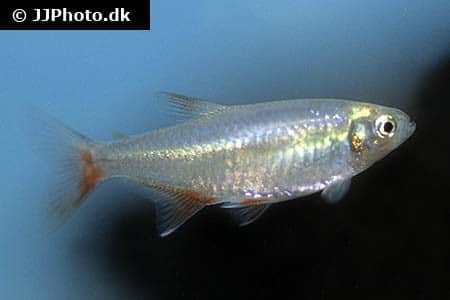
The bloodfin tetra has been in the hobby for over a century and it outlives almost everything else in a community tank. Reports of 10+ year lifespans are common. This is the fish you buy when you want something that will still be swimming long after everything else in the tank has been replaced.
The bloodfin tetra outlives everything. I have seen them survive conditions that killed every other fish in the tank.
ASD Difficulty Rating
Beginner | 3/10
Bloodfin tetras are genuinely one of the easiest fish in the hobby – not just for a tetra. They tolerate a temperature range most fish cannot handle, adapt to a wide pH and hardness spread, eat anything, and survive the kind of parameter swings and beginner mistakes that crash more sensitive species. The catch: they jump, and they need a school of 8+. Get those two things right and you have one of the most forgiving, longest-lived fish you can keep.
Expert Take (Mark Valderrama, AquariumStoreDepot)
I had a customer who bought his first bloodfin tetras from me during one of my early years managing a store. He came back about eight or nine years later – different hair, same guy – and I asked if he was still keeping fish. He showed me a photo on his phone. The same school. A few replacements over the years, but most of the original fish were still there, still going. That does not happen with most tetras. It barely happens in the hobby at all. Bloodfins are the fish that make long-term aquarists out of people who started as beginners. The commitment is real, and so is the payoff.
Hard Rule: Always use a tight lid, and never keep fewer than 8. These two rules prevent the two most common bloodfin deaths.
Bloodfins will find every gap in a lid and exit. This is not a possibility – it is a behavioral certainty for any fish that patrols the upper water column as actively as this species does. And small groups – under 6 – become skittish, stressed, and nip at tank mates. In a proper school of 8 or more, both behaviors improve dramatically. The lid is not optional. The group size is not optional.
The Reality of Keeping Bloodfin Tetra
The lifespan is the real selling point. A well-maintained bloodfin tetra routinely reaches 7 to 10 years. That is comparable to many cichlids and significantly longer than most other small tetras. This longevity means you build a relationship with the fish that you simply do not get with shorter-lived species.
Cold water tolerance sets it apart. Bloodfin tetras handle temperatures down to 64F, making them suitable for unheated indoor tanks in most climates. This cold tolerance, combined with their hardiness, makes them one of the most versatile tetras available.
The color is understated but effective. The blood-red fins against a silver body create a clean, graphic look. It is not flashy, but it is consistently attractive. The fin color deepens with age and quality food.
Biggest Mistake New Owners Make
Dismissing them as boring because they are silver. The bloodfin tetra is a slow-burn species that gets better with time. By year 3 or 4, when the color is fully developed and the fish is displaying confidently, you realize you have something genuinely impressive.
Key Takeaways
- Minimum tank size is 20 gallons (76 liters) for a school of 6+. They’re active swimmers that need room
- Exceptionally hardy. Tolerates temperatures as low as 64°F (18°C), making them suitable for unheated tanks
- Omnivore. Eats virtually anything from flake to frozen to live foods
- Great beginner fish. One of the most forgiving tetras available
- Impressive lifespan. Regularly lives 5–7 years, with reports of 10+ years in well-maintained tanks
Species Overview
| Field | Details |
|---|---|
| Scientific Name | Aphyocharax anisitsi |
| Common Names | Bloodfin Tetra, Glass Bloodfin, Red-Finned Tetra |
| Family | Characidae |
| Origin | Paraná River basin. Argentina, Paraguay, Brazil |
| Care Level | Easy |
| Temperament | Peaceful (may nip long-finned tank mates) |
| Diet | Omnivore |
| Tank Level | Mid to Top |
| Maximum Size | 2.2 inches (5.5 cm) |
| Minimum Tank Size | 20 gallons (76 liters) |
| Temperature | 64–82°F (18–28°C) |
| pH | 6.0–8.0 |
| Hardness | 3–25 dGH |
| Lifespan | 5–7 years (up to 10+ years reported) |
| Breeding | Egg scatterer |
| Breeding Difficulty | Easy |
| Compatibility | Community |
| OK for Planted Tanks? | Yes |
Classification
| Taxonomic Level | Classification |
|---|---|
| Order | Characiformes |
| Family | Characidae |
| Subfamily | Aphyocharacinae |
| Genus | Aphyocharax |
| Species | A. Anisitsi (Eigenmann & Kennedy, 1903) |
The genus Aphyocharax contains around 11 recognized species of small, slender characins. The bloodfin tetra was originally described from specimens collected near Asunción, Paraguay. You’ll still see the old synonym Aphyocharax rubropinnis pop up in older aquarium books and some retail listings. It’s the same fish.
Note on taxonomy: Unlike many tetra genera that have been reshuffled in recent years, Aphyocharax has remained relatively stable. FishBase still places this species in the family Characidae, subfamily Aphyocharacinae. Some older references may list additional synonyms including Phoxinopsis typicus and Aphyocharax affinis.
Origin & Natural Habitat
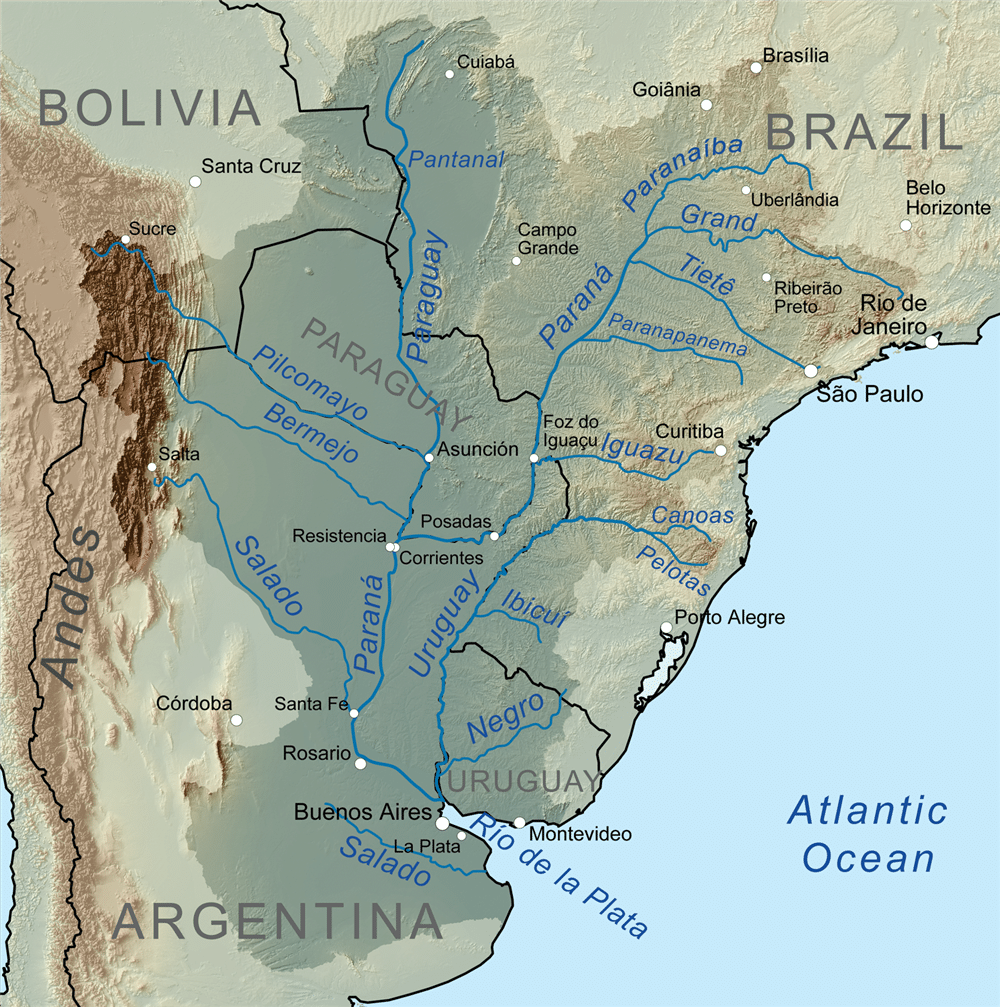
The bloodfin tetra is native to the Paraná River drainage in South America, spanning parts of Argentina, Paraguay, and southern Brazil. The type specimens were collected near Asunción, Paraguay. This is a massive river system. The second largest in South America after the Amazon. And it drains a huge subtropical region that experiences significant seasonal temperature swings.
In the wild, bloodfins inhabit streams, smaller rivers, and tributaries rather than the main Paraná channel itself. They gravitate toward areas with overhanging or floating vegetation that provides shade and cover. The habitat is subtropical rather than tropical, with water temperatures that can dip quite low during the southern winter months. This explains their remarkable cold tolerance in the aquarium.
The substrate in their natural streams is typically sandy with patches of mud, littered with fallen branches and leaf debris. Water conditions vary widely across their range, from soft and slightly acidic in forest tributaries to moderately hard and alkaline in more open waterways. This broad natural variability is a big part of why bloodfins are so adaptable in captivity.
Appearance & Identification
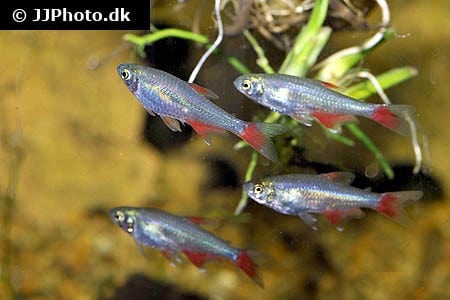
The bloodfin tetra has a sleek, elongated body that’s more streamlined than many other common tetras. The base body color is a silvery-blue with a subtle iridescent sheen that catches the light as they swim. But the real standout feature. And the source of their common name. Is the vivid blood-red coloration on the anal, pelvic, and caudal fins. The dorsal fin often shows red tinting as well.
When they’re healthy and in good condition, the contrast between that polished silver body and the deep red fins is genuinely striking. Stressed or newly introduced fish will look washed out, but once they settle in and color up, you’ll see why they’ve been popular for over a century. The body is also semi-translucent. You will sometimes see internal organs and the backbone, which adds to their “glass-like” appearance.
Male vs. Female
Males are noticeably slimmer and more streamlined than females, with slightly more intense red coloration in the fins. The most reliable identifier comes at maturity. Males develop tiny hook-like structures on the rays of their pelvic and anal fins. These hooks are visible under close inspection and are unique among commonly kept tetras. Females are fuller-bodied, especially when carrying eggs, and show slightly less vivid fin color.
Average Size & Lifespan
Adult bloodfin tetras reach about 2 inches (5 cm) in standard length, with some individuals pushing 2.2 inches (5.5 cm) in total length. They’re a bit larger than neons or embers, which gives them a slightly more substantial presence in a community tank.
Where bloodfins really stand out is longevity. Most sources cite 5 to 7 years as typical, but Seriously Fish notes that captive specimens frequently exceed 10 years. That’s exceptional for a small tetra and one of the strongest selling points for this species. Good water quality, a varied diet, and a stress-free environment are the keys to reaching those upper numbers.
Care Guide
Tank Size
A 20-gallon (76 liter) tank is the minimum for a school of 6 bloodfin tetras. These are active, fast-moving fish that spend a lot of time cruising the upper and middle water column, so they need horizontal swimming space. A 20-gallon long is ideal for the footprint. If you want a larger school of 10+, bump up to a 30-gallon (114 liters) or bigger.
One important note: bloodfins are known jumpers. A tight-fitting lid or cover is essential. They’re not as bad as hatchetfish, but they will jump. Especially if startled or if water quality drops.
Water Parameters
| Parameter | Ideal Range |
|---|---|
| Temperature | 64–82°F (18–28°C) |
| pH | 6.0–8.0 |
| Hardness | 3–25 dGH |
| KH | 2–15 dKH |
The temperature range on bloodfins is remarkable. They’re subtropical fish that naturally experience cool winters in the wild, so they handle temperatures down to 64°F (18°C) without any issues. This makes them one of the few tetras that can thrive in an unheated tank in a climate-controlled home. On the warm end, they’ll do fine up to 82°F (28°C), though I wouldn’t keep them permanently at tropical extremes.
Their pH and hardness tolerance is equally broad. They’ll adapt to anything from soft, acidic water to moderately hard, alkaline conditions. If your tap water falls anywhere in the 6.0–8.0 pH range, you’re good. This adaptability is a huge advantage for beginners who might not have access to RO water or buffering products.
Filtration & Water Flow
Bloodfins handle moderate water flow well. They’re stronger swimmers than many small tetras, so they won’t be pushed around by a standard hang-on-back or canister filter. Aim for 4–5 times tank volume turnover per hour. A sponge filter works for smaller setups, but for a 20-gallon or larger, an HOB or small canister filter will provide better mechanical filtration.
Weekly water changes of 20–25% keep things stable. Bloodfins are tolerant fish, but consistent maintenance extends that impressive lifespan even further.
Lighting
Moderate lighting works best. Bloodfins aren’t as light-sensitive as some tetras. They won’t wash out under bright lights the way glowlights do. But they do show more natural behavior and better color under moderate to slightly subdued lighting. Floating plants to create some shaded areas are a nice touch and mimic the overhanging vegetation they gravitate toward in the wild.
Plants & Decorations
Bloodfins do well in planted tanks and. Unlike some other Paraná basin tetras. They leave plants completely alone. Java fern, Anubias, Amazon swords, Vallisneria, and Cryptocoryne species all work well. Plant densely along the back and sides, leaving open swimming space in the center and front for their active schooling behavior.
Driftwood and some scattered rocks add structure. Floating plants like Amazon frogbit or water sprite provide the overhead cover they appreciate. These fish spend most of their time in the upper half of the water column, so decorations that create mid-level and surface interest are more useful than ground-level caves.
Substrate
Any substrate works for bloodfins since they rarely interact with the bottom. Fine sand or gravel in a dark color will make their silver bodies and red fins pop visually. If you’re running a planted tank, a nutrient-rich planted substrate works perfectly well. The bloodfins won’t dig in it or disturb plant roots.
Is the Bloodfin Tetra Right for You?
Honest assessment before you buy. The bloodfin tetra is one of the most versatile tetras in the hobby – and one of the most overlooked.
Good fit if:
- You want a long-term fish – bloodfins routinely hit 7–10 years with good care, a lifespan that rivals many cichlids
- You want a cool-water or unheated tank – bloodfins handle temperatures as low as 64–68°F (18–20°C) that would stress most tetras
- You want reliable red fin color without dealing with the complexity of a demanding species – the silver body and blood-red fins are distinctive and develop with age
- You keep a planted community tank and want a plant-safe tetra that won’t destroy your aquascape – unlike their close relative the Buenos Aires tetra, bloodfins leave plants completely alone
- You want an easy first breeding project – bloodfins spawn readily with minimal conditioning
Avoid If:
- You cannot keep a tight-fitting lid – bloodfins jump and they will find every gap; this is the species’ one non-negotiable care requirement
- You have a betta or fancy guppies in the tank – bloodfins will nip long fins, especially if the school is too small
- You want immediate visual impact – bloodfins are a slow-burn fish; the best coloration takes months or years to fully develop; if you want instant pop, try cardinal tetras
- You want to keep fewer than 6 – a small group becomes skittish, washed out, and more likely to nip
Tank Mates
Best Tank Mates
Bloodfin tetras are peaceful community fish. They’re active swimmers that stick to the upper-middle water column, so they pair well with fish that occupy different levels:
- Corydoras catfish. Perfect bottom-dwelling companions, no territorial overlap
- Buenos Aires tetras. Same native habitat, similar size and temperament
- Black skirt tetras. Hardy, mid-level swimmers that match bloodfins in activity level
- Cherry barbs. Peaceful, similarly sized, and add great color contrast
- Harlequin rasboras. Calm mid-level schoolers that complement nicely
- Bristlenose plecos. Peaceful bottom dwellers that stay out of the way
- White Cloud Mountain minnows. Another subtropical species, perfect for an unheated tank pairing
- Zebra danios. Equally active and cold-tolerant, great match
- Kuhli loaches. Peaceful bottom dwellers from a completely different tank zone
- Rainbowfish. Active upper-level swimmers that hold their own with bloodfins
Tank Mates to Avoid
- Angelfish. Bloodfins may nip their long trailing fins, and adult angels may eat smaller bloodfins
- Bettas. The long fins are a target for occasional nipping
- Fancy guppies. Flowing tails attract unwanted attention from bloodfins
- Large cichlids. Anything big enough to consider a bloodfin a snack
- Slow-moving, long-finned species. Bloodfins aren’t aggressive, but their active nature and occasional fin-nipping habit makes them a poor match for delicate, flowing fins
Food & Diet
Bloodfin tetras are unfussy omnivores that accept just about anything you offer. In the wild, they feed on small worms, insects, crustaceans, and whatever bits of organic matter drift by. In the aquarium, they’re equally easy to please.
A quality flake food or micro pellet makes a solid daily staple. Supplement 2–3 times per week with frozen or live foods. Bloodworms, daphnia, brine shrimp, and cyclops are all eagerly taken. The live and frozen foods make a noticeable difference in fin coloration, bringing out deeper reds.
Feeding frequency: Once or twice daily, only what they can consume in about 2 minutes. Bloodfins feed primarily in the upper water column, so they’ll grab food at or near the surface before it sinks.
Pro tip: Bloodfins are surface-oriented feeders. If you’re keeping them with bottom dwellers like corydoras, make sure you’re feeding sinking wafers or pellets separately. The bloodfins won’t leave much for anything that waits for food to hit the bottom.
Breeding & Reproduction
Bloodfin tetras are one of the easiest egg-scattering tetras to breed at home. They’re prolific, they spawn readily, and the fry are easy to raise. Making them an excellent choice for a first breeding project.
Breeding Difficulty
Easy. Bloodfins are among the most readily bred small tetras in the hobby. A well-conditioned pair will often spawn with minimal effort on your part.
Spawning Tank Setup
A 10-gallon (38 liter) breeding tank is plenty. Add clumps of fine-leaved plants like Java moss or spawning mops for the eggs to scatter into. A bare bottom with a layer of glass marbles or mesh works too. The goal is to prevent the adults from reaching the eggs after spawning. Use a gentle sponge filter for water movement and keep lighting dim.
Water Conditions for Breeding
Bloodfins aren’t picky about breeding water. A temperature around 75–79°F (24–26°C), pH 6.5–7.0, and hardness of 4–8 dGH is ideal. They’ll often spawn in conditions close to their regular tank parameters, which is one of the reasons they’re so easy to breed.
Conditioning & Spawning
Separate males and females for 1–2 weeks and feed heavily with live or frozen foods. Daphnia and brine shrimp are excellent conditioners. When females are noticeably plump with eggs and males are showing their brightest fin coloration, introduce the pair (or a group of 3 males and 3 females) to the spawning tank in the evening. Spawning typically occurs the following morning, often at first light. Females can scatter 700 to 800 eggs in a single session. That’s remarkably productive for a small tetra.
Egg & Fry Care
Remove the adults immediately after spawning. They will eat every egg they can find. Eggs are non-adhesive and glass-clear, hatching in approximately 20–24 hours. Fry become free-swimming about 3–4 days after hatching. Feed infusoria or liquid fry food for the first week, then graduate to microworms and freshly hatched baby brine shrimp as they grow. Growth is relatively fast with good feeding.
Commercially, bloodfins are extensively captive-bred. Most stock in the trade comes from breeding farms, though wild-caught specimens still appear occasionally. Either way, their willingness to breed makes them a sustainable choice.
Common Health Issues
Bloodfin tetras are exceptionally hardy, and health problems are uncommon in well-maintained tanks. That said, here are the issues to watch for:
Ich (White Spot Disease)
The most common issue for any freshwater fish. Bloodfins can pick up ich after sudden temperature drops or the stress of being introduced to a new tank. White salt-grain spots on the body and fins are the telltale sign. Raise the temperature gradually to 82°F (28°C) and treat with a standard ich medication. Bloodfins handle treatment well.
Fin Rot
Bacterial fin rot can occur if water quality slips. Since bloodfins’ most distinctive feature is their red fins, any deterioration is very noticeable. Frayed, discolored, or receding fin edges are the warning signs. Clean water and a good antibiotic treatment usually resolve it quickly.
General Prevention
Bloodfins are tough, but they’re not immune to the basics. Quarantine all new fish for at least two weeks before adding them to an established tank. Maintain stable parameters and keep up with weekly water changes. Their exceptional lifespan is directly linked to consistent, quality care. Cut corners on maintenance, and you’ll cut years off their life.
Common Mistakes to Avoid
- No lid on the tank. Bloodfins jump. It’s not a matter of if, it’s when. A tight-fitting cover is non-negotiable with this species.
- Keeping too few. Groups under 6 lead to stressed, pale fish that becomes nippy. Aim for 8–10 minimum to see proper schooling behavior and the best coloration.
- Pairing with long-finned fish. While bloodfins are peaceful, they can nip at trailing fins. Avoid bettas, fancy guppies, and angelfish.
- Overheating. Many beginners assume all tetras need tropical heat. Bloodfins actually prefer cooler conditions and can suffer from prolonged exposure to temperatures above 82°F (28°C). Room temperature is often perfect.
Where to Buy
Bloodfin tetras are widely available at most local fish stores and chain pet retailers. They’re one of the classic, always-in-stock community fish, typically priced at $2–4 per fish with discounts on larger groups.
For healthier stock and better coloration, I’d recommend checking Flip Aquatics or Dan’s Fish. Online-sourced fish from specialty retailers will arrive in much better condition than mass-market chain store stock, and they acclimate faster.
Frequently Asked Questions
How many bloodfin tetras should be kept together?
A minimum of 6, but 8–10 is ideal. Bloodfins are schooling fish that display their best behavior and color in larger groups. In small numbers, they can become stressed and may nip at tank mates.
What size tank does a bloodfin tetra need?
A 20-gallon (76 liter) tank is the minimum for a school of 6. These are active swimmers that need horizontal space. A 20-gallon long provides an ideal footprint, and larger tanks allow for bigger schools with even better schooling displays.
Are bloodfin tetras good for beginners?
Yes. Bloodfins are one of the best beginner tetras available. They tolerate a wide range of water conditions, accept any food, and are extremely hardy. Their cold tolerance also means they don’t require a heater in most homes.
Can bloodfin tetras live in an unheated tank?
Absolutely. Bloodfins tolerate temperatures as low as 64°F (18°C) and do perfectly well in unheated tanks in climate-controlled homes. They’re subtropical fish that naturally experience cool winters in the wild. Pair them with other cold-tolerant species like white cloud mountain minnows or zebra danios for an unheated community setup.
How long do bloodfin tetras live?
Bloodfins are one of the longest-lived small tetras, regularly reaching 5–7 years in captivity. With excellent care, individuals can exceed 10 years. Making them a surprisingly long-term commitment for such a small fish.
Are bloodfin tetras fin nippers?
They can be, especially with slow-moving, long-finned tank mates like bettas, angelfish, and fancy guppies. In a proper school of 8+ fish, nipping is significantly reduced because they redirect that energy toward each other. Avoid pairing them with any fish that has flowing, trailing fins.
Are bloodfin tetras safe for planted tanks?
Yes. Unlike their relative the Buenos Aires tetra, bloodfins leave plants completely alone. They’re perfectly safe in any planted setup, from low-tech to high-tech aquascapes.
What It Is Actually Like Living With Bloodfin Tetras
What the care parameters don’t capture.
The long-game reality. Bloodfins look different at year four than they did when you bought them. The red deepens from a pale pink-red to a genuine saturated blood color. The silver body develops a blue-teal iridescence you barely noticed in the store. Males at full color with their fins fully extended are genuinely impressive fish that bear almost no resemblance to the washed-out juveniles in the store tank. No other common tetra gives you this kind of color development arc over time. If you want to see what this species actually is, you need to be patient.
Cold tolerance changes how you think about the hobby. The first time you realize you don’t need a heater for these fish, it reorganizes your approach. No heater failure risk. No power outage temperature crash. Room temperature in a climate-controlled home is within their range. If you pair them with other cool-water species – white cloud mountain minnows, zebra danios – you can run a fully stocked community tank with zero heating equipment. That simplification is real and underappreciated.
They will find the gap in the lid. Every bloodfin keeper has a story about finding a fish on the floor. It is not a matter of being startled – they patrol the surface constantly and they jump proactively. Check every corner, every equipment cutout, every gap around a filter tube. Use a glass lid or mesh lid rated for jumpers. The loss of a fish that might have lived another eight years because of a gap the size of a finger is a hard lesson that is completely preventable.
A school of older fish has a different quality. A school of eight bloodfins that have been together for five years moves differently from a new purchase. The hierarchy is established. You can identify individuals. The dominant fish claims the front-center position every morning. After years of living with them, you notice things you wouldn’t notice about a species you’ve only kept briefly. That depth of familiarity is what bloodfin keepers value – and why they keep coming back to the species.
How the Bloodfin Tetra Compares to Similar Species
Bloodfin Tetra vs. Glass Bloodfin Tetra
The Glass Bloodfin (Prionobrama filigera) is more transparent with a subtler, more diffuse red tint, while the standard Bloodfin has a stronger saturated red in the fins and a more solid silver body. Both are peaceful schoolers with similar temperaments, but the Glass Bloodfin is less commonly stocked and somewhat more delicate. Choose the Glass Bloodfin if you want maximum transparency and a softer, more understated visual aesthetic. Choose the standard Bloodfin if you want stronger red fin saturation, better availability, wider water parameter tolerance, and the proven long-term hardiness that makes it a 10-year-fish.
Bloodfin Tetra vs. Buenos Aires Tetra
Both are exceptionally hardy, cool-water-tolerant tetras from the Paraná basin – more durable than virtually anything else in the tetra category. The Buenos Aires Tetra is larger (up to 3 inches), more assertive, and will systematically destroy live plants. The Bloodfin is smaller, genuinely plant-safe, and more compatible with delicate community tank mates. Choose the Buenos Aires Tetra if you want maximum hardiness in a no-frills unplanted setup where raw durability is the priority. Choose the Bloodfin Tetra if you want a plant-safe, longer-lived, more peaceful community fish that fits a planted community tank without compromising the aquascape.
Closing Thoughts
The bloodfin tetra is the definition of an underappreciated classic. It’s been in the hobby for over a century, it’s one of the hardiest and longest-lived small tetras available, and it looks genuinely impressive when given proper care. The fact that it thrives in unheated tanks is a bonus that makes it accessible to hobbyists who might not want to invest in a heater.
If you’re looking for other hardy tetras to keep alongside your bloodfins, check out our care guides for Buenos Aires tetras, black skirt tetras, and serpae tetras.
Have you kept bloodfin tetras? I’d love to hear about your experience. Drop a comment below!
Recommended Video
Check out our tetra tier list video where we rank the most popular tetras in the hobby, including the bloodfin tetra:
References
- Aphyocharax anisitsi Profile. Seriously Fish
- Aphyocharax anisitsi (Eigenmann & Kennedy, 1903). FishBase
- Bloodfin Tetra Care Guide. Practical Fishkeeping
- Aphyocharax anisitsi. The Aquarium Wiki
- About the Author
- Latest Posts

I’m Mark Valderrama, founder of Aquarium Store Depot and a fishkeeper with over 25 years of hands-on experience. I started in the hobby at age 11, worked at local fish stores, and have kept freshwater tanks, ponds, and reef tanks ever since. I’ve been featured in two best-selling aquarium books on Amazon and built this site to share practical, experience-based fish keeping knowledge.
Leave a Reply