
Last Updated: June 25, 2026
Thank you for visiting! By the way… any links on this page that lead to products on Amazon and other stores/partners are affiliate links Aquarium Store Depot earns a commission if you make a purchase.
Table of Contents
- What Care Guides Get Wrong
- The Reality of Keeping Spanner Barb
- Key Takeaways
- Species Overview
- Classification
- Origin & Natural Habitat
- Appearance & Identification
- Average Size & Lifespan
- Care Guide
- Is It Right for You?
- Tank Mates
- Food & Diet
- Breeding & Reproduction
- Common Health Issues
- Common Mistakes to Avoid
- Where to Buy
- Frequently Asked Questions
- Species Comparison
- Closing Thoughts
- Recommended Video
- References
The spanner barb, also known as the T-barb, is a large, active swimmer that reaches 5 to 7 inches and needs a tank long enough to accommodate its constant movement. It is named for the dark markings on its tail that resemble a spanner wrench, and it needs a school of at least six to display its natural behavior.
In a large, long tank with proper group size, spanner barbs are impressive, active fish with genuine presence. In a short tank, they pace and stress. This guide covers the setup they need, because the spanner barb swims like it is training for something. Your tank needs to be long enough for the workout.
If your tank is under 4 feet long, skip this fish. The spanner barb needs distance, not just volume.
The Reality of Keeping Spanner Barb
The spanner barb (also called the T-barb for the T-shaped marking on its caudal peduncle) reaches 5 to 7 inches and needs a 55-gallon minimum. It is a larger barb that combines size with a peaceful temperament.
The distinctive T-shaped marking near the tail is the identifying feature. It is subtle but consistent, making identification straightforward.
They are active, fast swimmers that need swimming room proportional to their size.
Biggest Mistake New Owners Make
Not providing enough swimming space. Spanner barbs are big, fast fish that need horizontal room. A tall tank with limited length frustrates them. The tank needs to be at least 4 feet long for a group.
Spanner barbs (Barbodes lateristriga) are a large, robust barb reaching 5 inches (13 cm). They are hardy and adaptable but require a spacious tank and bold tank mates that can hold their own.
Expert Take (Mark Valderrama, AquariumStoreDepot)
The spanner barb is the gentleman of the large barb world. Peaceful, predictable, and attractive in a understated way. A group of five in a 75-gallon gives you large-fish presence without the aggression of cichlids or the destruction of tinfoil barbs.
Key Takeaways
- One of the larger barb species in the hobby, reaching up to 7 inches (18 cm) and requiring at least a 55-gallon (208 liter) tank
- Semi-aggressive temperament that requires careful tank mate selection and keeping them in groups of 6 or more to distribute aggression
- Bold, unmistakable markings featuring a dark T-shaped or spanner-shaped pattern along the body that makes identification easy
- Active swimmers that need horizontal swimming space and a tank with good length rather than height
- Native to Southeast Asia where they inhabit rivers and streams across the Malay Peninsula, Sumatra, Borneo, and Java
Species Overview
| Field | Details |
|---|---|
| Scientific Name | Barbodes lateristriga (Valenciennes, 1842) |
| Common Names | Spanner Barb, T-Barb |
| Family | Cyprinidae |
| Origin | Southeast Asia (Malay Peninsula, Sumatra, Borneo, Java) |
| Care Level | Moderate |
| Temperament | Semi-aggressive |
| Diet | Omnivore |
| Tank Level | Middle to Bottom |
| Maximum Size | 7 inches (18 cm) |
| Minimum Tank Size | 55 gallons (208 liters) |
| Temperature | 72 to 79°F (22 to 26°C) |
| pH | 6.0 to 7.5 |
| Hardness | 2 to 12 dGH |
| Lifespan | 6 to 8 years |
| Breeding | Egg scatterer |
| Breeding Difficulty | Moderate to Difficult |
| Compatibility | Community (medium to large fish) |
| OK for Planted Tanks? | Yes (with hardy plants) |
Classification
| Taxonomic Level | Classification |
|---|---|
| Order | Cypriniformes |
| Family | Cyprinidae |
| Subfamily | Smiliogastrinae |
| Genus | Barbodes |
| Species | B. Lateristriga (Valenciennes, 1842) |
The spanner barb has been shuffled through several genera over the years, which is pretty common with Southeast Asian cyprinids. Older references and some retailers still list it as Puntius lateristriga or Barbus lateristriga. The current accepted placement is in Barbodes, a genus that includes several of the larger barb species from the region, like the clown barb (Barbodes dunckeri). If you see any of those older names on a fish store listing, they’re all referring to the same fish.
Origin & Natural Habitat
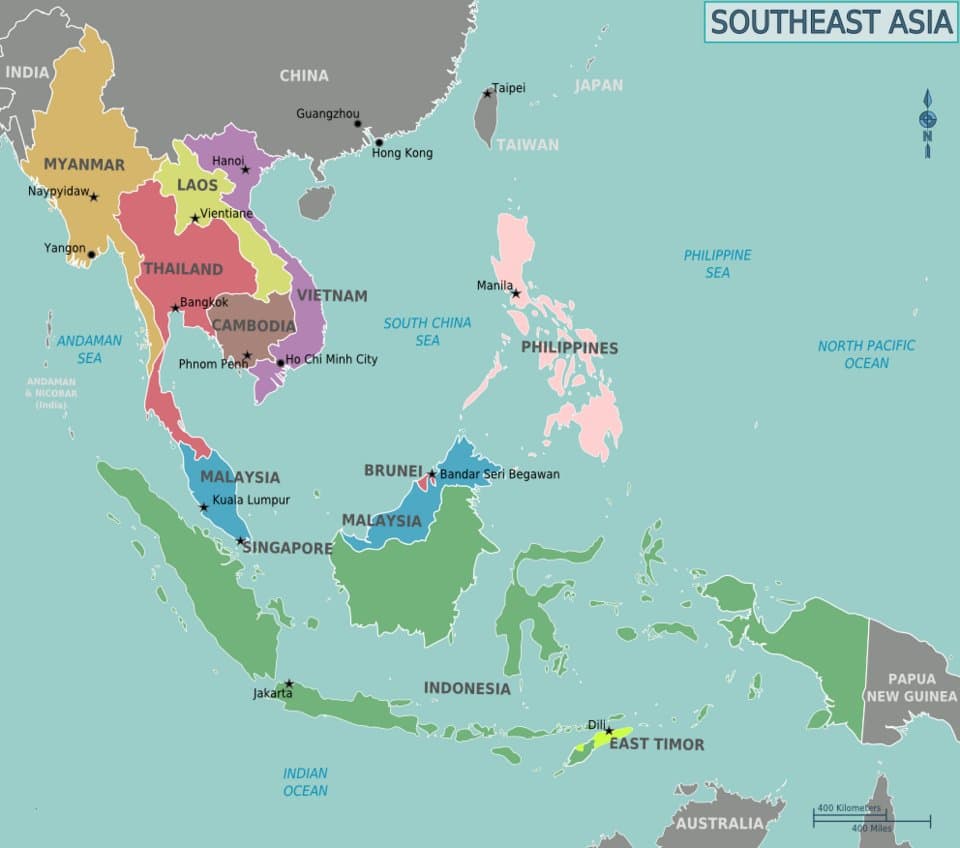
The spanner barb has one of the broader native ranges of any barb species in the hobby, found across the Malay Peninsula, Sumatra, Borneo, and Java. That wide geographic range tells you something about this fish’s adaptability. It has managed to thrive across multiple islands and mainland habitats throughout Southeast Asia.
In the wild, spanner barbs inhabit rivers and streams with moderate to strong flow. They’re found in clear to slightly tannin-stained waters with rocky or sandy substrates and submerged vegetation along the banks. This is an important distinction from some barb species that prefer still, swampy backwaters. Spanner barbs come from moving water with well-oxygenated conditions, soft to moderately hard chemistry, and slightly acidic to neutral pH. The tropical climate keeps temperatures in the low to mid-70s°F year-round. Understanding these natural conditions is key to replicating the right environment in your tank.
Appearance & Identification
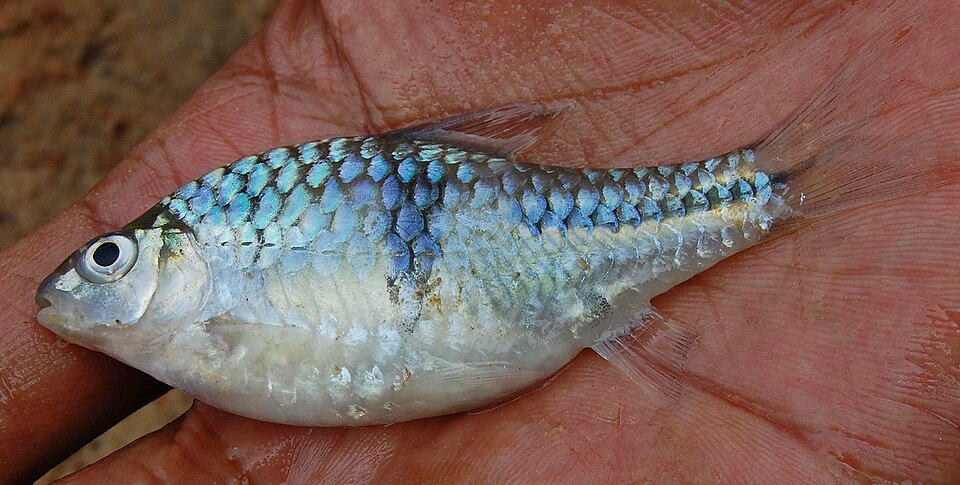
The spanner barb is an immediately recognizable fish, and its common names tell you exactly why. The defining feature is a bold, dark black marking that runs vertically from the dorsal area down through the midline and then angles forward along the lateral line toward the head. This creates a distinctive T-shape or spanner wrench pattern that makes identification effortless, even from across the room.
The base body color is a silvery-gold to olive-gold, which contrasts sharply with that dark marking. The body is laterally compressed with a high dorsal profile, giving the fish a substantial, athletic silhouette. Juveniles will show the pattern more crisply, while adults develop a more robust body that fills out around the markings. The fins are clear to yellowish, sometimes with a faint reddish tinge in well-conditioned adults. Two pairs of barbels help distinguish it from similarly patterned species, and healthy specimens show a subtle iridescent sheen across their scales.
Male vs. Female
Males are slimmer and may show slightly more intense coloration, particularly around the fins. They can develop small breeding tubercles on the head when in spawning condition. Females are noticeably fuller-bodied, especially when carrying eggs, with a rounder belly profile. The differences become apparent once the fish reach about 3 to 4 inches (8 to 10 cm).
Average Size & Lifespan
Spanner barbs can reach up to 7 inches (18 cm) in total length, which places them firmly among the larger barb species commonly kept in home aquariums. That’s significantly bigger than a tiger barb or cherry barb, and it’s the main reason these fish need a bigger tank than most people initially expect.
With proper care, expect a lifespan of 6 to 8 years. The biggest factors that shorten their lifespan are inadequate tank size, poor water quality, and stress from inappropriate tank mates or too-small groups. Give them the space and conditions they need, and these are fish that will be part of your fishroom for years.
Care Guide
Tank Size
A minimum of 55 gallons (208 liters) is necessary for a group of spanner barbs. These are active, powerful swimmers that use every inch of horizontal space you give them. A 4-foot tank (48 inches / 120 cm) is the bare minimum length, and a 6-foot (72 inches / 180 cm) tank is much better if you’re keeping a full group of 6 or more alongside other community fish. Don’t try to squeeze these fish into a smaller setup. A 7-inch barb that needs to be kept in a school is a completely different proposition from a 2-inch cherry barb.
Water Parameters
| Parameter | Recommended Range |
|---|---|
| Temperature | 72 to 79°F (22 to 26°C) |
| pH | 6.0 to 7.5 |
| Hardness | 2 to 12 dGH (36 to 215 ppm) |
| Ammonia/Nitrite | 0 ppm |
| Nitrate | Below 20 ppm |
Spanner barbs prefer soft to moderately hard water with a slightly acidic to neutral pH. Their broad natural range means they’re adaptable, but they look their best in softer, slightly acidic conditions. Stability matters more than hitting an exact number. Weekly water changes of 30 to 50% are essential given the bioload a group of large barbs produces. One thing worth noting is that their temperature range starts at 72°F (22°C), which is cooler than many tropical fish and gives you some flexibility with tank mate choices.
Filtration & Water Flow
Strong filtration is non-negotiable with spanner barbs. A filter rated for at least 5 to 6 times the tank volume per hour is a good target. A canister filter is the best choice for tanks this size, and running two filters for redundancy isn’t overkill. Since these fish come from rivers and streams, they appreciate moderate to strong flow. A canister filter output combined with a powerhead or wavemaker gives them the current they enjoy while ensuring proper oxygenation. They’ll be more active and display better in a setup with real water movement.
Lighting
Moderate lighting works well for spanner barbs. They’re not a species that needs dim, blackwater conditions, but extremely bright overhead light can wash out their coloring and make them less comfortable. If you’re running a planted tank with higher-intensity lights, use floating plants or tall background plants to create shaded areas where the fish can retreat. A natural light cycle of around 8 to 10 hours per day is plenty.
Plants & Decorations
A mix of driftwood, smooth river rocks, and hardy plants creates the ideal setup. Think Southeast Asian riverbank. Large pieces of driftwood provide visual barriers that break up territories and reduce chasing within the group. For plants, Java fern (Microsorum pteropus), Anubias, and Bolbitis attached to driftwood and rocks are excellent choices. Vallisneria and Cryptocoryne species rooted in the substrate work as well. Floating plants like Amazon frogbit help diffuse overhead light. Avoid delicate stem plants in the main swimming areas. Spanner barbs won’t deliberately destroy plants, but their size and activity level can uproot anything that isn’t well-established.
Substrate
Sand or fine gravel is the best substrate choice for spanner barbs. A mix of sand with some scattered smooth pebbles and river rocks creates a natural riverbed look that complements the fish well. Dark-colored substrates bring out the contrast between the fish’s silvery-gold body and its bold dark markings. Spanner barbs do forage along the bottom, so avoid sharp-edged gravel that could damage their barbels.
Is the Spanner Barb Right for You?
Before you buy, run through this honest checklist. The Spanner Barb is a great fish for the right keeper, but it is not for everyone.
- You can find this uncommon species from a reputable source
- You have a 30-gallon or larger tank for a school of medium-sized barbs
- You enjoy keeping unusual species that your fishkeeping friends have not seen
- You want a hardy barb that does not need picky water chemistry
- You keep other peaceful to moderately active community species
- You appreciate the T-shaped marking that gives this fish its distinctive look
Tank Mates
Choosing tank mates for spanner barbs requires some thought. They’re not outright bullies, but their size and boisterous energy can intimidate or outcompete smaller, more passive species. The key is pairing them with fish that can hold their own without being aggressive enough to cause real problems.
Best Tank Mates
- Other large barbs (tinfoil barbs, clown barbs, Denison barbs)
- Larger rainbowfish (Boeseman’s, turquoise, Madagascar)
- Larger tetras (Congo tetras, Buenos Aires tetras, Colombian tetras)
- Medium to large loaches (clown loaches, yoyo loaches)
- Larger gouramis (pearl gouramis, moonlight gouramis, giant gouramis)
- Robust catfish (bristlenose plecos, Synodontis species)
- Medium to large cichlids with peaceful temperaments (severums, geophagus)
- Large danios (giant danios)
Tank Mates to Avoid
- Small fish like neon tetras, ember tetras, or microrasboras that will be stressed and potentially outcompeted at feeding time
- Long-finned, slow-moving species like fancy guppies, bettas, or angelfish that are likely to be nipped and harassed
- Dwarf shrimp like cherry shrimp or crystal shrimp, which will almost certainly become expensive snacks
- Highly aggressive or territorial cichlids like Jack Dempseys or flowerhorns that will bully the barbs and create constant stress
- Very timid species that will hide and fail to thrive in the presence of large, active barbs
Keeping spanner barbs in a group of at least 6 is critical for managing their semi-aggressive tendencies. In a proper school, the minor chasing and sparring behavior stays within the group. Keep fewer than 6 and you’ll often see the dominant fish redirect that energy toward other tank mates, which creates real problems.
Food & Diet
Spanner barbs are omnivores that aren’t particularly fussy about food. In the wild, they forage on insects, worms, small crustaceans, algae, and plant material. In the aquarium, replicating that variety is the key to good health and vibrant coloring.
A high-quality pellet food should serve as the daily staple. Medium-sized pellets are more practical than flakes for a group of large fish. Supplement regularly with frozen or live foods like bloodworms, brine shrimp, daphnia, and mysis shrimp. Don’t neglect vegetables either. Blanched spinach, zucchini medallions, shelled peas, and spirulina wafers should be offered several times a week. Feed once or twice daily, offering only what the group can finish in 2 to 3 minutes. With a tank full of 7-inch barbs, waste production adds up fast.
Breeding & Reproduction
Breeding Difficulty
Breeding spanner barbs in the home aquarium is possible but considered moderate to difficult. Like most barbs, they’re egg scatterers with no parental care whatsoever. The adults will happily eat their own eggs within minutes of spawning. Successful breeding requires a dedicated spawning setup and careful planning. Most specimens available in the trade are commercially bred in Asia rather than home-bred.
Spawning Tank Setup
Given the size of adult spanner barbs, you’ll need a spawning tank of at least 30 to 40 gallons (114 to 151 liters). The bottom should be fitted with a mesh or grate that allows the eggs to fall through to safety, keeping the adults from reaching them. Alternatively, a dense layer of fine-leaved plants like Java moss, spawning mops, or marbles on the bottom can serve a similar purpose. Keep the tank dimly lit.
Water Conditions for Breeding
Slightly warmer water in the 77 to 79°F (25 to 26°C) range with a pH around 6.0 to 6.5 and soft water (2 to 6 dGH) helps trigger spawning behavior. A partial water change with slightly cooler, soft water can act as a spawning trigger, simulating the onset of the rainy season in their native habitat. Some breeders have found that gradually lowering the water level and then refilling over a day or two can also encourage spawning.
Conditioning & Spawning
Condition the breeding pair or group with heavy feedings of live and frozen foods for two to three weeks. Females will become noticeably rounder when full of eggs. Introduce the conditioned fish to the spawning tank in the evening. Spawning typically occurs the following morning. The female scatters eggs among plants while the male follows to fertilize them. A single event can produce several hundred eggs. Remove the adults immediately after to prevent egg predation.
Egg & Fry Care
Eggs are adhesive and semi-transparent, hatching in approximately 24 to 48 hours depending on water temperature. The fry become free-swimming roughly 24 to 48 hours after hatching and need microscopic first foods. Infusoria or liquid fry food for the first few days, then freshly hatched baby brine shrimp and microworms as they grow. Keep the breeding tank clean with gentle sponge filtration and small daily water changes of around 10%. The fry will start showing their characteristic dark markings within a few weeks. Expect several months before they’re large enough to join a community tank.
Common Health Issues
Ich (White Spot Disease)
Ich is the most frequently encountered disease across all freshwater fish species, and spanner barbs are not immune. It shows up as tiny white spots scattered across the body and fins, often triggered by temperature fluctuations, stress from transport, or introduction to a new tank. Treatment involves gradually raising the water temperature to 82 to 86°F (28 to 30°C) and adding aquarium salt or an ich-specific medication. Catching it early and treating promptly almost always leads to full recovery.
Fin Rot
Fin rot is a bacterial infection that causes fin edges to become ragged or discolored. In spanner barbs, it’s nearly always caused by poor water quality or injuries from squabbling within the group. Clean water alone resolves mild cases. For advanced cases, an antibacterial medication may be necessary. Prevention is straightforward: keep the water clean and maintain the group size so aggression doesn’t escalate.
Skin Flukes & External Parasites
Since many spanner barbs are commercially farmed and shipped from Asia, external parasites like skin flukes can occasionally be an issue. Signs include flashing (rubbing against surfaces), excess mucus production, and clamped fins. Treatment with praziquantel-based medications is effective. This is one of the strongest arguments for quarantining all new fish for 2 to 4 weeks before adding them to your display tank.
Common Mistakes to Avoid
- Underestimating their adult size. Spanner barbs grow to 7 inches (18 cm). That’s nearly twice the size of a tiger barb. A 20-gallon tank might seem fine for juveniles, but you’ll need to upgrade sooner than you think. Plan for the adult size from the start.
- Keeping them in a tank that’s too small. A 55-gallon (208 liter) tank is the minimum, and bigger is better. These are powerful, active swimmers that need room to move. Cramped conditions lead to stress, aggression, and stunted growth.
- Not keeping enough of them. Spanner barbs are semi-aggressive, and keeping fewer than 6 concentrates any antagonistic behavior on a few individuals or on other species. A group of 6 or more distributes the pecking order and keeps everyone calmer.
- Choosing small or delicate tank mates. A 7-inch semi-aggressive barb is not compatible with neon tetras, guppies, or dwarf shrimp. Choose tank mates that are proportionate in size and temperament.
- Weak filtration. A group of large barbs produces serious waste. Underpowered filtration leads to poor water quality, which leads to disease. Invest in a filter rated well above your tank volume.
- Skipping quarantine. Many spanner barbs arrive from commercial farms and may carry parasites. Quarantine new fish for 2 to 4 weeks before introducing them to your main tank.
Where to Buy
Spanner barbs are not a fish you’ll find in every chain pet store. They’re a specialty species that shows up periodically at well-stocked independent fish shops, but for the most reliable access, online retailers are your best bet. Here are two trusted sources I recommend:
- Flip Aquatics is a great source for quality freshwater fish, including less common barb species. They’re known for healthy livestock and careful shipping practices.
- Dan’s Fish regularly stocks a wide range of barbs and cyprinids, and they ship directly to your door. Their selection of schooling fish is one of the best you’ll find online.
When purchasing spanner barbs, buy a group of at least 6 and ask for a mix of males and females if the retailer can sex them. Always quarantine new arrivals for 2 to 4 weeks before introducing them to your display tank.
Frequently Asked Questions
How big do spanner barbs get?
Spanner barbs can reach up to 7 inches (18 cm), making them one of the larger commonly kept barb species. They’re substantially bigger than tiger barbs, cherry barbs, and most other popular barbs in the hobby. Plan your tank size accordingly.
Are spanner barbs aggressive?
They’re classified as semi-aggressive. They’re boisterous and can intimidate smaller or slower fish. Within the group, you’ll see chasing and sparring as part of their natural social hierarchy. Keeping them in a school of 6 or more keeps aggression directed within the group rather than at tank mates.
How many spanner barbs should be kept together?
A minimum of 6 is recommended. Keeping fewer concentrates aggressive behavior and leads to stress. Groups of 8 to 10 are even better if your tank size allows it. A larger group creates a more stable social dynamic and produces better displays of natural behavior.
What size tank do spanner barbs need?
A minimum of 55 gallons (208 liters) for a group of 6. If you’re keeping them with other community fish, 75 gallons (284 liters) or larger is a much better choice. These are big, active fish that need horizontal swimming space, so prioritize tank length over height.
Can spanner barbs live in a planted tank?
Yes, but stick with hardy, robust plants. Java fern, Anubias, and Bolbitis attached to driftwood are excellent choices. Delicate stem plants may get uprooted or damaged by the sheer activity level of large barbs moving through the tank. Well-established, tough plants will hold up fine.
What’s the difference between a spanner barb and a T-barb?
They’re the same fish. “Spanner barb” and “T-barb” are both common names for Barbodes lateristriga. Both names refer to the distinctive dark marking on the body. “Spanner” references the wrench shape, while “T-barb” describes the T-shaped pattern. Different retailers and regions prefer one name over the other.
Are spanner barbs good community fish?
They can be, with the right community. Pair them with medium to large fish that can match their energy level. They’re not suitable for nano tanks or communities built around small, delicate species. Think of them as community fish for a robust, medium-to-large fish setup.
How the Spanner Barb Compares to Similar Species
Spanner Barb vs. Arulius Barb
The Arulius Barb is more colorful and more available, but both are medium-sized barbs that need schools and 40+ gallon tanks. If you can find the Spanner Barb, it is a unique addition. If availability is a concern, the Arulius Barb is the easier find.
Spanner Barb vs. Striped Barb
The Striped Barb is smaller, more readily available, and works in smaller tanks. The Spanner Barb is a medium-sized species that needs more room. Both are peaceful and easy to keep, but the Spanner Barb is the rarer choice.
What It Is Actually Like Living With Spanner Barb
Spanner barbs are fast but graceful. They cruise the tank in wide loops, using their size advantage to claim the open swimming lanes while smaller fish stay near the edges.
The T-marking near the tail is a convenient identification feature. In a group, you learn to recognize individual fish by variations in marking shape.
They school predictably, maintaining a loose formation throughout the day and tightening up when startled.
Closing Thoughts
The spanner barb is the gentleman of the large barb world. Big fish presence without big fish problems.
The spanner barb is a fish that rewards fishkeepers who are willing to commit to the space and setup it needs. It’s not a beginner fish in the sense that it demands a proper-sized tank, good filtration, and some thought about compatibility. But it’s not a difficult fish either. Get the basics right, and these barbs will thrive.
A school of 6 or more in a well-decorated 75-gallon tank, cruising through the current with driftwood and hardy plants framing the background. That’s a setup that genuinely looks impressive. If you have the tank space and you’re looking for something beyond the usual small barb species, the spanner barb is well worth your consideration.
Recommended Video
Check out our barb species video where we cover some of the most popular barbs in the hobby, including the spanner barb:
References
- Froese, R. & Pauly, D. (Eds.). (2024). Barbodes lateristriga in FishBase. fishbase.se
- SeriouslyFish. (2024). Barbodes lateristriga species profile. seriouslyfish.com
- Kottelat, M. (2013). The Fishes of the Inland Waters of Southeast Asia: A Catalogue and Core Bibliography of the Fishes Known to Occur in Freshwaters, Mangroves and Estuaries. Raffles Bulletin of Zoology, Supplement No. 27.
- Practical Fishkeeping. Spanner Barb species profile and care guide. practicalfishkeeping.co.uk
- About the Author
- Latest Posts

I’m Mark Valderrama, founder of Aquarium Store Depot and a fishkeeper with over 25 years of hands-on experience. I started in the hobby at age 11, worked at local fish stores, and have kept freshwater tanks, ponds, and reef tanks ever since. I’ve been featured in two best-selling aquarium books on Amazon and built this site to share practical, experience-based fish keeping knowledge.
Leave a Reply