
Last Updated: June 25, 2026
Thank you for visiting! By the way… any links on this page that lead to products on Amazon and other stores/partners are affiliate links Aquarium Store Depot earns a commission if you make a purchase.
Table of Contents
- What Care Guides Get Wrong
- The Reality of Keeping Clown Barb
- Key Takeaways
- Species Overview
- Classification
- Origin & Natural Habitat
- Appearance & Identification
- Average Size & Lifespan
- Care Guide
- Is It Right for You?
- Tank Mates
- Food & Diet
- Breeding & Reproduction
- Common Health Issues
- Common Mistakes to Avoid
- Where to Buy
- Frequently Asked Questions
- Species Comparison
- Closing Thoughts
- Recommended Video
- References
The clown barb grows to 5 or 6 inches and needs a tank to match. Most people buy them small, expecting a mid-sized community fish, and end up with a group that has outgrown the tank within a year. It is a beautiful, active species with bold patterning, but it needs 55 gallons minimum and does better in 75 or more.
In a spacious, planted tank with a proper school, clown barbs are active, peaceful, and visually impressive. They develop striking orange and black markings that improve with age and conditions. This guide covers the real space requirements, because the clown barb grows to 6 inches and most people find that out after it is already in a tank that is too small.
Check the adult size before you buy. The clown barb is beautiful but it is not small, and it will not stay in a 20-gallon tank.
The Reality of Keeping Clown Barb
The clown barb grows larger than most barb keepers expect, reaching 4 to 5 inches in captivity. That size puts it in the medium-large category and means it needs a 40-gallon minimum for a proper group.
The red-spotted pattern intensifies with age and proper conditions. Juvenile clown barbs look underwhelming. Adults in a well-maintained tank with dark substrate develop rich orange spots on a golden body that improves over months.
They are plant-safe , which separates them from rosy barbs and tinfoil barbs that treat live plants as salad.
Biggest Mistake New Owners Make
Judging them as juveniles. Clown barbs look ordinary at the store. The color development takes months of good care, varied diet, and a mature group. The fish you buy is not the fish you end up with. It gets better.
Clown barbs are a large barb species reaching 4 inches (10 cm), making them one of the bigger barbs in the hobby. They are active, robust fish that need a spacious tank and a peaceful but bold community.
Expert Take (Mark Valderrama, AquariumStoreDepot)
The clown barb is a sleeper species. It does not look like much at the store, but an adult group of six in a 55-gallon planted tank with dark substrate develops into one of the most attractive barb displays available. The orange spots intensify with age, and the overall appearance improves for the first two years of keeping them. Patience is the investment.
Key Takeaways
- A larger barb species that reaches up to 5 inches (13 cm), requiring at least a 30-gallon (114 liter) tank for a group
- Peaceful and community-friendly despite its size, making it a great choice for medium-sized community setups
- Keep in groups of 6 or more to encourage natural schooling behavior and reduce skittishness
- Omnivore with a taste for greens that thrives on a varied diet including vegetable matter, live foods, and quality flakes
- Native to the Malay Peninsula where it inhabits acidic swamp waters and slow-moving streams
Species Overview
| Field | Details |
|---|---|
| Scientific Name | Barbodes dunckeri (Ahl, 1929) |
| Common Names | Clown Barb, Bigspot Barb, Duncker’s Barb |
| Family | Cyprinidae |
| Origin | Peninsular Malaysia (Malay Peninsula) |
| Care Level | Easy to Moderate |
| Temperament | Peaceful |
| Diet | Omnivore |
| Tank Level | Middle to Bottom |
| Maximum Size | 5 inches (13 cm) |
| Minimum Tank Size | 30 gallons (114 liters) |
| Temperature | 75 to 82°F (24 to 28°C) |
| pH | 6.0 to 7.5 |
| Hardness | 2 to 12 dGH |
| Lifespan | 5 to 8 years |
| Breeding | Egg scatterer |
| Breeding Difficulty | Moderate |
| Compatibility | Community (medium-sized fish) |
| OK for Planted Tanks? | Yes (with hardy plants) |
Classification
| Taxonomic Level | Classification |
|---|---|
| Order | Cypriniformes |
| Family | Cyprinidae |
| Subfamily | Smiliogastrinae |
| Genus | Barbodes |
| Species | B. Dunckeri (Ahl, 1929) |
The clown barb has bounced around a few genera over the years. You’ll still see it listed as Puntius dunckeri or Barbus dunckeri in older references and on some retailer websites. The current accepted placement is in Barbodes, which contains several of the larger Southeast Asian barb species. The species was named after Dr. Georg Duncker, a German zoologist and ichthyologist who contributed significantly to our understanding of Southeast Asian fish species.
Origin & Natural Habitat
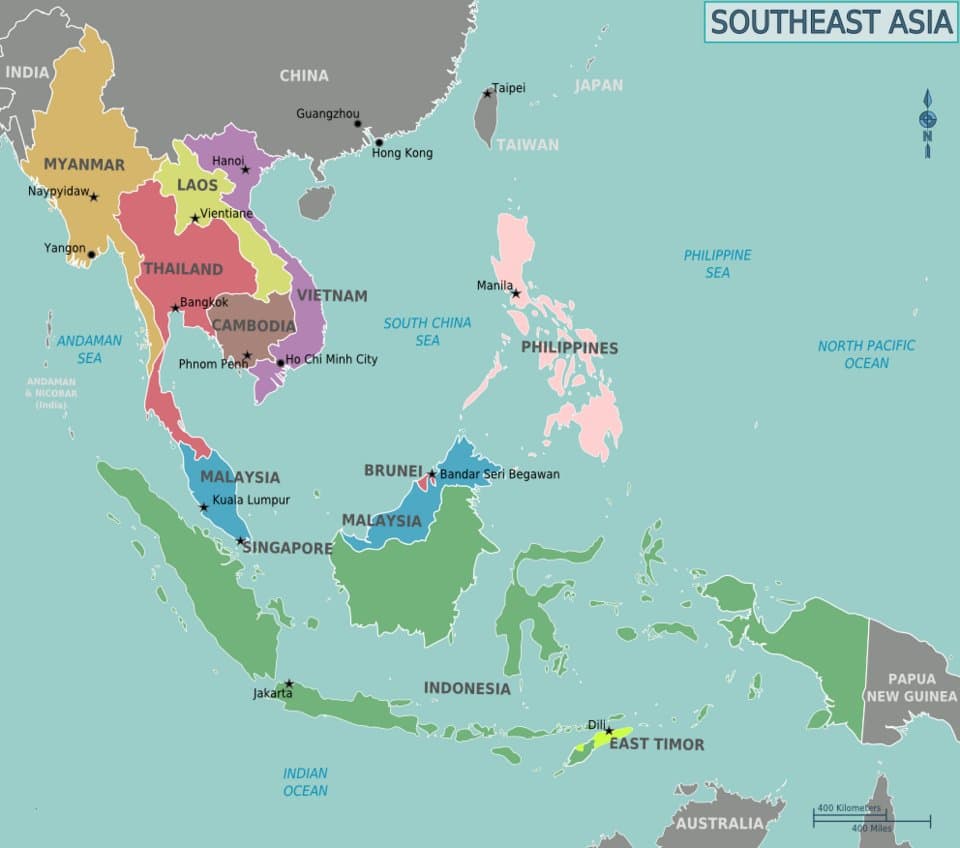
The clown barb is native to Peninsular Malaysia, the southern portion of the Malay Peninsula. It was originally described from specimens collected near Bukit Timah in Singapore, though the species may no longer be found there. Today, wild populations are concentrated in the freshwater habitats of mainland Peninsular Malaysia.
In the wild, clown barbs inhabit acidic swamp waters, slow-moving streams, and densely vegetated lowland waterways. These habitats typically feature tannin-stained water from decaying leaf litter, soft and slightly acidic conditions, and muddy or sandy substrates covered with organic debris. The water is warm year-round due to the tropical equatorial climate, with temperatures generally staying in the upper 70s to low 80s°F.
This is important context for aquarium care. Clown barbs come from warm, soft, slightly acidic environments with lots of plant cover and subdued lighting. Replicating these conditions will bring out their best colors and most natural behavior. Most specimens available in the hobby today are commercially farmed rather than wild-caught, but they still do best when their water chemistry leans toward their natural preferences.
Appearance & Identification
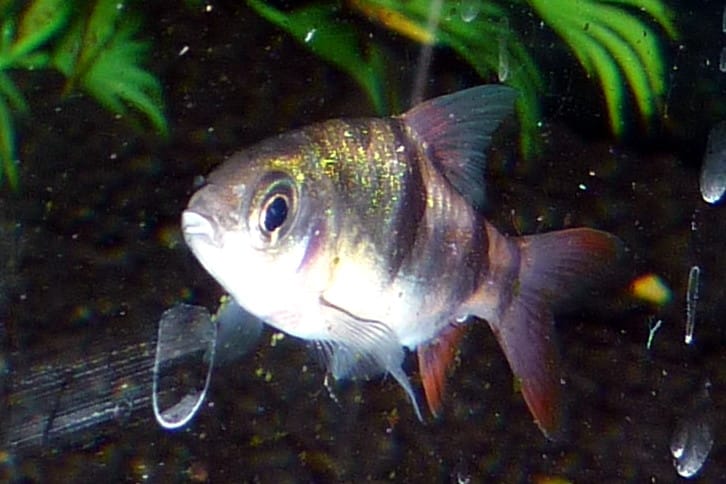
The clown barb is a substantial fish with an elongated, laterally compressed body that gives it a robust, athletic look. The base body color ranges from golden to pinkish-orange, overlaid with large, irregular dark blotches that give the species its “clown” common name. These markings are bold and distinctive, making this fish easy to identify in a group of similarly-sized cyprinids.
The fins are where the clown barb really stands out. The dorsal, caudal, and anal fins develop a rich reddish-orange hue, especially in mature, well-conditioned fish. Under good lighting and with a proper diet, the overall impression is a large, colorful barb that fills a space in the hobby between the smaller community barbs and the truly large species like the tinfoil barb.
Male vs. Female
Males will display more intense fin coloration and develop small breeding tubercles (tiny raised bumps) on the head when they’re in spawning condition. They also stay a bit slimmer in body profile. Females are slightly larger, heavier-bodied (especially when carrying eggs), and show less vivid coloration overall. In a well-maintained group, the differences become fairly obvious once the fish mature.
Average Size & Lifespan
Clown barbs can reach approximately 5 inches (13 cm) in standard length, which is larger than most of the popular barb species in the hobby. They’re not massive fish by any means, but they have a solid, noticeable presence in the tank that species like cherry barbs or tiger barbs just can’t match.
With proper care, expect a lifespan of 5 to 8 years. Good water quality, a varied diet, and appropriate tank size all play a role in how long these fish live. Specimens kept in cramped or poorly maintained conditions will have a significantly shorter lifespan.
Care Guide
Tank Size
A minimum of 30 gallons (114 liters) is required for a group of clown barbs, though 40 to 55 gallons (151 to 208 liters) is a much better starting point. These are active swimmers that need horizontal space to move. A 4-foot tank (48 inches / 120 cm long) is ideal. Remember, you’re keeping a group of 6 or more fish that each grow to 5 inches, so space matters.
Water Parameters
| Parameter | Recommended Range |
|---|---|
| Temperature | 75 to 82°F (24 to 28°C) |
| pH | 6.0 to 7.5 |
| Hardness | 2 to 12 dGH (36 to 215 ppm) |
| Ammonia/Nitrite | 0 ppm |
| Nitrate | Below 20 ppm |
Clown barbs prefer soft, slightly acidic water, which reflects their swampy natural habitat. They can adapt to moderately hard water, but you’ll see better color and behavior in softer conditions. Weekly water changes of 30 to 50% are important to keep nitrates low and maintain stable conditions.
Filtration & Water Flow
A filter rated for 4 to 5 times the tank volume per hour is a good target. Clown barbs appreciate well-oxygenated water with moderate flow. A canister filter or a quality hang-on-back filter works well. Just make sure there’s enough surface agitation for proper gas exchange without creating a current so strong that the fish are constantly fighting it.
Lighting
Moderate lighting works best. Clown barbs come from shaded, tannin-stained waters and can look washed out under very bright lights. If you’re running a planted tank with higher lighting, make sure there are shaded areas where the fish can retreat. Floating plants are an excellent way to diffuse overhead light naturally.
Plants & Decorations
A planted tank with driftwood and some rock formations is the ideal setup. Hardy plants like Java fern (Microsorum), Anubias, and Bolbitis are great choices because they can be attached to driftwood and are tough enough to handle the activity of a barb group. Floating plants like Amazon frogbit or red root floaters provide the subdued lighting these fish prefer. Adding dried leaf litter (Indian almond leaves or oak leaves) can mimic their natural environment and release beneficial tannins.
Substrate
Sand or fine gravel works well. Clown barbs spend time foraging along the bottom, and a soft substrate allows them to sift through it naturally without damaging their barbels. A dark-colored substrate will also help bring out the golden and reddish tones in their coloration.
Is the Clown Barb Right for You?
Before you buy, run through this honest checklist. The Clown Barb is a great fish for the right keeper, but it is not for everyone.
- You have a 75-gallon or larger tank – this is not a small fish
- You want a large, peaceful barb with bold orange and black patterning
- You can keep a group of 6+ for confident schooling behavior
- Your tank has other medium-to-large community fish
- You appreciate a species that becomes more impressive as it grows
- You have robust filtration for a school of large, active fish
Tank Mates
Best Tank Mates
Clown barbs are peaceful community fish, but their size means you need to choose tank mates that won’t be intimidated or outcompeted at feeding time. Medium-sized, similarly-tempered species work best.
- Other medium to large barbs (tiger barbs, Odessa barbs, Denison barbs)
- Larger rasboras (scissortail rasboras, brilliant rasboras)
- Rainbowfish (Boeseman’s, turquoise)
- Larger tetras (Congo tetras, Buenos Aires tetras)
- Corydoras catfish
- Loaches (kuhli loaches, yoyo loaches)
- Bristlenose and rubber lip plecos
- Gouramis (pearl gouramis, moonlight gouramis)
Tank Mates to Avoid
- Very small fish like neon tetras, ember tetras, or microrasboras that is stressed or outcompeted
- Long-finned, slow-moving species like fancy guppies, bettas, or angelfish that may be nipped or harassed
- Aggressive or territorial cichlids that could bully the barbs
- Dwarf shrimp like cherry shrimp, which may become snacks for a 5-inch barb
Food & Diet
Clown barbs are true omnivores with a notable appreciation for vegetable matter. In the wild, they forage on worms, insects, small crustaceans, algae, and plant material. In the aquarium, they’ll accept just about anything you offer, but a varied diet is key to good health and color.
A quality flake or pellet food can form the daily staple. Supplement this regularly with frozen or live foods like bloodworms, brine shrimp, and daphnia. What sets clown barbs apart from many other barbs is how much they benefit from vegetable-based foods. Blanched spinach, zucchini medallions, shelled peas, and spirulina-based flakes or wafers should be part of their regular rotation. You’ll notice them actively grazing on soft algae in the tank, too.
Feed once or twice daily, offering only what the group can consume in 2 to 3 minutes. Overfeeding is one of the quickest ways to foul water quality in a barb tank, and with 6 or more 5-inch fish, waste production adds up fast.
Breeding & Reproduction
Breeding Difficulty
Clown barbs are egg-scattering free spawners with no parental care. Breeding difficulty is moderate. They will occasionally spawn in a well-maintained community tank, but raising fry successfully requires a dedicated breeding setup since the adults will eat their own eggs.
Spawning Tank Setup
Set up a separate breeding tank of around 20 to 30 gallons (76 to 114 liters). The bottom should have a mesh or grate that allows eggs to fall through where the adults can’t reach them. Alternatively, a thick layer of fine-leaved plants like Java moss or spawning mops can serve the same purpose. Keep the lighting dim.
Water Conditions for Breeding
Slightly warmer water in the 78 to 82°F (26 to 28°C) range with a pH around 6.0 to 6.5 and soft water (2 to 6 dGH) will trigger spawning. A partial water change with slightly cooler water will act as a spawning trigger, simulating the onset of the rainy season in their native habitat.
Conditioning & Spawning
Condition the breeding group with generous feedings of live and frozen foods for one to two weeks before attempting to spawn them. Females will plump up noticeably when full of eggs. Spawning typically occurs in the morning. The female scatters eggs among plants or across the substrate while the male fertilizes them. Remove the adults immediately after spawning to prevent egg predation.
Egg & Fry Care
Eggs hatch in approximately 24 to 48 hours depending on temperature. The fry become free-swimming about 24 hours after hatching. Initial food should be infusoria or liquid fry food, then transition to baby brine shrimp and microworms as they grow large enough to accept them. Keep the breeding tank clean with gentle sponge filtration and small daily water changes. Growth is moderate, and fry will start developing their characteristic blotchy pattern within a few weeks.
Common Health Issues
Ich (White Spot Disease)
Ich is the most common ailment across freshwater fish, and clown barbs are no exception. It presents as small white spots covering the body and fins. It’s usually triggered by temperature fluctuations or stress from transport. Treatment involves gradually raising the water temperature to 82 to 86°F (28 to 30°C) combined with aquarium salt or an ich-specific medication.
Fin Rot
Fin rot is a bacterial infection that causes the edges of the fins to become ragged, discolored, or frayed. It’s almost always a symptom of poor water quality. The treatment starts with improving water conditions through more frequent water changes, and in advanced cases, an antibacterial medication may be necessary. Catching it early usually means clean water alone will resolve the issue.
Internal Parasites
Since many clown barbs in the trade are farm-raised, internal parasites can occasionally be an issue. Signs include weight loss despite eating normally, white stringy feces, and a sunken belly. If you suspect internal parasites, treat with a medicated food containing praziquantel or metronidazole. Quarantining new fish for 2 to 4 weeks before adding them to your display tank is the best preventative measure.
Common Mistakes to Avoid
- Keeping them in a tank that’s too small. A 10 or 15-gallon tank is nowhere near enough for a fish that grows to 5 inches. You need at least 30 gallons, and bigger is always better with this species.
- Keeping too few. Clown barbs are schooling fish. Keeping fewer than 6 will result in skittish, stressed fish that hide constantly. A proper school is active, colorful, and far more engaging to watch.
- Skipping the vegetables. Unlike many barbs, clown barbs genuinely need plant matter in their diet. Feeding only protein-based foods leads to subpar health and less vibrant coloration.
- Mixing with very small tank mates. While clown barbs are peaceful, a 5-inch fish can still stress or outcompete tiny species. Choose tank mates that are proportionate in size.
- Neglecting water changes. A group of large barbs produces significant waste. Skipping water changes in a barb tank leads to nitrate buildup fast, which opens the door to disease.
Where to Buy
Clown barbs aren’t as commonly stocked as tiger barbs or cherry barbs, so you need to look beyond your local fish store. For healthy, well-conditioned specimens, I recommend checking these online retailers:
- Flip Aquatics is a great source for high-quality freshwater fish, including barb species. They’re known for carefully packing and shipping healthy livestock.
- Dan’s Fish regularly stocks a wide selection of barbs and cyprinids. They ship directly to your door and offer competitive pricing on schooling fish.
When purchasing clown barbs, buy a group of at least 6 and ask for a mix of males and females if possible. Since these are larger barbs, they may be priced a bit higher than the more common small species. Quarantine new arrivals for 2 to 4 weeks before introducing them to your main display tank.
Frequently Asked Questions
How big do clown barbs get?
Clown barbs reach approximately 5 inches (13 cm) in standard length, making them one of the larger commonly available barb species. They need a tank that can accommodate their size and active swimming behavior.
Are clown barbs aggressive?
No. Despite their size, clown barbs are genuinely peaceful fish. They may chase each other within the group as part of normal social behavior, but they’re not aggressive toward other species. Just make sure tank mates aren’t so small that they feel threatened by a 5-inch fish.
How many clown barbs should I keep together?
A minimum of 6. Clown barbs are schooling fish, and keeping fewer leads to stress, hiding, and faded colors. Groups of 8 to 10 are even better if your tank size allows it. A larger group distributes any minor sparring behavior and brings out more natural, confident activity.
Can clown barbs live in a planted tank?
Yes, and they actually do best in planted setups. However, since they appreciate vegetable matter, they may nibble on soft or delicate plants. Stick with hardy species like Java fern, Anubias, and Bolbitis that are attached to hardscape rather than rooted in the substrate. These are tough enough to handle barb activity.
What’s the difference between a clown barb and an everett barb?
The clown barb (Barbodes dunckeri) and the clown barb (Barbodes everetti) are sometimes confused because they share a common name in certain references. The key difference is that B. Dunckeri has significantly larger dark body markings compared to B. Everetti. Scale counts also differ, with B. Dunckeri having 4.5 scales above the lateral line. If you’re buying “clown barbs,” check the scientific name to know which species you’re getting.
Do clown barbs eat algae?
They’ll graze on soft algae in the tank, which is a nice bonus. However, they shouldn’t be relied on as an algae control solution. They’re omnivores that appreciate plant matter, and supplementing their diet with blanched vegetables and spirulina foods is more effective than hoping they’ll keep your tank spotless.
How the Clown Barb Compares to Similar Species
Clown Barb vs. Snakeskin Barb
Both are large barbs that need big tanks and schools. The Clown Barb is slightly larger and has bolder coloring, while the Snakeskin Barb has more intricate patterning. Both need 55+ gallons minimum. The Clown Barb is more commonly available.
Clown Barb vs. Denison Barb
The Denison Barb is more sleek and fast-swimming, while the Clown Barb is heavier-bodied and more colorful. Both need large tanks and schools. The Denison Barb prefers cooler water; the Clown Barb is more flexible on temperature.
What It Is Actually Like Living With Clown Barb
Adult clown barbs are dignified fish. They do not have the hyperactivity of tiger barbs or the nervousness of cherry barbs. They cruise through the tank with a calm confidence that comes from their size.
The color development over time is the best part. Each month, the orange spots become richer. Each molt reveals a slightly more impressive fish. It is a slow reveal that rewards patient keepers.
They school loosely, maintaining proximity without the tight formation of smaller barbs. The effect is a drift of orange-spotted bodies moving through a planted tank. It is subtle and elegant.
Closing Thoughts
The clown barb does not look like much at the store. Give it six months in a planted tank and it will be the fish visitors ask about.
The clown barb is one of those species that quietly rewards the fishkeeper who takes the time to set up a proper tank for it. It’s not a fish you’ll find in every store, and it doesn’t have the instant name recognition of a tiger barb. But give a school of clown barbs a spacious, planted tank with clean water and a good diet, and you’ll end up with a display that stops people in their tracks.
Their combination of size, color, and peaceful nature makes them an excellent choice for anyone looking to build a medium to large community tank around a centerpiece barb species. Feed them well, keep the water soft and warm, and don’t forget the vegetables. That’s really all it takes to keep clown barbs happy and looking their best.
Recommended Video
Check out our barb species video where we cover some of the most popular barbs in the hobby, including the clown barb:
References
- Froese, R. & Pauly, D. (Eds.). (2024). Barbodes dunckeri in FishBase. fishbase.se
- SeriouslyFish. (2024). Barbodes dunckeri species profile. seriouslyfish.com
- Kottelat, M. & Tan, H.H. (2011). Barbodes binotatus and B. Dunckeri, taxonomy and distribution in the Malay Peninsula. Raffles Bulletin of Zoology.
- Practical Fishkeeping. Clown Barb care guide and species profile. practicalfishkeeping.co.uk
- About the Author
- Latest Posts

I’m Mark Valderrama, founder of Aquarium Store Depot and a fishkeeper with over 25 years of hands-on experience. I started in the hobby at age 11, worked at local fish stores, and have kept freshwater tanks, ponds, and reef tanks ever since. I’ve been featured in two best-selling aquarium books on Amazon and built this site to share practical, experience-based fish keeping knowledge.
Leave a Reply