
Thank you for visiting! By the way… any links on this page that lead to products on Amazon and other stores/partners are affiliate links Aquarium Store Depot earns a commission if you make a purchase.
If your parameters are not stable, this coral will not survive the first month. Corals do not die from wrong numbers. They die from unstable numbers. The difference between a thriving reef and a dying one is consistency, not perfection.
Stable mediocre parameters beat perfect parameters that swing. Every time.
What It Is Actually Like Growing Bubble Tip Anemone
Coral growth is measured in weeks and months, not days. You will stare at your frag daily and see nothing. Then one morning, you notice new polyp extension or a visible encrustation line. That moment is deeply satisfying.
Corals open and close based on lighting and flow. Learning to read your coral’s polyp extension tells you more about tank conditions than any parameter test.
Nuisance algae will grow on and around your coral. Keeping it clean without damaging the tissue takes a gentle hand and a turkey baster. This is a regular maintenance task.
The color payoff is real. A coral that looked brown in the store develops vivid greens, purples, or oranges under proper lighting over weeks. That transformation is what makes reef keeping addictive.
Table of Contents
- What Most Care Guides Get Wrong About Bubble Tip Anemone How to Have Real Success With BTAs
- Classification
- What Makes Anemones Difficult to Keep?
- Types of Anemones
- Bubble Tip – The Best for Clownfish
- Care (Lighting, Flow, Feeding, Selection)
- Types (and Pictures)
- Quarantining
- Frequently Asked Questions
- Is the Bubble Tip Anemone How to Have Real Success With BTAs Right for You?
- How the Bubble Tip Anemone How to Have Real Success With BTAs Compares to Similar Species
- Closing Thoughts
- The Reality of Keeping Bubble Tip Anemone
- What It Is Actually Like Growing Bubble Tip Anemone
The Bubble Tip Anemone is a go-to recommendation for newer reefers, but it is not bulletproof. Lighting, flow, and placement mistakes kill more frags than disease ever will. After maintaining reef tanks for over two decades, I know exactly where people go wrong with this coral.
More coral frags die from too much light than too little. That surprises most beginners.
Corals grow slowly and demand stable conditions for months and years. This is a long-term commitment to water chemistry, lighting schedules, and consistent maintenance.
Coral keeping is gardening with saltwater. The patience required is identical.
Bubble tip anemones are the dream for a lot of reef keepers. Especially anyone who got into saltwater because of the clownfish-and-anemone relationship. After 25 years in this hobby and keeping BTAs in my 125-gallon reef, I can tell you they’re one of the most rewarding additions you can make to a mature reef tank. The key word is mature. BTAs don’t belong in new setups. They need stable, well-established water chemistry, and rushing that timeline is the most common reason beginners lose them. Get the conditions and placement right, and a bubble tip anemone can become the centerpiece of your entire reef. This guide covers everything I’ve learned about keeping them successfully long-term.
What Most Care Guides Get Wrong About Bubble Tip Anemone How to Have Real Success With BTAs
Many care guides make the bubble tip anemone how to have real success with btas sound easier than it really is. They’ll list basic parameters and call it a day. In my experience running reef systems, stability matters far more than hitting a perfect number. Flow and placement get glossed over constantly. I’ve seen perfectly healthy bubble tip anemone how to have real success with btas colonies stress and close up simply because they were in the wrong spot. Getting flow right is half the battle. The other mistake is overfeeding or over-supplementing. More is not better with corals. Clean water and patience will outperform any additive regimen.
The Reality of Keeping Bubble Tip Anemone
Lighting is the most common source of coral death. New reefers blast their corals with too much PAR on day one. Corals need to acclimate to your lighting over weeks. Starting at 50% intensity and slowly ramping up prevents bleaching and tissue recession.
Flow matters as much as light. Dead spots collect detritus on coral tissue and cause tissue necrosis. Too much direct flow strips flesh from the skeleton. Finding the right flow pattern takes observation and adjustment.
Stability beats perfection. A reef tank with slightly elevated nitrates that stays consistent will grow coral better than a tank with perfect numbers that swings every few days. Corals adapt to stable conditions. They die from instability.
Biggest Mistake New Owners Make
Placing a new coral frag in the highest-light spot of the tank immediately. Corals from a store or vendor have been in shipping bags for hours. They need low light and gradual acclimation. Blasting them with full intensity causes bleaching within days.
Expert Take
Start your lights at 50% and increase by 10% every two weeks. More corals die from too much light too fast than from any disease I have encountered in 25 years of reef keeping.
Key Takeaways
- Anemones are difficult to keep
- The best anemones to keep as a first-timer are Rock Anemones or Bubble Tip Anemones
- Anemones do not need to be quarantined or dipped
- Anemones is induced to split either through stress or from frequent feedings
Classification
| Phylum | Cnidaria |
| Class | Hexacorallia |
| Order | Actiniaria |
| Family | Stichodactylidae |
| Genus | Entacmaea |
| Species | E. Quadricolor (Leuckart, 1828) |
What Makes Anemones Difficult to Keep?
Let’s start with the big question here – why are anemones so difficult to keep? Anemones for one are invertebrates that are closely related to jellyfish, not corals. They do not require calcium shell-like hard corals and comprise a single organism versus a colony. Because they are a single organism, this makes them more sensitive to changes than most corals. They also have a bad habit of moving around a lot and getting stuck on a wavemaker or gyre – which can lead to the death of it and the possibility of nuking your entire tank!

Along with moving around a lot when they getting settled in, they also will sting any corals near their space. They will dominate over any corals near them way worse than what you see with LPS corals. If the anemone moves to a new location near some prized corals, be prepared to move those corals out of the way within 24-48 hours.
Anemones also require a lot of light. The ideal range of PAR is 220-350. That puts them into SPS lighting territory. You will want to purchase the Best Reef Lighting you can budget if you are looking to keep one of these.
Lastly, anemones require a lot of stability in the tank, these are not the first inverts you want to place into your tank. I recommend you wait at least 6 months before you add one. You should wait until you are experiencing a good amount of coralline growth in your tank before considering one. Coralline algae growth is the one of the major sign of stability in a reef tank. If you are growing coralline and your Alk and Cal are staying stable, then you are well on your way to keeping an anemone.
Types of Anemones
Before I get into talking about the bubble tip anemone, let’s talk about the other types of anemones available for sale in the hobby and why they are bad choices for a first time anemone.
Sebae

Sebae Anemones are colorful anemones that are hosted by Maroon clown fish. They will anchor on the sand versus the rock. You will want a deeper sand bed for them to anchor or make an “anemone” lagoon for them to home in. They are notoriously bad shippers and require nearly perfect water quality to thrive. They are one of the more difficult anemones to care for.
Carpet

Carpet Anemones are big and beautiful anemones. They are also known as very deadly anemones as they often will eat fish. They are best to kept in a clown fish only harem type of tank. Even knowing where they fit in best, they are hard to keep thriving long-term. They have a very high morality rate in the hobby with 90% of them dying within the 1st year of captivity. These are not for beginners, and honestly really shouldn’t be in the hobby with exception to aqua-cultured species.
Long Tentacle

Otherwise known as the corkscrew anemone. These anemones get large like the Carpet Anemones and require near perfect water parameters. They prefer anchoring on a sandy substrate. They do not require as much light as other anemones, but they are sensitive to changes. Another not recommended anemone for first timers.
Rock Flower

These are extremely colorful anemones found in the Caribbean are are actually not difficult to keep. The main drawback with them is that clownfish will not host them. They only require a moderate amount of light (150-350 PAR works) and they will adjust to lower PAR in the tank. These are actually good anemones if you want to add a splash of color to your reef tank. Just be aware that they have all the negative characteristics of other anemones in that they will sting nearby corals and they will move until they find a comfortable spot for them. They do move around a lot less than other anemones. This would be a good first time Anemone.
Bubble Tip – The Best for Clownfish

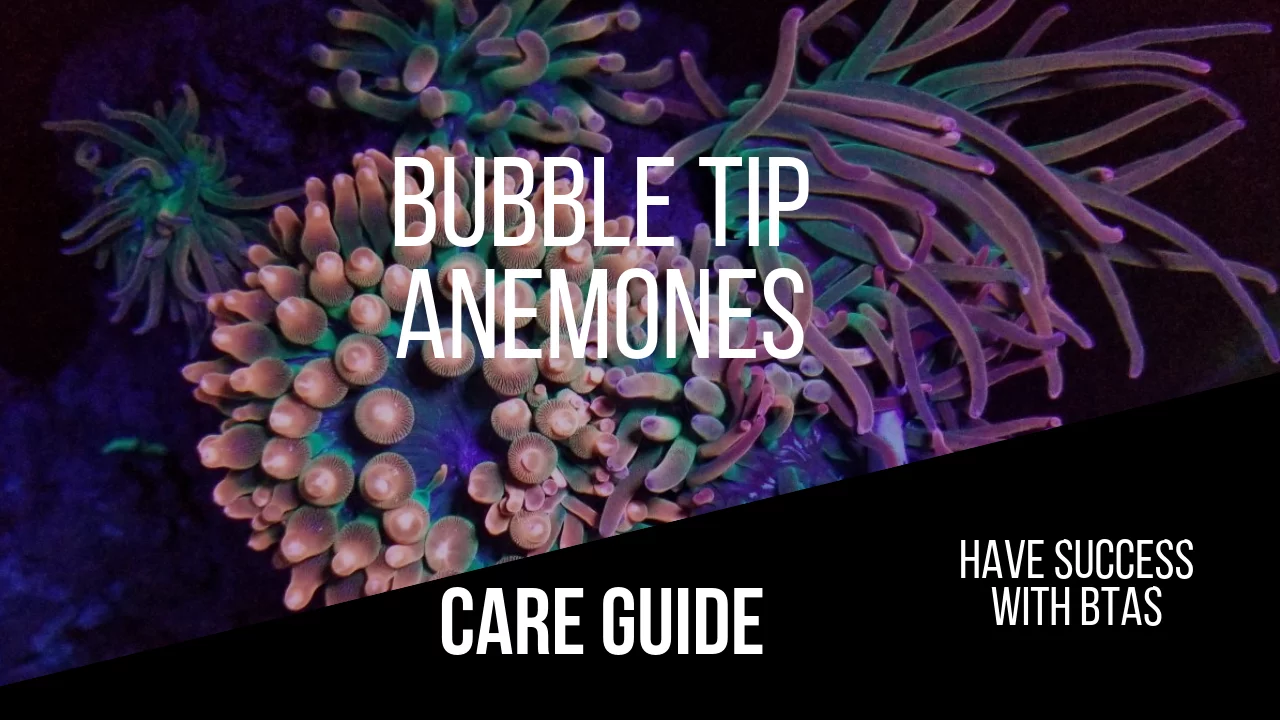
Let’s now talk about why bubble tip anemones are a great choice for a first time Anemone. They are more colorful than long-tentacle anemones and less prone to eating fish like a carpet anemone. They are also the one anemone that will host nearly all varieties of clownfish in the hobby including Ocellaris, Maroon, Tomato, Clark’s, and Skunk clownfish. They are the one Anemone that you can find locally among hobbyist as they regularly split so finding an aquacultured bubble tip anemone is fairly easy.
Like other anemones, bubble tip anemones will move but they move the most of all anemone varieties so covering your powerheads and wavemakers is essential to keep them from getting injured or killed.
These are hardy anemones that that your clownfish will host and ideal as a first time anemone with the intention of a clownfish hosting it.
Care (Lighting, Flow, Feeding, Selection)
Bubble tip anemone care isn’t as difficult as other types of anemones, but you do need to ensure that you have a stable and ideal environment for them. Let’s go over lighting, flow, feeding, and proper selection to maximize your success.
Lighting
For bubble tip anemones, you will want a higher output of light. 220 – 350 PAR is ideal for them. This means that you will need a more powerful reef light to ensure they thrive, check out our Best LED Lighting for Reef Tanks post for a list of recommended lighting setups for a bubble tip anemone.

A powerful LED (Quick Note – the links below include affiliate links for which I may make a small commission at no extra cost to you should you make a purchase) like an Ocean Revive or Hydra should do the trick for them. Hybrid T5/LED systems work great as well.
Flow
Bubble Tip Anemones require a moderate amount of flow. It is argued in the the hobby that too much flow will make the anemone stretch out and lower flow will retain their bubble tentacle shape. Check out our Best Aquarium Wavemaker Review posts for a list of recommended wavemakers. Make sure you get covers for your wavemakers.

Ebay has a number of good covers for Gyres and EcoTech MPs that are 3D Printed and will protect your anemones. I highly recommend purchasing these if you are planning on keeping bubble tip anemones.
Feeding (What Do They Eat)
Bubble tip anemones require regular feeding to stay healthy. You will want to feed your anemones at least once or twice a week. For smaller anemones, I would recommend that you feed them Reef Roids directly. As they get larger you can opt to feed them mysis shrimp and eventually move on to larger chucks of frozen food like LRS reef frenzy, sliversides, and even fresh shrimp from the super market. Once a clownfish hosts an anemone, it will also attempt to feed your anemone.
Selection
When selecting a bubble tip anemone for purchase, I highly recommend that you purchase an aqua-cultured specimen over a wild caught one. Anemones that are splits from captive kept anemones will do better than wild caught ones, have a less potent sting, and can also be obtained at cheaper prices — especially if you get them from local hobbyists. Knowing this, here is what to look for:
- Look for an anemone that is firmly attached to the substrate or glass and is well expanded
- The mouth is the best sign of health for an anemone. The mouth should not be gaping open. A healthy specimen should have it’s mouth closed up and somewhat puckered
- Look for smaller anemones. 3-4 inches in diameter is ideal. They will ship better than larger anemones and bubble tip anemones (BTAs) can grow quickly
- Look at the health of the foot. It should not be damaged or cut. Observe how the anemone is caught and ensure it it pulled from the tank safety. An anemone with a damaged foot will often not thrive and perish
Below is a sample of a damaged foot so you know what to look out for:

Types (and Pictures)
Bubble tip anemones come in a variety of colors. Below are several of the most popular types. Always check your local hobbyist forums and groups to see if you can get splits locally. Ebay auctions and postings are also a good place to get cheaper bubble tip anemones for sale over the name brand online shops – which often will highly mark up anemones.
Green

A fairly common and cheaper bubble tip anemone. It’s fairly easy to find these online or through hobbyist groups available for sale.
Rose

Editor’s Choice
The Bubble Tip Anemone is the best Anemone you can purchase for a reef tank and is readily acceptable by most Clownfish
Rose bubble tip anemones are the signature anemone of all BTAs. They are the most common bubble tip anemones you will see for sale and they are prolific propagators. They aren’t too expensive. This would be the anemone I would shop off if I was looking at purchasing my first bubble tip anemone.
Rainbow

Rainbow bubble tip anemones are the first subset of BTAs that fall under the exotic category. There are many different varieties of them and several will easily sell for $100+. They are great looking specimens and will add an exotic color to your reef tank.
Black Widow

Black windows are the signature exotic BTA in the hobby. Their blood red color is hard to find in any coral or invert and they contrast well with several designer clown varieties. They are pretty expensive command a price of several hundred dollars even for splits that come directly from a hobbyist.
Propagating (Reproduction and Profit?)
Bubble tip anemones are one of the easier anemones to propagate in the hobby. They are actually quite lucrative as many local fish stores and hobbyists will be happy to purchase your splits from you. There are various reasons why an anemone would split – some good and some bad. I’ll go over the methods here.
The Bad Way – Stress Induced Splitting
When an anemone is stressed, a survival instinct is triggered where the anemone will split into order to preserve themselves. Sometimes a new hobbyist will purchase a bubble tip anemone and be excited that their bubble tip anemone is splitting all over the place, but that is not a sign of a thriving anemone. Something is off like the salinity, nutrients, or even lighting.
If your anemone is splitting like crazy, test your parameters and your lighting to see if something is wrong. Likewise, some hobbyist do use this knowledge to their advantage to split anemones faster. I feel that it is not the best way to propagate to them and a rather cruel way to make a quick buck.
The Good Way – Feeding Induced Splitting
Feeding your anemone a lot is a good way to get them to split faster. What I mean by this is that you do not overfeed with large chucks of food, but instead to feed them often. Keeping them well feed will make them grow and split naturally. This is the best way of propagating. You can see a time lapse of an anemone splitting for reference below.
Quarantining
One of the biggest advantages of going with anemones over corals is that Anemones theoretically will not carry coral pests or parasites. This is because the anemone lacks the hard surfaces for parasites like ich and velvet to encrust on and many coral pests will simply not survive the sting of the anemone. If you subscribe to the no quarantine methodology (which I recommend you do not, but I know many hobbyist will not QT), anemones are the ideal pop and drop invert with only starfish outshining them (starfish do not require quarantine – just rinse them in display tank water).
If you are going to introduce an anemone directly into the tank, rinse the anemone in your display water to get as much of the former tank water out of it. The anemone will only carry free swimmers of parasites within the water they hold.
For those of us who subscribe to the quarantine everything camp, our work here is less burdensome than with corals. Because the anemone will only carry free swimmers, all parasites will simply die off in only 16 days in a fish less quarantine system. That is way less than the standard 45-76 days (Your range is dependent on your risk tolerance) you see recommended for coral quarantine. Keep in mind you will need to have an appropriate reef light and to have all your filters and powerheads covered as the anemone WILL move during the quarantine process.
Frequently Asked Questions
Why is my bubble tip anemone moving around the tank?
Anemones move when they are unhappy with their current location. Common reasons include incorrect lighting, too much or too little flow, or poor water quality. Once a BTA finds its ideal spot with the right combination of light and flow, it will stay put.
How long does it take for a bubble tip anemone to settle?
Most BTAs will find their preferred spot within a few days to two weeks. During this time, keep powerheads covered to prevent the anemone from getting sucked in. Avoid trying to move it manually, as this can cause additional stress and prolong the settling period.
Can you have two bubble tip anemones in the same tank?
Yes, BTAs can coexist and will even split to create clones in healthy conditions. Clones from the same parent anemone get along perfectly. However, two unrelated BTAs may engage in chemical warfare, so having a larger tank with good flow helps minimize conflict.
What causes a bubble tip anemone to split?
BTAs split as a form of asexual reproduction, often triggered by good water quality, consistent feeding, and stable conditions. Some keepers also report splitting after water changes or slight stress, but deliberately stressing an anemone to force splitting is not recommended.
Do bubble tip anemones need to be fed?
While BTAs get much of their energy from their symbiotic zooxanthellae under proper lighting, they benefit significantly from supplemental feeding. Offer small pieces of raw shrimp, mysis, or silversides once or twice a week for optimal health and growth.
Is the Bubble Tip Anemone How to Have Real Success With BTAs Right for You?
Before you add a bubble tip anemone how to have real success with btas to your tank, it’s worth asking whether this species actually fits your setup and your goals. Here’s a quick breakdown to help you decide.
This species is a good fit if:
- You have an established reef tank with stable parameters. New setups are not the place for corals.
- You’re committed to regular water testing and maintenance. Reef tanks require more attention than freshwater.
- Your lighting and flow match what this coral needs. Not all corals want the same intensity.
- You understand that coral growth is slow. Patience is not optional in reefkeeping.
- You have a plan for fragging or managing growth if the colony expands beyond its space.
- You’re not adding it to a tank with known coral pests. Prevention is easier than treatment.
If most of those points line up with your setup, the bubble tip anemone how to have real success with btas is worth serious consideration. If several don’t, it’s better to choose a species that matches your tank now rather than trying to make it work.
How the Bubble Tip Anemone How to Have Real Success With BTAs Compares to Similar Species
Want easy, fast-growing coral? Start with green star polyps or zoanthids. Want a challenge? Get SPS and invest in dosing equipment.
Choosing between similar species is tricky. Here’s how the bubble tip anemone how to have real success with btas stacks up against some common alternatives.
The bubble tip anemone how to have real success with btas occupies a specific niche in the aquarium hobby, and direct comparisons really depend on what you’re looking for. In my experience, the most common question people ask is whether they should choose the bubble tip anemone how to have real success with btas or something similar that’s more widely available. The answer comes down to three things: tank size, water parameters, and what other fish you’re keeping. If your setup matches what the bubble tip anemone how to have real success with btas needs, it’s hard to beat. If not, there are alternatives worth exploring.
Closing Thoughts
Bubble tip anemones are one of the most rewarding inverts you can keep during your reefing journey. They split regularly and grow very fast introducing you to the world of coral and anemone trading. Because clownfish love them, you get to provide the natural environment that many of us want to provide to our beloved clownfish pairs. My goal in writing this guide was to advise you on want you need to do in order to have success with bubble tip anemones. If you have any questions, please leave a comment below so we can discuss. Thanks again for reading :).
- About the Author
- Latest Posts

I’m thrilled that you found Aquarium Store Depot! Here you’ll find information on fish, aquariums, and all things aquatics related. I’m a hobbyist (being doing this since I was 11) and here to help other hobbyists thrive with their aquariums! I adhere to a high quality Editorial Process and Review products with real life field usage and practical analysis.


Leave a Reply to E S Cancel reply