
Last Updated: June 25, 2026
Thank you for visiting! By the way… any links on this page that lead to products on Amazon and other stores/partners are affiliate links Aquarium Store Depot earns a commission if you make a purchase.
Table of Contents
- What Care Guides Get Wrong
- The Reality of Keeping Payara
- Key Takeaways
- Species Overview
- Classification
- Origin & Natural Habitat
- Appearance & Identification
- Average Size & Lifespan
- Care Guide
- Is It Right for You?
- What People Get Wrong
- Tank Mates
- Food & Diet
- Breeding & Reproduction
- Common Health Issues
- Common Mistakes to Avoid
- Where to Buy
- Frequently Asked Questions
- What It Is Actually Like Living With Payara
- Species Comparison
- Closing Thoughts
- Recommended Video
- References
The payara is a monster predator that grows over a foot long and needs a tank most hobbyists cannot provide. A 200-gallon minimum. Heavy filtration. Large, frequent water changes. And the understanding that this fish has a poor survival record in home aquariums. This is not a beginner predator. It is not even an intermediate one.
The payara is the most demanding predatory characin in the hobby. Most die within a year in home tanks. Do not buy this fish unless you have the setup and experience to back it up.
The Reality of Keeping Payara
Group size is not a suggestion. The minimum school size for payara is not just a guideline. In small groups, these fish lose color, become stressed, and display abnormal behavior. A proper group of 6 to 8+ is where you start to see natural schooling behavior, full color expression, and the confidence that makes them worth keeping.
Hardy does not mean indestructible. The payara tolerates a range of conditions, but it still needs basic care. Ammonia spikes, dramatic temperature swings, and neglected water changes will catch up to even the toughest species. The difference is margin of error, not immunity.
Store appearance is not home appearance. Fish in store tanks are stressed, crowded, and under inappropriate lighting. The payara almost always looks better in a properly set up home aquarium than it does at the store. Dark substrate, live plants, and appropriate lighting bring out colors and behaviors you will never see in a retail environment.
Biggest Mistake New Owners Make
Keeping them with fish small enough to eat. This is a predator. It will eat anything it can fit in its mouth. If you stock smaller fish with a payara, you are feeding it expensive live food.
The payara is one of the most impressive and most demanding fish in the hobby. This is not a community fish, a beginner fish, or even a fish for most experienced hobbyists. It needs hundreds of gallons, live or fresh food, pristine oxygenated water, and a keeper committed to its long-term care. The fangs, the speed, and the predatory behavior are genuinely extraordinary, but the commitment required to keep one well is equally extreme. Don’t buy a payara on impulse. Research the adult size and tank requirements first.
Key Takeaways
- Expert-only species that requires a minimum of 500 gallons (1,893 liters) and ideally much more
- Aggressive predator that will eat any fish small enough to fit in its mouth
- Piscivore that typically requires live feeder fish initially, with some individuals accepting dead fish over time
- Poor survival rate in captivity due to inadequate housing, feeding challenges, and stress
- Not bred in home aquaria and all specimens are wild-caught
Species Overview
| Field | Details |
|---|---|
| Scientific Name | Hydrolycus scomberoides |
| Common Names | Payara, Vampire Tetra, Vampire Fish, Saber Tooth Tetra |
| Family | Cynodontidae |
| Origin | Amazon and Orinoco basins, tropical South America |
| Care Level | Expert Only |
| Temperament | Predatory, Aggressive |
| Diet | Piscivore (fish eater) |
| Tank Level | Mid to Top |
| Maximum Size | 46 inches (117 cm) in the wild; 12-24 inches (30-60 cm) in captivity |
| Minimum Tank Size | 500+ gallons (1,893+ liters) |
| Temperature | 75-82°F (24-28°C) |
| pH | 6.0-8.0 |
| Hardness | 2-20 dGH |
| Lifespan | 6-10+ years (often much shorter in captivity) |
| Breeding | Not bred in home aquaria |
| Breeding Difficulty | Not achievable in home aquaria |
| Compatibility | Large predatory species only |
| OK for Planted Tanks? | No (will destroy plants with its speed and power) |
Classification
| Taxonomic Level | Classification |
|---|---|
| Order | Characiformes |
| Family | Cynodontidae |
| Genus | Hydrolycus |
| Species | H. Scomberoides (Cuvier, 1819) |
Payara are one of the most demanding fish in the freshwater hobby. They require hundreds of gallons, pristine water quality, high oxygenation, live or fresh food, and expert-level care. Not recommended for anyone without dedicated large-predator experience and the infrastructure to support a 3+ foot fish long-term.
The genus Hydrolycus contains four recognized species of “dog-tooth characins,” with H. Scomberoides being the most commonly encountered in the aquarium trade. The family Cynodontidae is a small group of predatory characins characterized by their large, fang-like teeth. Unlike many other characin families, Cynodontidae was not affected by the 2024 Melo et al. Reclassification that reorganized Characidae. It remains a well-established, separate family within the order Characiformes.
Origin & Natural Habitat
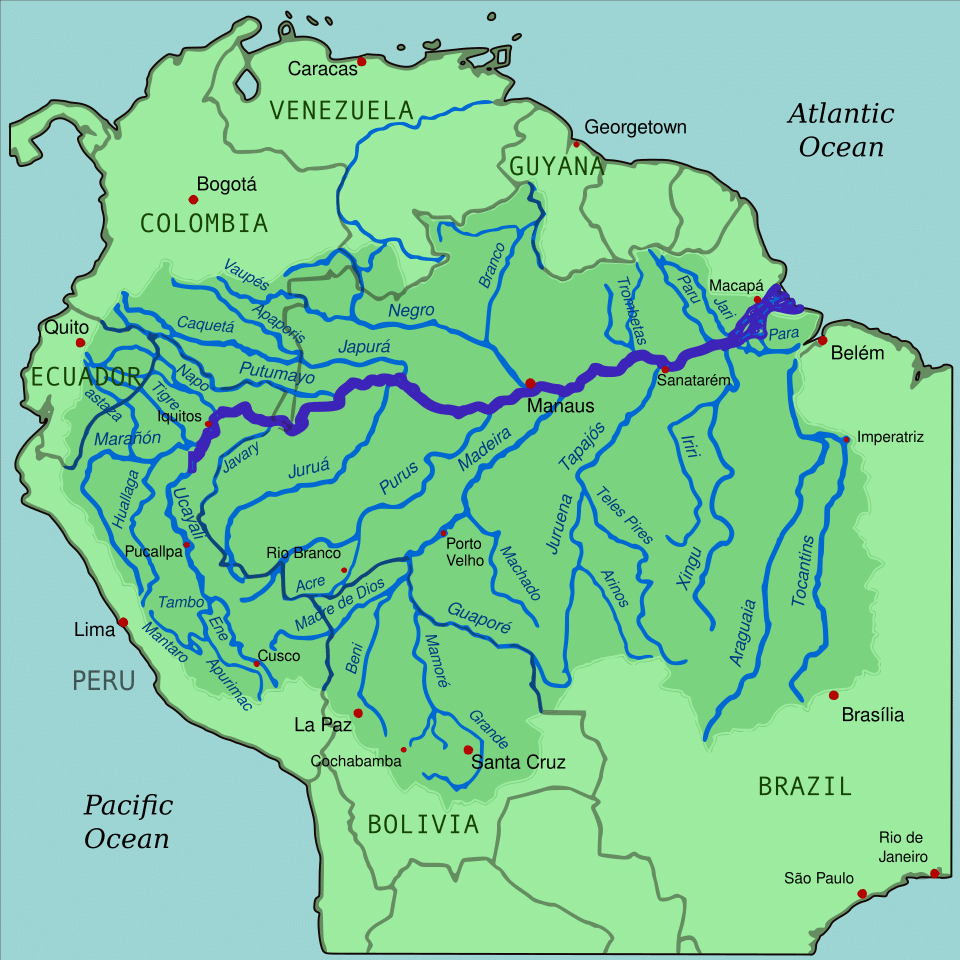
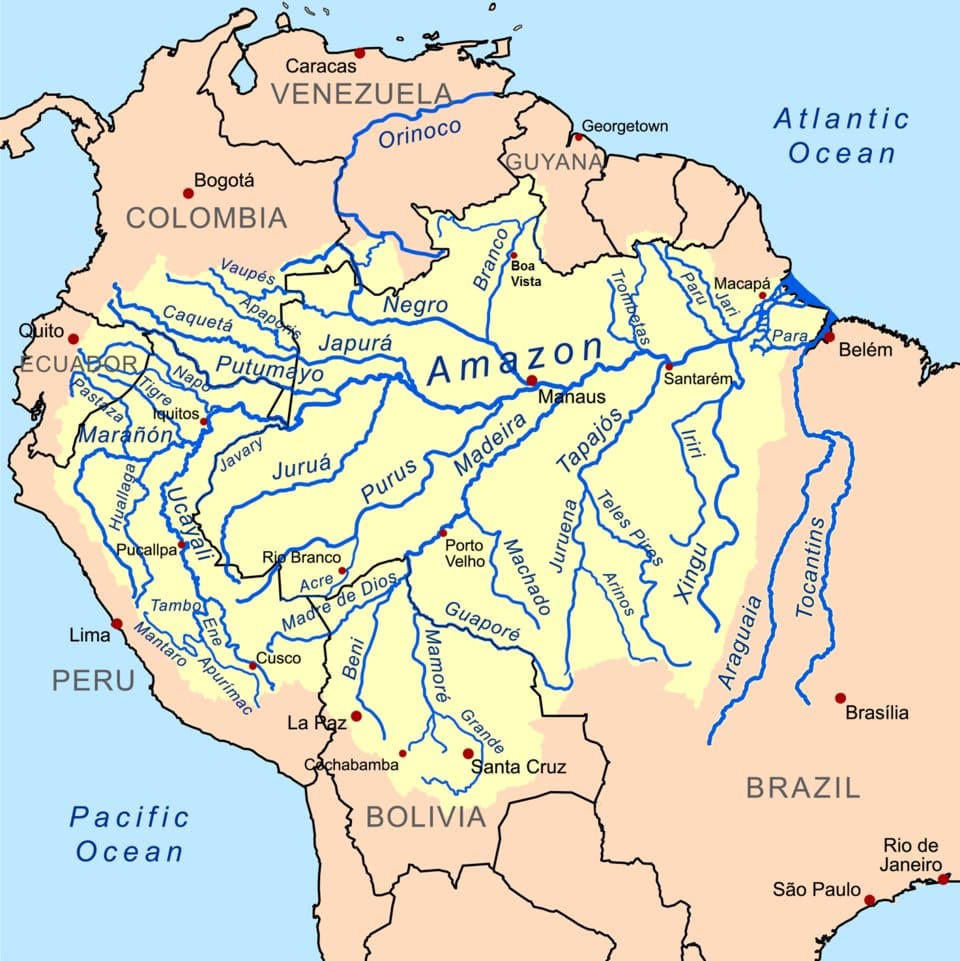
The payara has one of the broadest distributions of any predatory characin in South America. It’s found throughout the Amazon and Orinoco river basins, spanning countries including Brazil, Venezuela, Colombia, Peru, Ecuador, and Bolivia. This is a fish that thrives in big water.
In the wild, payara inhabit fast-flowing sections of large rivers, rapids, and the deep channels below waterfalls. They’re open-water hunters that rely on powerful bursts of speed to ambush prey, so they’re almost always found in areas with significant current. The water in their natural habitat varies from clearwater to whitewater, with moderate to strong flow over rocky and sandy substrates.
These rivers are typically warm, slightly acidic to neutral, and range from soft to moderately hard depending on the specific location. Payara share their habitat with other large predatory fish, including peacock bass, piranhas, and various large catfish species. Understanding this environment is critical to keeping payara in captivity: they need massive volumes of well-oxygenated, fast-moving water. A still, cramped aquarium is the opposite of what this fish evolved to live in.
Appearance & Identification
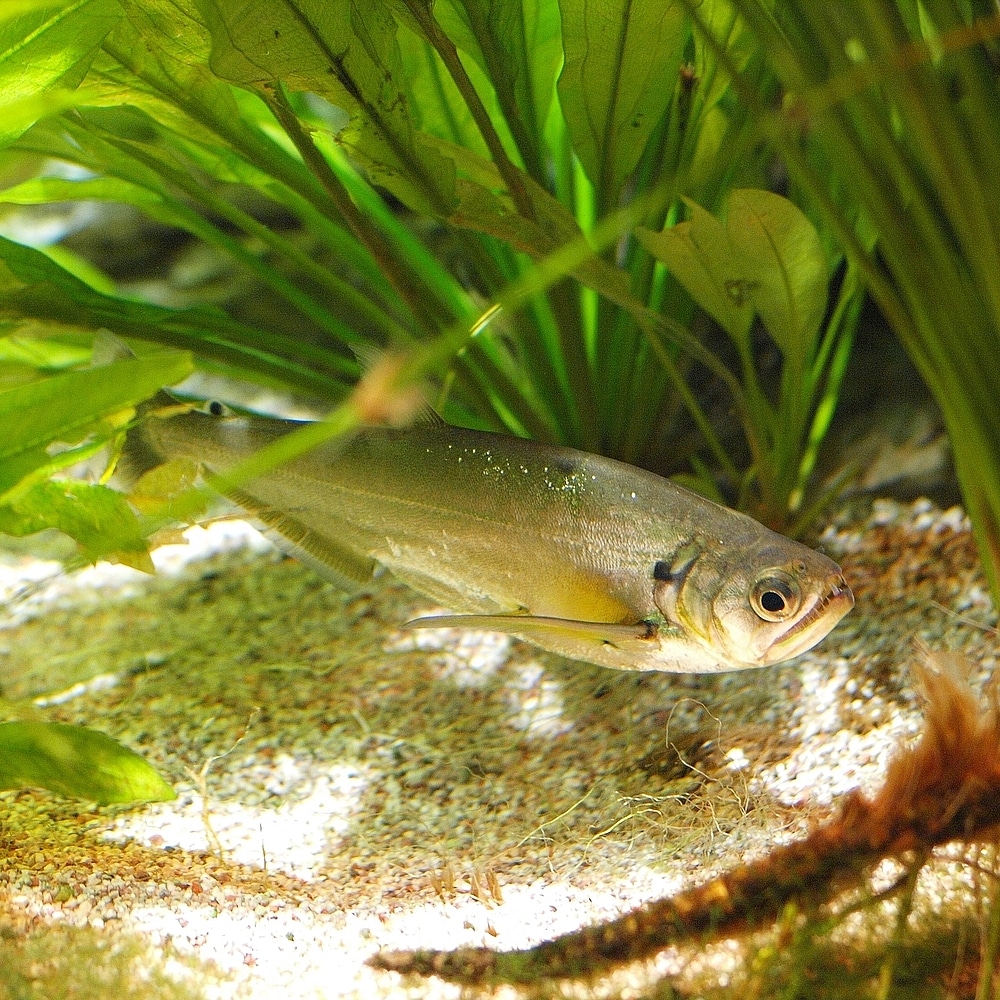
There’s no mistaking a payara for anything else in the aquarium trade. The most obvious feature is the pair of massive, saber-like fangs protruding from the lower jaw. These teeth are so long that they fit into specially evolved sockets in the upper jaw when the mouth is closed. It’s an incredible piece of evolutionary engineering designed for one purpose: grabbing fast-moving prey fish and not letting go.
The body itself is built for speed. Payara have a deep, laterally compressed body shape with a powerful forked tail fin that generates explosive acceleration. The overall coloration is silver with a subtle blue or green sheen along the flanks. A dark spot is often visible behind the gill cover, and the fins can show hints of yellow or orange, particularly in healthy, well-kept specimens. The eyes are large and positioned for forward-facing binocular vision, which helps them track fast-moving prey.
Juveniles sold in the trade are typically 3-6 inches (8-15 cm), which makes them look deceptively manageable. Don’t be fooled. That cute little silver fish with the tiny fangs will grow rapidly under good conditions.
Male vs. Female
Sexing payara is extremely difficult, and there are no reliable visual differences between males and females in aquarium conditions. In mature wild specimens, females are slightly larger and heavier-bodied than males, particularly when carrying eggs. However, since payara rarely reach full maturity in captivity and breeding has not been achieved in home aquaria, distinguishing the sexes is essentially a non-issue for hobbyists.
Average Size & Lifespan
This is where the reality check hits hard. In the wild, payara can reach up to 46 inches (117 cm) in total length and weigh over 35 pounds (16 kg). They’re a legitimate game fish in South America, targeted by sport fishermen for their incredible fighting ability.
In captivity, most payara reach 12 to 24 inches (30-60 cm), partly because they rarely survive long enough to reach their full potential. The honest truth is that many captive payara die within the first year or two, not because the fish is inherently fragile, but because the vast majority of home aquariums are simply too small and lack the water flow these fish require. In a properly maintained setup of 500 gallons or more with strong current and excellent water quality, payara can live 6 to 10 years or potentially longer. But those setups are the exception, not the rule.
Care Guide
Tank Size
There is no sugarcoating this: you need a minimum of 500 gallons (1,893 liters) for a single payara, and honestly, bigger is always better with this species. Some experienced monster fish keepers recommend 1,000 gallons or more for long-term success. These are open-water predators that can burst across a river in the blink of an eye. Cramming one into a standard 6-foot tank is a recipe for a dead fish.
The tank should be as long as possible. A payara in a short, deep tank will repeatedly slam into the glass during its high-speed lunges, which causes facial injuries and broken fangs. Custom-built tanks, indoor ponds, or repurposed stock tanks are the most practical options for housing this species. If you don’t have the space or budget for a tank this large, the payara is simply not the fish for you.
Water Parameters
| Parameter | Ideal Range |
|---|---|
| Temperature | 75-82°F (24-28°C) |
| pH | 6.0-8.0 |
| Hardness | 2-20 dGH |
| KH | 2-15 dKH |
The good news is that payara are not particularly demanding about water chemistry. They tolerate a fairly wide range of pH and hardness, which makes sense given their broad distribution across multiple river systems. The critical factors are water quality and oxygenation. Ammonia and nitrite must be at zero, and nitrate should be kept as low as possible, ideally under 20 ppm. These fish produce a lot of waste, so maintaining pristine water quality in a tank this large is an ongoing commitment.
Since all payara in the trade are wild-caught, they may initially prefer softer, slightly acidic water closer to their native conditions. Once acclimated, they will adapt well to a range of parameters as long as conditions remain stable.
Filtration & Water Flow
This is arguably the most important aspect of payara care. These fish come from fast-flowing rivers and rapids, and they need strong water movement in captivity. Multiple large canister filters or a sump system is essential, not just for filtration capacity but to generate the current payara require. Powerheads or wave makers can supplement flow and help create the river-like conditions these fish thrive in.
Your filtration system needs to turn over the total tank volume at least 6-8 times per hour. For a 500-gallon setup, that means 3,000-4,000 gallons per hour of total filtration capacity. Weekly water changes of 25-30% are a must, and with a tank this size, that means you’re moving 125-150 gallons of water every week. Many experienced keepers set up automated water change systems to make this manageable.
Lighting
Payara don’t have strong lighting preferences, but moderate lighting works best. Excessively bright lights can stress them, particularly when they’re first introduced to a new tank. Dim to moderate lighting mimics the conditions in deeper river channels where payara naturally hunt. Standard LED aquarium lights on a timer with a consistent photoperiod of 10-12 hours will work fine.
Plants & Decorations
Forget about a beautifully aquascaped planted tank. A payara will destroy plants through sheer force during its rapid movements, and decorations need to be chosen carefully to avoid injury. Large, smooth rocks and heavy driftwood pieces that are securely positioned are the safest options. Avoid anything with sharp edges or small openings where the fish could injure itself during a high-speed turn.
Honestly, many successful payara keepers run relatively sparse setups with minimal decor. The priority is open swimming space and strong current, not aesthetics. If you do use decorations, make sure they can’t be knocked over by a 20-pound fish moving at full speed.
Substrate
Fine sand or smooth gravel works best. A bare-bottom tank is another option that many monster fish keepers prefer because it’s easier to clean and eliminates any risk of the fish ingesting substrate during feeding. If you use sand, keep the layer thin so waste doesn’t accumulate in it. Dark substrate helps reduce stress by minimizing light reflection from below.
Is the Payara Right for You?
Before you buy, run through this honest checklist. The Payara is a great fish for the right keeper, but it is not for everyone.
- You have a 300-gallon or larger tank with extremely powerful filtration and water flow
- You are an experienced monster fish keeper who understands the commitment required
- You can source high-quality frozen and live foods and afford the ongoing feeding costs
- You accept that even with perfect care, captive survival rates are historically poor
- You have a backup plan if the fish outgrows your setup
- You are NOT buying this fish because it looks cool in photos. You understand the reality.
- You have researched this species extensively and spoken with keepers who have maintained one long-term
Avoid If:
- You keep anything smaller than a large silver dollar or adult bala shark – payara are apex predators that eat anything that fits in their mouth
- Your tank is under 300 gallons (1,136 liters) – juvenile payara need 200+ gallons, and adults need substantially more
- You are not an experienced large-predator keeper – payara require pristine water, live or large frozen prey, and specialist care
What People Get Wrong
The most dangerous mistake with payara is buying a juvenile without understanding the adult. Juvenile payara are 2 to 4 inches and look manageable in a tank. Adults reach 3 feet and need 500 gallons minimum. People buy them for their dramatic appearance without doing the research, then face an impossible rehoming situation 18 months later.
Feeding is where most keepers fail. Payara are obligate piscivores: they eat fish. Transitioning them to dead food or pellets is possible for some individuals but not reliable. Keepers who aren’t prepared to maintain a feeder fish supply or source fresh fish regularly will struggle to keep payara healthy long-term.
Water quality standards are extreme compared to most fish. Payara come from fast-moving, highly oxygenated Amazonian rivers. Still, low-oxygen water causes rapid decline. Powerful filtration, strong water movement, and frequent water changes are not optional. They’re the baseline requirement for keeping this species alive.
Tank Mates
Let’s be clear: any fish that fits in a payara’s mouth will become food. And with those massive jaws and fangs, the definition of “fits in its mouth” is broader than you will expect. Tank mates must be large enough that the payara can’t swallow them and tough enough to handle living with an apex predator.
Best Tank Mates
Only consider tank mates if your tank is large enough to support multiple large predators, which realistically means 1,000 gallons or more:
- Peacock bass (Cichla species) – large, assertive cichlids that can hold their own
- Arowana – similar size and temperament, both are open-water predators
- Red-bellied piranha – another large predatory characin, though keep piranha in groups
- Large plecostomus (Common pleco, Sailfin pleco) – armored catfish that occupy different tank zones
- Redtail catfish – massive bottom-dwelling predator (also requires enormous tanks)
- Bichir (Polypterus species) – armored, bottom-dwelling predators that mostly ignore mid-water fish
- Silver dollar fish (large species) – in groups, they’re fast enough and deep-bodied enough to avoid predation
- Datnoid (Tiger perch) – robust predators that occupy similar water columns
Tank Mates to Avoid
- Any fish under 8 inches (20 cm) – they will be eaten, period
- Slow-moving fish – easy prey for a lightning-fast predator
- Long-finned species – trailing fins trigger a predatory response
- Other payara – they are territorial and aggressive toward their own kind in confined spaces
- Delicate or timid species – the sheer presence and speed of a payara will stress them into decline
Food & Diet
Feeding is one of the biggest challenges with payara in captivity, and it’s a major contributor to their poor survival rate. These are obligate piscivores in the wild, meaning they eat fish and basically nothing else. Their entire anatomy, from those massive fangs to their burst-speed body shape, is designed for catching and eating live fish.
Most newly acquired payara will only accept live fish as food. This typically means feeder fish like rosy reds, silversides, or tilapia, depending on the size of your payara. The challenge is that live feeder fish carry a significant risk of introducing parasites and diseases to your tank. If you go this route, quarantine and gut-load your feeders first.
In my experience, keepers have success weaning payara onto dead fish (frozen silversides, smelt, or shrimp) by offering them on a feeding stick with gentle movement to simulate live prey. This takes patience and doesn’t always work. Some individuals simply refuse anything that isn’t alive and moving.
Feeding frequency: Juveniles should be fed daily. Adults is fed every 2-3 days, offering prey items roughly one-quarter to one-third of the payara’s body length.
Pro tip: Never use goldfish as feeders. They’re nutritionally poor and high in thiaminase, which breaks down vitamin B1 and causes long-term health problems. If you must feed live, use gut-loaded guppies, rosy reds, or farm-raised tilapia fry.
Breeding & Reproduction
Breeding payara in a home aquarium is not realistically achievable. This isn’t a matter of getting the water parameters right or conditioning the fish properly. The barriers are fundamental to the species’ biology.
Breeding Difficulty
Not achievable in home aquaria. There are no confirmed reports of successful payara breeding in private aquariums, and even large public aquariums and commercial fish farms have struggled to reproduce this species in captivity.
Spawning Tank Setup
In the wild, payara are believed to undertake upstream spawning migrations in response to seasonal flooding and water level changes. Replicating the scale of these migrations in captivity is simply not possible. The fish likely require the stimulus of flowing river conditions, seasonal environmental cues, and vast amounts of space that no home aquarium can provide.
Water Conditions for Breeding
Wild spawning is triggered by the onset of the rainy season, when rivers swell and water chemistry shifts. Temperature increases, rising water levels, and changes in water hardness and turbidity all play a role. While some of these parameters could theoretically be manipulated in captivity, the sheer scale of environmental change required goes well beyond what any home setup can simulate.
Conditioning & Spawning
Since captive breeding has not been achieved, there is no established protocol for conditioning payara to spawn. In the wild, they are believed to be group spawners that release eggs and milt in open water during upstream migrations. The eggs are likely scattered in river currents and receive no parental care.
Egg & Fry Care
Wild-spawned payara fry develop in river environments where they feed on tiny fish and invertebrates from an early age. Since no captive spawning data exists, fry care protocols remain unknown. All payara in the aquarium trade are wild-caught, and this will remain the case for the foreseeable future.
Common Health Issues
The biggest health threat to captive payara isn’t disease in the traditional sense. It’s the chronic stress of being kept in inadequate conditions. Most health problems trace back to tanks that are too small, water flow that’s too weak, or water quality that’s too poor. Address those fundamentals, and many health issues resolve themselves.
Impact Injuries
This is the number one health issue in captive payara. These fish are incredibly fast and powerful, and in tanks that are too small, they slam into the glass walls during bursts of speed or when startled. The result is broken fangs, damaged jaws, and facial injuries that can become infected. Broken fangs may or will not regrow depending on the severity. The only real prevention is a tank that’s long enough for the fish to swim and turn without hitting walls.
Bacterial Infections
Open wounds from impact injuries, combined with the stress of captivity, make payara vulnerable to secondary bacterial infections. Watch for reddened areas, white fuzzy patches, or fraying fins. Maintaining pristine water quality is the best prevention. If infection sets in, broad-spectrum antibiotics may be necessary, though medicating a 500-gallon tank is expensive and logistically challenging.
Parasites from Feeder Fish
Since payara typically require live feeder fish, they’re at elevated risk for parasitic infections picked up from their food. Internal parasites, ich, and other diseases carried by low-quality feeder fish are common problems. Quarantining feeder fish, sourcing them from reputable suppliers, and transitioning to frozen foods when possible all help reduce this risk.
Stress-Related Decline
Payara that are kept in cramped conditions or without adequate water flow often enter a slow decline. They stop eating, lose color, become lethargic, and eventually die. This isn’t a specific disease but rather the cumulative effect of chronic environmental stress. A payara that is actively swimming against strong current and eating aggressively is healthy. One that hovers motionless or hides is telling you something is wrong with its environment.
Common Mistakes to Avoid
- Impulse buying a juvenile – This is the single biggest mistake in monster fish keeping. Pet stores sell 3-4 inch (8-10 cm) payara juveniles that look totally manageable, and most buyers have no idea they’re purchasing a fish that needs a 500-gallon tank. If you can’t house the adult, don’t buy the juvenile. Period.
- Tank too small – A 75-gallon tank, a 125-gallon tank, even a 300-gallon tank is not enough. Payara need 500 gallons at an absolute minimum, and bigger is genuinely better. Undersized tanks lead to impact injuries, chronic stress, and premature death.
- Not enough water flow – A standard aquarium filter on a payara tank is like putting a river fish in a bathtub. These fish need powerful flow from multiple sources. Without it, they become lethargic and decline.
- Relying on goldfish as feeders – Goldfish are nutritionally deficient and contain thiaminase, which destroys vitamin B1 over time. Use silversides, tilapia fry, or gut-loaded livebearers instead.
- Expecting it to be a community fish – A payara will eat anything it can fit in its mouth. This is not a fish you add to a mixed community tank. Plan your stocking around the payara, not the other way around.
Where to Buy
Payara show up periodically in the aquarium trade, but they’re not a species you’ll find at your average local fish store. They’re typically available through specialty monster fish dealers and occasionally through online retailers. Prices vary significantly based on size, with juveniles starting around $30-50 and larger specimens commanding much higher prices.
Check with Flip Aquatics and Dan’s Fish for availability, though this is a highly specialized species that will not always be in stock. All payara in the trade are wild-caught, so availability depends on seasonal collection from South American exporters.
Before you buy, I strongly recommend having your entire setup running and stable before the fish arrives. A payara dropped into a newly set up tank is a payara that’s unlikely to survive. Have the filtration cycled, the flow dialed in, and a reliable source of appropriate food lined up before you bring one home.
Frequently Asked Questions
Can I keep a payara in a 75-gallon tank?
Absolutely not. A 75-gallon tank is completely inadequate for a payara at any stage of life beyond the first few months. Even a juvenile payara will quickly outgrow a tank this size, and the lack of swimming space will lead to impact injuries, broken fangs, chronic stress, and premature death. The minimum recommended tank size is 500 gallons (1,893 liters), and many experienced keepers insist on even larger setups.
Will a payara eat my other fish?
Yes. A payara will eat anything that fits in its mouth, and its mouth is larger than most people realize. This is an apex predator with saber-like fangs specifically evolved for catching and consuming other fish. The only safe tank mates are fish that are physically too large to be swallowed, and even then, only in tanks large enough to give everyone space.
How big do payara get?
In the wild, payara can reach up to 46 inches (117 cm) in total length, which is nearly four feet. In captivity, they more commonly reach 12-24 inches (30-60 cm), largely because most don’t survive long enough or have adequate space to reach their full potential. Even at 12 inches, this is a large, powerful predatory fish that requires serious infrastructure.
What do payara eat in captivity?
Payara are strict piscivores and typically require live feeder fish when first acquired. Some individuals is slowly weaned onto dead fish offered on a feeding stick, but this process takes patience and doesn’t always succeed. Never use goldfish as feeders due to their poor nutritional profile and thiaminase content. Silversides, tilapia fry, and gut-loaded livebearers are better choices.
Why do payara die so quickly in aquariums?
The primary reasons are tanks that are too small, insufficient water flow, feeding difficulties, and the general stress of captivity. Payara are built for life in fast-flowing rivers with essentially unlimited swimming space. When confined to a standard aquarium, they suffer from impact injuries, refuse food, and enter a slow decline. The keepers who succeed are those who provide massive tanks with powerful water movement and commit to the demanding feeding requirements.
Are payara legal to keep?
In most US states, payara are legal to keep as aquarium fish. However, regulations vary by location, and some states or municipalities restrict the keeping of large predatory fish. Always check your local and state regulations before purchasing. Because of their tropical origin, payara cannot survive in temperate waters, which reduces the invasive species risk that prompts bans on some other large fish.
Can payara break aquarium glass?
While a large payara hitting glass at full speed generates significant force, they’re unlikely to actually break standard aquarium glass or acrylic panels of appropriate thickness. However, repeated impacts will injure the fish, breaking fangs and damaging the jaw. This is a much bigger concern than damage to the tank itself. A properly sized tank with enough length for the fish to swim freely prevents these collisions.
What It Is Actually Like Living With Payara
In a proper school, payara display natural movement patterns that are genuinely engaging to watch. The fish interact with each other, establish subtle hierarchies, and move through the tank with purpose.
They occupy the middle water column during active hours, creating movement and visual interest in the zone where most fishkeepers want action.
Feeding time is when their personality comes out. They learn your routine quickly and will anticipate feeding before you even open the lid.
Their color and behavior improve over time as they settle into a stable environment. Fish that have been in the same tank for months look noticeably better than recently added stock.
How the Payara Compares to Similar Species
Payara vs. Peacock Bass
The Peacock Bass is a large predator that is far more manageable and longer-lived in captivity. It still needs 200+ gallons but adapts to tank life much better than the Payara. If you want a predatory fish with fangs-level cool factor, the Peacock Bass is the realistic choice. The Payara is for the rare keeper with public-aquarium-level resources.
Payara vs. Oscar
The Oscar is the entry-level large predatory fish, manageable in 75+ gallons with a much longer captive lifespan. If the Payara appeals to you but you are being honest about your setup limitations, the Oscar delivers the intelligent predator experience in a package that actually works long-term.
Closing Thoughts
The payara is one of the most visually spectacular freshwater fish in the world, and I understand the appeal. Those fangs, that predatory intensity, the raw power of the fish. But keeping a payara successfully requires a level of commitment, space, and resources that puts it firmly in the realm of dedicated monster fish keepers with custom setups. For the vast majority of aquarists, this is a fish better admired in public aquariums or nature documentaries than kept at home.
If you do have the means and dedication to provide what this fish needs, it is one of the most rewarding predatory fish to keep. Just go in with your eyes open, your tank oversized, and your filtration overkill.
For more on tetras and characins of all sizes, visit our complete tetras guide.
Recommended Video
Check out our tetra tier list video where we rank the most popular tetras in the hobby, including the Payara:
References
- Hydrolycus scomberoides (Cuvier, 1819) – FishBase
- Hydrolycus scomberoides Profile – Seriously Fish
- Hydrolycus scomberoides Fact Sheet – USGS NAS Database
- Caring for the Payara – Practical Fishkeeping
- About the Author
- Latest Posts

I’m Mark Valderrama, founder of Aquarium Store Depot and a fishkeeper with over 25 years of hands-on experience. I started in the hobby at age 11, worked at local fish stores, and have kept freshwater tanks, ponds, and reef tanks ever since. I’ve been featured in two best-selling aquarium books on Amazon and built this site to share practical, experience-based fish keeping knowledge.
Leave a Reply