
Last Updated: June 25, 2026
Thank you for visiting! By the way… any links on this page that lead to products on Amazon and other stores/partners are affiliate links Aquarium Store Depot earns a commission if you make a purchase.
Table of Contents
- What Most Care Guides Get Wrong
- The Reality of Keeping Silver Tetra
- Key Takeaways
- Species Overview
- Classification
- Origin & Natural Habitat
- Appearance & Identification
- Average Size & Lifespan
- Care Guide
- Is This Fish Right for You?
- What People Get Wrong
- Tank Mates
- Food & Diet
- Breeding & Reproduction
- Common Health Issues
- Common Mistakes to Avoid
- Where to Buy
- Frequently Asked Questions
- What It Is Actually Like Living With Silver Tetra
- How It Compares to Similar Species
- Closing Thoughts
- Recommended Video
- References
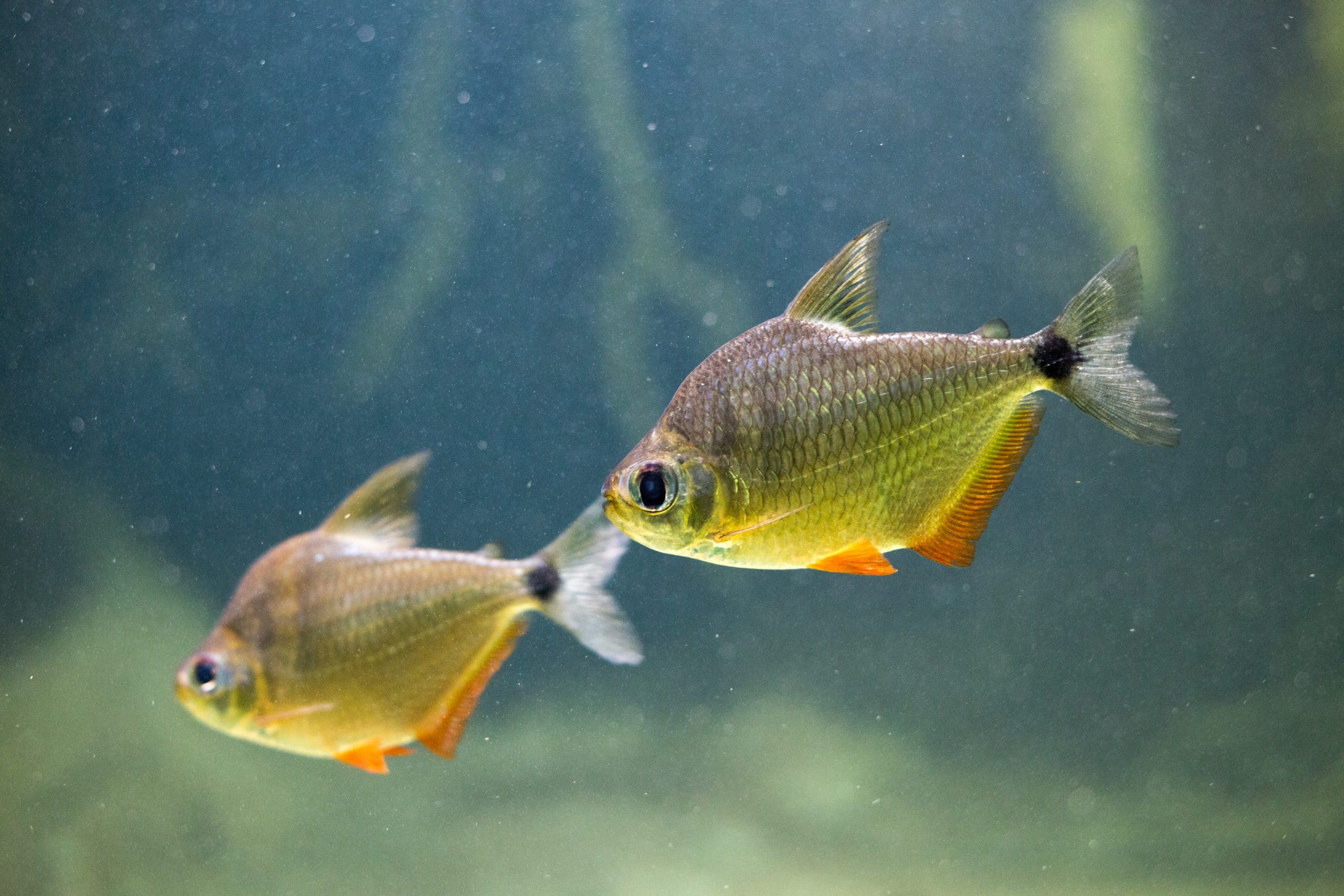
The silver tetra is a large, active schooler that most people underestimate. It grows bigger than expected, moves faster than expected, and needs more space than expected. A 30-gallon minimum for a school. This is not a small community fish. It is a mid-size tetra that dominates the middle of the water column.
The silver tetra outgrows expectations. Buy a 30-gallon tank or do not buy the fish.
The Reality of Keeping Silver Tetra
Group size is not a suggestion. The minimum school size for silver tetra is not just a guideline. In small groups, these fish lose color, become stressed, and display abnormal behavior. A proper group of 6 to 8+ is where you start to see natural schooling behavior, full color expression, and the confidence that makes them worth keeping.
Tank mate selection requires thought. The silver tetra is not aggressive in the traditional sense, but it is assertive enough to cause problems with the wrong companions. Slow-moving, long-finned species are targets. Fast, short-finned fish of similar size are fine. Plan your community around this reality.
Hardy does not mean indestructible. The silver tetra tolerates a range of conditions, but it still needs basic care. Ammonia spikes, dramatic temperature swings, and neglected water changes will catch up to even the toughest species. The difference is margin of error, not immunity.
Store appearance is not home appearance. Fish in store tanks are stressed, crowded, and under inappropriate lighting. The silver tetra almost always looks better in a properly set up home aquarium than it does at the store. Dark substrate, live plants, and appropriate lighting bring out colors and behaviors you will never see in a retail environment.
Biggest Mistake New Owners Make
Adding them to a peaceful community tank without researching compatibility. The nipping and chasing will stress your existing fish, and by the time you realize the problem, fin damage is already done.
In my 25+ years in the hobby, I have consistently found that the hardiest species are the most underrated. The silver tetra is a perfect example. It is easy to keep, rewarding to watch, and it does not demand the kind of obsessive maintenance that more sensitive species require.
Key Takeaways
- Hardy and beginner-friendly with a wide tolerance for water conditions
- Active schooling fish that does best in groups of 6 or more
- Grows to about 3 inches, so needs at least a 30-gallon tank
- Omnivorous and easy to feed with no special dietary requirements
- Long-established in the hobby with captive-bred stock widely available
Species Overview
| Field | Details |
|---|---|
| Scientific Name | Ctenobrycon spilurus |
| Common Names | Silver Tetra |
| Family | Characidae |
| Origin | Guyana, Suriname, French Guiana, Trinidad, Venezuela, lower Amazon |
| Care Level | Easy |
| Temperament | Peaceful (can be nippy in small groups) |
| Diet | Omnivore |
| Tank Level | Mid |
| Maximum Size | 3.2 inches (8 cm) |
| Minimum Tank Size | 30 gallons (114 liters) |
| Temperature | 72-82°F (22-28°C) |
| pH | 6.0-8.0 |
| Hardness | 5-20 dGH |
| Lifespan | 5-8 years in captivity |
| Breeding | Egg scatterer |
| Breeding Difficulty | Easy to Moderate |
| Compatibility | Community |
| OK for Planted Tanks? | Yes (may nibble soft plants) |
Classification
| Taxonomic Level | Classification |
|---|---|
| Order | Characiformes |
| Family | Characidae |
| Subfamily | Stethaprioninae |
| Genus | Ctenobrycon |
| Species | C. Spilurus (Valenciennes, 1850) |
Silver tetras (Ctenobrycon spilurus) are among the hardiest tetras in the hobby. They tolerate a wide range of water conditions and are forgiving of beginner mistakes.
Ctenobrycon spilurus was originally described by Valenciennes in 1850. The genus name comes from the Greek “cteno” (comb) and “brycon” (a type of fish), referring to the comb-like teeth. This species has been shuffled between genera over the years but is now firmly placed in Ctenobrycon.
Note on family placement: Ctenobrycon is placed in the subfamily Stethaprioninae within Characidae. It was not affected by the 2024 Melo et al. Phylogenomic revision and remains in the core Characidae.
Origin & Natural Habitat

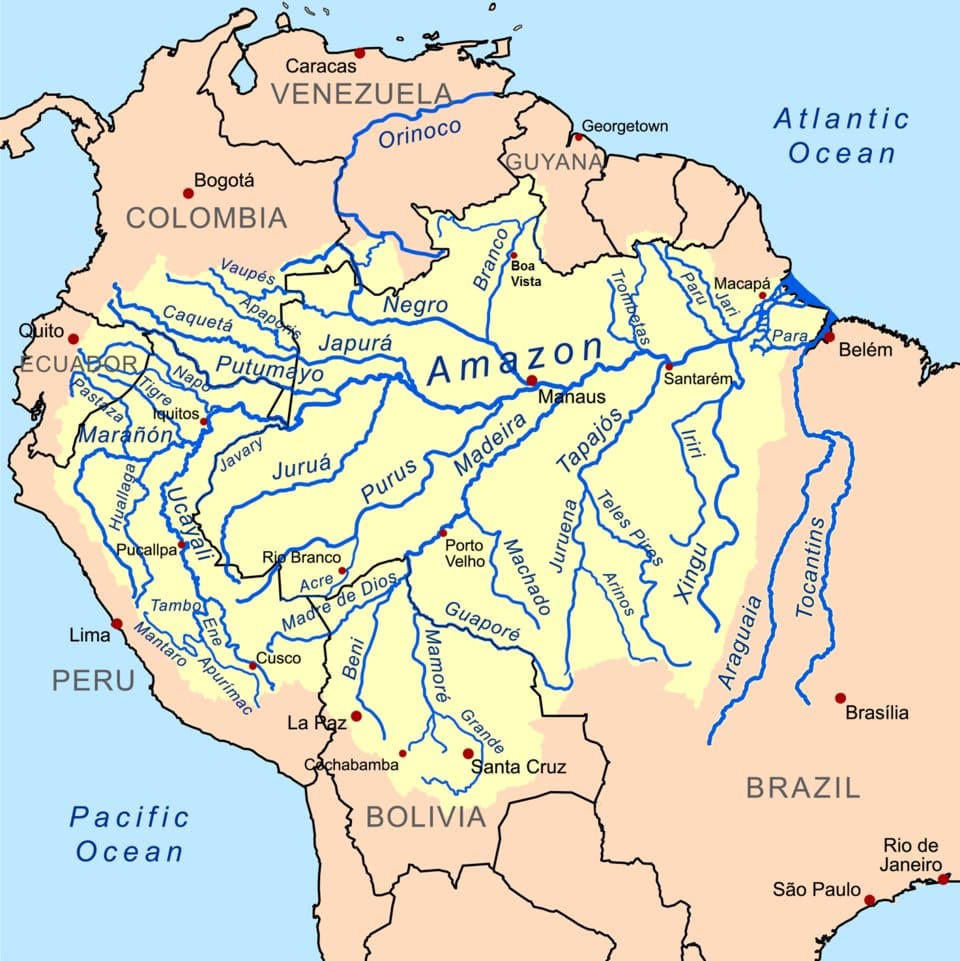
The silver tetra has a broad native range across northeastern South America. It’s found in Guyana, Suriname, French Guiana, Trinidad, Venezuela, and the lower Amazon basin in Brazil. This wide distribution contributes to its adaptability in aquarium conditions, as wild populations have adapted to a variety of water types across their range.
In the wild, silver tetras inhabit slow-moving rivers, streams, and floodplain pools with varying water conditions from clear to slightly turbid. They’re often found in areas with moderate vegetation and are tolerant of a wider range of pH and hardness than many South American tetras. They will congregate in open areas where they school in the mid-water column.
The species has also been introduced to waters outside its native range, including parts of the United States (Florida and Hawaii), where feral populations have established. This speaks to its adaptability and resilience.
Appearance & Identification
The silver tetra has a deep, laterally compressed body that gives it a more rounded profile than many other tetras. The body is predominantly silvery with a bright metallic sheen that catches the light beautifully. Under good conditions, you’ll notice subtle hints of yellow and green iridescence across the scales.
The fins are mostly transparent with a slight yellowish tinge. A small dark spot is present at the base of the caudal fin (the “spilurus” in the scientific name refers to this spotted tail). The eye is large and has a reddish upper rim that adds a touch of color to the face.
Sexual dimorphism becomes apparent in mature fish. Males are slimmer and slightly more colorful, with a more pronounced iridescent sheen. Females are noticeably fuller-bodied, especially when carrying eggs, and will grow slightly larger.
Average Size & Lifespan
Silver tetras grow to about 3.2 inches (8 cm), making them a mid-sized tetra. They’re larger than species like neons or embers but still well within community tank territory. Their deep body shape makes them look bigger than their length suggests.
With proper care, expect a lifespan of 5 to 8 years. This is a long-lived species by tetra standards, and their hardiness means they often reach the upper end of that range even for less experienced keepers.
Care Guide
Tank Size
A 30-gallon tank is the minimum for a group of silver tetras. Their larger size and active swimming habits mean they need more room than smaller tetra species. For a school of 8 to 10 with other community fish, a 40-gallon breeder or 55-gallon tank is more appropriate and gives the school enough space to move freely.
Water Parameters
| Parameter | Ideal Range |
|---|---|
| Temperature | 72-82°F (22-28°C) |
| pH | 6.0-8.0 |
| General Hardness | 5-20 dGH |
| KH | 3-12 dKH |
| Ammonia / Nitrite | 0 ppm |
| Nitrate | Below 30 ppm |
One of the biggest advantages of the silver tetra is its flexibility with water parameters. Unlike many South American tetras that demand soft, acidic water, silver tetras do well across a broad range. They’ll thrive in soft blackwater setups just as readily as in moderately hard, neutral water straight from the tap. This makes them an excellent choice for beginners or anyone who doesn’t want to fuss with RO water and remineralization.
Weekly water changes of 25 to 30 percent keep nitrates in check and maintain good water quality. Their tolerance is wide, but consistency is still important.
Tank Setup
Silver tetras appreciate a mix of open swimming space and planted areas. They’re mid-water swimmers that spend most of their time in the open, so don’t overcrowd the tank with hardscape and plants. A well-planted background and sides with a clear center works well.
Standard aquarium lighting is fine. A dark substrate helps show off their silvery coloration. Sand or fine gravel both work. Driftwood and rocks can provide visual interest and some cover, but these fish don’t require hiding spots the way more timid species do.
One note on plants: silver tetras may nibble on soft-leaved plants like Cabomba or Elodea, especially if their diet lacks plant matter. Hardy plants like Java fern, Anubias, and Vallisneria hold up better.
Is the Silver Tetra Right for You?
Silver tetras are deceptively beautiful fish that reward the right setup. Here’s who should be keeping them:
- You appreciate metallic, reflective fish that catch light from across the room
- You have a 20-gallon long or larger tank with open swimming space
- You want a schooling fish that creates a dramatic, unified display when light hits them
- You keep a dark substrate. Their reflective quality is lost on light-colored gravel
- You want a hardy, adaptable tetra that doesn’t demand specific water chemistry
- Not the right fish if you want vivid colors. Their appeal is metallic shimmer, not pigment
What People Get Wrong
The biggest mistake is putting silver tetras in a community tank that is too small or with tank mates that are too small. Silver tetras grow to about 3 inches (7.5 cm) and are active, boisterous swimmers. They do not intentionally harm smaller fish, but their size and energy level intimidates and stresses nano fish, small rasboras, and smaller tetras. Appropriate tank mate sizing matters.
Second mistake: fin-nipping. Silver tetras can be nippy, especially in small groups or with long-finned tank mates. Bettas, angelfish, and guppies are at risk. Fast-moving, short-finned companions of similar size are the correct approach.
Third: underestimating how large they get. In stores, silver tetras look like a big neon tetra. At full size, they are significantly larger — closer to the size of a buenos aires tetra or larger community fish. Buy a tank that fits their adult size, not their juvenile size.
Tank Mates
Silver tetras are peaceful community fish, though they can occasionally nip at long-finned tank mates, especially if kept in groups that are too small. A group of 6 or more keeps this behavior in check.
Good Tank Mates
- Other medium-sized tetras (black skirt, pristella, bloodfin)
- Corydoras catfish
- Bristlenose and rubber lip plecos
- Rainbowfish
- Peaceful barbs (cherry barbs, gold barbs)
- Gouramis (pearl, honey, blue)
- Medium-sized rasboras
- Loaches (kuhli, yo-yo)
Tank Mates to Avoid
- Long-finned species (bettas, fancy guppies, angelfish) due to potential nipping
- Very small fish or shrimp that is harassed
- Large aggressive cichlids
Food & Diet
Silver tetras are true omnivores that eat just about anything offered. They’re enthusiastic feeders with hearty appetites.
- Staple: High-quality flake food or pellets
- Frozen foods: Bloodworms, brine shrimp, daphnia
- Live foods: Brine shrimp, daphnia, blackworms
- Vegetable matter: Spirulina flakes, blanched spinach, zucchini
Including some plant-based foods in their diet is important. Without it, they’re more likely to snack on aquarium plants. Feed two to three times daily in amounts they can consume within a few minutes. These fish is greedy, so watch that they don’t outcompete slower tank mates at feeding time.
Breeding & Reproduction
Silver tetras are one of the easier tetras to breed in captivity. They’re prolific egg scatterers that will spawn readily under the right conditions.
Breeding Setup
- Breeding tank: 15 to 20 gallons
- Water: Slightly acidic (pH 6.0-6.5), soft to moderately soft, temperature 78-80°F
- Decor: Fine-leaved plants or spawning mops, a mesh bottom to protect eggs
- Filtration: Gentle sponge filter
- Lighting: Dim, or cover the tank to reduce light
Condition breeding pairs or groups with plenty of live and frozen foods for a week or two before spawning attempts. Spawning usually occurs in the morning. Females can scatter several hundred eggs among plants or over the substrate. Remove adults after spawning, as they will readily eat the eggs.
Eggs hatch in about 24 to 36 hours, and fry become free-swimming within 3 to 4 days. Feed fry infusoria or liquid fry food initially, then transition to baby brine shrimp. Growth is relatively quick compared to many tetra species.
Common Health Issues
- Ich: Can occur during acclimation or after temperature changes, though silver tetras are more resistant than many delicate tetras.
- Fin rot: Usually caused by poor water quality or stress. Responds well to improved conditions and, in severe cases, antibacterial treatment.
- Obesity: These are enthusiastic eaters. Overfeeding is a real risk, leading to fatty liver and shortened lifespan. Feed measured portions.
- Internal parasites: Occasionally seen in wild-caught specimens. Quarantine and prophylactic treatment are recommended for new arrivals.
Common Mistakes to Avoid
- Keeping too few: Small groups of 3 or 4 silver tetras can become nippy. Keep at least 6, preferably 8 or more, to spread any minor aggression within the school.
- Tank too small: Their size and activity level mean they really do need that 30-gallon minimum. Cramped quarters lead to stress and fin nipping.
- Overfeeding: They’ll eat everything you give them and beg for more. Stick to measured portions and include fasting days.
- Pairing with long-finned fish: The occasional fin nipping tendency means bettas, fancy guppies, and angelfish are not ideal tank mates.
- Ignoring plant-based foods: Without vegetable matter in their diet, they’ll supplement by eating your plants.
Where to Buy
Silver tetras are not as commonly stocked as some other tetras, but they is found through specialty online retailers. Check these trusted sources:
Frequently Asked Questions
Are silver tetras aggressive?
Not truly aggressive, but they is fin nippers if kept in small groups or in cramped tanks. A school of 6 or more in an appropriately sized tank keeps this behavior manageable. Avoid pairing them with slow-moving, long-finned species to be safe.
How big do silver tetras get?
They reach about 3.2 inches (8 cm), with females growing slightly larger than males. Their deep, compressed body shape makes them appear larger than their length alone suggests.
Can silver tetras live with shrimp?
Adult Amano shrimp are fine, but smaller shrimp species like cherry shrimp may be harassed or eaten, especially young shrimplets. If you want to keep a breeding shrimp colony, silver tetras are not the best choice for tank mates.
What It Is Actually Like Living With Silver Tetra
In a proper school, silver tetra display natural movement patterns that are genuinely engaging to watch. The fish interact with each other, establish subtle hierarchies, and move through the tank with purpose.
They occupy the middle water column during active hours, creating movement and visual interest in the zone where most fishkeepers want action.
Feeding time is when their personality comes out. They learn your routine quickly and will anticipate feeding before you even open the lid.
Their color and behavior improve over time as they settle into a stable environment. Fish that have been in the same tank for months look noticeably better than recently added stock.
They coexist peacefully with virtually every other appropriately-sized community fish. This compatibility makes tank planning straightforward.
How the Silver Tetra Compares to Similar Species
Silver Tetra vs. Diamond Tetra
Diamond tetras are the premier “sparkle tetra” in the hobby, with iridescent scales that flash rainbow colors. Silver tetras are more uniformly reflective. Think polished metal versus scattered diamonds. Both species look spectacular under the right lighting but achieve their effect differently. Diamond tetras also develop more dramatic finnage in males. If you want the maximum sparkle factor, diamond tetras edge ahead. If you want a clean, mirror-like school effect, silver tetras deliver that better. Check out our Diamond Tetra care guide for more details.
Silver Tetra vs. Colombian Tetra
Colombian tetras share that silvery, reflective body type but add red and blue accents to their fins, creating a more colorful overall package. Both species reach similar sizes and need comparable tank space. Colombian tetras are slightly more aggressive and assertive at feeding time. If you want silver plus color accents, Colombians are the better pick. If you want pure, understated metallic elegance, silver tetras are the refined choice. Check out our Colombian Tetra care guide for more details.
Closing Thoughts
The silver tetra won’t win any awards for flashy coloration, but it has earned its place in the hobby through sheer reliability. It’s hardy, easy to feed, tolerant of a wide range of water conditions, and breeds without much difficulty. For anyone looking for a mid-sized community tetra that doesn’t demand special water chemistry or a complicated diet, the silver tetra is hard to beat.
A school of these fish in a well-maintained tank has a clean, elegant look. The way their silvery scales catch and reflect light as they move together through the water is understated but genuinely attractive. Sometimes the best fish aren’t the flashiest ones. They’re the ones that just work.
The tetra equivalent of a reliable sedan: nobody brags about it, but it always works.
Recommended Video
Check out our Tetra Tier List video where we rank popular tetra species for the home aquarium:
References
- Froese, R. And D. Pauly, Eds. FishBase. Ctenobrycon spilurus. Accessed 2025.
- SeriouslyFish. Ctenobrycon spilurus species profile. Accessed 2025.
- Melo, B. F, et al. (2024). Phylogenomics of Characidae. Molecular Phylogenetics and Evolution.
- About the Author
- Latest Posts

I’m Mark Valderrama, founder of Aquarium Store Depot and a fishkeeper with over 25 years of hands-on experience. I started in the hobby at age 11, worked at local fish stores, and have kept freshwater tanks, ponds, and reef tanks ever since. I’ve been featured in two best-selling aquarium books on Amazon and built this site to share practical, experience-based fish keeping knowledge.
Leave a Reply