Tag: Freshwater Fish Profiles

  • Wakin Goldfish Care Guide: The Traditional Japanese Variety Worth Knowing

    Wakin Goldfish Care Guide: The Traditional Japanese Variety Worth Knowing

    The Wakin Goldfish is not a beginner fish. It is a cold-water species that produces enormous waste, needs real filtration, and outgrows most tanks within a year. I have kept goldfish in ponds and large tanks for over 25 years. Here is the honest care guide most people need before buying one.

    A goldfish in a bowl is not thriving. It is slowly suffocating.

    Goldfish live 10 to 15 years, sometimes longer. This is a decade-long commitment to large water volumes, heavy filtration, and consistent maintenance.

    A goldfish kept properly is more impressive than most tropical fish. The problem is almost nobody keeps them properly.

    Table of Contents

    The Wakin goldfish is one of the oldest domestic goldfish varieties still kept today. And one of the most overlooked by western hobbyists. I’ve covered dozens of goldfish types over the years on our channel, and the Wakin always surprises people who’ve only seen the slow-moving, round-bodied fancy varieties. It has a sleek body like a common goldfish but with a distinctive double tail and often stunning coloration. After 25 years in this hobby, one thing I always make clear: don’t mix Wakin with fancy goldfish. They’re fast, competitive swimmers that will outcompete slower varieties for food every time. This guide covers everything you need to keep Wakin goldfish thriving. Whether in a pond or a large aquarium.

    What Most Care Guides Get Wrong About Wakin Goldfish The Traditional Japanese Variety Worth Knowing

    The biggest mistake I see with wakin goldfish the traditional japanese variety worth knowings is underestimating their aggression. Guides will label them “semi-aggressive” and move on. In practice, that label doesn’t tell you much. Tank layout, stocking density, and territory management all play a huge role in whether these fish coexist or constantly fight. Tank size is another area where most guides get it wrong. The minimum listed on most care sheets is exactly that, a minimum. For long-term success, especially if you’re keeping a group, I always recommend going at least one size up from whatever the guide suggests. Finally, diet gets oversimplified. Pellets alone won’t cut it. In my 25+ years keeping fish, I’ve found that variety in diet directly affects color, growth, and overall vitality. Include frozen foods, quality pellets, and occasional vegetable matter for the best results.

    The Reality of Keeping Wakin Goldfish

    Tank size requirements are not negotiable. A single fancy goldfish needs at minimum 20 gallons. A single-tail variety like a comet needs 40 gallons minimum, and realistically belongs in a pond. The one-gallon-per-inch rule does not apply to goldfish.

    Filtration needs to be oversized. Goldfish produce more ammonia than tropical fish of the same size. Your filter should be rated for at least double your actual tank volume. A 40-gallon tank with goldfish needs filtration rated for 75 to 100 gallons.

    They are cold-water fish that do not need heaters. Goldfish thrive between 65 and 72 degrees. Putting them in a heated tropical tank stresses them and shortens their lifespan. Room temperature water is fine for most homes.

    Biggest Mistake New Owners Make

    Putting a goldfish in a small bowl or tank without filtration. Goldfish produce massive amounts of waste. Without proper filtration, ammonia levels spike within days and the fish suffers organ damage long before it shows visible symptoms.

    Expert Take

    The best goldfish keepers I know run heavy filtration and do large weekly water changes. There is no shortcut or trick that replaces those two fundamentals.

    A Brief Overview of the Wakin Goldfish

    Scientific NameCarassius Auratus Auratus
    Common NamesWakin, watonai
    FamilyCyprinidae
    OriginJapan
    DietOmnivore
    Care LevelModerate
    ActivityActive
    Lifespan10 to 15 Years
    TemperamentPeaceful
    Tank LevelMedium
    Minimum Tank Size30 Gallons
    Temperature Range65ยฐF to 72ยฐF
    KH4-20 dGH
    pH Range6.5 to 7.5
    Filtration/Water FlowModerate
    Water TypeFreshwater
    BreedingEgg layers
    Difficulty to BreedEasy to breed
    CompatibilityCommunity tank or species-only tank. Great with Koi in Ponds
    OK, for Planted Tanks?Mostly no

    Classification

    Taxonomic RankClassification
    Common NameWakin Goldfish
    Scientific NameCarassius auratus
    OrderCypriniformes
    FamilyCyprinidae
    GenusCarassius
    SpeciesC. Auratus

    Origins and Habitat

    Like many other goldfish varieties, the wakin was first bred artificially in Japan in the early 16th century. In its early days, the wakin was a highly prized Japanese goldfish, and only available to the wealthy.

    , aquarists agree that most of the fancy goldfish breeds we know today originated from mutations in the wakin goldfish.

    Like all other goldfish, the wakin is descended from the Chinese gibel carp1.

    What Does Wakin Goldfish Look Like?
    How Does A Wakin Goldfish Look Like

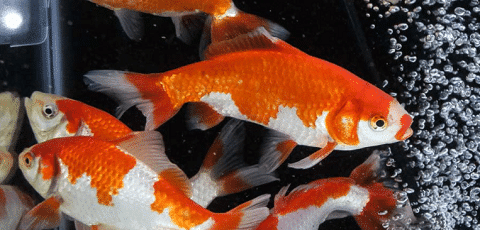
    Similar to common goldfish (picture source), wakin goldfish are physically characterized by a slender and long body shape with no compression. They are classified as a lean bodied or slim-bodied goldfish. These types of goldfish are more atheltic and make for a more sturdy goldfish than other goldfish.

    You will also know wakins by their split tail. However, unlike fancy double-tailed goldfish, these fish have long and flowing double tail. Their caudal fin, which is short, resembles more of a fantail shape. 

    Every wakin goldfish has a unique pattern on its body. In terms of coloration, they come in a wide variety, although they are mainly sought in white, red, or a combination of the two. Additionally, you might find rare colors like calico, yellow, orange and brown, but the rarer the color, the higher the price tag is likely to be.

    And speaking of variations, you might also find the “watonai” variation of wakins, who have flowing tails.

    • How Big are Wakin Goldfish?Add ImageAt a maximum length of 18 inches, wakin goldfish are some of the largest breeds of goldfish youโ€™ll find. Youโ€™re more likely to see them grow to this size if you locate them in a pond instead of in a tank. 
    • How Long Do Wakin Goldfish Live?Add ImageThe average Wakin goldfish can live up to 10 to 15 years, with some exceptions. Those who are carefully looked after can thrive for as long as 20 years! 

    Add New FAQ

    Temperament and Activity Level

    Wakin goldfish are fast and lively fish who enjoy exploring their surroundings. They are mainly peaceful freshwater fish, able to coexist peacefully with most other community fish. That said, you should avoid putting them together with fancy goldfish, since the latter are slow swimmers. As such, theyโ€™ll have to compete for access to food.

    Wakin goldfish are also well-loved for their friendly and curious nature. In fact, once you start feeding them regularly, youโ€™ll start to notice how they rush to the surface of the pond or tank to greet you when feeding time is due.

    What are Good Tank Mates?

    Great Tank Mates

    As fast swimmers, these pet fish are best kept with other fast species such as:

    Besides goldfish, apple snails, ghost shrimps, African dwarf frogs, rosy barbs, and weather loaches.

    Fish Species to Avoid

    , the Wakin goldfish are friendly and playful with most other community fish. However, there are certain fish that don’t get along with them. For instance, you should avoid housing them with aquarium fish species like fancy goldfish as they are slow swimmers and therefore, at a disadvantage during feeding time. You also shouldn’t choose aggressive tank mates for the these fish, such as cichlids

    Just got yourself or considering a Wakin Goldfish? If so, this article about Wakin Goldfish Care will answer all your questions!

    The vivid color, attractive double tail and friendly, curious temperament of the Wakin goldfish (carassius auratus) has led to an increase in its popularity in recent years. Originating in Japan like most other wild carp descended fish, it was the original prototype, of sorts, of many other fancy goldfish breeds.

    Wakin goldfish are a good choice for aquatic pet lovers since they’re not difficult to take care of. Although they are best brought up in a pond, they can also be housed in aquariums. With the right care guidelines, of course.

    How Big Are They?

    At a maximum length of 18 inches, wakin goldfish are some of the largest breeds of goldfish youโ€™ll find. Youโ€™re more likely to see them grow to this size if you locate them in a pond instead of in a tank.ย 

    How Long Do They Live?

    The average Wakin goldfish can live up to 10 to 15 years, with some exceptions. Those who are carefully looked after can thrive for as long as 20 years!ย 

    Temperament and Activity Level

    Wakin goldfish are lean bodied goldfish that are fast and lively fish. They enjoy exploring their surroundings. They are mainly peaceful freshwater fish, able to coexist peacefully with most other community fish. That said, you should avoid putting them together with fancy goldfish, since the latter are slow swimmers. As such, theyโ€™ll have to compete for access to food.

    Wakin goldfish are also well-loved for their friendly and curious nature. In fact, once you start feeding them regularly, youโ€™ll start to notice how they rush to the surface of the pond or tank to greet you when feeding time is due.

    What Do They Eat?

    The Waking Goldfish breed is omnivorous. This means that giving them high quality fish food and a varied diet they need is easy, and you can feed them most low-fat foods.

    You can give them flakes or pellets, but as always, these should not be their only nutrition source. Instead, you should aim to mix it up by introducing vegetables such as lettuce, broccoli, cabbage and shelled peas, and occasionally, chunks of fruits like strawberries and grapes. Also, if you keep them in an aquarium with live plants, donโ€™t be surprised if they start grazing on them.

    Of course, you should always be cautious about overfeeding them, because doing so can lead to the development of one or more of the digestive conditions or swim bladder problems.

    What About Live Foods?

    Brine shrimp, Tubifex worms, blackworms, bloodworms, mosquito larvae, etc. Make good live foods for these fish. Freeze dried and frozen sources of protein will also work.

    How Much and How Often to Feed

    A proper diet is very important for the well-being of your goldfish. Feed them too little and they will fall sick, feed them too much and they will have buoyancy problems.

    The Wakin fish are omnivores which means they can feast on plant and animal matter. While basic store-bought pellets and flakes are a good source of nutrition, try to bring new variations of food. For example, try to drop some lettuce or diced grapes once a week or so and watch how your fish react to it.

    When you’re buying fish food, try to get a mixture of both plant and animal-based varieties. Also, you should choose pellets that sink to the floor rather thank floating on the surface. Goldfish like searching for food at the base of the tank and with variation in the pellets, they won’t get bored.

    You should feed them no more than twice daily and no more than what they can finish off within 3-4 minutes. Remove any leftovers from the water to ensure that the water remains inhabitable.

    Tank Requirements (Care)

    Hereโ€™s what to keep in mind when setting up your wakin tank.

    Tank Size

    Wakin fish can grow quite large and therefore need a lot of room to live freely. A large body also means more waste released into the aquarium. 

    With this in mind, at least a 30 gallon tank is required to house one of these guys, along with an additional 10 gallons of water for each new fish. But there are no limits: the larger the aquarium size, the better. To maximize their happiness and lifespan, outdoor ponds are the best place for a Wakin. You can see a great example of a wakin goldfish tank below by C Lifestyle.

    Tank Setup

    There are some basic elements your tank must have in order for your Wakins to live and thrive. 

    Temperature

    Wakins prefer to live and thrive in cold water; they should be placed in unheated tanks. The ideal water temperature range for them is 65 to 72 degrees F. 

    pH

    Maintain a neutral pH for them between 6.0 and 8.0.

    Ammonia and Nitrate

    Ammonia and nitrate levels should be kept at 0.

    Substrate

    Large, smooth gravel is a good substrate or a fine sandy substrate is best for Wakin goldfish. This is because goldfish love scouring around, they might mistake gravel for food. The wrong gravel size is accidentally shallowed by your goldfish. Caribsea sand is great for goldfish.

    Ideal For Goldfish
    Caribsea Super Naturals Sand

    This sand by Caribsea is perfect for supporting the foraging habit of goldfish. Also works with bottom feeders and discus fish.

    Buy On Amazon Buy On Petco

    Decor

    Using plastic plants along with certain moss types will enhance the look of your aquarium. You can add large stones and small sticks as well to replicate a pond and give your fish plenty of options to play.

    Plants

    Keeping natural vegetation is difficult when it comes to wakin, who love to eat plants. More active ones might even uproot plants. Moreover, many plants wonโ€™t survive in the colder temperatures that wakins like. Knowing this, here are several plants that can take the punishment of these fish or may be ignored entirely:

    If you do not want to deal with the hassle artificial plants is advised. In large commercial size ponds, plants are often omitted

    Filtration

    To deal with the large amounts of goldfish waste, go with a filtration system meant for large tanks. Itโ€™s also advised to get a filtration system with a larger tank capacity than what your setup has. A large power filter is minimum for a Wakin in a aquarium. For ponds, consider a waterfall style filtration system. Large ponds over 1500 gallons will often consider bead filtration for maximum biological filtration.

    Since these fish are large and produce a lot of waste, consider a high end biological media like biohome.
    Editor’s Choice!
    Biohome Ultimate Filter Media

    Editor’s Choice!

    This is the best media you can buy for your aquarium. It does it all – removes ammonia, nitrite, and nitrates

    Buy On Amazon

    How to Breed

    We have certain pointers for those of you who are particularly interested in creating your own Wakin ecosystem. 

    To push your mating, you must first replicate the natural changes they go through in a pond. Firstly, since they mate during spring, dropping the water temperature to 60 or 65 degrees F will signal the fish to procreate.

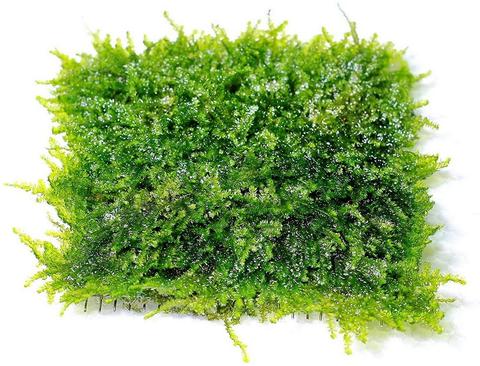
    You must offer the fish adequate natural vegetation such as the Java moss in order to create suitable egg laying zones. You can also look for artificial spawning mops which do the same job as the moss. You should see fry within 48-72 hours of eggs being laid.

    Note that in larger ponds, Wakin Goldfish breed regularly. If you donโ€™t want an overflowing pond, youโ€™ll have to make regular checks. Larger fish like Koi will eat baby fry.

    Health and Disease

    The best way to keep your fish healthy is with great filtration and a quality diet. Prevention is the best remedy when it comes to health. If you are wondering if your fish is unhealthy, there are some pointers to help.

    Signs of Good Health

    A healthy wakin is one that retains its friendly, lively and curious nature. You will see it frequently dipping in and out of tank and pond decorations, swimming swiftly and actively, and eating large amounts of food in short amounts of time.

    Signs of Poor Health and Treatment

    Unfortunately, like all goldfish varieties, wakins are also susceptible to freshwater fish diseases like ich, fin rot, bacterial infections, fluke, etc. The article I linked to contains a wealth of information on how to identify and cure many common diseases you may come across. Common signs of an ill fish would be:

    • Rapid breathing
    • Flashing or scratching rocks/gravel
    • White and stringy poop
    • Red marks and ulcers
    • Torn or clamped fins
    • White spots (not to be confused with mating white spots of goldfish who are breeding)

    Wakins are less susceptible to bloat and other diseases that plague fancy goldfish.

    Where to Buy (And Cost)

    You can find them for sale online and at many aquarium stores. The main issue you will run into when shopping locally is the quality of Wakins. They are classified as beginner fish and not kept in good conditions. The best place to purchase in my mind is from a garden retailer who specializes in pond fish. Wakin goldfish cost more for at these retailers, but they are of superior quality.

    My favorite of these are NextDayKoi. They offer a variety of quality goldfish that work well in ponds and larger aquariums. You won’t be disappointed ordering from them!
    Wakin Goldfish

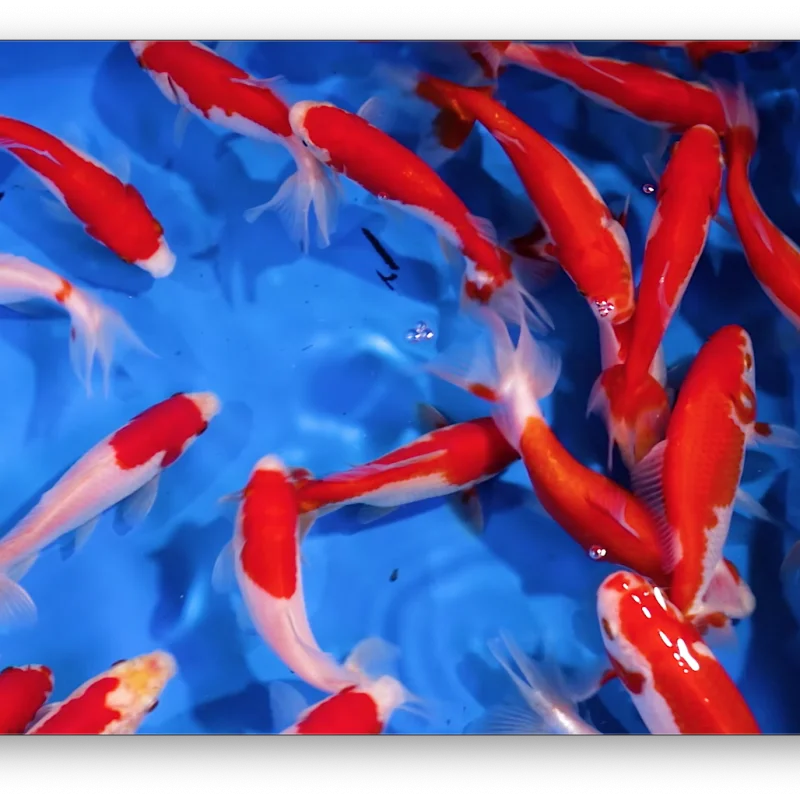
    With their elongated bodies and unique fins, Wakins are a flash of color and character to your pond

    Click For Best Price

    Frequently Asked Questions

    How big do these goldfish get?

    In a pond, they might grow to be 18 inches long.

    Are they aggressive?

    They are not aggressive, although they are fast and active fish who should not be kept with slow-moving fish like fancy goldfish

    What do they eat?

    As omnivores, they thrive on a varied diet. Besides flakes and pellets, you should also aim to give them vegetables, fruits, and occasionally live foods.

    Are they rare?

    They arenโ€™t very rare, but not very easy to find either. Especially if you have a small budget, or want special colors on them such as calico and brown, you might have a harder time finding them for sale. The fanciest varieties will often be imported.

    Is it better to keep them in a fish pond or an aquarium?

    Due to their affinity for cold, slow-moving water, they do best in ponds with lots of natural sources of food and of course, space to swim about in. They are also more likely to reach their maximum length of 18 inches if kept in a pond, and breed more easily.

    However, you can also keep them in a tank as long as you closely follow the guidelines weโ€™ve detailed above.

    Is the Wakin Goldfish The Traditional Japanese Variety Worth Knowing Right for You?

    Before you add a wakin goldfish the traditional japanese variety worth knowing to your tank, it’s worth asking whether this species actually fits your setup and your goals. Here’s a quick breakdown to help you decide.

    This species is a good fit if:

    • You have a large enough tank to manage territories. Cramped conditions amplify aggression.
    • You’re comfortable managing aggression through stocking ratios, line of sight breaks, and tank layout.
    • You can commit to regular water changes. These fish produce more waste than many smaller species.
    • You’re not planning a peaceful community tank. Wakin Goldfish The Traditional Japanese Variety Worth Knowings need tank mates that can hold their own.
    • You enjoy watching active, interactive fish. Cichlids have personality that smaller species simply don’t match.
    • You have backup plans. Sometimes a particular fish just doesn’t work out, and you need a way to rehome it.
    • You’re feeding a varied, high-quality diet. Color and health depend on nutrition.

    If most of those points line up with your setup, the wakin goldfish the traditional japanese variety worth knowing is worth serious consideration. If several don’t, it’s better to choose a species that matches your tank now rather than trying to make it work.

    How the Wakin Goldfish The Traditional Japanese Variety Worth Knowing Compares to Similar Species

    Want a pond fish? Get comets or shubunkins. Want an indoor aquarium goldfish? Get fancies and plan for a 40-gallon minimum. Want a low-maintenance pet? Get a betta instead.

    Choosing between similar species is tricky. Here’s how the wakin goldfish the traditional japanese variety worth knowing stacks up against some common alternatives.

    The wakin goldfish the traditional japanese variety worth knowing occupies a specific niche in the aquarium hobby, and direct comparisons really depend on what you’re looking for. In my experience, the most common question people ask is whether they should choose the wakin goldfish the traditional japanese variety worth knowing or something similar that’s more widely available. The answer comes down to three things: tank size, water parameters, and what other fish you’re keeping. If your setup matches what the wakin goldfish the traditional japanese variety worth knowing needs, it’s hard to beat. If not, there are alternatives worth exploring.

    Closing Thoughts

    With adequate amounts of living space, a varied diet and dedicated care, the Wakin goldfish is the new pride and joy of your home aquarium. Although itโ€™s best to put them in ponds, replicating a pond environment is also possible. I hope you found these tips helpful! Please leave your comments below so I can continue providing helpful information about these wonderful fish and others in our hobby.
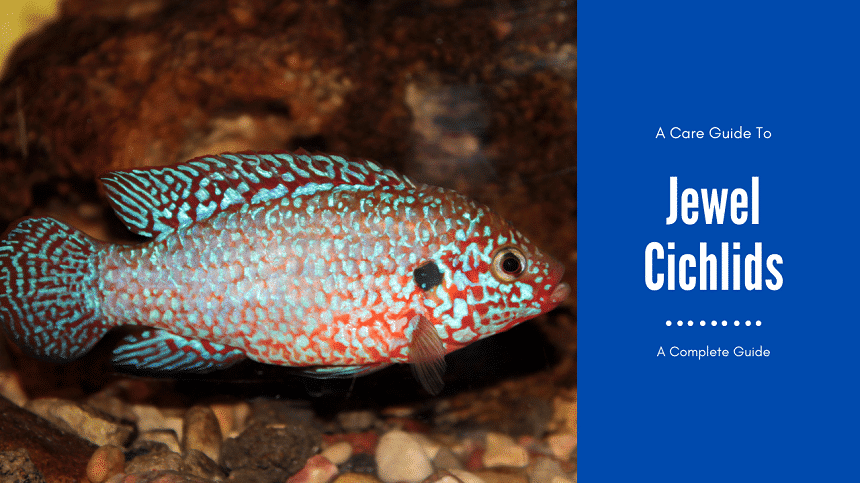

  • How to Care for a Jewel Cichlid in Your Home Aquarium

    How to Care for a Jewel Cichlid in Your Home Aquarium

    Jewel cichlids are one of those fish where the name really does justice to the animal. The iridescent red and blue coloration on a healthy specimen is genuinely stunning. I’ve kept them and they’re hardy, bold fish with a lot of personality. The one thing I always emphasize: they’re aggressive, especially during breeding, and tankmate selection requires real thought or you’ll have problems.

    If you’ve been researching different species of cichlids, the jewel cichlid may, quite understandably, have caught your eye. Now, despite its undeniable beauty, the jewel cichlid gets a bad rap due to its semi-aggressive temperament.

    For many aquarists who wish to maintain a peaceful community tank, adding a jewel cichlid will not be worth it. However, keeping jewel cichlids is not only fun and rewarding, itโ€™s also a great way to liven up your aquarium. Although their temperament will pose a problem to novice aquarists, the jewel cichlid is a worthwhile pet.

    Wondering whether a jewel cichlid is worth putting in your home aquarium? Let our jewel cichlid care guide help you decide.

    Species Overview

    Scientific NameHemichromis bimaculatus
    Common NamesJewel cichlid, jewel fish, African jewelfish
    FamilyCichlidae
    OriginAfrica
    DietOmnivore
    Care LevelModerate
    ActivityModerately active to active
    Lifespan5 – 7 years
    TemperamentSemi-aggressive (Aggressive when breeding)
    Tank LevelMid to top level
    Minimum Tank Size30 gallons
    Temperature Range70ยฐF to 74ยฐF
    KHNeutral to soft; below 12 dKH
    pH Range7.0 to 7.5
    Filtration/Water FlowModerate
    Water TypeFreshwater
    BreedingMouth Brooders
    Difficulty to BreedEasy to breed; forms breeding pairs easily
    CompatibilitySpecies only or aggressive tank
    OK, for Planted Tanks?With Caution

    Origins and Habitat

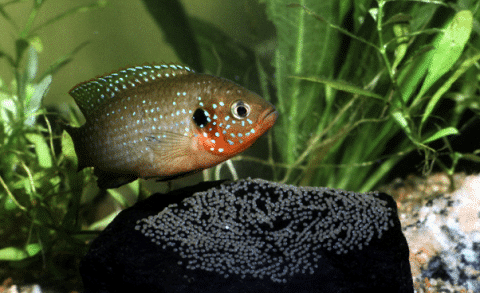
    The jewel cichlid Hemichromis bimaculatus originates in West Africa. This is where the fish inhabit richly vegetated freshwater bodies like streams, rivers, and lakes. Jewel cichlids have also been documented in some parts of North Africa.

    Because these water bodies are teeming with other cichlids and don’t offer a wide variety of sustenance, they are very competitive habitats. This explains why these jewel fish are naturally aggressive and territorial.

    What Does the they Look Like?

    How Does A Jewel Cichlid Look Like

    The coloration of the jewel cichlid species varies widely. You’ll find them mostly in a bright orange-tinted red with vibrant white spots (this is the blood red jewel cichlid), but many are also colored purple with contrasting greenish spots (green jewel fish).

    This color will be intensified during the breeding season. During this time, you’ll also notice a longer ventral, anal, and dorsal fin. Some say that male cichlids have a brighter coloration than their female counterparts. 

    How Big Are They?

    Jewel cichlids may vary greatly in size, from as little as 3 inches to as large as 6 inches. In an aquarium, the size of this fish will be smaller than in the wild.ย 

    How Long Do Hemichromis bimaculatus Live?

    On average, a cichlid of this kind can be expected to live up to 5 years. If youโ€™re able to provide superior tank conditions and provide a perfectly balanced diet, your jewelfish might even live up to 7 years. This is rare, however.ย 

    Temperament and Activity Level

    The hemichromis bimaculatus is recognizable by its aggressive behavior. Particularly when it is stressed or underfed, a jewelfish is more likely to lash out and attack his/her tank mates. Breeding season is when the fish reaches the height of its aggression.

    This will all sound very scary, but for the committed aquarist, it’s actually not that difficult to ensure a stress-free environment for this freshwater fish. As long as tank requirements are strictly maintained. The best thing to curb aggression is space and lots of shelter. If you have a small tank, with lots of fish, and no shelter, your Jewel Cichlids will be more aggressive as they fight to claim limited territory.

    , your jewel cichlid fish will be seen flitting back and forth across the water. They are also very active fish who like to dig at their substrate, looking for food.

    Jewel cichlids are also monogamous, which means they form a breeding pair for life. If your jewel fish are in a pair, donโ€™t be surprised to see them together most of the time! 

    What are Good Tankmates?

    It will seem like a bad idea to include any tank mates for your jewelfish, fin nippers as they are. Well, you should listen to your instincts. Don’t put them in a community tank. These freshwater fish are best off in a species only or cichlid tank.  

    Good Tank Mates

    Despite their bad reputation, some jewelfish can, in fact, cohabit peacefully with certain other semi-aggressive species. Accordingly, here are some fish that will make acceptable mates for your jewelfish.

    • Clown loaches
    • Plecos
    • Electric blue acaras
    • Redtail shark
    • Syndontis catfish
    • Scavenger catfish
    • Leopard bullfish

    Jewel cichlids are one of the most aggressive fish you will ever keep relative to their size. They will terrorize tank mates, destroy aquascapes, and turn a peaceful community tank into a war zone overnight. When breeding, their aggression doubles. I have kept these for years and the number one mistake I see is people treating them like a regular community fish. They are not.

    The Reality of Keeping How to Care for a Jewel Cichlid in Your Home Aquarium

    The aggression reputation is earned but misunderstood. How to Care for a Jewel Cichlid in Your Home Aquarium is not randomly violent. It is territorial, and territory disputes in a poorly planned tank look like chaos.

    Group size controls behavior. Keep too few and you get a bully. Keep enough and aggression spreads out. There is a threshold, and missing it ruins the tank.

    Most problems are stocking problems. The fish is not the issue. The tank plan is the issue.

    Biggest Mistake New How to Care for a Jewel Cichlid in Your Home Aquarium Owners Make

    Keeping too few. A small group of How to Care for a Jewel Cichlid in Your Home Aquarium creates a hierarchy where the bottom fish gets destroyed. The solution is not fewer fish. It is more fish to spread aggression.

    Expert Take

    Stock heavily, filter aggressively, and provide sight breaks throughout the tank. How to Care for a Jewel Cichlid in Your Home Aquarium is manageable when you control the environment. Let the environment control itself and this fish exposes every weakness.

    Fish Species to Avoid

    When selecting home aquarium tank mates for your jewel cichlid, itโ€™s best to avoid all fish species if you can, except a few semi-aggressive fish mentioned above.

    In particular, peaceful aquarium fish species (for example, any goldfish species) should be avoided at all costs, as your jewelfish will harm them and will even eat or kill them. MBunas and Rift Lake Cichlids should be avoided as they are likely to be attacked and killed. 

    What Do Jewelfish Eat?

    Feeding jewel cichlids is fairly easy. As omnivorous freshwater fish, jewel fish will readily eat pellets, flake food, and live food as well.

    You should aim to provide as balanced a diet as possible. This means mixing and matching different food types. You can also consider giving them vegetables such as lettuce leaves and spirulina. Frozen foods are alright once a week. If feeding pellets or flakes, consider one that contains probiotics like the Cobalt Aquatics line.

    Best Flake Formula
    Cobalt Aquatics Cichlid Flakes

    With probiotics and specially formulated for Cichlids, this is bar none the best flake formula available for your Africans

    Buy On Amazon Buy On Chewy

    What about Live Foods?

    Bloodworms, white worms, tubifex, and frozen baby brine shrimp are great live foods for jewel cichlids. Limit providing live foods to once a week.

    How Much and How Often to Feed

    You should aim to feed your jewel cichlids at least twice a day. Be careful not to overfeed them, however, and donโ€™t confuse their voracious eating for constant hunger.

    Feeding your jewel fish properly is crucial if you want them to retain their vivid coloration.

    How to Set Up Your Fish Tank

    Recreating the Africa habitat or breeding conditions of the jewelfish is not too difficult. Hereโ€™s all you need to know about how to set up the tank of your jewelfish.

     Tank Size

    Jewel Cichlid Pair

    For one pair of jewel cichlids, a tank size of at least 30 gallons is required. For each new pair, add 20 gallons. If you put them in a community aquarium (not recommended), provide a tank divider. When your Jewel Cichlids are in breeding mode, consider removing other tank mates if your tank is on the small side. They are known for taking over 30 and 40 gallon tanks!

    Substrate

    A sandy substrate is best for these fish as they love to dig. Anything sharper will injure them.

    Decor

    Decorations are a necessity when rearing jewel fish, who are territorial and love to claim their own space. Provide rocks and aim to create cave-like conditions. Rocks with holes or caves are ideal to provide shelter.

    Plants

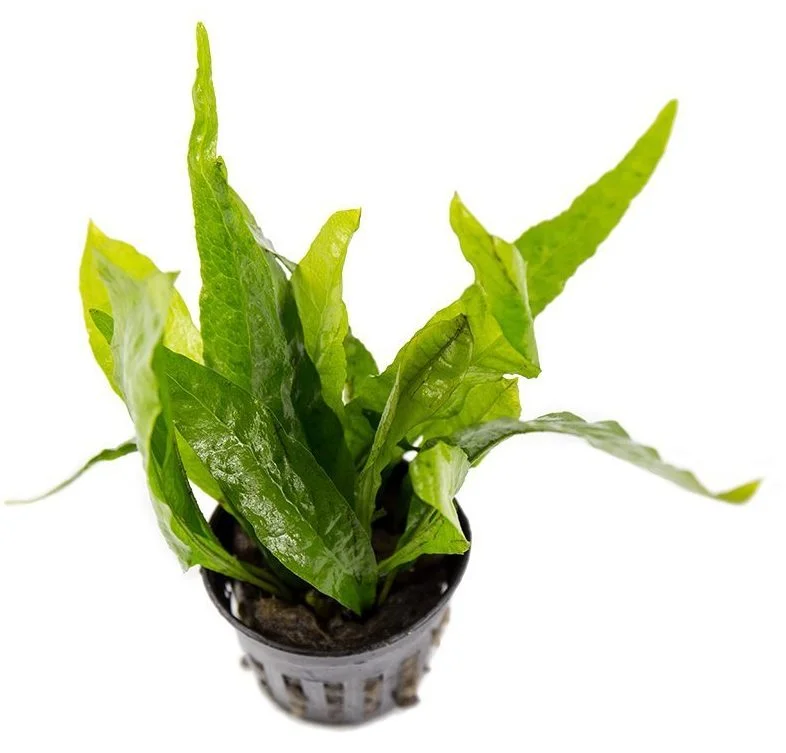
    These fish are curious and active fish who love to dig. So, they will get in the way of your aquarium plants thriving unless the plants are protected by rocks and such. Floating plants and column feeders like Anubias Nana and Java Fern would be good examples of plants that could work.

    Water Quality

    Here are the water conditions you need to ensure for your jewel cichlids

    Filtration

    Provide adequate filtration for your jewel cichlids to ensure that they can enjoy a water flow mimicking the currents of the streams and rivers they’re used to. They are particularly hardy. They do well with your standard power filter

    Water Parameters

    Maintain these water conditions in your home tank to ensure a healthy environment for your jewelfish.

    • Water Temperature: 70ยฐF to 74ยฐF
    • pH Range: 7 to 7.5
    • Hardness Range: Not above 12 dGH
    • Water Movement: Moderate to strong

    Aquarium Maintenance

    Besides ensuring the proper parameters for your cichlid aquarium, conduct regular water changes of 25% – 40%. Remember, the goal is to reduce your jewelfishโ€™s aggression. Otherwise, their lifespan will be shortened.

    How to Breed?

    Breeding this species in tanks is relatively easy once you can determine their sex. As they are monogamous, cichlids form pairs quickly and easily during mating season, and once they are parents, they will stick together.

    Breeding Tank

    You can isolate your cichlid pair in a breeding aquarium, but itโ€™s not necessary if you have just one pair. Gradually raise the water temperature from their regular temperature by a few degrees every day until you reach 80ยฐ to 82ยฐ F (or 26.7ยฐ – 27.8ยฐ C).

    Breeding Behavior

    When the male is ready, his color will become very vibrant, and he will become very aggressive. Like other cichlid species, the male will chase the female about the tank for a little bit until she lays eggs.

    Once sheโ€™s ready, the female will search for the right place to lay her eggs. She will likely settle on a flat surface, typically a flat-faced rock. She will produce up to 500 eggs.

    After Breeding

    Once the eggs are fertilized, they will hatch within 2 to 4 days. After hatching, the jewelfish parents will help each other move their kids to a different part of the aquarium. During this time, the parents will be excessively aggressive in order to defend their young fish. 

    Feeding Fry

    Let the fry absorb the remainder of the egg yolk in the first few days. Afterward, feed them crushed flakes and mashed pellets. Donโ€™t be distressed if the new parents eat some of their offspring. 

    Health and Disease

    Your jewel cichlid is, unfortunately, prone to the illnesses most freshwater cichlids are prone to. Hereโ€™s how to tell whether your jewelfish is healthy or needs care. 

    Signs of Health

    A healthy jewelfish is a happy one. A happy jewelfish is playful and active (is interpreted as aggression), burrowing in the substrate or flitting about their aquarium. Most significantly, healthy jewelfish retains its vibrant coloration. 

    Signs of Ill Health

    Here’s a list of several common issues you may come across

    •  When a jewelfish is highly stressed, ill, or underfed, it will very likely lose its color. This is one of the most easily seen warning signs of this fish.
    • Swelling, loss of appetite, rapid breathing, and differently colored feces are all symptoms of Malawi bloat, a condition that mostly affects African cichlids.
    • Notice an indentation in the head of your jewel cichlid? He/she is suffering from hexamita, also known as “hole in the head” disease.
    • Look out for ich, which manifests in symptoms like lethargy, loss of appetite, and restless behavior, but most importantly, white spots on the body of the fish.
    • Labored breathing and a loss of color might indicate gill flukes.

    All of these conditions are covered in our freshwater fish diseases post.

    Common Health Issues and Treatment

    One of the easiest ways to ensure that your jewel fish is healthy is to provide the required tank parameters with care. Feed them regularly, donโ€™t overfeed, and provide a varied diet. This will keep most illnesses at bay.

    Hereโ€™s how to deal with other diseases that will come up:

    • If you think your jewelfish is suffering from Malawi bloat, act quickly. Change the tankโ€™s water and introduce a dose of Metronidazole. However, know that Malawi bloat is a condition that quickly turns fatal, so donโ€™t blame yourself if something goes wrong.
    • Administer the same treatments for ich as you would for other cichlids: increased tank temperature, salt baths, potassium permanganate, acriflavine, and malachite green.
    • If you suspect your fish is suffering from gill flukes, use Praziquantel.

    Where to Buy?

    Compared to other cichlid breeds, the jewelfish is a little harder to buy in brick-and-mortar pet shops. They will also be a little more expensive. If you cannot find them locally, try using an online fish store. Often times, their guarantee will be superior to what you can find locally.

    Frequently Asked Questions

    Female Jewel Cichlid

    Are they aggressive?

    Semi-aggressive, yes. Especially when theyโ€™re in pairs and ready to breed, their aggression is strongest. Once the fry are born, jewel cichlids will defend their offspring to the best of their ability.

    If you must put your jewel cichlids in with other fish, get a tank divider. Even better if you can get a separate tank entirely. And try to ensure large tanks.

    What fish can go with them?

    Put bluntly, it’s best not to put your jewel cichlids in with other fish. If you must, we would recommend other cichlids as tank mates, as well as certain bottom-dwelling semi-aggressive species.

    Can they live with oscars?

    Itโ€™s not impossible, but itโ€™s difficult to achieve harmony between oscars and jewel cichlids. This is not only because oscars are famously aggressive fish; they are also significantly larger than jewel fish. So unless you can provide a large tank (at least 100 gallons), itโ€™s not recommended.

    Can angelfish live with this type of fish?

    Once again, itโ€™s not recommended. Although the jewelfish and angelfish are both cichlids, the latter is somewhat more docile and therefore more prone to being harmed by your jewel fish.

    Are they hard to keep?

    If you want a varied and healthy community tank, jewel cichlids is more trouble than they are worth. Besides this, these fish are pretty easy to keep, with the right tank size and setup.

    What It Is Actually Like Living With How to Care for a Jewel Cichlid in Your Home Aquarium

    A properly stocked How to Care for a Jewel Cichlid in Your Home Aquarium tank is one of the most active, dynamic setups in the hobby. There is always something happening.

    The aggression is structured, not random. Once territories are established, the tank settles into a pattern. Disrupting that pattern restarts the conflict.

    Watching How to Care for a Jewel Cichlid in Your Home Aquarium interact is endlessly entertaining. These are smart fish with complex social dynamics.

    What It Is Actually Like Living With Jewel Cichlid

    A jewel cichlid tank is never boring. These fish are always doing something. Patrolling territory, displaying to each other, digging in the substrate, or staring you down through the glass. They have more personality per inch than most fish three times their size. You will catch yourself talking to them, and you will not feel weird about it.

    The color display during breeding is the highlight. Both parents intensify to a deep, glowing red covered in iridescent blue-white spots. It looks like someone painted them. The male flares and displays while the female fans the eggs, and the entire tank seems to pulse with energy. It is one of the most visually spectacular things that happens in a freshwater aquarium.

    The aggression is the price of admission. During breeding, you cannot do tank maintenance without getting bitten. You reach in with a siphon and both parents charge your hand. It does not hurt much, but it is startling every time. Other fish in the tank learn to stay in their corners or suffer the consequences. You accept this or you remove the jewels. There is no peaceful coexistence during a breeding cycle.

    Closing Thoughts

    Jewel cichlids do not have tank mates. They have targets.

    Even our dearest loved ones are sometimes obnoxious, we donโ€™t stop loving them. Try to adopt the same approach to your jewel cichlids. Maintaining their behavior is difficult, but maintaining their diet and water parameters is easy. And the end result is definitely rewarding. Good luck!


    ๐Ÿ“˜ Want to learn more? This article is part of our complete Freshwater Fish Guide. Your ultimate resource for freshwater species, care tips, tank setup, and more.

  • RANCHU GOLDFISH – Caring For The Beautiful King Of Goldfish

    RANCHU GOLDFISH – Caring For The Beautiful King Of Goldfish

    Ranchu Goldfish are the most selectively bred fancy goldfish variety. That breeding comes at a cost. They are slow swimmers, poor competitors for food, and sensitive to water quality swings.

    Ranchus are not for beginners. They are for goldfish keepers who already understand filtration, water changes, and feeding.

    Considered the โ€œKing of Goldfishโ€ by the Japanese, Ranchu goldfish are among the oldest and most popular fancy goldfish. They hold a special place in the minds of many goldfish enthusiasts, thanks to their unique appearance. An aquarium teeming with these beautiful fish is sure to enhance the aesthetic appeal of just about any place, be it your home or your office!

    So, if youโ€™re looking to keep fancy goldfish, you should consider Ranchu Goldfish. They are available in various shapes and colors to make your fish tank appear lavish and elegant. Keep reading to learn more about these incredible fancy goldfish, as we will provide all the necessary information on how to properly care for your King (or Queen).

    A Brief Overview of Ranchu Goldfish

    Scientific Name Carassius Auratus Auratus
    Common Names Maruko, Buffalo-head Goldfish, Korean Goldfish
    Family Cyprinidae
    Origin Japan
    Diet Omnivore
    Care Level Moderate
    Activity Moderately Active
    Lifespan 10 to 15 Years
    Temperament Peaceful
    Tank Level Medium
    Minimum Tank Size 20 Gallons
    Temperature Range 65ยฐF to 72ยฐF
    Water Hardness 4-20 dGH
    pH Range 6.5 to 7.5
    Filtration/Water Flow Moderate
    Water Type Freshwater
    Breeding Egg-layer
    Difficulty to Breed Moderate
    Compatibility Compatible with Other Slow-Moving Fancy Goldfish
    OK, for Planted Tanks? With Caution

    Origins and Habitat

    The story of Ranchu Goldfish (Carassius auratus) begins in ancient Japan, unlike other fancy goldfish that began in ancient China. They were developed from Chinese Lionhead Goldfish by skilled Japanese breeders. Today, modern day Ranchu Goldfish is found almost anywhere in the world, not just in China or Japan.

    Ranchuโ€™s arenโ€™t wild fish, so we must look at their ancestors to learn about their natural habitat.

    Like any other goldfish, they descended from an old species of wild carp, known commonly as the Gibel Carp, Silver Prussian carp, or simply Prussian Carp.

    These wild carp thrive in slow-moving, slightly cold waters of ponds, lakes, and rivers. Ranchus also prefer similar water conditions and share a lot of traits with Prussian Carp and other goldfish.

    What Does Ranchu Goldfish Look like?

    Ranchu Goldfish

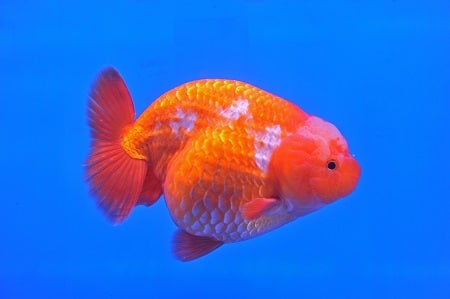
    Itโ€™s quite easy to identify Ranchu Goldfish as they have a rather unusual head growth, an egg-shaped body with a deeper belly, and a horizontally spreading caudal (tail) fin. Looking from the top view, they look a lot like moving worms when swimming. Thatโ€™s where the name โ€œRanchuโ€ comes from (which literally means “dutch worm” in Japanense).

    Another striking feature of the Ranchu goldfish species is that they donโ€™t have any dorsal fin, much like their Lionhead counterpart. However, Ranchus come with arched backs, unlike the flat backs of Lionhead specimens. Initially bred for top view, they look just as impressive when viewed from the sides nowadays.

    They are available in a wide variety of colors, ranging from red, white, orange, blue to bi-colors like red-and-white, black and red, black and white, etc. Their scales is metallic, matte, or nacreous. So, a couple of differently-colored Ranchus will make your aquarium colorful and lively! Black ranchu goldfish are one of my personal favorites.

    These fish are comparatively more delicate than other goldfish because of their unique anatomy. So, they are probably not the best option for beginner aquarists. Overall, the beautiful appearance and the unique swimming style of the Ranchu goldfish make them the perfect candidate for any goldfish aquarium.  

    Are They Easy to Take Care of?

    Ranchu Goldfish are genetically weaker than other goldfish as they are highly inbred. They are pretty exquisite and not as hardy as other species. Their unique anatomy makes them prone to health issues. So, they arenโ€™t easy to take care of and require special care. You must have some experience before handling this fish.

    The rounded body and the lack of dorsal fin reduce the amount of control Ranchus have over their body when swimming. So, they canโ€™t swim as efficiently as others. Swimming is more tiring for them as well, as you will often see them moving slowly and resting now and then to regain energy. Moreover, the wen or the head growth covers their eyes and makes it harder for them to see.

    As a result, Ranchus arenโ€™t good at competing for food. In a tank with fast swimmers and aggressive fish, they will be unable to feed and thrive. The Ranchu goldfish cannot tolerate pollution at all. They will be quick to pick up diseases if the water isnโ€™t clean enough.

    Thanks to their rounded body shape, they are highly vulnerable to swim bladder disease. Furthermore, the wen can easily get infected. If you donโ€™t keep a Ranchu goldfish in a well-maintained fish tank with a high-quality aquarium filter, they wonโ€™t thrive. It doesnโ€™t take much to stress them out and put them into shock. Their care requirements are much higher than others, so make sure to be extra careful and put more effort.

    What Is their Eating Habits?

    Itโ€™s easy to feed Ranchus as they are omnivorous. They like to eat whatever they find, so itโ€™s up to you to decide which type of food you will provide them. A well-balanced diet comprised of high-quality frozen, fresh, and flake foods is the best for any breed of goldfish.

    Brine shrimp, Daphnia, tubifex worms, blood worms, black worms, etc., are some of the most suitable foods for Ranchus. You should minimize the use of live foods as they often contain bacteria and parasites that can make them sick. Ranchus take longer to feed as they have poor vision due to their head growth. You will have to feed them several times a day but remember not to overfeed.

    A favorite food staple is soaked pellets or freeze fried food supplemented with vita-chem. This is a great way to add much needed nutrients to common foods. Probiotics are also becoming more common place with food manufacturers with Companies like Cobalt leading the charge.

    My Pick


    Vita Chem

    One of the best nutritional supplements you can use for freshwater fish. Works great with pellet and fried dried foods.


    Buy On Amazon


    Buy On Chewy

    Can They Live Alone?

    The Ranchu, like any other goldfish, can live a long life in solitude. This breed of fish doesnโ€™t mind living alone as long as they get enough food and decent water quality.  However, they are social animals, and they can benefit from social interaction. Ranchus love playing around with other fish as they enjoy companionship.

    They love being social in groups. In fact, check out super-cute video of Ranchu goldfish playing football (As reported by the South China Morning Post) to see how fun they is to have around.

    They will be visibly happier if you keep them together with other tank mates that wonโ€™t compete with them or harass them. So, itโ€™s better to introduce similar types of fish in a Ranchu aquarium if you want the best for them. They do great in an all goldfish tank full of other fancy goldfish varieties.

    How Big Can They Grow? What Tank Size Is Right for Them?

    Fancy fish like the Ranchu Goldfish are developed to impress you with their shapes, not their sizes. With that being said, the average length of adult Ranchus is around 5โ€. However, under the right water conditions, they can grow even larger, up to 8 inches!

    Learning the size is important because it determines what the tank size that houses them should be. You must make sure to provide them enough room where they can swim freely. In general, the minimum requirement for housing one full-grown Ranchu is 20 gallons.

    However, you should start with 20-30 gallons if you want to ensure maximum comfort for your prized fish. Increase the tank size by 10-gallons every time you bring a new fish into the tank. Larger tanks are recommended because that will provide more space for them to swim, and you wonโ€™t have to deal with water changes as frequently.

    How Long Do They Live?

    The Ranchu have a surprisingly long lifespan. This breed of Japanese goldfish can live for 10 to 15 years! If you keep them in an aquarium with suitable water conditions and ensure a proper diet plan, you can increase the lifespan to 18 years or even more!

    Taking care of Ranchus will undoubtedly pay off. Even though these fish have low tolerance, they will stay healthy and active for a long time as long as you provide for them.

    Additionally, you should keep them under constant monitoring. Look for any signs of diseases or discomfort. Perform water changes as often as required. If you notice any difference in their bodies, take action quickly to prevent them from suffering or dying.

    Are They Aggressive?

    The Ranchu Goldfish is anything but aggressive. They have an incredibly peaceful temperament, and they are rather friendly and cheerful. Their unique structure prevents them from being violent, anyway. For instance, they canโ€™t swim all that fast and tire out pretty easily. They canโ€™t see clearly with their eyes, often due to the growth in their heads. You wonโ€™t see them fighting other fish for food because they arenโ€™t equipped to compete.

    However, Ranchus do enjoy foraging for food. Make sure not to choose aggressive fishes as their tank mates if you donโ€™t want your goldfish to struggle for survival and fail. They get along pretty well with other similarly morphed goldfish. You can feel free to house them together in an aquarium. Rest assured, they will not transform your tank into the Colosseum and fight each other to death!

    How Much Do They Cost?

    The price may also vary depending on factors like the size, source, age, etc. In general, you should be able to get your hands on one of them for 5 to 25 dollars from any local pet store or local breeders. However Japanโ€™s โ€œKing of Goldfishโ€ has garnered a lot of popularity over the decades with its fancy appearance. Ranchus are prized by many aquarists all over the world, and they are definitely in demand.

    The most expensive Ranchus will be shipped directly from Japan or China. These are the most prized of all Ranchus and earn their moniker of “King of Goldfish. These types of Ranchus will easily commander prices of over $50 and can get much more expensive! Importing is how you obtain Ranchu Goldfish developed for competing in various Japanese shows. The video below by hendrink Nursalim shows a competition level Ranchu competing in Aquarama in 2011.

    Competition Ranchu Goldfish tend to have more defining features, and their price can range from hundreds to thousands of dollars! You donโ€™t need them unless youโ€™re in the Ranchu Goldfish Enthusiasts category and planning to win one of those competitions. You will have to spend quite some money taking care of these types of goldfish, which you should consider.

    No matter what type of fish you get, you must invest in creating and maintaining a proper diet plan for keeping them healthy. Rest assured, they are definitely worth the price.

    Tank Requirement

    If youโ€™re a goldfish enthusiast, chances are youโ€™ve already got a fancy goldfish aquarium. It might just be the perfect one for the king of goldfish from Japan! A Ranchu will flourish in a tank with slow-moving clean water, with suitable temperatures (65ยฐ. 72ยฐ). The recommended aquarium size for a single Ranchu is 20 to 30 gallons.

    The pH range must be within 6.5 to 7.5, while the hardness range should be around 5 to 19 dGH. Make sure to keep the levels of ammonia, and nitrite close to zero. Nitrate should be maintained below 40 PPM.

    Filtration and Water Quality

    There should be a functioning water filtration system for these fish. Given the delicate nature of this fish, You should elect at minimum a quality hang on the back filter for smaller aquariums.

    For larger fancy goldfish setups, you should consider an oversized canister filter to manage nitrates with a quality all-in-one biomedia like BioHome. Setting your filtration up like this ensure you have the most stable water quality to keep your Ranchus in excellent health.

    Editor’s Choice!


    Biohome Ultimate Filter Media

    Editor’s Choice!

    This is the best media you can buy for your aquarium. It does it all – removes ammonia, nitrite, and nitrates


    Buy On Amazon

    Goldfish Tank Environment

    For creating a comfortable and natural environment, you should add a sand or fine gravel substrate. Ensure itโ€™s safe and doesnโ€™t pose any choking hazard because your fish will regularly dig around that part as they like foraging for food.

    Feel free to decorate your aquarium but refrain from using anything with sharp edges and protruding tips. If you are using artificial plants, consider silk plants. If you are using aquarium rocks, consider rocks without sharp edges or round ones. Driftwood should be avoided unless you are rounding out edges and ensuring there is plenty of open room to swim.

    You can add a variety of plants to make the environment appear more natural. Due to their digging habit, live plants may not always be suitable. Some great plants to consider for fancy goldfish would include:

    Make sure to anchor your plants to rocks instead of the substrate. The difficulty with plants is why many choose to go with artificial plants.

    The Ranchu has no dorsal fin. That is not decoration. It is a limitation. Swimming is harder, competing for food is harder, and keeping one with faster fish is a mistake.

    Tank Mates

    You must be careful in choosing suitable tank mates for the Ranchu Goldfish. They are best paired with other fancy goldfish such as:

    Final Words

    Ranchu goldfish stand out easily from other fish aided by their unique body. The wen on their head, combined with their round body, and arched backs make them look special. You will be impressed at how lovely they appear when swimming, thanks to the horizontally spreading double tail.

    If you take good care of these fish, your aquarium will be rightly populated with one of the fanciest goldfish you can find on the market. They will stay with you for a long time and keep you entertained! Ranchus keep a goldfish tank lively and entertaining. Consider adding these beautiful creatures! Leave a comment below if you think that we should add more information on how to care for them in this blog post.


    ๐Ÿ“˜ Want to learn more? This article is part of our complete Freshwater Fish Guide. Your ultimate resource for freshwater species, care tips, tank setup, and more.

  • Caring For Your Black Moor Goldfish (With Pictures)

    Caring For Your Black Moor Goldfish (With Pictures)

    Black Moor Goldfish have telescope eyes that make them nearly blind in competitive feeding situations. They are slow, clumsy, and get outcompeted by every other goldfish variety.

    Never mix black moors with single-tail goldfish. The moors will lose every feeding competition.

    Have you just purchased your first Black Moor Goldfish? Congratulations on being a new fish parent and thank you for taking the time to research how to care for them. You will find that not only are they easy to take care of, but their beautiful colors make them a great addition to any home or office.

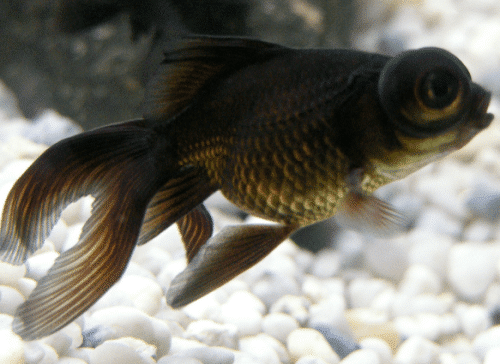
    Of all the fancy goldfish which have attracted the interest of the home aquariums of beginner aquarists, one the most distinct aquarium fish is undoubtedly the black moor goldfish. Named for its beautiful black coloring, this is a peaceful type of goldfish that is very easy and rewarding to care for. What distinguishes the black moor from other fancy goldfish types are, mainly, its “dragon” eyes. As one of the telescope goldfish, these fish have eyes with a comic and endearing bulging appearance.

    It’s important to follow the proper care specifications in order to ensure a long and healthy life for your new friends: hereโ€™s my comprehensive guide to black moor goldfish care.

    A Brief Overview of the Black Moor Goldfish

    Scientific Name Carassius Auratus
    Common Names Black Moor Goldfish, Dragon Eye Goldfish, Black Demekin, Black Peony Goldfish, Telescope Goldfish
    Family Cyprinidae
    Origin China and Japan
    Diet Omnivore
    Care Level Easy
    Activity Moderately Active
    Lifespan 10. 15 years
    Temperament Peaceful
    Tank Level All levels, mainly mid level
    Minimum Tank Size 20 gallon aquarium
    Temperature Range 65ยบF to 72ยบF
    KH 4-20
    pH Range 6.5 to 7.5
    Filtration/Water Flow Moderate
    Water Type Freshwater
    Breeding Lay eggs seasonally, is hand spawned
    Difficulty to Breed Moderate
    Compatibility Peaceful community species, best with other Fancy Goldfish
    OK for Planted Tanks? Mostly No

    Origins and Habitat

    Like all goldfish carassius auratus, the lineage of the black moor has its beginnings in the Prussian carp, a wild carp specimen found in parts of North America, Europe and most notably, Asia. The first incidence of carp being caught and domesticated, however, occurred in China.

    The black moor goldfish is a result of selective fish breeding done in China and Japan to obtain and retain its defining genetic abnormality: telescope eyes. This was done by confining fish with such eyes to a single pond, leading to a larger spawn. The unqiue black coloring and long tail fins of the black moor were thus bred into permanence.

    What Does they Look Like?

    What Does A Black Moor Goldfish Look Like

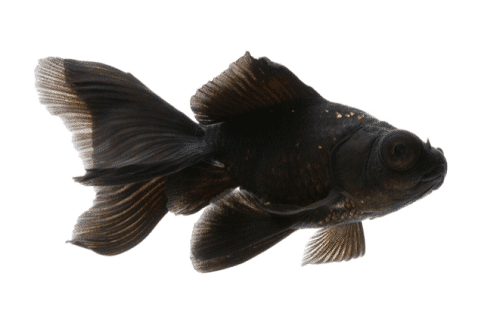
    With bulging eyes and a metallic coat of black scales, the black moor goldfish has an easily recognizable appearance:

    Body

    Like many other fancy goldfish, the body of the black moor goldfish is rotund, with an egg shape. This is offset by their beautiful tail and anal fins, which are long, graceful and flowing. Meanwhile, their pectoral and dorsal fins tend to be larger.

    Color

    The black moor goldfish gets its name from the distinct, fully black coloration of its scales. However, this beautiful metallic black color is not seen until they get older. As a juvenile, the scales of a black moor goldfish have a color more accurately described as dark bronze. Beyond maturity, when it begins aging, a black moorโ€™s fins may turn grayish, but don’t begrudge them for not staying true to their name.

    Eyes

    And now for the best part of the black moor goldfish: its large, bulging eyes, which are quite fittingly called telescope eyes (and alternatively, dragon eyes). As they age, black moor goldfish’s eyes tend to get bigger. So, if you look into a tank full of these fish, you can easily pick out the eldest among them by the size of his or her eyes. The bulging eyes phenomenon is a result of intraocular pressure, which causes the fancy goldfish to, ironically, have very weak eyesight. 

    Gender Differences

    Telling the sex of a black moor is decidedly difficult, although males do tend to be smaller than females. During mating season, however, the fins of a male black moor goldfish is covered with breeding tubercles, which look like little white bumps.

    HOW BIG ARE THEY?

    The size of a black moor goldfish changes quite noticeably as he or she grows. The average size of a black moor is about 6 inches. At their largest, they might measure up to 8 inches.

    HOW LONG DO THEY LIVE?

    Like most other goldfish varieties, these fish have a life expectancy between 10 and 15 years. However, if you manage to provide superior water quality and diligently keep up tank maintenance, you might even see your black moors make into 20 years of age.

    Temperament and Activity Level

    Whether you put your black moors in with other tank mates or in a community tank, you will be pleased by their friendly and peaceful temperament. That said, the best course of action is to put these slow swimmers in with a shoal of other black moors.

    Not only that, but their low activity level also makes black moor goldfish care easy: these fancy goldfish like to simply swim back and forth across their tank without bothering any other fish. You’ll often find them swimming leisurely in the middle of the tank, although you shouldn’t be surprised to see your fish concealing him or herself in the decorations or in the substrate.

    What are Good Tank Mates?

    Choose the members of your aquarium carefully. As these fish are fragile and peaceful goldfish carassius auratus, their chosen companions should have a similar disposition and set of traits. This is a very important aspect of black moor goldfish care as it ensures that your fish wonโ€™t be bullied or injured. This is not only limited to fin nipping but extends to their eyes, which are easily injured.

    Good Tank Mates

    For non-fish the best tankmates would be:

    Many fish available will need different water temperature requirements. Peaceful and schooling fish like minnows your Goldfish may try to eat, but they are are fast enough to get away and not be stressed out in larger tanks. You will need to worry about feeding though as fancy goldfish are slow swimmers and eaters.

    Black Moors have terrible eyesight. Tank decorations with sharp edges become hazards. The tank you build for this fish has to account for what it cannot see.

    The best tank mates for a black moor goldfish would be other goldfish of the fancy variety, such as:

    Pearscale Goldfish

    Inverts like freshwater shrimp are going to be a bad idea. While shrimp is fast enough to get away, the stress of being constantly chased could make them jump out of the tank. Snails would be a better choice with nerite and the mystery variety being known to coexist peacefully with your black moors.

    Fish Species to Avoid

    You should at all costs avoid pairing your black moor with territorial or aggressive goldfish varieties. Such types of fish are known to nip at the long flowing fins of black moors, which can cause fin rot. It can also be quite stressful for black moors to try and avoid aggressive tank mates, which in turn might affect their health and lifespan. Such tankmates that do not pair well with Goldfish would be Cichlids.

    What Do Carassius Auratus Eat?

    Most goldfish varieties are omnivorous fish, which means they is fed food of the meat as well as plant variety. Although this extends your range of options, you should also be warned that, as fish with big and hungry appetites, your black moors are liable to start feeding on anything you put in your aquarium.

    Dry pellets and flakes can easily be fed to a black moor. That said, you should also aim to create variety in their diet to ensure good health. You can feed them vegetables such as broccoli, spinach and lettuce. Make sure to stream your veggies before introducing as this sterilizes them. Specialized frozen foods are highly recommended as they offer the best nutritional value you can get in the hobby. High protein foods help to bring out the black coloration of these fish quicker.

    What About Live Foods?

    As carnivores, black moors take well to certain easily digestible freeze-dried live foods or frozen live foods, such as blackworms, bloodworms, brine shrimp, tubifex worms, and daphnia (brine shrimp has the lowest nutritional value of all I mentioned). Before feeding freeze-dried foods to your black moors, however, you should soak the food in some aquarium water first to facilitate a smoother digestion process. Soaking with supplements like Vita-Chem will help boost the nutritional content of the food.

    My Pick


    Vita Chem

    One of the best nutritional supplements you can use for freshwater fish. Works great with pellet and fried dried foods.


    Buy On Amazon


    Buy On Chewy

    How Much and How Often to Feed

    Most goldfish carassis auratus varieties should be given food several times a day (though most fish keepers can only do twice a day), and the same is true for the black moor goldfish carassius auratus. But keeping their big appetite in mind, itโ€™s also important not to overfeed your black moors. Their internal organs are squeezed into a compact body, which can lead to fatal digestive problems such as constipation, when the fish is given excessive food.

    Moreover, be sure to eliminate any leftover food so as to keep the water unpolluted and safe for your fish to live and thrive in. Using a rule of thumb of only feeding what your fish can eat in 2 minutes is a good guideline to work with.

    How to Set Up Your Fish Tank

    Black moor goldfish in aquarium

    Remember, goldfish are descended from carps. As such, itโ€™s best to try to ensure a tank environment that closely mimics the natural habitat of a carb. Black moors have weak eyesight and love to feed on almost any small object they find, which is important to keep in mind. Murky, moderately brackish water with a gravel substrate should be a good fit for your black moors.

    Furthermore, considering that they are weak swimmers, the optimal tank shape for them is long rather than tall. This gives them more swimming space. If it’s tall, it is harder for black moors to reach any food on the surface.

    Minimum Tank Size Considerations

    Despite their relatively small size, these fish do take up a lot of space due to their long and large fins. So, for a single black moor goldfish, you should provide at least a 20 gallon aquarium. Then, for every new fish you add, you should add another 10 gallons.

    Substrate

    Care should be taken when selecting substrates for goldfish. Goldfish will regularly dig in the substrate and with their large mouths, it is easy for them to accidentally shallow gravel. I would recommend a sandy substrate for goldfish as this allows them to forgage freely and split out any sand bits as they dig around the tank.

    Ideal For Goldfish


    Caribsea Super Naturals Sand

    This sand by Caribsea is perfect for supporting the foraging habit of goldfish. Also works with bottom feeders and discus fish.


    Buy On Amazon


    Buy On Petco

    Decor

    Despite their slow swimming speed, black moors are big eaters who are prone to nibbling on almost anything they find. So, itโ€™s best to avoid putting a lot of tank dรฉcor in their aquarium. They might just start chewing on it. That said, if you must include decor, ensure that they have smooth surfaces and donโ€™t have any sharp or protruding edges. Itโ€™s best to steer clear of driftwood and sharp rocks.

    Plants

    As they are known diggers, donโ€™t be surprised if your fish start digging up any live plants youโ€™ve planted in their substrate. The best way to work around their digging nature is to attach plants to aquarium rocks. You need to be selective on your plants though, as goldfish will eat many live plants and their temperature requirements are not compatible with most plants.

    The safest plants to use on goldfish would be:

    All the plants above are beginner aquarium plants, so you can still maintain a easy to keep tank! You can also use artifical plants. Silk plants are better to use than plastic ones as they will lack the sharp edges that will harm your fish.

    Water Quality (Care)

    Here are the specifics of maintaining optimal water quality.

    Filtration

    It’s recommended to include an efficient filter in your black moor’s tank. This ensures that the water stays clear, which is important since black moors produce a lot of waste. For smaller tanks a quality hang on filter like an aquaclear or seachem tidal would work well.

    For larger tanks, it would be best to consider using a well made canister filter. Goldfish are bulky and large. This size makes them hard on your bioload. A canister filter is designed to handle large bioloads. With goldfish tanks, I would recommend loading up on a quality biological media that can process nitrates. I feel Biohome Ultimate Filter Media is the best complete filtration media when it comes to high bio-load non-planted tanks.

    Editor’s Choice!


    Biohome Ultimate Filter Media

    Editor’s Choice!

    This is the best media you can buy for your aquarium. It does it all – removes ammonia, nitrite, and nitrates


    Buy On Amazon

    Water Parameters

    As black moors are an artificially bred species, there is no exact habitat you can replicate for them. However, we do know that their black color appears more quickly in low water temperatures. So donโ€™t set the tank up in any room that get hot, or near any heat source (e.g. A fireplace), as this will affect water temperatures. They also benefit from neutral pH levels. Let’s look at some specifics of water conditions for these freshwater fish:

    • Water Temperature: 65.0 to 72.0ยฐ F  / 18.3 to 22.2ยฐ C
    • pH Range: 6.0 – 7.5
    • Lighting: Strong lighting is required to help your ocularly impaired fish.
    • Hardness Range: 5 – 19 dGH
    • Salinity: Below 10%; specific gravity should be below 1.002
    • Water Movement: Moderate

    Aquarium Maintenance

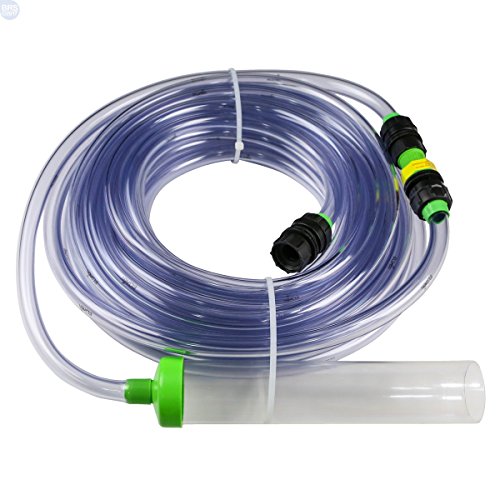
    Itโ€™s of utmost importance to ensure clean water conditions for your fish as it directly affects their health. About 20% of the water should be changed on a monthly basis to keep phosphate and nitrate levels at a healthy level. What’s more, it’s recommended to make use of a gravel siphon to remove elements such as organic debris and sludge.

    Test Water Conditions

    If youโ€™re committed to ensuring a long life for your fish, you should invest in an aquarium test kit. It allows you to determine whether the mentioned water parameters are being maintained properly in your black moorโ€™s tank. 

    How to Breed

    It’s relatively easy to breed black moors on your own in a tank. To get your black moors to mate and start laying eggs, create the following conditions.

    Breeding Tank Setup

    Start by moving your pair of breeding black moors to a separate tank (video by All Blue Amante Del Pesce). You should aim to ensure that there are adequate surfaces such as plants and decor for the female to lay eggs when it’s time.

    Breeding Temperature

    Once your fish are in their tank, start by slowly lowering the temperature to 60ยฐ F (15.5ยฐ C). Then, gradually increase the water temperature by 3ยฐ daily until your fish look ready to mate. You should also make daily water changes of 20%. This will bring on spawning season.

    After Breeding

    Once your female fish lays her eggs, the male will go on to fertilize them. This process involves a courtship ritual in which the male chases the female around for some time. This might take several hours and you might see as many as 10,000 eggs in the tank by the end of it. Once the eggs appear, swiftly remove the pair back into their original tank as they will otherwise eat the eggs.

    Feeding Your Fry

    In a week, you’ll have black moor fancy goldfish babies. Congrats, you’ve unlocked a new level in fish keeping! Keep feeding them foods high in protein and iron until they take on an adult size. In about two months, you can start feeding them the same food you give to their parents.

    Health and Disease

    Concerned about the health of your freshwater fish? Hereโ€™s what you need to know if you have a sick fish.

    Signs of Health

    If your fancy goldfish are swimming about normally, that’s a good indicator of health. They should be regularly eating and should sign good colors and believing should not be labored.

    Signs of Ill Health

    Here are the three main indicators of poor health in your black moor goldfish that anyone practicing fish keeping should know:

    • Their appearance. Note whether there is any dull coloration, color changes, or colorless patches. If you notice any significant color changes, your black moors is suffering from velvet disease or skin disease.
    • Their movements. Healthy goldfish swim and bob along the middle of the tank. So if you see that they are sitting at the bottom of the tank or floating on the surface, they is afflicted by swim bladder.
    • Their appetite. If you notice that your goldfish is not eating properly, they is suffering from ich, which occurs when there is a parasitic protozoan in the body of the fish. In advanced cases, you might also notice white spots, rapid breathing, and isolation.

    Common Health Issues and Treatment

    Like all common freshwater fish, black moors are at risk of being inflicted by ich, fin rot, fungus, and flukes. With their long fins, they are particularly likely to catch fin rot. However, this is prevented if you maintain a high quality of water in their tank.

    If you suspect a swim bladder (symptoms discussed above), check out my freshwater fish diseases post. There is a great video and explanation on treatment and alternative long-term solutions like fabricated “wheel chairs” that hobbyists have used to save their fish.

    As a telescopic goldfish breed with poor eyesight, black moors are prone to eye diseases caused by fungi and bacteria (particularly if their tank is not clean and well-maintained). When handling your black moors, always be very cautious so as not to accidentally injure or damage their eyes.

    It’s important to keep ammonia and nitrate levels low in your black moor’s goldfish tank. To ensure this, you should aim to replace about 25% of the water volume on a weekly basis. You need to increase the volume based on your test results. Regularly testing your water with an aquarium test kit will help you adjust your water change routine to manage nitrates.

    Where to Buy

    Black moor goldfish are quite inexpensive and are commonly found. You can find them in chain pet stores. However, I would recommend you either purchase at a specialty local fish store or if you cannot find a good one in your area, looking into an online fish store.

    Frequently Asked Questions

    Are they hard to take care of?

    No, theyโ€™re relatively low-maintenance: as long as you feed them in a timely manner, maintain tank conditions and remember to conduct regular water changes, youโ€™ll be good to go!

    How long do they live?

    Like the majority of goldfish species, these dragon fish live up to 10 to 15 years.

    Can they live in a 3-gallon tank?

    No. A black moor needs at least a 20 gallon aquarium. And, for every new fish you introduce, you should add 10 gallons of water to the aquarium.

    Their small size at pet stores can fool a novice fish keeper into thinking that itโ€™s okay to place your black moor goldfish in a small aquarium or fish bowl, but they need a lot of space to swim slowly about and they get large. With their bulky size, goldfish produce a lot of waste; so the smaller the aquarium, the more quickly the water will go toxic and endanger the life of your fish.

    Are they aggressive?

    No. On the contrary, black moors are some of the most peaceful species of goldfish youโ€™ll find, which makes them agreeable tank mates like many other goldfish species. Their physical limitations (i.e. Poor eyesight and heavy body) also make it difficult for a black moor to be aggressive.

    Closing Thoughts

    This fascinating fish might make it seem like they’re difficult to care for, but a species like the black moor goldfish makes it obvious that that’s a misconception. As long as you can commit to ensure optimal tank standards, and donโ€™t place them with any aggressive fish species, your gentle and beautiful black moors will stay by your side for at least 10 years! I hope youโ€™ve found this guide helpful in understanding black moor goldfish care. Your feedback would be appreciated, so please leave a comment below!


    ๐Ÿ“˜ Want to learn more? This article is part of our complete Freshwater Fish Guide. Your ultimate resource for freshwater species, care tips, tank setup, and more.

  • Pearlscale Goldfish Care Guide: The Fancy Variety With Unique Needs

    Pearlscale Goldfish Care Guide: The Fancy Variety With Unique Needs

    The Pearlscale Goldfish is not a beginner fish. It is a cold-water species that produces enormous waste, needs real filtration, and outgrows most tanks within a year. I have kept goldfish in ponds and large tanks for over 25 years. Here is the honest care guide most people need before buying one.

    A goldfish in a bowl is not thriving. It is slowly suffocating.

    Goldfish live 10 to 15 years, sometimes longer. This is a decade-long commitment to large water volumes, heavy filtration, and consistent maintenance.

    A goldfish kept properly is more impressive than most tropical fish. The problem is almost nobody keeps them properly.

    Table of Contents

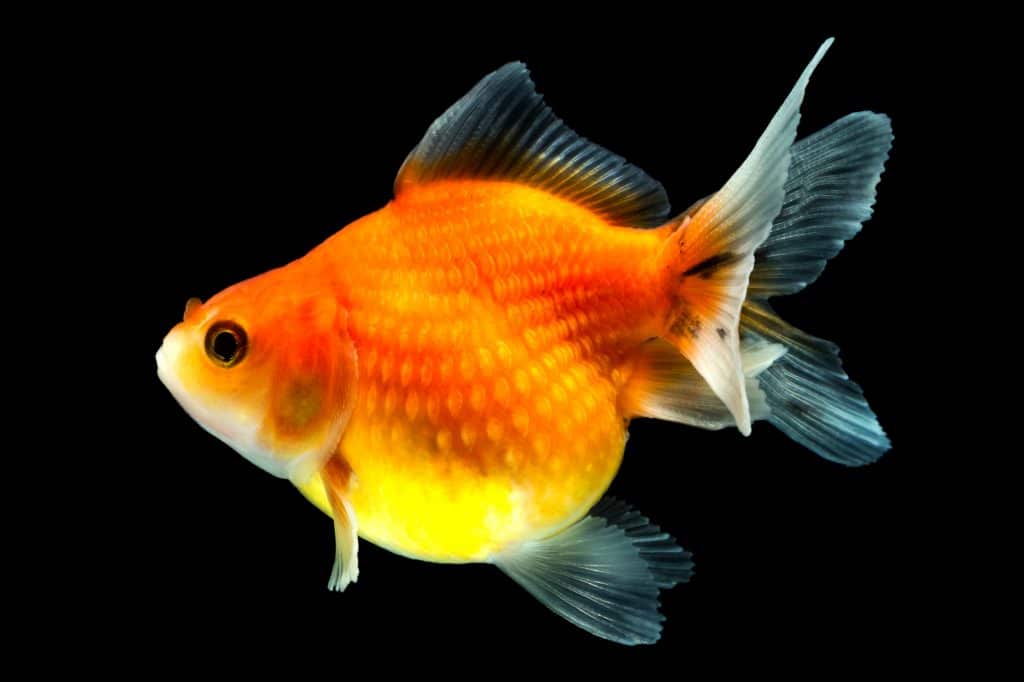
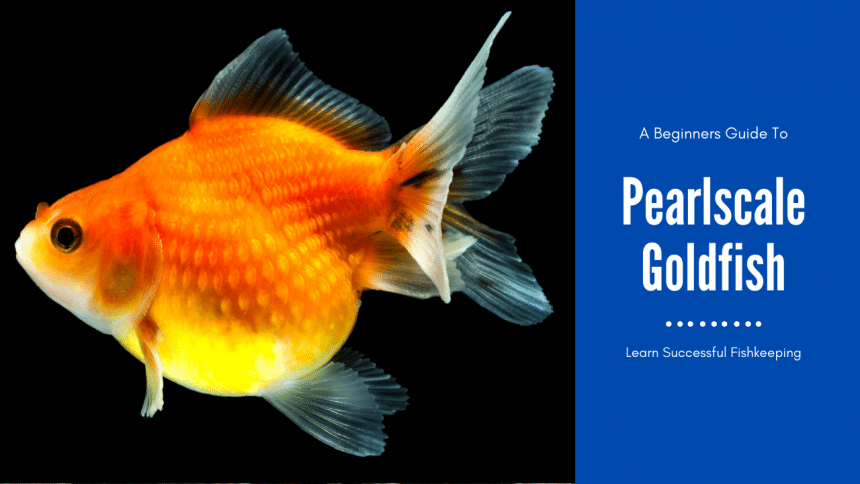
    Pearlscale goldfish are one of the most distinctive fancy varieties you’ll encounter. Those raised, dome-shaped scales genuinely do look like pearls, and the round, almost spherical body is unlike any other goldfish. I’ve covered dozens of goldfish types on our YouTube channel over the years, and the pearlscale is always one that surprises people who haven’t seen it before. That said, after 25 years in this hobby I want to be upfront: that beautiful round body comes with real care considerations. Pearlscales are prone to swim bladder issues, especially when overfed or kept on a poor diet. They’re also slow swimmers that absolutely cannot share a tank with single-tailed goldfish varieties. This guide covers everything you need to keep pearlscales healthy long-term.

    What Most Care Guides Get Wrong About Pearlscale Goldfish The Fancy Variety With Unique Needs

    The biggest mistake I see with pearlscale goldfish the fancy variety with unique needss is underestimating their aggression. Guides will label them “semi-aggressive” and move on. In practice, that label doesn’t tell you much. Tank layout, stocking density, and territory management all play a huge role in whether these fish coexist or constantly fight. Tank size is another area where most guides get it wrong. The minimum listed on most care sheets is exactly that, a minimum. For long-term success, especially if you’re keeping a group, I always recommend going at least one size up from whatever the guide suggests. Finally, diet gets oversimplified. Pellets alone won’t cut it. In my 25+ years keeping fish, I’ve found that variety in diet directly affects color, growth, and overall vitality. Include frozen foods, quality pellets, and occasional vegetable matter for the best results.

    The Reality of Keeping Pearlscale Goldfish

    Tank size requirements are not negotiable. A single fancy goldfish needs at minimum 20 gallons. A single-tail variety like a comet needs 40 gallons minimum, and realistically belongs in a pond. The one-gallon-per-inch rule does not apply to goldfish.

    Filtration needs to be oversized. Goldfish produce more ammonia than tropical fish of the same size. Your filter should be rated for at least double your actual tank volume. A 40-gallon tank with goldfish needs filtration rated for 75 to 100 gallons.

    They are cold-water fish that do not need heaters. Goldfish thrive between 65 and 72 degrees. Putting them in a heated tropical tank stresses them and shortens their lifespan. Room temperature water is fine for most homes.

    Biggest Mistake New Owners Make

    Putting a goldfish in a small bowl or tank without filtration. Goldfish produce massive amounts of waste. Without proper filtration, ammonia levels spike within days and the fish suffers organ damage long before it shows visible symptoms.

    Expert Take

    The best goldfish keepers I know run heavy filtration and do large weekly water changes. There is no shortcut or trick that replaces those two fundamentals.

    Species Overview

    Scientific NameCarassius Auratus
    Common NamesGolfball pearlscale, pearlscale goldfish, ping-pong goldfish
    FamilyCyprinidae
    OriginChina
    DietOmnivore
    Care LevelEasy
    ActivityModerately Active
    Lifespan5 to 10 Years
    TemperamentPeaceful
    Tank LevelAll levels
    Minimum Tank Size20 Gallons
    Water Temperature Range65ยฐF to 75ยฐF
    KH4-20
    pH Range6.5 to 7.5
    Filtration/Water FlowModerate
    Water TypeFreshwater
    BreedingEgg layers, is bred in both small and large groups, is hand spawned
    Difficulty to BreedModerate
    CompatibilityPeaceful community species, best with other Fancy Goldfish
    OK for Planted Tanks?Mostly No

    Classification

    Taxonomic RankClassification
    Common NamePearlscale Goldfish
    Scientific NameCarassius auratus
    OrderCypriniformes
    FamilyCyprinidae
    GenusCarassius
    SpeciesC. Auratus

    Origins and Habitat

    Originating in the early 20th century, the pearlscale goldfish is a relatively new addition to the family of fancy goldfish. Unlike the slender common goldfish, the Chinshurin (as is their Japanese name) have an adorable rounded body, which increases their popularity.

    Most species of goldfish are bred in China or Japan. However, modern day pearlscale goldfish are bred and developed mainly in England. But like most fancy goldfish, ping-pong goldfish are bred and kept all over the world. Because there are specially bred goldfish, there are no Pearlscale fish in existence in the wild.

    What Does the Pearlscale Goldfish Look Like?

    What Does A Pearlscale Goldfish Look Like

    There are many ways to tell goldfish pearlscale apart from others:

    Body

    One of the first things youโ€™ll notice when you lay your eyes on a pearlscale goldfish is its egg shaped round belly (many also compare it to a golf ball), which is offset especially by its compact and stubby body. In fact, this roundness is what inspires the โ€œping-pong goldfishโ€ moniker.

    Accompanying the short and rounded body are beautiful fins that flow ethereally in the water. They have a single dorsal fin, while the rest of the fins are paired. Of these, the twin tailed fin is the most remarkable, as it has a forked appearance.

    The wen fish or crown pearlscale goldfish (named for the crown atop their head) have a slightly different appearance, with large and distinct bubbles on their heads. These is given the name of high-headed or hooded pearlscales.

    Scales

    What truly sets the pearlscale goldfish apart are its distinct scales, which are nacreous (reflective and translucent tissue). These scales are caused by calcium carbonate deposits due to a genetic mutation. Arranged in visually pleasing rows, these scales have a shiny and luminescent appearance that have a pearl like appearance (and hence the name!), and a bead-like texture.

    You wonโ€™t see these pretty nacreous scales until your goldfish are older, however. To the untrained eye, young fish of this goldfish species is difficult to tell apart from the common goldfish.

    Color

    The golfball pearlscale goldfish comes in a wide variety of colors and patterns. Most commonly found are solid colored specimens, which is covered in white, red, blue or black. Calico and chocolate brown varieties are also found of this beautiful freshwater pearlscale fish. There are many types of pearlscale goldfish available. The video below from Molly Babe Aquatics gives a great example of the variety out there.

    How Big are They?

    On average, a pearlscale goldfish will measure between 6 and 8 inches in length, and on rare occasions, 10 inches. One easy way to imagine their size is to think of the shape and size of oranges.ย 

    How Long do they Live?

    The average lifespan of a pearlscale is between 5 and 10 years, which is less than their non-fancy varieties due to their genetic makeup. Rarely, some goldfish pearlscale species live up to 15 years. Itโ€™s important to note the health problems that some pearlscale goldfish is exposed to in suboptimal living conditions. Thatโ€™s why itโ€™s important to know how to set up their tanks for maximum life and health.

    Temperament and Activity Level

    One of the reasons why pearlscales are so popular as pets is their docile and peaceful temperament. Furthermore, theyโ€™re slow moving, slow swimmers. Because of this, they are relatively low-maintenance, and they donโ€™t exhibit aggression.

    Pearlscale goldfish are quite easy-going compared to other freshwater fish, preferring to spend their days swimming about slowly (unlike, for example, wakin goldfish who are known for fast swimming). However, just because they’re not fast swimmers doesnโ€™t mean they have a low activity level: sometimes, they like to explore and play, so itโ€™s a good idea to put them in a sizeable goldfish only tank.

    What are Good Tank Mates?

    Thinking of putting some pearlscale goldfish into an existing aquarium? Consider what fish make good tank mates for them, and which ones donโ€™t:

    Good Tank Mates

    If you have a peaceful community aquarium, great news! Some pearlscale goldfish will make a wonderful addition to it, as they can cohabitate easily with other fancy goldfish and docile freshwater fish. Here are some good tank mates for pearlscale goldfish:

    Other than fish, certain snail species also go well with pearlscales, such as mystery and nerite snails.

    Fish Species to Avoid

    Pond Goldfish For Koi

    As mentioned before, goldfish pearlscales are slow swimmers. As such, itโ€™s important to keep them away from fast swimming and aggressive fish, because they might end up nipping at the fins of your pearlscales and out competing them for food. Accordingly, here are some fish species you should avoid putting in with your pearlscales:

    Furthermore, note that many tropical fish should not share the same aquarium as your pearlscales, as they have different temperature requirements. Even if no fin-nipping occurs with tank mates, feeding time will be difficult for your pearlscale goldfish if the tank mates are fast.

    What do They Eat?

    As omnivores who thrive on a healthy diet, pearscale goldfish will readily accept most food that you give them. The best kind of readymade food to give your pearlscales is calcium-fortified dry pellets and dry flakes, but only after itโ€™s been soaked. This is because they have a sensitive digestive system and are prone to developing swim bladder disease.

    Pearlscales love vegetables, such as cucumbers, frozen peas (as well as deshelled peas), and lettuce. These are great for pearlscales as they keep intestinal problems (such as constipation) at bay. Make sure to steam vegetables before feeding them to fish to sterilize them

    Furthermore, limit protein for your pearlscales; it should make up only about 30% of their diet. Excessive protein can cause health complications for pearlscales.

    What About Live Foods?

    You can include live foods in your pearlscale’s diet every now and again. Brine shrimp, Daphnia, blood worms, blackworms, or Tubifex worms are good live food options for your pearlscale goldfish. Keep in mind the risks of diseases when feeding live food. The safest way to feed live food is to cultivate your own, but this is not for everyone.

    How Much and How Often to Feed

    A balanced and healthy diet for a pearlscale goldfish will be one made up of a mix of high quality frozen, pellets, and flakes which are given to them at least twice a day. Only feed what your fish can eat in 2 minutes to avoid any excess food in the tank.

    Tank Requirements

    Fish Tank Size

    The recommended minimum size for a pearlscale goldfish aquarium is 20 gallons. Even better if you can make it 30.

    This is because, although theyโ€™re weak swimmers and slower swimmers than other similar goldfish species, pearlscales do like to swim around their aquarium. More importantly, they need a lot of oxygen and produce a lot of waste. A general rule of thumb is to add 10 gallons of tank capacity for every one fancy goldfish after the first 30 gallons.

    Tank Setup

    Here are some particulars on setting up a freshwater aquarium for your pearlscale.

    Substrate

    A sandy substrate is the best option if you want to create a natural environment for your pearlscales. This is to mimic their natural environment as pearlscales enjoy digging through their substrate. If you go with gravel, itโ€™s important to ensure that youโ€™re getting larger and smoother gravel substrate. Otherwise, they might accidentally swallow some. 

    Decor

    One of the defining characteristics of pearlscales is that they have very delicate and breakable scales. This is why itโ€™s important to avoid putting them in a crowded aquarium. If your existing tank has many decorations and aquarium rocks with sharp edges (or any other sharp objects), itโ€™s best not to put your pearlscales in it as they might accidentally bump into them and have their scales fall off.

    If this happens, the fish will not regain its original โ€œpearlโ€ scales; instead, regular scales will grow in their place (although some aquarists say that additional calcium helps here, this is undocumented). That said, aquarium driftwood and plants are okay. You can smooth out driftwood with sandpaper and cut off sharp edges.

    Plants

    Plants are a great addition to a pearlscale goldfish aquarium, because these fancy goldfish love darting in between and playing with live plants. In fact, a natural pond-like habitat is very good for pearlscales. If you want to put live plants with your pearlscales, go with cold-hardy and beginner plants like Java fern, Hornwort, Anubias and Anacharis. Goldfish in general do not have an appetite for Java Fern and Anubias, but every individual fish is different.

    Editor’s Choice
    Java Fern

    Editor’s Choice

    Hardy, easy to care for, and requires only basic lighting to grow. This is the perfect aquarium plant for beginners!

    Buy On Buce Plant Buy On Glass Aqua

    Pearscale Goldfish Care (Water Quality)

    Nutrition, clean water, and stress management are the keys to proper Pearlscale goldfish care. Let’s focus on filtration and maintenance.

    Filtration

    In the case of pearlscales, biological filtration is best as it allows for a high level of water quality, which keeps them safe from common aliments and stress.

    With a decent filtration system, both your fishโ€™s waste and leftover food will be dealt with. This is particularly important because pearlscales are slow eaters and will take their time to get to their food. A hang on back filter at minimum are best to use given the high bioload these fish add to an aquarium.

    A canister filter should be considered for larger fancy goldfish tanks. Their large mature bulky mature sizes and general foraging habits generate a lot of waste particles in the water that need to be filtered out. A large filter like a canister will ensure mechanical filtration is top tier and nutrients is processed appropriately.

    In fish only fancy goldfish tank, a complete media like biohome is an ideal solution for keeping nitrates down when pairing with a canister. Biohome is amazing for high load fish only tanks – such as a large fancy goldfish tank.

    Editor’s Choice!
    Biohome Ultimate Filter Media

    Editor’s Choice!

    This is the best media you can buy for your aquarium. It does it all – removes ammonia, nitrite, and nitrates

    Buy On Amazon

    Water Parameters

    As the species of pearlscale goldfish isnโ€™t naturally occurring, there is no natural habitat you can emulate for them in your tank. However, their preferences are well known. They can withstand a wide temperature range, and do well in cold water and neutral pH levels. Watch out for frequently fluctuating pH levels as this can cause disease and ill health. Nitrates is also a common issue with fancy goldfish tanks. Regularly testing your water will assist in determine the water change volume and frequency.

    Here are some specifics:

    • Water Temperature: 65.0 to 75.0ยฐ F
    • pH Range: 6.0-7.5
    • Hardness Range: 4 – 20 KH
    • Salinity: Below 10% (with a specific gravity below 1.002)
    • Water Movement: Moderate
    • Nitrates: Keep below 40

    Aquarium Maintenance

    The tank you place your pearlscale goldfish in should be well-maintained if you want them to stay healthy. Scheduled weekly water changes of 1/4 to 1/3 are required as pearlscales produce a lot of waste. As mentioned earlier, you can also choose to include snails in the tank as they make short work of algae and help to keep the tank clean. Since goldfish tanks require a lot of regular cleaning, an investment in a tool like a python cleaner can help save you time.

    Python Cleaner

    The Python is a mainstay in the fish hobby. Easily clean your aquarium by connecting this to your sink!

    Buy On Amazon

    How to Set Up Your Fish Tank

    Beyond providing a good filtration system for your pearlscale goldfishโ€™s tank, consider the following set-up requirements:

    Tank Size

    As you already know, at least 30 gallons is required for housing a pearlscale goldfish, with an additional 10 added for each new goldfish you introduce into the tank. This large amount of water is required so that the waste is diluted, and it lets you keep water changes scheduled to once a week.

    Tank Shape

    A large surface area is optimal for keeping fancy goldfish as it prevents an oxygen shortage. Remember, the tank shape determines the surface area; as such, itโ€™s best to go with an elongated tank as opposed to a tall one. If you want a round or oval tank for your goldfish, it should be narrow at the top and wide in the middle for maximum surface area.

    How to Breed

    In the right conditions, pearlscale goldfish can spawn easily and readily. They are egg layers who can breed in small groups as well as large ones.

    Breeding Conditions

    Start by providing a breeding tank that is at least 20 gallons. A few weeks before breeding, make it a point to separate the males and females as this will increase their interest to spawn. When you’re ready, release the males and females in at the same time. Avoid rough handling.

    Drop the temperature slowly to around 60ยฐF, then gradually warm it at 3ยฐF until spawning occurs., when the temperature is between 68ยฐ and 74ยฐF, spawning will begin. This is a good time to feed your pearlscales live food such as worms and brine shrimp. Try to feed at least thrice a day. As for water changes, you should aim to make partial changes of about 20% per day.

    How to Tell if Your Pearlscales Will Start Breeding

    As the tank temperature increases, the male pearlscale will chase the female around (not aggressively) for several days. Both males and females will have a vivid, more intense color.

    If you see a gyrating action in your freshwater fish, that means they’re spawning. The female will be pushed against any plants inside the aquarium during the process, which will cause tiny eggs to drop out, which can then be fertilized.

    Goldfish eggs

    The spawning process can last up to 3 hours and produce about 10,000 eggs. Once this is done, remove the goldfish from the breeding tank, because they will start trying to eat the eggs. In 4 to 7 days thereafter, you should have a brand new group of juvenile pearlscale goldfish.

    Health and Disease

    Signs of Health

    If your pearlscales have shiny scales and eyes, are swimming about their tank most of the day, and feed periodically throughout the day, you can safely assume that they’re healthy and happy. They should also retain their round body shape.

    Signs of Ill Health

    If your fancy goldfish seem lethargic, arenโ€™t eating much, have pale skin, are hollow-bellied, or have fraying fins or scale loss, that means their health or life expectancy is compromised. Hereโ€™s what is ailing them:

    Common Health Issues and Treatment

    Pearlscale goldfish are prone to being afflicted by all common freshwater fish diseases, such as fin rot, ich, flukes and fungus.

    Because pearlscale goldfish have long and flowy fins, they are particularly prone to fin rot, which mainly occurs in poor quality water. So to prevent this, you should aim to provide high quality water for your goldfish.

    Swim bladder disease is another commonly occurring disease in pearlscale goldfish. This is due to the compactness of their intestinal tract, which is easily affected by taking in too much food or even air. I go over swim bladder, dropsy and other serious goldfish aliments in my freshwater fish diseases post.

    Where to Buy

    As a common fancy goldfish, pearlscales are readily available in most pet shops, both online and off. However, the finest pearlscales are imported from countries like China. It is best to work with a what you see is what you get (WYSIWYG) online fish store to get select varieties.

    Is the Pearlscale Goldfish The Fancy Variety With Unique Needs Right for You?

    Before you add a pearlscale goldfish the fancy variety with unique needs to your tank, it’s worth asking whether this species actually fits your setup and your goals. Here’s a quick breakdown to help you decide.

    This species is a good fit if:

    • You have a large enough tank to manage territories. Cramped conditions amplify aggression.
    • You’re comfortable managing aggression through stocking ratios, line of sight breaks, and tank layout.
    • You can commit to regular water changes. These fish produce more waste than many smaller species.
    • You’re not planning a peaceful community tank. Pearlscale Goldfish The Fancy Variety With Unique Needss need tank mates that can hold their own.
    • You enjoy watching active, interactive fish. Cichlids have personality that smaller species simply don’t match.
    • You have backup plans. Sometimes a particular fish just doesn’t work out, and you need a way to rehome it.
    • You’re feeding a varied, high-quality diet. Color and health depend on nutrition.

    If most of those points line up with your setup, the pearlscale goldfish the fancy variety with unique needs is worth serious consideration. If several don’t, it’s better to choose a species that matches your tank now rather than trying to make it work.

    How the Pearlscale Goldfish The Fancy Variety With Unique Needs Compares to Similar Species

    Want a pond fish? Get comets or shubunkins. Want an indoor aquarium goldfish? Get fancies and plan for a 40-gallon minimum. Want a low-maintenance pet? Get a betta instead.

    Choosing between similar species is tricky. Here’s how the pearlscale goldfish the fancy variety with unique needs stacks up against some common alternatives.

    The pearlscale goldfish the fancy variety with unique needs occupies a specific niche in the aquarium hobby, and direct comparisons really depend on what you’re looking for. In my experience, the most common question people ask is whether they should choose the pearlscale goldfish the fancy variety with unique needs or something similar that’s more widely available. The answer comes down to three things: tank size, water parameters, and what other fish you’re keeping. If your setup matches what the pearlscale goldfish the fancy variety with unique needs needs, it’s hard to beat. If not, there are alternatives worth exploring.

    Closing Thoughts

    After this post, you should have a better understanding of the care and maintenance required for pearlscale goldfish. If you’re interested in learning more about freshwater fish or if you’ve been considering getting one as your first pet, please leave me a comment below! I’m happy to answer any questions that may come up while reading this blog post.


  • Cherry Barb Care Guide: The Peaceful Barb That Works in Community Tanks

    Cherry Barb Care Guide: The Peaceful Barb That Works in Community Tanks

    Table of Contents

    The cherry barb is the anti-tiger barb. It is peaceful to a fault, will not nip fins, will not chase tank mates, and will not defend itself when something bigger pushes it around. That makes it one of the best community fish in the hobby, but it also means you have to protect it. Put cherry barbs with anything aggressive and they will hide, fade, and stop eating.

    In the right tank, with dark substrate, live plants, and a group of at least six, male cherry barbs develop a deep crimson color that rivals anything in the tropical fish world. Skip those conditions and you get a washed-out pink fish that never shows you what it is capable of. This guide covers what it takes to bring out their best, because the cherry barb does not demand attention. It earns it quietly, and only when the conditions are right.

    The cherry barb is proof that a barb does not have to be a bully. But being peaceful has consequences. Your job is to make sure those consequences never catch up to it.

    What Most Care Guides Get Wrong About Cherry Barb The Peaceful Barb That Works in Community Tanks

    The most common mistake I see with cherry barb the peaceful barb that works in community tankss is keeping too few. Guides will say “minimum 6” and leave it at that. In reality, these fish behave completely differently in a proper group of 8 to 10 or more. Keeping just 3 or 4 often leads to stress, hiding, and fin nipping that wouldn’t happen in a larger school. Another thing most guides miss is how much lighting and decor affect this species. Cherry Barb The Peaceful Barb That Works in Community Tankss look washed out under bright white LEDs on a light substrate. Dim the lights, add some tannins, use a dark background, and you’ll see colors you didn’t know they had. I’ve also noticed that many care sheets recommend overly broad water parameters. Yes, cherry barb the peaceful barb that works in community tankss are adaptable.

    A Brief Overview Of The Cherry Barb

    The Cherry Barb is scientifically called Puntius titteya , they are one of the friendlier barbs you can purchase in the aquarium hobby and are ideal for a community tank. They are also great barb fish for planted tanks as the male’s reds contrast well with many green plants.

    Scientific Name Puntius titteya
    Common Name (Species) Cherry Barb
    Family Cyprinidae
    Origin Sri Lanka
    Diet Omnivore
    Care Level Easy
    Activity Active, social
    Size Up to 2 inches
    Lifespan 4 years (up to 7)
    Temperament Peaceful
    Tank Level All Areas
    Minimum Tank Size 25 Gallons
    Temperature Range 73. 81 Degrees F
    KH 4 – 7
    pH Range 7.2. 7.5
    Filtration/Flow Rate Clam to Moderate
    Water Type Freshwater
    Breeding Egg-layers, easy to breed
    Compatibility Peace community species
    Ok For Planted Tanks? Yes

    Classification

    Kingdom Animalia
    Phylum Chordata
    Class Actinopterygii
    Order Cypriniformes
    Family Cyprinidae
    Genus Puntius
    Species P. Titteya (Deraniyagala, 1929)

    Origins and Habitat

    The Cherry Barb originates from Sri Lanka from the Cyprinidae family. The fish live in freshwater ponds and slow-moving water sources across Sri Lanka. These freshwater fish have also been found in Columbia and Mexico, where they have adapted well to their surroundings.

    The fish thrive in tropical rainforest conditions where the temperature rarely changes.

    Even though the Cherry Barb Puntius titteya is thriving in the aquarium scene, the fish is now vulnerable in its natural environment. This is due to its popularity with aquarium owners and the disappearing waters in their shrinking natural habitat. Fortunately, these fish are now tank bred and easy to find in fish stores.

    What Do Cherry Barbs Look Like?

    Cherry Barbs are long, thin, brightly colored fish. As the name suggests, they are bright red, with the male species generally being more vibrant than the females, which are more of a tan color. The females also look fatter than the males.

    Cherry Barb Care Infographic

    All Cherry Barbs have a dark line that runs along the whole of their body. This is a solid brown line, but due to their scales, it can look dotted.

    Their fins are quite small and can look translucent. The dorsal fin is shaped like a half shell and is halfway down its back. When they swim, this fin lies flattened so that they look like little torpedoes gliding through the water.

    How Big Are They?

    A Cherry Barb can grow up to 2 inches in length. Male Cherry Barbs are slightly smaller than the females. The size of your fish can depend on the care given and may only grow to one inch in length.ย 

    How Long Do They Live?

    The Cherry Barb generally lives for between three and five years. However, with lots of looking after and Cherry Barb care, the fish can live up to seven years.ย 

    Some owners have reported Cherry Barbs living up to eight years. This is possible with the right care and attention and includes the correct habitat, water parameters, and tank mates.

    Temperament and Activity Level

    These fish are peaceful and like nothing better than swimming around all day in their group. You should buy Cherry Barb fish together due to their schooling nature; they like to swim around in groups. This gives them the feeling of safety and security when swimming together.

    They are active fish and enjoy swimming quite fast. They are also curious fish who like searching things out. They may spot something that they want to explore and leave the group for a second but will always return.

    The only time that you will see any signs of aggression from the Cherry Barbs will be while mating. Males will then dominate the female and other males.

    What Are Good Tank Mates?

    Cherry Barb Tank Mates

    Due to their peaceful nature and social temperament, Cherry Barb tank mates can be many other fish species. They prefer to school in a group of other Cherry Barb fish, so keep this in mind when getting other fish.

    Good Tank Mates

    The best Cherry Barb tank mates for these fish would be other peaceful smaller fish species that share the same nature as your Cherry Barbs. They also enjoy sharing the tank with larger bottom dwellers. 

    Some of the best fish species for tank mates would be:

    They are also suited to shrimp and other invertebrates, such as Ghost Shrimp, Cherry Shrimp, or Mystery Snails

    Fish Species to Avoid

    Cherry Barbs is shy around other fish species, so itโ€™s better to avoid larger or more aggressive fish species. Any fish that can fit the barb in its mouth should be avoided. Other more aggressive barbs like the Cherry Barb should be avoided.

    What Do They Eat?

    Cherry Barbs will eat anything that you give them. These fish are omnivores and enjoy a diet of both plant-based and live foods. High-quality flake, freeze dried, and frozen foods can provide the required nutrients, along with some protein-rich food such as brine shrimp, black worms, or bloodworms to supplement their daily diet.

    What About Live Foods?

    The fish enjoy live foods, and these should be given to them regularly. A Cherry Barb will eat most things but prefers a diet including brine shrimp and bloodworm.

    How Much and How Often To Feed?

    You should aim to start feeding the fish twice per day. If they donโ€™t eat everything they are given straight away, give them less on the next feed.ย Be careful not to overfeed your Cherry Barb fish, as this can lead to all kinds of health problems.ย 

    Tank Requirements

    You should make sure that you have the right sized tank and environment for your Cherry Barb fish. They are easy to look after as long as they have the right conditions and habitat.

    Tank Size

    As Cherry Barbs are schooling fish, you should allow for around six fish initially. The minimum tank size should be between 25. 30 gallons.

    Tank Setup

    The natural habitat for these fish is shallow water with lots of live plants, so you should try to re-create this where possible. They are naturally a timid fish, and will not be as social without the comfort of plants. You should try to have some plants on the surface of the tank to help them to feel at home. Some of the best plants to choose from are water wisteria, hornwort, and anacharis.

    Dark sand or fine gravel is an excellent substrate for your Cherry Barb. This offers a similar environment to their natural habitat of a dark, silty base. This, along with a well-planted tank, will give them the right environment. In an aquascaped environment, active aquarium soil is a consideration for rooted and carpeting plants.

    The dark substrate will also add to the aesthetics of your fish tank with the black substrate against the bright red of the fish. Itโ€™s a color explosion!

    Water Quality

    These freshwater fish are a pretty hardy fish and can tolerate a range of water changes and conditions. However, you should ensure that the water quality is suitable for the fish to avoid any illness.

    Filtration

    A standard hang-on back filter should be suitable for your Cherry Barb care, which will keep the water clean at all times. The filter should have a gentle flow as the fish are used to slow-moving water and will not do well in fast currents. For a planted tank, a canister filter is a good consideration to provide added mechanical filtration and flow.

    Water Parameters

    The ideal water parameters for your Cherry Barb freshwater fish would be:

    • Water temperature: 73ยฐF. 81ยฐF
    • pH level: 7.2. 7.5
    • Water hardness: 5 dH. 19 dH

    Aquarium Maintenance

    To give your Cherry Barbs a healthy fish life, you must ensure that your aquarium is maintained to a high standard. The water should be kept clean, and parameters met at all times to give the best Cherry Barb care. The tank should also be cleaned regularly.

    Test Water Conditions

    Your tank water should be tested regularly to make sure that the parameters are met. By investing in high-quality water test kits, this will give you the accurate result that you need for your Cherry Barb fish.

    The water should be tested for the following elements:

    • pH: This is the power of hydrogen level that tells you how acidic or alkaline the water is. 
    • Ammonia: This is a byproduct of your fishโ€™s waste and is toxic for your fish.
    • Nitrite: Ammonia is broken down to make nitrite which is also toxic.
    • Nitrate: You should not have more than 40ppm of nitrate in your water.

    How to Set Up Your Fish Tank

    Once you have bought everything you need, you will need to set up your Cherry Barb tank.

    How To Set Up a Fish Tank

    The first thing to do when setting up your fish tank is to make sure that everything is clean. You shouldnโ€™t use any soap or disinfectant to clean as this may harm your fish; rinsing under water is sufficient.

    The substrate should then be added to the tank, a couple of inches is plenty. Once you have done this, place an upturned bowl on the substrate. This will make the process of adding water easier.  The filter and heater should then be added but not switched on just yet.

    Dechlorinated tap water can then be added to the tank. Do this by pouring it over the upturned bowl so that the substrate isnโ€™t displaced all over the tank. To make the water fish-friendly, you need to start the nitrogen cycle. A little liquid ammonia should be added to the water to start the cycle.

    Your decorations and live plants can then be added, making sure that these have been rinsed through. Live plants can be planted in pots or directly into the substrate, and all damaged leaves should be removed.

    The filter system and heater should then be switched on and kept on all day and all night. Your live plants need light to survive, so your lighting should be switched on also. 


    Cobalt Aquatics Neo-Therm

    Compact and accurate. This is a great heater if you lack space. Great for all in one tanks


    Buy On Amazon


    Buy On Chewy

    The tank is then ready, but you shouldnโ€™t add your fish just yet. The tank should be left to establish itself without fish for at least 10 days. The water parameters should then be tested to make sure that they are appropriate. All water parameters should be correct before adding any fish, or they wonโ€™t survive in the tank.

    Once you have reached the correct parameters in your fish tank, you can then add your fish. 

    Health and Disease

    The Cherry Barb is quite a hardy fish species; however, they can still be susceptible to ill health.

    Signs of Health

    Prevention is far better than curing illness, and you should make sure that your fish are looked after. This will help to avoid many illnesses that can affect the fish. 

    A healthy Cherry Barb is colorful and should be actively swimming around the tank with its group.

    Signs of Ill Health

    The first sign of ill health in a Cherry Barb would be changes in the behavior of your fish. If you notice anything different, check your fish out. Some of the changes in behavior is: lethargy, not eating, or rubbing their body on the tank. They could also be suffering from ripped fins, which is a sign that there is something wrong.

    Common Health Issues and Treatment

    The most common disease in your fish would be Ich. This is also known as white spot disease, and the water should be treated with an Ich medication to get rid of this. 

    They can also suffer from other conditions, such as velvet disease, fin rot, and dropsy. These conditions are all curable as long as they are correctly treated in time. Your fish need to be quarantined while being treated. Check out my freshwater fish disease article for identification and treatment of the most common diseases in our hobby.

    Breeding

    Cherry Barbs are easy fish to breed and will spawn often. The breeding process is simple compared to other fish species. The time-consuming work is in the preparation. You will need to set up a breeding tank with a similar habitat to their permanent tank.

    You will need two tanks or will need to separate a tank into two areas, one for the breeding pair and one for the eggs. Cherry Barbs will eat the eggs once spawned if they are not separated. The breeding tank will need to be well planted as they like to hide and protect their eggs in the plants. 

    Once ready to spawn, the males will become more aggressive and start to chase the female. He will also become brighter in color, as will she. The female can lay between 200 and 300 eggs, and these will be scattered over the plants and substrate. You need to quickly remove these once spawned and put them in a separate tank.

    Be careful not to add your female fish back into the permanent tank as soon as she has spawned her eggs. She will be tired and needs to regain her strength before being put back in with the male fish.

    The fry will hatch over the next few days and should be fed on foods such as vinegar eels or micro worms. After a further couple of days, they will begin to swim around. As they get bigger, they can start to be fed on larger live foods like brine shrimp.

    The fry will reach adulthood at around two months old, and at this point, they can be added to the permanent tank with other fish.

    Are Your Cherry Barbs Male or Female?

    There are a few ways that you can tell if your Cherry Barbs are male or female. The first one would be their color. The males are a brighter cherry red color, where the females are paler in color and can be tan or almost white.

    The lateral line that is found along the whole of their body from the head to the tail is different. This is a darker brown color in the female Cherry Barb than the male. The last difference would be the shape of the fish. The female Cherry Barb is slightly rounder in shape in the stomach area than the male; the male fish is slimmer.

    Availability

    You can buy both male Cherry Barbs and female Cherry Barbs from most pet stores as well as online fish stores. Make sure that you purchase your fish from a reputable supplier and that they are healthy fish. You donโ€™t want to buy fish that arenโ€™t looked after and could spread diseases to your other fish.

    What You Need to Buy

    You need to start with the right tank with lighting and a filter system. They are a tropical fish, so you should invest in a heater for the tank. You should then get the substrate, plants, decorations, quality fish food, and maintenance equipment. 

    To clean the tank correctly, you should invest in an algae magnet and an aquarium vacuum. You also need to make sure that you have plenty of water testing kits to ensure that your water is at optimal parameters.

    Donโ€™t forget your fish!

    FAQs

    Are They Aggressive?

    Cherry Barbs are one of the least aggressive barb types you can purchase in the freshwater aquarium trade. They will happily school, are active, and great along with most fish. I would consider them the most well mannered barb you can buy.

    How Many Should Be Kept Together?

    These barbs are schooling fish and are best keep in groups. You should keep at least 5 cherry barbs together in an aquarium. Keeping these fish alone will result in lot of stress and diminished health for your fish.

    Do They Need Heaters?

    A cherry barb will not need an fish tank heater if your room temperature is stable. They will do fine when room temperatures range from 68-72 degrees. If your room stays at this range, you should not need a heater. If you live in a cold climate, I strongly recommend one when it gets colder.

    Is the Cherry Barb The Peaceful Barb That Works in Community Tanks Right for You?

    Before you add a cherry barb the peaceful barb that works in community tanks to your tank, it’s worth asking whether this species actually fits your setup and your goals. Here’s a quick breakdown to help you decide.

    This species is a good fit if:

    • You have a large enough tank to manage territories. Cramped conditions amplify aggression.
    • You’re comfortable managing aggression through stocking ratios, line of sight breaks, and tank layout.
    • You can commit to regular water changes. These fish produce more waste than many smaller species.
    • You’re not planning a peaceful community tank. Cherry Barb The Peaceful Barb That Works in Community Tankss need tank mates that can hold their own.
    • You enjoy watching active, interactive fish. Cichlids have personality that smaller species simply don’t match.
    • You have backup plans. Sometimes a particular fish just doesn’t work out, and you need a way to rehome it.
    • You’re feeding a varied, high-quality diet. Color and health depend on nutrition.

    If most of those points line up with your setup, the cherry barb the peaceful barb that works in community tanks is worth serious consideration. If several don’t, it’s better to choose a species that matches your tank now rather than trying to make it work.

    How the Cherry Barb The Peaceful Barb That Works in Community Tanks Compares to Similar Species

    Choosing between similar species can be tricky. Here’s how the cherry barb the peaceful barb that works in community tanks stacks up against some common alternatives.

    Cherry Barb The Peaceful Barb That Works in Community Tanks vs. Ember Tetra: These two species are considered together when stocking a community tank. The cherry barb the peaceful barb that works in community tanks and ember tetra share some basic care requirements, but they differ in adult size, activity level, and how assertive they are with tank mates. The choice between them often comes down to tank size and the overall energy level you’re going for. Check out our Ember Tetra care guide for a detailed breakdown.

    Cherry Barb The Peaceful Barb That Works in Community Tanks vs. Celestial Pearl Danio: These two species are considered together when stocking a community tank. The cherry barb the peaceful barb that works in community tanks and celestial pearl danio share some basic care requirements, but they differ in adult size, activity level, and how assertive they are with tank mates. The choice between them often comes down to tank size and the overall energy level you’re going for. Check out our Celestial Pearl Danio care guide for a detailed breakdown.

    Closing Thoughts

    The Cherry Barb in bad conditions and the Cherry Barb in perfect conditions look like two completely different species.

    The Cherry Barb Puntius titteya is a popular freshwater fish that is easy to care for and will give you hours of relaxing enjoyment. Thereโ€™s nothing better than watching your fish swimming together around the tank. 

    We hope you enjoyed our fish guide, and it gives you the information you need to start your aquarium of colorful Cherry Barbs.

    This guide is part of our Barbs: Complete Species Directory. Visit the hub page to explore care guides for all popular barb species.

    This article is part of our Barb Species Directory. Visit the hub page to explore all species care guides.

    Check out this video covering barb species for your aquarium:

  • Amano Shrimp Care Guide: The Best Algae Eater in the Hobby

    Amano Shrimp Care Guide: The Best Algae Eater in the Hobby

    If I couldIn my experience, Amano shrimp do best in heavily planted or aquascaped setups โ€” not just any planted tank, but tanks where there’s a dense carpet of plant life and healthy substrate. The more plant surface area available, the more biofilm and algae the Amanos can graze on between feedings. I follow Tom Barr’s approach to planted tanks (balanced macro dosing, good CO2) and in those environments Amanos are genuinely thriving โ€” fat, active, and constantly working.

    One thing most care guides don’t mention clearly: Amano shrimp are nearly impossible to breed in a home aquarium. The larvae require brackish water to survive โ€” they’ll hatch in freshwater but won’t develop. You need a separate brackish grow-out tank, precise salinity management, and live phytoplankton for the zoea stage. It’s doable but it’s a serious project. For most hobbyists, you’re buying replacements rather than breeding them.

    only keep one algae-eating invert in a planted tank, it would be Amano shrimp – no contest. They work harder and eat more algae than any other shrimp species I’ve kept, and at 2 inches they’re large enough that most community fish leave them alone. The Amano shrimp also has a fascinating legacy: Takashi Amano, the man who essentially invented modern planted tank aquascaping, popularized them specifically for algae control. I use them in my own tanks regularly, and this guide covers everything you need to know to keep them successfully.

    A Brief Overview Of The Amano Shrimp

    Botanically called Caridina multidentata, Amano shrimp are freshwater crustaceans that are native to Japan and Taiwan. The Amano shrimp is known by a variety of names, including Caridina Japonica (previously named until 2006). It’s also called the “Japonica shrimp” or “Algae eating shrimp.”

    They are considered the Godfather of all freshwater shrimp species and the seed for the shrimp tank boom in the 90s.

    Scientific Name Caridina multidetata
    Common Name (Species) Amano Shrimp, Japonica Amano Shrimp, Yamato Shrimp
    Family Atyidae
    Origin Japan
    Diet Omnivore
    Care Level Easy
    Activity Active, social
    Lifespan Up to 5 years (usually 2-3)
    Temperament Peaceful
    Tank Level All Areas
    Minimum Tank Size 5 Gallons
    Temperature Range 65 – 78 Degrees F
    KH 1 – 10
    pH Range 6.5 – 8.0
    Filtration/Flow Rate Gentle
    Water Type Freshwater
    Breeding Egg-layers, Difficult to breed
    Compatibility Peaceful community fish species
    Ok For Planted Tanks? Yes

    Origins And Habitat

    True Amano shrimp hail from the swamps of Japan. Takashi Amano, the founder of modern planted tank aquascaping, helped spread the word about the benefits of keeping these shrimp in a planted tank. The shrimp was named after Takashi Amano for his contributions to the aquascaping hobby. He really is a historical figure in our hobby, and is worth learning more about.

    Amano shrimp (AKA Yamato Shrimp) are a unique shrimp in our hobby as they have an amphidromous life cycle. This means that they migrate from salt water to freshwater during their life.

    Appearance (What Do They Look Like?)

    Amano shrimp (Source) have clear bodies with tan or brown stripes running down the back from head to tail. They have a white stripe that runs from the head to tail and black eyes. Females can be told apart from males by their more elongated lower row of dots. They are one of the less colorful shrimp species. The Cherry shrimp really takes the looks, while the Amano is the workhorse of the aquarium.

    How Big Can They Grow?

    Amano shrimp can grow to a size of around two inches. They are larger than Cherry shrimp, which makes them better candidates for community tanks. A fully grown female will usually be larger than a male.

    Lifespan

    Amano shrimp can live up to five years, and typically live shorter because of poor water quality or food shortages. Most hobbyists will keep an Amano shrimp for about 2-3 years.

    Temperament And Activity Level

    Amano shrimps are very bold creatures. They do not hide and will be out and about throughout the day. The only time they are reclusive is when they molt, which makes sense because this is when they are the most vulnerable.

    What Are Good Tank Mates?

    Because of their great utility, you will rarely see Amanos in shrimp only tanks. They are one of the most popular additions to planted and community tanks.

    Knowing this, let’s talk about what fish work best with them!

    Good Tank Mates (Fish Species)

    Plakat Betta Fish

    The following fish get along with Amanos with no issues. Bettas are the only ones with an asterisk, as you will want a larger tank to give the shrimp space to hide if you end up with an aggressive Betta. You want to seek out peaceful fish when selecting tank mates.

    Fish Species To Avoid

    You should avoid these fish as they enjoy turning your Amano into a tasty snack!

    Amano Shrimp eat more algae than any other freshwater invert. If your tank has an algae problem and you do not have Amanos, you are doing it wrong.

    • Cichlids
    • Goldfish
    • Any fish with a mouth large enough to fit the shrimp in its mouth

    The Best Tank Mate

    If you are looking for the best tank mates, look no further! Amano shrimp enjoy living with their own species. This is because they will socialize and mate with each other without issue. They are also highly compatible with other shrimp, such as the Cherry shrimp.

    What Do They Eat?

    They are known for eating black beard algae. They specialize in cleaning plants and rocks and will consume leftover fish food. You can also feed them shrimp food, which I’ll go over below.

    What To Feed Them

    They are very aggressive eaters. If you feed them too well, they will slack on their cleaning duties and stop eating aquarium algae. If you have slower peaceful fish, you will need to scatter food during feeding time to make sure your slower and less aggressive fish get food. They are always active in the tank spending most of their time foraging for food.

    There is specialty shrimp food which is suited for freshwater shrimp tanks. It works in mixed tanks as well. Dennerle Shrimp King Food works really well if you want to target feed your Amano shrimp. It’s small enough where the shrimp can grab a pellet and hide away to eat it undisturbed.

    Generally, in a mixed tank, you shouldn’t need to worry about food since they are aggressive feeders.

    How To Set Up A Suitable Tank

    First, it is important to know that Amano shrimps are excellent escape artists. You must have a cover on your tank. They are small inverts, and are great jumpers when they are excited. A covered lid is best, something you see with most rimmed tanks.

    For rimless tanks, you will need to get a glass tank cover. Mesh nets are too wide to work for shrimp.

    What Is A Proper Tank Size?

    For a quick answer, the proper Amano shrimp tank size is 5 gallons. Most aquarists will not keep only Amanos though, so let’s dive in deeper with a rule of thumb below.

    Tank Setup

    The general rule of thumb for Amano is 1 shrimp per every 2 gallons with a 5 gallon minimum tank size. While this is the rule of thumb, you can often get away with less, as they are extremely active with scavenging and eating waste and consume algae from your tank.

    Decor

    When decorating, you should choose natural items like driftwood and plants. Amano shrimps will adapt to any setting, but look better in a natural environment because of their color. They tend to stand out under the dark backdrop of driftwood.

    Driftwood

    Aquarium driftwood is a great choice if you are looking for some plants material for your Amano shrimp. Cholla wood is an excellent plant option, because it naturally decays and provides shrimp with food while also providing them with the perfect habitat.

    Great For Shrimp Tanks!


    Cholla Wood

    Cholla is best known for being an excellent wood for pet shrimp


    Buy On Amazon


    Click For Best Price

    Mosses

    Moss is a crucial accessory in the shrimp tank because it acts as a hiding place. It calms them and keeps them safe, which also seems to make female Amano shrimp brighter than usual. The best moss for Amano shrimps would be Christmas Moss because it’s easy to care for and they love it!

    Live Aquarium Plants

    Shrimp thrive in tanks with plants. These shrimp are hardworking because they clean algae from all of the plants, and also don’t need any decoration other than a place to hide for safety.

    To make shrimp happier, provide rocks and live plants in their habitats to serve as protection. Shrimp love eating biofilms and algae from surfaces, so including plants is doubly beneficial for them.

    Plants also absorb excess nitrates in the water to maintain a cleaner and healthier fish tank. Low light plants are best for Amano shrimp setups, so make sure you buy them! Here are a few examples:

    Substrates

    When it comes to filling the substrate in a tank, including small pebbles as a substitute for natural rocks can be beneficial. If other animals inhabit your fish tank, cater to their needs first because Amano shrimps are less demanding to manage. They adapt readily with most changes regardless of how harsh they may seem.

    Starting with substrate and pebbles, rinse them thoroughly before placing in the tank. There are substrates that work well for shrimp tanks like Fluval Stratum. Definitely take a look if you’re looking to start out.

    Best Value


    Fluval Stratum

    Best Value

    A cheaper and beginner friendly alternative to ADA Soil. Also great for shrimp tanks!


    Buy On Petco


    Buy On Amazon

    Water Quality And Tank Conditions

    Water quality starts with quality filtration then maintaining parameters. Let’s focus first on key parameters.

    Which Filters Are Most Suitable?

    Amano shrimp require water that is dechlorinated and buffered with a neutral or near-alkaline pH. Regularly monitor your tank for anomalies or irregularities, and change 25%-30% of the water every other week. Monitor your levels with a proper aquarium test kit.

    TDS is another factor to keep in mind when caring for Amano shrimp. They require the same TDS as Cherry shrimp, which is around 150-200.

    As expected, these tiny invertebrates donโ€™t need a large tank for comfort. Ideally, 5-gallon tanks are enough to meet their needs.

    When choosing a tank size, in most cases you should go for the bigger size. For example, if you were going to pair them with other inhabitants, like fish or other shrimp, it is best to have a larger tank than settling for one of the smaller sizes. In general, the golden rule of thumb is to opt for the bigger tank over small.

    Which Filters Are Most Suitable?

    There are many factors that can affect a shrimp tank, but one of the most controversial parts is filters. Some filters might be too powerful and can suck up the shrimp, so it’s important to choose carefully. A sponge filter should provide for adequate water filtration while still keeping your pets safe and happy!

    Editor’s Choice


    Hikari Bacto Surge Sponge Filter

    The Best Sponge Filter

    With a name brand and high quality reputation, the Bacto Surge separates itself from the pack


    Buy On Chewy


    Buy On Amazon

    Tank Filtration Process

    Always try to create a clean and well managed tank for these pets. As explained before, Amano shrimps are sensitive to nitrates or ammonia levels in the water. Therefore, filtration systems which use large amounts of bio media is advised so that your pet can thrive in the environment you have created for them.

    If you are a shrimp purist, one option is to use a cheaper filter for your new shrimp. Sponge filters naturally only offer biological filtration; this means they will not suck up the Amano shrimp. The best place for these shrimp to consume leftover fish food particles is on the spongeโ€™s exterior surface.

    On the other hand, if you want to keep more than Amano shrimp, you’ll need a Hang-on the back filter or canister filter. You should put a sponge on the intake as a pre-filter to avoid sucking up any of your Amano shrimp by accident.

    Water Conditions – Parameters

    Although Amano shrimps are hardy and can tolerate living in a variety of water conditions, they thrive best in freshwater tanks with the following parameters:

    Water Temperature

    Amano shrimp prefer to live in water that ranges from 65ยฐF – 78ยฐF.

    Water Hardness And pH Range

    pH should be between 6.5 – 8.0. Water hardness can range from 6-8 DKH

    Amano Shrimp Lighting

    Amano shrimp do not require any light to live. If you have a freshwater tank with plants, or if your goal is for the Amano’s coloration to come out more distinctly, these animals can also live in an aquarium fitted with a planted tank LED system.

    Ammonia, Nitrites, And Nitrates

    You should keep the concentration of ammonia and Nitrites at 0, and Nitrates below 20ppm at all times. In cases where these levels are higher than 20 ppm levels, your Amano shrimp may experience major problems.

    Copper – The Silent Killer

    Amano shrimps are sensitive to copper. Be careful using medications containing this metal in your tank as they can harm the Amano shrimp, such as seachem cupramine or marvel copper safe medications.

    There are also aquarium plant fertilizers that might contain copper! Look for fertilizers that are specially made for shrimp to avoid any issues.

    How To Breed

    Breeding Amano shrimp is a challenge. Unlike Cherry shrimp and other shrimp caridina, they are difficult to breed and many of the shrimp you will purchase from stores and online will be imported.

    The biggest challenge with breeding them is when the Amano shrimps are first born, they require saltwater. As the larvae mature, you will need to lower the salinity and get them adjusted to freshwater. This is generally going to be way too involved for many aquarists. Below is a video of what a pregnant female Amano looks like:

    Sexing Amano Shrimp

    It’s actually quite easy to ID males and females because shrimp anatomy is generally the same for all freshwater shrimp species. Here are some key pointers to help you identify each:

    Females

    • Brown stripe and dots
    • Thick vertical body
    • Saddle for the eggs
    • Whiter and more pronounced stripe that runs from the top of the female
    • Larger than male

    Females will attempt to breed after molting.

    Males

    • Smaller
    • Less colorful
    • Brown dots versus stripes across the body
    • No saddle
    • Stripe at the top is more faint than the male

    Breeding Process

    Breeding is a complex process for Amano shrimp. Describing the process is a whole separate post in itself. Since this post is fairly long already, I’m going to supply a video from Avatar Aquatics that goes over the process and I’ll include a few notes for you below.

    • Incubation tank needs to be at saltwater tank salinity (35PPT or 1.026 salinity)
    • Use diatoms or pyato plankton to feed your shrimp
    • Cover so water does not evaporate
    • Move larvae as soon as born and acclimate to saltwater immediately

    The female reproductive cycle is as follows:

    • Molt to berried – 1 day
    • Berried to drop – 17 days
    • Drop to next batch – 5-7 days
    • Shrimp hatch time: up to 5 weeks
    • Total time: 25-30 days

    To provide clarification, a female with eggs is called a berried female. You want to remove the female around a week after they become buried. If they are dropping eggs in your display tank, that is also a sign that you can remove her.

    If you want scientific backed studies on the process of breeding Amanos, here is the link to the document from the Zoologicial Society of Japan.

    One nice side-benefit with Amano is that they are purists. They will not crossbreed with other types of shrimp species. This means if you want to keep a stable population in your tank, Amanos are an excellent choice because they will not breed like crazy like other shrimp.

    Hatching Process

    The hatching process is one of the most difficult transitions when raising Amanos. You will need to transition them to saltwater within minutes of the shrimp hatching. The video from Avatar Aquatics illustrates how to do it correctly.

    The preferred food to use is phyto plankton. It is readily available online and easy to use. I prefer Algae Barn’s phyto.

    How To Raise Shrimplets

    Congrats, you have baby larvae and are now trying to figure out how to raise them. The next phase is all about maintenance. You will want to feed your larvae every day, and consider doing a water change every other day.

    Larvae hit the juvenile stage around 20 days. This is when you will want to consider acclimating them to freshwater. This is another critical and complex step. You will want to drip acclimate the shrimp to freshwater over a 12-24 hour period. The goal is to go from 35PPT to 5PPT within that time frame.

    The saltwater side of the hobby sell a number of drip acclimators that you can use. I would recommend using Innovative Marine’s Accudrip Acclimator.

    Get For Acculimation


    Accudrip Acclimator

    Most of us know that fish and shrimp are sensitive creatures, who don’t do well with sudden changes. The Accudrip Acclimator is here to help adjust your aquatic creatures to new tanks and conditions


    Click For Best Price


    Buy On Amazon

    DO NOT put the juveniles in a tank with fish in it. You should use a separate growing tank. Do not move them to a tank with fish until they are at least 1 inch. The grow out tank should be 2.5 – 5 gallons and should require water changes every 2-4 days due to the increasing amount of molting and death of the baby shrimp.

    There are lots of reasons why baby shrimp do not make it. They can die during the molting process from a bacterial attack or some may not get enough food. This is part of the process. In nature, many larvae do not survive predators and bacteria.

    Let’s cover molting next, as I just mentioned it.

    Molting

    Amano Shrimp Molt

    If you see a whitish shrimp laying on its side that looks half broken, it is likely the result of a molt versus a dead shrimp. If you see a shrimp laying on its side, and it is gray or an orange or pink color, then that is likely a dead shrimp.

    So What Is Molting?

    The shell of Amano shrimps do not grow along with it. The remains left behind, when the old shell falls off, are called an ingrowth shell, and it needs to be replaced after a few weeks.

    Whatโ€™s Involved In The Molting Process?

    The new shell grows slowly under the old one, which is soft. The shrimp then grips tightly to any surface it can find, such as the substrate or plants. It pulls against a half portion of the shell before pulling away from it gradually.

    Once the shrimp finishes, it removes the empty shell by quickly curling its tail.

    Once The Molting Is Completed

    The shrimpโ€™s new shell is typically soft for the first few days before it hardens.  During this time the shrimp is susceptible to attacks, so it usually hides in plants until the shell firms up. 

    Molting Related Problems

    Yes, molting-related problems exist. For example, if a shrimp fails to molt it will die. Alternatively, the shrimp might only crack off the first part of its shell and then struggle to break open the other half – only to be stressed to death in doing so; it could also happen that the wheel might not break off completely resulting

    Causes Of Molting Problems

    There are many theories about what causes the various molting problems. Some people think it is related to water parameters, while others believe that changes in diet or inconsistencies in temperature can lead to troubling molting issues.

    If your water’s general hardness levels are too low, the shrimp will have a difficult time developing shells. It might not shed its shell altogether, but it will become so soft that you can bend it and not split it. If you want to help your shrimp thrive (and protect their shells), try using GH test kits to make sure your GH stays in the right range.

    You should also consider material dosing if your tap water source is soft, or if you use a water softener in your home.

    Where To Buy

    You can purchase Amano shrimp at a local or online fish store. For online, I would highly recommend purchasing from BucePlant. They are one of the best places online to purchase healthy and vibrant freshwater shrimp.

    ASD Suitability Rating: Amano Shrimp

    Overall Keeper Difficulty: 5/10 (Intermediate)
    Amano shrimp are easy to keep alive but have specific requirements that catch beginners off guard. Here’s how I rate them across the dimensions that actually matter:

    Algae Control Effectiveness: 10/10 โ€” Best in the hobby. Nothing touches them for biofilm and hair algae.
    Planted Tank Suitability: 10/10 โ€” Thrive in CO2-injected, heavily planted setups. Essential in a serious aquascape.
    Beginner-Friendly: 6/10 โ€” Hardy once established, but copper sensitivity and molting vulnerability catch new keepers out.
    Compatibility: 8/10 โ€” Safe with most community fish; avoid anything large enough to eat a 2-inch shrimp.
    Breeding Difficulty: 10/10 (extremely hard) โ€” Larvae require brackish water. Not a realistic home breeding project for most hobbyists.
    ASD Overall: 8.8/10 โ€” If you keep planted tanks, Amano shrimp are non-negotiable. Buy 5-10 at a time for meaningful algae control.

    Summary

    I hope this article has helped you learn about the Amano shrimp and what to expect when taking care of them. If itโ€™s not already obvious, I highly recommend these little guys for any freshwater aquarium! They are a great addition that will thrive with minimal work on your end. Leave us a comment below if you have any questions or feedback about our guide, or anything else related to fishkeeping. Thank you so much for reading and happy tanking!

  • How To Care For Oranda Goldfish – A Complete Guide

    How To Care For Oranda Goldfish – A Complete Guide

    Oranda Goldfish grow a fleshy head cap called a wen that requires monitoring and sometimes trimming. This is not a set-it-and-forget-it fish. The wen overflows and blocks vision or traps bacteria.

    An oranda wen is its crown and its curse. The bigger it grows, the more problems it can hide.

    If you are not prepared to monitor and potentially trim a wen, an oranda is not the right goldfish for you.

    Table of Contents

    When you first bring home your new Oranda goldfish, it is overwhelming with all the things you have to do. You may worry about how much water to change each week and what kind of food to feed them. But don’t fret! I’m here to help!


    I’ll teach you everything there is about caring for your Oranda goldfish – from tank size requirements and the best type of food, to proper feeding techniques and even a few tips on breeding fish. So get ready because we are about dive deep into this fascinating Goldfish!

    What Most Care Guides Get Wrong About Oranda Goldfish. A

    The biggest mistake I see with oranda goldfish. As is underestimating their aggression. Guides will label them “semi-aggressive” and move on. In practice, that label doesn’t tell you much. Tank layout, stocking density, and territory management all play a huge role in whether these fish coexist or constantly fight. Tank size is another area where most guides get it wrong. The minimum listed on most care sheets is exactly that, a minimum. For long-term success, especially if you’re keeping a group, I always recommend going at least one size up from whatever the guide suggests. Finally, diet gets oversimplified. Pellets alone won’t cut it. In my 25+ years keeping fish, I’ve found that variety in diet directly affects color, growth, and overall vitality. Include frozen foods, quality pellets, and occasional vegetable matter for the best results.
    A Brief Overview Of The Oranda Goldfish

    Scientific NameCarassius auratus
    Common Name (Species)Oranda Goldfish
    FamilyCyprinidae
    OriginChina
    DietOmnivore
    Care LevelEasy
    ActivityActive, social
    LifespanUp to 15 years
    TempermentPeaceful
    Tank LevelAll Areas
    Minimum Tank Size30 Gallons
    Temperature Range65 – 72 Degrees F
    KH150
    pH Range6.0. 8.0
    Filtration/Flow RateModerate
    Water TypeFreshwater
    BreedingEgg-layers, Easy to breed
    CompatibilityPeace commuity species
    Ok, For Planted Tanks?With Research

    Classification

    Taxonomic RankClassification
    Common NameOranda Goldfish
    Scientific NameCarassius auratus
    OrderCypriniformes
    FamilyCyprinidae
    GenusCarassius
    SpeciesC. Auratus

    Origins and Habitat

    The Oranda Goldfish is a beautiful and hardy cold water fish with an interesting history. Originating in China, this variety of goldfish was bred to resemble the Chinese Lion Dog. The lion dog features prominently on many pieces of art, furniture and jewelry as well as serving as guardian for the temples where it was kept!

    They are descendants of Wild Carp and Goldfish (Carassius auratus). They are an artificially cultivated breed, also known as the Red Cap Oranda Goldfish. There are no Oranda Goldfish living in the wild, as they are raised in captivity. Their distant relative, the Prussian Carp, can still be found today in the slow-moving fresh waters of Central Asia.  

    Oranda Goldfish Infographic

    What Does the Oranda Goldfish Look Like?

    Oranda Goldfish Carassius auratus are egg-shaped fish and is identified by the cap on their head. This is a series of outgrowths that is easily spotted and is also known as the โ€œwenโ€. The head growth develops as the fish ages and normally starts appearing when the fish is four or five months old. They are different than a lionhead or Ranchu goldfish due to their dorsal fin.

    There are different types and colors, with the most common being a shimmering yellow or orange Oranda. Some of the most distinctive Oranda Goldfish species are:

    • Black Oranda Goldfish: This is a stunning but sinister fish thatโ€™s completely black, including its black cap.
    • Blue Oranda: Goldfish These are extremely colorful fish that come in every shade of blue, from light, baby blue to vibrant, cobalt blue. 
    • Red Cap Oranda Goldfish: This Oranda Goldfish is the most popular species. Itโ€™s completely white with a bright red cap that stands out. This fish breed comes from the aquarium Goldfish Carassius auratus.
    Oranda Goldfish Close Up

    (Source)

    How Big Are They?

    Oranda Goldfish grow to around 6 or 7 inches. However, they have been known to grow to double this size in well-maintained tanks or ponds. 

    Most of the length of the fish is due to its tail fin, which is up to two-thirds of its length in some species. The largest Oranda Goldfish ever recorded was a whopping 14 inches long and named Bruce. 

    How Long Do They Live?

    The life expectancy of an Oranda Goldfish Carassius auratus is largely dependent on the care given and their surroundings.

    These fancy Goldfish have a potential lifespan of between 10. 15 years but have been known to live beyond this, up to 20 years in some cases. Proper care will allow your fish to live beyond the average goldfish lifespan.

    Temperament and Activity Level

    Oranda Goldfish peaceful fish with a calm temperament. They keep themselves away from any trouble. They are social and friendly fish. They will get along with most other fish, especially other breeds of Goldfish Carassius auratus.

    They are pretty active and will spend most of the day swimming around the tank. Theyโ€™re great fish to observe, and youโ€™ll never tire of watching them gracefully swimming, digging, and foraging.

    What Are Good Tank Mates?

    Oranda Goldfish are great tank mates and can live with most species, but some are better than others.

    Good Tank Mates

    These fish love spending time with other Oranda Goldfish or similar fancy Goldfish varieties. If you get other species, they should be able to live in the same living conditions and at the same water temperatures. Other fancy variety Cyprinid fish like the Pearlscale Goldfish or Catfish are other freshwater fish that are good tank mates for the Oranda Goldfish. They will also keep the tank clean and clean up after the Goldfish, which is a little messy. 

    Fish Species to Avoid

    Small fish is mistaken as a snack for your Oranda Goldfish, so itโ€™s best to avoid putting them together. You donโ€™t want any fin-nippers that could cause damage to your beautiful Oranda, such as Neons, Mollies, or small Barbs.

    Oranda Goldfish are not the quickest swimmers; they like to saunter rather than speed along. This isnโ€™t ideal when racing against a speedy comet for lunch.

    Orandas Together In A Fish Tank

    (Source)

    What Do They Eat?

    Oranda Goldfish arenโ€™t fussy eaters; they are omnivores and will eat pretty much anything. They is greedy and will eat whatever they can get in their mouths, including any small fish or invertebrates that may be in the tank.

    They like to eat flake foods or pellets and will also eat nutritious spinach or salad. For staple pellet food, I recommend NorthFin Goldfish Food.

    My Pick
    Northfin Goldfish Formula

    The Best Goldfish Pellet

    Specially designed for goldfish and free from fillers

    Buy On Amazon Buy On Chewy

    What About Live Foods?

    Your Oranda Goldfish needs a varied, balanced diet, and live foods are an excellent way to add to this. They like high protein foods, such as bloodworms, tubifex worms, brine shrimp, and daphnia.

    How Much and How Often To Feed?

    You should be careful not to overfeed your Oranda Goldfish as they donโ€™t seem to have a full sensor and will just keep eating. Feed younger fish twice a day and adult fish just once a day. 

    Small portions are a good way to control how much your fancy Goldfish eats every mealtime. 

    Tank Requirements

    The tank requirements for Oranda Goldfish are not restrictive, and they is kept quite simple in the right environment. 

    Oranda Close Up

    (Source)

    Tank Size

    If youโ€™re starting off with just one Oranda, make sure you have the right tank size. It should be at least 20 gallons for one fancy Goldfish. For every additional fancy Goldfish you add to the tank, you should increase the tank size by 10 gallons. 

    They arenโ€™t speedy swimmers, but they do need lots of room, and they can grow quite big, quite quickly. They also create a lot of waste, so a larger tank will help to give a healthier environment for your fish.

    Tank Setup

    Oranda Goldfish arenโ€™t fussy and donโ€™t need much to keep them happy, so their tank setup is easy. 

    They need plenty of space when swimming around, and they have the wen on their head that may compromise their eyesight. With this in mind, you should not over-decorate the tank.  

    Oranda Goldfish like to dig, so make sure that the substrate you choose isnโ€™t sharp and wonโ€™t harm them. Sand or rounded gravel is a good choice, and your fish will have hours of fun digging.

    Freshwater plants are good to have, but these should be hardy as your fish will like to eat the plant leaves. They may also damage more fragile aquatic plants when digging and scattering the sand or gravel. Lighting for your tank isnโ€™t necessary for the fish, but it may help with your live plants. Hardy plants that are column feeders like java fern do well in fish tanks with Orandas.

    Water Quality

    Oranda Goldfish are freshwater fish that is sensitive to water temperature. Itโ€™s essential to get the water conditions, quality, and temperature just right.

    Filtration

    Oranda Goldfish Carassius auratus is mucky and create a lot of waste, so you need a good filtration system. An efficient filter will remove all toxins from the tank and keep the water clean. 

    However, your fish can become stressed by strong water movement, so keep this in mind when getting a filter. An adjustable flow outlet will help with this, or you can redirect the flow via the plants away from the swimming area. Due to their messy nature, filtration is one of the most important water parameters of oranda goldfish care.

    Water Parameters

    Oranda Goldfish like to be in cooler freshwater with a temperature between 65. 72 degrees Fahrenheit. They prefer a neutral pH level, which should be between 6.0. 8.0. The water hardness level should be between 4 and 20 dGH.

    As long as you stick within these parameters, your fancy goldfish should live very comfortably. 

    Aquarium Maintenance

    You should maintain your aquarium to a high standard to ensure that your fish are safe and healthy. To keep the water toxin-free and clean from waste, you should complete a 25. 30 percent water change each week and check the water hardness.

    You can clean the glass of your tank with an algae magnet. Be careful not to remove all the biofilm and bacteria that make your biological filter effective. To clean the substrate, use an aquarium vacuum. This will pick up all the waste from your fish, any leftover food, and plant debris.

    Your filter media should be cleaned in tank water once a month, depending on your water hardness, to get rid of all the sludge that builds up. This should be replaced as recommended by the manufacturer.

    Test Water Conditions

    To make sure that your water is kept to an optimal standard for your Oranda Goldfish, you should test it once a week before your weekly water change. You can buy strip tests or liquid tests to test your water. Strip tests are quick and easy to use, but liquid tests give a more accurate result.

    The water conditions should be tested for the following content:

    • pH: This shows how acidic or alkaline the water is. 
    • Ammonia: This is a byproduct of your fishโ€™s waste and is highly toxic.
    • Nitrite: This is produced when ammonia is broken down and is toxic also.
    • Nitrate: I recommend you have no more than 40ppm of nitrate in your water.

    How to Set Up Your Fish Tank

    Once you have everything you need for your fish tank, you need to set it up ready for its new inhabitants. It should be set up to give your Oranda Goldfish the space, oxygen, and healthy lifestyle that they need. 

    How To Set Up a Fish Tank

    The first thing you should do is clean the tank and wash the gravel that will go into the tank. They should be rinsed under running water to remove any dust or dirt. Then put a few inches of the gravel or other substrate into the tank. Once you have done this, place an upturned bowl on the substrate. Youโ€™ll soon find out why.

    Before you add any water to the tank, you need to install the filter and heater, if required. Donโ€™t switch these on just yet, though.

    You then need to start adding dechlorinated tap water. Do this by pouring it over the upturned bowl so that the substrate doesnโ€™t get moved all over the tank. Tap water alone is no good for your fish; you need to start the nitrogen cycle to make the water safe. A little liquid ammonia needs to be added to the water to start the cycle.

    You can then add your decorations and live plants, making sure that these have been washed thoroughly. Plants should have any dead or damaged leaves removed before planting in the substrate. They is planted in pots or directly into the substrate.

    The filter system should then be switched on and run 24/7. Live plants require light, so switch any lights on also. If you are looking for a power filter (AKA hang on back filter), the Hagen Aquaclear is my top recommendation.

    Editor’s Choice
    Hagen AquaClear

    The Best Aquarium Power Filter

    The worlds best selling and most reliable power filter on the market. Unchanged for years because it’s so reliable and versatile

    Buy On Amazon Click For Best Price

    Youโ€™re almost ready, but not quite. You need to leave the tank as it is without adding any fish for at least 10 days. You should then test the water hardness to make sure that itโ€™s suitable. All levels should be correct before adding any fish, or they wonโ€™t survive.

    Once everything is at the right level, you can introduce your fancy Goldfish to their new home.

    Health and Disease

    Oranda Goldfish are pretty resistant to ill health. However, they sometimes get sick, so you need to know how to spot the signs and how to care for them.

    Signs of Health

    Oranda Goldfish are social fish and spend most of their day swimming around the tank. When not swimming, you can find them foraging in the gravel at the bottom of the tank or around the plants. Donโ€™t forget feeding; the greedy Orandas are always on the lookout for food!

    If theyโ€™re doing this, they are healthy fish, and you have nothing to worry about. 

    Signs of Ill Health

    There are easy ways to tell if your Oranda is not feeling itself or is ill. The most common signs are:

    • Leaving food and not eating.
    • Rubbing its body on the substrate or plants.
    • Not socializing and avoiding its tank mates.
    • Staying at the water surface.
    • Sitting at the bottom of the tank.
    • Swimming on its side.
    • Sores or ulcers appearing on its skin.

    If you spot any of these signs, check your fish out, as it is ill. Check out my freshwater fish disease post for info, care, and guides on how to cure common fish diseases.

    Common Health Issues and Treatment

    Goldfish Carassius auratus can suffer from several diseases. Some of these is treated quite easily, and your fish will make a full recovery.

    The most common disease for Orandas is Ich, which is also known as white spot disease. This is an aquatic parasite that causes tiny white dots to appear on your fancy goldfish. The fish will rub against objects in the tank when affected. The treatment for this is to treat the water with an Ich medication.  

    Orandas can suffer from fungal infections where they have growths on their body. The affected Goldfish should be quarantined away from the other fish, and the water in their tank treated.

    Here are other common diseases that Orandas suffer from:

    • Anchor worms
    • Fish lice
    • Bacterial infections
    • Swim bladder issues
    • External parasites
    • Fungal infection from wounds

    In some varieties, they can suffer from their cap growing and obstructing their vision or preventing them from being able to eat. If this happens, pay a visit to your local pet store for medication that will help.

    Breeding

    Itโ€™s becoming more popular to breed Oranda Goldfish at home, which is easy to do. You should have a separate tank for the breeding pair of Orandas. There, you should recreate the same conditions as the main tank, with the addition of fine leaf plants. The Goldfish will then lay their eggs in the leaves of the plant.

    Feed them plenty of live food before breeding. Once these fancy Goldfish are ready to breed, the color will intensify, and they will chase each other around the tank.

    Female Goldfish Carassius auratus can lay in excess of 10,000 eggs over several hours. Once the eggs are laid, the adults must be removed from the tank straight away so as not to eat the goldfish fry. The eggs hatch in less than a week, and the fry should be fed liquid food. Once they are bigger, they is given baby brine shrimp.

    Availability

    Oranda Goldfish is found at any fish store or pet store, and they vary in price. They can cost from just a couple of dollars per fish to several hundred dollars for rare breeds, colors, or fancier varieties.

    If you are looking for a specific color such as black or blue or rare variety of fancy Goldfish Carassius auratus species, itโ€™s best to contact an online store with a specialty. However, these will be more expensive than your standard colors. Make sure that you know what you are buying before adding it to your cart. For a guide on the best places to back fish online, check out my guide. You can also shop on this link for WYSIWYG Orandas!

    What You Need to Buy

    Things that you need to buy in the store to give your fancy Goldfish a healthy life would be:

    FAQs

    What size tank do they need?

    Oranda Goldfish need at minimum a 20 gallon tank. While that is the bare minimum, the recommended is at least 30 gallons. A 30 gallon fish tank will allow for more space for your goldfish to grow and thrive.

    How Long Do They Live?

    , an Oranda Goldfish will live up to 15 years in an aquarium environment. There have been cases of these fish actually living longer – in larger tanks or well maintained indoor ponds.

    Are They Aggressive?

    Oranda goldfish are not aggressive fish. They are pretty docile and will not act aggressively towards other fish. However, they are foragers. They will pick on animals with barbels like axolotls. This isn’t because they are aggressive, it’s because it’s their nature to forage.

    Do They Need A Heater?

    Oranda Goldfish do not need an aquarium heater. They are coldwater fish and will do well in more home. If anything, the worry with goldfish is in hot climates in the summer where the room temperature can raise to over 78 degrees. In those cases, it is best to consider getting fans or an aquarium chiller to lower the temperature.

    Is the Oranda Goldfish. A Right for You?

    Before you add a oranda goldfish. A to your tank, it’s worth asking whether this species actually fits your setup and your goals. Here’s a quick breakdown to help you decide.

    This species is a good fit if:

    • You have a large enough tank to manage territories. Cramped conditions amplify aggression.
    • You’re comfortable managing aggression through stocking ratios, line of sight breaks, and tank layout.
    • You can commit to regular water changes. These fish produce more waste than many smaller species.
    • You’re not planning a peaceful community tank. Oranda Goldfish. As need tank mates that can hold their own.
    • You enjoy watching active, interactive fish. Cichlids have personality that smaller species simply don’t match.
    • You have backup plans. Sometimes a particular fish just doesn’t work out, and you need a way to rehome it.
    • You’re feeding a varied, high-quality diet. Color and health depend on nutrition.

    If most of those points line up with your setup, the oranda goldfish. A is worth serious consideration. If several don’t, it’s better to choose a species that matches your tank now rather than trying to make it work.

    How the Oranda Goldfish. A Compares to Similar Species

    Choosing between similar species is tricky. Here’s how the oranda goldfish. A stacks up against some common alternatives.

    The oranda goldfish. A occupies a specific niche in the aquarium hobby, and direct comparisons really depend on what you’re looking for. In my experience, the most common question people ask is whether they should choose the oranda goldfish. A or something similar that’s more widely available. The answer comes down to three things: tank size, water parameters, and what other fish you’re keeping. If your setup matches what the oranda goldfish. A needs, it’s hard to beat. If not, there are alternatives worth exploring.

    Closing Thoughts

    The Oranda Goldfish Carassius auratus is a diverse fish that comes in all colors and sizes. It looks stunning in your aquarium with its vibrant colors, huge head, and flowing fins. 

    These fancy Goldfish are easy to care for when looked after properly, and they could live for many years. Whether you choose a black or red cap

    We hope you found our guide helpful, and it helps you get started with your new aquarium of beautiful Orandas. If you want a bigger deep dive on goldfish in general, check out my goldfish care guide.


  • Shubunkin Goldfish: The Complete Care Guide to the Pond Keeper’s Favorite

    Shubunkin Goldfish: The Complete Care Guide to the Pond Keeper’s Favorite

    The Shubunkin Goldfish: The is not a beginner fish. It is a cold-water species that produces enormous waste, needs real filtration, and outgrows most tanks within a year. I have kept goldfish in ponds and large tanks for over 25 years. Here is the honest care guide most people need before buying one.

    A goldfish in a bowl is not thriving. It is slowly suffocating.

    Goldfish live 10 to 15 years, sometimes longer. This is a decade-long commitment to large water volumes, heavy filtration, and consistent maintenance.

    A goldfish kept properly is more impressive than most tropical fish. The problem is almost nobody keeps them properly.

    Table of Contents

    What Most Care Guides Get Wrong About Shubunkin Goldfish

    The biggest mistake I see with shubunkin goldfishs is underestimating their aggression. Guides will label them “semi-aggressive” and move on. In practice, that label doesn’t tell you much. Tank layout, stocking density, and territory management all play a huge role in whether these fish coexist or constantly fight. Tank size is another area where most guides get it wrong. The minimum listed on most care sheets is exactly that, a minimum. For long-term success, especially if you’re keeping a group, I always recommend going at least one size up from whatever the guide suggests. Finally, diet gets oversimplified. Pellets alone won’t cut it. In my 25+ years keeping fish, I’ve found that variety in diet directly affects color, growth, and overall vitality. Include frozen foods, quality pellets, and occasional vegetable matter for the best results.

    The Reality of Keeping Shubunkin Goldfish: The

    Tank size requirements are not negotiable. A single fancy goldfish needs at minimum 20 gallons. A single-tail variety like a comet needs 40 gallons minimum, and realistically belongs in a pond. The one-gallon-per-inch rule does not apply to goldfish.

    Filtration needs to be oversized. Goldfish produce more ammonia than tropical fish of the same size. Your filter should be rated for at least double your actual tank volume. A 40-gallon tank with goldfish needs filtration rated for 75 to 100 gallons.

    They are cold-water fish that do not need heaters. Goldfish thrive between 65 and 72 degrees. Putting them in a heated tropical tank stresses them and shortens their lifespan. Room temperature water is fine for most homes.

    Biggest Mistake New Owners Make

    Putting a goldfish in a small bowl or tank without filtration. Goldfish produce massive amounts of waste. Without proper filtration, ammonia levels spike within days and the fish suffers organ damage long before it shows visible symptoms.

    Expert Take

    The best goldfish keepers I know run heavy filtration and do large weekly water changes. There is no shortcut or trick that replaces those two fundamentals.

    A Brief Overview Of The Shubunkin

    Scientific NameCarassius auratus
    Common Name (Species)Shubunkin Goldfish
    FamilyCyprinidae
    OriginJapan
    DietOmnivore
    Care LevelEasy
    ActivityActive, social
    LifespanUp to 30 years
    TempermentPeaceful
    Tank LevelAll Areas
    Minimum Tank Size75 Gallons
    Temperature Range65 – 72 Degrees F
    KH150
    pH Range6.0. 8.0
    Filtration/Flow RateModerate
    Water TypeFreshwater
    BreedingEgg-layers, Easy to breed
    CompatibilityPeace commuity species
    Ok, For Planted Tanks?With Research

    Classification

    Taxonomic RankClassification
    Common NameShubunkin Goldfish
    Scientific NameCarassius auratus
    OrderCypriniformes
    FamilyCyprinidae
    GenusCarassius
    SpeciesC. Auratus

    Origins and Habitat

    Shubunkin Goldfish are also known as Calico Goldfish, meaning multicolored. As a type of Goldfish (Carassius auratus), theyโ€™re descendants from the wild carp living in Asia today and were first bred in Japan. The Shubunkin earns its name from a town in Japan called Shubuta where they were first bred. These fish were first brought into the West in 1882 by James Meehan, who was a curator at the London Zoo.

    As for habitat, Shubunkins are a member of the Cyprinidae family, which means they like to live in slow rivers, lakes, ditches, or ponds. In Asia, fish kept in ponds have a habitat moderately decorated with plastic plants, driftwood, and rocks.

    What Does They Look Like?

    Features of Shubunkin Goldfish

    The Shubunkin is similar to the Common Goldfish and the Comet Goldfish in appearance and is crossbred from these two, as well as the Calico Telescope Eye Goldfish. They have nacreous scales which are pearly in appearance and look like a mix between transparent and metallic scales.

    The Calico Goldfish has overlapping patches of white, gray, red, black, and blue colors that is seen on their long, flowing tail fins. The most valued color of a Shubukin is blue, and this is also the rarest color. These fish are heavily spotted as well.

    , people divide Shubunkins into three different types:

    London

    The London Shubunkin goldfish has a slender body and shorter tails that are more rounded, similar to the Common Goldfish.

    American

    The American Shubunkin is also known as the Japanese Shubunkin. An American Shubunkin has longer fins and a sharper fork tail, and looks more like Comet Goldfish than the other types.

    Bristol

    The Bristol Shubunkin is quite rare and has a B-shaped tail that stands out. Also, the Bristol Shubunkin be longer and broader than other types.

    Shubunkin Goldfish Vs. Koi

    Below is a good reference video from J Lo on the difference between Shubunkin Goldfish and Koi. As you can see, the Shubunkin compliments as Koi with it’s varied color and fin shapes. They look amazing together in a pond! In some Koi keeping circles, the Shubunkin is often label a “poor man’s Koi”. The way I see it, they remind me of Butterfly Koi and allow you to keep the purity of the Koi line if you do not want to stick to Traditional Koi.

    How Big Are They?

    One common feature among the Goldfish freshwater species is that they grow based on their surroundings., Shubunkin Goldfish reach a size between 6. 12 inches, but if you keep them in a small space, theyโ€™ll be smaller.ย 

    These are excellent pond fish as well, since they can grow up to 14. 18 inches if they have enough room, and there have even been reports of them reaching lengths beyond 18 inches.

    How Long Do They Live?

    Depending on their environment, Shubunkin Goldfish are hardy fish and have a lifespan of 10. 15 years with proper care.

    Shubunkins that are kept in ponds live even longer since they have lots of space to explore and live a happy life. Some even have a lifespan of up to 30 years.

    Temperament and Activity Level

    These fish are super social and like to hang out in groups. Theyโ€™ll likely spend their days exploring their aquarium or pond, meaning that theyโ€™re very active. Like most Goldfish species, theyโ€™re fast swimmers and do well paired with other fast-swimming fish.

    They also like to eat whatever they can get their hands (or mouths) on, and they often scavenge for food at the bottom of the tank. Therefore, the only type of aggression you might encounter with Shubunkins is that theyโ€™re quick to steal food.

    What Are Good Tank Mates?

    While they can live alone, the Shubunkin thrives in tanks with other fish, and they make a good addition to community tanks. Some species suit them better than others, however.

    Good Tank Mates

    These quick swimmers pair well with other fast-moving fish that thrive in cooler waters as the Shubunkin does. They do well with other species of Goldfish as well as many other species. Here are some suggestions for fish to pair with your Shubunkin Goldfish:

    Fish Species to Avoid (Bad Tank Mates)

    Since Shubunkin Goldfish will steal as much food as they can manage, itโ€™s best not to pair them with slow-moving and shy species, as they might have a hard time getting enough nutrition.

    For the more experienced fish owner, you can pair your Shubunkin with slower swimmers as well. Just make sure to watch and feed your fish at different times, starting with the fast ones and then moving onto the slower ones.

    Shubunkin Goldfish donโ€™t pair well with aggressive fish such as Tiger Barbs or Cichlids since they donโ€™t like fighting. They also do not pair well with Fancy Goldfish because they are very fast compared to them. Fancy goldfish will struggle to eat enough with an athletic Shubunkin in the tank or pond.

    Finally, some tropical fish species might not be the best mates for Shubunkin, since they prefer cooler waters.

    What Do They Eat?

    Shubunkins are omnivores and eat almost anything you drop into the water. But for them to get all the nutrition they need, itโ€™s best to feed them high-quality dried food such as flakes and pellets.

    Another great thing is that these fish are scavengers and will eat up whatever they can find at the bottom of the tank, such as plant material and detritus. Just they might uproot live plants while theyโ€™re at it.

    What About Live Foods?

    Like all types of Goldfish, Shubunkin feed on insects and small crustaceans. Some live or frozen foods to feed them occasionally include Daphnia, blood worms, tubifex worms, krill, and brine shrimp.

    How Much and How Often to Feed

    You should feed your Goldfish twice a day and give them as much as they can eat for two minutes each time. For the everyday staple meal, pellets or flakes are your best choices. Occasionally, they should also get a treat in the form of live or frozen food.

    Once or twice a week, you can also give them some fresh vegetables from your kitchen, such as spinach, lettuce, or cucumber, but peel and blanch them first.

    Tank Requirements

    Shubunkin Tank Requirements

    While the Goldfish Shubunkin is rather easy to take care of, you need to consider the type of tank itโ€™s going to live in as well as how to decorate it.

    Tank Size

    There is lots of misleading information out there in regards to keeping a Goldfish. While your Shubunkin Goldfish will stay alive in a tank thatโ€™s 15. 20 gallons, itโ€™s too small for them to live a healthy life. Instead, you should invest in an aquarium thatโ€™s with a minimum tank size of 75 gallons to give them room to swim and search for food.

    As your fish will grow depending on how much space it has to move around in, the bigger the tank, the better. Shubunkins live the happiest in wide-open spaces where they can roam around and are great to keep as pond fish.

    If you add more fish to your aquarium, remember to increase the tank size by 10. 15 gallons per new member. A 75-gallon tank should only keep one Shubunkin Goldfish.

    Tank or Pond Setup

    Since this Goldfish type lives in slow-moving rivers or lakes, you want to make sure that your tank has low to moderate water movement. Speaking, a water filtration system provides enough movement in the tank. You can invest in some air stones if you wish to help keep the oxygen at reasonable levels.

    Shubunkins arenโ€™t picky, and most substrate works with this fish. The best choice is medium-sized gravel since theyโ€™ll be able to sift through this material and look for food. You can also opt for a bare bottom pond, a favorite setup for Koi Pond setups and for ease of cleaning.

    You can also invest in some underwater live plants for a more natural-looking habitat. This fish is a quick eater, so it’s likely to unroot almost anything you plant. Your best bet here is fast-growing plants such as Hornwort, Java Fern, and Anacharis.

    In terms of other decorations, Shubunkins arenโ€™t picky and wonโ€™t mind plastic or silicone plants. The most important thing for them is to have a good amount of swimming space, so you can use some driftwood or rocks in your tank or pond but keep it minimal.

    Finally, you need to provide a sufficient amount of light. This will help your Shubunkin Goldfish maintain its natural sleeping pattern. There are many tanks on the market that have built-in LED lights with different settings for day and night that is a good investment.

    Water Quality

    Filtration

    The Shubunkin is a messy fish and has a high waste load, which means that you need a good filtration system in your pond or tank. Your best bet is a filter with biological media. Without a filter, nitrate and ammonia levels in the water might reach unhealthy levels. However, also remember make that water change frequent and clean the tank or pond.

    When picking a filter, look for one that can clean all the water in your tank or pond. If it lacks in this aspect, youโ€™ll end up with unfiltered water. I recommend a high quality power filter or opt for a canister filter.

    Water Parameters

    One good thing with the Goldfish species is that it tolerates changes in water conditions much better than more sensitive tropical fish, for example. They can even survive in temperatures a few degrees over freezing, which is why they make such great pond fish. However, you should invest in a water heater if you plan on keeping your Shubunkins in an outdoor pond during the winter.

    Here are the ideal water parameters for Shubunkins:

    Aquarium Maintenance

    Shubunkin Goldfish in Aquarium

    (Source)

    Since Goldfish are messy types of fish, you need to clean out their tank more frequently than many other species. Keeping your aquarium clean is the most efficient way to prevent your Shubunkin from getting sick or developing any fish diseases.

    Every one to two weeks, you should clean your aquarium. First, wipe off the outside of the tank with an ammonia-free cleaner and a cloth, then shake the plants inside the aquarium to get rid of debris. Also, scrape the inside of the glass to remove algae, and then take a break for 15 minutes. Finally, siphon the substrate to further remove debris and then perform a 25 percent water change.

    Test Water Conditions

    You should check the pH level, hardness, and water temperature frequently, especially when setting up your tank and after changing the water. Make sure that the levels are within the spectrums stated in the section above.

    Other things you need to test are the levels of ammonia, nitrite, and nitrate. For Shubunkin Goldfish, the levels should be the following:

    • Ammonia: 0 ppm.
    • Nitrite: 0 ppm.
    • Nitrate: <40 ppm.

    In order to test the water conditions, invest in an aquarium water test kit. A good rule is to test the water conditions on a monthly basis. At the same time, make sure you also change the filter media.

    How To Set Up Your Fish Tank

    Before your Shubunkin moves into its new home, you need to set up the tank. Make sure you have a clean aquarium with the proper water conditions and temperature for your fish to start with, and itโ€™ll be easier to tweak them later.

    How To Set Up a Fish Tank

    Follow these seven steps to set up the fish tank for your Shubunkin Goldfish.

    1. Clean the Tank

    First of all, wipe off any dust with a damp cloth, never use any household chemicals or old cleaning equipment to clean the inside of your tank. If you have an old aquarium that needs some extra cleaning, you can use vinegar to dissolve dirt.

    2. Position the Tank

    Now itโ€™s time to position your tank. Itโ€™s best to put it into place before filling it with water since itโ€™ll get heavier. Make sure that itโ€™s out of direct sunlight and placed on a stable stand. It should also be level.

    3. Fill Tank With Substrate and Water

    After this, itโ€™s time to fill the tank with the substrate. For the Shubunkin, use medium-size gravel and rinse it with cold water before you fill the aquarium.

    Follow a ratio of 1 pound of substrate per gallon of water for a 1-inch thick bed, or 2 pounds of substrate per gallon of water for one thatโ€™s 2 inches thick. For a 75-gallon minimum tank size, this means 75. 150 pounds of substrate. For 125 gallons, youโ€™ll need 150. 300 pounds.

    When the gravel is inside the tank, fill it with water. Shubunkin Goldfish are freshwater fish, so youโ€™ll need to use fresh water. A tip to prevent the running water from spreading out the gravel is to place a bowl or saucer at the bottom of the tank and pour water onto it. After filling the aquarium, add dechlorinator to the water, following the instructions on the bottle.

    4. Install the Filter

    You can choose to use an external or internal filter, but we recommend an external one since it filters water more efficiently and has more space for media. The best choice for Shubunkins is to use a filter with biological media.

    Set up depends on the brand, so look at the instructions. You place it within the sand below the tank. Before you plug it in, fill it with water to start the filtering process. When you install it, make sure that the inlet and outlet tubes are straight so that water flows through them easily.

    5. Decorate It

    When youโ€™re done with the basic setup, itโ€™s time to decorate the tank. Remember that Shubunkins like to have lots of space to swim but that some plants and other items are okay to add. Rinse every item before you place it into the tank to prevent dirty water.

    Most plants are fine being buried in the gravel, but some species such as Java Fern need to be attached to some driftwood first and then placed into the aquarium.

    6. Cycle the Tank

    Before adding any fish, you need to cycle the water in the tank to build up bacteria in your biofilter that can convert ammonia into nitrites and then nitrites into nitrates. This is to prevent toxins from building up in the water.

    Simply add some ammonia into the tank (I recommend using Dr. Tim’s Ammonia), following the instructions on the bottle. You need to check the levels of these substances frequently. When they reach 0 ppm, your tank is fully cycled. This might take a few weeks, so prepare your aquarium well in advance. For bacteria in a bottle, check out Fritz Turbo start.

    My Pick For Freshwater Bacteria
    Fritz Turbo Start 700 Freshwater

    Fritz Turbo Start is known in the industry as the fastest acting nitrifying bacteria you can purchase. This 700 version is specialized for freshwater tank and has my highest recommendation

    Buy On Amazon Click For Best Price

    7. Add Your Fish

    Now your Shubunkin Goldfish is ready to move in. Since fish is sensitive to changes in water conditions, you want to acclimatize your Goldfish by slowly adding half a cup of water from the tank into its bag and wait for 5 minutes between adding another half a cup.

    When youโ€™ve acclimatized your Shubunkin, use a net to transfer it to the tank. Discard the remaining water in the sink and observe your new friend for the next 24 hours to make sure it eats and settles in well.

    If you opt to quarantine your fish (which I recommend), consider quarantine for 30 days in a separate tank.

    Health and Disease

    While this is a hardy fish, that doesnโ€™t mean that itโ€™s immune to freshwater fish diseases. So, letโ€™s talk about how you recognize a healthy as well as an unhealthy Shubunkin.

    Signs of Good Health

    A healthy Shubunkin swims constantly and eats regularly. It looks shiny, its colors are vibrant, and the scales are intact and not damaged. They also get along well with their tank mates and frequently explore the tank, digging and scavenging for food.

    Signs of Ill Health

    Some signs to be wary of include:

    • White spots on its scales.
    • Swimming sideways or just floating around without swimming actively.
    • Only staying close to the surface or the bottom of the tank.
    • Staying in one corner.
    • Not eating.
    • Constipation.
    • Injured scales.
    • Rubbing its scales against tank walls and plants.

    Common Health Issues and Treatment

    Ich is one of the most common diseases for freshwater fish. This is a parasite that appears as white spots on fish scales, and if left untreated, the white wounds can lead to bacterial infections and kill the fish. If you notice your Shubukin rubbing itself against surfaces and developing white spots, take it to a vet immediately. There are several products you can add to your tank to treat Ich.

    Swim bladder disease is another issue Shubunkin Goldfish can suffer from. Signs include swimming sideways, staying close to the surface or the bottom of the tank, or swimming in strange patterns. A home remedy against swim bladder disease is to feed your fish blanched peas, but your best bet is to seek help from a professional.

    Other diseases that can affect this Goldfish type include fin rot and skin flukes that other parasites or fungus cause. If your Shubunkin shows signs of ill health, seek advice from a vet.

    Breeding

    Shubunkin spawns during the spring and to start this process, move the fish into a separate breeding tank and drop the temperature to 60 degrees Fahrenheit. Then warm the water in the breeding tank by 2. 3 degrees F every day until the temperature reaches 72 degrees F.

    Youโ€™ll see the malesโ€™ colors begin to intensify, and theyโ€™ll start chasing the females. After a few days, theyโ€™ll push the females into the plants, where theyโ€™ll lay up to 10,000 eggs. After a few hours, spawning is done, and you need to remove the adult fish from the tank, or theyโ€™ll eat the eggs.

    After 4. 7 days, the eggs will hatch. Proceed to feed the baby fish with fry food until they reach 1-inch, and then put them into the adult tank.

    Are Your They Male or Female?

    You probably wonโ€™t be able to tell males and females apart until they reach maturity. During the breeding seasons, males will develop breeding tubercles on their gills and heads, which will look like white spines. The females will get rounder bellies when eggs develop.

    Availability

    Youโ€™ll find Shubunkin Goldfish available to buy at almost any pet store, fish supply shop, and even online. Not everyone has access to a quality local fish store. For those who do not have a good local fish store, check out my best places to buy fish online post. To save you time, for Shubunkins, I would recommend NextDayKoi for purchasing the quality quality Shubunkins.

    My Pick For Shubunkins!
    Next Day Koi

    Use Coupon Code: ASDEPOT

    Next Day Koi offers the finest Koi and Pond Goldfish from quality breeders. A great place to shop for Shubunkins!

    Click For Best Price

    What You Need To Buy

    • Fish tank
    • Medium-sized gravel
    • Filtering system with biological media
    • Dried fish food flakes
    • Fast-growing plants
    • De-chlorinator
    • Ammonia and Bacteria
    • Aquarium water test kit

    Is the Shubunkin Goldfish Right for You?

    Before you add a shubunkin goldfish to your tank, it’s worth asking whether this species actually fits your setup and your goals. Here’s a quick breakdown to help you decide.

    This species is a good fit if:

    • You have a large enough tank to manage territories. Cramped conditions amplify aggression.
    • You’re comfortable managing aggression through stocking ratios, line of sight breaks, and tank layout.
    • You can commit to regular water changes. These fish produce more waste than many smaller species.
    • You’re not planning a peaceful community tank. Shubunkin Goldfishs need tank mates that can hold their own.
    • You enjoy watching active, interactive fish. Cichlids have personality that smaller species simply don’t match.
    • You have backup plans. Sometimes a particular fish just doesn’t work out, and you need a way to rehome it.
    • You’re feeding a varied, high-quality diet. Color and health depend on nutrition.

    If most of those points line up with your setup, the shubunkin goldfish is worth serious consideration. If several don’t, it’s better to choose a species that matches your tank now rather than trying to make it work.

    How the Shubunkin Goldfish Compares to Similar Species

    Want a pond fish? Get comets or shubunkins. Want an indoor aquarium goldfish? Get fancies and plan for a 40-gallon minimum. Want a low-maintenance pet? Get a betta instead.

    Choosing between similar species is tricky. Here’s how the shubunkin goldfish stacks up against some common alternatives.

    The shubunkin goldfish occupies a specific niche in the aquarium hobby, and direct comparisons really depend on what you’re looking for. In my experience, the most common question people ask is whether they should choose the shubunkin goldfish or something similar that’s more widely available. The answer comes down to three things: tank size, water parameters, and what other fish you’re keeping. If your setup matches what the shubunkin goldfish needs, it’s hard to beat. If not, there are alternatives worth exploring.

    Closing Thoughts

    The Shubunkin Goldfish is an active, beautiful, and hardy species that socializes well with other freshwater fish and is kept in outdoor ponds or indoor tanks. Theyโ€™ll make a great addition to your aquarium as long as you give it enough space to swim around and maintain healthy water conditions in the tank.