Setting up a coral reef is one of the most rewarding things you can do in this hobby. and one of the most intimidating if you don’t know where to start. I set up my first reef tank years before there were good online resources, so I made a lot of expensive mistakes. My 125-gallon is the product of everything I’ve learned through trial, loss, and persistence. This guide is what I wish someone had handed me when I started.
Have you tried setting up a coral reef tank? Selecting your first corals can be overwhelming but there are certain important things to consider about this high maintenance hobby. Corals thrive best in larger reef tanks but they can also be kept in small aquariums. One of my most favorite items in the marine hobby is soft coral.
On a side note, soft corals are composed of soft tissues. Among the fastest growing flower animal, they lack skeletal structure. They have the widest range of brightest colors available in the hobby.
They can live in moderate lighting but more intense lighting makes them bring more intense coloration.They usually feed on suspended food particles.
Some corals can only tolerate high nutrient environment. Most of them need slow flowing water. Various types of corals are available in the market. They are categorized from easiest to hardest to care for:
Mushroom Corals – Many varieties available. Avoid Yumas though as they aren’t as hardy
Colt Coral – Hardy and tree like.
Toadstools – These very hardy soft corals come in brown, yellow, and pink colors.
Zoanthids -They are the most popular. They come in a wide variety of colors and sizes. They reproduce very quickly.
Corals are marvelous. Keeping them is fulfilling with proper maintenance and knowledge. Here are some corals that can be bad for beginners to buy:
Invasive corals: green star polyps, xenia, anthelia, yellow polyps, generic palys. They are fast growing corals and extremely hardy. They need to be isolated or on a separate rock not touching the rest of your corals to prevent them invading the other rock formation.
Goniopora – also known as Flower Pot Coral. This require intensive care and feeding.
Non-Photosynthetic coral (azooxanthelle) – Sea Fans, Chili Corals, Sun Corals, and Gorgonians require feeding three times a day. They have the most odd textures, shapes, and cryptic behaviors. Because of their demand, you need experience and advanced filtration systems to maintain the water parameters in good shape.
Important Thing to be Aware of When Packaging:
The stone where the coral is glued must be attached to a styrofoam before putting in the plastic bag with saltwater. This makes the coral protected even if the plastic bag is tossed around, especially during delivery or travel. When the bag turns over, the styrofoam floats and turns over leaving the coral unharmed. The styrofoam with rock and coral should always be in inverted position.
Introducing Them to Your New Tank:
Acclimation is also necessary for them to equilibrate the temperature. There are three steps to properly acclimate corals:
Let the plastic bag with coral floats above the water surface of your tank for 10-15 minutes. This enables the coral to adjust to your tank’s temperature and avoid stress.
Drip accumulate the corals by using an airline drip to allow them to adjust to your tank parameters.
Place them first on the ground rather than putting them on higher spots because the corals must adapt slowly.
Don’t go for dirty water, though corals can tolerate, eventually it leads to a disaster. Go for clean and nutrient-rich water to ensure their good health. Iodine supplement is also necessary. Seek recommendations from experts.
Drip and Quarantine Them:
Drip every corals you introduce to your system. If you are new to the hobby, a solution like CoralRX is pretty standard to use. As you get more experience, you can move on to Bayer, which is a surprisingly effective coral drip and superior to the standard drips sold by your LFS.
Any procedure that should be done is quartaining your corals. This is done to not only light accululate your corals, but to also prevent pests and diseases from entering your aquarium. Any coral you purchase runs the risk of bringing in all sorts of pests like flatworms, glass anemones, red bugs, and nudibranchs.
A coral QT is easier than you think. I personally follow the FishOfHex method as shown below in the video:
Must-Haves During Maintenance:
Eye goggles – This will protect your eyes from squirting of slime coming from accidental cutting through coral tissues.
Mouth and nose cover (mask) – Having this prevents your mouth to get in contact with toxin.This will also protect you inhaling the bad fumes.
Tight gloves – You need to always wear this during cleaning and touching the rocks.
Carbon – this absorbs the poison (toxin) in the water.
Avoiding Palytoxin Poisoning in a Reef Tank
Palytoxin is poisonous. The fumes that comes out from corals are toxic. Here’s how to avoid it in a reef aquarium:
Avoid the slime and wash your hands thoroughly after touching the coral.
Enough ventilation in the room is necessary.
Never boil live sea rocks or corals because this will release playtoxin in the air and poison not only you but the entire house!
Do not let the coral gets near to your mouth or eyes. Mucus (palytoxin) squirts which are dangerous. Avoid touching coral reef tank if you have open wound. When the mucus enters your bloodstream, you need to seek medical assistance.
Carbon is needed to remove the palytoxin in your tank.
Dispose the water contaminated with toxin and pieces of corals with concern to the proper place. Seek recommendation from experts how to properly get rid of them.
3 Ways Palytoxin Can Enter Your Body:
Direct contact: eyes, and mouth
Ingestion (eating)
Inhaling the fume
Reefs Explained
They are alive. Unlike plants that produce their own food, corals catch their food to survive. Coral larvae can swim then eventually attach to hard surfaces or rocks to form a reef. Corals belong to the class Anthozoa of phylum Cnidaria (flower animals).
These marine (saltwater) invertebrates are diverse underwater ecosystems that secrete calcium carbonate forming a structure. They have polyps (composed of thousands of tiny animals) that cluster in groups.
How Do They Die?
coral mining
pollution
blast fishing
overfishing
destructive fishing practices: using cyanide and dynamite
disease
global warming
outbreaks of predatory starfish
digging of canals
Primary Types:
Barrier – They border a shoreline but they are separated from land by water forming an open water, usually deep, between the shore and the reef.
Fringing – grows seaward forming borders along the surrounding islands and the shoreline
Atoll – oval or circular in shape. From being a fringing reef, they grow upward from a volcanic island that has sunk below the sea ground.
Interesting Facts:
Corals can live up to 900 years, growing as large as 6 feet (1.8 m) or more. Worms, fish, snails, and sea stars prey on corals. Coral is immobile and when it dies, the hard calcium structure remains and eventually a new coral will form. The process is repeated over and over and expands.
Overtime, the coral colonies that are being buried by sediments when they die turn into limestone. They become fossils on Earth.
What is a Polyp?
It does not have brain, tongue, nose, and ears but it has nerve net that goes from the mouth to the tentacles. Coral is the simplest animal to have dedicated reproductive system, muscular system, and nervous system.
Final Thoughts
Setting up an indoor coral reef is rewarding. The artificial marine ecosystem provides a stunning display. This hobby requires expertise to be successful and ensure the safety of your family. Know the pros and cons. Awareness is vital.
Avoid letting wastewater contaminate Earth’s bodies of water. Participate in campaigns against global warming. Coral reefs play an important role in sustaining our economy and the health of our oceans. Preserve coral reefs. Provide homes for millions of aquatic species.
📘 Want to learn more? This article is part of our complete Saltwater Fish & Reef Guide. your ultimate resource for marine fish, coral care, reef setup, and more.
Vermetid snails shoot mucus nets across your coral and irritate everything nearby. They are real pests that reduce coral growth and spread aggressively. Removal is tedious but necessary if you want your corals to thrive.
Vermetid snails are one of the few reef pests worth actively removing. They do real damage.
Vermetid snails are one of the more underrated nuisance pests in reef tanks. Most reefers don’t even know they have them until corals start receding. I’ve dealt with these in my 125-gallon reef and learned the hard way that catching them early makes a huge difference. The mucus nets they cast out to feed can irritate and damage nearby corals, making control and removal critical for a healthy reef. Here’s what I’ve found works best after years of dealing with them.
This species of sea snails is such a nuisance because vermetid snails are harmful to both corals and fish tank owners’ budget as our experts have often pointed out. The snails latch onto corals’ spongy and irregular surface, and they can stunt their skeletal development. What’s more, they can suck the life out of corals and kill them. Luckily, there are ways to fight them off!
What Are Vermetid Snails?
Classifying and describing vermetid snails is difficult, as they belong to a superfamily of gastropods called Cerithioidea, which is divided into three main families. The type of vermetid snails, aka worm shells, that plague fish tanks belong to the Vermetidae taxonomic family, which includes several species. Still, the three families share similar traits.
What sets the Vermitidae apart from their cousins is that they prefer to latch onto irregular masses, such as sponges, and they dwell below the coastal zone while in the wild. What is more, even though they are technically gastropods, they do not have coiled shells like other marine species from the same class do.
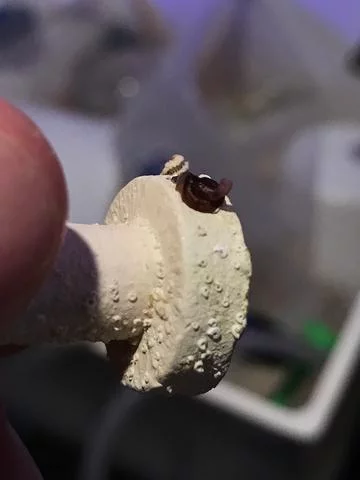
When a vermetid snail is born, it immediately seeks to build a home. It then attaches to a hard surface and builds a calcified tube, aka its shell. These formations are very similar to those built by annelid tube worms, which makes vermetids’ identification difficult to the naked eye. Still, a seasoned aquarium owner will be able to tell the difference between the two species.
In addition, these little guys spend most of their life in the same place. This might make one wonder how they manage to feed? The answer is simple. They spew mucus nets out of the ends of their shells, which they use to catch nearby detritus and plankton.
Vermetid snails in an aquarium can harm corals. They impede coral growth and damage corals’ skeletal structure of LPS and SPS corals. Therefore, if you notice any of these snails in your reef tank, it’s time to take immediate action.
How to Remove Vermetid Snails from Aquariums
Unfortunately, removing vermetid snails from your aquarium is quite challenging. Still, it is worth the effort if you want to protect your corals (and hard-earned cash you’ve spent on them). Gallery Aquatica TV has a few tips that I’ll go over below.
The Superglue Method
First, be careful if you are completely infected with snails. Killing a bunch of vermetid snails inside the reef tank with superglue is a fun way to have a nutrient spike. The superglue method involves sealing their exit from the tubes.This prevents the snail from exiting and starves it out. Once the worms die and start decaying, they create a nutrient imbalance in the water, which ups the water’s toxicity and creates a perfect environment for other fish tank nuisances like algae blooms.
The best way to remove the snails are to pull out the rock or infested corals so you can remove them manually and not have them decay in the tank.
The Nuke – Hydrocloric Acid Method
Many hobbyists have tried a direct approach to the issue. Identify the rocks or sponges that have vermetid snails nesting on them and remove them from the aquarium. Then, wash them thoroughly with a 10% to 20% solution of hydrochloric acid. While this works, it is drastic and can kill of ton of beneficial bacteria. I would call this the nuclear option.
The acid will eat away snails and remove them completely from the rocks and sponges. If it takes too long for the snail to wash off, you can let the rocks soak in the hydrochloric acid solution for a couple of days. The rocks should be white and clean at the end.
Be very careful with this method as the substance is harmful to your skin. Wear gloves, a respirator, and eye protection when handling HCL. Using HCL is a post within itself, so I’m going to link a Reef2Reef article that goes into further detail.
Manual Removal – The Bone Cutter Method
If the vermetid snails are attached to your corals or frag plugs, one easy option is to pull the coral out of your display tank and pull the snail off of it using bone cutters. Make sure when you use the bone cutters that you cut off the base. The base is where the snail lives so cutting off the base ensures a complete removal.
Getting Violent – The Lancing Method
A more savage method is to use an ice pick to stab the base structure of the snail. This method is great to use if the snail is lodged in an area that is hard to get. Make sure that you remove the infected coral or rock before attempting this as it is a messy process that will result in a cut up snail. Stab the middle of the base with your ice pick and wipe it away from the rock to kill the snail.
You may unearth the snail from the structure using this method. If that happens, pull it off the rock and finish it off to ensure it doesn’t accidentally re-enter your aquarium.
The Bottom Line
Vermetid snails are common fish tank parasites that build their own calcified tubes. They reside inside the tubes their whole lives, and they cause great damage to corals.
I have outlined several methods that is used to remove vermetid snails from safe to nuclear. Worse case to wipe them out, you will need to remove the rocks that they have attached themselves to from the tank, and thoroughly clean them with HCL. It is a most drastic method, but the other methods outlined in this post should be attempted first.
📘 Want to learn more? This article is part of our complete Saltwater Fish & Reef Guide. Your ultimate resource for marine fish, coral care, reef setup, and more.
LPS corals were my entry point into keeping coral in my reef. They’re forgiving enough for beginners but rewarding enough that experienced hobbyists keep them long-term. I’ve kept hammers, torches, and frogspawn in my 125-gallon for years, and these large polyp stony corals have some of the best movement and personality in the hobby. If you’re just getting started with coral, this is exactly where I’d recommend beginning.
So you have seen the incredible tanks posted on forums, seen your friend’s tank, or just have been inspired by seeing ocean life and now looking to get your own. Reef tanks is pretty intimating for a newcomer and we have written articles about tank selectionand easy saltwater fish to keep. But what about corals?
I wrote an article later on about soft corals, but I want to talk today about the LPS Coral. These corals are the big show stoppers in the tank with their colors and their varieties, but not all LPS corals are created equally. Some of these corals are difficult to keep, but we have a list of corals here that you can safely pick from if you are looking to get into coral keeping.
Before we get started, let’s talk about requirements of LPS corals. What makes corals “difficult” in the hobby is stability. Corals like stability. They don’t want temperature swings, they suffer from salinity changes, and hate high nitrates. The good thing is that technology and best practices from experienced hobbyist have made it easier to keep LPS corals than ever before.
A solid RODI system or buy RODI water from your fish store
Make your biological filter natural with dry rock or live rock – consider slowly removing “nitrate factories” such as bio-balls
Change your water on a set schedule at least twice a month. Use a quality reef salt mix.
Consider supplementation if you have a heavy LPS or SPS population – for many newcomers water changes will take care of this if you are a frequent water changer. We recommend two part from B-Ionic and dosing to your saltwater mix
The Easy LPS Corals for Beginners
Below is our list from the easiest to care LPS corals readily available in the market. While there is many others on this list, we felt these were the best candidates based on their beauty, ease of care, and uniqueness. Feel free to comment if your favorite has been left off the list.
LPS corals are the entry point to keeping coral. They tolerate mistakes that SPS corals punish. If you cannot keep LPS alive, you are not ready for anything harder.
This is the one of the more aggressive corals on the list, but it is readily available and very popular. The main thing with the frogspawn is giving it adequate space as they are known to stretch 6″ beyond their base at night and will sting other corals nearby. They is mixed with hammer corals as they both will not sting each other. There is also a variant called an Octospawn, which is less common, more expensive, and offers more color variety.
Hammers are a great beginner LPS coral that adds a lot of moment. It is relatively easy to care for with the major issue being its aggressiveness. Also note that the branching hammers are a lot easier to take care of over the wall types. They come in a lot of different colors with yellow and orange being the most expense. These are fairly easy to find online, but the more exotic hammers tend to be only sold through coral vendors while the cheaper variety tend to be found locally or through coral vendors selling on EBay.
Acans are great coral additions as long as you place them correctly. They need to placed a few inches away from other corals as they are known for attacking other corals by extending their stomachs out! They are widely available in many colors and patterns. Acan lords tend to be on the less aggressive side versus other Acans. Reds are the most common color but they come in many colors.
If you are looking for a coral like looks like an anemone, this is a great candidate. Well a Torch coral can pull off the look as well, some Torch corals is pretty finicky, but most Ducan corals are pretty tough. This is a fairly easy LPS coral and a fun one to feed as it will readily consume food. They offer a lot of movement in the aquarium and can get quite large if you let them. They tend to also be fast growing and easy to frag.
Pagoda Cup Corals do vary in the amount of care they require. You will want to avoid such species with thin plates or convoluted shapes. Pagodas like the one picture above are the ones we are looking for. They make excellent additions to a reef tank being very peaceful and easy to keep. The only thing with these corals is that it growth fast.
This is a very hardy coral that will add color to the bottom of your tank. It prefers to live on a fine sandy substrate and known for being easy to care for.
A Blasto coral is a pretty tough LPS coral that adds a lot of color in the reef tank. While it is more on the aggressive side, they make up for it with their variety of colors and more tend to be fairly affordable. It’s a pretty low risk LPS coral to start with and a joy to feed.
A hardy coral that is placed anywhere in the aquarium. They are on the aggressive side so care must be taken when placing. They are plentiful in the wild and available from local fraggers and shops. The favia brain coral overall is a great coral for beginners.
An excellent LPS coral for a beginner. This is a hardy and peaceful coral with very short sweeper tentacles. They are a number of colors available and they are not overly expensive. They stay small enough to be good candidates for smaller tanks.
The number one LPS coral on our list hits all the checkmarks. A peaceful coral than is placed anywhere in the aquarium and needs moderate flow and lighting. It’s short sweeper tentacles allow it to be placed in close proximity to other corals and it is a hard coral.
Candy Cane Key Stats:
Temperament: Peaceful
Lighting: Moderate
Water Flow: Medium
Placement: All
Feeding Instructions
Discussing LPS corals wouldn’t be complete without talking about feeding them. After all, feeding LPS corals is really what makes many reefers enjoy them being seeing them actively feed gives that anemone like appearance and behavior. The other great thing with being able to feed LPS corals is it is a great way to help a coral that is struggle or going south. In fact, some of these corals like Acans, do much better with feedings once or twice a week. So what is the best food for them?
We recommend feeding your LPS corals with Polyp Lab’s Reef Roids. Reef roids is readily accepted by LPS corals and it’s too small to be eaten by fish, which is an issue in a reef tank once fish figure out that when corals are feed. Big meaty food like Mysis is great as well, but it is big enough for fish and shrimp to get a hold of and can cause some harassment when then shrimp or fish pull the food out of the coral’s mouth.
Just mix up the roids in a cup of tank water, use a turkey baster too grabbed the mixture, and directly feed the LPS corals while the pumps are off. Feeding 1 to 2 times a week and as always always test your water to make sure you aren’t spiking your phosphates and nitrate levels with too much food.
Closing Thoughts
We will note that your tank must be setup with a healthy system before you begin placing corals in your aquarium. All corals require careful observation while they are establishing in your tank. Check for signs of stress like lack of opening up, discoloration, or damage to other corals. Stay patient and make adjustments as necessary. Once you have your first set of corals established you will be on your way to a successful and enjoyable reefing experience!
📘 Want to learn more? This article is part of our complete Saltwater Fish & Reef Guide. Your ultimate resource for marine fish, coral care, reef setup, and more.
Jaguar cichlids are one of the most aggressive freshwater fish you can keep. They will eat anything that fits in their mouth, attack fish twice their size, and outgrow most tanks within a year. I have seen experienced keepers underestimate this fish and pay for it with dead tank mates and cracked heaters. If you are not ready for a dedicated predator tank, this is not your fish.
Having a pet is one of the best things, especially if that pet is a fish. A Jaguar Cichlid is a silent, beautiful fish, and some of them are great for pest control. Although it will seem like fish are easy to care for, there are a lot of species which require a lot of attention as well as special food or tanks.
In this article, we are going to talk about an interesting fish species: the jaguar cichlid. Here you can find out everything you need to know about these species including its compatibility with other fish. It’s good to know that jaguar cichlids can’t be put in a tank with Tetra or Angel Fish. They are large and aggressive fish. They are known as “tank busters” among predator enthusiasts as they can crack smaller tanks with their aggressive antics.
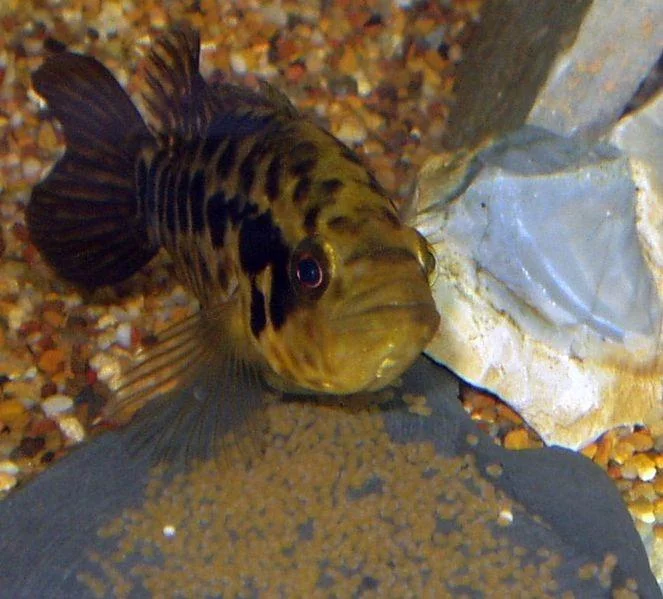
The Jaguar Cichlid, scientifically known as parachromis managuesis (and also known as the Managuense cichlid), is a large species of Cichlid. They are originally from Central America and is found from Costa Rica to Honduras. Unlike most fish tropical fish, this species is bigger, and it can grow to up to 24 inches! These are highly predatory fish, and this is why it is difficult to find the right tank mate. The jaguar cichlid is very valuable for it’s looks. It is one of the more beautiful, larger, and aggressive Cichlids from Central America that you can purchase.
The Reality of Keeping Jaguar Cichlid
Size is the first reality check. Jaguar Cichlid grows fast and grows large. A tank that fits today will not fit in six months.
Aggression is not optional. This fish is territorial by nature. Tank mates are selected around this fact or they become food.
Filtration needs are extreme. Large predatory cichlids produce massive waste loads. Underfilter this tank and water quality crashes fast.
Biggest Mistake New Jaguar Cichlid Owners Make
Putting Jaguar Cichlid in a tank that is too small. This fish grows fast and gets aggressive in tight spaces. Start with the final tank size from day one or do not start at all.
Expert Take
Jaguar Cichlid is a commitment fish. Start with a 70 gallon minimum, run heavy filtration, and stock only tank mates that hold their own. Half measures do not work with predatory cichlids.
Size and Looks
The Managuense jaguar cichlid is a big, elongated freshwater fish. It’s flat from sides and it has an oval body. Its appearance shows that it’s a raptorial feeder which has adapted to aggressive assaults. These fish have different sizes when they live in captivity. For instance, a wild jaguar cichlid can reach 60 cm and it can weigh about 7 kg. Here is a video by Mrlilchilly1 showing a full grown Jaguar Cichlid in action.
Unlike the ones living in the wild, jaguar cichlids that lives in captivity grow to about 35 cm in length. The Parachromis managuensis females can only reach 30 cm and they weigh about 3 kg. These are some of the biggest fish which is put in a tank and kept as a pet.
The color of the Jaguar Cichlid is silvery with spots of brown and black. Its color pattern resembles the one of a jaguar, as its name states. An interesting fact about their color pattern is that it’s almost impossible to find two jaguar cichlids with the same body spots. This species also presents a big head with a large mouth and big lips. They have pharyngeal teeth which help them hunt.
Male vs. Female Differences
A male Jaguar Cichlid is larger and will have more vertical broken bars when young. These bars will disappear once the male reaches maturity. A female Parachromis managuesis on the other hand, will have thinner vertical bars and will have a more pronounced dark bars and have more reddish coloration on their gill covers. Juvenile fish are readily available at fish stores and online. These Cichlids get more expensive and harder to find the larger they are.
Having Them in a tank
There are some important things to keep in mind when you want to purchase a jaguar cichlid as a pet. For instance, these fish can’t share a tank with a lot of species. In order to accommodate the cichlid and the other tankmates, you need to have a tank with aggressive fish. Also, you need to have large fish so that they won’t get hurt or eaten by the jaguar cichlid.
It’s best to pair the jaguar cichlid with other cichlids like the Red Devil, Texas, or the Midas cichlid. These species are territorial to aggressive which means they are able to hold their own. Aggressiveness is best handled by additional tank space. Keeping your aggressive fish full will also curb aggressive. Hungry and cramped fish will get aggressive with their tank mates fighting for valuable territory. These large predatory fish mentioned will also enjoy the same foods. You will not have to worry about feeding them separately. Be sure to spread out food among each fish’s establish territory to avoid bricking and to ensure everyone gets fed.
Another important thing to consider before purchasing Parachromis managuensis is the tank. In this case, you will need an aquarium tank with a capacity of at least 100 gallons of water. The decorations of the tank should be big and bulky like rocks. Don’t put plants in their tank because this Cichlid will destroy them in no time. A good starter tank for a fish this size is a 125 gallon tank. This is a 6 foot long tank with enough width and depth to support a Cichlid of this size and still have room for other inhabitants.
You will need to put a substrate for the bottom of the tank that is made of large grained gravel and add some middle-sized grains. Maintain the water in the tank at a temperature of 24-25 C. Also, the pH of the water should be around 7 for optimal results.
Breeding
The jaguar cichlids have been bred in tanks for a long time. However, there are a few rules to follow when it comes to this species. The best way to help them breed is to make sure that you put 2 or 3 pairs of jaguar cichlids together in a tank when they are juvenile. If you try to put a new female or a new male when you have adult fish. You will risk losing these additions due to the jaguar cichlid’s territorial nature. This is a bigger risk if you your fish is actively breeding.
If you have an actively breeding couple, consider moving them to a different tank so that the breeding process goes smoothly. This tank should have at least 50 gallons (or 200 liters of water). Cichlids in general are great parents and are a joy to watch their fry raising process. It is a real threat to share this experience with your family.
Feeding
As we mentioned earlier, this freshwater fish is a carnivore and a raptorial which means they enjoy various types of live fish. They can also eat cut up fish or crayfish and dry foods. The jaguar cichlid prefers food like earthworms, crickets and tadpoles. Remember to feed them only once a day because they eat too much. Frozen food is also a good food staple to provide, through can get expensive given how much these fish need to eat at their adult size. Also, experts recommend a fasting the jaguar cichlid once a week.
These fish can also eat small reptiles, larva, or goldfish. However, it’s strictly prohibited to give these species warm-blooded meat like beef, pork or poultry. This type of meat has a lot of fat and it can affect the health of your cichlid.
Care
While it is a bit hard to find the right tankmates for this big and aggressive fish, it’s quite easy to care for them. These are hardy fish that will tolerate a variety of conditions.
Saying that however, one of the most important things is to keep the tank water clean. Large tanks are necessary for these big species. Apart from the large tank you will need to have canister filter or a sump filter to help you clean the water.
Remember to change about 30% of the water in the tank once or twice a week. Due to the fact that the aquariums are closed systems the phosphates and nitrates tend to build up in time. This makes the water hardness increase. Despite the fact that this species is aggressive, they are very sensitive to pH instability. If you oversize your filtration you may be able to get away with less water changes, but also monitor your nutrient levels with proper aquarium test kits.
It’s also recommended to use external tank equipment that can clean the water. Because of their large size and aggressive style, the jaguar cichlid can damage any internal filter or heater. Titanium heaters are recommended when you house fish as large and aggressive as these. Titanium heaters can take a beating and not crack or break. You should also avoid any decorations that can easily be moved or tossed around. Apart from these minor problems, jaguar cichlids are easy to care for.
Diseases that AffectThem
Unfortunately, fish are prone to infections and disease, especially predatory fish like the cichlid. Infections are common with predatory fish due to fighting as wounded can get infect. For parasites, one of the most common diseases is Ich. This is treated by simply raising the temperature to 86 degrees Fahrenheit for about 3 days. In case this doesn’t work, you will need to treat the pet with copper. Remember to be careful when you add a new decoration or a new fish to the tank because it is infected with disease. Stress from aggression can also bring about disease if the fish is carrying the disease. Stress will compromises a fish’s immune system, which will lead to an outbreak.
FAQs
How Aggressive are they?
Jaguar cichlids are very aggressive fish. They are territorial and will attempt to eat any fish they can fit in their mouths. Because of their territorial nature, they will attempt to fight any fish that comes near their territory. Due to their size and most aquariums sizes, this will mean they will fight any fish you place in your tank.
How Big Do They Get?
Jaguar cichlids can get up to 24 inches in length, but most will end up around 16-18 inches. Males will typically be larger than the females and they will get more aggressive as they get older and more established in a tank.
What Fish Can Go With A This Type of Fish?
The best tank mate for a Jaguar cichlid is another Jaguar cichlid — as a breeding pair. Note that a bonded pair will be very aggressive, especially once they start breeding. Other species you can consider if you have the space would be large cichlids like Red Devils, Green Terrors, and Oscars. You can also consider large catfish.
Can They Live With an Oscar?
Yes, they can be compatible if you have the space for them to work out their territory issues. It is best to attempt this pairing when you have more experience. If you are attempting to house them together, consider a single Jaguar with an Oscar. Preferably, try a female Jaguar over a male when pairing.
Conclusion
A jaguar cichlid does not share a tank. It owns it.
These are some of the most important things you should know about this amazing freshwater species. If you want to purchase a jaguar cichlid as a pet you need to be careful with the tank capacity and the pH of the water. Apart from that just feed them once a day with worms or dry food and they will be fine. Also, don’t put them in tanks with smaller fish because the jaguar can kill or eat them.
Got any additional questions about the Jaguar cichlid? If so, leave a comment below and let’s start a conversation!. Let us know what aggressive fish you have been able to pair with this monster fish!
📘 Want to learn more? This article is part of our complete Freshwater Fish Guide. Your ultimate resource for freshwater species, care tips, tank setup, and more.
An African Cichlid Tank in my opinion has always been an underrated aquarium. Usually many hobby or pet owners will look to freshwater community or saltwater tanks, but an African Cichlid tank offer the great balance of the ease of freshwater tank along with the vivid colors of a saltwater aquarium. One of the biggest differentiating factors, especially with Mbuna Cichlids is how incredibly active they are. An African Cichlid tank is a great choice for a beginner and for those who like the color of saltwater fish, but may not feel ready for the cost and additional upkeep of a saltwater aquarium. In today’s blog post, I will provide an overview on:
Cichlids are a diverse group of freshwater fish from the biological family Cichlidae. There are over a thousand official species and some scientist in the field believe there may be thousands more! They are also known as secondary freshwater fish because their distant relatives originated from the ocean. Cichlids are split into two groups: Central and South American Cichlids or New World Cichlids and African Cichlids.
African Cichlids come from three lakes in Africa – Lake Malawi, Lake Tanganyika, and Lake Victoria. The most popular of these cichlids placed in African cichlid tanks come from Lake Malawi.
Lake Malawi
Lake Malawi Cichlids are rock-dwellers and should live in a rock environment. They are split into several species – Mbuna, Haps, and Peacocks. Mbuna are the most active and aggressive of the three. They are very colorful with the dominant male being the most colorful. Aggression is typically curbed by overstocking, frequent feeding, and by not putting in fish groups with similar coloring.
Haps are moderately aggressive fish with some Haps being very large. For some Haps, at least a 75 gallon tank would be needed to house them long-term. They are piscivores, which means they prey on small fish – particularly smaller Cichlids. Because of this, it is not a good idea to house these fish with anything small enough for it to swallow.
Peacocks are the most peaceful of the three species. They are most suited for a community type of aquarium. They are not compatible with Mbunas due to Mbunas more aggressive nature. There are examples of success in mixed african cichlid tanks, but even if successful, the Peacock typically will not grow as fast, will end up being less colorful, and may not live as long.
Lake Tanganyika
Lake Tangayika Cichlids are broken down into three groups – shell dwelling lamprologus like Lemon Cichlids, rock dwelling cichlids like Calvus, and large cichlids like Frontosa.
Shell dwelling Cichlids have a good number of positive features going for them. They are small in size, peaceful behavior, hardy, breed easily, and are easy to keep. Rock Dwelling Cichlids like Calvus are solitary hunters with slender large jaws used to suck smaller prey out from rock crevices. Frontosas are the feature fish when it comes to Lake Tanganyika cichlids. They are usually known for being kept alone in an African cichlid tank, but have been known to be kept with large Tanganyika fish like Calvus and Compressiceps.
Lake Victoria
Lake Victoria Cichlids are the least known and popular of the three lake Cichlids. There is a lack of hobbyist literature available which makes Victorian cichlids sometimes difficult to identify. They are in general naturally aggressive fish. Some can mix with Mbuna and Peacock cichlids. Some of the most popular fish are Pundamilia Nyererei, the Zebra Obliquidens, and the Kyoga Flameback. A lot of secondary research should be done with this species of fish given the lack of information in the hobby.
Care Requirements of Their Tank
We are going to start going over care requirements. Check out our video below from our YouTube Channel. We go into more detail below so follow along.
Tank Size
When it comes to any freshwater fish species and aquarium setup, bigger is always better. You will have more water volume to make your tank stable and more room to curb aggression. However, not everyone wants a massive tank. Cichlids do get large and are territorial.
The minimum for most African cichlid species is going to be 55 gallons. Longer tanks are better than tall as many cichlids are mid-level or bottom-level swimmers. Always go for a wide vs taller aquarium.
Water Requirements
All African Cichlids should be kept in water with a pH of 7.5-9.0, a water hardness from 10-20 dH, and a water temperature between 77-82°F.
The actual ranges of the African Rift Lakes are:
Lake Tanganyika. 7.8-9.0
Lake Malawi. 7.4-8.4
Lake Victoria. 7.2-8.6
Since all African Cichlids appreciate this higher pH, these are one of the few freshwater species whose aquariums may be decorated with marine coral, sand, and rock which will push the pH and buffer the water. In some instances it may be necessary to buffer water to reach these higher pH levels. There are various Cichlid Buffer additives available in stores that can be used or Cichlid Salts.
Filtration Requirements
A Cichlid aquarium needs to be well filtered. Overfiltration is actually encouraged in an african cichlid tank as it is typical to purposely overstock them to curb aggression among tank mates. In addition, Cichlids are messy eaters and even messier excreters. Aeration is also very important since Cichlids require well oxygenated water.
Because of the added demands of African Cichlids, dual filtration is recommend. Dual canister filtration is commonplace for African Cichlid keepers. In larger tanks, an overflow + sump + wet/dry setup is used to handle the bioload and flow requirements of the tank. Your goal is to have 8-10 times gallon per hour flow filtered per hour. So for a 55 gallon tank, you are looking at a goal of 550 filtered gallons per hour from your filtration system.
You can be fine with less filtered per hour if you have a high capacity canister like a BioMaster Thermo or Eheim Professionals, but you may need to supplement flow with powerheads to keep the flow strong in the tank in order to prevent dead spots within the tank.
Rock work is an important consideration and will vary depending on what species of African Cichlids you decide on. For Mbunas and other rock dwelling Africans, you will want to have rocks with lots of holes and cevices. Rocks will cover most of the bottom of the tank for these types of fish. Texas Holey Rock and lava rock are two good examples of such rock. For Haps and Peacocks and other open swimmers, there should be more open water to mimic their environment. Other rocks that you can consider would be slate, limestone, and even ocean rock. Making sure your rock is more smooth should be considered as rough rock can hurt your African cichlids.
Substrates
All Cichlid tanks should have a sand substrate in an african cichlid tank. This most closely mimics their natural environment. Many Cichlids naturally feed by grazing through the sand, others cleanse their gills, while others dive into it or build nests. Some hobbyists have been known to acquire substrates from golf courses, pool shops, or home improvement stores. These can save you money when building an african cichlid tank, but do some research before placing in your tank to ensure you have an aquarium safe substrate.
Within the aquarium industry, there are substrates available that will work with Cichlids, particularly aragonite sand used in marine tanks and Tahitian Moon Sand.
Diet for your African Cichlids will depend on the type of Cichlids you have. Africans can cross all the food groups (herbivore, carnivorous, omnivores, and micro predators) so it is critical that you know what group your fish belongs to. Spirulina is a general good food to fish all fish since it has outstanding nutritional quality and is made up of 65-70% protein.
Supplemental foods for herbivore fish would be peas, romaine lettuce, and spinach. For fish carnivorous fish, brine shrimp, shrimp pellets, and krill would be good meat supplements. Fish with yellow, orange, or red will need to be feed foods with lots of pigment so keep their colors optimal.
A stocked Cichlids tank need to be feed frequently, but not overfeed. Maintaining this balance will curb aggression. The recommended would be 3-4 times a day but only what they can eat within 20 seconds or less. Overstocking and overfeeding are the primary reason why we recommended extra filtration for the tank back in the filtration section. Overfeeding can lead to excessive nitrates or bloat for your herbivores. Feed frequent, but do not overfeed. A well feed Cichlid is a less aggressive Cichlid.
Food Recommendations
Below are several recommended staple Cichlid foods
New Life Spectrum Formula Pellets – The Benchmark in the Industry
New Life has been doing top notch fish food for years with scientific research behind each of their formulated foods. You can’t go wrong with them and their color enhancing Cichlid pellet food.
Cobalt Aquatics Probiotic Enhanced Flake Food – The Best Flake Food
Cobalt Aquatics has really made some moves in the industry with probiotic enhanced foods. This flake food offered by them is arguably the best African Cichlid flake food available on the market. It’s a works great in combination with New Life’s pellet food.
Hikari Cichlid Excel Pellets – Specially Formula for Plant-Eating Types
Cichlids eat a good amount of greens. The Hikari Cichlid Excel Pellets by Hikari focuses on spirulina with vitamins and materials to provide a highly nutritious pellet. Combining this pellet food with the other two, you should everything you need to provide a quality diet to your African Cichlid community.
Live plants can be kept successfully with African Cichlids. You may have heard from others, from forums, or your local fish store that you cannot but it is very possible to keep plants. There are a few things to keep in mind if you want to attempt to keep plants with African Cichlids. First, not all plants will be able to tolerate the high pH of an African cichlid tank. Second, not every plant will be compatible with the different types of African Cichlids available.
Specialized freshwater lighting systems will need to be considered if you choose to have plants in your African cichlid tank. While lighting requirements will vary for different plants, the proper spectrum of light needs to be provided to them. You will need lights that emit in the blue and red end of the light spectrum. These are wavelengths of 450 and 680 nm. Check out my post for planted LED systems, to see systems with the proper wavelengths.
Plants have tighter requirements to prevent algae outbreaks as well. Regular water changes to keep nitrates below 50 ppm and the use of bristlenose plecos will help with algae. Keep in mind; however, that plecos will eat soft plants.
You have to purchase the right african cichlids for your tank to ensure success with plants. You will have the greatest success with non plant eating african cichlids like peacocks and the hardest time with Mbunas.
The final factor is dealing with the digging of cichlids. Plants can be uproots with the digging activities so plants need to be fastened to prevent uprooting. Java fern should be tied to rock with fishing line and other plants should be potted or wedged in between rocks.
Where to Purchase?
Getting them at your local fish store would be the first step. I would highly recommend that you join a aquarium club to learn more about the quality local fish stores near you. Some people, however, do not live near a quality local fish store. In those cases, pushing African Cichlids online would be the best way to obtain them. There are a few out there that are worthwhile:
Worldwide Tropicals Seller on Amazon who sells various African Cichlid livestock
Mike’s Cichlids Family owned breeding facility that specializes in high quality Cichlids
As African Cichlids keeping has been around for many year, there are a wealth of resources and even books for you to enjoy and read. Here are several I would recommend and you learn more about them. All are easily found on Amazon:
African cichlids are highly rewarding fish to keep. We hope this article was useful in planning your African Cichlid tank. If you liked this post, check out the recap video from our YouTube Channel below. Subscribe if you like it. I hope to see you again.
📘 Want to learn more? This article is part of our complete Freshwater Fish Guide. your ultimate resource for freshwater species, care tips, tank setup, and more.
Nutrient export is one of the most debated topics in reef keeping, and I’ve experimented with most of the major methods in my 125-gallon over the years. GFO reactors, biopellets, refugiums with chaeto, and algae scrubbers. Each has a real place depending on your system’s bioload and your maintenance preferences. This breakdown is based on what I’ve actually run, not just theory.
Algae scrubbers are finally starting to pick up mainstream acceptance in the Reefkeeping community! As someone who has advocated Algae Turf Scrubbers, for many years it great to see them more widely accepted. There is still a lot of skepticism in the industry though and many store still push other products and solution. I created this article below so you can see the differences between an Algae Scrubber (AKA Algae Turf Scrubber) and other solutions like there. There will be affiliate links in this article as a quick disclosure where I may make a commission should you make a purchase from the link at no charge to you. Let’s get started.
Algae Scrubber vs. Algae Blocker
Ah the Algae blocker. This is a very common solution you will hear about at your Local Fish Store (LFS) when a customer comes in with an algae problem. I think of these as the diet pill solution to nuisance algae in the industry.
What is a blocker?
An algae blocker is a chemical product that will work to remove nuisance algae in the aquarium. The most well known algae blocker is Boyd Enterprises Chem Clean who sells a Cyano blocker. The industry has gotten really good over the years and have created reef safe solutions that will remove algae, but will not harm inverts and corals.
Why is this better than the Blockers?
An algae blocker’s purpose is to quickly remove algae, but it is not an end all solution. They really are meant to wipe out nuisance algae after the long-term problem is treated – usually a poor water source or bad aquarium housekeeping. They become expensive to use long-term.
An Algae Scrubber on the other hand, is a natural solution to nuisance algae. The algae you grow in the scrubber sucks up the nutrients that feed other forms of algae, and the algae is keep in one spot where you can remove it. Scrubbers are always a long-term investment in the aquarium as they do not need ongoing filters or replacement parts.
Is The Reactor Different?
Algae reactors have been commercialized recently with the raise of Algae Scrubbers.
What is a reactor?
An algae reactor is a self container container that grows macro algae like cheato. They are pretty complex units, with a reactor chamber, pump, and lighting all functioning in the unit.
The biggest advantage to an algae reactor is ease of use and simplicity. While an Algae Reactor has a comprehensive unit, an algae scrubber has simple individual parts. This means that if one part breaks, it is easier to fix vs having to buy another unit.
Biopellets
Biopellets have been a solution for denitrification for years
What is a Biopellet Reactor?
Biopellets themselves are a polymer that is made up of bacteria. They are meant to be a supplement to the beneficial bacteria in your aquarium. The main draw is these biopellets will remove nitrates. They require a reactor so you can efficiently work the materiel and cultivate the bacteria.
What is better than Biopellets?
Biopellets can be tricky to dial in and can actually strip too many nutrients in your tank. Stability of the operation is there biggest issue. You also still need to address phosphates requiring another equipment solution. An algae scrubber handles both nitrates and phosphates and are easier to operate once they are broken in.
Cheato
Cheato was the first acceptance of using algae to control nutrients in an aquarium
What is Cheato?
Cheato is single celled macro algae that is simple to grow and easy to place in a sump. It is one of the easiest and simpliest ways to control nutrients in a tank
Which is better than Cheato?
The main advantage you will get from a scrubber is surface area growth. Scrubbers have the ability to grow more nutrient absorbing algae in a concentrated space then cheato. You need a lot of cheato to control nutrients and you need the space in your sump to do it. The major downfall is the risk of pests and disease from Cheato. Yes, that is correct Cheato can bring over a number of pests and diseases. Unless you Quarantine your Cheato (very few people do this) or you get your Cheato from a source that guarantees clean Cheato (like Algaebarn), it is always a risk. With an Algae Turf scrubber, you are growing your own algae from your own tank. You are in full control of what comes in and out through your introduction procedures with your fish, inverts, and corals.
But other than that cheato is and will always be a cheap and go solution for nutrient control. It is algae after all and a natural way of removing nutrients in the aquarium.
Denitrator
Denitrators were a solution to aquariums for many years until other products like Zeovit and Biopellets came about.
What is a Denitrator?
A denitrator is a piece of equipment that has been used in wastewater treatment plants and public aquariums for years. Denitrators are the solution to using a traditional media bag in the sump which is harder to manage optimally. A denitrator pieces the media in a chamber where the water can properly react to it resulting in consumption of nitrates.
Which is better than a Denitrator?
A denitrator system and a built algae scrubber equipment wise are around the same price. The main advantage you will get with an algae scrubber is you will not need to replace your media and the parts are easier to replace. The other advantage that an algae scrubber will have is that it will remove phosphates while the denitrator will only remove nitrates. You will need to invest in other equipment to control phosphates.
GFO (AKA Phosban)
GFO is a common media used in saltwater aquariums. Phosban is the big name brand that sells GFO.
What is GFO?
Granular Ferric Oxide or GFO is media that is used in an aquarium to remove phosphates. It is also used to remove heavy metals and other toxins in the aquarium. Generally, GFO is placed in a reactor for optimal use.
Which is better than GFO?
Investing in a GFO system will incurring recurring costs as the media will need to be replaced every 1-2 months. GFO also does not remove nitrates, meaning you will need another piece of equipment or solution to remove nitrates from your aquarium. An algae scrubber will remove both phosphates and nitrates and will not incur recurring costs.
Refugium
For reefers who have a sump, it is very common for them to have a flex space that is used to create a Refugium.
What is a Refugium?
A refugium is usually a section in a sump that is reserved to in order to provide a place for certain organisms to survive. In general, these would be organisms like copepods, macroalgae, and certain inverts.
Why is this better than a Refugium?
A refugium is also usually used to grow macroalgae for nutrient control and be a place to grow copepods. An Algae Scrubber is actually great at both. It grows algae like crazy and copepods thrive inside the mesh of the scrubber. It is very common when you clean an algae scrubber that you can remove hundreds of amphipod and copepods from the scrubber. No other piece of equipment does a better job at growing them. This allows you to do more in the flex space of your sump.
Zeovit
Zeovit is a nutrient free solution that is touted in the reef aquarium industry.
What is a Zeovit System?
Zeovit is a system that produces an ultra low nurtrient system. It utilizes bacteria to eliminate nutrients at the initial source – Ammonia.
Why is an this better than a Zeovit system?
Zeovit systems are pretty complicated to setup and expensive. It is not a cookie cutter system and every system is different. Dosage and product needed for your system will differ. An algae scrubber on the other hand, is all about simplicity. It is easy to setup, easy to clean, and easy to get results.
Zeovit is really a product of the saltwater aquarium industry, which loves to market the latest and and greatest high-tech toys and solutions to hobbyists. It is a great product, as long as you can dial it in, but overly complex.
Natural and Simple
An algae scrubber is natural and simple and nature is not a solution that is going to be outdated or obsolete. Always do your research regardless of what you end up purchasing. Let us know your experience with equipment or any questions in the comments.
🔧 Want to learn more? This article is part of our complete Aquarium Equipment & Gear Guide. your ultimate resource for filters, heaters, lights, pumps, tanks, and more.
Aquascaping is one of those areas of the hobby that I find genuinely compelling. it’s where fishkeeping meets landscape art. I’ve built planted tanks using both high-tech approaches (CO2 injection, quality lighting, liquid fertilizers) and the low-tech Walstead/natural planted tank method, and both can produce stunning results when the design fundamentals are right. The style you choose shapes everything: the plants, hardscape, fish selection, even the maintenance schedule. Here’s a breakdown of the five modern aquascaping styles worth knowing, with honest notes on what each one actually demands.
Top 5 Modern Aquascaping Designs for Your Fish Aquarium
For many aquarium enthusiasts, it’s as much about creating an amazing underwater landscape as it is about the fish and the art of aquascaping – or creating an underwater garden effectively . is growing in popularity.
Aquascaping involves arranging aquatic plants, wood, rocks and stones, within the aquarium, to create an underwater garden for the fish to live in. or some people are so focused on the garden side they concentrate solely on aquascaping and don’t have fish.
It does involve giving consideration to all of the technical aspects of tank maintenance such as lighting, temperature, filtration and cleanliness, to help maintain the garden and keep the plants thriving.
This style of aquascaping stems back to the 1930s and reflects a traditional flower garden by using many different types of plants with varied colours, leaves and textures, planted together at different height levels.
This garden uses many styles of plants, but does tend to see them planted in groups, often in straight lines, and rarely includes anything else so no rocks or driftwood would be used in this style of aquascaping.
Traditionally, tall plants would be placed at the back to hide any filtration systems from view, and around 80% of the tank floor would be covered with foliage, so no substrate would be visible in this Dutch style underwater garden.
When choosing the plants for Dutch Style, you need to pick ones which fit in with the style, particularly for covering the substrate and floor. Some of the best plants to use for this style of aquascaping include: Saurus Cernuus and Lobelia Cardinalis.
Other plants commonly used for Dutch style aquascaping aquariums are: Hygrofilia Corymbosa, Limnophila Aquatica, Java Moss, Tiger Lotus, Cryptocoryne, Ammania, Alternanthera Reineckii, and Rotala.
Natural Style
Natural style is also known as Japanese style and aims to mimic a natural landscape using plants and stones. The aim is to create a miniature underwater garden, using carefully arranged stones, with a clear focal point, and using only a few different species of plants together.
This style tends to use colourful plants with small leaves and moss, to create a minimalist look, and it doesn’t completely cover the floor of the tank. This is a style of aquascaping which would traditionally include fish in the tank to add to the aesthetic, but with a limited number of different species.
When choosing plants for natural style, you can look at examples like: hair grass (Eleocharis parvula), Riccia, Staurogyne repens, Glossostigma elatinoides and Echinodorus tenellus.
Other species which work well in this style of tank design are the shade loving plants like mosses, and ferns. The Cryotocoryne family of plants is the ones most commonly used to plant in the shade among the rocks and wood.
Jungle Style
With this style, the plants are left to grow more naturally and more wild than the first two styles we have looked at, which are more designed. The jungle look generally fills the whole tank, with no space and no stones or rocks.
To achieve this look, bolder and coarser plants are used with varying leaf shapes, to create a wild appearance. Often tall plants can be used to create a jungle canopy effect on the surface, along with floating plants, which block out the light. There are various plants which can be used to create this more wild landscape.
For example, you could look at using any number of these plants to create a really effective jungle aquascape: Microsorum pteropus, Aponogeton boevinianus, Bolbitis heudelotii, Crinum calimistratum, Vallasneria americana gingantea, Echinodorus ‘Ozelot’, Echinodorus ‘Rubin’, Crinum natans, Aponogeton crispus ‘Red’, Echinodorus quadricostatus and Sagittaria.
Biotopes Style
If you want to recreate an exact aquatic landscape or habitat which appears in nature then you need to go for a biotope style aquascape. These aquariums are not designed to look pretty but to recreate exactly, a particular habitat, which may or may not include plants or fish.
The aim with this style is to replicate as closely as possible, down to the correct gravel, rocks and water composition, an existing natural habitat. These are often used to help study what would happen in a natural setting but could also create a great talking point in your own home aquarium.
Paludarium Style
This final style is the combination of land and water within the same aquarium and can be used to create habitats such as riverbanks, bogs or the beach. The aim is to have part of the aquarium under water, but part above the water by building up the substrate in some areas.
The tank would only be partly filled, allowing some of the substrate to rise out of the water as a land mass. This then allows for plants who like their roots in the water but tops to be in the air, to become a feature within the aquarium, as well as aquatic plants.
This type of aquascaping design makes a great tank for keeping amphibians rather than fish, and can be used to display floating plants perfectly.
Examples of plants which grow really well in a Paludarium include: Cyperus alternifolius or Spathiphyllum wallisii. Some types of Anubias and Bromeliads also grow well with their roots in the water but their leaves in the air. Plants which float include Eichhornia crassipes, or Pistia stratiotes and these work really well in this type of configuration.
Which type of fish should I use in Fresh-water Aquariums?
While your initial focus in creating an aquascape design will be on the plants and the appearance, choosing the right fish to complement your design and thrive in your chosen tank environment is also a key factor.
Many aquarists struggle with this decision, trying to find the right species to thrive with plants and which should be avoided. In general, smaller fish help to create the illusion of a deeper aquarium. Fish to avoid are larger herbivore fish such as silver sharks and pacu, as well as fish which are very sensitive to pH swings.
The best small fish which you should choose to go with your aquascape design include: Ember Tetras; Neon Tetras, Harlequin Tetras and Cardinal Tetras. Outside of the Tetra family, you could look at featuring Angel Fish, Rainbows or Guppys. Discus and Dwarf Gourami also thrive well in aquascape environments, as does the Chili or Mosquito Rasbora species.
Conclusion
So if you are looking to make your aquarium stand out and you love gardening, then why not combine both hobbies to create an amazing aquascaping design within your fish aquarium. From a stone and rock minimalist look, to a completely wild jungle landscape, the choices and looks you can create are endless.
Hopefully, these top five design ideas will have fired your imagination to start aquascaping in your own fish aquarium at home. Whether you try natural style or Dutch style, remember, you still need all the technical skills connected to running an aquarium, to make this underwater garden thrive.
Twenty-five years in the saltwater hobby has given me a long list of things I wish someone had told me earlier. I’ve made expensive mistakes, watched beautiful tanks crash, and learned from both my own experiences and from the thousands of people I’ve interacted with through this site and our YouTube channel. When I put this list together, I wasn’t going for generic advice you’ll find anywhere online. These are the specific insights that actually changed how I approach reef keeping. things that would have saved me real money, real frustration, and a lot of lost livestock if I’d known them at the start.
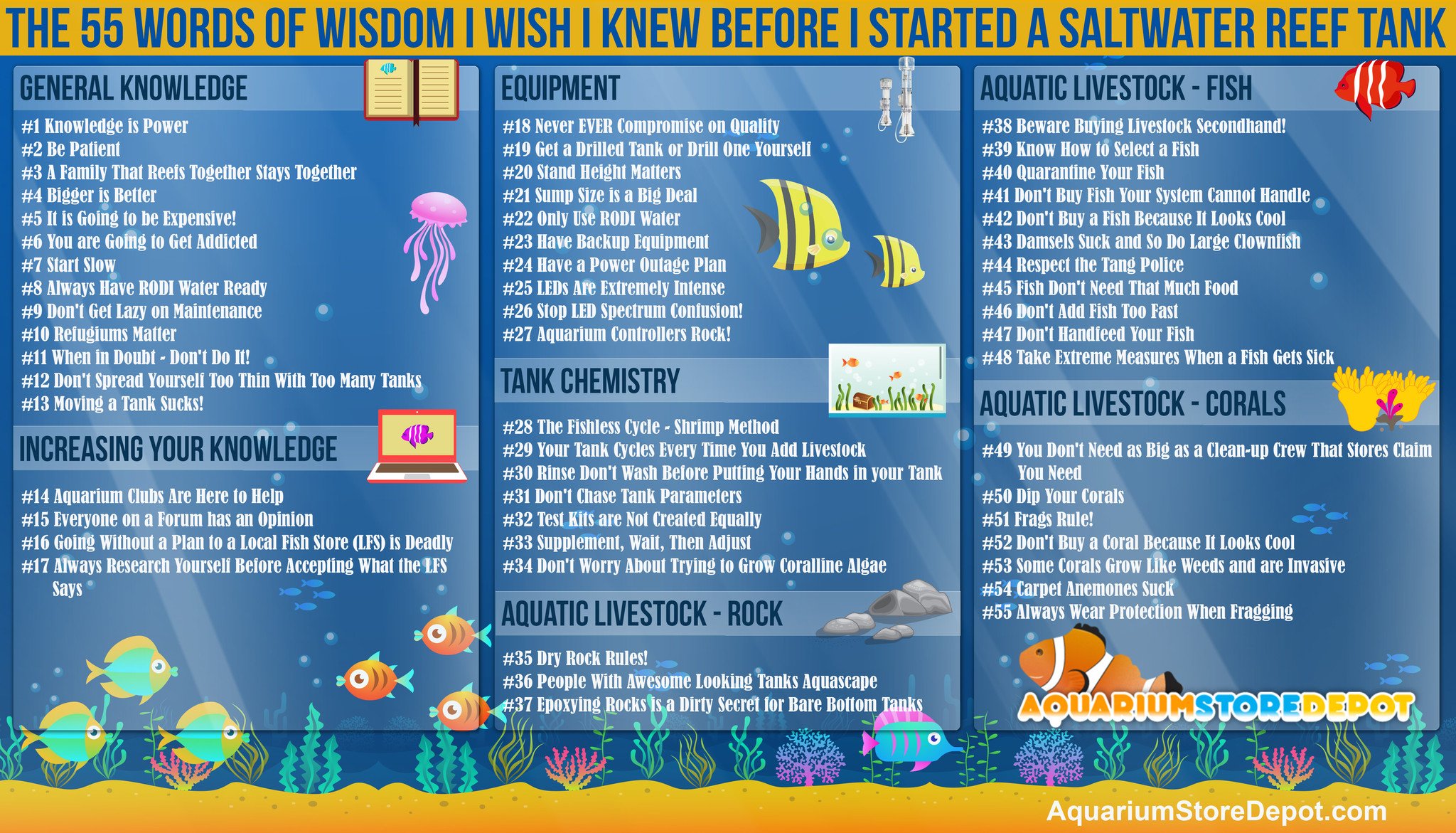
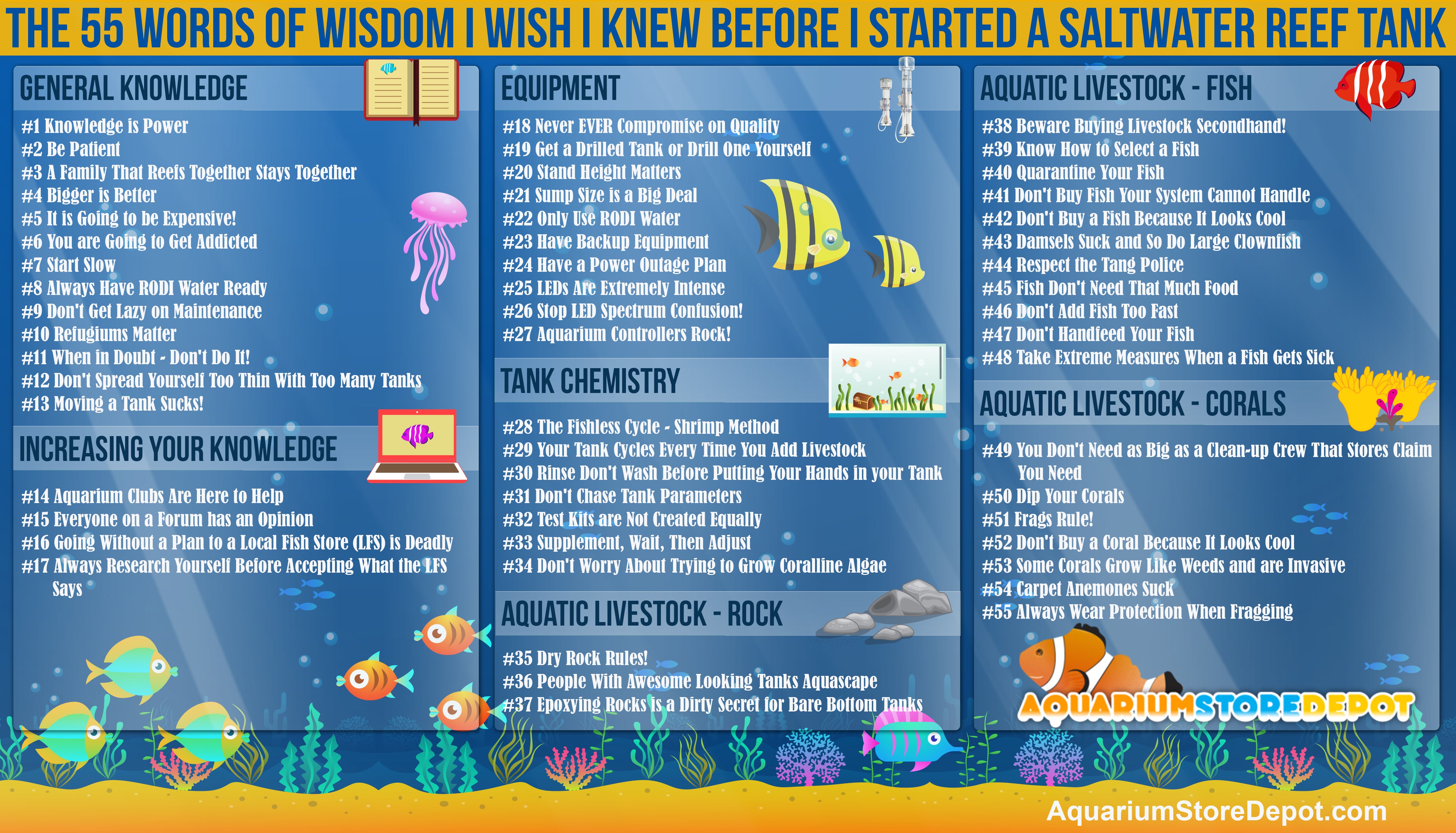
First, I would like to say thank you for reading this post. This is going to be a long point about the 55 words of wisdom I wish I knew before I started a saltwater reef tank. This is a list I have been thinking about for some time. Each one of these things can be a post on its own but I feel placing these all on a single post is a great reference to anyone starting out the hobby or wants reminders on general advice on reefing.
So without further ado here is the list on a nice infographic:
Saltwater Reef Tank – 55 Words of Wisdom I Wish I Knew Before I Started
So now that you have seen the list, here is the detailed breakdown of every word of wisdom below:
#1 Knowledge Is Power
Knowledge plays a huge role in this hobby. What you know will dictate how you will grow your tank and how you grow in the hobby. Taking the time to read books, visit blogs like this one, and getting to know other hobbyists empowers you as a consumer and aquarium owner. If there is anything you takeaway from this blog entry, it is that knowledge is king in this hobby. It will save you time, headache, money, and increase your passion.
#2 Be Patient
This is a very hard lesson to learn even for advanced hobbyist. For a new aquarium keeper, it is very easy to get excited about building your saltwater reef tank and make changes very quickly. As an advanced hobbyist, sometimes we are attracted to deals we see locally or on-line. Other times we try to push the limits of tried and true knowledge.
At the end of the day we need to keep in mind that we are maintaining a delicate ecosystem in our aquariums. Every time we add something or make changes the system needs time to adjust. This is another lesson that sometimes we as hobbyists learn the hard way.
#3 A Family That Reefs Together Stays Together
If you have a family or a significant other, I highly encourage you to get them involved in your saltwater reef tank. Our hobby tends to be a very isolated one where one person does everything and your significant other is wondering why you are spending so much time on your tank, not talking and spending time with them, and why everything is so expensive.
Get them involved! Teach them everything you know and explain the inner workings of the aquarium and habitat. In the end, you will have a significant other that at a minimum will understand how to care for your tank or at least tolerates your passion. You may get lucky and convert your spouse to a full-fledged reef fanatic.
If you have children, this is a wonderful opportunity to teach your children all sorts of great life skills – trade skills from DIY projects, chemistry and biology lessons, responsibility, and discipline. Working with children when it comes to aquariums is a big passion of mine. I actually wrote up an article on FamilyShare.com detailing out various activities you can participate with a child.
#4 The Bigger the Better
Bigger is better in this hobby. A bigger tank = more volume and more stability. A bigger sump = more flexible space, more volume, and more stability. A bigger protein skimmer = more bio-load capacity (up to a point of course). A bigger RODI unit with more gallons per day means you can get fresh water faster. The list goes on and on. Get the biggest tank and highest rated equipment you can afford or fit in your space. If you can’t afford it yet, wait (See words of wisdom #2 – Be Patient).
Larger tanks with bigger equipment are easier to have success with. Don’t start off with a nano or pico reef tank. These tanks are best for experienced hobbyist. Learn more about sumps by looking at our best aquarium sumps and refugiums post.
#5 It is Going to be Expensive!
A saltwater reef tank, even a nano tank can easily cost over $1000 to setup. You can cut some costs down by purchasing a cheap used tank or getting frags from friends, but the simple fact is that saltwater tanks are expensive. On average, you will spend at least 3 times more than a freshwater aquarium. It will go up even more if you shoot for a mixed reef, SPS heavy tank, or want a Rimless Aquarium. Along with setup costs there will maintenance cost.
Electricity, dosing, salt, and food will all need to be accounted for. At the end of the day, keeping a reef tank is expensive so if you are not willing to spend the amount of money to have a successful one, it is probably a better idea to try a less expensive option like a freshwater community tank or an African Cichlid tankwith less expensive equipment like power filters or canisters filters. See our post to see what the best power filters and best canister filters are.
#6 You Are Going to Get Addicted
Any successful reef keeper has a high chance of getting addicted to this hobby. You become a successful reef keeper and have a great tank. Then you think about upgrading your tank so you move on to a larger one. Then you wonder what to do with the old tank so you decide to keep it and create different type of tank with it. Or you get into corals then move onto fragging them. Then you turn that old tank into a frag tank. Then your clownfish start spawning and you want to raise the fry so you create a fry tank.
Successful reefkeeping requires passion. Passion can turn into addiction. #eatsleepreef is one of the largest reefkeeping hashtags on Instagram for a reason :).
#7 Start Slow
Start slow and do not rush (remember #2 Be Patient). Nothing good in your saltwater reef tank happens overnight. In contrast, mostly bad things in your aquarium will happen quickly and overnight. Behind every tank of the month and showcase display tank there is a whole lot of work, research, time, and care put into it.
#8 Always Have RODI Water Ready
RODI systems have a gallon per day rating. If you have a low gallon per day output on your RODI system, you may be waiting for hours if you need the water in an emergency. You never know when you will need to do an emergency water change or you forgot to fill up your auto-top off container, etc. Have some RODI water ready. You can also use distilled water as a substitute in a pinch.
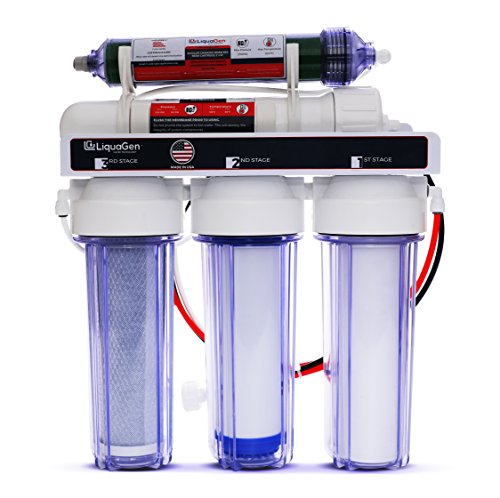
The great thing about distilled water is that you can purchase it at grocery stores, which tend to be open late on nights and weekends. There are a number of cheaper RODI units available these days that work for reef tanks including those made by LiqaGen:
Keep up with your water changes and maintain all your equipment. Clean out your skimmer, change out your GFOand carbon, keep your water topped off, clean your glass, clean your pumps, have dosing supplies and salt handy so you do not forget. It is really easy to fall behind on maintenance once you stop building your reef up and your tank hits stability. Do not fall into lazy reefers syndrome.
If worse comes to worse – considering hiring a professional to maintain your tank. It’s not worth it getting lazy and losing everything you worked so hard for.
#10 Refugiums Matter
In general, the first chamber of a sump is for a high quality protein skimmer and the third chamber is for the return pump. This leaves the middle chamber. The refugium chamber of a sump is the most important part of your sump. It can not only be a refugium, which you can use macro algae like cheato to suck up nutrients, but it is also the flex space in your sump. Some hobbyists today use the refugium space to house an algae turf scrubber. The bigger it is the better.
#11 When in Doubt – Don’t Do It!
This hobby is all about knowledge and research. If you are about to purchase something whether it is equipment or livestock and you have doubts, do not buy it. So many unnecessary livestock losses and money wasted on unneeded products can be prevented by using this rule.
#12 Don’t Spread Yourself Too Thin With Too Many Aquariums
Recall #6 when I said you will get addicted. This is where things can go wrong. In our circle, we call this multiple tank syndrome. You purchase multiple tanks and try to run them all at the same time. Don’t spread yourself too thin. The more tanks you have the less time you have to maintain each one. It’s better to focus on only one tank and if you get the itch to start up another tank, consider upgrading your current tank to a larger one instead.
This hobby is very addicting, but do not try to make it take over your entire life. I know for some of you reading this – it is probably too late :).
#13 Moving an Aquarium Sucks!
Take your time and be set on your decision of your tank location. I cover what to look for when determining your tank location in an another blog post. Having to move a tank after you made your location decision can be fairly painful, but it is nowhere as painful if you are actually needing to move to a new apartment or home. There are so many steps and factors to consider when you are moving your tank. It describes it in detail could create a blog post as large as this article. It is a complex task and many things need to be setup ahead of time as the clock starts ticking once you pull your inhabitants out of the tank and into storage containers.
If you are moving locally, take your time and research this carefully and have as much prepped beforehand. If you are moving out of state, consider selling your livestock or getting a professional to help and make sure you have references.
#14 Aquarium Clubs Are Here to Help
There are a group of people who cheer for your success in this hobby every day. They are the aquarium clubs and societies located throughout the country. With frequent local meetups, frag swaps, sponsored events, and tank showcases it is the place to go to really build relationships with other hobbyists who share your passion. It is also a great place to be mentored and even a better place to find a reliable tank sitter or someone who can help you drill a tank.
Forums are a great place to build up your knowledge, but it is also a great place for bad information. Some forums users will answer a question on a forum trying to be helpful, but they may not know the answer and may just throw one out to be helpful. In the end, the bad advice may hurt the hobbyist listening to it.
So how do you differentiate between the good and bad advice on the forum? There are few things to look for: time on the forum, past posts, do they have pictures of their own tank on the forum, etc. Look at the forum member’s profile and check out their pictures. Most established forums tend to call out bad information. My biggest concern these days are with Facebook groups. I have personally noticed these groups tend to give out more faulty info then forums.
#16 Going Without Plan to a Local Fish Store (LFS) is Deadly
Walking into a local fish store without a plan could be the deadliest thing you can do to your tank. Local fish stores promote sales all the time and it is very tempting to overstretch yourself and buy too many fish and corals at once because they have a great deal going on. Walking in without a plan invites impulse buying and as we learned in tips #1 and #2 knowledge and patience is critical for success. Plan first then go to the store and stick to your plan!
#17 Always Research Yourself Before Accepting What the LFS Says
Not all local fish stores are created equal. While there are a lot less of them these days because of online stores like us, there are still a number of bad ones out there. They can give you some pretty bad advice. I’ve seen it all over the years from suggesting Chalice Corals are great for nano tanks, that a panther grouper will be just fine in a 40-gallon breeder, to not pricing corals then inflating the piece on an unsuspecting customer.
Until you find a local fish store that you trust – always maintain your skepticism and research yourself before accepting what they tell you.
#18 Never EVER Compromise on Quality
There is an old saying in the saltwater reef tank hobby. “Buy cheap – buy twice or three times, buy expensive – buy once.” This rule applies to practically any type of equipment you purchase. Buy cheap pumps, they break and you have to replace them with better ones.
Buy a cheap heater, they could explode and you have to replace everything. Buy a cheap protein skimmer barely enough to support your tank, and you’ll like need to upgrade to an oversized high quality more expensive one. Buy a cheap lighting fixture without PAR figures or Spectrum stated, end up buying a high quality light to replace it.
I’ve learned this lesson the hard way when I was young. If you are thinking about going cheaper, consider being patient and saving up (see words of wisdom #2 – Be Patient). I have compiled a load of aquarium equipment reviews on this site for you to look at that does a lot of the homework of research for you.
#19 Get a Drilled Aquarium or Drill It Yourself
Getting a drilled tank and learning about plumbing can be really intimidating for a newcomer. You might consider going sump less or with a hang-on back overflow. While you can certainly have a successful tank without a sump, you sacrifice a lot of flexibility and storage by skipping out on one. Hang-on back overflows are considered by many hobbyists unreliable do to them siphoning water out in the event of failure. Learn more about the best overflow boxes readily available to purchase.
There are three ways to approach the drill tank issue. You can either purchase a reef ready tank and have the hole pre-made for you. You can drill yourself, which is actually not as hard as you think (and a hobbyist friend may likely do it for you if you ask). Or you can go with an all-in-one aquarium and just have the sump built into the aquarium. Either way, my personal thought is you miss out on too many benefits without drilling a tank and not having a sump.
#20 Aquarium Stand Height Matters
Most aquarium stands that you can purchase from a local chain store at are going to be less than 30 inches in height. They are designed so you can watch your aquarium while sitting. If you are a taller person or looking into a more shallow aquarium (24 inches and below), it is a good idea to consider a taller stand. There is a reason why manufacturers who make custom and premium brand aquarium stands start with stand heights at 36 inches and above.
Aquariums are a conversion place and usually enjoyed standing up.
#21 Sump Size is a Big Deal
Going with the concept of bigger is better – bigger is better, especially down below in the sump. Not having a big enough sump causes two problems. The first is that it limits the equipment space available for you to add-on. Second, an undersized sump would not hold enough volume to prevent an overflow in the event of a power outage or pump failure. Overlooking sump size can literally cost you hundreds in home repairs. See our Best Aquarium Sump review post for our expert picks.
#22 Only Use RODI Water
If you want to have a successful reef tank, you need to have a source of high quality water. You will want water that have 0 total dissolved solids (TDS). This prevents any excessive nutrients and toxic chemicals from entering your tank. This is the healthiest water for your fish and prevents nuisance algae growth. The best way to get this water is to invest in an RODI system. Some stores will sell just an RO unit, but only a RODI unit have the stages to produce 0 TDS water.
You can purchase RODI water from your local fish or use distilled water in the short term, but long term – a quality RODI unit is an investment that will stay with you throughout your saltwater reef tank hobby journey.
#23 Have Backup Equipment
While I encourage everyone to purchase high-quality equipment, the fact is that our equipment will eventually break down. Equipment could break down overnight or during the weekend when the local fish is closed or before you can get it delivered from an online store. A tank can crash quickly if a critical piece of equipment fails and you cannot replace it fast enough. There are three pieces of equipment you will always want to have a backup for:
It is an understatement to say that bad thing can happen quickly during a power outage. It is one of the top three reasons for a tank wipe out and many of us including myself have been a victim of a tank wipe out because of a power outage. It is a helpless feeling to see your tank and inhabitants degrade quickly and die off – it is one of the worst feelings in the hobby.
Literally, in hours a reef tank can go down quickly especially if the temperature is hot outside. There are two investments you want to make for a power outage – short term and long term.
Short term would be a battery backup that you can purchase at an office supply store. Get the biggest one you are comfortable spending for. It needs to be powerful enough to power your heater, a pump, and a fan. These short term battery backups will last you a few hours. You want to aim for at last 1-3 hours of backup time.
A long term power outage is handled by a gas generator. A decent generator like a Champion Generator will cost you about $250 — this is a sound investment if you have a sizable amount invested in your tank. Many of us who have established 4 foot long tanks easily will have over $2000 invested in the tank.
#25 LEDs Are Extremely Intense
LEDs have made great strides in the industry and saved reefers a lot of money in electrical cost. However, the top quality LED reef lights are extremely intense. Under full power, they can easily cook corals and raise the temperature of smaller tanks. Sure, it is cool to tell your reefing friends that you have the latest and greatest Radions, but know what you are getting yourself into before you decide to purchase these powerful lights.
Know what your corals require and prepare to lower their intensity. You can check out my earlier blog post about the Best Reef LEDs for more info.
#26 Stop LED Spectrum Confusion!
LEDs offer a ton of customization to determine what spectrum you want to set for your tank. Unfortunately, the vast amount of customization can also be a downfall for those new to the hobby. Either go with lights like Kessil who have done the spectrum work for you or start out with tried and true spectrum outputs from manufacturers like ATI. You can more about spectrum in my earlier blog post regarding Reef LED Spectrum.
#27 Aquarium Controllers Rock!
Many hobbyists will tell you that an aquarium controller is the best investment they have ever made. Reefing is not the same after you setup a controller. It has checks to make sure your tank is operating correctly, automates a bunch of tasks for you, and is a way to monitor your aquarium when you are outside of the home. Not only that, but a controller is scale-able to any aquarium. Once you have one, you can keep it with you if you upgrade and the resell value of well-known controllers like Neptune hold up very well.
#28 The Fishless Cycle – Shrimp Method
Back in the old days, there were two known ways of cycling a tank. Either you would purchase a few very hardy fish like Damels or you would purchase live rock and cycle your tank during the curing process. The first method was very cruel and the remaining Damels would be hostile to any new additions. The second method was messy, smelly, and could lead to various reef tank pests that you would have to deal with.
These days, there is fishless cycling. Usually, this is done by putting food in the tank and adding bacteria supplements. The best method in my mind is Melevsreef’s shrimp method. The shrimp method involves purchasing a jumbo headless shrimp from a grocery store, placing it in the aquarium for 3 days, and removing it. The decaying matter from the shrimp will start your cycle and you just measure levels until you have no ammonia and nitrites. It is a the simplest, cheapest, and sure fire way of cycling a tank.
#29 Your Tank Cycles Every Time You Add Livestock
Your Saltwater Reef Tank is a delicate ecosystem with a bacteria population that can support its current inhabitants. Every time you add additional bioload to the tank the bacteria in your system needs time to establish the population needed to support them. These means that your tank goes through another cycle. While not as long as your original, this concept is a must to understand and one of the main reasons things can go downhill quickly if you add too much livestock at once.
#30 Rinse Don’t Wash Before Putting Your Hands in Your Aquarium
You are going to put your hands in the tank, you may think about washing your hands before doing so. Don’t do it. Conventional soaps contain antibacterial chemicals that can harm your tank. Instead, just rinse your hands and arms up to the length you feel that will be touched by your aquarium water. Just rinse them with fresh water and paper towel dry them. Aqua gloves work great as well.
#31 Don’t Chase Aquarium Parameters
We see the list from forums and online sites listing ideal parameters. Yes, you should try to maintain your parameters, but do not obsess over it. Let your tank fall into its groove. Dose the proper amount to get within range, not exact. Inspect your tank to see if everything is healthy and keep up with your maintenance. Everyone’s tank is different – just stay in range and don’t obsess.
#32 Aquarium Test Kits are Not Created Equally
Recall word of wisdom #18 about never compromising on quality. Test Kits are not created equally. Those cheap test kits from Petco are not going to do the job for a saltwater reef tank. Look for high grade saltwater test kits like Salifert, Red Sea, and Hanna.
#33 Supplement, Wait, Then Adjust
When you are initially getting started on a dosing schedule, start slow. It is better to supplement less then more or the recommended amount to start. Work your way up slowly and wait a week before making any adjustments to the schedule. Also, if you do not test for the supplement you are dosing – do not dose it.
#34 Don’t Worry About Trying to Grow Coralline Algae
This is common for newcomers to the hobby. You will get all amped up about growing that purple algae and buy stuff like purple up. Coralline algae is actually quite easy to grow once your tank stabilizes. All it needs is consistent calcium and alkalinity levels – which can be done by consistent water changes. Don’t buy that purple up, just get a good rock from a trusted reef keeper that you know, keep up with your maintenance, and let nature takes its course. After a few months, you’ll be wishing it wouldn’t grow on your aquarium glass.
#35 Dry Rock Rules!
Aquarium Dry Rock Rules! There are so many advantages to using dry rock instead of live rock. You can cut it and shape the rock, you can aquascape it freely, it has zero pests, it saves the wild reef, and it is cheaper. Get a piece of coralline encrusted rock from a friend when you are ready to introduced coralline or purchase a colored dry rock like Caribsea Reef Rock.
Do be careful about starting too sterile as this can result in dinoflagellates. You might want to consider getting some donation live rock from your aquarium club or a friend when you first cycle your tank.
#36 People With Awesome Looking Aquarium Scenes
It is not as simple as getting a bunch of rock and putting it into the tank to create a great looking scape. Several featured tank of the months on forums you see are masterfully aquascaped through a lot of planning. Rockwork is drilled, cut, epoxied, and chiseled. It is usually done with aquarium dry rock and the rockwork is laid out on card board to visualize the aquascape. It is an artwork in itself.
#37 Epoxying Rocks is a Dirty Secret for Bare Bottom Aquarium
You have likely seen several incredible looking bare bottom tanks or even tanks with floating rocks. How do they do it? Well, they epoxy their rocks down during the aquascaping process. The biggest risk in a bare bottom tank is the lack of cushion and rocks can damage the glass if it takes a hard enough tumble. With sand beds we have a little cushion and some reef hobbyists will use eggcrate for an additional safeguard.
With a barebottom tank there is no cushion so the best safeguard is to epoxy down the rocks to ensure they do not slide, slip, or fall.
#38 Beware Buying Livestock Secondhand!
You likely have seen it on craigslist. A killer deal on a fully setup saltwater reef tank with fish and coral included. Buyer beware! First off, moving a fully stock tanked is a ton of work as explained in words of wisdom #13. Second, if you purchase the rock every mistake that previous owner make is going to be inherited with your purchase. Third, you have no idea of the condition of the fish. Yes, they could look healthy but just like at the local fish store you never know.
All these fish should be quarantined before placing in a display tank. All this work and caution alone just makes me avoid them. Have the local fish store take their stuff or have a quarantine tank ready.
#39 Know How to Select a Fish
Knowing how to select a fish goes hand in hand with the next point below. Is thefish compatible with what you already have? How big will it get? Is it reef safe? What does it eat? Once you have that down it’s time to look for physical signs. Is the fish swimming well, does it have puffy lips, any white spots, are the fins intact, does it have any cuts, is the fish’s thick instead of thin.
The last thing to look for does it eat. Never buy a fish from a fish store unless you see it eat at the store. If it is not eating, you are going to have a hard time during the quarantine process keeping them healthy. Online stores can be difficult to purchase from because you never see the fish. You will want to research the store’s reputation from reviews and forums about the quality of the shipped livestock to get the best idea.
#40 Quarantine Your Fish
Not quarantining your fish is asking for trouble. It’s like playing Russian roulette. Anyone who has been in this hobby long enough and has not quarantined fish has likely losses lots of money from preventable diseases that could have been avoided from quarantining.
All it takes is one fish that you add in your tank with ich or marine velvet to infect your entire tank. After the tank has been wiped out, you then you have to wait several weeks for the disease to pass (or worse with marine velvet – several months). There are four tried and methods for quarantining fish that I have detailed out in my How To Quarantine Fish Series:
Hypersaliny Method
Copper Method
Chloroquine Phosphate Method
The Tank Transfer Method
Save yourself the future pain of loss and invest in a quarantine tank. You can prepare for one now if you have a tank already by placing a sponge in your sump.
#41 Don’t Buy a Fish Your System Cannot Handle
If you have a nano tank, do not go buying a Unicorn Tang. Yes, you may think to yourself now I will just get a bigger tank when they get larger, but the reality is things may change in your life in the next year or so where you may no longer be in the market for that upgrade. If you have a small tank, purchase fish that stay small.
If you have a reef tank, do not purchase butterfly fish. If you have small fish, do not buy a grouper or a lion fish. Do the research for the sake of your fish, wallet, and sanity. Sticking to what you know will work with what you have right now is what you need to be aiming.
#42 Don’t Buy a Saltwater Fish Because It Looks Cool
As a novice, we were all guilty at this at some point. Every now and then the local fish store will stock a rare fish or an exotic fish like a Moorish Idol. It’s hard to resist the urge, but don’t do it. Always research first and make sure you know what the fish needs. Also, don’t buy a fish because you see it as a character in a movie (I’m taking to you Finding Nemo and Finding Dory fans). Know what you are getting into.
#43 Damsels Suck and So Do Large Clownfish
Some of you may have gone to a local fish store already and heard from the rep that damsels are good starter fish because they are hardy. My advice – don’t do it. Most damsels suck. They are highly aggressive and will harass future inhabitants you want to introduce later on. They are also a huge pain to get out of the aquarium once they become problematic.
The same goes with large clownfish like Maroon Clownfish. Maroon clowns not only get large, but they are just as aggressive as damsels. Clownfish are part of the damsel family after all.
If you are thinking about adding a damsel, place check out my blog post about less aggressive damsels and how to add them properly.
#44 Respect the Tang Police
The Tang Police has a polarizing reputation in the saltwater aquarium community. For those of you who do not know, a Tang is one of the larger fish you can add to your aquarium. Most the most part, Tangs are the fish that catch many hobbyist eyes. They are active, herbivores, and wonderful fish to have. Given their size, they really should only be placed in tanks at minimum 4 feet in length for smaller tangs — and 6 feet for many others.
Some hobbyist think the tang police are overreaching, judgmental, and ruthless. Others think they are protecting the well being of these beautiful fish and protecting you from serious mistakes. My take is both sides have a point.
Part of being a successful reef aquarist is having patience and restraint, knowing the limits of your aquarium system and making the best decisions for your long-term success and the well-being of your animals. Make your own decision where you stand, but respect the tang police.
#45 Your Fish Don’t Need That Much Food
Fish are greedy – that’s a simple fact. They will greet every time and give you this sad little look begging you to feed them. Growing up as a kid with a reef tank, this was a daily struggle with my father who couldn’t help himself and feed the fish every time they gave him the little puppy dog eyes.
The fact of the matter is that fish do not need much food. You could only feed what your fish can consume quickly and completely. no extra food should be left at the bottom of the tank. Often for nutrient dense foods like pellets, a pinch is all that is needed. Reef tanks will also produce copepods, amphipods, and algae that many fish will eat. There is plenty of food to go around and overfeeding will just lead to excessive nutrients for algae growth that you do not want.
#46 Don’t Add Fish Too Fast
Recall point #2 about being patient. You can do a ton of damage to your tank by adding fish too fast. Adding too fast will throw off the balance in your bacteria cycle, overload your bioload, cause all sorts of algae blooms from the spike in nutrients, introduce disease due to the added stress, and worse cause a tank crash. Just remember – be patient and go slowly. Do not end up like this lady below:
#47 Don’t Hand Feed Your Fish
If you have fish like a trigger or an eel, just play it safe and don’t hand feed them. As cool as it is to have them eat out of your hand, it’s a very painful lesson when they bite your fingers. Eels have very poor slight and your finger can be mistaken for food. The most aggressive triggers like Clown Triggers should not be trusted for hand feedings. All full grown Clown Trigger jaw’s are powerful enough to bite off your finger. Be smart and use a feeding stick.
#48 Take Extreme Measures When a Fish Gets Sick
I have seen it happen way too many times. A fish gets sick and the aquarium owner tries to treat the display tank or they get one of those new age medications that is invert safe or they buy garlic or a cleaner wrasse. I say no to all of that. If a fish gets sick – EVERYTHING gets pulled out of the tank. Fish all go into quarantine and inverts are pulled into their own tank. All I leave in the tank are the rocks and the coral. I do not mess around with medications – I go straight with what works.
Copper or Chloroquine Phosphate for Ich and Marine Velvet. Treat the fish for at least six weeks. If a fish gets sick again, the clock resets. The time is needed to give the display tank time for the infection to starve itself out and time to remove the sickness from your fish. Any sickness a fish gets is potentially deadly to them. Therefore quick and decisive action is a must!
#49 You Don’t Need as Big as a Clean-up Crew That Stores Claim You Need
Your clean-up crew needs change as your tank gets mature and stocked. Clean up crew sellers will often sell you a full package of cleaners for your tank containing various snails, hermits, etc. My advice to you is do not purchase these packages. You actually do not need as much as they sell. In fact, most of these packages are large because there is a high likelihood that you will lose several of your members.
Most of the time, your tank is not ready for the amount of inverts these packages have and your crew will slowly starve itself out. Instead, just purchase 1 emerald crab and get a few reliable Trochus snails to start out and slowly increase from there. You can learn more about great clean up crew members in my previous post. You can also reduce the need for clean up members by using algae in your sump or a algae turf scrubber.
#50 Dip Your Corals
If you want to prevent coral pests from entering your tank from your coral purchases dipping your corals is a must. There are two ways to dip. You can purchase a specialized dip like Coral RX Coral Dip Pro or you can dip with Bayer Advanced Insect Killer. The Coral RX method is pretty well known and the Bayer method is more advanced.
Either one works great – just make sure you dip. If anything falls out of your corals consider quarantining or returning it. It is even better if you quarantine your corals regardless, but not everyone is willing to do this. You will regret not if you end up with an annoying pest like Asterina Starfish.
#51 Frags Rule!
If you want variety, cheaper corals, and want to experience your reef growing over time, then frags are the way to go. Frags are readily available either through a local store or club frag swaps. It is such a great way to start out and grow in the hobby. You can also make your own Frag Tank and sell or trade corals with others! They are also much easier to handle and place where you want in your aquascaping because of their size. Just remember to leave enough space for everyone to grow.
#52 Don’t Buy a Coral Because It Looks Cool
This is so tempting to do when you are at a local fish store looking at the newest additions or seeing a rare coral in the WYSIWYG section online store. Research first, know what parameters it needs, the lighting, the flow needed, how aggressive it is etc. Also, buy corals in baby steps. If you are not growing basic corals, do not buy the advanced ones. If you only have soft corals don’t go jumping into Acropora SPS corals until you have more experience.
#53 Some Corals Grow Like Weeds and are Invasive
This is a tough lesson some of us have learned when we purchased bullet proof corals. Corals like green star polyps, pulsing xenias, and mushrooms are known for their high reproduction rates. When they are happy, they have the ability to spread like crazy in your tank and can easily take over the entire tank like this picture above of these pulsing Xenias. If you are thinking about getting these types of corals, make sure you know what you are getting yourself into.
#54 Carpet Anemones Suck
Don’t get me wrong carpet anemones are pretty cool and look great in a tank, but they are known for being poor shippers. The ones that do survive shipping can turn out to be deadly additions to your tank. They get very large and have voracious appetites. Many hobbyists who have tried to keep them quickly find out their anemone is a death trap for fish and inverts.
Large fish are not even safe. Once an carpet anemone stings its victim, the tissue damage caused by the sting leaves virtually no chance for the victim to survive. The sting is extremely potent. Check out this video of a carpet anemone eating a blue powder tang as an example:
Carpet Anemones should only be attempted by an advanced aquarist if not just left in the wild.
I know many coral fragging tutorial videos do not show safety equipment, but keep in mind that many of these recordings are done by experts or people who have been cutting frags for a long time.The most common hazard is getting coral juices and chucks in your eyes, but a word of caution of you are fragging zoanthids. Zoanthids contain a toxic called palytoxin, which is considered to be one of the most toxic non-protein substances known.
Play it safe and wear razor proof nitrile gloves, eye protection, and a breathing mask. You can call me overly cautious if you like – but I believe in safety first.
Final Thoughts
Wow that was a long post wasn’t it :). Well, I hope you enjoyed reading this blog post and took away some words of wisdom. As always, please share and subscribe to our newsletter to gave more great articles like this and specials from our store. If you have any tips you would like to share, please leave us a comment below. Thanks for reading and see you next time!
📘 Want to learn more? This article is part of our complete Saltwater Fish & Reef Guide. your ultimate resource for marine fish, coral care, reef setup, and more.
I’ve been keeping saltwater fish for over 25 years, and one of the things that never gets old is the sheer beauty of reef fish. When I set up my 125-gallon reef, choosing fish that were both compatible and visually stunning was a real process. you want fish that pop against corals and make the tank come alive. After keeping and observing hundreds of species over the years, these are my picks for the most beautiful saltwater fish you can actually keep in a home aquarium.
The 10 Most Beautiful Saltwater Fish
10. Volitan Lionfish
Stats:
Minimum Tank Size – 120 Gallons
Max Size – 15″
Reef Safe: With Caution
Temperament – Semi-Aggressive
Price – Around $40
One of my personal favorites. The lionfish is generally known to the public due to news of their invasiveness, but in the aquarium hobby they make a great display fish. They are pretty friendly and very hardy in the aquarium – often to the point of getting bullied by some more active fish like triggers and large angelfish. They will eat just about any fish it can fit in its mouth so they are best with larger fish. They can be kept in reef tanks as they will not harm corals, but may eat inverts. For those with smaller tanks, you can look at dwarf zebra lionfish which only grows to about 6″ and requires a 50 gallon tank.
9. Marine Betta
Stats:
Minimum Tank Size – 55 Gallons
Max Size – 8″
Reef Safe: Yes
Temperament – Peaceful
Price – Around $80
The marine betta is a very unique and peaceful fish. They are known for being extremely hardy with stories of them surviving tank wipe outs caused by parasitic infections and recovering from wounds without getting bacterial infections. The key with the marine betta is acclimation. They are very shy when introduced and often will do poorly with very active tank mates. They are also quite large, so they need to be placed with larger tank mates or kept well fed to prevent them from eating smaller fish.
They are known for being reef safe and will not bother inverts as long as they are fed well. They are a nocturnal fish but will adjust to the home and be quite showy to their owner once established.
8. Harlequin Tusk
Stats:
Minimum Tank Size – 125 Gallons
Max Size – 10″
Reef Safe: With Caution
Temperament – Semi-Aggressive
Price – Usually over $90
This looker hails from the Indian Ocean and Australia. They are a great addition to a fish only with live rock setup as they will get also with many other active fish like tangs, triggers, and angelfish. They will not harm corals, but it has been known to eat snails, shrimp, and crabs. The Australian varieties tend to be more colorful and more expensive then the Indian Ocean tusks.
7. Emperor Angelfish
Stats:
Minimum Tank Size – 220 Gallons
Max Size – 15″
Reef Safe: With Caution
Temperament – Semi-Aggressive
Price – Around $80 for juvenile and over $150 for adults
The emperor angelfish is a very bold and large angelfish. It has striking colors with a signature blue-black mask that covers its eyes. They are an excellent addition to a fish only with live rock aquarium and have also been reported to be safe in SPS dominated tanks. It is a large fish with a lot of personality, often becoming the dominant fish in the tank. If you want to know more about angelfish compatibility with reef tanks, you can refer to this reef safe angel fish sheet published by Reef Central users.
6. Flame Angelfish
Stats:
Minimum Tank Size – 70 Gallons
Max Size – 4″
Reef Safe: with caution
Temperament – Semi-Aggressive
Price – around $50
Usually when one wants to add an angelfish, this is usually the fish that comes to mind. The flame angelfish is a flashy addition to any tank. In reef tanks, they will usually end up being the most aggressive fish and should be added last. They are also reef safe with caution as some of them will nip at soft and stony corals. Keeping them well fed is the best way to prevent this. They will usually nip at polyps and zoas first. They are great additions to fish only and fish only with live rock (FOWLR) setups.
5. Lyretail Anthias
Stats:
Minimum Tank Size – 125 Gallons
Max Size – 5″
Reef Safe: Yes
Temperament – Semi-Aggressive
Price – Around $30…more for males
The Lyretail Anthias is flashy looking and a social butterfly in a community tank. Males look like the picture above while females are orange in color. They do best in groups with one male to multiple females. They are known to change sexes if a male is lacking, with the most dominant female turning to a male. They are great fish for a reef tank.
4. Lineatus Fairy Wrasse
Stats:
Minimum Tank Size – 90 Gallons
Max Size – 5″
Reef Safe: Yes
Temperament – Peaceful
Price – Over $200
The lineatus fairy wrasse is a very peaceful and active fish that is usually not seen in aquariums. Often considered the most beautiful fish among wrasses, this fish is typically in high demand and seen under what you see is what you get (WYSIWYG) sections of online vendors or special ordered through local fish stores. They are great additions for either reef or fish only tanks.
3. Sargassum Triggerfish
Stats:
Minimum Tank Size – 125 Gallons
Max Size – 10″
Reef Safe: With Caution
Temperament – Semi-Aggressive
Price – About $150
The sargassum triggerfish is known as the most reef safe triggerfish that you can add to your aquarium. Triggerfish in general are a blast to have in an aquarium because they have great personalities and the sargassum triggerfish does not disappoint. They will swim laps around your tank all day and it will vocalize using a grunting sound. The sargassum triggerfish will become a conversation piece in the home.
2. Red Sea Purple Tang
Stats:
Minimum Tank Size – 125 Gallons
Max Size – 10″
Reef Safe: Yes
Temperament – Semi-Aggressive
Price – Around $200
One of the most prized tangs in the aquarium due to its coloration. It is a rewarding tang to have and becomes hardy once established. They are aggressive towards other zebrasoma tangs and generally one of the more aggressive tangs available. They are very active in the tank gazing all day and swimming at all levels of the tank. They are a must have for anyone with a large reef tank.
1. Designer Clownfish
Stats:
Minimum Tank Size – 20 Gallons
Max Size – 3″ to 6″ depending on species
Reef Safe: Yes
Temperament – Semi-Aggressive with Maroon varieties being most aggressive
Price – Varies some go for over $200
Designer clownfish are fish that are specially raised through selective breeding to produce unique looking strip and fin pattern combinations. If you are looking for a unique looking clownfish, you will definitely find one if you look at designer clownfish. Their prices can get pretty high, especially for newer varieties.
Not everyone is a fan of designer clownfish. Natural clownfish available in the industry are beautiful in their own right and would also make it at the top of this list due to their looks, ease of care, compact size, and temperament. You can’t miss with either type in an aquarium. They are one of the best reef safe fish to own.
Miss Any of Your Favorite Fish? Let Us Known In the Comments Below!
What are some of your favorite fish? Let us known in the comments below. Thanks for reading.
📘 Want to learn more? This article is part of our complete Saltwater Fish & Reef Guide. your ultimate resource for marine fish, coral care, reef setup, and more.
Emerald crabs are one of my go-to recommendations for reef keepers dealing with bubble algae. They’re one of the few cleanup crew members that will actually go after valonia and related species rather than ignore it. I’ve kept them in my 125-gallon reef and they earn their spot. That said, like any crab, they come with caveats you should know before adding them to a mature reef.
An emerald crab with bubble algae to eat is reef-safe. An emerald crab without it is reef-risky.
The emerald crab is one of the most underrated members of the saltwater cleanup crew. And one of the best solutions for bubble algae (Valonia) that most other cleanup members won’t touch. After 25 years in the saltwater hobby and maintaining a reef tank, I’ve used emerald crabs to handle Valonia outbreaks that would otherwise require manual removal. They’re hardy, widely available, and reef-safe. One honest note from experience: large, well-fed emerald crabs are mostly benign, but very large, underfed individuals can become opportunistic and have been known to bother small corals or disturb sleeping fish. Keep them fed and keep population in check. Everything you need to know is in this guide.
As we saw in our previous post, the Emerald Crab was rated the #1 algae eater in a saltwater aquarium. I wanted to dive in deeper in this post about this crab and why this crab is a great addition to your saltwater tank. I’m going to break this post down Q A style for simplicity:
What Most Care Guides Get Wrong About Emerald Crab
Most care guides treat the emerald crab as a simple cleanup crew addition. Just toss one in and it handles your algae. In my experience, that oversimplification leads to problems. These invertebrates have specific dietary needs beyond just algae, and they can become aggressive toward corals and other invertebrates if underfed. Water quality requirements are also stricter than most guides suggest. Copper-based medications are lethal, and even small parameter swings can cause stress. In my 25+ years in the hobby, I’ve learned that success with invertebrates comes from understanding their actual needs, not just their utility.
Species Overview
Scientific Name
Mithraculus sculptus
Common Names
Emerald Crab, Green Crab, Mithraculus Crab
Family
Majidae
Origin
Caribbean and Gulf of Mexico
Diet
Omnivore
Care Level
Easy
Temperaturement
Semi-aggressive
Minimum Tank Size
20 Gallons
Max Size
1.5. 2 inches
Temperature Range
76. 82 degrees F
pH Range
8.0. 8.4
Salinity
1.025 or 35 PPT
Reef Safe
Yes
Available As Tank Bred
No
Filtration/Water Flow
Moderate
Water Type
Saltwater
Breeding
Egg-layer
Difficulty to Breed
Difficult to breed
Compatibility
Species-only tank or community tank
Classification
Phylum
Arthropoda
Class
Malacostraca
Order
Decapoda
Family
Majidae
Genus
Mithraculus
Species
M. Sculptus (Lamarck, 1818)
Where Do Emerald Crabs Come From?
Emerald crabs hail from the Caribbean Sea to the Gulf of Mexico1. They are nocturnal and will hide in caves and rock during most of the day. While primarily a scavenger of uneaten food, it is well known in aquariums to eat algae.
What Are They Compatible With?
Emerald crabs are compatible with just about every fish or invert you can place in the tank., as long as you food sources (waste, algae,and food from an established tank), they should not bother any fish, inverts, or coral in the tank. If they are starving, they may go after snails, smaller fish, and even polyps. As long as the crab is well-fed, they shouldn’t pose a threat to the other inhabitants in the tank. I have seen of them eating other animals, it was due to lack of food, poor water quality (which lead to drying inverts and fish), or overstocking.
In a mature tank, normally what we need to look out for are fish that might actually try to eat them. Avoid placing them with predatory fish such as hawkfish, triggers, puffers that are known for preying on them.
Bubble algae is mainly the algae it is known for eating and they end up on a reefer’s shopping list the first time they have a bubble algae outbreak and they are recommended on a forum or Facebook group.
Is the Emerald Crab Right for You?
Before you add a emerald crab to your tank, it’s worth asking whether this species actually fits your setup and your goals. Here’s a quick breakdown to help you decide.
This species is a good fit if:
Your tank is fully cycled and stable. Invertebrates are more sensitive to water quality swings than most fish.
You’re not using copper-based medications. Copper is lethal to most invertebrates.
You can provide the specific diet this species needs. Not all inverts eat the same things.
Your tank mates won’t harass or eat it. Many fish see invertebrates as food.
You’re comfortable with drip acclimation. Inverts need slower transitions than fish.
Your water parameters are within range and, more importantly, consistent.
If most of those points line up with your setup, the emerald crab is worth serious consideration. If several don’t, it’s better to choose a species that matches your tank now rather than trying to make it work.
What Do They Eat?
Crabs are scavengers and omnivorous. They will happily eat leftover meaty food and clear nuisance algae like bubble algae in the aquarium. You may want to consider supplemental feed if the emerald crab is new to your tank or you do not have enough algae for it to eat in the tank. Dried nori and and pellet foods are good choices for feeding. Nori, in particular is quite a show as you can hand feed it to them and they go nuts when feeding off it.
Will They Really Rid My Tank of Hair/Bubble Algae?
Yes and no actually. Yes, they will eat bubble & hair algae, but if your tank is infested with a large outbreak you should not rely on an emerald crab being able to remove all of it. You should consider manually removing what you can, reducing nutrients, and then having the emerald crab control and eliminate the leftover. You should also purchase from a store that can attest to the fact that they will eat bubble algae. There are some on-line stores that will guarantee this.
Is My Pet Dead?
This is a common question for newbies when their crab molts for the first time. Like shrimps, these emerald crabs will shed their exoskeleton as they grow leaving behind a what looks like a dead crab. Often times, the emerald crab will appear back out of hiding after a few days.sometimes a week. Either way, it is best to remove the molt or suspected dead tank as you see it to prevent any nutrient build up.
How Many Should I Get For My Tank?
They do not get too large – maxing out around 2 1/2″ and you will only need one or two in a tank. The general guidance has been one emerald tank for every 30 gallons, but this will depend on your rockwork setup and abundance of food in the tank. Overpopulating emerald crabs could lead to aggression among the crabs.
How the Emerald Crab Compares to Similar Species
Choosing between similar species is tricky. Here’s how the emerald crab stacks up against some common alternatives.
Emerald Crab vs. Peppermint Shrimp: Both are popular cleanup crew members, but they tackle different problems. The emerald crab is your go-to for bubble algae, while peppermint shrimp target aiptasia. Emerald crabs are more robust and can handle themselves with fish, but they’re also more likely to nip at coral if they get hungry. Peppermint shrimp are more delicate but less likely to cause collateral damage. In my experience, both have a place in a well-planned reef tank, but they’re not interchangeable.
FAQs
Are they Aggressive?
Yes, they is aggressive. However, the aggression is from the male. Emerald crabs get a really bad rap in the saltwater aquarium hobby because of aggressive males. If you know how to select a female crab, you should have less issues with them over the males.
Will They Consume Corals?
, an Emerald Crab will not consume corals. They will eat dead or dying matter, which is why they is mistaken for eating corals. They are merely eating a coral that is already damaged or dead.
Do They Eat Diatoms?
There have been reports from reef keepers that Emerald Crabs do in fact eat diatoms. They are a good member of a clean up crew when it comes to diatoms!
Any Other Questions? Leave Us A Comment Below!
What experiences have you had with this crab? Please leave your comments below or any questions you have.
In this post I’m going to highlight the Pulsing Xenia – one of the most unique soft corals available, but also a coral that needs to have a warning label for anyone looking to put one in their tank.
Pulsing Xenia grows so fast it becomes a pest. Beautiful, mesmerizing, and impossible to contain once it spreads. Buy it knowing removal is harder than keeping it alive.
Species Overview
Pulsing Xenia goes by its scientific name Xenia elongata. It has study stalks covered with a crown of featherly polyps. The polyps open and and close in a pulsing motion which is where it gets its name from. As they grow, they group into colonies and spread into mats across the rockwork.
Scientific Name
Heteroxenia fuscescens
Common Name (Species)
Pulsing Xenia
Family
Xeniidae
Origin
Indo Pacific
Coral Type
Soft Coral
Diet
Nutrients via water absorption
Care Level
Easy
Activity
Active
Lifespan
to 10 years
Temperment
Peaceful
Placement
All Areas
Minimum Tank Size
Any
Temperature Range
73. 81 Degrees F
pH Range
8.1. 8.4
Salinty
1.023 – 1.025
Lighting
Low to Moderate
Flow Rate
Medium to Strong Flow
Water Type
Saltwater
Breeding
Splitting or spreading across tank
Colors
Grey, Pink, Tan White
Dosing Required
No
Compatibility
All Corals
Pulsing Xenia in the Aquarium
Xenias tend to vary in hardiness. Some aquarists cannot keep them alive while others grow them so well that they become invasive in the tank. This is because one’s tank actually may be too specialized for xenia. A SPS heavy tank would be a tank where Xenia would not grow as fast as SPS tank setups have as low phosphates and nitrates as possible while soft coral tanks have some phosphates and nitrates above trace amounts.
a beginner reef tank has higher nutrient levels – which will make Xenia grow faster as they absorb these. The best chance for success would be to purchase a specimen that is aquacultured. They are easily found as aquacultured either from a local store, online, or even from local aquarists trimming them or wanting to get rid of them.
But what if you are visiting this post and actually want to get rid of them? Yes, that is the issue with these corals. They can grow so fast that they can overtake a tank. To illustrate, let me show you an example case from TRex from the reef2reef forum.
TRex’s tank was a 65 gallon reef tank that had a single pulsing xenia placed in. Within a year, the pulsing xenia had grown, reproduced, and completely taken over the tank:
Before:
After:
A picture says a thousand words doesn’t it?
Factors to Consider When Deciding on Purchasing
If the pictures above have not discouraged you, let’s talk about factors when purchasing a pulsing xenia. They are pretty corals no doubt and in a species only tank they are actually pretty breathtaking with the non-stop pulsing and movement in the tank. Here are some things to consider to prevent an invasion.
Place Them On An Island
Place the xenia on its own rock away from others. You will want to place them at least 4 or 5 inches away from any other rock. Any type of grow that appears on another rock should be removed immediately. Removal is done by gently pulled out by walking a fingernail around the base of the coral to slowly loosen it. If you are planning to have them in your tank long-term, you will need to be prepare to trim them down as they grow to keep them contained.
Put Them in The Sump
Xenia feed off of Nitrate in the tank as they grow and would have uses in a refugium. The key is to regularly remove the growth so they can grow again and consume more nitrates. A Xenia refugium also serves as an excellent sanctuary for fry as they provide limitless hiding places. Here is a video from Troy V showing off his Xenia Refugium.
Consider a species only tank
A Xenia only tank is actually pretty breathtaking, though I personally would never consider one in a large display tank. If you have a smaller tank, it’s definitely something you can consider and would provide an easy to care coral. They actually are very compatible with clownfish as they readily host them.
Consider Having Nature Take Its Place By Placing More Aggressive Corals Near Them.
I have seen this as a last measure for reefers who have had their aquarium taken over, but do not want to break down their tank or remove rocks. Aggressive LPS corals like hammer, torch, and frogspawnsexcel at clearing the way with their sweeper tentacles. Any of these corals with etch out their own space and clear out anything within 4 or 5 inches from it. Anemones will also do the trick.
Let’s Hear Your Stories
Have a story or have pictures you would like to share about pulsing xenia growing in your tank or maybe you have a xenia tank of your own? Share in the comments below.
I started in this hobby on a tight budget, and I still remember hunting Craigslist and local fish store sales for deals on tanks. Getting a good price on a fish tank is absolutely possible. I’ve helped friends score quality setups for a fraction of retail. but you need to know what to look for and what red flags to avoid. These five tips are exactly what I’d tell anyone walking into the used tank market today.
Fish tanks are expensive. It can be very discouraging for a newcomer wants to get involved in something like a saltwater tank and then finds out how expensive the hobby is to get started. Is there such thing as cheap fish tanks? There definitely is if you know where to look and are patient to wait for good deal. Today’s post breaks down 5 tips to get you the best deal on cheap fish tanks.
How To Get The Cheap Fish Tanks (And 5 Tips)
1. The dollar per gallon sales
A few times every year, the chain pet stores, namely Petco, have a dollar per gallon sale. These dollar per gallon sales have tanks from 10, 20, 29, 40, and 55 gallon tanks all selling for $1 per gallon. You might actually get lucky in your area and have 75 gallon tanks available for $1 per gallon. These tanks are made by Aqueon, which is a quality aquarium manufacturer that has been around for years. You need to be aware of when these stores have their sales, but luckily there is one site that publishes the dates of these sales.
While you will get the tank itself for cheap, you may still be spending quite a lot of money on suitable equipment. For those looking for a cheap fish tank that has most or all of your equipment need. There is a better option.
2. Buy Used
Buying used is the best way to acquire cheap fish tanks. There are three sources I’m going to list here and explain why they are great way to get a tank
Craigslist can be a cheap fish tank goldmine. You will want to search for “fish”, “aquarium”, and “tank” and then look at all the recent listings. Craigslist is a real-time classified so check often. With Craigslist, the larger the tank, the better the deal as many of these people selling are looking to off load their aquarium as soon as possible. Here are a few examples of craiglist listings that I found looking around:
180 gallon 6 foot long aquarium complete reef setup with lacquer stand and canopy – $750
120 gallon 6 foot long reef ready aquarium with canopy and stand – $450
46 gallon bowfront tank with canopy and stand – $99
Aquarium clubs are another great resource. The advantage with aquarium clubs is that you will usually get a high quality setup that is complete and well taken care of. You would need to check on the forums of these clubs to see if there are any tanks anyone is selling. You can check out our list of aquarium clubs to see a list of clubs in the US that are close to you.
Friends and family are potentially an avenue to get a free tank. A lot of the time these aquariums are sitting in an attic in a garage. Friends and family are usually happy to have you take their tanks. This was actually how I started out in the hobby many years ago from a 65 gallon aquarium that was sitting in an uncle’s garage unused. Nothing beats a free fish tank. You never know what is out there unless you ask around.
3. Know What Questions to Ask and What to Look Out For
Buying a used fish tank requires a some due diligence on your part to ensure you purchase a good tank. Here are a few questions to ask and what to inspect.
Questions to ask:
Ask for dimensions and references dimensions with this calculator – It is common for Craigslist posters to post the incorrect tank volume
Ask what the aquarium was used for and what it housed – do not purchase a tank used to house rodents or reptiles as these tanks may not be watertight or have damage to their seals
Has the tank been drilled – watch for glass patches if they have been covered up
Ask for a leak test – if the seller balks consider walking from the deal as most sellers should not mind this request
Where has the tank been stored? Tanks stored in a hot garage or outside are red flags as the heat can affect the silicone and cause leaks down the road.
What to inspect:
What does the glass look like? Is it scratched, cloudy? How bad is the damage?
Check for cracks – obvious cracks are easy to see but check for hairline cracks as well. These can go unnoticed and can hold water, but spell long-term disaster
If glass, check the silicone seals – look for beads that are solid and pliable
If drilled, inspect the drill sites for cracks
Bring a flashlight with you – this will allow you to inspect cracks and scratches more easily
Look at the stand for signs of warping, cracks, or mold damage. Scratches or peeled finish is fine as you can refinish the tank.
For acrylic tanks, inspect the bracing and for visible signs of bowing.
4. Don’t Purchase the Livestock
Often times you will see a listing where the seller is trying to sell a complete setup with fish, coral/plants, live rock, etc included. I would advise against purchasing the livestock unless you are experienced with handling an aquarium move. Moving an aquarium, especially a large aquarium is one of the most stressful activities you can undertake in the hobby. If the seller has a rare fish or coral that you want, consider purchasing it separately and quarantining it until your tank is established. I would not factor in the price of livestock on a listing. Try to negotiate with the seller to purchase only the equipment.
Often times, the seller can give the livestock to a local fish store or advanced hobbyist who has the means to handle the move. If you chose to purchase livestock, the safest livestock to purchase would be live rock (Amazon Affiliate links ahead). Live rock can be stored in a black stock tank with cheap power heads and an aquarium heater(food grade buckets work for smaller live rock purchases). Corals can be safe to purchase as well, but given the availability of frags these days, I would recommend just getting frags from a local reefer when your tank is ready.
When purchasing live rock. The best way to move it in a display tank is to “cook” the live rock. Melev’s Reef has a great video explaining the process. The reason why we want to do this is to reset the live rock. This prevents all the pests that and the nuisance algae from entering your display tank. This also effectively quarantines the live rock from parasites if you cook it long enough (6-8 weeks while switching out containers every transfer like in the video).
5. Prices Are Negotiable
Prices for listing are often not firm – especially on craigslist. If you find a listing that is new and listed under the title of a moving sale or “must sell quickly” jump on it right away. The newer the listing, the better the chance you will have at negotiating a better price. Many of people who list on Craigslist just want to get the aquarium out of their hands as soon as possible versus getting the best price for it.
Even if they have a price listed, ask the seller what they would take for it to get it off their hands that day. You would be surprised how often you will get a lower number than what it is originally listed for. The worst thing that can happen is they say no and you just wait another week for a good listing to pop up. People exit the hobby all the time and good deals are literally a dime a dozen especially if you live in a big city.
Negotiating off an aquarium club listing is harder to do because often times the seller is willing to wait it out or knows the value of the equipment they are selling. For these listings, it may be better to consider purchasing separate components of the setup as these sellers are more open to doing this. This is a really great way on getting quality equipment. The best equipment to buy used would be:
If you purchased a used tank setup, it will likely not be cleaned and you will need to get it ready to be used. The best cleaners to use on an aquarium and equipment would be distilled white vinegar that you can pick up cheap at a store like Target.This should be able to get most of the equipment looking like new after an overnight bath in the solution. It should be able to handle most used aquariums. I’m going to suggest some products below. Please note, affiliate links will be included for which I may make a small commission at no extra cost to you should you make a purchase)
For aquarium stands, it’s going to be depend on the condition of the stand. If it is in good condition, a simpler cleaner like Feed N Wax should make it looks like new again.For stands that are not in good shape, you may want to consider refinishing the cabinet with an oil based primer and paint. We recommended Kilz Oil-Based Primers and Java Gel Stain for refinishing projects. You can seal stain with Spar Urethane.
Choosing New – Cheap Aquarium Packages
While searching for a used tank can save you money, sometimes buying new makes more sense. Below are two examples for freshwater appropriate starter kits that are smaller and will get you started on your way.
Tetra 20 Gallon Aquarium Kit – Starter kit for the freshwater beginner
Tetra glass tanks are made in the USA and this 20 gallon starter kitcomes with several things to get you started. It has an LED hood, a UL rated heater, and Tetra Whisper filter, one boxwood plant mat, and four artificial plants to get you started. The 20 gallon tank has good dimensions being 24″ in length and 16″ in height and should serve a good beginner freshwater tank. The nice addition is Tetra’s aquarium app, which provides guidance, recommendations, and reminders to help you succeed! While the whisper filter isn’t the best powerfilter out there, it is a reasonable filter for a beginner and can be upgraded later.
Aqueon’s 20 gallon kit has a higher end power filter with Aqueon’s Quietflow 10, but it is a little undersized for the package. The heater is a plug and play preset heater configured to 78 degrees. You get to choose your plants and rocks with this kit as it does not come with either.
Easy to Find if You Are Patient – Tell Us Your Story
Tell us your story below in the comments about how you purchased a cheap fish tank. We also know that not all listings will include the equipment you want or need so after you purchase a used tank you can come check out our aquarium supplies for new equipment from top-quality brands. Let us know your thoughts and stories in the comment below.
If you want ideas of what tank you can build, check this out too. You can also check out our video above from our YouTube Channel. If you enjoy it, please be sure to subscribe! See you next time :).
🐠
Before you go — free aquarium tips!
Get Mark's weekly fish & reef guides. No fluff, no spam — just real hobby experience from 25+ years in the tank.