
Last Updated: June 25, 2026
Thank you for visiting! By the way… any links on this page that lead to products on Amazon and other stores/partners are affiliate links Aquarium Store Depot earns a commission if you make a purchase.
Table of Contents
- What Care Guides Get Wrong
- The Reality of Keeping Black Line Tetra
- Key Takeaways
- Species Overview
- Classification
- Origin & Natural Habitat
- Appearance & Identification
- Average Size & Lifespan
- Care Guide
- Is It Right for You?
- What People Get Wrong
- Tank Mates
- Food & Diet
- Breeding & Reproduction
- Common Health Issues
- Common Mistakes to Avoid
- Where to Buy
- Frequently Asked Questions
- What It Is Actually Like Living With Black Line Tetra
- Species Comparison
- Closing Thoughts
- Recommended Video
- References
The black line tetra is a fast, active schooler that needs swimming space. A 30-gallon minimum for a proper group. They move constantly and any tank that restricts their movement leads to stress and aggression. Give them room and they are one of the most dynamic schooling displays available.
Black line tetras are built for speed. Give them room to run or do not get them.
The Reality of Keeping Black Line Tetra
Group size is not a suggestion. The minimum school size for black line tetra is not just a guideline. In small groups, these fish lose color, become stressed, and display abnormal behavior. A proper group of 6 to 8+ is where you start to see natural schooling behavior, full color expression, and the confidence that makes them worth keeping.
Tank mate selection requires thought. The black line tetra is not aggressive in the traditional sense, but it is assertive enough to cause problems with the wrong companions. Slow-moving, long-finned species are targets. Fast, short-finned fish of similar size are fine. Plan your community around this reality.
Hardy does not mean indestructible. The black line tetra tolerates a range of conditions, but it still needs basic care. Ammonia spikes, dramatic temperature swings, and neglected water changes will catch up to even the toughest species. The difference is margin of error, not immunity.
Store appearance is not home appearance. Fish in store tanks are stressed, crowded, and under inappropriate lighting. The black line tetra almost always looks better in a properly set up home aquarium than it does at the store. Dark substrate, live plants, and appropriate lighting bring out colors and behaviors you will never see in a retail environment.
Biggest Mistake New Owners Make
Keeping them with fish small enough to eat. This is a predator. It will eat anything it can fit in its mouth. If you stock smaller fish with a black line tetra, you are feeding it expensive live food.
Black line tetras are a reliable, underrated community fish that get overlooked because they’re not flashy. What they offer is consistency , hardy, active, and peaceful in groups of 8 or more. They’re a solid pick for beginner and intermediate hobbyists who want a schooling fish that actually schools and doesn’t require special water chemistry to stay healthy.
Key Takeaways
- Minimum tank size is 20 gallons (76 liters) for a school of 6+ fish
- Extremely hardy and adaptable – tolerates pH from 6.0 to 8.0 and hardness from 2 to 20 dGH
- Peaceful community fish that schools well with other similarly sized tetras and rasboras
- Omnivore – readily accepts flake, pellet, frozen, and live foods
- Great beginner species – one of the most forgiving tetras in the hobby
Species Overview
| Field | Details |
|---|---|
| Scientific Name | Hyphessobrycon scholzei |
| Common Names | Black Line Tetra, Blackline Tetra, Scholze’s Tetra |
| Family | Acestrorhamphidae |
| Origin | Coastal rivers of eastern Brazil (Paraiba do Sul basin area) |
| Care Level | Easy |
| Temperament | Peaceful |
| Diet | Omnivore |
| Tank Level | Mid |
| Maximum Size | 2 inches (5 cm) |
| Minimum Tank Size | 20 gallons (76 liters) |
| Temperature | 72-82°F (22-28°C) |
| pH | 6.0-8.0 |
| Hardness | 2-20 dGH |
| Lifespan | 3-5 years in captivity |
| Breeding | Egg scatterer |
| Breeding Difficulty | Easy |
| Compatibility | Community |
| OK for Planted Tanks? | Yes |
Classification
| Taxonomic Level | Classification |
|---|---|
| Order | Characiformes |
| Family | Acestrorhamphidae (reclassified from Characidae, Melo et al. 2024) |
| Genus | Hyphessobrycon |
| Species | H. Scholzei (Ahl, 1937) |
Black line tetras are one of the hardier small community tetras. They tolerate a range of water conditions, adapt well to community tanks, and are straightforward to care for. An excellent choice for beginners building their first proper schooling community.
The black line tetra was originally described by Ernst Ahl in 1937. The genus Hyphessobrycon is one of the largest and most diverse in the characin world, containing well over 150 described species. Many of these are popular aquarium fish, including bleeding heart tetras, flame tetras, and phantom tetras.
Note on reclassification: The 2024 phylogenomic study by Melo et al. Reorganized the traditional family Characidae into four separate families. Hyphessobrycon was moved into the newly established family Acestrorhamphidae. Older references and many hobby sources still list this species under Characidae, so don’t be confused if you see it listed both ways.
Origin & Natural Habitat
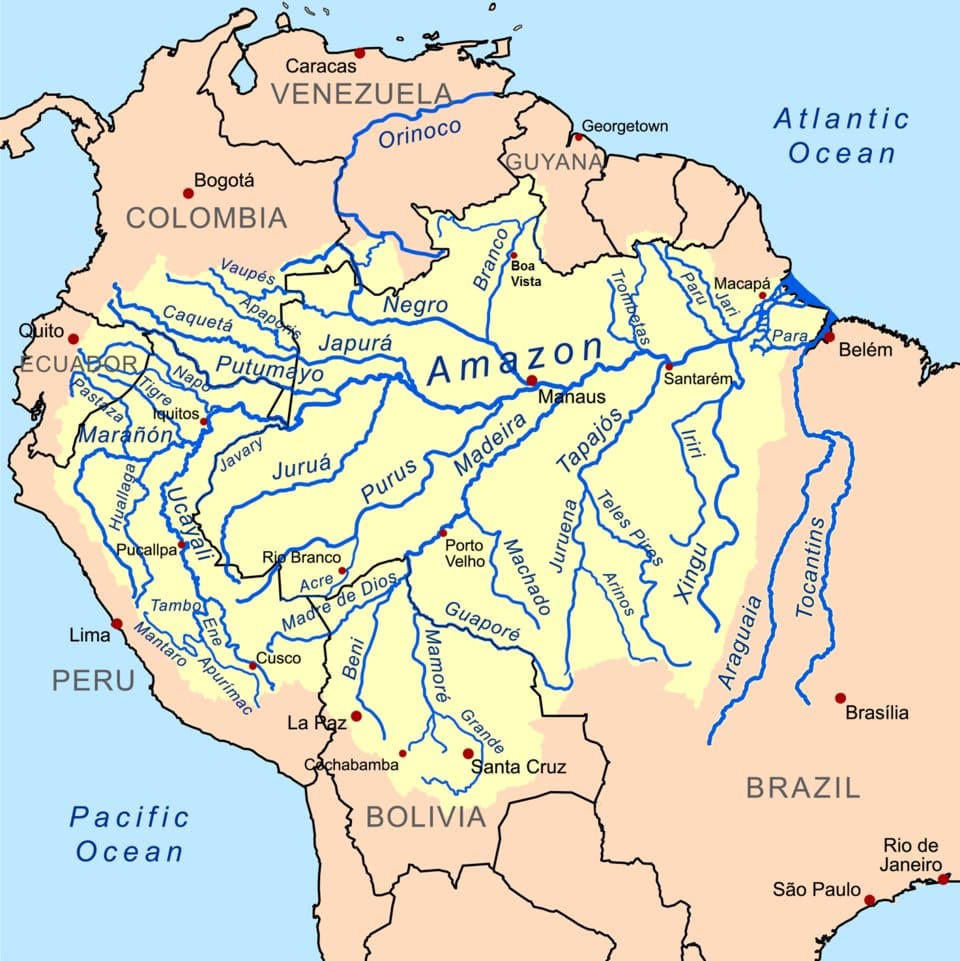
The black line tetra is native to coastal river systems of eastern Brazil, primarily in the Paraiba do Sul basin region. This is not an Amazonian species. Its home waters are the smaller rivers and tributaries that drain the coastal lowlands of southeastern Brazil, flowing into the Atlantic Ocean.
In the wild, black line tetras inhabit slow-moving streams and tributaries with sandy or muddy substrates. These waterways are typically bordered by vegetation, with overhanging branches and aquatic plants providing shade and cover. Fallen leaves and organic debris accumulate on the bottom, contributing tannins that slightly stain the water. The water conditions in these coastal drainages vary quite a bit, ranging from soft and slightly acidic in forested tributaries to moderately hard and neutral in more open areas.
This broad range of natural conditions is a big reason why the black line tetra is so adaptable in captivity. These fish evolved in waterways where parameters shift with the seasons, and they’ve developed the flexibility to handle it. You’ll find other small characins sharing these habitats, along with small catfish species and various cichlids that prefer the same slow-moving waters.
Appearance & Identification
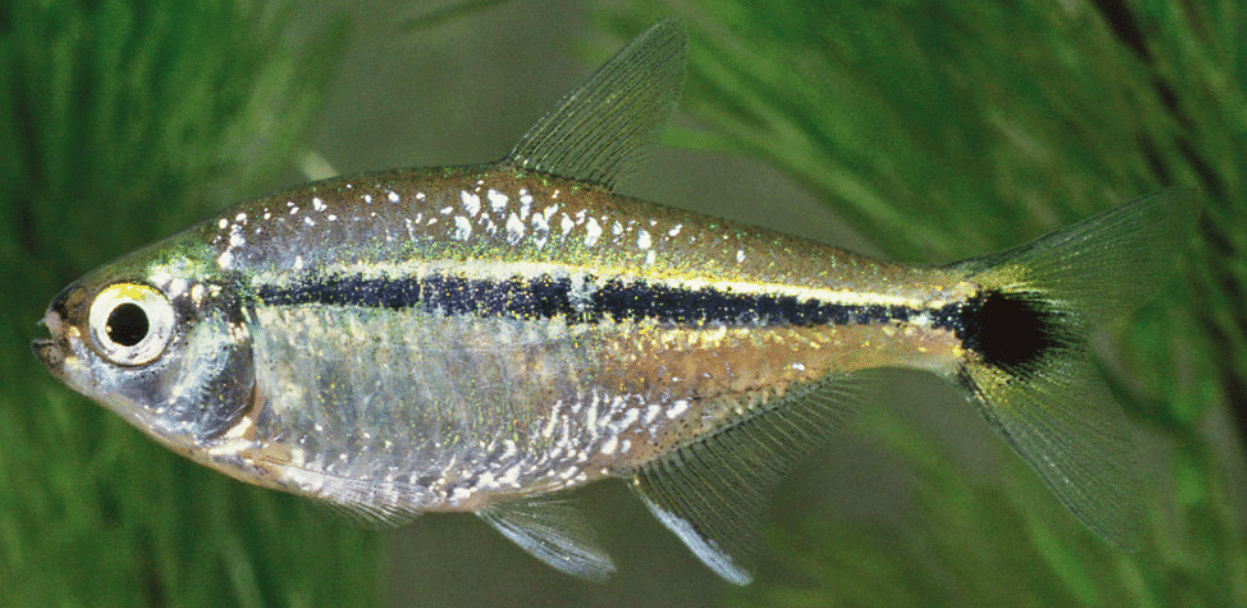
The black line tetra has a classic tetra body shape – moderately compressed and elongated with a slight upward curve to the profile. The defining feature is the bold, dark lateral stripe that runs from the tip of the snout straight through the eye and all the way back to the base of the caudal fin. This stripe is consistently dark and well-defined, giving the fish a clean, graphic appearance.
The body color above the stripe is silvery with a subtle iridescent sheen that catches the light as the fish moves. Below the stripe, the belly is lighter silver to white. The fins are mostly transparent to slightly yellowish, with some individuals showing a faint tint in the anal and caudal fins. While it’s not the most colorful tetra in the hobby, the contrast between the bright silver body and that crisp dark line creates an understated elegance, especially when a school of them moves through a planted tank together.
Male vs. Female
Sexing black line tetras is straightforward once they’re mature. Females are noticeably rounder and fuller-bodied than males, especially when carrying eggs. When viewed from above, the difference in body width is easy to spot. Males are slimmer and slightly more streamlined. Males also show slightly more intense iridescence along the body, though the difference is subtle. The dark lateral stripe is equally prominent in both sexes.
Average Size & Lifespan
Adult black line tetras typically reach about 2 inches (5 cm) in total length. They’re a fairly standard size for a mid-range tetra, similar in length to species like the black phantom or serpae tetra. Most commercially available specimens are juveniles that will grow to full size within several months of purchase.
In captivity, black line tetras have a lifespan of 3 to 5 years with proper care. Consistent water quality, a varied diet, and a stress-free environment with adequate schooling numbers are the keys to reaching the upper end of that range. Wild-caught and captive-bred specimens will have similar lifespans when kept under good conditions.
Care Guide
Tank Size
A 20-gallon (76 liter) tank is the minimum for a school of 6 black line tetras. They’re active mid-water swimmers that appreciate horizontal swimming space, so a 20-gallon long is a better choice than a 20-gallon tall if you have the option. If you want a larger school of 10 or more, step up to a 30-gallon (114 liters) or bigger to give them the room they need to school naturally.
Water Parameters
| Parameter | Ideal Range |
|---|---|
| Temperature | 72-82°F (22-28°C) |
| pH | 6.0-8.0 |
| Hardness | 2-20 dGH |
| KH | 2-15 dKH |
One of the biggest selling points of the black line tetra is its adaptability to water chemistry. The pH tolerance from 6.0 all the way to 8.0 means this fish will do fine in almost any tap water. Hardness tolerance is equally broad at 2 to 20 dGH, which covers everything from very soft to moderately hard water. If you’re a beginner who doesn’t want to mess around with RO water or buffer solutions, the black line tetra will work with whatever comes out of your tap.
That said, stability matters more than hitting a specific number. Avoid sudden swings in pH or temperature, and your black line tetras will do just fine. Captive-bred specimens, which make up the majority of what’s available in the trade, are even more tolerant of varying conditions than wild-caught fish.
Filtration & Water Flow
Black line tetras don’t have strong preferences when it comes to filtration type. A standard hang-on-back filter or sponge filter will work well for a 20-gallon setup. For larger tanks, a canister filter provides excellent mechanical and biological filtration. Aim for gentle to moderate flow – these fish come from slow-moving waters in the wild and don’t appreciate being blasted by a strong current.
Weekly water changes of 20-25% are recommended. Black line tetras are hardy, but consistent maintenance keeps them looking their best and helps prevent the gradual decline in water quality that leads to health problems over time.
Lighting
Moderate lighting works best for black line tetras. They’re not particularly light-sensitive, but they do show better color and more confident behavior when the lighting isn’t overly intense. If you’re running a planted tank with stronger lights, provide some shaded areas with floating plants or tall background plants where they can retreat. The iridescent sheen on their body really catches the eye under moderate, angled lighting.
Plants & Decorations
Black line tetras look their best in a planted tank with a mix of open swimming space and planted areas along the sides and back. Good plant choices include Java Fern, Anubias, Vallisneria, and Amazon Swords for background coverage. Floating plants like Amazon Frogbit or Water Lettuce provide dappled shade that mimics their natural habitat.
Driftwood and smooth rocks add visual interest and create natural boundaries in the tank. A few pieces of driftwood also leach tannins into the water, which these fish appreciate even if they don’t require blackwater conditions. Leave the center and front of the tank relatively open so the school has room to swim together.
Substrate
Fine gravel or sand both work well. A darker substrate is recommended because it brings out the contrast of the silver body and dark stripe. On a light-colored substrate, the fish will look washed out. Dark sand or dark fine gravel will make your school of black line tetras really stand out.
Is the Black Line Tetra Right for You?
Before you buy, run through this honest checklist. The Black Line Tetra is a great fish for the right keeper, but it is not for everyone.
- You want a mid-sized tetra with a clean, bold horizontal stripe
- You have a 30-gallon or larger tank with open swimming space
- You can keep a school of 6 to 8+ for proper schooling behavior
- You want a hardy species that adapts to a wide range of water conditions
- Your tank has some current flow. These are active swimmers that enjoy movement
- You appreciate clean, graphic patterning over flashy coloring
Avoid If:
- You keep long-finned or slow-moving fish – black line tetras fin-nip in groups under 8, especially in small tanks
- You want a fish for a heavily planted showcase tank – they actively uproot delicate stem plants while foraging
- Your school is under 8 fish – aggression between individuals increases significantly in small groups
What People Get Wrong
Black line tetras are often dismissed as “just another tetra” because they’re not as colorful as neon or cardinal tetras. That’s a mistake. They’re hardier than either of those species, more tolerant of water condition variation, and equally active schoolers. For hobbyists who want a reliable, long-lived community fish, black line tetras are consistently undervalued.
Group size is the most common error. People buy 4 or 5 and wonder why they look washed out and stay near the bottom. Black line tetras in small groups are skittish and stressed. In groups of 8 or more, they become confident, active midwater fish that show the lateral stripe to full effect.
They also get confused with the black skirt tetra (Gymnocorymbus ternetzi) in some stores, which is a different species with different care requirements. Black line tetras have a distinctive horizontal stripe running the length of the body , that’s the identifying feature. Know what you’re buying before you leave the store.
Tank Mates
Black line tetras are peaceful community fish that get along well with a wide range of similarly sized, non-aggressive species. Their mid-water swimming habit means they won’t compete with bottom dwellers or surface specialists.
Best Tank Mates
- Corydoras catfish – peaceful bottom dwellers that occupy a completely different zone
- Harlequin Rasboras – similar size and temperament, excellent mid-level companions
- Neon Tetras – a classic pairing that adds color contrast to the school
- Ember Tetras – small and peaceful, the warm orange against the black line tetra’s silver looks great
- Cherry Barbs – peaceful barbs that won’t cause any problems
- Otocinclus – gentle algae eaters that stay out of the way
- Bristlenose Plecos – bottom-dwelling algae eaters compatible with most community setups
- Kuhli Loaches – peaceful nocturnal bottom dwellers
- Pristella Tetras – similar care requirements and peaceful nature
- Dwarf Gouramis – add a centerpiece fish without aggression concerns
Tank Mates to Avoid
- Large Cichlids – anything big enough to eat them will eventually try
- Tiger Barbs – notorious fin nippers that can harass peaceful tetras
- Bettas – the confined space of most betta setups and potential for aggression make this a bad match
- Jack Dempseys – far too aggressive and predatory for small tetras
- Red Tail Sharks – territorial bottom-to-mid dwellers that can bully peaceful schoolers
Food & Diet
Black line tetras are true omnivores that will eat just about anything you offer. A high-quality flake food or micro pellet should form the base of their diet. Brands like Hikari Micro Pellets or Fluval Bug Bites are excellent staples that provide balanced nutrition.
Supplement the staple diet with frozen foods like bloodworms, brine shrimp, and daphnia 2-3 times per week. These add variety and help bring out the best coloration. Live foods like baby brine shrimp and daphnia are also accepted eagerly and make excellent conditioning foods if you’re planning to breed them.
Feed twice daily, offering only what the school can consume within 2-3 minutes per feeding. Black line tetras are enthusiastic eaters that will gorge themselves if given the chance, so portion control prevents overfeeding and keeps the water clean.
Pro tip: Occasionally offering finely crushed vegetable flakes or blanched spinach adds dietary variety that supports long-term health. Omnivores benefit from plant matter in their diet even if they don’t actively seek it out.
Breeding & Reproduction
Black line tetras are one of the easier tetra species to breed in the home aquarium. They’re egg scatterers that will spawn readily once conditions are right, making them a good choice for hobbyists looking to try their hand at breeding characins for the first time.
Breeding Difficulty
Easy. Black line tetras spawn willingly in captivity and don’t require extreme water conditions to trigger breeding behavior. With basic conditioning and a dedicated spawning setup, most hobbyists can get them to spawn without much difficulty.
Spawning Tank Setup
Set up a separate breeding tank of 10 gallons (38 liters) or larger. Keep the lighting dim and cover the sides of the tank if possible to reduce stress. Place a layer of Java moss, spawning mops, or fine-leaved plants like Cabomba on the bottom to give the eggs something to fall into. A mesh or grid placed just above the bottom works well to prevent the adults from eating the eggs after spawning.
Use a gentle sponge filter for filtration. Strong flow will scatter the eggs and stress the spawning pair.
Water Conditions for Breeding
While black line tetras tolerate a wide range of conditions for general keeping, slightly softer and more acidic water helps trigger spawning. Aim for a pH of 6.0-6.5, hardness around 4-8 dGH, and a temperature of 78-80°F (26-27°C). A partial water change with slightly cooler, soft water can mimic the seasonal rains that trigger spawning in the wild.
Conditioning & Spawning
Condition a group of adults (2-3 pairs works well) with generous feedings of live and frozen foods for 1-2 weeks before introducing them to the breeding tank. Daphnia, baby brine shrimp, and bloodworms are all effective conditioning foods. Females will become noticeably plumper as they fill with eggs.
Introduce the conditioned group to the spawning tank in the evening. Spawning typically occurs the following morning as the first light hits the tank. The males will chase the females through the plants, and eggs are scattered among the vegetation and across the bottom. A healthy female can produce 200-300 eggs per spawning event.
Remove the adults immediately after spawning is complete, as they will eat the eggs given the opportunity.
Egg & Fry Care
The eggs are small, clear, and slightly adhesive. They hatch in approximately 24-36 hours at 78°F (26°C). The fry are tiny and will remain attached to the substrate or plants, absorbing their yolk sacs for the first 2-3 days. Once they become free-swimming, start feeding infusoria or liquid fry food.
After about a week, the fry will be large enough to accept microworms. At 2-3 weeks, graduate them to freshly hatched baby brine shrimp, which provides excellent nutrition for rapid growth. The fry are light-sensitive in the early stages, so keep the breeding tank dimly lit for the first week or so.
Growth is steady with frequent small feedings and good water quality. Small water changes of 10% every other day help maintain conditions without shocking the fry. Most commercially available black line tetras are captive-bred, which speaks to how readily this species reproduces in aquarium conditions.
Common Health Issues
Black line tetras are hardy fish that don’t have any species-specific diseases to worry about. However, like all freshwater fish, they’re susceptible to a few common conditions.
Ich (White Spot Disease)
Ich is the most common ailment in community tanks, and black line tetras can contract it just like any other fish. You’ll see small white spots on the body and fins, along with flashing (rubbing against objects). Raise the temperature to 82-84°F (28-29°C) gradually and treat with a copper-based or malachite green medication. Catching it early makes treatment straightforward.
Fin Rot
Fin rot typically shows up as ragged, deteriorating fin edges, often with redness at the base. It’s almost always caused by poor water quality or stress. Improving water conditions through more frequent water changes and cleaning the substrate usually resolves mild cases. Severe infections require antibacterial treatment.
Columnaris
This bacterial infection appears as white or grayish patches on the body, often around the mouth or along the lateral line. It spreads quickly in warm water with poor conditions. Quarantine affected fish and treat with antibacterial medications. Prevention is simple: maintain clean water and avoid overcrowding.
The best defense against all of these is prevention. Quarantine new fish for 2-3 weeks before adding them to your main tank, maintain consistent water quality, and avoid overstocking.
Common Mistakes to Avoid
- Keeping too few. Black line tetras are schooling fish that need a group of at least 6 to feel secure. In smaller numbers, they become stressed, hide constantly, and may even nip at tank mates out of anxiety.
- Skipping the cycle. Even though black line tetras are hardy, they shouldn’t be used to cycle a new tank. Always complete the nitrogen cycle before adding any fish. Hardy doesn’t mean invincible.
- Ignoring lid security. While not extreme jumpers, black line tetras can and will jump if startled or if water quality deteriorates. A well-fitting lid is essential.
- Using a light substrate. This isn’t a health issue, but it will make your fish look dull. Dark substrates bring out the best contrast in the silver body and dark stripe.
Where to Buy
Black line tetras are not as commonly stocked as neon tetras or black skirt tetras, but they’re available from specialty retailers and online sellers. Your best bets for finding healthy, well-acclimated specimens are:
- Flip Aquatics – excellent source for quality freshwater fish with reliable shipping
- Dan’s Fish – another trusted online retailer specializing in freshwater species
- Local fish stores – independent shops are more likely to carry this species than big chain pet stores, and many can special order them for you
Most black line tetras in the trade are captive-bred, which means they’re already adapted to aquarium conditions and will ship well. Expect to pay in the $3-5 range per fish, with discounts often available for larger groups.
Frequently Asked Questions
How many black line tetras should be kept together?
A minimum of 6, with 8-10 being ideal. Black line tetras are schooling fish that rely on group numbers for security. In larger groups, they display more natural schooling behavior and bolder coloration. Keeping fewer than 6 leads to stressed, skittish fish that may nip at tank mates.
What size tank does a black line tetra need?
A 20-gallon (76 liter) tank is the minimum for a school of 6. These are active mid-water swimmers that need horizontal space to school properly. A 20-gallon long provides the best footprint for a small group, while a 30-gallon (114 liters) or larger is better for groups of 10 or more.
Are black line tetras easy to care for?
Yes. Black line tetras are among the easiest tetras to keep. They tolerate a wide range of water conditions (pH 6.0-8.0, hardness 2-20 dGH), eat virtually any food, and are resistant to most common diseases. They’re an excellent choice for beginners setting up their first community tank.
Can black line tetras live with shrimp?
Adult Amano shrimp and larger shrimp species are safe with black line tetras. However, small shrimp like cherry shrimp and their juveniles may be picked off, especially baby shrimp. If you keep both, provide plenty of dense plant cover and moss where shrimp can hide and breed safely.
How long do black line tetras live?
With proper care, black line tetras typically live 3 to 5 years in captivity. Maintaining stable water conditions, feeding a varied diet, and keeping them in an appropriately sized school are the biggest factors in reaching the upper end of that range.
Are black line tetras fin nippers?
No. Black line tetras are genuinely peaceful fish that don’t have a reputation for fin nipping. They’re a safe choice alongside long-finned species, though very slow-moving tank mates with elaborate fins should always be monitored during the initial introduction period.
Why is my black line tetra losing color?
Color loss in black line tetras is caused by stress, poor water quality, or inadequate group size. Check your water parameters, make sure you have at least 6 fish in the group, and verify that no aggressive tank mates are causing stress. A dark substrate and moderate lighting also help these fish display their best coloration.
What It Is Actually Like Living With Black Line Tetra
In a proper school, black line tetra display natural movement patterns that are genuinely engaging to watch. The fish interact with each other, establish subtle hierarchies, and move through the tank with purpose.
They spend most of their time near the surface, which fills a level of the tank that many other species ignore. This makes them excellent complements to mid-water and bottom-dwelling fish.
Feeding time is when their personality comes out. They learn your routine quickly and will anticipate feeding before you even open the lid.
Their color and behavior improve over time as they settle into a stable environment. Fish that have been in the same tank for months look noticeably better than recently added stock.
They coexist peacefully with virtually every other appropriately-sized community fish. This compatibility makes tank planning straightforward.
How the Black Line Tetra Compares to Similar Species
Black Line Tetra vs. Penguin Tetra
Both are mid-sized tetras with dark horizontal stripes. The Penguin Tetra has the distinctive oblique stripe that extends into the tail. The Black Line Tetra has a cleaner, straighter stripe. Both are hardy and active. The Penguin Tetra is more commonly available.
Black Line Tetra vs. Black Neon Tetra
The Black Neon Tetra is smaller and has a two-toned stripe (dark line with iridescent line above). The Black Line Tetra is larger with a bolder single stripe. For smaller tanks, the Black Neon works better. For larger community setups, the Black Line Tetra fills the space.
Closing Thoughts
The black line tetra is a solid, reliable community fish that proves you don’t need flashy colors to make a great impression. That clean dark stripe against the silvery body looks sharp in any planted tank, and the sheer adaptability of this species makes it one of the most beginner-friendly tetras you can find. It eats everything, tolerates a wide range of water conditions, and breeds without much fuss.
If you’re looking for more tetra species to keep alongside your black line tetras, check out our care guides for pristella tetras, flame tetras, and silvertip tetras. For a full overview of the best tetras in the hobby, visit our complete tetras guide.
Have you kept black line tetras? I’d love to hear about your experience with them. Drop a comment below!
Recommended Video
Check out our tetra tier list video where we rank the most popular tetras in the hobby, including the black line tetra:
References
- Hyphessobrycon scholzei Profile – Seriously Fish
- Hyphessobrycon scholzei (Ahl, 1937) – FishBase
- Hyphessobrycon scholzei – The Aquarium Wiki
- Melo, B.F. Et al. (2024) Phylogenomics of Characidae – Systematic Biology
- About the Author
- Latest Posts

I’m Mark Valderrama, founder of Aquarium Store Depot and a fishkeeper with over 25 years of hands-on experience. I started in the hobby at age 11, worked at local fish stores, and have kept freshwater tanks, ponds, and reef tanks ever since. I’ve been featured in two best-selling aquarium books on Amazon and built this site to share practical, experience-based fish keeping knowledge.
Leave a Reply