
Last Updated: June 25, 2026
Thank you for visiting! By the way… any links on this page that lead to products on Amazon and other stores/partners are affiliate links Aquarium Store Depot earns a commission if you make a purchase.
Table of Contents
- What Care Guides Get Wrong
- The Reality of Keeping Green Fire Tetra
- Key Takeaways
- Species Overview
- Classification
- Origin & Natural Habitat
- Appearance & Identification
- Average Size & Lifespan
- Care Guide
- Is It Right for You?
- What People Get Wrong
- Tank Mates
- Food & Diet
- Breeding & Reproduction
- Common Health Issues
- Common Mistakes to Avoid
- Where to Buy
- Frequently Asked Questions
- What It Is Actually Like Living With Green Fire Tetra
- Species Comparison
- Closing Thoughts
- Recommended Video
- References
The green fire tetra combines an iridescent green body with red-orange fins in a small, peaceful package. It needs a school of 8+ and slightly acidic water to show its best colors. In hard, alkaline water, the green fades and the red dulls. This is another tetra where water chemistry makes or breaks the display.
Green fire tetras in the right water are stunning. In the wrong water, they are forgettable.
The Reality of Keeping Green Fire Tetra
Water chemistry is everything. The iridescent green only appears in soft, acidic water with tannins. Hard, alkaline water produces a dull, silver-gray fish with no green at all. If you cannot provide the right water chemistry, this is not the fish for you.
The orange belly glow is the hidden feature. Most guides focus on the green. But well-kept green fire tetras also develop a warm orange glow on the belly that creates the “fire” part of the name. This only appears in fish kept in ideal conditions for extended periods.
Subdued lighting is essential. Bright lights wash out the iridescence completely. Subdued to moderate lighting allows the green to shimmer and shift as the fish moves. This is a fish for dimly lit, tannin-stained setups, not bright, clean tanks.
Biggest Mistake New Owners Make
Keeping them in hard water under bright lights on white gravel. This combination produces a plain silver fish with no green and no fire. Every visual feature depends on the opposite conditions.
The green fire tetra is a remarkable fish in the right setup. A blackwater tank with tannins, soft water, and dim lighting transforms it into something that looks almost bioluminescent. The effort required to create those conditions is what separates good keepers from everyone else.
Key Takeaways
- Minimum tank size is 15 gallons (57 liters) for a school of 8+ fish
- Exceptionally hardy – tolerates temperatures as low as 64°F (18°C) and a pH range of 5.5 to 8.0
- Omnivore – readily accepts flake, frozen, and live foods with no fuss
- Great beginner fish – one of the most adaptable and forgiving tetras in the hobby
- Stunning dual coloration – iridescent green body with fiery red-orange belly and fin bases that intensifies with good care
Species Overview
| Field | Details |
|---|---|
| Scientific Name | Aphyocharax rathbuni |
| Common Names | Green Fire Tetra, Redflank Bloodfin |
| Family | Acestrorhamphidae |
| Origin | Paraguay River basin – Argentina, Paraguay, Brazil |
| Care Level | Easy |
| Temperament | Peaceful |
| Diet | Omnivore |
| Tank Level | Mid to Top |
| Maximum Size | 1.6 inches (4 cm) |
| Minimum Tank Size | 15 gallons (57 liters) |
| Temperature | 64-82°F (18-28°C) |
| pH | 5.5-8.0 |
| Hardness | 2-20 dGH |
| Lifespan | 3-5 years in captivity |
| Breeding | Egg scatterer |
| Breeding Difficulty | Easy |
| Compatibility | Community |
| OK for Planted Tanks? | Yes |
Classification
| Taxonomic Level | Classification |
|---|---|
| Order | Characiformes |
| Family | Acestrorhamphidae (reclassified from Characidae per Melo et al. 2024) |
| Genus | Aphyocharax |
| Species | A. Rathbuni (Eigenmann, 1907) |
Green fire tetras reward a blackwater setup with striking coloration. They’re manageable for intermediate hobbyists but require soft, acidic water and a planted tank to display their best green iridescence. Hard water neutralizes the visual payoff entirely.
The genus Aphyocharax contains roughly 11 recognized species of small, slender characins found across South American river systems. This group was historically placed within the family Characidae, but a 2024 phylogenomic study by Melo and colleagues reclassified Aphyocharax and related genera into the family Acestrorhamphidae. You may still see Characidae listed in older references, but the updated classification reflects more accurate evolutionary relationships.
The Green Fire Tetra’s closest well-known relative is the Bloodfin Tetra (Aphyocharax anisitsi), which shares the same genus and many of the same hardiness traits. The species was originally described by Eigenmann in 1907 from specimens collected in the Paraguay River drainage.
Origin & Natural Habitat
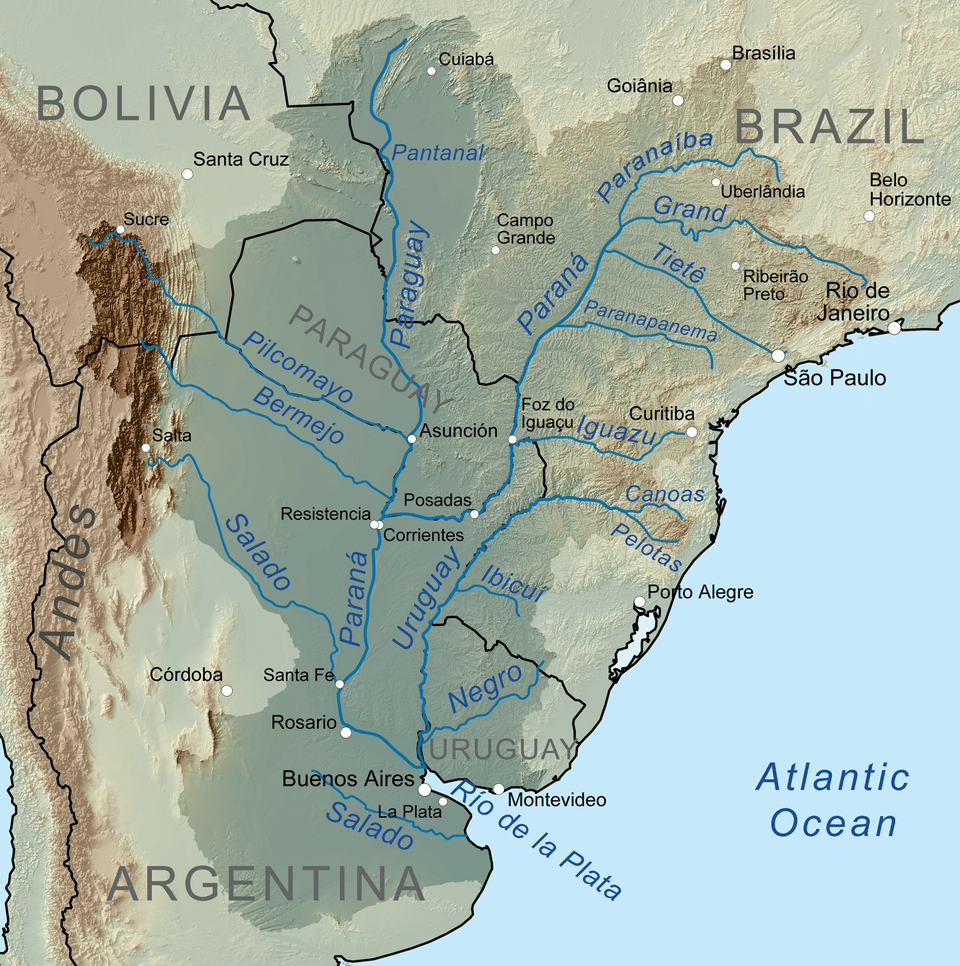
The Green Fire Tetra is native to the Paraguay River basin in South America, with its range spanning portions of Argentina, Paraguay, and southern Brazil. This is a large subtropical river system that feeds into the Rio de la Plata, and it’s home to a huge diversity of small characins.
In the wild, Green Fire Tetras inhabit slower-moving tributaries, small streams, and marshy areas along the edges of the main river channels. These habitats typically feature sandy or muddy substrates with plenty of submerged vegetation, fallen branches, and leaf litter. The water conditions vary widely across their range, from soft and slightly acidic in forest-shaded tributaries to harder, more alkaline water in open floodplain areas.
The subtropical climate of the Paraguay basin means significant seasonal temperature swings, with cooler conditions during the southern winter. This natural exposure to fluctuating temperatures is why the Green Fire Tetra handles cooler water so well in captivity. In the wild, they share their habitat with other Aphyocharax species, various corydoras catfish, and other small characins that thrive in these seasonally variable conditions.
Appearance & Identification
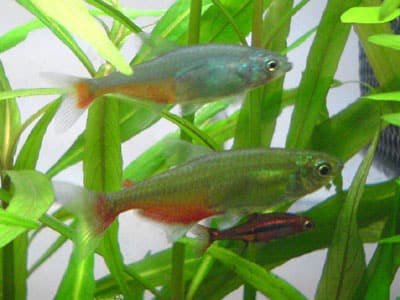
The Green Fire Tetra is a small, slender-bodied tetra with a color combination that’s unlike anything else commonly available in the hobby. The upper half of the body is covered in an iridescent green sheen that shifts and glows as the fish moves through the water. The lower half, from the belly down through the anal and pelvic fin bases, is washed in a warm red-orange to fiery red color. It’s this contrast between the cool green and the hot red that earns the species its common name.
The body shape is elongated and slightly compressed laterally, typical of the Aphyocharax genus. The fins are mostly clear to slightly tinted, with the most color concentrated at the bases of the anal and pelvic fins. Under good conditions, the green iridescence is genuinely electric, while the red tones deepen and spread. Stressed or newly acquired fish often look pale and washed out, so don’t judge them by their pet store appearance. Give them a few weeks in a good setup and the transformation is significant.
Male vs. Female
Males are slimmer, more streamlined, and show more vivid coloration, particularly in the red-orange tones along the belly and fin bases. Like their Bloodfin Tetra relatives, mature males develop tiny hook-like structures on the anal and pelvic fin rays. These hooks will sometimes be felt if you run a fine net over the fish, as they snag on the mesh. Females are slightly fuller-bodied, especially when carrying eggs, and their coloration is a bit more subdued.
Average Size & Lifespan
Adult Green Fire Tetras reach about 1.6 inches (4 cm) in total length. They’re on the smaller side as tetras go, similar in size to neons and cardinals but with that distinctively slender Aphyocharax body shape that makes them look a bit more streamlined.
In captivity, expect a lifespan of 3 to 5 years with proper care. Consistent water quality, a varied diet, and a stress-free environment with an adequate school size are the main factors in reaching the upper end of that range. Wild-caught specimens may arrive in slightly better condition than mass-produced farm stock, but either way these are fish that reward good husbandry with longevity.
Care Guide
Tank Size
A 15-gallon (57 liter) tank is the minimum for a school of Green Fire Tetras. These are active, mid-to-upper level swimmers that need room to cruise, so horizontal swimming space matters more than tank height. A 20-gallon long (76 liters) is ideal if you want to keep a larger school of 10 or more, which is where you’ll really see their best schooling behavior.
Like most Aphyocharax species, Green Fire Tetras are capable jumpers. A tight-fitting lid or cover glass is a must. They’re not as bad as hatchetfish, but a startled fish or one chased by a tank mate will find the gap in your cover if it exists.
Water Parameters
| Parameter | Ideal Range |
|---|---|
| Temperature | 64-82°F (18-28°C) |
| pH | 5.5-8.0 |
| Hardness | 2-20 dGH |
| KH | 2-12 dKH |
The water parameter flexibility on this species is outstanding. A pH range of 5.5 to 8.0 and hardness from 2 to 20 dGH means the Green Fire Tetra will adapt to virtually any tap water in the country. You don’t need RO water, peat filtration, or buffering products. Whatever comes out of your faucet, these fish will handle it.
The temperature tolerance is equally impressive. They handle everything from 64°F (18°C) to 82°F (28°C), making them one of the few tetras that genuinely thrives in an unheated tank. In a climate-controlled home where room temperature sits around 68-72°F (20-22°C), these fish will do perfectly well without a heater. That said, if you’re keeping them in a heated community tank at 76-78°F (24-26°C), they’ll be happy there too.
Filtration & Water Flow
Green Fire Tetras handle moderate water flow without issues. They’re active swimmers that can hold their own in gentle to moderate currents. A standard hang-on-back filter works well for smaller setups, while a canister filter is a better choice for tanks 30 gallons (114 liters) and up. Sponge filters are also fine, especially for smaller or breeding setups.
Aim for weekly water changes of 20-25% to maintain consistent water quality. Despite their hardiness, they’ll show their best coloration and longest lifespan when water conditions stay stable. Consistency matters more than hitting a specific number.
Lighting
Moderate lighting brings out the best in Green Fire Tetras. Their iridescent green scales really pop under standard aquarium lighting, and the red-orange tones along the belly contrast beautifully against a well-lit planted tank. They’re not as light-sensitive as some deeper-bodied tetras, but providing some shaded areas with floating plants gives them spots to retreat to and mimics their natural habitat.
Plants & Decorations
A planted tank is the best way to showcase Green Fire Tetras. Hardy, low-maintenance plants like Java Fern, Anubias, Amazon Swords, and Vallisneria work well and complement the fish’s coloration. Green Fire Tetras leave plants completely alone, so you don’t need to worry about nibbling or uprooting.
Plant densely along the back and sides of the tank, leaving open swimming space in the front and center. Driftwood pieces add a natural look, and floating plants like Amazon Frogbit or Dwarf Water Lettuce provide overhead cover that these fish appreciate. Since they spend most of their time in the mid-to-upper water column, focus decorations on creating a balanced mix of open areas and plant cover at those levels.
Substrate
Any substrate works since Green Fire Tetras rarely interact with the bottom. Fine sand or smooth gravel are both suitable. A dark-colored substrate is strongly recommended because it makes the green iridescence and red-orange belly tones stand out dramatically. On a light substrate, the colors look significantly washed out by comparison.
Is the Green Fire Tetra Right for You?
Before you buy, run through this honest checklist. The Green Fire Tetra is a great fish for the right keeper, but it is not for everyone.
- You can provide soft, slightly acidic water with tannins for best color expression
- You have a planted tank with dark substrate and subdued to moderate lighting
- You keep a school of 8+ for confident behavior and color display
- You want a tetra that transforms from ordinary to stunning with the right setup
- You have a 15-gallon or larger tank with stable water parameters
- You are willing to put in the effort on water chemistry that this species rewards
Avoid If:
- You keep long-finned fish like bettas or fancy guppies – green fire tetras are fin-nippers in groups under 8
- You have hard, alkaline water – their iridescent color develops fully only in soft, slightly acidic conditions
- You want a group under 8 – small groups become semi-aggressive and lose the vibrant collective display
What People Get Wrong
The biggest mistake with green fire tetras is buying them for a standard community tank. In neutral or hard water with bright lighting, they look like unremarkable silver fish. The “green fire” coloration (the iridescent green sheen that makes this species worth buying) only appears under the right lighting and in the right water chemistry. Without a blackwater-style setup, you won’t see what this fish is actually capable of.
Lighting is often overlooked. Green fire tetras are a species where subdued or indirect lighting actually enhances the visual display. The iridescent sheen catches light differently than the colors of most tetras. It’s more about the angle and quality of light than intensity. Standard bright LED strips wash the effect out.
Group size still applies. Like all tetras, green fire tetras need a proper school of 8 or more to behave naturally. Small groups produce stressed fish that hide and never display the confident open-water behavior that shows off their coloration.
Tank Mates
Green Fire Tetras are peaceful, active community fish that occupy the middle to upper water column. They pair well with a wide variety of similarly-sized peaceful species. Keeping them in schools of 8 or more is important, as smaller groups can lead to scattered, skittish behavior.
Best Tank Mates
- Corydoras catfish – peaceful bottom dwellers that occupy a completely different tank zone
- Bloodfin Tetras – close relatives from the same genus with similar care requirements and cold tolerance
- Cherry Barbs – peaceful, similarly sized, and add warm red tones that complement the Green Fire’s coloration
- Harlequin Rasboras – calm mid-level schoolers that won’t compete for space
- Ember Tetras – small and peaceful with contrasting warm orange coloration
- Bristlenose Plecos – peaceful algae eaters that stay out of the way
- White Cloud Mountain Minnows – another cold-tolerant species, perfect for an unheated tank pairing
- Zebra Danios – active, cold-tolerant, and equally hardy
- Kuhli Loaches – peaceful bottom dwellers from a completely different zone
- Dwarf Gouramis – calm upper-level fish that coexist peacefully
Tank Mates to Avoid
- Large Cichlids – anything big enough to view a Green Fire Tetra as food
- Tiger Barbs – notorious fin nippers that will harass smaller tetras
- Angelfish – adults may prey on small tetras, especially slender ones like the Green Fire
- Aggressive or territorial species – anything that will chase or corner these active swimmers
- Very large tank mates – fish significantly bigger than 4 inches (10 cm) can intimidate and stress small tetras into hiding
Food & Diet
Green Fire Tetras are unfussy omnivores that accept just about anything you offer. In the wild, they feed on small insects, worms, crustaceans, and whatever organic matter drifts by. In the aquarium, duplicating that variety is easy and rewarding.
A high-quality flake food or micro pellet serves as a solid daily staple. Supplement 2-3 times per week with frozen or live foods like bloodworms, daphnia, brine shrimp, and cyclops. These protein-rich additions make a noticeable difference in bringing out the red and green coloration.
Feeding frequency: Once or twice daily, only what the school can consume in about 2 minutes. Green Fire Tetras are mid-to-upper column feeders, so they’ll grab food at or near the surface quickly. If you’re keeping bottom dwellers like corydoras, make sure sinking foods reach the substrate separately.
Pro tip: Rotating between 3-4 different food types throughout the week produces the most vibrant coloration. The green iridescence and red belly tones respond noticeably to high-quality, varied nutrition. Don’t rely on flake alone if you want these fish to really shine.
Breeding & Reproduction
Green Fire Tetras are egg scatterers that breed relatively easily in a home aquarium. Like their Bloodfin relatives, they’re prolific spawners when properly conditioned, making them a solid choice for hobbyists looking to try their hand at breeding small tetras.
Breeding Difficulty
Easy. Green Fire Tetras are among the more straightforward tetras to breed. They don’t require extreme water parameters, and they spawn willingly with basic conditioning. The main challenge is protecting the eggs from the adults.
Spawning Tank Setup
Set up a dedicated breeding tank of 10 gallons (38 liters). Add clumps of fine-leaved plants like Java Moss or spawning mops to give eggs somewhere to land. A bare bottom with a layer of glass marbles or a mesh screen works well too, since the goal is to prevent the adults from eating the eggs immediately after spawning. Keep a gentle sponge filter running for water movement and biological filtration. Dim the lighting or cover the sides of the tank to create a more subdued environment.
Water Conditions for Breeding
Breeding water doesn’t need to be drastically different from normal care parameters. A temperature around 75-79°F (24-26°C), pH of 6.5-7.0, and hardness of 4-8 dGH provides ideal conditions. Slightly softer, warmer water compared to their normal range will trigger spawning behavior. Using aged or slightly acidic water helps, but these aren’t fish that require peat filtration or extreme softness to breed.
Conditioning & Spawning
Separate males and females for 1-2 weeks and feed heavily with live or frozen foods. Daphnia, brine shrimp, and bloodworms are excellent conditioners. When females are visibly plump with eggs and males are displaying their most intense coloration, introduce a breeding group (3 males and 3 females works well) to the spawning tank in the evening.
Spawning typically occurs the following morning, often at first light. The fish scatter adhesive and non-adhesive eggs among the plants or over the substrate. A well-conditioned female can produce several hundred eggs per spawning session. The spawning act involves the male driving alongside the female with rapid fluttering movements.
Egg & Fry Care
Remove the adults immediately after spawning, as they will eat every egg they can find. Eggs hatch in approximately 24-36 hours depending on temperature. The fry become free-swimming about 3-4 days after hatching.
Feed infusoria or liquid fry food for the first 5-7 days, then graduate to microworms and freshly hatched baby brine shrimp as the fry grow. Keep the tank dimly lit during the early stages, as bright light can stress newly hatched fry. Growth is steady with consistent feeding, and juveniles start showing color within a few weeks.
Green Fire Tetras in the trade come from a mix of captive-bred farm stock and wild-caught specimens. Their willingness to breed in captivity makes them a sustainable choice for the hobby.
Common Health Issues
Green Fire Tetras are hardy fish that rarely develop health problems when kept in clean, stable conditions. That said, no fish is completely immune, and here are the issues to keep on your radar:
Ich (White Spot Disease)
The most common freshwater fish ailment. Green Fire Tetras can pick up ich after temperature swings or the stress of being introduced to a new tank. Look for the telltale white salt-grain spots on the body and fins. Gradually raise the temperature to 82°F (28°C) and treat with a standard ich medication. These fish tolerate treatment well.
Fin Rot
Bacterial fin rot can show up if water quality declines. Frayed, discolored, or receding fin edges are the early warning signs. Improving water quality through more frequent water changes is often enough to reverse mild cases. For more advanced infections, an antibiotic treatment will be needed.
General Prevention
Quarantine all new fish for at least two weeks before adding them to your main tank. Maintain consistent water parameters with regular weekly water changes. A varied diet supports a strong immune system, which is your best defense against most common diseases. The Green Fire Tetra’s natural hardiness works in your favor here, but consistent care still matters.
Common Mistakes to Avoid
- Keeping too few – Groups under 6 result in stressed, pale fish that scatter around the tank rather than schooling. Aim for 8 or more to see natural behavior and the best coloration.
- Judging them by pet store appearance – Green Fire Tetras often look washed out and unremarkable in store tanks. They need time to settle in and color up. Don’t pass on them based on how they look under harsh fluorescent lights in a bare tank.
- Using light-colored substrate – A light or white substrate washes out their coloration significantly. Dark substrate makes an enormous difference in how vibrant the green and red tones appear.
- Skipping the lid – Like other Aphyocharax species, Green Fire Tetras can and will jump. A secure cover is essential.
Where to Buy
Green Fire Tetras are becoming more widely available, though they’re not as commonly stocked as neons or cardinals at big-box pet stores. Your best bet for finding healthy, well-conditioned specimens is through online specialty retailers that focus on freshwater tropical fish.
Check availability at these trusted retailers:
Your local fish store also be able to special-order them through their wholesaler if they don’t carry them regularly. Prices are typically in line with other uncommon but not rare tetras. Both wild-caught and captive-bred stock circulate in the trade.
Frequently Asked Questions
How many Green Fire Tetras should be kept together?
A minimum of 6, but 8 to 10 is much better. Green Fire Tetras are active schooling fish that display their best color and most natural behavior in larger groups. In small numbers, they will scatter and look stressed rather than forming a cohesive school.
What size tank does a Green Fire Tetra need?
A 15-gallon (57 liter) tank is the minimum for a school of 8. They’re active swimmers that need horizontal space, so a longer tank is better than a tall one. For larger schools or mixed community setups, 20 gallons (76 liters) or more is ideal.
Are Green Fire Tetras easy to care for?
Yes. They’re one of the hardiest tetras available. With a pH tolerance of 5.5 to 8.0, a temperature range of 64-82°F (18-28°C), and an unfussy appetite, they adapt to almost any freshwater setup. They’re an excellent choice for beginners.
Can Green Fire Tetras live in unheated tanks?
Yes. Green Fire Tetras are subtropical fish that tolerate temperatures down to 64°F (18°C). In a climate-controlled home where room temperature stays around 68-72°F (20-22°C), they do perfectly well without a heater. Pair them with other cold-tolerant species like White Cloud Mountain Minnows or Zebra Danios for an unheated community setup.
How long do Green Fire Tetras live?
Expect 3 to 5 years in captivity with proper care. Consistent water quality, a varied diet, and a stress-free environment in an adequate school are the biggest factors in reaching the upper end of that range.
Can Green Fire Tetras live with shrimp?
Adult shrimp like Amano Shrimp are safe with Green Fire Tetras. However, smaller dwarf shrimp species like Cherry Shrimp may be at risk, particularly juveniles and shrimplets. If you’re breeding shrimp, provide plenty of dense plant cover like Java Moss for the shrimp to hide in.
Are Green Fire Tetras fin nippers?
Green Fire Tetras are peaceful and not known as persistent fin nippers. They’re less nippy than their Bloodfin relatives. However, keeping them in a proper school of 8 or more reduces any minor nipping tendencies by directing social behavior within the group.
What It Is Actually Like Living With Green Fire Tetra
In the right setup, green fire tetras shimmer with an iridescence that shifts between green and blue as they move. The effect is subtle and mesmerizing.
The orange belly glow develops over weeks in ideal conditions and adds a warm counterpoint to the cool green iridescence.
They are calm, peaceful swimmers that pair beautifully with other soft water species like green neon tetras, pencilfish, and corydoras.
The transformation from store appearance to home tank appearance is one of the most dramatic of any common tetra.
How the Green Fire Tetra Compares to Similar Species
Green Fire Tetra vs. Ember Tetra
The Ember Tetra has more consistent, reliable coloring in a wider range of conditions. The Green Fire Tetra needs specific water chemistry to show its best. For most setups, the Ember is more satisfying. For a dedicated blackwater or tannin-stained tank, the Green Fire Tetra rewards the effort.
Green Fire Tetra vs. Green Neon Tetra
Both have green iridescence, but the Green Neon Tetra has a more consistent neon stripe. The Green Fire Tetra has the added orange belly glow in ideal conditions. The Green Neon is smaller and better for nano tanks. The Green Fire Tetra needs slightly more space and better water chemistry.
Closing Thoughts
The Green Fire Tetra is a genuinely underrated species that checks almost every box. It’s hardy, peaceful, beautiful, adaptable to nearly any water conditions, and even works in unheated setups. The combination of iridescent green and fiery red-orange is unique in the tetra world, and a school of 10 or more in a planted tank with dark substrate is a sight worth building a setup around.
If you’re exploring other hardy tetras with similar care requirements, check out our guides for Bloodfin Tetras, Buenos Aires Tetras, and Flame Tetras.
Have you kept Green Fire Tetras? I’d love to hear about your experience with them. Drop a comment below!
Recommended Video
Check out our tetra tier list video where we rank the most popular tetras in the hobby, including the Green Fire Tetra:
References
- Froese, R. And D. Pauly, Eds. FishBase. Aphyocharax rathbuni. Accessed 2025.
- SeriouslyFish. Aphyocharax rathbuni species profile. Accessed 2025.
- The Aquarium Wiki. Aphyocharax rathbuni. Accessed 2025.
- Melo, B.F, et al. (2024). Phylogenomics of Characidae. Zoological Journal of the Linnean Society, 202(1), 1-37.
- About the Author
- Latest Posts

I’m Mark Valderrama, founder of Aquarium Store Depot and a fishkeeper with over 25 years of hands-on experience. I started in the hobby at age 11, worked at local fish stores, and have kept freshwater tanks, ponds, and reef tanks ever since. I’ve been featured in two best-selling aquarium books on Amazon and built this site to share practical, experience-based fish keeping knowledge.
Leave a Reply