Tag: Fish Tanks

  • Black Brush Algae (BBA): What Causes It and How to Actually Get Rid of It

    Black Brush Algae (BBA): What Causes It and How to Actually Get Rid of It

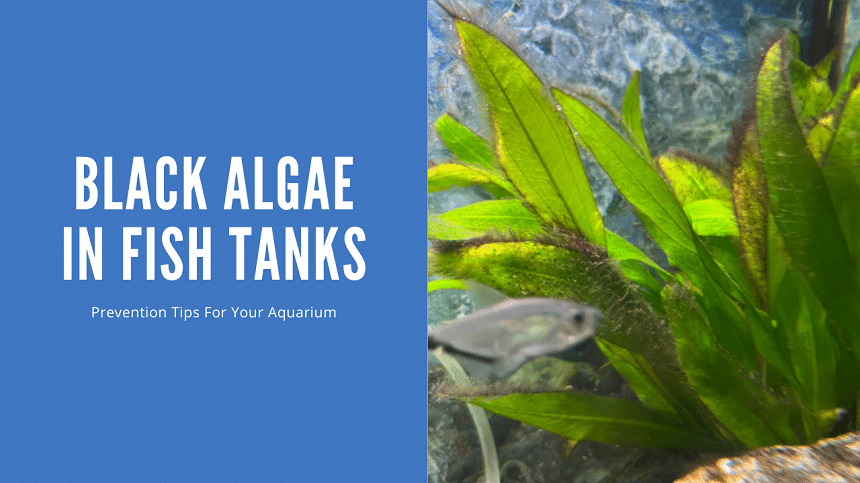
    Black brush algae. BBA. is the algae I hate dealing with most. Unlike green algae that you can wipe off glass, BBA latches onto plants, hardscape, and equipment and doesn’t let go. In 25 years of keeping tanks, I’ve learned that BBA almost always signals a CO2 or flow problem. Inconsistent CO2 injection is probably the number one cause in planted tanks. when CO2 fluctuates, BBA moves in fast. Low or dead-zone flow is another common culprit. The good news is that once you identify the root cause and address it, BBA growth stops and existing patches can be treated with Excel or a diluted bleach dip. This article walks through exactly how to do that.

    What Is It?

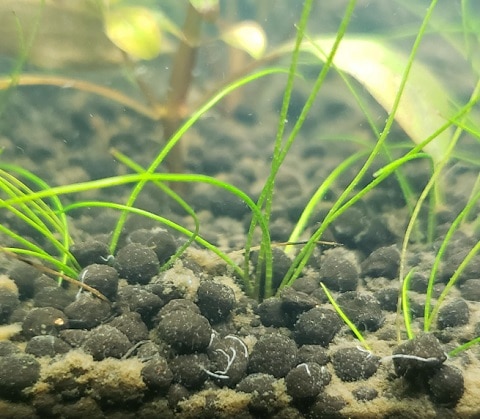
    Audouinella, also known as the black beard or black brush algae (BBA), are stubborn algae species from the red algae family. An infestation of this common fish tank villain looks just like a black or dark green scruffy beard, so it’s pretty obvious where its common name comes from. BBA is quite similar to Staghorn algae in appearance but grows in a denser, darker tuft.

    Black beard algae is a natural component of fresh and saltwater environments, so it is not harmful in itself. It doesn’t look great, however, and it can affect plants by blocking out their access to light.

    This form of red algae starts out as tiny dark tufts but grows quickly if it isn’t checked early. It attaches itself to plants, rocks, driftwood, aquarium decorations, and even gravel substrate. In other words, this stuff grows almost anywhere!

    What Causes BBA?
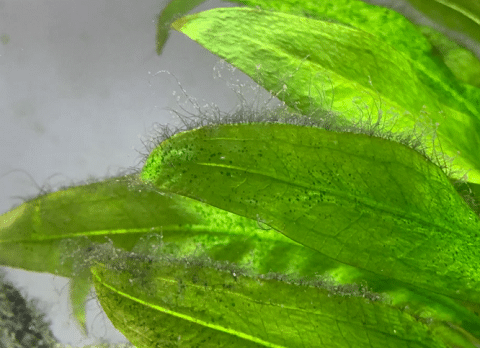
    BBA on Plant

    Black beard algae are usually introduced to your fish tank from other aquariums. This could be on contaminated plants, or pretty much any object from another tank.

    Black beard algae reproduce by spores. The algae spores are tiny, so it is easy to spread them in the water that new fish and livestock are delivered in.

    There are certain conditions that allow these algae to get out of control, however. Here’s a quick summary of the most common causes of serious black beard algae growth:

    • Fluctuating CO2 levels
    • Unhealthy Plants
    • Too much light
    • Excess fish waste and leftover food
    • Elevated nitrate and phosphate levels
    • Poor filtration and inadequate water circulation

    How To Control Black Algae In Fish Tanks

    Now that you know more about what black beard algae is, you’re probably itching to know how to get rid of it. Rest assured, that’s what this article is all about, so let’s take a deep dive into some of the best treatment methods!

    Biological Control (The Clean-Up Crew)

    This is my favorite method of black beard algae control, even if it isn’t the most effective. Why is it my favorite? Because I love algae eaters!

    Unfortunately, most animals do not eat black beard algae as their main food source. That means that biological control can be very helpful in the long run, but probably won’t bring fast results.

    BBA isn’t the ideal food source for most common aquarium animals, especially if they have access to better food sources like prepared fish food. There are a few species that do eat this type of algae, however, so let’s meet them now!

    • Siamese algae eater – Crossocheilus langei

    The Siamese algae eater (video source) is probably the most popular choice of fish for controlling black beard algae. Siamese algae eaters grow to about 6 inches in length, so they are a good choice for freshwater aquariums of at least 30 gallons or larger.

    • Panda garra – Garra flavatra

    Panda garra fish are a great little species that reach a size of about 3.5 inches. These bottom feeding fish are reported to feed on black algae from time to time. They prefer tanks with good water flow and at least 20 gallons of water volume.

    • Florida flagfish – Jordanella floridae

    The Florida flag fish is a colorful fish species that looks great in tanks of 15 gallons or more. These omnivorous fish feed on a wide range of food sources, including pesky brush algae!

    While they won’t completely get rid of black beard algae from your tank, they can do a great job of stopping this algae’s growth.

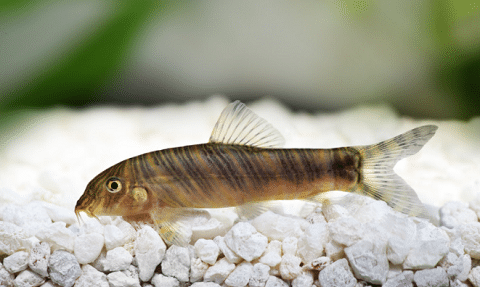
    • Hillstream loach – Sewellia lineolata

    The hillstream loach is another awesome algae eater that might help keep black brush algae growth under control. These fascinating algae-eating fish need well-oxygenated, flowing water in tanks that hold 20 gallons or more.

    • Molly fish – Poecilia sphenops/ latipinna

    It’s a bit of an open secret, but good old mollies can also be great for controlling black beard algae!

    It might not be their first choice, however, so don’t be surprised to see them completely ignore the stuff if you feed them a lot of prepared foods like flakes.

    Invertebrates:

    • Amano shrimp – Caridina japonica

    Fish like the Siamese algae eater aren’t the only animals that can be useful to get rid of black beard algae growth.

    Amano shrimps are great little algae-eating inverts that can be kept in tanks as small as 5 gallons. Amano shrimp are especially great for planted tanks!

    • Ramshorn snails – Planorbarius duryi

    Ramshorn snails are probably the ultimate low-maintenance algae eaters. Unfortunately, these notorious invertebrates tend to find their way into aquariums on live plants and breed out of control. That being said, they are great for cleaning up scraps and generally improving the health of your aquarium.

    Care

    There’s one last thing to mention before we move on to the most effective methods to remove black beard algae.

    Different algae eaters have different care needs, so please make sure your freshwater tank and water parameters will create a healthy environment before bringing any of these species home.

    Physical Removal

    Sometimes the most obvious solutions are the best solutions. Unfortunately, this is easier said than done when trying to get rid of black beard algae!

    If the BBA in your tank is growing on a removable hardscape feature like a rock, or ornament like plastic plants or decorations, scrubbing with a stiff bristle brush or wire brush can be helpful.

    Removing black beard algae is safer outside of the tank so that the fragments do not collect in the aquarium water. For any removal in the tank, it is always best to switch off your filter and powerheads to avoid distributing fragments.

    If your BBA is growing on aquatic plants, physical removal will be a little more brutal. This stuff is tough, so a quick wipe-down is not going to be much help. Badly affected leaves will need to be removed. Remember to remove these leaves and plant matter from your aquarium.

    Black beard algae reproduce by spores, so you’ll probably never remove them all. Physical removal is a great first step toward eradication, but you’ll probably want to proceed directly towards the next treatment methods to finish the job.

    Chemical Treatments

    Black beard algae often respond very well to chemical treatments. Of course, safety is very important when using chemicals, especially if you keep live plants and animals in your aquarium. Read on to learn two trusted methods!

    How To Get Rid of It With Hydrogen Peroxide

    Hydrogen peroxide (H2O2) is a compound of hydrogen and oxygen that can be very effective for getting rid of stubborn black beard algae in your aquarium. It is a liquid that is usually available from local drug stores and chemists at a very low cost.

    Let’s take a look at some of the ways to use this chemical to treat black beard algae.

    Hydrogen peroxide bath

    Preparing an H2O2 bath is a great option for plants, ornaments, and hardscape features that you can remove from your tank. You will know you have been successful when the black beard algae begin to turn grey or pinkish.

    Dosing hydrogen peroxide

    One good method to rid your aquarium of black beard algae is to simply add hydrogen peroxide to the water column. Start by turning off your filter, and your aquarium lighting.

    Next, you’ll want to measure out 3 teaspoons of 3% hydrogen peroxide for every ten gallons of water in your aquarium. Add this to the tank and allow it to soak for about an hour before switching the lights and filter back on.

    Spot Treatments

    You can also apply the hydrogen peroxide directly where you need it using a syringe or a pipette. You can do this under the water, just remember to switch off your filter and lighting.

    You can also use this method after draining the tank enough to expose the algae to air, or after removing the affected plant or object from the tank. A small paintbrush can be very useful for applying the hydrogen peroxide, but you can also use a syringe or an eyedropper.

    If you are using this method on aquatic plants outside of the water, make sure you rinse the hydrogen peroxide off after 5 minutes at most.

    How To Get Rid of It With Liquid Carbon

    Liquid carbon is another great chemical treatment for black beard algae. One of the most popular products on the market is Flourish Excel, but there are other products with the same active ingredients too.

    Liquid carbon can be used with the same techniques as described for hydrogen peroxide. It is not sensitive to light like H2O2, but you’ll still want to turn off your filter.

    Many aquarists have had success by going above the recommended dose (overdosing), but this can be very risky for your livestock. If you do choose to go this route, keep a close eye on your pets and be ready to move them or perform a large water change to dilute the concentration.

    Spot treatments are generally a safer and more effective method because they allow you to maximize the effect of the liquid carbon where you need it most. If you have a lot of black beard algae in your aquarium, try spot dosing small areas every week, rather than blasting the whole tank at once.

    Using Natural Treatments

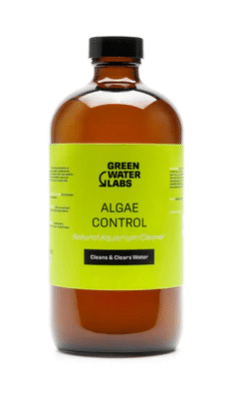
    Another new product to the market is Green Water Labs Algae Control. This product is all natural and safe to use in planted aquariums. It is designed to be used for those using fertilizers and experiencing algae issues such as black beard algae. This formula is also safe to use with snails and shrimp. It has a very straight forward dosing schedule. I would recommend it if you feel uncomfortable going to the CO2 supplement route.
    Safety Tips

    After reading about these (relatively) safe chemical methods of remove black beard algae, it’s worth taking note of the following safety information:

    • Remember, black beard algae is mostly a cosmetic issue, so don’t go overboard on treatment at first, you can always try again in a few days!
    • Liquid carbon products are not designed for use as algaecides. They can be effective, but using them this way is very much at your own risk.
    • Some live plants do not respond well to liquid carbon. Anacharis, Vallisneria, and Japanese moss balls are all sensitive plants that can be negatively affected under high concentrations.
    • Liquid carbon is harmful to fish and animals in high concentrations.
    • Liquid carbon is toxic to humans and pets, so take precautions when using these products.

    Heat Treatment for It in Aquariums

    Heat treatment can be a very effective method to remove black beard algae. It does not involve any chemicals, and it’s pretty much free, but there is an obvious downside to this technique.

    Heat will also kill your live plants and animals, so it is only really an option for hardscapes and decorations that can be removed from your aquarium. Alternatively, you could also move your plants and animals into another tank temporarily during the process.

    You do not need to boil the water, although this will be effective on rocks and driftwood. Plastic ornaments and decorations can melt, however, so use caution.

    How To Prevent

    Prevention is always better than cure, so it’s really important to avoid this problem from the start. If you’ve already dealt with a black beard algae problem, you’ll also want to prevent it from coming back!

    Read this section for a more in-depth look at how to avoid introducing black algae, as well as how to prevent it from growing out of control.

    Avoid Introduction

    Black beard algae are usually introduced to fish tanks from other aquariums and water sources. Aquatic plants are a very common culprit, so always take the time to inspect and treat new plants before introducing them to your tank.

    Sometimes this is not enough, so I always suggest growing tissue culture plants that have been grown under sterile lab conditions. Online retailers like Buceplant stock a great range of these aquatic plants!

    My Pick
    Buce Plant

    Buce Plant offers a wide variety of aquatic plants for sale. With one of the largest selections in the US, you will find what you need here. They are also a great source for freshwater shrimp!

    Click For More Info

    Try not to add any of the water your fish were packaged in by taking the time to slowly acclimate them to your tank water. Never dump a bag full of foreign water into your fish tank! You can totally prevent this way of introduction by properly quarantining your fish.

    Maintain Good Water Quality

    Black beard algae tend to thrive in poor water quality. High nitrate and phosphate levels in particular are thought to contribute to this problem.

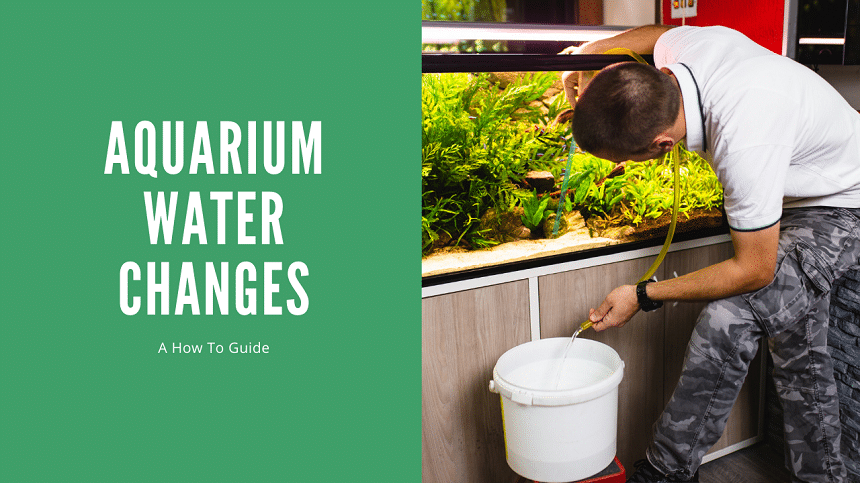
    Your first line of defense is regular aquarium maintenance. This means partial water changes at least twice a month and sucking up as much waste with your gravel vacuum as possible. Let’s take a closer look at how to maintain your aquarium to prevent black algae growth.

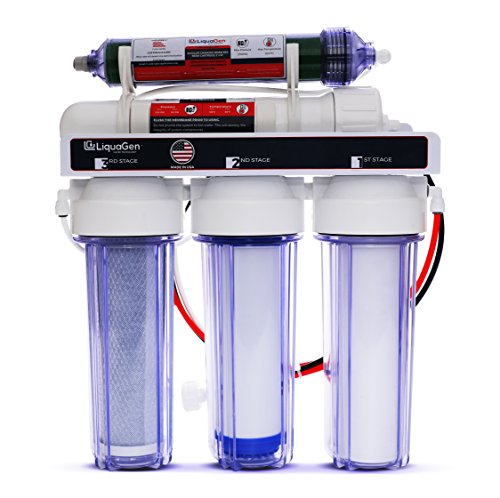
    Your source water could also be a problem. The best way to remove that issue is to either purchase an RO/RODI filter or use distilled water. Whichever you chose, you will need to remineralizer the water with aquarium buffer.

    Testing

    There’s a lot more going on in our aquariums than meets the eye. Water chemistry is a huge part of maintaining a healthy tank, so you must be able to measure and monitor your water parameters.

    A liquid test kit that can monitor phosphate and nitrate levels will be very important in your fight against black beard algae. Knowing what your levels are will help you figure out just how much water you need to change out, and how often you need to do it.

    Removing water and waste particles

    Decaying waste at the bottom of the tank releases nutrients that feed the brush algae in your aquarium.

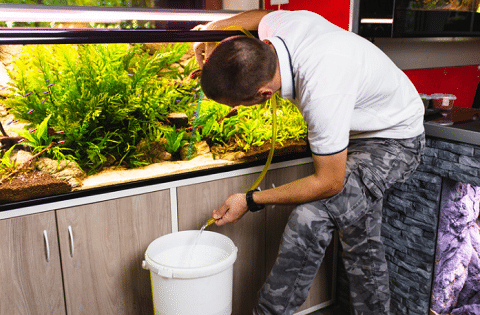
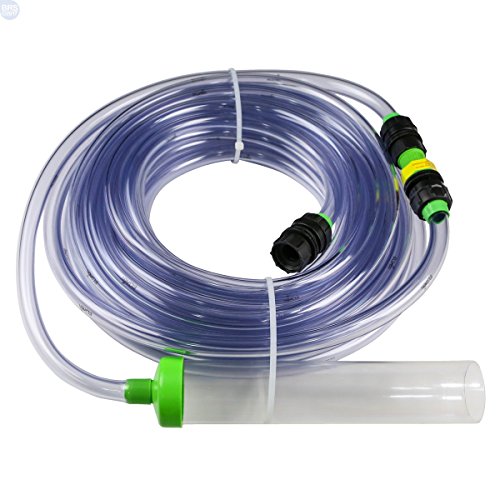
    Use a gravel vacuum to suck up this waste while you siphon old water out of the tank. Trimming your aquarium plants before a water change is great because you’ll be able to suck out any trimmings that are floating around in the tank.

    Filter maintenance

    Filter maintenance will not be necessary every time you perform aquarium maintenance.

    It is best to follow the manufacturer’s instructions on maintenance regarding your specific model. If your filter sounds different or is not creating as much flow as it should, you might need to rinse out the filtration media.

    Remember, the filtration media of a cycled aquarium is home to a thriving population of tiny beneficial bacteria that break down waste in your tank. These little guys should be treated with the care they deserve!

    To avoid killing these bacteria, only rinse out your filter media in water that you have just removed from the tank. Tap water that has not been conditioned should not be used.

    Adding new water

    It’s usually a good idea to prepare new water before you perform a water change to speed up the process. This involves bringing the tap water up to the same temperature as your tank and treating it with a water conditioner to neutralize harmful chemicals.

    As I mentioned before, your source water can become a contributor to black algae. Consider getting your city’s tap water report or purchase a TDS meter to see the condition of your water. If your water is high in phosphates and nitrates, it may make sense to switch to distilled or RO water.

    Maintain Healthy Plant Growth

    For the most part, brush algae do not grow on strong, healthy aquarium plants. The needs of different plants vary depending on their species, but all live plants need good lighting, access to nutrients, and CO2. Providing these in the right balance is the secret to vigorous plant growth.

    Black beard algae can grow in a wide range of light conditions, so dimming the lights isn’t necessarily the best option. Providing the minimum amount of light needed to promote healthy plant growth is a good general rule for keeping algae at bay, however. Making sure your plants have sufficient good quality light is a better bet than trying to prevent brush algae growth with low light.

    The estimative index (EI) method has proved to be very effective in minimizing this problem in aquarium plants. This method involves fertilizing plants liberally and then performing a large water change every week to ‘reset’ their levels.

    This means live plants are never limited in their access to essential macro and micronutrients, but at the same time, you are taking care to prevent these nutrients from building up to dangerous levels.

    Even healthy leaves die back when they reach the end of their lifespan, so stay on top of pruning and trimming your aquarium plants. This will promote healthy new regrowth and prevent plant matter from decaying in your fish tank.

    Stable CO2 Levels

    While increasing CO2 levels may be one of the best ways to achieve healthy plant growth, it is important to keep the levels consistent. Fluctuating CO2 levels appear to favor the growth and development of black beard algae.

    Running a pressurized CO2 injection system with good circulation and a drop checker is the best way to avoid inconsistent levels. Calibrate your system to maintain CO2 levels between 20 and 30 ppm to maintain optimum plant growth and keep pesky brush algae to a minimum.

    The Ultimate CO2 Kit
    CO2Art Pro Elite Series Bundle

    Use Offer Code ASD10%Off

    The highest end offering by CO2Art. This package includes everything you need to perform consistent and the highest quality CO2 injection in the industry!

    Click For Best Price

    Increasing or stabilizing the carbon dioxide levels in your tank probably won’t kill off the existing brush algae, but it will certainly help to prevent it from growing back after successful treatment.

    The combination of proper CO2 usage, fertilizers, and lots of plants will lead to lush plant growth that will choke out nuisance algae like BBA.

    Avoid Overstocking and Overfeeding

    Black beard algae thrive in high-nutrient environments. Apart from decaying plant matter, the major sources of these nutrients are fish waste and uneaten food.

    This is a much bigger problem in tanks that have too many fish, and are given too much food. Increasing your filtration capacity and water change schedule can be very helpful, but it is best to keep your bioload down by stocking and feeding your tank conservatively.

    Filtration and Circulation

    Adequate filtration is really important for maintaining healthy fish tanks in general. They filter out waste particles and provide a cozy home for the beneficial bacteria that maintain the nitrogen cycle.

    It is wise to invest in the best quality filtration your budget allows for, and don’t be shy to run more than one filter on your tank either. Adding some phosphate-absorbing media to your filter is a great way to reduce the phosphate levels in your tank.

    We know that fluctuating carbon dioxide levels in the water promote black beard algae, so it makes sense to provide enough circulation to spread this gas evenly through the water column. You can run a small powerhead or wavemaker in your tank if your aquarium filtration system does not create enough water flow.

    FAQs

    How do I get rid of it in my aquarium?

    Controlling black beard algae in your aquarium can be tough. Figuring out the cause of the problem, making some changes, and then killing the algae with careful chemical treatments is the best course of action to solve this problem.

    Is It Harmful To Fish?

    Black beard algae are not harmful to your fish. Some types of fish, like Siamese algae eaters, will even feed on BBA.

    Why does my aquarium have it?

    If you have black beard algae in your aquarium, it was probably introduced with live plants or animals from another fish tank. If the conditions are right, these algae can grow and multiply quite quickly.

    Do snails eat it?

    Some types of snails have been reported to feed on black beard algae. Ramshorn snails in particular can be very effective at controlling black algae. The only downside to these snails is that they have a habit of multiplying fast!

    What kills it?

    Apart from fish species like the Siamese algae eater that feed on black beard algae, the best way to kill it is to dose or spot treat with hydrogen peroxide or liquid carbon dioxide products like Seachem Excel.

    Final Thoughts

    In conclusion, black beard algae is a tough but manageable problem that most aquarium owners will face at one time or another. Don’t lose heart if you find this fuzzy growth in your tank, however. Simply follow the steps in this article to beat this nuisance algae in your aquarium and prevent it from coming back!

    Have you managed to get rid of black algae in your tanks? Let us know about your experiences in the comments below!


    ๐ŸŒฟ Want to learn more? This article is part of our complete Planted Tank & Aquascaping Guide. your ultimate resource for aquarium plants, aquascaping styles, substrates, and more.

    References

  • Do Betta Fish Need a Heater? Yes โ€” Here’s Why and What to Get

    Do Betta Fish Need a Heater? Yes โ€” Here’s Why and What to Get

    Yes. bettas absolutely need a heater, and I say this as someone who’s kept bettas for over 25 years. I’ve seen the damage that temperature swings and cold water do to bettas that are kept without one. They’re tropical fish from Southeast Asia, and room temperature in most homes is simply too cold and too inconsistent. This guide explains exactly why and what to get.

    Yes. bettas need a heater. This is one of those questions where the answer is clear but gets muddied by the way bettas are marketed and sold. The image of a betta thriving in a small unheated bowl is a pet industry myth that causes real harm. Bettas are tropical fish from Southeast Asia and need water temperature consistently between 76 and 82ยฐF. In most homes, that means a heater is non-negotiable unless you live somewhere that stays warm year-round. The small preset heaters bundled with betta kits are often inadequate. I recommend a properly sized adjustable heater so you can dial in the exact temperature. This guide covers what to look for and how to set it up right.

    The most popular, ornamental, tropical fish in the aquarium world is the Betta fish. Originating from Southeast Asia, Betta fish are commonly found in countries of Malaysia, Cambodia, and Thailand.

    The Answer

    The answer is pretty straightforward. Bettas thrive in a temperature range of no less than 72 – 82 degrees Fahrenheit. Anything below or above this temperature range can turn your fish too lethargic or sluggish. Therefore, a heating system is imperative to keep your Betta fish happy.

    Now that I’ve given you a quick review about whether Betta fish need a heater, let’s just jump to the basics and discuss further. I have a video above from our YouTube Channel that goes over the topic if you want to follow along. If you like our content, be sure to subscribe as we have new videos every week.

    What are the requirements for a Betta Tank?

    Betta fish are territorial and highly aggressive. They have problematic behaviors where the males can even fight one another to death. Females, however, are less aggressive.

    If you’re planning to build a community tank, avoid keeping bright, colorful fish with your Betta as they will most likely be killed. Go for plain, simple fish for your Betta community tank.

    Tank Size

    If you’re planning to keep one fish per tank, it’s suggested to get a 5-gallon tank. Any type of tank would do as long as it’s 5 gallon. Be it a betta fish bowl, 3 gallon wine glass-shaped aquarium, or other shaped betta tanksThe key is to keep it at least 3 gallons.

    However, if you plan to house more than one fish in your tank, you need a larger tank. For example, to house 5 bettas, the tank size would be 25 to 30 gallons.

    Placement of the tank

    The water temperature matters a lot when it comes to Betta fish, and so does the placement of the tank.

    Betta fish belongs to the tropical areas that receive a lot of sunlight. However, they don’t do well in areas where the tank receives direct sunlight throughout the day. That’s because the rays of the Sun increase the water temperature to the point they go into temperature shock and begin to act erratic, which is unhealthy for Betta. The abnormal increase in water temperature makes Bettas disoriented and it starts swimming in absurd patterns or worst of all. stops swimming altogether.

    The ideal place for your Betta fish tank would be inside, near a door or outside of direct sunlight.

    Tip: Never place your Betta tank on a wall opposite mirrors. The male Bettas would think they have another male in the tank and act territorial and aggressive for no reason.

    Tank Toys 

    Betta fish loves a colorful environment. Thus, it’s shame to keep them in a tank full of water only.

    I suggest putting an aquarium background on the back of your aquarium to provide your betta with a bright or dark background. One great toy to use with a Bettas are ping pongs. Check out the video below (video source). They can even be trained to play water basketball!

    Also, your betta tank should entertain your fish. For this, you can place a few river rocks on top of each other to provide them with a fun hiding space. Betta plants and colored gravels would also add to the beauty of your fish tank. Indian almond leaves also work great.

    Water Conditioner

    Would you want your kids to drink tap water? Absolutely not!

    Similarly, in most areas, the water from your taps won’t suit your betta to live. Because it has some chemicals like Chlorine, Ammonia, and Nitrates that are harmful to your fish. To cater to this problem, a water neutralizer is essential to make your water safe for the fish.

    I suggest filling a container with water and leaving it overnight. Add a high-quality water conditioner like seachem prime to the water and add it to your fish tank.

    How To Properly House a Betta Tank?

    Bettas are tropical fish that originate from tropical climates of South-East Asia. Despite being hardy and low-maintenance pets, bettas need proper attention and care for a healthy lifestyle.

    Water Temperature

    I cannot emphasize enough the importance of maintaining water temperature for your bettas.

    Bettas need water temperature that ranges between 72 to 82 degrees Fahrenheit. Anything below this range will cause your bettas to be lethargic and sluggish. And if the temperature exceeds or lowers too far from the range, you might wake up one day to die, floating betta. Therefore, it’s essential to install a heating system in your fish tank.

    Filtration System

    Installing a filtration system in your aquarium might not be essential, but a smart choice to keep the tank water clean.

    Just make sure to provide a steady water flow in the tank as bettas prefer less water movement in the tank. I suggest going for filters designed for small tanks or adjusting the filters’ settings to restrict the water flow.

    The best filters for a betta fish are ones with lower flow. This means sponge filters ideal. However, power filters can work if the flow can be lowered and if the intake can be covered with a sponge.

    Canister filters are going to be more ideal in planted tanks. All-in-one tanks are also have adequate filters in their tanks.

    Food

    Bettas are carnivorous top-feeders that enjoy wholesome food. Due to their carnivorous nature, bettas require a healthy diet, rich in protein. However, like much other fish, they enjoy variety in their food.

    You can feed your bettas pellet food and live food, including blood worms or brine shrimp. I suggest handling bloodworms with tweezers to avoid mosquito bites. The reason I suggest variety in betta fish food is constipation. Bettas can get easily constipated if given the same food every day. In such conditions, where constipation and other diseases such as swim bladder disease is involved. If you select high quality foods you can avoid this.

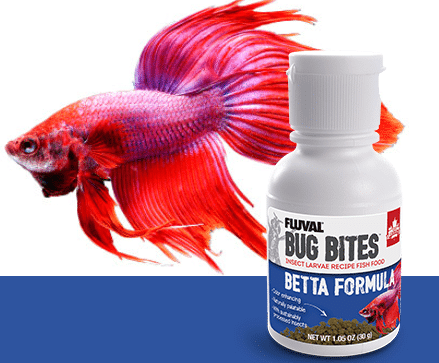
    One staple to try is Fluval’s bug bites. It’s made of solider fly and has the roughage needed to keep bladder issues in check. Use multiple foods to balance our your Betta’s diet.

    As mentioned earlier, live food is a good option. However, frozen food is the best choice for your bettas as they are free from parasites and are designed to meet the nutritional requirements of your bettas.

    It’s essential to invest in high-quality frozen food to keep your bettas healthy and maintain their vibrancy.

    Do Betta Fish Need A Heater

    Yes, Betta fish need an aquarium heater to keep the water warm and temperature maintained.

    Many novice aquarists believe the apparatus like an aquarium heater has advanced features, and so they are reluctant to invest in heaters. However, that’s not the case. Think of a heater as an oven. Just set the temperature to 76 – 82 degrees Fahrenheit on your heater, submerge it in water, and it into the wall. And you’re all set to go.
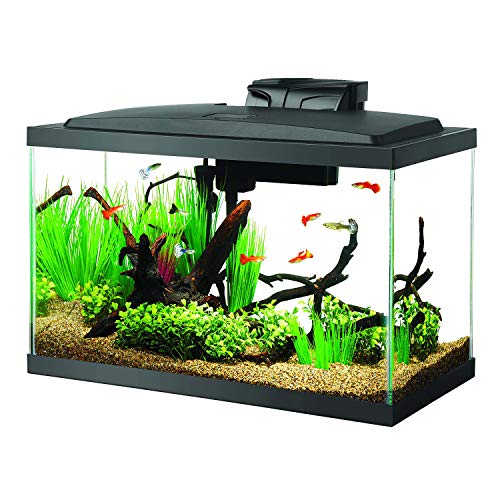
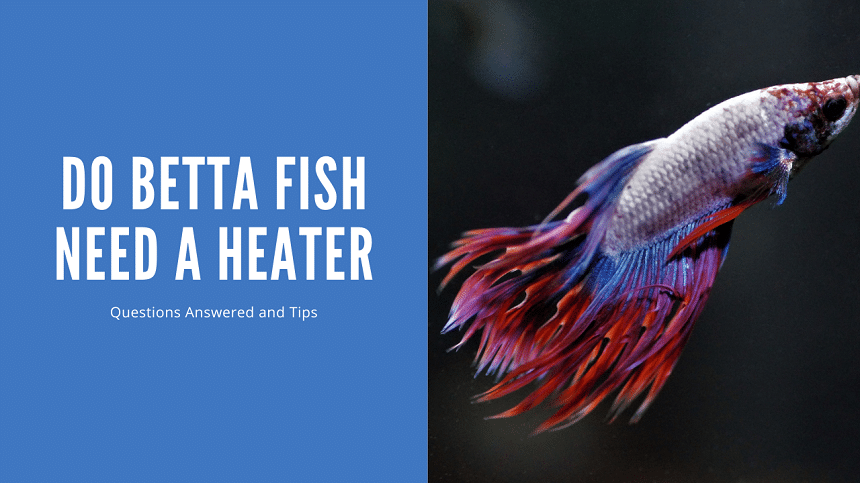
    Betta Fish Swimming In Black Background

    Now the question is that bugs betta breeders and keepers big time. If I live in a warm climate, why do I need a heater for the aquarium water?

    Of course, you do.

    No amount of warm water and climate can guarantee temperature fluctuations without the aid of a heater. Even in warm climates, the water temperature can go down during the night and abnormally increase during the day, causing temperature shock.

    To keep your betta healthy, the best thing you can ever do is to minimize the chances of temperature shock by installing heaters to ensure the temperature will stay within the safe range. Therefore, it is imperative to get a tank large enough to accommodate a mini heater suitable for a 2-5 gallon tank.

    However, the problem with mini heaters is their inability to take into consideration the actual temperature of the water inside the tank. Due to this, the tank water can get too warm or too cold, adversely affecting the health of your bettas. To administer this problem, small adjustable heaters do a great job of considering the actual water temperature.

    To keep your heaters working properly is also advisable to use a thermometer which makes sure the heater is working perfectly. You can get a variety of thin, small, and cheap thermometers to insert on the side of your aquarium to display the tank temperature.

    Also, to avoid temperature fluctuations, it is important to make sure the room temperature is not different from the tank temperature. Thus, cover your aquarium with a lid or glass cover to lower the rate of water evaporation and ensure that the air above the tank remains warm and moist.

    There are two main reasons to maintain the water temperature for your betta tanks.

    1. Betta’s immune system becomes highly compromised as it gets too stressed out due to temperature fluctuations. This opens room for bacterial infections and other diseases to enter the Betta’s body
    2. Bettas are accustomed to living in a tank with water temperatures ranging between 72 to 80 degrees Fahrenheit. If the temperature goes too low or high, it affects the betta’s immune system and energy levels. Your betta, at its worst, can become unresponsive and lethargic, and eventually might die.

    What’s A Good Product?

    There is a myriad of brands in the market, selling various types of heaters. And this might confuse the betta owners.

    Therefore, I’ll list the three best heaters for betta’s tank.

    First of all, remember that the unit of measurement for aquarium heaters is always in watts. So, a great rule of thumb while deciding on a heater is 5 watts per gallon of water. Also, make sure the heater is installed properly to avoid inconvenience.

    If, after research, you’re still not sure which one to buy, I suggest visiting the store and asking the manager to help you choose the right one.

    Types of Heating Systems

    Based on requirements, there are two types of heating systems.

    1. Internal heating systems
    2. External heating systems

    To understand which one works the best for your tank, I recommend asking your local pet store or betta breeders to give you recommendations.

    Note: Proper water circulation is necessary to keep the water temperature maintained. Without proper circulation, your tank water will have cold or hot spots, which are harmful to your bettas.

    Internal Heating Systems

    The most common type of heat source in a betta tank is internal heating systems. These heaters consist of a glass tube, ranging from 4 inches to 12 inches in length. Some practical heaters have a built-in thermostat and some have a thermostat attached outside the tank to control multiple heating systems.

    External Heating Systems

    External heating systems are commonly available offline and online. There are various models, including the one that fits under the tank and heats the water from below, while others just connect to the filtering systems.

    Here are three of my best-recommended heaters for your Betta tanks.

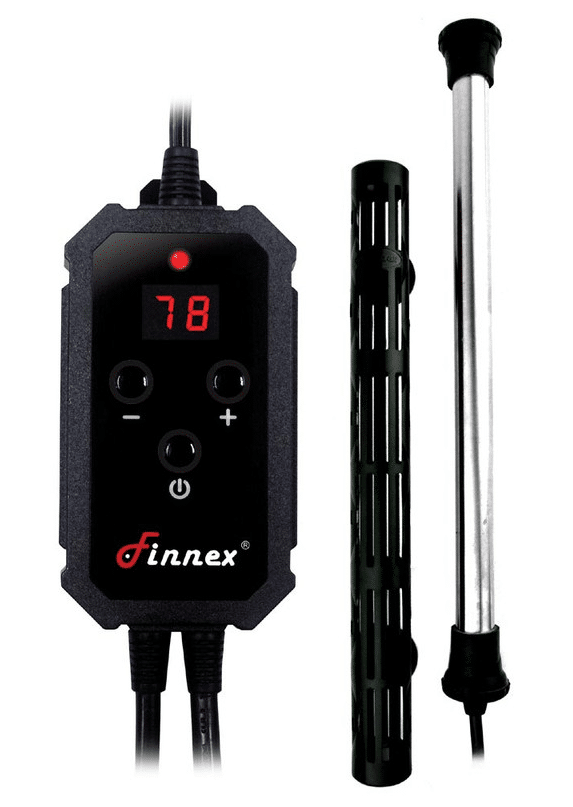
    1. Finnext STE

    Editor’s Choice
    Finnex STE Series

    Best Aquarium Heater

    Finnex has achieved what we as hobbyist have asked for decades. A reliable heater that won’t fail. Japanese components. Receives our top recommendation.

    Click For Best Price Buy On Amazon

    A very reliable heater that solves most of your tank problems. This is a fully-submersible heater, allowing you to install it right where you need it.

    The corrosion-resistant Titanium body will not rot or corrode even after years of use. it’s cheaper than the BRS Titanium element and reasonable to keep if you plan on keep more expensive betta breeds.

    2. Eheim Jager

    Best Value
    Eheim Jager Aquarium Heater

    Best Value

    Very accurate, durable, and German made. A great value buy for any aquarium

    Click For Best Price Buy On Amazon

    This German-made, exceptional aquarium heater stands the test of time with its simple and safe temperature recalibration, temperature control accuracy, and precise temperature adjustment for up to 93.2 degrees Fahrenheit.

    The only downside to this heater is its big, bulky, old-school lab-grade glass design.

    3. Helio

    Premium Pick
    Helio Heater

    The Helio heater by Innovative Marine offers a new heater technology that is safer and more reliable than traditional heating systems

    Click For Best Price Buy On Amazon

    An amazing heater for your Betta aquarium with cutting-edge PTC technology. However, they come in smaller wattage sizes. Therefore, for a large tank, you need multiple units. It’s also very expensive. It’s best for tanks where your Betta will be in a prized aquascape.

    FAQs

    Can They Survive With A Warm Tank?

    Yes, Betta fish can survive with a heater. It’s a requirement to install a heater in Betta’s tank as they require temperatures ranging from 72 to 82 degrees Fahrenheit.

    How Can I Keep Them Warm Without A System?

    You can keep your Bettas warm without a heater. However, it’s not advisable as temperature fluctuations can even kill your pet fish.

    Still, there are a few ways to keep them warm without installing a heater.

    – Use a heating mat
    – Cover the tank properly
    – Use strong tank lights
    – Add insulation layers
    – Thermometer to monitor the water temperature of betta’s tank

    How Do I Know They Are Cold?

    Here are some of the symptoms of cold temperature shock in your bettas.

    – Restless, erratic swimming
    Resting at the bottom of the tank
    – Lethargic behavior
    – Rapid breathing
    – Staying at the surface

    What Is The Coolest Temperature A They Can Live In?

    The ideal temperature range for your betta is 72- 82 degrees Fahrenheit. Anything above or below these ranges is detrimental to your tropical fish. Therefore, I recommend maintaining the temperature below 75 degrees Fahrenheit but it shouldn’t fall below 70 degrees at any cost.

    Final Thoughts

    Bettas are popular among many aquarists in the aquarium trade. They are hardy, low-maintenance, and easy to keep. However, a few things about Bettas should be taken into consideration, including, the amount of fish you’re going to keep, the size of your rank, tank toys to fend off boredom, and most importantly, keeping the water warm with the help of a heater.


    ๐Ÿ“˜ Want to learn more? This article is part of our complete Betta Fish Guide. your ultimate resource for betta care, types, tank setup, feeding, tank mates, and more.

  • How to Lower Ammonia in a Fish Tank: 6 Methods That Work

    How to Lower Ammonia in a Fish Tank: 6 Methods That Work

    Ammonia spikes have ended more fishkeeping journeys than almost anything else, and I’ve fielded countless questions about it over the years. Early in my own hobby days I lost fish to ammonia before I understood the nitrogen cycle. it’s a hard lesson. The good news is that once you know what drives ammonia up and how to bring it down fast, it becomes a manageable problem rather than a mystery.

    Ammonia is the number one killer in home aquariums. particularly in new tanks that haven’t finished cycling. I’ve seen it wipe out entire stocks of fish in tanks that looked perfectly fine to the eye. The tricky thing about ammonia is that you can’t see it or smell it at aquarium concentrations, so regular testing is the only way to catch it before damage is done. When I get ammonia readings in a tank, my first move is always Seachem Prime to detoxify it temporarily, followed by a water change and a hard look at what’s driving it. overfeeding, overstocking, an uncycled tank, or a dead animal decomposing somewhere. This guide covers 6 practical ways to bring ammonia down and keep it there.

    The Nitrogen Cycle

    The first rule to having a fish tank is allowing it to cycle. But what does it mean for a fish tank to cycle and why does it matter so much?

    Unfortunately, many beginner hobbyists skip fundamental steps in understanding the aquarium nitrogen cycle; they’re told to come back to their local pet store for water testing in a couple of weeks when they’ll be given the thumbs up to add their first fish to the aquarium even if the fish tank isn’t fully cycled. Too many times, this results in suffering and dead fish as well as disappointed hobbyists.

    What Is The Nitrogen Cycle?

    There is a great video that really explains the nitrogen cycle in a fun and entertaining way by Girl Talks Fish below that Iโ€™ll embed for you. Iโ€™ll go more into my boring details below

    The nitrogen cycle is very easy to understand but requires some patience.

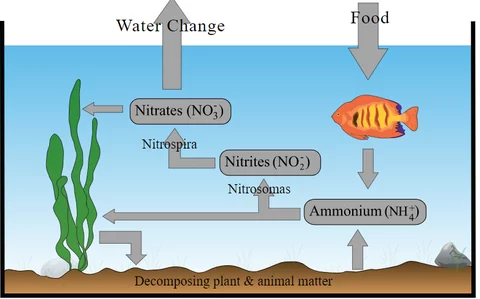
    In simple terms, the nitrogen cycle prepares your aquarium for dealing with fish waste and other organics in the water through processes completed by beneficial bacteria. These beneficial bacteria need to grow and populate the aquarium over the course of several weeks until there are enough to convert toxic ammonia to nitrite to less toxic nitrate.

    In more biological and chemical terms, this looks a little more complex. Ammonia (NH3) and ammonium (NH4) are converted to (NO2) by nitrifying bacteria. Different nitrifying bacteria then convert this nitrite into nitrate (NO3).

    In the aquarium setting, the nitrogen cycle will always start with ammonia. If more ammonia enters the system than your population of beneficial bacteria can handle, then your aquarium will go through a cycle or a mini-cycle.

    Why Is It Dangerous?

    Ammonia poisoning is when high levels of ammonia start to burn the internal and external organs of fish and invertebrates. This can result in lethargy, difficulty breathing, loss of appetite, and inflammation.

    Before we dive into how ammonia enters the fish tank, we need to understand why we need to avoid excess levels at all costs.

    It’s important to keep in mind that ammonia is present in the aquarium at all times due to leftover food and fish waste being processed. However, levels can quickly become dangerous whenever they’re not close to 0 ppm.

    If large amounts of ammonia are present in the aquarium, ammonia poisoning can set in almost immediately. If low amounts of ammonia are present in the fish tank over a longer period of time, then it’s still possible for your fish to experience chronic ammonia poisoning.

    The problem is that high amounts of ammonia will translate into high amounts of nitrite, another deadly compound at high levels. At this point, fish may experience nitrite poisoning.

    Nitrite is very similar to oxygen in its chemical structure. Therefore, it is able to enter the bloodstream and connect to hemoglobin where oxygen would otherwise. This quite literally makes the fish suffocate from the inside out, making for a very painful death.

    Similarly, nitrite poisoning will either be immediate or witnessed over the course of a few days depending on water quality. Symptoms are also very similar, which means it’s necessary to test water parameters for a sure diagnosis.

    Ammonia In The Aquarium

    For an established fish tank, ammonia is a bad thing to have. It can quickly cause ammonia poisoning, killing fish and invertebrates by burning internal and external organs. When cycling a fish tank, ammonia becomes the food needed for bacteria to grow and populate. We have a video below form our YouTube channel for reference. We go over more details in the blog. Be sure to subscribe if you like our videos!

    There are many different ways to purposely or mistakingly introduce ammonia into the aquarium:

    1. New fish tank
    2. New livestock additions
    3. Dead organic matter
    4. Overfeeding
    5. Overstocking

    1. New Aquarium

    When starting up an aquarium, you may experience a phenomenon known as new tank syndrome. This is the build-up of harmful nutrients and compounds in the aquarium that can kill fish and deter bacterial growth in extreme cases. The reason for the new tank syndrome is that the aquarium hasn’t had time to establish a healthy population of beneficial bacteria.

    As mentioned before, beneficial bacteria make the conversion of ammonia to nitrite to nitrate possible. If this cycle isn’t allowed to be fully completed, then bacteria will struggle to detoxify these compounds, making for unsafe water conditions.

    However, even if your aquarium is fully cycled, there’s still a chance that it experiences new tank syndrome. This could be due to a weak cycle or overstocking the aquarium too quickly. Both of these circumstances would lead to ammonia entering the aquarium too quickly, overloading the present bacteria populations.

    As a result, a mini-cyle is likely to occur where there are abnormal levels of ammonia and nitrite. This can be very dangerous as it can lead to ammonia poisoning and nitrite poisoning.

    2. New Livestock Additions

    Saltwater Fish Tank

    Any time a new fish or invertebrate is introduced into the aquarium, ammonia levels will rise. Depending on the stability of the system, this increase in ammonia shouldn’t be seen in tests as beneficial bacteria will quickly adapt to the new influx.

    The problem happens when beginner hobbyists are eager to stock their new fish tank to the brim as soon as the nitrogen cycle is completed.

    New livestock additions should be spaced out over the course of weeks or months to give beneficial bacteria populations enough time to adapt to the increased ammonia levels. Adding too much at once is a sure way to cause a mini-cycle, greatly increasing the chances of losing all of your new livestock!

    3. Dead Organic Matter

    Things die in the aquarium all the time: fish, snails, crabs, and aquarium plants. It’s bound to happen, but it might take some time to notice or you might not be able to reach what’s left before it starts to decompose.

    As decaying organic matter starts to decompose, ammonia is created. While most fish tanks are able to handle these small amounts of ammonia entering the system, it’s always recommended to remove what you can to prevent an ammonia spike from happening.

    However, sometimes you just don’t notice that one of your fish or invertebrates is missing and the breakdown process has already started. Or, the carcass may be so far in the back of the fish tank that you just can’t reach it no matter how hard you try.

    Leaving the dead matter in the fish tank will raise ammonia levels, though not terribly if the system is stable. This is also why a cleanup crew, like saltwater hermit crabs or shrimp, are especially helpful to take care of dead fish and invertebrates before they start to decompose.

    4. Overfeeding

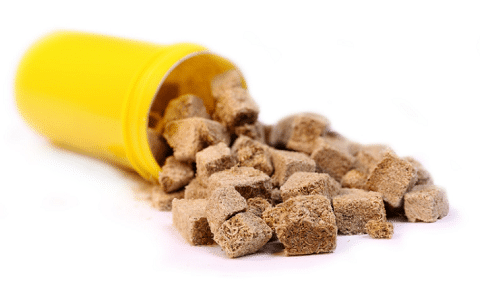
    Freezed Dried Food

    Overfeeding is one of the most common reasons for an ammonia spike in a new fish tank. Fish do not need as much food as we think they do and they often end up overfed.

    Fish food is naturally high in unwanted organics, like phosphate, which can quickly cause algae in the aquarium. However, as uneaten fish food is left to rot at the bottom of the tank, it will also start to release ammonia just like other decaying organic matter. Not to mention that overfeeding will result in much more fish waste entering the water as well, also increasing ammonia levels.

    In general, fish should only be fed as much as they can eat in a couple of minutes. All uneaten fish food should be removed after.

    5. Overstocking

    New livestock additions can overwhelm a biological filter; by the biological filter, we mean the beneficial bacteria that live in the filtration system and other surface areas of the fish tank that make the nitrogen cycle possible. This is why overstocking a tank can be so dangerous.

    Beneficial bacteria can only handle a certain amount of ammonia and nitrite. If levels exceed this rate, then both ammonia and nitrite levels will accumulate. This can easily become the situation if too many fish are put into the aquarium.

    This is also the reason why goldfish need such a large aquarium. These fish are incredibly messy; they are messy eaters and leave a lot of uneaten food, which then results in a lot of fish waste. Because of this, a large filtration system is needed to allow for the most surface area for beneficial bacteria to grow.

    6 Ways To Lower It In Aquariums

    High ammonia levels in the fish tank should be considered an emergency. The longer your fish and invertebrates are exposed to ammonia, the better the chances of them dying. You need to act fast without making too many changes at once.

    Of course, the best way to remove ammonia from the aquarium is by preventing it in the first place.

    1. Make sure your fish tank is completely cycled. Test water parameters frequently and only add fish when there are no signs of ammonia or nitrite.
    2. Add fish slowly. Do not overload the system and allow beneficial bacteria populations to grow over time as more and more fish are added.
    3. Do not overstock. Understand the ratio of ammonia being produced to aquarium water volume. Beneficial bacteria can only concert so much ammonia at one given time.
    4. Do not overfeed. Though we love to give our fish and invertebrates the best life possible, too much fish waste and uneaten food can lead to a deadly ammonia spike. Remove excess food.
    5. Perform regular fish tank maintenance.

    Otherwise, there are ways to remove ammonia from the fish tank through water changes, increased biological filtration, bacteria supplements, and chemical media.

    1. Water Changes

    The best way to quickly get rid of ammonia from a fish tank is by doing a succession of water changes over the course of a few days. Though this won’t solve the underlying problem causing ammonia to be high, water changes will help keep ammonia levels lower and safer for fish.

    If you find ammonia in your fish tank, don’t panic. Instead, set up a plan over the next few days to do water changes. You don’t want to change out all the water at once as this can create instability in the fish tank and changing parameters that stress out your fish even more.

    Instead, start with a 50% water change. If using tap water, make sure that there is no ammonia in the water as this will only increase the ammonia level. For extra precaution, use a water conditioner that detoxifies ammonia and other harmful compounds, like SeaChem Prime.

    Continue to do 25-50% water changes over the next few days until the ammonia level reaches 0 ppm. At that point, you will need to identify the cause of the ammonia spike, be it a mini-cyle, a dead fish, or too much uneaten food, and treat accordingly.

    2. Increased Biological Filtration

    If it isn’t an emergency, then the best way to remove ammonia from a fish tank naturally is to allow beneficial bacteria to do their thing. This is known as biological filtration, which can be increased by increasing the surface area in the aquarium; this is different from chemical or mechanical filtration.

    Specific biological filtration media has also been created to facilitate bacterial growth and lower ammonia levels. This works by creating porous media, similar to live rock, that creates more surface area.

    The majority of beneficial bacteria live in the filtration systems of our fish tanks. However, they also live in the nooks and crannies of live rock and other aquarium decorations.

    Some of these products include:

    • SeaChem Matrix. This product grows aerobic and anaerobic bacteria to control ammonia, nitrite, and nitrate levels. One liter provides >~700 m2 surface area and can be used in freshwater and saltwater setups.
    • Biohome Ultimate. Meant for saltwater and freshwater hang on the back, canister, and sump filtration systems, Biohome Ultimate media influences both aerobic and anaerobic bacteria growth with added trace elements, like iron and manganese.
    • MarinePure. MarinePure is meant specifically for direct use in saltwater fish tanks to reduce ammonia, nitrite, and nitrate levels. It can be used under the substrate or in areas of high flow, including the filtration system.
    Editor’s Choice!
    Biohome Ultimate Filter Media

    Editor’s Choice!

    This is the best media you can buy for your aquarium. It does it all – removes ammonia, nitrite, and nitrates

    Buy On Amazon

    Biological filtration media is a great and minimally invasive addition for buffering surface area in a hang on the back, canister, or sump filtration system. Still, this media will take some time to populate by bacteria and will not immediately lower ammonia levels.

    3. Add Beneficial Rock (AKA Live or Dry Rock)

    Porous rock is a great way to add biological capacity to your aquarium. I’ll cover both the saltwater and freshwater side below.

    Adding Live/Dry Rock To The Saltwater Aquarium

    Live rock is the foundation for any saltwater fish tank setup. Not only does it provide food and shelter for fish and invertebrates, but it houses a plethora of bacterial life that is essential for facilitating the nitrogen cycle.

    One way to jumpstart a nitrogen cycle in a saltwater fish tank is to add live rock. There are two reasons for this.

    One, live rock will already have beneficial bacteria present on it when added to your tank. This means that you’ll start with a population that can seed the rest of the fish tank. The other reason is that there is bound to be some die-off when transferring the live rock between fish tanks. This die-off will contribute to ammonia levels, starting and supporting a nitrogen cycle.

    But how does live rock help with lowering ammonia levels?

    In the same way, adding live rock to an established aquarium can introduce more beneficial bacteria that will start to process ammonia and nitrite. There may still be some die-off, but the already established bacteria should be able to handle the sudden influx; if concerned about die-off, quarantine the rocks in a separate system with the same parameters.

    As a result, the beneficial bacteria population is immediately expanded, increasing conversion rates and lowering ammonia levels.

    Live rock can be expensive though, and there’s always the possibility of unintentionally adding hitchhikers at the same time. Luckily, dry rock is widely available and very easy to add to the saltwater fish tank. For quality dry rock, check out Real Reef Rock. Be careful of going 100% dry rock as this can result in an outbreak of dinos in your tank.

    Real Reef Rock

    This is the best aquacultured rock you can find in stores and online

    Buy On Amazon Click For Best Price

    The idea behind adding dry rock instead of live rock is to increase surface area. Though this dry rock won’t come with established bacteria, it gives more space for the already-existing bacteria to populate. This will take more time to lower ammonia levels than would live rock but can be a great way to increase biological filtration on a budget.

    Adding Porous Dry Rock To The Freshwater Aquarium

    In the same way, dry rock, like lava rock, can be added to the freshwater fish tank to get rid of ammonia. However, it’s not common to see live lava rock for sale at your freshwater aquarium store; for this, you may need to reach out to fellow hobbyists or a specialty fish store.

    Budget Option
    Black Lava Rock

    Budget Option

    Great choice for budgets. Won’t alter your chemistry and provides housing for beneficial bacteria

    Click For Best Price

    There is some discussion about the efficacy of lava rock being good for lowering ammonia levels in the aquarium. It’s a porous rock, but some hobbyists have seen little to no effect and worry about what the rock might be made from. Lava rock can also be sharp, which can easily injure fish and invertebrates.

    Adding live or dry lava rock will either help seed a fish tank with more beneficial bacteria or provide more space for bacteria to grow, ultimately lowering ammonia levels. How effective and safe this rock is to use is up for question, though.

    If you want a completely safe and effective way for controlling ammonia levels in your freshwater fish tank, then a more effective method is to add live plants.

    Freshwater Aquaraium Plants

    Planted Aquarium EI

    Live aquarium plants are biological filters in themselves. Plants use many nutrients and compounds in their physiological processes, including harmful ammonia and nitrite. They will also help take up some nitrate, which can reduce the need for frequent water changes.

    Freshwater aquarium plants require macronutrients: nitrogen, phosphorus, and potassium. Nitrogen may be taken up in the form of ammonium, ammonia, nitrite, or nitrate. Because of this, as well as for the exchange of aesthetic and fish tank oxygenation, many hobbyists use plants to improve water quality and to lower the ammonia level.

    So much so that more experienced hobbyists even use freshwater aquatic plants to undergo a fish-safe nitrogen cycle, called a ghost cycle. A ghost cycle is when the fish tank undergoes the nitrogen cycle with little to no observation of changing parameters. This can make ammonia not show up on an ammonia test kit even if it is present in the aquarium.

    A ghost cycle can be pretty difficult to accomplish; there is a constant balance between adding more ammonia to sustain the plants while understanding how many plants are needed to reduce ammonia levels.

    4. Upgrading Your Filtration System

    Whether you’re changing from one fish tank to another or switching from a hang on the back filter to a full sump system, upgrading your filtration system can help your tank handle ammonia levels. Remember, the increased surface area will allow more space for bacteria, thus increasing ammonia to nitrite to nitrate conversion.

    Not only does a larger filtration system give more space for bacteria, but it also allows for additional equipment that can further help balance water quality. More refined equipment, such as refugiums and protein skimmers, may be added to help uptake nutrients. Extra space can also be used for more biological filtration to increase surface area even more. For freshwater tanks, you can look into a high quality canister filter.

    When upgrading a fish tank, be sure to hang on to any filtration media used, especially biological filtration. Like live rock, aquarium filter media holds a plethora of bacteria that can be used to almost immediately cycle a new aquarium. There is still a chance that a mini-cycle occurs, but with slow stocking and water quality monitoring, it is rare to see high ammonia levels, if at all.

    5. Bacteria Supplements

    Bacteria supplements are very useful for hobbyists struggling with water parameters or that need to quickly cycle an aquarium. While they’re great at what they do, they should not be mistaken for the answer in a bottle to all your tropical fish tank’s problems.

    Bacteria supplements are one way of introducing the necessary bacteria into the aquarium to convert ammonia to nitrate. They have been used to facilitate the nitrogen cycle in new tanks and can help stabilize systems with too much ammonia; bacteria supplements should never be seen as an ammonia remover.

    Though bacteria supplements might seem like the answer to your problem, they don’t treat the underlying cause of a high ammonia level. This is why experienced hobbyists strongly recommend beginners go through the full stages of the aquarium cycle to understand how ammonia moves through the aquarium.

    If struggling with elevated ammonia levels, some recommended bacteria supplements are:

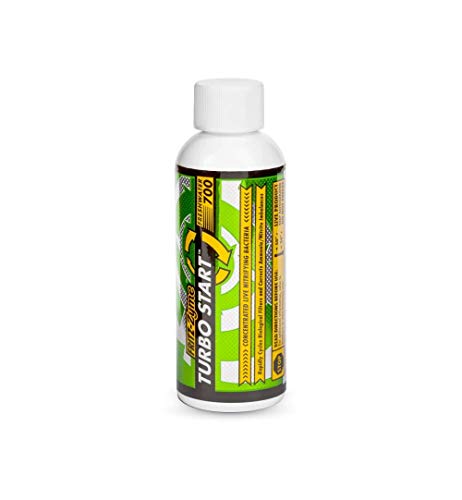
    • FritzZyme TurboStart. This freshwater bacteria supplement is designed to immediately reduce ammonia and nitrite levels to prevent fish death. It can be used to jumpstart an aquarium cycle or to save a fish tank suffering an ammonia spike. As the bacteria in this supplement are living, their shelf life is limited to four months.
    • Instant Ocean Bio-Spira. A saltwater bacteria supplement, Bio-Spira contains nitrococcus, nitrosomonas, nitrosospira, and nitrospira bacteria to reduce ammonia and nitrite levels. Bio-Spira is shelf-stable but should be used almost immediately.
    My Pick For Freshwater Bacteria
    Fritz Turbo Start 700 Freshwater

    Fritz Turbo Start is known in the industry as the fastest acting nitrifying bacteria you can purchase. This 700 version is specialized for freshwater tank and has my highest recommendation

    Buy On Amazon Click For Best Price

    6. Chemical Media

    Lastly, chemical media may be used to help reduce ammonia levels in saltwater or freshwater aquarium. However, this should be the last option for beginner hobbyists as, again, chemical media will not solve the reason for the high ammonia level.

    Chemical media can be a simple and inexpensive method for quickly removing ammonia from a fish tank though in case of an emergency. Simply place the media in an area of high water flow and replace it as directed.

    Here are some of the best chemical media products available to quickly reduce ammonia levels:

    • Zeolite. Zeolite, specifically from Marineland, removes ammonia as well as other toxins in the aquarium water, including chloramine. It is best used in freshwater aquariums and will last about a month.
    • SeaChem Purigen. Purigen polishes water of ammonia, nitrite, and nitrate for the freshwater and saltwater fish tank. It changes color when depleted, but can easily be recharged.
    • Fluval Ammonia Remover. This product specifically targets and reduces ammonia through natural ion exchange. Fluval Ammonia Remover is designed to work best in freshwater aquariums.
    Best Value
    Seachem Purigen

    Best Value

    Seachem is the most effective and quickest way to remove nitrates out of your aquarium

    Buy On Amazon Click For Best Price

    Final Thoughts

    Unfortunately, many beginner hobbyists experience an ammonia spike in their aquariums due to impatience and poor understanding of the nitrogen cycle. The growth of beneficial bacteria and conversion of ammonia to nitrite to nitrate can take a long time and we get the hurry!

    However, it’s better to end up with a stinky, empty fish tank than to come home to a bunch of dead fish. Allow your aquarium to fully cycle but know how to lower your ammonia level in case of an emergency.


    ๐ŸŸ Want to learn more? This article is part of our complete Aquarium Care Guide. your ultimate resource for water chemistry, maintenance, feeding, disease prevention, and everything you need for a healthy tank.

    References

  • 7 Best 20 Gallon Fish Tanks โ€“ Reviews & Setup Tips

    7 Best 20 Gallon Fish Tanks โ€“ Reviews & Setup Tips

    The 20 gallon is the sweet spot for hobbyists stepping up from a nano. it opens up far more fish options than a 10 gallon while still being manageable in terms of maintenance and space. I’ve set up 20 gallon tanks as community tanks, species tanks, and planted setups, and it’s a size I recommend constantly for beginners who want more creative flexibility. The 20 gallon long (as opposed to the tall) is particularly good for most fish since it offers more horizontal swimming space. something I always point out when helping people decide between configurations.

    Today, weโ€™ll be talking about the best 20-gallon aquariums for you and what fish to get. Let’s start by discussing criteria!

    What Is The Best 20 Gallon Aquarium (Our Criteria)

    I used to own a 20 gallon long aquarium. It was one of those 30 inch long standard tanks you purchase at the chain pet store. Nowadays, the options are plenty. There’s an aquarium, aquarium kit, or fully decked out system for every taste and budget – but what really makes one preferable over another? Here is how I determined my favorite choice! You can also check out our video above from our YouTube Channel.

    Aquarium Layout

    The rimless aquarium is a style that’s gaining popularity for its sleek design. At this size, it can be purchased at an affordable price. I want to provide multiple purchase opens and setups for you to consider.

    Filtration

    Several of these aquariums are going to be all in one tanks complete with a 3 stage filtration system. For kits, I want to make sure I find a glass aquarium kit with a decent starter filter that you won’t outgrow or will fall apart on you. If it is a basic fish tank, I want to make sure it’s the right dimensions to allow for multiple filter setups.

    There’s a new trend in the fishkeeping world – a fish tank kit with everything included! These kits come complete with three-stage filtration systems – often times with the system built into the fish tank! Tanks made this way make it so you’ll never have to buy another filter again. Other kits may include a power filter or internal filter. I’m looking to list packages that have solid equipment so you start out on the right foot.

    Lighting

    Some of these aquariums will come with lighting systems. If they do, I want to lean on systems that can support low light aquarium plants if they are designed for freshwater tanks or soft corals if they are designed for saltwater.

    I want to lean on systems that can support at minimum low light aquarium plants if they are designed for freshwater tanks. For saltwater tanks, they need to be the correct spectrum and have enough par to support soft corals and easy to care for LPS corals.

    Price

    Price is always a considerations when it comes to building your dream aquarium. The most basic of glass tank can be found for as little at $50, but high-end models will set you back more than that! This article aims at helping those who want an affordable and durable setup with great features while still being able stay within their budget constraints. An aquarium kit may also help with costs as they can be cheaper than buying all the equipment separately.

    The 20 Gallon Aquarium Candidates

    Below is the list of 20 gallon fish tanks that made the cut. They are from various price ranges and cover both freshwater and saltwater tanks. I’ll go over each one in detail.

    In a hurry? I recommend the UNS 60!

    PictureNameFeaturesLink
    Editor’s Choice
    UNS 60
    UNS 60
    • Rimless
    • Excellent Quality
    • Great Price
    Click For Best PriceBuy On Amazon
    Best Value
    Waterbox 20 Cube
    Waterbox 20 Cube
    • Cube Format
    • Built In Filtration
    • Rimless
    Click For Best PriceBuy On Amazon
    Budget Option
    Aqueon 20 Gallon Aquarium Kit
    Aqueon 20 Gallon Aquarium Kit
    • All In One Kit
    • Price
    Click For Best PriceBuy On Amazon
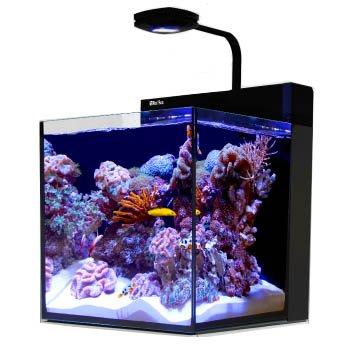
    Red Sea Max Nano Red Sea Max Nano
    • Built In Filtration
    • Great For Nano Reefs
    • Premium Setup
    Buy On ChewyBuy On Amazon
    Fusion Pro 20 Fusion Pro 20
    • All In One Aquarium
    • Rimless
    • Great For Nano Reefs
    Click For Best PriceBuy On Amazon
    Aqueon Neo Glow Tank Kit Aqueon Neo Glow Tank Kit
    • Designed For GloFish
    • Great Value
    Buy On Amazon
    Aqueon 20 Gallon Tank Aqueon 20 Gallon Tank
    • Cheap
    • Easy to Find
    Buy On PetcoBuy On Amazon

    The 7 Best (2023 Reviews)

    So, you’ve seen the list. Now it’s time for some fish tank knowledge! Let me show ya each one below and tell ya what makes them special in their own unique wayโ€ฆ

    1. UNS 60U

    The UNS 60U is a great 20 gallon glass tank. It has the same dimensions as a traditional 20 gallon fish tank, but is rimless. UNS is well known in the planted fish tank community for building high quality rimless aquariums. These aquariums are well built and are actually cheaper than other rimless tanks you may find online.

    This aquarium is very popular among the aquascaping community. There are plently of videos online of builds that will get your inspiration going. Here is a great example of wjhdrew’s fish tank below:

    Because this aquarium is the same dimensions as a rimmed 20 gallon fish tank, it should be easier to find a cabinet, or you can purchase your own. Just make sure the surface the aquarium is sitting on has support all around it. Many discount cabinets will have large gaps, which won’t work with a rimless fish tank.

    It’s a great brand and a great fish tank if you want a rimless fish tank. It can be on the pricey side if you are comparing it to a rimmed fish tank, but beauty and looks does have a price!

    Best For – Freshwater Tanks, Aquascapes

    Pros
    • Rimless
    • Great price
    • Excellent quality
    Cons
    • No filter included
    • No background

    2. Waterbox 20 Cube

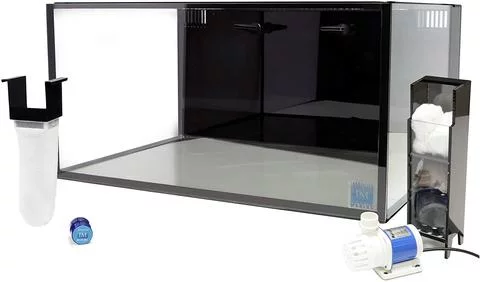
    The Waterbox 20 Cube offers a great looking cubed fish tank with all the bells and whistles to get you started. It is an all-in-one fish tank with a built in filtration system. The filtration systems comes with a filter sock, which is a type of mechanical filtration that is going to be superior to most other filtration systems in this aquarium size. The socks are replaceable or washable and can be more maintenance then foam. Waterbox also includes bio-balls, carbon, and a filter sponge to round out the system.

    The system is more designed for saltwater systems, but this fish tank can also be a great freshwater planted tank. It comes with a black background versus a frosted or clear background that you will see with many planted style scapes. While this might take away from the landscape look, you can balance it out by using more colorful nano fish that stand out when setting these up.

    For saltwater tanks, this cube is a perfect glass tank. it has great dimensions for building up rock scape for corals and the footprint means the AI Prime a perfect light for this system. Most reefs will end up using the filter sock and opt-in for a protein skimmer for added filtration. It’s great that this system can function with either setup.

    This is a great value for a cubed rimless given all the features offered for this fish tank. The price may be high for some people, but the next option offers another great value at a lower price.

    Pros
    • Cube format
    • Great brand
    • Built in filtration
    Cons
    • Black background
    • Expensive

    Best For – Nano Reef, Freshwater Tanks

    3. Aqueon 20-Gallon Aquarium Kit

    The Aqueon aquarium starter kit is an excellent budget option for those who want to get started with fish keeping. This because they offer a multitude of equipment in one package, most or which performs well and remove any guesswork about what you need when starting out

    This package includes everything you need to get started with fishkeeping, including a standard fish tank and hood, a fish net, fish food, and tap water conditioner. You save money by purchasing the complete set over buying each item separately! I believe this kit is one of the best 20 gallon glass aquariums because it has a better quality equipment than other kits including the Marina led aquarium kit, Tetra whisper 20, and generic brand kits.

    The main difference between the Aqueon kit and the other competitors is the power filter. The Aqueon filter is a 3 stage filtration system that can tell you when it needs to be replaced, so there is no guesswork when to do maintenance. The hood is good for fish only tanks, but not good for planted tanks.

    The main separator between Aqueon’s offering and the others is the power filter. Aqueon’s filter is a true 3 stage filter and as a feature that tells you when you should change the filter cartridges. The hood is good, though not ideal for planted tanks. The water heater is decently made. I’ve personally used these heaters for either a hospital tank or quarantine tank and never had an issue, but the preset heater bit too hot if you want to keep your temperature lower than 78 degrees Fahrenheit (26 Celsius).

    This package is perfect for those who want an easy and stress-free experience when selecting their fish tank kit. This is the best 20 gallon fish tank kit to buy if you want cheap, yet good equipment to start.

    Pros
    • Complete kit
    • Good price
    • Quality brand
    Cons
    • Rimmed tank
    • Okay heater

    Best For – Freshwater Tanks

    4. Red Sea Max Nano

    Best Nano Reef Tank!
    Red Sea Max Nano

    Editor’s Choice

    A high end plug and play reef system. Top shelf reef equipment and design

    Click For Best Price Buy On Amazon

    Red sea offers the best nano reef tank available starting at 20 gallons. It offers all the benefits of your classic red sea reefer, but in the small footprint of a 20 gallon fish tank.

    It offers ultra-clear glass with bevealed edges at the top and bottom for the best viewing experience you can get. The water pump provided offers 240 gallons per hour, which puts this at the 10 times turn over level you want for many desirable corals in the hobby. It’s designed to be adjusted to ensure there aren’t any dead spots in your aquarium.

    The filtration system is powered by a micron filter bad and a protein skimmer can be detached from the fish tank. This is the only nano reef tank package I have seen that offers a protein skimmer out of the box – and the protein skimmer is actually pretty good. You also get a media shelf to place any chemical or biological media you want. The system also comes with an auto-top off system that has a has a built in reservoir that supply 3 days worth of freshwater.

    The led lighting system is designed for reef tanks. The kit comes with a ReefLED 50, which Red Sea’s competitor to the AI Prime and AI LED lighting units. It’s a great light for corals. The light is powered by the ReefBeat App, which connects all your red sea devices together.

    This is bar none the best nano reef tank you can buy today, but it comes with a big price. As the most expensive tank kit on this list, it’s not for everyone. However, this is a premium quality fish tank kit for reef setups. If you are looking for a high quality setup with the guess work taken out of it, look no further!

    Pros
    • Great brand
    • Built in filtration
    • Premium quality
    Cons
    • Expensive
    • Designed only for reef tanks

    Best For – Nano Reef Tanks

    5. Innovative Marine Fusion Pro 20

    Best Value
    Innovative Marine Nuvo Fusion PRO

    Best Value

    Complete with pump and filter, this rimless nano tank screams value

    Click For Best Price Buy On Amazon

    Innovative marine is the originator of the modern all in one nano aquariums you see in the saltwater tank hobby. This Fusion Pro 20 is their latest line of aquariums and really comes in offering premium features. This extraordinary fish tank kit comes with a mesh lid and micro glass cleaner to keep your favorite dweller from jumping out, plus it has an algae scrapper for removing unwanted algae.

    The Innovative Mighty Jet DC water pump is a great option for any nano reef tank. It’s got adjustable flow rates so you can customize it to your needs, no matter what type of corals are going into the aquarium!

    Innovative is a company that has been making stellar aquariums for years. Their products are worth every penny and they’re one of our favorite brands!

    Pros
    • Great brand
    • Built in filtration
    • Peninsula style
    Cons
    • Expensive

    Best For – Nano Reef Tanks

    6. Aqueon NeoGlow Tank

    Aqueon NeoGlow LED

    A 20 gallon aquarium kit that is specially designed for Glofish.

    Buy On Amazon Buy On Petco

    Want something really unique? Try Glofish. This aquarium is a kit that is specially designed for Glofish in mind.

    What are Glofish? Glofish are a specialized type of fish that have a fluorescent glow to them. These fish are not injected like the old painted glass fish we used to see 20 years ago. These fish are specially bred. Their colors are hereditary traits that are passed down from generation to generation. Their breeding has helped us understand cellular disease and development1.

    What you get here is a 20 gallon fish tank, a Aqueon power filter, a specialized LED lighting system and hood, artificial plants, rocks, and gravel that all show well in fluorescent lighting.

    There are many Glofish fish species available these days including:

    The price is not too shabby with everything that’s included here. If you want something unique, then this Glofish fish tank kit might just be what you need!

    Pros
    • Good value
    • Designed for GloFish
    • Multiple color options
    Cons
    • Limited setup use
    • Rimmed aquarium

    Best For – GloFish Tanks

    7. Aqueon 20 Gallon Long Tank

    The Aqueon 20 gallon long is a great glass tank for getting length at a cheap price. While the price may seem great at first impression, it can actually end up costing more than an Aqueon glass kit to build out your system – not that there’s anything wrong doing this!

    I included the links to go purchase this if you want. It’s an affordable 20 gallon fish tank and will last a long time. It’s just not my first choice, as I prefer to work with rimless aquariums these days or all-in-one systems for smaller aquariums. If you want a rimless or an all in one system, consider the other aquariums on this list.

    Pros
    • Cheap
    • Long format
    • Easy to find
    Cons
    • Not ideal for aquascaping
    • Rimmed aquarium

    Best For – Freshwater Tanks

    What Fish Can I Get For This Size of Tank?

    Nano fish are the best choice for new aquarium keepers. They’re small, colorful and adorable! Some common nano fish species options include:

    Nano reef tanks are great-looking and challenging tanks to keep. You need to be mindful when selecting freshwater fish species that will get along in a small tank like this. Here are a few options:

    The clownfish and the damselfish are the two riskiest fish species of the bunch. Clownfish are iffy trying to pair at this size as a non-paired couple will fight it out until one of them submits. With the damselfish, their aggression might be too much for many on this list. If you are going to attempt a damselfish and clownfish, it’s best to pair them together as the clownfish and damsel can work through their aggression – while most other fish will be harassed to death.

    Setup Guide

    Setting up a 20 gallon fish tank can be stressful if it is the first time for you. Luckily, it’s easier than you think if you are guided.

    I go for planted tanks or reef tanks. Here is a good video from Shawn Hineidi that shows a simple aquascape that can be installed in a 20 gallon fish tank. Check it out below:

    To start building your own aquarium from scratch, you will need the following:

    • Filter
    • Heater (if going with tropical fish or marine fish)
    • Lighting
    • Decorations
    • Live Plants or Corals

    Aquarium Filtration for The Tanks

    There are a ton of options when it comes to 20 gallon fish tanks. If you want to go with a canister filter, I would recommend the OASE Biomaster 350. This is the smaller version of the Biomaster 600. It’s great for a 20 gallon fish tank. If you are looking for a pro level 20 gallon planted tank, you might want to consider upgrading to the 600 model.

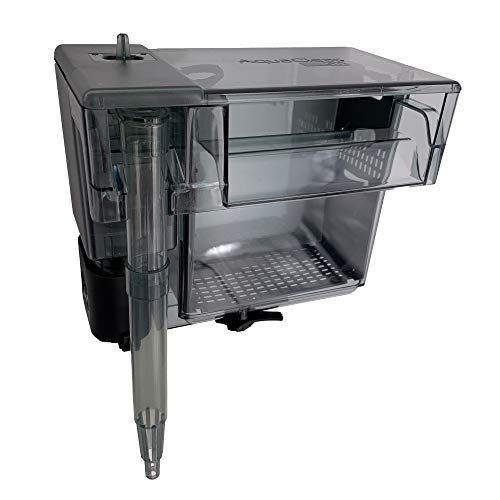
    You can try power filters, which are a great choice. My go to for power filters are Hagen Aquaclears. In my mind, the aquaclear is the best power filter you can purchase in the hobby.

    Editor’s Choice
    Hagen AquaClear

    The Best Aquarium Power Filter

    The worlds best selling and most reliable power filter on the market. Unchanged for years because it’s so reliable and versatile

    Buy On Amazon Click For Best Price

    Aquarium Heaters

    You want to have a quality heater in order to keep your tank temperatures stable. it’s important to consider a brand like Eheim when shopping around. The heaters that come with OASE filters and controllers are also excellent choices – you’ll have no problem getting the job done!

    Hooking up your heater to a controller is the best way for added safety. Inkbird has great controllers with wifi capability, and they even have an app on you phone that you can download that will send you alerts.

    Protects Against Heater Failure!
    Inkbird Heater Controller

    Protect your investment with this heater controller. An excellent choice for small tanks. WiFi models now available!

    Buy On Amazon Click For Best Price

    Aquarium Lighting

    The range of led light options is as vast and diverse, from basic to advanced. You have the option of two great choices at this size whether you want to go with a freshwater planted tank or a saltwater reef tank.

    The freshwater Serene RGB Pros have a variety of led light features that will help you grow your favorite live plants. They come with an easy-to control and adjustable controller, making this led light perfect for anyone looking to add some lushness into their aquarium!

    Best Value
    Serene RGB Pro LED

    Current USA’s offering into aquascaping is an incredible value. Spectrum, spread, easy to program and great PAR output.

    Click For Best Price Buy On Amazon

    For saltwater aquariums, the AI Prime is the best led light you can purchase for nano reef tanks. With the AI Prime, you can grow just about anything short of hardcore SPS corals. They work amazing for Zoas – a very popular beginner coral that’s great in Nano reef tanks! This led light is good for 24×24 footprints. You may have to plan a different led light if you go with a 20 gallon long. For 20 gallon longs, I would recommend the Current USA IC Pros.

    Great For Zoas
    AquaIllumination AI Prime

    The AI Prime is a great overall all light for Zoas. It contains the correct, PAR, spectrum, and spread needed to get you going with growing your own Zoa colony!

    Buy On Amazon Click For Best Price

    Decorations

    Driftwood make a solid decorative piece for 20 gallon aquariums, but you can use any type of decoration that suits your needs. Some people prefer driftwood with low tannins and others like those made from manzanita. Manzanita are reasonably placed and easy to place in an aquarium.

    Editor’s Choice
    Manzanita Driftwood

    Editor’s Choice

    Manzanita offers it all. Great shape, low tannins, quick to water log and reasonably priced. It’s the ultimate driftwood!

    Click For Best Price Click For Branch Pieces

    For saltwater tanks, I would recommend purchasing live rock at your local fish store. These are so small you really don’t need much to get started! A couple pounds is plenty – 7-10 lbs should do it for starters. Fill the rest of the aquarium up with dry rock.

    Live Plants or Corals

    If you’re just getting started with keeping fish, it’s best to start off by adding some beginner plants. There are many different types that will thrive in a 20 gallon tank and they can make fish’s home look more appealing too! Some great options include:

    All of these live plants feeds off the aquarium water column, so you can glue them to driftwood. If your looking for a high-quality live plant seller consider buying from an online retailer like Buce Plant

    My Pick
    Buce Plant

    Buce Plant offers a wide variety of aquatic plants for sale. With one of the largest selections in the US, you will find what you need here. They are also a great source for freshwater shrimp!

    Click For More Info

    FAQs

    What Fish Are Good In A 20-Gallon Tank?

    Guppies, rasboras and danios all make excellent choices for aquariums of this size. Small tetras are another great addition if you want something with more color! Corydoras catfish can’t be beat either- they’re easy to care for and require very little maintenance once established in their tank or pond surroundings. A betta sonority is also a great option.

    On the saltwater side, nano reef fish like firefish gobies, clown goby, clownfish, or an azure damsel would work. Aggression is a major factor with tanks these small. Clownfish and azure damsels will be too aggressive for timid fish like fishfish.

    How many can this size of tank support?

    The smaller the fish, the more you’ll want to house them in a tank of their own. 10-16 small schooling freshwater fish can live together with proper filtration and decoration (or even better: live plants) for company!

    Is This Size of Tank Good?

    A 20 gallon tank is a great first timer’s fish tank if it is setup as a freshwater aquarium and the filtration system is of good quality. It is sizable enough to build a good filtration system and not as maintenance heavy as a 40 or 55 gallon tank.

    On the saltwater side, a 20 gallon tank is considered at the moderate end of a nano reef tank. These tanks can be a challenge to maintain and keep stable. A 40 or 60 gallon breeder are the best first time saltwater tanks to start with.

    Is This Sizze of Tank Hard To Maintain?

    No. The ease of maintenance for a 20 gallon tank is one reason it’s so popular. You can keep your stocking reasonable while still having enough space to grow plants without worrying about maintenance issues that come with larger tanks- which means you won’t be spending as much time monitoring water quality or trimming plants!

    If you plan on a heavily planted tank, the trimming and water changes and add up to a lot of maintenance time for some aquarists.

    Is This Tank Big?

    20 gallon tanks aren’t that big in size. The 20 gallon tank is a great size for home or office use. The standard dimensions of this type are 24″ x 13″, and they can easily be found in most stores! The 20 gallon tank is a great size for home or office use. It’s not too big, but it can hold enough water and fish to make your space feel more complete!

    How much would a tank this size cost?

    A basic 20-gallon tank will be about $20-$25 per gallon or $400-$500 to set up for a freshwater glass tank. For a saltwater tank, expect to pay $40-$60 per gallon or $800-$1200. You can definitely pay less than what I’m suggesting, however, keep in my the ranges I throw out are for higher-quality setups not discount store kits which tend to have low-quality equipment that will not last. A glass tank will also be cheaper than an acrylic tank in most cases.

    Closing Thoughts

    Whichever tank you choose, it will be a great addition to your home and provide an excellent living space for small fish. These 20-gallon tanks are perfect if thatโ€™s what suits YOU best! If there’s anything else on this list of aquarium options but isn’t quite right (maybe too big or small), leave us questions below – we’re here everyday ready talk through any issues


    ๐Ÿ”ง Want to learn more? This article is part of our complete Aquarium Equipment & Gear Guide. your ultimate resource for filters, heaters, lights, pumps, tanks, and more.

  • 7 Best 10 Gallon Fish Tanks โ€“ Reviews From a 25-Year Hobbyist

    7 Best 10 Gallon Fish Tanks โ€“ Reviews From a 25-Year Hobbyist

    The 10 gallon is probably the most popular beginner tank size in the hobby. it’s widely available, affordable, and gives you just enough room to create something interesting. I’ve owned 10 gallon tanks at various points over 25 years and have watched the quality of all-in-one kits improve dramatically. They work great for bettas, small community setups, shrimp, and easy planted tanks. The main thing to know is that not all 10 gallon tanks are equal. filtration quality and build durability vary a lot between the budget options and the better kits.

    What Is The Best 10 Gallon Aquarium (Our Criteria)

    I’ve owned 10 gallon aquariums and see the evolution in the industry. There are simple aquariums and fully decked out all in one systems. Here is what I used to determine the best.

    Aquarium Layout

    Everyone wants a rimless aquarium. I’m primarily going to be looking at this style of fish tank because you can rimless tanks at this size at an affordable price. It’s way too easy to point out a discount fish tank kit. You didn’t come here for that, you came here for high quality and style.

    Filtration

    Several of these aquariums are going to be all in one tanks compete with a 3 stage filtration system. For kits, I want to make sure I find a glass aquarium kit with a decent starter filter that you won’t outgrow or will fall apart on you. If it is a basic fish tank, I want to make sure it’s the right dimensions to allow for multiple filter setups.

    Lighting

    Some of these aquariums will come with lighting systems. If they do, I want to lean on systems that can support low light aquarium plants if they are designed for freshwater tanks or soft corals if they are designed for saltwater.

    Price

    Price is always a factor in any aquarium build. I’m looking at a price of aquariums here from high end to the most basic. If it’s priced high, I want to make sure it has premium features like being rimless or including a good light. If it is priced low, I want to make the aquarium will last.

    The 10 Gallon Aquarium Candidates

    Below is the list of aquariums that made the cut. They are from various price ranges and cover both freshwater and saltwater tanks. I’ll go over each one in detail.

    In a hurry? I recommend Serene Aquariums!

    PictureNameFeaturesLink
    Editor’s Choice
    Serene Aquarium
    Serene Aquarium
    • Comes with light
    • Frosted background
    • Rimless
    Click For Best PriceBuy On Amazon
    Best Value
    Waterbox 10 CLEAR Mini
    Waterbox 10 CLEAR Mini
    • Rimless
    • Great Value
    Click For Best Price
    Budget Option
    Aqueon 10 Gallon Aquarium Kit
    Aqueon 10 Gallon Aquarium Kit
    • All In One Kit
    • Price
    Buy On AmazonBuy On Chewy
    Water Box Nano Water Box Nano
    • Built In Filtration
    • Great For Nano Reefs
    Click For Best PriceBuy On Amazon
    Fusion Pro 10 Fusion Pro 10
    • All In One Aquarium
    • Rimless
    • Great For Nano Reefs
    Click For Best PriceBuy On Amazon
    Dennerle 10G Shrimp Tank Dennerle 10G Shrimp Tank
    • Gentle Filter
    • Shrimp Tanks
    Click For Best PriceBuy On Amazon
    Aqueon 10 Gallon Tank Aqueon 10 Gallon Tank
    • Cheap
    • Easy to Find
    Buy On PetcoBuy On Amazon

    The 7 Best (2023 Reviews)

    You have seen the list, now it’s time to learn more about each fish tank. Let’s look at each one below.

    1. Serene Aquariums

    Current USA’s Serene aquariums are a new entrant into rimless aquariums, but it’s one of the best freshwater focused kits you can buy today. What I love the most about this aquarium is they design it so you can have a low maintenance tank. It comes with a frosted background that is backlit. This is a feature you don’t get with any fish tank manufacturer. In fact, to get similar, you would have to purchase a background and lighting system from ADA, which is as much as this tank! The frosted background is the perfect color for freshwater aquascapes.

    The light that comes with this aquarium is Current USA’s Serene line. While it is not the Pro RBG light, it is still good enough to grow lots of low light plants. The Serene light has a ton of features. See the video below from Current USA to see some of the features below.

    This is a rimless aquarium with a very good price. You get a 13 gallon fish tank (yes, it’s slightly better than 10 gallons, but I felt it’s close enough to be on this list), the Serene light, a frost background, and you even get some decorations. This aquarium is a stand-alone tank that is a better quality offering than some of the all-in-one aquariums you will see like the Waterbox or Innovative Marine. It is also designed for freshwater aquascaping versus reef tanks.

    Current USA has several aquascaping packages to choose from. The one I linked to is the dragonstone package. They also have a Manzanita and a planted package. You can chose these other packages and get the aquascaped look without live plants.

    The main cons with this package is the price. It is on the pricey side, but there also is a nice 15% offer you can get from me to help with the price (use offer code ASD15).It is also missing a filtration unit. I would either use a canister filter or opt with OASE’s Bioplus Thermo. It’s a great buy and highly recommended!

    Best For – Freshwater Tanks, Aquascapes

    Pros
    • Comes with light
    • Frosted background
    • Comes with decor
    Cons
    • Expensive
    • Light is best for low light plants

    2. Waterbox 10 CLEAR Mini

    Best Value
    Waterbox 10 Mini

    The Waterbox 10 Mini offers a great rimless tank at a great price. Perfect for a mini aquascape!

    Click For Best Price

    When you are looking for a rimless aquarium only, the Waterbox 10 Mini offers an excellent price to get into a high clarity fish tank. Waterbox is really putting in efforts to penetrate the freshwater hobby with this well priced package. They are well known for their great all in one aquariums that comes with aquarium sumps and easy to install plumbing.

    The CLEAR aquarium is roughly the same dimensions as your standard 10 gallon tank. The straight edged silicone gives the glass aquarium a seamless look. You won’t see ugly silicone on the edges of your aquarium or a plastic rim. The aquarium comes with a self leveling mat, so you do not need to purchase your own. Waterbox also offers cabinets, though they pretty expensive. The Serene offers more equipment, a background, and decorations, but the CLEAR is cheaper and gives you the freedom to buy your own gear.

    In looking at the Clear aquarium, I like the design and simplicity. I prefer this name brand over similar offerings I’ve found on Amazon, and the customer support with Waterbox is pretty responsive in my opinion.

    If you are looking for a pure rimless aquarium with a great brand behind it, this is the aquarium to get. It is more expensive as a traditional rimmed tank, but it looks a lot better and well suited for planted tanks.

    Pros
    • Rimless
    • Good price
    • Quality brand
    Cons
    • Tank only
    • No background

    Best For – Freshwater Tanks, Aquascapes

    3. Aqueon 10 Gallon Aquarium Kit

    It would be really easy for me to place Aqueon’s standard 10 gallon tank as the budget pick here, but I felt Aqueon’s aquarium starter kit is a great budget option. This is because Aqueon takes the guesswork away from select equipment and most of the equipment they offer in the package is pretty good.

    The package comes with the standard fish tank, a hood with standard LED light, Aqueon’s power filter, a heater, a fish net, themometer, water conditioner, and some sample fish food. You save a bit of money purchasing this package over buying everything separately. I feel the overall quality of the package is better than most other 10 gallon glass aquarium kits, including the Marina led aquarium kit, Tetra’s, and generic brand competitors.

    The main separator between Aqueon’s offering and the others is the power filter. Aqueon’s filter is a true 3 stage filter and as a feature that tells you when you should change the filter cartridge. The hood is good, though not ideal for planted tanks. The heater is decent in quality. I’ve personally used these heaters for quarantine tanks and never had an issue. The main thing I don’t like about the preset heater is that you can’t adjust it – it is designed to keep temperatures at 78 degrees.

    Overall, this is a great fish only starter package if you are looking for good equipment and stress free selection.

    Pros
    • Complete kit
    • Good price
    • Quality brand
    Cons
    • Rimmed tank
    • Okay heater

    Best For – Freshwater Tanks

    4. Water Box Nano

    Waterbox Nano

    A classy rimless nano reef tank that won’t break the bank! Great design with a well design all in one chamber

    Click For Best Price Buy On Amazon

    Are you looking for a nano reef tank? If so, The Water Box Nano is an excellent choice at the 10 gallon aquarium size. This all-in-one fish tank offers a built in filtration system, return pump, black background, and rimless style aquarium.

    The cubed dimensions of this aquarium allow for more aquascaping space then a regular 10 gallon. The built in filtration unit is large enough to house an auto top off system and aquarium heater. In my personal experience with dealing with this tank, they are prefer for softy nano reef setups. The filtration is basic enough for them and a simple lighting fixture is all you need.

    There are a few things here that could be improved. The return pump isn’t that great and the price is on the higher end. However, if you want a better return pump, you can opt for the next option below.

    Pros
    • Great all in one filter
    • Rimless
    • Built for nano reefs
    Cons
    • Okay return pump
    • Expensive

    Best For – Nano Reef Tanks

    5. Innovative Marine Fusion Pro 10

    Innovative marine is the originator of the modern all in one nano aquariums you see in the saltwater tank hobby. This Fusion Mini is their latest line of aquariums and really comes in offering premium features. It comes with a mesh lid and micro glass cleaner to keep your fish from jumping and algae a breeze to scrape. It has superior features, build quality, and a higher price compared to the Waterbox.

    The return pump included is Innovative’s Might Jet DC pump. This DC pump is one of the best DC pumps you can put into a nano reef tank. With its adjustable features, you can adjust the flow to suit whatever corals you plan to keep.

    This package is what I call a premium package and commands a premium price. It’s the most expensive fish tank on this list. If you are looking or the best nano reef tank at this size, this is the aquarium to purchase. My personal recommendation is purchase this over the Waterbox if you want more than soft corals. I’ve worked on LPS and mixed reef tanks from this line and seen plenty of successful setups.

    Pros
    • Manufacturer designs upgrades for tank
    • Rimless
    • Built for nano reefs
    Cons
    • Expensive

    Best For – Nano Reef Tanks

    6. Dennerle Shrimp Aquarium

    Looking for a freshwater shrimp tank? If so, this 10 gallon tank by Dennerle is a great option for a larger shrimp tank. This is aquarium is built for the purpose of keeping shrimp. Starting with the Eckfilter internal filter, this gentle filter can keep your fish tank clean while keeping your shrimp safe. The filter is simple, making it easy to clean and maintain. It also comes with a LED light with a color output of 6500K. While it is not the best-planted tank LED, it is adequate for low-light plants.

    The aquarium itself is a rimless tank that is a bit wider than your standard ten-gallon aquarium. This allows you to play with the depth space and give your shrimp more space to run around in. The aquarium is built as a curved corner glass tank. Keep this in mind as this can give an odd look when looking at the corners.

    My affiliate partner, Flip Aquatics loves these tanks for his customers. It offers a simple yet effective setup. This is a great tank if you are looking for a shrimp-only tank. If you are looking to build a community tank that includes freshwater shrimp, consider the Serene instead. They are more expensive to set up over the Dennerle, but you get a higher-quality glass tank and the option of installing better filtration.

    Overall, the Dennerle, with its Eckfilter and LED lights great option for shrimps and offers a great overall value for everything it comes with. It has the functionality, is built for shrimps, and has better looks than rimmed glass aquariums. It’s a great first shrimp tank.

    Pros
    • Built for freshwater shrimp
    • Gentle filter
    • Good price
    Cons
    • Not good for community tanks
    • Expensive

    Best For – Freshwater Shrimp Tanks

    7. Aqueon Ten-Gallon Aquarium

    I left this aquarium for last. This is the aquarium you will typically see when you go to Petco or Petsmart’s dollar-per-gallon sale. While the price may be great at first impression, you can actually end up spending more than the Aqueon glass aquarium kit to build out a suitable system.

    I included the links to go purchase this if you want. It’s cheap and Aqueon aquariums should last a long time. It is longer than most all-in-one aquariums (20โ€ L x 10โ€ W x 12โ€ H).

    It’s just not my first choice when it comes to building out a good-looking display tank. If you are looking for a classy rimless tank or want to do a premium setup, consider going with the other tanks on the list.

    That’s not to say you can’t build a great-looking setup with this over the Serene tank. I’ve built plenty of great 10 gallon setups using these tanks from aqueon including community fish and betta fish tanks.

    Pros
    • Cheap
    • Easy to Find
    • Standard Dimensions
    Cons
    • Rimmed Tank
    • Bare bones

    Best For – Freshwater Tanks

    What Fish Can I Get For A 10 Gallon Fish Tank?

    A common question when purchasing an aquarium at this size is what type of fish species can you put in these tanks. The preferred options would be nano fish like the following:

    If you want the most stunning fish you can buy at 10 gallon aquariums, I would recommend a betta fish. The link below is from Glass Aqua, which favors Plakat Betta fish. These types of betta are the best to purchase for larger tanks because they are more active, hardy, and can compete for fish food from other fish tank mates.

    WYSIWYG Available!
    Betta Fish

    Use Coupon Code ASDFISH at Checkout

    Betta Fish are one of the most beautiful varieties of freshwater fish available in the hobby. Easy to care for with plenty of varieties!

    Buy Premium Varieties Buy On Petco Online

    If you are looking at a nano reef tank, your options are going to be limited. The best fish to buy at 10 gallons would be:

    • Firefish Gobies
    • Clown Goby
    • Single Azure Damsel

    Check out my full list of the best fish for 10 gallon tanks here.

    How to Setup a 10 Gallon Fish Tank

    Setting up a 10 gallon fish tank can be stressful if it is the first time for you. Luckily, it’s easier than you think if you are guided. For those of you who are video inclined, I provided a video below from Waterbox that explains their process of setting up their mini aquariums. I’ll go in more detail below.

    Assuming you building everything with just an aquarium to start, you will need the follow to setup:

    • Filter
    • Heater (if going with tropical fish or marine fish)
    • Lighting
    • Decorations
    • Live Plants or Corals

    Aquarium Filtration for 10 Gallon Fish Tanks

    There are a ton of options when it comes to 10 gallon fish tanks. If you want to go with a canister filter, I would recommend the OASE Filtosmart 100. This is a mini version of their Biomaster Thermo, but small enough not to be over kill for this size.

    You can try power filters, which are a great choice. My go to for power filters are Hagen Aquaclears. They do not display very well in rimless aquariums though.

    Editor’s Choice
    Hagen AquaClear

    The Best Aquarium Power Filter

    The worlds best selling and most reliable power filter on the market. Unchanged for years because it’s so reliable and versatile

    Buy On Amazon Click For Best Price

    For rimless aquarium options, I would consider an OASE BioPlus Internal Filter or Filtosmart 100. Either filtration system will get the job done.

    Aquarium Heaters for 10 Gallon Aquariums

    You want to have a quality heater in order to keep your tank temperatures stable. Consider a high quality brand like Eheim when shopping around. The heaters that come with OASE filters are also excellent choices. You can hook up your heater to a heater controller for added safety. Inkbird has a great line of controllers that have wifi capability. The controller comes with an app that you can download on your phone that sends you alerts.

    Protects Against Heater Failure!
    Inkbird Heater Controller

    Protect your investment with this heater controller. An excellent choice for small tanks. WiFi models now available!

    Buy On Amazon Click For Best Price

    Aquarium Lighting for 10 Gallon Aquariums

    Lighting can be basic or advanced depending on what you are looking for. The great thing is at this size there are two great choice depending on whether you go freshwater or saltwater. More options are led lighting systems.

    For freshwater, the Serene RGB Pros are a great value and will grow just about any freshwater plant available in the hobby. It comes with a great controller and adjustable features

    Best Value
    Serene RGB Pro LED

    Current USA’s offering into aquascaping is an incredible value. Spectrum, spread, easy to program and great PAR output.

    Click For Best Price Buy On Amazon

    For saltwater aquariums, the AI Prime is the best light you can purchase for nano reef tanks. Just buy this light and you can grow just about anything short of hardcore SPS corals. They work amazing for Zoas, a very popular beginner coral.

    Great For Zoas
    AquaIllumination AI Prime

    The AI Prime is a great overall all light for Zoas. It contains the correct, PAR, spectrum, and spread needed to get you going with growing your own Zoa colony!

    Buy On Amazon Click For Best Price

    Decorations for 10 Gallon Aquariums

    For a 10 gallon aquarium. I prefer to go with a solid piece of driftwood and decorate from there. Manzanita driftwood offers a great value, has low tannins, and has a reasonable price. You can also use plastic plants or silk plants if you want to use artificial plants as decorations.

    Editor’s Choice
    Manzanita Driftwood

    Editor’s Choice

    Manzanita offers it all. Great shape, low tannins, quick to water log and reasonably priced. It’s the ultimate driftwood!

    Click For Best Price Click For Branch Pieces

    For saltwater tanks, I would consider purchase live rock at your local fish store. These tanks are so small you really don’t need much to get started. A 5 to 7 pound rock is all you need. Fill the rest up with dry rock.

    Live Plants or Corals for 10 Gallon Fish Tanks

    Beginner plants are the best plants to add for a 10 gallon fish tank. The following are great plants you can add to your tropical fish tank:

    All the plants above feed off the aquarium water column, so you can glue them to driftwood. If you are looking for a quality live plant seller, considering buying from an online retailer like Buce Plant.

    My Pick
    Buce Plant

    Buce Plant offers a wide variety of aquatic plants for sale. With one of the largest selections in the US, you will find what you need here. They are also a great source for freshwater shrimp!

    Click For More Info

    FAQs

    What Fish Are Good In A 10 Gallon Tank?

    On the freshwater side, nano fish like guppies, rasboras, danios, small tetras, and corydoras catfish all make excellent choices. A single male betta is also a great choice.

    On the saltwater side, nano reef fish like firefish gobies, clown goby, or an azure damsel would work. Note for a 10 gallon tank, you will likely only be able to house 1 or 2 saltwater fish depending on the aggression levels of the fish. Clownfish are generally too large for 10 gallon fish tanks

    How many fish can a 10 gallon tank support?

    If the fish are small schooling fish, 4-6 small freshwater fish can be housed in a 10 gallon tank with proper filtration and shelter from decorations (or even better live plants)

    Is A 10 Gallon Tank Good?

    A 10 gallon tank is a great first timer’s fish tank if it is setup as a freshwater aquarium and the filtration system is of good quality. While not as stable as a 20 or 40 gallon tank, you can still enjoy success with this size tank.

    On the saltwater side, a 10 gallon tank is considered at the low end of a nano reef tank. These tanks can be a challenge to maintain and keep stable.

    Is A 10 Gallon Tank Hard To Maintain?

    Definitely not. A 10 gallon tank will have one of the lowest maintenance commitments due to its size. You sacrifice stability for maintenance time with small tanks. As long as you keep your stocking reasonable and

    Is A 10 gallon Fish Tank Big?

    10 gallon tanks aren’t that big in size. The standard dimensions of a 10 gallon tank is 20″ x 10″ x 12″. Most rimless and all in one aquariums will actually be built with shorter lengths to accommodate a smaller footprint on a desk or countertop. You shouldn’t have any trouble finding a place for it in your home or office.

    How much would a 10 gallon tank cost?

    A basic 10 gallon tank will be about $20-$25 per gallon or $200-$250 to setup for a freshwater tank. For a saltwater tank, expect to pay $40-$60 per gallon or $400-$600. You can definitely pay less than what I’m suggesting, however, keep in mind the ranges I throw out are for higher quality setups not discount store kits which tend to have low quality equipment that will not last.

    Closing Thoughts

    You can create beautiful 5 gallon fish tanks with any of the aquariums on this list. All these tanks are suitable for small fish and will get you going on your fishkeeping journey. I hoped I helped alleviate your buyerโ€™s anxiety with this roundup today. If you have any questions, leave a comment below and letโ€™s start a conversation! Thanks for reading!


    ๐Ÿ”ง Want to learn more? This article is part of our complete Aquarium Equipment & Gear Guide. your ultimate resource for filters, heaters, lights, pumps, tanks, and more.

  • How to Set Up a Saltwater Aquarium: The Complete Beginner Guide

    How to Set Up a Saltwater Aquarium: The Complete Beginner Guide

    Setting up a saltwater aquarium is one of the most rewarding things you can do in this hobby. and it’s far more approachable than most beginners assume. I’ve been in the saltwater side of the hobby for over 25 years, have run a 125-gallon reef of my own, and I’ve helped countless people get their first saltwater tank off the ground. The biggest mistake I see is people trying to do everything at once, or buying equipment before they understand what it’s actually for. In this guide I’m walking you through everything you need to know about setting up a saltwater aquarium the right way. from choosing your tank and equipment to cycling, stocking, and maintaining it long-term.

    How Much Does It Cost To Set Up A Saltwater Aquarium?

    Before we dive into the specifics, you will want to know more about the financial investment you’re about to make.

    It is no secret that saltwater aquariums cost more to set up and maintain than freshwater aquariums, but by how much exactly? In general, it’s estimated that every gallon of saltwater costs $40-$60.

    This includes the original startup cost, water and electricity bills, equipment, and general maintenance. Most hobbyists spend between $1,000-$2,000 on building and starting their tank alone1.

    This is definitely a lot of money and it doesn’t get much cheaper the more involved you get. Luckily, many hobbyists sell used premium products, fish, and invertebrates at a discount to fellow hobbyists. There are even social media groups that exchange corals at no extra cost!

    The truth is that this side of the hobby is expensive no matter how you go about it. However, there’s nothing quite like adding a saltwater aquarium fish to a new tank for the first time ever.

    How Hard Is It To Assemble?

    Though more expensive, a saltwater aquarium isn’t necessarily more difficult to set up or maintain than a freshwater aquarium.

    Just like a freshwater aquarium, saltwater tanks need to go through the nitrogen cycle where ammonia is converted to nitrite and nitrate by beneficial bacteria. This process takes about 4-6 weeks, though it can be expedited with mature live rock and filter media.

    From there, a new saltwater aquarium will go through an ugly algae and/or diatom phase for the first couple of months. During this time, water parameters may swing, especially if the nitrogen cycle wasn’t allowed to fully finish. Because of this, it isn’t recommended to begin adding corals until the tank is at least 3 months old.

    One of the main differences between a freshwater and saltwater fish tank is that marine ecosystems are constantly changing. As corals grow, you will need to increase water flow and dose nutrients. As you add more fish, you might need to perform more water changes and change the settings on your protein skimmer.

    The difficult part about setting up a saltwater aquarium is finding what works best for your system. There are guidelines and recommendations, but only you will be able to tell where and when your saltwater tank does best.

    What Type of Saltwater Aquarium Setup Do You Want?

    That being said, there are a few types of saltwater aquarium setup you can try. It is important to decide which one you want at the beginning of the setup process as it can be difficult and expensive to change once the tank has been established.

    The three main saltwater aquarium setups are:

    • Fish only (FO)
    • Fish only with live rock (FOWLR)
    • Reef

    Within these three setups, there are also community and predatory fish options.

    Fish Only (FO)

    As the name implies, a fish only system will have only fish without any live rock or corals, very similar to how most freshwater setups work. A fish only tank can be simple in design, yet incredibly effective. They often use fake aquarium decorations and a plain substrate to accent the fish in the display.

    This option is especially popular for predatory setups but is common among beginner hobbyists as well. A fish only setup allows the hobbyist to focus only on the fish and their health and not on maintaining an entire ecosystem. As we’ll see, live rock can actually be very beneficial to the tank as a whole.

    Fish Only With Live Rock (FOWLR)

    A FOWLR system is the most popular saltwater tank setup and is relatively easy to convert to a reef system down the line.

    Live rock provides a healthy population of beneficial bacteria that can make water chemistry more stable while providing fish and invertebrates with food and shelter. However, it can also come with unwanted hitchhikers, algae, and other pests that beginner hobbyists might not know how to immediately treat.

    Ocean Direct
    Maricultures Florida Live Rock

    An old school solution. Once cured, Dinos tend not to be an issue because of the great biodiversity contained in this rock.

    Click For Best Price

    Live rock can be intimidating at first. It can also be hard to come by and pretty expensive for what it is. Once live rock is established though, it can be used indefinitely to stabilize the system and even seed other marine systems with the necessary bacteria.

    Dry rock is more common these days, but I prefer to use a mix of live rock and dry rock to get proper diversity. Too little biodiversity in a reef tank combined with no nutrients leads to nuisance dinoflagellates.

    A FOWLR system can support a community or predatory ecosystem. These setups are also best if planning to keep saltwater fish species that are not entirely reef-safe, like angelfish, butterflyfish, or triggerfish.

    Reef Tank

    The truth is that many hobbyists end up with a reef tank at one point or another in their aquarium-keeping careers even if they never intended to; the coral bug eventually gets everyone.

    At the same time, reef tanks are believed to be unattainable for most. They’re thought to be expensive, difficult to maintain, and only suitable for expert hobbyists. They also limit saltwater fish stocking to only reef-safe, community species.

    While they’re certainly expensive, reef tanks don’t necessarily take more time or maintenance than FO or FOWLR systems and can definitely be kept by hobbyists at all levels. Reef tanks can be as simple or intricate as desired.

    In general, there are three reef tank setups:

    • Soft coral reef tank
    • Mixed coral reef tank
    • SPS coral reef tank

    Soft Coral Reef Tank

    Soft corals, like mushrooms and leathers, are relatively easy to keep. They adapt to changing and imperfect parameters and don’t demand much light or water flow. Some hobbyists have even had success keeping soft corals under stock lighting, without any additional maintenance or equipment.

    Soft corals are also usually mixed with macroalgae, which can create a beautiful, yet self-sufficient ecosystem.

    Mixed Coral Reef Tank

    Most hobbyists end up with a mixed coral reef tank. This includes soft corals, large polyp stony (LPS) corals, and small polyp stony (SPS) corals.

    Mixed reef tanks need slightly more care and time than soft coral tanks. These systems also need better lighting, water flow, and a good understanding of how nutrients move throughout the tank. Still, the overall requirements of the system do not differ much, especially if keeping easier coral species.

    SPS Coral Reef Tank

    On the other hand, there is a huge gap between mixed reefs and SPS reefs. SPS reefs are truly for experts only and demand top-of-the-line lighting, water flow, and mastery of water quality. Supplements will need to be dosed to keep up with nutrient uptake due to coral growth in addition to regular water changes.

    There is no denying that SPS reefs are some of the most spectacular aquariums around, though.

    All-in-One Tank Assembly vs. Build-Your-Own

    After deciding what kind of system you want to run, you will need to decide on the physical blueprint. If making the transition from freshwater to saltwater, this process can definitely be intimidating. At the end of the day, you want something that is guaranteed to hold water and comfortably house fish and corals.

    There are two main options available when shopping for aquariums: all-in-one aquariums or build-your-own aquariums.

    All-In-One Tank Set-ups

    All-in-one setups, often abbreviated as AIO, are convenient. They often include a pre-drilled tank with internal or external filtration, all necessary plumbing, an aquarium stand, and sometimes even a light. All that is left to add is substrate, rock, water, and some additional equipment.

    Marine AIO’s like Red Sea Reefers are often top-of-the-line with aesthetic designs and hefty price tags. On the other hand, there are also all-in-one freshwater setups that can be modified for saltwater purposes that are much less expensive, though more clunky in appearance.

    Red Sea Reefer

    The originator of the all in one reef tank. Newly improved and ready to run. This is the benchmark all reef tanks are measured against

    Click For Best Price

    These freshwater AIO’s usually include a standard rectangular fish tank, hang-on-the-back filtration, a heater, an aquarium hood, food, and other accessories. If just starting out in the saltwater aquarium hobby, these packages can seem convenient and at a discount, but are actually more expensive than their individual parts.

    Build-Your-Own Tank

    The majority of hobbyists choose to build their own saltwater aquariums as there’s much more room for customizability. When setting up an aquarium, the most important factors are size and equipment.

    For both freshwater and saltwater aquariums, it’s often said that bigger is better. This is because imperfections are more diluted in bigger tanks, meaning that the tank is more stable overall. For saltwater especially, a larger fish tank will allow for more livestock options, which is what most hobbyists want.

    On the other hand, nano and pico tanks under 40 gallons can be just as rewarding as large systems, though they sometimes require more time and care. In order to know what size tank to get, make a preliminary stocking list and maintenance schedule. This will allow you to gauge how much space you actually need and how much time you’re willing to put into maintaining that ecosystem size.

    Once a size has been determined, equipment needs to be selected. When it comes to equipment, it can be very easy to cheap out and go with products that are good enough for the time being. In most instances, it is always recommended to go with a better quality product to avoid spending money on broken and inadequate equipment.

    This is especially true when choosing the lighting for your saltwater aquarium. It can be difficult to see the future of your tank. As mentioned before, many hobbyists do not intend to keep corals but often change their mind about a year into the hobby. If you have the slightest inclination towards keeping corals, then you should buy a light designed for keeping corals.

    Lighting can be especially expensive and most beginner hobbyists aren’t willing to take the jump at a several hundred-dollar lighting systems. However, money spent on low-tech lighting could have been put towards the end-goal high-tech lighting.

    Used by World Wide Corals
    EcoTech Radion G5

    Editor’s Choice

    The newest Radion G5 is a massive update to the prior generation. It’s the light of choice for pro level reefers.

    Click For Best Price

    This is also true for other necessary aquarium equipment, like filtration, heaters, protein skimmers, and powerheads/wavemakers.

    Acrylic vs. Glass Tanks

    One more consideration you need to make before buying your saltwater aquarium is what the tank is made from. Today, acrylic and glass aquariums are largely available and there are some noticeable differences between them.

    Most aquariums are made from glass. Many pet stores and aquarium stores carry standard-sized aquariums made from glass that are sealed together by silicone. For years, glass aquariums have been dependable, scratch-resistant, and affordable. However, they’re bulky, heavy, and limited in the shapes they can take on.

    On the other hand, acrylic is much more expensive, but a better alternative for larger tanks. Acrylic is proportionally stronger than glass and can be molded into various shapes and sizes for a more unique appearance. Acrylic is also incredibly lightweight, which starts to matter when you’re dealing with hundreds of gallons of water and weight.

    The problem with an acrylic tank is that it is very prone to scratches; it is not unheard of for beaked-fish to be able to scratch the sides of an acrylic aquarium. New acrylic also starts off completely transparent, giving a cleaner, more refined look into the saltwater aquarium. Though this is the best view you can get, acrylic tends to yellow and warp with time.

    In general, small and regularly-shaped tanks can be made from glass while large and irregularly-shaped tanks can be made from acrylic. Usually, higher-end all-in-one aquarium brands will be made from acrylic, so make sure you know what you’re ordering!

    A good compromise between glass vs acrylic is to purchase a rimless tank. Rimless aquariums offer high clarity and a clean look. They aren’t as clear as acrylic and heavy like traditional glass aquariums, but the look they provide is very clean. You will also see rimless tanks used in planted tanks.

    Equipment and Test Kits

    Saltwater fish tanks require much more equipment than freshwater aquariums.

    There are different types of filters, like hang-on-the-back filters, canisters filters, and sumps, which we’ll discuss in-depth later on. Each of these can be successful if they provide adequate mechanical, chemical, and biological filtration. An aquarium heater is also necessary to keep the tank at tropical temperatures as most saltwater fish originate from warm waters near the equator.

    If you’re new to the saltwater world, then you may not understand the full importance of water flow in the saltwater aquarium. Not only are these tropical waters warm, but they’re shallow and easily influenced by tides and currents which exchange gases and deliver nutrients to animals below. Water flow becomes especially important when dealing with SPS corals found at the top of the reef.

    In short, saltwater aquarium setups need higher water flow for gas exchange and nutrient dispersion. The rate of water flow will largely depend on the types of corals being kept and their size.

    Underneath the tank, a protein skimmer is often recommended for hobbyists with larger displays. These machines help polish water of organic waste which would otherwise negatively affect corals. Other equipment, like sterilizers and reactors, may also be used to help maintain water quality.

    In addition to this equipment, water tests are necessary for a saltwater aquarium. Most hobbyists choose to mix their own saltwater with aquarium salt, which requires a refractometer for determining salinity. Reliable liquid test kits should also regularly be used for:

    • Ammonia
    • Nitrite
    • Nitrate
    • Alkalinity
    • pH
    • Calcium
    • Magnesium
    • Phosphate

    Not only will test kits let you know when the cycling process is done, but they are also necessary when keeping corals. As corals grow, they use nutrients available in the water column. These nutrients may sometimes be replaced by routine water changes but usually need to be supplemented. Testing allows for precise dosing with little room for error.

    Lastly, a reliable thermometer is needed. Some hobbyists use a digital thermometer that relays live information to their phones in case of emergency. Anything is better than external thermometers which have a tendency to read ambient temperature rather than tank temperature, though. These days, a temperature controller or aquarium controller are preferred to prevent heater failure tank crashes.

    Budget Option
    HYDROS Control 2

    Budget Option

    The Hydros Control 2 kit is very simple to use. It allows you to program the controller without having any prior coding knowledge. 

    Click For Best Price

    Tank Sump Assembly

    Just like everything else in fishkeeping, saltwater aquarium filtration can be as simple or as complex as you make it. Members of the hobby have successfully run tanks with hang-on-the-back filters and canister filters, but most experienced hobbyists use sumps.

    Aquarium sumps are external filtration systems that allow for a high degree of customizability. They often have three chambers. The first chamber is mostly used for mechanical filtration. A filter stock can be positioned underneath the drain so that physical waste is collected and later cleaned.

    The second chamber can be used in a few ways. One common use for the middle chamber is for equipment storage. Saltwater aquariums require a lot of equipment, and most of it can be hidden in the sump as opposed to in the display tank like freshwater aquariums. This includes heaters, protein skimmers, reactors, and other sterilizers.

    Another use for the second chamber is as a refugium. Refugiums are mini-ecosystems in themselves, usually housing substrate and macroalgae, like chaeto (Chaetomorpha linum). This part of the sump acts as biological filtration as the macroalgae take up excess nutrients and return oxygen in exchange. Some hobbyists even like to throw pest corals in their refugium for extra nutrient export.

    The third chamber is used for chemical media to polish off any last-minute impurities before the water is returned to the display tank via the return pump. Hobbyists also use bafflers and bubble traps to get the most level and smoothest return possible. This is also where auto top-off systems are installed to keep the salinity and water levels stable.

    Editor’s Choice
    Tunze Osmolator

    Editor’s Choice

    The most reliable and best auto top off unit available today. Digital and manual sensors with an auto shut off feature

    Click For Best Price Buy On Amazon

    Though a sump isn’t entirely necessary for running a healthy reef tank, they offer room for bulky equipment, additional filtration, and can make overall maintenance easier.

    How to Pick the Perfect Location

    Once all items have been picked up and delivered, it’s time to find the perfect spot for your tank. Though it is incredibly exciting to start filling up and cycling a new saltwater aquarium as soon as possible, patience and planning is the best way for success in the long run.

    Saltwater aquariums are statement pieces. They can bring a unique ecosystem to the middle of any room and become the center of attention. It’s important to frame your tank in the best way possible, while still making it fully accessible for maintenance and viewing.

    No matter a freshwater or saltwater aquarium, you want to keep your tank as far away from windows and direct sunlight as possible. Saltwater tanks are especially prone to growing nuisance algae and do not need any more influence from excess sunlight. Keep in mind that light can still seep in through blinds and window drafts can make the heater work overtime.

    Next, you want to make sure that your floor can support the weight of the tank. This is unique to every build, but it is recommended to hire an evaluator if dealing with especially large amounts of water. At the same time, electrical outlets should be easily reachable and accessible as saltwater tanks require a lot of energy.

    Lastly, leave more space around the tank than originally planned. Saltwater tanks are messy: there’s salt creep, saltwater, and humidification. These factors can quickly lead to damage to nearby walls, floors, and furniture if left unmonitored.

    You will also want enough space around the tank to be able to reach all areas of the display. Live rock can make cleaning and catching fish near impossible and you will want that extra space to maneuver.

    Salt Mix vs Salt-water

    Lastly, you will need to think about how you’re going to fill your saltwater aquarium with saltwater. Most hobbyists that have a local fish store will purchase natural saltwater due to convenience. Other hobbyists that are not so lucky have to come up with other solutions.

    The most common way to get saltwater is by using a salt mix from a reliable aquarium company. Most salts are very similar to one another, but again, your fish tank will react differently with each one. But where do you get the water to mix with your salt?

    Saltwater needs purer water than freshwater does. While freshwater aquariums can be topped off with tap water, those extra minerals and nutrients do not do well in reef aquariums. Instead, most saltwater hobbyists install a reverse osmosis deionization (RO/DI) water system.

    Best Value
    LiquaGen – 5-Stage RODI

    Best Value

    A complete 5 stage RODI unit without the excessive price

    Buy On Amazon

    While these units can be expensive, they are cheaper and more convenient in the long run. Not only can you mix saltwater with this water, but you can also perform regular freshwater top-offs when your tank level is running low from evaporation.

    If you are not able to get an RO/DI system, then you may regularly purchase it from the store or rely on distilled water instead. Mainly, you want to avoid adding extra nutrients or minerals that could feed algae and disrupt the water quality in your aquarium.

    Final Thoughts

    Setting up a saltwater fish tank doesn’t have to be hard, but it will be more than likely expensive. First, decide what type of saltwater aquarium you want to have and allot a budget. Then pick a tank size, suitable equipment, and a place to keep your fish tank. Install a water system if needed or find a reputable source. Add salt and let the cycle begin!

    Within a few weeks, you will be able to add your first marine fish and corals. Welcome to the saltwater aquarium hobby!


    ๐Ÿ“˜ Want to learn more? This article is part of our complete Saltwater Fish & Reef Guide. your ultimate resource for marine fish, coral care, reef setup, and more.

    References

  • Freshwater Fish Compatibility Chart โ€“ A Complete Reference Guide

    Freshwater Fish Compatibility Chart โ€“ A Complete Reference Guide

    Fish compatibility is one of the first things I look at when helping someone stock a new tank. and it’s where a lot of beginners go wrong by trusting the fish store without checking the numbers. After 25 years of keeping community tanks and fielding compatibility questions from my YouTube audience, I’ve developed a clear sense of which fish coexist peacefully and which create problems. This compatibility chart covers the most popular freshwater fish and gives you a quick reference for building a balanced, peaceful community tank.

    What Are They?

    A compatibility chart is used in the fish-keeping hobby as a reference to see what fish can get along with each other. Each fish type is placed on the chart and referenced against another fish species. You look at the two species on the chart that are cross-referenced to see if the fish are compatible with each other.

    Some charts are more detailed than others. A general chart is good for looking at general compatibility. There are also species-specific charts like African Cichlid compatibility charts that will go through all the various types of cichlids and determine which types get along with each other.

    Below are a few charts to help you make informed decisions based on the type of aquarium you are keeping.

    Freshwater Compatibility Chart

    Below is a general guideline on freshwater aquarium fish and their compatibility with each other. Keep in mind that compatibility can vary based on the temperament of the fish. There are also some extreme varieties in fish species that are outside of their norm. A good example are Buenos Aires Tetras, which are known for eating live plants. Always do extra research before making a purchase.

    Freshwater Fish Compatibility Chart

    Saltwater

    Below is a list of major marine fish species and their compatibility with each other and corals. Keep in mind with marine fish, there can be vast differences in personality. A yellow tang can be very peaceful while another can be very aggressive fish and a terror. Personalities vary more in saltwater fish – especially when it comes to determine whether they are reef safe fish.

    Saltwater Fish Compatibility Chart

    Factors That Determine If Fish Will Get Along

    While the chart supplied below is a good general guideline, every fish is different and many charts do not go into great detail about specific species within the fish breed. Let’s talk about these other factors. These especially are important to consider if the fish you are looking to house are labeled as a “c” on the chart.

    Fish Temperament

    Fish within the species you want may have varying temperaments. A good example are Tiger Barbs. These Barb Fish are considered semi-aggressive fish while Cherry barbs are considered peaceful and will get along with many peaceful fish.

    There is individual fish temperament to take into account as well. Some fish within the same species will be more aggressive than others. You will often see this with male and female species. The males will typically be more aggressive. Another factor to consider is if the fish is breeding. Many cichlids will get more aggressive and territorial if they are breeding.

    Activity Levels

    Some fish are more laid back than others while others are very active. Good examples would be discus fish and dither fish like danios. Sometimes mixing a calm fish with a hyper active fish can be problematic as the more peaceful fish will have trouble competing for food. Other times more active fish can help more timid fish relax.

    Water Temperatures

    Some fish are cold water fish – like goldfish while others like Betta fish prefer the higher end of tropical water temperatures (76-78 degrees). Others like Discus fish do better in warmer waters above 78, which would be harmful to other fish. Most fish compatibility charts will not cover water temperature differences, so do your research on the fish’s individual needs. Check out my freshwater fish profiles as I have many popular species documented on my site.

    Position In Tank

    Every fish occupies different areas of the tank. This is most pronounced with bottom feeders who will only stay near the substrate. Too many bottom feeders in the tank could result in aggression issues. Balance out the spacing of all fish in all areas – bottom, mid-level, and surface swimmers. You can create a friendly freshwater fish community tank if you keep in mind these three levels.

    Size

    Size of the fish can be a major factor in compatibility. Some fish have large mouths. While they may not be aggressive, their mouths may be big enough to shallow smaller fish. In general, they to avoid adding fish that can fit in the mouth of the existing fish you already have.

    Water Chemistry

    Water chemistry like pH and hardness can create issues with compatibility. African cichlids require hard water and higher pH while many tropical fish prefer softer and lower pH water. Some compatibility charts will not address this. There are also species with the classes of fish listed on the chart that could have major differences. A good example would be certain Discus species that prefer low pH in the 5 range.

    Territorial Behaviors

    Some fish, particularly Cichlids, are territorial1. They will stake a claim on a space and become more aggressive if there isn’t enough space or shelter in the tank. While two fish can be compatible on paper, the aggression caused by lack of space and shelter will cause problems.

    To work through this, build up your aquascapes with shelter like live plants, aquarium driftwood, and/or aquarium rocks. A fully scaped out aquarium should curb many aggression issues.

    Editor’s Choice
    Manzanita Driftwood

    Editor’s Choice

    Manzanita offers it all. Great shape, low tannins, quick to water log and reasonably priced. It’s the ultimate driftwood!

    Click For Best Price Click For Branch Pieces

    When it comes to marine fish, nearly all fish on the saltwater aquarium side are going to be aggressive or semi-aggressive. This has to do with their natural environment, where they constantly battle for prized shelter in the coral reefs. This is the main reason why it’s more difficult to keep many fish in a saltwater tank even with stellar filtration.

    Introducing New Animals In An Existing Tank

    This can be a full blog post in itself. I feel the best way to explain this is to differ from PrimeTime Aquatic’s channel. He’s an amazing content creator, and a regular at various tradeshows I’ve been to. This video will show you how to introduce your newly purchased fish.

    While this particular video does not addressing quarantining, I do have a quarantine blog and video post that is marine fish related. The same principals apply, though in freshwater most aquarists will not use medications prophylactically.

    FAQS

    What Species Are Friendly with Each Other?

    Many people mistakenly believe that all fish can live together in the same tank. This is not true. Some fish are compatible, while others are not. The following list provides a few examples of compatible fish:

    Corys
    Danios
    Gouramis
    Guppies
    Loaches
    Mollies
    Catfish

    How Do You Know If They Can Live Together?

    There are a few things to look for when trying to determine if two types of fish are compatible. Aggression is one factor. if you place an aggressive fish with a timid one there will be constant harassing. They’re probably not compatible. Size is also important. you don’t want a small fish getting eaten by a larger one. Temperature and activity level are also important. you don’t want two fish that need radically different water temperatures or fish who have opposing activity levels that bother the slower moving fish. And finally, water chemistry needs should be considered as well. some fish need harder or softer water than others.

    Which Should Not Be Together?

    Some fish should not be together because they will consume each other. For example, large cichlids and tetras should not be together in the same tank because the cichlids will consume the tetras. Additionally, different species of fish should not be together in the same tank because they will compete for food and can even attack and kill one another.

    What Is A Good Combination For A Tank?

    There is no one perfect combination of fish for an aquarium, but there are general guidelines that can help you create a healthy and balanced ecosystem. For example, it’s generally recommended to have a mix of bottom feeders, surface swimmers, and mid-level fish. This helps to create different levels in the tank, curbs aggression, and provides a natural habitat for the fish.

    Another important consideration is the size of the fish. It’s important to choose fish that are compatible in size, so they don’t outgrow their home or become aggressive towards other fish. And finally, remember to research the specific needs of each type of fish before adding them to your tank; not all fish can tolerate the same water conditions.

    Closing Thoughts

    I hope the charts supplied today helped you in determining if fish you are thinking of housing together are compatible. I am aware that the charts are general guidelines and more specific sub-species may require questions. If you have such questions, leave a comment below and let’s start a conversation. Thanks for reading!


    ๐Ÿ“˜ Want to learn more? This article is part of our complete Freshwater Fish Guide. your ultimate resource for freshwater species, care tips, tank setup, and more.


    ๐ŸŸ Want to learn more? This article is part of our complete Aquarium Care Guide. your ultimate resource for water chemistry, maintenance, feeding, disease prevention, and everything you need for a healthy tank.

  • 7 Best 5 Gallon Fish Tanks โ€“ Tested and Reviewed

    7 Best 5 Gallon Fish Tanks โ€“ Tested and Reviewed

    Five gallon tanks are the perfect entry point into the hobby. small enough to fit anywhere, large enough to create a genuinely beautiful setup. I recommend the Fluval Spec V constantly as a starter tank because of its built-in filtration and clean design, but there are several solid options depending on whether you’re setting up a betta tank, a shrimp tank, or a planted nano. Having set up countless small tanks over 25 years, I know what separates a quality 5 gallon from a frustrating one. this guide covers the best options I’d actually recommend.

    With over 25 years of experience in the aquarium hobby, Iโ€™ve assisted countless clients, hobbyists, and readers like you in overcoming their tank choice anxiety (and believe me, there are so many aquariums to choose from today). Iโ€™ve personally tested these products in real world scenarios to determine the best 5 gallon fish tank on the market.

    The Top Picks

    Editor’s Choice!
    Fluval Spec V
    Fluval Spec V
    • Built in Filtration
    • Plant Light
    • Peninsula Style
    Best Value
    Lifegard Full View Aquarium
    Lifegard Full View Aquarium
    • Unique View
    • Built in Filtration
    Budget Option
    Marineland Portrait
    Marineland Portrait
    • Built in Filtration
    • Price

    To those in a hurry, the Fluval Spec V is the best 5 gallon fish tank you can buy today. It really has it all. It has the best of everything of all the aquariums I reviewed in this post – the best light, the best filtration, and the best dimensions. The other aquariums are here mostly due to them being cheaper than this wonderful aquarium.

    The Lifegard is a great value choice for those who want to spend a bit less but still want good features that you get from the Spec V. It is cheaper than the Spec V aquarium kit and you can select your lighting unit. The Marineland offers a budget friendly setup that is best used for a fish only setup.

    The Candidates – A Quick Overview

    Now that you know what my top picks are, let’s look at the others I reviewed. I limited my choices down to 7 as there are a large number of choices out there and I want to limit my focus on only ones I would consider for myself.

    PictureNameFeaturesLink
    Editor’s Choice!
    Fluval Spec V
    Fluval Spec V
    • Built In Filtration
    • Plant Light
    • Peninsula Style
    Buy On PetcoBuy On Amazon
    Best Value
    Lifegard Full View Aquarium
    Lifegard Full View Aquarium
    • Unique View
    • Built In Filtration
    Click For Best PriceBuy On Amazon
    Budget Option
    Marineland Portrait
    Marineland Portrait
    • Built In Filtration
    • Price
    Buy On Amazon
    Fluval Evo 5 Fluval Evo 5
    • Built In Filtration
    • Coral Light
    • Peninsula Style
    Click For Best PriceBuy On Amazon
    Hagen Fluval Chi Aquarium Kit Hagen Fluval Chi Aquarium Kit
    • Zen style
    • Filtration
    • Lights
    Buy On AmazonBuy On Chewy
    biOrb Classic biOrb Classic
    • Fish bowl
    • Filtration
    Buy On ChewyBuy On Amazon
    biOrb Flow biOrb Flow
    • Lid
    • Filtration
    • Peninsula Style
    Buy On PetcoBuy On Amazon

    The 7 Best 5 Gallon Fish Tanks Reviewed

    Let’s take a look at each aquarium in detail and see why they made the list. Starting with Fluval Spec V. We got a video from our YouTube Channel you can follow along as well. Give us a sub if you like our content!

    1. Fluval Spec V

    Editor’s Choice!
    Fluval Spec V

    The Best 5 Gallon Fish Tank

    The best filtration, best light, and perfect size. Everything you need to get started. It’s the perfect small tank!

    Buy On Petco Buy On Amazon

    The Fluval Spec V is the perfect 5 gallon fish tank. It is an all-in-one tank that comes with a 3 stage filtration system and a light. This aquarium was such a great product, that I listed it as the best betta tank you can buy. It makes the top spot in this round up.

    The 3 stage filtration unit is as good as you can get at this tank size. It runs off sponges for the mechanical filter stage, carbon for chemical, and includes Fluval’s biomax for its biological filter media section. I love how they use sponges such this keeps you from having to buy cartridges – which can get expensive over time.

    Fluval Spec V Filteration System

    Above is a photo of the filtration unit. The return section as enough room to place an aquarium heater, which gives this system a very clean presentation. The peninsula style view makes this look like a stylish aquarium. It can enjoyed from three sides, which gives you plenty of placement options.

    The light is also a big plus. It is powerful enough to work with low light plants. The lid keeps evaporation down and this aquarium stable.

    It really is the perfect tank at 5 gallons. The only downside is that it is on the expensive side. Other than that it’s the aquarium to get on this list. Buy it now if it is in your price range!

    Pros and Cons

    Pros
    • Best filtration unit
    • Best LED Light
    • Looks amazing!
    Cons
    • Powerful pump
    • Expensive

    2. Lifegard Full View

    Best Value
    Lifegard Full View Aquarium

    Lifegard offers a 5 gallon aquarium with built in filtration and a unique viewing pane

    Click For Best Price Buy On Amazon

    If you are looking to get an aquarium that presents bigger than it really is, the Lifegard Full View is a great option. It has a patented glass tank with a front viewing pane that is angled. This gives you a larger viewing area when viewing the aquarium from the front.

    Like the Fluval, it has a built in 3 stage filtration system that uses a sponge for mechanical filtration. It has enough enough room in the back to place a heater. The dimensions make it easier to install planted LED or reef led system depending on what setup you are going for. It also has a drain system that allows for quicker water changes!

    If you are going the planted tank route, the system has an integrated line to place your CO2 diffusor. All of this comes with a very reasonable price. It’s one of the best value buys in the 5 gallon range. The main downfall is the system does not come with a light and the return pump is on the weaker side.

    Pros and Cons

    Pros
    • Unique viewing pane
    • Rimless design
    • Good price
    Cons
    • No light included

    3. Marineland Portrait

    Marineland Portrait

    This 5 gallon aquarium has the space for a small fish to start out in

    Buy On Amazon Buy On Petco

    The Marineland Portrait aquarium kit is a great budget option that comes with a 3 stage filtration unit and a light. The tank comes with a glass canopy to keep evaporation at bay. The price is very affordable. The tall setup makes this tank a bit more accommodating when setting it up on a desktop

    The light is a basic one, so do not plan on housing any special plants. The all-in-one chamber also cannot house a heater, so you will need to place it inside the tank. It uses a filter cartridge system, which can get expensive overtime. Given the starting price though, it’s a great budget tank.

    Pros and Cons

    Pros
    • Fully covered
    • Great price
    Cons
    • Basic light
    • Cartridge based filtration

    4. Fluval EVO 5

    Fluval EVO 5

    An excellent choice for those looking to attempt a pico reef tank. Built in filtration and light means this pico reef ready

    Click For Best Price Buy On Amazon

    The Fluval Evo 5 is the Spec version designed for saltwater aquariums. It’s the smaller version of the EVO 13, the budget option choice of my best nano tank post. This tank has everything you need to successful make a pico reef tank (reef tanks 5 gallons and under).

    The three stage filtration chambers gives you space to put whatever you want and need for your setup and can fit an aquarium heater in the return chamber. The reef light is adequate for basic soft corals like zoas and mushrooms. I actually prefer the way this is designed over the 13 because I like the more open look on top. It gives a clean rimless like look that shows well on a desk.

    If you are looking for a small pico reef tank, this is the aquarium to buy. It’s perfectly designed for it. The price isn’t that bad from a saltwater reef tank perspective.

    Pros and Cons

    Pros
    • 3 stage filter
    • Designed for Saltwater
    • Good start coral light
    Cons
    • Will only support basic soft corals
    • May need flow upgrade

    5. Hagen Fluval Chi

    Fluval Chi Aquarium

    A great looking aquarium. Accents well in the home. Great for desktops and a great size for a single Betta Fish

    Buy On Amazon Buy On Chewy

    The Fluval Chi is easily the best looking aquarium kit on this list. This elegant design starts with its clean horizontal shape and water flow, which are inspired by Feng Shui!

    The water flow is made with a specially designed filtration unit. It filters from the bottom of your aquarium and then makes its way to you in an elegant fountain like stream, creating calm for all those who need it most! The water flow is so calm that it requires no modification for fish that need calmer waters, like Betta Fish.

    So why isnโ€™t this aquarium at the top of my list? It sounds amazing so far. Well, there are a few things that put me off including the LED lightning and how the filter is connected to it. The light is basic and will not work even for beginner plants.

    The filtration system is built into the light which means if either it or your filter fail you have to buy an entire unit. The price to replace the light/filter combo is nearly as much as an entire aquarium kit! It’s a great looking aquarium thought. As long as you are aware of that risk, it shows very well in a home.

    Pros and Cons

    Pros
    • Great looking aquarium
    • Therapeutic
    Cons
    • Failure risk
    • Tank dimensions

    6. biOrb Classic

    Want to get a fish bowl, but not deal with the guilt of having one? If so, biOrb is the aquarium to buy. It looks like a fish bowl, but has a filter built in just like all the aquariums on this list. This filter is based with simplicity in mind. It runs off undergravel filtration principles with a few extra touches to work as a 3 stage filter.

    You get an aquarium, filter, and light with this setup. The aquarium is designed by OASE, which makes the recommended Canister Filter and Internal Power Filter in my reviews.

    The aquarium is only 4 gallons, thought you can upgrade to an 8 gallon. The price is on the high end, putting it in competition with the Spec V. If the Spec V wasn’t such a great tank, this would make it higher on the list.

    Pros and Cons

    Pros
    • Great looking aquarium
    • Therapeutic
    Cons
    • Failure risk
    • Tank dimensions

    7. biOrb Flow

    biOrb Flow

    A step up in size and funtionality to the biOrb Classic. Lightweight with its acrylic construction

    Buy On Petco Buy On Amazon

    Like the barb Classic but want something fancier? The biOrb Flow offers a step up to the classic with a peninsula style setup. It is made of durable acrylic, making it the lighter than all of the other aquariums on this list. It’s a nice statement piece for a desktop.

    The lights are good enough for beginner aquarium plants, but will require modification if you want to bit more difficult plants. The price point is near the Fluval Spec V. If you want something different, check this one out.

    Pros and Cons

    Pros
    • Great looking aquarium
    • Therapeutic
    Cons
    • Failure risk
    • Tank dimensions

    Our Criteria

    I searched and reviewed a ton of aquariums at the 5 gallon fish tank range. There are dozens of fish tanks available to purchase online. How did we decide what was best? It came down to the following criteria.

    Tank Layout

    For fish tanks that are only 5 gallons, the layout of the aquarium is going to be very important. Since many of these aquariums are going to be placed on desktops or tables, presentation is very important. One of the best ways to view a desktop aquarium is from 3 sides. This makes the peninsula style the look of choice for a 5 gallon fish tank. I’ll be looking for this style in the review.

    Filtration

    I want a complete aquarium kit. An aquarium kit should come with a filtration system. Ideally, 3 stage filtration system is included with a bay in the filtration unit to place an aquarium heater. The filtration system should have an easy setup, be clean, and easy to maintain.

    Lighting

    I would like to find an aquarium kit with lights that are suitable for low light aquarium plants. Having plants make things more comfortable for our future fish residents, but also more stable as plants can help control our nitrogen cycle. I’m going to look for LED lights and if it is part of the lid, even better as that saves me from evaporation issues.

    If I’m looking at a pico reef tank (a reef tank that is 5 gallons or less), then I want an aquarium with a light strong enough to support simple low light corals like zoas or mushroom corals.

    Price

    I want this 5 gallon tank to be affordable and provide great equipment. The best value on my list will definitely have an appealing price without being too expensive or providing junky goods, so that you can enjoy yourself with your purchase!

    What To Look For

    If you are shopping around outside of this guide, here are a few things to look for when shopping for that 5 gallon tank.

    Filtration

    A good 5 gallon aquarium will have a 3 stage filtration system, preferably in an all in one aquarium. The filtration until should be large enough to place a heater inside of it. I feel these is important as the footprint of a aquarium this size is very limited. Putting a heater no matter what the size will hinder the presentation of these small aquariums. You don’t want an ugly heater sitting around with your tropical fish swimming around.

    Lights

    Ideally, you want the aquarium you are purchasing to include a light, as this can be one of the more expensive pieces of equipment to buy. It is preferable to have a light included that can actually support low light and beginner aquarium plants. Most of these lights will be full spectrum or input enough PAR where these plants can grow.

    Some aquariums will have specialty lights, such as aquarium kits designed for glow fish. Others are simply fish only lights, which have their purposes for people who desire a simple setup. You will have better stability if you can add plants in your 5 gallon tank. I feel it’s best to have this option. The worse you will need to do is tune down the light if it ends up being fish only.

    Design

    The aesthetics of an aquarium this size are huge. These mini aquariums are typically placed on desktops, nightstands, corner tables, or countertops. The way they look accent the look of the room. A standard looking aquarium with a plastic rim and cheap hood isn’t going to do. This is because the way the aquarium is designed is going to have a big impact. In a larger aquarium, the inhabitants and inside of the tank will present will even in a standard looking aquarium.

    You also want to view the aquarium at many angle, where in larger aquariums you will usually view it from the front due to its size.

    Fish Choices

    So you figured out what 5 gallon aquarium you are going to get, now it’s time to figure what fish to put in. There are a surprising amount of fish you can put in a 5 gallon tank. I’ll give you a few options below

    Betta Fish (The preferred choice)

    WYSIWYG Available!
    Betta Fish

    Use Coupon Code ASDFISH at Checkout

    Betta Fish are one of the most beautiful varieties of freshwater fish available in the hobby. Easy to care for with plenty of varieties!

    Buy Premium Varieties Buy On Petco Online

    A betta fish tank is ideal aquarium a this gallon size. A single male betta fish can fit comfortably in this tank. You can enhance his environment by building out a low light planted tank environment and housing shrimp together with them. The only other tank mate you can consider at this size with a Betta would be snails. Note that Betta fish like warm weather and do best with an aquarium heater.

    Other options

    Here are a few other options. If you want to learn more about fish for a 5 gallon tank, check out my related post.

    Setting Up

    Setting up your 5 gallon aquarium is easier than you think. I’m going to walk you through a simple planted tank setup, which I feel is the best way to have success with these tanks. The people at Fluval Aquatics provide a new overview. I’ll provide some commentary to below below.

    Substrate

    For these types of tanks, I prefer not to go with a planted tank substrate. The reason why is because the majority of these plants will not be rooted and the ammonia leaching when setting these up in a small tank can be really deadly. I prefer to use aesthetics sand or basic gravel that works with the plants you are going to. They also work great with shrimp and bottom feeders.

    Great For Bottom Feeders
    Fine Natural Sand

    Natural sand is excellent for bottom feeder fish to forage around in.

    Click For Best Price Buy On Amazon

    Rocks and/or Driftwood

    Aquarium rocks or driftwood are great for tanks these size. A center piece driftwood works really well for these setups. You can attach live plants to it to provide a natural looking setting while making the aquascaping process very simple for you.

    When it comes to aquarium driftwood, the best one to use is either going to be Manzanita or Tigerwood. Both are low in tannis, quickly water log, and are affordable.

    Editor’s Choice
    Manzanita Driftwood

    Editor’s Choice

    Manzanita offers it all. Great shape, low tannins, quick to water log and reasonably priced. It’s the ultimate driftwood!

    Click For Best Price Click For Branch Pieces

    Live Plants

    For live plants, you will want to stick with low light beginner plants. These plants are hardy, easy to grow, and will not require a CO2 system to thrive. Below are a list of plants that will work well in a 5 gallon tank. Most of them can be attached to driftwood, feed off the aquarium water column, and exhibit plant growth in low light environments.

    FAQS

    How many fish can I have in this tank?

    You can have 2-5 fish in a 5 gallon aquarium depending on the type of fish that you plan on housing. Some fish like Betta fish are better alone, while others like Zebra danios do well in groups and are light on the bioload.

    What are the dimensions for this size aquarium?

    A standard 5 gallon aquarium is 16″ x 8″x 10″ and weights 7 lbs when empty. Many all in one aquariums at this size do not have these standard dimensions, choosing to have unique presentations or peninsula style setups.

    What fish can live without a heater?

    The best fish to place in a 5 gallon aquarium without a heater would be White Cloud Minnows. Endler’s livebearers and Danios are also good alternatives.

    Are bowl tanks bad for fish?

    In general bowl tanks are bad for fish. This is due to a lack of filtration and lack of oxygen input. Most fish bowls are also undersized for fish. You want to work with at least 3 gallons when it comes to housing fish. You can purchase a fish bowl with a filter like the biOrb Classics or supplement oxygen in the tank with easy to care for plants, but in general a fish bowl without a filter tends to be a bad fit for fish.

    Is this size big enough for 2 fish?

    Yes, a 5 gallon tank is big enough for 2 fish if the the fish species is small. Some examples would be White Cloud Minnows, Danios, and small Tetra types.

    Closing Thoughts

    You can create beautiful 5 gallon fish tanks with any of the aquariums on this list. All these tanks are suitable for small fish and will get you going on your fishkeeping journey. I hoped I helped alleviate your buyer’s anxiety with this roundup today. If you have any questions, leave a comment below and let’s start a conversation! Thanks for reading!


    ๐Ÿ”ง Want to learn more? This article is part of our complete Aquarium Equipment & Gear Guide. your ultimate resource for filters, heaters, lights, pumps, tanks, and more.

  • 7 Best 75 Gallon Aquariums โ€“ Reviews From a 25-Year Hobbyist

    7 Best 75 Gallon Aquariums โ€“ Reviews From a 25-Year Hobbyist

    A 75 gallon is where aquarium keeping starts to feel truly impressive. it’s large enough for cichlids, big community fish, or a serious planted display, and it sits at a size where the tank becomes a true centerpiece. I’ve been in the hobby 25 years and have worked with tanks of all sizes, and I can tell you the 75 gallon hits a sweet spot: big enough for impact, still manageable for most people without a dedicated fishroom. The main considerations at this size are stand weight capacity, canister filtration, and whether to go with a standard or rimless build. all of which I cover here.

    What To Look For

    A 75 gallon tank is a significant investment that requires a lot of consideration before purchasing. Several manufacturers have emerged at this tank size. All are not created equal. Before I start our list, let’s look at the criteria for determining the best of the best. For these aquariums I looked at the following:

    • Quality
    • Features and Accessories
    • Brand Name
    • Price

    The Candidates

    Now that we know what the criteria is, it’s time to look at the list. I selected from a variety of manufacturers and several budget levels. Some of these aquariums are specially designed for certain types of setups like reef tanks. There is something for everyone on this list.

    In a hurry? I recommend the Red Sea Reefer 350!

    PictureNameFeaturesLink
    Editor’s Choice!
    Red Sea Reefer 350
    Red Sea Reefer 350
    • Reef Tanks
    • Rimless
    • Sump System
    Click For Best Price
    Best Value
    JB Flat Panel
    JB Flat Panel
    • All In One System
    • Rimless
    • Freshwater or Saltwater
    Click For Best Price
    Aqueon 75 Gallon Aquairum Aqueon 75 Gallon Aquairum
    • Rimmed
    • Standard Size
    • Freshwater or Saltwater
    Click For Best Price
    Current USA Serene Current USA Serene
    • Complete Package
    • Rimless
    • Freshwater
    Click For Best PriceBuy On SWA
    Innovative INT 75 Innovative INT 75
    • All In One System
    • Rimless
    Buy On Amazon
    SC Rimless Cube SC Rimless Cube
    • Rimless
    • Cube
    Buy On Amazon
    Clear-For-Life Aquarium Clear-For-Life Aquarium
    • Acrylic
    • All In One System 
    Buy On Amazon

    The Best 75 Aquariums- 7 Best for 2023

    Let’s take a look at each aquarium and see why they made the cut!

    1. Red Sea Reefer 350

    The Red Sea Reefer 350 is the premium 75 gallon aquarium that you can purchase today. The 350 is for liters and the total volume when you include the aquarium sump is actually over 90 gallons. However, this 4 foot fish tank has all the features you will want.

    The Reefer is a Rimless Aquarium that is expertly crafted and made at Red’s Sea’s manufacturing headquarters. Check out how they make their aquariums below.

    Another great feature is the sump and the ATO reservoir design. The reservoir is designed to be placed on top of the sump instead of the side. This give you more room in your cabinet to store equipment and to layout your controllers and modules in an organized fashion.

    The overflow system is a bean animal style, the best overflow drain configuration available today. The system comes with it’s own plumbing kit and gate value so you can control the flow into the overflow box. You end up getting very quiet overflows as a result. You won’t get that annoying gurgling noise that you get with standard reef ready aquariums.

    This is the top choice if you are looking for a high end setup. It’s expensive and designed for marine and reef tanks in mind. You can use it for freshwater tanks, but the black background will clash with many planted tank setups.

    Pros and Cons

    Pros
    • Complete Sump System
    • 4 foot long tank
    • Rimless
    Cons
    • Expensive

    2. JBJ Flat Panel

    Best Value
    JBJ Flat Panel

    The JBJ Flat Panel is an excellent all in one rimless tank. Well built with a quality stand. It’s one of the best medium size starter tanks you can purchase!

    Click For Best Price

    I really love the JBJ Flat Panel as a first time fish tank. It is actually 65 gallons not 75 gallons, but I felt it was close enough to add to this list. It is an all-in-one rimless aquarium that comes with a high quality stand.

    The all in one aquarium setup allow for easy filtration and accessory installs like auto top off systems. For marine fish tanks, you can fit a protein skimmer on the back, as long as the skimmer is slim designed.

    The dual overflow system on both ends will ensure you get the surface skimmed properly. The stand is high gloss style, which gives a modern look in a home setting.

    It is still on the pricy side for an aquarium, but I feel the all-in-one configuration is attractive. Having this as a 3 feet tank can be seen as a downfall, but you will also save money on lights and wavemakers as you won’t need as much for a 3 feet versus a 4 foot long tank

    Pros and Cons

    Pros
    • All In One System
    • Rimless
    • Easy To Setup
    Cons
    • Expensive
    • 3 Feet Long

    3. Aqueon 75 Gallon

    Budget Option
    Aqueon 75 Gallon Aquarium

    Your standard 75 gallon aquarium. 4 foot dimensions and fits most stands available at fish stores

    Click For Best Price

    If you are looking for a budget system, the Aqueon 75 gallon aquarium is a great choice. This aquarium is regularly available at most local chain pet stores and at your local fish store. It is your standard rimmed aquarium. While it may not have the sleek look like a rimless aquarium, it doesn’t have the price tag of one.

    These tanks are very versatile, as you can convert them into a reef ready or sump system but drilling the back. The 4 foot dimensions give you the length for housing larger fish. Overall, it’s the best budget fish tank you can purchase at this size.

    Pros And Cons

    Pros
    • Cheap
    • Standard Dimensions
    • Readily Available
    Cons
    • Rimmed

    4. Serene 65 Rimless

    Current USA Serene 65

    Current’s Serene line offers a unique opportunity for Freshwater Aquarists. Comes with a filter, stand, light. You can even pick an aquascaping package!

    Click For Best Price Buy On SWA

    Current USA’s Serene line is a new player on the market, and it is a concept I’m really loving. Current’s line focuses on all-in-one freshwater and tropical fish setups with quality equipment to get you started on the right foot.

    This systems comes fully equipped with a 48″ Rimless aquarium and a Reclaimed wood laminate cabinet. An OASE canister filter is provided, which is our top reviewed canister filter. You get Current’s Serene’s lighting system to start you if with low to medium light plants.

    This is also the only aquarium on the light that provides a frosted background, which is the background you want when you are created a freshwater aquascaping. Did I mention the background is also lit? You get a showstopping lit background and all the key pieces to get you going. This is the best value for a high end freshwater system you can find.

    What’s the downfall here? The aquarium is on the expensive side, on par with the Red Seas and Waterboxes of the world. However, both those systems are designed for saltwater reef tanks. This is designed for freshwater setups. You also get a nice discount using my promo code :). Give them a shot. You won’t be disappointed!

    Pros and Cons

    Pros
    • Rimless
    • Complete Equipment
    • Frosted Background
    Cons
    • Expensive

    5. Innovative INT 75

    Innovative INT 75

    An all in one 75 gallon rimless aquarium with an aluminum frame stand. Built to last. Overflow box is internal, but leaves a clean footprint in the aquarium.

    Click For Best Price

    The innovative 75 INT takes the traditional reef ready systems and puts in a clean bean animal style overflow system. Because the plumbing goes into the bottom of the tank, you can place the aquarium closer to the wall then if it had an external overflow system.

    The cabinet construction is the best of the list here. Able to hold over 750 lbs, this is a well engineer cabinet that will last for many years. This rimless aquariums look clean in your living room, family room, or basement. You can also purchase the Innovative accessories like rim nets as all their products are designed to work with their tanks.

    I wish this was a 4 foot aquarium versus a 3 foot. Lot of fish tanks you will find online will usually cap at 3 feet due to the shipping costs. Keep this in mind if you are looking for a 4 foot long tank.

    Pros and Cons

    Pros
    • Rimless
    • All In One System
    Cons
    • Expensive

    6. SC Rimless Cube

    SC Rimless Cube

    This rimless cube tank by SC Aquarium has great dimensions for scaping. Comes with sump piping for a full reef ready tank or a high end freshwater aquarium

    Buy On Amazon

    I’m a big fan of SC Aquariums when it comes to budget reefs where you still don’t want to compromise. SC provides this excellent 3 foot long cube aquarium that measures 32 x 24 x 24 inches. These are great dimensions if you are looking for a cube aquarium at the 75 gallon tank size. It’s compact, yet large and spacious enough to house larger fish and corals.

    SC Aquariums function off a durso style overflow. It’s a old school overflow, but that’s also the reason why you get a cheaper price. If you are looking for reef ready rimless cube, check out this tank. They offer a 4 foot long tank, but it is a 120 gallon not a 75 gallon. The dimensions of the tank are amazing though.

    7. Clear For Life 75R

    Made In The USA
    Clear-For-Life Acrylic Aquairum

    This acrylic aquarium has your standard 75 gallon dimensions with a built in filtration system. Made in the USA.

    Buy On Amazon

    Acrylic tanks have their place when it comes to a large tank beyond 70 gallons. This clear for life aquarium is a standard 4 foot long fish tank with a blue background. The tank has a built in filtration unit that runs off an old school wet/dry filtration system.

    I used to see these aquariums a long when I first started owning tanks in the late 90s. They are for the most part unchanged from their original designs. The acrylic construction makes them very light and clear to view.

    These days with low iron tanks, the advantages of acrylic are less pronounced as before. The selling point here is the built in filtration at this size. With a blue background, it is a better fish only saltwater or freshwater system.

    Pros and Cons

    Pros
    • All In One System
    • Acrylic
    Cons
    • Limited Options

    75-Gallon Stocking Ideas

    Freshwater Aquascape

    An Aquascape aquarium at this size is considered competition size. 4 foot long tanks are where many competition tanks are designed from. They can be complete show stoppers and the size is going to be one of the most stable aquascapes you can run.

    This will be one of the most expensive types of aquariums to run, and also one of the most impressive aquariums that your guests will see

    Fancy Goldfish

    Goldfish are large fish that require a lot of space. A 75 gallon fish tank is a great size to house multiple fancy goldfish. They are simple to run and the goldfish are forgiving. They also do not require an aquarium heater.

    While they generate a lot of waste, you can support their bioload by investing in higher end equipment. This will be one of the cheaper fish tanks to setup.

    African Cichlid

    African cichlids are typically need at least a 55 gallon aquarium to build a community tank around. A 75 gallon aquarium provides additional space for territory and bioload. You start getting aquariums with all in one systems, which work great for African cichlids.

    African Cichlids also look great in dark backgrounds. Some of the premium level offerings have black backgrounds. Black doesn’t work well with most freshwater setups, but look great with the colors of African cichlids

    Discus or Angelfish

    Most Discus Fish hobbyist prefer a 75 gallon aquarium over a 55 gallon fish tank for the stability, dimensions. You can build an amazing tank for Discus. You can house 5 to 6 fish with this size and have enough stability with great equipment to not be a slave to water changes.

    An angelfish tank makes for a great setup. You can place about 6-10 in a 75 gallon fish tank if you can manage the aggression

    Saltwater Reef

    A 75 gallon reef tank is considered the best size for a first time reef tank. It has the second best dimensions for a 4 foot long tank and enough size to be stable. With a sump setup, you can keep all the advanced equipment to house any coral and most fish. There are only a few large marine species that won’t do well in a 4 foot long tank.

    75-Gallon Setup (Buying Guide)

    Filtration

    Depending on what you are planning to keep, your filtration needs will change for a 75 gallon tank. For a freshwater tank, you should consider at least a canister filter. Equipment gets very noticeable and loud at this size. Using canister filters over other filtration types will hide most of your equipment and keep the aquarium quiet.

    For a saltwater tank. You should either use an aquarium with an all-in-one setup like the JBJ or an aquarium sump. Both will give you access to had high quality equipment like protein skimmers and auto top off systems.

    Heater

    Unless you are going to run coldwater tanks like a goldfish aquarium, you will need to invest in an aquarium heater. For a 75 gallon fish tank, you will want to have at least 225 watts of heater equipment to keep your water warm.

    My recommendation would be to get two heaters and an aquarium heater controller to prevent heater failure and a tank crash. Eheims and Cobalt heaters get my nod.

    Protects Against Heater Failure!
    Inkbird Heater Controller

    Protect your investment with this heater controller. An excellent choice for small tanks. WiFi models now available!

    Buy On Amazon Click For Best Price

    Lighting Systems

    Lighting for an aquarium is going to depend on what you decide to setup. For freshwater, I prefer to use the Current USA Serene lights. They have lights for both planted tanks and fish only systems.

    Best Value
    Serene RGB Pro LED

    Current USA’s offering into aquascaping is an incredible value. Spectrum, spread, easy to program and great PAR output.

    Click For Best Price Buy On Amazon

    For reef tanks, the 4 foot dimensions of a 75 gallon reef tank makes it easier to get proper coverage. This is because most light fixtures are designed to work in 24 x 24 space. All you need to do is get two lights of most LED lighting fixtures you will find on the market. For brands, I would recommend Current USA if you are looking for a value option or Neptune/EcoTech if you are looking for top quality.

    Stands

    If you do not purchase an aquarium that comes with a stand, you can always purchase one of those standard fish tank stands you can find at a fish store. 75 gallons is usual the max size where you will find readily available stands for sale. The link below will take you the one you can find online. You can find others if you go to a local store.

    Made In The USA
    75 Gallon Stand

    This standard aquarium stand will do the job with most freshwater setups. Not recommended for saltwater tanks.

    Buy On Amazon

    Tank lid or hood

    The fish get larger and more expensive when you start getting into 4 foot long tanks. Some of these fish are prone to jumping. Protect your investment by purchasing a mesh screen or a glass lid. I prefer mesh screens to have better gas exchange. Keep in mind that you will have more evaporation if do not have a lid or mesh screen on your aquarium.

    Great For Rimless Tanks
    DIY Mesh Screen

    This mesh screen kit allows you to create your own custom mesh screen. Protect your fish from jumping with this screen. Does not affect your lighting and spread.

    Buy On Amazon

    FAQS

    How Much Does This Size Tank Weigh?

    Standard 75 gallon glass aquariums (48 x 18 x 24 inches) will weigh around 140 pounds. When filled with water, the aquarium can weight at least 850 pounds. You will want to factor in a sump, decor, and equipment if go for more advanced setups

    How long is this size aquarium?

    A standard 75 gallon aquarium is 4 feet long in length. There are some variants that are 3 feet long like cubes and reef ready setups.

    How many fish can you put in this size tank?

    Depending on the fish you want to house, you can generally house around 25-30 fish in a freshwater fish aquarium. You can use AdAdvisor for guidelines on freshwater tank stocking.

    For a saltwater tank, the number will be a lot less depending on the size and aggression of the fish. Generally 6-8 fish is the limit for a 75 gallon saltwater tank assuming the fish are under 5 inches in length

    Is this size tank big enough?

    A 75 gallon tank is going to be big enough for most fish. However, some larger fish like predators or large saltwater angelfish will still need a larger tank to thrive.

    How much does this size acrylic aquarium weigh?

    A 75 gallon acrylic aquarium weighs 65 pound when empty. This is 75 pounds lighter than a gallon aquarium, which weighs 140 pounds when empty.

    Closing Thoughts

    If youโ€™re looking for a large aquarium to buy, we hope this article was helpful. We want to know what your thoughts are about all of these options or if there is anything else that should be added! Have any favorites? Let us know in the comments below and feel free to start a conversation with other readers who may have different opinions on which 75 gallon tanks deserve more attention.


    ๐Ÿ”ง Want to learn more? This article is part of our complete Aquarium Equipment & Gear Guide. your ultimate resource for filters, heaters, lights, pumps, tanks, and more.

  • Worms In Fish Tank โ€“ ID Guide for the 4 Main Types

    Worms In Fish Tank โ€“ ID Guide for the 4 Main Types

    Finding worms in your aquarium is one of those moments that can cause instant panic. but the reality is that not all worms are harmful, and some are actually beneficial. I’ve encountered every major type of aquarium worm over 25 years of fishkeeping, from harmless detritus worms to parasitic camallanus worms that can devastate a fish population if left unchecked. The most important thing is being able to identify what you’re dealing with quickly so you can take the right action. This guide covers the four main types you’re likely to encounter and what each one means for your tank.

    4 Types of Aquarium Worms

    There are many types of pests that can turn up in aquariums and worms are a common culprit. In this article, I’ll be introducing 4 common types of worms found in fish tanks and ponds.

    For each type, I will provide you with some important information about:

    • Identifying the worm type
    • Where they occur in the aquarium
    • What causes them to spread and multiply
    • How to treat them

    So let’s get started!

    1. Detritus

    Detrius Worms in Substrate

    Detritus worms are common but harmless segmented worms. Many aquarists would rather not have any worms in their tanks, but detritus worms are actually a great member of your tank’s clean-up crew. These tiny annelid worms work hard to break down waste which helps keep the tank clean and the water quality high.

    Detritus worms can reproduce rapidly in poorly maintained aquariums with too much waste and uneaten fish food.

    Appearance

    Detritus worms are segmented (annelid) worms, which puts them in the same family as the regular earthworm.

    They are usually tiny white worms, but there are a bunch of different species, and some of the larger types can grow to an inch in length.

    Where They Occur

    Detritus worms usually live in the substrate, but they can also be found hiding in other places like your aquarium filter media. When the population of detritus worms in an aquarium explodes, they can be seen all over the place, even at the surface of the water.

    Causes

    Detritus worms find their way into aquariums with new fish and plants, or in translocated gravel, filter media, or water. They are present in many fish tanks and really don’t do any harm.

    The detritus worm population increases when your water quality gets really bad and there is plenty of food for them in the form of leftover fish foods and waste. To prevent a detritus worms population explosion, make sure you maintain good water quality and dissolved oxygen levels.

    Treatment Options

    The best way to get rid of detritus worms is to give your tank a thorough cleaning and vacuum the gravel. To prevent detritus worms from coming back, keep up with regular aquarium maintenance and avoid overfeeding and overstocking your tank.

    Chemical treatments are unnecessary for controlling detritus worms.

    2. Planaria

    Planaria Worm Under Microscope

    Planaria worms are another common aquarium pest. These worms occur in both fresh and saltwater and can be quite a headache for fish and shrimp keepers.

    These creatures are a little more sinister than the detritus worms because they are actually predators. These worms eat other small animals and they have been known to eat baby shrimps, as well as recently molted or weakened adult shrimps.

    Appearance

    Planaria worms are flatworms of the turbellaria family. These flattened worms have a triangular head shape and two visible eyes, which makes them pretty easy to identify.

    They come in a variety of colors including white, red, and brown. They are usually seen crawling around because they are unable to swim.

    Planaria worms look similar to the harmless rhabdocoela worms which are also a type of flatworm. Rhabdocoela worms are much smaller, however, and feed on bacteria and algae.

    Where They Occur

    Planaria worms are usually found in or on the substrate, or on the aquarium glass. These flatworms are unable to swim, so you won’t find them in the water column.

    Causes

    Planaria worms get into aquariums from water, materials, plants, and animals brought over from other infected aquariums and water sources. Quarantining new fish and sterilizing new plants before introducing them to your tank is always a good idea.

    Treatment Options

    The best way to get rid of, or at least manage the population of planaria worms is to use either traps or poisons. Some fish will also feed on the planaria in your aquarium.

    3. Anchor

    Anchor Worms

    Anchor worms, or Lernaea, are common parasites that attach to aquarium fish. These unwelcome creatures are large enough to be seen with the naked eye.

    Appearance

    Anchor worms are visible as string-like structures that trail from the bodies of freshwater fish.

    Their name is a little confusing since these creatures are actually crustaceans, and the worm-like part that is visible is, in fact, the female reproductive structure. They also have an anchor-like structure beneath the fish’s skin that keeps them locked in place.

    Where They Occur

    Anchor worms attach themselves to the skin of freshwater fish. They mostly affect cyprinid fish like goldfish and koi, but there are several different types of anchor worms and many different fish species can be affected.

    Causes

    Anchor worms find their way into aquariums when infected fish are introduced. The best way to avoid this is to quarantine your livestock before introduction to your fish tank. Anchor worms can also be introduced on live plants or in any water transferred to your tank.

    Treatment Options

    You can get rid of anchor worms with a chemical treatment, and by manually removing them from your fish.

    While manually removing them with tweezers can be very effective, it is also risky and stressful for your fish. The wounds this can cause can be more harmful than the parasites themselves, especially in smaller, more sensitive fish.

    Chemical treatments for anchor worms include:

    • Potassium permanganate
    • Hikari Cyropro
    • Dimilin
    • Salt

    You can learn more about them and other parasites in my fish diseases post.

    4. Camallanus

    Camallanus Worm

    Camallanus worms (picture source) are another dreaded aquarium pest. These parasites can be common in livebearers but also affect many different fish species. This infection causes bloating and wasting disease, which can eventually kill your fish.

    Appearance

    Camallanus worms can go undetected in small numbers, but when you do spot them, it can be pretty alarming. These fish parasites are visible as thin red worms that protrude from the fish’s anus. They have the ability to retreat back into the host fish’s body, so they are not always visible.

    Where They Occur

    Camallanus worms are internal parasites, which means they live inside your fish.

    Causes

    Camallanus worms get into fish tanks when bringing in new livestock and fish from other infected sources like pet stores or friends’ tanks.

    Treatment Options

    Camallanus worms can be tough to get rid of! If you notice any infected fish, take action right away.

    The best treatment is to use medications like Fenbendazole. Fortunately, these antihelminthic medicines are safe for inverts like shrimps and snails in the correct doses.

    Levamisole is another popular treatment for these parasites.

    Removal & Treatment

    Worm removal begins with identifying the type of worm you have and identifying the cause. Once you have that worked out, you can put together an action plan!

    We have a video below from our YouTube channel that will guide you. We go over more in detail in this blog. If you like our content, be sure to subscribe. We post every week.

    Let’s take a look at how to control worm populations in your aquarium.

    How To Avoid Introducing Them

    Prevention is always better than cure, just as the old saying goes! Even if you already have a worm problem, preventing further introductions in the future is definitely a good idea. Let’s take a look at how to keep unwanted critters out of your tank:

    • Buy your fish from a trusted source
    • Grow tissue culture plants that are pest-free. (Buceplant stocks a great range of these). Avoid adding wild pond plants to your tank
    • Add as little water from outside sources as possible. Natural waterways and other aquariums are especially risky sources
    • Quarantine your fish before adding them to a community tank
    • Dip your plants to kill any hitch-hiking pests

    Maintaining Good Water Quality

    Water quality can be both the cause of worm infestations, as well a factor that makes a bad situation even worse. The main causes of poor water quality are:

    • Leftover food from overfeeding your fish. Leftover fish food increases nutrient levels in the water and can cause algae growth too
    • Excess waste in the aquarium system from too many fish or a lack of maintenance
    • Plant waste in the form of rotting leaves will also reduce water quality
    • Poor filtration

    Poor water quality creates a great environment for worms to multiply, and also weakens your fish’s immune system, making them more susceptible to attack by parasites.

    To stay on top of the water quality in your tank, make sure you run a good quality filter, perform regular partial water changes, and test your water parameters regularly.

    Using A Gravel Vacuum

    Giving your aquarium a thorough cleaning every few weeks is a very important part of aquarium maintenance. Your gravel vacuum is one of the most useful tools you have for keeping the water quality in your tank high and preventing pest problems.

    By vacuuming the substrate, you not only remove the worms and larvae, but also the leftover food and waste that feeds them.

    Using A Trap

    Trapping can be a very effective means of controlling the population of stubborn worms like planaria. You aren’t likely to remove all of them this way, but it is a great option for aquarists who prefer not to use chemical treatments.

    A worm trap is a device that is baited with a food source like shrimp meat or frozen bloodworms. The planaria worms then enter the trap, allowing you to remove them easily.

    Planaria Trap

    This glass tube is specially designed to trap and remove Planaria

    Buy On Amazon

    Avoid leaving large amounts of bait in your tank for extended periods because this can cause dangerous ammonia spikes and reduce water quality.

    Introducing Predatory Fish

    Zebra Loach in Aquarium

    In the case of non-parasitic worms like planaria and detritus worms, bottom feeders like loaches and other predatory fish can definitely be helpful. These worms will be seen as a tasty snack, and even if the fish can’t eradicate them completely, they will still help to keep the population under control.

    Unfortunately, when it comes to parasites like anchor worms and camallanus worms, your fish are the victims and will not be able to help themselves.

    Chemical Treatment

    Sometimes, using medications and chemical treatments is the only option, even though many aquarists would prefer not to.

    Dangerous parasites like anchor worms and camallanus worms should be eradicated as quickly and efficiently as possible. There are many products available, and if you’re uncertain about treating your own fish, reaching out to a veterinarian is always a safer bet.

    Here’s a short list of commonly used chemical treatments that are available for aquarium water and fish treatment.

    • Fenbendazole
    My Pick
    Absolute Wormer +

    An aquarium safe Fenbendazole treatment. Works against Flukes, Tapeworms, Nematodes, Planaria, Camallanus and more! 

    Buy On Amazon

    Fenbendazole is an active canine dewormer ingredient that is very effective for wiping out planarians in aquariums.

    • Levamisole

    Levamisole is an antihelminthic medication that can be very effective in the control of nematodes like camallanus worms. Unfortunately, this medication can be dangerous to shrimp and some fish such as loaches if overdosed.

    • Dimilin

    Dimilin x is a very useful product for controlling infestations of anchor worms. This is a very powerful treatment, however, so great care is necessary when calculating dosages.

    FAQs

    Are they bad in a fish tank?

    Not all worms in fish tanks are bad. Some, like the detritus worms, are quite harmless. If you find any worms in your fish tank, make sure to identify them as accurately as possible to decide on the best treatment plan.

    Are they harmful to humans?

    No, fish tank worms are not dangerous to humans. There are, however, some (rare) conditions that humans can get from aquariums, so it’s a good idea to wash your hands after tank maintenance, and avoid swallowing aquarium water.

    Where do they come from?

    Fish tank worms find their way into our aquariums with animals, objects, or water from other aquariums or natural water sources. They tend to come in with plants, fish, water, gravel, and aquarium filter media.

    Are planaria harmful to fish?

    Planaria are usually not harmful to healthy fish. They can attack sick or injured fish, however. Planaria worms are harmful to shrimp and snails, so it is best to get rid of these pests as soon as possible.

    Final Thoughts

    If you’re dealing with an aquarium worm problem, rest assured, you’re not alone. Spotting a worm in your tank can be pretty alarming, but there’s no need to panic. Simply start by identifying the creature, and then be sure to follow the necessary steps or consult a veterinarian if necessary.

    Have you had any aquarium worm issues lately? Let me know how you solved the problem below!


    ๐ŸŸ Want to learn more? This article is part of our complete Aquarium Care Guide. your ultimate resource for water chemistry, maintenance, feeding, disease prevention, and everything you need for a healthy tank.

  • Cleaner Shrimp Care Guide: The Reef Tank’s Most Fascinating Cleanup Crew Member

    Cleaner Shrimp Care Guide: The Reef Tank’s Most Fascinating Cleanup Crew Member

    Cleaner Shrimp actively remove parasites from fish. This is not decorative behavior. It is functional and it works.

    A cleaner shrimp is not decoration. It is the closest thing to a doctor your fish have.

    A cleaner shrimp is not decoration. It is the closest thing to a doctor your fish have.

    What It Is Actually Like Living With Cleaner Shrimp

    A shrimp tank is a constant show of activity. Shrimp graze nonstop, picking at every surface with their tiny legs. They crawl over plants, substrate, and even each other. The movement never stops.

    Molting is both fascinating and nerve-wracking. You will find translucent shed exoskeletons and panic thinking a shrimp died. It did not. But failed molts, where a shrimp gets stuck in its old shell, are always a risk.

    Berried females carrying eggs under their tails are a highlight. You watch the eggs develop over two to three weeks, then suddenly dozens of tiny baby shrimp appear on your moss and plants.

    Shrimp are escape artists during water changes. They jump into buckets, climb up siphon tubes, and end up in places you never expected. Always check your equipment and waste water for hitchhikers.

    Table of Contents

    The Cleaner Shrimp is one of the most rewarding invertebrates in the hobby, but it is also one of the most sensitive. Water parameters matter more here than with almost any fish. After keeping shrimp colonies for years, I have learned exactly what makes or breaks a thriving colony.

    One parameter swing and an entire colony dies overnight. That is the reality of keeping Cleaner Shrimp.

    A Cleaner Shrimp colony demands stable parameters every single day. One slip and you start over. This is a commitment to precision, not just maintenance.

    Shrimp keeping is the most humbling branch of the aquarium hobby. The water does not care about your experience level.

    What Most Care Guides Get Wrong About Cleaner Shrimp The Reef Tankโ€™s Most Fascinating Cleanup Crew Member

    Guides often lump the cleaner shrimp the reef tankโ€™s most fascinating cleanup crew member in with fish care, but invertebrates have completely different sensitivities. Copper-based medications, for instance, are lethal. That’s something every keeper needs to know before adding any treatment to the tank. Acclimation is another area where most guides fall short. A quick float and dump can kill inverts. Drip acclimation over 45 to 60 minutes is the minimum I’d recommend. The water parameter requirements are also stricter than most guides suggest. In my 25+ years in the hobby, I’ve learned that stability beats perfection every time, but with inverts, even small swings can cause problems.

    The Reality of Keeping Cleaner Shrimp

    Water parameters rule everything. Shrimp are more sensitive to water chemistry than any fish in your tank. Ammonia, nitrite, and sudden pH swings kill shrimp instantly. A cycled, stable tank is absolutely mandatory before adding your first shrimp.

    Copper is lethal. Many fish medications contain copper. Even trace amounts from pipes, fertilizers, or treatments will wipe out an entire shrimp colony. Read every label before adding anything to a shrimp tank.

    Molting problems are the most common killer. Shrimp need consistent mineral content to molt successfully. Unstable GH and KH levels cause failed molts, which are fatal. Remineralized RO water gives you the most control.

    Biggest Mistake New Owners Make

    Adding shrimp to an uncycled tank or a tank that was recently medicated. Both scenarios kill shrimp within days. The tank needs to be fully cycled and medication-free for at least two weeks before shrimp go in.

    Expert Take

    Drip acclimation is not a suggestion. It is mandatory. Every shrimp I have lost in 25 years died because I rushed the acclimation or ignored a parameter difference.

    Frequently Asked Questions

    How many cleaner shrimp can you keep together?

    You can keep multiple cleaner shrimp together without issues, as they are peaceful toward their own kind. A pair or small group works well. They will often establish cleaning stations together and may even form mated pairs in the aquarium.

    Will cleaner shrimp clean fish in an aquarium?

    Yes, cleaner shrimp will set up cleaning stations and actively clean parasites and dead tissue from fish. You will often see fish line up near the shrimp, and the shrimp will climb on the fish to pick off parasites. This behavior is one of the most fascinating things to watch in a reef tank.

    Are cleaner shrimp reef safe?

    Cleaner shrimp are completely reef safe and will not harm corals or other invertebrates. They are one of the safest additions to any reef tank. They spend their time scavenging for food, cleaning fish, and picking through the rockwork.

    How long do cleaner shrimp live?

    Cleaner shrimp live 2 to 3 years in a well-maintained reef tank. They molt regularly as they grow, and you may find their exoskeletons around the tank. Leave the molted shells in the tank, as other inhabitants will consume them for calcium.

    Can cleaner shrimp live with other shrimp species?

    Yes, cleaner shrimp coexist peacefully with fire shrimp, peppermint shrimp, and other ornamental shrimp species. Avoid housing them with large predatory fish or aggressive crabs that might view them as food.

    A Brief Overview of Cleaner Shrimp

    Scientific NameLysmata amboinensis
    Common NamesCleaner shrimp, skunk cleaner shrimp, scarlet skunk cleaner shrimp, red skunk cleaner shrimp, and Pacific cleaner shrimp
    FamilyHippolytidae
    OriginIndo-Pacific and the Red Sea
    DietOmnivore
    Care LevelEasy
    TemperaturementPeaceful
    Minimum Tank Size10 Gallons 
    Max Size2 – 3 inches with very long antennae
    Temperature Range76 – 82 degrees F
    pH Range8.0 – 8.4
    Salinity1.025 or 35 PPT
    Reef SafeYes
    Available As Tank BredRare
    Filtration/Water FlowLow
    Water TypeSaltwater
    BreedingEgg-layer
    Difficulty to BreedDifficult to breed
    CompatibilitySpecies-only tank or community tank 

    Classification

    PhylumArthropoda
    ClassMalacostraca
    OrderDecapoda
    FamilyLysmatidae
    GenusLysmata
    SpeciesL. Amboinensis (De Man, 1888)

    Origins And Habitat

    As one of their common names suggests, the Pacific cleaner shrimp is found throughout the Pacific Ocean, more specifically in the Indo-Pacific around Indonesia and Australia. Some populations have also been observed in the Red Sea and have some variation in appearance.

    There, these invertebrates play an important role in shallow reef ecosystems. They is found hiding in the cracks and crevices of the rockwork all the way from 16 to 131 feet in depth. As we’ll discuss more later, these saltwater shrimp set up cleaning stations where fish knowingly travel to get cleaned1.

    Interestingly, cleaner shrimp are born as males but transition into hermaphrodites as they mature. This is known as protandric simultaneous hermaphroditism and is unique to the Lysmata genus as well as a few other decapods.

    On the reef, cleaner shrimp will commonly be seen in pairs but are relatively solitary creatures. They will also form pairs in the aquarium and breeding them is relatively straightforward. However, raising the fry after the eggs hatch is incredibly difficult. This makes coming across tank-raised cleaner shrimp very rare or even nonexistent.

    Why Are They Called So?

    Cleaner shrimp are very aptly named after their mutualistic relationship with fish. These invertebrates set up service stations on the reef where they wait for both predatory and nonpredatory fish to swim by to be cleaned. As the fish floats near the rock, the shrimp picks at the sides and gills of the fish–sometimes even venturing inside the mouth–to clean parasites, dead tissue, mucus, and other microorganisms.

    In both the wild and in the reef aquarium, these shrimp have a unique habit of rocking their legs side to side. Studies have found that this behavior increases when predatory fish are present, possibly signaling their beneficial intentions and asking them to not be eaten.

    This study also shows that shrimp are much less likely to clean when in the presence of predatory species and unideal cleaning conditions than when servicing nonpredatory fish in a comfortable environment.

    Cleaners vs. Fires

    Fire Shrimp

    When talking about cleaner shrimp, in general, hobbyists are referring to Lysmata amboinensis. However, fire shrimp (Lysmata debelius), also known as blood shrimp and scarlet cleaner shrimp (pictured above), are also considered as a type of cleaner shrimp.

    In comparison, fire shrimp are often a lot less reliable at cleaning than true cleaner shrimp. These bright red invertebrates are great at bringing color to the home aquarium, but they fail to set up true cleaning stations and often stay hidden in the rockwork instead. On top of that, many hobbyists have experienced their fire shrimp going after and killing less active invertebrates, including cleaner shrimp.

    There are some benefits to having a fire shrimp, though. For one, their intense color is unparalleled. Though they might stay hidden a better majority of the time, their bright red coloration does not go missed.

    In addition, they have been known to eat small pest anemones, like Aiptasia. However, if you’re dealing with an extensive Aiptasia problem, then there are much better shrimp options to choose from, like peppermint shrimp (Lysmata wurdemanni), which form hunting groups that specifically prey on those anemones.

    Though you may get lucky and have an especially Aiptasia-hungry fire shrimp!

    What Do They Look Like?

    What Does A Cleaner Shrimp Look Like

    Cleaner shrimp are a very simple-looking, yet appealing shrimp species. All cleaner shrimp will look the same, with red, white, and yellow coloration. There have been some observed variations between those collected from the Red Sea and Indo-Pacific individuals, but the difference is minimal.

    Cleaner shrimp are also known as scarlet skunk cleaner shrimp due to their colors. They have two brilliant red lines along their back with dark yellow legs. Against those red lines, they have a long white stripe reaching from the antennae to the top of the head and all the way to the telson (tail). On the tail itself, there are multiple white spots.

    This white line greatly resembles the signature patterns of a skunk, earning the skunk cleaner shrimp its name!

    As a decapod, cleaner shrimp have ten legs. Cleaner shrimp also have small pincers that help them pick off foreign objects from fish as well as any microorganisms that is living in the crevices of the rockwork.

    Tank Requirements

    Cleaner shrimp do not need much to thrive, though they will die for apparently no reason at all. On average, they only live for a few years.

    These shrimp are one of the larger shrimp species available in the saltwater aquarium, but one can still comfortably be kept in a 10 gallon aquarium; experienced keepers have kept them in 5 gallons, but those pico tanks should be kept for other smaller and more ornate species, like pistol shrimp (Alpheidae family).

    While cleaner shrimp won’t explore all a reef tank has to offer, they is very active within their own given territory. These shrimp set up stations for fish to get cleaned, often at the top or side of the rockwork. They’ll use these rocks as areas to sleep and to hide while molting as well. There, they will scavenge for food in and around the rocks and accommodate any fish that want to be cleaned.

    Cleaner shrimp do not require any special water parameters. However, like other invertebrates, they are extremely sensitive to traces of copper in the water as well as high nitrates. Contrary to popular belief though, invertebrates do need some traces of copper present in the water for healthy shell growth. Large amounts, like those found in some aquarium medications, will be deadly.

    Otherwise, cleaner shrimp are hardy and can withstand some minor deviations from ideal water conditions.

    Acclimation

    Perhaps even more important than correct water conditions is giving ample time to slowly acclimate your new shrimp to your tank. Though hardy once established, this shrimp species is very sensitive to large and sudden changes in water parameters.

    There are a few methods to guarantee that the transition from store to home aquarium is as safe as is for your new cleaner shrimp:

    1. Bring a cooler or insulated bag to carry home the shrimp from the store. This will keep your cleaner shrimp in the dark while preventing drastic water temperature fluctuations and ultimately reducing stress.
    2. Once at home, turn off the aquarium light and float the bag in the aquarium for about 15-20 minutes. This will give time for temperatures to match between the store water and the display water.
    3. For almost all invertebrates, it is best to drip acclimate. Empty the store water and shrimp into a bucket and attach a drip acclimator. If you do not have one available, simply tie a loose knot in a piece of airline tubing to slow the flow.
    4. Allow the water volume to double in the bucket. This takes about an hour, though you may continue acclimation for up to two hours for extra precaution.
    5. When enough time has passed, it’s time to transfer the shrimp into the tank. It is best to use your hand or a plastic container as their legs and antennae can get stuck in netting. Your shrimp will likely head straight to the back of the tank and find coverage under a rock. Over the next few days, your cleaner will start to return to normal and set up a cleaning station somewhere in the tank.
    Get For Acculimation
    Accudrip Acclimator

    Most of us know that fish and shrimp are sensitive creatures, who don’t do well with sudden changes. The Accudrip Acclimator is here to help adjust your aquatic creatures to new tanks and conditions

    Click For Best Price Buy On Amazon

    If your shrimp does happen to lose a leg or antennae during the process, don’t worry. Shrimp have the incredible ability to rejuvenate lost limbs when they molt. Though this is not ideal, they should be okay as long as water conditions are favorable!

    Temperament

    Many beginner hobbyists see cleaner shrimp and see other shrimp, like fire shrimp, and think that the two species will get along in the same tank. Though cleaner shrimp are very peaceful, they can actually be a little temperamental towards other related species.

    As mentioned before, cleaner shrimp set up very distinct territories. If another shrimp were to accidentally enter this territory, the cleaner shrimp would be very capable of defending itself. For this reason and for controlling bioload, multiple species of marine shrimp are not kept together unless it is a larger system.

    Molting

    As a crustacean, cleaner shrimp go through the molting process. This is when the shrimp sheds its exoskeleton in order to grow. This happens about every month or two and can make you believe that your shrimp is dead!

    When cleaner shrimp molt, they shed their exoskeleton in one complete piece. This empty shell looks exactly like the shrimp only lifeless, which leads many hobbyists to believe that the molt is actually a carcass. During this time, your shrimp is at its most vulnerable and will be hiding in the back of the tank.

    Make sure that your shrimp reappears after a few hours. Leave the molt in the tank as the shrimp will eat it and regain some calcium as well as other important nutrients. If you don’t see your shrimp after a few hours and you notice that bristle worms and other scavengers are starting to circle around it, then this might actually be your dead shrimp.

    Are They Reef Safe?

    Yes, cleaner shrimp are almost always reef safe; of course, there is always that rogue shrimp that will go off and consume a whole colony of zoanthids overnight., there is no cause for concern.

    The biggest concern with cleaner shrimp, though, is them swimming over and irritating corals. If your shrimp decides to set up its territory right next to a sensitive coral, then it could cause some indirect irritation. This is nothing to worry about though, and the coral should adapt over time.

    Tankmates

    In addition to being reef safe, these shrimp can also be kept with an assortment of tankmates. They do best in community saltwater settings with wrasses, clownfish, and tangs. Cleaner shrimp will even do well with fish that aren’t reef safe like, butterflyfish and small angelfish.

    As we mentioned earlier, though, they do service predators in the wild so those aren’t completely off the table either. Check out the video below by NatureFootage of a cleaner shrimp working on a Moray Eel!

    What Fish Eat Them?

    Many saltwater aquarium fish will gladly take the opportunity to munch on a shrimp. This includes obvious predators, like triggers, groupers, and puffers, though larger angels and wrasses might even try to nip at them.

    As cleaner fish have gotten more expensive over the past few years in the aquarium hobby, it’s not recommended to try keeping them with larger, more aggressive species. However, experienced keepers intentionally introduce cleaner shrimp into their tanks as a live food option. Not only do cleaner shrimp naturally increase predatory instincts, but their hard chitin shells help keep beaks and teeth trimmed.

    It is also important to note that on rare occasions, sea anemones have been known to catch and digest cleaner shrimp that may walk over their mouths.

    What Do They Eat?

    Cleaner shrimp are omnivores. While they get a lot of their required diet from picking parasites off of fish, this is not enough to sustain them. Luckily, they are not particularly picky about what they eat otherwise.

    For the most part, cleaner shrimp will gladly eat any pellet or flake foods that are added to the tank. They will even help dispose of any fish or invertebrates that might have died and gotten stuck under a rock or in the back of the tank.

    One thing cleaner shrimp won’t do though is treat an algae problem. Cleaner shrimp are sometimes lumped together with other cleanup crew members. While they are opportunistic feeders and largely scavengers, they won’t help contain algae or clean up fish waste. In fact, they’ll avoid setting up stations in algae-covered areas.

    Can They Treat Ich?

    Parasites contribute to cleaner shrimp diet to an extent. Though these invertebrates will definitely eat ich (cryptocaryon irritans) off of the sides and gills of fish, they shouldn’t be entirely depended on to treat the whole reef tank for an infestation.

    In short, there are simply way too many parasites to control by one shrimp. The cryptocaryon irritans life cycle is also pretty complex and shrimp won’t eat them at all stages, leaving them to reproduce freely and replace those that have already been eaten.

    This goes for other parasitic infestations as well, like marine velvet (Oodinium spp.); cleaner shrimp will eat those parasites, by they will by no means serve as a full treatment for those parasites.

    Is the Cleaner Shrimp The Reef Tankโ€™s Most Fascinating Cleanup Crew Member Right for You?

    Before you add a cleaner shrimp the reef tankโ€™s most fascinating cleanup crew member to your tank, it’s worth asking whether this species actually fits your setup and your goals. Here’s a quick breakdown to help you decide.

    This species is a good fit if:

    • Your tank is fully cycled and stable. Invertebrates are more sensitive to water quality swings than most fish.
    • You’re not using copper-based medications. Copper is lethal to most invertebrates.
    • You can provide the specific diet this species needs. Not all inverts eat the same things.
    • Your tank mates won’t harass or eat the cleaner shrimp the reef tankโ€™s most fascinating cleanup crew member. Many fish see invertebrates as food.
    • You’re comfortable with drip acclimation. Inverts need slower transitions than fish.
    • Your water parameters are within range and, more importantly, consistent.

    If most of those points line up with your setup, the cleaner shrimp the reef tankโ€™s most fascinating cleanup crew member is worth serious consideration. If several don’t, it’s better to choose a species that matches your tank now rather than trying to make it work.

    How the Cleaner Shrimp The Reef Tankโ€™s Most Fascinating Cleanup Crew Member Compares to Similar Species

    Want easy, forgiving shrimp? Start with cherry shrimp. Want a challenge with stunning payoff? Get crystal reds and commit to RO water.

    Choosing between similar species is tricky. Here’s how the cleaner shrimp the reef tankโ€™s most fascinating cleanup crew member stacks up against some common alternatives.

    The cleaner shrimp the reef tankโ€™s most fascinating cleanup crew member occupies a specific niche in the aquarium hobby, and direct comparisons really depend on what you’re looking for. In my experience, the most common question people ask is whether they should choose the cleaner shrimp the reef tankโ€™s most fascinating cleanup crew member or something similar that’s more widely available. The answer comes down to three things: tank size, water parameters, and what other fish you’re keeping. If your setup matches what the cleaner shrimp the reef tankโ€™s most fascinating cleanup crew member needs, it’s hard to beat. If not, there are alternatives worth exploring.

    Final Thoughts

    If you’re looking for something to fill your tank up with something other than a fish, then a cleaner shrimp is definitely something to consider. Though they’ve become reasonably more expensive over the past few years, their fascinating cleaning mutualism with fish is a behavior that can’t be seen with other invertebrates.

    These shrimp carry the bioload of a small fish and should not be considered a member of the cleanup crew. Otherwise, they are very forgiving of small fluctuations in water parameters as long as they are acclimated correctly!

    References

  • Aquarium Water Change โ€“ A Complete How-To Guide

    Aquarium Water Change โ€“ A Complete How-To Guide

    Water changes are the single most impactful maintenance task in the hobby. nothing else comes close for keeping fish healthy long-term. After 25 years of keeping freshwater and saltwater tanks, my water change routine is dialed in and I can tell you exactly how much to change, how often, and what mistakes to avoid. I still see experienced hobbyists making errors with water change technique that stress their fish unnecessarily, so this guide covers the full process the right way.

    What Is An Aquarium Water Change?

    Changing water is the process of taking ‘dirty’ aquarium water out of your tank and replacing it with ‘clean’ water. This is something that all fish keepers and planted tank enthusiasts should do on a regular basis. Sure, it takes a little effort, but it’s a very important regular maintenance action to keep your fish healthy and your tank clean.

    The 4 Benefits Of Doing This

    If you aren’t already convinced, take a look at these important reasons for changing out the water in your aquarium:

    1. Safer For Your Fish

    Changing the water removes harmful toxins from your fish tank that cause poor water quality. This makes your aquarium a much safer and healthier home for your pets.

    2. Reduced Algae

    The toxins that build up in your aquarium water are a major cause of algae blooms. Performing regular partial water changes is one of the best ways to remove algae, and keep your water (and your glass) crystal clear.

    3. Reset Nutrient Levels

    If you grow aquatic plants in your freshwater aquarium, feeding them with supplements and fertilizers is a great way to promote the best growth and performance from them. Without testing for these nutrients, it’s hard to know exactly where the levels are, or if they are too high. Performing a water change is the easiest way of reducing the nutrients and trace elements to prevent them from building up.

    4. A Clean Substrate

    Fish waste and uneaten food tend to build up on the bottom of the tank and in your aquarium plants. Sucking water out of your freshwater tank is the best way to pull solid waste particles and sediment out of your aquarium.

    The Nitrogen Cycle

    Nitrogen Cycle

    Water chemistry is a huge part of keeping a healthy, clean fish tank. If you find chemistry more frightening than fascinating, this side of the hobby can be pretty intimidating. The good news is that you don’t have to be a chemist to get the basics down.

    There are some fundamentals that will really help you understand why water gets unsafe for your fish after a while. So it’s time to get just a little technical and learn these principles.

    Basically, a fish tank is a closed system, so all the food you put into it either gets excreted by your fish as poop or sinks to the bottom and rots there. As it rots, it produces a nitrogen compound known as ammonia. Ammonia is toxic to your fish, but fortunately, the hardworking bacteria in your filter convert this subsetance into nitrite (also toxic), and then into nitrates.

    Nitrates are not toxic to your fish in low concentrations, but they do build up over time and the best way to lower the levels is to literally remove them from the tank by changing the water. Once you understand this process, it’s easy to see why you need to do water changes!

    If you’d like to know more about the nitrogen cycle, go ahead and check out my article on the aquarium cycle for a more in-depth look.

    Water Change Schedules

    Now that you understand the benefit of removing old aquarium water from your tank and adding new water, the obvious questions are:

    • When should you change the water?
    • How much water should You change?

    Let’s take a look at the answers to these important questions:

    Frequency

    The main aim of the water change is to reduce nitrate levels in the water. The levels of this chemical compound are really what tell us when we need to change the aquarium water. As a general rule, nitrate levels of 15 parts per million(ppm) and below are considered safe for your fish, so that’s where we want to keep them.

    But how do we know when the nitrate levels get too high?

    Testing

    The only way to know what your nitrate levels are is to test your water parameters. Luckily, this is really easy to do and all you need is a liquid or strip test kit. Use your test kit to test your water every week for ammonia, nitrites, and nitrates. If your tank is cycled, you should read :

    • Ammonia: 0 ppm
    • Nitrite: 0 ppm
    • Nitrate: 1+ppm

    When your nitrate level reaches 25+ ppm it’s time for your water change!

    Volume

    So you’ve tested your water and your nitrates are on the high side of healthy. You know it’s time for a water change, but just how much do you need to replace?

    Let’s say, for example, you measure nitrates at 20 ppm and you want to get that down to a safer level of 10 ppm. If we assume (and it’s a fair enough assumption) that the nitrate is spread out pretty evenly in your tank’s water, all you need to do is take out half the water and replace it to get to that 10ppm level. Taking out half the water in your tank is also known as a 50% water change.

    Factors Affecting Frequency And Volume

    In practice, the amount of water you need to change, and how often you need to change it, will vary from tank to tank. It’s really all about how fast the nitrate levels build up in the aquarium water. Let’s take a look at what affects the rate of nitrate build-up in your fish tank water.

    Stocking Levels

    The more fish you have, the more waste (poop) they are going to produce. This means that if you want to have a lot of fish in your tank, you’re going to need to do more water changes than if you had fewer fish in a tank of the same size.

    Another factor that can have an effect is the type of fish you have. A few fish species, like goldfish and plecos, for example, are known to produce more waste than other small fish. Many nano fish like tetras are light on a bioload. Shrimp and snails are very light on a stocking level.

    Feeding

    Fish food is another source of nitrates for your tank. If you’re putting too much food in your aquarium, and your fish don’t eat all of it, it’s going to rot and produce more nitrate.

    Plant Density

    It’s not only animals that have an effect on the nitrate levels in your tank. Live plants in freshwater tanks use nitrates and can help to reduce the levels in your aquarium water.

    At the same time, plants will produce ammonia, and therefore nitrate, if they decay in your aquarium. In this way, plants can either decrease or increase nitrate levels in the fish tank water. In many aquascapes, plants will produce the most ammonia in the aquarium.

    Dirty Filter Media

    Dirty, clogged filter media can also be a source of nitrates in your aquarium. You need to rinse out the sponges in your water filter from time to time, but remember, the good bacteria that live in them are very important. Rinse out your filter media in the water you have taken out of the aquarium to keep them healthy.

    Instructions

    How To Make A Water Change

    There are 3 main steps for successful aquarium water changing. Now that you know why water changes are so important, it’s time to get your hands wet!

    What You’ll Need

    Before we move on to the actual changing, here’s a list of things you’ll need for a simple water change using buckets:

    • A bucket for preparing new water
    • A bucket for removing old water(alternatively run the water straight into the yard through a window/door)
    • An aquarium gravel vacuum water changer
    • Water conditioner
    • Aquarium fish bag/colander (optional)
    • Thermometer (optional)
    • Towels

    1. Preparing

    You should never just put any old water into your tank without preparing it first. The same amount of water that you will be taking out of your tank will have to be replaced, so figure out how much water you’re going to take out before you prepare new water.

    Let’s take a look at how to prepare water:

    Temperature

    To avoid shocking your fish or other animals with a sudden change in water temperature, try to get the new water as close as possible to the same temperature as the aquarium water you’re going to take out. This is more important when you perform a water changes, and won’t make much difference if you’re only changing 10%.

    If you have a mixer tap/faucet, this will make your life a lot easier. Using a spare water heater is also very effective.

    Another simple method is to run cold water into a bucket and then add boiling water until it has reached the right temperature. Be very careful with boiling water and never pour it on your thermometer.

    Dechlorinator/Conditioner

    Tap water usually contains chlorine and chloramine, which are both toxic to your fish, plants, and the beneficial bacteria that keep the nitrogen cycle running in your tank. For this reason, aquarists need a way to neutralize these chemicals before this water can be safely added to the aquarium.

    The good news is that this is easy to do and there are a few different products that can be used like API Tap Water Conditioner or Seachem Prime. These products are known as water conditioners and they neutralize a couple of other harmful chemicals and heavy metals too.

    Unless you are using RO (Reverse osmosis) or RODI (for saltwater) water, I would definitely recommend using a water conditioner to be on the safe side, even if you’re running well water in your tanks.

    You can condition your prepared water before you add it to your aquarium, or if you’re using a running water system or pumping it into your tank, you can also add your conditioner during or just after the change.

    Saltwater

    Reef and other saltwater tanks need water changes just like freshwater aquariums do. The major difference between fresh and saltwater aquariums is, of course, that you need to get the salinity of your water correct.

    Make sure you mix in reef salt to the right concentration and use your refractometer to measure your salinity before adding new water to your tank. Bear in mind that as water evaporates, the salinity will increase, so top up your tank with fresh water to keep it full. Using tap water is not advised for saltwater aquariums.

    2. Siphoning Your Tank

    Now that your new water is prepared, it’s time to take some of the old, dirty water out. It is possible to remove water with a jug, but you’ll be leaving a whole lot of waste and sediment in the water. Using a pump to push water out of your tank is another option, but again you’re wasting a great chance to remove debris and give your tank a deep cleaning.

    The solution is to siphon the old water out of your tank! But what is siphoning, and how do you do it? Read on for some handy tips.

    Siphoning

    Siphoning Aquarium Water

    Siphoning is a really cool way of moving water any distance without having to physically carry it or pump it. If you’ve never seen a siphon in action before, prepare to be amazed. The secret? Gravity!

    To siphon water, all you need is a flexible hose and a tank that is above ground level. Even though the water in the hose has to travel uphill in a pipe initially to get over the rim, gravity will still pull the water out of the tank.

    There is a catch though, this will only work if the end of the pipe (where the water flows out) is lower than the start of the pipe(inside your aquarium).

    How To Start A Siphon

    To get the siphon started, you need to get water to the point where it has filled the tube past the highest point, and then it will flow. Let’s look at a few ways to do this:

    Suck On The Pipe

    This is an old-school but messy way to siphon water out of your tank. Although many people still use this method, it is not advised because you can easily get some dirty tank water in your mouth when doing this.

    Fish tank water isn’t necessarily dangerous, but it can contain bacteria and other stuff that could be harmful, so never risk swallowing it. If you do get water in your mouth, spit it out, and rinse out your mouth with clean water or mouthwash.

    Use A Squeeze Bulb

    There are gravel vacuums available that incorporate a squeeze pump on their hoses. By squeezing the bulb, a vacuum is created and the siphon can begin. This is a much easier and cleaner way for beginners to siphon their tanks.

    Fill The Tube

    You can get a siphon started without a pump if you put the entire hose into the water and block one end of it with your finger. Next, remove the hose end of your gravel vac and lower that end of the pipe to below water level before releasing your finger.

    An easier method is to fill the vacuum end of the hose with tank water and invert it so that the water begins to run through the hose. Before all the water has left the hose and drained into the bucket, drop the open end of the vacuum back into the water. If you’re quick enough, the siphon will continue to run.

    Use The Python Cleaner

    Python Cleaner

    The Python is a mainstay in the fish hobby. Easily clean your aquarium by connecting this to your sink!

    Buy On Amazon

    The easiest way to remove water from your tank is to use the Python Water Changer. This gravel siphon system connects to your tap and starts the siphon up water with its gravel tube when you open the faucet.

    The beauty of this system is that the water from your aquarium drains directly into the sink. This limits spills and mess while saving your back from the strain of carrying heavy buckets.

    This is a great system for aquarists with larger tanks. You will have to have a tap nearby for it to work, however.

    Gravel Cleaning

    The reason that siphoning is so helpful when changing water is that it allows you to suck up physical waste particles on/in your substrate and in the tank water (video source). You can also use the vacuum to disturb the gravel to loosen any particles that are trapped within it. If you have carpet plants and stem plants in your tanks, you can also disturb these gently to release fish waste and mulm.

    A great tip is to pinch or fold the hose to control the flow and suction strength of the siphon. This technique is very useful, especially if you’re sucking up too much of your substrate or draining your tank too fast.

    3. Refilling Your Tank

    Once you have prepared your tap water, conditioned it, and gotten the temperature right, it’s time to add it to the tank.

    It’s very important to add new water to the tank slowly. Obviously, you don’t want to spill any water or stress your fish with a sudden powerful current, but the other reason is to avoid disturbing the substrate, especially if you have a carefully arranged tank, or have aquatic plants that can be uprooted.

    How To Avoid Disturbing The Substrate:

    • Pour the water very slowly
    • Pouring the water onto a fish bag on the surface, or through a colander/strainer will help to break up the flow of the water
    • Pour onto the water surface with a sprinkler-type fitting
    • Pour over hardscape features
    • Add water in bags

    Even if you’re very careful, you can easily stir up your substrate a little while changing the water. This will make your water a little cloudy. Don’t worry if this happens, your tank will clear up overnight and look amazing the next day.

    Safety Tips

    Although changing water is a safe and easy thing to do, this is a great time to remind you of a few important safety tips when working with aquariums:

    • Water is heavy- Be careful not to overload the surface where you keep your tank.
    • Glass is brittle, and broken glass is sharp- If you have a glass aquarium, be very careful never to strike the glass with anything. Be very careful, or rather avoid resting the bucket on the edge of your aquarium glass, especially if you have a rimless aquarium.
    • Water and electricity don’t mix well-Turn off your filter and heater while working in your aquarium.
    • Take it easy- If you’re using a bucket, take it slow, don’t hurt your back!

    FAQS

    How often should you do this?

    Unfortunately, there is no set timing that will work for all aquarists because each individual tank is different. Once a week, or once every two weeks is good to start out with, and you can adjust your schedule as you find out what works best for you and your tank.

    Can you change too much of the volume in an aquarium?

    Unless you have some sort of emergency, changing more than 50% of your tank water is not advised because it can be pretty stressful for your fish. As long as the water you are putting in is conditioned, and the same as your tank’s temperature, you could technically do larger changes, however.

    What is the best way to do this?

    There are many ways to change the water in a fish tank and different methods will work better for different aquariums. If you have a small aquarium, using a bucket and a gravel vacuum is a cheap and easy method if you have a strong back. If you have larger tanks, using a python and a pump might be a better solution.

    How often do you do this for a saltwater fish tank?

    Performing a water change every week, or every second week is generally recommended for your saltwater or reef aquarium. Just like for freshwater tanks, the volume, and frequency of your changes will depend on a few factors like bioload and feeding amount. Some reef tanks can also get to the point where they do not need frequent water changes or any water changes and can function off dosing supplementation.

    Can I completely empty and refill my fish tank?

    No, changing all of the water in your aquarium in one go is a bad idea because it will be very stressful for your fish. It will also be harmful to your beneficial bacteria colonies and could disrupt the nitrogen cycle in your tank.

    Final Thoughts

    Let’s face it, keeping a healthy fish tank does require you to roll up your sleeves every now and then. Performing routine water changes is the number one most important regular maintenance action that you can do.

    After reading this article, you’ll have a much better idea of when and how to change the water in your aquarium. Happy water changing!


    ๐ŸŸ Want to learn more? This article is part of our complete Aquarium Care Guide. your ultimate resource for water chemistry, maintenance, feeding, disease prevention, and everything you need for a healthy tank.