Tag: Freshwater

  • Siamese Algae Eater: Complete Care Guide (True vs. False SAE Explained)

    Siamese Algae Eater: Complete Care Guide (True vs. False SAE Explained)

    The Siamese Algae Eater is one of the only fish that eats black beard algae. That makes it invaluable. But it grows to 6 inches, gets lazy with age, and stops eating algae when easier food is available.

    A well-fed SAE is a lazy SAE. Keep it slightly hungry if you want it to do its job.

    Table of Contents

    I’ve recommended Siamese algae eaters more times than I can count. Especially to hobbyists battling black brush algae or beard algae, which most other “algae eaters” simply ignore. After 25+ years in the hobby, the true SAE is still one of the few fish I trust to actually make a dent in those problem algae types. This guide covers everything you need to know, including how to tell the true SAE from the common look-alikes sold under the same name.

    If you’ve dealt with black brush algae or beard algae, you already know most “algae eaters” won’t touch it. The Siamese algae eater is one of the few fish that actually will. And that’s what makes it stand out in my book. I’ve recommended SAEs to hobbyists for years, but there are some important things to get right: knowing the difference between a true SAE and a false one (flying fox), and understanding that they do better in small groups than alone. This guide covers everything you need to know to keep them successfully.

    With a diverse range of variables of algae eating fish introduced to aquariums, choosing a fish that actually fits the role is hard. As someone new to fish-keeping, you will most likely come across algae-related problems such as excessive algae growth. But, donโ€™t worry! Siamese algae eaters have your back.

    Famous for their ability to stop algae from intruding on your fish tank, Siamese algae eaters are ideal for adding to your home aquariums. Aside from their tank cleaning abilities, some of their defining characteristics include their calm and friendly nature. Their personality traits make them a peaceful fish species.

    Whether you put them with other fish or allow them to keep the freshwater community tank to themselves, handling them is totally hassle-free. Especially, if you are a beginner aquarist.

    What Most Care Guides Get Wrong About Siamese Algae Eater

    The most common mistake I see with siamese algae eaters is keeping too few. Guides will say “minimum 6” and leave it at that. In reality, these fish behave completely differently in a proper group of 8 to 10 or more. Keeping just 3 or 4 often leads to stress, hiding, and fin nipping that wouldn’t happen in a larger school. Another thing most guides miss is how much lighting and decor affect this species. Siamese Algae Eaters look washed out under bright white LEDs on a light substrate. Dim the lights, add some tannins, use a dark background, and you’ll see colors you didn’t know they had. I’ve also noticed that many care sheets recommend overly broad water parameters. Yes, siamese algae eaters are adaptable. But “adaptable” doesn’t mean they’ll thrive in just anything. In my experience, keeping them closer to their natural soft, slightly acidic conditions brings out the best color and longevity.

    An Overview of Siamese Algae Eater

    Scientific NameCrossocheilus oblongus or Crossocheilus siamensis
    Common NamesSiamese Algae Eater, True Siamese Algae Eater
    FamilyCyprinidae
    OriginBasins of Chao Pharya, Mekong and Malay Peninsula, Southeast Asia
    DietOmnivore
    Care LevelEasy
    ActivityActive
    Lifespan10 years
    TemperamentPeaceful
    Tank LevelBottom Dweller
    Minimum Tank Size20 gallons
    Temperature Range75ยฐ F to 80ยฐ F
    Water Hardness2 to 20 KH
    pH Range6.5. 8.0
    Filtration/Water FlowLow to moderate
    Water TypeFreshwater
    BreedingEgg layer
    Difficulty to BreedDifficult
    CompatibilityCommunity tanks
    OK, for Planted Tanks?Yes

    Classification

    OrderCypriniformes
    FamilyCyprinidae
    GenusCrossocheilus
    SpeciesC. Oblongus (Kuhl & van Hasselt, 1823)

    What are Siamese Algae Eaters?

    Siamese algae eaters, also known as Crossocheilus oblongus or Crossocheilus siamensis, are part of the Cyprinidae family from the order Cypriniformes.

    They are bottom-dwellers and have sucker mouths that help them stick to soft surfaces in strong water currents. This common freshwater fish can do wonders to your tank and are easy to deal with, even if they share their tank with other fish.

    Experienced aquarists know their worth and understand how suitable they are for the cleaning role. Native to the small rivers and tributaries of Southeast Asia, they are now bred across the world.

    And, they proudly hold the title of cleaning down aquariums by consuming all the nuisance algae.

    Origin and Habitat

    Siamese algae eaters were first sighted in 1823 by natural historians Heinrich Kuhl and Johan Conrad van Hasselt. Their native hometown is Southeast Asia, where you can find them all through Thailand, Chao Phraya, Mekong, Malaysia, and Malay Peninsula.

    They live in the rapid waters of the rivers and tributaries of these regions and sometimes appear in flooded forests. The pH level of these flooded areas is low, and the water is hard.

    Appearance

    A Siamese algae eater is often confused with Siamese Flying Fox because they have some slight physical characteristics in common. However, having a clear perception of their bodily differences may help with the identification.

    Siamese Algae Eater

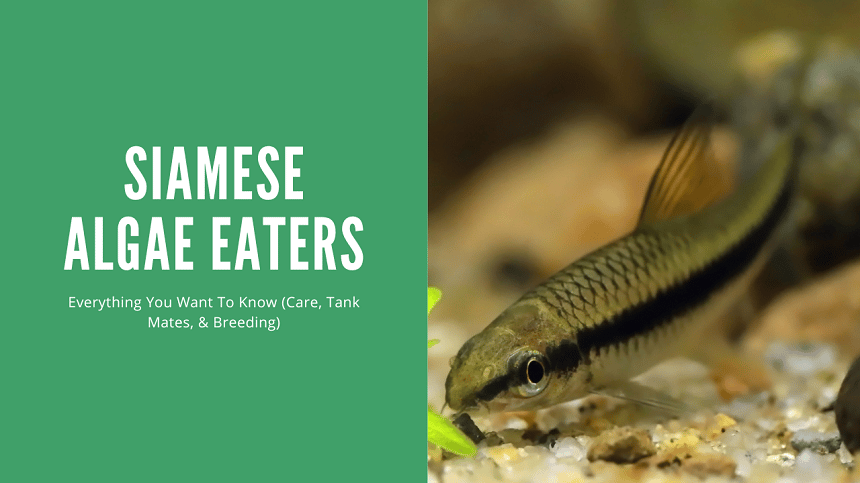
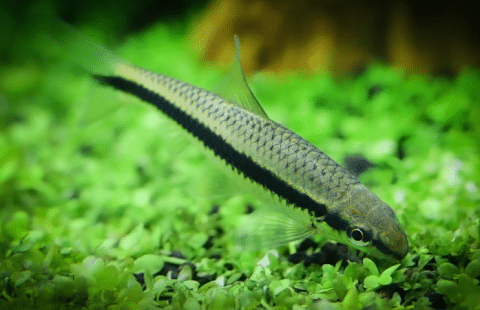
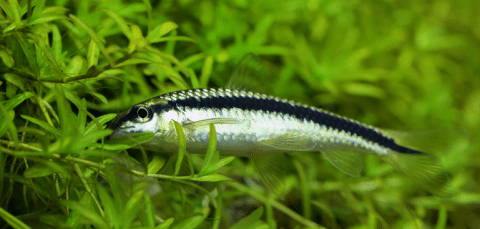
    A Siamese algae eater has lemon, bronze, tan, silver, or pale gray body coloring. They can scale their bodies up to 6 inches and have an aerodynamic body shape. But more often than not, they are sold out before they reach the metamorphose phase.

    Their torsional body shape helps them to swim through fast water currents, and they almost look like a shark, except for the fact that their bodies are small and they’re not aggressive fish.

    A Siamese algae eater has a somewhat upturned snout and a ventrally oriented mouth. Having a sucker mouth serves as a tool using which a Siamese algae eater can stick to smooth surfaces and go with the tide in the wild.

    Siamese algae eaters have two small barbels (a whisker-like organ) on their upper lips. These barbels function as detectors and help them mark the presence of tiny prey scampering around the substrate. The barbels present on their upper lips also help them notice any changes in water pressure or any chemical alterations.

    Different from other freshwater fish, Siamese algae eaters donโ€™t have a swim bladder. To stay afloat, they have to keep moving in the water. This is probably why you will always find your fish super active in your water tank.

    A Siamese algae eater has 6 translucent fins setting out from different locations with its triangle fin the most prominent. The true Siamese algae eater has a pair of pectoral fins, sitting right below the gills, and a pelvic fin on the abdomen, followed by the anal fin that is located between the pelvic fin. And it has a caudal fin at the end of the tail.

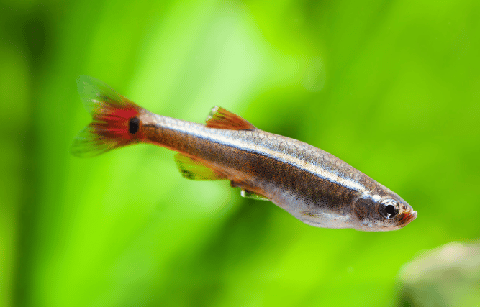
    Siamese algae eaters have small bodies with a black stripe that runs lengthwise down their bodies, starting from the head and ending at the tail. The black stripe on their bodies offers them protection from predators in the wild and can go dim against the water background.

    Sometimes the black stripe on your Siamese algae eater can appear differently when being looked at from a different angle. It might look uneven or slightly rough, but thatโ€™s totally fine.

    Different Types

    Most of the time, itโ€™s really hard to identify types of Siamese algae eaters because they almost look alike. In the aquariums, you might end up buying a different type than what you were actually looking for.

    Here are some common types of Siamese algae eaters.

    Crossocheilus langei: 

    Crossocheilus Langei, popular with their more general name, Red Algae Eater. It’s a geek when it comes to cleaning algae off your freshwater tank. One of the easiest ways to identify this type of Siamese algae eater is by looking at their barbels.

    Red algae eaters have the longest barbels among other algae eaters of their species and they come in the russet shade. Their abdomens are lighter, and they have a dark streak that runs from their heads to their tails.  

    Crossocheilus siamensis:

    As compared to other fish of this species, the True Siamese Algae Eater is the hardest to find. Crossocheilus siamensis has a silver body with a deep black stripe running from its head to tail. The True Siamese algae eater’s snouts are more pointed and it has a sharp-cornered upper lip.

    Crossocheilus oblongus:

    This type of Siamese algae eater has a typical-sized body in shades of yellow and brown. The snout is a bit upturned and they have a straight upper lip.

    Crossocheilus atrilime:

    Crossochelius artilime comes in yellow or bronze shades and consumes moss in larger amounts.

    Even though this freshwater specie is also a type of Siamese algae eater who is famous for eating algae, Crossochelius atrilime is more inclined towards gobbling down the moss.

    Crossocheilus reticulatus:

    Siamese algae eater has another type called Crossochelius Reticulatus or Reticulated Siamese algae eater. This type has brown, yellow, or strong silver color variations, and they lack black stripes on their bodies.

    The Difference between a True Siamese Algae Eater and Flying Fox Siamese or Chinese algae eaters

    When looking for a Siamese algae eater, you can easily end up buying a Siamese Flying Fox algae eater or a Chinese algae eater. Sometimes, identifying a False Siamese algae eater is hard, too. This happens due primarily to the lack of knowledge on the subject that is either from your side or from the storeโ€™s side.

    What Does A Chinese Algae Eater Eat

    The most noticeable difference between a Siamese algae eater and a flying fox is their fins. Siamese algae eaters have transparent fins, whereas the flying fox has a black bottom and top fins with orange-yellow tints. As for the Chinese algae eater, the stripe on its body is rather craggy.

    Another way to work out which fish species you are looking for is by checking for flaps. A Flying Fox has flaps in the corners of its mouth but Siamese algae eaters don’t. Unlike Siamese algae eaters, the black stripe on a Siamese Flying Fox is smoother.

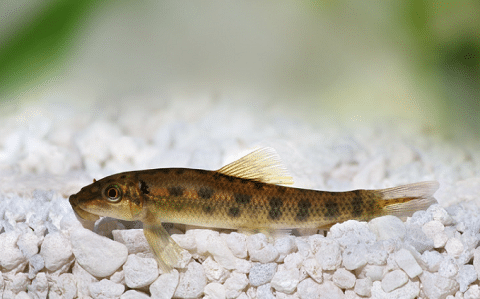
    The difference between a Chinese algae eater and a True Siamese algae eater is their growth and behavior. A Chinese algae eater or a Gyrinocheilus aymonieri is quite an aggressive fish. It grows larger than a True Siamese and is poor for home aquariums.

    Lifespan

    A Siamese algae eater can live up to 10 years in captivity. When in the wild, the chances of their survival for this long period are too low. So, taking care of their diet, aquarium environment, and other key factors is important.

    They flourish in freshwater with a temperature ranging from 75ยฐ F to 80ยฐ F. We will discuss their natural habitat, diet, and other things related to their longevity in more depth in the further parts of the article.

    Average Size

    The average size of a Siamese algae eater is 6 inches. They take almost 2 years to reach their full length.

    Most fishmongers sell them when they are around 2 and a half inches. One type of Siamese algae eater, called Crossocheilus atrilime, is shorter than other types by about an inch.

    Care

    Handling a Siamese algae eater is totally hassle-free. Their calm, friendly and social nature allows you to have a better aquarium and fish-keeping experience, which you are less likely to have with other fish.

    If thereโ€™s a list about the benefits of having a Siamese in your tank, then their nature is on the second, if not on the first. This makes them one of the ideal aquarium fish you can have in your community fish aquarium.

    Siamese algae eaters thrive in a water temperature that should be above 75ยฐ F and below 80ยฐ F.

    In the wild, they are mostly fed on algae and keep themselves constantly in motion. This, as a result, makes them active fish that need a good-sized aquarium.

    They are very less likely to show hostility towards their tank mates. Their chances of going sick are low, too.

    However, under certain conditions, your Siamese might show some sickness symptoms. And, to keep these problems at bay, here are some essential things you need to consider before having this algae eater.

    Aquarium Setup

    The best way to make them feel at home is to set up their aquarium similar to their native residence.

    Siamese algae eaters have a natural closeness with rivers and streams of Southeast Asia, where the water is slightly acidic with a low current.

    Under the surface, you can find different plants, rocks, and branches where they love wandering around and sometimes hiding. So, while constructing their habitat, make sure they have everything that can make them feel at home.

    While they are bottom-dwellers and spend most of their time at the base of the tank, they are quick. That means it is likely that you see them leaping out of the tank and harming themselves. To ensure their safety, keep a lid on the tank or have a hook to avoid any mishap.

    Tank Size

    The minimum tank requirement for a Siamese algae eater is 20 gallons. You can increase the water amount if you’re going to school with different fish together. For example, add 10 gallons of water per fish.

    The Siamese algae eater enjoys swimming around. It might not be into exploring stuff too much, but it stays active and has to remain afloat, and a bigger community fish tank allows it to do that freely.

    Also, schooling active fish species with fish species that prefer staying inactive needs a good-sized aquarium. A larger tank will reduce the chances of your Siamese running into their tank mates and disturbing them.

    Pro Tip: Avoid housing them in a spherical aquarium., this type of aquarium is too small and can put them through cramped conditions and different health issues.

    Water Parameters

    Setting the correct water parameters is more than necessary for their health and well-being. Even though they can survive slightly different water conditions, they still need to be in a freshwater aquarium with water hardness, pH level, and water temperature gauged accurately.

    The tropical rivers and streams they are familiar with are acidic and low to moderate flowing. Keep the water temperature above 75ยฐ F and below 80ยฐ F and water hardness between 2 to 20 KH. The pH level should be 6.5 to 8.0.

    Higher levels of disturbed pH is risky for your freshwater fish.

    Filtration and Aeration

    Siamese algae eaters produce a lot of waste and therefore they need a strong filtration system. To keep their health problems at bay, they need well-filtrated and fresh water with higher oxygen levels to thrive.

    I recommend having a good hang-on-back system or a canister filtration system to filter the water thoroughly. But, make sure whatever type of system you go for, it doesn’t create very strong water currents or waves.

    Lighting

    You donโ€™t need any artificial lighting for your freshwater fish tank. Actually, sharp lights can disturb their day-to-day activity.

    If they are exposed to bright lights, you might notice them taking refuge in caves or other hiding spots set in the aquarium from the lights.

    Aquatic Plants and Decoration

    Siamese algae eaters spend most of their time at the base of their tank and hardly travel to the surface. They love hiding spots where they can relax and scavenge for food on the surface. Like other fish, these algae eaters also need some personal space and some time off from their tank mates.

    The best way to meet their natural requirements is to decorate your aquarium with dense plants along with creating caves for them.

    Plants will keep the water oxygenated and also work as a shelter, and so will the manufactured caves.

    Pro Tip: Siamese algae eaters can damage your plants while hunting for food if they are not fed as per their needs. To prevent this from happening, provide them with a good-round diet.

    Tank Maintenance

    Keeping the fish tank clean is easier than you think, especially when true Siamese algae eaters are involved.

    Siamese algae eaters are popular for swallowing down algae, which results in clean plants and fish tanks. But you can still improve their quality of life by following these simple tank cleaning tips.

    How to clean the tank?

    1. Start cleaning off your fish tank by scrubbing the walls with an algae scrapper.
    2. This is a freshwater species, so make sure that there are no toxic ingredients in any soap used. Also avoid any thing that is rusted out.
    3. After buffing out all the decorative items and aquarium walls, add some fresh water into the tank.

    Substrate

    Being a bottom-feeding fish, a Siamese algae eater spends most of the time on the ground of the fish tank. Staying at the bottom of the tank and searching for food on the surface can damage their bodies. Their abdomens and frail barbels are most likely to get scratched.

    You can prepare a substrate that aligns with the softness of their bodies.

    Create the base of the tank with soft sand or smooth aquatic soil. Mix smooth pebbles with it and avoid using any hard rocks or other jaggy material.

    Community Tank Mates

    Aside from its algae-eating ability, a Siamese eater is an ideal fish to add to the tank because of its nature.

    Siamese algae eaters are hardly aggressive and never territorial. They appreciate the company of other fish, act friendly, and love being social. Since they are bottom-dwelling fish, you should focus on what else is with them down there.

    Keeping them in groups is completely stress-free. Actually, when you school multiple Siamese algae eaters together, they work as a team and enjoy one another’s company. Not all of them have to be the same species, so you can add other animals who are also algae eaters.

    Here’s a list of some great tank mates for your algae eater.

    1. Bristlenose Plecos
    2. Corydoras
    3. Loaches
    4. Tetras
    5. Minnows
    6. Mollies
    7. Danios
    8. Platys
    9. Rosaline Torpedo
    10. Guppies
    11. Gold
    12. Friendly Barbs
    13. Cherry Shrimp
    14. Amano Shrimp
    15. Ghost Shrimp
    16. Nerite Snails

    Poor Tank Mates

    Don’t house your algae eater with any large, aggressive, or high territorial fish.

    Here are some incompatible tank mates:

    1. Gouramis
    2. Cichlids
    3. Tiger Barbs

    Breeding

    It’s almost impossible to breed Siamese algae eaters in your aquarium. They are sold in the aquarium trade at an early age. Since the required knowledge on the subject is insufficient.

    Another core reason is telling their species apart (video source). They look alike, and many pet store owners have little to no knowledge about their different species. And you can’t really identify them until they are 3 years old.

    Interbreeding is possible through artificial means, but a common aquarist can’t do it.

    According to some reports, they are bred in fish farms using artificial hormones. These hormones are used to induce spawning and no aquarist can know what methods or hormone therapies do the work.

    In the wild, conditions leading them to mate are also unknown. We just know that they travel to the driest part of the streams or rivers to lay their eggs.

    So, you can’t replicate those conditions in your aquarium. Like other freshwater fish, slight alterations in water temperature and pH levels might help, but to what extent no one knows yet.

    To identify male and female Siamese algae eaters, look at their overall size.

    A female Siamese algae eater has a larger abdomen as compared to the male Siamese algae eaters who have somewhat slim bodies. There’s an overall 30% difference in their body size.

    Food and Diet

    To boost their longevity and improve their overall health and activity, feeding them a balanced diet is mandatory. While in the wild, their diet is fixated on algae, plants, and biofilm, they also consume dead fish or other meaty foods that they come across in their habitat.

    Their favorite food is algae, and thatโ€™s why they are the most popular freshwater fish in the aquarium trade. But, this is not the only food that they need to survive.

    To fend off health issues, they need a mixed diet of protein, fresh vegetables including dead fish, insect larvae, algae wafers, and live plants.

    Overfeeding is an issue because they eat up everything you put in your tank. So, it’s better to feed them a protein-based diet once or twice a week. These aquarium species lack a swim bladder, which means they can easily fall prey to bladder-related problems. To protect them from this, monitor how much they eat.

    Some great recommendations for a protein-based diet are bloodworms, brine shrimp, Daphnia eggs, and mosquito larvae. They are bottom-feeding fish, so all the food that you give them should sink into the tank.

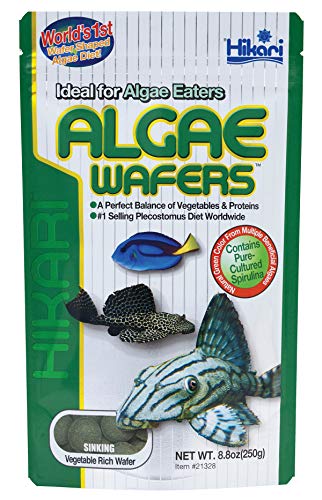
    You can give them spirulina sinking pellet foods, which are specially made for bottom-dwellers. They can also eat Fish flakes, spinach, broccoli, cucumbers, sinking algae wafers, and live or frozen bloodworms and brine shrimp. You might also see them eating bugs or annoying worms.

    Great For Bottom Feeders!
    Hikari Algae Wafers

    Algae wafers are a great way to directly feed your bottom feeding fish. They are especially effective for larger fish like plecos

    Buy On Amazon Buy On Petco

    Most of the time, fish keepers notice them pouncing on aquarium plants. The easiest way to protect your plants is to get them stakes or leaves.

    Common Health Problems

    Most fish of this species are healthy fish, and they hardly deal with health issues. Still, they might come across some of these common health issues. Some of these diseases happen because of poor tank conditions or overfeeding.

    Ich

    They are susceptible to Ich, a common disease in fish caused by protozoa.

    The symptoms are:

    1. Rubbing their bodies on different surface spots in the tank
    2. White spots on body and gills

    Bacterial Infections

    A bacterial infection happens as a result of some injury. This schooling fish species are very active and might jump out of your tank and injure themselves in the attempt. Antibotics are used to remedy the condition.

    1. Cloudy eyes
    2. Tattered fins
    3. Body patches
    4. Open sores on the body and mouth

    Where to Buy

    These fish is found at most local fish stores. However, if you want to go the online route, I would highly recommend purchasing them from Rob at Flipaquatics. His facility and care are top-notch. Use promo code ASDFLIPPROMO for an extra discount at checkout!

    FAQs

    Do They Eat Algae?

    This is probably one of the most important questions. The answer is yes. They eat hair algae or black beard algae and are great at solving any algae problem. Eating black hair algae is one of the hardest tasks to perform, but Red algae eaters can easily do it away.

    How Many Can Fit In A 10-gallon tank?

    The most straightforward answer is zero. You can’t keep them in a 10-gallon tank, which is too small for their size and other requirements. Keep them in a tank that is at least 20 gallons.

    Are They Schooling Fish?

    Yes. You can easily put them in a group of 5 or 6. They are not aggressive, but actually super-friendly, calm-tempered, and social.

    Can They Live Alone?

    Although this fish species enjoys being around other freshwater fish, you can still keep one in your tank. But it’s better to school at least 6 of them together.

    What Is The Lifespan Their Lifespan?

    Their average lifespan is 10 years, but in some rare cases, they have lived more than that.

    Do they attack other fish?

    They are friendly and are easy to get along with other fish. To avoid any behavior conflicts, don’t school them with aggressive or semi-aggressive fish.

    What Type of Algae Do They Eat?

    In their native home, they get several forms of algae. It is green algae and black beard algae. They help with algae control and make your tanks tidy.

    Is the Siamese Algae Eater Right for You?

    Before you add a siamese algae eater to your tank, it’s worth asking whether this species actually fits your setup and your goals. Here’s a quick breakdown to help you decide.

    This species is a good fit if:

    • You have a large enough tank to manage territories. Cramped conditions amplify aggression.
    • You’re comfortable managing aggression through stocking ratios, line of sight breaks, and tank layout.
    • You can commit to regular water changes. These fish produce more waste than many smaller species.
    • You’re not planning a peaceful community tank. Siamese Algae Eaters need tank mates that can hold their own.
    • You enjoy watching active, interactive fish. Cichlids have personality that smaller species simply don’t match.
    • You have backup plans. Sometimes a particular fish just doesn’t work out, and you need a way to rehome it.
    • You’re feeding a varied, high-quality diet. Color and health depend on nutrition.

    If most of those points line up with your setup, the siamese algae eater is worth serious consideration. If several don’t, it’s better to choose a species that matches your tank now rather than trying to make it work.

    How the Siamese Algae Eater Compares to Similar Species

    Choosing between similar species is tricky. Here’s how the siamese algae eater stacks up against some common alternatives.

    The siamese algae eater occupies a specific niche in the aquarium hobby, and direct comparisons really depend on what you’re looking for. In my experience, the most common question people ask is whether they should choose the siamese algae eater or something similar that’s more widely available. The answer comes down to three things: tank size, water parameters, and what other fish you’re keeping. If your setup matches what the siamese algae eater needs, it’s hard to beat. If not, there are alternatives worth exploring.

    Closing Thoughts

    So, if youโ€™re looking for an algae eater that will do well in a community tank and grow to a manageable size, the Siamese algae eater is a great option. Have you kept one of these fish before? Let us know in the comments below!

  • Dwarf Gourami Care Guide: Everything You Need to Know

    Dwarf Gourami Care Guide: Everything You Need to Know

    The Dwarf Gourami is one of the most misunderstood fish in the hobby. I have watched beginners buy them expecting a peaceful, easy community fish, only to deal with aggression, disease, or slow decline within months. After keeping gouramis for over two decades, I know exactly where most people go wrong.

    Most gourami problems start with the tank, not the fish.

    Gouramis live 4 to 6 years in good conditions. That means consistent water quality, proper tank mates, and an environment that lets them feel secure enough to show their natural behavior.

    The right gourami in the right tank is one of the most graceful fish in freshwater. The wrong gourami in the wrong tank is a stressed, aggressive nightmare.

    What Most Care Guides Get Wrong About Dwarf Gourami

    Here’s what nobody wants to talk about with dwarf gouramis: the vast majority of commercially bred specimens carry iridovirus (Dwarf Gourami Iridovirus, or DGIV), and there’s no cure. I’ve watched perfectly healthy-looking dwarf gouramis waste away and die within months of purchase, and it’s heartbreaking. Most care guides mention this in passing, but they don’t emphasize how prevalent it actually is. If you’re buying from a big box store, the odds of getting a healthy fish are genuinely lower than most people realize. The other misconception is that males is kept together. In anything smaller than a heavily planted 40-gallon, two male dwarf gouramis will fight until one is dead or constantly stressed.

    The Reality of Keeping Dwarf Gourami

    Disease susceptibility is a real issue with commercially bred stock. Dwarf gouramis in particular carry Iridovirus at alarming rates. Even honey gouramis from mass-production facilities arrive stressed and immune-compromised. Buying from a reputable source matters more with gouramis than with almost any other community fish.

    Males get territorial. The “peaceful community fish” label on gouramis is misleading. Male gouramis of most species will harass other males, especially in tanks under 30 gallons. One male per tank is the safest approach for most setups.

    Surface access is non-negotiable. Gouramis are labyrinth fish. They breathe air from the surface. Strong surface agitation or tall tanks with limited surface area stress them out. Leave the top of the tank calm with floating plants for cover.

    Biggest Mistake New Owners Make

    Keeping multiple male gouramis in the same tank. One dominant male will relentlessly chase and stress the others. In a community setup, stick with one male and two or three females at most.

    Expert Take

    I always tell new gourami keepers the same thing. Buy from a breeder, not a chain store. The quality difference in health and coloration is worth the extra cost every single time.

    Table of Contents

    Dwarf gouramis are one of the most visually stunning fish in the freshwater hobby. And one of the most misunderstood. Here’s what most beginner guides won’t tell you: the vast majority of dwarf gouramis sold in fish stores are infected with Dwarf Gourami Iridovirus (DGIV), a disease that has no cure and kills the fish within a year or two of purchase. I’ve seen this play out countless times, and it’s the reason I always advise buying from reputable specialty breeders rather than big box stores. When you do get a healthy specimen, dwarf gouramis are remarkable. Their iridescent scales shift color in different lighting, males build elaborate bubble nests, and they’re just active enough to be entertaining without being aggressive toward most tank mates. Here’s everything you need to know to keep them successfully.

    A Brief Overview of The Dwarf Gourami Fish

    Scientific NameTrichogaster lalius
    Common NamesDwarf gourami, flame gourami, powder blue gourami, red gourami, sunset gourami
    FamilyOsphronemidae
    OriginIndia (Assam, West Bengal), Pakistan, and BangladeshDiet: Omnivore
    DietOmnivore
    Care LevelEasy
    ActivityPeaceful
    Lifespan3. 5 years
    TemperamentPeaceful
    Tank LevelMiddle to top-level
    Minimum Tank Size10 gallons
    Temperature Range72 – 82 ยฐF
    Water Hardness10-20 dGH
    pH Range6.0. 8.0
    Filtration/Water FlowLow
    Water TypeFreshwater
    BreedingEgg layer
    Difficulty to BreedIntermediate
    CompatibilityCommunity tanks
    OK, for Planted Tanks?Yes

    Classification

    Taxonomic RankClassification
    Common NameDwarf Gourami
    Scientific NameTrichogaster lalius
    OrderAnabantiformes
    FamilyOsphronemidae
    GenusTrichogaster
    SpeciesT. Lalius

    What Are Dwarf Gouramis?

    The scientific name for Dwarf gourami is Trichogaster lalius. It is a freshwater tropical fish that is timid and gets along with other tank mates easily. Dwarf gourami is a schooling fish, thus, aim to put at least four dwarf gouramis in a tank.

    Dwarf Gourami in Aquarium

    Also, like betta fish, they are also labyrinth fish. The labyrinth organ allows them to get oxygen from the water surface. Therefore, you’ll likely find your gourami fish spending most of their time at the top or middle level of your freshwater tank.

    Origin and Habitat

    Dwarf gourami originates from India, Bangladesh, Pakistan, Nepal, Borneo, and Myanmar. Mostly they are found in the regions of River Ganges and Brahmaputra as it inhabits and thrives in stagnant water that is heavily planted and has slow-moving streams and lakes. They also grow in flooded rice fields.

    Apart from their natural habitat, dwarf gourami is introduced to Colombia, Singapore, Taiwan, Florida, The Philippines, and Canada.

    Appearance

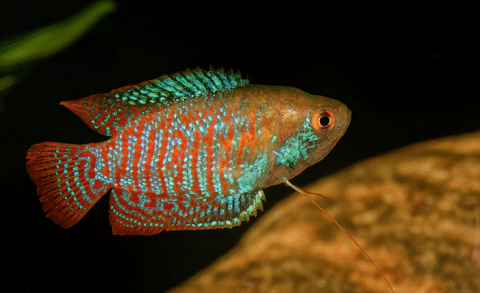
    Dwarf gourami is freshwater fish known for its beautiful appearance. The male dwarf gouramis have larger bodies than female dwarf gouramis. Also, the male gouramis possess a bright reddish-orange body and vertical stripes, extending into the fins. Whereas, females are dull with bluish-silver color. On the thread-like pelvic fins of dwarf gourami are touch-sensitive cells.

    Types

    Many different types of dwarf gourami differ in colors, sizes, patterns, and shapes. However, in this article, I’ll list the five most popular freshwater dwarf gourami types.

    Powder Blue

    Out of all the five categories, the powder blue dwarf gourami is the most popular freshwater fish with beautiful iridescent “powdery” blue accents that is a result of selective breeding (video source). The body of powder blue dwarf gourami has little vertical stripes of reddish-orange color. The powder blue dwarf gourami variety is commonly known as Coral blue dwarf gourami.

    Flame

    Flame Dwarf Gourami

    Red dwarf gourami, Blushing Gourami, or The Flame gourami species are a striking color morph of the dwarf gourami with more solid accents. The body of flame dwarf gourami is mostly painted with solid bright red and contrasted by a bright blue dorsal fin. These species of dwarf gourami lack vertical striping unlike most gourami and the fins are also found on its parentage. The flame gourami is a result of selective breeding, which makes an astounding fish for aquariums.

    Honey

    Honey Gourami in Fish Tank

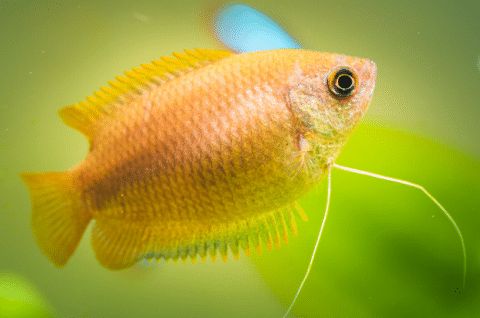
    The honey gourami was once called Colisa chuna and Colisa sota. They are a wonderful addition to your community tank once it gets settled. Honey gouramis are adored by fish experts for small aquariums for their pleasant and docile nature. They come in soft hues of grayish silver to light yellow that sometimes are accentuated with the light horizontal brown stripe along the center of the body. During the time of breeding, the male honey gourami turns vibrant honey-like color. Like other types of dwarf gourami, the honey dwarf gourami is not popular aquarium fish due to its bland colors.

    Blue

    The blue dwarf gourami or the three spot gourami are identical, in which, they are two spots. The eye of the blue dwarf gourami is mistaken as the third spot. These species are a color variation of the three spot gourami. It is brown with yellow gills and irregular darker bars on the shoulder. These species are beautiful with a hazy, bluish-white coat. If you’re just entering the fishkeeping hobby world, I recommend starting with this variety as it’s one of the hardiest and aware of its owners.

    Neon Blue

    Even though the neon blue dwarf gourami species look exactly the same as the dwarf gourami (video source), these fish have a lot more blue.

    They are one of the most popular freshwater fish and widely available out of all the color morphs of the dwarf gourami. With a bright neon blue to turquoise color, complemented with strong vertical red stripes, the neon blue gourami is an outstanding addition to your home aquariums. Sometimes, the blue coloring showcases a shiny metallic cast to it, which gives this variety a new name, Rainbow Gourami.

    Lifespan

    The dwarf gourami is one of the small schooling fish that is also very hardy. The average lifespan of dwarf gourami is 4 years, but with proper care and tank maintenance, it can extend up to 7 years.

    Average Size

    The dwarf gourami is the smallest of all Gourami variations that grow up to 3.5 inches in length. Some reports suggest they normally grow up to 3 1/2″. However, males reach a length of around 3 inches and females are a bit smaller, around 2.4 inches in length.

    Care

    Though the dwarf gourami is a hardy fish that is excellent for novice and busy fish keepers, they need strict tank maintenance as they are vulnerable to fish diseases. Dwarf gourami is an easy-going species in terms of food and breeding.

    However, if you’re planning to buy a Dwarf Gourami for the first time, be careful as these species carry a virus, Dwarf Gourami Iridovirus (DGIV), which is transferable with no successful treatment.

    Aquarium Setup

    Dwarf Gouramis love all parts of the tank, but they enjoy swimming in the middle and top level of the aquarium the most. They also prefer slow-moving water because, in their natural habitat, they inhabit lakes, creeks, canals, and ponds.

    Since they are small freshwater fish, you can keep them in a smaller tank. However, they thrive in large aquariums with plenty of swimming space and lots of vegetation along with their tank mates. Also, since they have a labyrinth organ, the tank should be kept at room temperature with a proper filtration system with a slow to moderately slow current to ensure the safety of the labyrinth organ.

    The placement of the tank is also important to keep your fish healthy because they get easily stressed when kept in loud and noisy areas.

    Tank Size

    Since Dwarf Gourami is a small fish, many aquarists will keep it in small containers, and jars. However, this is wrong. Dwarf gourami needs at least a 10 gallon tank to thrive and live happily. However, if you’re keeping two to three gouramis together, a 20 gallon tank would suffice.

    Water Parameters

    No matter how hardy these fish are, poor water conditions will lead to stress, disease, and possibly death. Thus, maintain the quality of water to raise a happy fish. With that being said, the water parameters should be considered before placing your fish in the tank.

    Temperature range:

    These species thrive in temperatures around 72ยฐ F to 82ยฐ F, whereas, the ideal temperature is 77ยฐ F. To avoid illness and stress levels, I recommend keeping the room temperature consistent with the tank water temperature. It will also allow help prevent trauma to the labyrinth organs.

    pH range:

    The ideal pH level range of a dwarf gourami aquarium tank is 6 to 8.

    Hardness range

    The ideal water hardness range for a dwarf Gourami tank is around 10 to 20 dGH

    Filtration and Aeration

    If you’re not a fan of tank filters, Good news! DwarfGouramis (Trichogaster lalius) can go without a tank filter. But you need to be very proactive if you’re planning to set up a no-filter tank for your gouramis.

    How to Setup a no filter tank

    Add lots of aquarium plants: If you’re skipping the filter, it’s imperative to add many live plants that provide enough hiding spots and aerate water while absorbing CO2 and eliminating harmful toxic chemicals from the tank.

    Install an air pump: An Air pump is used to aerate the aquarium water. The air pump produces air bubbles that hit the water surface and remove carbon dioxide and add oxygen to the tank water.

    Best Aquarium Filter for This Type of Fish

    If you cannot do frequent water changes and maintain the aquarium timely, you definitely need an aquarium filter. However, bear in mind that too much current puts your gouramis under stress. Therefore, I recommend air stones to oxygenate the water well.

    For an aquarium filter, I suggest installing a canister filter or a hang-on back filter. Also, make sure to adjust the water flow rate to the lowest since Dwarf gouramis do not enjoy high currents and strong water flow.

    Editor’s Choice
    Hagen AquaClear

    The Best Aquarium Power Filter

    The worlds best selling and most reliable power filter on the market. Unchanged for years because it’s so reliable and versatile

    Buy On Amazon Click For Best Price

    Additionally, the dwarf gourami is vulnerable to nitrites. Therefore, a good-quality filter should be used to prevent the buildup of nitrites. The canister filter or hang-on back filter will keep the water clean, avoiding unnecessary stress and health issues in your fish. I also advise setting up a partial water change routine weekly so the dirty water is replaced with clean water.

    However, if you have a small tank, I suggest sponge filters because they produce a low water current, ideal for your Dwarf Gouramis.

    Lighting

    Gouramis love natural lighting. As for the artificial light, it’s necessary if you have a heavily planted tank but a strong light would disturb the gouramis. Therefore, I suggest a dimmed or adjustable aquarium L.E.D light to switch on maximum for 8 to 10 hours.

    Aquatic Plants and Decorations

    Since they come from an area with loads of plants, Dwarf Gourami loves a densely vegetated tank with some drifting and floating plants (Hornwort and Duckweed) to give them shade. However, make sure you don’t overpopulate the tank with floating plants as your gouramis will regularly breathe air at the tank’s surface.

    Dwarf gouramis need hiding places to rest and hide occasionally. Therefore, plants are the best option that provides a natural cover to your gouramis. You can also add small caves, driftwood, and well-rounded sand grains.

    Tank Maintenance

    It is recommended to maintain the hygiene of the tank by removing any uneaten food. I recommend changing 25% of the water weekly for a Dwarf Gourami tank.

    Substrate

    The dwarf Gourami spends most of their time in the middle or top of the tank. Therefore, the substrate is not an issue. However, they show their best colors on a beautiful dark substrate of sand or gravel. I recommend choosing a substrate of large grains, so the Dwarf gourami doesn’t swallow it.

    Is the Dwarf Gourami Right for You?

    Before you commit to this species, here’s an honest assessment of whether it fits your setup and experience level.

    • Beautiful centerpiece fish for smaller tanks. A healthy male dwarf gourami is one of the most stunning freshwater fish available at any price point.
    • Be prepared for potential health issues. DGIV is widespread in commercial breeding, and there’s no way to test for it before purchase.
    • Better suited to experienced keepers who understand the risks. If losing a fish to disease would devastate you, consider a honey gourami instead.
    • Great for peaceful community tanks. They’re calm, slow-moving, and compatible with most small community fish.
    • Only keep one male per tank. Despite what some sources say, male dwarf gouramis are territorial and will stress each other in typical setups.
    • Ideal tank size is 20 gallons or more. They can survive in a 10, but they’re noticeably healthier and more active with more space.

    Tank Mates

    Dwarf Gourami is peaceful fish that enjoy the company of other compatible fish in the community tank. Thus, avoid keeping them with large, aggressive, and territorial fish such as Cichlids. Also, avoid fin nipping fish with as Dwarf Gourami tank mates.

    The ideal tank mates for dwarf gourami are fish that dwell near the bottom of the tank. Some great examples of compatible tank mates for your dwarf gourami are:

    1. Harlequin Rasbora
    2. Peaceful barbs
    3. Kuhlii Loach
    4. Corydoras
    5. Otocinclus
    6. Small Rainbowfish
    7. Plecos
    8. Swordtail fish
    9. Mollies

    Incompatible Tank Mates

    Some of the worst tank mates for your Dwarf Gourami are:

    1. Betta (Siamese Fighting Fish)
    2. Paradise fish
    3. Guppies
    4. Murray Cod

    Breeding

    Firstly, you need a separate breeding tank to successfully breed and raise Gouramis. For breeding purposes, you can get a tank as smaller as 5 gallons. However, a 13 Gallon tank would do great. In the breeding tank, keep the water temperature at around 81 degrees F with a slightly acidic pH and 10 dH water hardness. Fish experts also recommend lowering the water to around 8 inches. The breeding tank should be well equipped with floating plants and other live plants. Most importantly, keep only one male in a breeding tank.

    The dwarf Gouramis are bubble nest builders, i.e., the male incorporates floating plants into their nest that is comparatively larger than the fish. Under the bubble nest, male gouramis attract the female following a few meetings. The spawning begins when the male wraps his body around the female while releasing the sperm. Many eggs don’t float up into the bubble nests themselves, thus, the male carries these eggs with their mouth, putting them into the bubble nest. One female gourami can lay up to 800 eggs at a time.

    After successful spawning with one female, the male finds another female and entices it under the nest. This process continues until there’s no fertile female left in the tank. After spawning, the male takes care of the nest and his eggs.

    The eggs hatch in around 12 to 24 hours. It is recommended to remove the male fish after 3 days since the fry can swim freely. The fry is very small that you cannot even notice with the naked eye. Thus, microscopic food should be given to the fry. One of the first food of the fry is green water, filled with algae. After a few days, the fry will be big enough to eat infusoria. After a few weeks, it is recommended to shift your fry to bigger food such as brine shrimp and daphnia. I always recommend feeding live food to the fry instead of commercial food.

    Food and Diet

    The dwarf gouramis are omnivorous and tropical fish. Thus, it’s essential to feed them a tropical diet such as tropical flakes and pellet fish. They also feed on small invertebrates in their natural habitats such as algae, and aufwuchs. Hence, in captivity, dwarf gouramis feed on live food, and fresh and flake foods. I suggest supplementing their diet with white worms, daphnia, blood worms, and brine shrimp with vegetable material like peas, and zucchini.

    Best Tropical Fish Flake Food
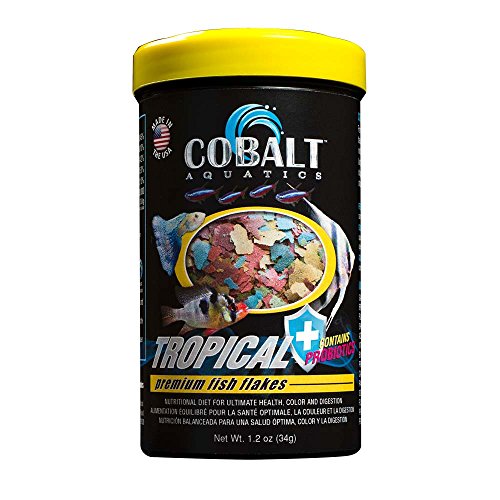
    Cobalt Aquatics Tropical Flake

    Best Tropical Fish Flake Food

    Cobalt offers a premium level flake food with probiotics. A color enhancing formula that works great for all tropical fish

    Buy On Amazon Buy On Chewy

    You should feed your Gouramis at least twice or thrice a day.

    Disease and Health Problems

    The dwarf gouramis are very hardy fish, exceptional for beginner aquarists. If you keep their aquarium clean with ideal water parameters, you’ll hardly face any problems. However, like any other fish, they are prone to some diseases and bacterial infections, constipation, and hole in the head. Thus, maintaining water quality, and providing them with healthy nutrition is imperative to the well-being of your fish.

    Here are some of the diseases and infections that your gouramis can carry easily:

    Viral Infections

    The symptoms of viral infection in Gouramis are:

    1. Faded color
    2. Loss of fins

    The main cause of viral infections is water pollution.

    Iridovirus

    DGIV is a very serious infection that is deadly. The main reason for Iridovirus in dwarf Gouramis is a weak immune and digestive system.

    To treat the infection, you need to consult with a nutritionist to follow a diet plan for your fish.

    Fungal Infection

    Many times, in fungal infections, aquarium fish rub their bodies against the objects of the tank, which makes them stressed. It is due to the unhealthy conditions of the aquarium. Thus, I always recommend getting rid of fish waste, and uneaten food to maintain the healthy environment of your tank.

    Tips and Tricks to Keep Your Gourami Fish Happy

    1. Always check your fish while buying them from the pet store for diseases and illnesses. A best practice is to quarantine if you can manage it.
    2. Make sure your gouramis are in the right proportion, i.e, three females to one male. Always get at least a group of 7 or 10 gouramis at a time. However, if you’re short on space, get a pair to keep them happy.
    3. Plan their diet carefully. Add a varied diet and occasionally feed them flaked food. Notice the color of your fish, if it fades out, increases the proportion of live food
    4. Avoid keeping them in aquariums less than 10 gallons as they require free-swimming places and hiding places.
    5. Make sure to place the tank in a quiet environment as gourami fish doesn’t like noisy places and get easily stressed out.
    6. Reconsider introducing more than one male dwarf gouramis in an aquarium as they can get very territorial and fight aggressively. 
    7. Male Gouramis are known to harass females. Therefore, I recommend adding at least three females in a separate tank with one male fish. Once the female lays eggs, immediately remove them from the tank after spawning.

    What It Is Actually Like Living With Dwarf Gourami

    Gouramis move slowly and deliberately through the tank, using their modified pelvic fins to “feel” their surroundings. Watching them gently tap plants, substrate, and decorations with those threadlike feelers is genuinely mesmerizing.

    Males display regularly, spreading their fins and deepening their colors. In good conditions, this happens daily and is one of the most visually striking behaviors in freshwater fishkeeping.

    Gouramis surface breathe. You will see them rise to the top and gulp air several times an hour. This is normal labyrinth organ function, not a sign of low oxygen.

    In a well-planted tank, gouramis are surprisingly curious. They investigate new decorations, follow your finger along the glass, and react to activity outside the tank.

    FAQs

    How many should be kept together?

    Dwarf gouramis are schooling fish and should be kept in a group of at least 4. They feel secure in a group, thus, the bigger the group, the better. However, if you have a small tank, I suggest keeping them in pairs.

    Are they easy to keep?

    Yes, dwarf gouramis are very hardy fish and very easy to keep even for first-time aquarists. All you need to take care of is the quality of water.

    Do they need to be in pairs?

    Yes, Dwarf gouramis are social fish that enjoys the company of other fish species. Therefore, if you have a small tank, keep a pair of dwarf gourami to keep them healthy and happy.

    What size tank do they need?

    Dwarf Gouramis need at least a 10 gallon tank to thrive. However, if you have space, I suggest getting a 20 gallon tank as they need a lot of swimming space and hiding places.

    Are they good beginner fish?

    Yes, dwarf gouramis are beginner-friendly fish that need little care.

    How the Dwarf Gourami Compares to Similar Species

    Want a peaceful labyrinth fish for a community tank? Get a honey gourami. Want more color and size? Get a pearl gourami. Avoid dwarf gouramis from chain stores unless you are willing to gamble on Iridovirus.

    The honey gourami is the comparison every dwarf gourami shopper needs to make. Honey gouramis are hardier, less prone to disease (they don’t carry DGIV), and arguably just as beautiful in their own understated way. They’re also less aggressive toward each other, so you can keep small groups without the territorial drama. The trade-off is color intensity. A peak-condition male dwarf gourami is flashier than a honey gourami. But if you factor in the disease risk, honey gouramis give you better odds of a healthy, long-lived fish. I recommend honeys to beginners almost every time.

    The pearl gourami is another excellent alternative, though it needs more space (30 gallons minimum). Pearls are one of the hardiest gouramis available, they’re gorgeous with their pearl-spotted pattern, and they have wonderful temperaments in community tanks. If you have room for a slightly larger fish, the pearl gourami is arguably the best gourami species in the hobby. All of the beauty, none of the disease baggage.

    Final Thoughts

    Dwarf Gouramis are beautiful, colorful fish that add opulence to your home aquariums. The biggest reason I suggest keeping them is their ever-friendly attitude and hardy nature with a tank requirement of at least 10 gallons. However, make sure to maintain the water quality as they are highly prone to fatal diseases, and bacterial and fungal infections.

  • Fin Rot: How to Spot It, Treat It, and Stop It From Coming Back

    Fin Rot: How to Spot It, Treat It, and Stop It From Coming Back

    In 25 years of keeping aquariums, I’ve seen fin rot more times than I can count. and the honest truth is that it almost always comes back to water quality. Fin rot is a symptom as much as a disease. Treat the infection, but if you don’t fix what caused it, you’ll be treating it again in a month. I’ve seen hobbyists spend money on medication after medication while the real culprit. ammonia spikes, overcrowding, poor filtration. went untouched. This guide covers how to correctly identify, treat, and actually prevent fin rot from coming back.

    Fin rot is a common disease of bettas and other freshwater aquarium fish. This condition causes discolored, damaged, or jagged fins, and can even end in death. Fortunately, you can beat fin rot and return your fish to perfect health with the right knowledge and treatment plan.

    What You Need To Know (The Facts)

    NameFin rot, tail rot, betta fin rot, fin melt
    Common TreatmentsAquarium salt, antibiotic medications, antifungal medications
    CauseBacterial infections (e.g. Pseudomonas fluorescent) or fungal infections caused by stress from poor water quality, low water temperatures, injury, etc.
    Common SymptomsDiscolored, rotting fins and tails that can become frayed, develop holes, or rot away completely.

    What Is Fin Rot?

    Fin rot is a common condition of betta fish and other fresh and saltwater species that can be deadly if left untreated. It is usually a secondary condition, which means it develops as a result of another problem like stress or injury.

    This disease is very common in betta fish, but it can affect many different species, especially fish with long fins. Fin rot can be caused by a bacterial infection, a fungal infection, or both.

    Diagnosing fin rot can be tricky in the early stages, but as it progresses, the symptoms become quite noticeable. Here’s what to look out for in affected fish:

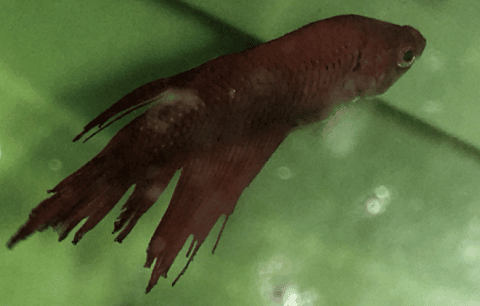
    Betta with Fin Rot

    Symptoms

    • Mild fin rot – Color changes on the betta’s fins can be seen. The fin tips and outer edges of the infected fins and tail often turn whitish as the infection takes hold.
    • Moderate fin rot – The edges of the damaged fins and tail begin to rot away. Major fin damage begins, creating ragged, uneven edges and slightly ripped fins.
    • Severe fin rot – The fish fins can become badly torn and even develop holes. As the fin rot symptoms progress, your fish will begin to lose their appetite and become inactive.
    • Advanced fin rot – Fins can be lost completely as the disease progresses.
    • Extreme fin rot – The infection can spread to the fish’s body in very severe fin rot cases, causing body rot. Fin regrowth may not be possible once this stage is reached.

    Which Fish Are Affected?

    Any aquarium fish can be affected by fin rot infections, but some species are more vulnerable than others. The following fish are especially susceptible to fin rot:

    Preventing It In Freshwater Fish

    The good news about fin rot is that it is very preventable. This disease does not usually affect healthy fish out of the blue so you can definitely prevent it by maintaining a healthy aquarium.

    We’ll get into some more details later in the article but let’s start by listing the most important things you can do to keep your fish healthy:

    • Cycle your aquarium before adding fish
    • Make sure you have (and use) a filter, heater, water conditioner, and aquarium test kit
    • Keep your tank clean
    • Use only aquarium-safe substrate and decorations
    • Feed your fish a healthy diet
    • Research the needs of your fish
    • Choose the right tank mates and avoid overstocking

    Treating mild fin rot is often very successful, but prevention is always the best option. Let’s take a closer look at the key steps for preventing fin rot in betta fish and other species.

    1. Choose Healthy Fish

    Fin rot often starts before you bring a betta fish home. This is especially true for betta fish that are kept in cups without heating and filtration. These fish really need a larger tank of at least 2.5 gallons (preferably 5 gallons +) to stay healthy. If you can’t purchase a fish from a good fish store, consider purchasing from an online store.

    1. Keep The Water Warm

    Temperature is very important for maintaining a healthy immune system. Many new fish owners make the mistake of keeping betta fish in unheated aquariums, and this can really suppress their immune systems.

    Make sure you have an aquarium heater set to the right temperature and use a thermometer to verify its performance.

    1. Provide The Right Water Parameters

    Stress is a major cause of fin rot in betta fish and other fish species. Some fish have quite specific needs and will be easily stressed in the wrong water parameters. Use your water test kit to measure your pH and hardness before buying your first fish.

    1. Maintain High Water Quality

    The harmful bacteria that cause fin rot might occur naturally in your aquarium, but that doesn’t mean all your fish will get sick. Stress and poor health allow the infection to take hold. Fin rot often happens when fish are under stress and kept in poor conditions.

    Poor water quality is usually the result of a lack of maintenance, overstocked tanks, and uneaten fish food that is left to spoil.

    You’ll need good filtration to keep the water in your tank clean and prevent fin rot. Regular maintenance is equally important, however, so use your aquarium water test kit regularly and perform a partial water change every one to two weeks.

    Your water parameters should read:

    • Ammonia: Zero parts per million
    • Nitrites: Zero parts per million
    • Nitrates: Less than 40 parts per million (ideally less than 20 ppm)
    1. Choose The Right Tank Mates

    Fin nipping and fighting can also cause stress and injury that often results in fin rot. Choosing compatible tank mates is really important, so always research a fish carefully before adding it to your community tank.

    The following fish are notorious fin nippers:

    • Tiger barbs
    • Dwarf puffers – like pea puffers
    • Silvertip tetras

    The type of tank mates you keep is important, but you should also be careful not to keep too many fish in your aquarium. Overcrowding can cause fighting and poor water quality. If you are overstocked, you might need to split your fish up into two aquariums or move them all into a bigger tank.

    1. Avoid Sharp Decorations

    Fin rot can sometimes be a simple trauma that looks like an infection, but it is mostly caused by bacteria, fungus, or a combination of both.

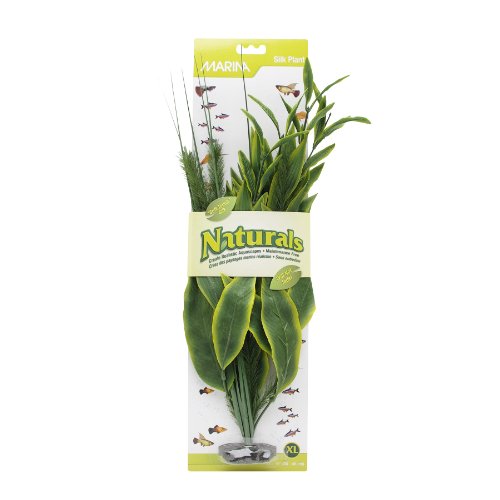
    Fish with long, flowing fins are very susceptible to injuries caused by sharp objects. Fish tank decorations and artificial plants often have sharp edges, so be sure to inspect them carefully and file down any sharp points or edges before adding them to your tank. Manufacturers like Marina make great silk plant products that won’t harm your fish’s fins.

    Great For Delicate Fins!
    Marina Naturals Plants

    Silk plants that are designed to be gentle on fish with fancy fins like Bettas and Fancy Goldfish

    Buy On Amazon
    1. Avoid Overfeeding

    Overfeeding fish can cause direct health issues like obesity, or negatively affect your water quality as uneaten fish spoils on the substrate. Feed your fish only as much fish food as they can finish in a minute or so and be sure to remove any leftovers.

    How To Treat On Fish (How To Cure)

    Prevention may be the best way to deal with fin rot, but what do you do if your fish is already infected? Fin rot is a condition that gets worse and worse so it’s important to treat it as soon as possible. Fortunately, treating fin rot is quite easy in its early stages.

    Read on to learn how to cure fin rot on your fish.

    Before Treatment

    Before starting with chemical treatments, I always recommend removing the cause of stress. Remember, fin rot is usually a secondary infection, which means something has weakened the fish and made it vulnerable.

    Here’s a quick checklist to help you find any possible causes:

    1. Are your fish fighting? Observe your fish to see if there’s any fin-nipping or bullying going on. The offending fish might need to be moved to a separate tank.
    2. Are your water parameters correct for your fish? Use your test kit to check your nitrate, nitrite, ammonia, and pH levels.
    3. Is your water flow too strong? A strong water current will make weak swimmers like betta fish tired and stressed.
    4. Is your water temperature correct? Use a thermometer to check that the aquarium water is warm enough for your fish.
    5. Do any of your ornaments have sharp edges? Run your fingers over your decorations. If they feel sharp, you’ll need to sand them down or remove them from the tank.

    Hopefully, after going through these questions you will have found your cause and be able to take the necessary steps to correct the problem.

    Start With A Water Change

    A large water change (up to 80%) and thorough tank cleanup are the first steps in treating fin rot, so go ahead and prepare some fresh water and add some water conditioner to make it safe. Bring this water up to the same temperature as your tank to avoid stressing the fish.

    Use your gravel vacuum to suck up as much waste as you can from the substrate while removing old water. This is the perfect time to clean off the surfaces of the glass, hardscape, and decorations in your tank. After changing the water, you should have brought your nitrate levels right down and have a clean and healthy aquarium.

    You can treat your fish in your main tank if you have just a single betta fish or if more than one of your fish is affected. Using a quarantine tank to treat your fish can be the most effective way of treating fin rot, however.

    You can easily treat your sick fish without the disturbance of the other tank mates this way, and you don’t risk harming aquatic plants and inverts like snails if you treat your betta fish with aquarium salt.

    Read on to learn how to set up an inexpensive quarantine tank to treat fin rot.

    Setting Up A Hospital Tank

    A separate small fish tank or separate container is a very important tool for treating sick fish and quarantining new fish before adding them to your community tank. You can put together a hospital tank very cheaply.

    Here’s what you’ll need:

    You can use a normal tank or any fish-safe container that holds between 5 and 20 gallons, depending on the size of the fish you keep. You won’t need any lighting or substrate, but a small sponge filter, a heater, and a hood will be necessary. An ornament or a soft plastic plant will complete the setup.

    Which Medication To Use

    There are many medications that can be used to treat fin rot. Let’s take a quick look at some of the recommended products and what they are used for:

    General Medications

    Cure-all medications like API General Cure are very useful treatments for curing fin rot. It does not target fin rot directly but rather cures the fish of primary infections that may be weakening their immune system and causing an infection on the fish’s fins.

    This medication can be used in combination with other general treatments like aquarium salt or more targeted treatments like antibiotics.

    Antibiotics

    The actual infection that causes fin rot symptoms is either bacterial or fungal in nature. You can target bacterial fin rot directly by using an antibiotic like Mardel Marycn.

    The active antibiotic in this medication is known as erythromycin, but you can also use antibiotics that contain tetracycline/doxycycline or furan. These medications should be used in a hospital tank.

    Antifungal treatments

    An antifungal medication like Ich-X can be very effective for treating fungal fin rot. This is a great product to keep on hand because it works really well for treating other common fish diseases like ich.

    How To Use Aquarium Medications

    It is generally best to follow the dosage and usage instructions supplied by the manufacturer. They have tested their products extensively and calculated the ideal dosages for you. Some aquarists have had great success by changing doses and combining medications, however.

    Some experienced fishkeepers, for example, recommend a combination of API general cure and a 0.3% aquarium salt dose. Another popular method is to combine doses of antibiotics and antifungal treatments to target whatever type of fin rot the fish may have.

    Remember to remove any activated carbon/charcoal filtration media before dosing. This medium absorbs chemical medications before they can get to work on the bad bacteria and fungi that make your fish sick.

    Treatment With Aquarium Salts

    It is possible to treat fin rot without medications by using aquarium salt. The downside to this fin rot treatment is that aquarium salt can harm live plants. This can be avoided by treating your betta fish (or other fish) in a quarantine tank.

    Aquarium salt is not quite the same as regular table salt, so make sure you get your salt from a fish-keeping store, rather than the kitchen. Add one-half to one teaspoon of aquarium salt per gallon of water in your aquarium.

    It is best to dissolve the salt in aquarium water before adding it to your tank. Continue this treatment for a few days while performing daily water changes. You’ll need to add more salt each time you change the water to maintain the right concentration, but be careful not to add too much as this can kill your fish.

    Frequently Asked Questions

    Can fish survive this?

    Fish can survive fin rot and make a full recovery. If the condition progresses onto the fish’s body, however, it may be too late. Treating fin rot before it becomes severe is the best course of action.

    Can this heal itself?

    Fin rot can heal itself if the cause of stress is removed and the fish’s immune system is able to recover. Fish will often make a full recovery after simply making a water change, cleaning their tank, reducing stress, or increasing the aquarium water temperature. Treating your fish is a safer option, however.

    What is the main cause?

    The main cause of fin rot is stress. Poor water quality, physical injuries from fighting or sharp decorations, and cold water temperatures are common causes of stress that can trigger fin rot symptoms.

    How long does it take to heal?

    Fin rot can improve in just days with the right treatment. Recovery time will depend on how severe the damage is, however. Fin regrowth can take several weeks in advanced cases.

    Can betta fish recover?

    Betta fish fin rot is something that they can definitely overcome. Start by addressing the cause of the stress, and use the appropriate medications to treat this common condition before it becomes too advanced.

    Is it contagious?

    Fin rot is contagious in the sense that the same stressors can result in multiple fish developing the condition at the same time. The bacteria and fungus that cause the symptoms are usually present all the time, but they can multiply in aquariums with poor water quality.

    Resources

    • Enany, M. E., et al. “Bacterial causes of fin rot in some fresh water fishes.”ย Proc. 6th Int. Symp. on tilapia in Aquaculture. Manila, Philippines, Sept. 20041.
    • Khan, Hamid. “Study in diseases of fish: Fin-rot. A bacterial disease of fins of fish.”ย Proceedings/Indian Academy of Sciences. Vol. 10. No. 6. Springer India, 1939.
    • Pungkachonboon, Temdoung, K. Tajima, and Ong ard Lawhavinit. “GC analysis of Mycobacterium sp. isolated from siamese fighting fish (Betta splendens Regan).”ย Seminar on Fisheries 1991. Bangkok (Thailand). 16-18 Sep 1991.. 1991.

    Final Thoughts

    Betta fin rot and body rot can be very serious conditions for betta fish and other fish in freshwater aquariums. Fortunately, this is one fish disease that can be treated successfully at home. Remember to tackle this problem by figuring out the source, rather than just treating the infection, that way you can get rid of fin rot and make sure it doesn’t come back!

    Have you treated betta fish fin rot in your aquarium? Let us know how you won the fight in the comments below!

  • Betta Fish Tank Size – Everything You Need to Know

    Betta Fish Tank Size – Everything You Need to Know

    Betta tank size is one of the most argued topics in the hobby and I have strong opinions after keeping bettas in everything from tiny setups to proper 10-gallon+ tanks. The difference in behavior, health, and lifespan between cramped and appropriately sized bettas is stark. Let me break down what bettas actually need.

    Betta tank size is one of the biggest sources of misinformation in the hobby. I’ve seen bettas kept in tiny cups and vases for years. and they survive, but survival isn’t the same as thriving. After keeping bettas myself and answering this question constantly on YouTube, my answer is clear: bigger is always better, and the “5 gallon minimum” you see everywhere is genuinely the floor, not the sweet spot. Here’s the full breakdown.

    If you’re a new betta owner, you’re usually bombarded with a massive influx of information while searching for the best betta fish tank size on the Internet. And you might wonder, “What exactly is the right size for a betta fish tank?”

    Unfortunately, naive pet owners keep their bettas in all bizarre things of all sizes, such as in a vase or a bowl, and pose questions to themselves, “why did their betta die?” I understand the frustration and this is why, today, I’m clearing all the misconceptions about betta fish tank size.

    Stick with me to crack the code.

    Betta Fish Need Room To Swim

    Since betta fish originally lives in warm water rice puddles around Asia1, many people think they are fine in a vase or small tank. However, that’s not true.

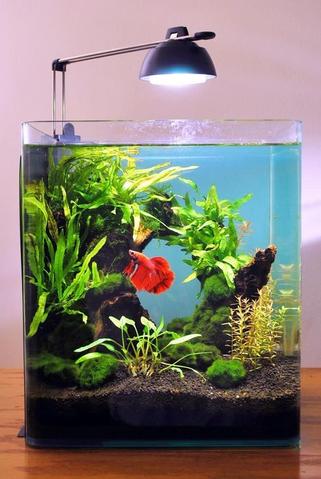
    Betta in Planted Aquarium

    Betta fish needs enough swimming space that is its own private space with lots of aquatic plants. The rice paddies in Asia might seem like little puddles but these are mostly waterlogged for miles, which allows your betta to swim freely in its own space.

    The truth: Get your betta fish the largest tank possible to meet their needs. Originally, the tank size should be no less than 5 gallons for a single betta. To accommodate betta fish with other tank mates, the recommended tank size should be no less than 10 gallons.

    Recommended Tank Size for a Betta Fish

    In pet stores, you will find different tank sizes at different costs. However, you’ll realize that the cost of a 10-gallon tank is very reasonable as compared to a 1-gallon tank. That’s because a 10-gallon tank is the standard recommended size for a betta fish and many reliable companies produce them in bulk. Besides the cost difference between a 1-gallon tank and a 10-gallon tank is so trivial provided the amount of free-swimming space you’ll get for your betta. Therefore, I suggest investing in a betta tank of no less than 5 gallons, if you want to keep a single betta in it. Otherwise, if you plan to build a community tankthe bigger your tank, the better. 

    Many experienced aquarists would recommend you get a larger tank for your betta fish because no one fancies a sad betta fish in a plain water bowl with no decorations and aquarium plants in it. Bettas are territorial and they require plenty of hiding places, aquatic plants, and decorations to ensure the longevity and happiness of betta fish.

    What Is The Ideal Tank?

    In the pet stores, you will find all kinds of betta tanks ranging from plastic ones, gallon tanks, a tank that is curved from the front, and a 10-gallon tank. Therefore, it is baffling to choose between a myriad of options. 

    The ideal betta tank is the one that is feasible for your betta first, and then, the owner.

    Here are the requirements for an ideal betta fish tank.

    A Low Wide Tank

    In their natural habitat, betta lives in shallow waters (rice paddies, particularly). The fact that bettas are surface dwellers makes it pointless to get a tank that is deeper and not wider. Your betta will not use the space at the top. Also, it makes the cleaning process difficult for you. 

    I recommend purchasing a wide low tank for your bettas. For example, a 10-gallon tank would be an ideal tank size in this scenario. This 13 gallon tank by current USA is a great kit to try as well.

    76ยฐ to 81ยฐF Degree Water

    Yes, betta fish prefers warm water, and anything below 76ยฐ F would pose a problem to their immune system. It also means that you should get a tank that can accommodate house a heater. Setting the heater at 80 degrees is an ideal water temperature for your betta fish.

    Also, install a filter to move the water so there are no hot or cold spots.

    Fog and Scratch-Free Aquarium Walls

    Betta fish is a highly interactive pet that can bond with its owners, watches them, plays with them, and perform for them. 

    However, plastic tanks obstruct their vision to see the owners and play with them. Therefore, I always recommend choosing glass or acrylic aquariums rather than plastic. Glass or acrylic materials do not fog up or scratch over time.

    Tips For Buying The Tank And Other Accessories

    Now that we know the right tank size for a single betta fish is at least 5 gallons, and for betta fish with tank mates, the recommended size is 10 gallons. 

    Here are some tips that will cut your tank shopping time in half. 

    Tank size

    As mentioned above, if you’re planning to keep a single betta fish, the bare minimum tank size is a 5-gallon tank. However, if you plan to keep tank mates with your betta, the recommended size is a 10-gallon tank. And if you’re considering more than one betta fish. For example, 5 female betta fish, the recommended aquarium size should be 30 gallons.

    Location of the aquarium

    The location of the aquarium matters: even if you get the ideal tank size, the location can mess everything up. Since betta fish are a tropical fish, many aquarists prefer placing the tank in an area with direct sunlight to keep the water temperature high. However, this practice can be detrimental to your fish.

    Betta fish do not enjoy their tanks placed in an open area where direct sunlight could reach them all day. Direct sun can result in an abnormal rise in the temperature, which is unhealthy for your betta fish. As a result, the fish either stop swimming or swim in crazy patterns. I recommend placing your betta tank on the inside wall, enabling only indirect sunlight to reach the tank.

    Also, avoid placing your betta tank opposite mirrors. Male betta fish is territorial and can get pretty aggressive when introduced to other fish. Therefore, placing your tank against the mirror will allow your male betta fish to think he has another competitor in the tank and will try to constantly attack the other fish. Eventually, he will stress out and die of exhaustion.

    Instead, I suggest putting a magazine cover with flowers, floras, and reefs on the back of the aquarium to give him colorful vibes.

    Travel Tanks

    If you’re a betta connoisseur and a travel enthusiast who often travels in a car, truck, or RV, I suggest getting plastic aquarium tanks. There are travel-friendly aquarium tanks of all sizes in pet stores. However, if you’re investing in a small tank, don’t keep more than one betta fish tank size in a tank.

    Tank Toys

    Betta fish are one of the most active fish I came across, so, it would be a sad thing to watch them in a boring, dull tank with just water. To keep your betta happy and healthy, I suggest adding some tank toys to the aquarium. A few river rocks placed above each other can make an excellent hiding place. Besides, colorful gravel on the bottom will add more stimulation and life to your tank.

    Water Conditioner

    Betta, like most fish, is vulnerable to harmful chemicals and toxins, such as Chlorine, Ammonia, and Chloramines. Therefore, it is advisable to neutralize the tap water before adding the fish.

    Here’s how to do it step-by-step:

    1. Fill a water container and leave it overnight
    2. Add a good quality water conditioner before adding it to the tank
    3. Add the water to your tank and introduce your betta fish into it

    Tank Setup

    There’s a lot more to the beta tank setup than just size. However, when it comes to betta fish, size matters. Since betta has an organ named labyrinth, which allows your fish to breathe like humans, surviving outside of water for a few minutes, many novice aquarists believe betta can live in a small tank. However, it’s not true.

    Betta Tank Setup

    Betta fish tank size should be no less than a 5-gallon tank. Anything smaller than a 5-gallon tank is detrimental to their health and wellbeing. However, if there are some emergency reasons you cannot provide even a 5-gallon tank, you should invest your time in changing the water of your betta’s tank regularly, if you want their long, flowy wings to remain vibrant and beautiful.

    Filtration

    I don’t recommend filtration for bettas living below a 5-gallon tank, but water changes on a regular basis are crucial for those living in a smaller tank. If you have a tank size of around 5 gallons or more, then filtration is important. 

    Therefore, I recommend getting a reliable water treatment kit or an aquarium test kit from pet stores. Follow the directions mentioned on the kit and get the tank water ready for your bettas.

    Experts recommend letting the water sit for around 48 hours. It allows the chemicals to affect the water, starting with the nitrates to offer the best environment for a happy life for your betta fish.

    I also advise investing in a filtration system that has a multi-stage filtration system that allows the good bacteria to live freely and keep the water quality optimal.

    Heater

    Since betta fish are tropical fish, they hardly need chillers, however, heaters are imperative to their physical and mental health.

    As mentioned above, the ideal water temperature for betta fish is around 76ยฐ to 81 ยฐF. Thus, if you’re getting a tank smaller than 5 gallons, I advise investing in a small heater as a regular-sized heater would be too much to handle. I recommend getting a 3 or 5 watts per gallon heater for a betta tank that maintains the water temperature at the proper parameter. Additionally, you can get a temperature gauge to monitor your temperature.

    Frequent Water Changes

    You should change your betta’s tank water regularly to maintain the quality. Changing the water frequently results in a happy, healthy, and thriving betta fish. Also, it protects your betta fish from potential diseases.

    Here’s how you frequently should you change the tank water, depending upon the size.

    1. If the tank is below 2.5 gallons, change the water every 2 to 3 days. (100% water change)
    2. If the tank size is around 2.5 gallons to 5 gallons, change the water every 3 to 5 days. (50% water change)
    3. If it is a 5-gallon tank and above, change your tank water twice a month with a 25% water change once a week

    Aeration

    For bettas, aeration is the most important thing to do. No matter how large your tank is and how great your filtration system is, aeration is still a major factor in the well-being of your betta. Many aquarists go with an airstone and connect it to their air pump. It allows a cloud of bubbles that makes your betta tank much wholesome and betta loves these bubbles as well.

    However, make sure that the aeration in your tank is not overpowering because betta fish lives in stagnant waters, in their natural habitat. Thus, don’t forget to be gentle.

    To manage the water flow, I suggest placing your driftwood, aquatic plants, and other tank ornaments in the direction of the pump to weaken the flow and protect your betta fish.

    Accessories

    I don’t recommend adding accessories to the tank if your betta’s tank mates are fish with long and flowy fins. For example, half moons and crown tails. But many people prefer live or plastic plants. If you opt for these decors, make sure you don’t get the ones with sharp or pointed edges, harming your betta’s fins.

    If you have small tanks, I don’t recommend any substrate, decors, or plants. That’s because it makes the cleaning process tedious.

    Substrate

    If you think substrate is not important, think again.

    Substrate allows good bacteria to host in your tank. These good bacteria eat the harmful comes and keep ammonia development at bay. For adding substrate to your betta tank, I suggest getting medium size gravel. I don’t recommend adding sand, even though it looks beautiful, it’s harder to clean and a budding ground for algae.

    Aquatic Plants

    Most people think betta plant selection is easy as a breeze. You choose a plant, take it home, and place it in the tank. But that’s not how easy it is.

    For betta fish, choosing the right plant can do wonders. Firstly, the right plants produce a perfectly healthy life for your betta. Secondly, it provides you with some visual satisfaction. Therefore, I’m listing some great plant options for your betta fish tank.

    Plastic or Natural Plants

    You can choose plastic or live plants for your tank. However, there are downsides and upsides to both types. The first advantage of plastic plants is they don’t die or dirty up your water. But the disadvantage is that they don’t produce oxygen for your tank. 

    On the contrary, natural produce oxygen for your tank, but they die and need to be replaced. The other problem with live plants is it makes your water very hard to clean.

    Some ideas for live plants for your tank

    If you want plastic plants, you can get all the colors, sizes, and shapes you want. Until and unless they are not pointed or sharp, they are fine for your tank.

    However, the live plants that are ideal for your betta include water Lillies and other floating plants. Floating plants are good for your betta tank as they provide a natural cover for your fish. Also, male bettas can create their bubble nest in the floating plants easily.

    Water wisteria is another great option for your betta tank. Water wisteria has round leaves, which helps your betta to sit on their underwater leaves. I also suggest adding plants with a large foilage underwater to help bettas hide and play. Also, Java fern and pothos make an excellent choice of plants for the betta tank.

    Maintenance Guide

    Betta fish are considered very hardy and easy to look after. However, they will fall ill and inactive if the proper requirements are not met. In this section, I’ll discuss some important tank maintenance tips to give your betta fish a happy and healthy life.

    Daily Tank Maintenance

    1. Make it your habit to inspect the tank water and fish regularly. Any signs of illness or stress should be administered immediately. The earlier you’ll rule out any problems, the better.
    2. Look out for cloudy water or a foul, unusual smell. If this happens, check your filtration system and assess the water flow through your filter system. Most probably, you’ll need to change the water if this happens.
    3. Invest in a tank thermometer, and monitor the temperature daily. Make sure the water remains at the ideal temperature for your betta. If it fluctuates, adjust the heating system.
    4. Keep an eye on the food you feed. Do not overfeed your betta fish. Remove any uneaten food from the tank to avoid water fouling. Make sure your betta is eating properly. If not, quarantine the fish as it suggests signs of illness or stress in the fish.

    Weekly Tank Maintenance

    1. Change the water weekly to maintain water quality. The best way to do this is to remove around 20% of water and replace it with already conditioned water at the same water temperature as the betta tank.
    2. When you change the water, don’t forget to clean the substrate. Use a siphon to clean the underlayer and clean the debris. Scrape the aquarium from the inside and clean it from outside the tank. Check the lighting and filtration system, and adjust the temperature.

    Monthly Tank Maintenance

    1. Clean the tank using lukewarm water thoroughly. Rinse the decorations in hot water and sanitize them with aquarium-safe sanitizers.
    2. Maintain the filter system and rinse it well. Avoid touching or cleaning the biological filter to maintain the beneficial bacteria in your tank.

    FAQs

    Is 1 gallon enough?

    A 1-gallon tank is certainly not enough for a betta. But better than the small container, or cups, or a washing machine, or a lemonade glass, or any other bizarre place where bettas are usually kept in fish stores.

    Is 2 gallons enough?

    Betta fish can survive in a 2-gallon tank. However, if you want to keep it happy, a 2-gallon tank is not enough. If you’re keeping fish in a 2-gallon tank, make sure to change the water daily 100%, and the lights should be low.ย 

    Can they fish live in a 2-gallon tank?

    However, not recommended, betta fish can live in a 2-gallon tank, provided that you change the water 100% daily and clean the tank thoroughly.ย 

    Is a 20-gallon tank too big?

    No. No tank is too big for your betta. A 20-gallon tank laden with rocks, driftwood, aquatic plants, heater, and filtration system is a dream home for your betta. Besides, if you’re planning to add tank mates, a 20-gallon tank is a great size to start.ย 

    Do they like large tanks?

    Yes, betta fish loves and thrives in a large tank. A betta will get seriously stressed when placed in a small tank (smaller than 5 gallons). Therefore, it is recommended to keep your betta fish tanks larger and provide them with enough space to avoid potential health issues and stressful behavior in your fish.

    Will they be happy in a 5-gallon tank?

    Yes, a single betta fish will be very happy in aย 5-gallon tank.

    Final Thoughts

    Betta fish is a beautiful creation that adds an extra oomph to your home aquariums. However, providing them with the right tank size and optimal tank setup is your responsibility as an owner. If you’re confused, let me break it down for you: for a single betta fish, we recommend a tank of no less than 5 gallons. And for a community aquarium, the recommended tank size is 10 gallons. Furthermore, no matter how big your tank is, you should avoid putting two male bettas in a single tank.

  • Bristlenose Pleco: Complete Care Guide (Why I Recommend It Over Other Plecos)

    Bristlenose Pleco: Complete Care Guide (Why I Recommend It Over Other Plecos)

    Bristlenose plecos are the most recommended algae eater in the hobby. They are also the most neglected. Most people buy one expecting a self-cleaning tank solution, toss it in without driftwood or supplemental food, and wonder why it slowly wastes away. A bristlenose pleco is not a cleaning machine. It is a fish. And like every other fish, it needs to be fed, housed properly, and actually cared for. In my 25+ years in the hobby, I have seen more bristlenose plecos slowly starve in tanks with “plenty of algae” than I can count.

    Bristlenose plecos are not tank cleaners. They are fish that still need to be fed and cared for like any other.

    Table of Contents

    The Bristlenose Pleco is one of the most commonly misunderstood fish in the aquarium trade. Most people buy one thinking it will clean their tank. It will not. After 25 years of keeping plecos, I know exactly what this fish actually needs and what surprises first-time owners.

    Plecos do not survive on algae alone. Period.

    Depending on the species, this pleco lives 10 to 20 years and may reach sizes that demand a tank upgrade. Think long-term before bringing one home.

    The pleco you see hiding behind the filter during the day is a completely different fish at midnight.

    Bristlenose catfish are hardy and forgiving of mistakes, which is why they work well for beginners. But “easy to keep alive” is not the same as “easy to keep well.” They need specific care that most people skip.

    If youโ€™re planning on adding them to your aquarium, Iโ€™ll walk you through everything you need to know about them in this article.

    What Most Care Guides Get Wrong About Bristlenose Pleco

    Want a small pleco that stays small? Get a bristlenose or clown pleco. Want a show pleco? Get a gold nugget or zebra pleco. Want an algae eater? Get otocinclus. Plecos are not algae cleaners.

    The biggest mistake I see with bristlenose plecos is expecting them to survive on algae alone. New owners buy a bristlenose to “clean the tank” and never feed it directly. The pleco eats all the available algae in a few weeks, then slowly starves. You need to provide algae wafers, blanched zucchini, cucumber, and other vegetables on a regular schedule. Driftwood is another thing guides mention in passing but do not emphasize enough. Bristlenose plecos rasp on driftwood for fiber and digestive health. A tank without driftwood is an incomplete setup for this species. Finally, the waste output catches everyone off guard. These fish eat constantly and produce massive amounts of stringy waste. You need strong filtration and regular substrate vacuuming or your water quality will suffer fast.

    Why Bristlenose Plecos Get Neglected

    People assume algae is enough food. It is not. A bristlenose pleco needs blanched vegetables like zucchini, cucumber, and peas. It needs algae wafers. It needs occasional protein like bloodworms or shrimp. Tank algae alone will not sustain this fish for more than a few weeks.

    Driftwood is not decoration. It is a digestive requirement. Bristlenose plecos rasp wood fiber for gut health. Without driftwood in the tank, they develop digestive problems over time. Every bristlenose tank needs at least one piece of real driftwood. Not fake. Real.

    They hide all day. Beginners buy a bristlenose pleco, never see it, and assume it died. It did not. It is nocturnal. You will rarely see it during the day unless you provide caves and dim lighting. This is normal behavior, not a problem.

    They produce enormous waste for their size. The trade-off for a cleaner tank is a fish that poops constantly. Long, stringy waste everywhere. Your filter needs to handle it, and you need to vacuum your substrate regularly or your water quality will tank.

    The Reality of Keeping Bristlenose Pleco

    You will almost never see this fish during the day. It hides behind filters, inside caves, under driftwood. At night it comes out and grazes every surface in your tank. If you want a fish you can watch during the day, a bristlenose pleco is not it. Accept this before you buy one.

    The poop. Nobody warns you about the poop. Bristlenose plecos produce long, stringy waste constantly. It drapes across your substrate, your plants, your decorations. Your gravel vacuum becomes your best friend. This is the real cost of having a “clean” tank.

    They breed easily. Two bristlenose plecos in a tank with a cave will produce babies. Dozens of them. Have a plan or you will have a population explosion on your hands. If you do not want fry, keep only one or avoid providing caves.

    Males grow bristles on their face. Females do not. The bristles are not a disease. They are not parasites. They are not growths that need treatment. First-time keepers panic about this constantly. It is completely normal and one of the easiest ways to sex this species.

    Algae is not a diet. Relying on tank algae to feed your bristlenose pleco is a recipe for a starving fish. You need to provide sinking wafers, blanched vegetables, and driftwood for proper nutrition.

    They are nocturnal and territorial. If you have multiple plecos, they need separate hiding spots or they will fight. Territorial disputes between plecos cause real injuries.

    Biggest Mistake New Owners Make

    Buying a bristlenose pleco as a tank cleaner instead of treating it like a fish. If you would not skip feeding your tetras, do not skip feeding your pleco.

    Expert Take

    Never buy a bristlenose pleco as a tank cleaning solution. Buy it as a fish that happens to eat some algae. If you are not prepared to feed it vegetables twice a week and provide driftwood, you are not prepared to keep one.

    An Overview of Bristlenose Pleco

    Scientific Name Ancistrus Cirrhosus
    Common Names Bushynose, Bushynose Catfish, Bristlenose pleco, Bristlenose Catfish
    Family Loricariidae
    Origin Amazon River Basin, Rapid-flowing Tributaries, South America
    Diet Herbivore
    Care Requirements Easy
    Activity Very Active
    Lifespan 5 to 12 years
    Temperament Peaceful
    Tank Level Bottom Dweller
    Minimum Tank Size 20 30 gallons
    Water Temperature Range 73ยฐF to 80ยฐF
    Water Hardness 2 to 20  KH
    pH Range 5.7 to 7.5
    Filtration/Water Flow Moderate to strong
    Water Type Freshwater
    Breeding Egg Layer
    Difficulty to Breed Difficult
    Compatibility Community tanks
    OK, for Planted Tanks? Yes

    Classification

    Order Siluriformes
    Family Loricariidae
    Genus Ancistrus
    Species A. Cf. Cirrhosus (Valenciennes, 1836)

    What Are Bristlenose Plecos?

    Bristlenose Plecos is part of the Loricariidae family of order Siluriformes. They were discovered in 1836 in the vast river basins and tributaries of the Amazon River in South America. But they are also found in Panama and throughout other South American regions.

    Ever since their classification in 1836, Bristlenose Plecos have become hugely popular throughout the world. And by the early 20th century, they were introduced to aquarium life. They are bottom dwellers and have rounded and down-turned mouths that help them keep themselves adhered to hard surfaces in the rapid current.

    Origin and Habitat

    They are the natural inhabitants of the extensive river basins and floodplains of Amazon, South America, where the water is a bit acidic and soft. Bristlenose Plecos can live through moderate water temperatures, ranging from 73ยฐF to 80ยฐF, which is temperate and cozy.

    They are cold-resistant, but leaving them in water thatโ€™s below 60ยฐF will put them through different diseases.

    Appearance

    Bristlenose Plecos are tropical and hardy fish with small bodies which are covered with white or yellow spots. Unlike a traditional Pleco which grows up to 20 inches, they can grow a maximal size of 5 inches. Their size helps them stand out from the other catfish and makes them one of the smallest catfish around the world.

    Bristle Nose Pleco

    They are in black, mottled brown, gray, olive, and albino shades. However, some of them have strong color variations, ranging from orange, red, and lemon to albino gold.

    Compared to a normal Pleco, they have wider and somewhat shorter heads. They have fleshy tentacles that project from their heads and their bodies are covered with bony plates which function as a shield against predators in the wild. A newborn Bushynose Pleco takes 2 months to become hardy and almost 6 months to develop tentacles.

    Bristles are present in almost all Bristlenose Plecos, but they are more apparent in male Bristlenose Plecos. They almost look like aliens with their bristles. The males have longer bristles and their tentacles protrude from their heads. While in the female Plecos, the tentacles stick out from their snouts and are low.

    Aside from this, the males have eversible odontodes (dermal teeth) and whiskers and spikes on the fins, whereas the females have underdeveloped or absent odontodes.

    Bristlenose Plecos have their mouths at the bottom of their bodies and have elongated lips. The location of their mouths helps them stick to solid surfaces if the water current is too swift.  

    Having a pair of pectoral fins, a pair of abdominal fins, and a larger dorsal fin add to their beauty and uniqueness. In a common Bushynose Pleco, fins and tails are shorter and fan-like. However, the Long-finned Pleco has longer fins.

    Some Bristlenose Plecos have darker backs and lighter abdomens and they can easily blend in the environment by changing their colors. When stressed or ill, they change their color to a duller shade.

    Different Types

    There are five types of Bristlenose Plecos fish, and each of them has got defining features.

    Albino

    Their capability to recognize food in a low visual range and their pliability in accepting the diversity of aquariums make this variation interesting. Albino Bristlenose Pleco is named after its color, which is albino.

    The light yellow color of its body makes it distinguishable among other Bristlenose Plecos. Other than that, they can easily fold themselves on the shore and rock, taking advantage of their body coloring.

    Super Red

    The reason this variation of Bristlenose Plecos has this name is the coloring of its body. It is similar to how Albino Bristlenose Pleco got its name. Super Red Bristlenose Pleco looks navel-orange or rose-colored and sometimes glowing red. So, no matter with which fish you put it in your aquarium, it will still stand out from the rest.

    Long-fin Bristlenose Pleco

    This variation is quite popular because of its beautiful long fins, and thatโ€™s why we call it long-fin Bristlenose Pleco. While moving, Long-fin Bristlenose Pleco is delightful to watch. It moves its long and flowing fins in a swaying motion when swimming around, which almost gives a hypnotic trance.

    Starlight

    With their small black body full of white spots scattered across it, this type of Bristlenose Plecos can easily augment the beauty of your aquarium. Starlight Bristlenose Plecos have a prominent white seam on their dorsal fin and tail, which makes them even more beautiful.

    Calico

    Calico Bristlenose Pleco and Super Red Bristlenose Pleco almost look alike. This type of freshwater species has burnt-orange and marble patterned bodies, making them lavish and undeniably an excellent addition to your tank.

    Lifespan

    The life expectancy of a captivated Bristlenose Pleco is around 5 to 12 years if they are properly looked after. As they flourish in water tempered below 80ยฐF and above 70ยฐF, they can easily live up to 12 years. In some cases, they lived as long as 15 years.

    Average Size

    The average size of a Bristlenose Pleco is 5 inches. A common Pleco can grow 3 to 5 inches in the first year of its birth. The process of the growth then slows up, and it takes them almost 5 years to reach the maximum length, which is 25 inches.

    Bristlenose Catfish Care

    One of the key reasons why they are beginner-friendly is hidden in the fact that their maintenance is trouble-free, and Bristlenose Pleco Care allows you to understand how freshwater catfish are looked after. If the temperature of the aquarium is moderate and their basic needs are met, you don’t have to fuss over your Bristlenose Pleco’s care.

    Another plus point is their resilience against uncommon health issues. It is true that like any other living being, they too encounter some health problems, but they tend not to have any major issues.

    Still, there are some really important things you need to consider before having a Bristlenose Pleco.

    Aquarium Setup

    Amazon River Basins is the first home to Bristlenose Plecos, and the water temperature of this region is moderate and fresh. To keep their health intact, try giving them an environment where thereโ€™s plenty of oxygen, fresh water, and live aquarium plants.

    They can camouflage in an unfamiliar environment. But, you can still set up an aquarium with replicated conditions they encounter in the wild. Bristlenose Plecos live at the bottom of the rivers, so keep that in mind while constructing their habitat.

    Donโ€™t put anything in your aquarium that prevents them from swinging around. Also, they are bottom-feeding fish, so whenever you feed your Pleco, the food should sink into the tank.

    Tank Size

    You should have an aquarium size with a minimum of 30 gallons for them. The number can go up if thereโ€™s going to be other tank makes in your aquarium.

    This freshwater catfish prefers leading a solitary life, but it can tolerate other Plecos if the tank has plenty of space. After all, the bigger the tank, the more freedom they have to roam around.

    Water Parameters

    The Brislenose Pleco have an innate familiarity with fast-flowing, soft, moderate temperature, and freshwater. Despite their ability to survive in slightly different water temperatures, you should still consider setting the right parameters.

    An adult Bristlenose Pleco can easily deal with fluctuated water conditions as compared to a newborn that will get unwell if the water parameters are off-balance.

    The recommended water temperature for a Bristlenose Pleco ranges from 73ยฐ F to 80ยฐ F. And, the acidity should be around 5.7 to 7.5 pH. Also, make sure the water hardness is above 2 KH and below 20 KH. If the water parameters are against what they are intimate with, this freshwater species (adult or younger) can become sedentary and stressed.

    Pro Tip: Bristlenose Plecos are good at indicating dissolved levels of oxygen. They are facultative air breathers, which means they can absorb atmospheric oxygen in times of need. Otherwise, they use their gills for this purpose.

    You may notice your Pleco coming to the surface for a quick splashing gulp and then returning to the bottom. If you see this happening several times per hour, it may be because the oxygen levels have dropped.

    Filtration and Aeration

    Bristlenose plecos are effective algae grazers when properly fed. But they are also prolific waste producers. You need a strong filtration system to handle the output.

    They consume a lot of food, which naturally results in producing heaps of waste. I recommend using a canister filter or a hang-on back filter for keeping the tank clean, given they are 300 gph at least.

    You can also install an air pump powered bubbler in your aquarium to boost oxygenation, but itโ€™s not necessary. I would highly recommend you have an under-gravel water system as it does wonders to this freshwater species and keeps the water oxygenated.

    Lighting

    You donโ€™t need to install artificial lighting in your aquarium as they are more active during the night and prefer staying at the bottom of the tank throughout the day.

    But, if you still want to make the tank lighted, you can go for LED lights as they are cost-efficient and easy to use. These Led lights is programmed and you can set timers and make sure that they go off during the night for them to breed. This artificial lighting will also assist you with monitoring how your freshwater fish is doing.

    Aquatic Plants and Decoration   

    Bristlenose Plecos come from rivers of the Amazon where the water is fresh, and the current is moderate to fast. They enjoy dwellings at the bottom, so you should build their natural habitat by paying close attention to these details.

    Also, they love hiding places and scavenging for food among plants and decorations that you put in the tank, so keep that in mind while making their habitat.

    Apart from giving these freshwater fish caves to hide, you should also decorate your aquarium with live plants, rocks, and driftwood. Some great suggestions for plants is Amazon Sword, Wisteria, and Java Fern. You can also consider having Java Moss and Anubias in your community tank. (Make sure there’s enough natural lighting for the plants to stay healthy).

    Bristlnose Plecos are nocturnal who roam around at night and take rest during the day, using these manufactured hiding spots. These hiding places also play an important part during the breeding season, which we will discuss later on.

    Pro Tip: Make sure whatever dรฉcor you use for Bristlenose Plecos aquariums is strongly secured. You would certainly not like to cause any hindrance to their day-to-day activity by using decorative items which are not firmly fixed.

    Tank Maintenance:

    A neat, well-decorated, and large tank is a suitable replacement for your Plecoโ€™s natural dwelling. No matter how hardy this freshwater species is, try imitating their natural environment as strictly and hard as possible. So, they donโ€™t miss their natural dwelling.

    Despite their reputation as tank cleaners, bristlenose plecos produce significant waste. You need a powerful filter to handle the debris they generate. Chemicals like nitrates can build up in your aquarium over time and can make the water cloudy.

    But, whenever you clean your fish tank, do not empty it out of all the water because this will probably remove the necessary bacteria, helpful in keeping the nitrogen cycle set.

    This freshwater fish consumes a good-round diet and as a result, thereโ€™s a lot of debris to clean. A canister filter or a hang-on-back filter with at least 300 gph can easily filter any impurity out of it.

    How to clean the tank?

    You can easily clean your Pleco’s tank following these tips.

    1. Clean the sides first by unplugging the filter and heater (if there is any heater).
    2. After the sides are cleaned, begin cleaning the gravel using a siphon so all the dirt is
    cleaned out.
    3. Use the siphon to throw away the dirty water.

    Pro Tips:

    1. Use a plastic scraper to clean the walls of your fish tank if they are made of acrylic.
    2. Keep at least 50% water in the tank so the beneficial bacteria doesnโ€™t get wiped out.
    3. Make sure thereโ€™s no chlorine in the freshwater. You can do this through a conditioning treatment.

    Substrate

    Bristlenose Plecos spend most of their time at the bottom. So, itโ€™s highly recommended to pay close attention to the substrate.

    Bristlenose Plecos love exploring substrate. Therefore, an ideal substrate would be at least 3 inches deep. The deepness of the substrate would also give place to deep-rooted plants. For this, you can use a clay-based substrate that is better with gravel and dirt. You can also go for soft sand because your pleco will flow through the substrate to find food.

    Community Tank Mates

    Bristlenose Plecos are not aggressive, they are actually peaceful community tank inhabitants. Putting them with other species isn’t a problem, they can easily get along with a tank mate.

    Even if your Pleco is the only one in the aquarium, there’s nothing to worry about. They can lead a solitary life, without depending on others to give them company.

    Here’s a list of several great tank mates for your Bristenose Plecos.

    Poor Tank Mates

    You should not put your Pleco with any large or aggressive fish.

    Here are some incompatible tank mates for Bristlenose Plecos:

    1. Pufferfish
    2. Aggressive or large cichlid
    3. Tiger Barbs
    4. Larger or aggressive plecos

    Make sure thereโ€™s enough room for multiple Plecos to live together and ample caves for them to hide in. This way, they wouldnโ€™t act territorial or extraterritorial towards each other. And even if they do, you donโ€™t need to fuss over it because they donโ€™t have sharp teeth.

    Breeding

    If youโ€™re just starting out as an aquarist, then this is the ideal species you can begin with.

    For breeding Bristlenose Plecos, you only need to have a basic understanding of their natural breeding pattern and what food you should add to their diet more often.

    A Bristlenose Pleco hits sexual maturity around 6 months, and to boost their chances of breeding, lower the temperature (not too much). Also, this should not disturb pH levels as any sudden and drastic change is lethal for your pleco.

    I recommend adding fresh water to the tank and replacing the old water up to 50% and keeping the parameters modified. The sudden inflow of water will give your male and female Bristlenose Plecos an impression of the rainy season floods they are naturally familiar with.

    During the breeding season, the male plecos become highly territorial and do their best to win over the females. They will flare their bristles and perform a stunning dance around a female pleco they want to mate with. Then, itโ€™s time for the female Bristlenose Pleco fish to become receptive to their attention, which leads them to mate.

    Once the plecos have linked up, the male pleco will construct a nest where the female pleco can lay her eggs. The spawning occurs after 4-5 days, and the female pleco can lay 20 eggs to 200 eggs. While the other fish species will eat the fry, bristlenose plecos are very protective of their eggs.

    One of the best parts about breeding them is that you don’t have to buy a separate breeding tank for breeding this aquarium fish.

    Pro Tip: To know how many eggs are infected, you can check out their color. The infected eggs turn downy and non-transparent, while the sterilized eggs are glassy orange or yellow. Male plecos are great at looking after the eggs. They would even start overlooking their diet for almost 10 days until the eggs hatch. Once the baby plecos are strong enough to survive on their own, the male pleco would leave them.
    Another Tip: Add protein to their diet because it is another important factor in their breeding.

    Food and Diet

    A good-round vegetarian diet along with protein can improve your plecoโ€™s health and longevity. They love algae, so you can give them algae wafers. While in their native home, they get a variety of food, and mainly are algae eaters. You can still give them different blanched vegetables like peas, zucchini, cucumbers, carrots, and spinach. Even though 95% of their diet comprises vegetables, feeding them protein-based food like bloodworms is also important.

    These suckermouth catfish are bottom-dwellers, so you should look for sinking fish food pellets and spirulina wafers especially made for bottom-feeding fish. In their natural habitat, they mostly survive on plant-based stuff and therefore might stick themselves to plants to eat algae and hunt for tiny insect larvae.

    Great For Bottom Feeders!


    Hikari Algae Wafers

    Algae wafers are a great way to directly feed your bottom feeding fish. They are especially effective for larger fish like plecos


    Buy On Amazon


    Buy On Petco

    Feeding bristlenose plecos a good diet is important, and so is keeping track. Feed them only once or twice a day. Give them a mixed diet of vegetables, algae wafers, brine shrimp, or shrimp eggs. The small bodies of plecos are full of dull tones but with beautiful color patterns. If you notice a duller shade, itโ€™s a sign that your pleco is not getting a healthy diet.

    Common Health Problems

    Unlike other fish, they don’t fall prey to any major health issues. However, a poor diet, dirty tank, and stress might make your bristlenose plecos susceptible.

    Here are some common health problems your pleco might come across.

    Ich

    This disease is mainly caused by poor water tank conditions.
    The symptoms are:

    1. Small white spots on the fins
    2. Small white spots on the body

    Changing tank water and heating it up may help.

    Dropsy and Fin Rot

    Dropsy and Fin Rot are bacterial diseases that happen due to malnutrition and unhygienic water conditions. The symptoms are:

    1. Bloating and loss of coloration
    2. loss of appetite
    3. discoloration and melting of fins

    The possible treatment is focusing on their diet and using clean water.

    Where To Buy

    These Plecos is found at various local fish stores across the country as they are readily available. However, not all fish stores are created equally. If you want to the online vendor route, I highly recommend shopping with my friend Rob at Flipaquatics. The care he gives his livestock is top-notch. Use promo code ASDFLIPPROMO for an extra discount at checkout!

    What It Is Actually Like Living With Bristlenose Pleco

    The first thing you notice about owning a bristlenose pleco is the poop. Nobody warns you about the volume. This fish eats constantly and produces long, stringy waste that drapes across every surface in your tank. You will vacuum your substrate more for this one fish than for every other fish combined.

    The second thing you notice is that your algae problem is actually gone. Not reduced. Gone. A single bristlenose in a 30 gallon tank will keep the glass, rocks, and driftwood cleaner than any product you can buy. That is the trade: poop for a spotless tank.

    During the day, you will barely see your pleco. It wedges itself behind filters, under driftwood, and inside caves. Then around 9 or 10 PM, it comes out and becomes a completely different animal. It moves across every surface in the tank, rasping algae and investigating everything. Watching a bristlenose work at night is genuinely entertaining.

    If you provide caves and driftwood, this fish will likely breed on its own. One morning you will find a male guarding a cave full of eggs and wonder how that happened. Bristlenose plecos are one of the easiest fish to breed accidentally.

    FAQs

    How many should be kept together?

    The ideal number is 1 to 5. Bristlenose pleco size is 5 inches, so have a large tank to keep them together.

    Are they friendly?

    Bristlenose plecos are hardly aggressive. They are friendly, active, and super calm. Beginners can easily handle them if there are other fish in the aquarium, given that you don’t have aggressive species in the tank.

    How long does it take for them to reach full size?

    To reach its full size, which is 5 inches, it takes a bristlenose pleco around 2 years.

    Are they OK alone?

    A bristlenose pleco has the capacity of living happily alone, which is a good thing. Especially, if you’re new to fish keeping, starting from a single bristlenose pleco would be a good start.

    How long do they live in captivity?

    The average lifespan of a bristlenose pleco is 5 years. If you provide them with a good diet and a healthy environment, they can live up to 12 years in captivity.

    Do they clean your tank?

    They eat algae off glass, rocks, and driftwood. They do not eat fish waste, leftover food, or detritus. Calling them “tank cleaners” is misleading. They reduce algae buildup, but they also produce a large amount of waste themselves. You still need a good filter and regular maintenance.

    Is the Bristlenose Pleco Right for You?

    Before you add a bristlenose pleco to your tank, it is worth asking whether this species actually fits your setup and your goals.

    This species is a good fit if:

    • You have at least a 30 gallon tank with driftwood and hiding spots.
    • You are willing to feed blanched vegetables and algae wafers on a regular schedule.
    • You can commit to regular substrate vacuuming. These fish produce more waste than most people expect.
    • You want a peaceful bottom dweller for a community tank.
    • You understand this fish is nocturnal and you will rarely see it during the day.
    • You have a plan for fry if you keep more than one.
    • You are not buying this fish expecting it to be a self-cleaning tank solution.

    If those points line up with your setup, the bristlenose pleco is an excellent choice. If you are buying one because someone told you it would clean your tank, reconsider.

    How the Bristlenose Pleco Compares to Similar Species

    Bristlenose Pleco vs Common Pleco

    Want a pleco that stays under 6 inches and actually works in a standard aquarium? Get a bristlenose. Want a pleco that grows to 18 inches, produces waste like a small dog, and will eventually need a 125 gallon tank? That is the common pleco. The pet store sells both at the same size. One is a reasonable pet. The other is a commitment most people cannot keep.

    Other Comparisons

    Want a small pleco that stays small? Get a bristlenose or clown pleco. Want a show pleco? Get a gold nugget or zebra pleco. Want a dedicated algae eater? Get otocinclus. Each of these fills a different role, and choosing comes down to tank size, water parameters, and what you actually need the fish to do.

    Closing Thoughts

    The bristlenose pleco is a genuinely good fish for most community tanks. It stays small, it is peaceful, and it is an effective algae grazer when properly fed. But it is not a shortcut. It is not a maintenance tool. It is a living animal that needs driftwood, vegetables, clean water, and a keeper who actually pays attention.

    A bristlenose pleco does not clean your tank. It trades algae for poop. Whether that trade works for you depends entirely on whether you are willing to feed it, house it, and clean up after it.

    Have you kept bristlenoses before? Let us know your experience in the comments!

  • Otocinclus Catfish Care: Complete Guide (And Why Timing Your Purchase Matters)

    Otocinclus Catfish Care: Complete Guide (And Why Timing Your Purchase Matters)

    Otocinclus Catfish die in transit more than almost any other freshwater fish. They are sensitive, fragile, and starve quickly in tanks without established biofilm. If your tank has been running less than three months, you are buying fish to watch them die.

    Otos are the best algae eaters in the hobby. They are also the hardest to keep alive in the first two weeks.

    Table of Contents

    The Otocinclus Catfish is not the boring bottom-feeder most people expect. This fish has real personality, specific care needs, and a few traits that catch new owners off guard. I have kept catfish for over 25 years and this species stands out for reasons most care guides never mention.

    This fish is nocturnal, social, and far more active than most people realize.

    This catfish lives 8 to 15 years in proper conditions. That means years of providing the right environment, diet, and tank mates.

    People buy catfish to clean the tank. They stay because the catfish has more personality than anything else swimming in it.

    Otocinclus are among the best algae grazers in freshwater. Peaceful, shrimp-safe, and effective on soft green algae and biofilm. But they have a well-earned reputation for being fragile right after import. Most otos are still wild-caught, which means they go through significant stress in the collection and shipping process. I always tell people: don’t buy otos the week the store gets them in. Let them settle for at least a week, and make sure you have an established tank with natural algae growth ready to go before you bring them home. Get those two things right, and otos are genuinely easy to keep long-term.

    What Most Care Guides Get Wrong About Otocinclus Catfish

    The most common mistake I see with otocinclus catfishs is keeping too few. Guides will say “minimum 6” and leave it at that. In reality, these fish behave completely differently in a proper group of 8 to 10 or more. Keeping just 3 or 4 often leads to stress, hiding, and fin nipping that wouldn’t happen in a larger school. Another thing most guides miss is how much lighting and decor affect this species. Otocinclus Catfishs look washed out under bright white LEDs on a light substrate. Dim the lights, add some tannins, use a dark background, and you’ll see colors you didn’t know they had. I’ve also noticed that many care sheets recommend overly broad water parameters. Yes, otocinclus catfishs are adaptable. But “adaptable” doesn’t mean they’ll thrive in just anything. In my experience, keeping them closer to their natural soft, slightly acidic conditions brings out the best color and longevity.

    The Reality of Keeping Otocinclus Catfish

    Most catfish are social and nocturnal. Keeping a single catfish means you rarely see it. Many species need groups of 3 to 6 to feel secure enough to come out during the day. Solitary catfish hide constantly and stress silently.

    Sharp spines are a real hazard. Many catfish species have venomous or sharp pectoral and dorsal spines. Netting them is risky. Getting stung during a water change is painful and surprisingly common. Use a container, not a net, when moving catfish.

    Feeding needs attention. In a community tank, catfish often get outcompeted for food by faster midwater fish. Sinking pellets dropped after lights-out ensure your catfish actually eats.

    Biggest Mistake New Owners Make

    Assuming the catfish will eat leftover food and algae. Catfish need their own dedicated feeding, preferably after the tank lights go off when they are most active.

    Expert Take

    Feed your catfish after lights-out with sinking pellets. If you only feed when the lights are on, your catfish is starving while your tetras get fat.

    Species Overview

    Scientific NameOtocinclus spp.
    Common NamesOtocinclus catfish, otos, dwarf suckers
    FamilyLoricariidae
    OriginSouth America
    DietHerbivore
    Care RequirementsModerate to Advanced
    ActivityModerate
    Lifespan3 to 5 years
    TemperamentPeaceful
    Tank LevelBottom to middle level
    Minimum Tank Size20 gallons
    Water Temperature Range74ยฐF to 79ยฐF
    Water Hardness6 to 10 KH
    pH Range6.8 to 7.5
    Filtration/Water FlowModerate
    Water TypeFreshwater
    BreedingEgg Layer
    Difficulty to BreedDifficult
    CompatibilityCommunity tanks
    OK, for Planted Tanks?Yes

    Classification

    OrderSiluriformes
    FamilyLoricariidae
    GenusOtocinclus
    SpeciesO. Vittatus (Regan, 1904)

    Origin and Habitat

    There are nearly 20 different species of known otocinclus catfish. Not all of these species have made their way into the aquarium, but the ones that have is difficult to tell apart from one another. In general, any otocinclus species that is available for sale in the aquarium hobby will be labeled as a general type of otocinclus catfish.

    That being said, all members of this genus are found in similar environments and water conditions throughout South America, including the Amazon basin. There, they is found at the margins of small rivers and streams, hiding and feeding in dense vegetation. They have also been documented occupying floating mats of vegetation away from the edge of the water.

    Appearance

    Several species of otocinclus have made their way into the aquarium hobby. Each one has a slightly different appearance, though most average hobbyists are unable to tell them apart.

    Here are some of the most common oto catfish species you’re likely to come across:

    How Does an Otocinclus Look Like

    Otocinclus vestitus. This species lacks a black tail marking or a white border. Instead, the midlateral black stripe combines with the mottled patterning and continues onto the tail in a straight fashion.

    Otocinclus macrospilus. This species most notably has a large, black marking at the base of the caudal fin. Some broken white outlining is observed in between the mottled patterning and midlateral dark line.

    Otocinclus vittatus. This species has a very obvious white border to its midlateral black line. There is no observable black marking at the base of the tail, either.

    Most species of otocinclus grow to be about 2 inches at mature size, though some can grow to be close to 4 inches. The golden otocinclus (Otocinclus affinis, now described as Macrotocinclus affinis) is the smallest oto documented, growing to only about 1.5 inches; however, this species is rarely seen in the aquarium hobby.

    Not only are species of otos confused with one another, but they’re regularly confused with another problematic fish, the Chinese algae eater.

    Otocinclus vs. Chinese Algae Eater

    Chinese algae eaters (Gyrinocheilus aymonieri) are very similar in appearance to otocinclus catfish to the untrained eye. In almost all ways, the otocinclus is the much better option as a tank mate and as an algae eater.

    Chinese algae eaters end up being problematic for many hobbyists. These Asian fish grow to be very large, reaching a potential 10 inches at mature size. They have a similar body shape and coloration to small otos.

    What Does A Chinese Algae Eater Eat

    The main difference is that Chinese algae eaters have a very bold and black midlateral line with a yellow margin. Chinese algae eaters also lack the mottled patterning that otos have on their dorsal areas. Siamese algae eaters (Crossocheilus oblongus) share many of these same traits but are not as big of a mistake as Chinese algae eaters are. Here’s why.

    Chinese algae eaters are often sold as juveniles when they are only a couple of inches long. Unknowing hobbyists find these readily available fish as an initial answer to their algae problems. As time goes on, they soon find that their once-friendly fish start to become very aggressive and more interested in sucking other fish than cleaning algae.

    In extreme cases, Chinese algae eaters will suck the slime coat off of tank mates and cause extensive injury or death.

    Otocinclus Catfish Care

    Otocinclus catfish are not beginner fish. They may look like the perfect solution to a new tank struggling with algae, but they do best in a mature setup where there is a constant supply of algae and other plant-based foods to graze on. These fish are notorious for starving to death when conditions are not met, which can cause devastation when kept in a school.

    With some proper care and time for acclimation, otos are easy to keep.

    Tank Size

    Otos are small fish with a big appetite. Many sources say that a group of otocinclus catfish can happily live in a 10 gallon tank. While this isn’t completely untrue, making sure that your fish get enough food in so small of a freshwater tank can prove to be incredibly challenging.

    Instead, many hobbyists recommend at least a 20 gallon long aquarium with bigger always being better. It should be noted that no matter the size of the aquarium, these fish are very shy and masters of camouflage. They will not fill up a tank but will struggle to survive if enough resources aren’t given from the beginning.

    Aquarium Setup

    Otocinclus catfish should only be added to an established aquarium. An established aquarium will provide both stability and food for your otos to live.

    In the wild, these fish are found in relatively slow-moving waters with dense vegetation. This is replicated in the aquarium by providing plenty of background plants, like species of Vallisneria and Rotala.

    Floating plants, like frogbit (Limnobium laevigatum) and water lettuce (Pistia stratiotes), will also provide food and additional shelter. Remember, these are shy fish and prefer plenty of coverage. Either use floating plants to create areas of shade throughout the aquarium or use dim lighting with less light-demanding plant species.

    In addition, tannins from various organics and botanicals may be used to stain the water brown and lower its pH. Plenty of rocks and wood structures should also be placed throughout the tank to provide additional surface area for algae and biofilm to grow as well as to provide your fish with additional hiding spots.

    Eventually, your otocinclus catfish will get to know you and won’t be as scared. Unlike other catfish, otos are diurnal and will be active during the daytime. They’ll regularly be found on the aquarium glass and interact with other fish in the tank.

    Water Parameters

    Another difficulty of keeping otos is maintaining water parameters. These fish are not hardy and need an aquarium that has reached mature stability. They will quickly succumb to any traces of ammonia or nitrite.

    That being said, it is better to keep a high amount of nutrients available in an otocinclus catfish tank setup so that algae may grow. Algae feed primarily on nitrates and phosphates, which is introduced through food or water changes depending on the source water.

    As we’ll see, these fish are demanding eaters and need to be fed regularly. Heavier feedings can help keep nutrients up to continue plant and algae growth.

    Otherwise, otocinclus can tolerate slightly acidic conditions, preferring a pH range between 6.8 to 7.5. A stable water temperature between 74ยฐF to 79ยฐF must also be maintained with an aquarium heater.

    Filter and Aeration

    Otocinclus need good water quality, but low water flow. It is better to have an oversized filter than not enough mechanical, biological, or chemical filtration for these fish.

    Otos will do best with a hang on the back filter, canister filter, or sump filtration that is rated for at least 2x the size of the aquarium; for smaller setups, a sponge filter may be most favorable to provide your otos with a concentrated grazing area. While these small fish should be able to swim against any currents made by the filtration, it is necessary to baffle the return rate.

    Editor’s Choice
    Hagen AquaClear

    The Best Aquarium Power Filter

    The worlds best selling and most reliable power filter on the market. Unchanged for years because it’s so reliable and versatile

    Buy On Amazon Click For Best Price

    Surface agitation created by filtration should be enough to keep dissolved oxygen levels high in the aquarium. An air stone may be added for additional oxygenation and circulation.

    Do Otocinclus Produce A Lot of Waste?

    Believe it or not, otocinclus catfish species can create a lot of waste. They are constantly grazing and what goes in must come out. In addition, these fish need to regularly be given large quantities of food throughout the day, which will add to the bioload of the planted tank.

    Otos need to be kept in groups so this bioload is amplified!

    Lighting

    As mentioned before, otocinclus catfish are shy. However, they aren’t especially sensitive to light.

    Lighting will depend mostly on which species of plants are being kept in the aquarium. Higher intensities will likely be needed for more challenging species. This should not affect the behavior of your otos, but floating plants and extra structures throughout the tank can help create shaded areas of relief for your fish.

    Community Tank Mates

    If otos weren’t so difficult to feed, they would truly be the best community algae eater. These fish may be shy, but they’re completely unbothered by other peaceful fish in the aquarium. That being said, they may be more likely to hide if overly active or aggressive fish are present.

    Some of the best community aquarium tank mates for otos are:

    In general, it’s best to avoid keeping otos with other bottom-dwelling fish. When otocinclus catfish are not cleaning the glass or a plant, they’ll be found at the bottom of the tank. Having another group of bottom-dwelling fish will likely take away food options and stress out your fish.

    Another popular tank mate recommendation for otocinclus catfish is freshwater shrimp. However, shrimp also love to graze on algae, which could lessen food availability as well if it’s an especially clean aquarium.

    How Many Oto Catfish Can Stay Together?

    In their natural habitat, otocinclus have been observed shoaling by the thousands. These fish love each other’s company!

    Though these fish don’t form tight schools like some other freshwater fish, they will definitely be seen interacting with one another when given the chance. At least 6 otocinclus catfish should be kept per tank at all times. Any less than this can cause your fish to become extra shy.

    Of course, it is best to get as many otos as you can comfortably fit into your aquarium. Just you need to be able to feed them all, too!

    Are They Aggressive?

    No, otocinclus catfish are not aggressive. These are very peaceful fish that, for the most part, will not react to other fish. It is more likely for an oto to be bullied than for an oto to be the bully. Unfortunately, tales of aggression may have stemmed from a misidentified Chinese algae eater instead.

    Fish Food and Diet

    Here’s where the trouble begins. Getting otocinclus to eat and keeping them fed is the main difficulty of keeping these fish. Too often, these freshwater fish are sold as a quick fix for beginner hobbyists going through the ugly algae stages of a tank cycle. Once that cycle finishes and the otos have cleaned the tank, they are left to starve and eventually die.

    The good news is that feeding otos isn’t actually hard.

    Otocinclus catfish are primarily herbivores. They feed on aufwuchs, which is the organic film that covers all surfaces of aquatic ecosystems. Within aufwuchs are microscopic organisms and plants. This film is developed over time as the aquarium becomes more established.

    In addition, otos will gladly eat most soft algae species within the freshwater aquarium; they are less likely to touch more macroscopic varieties, but hobbyists have complete success.

    In order to keep food reserves up, the aquarium needs to be healthy: a healthy system equals a healthy fish. In some ways, it is better to think of feeding the tank instead of feeding the individual fish. But how do you do this?

    First, give the planted tank time to mature. Full stability is reached around the 1 year mark. Next, feed the tank heavily. Provide live, frozen, and freeze-dried options to other fish in the aquarium. Finally, ensure that you feed a high-quality diet to your oto.

    It is rare for otos to accept algae wafers or pellets, but not impossible. More likely, your otocinclus will appreciate a herbivorous gel food. This is made at home or purchased from your local aquarium store.

    Repashy Soilent Green

    Great For Algae Eaters!

    This gel food from Repashy is an ideal formula for algae eaters. Formula makes easy to eat gels for your fish.

    Buy On Amazon Buy On Chewy

    Another option is to provide your otocinclus catfish with fresh, blanched vegetables. Simply buy a variety of vegetables, like zucchini, cucumber, and lettuce. Cut them up and boil them for a couple of minutes. Move them to a bowl filled with ice cubes to finish the blanching process. These vegetables can then be moved to the freezer for storage.

    A piece of the vegetable is fed to the tank every couple of days, or as often as your fish are able to eat. This can become very messy over time so it’s important to remove vegetables that have been in the tank for a while.

    What To Know Before Owning

    The key to successfully keeping otocinclus is starting with healthy fish.

    As we’ll see, oto catfish have yet to be bred at the commercial scale, making most of the individuals available wild-caught. This can make the transition to a planted aquarium very difficult in regards to disease and diet.

    Otocinclus Catfish in Planted Tank

    When picking out your otocinclus from the fish store, ask to see them eat and inquire about what they’re being fed. This should hopefully make the transition from the aquarium store to the home freshwater aquarium easier; unfortunately, it can still be difficult to get your fish to eat.

    A healthy otocinclus will have a round stomach. When they are pressed up against the glass, their white bellies should look like they’ve swallowed a pearl. Underfed fish will be light in color and might have a concave stomach.

    Breeding

    Oto catfish have been bred in the aquarium hobby, but not with large success or description. It is believed that they are very similar breeders and egg spawners to Corydoras.

    Otocinclus breed by the male interlocking with and fertilizing the female’s eggs. The eggs are then deposited in a safe area with no further parental care.

    There are a few described methods for successfully breeding these freshwater fish, though most of it comes down to creating ideal environmental conditions and providing a high-quality diet. Large, cool water changes are said to help encourage spawning as well as having other active spawning species in the aquarium, such as Corydoras.

    There is a great video by Fins and Whiskers that explains breeding these fish. Check it out below.

    The fry needs to be fed large amounts of algae and plant matter. They are extremely small and will need to be raised in a very controlled setting.

    Is the Otocinclus Catfish Right for You?

    Before you add a otocinclus catfish to your tank, it’s worth asking whether this species actually fits your setup and your goals. Here’s a quick breakdown to help you decide.

    This species is a good fit if:

    • You have a large enough tank to manage territories. Cramped conditions amplify aggression.
    • You’re comfortable managing aggression through stocking ratios, line of sight breaks, and tank layout.
    • You can commit to regular water changes. These fish produce more waste than many smaller species.
    • You’re not planning a peaceful community tank. Otocinclus Catfishs need tank mates that can hold their own.
    • You enjoy watching active, interactive fish. Cichlids have personality that smaller species simply don’t match.
    • You have backup plans. Sometimes a particular fish just doesn’t work out, and you need a way to rehome it.
    • You’re feeding a varied, high-quality diet. Color and health depend on nutrition.

    If most of those points line up with your setup, the otocinclus catfish is worth serious consideration. If several don’t, it’s better to choose a species that matches your tank now rather than trying to make it work.

    How the Otocinclus Catfish Compares to Similar Species

    Want a social bottom dweller? Get corydoras. Want a dramatic predator? Get a pictus catfish. Want something unique? This is your fish.

    Choosing between similar species is tricky. Here’s how the otocinclus catfish stacks up against some common alternatives.

    The otocinclus catfish occupies a specific niche in the aquarium hobby, and direct comparisons really depend on what you’re looking for. In my experience, the most common question people ask is whether they should choose the otocinclus catfish or something similar that’s more widely available. The answer comes down to three things: tank size, water parameters, and what other fish you’re keeping. If your setup matches what the otocinclus catfish needs, it’s hard to beat. If not, there are alternatives worth exploring.

    Final Thoughts

    Otocinclus catfish care is demanding. These fish need a mature aquarium with lots of live plants and biofilm to keep them protected and fed. Most otos in the fishkeeping hobby are wild-caught, making the transition from the wild to the home aquarium difficult. As a result, they’ll need to be given a careful diet with plenty of greens.

  • Types of Platy Fish: 15 Varieties Worth Knowing (With Pictures)

    Types of Platy Fish: 15 Varieties Worth Knowing (With Pictures)

    Platies are the most forgiving livebearer for beginners, but they are still livebearers. They will breed in any mixed-sex group and they produce more fry than most people are prepared for.

    Platies are easy to keep alive. Managing how many you end up with is the real challenge.

    A Quick Overview Of The Platy Fish

    Scientific NameXiphophorus maculatus
    Common NamesPlaty fish, moonfish, southern platy fish
    FamilyPoeciliidae
    OriginMexico, Nicaragua, Guatemala, and Belize
    DietOmnivore
    Care LevelVery easy
    Activity Moderate
    Lifespan3. 5 years
    TemperamentPeaceful
    Tank LevelMid and top level
    Minimum Tank Size10 gallons
    Temperature Range64 ยฐ to 77 ยฐF
    Water Hardness10. 25 KH
    pH Range7.0. 8.2
    Filtration/Water FlowModerate
    Water TypeFreshwater
    BreedingLivebearer
    Difficulty to BreedVery easy
    CompatibilityCommunity tanks
    OK, for Planted Tanks?Yes

    Introduction to Platy Fish

    Platy fish have been a longtime favorite in the freshwater aquarium hobby. These freshwater fish have bold personalities, vibrant colors, and can bring tons of excitement to the community aquarium. They are the ultimate beginner fish species, though they are kept by hobbyists at all levels. However, some more experienced hobbyists tend to avoid platies due to their high bioload and reproduction rates.

    That being said, the aquarium hobby has taken the traditional platy fish, Xiphophorus maculatus, and transformed the species into an array of color variations and patterns through selective breeding. Today, there are dozens of platy fish varieties available with little to no additional need for extra care.

    How Many Types of Them Are There?

    There are over 30 different species in the Xiphophorus genus. Only 3 of these have made their way into the aquarium hobby:

    • platy fish (Xiphophorus maculatus)
    • swordtail platy fish (Xiphophorus helleri)
    • variatus platy fish (Xiphophorus variatus)

    Regular platy fish are the most common species to come across and have been selectively bred to express the most colors.

    How To Identify

    Platy fish are very easy to identify, though they is more difficult to tell apart from each other.

    These fish grow to be about 2-3 inches at mature size; some dwarf varieties, like the dwarf red coral platy fish, grow to be even smaller than this at full size. Platy fish have a relatively long body with a rounded tail fin. Females will have round stomachs, especially if they are pregnant.

    Differences between male and female platies is difficult to see. Male platy fish have a much more slender, torpedo-shaped body while female platy fish are larger overall. Males also possess a gonopodium (photo source), which is a straightened anal fin for reproduction purposes. In contrast, females have a rounded anal fin.

    Gonopodium

    Are Swordtails Platies?

    You may have noticed the similarities between swordtails and platies, namely their body shapes and colors. But how related are these freshwater fish to one another?

    These fish are very close and are in the same genus. Platy fish are Xiphophorus maculatus while swordtails are Xiphophorus helleri. They originate from similar areas throughout Central America and can even interbreed. This makes the platy fish and swordtail very similar to care for.

    Origin and Habitat

    Platy fish are no longer collected from their natural habitats for the aquarium hobby due to their high reproduction rates. This has led to sustainable distribution as well as much hardier, healthier fish.

    Platy fish originate from Central America, namely Mexico, Nicaragua, Guatemala, and Belize. There, they are found in freshwater streams and rivers with varying conditions. They mostly prefer slow-moving water conditions with dense vegetation near the bank where they can feed and reproduce.

    Because these are very adaptable and hardy fish, the platy fish has since established populations in the United States. This is most likely due to releases from fish farms and the aquarium hobby.

    The platy fish is also an important model organism for studying genomics.

    Care

    Platy fish are one of the easiest freshwater fish to keep in the aquarium. The biggest problem hobbyists run into with these fish is overpopulation; they don’t need much to be happy and they are very likely to start reproducing almost immediately.

    Otherwise, platy fish are incredibly easy to care for, though they need a good aquarium setup for long-term success.

    Aquarium Setup

    Platy fish is kept in a simple beginner tank setup or a complex aquarium with high-end species. They are compatible with nearly every community fish species and will leave plants and invertebrates alone.

    Platy fish is kept on either a sand or gravel substrate. They is messy fish so it is important to keep the substrate vacuumed to prevent detritus from accumulating and affecting water conditions.

    Tank Size

    Though easy to keep, platy fish are one of the larger and messier beginner fish species to keep. As we’ll see, they also do best in small group settings, which means that they need a larger aquarium setup. The recommended minimum tank size for a platy fish is 10 gallons.

    Platy fish are moderately active fish and will mostly stay in the middle and top portions of the water column, though these fish won’t hesitate to travel to the bottom of the aquarium to search for food or investigate tank mates. They is seen darting back and forth across the tank, waiting to be fed. Because of this, a longer tank is better than a taller tank.

    Preferably, platy fish will be kept in at least a 20 gallon long community aquarium. This allows for multiple platies to be kept together and any potential fry.

    Water Parameters

    Platy fish are very hardy fish and will survive most beginner’s mistakes when it comes to water parameters and tank maintenance. Still, they will not tolerate traces of ammonia or nitrite in the aquarium but can tolerate small imperfections here and there.

    An interesting factor of platy fish water quality is that they prefer slightly more basic parameters. As opposed to many other Central and South American species of tropical fish that prefer lower pH levels, platy fish need a pH between 7.0-8.2.

    Like other species though, platy fish are largely tropical and need to be kept in warmer, consistent water temperatures despite the recommended range being 64ยฐF to 77ยฐF. It is best to keep them at the higher end of this range to allow for more tank mate options. An aquarium heater is also highly recommended to keep conditions stable and prevent stress.

    Filtration and Aeration

    Platy fish can’t have too much filtration power. They is messy fish and it’s better to have a filter that is rated for at least 2x the size of the aquarium; a sponge filter, hang on the back filter, or canister filter will be sufficient for a platy fish community.

    In the wild, platy fish are found in relatively slow-moving currents. However, most platies have been bred in aquarium fishkeeping conditions for years, making them adapt to varying water currents. These are strong fish that can easily–and might even enjoy–swim against a stronger current from a filter or powerhead.

    Additional aeration is not necessary as long as there is good surface agitation. An air pump with a bubbler may be added to help bring movement to dead zones or to the surface of the water.

    Lighting

    Unlike some other tropical fish that originate from very dark and dimmed blackwater systems, platy fish do well in all lighting conditions. This is especially great for hobbyists looking to keep more light-demanding plant species where some other freshwater fish is too photosensitive.

    In general, the recommended lighting for platy fish will depend more on the types of live plants being kept.

    Aquatic Plants and Decorations

    Platy fish are omnivores, meaning they eat a variety of plant and meat-based foods. For the most part, these fish won’t touch the live plants growing in your aquarium. However, if they’re underfed, they may begin to nip at what’s available to eat.

    Platy fish mainly stay towards the top of the aquarium. They will appreciate rock and driftwood structures to forage for food, but don’t depend on them to hide. If you find that your fish is hiding behind objects in the tank or sticking to the shadows, then there might not be enough hiding spots available.

    Community Tank Mates

    One of the best things about platy fish is that they is kept with nearly every type of community freshwater fish. This includes:

    Some hobbyists have even been successful at keeping platy fish with some of the less aggressive species of cichlid!

    It is not unheard of for platy fish to be fin nippers., this behavior diminishes in time, but providing more hiding spots, increasing feedings, or adding more individuals to the group can help lessen the aggression.

    How Many Should Be Kept Together?

    It is recommended to have at least 3 to 6 platy fish in a tank. They will not display tight schooling behavior, but they will interact with each other and have bolder personalities. That being said, hobbyists have also had success keeping a solitary platy fish without any problems.

    As mentioned before, platy fish enjoy being kept in small groups. This can definitely become problematic once these fish start to breed. To help prevent overpopulation, it is possible to have a group of only females, though it is difficult to tell the sexes apart.

    It should be noted that platy fish are able to breed with other members of Xiphophorus, like swordtails. This would result in a hybrid fish, which is not always supported by the aquarium community.

    Food and Diet

    Platy fish will eat anything. They are not picky eaters and will enjoy an assortment of live, frozen, and freeze-dried foods. They may be given a high-quality fish flake food or pellet; they will gladly chase after pellets that fall through the water column and won’t hesitate to eat off the substrate.

    Best Tropical Fish Flake Food
    Cobalt Aquatics Tropical Flake

    Best Tropical Fish Flake Food

    Cobalt offers a premium level flake food with probiotics. A color enhancing formula that works great for all tropical fish

    Buy On Amazon Buy On Chewy

    Breeding

    Platy fish will quickly breed on their own, which can quickly become problematic for hobbyists with full tanks.

    These fish are livebearers. The male will chase down a female until they have mated. If successful, the female will develop a round belly and spawn shortly thereafter. The fry will likely survive in the same tank as long as there are hiding spots in the form of live plants or other structures.

    Once bigger, the fry should be removed to prevent further breeding.

    Can Platies Breed With Other Fish?

    As mentioned before, platies can breed with other fish that are in the same genus. To prevent hybrids, hobbyists only keep one species of Xiphophorus in the same tank.

    15 Different Types

    Apart from the 3 separate species of Xiphophorus fish, there are many types of platy fish! Each of these fish has the same easy care requirements and can go in most community tank setups.

    1. Blue Mickey Mouse Platy

    • Adult Size: 1 to 2 inches
    • Color Pattern: Blue body color
    • Unique Traits: Mickey mouse tail fin pattern

    The blue mickey mouse platy fish is sapphire blue, sometimes with dark fins. These fish are especially popular for their Mickey Mouse markings with a circle at the base of the tail fin with two dark spots at either end of the tail, making for a caricature of the famous cartoon.

    2. Gold Wagtail Platy

    Golden-Wagtail-Platy
    • Adult Size: 1 to 2 inches
    • Color Pattern: Solid orange body color
    • Unique Traits: Black fins

    The gold wagtail platy fish is a very plain platy, but with lots of color. These fish have an orangey-yellow body with black fins. Black speckles will be apparent across the body as well.

    3. Gold Twin Bar Platy

    • Adult Size: 1 to 2 inches
    • Color Pattern: Solid yellow body color
    • Unique Traits: Twin bar pattern

    The gold twin bar platy is a beautiful shade of yellow. They are named the twin bar platy fish due to the two black stripes on the margins of their caudal fin. Their dorsal fin will be darker in color as well.

    4. Metallic Green Lantern Platy

    • Adult Size: 1 to 2 inches
    • Color Pattern: Metallic green
    • Unique Traits: Intense metallic coloration

    Sometimes known as just the metallic green platy, these freshwater fish shine in any aquarium, literally! The metallic green lantern platy has a beautiful display of blues and dark greens with a metallic sheen. Their bellies and fins are white in color.

    Some of these types of platy fish have color variations that have been bred to express hints of orange and yellow under the green base color to resemble a glowing light.

    5. Panda Platy

    • Adult Size: 1 to 2 inches
    • Color Pattern: White and black
    • Unique Traits: Rare coloration

    It is rare to come across white fish, but the panda platy fish (video source) is one of the few. These fish are half white and half black with their black tail earning them their name. Some black may be present on the rest of the body, but more defined lines indicate a higher quality fish.

    6. Rainbow Wagtail Platy

    • Adult Size: 1 to 2 inches
    • Color Pattern: Red, green, and orange body color
    • Unique Traits: Black fins

    Admittedly, the rainbow wagtail platy fish doesn’t always meet up to hobbyists’ expectations. In theory, these fish are a beautiful blend of greens, oranges, and reds with black fins, but the intensity of their colors often falls flat.

    That being said, a rainbow platy looks just like a rainbow of color in the aquarium given the right lighting and diet.

    7. Hi-Fin Platy

    • Adult Size: 1 to 2 inches
    • Color Pattern: Most
    • Unique Traits: Extended dorsal fins

    The hi-fin platy fish (video source) refers to any platy that has been bred to express extra-long dorsal fins. They is found in many typical platy fish colors, but most of the more designer patterns will be limited.

    Sometimes, these extended fins can make swimming more difficult. It is recommended to have a lower water current than usual for these platy fish varieties.

    8. Sunset Platy

    Sunset-Platy
    • Adult Size: 1 to 2 inches
    • Color Pattern: Red, yellow, and orange
    • Unique Traits: Intense coloration

    The sunset platy fish is a sunburst of color! These fish have intense gradients of reds, yellows, and oranges; red colors intensify as you move from the head to the tail.

    Fish listed as sunset platies may also sometimes have black fins.

    9. Tuxedo Gold Platy

    • Adult Size: 1 to 2 inches
    • Color Pattern: Black and yellow body color
    • Unique Traits: Variegated pattern

    Tuxedo gold platies have a yellowish-gold base color with a variegated black pattern on top; the amount of black overlay will vary from fish to fish, making some individuals look ‘dirty’. The black may carry onto the tail or the orange may come through instead.

    10. Black Hamberg Platy

    • Adult Size: 1 to 2 inches
    • Color Pattern: Black and orange body color
    • Unique Traits: Variegated pattern

    Similar to the tuxedo gold platy, the black hamberg platy has an orangey-red base color with a variegated black pattern on top; the pattern is much more intense on this variety of platy fish.

    In addition, it is unlikely for black to be present on any of the fins. Instead, the fins will be transparent, yellow, orange, or red.

    11. Golden Green Tuxedo Wagtail Platy

    • Adult Size: 1 to 2 inches
    • Color Pattern: Orange and yellow with black
    • Unique Traits: Variegated pattern

    The golden green tuxedo platy fish is like a combination of the rainbow and tuxedo platy varieties. These fish have an orangey-yellow base color with a hint of green covered by a variegated black pattern. The belly is white.

    12. Gold Red Platy

    Gold-Red-Platy
    • Adult Size: 1 to 2 inches
    • Color Pattern: Yellow, orange, and red body color
    • Unique Traits: Intense coloration

    Very similar to the sunset platy fish, the gold red platy is much more intense in color. In comparison, gold red platies are much more orange in coloration, though they still turn red the closer you get to their tail fins.

    13. Red Wagtail Platy

    Red-Wagtail-Platy
    • Adult Size: 1 to 2 inches
    • Color Pattern: Red body color
    • Unique Traits: Black fins

    One of the most common platy color variations to come across is the red wagtail platy that has a red body with black fins. Sometimes, they may have yellowish tones on their bellies.

    14. Tuxedo Red Platy

    • Adult Size: 1 to 2 inches
    • Color Pattern: Red with black
    • Unique Traits: Variegated pattern

    The tuxedo red platy has a red base coat with varying degrees of black variegation., the black is very solid and appears all the way from the head to the tail; the fins are transparent.

    15. Rainbow Pintail Platy

    • Adult Size: 1 to 2 inches
    • Color Pattern: Red, green, and orange body color
    • Unique Traits: Pointed tail

    The rainbow pintail platy is the same coloration as a regular rainbow platy, with mixtures of reds, greens, and oranges. However, these peaceful fish have been bred to have a point at the middle of their tail fins. This trait can also be seen in other platy varieties.

    Final Thoughts

    There are countless other platy fish varieties, including the dalmatian platy, salt and pepper platy, and parrot platy fish, with new colors and patterns being created often. Luckily, no matter what types of platy fish you decide on keeping, all of these fish have the same care requirements.

    The only thing that needs to be taken into consideration when keeping platy fish is their high rate of reproduction. Otherwise, these are the perfect fish for beginner and advanced hobbyists alike!


    ๐Ÿ“˜ Want to learn more? This article is part of our complete Freshwater Fish Guide. Your ultimate resource for freshwater species, care tips, tank setup, and more.

  • Female Betta Fish: Complete Care Guide (Including the Sorority Tank)

    Female Betta Fish: Complete Care Guide (Including the Sorority Tank)

    Most Female Betta Fish owners kill their fish slowly without realizing it. Tiny bowls, no heater, zero filtration. I have kept bettas for over 25 years and the difference between a Female Betta Fish surviving and actually thriving is night and day. This is what real Female Betta Fish care looks like.

    Female bettas do not form sisterhoods. They form hierarchies, and someone is always at the bottom getting bitten.

    If your Female Betta Fish is not flaring, building bubble nests, and actively exploring, something is wrong with the setup.

    A healthy Female Betta Fish lives 3 to 5 years. That means years of weekly water changes, a heated and filtered tank, and a varied diet. This is not a disposable pet.

    A betta in a filtered, heated 5-gallon tank acts like a completely different animal than one sitting in a cup at the pet store. The difference is not subtle. It is dramatic.

    Table of Contents

    Female bettas are genuinely interesting fish that most people overlook entirely. Which is a shame, because a well-set-up betta sorority is one of the more dynamic community tanks you can build. I’ve kept bettas for years and I’ll be honest: a sorority tank is not a beginner project. Females is just as aggressive toward each other as males, and if you set it up wrong you’ll end up with one dominant fish terrorizing the rest. But when done right. 5 or more females, heavy planting, lots of line-of-sight breaks. It works beautifully. This guide covers everything from solo female care to making the sorority work long-term.

    What Most Care Guides Get Wrong About Female Betta Fish

    Want a centerpiece fish for a nano tank? Get a betta. Want a peaceful community schooler? Get ember tetras instead. Want low maintenance? Get neither. Both need real care.

    The most common mistake I see with female betta fishs is keeping too few. Guides will say “minimum 6” and leave it at that. In reality, these fish behave completely differently in a proper group of 8 to 10 or more. Keeping just 3 or 4 often leads to stress, hiding, and fin nipping that wouldn’t happen in a larger school. Another thing most guides miss is how much lighting and decor affect this species. Female Betta Fishs look washed out under bright white LEDs on a light substrate. Dim the lights, add some tannins, use a dark background, and you’ll see colors you didn’t know they had. I’ve also noticed that many care sheets recommend overly broad water parameters. Yes, female betta fishs are adaptable. But “adaptable” doesn’t mean they’ll thrive in just anything. In my experience, keeping them closer to their natural soft, slightly acidic conditions brings out the best color and longevity.

    The Reality of Keeping Female Betta Fish

    They are not low-maintenance pets. Bettas need a heater, a filter, and weekly water changes just like any other tropical fish. The myth that they thrive in small, unfiltered containers has killed millions of these fish. A proper betta setup starts at 5 gallons with a gentle filter and a heater set to 78 degrees.

    Aggression varies wildly between individuals. Some bettas tolerate tank mates without issue. Others attack anything that moves, including snails. There is no way to predict this before you try it. Always have a backup plan if your betta turns out to be a loner.

    Fin rot is the number one killer. Poor water quality causes fin rot faster in bettas than in almost any other fish. Those long, flowing fins are bacteria magnets in dirty water. Weekly 25% water changes are not optional. They are the single most important thing you do for this fish.

    Biggest Mistake New Owners Make

    Putting a betta in an unheated bowl and calling it a day. Bettas are tropical fish that need 76 to 82 degrees. Below 74, their immune system shuts down and they stop eating. A $15 heater is the difference between a vibrant fish and a slow death.

    Expert Take

    After 25 years of keeping bettas, the single best upgrade you can make is a quality heater in a 5-gallon filtered tank. Everything else matters less than getting the basics right first.

    Overview

    Scientific NameBetta splendens
    Common NamesSiamese Fighting Fish, Female Betta
    FamilyOsphronemidae
    OriginSoutheast Asia
    DietOmnivore
    Adult Size2-2.25 inches
    Care LevelEasy
    ActivityModerate
    Lifespan2-5 years
    TemperamentSemi-aggressive
    Tank LevelAll levels
    Minimum Tank Size5 gallons
    Temperature Range76ยฐF to 82ยฐF
    Water Hardness5-20 dGH
    pH Range6.5 – 8.0
    Filtration/Water FlowLow to moderate
    Water TypeFreshwater
    BreedingBubble nester, egg layer
    Difficulty to BreedModerate
    CompatibilitySpecies only, ‘sorority’ tank, or community tank
    OK, for Planted Tanks?Yes

    Classification

    Taxonomic RankClassification
    Common NameFemale Betta Fish
    Scientific NameBetta splendens
    OrderAnabantiformes
    FamilyOsphronemidae
    GenusBetta
    SpeciesB. Splendens

    Origin and Habitat

    Betta fish are native to Thailand in Southeast Asia. They are found in shallow freshwater environments like swamps, marshes, and rice paddies.

    The water in these systems stays warm throughout the year thanks to a climate where the air temperature ranges between about 59ยฐF and 104ยฐF. This warm water is full of plant life and small creatures that these fish feed on.

    Female Betta Fish Appearance

    Female betta fish don’t have the same long flowing fins as the male fish. The male betta fish have much larger pelvic fins in particular. There are always exceptions, however. Some male bettas have short fins, and some females can have pretty long fins.

    Female Betta Fish

    Female bettas aren’t quite as colorful as the males either. Make no mistake though, female bettas can still have amazing colors! They come in a huge variety of colors too, from solid colors to patterns with many different shades.

    Female vs Male – What’s The Difference?

    There are some other differences between male and female bettas aside from their fins and colors. Let’s take a look at some of the most useful clues that you can use to tell the difference:

    Male vs Female Betta

    Physical differences:

    • Female bettas have vertical bars or stripes on their bodies when they are in breeding condition.
    • The body length of the female betta is shorter and wider across
    • Female betta fish do not have the same ‘beard’ as the males. The beard is the membrane that these fish flare in territorial encounters.
    • Females have an ovipositor tube that is called an egg spot.

    Behavioral differences

    • Female betta fish can still be aggressive. They are a little less aggressive than their male counterparts, however.
    • You can keep female bettas with other female betta fish. Male bettas should never be kept with other males unless you have a large aquarium.

    Female Colors & Breeds

    Bettas have been kept and bred for hundreds of years and today there are many types of female betta fish to choose from. Male betta fish is more colorful, but many female betta fish also have awesome colors and patterns!

    Here are a few examples of the most popular types of female bettas in the hobby:

    Average Size

    Want a centerpiece fish for a nano tank? Get a betta. Want a peaceful community schooler? Get ember tetras instead. Want low maintenance? Get neither. Both need real care.

    Female bettas are small freshwater fish that reach a length of between 2 and 2.25 inches. The females are a little shorter than the males when fully grown. Their bodies are slightly wider across than males, however.

    Care

    Female betta fish is really easy to care for! In fact, these fish are great for children or newcomers to the fish-keeping hobby. Keeping a single betta female in her own tank is the best bet for beginners, but more experienced fish keepers can even try keeping many females together in the same tank.

    Wild Betta Fish

    Are you ready to learn more about caring for female betta fish? Let’s dive right in!

    Aquarium Setup

    The right kind of aquarium is very important for successfully keeping female betta fish. In this section, we’ll take a look at how to set up an awesome female betta tank and discuss how to keep one or more of these beautiful fish.

    Tank Size

    Your choice of tank size depends on how many female bettas you plan to keep. If you’re just getting started in the aquarium hobby, a single female betta would make an awesome pet! You can keep your betta in a tank as small as 5 gallons, but a ten gallon would be great too, especially if you want to grow some neat plants and add other fish.

    Editor’s Choice!
    Fluval Spec V

    The Best 5 Gallon Fish Tank

    The best filtration, best light, and perfect size. Everything you need to get started. It’s the perfect small tank!

    Buy On Petco Buy On Amazon

    You’ll need a much bigger tank if you plan on setting up a female betta sorority tank. 29 gallons or more would be perfect for this kind of setup.

    Water Parameters

    Maintaining the correct water parameters is very important for keeping your female betta fish healthy. You’ll need a thermometer and a water test kit to monitor your parameters.

    Bettas are tropical fish, so make sure you have a heater to keep your water temperature stable between 76 and 82ยฐF.

    Bettas prefer neutral water, although slightly acidic or slightly alkaline water is acceptable. A pH of 6.5-8 is ideal. Moderate water hardness of between 5 and 20 dGH is best for these fish.

    Filtration and Aeration

    Contrary to popular belief, betta fish do need good filtration. A small sponge filter will be perfectly fine for a single specimen, but you’ll need a more powerful filter for a sorority setup.

    A canister filter is an ideal choice for a betta sorority because it combines a large volume of filtration media with a low water flow. The fact that it is kept outside of the aquarium also means you’ll have a beautiful display tank.

    Betta fish are adapted to live in shallow still water systems where they do not need to fight against any water current. The female fish are stronger swimmers than male fish but they will also struggle in a tank with strong water flow.

    Bettas occur in pretty low oxygen, still water environments in nature, so they do not need an air pump with an air stone to stay healthy. Increasing aeration will not harm them, however.

    Recommended Filters

    • Sponge filter- This type of filter is great for single fish setups.
    • Canister filter- These filters are perfect for community aquariums and betta sororities.
    • Hang on back filter– HOB filters are a good all-around choice. Choose a model with an adjustable flow.
    • Internal power filter – These filters will create quite a strong current which is not ideal. A small model with an adjustable flow rate and a spray bar to reduce the flow rate is used, however.

    Lighting

    Any standard aquarium lighting consisting of either fluorescent or LED lighting would be ideal for your female betta fish. Your fish will be more confident if you keep the lighting fairly dim, but you’ll need good light if you are growing live plants.

    Go ahead and set your lighting on a timer to run for 6-8 hours each day. This will provide your fish with a natural daylight period.

    Here’s a very important lighting tip for beginners: Make sure your aquarium is not exposed to any direct sunlight near a window. Strong sunlight is like an invitation for algae!

    Aquatic Plants & Decorations

    Bettas come from shallow water environments that are full of aquatic plants, so these fish thrive in planted tanks. Live aquarium plants provide your female betta fish with several great benefits, but you can also use artificial plants to simplify your setup.

    If you do go the plastic route, just make sure your decorations are aquarium-safe and don’t have any sharp edges that could tear your betta’s beautiful fins.

    Bettas love hiding places, so they will love exploring and swimming through the leaves of plants. Amazon sword and other species that have large leaves make a great choice because bettas love to sleep on the leaves!

    Some floating plants are also a good choice- just remember that bettas need to get to the surface to breathe.

    Add some driftwood, rocks, and aquarium decorations to make your female betta fish tank even more natural and attractive. Bettas love cave decorations, but sunken ships and castles will also give your fish a great place to hide.

    Tank Maintenance

    Regular tank maintenance will keep your tank looking great and your female bettas healthy. An hour of your time every week or so for a water change is really all that you need to set aside to maintain great water quality.

    You can start with a 25% water change once a week and adjust your maintenance schedule based on the nitrate levels in your tank. If your nitrate levels are getting much over 20 ppm before each water change, consider changing out a little more water.

    You’ll need a few supplies to keep your female betta fish tank clean and healthy. Let’s take a quick look at what you’ll need and how to use them:

    • Gravel vacuum- Use your gravel vacuum to suck dirt and waste from the bottom of your tank. This will keep your substrate clean and looking great.
    • Aquarium water test kit – Use your aquarium test kit to monitor your water parameters regularly.
    • Water conditioner – You should always treat tap water before adding it to your aquarium. Water conditioners neutralize harmful chemicals like chlorine and make the water safe for your fish.
    • Algae scraper – Use your algae scraper to clean your aquarium glass when necessary.

    Substrate

    Any clean, aquarium-safe substrate is used in your female betta fish aquarium. Sand or gravel in a color of your choice is ideal, just be sure to rinse the substrate thoroughly before adding it to your tank. Most freshwater fish look and feel their best in tanks with a darker substrate, but you can use your creativity and choose any color you like.

    Use good quality aquarium soil if you plan on growing loads of aquarium plants. This is a more expensive option than regular gravel because it supplies all the nutrients that plants need to live and grow.

    Tank Mates

    You’ve probably heard that Siamese fighting fish are super aggressive and can’t be kept with other fish. The truth is that you can set up a betta community tank with other species or even keep more than one betta fish in the same tank as long as they are females.

    You should never keep male and female bettas together, but you certainly can keep females with other female bettas in the right kind of tank. Adding a school of dither fish can help to distract your female betta fish and reduce aggression. The best dither fish are active smaller fish like harlequin rasboras that swim in the middle and top levels of the tank.

    Here are some good tank mates to keep in a female betta fish community tank:

    Incompatible Tank Mates

    The following fish are not recommended for a female betta fish community aquarium:

    Keeping a Single

    The easiest way to keep female betta fish is to keep just a single female betta fish in its own tank. You can set up a great betta aquarium without spending much, so setting up a few different tanks is also a possibility.

    Betta sorority

    The great thing about female betta fish is that you can actually keep more than one in the same tank. This takes careful planning, however, and you’re going to want to have some backup plans in place in case anything goes wrong.

    In a very large tank, a female betta fish sorority could do well if each has enough personal space. Growing Loads of tall aquarium plants and providing plenty of decorations can also help to keep the fish out of sight of one another. You can see a sorority in action from this tank in the video above by kingofhear4711.

    Another completely different technique is used to limit aggressive behavior. Purposefully overstocking the tank will prevent the female betta fish from developing territories and singling out any one fish to bully.

    It is best to keep at least 6 female bettas in the same tank and keep a close eye on your fish, especially in the beginning. Any fish that is picking on the others may have to be removed from the tank.

    This is where having a backup plan will really come in handy. I would recommend setting up a small tank that is used as a hospital tank and for quarantining new fish. This little tank will come in handy eventually, even if you don’t have any fighting.

    Breeding

    Breeding betta fish at home is quite easy and is great fun too. The most important thing to understand is that male betta fish can become aggressive and even kill the females if you don’t keep a close eye on things.

    Let’s run through the basic steps of breeding betta fish.

    • Your male and female bettas should be kept in separate tanks until they are ready to breed.
    • Set up and cycle your breeding tank well before you start breeding your bettas.
    • Condition your fish by feeding them live foods.
    • Introduce your fish to the breeding tank but keep them separated with a divider.
    • After a day or so, the male will have built his bubble nest and the pair is allowed to spawn.
    • The pair will embrace and the female will drop her eggs. She is moved back to her own tank once the eggs are laid.
    • The male will collect the eggs and deposit them in the bubble nest.
    • The eggs will hatch after a few days and the male can then be moved back to his tank.
    • Feed the baby bettas a diet of tiny food like infusoria for about 2 months until they are ready to be moved into their own tanks.

    Breeding Tank Requirements

    Now that you have a better understanding of the betta breeding process, let’s take a look at the recommended breeding tank setup:

    A tank that holds ten gallons or so is a good size for breeding betta fish. You’ll need a small heater and a sponge filter that creates a very low flow to maintain good water quality for the baby bettas. You only need 5 inches or so of water in the tank, and you don’t need a light or any gravel or substrate.

    Add an Indian almond leaf or a piece of floating foam to the tank to give the male a place to build his bubble nest. Finally, lay a sheet of plastic wrap over the top of the tank to maintain humid air above the water.

    Food & Diet

    Female bettas need a high protein diet consisting of prepared dried foods and live/frozen foods. They is fed the same diet as their male counterparts.

    A high-quality floating micro-pellet or flake food is the best daily food source for female bettas, but you should supplement this a few times a week with some live or frozen foods like brine shrimp and bloodworms. These supplements will bring out the best color and condition in your fish.

    How Often Should You feed them?

    You can feed your betta fish once or twice per day. Pick one day per week to fast your fish as this can help prevent the chance of bloating. Don’t worry, your fish can survive for many days without food so just one day won’t do any harm.

    Overfeeding is very dangerous for your betta and excess food can cause the water quality in your aquarium to deteriorate. Feed your betta only as much as it can finish in a minute or so and remove the leftovers from the tank.

    Common Health Problems and Diseases

    Female betta fish are vulnerable to a variety of common fish diseases. Keeping them in a healthy tank with great water quality is the best way to avoid problems.

    Follow these steps to prevent illness:

    • Quarantine your fish before adding them to a community or sorority tank.
    • Make sure your pH, water hardness, and water temperature are in the right range.
    • Feed your fish a healthy, balanced diet.
    • Keep up with regular tank maintenance.
    • Separate fighting fish. Stress is the biggest cause of illness in bettas.

    Let’s take a quick look at some of the more common problems that affect betta fish:

    Ich

    This common freshwater fish disease is characterized by white spots on the fish’s body. Ich is caused by a parasite and is treated with medication like Ich X.

    Swim Bladder Disorder

    Swim bladder disorders cause fish to struggle to swim properly. They may sink, float or spin in the water. This illness is often caused by overfeeding bettas.

    Fin Rot/Tail Rot

    Torn and disintegrating fins are a common symptom of stressed betta fish. Fin rot is treated with antibiotics or aquarium salt.

    What It Is Actually Like Living With Female Betta Fish

    Your Female Betta Fish will learn to recognize you. It will swim to the front of the tank when you approach, flare at its own reflection, and patrol every inch of its territory like it owns the place. Because in its mind, it does.

    Feeding time is the highlight of the day. Bettas are aggressive eaters that will snatch food from the surface the moment it hits the water. They prefer variety. Pellets one day, frozen bloodworms the next, an occasional freeze-dried daphnia treat.

    Bubble nests appear without warning. Your male will spend hours building and repairing a cluster of bubbles at the surface. This is normal healthy behavior, not a sign that it needs a mate.

    At night, bettas sleep. Sometimes in strange positions. On a leaf, wedged behind a filter, or resting on the substrate. The first time you see it, you will think something is wrong. It is not.

    FAQS

    How can you tell if your fish is a female?

    Female betta fish can look very similar to males. The females are less colorful and have smaller fins, however. Female bettas are a little shorter and wider than the males too, and they can have an egg spot and vertical bars on their bodies.

    Are female bettas friendly?

    Female betta fish can make awesome pets with great personalities. They aren’t always friendly towards other bettas but it is possible to keep them together with some careful planning.

    Are they peaceful?

    Female bettas is just as aggressive as their male counterparts. Overstocking a sorority tank or just providing loads of space and plants to reduce line of sight are the best ways to avoid conflict when keeping more than one female betta fish in the same tank.

    Are they better than males?

    It’s difficult to say whether female or male betta fish are better because they are both great! Females are a little less aggressive than the males but they don’t always have the same bright colors and they will have shorter fins.

    Can you put 2 female betta fish together?

    It is not recommended to put 2 female betta fish together in the same tank. A single female betta or a group of 6 or more in a larger tank would be a safer bet.

    Is it normal for them to chase each other?

    Female bettas is aggressive towards each other and they will chase each other and fight if you keep two of them in a small aquarium. Some chasing is normal in a sorority tank, however, because the fish need to establish their dominance. Chasing and fighting is a problem if you don’t keep enough of them together in the same tank.

    Why is my female betta attacking my other female betta?

    Competition for the best territory can make female betta fish aggressive. Unfortunately, this is just a part of their natural behavior. You can try adding more plants and hiding places to the aquarium so that the fighting fish can stay apart but it will be safer to separate them if the conflict gets serious.

    How do you know if your fish are fighting?

    You should spend some time watching for any fighting fish, especially in the first few days after putting the female fish together. Of course, you can’t watch all the time, however, so keep a lookout for fish with torn fins or other injuries. Female Siamese fighting fish that are stressed or hiding away from their tank mates is a sign of fighting.

    Is the Female Betta Fish Right for You?

    Before you add a female betta fish to your tank, it’s worth asking whether this species actually fits your setup and your goals. Here’s a quick breakdown to help you decide.

    This species is a good fit if:

    • You have a large enough tank to manage territories. Cramped conditions amplify aggression.
    • You’re comfortable managing aggression through stocking ratios, line of sight breaks, and tank layout.
    • You can commit to regular water changes. These fish produce more waste than many smaller species.
    • You’re not planning a peaceful community tank. Female Betta Fishs need tank mates that can hold their own.
    • You enjoy watching active, interactive fish. Cichlids have personality that smaller species simply don’t match.
    • You have backup plans. Sometimes a particular fish just doesn’t work out, and you need a way to rehome it.
    • You’re feeding a varied, high-quality diet. Color and health depend on nutrition.

    If most of those points line up with your setup, the female betta fish is worth serious consideration. If several don’t, it’s better to choose a species that matches your tank now rather than trying to make it work.

    How the Female Betta Fish Compares to Similar Species

    Want a centerpiece fish for a nano tank? Get a betta. Want a peaceful community schooler? Get ember tetras instead. Want low maintenance? Get neither. Both need real care.

    Choosing between similar species is tricky. Here’s how the female betta fish stacks up against some common alternatives.

    The female betta fish occupies a specific niche in the aquarium hobby, and direct comparisons really depend on what you’re looking for. In my experience, the most common question people ask is whether they should choose the female betta fish or something similar that’s more widely available. The answer comes down to three things: tank size, water parameters, and what other fish you’re keeping. If your setup matches what the female betta fish needs, it’s hard to beat. If not, there are alternatives worth exploring.

    Final Thoughts

    Female betta fish deserve more credit than they get in the hobby. These tropical fish make amazing pets for everyone from beginners right up to experts! If you’re new to fish keeping, a single female betta is the perfect first fish for you. If you’re a more experienced aquarist, however, a betta sorority tank could make a great new project.

    Do you keep female betta fish? Tell us about your experiences in the comments below!


  • Pea Puffer Care Guide: Big Personality in a Tiny Fish

    Pea Puffer Care Guide: Big Personality in a Tiny Fish

    Pea puffers will hunt down every snail in your tank, nip the fins off any slow moving fish, and stake out territory with an intensity that has no business coming from a one inch body. They are not community fish. They are not peaceful nano fish. They are micro predators that will dominate your tank if you do not understand how they operate. In my 25+ years in the hobby, I have never seen a fish this small cause this many problems for people who were not prepared.

    Pea puffers have more personality per inch than any fish in the hobby. That personality includes violence. If you are not ready to manage a tiny predator with opinions about everything in its tank, this is not your fish.

    What It Is Actually Like Living With Pea Puffer

    You will spend more time watching a pea puffer hunt than any other fish you own. They do not just eat food. They stalk it. A pea puffer will track a snail across the tank, circle it, and then rip it out of its shell with a precision that is genuinely unsettling the first time you see it.

    Each pea puffer develops a distinct personality within the first week. Some patrol the front glass the moment you walk into the room. Others hide until feeding time, then turn into tiny ambush predators. You will learn to tell them apart without markings because they each behave differently.

    Their eyes move independently, like a chameleon. They will watch your hand from one eye and track a snail with the other. That level of awareness is what separates puffers from every other nano fish in the hobby.

    The daily routine with pea puffers revolves around feeding. They need live or frozen food, and they need to hunt it. Drop bloodworms in and watch every puffer in the tank lock on. Feeding time is the highlight of keeping this species.

    Table of Contents

    Puffers are not community fish. The Pea Puffer is intelligent, territorial, and will bite anything that annoys it, including your fingers. I have kept puffers for years and they are some of the most engaging fish in the hobby. But only if you set them up correctly.

    Puffers watch you back. That is not just a selling point. That is a responsibility.

    Keeping Pea Puffer long-term requires consistent water quality, proper diet, and a tank that meets their specific needs. This is not a set-and-forget species.

    When kept right, the Pea Puffer is one of those fish that makes the entire hobby worth it.

    Pea puffers are one of those fish that punch way above their weight class. At under an inch, they have enormous personality, aggressive feeding responses, and a territorial streak that surprises most new keepers. I love them for nano tanks because they’re genuinely interactive fish that recognize their owners, but you have to understand what you’re working with: they’re fin nippers, they need live or frozen food to thrive, and their tank mate options are very limited. After 25+ years in the hobby, here’s what you actually need to know to keep them successfully.

    What Most Care Guides Get Wrong About Pea Puffer

    The biggest mistake I see with pea puffers is the diet oversimplification. Guides list pellets or flakes as an option. Pea puffers will not eat pellets or flakes. Period. They need live or frozen foods: bloodworms, brine shrimp, daphnia, and snails. If you cannot commit to that, this is not your fish. The second mistake is the male-to-female ratio. You cannot sex juvenile pea puffers, so most people end up with too many males in one tank. Two males in a 10 gallon without enough cover will fight until one of them is dead or hiding permanently. Finally, most guides describe them as “semi-aggressive.” That undersells it. Pea puffers are aggressive. They nip fins, they hunt snails for sport, and they will harass any fish slow enough to catch. Plan for aggression, not around it.

    The Reality of Keeping Pea Puffer

    This species has specific needs most generic guides skip. The Pea Puffer does not thrive in average community conditions. It needs targeted water parameters, the right diet, and compatible tank mates. Half-measures lead to chronic stress and shortened lifespans.

    Observation is your best tool. Watch this fish daily. Changes in color, activity level, or feeding response tell you more about water quality and health than any test kit alone.

    Long-term success requires consistency. Regular maintenance, stable parameters, and a consistent feeding schedule are the foundation of keeping the Pea Puffer healthy for years.

    Biggest Mistake New Owners Make

    Treating this fish like a generic community species. The Pea Puffer has specific requirements that differ from the typical tropical fish setup. Ignoring those differences leads to problems within the first few months.

    Expert Take

    After 25 years of keeping Pea Puffer, the single most important factor is consistency. Stable parameters, regular feeding, and a maintenance schedule you actually follow matter more than any piece of equipment.

    Species Overview

    Scientific Name Carinotetraodon travancoricus
    Common Names Pea pufferfish, dwarf pufferfish, Malabar pufferfish, pygmy pufferfish, Indian dwarf pufferfish, bumblebee pufferfish
    Family Tetraodontidae
    Origin India
    Diet Carnivore
    Care Level Moderate
    Activity Moderate
    Life Expectancy 3-5 years
    Temperament Aggressive
    Tank Level Top, middle, and bottom
    Minimum Tank Size 10 gallons
    Temperature Range 72ยฐ. 82ยฐ F
    Water Hardness 5-15 dKH
    pH Range 6.5 – 8.0
    Filtration/Water Flow Slow
    Water Type Freshwater
    Breeding Egg layer
    Difficulty to Breed Challenging in captivity
    Compatibility Species-only tanks, some community tanks
    OK, for Planted Tanks? Yes

    Classification

    Order Tetraodontiformes
    Family Tetraodontidae
    Genus Carinotetraodon
    Species C. Travancoricus (Hora & Nair, 1941)

    Origin and Habitat

    Pea puffers are a type of freshwater pufferfish, one of about 30 different fish species to exist in the world. They originate from very specific locations throughout the state of Kerala in India. There, these fish are found in highly vegetated and slow-moving freshwater streams and rivers.

    Due to their size, they are unable to navigate waterways with higher water currents and take safety in numbers and natural shade. Though highly territorial, dwarf pea puffers is found in groups, investigating their surroundings and defending their homes.

    Unfortunately, their limited natural habitat is threatened due to pollution and deforestation. On top of dwindling numbers partly caused by aquarium trade collection, the pea puffer has been listed as a vulnerable species according to the IUCN Red List of Threatened Species as of 20101.

    Luckily, pea puffers have been successfully bred at the commercial level, leading to more sustainable methods of distribution. Still, some wild-caught specimens make their way into the market.

    Appearance

    There is arguably no other fish as cute as the pea puffer. These fish are lucky to reach 1 inch at mature size. They have a pointed head and tail with a plump belly that looks like they really might have swallowed a whole pea!

    Pea Puffer Eating Snail

    Pea puffers are yellowish-green in color with a lighter belly. They have several brownish-black spots with many pinpoint speckles as well. One of the most adorable features of these dwarf pufferfish is their two large eyes that stare at anything and everything with wild fascination and joy.

    It is impossible to tell a male pea puffer apart from a female while they are juveniles. As we’ll see, this can lead to some aggressive behavior in the future.

    In general, male pea puffers are much darker and more intense in color; their stomachs will be yellower and their spots will be more pronounced. Most notably, males will have a black stripe that runs along the top of their belly and iridescent swirls in their eyes. In contrast, a female pea puffer will lack both the stripe and iridescence but will be larger and much plumper overall.

    Will They Bite You?

    Though there is a big size difference between some of the largest species and the pea puffer, this behavior stays the same. Pea puffers will not hesitate to try to bite a hand that enters the aquarium. That being said, it’s unlikely that your small fish will cause you any serious injury. Still, immediately disinfect the area to prevent infection.

    A bigger difference between males and females is their level of aggression. Despite their size, pea puffers is especially territorial and aggressive. Males are considerably more aggressive than females, but will these fish bite you if you put your hand in the tank?

    Pufferfish are inquisitive and eager fish. Fish hobbyists love both freshwater and marine species of pufferfish due to their bold and curious personalities. Many times, pufferfish keepers are greeted by their fish chomping away at the surface of the water when it’s time to eat; tongs often become the most preferred way of feeding these fish.

    On the other hand, some puffers allow their owners to pet them! We do not recommend this as this can potentially injure or disrupt the natural slime coat of the fish.

    Are They Poisonous?

    Not only do you have to worry about your fish biting you, but you should be aware that some wild-caught pufferfish can initially contain toxins, namely tetrodotoxin in marine species and saxitoxin in freshwater species. In general, though, dwarf pea puffers found in the aquarium hobby are not poisonous and are not a danger to their owners.

    Like many other animals, pufferfish become toxic due to their diet. In particular, pufferfish need to consume specific bacteria and algae that grow on the shells of mollusks in order to produce a toxin. These poisons accumulate in the organs of these fish, which then poison and potentially kill whatever larger predator comes along and eats the puffer.

    Even in the wild, it is rare to find a pea puffer that has toxins present in its organs. Needless to say, the majority of pea puffers available in the aquarium hobby are not toxic and are harmless. This should not be tested by humans or other fish that can eat your puffers, though!

    Care Guide

    Pea puffers are some of the smallest fish available in the aquarium hobby. They don’t need a lot of space, but oftentimes bring more excitement than the largest aquarium setups!

    On top of that, a dwarf pea puffer aquarium is easy to assemble and maintenance is relatively straightforward. However, their aggression, dietary needs, and tank mate limitations prevent this predatory species from being one of the most popular fish in the hobby.

    Are They Hard to Keep?

    Pea puffers aren’t beginner fish and require some moderate fish care. It takes some planning to get a correct male-to-female ratio, which is needed to keep aggression levels down. They also need to be fed a mainly carnivorous diet with a variety of live, frozen, and freeze-dried foods.

    Although pea puffers are nearly irresistible, they require some special care that not all hobbyists are ready to give. Pea puffer owners need to be ready to respond to potential aggressive behavior while catering to a carnivorous diet in a species-only aquarium.

    At the same time, pea puffers are one of the best introductory species of pufferfish to keep. They are small fish that is kept in small tanks whereas most other pufferfish can only be kept by themselves in very large systems. Financially, they are also one of the cheapest species of pufferfish to keep with individuals ranging from $3-15.

    On top of that, pea puffers have very slow-growing teeth that do not need to be manually trimmed like other species with larger and faster-growing teeth. As long as hard foods are fed every now and then, you will never need to take care of your pea puffer’s teeth.

    Aquarium Setup

    Pea puffers are a nano fish species. However, a nano tank setup will only work if the layout caters to their aggressive behavior. This is why the minimum tank size for a pea puffer can vary depending on the number of aquarium plants and structures provided.

    Tank Size

    Being a nano fish, a pea puffer will gladly live in aquariums under 20 gallons. In fact, a single pea puffer can comfortably be kept in a 5 gallon tank as long as there are enough hiding spots and water quality is maintained. The best size for a pea puffer tank is 10 gallons. This allows at least 2 to 3 puffers with plenty of room for your fish to explore.

    Even though 10 gallons might seem small, it can seem like a lot of wasted space when these fish are only an inch big. It is very tempting to add other fish or more pea puffers. However small, pea puffers need space to claim territory and exercise and the tank should not be overstocked.

    Water Parameters

    Pea puffers aren’t the hardiest fish, but they don’t demand super-specific water parameters either; like other fish, poor water quality will affect pea puffers over time.

    In all regards, pea puffers prefer neutral water parameters. This means 0 ppm ammonia, 0 ppm nitrite, and minimal nitrates. Water temperature must remain between 72ยฐ. 82ยฐ F; anything above or below this range will cause your fish to stress out. Water pH should also remain near neutral, between 6.5 and 8.0.

    Though these fish might seem like they’re scaleless, they actually have scales that have a skin-like texture. This makes them a little hardier than other sensitive fish, though water quality still needs to be maintained through weekly or biweekly water changes.

    Filtration and Aeration

    Pea puffers do not tolerate water flow well. These fish come from waters that are near standstill conditions and cannot swim against a moderate current produced by a filter or other aeration equipment.

    That being said, a pea puffer setup needs good filtration as these fish are messy eaters. Most equipment will need to be baffled to keep water flow to a minimum; some intake valves may also need to be covered to prevent these little fish from being sucked up.

    Water with little flow will suffer from low gas exchange. This can cause some concern in regards to dissolved oxygen levels. An air stone with an adjustable rate may be added, though live plants are the preferred method for naturally introducing oxygen into the water column.

    Plants & Lighting

    Pea pufferfish prefer dim lighting. This becomes a problem though as they also prefer heavily planted aquariums that depend on higher lighting intensities. There are a few ways to combat this balance between preferred dim lighting and the lighting required to keep aquarium plants growing.

    The best way to get a balance between high and low lighting is by creating dynamics in the tank: some areas with very intense lighting and other shaded areas where your fish can seek refuge. This is done by using floating plants, like duckweed (Lemna minor) or water lettuce (Pistia stratiotes).

    Populations of floating plants will need to be controlled as they can quickly block out all available light. Dispersion can also be controlled by using floating sectioning tools specifically designed to keep floating plants exactly where you want them.

    Another option is to create different sections of the tank based on plant density and species. Simply plant taller plants in one area and shorter plants in another. This can create a background, midground, and foreground effect with plants depending on different light intensities.

    Another option is to go completely low-tech and only plant undemanding species. This will still provide your fish with dimmed lighting and a heavily planted aquascape. Some ideal choices would be Anubias spp., Cryptocoryne spp., hornwort (Ceratophylum demersum), and moneywort (Bocapa monnieri).

    Best Value


    Anubias Barteri

    Best Value

    A forgiving low light aquarium plant that will not be eaten by most fish


    Click For Best Price


    Buy On Amazon

    In addition to plants, driftwood, rocks, and other artificial decorations may be used to add additional dimmed hiding spots throughout the tank.

    If you notice that your fish is hiding in the shaded areas of your tank, then the lighting is too intense. Try lowering the intensity of the light, adding more live plants, or adding more hiding spots.

    Substrate

    Again, the substrate should benefit the plants in the aquarium. Unlike other pufferfish, you do not need to worry about your pea puffer rearranging the plants and decorations in your aquarium. This allows for both gravel and sand substrate options.

    In general, pea puffers look best on a fine sand substrate, though coarse sand or gravel will facilitate plant growth better. A layer of leaf litter may be added to make the tank look more natural.

    Tank Maintenance

    Pea puffer tank maintenance is straightforward. Perform 25% weekly or biweekly water changes depending on water quality. Keep the substrate vacuumed as minimal water flow can lead to detritus and waste build-up.

    Because these fish prefer densely planted aquariums, many hobbyists choose to dose fertilizers. The frequency and amounts of fertilizer will depend on each individual system. For the most control and cost-efficient method, use dry fertilizer powders. Liquid fertilizers are the most convenient

    Is the Pea Puffer Right for You?

    Before you add a pea puffer to your tank, it’s worth asking whether this species actually fits your setup and your goals. Here’s a quick breakdown to help you decide.

    This species is a good fit if:

    • You have a large enough tank to manage territories. Cramped conditions amplify aggression.
    • You’re comfortable managing aggression through stocking ratios, line of sight breaks, and tank layout.
    • You can commit to regular water changes. These fish produce more waste than many smaller species.
    • You understand this is primarily a species-only setup. Tank mate options are extremely limited with pea puffers.
    • You enjoy watching interactive fish with real awareness. Pea puffers recognize their owners and respond to your presence at the glass.
    • You have backup plans. Sometimes a particular fish just doesn’t work out, and you need a way to rehome it.
    • You’re feeding a varied, high-quality diet. Color and health depend on nutrition.

    If most of those points line up with your setup, the pea puffer is worth serious consideration. If several don’t, it’s better to choose a species that matches your tank now rather than trying to make it work.

    Tank Mates

    Unfortunately, pea puffers do best when kept as the only species in the aquarium. Though small, these freshwater fish is aggressive towards each other and other tank mates. As it is, some fishkeepers already have problems diffusing aggression between male puffers.

    The trick to getting a peaceful pea puffer tank is having a good balance of males and females; there should be at least 2 to 3 females for every male pea puffer. This will keep the male from harassing the females too much.

    Community Tank Mates

    Pea puffer tank mates are limited, though there are some options that have proven to be successful. Of course, the best tank mates will be other pea puffers but there are some fish that stay out of the way of the pea puffer.

    These include:

    Tank mates should be fast and protected in a group. It is especially important to pick fish that swim at other levels of the water column, like the top and bottom, where your pea puffers don’t regularly stay.

    Food and Diet

    It’s no secret that pufferfish are some of the most fun fish to feed in all of the aquarium hobby. These adorable fish will gladly munch down on anything you give them, though they need a carnivorous diet to thrive. This can become costly over time and not all hobbyists are able to meet the dietary needs that come along with pea puffer care.

    As mentioned before, pea puffers have slow-growing teeth. This means that they don’t heavily rely on hard foods to trim their teeth like other species. Instead, they is kept on a live, frozen foods, and freeze-dried diet.

    Pea puffers will enjoy an assortment of meaty foods, including brine shrimp, worms, and mollusks. They is given fresh seafood and will enjoy eating pest snails, like ramshorn snails, from another tank. Pea pufferfish will not accept dry foods, like freshwater fish food flakes or pellets, making them slightly more challenging and expensive to keep.

    Breeding

    Pea puffers are not easy fish to breed, though they are now bred successfully at the commercial level. It is easy to make these small fish happy, but difficult to make them spawn.

    https://youtu.be/n3az9dDJ7m4

    The key to breeding these tiny fish is providing them with algae or moss. In the wild, these fish naturally spawn in mats of algae and moss, which is recreated with some Java moss ( Vesicularia dubyana) in the aquarium setting.

    Keep a group of females with a couple of males. Keep them well-fed while maintaining water quality. A dedicated breeding tank isn’t necessary as chances increase when more females are available. If successful, a clutch of eggs will be laid and fertilized in the given moss.

    The eggs will hatch within a couple of weeks. Raising the fry is difficult as they need to be given incredibly small foods, like paramecia and infusoria. For the best results, they should be moved to their own separate tank that is free of predators and powerful aquarium equipment. Once they are large enough to accept larger, meatier foods, their chances of survival increase significantly.

    At the same time, some hobbyists have had their pea puffers spawn without any intervention other than being given a suitable substrate. Each clutch can raise anywhere from 1 to 40 pea puffers.

    How the Pea Puffer Compares to Similar Species

    Want an easy community fish? This is not it. Want a species that rewards dedicated care? The Pea Puffer delivers if you put in the work.

    Choosing between similar species is tricky. Here’s how the pea puffer stacks up against some common alternatives.

    The pea puffer occupies a specific niche in the aquarium hobby, and direct comparisons really depend on what you’re looking for. In my experience, the most common question people ask is whether they should choose the pea puffer or something similar that’s more widely available. The answer comes down to three things: tank size, water parameters, and what other fish you’re keeping. If your setup matches what the pea puffer needs, it’s hard to beat. If not, there are alternatives worth exploring.

    Final Thoughts

    Pea puffers are adorable fish that don’t need a lot of space. However, they is pretty aggressive and need to be given a specific diet that not all hobbyists can provide. If tank conditions are met, then they will likely spawn on their own in the aquarium.

    For the most part, these freshwater fish make for a great species-only aquarium, though some hobbyists have made other tropical fish work as tank mates as well!

    They are territorial in small spaces. Even in a 10 gallon tank, a single pea puffer will claim areas and defend them. Add a second puffer without enough line-of-sight breaks and one will dominate the other into hiding permanently.

    They stress passive fish. Even if a pea puffer does not physically attack a tank mate, the constant stalking and posturing stresses peaceful species. In my experience, species-only setups produce the healthiest, most active pea puffers every single time.

    Expert Take

    Never keep pea puffers in a standard community tank. Species-only setups or carefully planned tanks with fast, robust tank mates are the only options that consistently work.

    What It Is Actually Like Living With a Pea Puffer

    Forget the care parameters for a minute. Here is what your daily life looks like with pea puffers.

    You will watch them hunt. Drop a bladder snail into the tank and the puffer locks onto it immediately. It circles, approaches from different angles, and strikes with a precision that is genuinely unsettling for a fish this small. You will find yourself buying snails just to watch the show.

    Each one has a distinct personality. One puffer will be bold and patrol the front glass. Another will be shy and claim a single plant cluster. A third will be the tank bully. You will learn their individual behaviors within a week.

    They watch you back. Pea puffers track movement outside the tank. They follow your hand during water changes. They come to the front when they see you approaching with food. It is the closest thing to keeping a dog in a fish tank.

    Feeding is not simple. They do not eat flakes. They do not eat pellets. If you are not prepared to offer frozen bloodworms, live snails, or other live and frozen foods on a regular schedule, do not get this fish.

    Why Pea Puffers Do Not Work in Community Tanks

    Here is what nobody prepares you for. Pea puffers do not just sit in a tank and look interesting. They run the tank. Every feeding is a hunt. Every new snail is a target. Every tank mate is evaluated as either irrelevant, competition, or food. You do not keep pea puffers. You manage them.

    They nip fins. Slow moving fish with flowing fins are targets. Bettas, guppies, and anything with long trailing finnage will get shredded. It is not a matter of if. It is when.

    They are territorial in small spaces. Even in a 10 gallon tank, a single pea puffer will claim areas and defend them. Add a second puffer without enough line-of-sight breaks and one will dominate the other into hiding permanently.

    They stress passive fish. Even if a pea puffer does not physically attack a tank mate, the constant stalking and posturing stresses peaceful species. In my experience, species-only setups produce the healthiest, most active pea puffers every single time.

    Expert Take

    Never keep pea puffers in a standard community tank. Species-only setups or carefully planned tanks with fast, robust tank mates are the only options that consistently work.

    How the Pea Puffer Compares to Similar Species

    Pea Puffer vs Betta

    Both have big personalities in small packages. Want a fish that hunts, stalks, and interacts with its environment like a predator? Get a pea puffer. Want a calmer display fish with dramatic finnage that does not require live food? Get a betta. Pea puffers are more work and more entertaining. Bettas are more forgiving and more visually striking.

    Pea Puffer vs Scarlet Badis

    Scarlet badis are less aggressive and work in peaceful nano communities. Pea puffers are bolder, more interactive, and more likely to cause problems with tank mates. Want the predatory feeding behavior without the aggression? Scarlet badis. Want the full predator experience in miniature? Nothing beats the pea puffer.

    Why Pea Puffers Do Not Work in Community Tanks

    Here is what nobody prepares you for. Pea puffers do not just sit in a tank and look interesting. They run the tank. Every feeding is a hunt. Every new snail is a target. Every tank mate is evaluated as either irrelevant, competition, or food. You do not keep pea puffers. You manage them.

    They nip fins. Slow moving fish with flowing fins are targets. Bettas, guppies, and anything with long trailing finnage will get shredded. It is not a matter of if. It is when.

    They are territorial in small spaces. Even in a 10 gallon tank, a single pea puffer will claim areas and defend them. Add a second puffer without enough line-of-sight breaks and one will dominate the other into hiding permanently.

    They stress passive fish. Even if a pea puffer does not physically attack a tank mate, the constant stalking and posturing stresses peaceful species. In my experience, species-only setups produce the healthiest, most active pea puffers every single time.

    Expert Take

    Never keep pea puffers in a standard community tank. Species-only setups or carefully planned tanks with fast, robust tank mates are the only options that consistently work.

    What It Is Actually Like Living With a Pea Puffer

    Forget the care parameters for a minute. Here is what your daily life looks like with pea puffers.

    You will watch them hunt. Drop a bladder snail into the tank and the puffer locks onto it immediately. It circles, approaches from different angles, and strikes with a precision that is genuinely unsettling for a fish this small. You will find yourself buying snails just to watch the show.

    Each one has a distinct personality. One puffer will be bold and patrol the front glass. Another will be shy and claim a single plant cluster. A third will be the tank bully. You will learn their individual behaviors within a week.

    They watch you back. Pea puffers track movement outside the tank. They follow your hand during water changes. They come to the front when they see you approaching with food. It is the closest thing to keeping a dog in a fish tank.

    Feeding is not simple. They do not eat flakes. They do not eat pellets. If you are not prepared to offer frozen bloodworms, live snails, or other live and frozen foods on a regular schedule, do not get this fish.

    Why Pea Puffers Do Not Work in Community Tanks

    Here is what nobody prepares you for. Pea puffers do not just sit in a tank and look interesting. They run the tank. Every feeding is a hunt. Every new snail is a target. Every tank mate is evaluated as either irrelevant, competition, or food. You do not keep pea puffers. You manage them.

    They nip fins. Slow moving fish with flowing fins are targets. Bettas, guppies, and anything with long trailing finnage will get shredded. It is not a matter of if. It is when.

    They are territorial in small spaces. Even in a 10 gallon tank, a single pea puffer will claim areas and defend them. Add a second puffer without enough line-of-sight breaks and one will dominate the other into hiding permanently.

    They stress passive fish. Even if a pea puffer does not physically attack a tank mate, the constant stalking and posturing stresses peaceful species. In my experience, species-only setups produce the healthiest, most active pea puffers every single time.

    Expert Take

    Never keep pea puffers in a standard community tank. Species-only setups or carefully planned tanks with fast, robust tank mates are the only options that consistently work.

    Why Pea Puffers Become Aggressive (And How to Control It)

    Most pea puffer aggression is not random. It follows a pattern, and once you understand the pattern, you can manage it.

    Small groups make it worse. This is the single most important thing most guides get wrong. Keeping two or three pea puffers concentrates aggression. The dominant fish has one or two targets and hammers them relentlessly. Keep six or more in a properly sized tank and the aggression disperses. No single fish takes all the abuse. This is not optional advice. This is the difference between puffers that coexist and puffers that kill each other.

    Lack of space removes escape routes. In a 5 gallon tank, there is nowhere to hide and nowhere to retreat. A bullied puffer in a small tank has no option except to take the abuse. In a 20 gallon with dense planting and line-of-sight breaks, subordinate fish can disappear when they need to. Tank size does not just affect water quality with puffers. It controls behavior.

    Feeding competition triggers fights. If you drop food in one spot, the dominant puffer claims it and attacks anything that approaches. Scatter feed. Use multiple feeding locations. Drop bloodworms in different corners simultaneously. This one change alone reduces aggression by half in my experience.

    Male to female ratio matters. Multiple males in a small space will fight. If you are keeping a group, aim for one male to every two or three females. Sexing pea puffers is not easy, but the dark belly line on males and the rounder body on females become visible as they mature.

    The Old Advice vs The Reality

    Older guides say keep pea puffers solo. That works, but a solo pea puffer in a small tank is often less active and less interesting than a group in a larger setup. The hobby has moved toward group keeping because the behavior is dramatically better. More displaying, more interaction, more natural movement. Solo keeping is safe. Group keeping, done right, is where these fish actually come alive.

    >
  • White Cloud Minnow: Complete Care Guide (A Great Beginner Schooling Fish)

    White Cloud Minnow: Complete Care Guide (A Great Beginner Schooling Fish)

    Table of Contents

    If someone asks me for a beginner-proof schooling fish, white cloud minnows are near the top of my list every time. They’re hardy, peaceful, and one of the few freshwater fish that actually prefer cooler temperatures. Which means many hobbyists can keep them without a heater. They get overlooked because they’re not as flashy as neon tetras, but they’re significantly more resilient and honestly more interesting once you have a school of them swimming together. Here’s everything you need to know to keep them well.

    The white cloud minnow isn’t tropical. Stop heating its tank and start enjoying what it’s supposed to look like.

    What Most Care Guides Get Wrong About White Cloud Minnow

    The most common mistake I see with white cloud minnows is keeping too few. Guides will say “minimum 6” and leave it at that. In reality, these fish behave completely differently in a proper group of 8 to 10 or more. Keeping just 3 or 4 often leads to stress, hiding, and fin nipping that wouldn’t happen in a larger school. Another thing most guides miss is how much lighting and decor affect this species. White Cloud Minnows look washed out under bright white LEDs on a light substrate. Dim the lights, add some tannins, use a dark background, and you’ll see colors you didn’t know they had. I’ve also noticed that many care sheets recommend overly broad water parameters. Yes, white cloud minnows are adaptable. But “adaptable” doesn’t mean they’ll thrive in just anything. In my experience, keeping them closer to their natural soft, slightly acidic conditions brings out the best color and longevity.

    Species Overview

    Scientific NameTanichthys albonubes
    Common NamesCanton danio, Chinese danio, white cloud, white cloud mountain fish, white cloud mountain minnow, white cloud minnow
    FamilyCyprinidae
    OriginWhite Cloud Mountain (Baiyun Shan), Guangdong province, China
    DietOmnivore
    Care LevelVery easy
    ActivityPeaceful
    Lifespan5 to 7 years
    TemperamentPeaceful
    Tank LevelMiddle to top level
    Minimum Tank Size10 gallons
    Temperature Range57ยฐF to 72ยฐF (ideal is 64ยฐF)
    Water HardnessLow, around 10 to 15 KH
    pH Range6.0 to 8.5 (around 6.8 and 7.5)
    Filtration/Water FlowModerate
    Water TypeFreshwater
    BreedingEgg layer
    Difficulty to BreedEasy
    CompatibilityCommunity tanks
    OK, for Planted Tanks?Yes

    Classification

    OrderCypriniformes
    FamilyCyprinidae
    GenusTanichthys
    SpeciesT. Albonubes (Lin, 1932)

    What Are White Cloud Mountain Minnows?

    The white cloud fish or the white cloud minnows (Poor man’s neon tetra) are tropical fish that are ideal for beginners. They were first discovered in China around 1930 and ever since they have instantly gained popularity in the freshwater aquarium industry.

    White Cloud Minnow in Planted Tank

    White cloud minnows belong to the family Cyprinidae of the Carp family which are cold water fish. Easy to care for and extremely hardy fish that require little maintenance. White clouds are considered a schooling fish. Hence, keep them in a group of five or more, otherwise, they will stress out and fade their vibrant color.

    Origin and Habitat

    The natural habitat of white cloud mountain minnows is the streams of Guangzhouโ€™s Baiyun (White Cloud) Mountain, where they were discovered. The water of these streams is clear and slightly acidic and the flow is low to moderate. This is a cold water fish that prefer low water temperature. However, in their natural habitat, they are almost extinct as stated by the Chinese government.

    Appearance

    The white cloud minnows are tropical fish that are small in size with dart-shaped bodies and pointed snouts. The bodies of these freshwater fish are slim and streamlined with their dorsal fin and ventral fins; triangular and pointing towards their bodies’ back. The upper part of the body is wider than the lower part, i.e., the tail with a soft-pointed snout.

    The triangular ventral and dorsal fin showcases hues of red and white on the edges. However, there are a few parts of the fin that are entirely transparent.

    The dominant color on white cloud minnows is soft brown which looks like a glistering bronze with a few hints of green here and there. The central part of their body possesses a horizontal line that follows the lateral line. This horizontal stripe is pink or white in color.

    Different Types

    There are two major varieties of white cloud mountain minnows.

    Meteor Minnow or The Long Finned Variety

    The meteor minnows are the long-finned variety of Tanichthys albonubes or the white cloud mountain minnow with noticeably long and flowy fins in the adults (video source).

    The long fins of meteor minnows are reddish in color, flowing behind them as they swim. This variety of cloud mountain minnows is more desirable because it has a beautiful overall appearance with a contrast between metallic scales and vibrant fin patches.

    Apart from the fins and other differences, the meteor minnows are exactly the same as standard white cloud mountain minnows in other aspects.

    Golden Cloud or The Gold White Cloud Mountain Variety

    If you see a minnow with a striking deep gold color, know that it’s a golden cloud mountain minnow. These fish species fall under the same scientific name, Tanichthys albonubes. Thus, an alluring variety of the white cloud mountain minnow. Like the Meteor minnow variety, the golden cloud also possesses red patches on the fin that pose a striking contrast with their classic gold color.

    Golden Cloud Mountain Minnow

    The female golden cloud mountain minnow has a pale white patch on their bellies, whereas, the male golden cloud lacks it.

    Lifespan

    In captivity, the life expectancy of white cloud mountain minnows is around five to seven years, provided that the water condition is optimal and within the suitable temperature. It is imperative to keep these aquarium fish in cooler waters as they are cold water fish that significantly lose their health and reduce their lifespan if kept in warmer temperatures.

    Average Size

    The average adult size of a white cloud mountain minnow is approximately around an inch and a half in length. Like other minnows, the white cloud mountain minnow is also a very small fish that thrive in a small fish tank.

    Fun fact: The white cloud mountain minnows rose to fame during the 1940s and 1950s. And during the period, they were more reasonably priced than other fish. That's the reason they are called Poor man's neon tetra because they were much more affordable than the expensive fish in the market. To date, despite having no relation to Danio breeds, white cloud minnows are sold by the names of Cardinal fish, Canton, and China Danio.

    Care

    Unlike other fish with genetic variation, the white cloud mountain minnow is hardy species that are excellent to keep as pets for beginners. They are cold water fish but due to their super flexible nature, white cloud minnows are known to thrive in different conditions.

    However, some things should be taken into consideration to keep them happy and thriving in your home aquariums.

    Aquarium Setup

    White cloud mountain minnows are freshwater, peaceful fish that grow no longer than 1.5 inches. The best part is it’s a schooling fish that enjoys the company of other fish such as Siamese fighting fish (Betta fish), Guppies, Rummy nose tetras, etc. And because of their shoaling nature, I suggest keeping them at least in a group of six fishes that are not aggressive and equal to the size of your white cloud minnow.

    Also, these fish thrive in the top and middle levels of the tank and rarely move to the bottom of the tank. Therefore, avoid floating plants that may cause a hindrance in their daily activities.

    Tank Size

    While going for a tank for community fish, bigger is always better. However, as far as the white cloud mountain minnows are concerned, they thrive in at least 10 to 12 gallons tanks which can accommodate a school of around six fish easily.

    However, if you want to keep more species in a community tank, aim for a bigger tank to provide them with lots of space for free swimming.

    Water Parameters

    Despite being a cold water fish, white cloud minnows are flexible when it comes to water temperature. They can survive in as low as 4ยฐF and can function well in the 64-72 ยฐF range. Due to this, you can easily keep them in unheated aquariums and fish bowls. Also, if you’re in places where the temperature is slightly lower than the recommended range, your white cloud mountain minnow will be a very comfortable and active fish.

    The recommended pH level for the white cloud mountain minnow tank is around 6.0 to 8.0 and on a slightly acidic side with a water column moderate to low.

    Filtration and Aeration

    The white cloud mountain minnow is sensitive to water quality. Therefore, keep an eye on the traces of Chlorine and Chloramine. Avoid it altogether by using a tap water conditioner. Seachem Prime is what I usually use. Also, I suggest avoiding extremes of pH and hard water for their healthy survival. In white cloud mountain minnows, the copper tolerance is zero. Therefore, make sure to eliminate copper traces from your aquarium, if any.

    For moderate flow, consider a power filter or purchasing a canister filter and limiting the flow on the return side.

    Lighting

    Though white cloud mountain minnow does just fine without tank lights, installing high-quality, adjustable tank lights make a huge difference.

    First of all, if you want your white cloud minnows to distinguish between day and night, which is essential for breeding, you need to install a tank light. Secondly, the lights in your tank keep your aquatic plant healthy. Thirdly, the tank lights help you monitor the overall health of your fish. Thus, lighting is important. However, the intensity of the light should be taken into consideration.

    White cloud mountain minnow appreciates subtly lit tanks, which also helps the color of your fish pop. I suggest installing an adjustable LED light in your aquarium tank with an automatic timer that turns off automatically during night hours.

    Aquatic Plants and Decorations

    The natural environment of white cloud mountain minnows in freshwater streams and rivers comprises several live plants. And so, adding live plants to your aquarium tank is a must. I suggest keeping plants like dwarf rotala and water sprite. Avoid keeping floating plants in your tank as they may hinder their view, provided that white cloud minnows occupy the top and middle level of the tank.

    Live plants in the aquarium provide your minnows with a safe place in a form of shelter. Some great examples of live plants are Hornwort, Pondweed, and Duckweed.

    The decorations should also constitute a significant part of your tank because the white cloud minnow is an active fish that like to move and hide in a few places here and there. Driftwoods, rocks, and caves should be added to your tank to make your aquarium worthwhile for minnows. You can also add rocks or other ornaments to give your tank an interesting look.

    I don’t recommend adding floating plants. However, if you must, invest in those plants that don’t obstruct your minnows from free swimming near the top or middle of the tank.

    Tank Maintenance

    When it comes to cleaning, even the hardiest fish won’t compromise. So why should your beloved white cloud mountain minnow?

    White cloud minnows are vulnerable to toxins such as Ammonia, Copper, Chlorine, and Chloramine. Therefore, proper cleaning and filtration are imperative to increase their life expectancy and improve their overall health,

    I recommended cleaning the filter at least once a month to maintain a healthy ecosystem.

    Pro Tips:

    1. Cycle your tank entirely to avoid toxic buildups of nitrogen and ammonia in your tank
    2. A minimum of 15% of the water should be replaced every week
    3. Maintain the water temperature, pH levels, and hardness of water to keep your tank conditions optimal

    Substrate

    While white cloud mountain minnows spend most of their time at the top or middle of your tank, it’s still important to pay special attention to the substrate. 

    White cloud mountain minnows enjoy a variety of substrates, ranging from sand, gravel, pebbles, or rocks. I recommend getting a dark-colored sand and gravel mixture to complement the beautiful colors of your cloud minnows. Make sure to get the gravel large enough so your fish can’t swallow it and choke.

    Community Tank Mates

    If you’re introducing your white cloud mountain minnows for the first time in an aquarium, I suggest adding them in groups of at least six to avoid stressful behavior. Also, make sure to add them with even-tempered fish to avoid conflicts. 

    The best community tank mates for white cloud mountain minnows are:

    1. Rosy barbs
    2. Guppies
    3. Endlers Livebearers
    4. Pristella Tetras
    5. Rummy Nose Tetras
    6. Harlequin Rasboras
    7. Scissortail Rasboras
    8. Lemon Tetras
    9. Black Widow Tetras
    10. Emperor Tetras
    11. Head and Tail Light Tetras
    12. Glass Bloodfin Tetras
    13. Swordtails, Platies
    14. Mollies
    15. Zebra Danios
    16. Glowlight Tetras
    17. Cherry Barbs 
    18. Corydoras catfish, e.g., Peppered catfish
    19. Paradise fish

    Incompatible Tank Mates

    Avoid all large and aggressive fish that might end up swallowing your white cloud mountain minnows.

    Some incompatible tank mates for white cloud mountain minnows are:

    1. Most Cichlids
    2. Tiger barbs
    3. Paraguay
    4. Buenos Aires Tetras
    5. Colombian Tetras

    Many people consider small goldfish to be a great tank mate for white cloud minnows. However, I don’t recommend keeping goldfish and white cloud mountain minnows together, as goldfish will eventually prey on your white minnows.

    Breeding

    White cloud mountain minnow reaches maturity around six to twelve months, and the process before breeding is a beautiful sight to behold.

    Adult white cloud mountain minnows flare their fins and perform a ritual dance, attracting the females. It’s a kind of competition for males to outperform each other, winning the females during the mating cycle. During this process, males can nip at one another to show minor aggression, but this aggression doesn’t lead to serious skirmish. 

    When it comes to breeding, the white cloud mountain minnows are the easiest fish species to breed without any difficulty even if you’re a novice breeder. Since white cloud minnows are egg scatterers (lays eggs throughout the year), it’s easy to breed them in any season. 

    The best part about breeding these incredible species is you don’t necessarily need a separate breeding tank for your white minnows. Keep them in their standard tank with clumps of aquatic plants and a spawning mop where your fish can easily scatter their eggs. Make sure to keep the pH level, hardness, and temperature level in an optimal range. After the eggs are fertilized, the fry doesn’t need their parents’ help.

    Even though unnecessary, I suggest spawning your white minnows in a separate breeding tank to protect the newly hatched fry from quickly becoming food. For a breeding tank, you need a tank as small as 5 gallons that safely accommodates a single adult pair. But since there’s no issue of male aggression in mountain minnows, you can keep two or three males together. Keep the temperature, pH levels, and water hardness within optimal limits. I also suggest adding java mass as a spawning channel.

    During spawning, females lay eggs that will hatch in around two days. After the eggs are fertilized, they don’t need parental care and guidance and can be seen swimming freely in the water. It’s recommended to feed infusoria or luqifry to the newly hatched fry.

    After the fry is around a week old, you can feed them baby brine shrimp or crushed fish flakes of high-quality flake food. The fry will reach 1/2 inch in less than four months, and reach their full potential size within a year.

    Food and Diet

    In their native habitat, white cloud mountain minnows are carnivorous. Their primary diet includes small insect larvae, worms, and crustaceans. However, in captivity, the same species are omnivorous that happily accept a varied diet, including vegetation and green algae in the water. But in order to keep their colors bright and shimmery, you need to feed them high-quality protein content as in flake or pellet food to improve their overall health and ensure longevity.

    Besides, small insect larvae, white cloud mountain minnows eat mosquito larvae and daphnia fondly.

    How Often Should You Feed Them?

    Don’t be fooled by their tiny size. White cloud mountain minnows, despite being small fish, have big appetites. It’s recommended to feed them two or three times a day. However, since their stomachs are tiny, avoid overfeeding them or it will create health issues.

    Common Health Problems and Diseases

    Even though a hardy fish, white cloud mountain minnows can also experience some common health problems and diseases like most fish, including ich, dropsy, and fin rot.

    However, the most common disease in white cloud mountain minnows is streptococcal infections.

    Streptococcal Infection

    This is a type of infection caused by bacteria. The symptoms of this disease are:

    1. Fish swimming erratically
    2. Inability to hold itself towards the water surface
    3. Sinking down to the bottom of the tank

    The causes of strep infections are mainly unhygienic conditions of the tank. To keep your fish away from health issues and diseases, change the water regularly ad install a foolproof filtration system. Also, be careful about the temperature range.

    Differences Between Male and Female

    If you have a problem differentiating between male and female white cloud minnows, remember. Males are thinner than females with slender bodies. Also, the colors are more vivid in males than in females. Male white clouds show hues of red around their fins and mouth area and the nature is quite aggressive as compared to females.

    On the other hand, females are usually round in shape and possess no red hints whatsoever.

    FAQs

    How many should be kept together?

    White cloud mountain minnows are shoaling and schooling fish that enjoys the company of a group ofย at least six fishย in a single tank.

    What size tank do they need?

    White cloud mountain minnows are small fish that need a minimum tank size of aroundย 10- 12 gallons.

    What fish can I put with them?

    Any fish that are small and even-tempered. Some of the best tank mates of white cloud mountain minnows are:

    Rosy barbs
    Guppies
    Endlers Guppies
    Pristella Tetras
    Rummy Nose Tetras
    Harlequin Rasboras
    Scissortail Rasboras
    Lemon Tetras
    Black Widow Tetras
    Emperor Tetras
    Head and Tail Light Tetras
    Glass Bloodfin Tetras
    Swordtails, Platies
    Mollies
    Zebra Danios
    Glowlight Tetras
    Cherry Barbsย 

    Do they need a heater?

    Besides being a coldwater fish, white cloud mountain minnows prefer lower temperatures of aroundย 57ยฐF to 72ยฐF (the ideal is 64ยฐF).ย Thus, they don’t need a heater. However, a chiller would be essential in hot, humid places.

    Are they good fish?

    White clouds are excellent freshwater fish that are small, colorful, and peaceful. Also, they love being in a community tank around fish of their size and temperament. White clouds are also hardy fish that require little to no care.

    However, the only requirement to keep them happy and thriving is keeping their tank clean and providing them with the optimal water parameters.

    How many can be kept in a 15-gallon tank?

    You can keep around 10 male white clouds in a 15-gallon tank. Since females are active and slightly larger fish, it’s recommended to keep 7 or 8 female white clouds in a 15-gallon tank.

    How long do they live?

    The estimated age of white clouds in captivity is around 5 to 7 years, provided that the water quality is top-notch and the food is rich in protein and other nutrients.

    Are they fin nippers?

    No, unlike other species, white clouds are not finย nippers.

    Is the White Cloud Minnow Right for You?

    Before you add a white cloud minnow to your tank, it’s worth asking whether this species actually fits your setup and your goals. Here’s a quick breakdown to help you decide.

    This species is a good fit if:

    • You have a large enough tank to manage territories. Cramped conditions amplify aggression.
    • You’re comfortable managing aggression through stocking ratios, line of sight breaks, and tank layout.
    • You can commit to regular water changes. These fish produce more waste than many smaller species.
    • You’re not planning a peaceful community tank. White Cloud Minnows need tank mates that can hold their own.
    • You enjoy watching active, interactive fish. Cichlids have personality that smaller species simply don’t match.
    • You have backup plans. Sometimes a particular fish just doesn’t work out, and you need a way to rehome it.
    • You’re feeding a varied, high-quality diet. Color and health depend on nutrition.

    If most of those points line up with your setup, the white cloud minnow is worth serious consideration. If several don’t, it’s better to choose a species that matches your tank now rather than trying to make it work.

    How the White Cloud Minnow Compares to Similar Species

    Choosing between similar species can be tricky. Here’s how the white cloud minnow stacks up against some common alternatives.

    The white cloud minnow occupies a specific niche in the aquarium hobby, and direct comparisons really depend on what you’re looking for. In my experience, the most common question people ask is whether they should choose the white cloud minnow or something similar that’s more widely available. The answer usually comes down to three things: tank size, water parameters, and what other fish you’re keeping. If your setup matches what the white cloud minnow needs, it’s hard to beat. If not, there are usually alternatives worth exploring.

    Final Thoughts

    The white cloud minnow is a peaceful freshwater fish that is both; beautiful and hardy. They are small fish that need a minimum tank size of no larger than 10 to 15 gallons stocked with aquatic live plants and decorations.

    The only requirement to keep them thriving and happy is a clean tank and nutritious diet that promote their healthy color, and immune system, and increase their life expectancy.

  • 15 Best Schooling Fish for Freshwater Aquariums: My Top Picks After 25 Years

    15 Best Schooling Fish for Freshwater Aquariums: My Top Picks After 25 Years

    A proper school of fish is one of the things that makes a freshwater tank truly come alive. After 25 years in the hobby, I still find a tight-moving school of rummy nose tetras or a shoal of cardinal tetras more visually impressive than most single showpiece fish. The key is actually committing to numbers. too many hobbyists buy three or four schooling fish and wonder why they look stressed or scattered. Most schooling species need at least six, and many do noticeably better in groups of ten or more. Here are 15 species I’d recommend, ranked by what actually works in a community setup.

    What Are Schooling Fish?

    Schooling aquarium fish are the species that hang out together in groups. They often swim around the tank together with such harmony that they almost look like one animal!

    This social behavior has some important benefits for schooling fish, which is why they really don’t like to be separated from other members of their species (video source).

    There are many different types of schooling aquarium fish in the hobby, and they are often amazingly colorful and peaceful fish. Schooling fish range in size from under an inch in length to real monsters that grow to several feet.

    This article focuses on the best small schooling fish that your average fish keeper can have great success with.

    Schooling vs. shoaling- What’s the difference?

    We often use the terms schooling and shoaling interchangeably, but there is actually a difference. Technically, fish that are schooling will all be facing in the same direction and moving together in a tight group.

    Shoaling fish are also found together, but they might be feeding and going about their own business in a loose group near the other fish.

    15 of the best species

    Now that you know what schooling fish are, let’s dive right in and get to know 15 of the best schooling species that could look great in your own aquarium.

    I’ll start with the most important care facts for each species and provide a brief description of what makes each type so amazing.

    Take note of these requirements when choosing your favorite species:

    • Scientific name
    • Care level
    • Minimum tank size
    • Temperament
    • Adult size
    • Origin
    • Temperature
    • pH
    • Diet
    • School size

    We have a video below from our YouTube channel so you can follow along. We go into more detail in the blog post below. If you enjoy our content, please subscribe to us on YouTube. We post videos every week!

    1. Cory Catfish

    What Does A Cory Catfish Look Like
    • Scientific name: Corydoras spp.
    • Care level: Easy
    • Tank size: 15-30 gallons or more
    • Temperament: Peaceful
    • Size: 1-4 inches
    • Origin: South America
    • Temperature: 74-80ยฐF
    • pH: 5.5-8
    • Diet: Omnivore
    • School size: 5+

    There are several species of corydoras catfish and all of them are great schooling aquarium fish. These peaceful fish are so much fun to watch as they cruise around the bottom of the tank looking for food in the substrate.

    Corydoras catfish spend most of their time shoaling, but they will school up to move around in the aquarium. If you watch carefully, you might see these funny fish wink at you, and don’t be surprised to see them shoot up to the surface to take a breath of air every now and then.

    2. Chili Rasbora

    • Scientific name: Boraras brigittae
    • Care level: Moderate
    • Tank size: 5 gallons or more
    • Temperament: Peaceful
    • Adult size: 0.75 inches
    • Origin: Borneo
    • Temperature: 68-82ยฐF
    • pH: 4-7
    • Diet: Carnivore
    • School size: 8+

    The chili rasbora is a truly tiny fish species from Southeast Asia. These nano fish can do great in a fish tank as small as 5 gallons so they’re awesome for aquarists who don’t have space for a larger setup.

    Chili rasboras can be a little shy around larger fish but will feel more confident in a planted tank with a dark substrate and some floating plants.

    3. Harlequin Rasboras

    • Scientific name: Trigonostigma heteromorpha
    • Care level: Easy
    • Tank size: 15 gallons or more
    • Temperament: Peaceful
    • Adult size: 1.5 inches
    • Origin: Southeast Asia
    • Temperature: 70-82ยฐF
    • pH: 5-7.5
    • Diet: Omnivore
    • School size: 8+

    No list of schooling fish would be complete without mentioning the awesome harlequin rasbora! These excellent freshwater fish are instantly recognizable by the blackish-blue triangular patch on either side of their body.

    Harlequin rasboras are perfect fish for beginners because they get along great with so many other peaceful community fish. Just be sure to keep your harlequin rasboras in a nice big school to see them at their most confident.

    4. Neon Tetra

    • Scientific name: Paracheirodon innesi
    • Care level: Easy
    • Tank size: 15 gallons or more
    • Temperament: Peaceful
    • Adult size: 1 inch
    • Origin: South America
    • Temperature: 70-77ยฐF
    • pH: 4-7.5
    • Diet: Omnivore
    • School size: 8+

    The neon tetra hardly needs any introduction. It is no surprise that they are one of the most popular schooling fishing aquarium hobbies!

    Neon tetras look almost too colorful to be real, and they are super peaceful and easy to care for too. Pick up a big group of 20 or more neon tetras if you want a really awesome display tank.

    5. Cardinal Tetra

    • Scientific name: Paracheirodon axelrodi
    • Care level: Easy
    • Tank size: 15 gallons or more
    • Temperament: Peaceful
    • Adult size: 1.25 inches
    • Origin: Brazil
    • Temperature: 73-84ยฐF
    • pH: 5.5-7.5
    • Diet: Omnivore
    • School size: 8+

    The cardinal tetra looks very similar to the neon tetra but they are not the same species. These amazing schooling tetras have a deep red stripe that runs almost the length of their entire body.

    Cardinal tetras are not as common as neons and they can be a little more tricky to care for, especially if they are wild-caught. Choose these incredible tetra fish if you want a splash of amazing color in your tank.

    6. Otocinclus Catfish

    • Scientific name: Otocinclus sp.
    • Care level: Easy
    • Tank size: 10 gallons or more
    • Temperament: Peaceful
    • Adult size: 2 inches
    • Origin: South America
    • Temperature: 74-79ยฐF
    • pH: 6-7.5
    • Diet: Herbivore
    • School size: 6+

    Otocinclus catfish are an awesome schooling species for a planted tank. Ok, they might not be as colorful as some of the other species in this list, but ‘otos’ have other great benefits.

    These peaceful community fish are specialized algae eaters, and they do an amazing job of keeping freshwater aquariums clean!

    They are suckerfish that feed on surfaces like driftwood, plants, and even glass. It’s important to keep these helpful fish in a tank with a good supply of algae to make sure they stay well-fed.

    7. Glass Catfish

    Glass Catfish in Aquarium
    • Scientific name: Kryptopterus vitreolus
    • Care level: Moderate
    • Tank size: 30 gallons or more
    • Temperament: Peaceful
    • Adult size: 2-2.5 inches
    • Origin: Thailand
    • Temperature: 68-79ยฐF
    • pH: 4-7
    • Diet: Carnivore
    • School size: 6+

    If you’re looking for something strange and unusual for your aquarium, look no further than the glass catfish.

    These guys aren’t very colorful, in fact, they have almost no color at all! It’s amazing to watch these peaceful schooling fish because you can see right into their bodies.

    8. White Cloud Mountain Minnow

    • Scientific name: Tanichthys albonubes
    • Care level: Easy
    • Tank size: 10 gallons or more
    • Temperament: Peaceful
    • Adult size: 1.5 inches
    • Origin: China
    • Temperature: 58-72ยฐF
    • pH: 6-8.5
    • Diet: Carnivore
    • School size: 8+

    White cloud mountain minnows are coldwater fish from China that look awesome in a school of their own kind. These inexpensive fish usually don’t need a heater, so it’s important to keep the white cloud mountain minnow separate from tropical fish that enjoy higher temperatures.

    There are a few varieties of white cloud mountain minnows available in the hobby, including a popular form with longer fins and an awesome gold morph.

    9. Rummy Nose Tetra

    • Scientific name: Hemigrammus rhodostomus/ H. bleheri
    • Care level: Easy
    • Tank size: 20 gallons or more
    • Temperament: Peaceful
    • Adult size: 2 inches
    • Origin: South America
    • Temperature: 76-80ยฐF
    • pH: 5.5-7
    • Diet: Omnivore
    • School size: 10+

    These popular schooling fish are known for their bright red nose or face. Rummy nose tetras are great fish for community tanks because they are so peaceful and easy-going!

    Rummy nose tetras are very active fish that spend their time schooling in the top and middle layers of the tank. The rummy nose tetra needs plenty of swimming space and a school of at least 10 to really shine.

    10. Red Eye Tetra

    Red Eye Tetra
    • Scientific name: Moenkhausia sanctaefilomenae
    • Care level: Easy
    • Tank size: 20 gallons or more
    • Temperament: Peaceful
    • Adult size: 2.8 inches
    • Origin: South America
    • Temperature: 72-79ยฐF
    • pH: 6-8
    • Diet: Omnivore
    • School size: 6+

    The red-eye tetra is an elegant silvery fish with just enough color to make things interesting. They are hardy fish which makes them a great choice for beginner fish keepers.

    You will love watching these peaceful fish schools and hanging out at the mid-water level of your aquarium. These easy-schooling fish grow a little larger than most other tetras so it is best to keep them in large tanks with plenty of swimming space.

    11. Ember Tetra

    • Scientific name: Hyphessobrycon amandae
    • Care level: Easy
    • Tank size: 10 gallons or more
    • Temperament: Peaceful
    • Adult size: 0.75 inches
    • Origin: Brazil
    • Temperature: 68-82ยฐF
    • pH: 5-7
    • Diet: Carnivore
    • School size: 8+

    The ember tetra is also known as the flame tetra because of its bright orange color. They are great nano fish that look amazing in a big school. These tiny tetras don’t need a big tank, but they do prefer slightly acidic water.

    The ember tetra is an amazing choice for a nano-planted aquarium. They will look and act their best in a school of at least 8, but consider a much larger group if you have the space!

    12. Cherry Barb

    • Scientific name: Puntius titteya
    • Care level: Easy
    • Tank size: 15 gallons or more
    • Temperament: Peaceful
    • Adult size: 1.5-2 inches
    • Origin: Sri Lanka
    • Temperature: 68-81ยฐF
    • pH: 6-8
    • Diet: Omnivore
    • School size: 6+

    Cherry barbs are rewarding fish that are a perfect choice for beginners and experts alike. These Asian fish from the carp family are not aggressive fish like their relatives the tiger barbs.

    The huge scales, deep orange color, and dark lateral stripe make these eye-catching aquarium fish great for a display tank. Cherry barbs are highly social creatures, so consider picking up a school of 10 or more to really see them thrive.

    13. Serpae Tetra

    Serpae Tetra Fish
    • Scientific name: Hyphessobrycon eques
    • Care level: Moderate
    • Tank size: 20 gallons or more
    • Temperament: Semi-aggressive
    • Adult size: 1.5 inches
    • Origin: South America
    • Temperature: 68-82ยฐF
    • pH: 5-7.5
    • Diet: Omnivore
    • School size: 10+

    Serpae tetras are stunning fish. They are generally peaceful but they can have a bit of a mean streak. Keeping them in a large school of ten or more is the best strategy to minimize aggression but choosing the right tankmates is also important.

    Other semi-aggressive and slightly bigger fish make good tank mates for serpae tetras. Smaller fish with long fins should be avoided.

    14. Danio Fish

    <a href=Giant Danio Fish in Aquarium” class=”wp-image-557080″/>
    • Scientific name: Brachydanio rerio
    • Care level: Easy
    • Tank size: 20 gallons or more
    • Temperament: Peaceful
    • Adult size: 1.5-2 inches
    • Origin: India
    • Temperature: 64-77ยฐF
    • pH: 6-8
    • Diet: Carnivore
    • School size: 8+

    Danios are great schooling and shoaling fish for freshwater aquariums. There are many awesome species, but the well-known zebra danio is one of the best examples.

    Zebra danios are one of the most popular schooling fish because they are so affordable and get along great with so many different tank mates in community tanks.

    These fish love to school in the middle and upper layers of the tank, and they don’t need a heater because they are comfortable in cooler water temperatures. Zebra danio fish are active swimmers so they need plenty of swimming space to stay healthy.

    15. Rainbow Fish

    Rainbow Fish in Planted Tank
    • Scientific name: Melanotaenia spp.
    • Care level: Moderate
    • Tank size: 15-30 gallons or more
    • Temperament: Peaceful
    • Adult size: 2.5-4.5 inches
    • Origin: Australia & New Guinea
    • Temperature: 73-82ยฐF
    • pH: 6.8-7.5
    • Diet: Omnivore
    • School size: 6+

    There are many beautiful rainbowfish species in the hobby, including popular species like the neon and Boeseman’s rainbowfish. These peaceful fish are great for planted aquariums where they will school in the top and midwater levels of the fish tank.

    The different species of rainbowfish have slightly different needs so make sure you research each species carefully before adding it to your tank.

    School Size – Does it matter?

    All the fish mentioned in this article are social fish that need to be kept in groups to be happy. One common question that pops up is whether you can put together a school of one of each different species and unfortunately, the answer is generally no.

    Schooling fish will form mixed schools sometimes, but it’s important that you have the minimum number of each species. Schooling fish can be extremely shy if they are kept on their own, and they won’t show all the fascinating natural social behaviors that you’ll see in a big group.

    Most schooling fish will do really well in groups of 6 to 10 individuals. This is a minimum number, and you can go much much higher if you have the space. Remember, many of these fish occur in schools of hundreds or even thousands in their natural habitat.

    Choosing Tank Mates

    Many fish keepers prefer to keep more than one species of fish in their aquarium, but how do you know which other fish will get along together? Let’s take a look at some of the most important factors when putting together a community tank with schooling fish.

    Fish Size

    Big fish have a habit of eating little fish. Any tank mate that is large enough to swallow one of the other fish whole should be avoided. Most schooling fish stay pretty small, so it’s best to choose similar-sized tank mates.

    Minimum Tank Size & Filter Capacity

    Your tank needs to be big enough for each species to live comfortably. You also need to take care not to overstock your tank by adding too many fish. Most of the fish in this list will do great in a tank of 15-20 gallons, but if you want a really big school, a 30-gallon tank is a great choice.

    A big enough tank and high-quality filtration are both very important factors for a healthy tank full of schooling and shoaling fish. I always recommend buying the best quality filter in your budget.

    Temperament

    Some fish are known to be aggressive and territorial. These fish usually don’t make the best community fish. Avoid semi-aggressive fish like the tiger barb and territorial African cichlids when choosing tank mates for your schooling and shoaling fish. Also, avoid aggressive fish that will eat your schooling fish.

    Water Parameters

    All of the tank mates that you keep in a community tank should be comfortable in the same water temperatures and parameters.

    White cloud minnows and zebra danios, for example, like cooler water temperatures so they aren’t going to be comfortable with tropical fish like the rummy nose tetra. Other parameters like pH are just as important.

    Avoid keeping hard water fish like livebearers with cardinal tetras and other species that prefer slightly acidic water.

    Where To Buy

    All of the great fish in this list are really popular and easy to find. You should have no problem finding them down at your local pet shop or fish store. You can also buy your fish online from a trusted online dealer. Now that’s convenient!

    Fish For Larger Tanks

    We covered smaller fish in this article, but we have videos on larger fish for larger aquariums. Check them out below.

    FAQs

    What does schooling do for fish?

    Schooling is a natural behavior for many fish species that helps them stay safe from predators. By living in big groups, fish are able to maintain safety in numbers. Keeping schooling fish in big groups ensures that the fish stay confident and behave in their natural ways.

    How many should I get?

    Most schooling fish can be kept in groups of 6 to 10, but keeping a dozen or more will ensure the most natural behaviors.

    Can they live with other schooling fish?

    Schooling fish often occur in mixed schools of other similarly sized fish in nature. This is possible in aquariums too if you have enough space and the correct water parameters.

    What freshwater fish can school together?

    Most freshwater schooling fish will school together if they are comfortable in the same water parameters. Size is also important, however, and small fish will often avoid larger species.

    What is the smallest variety?

    The chili rasbora (Boraras brigittae) is the smallest schooling fish in the aquarium hobby. These tiny fish grow to just 0.75 inches in length and are ideal for planted nano aquariums.

    Final Thoughts

    There’s something really special about the way fish school together when they are kept in large groups. This fascinating behavior is something we fish keepers never get tired of watching. Keeping a healthy school of colorful tropical fish is easy with the right knowledge. Choose any of the species in this list with confidence and watch your aquarium burst with life!

    What is your favorite schooling freshwater fish? Let us know in the comments below!


    ๐Ÿ“˜ Want to learn more? This article is part of our complete Freshwater Fish Guide. your ultimate resource for freshwater species, care tips, tank setup, and more.

  • Will Bettas Eat Shrimp? What I’ve Learned Keeping Both

    Will Bettas Eat Shrimp? What I’ve Learned Keeping Both

    In 25+ years of keeping bettas, I’ve been asked this question more times than I can count. and the honest answer is: it depends. A betta will absolutely eat a small cherry shrimp if it can catch one. But pair that same betta with a tank full of dense plants and some larger amano shrimp, and they can coexist just fine. I’ve kept both successfully and unsuccessfully, and in this guide I’ll share exactly what makes the difference.

    In my previous article, I shared the best tank mates for the betta fish, and many novice betta keepers wondered, “Will Bettas eat shrimp?” And so, in this article, I will answer this question.

    Key Takeaways

    • Bettas are carnivores and are predators in nature, shrimp are seen as prey to them
    • Bettas will eat most shrimp placed in a tank
    • Larger varieties like Amanos have a lower risk, but Bamboo shrimps are the best choice
    • If you still want to attempt to keep them together, consider a heavily planted tank to decrease the chances

    Will Bettas Eat Shrimp?

    Betta fish or the Siamese fighting fish is a popular species of freshwater aquarium fish that are famous for its ethereal fins and flamboyant colors. However, anyone that owns a betta fish, knows that they are quite aggressive towards other fish species. That’s the main reason, betta fish is popularly used for fish fights. But, their aggressive nature has made aquarists think, “Can betta fish live with shrimp?”

    The answer is a yes and a no, both. I’ll go into further detail in our blog and have included a video from our official YouTube channel just for you. Bettas will attempt to eat shrimp that are small. There are larger shrimp like bamboos that can coexist. Let’s go into further detail starting with your Betta’s behavior.

    Behavior

    Bettas are voracious eaters that are also carnivorous. It means betta fish is fond of live food, whatever is available to them. Betta fish won’t even spare their sick or injured tank mates. Therefore, adding shrimp and bettas in the same tank might seem way too adventurous.

    Therefore, in this article, I’ll list all the compatible shrimps for your betta fish in the same tank.

    Best Companions

    Bettas are known to prey on most freshwater shrimp such as cherry shrimp, ghost shrimp, crystal red shrimp, bumblebee shrimp, and other baby shrimp that are an easy catch for your betta fish.

    Therefore, not every shrimp is compatible with your betta fish. When choosing a perfect shrimp for your betta tank, always notice the size of your shrimp. Smaller shrimp tend to be the favorite prey for your betta fish. Thus, choose a shrimp that is exactly the same size as your betta fish, if not bigger.

    Cherries

    The riskiest type of shrimp in your betta tank would be cherry shrimp. That’s because they are small in size with the female cherry shrimp growing about only a foot in length while males tend to grow a bit larger. Either way, the chances of your cherry shrimp being eaten by your betta fish are always very high.

    Cherry-Shrimp

    But what if, even after all these warnings, you want to keep your betta fish and red shrimp together? Well, fortunately, you can. And if you think your bettas will get along with the cherry shrimp, the first thing you should do is introduce them to the tank.

    Here are some tips to get your bettas and cherry shrimp to live together.

    Make sure your fish are already living together

    If your betta fish has never been introduced to a shrimp, chances are they will attack them right away.

    Thus, in order to keep them in harmony, I suggest getting a betta fish that already lives with shrimp and other small fish. This way it will act less territorial and aggressive towards the poor shrimp and make great tank mates for your shrimp.

    Provide them with lots of hiding places

    The most important thing you should do to kill the territorial behavior of your betta fish is to provide it with ample hiding places. Make use of driftwood, caves, and java moss, where your bettas can feel secure and be less aggressive.

    Get a big fish tank

    Keep your cherry shrimp out of your bettas sight by providing a tank big enough for them to swim freely. If you intend to keep your cherry shrimp and bettas together, I suggest getting a tank no smaller than 20 gallons.

    Introduce the cherry shrimp first in the fish tank

    When you put another creature in a betta tank, it’s natural for them to feel like their territory has been invaded. And as a response, they might brutally attack your cherry shrimp.

    To administer this, I suggest introducing the cherry shrimp first in your betta tank.

    Amanos

    Amano shrimp can make excellent tank mates for betta because they can reach a length of over 1 inch with an average lifespan of two to three years, unlike cherry shrimp. Amano shrimp also showcase dull colors that don’t pique your bettas to attack them aggressively.

    Amano-Shrimp
    Female Shrimp

    However, consider the following points before adding Amano shrimps to your betta tank.

    The temperament of your bettas

    If your betta fish has shown aggressive and territorial behavior (like the video below) in the past few days, it’s highly likely that it will attack the Amano shrimp as well. Thus, if your betta has never lived with a tank mate before, refrain from adding Amano shrimps as they are quite costly. If you must, adding ghost shrimp is a great option because they are reasonable and used as feeder shrimp anyway.

    The size of Amano Variety

    Shrimp species are naturally smaller in size than the betta fish. So, it’s natural for a betta to attack smaller shrimp. Not because they are territorial, but shrimp serves as food for your bettas.

    To cater to this problem, consider the size of your shrimp before adding it to your tank. In this regard, Amano shrimp species are an excellent choice as they are large and dull in color.

    When looking for an Amano shrimp from the store, I suggest asking the clerk about the largest Amano shrimp possible to add to your betta tank.

    Author Note: Look out for the female Amano shrimp as they are larger than the male shrimps

    Ghost Variety

    If you’re planning to introduce shrimp species in your betta tank for the first time, then ghost shrimp is your best bet. Because:

    1. Betta fish is smaller than ghost shrimp
    2. Ghost shrimp is used as a feeder shrimp anyway.
    3. They are cheap and easily available everywhere
    4. Ghost shrimp pose no potential threat to your bettas
    Ghost-Shrimp

    Therefore, shrimp can live with bettas comfortably. However, there are chances that your betta will eat ghost shrimp. Thus, if you’re planning to introduce shrimp as tank mates for your betta, do this:

    Add plenty of hiding places in your tank

    Ghost shrimp, by nature, is very skittish. Therefore, in order to provide them with a safe place, add lots of aquatic plants, driftwoods, rocks, caves, and other aquatic ornaments.

    The safer your ghost shrimp feel, the more it will explore the tank and come out.

    Invest in a bigger tank

    At least a 10-gallon tank would suffice the requirements of your ghost shrimp and betta together. Because betta eats ghost shrimp when it’s frustrating seeing your shrimp everywhere. The more space they have, the less interaction they make. And it results in an overall peaceful, friendly tank environment.

    Also, a bigger tank provides more space for your ghost shrimp, in case it wants to escape the betta aggression.

    Keep them well-fed

    I’ve observed that betta and ghost shrimp live together in harmony, but there are cases when your betta will end up eating the ghost shrimp. Therefore, adding shrimp as a tank mate for your betta is quite risky. But you can do little effort to avoid the casualties.

    Before introducing ghost shrimp in your betta tank, I suggest feeding your betta beforehand. That’s because betta eats ghost shrimps when they are hungry.

    How many ghost shrimps should be kept in a tank?

    Ghost shrimps are known to be happy around other shrimps. Therefore, to keep them happy and healthy, it is recommended to add at least two to four shrimp to a tank.

    When you’re adding shrimp, avoid ghost shrimp babies as they are more likely to be attacked by your bettas.

    The Best Species For Your Tank

    I’ve discussed almost all types of shrimp species compatible with your Siamese fighting fish. However, there are one species that ticks all the boxes for the best shrimp and betta tank mate.

    Bamboo or the Wood Species

    Bamboo or wood shrimp is a freshwater shrimp species that are native to Southeast Asia. These shrimp species make excellent tank mates for your bettas fish. Since they are docile, healthy, active, and of different sizes, they are really fun to keep as betta tank mates.

    Bamboo-Shrimp

    Bamboo shrimp can come in small, medium, and large sizes, depending on your needs. The best thing about these shrimp is you can get them at any store, either your local store or chain stores. However, before buying, inspect the shrimp thoroughly. the legs, antennae, and eyes should be healthy.

    The other reason bamboo shrimp is great for your betta is that they have soft exoskeletons that break down easily, in case your bettas eat any of them.

    Here are a few things you should keep in mind before adding bamboo shrimp to your tank.

    Adding lots of live plants

    Bamboo shrimp appreciates enough live aquarium plants to provide them with places to climb on and hide under. Also, they admire other hiding places such as rocks and driftwoods.

    The bigger the tank size, the better

    The bamboo shrimp is a filter-feeding shrimp. It means that it pulls food from the water column. Therefore, to increase water volume, the size of the tank should be enough to support bamboo shrimp’s food needs.

    I recommend getting a tank of 20 gallons or more to suffice the needs of your bamboo shrimp.

    Fish Food

    When it comes to feeding betta fish and shrimp, all you need to think about is betta foodBecause shrimp is a scavenger for food. It will eat everything provided to it. Thus, when you provide your betta with high-quality nutritious food, know that your shrimp is well-fed with whatever you feed your bettas, either vegetables or meat. Bettas are carnivores and voracious eaters, so they need a high-protein diet that includes live, frozen, and freeze-dried foods, and sinking pellets.

    However, this doesn’t imply that you completely ignore your shrimp in terms of food. Because as compared to a hungry betta, shrimp are slow eaters and may be left behind. So, I suggest feeding your shrimp a varied diet from time to time.

    Difference Between Male and Female Bettas

    When it comes to shrimp, there is no difference between a male and female betta as they both can get aggressive around small shrimp. However, the biggest shrimp is out of the league of your bettas because it cannot fit in their mouth. For this reason, dwarf shrimp species such as African dwarf are not suitable to keep with your bettas.

    When judging the size of your bettas, the male betta is larger than the females. Therefore, consider a female betta to be a more compatible tank mate for your bettas.

    FAQs

    Can bettas live with shrimps?

    Yes, bettas live with shrimp in a freshwater aquarium tank. However, it’s no news that betta fish will mostly prey on your shrimp. That’s because the size of most shrimp is smaller than the betta fish. In most cases, betta fish considers your shrimp as their regular food since shrimp can easily fit in your bettas’ mouth. Therefore, it is recommended to add the biggest shrimp possible to your tank to avoid casualties.

    Why is my betta eating my shrimp?

    Your betta is eating your shrimp because it is meant to. Bettas are voraciously carnivorous creatures and it’s a no-brainer that they will eat everything that fits in their mouth. Unfortunately, most shrimp would fit in your betta’s mouth. Also, they make such delicious treats for your Siamese fighting fish.

    To avoid this problem, please go for shrimps that are bigger in size and are compatible with your betta fish. One other reason your betta might be eating your shrimp is that they have never lived with a tank mate.

    Bettas are veryย aggressive and territorial fishย that attack other small fish and shrimp in no time. This is the reason I always recommend introducing your shrimp to your tank first. Also, it is advisable to get the betta fish that has been living with other tank mates for quite some time.

    Do bettas eat cherry shrimp?

    Cherry shrimps are very small aquatic animals that can end up as a snack for your betta fish. They are not the best choice for a Betta. While they can live successfully in an aquarium with a Betta, you will need a larger tank or a heavily planted tank so they have places to hide.

    If your betta eats cherry shrimp, it can cause digestive issues because of the hard exoskeleton that is hard to break.

    Do bettas eat Amano shrimps?

    Amano shrimp is a great tank mate for your betta as long as it’s of the right size. Amano shrimp comes in various sizes. Thus, to keep them with bettas, ask the breeder or storekeeper to get the biggest possible shrimp that is difficult to fit in your betta’s mouth.

    Can I keep cherry shrimp with a betta?

    Yes, you can. In fact, betta fish and cherry shrimp comfortably live with each other. However, you should do the following to keep them happy together:

    1. Add lots and lots of hiding places
    2. Get a tank big enough to accommodate betta and shrimp with hiding places and ornaments
    3. Introduce cherry shrimp to your tank first
    4. Make sure your betta is comfortable living with the tank mates

    What kind of environment do they both require?

    The best part about keeping betta fish and shrimp as tank mates is that they both share the same tank preferences. And maintaining a healthy ecosystem starts from maintaining the right type of environment for the tank mates.

    For your betta and shrimp tank you should:

    – Add real plants. For example, java fern and java moss. Low light plants and high light plants.
    – Get a big fish tank. No less than 10 gallons
    – Invest in some aquarium ornaments and add lots of hiding places. For example driftwoods, caves, rocks, etc.

    Final Thoughts

    Betta fish is a beautiful creation of nature that is a treat to watch in your freshwater aquariums. However, it’s no wonder they can be super aggressive and territorial, and being voracious eaters, they eat everything that looks like food to them.

    Therefore, experts don’t recommend keeping them with other small fish or shrimp species. A betta will eat and attack your shrimp if it feels threatened by it or is extremely hungry. Many fish keepers I know reported their betta fish suddenly attacked their shrimps without any reason or provocation.

    Therefore, whether betta fish will eat your shrimp or not is a highly debatable topic with no one answer.