Generic selectors

Exact matches only

Search in title

Search in content

Post Type Selectors

Tag: ReefKeeping

  • 7 Best Nano Reef Tanks – Tested and Reviewed for Coral Keepers

    7 Best Nano Reef Tanks – Tested and Reviewed for Coral Keepers

    Nano reef tanks have gotten genuinely impressive in the last decade. The hardware has finally caught up to what serious reef keepers actually need in a small footprint. But here’s what nobody tells you when you’re browsing these systems online: a nano reef is not an easier reef. It’s a faster one. Parameters that drift slowly in a 120-gallon tank can crash overnight in a 20-gallon. I’ve seen it happen in the stores I managed, and I’ve seen it happen to hobbyists who bought the wrong kit. Choosing the right system from the start is the difference between a thriving coral display and a expensive lesson.

    Modern all-in-one systems have made it genuinely possible to keep healthy corals and reef fish in 20 to 50-gallon setups that would have been nearly impossible a decade ago. Running a 125-gallon reef myself, I have real appreciation for what nano reef builders accomplish in a small footprint. The key to success at this size: integrated filtration, adequate flow, and quality lighting are not optional. At small volumes, they’re survival requirements.

    With over 25 years of experience in the aquarium hobby, I’ve assisted countless clients, hobbyists, and readers like you in finding the right system. I’ve personally kept and serviced nano reefs in real-world scenarios to determine what works and what doesn’t.

    Mark’s Expert Take

    Here’s the thing people get backwards about nano reefs: they think smaller means easier. It doesn’t. It means faster. Parameters that drift slowly in a 120-gallon tank swing overnight in a 20-gallon. I’ve watched nano reefs in the store crash from a single anemone dying in a back corner nobody noticed. The water volume has no buffer. A nano reef done right is stunning. Getting it right requires daily attention, a stable evaporation routine, and gear that doesn’t cut corners. This is not a beginner’s tank. It’s an expert’s tank in a small package, and you need to go in with that mindset.

    The Top Picks
    Editor’s Choice!

    Red Sea Max

    • All in one
    • Premium equipment
    • Rimless
    Best Value

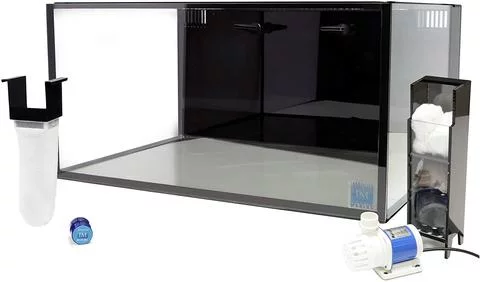
    Nuvo Fusion Lagoon

    • Great Brand
    • Premium Equipment
    • Rimless
    Budget Option

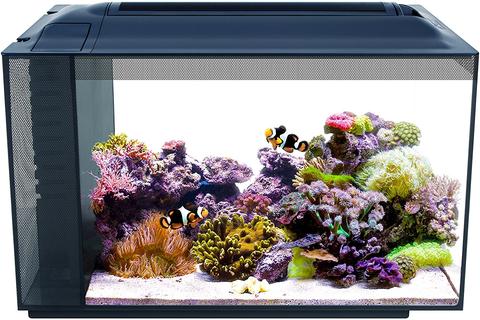
    Fluval Sea Evo

    • Small footprint
    • Great price

    Let’s start off with the top selections for those of you in a hurry. The red sea tops our list with their all in one aquarium while the Fluval sea offers a great value package for those wanting to try a nano reef tank.

    The Candidates – A Quick Comparison

    Let me list out the best nano reef tanks available and the ones who made our list for consideration. For this round up I focused on all in one tanks. 

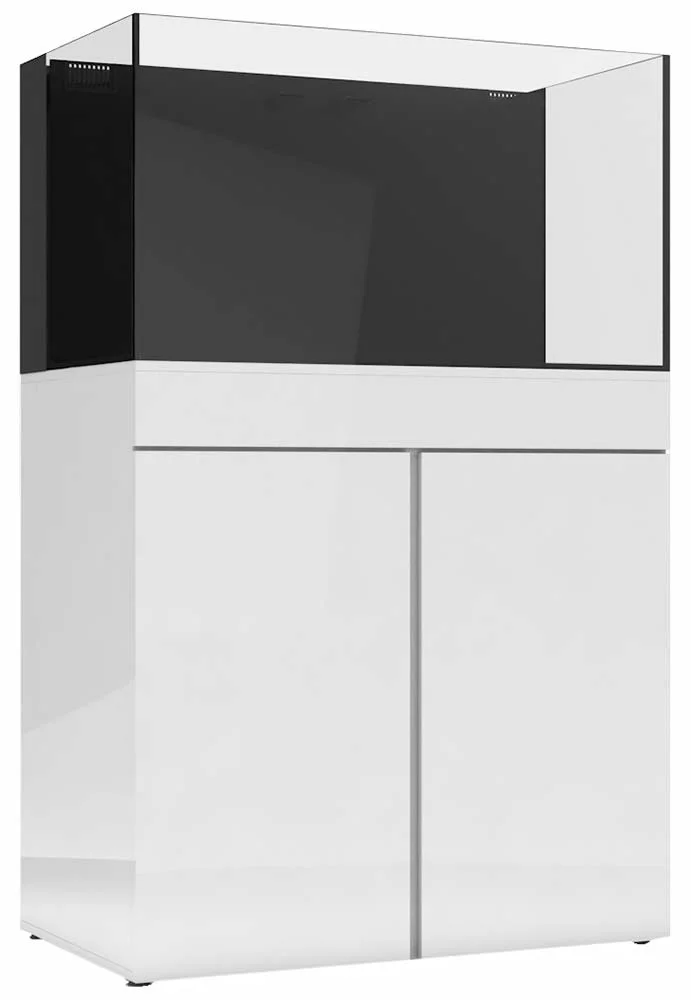
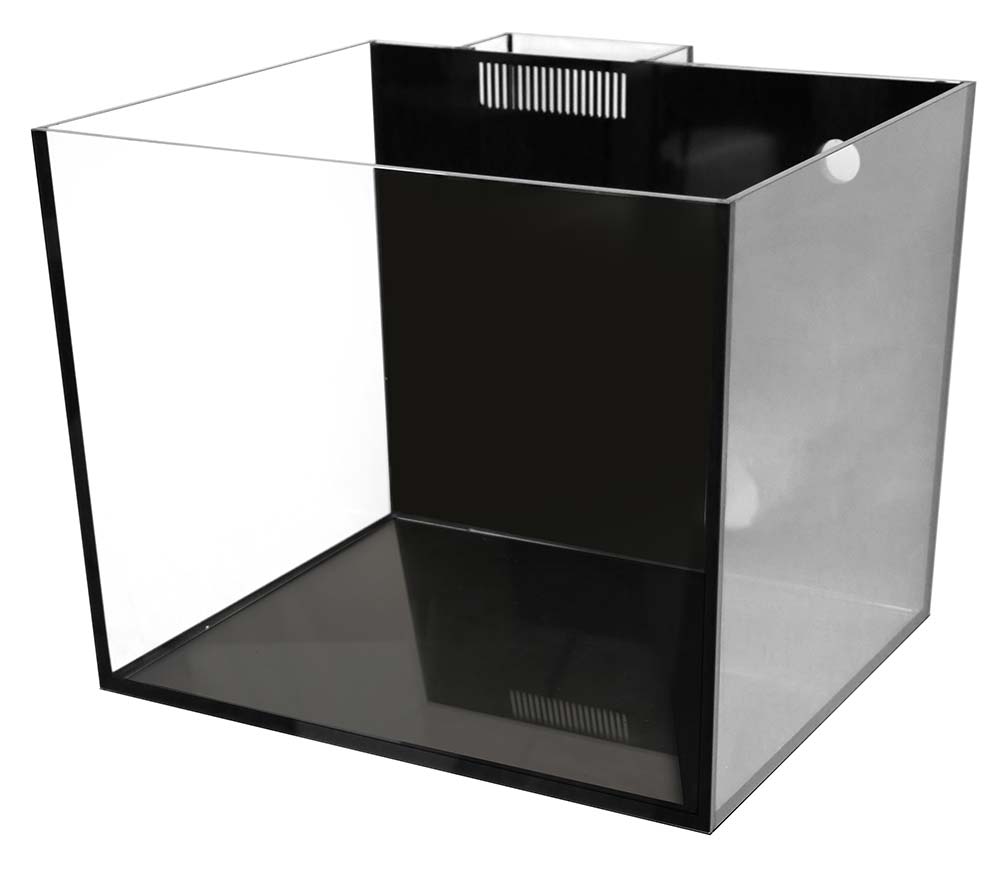
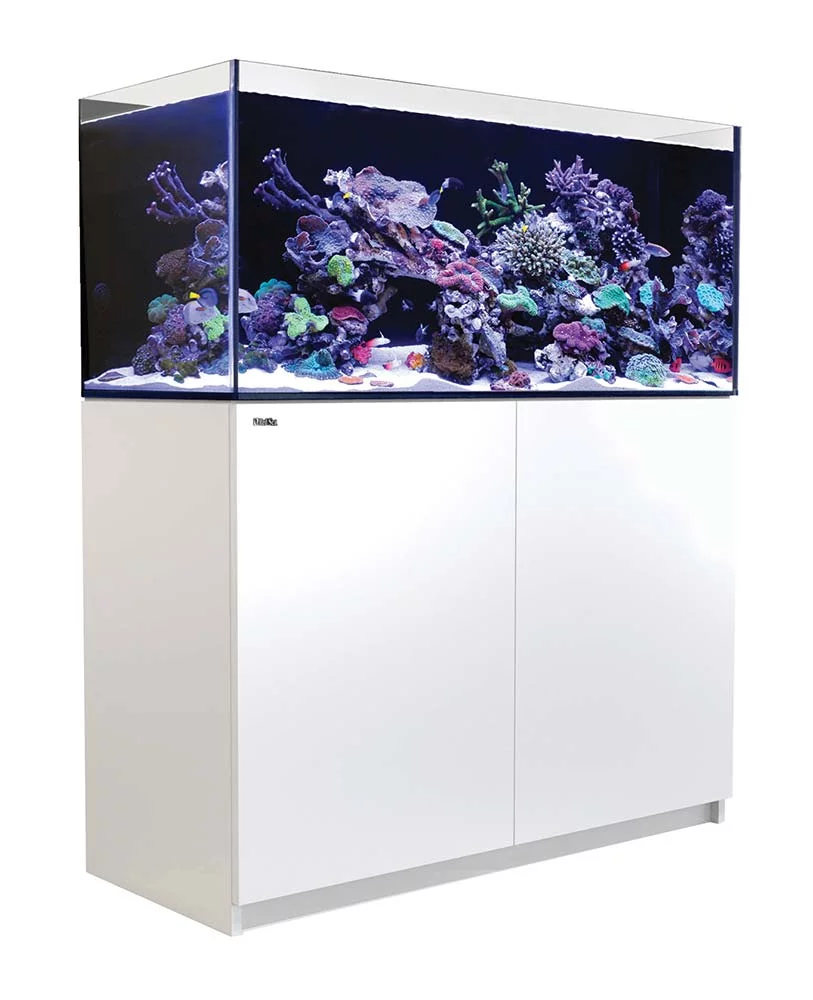
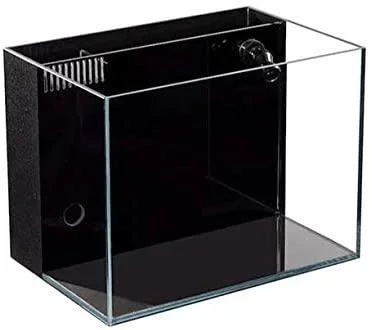
    Picture Name Type Link
    Editor’s Choice

    Red Sea Max Nano

    Red Sea Max Nano
    • Fully Functional Aquarium
    • Premium Equipment
    • Rimless
    Click For Best PriceBuy On Amazon
    Best Value

    NUVO Fusion 25 Lagoon

    NUVO Fusion 25 Lagoon
    • Premium Equipment
    • Rimless
    Click For Best PriceBuy On Amazon
    Budget Option

    Fluval Sea Evo

    Fluval Sea Evo
    • Fully Functional Aquarium
    • Great Price
    Click For Best PriceBuy On Amazon
    Waterbox Nano Waterbox Nano
    • Cube
    Click For Best PriceBuy On Amazon
    JBJ Nano-Cube WiFi JBJ Nano-Cube WiFi
    • 40W LED
    Click For Best PriceBuy On Amazon
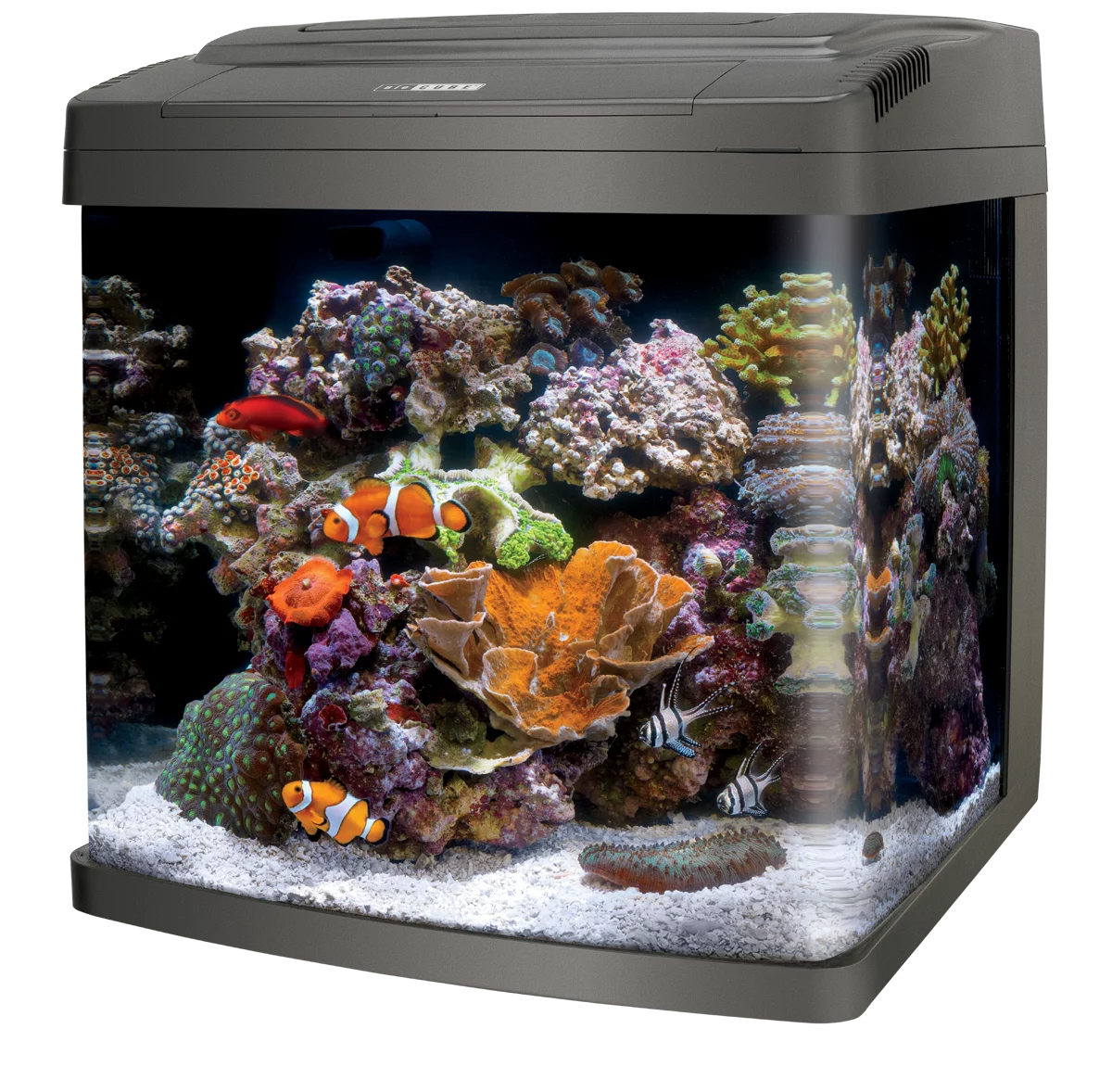
    Coralife Biocube Coralife Biocube
    • Beginner Friendly
    Buy On ChewyBuy On Amazon
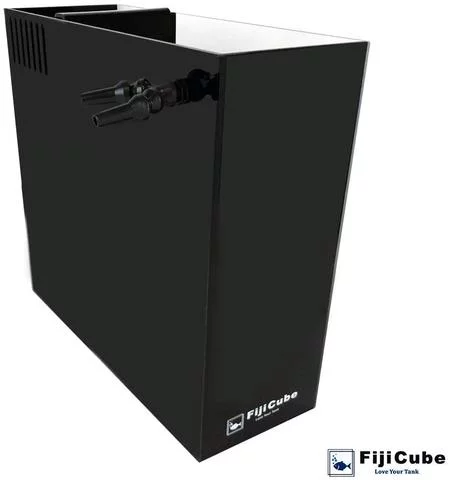
    Fiji Cube All-In-One-Kit Fiji Cube All-In-One-Kit
    • DIY Kit
    Buy On Amazon

    The Top 7 Nano Reef Tanks (2026 Reviews)

    Okay so you got the must knows. Now it’s time to find out what makes these tanks so great. Time to see why they made the cut! You can also check out our YouTube Channel below and follow along with this blog post.

    1. Red Sea Max
    Best Nano Reef Tank!


    Red Sea Max Nano

    Editor’s Choice

    A high end plug and play reef system. Top shelf reef equipment and design


    Click For Best Price


    Buy On Amazon

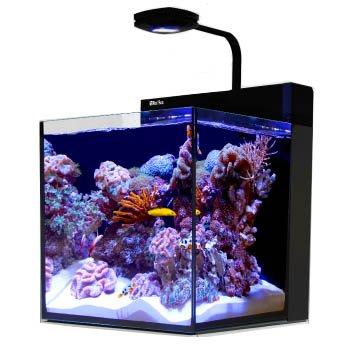
    If you are looking or a top of the line aquarium kit with premier equipment, the Red Sea Max Nano Aquarium kit is where to go if you are on a higher end budget. It’s a 20 gallon aquarium that comes with high quality Red Sea 50 led light that is suitable for most corals in a nano reef system. The Red Sea Max Nano aquarium kit is equipped with features such as European built pumps, micro filter bag for mechanical, an automatic top-off unit, and a protein skimmer this comes with every single major piece of equipment you will need to run a successful reef all in a complete integrated package.

    It is a full aquarium that has an easy set up and high quality nano protein skimmer. It runs day and night and is one of the high quality saltwater aquariums we recommend that comes equipped as a full kit.

    Pros & Cons

    Pros
    • Premium Equipment
    • Great Light
    • Rimless
    Cons
    • Expensive

    Mark’s Top Pick

    Red Sea Max Nano. It’s the only all-in-one nano reef kit that ships with gear I wouldn’t immediately want to swap out. The Red Sea 50 light is genuinely reef-capable, the included skimmer works, the ATO is built in, and the European-built pumps are quiet and reliable. It costs more than the competition. It’s worth it. Every other AIO on this list requires at least one meaningful upgrade to be fully reef-ready.

    2. Innovative Marine Fusion 20 Pro

    Best Value


    Innovative Marine Nuvo Fusion PRO

    Best Value

    Complete with pump and filter, this rimless nano tank screams value


    Click For Best Price


    Buy On Amazon

    This nano saltwater aquarium tank holds 20 gallons of water and comes is a fully equipped kit with just about everything your aquarium fish could need. The Fusion Nano 20 has plenty of room for giving your fish a fun environment and comes with a water stage filtration system. It fits perfectly on the back of the tank, well hidden and out of the way, and runs quiet. You won’t be woken up by the noise of it or hardly notice it at all. 

    An added bonus to this high quality aquarium kit is that it comes with a magnetic glass cleaner. It’s super easy to use and great at cleaning the glass, so you won’t have to get wet when scrubbing down the tank. It makes keeping the water quality good easy, so you don’t have to spend valuable time. Besides, who wants to contribute to poor water quality that harms your aquarium unknowingly?

    Pros and Cons

    Pros
    • Premium Equipment
    • Great Pump
    • Rimless
    Cons
    • Expensive
    • No Light

    3. Fluval Evo Marine Aquarium Kit

    Budget Option


    Fluval Sea Evo XII

    Budget Option

    The Fluval Evo is a great way to create a nano reef tank. The light is ideal for low light corals


    Buy On Amazon


    Click For Best Price

    This glass tank is great for saltwater fish. It fits nicely in smaller spaces while still giving your fish ample room to swim around and explore. The glass tank is sleek with a smooth design and made from aluminum casing. It also comes with an led lighting system for both during the day and at night. The led system has a just as easy set up so that rest of the aquarium, so you won’t have to search for help.

    The Fluval Evo marine aquarium kit has a straight forward set up and features a powerful mechanical filter. It isn’t loud and won’t bother you during the day or at night, allowing your fish to have high quality filtered water without annoyance. The 3 stage filtration works day and night without aid and keeps your glass tank from growing algae as quickly. You’ll also find this tank has an easy feeding door located at the top of the tank.

    Pros and Cons

    Pros
    • Beginner Friendly
    • Great Price
    Cons
    • Only works for low light corals

    4. Waterbox Aquarium


    Waterbox Nano

    A classy rimless nano reef tank that won’t break the bank! Great design with a well design all in one chamber


    Click For Best Price


    Buy On Amazon

    Waterbox has really shook the industry with very precise and classy glass nano aquariums. The Waterbox Nano Aquarium is a perfect saltwater tank for someone looking for a nano aquarium kit with an all in one set up. It comes with all the stage filtration system parts you need to start and it’s easy to upgrade with the space given in the all in one chamber.

    This saltwater tank comes in sizes between 4 gallons and 20 gallons, shaped in a cube with 5-6mm thick glass. The back of it is smooth and well covered so you won’t have to look at awkward parts or an ugly set up. It’s complete with a built in water overflow system and 3 stage filtration system chambers as well. During the day and night, you’ll hardly notice the sounds of the three stage filtration system or water pump.

    The rimless design of this waterbox aquarium makes it appealing and sleek, easily blending into your home decor. There is plenty of room to landscape the aquarium to your liking. It doesn’t have a cover, but as long as you don’t have other animals that might get into it, you’ll be fine.

    Pros and Cons

    Pros
    • Great Build Quality
    • Cube Shaped
    Cons
    • No Light

    5. JBJ Nano Cube Wifi 28 – All In One With Light At A Reasonable Price


    JBJ Nano Cube LED Aquarium, 24-Gallon

    This nano reef tank is powered by a 40 watt LED system that can house mid and low light corals


    Buy On Amazon


    Click For Best Price

    The new JBJ Nano Cube 28 Wifi is the successor to the well known JBJ Nano Cubes and a great upgrade for a larger cube aquarium. This new model features a wifi enabled 40W LED lighting hood with 3 stage filtration system baskets that are easily removable. The main cost savings with this aquarium is the wifi-enabled LED lights which is easy to control with the app and will handle most light and medium light demand corals.

    The Wi-Fi system is easy to use and the wavemakers make this a true self run system. It’s one of the better all-in-one systems out there. The price just keeps it lower on this list.

    Pros and Cons

    Pros
    • 40W LED System
    • WiFi Enabled
    • Smart Phone Controlled
    Cons
    • Expensive
    • Curved Glass

    6. Coralife BioCube

    The BioCube is what created this category in reefing. This cute little LED biocube nano tank is great for putting on a nightstand or another small space. It measures 15” x 16.75” x 17.5” long, wide, and high. This small square won’t hold a hugely diverse collection of fish, but it will give your few fish a nice little home to play in.

    This saltwater nano tank features a 24 hour timer to replicate a natural day and integrated LED lights. There is a built in 3 stage filter and an easy flip lid that nicely covers the top of the aquarium. The 3 stage filtration system and led lights really make this kit great.

    Pros and Cons

    Pros
    • Brand Name
    • Readily Available
    • Lots of Upgrades Available
    Cons
    • Expensive
    • Underpowered Lights
    • Curved Glass

    7. Fiji Cube All In One Kit

    Great for DIYers


    Fiji Cube AIO Box

    A DIYers special! The Fiji Cub AIO Box turns any standard aquarium at a pet store into an all in one system that can run a nano reef tank


    Buy On Amazon

    This fiji cube kit is available in sizes ranging from 10 gallons to 40 gallons and all the way up to 75 gallons. It includes a plumbing kit with an adjustable nozzle and a filter sock holder. Well constructed, this reef tank kit features just enough space for all the filter media you’ll need.

    This all in one kit can be put into your aquarium to step up your tank game. As long as you purchase the right size kit for your tank, you’ll be able to deck out your fish’s home and make your tank look just a little classier. It has a reliable filtration system, submersible pump, and other features to up your game.

    Pros and Cons

    Pros
    • Cheap
    • Converts Any Standard Aquarium
    Cons
    • Underpowered Pump

    How We Ranked These Tanks

    After running a 125-gallon reef and keeping nano systems in the stores I managed, I know what separates a nano reef that thrives from one that crashes. Every tank on this list was evaluated on six criteria that actually matter:

    • Lighting quality for coral: PAR output and spectrum matter more in a nano than anywhere else. Underpowered lights mean soft corals only; properly specced lights open the door to LPS and even select SPS.
    • Flow and turnover rate: A reef tank needs 20-30x turnover at minimum. Most budget nano kits fall short, which leads to dead spots, algae, and unhappy corals.
    • Heater precision: Small water volume means temperature spikes faster. A cheap heater in a 20-gallon is a coral killer. Precise, controllable heaters matter here.
    • ATO compatibility: Evaporation in a nano tank is significant and daily. A system without ATO support means manual top-offs or salinity swings. That’s a problem.
    • Filtration chamber accessibility: If you can’t easily access the sump/chamber to clean and maintain, you won’t do it consistently. Poor access equals poor maintenance equals crashes.
    • Footprint vs. water volume: Bigger footprint with lower height is almost always better. More surface area, more gas exchange, easier coral placement.

    What Most Nano Reef Kits Get Wrong

    Most all-in-one nano reef kits look complete on paper. They’re not. Here’s what they consistently miss:

    • Lighting inadequate for LPS and SPS. Budget nano kits ship with lights designed to sell the tank, not grow corals. If the spec sheet doesn’t list PAR values and a reef-appropriate spectrum, assume it won’t grow anything demanding.
    • No automatic top-off. Evaporation in a nano tank is 0.5 to 1 gallon per day depending on heat and flow. Miss a day or two and your salinity is already shifting. An ATO is not optional equipment on a nano reef. It’s a stability requirement.
    • Skimmer chamber access is an afterthought. Several popular nano kits have sump chambers you essentially need tweezers to service. If maintenance is difficult, it doesn’t get done. That’s how tanks crash quietly.
    • Undersized return pumps. A tank rated at 20 gallons with a 200 GPH return pump is not hitting adequate reef turnover. Look for pumps capable of 400+ GPH at head pressure, not the marketing number.

    Should You Get a Nano Reef?

    Buy If

    • You already keep a larger reef and want a focused display tank
    • You have daily time for top-offs (or budget for an ATO)
    • You want a showpiece tank, not a starter tank
    • You’re comfortable with water testing 2-3x per week

    Skip If

    • This is your first reef tank (start with 40+ gallons)
    • You travel frequently or can’t commit to daily checks
    • You want a low-maintenance saltwater tank
    • Budget is the primary concern (the cheap kits create expensive problems)

    The honest answer: A nano reef is the most demanding tank per gallon you can keep. If you’re not experienced with reef chemistry, do yourself a favor and run a larger system first. The stability buffer you get from extra water volume is worth more than the space savings of going small.

    The 5 Things You Must Know Before Buying a Nano Reef Tank

    I showed you a quick list of the best out there. Before I go into detail on each tank, Let me go through the 5 things you must know before you venture into the Nano Reef Tank journey.

    #1 It’s Cheaper to Setup than A Traditional Saltwater Reef Aquarium

    Most hobbyists and fish keeping experts will recommend starting out with a larger aquarium typically anywhere from a 40 – 75 gallon. This is because a larger tank will have more water volume for added stability. However, not everyone can afford a tank this size (or have the space for one) so a nano reef tank is a legitimate consideration for those with small budgets.

    A good aquarium kit will include features such as a filter, submersible pump, and a protein skimmer. Some may even have LED lights to provide light day and night.

    While a nano reef aquarium is still expensive compared to a freshwater tank, you will not need to shell out thousands of dollars on a small setup. With proper preparation and care, one can successfully keep a smaller nano reef and often times produce a stunning aquarium that rivals the looks of larger aquariums – at only a faction of the cost!

    So what exactly is it?

    Well, let’s define it here as many hobbyists will break out the nano reefs into two categories:

    • Nano Reef Tank – Aquarium that is 40 gallons of water or less
    • Pico Reef Tank – 5 gallons of water or less

    We are going to discuss nano reef tanks in this post only. Pico tanks are the subject of an advanced aquarist nature and definitely not for the faint of heart, so it’s best to wait for the pico tank of your dreams until you know what you’re doing. So now that the term nano reef tank has been defined, let’s talk about why they are cheaper.

    Let’s break it down into several reasons:

    • Minimalistic setup
    • LED lights are cheap in a nano 
    • Nanos are far easy to break down and move

    The first part are the setups. Nano reef tanks will usually have a bare bones type of setup. There is usually not a sump involved which means there is no plumbing to deal with. A simple powerhead or aquarium wavemaker is used for flow and flow tends to be less complicated because nano tanks will often be coral reef type dominant vs. mixed. 

    Protein skimmers are not necessary, though many hobbyists will use them. When a protein skimmer is used a hang-on back protein skimmer is typically used. Due to the small size of the tank often times a hobbyist will opt for purchasing distilled or RODI water from a local fish store instead of investing in a RODI system.  Your electrical bill will also be cheaper as well since you will not be using that much equipment.

    Budget Option


    Aquatic Life RO Buddie

    Budget Option

    Compact and great for smaller tanks. This is the best unit if you live in an apartment or dorm


    Buy On Petco


    Buy On Amazon

    Lighting is another cost savings. One of the most expensive pieces of equipment for larger tanks are the lighting systems required for higher intensity and the number of LED lights needed for longer tanks. With nano reef tank kits, the lighting cost is cost down drastically.

    Some nano reef kits will actually come with features for lighting and this lighting is plenty for soft coral or fish only with live rock setups. Even for a high end lighting system, you will likely not spend more than $200 on lighting for a nano reef tank (and in most cases much less than this). Chinese Black Box lights are often used for nano tanks as they are well sized and have the light intensity to accommodate all setups and are cheap.

    Mobility is another great benefit of a nano reef. These aquariums often are placed in tight areas like a desktop, bedroom, or on a stand in a living room. Because they are able to be moved easily, one can move them throughout the home to suit the home decor changes you make over time. They are also one of the aquariums that you can safely place upstairs.

    With larger systems, one has to consider the structural support of the home to ensure it can support the weight upstairs. If your home does not have the proper weight support for a large system, it is likely that you would need to increase the support or consider a different location. There is also water spills to consider with a larger tank upstairs.

    #2 It’s Considered an Advanced Level Aquarium

    I will open and honest and say that a nano reef tank is more suited for an experienced aquarist. There are three reasons for this:

    • Stability with salinity
    • Stability with temperature
    • Stability with nutrients

    The main reason why there is lack of stability is due to having less water volume in the tank. Evaporation in particular, is extremely brutal to a nano reef tank. Every other day freshwater top-off is usually needed to keep salinity parameters in check. Sometimes, the task is a bit overbearing so you will often see an auto top off system (ATO) installed in a nano reef tank. 

    Temperature is another concern, especially if you live in a warmer climate. Temperatures can swing during the summertime especially if you live in a home without air conditioning. When in doubt, a cooler room is easier to deal with than a warmer room in the home.  You should also utilize an open tank setup. Your lighting system must be suspended above the aquarium either with a suspension kit or the suspension mounts your LED light system comes with.

    A canopy is a no-no for a nano reef tank. You can ensure proper control of temperature with a controller like an Ink Bird controller. This controller will guard against aquarium heater failure – the #1 reason for tank crashes.

    Protects Against Heater Failure!


    Inkbird Heater Controller

    Protect your investment with this heater controller. An excellent choice for small tanks. WiFi models now available!


    Buy On Amazon


    Click For Best Price

    Nutrient stability is the last issue with a nano reef tank. Because you do not have a larger volume of water, weekly water changes are a must for a nano reef. In a larger system, it is reasonable to perform bi-monthly or monthly water changes. There are even cases where other hobbyists go months after establishing a complete nitrogen cycle in the tank.

    Unfortunately, this is not a reality in a nano reef tank. You will not have enough volume and space to establish a complete system and with the stability issues – it is a best practice to continue weekly water changes even after running the desk successfully for some time.

    The good thing, however, is that water changes are a breeze in a nano reef tank because you changing a very small amount of water volume.

    Because of the inherent stability issues with a nano reef tank, it is not uncommon to spend extra time monitoring the tank. Leaving your tank unattended for more than two days can be disastrous if something would happen like a heater failure.

    It is best to know a friend in the hobby if you are planning to be out of town to watch your tank. You can use my earlier blog post of a list of hobby clubs near you to find other hobbyists in your area. 

    #3 Your Options for Fish are Limited in This Type of Setup

    Due to the limited amount of space and stability issues of a nano reef, your options for fish are very limited. When thinking about fish to put into a nano reef tank, we need to consider the following:

    • What is our fish’s natural temperament?
    • How large does the fish get?
    • How hardy is the fish?
    • Are the fish reef safe?

    When thinking about the fish’s natural temperament, we really want to focus on getting a fish that has a mellow temperament. This is likely going to be the only fish or one of the only fish in the tank. So if you are considering placing more than one fish in the tank, we really want to purchase a peaceful fish.

    If you are happy with only one fish in the tank, we can do that as well. But we have to keep in mind any invertebrates that you want to add – especially shrimp.  Some fish like damselfish are known for attacking shrimp when space is lacking. It may be best to consider avoiding any damselfish if you are considering shrimp.

    Your fish’s size is the next consideration. We really want to purchase a fish that is going to get no larger than 3 inches for a nano reef tank. This means no large fish like Tangs. I do know some hobbyist placing a tang in larger nano reef tanks like a 40 gallon tank in the short term, but if you are new to nano reefs or do no have the money for a future upgrade I would not consider a Tang for the sake of the fish’s livelihood.

    The hardiness of your fish is another important factor. A nano reef tank will have parameters fluctuate no matter how much try to prevent it. Because of that, you want to make sure you have the most resilient fish you can buy. Look for tank bred fish or fish labeled as easy to keep or hardy.

    Reef safe fish is our last consideration. It actually many not be a factor if you are considering a fish only with live rock setup, but nevertheless you do not want to house a known coral picker in your tank. Your space is small and you will not have many corals.

    If you have a coral picker, it will not take very long for your fish to wreck havoc on a small tank. This means that even borderline reef safe fish like dwarf angels are out of the consideration for a reef tank. It’s best to take the risk with a larger tank with fish like that as you can remove the picker before things get our of hand.   

    So now that I have outlined the important factors, let’s talk about fish that fit this criteria. Several fish from my top 10 best saltwater fish for any reef tank post make great nano reef tank fish. You can check out that post for further info, but here are several fish that would fit well in virtually any nano reef tank setup:
    Editor’s Choice


    Tank Raised Clownfish

    Best Choice For Reef Tanks!

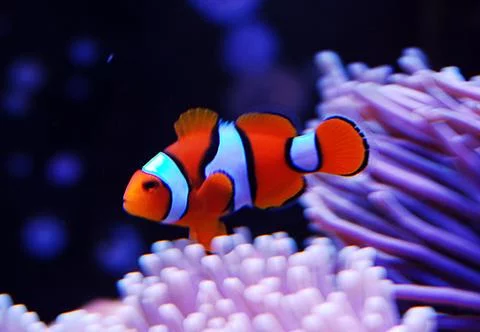
    Clownfish are hardy, full of personality, and are safe for all corals. They are an icon for any saltwater tank


    Click For Best Price


    Purchase ORA Clownfish

    Keep in mind when it comes to stocking fish in a nano reef tank, we want to lightly stock our tank. You are dealing with a small amount of volume, limited space which will increase aggressiveness, and limited bioload capacity from having a smaller tank. I know that movement and personality of the fish is the big draw with aquariums, so this takes me to the next section of our article.

    #4  It’s More About Your Corals Than The Fish

    As we covered earlier, one of the issues that nano reef tanks face is their lack of size. The very thing that makes them an attractive option for small spaces also puts them at a disadvantage when it comes to stability. Chemistry and temperature changes happen quickly in a nano reef tank. Because of this some corals are going to be ill suited for a nano reef tank. We talked about fish earlier. So what are some good choices when it comes to corals?

    Because we know that our fish choice and stocking is limited, we really should focus on corals. Picking a variety of the correct corals will add lots of color and movement to a nano reef tank that will mitigate the lack of space and stocking options. I will break down the consideration factors below:

    • Hardiness
    • Movement
    • Aggressiveness
    • Variety

    Hardiness is our number one factor when it comes to selecting corals in our nano reef tank. We want corals that can take a few parameter swings. This makes soft corals the prime candidate for nano reef tanks.

    Nano Reef Tank - 5 Things You Need To Know

    The movement of corals will create a flow in the tank and make the aquarium pop. Without the movement, you are going to have very little moving life in the tank because you will likely have one or two fish in the tank. Lots of movement sometimes comes with added aggressiveness.

    Because of our lack of space, aggressiveness is a bigger consideration than in larger tanks. Spacing aggressive corals too close to each may cause coral deaths, especially with corals with strong stingers like some LPS corals. The preference would be to house corals that are known for living in dense spaces.

    Variety is our last consideration. We want to have a variety of colors available in our corals because we will not have many fish. The good thing is with the availability of aqua cultured and fragged corals, the variety of colors are ever increasing with this hobby. 

    #5 Patience is a Virtue

    Any experienced hobbyist will tell you that patience is key when it comes to reef aquariums. It is even more pronounced in a nano reef tank.

    In a larger system, you can sometimes get away with rushing things because you have the buffer of a larger volume of water. That is not the case in a nano reef aquarium. Take the time to cycle your tank correctly, ask a ton of questions, and do not impulse buy. Any mistake or impulse purchase gone bad will get ugly very quick in nano reef aquariums.  

    How To Setup (3 Main Setups for Success)

    So now that I have gone through the selection factors for corals in a nano reef tank, let’s talk about setups. I’m going to focus on coral type tanks as those are the easiest ones to explain. I will go through the following:

    • The Bullet Proof Setup
    • The LPS Setup
    • The SPS Setup

    1. The Bullet Proof Setup

    A bullet proof setup in the best nano reef tanks would comprise of easy-to-care corals such as soft corals, polyps, zoas, and mushrooms. These types of corals are great choices for a nano reef tank as they are tolerant of a few fluctuations in chemistry and temperature in the tank. Not only are these corals hardy, but they will also provide much needed motion in the tank.

    Here are a few examples of corals that would make good additions in a bullet proof setup:

    Editor’s Choice


    Zoanthids

    Editor’s Choice!

    Zoas come in multiple colors and easy to care for. The perfect choice for nano tanks!


    Shop Designer Zoas


    Shop For WYSIWSG Zoas!

    Finger leather corals are fast growing and great for filling vertical space while mushrooms, polyps, and zoas can fill the mid and low spaces. Their rapid growth will cause them to fill out a nano reef within a few months.

    The main advantage with corals like these is they have a weaker stinging ability compared to other corals. This means that they are able to be in close proximity to each other without too much stress. There is always some type of territory combat in a reef aquarium, but soft corals are less likely to kill each other off and you are given more leeway for to make up for mistakes.

    The other great thing about a bullet proof setup is your lighting requirements are pretty simple. Virtually any type of LED fixture available for a nano reef tank is going to provide ample lighting for these corals and the lighting solution will be easy on the wallet.

    I have not even mentioned the color variety available – especially for zoas. I have seen many beautiful Zoa only nano reef tanks that are absolutely stunning. It is very easy to get addicted to Zoa collecting and building up your own mini water garden.

    Zoa Nano Reef Tank

    2. The LPS Setup

    While not as hardy as a soft coral setup, a LPS setup can provide one of the most stunning looking aquariums.  With many LPS corals to chose from, they provide a variety  of colors and motion in the tank.  

    The main issue with LPS is their aggressive nature. Careful spacing will need to be provided especially when it comes to Hammer, Frogspawns and Torch corals. These corals are know to kill off other neighboring corals if placed to close to each other. 

    Here are a few examples of corals that would make good additions in a LPS setup:

    • Frogspawn
    • Hammer
    • Torch
    • Blastomussa (Blasto)
    • Acanthastrea Lordhowensis (Acan Lord)
    • Micromussa Coral (Micro Coral)
    • Candy Cane Coral
    • Trumpet Coral

    Because of the more aggressive nature of Frogspawns, Hammer, and Torch corals, it would be best to only have a select few of these.  In smaller nanos, it is probably best to avoid these corals because of their aggressive nature and their size, or consider a Frogspawn/Hammer coral only setup. and all Euphillya setup is a great way to mimic an anemone tank look.

    Candy Canes, Acans, and Micro corals, however, are more peaceful. Your lighting is going to need to be more intense than with the bullet proof setup, but any reef grade LED should work for an LPS setup.

    LPS Only Nano Reef Tank

    3. The SPS Setup

    Small Polyps Stony Corals or SPS corals are a very popular reef tank setups in the hobby. If you have been to any of the big reefing forums, you will see that many of the feature tanks on those forums are dominated by SPS setups. They are the hardest of the three setups I have outlined.

    Here are the reasons why SPS are usually not a good idea for a nano reef tank:

    • Very delicate corals
    • Very combative
    • Requires intense lighting

    Any sudden change in water or light can suddenly kill multiple colonies in an SPS tank. Their combative nature is known in nature. What typically happens is that two colonies will grow over time and eventually touch each other – which causes a die off in both colonies.  

    The lighting requirements of SPS corals are also very high, which means the intensity of your lighting in a small space might increase your temperature to deadly levels.

    So while they are not a good fit for a nano reef tank, many hobbyist will still place SPS in corals in the tank. I am not going to get into harder-to-keep SPS corals as that is the subject of a more advanced coral keeping post for another time.

    I want to concentrate on the hardiest SPS corals out in the market that would be appropriate if one desires to keep SPS corals in their nano reef tank. When looking for SPS corals in a nano reef tank, we want to find SPS corals that are hardy and tolerant of subdued lighting conditions.

    Here is the list of the best SPS corals for a nano reef tank:

    • Seriatopora hystrix (Bird’s Nest Coral)
    • Pocillopora
    • Echinophyllia aspera (Chalice Coral)

    What I am doing here with these recommendations is replicating the big draws of an SPS setup (branching and plating corals), but selecting SPS corals that are on the hardier and less light intensive end.

    SPS Nano Reef Tank

    Both bird’s nest and pocillopora will gave you that branching look of an Acropora coral while the chalice coral will give you a look similar to a Montipora coral.

    While they are on the hardier end of the SPS care spectrum, it is all relative. This type of setup is far from a bullet proof setup. SPS corals are still an advanced level coral and you would still need to keep a watchful eye on water parameters. 

    Closing Thoughts

    A nano reef done right is one of the most impressive things in the hobby. Fifteen gallons of living coral under good light, with a clownfish and an anemone, looks like a piece of ocean on your desk. It genuinely does. But getting there takes real commitment: consistent top-offs, weekly parameter checks, and gear that doesn’t cut corners. The tanks on this list are the ones worth building that commitment around. Skip the bargain bins. Nano reefs do not forgive cheap equipment.


    🔧 Want to learn more? This article is part of our complete Aquarium Equipment & Gear Guide. your ultimate resource for filters, heaters, lights, pumps, tanks, and more.

  • How To Survive A Fish Tank Power Outage – Read This To Save Your Pets!

    How To Survive A Fish Tank Power Outage – Read This To Save Your Pets!

    The most dreaded event in our hobby is a fish tank power outage. I write this article with a heavy heart as a good friend of mine just lost his reef tank of over 11 years after the snowstorms here in Texas. He had a wonderful 150 gallon reef tank and within a few days everything was gone!

    I don’t want you to go through the same thing and hopefully you are reading this before you had a power outage. It’s a horrible and helpless feeling. I also feel this should have been one of the first articles I wrote when I started up this blog. Either way, I’m here to guide you and get you prepared. I’ll cover it all. I’ve been in your shoes and have survived several here in Texas. It’s an all too common event here with our weather.

    Why Is An Aquarium Power Outage So Deadly?

    Let’s start with this first question. For the vast majority of pets that we know of, most will be unaffected by a power outage. A dog will continue to be your companion and a cat will happily hunt for its own food if things get very dire. Both pets in these cases continue to have free unrestricted reign to their space.

    The live animals in your aquarium do not have this privilege. They are in a closed environment – their aquatic world. Everything in your aquarium requires the ecosystem to be stable. When the electricity goes out, the entire system is thrown off balance. Air pumps and wavemakers move water and oxygenate it. Your power filters and sump maintain your nitrogen cycle and keep your bacteria colonies going. If you keep live plants or live rock, these lifeforms provide filtration and need your fish happy and healthy to function.

    Electricity is the heart of the your artificial ecosystem you have created. Without it, the life support breaks – and it gets ugly and tragic very quick

    Why You Need A Backup Plan

    Let me highlight the story of my friend. Below is a picture of his tank before the snowstorms here in Texas. 11 years of building his reef tank down the drain in a few days. He didn’t have the equipment to get through the power outage. Most people with tanks this large don’t. I don’t spare you the aftermath, it’s not for the faint of heart

    Aquarium Power Outage

    Let’s talk about everything that goes wrong during a power outage

    Oxygen Levels

    This is the primary concern when you have a power outage. Oxygen will be the first thing the depletes in your aquarium. Once your air pumps, wavemakers, and return pumps power off it’s a race to keep your oxygen levels up. Within a few hours of no water flow, your oxygen levels will deplete and everything will start to suffocate. It gets ugly very quick.

    Temperature

    This is the next killer. This is what I call the long-term killer when power outages last for days. Depending on your climate it will either be a cold tank or one that overheats. Cold weather is actually either to deal with because animals in aquariums can handle colder weather for some time. They will go dormant or slow down. I have seen reef tanks go through cold temperatures for several days hitting low 60s and the corals and fish pop right back up after the power comes on.

    Heat is a other other matter. It makes a lot of sense as we have see mass bleaching events in our oceans when temperatures rise only a few degrees1. This is the same with freshwater fish. Heat kills aquatic animals fast. And it doesn’t take a power outage either! A failed AC and 85+ degrees in your home and your apartment is dangerous for your fish tank

    Ammonia Spikes

    Once animals start dying, there will be massive ammonia spikes. Your bacteria colonies, which are handicapped during an outage will be overwhelmed at the increase in ammonia. It will be like dominos falling. Once something dies, everything else will start doing so quickly!

    Get Your Gear Now – Don’t Wait!

    I’m going to provide you a quick shopping list of what you will need that covers different sizes of fish tanks and needs. I will go over why each one is effective. Get this gear now before disaster strikes. You owe it to your aquatic animals

    PictureNameTypeLink
    For Large Tanks
    Champion Generator
    Champion Generator
    • For large tanks
    • Long-term power outages
    Buy On Amazon
    Requires No Electricity
    Dr. Sochting's Oxydator
    Dr. Sochting’s Oxydator
    • Requires No Electricity
    • Removes Ammonia
    Buy On eBay
    Most Portable
    AmPeak Car Inverter
    AmPeak Car Inverter
    • Works on Cars
    • Long term outages
    Buy On Amazon
    For Small Tanks
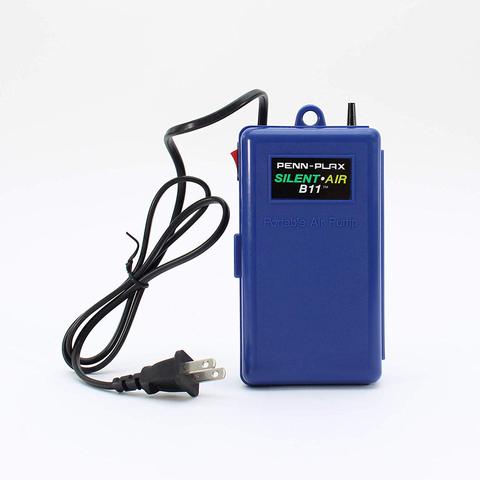
    Penn Plax Battery Powered Air Pump
    Penn Plax Battery Powered Air Pump
    • Battery Powered
    • Small Tanks
    Buy On Amazon
    For Wavemakers
    IceCap Battery BackUp
    IceCap Battery BackUp
    • Battery Backup
    • DC Wavemakers
    Click For Best PriceBuy On Amazon

    Gear

    I’ll go over each piece of equipment and explain what they are best for

    1. Generators

    Generators are the best solution for a long-term power outage. A lot of aquarium stores and retailers do not like to talk about them because they want to sell you their aquarium based solution, but the fact of the matter is an old school generator will get you through the worse power outages.

    The one I linked to is an all-rounder that will work for virtually any situation and setups. I know some hobbyists who have so much invested in their tanks, that they have purchased a whole home generator. These are very expensive and out of the budget of most folks. They run off gas that you can get from a gas station or siphon from your vehicles. A full tank should run you about half the day. If you don’t purchase one for your aquarium, you should consider getting one for your house as part of your diester planning efforts

    2. Dr. Sochting’s Oxydator

    This has been my secret weapon for years against power outages. This amazing piece of equipment requires no elecricity to operate. It functions by using a catalyst and hydrogen peroxide. The chemical reaction creates oxygen for your aquarium and detoxes ammonia from your aquarium. This can efficiently replace your biological filteration and keep your tank full of oxygen during the outage

    Since they do not require electricity to operate, they are ideal for long-term power outages. The hydrogen peroxide will last 5-7 days and it’s easy to buy the solution in bulk and stock up. They are hard to find though. They are best ordered through EBay or get one now while you can wait on shipping

    3. Car Inverter

    This is another unconventional solution for an aquarium, but also way more efficient than what other retailers tell you. A car inverter converts the DC voltages in your car’s battery into AC power for your devices. You can keep your car on to keep your battery charged. Because your car runs off gas, this is another long-term solution and also a portable one as well.

    If you own multiple cars, it’s easy to switch between cars as you need power and if you run low on gas you just go to the gas station to get more

    4. Battery Air Pumps

    Battery powered air pumps are ideal for smaller tanks. All they require is C or D batteries and are very affordable to purchase. They are one of the easier go to solutions when it comes handling a power outage. Batteries usually last about 8-12 hours and can be replaced with a supply that you can store.

    Every aquarium should have one of these. They come in handy in a pinch

    5. Battery Backups

    This is the most common solution retailers will offer to you. It makes sense, most are made by aquarium equipment manufacturers. They have their place and will last several days.

    You will also see other options people will throw out like a Uninterruptible Power Supply (UPS). The problem with these is they are not designed to power aquarium equipment for long. They will using give you a few hours of power. The backups designed by aquarium equipment manufacturers are a better choice.

    Still though, battery backups aren’t effective for long-term power outages. I’d rather go with the combination of a Oxydator and generator to keep my tank going.

    How To Aerate Fish Tank Without Electricity

    Okay, so maybe you have come across this post and you have no equipment and you are on your phone trying to figure out what to do. If you lack equipment, here is the best way to low tech your way out of a power outage

    Low Tech-ing Oxygen

    • Get a bowl and scoop water out of your water and poar it back in
    • Use the same bowl to move the aquarium water across like a pump and create air bubbles
    • Repeat this process every 15-30 minutes

    Keeping Your Water Warm

    • Get thermal blanks and cover your aquarium in it
    • If you do not have these blankets, use any other blankets you have around the home
    • Huddle up the family near the aquarium too bring around body heat
    • Pour hot water into the aquarium slowly to raise the temperature – make sure this water is de-chlorinated

    Keeping Your Water Cool

    • Get ice out of your freezer and put it in a container
    • Put this container into your aquarium to cool your tank
    • Refill the container with more ice as it melts
    • Continue doing so to keep the temperature down
    • Remove your tank hood or open your canopy if you have one

    Common Questions

    How Long Can Fish Survive Without Electricity?

    Not very long. If you have not backup equipment, it can be as little as 2 hours before your fish run out of oxygen in your tank and they start suffocating. If you do not invest in a power outage solution your cherish pets can perish within a few hours after the power goes out!

    Can Fish Survive Without a Filter?

    They actually can if you invest in a power outage solution. An Oxydator will keep your aquarium’s oxygen’s levels up and will provide ammonia detox. If you have a battery backup or generator, your equipment will run during an outage

    Will My Fish Die If The Electricity Goes Out?

    Yes, they may very well die if you don’t take proper action! Get the proper equipment like battery powered air pumps or a generator if you have a larger aquarium. Flow the low tech plan of pouring and moving water to keep oxygen levels up and keep your temperatures stable.

    Will Tropical Fish Die Without A Heater?

    Yes, they can. However, cold is a slower killer to fish versus heat as fish will attempt to go dormant in the event the temperature drops low in the short term. You should take action in trying to keep your tank warm during a power outage. Most fish should be able to survive mid 60 degree temperatures in the short term. Just take the steps needed to in order to keep your tank as warm as possible. There is no heater that runs well in an outage as they draw a lot of energy.

    How Can I Oxygenate My Fish Tank Without Electricity?

    There are multiple ways to do this. Battery powered air pumps are the usual go to. A Sochting Oxydator is another great tool that will run for weeks without electricity while also removing ammonia. A low tech way of oxygenating without electricity would be to move the water manually every 15-20 minutes to keep oxygen flowing in the tank.

    Still Not Sure What To Do? Ask A Question Below

    We supplied a video below for reference from our YouTube channel. If you find our content helpful, please subscribe to us as we post new videos every week.

    I know it’s tough and I know it’s heart breaking to experience a power outage tragedy. I’m here to help. Don’t be afraid to reach out in the comments below, email me, or even call me on my business line on my site’s foot below. I’ve survived several of these successfully in the past so I know what it feels like to be in your shoes. Best of luck for you and don’t be afraid to reach out.

  • Best Auto Top Off System (2026 REVIEWS 🏅) – Keeping Your Aquarium Stable

    Best Auto Top Off System (2026 REVIEWS 🏅) – Keeping Your Aquarium Stable

    An auto top off system is one of those pieces of equipment that seems optional until you realize how much salinity swings can stress your livestock. In a reef tank, evaporation can drop salinity noticeably within a day or two. especially in warm climates. I’ve run ATO systems on my 125-gallon reef for years and the stability difference is real. Once you set one up, you won’t go back to manual top-offs.

    Mark’s Expert Take

    An ATO is the piece of equipment most reef keepers wish they had bought sooner. Salinity swings from evaporation are slow and invisible until they are not. On a hot summer day a small reef can lose a gallon to evaporation. A manual top-off that is two days late is a 0.5 salinity point swing, and corals notice before you do. I made ATO a requirement on every store reef display I ran, and I give the same advice to every customer who asks. Get one before you need it, not after something crashes.

    Aquarium automation is becoming more and more of a reality to the modern aquarist these days. One of the most common applications of tank automation are auto top of systems (AKA ATOs). They are many out there, but which one is the best auto top off system? Today’s post is all about figuring that out

    These systems work to add freshwater to your aquarium as water evaporates. In saltwater tanks, they are extremely valuable in maintaining stable salinity levels as salinity can swing as water evaporates and does not get replaced. In freshwater tanks, this will keep your water level stable so your filtration can run optimally and so your tank doesn’t completely dry out.

    Replacing evaporated water is a real pain, especially for those with larger aquariums. Auto top off systems make things easy for you to manage without carrying a bucket of water everyday. However, you have to be very diligent about the system you choose. Auto top off systems are finicky and selecting one of poor quality ones can lead to a tank disaster and possibly an expensive home repair bill!

    This is the reason for this post today. Auto top off systems are great tools for making your life easier, but not all auto top off systems are created equal. I’ve used or have experience with most of these top off systems I will go over today. Before we get started, let’s talk about why a top off system is so great and what features you should be looking for.

    Why Do You Need An Auto Top Off System? 

    Anyone with a large amount of money invested in an complete aquarium system wants to protect their investment. An auto top off system is an automation tool that maintains stability in your aquarium. With saltwater aquariums it does more than just keep your salinity levels stable, but also to add supplements to your reef tank via Kalkwasser. In freshwater systems, it will keep your levels stable for equipment to run correctly.

    The main thing with an auto top off system is that you need a reservoir of water to pull from. You can use a sample 5 gallon bucket, brute trash can, or a glass/acrylic top of container designed for aquarium usage. The reservoir will usually last 5-7 days before needing to be filled up again saving you the time from having to fill up water manually. Auto top off systems are essential if you are out of town or frequently away and can’t regularly maintain the tank’s water level.

    Choosing An Auto Top Off System (What To Look For)

    Auto top off systems are widely available in the hobby and there are several cheaper options like a DIY systems, however we have to outline the major critical features that are required in a quality system. Below are the main things we want when selecting a proper top off system for our aquariums:

    Redundancy (Fail Safes)

    This is the most important feature to look for. Auto top off failure is pretty common, especially with systems that use a manual float switch. If the switch fails, the top off system will fail to turn off, which causes too much water to be added. Ideally, we need dual sensors with our auto top off system. We also desire both a manual and digital sensor. 

    Aquarium Float Switch

    For a manual sensor we want a float switch (pictured above). The float switch has a switch that floats with the water level in your aquarium. As the water level rises the switch triggers and turns off the top off system. This the most common type of top off switch and something you may be familiar with if you have seen the float switches on your toilets. They are fairly reliable, but since it has moving parts they are prone to getting clogged with salt creep, getting jammed with critters like inverts, getting interrupted by waves, or breaking.

    Auto Top Off System Digital Sensor

    For a digital sensor (pictured above), we want an electronic eye sensor. This sensor monitors the water level in the aquarium and turns off the top off system electronically when the eye senses water above where it’s set. It is reliable, but prone to getting clogged up by water impurities over time. Most top off manufactures like to market these sensors as “not having moving parts” knowing that manual switches can fail, but don’t really like to mention the faults of a digital switch.

    This is why we want to have a system with both manual and digital sensors. We can live with a dual manual or digital sensor, but the best of both worlds is a combo of digital and manual as both sensors can fail for different reasons.

    Timers

    Another critical feature we are going to want is a auto top off system with an auto shut off timer. In the event of a switch failing, an auto top off system with a shut off timer will shut off the pump before a major water disaster can occur. One of the biggest concerns with a DIY ATO solution is that there is no auto shut off timer.

    This means that water will continue to fill in your aquarium if your switches fail. This can be disastrous not only to your aquarium, but also to your home as well! You would have to add some type of auto shut off feature on a DIY system or consider an aquarium controller, both of which will add costs to the system.

    Value For Your Money

    Now that we know what we are looking for. Let’s look at the best auto top off systems available on the market.

    In a hurry? I recommend the Tunze Osmolator!

    Why #1 Ranked: What Actually Separates a Good ATO from a Bad One

    • Sensor type – Optical sensors beat float valves. Optical has no moving parts to jam with salt creep or get blocked by a stray snail. The Tunze Osmolator wins here by combining both.
    • Fail-safe mechanism – If a sensor fails, does the pump keep running? The Tunze has a timed shut-off that kills the pump automatically. Most budget units do not. That difference is a flooded sump vs. a saved tank.
    • Pump reliability – A bundled pump matters. Units that ship without a pump leave you guessing on flow rate and compatibility. The Tunze and IceCap include tested, right-sized pumps.
    • Reservoir size compatibility – The pump needs to reach the bottom of whatever container you use. Verify tubing length before you commit to a 5-gallon bucket vs. a dedicated ATO reservoir.
    • Alarm system – Low reservoir alert and high-water alert are both non-negotiable on a reef. Without them, you learn the reservoir is empty by watching your salinity climb.
    Picture Name Features Link
    Editor’s Choice!

    Tunze Osmolator

    Tunze Osmolator
    • Digital and Manual Sensors
    • Auto Shut Off
    Click For Best PriceBuy On Amazon
    Best Value

    XP Aqua Duetto ATO

    XP Aqua Duetto ATO
    • Dual Digital Senors
    Click For Best PriceBuy On Amazon
    Budget Option

    JBJ Auto Top Off

    JBJ Auto Top Off
    • Dual Manual Sensors
    Click For Best PriceBuy On Amazon
    Hydor Smart Level Controller Hydor Smart Level Controller
    • Dual Digital Sensors
    Buy On Amazon
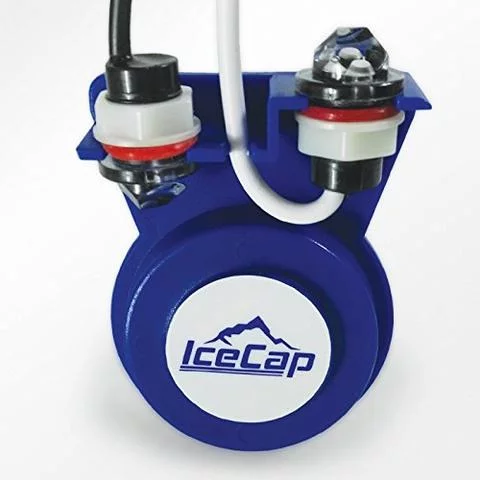
    IceCap ATO IceCap ATO
    • Dual Digital Sensors
    Click For Best PriceBuy On Amazon
    EPTTECH Aquarium ATO System EPTTECH Aquarium ATO System
    • Digital Sensor
    Buy On Amazon

    ATOs – 2023 Reviews

    Let’s see why each ATO system made the list. Let’s dive in!

    1) Tunze Osmolator 3155 – The Gold Standard of ATOs

    Editor’s Choice


    Tunze Osmolator

    Editor’s Choice

    The most reliable and best auto top off unit available today. Digital and manual sensors with an auto shut off feature


    Click For Best Price


    Buy On Amazon

    The Tunze Osmolator is without a doubt the gold standard for auto top off systems in the industry. It has everything that I listed earlier that we are looking for in an ATO system. It has dual sensors – one float switch and one digital sensor that work together to manage your water level. It has an auto shut off feature so you won’t have to worry about the pump running too long or your house flooding if the switches fail. It has an audible alarm if the water level gets too high and comes with a quality pump from Tunze.

    The Tunze brand is well known for building lasting equipment and the reputation of this auto top off system is well known. They last for years and rarely fail with the pump usually failing first and being easy to replace. This is the ATO of choice for anyone building a quality display tank. You may have noticed there is a nano osmolator available from Tunze – but it’s simply not the same as it only has one sensor and I only list dual sensor ATOs for a reason on this post.

    It comes with a high price though. It’s the most expensive auto top off system for a reason. You get what you pay for with this system.

    Pros

    • Manual and digital sensors
    • Proven reputation and name brand in Tunze
    • Quality pump included
    • Auto shut off feature

    Cons

    • Expensive
    • Pump can be a little loud

    2) XP Aqua Dueletto ATO – Built for All In Ones

    Best Value


    XP Aqua Duetto

    Best Value

    Compact , dual sensors, and well priced. The XP Aqua Duetto is a stand out best buy


    Click For Best Price


    Buy On Amazon

    The XP Aqua Duetto ATO system is an ATO that has been designed with all-in-on aquariums in mind. It is designed for this purpose so well that Waterbox Aquariums often sells this ATO as an add on to their reef ready system. It is marketed as the “world’s smallest dual-sensor aquarium top-off system” and you can see by the sensors and pump how small it really is. It can achieve this small footprint by not using moving parts, opting for a digital sensor setup.

    The pump is a DC pump, which draws less power and allows it to be smaller in size. So small that it can easily fit in all-in-one chambers and operate effectively. It uses dual digital sensors that will work in complete darkness. Because the sensors mount magnetically without a sensor mount, they can be placed just about anywhere in the aquarium or sump chamber and can be hidden easily.

    For those aquarists who want a compact version of an osmolator, XP offers an ultimate version with 4 sensors that competes with the Osmolator 3155

    Pros

    • Small enough for all-in-one tanks
    • Good purchase considering pump is included

    Cons

    • Only uses a digital sensor
    • No auto shut off feature

    3) JBJ – Budget Friendly ATO

    Budget Option


    JBJ Automatic Top Off System

    Budget Option

    A great auto top off for those on a budget. Dual manual sensors and a easy to use controller get the job done


    Click For Best Price


    Buy On Amazon

    The JBJ Auto Top Off system is one of the main time tested entry level auto top off systems on the market. This system is different than the others before it on this list as it features two manual float switches that will trigger as your water level rises. There are no of digital sensors on this auto top of system. I actually don’t mind the dual float sensors and with the two types of setups you can do with this ATO system, you can have a pretty full proof and redundant system. 

    Another great feature is this system is easy to customize. You can modify the auto shut off timer by upping the time on the controller and tuning the shut off with a screw driver and you can also turn on an alarm when the ATO turns on. That’s a really great feature for control and to prevent any flooding in the event the float switches fail.

    The controller features an audible alarm if the max float switch triggers and both float switches are reversible if you need to do that. It really offers a lot for its price point.

    The things I don’t like with this system is you have to purchase a pump and the mount options aren’t that great. There is a suction cup mount option, which I would not recommend, and the bracket mount options just don’t look very pleasing to the eye and may mount weird if you have a rimless tank or sump. Not having a pump included usually brothers me with auto top off systems. I tend to lean on systems that comes with pumps as it takes out any guesswork I need to do.

    Pros

    • Reasonable price
    • Easily modifiable and customized
    • Auto shut off feature

    Cons

    • Suction cup mounts (Use brackets instead!)
    • No pump included

    4) Hydor Smart Level Controller – Dual Sensor ATO For A Reasonable Price

    The Hydor Smart Level Controller is an ATO system that uses a dual sensor to manage your aquarium’s water level. The sensors are included on a single plug making it easy to install. It is a sump based ATO systems, so I would not recommend it for using it in tank as the alarm level is set very high if used in an aquarium. It features a dual alarm system with both lights and sound. The sensors are not affected by waves in the tank.

    What I don’t like about this auto top off system is that it does not come with a pump. You have to purchase that separately so the price may not be as great as it seems if you pick up a more expensive pump. The switch holder is also a hybrid suction/magnet. I would prefer a true magnet mount.

    Pros

    • Reasonable Price
    • Alarm
    • Dual Sensors

    Cons

    • No Manual switch
    • Not a True Magnet switch holder
    • No Pump included!

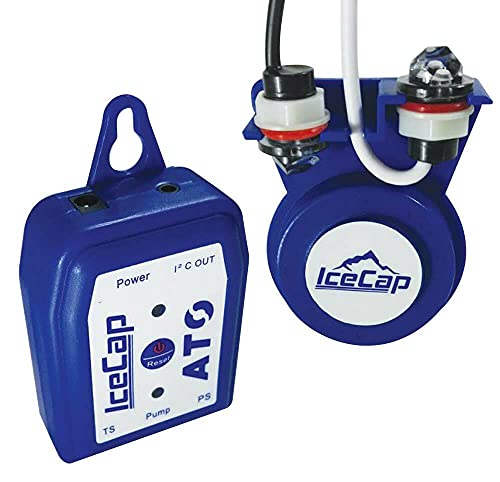
    5) IceCap ATO – Reliable Dual Sensor


    IceCap ATO

    A dual digital sensor ATO system designed by CoralVue. Good price and good features


    Buy On Amazon


    Click For Best Price

    The IceCap ATO is a comprehensive top off system that includes dual digital sensors. These dual digital sensors read your water level and provide a min and max sensor. This provides a dual sensor back up for the auto top off unit. CoralVue advertises this unit as one without moving parts. It is a bit of marketing fluff to do this, but overall it is a competent unit for the price.

    The pump that is included is of good quality and it is mounted with magnets, which I feel is a better and more secure mount than the Hydor system. The alarm has a nice feature that lets you when your reservoir is low, which helps when you don’t look at the ATO container. CoralVue is a brand is also known for quality customer service so that’s another thing that gives this system a leg up.

    It has a decent price for what it offers. It lacks a manual switch and a shut off feature but overall it is a good package for the price.

    Pros

    • Reasonable Price
    • Dual Sensors

    Cons

    • No Manual switch

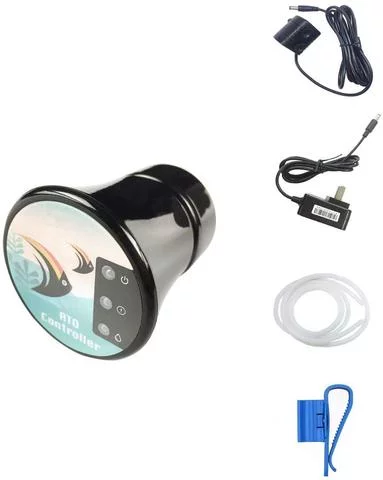
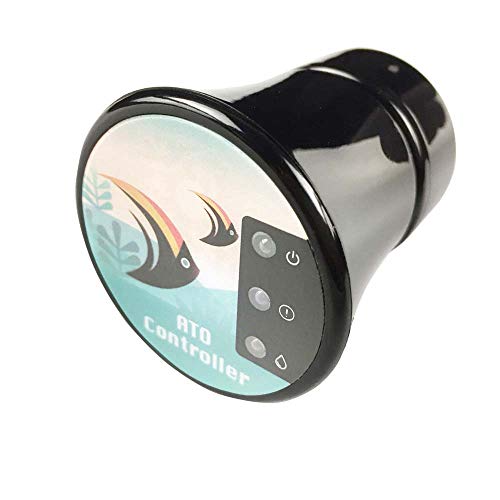
    6) EPTTECH ATO – Good But Needs Refinement


    EPTTECH ATO System

    Good value with a small footprint. Lacks the quality control to make it higher on the list


    Buy On Amazon

    The EPPTECH ATO is a good value and has a small footprint. This is a clone of the smart ATO system. The smart ATO system was actually excluded from our list because of availability and price compared to others that made the cut. This does not have a float switch, but a single digital senor. As a result, it has a very small footprint and will fit anywhere in an aquarium.

    My biggest gripe is the quality control on this unit. There are several reviews on the product where it fails. The sensor fails or the magnetic optical part corrodes in the tank. These are all no go’s in my book. As such, I would not recommend this unit and stick to the others I mentioned prior.

    Pros

    • Good value
    • Small footprint

    Cons

    • Only uses one sensor
    • Quality Control

    Our Recommendation

    If you want the best quality and most reliable auto top off system, my recommendation is very simple. It would be the Tunze Osmolator 3155. It’s ironclad reliable, will service your tank for years, and is built very well. If that is not in your budget, I would recommend the XP Aqua Duetto Auto or JBJ Auto Top Off depending on if you have a pump available or not. The XP Aqua offers a good price and includes the pump and is reliable. The JBJ is cheap if you have a pump and has adjustable features when you access the inside of the controller. 

    I Don’t Have A Sump. Which ATO should I use?

    There is one auto top off system that is designed for people without sumps. That would be the XP Aqua Sumpless ATO System. If you are running your ATO directly out of your display aquarium, this is the best ATO to get for your needs.

    What Manual Top-Off and Cheap Float-Valve ATOs Miss

    • Float valves can stick. Salt creep, debris, or a curious snail jamming the mechanism means the valve does not close. The pump keeps running. Your sump overflows or your salinity crashes below 1.020 before you notice.
    • No fail-safe means no safety net. A cheap single-sensor ATO has one point of failure. When that sensor fouls or fails, freshwater addition does not stop. A 5-gallon reservoir of fresh water dumped into a 40-gallon reef is a livestock emergency.
    • No reservoir alarm. Manual top-off means you remember, or you do not. Miss two days and salinity climbs. Miss four days and you are doing an emergency water change. Most cheap ATOs have no alert for an empty reservoir either, so you get the same problem with extra steps.
    • Inconsistent dosing interval. Manual top-off adds water in large batches. A proper ATO adds small amounts continuously, keeping salinity within 0.001 of target. That consistency is what corals and invertebrates actually need.

    How to Setup

    ATOs are actually really easy to install. They are probably one of the easiest tank automation tools to maintain and install on an aquarium. This video below shows how to install an XP Aqua Ultimate on a sump system. The install would be very similar installing an ATO in the display tank or all in one aquarium. 

    For the reservoir you will want to use a food grade bucket or trash can or an acrylic or glass ATO container. If you are running a saltwater tank, you will want to use RODI water from an RODI System. Make sure to fill up the reservoir and put the pump in the container before you turn on the system so the pump does not run dry.

    Conclusion

    Final Thought

    On a reef, stability is everything. Temperature, salinity, alkalinity – the animals you are keeping evolved in one of the most chemically stable environments on the planet. An ATO is what makes stability possible without babysitting the tank every day. It is a one-time purchase that quietly protects everything else in the system. Get the right one, set it up correctly, and it becomes the last thing you think about – which is exactly the point.


    🔧 Want to learn more? This article is part of our complete Aquarium Equipment & Gear Guide. your ultimate resource for filters, heaters, lights, pumps, tanks, and more.

    Mark’s Top Pick

    Tunze Osmolator 3155. I used these on every display reef at the stores I managed, and I use one on my personal 125-gallon reef. The combination of an optical sensor, a float valve backup, and the timed shut-off is the reason it earns top spot. Every other unit on this list makes a compromise somewhere. The Tunze does not. If you can only afford one piece of automation on your reef, this is the one.

    Buy or Skip? Straight Verdict

    Buy if:

    • You are running any saltwater tank. Full stop. This is not optional equipment for a reef.
    • You travel, work long hours, or go more than 48 hours between maintenance sessions.
    • Your tank is in a warm room or runs warm – evaporation accelerates fast above 80°F (27°C).
    • You are keeping SPS corals or other animals sensitive to salinity swings of even 0.2 points.

    Skip if:

    • You have a freshwater tank and check water level daily – manual top-off is fine for most freshwater setups.
    • You run a small planted freshwater tank where slight level drops between weekly water changes are a non-issue.

    Freshwater keepers: an ATO is a convenience upgrade, not a necessity. Saltwater keepers: it is a necessity dressed up as a convenience.

    >

  • Nyos Skimmer Review – AN IN-DEPTH LOOK

    Nyos Skimmer Review – AN IN-DEPTH LOOK

    Nyos skimmers have developed a loyal following in the reef community, and after evaluating them alongside the more established brands, I can see why. The needle wheel design and build quality stand out immediately. I approach every equipment review the same way I’ve approached gear for 25 years in this hobby. what does it actually do in a real tank, and is it worth what you’re paying?

    Looking for the very best Protein Skimmer available for your saltwater aquarium today? If so, you have come to the right place. Today, I go in-depth with a Nyos Skimmer review!

    As you may have read in my Best Protein Skimmer round up article, Protein skimmers have become a staple piece of equipment for many reef tanks. It all started with the Berlin method that became popular when I started up reefing back in the early 90s. Everyone swears by their protein skimmer, and we can see why with so many successful reef tanks running them. So what makes the Nyos Quantum so unique? Let’s find out shall we?

    My reviews are fairly structured. I’m going to be reviewing the following with the categories with this protein skimmer line:

    • Features
    • Craftsmanship
    • Ease of Use
    • Value For Money
    • Product Support
    • Price

    In a hurry? I recommend purchasing the Nyos Quantum 160

    Nyos Skimmer Review – Features

    The Nyos skimmer prides itself by it’s extreme performance. This is a result of the massive amount of air and water it drives through it’s skimming chamber. This is achieved by their Nyos Twister technology. The twister is an additional blade that is added to the usual bubble plate you will see in most protein skimmers. This blade gives the bubbles an additional cycle within the bubble vortex. What this does is create additional contact time for the air bubbles in the water column.

    A protein skimmer lives and dies off the contact time. The more contact time the better for a skimmer. This is why recirculating skimmers are popular at the high-end of the hobby. Nyos achieves a recirculating effect all within a small footprint.

    The next feature to speak of is the quiet operation of the skimmer. I’ve worked with skimmers that do a great job, but are very loud. Given that the Nyos is a premium level skimmer, I would expect it to be dead quiet. I purchase a skimmer like this for the performance and it’s silent operation. Not only is it one of the quietest skimmers on the market, it is also energy efficient even without using a DC pump!

    Nyos Pump

    The pump is built off what Nyos calls the Nyos Hybrid Wheel. This is a specialty designed impeller that combines the advantages of a needle wheel and lattice wheel. It is an AC pump, which I personally love because I know AC pumps are generally more reliable than DC pumps. The pump is placed in a clear view reactor. This is a clear impeller cover that lets you see the function of the skimmer. This allows you to visually inspect the protein skimmer to see if there are any obstructions that need to be cleaned out. The pump will operation best in a water level of 8 – 10 inches on all Quantum models

    Craftsmanship

    The Nyos has nothing cheap built into it. When you pull it out of the box, the first thing you will notice is the weight of skimmer. There are no cheap plastic and thick high quality acrylic. It comes with titanium screws so you do not have to worry about your screws rusting out. Below is a image of the Nyos Twister blade.

    Nyos Twister
    Image Courtesy of Marine Depot

    The Nyos is built to be compact and does not use externally mounted or large bulky pumps. This not only allows it to fit in smaller aquarium sumps, but also makes it quiet and easy to maintain. The Nyos skimmer is designed and built in Germany. There is are no corners cut with its design and it shows not only in its parts, but its looks. It looks cool just sitting in your sump. For those of you who like to make aesthetically pleasing sump setups, this skimmer is a great additions for its looks and it’s performance.

    Ease Of Use (Installation)

    The Nyos built to be plug in play. In my experience, this is the quickest skimmer to break in among all the skimmers I have worked with. Many lower end skimmers will take several weeks to break in until they start performing the way they should. The Nyos gets off running. They usually break in after a day or so.

    They are built to be simple to use. It has two adjustment values for the air intake and the chamber level. The collection cup is also generous in size and goes a while before needing to be replaced. The cup comes off easily by twisting off.

    While the instruction manual does not have pictures illustrating install, EcoTech Marine does provide a video showing how to assemble and install the skimmer. I have supplied the video below for your reference so you can view it when you purchase it.

    Value For Money

    The Nyos Skimmer from first look seems like a very expensive skimmer. When you look at the quality of construction and features that this skimmer has, you can see how it stands out from many of the its competitors in the marketplace. A Nyos has been known to be too good at its job and has to be dialed back in order to control nutrient levels. This to me is a hallmark for a skimmer. A good unit should be able to run on its own without added equipment.

    A quality skimmer should be able to run with just this unit and the biological filtration coming from the rock in the aquarium and the micro fauna that is breeding in the refugium. The Nyos can achieve this balance in a heavily stocked tank without missing a beat.

    Models

    The Nyos Quantum comes in 4 different models that can handle from 40 gallons all the way up to 1000 gallons. The 160 is the most popular of the entire lineup.

    ModelNyos Quantum 120Nyos Quantum 160Nyos Quantum 220Nyos Quantum 300
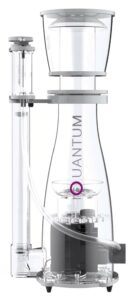
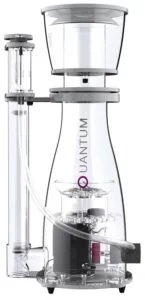
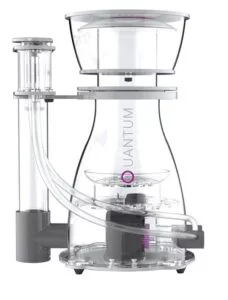
    PictureNyos Quantum 120Nyos Quantum 160Nyos Quantum 220Nyos Quantum 300
    Price$$$$$$$$$$$$$$$$$$
    Gallon Recommendation40-125 Gallons100 – 250 Gallons125 – 500 Gallons250-1000 Gallons
    Air Max (Liters Per Hour)500 l/h1500 l/h2200 l/h2200 l/h
    Power Consumption8 Watts18 Watts22 Watts2 x 22 Watts
    Dimensions (LxWxH) in Inches5.91 x 8.27 x 18.317.29 x 9.85 x 20.8712.2 x 9.25 x 23.813.4 x 16.4 x 26
    Water Level8-10 “8 – 10″8 – 10″8 – 10″
    LinkClick for Best PriceClick for Best PriceClick for Best PriceClick for Best Price

    Product Support

    Nyos Skimmers are distributed in the US by EcoTech Marine. EcoTech marine is well known in the reefing hobby for producing high-end equipment and having excellent customer server. EcoTech marine provides the support for Nyos. They are typically fast to respond to phone or email inquires.

    The main downfall with the Nyos protein skimmers are their warranty. You only get a 1 year warranty. This is disappointing given the Germany quality engineering and the fact that the pump runs of AC power. However, looking at other brands like Reef Octopus and Deltec, you will see similar short warranty periods. The longest warranty I’ve seen for a distributed protein skimmer has been Simplicity which offers a 3 year warranty.

    The Nyos website it linked back to Germany or something, but they’re actually distributed in the USA by Ecotech Marine. Most people already know Ecotech’s reputation for being a well-established exceptional company. They respond to inquiries extremely fast via both phone and email.

    One issue we ran into when it came to contacting them was we were informed that during some warranty issues a credit card actually gets held to ensure everything runs smoothly. The next was for price point. The prices on them for a skimmer with a 1-year warranty we think is a little high. But, there is room for a slight margin of error. When we called the company we got 5 different answers. 3 people told us that the warranty in the USA is only 1-year, but 2-years in the UK and Germany. 2 people told us the warranty is 2-years no matter where the skimmer is sold.

    Either way, no one seemed to really know. They should be ranked #1, but we couldn’t seem to get solid answers about how long the warranty actually is or how the warranty issues are actually handled. The only thing for sure when it comes to Nyos skimmers is they perform exceptionally well and are backed by one of the best companies in the USA.

    Price

    The price for this skimmer may seem very high at first. We have to compare apples to apples though. The Nyos is one of the few German made skimmers out on the market. A fair comparison would be to compare these to the Daltec and Bubble King brands of the hobby. A bubble king is typically going to be 50% more expensive than the Nyos while the Daltecs are going to be slightly more expensive, but less feature rich.

    Compared to an equivalent German made protein skimmer they actually are an economical option. Knowing that however, the Nyos does not perform economically. It is an elite performing protein skimmer with stellar support from their EcoTech distributor.

    Closing Thoughts

    The Nyos Quantum skimmer represents the best of the best when it comes to protein skimmers. It is the best mix of simple to operation and elite performance. The German engineer and quality really make this skimmer stand out for all others on the market. With EcoTech backing support for US distribution, you have great customer service behind the product. If you are looking for the absolute best skimmer on the market today, the Nyos my choice for any top-end reef setup.

    You can see the ratings below from me and my editor’s choice badge that these skimmers receive. Since I’m open to all reviews, you can leave your own reviews below. I’m all about being an unfiltered source of reviews for our reefing community. If you have any questions, please leave them in the comments below. Thanks for reading!


    🔧 Want to learn more? This article is part of our complete Aquarium Equipment & Gear Guide. your ultimate resource for filters, heaters, lights, pumps, tanks, and more.

  • IceCap Gyre 2K Review: Is the Second Generation Worth the Upgrade?

    IceCap Gyre 2K Review: Is the Second Generation Worth the Upgrade?

    The original Gyre wavemaker was a genuine innovation when it launched. the crossflow design eliminated dead spots in a way that traditional powerheads just can’t, and I thought the first-gen IceCap Gyre was one of the best values in reef flow equipment at the time. The 2K and 4K second-generation models pushed performance further, but also pushed the price. I don’t accept sponsorships, so here’s my honest take on whether the upgrade is worth it and how the Gyre 2K stacks up against the competition for reef tanks in the 100. 200 gallon range.

    The 1st generation of IceCap’s Gyres was in my opinion the best value in aquarium wavemakers on the market. Today, I look at IceCap’s latest Gyre 2K and 4K 2nd generation models and see if they still continue to deliver value.

    My reviews are fairly structured. I’m going to be reviewing the following with the categories with these kits:

    • Features
    • Craftsmanship
    • Ease of Use
    • Value For Money
    • Product Support
    • Price

    In a hurry? I recommend purchasing the IceCap Gyre 2K

    IceCap Gyre Features

    The IceCap 2K Gyre has a number of improvement over the last generation 1K models. The output has been upgraded to 2,000 gallons per hour and it now can be controlled via wifi.

    The new wifi app is called CoralVue Hydros. It’s the same mobile app that is used on the Hydros WaveEngine controller. The new app also you to program the Gyre on your phone using presents and triggers. Modes are always available like a feed mode that shuts down the pump. Below is a screenshot of the app. It is a simple to use app that CoralVue has a number of videos available that explain how to use the app.

    CoralVue Hydros Triggers

    One observation with the WiFi is that it only runs off 2.4 ghz. It does not run off the modern 5 ghz band. Make sure you have a router that runs 2.4 and 5 ghz bands. Most wifi routers do have dual bands so it’s likely not going to be an issue for most users.

    The new controller that runs the Gyre 2K and 4K can actually run up to two pumps. This is an improvement to the prior generation model that had to have a controller for each pump. You can even run two pumps off a single power supply. This reduces clutter in your aquarium cabinet. It’s an added plus feature with this newest generation.

    The design of the 2nd generation Gyres look similar to the prior models, with exception to the impeller blades. In the prior models, they were black. In the 2K and 4K models they are a orange color. IceCap does include black impellers that you can switch out though. I would encourage you to switch to the black ones as the orange ones can look odd in the tank when the pump isn’t running. The magnet can work on aquariums up to 1/2″ thick in glass.

    IceCap Gyre Craftsmanship

    IceCap Gyre Craftsmanship

    The craftsmanship on the IceCap Gyre is solid just like the last generation. It’s licensed technology from MaxSpect. Maxspect was the original designer of the Gyre technology. It is a cheaper version of the MaxSpect gyre, but I don’t feel any significant cost cutting measures were taken. The impeller design is simple and easy to take apart.

    IceCap Gyre 2K Side

    Thepower outlet comes from the top. The Gyre, like all other Wavemakers not named EcoTech has the power outlet on the wet side of the aquarium. Since Gyres are places near the top of an aquarium, I don’t feel it takes away from the look of the tank. It some display tanks, it may blends into the backgrounds and look like part of the return.

    Ease Of Use (Installation)

    This is where the IceCap Gyre really stands out. CoralVue has done a stellar job of producing video content on how to setup and use the Gyre. I’m going to list them all here so you have a quick guide when you purchase the unit.

    Installation and Operation

    This video will walk you through the Gyre parts and the setup to install in your aquarium

    Pump Controller Setup

    This video walks you through the install setup of the Hydros mobile app

    Controller Configuration

    This video walks you through flow configurations available off the Hydros app and how to program your Gyre.

    https://youtu.be/WExf_POvVt4

    Value For Money

    There are three comparisons I need to make on the Gyre. The first is comparing it to the MaxSpec XF Gyres. The IceCap 2K and 4K Gyres are superior value in comparison to the MaxSpect. In my opinion, there isn’t much to justify the additional price tag of the XF. This is specifically true now with the CoralVue Hydros app.

    The next comparision is against the high end wavemakers on the market. Comparing to the EcoTech MP, the IceCap Gyre 2K and 4K are a superior value. A IceCap 2K Gyre can easily power a 3 foot long tank with no dead spots. The equivalent setup for an MP would require two units. This makes a Gyre a much cheaper alternative for a wavemaker in a reef tank

    The last comparison is against the prior IceCap 1K and 3K models. There has been a significant price increase over the 1K and 3K due to the controller. The 1K Gyre used to be an incredible value. It’s a shame that the 2K model has a much higher price tag. However, the controller is a significant improvement and if you run a tank that needs to run 2 gyres like a 6 foot long tank, The IceCap will be a great value for you.

    Models

    Below are the available IceCap Gyre models available today. The 2K will work for up to 3 foot long tanks. The 4K is a more powerful version that is recommended for higher flow demand environments such as an SPS tank.

    ModelIceCap Gyre 2KIceCap Gyre 4K
    PictureIceCap Gyre 2KIceCap Gyre 4K
    Price$$$$$
    Gallon Recommendation20 – 90+ Gallons25 – 150+ Gallons
    Gallons Per Hour (Max)2,0004,000
    Gallons Per Hour (Min)7391,286
    Power Consumption8-25 Watts13-45 Watts
    Dimensions (LxWxH) in Inches8.78 x 2.83 x 1.512 x 3.15 x 1.7
    Tank ThicknessUp to 1/2″ thickUp to 5/8″ thick
    LinkClick for Best PriceClick for Best Price

    Product Support

    IceCap is sold by CoralVue. They have been a manufacture of OEM parts for major years in the industry and are the exclusive distributor or brands such as IceCap. One thing that really stands out with CoralVue is their customer support. They go the extra mile to reach out to you and are regularly involved in hobbyist forums. As you also saw, they have been getting into video content more which has been helpful in understanding how to use the products you purchase.

    The cons with Gyres in general are their warranties. You only get a 1 year warranty on them. That is a vast different from the old AC wave makers that would offer multi-year warranties. I still feel they serve great value even with their shorter warranty.

    Price

    Price is the biggest change with this newest generation Gyre from IceCap. The prior generation was a bargain at the price it was sold at. This new generation has had a significant price increasedue to the wifi enabled controller. While it can be more expensive for a tank that only requires one Gyre, the price becomes more reasonable when you are running 2 or me Gyres. This is because the controller can operate 2 gyres so you can save a good bit of money just buying the pump only for the 2nd Gyre.

    While overall it is more expensive than the last generation, it is still cheaper than the higher end wavemakers on the market. I feel it’s still a great value for reef tank owners looking for a wavemaker that is set and forget and not complicated to use.

    Closing Thoughts

    The IceCap Gyre 2K and 4K are great value for what they offer to a reef tank owner. It is one of the more comprehensive wavemaker solutions that won’t break the bank. The new wifi feature on the controller is a great update from the prior generation and worth the added cost. CoralVue as a distributor has a solid reputation for customer service. I feel that you cannot go wrong with a CoralVue distributed product. This is an excellent wavemaker overall.

    You can see the ratings below from me and my best value badge that these series of aquariums receive. Since I’m open to all reviews, you can leave your own reviews below. This provides the community with an unfiltered source of reviews. If you have any questions, please leave them in the comments below. Thanks for reading!

    References

  • EcoTech Radion G5 Review: Is the Premium Price Worth It for Your Reef?

    EcoTech Radion G5 Review: Is the Premium Price Worth It for Your Reef?

    The EcoTech Radion sits at the top of the reef LED market, and it earns that position. I run a 125-gallon reef and I’ve watched the LED lighting space evolve considerably. the gap between a premium fixture like the Radion and mid-tier alternatives has narrowed over the years, but EcoTech still leads in spectrum tuning, app integration, and long-term reliability. The honest conversation for most reefers isn’t “is the Radion G5 good?”. it clearly is. It’s whether your coral goals and tank size justify the price over capable competitors. Here’s my full breakdown to help you decide.

    As you may have read in my Best Reef LED round up article. LEDs are the it technology when it comes to coral growing. They have become the tech toys of our hobby and also have become very energy efficient over time. LEDs can be tricky however, as too many features can overwhelm a newcomer and the spectrum of the LED are not created equal among the various players out there.

    EcoTech has prided themselves with spending the R&D time and listening to the hardcore Reef community about what is wanted from a proper Reef LED. This new G5 answers a lot of the asks our community has been wanting. Let’s dive in and see what’s new and what means this newest generation the best ever!

    My reviews are fairly structured. I’m going to be reviewing the following with this Radion G5:

    • Features
    • Craftsmanship
    • Ease of Use
    • Value For Money
    • Product Support
    • Price

    In a hurry? I recommend purchasing the EcoTech Radion XR15 Blue!

    Features

    The EcoTech Radion G5 is a huge improvement over the Generation 4. It starts with the HEI lenses that are the most sophisticated lens design available in the industry for LEDs. The new design cluster and optices cuts hot-spot PAR by 30% while also providing a 35% increase in total PAR output from the prior generation. This means you get a better spread and higher output then ever before.

    EcoTech Radion Gen XR 30

    The new generation 5s come in either a Pro version or a Blue version. For this product review, I’m going to concentrate on the Blue version. The reason why is because I feel that the Blue version is the way to go. Anyone who runs a hardcore reef tank knows the value of blues when it comes to coral growth. The blue version is also designed on the EcoTech’s well known AB+ spectrum setting. The model is completely optimized for this spectrum. This makes the new generation 5 the most plug and play friendly Radion ever. Below are the array outlines of the XR15 and XR 30 models for both the Blue and Pro models.

    EcoTech Radion Generation 5 Layout

    Just look at that array and see the difference between this LED and many others out there. The number of blues on the Blue model are amazing. What you end up is getting a spectrum that is very close to the gold standard ATI Blue Plus.

    The generation 5 has 8 controllable channels. Aside from the new array and lens, the other major difference with the Radion Gen 5 is the new Mobius app. The App makes things so much easier to manage and it comes with the package. You no longer need Reeflink in order to connect your light to your phone. The spectrum and intensity is easily adjusted through the mobile app

    EcoTech Mobius Spectrum Settings

    The Mobius app also has a user friendly timer setting that allows you to set your light timing and your ramp up and down times. I love the ease of use for this app. I know some of our more hardcore reefers want more out of the app. I’m all about simplicity. EcoTech is really listening to the reef community by making everything so accessible for this Generation 5 model.

    Did I mention that the Mobius app has the AB+ as a template within the app? This makes it super easy to set up your Radion to the most popular setting that the reefing community uses.

    Mobius App Templates

    The blue model makes things so easy for the reef community. I love the new features, the app, and the ease of setup with the new blue model. Excellent job EcoTech!

    Craftsmanship

    The newest generation design is sleek and modern. It’s what we come to expect with the EcoTech Radion lights. Below is a photo of the external overview of the Radion G5

    EcoTech Radion Generation 5 Design

    Regarding the mount options, unfortunately the mounting options from the prior generation can’t be used on the G5 Radion. However, the new design actually gives you more options to hang the unit from a DIY perspective. The mounting arm is raised more than the prior generation, which means you can mount your unit on a rail.

    EcoTech Radion G5 Mount

    It’s a great design and well engineered. There isn’t much out there in the market today that comes close to the craftsmanship and aesthetics of the Radion. The coolness factor of these lights cannot be denied.

    Ease Of Use

    The ease of of use of the EcoTech Radion G5 has been vastly improved over the last generation. With the Blue model, all you will need to do is tune down the intensity of the unit in order to get the PAR down to where you need it for your specific corals. The Mobius app makes this so easy compared to last generations. Below is the Mobius program overview video from EcoTech. By looking over this video, you should have what you need to get it started. This is the easiest to setup Radion I’ve ever worked with.

    There is a fairly easy way to setup your Radion. Here is a quick guide. I would recommend that you rent a PAR meter from your local hobby club or an LFS so that you can ensure you have the proper PAR levels

    • Set height to 8″ for the best distribution of PAR
    • Set all channels on the Blue model to 100% and only adjust intensity for PAR
    • Photo period – 9 hour peak photo period with 30 minute ramp up and ramp down for a total of 10 hours total
    • LPS PAR Range – 75-150
    • SPS PAR Range – 200-350

    Value For Money

    Many retailers will recommend that you use a single XR30 for a 24 x 24 tank space. If you are using an XR30 for a 24 x 24 space, I would say your value for the Money definitely diminishes for this light. However, I firmly believe you can achieve ideal coverage for a 24 x 24 space, still get your ideal PAR coverage, and get way better value for your money by going with a single XR 15.

    How is this possible? It is possible with the new Radion G5 diffusers. I would recommend that you purchase a single XR15 and the G5 Diffuser. This will achieve full coverage of the space and PAR spread for the vast majority of tank setups. Below is a video that discusses the new diffuser.

    I actually think the diffuser should come with every G5 light. It was a neccessary item with the last generation for those with SPS tanks. With the new lenses, EcoTech claims that you do not need the diffuser to achieve proper PAR spread. The reason why I recommend it is so you can save money and go with a single XR15 instead of purchasing an XR30. If you are running an all out Acro tank, I would just recommend getting XR15s and mounting it to a hybrid fixture over the XR30.

    Product Support

    The main selling point for me when it comes to EcoTech is the large amount of reefers who use the Radion LEDs. It’s very easy to get advice on proper spectrum settings. This was a major deal with the prior generation models before AB+ became mainstream.

    The biggest issue that always bothered me about EcoTech was their warranty. You only get a 1 year warranty with their LEDs. While this is pretty standard when it comes to lights (Giesemann and GHL are the only high end lighting manufacturer where you will see warranties beyond a year), I just expect if you going to spend the amount of money for this light that you get longer than a one year warranty.

    Price

    This is an expensive light. There is no way around it. It is one of the most expensive reef LEDs on the market and you truly get what you pay for with this Generation 5 model.

    I will also point out that the Kessil 360X is more expensive that than the XR15 – and the XR15 is a superior light in my opinion when it comes to performance for coral growth. The XR15 is marginally more expensive than the Hydra 32 and Red Sea 90. The Hydra used to have a huge advantage with their smartphone app, but EcoTech has gained a ton of ground with the new Mobius app.

    I do not feel that this generation of Radions are overpriced anymore. I felt that way with the G2, G3, and even the G4. The G5 has really changed my opinion. As other manufacturers come out with newer models, they pushed their prices up while EcoTech kept their prices with this newest generation. Good on EcoTech, and this light is worth every dollar.

    Closing Thoughts

    This is the best Reef LED light you can buy today. The newest generation is such a gigantic improvement over the G4. It raises the benchmark for all other LEDs on the market. With competitors looking to mimic what EcoTech does, their prices continue to go up which increases the value of the EcoTech Radion even more.

    You can see the ratings below from me. The G5 Radion gets my editor’s choice rating and is now the light of choice for my high end setups. Since I’m open to all reviews, you can leave your own reviews below. This provides the community with an unfiltered source of reviews. If you have any questions, please leave them in the comments below. Thanks for reading!

    References

  • Sicce SYNCRA SDC Review An In-Depth Look

    Sicce SYNCRA SDC Review An In-Depth Look

    The return pump is the heart of any sump-based system. it determines flow rate, heat input, noise level, and reliability for everything downstream. I’ve run various return pumps on my 125-gallon reef over the years, and the Sicce Syncra SDC caught my attention because of its DC motor and controller. Here’s my in-depth take on whether it delivers for serious reef setups.

    Looking for the very best Aquarium Return Pump available for your tank today? Well, this is the very post you have been looking for as the Sicce Syncra SDC has solved may of the issues that have plagued DC pumps since they were first introduced in the hobby.

    As you may have read in my Best Aquarium Return Pump round up article. DC pumps are cursed with multiple issues. The main thing are the failure points and the quality control of the manufacturing. So what happens when we combine one of the most reliable and high quality Italian manufacturers in our industry and DC pump technology? It sounds like a dream combination doesn’t it? It sounds like Sicce may have solved the very issue that has frustrated most us with DC pumps since they were released – reliability!

    As a reminder for my viewers, this post will contain affiliate links. An affiliate link means I may earn advertising or referral fees if you make a purchase through my link. I’ve had the pleasure of working with some great partners in the industry and highly recommended working with these links as they happily help hobbyists and content creators support their work. With that disclose away let’s get started! Let’s find out what makes The Sicce Syncra SDC stand out from the crowd!

    My Sicce Syncra SDC Review will be fairly structured. I’m going to be reviewing the following for this product:

    • Features
    • Craftsmanship
    • Ease of Use
    • Value For Money
    • Product Support
    • Price

    In a hurry? Purchase the SICCE Syndra SDC Now!

    Features

    I’ll start off by giving a quick disclaimer. I’m absolutely unashamedly bias to Sicce pumps. In the 15+ years I have been involved with this hobby, I have been very loyal to them. They have never done me wrong. This DC return pump is an absolute dream. Let’s discuss the crazy amount of features included with this pump:

    • Fully functioning in wet & dry environments
    • Self cleaning impeller
    • 360 chamber rotation
    • Wi-Fi enabled
    • ETL certified (This is a UL equivalent1)
    • Variable speed
    • Feed mode

    You may have seen these features in other DC pumps, the main difference here is that Sicce delivers all if this with a FREE controller app that runs on your smartphone. There is no additional accessory to purchase (calling you out EcoTech), The app can actually run multiple Sicce pumps. In fact, it will run any Sicce related product that has wifi enabled. This is an amazing feature that Sicce has added. It’s simply the best in the industry that I have seen from an return pump.

    The Syncra SDC is offered in 3 models all built with energy efficiency in mind. The pump meets the needs of advanced recirculating applications and are equipped with integrated intelligence systems.

    Craftsmanship

    Italian design and manufacturing. That’s the best way to start this section of the review. It’s not a secret in our industry that German and Italian engineering are highly valued. They are known for their quality, effectiveness, and reliability. With the large number of Chinese manufactured DC pumps these days, something that has the original high quality of the Germans and Italians is increasingly rare. It’s one of the biggest things I’ve been with the DC transition as many AC pumps are still made with German and Italian manufacturing and engineering.

    Sicce Syncra SDC Craftsmenship

    The Syncra SDC is no exception. It is 100% designed and produced in Italy. The design if the pump is no frill and functional based. I actually prefer this over the cool looking DC pumps I have seen with blue and red colors. I just want the pump to work for ages. I could care less about the fancy colors of something I only see when I pop open my cabinet.

    The biggest proof of craftsmenship by Sicce is their offer of a 5 year warranty. That blows away EVERY competitor on the market at it’s price point. It’s not even close. Ecotech and CoralVue can’t even sniff a 5 year warranty on their pumps. There are only two groups of competitors that will come close to a 5 year warranty. That would be going with an AC return pump or moving up to Abyzz DC pumps that have 10 year warranties. The Abyzz pump however is 3 times the price!

    Ease Of Use

    The Syncra SDC install is similiar with any DC pump out there that will involve plumbing.I won’t really cover that here since that is a whole separate discussion. However, what I will talk about how easy to use and install their Contrall App is. The video below walks you through the process. I found the install process pretty painless and the fact that you can get notifications on your phone is pretty amazing given this is all included in your purchase of the return pump.

    Value for Money

    The Sicce Syncra SDC is no doubt an expensive DC return pump. However, let’s talk about the value. It’s priced at the levels of a EcoTech and VarioS. This puts it at the higher end of the market. It is also the only pump that offers a 5 year warranty. If I’m going to invest over $200 on a return pump – I better get a long-term warranty. I’ve heard too many stories of EcoTech pumps failing prematurely.

    I’m old school in that I believe a return pump is a purchase and forgot about it for the next 10 years. Sicce is the ONLY DC return pump in this price range that offers this assurance. As such, it’s the only DC pump I recommend for high end builds. It is the one DC pump that truly combines the energy efficiency of DC pumps with the reliability of AC pumps.

    Product Support

    Given Sicce is headquartered in Italy, they can be sometimes hard to reach. However, in my experience their customer support is responsive, just not in your desired timezone. I do like their registration process and there are plenty of videos online they provide that show how to operate their products. When you register your product, you create a registered customer login where you can login your tickets and get support. It’s a rather easy to use portal.

    Price

    The biggest con in this product review. They are one of the more expensive DC Pumps on the market. They also have the best reputation for their durability. There prices are more expensive then the Reef Octopus Varios, but on Par with EcoTechs. Given the superior warranty and durability history with Sicce products in general, I feel they are priced competitively. For those at lower budgets, you can’t do wrong with a traditional Sicce AC pump.

    Closing Thoughts

    The SDC Pumps are available in various sizes. The models are shown below:

    ModelWattsGPH
    SDC 6.010 – 40 Watts530 – 1430 GPH
    SDC 7.020 – 65 Watts800 – 1900 GPH
    SDC 9.030 – 90 Watts800 – 2500 GPH

    There is a model for all aquariums. This is the best Aquarium DC Return Pump on the market today without a doubt. Well deserving of my Editor’s Choice badge. You can see the ratings below from me. As I’m open to all reviews, you can leave your own in the comments section and discuss your experience with this return pump. If you have any questions, please leave them in the comments below. Thanks for reading!

    References

  • Chloroquine Phosphate – The Aquarium Fish Treatment That’s Not a COVID Cure

    Chloroquine Phosphate – The Aquarium Fish Treatment That’s Not a COVID Cure

    I’m really frustrated and tired of the news about Chloroquine Phosphate. There is so much bad information about Chloroquine Phosphate it has gotten to the point where it’s affecting my business. I’ve been in the marine fish keeping industry for over 20 years. I’ve used this substance on marine fish in quarantine for ages. I’ve been quietly speaking its praises to my fellow hobby club and group members. It’s been my secret weapon for years in battling the most deadly marine fish diseases over the years.

    It is a sad day for me today. Today, I had to take down my Choloroquine Phosphate product from my store. I can no longer sell it, and it all started with a generic announcement that became a bad news story. I tried to dispense with the myth that it was a cure for COVID. I was even on the news to talk about it. I was verbally abused by prospective customers through live chat and the phone because I refused to sell the product to them after they openly admitted to me that they were planning to use it for human consumption. I was threatened 3 times by my merchant provider to take off my product from my store or face losing my merchant account and getting my site completely shut down.

    Today enough is enough, the product is getting de-listed. But I’m not simply going away. I redirected my old product to this page to educate folks on what Choloquine Phosphate REALLY is, why it’s an amazing product FOR FISH, and my story as to why I ultimately ended up pulling it from my store. So sit down, relax, and enjoy my story. It’s going to be a doozy!

    What Is It?

    Chloroquine Phosphate, is an antiprotozoal drug used by marine and aquarium hobbyists to treat fish suffering from Cryptocaryon (Marine Ich), Marine Velvet, Brooke, and Uroema.

    Chloroquine Phosphate is so well regarded in the marine hobby that it was covered by Advanced Aquarist as a wonder drug. It became the drug of choice for many public aquariums including the Georgia Aquarium. It has been widely used by hobbyists in the early days of the marine aquarium hobby and used in the aquaculture industry since the 70s and 80s.

    It is typically unavailable to the majority of the reefing community due to it normally being available through a Veterinarian via a prescription. As you can imagine, it can be very difficult to obtain a prescription for this wonderful medication as there are not many fish vets available who know about the medication or would be willing to prescribe it.

    How I Got Started With It

    I started the reefing hobby in the late 90s and was a member of the local aquarium club in my area at the time. I was introduced to the process of quarantining marine fish after having several issues with Marine Velvet. Chloroquine Phosphate became an amazing medication. The biggest advantage to it versus copper was that it would work with zero ramp up. This was a huge development because Marine Velvet and Brooke work very quickly against a marine fish. Within 24-48 hours, most fish will die from getting overwhelmed from these diseases.

    Chloroquine Phosphate was simply amazing. I never lost a battle with Marine Velvet using this medication. Back then, it was easy to obtain this medication without a prescription because there was this amazing product from Aquatronics called Marex. Marex had just enough pure Cholorquine Phosphate to be effective and also was inexpensive. It was also available without a vet’s prescription. It was my go to until Aquatronics went out of business in the early 2000s.

    I have been a promoter of this medication for many years, so much that I have a blog post on how to quarantine fish that details how to use the product. You can see my video below.

    How I Got Started With Selling 

    After Aquatonics went out of business, I was frustrated on how I couldn’t get this medication. The vets around me had no clue what I was talking about and I was hearing more and more that vets weren’t prescribing it anymore. You had to go to a vet who either specialized in marine fish or koi ponds to get the medication. There simply weren’t that many vets around who specialized in fish. So where could I get this medication so I could have a chance against the deadly 3 (Marine Velvet, Brooke, Uroema)?

    This is when I found out about Fish Pharmacies. They sold medications to public aquariums and aquaculture facilities who needed the medication to cure their livestock. I was amazed that I could get this medication from them, but the amount they sell you in bulk was quite a lot. You would have to purchase a kilogram at a time while most marine fish keepers would maybe need 50-100 grams max in their medication drawers to get what they need.

    I had my stash of Cholorquine Phosphate for my incoming fish for my reef tank. I heard so much on the reefing forums of people racking their brains trying to fight off Marine Velvet with Seachem Copper. It was sad to see so many people fail. Copper is tricky to use while Cholorquine was a one-time medication then you just replace with more medication as you change water. Super easy!

    As I heard more and more about people losing fish to marine velvet, I started to sell Cholorquine Phosphate on this site. I had a certificate of analysis showing 99.9% purity of the product. I was the only seller on the web that had such a certificate at the time.

    Chloroquine Phosphate Certificate of Analysis

    As the availability of Cholorquine Phosphate became more scarce, I started to obtain the medication through labs that would sell to universities. Since I had a commercial license, I was able to procure the product. I was rocking and rolling selling to customers who were saving marine fish life everyday with this wonder fish medication. It was really rewarding getting the emails thanking me for selling them the medication.

    COVID-19 And “Chloroquine”

    COVID-19 has been a mess for everyone. My own business was affected not just with the general downturn of the economy, but the affect on prices on livestock in the marine hobby. Price for fish and corals skyrocketed 2 -3 x times their usual price as imports closed up and supply became restricted. My fish medication product also became part of the news cycle when the President of the US announced that the U.S. Food and Drug Administration (FDA) had approved the use of hydroxychloroquine against COVID-19.

    Unfortunately, the President and most of the media shortened the name of the drug to Chloroquine. In came all the new articles talking about Chloroquine and how it would aid in the fight against COVID-19. Search results exploded for everything Chloroquine. Everyone wanted their hands on it.

    It became very easy to confuse the abbreviation Chloroquine with Chloroquine Phosphate. The price of this well loved fish medication exploded overnight. Once an affordable medication, Chloroquine Phosphate was all of a sudden selling for over $400 for only 10 grams. People wanted to use it for human consumption.

    I started getting messaged on my live chat from people asking me if they could use this medication on humans. I told them that it is a fish medication and it is not for human consumption. I got several angry messages in my live chat when I refused to sell them batches of the medication as they openly said they were going to use it on loved ones affected by the virus.

    My Interview With NBC News

    This was starting to get crazy. I was contacted by a BBC journalist who wanted to talk about the product I sold in my store. They had told me that a man had died ingesting this medication in Arizona. I was horrified and concerned for the public health. I was also cringing when I read the article and it mentioned that the product was a fish tank cleaner (it’s a medication not a fish tank cleaner). They asked me if I was interested in being interviewed on TV about my experience. I was happy to do so. I wanted to dispel the myths about this medication.  I spent about 2 hours in meetings with BBC and then my interview was displayed on NBC News.

    I felt much better getting the word out. I had chosen to place the medication product as out of stock in my store when I first heard of the FDA announcement. I had a feeling that it would get confused. I was planning to keep it out of stock until this COVID-19 mess was behind us. I wasn’t ready about what was going to happen next…

    Shopify Threatens To Shut Down My Store

    A couple of weeks passed since my interview with NBC. I was getting ramped up on some new content I was writing and went to check my email. I got a notice from Shopify that my product was removed from my store. The product was marked as high risk due to it being related to the Coronavirus. They sent me a notice stating that there was a risk that I was price gouging and had to provide proof that this wasn’t the case. They wanted to me to provide proof of my historical price of the product and also prove that a major retailer sold the product near the price I sold mine for. I was surprised that my store was threatened to be shut down thinking I was price gouging. I never increased my prices and had positive reviews for my product. I explained myself to Shopify and got everything lifted.

    A few days later after my product went offline, it was pulled again for the same reason. I responded to the risk department with all my past communication. I took it further and gave them the interview link to my talk with NBCNews. They apologized and I was listed again. I was told all was good after that.

    Shopify Labels My Product As A Pharmaceutical 

    A few weeks past. My site was getting a curiously high amount of traffic since my interview. Likely due to folks landing on my product page and seeing my product in the search results. Things were looking pretty good for me. I was having a great month despite the lockdown orders and my biggest challenge was supply chain restrictions. I woke up one morning and received another letter from Shopify.

    This letter was a bit different. I was having my payments held because Shopify’s risk department had labeled my product a Pharmaceutical. Looking at the terms of service, the fish medication product I sold was being placed under regulated or illegal products or services. This labeled my product as no different than cannabis dispensaries, tobacco sales, age restricted goods or services, weapons, etc. I was floored.

    I tried to explain the situation to the risk department. They said my best course of action would be to find another merchant supplier who would be willing to work with my product. This put me in a tough spot. I had my payments withheld during this time and no merchant services provider that was referred to me was answering emails or picking up the phone due to staff reductions related to COVID-19. I was a rock in a hard place.

    Since I couldn’t get anyone on the phone and there was risk that this could happen again, I decided to remove my product permanently from my store. I felt bad for my past customers who came to rely on this product to save their sick fish. There wasn’t much else I could do.

    What It Isn’t

    Now that you know the story and why I won’t relist my product. Let’s talk about what Choloroquine Phosphate isn’t.

    It Is Not Fish Tank Cleaner

    I have no idea where the news got this information from. It is not used to clean fish tanks. While it does have anti-algae properties, its primary purpose is as a antiprotozoal medication. I said this in my talks with BBC, but for some reason it never showed up in the news article or the interview.

    It Is Not A Medication for COVID-19

    It was hydroxychloroquine that was approved by the U.S. Food and Drug Administration. They are two completely different drugs. Cholorquine Phosphate is used for humans to treat malaria. The brand name for the drug is called Aralen. Is not the same thing that I sold. My product was the substance in it’s purest form. The drug designed for humans is not pure Choloroquine Phosphate. This is likely why that poor man in Arizona died ingesting it. He had likely overdosed on the drug.

    The Food and Drug Administration (FDA) Warns Against Using It

    On March 27, 2020, the FDA sent an public health letter to stakeholders warning to not use use Chloroquine Phosphate intended for fish as treatment for COVID-19 in humans. The FDA closed the letter with the following:

    People should not take any form of chloroquine unless it has been prescribed by a licensed public health care provider and is obtained through a legitimate source.

    You can find the full letter here. Amazingly enough, the letter itself did not receive much news coverage.

    What It Is

    Let’s talk about what this medication is for fish. It is

    • Superior to and more gentle on fish than copper
    • A 10 Gram bottle treats 250 gallons at a 40mg/gallon dosage
    • Chloroquine Phophate (CP) is the drug of choice for diseases like Ich (Cryptocaryon irritans), Marine Velvet Disease (Amyloodinium), Brooklynella hostilis, & Uronema marinum
    • One time medication – only replace medication in the event of a water change
    • Chloroquine Phosphate acts as an algaecide eliminating algae in the quarantine tank.

    How to Use It On Fish

    Since my product got taken down, I’m going to use the how to use instructions that were on my product page for anyone who attempts to use this on their fish.

    • For Quarantine (Prophylactic) Treatment – Typical dosage for quarantine is 40mg/Gallon
    • When dosing Chloroquine Phosphate, treat water with a pre-dissolved solution using a cup of tank water
    • For Ich – 30 day active treatment
    • For Velvet – 14 day active treatment
    • For active infection – up to 60mg/gallon
    • For Uroema – up to 80mg/gallon
    • Highly recommended that you use a digital scale to measure your dosage to ensure accuracy
    • Keep medication in a cool, dark, and dry pace. Chloroquine Phosphate is heat and light sensitive
    • If a water change is performed, Chloroquine Phosphate will need to be re-dosed for the amount of water changed. You do not need to dose Chloroquine for top off water.

    Additional Warnings about Using It On Fish

    Here are the additional notes and warnings that were on my product page that I’m displaying for anyone looking into this medication.

    • NOT RECOMMENDED FOR PIPEFISH, PUPPERS, LIONFISH, SEAHORSES, WRASSES, ANTHIAS, & BLUE HIPPO TANGS!
    • Not reef safe – Chloroquine Phosphate is meant to be used in a quarantine for prophylactic treatment or in a hospital tank for active infections.
    • No one ships Chloroquine Phosphate next day If you have an infected fish and you need treatment now I highly recommended going to your LFS and obtaining Copper. Most of the diseases Chloroquine phosphate treats are extremely deadly and can kill a fish overnight

    Closing Thoughts

    I’m sad to no longer offering this life saving treatment for what I call the deadly 3 marine fish diseases. Hopefully COVID-19 gets past us sooner than later and we can all return to normal. I hope clinical trials go well with the vaccine being developed. Maybe we will see Chloroquine Phosphate offered again as a treatment for marine fish diseases in the future. Right now, the supply chain is on hold due to concerns that people will use it for human consumption. Stay safe. My thoughts are with you all. We will all come out of this stronger. Take care and thank you for reading.


    📘 Want to learn more? This article is part of our complete Saltwater Fish & Reef Guide. your ultimate resource for marine fish, coral care, reef setup, and more.

  • 11 Best Rimless Aquariums – The Clean Look of Modern Fishkeeping

    11 Best Rimless Aquariums – The Clean Look of Modern Fishkeeping

    Rimless aquariums are something I genuinely love. The clean, borderless look transforms a fish tank into living art, and it’s the aesthetic I gravitate toward for serious aquascaping builds. The difference between a rimless and a standard braced tank is immediately obvious: you get an unobstructed view from every angle, which makes a dramatic difference in how planted tanks and reef setups look and feel.

    But rimless tanks are not for everyone. Splash, evaporation, structural requirements, and the premium price of quality glass are all real considerations that most buyers skip over. Get this decision right and you’ll have a tank you’re proud of for years. Get it wrong and you’ll spend money fixing a mistake.

    What People Get Wrong About Rimless Aquariums

    The biggest misconception is that a rimless tank is just a standard tank without the plastic frame. It’s not. Rimless tanks use the direct injection silicone method, where the silicone is pressed into the joint and the glass is squeezed together under pressure. This method requires precision. Done correctly, you get a clean edge with no silicone overflow. Done poorly, you get a tank that may look fine at first but develops leaks under sustained water pressure.

    The second misconception: any rimless tank works on any stand. It doesn’t. A rimless tank requires full bottom support across the entire footprint. Place one on a standard budget aquarium stand (the particle board stands with a center support beam and hollow sides) and the tank bottom will crack from the unsupported water weight. This is a critical safety issue, not a style preference.

    Third: buyers assume rimless means “maintenance-free.” The open top design increases evaporation significantly, especially in saltwater systems. For a reef tank, you need a reliable auto top-off system or you’re topping off daily. In a planted freshwater tank, evaporation can drop your water level noticeably between maintenance days.

    The Biggest Mistake Rimless Tank Buyers Make

    Buying the cheapest rimless tank available. Silicone joint quality is everything on a rimless build. I’ve seen low-cost generic rimless tanks arrive with visible gaps in the joint work, uneven silicone application, and glass thickness below what’s appropriate for the tank’s volume. A 20-gallon rimless tank holds a lot of water weight. The silicone joints are the only thing holding it together. This is not the place to save $50.

    EXPERT TAKE | MARK VALDERRAMA

    After working with rimless tanks of various sizes and brands for years, here’s what I know for certain: UNS makes the best pure rimless tank for planted freshwater setups. Full stop. The German engineering, the 45-degree mitered edges, the Diamant glass clarity, nothing else touches it for an aquascaping build. For reef tanks, Waterbox has outpaced Red Sea with their plumbing design and sump quality. Red Sea created the ready-to-run reef tank category, but Waterbox refined it. If you’re new to rimless tanks and want to start without drilling or building a sump, the Fluval EVO and the JBJ Flat Panel are both solid entry points. Just understand their limitations before you buy.

    What to Look for When Buying a Rimless Aquarium

    Know your goals before you shop. A rimless tank for planted freshwater is a completely different purchase than a rimless reef-ready system. Here’s what I evaluate:

    • Quality: Glass thickness, silicone joint consistency, and low iron glass clarity
    • Features and Accessories: What’s included (filtration, lighting, stand) and what the brand’s ecosystem offers for upgrades
    • Brand Track Record: Service support, shipping reliability, warranty
    • Price vs. Long-term Value: Not just upfront cost, but the cost of mistakes

    WHY THIS RANKING

    These tanks are ranked on glass quality and construction method, brand reliability (packaging, shipping, warranty), ecosystem depth (accessories, furniture, upgrade options), and suitability for their stated application. Price is factored in at the category level: the best planted tank choice is different from the best reef-ready choice, and each is ranked within its context.

    The Candidates

    In a hurry? For a freshwater rimless aquarium I recommend UNS Systems. For a saltwater rimless aquarium I recommend Waterbox.

    PictureNameBest ForLink
    Editor’s Choice!
    UNS Ultra Clear Tanks
    UNS Ultra Clear Tanks
    • Planted Tanks
    Click For Best Price
    Best Reef Value
    Waterbox Aquariums
    Waterbox Aquariums
    • Reef Tanks
    Click For Best Price

    The 11 Best Rimless Aquariums (2026 Reviews)

    1. UNS Ultra Clear Tanks

    Editor’s Choice!
    UNS Ultra Clear Tanks

    Editor’s Choice!

    World-class rimless aquarium with German engineering and 45-degree mitered edges. The top choice for serious aquascapers.

    Click For Best Price

    If I’m evaluating this from a pure rimless tank standpoint, Ultum Nature Systems is in a category of their own. German engineering, 45-degree precision mitered edges, and 91% Diamant glass with true low iron clarity. When you put a UNS tank next to any other rimless tank at the same size, the difference in glass clarity is visible immediately. This is what low iron glass looks like when done correctly.

    UNS ships their larger tanks in crates, not just boxes. I’ve seen enough cracked aquariums arrive from careless shipping to appreciate this. The furniture options are high-end professional cabinets built to fit flush with the tank’s footprint. No hunting for a stand that “almost fits.” Everything is designed as a system.

    Two limitations worth knowing: UNS focuses on freshwater, so they don’t offer reef-ready drilling. And they’re not cheap. But for an aquascaping build where the visual quality of the glass matters, nothing on this list touches them. See the full UNS Aquarium Review.

    • Pros: Best glass clarity available, mitered edges, excellent furniture system, professional crate shipping
    • Cons: Freshwater only (no reef-ready option), premium price
    • Best For: Planted tanks, aquascaping

    2. Waterbox Aquariums

    Best Reef Value
    Waterbox Aquariums

    Best Reef Value

    The best plumbing, the best sump, and now freshwater options. The current benchmark in reef-ready rimless tanks.

    Click For Best Price

    Waterbox delivers the best value in reef-ready rimless tanks. Their Platinum Reef Plumbing system uses a true BeanAnimal overflow (the reef standard), colored PVC for easy identification, and unions throughout for maintenance access. Their rimless glass sumps are multi-stage designs. This is the most complete plumbing system you’ll find in a ready-to-run reef tank.

    Waterbox has also expanded into freshwater with their Clear models, though availability has been limited at launch. For reef applications, they’ve clearly separated themselves from the competition. I’ve felt for years that Waterbox had better designs than Red Sea; their V3 updates haven’t changed that assessment. See the full Waterbox Aquariums review.

    • Pros: Best plumbing system available, BeanAnimal overflow, excellent rimless glass sump, now available in freshwater versions
    • Cons: Premium price, freshwater Clear models have limited availability
    • Best For: Reef tanks

    3. Landen Rimless Aquariums

    Budget Option
    Landen Rimless Aquariums

    Budget Option

    Expertly crafted low iron glass rimless tank available in multiple sizes. Solid budget choice for planted builds.

    Buy On Amazon

    The Landen rimless aquarium is the budget option for freshwater planted builds. Low iron glass, available in multiple sizes, and known for packaging that protects the tank during shipping. It’s a bare-bones tank without furniture or filtration, which makes it ideal for aquascapers who already have their equipment preferences and just need quality glass. At a lower price than UNS, it’s the entry point for serious planted tank setups.

    • Pros: Expert craftsmanship, multiple sizes, protective packaging
    • Cons: No equipment or furniture included, not available locally
    • Best For: Planted tanks

    4. Current USA Serene 65

    Current USA Serene 65

    The first complete freshwater rimless system. Tank, cabinet, filter, heater, and optional aquascape bundles from professional designers.

    Click For Best Price Buy On SWA

    The Current USA Serene is the first serious all-in-one freshwater rimless system I’ve seen that actually gets the package right. The 48x18x18 inch low iron glass tank comes with a frosted background pre-installed (the white background aquascapers love), an included backlight, OASE canister filter, Hydor inline heater, and a solid wood reclaimed wood finish cabinet. Current also offers professional aquascape bundles designed to be installed directly in the tank.

    There’s a gap in the market for a planted-tank-optimized variant (better lighting, CO2 compatibility), and this tank is on the expensive side. But for someone who wants a turnkey freshwater rimless setup, nothing on this list offers as complete a package. See the video for the cabinet quality:

    https://player.vimeo.com/video/378915106?h=de8dec6db2
    • Pros: Complete system, backlight included, professional aquascape bundle options, solid wood cabinet
    • Cons: Expensive, no planted-tank specific variant yet
    • Best For: Freshwater aquascaping, turnkey setups

    5. Fluval Sea Evo

    Fluval Sea Evo XIII

    The official tank of Biota’s sustainable reef kits. Great all-in-one starter for nano reef beginners.

    Buy On Amazon Click For Best Price

    The Fluval Sea Evo is the official tank of Biota’s sustainable reef kits, which tells you something about its position in the market. It’s a beginner-friendly nano reef rimless tank that comes complete: LED lighting integrated into the cover, adequate filtration chambers, and a return pump strong enough for low-light corals and small reef fish. The peninsula-style design gives you viewing from three sides.

    Know its limits: this is a low-light coral tank. Don’t try to push SPS corals in it. The integrated cover traps heat, which is a real concern in warm climates without good AC coverage. Fitting a nano protein skimmer in the chambers requires some creativity. But for a first reef tank where you want something that looks clean and works out of the box, this is a strong entry point.

    • Pros: Complete package, peninsula viewing, beginner-friendly, good price
    • Cons: Heat management issues in warm climates, light not powerful enough for demanding corals, limited skimmer space
    • Best For: Nano reef tanks

    6. JBJ Rimless Flat Panel

    JBJ Rimless Flat Panel

    65 gallons in ideal 36×24 dimensions. My top recommendation for a first saltwater reef setup with cabinet included.

    Click For Best Price

    The JBJ Rimless Flat Panel is my recommendation for a first saltwater reef aquarium. The 36×24 inch footprint is the sweet spot for reef aquascaping: enough length for territorial fish, enough depth for interesting rockwork and coral placement, and a width that works with standard lighting footprints. At 65 gallons, you have room to build a real reef without the complexity of a large sump system.

    The AIO design makes it accessible for beginners: large enough bays to house an auto top-off and even a small protein skimmer. The cabinet is included, which makes the price look high but is actually reasonable when compared to pricing a tank, stand, and plumbing separately. The cabinet quality isn’t premium, but it functions.

    • Pros: Ideal dimensions, cabinet included, great volume for first reef, accessible bays
    • Cons: Cabinet construction is average quality, still expensive for some budgets
    • Best For: First saltwater reef setups

    7. Innovative Marine Nuvo Lagoon

    Innovative Marine Nuvo Lagoon

    The Nuvo Lagoon has excellent filtration chambers, a DC return pump, and a full ecosystem of accessories from IM.

    Click For Best Price

    Innovative Marine’s Lagoon is a well-engineered nano reef AIO. The filtration chamber is excellent with media chamber options, a DC return pump with dual outlets for flow tuning, and mesh screen lids standard. IM has a full ecosystem of compatible accessories (skimmers, media reactors, wavemakers) sized specifically for Nuvo tanks, which means equipment fit is never a guessing game.

    The one complaint: the tank height is only 12 inches. That limits your aquascape depth and coral height options. A 16-inch height would make this tank significantly better as a display system. At current pricing, it’s on the high end, but the IM brand quality and accessory ecosystem justify it for dedicated nano reef keepers.

    • Pros: DC return pump, excellent filtration chamber, full IM accessory ecosystem, mesh screen lids
    • Cons: 12-inch height limits aquascape depth, expensive
    • Best For: Nano reef tanks

    8. Innovative Marine NUVO 40 EXT

    Innovative Marine NUVO 40 EXT

    Built-in external overflow for a sump, no drilling required. The best solution for a sumped tank without the DIY headache.

    Click For Best Price

    The NUVO 40 EXT solves a real problem: you want a sump-connected reef tank but don’t want to drill glass. The EXT design uses a built-in external overflow that connects to the back of the tank without taking up interior display space. No drilling, no external overflow boxes with their associated leak risks. The overflow connects to a sump below.

    The tradeoff is a Durso overflow rather than a full BeanAnimal. A Durso is simpler but not as quiet or reliable under full flow conditions. Still, for a beginner who wants a sumped reef without the complexity of drilling or wrestling with hang-on overflow boxes, this is the best available solution.

    • Pros: Built-in overflow without drilling, clean interior for aquascaping, no hang-on overflow leak risks
    • Cons: Durso vs BeanAnimal design, more expensive than DIY drilled setups
    • Best For: Reef tanks with sump

    9. Lifegard Aquatics Crystal Aquarium

    Lifegard Aquatics Crystal Aquarium

    Ultra low iron glass AIO with a strong return pump. Best price for a rimless AIO on this list.

    Buy On Amazon

    The Lifegard Crystal offers a hard-to-beat price for an ultra low iron glass AIO rimless tank. The included return pump is stronger than most entry-level AIO tanks, though you’ll likely need to dial it down for planted setups. The main weakness is the included biological media: bio balls are an outdated choice in 2026. Plan to replace them with proper bio media. But for the price, the glass quality and pump strength make this a legitimate contender.

    • Pros: Excellent price, ultra low iron glass, strong return pump, multiple sizes
    • Cons: Bio balls included (plan to upgrade media), limited multi-stage chamber options
    • Best For: All tank types, budget-conscious buyers

    10. Red Sea Reefer

    Red Sea Reefer

    The original ready-to-run reef tank. V3 brings a better sump and colored PVC. Still the most widely used reef-ready rimless system.

    Click For Best Price

    The Red Sea Reefer created the modern ready-to-run reef tank category. Before the Reefer, you built your own system from scratch. Red Sea changed that. The V3 refresh improves the sump design (now adjustable and using colored PVC), and they’ve kept the BeanAnimal overflow that made the original so reliable. The Reefer community is enormous, which means advice, modifications, and upgrades are easy to find.

    My honest assessment: Waterbox now edges out Red Sea on overall system quality and plumbing design. But Red Sea’s brand strength, community, and long track record give it a real advantage for buyers who want the support network that comes with the most widely adopted reef system on the market. Read the full Red Sea Reefer Review.

    • Pros: Massive community support, BeanAnimal overflow, easy assembly, V3 sump improvements
    • Cons: Waterbox now offers better plumbing design, ATO system uses outdated float valve
    • Best For: Reef tanks (buyers who value community support)

    11. SCA 66 Gallon Rimless Cube

    SCA 66 Gallon Rimless Cube Aquarium

    STARFIRE glass, quality Durso overflows, available as a complete package. The best value for a reef-ready cube system.

    Buy On Amazon

    The SCA 66 gallon rimless cube is STARFIRE low iron glass with 24 inches of depth and width. For reef aquascaping, 24 inches of working depth is genuinely ideal. SC Aquariums builds quality Durso overflows and offers complete packages with sump and protein skimmer included. I’ve known many long-term reefers who built incredible display tanks around SCA systems and still swear by them. The price-to-quality ratio for a reef-ready cube is hard to match.

    SCA Aquarium 66 Gallon Package Review (Buy On Amazon)
    • Pros: STARFIRE glass, 24-inch depth and width, complete packages available, great reef-ready value
    • Cons: PnP stand is lower quality, Durso overflow vs BeanAnimal
    • Best For: Reef tanks

    BUY OR SKIP?

    Buy a rimless aquarium if: Aesthetics are important to you and you’re planning a serious planted tank or reef build, you want open-top gas exchange, you’re building a display tank where the visual presentation matters, or you’re keeping corals and want to eliminate salt creep on frame bracing. Skip if: You’re new to the hobby and haven’t kept a standard tank yet (learn maintenance habits first), you have small children or pets who may interact with an open-top tank, or your setup location isn’t on a fully supportive flat surface.

    MARK’S TOP PICK

    For freshwater planted tanks: UNS Ultra Clear Tanks. Nothing else competes on glass quality for aquascaping. For saltwater reef tanks: Waterbox Aquariums. The best plumbing system and sump design in a ready-to-run reef package. If you’re choosing between Waterbox and Red Sea: choose Waterbox for build quality, choose Red Sea if you want the largest community and most accessible advice network.

    WHAT MOST PEOPLE MISS

    The Current USA Serene gets overlooked because it’s marketed primarily as a freshwater system, and most premium rimless tank discussions focus on reef applications. But the Serene is the only turnkey freshwater rimless package on this list that includes a backlight, a professional cabinet, an inline heater, and a canister filter, plus optional professional aquascape bundles. For a freshwater hobbyist who wants the clean rimless look without building the system from scratch, there’s nothing comparable. It’s genuinely underrated in its category.

    Expert Picks by Category

    Best Rimless Aquarium for Planted Tanks: UNS Aquariums

    Best Rimless Aquarium for Reef Tanks: Waterbox Aquariums

    Best Rimless Aquarium for Nano Reef Tanks: Fluval Sea Evo

    Best Budget Rimless: SCA 66 Gallon

    What Is a Rimless Aquarium?

    A rimless aquarium is a fish tank built without plastic bracing. Standard aquariums are siliconed together and then reinforced with plastic frames at the top and bottom. Rimless tanks use the direct injection method instead: silicone is pressed directly into the joint and the glass is compressed together under precision pressure. The result is a clean edge with no silicone overflow and no plastic border interrupting your view.

    Traditional vs. Low Iron Glass

    Most rimless tanks are built from low iron glass, sold under various names (Starfire, Ultra Clear, Diamant). Low iron glass removes the green tint that standard glass produces. In small tanks the difference is subtle. In a 100-gallon tank, the difference between low iron and standard glass is visually dramatic. For reef and aquascaping applications where you’re viewing the tank from multiple angles, low iron glass is worth the cost premium.

    Low Iron vs Traditional Glass Clarity

    Types of Rimless Aquariums

    Bare Bones

    Bare Bones Rimless Aquariums

    Just the glass tank. No filtration, no overflow, no equipment. These are for planted tank builds and aquascaping, where the hobbyist is sourcing their own canister filter, CO2 system, and lighting. You get a clear background and complete control over your setup. Best paired with a canister filter for invisible external filtration.

    All-In-One

    All In One Rimless Aquariums

    AIO rimless tanks include a filtration chamber built into the back or side of the display. The chamber holds filter media and has a return pump. These are the most common entry point for reef and saltwater hobbyists: easier to set up than a sump system, cleaner than running external hang-on equipment, and more beginner-accessible than drilled systems.

    Reef Ready

    Reef Ready Rimless Aquarium

    Reef-ready tanks are drilled at the bottom with a built-in overflow for sump connection. High-end versions use BeanAnimal overflows (quiet, reliable, redundant). These tanks are designed for serious reef builds with dedicated sump filtration, protein skimmers, refugiums, and full automation. They require more planning but offer the most control over your system.

    Tips and Tricks for Rimless Tank Owners

    Full Bottom Support Is Not Optional

    A rimless aquarium cannot sit on a budget particle board stand with hollow sides and a center support beam. The tank requires full contact support across the entire bottom footprint. Place it on the wrong stand and the unsupported bottom will crack under water weight. Most rimless tanks ship with a self-leveling mat. Use it. If yours didn’t include one, buy one.

    Budget Build Aquarium Stand

    Match Your Lighting to the Look

    A bulky, ugly LED fixture on a rimless tank defeats the purpose. Either mount a slim-profile reef or planted LED on the rim, or hang the fixture from above. The visual impact of a properly lit rimless tank is worth investing in the right light. For saltwater: a quality reef LED. For freshwater: a planted LED that supports your plant spectrum requirements.

    Plan for Evaporation

    Open-top rimless tanks evaporate more than covered tanks, especially in warm environments. For saltwater: an auto top-off system is essentially required. For freshwater: monitor your water level weekly and top off with conditioned tap water or RODI as appropriate for your livestock.

    FAQs

    Are Rimless Aquariums More Fragile Than Standard Tanks?

    A well-built rimless tank is not inherently more fragile than a standard tank when supported correctly. The silicone joint quality is critical. Cheap rimless tanks with poor silicone work are a risk. High-quality rimless tanks from proven brands are structurally sound. The key requirement: full bottom support. No partial support, no hollow-sided stands.

    Do Rimless Aquariums Need a Special Stand?

    Yes. The stand must provide full contact support across the entire tank footprint. Standard budget aquarium stands with center support beams and hollow sides are not appropriate. Purpose-built rimless stands, solid wood furniture, or heavy-duty steel stands with full support platforms are required.

    What Is Low Iron Glass and Do I Need It?

    Low iron glass removes the green tint from standard glass. For small tanks under 20 gallons, the difference is subtle. For tanks 40 gallons and up, it’s visually significant. For serious aquascaping or reef builds where aesthetics matter, low iron glass is worth the cost. For a utility freshwater tank, standard glass is fine.

    UNS vs Waterbox: Which Is Better?

    For different applications. UNS is the better tank for freshwater planted builds: superior glass quality, better aesthetic execution, and purpose-built for aquascaping. Waterbox is the better reef-ready system: superior plumbing, better sump design, and now expanding into freshwater. They’re not really competing for the same buyer.

    Are Rimless Tanks Good for Beginners?

    They can be, but I’d recommend getting experience with a standard tank first. Rimless tanks require proper support, more attention to evaporation, and higher investment in the right equipment to match the aesthetic. If you’re new to the hobby, start with a standard braced tank, get comfortable with maintenance routines, then upgrade to rimless when you know what you want.

    Closing Thoughts

    A rimless aquarium is one of the best investments you can make in how your tank looks and feels as a piece of your home. The clean borderless view, the open top, the clarity of low iron glass: it changes the way you experience the tank every day. But go in with your eyes open on the requirements. Full support, planned evaporation management, and quality glass from a proven brand are non-negotiable.

    For planted freshwater: UNS is the answer. For reef-ready: Waterbox or Red Sea, depending on whether you prioritize system quality or community support. For a first reef at a reasonable price: JBJ Flat Panel or the SCA 66 gallon package.

    Once you have your tank set up, source your livestock from reliable vendors. Flip Aquatics and Dan’s Fish are my go-to recommendations for healthy livestock delivered well.


    Want to learn more? This article is part of our complete Aquarium Equipment & Gear Guide, your ultimate resource for filters, heaters, lights, pumps, tanks, and more.

  • The 5 Best Frag Tanks (2026 REVIEWS) – Starting Your Coral Fragging Adventure

    The 5 Best Frag Tanks (2026 REVIEWS) – Starting Your Coral Fragging Adventure

    A dedicated frag tank changes everything about how you approach coral keeping. Once you have one, you stop being a reef keeper and start being a coral grower. That’s a different mindset, and it’s one of the most satisfying transitions in the saltwater hobby.

    I fragged my first coral years ago and immediately got hooked on the swap scene. Meeting up with local reef clubs, trading frags for species I’d never owned, building credit at the LFS for supplies and salt. A frag tank made all of that possible. It gave me a dedicated grow-out space that I could control independently of my display.

    But most articles about frag tanks miss the single most important variable: tank height. Shallower is almost always better for fragging. Lower water depth means better light penetration to every frag, easier access without reaching into deep water, and faster daily maintenance. Most people pick a frag tank based on footprint. They should pick it based on water height first.

    EXPERT TAKE | MARK VALDERRAMA

    After years of running frag systems, my top advice to serious reefers is to look at Lo-Boy tanks: low-profile, wide-footprint aquariums purpose-built for frag work. The low height (typically 8 to 12 inches, or 20 to 30 cm) gives you direct access to every frag without arm-deep reaches, your lighting sits closer to the corals delivering higher PAR with less wattage, and the wide surface area gives you more rack real estate per gallon. If you’re just getting into fragging, the tanks listed below work great. If you’re growing frags at volume, calling on vendors, selling at swaps regularly, a Lo-Boy purpose-built setup changes how efficiently you can work. It’s not a luxury upgrade. It’s the right tool for the job.

    What Is a Frag Tank?

    A frag tank is a dedicated aquarium where coral frags are grown out. These corals come from your main display tank: you cut (frag) them and move them into the frag tank to heal and grow in a clean, controlled environment. The key advantages over keeping frags in your display are independent parameter control and pest isolation. If your frag tank gets a flatworm outbreak or a coral pest problem, it stays in the frag tank. Your display is protected.

    What People Get Wrong About Frag Tanks

    Most beginners assume any small reef tank works as a frag tank. It doesn’t. A standard all-in-one reef tank designed for a display prioritizes viewing angle and aesthetics. A proper frag tank prioritizes lighting efficiency, flow patterns, and access. The difference matters when you’re trying to grow corals, not just keep them alive. A tall display tank with a beautiful scaping job delivers poor PAR to the bottom where frags sit on racks. A shallow, wide frag tank with the light close overhead delivers consistent PAR across every frag plug with no shading from rockwork.

    The Biggest Mistake

    Connecting your frag tank to your display too early. An integrated system sounds appealing because it shares the stable parameters of a mature display. The problem: when (not if) you get a coral pest in your frag tank, it transfers to your display instantly. A coral pest outbreak in an integrated system means treating both tanks simultaneously, which is expensive and disruptive. Run your frag tank as a standalone system until you’ve established strong quarantine habits and are confident in your pest inspection routine.

    BUY OR SKIP?

    Buy a dedicated frag tank if: You’re actively fragging corals and running out of rack space in your display or sump, you want to sell or trade frags seriously, or you want to quarantine new coral arrivals before introducing them to your display.

    Skip a dedicated frag tank if: You’re a casual reef keeper with one display tank and no plans to expand, or you haven’t yet mastered stable parameter maintenance in your display. Get the display dialed in first. The frag tank is a tool for serious growth, not a shortcut to a better reef.

    Types of Frag Tank Setups

    The Display Method

    This is how most of us start. A magnetic coral rack in the display keeps frags visible and saves money. The problem is visual: racks in a display tank look cluttered and undermine the aesthetic you spent months building. If you have more than two racks in your display, you need a dedicated frag tank.

    The Sump Method

    A fourth chamber in your aquarium sump with a grow light overhead works and costs little if you have the space. The downside is access: sumps live in cabinets, which means bending down and working in tight quarters every time you handle your frags. Flow is also limited to what your overflow and return pump provide, with limited ability to customize the pattern for coral health.

    The Integrated Frag Tank

    A separate tank plumbed into your display shares stable parameters without requiring its own filtration system. Good stability. Bad pest containment. As mentioned above, an integrated system means one pest problem becomes two tank problems. Most advanced reefers eventually move away from integrated systems for this reason.

    The Standalone Frag Tank

    The right long-term answer. Separate filtration, independent parameters, total pest isolation. The standalone setup costs more and requires you to maintain stable water independently of your display, but it gives you maximum control and maximum protection. This is where serious fraggers eventually land, and the tanks reviewed below are all standalone-capable setups.

    WHY THIS RANKING

    I ranked these tanks on three dimensions that determine real-world frag tank performance: Frag Access (how easy it is to reach and work corals daily), Lighting Efficiency (how well the tank height and footprint deliver PAR to frag plugs), and System Integration (how cleanly it plumbs into a standalone or sump-based system). A tank that scores well on aesthetics but poorly on frag access doesn’t belong at the top of this list. I’m ranking for function, not looks.

    My Recommendation for Hardcore Fraggers: Go Low

    If you’re serious about frag volume, look into what the hobby calls a Lo-Boy tank: a low-profile, wide-footprint aquarium specifically built for frag work. The low height (typically 8 to 12 inches, or 20 to 30 cm) gives you direct access to every frag without reaching into deep water, your lighting sits closer to the corals, and the wide surface area gives you more rack real estate. The tanks listed below work great as starting points. But if you’re growing frags at scale, a Lo-Boy purpose-built setup is what I’d point you toward.

    In a hurry? I recommend the Innovative Marine Lagoon

    PictureNameSizeLink
    Editor’s Choice!
    Nuvo Fusion 25 Lagoon
    Nuvo Fusion 25 Lagoon
    • 25 Gallons
    Click For Best PriceBuy On Amazon
    Fiji Cube All-In-One Kit Fiji Cube All-In-One Kit
    • 20 – 40 Gallons
    Buy On Amazon
    Lifegard Crystal Aquarium Lifegard Crystal Aquarium
    • 24 Gallons
    Buy On Amazon
    Modular Marine Rimless Frag Tanks Modular Marine Rimless Frag Tanks
    • 24 – 36 Gallons
    Buy On EBay
    LuckReef Acrylic Frag Tanks LuckReef Acrylic Frag Tanks
    • 14 – 36 Gallons
    Buy On EBay

    The Top 5 Frag Tanks (Reviews)

    1. Nuvo Fusion 25 Lagoon

    Editor’s Choice!
    Innovative Marine Nuvo

    Editor’s Choice

    Purpose-built frag tank geometry. 12-inch depth, wide lagoon footprint, best light-to-frag distance of any AIO on this list. The right tool for serious frag work.

    Click For Best Price Buy On Amazon

    The Nuvo Fusion 25 Lagoon is the closest thing to a purpose-designed frag tank in the AIO market. The 12-inch (30 cm) water depth is the key feature. That shallow depth means your light sits close to every frag on the rack, delivering high PAR without needing an expensive high-wattage fixture. You can dial in flow easily with the dual DC return pump outlets, and you have room to work without submerging your arm to the shoulder to reach a plug on the bottom.

    The ultra-clear glass gives you excellent coral color rendering for evaluating frag health and growth. The included mesh lid matters: wrasses are a common pest-control addition to frag tanks, and wrasses jump. This tank accounts for that. The only honest downside is price. It’s not cheap. But it’s purpose-built, and that shows in every dimension choice.

    ASD Frag Suitability Score: 8.7/10 Frag Access 9/10, Lighting Efficiency 9/10, System Integration 7/10.

    Pros

    • 12-inch depth: ideal frag geometry, best light penetration on this list
    • Dual DC pump outlets, excellent flow control
    • Mesh lid included for wrasse containment
    • Ultra-clear glass

    Cons

    • Expensive
    • Glass makes it heavy and less portable

    2. Fiji Cube All-In-One Kit

    Fiji Cube AIO Box

    Best DIY frag tank conversion kit. Turns a cheap 20-gallon long (12 inches tall) into a functional AIO frag tank. Best system integration of any option on this list.

    Buy On Amazon

    When people ask how to build a frag tank for as little money as possible, my answer is always the same: catch a dollar-per-gallon sale at a chain pet store, buy a 20-gallon long, and convert it with the Fiji Cube All-In-One Kit. The 20-gallon long is 30 inches (76 cm) in length and 12 inches (30 cm) tall, which puts it in the ideal shallow frag tank geometry. The Fiji Cube kit converts it into a back-compartment AIO system, hiding all your filtration equipment and giving you an unobstructed view of your corals. If you can find a 33-gallon long aquarium (48 inches, or 122 cm), the 20-gallon AIO kit fits that tank as well, giving you considerably more rack surface area for the same investment.

    The included pump is underpowered. Add a wavemaker for proper coral flow, and budget for that upfront. The kit itself runs on the pricier side for what it is, but the combination of dollar-per-gallon tank plus Fiji Cube kit still undercuts any comparable pre-built frag tank at this size.

    ASD Frag Suitability Score: 8.3/10 Frag Access 8/10, Lighting Efficiency 8/10, System Integration 9/10.

    Pros

    • Best system integration flexibility of any AIO option
    • Pairs with cheap standard tanks for total cost savings
    • Works with 20-gallon long and 33-gallon long tanks

    Cons

    • Pump is underpowered, wavemaker required
    • Kit itself is not cheap

    3. Lifegard Crystal Aquarium

    Lifegard Aquatics Crystal Aquarium

    Good capacity AIO at an attractive price. Ultra-clear glass for display-quality clarity. Better for mixed coral display fragging than pure production volume.

    Buy On Amazon Click For Best Price

    Lifegard’s Crystal Aquarium is an ultra-clear glass AIO at an attractive price point. At 24 gallons with integrated back compartments, it’s a capable starter frag tank. The clarity is excellent for evaluating coral coloration and growth, which makes it particularly good if you’re keeping mixed coral types at different light demands rather than running a pure high-production frag setup.

    The main limitation is the 16-inch (41 cm) tank height. That’s taller than ideal for pure frag work. Light has to travel further to reach bottom plugs, which means either more wattage in your LED or accepting lower PAR at the bottom of the rack. The included pump is calibrated for freshwater and lacks the flow intensity a reef frag system needs. Plan for a powerhead addition. Glass also means this tank doesn’t travel to frag swaps.

    ASD Frag Suitability Score: 7.3/10 Frag Access 7/10, Lighting Efficiency 7/10, System Integration 8/10.

    Pros

    • Ultra-clear glass, excellent color rendering
    • 24 gallons, solid capacity
    • Attractive price for the build quality

    Cons

    • 16 inches tall, less ideal depth for frag lighting efficiency
    • Pump lacks flow for reef application
    • Glass: not portable for swaps

    4. Modular Marine Rimless Frag Tanks

    Modular Marine Frag Tanks

    Acrylic tanks with external overflow designed to plumb into a sump. Best choice for running multiple frag tanks off one filtration system.

    Buy On eBay

    Modular Marine is a Texas-based acrylic and 3D-printed reef products maker with a long eBay track record. Their frag tanks are unique on this list because the overflow is external, which means the tank requires a sump connection to operate. That’s not a flaw, it’s a design choice for reefers running multiple frag tanks off one filtration system. If you’re building a frag farm with two or three tanks sharing a central sump, Modular Marine’s system is purpose-built for that architecture.

    Pros

    • Acrylic construction, lightweight and portable
    • External overflow designed for multi-tank sump systems
    • Custom sizing available

    Cons

    • Requires a sump, not standalone-capable
    • More expensive than standalone AIO options

    5. LuckReef Acrylic Frag Tanks

    LuckReef Frag Tanks

    Lightweight acrylic frag tanks in multiple sizes with low depth geometry. Best option for frag swaps and portable coral transport.

    Buy On EBay

    LuckReef’s acrylic frag tanks come in multiple custom sizes with the low depth geometry that serious frag work requires. These are the tanks to buy when you’re heading to a frag swap: lightweight acrylic, correct shallow dimensions, attractive pricing. My personal experience with their eBay customer service has been consistently responsive. The bare-bones nature (no pump, no media included) keeps the price accessible but means you’re building the system yourself.

    Pros

    • Low profile dimensions, correct frag geometry
    • Acrylic: lightweight for transport to swaps
    • Multiple size options, good pricing

    Cons

    • Bare bones: no pump, media, or filtration included
    • eBay-only availability

    MARK’S TOP PICK

    The Nuvo Fusion 25 Lagoon is the clear pick if you have the budget. The 12-inch depth is purpose-built frag geometry and nothing on this list matches the light-to-coral distance efficiency. If budget is the constraint, the Fiji Cube kit plus a dollar-per-gallon 20-gallon long delivers comparable frag function at significantly less cost. For frag swap portability, LuckReef is the answer. For multi-tank sump systems, Modular Marine is the purpose-built option.

    ASD Frag Tank Suitability Scores

    I score each tank on three dimensions that determine real-world success for a dedicated frag setup, not just general reef use.

    Nuvo Fusion 25 Lagoon: Frag Access 9/10 | Lighting Efficiency 9/10 | Integration 7/10 | ASD Overall: 8.7/10 The low-profile lagoon shape is purpose-built for frag work. Best light-to-frag distance of any AIO on this list.

    Fiji Cube All-In-One Kit: Frag Access 8/10 | Lighting Efficiency 8/10 | Integration 9/10 | ASD Overall: 8.3/10 Best system integration of the AIO options. Pairs with cheap standard tanks for best overall value.

    Lifegard Crystal Aquarium: Frag Access 7/10 | Lighting Efficiency 7/10 | Integration 8/10 | ASD Overall: 7.3/10 Rimless clarity is great for display fragging; less optimized for pure production at 16-inch depth.

    Standard Lo-Boy (DIY): Frag Access 10/10 | Lighting Efficiency 10/10 | Integration 8/10 | ASD Overall: 9.3/10 If you’re serious about frag volume, nothing beats a custom lo-boy. 8 to 12-inch (20 to 30 cm) depth means every frag gets optimal light and you can reach every rack without difficulty.

    ASD note: The single biggest variable most reviews ignore is tank height. For fragging specifically, shallower is almost always better. It reduces shading between frag racks, improves light penetration consistency, and makes daily maintenance significantly faster.

    WHAT MOST PEOPLE MISS

    Flow pattern matters as much as flow rate in a frag tank. Most new frag keepers add a powerhead and aim it across the tank, creating a single directional current. Corals on one side get direct flow; corals on the other get minimal circulation. For frag tanks, alternating flow or a wavemaker set to a gyre pattern delivers more consistent water movement to every frag plug on every rack position. This is why the Nuvo Lagoon’s dual return outlets matter: you can split the return flow to opposite ends of the tank, creating natural turbulence instead of a single directional current. Small detail, real difference in coral growth rates.

    Frequently Asked Questions

    Do I need a sump for a frag tank?

    No. The AIO tanks on this list (Nuvo Lagoon, Fiji Cube Kit, Lifegard Crystal) run as standalone systems with internal filtration. A sump adds stability and filtration capacity, but it’s not required. The Modular Marine tanks are the exception: their external overflow design requires a sump connection.

    What size frag tank do I need?

    Bigger is more stable, but height matters more than footprint. A 20 to 30-gallon tank at 12 inches (30 cm) or less in height is the sweet spot for most reefers entering the frag tank category. More surface area means more rack positions. More height means worse light penetration and harder coral access.

    What lighting works best for a frag tank?

    Most reef LEDs designed for nano tanks work well in shallow frag tanks because the reduced water depth brings the light closer to the corals. A mid-range LED like the AI Prime or Kessil A80 covers a 20 to 25-gallon frag tank adequately. For higher production, two fixtures staggered to cover the full rack footprint gives you more consistent PAR across every position.

    Can I put fish in my frag tank?

    Small wrasses for pest control (six line, yellow coris) work well and serve a real function. Keep fish light. Heavy bioload in a small system creates ammonia spikes that damage corals. A wrasse or two for pest control is smart. A full fish community in a 25-gallon frag tank creates water quality problems.

    How do I prevent coral pests in a frag tank?

    Dip every coral before it enters the frag tank. No exceptions. A standard coral dip (Coral Rx, Revive, or similar) removes the majority of coral pests before they establish. Inspect frags under magnification before and after dipping. Flatworms and red bugs are the most common frag tank pests and both are visible if you look for them.

    Closing Thoughts

    A frag tank is where casual reef keeping becomes serious reef growing. The Nuvo Fusion 25 Lagoon is the best off-the-shelf option for reefers who want a purpose-built setup that doesn’t compromise on the dimensions that matter. The Fiji Cube kit paired with a cheap 20-gallon long is the best budget path to the same geometry. If you’re going to frag swaps, LuckReef’s portable acrylic tanks are built for exactly that use case.

    For quality coral frags to start your frag tank with, check out Flip Aquatics and Dan’s Fish. Both ship quality livestock and are reliable sources I recommend for stocking a new frag system.

    References

  • Best Aquarium Return Pumps (2026 Reviews 🏅) – AC vs DC Pumps

    Best Aquarium Return Pumps (2026 Reviews 🏅) – AC vs DC Pumps

    Following up our Best Aquarium Wavemakers Review post, it would be natural for me to write about the best aquarium return pumps next. Return pumps are an essential component for many fish tanks. They are used in all-in-one tanks, water changing stations, and in aquariums sumps or refugium sumps. It’s the heart of the aquarium and thus the very piece of equipment in your setup that you do not want to fail. You can argue that next to an Aquarium Heater, a failed return pump can be disastrous not only for your livestock, but to your home in the event of a flood or leak.

    The goal with this post is not to point you to the cheapest aquarium return pumps or the most expensive ones. I’m going to point you to the highest quality and reliable pumps available today on the market. This is a component of your system that you should not skim on. You want an aquarium return pump to last forever, be quiet, and to be relevantly maintenance free.

    What Is An Aquarium Return Pump?

    The first question you may be asking is why do I have to use a return pump versus say a wavemaker or powerhead. The main difference here is that return pumps are designed to pump water uphill and are made to handle head pressure. Wavemakers are meant to pump water within the aquarium and a powerhead is not suited to handle the head pressure that a return pump is design to take. 

    Mark’s Expert Take

    The return pump is the heart of a sump system, and most buyers undersize it because they go by the rated GPH without accounting for head pressure loss. That’s a mistake I saw constantly when I was speccing builds for clients. The rule is simple: size for 5x to 10x your display tank volume in turnover after you account for head height and plumbing losses. A pump rated at 1,500 GPH may only deliver 900 GPH at four feet of head. Run the numbers before you buy. DC pumps are worth the premium for controllability – you can dial them in precisely rather than restricting an oversized AC pump with a gate valve and adding wear. I’ve specced return pumps for dozens of client builds over 25 years, and the Sicce Syncra SDC is the pump I reach for on every premium reef system.

    – Mark Valderrama, AquariumStoreDepot

    AC vs. DC Return Pumps

    Return pump manufacturers have been really pushing DC return pumps a lot recently. It makes a lot of sense given the control features that DC pumps offer. Nearly all DC return pumps are controllable with precision and have feed modes to instantly shut off the water pump when feeding your fish, plants, or corals. Some return pump come with smart phone apps that makes monitoring and setup a breeze. They are also a lot more energy efficient.

    However, they come with some big advantages. Reliability is the number one concern I would have with a return pump. You see, a large number of DC return pumps are made in China and the same manufacturer often makes several re-branded pumps (e.g. – Jabeos). Sometimes the quality control simply isn’t there. Other times, the warranties are very short because the manufacturers are well aware of the issues – especially if they operate in saltwater aquariums. A DC controller with have 3 failure points that you will need to deal with:

    • The controller
    • The power supply
    • The motor

    The motor will be the most reliable part of your DC return pump and the controller will be the least reliable. Often times when I see a DC return pump failure, it will usually be the controller.

    AC pumps are a tried and true in this industry. The benchmark of this engineering comes from Italy. Italian engineers had developed the Askoll Motor Block.

    Askroll Motor Block

    Askolls motor blocks are known for their extreme reliability in the aquarium trade with many motor blocks easily lasting over 10 years. The manufactures will also back up their models with long-term warranties, typically at least 3 years or more! The motor block is the only failure point to be concerned with on an AC aquarium return pump. As you can see, they are very worry free!

    AC pumps also come with some big disadvantages over DC pumps. Several are not adjustable aside from the flow rate reducer, which means the pump will always run at full power and the decreased flow rate results in head pressure (e.g. – more wear and tear). Nearly all will not have a feed feature and the energy consumption is a lot more. Several AC pumps are also loud, which is a big consideration if you are working with a setup in a study or bedroom.

    Internal Versus External

    An internal return pump can only be run submerged in water.

    Panworld Pumps

    An external return pump is made to operate solely outside of the water. They can handle pushing water over long distances due to their designs. Nearly any return meant to work externally only is going to be extremely reliable. Not having the pump inside the water, especially not in saltwater increases the reliability of a return pump immensely. Many of these pumps will operate for years without maintenance. They will also offer the higher flow rate. They are commercial sized external water pumps that can handle flow rates for large displays, ponds, and fish stores.

    The main drawbacks with external return pumps are that they are large, loud, and expensive. An external return pump is best operated for people who have basement sumps or fish rooms where water needs to travel long distances. 

    What Cheap AC Return Pumps Miss

    Budget AC pumps look attractive on paper – lower upfront cost, simple operation – but there are real tradeoffs that matter over time:

    • No flow control – Most cheap AC pumps run at full power always. Restricting flow with a gate valve increases back pressure and wears the impeller faster than running a properly sized pump at partial capacity.
    • Heat transfer into the water column – Submersible AC pumps with lower efficiency ratings dump more heat into the water. On a reef tank, this fights your chiller and adds to operating costs.
    • Failure rate – Generic AC pumps often use cheaper Chinese motor components that don’t match the longevity of Askoll or Eheim-based designs. A $40 savings over a Sicce becomes a false economy if the pump fails in year two.
    • No soft-start protection – Quality DC pumps and premium AC designs ramp up gently on startup. Generic pumps slam to full power, which stresses impellers and seals from the first power cycle.

    Our Criteria

    Here is exactly what we looked at when rating these pumps:

    • Warranty – A quality brand is backed with a long warranty. 1 year or less on the warranty is suspect in our mind
    • Gallons Per Hour (GPH) – The GPH output of these pumps are very important and even more so if they operate will under longer distances
    • Noise – A funny thing about DC pumps is they can be noiser than AC pumps because of the DC “whine”
    • Price – While great pumps can be expensive, they aren’t for everyone. I want to find good pumps for every budget.

    Why #1 Ranked: What Actually Separates the Top Return Pumps

    • Actual flow at real head height – Rated GPH means nothing. A pump’s curve at 3, 4, and 5 feet of head is the only number that matters for your build. The Sicce SDC publishes this data clearly.
    • DC vs. AC – DC wins for reef tanks where controllability lets you dial in flow without valve restriction. AC wins for reliability-first freshwater sumps where you don’t need fine-tuned control.
    • Noise – DC pumps can produce an electronic whine that AC Askoll-motor pumps don’t. The Jabeo DCP Sine Wave addresses this better than most budget DC options.
    • Heat output into water – Submersible return pumps transfer heat into the water column. This is a real concern in reef tanks where temperature stability matters. External pumps eliminate this problem entirely.
    • Warranty and reliability record – A 1-year warranty on a pump that’s supposed to be the heart of your system is a red flag. Sicce’s 5-year warranty tells you exactly what they think of their own product’s longevity.

    Top of List

    Below is the list of recommended aquarium return pumps. They range between AC & DC pumps and external and submersible. All will have uses in your aquarium. 

    In a hurry? I recommend Sicce Syncra SDC Pumps!

    Mark’s #1 Pick

    Sicce Syncra SDC

    The Sicce SDC closes the argument between DC control and AC reliability. It’s built in Italy, backed by a 5-year warranty, and I’ve put it in multiple premium reef builds without a single failure. Every other DC pump I’ve used or recommended over the years came with a reliability asterisk. This one doesn’t.

    PictureNamePower TypeLink
    Editor’s Choice!
    Sicce Syncra SDC
    Sicce Syncra SDC

    DC

    Click For Best PriceBuy On Amazon
    Best Value
    Sicce Syncra Aquarium Pump
    Sicce Syncra Aquarium Pump

    AC

    Click For Best PriceBuy On Amazon
    Budget Option
    Jabeo DCP Sine Wave Return Pump
    Jabeo DCP Sine Wave Return Pump

    DC

    Buy On Amazon
    Current USA EFlux Return Pump Current USA EFlux Return Pump

    DC

    Click For Best PriceBuy On Amazon
    Fluval SP  Fluval SP 

    AC

    Buy On Amazon
    Ecotech Vectra Ecotech Vectra

    DC

    Click For Best PriceBuy On Amazon
    Eheim Universal Pump Eheim Universal Pump

    AC

    Click For Best PriceBuy On Amazon
    Eheim CompactON  Eheim CompactON 

    AC

    Click For Best PriceBuy On Amazon
    Iwaki Water Pumps Iwaki Water Pumps

    AC

    Buy On Amazon
    Innovative Marine Mighty Jet Innovative Marine Mighty Jet

    DC

    Click For Best PriceBuy On Amazon
    Panworld External Pump Panworld External Pump

    AC

    Click For Best PriceBuy On Amazon
    ReeFlo Dart Pumps ReeFlo Dart Pumps

    AC

    Buy On Amazon
    Reef Octopus VarioS Reef Octopus VarioS

    DC

    Click For Best PriceBuy On Amazon

    The Top Units (2023 Reviews)

    1. Sicce Syndra SDC – Finally a DC Unit with Sicce Reliability!

    Editor’s Choice
    Syncra SDC

    Editor’s Choice

    The Syncra is a perfect combination of DC control with AC reliability. Backed by a 5 year warranty and the legendary Sicce brand name

    Click For Best Price Buy On Amazon

    I have gotten comments from readers and folks I know that I am an anti DC pump hobbyist. There is one DC return pump that completely closes the door on the anti DC pump view I have. It is the Sicce Syncra SDC return pump. Without a doubt, this is the best DC pump you can purchase hands down on the market. Nothing comes close to it. It is a version of the legendary Syncra AC pumps now in DC form.

    This is a well engineered DC pump that is built in Italy. Sicce continues to stick with its high quality manufacturing and R&D process that has earned its reputation for long lasting pumps. This is the only DC pump I have seen that is backed by a 5 year warranty. There is only one other that I know that exceeds this warranty – and those pumps are nearly 3 times the price of the SDC! 

    Not only do you go the great reliability of Sicce, but the controller is excellent. It runs of a mobile app. It runs off wifi, so this is a completely mobile app unlike the Current USA bluetooth accessories that require you to have a device nearby.  You can run the app on your phone and it will alert you if the pump goes offline. For a piece of equipment as critical as a return pump, that is big time piece of mind.It has the same closed pump feature that the EcoTech pumps have as well.

    This is the DC pump to buy if you want a DC pump. Unfortunately, it comes with a high price tag. It should last you a lifetime like all Sicce pumps – something that nearly all DC pump manufacturers these days cannot say with confidence. The Sicce Syncra SDC is now my pump of choice for all premium builds.  See Full Review.

    Pros

    • Sicce name and quality – made in Italy not in China!
    • 5 year warranty on a DC Pump!
    • Fully controllable via mobile app

    Cons

    • Expensive 

    2. Sicce Syndra – Quiet & Reliable Unit That Lasts A Lifetime

    The Sicce Syndra aquarium return pump is the first pump I recommend to clients when building an aquarium. Their final selection will vary depending on their budget and their desire for control on their return pump, but the Sicce is also the benchmark I start with. I always start with a Sicce pump because they have the best engineering, best reliability, and best warranties in the industry.  

    I didn’t even mention how quiet they are. They are insanely quiet. Many DC pumps are louder than these in comparison. It’s all due to their 35+ years of Italian engineering and care in manufacturing. The pump is equipped with a synchronous motor and advanced rotor which cuts down on the noise significantly.

    Sicce tops off all these features with a gold standard best in industry 5 year warranty. No maker unless you spending way more in the DC category (looking at you Abyzz) offers a warranty like this. There is absolute confidence from Sicce that this pump will serve you for a lifetime. I have seen many of these pumps in tanks run smoothly for years.

    Sicce’s reliable and engineer are well earned and as a result, these pumps are on the pricey side. However, knowing that the return pump is the heart of an aquarium system I see no problem in spending a little more for a pump that will offer me a lifetime of worry free operation.

     Pros

    • Quiet (virtually dead silent!)
    • Industry best 5 year warranty
    • Can be run internally or externally

    Cons

    • Expensive
    • Suctions instead of rubber feet
    • Needs a gate valve for true precision adjustments

    3. Jabeo DCP Sine Wave – Affordable DC Power

    Budget Option
    Jebeo DCP

    Budget Option

    Easily the best Jabeo DC pump ever released. Great budget price and quiet operation

    Buy On Amazon

    The Jabeo DCP Sine Wave return pump is the first Jabeo return pump that I am comfortable putting under a recommended list. Everyone is always asking me if Jabeos are worth buying and in the past I was 100% against them because of reliability issues. This particular model however, has my interest because of the Sine Wave technology that makes them crazy quiet. Sine Wave removes that annoying humming noise so common with your average DC pump.

    It’s frankly annoying to the ear to hear it throughout the day. I know some clients who hate that DC hum so much that they end up going with a Sicce AC pump instead because they can’t stand it! The Sine Wave tech on this pump puts out about 25% less noise then the previous Jabeo generation (the DCS).

    This pump features a controller than can adjust the pump from 30% to 100% power and comes with a feed mode that will shut off the pump for 10 minutes. Perfect for coral feeding or hand feeding shy inhabitants in your tank. This pump is also compatible with Jabeo’s battery backup (the IceCap battery backup will also work) solution giving you hours of operation in the event of a power outage.

    The DCP Sine Wave is also the one variant of Jabeo that you will not see clones for. There are a lot and I mean A LOT of Jabeo clones and even American sellers who rebrand Jabeo pumps like Simplicity, but the Sine Wave tech is exclusive to the Jabeo brand so if you are going to use a Chinese made DC pump that is not a major brand, this is the one to look at.

    Now let’s talk about issues with this pump. In my own personal experience, the controller is the Achilles heal of this unit. It is fairly common to have a unit shipped with a faulty controller and it will generally fail right away. I’m not sure why they fail so much, but make absolutely certain that you purchase this pump from a seller who can ship you a replacement fast and with no added cost if you have to return it (like Amazon). 

    Once you have a working controller, these units last a decent amount of time. They haven’t been out for too long, but I do know of several installs with these going two years now and still working like new. Given the price of these units, that’s pretty good if you are working with a budget.

    Pros

    • Cheap!
    • Sine Wave tech = more silent than many DC Pumps
    • Lots of output options available

    Cons

    • Controller reliability

    4. Current USA EFlux – Affordable DC Power and Reliability

    Current USA eFlux DC Pump

    Use Coupon Code ASD15 At Checkout!

    A budget friendly offering from Current USA. Integrates well with all Current USA products with its unique controller

    Click For Best Price Buy On Amazon

    Current USA starts off our list with a very competent Eflux DC Pump offering. This water pump is well made with a controller that can adjust the flow rate from 1% to 100% using a dial. It has the advantage of hooking integrating with the Eflux Wavemakers and Loop LEDs for a complete package. It is a compact for the power it brings and I really like the rubber feet that come with it so you don’t have to worry about placing a silicon mat underneath it.

    Current USA’s customer service has also been in my experience excellent and one of the reasons I go with them for many system components.

    The main thing I don’t like about this DC return pump is the lack of a true feed mode. There isn’t even an option to do a feed mode out of the box. You get a feed mode when it’s linked to the Loop Led manifold or the Bluetooth accessory, but the feed mode is a 30% dial down mode not complete shut off. This makes it disappointing if you want a button for a feed mode, but since I tend to hook systems up with switch boards or a controller it is a non issue for me.

    I would say this is the weakest offering of the Loop trio though, with the EFlux wavemakers being the strongest product offer of theirs. 

    Pros

    • Works with Current USA Loop System
    • Adjustable by dial so it can go from 1% to 100%
    • Current USA customer service

    Cons

    • Does not have a true feed mode
    • Dial can also be a disadvantage

    5. Fluval Sea SP – Askoll Motor + Warranty = Ultimate Reliability

    Fluval Sea SP

    Designed with the reliable Askoll motor, these Italian made AC return pumps are a great pickup

    Buy On Amazon

    The Fluval Sea SP series return pumps are a throw back to the reliable Askoll motor design. Italian engineered and backed by a benchmark 3 year warranty, the Fluval Sea offeres reliable, powerful, and quiet operation. Yes, that is right, these Fluval Sea have been reported to be quieter than old generation Jabeo DC pumps. They can also be run internally or externally. It is a great all around pump.

    My main nitpick with this water pump is there is no flow rate regulator out of the box. In order to tune down this pump, you are required to use a gate valve in your plumbing. While a gate valve is recommended in any sump design, this can be an added expense and time cost for some who is looking to save on design costs. These are all power hungry and large pumps so don’t expect energy savings from them.

    Pros

    • Askoll Motor & Italian engineering
    • Lots of GPH sizes for an AC pump
    • Runs internal or external

    Cons

    • Water pump does not have a flow rate regulator out of the box
    • Large compared to DC pumps
    • High wattage consumption

    6. EcoTech Vectra – High End DC Unit With Smart Phone App Features

    EcoTech Marine Vectra

    The Vectra offers a lot of premium features such as auto calibration and closed mode. It is one of the more advanced pumps available today

    Click For Best Price Buy On Amazon

    The EcoTech Vectra is loaded with lots of smart features like auto calibration which will adjust itself automatically to the overflow drain of your tank. It is compatible with the EcoTech battery backup system, which can power the water pump for a couple of days. It can work with the ReefLink app giving you full access to your operations on your computer. 

    My favorite offering is the closed mode. I am a big fan of doing closed loop systems – especially for smaller tanks where you can eliminate a wavemaker and have more room for your corals and fish. The closed loop options offer wavemaking features like gyre and reef crest random modes giving you the random flow rate you need for a reef tank.

    As with all EcoTech products, this is an expensive DC return pump. I’m not too upset about the price though. It’s the warranty that really bugs me. EcoTech only backs this up with a 1 year warranty, which is a big shame for a return pump that is supposed to be the heart of the aquarium.

    Pros

    • Smart features like auto calibrate
    • Compatible with EcoTech Battery Backup System
    • Close Loop Modes 

    Cons

    • Only a 1 year warranty
    • Expensive

    7. Eheim Universal Hobby – An Oldie but Goodie

    Eheim Hobby Pump

    An old, but very reliable design. There are many of these pumps still in service that have run for over 15 years!

    Buy On Amazon Click For Best Price

    The Eheim Hobby Pump is an extremely reliable aquarium return pump that has been around for many years in the hobby. I know a number of hobbyists who use this water pump with many still running after over 15 years of usage. The reliability of these pumps are virtually unmatched. They only come in smaller gallon per hour outputs, but for the what they are capable of, they are great additions to a system.

    Unfortunately, as of this post, they are becoming more and more difficult to find as the manufacturer is phasing them out for a more mainstream and cheaper pump. If you can find these pumps for sale, they are worth every penny for their reliability. 

    Pros

    • Eheim name
    • Extremely reliable
    • Works submersed in water or externally

    Cons

    • Difficult to obtain
    • Expensive for an AC pump
    • Not designed for hard PVC installs
    • Needs a gate valve to fully control flow rate

    8. Eheim CompactON – New Generation Units

    Eheim compactON

    This Eheim pump is the successor to the Compact + series. It is a budget friendly version of the Eheim hobby pumps

    Buy On Amazon Click For Best Price

    The Eheim CompactON aquarium return pumps are the newest generation of pumps from Eheim. These pumps are the successor of Eheim’s popular Compact+ series pumps. What you get here is a compact fit that fits in tight sumps and all in one aquariums with the reliability of the the Eheim name. The ceramic bearing construction makes for a silent water pump. There is an easy to access adjustment dial near the outlet to adjust the flow rate. It comes with accessories so you can either do a hard or soft plumbing install.

    Like many Eheim products, these pumps are on the pricer side of AC return pumps, but you are getting a more reliable water pump spending more.

    Pros

    • Eheim Name
    • Has accessories for soft and hard plumbing installs
    • Small footprint

    Cons

    • Expensive
    • Hard to find

    9. Iwaki External – Japanese Quality with Long-Term Reliability

    Iwaki External Pump

    A japanese made motor and external pump makes these ironclad reliable. Excellent for basement sumps and ponds

    Buy On Amazon

    The Iwaki Magdrive Pumps are the first external aquarium pump on this list. Iwaki is a very well known brand in the aquarium and pond industry due to their reliability and performance. The main difference between these aquariums and internal return pumps is the head pressure they can handle. They can work across longer distances making them perfect for basement sump and fish room installs.

    External pumps come with a number of drawbacks. They are big and loud and can only be installed externally. They are not ideal for below the cabinet installs due to this and really are best for separate room installs. They are expensive, but one of these will last a lifetime and well worth the money if you have a specialized install.

    Pros

    • High quality build and motor
    • Handles a lot of headpressure (great for basement sumps/fishrooms)

    Cons

    • Loud and big
    • Can only be used externally
    • Expensive

    10. MightyJet DC – DC Power for All In One Tanks

    Great For All In One Tanks
    Mighty Jet Pump

    A compact, yet powerful DC return pump. Its small size make them a perfect upgrade for all in one tanks

    Buy On Amazon Click For Best Price

    The MightyJet DC Pump by Innovative is the perfect aquarium return pump to upgrade to if you are looking for a DC powered pump in your all in one aquarium. They come in either 326 GPH or 538 GPH sizes, with both models being small enough to fit in the return chamber of your all in one.

    It has many of the features you would expect with a DC pump drawing little power, having a feed mode, and being fully adjustable. The 326 GPH model uses only 15 watts at 100% so in a backup situation it can be dialed down and can operate for a long-term with a UPS or battery backup system.

    Because this is a name brand DC pump, they are expensive given the output. There is also no sound dampening features like silicone or rubber feet like you get with the Current USA and other name brand DC offerings. It is a great water pump that works for all in one tanks and should also be a consideration for those if you running nano reef tanks with sumps.

    Pros

    • Small enough to fit in all in one aquarium chambers
    • Good GPH output given size
    • Fully adjustable

    Cons

    • Expensive compared to similar AC powered pumps
    • No sound dampening feet

    11. Panworld External – The Choice for Basement Sumps

    Pan World Pumps

    Budget priced yet realiable external pumps

    Buy On Amazon Click For Best Price

    Panworld External Pumps offer a very reliable return pump for a reason price. I see many basement sumps and fish rooms run these pumps for years. They are pretty common place in the reefing community with their great price point and reliability.

    Panworld’s price point comes from their 26 years of pump manufacturing experience, using Japanese pump technology and having manufacturing based in Taiwan. 

    As with any external pump, they are best for applications where you are moving water to an outside location like a basement or a fishroom. They are too big and bulky to be placed underneath cabinets and they are loud. They are amazing to use in water changing stations and various other external applications. 

    Pros

    • Cheap for an external return pump
    • Sturdy and reliable

    Cons

    • Big and bulky
    • Loud
    • Only works externally

    12. ReeFlo – Lots of Power for External Applications

    ReeFlo Pumps

    An external that is designed to be quiet. They have models that can push over 5,000 gallons per hour!

    Buy On Amazon

    Did I mention that external return pumps are loud? Well, the Reeflo External Return Pumps kick that concern to the curb. Don’t believe me? Just check out this field test video below and hear it yourself:

    Pretty quiet isn’t it? Not only are they quiet, but they are very powerful. The entry level dart models produce a flow rate of 2600 GPH and their gold models can easily push out 5500+ GPH!. These are the pumps for you monster keepers or those with big fish rooms with lots of water to move.

    These pumps are built in the USA and small business owned. The motors are fully rebuild-able meaning that you are can ensure that these pumps will operate for a lifetime. All the pumps come with multiple year warranties for worry free operation and purchase.

    They are expensive external pumps, but if I was looking for an external water pump for my fish room or basement and silence is a huge priority – this would be the pump I would be looking at. 

    Pros

    • Very powerful flow rate (high GPH)
    • More silent than other external return pumps
    • Rebuild-able motors 

    Cons

    • Expensive
    • Big and bulky

    13. Reef Octopus VarioS – Quality Marine Brand DC Unit

    Reef Octopus VarioS

    A very comprehensive and competent DC pump made by Reef Octopus

    Buy On Amazon Click For Best Price

    The Reef Octopus VarioS return pump offers a fully controllable DC pump. This pump is controller ready, being able to connect with controllers like the Neptune Apex and is meant for aquarists looking for high end equipment.

    The controller is pretty comprehensive on it’s own offering a 15 or 16 minute feed mode and several speed settings. 

    The reef octopus is an expensive return pump, but those looking for a controller ready water pump won’t be disappointed by its performance. It is considered one of the best values for high end name brand DC pumps in the hobby. Reef octopus has a great brand name in our hobby.

    Pros

    • Aquarium controller ready
    • Very comprehensive controller

    Cons

    • Expensive
    • Only a 2 year warranty

    Our Recommendations

    If you have been reading our other articles, you may be aware of our Sicce bias, but there are options available for every type of build from the list presented above. Below are category recommendations:

    Buy vs. Skip: Straight Talk on the Top Picks

    Sicce Syncra SDC (DC) – Buy if: you have a sump-based reef system and want real controllability without compromising on reliability. This is the only DC pump with a 5-year warranty. Skip if you’re building a simple freshwater sump where a reliable AC pump does the same job for half the price.

    Sicce Syncra AC – Buy if: reliability is your absolute priority and you don’t need flow control. These run for 10-plus years without drama. Skip if you need a feed mode or fine-tuned flow adjustment.

    Jabeo DCP Sine Wave – Buy if: you want DC controllability on a tight budget and you’re buying from a seller with a fast return policy. Skip if you’re running a reef where a controller failure mid-vacation could wipe out livestock.

    EcoTech Vectra – Buy if: you’re already deep in the EcoTech ecosystem and want Apex integration with advanced flow modes. Skip if you’re put off by a 1-year warranty on a $400-plus pump.

    How Many GPH Should My Unit Be?

    When selecting a return pump, you need to know how many gallons per hour you need and how much water is going to be pushed distance wise. As the distance increases, there is loss on the flow called headloss. Here is a link to a headloss calculator so you can do a best estimate. Oversize your return pump slightly and use the pump’s control features or a gate value to reduce the flow rate to get it to the proper gallons per hour that you need. You may also decided to run additional equipment using a PVC manifold so oversizing would have it’s advantages if you go that route.

    Closing Thoughts

    In my early years building sump systems, sizing the return pump was the part that kept me up at night. Too small and you starve the display. Too big and you spend the whole setup fighting backpressure with a half-closed gate valve. DC pumps have really taken out the guess work with their ability to adjust power with the controller and not worry about added stress to the pump over time by having an over-sized and highly restricted return pump.

    AC pumps are still extremely valuable with their reliability and performance. If you take your time research the output that you need and get an appropriate gate valve you are set for worry free successor with an AC pump.

    If you have questions about sizing your return pump or picking the right type for your build, drop them in the comments. I’ve been doing this for 25 years and I’m happy to help you get it right.

    Your display tank is only as stable as your return pump. It’s not the place to save $40. The equipment that runs 24 hours a day, 365 days a year, with no days off, is worth buying right the first time.


    🔧 Want to learn more? This article is part of our complete Aquarium Equipment & Gear Guide. your ultimate resource for filters, heaters, lights, pumps, tanks, and more.

  • The 12 Best LED Lighting For Reef Tanks Of 2026 – Tested And Reviewed

    The 12 Best LED Lighting For Reef Tanks Of 2026 – Tested And Reviewed

    Reef LED lighting is one of the most important. and most confusing. equipment decisions you’ll make. The wrong fixture wastes money and stunts coral growth; the right one can keep SPS thriving for years. I’ve run a 125-gallon reef and evaluated a lot of fixtures over the years, so I’ve a clear sense of what separates good reef LEDs from the overhyped ones. Here are my top picks across different price points.

    Are you struggling trying to find a quality lighting system for your reef tank?

    In this blog, we share the best products for reef tank lighting, from LED Lighting systems to hybrid systems. I’ll also include PAR ratings as I’ve them available.

    With over 25 years of experience in the aquarium hobby, I’ve assisted countless clients, hobbyists, and readers like you in overcoming their lighting issues with their corals (and believe me, it’s complicated navigating this just relying on what manufacturers tell you). I’ve personally tested these products in real world scenarios, installed several of these systems in client tanks and my own to determine the best LED lighting for reef tanks on the market.

    Mark’s Expert Take

    Reef lighting is the most expensive mistake hobbyists make. PAR and spectrum both matter, but acclimation is the thing nobody talks about. I’ve seen perfectly healthy coral bleach under lights that were technically excellent, because the owner ramped them up too fast. My protocol is simple: start at 30% intensity, add 10% per week. The best light on the market is useless if you fry your coral in week one.

    Mark Valderrama — AquariumStoreDepot, 25+ years in the hobby

    The Top Picks

    Editor’s Choice!
    Neptune Sky
    • High End Lighting
    • Diffusor
    • Designed for controllers
    Best Value
    Current USA IC Pros
    • Great Brand
    • Great Value
    • Good For Mixed Reefs
    Budget Option
    Viparspectra LED
    • Great Price
    • Powerful
    • Mixed Reefs

    There are a lot of light choices that fit multiple budgets and needs, but you may be wondering what I’d suggest off the bat. Since, reefer needs differ, we have the following recommendations based on the criteria below:

    How We Ranked These Lights

    Every light on this list was evaluated against six real-world criteria, not manufacturer marketing sheets.

    1. PAR spread across the full footprint (not just peak PAR directly below the fixture). A light that reads 400 PAR at 12 inches but drops to 80 PAR at the corners of a 24-inch tank is useless for mixed reefs.
    2. Blue and UV spectrum for coral fluorescence. Zoanthids, Acropora, and most LPS need wavelengths in the 380-450nm range. Cheap strips without true UV output look blue but do not produce fluorescence or drive coral growth the same way.
    3. Controllability. Bluetooth or WiFi scheduling is not a luxury. You need an acclimation ramp schedule when adding new coral, and you need the ability to dial back intensity during summer temperature swings.
    4. Heat output. Lights that run hot add heat load to the tank. In reef tanks, temperature stability is non-negotiable. High-quality LEDs with proper heat sinks run cooler and last longer.
    5. Warranty and manufacturer support. Reef lighting is expensive. A two-year warranty means nothing if the company does not answer support tickets. I’ve dealt with manufacturers directly, and response time tells you everything about how they handle failures.
    6. Field results. PAR numbers on a spec sheet are one thing. Tanks actually growing Acropora, Montipora, and demanding LPS under a given light tell you what the light can really do.

    The Candidates – A Quick Comparison

    The list below contains the best LED lights for reef tanks available for purchase today and the ones we considered in our review. The lights listed here cover all types of reef tank setups as well as all budgets.

    PictureNameBest ForLink
    Editor’s Choice!
    Neptune Sky
    Neptune Sky
    • High End Reefs
    Click For Best Price
    Best Value
    Current USA Orbit Marine IC Pro (BlueTooth)
    Current USA Orbit Marine IC Pro (BlueTooth)
    • Mixed Reefs
    Click For Best PriceBuy On Amazon
    Budget Option
    Viparspectra LED Aquarium Light
    Viparspectra LED Aquarium Light
    • Mixed Reefs
    Buy On Amazon
    EcoTech Radion EcoTech Radion
    • High End Mixed Reefs
    Click For Best Price
    Hipargergo LED Aquarium Light Hipargergo LED Aquarium Light
    • Small Reefs
    Buy On Amazon
    Hydra Series LED Lights Hydra Series LED Lights
    • Mixed Reefs
    Click For Best PriceBuy On Amazon
    Kessil A360X Kessil A360X
    • Mixed Reefs
    Click For Best PriceBuy On Amazon
    Kessil AP9X Kessil AP9X
    • High End Mixed Reefs
    Click For Best Price
    MicMol Smart LED Reef System MicMol Smart LED Reef System
    • Soft & LPS Reefs
    Buy On Amazon
    Current USA R24 Pendant Current USA R24 Pendant
    • Mixed Reefs
    • Hybrid Systems
    Click For Best PriceBuy On SWA
    Aquatic Life T5/LED Hybrid Mounting System Aquatic Life T5/LED Hybrid Mounting System
    • Heavy SPS Reefs
    Click For Best PriceBuy On Amazon
    Retired :’-(
    Ocean Revive T247-B
    Ocean Revive T247-B
    • Mixed Reefs
    Click For Best PriceBuy On Amazon

    The 12 Best LED Aquarium Lights for Corals, Reef Tanks

    Let’s get started with the reviews :). I’ll provide videos and images of sample tanks running these led lights for reference.

    1. Neptune Sky – The System That Answers The call

    A manufacturer finally address all the issues and hang ups I’ve ever had about LEDs in reef tanks. The new Neptune Sky reminds me of the feeling I got when I first saw the SICCE Syndra SDC, the best aquarium return pump I’ve seen. Like DC pumps, LED lights have major drawbacks that manufacturers are unwilling to talk about. The main issue is shadowing when it comes to SPS tanks.

    Previous manufacturers tried to get around this by amping up the PAR in their lights, using various lenses, and working through the spectrum issues. It wasn’t until EcoTech released their G4 units that you had a competent LED that you could be comfortable with SPS tanks.

    The Neptune Sky takes it a step further though. EcoTech’s Radion G5 held this top spot for a few years. I’d recommend that light to anyone who was very serious about growing corals like a pro. I can say that the Neptune Sky has upended EcoTech’s Radion as the best reef LEDs on the market. Let’s look at some features that Neptune lays out. They are very aware of the past limitations of Reef LEDs.

    The video from Neptune openly admits the looming problem LEDs have how for years. Deep down, metal halides and T5s have been the gold standard for spectrum and coral growth for years. Nothing, not even the highest quality LEDs could do what this combo did for SPS corals.

    LEDs by their very nature are focused lights, which aren’t ideal for SPS corals. It creates shadowing and hotspots. The Sky changes all of this. It is an attempt to mimic how the sun interacts with the ocean. You get 104 LEDs in the unit with an integrated diffusor. For the life of me, I could not understand why for so many years LED manufacturers didn’t put in a diffusor while planted LED systems like Twinstar did (because plants naturally shadow!).

    This is also the first unit I’ve seen that can handle more than a 24″ footprint. The Sky can handle up to 36″ per unit, making this effectively cheaper than the EcoTech for 3 and 6 foot long reef tanks. Say bye to the disco effect from lower quality lights and shadowing from other fixtures. This is a complete light for the serious coral enthustiast.

    The Sky, if you can afford it, is the ultimate reef light. If you’re on a lower budget, there are other options that can accommodate you. It’s also best for mixed and SPS coral reefs. If you’re looking to grow low light corals, it’s probably overkill unless you desire designer soft corals like bounce mushrooms and fancy zoas.

    Best For: SPS and high end reefs

    Pros
    • A complete LED light for SPS tanks
    • Neptune APEX integration
    • Covers 36″ per light
    Cons
    • Expensive
    • Not beginner friendly to setup

    Mark’s #1 Pick for Reef Tanks

    Neptune Sky

    The Neptune Sky earns the top spot because it solves the one problem no other LED has fully addressed: shadow-free, even light distribution across the entire footprint. The built-in diffusor means you’re not fighting hot spots in a mixed reef or watching the undersides of your SPS colonies die from shadowing. APEX integration is a genuine advantage for anyone already in the Neptune ecosystem. It’s expensive. It should be. This is the first all-in-one LED I’m comfortable recommending for a serious SPS build without a hybrid workaround.

    2. Current USA Orbit Marine IC Pros – Comprehensive Unit With Controller Package

    Best Value!
    Current USA Orbit Marine IC Pro

    With its plug and play ability and ease of use. The orbit marine is one of the more approachable LEDs for new reefers. Now with a Mobile App!

    Click For Best Price Buy On Amazon

    The Current USA Orbit Marine IC Pros are newly improved with a mobile app and bluetooth compatibility. This light comes with its very own app that can power not only the aquarium LED system itself, but can control the Orbit Marine EFlux Wavemaker and EFlux Return Pump for a completely integrated package. I feel that these IC Pros have its best value with their 36″ and 72″ model as it represents a VERY attractive purchase for those of us with 3 and 6 foot long mixed reef tanks.

    The Current USA Orbit Marine controller itself runs off a mobile app and is pretty easy to use and program. It comes with a ramp up and ramp down feature that is is a standard 2 hour ramp up and ramp down. You can adjust the daytime, sunset, and night settings so your reef tank can adjust it’s lighting accordingly as the day goes on. Check out this sneak peak video from current on how it works.

    When paired with the Eflux Wavemaker, you can you can adjust the flow and use the gyre settings when using 2 wavemakers and even use a feed feature that will shut off the pumps when feeding. There are other features of the aquarium led light like a lighting and cloudy weather feature, but I feel they’re more for the cool factor than function.

    The lights themselves are moderately powerful, which makes them idiot proof for beginner reefers as Orbit Marine publishes PAR output information on their website for easy reference and tuning. This makes the Current USA Orbit Marine one of the best user friendly led lights on the market. You can see the PAR ratings below. This makes them perfect for softie, LPS, and easy to care for SPS corals.

    Pro IC LED PAR Ratings

    The final great point for the Current USA Orbit Marine is the mount. The led aquarium light can be rim mounted for a very clean and modern look. Most lights that cover this long of a tank have to be hung on a ceiling or mounted on the tank with brackets which both have downfalls (some people don’t want to put holes in their ceiling and the bracket mount can look ugly).

    Reef Tank Running IC Pros

    The cons I’ve this unit is that you will need to purchase the Current USA Orbit Marine Heavyweight mount if you have a larger glass rimmed tank like a 125 gallon tank as the standard rim mount will only work for rimless a marine aquarium. Now that the Pro model is available with the bluetooth package, it’s a greater value than it was in the past!

    As you can see from the photo above, this unit is perfected suited for a mixed reef tank. This system has great value for those looking at 3 and 6 foot tanks. The Current USA Orbit Marine IC Pros are best for mixed reefs up to mixed reefs with starter SPS corals.

    For Mixed Tanks with some SPS (starter SPS only)

    Pros
    • Great value – especially for larger tanks
    • Love the integration of the controller to their wavemakers and return pump
    • Can be rim mounted giving a very clean and modern look
    • PAR output readily available from Current USA Orbit Marine
    Cons
    • Not suited for heavy SPS tanks
    • The lights themselves are easy to crack since they’re so lightweight 
    • Heavyweight mount rim accessory for larger tanks can be a little pricey

    3. Viparspectra – Budget Unit With a Quality Black Box

    Budget Option
    Viparspectra Marine LED

    Budget Option

    The best reef black box that is readily available today.

    Buy On Amazon

    The Viparspectra LED Aquarium Light is your traditional “Chinese Black Box”, but they have a more reliable name brand and recognition in the industry. What I like about these lights is that there are a lot of success stories using these lights in mixed reefs and SPS tanks. The main reason why they can work in SPS tanks is the how powerful they’re.

    The PAR output of these led lights is in the Radion territory. So you’re getting a cheap light with the power behind that with proven field cases where they have grown high end and more difficult to keep corals. The price for this led light are hard to beat!

    Viparspectra LEDs in Reef Tank

    The price comes at a cost though. The LED light is very bare bones as it only has a timer built in and a dimmer to tone down the intensity. There’s no ramp up or ramp down and there is no mobile app that powers this. They are traditionally bulky units , like all black boxes, so they don’t look pretty when hung and really are best hidden in a canopy vs. a rimless marine aquarium setup. For those of you concerned with the electronics rating, the competiting Mars Aqua unit is UL rated. I just prefer the Viparspectra.

    A note for those of you running heavy SPS tanks. These units are best modified by removing the lenses to reduce the hot spots, reduce the disco effect, and spreading out the PAR distribution. Here is a video showing how to perform such a function. The video is a Mars Aqua light, but the operation is still the same.

    For Mixed Corals

    Pros
    • Cheap
    • Powerful, can handle LPS and SPS corals
    • Easily diffused by removing lenses.
    Cons
    • Bare bones – no mobile app and little control-ability
    • No stock rim mount – they’re bulky anyway
    • Not plug and play

    4. EcoTech Radion G5 – The Top System for Pros and Coral Sellers

    Used by World Wide Corals
    EcoTech Radion G5

    Editor’s Choice

    The newest Radion G5 is a massive update to the prior generation. It’s the light of choice for pro level reefers.

    Click For Best Price

    It pains me to drop the Radion to a #4 spot, since there is a reason why big time coral sellers like World Wide Corals and major pro reefers use the EcoTech Radion G5s to light their reef tanks. Two reasons why – full spectrum controllability and power.

    The EcoTech Radion controllability is second to none in the industry. The Radions led lights are powered by a cloud-based command center known as EcoSmart Live that runs off a web browser. The software updates the lighting system automatically and there are various lighting modes available from many hobbyists.

    The Reeflink that is separately available allows you to connect your Radions via smartphone vs. through the standard USB functionality that the unit comes with. The spectrum of the lights can be changed, the intensity can be adjusted, the lighting schedule can be modified. It’s really unlimited flexibility with these units.

    EcoTech Radions at WWC

    The Radions can be mounted with various options including rail mounted or our favorite, rim mounted. A diffuser kit is can also be purchased separately in order to reduce PAR and eliminate hot spots and mitigate shadowing.

    Power is what it’s all about with these units. They are VERY powerful and can easily burn corals when running at 100%. As a result, a lot of tuning is required and recommended with a PAR meter, but this unit is made for hardcore reef junkies so the intensity makes sense.

    The biggest con with this unit is the price. They are the most expensive led lights on this unit as well as the most feature rich. They aren’t plug and play and require tuning to get correct. For more information – see our full review.

    Best For: High End Mixed Reefs, SPS Dominant (with diffuser and hybrid solutions), Commercial Use

    Pros
    • Nearly unlimited customization
    • Powerful lights – can handle hardcore light intensive corals
    • Industry standard among commercial coral growers
    Cons
    • Very expensive
    • Not plug and play – requires tuning though not as much as the G4

    5. Hipargergo Aqua Knight – Incredible Value and a Great Choice for Smaller Tanks

    Great For Nano Reefs
    Hipargergo Aqua Knight

    A small but mighty LED. This is a budget saver for those with small reef tanks

    Buy On Amazon

    If you’re building a nano reef or similar under 40 gallon reef tank, the Hipargergo Aqua Knight is a strong consideration for the light of choice. It is a very affordable light, being the least expensive unit on this list, but also very powerful and competent to be used in most mixed reef setups.

    It is a small aquarium light with a small light spread, making this a perfect light for nano reef tanks under 40 gallons. What I really love about this led light is the manufacturer completely backs up their lights with a 30 day money back guarantee and are happy to answer your questions 24-7. You really can’t go wrong with this light if you have a smaller reef tank. In fact, Inappropriate Reefer used this light in his 10 gallon nano reef build.

    Hiparergo Aqua Knight LED Inappropriate Reefer

    The main drawback of this aquarium light is its size. This is a very affordable led light, but it serves only nano reef tanks. The touch sensitivity can be annoying because they don’t always read correctly when you touch them. It’s so bad sometimes you have to pray that the light is reading your touches.

    Finally, while it does come with a rim mount, the mount itself can be too long for some nano reef setups. Overall though, this is the choice if you’re building a nano reef and well below name brand offerings like the AI Prime HD and Kessil A80.

    For Nano Setups

    Pros
    • Cheap price 
    • Powerful for their size and “idiot proof” to use
    • Adjustable 2 channel light system 
    Cons
    • Small light spread, best for nano reefs
    • Touch sensitive controls can be a bit finicky 
    • Mount is too long for some nano tanks and doesn’t adjust

    6. Hydra Series – A Cheaper Radion With Lots of Customization

    For those of you interested in a EcoTech Radion, but are slightly out of budget for one, the Hydra Series LED Lights by sister Company AquaIllumination are a light to look at.

    The big advantage over the Radion is that all Hydra series lights don’t need a controller. They function of a wonderful smartphone app. The app for this led light has incredible customization, allowing you to modifying your spectrum settings, manage up to 30 lights at once, and set up timers. There’s even a coral accumulation setting that allows you to introduce new corals safely into your system. All of this on a smartphone that you can use anywhere in the world and at no additional cost!

    Hydra 26 LED Aquarium

    The Hydra series comes in both the Hydra 32 and Hydra 64 models that will satisfy the vast majority of reefer’s need. AI makes a number of different led light mount options with a rail kit, rim mount kits, and even a flex arm solution so you can work with what they have to pull off the look that you want.

    They even come in white or black. For those with smaller aquariums like nano tanks, the AI Prime HD offers similar functionality. In 2020, a new Hydra 64 model debuted with more features, more power, but at a higher price.

    So what are the drawbacks of this led light? Well, even though it’s cheaper than the Radions, they’re still on the expensive side for many reefers. PAR wise, they aren’t as powerful as Radions and will definitely need a hybrid solution for heavy SPS as a diffuser kit isn’t available. The Hydra led light will serve the vast majority of reefers well alone though and are well worth the money.

    For Mixed Corals

    Pros
    • Included mobile app is easily the best on this list with great customization
    • AI makes various light mounts that fit your needs and looks
    • Many purchase options available for your tank setup even for nano reefs
    Cons
    • Still on the expensive for many reefers
    • No diffuser kit for heavy SPS tanks – you should go hybrids for heavy SPS 
    • Not as powerful PAR wise as Radions 

    7. Kessil 360X – The Next Gen A360X Delivers

    Kessil is very well known in the industry with high quality lights best suited for mixed reefs that are about as plug and play as you get. Kessil’s next gen A360X is an upgrade of the original A360 offering 25% more light output with a 30% smaller package. Kessil’s design on this led aquarium light have already been pretty bulletproof and nothing like other units you have seen.

    This Kessil led aquarium light is sealed. I’ve witnessed old A360s accidentally getting dropped in water and still working like nothing happened!. Kessil’s roots go further back than just reef lighting. They are a professional company started by a biologist, computer scientist, and physicist. The parent Company is Dicon Fiberoptics. The Company has been specializing in elite quality lighting for over 30 years and they have a quality manufacturing and QA process.

    Kessil 306X Tank

    While Kessil does sell a spectrum controller, the default spectrum that Kessil supplies you with has been heavily researched by their R&D department. You shouldn’t need to adjust it as Kessil really goes out there to make sure you have everything you need to succeed with their led aquarium light out of the box. The intensity and spectrum can be adjusted on board with the knobs on top of the unit. In addition to the A360X, Kessil offers a similar built A80 that is ideal for nano reef tanks.

    My main gripes with this next gen model is the price. I was expecting these new models to be around the same price as the old A360 led aquarium light, but they’re still at a premium price that venture into Hydra territory. This puts them it out of reach for some reefers.

    The PAR output still isn’t that high, but that has always been Kessil’s thing as they design these led lights for mixed reefs and know that heavy SPS tanks need a hybrid system with LEDs. You still need a spectral controller to adjust your spectrum and a mobile app would have been nice.

    However, at the end of the day this is a Kessil branded led aquarium light. Kessil’s construction and commitment to quality is top notch. Their reputation speaks for itself.

    For Mixed Corals

    Pros
    • Bullet proof design – these units can take a beating!
    • Top of the line spectrum colors
    • Still idiot proof like the last gen, no need to adjust like other high end units
    Cons
    • The next gen model is more expensive than the old 360s
    • The PAR is still not that high
    • Spectral controller required for full control

    8. Kessil AP9X – Pro Level for Pro Setups

    Kessil AP9X

    A user friendly high end offering from Kessil.

    Click For Best Price

    The Kessil AP9X is Kessil’s top of the line led aquarium light. It still offers the idiot proof plug and play out of the box functionality like other Kessil units, but in a larger comprehensive light that is ideal for 36″ x 24″ for SPS tanks and 48″ x 24″ for mixed reefs.

    This light addresses my biggest gripes with all Kessil aquarium led light systems, the lack of a fully functional mobile app. The AP9X comes with a mobile app that has all the features that you want. It has a manual mode, program mode, a coral accumulation mode, lunar cycle, weather effects and more! 

    AP700 Tank

    The main drawback of this aquarium led light is the price. While a single unit can serve a 48″ long mixed reef well, it still is a pretty expensive led lighting system. It also isn’t as compact as the Kessil 360Xs and the PAR performance is mildly powered like most Kessils (since they’re all designed to run without adjustments out of the box).

    For Mixed Corals

    Pros
    • Plug and play idiot proof pro level light
    • Great mobile app included with full customization
    • Multiple mount options including a rim mount
    Cons
    • Expensive
    • Not compact
    • Not as powerful PAR wise as the Radions

    9. MicMol Aqua Air Smart System – A Cheaper Aquamaxx Prism

    MicMol Aqua Air

    The Aqua Air is easy to use and will grow most beginner friendly corals

    Buy On Amazon

    Some of you may have heard of the AquaMaxx Prism LED lights. Well, the dirty secret is MicMol is the original creator of the led and AquaMaxx private labels these lights from them. The MicMol Aqua Air Smart LED Reef System is a plug and play aquarium LED designed for Softy and LPS tanks. These are an upgrade to the original Aquamaxx Neolights, which was reviewed by Reefbuilders with PAR figures showing ideal PAR for softies and LPS. 

    This new generation led lighting system is about 30% more powerful than the Nemolight. This puts the light in the sweet spot of most LPS corals so for LPS dominated tanks this is an ideal light that is ready to go without any adjustments. The MicMol lights are more popular over in Europe versus the US.

    They just don’t spend a lot of time marketing their lights, but it’s a very affordable light with highly quality chips and leds. This particular model has no fan which will make them extra quiet over fanned models. Since the light isn’t super powerful, the built in heat sinks are adequate for the light.

    This led lighting system comes with it’s own controller that comes with a variety of settings like a clock, timer, and channel special effects. That’s a lot of features for this price range and very welcomed for these plug and play models.

    The main drawback with these lights is they’re not very powerful so they’re best for LPS and softy tanks. It’s a great light nonetheless.

    For Primarily Soft and LPS Corals

    Pros
    • Cheap
    • No fan – super quiet
    • Good functionality for the price point
    Cons
    • Moderately powerful – best for LPS and softies
    • No mobile app

    10. Current USA Orbit R24 – A Cheaper Kessil

    Great Value
    Current USA Orbit R24

    The Orbit R24 answers the market with a value priced puck that has the PAR output to work with high demand corals and hybrid setups!

    Click For Best Price Buy on SWA

    With the release of the new Kessil 360X led lighting system, the price range has gone out of the window for some. In fact, there has been a big gap in the market for a pendant light that has reliability, a brand name, while having the PAR output to handle a high demand system or hybrid setup.

    Reefers didn’t have many options. They could try a AI Prime, but the PAR wasn’t strong enough to work in a hybrid setup. This meant you had to look at Kessils and other expensive lights like EcoTech. Where was the value option here?

    Enter the Current USA R24. This special pendant light finally answers our questions for a cheaper light that has the PAR to be a serious option in a hybrid system. The PAR output below are higher than the AI Prime with nearly the same watts.

    R24 Current USA Par Output

    While the mobile app isn’t at the same level as the AI Prime, the Current app is capable and easy to use. It’s designed to be dummy proof and accessible for all levels. The industrial design is actually really favorable for newbies.

    Ever drop an LED in your aquarium water? If you have, it can be a disaster to have your pedant get completely destroyed by taking that accidental dip. In the past, only the Kessil’s industrial design was able to survive a dip in water. Now, the R24 has the same durability. Having a cheaper pendant light that can survive a drop is peace of mind, especially if you’re prone to having butter fingers!

    That added durability comes with a price. It not as pretty as an AI prime mounted with a goose neck mount. These units are built to last. Current has been working with a lot of public aquariums designing fixtures that are built to last. Units that are built to last may not have the fanciest look – which I’m reminded of when I see fixtures like the Kessil.

    The other thing that bothers me is the fan. I don’t really like fans myself on LEDs, but it’s a sacrifice you make when you’re dealing with higher output and more durable LEDs. The fan is actually pretty silent. Your protein skimmer and return pump will likely make more noise than this fan. I feel it’s a livable sacrifice to have a unit as durable as this.

    So if you’re looking for that mid-market pendant unit that won’t break your bank that you can use on your nano reef tank, mixed reef, or hybrid setup look no further!

    For Mixed Corals

    Pros
    • Competitive price
    • Better PAR output than the Prime
    • Mobile App
    • Can survive being dropped in water!
    Cons
    • Has a Fan (Thought it’s super silent)
    • Bulky

    11. Aquatic Life T5/LED Hybrid Mounting System – The System of Choice for Stickheads

    Best For SPS Corals
    AQUATICLIFE 48″ T5/HO Hybrid Light

    For those with want a tank full of stick candy, a T5 hybrid unit like this one is the go to. Combine with Radion for the ultimate in lighting today

    Buy On Amazon Click For Best Price

    You have seen all these LED systems, but for those reefers with heavy SPS, the major issue with LED aquarium systems is spread and shadowing. A hybrid system like the Aquatic Life T5/LED Hybrid Mounting System is the best solution to go with when it comes to making a fully distributed lighting system for stick heads.

    This unit comes with a T5 system that holds 4 T5s in total. The middle section of the unit is to mount the LEDs. The unit comes with a pendant mount that will work on the original Kessil 360 and a universal mount bracket that will work for EcoTech Radions, AI Hydras, and even the Current R24s. Aquatic life even sells a cabinet mount if you don’t want to mount the unit to the ceiling.

    Aquatic Life T5 LED Hybrid Reef Tank

    The main drawback for this unit is that you have to purchase the T5s and the LED units separately. It would have been nice if there were bundles available to purchase, but with all the MAP polices of all these brand names, it makes sense that Aquatic Life can’t offer a bundled system. I also wish they made this unit as 72″ model for us 6 foot long tank reefers. You have to purchase two 36″ units for a 6 foot long tank which is a bummer.

    Other than that, this is the unit of choice for stickheads who want the electricity saving and control-ability advantages that LEDs provide without the shadowing issues.

    For Acropora heavy setups

    Pros
    • No shadowing!
    • Can be combined with many LED systems
    • Can be cabinet mounted for rimless tanks
    Cons
    • You have to purchase the T5s lights and LED units separately
    • Does not come in 72″

    12. Ocean Revive 247-B – Not Your Average Black Box

    Retired :’-(
    Ocean Revive

    Great spectrum, spread, and PAR. The Ocean Revive offered incredible value for the budget conscious shopper. A casualty of the COVID pandemic 😥.

    Click For Best Price Buy On Amazon

    This used to be my favorite reef light to sell. In fact, I used to sell them to LFSs across the country because I was easier to contact then the manufacturer 😅. Unfortunately, the manufacturer was shut down during the COVID pandemic and as a result they’re out of business with no future production in site. I’ll keep this review up so others know what’s going on because it’s hard to find information on the Company and I rank for their keywords.

    The Ocean Revive T247-B is a black box in value, but not in looks. Far cheaper than the EcoTech Radions and AI Hydra, this unit can compete with the Hydras in power and what it can grow as evidenced as being the light of choice of Pacific East Aquaculture, a Maryland licensed coral aquaculture facility providing high end corals to reefkeepers since 2000.

    Knowing that facilities and even some LFS (to save money but they will still try to sell you Radions and Hydras ^_^) use these units says a lot about them. They have the power to grow all types of corals from soft corals and anemones to Acroporas and the unit comes in a sturdy package that doesn’t look cheap.

    Ocean Revives are also one of the few units on this list that actually get cheaper the more units you buy. Because of how the manufacturer prices their stock, they grant sellers like us the ability to give bulk discounts to reefers so if you’re looking to purchase 2 or 3 units you can save even more money!

    The Ocean Revive, however, is a no frill LED light system. It has no ramp up or ramp down features. Like most black boxes, there isn’t a readily available rim mount. There’s no spectrum adjustment, but the unit has a full spectrum led layout that doesn’t need to be adjusted. Either a ceiling mount or ugly looking bracket mount are your standard choices.

    All the functions of the unit are on board with the light itself as there is no separate controller or mobile app to run. Its functionality is really much like the old T5s fixtures from back in the day, but the light is a very powerful and functional unit that will server reefers well and save you lots of money over the brand names.

    For Mixed Corals

    Pros
    • A pro level light at a very reasonable price – better value with multiple units
    • Very powerful and great spectrum
    • Does not look cheap like other black boxes
    Cons
    • No ramp up/ramp down features
    • No rim mount
    • No mobile app to control unit or spectrum customization
    • No longer available 😥

    Should You Buy a Reef LED? Honest Verdicts by Tank Type

    Not every reef needs a $500 light. Here’s when to spend and when to save.

    Buy a high-end reef LED if you are:

    • Keeping SPS (Acropora, Montipora, Stylophora) anywhere in the tank. These corals need sustained high PAR and full-spectrum output across the entire footprint. Cut corners here and you’ll get tissue recession.
    • Keeping demanding LPS like Blastomussa, Torch coral, or Hammer coral that you want to see extended and thriving. They’ll survive under a mid-range light but won’t look the way they’re supposed to.
    • Serious about the hobby long-term. Buying a quality light once costs less than replacing a cheap light twice while explaining bleached coral to yourself both times.

    Skip the premium reef LED and use a mid-range or budget option if you are:

    • Running a fish-only with live rock (FOWLR) setup. A reef-rated LED is overkill. You’re paying for PAR and spectrum output you don’t need.
    • Keeping only soft corals and easy LPS like leathers, mushrooms, and Duncan coral. These are low-light tolerant. A mid-tier LED handles them without issue, and a budget black box can work with proper placement.
    • New to reef tanks and not yet sure what direction you’re going. Start mid-range, learn the hobby, then upgrade when you know what you actually want to keep.

    Benefits of LED Lighting for Reef Tanks

    Before we go through the various reef LED lighting systems, let’s talk about why LEDs have gotten so popular with reef tanks. In the past, reef tanks were run with VHOs or T5s that were equipped with manual timers. They provided great even spread of light with no shadowing, but they didn’t produce a lot of light intensity (PAR). Then came metal halides which produced a lot of light intensity and you have hybrid halide and T5 systems.

    These systems provided a great environment for all reef tanks, but consumed a ton of power and kept tanks hot sometimes to the point of requiring fans or a chiller to keep the temperatures down.

    LED came out with an promise to decrease the energy cost for a reef tank. They are far more energy efficient than metal halides and T5s. They also have unique drivers that allow them to be customizable. Many aquarium LED fixtures will have electronic timers built in that will turn on and turn off the light for you. They will have dimmable features and will ramp up and ramp down simulating morning and night time effects. Others will even run on your smartphone via an app!

    Are They Safe to Use?

    One of the main advantages in safety that reef LED lighting systems have is are the construction. LED lights aren’t made of metal filaments or gas that halides are made of.

    Since manufacturers have been embracing LED lights  in reef tanks, you’re starting to see additional safety features. Some marine aquarium LED light fixtures are splash proof or even water proof. A good example are Kessil LED light systems, which have been know to survive falling into the tank and not electrocuting the tank or shorting out.

    It Can Be Compact

    The compactness of several reef LED lighting systems is the very reason they’re the ideal choice for nano reef and smaller tanks. Many reef aquarium LED lighting systems are made in “pucks” which means the unit is far more compact than traditional T5s. They are also lightweight, which means many can be mounted on the rim of the marine aquarium creating a very clean and modern look on rimless tanks where a canopy can be left out.

    What T5-Only and Cheap LED Strips Miss for Reef

    T5 fluorescent fixtures have a real track record in reef tanks, and I respect that. Coral growers used them for years for good reason: even spread, no hot spots, excellent color rendering. But they have two problems that matter in 2026.

    First, T5s give you no controllability. You can time them. That’s it. No acclimation ramp schedule, no intensity dial-back during heat events, no spectrum tuning for color. Every modern reef challenge benefits from programmability, and T5 gives you none of it.

    Second, the bulbs degrade. T5 output drops by roughly 30-40% over 12 months. Most hobbyists don’t track this, which means the tank that looked great at month two is running on meaningfully less light by month eight. If your SPS starts receding for no obvious reason, old T5 bulbs are often the culprit nobody checks.

    Cheap LED strips and generic “reef” lights miss something different. Most lack true UV output in the 380-400nm range. They advertise a blue channel that looks vivid to human eyes but does not drive the coral fluorescence response or penetrate water depth the way purpose-built reef diodes do. PAR at depth collapses. A light that shows 250 PAR at 6 inches might deliver 60 PAR at the substrate of a 24-inch deep tank. Corals placed in the lower third of the tank stall or decline and the hobbyist assumes a water chemistry problem.

    The controllability gap is the other issue. Without a scheduling app, you cannot run a proper acclimation ramp when adding new coral or a replacement fixture. Coral bleaching from transitioning to a new, more powerful light is one of the most avoidable losses in the hobby.

    FAQs

    How many watts do I need for a coral setup?

    How many watts of LED lighting you need will depend on the size of your marine aquarium and type of corals you will be keeping. Most LED systems are actually overpowered PAR wise for many corals. It’s mostly about footprint. The vast majority of systems will power a 24 x 24 footprint. Measure your PAR in the tank for best results.

    Can you grow coral with these units?

    Yes, you can grow coral with LED lighting. Many pro growers and aquaculture suppliers are now using LED systems to grow out corals. This is due to the cost savings due to lower energy costs.

    What visible spectrum is best for corals?

    Blue and violet have been proven to be the best light spectrum for corals. Many of these lights in this review roundup have the correct spectrum to grow corals. Ensuring that the manufacturer you select has done the proper R&D and field results are available from other hobbyist will instill confidence in your purchase.
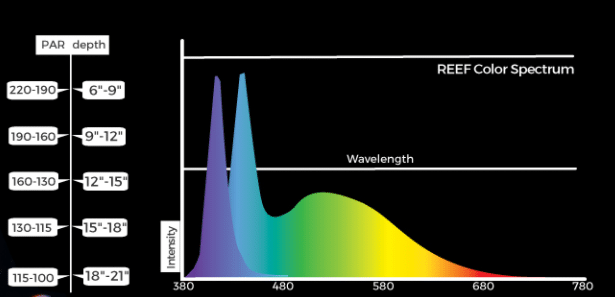
    What is a good schedule for a reef tank?

    For a reef tank, I’d recommend 8-10 hours on your lighting schedule to start. You can adjust from there as you get a feel for your tank. Systems with ramp up and ramp down features can be turned on longer since the intensity will very over the course of the day.
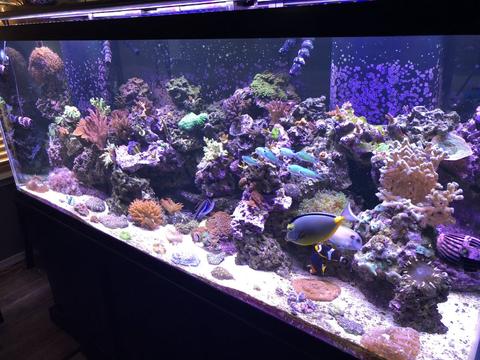
    Closing Thoughts

    Coral bleaching from bad lighting is irreversible. Once a coral bleaches and expels its zooxanthellae, you’re in recovery mode, hoping it re-populates before the tissue dies. Most of the time it doesn’t. That’s not a recoverable mistake you learn from and move on. That’s a dead coral and a hundred dollars you’ll never get back.

    Buy the right light the first time. Match it to what you’re actually keeping, not what you think you might keep someday. If you’re running a soft coral and mushroom reef, a mid-tier controllable LED handles it fine. If you’re going SPS-dominant, the Neptune Sky or a hybrid setup with the Aquatic Life T5 frame is where I’d put my money.

    Start at 30% intensity. Ramp up slowly. Use a PAR meter if you can. And read the reviews of people actually growing the coral you want, not just specs from a manufacturer who wants you to buy their fixture.

    Have a question about a specific setup? Drop it in the comments. I read every one.

    Mark Valderrama, AquariumStoreDepot

    What Do You Feel Are the Top Systems for These Tanks?

    I hope after this article you’re able to make an informed decision on what aquarium LED lighting system works best for the reef tank you’re planning. The major brand lights are all very high quality, built to last, and all have ideal spectrum to grow lights. The cheaper lights we have provided in this post will definitely grow corals and have high quality spectrum, just not as functional as the name brand lights. Please let us know in the comments your thoughts about what lights have worked for you. Happy shopping :). 


    🔧 Want to learn more? This article is part of our complete Aquarium Equipment & Gear Guide. your ultimate resource for filters, heaters, lights, pumps, tanks, and more.