Tag: ReefKeeping

  • Algae Eaters – The 7 Best For Your Saltwater Tank

    Algae Eaters – The 7 Best For Your Saltwater Tank

    Saltwater algae control is a challenge I’ve dealt with across every phase of reef keeping, and having the right cleanup crew makes a genuine difference. I’ve tried most of the common saltwater algae eaters in my 125-gallon and know which ones actually earn their spot โ€” and which ones cause more trouble than they solve.

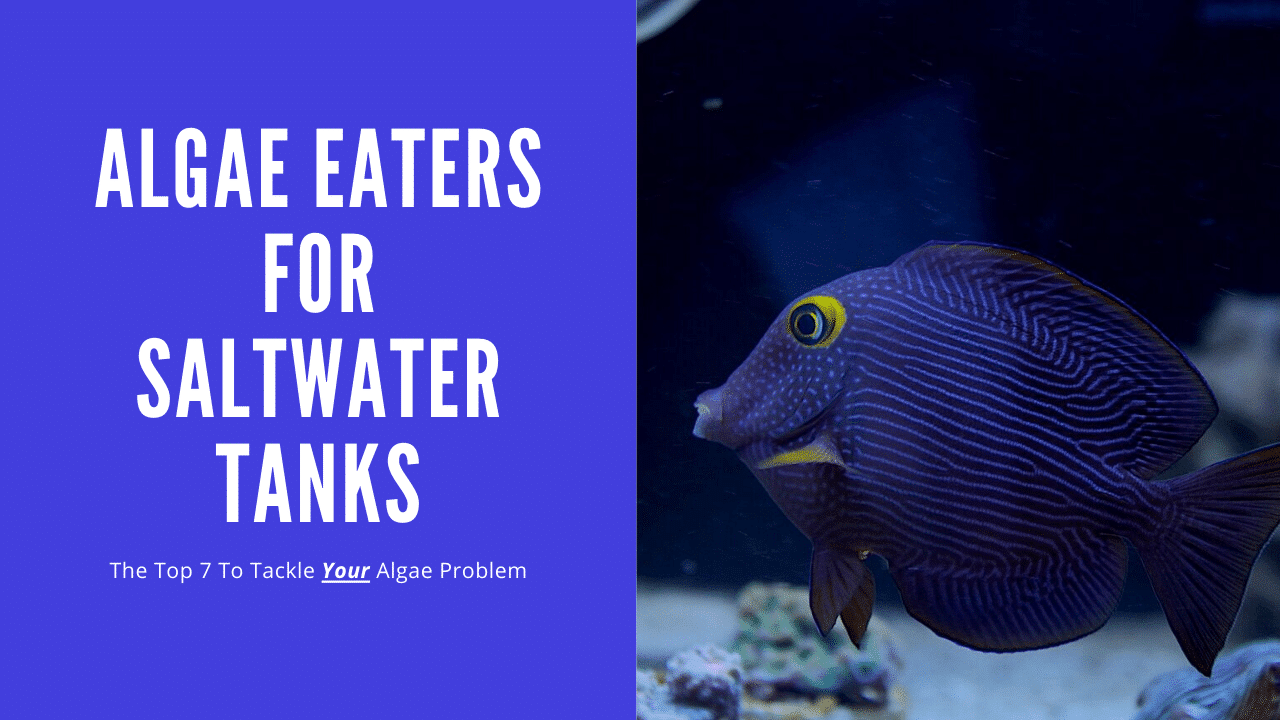
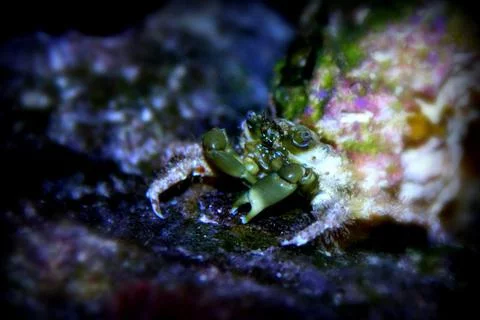
    Today’s post is about Algae eaters for your saltwater tank. Before we get into our list of 7 best, I want to talk about the 3 key steps in implementing an algae control system. When most people have an outbreak, the first thing one might do is buy livestock to fix the issue. However, livestock is not the fix, but actually the control. Livestock controls algae and prevention measures fix outbreaks. Knowing prevention, the types of algae, and how to combat them will ensure that you implement the right algae control measures in your tank 
    Algae Eaters

    Step 1 – Know How To Prevent Outbreaks

    The first step in controlling algae is preventative. Virtually all algae comes from the following sources:

    • Age of tank
    • Excessive Nutrients – Phosphates, Nitrates Silicates, TDS in source water
    • Poor lighting
    • Hitchhiked from live rock or coral purchases

    Age of tank is usually the first issue. If your tank is establishing or just got out of its cycle, it is very common to get nuisance algae. Usually this starts with diatoms and then moves to hair algae and red slime. You get outbreaks because your bacteria cycle is still maturing. As you perform proper maintenance, your nutrient levels should stabilize. Stay patient if you are a newcomer experiencing your first bloom 

    What Causes It?

    To answer the question about what does algae eat, let’s talk about excessive nutrients. The most common cause of Saltwater Aquarium algae outbreaks is poor source water. Water from the tap can be filled with silicates, phosphates, and nitrates that make nuisance algae thrive in your tank. Algae thrives no this nutrients as this is their food source and they will grow to consume these nutrients in your tank. These nutrients will then get “trapped” in the algae, meaning you will not be able to remove these nutrients out the system until you remove both the algae and the source of these nutrients.

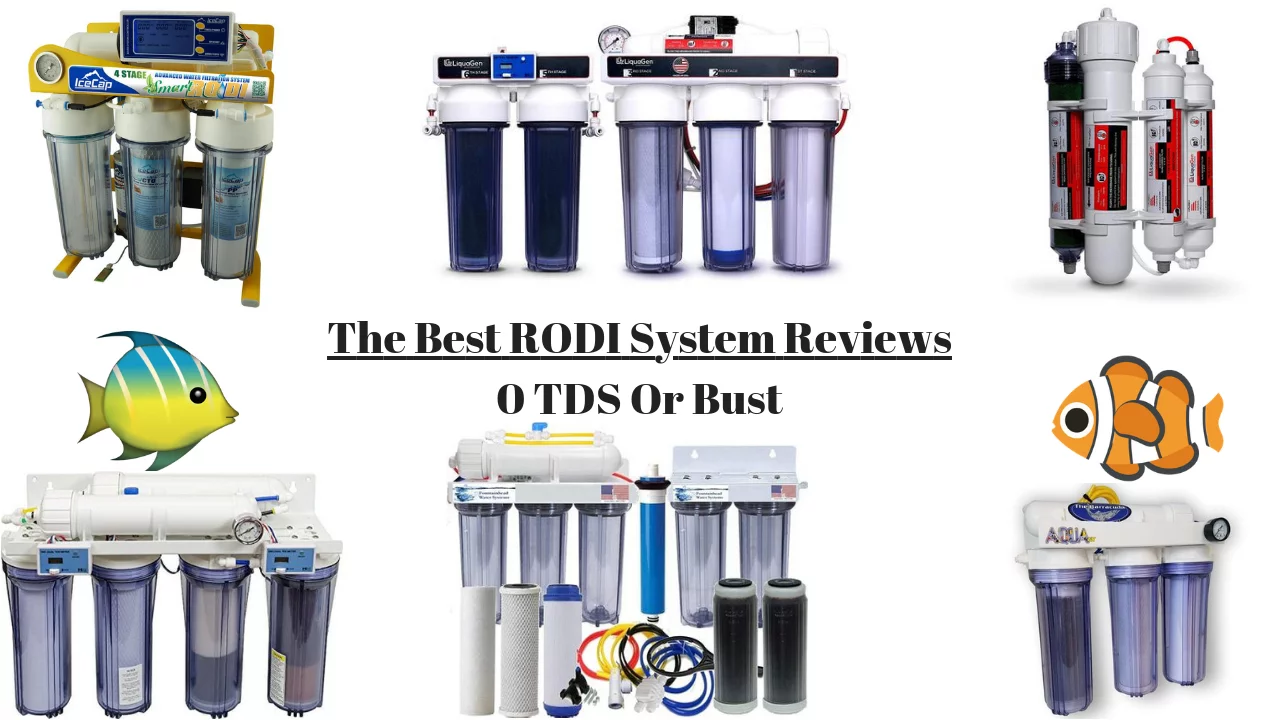
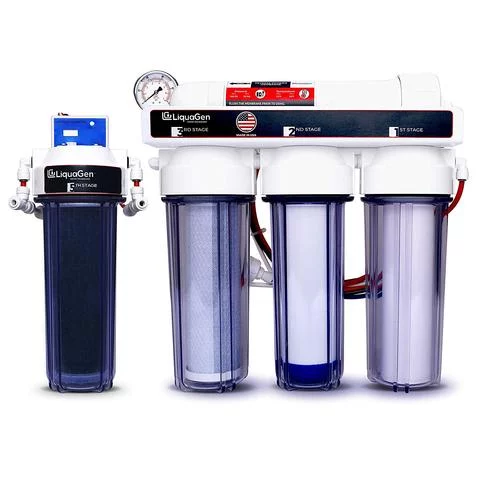
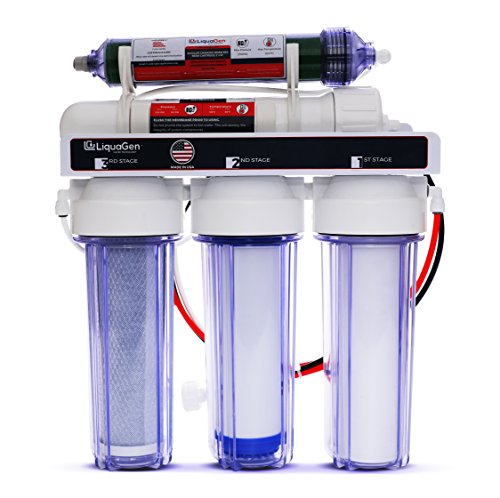
    After learning about the age of the tank, the second question I also ask hobbyist when they have an outbreak is where their source water is coming from. If you are not using an RODI System ((Please note, this post includes affiliate links for which I may make a small commission at no extra cost to you should you make a purchase), you will have outbreaks unless your source water is very pure. Even with an RODI system, one can still have outbreaks and sometimes this is due to not replacing your RODI parts timely.
    Best Value
    LiquaGen – 5-Stage RODI

    Best Value

    A complete 5 stage RODI unit without the excessive price

    Buy On Amazon

    This brings us to the next part with nutrient control – maintenance. You need to have a proper maintenance schedule in order to prevent high nutrient levels. This means water changes, cleaning equipment, changing light bulbs if you use T5 fluorescent lighting, having a proper protein skimmer, and not overfeeding or overstocking your tank.

    Poor lighting is another factor that is usually fixed easily. This is common with T5 fluorescent lighting as the spectrum and intensity degrades as the lights age. If you have older bulbs, you should replace them with fresh bulbs. If you have a light fixture that does not produce the correct spectrum, you should consider getting an appropriate reef light.

    Hitchhiking algae is our last culprit. Macroalgae, Byropsis, and Macro Algae are usually the types of algae that make their way through Hitchhiking. You can avoid most of these issues by investing in dry rock instead of live rock. This leaves corals as your only source of introduction. You can limit your exposure by purchasing frags, inspecting corals before purchase, and only purchasing from reputable local or online stores.

    Dry Rock

    This dry rock from ARC reef is mined from the Earth and is completely eco-friendly

    Buy On Amazon

    Prevention is the first step in algae control. Our next stop is knowing your algae.

    Step 2 – Know What Type You Are Dealing With

    When combating algae, you need to know what type of algae you are dealing with, how they come about, and how to limit or eliminate them. I will be going over the following algae below:

    • Diatoms
    • Dinoflagellates
    • Film Algae
    • Red Slime (Cyanobacteria)
    • Hair Algae
    • Bubble Algae
    • Bryopsis Algae 
    • Calerpa Algae

    Diatoms

    Diatoms

    Diatoms are brown algae that usually appear when a tank has just completed its cycle. They can cover sand, rocks, pumps, glass…pretty much everything. They are unsightly, but harmless in your tank. Diatoms feed off silicates. You can prevent silicate by using an RODI system and keeping up with the maintenance. Even with proper maintenance though, they can still appear via additives, salt mixes, or using improper sand. 

    Film
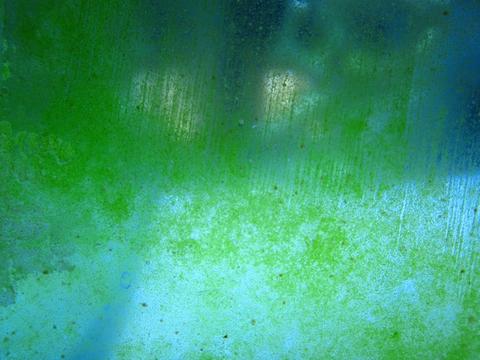
    This is a common algae in a tank that grows due to nutrients in the tank. They are not harmful, just unsightly and easily removed manually or eaten by algae eaters.

    Dinoflagellates
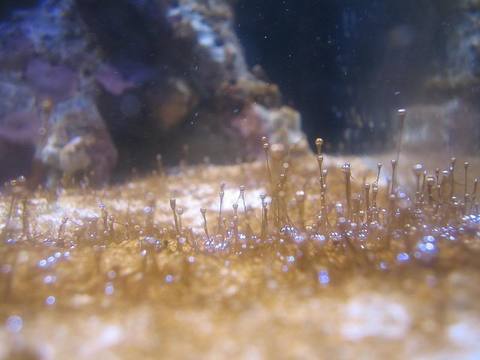
    Dinoflagellates

    Also known as brown slime algae. This type of algae is some nasty stuff. They release toxins, will kill sensitive inverts like snails, and will feed off what they kill. Eliminating them in the tank requires a mult-prong approach involving granular activated carbon, black out periods, raising pH, reduced feedings, and manual removal. It’s not an outbreak to be taken lightly. More on How To Get Rid of Dinoflagellates.

    Red Slime (Cyanobacteria)
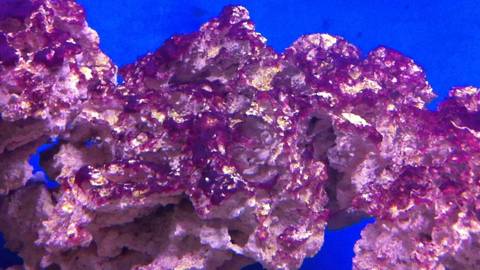
    Cyanobacteria

    Often called algae, this is actually bacteria. Cyanobacteria is another common nuisance that pops up in a newer tank. While not harmful to fish, they are harmful to corals – especially soft corals. It is something that will always been present in your system. It is all about nutrient control with Cyano. The key parameters to control are phosphate (below 0.05 ppm) and nitrates (below 10 ppm). Nutrients can be locked in the red slime, so a common frustration point with reefers is their parameters test well, but the cyano is holding the nutrients until they are removed.

    Other factors are lighting and low flow. Redirect power heads and wavemakers or add more to eliminate dead spots. If the tank is overtaken, you can manually remove by siphoning the cyanobacteria. Chemical options would include using Chemi-Clean ,which can be used as a good way of wiping out Cyano while address the long-term issue.

    Treats Cyanobacteria
    Chemi-Clean

    This solution from Boyd Enterprises efficiently treats cyanobacteria outbreaks

    Buy On Amazon Buy On Petco

    Hair

    Hair Algae

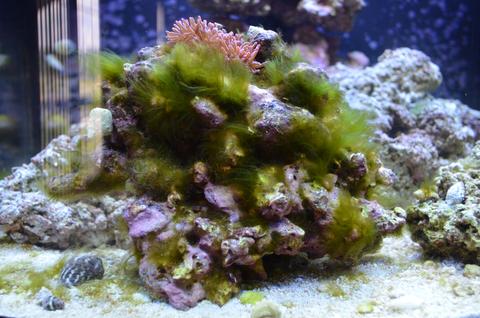
    Hair Algae is an algae that thrives on nutrients. Having high phosphates and nitrates will cause this algae to thrive. Like Cyanobacteria, it can always be present in the tank, but can be controlled and virtually eliminated with good maintenance practices and algae eaters. You can also purposely grow in a container filtration unit like an Algae Scrubber where it can be used to keep phosphates and nitrates low and pH stable at night.

    Bubble
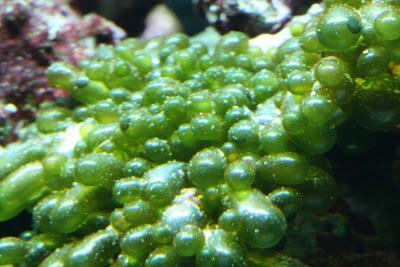
    Bubble Algae

    Bubble algae is usually introduced in the tank as a hitchhiker from either purchased live rock or corals. The best way to prevent it is to carefully inspect all of your rock or coral purchases for this hitchhiker. If you do end up with bubble algae, work to eliminate it early. You can manually remove it (but be careful about popping the bubbles or you will have it reproduce everywhere) or enlist algae eaters that specialize in eating this algae.

    Bryopsis
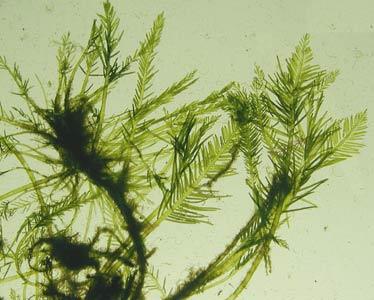
    Bryopsis Algae

    Bryopsis Algae is a fern-like algae that usually gets introduced in your aquarium from live rock or purchased corals. It is very difficult to get rid of and there are all sorts of horror stories about this algae. This is an algae unfortunately that many algae eaters will not touch.

    The best way to get rid of it is to raise your magnesium levels using a supplement like Kent Marine Tech M. You would want to increase your magnesium to the 1500 levels gradually over a week and keep it consistent until the Bryopsis is wiped out.  

    Kent Marine Magnesium

    Kent Marine Magnesium is a safe, high-quality ionically balanced magnesium supplement that supports both the health of your coral reef inhabitants and the growth of healthy corals.

    Buy On Amazon

    Calerpa

    Caulerpa Racemosa Algae

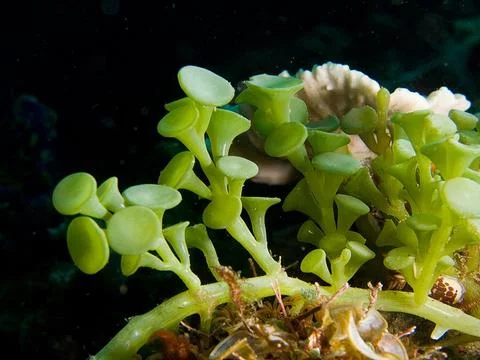
    Calerpa Algae is another algae that finds its way to your tank as a hitchhiker. It is another algae that is difficult to get rid of, but there are algae eaters that will happily eat away at this algae. If it has over taken your tank, it is best to manually remove what you can and then implement the help of an algae eating crew to keep it contained. This algae, like many others on this list thrive on nutrients so keeping phosphates and nitrates low will limit its growth rate.

    Chaetomorpha
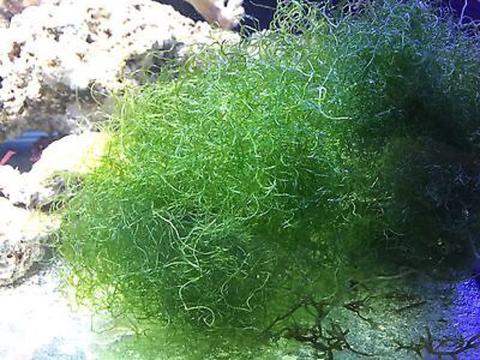
    chaetomorpha algae

    Chaetomorpha Algae is a single celled algae that is actually used as a beneficial type of algae in many saltwater aquarium setups. While not considered a nuisance algae, I listed this on here to saw that not all algae is bad algae. Chaetomorpha algae is usually placed in a sump and grown in a separate section of the sump to help control nitrates and phosphates.

    While it is fine in a sump, they do happen to hitch hike in the display aquarium when you purchase corals or live rock. They can quick grow out of hand if they grow in your display tank if there is nothing in the tank to eat it and may require manual removal to keep it in check.

    Step 3 – Add Them To Your Aquarium

    We have gone through preventative measures and identification. Since algae is always present in our systems, you should implement some algae eaters to control the algae that does make itself present. Step 1 and 2 were guides on how to prevent an outbreak. Step 3 is about how to implement the best crew to control the algae that does show up. Check out our video from our YouTube channel.

    Below are the list of my recommended algae eaters:

    The Top 7 Control Livestock for Saltwater Tanks

    Let’s go into further detail about each algae eater. Below is a short description of each of your crew member candidates.

    ImageNameTypeLink
    Nassarius Snail Nassarius Snail

    Diatoms

    Click For Best PriceBuy on SWF.com
    Cerith Snail Cerith Snail

    Cyano, Hair, Film

    Click For Best PriceBuy on SWF.com
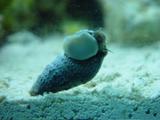
    Mexican Turbo Snail Mexican Turbo Snail

    Cyano, Diatoms, Film, Macro Algae

    Click For Best PriceBuy on SWF.com
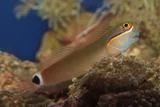
    Tailspot Blenny Tailspot Blenny

    Film, Hair

    Click For Best Price
    Kole Tang Kole Tang

    Film

    Click For Best Price
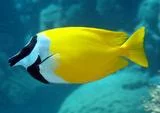
    FoxFace FoxFace

    Hair, Macro Algae

    Click For Best Price
    Emerald Crab Emerald Crab

    Bubble, Hair

    Click For Best Price

    1. Nassarius Snail

    Best For Diatoms
    Nassarius Snail

    Best For Diatoms

    Nassarirus Snails excel at keeping your sandbed clean and algae free!

    Click For Best Price Buy on SWF.com

    Stats:

    • Temperament – Peaceful
    • Minimum Tank Size – 10 gallons
    • Size – 1/2″
    • Care Level – Easy 
    • Target Algae – Any nutrient reliant algae

    Contrary to belief, the Nassarius Snail does not directly eat algae. So why would it make this list? Because as we had discussed earlier, algae control is mostly about nutrient control. These are savaging snails that do an incredible job of eating detritus in the tank, keeping your nutrients in check, and algae at bay. They do most of their work in the sand, so they will only be compatible with tanks with a substrate. 

    2. Cerith Snails

    Small But Mighty!
    Cerith Snail

    A Workhorse Algae Eater

    Ceriths are small, but in large numbers do a great job at removing algae from rocks and glass

    Click For Best Price Buy From SWF.com

    Stats:

    • Temperament – Peaceful
    • Minimum Tank Size – Any
    • Size – 1″
    • Care Level – Easy
    • Target Algae – Cyano, Hair Algae, Film

    The Cerith Snail makes it to our honorable mention. Many reefers would put these to the top of their list, but I have it an honorable mention for a few reasons. The first is that they can reproduce in the aquarium and you can have dozens of snails in a short period of time. 

    The second is their size – they tend to be pretty small which can be a bad thing if they get sucked into your overflow box and cause some issues with plumbing.

    Aside from that though they are a great hybrid cleaner. They clean on the rock, glass, and sand. They all are most active at night so they tend to avoid getting eating by fish who like to snack on snails. Their small size makes them ideal for nano reef tanks. They are also dirt cheap to get in large qualities. Just check out this deal on 100 cerith snails.

    3. Mexican Turbo Snail

    Great For Larger Tanks!
    Mexican Turbo Snail

    A Work Horse Algae Eater

    Great for larger tanks, the Mexican Turbo Snail eats most types of algae in your aquarium

    Click For Best Price Buy From SWF.com

    Stats:

    • Temperament – Peaceful
    • Minimum Tank Size – 10 gallons
    • Size – 2″
    • Care Level – Easy 
    • Target Algae – Cyanobacteria, Diatoms, Film Algae, Macro Algae

    The Mexican Turbo Snail is the ultimate reef snail for larger tanks. It will mow down several types of nuisance algae, grow sizable, and have the ability to flip itself over. Its shell shape makes it difficult for crabs to eat it as well. It does not take many of these snails to establish a good clean up crew in a tank. Every reefer should consider these snails. The only downfall with them is they get large. For small saltwater aquariums, I would recommend you go with Ceriths instead.  

    4. TailSpot Blenny

    Great For Small Tanks
    Tailspot Blenny

    Great For Small Tanks

    Great personality and algae eater. The Tailspot Blenny is an entertaining addition to any saltwater tank.

    Click For Best Price

    Stats:

    • Temperament – Peaceful
    • Minimum Tank Size – 10 gallons
    • Size – 2 1/2″
    • Care Level – Easy 
    • Target Algae – Film Algae, Hair Algae

    Most hobbyists think about the lawnmower blenny when it comes to an algae eating blenny. I tend to shy away from the lawnmower primarily due to its max size of 5″. The Tailspot Blenny has all the algae eating characteristics of the lawnmower blenny but in a smaller, more colorful, and more peaceful package. They have great personalities and are a great addition to your tank.

    5. Kole Tang

    Great For Large Tanks
    Kole Tang

    A Hardy Tang

    Hardy and medium sized, the Kole Tang is great at removing film algae from rocks and glass

    Click For Best Price

    Stats:

    • Temperament – Semi-aggressive
    • Minimum Tank Size – 70 gallons
    • Size – 7″
    • Care Level – Moderate
    • Target Algae – Film Algae

    The Kole Tang makes our list for a few reasons. It is one of the smaller tangs you can put in your aquarium, which means that those with a medium sized tank can house them. They tend to be less aggressive in smaller aquariums than yellow, purple, or scopas tangs.

    Kole tangs will eat film algae though in some cases will eat hair and macro algae. For those with larger tanks, a yellow tang or a foxface/rabbitfish would be a viable candidate for hair and macro algae. If you have a much larger tank mixing both a bristle tooth tang like a Kole and a zebra species tang or foxface/rabbitfish make for a solid algae control team.

    6. Foxface

    Hair Algae Specialist
    Foxface

    Hair Algae Specialist

    Hardy, peaceful and full of personality – the Foxface is a wondering addition to any tank.

    Click For Best Price

    Stats:

    • Temperament – Semi-aggressive
    • Minimum Tank Size – 75 gallons
    • Size – 8″
    • Care Level – Moderate
    • Target Algae – Hair, Macro Algae

    The best companion for an algae destroying fish duo is a Kole Tang and Foxface. The Foxface is an amazing algae eater in saltwater aquariums. They will chew up any hair algae in the aquarium and will happily eat most macro algae. Combining them with a Kole tang covers more algae you will face in a saltwater tank. It is also one of the most the hardy herbivores you can purchase for a saltwater aquarium. Their thick slime coats make them very resistant to ich and bacterial infections.

    There are some significant drawbacks with a Foxface however. The main one is they are venomenous. They have spikes that can leave a nasty sting, though not as dangerous as a lionfish or scorpion fish. They get pretty large at 8″ and grow very fast. They also can develop a taste for some corals and inverts – specifically clams. If a Foxface gives you pause, a Scopas Tang could be a good alternative. A Scopas is the most hardy Zebrasoma species tang you can buy. 

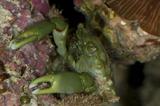
    7. Emerald Crab

    Bubble Algae Destroyer
    Emerald Crab

    Bubble Algae Destroyer

    The emerald crab is a great scavenger and bubble algae eater

    Click For Best Price

    Stats:

    • Temperament – Semi-aggressive
    • Minimum Tank Size – 10 gallons
    • Size – 2 1/2″
    • Care Level – Easy
    • Target Algae – Bubble Algae, Hair Algae, controls nutrient reliant algae

    The emerald crab is well known for eating bubble algae. It is a scavenger that will feed on uneaten foods and many types of nuisance algae. They are generally a peaceful invert, but can become an opportunistic eater if food sources are low. This invert should be part of any clean up crew in a reef tank. If you are going to get an emerald crab, ensure that your crab is guaranteed to eat bubble algae.

    There are some clean-up crew sellers out there that guarantee their crabs will do so, and those are the ones you want. You will also want to make sure you purchase a female as they are typically less aggressive than males. A picture is shown below so you can tell the difference:
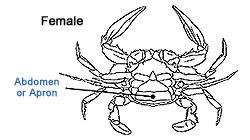
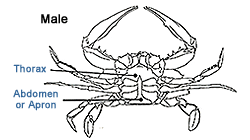
    Emerald Crab Male vs Female
    Male Emerald Crab

    Which Have You Used?

    So that’s my list folks. These 7 aquatic animals I feel are the best algae control livestock you can add to your saltwater aquarium. If you want to go the equipment route, I would highly recommend an algae turf scrubber for controlling all types of nuisance algae growth.

    Did I miss any of your favorites in the list above? Share what I missed in the comments below and please share this post with others if you found it helpful. Thanks for reading!
  • Damselfish – Yes, Sane Damsels Do Exist!

    Damselfish – Yes, Sane Damsels Do Exist!

    Damselfish have a reputation problem โ€” and honestly, some of it is deserved. But after 25 years in the saltwater hobby, I’ve kept enough species to know that lumping all damsels together is a mistake. A handful of species are genuinely peaceful enough for community reef tanks, and knowing which ones can save you from the nightmare scenarios most reefers associate with the group.

    Damselfish get a really bad rap in the saltwater aquarium hobby. They are highly aggressive, bite your hand if you put it in the tank, have been known to harass timid tank mates to death, and are a pain to remove if you have to take one out of your tank. Check out the video below from our YouTube Channel.

    So why would anyway ever consider a damsel for their fish tank let alone a reef tank? Well they are several:

    • They are an extremely hardy marine fish
    • They will eat just about anything you feed them
    • They have an exclusive blue color that is difficult to find 
    • They are small and do not require a large tank
    • They are reef safe when introduced correctly

    Back in the day before fishless cycling was common practice, the Damselfish was the fish you would use to cycle a saltwater tank because they could tolerate levels of ammonia, nitrite, and nitrates that would kill off many other saltwater fish. Of course, nowadays one should never consider cycling with damselfish.  However, they are extremely hardy in a tank and are a very forgiving fish for a novice.

    Damselfish will eat just about anything you feed them in the tank. They do not require a specialized diet and will do just fine with any food you buy them.

    Damselfish have a blue color that is very hard to find for a reef tank. Think about it for a second. How often have you thought about looking for a blue colored fish to compliment your coral reef tank setup?  Let’s think about likely candidates:

    • Blue Tang AKA “Dory” – Very large, susceptible to ich
    • Powder Blue Tang – Notoriously difficult to keep and best for experts
    • Mandarin Goby – Notoriously difficult to keep from starving to death and will devastate a micro-fauna population in a smaller tank
    • Large Angelfish – Not reef safe and get very large
    • Coral Beauty Angelfish – Hit or miss on reef safe; intermediate level fish
    • Blue Reef Chromis – The most suitable candidate, but get 5″ long and should be grouped

    Wow, that was pretty quick. So unless you have a large tank or pretty skilled at reefing already, your options are pretty limited for a blue fish.  

    Damsel fish - Yes, Sane Damsels Do Exist!

    Most Damsels stay very small. Only a few members get large and should be avoided for a community tank as they get very aggressive. Their compact size makes them attractive for smaller tanks, especially those under 75 gallons.

    Damselfish are reef safe, but have to be introduced in the correct manner. This means that you have to introduce them last and with the right tankmates, I’ll get into this in detail later in this article.

    So we have established the reasons why a Damselfish could be a good candidate for your saltwater aquarium, but we have all heard the horror stories of their aggressive nature. Is there such thing as a sane Damselfish?  The answer is – YES!

    Introducing the Chrysiptera Damselfish Species

    Scientific NameChrysipertera
    Common Name (Species)Damselfish
    FamilyPomacentridae
    OriginIndo Pacific
    DietOmnivore
    Care LevelEasy
    ActivityActive
    LifespanUsually to 10 years
    TempermentSemi-aggressive
    Tank LevelAll Areas
    Minimum Tank Size30 Gallons
    Temperature Range73 โ€“ 81 Degrees F
    pH Range8.1 – 8.4
    Filtration/Flow RateAll
    Water TypeSaltwater
    BreedingEgg-layers, Difficult to breed
    CompatibilitySemi-Aggressive tanks
    Ok, For Reef Tanks?Yes
    Ok, For Inverts?Mostly Yes

    These Damsels comes from the family pomacentridae and hail from the indo Pacific. There is a genus in the Damselfish family called Chrysiperta. They are just as pretty as other other Damsel relatives but far more peaceful. They will bring the lively nature and action of Damsels without the aggressiveness.

    I will break down 4 of the more colorful Chrysiperta Damsels that fit the exclusive Damsel blue that many hobbyist love:

    • Azure Damsel
    • Starck’s Damsel
    • Yellow-Tail Damsel
    • Springer’s Damsel


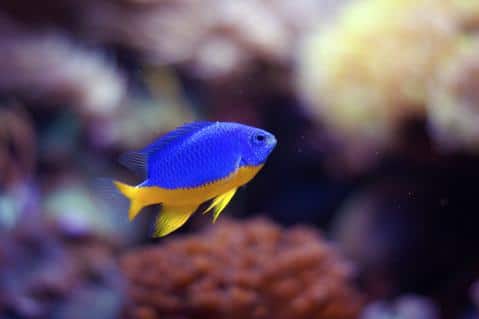
    Azure Damsel
    Azure – Tank Bred and tame

    Max Size – 3″
    Minimum Tank Size – 30 gallons

    The Azure damselfish species is the most mild-mannered of the group. It has a wonderful disposition in the group and has rarely caused disruptions in aquariums. It is the best Damselfish to choose if you are considering one that is blue. In larger tanks, they have been kept in groups. It is as of the date of this post, the only Damselfish of the 4 that is available as tank bred.

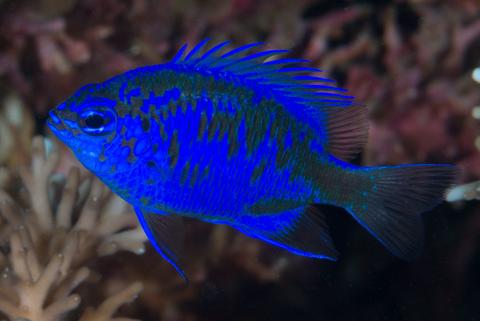
    Starck's Damsel

    Starck’s – The Beauty of the Group

    Max Size – 4″
    Minimum Tank Size – 30 gallons

    The Starck is more aggressive than the Azure but still far less than many other Damsels. It has a brilliant blue body with a broad yellow band running along the top. It can almost pass as an Angelfish to a layperson’s eye. Unfortunately the Starck’s Damsel is a hard Damselfish to find usually available part of the year and commanding a price tag equivalent to Dwarf Angelfish like Flame Angels.

    Yellow Tail Damsel

    Yellow Tail – The “Dory” Substitute

    Max Size – 3″
    Minimum Tank Size – 30 gallons

    This is the most aggressive of the four and has the most horror stories behind it. It’s on the list for two reasons. First, many of the stories I have seen have been involving timid saltwater fish or where the yellow tail was placed in first and established its territory. Both are incorrect ways on how to introduce a Damselfish. Second, the its yellow tail fin and color is often mistaken as a “Baby Dory” by children and with it’s hardiness can withstand a novice hobbyist or parent purchasing a “Dory” (AKA Blue Tang) for their children.

    I personally have recommend this marine fish to potential Blue Hippo Tang buyers along with a lot of education about the care and maintenance required to successfully keep saltwater fish. The suggestion was so common, that I actually was interviewed by the Huffington Post about my experience with this aquarium fish.

    Springer’s – The Coral Pest Slayer

    Max Size – 3″
    Minimum Tank Size – 30 gallons

    Springer's Damsel

    Of all the damsels on this list, the Springer’s Damsel offers pest control abilities. This Indo Pacific fish is well known for wiping out flatworms in a reef tank, their ability to wipe out pests have been compared with Wrasses like Six-line and Malnanrus Wrasses. The great thing about a Springer’s damsel is they are just as docile as Azures so you can get a small pest control fish without the attitude of a Six-line Wrasse in a small system! In a smaller system they cannot be beat for pest control. Keep in mind though as they mature they will look at your hands as threats to their territory and will likely attack your hands!

    So I have outlined the four best Damselfish. Now let’s break down the best practices for adding a Damsel to your tank.

    Best Practices for Adding Them

    I’m going to break this done into 3 parts:

    • Introduce them last
    • Have other semi-aggressive fish in the tank
    • Have lots of rockwork

    Damselfish are often going to be the most aggressive marine fish you will add to your tank. Because of this, you need to introduce them last into your tank where territory has already been established by your other tankmates. This will prevent your damsel from becoming the alpha fish in your tank.

    Semi-aggressive fish need to be in the tank in order to be successful in the tank. If you have timid tank mates like firefish, damsels should be avoided. Here is a quick list of semi-aggressive fish that suit a damsel’s nature:

    • Tangs
    • Dwarf Angelfish
    • Clownfish
    • Dottybacks
    • Basslets like the Royal Gramma
    • Semi-Aggressive wrasses like Malnarus. Caution with flasher wrasses
    • Bottom Dwelling Gobies

    Rockwork is the third factor on our list. You are likely going to have a lot of rockwork if you have a reef aquarium so you will likely be okay. This is mostly a consideration if you have a fish-only setup.

    When selecting damselfish for your aquarium, you pretty much wonโ€™t go wrong with these guys if youโ€™re looking for a community setup. Just make sure you have a tank that is suited for the species of fish you are getting, add them last, and pay attention to tankmates.

    Care Guide

    The damselfish on this list, with the exception of the Starcki Damsel, will grow to about 2-3 inches in length. The Starcki will be a bit bigger topping out at 4 inches. Give their more aggressive nature, it is best to keep them in a 30 gallon aquarium or larger with length being a major factor as damsels tend to claim an area of the tank as their own.

    Water temperature should remain at 73 to 81 Fahrenheit, which pH levels at 8.1 to 8.4 and salinity at 1.020 – 1.026. Open spaces are ideal for them as damsels are open swimmers. The rocks you keep in the tank should have plenty of hiding places to reduce aggression.

    Best Food For Them

    What makes damselfish great in saltwater tanks is that they tend to not be very picky eaters, but doesn’t mean that you should just feed the first fish food you find at the grocery store! Damselfish should be offered a complete diet. Let’s talk about the hierarchy of saltwater aquarium food.

    • Best – Fresh/Raw Food, Enriched Frozen Food
    • Better – Fried Dried + Nutrient Soaked Food
    • Good – Enriched Flake/Pellet Food

    The Best Frozen Food for Them – LRS Nano

    There are not many of us in this hobby who will go make fresh seafood for our marine fish. There are videos available on how to do this, but I’m going to assume it’s just not realistic for you to make your own. It’s a pretty smelly process! The next best option would be live black worms if you can somehow get it locally and grow a culture, but again your significant other may not be a fan of you keeping worms around the house or in the fridge ;-).

    So this brings us to frozen food. Without a doubt, LRS Nano frozen is the best frozen food you can get on the market. It is only available at your local fish store so if you are fortunate to have a store that carries it buy it today! The rest of the items are available online with Amazon (Affiliate Links Below) being the best way to get them quickly.

    The Best Freeze Died Food for Them – Fried Dried California Blackworms + Selcon

    California black worms have been praised by long-term reefers as a great source of nutrition and the most pickiest of fish will eat them. At least for the live black worms, but as I stated before live is tough to get and this is the next best thing you can get at a reasonable price. These freeze dried California black worms are ready to go for your Damselfish to eat 

    It is highly recommended to soak them in Selcon prior to feeding. The great thing about freeze dried food is they take vitamin soaks like Selcon very well so you know your fish are getting a vitamin rich diet!

    Selcon

    A vitamin enhancer that works great in freeze dried and frozen foods. A great choice to boost nutrition in brine shrimp, mysis, and blackworms

    Buy On Amazon Click For Best Price

    The Best Flake Food for Them – Cobalt Aquatics Marine Omni Flake Food

    While you can make a very good case for pellet food, in our experience damselfish have an easier time eating flake food given their smaller mouths. Pellets are a more appropriate food for their large cousins, Clownfish. What makes Cobalt Aquatics Marine Omni Flakes stand out is their food contains probiotics. The mix of the flake is also very comprehensive containing highly quality ingredients like squid, spirulina, plankton, krill, and mussel. The product is made in the USA and it’s highly palatable formula are great for finicky eaters and avoids the digestion/nutrition issue common with low quality flake foods.

    Contains Probiotics!
    Cobalt Aquatics Marine Omni Flakes

    One of the better flake foods available for marine fish today

    Buy On Amazon Buy On Chewy

    Are You Ready?

    Contrary to common belief that all Damsels are evil, we have listed several damselfish that are compatible in a reef community tank. As long as you add them last and pick the correct species of fish to mix them with, you should have a little blue marine fish that you can enjoy! Thanks for reading!


    ๐Ÿ“˜ Want to learn more? This article is part of our complete Saltwater Fish & Reef Guide โ€” your ultimate resource for marine fish, coral care, reef setup, and more.

  • Best Reef Safe Fish – Top 11 (That Won’t Eat Corals)

    Best Reef Safe Fish – Top 11 (That Won’t Eat Corals)

    When going to a local fish store (LFS), it can be always tempting to impulse buy a fancy looking fish that you have never seen or heard of before.  Listed below are best reef safe fish fish that are best suited for virtually any community and reef setup.  Equipment is important for this hobby, but proper fish selection is critical for success.  I always would find it frustrating to see LFS sell fish that are for advanced fish keepers or not suited to the tank of the buyer (*cough* Tangs).  In a later post, I will go through the top 10 saltwater aquarium fish you should avoid.

    My Criteria For Selecting These Fish

    The fish on my list selected using the following criteria:

    1. Does not require a large tank (more than 4 feet tank)
    2. Well known for being reef safe (won’t nip at corals)
    3. Not overly aggressive (e.g. – Damsels)
    4. Hardy fish or fish that is available as tank bred
    5. Does not require a specialized diet 

    Reef Safe Fish For Everyone

    Here are our candidates. I’ll go over more details below. This is a quick reference point for you.

    In a hurry? I recommend Tank Raised Clownfish for any reef tank!

    PictureNameMinimum Tank SizeLink
    Editor’s Choice
    Tank Raised Clownfish
    Tank Raised Clownfish

    20 Gallons

    Click For Best Price
    Banggai Cardinal Banggai Cardinal

    30 Gallons

    Click For Best Price
    Orchid Dottyback Orchid Dottyback

    30 Gallons

    Click For Best Price
    Royal Gramma Royal Gramma

    30 Gallons

    Click For Best Price
    Blue Green Chromis Blue Green Chromis

    30 Gallons

    Click For Best Price
    Firefish Firefish

    30 Gallons

    Click For Best Price
    Six Line Wrasse Six Line Wrasse

    30 Gallons

    Click For Best Price
    Watchman Goby Watchman Goby

    30 Gallons

    Click For Best Price
    Midas Blenny Midas Blenny

    30 Gallons

    Click For Best Price
    McCosker's Wrasse McCosker’s Wrasse

    55 Gallons

    Click For Best Price
    Azure Damselfish Azure Damselfish

    30 Gallons

    Click For Best Price

    The Top 11 For Any Saltwater Aquarium (2023 Update)

    Let’s dive into each fish and their profiles. These reef aquarium fishes will be suitable for virtually any saltwater aquarium.

    1. Tank Raised Clownfish (Ocellaris or Percula Species)

    Editor’s Choice
    Tank Raised Clownfish

    Best Choice For Reef Tanks!

    Clownfish are hardy, full of personality, and are safe for all corals. They are an icon for any saltwater tank

    Click For Best Price Purchase ORA Clownfish

    Stats:

    • Minimum Tank Size – 20 Gallons
    • Max Size – 3″
    • Temperament – Peaceful to Semi-Aggressive

    The Ocellaris clownfish is the industry’s most popular saltwater aquarium fish.  With the explosion of the tank raised fish industry, all sorts of designer clownfish are now available.  Ocellaris clownfish can be kept in pairs as long as you buy two when young or purchase one larger and one smaller.  They are known to spawn in captivity and will host corals. They are 100% reef safe and hardy fish  Quite simply, a reef tank is incomplete without a pair!

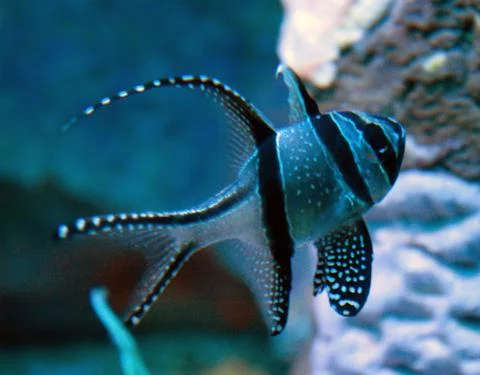
    2. Banggai Cardinalfish

    Peaceful Fish
    Banggai Cardinal

    A peaceful and easy going fish. They are very hardy and openly breed in aquariums. Available as tank bred

    Click For Best Price

    Stats:

    • Minimum Tank Size – 30 Gallons
    • Max Size – 3″
    • Temperament – Peaceful to Semi-Aggressive

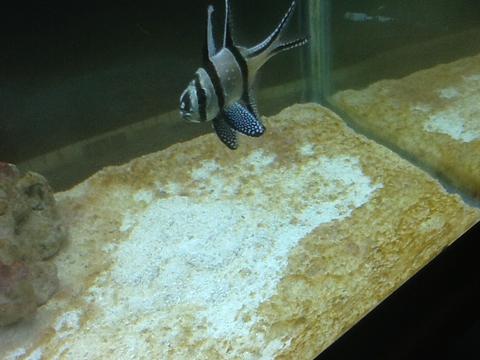
    Peaceful tank mates, great personality and striking black lines make up this iconic saltwater aquarium fish. They can also be kept in pairs, will spawn in captivity, and are very hardy.  The Banggai Cardinalfish is the poster child of how hobbyist, industry professionals, and scientists came together to support sustainable production of a marine species in captivity. They are excellent for reef tanks and will not bother any tank inhabitants or corals. They are ideal beginner saltwater fish. 

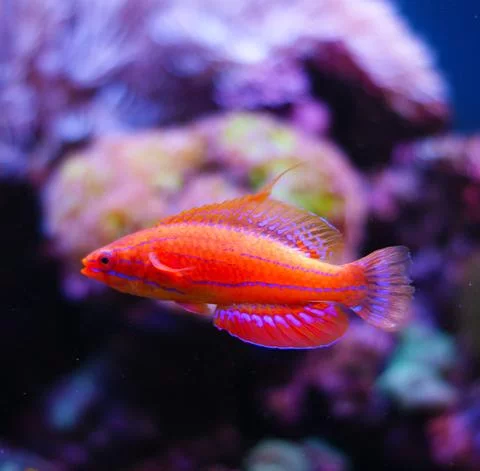
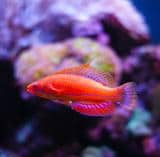
    3. Orchid Dottyback

    Orchid Dottyback

    Tank bred and very hardy. This is the most mild-mannered dottyback you can purchase

    Click For Best Price

    Stats:

    • Minimum Tank Size – 30 Gallons
    • Max Size – 3″
    • Temperament – Semi-Aggressive

    Yes, I know this is a bad picture–but the fish is awesome. Dottybacks in general get a bad rap.  This is mostly due to the fact that most dottybacks can channel their inner damsel and create havoc in your reef tank.

    Fortunately, the Orchid Dottyback is not one of those. They have a mild temper in a community reeftank and are the great tankmates.  It is not recommended to keep these in pairs unless you can purchase a mated pair.  There is no easy way to identify the differences between a male and female, and they do not change gender like clownfish.  Nevertheless, they are a great saltwater aquarium fish. They are reef safe and actually do a good job at eradicating bristle worms from an aquarium.

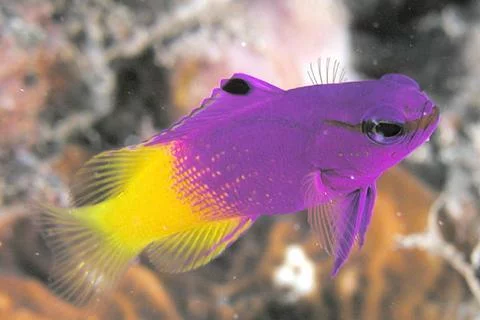
    4. Royal Gramma

    Royal Gamma

    Amazing colors and easy to care for. The royal gamma will not bother any coral or invert in your aquarium

    Click For Best Price

    Stats:

    • Minimum Tank Size – 30 Gallons
    • Max Size – 3″
    • Temperament – Semi-Aggressive

    A striking blend of colors and personality make up this beautiful saltwater aquarium fish.  The Royal Gramma will try to be the boss in your tank, but will generally be kept in check by clownfish, tangs, and angelfish.   They will be aggressive to similar bodied fish and their own kin.  You cannot keep both a Dottyback or Royal Gramma in the same reef aquarium so pick the one you prefer.  I lean towards to the Orchid Dottyback because they are available as tank bred. The Gramma is more mild mannered than the Orchid. They will not bother any corals

    5. Blue Green Chromis

    Blue Green Chromis

    A schooling reef fish. These are great in larger numbers to see their schooling nature

    Click For Best Price

    Stats:

    • Minimum Tank Size – 30 Gallons
    • Max Size – 3.5″
    • Temperament – Peaceful

    The Blue Green Chromis hardy long-lived saltwater fish that will school together.  They are the neon-tetra of saltwater aquarium fish. You cannot go wrong putting this fish in your tank.

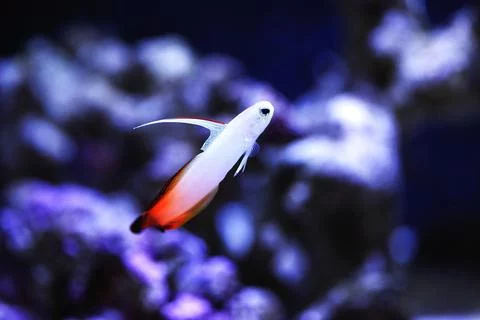
    6. Firefish

    Great For Nano Reefs
    Firefish

    Peaceful and great in smaller fish. Make sure your tank is covered. They are jumpers

    Click For Best Price

    Stats:

    • Minimum Tank Size – 10 Gallons
    • Max Size – 3″
    • Temperament – Peaceful

    The Firefish is the go to saltwater fish for nano tanks.  Peaceful, quiet, striking colors, and very hardy.  They can be kept in pairs and generally the pair will be together, but it is best to purchase them young to increase your chances of success.  

    They are timid fish that can be harassed by more aggressive tank mates. They are model citizens in a reef aquarium. They are safe for all corals and invertebrates.  

    7. Six Line Wrasse

    Great For Coral Pests
    Six Line Wrasse

    A coral pest eliminator that will not harm corals. They are on the aggressive side so add them last

    Click For Best Price

    Stats:

    • Minimum Tank Size – 30 Gallons
    • Max Size – 3″
    • Temperament – Semi-aggressive

    Wrasses are very active fish.  The Sixline Wrasse is no exception.  A reef safe and hardy saltwater aquarium fish.  The only downfall with this wrasse is they are a on the aggressive side and will harass easily intimidated fish.  It’s best to keep them with other semi-aggressive fish like clownfish and to add them last to avoid any tank drama. They do an amazing job at removing various pests from corals while still remaining reef safe. 

    8. Yellow Watchman Goby

    Great With Pistol Shrimps
    Watchman Goby

    A tank bred goby that has a symbiotic relationship with pistol shrimp. Hardy and won’t bother any corals

    Click For Best Price

    Stats:

    • Minimum Tank Size – 30 Gallons
    • Max Size – 3″
    • Temperament – Peaceful

    The Yellow Watchman Goby is considered one of the best saltwater aquarium fish for beginners.  They can be paired with a pistol shrimp and they two will form a pair.  If you are attempting a pair, ensure that you have at least a 2″ sand bed available and purchase a small shrimp like a candy cane shrimp.  Seeing the interaction with watchman goby and a pistol is a joy. The goby works to keep the shrimp safe which the shrimp does it’s work on the sand and gather food.

    If you decide not to pair them with a shrimp, they are still a great fish to have on their own and readily eat any prepared food

    9. Midas Blenny

    Midas Blenny

    A beautiful fish with a unique swimming style. They are excellent for any coral setup and are very active in the aquarium

    Click For Best Price

    Stats:

    • Minimum Tank Size – 30 Gallons
    • Max Size – 6″
    • Temperament – Peaceful

    The Midas Blenny is the perfect Blenny.  Colorful, great personality, and completely reef safe. Most hobbyist who have them state they are their favorite saltwater fish in the tank. They have no swim bladder so they are consistently moving and have an eel like look when swimming.

    10. McCosker’s Wrasse

    McCosker's Wrasse

    A lovely and peaceful community wrasse. The males like to flash their fins. They are 100% reef safe

    Click For Best Price

    Stats:

    • Minimum Tank Size – 55 Gallons
    • Max Size – 3″
    • Temperament – Peaceful

    The McCoosker’s Wrasse is only fish on the list that requires a tank larger than 3 feet.  It is generally encouraged to keep them in groups as the male will perform colorful displays to the females in the tank.  However, you will need to introduce the female first or introduce as a group.  They do change genders like clown fish.  

    They are one of lesser aggressive tank mates, so if you are going to keep them, make sure they are one of the first saltwater aquarium fish you put in your tank.  These wrasse fish are known to be jumpers so a cover is recommended. 

    11. Azure Damselfish

    A Sane Damselfish!
    Azure Damselfish

    The Safest Damsel For Reef Tanks

    Damsels get a bad rep. This one bunks the trend if introduced last. They are the least aggressive damsels you can add

    Click For Best Price

    Stats:

    • Minimum Tank Size – 30 Gallons
    • Max Size – 2.5″
    • Temperament – Semi-Aggressive

    Also known as the Kupang Damsel, this is easily the most controversial fish on my list. Here me out before you react though. Not all damselfish are horrible. You can check our damselfish article for more details about it. Among all the damels available in our hobby, the Azure is the best option for a community reef fish.

    They will still be careful considerations to be made to ensure you have success with their more aggressive nature. If you take the right steps, they make the cut on my list. You cannot have more than one of these per 18 inches of reef tank length as they will bully each other to death. They are great color additions as they contrast a number of reef aquarium fishes with their blue colors. They also look amazing under actinic reef lighting.  

    Honorable Mentions

    These fish could have made the list, but we ran out of room to talk about them in the article

    • Chalk bass – great fish, hard to find in stores
    • Swallowtail Angelfish – reef safe, moderate difficulty
    • Engineer Goby

    Fish To Avoid

    • Powder Blue Tang – Reef safe, but not hardy
    • Leopard Wrasse – Does bad in captivity
    • Mandarin Goby – Tends to strive in a tank unless it’s large and full of copepods
    • Maroon Clownfish – Aggressive as an adult

    What Does The Term Mean?

    You would be surprised being on this post how confusing this term can be. I’m going to define this for you so you can determine how best you want to build your reef.

    What Does It Mean In The Hobby?

    The general term reef safe means that the fish you purchase will not brother corals and other sensitive invertebrates. Because the general term means the fish won’t bother corals and inverts, you will get a lot of “with caution” in our trade. To help, Let’s break it down further with fish that won’t eat corals and fish that won’t eat inverts.

    The Ones That Won’t Eat Corals

    To me, this is what I define as reef safe to truly be. These fish will not eat corals and do not pose a danger to them. The following fish species are generally not going to eat corals:

    • Damselfish
    • Clownfish
    • Most tangs
    • Most blennies
    • Cardinalfish
    • Most wrasse fish
    • Gobies

    The Ones That Won’t Eat Corals, But Will Eat Inverts

    The list above are the usual fish species you will see listed as safe, but we can take it even further. These fish will not eat corals, but may pose a danger to inverts like shrimp and small fish.

    • Lionfish
    • Reef safe triggerfish
    • Marine bettas
    • Snowflake eels
    • Hawkfish
    • Hogfish
    • Groupers like the Miniatus

    Notice that our list got a lot bigger. Yes, you can get pretty creative when you open up your reef tank to fish that will eat inverts, but will not bother your corals. You will need a larger reef tank to house this fish, but you can add more color and more aggression to the tank with these choices. If you don’t believe me, check out this video by Robs Koi Pond. His snowflake eel is happily house in his reef tank.

    FAQS

    Which Ones Go Well With Corals?

    Generally any fish that does not have a taste for corals are your best bet. These types of fish would generally be damsels, clownfish, most tangs, blennies, cardinal fish, most wrasses, and gobies.

    Note when it comes to the term reef safe – there are two types. Reef safe meaning they will not eat corals and another classification meaning they will not eat inverts like crabs and shrimp like cleaner shrimp.

    Knowing this, there are some fish like Lionfish that will happily eat small fish and small inverts, but will not bother corals.

    Which Is The Most Peaceful Saltwater Species?

    Most blennies and gobies are considered the most peaceful saltwater fish you can buy. Cardinalfish are also a great choice. Some fairy wrasses are also considered timid and will not bother most fish.

    Which Is The Easiest Saltwater Species To Keep?

    In general, clownfish are going to be the easiest and least demanding fish you can keep in a saltwater aquarium. They are semi-aggressive, but are generally hardy and come tank bred. They are reef safe and are small enough to be comfortable in most saltwater tank sizes.

    What Are Your Recommendations?

    I created this list to help starters and I know I did exclude a few excellent choices.  What saltwater fish do you think make a great start for a saltwater aquarium newbie?  Share it with us in the comment section below or you can read more about our blog here.  I’m sure a lot of new and potential fish keepers would love to hear your feedback :).

    P.S. – Want more info on saltwater reef tanks? Check out my post title 55 saltwater reef tank words of wisdom

  • Best Overflow Boxes โ€“ Hang On Overflows vs. Drilled and Best to Buy 2026 Reviews

    Best Overflow Boxes โ€“ Hang On Overflows vs. Drilled and Best to Buy 2026 Reviews

    Choosing between a hang-on overflow box and a drilled tank is one of the first real decisions you make when setting up a sump-based system โ€” and it’s one I’ve thought about carefully on my own setups. A drilled tank is always my preference for reliability, but hang-on boxes have gotten significantly better and are a legitimate option when drilling isn’t possible. Here’s how to think through the choice and which products I’d actually recommend.

    For anyone who has a reef tank or freshwater tank where one is considering a cleaner setup, an overflow box is a major consideration. An overflow box is an entry point to setting up a sump. It filters out surface scum off the top of your aquarium and a properly installed overflow is a clean addition to your aquarium.

    There are many overflow boxes out in the market, so what is the best overflow box? In today’s post I will go over the types of overflow boxes, hang-on versus drilled overflow boxes, the best hang on overflow box and drilled overflow boxes, and how to install an overflow on your aquarium. I hope at the end of the article you will become more informed and less scared about installing an overflow to create a primer aquarium equipment system.

    Types of Overflow Boxes 

    There are generally three types of overflow boxes:

    • Internal Hang-On Overflow Boxes
    • Internal Built-In Overflow Boxes
    • External Overflow Boxes

    Internal hang-on overflow boxes are the simplest to install, but have the greatest risk of failure in your aquarium. The failure usually will occur with the loss siphon due to failure of the tubes, pump, or a power outage. They are usually the most affordable of the three and can be a good choice for those who do not want to drill their tank. The failure points of a hang-on overflow can be mitigated by building a larger sump.

    Internal built-in overflow boxes are what you will usually see with Reef Ready Systems like a Red Sea Reefer. They are integrated with the tank and usually are built with a Durso style system, which can operate with only one hole but do not have the silent features of a Bean Animal Overflow. It is possible to get a custom aquarium with a bean animal internal built-in overflow, but you will typically pay a lot more then going with an internal hang-on overflow or drilling your tank and getting an external overflow box.

    An external overflow box offer the most feature rich option on the market currently. You can easily find external overflow boxes with a bean animal setup and there are several models now that offer a slim overflow design, which leaves a very small footprint inside the aquarium. The main downfalls with an external overflow is that you cannot have a flush aquarium to the wall since the box will stick out, and you will have to drill your tank (or pay someone to drill your tank – more on that later in this post).

    The 3 Best Hang-On Overflow Box (2023 Reviews)

    While my recommendation would be to purchase an external overflow or consider a reef ready tank, there are many people reading this post who may not have this option. Below would be my recommendations for a hang-on overflow box:

    In a hurry? I recommend the CPR Overflow Box as a hang on option!

    Editor’s Choice!
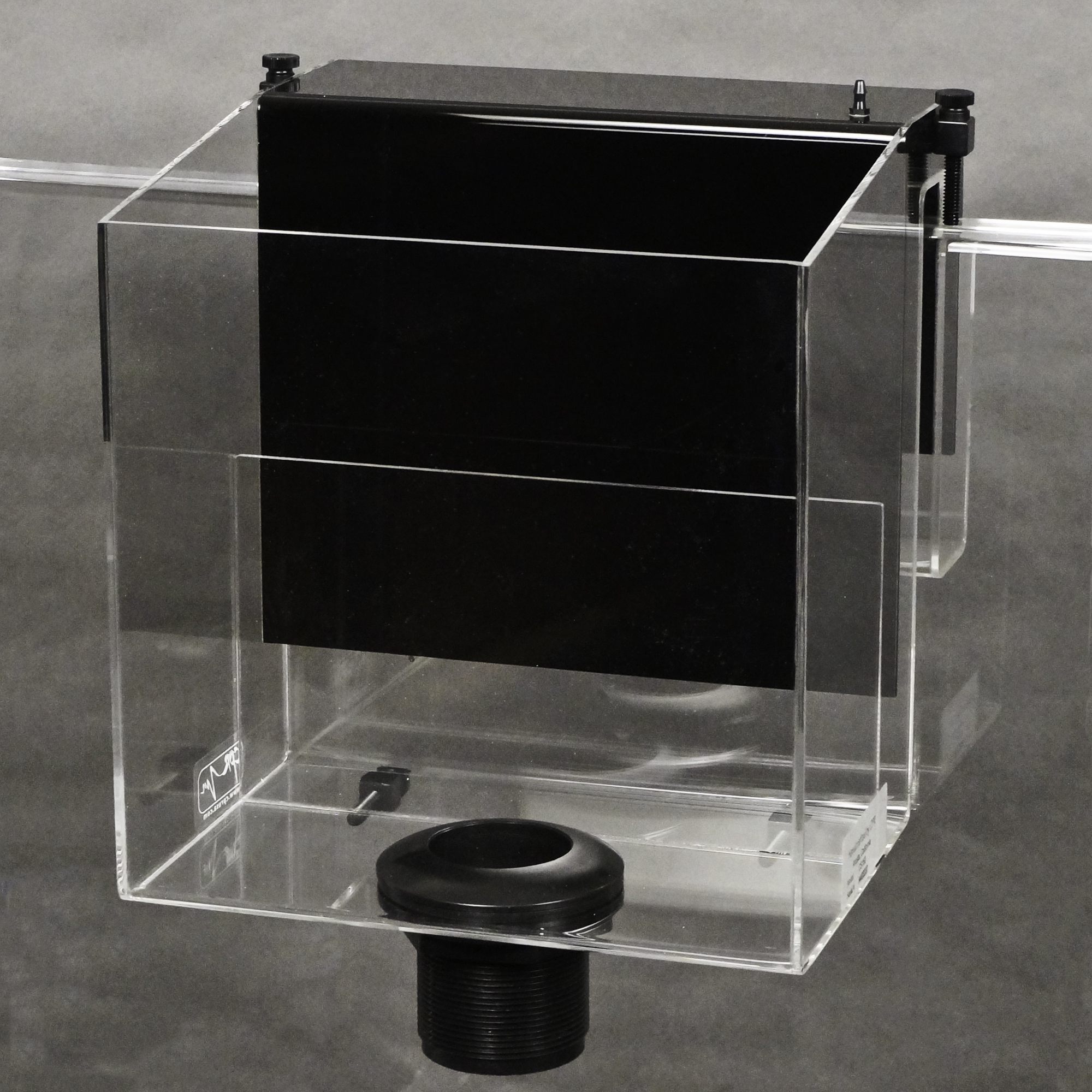
    CPR Overflow Box
    CPR Overflow Box
    • Adjustable Water Level
    • Failure Prevention Features
    Best Value
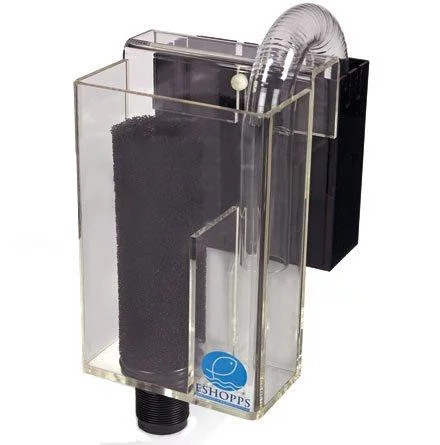
    EShoops Overflow Box
    EShoops Overflow Box
    • Brand
    Budget Option
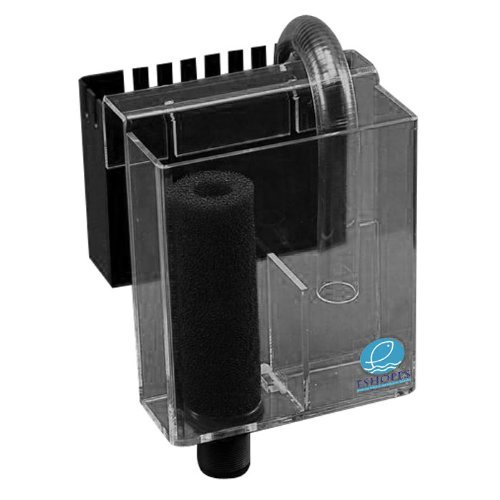
    Blue Ocean Overflow Box
    Blue Ocean Overflow Box
    • Great Price

    1. CPR – A Comprehensive External Unit With Failure Prevention Features

    Editor’s Choice
    CPR Overflow Box

    Best Hang On Overflow Box

    The CPR is known as the safest hang on overflow box to use. This is the best option if you are not able to drill your tank

    Click For Best Price Buy On Amazon

    CPR is brand name that longtime reefers know. They are a small private company that has been around for ages pioneering one of the first successful hang-on protein skimmers on the market, the CPR Bakpak. Their overflow is another very successful product. This external overflow box is a step up to the Eshopps overflow box as it includes failure prevention options such as installing an aqua lifter pump.

    The water level on the CPR Overflow Box can be adjusted on this overflow box allow you to modify the water level in your tank and it comes with a generous 1″ bulkhead with a pre-filter that can be used to prevent any clog from large inverts like snails. I highly recommend purchasing the aqua lifter pump for a full proof setup!

    Pros

    • Failure prevention features
    • Adjustable water level

    Cons

    • Internal part of the box is clear instead of black
    • Only one siphon & one drain
    • Need to buy aqua lifter pump separately

    2. Eshopps – The Budget Minded Solution

    Best Value
    Eshopps Overflow Box

    An easy to use, easy to install hang on overflow box

    Buy On Amazon

    We are going to talk about the Eshopps PF-800 for this review. This overflow box is made for aquariums 75-125 gallons in size. The black part of the overflow (the part that you can see in the tank) only measures 8″ x 2 1/4″ leaving a small footprint in the tank. It only has one siphon tube, but that tube measures 1.25″. It includes a pre-filter, which you can remove or keep on to prevent snails like clogging the pipe. It has nylon nuts so you can easily fasten to your tank. A lot of us who got started with sump filtration started with one of these and it has been unchanged for many years.

    Pros

    • Cheap
    • Black Internal box and small footprint

    Cons

    • No failure prevention features
    • Only one siphon & one drain

    3. Blue Ocean – For The Value Conscious Shopper

    Budget Option
    Blue Ocean Overflow Box

    Blue Ocean’s overflow is a budget friendly overflow box

    Buy On Amazon

    The Blue Ocean Overflow Box represents a value for overflow boxes. It doesn’t have the name recognition like Eshopps or CPR has, but it does offer similar features to the CPR as long as you purchase the optional power head. The drain is a ample 1″ bulkhead with a strainer equipped, which means you don’t need to add a pre-filter to the box.

    Pros

    • Cheap!
    • Strainer feature which means no prefilter needed

    Cons

    • Requires a power head vs. an air pump to prevent loss siphon
    • Clear overflow box

    The Top 3 (2021 Reviews)

    I have provided a number of recommended overflow boxes above for those not considering drilling a tank. For those who are considering drilling a tank, there are a few one external overflow boxes I go to.

    In a hurry? I recommend Fiji Overflow Boxes!

    Editor’s Choice!
    Fiji Cube Overflow Box
    Fiji Cube Overflow Box
    • Bean Animal
    • Very Quiet
    Best Value
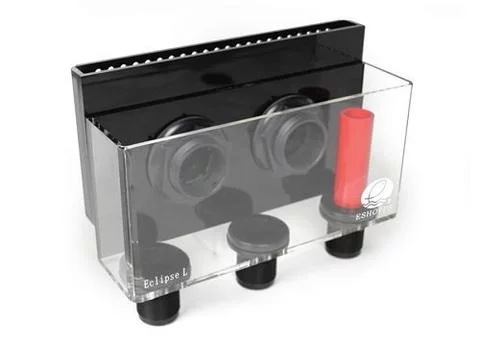
    EShopps Eclipse Overflow Box
    EShopps Eclipse Overflow Box
    • Brand
    Premium Pick
    Prodigy Slim Overflow Box
    Prodigy Slim Overflow Box
    • Slimmest Design

    1. Fiji Cube – A Cheaper And Better Option Than The Eshopps Eclipse!

    Editor’s Choice!
    Fiji Cube Overflow Box

    The Fiji Cube overflow is the best value and best choice for a bean animal external overflow box

    Buy On Amazon

    The Fiji Cube Overflow Box is the ideal design for an overflow box. The design has the overflow box lower so the water level in the overflow box can be adjusted to be super quiet. They are also offered in more sizes than the Eclipses with the smaller models being a Durso design, while the larger models offering a true bean animal design.

    Not only is the Fiji Cube overflow box have a superior design to the Eclipse, but it is also cheaper! Designed and made in Minnesota, Fiji Cube has been known for developing high quality tanks and sumps. This overflow box is another high quality product and worth a look if you want a slim overflow box.

    One word of caution with the Fiji is that the template is made for a rimless tank. For a rimmed tank, you will need to place the template INSIDE the tank and drill where the water line marker is ABOVE the plastic rim. This will result in the box being mounted inbetween the rim on some smaller tank installs. On small installs Iโ€™ve done, this required me to make my own gasket (1/4โ€ or 1/2โ€ depending on the install) to make the box fit even.

    Pros

    • Superior design and cheap for a slim overflow box!
    • Takes up very little space inside the aquarium
    • Kit comes complete with drill template, hole saw, and emergency drain piping

    Cons

    • You will need to drill the tank (or pay someone to do it)
    • More advanced setup knowledge required over hang-on overflows
    • Template is for rimless tanks 

    2. Eshopps Eclipse Slim – Bean Animal Unit at an Affordable Price!

    Best Value
    Eshopps Eclipse Overflow Box

    The best way to jump into a bean animal overflow system

    Buy On Amazon Click For Best Price

    The Eshopps Eclipse slim overflow boxes represent a great entry level into a bean animal setup. What makes a bean animal such a special overflow setup is that it covers multiple points of failure. The largest model has three drains, which will provide a complete full proof overflow design. The smaller models include two drains, but even that would be considered a pretty full proof setup.

    The other great feature about the the Eclipse overflow box is the slim external design. It takes up a very small footprint in the aquarium that won’t get in the way of aquascaping your tank. Finally, it comes with everything you need. It comes with the drill template, the hole saw, and even an emergency drain pipe ready to install!

    The main gripe with this overflow design is the box design itself. The slim overflow stands too high compared to the overflow box drain. This leads to a noisier overflow box than designed. Fortunately, our next overflow box on the list solves this issue!

    Pros

    • Full proof design
    • Slim overflow takes up little space inside the aquarium
    • Kit comes complete with drill template, hole saw, and emergency drain piping

    Cons

    • You will need to drill the tank (or pay someone to do it)
    • More advanced setup knowledge required over hang-on overflows
    • The overflow box can be too high compared to the drain box which makes it louder than it should be if you oversize the box

    3. Prodigy External – Limitless Potential

    Premium Pick
    Prodigy Slim Overflow

    The Thinnest Overflow Box Ever!

    With an overflow that is less than 1/3 of an inch thick, this product makes any coral aquascaper jump for joy!

    Click For Best Price

    The new Prodigy External Overflow Box is an adjustment breakthrough in overflow technology. When overflows first came out, they covered an entire section of an aquarium, cutting out valuable aquascaping space. Then we had the traditional overflow box, which left an ugly block in the middle of your tank. Then we move to the slim overflow, which is what the Eclipse and Fiji Cube represent.

    This new overflow box is the next generation of overflows. The overflow piece that goes to your display tank is only 8mm thick! That’s less than 1/3 of an inch. You can now get a bean animal overflow installed in your aquarium and have all the room for your aquascaping. I’m super excited the potential this product brings to our aquariums.

    It also allows you to adjust the overflow gate, giving you an easy option to adjust your box’s water flow level without having to reach into your sump and turn a gate value.

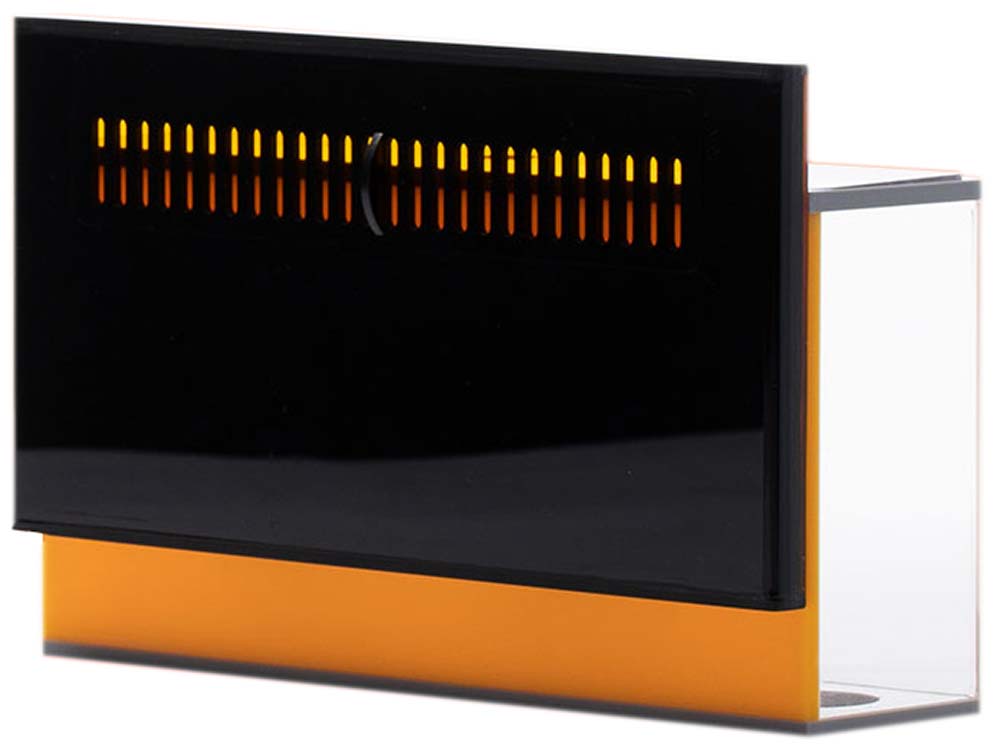
    So what’s the catch here? The first is the price. It one of the most expensive overflow boxes you can purchase and I’m also not feeling in the color. Orange is just weird to me and I would have preferred a neutral color like a black. It’s also brand new, so it is bound to have some issues from the onset.

    Give it a couple of years though and every manufacturer will be jumping to replicate this overflow – and also lower the price in the process ?.

    Pros

    • Slimmest overflow available
    • Bean Animal design
    • Adjustable overflow gate

    Cons

    • Expensive
    • The overflow box can be too high compared to the drain box which makes it louder than it should be if you oversize the box

    Prepping for a Hang On Sump Setup

    If you have decided to get a hang-on overflow, the next setup is prepping for a sump setup. Let’s talk about the considerations you need to take into account:

    • How will I hang my return piping – assuming I don’t want to drill
    • What size sump should I get?
    • What return pump should I get?

    How will I hang my return piping – assuming I don’t want to drill

    Assuming you want to go with a complete drill free setup, you will want to get a U-Tuber directional return to get water to enter your display tank in an orderly fashion. This U-Tube by ThePetStop will get you going and will support either 3/4″ or 1″ tubing and is very easy to install. It comes in black so it should blend in well with black backgrounds.

    U-Tube Return

    This U-Tube Return pip is a great choice for DIY drill free setups

    Buy On Amazon

    What Size Sump Should I Get?

    Another very important consideration. Again, since we are considering a budget build with a hang-on overflow the go to would be a cheap aquarium from a dollar per gallon size off Petco. Get the longest and largest tank you can fit in your cabinet. For a 4 foot 120 gallon tank, this would be a 40 gallon breeder and for a 6 foot 125 gallon tank, this would be a 55 gallon tank. Keep your water level low, about 7-9 inches, in the sump and the remaining space can be used as overflow protection in the event that the overflow or return pump fails.

    What Return Pump Should I Get?

    For a budget build, I would just add in an Italian made AC return pump like a Fluval SP. These pumps are made with the legendary Askoll pump and are backed by a 3 year warranty. Don’t go with a DC Pump for a budget build as you will likely be shopping for cheap Chinese made pumps, which can be disastrous if they fail and you lack the budget to replace. Other options would include a Sicce Syncra or a Aquaeon Quietflow for smaller tanks. See our Best Aquarium Return Pumps post for more pumps that we reviewed.

    Prepping for an External Sump Setup

    If you have decided to get an external overflow box, the next setup is prepping to drill the tank and setting it up. Let’s talk about the considerations you need to take into account:

    • How will I drill the tank? DIY or Paying Someone?
    • What size sump should I get?
    • What return pump should I get?

    How will I Drill The Tank? DIY Or Paying Someone?

    The major reason why most people do not go with external overflows is they are scared to drill a tank. It’s actually pretty easy to do as long as you have the right equipment and setup the time to do it. Here is what you will need if you decided to drill the tank yourself:

    • Hole saws
    • Drilling Template
    • Drill Stand
    • Corded Drill
    • Plumbers Putty 

    How to Drill A Fish Tank

    Before you decide to drill a tank, make sure that the aquarium glass you are drilling is not made of tempered glass. It is a pretty reasonable assumption that if you are drilling on the back of the tank that you don’t have to worry about this as the vast majority of manufacturers will not make the back of the glass tempered glass. However, the sides or the bottom are usually made of tempered glass so check with the manufacturer if you are planning to drill on the side or bottom.

    The good thing is if you are following this review guide and selected the Eshopps overflow box, you already have a hole saw and drill template. You may need a hole saw for your return piping, which I have linked here so you can purchase. You will want a hole saw to drill a 3/4″ return if you use 1″ drain piping.

    One of the optional pieces of equipment is a Drill Stand. A drill stand is excellent to use because it will steady your hand and allow you to go slowly while drilling the hole. Make sure you remove the spring when drilling an aquarium.

    My Pick
    Milescraft Drillmate

    This is my go to drill stand that I use whenever I need to drill an aquarium. Makes drilling stable and even

    Buy On Amazon

    I would recommend a corded drill instead of a cordless drill for drilling an aquarium. The reason why is that drilling a tank does take time and it is likely that you will need to stop to replace the battery mid-way. A corded drill is more powerful, easier to use for this application, will drill a cleaner hole safely, and will get the job done quicker than a cordless drill. I prefer to use a DeWalt Corded Drill for drilling aquariums.

    My Pick
    DEWALT Corded Drill

    Drilling a tank takes a long time, especially on larger tanks. A corded drill ensures you have full power without worry about your battery dying

    Buy On Amazon

    Plumbers putty and water is the last items you will need. You want to have water in the area you are drilling to lubricate and cool the drill as you go. Use the plumber’s putty to create a circle to hold the water as you drill.

    Finally I have included a video to help from Melev’s Reef. He is a seasoned expert and uses a cordless drill. I still recommend going with a drill stand at minimum if you are doing this for the first time.

    Paying Someone to Drill Your Tank

    If all of that scares you, you can always offer to pay someone to drill your tank. A number of local aquarist Facebook groups will have people who will happily drill your tank or you can ask your local aquarium club if there are any members who will drill tanks. Usually the fee is pretty minimal and some people will even do it for free! I would definitely check out a facebook group or your aquarium club before even considering paying a plumber or local fish store to drill your tank.

    What Size Sump Should I Get?

    As big as you can get. Since we are talking about a drilled tank setup, we venture into the realm of custom made sumps. There are several stock sumps out there that I would say are the best aquarium sumps you can buy that are manufactures. You can of course still go with a DIY baffle kit for smaller tanks as well.

    What Return Pump Should I Get?

    Since we are talking about a higher end budget, I feel more comfortable recommending a DC Pump if you want the features that a DC Pump has. The best DC Pump that won’t break the bank and is not cheap Chinese junk are the Reef Octopus Varios DC Pumps. Other options on the AC side would include the Fluval SPSicce SDC, and Rossmont Pumps. Check out our best aquarium return pump post for more details on pump picks.

    Editor’s Choice
    Syncra SDC

    Editor’s Choice

    The Syncra is a perfect combination of DC control with AC reliability. Backed by a 5 year warranty and the legendary Sicce brand name

    Click For Best Price Buy On Amazon

    My Recommended Picks

    I have provided a good chuck of information and you may be wondering what my recommendation is. If you are going with a hang-on overflow box setup, I would recommend the CPR overflow box, an aqualift pump, and a Fluval SP or Syncra as your return pump.

    If you are going with a drilled setup, you can’t go wrong with the Eshopps Eclipse overflow, but the Fiji Cube overflow box is a killer design and price. There are others out there, but they are far more expensive and the Eshopps Eclipse or Fiji Cube will serve the vast majority of aquarists. If you are going with a DC pump, it’s pretty much the Reef Octopus Pump or something far more expensive unless you are okay with purchasing multiple Jebeo pumps and having them ready on hand to replace as they tend to fail prematurely.

    Closing Thoughts

    I hope I have provided you a wealth of information to make an informed decision. Please leave a comment below if you have any questions. Thanks for reading!

    ๐Ÿ”ง Want to learn more? This article is part of our complete Aquarium Equipment & Gear Guide โ€” your ultimate resource for filters, heaters, lights, pumps, tanks, and more.

  • The 5 Best Aquarium Chillers of 2026 [Tested & Reviewed]

    The 5 Best Aquarium Chillers of 2026 [Tested & Reviewed]

    Aquarium chillers are one of those purchases I see reef keepers delay until they’ve already lost livestock โ€” and that’s a painful way to learn. I run a 125-gallon reef and have tested chillers across multiple summers in a warm climate. The difference between a quality unit and a cheap one shows up fast when ambient temps climb. Here’s what’s actually worth your money.

    Summer of 69 could be the best days of Bryan Adamโ€™s life but not in general for people like us. Summer, typically, is a hard time to pass if you live in hot areas like the South in the United States or South-Asian countries like India, Bangladesh and Pakistan. And if you think of those fish, aquatic plant and coral living in high-temperature water the whole day, you will realize that summer is actually a nightmare with a poker face. An aquarium in a hot climate may require an aquarium chiller in order to keep stable temperatures.

    Keep this in mind that aquariums shouldnโ€™t get hotter than 83ยฐF in any situation. At 83ยฐF or higher water temperature, the oxygen level in aquarium water starts to diminish and this leads to a stressful-competitive situation for the fish and other inhabitants to get oxygen. Be fearful, this may lead to the death of your aquarium residents. 

    For the optimum health of your fish and other aquarium species, it is advised to keep them in an acceptable range of water temperature. For example, tropical fish and saltwater aquarium fish have an acceptable range of 72ยฐ to 80ยฐ F (optimal is 78ยฐ F), Fancy Goldfish, like Fantails, have an acceptable range of  65ยฐ to 72ยฐ F and Common Goldfish have an acceptable range of  65ยบ to 68ยบ F.

    Now if you stay outside from home the whole day, which of course you do because of office, class or for simple groceries, DONโ€™T keep your aquarium in a place that has direct contact with the sun. This will lead to an increase in growth of algae that would be difficult to clean. So you can figure it out by now that keeping the aquarium water temperature optimum is vital. Here are some of the best, cheapest and quickest methods that will help you reduce the tankโ€™s water temperature in summer.

    How to Protect Your Aquarium Against Summer Temperatures

    Straight as it sounds! The cooler the temperature outside, the lesser the water temperature will increase inside the aquarium. The temperature will be within the safe range for your fish. Plus, your friends and family will thank you too for the air cooler/conditioner.  

    Beat The Heat On A Budget (Mobile ACs for Tanks)!

    Before I get into the Best Aquarium Chillers, there is a bit of secret many of these chiller manufacturers do not want you to know. There are actually reasonably priced mobile ACs that can be purchased online that will keep the area you keep your aquarium cool! Here are a few suggestions. This choice is a good consideration if you add an aquarium in a den, garage, or addition:

    Value Priced
    BLACK+DECKER Portable AC

    Mobile AC units are an unconventional, but very effective and cheaper solution over many chiller options

    Buy On Amazon

    Mobile ACs require an outside vent so your only limitation is having a vent to the outside of your home or a window when you can insert the window outlet to it. They are very easy to install and the window outlets are made to universally fit on just about any window. Having the area in your home where your aquarium sits in cool is the most vital aspect of keeping temperatures safe. These mobile solution will not only work in new additions of your home, but also will protect you in the event of a AC failure.

    An even cheaper alternative is a Window AC unit. While these units are cheap and will get the job done, they are a lot longer than the portable AC units I have showed above. I feel that the Portable AC units are better values and since they are portable, you can move them around the house for other rooms if need. 

    Invest in an Tank Cooler

    Now if you want to have a substitute of an air cooler or if you think your existing air conditioner isnโ€™t doing much in terms of keeping the temperature in check for fish, you can purchase an aquarium chiller. Chillers have a variety of shapes, sizes and styles. So to buy the perfect chiller, you need to know the dimension and size of your aquarium and the temperature degree that has to be brought down to keep it at an optimum level.

    Once you are done buying just fix it in the sump or plumb it in-line of your tank. Voila! This is a sure effective method for beating that scorching heat of summer, plus you can also place it with your heater to control the temperature changes of your room. Let’s talk about the best aquarium chillers out there to purchase.

    The Candidates – A Quick Comparision

    Now to know which aquarium chiller is the best or which suits your needs the most is a big question, which I am here to answer. When you are buying look at the chillerโ€™s packaging for the horsepower rating; this rating is useful to determine the number of watts the chiller is going to use. British Thermal Units (BTU) is another rating which you should check before purchasing your ultimate aquarium chiller. Below are some recommended picks I’ll go over.

    In a hurry? I recommend the JBJ Artica!

    PictureNameSizesLink
    Editor’s Choice!
    JBJ Arctica 
    JBJ Arctica 
    • 1/15 HP
    • 1/10 HP
    • 1/5 HP
    • 1/3 HP
    Click For Best PriceBuy On Amazon
    Best Value
    Hamilton Technology Aqua Euro Max
    Hamilton Technology Aqua Euro Max
    • 1/13 HP
    • 1/10 HP
    • 1/4 HP
    • 1/2 HP
    • 1 HP
    Click For Best PriceBuy On Amazon
    Budget Option
    Active Aqua Chiller
    Active Aqua Chiller
    • 1/10 HP
    • 1/4 HP
    • 1/2 HP
    • 1 HP
    Buy On Amazon
    Teco Tank Aquarium Chiller Teco Tank Aquarium Chiller
    • 1/6 HP
    • 1/4 HP
    Buy On Amazon
    IceProbe Thermoelectric Chiller IceProbe Thermoelectric Chiller
    • 1/4/ HP
    Buy On Amazon
    Baoshishan Aquarium Chiller Baoshishan Aquarium Chiller
    • 1/10 HP
    • 1/3 HP
    Buy On Amazon

    The Top Choices For The Money – 2023 Updated

    Let’s see each aquarium chiller in detail

    1. JBJ Artica – The Name Brand

    Editor’s Choice
    JBJ Arctica Aquarium Chiller

    Editor’s Choice

    The name brand in aquarium chillers. The JBJ Arctica efficiently keeps tanks cool and are quiet

    Click For Best Price Buy On Amazon

    When it comes to JBJ, most people recognize them for their aquarium chillers. The JBJ Arctica Chillers come in a variety of sizes and use a titanium coil design, which makes them ideal for all aquariums. They are also known for being quiet to operate – a big consideration if you are planning to install one of these in a living room. These are energy efficient and quality units that will last a very long time.

    They do come with a premium price tag though. They are one of the more expensive aquarium chiller solutions on the market, but their reputation is well known in the industry for being reliable and effective.

    Pros

    • Well-known reliable chillers
    • Titanium make up
    • Energy Efficient

    Cons

    • Expensive

    2. Hamilton Technology Aqua Euro Max

    Best Value
    Aqua Euro Max Aquarium Chiller

    Best Value

    One of the most popular brands of aquarium chillers on the market. Designed for saltwater tank usage

    Buy On Amazon

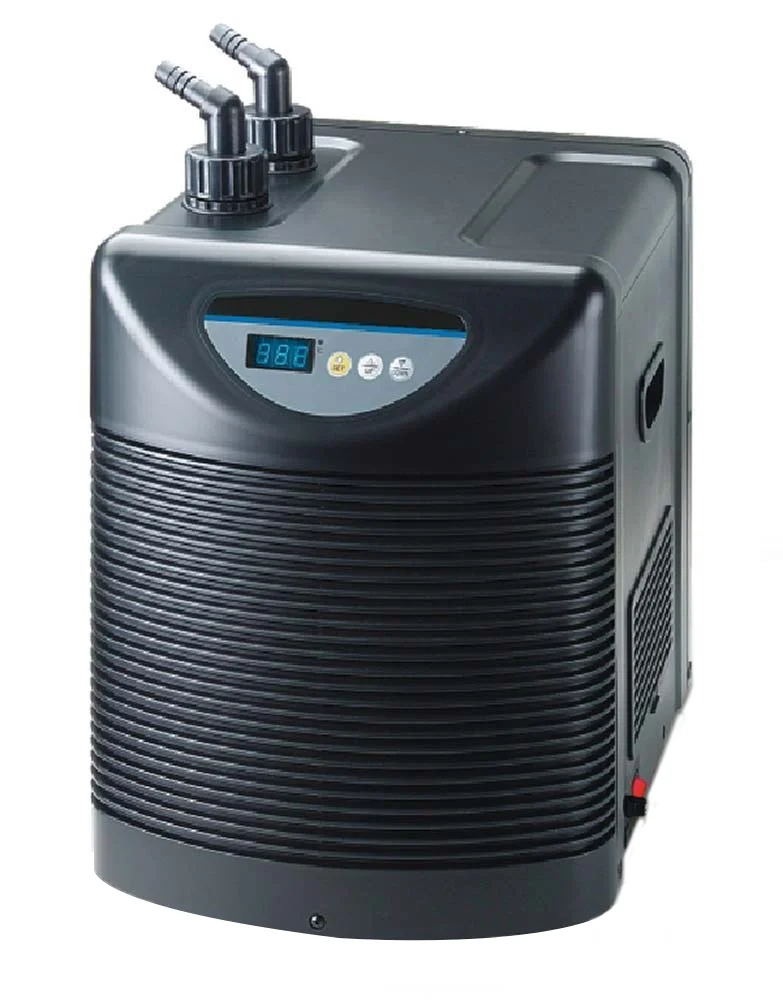
    The Euro Max Chillers are a mainstay in the aquarium industry. It is probably the most commonly available aquarium chiller on the market, which means finding parts, service, and replacement are much easier than other units on this list. 

    These chillers are designed for aquariums, specially for saltwater aquariums. They are known for being long-lasting units. It comes with a removable air filter that is easy to pull to maintain. This filter is there to keep the chiller operating for a longer life, so you money will be well invested with this unit.

    Aside from their price, the only complaint I have with these units is that it comes with a barb connector. As a chiller that is designed for saltwater aquariums, a PVC connector via a slip fitting or bulkhead would have been more desirable especially knowing that many reef tanks get hard plumbed.

    Pros

    • Quality built unit made for reef tanks
    • Long-lasting
    • Readily available and easy to find parts and service

    Cons

    • Barb instead of bulkhead fitting
    • Expensive

    3. Active Aqua – Simple To Use

    Budget Option
    Active Aqua Chiller

    Budget Option

    A budget friendly aquarium chill that offers a variety of models and sizes

    Buy On Amazon

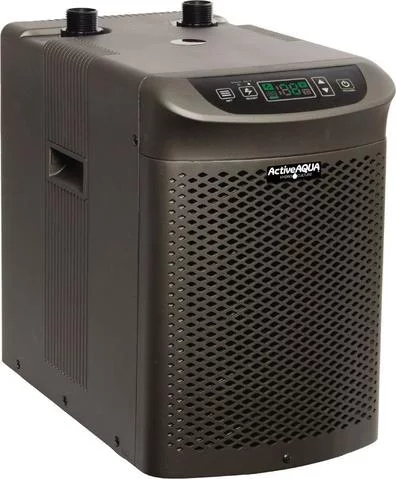
    The Active Aqua Chiller is a Freon-free aquarium chiller that is typically used in hydroponic systems. Because it is Freon-free, this makes the Active Aqua unit environmentally safe and easier to maintain. It has its own control unit with LCD displays. It has an anti-corrosive titanium evaporator – which is a huge deal for saltwater aquarium users. The Active Aqua 1/10 model pictured here is rated 1,020 BTU and will suit a 50 gallon tank. 

    Active Aqua gives you a number of choices though, going all the way up to 1 horsepower units that will suit large tanks. Its price point puts it in the middle of the pack of this list.

    Pros

    • Freon-free unit
    • Titanium make up – anti-corrosive
    • Lots of models available

    Cons

    • While mid-priced, it’s still expensive

    4. Teco Tank Tank Cooler – The Ultimate In Temperature Regulation

    Teco WiFi Tank Chiller

    An advanced chiller with loads of features. Capable of heating and cooling a tank

    Click For Best Price Buy On Amazon

    The Teco Tank Aquarium Chiller is bar none the most advance aquarium chiller available on the market for a hobbyist. It supplies the ultimate in aquarium temperature regulation. It not only provides aquarium chilling, but also very high quality aquarium heating. While it’s marketed as a aquarium chiller, it really is a complete temperature regulation solution.

    You probably know from reading my Best Aquarium Heaters post that aquarium heaters are one of the more fail probe pieces of equipment. The Teco Tank aquarium chiller provides a heating and cooling solution for consumers and professional tanks. See the video below by Dutch Reefer to see the Teco Tank chiller in action.

    The unit starts off with high-end compressors and titanium coaxial heaters to provide complete temperature regulation. It comes complete with a temperature controller that is accurate up to 1 degree Fahrenheit and contains audible alarms if the temperatures get too low or too cold. They add this all in with a compact design and Italian made engineering and you have a top of the line unit. This is also the only unit on the list has has a warranty over a year.

    So what’s the catch? It’s easily the price tag. They are the most expensive units on this list by a mile, but for someone running a high end planted tank or reef tank it may be worth the price.

    Pros

    • Heating and Cooling all in one unit
    • Italian made engineering
    • Professional/Commercial level equipment

    Cons

    • Very expensive

    5. Iceprobe Thermoelectric – Compact Solution

    Iceprobe ThermoElectric Chiller

    A compact chiller solution. Also works with drilled tanks

    Buy On Amazon

    The IceProbe Thermoelectric Chiller is a unit piece of equipment that can cool an aquarium yet still have a small footprint. This is accomplished by using a thermoelectric probe that is inside the water line and an external fan and controlled unit.

    What you get is a chiller that can take a very small footprint in the aquarium. Multiple units can be purchased to handle larger tanks. Purchasing 3 for a larger tank will equal to the purchase price of one of the middle-end units on this list so the price isn’t that bad when you think about it.

    The biggest downfall with this unit is that is requires a drilled aquarium. You need to have a hole to fit the probe or you stick it on top of your aquarium, which leaves an ugly looking piece of equipment visible. Others have had success placing the unit on top of a Power Filter for those with hang on back filters.

    I like to hide as much equipment as possible so I feel this unit is best in an Aquarium Sump or drilled to the back of an aquarium. If you want to learn more about drilling aquariums, check out my Best Aquarium Overflow Box Reviews post. 

    Pros

    • Compact
    • Reasonably price for what it can do
    • Requires no pump

    Cons

    • Large aquariums require multiple units

    6. Baoshishan – A New Player To The Market

    Baoshishan Aquarium Chiller

    A chiller with premium level parts without the premium level price. Easy to operate and maintain

    Buy On Amazon

    The Baoshishan Aquarium Chiller is a new entry in the market. It is made to be a premium quality chiller, but with a mid-level price. It is designed for aquarium and hydroponic usage. It comes with some higher features like a digital temperature controller. The built in controller will keep the unit from over cooling the tank. The controller is borrowing from the refrigeration industry and is one of the higher quality ones that come with a chiller. It is designed to be a easy to use and quiet chiller.

    The main issue with this unit is it is new to the market and a few users have had issues with the unit trigger their breaker switches due to the power demand of these units. The pump it comes with is not very powerful and the instructions are fairly useless. Fortunately, it’s an easy to operate unit.

    Pros

    • Good Price
    • Solid temperature controller

    Cons

    • Bad instructions
    • New to market
    • Power demanding 

    Tips

    There is more to keeping an aquarium cool than just having a chiller and or an AC. Here are some other pointers.

    A good filtration system

    Aeration enables the tank surface water not to be exposed to the higher temperature outside for long. Plus, the filtration system will filter the water as well (the double benefit you know).

    Circulation of water

    Good water circulation is a must to keep the water cool. Heat energy evaporates from the surface of the water. In addition to that, gases do an exchange at the surface of the water; where Carbon Dioxide leaves the water surface and Oxygen takes place instead. Without this circulation, the waterโ€™s dissolved oxygen levels can turn out critically low at higher tank temperatures.

    But the question is what is considered to be โ€œa good water circulationโ€? Water circulation may vary because of the dimension of the tank, the inhabitants it holds and the way it is decorated. Now speaking generally, tanks which have fish only must have water flow that turns the water over 10-40 times per hour (tph).

    If your tanks hold soft corals then the water turns over should be 10-30 tph. If you have all the soft, hard and large polyp stony corals then make sure the tankโ€™s water turns over about 30-50 tph. Aquarium with small polyp stony coral should have water turn over 40-80 tph at least.

    Invest in good aquarium wavemakers and aquarium return pumps to get to the times per hour requirements you need for your aquarium.

    Well, these are rules of thumb that can vary from tank to tank. But following this would make sure that the aquarium tank runs naturally cooler in summer.

    Use LED Lighting

    LED lighting versus T5s or Metal Halides have a big advantage over heat production. LEDs are the produce the least lighting and are ideal for aquariums house in hot climates. Check our our Best Reef LED Reviews for recommended selections.

    Cheap Solutions – How Not To Break Your Bank

    Now letโ€™s talk about some quick solutions which do not break your bank:

    Frozen water bottles

    Freeze water in a clean bottle that has never been in contact with soap or other detergents. This is the easiest solution because when the temperature is high just place the frozen bottle in the tank, once the temperature drops, bring it out as per your convenience.

    My suggestion here is not to throw ice cubes direct into the aquarium (no matter how easy and time-saving it may seem). Adding direct ice cubes may introduce chlorine and/or chloramine in your tank water (which you do not want unless youโ€™re using un-chlorinated water for ice cubes). Plus avoid using ice packs too which has a tendency to leak.

    Keep a constant sharp eye when the temperature starts to fall- there are no sure ways to tell when the temperature would drop or how long does it take for the water bottle to bring the temperature at an optimum level. So, yes- it is compulsory to keep the aquarium water cool; but no- you canโ€™t rush in doing it.

    Increase evaporation and air circulation with a fan

    Evaporation, as the water transforms into the gas, cools the tank water. This happens when a form of energy such as heat transferred from pumps, lighting and the roomโ€™s air temperature adds to the water. For this to happen, the surface of the water must be in contact with the open air. In other words, the aquarium cannot be hooded.

    Now to increase the evaporation and air flow process, keep a small fan in such a way that it blows air across the surface of the water. Now the question is how many fans do you need to make this air flow and evaporation process! Well, it solely depends on the size and dimension of your aquarium-tank. But only having a single fan would do the trick and you can see a huge difference in terms of keeping your aquarium cool.

    Placement of Tank

    Too much of a good thing may actually harm more than you think. Sunlight is important for living objects to get nutrients, for growth and development but the constant contact of sun rays to your aquatic friends may do more harm than good. Position your aquarium tank in such a way that it is not in direct contact with the sunlight. Plus, during summer sun travels higher in the sky- thus constantly changing angles of sun rays.

    So you may have to re-position your aquarium more often. If you donโ€™t want to go through all these hassles, install blinds in your tank room to block out the sunlight as temperature rises. Reducing this light, in turn, will also reduce the amount of heat energy passing through the tank water. Also, refrain from adding any artificial lighting to your fish-tank. Remember, it may look all those shimmery when you add blinking lights to your aquarium, but in the long turn it is harming the health of your fish and corals- the actual beauty of your โ€œlive-boxโ€.

    Ditch the Tank Canopy/Top – Let the Air Flow!

    A common trend now in the aquarium industry are open tops. They have the advantage of additional gas exchange and keep your aquarium cooler by have the water open in the room. You exchange this additional cooling with added evaporation and you will want to put down a mesh cover in order to keep your fish from jumping while keep the tank open. If you happen to run an air pump, one other downside to consider is that air pumps will blow water out causing additional water spots or salt creep if you run a saltwater tank.

    Be a โ€œmiserโ€ when adding that extra fish

    Now, as you are passing by the aquarium shop you may see some of the worldโ€™s best colorful fish swimming from one corner to the other of a fancy aquarium and it may happen that it is the last day of the month and you have just got a text from your bank that your account has been debited with the current monthโ€™s salary- sounds like a God sent notification to buy an extra fish for your aquarium? NO! Adding that extra little life to your already low oxygen level aquarium will result in a stressful situation for all the poor inhabitants of your tank. So always check your aquarium water temperature before you purchase an extra life for it.

    Though differently sized aquarium requires different methods to keep the temperature in check; these are few of the tactics that go well with almost every aquarium that you may have. Adapt these techniques in summer to maintain a better environment in your aquarium, your fish-friends will thank you!

    Closing Thoughts

    I have provided a number of options for you to keep your aquarium cool. From fans, placement of the aquarium, to mobile ACs to aquarium chillers themselves there are many options available for you. Look at what your budget can afford and take it from there. I hope this post was useful to you. If you have any questions, please leave a comment below. Thanks for reading.


    ๐Ÿ”ง Want to learn more? This article is part of our complete Aquarium Equipment & Gear Guide โ€” your ultimate resource for filters, heaters, lights, pumps, tanks, and more.

  • Yellow Coris Wrasse: The Reef Tank’s Best Pest Control Fish

    Yellow Coris Wrasse: The Reef Tank’s Best Pest Control Fish

    The yellow coris wrasse is one of the most useful fish I’ve kept in a reef โ€” an active hunter that picks off flatworms, pyramid snails, and other pests that can plague a mature system. I’ve had one running in my 125-gallon and wouldn’t go without it. Here’s what you need to know before adding one to your reef.

    The Yellow Coris Wrasse is one of the most underrated reef tank additions in the hobby โ€” and one of the first fish I recommend to anyone dealing with a flatworm or pyramidellid snail outbreak. This wrasse actively hunts and eats both pests, often eliminating a flatworm problem within days of being added. In my 125-gallon reef, I’ve seen it work through substrate, rocks, and the waterline picking off small inverts that would otherwise multiply unchecked. It’s also genuinely reef-safe with corals, which sets it apart from many wrasse species that can be hit-or-miss. One non-negotiable: it needs a sand bed of at least 2 to 3 inches deep. These fish sleep buried in the sand at night, and without adequate depth they’ll stress and eventually die. Get that right and this wrasse is one of the best utility fish in saltwater.

    Today’s post we are going to talk about the Yellow Coris Wrasse. This Wrasse is a workhorse in the aquarium. It is a great choice for a saltwater reef tank because it preys on many types of pests that can infest your corals. It is super active and full of personality. It’s one of my favorite yellow saltwater fish that is available in stores.

    About the Yellow Coris Wrasse

    The Yellow Coris Wrasse is known to the aquatic community under various names: golden rainbowfish, golden wrasse, yellow coris, and canary are several names that you will see. Its scientific name is Halichoeres chrysus and it hails from the Pacific Ocean to the edges of the eastern Indian Ocean. In the wild, they can be found in areas around 60 to 200 feet deep.They are known for grouping together in all stages of life and young wrasses and be identified with the one or two spots they have on their dorsal fin. 

    Yellow Coris Wrasse in the Aquarium

    Scientific NameHalichoeres chrysus
    Common Name (Species)Yellow Coris Wrasse
    FamilyLabridae
    OriginWestern Central Pacific
    DietOmnivore
    Care LevelEasy
    ActivityVERY active
    LifespanUsually to 5 years
    TempermentSemi-aggressive
    Size5 inches
    Tank LevelAll Areas
    Minimum Tank Size55 Gallons
    Temperature Range73 โ€“ 81 Degrees F
    pH Range8.1 โ€“ 8.4
    Filtration/Flow RateAll
    Water TypeSaltwater
    BreedingBreeding not possible at this time
    CompatibilitySemi-Aggressive tanks
    Ok, For Reef Tanks?Yes
    Ok, For Inverts?Small shrimp, snails, and worms are at risk

    The Yellow Coris Wrasse is best known for its ability to eat a number of nuisance pests in the aquarium. Really they well eat just about any pest in the aquarium except for aiptasia.

    They will eat nearly any type of meaty food offered to them and do not get too large with the max size usually being around 5″. They are one of the more docile wrasses in the Halichoeres genus and are model citizens in your tank. They are not aggressive towards other fish nor are they particularly territorial. They do prefer a sandy substrate as they are known for burying themselves1. Keep this in mind if you are thinking about a bare-bottom setup. They are a fairly hardy fish and a good choice for a beginner.

    The great thing about the yellow coris wrasse is the availability of tank raised varieties. They can be easily found tank bred either online or locally. The tank raised varieties are different than tank bred. Tank raised means the fish as been raised in an aquarium since it was very young.

    This makes the fish hardier, drama free, and easier to care for then usual wrasses you will fine. Whenever a tank raised variety is available I always recommend the tank raised aquarium fish over the older wild caught one. Technology is rapidly advancing. There could be a day where we see the first tank bred wrasses. It is very difficult to do right now with current technology and research.

    The main issue with these yellow fish are their tendency to jump out of the tank when stressed. It it recommended that you cover your tank with a mesh screen  to prevent any accidental fatalities.  

    Tank Mates

    Because of the peaceful nature of the Yellow Coris Wrasse, they get along with nearly all saltwater fish. There are two main things two watch out for. The first, is because the Yellow Coris Wrasse is so active, they will bother slower moving and timid fish. Larger predatory fish will also try to eat them. Knowing this, here are a few good choices and others to avoid:

    Fish That Work Will

    Fish That Will Not Work

    • Other Halichoeres wrasses
    • Lionfish
    • Groupers
    • Eels
    • Pufferfish

    Are They Reef Safe?

    Yes, they are reef safe. I have seen reports on forums where they have eating corals or disturbs other inhabitants, but I feel a lot of these issues are mostly due to not having the fish feed well or lack of space. That being said, all fish have different personalities and you could get a yellow coris wrasse who’s personality is not the norm. The best way to prevent any tank drama is having the right tank, having them well feed, and purchasing a tank bred specimen. I have not seen them bother Softies, LPS, or SPS corals.

    FAQs

    What Do They Eat?

    Yellow Coris wrasses are carnivores by nature. They will readily eat anything you put in the tank. Brine shrimp, black worms, shellfish, mysis shrimp are some meaty foods they will enjoy.

    Within a reef tank, a Yellow Coris wrasse will eat bristle worms and copepods mainly. They are great against many types of coral pests like flatworms.

    Are They Aggressive?

    Yellow Coris Wrasses are considered semi-aggressive, which means they will defend territory. However, they tend to be on the lower scale of aggression. They will get along with most marine fish, even the most timid ones.

    How Fast Do They Grow?

    Yellow Coris wrasses grow very fast. They can reach adult size in within 1 to 2 years. They will display their adult colors within this timeframe. Nearly all wrasses in a home aquarium will transition into a Male.

    What’s Your Experience?

    Let us know your experience with this fish in the comments below. We love hearing everyone’s personal experience and tank stories.

  • The 9 Best Aquarium Test Kits For 2026 โ€“ Reviewed

    The 9 Best Aquarium Test Kits For 2026 โ€“ Reviewed

    Test kits are something I use every single week โ€” across freshwater and saltwater tanks. Over 25 years I’ve worked through a lot of them, from cheap strip kits that give you a rough ballpark to professional-grade liquid reagent kits I now rely on. Getting your water parameters right starts with trusting your test results, and not all kits earn that trust. Here’s what I actually recommend.

    Are you struggling to find an reliable aquarium test kit?

    In this blog, we share the best aquarium test kits, from test strips to digital readers.

    With over 25 years of experience in the aquarium hobby, Iโ€™ve assisted countless clients, hobbyists, and readers like you in overcoming their water chemistry issues. Iโ€™ve personally tested these kits in real world scenarios to determine the best test kits to buy today.

    The Top Picks

    Editor’s Choice – Freshwater
    API Master
    • Multiple parameters
    • Easy to use
    • Easy to find
    Editor’s Choice – Saltwater
    Red Sea Marine Care
    • Various Parameters
    • Easy to use
    • Easy to find
    Most Accurate
    Hanna Checker
    • Very accurate
    • Easy to use

    There are many kits available, so why not start with our top picks? Above, we have the API Master test kit, the most comprehensive kit you can buy for freshwater, and the Red Sea Marine Care, which covers the bases for most saltwater aquarium beginners. The Hanna rounds out the picks as the most accurate.

    The Candidates – A Quick Comparision

    I have to combine freshwater and saltwater test kits in one post. Below are the best test kits that get the job done for most aquarists.

    PictureNameParametersLink
    Editor’s Choice – Freshwater
    API Freshwater Master Test Kit
    API Freshwater Master Test Kit

    Various

    Buy On PetcoBuy On Amazon
    Editor’s Choice – Saltwater
    Red Sea Marine Care Aquarium Test Kit
    Red Sea Marine Care Aquarium Test Kit

    Various

    Click For Best PriceBuy On Amazon
    Seachem Ammonia Alert Seachem Ammonia Alert

    Free Ammonia

    Click For Best PriceBuy On Amazon
    C02Art Drop Check Kit C02Art Drop Check Kit

    CO2

    Click For Best Price
    Salifert Master Reef Aquarium Test Kit Combo Salifert Master Reef Aquarium Test Kit Combo

    Reef Tank Parameters

    Click For Best PriceBuy On Amazon
    Nyos Nitrate Test Kit Nyos Nitrate Test Kit

    Nitrate

    Click For Best PriceBuy On Amazon
    Hanna Checker Alkalinity Aquarium Test Kit Hanna Checker Alkalinity Aquarium Test Kit

    Alkalinity

    Click For Best PriceBuy On Amazon
    Hanna Checker ULR Phosphate Test Kit Hanna Checker ULR Phosphate Test Kit

    Phosphate

    Click For Best PriceBuy On Amazon
    API Freshwater 5 in 1 Test Strips API Freshwater 5 in 1 Test Strips

    Various

    Buy On PetcoBuy On Amazon

    The 9 Best Aquarium Test Kits

    Each aquarium test kit has their own purposes and strengths. I will go in further detail below

    1. API Freshwater Master – The Choice For Beginners

    The API Freshwater Master Aquarium Test Kit is a higher end version of their 5 in 1 test strips. This aquarium water test kit allow you to check on your pH, Ammonia, Nitrite, and Nitrate levels. Because the API Freshwater Master Test Kit uses test tubes versus test strips, it is a little more complex to use but nothing a beginner can’t figure out. This freshwater master test kit is the recommended kit for a freshwater aquarist who is starting out. API also sells an API Saltwater Master Test Kit and a Reef Master Test Kit, but there are better test kits on this list better suited for saltwater and reef tanks. Overall, this is a comprehensive and affordable freshwater master test kit.

    Just like with the test strips, the API master test kit is also a very common test kit that specialty local fish stores will use when you bring in your water to test. This is because these aquarium test kits are cheap to use. Keep that in mind if you want to save some money or want to double verify test results.

    My biggest gripe with this master test kit is the ammonia test kit. It is a total ammonia kit not a free ammonia tester. Because of that, it is common to get false positive test results, especially on the saltwater master test kit (which is why I don’t recommend them for saltwater tanks). The color gauge is not easy to read as well. 

    Pros

    • Easy to use
    • Has all the basic parameter needs to test in a freshwater fish tank

    Cons

    • Usually free to get at specialty local fish stores
    • Ammonia test is total ammonia not free ammonia test
    • Color gauge can be hard to read or interpret at times

    2. Red Sea Marine – The Top Pick for Saltwater Beginners

    Editor’s Choice – Saltwater
    Red Sea Marine Care Kit

    The Aquarium Test Kit For Saltwater

    This kit from Red Sea has all the essentials need to start your Saltwater Aquarium journey!

    Buy On Amazon Click For Best Price

    When I talked to people just starting out in the saltwater tank hobby and they are looking for a master saltwater test kit, the Red Sea Marine Care Multi Test Kit is my usual recommendation. This test kit includes tests for Ammonia, Nitrate, Nitrite, pH, and Alkalinity. It is a very generous test kit as well as you get 100 ammonia tests and 100 nitrate test. This should easily last you until the test kits expire. 

    I prefer this saltwater aquarium test kit over because they are superior quality then what the local specialty stores will usually use (API) and the nitrate test kit has a large range. Red Sea sells a nitrate pro test kit which has two different tests for low and high range. I prefer this test kit over the pro as the majority of beginners shouldn’t really have to work with ultra low levels of nitrates.

    I also really like how this includes an Alkalinity test, which will help ease your way into reef tank keeping if you chose to do that in the future.

    It is a pricey kit compared to what API offers, but it’s a sound investment if you want to dive into saltwater aquarium keeping.

    Pros

    • Includes alkalinity test
    • Good ammonia test kit
    • Easy to read for a beginner kit

    Cons

    • Fairly pricey
    • Nitrate test is not low range for ultra low nutrient tanks

    3. SeaChem Ammonia Alert

    SeaChem Ammonia Alert

    A must for any aquarium setup. Tests free ammonia and monitors it 24-7

    Buy on Amazon Click For Best Price

    The SeaChem Ammonia Alert badge has been a mainstay for me in every aquarium I have setup. I use them on every quarantine tank I use and they go into freshwater and saltwater tanks. What sets this ammonia test kit apart from others is that it is a free ammonia tester. Free ammonia is the type of ammonia we really want to look out for as it is the most deadly.

    Many aquarium water test kits only measure total ammonia, which doesn’t give you the full picture. It also measures your ammonia levels in your aquarium water 24-7 so you will know right away if something is off. Given they work 24-7 and last a long amount of time, these are a great buy.

    The main thing with these kits is getting a proper read on the badge. I would recommend that you shine a light on the back of the badge to get an accurate measurement if you can’t tell if it is yellow or another color. They also tend to last more like 3-6 months instead of a year. Overall, these have served me very well over the years and I continue to use them. 

    Pros

    • Monitors free ammonia 
    • Monitors ammonia levels 24-7
    • Cheap

    Cons

    • Can be hard to read
    • Usually won’t last for a year like the package states

    4. CO2 Art Drop Checker – For Planted Tanks

    One of the trickier things to do in a freshwater planted tank is testing your CO2 levels. A CO2 drop checker is a great way to consistency monitor your CO2 levels. It comes with a Glass CO2 checker and a 15ml drop checker solution. It’s a reasonably priced solution that is easy to setup in a planted tank.

    If you are want to make your own test solution, here is a detailed video below so you can save a few dollars.

    To me, this is essential test equipment for a serious planted tank. The color chart can be a little hard to read at times, but if you want to monitor your CO2 levels constantly, this is the way to go.

    Pros

    • Easy to use
    • High quality

    Cons

    • Color chart can be hard to read

    5. Red Sea Marine – The Top Saltwater Pick

    Great For Reef Tanks
    Salifert Master Reef Kit

    This kit has every thing you need to test your reef tank parameters

    Buy On Amazon Click For Best Price

    When I talk to folks who are starting to get into reef tanks and want a comprehensive test kit that covers all essential parameters of a reef tank, I point them towards the Salifert Test Kit Combos. This has 6 tests in total, pH, Nitrate, Magnesium, Phosphate, Alkalinity, and Calcium. You can run any reef tank setup you desire with this test kit package. 

    This will get you going for a reef tank. It is on the pricey side, but keep in mind that you are getting 6 test kits at once. For those of you looking for a digital readout that is easy to read, look at the Hanna Checkers listed below in this post.

    Pros

    • Comprehensive – has every test kit you need to run a reef tank
    • High quality test kits overall
    • One of the better calcium test kits on the market

    Cons

    • Pricey
    • No digital read out like Hannas

    6. Nyos Nitrate – For Saltwater Tanks

    Best For Nitrate Testing
    NYOS Nitrate Test Kit

    The best nitrate test kit on the market. Very accurate and easy to use

    Click For Best Price Buy On Amazon

    If I have a saltwater hobbyist looking for a high quality nitrate test kit as a single purchase, the Nyos Nitrate Test Kit is the test I recommend. It’s the easy to read, easiest to know, one of the most accurate, and covers a wide range of levels. 

    I actually have a Red Sea saltwater aquarium test kit that I usually use, but once I ran out of nitrate tests, I switched to this kit. It’s just far easier to use and read in my opinion and I continue to use this kit today on my reef tanks.

    Pros

    • Easy to use
    • Cheaper than other kits
    • Easy to read test results

    Cons

    • No ideal for ultra low nutrient tanks

    7. Hanna Checker Alkalinity – For Reef Tanks

    Hanna Alkalinity Checker

    The most accurate Alkanity test on the market. Highly recommended for reef tanks

    Click For Best Price Buy On Amazon

    Reef tank enthusiasts demand high end solutions for their aquariums. The Hanna Checker Alkalinity tester is one such solution. It is a very easy to use and very accurate test kit. I am a big fan of Hanna Checkers because they give you a digital readout so there is no guess work on reading some color chart or trying to figure out the colors. 

    It is an expensive kit though. The kit itself is as expensive as the test combos from Salifert and Hanna is known for having test regents that do not last very long. The refills from Hanna will only last 25 tests so keep this in mind if you want to purchase one. It is a very accurate kit though and I would highly recommend it if you are planning to keep a high end reef full of stony corals.

    Pros

    • Extremely accurate test results with no guess work
    • Very quick to test

    Cons

    • Expensive
    • Regents do not last very long

    8. Hanna Checker ULR – For Reef Tanks

    Hanna Phosphate Checker

    The most accurate phosphate checker on the market. Great for low nutrient reef tanks

    Click For Best Price Buy On Amazon

    Phosphate level testing is a major deal in a reef tank. Too low can result in nuisance outbreaks like dinoflagellates and bleaching of stony corals while too high can lead to nuisance algae. I prefer Hanna’s ULR Phosphate tester over their standard test as it is more accurate. 

    This is an expensive test kit, but it is the phosphate tester of choice in the industry without a doubt. It is extremely accurate and delivers results quickly.

    Pros

    • Extremely accurate with no guess work
    • Very quick to test

    Cons

    • Expensive
    • Regents do not last very long

    9. API Freshwater 5 in 1 Strips – Easy and Affordable

    API Test Strips

    This is a basic test kit that are used in many pet stores. There are better options, but this is readily available at most stores

    Buy On Petco Buy On Amazon

    The API 5 in 1 test strips are a great way for a beginner to test their freshwater tank. The aquarium test strips will test pH, Nitrite, Nitrate, Carbonate and General Hardness. With the exception of ammonia, this has everything you need to test your freshwater aquarium. It is very easy to you as all you need to do is get some sample water from your aquarium and dip the strip. The results show up quickly you can compare to the color chart that comes with API test kits. These test strips are also one of the most affordable kits in the hobby.

    Because a test strip kit is so affordable, it is the test kit you will see used by aquatic departments at chain pet stores. These test strips are not very accurate, which is why this is not recommended for saltwater aquariums. It also lacks an ammonia test, so you will have to purchase a separate tester for that.  

    Pros

    • 5 tests in one
    • Simple to use
    • Cheap

    Cons

    • Free to get at many local chain stores
    • No ammonia test
    • Not super accurate

    Why Do We Test Our Water?

    It is a really good question to ask. It’s really easy for an experienced fishkeeper to say that you must perform water testing because it’s a good habit. I see it differently. To me, this is like getting a check up on your tank. You can see what is out of wack, or how much you need to change to get it back in balance. Ideally, you will want to perform water testing before you make a water change because they will tell you where your levels peak. Here are other reasons.

    When your tank is new

    This is the major reason to get into the habit of water testing. New tanks are unstable and if you are doing a fishless cycle, you will need to test your water to see when it is safe to add fish and other inhabitants into your tank. Testing for Ammonia and Nitrites is really important when you are going through the cycling process. As your tank matures, you will be mostly focused on nitrates and pH levels.

    It will tell you if you need to dose

    Both planted tanks and saltwater reef tanks have additional parameters you need to monitor to ensure healthy growth of your plants or corals. If parameters are unstable, your plants or corals will suffer. Testing parameters like alkalinity tells you if you need to adjust your dosing schedule. The amount you need to dose changes over time as your plants or corals grow.

    It will tell you if a water change is actually necessary

    Believe it or not, planted tanks and saltwater reef tanks can be built so that constantly changing your water can be a thing of the past. I’ve frequently built reef tanks that had complete nitrogen cycles. They were so efficient that I had a lack of nitrates and phosphates, and I actually had to dose them to keep my corals healthy!

    In most setups, with plants and modern reefs you may not need to change your water every week. This is where water testing comes into play. Test your water quality and see where your levels stand. If the water conditions are stable and not out of wack, then there is no need to make a water change!

    It’s best to only perform water changes when they are necessary – especially with reef tanks. They thrive off stability in your tank water. The more delicate corals you have, the more stability comes into play. If you change water when it’s not necessary your levels will change and may cause stress to your more sensitive corals like SPS corals.

    Parameters for a Freshwater Tanks

    Let’s talk about the water quality parameters you want to test for in a freshwater aquarium. Below are the main water parameters to test on a regular basis:

    Ammonia

    Ammonia is the result of waste being excreted from fish and decaying matter. There are two types of ammonia that are present in the aquarium, These are total ammonium (NH4) and free ammonia (NH3). Total ammonia is the ionized version of ammonia. While it is toxic, it is not as toxic as free ammonia in your tank water.

    Most water test kits will test for total ammonia, which can make the test results of the testing kit not always as reliable. Free ammonia is the most dangerous form of ammonia. Test kits that detect free ammonia are considered more reliable to use.

    Nitrite

    As bacteria breaks down ammonia, it converts ammonia to Nitrite, a less toxic substance. While it is less toxic than ammonia, over time, high levels of nitrite will disrupt the metabolism of your fish and eventually destroy their oxygen carrying cells, resulting in the suffocation and death of your inhabitants.

    Nitrate

    The third form of the nitrogen cycle. This is the least toxic of the 3 forms in the nitrogen cycle and will be present in your water. At low levels it is not toxic to your fish, but at elevated levels it will cause stress to your fish and make them susceptible to disease.

    Nitrates can be managed with a proper water change schedule. It is one of the parameters you will always need to test regularly with accurate aquarium test kits.

    pH

    pH is the measurement of hydrogen ions. The lower the pH of the aquarium water, the more acidic it is and the higher the pH the more alkaline it is. In freshwater aquariums, different setups will have different pH needs so do your research on what pH level is desired for the inhabitants you keep. In general, pH for freshwater aquariums range from 6-8. It is also important to point out that ammonia is more toxic to fish at higher pH levels and the production of nitrifying bacteria slows down when pH goes below 6.

    Water Hardness

    Aquarium water hardness is the measurement of calcium and magnesium ions. Some fish thrive in hard water, like cichlids while other fish like discus prefer soft water. Hardness is also really important for fish breeders, as some types of fry require soft water. To know your ideal hardness, it is best to research the specific type of fish you want to keep and check their requirements as it varies in a freshwater tank.

    Carbonate Hardness (KH)

    The range for carbonate hardness depends on your inhabitants in the freshwater aquarium. Some species prefer a low carbonate hardness while others require a higher carbonate hardness. The key is that once you know the appropriate water conditions and carbonate hardness levels, you should maintain this water quality in your tank.

    Parameters for a Freshwater Planted Tank

    These are additional water quality parameters to test for in a freshwater planted tank.

    Phosphate

    Phosphate is a nutrient that supports photosynthesis. It’s a parameter that is vital to maintain for freshwater aquariums.

    Iron

    With planted tanks there are macronutrients to supplement like nitrogen, phosphorous, and potassium. Iron is what we call a micronurient. It is a trace element that is needed for plants and one of the common miconutrients that we monitor in planted tanks.

    Parameters for a Saltwater Tank

    The main parameters in a saltwater tank are mostly the same, and are Ammonia, Nitrite, Nitrite, Phosphate, and pH. The other main parameter is salinity.

    Salinity can be measured with a refractometer and regularly calibrating it with a calibration fluid. For tanks with saltwater fish only, you can run your aquarium at 1.020, but reef tanks will generally run at 1.025 – 1.026 or 35 PPM. Salinity can change as your water evaporates over time. In order to prevent swings, consider investing in an auto top off unit. These units will fill your aquarium with fresh water and keep your water level and salinity stable.

    My Pick
    Refractometer

    A basic refractometer and calibration fluid is all you need to efficiently measure salinity

    Buy On Amazon Click For Best Price

    Parameters for a Saltwater Reef Tank

    When you move into a saltwater reef tank, there are more water parameters to test in order to ensure your corals thrive. Below are the main parameters to test.

    Alkalinity

    As mentioned in our Best Reef Salt Mix post, alkalinity is the fuel to build coral skeletons. Calcium and alkalinity relate to each which is way two-part solution is a common way of supplementing alkalinity.

    Calcium

    Calcium is used when corals build their skeletons and also by coralline algae. Without calcium, your corals will not build their skeleton and cannot maintain them.

    Magnesium

    This is the catalyst for the reefs. Without magnesium, the elements in the reef tank cannot interact.

    Trace Elements

    Elements like Silica, Iodine, Strontium, Boron, Iron, and minor trace elements are typically tested through ICP water testing, which is something to consider if you are planning to run an advanced reef tank filled with Acropora corals.

    Frequently Asked Questions

    How Often Should I Check My Water?

    I would recommend that you test your water once a week, on the same day, and around the same time. Let your test parameters dictate when you need to make a water change. This statement is especially relevant for heavily planted freshwater tanks and saltwater tanks with live rock and corals. Plants and corals can remove nitrates and phosphates in the aquarium to the point where you may not need to do water changes as frequently. In these environments, you can have water that is too clean which means your plants and corals may not thrive because nutrients are not available for your plants and corals to grow. As long as you test every week you can say on top of the changes in you aquarium and adjust your maintenance and dosing schedule as needed.

    Do They Expire?

    They actually do. Most test kits will expire in about 1 to 2 years. You should always check the expiration on your test kits and replace when the date passes. The expiration is a guarantee on accuracy as the regents have a limited shelf life. They lose their potency over time leading to less accurate tests.ย 

    What is the Top Freshwater Choice?

    I feel that the API Master Test Kit is the best freshwater kit available. It has just about everything you need to start out and is fairly accurate for a freshwater aquarist. It is cheap and will last a long time. Really can’t ask for more.

    What is the Top Saltwater Choice?

    Without a doubt, theย Red Sea Marine Care Multi Test Kitย is the best core test kit to buy for a saltwater aquarium. It is a higher grade test than what you will get at the local fish store and it comes with an alkalinity tester so you are covered if you decide to move onto a reef tank in the future.

    What is the Top Saltwaterย Reefย Choice?

    If you are looking for the highest grade equipment for your reef tank, you cannot go wrong with Hanna Checkers for Alkalinity and Phosphate. For Nitrate, I feel the that Nyos test kit is the best. For everything else, I would consider Salifert.

    If you are running a high end SPS coral tank with designer acropora, I would highly recommend doing ICP testing to regularly check on all essential parameters.

    What should I check for in my tank water?

    The most basic water parameters to test in any aquarium water would be ammonia, nitrite, nitrate, and pH. Other parameters to test will be required depending on your setup. Planted tanks require Phosphate, Iron, and CO2 levels to be monitored. Saltwater tanks require salinity. Saltwater reef tanks require alkalinity, calcium, and magnesium

    How Accurate Are The Strips?

    They are accurate for basic setups. However, as you advance in the hobby you will want more accurate testing which is why I recommend API test kits for freshwater and Red Seas kits for saltwater

    Conclusion

    Aquarium test kits do not need to be complicated. As you have seen from many of these test kits, nearly all of them are easy to use and understand. Testing your water is a regular part of aquarium maintenance. Continue to test your water weekly to keep up with changes in your tank. This will allow you to respond before things go downhill. I hope this guide help you get the test kits that work with your budget and needs for your aquarium. If you have any questions, leave a comment below. Thanks for reading!
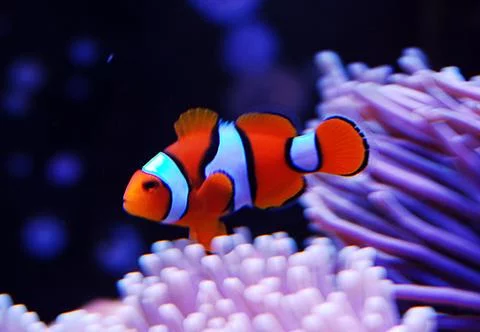

    ๐Ÿ”ง Want to learn more? This article is part of our complete Aquarium Equipment & Gear Guide โ€” your ultimate resource for filters, heaters, lights, pumps, tanks, and more.

  • The 7 Best Reef Salt Mixes of 2026 โ€“ Reviewed And Tested

    The 7 Best Reef Salt Mixes of 2026 โ€“ Reviewed And Tested

    Reef salt mix is one of those decisions that quietly affects everything in your tank โ€” alkalinity swings, coral growth, and even equipment longevity. I’ve mixed and tested a lot of these for my 125-gallon reef over the years, and the differences between brands are more significant than most beginners realize. Some are dead-on consistent batch to batch; others drift enough to cause problems. Here’s what I’ve found actually holds up.

    Are you struggling with finding a quality reef salt mix?

    In this blog, we share the best salt mix products for reef tanks, from those designed for high end reefs to basic salts meant for fish only tanks.

    With over 25 years of experience in the aquarium hobby, Iโ€™ve assisted countless clients, hobbyists, and readers like you in overcoming their salt mix decisions (and believe me, there are so many mixes out there). Iโ€™ve personally tested these products in real world scenarios to determine the best reef salt maxes on the market.

    The Top Picks

    Editor’s Choice!
    Tropic Marin Pro Reef Salt
    Tropic Marin Pro Reef Salt
    • For The Pro Reefer
    • Best SPS Salt
    Best Value
    Brightwell Aquatics NeoMarine Salt
    Brightwell Aquatics NeoMarine Salt
    • Great Value & Great Salt
    • Best Mixed Reef Salt
    Budget Option
    Instant Ocean Reef Crystals
    Instant Ocean Reef Crystals
    • Great Price
    • Best Beginner Salt

    It really depends on what corals you are planning to keep. There is a quick list for you depending on your needs below:

    The Candidates

    Now let’s talk about the reef salt mix candidates themselves. Below is a list of the best reef salt mixes available today.

    PictureNameBest ForLink
    Editor’s Choice!
    Tropic Marin Pro Reef Salt
    Tropic Marin Pro Reef Salt

    SPS Tanks

    Click For Best PriceBuy on Amazon
    Best Value
    Brightwell Aquatics Neomarine Salt
    Brightwell Aquatics Neomarine Salt

    SPS Tanks

    Click For Best PriceBuy On Amazon
    Budget Option
    Instant Ocean Reef Crystals
    Instant Ocean Reef Crystals

    Mixed Reefs

    Click For Best PriceBuy On Amazon
    Premium Pick
    Aquaforest Probiotic Reef Salt
    Aquaforest Probiotic Reef Salt

    SPS Tanks

    Click For Best Price
    Red Sea Coral Pro Salt Red Sea Coral Pro Salt

    SPS Tanks

    Click For Best PriceBuy On Amazon
    Instant Ocean Sea Salt Instant Ocean Sea Salt

    Fish Only Tanks

    Click For Best PriceBuy On Amazon
    Fritz Reef Pro Mix Fritz Reef Pro Mix

    LPS & Mixed Reefs

    Click For Best PriceBuy On Amazon

    The 7 Top Reviews (Updated 2023)

    Now let’s go into detail and see why each mix was picked

    1. Tropic Marin Pro – For SPS Tanks

    Editor’s Choice!
    Tropic Marin Pro Reef Salt

    The Best Reef Salt Mix

    With pharmaceutical level ingredients and a guarantee of all 70 trace elements, Tropic Marin is ideal for tanks full of designer corals

    Click For Best Price Buy On Amazon

    Tropic Marin Pro Reef Salt is the best salt mix you can purchase for your reef tank available on the market today – period. It is formulated with pharmaceutical level ingredients and one of the fully synthetic salt mixes on this list (Brightwell being the other).  

    Tropic Marin is a brand you may not see regularly at the local fish store or chain stores, but they have been a major name brand all across the world, particularly in Europe. 

    The pro reef salt has the most ideal big three parameters for SPS tanks. The parameters out of the boxes are perfect and makes it very safe to make water changes so you don’t have to worry about swings when you make a water change. The stability and quality control of this mix makes this pretty much a must for those with the most demanding corals like Acroporas.

    It’s the one of most expensive marine salts on the list, but if you have prized designer SPS corals, Tropic Marine Pro is what you will want in your reef aquarium.

    Specs:

    • Alkalinity – 8.5 DKH
    • Calcium – 450 PPM
    • Magnesium – 1380 PPM

    Pros

    • Pharmaceutical level ingredients 
    • Perfect big 3 parameters out of the box
    • Guarantees ALL 70 trace elements found in seawater 
    • Great quality control and brand name

    Cons

    • Expensive
    • Hard to find locally

    Best For: SPS Tanks

    2. Brightwell Aquatics Neomarine – The Choice For Worldwide Corals

    Best Value
    BrightWell Aquatics NeoMarine Salt

    Best Value

    The salt of choice for World Wide Corals. It is a top tier salt mix with a reasonable price

    Click For Best Price Buy On Amazon

    I’ve recommended Brightwell Aquatics products in the past like their Neophos and Mircobacter 7. The founder of Brightwell is the former owner of Kent Marine and their products are extensively researched and tested over a multi-year period. The Brightwell NeoMarine Salt is so well regarded, that it is the reef salt of choice for World Wide Corals, one of the major coral sellers in the United States. 

    Brightwell Aquatics NeoMarine Salt not only has all the essential elements of a salt mix, but also does not have anti-caking agents. Anti-caking agents tend to turn your saltwater holding buckets and vats brown over time. What I feel separates NeoMarine from other salt mixes aside from their research and efforts are the parameters of the salt.

    Many reef mixes you will see on this list will have evaluated Alkalinity. NeoMarine has a lower Alkalinity, which is great for SPS tanks. SPS tanks need to have extremely stable levels in the aquarium and having a mix with evaluated ALK can be catastrophic as the Alkalinity levels can spike after a water change. This mix is perfect as you can dose to 7.5 – 8.0 and not worry about a water change completely throwing off your key parameters. 

    Specs:

    • Alkalinity – 7.5 DKH
    • Calcium – 413 PPM
    • Magnesium – 1290 PPM

    Pros

    • Low ALK is perfect for SPS tanks
    • Salt mix package is measure at 35 PPM – you will actually get the volume stated on the box
    • Used by big coral dealers

    Cons

    • Expensive
    • Low ALK can be a disadvantage for those who don’t dose (e.g. – nanoreef tanks)
    • Hard to find locally

    Best For: SPS Tanks

    3. Instant Ocean Crystals – Budget Friendly

    Budget Option
    Instant Ocean Reef Crystals

    Budget Option

    The of the most available and affordable salt mix. Many successful reefs use this salt

    Buy On Amazon Click For Best Price

    Instant Ocean Reef Crystals Reef Salt is the budget friendly reef salt for many of us with reef tanks. It is also the most readily available reef salt on the market so if you are in a rush or bind it’s very easy to get locally even from a chain pet store. It’s the same quality and field tested Instant Ocean salt we are familiar with the industry, but with a better formula designed for mixed reef tanks.

    There are many incredible looking reef tanks that use Instant Ocean Reef Crystals and you will save some money using it over the other brands. There are a few cons here though. The first thing is the anti-caking agents in the salt mix. If you keep water changing stations or store saltwater there is a high likelihood that the agents will eventually encrust your containers with brown crud. This is really annoying to clean and can lead you to having to replace containers.

    The other issue is the evaluated alkalinity of the mix. Instant Ocean Reef Crystals can be as high as 13, which can be disastrous to an SPS tank after a water change. This salt will work great for softy and LPS tanks that can take the swings better, but you run the risk of problems after water changes with this mix with sensitive SPS corals like Acros.

    Specs:

    • Alkalinity – 13 DKH
    • Calcium – 490 PPM
    • Magnesium – 1440 PPM

    Pros

    • Cheap for a reef salt mix
    • Readily available everywhere
    • Great quality control and proven field results

    Cons

    • High alkalinity makes this not safe for Acro heavy tanks
    • Anti-caking agents

    Best For: Mixed Reef Tanks

    4. AquaForest Probiotic – The Only One That Is ICP Tested

    Premium Pick
    Aquaforest Probiotic Reef Salt Mix

    The Europeans do it again with a revolutionary probiotic salt mix. Every batch is ICP tested

    Click For Best Price

    AquaForest has been quietly making a name for itself in the reef industry. They started in Europe in the late 1990s and recently entered into the US Market. With brand names like Instant Ocean and Red Sea dominating online and Fritz’s presence at local fish stores, AquaForest is unknown to most hobbyist.

    However, this is the best salt money can buy today. Every batch is ICP tested. In fact, you can look up the test results online with every salt bucket you purchase. The owner of AquaForest uses all his products on his tanks. If you have seen his Instagram channel, you can see how incredible his tanks look.

    It is very expensive and hard to find locally, but if you have designer SPS corals, this is the reef salt to buy. It doesn’t make the #1 pick because of its price, not because of its quality.

    Specs:

    • Alkalinity – 8.3 DKH
    • Calcium – 460 PPM
    • Magnesium – 1360 PPM

    Pros

    • All salt batches ICP tested
    • Probiotics
    • Great field results

    Cons

    • Expensive
    • Hard to find locally

    Best For: SPS Tanks

    5. Red Sea Coral Pro – Made From the Actual Red Sea

    Red Sea Coral Pro Salt is about as close as you can get from natural sea water from how they formulate their mix. The salt is collected from the Red Sea. This produces an all natural eco-friendly mix that is one of the best mixes in the industry. You can learn more about their process in the video below: 

    Red sea coral pro salt is one of the more trusted mixes used by frag sellers and SPS stick heads. There are actually two mixes Red Sea sells. The pro mix has higher alkalinity while the regular Red Sea mix has lower alkalinity. Both work great, but I would lean on the regular mix if you have a heavy SPS tank for better Alkalinity stability. 

    The main issue with the Red Sea Coral Pro is its availability.  Chain stores do not carry it and you will mostly see higher end local fish stores that specialize in marine livestock carry them.

    Specs:

    • Alkalinity – 12.2 DKH
    • Calcium – 450 PPM
    • Magnesium – 1340 PPM

    Pros

    • Naturally harvested
    • Two choices with regular and pro depending on what alkalinity you desire
    • Great quality control and brand name

    Cons

    • Expensive
    • Hard to find locally

    Best For: SPS Tanks

    6. Instant Ocean – Top Choice For Fish Only Tanks

    Instant Ocean Sea Salt

    Instant Ocean Sea Salt is the best selling aquarium salt in the world. Used by public aquariums and research facilities

    Buy On Amazon Click For Best Price

    Instant Ocean Sea Salt is the most used sea salt in the world. Used by hobbyists, public aquariums, and research facilities. Instant Ocean has been a mainstay in the industry for over 50 years. They have created the benchmark for the industry and quality control standards. No other salt on the market has the history and field results of proven usage then the Instant Ocean brand.

    That being said, Instant Ocean Sea Salt is made for fish only tanks. It does not have the evaluated levels and trace elements that Reef Crystals have. However, it is a great aquarium salt mix for those with fish only, fish only with live rock, and soft coral dominated tanks. The mix also has anti-caking agents which will turn your buckets and holding vats brown over time with crud making non-ideal to use for those who like to store saltwater.

    Specs:

    • Alkalinity – 11 DKH
    • Calcium – 400 PPM
    • Magnesium – 1350 PPM

    Pros

    • Cheap
    • Readily available everywhere
    • Great quality control and proven field results

    Cons

    • Lacks evaluated levels and elements for hard coral heavy reef tanks
    • Anti-caking agents

    Best For: Fish Only Tanks

    7. Fritz Pro Mix – Readily Available Quick Mixing Product

    Fritz Reef Pro Mix

    One of the fastest dissolving and readily available salt mixes at local fish stores

    Buy On Amazon Click For Best Price

    If you follow reef YouTubers around, you likely have heard of Fritz Reef Pro Mix. Fritz has a big marketing machine that sponsors a lot of YouTubers and they tend to be everywhere at the local fish stores. While they are everywhere, this is not the best reef salt mix on the list. It’s mostly on here because it’s so readily available at local fish stores and they regularly go on sale where you can purchase boxes at huge discounts.

    The main advantage with Fritz Reef Pro Mix is that it mixes very fast. I would say the mix time is around that of Brightwell’s product. For a mixed reef and smaller reef tanks I would say this is a great salt mix for you. However, if you are serious about Acropora corals, I would steer away from this mix.

    This is because it is well documented that Fritz has had quality control issues in the past. When they first went to market, there were some batches with different Alkalinity numbers. I have also seen a few mixes that have failed ICP tests with several parameters being too low. Given those reasons, I would not recommend this mix for Acroporas.

    It is readily available at the local fish stores and online though, meaning you won’t have to worry about getting your normal salt mix in a pinch if you need to get it locally.

    Specs:

    • Alkalinity – 8.0 – 8.5 DKH
    • Calcium – 400-450 PPM
    • Magnesium – 1300-1400 PPM

    Pros

    • Quick mixing and no caking agents
    • Readily available online and locally
    • Tends to go on sale locally

    Cons

    • Expensive
    • Bad quality control history

    Best For: LPS and Mixed Reef Tanks

    How To Chose A Mix

    This is where we start getting into details. What type of tank do you have and making sure you dose to what your salt mix is. There are even tanks where people do not dose, so a mix with evaluated parameters will make the most sense for those people. Nano reef tanks are good candidates for a salt mix with higher parameters since they sometimes are not dosed as they rely on water changes to get parameters back up.

    Pro Tip – Pick One Closest To Your Ideal Parameters

    This relates most to reef tank owners. Every tank has different needs depending on the type of corals you have. For example, SPS corals like Acropora are going to need different parameters and trace elements vs. say a softie tank. Softie and LPS tanks can tolerate more swings so going with a mix with a high alkalinity isn’t going to hurt you.

    However, for a Acropora heavy tank, many reefers like to keep their alkalinity lower in order to keep it more stable and closer to natural sea water. Then there is fish only and fish only with live rock (FOWLR) setups. Fish only saltwater aquariums are not going to need an expensive or advanced salt mix so a budget mix will do the job. Same can be said with a FOWLR tank.

    Synthetic Versus Mined Reef Salt Mixes

    Sea Salt Mines

    In the list I’m going to provide you will see that I label each marine salt for you as synthetic or mined. Mined reef salt mixes come from the mined evaporated natural seawater ocean deposits. Others will be pulled from the ocean like Red Sea Salt. There is also mainly synthetic made salt, which tends to be very popular in Europe. Salt mixes that are mostly or 100% synthetic represent some of the highest quality and most expensive reef salt mixes in the market.

    Aquarium Mix Parameters And Major Elements

    Let’s talk about the main parameters that make up a reef salt mix.

    • Calcium – This is the major foundation of the reefs. Through a process called biominealization, corals skeletons are created. Without calcium, hard corals cannot continue to build and maintain their skeletons.
    • Alkalinity – Alkalinity is related to pH but also gives us awareness of available bicarbonate in our tanks. Without a stable alkalinity level, our corals will not have the fuel to build their skeletons. Stable alkalinity will also prevent pH fluctuations. Calcium and Alkalinity closely relate to each other as dosing calcium will reduce alkalinity so keeping a balance is essential if you are having to dose elements. This is why two-part solutions are so common in reef aquariums.
    • Magnesium – Magnesium is the catalyst of the reef. They ensure alkalinity, calcium, and various reef foundation elements can interact with each other. It doesn’t need to be dosed as often, but if it is out of wack, the your corals tend to start suffering.

    There are many other trace elements I can discuss, but for most aquarists, these are the big 3 we concern ourselves with and test for in our reef tanks.

    FAQs

    Below is a list of common questions I get asked. Hopefully, these answer your questions.

    Which Should I Use?

    It actually depends on your reef tank setup and the corals you keep. A soft coral dominated tank will not have as many needs as a Heavy SPS tank. If you are just getting started out, you cannot go wrong with the Instant Ocean Reef Crystals salt as this will work for most reef tanks including mixed reefs. But let’s go further into the question.

    Where Should I Purchase My Mix?

    It’s a known fact in our hobby that most retailers lose money selling salt, especially online retailers as the shipping cost is very high in comparison to other dry goods. This means there are two ideal places to purchase your salt mix. At your local fish store, where your fish store gets salt in pallets so they don’t lose money or on an online merchant like Amazon where you know you are not making the retailer lose money shipping the box or bucket of salt to you.ย 

    This is the main reason I stopped selling salt mixes online. It’s just not worth taking the losses to ship them.

    How Do I Mix It For My Tank?

    It’s actually easier than you think. The main thing since I’m going to assume that you are planning to do a reef tank or fish only with live rock setup is that you use RODI water made from an RODI System.

    You will want to use at least a Refractometer along with 35 PPM calibration fluid to ensure you have the right salinity. Keep in mind that the temperature of your water matters when measuring your salinity so try to make sure your temperature is close to the ideal temperature using an Aquarium Heater to bring the water inside your home if you need to cool it down.

    Once you have the RODI water at the correct temperature you will want to put in circulation from an Aquarium Wavemaker or Aquarium Return Pump. Then put in your salt according to the manufacturer’s instructions until you get to 35 PPM (or 1.026).

    You will want to wait at least 20-30 minutes every time you have to add salt in when testing your salinity. After you have the salt at the correct salinity, let it mix in the container. I usually let it mix overnight and test the salinity again because I do my water changes.

    Below is a video from Raising Reef with better visual introductions and with directions for those of you who like to use water changing stations or store water. This is one of the more detailed videos on the net that describes the process so give him a sub and like if you like the video.

    Conclusion

    I hope this article helps with figuring out what salt mix works best for you. I always recommend to my clients that they need to dose their tank to their salt mix. So follow the target parameters listed on the mixes and dose to those levels. You do not have to follow that guideline if you purchase a mix with an evaluated level of Alkalinity, but you will likely want to still regularly check your levels and make sure you do not drop below 8 DKH. If you have any questions, please leave them in the comments. Thanks for reading.


    ๐Ÿ”ง Want to learn more? This article is part of our complete Aquarium Equipment & Gear Guide โ€” your ultimate resource for filters, heaters, lights, pumps, tanks, and more.

  • The Best Aquarium UV Sterilizer (2026 Reviews) โ€“ Find What Works And What Is Affordable

    The Best Aquarium UV Sterilizer (2026 Reviews) โ€“ Find What Works And What Is Affordable

    UV sterilizers are one of the most debated pieces of equipment in the hobby โ€” some swear by them, others say they’re unnecessary. I’ve run them on both freshwater and reef systems and my take is nuanced: they’re genuinely useful in specific situations, and a liability in others if sized wrong. After testing several units across different tank sizes, I have a clear picture of what works and what’s just marketing.

    The Aquarium UV Sterilizer is one of the most praised and most critiqued piece of equipment in both freshwater and saltwater aquariums. It’s easy to see why because the quality of the aquarium UV sterilizers differ greatly and many people do not know the difference. It’s easy to just purchase a cheap UV sterilizer and expect it to work wonders for disease and algae management. I was a little hesitant to write this article at first , but there is a lot of misinformation out there with these products so I feel it’s best to write a comprehensive article educating people on how they work so you have reasonable expectations of what you will get out of them to improve the water quality.

    The best aquarium UV sterilizers are expensive, but have the ability to mitigate pathogens in the aquarium water. The cheap UV sterilizers will often only be best for water clarification. With that being said, let’s talk about what exactly is a UV Sterilizer.

    In A Hurry? The best uv sterilizer is the TMC Vecton!

    What is a UV Sterilizer For A Fish Tank?

    What Is A UV Sterilizer

    A UV sterilizer is a filtration unit that uses a germicidal florescent lamp that uses a particular wavelength (254 nm). Water is delivered to the UV sterilizer via a pump where the water passes through a quartz chamber. As the water passes through this chamber, the UV light damages algae, parasites, and bacteria’s DNA preventing them from growing and reproducing.

    UV sterilizers have been a topic of discussion regarding the fight on superbugs. Superbugs are evolved (or mutated depending on how you want to label them) pathogens which are drug resistant. UV light has showed to attack parasite resistance as it destroys the DNA. If you own a marine aquarium, you may be familiar with drug resistant ich and marine velvet coming through aquarium trade supply chain. This is a must watch below: 

    Aquarium UV Sterilizer Dwell Time And Why It’s So Important

    The time spent in the quartz chamber of UV sterilizers is known as dwell time. This dwell time is something you are going to write down as you research units as this is the most important factor when deciding what the best UV light is for your budget.

    UV Sterilizer in theory, are all designed the same way with a sleeve and UV bulb, but certain units have larger dwell time due to the width and length of the quartz chamber. The longer and wider the chamber, the higher the dwell time. You can also increase the dwell time by lowering the flow to the unit, but if the unit is too short and not wide enough you will hit a limit to the sterilization you can achieve.

    The longer dwell time you have, the longer the water is exposed to the UV sterilizer light. This in turn means there is a higher likelihood that all pathogens/organisms passing through the UV light will be affected. So how do we rate dwell time? The best way to rate this is to categorize the level of sterilization and what this means when choosing an aquarium filter.

    Not All Are Created Equal

    Knowing the sterilization levels an aquarium UV sterilizer can achieve is what you need to know as a consumer in order to purchase the best UV light for your fish tank or pond. We can break down UV sterilization into 3 uses.

    1. Green Water Clarification (Clarification)
    2. Bacterial, Flagellates, and Light Parasite Sterilization (Sterilization) 
    3. Heavy Parasite Sterilization  (Heavy Sterilization)

    The best aquarium UV sterilizers on the market can do the 3rd category. The middle grade models can do the 1st and second. Budget unit uv sterilizers can only do the first.

    UV Clarification – The Most Common on the Market

    The first category of UV Sterilization is the main reason why UV lights can get such a bad rap in the industry amongst aquarium owners. The vast majority of UV sterilizers available for sale will only be capable of clarification. In freshwater tanks and ponds, this is still a very good unit as it will eliminate the free floating green algae (green water), but don’t expect it to do anything for bacterial and parasite mitigation or redox balance.

    These sterilizers are usually hang-on or internal which makes them easy to install. These UV sterilizers offer little dwell time and comprise of many cheaper sterilizers on the market.

    Sterilization – Mid-Level Units 

    We start getting into more serious UV sterilizers at level 1 sterilization . These UV lights are capable of actual sterilization with their higher dwell time. These units are most suited for common fish tank and pond usage. They have enough dwell time to not only clarify water, but can destroy harmful viruses and bacteria in your aquarium water. Level 1 UV sterilizers are particularly useful in marine aquariums at helping to eliminating dinoflagellates

    Heavy Sterilization – The Premier Choice

    This category represents the uv sterilizers with the best dwell time. They are the best of the best in the industry and common to what you will see in public aquariums. That is not to say that this is not available to the common hobbyist, it’s just that sterilizers of this level are very expensive in comparison to others that do not have the dwell to be in this category.

    These UV sterilizers are fully capable of water clarification, disease mitigation, redox balance, algae containment, and suitable for increasing the disease resistance of your fish population.

    What Is Redox And How Does It Relate?

    I mentioned redox in the discussion about aquarium sterilizer categories, but did not define it. Redox refers to ORP (Oxidation Reduction Potential). This relates to the degree of water purity in your aquarium. An effective UV sterilizer will increase your redox potential. If you want the full explanation. You can view the full explanation from Reef Sanctuary.

    A Quick Comparison for the Money

    Now that I have explained how UV sterilizers work and what the levels of sterilization are, let’s discuss the best UV Sterilizers for fish tanks and ponds.

    Below is the comprehensive list of aquarium UV sterilizers with their category of sterilization listed.

    PictureNameTypeLink
    Editor’s Choice!
    TMC Vecton UV Sterilizer
    TMC Vecton UV Sterilizer
    • Heavy Sterilization
    Check For Best Price
    Best Value
    Aqua UV Advantage
    Aqua UV Advantage
    • Sterilization
    Click For Best PriceBuy On Amazon
    Budget Option
    Green Killing Machine
    Green Killing Machine
    • Clarification
    Buy On PetcoBuy On Amazon
    Aqua UV Classic UV Sterilizer Aqua UV Classic UV Sterilizer
    • Heavy Sterilization
    Click For Best PriceBuy On Amazon
    Bloom Clean Sterilizer Bloom Clean Sterilizer
    • Clarification
    Buy On Amazon
    Coralife Turbo Twist Coralife Turbo Twist
    • Sterilization
    Buy On PetcoBuy On Amazon
    Innovative Marine AUQA Shield Innovative Marine AUQA Shield
    • Sterilization
    Click For Best PriceBuy On Amazon
    Lifegard Aquatics UV Sterilizers Lifegard Aquatics UV Sterilizers
    • Sterilization
    Click For Best PriceBuy On Amazon
    Jabeo UV Sterilizer Jabeo UV Sterilizer
    • Sterilization
    Buy On ChewyBuy On Amazon

    The Top 9 (2023 Reviews)

    Let us go in depth and see why each UV sterilizer made the list!

    1. TMC Vecton

    The TMC Vecton is without a doubt the best UV sterilizer on the market. At first, you may think what is this brand and what makes the unit so great. TMC stands for Tropic Marine Centre, which is based out in the United Kingdom. TMC has been leading the UK in fish trade since the 1970s and specializes in high end aquarium equipment with reef tanks being their main focus. The are the leading supplier in the UK for livestock and design their own equipment, with their equipment being used in commercial facilities all over Europe. You can learn more about them in the video below. I wish we had more suppliers like this in the US:

    So now that you know what TMC is let’s talk about why this unit is the best available.The main thing that makes TMC Vectons so great is their dwell time. They have the longest dwell time available in aquarium UV sterilizers because their chamber is very wide. The UV bulb is also unique from other makers in that they use a wider T8 UV bulb versus a the standard T5 used in most UV sterilizers. This wide UV bulb is more effective at sterilizing than other units in the market. 

    The next thing to love is how the UV light is assembled. It comes with its own docking bay so you can easily mount to your aquarium stand or wall. This docking bay allows you to pop up the bay and perform maintenance on the unit and keeps the electronics safe and secure. The UV sterilizer also comes with a swivel arm that can be placed at the top or below of the unit for ease of install and adapt to piping. 

    The main downfall with this sterilizer is its availability. Because it’s made in the UK, it’s difficult to find their small units available unless you purchase a transformer. The 25 watt unit is the main UV sterilizer you want to look for and will handle small and large tanks.

    The UV light and its dwell time will outperform larger wattage units. This UV light will be the equivalent of 40 watts for many other UVs out there. The UV bulbs will also need to be special ordered, but given the performance this unit provides and the fact that it is a bargain over the more expensive Aqua UV classic makes these worth it.

    Pros

    • The best heavy sterilization available to the hobbyist
    • T8 over T5 provides the highest dwell time available
    • Docking bay is an excellent feature that makes this unit easier to install

    Cons

    • Hard to find and order
    • Only 25 watts

    2. Aqua Advantage – Hang On The Back for Small Tanks

    The Aqua UV Advantage series is a hang on the back UV sterilizer specifically made for small and sumpless tanks. Aqua UV makes some of the best UV sterilizers in the market and they haven’t skipped on their well known quality in this unit. This UV sterilizer has the same quality build and larger dwell chamber.

    It is a bit small to qualify as a sterilizer capable of level 2 sterilization for your tank water, but it is a strong first category sterilizer and there are honestly very few high end sterilizers available at this size. If you have a sumpless fish tank, this is a great UV sterilizer to look into.

    Pros

    • Compact size
    • Works with sumpless tanks
    • Quality sterilization

    Cons

    • Expensive
    • Smaller dwell time than the classic models

    Best For: A sumpless fish tank

    3. Green Killing Machine – Simple To Use Green Water Clarifier

    Budget Option
    Green Killing Machine

    Budget Option

    A great way to get clarification level UV sterilization for a great price. Very effective against green water

    Buy On Petco Buy On Amazon

    For those of you looking for an easy to use UV light out of the box, the Green Killing Machine is a great unit to get. It works internally with a pump included. The Green Killing Machine is small enough to fit in a small sump or inside your fish tank where you plants or rock can hide it.

    This unit is not very powerful though. You will need to purchase this knowing it is only UV capable of clarification, but it does a great job of clearing up green water out of the aquarium. Just see the differences below of what this little UV light can do.

    Before:

     After 6 days: 

    If you have a green water problem, the Green Killing Machine is the perfect aquarium UV sterilizer for you. It is cheap and easy to use. The Green Killing Machine is very effective at what it is marketed for, which is removing green water.

    Pros

    • Cheap ready to run unit
    • Can be run internally in the display tank

    Cons

    • Only capable of clarification in your tank water
    • May be too large to work in all in one aquarium chambers

    Best For: A fish tank having green water problems

    4. Aqua Classic – Made in The USA

    Made In The USA
    Aqua UV Classic

    This is the best available aquarium uv sterilizer on the market that is made in the US. Designed to work in sump systems

    Click For Best Price Buy On Amazon

    The Aqua UV Classic is the gold standard in aquarium UV sterilizers in the market, especially in the US. This is an American Made UV Sterilizer that has a great dwell time capable of heavy sterilization. One of the models can be very large like the 40 watt UV sterilizer model that is a 44 inch unit! The length of these units is to increase the dwell time of the UV light as much as possible.

    These units are meant to be run in an aquarium sump or separate area for pond usage. If you are looking for a top quality American Made UV-C light, look no further than an Aqua UV Sterilizer. They are expensive, but worth the investment for what they can do to your tank water. Just get the non wiper variants if you are purchasing this UV sterilizer for a reef tank.

    Pros

    • American Made UV sterilizer
    • Capable of heavy sterilization
    • Many sizes so they can handle very large aquariums and ponds

    Cons

    • Expense
    • Large – they are best in sump and basement/fishroom setups

    Best For: A large fish tank with sumps or canister filters. Ideal for ponds

    5. Bloom Clean – Cheap Clarifier For Small Tanks

    Bloom Clean Sterilizer

    A budget option priced option that is compact. Works against green water and small enough to fit in power filters

    Buy On Amazon

    The Bloom Clean UV Sterilizer is one of the cheapest sterilizers on the market. They are perfect for those with small tanks and just want something that gets rid of green water. It has no fancy sleeve or chamber like others. Make sure to keep the uv light in a hidden area. It is very bare bones, which is why they are so cheap.

    You will want to use them in an all in one aquarium chamber or in a larger power filter away from the main display tank. As a clarifier and the price, it is a great UV light for a budget fish tank keeper and a cheap solution for those who want to get rid of green water.

    Pros

    • Cheap
    • Compact and will fit in power filters and all in one chambers

    Cons

    • Only a clarifier
    • Bare bones – no sleeve to block UV light to rest of tank

    Best For: A small fish tank with power filters or all in one aquariums

    6. Coralife Turbo Twist

    Coralife Turbo Twist

    A readily available UV sterilizer in pet stores and local fish stores.

    Buy On Petco Buy On Amazon

    The Coralife Turbo Twist UV Sterilizer is probably going to be the most widely available UV sterilizer on this list. The main feature with the Coralife Turbo Twist UV Sterilizer is that it has a twist chamber which really cuts down on the size making this a compact unit even for it’s larger models. It still needs to be used with a Canister Filter or a Sump, but you can work with smaller spaces with it.

    Given it’s twist chamber, it has the added dwell time that makes it a first category sterilizer, which will satisfy most requirements for fish tank and pond keepers. Overall, the Coralife Turbo Twist UV Sterilizer is a good all around unit that is easy to find in stores and easy to get UV bulbs and replacement parts.

    Pros

    • Widely available UV Sterilizer
    • Compact Size for its dwell time

    Cons

    • Can be used in an all in one tank 
    • Pricey for a first category UV light sterilizer

    Best For: Aquariums with sumps or canister filters 

    7. Innovative Marine Auqa Shield – The Choice for All-In-One Tanks

    Works Great In All In One Tanks!
    Innovative Marine AUQA Shield

    A high quality UV sterilizer that will fit in all in one tanks

    Click For Best Price Buy On Amazon

    Finding a quality UV sterilizer for aquarium can be frustrating for those with all in on tanks because of the size of the chambers. Innovative Marine has addressed this issue with their very own AUQA Shield UV Sterilizer. This high quality UV light is made to work in your first chamber with a sponge prefilter so you can still have space your other equipment like media reactors and protein skimmers or additional biological media. 

    Innovative marine makes this a very easy to use unit as the aquarium uv sterilizer bulbs work in cartridges that you just pull out and dispose off when they are ready to be replaced. this makes maintenance and install very easy and one of the easiest and carefree units to operate on the list. Innovative also makes a universal model  that hang right into an aquarium sump for those of you with small sumps that want a plug and play unit. These uv sterilizer units are capable of the first category of sterilization so you will be getting a standard sterilization, which should suit most aquarists needs.

    Pros

    • Compact and works in all in one aquariums
    • Disposable cartridges make this easy to maintain
    • Comes with a prefilter

    Cons

    • Larger models not available for big tanks
    • A bit on the pricey side
    • Low wattage UV light

    Best For: All in one aquariums

    8. Lifegard Prostep – A Good Choice for Canister Filters

    Lifegard Aquatics AquaStep UV

    A UV sterilizer that works great for canister filter setups. Step system increases dwell time

    Click For Best Price Buy On Amazon

    The Lifegard Prostep UV Sterilizer is an inline sterilizer that is made to either hang on your tank or stand inside your stand. Given the way this UV light is built and how it works, the Lifegard Prostep UV Sterilizer works best for canister filter setups as it can sit right next to your canister filter in your stand. This is an easier and trouble free setup than say your Aqua UV classic, which does not come with any mounting equipment and you have to worry about fitting a giant UV sterilizer unit in your stand and buying mounts for it.

    Aqua Step UV Flow

    This unit has pushes water through the UV sterilizer in a step pattern to maximize the dwell time in the chamber. This puts this unit at the higher end of the first category sterilizers but at a much cheaper price than the Aqua UV classic. While it is not at the performance level of a UV Classic, it is close enough where if one is considering a higher end UV light, this will be seen as a bargain unit. You can also hang this on the back of your fish tank or sump, which give this extra versatility.

    Pros

    • Works great under the cabinet with its standalone design
    • Step design gives good dwell time

    Cons

    • More advanced install then cheaper units
    • Hang on is still pretty large even for the 15 watt UV sterilizer models

    Best For: Canister filter powered aquariums

    9. Jabeo – The Choice for Dinoflagellates

    Jabeo UV Sterilizer

    A budget price and high performing UV Sterilizer. Knowing for eliminating Dinoflagellates in reef tanks

    Buy On Chewy Buy On Amazon

    The Jabeo UV Sterilizer in my experience usually comes into play when I have someone I know dealing with a dinoflagellates outbreak. You need at least a level 1 aquarium UV sterilizer to kill dinos and the Jabeo is a cheap and effective unit to use to handle them. They are big units with a good amount of dwell time. For the price and size, they are good units to consider and also work very well in ponds clearing up green water and providing clarity in the water.

    What I don’t like with this unit is the ballast is bulky and will not detach from the sleeve assembly. This makes it a bit of a pain fitting it into a cabinet because you have to provide a hole big enough to fit the ballast in. The UV lamp bulbs are easy to find online and you know that it is a solid first category sterilizer. It is a good all around unit and one of the better Jabeo units on the market next to their DCP aquarium return pumps and SOW wavemakers.

    Pros

    • Cheap for the performance you get
    • Inlet and out adjust up and down for easy adjustments
    • Readily available UV light bulbs

    Cons

    • Made to be made inside a cabinet
    • Ballast is large and annoying to work with

    Best For: Tanks dealing with dino outbreaks and larger tank owners who want some parasite control.

    Our Recommendations

    Like I usually do, I’m going to provide a list as it will depend on your aquarium and needs. Here is what I would recommend.

    Best UV Sterilizer for Nano and All In One TanksInnovative Marine AUQA

    Best UV for ClarificationGreen Killing Machine

    Best Value – Aqua UV Advantage 

    Best UV Overall SterilizerTMC Vecton

    FAQs

    Aquarium UV sterilizers fall in the more advanced category of fish keeping equipment so these FAQs should hopefully help out.

    How Do I Install One In My Tank?

    It will depend on the make and model you purchase, but I’m going to supply the video of one of the best out there from TMC to show you know the installs work. Many of these units are designed to be ready to run with some tubing required on your end to purchase or a pump or outlet source to be provided.
    ย 

    How Often Do I Change the Bulbs?

    You should change your UV lamp bulb every 6-12 months. You can stretch it to 12 months if you want, but the effectiveness of the UV bulb decreases as it ages so you do not want to go too long not replacing them. If you replace your UV light bulb every 6 months, you can ensure that you have the optimum performance running 24-7.

    Can They Really Eliminate Ich?

    Freshwater (Ichthyophthirius) and Saltwater (Cryptocaryon) ich is always a big topic in disease when it comes to our hobby. Some people will tell you that a UV sterilizer can eliminate ich, but that is not the case. A UV sterilizer will not completely eliminate ich, but it will be a very useful tool in disease management, particularly hobbyist who are not willing to quarantine fish.ย ย If you are buying the healthiest stock you can get, there is still a decent chance (much higher chance with marine fish) that there will be ich present living in your fish tank. UV sterilizers will eliminate the free floating ich stage in your aquarium, but it will only eliminate the free floating parasites that manage to make it into the sterilization chamber. You will have less parasites with a level 1 or level 2 aquarium UV sterilizer, which will increase fish immunity.

    How Many Gallons Per Hour (Flow) Does It Need?

    Here is a real simple chart to sort out what gallons per hour you need to run through your UV sterilizer in order to achieve the proper sterilization stages:

    Clarification
    40-50 GPH per watt for most
    50-60 GPH per watt for Aqua UV Classic/Vecton
    Sterilization
    20-30 GPH per watt for most
    30-35 GPH per watt for Aqua UV Classic/Vecton
    Heavy Sterilization
    10-12 GPH per watt for Aqua UV Classic/Vecton

    Conclusion

    I hope this article helps dispel a number of myths about aquarium UV sterilizers. Judging performance on UV sterilizers is all about knowing dwell time and separating the various players in the market by how much dwell time they offer. Once you know that, you can choose the UV sterilizer for your aquarium based on your needs and budget. If you have any questions, please leave a comment below. Thanks for reading.


    ๐Ÿ”ง Want to learn more? This article is part of our complete Aquarium Equipment & Gear Guide โ€” your ultimate resource for filters, heaters, lights, pumps, tanks, and more.

  • Bubble Tip Anemone Care Guide: How to Have Real Success With BTAs

    Bubble Tip Anemone Care Guide: How to Have Real Success With BTAs

    BTAs were one of the first anemones I kept in my reef, and they taught me a lot about what stability actually means in a saltwater tank. I’ve kept rose bubble tips and green BTAs in my 125-gallon, and I’ve watched them split, wander into powerheads, and thrive spectacularly depending on conditions. The difference between success and failure with these animals almost always comes down to lighting, flow, and water quality โ€” and I’ll break all of that down here.

    Bubble tip anemones are the dream for a lot of reef keepers โ€” especially anyone who got into saltwater because of the clownfish-and-anemone relationship. After 25 years in this hobby and keeping BTAs in my 125-gallon reef, I can tell you they’re one of the most rewarding additions you can make to a mature reef tank. The key word is mature. BTAs don’t belong in new setups โ€” they need stable, well-established water chemistry, and rushing that timeline is the most common reason beginners lose them. Get the conditions and placement right, and a bubble tip anemone can become the centerpiece of your entire reef. This guide covers everything I’ve learned about keeping them successfully long-term.

    Key Takeaways

    • Anemones are generally difficult to keep
    • The best anemones to keep as a first-timer are Rock Anemones or Bubble Tip Anemones
    • Anemones do not need to be quarantined or dipped
    • Anemones can be induced to split either through stress or from frequent feedings

    What Makes Anemones Difficult to Keep?

    Let’s start with the big question here – why are anemones so difficult to keep? Anemones for one are invertebrates that are closely related to jellyfish, not corals. They do not require calcium shell-like hard corals and comprise a single organism versus a colony. Because they are a single organism, this makes them more sensitive to changes than most corals. They also have a bad habit of moving around a lot and getting stuck on a wavemaker or gyre – which can lead to the death of it and the possibility of nuking your entire tank!

    Anemone Caught in Powerhead

    Along with moving around a lot when they getting settled in, they also will sting any corals near their space. They will dominate over any corals near them way worse than what you see with LPS corals. If the anemone moves to a new location near some prized corals, be prepared to move those corals out of the way within 24-48 hours.

    Anemones also require a lot of light. The ideal range of PAR is 220-350. That puts them into SPS lighting territory. You will want to purchase the Best Reef Lighting you can budget if you are looking to keep one of these.

    Lastly, anemones require a lot of stability in the tank, these are not the first inverts you want to place into your tank. It is recommended that you wait at least 6 months before you add one. You should wait until you are experiencing a good amount of coralline growth in your tank before considering one. Coralline algae growth is the one of the major sign of stability in a reef tank. If you are growing coralline and your Alk and Cal are staying stable, then you are well on your way to keeping an anemone.

    Types of Anemones

    Before I get into talking about the bubble tip anemone, let’s talk about the other types of anemones available for sale in the hobby and why they are bad choices for a first time anemone.

    Sebae

    Sebae Anemone

    Sebae Anemones are colorful anemones that are usually hosted by Maroon clown fish. They tend to anchor on the sand versus the rock. You will want a deeper sand bed for them to anchor or make an “anemone” lagoon for them to home in. They are notoriously bad shippers and require nearly perfect water quality to thrive. They are considered one of the more difficult anemones to care for.

    Carpet

    Carpet Anemone

    Carpet Anemones are big and beautiful anemones. They are also known as very deadly anemones as they often will eat fish. They are best to kept in a clown fish only harem type of tank. Even knowing where they fit in best, they are hard to keep thriving long-term. They have a very high morality rate in the hobby with 90% of them dying within the 1st year of captivity. These are not for beginners, and honestly really shouldn’t be in the hobby with exception to aqua-cultured species. 

    Long Tentacle

    Long Tentacle Anemone

    Otherwise known as the corkscrew anemone. These anemones get large like the Carpet Anemones and require near perfect water parameters. They prefer anchoring on a sandy substrate. They do not require as much light as other anemones, but they are sensitive to changes. Another not recommended anemone for first timers.

    Rock Flower

    Rock Flower Anemones

    These are extremely colorful anemones found in the Caribbean are are actually not difficult to keep. The main drawback with them is that clownfish will not host them. They only require a moderate amount of light (150-350 PAR works) and they will adjust to lower PAR in the tank. These are actually good anemones if you want to add a splash of color to your reef tank. Just be aware that they have all the negative characteristics of other anemones in that they will sting nearby corals and they will move until they find a comfortable spot for them. They do move around a lot less than other anemones. This would be a good first time Anemone.

    Bubble Tip – The Best for Clownfish

    Bubble Tip Anemone

    Let’s now talk about why bubble tip anemones are a great choice for a first time Anemone. They are more colorful than long-tentacle anemones and less prone to eating fish like a carpet anemone. They are also the one anemone that will host nearly all varieties of clownfish in the hobby including Ocellaris, Maroon, Tomato, Clark’s, and Skunk clownfish. They are the one Anemone that you can find locally among hobbyist as they regularly split so finding an aquacultured bubble tip anemone is fairly easy.

    Like other anemones, bubble tip anemones will move but they move the most of all anemone varieties so covering your powerheads and wavemakers is essential to keep them from getting injured or killed.

    These are hardy anemones that that your clownfish will host and ideal as a first time anemone with the intention of a clownfish hosting it.

    Care (Lighting, Flow, Feeding, Selection)

    Bubble tip anemone care isn’t as difficult as other types of anemones, but you do need to ensure that you have a stable and ideal environment for them. Let’s go over lighting, flow, feeding, and proper selection to maximize your success.

    Lighting

    For bubble tip anemones, you will want a higher output of light. 220 – 350 PAR is ideal for them. This means that you will need a more powerful reef light to ensure they thrive, check out our Best LED Lighting for Reef Tanks post for a list of recommended lighting setups for a bubble tip anemone.

    Ocean Revive

    A powerful LED (Quick Note – the links below include affiliate links for which I may make a small commission at no extra cost to you should you make a purchase) like an Ocean Revive or Hydra should do the trick for them. Hybrid T5/LED systems work great as well.

    Flow

    Bubble Tip Anemones require a moderate amount of flow. It is argued in the the hobby that too much flow will make the anemone stretch out and lower flow will retain their bubble tentacle shape.  Check out our Best Aquarium Wavemaker Review posts for a list of recommended wavemakers. Make sure you get covers for your wavemakers.

    Anemone Covers

    Ebay has a number of good covers for Gyres and EcoTech MPs that are 3D Printed and will protect your anemones. I highly recommend purchasing these if you are planning on keeping bubble tip anemones.

    Feeding (What Do They Eat)

    Bubble tip anemones require regular feeding to stay healthy. You will want to feed your anemones at least once or twice a week. For smaller anemones, I would recommend that you feed them Reef Roids directly. As they get larger you can opt to feed them mysis shrimp and eventually move on to larger chucks of frozen food like LRS reef frenzy, sliversides, and even fresh shrimp from the super market. Once a clownfish hosts an anemone, it will also attempt to feed your anemone.  

    Selection

    When selecting a bubble tip anemone for purchase, I highly recommend that you purchase an aqua-cultured specimen over a wild caught one. Anemones that are splits from captive kept anemones tend to do better than wild caught ones, have a less potent sting, and can also be obtained at cheaper prices — especially if you get them from local hobbyists. Knowing this, here is what to look for:

    • Look for an anemone that is firmly attached to the substrate or glass and is well expanded
    • The mouth is the best sign of health for an anemone. The mouth should not be gaping open. A healthy specimen should have it’s mouth closed up and somewhat puckered
    • Look for smaller anemones. 3-4 inches in diameter is ideal. They tend to ship better than larger anemones and bubble tip anemones (BTAs) can grow quickly
    • Look at the health of the foot. It should not be damaged or cut. Observe how the anemone is caught and ensure it it pulled from the tank safety. An anemone with a damaged foot will often not thrive and perish

    Below is a sample of a damaged foot so you know what to look out for:

    Damaged Anemone Foot

    Types (and Pictures)

    Bubble tip anemones come in a variety of colors. Below are several of the most popular types. Always check your local hobbyist forums and groups to see if you can get splits locally. Ebay auctions and postings are also a good place to get cheaper bubble tip anemones for sale over the name brand online shops – which often will highly mark up anemones.

    Green

    Green Bubble Tip Anemone

    A fairly common and cheaper bubble tip anemone. It’s fairly easy to find these online or through hobbyist groups available for sale.

    Rose

    Rose bubble tip anemones are the signature anemone of all BTAs. They are the most common bubble tip anemones you will see for sale and they tend to be prolific propagators. They aren’t too expensive. This would be the anemone I would shop off if I was looking at purchasing my first bubble tip anemone. 

    Rainbow

    Rainbow Bubble Tip Anemone

    Rainbow bubble tip anemones are the first subset of BTAs that fall under the exotic category. There are many different varieties of them and several will easily sell for $100+. They are great looking specimens and will add an exotic color to your reef tank.

    Black Widow

    Black Widow Anemone

    Black windows are the signature exotic BTA in the hobby. Their blood red color is hard to find in any coral or invert and they contrast well with several designer clown varieties. They are pretty expensive usually command a price of several hundred dollars even for splits that come directly from a hobbyist.

    Propagating (Reproduction and Profit?)

    Bubble tip anemones are one of the easier anemones to propagate in the hobby. They are actually quite lucrative as many local fish stores and hobbyists will be happy to purchase your splits from you. There are various reasons why an anemone would split – some good and some bad. I’ll go over the methods here.

    The Bad Way – Stress Induced Splitting

    When an anemone is stressed, a survival instinct can be triggered where the anemone will split into order to preserve themselves. Sometimes a new hobbyist will purchase a bubble tip anemone and be excited that their bubble tip anemone is splitting all over the place, but that is not a sign of a thriving anemone. Usually something is off like the salinity, nutrients, or even lighting.

    If your anemone is splitting like crazy, test your parameters and your lighting to see if something is wrong. Likewise, some hobbyist do use this knowledge to their advantage to split anemones faster. I feel that it is not the best way to propagate to them and a rather cruel way to make a quick buck.

    The Good Way – Feeding Induced Splitting

    Feeding your anemone a lot is a good way to get them to split faster. What I mean by this is that you do not overfeed with large chucks of food, but instead to feed them often. Keeping them well feed will make them grow and split naturally. This is the best way of propagating. You can see a time lapse of an anemone splitting for reference below. 

    Quarantining

    One of the biggest advantages of going with anemones over corals is that Anemones theoretically will not carry coral pests or parasites. This is because the anemone lacks the hard surfaces for parasites like ich and velvet to encrust on and many coral pests will simply not survive the sting of the anemone. If you subscribe to the no quarantine methodology (which I recommend you do not, but I know many hobbyist will not QT), anemones are the ideal pop and drop invert with only starfish outshining them (starfish do not require quarantine – just rinse them in display tank water).

    If you are going to introduce an anemone directly into the tank, rinse the anemone in your display water to get as much of the former tank water out of it. The anemone will only carry free swimmers of parasites within the water they hold.

    For those of us who subscribe to the quarantine everything camp, our work here is less burdensome than with corals. Because the anemone will only carry free swimmers, all parasites will simply die off in only 16 days in a fish less quarantine system. That is way less than the standard 45-76 days (Your range is dependent on your risk tolerance) you see recommended for coral quarantine. Keep in mind you will need to have an appropriate reef light and to have all your filters and powerheads covered as the anemone WILL move during the quarantine process.

    Closing Thoughts

    Bubble tip anemones are one of the most rewarding inverts you can keep during your reefing journey. They split regularly and grow very fast introducing you to the world of coral and anemone trading. Because clownfish love them, you get to provide the natural environment that many of us want to provide to our beloved clownfish pairs. My goal in writing this guide was to advise you on want you need to do in order to have success with bubble tip anemones. If you have any questions, please leave a comment below so we can discuss. Thanks again for reading :).  


    ๐Ÿ“˜ Want to learn more? This article is part of our complete Saltwater Fish & Reef Guide โ€” your ultimate resource for marine fish, coral care, reef setup, and more.

  • The 10 Best Aquarium Wavemakers Of 2026 โ€“ Tested and Reviewed

    The 10 Best Aquarium Wavemakers Of 2026 โ€“ Tested and Reviewed

    Flow is one of the most underrated factors in reef keeping, and wavemakers are where I see beginners and experienced hobbyists alike make expensive mistakes. I’ve run powerheads and wavemakers in my 125-gallon reef across several brands, and the difference in coral polyp extension and detritus suspension is very real. Getting the right flow pattern matters as much as the GPH rating. Here’s what I’ve found works best.

    Are you struggling with finding a quality aquarium wavemaker?

    In this blog, we share the best wavemaker offerings, from no wire in tank products to gyres. Even some that can run off your phone!

    With over 25 years of experience in the aquarium hobby, I’ve assisted countless clients, hobbyists, and readers like you in overcoming their water flow woes. I’ve personally tested these products in real world scenarios to determine the best aquarium wavemaker on the market.

    The Top Picks

    Editor’s Choice!
    Eco Tech MP
    • DC
    • No Wires In Tank
    • App Powered
    Best Value
    IceCap Gyre
    • Sold brand
    • Reasonable price for a gyre
    • DC Powered
    Budget Option
    Jebeo SOW
    • Cheap
    • Powerful

    I have listed a lot of wave maker choices that fit multiple budgets and needs, but you may be wondering what we suggest. Since everyone needs are different, we have the following recommendations based on the criteria below:

    The Candidates – A Quick Comparison

    All these wave makers meet several of the factors I was desiring (more on that further in the article), but not all (as a wave maker that does meet these all would be expensive!). I’ll go through each aquarium wave maker listed below and provide you with the in-depth details below.

    PictureNamePower TypeLink
    Editor’s Choice!
    Ecotech MP Series Wavemakers
    Ecotech MP Series Wavemakers

    DC

    Click For Best Price
    Best Value
    IceCap Gyre Series
    IceCap Gyre Series

    DC

    Click For Best PriceBuy On Amazon
    Budget Option
    Jabeo SOW Series Wavemakers
    Jabeo SOW Series Wavemakers

    DC

    Buy On Amazon
    Current USA EFlux Wavemakers Current USA EFlux Wavemakers

    DC

    Click For Best PriceBuy On Amazon
    Hydor Koralia Wavemakers Hydor Koralia Wavemakers

    AC

    Click For Best PriceBuy On Amazon
    Fluval Sea CP Series Wavemakers Fluval Sea CP Series Wavemakers

    AC

    Buy On Amazon
    Maxspect Gyre XF Series Maxspect Gyre XF Series

    DC

    Click For Best PriceBuy On Amazon
    Sicce Voyager Wavemakers Sicce Voyager Wavemakers

    AC

    Click For Best Price
    Sun Sun JVP Series Wavemakers Sun Sun JVP Series Wavemakers

    AC

    Buy On Amazon
    Tunze Nanostream Tunze Nanostream

    AC

    Click For Best priceBuy On Amazon

    The 10 Best Aquarium Wavemaker Reviews (2023 Update)

    Let’s go into full depth about why these wave makers made the list!

    1. EcoTech MP – The Choice For Professional Installers

    Editor’s Choice!
    Ecotech Vortech

    The Best Aquarium Wavemaker

    The professional’s choice for wavemakers. Keeps wires out of your display tank and loaded with features

    Click For Best Price

    If you are looking to do a professional looking aquarium setup whether fresh or saltwater, the EcoTech MP Series Wavemakers are the wave makers to look for. EcoTech’s patented mag drive technology supplies power to the wave maker outside of the aquarium. This means that this is the ONLY wave maker on the market that has the wire outside of the fish tank. This is an amazing feature for someone looking to have an extremely clean and professional looking aquarium with no wires in the aquarium.

    EcoTech Ppwer Wire

    It’s not just the wire, but the features of the MP Wave maker that makes this a great buy. The wave maker is loaded with various wave making settings and pairs easily with a controller or independently off EcoTech’s new Mobius system. EcoTech also sells their own power outage supply solution that will power the MP Series for several days in the event of a power outage. That’s one comprehensive package!

    You can have all this for one hefty price. Next to the MaxSpect Gyre, this is one of the most expensive wave makers on the list. EcoTech also snubs you with a 1 year warranty. Really something this expensive should have a 2 to 3 year warranty.

    Given its unique features however, it not hard to see what many professional installers and custom aquarium makers turn to this when it comes to making a showstopping fish tank.

    Pros

    • Wire is outside of the aquarium – ideal for professional level setups
    • Lots of control with Reef Link or Aquarium Controller
    • Has it’s own power outage solution available

    Cons

    • Very expensive!
    • Only a 1 year warranty

    Best For: Saltwater Aquariums and high end freshwater systems

    2. IceCap Gyre – Great Value!

    Best Value
    IceCap Gyre

    Best Value

    Breakthrough technology at a reasonable price. The IceCap Gyre is a great deal!

    Click For Best Price Buy On Amazon

    The IceCap Gyre is the first gyre pump on the list. What is a gyre you say? A gyre is a water pump that is based on crossflow technology. Compared to traditional powerheads or wave makers, a gyre pump provides superior wave generating performance.

    Crossflow Gyre Movement

    The result of a gyre is that there are virtually no dead spots, evenly distributed water flow in the aquarium, and water moves back and forth to create full circulation or a “gyre.”

    The Ice Cap gyre is an entry level model. It starts off at a pretty reasonable price given that the icecap 2K model and easily handle a 36″ fish tank. It comes with a controller and there is an IceCap battery backup system that works well with it so you have a ready made solution for a power outage ready to go.

    The main disadvantage of a gyre over an aquarium wave maker is they require more maintenance to keep in optimal running shape. They are pretty big as well compared to a tiny wave maker. They are louder than some of the wave maker on the list. If noise isn’t an issue, this is a value water circulation system that is worth a look. See full review.

    Pros

    • Great innovative technology that eliminates dead spots
    • Great value as even a 2K gyre can handle a 36″ long fish tank
    • Readily available power back up solution available

    Cons

    • Big and bulky
    • Requires more maintenance
    • Louder than other wave makers on this list

    Best For: Saltwater Aquariums

    3. Jebao SOW Series Flow Pump – Value Priced and Silent

    The Jebao SOW Wave Maker Flow Pump is the newest model DC wavemaker from Jebao. There are various other models from Jebao so I have listed the most recent edition. The main feature of the SOW Flow Pump is the Sine Wave technology. What is the Sine Wave technology? Sine Wave makes the DC converter more stable and as a result the pump generates less noise. This new model from Jabeo truly competes with the name brand wave makers on the list with a nearly unbeatable price and dead silent operation.

    The controller has a lot of wave maker options and a feed mode. Jabeo also sells a ready made battery backup so you are good to go with a complete battery backup solution.

    The main disadvantage with these Jabeo pumps is their reputation. The past models are not the most reliable with pumps burning out early and the controllers often failing. If you can purchase the unit with an extended warranty, it’s highly recommended that you do that. The silver lining is these wave makers are fairly cheap for a DC wavemaker so some hobbyist do consider these disposable.

    Pros

    • Sine Wave tech makes these VERY quiet
    • Lots of features on the controller
    • Great price

    Cons

    • Jabeo reputation

    Best For: Saltwater Aquariums

    4. Current USA eFlux – Integrates With Loop LED and Dead Silent!

    Super Quiet!
    CURRENT USA eFlux

    The quietest wavemaker on the list. Simple to use and works well with all Current USA products

    Click For Best Price Buy On Amazon

    We start off this list with a great entry by Current USA and their EFlux Wavemakers. The Current USA EFlux comes in several options from a flow rate of 660 gallons per hour all the way up to a flow rate of 2100 gallons per hour. The main feature here is that they are part of Current’s Loop system, which are integrated with each other. It works seamlessly with the Current USA’s Best Reef LED offering – the Loop LEDs.

    I have personally used this system and can attest to their extremely quiet operation. My experience with Current USA has also been top notch with them going out of their way on warranty claims. The price isn’t that bad either! You can either purchase the EFlux with the controller or in the EFlux accessory wave pump package which comes without a controller.

    So what is there not to like? Well, the wave maker options are pretty limited. It only comes with 3 wave maker modes, stream, pulse, and gyre. Gyre can only be used if you pair it with another EFlux wave maker and the manifold will only support 3 wave makers so this can be a problem for larger fish tanks or high water flow setups. Overall, this is a great first entry on the list!

    Pros

    • Integrates with Current USA Loop LED for an all in one controller
    • Current USA’s customer service is top notch
    • VERY Quiet

    Cons

    • Limited wave maker options
    • Gyre mode only works with 2 pumps synced together
    • Manifold only supports 3 wave makers

    Best For: Saltwater Aquariums

    5. Hydor Koralia – Great Choice, Reliable and Cheap

    Hydor Koralia

    The original wavemaker. AC powered and extremely reliable. A favorite among nano and old school reefers

    Buy On Amazon Click For Best Price

    The Hydor Koralia Wavemaker was and still is a very popular wave maker. It was the original wave maker on the market that brought about many of these other units. It is a trusted wave maker by many old school reefkeepers. It has only become less popular with the explosion of DC powered wave makers and all their controllable features. It is still very much considered as a nano aquarium circulation pump.

    The Hydor Koralia wave maker uses proven AC technology. It’s really a plug and forget system with how long the model has been around. It has the ability to adjust 180 degrees, which beats out many competitor wave makers that can only adjust up and down. This is a great option if you are planning to place a wave maker in the corner of an aquarium.

    Because it’s not a DC wave maker, it lacks a lot of the controllable features of them. However, Hydor also had one of the first wave maker controller accessories. If you purchase their wavemaker controller, you will have the control you want with the AC reliability. My only complaint if you purchase the wave maker and the controller is that is louder than some DC wave makers like the Current USA. I usually deal with noise levels being a major factor for installs. It’s the main reason I do not use them for residential installs.

    Pros

    • Attractive price
    • Proven AC technology
    • 180 degree adjust-ability

    Cons

    • Not controllable on its own
    • Louder than some DC pumps

    Best For: Freshwater/Saltwater Aquariums

    6. Fluval Sea CP – Hagen Finally Gets Serious About The Marine Hobby

    Fluval Sea CP

    Hagen’s entry into the wavemaker sequence is a sold one. Built on reliable AC technology

    Buy On Amazon

    Hagen, the parent company of Fluval has been a big name brand in the freshwater industry for decades. When they got serious about saltwater aquarium keeping with their new Fluval Sea brand, the industry started listening. The Fluval Sea CP Wavemakers are Fluval’s first serious dive into a competent wavemaker that works for saltwater tanks. It has the trusted European engineering that we all know and love from Hagen and the great prices that go with Hagen’s extremely vast network of distribution.

    This is also the first AC powered wavemaker on the list. AC powered wavemakers in general can be more reliable than DC powered aquarium wavemakers because the technology has been well established and there are less failure points to consider when you just plug a wavemaker in without a power supply or controller.

    The main thing I will shame Hagen for is using a suction cup. A magnet suction cup base would have been well appreciated. As with most AC wavemakers, there are no adjustable functions or modes, so you will have to purchase a separate wavemaker accessory to get adjustability with it.

    Pros

    • Hagen brand name
    • Great price
    • AC powered = proven reliable technology

    Cons

    • Uses a regular suction cup instead of a magnet suction cup base
    • Bulky
    • Not adjustable or controllable (unless you purchase a wavemaker controller)

    Best For: Freshwater/Saltwater Aquariums

    7. Maxspect Gyre XF Series – The Advanced Gyre for Advanced Reefers

    Maxspect Gyre XF

    The top of the line Gyre unit from Maxspect. Offers the best in cutting edge wavemaking technology

    Click For Best Price Buy On Amazon

    The Maxspect Gyre XF Series is the newest 3rd generation Gyre. This new generation gyre has been re-engineered so there are less parts and more intuitive assembly for easier maintenance. The most noticeable upgrade to these new gyres have detachable water flow directors that allow you to place the pump closer to the surface of the aquarium. These gyres still work with the CV6 controller from CoralVue so if you are looking to upgrade your previous version you don’t have to purchase another controller.

    This is a gyre loaded with features, which is expected from a premium level product. It commands a premium level price tag. It’s worth the money if you are building a high end system.

    Pros

    • Great features
    • Can be mounted higher than other gyres
    • The quietest gyre on the market

    Cons

    • Expensive
    • Still large and bulky compared to wavemakers

    Best For: Saltwater Aquariums

    8. Sicce Voyager – Italian Made Reliability

    Sicce Voyager

    Italian engineered and designed. Sicce delivers in their wavemaker debut

    Click For Best Price

    Sicce is best known for their protein skimmer pumps. Their skimmer pumps are the gold industry in the saltwater aquarium community. These Sicce Voyager Wavemakers are made of the same engineering quality of the famous skimmer pumps.

    The Italian made pump results is an extremely reliable pump that will last years in your aquarium. It also has the added advantage of being AC powered pump, which makes it will lack the failure points of a controller or power supply. Sicce also sells a Wave Surfer accessory, which will give you the added control-ability that you would get with a DC aquarium wave maker.

    Because you are working with a high quality Italian maker, there is an added cost for this pump. It is the most expensive AC wavemaker on the list, but you can assure yourself that you will get years of reliable service with this wavemaker. Outside of that, I personally think they look a little ugly and bulky, but I believe most people will see past that.

    Pros

    • Italian made quality and engineer
    • AC powered = more reliability
    • Sicce makes their own aquarium wave maker accessory for extra controllability

    Cons

    • Bulky and ugly looking
    • Expensive for an AC wavemaker

    Best For: Freshwater/Saltwater Aquariums

    9. SunSun JVP – Cheap, cheap, and CHEAP! The cheapest choice for those on a budget!

    Sun Sun JVP

    A very cheap and serviceable wavemaker. Great for quarantine tanks and budgets

    Buy On Amazon

    If you are looking for a wave maker that is dirt cheap, the SunSun JVP Wavemakers are what you are looking for. Easily the cheapest aquarium wave maker on the list. The SunSun JVP wake maker is so cheap, I have no clue how the manufacturer even makes money on these when you add in shipping costs. Regardless, these are powerful and cheap wavemakers and are well suited for those on tight budgets.

    These are offered in a few GPH (gallons per hour) options, and several packages you will see online will actually come with 2 units, which is great knowing that you should expect these units not to last. The pumps are so cheap, you can nearly disregard the durability concerns. I still wouldn’t personally use them on my display tanks, but I do use them for my mixing stations and when making water changes. Their value really can’t be beat.

    Pros

    • Insanely cheap
    • Powerful flow rate with lots of GPH (gallons per hour) options

    Cons

    • Chinese quality = expect them not to last
    • Loud compared to other wavemakers on this list
    • Suction cup instead of magnet

    Best For: Mixing stations and budget aquariums

    10. Tunze Nanostreams – The Most Reliable On The Market.

    Tunze NanoStream

    The most reliable wavemaker on the list. Known for lasting many years

    Click For Best Price Buy On Amazon

    Would you like to purchase an aquarium wave maker and never worry about it for the next 10 years? That is how anything Tunze designed is made and these Tunze Nanostreams are no exception. With the explosion of cheap Chinese made pumps flooding our aquarium industry, Tunze has quietly designed the most reliable and functional wavemaker on the market. The design is so well made, they haven’t even bothered to release a new generation model in ages!

    Tunze is simply the Eheim of the saltwater industry. Well known for creating products that last the test of time. They just do not market a lot, but anyone with years in the industry can attest to their name brand quality.

    This particular model comes equipped with it’s own controller that provides a good amount of functionality. The wavemaker itself can rotate a full 180 degrees just like the Hydor. If you want to go with DC power, Tunze sells a DC Nanostream Version as well that is even more powerful and feature rich. It’s really too bad that EcoTech has that patent on their mag drive tech because Tunze’s reliability is way better.

    That really is my only gripe with these pumps. They look old because they haven’t been updated in ages and the wire is inside the aquarium. They are big and bulky and easily show in your aquarium. Tunze does sell a rock mount accessory, but it doesn’t mean much as you still have to figure out what to do with the wire inside the fish tank.

    This is the most reliable pump maker period. If you want a pump to last forever, get a Tunze. You will thank me later.

    Pros

    • Incredible reliability
    • Highly adjustable control
    • 360 adjustability
    • AC or DC powered versions available

    Cons

    • Big and bulky looking
    • Expensive

    Best For: Saltwater Aquariums

    Factors to Consider When Buying (Our Criteria)

    It can be overwhelming to find the right aquarium wave maker for you. I have compiled a list of the best ones in the market using the following criteria:

    • Price – Some wavemakers are extremely cheap while others are very expensive.
    • Warranty – A manufacturer that makes a reliable wave maker backs up their aquarium wave makers with a solid warranty.
    • Durability – What are the field tested stories of these units. Have they been running for years or do they break every 6 months. If they break easily, are they cheap enough for you to consider disposable?
    • Safety – This is not so much of a concern with AC powered wave makers, but DC powered wave makers have their own power supply. You will want to make sure the power supply has a water tight seal at the connect point and that the unit has either a ETL or UL rated. ETL or UL rating ensures that your insurance covers an accident that may occur.

    How To Install

    Wave makers are extremely easy to install. Depending on whether you have a suction cup model or a magnetically attached model the install with differ slightly. With suction cups, you simple stick them to the aquarium glass/acrylic. They may have a knob or tab you can use to add in additional suction power, but that is really all there is to it.

    For magnets, it’s even easier as you stick the dry side magnet on the outside of the aquarium and put the wet side magnet on the inside of the fish tank. Once the wet and dry end do their thing, all you need to do to adjust the height of the wave maker is to hold the dry and wet side as you move the wave maker to the position you desire.

    Now choosing the best location for your aquarium wave maker is a bit of a complex topic. I’m going to focus on saltwater aquariums since water flow matters so much for corals. Here is a wonderful video from Current USA explaining the best position and flow to use with corals in a reef aquarium:

    Benefits of Use

    You may have seen traditional powerheads at your local fish store or pet chain store, so let’s talk about why you should consider a wave maker over a powerhead.

    Natural Water Flow

    An aquarium wavemaker produces a more natural looking flow pattern that replicates nature. A traditional powerhead is a sharper and fixed stream of flow that can be disruptive to fish or corals. It’s easier to get good water movement at the waterline with a wavemaker, which will work to eliminate surface scum that can accumulate at the top of the waterline.

    Ideal for Corals and Invertebrates In Your Saltwater Tank

    Corals in a reef tank demand variable as well as consistent flow. Some of them demand a rather high amount of flow that you are only going to get with a wave maker. You can easily purchase wave makers that can produce a flow rate of over 2,500 gallons per hour of flow with various settings. These settings are made to replicate nature and make your corals thrive. Invertebrates such as anemones will also benefit from the flow from these wave makers.

    Eliminates Dead Spots

    Wavemakers like Gyres are ideal for removing dead spots due to their design of covering all levels of the fish tank. You can also achieve this with multiple wavemakers. In freshwater, this ensures that oxygen is evenly distributed in the fish tank. In saltwater, this ensures constant flow and prevents detritus and cyanobacteria from growing in dead spots.

    Ideal Power Outage Solutions for Larger Tanks

    We do not like talking about it, but being prepared for a power outage is a big deal as it is one of the major reasons for a tank crash. In larger fish tanks, battery powered air pumps will not get the job done completely. This is where a DC powered wavemaker comes into play. Because they use so little power, they can be hooked to uninterrupted power supplies (UPS) and run for several hours. Some manufacturers actually make their power outage solutions, allowing the unit to run for several days!

    Different Types

    If you are new to the hobby, you may be confused what are the different types of pumps and why they so different. There are actually 4 types of aquarium pumps in the hobby and not all are suited for wavemaking:

    • Filtration Pumps – These are the pumps you will usually see on power filters. They are designed to create a high water pressure stream and have an impeller to resist back pressure. It has a higher energy consumption demand. As a stand alone pump, it is not suited for wavemaking
    • Circulation Pumps – Also known as return pumps or an aquarium flow pump. These pumps are made to pump water from one area to another. For example, from a sump to a main display tank. They are made to be placed on the bottom of a sump or externally depending on the model. They are not right for wavemaking
    • Powerheads – These are the traditional powerheads of old. These are what us old timers used to use. They produce a narrow, high pressure water flow. They sometimes come with diffusers to soften the water blast and they are not suited to be controlled with a wavemaker controller that would turn it on and off. They are also notorious for sucking up small fish because of their design. Some powerheads like the MJ1200 are extremely reliable units.

    AC vs DC – Knowing the Differences

    Before we go over all the wavemakers, I should explain the differences between AC and DC Wavemakers. AC wavemakers are based on old technology and are really plug and play. The big name brands like Fluval and Hydor, built their AC wavemakers on high quality and proven parts and engineering. This means AC wavemakers are extremely reliable and less prone to failure. On the budget side of things, AC wavemakers are going to be cheaper than DC wavemakers. For large fish tanks, they will be louder and they will consume more energy. They may not be ideal as a power outage solution because of the power needed to run them.

    DC Wavemakers are the new technology on the block. They offer decreased energy consumption, which is a big deal for larger fish tanks and reef tanks that require a ton of flow. They can produce more gallons per hour than most AC wavemakers and for the most part they can be more silent – to the point of being dead quiet. They have the ability to be programmed with controllers and many come with their own. These controllers provide a ton of customizable options for aquarists.

    However, with all this new tech comes reliability issues. Many DC wavemakers unfortunately are made and built in China. This can provide several quality control issues, especially with budget DC wavemakers. DC Wavemakers have three failure points vs. one for an AC wavemaker. With DC wavemakers you have the controller, powersupply, and motor all as failure points. With AC wavemakers, all you have to worry about is the motor giving out.

    What Do You Feel Are the Ideal Units?

    I hope after this article you are able to see why wavemakers are superior to powerheads and what are the best wavemakers available. There is a best aquarium wave maker for everyone depending on your wants and budget. All of these can work for freshwater aquariums all the way up to reef tanks.  Please let us know in the comments your thoughts about which wavemakers have worked for you. Thanks for reading.


    ๐Ÿ”ง Want to learn more? This article is part of our complete Aquarium Equipment & Gear Guide โ€” your ultimate resource for filters, heaters, lights, pumps, tanks, and more.

  • Best RODI Systems โ€“ 2026 Reviews ๐Ÿ… (What’s Best for your Saltwater Tank)

    Best RODI Systems โ€“ 2026 Reviews ๐Ÿ… (What’s Best for your Saltwater Tank)

    An RODI unit was one of the best investments I made for my reef โ€” tap water was the silent cause of my early nuisance algae problems, and switching to 0 TDS RO/DI water made a measurable difference within weeks. I’ve used several systems over the years and know what matters: membrane quality, DI resin capacity, and GPD output relative to your tank’s evaporation rate. Here’s what I recommend after years of making top-off water for a 125-gallon reef.

    For those of us who who are going into reef keeping, a Reverse Osmosis Deionization (or RODI System) is essential for successfully keeping sensitive corals and inverts. Many of us start out with smaller tanks and purchasing RODI or fresh saltwater from our local fish store. While this will work for a time, once you get into larger tanks an RODI system is essential for success because you need more water to replace your evaporated water in your display tank and you will be conducting larger water changes. After a while, purchasing fresh saltwater will become expensive and risky in the event of an emergency.

    Today’s post is all about awareness and providing options that work for a reef keeper. I will go through what is important to know when purchasing an RODI system, and go through several RODI systems that work for aquariums. Let’s get started :).

    Why Do I Need A RODI System?

    The main reason why a RODI water is so essential in a reef tank is because the water from our tap is loaded with impurities that will cause tons of nuisance algae blooms even when treated with water conditioners that you may be familiar with in freshwater systems.  

    The main measure we use in the hobby for contaminants in tap water is total dissolved solids or TDS. TDS is a measurement that comprises of inorganic salts and organic matter that are dissolved in the water you are using. A high amount of TDS in your source water will means that you are directly feeding nurtients that algae loves, which means you will have a never ending battle of nuisance algae.

    The gold standard for reef tanks is 0 TDS. Most tap water is going to produce anywhere from 150 – 400 TDS (yes it varies A LOT depending on where you live). Using a Reverse Osmosis system alone will likely get you down to 10-20 TDS, which much better but still is not acceptable for a reef tank.

    This is why you will need a multi-stage RODI unit that has a proper deionization stage that will get you all the way down to 0 TDS. It is also very common for your local fish store to sell fresh saltwater with TDS of 3-5, which can cause some issues. Knowing that the local fish stores often time will not sell true 0 TDS water is the primarily reason why I just purchase a quality RODI unit for my aquariums.

    The Best RODI System for Aquarium, Reef Tanks

    Now that I explained why an RODI system is so essential, let’s talk about what are the best RODI systems. I have used a number of brands and models over the years and installed several of these systems for clients. The list here are a collection of brands and models I would trust and I have included models from multiple price ranges and needs.

    In a hurry? I recommend SpectraPure MaxCap RODI Systems!

    PictureNameBest ForLink
    Editor’s Choice!
    SpectraPure MaxPure RO/DI System
    SpectraPure MaxPure RO/DI System
    • 5 Stages
    • Large Reef Tanks
    Click For Best PriceBuy On Amazon
    Best Value
    LiquaGen 5-Stage Reverse Osmosis/Deionization Unit
    LiquaGen 5-Stage Reverse Osmosis/Deionization Unit
    • 5 Stages
    • Display tanks over 55G
    Buy On Amazon
    Budget Option
    Aquatic Life RO Buddie
    Aquatic Life RO Buddie
    • 4 Stages
    • Nano Reefs & Apartments/Condos
    Buy On ChewyBuy On Amazon
    AquaFX Barracuda RO/DI Aquarium Filter AquaFX Barracuda RO/DI Aquarium Filter
    • 4 Stages
    • Display tanks over 55G
    Buy On Amazon
    Kleanwater RODI Kleanwater RODI
    • 4 Stages
    • Display tanks over 55G
    Click For Best Price
    Spectrapure MaxCap RODI Spectrapure MaxCap RODI
    • 4 Stages
    • Display tanks over 55G
    Click For Best PriceBuy On Amazon
    LiquaGen 0 TDS Aquarium Reef RODI Premium LiquaGen 0 TDS Aquarium Reef RODI Premium
    • 6 Stages
    • Large Reef Tanks and bad source water
    Buy On Amazon
    Fountainhead Water Systems RO/DI Dual DI 75 GPD System Fountainhead Water Systems RO/DI Dual DI 75 GPD System
    • 6 Stages
    • Large Reef Tanks and bad source water
    Buy On Amazon
    Ice Cap Smart 4 Stage 100GPD RO/DI Ice Cap Smart 4 Stage 100GPD RO/DI
    • 4 Stages
    • Large Reef Tanks
    Buy On Amazon

    Our 2023 Reviews

    Let’s dive into further detail and see what these units made the cut

    1. SpectraPure MaxPure 180 GPD

    Editor’s Choice
    SpectraPure MaxCap

    The Best RODI Unit

    With industry leading membranes and a 2:1 waste ratio rate, this is the best overall RODI system you can buy

    Click For Best Price Buy On Amazon

    For those of you with larger tanks and with demanding tanks, the SpectraPure 5 Stage 180GPD MaxCap line offers the pinnacle of RODI filtration. This unit is equipped with two 99% rejection rate RO membranes. That’s two of the best membranes in the industry. This 5 stage unit is also equipped with pressure gauges, dual TDS meters, and an upgraded DI resin.

    The resin for this unit is two part. The first part is their Mega MaxCap DI and the finishing stage is the Enduro DI. Together, you get DI resin that has 4 times the capacity of typical competitor mixed bed DI cartridges. This unit runs so efficient you get a 2:1 waste ratio rate which will outperform nearly all RODI units on this list that will only produce a 3:1 waste ratio. This means you will save a little bit on water as well!

    You would think that a con would be that this isn’t a 6 stage unit, but this RODI filter simply doesn’t need it as it runs that well. The only con here is you have to pay for the performance since as these command a premium price.

    Great for: Large Reef Tanks 

    Pros
    • The membrane!
    • 4x more effective than most DI out there
    • 180 GPD
    Cons
    • Price

    2. LiquaGen 5 Stage Unit – With All The Necessities 

    Best Value
    LiquaGen – 5-Stage RODI

    Best Value

    A complete 5 stage RODI unit without the excessive price

    Buy On Amazon

    Not on our list is a 5 stage RODI system from LiquaGen that offers all the main features I kept putting cons for others on this list. This system has everything you will need to make 0 TDS water. It comes with a flush valve to extend the life of your membranes, a pressure gauge to ensure you water pressure is ideal, and a TDS meter so you know when you change your DI Resin.

    This unit does command a higher price tag compared to the other budget models on this list, but it has everything you need. There is an option on the product page to go without the TDS meter and pressure gauge for a big discount, but having everything pre-installed is a time saver.

    The unit only comes with a garden hose adapter. You may need to purchase additional accessories for a under the sink install. This is the best performance for dollar on the list

    Great For: Large Reef Tanks

    Pros
    • Has everything you need for 0 TDS water
    • Universal chambers and membrane fittings
    • Flush valve!
    Cons
    • Price
    • Only comes with a garden hose adapter

    3. Aquatic Life RO Buddie – The Choice for College Students, Nano Reefers, and Apartment Residents

    Budget Option
    Aquatic Life RO Buddie

    Budget Option

    Compact and great for smaller tanks. This is the best unit if you live in an apartment or dorm

    Buy On Petco Buy On Amazon

    For those of you with small tanks, college students, and those who live in apartments, the Aquatic Life RO Buddie is the perfect choice for you! This unit comes in 50, 100, and 150 gallon per day options and all three options are very well priced. It is a compact unit that can easily be moved wherever you need without having to worry about permanently installing it someplace. 

    Because it is a mobile RODI system, it is a bare bones unit. There is no pressure gauge, no TDS meter, and no flush valve. It also only comes with a garden hose adapter. Filters are also not universal so you’ll have to purchase Aquatic Life filter replacements.

    Great for: Nano Tanks, college students, and apartment residents

    Pros
    • Great Price!
    • Compact and mobile
    • Multiple GPD options 
    Cons
    • Missing gauges and valves
    • Only offers a garden hose adapter
    • Filters are not universal

    4. AquaFX Barracuda – A Brand Name on a Budget

    AquaFX Barracuda

    A solid 100 gallon per day unit made by a manufacturer dedicated to building quality units for saltwater tanks

    Buy On Amazon

    AquaFX is a long-standing manufacturer of RODI units for aquariums so the name brand is there. The main attraction is the simple build of the RODI unit and the 100 gallons per day (100 GPD) rating. Usually with budget units, you will have a GPD rating of 75 or less so this is a nice touch and you have the comfort of purchasing a unit that is from a maker that specializes in aquarium equipment.

    With a budget unit, you usually have a few components missing however. The unit does not come with a TDS meter, so you either have to purchase a TDS meter or you will need to eye ball your RODI chamber for when the color starts changing. A flush valve is not included. A flush helps extend the life of the RO membrane and knowing how pricey these are to replace, getting the most life out of it is something you will want to maximize. There is also only a garden hose included in this package.

    Great For: Display Tanks Over 55 Gallons

    Pros
    • Name brand
    • 100 GPD rating
    • Simple
    Cons
    • No flush valve
    • Only a garden hose adapter is included
    • No TDS Meter included

    5. Kleanwater – From A Trusted Retailer

    Kleanwater RODI

    Sold by a trusted retailer in Marine Depot, this 4 stage unit has all the essentials to make and maintain 0 TDS water

    Click For Best Price

    The Kleanwater RODI is a very well priced RODI unit that can fulfill the needs of most reefers. It is a 4 stage RODI unit equipped with a pressure gauge and a TDS meter, which ensures you will always have 0 TDS water.

    This is a very well priced unit, but it is missing a flush valve that would extend the life of the RO membrane. Other than that, it would be the perfect 4 stage unit

    Because this unit is made by Marine Depot, they offer a 15% discount on replacement filters for as long as you own the unit. Depending on how long you plan to stay in the hobby, that can save you a lot of money over time.

    Great For: Display Tanks Over 55 Gallons

    Pros
    • Good price
    • 15% off filters for life!
    • Brand name
    Cons
    • No flush valve

    6. SpectraPure MaxCap – Name Brand and The Highest Quality Membranes Available!

    SpectraPure MaxCap

    A stellar 4 stage RODI unit by Spectrapure. Best membranes in the industry

    Click For Best Price Buy On Amazon

    Spectrapure is the name of choice when it comes to Reef Aquarium RODI units. This Company out of Arizona has been producing high-end RODI units with the best components in the market for many years now. So what makes them so great?

    The main thing that SpectraPure offers is their membranes. Their membranes are far and above the best on the market with a 99% rejection rate that sets the industry standard for contaminate removal and membrane longevity. There is no RODI maker on the the market for in this industry that can offer this level of filtration.

    SpectraPure’s primary 4 stage offering is the SpectraPure MaxCap RODI. Rated at 90 gallons per day, this unit has enough of a production rate to handle most reef systems. What you are getting with this brand is higher quality filtration stages. The membrane is the best in class and the maxcap carbon cartridge and silica buster DI are great features of the system. The maxcap systems are excellent for long life and insane pure water. Other brands will try to stuff other features or stages into their units, but this 4 stage unit has high end components that will easily compete with 5 and 6 stage units.

    It’s a pricey system, but if you want the brand in the business, Spectrapure is where you need to go.

    Great for: Large Reef Tanks

    Pros
    • Best RO membrane on the market
    • Stellar reputation in the industry
    • Outperform cheaper made 5 and 6 stage units
    Cons
    • Price
    • No TDS Meter
    • No flush valve

    7. LiquaGen 0 TDS 6 Stage – The Most Comprehensive 6 Stage Unit On The List!

    LiquaGen Premium RODI Unit

    6 stages 150 gallons per day and all accessories included. Best for high demand reef tanks

    Click For Best Price

    Looking for better than a 5 stage unit? This 6 stage RODI package from LiquaGen delivers! This is a complete 6 stage RODI system that includes a flush valve, pressure gauge, and TDS meter. Those are basic features that you get with this unit. It gets better though! This package comes with a booster pump that drives the gallons per day production to 150 gallons per day. That is the highest GPD rating on the list! This is the ultimate in filtration for those with high demand tanks, large reef tanks, and high TDS water.

    The cons here? Well, you get what you pay for. It has a premium price tag attached to it. It like all LiquaGen filters, only comes with a garden hose adapter

    Great For: Large Reef Tanks and bad source water

    Pros
    • Booster pump included
    • 6 stage RODI with all the essential features
    • 150 gallons per day!
    Cons
    • Expensive
    • Only a garden hose is included for install

    8. Fountainhead Water Systems – A Well Balanced, Comprehensive Offering!

    US Made!
    Fountain Head RODI

    Made In The USA!

    A well priced 6 stage unit. One of the best values on the internet

    Buy On Amazon

    The Fountainhead Water Systems RO/DI System is a comprehensive unit that offers a 6 stage filtration for a great price! This unit is loaded with all the necessary stages of a great 6 stage setup. Foundationhead water systems is not an aquarium specialized filtration, but a water filtration company that sells filtration units for homes. This unit is a variant that works that for reef tanks. They are an American based company there systems are American Made.

    The are two flaws that I see with this unit, but both are easy to upgrade. A pressure valve and TDS meter is not included. If you upgrade your purchase with these two accessories, this is a perfect 6 stage unit for a incredible price! 

    Great For: Large Reef Tanks and bad source water

    Pros
    • Great price!
    • 6 stage system with universal RODI cartridges
    • Multiple install option accessories included
    Cons
    • No Pressure Valve Include
    • No TDS Meter included

    9. IceCap Smart 4 Stage – A High End Unit Made for Reefers

    IceCap Smart 4 Stage RODI

    A high end system desiged for reef tank owners

    Buy On Amazon

    The IceCap 4 Stage RODI unit is a high end RODI system made for reefers. The main feature this system has smart controller that offers an impressive range of features. The main feature is a timer mode, that prevents you from overflowing your wash room in the event you forget to turn off your unit. A booster pump is included, which is a substantial feature if you have a low water pressure residence. It has a 3 point TDS meter which measures before the filter, after the membrane stage, and after the DI stage. It’s easily the most accurate and high system on this list.

    It also commands a premium level price. This is the most expensive RODI system on the list and it’s only a 4 stage not a 6 stage unit. You get what you pay for though!

    Great for: Large Reef Tanks

    Pros
    • High performance parts – Dow Filmtec Membrane
    • Smart controller features – made for reefers
    • Auto membrane flush feature included
    Cons
    • Expensive!
    • Only a 4 stage unit
    • Requires electricity to operate

    Our Recommendations

    Best Value
    LiquaGen 5-Stage RODI

    Excellent Value!

    Budget Option
    Aquatic Life RO Buddie

    Cheap and Compact

    There are a number of choices here, but I’m going to close this out with my top three:

    What is the top choice for an Aquarium?

    I determined based on multiple factors that the SpectraPure MaxPure series the best in the industry. But how did I determine that?

    When it comes to RO/DI systems, there are A LOT of choices and the prices can get insane. You do not have to purchase the most expensive RO/DI unit out there. What you need to purchase is one that works for you. With that, it’s important you know what components make the best RO/DI systems.

    Multi-Stage Units

    This is the first must of any system. You will want an RO/DI unit that works through at minimum a 4 stage process. I’ll explain the process as illustrated by AquaFX below:

    RODI System Stages

    Most multistage systems will start with a sediment filter and carbon block as the first two stages of the system. A sediment filter removes silts and other large particulate matter that would clog the later stages and dirty up your water. The carbon block then removes organics with with chlorine and chloramines, which would damage the RO membrane.

    The water is then moved to the RO membrane. This is the workhorse of the RODI system. Most RODI systems will remove 95% of impurities out of the tap water. These impurities would include things like salt, bacteria, heavy metals, and other organics that would be harmful to your livestock. Some membranes like Spectrapures, are even a higher quality and can remove up to 99% or impurities, but 95% is the typical standard.

    You get to the final stage which is the deionization stage. this cartridge will remove the last of the impurities of the water giving you that 0 TDS gold standard source water that we as reefers look for.

    This is your standard 4 stage RODI unit. There are others that will go 5 or 6 stages. Personally, the main upgrade I would be looking for would be multiple DI stages for stable 0 TDS as the the DI stage gets exhausted. A 6 stage system flowchart is shown below so you can see how these higher end systems work.

    6 Stage RODI Stages

    How To Setup

    The most annoying thing I always found when purchasing these expensive units is the lack of instructions on how to go about installing one. Most people are likely going to install this unit in their wash room, so the best example to go off of is a video by Taylor Nicole Dean as she shows how to install this RODI system using a garden hose adapter.

    Here’s an another video of a garage install from Reefbum. They installed an Spectrapure MaxCap Unit:

    How Much Water Pressure Is Necessary?

    RODI Water Pressure Meter

    In some homes, your water pressure may be too low for an RODI system to function properly. The RO water pressure gauge on your RODI unit will let you know if you have drops in water pressure. The main thing you want to watch out for is if your water pressure is below 50 PSI. RODI system work optimally at around 60 PSI. If your water line is pushes only say 30 PSI, you may want to consider an RO booster pump or checking your filter lines for clogs.

    Maintaining Your Unit

    Each stage of your RODI filters need to replaced in order to keep your system in optimial operation. If the system is not maintained regularly, the RODI system can produce less water and TDS could actually leak through the system. The great thing about RODI systems is they last for forever, being one of the most reliable systems and mainstays in your tank operations.

    Sediment Prefilter

    The ROD sediment prefilter needs to be replaced every six months or sooner for areas with higher TDS water (over 400).

    Carbon Cartridges

    With a used cartridge, your membrane will end up doing more work and may even develop bacterial growth in the chamber. This should be replaced every six months.

    Reverse Osmosis Membranes

    Spectrapure Membranes

    The workhorse of the system, this is the most important thing to change in your RODI unit aside from the DI resin. Usually these will need to be replaced every 9-12 months, but sometimes can go longer with a flush kit being used and cleaner source water. The best way to gauge this is to see what TDS is come out of the membrane stage. If you are getting a much higher number than what you are used to seeing, it may be time to replace the membrane. Dow Filmtec membranes and Spectrapure RO membranes are the best in the business. Just check with your RODI manufacturer to ensure they fit if you go with them.

    Deionization Cartridge

    The final stage of your system is the easiest to gauge when you need to change. This is because most resin you purchase will change color over time. You can also read your TDS meter and consider changing your DI resin once your TDS meter is reading 1-2 TDS. It will depend on your source water and rejection rate as to how long these will last. There are several DI resin available on Amazon with Lanxess DI Resin being the most consistent with reviews and they also ship fastest. SpectraPure Resin is considered the best in the business, but it’s most preferred to order them directly from them for the best price.

    Closing Thoughts

    I hope this blog post helps with deciding what RODI system works best for your needs and budget. Every unit I listed here serves a purpose for every tank setup and budget. You will not be disappointed with any of the filters on this list. These systems will delivery quality 0 TDS water and will offer years of service. I look forward to hearing about your success in the hobby with these excellent units. If you are shopping around for more equipment, check out our Best Protein Skimmer Reviews post so you can pick out a quality skimmer for your system. Thanks for reading.


    ๐Ÿ”ง Want to learn more? This article is part of our complete Aquarium Equipment & Gear Guide โ€” your ultimate resource for filters, heaters, lights, pumps, tanks, and more.