Endlers are smaller, hardier, and less inbred than fancy guppies. They are also relentless breeders that will overrun a tank in months. Pure strains are increasingly hard to find because they hybridize with guppies constantly.
Endlers breed faster than you can rehome them. Have a plan before you start.
The biggest challenge with Endlers Livebearers to A is not keeping them alive. It is managing how fast they multiply.
The Endlers Livebearers to A breeds constantly and lives 3 to 5 years. You need a plan for fry before you buy your first pair, or your tank will be overrun within months.
Livebearers teach you more about population management than any textbook ever will.
Table of Contents
- What Most Care Guides Get Wrong About Endlers Livebearers. A Complete
- Species Overview
- Classification
- Origins and Habitat
- What Do Endlers Livebearers Look Like?
- Temperament and Activity Level
- What Are Good Tank Mates?
- What Do They Eat?
- Setting Up Your Tank
- Breeding
- Is the Endlers Livebearers. A Complete Right for You?
- How the Endlers Livebearers. A Complete Compares to Similar Species
- Final Thoughts
- The Reality of Keeping Endlers Livebearers to A
When it comes to choosing a fish for your tank, there are endless possibilities. However, one of the best options for starters is the Endler’s livebearer. These little beauties are vibrant and easy to care for, making them an excellent choice for anyone just getting started with keeping fish. In this guide, we’ll go over everything you need to know about caring for Endlers livebearers, from feeding and tank requirements to breeding them successfully. So keep reading to learn more about these amazing fish!
Pure Endlers are getting harder to find because hybridization with guppies is everywhere. What the store calls an Endler might not be one.
What Most Care Guides Get Wrong About Endlers Livebearers. A Complete
The most common mistake I see with endlers livebearers. A completes is keeping too few. Guides will say “minimum 6” and leave it at that. In reality, these fish behave completely differently in a proper group of 8 to 10 or more. Keeping just 3 or 4 often leads to stress, hiding, and fin nipping that wouldn’t happen in a larger school. Another thing most guides miss is how much lighting and decor affect this species. Endlers Livebearers. A Completes look washed out under bright white LEDs on a light substrate. Dim the lights, add some tannins, use a dark background, and you’ll see colors you didn’t know they had. I’ve also noticed that many care sheets recommend overly broad water parameters. Yes, endlers livebearers. A completes are adaptable. But “adaptable” doesn’t mean they’ll thrive in just anything.
The Reality of Keeping Endlers Livebearers to A
Breeding is not optional. It is automatic. If you have males and females, you will have fry within weeks. Most new owners are not prepared for the population explosion. You need a plan, whether that is a grow-out tank, selling to a local store, or keeping predators that naturally control numbers.
Water hardness matters more than people realize. Livebearers come from hard, alkaline water. Keeping them in soft, acidic conditions leads to chronic health problems, fin clamping, and shortened lifespans. If your tap water is soft, livebearers are not ideal unless you buffer the water.
Male aggression is constant. Males chase females relentlessly. Without a ratio of at least two females per male, the females get stressed, stop eating, and weaken. Overcrowding males does not solve this. It makes it worse.
Biggest Mistake New Owners Make
Buying one male and one female thinking it will be manageable. Within three months you have 30 to 50 fish in a tank designed for 10. Always plan for breeding output before you buy your first pair.
Expert Take
If you are keeping livebearers, you are a breeder whether you planned to be or not. Accept it early and have a plan for the fry. That single decision prevents 90% of livebearer problems.
Species Overview
| Scientific Name | Poecilia wingei |
| Common Names | Endler’s livebearers, Endlers, Endler’s guppy, guppies |
| Family | Poeciliidae |
| Origin | Venezuela |
| Diet | Omnivore |
| Care Level | Easy |
| Activity | Moderate |
| Lifespan | 1-3 years |
| Temperament | Peaceful |
| Tank Level | Middle and top |
| Minimum Tank Size | 10 gallons |
| Temperature Range | 64 ° to 82 °F |
| Water Hardness | 1. 12 dKH |
| pH Range | 5.5 – 8.0 |
| Filtration/Water Flow | Low to moderate |
| Water Type | Freshwater |
| Breeding | Livebearer |
| Difficulty to Breed | Easy |
| Compatibility | Community tanks |
| OK, for Planted Tanks? | Yes |
Classification
| Taxonomic Rank | Classification |
|---|---|
| Common Name | Endler’s Livebearer |
| Scientific Name | Poecilia wingei |
| Order | Cyprinodontiformes |
| Family | Poeciliidae |
| Genus | Poecilia |
| Species | P. Wingei |
Origins and Habitat
Authentic Endlers originate from the Campoma and Buena Vista lagoons in northeastern Venezuela. These areas are very unique in their formation as they were originally categorized as having brackish water conditions. This was the result of a sandbar being formed over time which created a division from the nearby ocean. As freshwater runoff and rain filled the lagoon, it slowly became less and less brackish until it became fully freshwater.
Upon the discovery of Endlers in the wild, this water was notably warm and hard with algae covering most surfaces; this is different from the habitats of other related species that enjoy cooler waters instead.
Right now, this ecosystem is threatened by runoff from a nearby waste facility. The status of wild populations of Poecilia wingei is currently unknown and undocumented by the IUCN Red List of Threatened Species1, though it is believed that numbers are dwindling. It is also believed that Endlers have spread to nearby areas of Venezuela, which brings some hope to their remaining populations.
Interestingly, Endlers were originally discovered in 1937 by Franklyn F. Bond and then later discovered in 1975 by John Endler.
Are They a Type of Guppy?
Taxonomically, Endlers livebearers are their own species, Poecilia wingei, and guppies are their own species, Poecilia reticulata. There has been a lot of debate about how closely these two species are related and if they are actually one and the same. In fact, Endlers were originally discovered in the same ecosystems as wild guppies, though they were not found to interbreed even though hybridization is possible.
Recent findings suggest that Endlers are undoubtedly a species of their own separate from Poecilia reticulata and another closely related guppy, Poecilia obscura. There have also been attempts to group these three guppies in their own subgenus called Acanthophacelus.
For now, the debate carries on about exactly how these species are related.
What Do Endlers Livebearers Look Like?
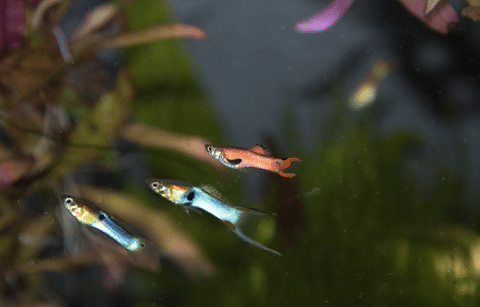
When placed next to a typical freshwater guppy, it’s clear to see how Endlers is the same species.
Endlers grow to be about 1 inch at their absolute biggest. They have slim bodies with a round stomach and rounded tail. These fish display sexual dimorphism like regular guppies, which makes the males easy to identify from the females.
Standard Endlers livebearer females are very plain in color. They are brownish-green in coloration with a white abdominal cavity. Endlers livebearer males are much more desirable due to their smaller bodies yet bright colorations. Males have orange streaks down the sides of their bodies that continue onto the margins of their tapered fins. Patterning across the body is random with overlays of black, yellow, and sometimes blue or white. The base color is similar to that of the female.
However, breeding Endlers livebearers has become a specialization in order to achieve the best colors and patterns possible. Because wild populations aren’t accessible, almost every Endlers livebearer fish available in the hobby is the result of selective breeding. From this, a few different varieties have been made popular.
Varieties
The original types of Endlers livebearer guppy are those that were collected when wild populations could still be found. These guppies are known as the Campoma guppy and many of the Endlers available today are descendants from this line.
Other varieties have also been bred from this line:
El Silverado Endler’s Livebearer (Poecilia wingei var. ‘El Silverado’). Male El Silverado’s have nearly metallic bodies with a large silver patch accented by orange, black, and green markings.
El Tigre Endler’s Livebearer (Poecilia wingei var. ‘El Tigre’). Male El Tigre’s have a nearly black base color. Along the sides of their body are alternating yellow, green, orange, and darker grey striping.
Yellow Tiger Endler’s Livebearer (Poecilia wingei var. ‘Yellow Tiger’). Male Yellow Tiger’s are very ornate with unique black and yellow patterning covering the majority of their body. In contrast, females are plain and standard colors.
In order to preserve the natural colors found in wild populations, Endlers have been bred with common guppies. In the aquarium hobby, these fish are referred to as a ‘Class K’ Endler. Fish that is traced originating from Venezuela are known as a ‘Class N’ Endler.
One of the truest variations of Endlers is the Red Flame Endler’s Livebearer. These peaceful fish have splashes of green, orange, black, and white and represent the standard appearance of this species.
Size
As mentioned before, female Endlers livebearers only grow to be about 1 inch. Male endler’s livebearers can range anywhere from 0.5-1.0 inches and are significantly smaller than their mates. This is in comparison to the common guppy which can grow up to 2.0 inches.
As we’ll discuss, these mature sizes make them the perfect candidates for nano aquariums, but their high activity levels will need to be considered. The small size of the endlers livebearer also makes them more susceptible to getting caught up in aquarium filtration, like filters and powerheads.
How Long Do They Live?
On top of being small, Endlers do not live long, unfortunately. Most fish only live to be 1-3 years old. It is also believed that female Endlers may have shorter lifespans if they regularly spawn. Luckily, an Endlers livebearer population can sustain itself once established.
Temperament and Activity Level
Endlers livebearers are very active swimmers that will stay towards the top and middle sections of the aquarium; they may venture down to the lower portions of the tank from time to time but you’ll most often find them waiting to be fed at the surface.
In terms of temperament and activity level, these freshwater fish are identical to guppies. They’re constantly moving, looking for something to eat or a female to chase. Because of this, it’s important to keep a high female to male ratio to keep fish from getting stressed out.
Otherwise, these the Endler’s livebearer will show their brightest colors when happy and healthy.
What Are Good Tank Mates?
Endlers livebearers are the perfect community freshwater fish. They don’t bother anyone but themselves and can add beautiful accents of color to an otherwise boring stocking.
In general, male and female Endlers livebearers is kept with any fish that is labeled as community-friendly. However, these fish are highly active which could easily stress out other fish sharing the same areas of the tank.
That being said, some of the best Endlers fish tank mates are:
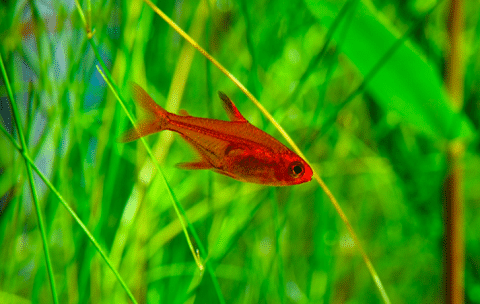
- Tetras
- Danios
- Cory catfish
- Bolivian ram cichlids
- African dwarf frogs
- Other Endlers
Betta fish are okay. While males can chase and try to pick at Endlers, they are faster than guppies and mollies so they are okay in larger tanks.
How Many Should Be Kept Together?
Endlers are schooling fish. They are naturally bold and curious on their own but they are most comfortable in a group setting.
At the same time, you will need to keep a high ratio between male and female Endler’s livebearers to prevent harassment. I recommend you have three females for every one male Endler. The starting number of fish should be around three or four and should be increased depending on tank size.
If male Endlers ever outnumber female Endlers, you may have a problem with bullying and/or overpopulation.
Least Compatible Fish
Just as common guppies are fed as feeder fish to bigger prey, Endlers will also be seen as prey to some aggressive species.
A good rule of thumb is to avoid freshwater fish that would be able to fit an Endler in their mouth. Though fast, Endlers make a good snack, especially if they’re annoying another larger fish by being too active.
Surprisingly, another bad tank mate for Endlers is the common guppy. This isn’t because these two fish won’t get along, but it’s because they’ll get along too well. Guppies and Endlers have been known to hybridize and produce fertile offspring. While this isn’t a problem as long as those fish stay in contained systems, authentic Endler lineages is lost in the process.
If you don’t mind losing the true appearance of the guppy or Endler guppy, then this combination is possible. Otherwise, one or the other should be chosen.
Inverts
Endlers livebearers are a popular addition to freshwater shrimp tanks, like those with red cherry shrimp (Neocaridina davidi) and Amano shrimp (Caridina multidentata).
These fish stay at the top of the tank while the shrimp stay at the bottom. There is little to no chance that an Endler guppy can fit a shrimp into their mouths, though they may pick at any smaller fry that are in the aquarium.
Otherwise, Endler’s livebearers are completely invert-safe and is kept with snails and microcrabs. Some larger crabs and crayfish could see your Endler guppies as a meal, though they may be too fast to catch.
What Do They Eat?
Endlers livebearers are omnivores with extremely small mouths. They aren’t picky eaters and will even enjoy grazing on some of the available algae throughout the tank, but will display their best colors when provided with a well-varied and high-quality diet.
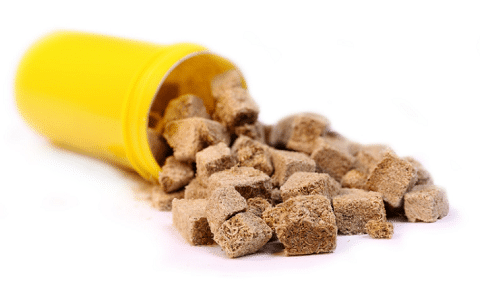
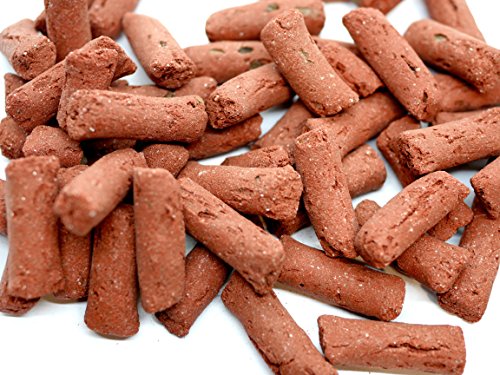
For the most part, these fish will do just fine on a high-protein freshwater fish flake food or pellet food like Xtreme Aquatics Nano. Flakes are more preferred for beginners as they is easily broken up for easier feeding.

Xtreme Aquatic Foods Nano
Xtreme Aquatics Nano formula is specially designed for smaller fish and contained a well balance mix of raw ingredients. It is a great staple food for your nano fish.
Otherwise, Endler’s livebearers may be given a variety of live and frozen foods. They’ll especially love an assortment of worms, like bloodworms and Tubifex worms, as well as brine shrimp. They may also be given blanched vegetables from time to time as long as they can easily be digested by your fish.
How Much and How Often to Feed
Chances are that you’ll be greeted at the top of the tank by a group of hungry Endlers any time you go to open the aquarium hood. These fish are always willing to eat! But keep in mind, the more you feed, the more waste they will make.
Endler’s livebearers are very small yet very active fish. This means that they can’t eat a lot at one time, but they need energy throughout the day to keep them going. It’s recommended to feed manageable portions two to three times throughout the day. This schedule will keep them fed without introducing too much waste into the aquarium.
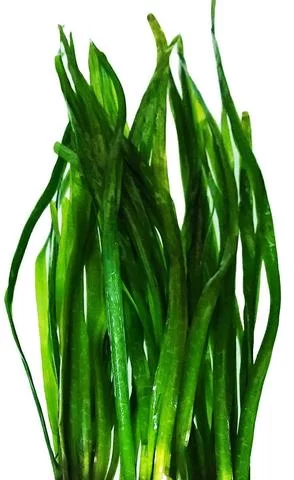
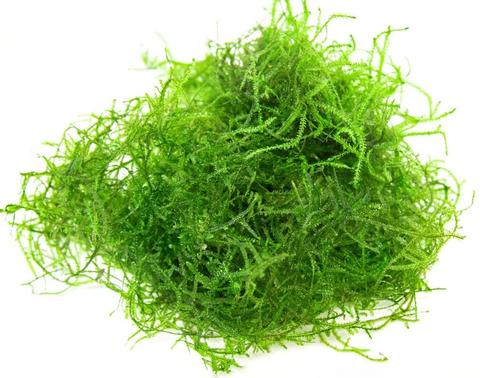
If the tank is mature and stocked with live plants, then these peaceful fish can get some of their nutrition from the microflora that’s already available. They’ll especially like picking at algae growing on guppy grass (Najas guadalupensis).
Setting Up Your Tank
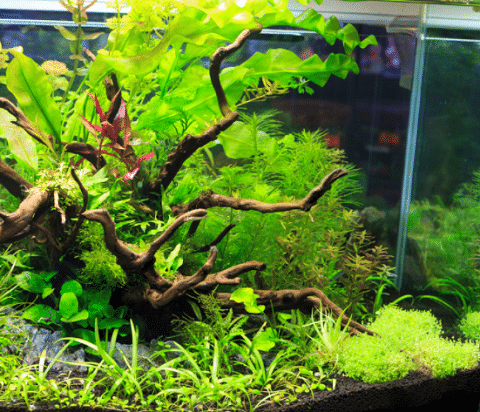
Being a hardy community fish, Endler’s livebearers is kept in most tank setups. However, these fish look their best when the tank is set up around them to accent their colors and movements. If keeping some of the higher-end varieties, then you’ll especially want to show them off!
Tank Size
Most sites will say that a 10 gallon fish tank will happily house a small school of Endlers livebearers. While this is true, the top of the tank will likely be overwhelmed by their activity. It’s better to give them a slightly larger tank, like a 20 gallon long, where they have more surface area to fill.

Aqueon 20 Gallon Tank
A classic 20 gallon aquarium in its 30 inch long variant. A very popular aquarium.
Having a bigger tank also allows for more tank mates, though many hobbyists like to keep active livebearers together. At some point, it can become a little silly to have 100 Endlers in a 100 gallon fish tank!
Filtration
Endler’s livebearers are small, but they have a fast metabolism. This means that they will quickly process foods and fill the tank with waste. Because hobbyists have a large group of them, this can add up and can cause problematic water parameters, especially if the tank is fully stocked.
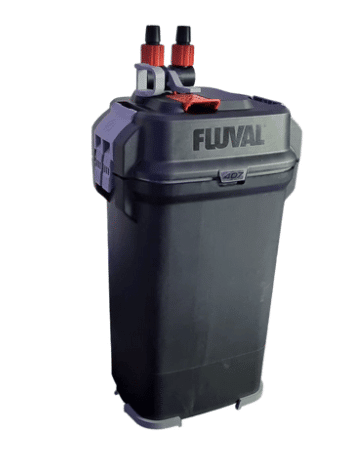
These fish can tolerate higher water flows and will even enjoy fighting against a strong current. However, an overly strong water flow can easily push these small fish around. Hang on the back and canister filters need to be baffled to keep your fish from getting hurt.
The better alternative to an external filter is an internal sponge filter. Not only do sponge filters keep the water clean and oxygenated, but they are also completely safe for more delicate fish, like Endlers.
Because many Endler’s livebearers are kept together at once, it is recommended to go with a bigger filter than what is recommended. Remember, waste can add up very quickly!
Water Parameters
Endlers livebearers are very hardy fish and will adapt to most water conditions as long as they don’t change too quickly. Making sure Ammonia and Nitrite are zero and nitrates are low are common things to check and monitor with a test kit. You can enhance your filtration and perform water changes and tank maintenance to maintain great parameters.
Unlike some other livebearers, Endler guppies actually prefer warmer and harder water. Water temperature should stay between 64°F. 82°F with 78°F being the most optimal for the success of other species. Most aquarium-bred Endlers have adapted to live in 1-12 dKH water hardness and a near-neutral pH of 7.0.
For the most part, these fish will forgive minor fluctuations in water parameters, making them a great and easy choice for beginners. Still, it is recommended to properly quarantine and acclimate new fish before adding them to the aquarium to reduce the risk of shock and transfer of disease.
Breeding
Not only are Endlers livebearers incredibly hardy, but they’re also some of the easiest fish to breed in the aquarium hobby (video by The Dave). So much so that you’ll actually have problems getting them to stop breeding rather than to start.
Male Endlers are very easy to tell apart from females. At least three females should be kept per male at all times. If you don’t want to end up with a hundred baby Endlers in your aquarium, only buy males or females. Do not combine them because they will breed.
Otherwise, breeding is a matter of when rather than how. Good water parameters, a high-quality diet, and a natural tank setting will all help your fish feel comfortable enough to reproduce.
When your fish are happy, you will notice the males flashing and displaying their fins to females, occasionally chasing after them too; note that males can become overly eager, damaging fins and even killing females in extreme cases. For the most part, this isn’t anything to worry about, though aggression should be monitored.
Once successful, females will have an average brood of about 15 baby fish; as a type of livebearer, Endlers do not lay eggs and fish are free-swimming once born. Adult females can reproduce again after about a month after spawning.
Fry is given small foods, like baby brine shrimp. To increase the odds of baby fish living to adulthood, remove them from the tank and place them into another system until they can’t be eaten; it is unlikely for adults to eat their young, but it’s possible if fish are underfed.
After about 2 months, the fry will be ready to reproduce on their own.
Is the Endlers Livebearers. A Complete Right for You?
Before you add a endlers livebearers. A complete to your tank, it’s worth asking whether this species actually fits your setup and your goals. Here’s a quick breakdown to help you decide.
This species is a good fit if:
- You have a large enough tank to manage territories. Cramped conditions amplify aggression.
- You’re comfortable managing aggression through stocking ratios, line of sight breaks, and tank layout.
- You can commit to regular water changes. These fish produce more waste than many smaller species.
- You’re not planning a peaceful community tank. Endlers Livebearers. A Completes need tank mates that can hold their own.
- You enjoy watching active, interactive fish. Cichlids have personality that smaller species simply don’t match.
- You have backup plans. Sometimes a particular fish just doesn’t work out, and you need a way to rehome it.
- You’re feeding a varied, high-quality diet. Color and health depend on nutrition.
If most of those points line up with your setup, the endlers livebearers. A complete is worth serious consideration. If several don’t, it’s better to choose a species that matches your tank now rather than trying to make it work.
How the Endlers Livebearers. A Complete Compares to Similar Species
Want color and activity without breeding headaches? Get all males. Want a self-sustaining colony? Get a proper male-to-female ratio and a grow-out tank.
Choosing between similar species is tricky. Here’s how the endlers livebearers. A complete stacks up against some common alternatives.
The endlers livebearers. A complete occupies a specific niche in the aquarium hobby, and direct comparisons really depend on what you’re looking for. In my experience, the most common question people ask is whether they should choose the endlers livebearers. A complete or something similar that’s more widely available. The answer comes down to three things: tank size, water parameters, and what other fish you’re keeping. If your setup matches what the endlers livebearers. A complete needs, it’s hard to beat. If not, there are alternatives worth exploring.
Final Thoughts
Endlers livebearers are the perfect addition to community tanks lacking in color. These fish are small yet highly active and very forgiving when it comes to beginner’s mistakes. Though they’re recommended for smaller tanks, we recommend giving more space for them to swim and explore.
Plus, it’s better to have more room than not enough when your fish start to reproduce!




 Ember Tetra” class=”wp-image-547290″/>