I’ve personally cared for nearly every fish on this list through my years working at local fish stores, so I can tell you firsthand which ones thrive in a 55-gallon setup and which ones cause problems. A 55-gallon tank is a fantastic size. It opens the door to impressive centerpiece fish and schooling communities alike, but that wide range of options is exactly where most fishkeepers go wrong. In this guide, I’ll share my top 21 picks, along with the stocking realities I see most often overlooked.
The 55-gallon is one of the most versatile tank sizes in the hobby. The challenge is not finding fish that fit. It’s choosing the right fish and building a coherent stocking plan instead of adding whatever catches your eye at the store.
Expert Take | Mark Valderrama, AquariumStoreDepot
A 55-gallon is where most hobbyists hit their stride. You have enough volume to keep water parameters stable, enough footprint (48 x 12 inches / 122 x 30 cm) to suit schooling fish and centerpiece species alike, and enough room to make stocking mistakes without immediate crisis. My advice: decide on your fish identity before you buy anything. A community schooling tank, a cichlid pair tank, and an African cichlid setup are completely different ecosystems. Trying to blend them is where most 55-gallon builds fall apart.
Key Takeaways
- There are hundreds of species that work in a 55-gallon, but the best stocking plans are built around a single concept: community schooling, centerpiece species, cichlid setup, or predator tank.
- The 48-inch footprint suits active schooling fish well. Species that need length to swim (large barbs, rainbowfish, denison barbs) do better in a 55 than a 40-gallon tall.
- Inch-per-gallon is a myth. Do not use it. Bioload, waste output, and adult size are what matter. An oscar in a 55-gallon is at capacity. A school of neon tetras in the same tank is barely touching it.
- Water parameters should be decided before fish are chosen, not after. Your local water chemistry determines which fish groups make sense for your setup.
- The biggest stocking mistake: choosing fish for their appearance without researching adult size, temperament, and water requirements.
How to Stock a 55-Gallon Tank: Three Approaches That Work
ASD Stocking Tiers for a 55-Gallon Tank
Tier 1 (Beginner Friendly): Community schooling setup. Pick one species per level: a school of mid-level tetras or rasboras (10 to 15 fish), a bottom-dwelling group (6 to 8 corydoras), and a single centerpiece (a gourami, a small cichlid pair, or a betta). Easy to maintain, forgiving on water chemistry, looks excellent planted.
Tier 2 (Intermediate): Centerpiece species setup. Build the tank around one or two focal fish: a pair of angelfish, a single discus group, a pair of German blue rams in a planted soft-water tank. The centerpiece species determines your water parameters and tank mates.
Tier 3 (Dedicated): Single-species or species-group setup. African cichlid colonies, convict cichlid breeding pairs, or a single large predator (oscar, jack dempsey) in a species-only or dither-fish setup. High personality, high commitment, high reward.
Best Freshwater Fish For 55 Gallon Tanks
You can check out this video from our official YouTube Channel while following along on this blog post.
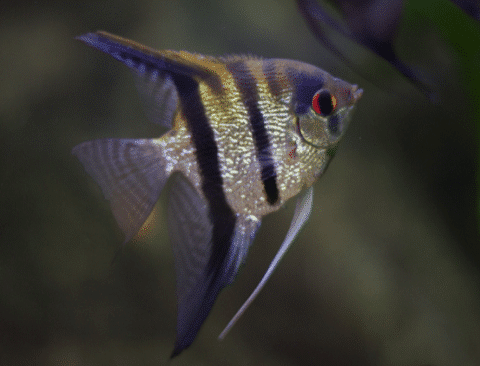
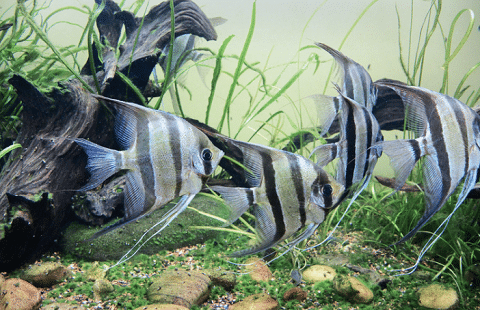
1. Freshwater Angelfish
- Scientific name: Pterophyllum scalare
- Care level: Easy
- Minimum tank size: 40 gallons
- Temperament: Generally peaceful but may be aggressive when breeding and will eat nano fish
- Adult fish size: 6 inches (15 cm)
- Origin: South America
- Temperature: 75 to 82°F (24 to 28°C)
- pH: 6 to 7
- Diet: Omnivore
- Swim Level: Mid-level
- Type: Centerpiece
Freshwater angelfish are some of the most beautiful and elegant fish in the hobby and they thrive in a standard four-foot aquarium. These stunning South American cichlids are available in a range of different breeds, from pure white to black and multicolored.
A pair of angelfish in a 55-gallon planted tank is usually a great idea. Be aware that these fish can show territorial behavior around breeding time and they will snack on nano fish when they can catch them.
Mark’s Pick: Top Centerpiece for a 55-Gallon
If I were setting up a 55-gallon freshwater community tank today, angelfish would be my first choice. A pair in a well-planted setup is genuinely stunning. I’ve seen this work beautifully dozens of times through my years in the aquarium trade. Plan your community around them from the start and avoid adding nano fish as tank mates. Neon tetras and angelfish is a classic mistake. Angelfish are cichlids, and neons are angel food once the fish matures.
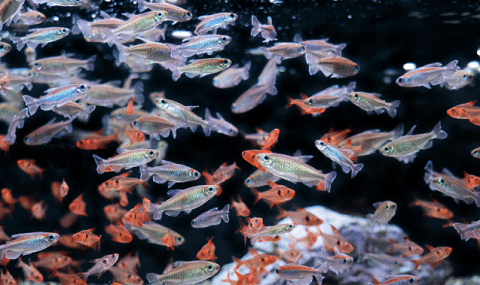
2. Congo Tetra
- Scientific name: Phenacogrammus interruptus
- Care level: Easy
- Minimum tank size: 30 gallons
- Temperament: Peaceful
- Adult fish size: 2.5 to 3 inches (6 to 7.5 cm)
- Origin: West Africa
- Temperature: 73 to 82°F (23 to 28°C)
- pH: 6 to 7.5
- Diet: Omnivore
- Swim Level: Middle and upper levels
- Type: Schooling fish
The Congo tetra is a beautiful African schooling fish ideal for larger aquariums. Males are neon blue with an orange horizontal stripe and interesting pointed tail fins. Females have a classy gold and silvery color with shorter tails and more compact dorsal fins. A school of six or more will add variety and movement to the water column.
3. African Cichlids
- Scientific name: Various
- Care level: Moderate
- Minimum tank size: Various
- Temperament: Semi-aggressive
- Adult fish size: 1.5 to 5 inches (4 to 13 cm)
- Origin: East Africa
- Temperature: 77 to 82°F (25 to 28°C)
- pH: 7.5 to 9
- Diet: Species dependent
- Swim Level: Lower and middle levels
- Type: Centerpiece fish
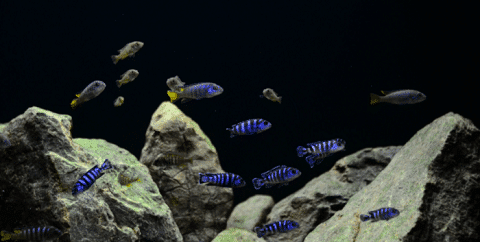
A four-foot tank is just large enough for an African cichlid setup, although it’s important to choose the right species to minimize territorial disputes and provide the hard, high-pH water these fish require. Smaller mbuna cichlids like yellow labs or shell dwellers are ideal for this tank size. You could also start a breeding group of a smaller peacock species.
4. Synodontis Catfish
- Scientific name: Synodontis spp.
- Care level: Easy to moderate
- Minimum tank size: 30 to 50 gallons
- Temperament: Peaceful / Semi-aggressive
- Adult fish size: 4 to 8 inches (10 to 20 cm)
- Origin: East Africa
- Temperature: 74 to 82°F (23 to 28°C)
- pH: 7.5 to 8.5
- Diet: Omnivore
- Swim Level: Bottom
- Type: Bottom dweller
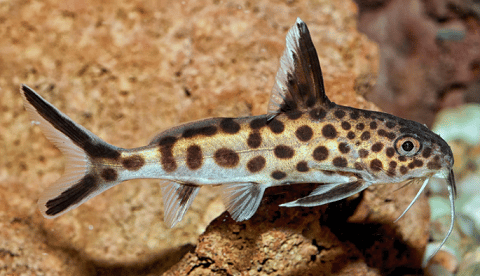
There are several species of Synodontis catfish available in the aquarium hobby, and these interesting fish are especially popular as bottom-dwelling tank mates in an African cichlid setup. They tolerate the hard, alkaline water that African cichlids require, which makes them one of the few reliable bottom-dweller options for that type of tank. Synodontis prefer the company of their own kind, so pick up a school of four or more.
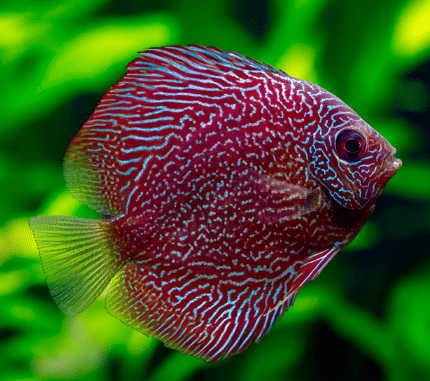
5. Discus
- Scientific name: Symphysodon discus
- Care level: Advanced
- Minimum tank size: 55 gallons (75+ is better)
- Temperament: Peaceful
- Adult fish size: 5 to 6 inches (13 to 15 cm)
- Origin: South America
- Temperature: 82 to 89°F (28 to 32°C)
- pH: 6 to 6.5
- Diet: Omnivore
- Swim Level: Middle levels
- Type: Centerpiece
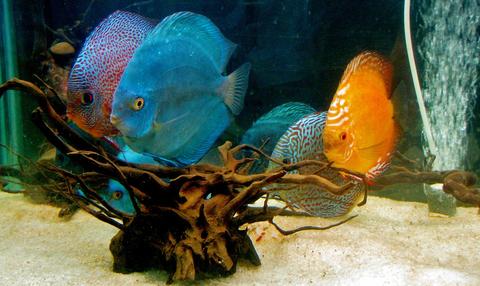
It is possible to keep discus cichlids in a tank as small as 55 gallons, but this is a dedicated setup, not a casual one. Discus require soft, acidic water, warm temperatures (82 to 86°F / 28 to 30°C), and exceptional water quality maintained through frequent water changes. If you’ve always wanted to keep the king of the aquarium and have the commitment for it, a 55-gallon is a workable starting point.
6. Corydoras Catfish
- Scientific name: Corydoras spp.
- Care level: Easy
- Minimum tank size: 30 gallons for most species
- Temperament: Peaceful
- Adult fish size: 2 to 3 inches (5 to 7.5 cm)
- Origin: South America
- Temperature: 74 to 80°F (23 to 27°C)
- pH: 5.5 to 8
- Diet: Omnivore
- Swim Level: Bottom
- Type: Bottom dweller
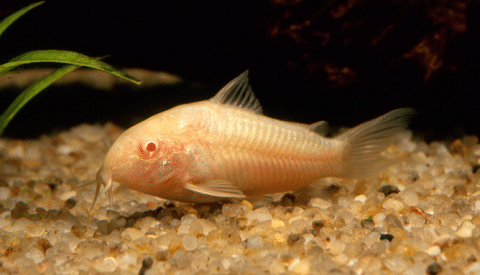
Corydoras catfish can be kept in tanks as small as 30 gallons, but a 55-gallon tank allows you to keep a larger school or even a few different species. These peaceful fish hang out on the bottom and search the substrate for leftover food scraps. There are many species available, including panda cories, Sterbai cories, and albino breeds. Keep a school of at least 5 of the same species and provide a sinking bottom feeder tablet.
7. Ram Cichlids
- Scientific name: Mikrogeophagus ramirezi
- Care level: Moderate to advanced
- Minimum tank size: 20 gallons
- Temperament: Peaceful
- Adult fish size: 2.5 inches (6 cm)
- Origin: South America
- Temperature: 78 to 86°F (26 to 30°C)
- pH: 5.5 to 7.5
- Diet: Omnivore
- Swim Level: Lower levels
- Type: Centerpiece
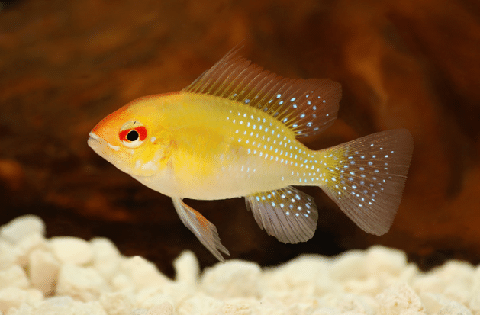
The ram is a colorful dwarf cichlid from South America. These gorgeous fish are relatively shy and sensitive for a cichlid, but they make a great centerpiece in a soft-water 55-gallon planted tank. Ram cichlids prefer a sand substrate they can sift through in search of food. Set your heater in the low 80s°F (around 27 to 28°C) to recreate their natural habitat.
8. Neon Tetras
- Scientific name: Paracheirodon innesi
- Care level: Moderate
- Minimum tank size: 10 gallons
- Temperament: Peaceful
- Adult fish size: 1.5 inches (4 cm)
- Origin: South America
- Temperature: 70 to 79°F (21 to 26°C)
- pH: 6 to 7
- Diet: Omnivore
- Swim Level: Middle levels
- Type: Schooling fish
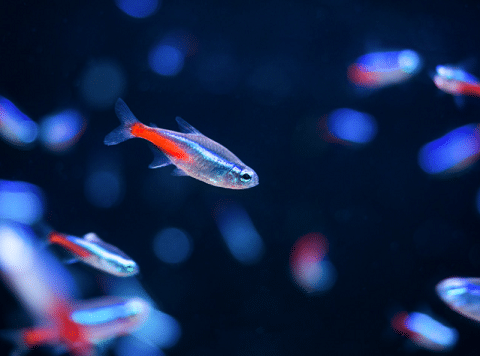
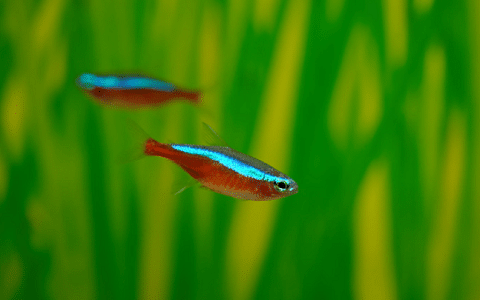
Who says you can’t keep small fish in a big tank? The neon tetra is a classic community fish that thrives in a large aquarium filled with live plants and other small peaceful species. These fish look their best in a large school, and a 55-gallon is ideal. Aim for 20 or more neons for full effect in this size tank.
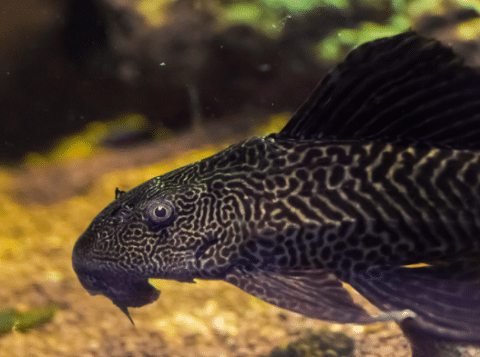
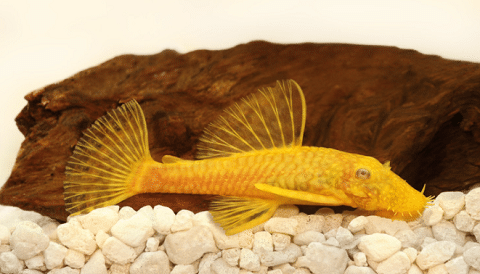
9. Small to Mid-Sized Plecos
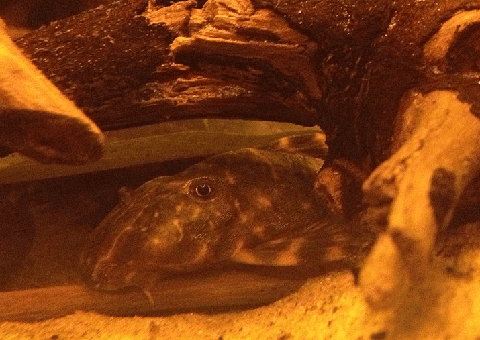
- Scientific name: Ancistrus spp., Hypancistrus spp., Panaques spp.
- Care level: Easy to advanced (species dependent)
- Minimum tank size: 20 gallons
- Temperament: Peaceful
- Adult fish size: 3 to 6 inches (7.5 to 15 cm)
- Origin: South America
- Temperature: Species dependent
- pH: Slightly acidic to slightly basic
- Diet: Herbivore
- Swim Level: Bottom
- Type: Bottom dweller
There are well over a hundred pleco species, some growing to more than a foot in length. In a 55-gallon, stick to species that max out under 6 inches (15 cm): bristlenose plecos, clown plecos, or rubber lip plecos. These peaceful bottom dwellers are safe with smaller fish and will help manage algae. Include plenty of rocks and driftwood for hiding spaces and food sources.
10. Geophagus
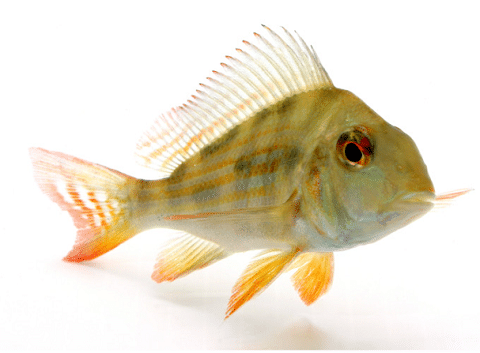
- Scientific name: Geophagus spp., Satanoperca spp.
- Care level: Moderate
- Minimum tank size: 55 gallons for smaller species
- Temperament: Generally peaceful
- Adult fish size: 6+ inches (15+ cm)
- Origin: South America
- Temperature: Species dependent
- pH: Species dependent
- Diet: Omnivore
- Swim Level: Lower levels
- Type: Centerpiece
Geophagus are colorful South American cichlids that sift through the substrate in search of food. Keep them on a fine sandy substrate and choose smaller species that stay around 6 inches (15 cm) or under, such as Geophagus tapajos. These fish are not suited to a carefully aquascaped tank as they constantly rearrange the bottom.
11. Rainbowfish
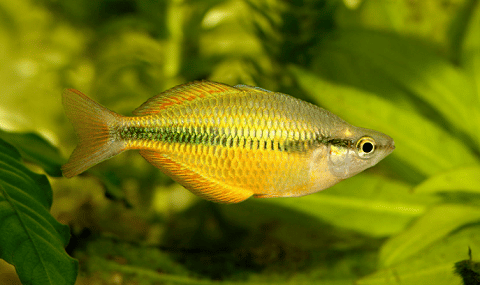
- Scientific name: Melanotaenia spp.
- Care level: Easy to moderate
- Minimum tank size: 30 gallons
- Temperament: Peaceful
- Adult fish size: 2 to 6 inches (5 to 15 cm)
- Origin: Australia and Indonesia
- Temperature: 74 to 80°F (23 to 27°C)
- pH: 6.5 to 8
- Diet: Omnivore
- Swim Level: Middle levels
- Type: Schooling fish
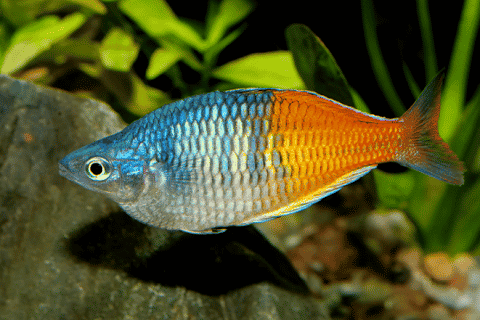
Rainbowfish are peaceful, active schooling fish that add color and movement to a 55-gallon aquarium. The 48-inch length of a standard 55-gallon suits their active swimming style particularly well. Popular species include the Boesmani rainbow and the smaller dwarf neon rainbow. Check out my guide to 15 popular rainbowfish types for species details.
12. Convict Cichlids
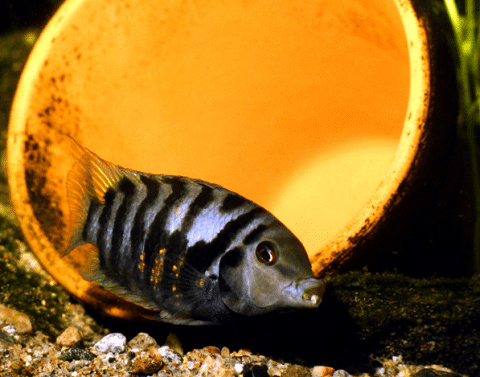
- Scientific name: Amatitlania nigrofasciata
- Care level: Easy
- Minimum tank size: 30 gallons
- Temperament: Aggressive
- Adult fish size: 3.5 to 6 inches (9 to 15 cm)
- Origin: Central America
- Temperature: 74 to 84°F (23 to 29°C)
- pH: 6.5 to 8
- Diet: Omnivore
- Swim Level: Lower levels
- Type: Centerpiece
The convict cichlid is one of the easiest cichlids to keep and one of the most prolific breeders in the hobby. A breeding pair in a 55-gallon is entertaining and low maintenance, but be aware that these fish spawn so reliably that fry management becomes a real consideration. If you’re not prepared to deal with regular breeding, choose a different species.
13. Tiger Barbs
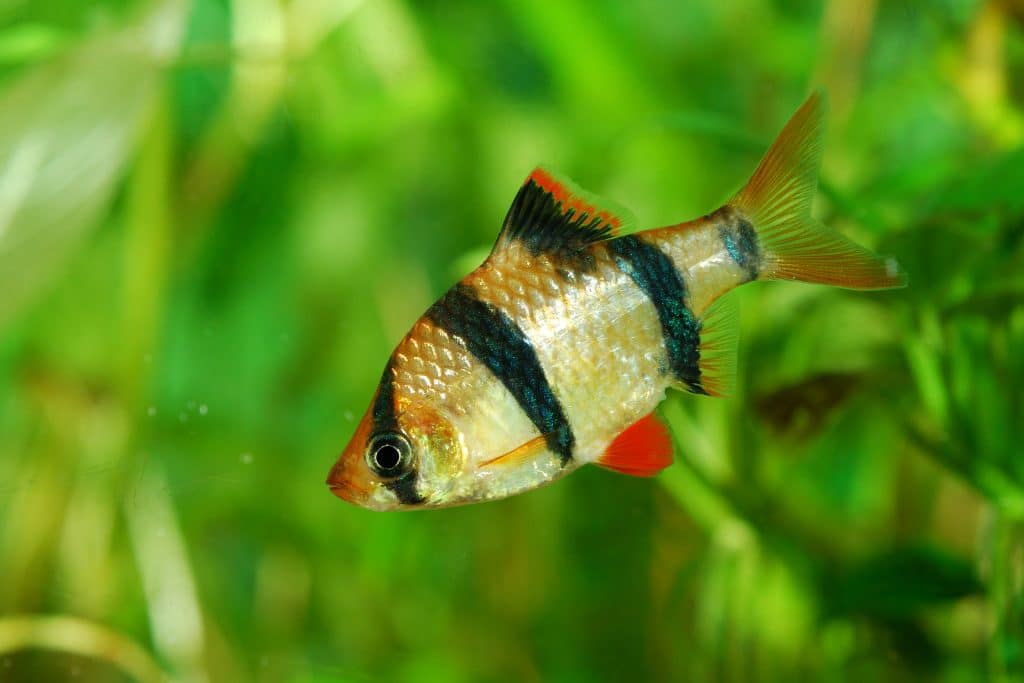
- Scientific name: Puntigrus tetrazona
- Care level: Easy
- Minimum tank size: 30 gallons
- Temperament: Semi-aggressive
- Adult fish size: 3 inches (7.5 cm)
- Origin: Southeast Asia
- Temperature: 73 to 86°F (23 to 30°C)
- pH: 6 to 8
- Diet: Omnivore
- Swim Level: Middle levels
- Type: Schooling fish
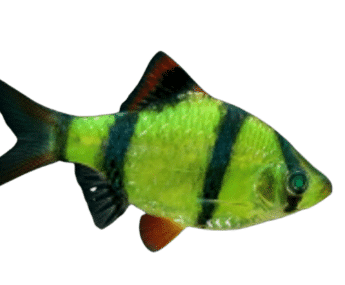
Named for its orange body and four vertical black stripes, the tiger barb is an attractive schooling fish from Southeast Asia. These active barbs have a reputation for nipping, but they behave much better in large schools of 15 or more. Tiger barbs can coexist with fast-moving bottom-dwellers and other schooling fish. Avoid slow-moving tank mates or fish with long, flowing fins.
14. Rainbow Cichlid
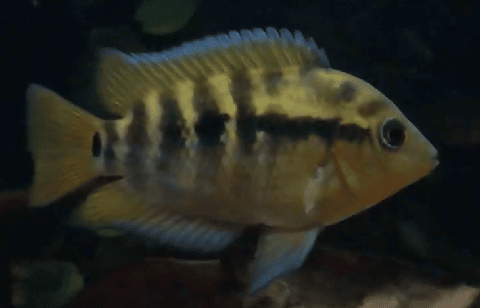
- Scientific name: Herotilapia multispinosa
- Care level: Easy
- Minimum tank size: 20 gallons
- Temperament: Relatively peaceful
- Adult fish size: 4 to 5 inches (10 to 13 cm)
- Origin: Central America
- Temperature: 72 to 82°F (22 to 28°C)
- pH: 7 to 8
- Diet: Omnivore
- Swim Level: Lower levels
- Type: Centerpiece
The rainbow cichlid is a beautiful Central American fish that is relatively peaceful for a cichlid. It has a golden color with a prominent black streak along each side that may break into blotches. A pair of rainbow cichlids is an excellent choice for a planted 55-gallon tank with suitable tank mates.
15. Denison Barb

- Scientific name: Sahyadria denisonii
- Care level: Easy
- Minimum tank size: 55 gallons
- Temperament: Peaceful
- Adult fish size: 4 inches (10 cm)
- Origin: India
- Temperature: 59 to 77°F (15 to 25°C)
- pH: 6.5 to 7.8
- Diet: Omnivore
- Swim Level: Middle levels
- Type: Schooling fish
Also known as the roseline shark, denison barbs are one of the best-looking barbs in the hobby. These speedy schooling fish combine sleek lines and silvery scales with a bright red streak and yellow tail spots. A 55-gallon provides just enough swimming space for a small school (6+) of these peaceful fish. Denison barbs enjoy cooler water temperatures, so factor that in when selecting tank mates.
16. Electric Blue Acara

- Scientific name: Andinoacara pulcher
- Care level: Moderate
- Minimum tank size: 40 gallons
- Temperament: Semi-aggressive
- Adult fish size: 6 to 7 inches (15 to 18 cm)
- Origin: Trinidad and Venezuela
- Temperature: 74 to 82°F (23 to 28°C)
- pH: 6 to 7
- Diet: Omnivore
- Swim Level: Lower half
- Type: Centerpiece
The electric blue acara is one of the most striking centerpiece fish available for a 55-gallon setup. The metallic blue coloration is exceptional under proper lighting. This cichlid is moderately sized, generally peaceful outside of breeding, and tolerates a reasonably wide range of water conditions. It pairs well with mid-level schooling fish that are too large to be seen as prey.
17. Jack Dempsey
The Jack Dempsey (Rocio octofasciata) is a bold, colorful cichlid that fits in a 55-gallon but will dominate it. Adults reach 7 to 8 inches (18 to 20 cm) and establish strong territorial claims. A single Jack Dempsey or a bonded pair is workable in a 55-gallon. Adding multiple males or mixing with other cichlids of similar aggression requires careful layout and monitoring. This is a personality fish. It will know you, recognize you at the glass, and reward the investment.
18. Oscar
Oscars (Astronotus ocellatus) grow to 12 to 14 inches (30 to 36 cm) and produce enormous waste loads. A 55-gallon is a starter tank for a juvenile oscar, not a permanent home. If you commit to an oscar, plan for a 75-gallon (284 L) minimum as an adult tank. The payoff is one of the most interactive, personality-driven fish in freshwater. They recognize their owners, beg for food, and rearrange their tank continuously. Just understand the commitment upfront.
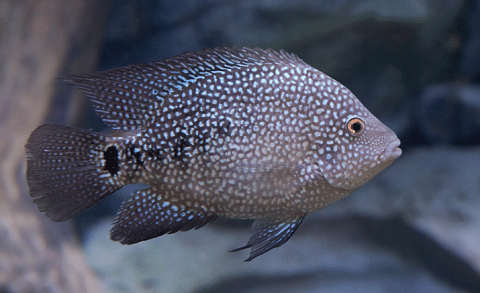
19. Flowerhorn
Flowerhorns are hybrid cichlids with enormous humps (nuchal humps) on their heads and bold color patterns. They reach 12 inches (30 cm) and are exclusively a species-only fish. No tank mates. Like oscars, a 55-gallon works for juveniles but they need larger quarters as adults. They are one of the most visually dramatic fish you can keep in freshwater.
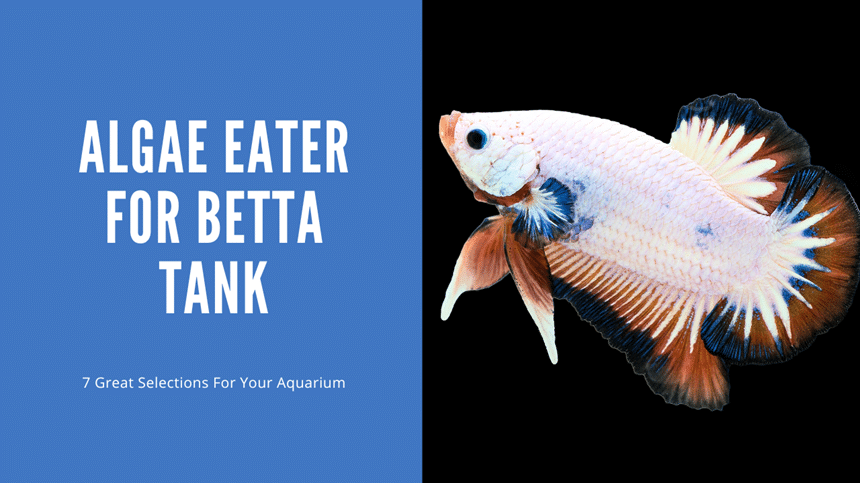
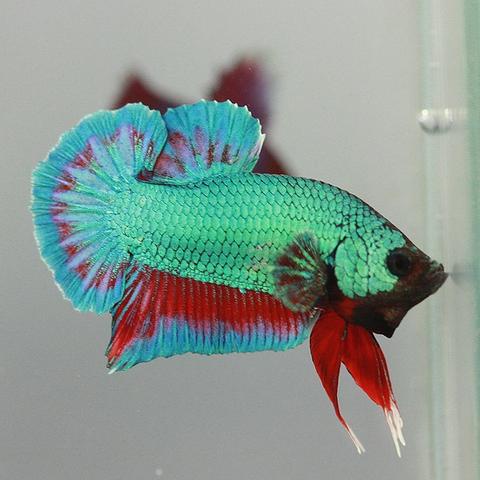
20. Betta Sorority
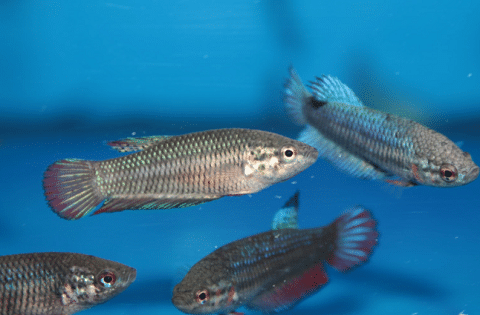
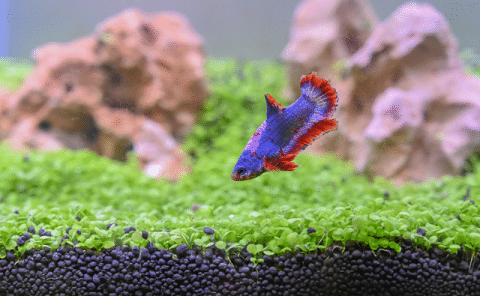
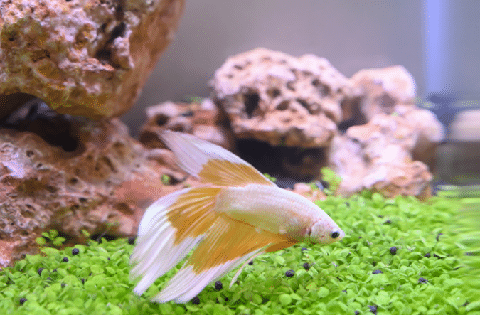
A betta sorority tank with multiple female bettas is an interesting option for a 55-gallon. It is not a beginner setup. Keep only females, a minimum group of five to spread out aggression, and have a backup plan if a fish becomes too aggressive. In the right hands this can be a stunning planted tank. In the wrong hands it creates a lot of injured fish.
21. Mollies
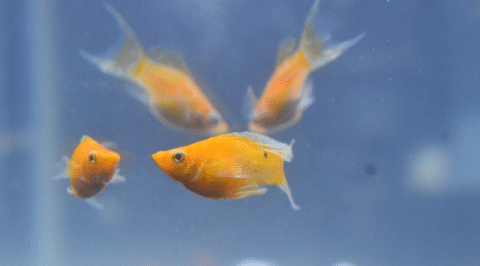
- Scientific name: Poecilia spp.
- Care level: Moderate
- Minimum tank size: 20 gallons
- Temperament: Generally peaceful
- Adult fish size: 3 to 6 inches (7.5 to 15 cm) depending on species
- Origin: North, Central, and South America
- Temperature: 72 to 82°F (22 to 28°C)
- pH: 7 to 8.5
- Diet: Omnivore
- Swim Level: Middle levels
- Type: Schooling fish
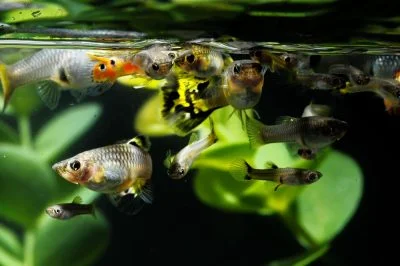
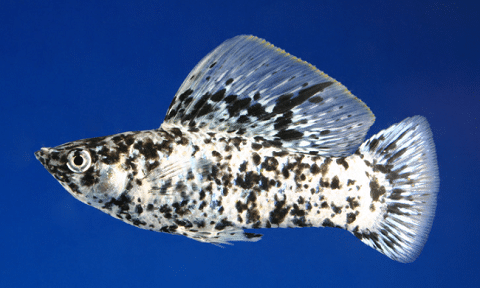
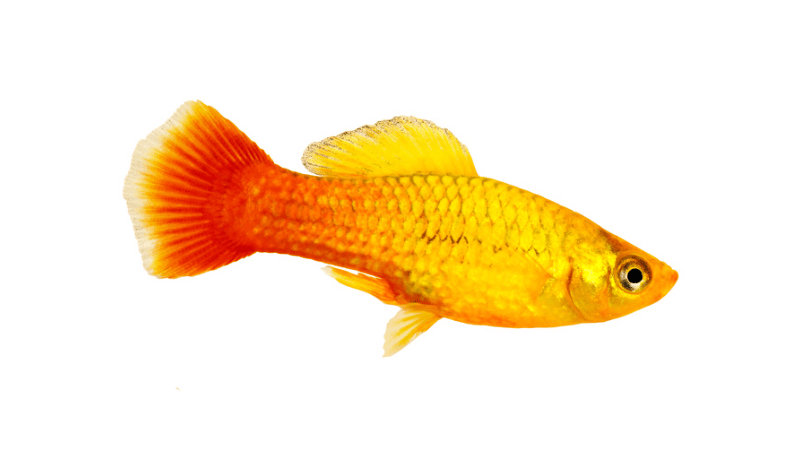
Mollies are medium-sized livebearers ideal for a 55-gallon aquarium. Highly adaptable and available in many color varieties, they work well in a community tank or a dedicated livebearer tank with guppies and similar species. They prefer slightly hard water, which makes them a natural fit for livbearer-focused setups.
Avoid These 55-Gallon Stocking Mistakes
- Using the inch-per-gallon rule. It is not a reliable stocking guide. It does not account for bioload, waste output, or swimming behavior. Use it as a rough starting point only, then research each species individually.
- Putting an oscar or jack dempsey in with community fish. These are predators. They will eat or bully anything smaller. Species-only or carefully selected large tank mates only.
- Mixing African cichlids with community fish. The pH and hardness requirements are incompatible. One group will always be in the wrong water.
- Adding discus without understanding their temperature needs. 82 to 86°F (28 to 30°C) eliminates most community fish as tank mate options. This is a specialist setup from day one.
- Choosing fish by appearance without checking adult size. The $3 fish that looks good in a 4-inch bag at the store may be 12 inches and producing more waste than your filter can handle in a year.
Choosing Your Stocking Approach: Community vs. Cichlid vs. Predator
| Setup Type | Difficulty | Fish Count | Visual Impact | Maintenance | Best For |
|---|---|---|---|---|---|
| Community schooling | Beginner | 25 to 50+ | High (planted) | Weekly WC | First 55-gallon setup |
| Centerpiece species | Intermediate | 2 to 15 | Very High | Moderate to high | Showpiece builds |
| African cichlid colony | Intermediate | 15 to 25 | High (color) | Moderate | Active, colorful tanks |
| Single large predator | Intermediate | 1 to 3 | Moderate | High (bioload) | Personality fish keepers |
Other Options
All the fish mentioned in this guide are excellent options for a 55-gallon setup, and there are hundreds more species that thrive in this versatile tank size. Looking for more inspiration? Check out these guides:
- Schooling fish species: 15 to keep
- 21 centerpiece fish for every tank size
- Best bottom-feeder fish for your aquarium
- African cichlid species: 21 great choices
FAQ
What fish can you put in a 55-gallon fish tank?
55-gallon tanks are large enough for most popular freshwater aquarium fish sold in fish stores. The key is matching the fish to your water parameters and building a coherent stocking plan before you buy. Start with your water chemistry, decide on a tank concept (community, cichlid, predator), then select species that fit both.
What is the largest fish for a 55-gallon tank?
New World cichlids like oscars and jack dempseys are about the largest fish you can keep in a 55-gallon, though they prefer a larger tank when fully grown. A juvenile oscar works in a 55-gallon for the first year or so. An adult oscar at 12 to 14 inches (30 to 36 cm) needs a 75-gallon (284 L) minimum.
How do you stock a 55-gallon tank?
Start with your water parameters. Hard water suits livebearers and African cichlids. Soft water suits South American and West African species. Decide on your tank concept first, then choose species that fit it. Populate all three levels of the water column (bottom, mid-level, surface) for a balanced community setup.
How many fish can you have in a 55-gallon tank?
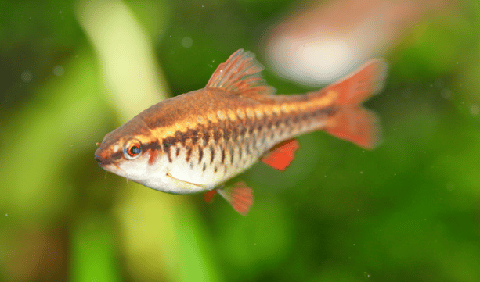
This depends entirely on species and bioload. A single adult oscar nearly maxes out a 55-gallon on its own. A school of chili rasboras at 0.7 inches (1.8 cm) each could number 40 or more in the same tank. Fish count is meaningless without species context. Focus on bioload and adult size, not number of fish.
What can I put in a 55-gallon tank besides fish?
Freshwater invertebrates like shrimp and snails, amphibians like axolotls and African dwarf frogs, and small freshwater turtles all work in a 55-gallon given the right setup and parameters.
Final Thoughts
A 55-gallon tank is genuinely one of the best investments in the freshwater hobby. It gives you enough volume to maintain stable water chemistry, enough footprint to suit schooling fish properly, and enough flexibility to try almost any freshwater concept you are interested in. The fish that does best in a 55-gallon is the fish you plan around from the beginning. Decide your concept, match your water parameters, and build the tank before you buy the fish. Every successful 55-gallon I’ve seen has followed that sequence. Every problem tank I’ve had to help troubleshoot over the years skipped it.
Where to Buy Quality Fish for a 55-Gallon Setup
These are the online suppliers I recommend for healthy, properly conditioned livestock:
- Flip Aquatics – Quarantine-certified livestock, live arrival guarantee, and a wide selection of the species on this list. Use code ASDFLIPPROMO for a discount.
- Dan’s Fish – Reliable source for community fish, cichlids, and specialty species. Good for stocking multiple species at once.
References
- Seriously Fish – Species profiles and care data
- FishBase – Taxonomy and scientific data
- Practical Fishkeeping – Husbandry and care advice




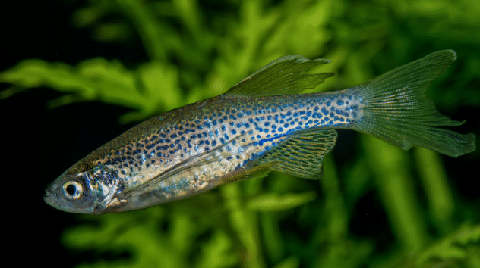
 Apistogramma cacatuoides” class=”wp-image-1059938″/>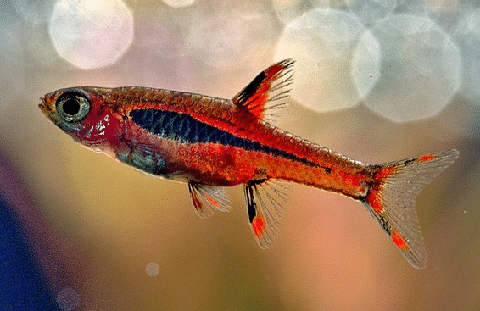


 Betta Fish” class=”wp-image-34308″/>
 Texas Cichlid” class=”wp-image-553069″/>