Author: Mark Valderrama

  • Pearl Weed Care Guide: Tips for Growing This Versatile Carpet Plant

    Pearl Weed Care Guide: Tips for Growing This Versatile Carpet Plant

    Pearl weed (Micranthemum umbrosum) is one of those plants I keep coming back to when I want something that carpets beautifully without the extreme demands of something like HC Cuba. I’ve grown it in both CO2 and low-tech setups โ€” it performs differently in each, and I’ll tell you exactly what to expect from both approaches. If you’re setting up a planted tank and want dense, bright-green carpeting stems without losing your mind over precision dosing, this guide covers everything I’ve learned firsthand.

    Key Takeaways

    • Pearl weed does best with CO2 if your goal is to create a carpet
    • It is best as a foreground plant due to its small height
    • It does well in a nutrient-rich environment and requires moderate to intense lighting

    A Brief Overview of Pearl Weed

    Scientific NameHemianthus micranthemoides
    Common NamesPearl weed, Baby tears, Pearl grass, Amano pearl grass
    FamilyScrophulariaceae
    OriginNorth America
    Skill LevelEasy
    LightingModerate to high
    Tank PlacementForeground, midground
    Flow RateModerate
    Temperature Range66 Fยฐ – 82 Fยฐ
    Height2 to 5 inches
    pH Range6.5 – 7.5
    Growth RateModerate
    Feed TypeWater column feeder
    Co2 RequirementRecommended

    Introduction

    Pearl weed is popular around the world for its bright green color, high coverage growth, and ability to decorate your tank in different ways.

    It scientifically goes as Hemianthus Micranthemoides, commonly known as Pearl Weed, Baby Tears, or Pearl Grass.

    It belongs to the Scrophulariaceae family from the genus Hemianthus. When left on its own, it can create a dense carpet for the base of your tank.

    Origin And Habitat

    Pearl Weed originates from Florida and can be found growing in damp areas in its natural habitat. They are used to thrive in moving waters where the substrate is either made up of gravel or sand.

    They were found by an English botanist and zoologist, Thomas Nuttal, almost 2 centuries ago. They are pretty old plant species compared to other aquatic plants.

    They are often mistaken for Hemianthus Callitrichoides due to their slightly similar appearance. We will go over what sets Pearl Weed apart from the other species later.

    What Does It Look Like?

    Apart from being easy to care for, Pearl Weed lives up to your expectations of making your plant beautiful to look at. 

    Pearl Weed

    Pearl weed looks bright green in color. This looks amazing in contrast with red or deep backgrounds and plants in aquariums.

    It grows thin green stems and can be used for different spots of the tank. The stems are delicate so make sure you are careful while planting them into the substrate.

    The leaves are small and narrow and have a compact setting. They are usually 1 cm to only 0.4 inches long that grow in whorls of at least 3.

    In suitable conditions, it forms dense bushes and produces side shoots. These shoots are usually horizontal, but you can see them growing vertically with larger gaps or internodes between the leaves under low lighting.

    Pearl weed is an extremely fragile plant with thin green-colored stems. If you want to carpet it, increase the light, and it will turn into a dense carpet. Other than that, frequent trimmings are necessary so it can branch out new sheets more frequently.

    One of the good things about getting a Pearl weed is that it can tolerate substantial pruning. You can make arrangements depending on how you want to see it in your tank. You can make regular trimmings to prevent it from growing vertically. But if you want to use it as a background plant, leave Pearl Weed on its own to grow. Also, if you trim it on a regular basis, it will encourage the spread of runners horizontally.

    Since Pearl Weed is pretty easy to manage, you can use it for foreground coverage, too.

    Aquarists who are always on the hunt for finding plants that provide fish with thick coverage during breeding seasons can use Pearl weed completely risk-free.

    Difference Between This and Monte Carlo

    When your goal is finding a carpeting plant, both Pearl Weed and Monte Carlo are good to go with.

    Since both plants are pretty popular as carpeting plants in the hobby, they are often mistaken for each other.

    Both plants can form a dense carpet for the bottom of your tank and are easy to maintain. They also need proper conditions for optimal growth, but there’s a difference between them. Pearl weed has very delicate roots, while Monte Carlo stays on the stronger side in the hobby. The strong root system of Monte Carlo allows it to avoid getting easily uprooted.

    Also, you will see Pearl weed growing very rapidly vertically. And even if you trim it on time, maintaining it as a carpet is slightly challenging compared to Monte Carlo. Overall, Monte Carlo is an easier plant to grow and care for.

    Placement And Lighting

    The high adaptability of a Pearl weed helps you decide where and how to place it in your aquarium.

    You can grow it as a background plant, use it for the mid-ground area, and even place it with other small plants in the foreground section of your tank. The growth will entirely depend on how often you trim it, which will also influence its position in the tank.

    If you have carpet in your mind, pruning it will help with creating a lush green carpet in the foreground of your aquarium.

    Pearl Weed grows nicely when attached to driftwood. If you want to use it as a background plant, you can use CO2 injection that will trigger its bushier growth.

    Though growing it as a carpet might be tough for beginners and intermediate tank owners since it naturally grows vertically. You can take out one stem and carefully place it horizontally into the substrate so spread across and create a beautiful carpet.

    And as for lighting, the plant grows best when you keep it under sufficient lighting. A weaker access to proper lighting can disturb its growth rate, resulting in internodes between the leaves, more delicate roots, and discoloration.

    What Are Good Tank Mates For Them?

    Pearl weed can get along with a wide range of fish species.

    Even though it has delicate roots, Pearl Weed acts like a hunter when it comes to absorbing excess nutrients. It is also a good option to consider for providing your fish with a safe place to hide.

    Oxygenating water and functioning as a buffet of biofilm for the newly hatched fry and shrimplets are some other benefits you can get from a Pearl Weed.

    Ideal Tank Mates

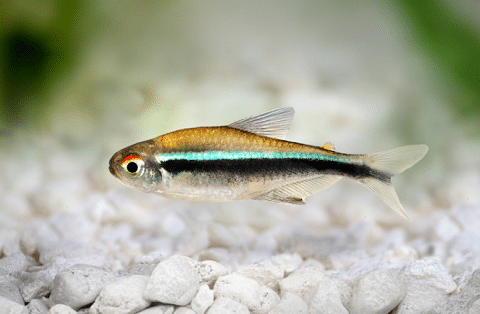
    Pearl weed plants are compatible with the following fish:

    If you want snails to introduce to your planted tank, ramshorn snails, nerite snails, black devil snails, and japanese trapdoor snails are some of the best options to consider.

    For shrimps, you get a variety to choose from. Red Cherry Shrimp, Snowball Shrimp, Blue Velvet Shrimp, and Green Jade are some of my recommendations. Amano shrimp and Crystal Red Shrimp can also be great to pair up with a Pearl weed. In fact, the presence of Pearl weed will encourage most shrimp species to inhabit your tank.

    Since this light plant grows a thick green carpet, most small fish will love to have them in their tank. It can work well as a cover for your small pet against intense lighting and aggressive fish species when grown as a background plant.

    Fish Species To Avoid

    Pearl Weed can nicely withstand minor attacks of fish. But some species are too aggressive to put in planted tanks.

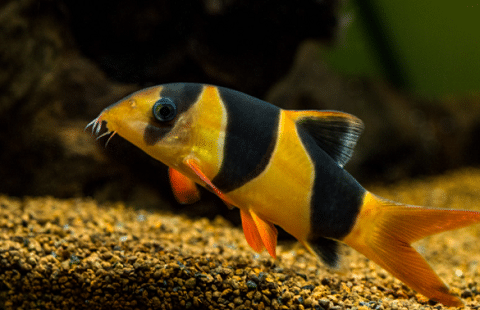
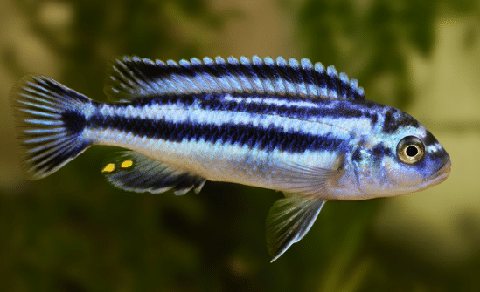
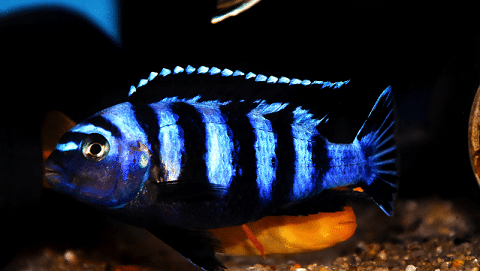
    Avoid species like Goldfish, Jack Dempsey, Clown Loaches, Koi fish, and African Cichlids.

    Most species from this list will hungrily attack the plant unless you use it as a floating plant.

    Feeding And Fertilization

    Pearl weed is known for growing incredibly fast in its natural habitat. And when kept in optimal conditions in a home aquarium, these plants grow large and strong on their own.

    Generally, Pearl weed is a water column feeder. It needs a protein or nutrient-rich substrate to thrive. This makes it a great choice for aquarists who want to make the underwater environment safe for their pet. Since this stem plant doesn’t have any strong root system, it mostly absorbs nutrients through its leaves. Therefore, I will recommend using liquid fertilizers instead of root tabs.

    Editor’s Choice!
    APT Complete

    Editor’s Choice

    Made by an aquascaper for aquascapers. This is the best all around aquarium plant fertilizer on the market. Marco and micronutrients in one bottle!

    Use Coupon Code ASDComplete for 10% off your order!

    Click For Best Price Buy On Amazon

    As I mentioned earlier, because of the frail root system, a Pearl weed’s growth and survival depend on regular doses of liquid fertilizers. The occasional addition of fertilizers will ensure that the plant stays safe from suffering from turning yellow and malnutrition. It can help encourage the plant’s super-dense growth as long as they are fed plenty of fertilizers.

    How Much And How Often to Feed?

    The cycle of feeding your plants mostly revolves around how dense your planted tank is. And with each plant having its own individual needs, you need to make a routine that suits all of them.

    As a general rule of thumb, you should feed your plants twice a day in a small amount. The frequency might alter if you perform frequent water changes and dose CO2.

    You can also get a nutrient-rich substrate. Pearl weed will grow best in the dirt since it has lots of nutrients. Apart from that, it fits the needs of the plants related to when and how much they want to consume.

    CO2 Injection

    Apart from being one of the most uncomplicated plants for novice planted tank owners, Pearl weed has a high chance of growing without CO2 in low-tech tanks, as well as high-tech tanks.

    But supplementing it with CO2 can improve the growth, help it grow faster, and facilitate pearling. Still, that’s totally optional. Pearl weed can already go big faster than other aquarium plants even with its delicate roots.

    The Ultimate CO2 Kit
    CO2Art Pro Elite Series Bundle

    Use Offer Code ASD10%Off

    The highest end offering by CO2Art. This package includes everything you need to perform consistent and the highest quality CO2 injection in the industry!

    Click For Best Price

    Specific Care

    Knowing what works best for your plants helps in the long run. You can always make arrangements for your plants and take precautions to ensure they stay healthy and thrive, even if there are minor water fluctuations.

    Pearl weed can adapt to a range of conditions, given you feed it on time and keep it with compatible fish species. However, it has a high chance of overrunning your tank if you don’t trim the foliage on time. Without constant pruning, the plant can turn into a thick bush. To prevent it from overrunning your tank, all you need is occasional trimmings.

    If you’re using it as a foreground plant, you will need to work harder to keep the growth under control. Intense trimmings will also encourage dense growth and proper formation of side shoots. And compared to other carpeting plants, this one will be easier to maintain.

    Also, its growth rate and capability to survive solely depend on the availability of nutrients, the intensity of light, and CO2 supplementation. Apart from these, maintaining proper water temperature is also beneficial for the plant.

    Pro Tip: Trim it only when it's at least 2.5 inches or 6 cm so you can create a beautiful carpet.

    Planted Tank Parameters

    Even though Pearl weed is a low-maintenance plant, maintaining its bright green leaves and dense growth with a delicate root system is possible. You need to know how many fluctuations in water it can withstand.

    It can grow a dense mat in stagnant waters in the wild.

    Pearl weed needs a 10-gallon tank to grow. Apart from exposing it to intense lighting, set water parameters that align with its needs. Keep the water temperature between 66 Fยฐ to 82 Fยฐ, water hardness around 1 to 15 dGH, and pH range 6.5 to 7.5.

    Filtration

    Keeping water clean is essential when you have a pearl weed in the tank. Apart from making regular water changes, you should invest in getting a good-quality filter to weed out toxins before they pile up in the tank.

    I recommend getting a canister filter to control ammonia, nitrate, and nitrite levels.

    Flow

    Despite its frail roots, the plant prefers water with enough movement. 

    Keeping it in water that is still or has a very rapid flow will stress out the plant. In fact, if you keep it in water with a stronger flow, you might damage the delicate stems.

    So make sure you keep the flow moderate.

    How To Propagate

    You can boost the population of this stem plant through vegetative propagation.

    Start propagating by trimming the ends of the stems. Be careful while trimming the stems since they are quite weak and prone to damage. After that, make several bundles and place them into the substrate.

    The adult plant will regrow, while the new plants will root in the substrate and sprout new shoots under good aquarium conditions.

    Pro tip: While burying the stems into the substrate, make sure that the foliage doesn't cover them

    Health And Disease

    There are a few problems associated with Pearl weed. If you understand how to protect your plant by taking proper measurements on time, you can minimize the potential of running into adverse situations.

    Melting is one of the biggest problems with Pearl weed. It usually happens when you shift it from an emersed to a submersed environment.

    This environmental transition triggers a negative response from this species. The first thing you will notice is the shedding of leaves. This will last a few weeks before you see your plant adjusting to the new environment. This is more common with stem plants, so it’s okay to see them going through this temporary phase.

    Another common problem with a Pearl weed is the difficulty plant. The fragile root system of Pearl weed often makes it a hard species to plant. If you try too hard, you are very likely to damage the stems. But if you are too light on the plantation, it will begin floating.

    Yellowing leaves are yet another common disease in them. In dim lighting, it will have upward growth. And if the pH levels are too high or they are low on nutrients, the leaves can turn yellow.

    Signs Of Good Health

    A healthy Pearlweed will display fuller green leaves without too many internodes.

    The stems will stay the same, though.

    Where To Buy?

    Pearlweed is a pretty old and famous species in the hobby. There are plenty of online stores that offer competitive prices.

    Pearl Weed

    A carpet growing plant that is fast growing and will do well in low light

    Click For Best Price Buy On Amazon

    It shouldn’t cost more than 6$ per lead bunch.

    FAQs

    Does This Type of Fish Grow Fast?

    This species does not grow rapidly, at least until it takes hold. Though it is adaptable, you need to give it some time and provide it with intense lighting, a healthy fish colony, a nutrient-rich substrate, and sometimes CO2 to improve its growth rate. Once the species gets used to the new environment, you will have to make regular pruning every week.

    Is This A Carpeting Plant?

    It’s not difficult for a versatile species like Pearlweed to grow as a carpet and sit in the mid-ground or background. It takes it 2 to 3 months to turn into a carpet for a small tank.

    Are They Low Tech?

    Pearl is ideal to grow in a low-tech tank with proper trimming, light, water parameters, and nutrients. It is a low-maintenance alternative to other aquarium plants for beginners who don’t want any hassle.

    Closing Thoughts

    Pearl Weed can be a beautiful and unique addition to any freshwater aquarium. With the right care, it can carpet the bottom of your tank in no time! Although Pearl Weed may require some extra attention at first, regular grooming, good lighting, and CO2 will help this plant thrive. Do you have experience keeping Pearl Weed? Let us know in the comments below!

  • Do Goldfish Sleep? What It Looks Like and Why Your Light Cycle Matters

    Do Goldfish Sleep? What It Looks Like and Why Your Light Cycle Matters

    One of the questions I get all the time from newer goldfish keepers is whether their fish actually sleep โ€” usually after they notice their goldfish just sitting motionless at the bottom of the tank and start panicking. I’ve kept goldfish and seen this behavior more times than I can count. It looks alarming if you don’t know what you’re seeing, but once you understand what’s actually happening, it becomes one of those things you can actually use to gauge whether your tank environment is healthy.

    Goldfish do sleep โ€” they just don’t look like it. Without eyelids, they can’t close their eyes, which is why you’ll find them hovering motionless in a corner of the tank at night looking like they’re staring at nothing. After keeping and filming goldfish extensively over the years, I still find it funny how often this startles people who check on their tank late at night.

    What’s worth knowing as a keeper is that goldfish need a consistent light/dark cycle to rest properly. Leaving your lights on 24/7 is one of those quiet stressors that’s easy to overlook but affects long-term health. Here’s exactly how goldfish sleep, what to look for, and how to make sure your setup supports it.

    Key Takeaways

    • Goldfish do, in fact, sleep. Fish can enter deep sleep at night1
    • A resting goldfish and a sick goldfish are two different things. Learn about the differing behaviors
    • Incorrect parameters can lead to a fish resting or getting sick. Keep your parameters in check and monitor them

    How Do Goldfish Sleep?

    Goldfish might not tuck themselves under the covers each night, but they certainly do sleep! However, fish don’t sleep in the same way that you and I do. When goldfish sleep, their metabolism slows, and they become inactive. Research has shown that fish can enter deep sleep at night1.

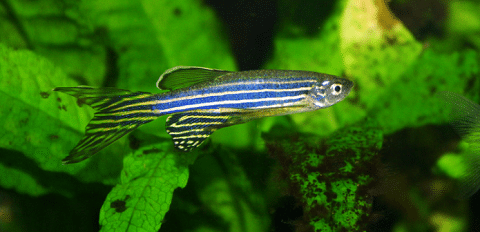
    Until recently, fish were not thought to exhibit rapid eye movement or REM sleep like ourselves and other mammals. However, scientists have discovered that zebra danios enter a pretty similar state. We don’t know if danios or other fish like goldfish dream, but it’s certainly possible.

    Goldfish sleep at the bottom of their tank to feel safer from predators. You might also find them sleeping between live plants or aquarium decorations where they can stay more still and feel secure.

    Why Do They Sleep?

    All that swimming and exploring in your aquarium certainly tires out your goldfish, so they need to rest regularly to stay healthy.

    When

    Goldfish don’t fall asleep like people each night, but they get most of their rest when it’s dark. That’s why providing your goldfish with a natural day and night cycle is important.

    What is a fancy goldfish

    Running your aquarium lights all day and night can result in a sleep-deprived goldfish, so be sure to switch off the tank lights for at least twelve hours a day. Keeping your lights on for 6 to 8 hours a day is recommended because more than that can cause algae issues.

    The best way to keep things regular in your tank is to set your aquarium lights on a timer. That way you won’t forget to switch the lights on or off.

    Goldfish are sensitive to loud noises and sudden movements when they sleep at night. High noise levels will disturb your fish’s sleep schedule, so never put speakers or televisions next to your goldfish tank.

    How Long?

    Goldfish can sleep for short periods or for many hours at a time. Some goldfish nap during the day, while others sleep at night. Creating regular light and dark periods each day will allow your goldfish to develop its own natural sleeping pattern and get enough sleep.

    Some goldfish owners report that their pets go to sleep in the same spot each night and are still there each morning. The important thing is to let your goldfish rest each day in a dark and quiet environment.

    If your goldfish is not getting enough rest, it could cause stress and weaken its immune system in the long run.

    Why Don’t Fish Close Their Eyes?

    The simple answer to this common goldfish question is that fish don’t have eyelids. Eyelids are very useful for keeping our eyes moist and free of dust and other irritating particles. This isn’t a problem underwater, so goldfish don’t need to blink!

    Is My Fish Sleeping Or Sick?

    Many new goldfish owners are surprised to learn that their fish sleep, and it can be pretty worrying to see your pet sleeping motionless for long periods. However, you can rest assured that this behavior is completely normal.

    However, goldfish can get sick with conditions like swim bladder disease from time to time, so it’s good to know if your goldfish is sleeping or showing signs of poor health.

    Read on to learn what to look out for.

    Signs Your Goldfish Is Sick

    • Seeing your goldfish sleep upside down or leaning to one side could indicate swim bladder problems. Swim bladder disorder is a common illness among goldfish and other pet fish. This condition causes buoyancy issues which can make your fish sink, float, or swim erratically.
    • Cloudy eyes, sores, or a white film over the body are often signs of a bacterial infection.
    • Missing scales, white spots, and scratching against the substrate are common signs of parasites.
    • Rapid breathing is a clear sign of stress, which can cause illness in your goldfish. Poor water quality, drastic water temperature changes, and disease can cause this common symptom. Rapid breathing can also result from low oxygen levels. Running an air pump and airstone can be helpful.

    Signs Your Fish Are Sleeping

    • Your goldfish is sleeping if it’s stationary at the bottom of the tank or hovering about an inch above the substrate. Most healthy goldfish rest at night when it’s dark, but you might find your goldfish sleeping any time.
    • Sleeping goldfish often tilt their head downward slightly but keep their body upright.
    • Your goldfish’s color might be a little dull when it is sleeping. This can help your fish hide from predators.
    • Sleeping fish can breathe without swimming. They gulp water to maintain a constant flow through their gills.

    What To Do If They Are Sick

    Accurately diagnosing illnesses in freshwater fish can be tricky, but you can often find the cause of your fish’s health problems, and there’s a good chance that you can treat your pet at home.

    Fish get sick when they are under stress, and stress is often caused by bad environmental conditions. What does that mean? Well, your fish need clean, healthy tank water at the right temperature.

    • Test your water quality

    Goldfish are pretty messy fish, so they need good filtration and a tank of at least 30 gallons to stay healthy. Your water quality can become dangerous if you don’t cycle your aquarium and perform regular water changes.

    Your water should contain no traces of ammonia or nitrite. Nitrates can harm goldfish in high concentrations, so keep them below 40 ppm. A level of 20 ppm or less is ideal for long-term care.

    • Check your water temperature

    Goldfish are coldwater fish that prefer a lower temperature range than most other fish. They should be kept in water temperatures between 68 and 74ยฐF. Tropical fish tank water temperatures will harm your goldfish in the long run.

    Aquarium heaters are adjustable, and they do show the water temperature. However, these readings can be pretty inaccurate. I recommend getting a thermometer so you can monitor your water temperature easily.

    Digital thermometers with built-in alarms are great for this purpose. These handy machines let you know if the water gets too hot or cold for your goldfish.

    • Other Parameters

    Poor water quality with high ammonia levels and high water temperature are common causes of stress, but goldfish also have other preferred water parameters. Aim for the following readings:

    • pH: 7 – 8.4
    • gH: 100 – 300 ppm
    • KH: 50 – 120 ppm

    You can test these parameters with a master test kit. Any inconsistencies can cause stress on your goldfish and will need to be addressed as soon as possible.

    Treating

    Providing correct treatments for your goldfish can mean the differences between live and dead fish. Goldfish are susceptible to many illnesses, and it’s not always the fishkeeper’s fault when things go wrong.

    Let’s look at some things you can do to help a sick goldfish.

    • Move the sick fish into a quarantine tank

    A quarantine tank is a small tank where you can administer treatments to your sick goldfish without affecting your other fish or aquatic animals. Your quarantine tank should hold at least a few gallons of water and have its own filter.

    Test the water before moving your fish. If the water in your main tank is the problem, you’ll need to use fresh, dechlorinated water instead.

    • Observe Your Goldfish

    If your fish is not in obvious danger, observe it for a few days and give it a chance to recover. Starting an immediate treatment is not always necessary.

    • Treatment

    If your goldfish is in obvious distress or not improving, contact your vet and ask for advice.
    There are some excellent fish medications available that you can administer yourself at home.

    Condition-specific medicines are highly effective, but you can also treat several common fish illnesses with aquarium salt.

    FAQs

    Do The Sleep With Their Eyes Open?

    Goldfish cannot close their eyes because they do not have any eyelids. This means they have no choice but to sleep with their eyes open.

    Do Goldfish Recognize Their Owners?

    Goldfish do have the ability to recognize their owners. It has been proven that some fish can recognize human faces, which probably explains why your goldfish might recognize you but fear other people.

    Do Goldfish Need Light At Night?

    Goldfish do not need light at night. Goldfish naturally sleep at night in nature when the only light comes from the stars and the moon. You can keep your aquarium lights on for a few hours in the evening to enjoy your fish, but make sure the lights go off for the rest of the night.

    How Many Hours Do They Sleep?

    Goldfish sleep for 8 to 12 hours per day.

    Why Do They Sleep On The Bottom Of The Tank?

    Goldfish tend to sleep on the bottom because it helps them hide from predators. There is also much less current at the bottom, so they can relax and sleep without being washed around.

    Do They Like It Dark At Night?

    Goldfish prefer a natural daylight cycle of light and dark. Keep your tank dark during the day if you like to have your aquarium lights on at night.

    Is It Normal For Them To Rest At The Bottom Of The Tank?

    Goldfish sleep at, or just above, the bottom of their tank. They may stay on the bottom, sitting still for several hours. However, your goldfish may be sick if it is upside down, on its side, or breathing rapidly.

    Final Thoughts

    So now you know, goldfish sleep too! Don’t worry if you find your fancy goldfish sleeping. They need their forty winks, too, even if it is technically impossible for them to get any shut-eye.

    Have you seen your goldfish sleeping? Tell us about it in the comments below!


    ๐Ÿ“˜ Want to learn more? This article is part of our complete Freshwater Fish Guide โ€” your ultimate resource for freshwater species, care tips, tank setup, and more.

  • Why Are My Fish Dying? 12 Common Causes and How to Diagnose Each One

    Why Are My Fish Dying? 12 Common Causes and How to Diagnose Each One

    Losing fish is one of the most discouraging parts of this hobby, especially when you can’t figure out why it keeps happening. After 25+ years of keeping tanks, I can tell you that the vast majority of fish deaths come down to a short list of avoidable causes. The most common by far: an uncycled tank with ammonia spikes that new keepers don’t test for because they don’t know what they’re looking for yet.

    If you’re losing fish and can’t pinpoint why, this guide walks through all 12 common causes with what to check and test for each one. Start with water quality โ€” it’s the answer more often than not.

    Key Takeaways

    • Stress and disease are the primary reasons why fish will die
    • Poor tankmates and improper water parameters can lead to stress
    • Regular maintenance is a great way to keep stress down and keep your fish healthy

    Top 12 Reasons Why Your Fish Are Dying

    1. Improper Tank Setup

    The most frequent cause of fish death is an improper aquarium. When the fish tank is not set up properly, most of the time, all or many of the fish perish. It primarily occurred with beginners. The fish may pass almost instantly in extremely severe tank conditions, but usually, it takes a few days or a week. It occurs as a result of improper tank cycling.

    We tend to believe that aquariums are home to only fish, not realizing that a healthy aquarium also includes tiny organisms, of which a healthy bacterial colony is an integral part. Although they are distributed throughout the tank, the gravel and filter continue to hold the majority of them. They aid in the tank’s waste breakdown and maintain the water’s quality. 

    Dirty Fish Tank

    Bacteria have a symbiotic relationship with the fish by eating and surviving off the fish and their food. In return, the bacteria help to make the water in the tank suitable for the fish. Therefore, a balance between the two is necessary to maintain the tank’s health.

    A microbial colony is absent from a new or fresh tank. As a result, you must cycle a new tank to establish the microbe colony1. A fish tank typically comes with an instruction book that explains how to cycle it.

    However, I advise learning more about the nitrogen cycle and the various ways to cycle a new aquarium so that you are aware of the options and may choose the most appropriate approach. Avoid introducing the fish until the tank has completed its cycle.

    Even if you’ve already cycled the tank properly, avoid adding too many fish at once in a fish tank. The germs require time to multiply, along with the quantity of fish in your tank.

    Therefore, if you intend to add 15 to 20 fish to your aquarium, we advise adding four or five at a time over a period of weeks. This will allow the bacteria colony to grow at its own rate; hence, the death rate will be much less.

    2. Stress and Disease

    The most common reason for a fish’s death is stress and diseases. The stressed or diseased fish will most likely die if you don’t solve the problem. The main cause of stress in fish is the lack of tank preparation, which is imperative to maintaining an overall healthy fish tank. 

    Surprisingly, all the ten reasons for your fish deaths cause stress in your fish in one way or another. However, here are some common signs that your fish is stressed out.

    Surfing around the glass

    If you see your fish continually swimming up and down and furiously moving around the sides of the tank, it may be because they are stressed. This is known as surfing around the glass

    It demonstrates how the fish feels trapped inside the aquarium and longs to enjoy himself somewhere else. It might be due to the aquarium being too full, the water not being of good quality, certain species attacking it, or anything else.

    Diseases

    Another significant factor contributing to stress in fish is illness.

    Illness is also caused by stress. If a fish becomes ill frequently, it may be because it is experiencing ongoing stress. 

    They are more susceptible to contracting various illnesses because stress negatively impacts immunity. Identify the origin of the stress since, if there is an ailment, one fish could spread the sickness to the entire school of fish, so be careful to know the cause.

    Losing weight

    If you find that your fish are getting thinner than they used to be, this indicates that they are losing weight for some reason. 

    Although you can’t always weigh the fish, you can still detect if they are starting to lose weight. Even after eating a healthy meal, stressed fish may begin to lose weight and feel lethargic.

    Excessive hiding 

    When we’re terrified, we all tend to hide. Similarly, fish behave the same as humans by hiding when they feel uneasy or desire some calm. 

    Your fish may be trying to hide under the plants, at the bottom of the tank, or beneath the aquarium accessories; if you spot them doing this, the causes are evident.

    1. Your fish are facing bully or aggression from other aggressive fish
    2. Small or inadequate tank size for your fish

    Thus, before choosing any tank mate for your fish aquarium, be sure to research the behavior, the compatibility with other species, and the minimum tank size required to keep your fish healthy.

    3. Aggressive Tankmates & Incompatible

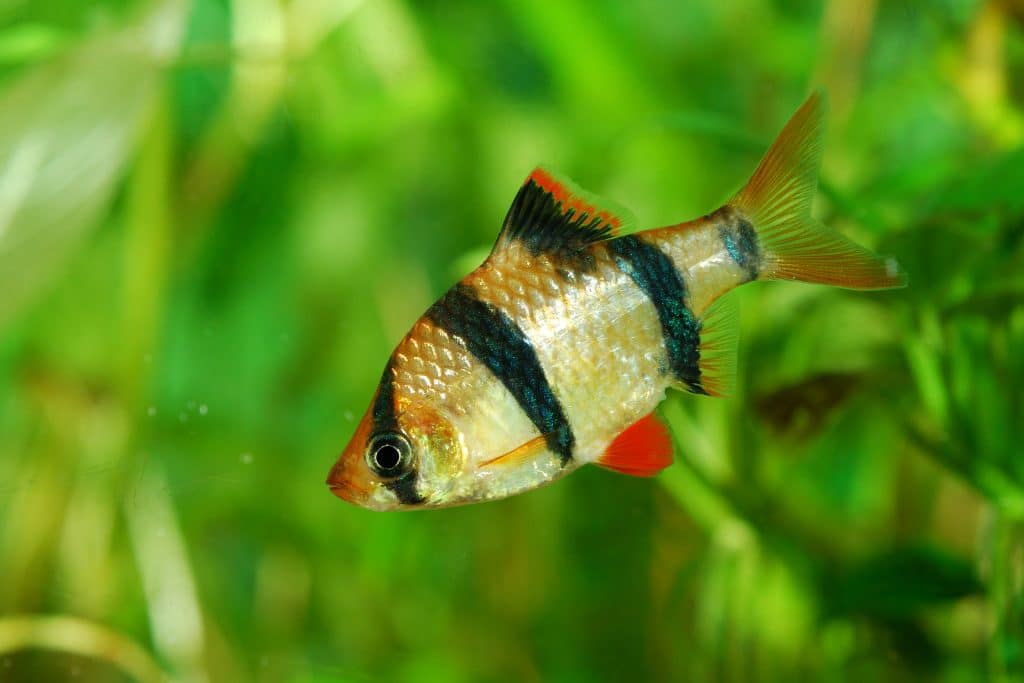
    Some fish species have a hostile nature. Other fish will battle with them. Tiger barbs are well-known for this type of behavior. They make the other fish in the tank anxious. That might be the cause of some of them passing away. 

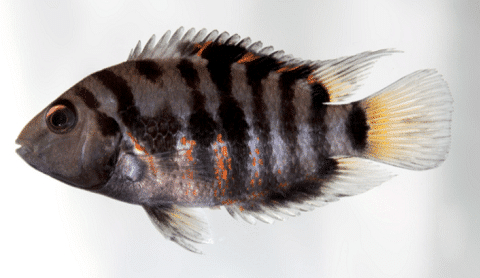
    Wolf Cichlid

    To cater to this, I advise having a backup little tank handy when you set up your first fish aquarium. Take note of the fish community’s activities in the main tank. The combative ones can be moved to another tank.

    4. Water Quality and Water Parameters

    You can only imagine how crucial it is to maintain ideal water quality to keep fish disease-free and alive! Your aquarium’s water is the contained environment that supports your fish. 

    Numerous variables, most of which are primarily related to unstable water characteristics, might result in a decline in water quality. 

    If you haven’t been checking the water in the tank with aquarium test kits, a lot of guesswork is probably involved in determining why your fish keep dying

    The majority of aquarium fish have a rather narrow range of water requirements that they must meet in order to survive. Therefore, crystal-clear water is not always a good indication of the quality of the water in a tank.

    Here’s what you can do to maintain water quality and water parameters for a healthy fish tank.

    1. Every week, test the various water characteristics (pH, ammonia/nitrites, salinity, water hardness, Mg, Ca, etc.). 
    2. Keep pH levels stable and within an acceptable range for the fish species, you have in the tank rather than attempting to achieve the ideal pH level (or any other parameter). 
    3. If your fish keep dying, do this! To stop further pet fish deaths, act quickly when there are obvious warning signs (ammonia level spikes). This might entail performing a 50% tank water change right away, followed by careful monitoring of the ammonia/nitrite levels until the water quality is stabilized.

    5. Wrong Aquarium Size

    The right tank size for your setup depends more on the quantity and kind of fish you intend to keep in it than it does on where you intend to keep it. 

    Fish can become so stressed out that they eventually die when kept in a tank that is too tiny to allow them to have free swimming spaces. Although a bit extreme, it is possible because stress increases the susceptibility of fish to illnesses and early demise. 

    The most common reason for getting the wrong-sized tank is when a fishkeeper purchases pet fish when they are still young without doing any study on how big those fish can go or what their tank setup requirements are.

    To avoid this, there are two things you should consider before buying the fish tank.

    1. The place where you’re going to place the tank
    2. Fish species you want in your aquarium.

    6. Overfeeding In Enthusiasm

    You might be tempted to feed your fish more and more as you learn how to keep a freshwater fish. 

    The majority of fish species will consume everything that is presented to them. You could keep eating indefinitely if you are not stringent about how much food should be supplied at a time.

    It’s possible that the fish won’t eat everything. The fish waste, along with waste, and uneaten food, will start accumulating towards the bottom of the tank. And if not removed, it taints or pollutes the tank water soon, which results in sick fish. 

    Additionally, the fish will have a bloated tummy from overfeeding. They lack a bodily system that would allow them to detect fullness. They will therefore continue to eat, fall ill, and pass away.

    Algae blooms are another issue related to overfeeding. A nitrogen-rich meal will make the tank greener. The tank will still appear unkempt and unattractive even if you have algae eaters. As a result of having more food, such as algae and uneaten fish flakes, snail populations may also increase.

    Even though the bacterial colonies and microbes in the tank will work on the uneaten food particles, if circumstances are out of your control, the water in the tank will become toxic and harm the fish.

    7. Poor Water Filtration And Equipment Failure

    In an aquarium, dilution is the best defense against contamination. 

    Simply said, that means you must discard some soiled water and replace it with clean water. By doing this, you improve the beneficial bacteria colony that is helpful to fish while also diluting garbage and dangerous toxins.

    Make sure you don’t remove a lot of the old water in this phase because doing so will also get rid of the beneficial bacteria.

    A monthly change of about 30% for aquariums with plants and 20% for aquariums without plants will produce good results. You can modify your water change amount and schedule based on your nutrient levels.

    Even if you have algae eaters in your fish aquarium, you still need to get dirty once a month to completely remove all of the algae from your fish tank. 

    Glass and decorative items are covered in algae and need to be cleaned frequently. Algae outbursts can cause a variety of issues, including deteriorating the tank’s aesthetics, poor water quality, supplying food for the growth of snails, and upsetting the equilibrium of your aquarium. 

    Although you can find several chemicals and solutions to eliminate algae, you should avoid using them.

    Use scrubbers and scrappers made specifically for fish tanks as an alternative. They contain a magnet, so you can clean them without putting your hands inside the tank.

    My Pick
    Flipper Algae Scraper

    I love the Flipper. Just put it in your aquarium and clean from the outside. You can even move it to other sides of the tank with its flipper feature. Simply Amazing!

    Click For Best Price Buy On Amazon

    How to keep your tank clean?

    1. Feed your fish only once or twice daily, depending on their nutritional requirement. Always feed them enough food that they can complete it in two minutes. Some fish actually do better fasting one day of the week to clear their digestive systems
    2. Clean the fish waste produced and food waste by occasionally siphoning the gravel in your fish tanks
    3. Regularly inspect and clean the aquarium’s filtration system. On the filter media, leftover food will accumulate and degrade the filter’s performance
    4. Adding fish that are bottom feeders is a good option for keeping a community tank clean

    8. Not Keeping Up With Maintenance

    This is a common reason why fish die. In most cases, ammonia and nitrites begin to accumulate in the aquarium water, resulting in ammonia poisoning. 

    The introduction of too many fish into the aquarium at once may be the cause of the abrupt rise in the levels of harmful substances.

    Large-scale fish introductions will quickly degrade the habitat, and many fish species won’t be able to adapt if you don’t set up a reliable maintenance cycle for cleaning the aquarium.

    Carbon dioxide (CO2) and oxygen (O2) cooperate in fish aquariums. The amount of carbon dioxide in the tank’s water drops when oxygen levels rise and vice versa. This is a routine procedure. 

    Due to the activities occurring in your fish tanks during the night, oxygen levels are lowest around sunrise.

    The amount of oxygen increases throughout the day as the sun comes up, reaching its highest point at dusk. The carbon dioxide, which is at its lowest at this time of day, begins to climb after sunset and peaks soon before daybreak.

    It’s crucial to prevent carbon dioxide peaks brought on by green algae blooms from causing your pond fish to perish. The most effective method for doing this is to utilize a UV clarifier.

    How does CO2 enter your tank?

    Aquatic life, including fish, snails, algae, and aquatic plants, create carbon dioxide through respiration (breathing). Additionally, it is created by decomposing organic debris on the pond floor, such as leaves, uneaten fish food, and algae blooms.

    9. Changing The Aquarium Water Rapidly

    The aquarium’s water has to be changed periodically. The full supply of water shouldn’t be replaced all at once, though. Partial water changes are generally best. 

    Before adding the water to the tank, it should be treated. You may replenish the water in the tank by taking some out. Nitrites levels will rise, and your fish won’t be able to handle it if you’re completely changing the water or if you add fresh water without first treating it.

    10 . Filling The Fish tank With Tap Water Directly 

    Chlorine or chloramines are frequently present in the water you receive at home. The chlorine that has been dissolved in the water will be released after being set aside for a day, making the water cleaner. For the purpose of removing chloramines from the water, you must purchase specific chemicals. 

    If you don’t take these safety measures, the fish will be harmed by the newly added water. I had the unfortunate experience of having a friend of mine kill her Betta Fish because she forgot to treat the tap water during a water change. Don’t make that error!

    11. Old Age

    The most common reason for the death of most fish is old age. Let’s be honest. Like us, fish are living creatures that will die someday in one way or another.

    Especially if your fish is aged and has a history of ownership, it may have lived its life to the fullest, and hence your fish died.

    Aging is inevitable regardless of how well you take care of your fish. You cannot escape becoming older. 

    How long your fish will live totally relies on its breed. A healthy fish may live for ten years, whereas four years for bettas is considered ancient. Similarly, an unhealthy fish will not even survive a day. 

    12. Rough Handling

    Can you picture being outside when all of a sudden you are kidnapped and placed in a cramped space? 

    Sounds exhausting, doesn’t it? 

    If your fish was wild-caught, it traveled halfway across the world and now finds itself in a little tank at your neighborhood fish shop, which is a significant change. 

    The fish you purchase can already be anxious from their lengthy travel. The final leg from the fish store to your house can also be deadly. And so, your fish die of stress and improper handling.

    FAQs

    How Do I Stop My Fish From Dying?

    Check the nitrate and ammonium levels in a new tank on a regular basis, and change the water as necessary to lower the levels to a safe level for fish.ย 

    Rapid water changes: In a well-maintained tank with resident fish, plants, and bacteria, the water chemistry is carefully balanced.

    Should I Change The Water After They Have Died?

    Yes, you definitely should. No matter what caused your pet fish to die, you should always replace some of the water in the aquarium right after your fish died. Large volumes of ammonia will be released into the water by a rotting fish, and it is super harmful to other healthy fish in your fish tank.

    Why Do They Die So Easily?

    Fish can go into shock by sudden water changes and changes in water temperature, pH, or salinity, which quickly results in fish deaths.ย This is why it’s important to quarantine any new fish you bring home in a quarantine tank before putting them in your aquarium.

    The temperature of the water in the bag and the water in your tank may vary significantly.

    Why Are They Dying In My New Aquarium?

    Because they are suffering from new tank syndrome. A new tank syndrome is a condition many fish keepers have to deal with when they newly set up the tank and don’t cycle it before adding fish into it.

    Heavy quantities of nitrates and ammonium in the water can be lethal until a tank develops the proper water chemistry to sustain healthy fish. This condition is known as “new tank syndrome.” Fish may unexpectedly die until the natural microorganisms in the wYater are able to balance out these toxins.

    Can You Save Them From Dying?

    Yes, you can. With simple water changes and adjustments, the majority of dead fish may be quickly recovered.ย 

    You must maintain water quality if you want to keep your fish alive and in good health. Most pet retailers sell water testing kits for fish tanks. You may use these tests to find any water issues, such as excessive ammonia levels or ammonia poisoning.

    Why Are My Fishes Are Dying Suddenly?

    There are a number of factors that contribute to the sudden fish deaths in your aquarium. However, a few known reasons are:

    1. Poor water quality
    2. Frequent water changes
    3. New tank syndrome
    4. No tank maintenance
    5. Poor water filtration and equipment failure

    Final Thoughts

    Like all pets, your fish has to go through the process of aging and eventually dying. However, sometimes, death comes too soon without any evident reason. And so, to help you figure out the reasons your fish die, I’ve written everything I know about fish deaths from my fish-keeping experience. 

    Just make sure to provide your fish with pristine water quality and water parameters, and you’ll have no problem raising your adorable finned pets again.


    ๐ŸŸ Want to learn more? This article is part of our complete Aquarium Care Guide โ€” your ultimate resource for water chemistry, maintenance, feeding, disease prevention, and everything you need for a healthy tank.
  • The 10 Best Cheap Pet Fish: Great Value Picks That Are Actually Worth Keeping

    The 10 Best Cheap Pet Fish: Great Value Picks That Are Actually Worth Keeping

    One thing I always make clear when people ask about cheap fish: the fish itself is usually the least expensive part of this hobby. A $2 guppy still needs a properly cycled tank, a heater, a filter, and consistent water maintenance to thrive. The fish cost is the entry point โ€” not the total cost.

    That said, there are species that give you real value โ€” colorful, active, interesting behavior, easy to keep โ€” without spending much. After 25+ years in the hobby, here are my 10 picks for the best affordable fish, not just the cheapest, but the ones actually worth buying.

    Key Takeaways

    • Inexpensive fish are ideal for beginners and young fish keepers.
    • Avoid sick fish that might not survive. Only buy from well-maintained pet stores and trusted online retailers.
    • Most fish need to be kept in schools. Remember to factor this into your budget.
    • When it comes to equipment, avoid low-quality products. It is better to buy smart and avoid unnecessary items.

    Cheap Vs Expensive Fish – What’s the Difference?

    Have you ever wondered why some fish cost more than others? There are a few good reasons for the different price tags, and they can also tell you something about the fish before you buy them. We have a video above from our YouTube Channel that helps illustrate and our blog post goes into more detail. Follow along with both to get the full detail.

    Expensive fish tend to be rare and difficult to breed. Often they have to be caught in the wild, which certainly adds to the price when you factor in transport and other costs. Rare and expensive fish can also be difficult to care for.

    Cheap fish are generally simple to breed and easy to care for, so they tend to be the most readily available.

    The most common and well-known fish are popular for a reason, of course. They may not provide much of a challenge to experienced aquarists, but they make wonderful pets and great display animals in home aquariums.

    Cheapest Pet Fish – 10 Great Options

    Are you ready to learn about ten great fish breeds that won’t cost a fortune? These freshwater fish are great for beginners, but more experienced aquarists will also appreciate their great looks and fascinating behaviors.

    Let’s get started!

    1. Guppy

    • Scientific name: Poecilia reticulata
    • Care level: Easy
    • Tank size: 10 gallons +
    • Fish size: 1 – 2.5 inches
    • Minimum school size: Trio
    • Temperature: 63 – 82ยฐF
    • pH: 7 – 8.5
    • Community tank suitability: High

    Guppies are the ultimate cheap fish, often going for just a few dollars. These fish are so affordable because they are super easy to breed. However, there are loads of fancy guppy breeds out there and some of them can be surprisingly pricey.

    Pick up a trio of standard guppies if you want a group of colorful and hardy fish that are easy to keep and care for. Guppies thrive in tanks as small as 10 gallons because of their small size.

    2. Common Goldfish

    What Does A Comet Goldfish Look Like
    • Scientific name: Carassius auratus
    • Care level: Easy
    • Tank size: 30 gallons +
    • Fish size: 6 inches
    • School size: 1 +
    • Temperature: 68 – 74ยฐF
    • pH: 6.8 – 7.2
    • Community tank suitability: Possible. Eats Plants

    The common goldfish is another classic aquarium fish that can be bought for really low prices. These beautiful fish come in loads of different breeds, but commons, comets, and fantails tend to be the cheapest options.

    Goldfish are awesome pet fish and they were first bred in ponds in ancient China. However, goldfish are more than just pond fish. They thrive in home aquariums with good filtration. These fish can grow to over 6 inches though, so steer clear of bowls and small tanks.

    One of the benefits of keeping these cool water fish is that they don’t need a heater in most homes. This can save your electricity bill a little in the long run.

    3. Zebra Danio

    What Does A Zebra Danio Look Like
    • Scientific name: Danio rerio
    • Care level: Easy
    • Tank size: 15 gallons +
    • Fish size: 1.75 inches
    • School size: 8 +
    • Temperature: 64 – 74ยฐF
    • pH: 6 – 8
    • Community tank suitability: High

    Zebra danios are some of the cheapest freshwater fish in the aquarium hobby. That doesn’t mean they aren’t great pets, of course! These active little fish bring any community freshwater aquarium to life with their speed and grace.

    Zebra danios are really hardy, too, so they’re the perfect choice for beginners or young fishkeepers just starting out. You’ll need to pick up a school of at least 8 of these low-maintenance fish to see them at their best.

    4. Molly

    Sailfin Molly in Aquarium
    • Scientific name: Poecilia sphenops / P. latipinna
    • Care level: Easy
    • Tank size: 30 gallons
    • Fish size: 4 – 6 inches
    • School size: 4 +
    • Temperature: 68 – 82ยฐF
    • pH: 7 – 8
    • Community tank suitability: High

    Molly fish are another inexpensive tropical fish that offer great value for money. These hardy livebearers are so versatile that you can even keep them as saltwater fish with other marine fish species.

    Mollies can reach about 6 inches, so they need a larger aquarium of at least thirty gallons. These fish eat a variety of food sources, but they also love to feed on algae which means they can help to keep your tank clean.

    5. Platy

    Golden Wagtail Platy
    • Scientific name: Xiphophorus maculatus
    • Care level: Easy
    • Tank size: 10 gallons +
    • Fish size: 2 inches
    • School size: 5 +
    • Temperature: 70 – 80ยฐF
    • pH: 7 – 8.5
    • Community tank suitability: High

    Platy fish are low-cost live-bearing fish from the same family as guppies and molly fish. They come in many varieties, including yellow, blue, and multicolored types.

    Platies are small fish, so you can keep them in a small fish tank with very inexpensive equipment. They also get along perfectly with many freshwater species, including many of the other fish on this list!

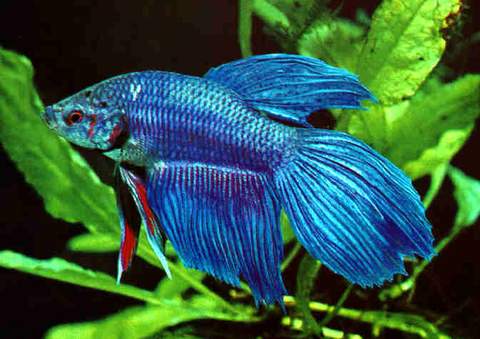
    6. Betta

    WYSIWYG Available!
    Betta Fish

    Use Coupon Code ASDFISH at Checkout

    Betta Fish are one of the most beautiful varieties of freshwater fish available in the hobby. Easy to care for with plenty of varieties!

    Buy Premium Varieties Buy On Petco Online
    • Scientific name: Betta splendens
    • Care level: Easy
    • Tank size: 5 gallons +
    • Fish size: 2.5 inches
    • School size: 1
    • Temperature: 75 – 80ยฐF
    • pH: 6.5 – 8
    • Community tank suitability: Possible

    Betta fish are the first choice for fish keepers who want a single, low-maintenance fish that doesn’t need a large aquarium. These freshwater species come in all the vibrant colors of the rainbow, from yellow to blue and everything in between! Not only can they be cheap but also very expensive, depending on the species you want.

    Betta fish also come in many different fin shapes like half moon, crown tail, and elephant ear. The female fish are a little smaller and less colorful, but they make great pets too.

    Sadly, betta fish are often sold in cups and kept in small bowls and other tiny containers. These fish will not survive for long in such an unhealthy environment; set your pet up with a 5-gallon (or larger) aquarium with a heater and a filtration system.

    7. Neon Tetra

    • Scientific name: Paracheirodon innesi
    • Care level: Easy
    • Tank size: 15 gallons +
    • Fish size: 1.5 inches
    • School size: 6 +
    • Temperature: 70 – 77ยฐF
    • pH: 6 – 7
    • Community tank suitability: High

    Neon tetras are amazing fish for any home aquarium. A neon tetra school will usually cost just a couple of dollars but the movement and color they can provide in your aquarium are priceless!

    These tiny fish get along with many other peaceful freshwater fish too, so you can keep them with other inexpensive schooling fish.

    8. Swordtails

    • Scientific name: Xiphophorus helleri
    • Care level: Easy
    • Tank size: 20 gallons +
    • Fish size: 4 inches
    • School size: 5 +
    • Temperature: 64 – 82ยฐF
    • pH: 7 – 8.3
    • Community tank suitability: High

    Swordtails are Central American livebearers (video source) that thrive in a variety of water conditions. Only the males develop long, pointed tails, but the females have the same vibrant colors.

    Swordtails can be kept with other inexpensive livebearers like guppies and mollies or kept in a school in their own space. They are some of the easiest fish in the hobby, so they are great for beginners too!

    9. Corydoras Catfish

    What Does A Cory Catfish Look Like
    • Scientific name: Corydoras sp.
    • Care level: Easy
    • Tank size: 15- 30 gallons (Depending on species)
    • Fish size: 1 – 4 inches
    • School size: 5 +
    • Temperature: 74 – 80 ยฐF
    • pH: 7 – 8
    • Community tank suitability: High

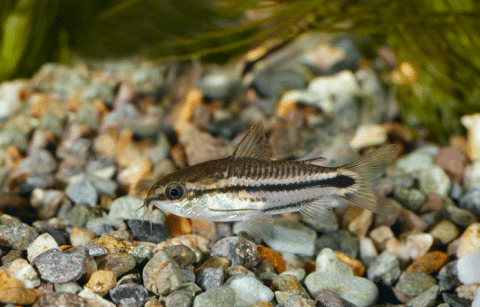
    Cory catfish are great fish for the bottom levels of a tropical tank. These inexpensive fish hang out in schools of their own species. They usually swim around on the bottom and even dig for food in the substrate which is fascinating to watch!

    These peaceful freshwater fish come in a huge range of breeds and species, but you can’t go wrong with the cheaper options like albino and peppered corydoras catfish.

    10. Scissortail Rasbora

    • Scientific name: Rasbora trilineata
    • Care level: Moderate
    • Tank size: 30 gallons +
    • Fish size: 6 inches
    • School size: 6 +
    • Temperature: 73 – 77ยฐF
    • pH: 6 – 6.5
    • Community tank suitability: High

    Scissortail rasboras are speedy freshwater fish that can turn a quiet fish tank into an exciting underwater world. These schooling fish are affordable, and they eat most things, including regular flake food.

    Scissortail rasboras get their name from their bold, strongly forked tail fins. They are also known as the three-striped rasbora because of the distinctive markings on their silver gold body. These fish need a little more room because of their adult size and activity level.

    Getting Started On a Budget

    There are a million awesome gadgets, tools, and other equipment that you can buy, and everything has its place. The truth is that you can get started with a minimum of equipment, but there are a few things that you have to have.

    Let’s jump in and learn what you’ll need!

    Tank & Equipment

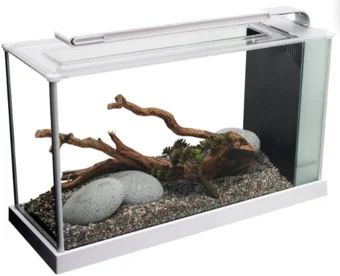
    The first thing you’re going to need is an aquarium. Smaller standard tanks cost less than larger tanks but remember to match your aquarium to the type of fish that you plan on keeping.

    Make sure your aquarium has a hood. Fish are strong jumpers and can easily escape an open tank if they want to. This isn’t just heartbreaking; it’s expensive too.

    You will need aquarium lighting, a filter, and a heater too. Match your equipment to your tank size. Some species, like goldfish, don’t always need a heater, which can save you money on the initial cost and your electricity bill. However, most other fish will not survive for long in a tank with a cold water temperature.

    You’ll also want some aquarium gravel and decorations to complete the setup. Shop around to find the best deals. It’s best to stick to aquarium-safe decorations designed for fish tanks.

    Testing & Maintenance

    Setting up a cost-effective tank and buying cheap fish is a great way to stay within your budget, but don’t forget to factor in your testing and maintenance equipment. Here’s what you’ll need:

    • A water test kit that can measure water parameters like nitrates and pH.
    • An algae scraper. You can use a razor blade, an old credit card, or a clean toothbrush too.
    • A gravel vacuum is necessary to maintain your water quality. You could make your own, but this important tool is affordable anyway.
    • Water conditioner. This is important for treating tap water and making it safe for your pets.

    Food & Medicine

    Fish food can be pretty expensive, although you’ll be surprised at how long it lasts. Most cheap fish have pretty unspecialized diets, so you can feed them tropical fish flakes or pellets that suit your fish size.

    Pick up some frozen bloodworms or brine shrimp too. These supplementary foods are cheap and last for ages if kept frozen and fed sparingly.

    Like all pets, live fish can get sick from time to time. It’s a good idea to be prepared if you live a long way from a pet store.

    Aquarium salt is a great cure for many common fish illnesses, but there are also great disease-specific medicines that you might want to consider.

    Other Tips

    • Buy used. There’s always a risk when buying used goods, but it can be a great way to cut costs when setting up a low-budget fish tank. However, try to test and inspect used items before paying.
    • Look out for sales. If you’re not in a hurry, shop around and wait for the best prices to come up when items go on sale.
    • Choose energy-efficient hardware. Check the box or label for the energy consumption figures before buying electronics.
    • Consider spending a little more on quality, long-lasting products that you won’t need to replace too often. Equipment with a good warranty can save you plenty of dollars in the long run.

    FAQs

    What Is The Easiest Type To Take Care Of?

    Livebearers like guppies, mollies, and platys are some of the easiest fish to maintain. These colorful fish thrive on a diet of fish flakes, are happy in a variety of water conditions, and tend to be very healthy.

    What Is The Least Expensive To Buy As A Pet?

    Pricing will vary depending on where you buy your fish, but Zebra Danios are often the cheapest fish in the store. These hardy fish make great pets for beginners, and they get along perfectly with many other freshwater fish species. Zebra danios are a great value!

    How Expensive Are They?

    Aquarium fish prices vary hugely depending on species, size, and breeds. For example, great fish, like neon tetras, betta fish, and goldfish, usually cost just a few dollars. However, some Arowana fish and other rare fish breeds can even reach six figures.

    Final Thoughts

    Keeping fish is a great hobby for everyone. You don’t have to spend your life savings to buy some amazing fish and set them up in a great aquarium. Choose from the fish listed in this post, and keep my cash-saving tips in mind when you’re ready to get started!

    What is your favorite low-cost aquarium fish? Let us know in the comments below!


    ๐ŸŸ Want to learn more? This article is part of our complete Aquarium Care Guide โ€” your ultimate resource for water chemistry, maintenance, feeding, disease prevention, and everything you need for a healthy tank.

  • Hornwort Plant Care Guide: Growing the Hobby’s Best Beginner Plant

    Hornwort Plant Care Guide: Growing the Hobby’s Best Beginner Plant

    Hornwort is the plant I recommend to almost every beginner, and I still grow it myself after 25 years in the hobby. It’s one of the fastest-growing aquarium plants around โ€” I’ve seen it put on several inches in a single week under good lighting โ€” which makes it a powerhouse for nitrate export. The trade-off is the needle shedding. When hornwort is stressed by a change in lighting, temperature, or CO2 levels, it drops its little needle-like leaves everywhere. It’s not dying; it’s adjusting. Once it settles in, it’s nearly bulletproof. I’ve grown it floating, weighted to the substrate, and even in outdoor tubs. All three worked great. Just don’t put it in a tank with fin-nipping fish โ€” those spiky branches make terrible territory markers for aggressive species.

    Key Takeaways

    • Hornwort is a low-maintenance, beginner-friendly, and pretty hardy plant to grow in a home aquarium
    • They are invasive plant species because of their high versatility rate and allelopathic qualities
    • They grow best as floating plants and can control algae growth

    A Brief Overview Of Hornwort Plant

    Scientific NameAnthocerotophyta
    Common NamesHornwort, Foxtail
    FamilyCeratophyllaceae
    OriginNorth America
    Skill LevelEasy
    LightingModerate
    Tank PlacementBackground
    Flow RateModerate
    Temperature Range59 Fยฐ to 86 Fยฐ
    Height120 inches
    pH Range6.0 – 7.5
    Growth RateFast
    Feed TypeWater column feeder
    Co2 RequirementNo

    Hornwort Introduction

    Hornwort is a well-known and one of the oldest aquatic plants that you still find in home aquariums and in the wild around the world.

    They are scientifically recognized as Ceratophyllum Demersum while commonly known as either Hornwort or Foxtail. They belong to the Ceratophyllaceae family from the genus Ceratophyllum.

    This hardy plant makes an ideal candidate for most aquariums, especially those that are run by beginners. Since Hornwort is highly skilled when it comes to adaptability, it can easily spread to new regions as an invasive species.

    But that happens mostly in the wild so there’s nothing to worry about. Instead, we will focus on how this plant can be an exceptional addition to your aquarium due to its appearance and resilience.

    Origin And Habitat

    Hornwort plants are native to South America though they are now available in every continent except Antarctica.

    They were first introduced to the world by a Swedish botanist named Carl Linnaeus. There are only 100 to 150 species available, although you can find 300 species names published due to misidentification.

    In the wild, this hardy plant grows on damp soil and can put up with a diverse range of conditions. This includes growing in tropical waters, as well as cold water temperatures, low lighting conditions, and even polluted environments.

    Is This An Invasive Species?

    Due to its versatility, ability to grow under various conditions, and easy propagation, the Hornwort can quickly turn into an invasive species.

    But this is not the only reason they have a high potential to spread to other zones. Hornwort has allelopathic qualities, which is a phenomenon where plants with these biochemicals slow down or entirely prevent the growth and survival of other plants.

    What Do They Look Like?

    Apart from displaying qualities that help you maintain a healthy tank environment for your fish, Hornwort looks incredible in almost every aquarium setting.

    Hornwort

    Generally, Hornwort looks dark green to yellow depending on the light intensity and water temperature. If the temperature is warmer, the plant will appear yellowish-green. But if it is kept under its preferred condition, you will see a dark green shade.

    Hornwort doesn’t have true roots. It grows rhizoid (hair-like roots) which acts and functions like roots so the plant can stay intact in the substrate. Some people feel like the main stem grows multiple plants. But when you observe it, you notice that one plant grows multiple side shoots, creating the look of many plants.

    When it comes to Hornwort leaves, they look dark green and are not completely smooth. The texture is somewhat bumpy. The leaves are tiny and are produced around the stem in a set of 6 to up to 12. The base comprises loosely packed and larger leaves, while the end has shorter and tightly attached leaves.

    Stems are usually 2 inches in diameter, but they can go as tall as 2 feet. To prevent Hornwort from running over your tank, keep it properly maintained.

    It is essential for Hornwort to produce flowers for reproduction. Hence the flowering plant will feature different colored flowers that are deep red, pink, or brown. The shades can vary depending on how strong or low the light is. These flowers bear an ovoid fruit that is typically 0.16 inches in size.

    Placement And Lighting

    Hornwort can be placed in two different ways, each with its benefits.

    This fast growing plant is commonly used as a background plant because of its huge size. But if you have a larger tank, you can also use it as a mid-ground plant.

    Since Hornwort is a floating plant that can also survive when planted in the substrate, I will recommend you consider what types of fish you have in your tank. Small fish love floating plants because they create a dense mate overhead.

    These mats block out light and keep the fish safe and make them comfortable. The surface dwelling fish will also love to see Hornwort floating on the water surface because they get to interact with them by weaving from stems to leaves and back.

    As far as lighting goes, Hornwort doesn’t need too much light to grow. The plant already grows rapidly, making it challenging for planted tank owners to prevent it from growing to new locations. If you keep it under intense lighting, the plant might start growing even faster.

    You can go for LED lights to give them medium lighting conditions. Keep the duration under 12 hours per day. But do not deprive the plant of proper lighting as it will impact the color of the plant.

    Can They Grow Floating?

    Even though with a versatile plant like Hornwort, you get plenty of freedom to decide its placement, the best way to grow Hornwort is as a floating plant. Because this way, this great plant gets finer access to light and carbon dioxide from the air. Also, you don’t have to make arrangements for it to float on the surface since the plant can float naturally.

    It is possible to grow it by rooting it in the substrate or attaching it to a hardscape. But since Hornwort doesn’t have a strong root system, it will likely decompose.

    What Are Good Tank Mates?

    Compatibility is never an issue with Ceratophyllum Demersum since it is hardy and good to pair up with a wide range of fish and plants.

    It has a high potential to survive nibbling even in a goldfish tank and become a source of food for adult and baby fish.

    It’s still better to know what species make good tank mates in Hornwort planted tanks.

    Ideal Tank Mates

    Hornwort is surprisingly compatible with herbivorous fish because its leaves don’t appeal to them. The rough texture will prevent the fish from nibbling on it.

    You can pair them up with fish like:

    Snails like Nerite snails, Japanese Trapdoor snails, and Mystery snails are also good options to consider for Hornwort plants.

    If you want to introduce shrimp in a fish tank inhabited by Hornwort, you can go for Red Cherry Shrimp, Black Rose, Blue Velvet, Green Jade, and Rill Shrimp.

    The floating Hornwort plant will function as a refuge for most livebearers whenever they are mating. They will also provide small fish with shade and block out light that disturbs the day-to-day activities of fish species.

    You can feel free to choose snails and shrimp from my suggestions to get help with cleaning up any plant debris. Hornwort sheds leaves, usually as a result of getting nibbed by aggressive and hungry fish. Snails and shrimp will clear up the bottom, preventing decomposing plant matter from polluting the tank environment.

    Compatibility with Plants

    If you want to grow plants alongside Hornwort, make sure you know about its allelopathy nature.

    Hornwort grows fairly fast by readily devouring nutrients from the water. This helps prevent algae growth. But since Hornwort can outcompete new plants as well as those that don’t quickly devour nutrients, it is very likely that your other plants will suffer from the lack of nutrients. This will not kill the plants, but it can surely slow down their growth rate.

    Another essential thing to consider is what plants will be under this great floating plant. Hornwort blocks out light, which can be an issue for those plants that need intense lighting.

    You can choose Java Fern, Anubias, Java Moss, Sagittaria, and American Water Weed for Hornwort planted tanks. These plants don’t need intense lighting to survive and can withstand Hornwort.

    But avoid planting Duckweed as it has a faster rate of consuming nutrients.

    Fish Species to Avoid

    Like fish that get along well with Hornwort, there are some species that will damage the plant when they are hungry.

    Fish species like African Cichlids, and Goldfish are not recommended to put in a fish tank where you have planted Hornwort.

    As long as you feed your aggressive fish on time, the plant will sustain minor attacks on the leaves. But if your Goldfish is too hungry or your African Cichlid isn’t in a good mood, they will likely attack it too aggressively, resulting in serious plant damage.

    Feeding (Fertilization)

    The plant doesn’t need additional fertilizers to grow though occasional doses will make it fuller and healthier. You can go for Nitrogen and iron-based fertilizers for Hornwort to develop strong and fuller leaves and optimal coloration.

    Hornwort grows incredibly fast by soaking up nutrients. If you choose to add fertilizers, other plants in your aquarium tank will highly appreciate it.

    Editor’s Choice!
    APT Complete

    Editor’s Choice

    Made by an aquascaper for aquascapers. This is the best all around aquarium plant fertilizer on the market. Marco and micronutrients in one bottle!

    Use Coupon Code ASDComplete for 10% off your order!

    Click For Best Price Buy On Amazon

    But since it has a reputation for eating up nutrients faster than other plants, you may need liquid fertilizers for your tank so that other plants don’t starve to death. Add fertilizers at least once a week to make up for the loss of nutrients.

    Pro Tip: Keep an eye out for nutrient deficiencies in your plants. The signs include leaves turning yellow, shortened internodes, and abnormal leaf coloration, such as bronze or purple leaves.

    How Much and How Often to Feed?

    The quantity and frequency of feeding depend on the number of plants and their individual needs. If your tank is heavily planted, then feed your plants accordingly. Keep factors like CO2, lighting, filtration, and maintenance in mind.

    A planted tank should have higher numbers of nitrates so that the plants don’t have to compromise on the number of nutrients. And it becomes more essential when you have Hornwort.

    Author's Note: If you have shrimp, make sure you don't overdo fertilizers and CO2. Some fertilizers have copper, which makes them lethal for shrimp and even Hornwort. Do your research!

    CO2 Injection

    As I mentioned above, you don’t need to add extra CO2. Medium access to carbon dioxide is enough for the plant to grow.

    If you have a heavily planted tank, go for a higher dose of CO2. But in a small tank with limited plants, CO2 can trigger the already fast growth rate of Hornwort, which can be extremely challenging to handle.

    The Ultimate CO2 Kit
    CO2Art Pro Elite Series Bundle

    Use Offer Code ASD10%Off

    The highest end offering by CO2Art. This package includes everything you need to perform consistent and the highest quality CO2 injection in the industry!

    Click For Best Price

    Care

    Managing Ceratophyllum Demersum is easier than you think. It doesn’t matter whether you have any prior experience or you are a total beginner. You can take care of the plant fairly well.

    First thing first, always do occasional trimmings and pruning. It ensures the plant doesn’t have massive growth and stays out of the lane of other plants.

    How your plant grows will depend on how and where you trim it. For example, if you trim it from the main stem, it is likely that Hornwort will grow more from the sides. This will eventually lead it to have its branches out. But if you trim the sides, Hornwort will grow straight and stronger.

    It can grow under medium to strong lighting. However, it is better to expose it to bright lighting so it can have optimal growth.

    Planted Tank Parameters

    Thanks to the hardy nature of Hornwort, these species can tolerate a wide variety of tank setups and temperatures.

    In the wild, Hornwort grows in lakes, ponds, rivers, and marshes. They get to deal with different environments where water parameters vary.

    Also, their versatility makes it easier for aquarium owners to grow them in small and large planted aquariums. When pruned regularly, Hornwort will fit in your small tank. But if you don’t trim it on time in a large tank, that will also be completely fine.

    Hornwort needs at least a 15-gallon tank to thrive. Water temperature is one of the most important factors for proper growth. Expect it to grow 0.4 to 0.8 inches a day under its preferred temperature.

    Keep water temperature 59 Fยฐ-86 Fยฐ, water hardness 5 to 15 dGH, and pH 6.0 to 7.5 to keep your plant healthy.

    Filtration

    Hornwort doesn’t need a strong filtration system as a natural oxygen booster.

    But keeping water quality up to the mark is recommended. You should make water changes once a week and remove plant matter from the tank whenever Hornwort sheds leaves.

    Other than that, I recommend getting a sponge filter, hang-on-back filter, or canister filter to weed out unnecessary toxins like ammonia, nitrates, and nitrites from the tank.

    Pro Tip: Don't plant it close to a filter inlet so that it can stay safe from getting blocked by plant debris.

    Flow

    Hornwort prefers a gentle flow. While planting, make sure the needles don’t get stuck in the filter intake and disturb the water flow.

    If the flow is too light, the fish that love medium flow will likely get stressed. Low flow will also influence your plant’s growth, making it appear bushier. But if it’s too strong, your plant will likely grow tighter together, while the fish that prefer medium water flow will also get disturbed.

    How to Propagate

    Producing new plants is not a big deal for Hornwort.

    The propagation happens through vegetative fragmentation. This method is widely used for invasive species. All you need to do is stop trimming for a few weeks.

    Only separate one part of the plant from the rest and take the cuttings (video source) where the flow is low to moderate. After that, let it grow on its own. You don’t have to plant it; free-floating is the best way to propagate Hornwort.

    You can either get a whole stem or only a small part from the main stem. The main stem grows multiple side shoots or, in autumn, buds. In their natural habitat, they form buds that sit on the ground when the weather is cold. Once the temperature gets warm, the buds start sprouting. These buds then turn into a new plant.

    Another way to get multiple Hornwort plants is by cutting off the new growths of the plant and letting it grow. If you donโ€™t have extra trimmings, you can ask around.

    Health And Disease

    There are countless benefits of introducing Hornwort to your fish tanks. But sometimes, the plant can become a hassle for those who don’t meet their basic needs.

    Hornwort is famous for shedding needles or its needle-like leaves. It usually happens when there are huge water fluctuations or environmental changes. It can also happen due to a lack of nutrients or feeding it chemicals like liquid carbon.

    The plant will go through normal shedding when you first introduce Hornwort to your tank. Once it gets used to the new environment, it will recover. But if the shedding doesn’t stop, you need to maintain the number of nutrients in the water or allow the plant to sit under intense lighting.

    Another disease is Hornwort turning bronze. Even though the plant does well when the lighting is high, extreme lighting can influence the leaf coloration, causing it to turn brown from the tips. Sometimes warmer temperatures can also alter the color of the leaves.

    Signs Of Health

    A healthy Hornwort plant should be bushy, with its stems covered by thick needles. The color should be deep green, with the exception of the nips. Nips can take on a lighter shade of green. The needles are typically thin and stiff.

    Apart from this, a healthy Hornwort will display long branches or side stems.

    Where To Buy?

    Hornwort is really famous and, therefore, widely available. You can purchase them online or get them from any pet store or fish store.

    The plant is sold in bunches. A bunch of 3 shouldnโ€™t cost more than 8$. Finding new trimmings online can be tough since they don’t survive shipment well.

    FAQs

    Will They Hurt Fish?

    Hornwort plants have a good compatibility rate with lots of fish species. But they can damage the delicate fins of Betta fish. If the leaves are rigid, depending on how old your plant is and under what water conditions it lives, the roughness can tear the fins of a Betta.

    Are They A Good Oxygenator?

    Hornwort is one of the best plants that you can use to oxygenate your aquarium water. Aside from giving thick foliage to the baby fish to use as a hideout, it promotes oxygenation. Hornwort also prevents the growth of blue-green algae which is considered extremely harmful to fish tanks.

    Are They Easy To Grow?

    Hornwort is a beginner-friendly plant that grows rapidly under favorable conditions. If there’s enough light and nutrients, Hornwort will grow very easily. The typical growth rate is 1 to 4 inches per week.

    Closing Thoughts

    While itโ€™s true that not all fast-growing plants are easy to care for, hornwort is a great example of a fast-growing plant that is appropriate for beginners. If youโ€™re looking to add some greenery to your home but donโ€™t have a lot of time or experience with plant care, hornwort may be the perfect option for you. Have you kept Hornwort before? Let us know in the comments how it went for you or if you have any other beginner-friendly recommendations.

  • Fast Growing Aquarium Plants: 10 Great Picks for Algae Control

    Fast Growing Aquarium Plants: 10 Great Picks for Algae Control

    Fast-growing plants are one of the best tools in a planted tank โ€” they out-compete algae for nutrients, fill in a new setup quickly, and give you immediate results while slower species establish. After years of planted tank work, I know which species grow fastest and where each fits best in a layout.

    Fast-growing plants are the best natural algae control you can add to an aquarium โ€” and I say that after 25 years of trying every chemical solution on the market. The principle is simple: fast growers outcompete algae for the same nutrients, especially nitrates and phosphates. In my early reef-keeping days I used chaeto in the sump for exactly this reason. In freshwater, I lean on hornwort, water sprite, and guppy grass for the same effect. The plants on this list grow fast enough to make a visible difference within days, which is exactly what a tank struggling with algae or a new cycle needs. The bonus is that most of them are nearly indestructible for beginners.

    In this article, Iโ€™ll walk you through the 10 types of the fastest growing plants with all the basics you need to know.

    Key Takeaways

    • The best thing about fast-growing aquarium plants is that they don’t leave nutrients for algae to feed on
    • You can use most of these fast-growing plants regardless of your experience
    • Most fast-growing plants are very easy to maintain and pretty hardy in nature

    What Are Fast Growing Aquarium Plants?

    Fast-growing aquarium plants are those plant species that help you keep algae at bay without any specific needs or requirements. Since they have a rapid growth rate, they don’t let nutrients stay in the water column for algae to consume for a long time.

    In addition to that, most of these plants grow swiftly which makes them slightly demanding to manage in small aquariums. But if you know your way around them, these plants will be one of the best decisions you can make as an impatient aquarist.

    Depending on the size of your aquarium, you can use them as background plants, mid-ground plants, and even as foreground plants.

    The Benefits Of Fast Growing Plants

    Listing down all the advantages of fast-growing plants can be challenging. But to help you understand some of the most important ones, I’ve put down these benefits you can surely get by planting them in your aquarium. I’ve also included a video from our YouTube channel so you can follow along as well. The blog post goes into further detail so check out both and subscribe if you like our content.

    Algae Control

    Excessive algae growth results from a high number of nutrients present in the water column. Apart from nutrients, algae thrive on light. Even though not all algae is harmful, the rapid growth of algae can be dangerous for your fish and plants.

    Aquarium fish and plants can’t obviously go without water and light so you have to find ways to fight this overgrowth. In this case, the fast-growing aquarium plants are your solution.

    Under their preferred conditions, these plants grow quickly by absorbing nutrients and light. When you observe how algae grow, you will notice that it, too, needs access to both.

    While planting fast-growing aquarium plants, these fast-growing aquatic plants will compete for nutrients and light that will make algae starve, restraining the overgrowth and sometimes causing it to die altogether.

    Food and Oxygen

    Live aquatic plants make a good round diet for aquarium fish, shrimp, and fry and provide oxygen to the inhabitants of home aquariums. Plants are known to absorb carbon dioxide and promote a well-oxygenated environment that is beneficial for the fish.

    A fast-growing aquatic plant helps better with oxygenating water and producing food since it doesn’t take too long to grow.

    Shade

    Aside from making otherwise drab aquariums beautiful to look at, fast-growing aquatic plants are popular for providing fish species with shade.

    While smaller fish use them to stay away from getting nagged, these plants are perfect during the spawning season.

    10 Of The Fastest Growing

    Now I am going to walk you through 10 of the fastest-growing plants suitable for beginners, intermediate, and experienced aquarium owners.

    You will read about their specific needs, and qualities, and how to keep them without any risks.

    Let’s get started!

    1. Elodea

    • Scientific Name: Elodea Canadensis
    • Skill Level: Easy
    • Lighting: Low lighting
    • Size: 4 inches to up 3 feet
    • Tank placement: Mid-ground and background
    • Growth Rate: Fast
    • CO2 Requirement: Recommended

    Perfect for controlling algae growth, Elodea is a fast-growing plant popular in the aquarium hobby for its hardy nature and ability to withstand a range of aquatic conditions. The plant goes by different names such as Brazilian waterweed, Anacharis, and Elodea Densa.

    Since it has a rapid growth rate, it can absorb nutrients from the water column faster than algae.

    Apart from that, the plant looks absolutely stunning in home aquariums and does well in a water temperature that stays between 65 to 75 degrees Fahrenheit. Elodea is also perfect for young fish and invertebrates if you want to give them a nursery habitat.

    Although the plant stays underwater, it can shoot white flowers above the water’s surface to produce seeds. Almost all species feature deep green stems and light green leaf blades. Some can vary slightly in colors, though.

    To feed these plants, consider liquid fertilizers so that they can get enough minerals to survive. Also, iron deficiency is common among these plant species, usually visible when the leaves turn yellowish or when the edges become yellow or brown.

    Author's note: Elodea can grow well if it freely floats, but for proper growth, it should be rooted in the substrate.

    2. Hornwort

    • Scientific Name: Ceratophyllum demersum
    • Skill Level: Easy
    • Lighting: Medium to high
    • Size: 40 to 140 inches
    • Tank placement: Background
    • Growth Rate: Fast
    • CO2 Requirement: No

    In addition to tolerating a wide range of water temperatures and higher levels of pH, Hornwort is an excellent choice for a number of reasons.

    This background plant is highly adaptive, with the ability to reduce unwanted nutrients from the water column. This hardy plant is found in freshwater ponds, steady streams, and lakes, making it resilient when it comes to environmental changes.

    It does best as a floating plant, but you can consider loosely attaching it to the substrate. One of the best things about Hornwort is that it gives fish a strong cover to use as a hideout and helps control algae by absorbing a large number of nutrients.

    Hornwort doesn’t grow roots to soak up nutrients. Instead, the plant uses its stems and leaves to access nutrients in the water.

    The main downside to Hornwort is that it grows very rapidly which can lead it to cover most of your aquarium. You have to make occasional trimmings once or twice a month to prevent them from blocking out lighting and becoming a hassle for other plants and fish species living in the aquarium.

    Hornwort doesn’t require strong lighting as well as carbon dioxide injection. Keep the water temperature above 60 and below 80 degrees Fahrenheit. 

    Pro Tip: Since Hornwort grows quickly, it can use up all nutrients present in the water column. To ensure that the other live plants get enough nutrients, use liquid fertilizers.

    3. Water Wisteria

    Water Wisteria

    An easy to grow and great beginner floating plant to try!

    Click For Best Price Buy Tissue Culture
    • Scientific Name: Hygrophila difformis
    • Skill Level: Easy
    • Lighting: Moderate to high
    • Size: Up to 20 inches
    • Tank placement: Midground and background
    • Growth Rate: Moderate
    • CO2 Requirement: No

    Water wisteria is a highly recognized plant species due to its relatively low maintenance and high adaptability qualities. Like other plants, water wisteria brings plenty of benefits to your planted tank.

    You can always count on it for cleaning aquarium water, as well as providing your fish with a strong shelter and making your aquarium aesthetic to look at.

    Water wisteria features dark green leaves that add a unique accent to aquariums. And just like other fast-growing plant species, it also grows rapidly and makes algae starve to death even before you notice it.

    Coming back to its appearance, the dark green leaves form tight protrusions along the length. These leaves take on various forms, mainly influenced by the environment.

    The leaves are large, while the roots are thin and white. The roots are usually buried underneath the substrate, making them a strong source of support for the plant to stay in place.

    Depending on genetics and how you plant them, the leaves can slightly alter their shape. Since water wisteria is known for growing quickly, it’s always better to perform regular pruning unless you want it to cover your entire aquarium with its dark and heavy leaves.

    Although it is pretty hardy, sudden environmental changes can highly influence the overall stability of the plant. You have to learn about how to avoid going through the melting phase before purchasing it.

    Also, water wisteria does best when kept in its ideal water temperature range which is above 68 and below 86 degrees Fahrenheit.

    4. Duckweed

    Goldfish Love It!
    Duckweed

    An easy to care for plant that Goldfish love to eat!

    Buy On Amazon
    • Scientific Name: Lemnoideae
    • Skill Level: Easy
    • Lighting: Low to high
    • Size: 7 mm
    • Tank placement: foreground
    • Growth Rate: Moderate
    • CO2 Requirement: Recommended

    Not all fast-growing plant species have to be large. Some can be small and still save you time and absorb nutrients from the water to kill excess algae.

    Duckweed is one of those few plants on earth that grows to a very small size. But don’t let its diminutive size stops you from buying it.

    The plant has wonderful qualities. Duckweed is a very hardy plant that can easily withstand shifting water parameters and even a range of tank setups. Another irresistible feature is its quality of devouring ammonia and nitrates in the tank, which can help with keeping the water pure.

    Despite the small size that makes it almost impossible to see, Duckweed grows through budding. When it flowers, you can see small green-colored blooms.

    Duckweed floats above the water’s surface and helps you protect underwater creatures. Not only that, it can grow on top of ponds regardless of the cold temperature of winter. To improve its short lifespan, make sure you get plenty of light so it can thrive.

    5. Ludwigia Repens

    My Pick
    Ludwigia Repens

    Buceplant offers both stem and tissue culture Ludwigia Repens at great prices. A great beginner red plant to try!

    Buy Stem Plants Buy Tissue Culture
    • Scientific Name: Ludwigia Repens
    • Skill Level: Easy
    • Lighting: Moderate
    • Size: 8 to 20 inches
    • Tank placement: Mid-ground and background
    • Growth Rate: Fast
    • CO2 Requirement: No

    Ludwigia Repens is not a rare plant in the aquarium hobby. In fact, many beginners and experts use this plant on a very large scale because of how versatile, easy to grow, and beautiful it is.

    The beautiful color combination of vibrant red and deep green adds to the beauty and uniqueness of the plant. Make sure you expose it to bright lighting to get that mesmerizing red and green shades.

    Ludwigia Repens can tolerate a wide range of water fluctuations, given you understand other contributing factors to their well-being. Generally, the plant does best in warm water temperatures, ranging from 75 Fยฐ to 79 Fยฐ. And apart from growing underwater, Ludwigia Repens can grow out of the water, making it an amphibious plant.

    Like other fast-growing aquarium plant species, Ludwigia Repens also grows pretty fast and consumes nutrients from the water column, making avoiding algae growth easy.

    Some of the most common advantages this plant brings to your aquarium are enhancing water conditions, helping the anxious fish stay away from aggressive fish species using the plant, and adding to the beauty of your tank with its red-pigmented olive green leaves.

    The plant will grow out of the aquarium if the water column is not deep. Even though the roots are already strong, you have to get them a nutrient rich substrate for optimal growth.

    Author's Note: Ludwigia Repens is extremely sensitive to environmental transitions. Once the plant gets used to a particular temperature including pH levels, avoid disturbing the water parameters as much as possible.

    6. Vallisneria

    • Scientific Name: Vallisneria sp.
    • Skill Level: Easy
    • Lighting: Medium
    • Size: 8 to 18 inches
    • Tank placement: Background
    • Growth Rate: Fast
    • CO2 Requirement: No

    For those aquarists who want to give a classic look to their aquariums, Vallisneria is for you! It is one of the most popular and earliest plants used in home aquariums. It’s easy to grow and adds up to the beauty of your aquarium’s background.

    The growth rate of Vallisneria is somewhat faster than those discussed above. This can make it hard for you to keep it in a small aquarium.

    And even if you have a large one, you need to make frequent trimmings to control the growth. You can trim the leaves to the length you like so that the plant doesn’t cover the entire top of the tank.

    Being a very undemanding plant and one that grows swiftly, Vallisneria allows you to enjoy your time without stressing over how to avoid algae from intruding on your tank.

    The plant looks like grass. When you observe their light green leaves, you see spines visible on them. The leaves can be highly variable in shape. Some are straight, while others can go twisted or spiraled.

    Before sending out roots, the plant throws runners to the top of the substrate. Once they grow out of the water, they develop flowering and production of seeds.

    Vallisneria doesn’t do well in soft waters. You have to keep acidic levels between 6.5 to 8.0 and water temperature above 68 Fยฐ and below 82 Fยฐ.

    7. Pearl Weed

    Pearl Weed

    A carpet growing plant that is fast growing and will do well in low light

    Click For Best Price Buy On Amazon
    • Scientific Name: Hemianthus micranthemoides
    • Skill Level: Easy
    • Lighting: Medium
    • Size: 2 to 6 inches
    • Tank placement: Foreground and mid-ground
    • Growth Rate: Moderate to high
    • CO2 Requirement: Recommended

    Pearlweed is another great option for those aquarists who don’t want to spend days and nights waiting for their plant to grow.

    This plant is an extremely versatile, simple, and adaptable carpeting plant. It features a bright green-colored stem that is usually delicate. Depending on how you want to use it, you can use this plant to decorate your foreground, mid-ground, and background.

    The plant grows small leaves that are also green in coloration. Contrary to the delicate stems, the leaves grow pretty thick, forming beautiful vegetation.

    Since the plant has good adaptability, you can keep it under low lighting as well as intense lighting conditions.

    The only difference between these two conditions is that low lighting will encourage thin stems with upward growth and longer gaps between the leaf nodes. While under intense lighting, Pearlweed will grow dense mats and dark green leaves.

    You can give it CO2 for a better growth rate. And as far as water parameters go, keep the temperature under 66 Fยฐ – 82 Fยฐ and acidity level 6.5 to 7.5.

    Pearlweed is a water column feeder because of its weak roots. The plant will get nutrients through the leaves most of the time. So, you have to dose them a liquid fertilizer instead of root tabs.

    8. Bacopa Carolinana

    • Scientific Name: Bacopa caroliniana
    • Skill Level: Easy
    • Lighting: Moderate
    • Size: 20 to 39 inches
    • Tank placement: Background
    • Growth Rate: Moderate
    • CO2 Requirement: No

    As a hardy plant, Bacopa Caroliniana is a considerably easier species for beginners to try out.

    Even though the growth rate of this plant is slow compared to other aquatic plants, but this is a great plant for those who want to oxygenate water for their fish and provide them a healthy environment. Since the plant doesnโ€™t grow that fast, you can inject CO2 to improve the growth rate.

    Bacopa Caroliniana can tolerate different water parameters as well as minor environmental changes. This makes it a perfect choice for those aquarists who want a hassle-free experience.

    When it comes to offering your tank a beautiful and pleasing look, this plant is no less. The surface of the leaves look glossy green while the lower surface appears pubescent.

    Flowers can be either deep blue or light blue. Depending on the lighting conditions, the shoots take on bronze or copper colors which can sometimes appear pink.

    To enhance their chances of getting a richer shade of classic green and red, put the plant under strong lighting.

    Apart from this, you can grow it in soil, and sand. It can while floating on the surface as well. This can help you provide your fish with appropriate shade.

    9. Giant Ambulia

    • Scientific Name: Limnophila sessiliflora
    • Skill Level: Moderate
    • Lighting: High
    • Size: 16 inches
    • Tank placement: Background
    • Growth Rate: High
    • CO2 Requirement: Recommended

    Some people consider Ambulia (video from Tropica Aquarium Plants) as one of the finest plants for maintaining the beauty standards of aquariums. And while they are absolutely right, there are other advantages to bringing them home.

    The plant is laced with intense shades of green. If you take care of what the plant prefers, you will paint the leaves emerald.

    The plant has another feature that is loved by almost every aquarist. It is the topmost area of the stem. The stem features a set of leaves that never stops growing.

    The stem is divided into multiple internodes that sit one centimeter apart. The leaves can be seen emerging from each one. The leaves are designed in a way that resembles a palm tree. This adds up their ornamental value even more.

    You don’t have to worry about cultivation and maintenance because this plant will be one of the easiest plant species to care for.

    Ambulia has a good growth rate that you can increase with CO2 injections. This will discourage the presence of algae as well. Keep the water temperature around 60 Fยฐ to 82 Fยฐ.

    10. Amazon Frogbit

    Floating Amazon Frogbit
    • Scientific Name: Limnobium laevigatum
    • Skill Level: Easy
    • Lighting: High
    • Size: 3 to 20 inches
    • Tank placement: Surface
    • Growth Rate: High
    • CO2 Requirement: No

    Capable of withstanding various water conditions as well as providing a smooth planting experience to beginners, Amazon Frogbit is one of the most commonly used plants in the aquarium world.

    The plant is famous for different qualities, such as its ornamental nature, versatility, adaptability, and simplicity.

    The structure looks round, and the plant consists of bright green leaves that have a smooth texture. Upon hitting maturity, they get laced with white color. You don’t have to wait for the plant to get mature to cover the top of the tank with its leaves. Amazon Frogbits can do it while still being young.

    As for roots, the roots are long with neat hairs. The flowers, however, look very tiny but extremely appealing to the eyes.

    The growth rate is high, so don’t need to use CO2 injections. As far as size is concerned, it can go anywhere between 3 to 20 inches, depending on how well you take care of them. If you keep water parameters consistent, the plant will not fall prey to anything. Keep the water temperature above 60 and below 80 degrees Fahrenheit and pH level between 6.0 to 7.5.

    Pro Tip: Amazon Frogbits are prone to rot if the surface is wet. Make sure you keep the surface dry at all times.

    Tank Setup For The Fastest Growing

    Fast-growing plants don’t take too much time to grow. If you understand and take care of their basic needs, they can thrive and make your aquarium environment beautiful and healthy for the inhabitants.

    But there are certain things you should never ignore. For most species discussed above, lighting acts as a contributing factor to their maintenance. Aside from this, most plants will take nutrients from the water so you don’t have to worry about a thing when it comes to algae.

    Make sure you use water fertilizers to keep things stable. Let’s have a look at how to successfully run an aquarium that has fast-growing plants.

    Lighting

    Most aquatic plants that grow fast need high lighting. You can consider planted tank LEDs. Using T5 fluorescent bulbs can be another great option. Current USA’s Serene RGB Pro is a great all-around LED light that works for virtually all plants.

    Best Value
    Serene RGB Pro LED

    Current USA’s offering into aquascaping is an incredible value. Spectrum, spread, easy to program and great PAR output.

    Click For Best Price Buy On Amazon

    Filter

    Filtration is as important as lighting for these plants. Even though they can get nutrients from the water and improve your aquarium’s water conditions, you still need to get a good quality filter.

    You have to be careful with the currents since some plants still need water to thrive, while others can tolerate subtle currents.

    You can use a canister or sponge filter for your planted tank.

    How to Care for Fast Growing Tank Plants

    Caring for these plants is pretty straightforward. Being a novice might hold you back but with proper guidance, you can ensure that the plants are doing fine.

    Feeding

    Most fast-growing plants are aggressive when it comes to taking nutrients from the water. They can also fulfill their needs through fish waste and leftovers of food.

    In case you are just setting up the tank, get liquid fertilizers as soon as possible so the plants don’t have to go through anything rough because of the absence of nutrients in the water.

    Editor’s Choice!
    APT Complete

    Editor’s Choice

    Made by an aquascaper for aquascapers. This is the best all around aquarium plant fertilizer on the market. Marco and micronutrients in one bottle!

    Use Coupon Code ASDComplete for 10% off your order!

    Click For Best Price Buy On Amazon

    CO2 Injection

    Some plants need CO2 to grow faster, while others don’t. With some plants, using CO2 will trigger their already high growth rate even further, which can be seriously challenging for an aquarist.

    Plants that grow out of the water don’t need Carbon Dioxide injection. You can also use Carbon Dioxide for Giant Ambulia, Pearl Weed, and Duckweed.

    Propagation

    Most plants are easy to propagate. Some plants produce seeds, while others can be grown by division. Some plants will grow on their own once you separate the plantlets produced by the mother plant.

    Tank Maintenance

    It doesn’t matter whether you run a small fish tank or one with lots of fish and plants or your own species of floating plants or submerged ones. Tank maintenance is extremely essential and beneficial.

    Most species that grow fast use all the nutrients they can get. This helps with keeping algae at bay. Moreover, you don’t have to worry about nitrates as the plants will use them. But I highly recommend making partial water changes and using a liquid test kit to maintain proper water parameters.

    You should also consider cleaning the substrate and the tank walls.

    Tank Mates

    Choosing the right tank mates is always one of the most important things to consider before turning your traditional tank into a heavily planted tank.

    Some animals can get along with different plants, while other aquarium plants are prone to get nipped. Other than that, you can add animals to a heavily planted tank to reduce the chances of algae attacking your tank.

    You can choose animals like:

    FAQs

    What Is The Fastest Growing?

    One of the fastest-growing plants that you can get is Hornwort. The stem plant does wonders to your aquarium and has been a part of home aquariums for a long time. Plants like Ludwigia Repens, Vallisneria, Giant Ambulia, and Amazon Frogbit are some other great choices.

    Do They Grow Faster In Warm Water?

    Aquarium plants have a higher chance of growing faster in warm water temperatures as compared to cold water.ย Aquarium plants have a higher chance of growing faster in warm water temperatures as compared to cold water.ย 

    Do Tank Stem Plants Need Substrate?

    Some plants absorb nutrients through their leaves, and they can survive without any substrate. However, plants that take nutrients through their roots need soil to thrive.

    You can plant these versatile plants in any substrate. It can be soil, gravel or sand. Just make sure you know what plants are best for growing in soil and what plants can go without any substrate.

    Closing Thoughts

    If you’re looking for some new plants to grow in your aquarium, why not try one of these fast-growing varieties? They’re easy to care for and will add a splash of color to your tank in no time. Plus, they’ll give you the satisfaction of seeing results quickly. So what are you waiting for? Give them a try and let us know how it goes in the comments below.

  • 11 Aquarium Plants That Flower: What to Grow and How to Get Them to Bloom

    11 Aquarium Plants That Flower: What to Grow and How to Get Them to Bloom

    Aquarium plants that actually flower are one of those things in this hobby that catch people off guard โ€” most keepers don’t realize it’s possible until it happens in their own tank. I’ve had Anubias send up flower spikes above the waterline and Amazon swords push out blooms from emerged leaves, and it genuinely never gets old. It’s a sign the plant is healthy and conditions are right.

    Most of these species flower when grown emersed or when a stem reaches the surface โ€” it’s the plant’s natural reproduction strategy. Here are 11 species that will flower under the right conditions, with honest notes on what it actually takes to get them there.

    Key Takeaways

    • Many common aquarium plants produce flowers when given some extra care and attention to lighting, water parameters, and nutrient levels.
    • Some of the most popular species of live plant can be kept underwater in submersed conditions while others do best above the surface of the water in emersed conditions.
    • Many of the flowers produced by flowering aquarium plant species are small and easy to miss but can be an exciting challenge to achieve for the experienced plant keeper.

    Introduction to Flowering Aquarium Plants

    There are hundreds of different fish species we can keep in our aquariums, but many forget about the dozens of aquatic plants available that keep our systems healthy and beautiful. Live plants help export nutrients in the aquarium, stabilize the substrate, and provide food and shelter for fish and invertebrates. Too few are taking advantage of these benefits!

    Many of the species available in the aquarium hobby are undemanding in terms of lighting and carbon dioxide requirements. By meeting their basic needs, happy and healthy aquarium plants will return the favor in color, growth, and even a flower or two.

    There is little difference between underwater plants and terrestrial plants. The main difference lies in where the stomata, or pores that facilitate gas exchange are on the leaves of the plant. Terrestrial plants typically have stomata on the underside of their leaves, while aquatic plants have stomata on the top of their leaves; some may lack stomata entirely.

    Both terrestrial plants and aquarium plants can be angiosperms, or flowering plants that produce seeds within a fruit. This is in contrast to gymnosperms, like conifers, that have exposed seeds. As of now, there are no known underwater flowering plants that are gymnosperms.

    Can Flowers Grow In A Fish Tank?

    Yes! If your plant is an angiosperm, then it has the ability to produce a flower. However, flowers can be difficult to produce in the aquarium setting and greatly vary in appearance; even if you experience your aquarium plants flowering, there’s a chance you might miss them due to them being so small and sudden.

    The truth is that flowering aquarium plants don’t produce the most magnificent flowers ever. The most apparent flowers are usually those of water lilies and lily pads. Even then, flowers are short-lasting and easy to miss.

    Many aquarium plants grow white, off-white, or pink flowers. These are often very small, forming around the tip of a singular stem. Some species grow best fully emersed or out of the water, while others will bloom while underwater. Some may reach toward the water’s surface, so only their flowers are dry while the rest of the plant stays submerged.

    While keeping flowering plants is easy, getting them to bloom can be challenging. No matter how perfect your fish tank might test, there is a chance that your flower never blooms. There are a few ways to increase the odds of your aquarium plants blooming:

    1. Keeping stable and ideal planted tank parameters. Some live plants can be sensitive, but some live plants that are in the process of blooming can be even more sensitive. While terrestrial plants rely on other insects and wind to pollinate, plants need good water parameters and ideal water conditions to germinate; many aquarium plants reproduce via rhizomes where new plants stem from the main plant and create clones.

    Creating flowers and reproducing takes a lot of energy. Plants need to ensure that conditions are favorable for success. This means stable water parameters with available light and nutrients. A healthy plant will transfer its energy from the growing process into the flowering process, resulting in reproduction through tiny flowers. In some cases, dosing dry or liquid fertilizer and injecting carbon dioxide might be necessary to create ideal conditions.

    The Ultimate CO2 Kit
    CO2Art Pro Elite Series Bundle

    Use Offer Code ASD10%Off

    The highest end offering by CO2Art. This package includes everything you need to perform consistent and the highest quality CO2 injection in the industry!

    Click For Best Price

    2. Pruning. Many flowering aquarium plants grow too tall or too wide to our liking. In response, hobbyists trim their plants so that they fit the aquascape or don’t suffocate other species. In the wild, plants compete with each other for space, light, nutrients, and other resources. Once successful, they begin to flower so that this competition may continue.

    In the aquarium, these conditions should be replicated and the plant should be left to grow freely. At the same time, pruning can actually influence some species to germinate. This is because the resources that would have been attributed to new leaves now go into forming new flowers. However, this does not work all the time and pruning can lead to exponential leaf growth instead.

    Which Aquatic Plants Can Grow Out Of Water?

    Apart from aquariums that feature tropical plants and fish, many hobbyists set up semi-aquatic systems in paludariums or entirely terrestrial biomes. These different setups have become increasingly popular over the past few years and are a great alternative for people looking to bring nature into their homes without the worry of caring for fish.

    Luckily, many flowering aquarium plants can grow in semi-aquatic or terrestrial setups as long as humidity requirements are met.

    Here are some of the best flowering aquarium plants for a semi-aquatic setup:

    • Anubias spp.
    • Bucephalandra spp.
    • Aponogeton spp.
    • Red tiger lotus (Nymphaea zenkeri)
    • Giant hygro (Hygrophila corymbosa)

    Here are some of the most popular terrestrial plants available:

    • Echinodorus muricatus
    • Labisia spp.
    • Ardisia spp.

    Keep in mind that terrestrial plants can drown if they’re placed fully underwater. Many of the plant species listed as terrestrial live in wet and humid conditions where the soil is constantly damp. This is best recreated in a closed paludarium or terrarium where moisture cannot easily escape.

    The 11 Best Tank Plants That Blossom

    Not many hobbyists are aware that the plants they buy are actually flowering plant species.

    The simple fact is that it is rare to ever witness a freshwater live plant flowering. Instead, hobbyists heavily rely on the shapes and colors of their leaves for design and aquascaping purposes. But if you’re looking for a challenge above keeping a heavily planted aquarium, getting your flowering plant to bloom might be your next big accomplishment.

    Here are some of the best and most popular flowering aquarium plants readily available at local fish stores and online!

    1. Anubias barteri

    Best Value
    Anubias Barteri

    Best Value

    A forgiving low light aquarium plant that will not be eaten by most fish

    Click For Best Price Buy On Amazon
    • Scientific Name: Anubias barteri
    • Skill Level: Easy
    • Size: 4-6 inches
    • Lighting: Low to moderate
    • pH: 6.0-8.0
    • Growth Rate: Slow to moderate
    • CO2 Requirement: Not required

    Anubias barteri, known by its scientific name or as a general species of Anubias, is one of the most popular species of Anubias available to freshwater enthusiasts. While many hobbyists use these underwater plants as a submersed foreground plant or as coverage for decorations, these plants can also be grown–and actually grow better–out of the water.

    Anubias members are very hardy plant species. They do not require additional carbon dioxide and can thrive in low light settings. Anubias barteri is one of the smaller species available from this genus, and have broad, dark green leaves attached to a center rhizome. Unlike most other freshwater plants, Anubias plants grow best when their rhizome is uncovered and attached to a hard surface. This can be done with glue or fishing line.

    Does Anubias Blossom Underwater?

    Yes, Anubias plants produce a noticeable flower with an extra long flower stalk from the center of the rhizome. The actual flower emerges from a small cupped leaf and has a yellow-white scaly appearance.

    2. Echinodorus muricatus

    Echinodorus Muricatus

    With its short stems and long, bright green leaves, this plant is sure to add some beautiful coverage to your background or mid-ground area.

    Click For Best Price
    • Scientific Name: Echinodorus muricatus
    • Skill Level: Easy
    • Size: 12-20 inches
    • Lighting: Moderate to high
    • pH: 6.0-8.0
    • Growth Rate: Fast
    • CO2 Requirement: Not required

    Echinodorus muricatus is a fast-growing freshwater plant. It is not the most common species of Echinodorus to find due to the popularity of its close relative, the Amazon sword (Echinodorus grisebachii/Echinodorus amazonicus). Echinodorus muricatus is also commonly confused with Echinodorus cordifolius.

    Both these species of Echinodorus are regularly referred to as the radican sword plant.

    Echinodorus muricatus is used as a midground or background plant. It has long stems attached to skinny, oval leaves. These leaves are light green with prominent veins. They are relatively hardy and don’t require carbon dioxide dosing, but will grow fastest under moderate to high lighting. They are heavy root feeders and need a good supply of nutrients available in the aquarium substrate; many hobbyists find success through the use of root tab fertilizers.

    The radican sword plant can grow emersed and is most likely to produce flowers when done so. These flowers grow along a long stem in clusters of three. The flowers are white with yellow centers and are moderately sized.

    3. Ardisia

    Ardisia Plant

    Ardisia plants are known for their ability to thrive in a wide range of climates and environments. They can be found in tropical, subtropical, and temperate regions around the world.

    Click For Best Price
    • Scientific Name: Ardisia spp.
    • Skill Level: Easy
    • Size: <10 inches
    • Lighting: Partial shade
    • pH: N/A
    • Growth Rate: Slow
    • CO2 Requirement: N/A

    Ardisia species are normally regarded as an uncommon houseplant, but they’re slowly making their way into the terrarium and aquarium keeping hobby as well. There are over 500 species of Ardisia available, but only a few species are familiar to aquatic hobbyists:

    • Ardisia dino
    • Ardisia silver
    • Ardisia blue
    • Other tricolor and pink line varieties

    These flowering plants greatly vary between species. Some species, like Ardisia dino, have circular broad leaves with many ruffles and a reddish-brown stem. Other species, like Ardisia silver and Ardisia blue, are named after the respective hints of color in their skinny and tapered leaves.

    Ardisia does best when grown in constantly moist soil with bright yet indirect moderate lighting. When happy, these plants produce small white flowers that may turn into red berries.

    4. Hydrocotyle verticillata

    Hydrocotyle Verticillata

    A versatile, easy-to-grow plant that can add a splash of green to your aquarium. Also known as whorled pennywort.

    Click For Best Price
    • Scientific Name: Hydrocotyle verticillata
    • Skill Level: Easy to moderate
    • Size: 5-20 inches
    • Lighting: Moderate to high
    • pH: 6.0-8.0
    • Growth Rate: Fast
    • CO2 Requirement: Recommended

    Hydrocotyle verticillata goes by a few names, including whorled pennywort, whorled marshpennywort, and shield pennywort. Hydrocotyle is some of the most recognizable semi-aquatic plants in the botany world and make perfect foreground, midground, or background additions to the freshwater aquarium.

    This aquatic plant has large half-dollar leaves that grow upwards along a singular stem. Together, these stems make a very bushy appearance that can become overwhelming if left uncontrolled. Providing higher light and carbon dioxide can help keep growth compact, but the plant will still need to be regularly trimmed.

    Whorled pennywort grows best when its leaves are allowed to grow emersed. This flowering plant has small, delicate white flowers that emerge from the top of a long stem. They open to create a radial cluster at the top.

    5. Anubias Glabra

    Anubias Glabra

    The Anubias Barteri Glabra is a beautiful and hardy plant that is perfect for any aquarium. This plant is known for its narrow, wavy leaves and vibrant green color. 

    Click For Best Price
    • Scientific Name: Anubias glabra
    • Skill Level: Easy
    • Size: 8-16 inches
    • Lighting: Low to moderate
    • pH: 6.0-8.0
    • Growth Rate: Slow
    • CO2 Requirement: Not required

    Another species of Anubias, Anubias glabra is much larger than Anubias barteri and is best used as a midground plant species. These flowering plants come in many variations but have thick stems that give way to individual, long, narrow, and tapered leaves.

    This aquatic plant has the same requirements as most species of Anubias, and will thrive under low light and with minimal nutrients. Again, Anubias glabra will grow best when left to grow out of the water and has the possibility to produce small and scaly whitish-yellow flowers.

    6. Bucephalandra

    Bucephalandra

    Bucephalandra is a slow-growing plant that’s perfect for anyone looking to grow their first aquatic plant. They are great for attaching to hardscape

    Click For Best Price Shop Tissue Culture
    • Scientific Name: Bucephalandra spp.
    • Skill Level: Moderate
    • Size: <10 inches
    • Lighting: Low to moderate
    • pH: 6.0-8.0
    • Growth Rate: Slow
    • CO2 Requirement: Recommended

    Members of the Bucephalandra genus are a relatively new addition to the freshwater planted tank hobby. These aquatic plants are regularly added to the submersed aquarium but are especially popular among paludarium and terrarium keepers.

    Bucephalandra are very slow growing but offer thick, blue, red, and dark green foliage that can’t be achieved with other species. These flowering aquarium plants can be difficult to transition between emersed and submersed conditions, so it’s best to buy it growing in the way that it will be used.

    The flowers of Bucephalandra are very similar to those of Anubias. These flowers have a scaly white or pink stalk in the middle of a white or pink veil of petals. This flower emerges from a long, oftentimes lighter-colored stem.

    7. Labisia

    Labisia Musim

    Labisia Musim is a flowering aquarium plant that is relatively rare to find available in pet stores. However, they are commonly sold online.

    Click For Best Price
    • Scientific Name: Labisia spp.
    • Skill Level: Moderate
    • Size: 8-10 inches
    • Lighting: Partial shade
    • pH: N/A
    • Growth Rate: Slow
    • CO2 Requirement: N/A
    • Humidity: 70%

    These flowering aquarium plants are relatively rare to find available in pet stores but are commonly sold online on general houseplant sites. Labisia are unique terrestrial plants that thrive in humid conditions, making them a perfect addition to a paludarium or terrarium setup. Submerging these plants will kill them.

    Labisia have thick leaves, oftentimes with apparent venation patterning with alternating light and dark green. One of the most unique species of this aquatic plant is Labisia sp. ‘Turtle Back’, which has the most apparent venation.

    Little is known about these plants. They produce flowers that can either be white or purple along the length of the stem. If left to bloom until the end, these flowers will turn into red berries.

    8. Aponogeton

    • Scientific Name: Aponogeton spp.
    • Skill Level: Easy to advanced
    • Size: <20 inches
    • Lighting: Low to high
    • pH: 6.0-7.5
    • Growth Rate: Moderate
    • CO2 Requirement: Recommended

    The Aponogeton genus has some of the most interesting-looking species of flowering aquarium plants due to their waves and ruffles (video source). One of the most notable species is Aponogeton madagascariensis, commonly known as the Madagascar lace plant. While relatively new to the hobby, other popular species of Aponogeton include:

    • Aponogeton boivinianus
    • Aponogeton longiplumulosus
    • Aponogeton ulvaceus

    These plants range in color from dark green to light green. They are most identifiable by their ruffled-leaf appearance, which can bring a lot of texture to the midground or background of the aquarium. Each species of Aponogeton has different care requirements fit for hobbyists of different experience levels.

    While species of the Aponogeton genus prefer to be planted under the water, their flowers do not. These are underwater flowering plants and will not grow emersed. While the leaves won’t grow out of the water, the flowers float at the water’s surface. These flowers can be white, pink, or purple and have an octopus-like appearance. Four stems reach out of the water, covered in frilly, small purple flowers.

    These flowering aquarium plants are more demanding than some of the others on this list and require good water flow, moderate to high lighting, a nutrient-rich substrate, and carbon dioxide dosing. Good maintenance and stable water parameters will lead to large, bright green leaves and flowers. Unlike most other aquatic plants, this is a bulb plant.

    Sadly, the Madagascar lace plant is endangered in the wild.

    10. Red Tiger Lotus

    Nymphaea Tiger Lotus

    The Nymphaea Tiger Lotus is a beautiful flowering plant perfect for any aquarium. This plant is easy to care for and will thrive in most aquariums.

    Click For Best Price
    • Scientific Name: Nymphaea zenkeri
    • Skill Level: Easy
    • Size: 4-6 inches
    • Lighting: Moderate
    • pH: 6.0-7.5
    • Growth Rate: Moderate
    • CO2 Requirement: Not required

    No pond is complete without lily pads. The red tiger lotus is a beautiful addition to the home aquarium or the pond setup.

    These pond plants bring a burst of color to both the water column and the surface of the water. Their leaves turn brownish-red while reaching for the surface where they turn into large lily pad-like leaves. Eventually, they give way to a beautiful flower during late spring and early summer. These flowers can be white or purple. They have many thin petals that radiate from the bright yellow center.

    While the red tiger lotus grows tall outdoors, many aquarium hobbyists also successfully keep them indoors. Even in the aquarium, these flowering plants will reach the surface of the water and bloom if left untrimmed.

    11. Giant Hygro

    • Scientific Name: Hygrophila corymbosa
    • Skill Level: Easy
    • Size: <24 inches
    • Lighting: Moderate
    • pH: 6.0-7.5
    • Growth Rate: Fast
    • CO2 Requirement: Not required

    As its common name suggests, the giant hydro (video source) is a large flowering plant that can quickly fill up the backdrop of freshwater fish tanks. This plant is also known as the temple plant or starhorn plant.

    There are several variations of giant hygro, including a red variety and a compact variety. This species can grow up to 2 feet tall under moderate lighting without carbon dioxide, but can easily be maintained at smaller sizes through pruning. If overgrowth is a potential problem, then choosing the compact variety might be better for your personal system as this is a very fast growing plant.

    The giant hygro has a simple yet effective appearance. This flowering plant has long and skinny bright green leaves that radiate from the center, leaving the stems buried under foliage. The colors of the leaves may vary and contain red depending on the variety.

    This flowering plant doesn’t bloom often but has some of the most beautiful, tiny flowers. Due to the massive natural size of the plant, giant hygro flowers prefer to bloom above water. They produce small purple flowers that have some fragrance.

    Final Thoughts

    Many hobbyists keep popular flowering aquarium plants without even knowing it! Some of the species on this list are very common plants that can be found in most aquarium setups but aren’t given a chance to bloom. By providing stable water parameters, plenty of nutrients, adequate lighting, and careful pruning, there is a chance that your mundane aquarium plant might just flower!


    ๐ŸŒฟ Want to learn more? This article is part of our complete Planted Tank & Aquascaping Guide โ€” your ultimate resource for aquarium plants, aquascaping styles, substrates, and more.

  • 15 Low-Maintenance Fish That Are Actually Beginner-Friendly

    15 Low-Maintenance Fish That Are Actually Beginner-Friendly

    People ask me all the time what the easiest fish to keep are โ€” usually right after they’ve had a rough start with something that wasn’t actually beginner-friendly. After 25 years in this hobby, my honest answer is that no fish is truly zero maintenance. They all need water changes, feeding, and a cycled tank. But some species are dramatically more forgiving of beginner mistakes than others, and that’s what this guide is really about. Whether you’re setting up your first tank or just want a lower-stress setup, these are the fish I’d confidently recommend.

    Key Takeaways

    • Choose low-maintenance fish if you’re just starting out in the aquarium hobby.
    • Low-maintenance fish are also great for busy fishkeepers who don’t have enough time for high-maintenance aquariums.
    • All fish and aquariums need care and maintenance to stay healthy and beautiful. Set aside a few minutes each day to feed and evaluate your fish, and schedule one hour per week for tank maintenance.
    • Small, heavily stocked aquariums require more frequent maintenance than larger, lightly stocked tanks.

    What Are Low-Maintenance Fish?

    Low-maintenance fish are species that are easy to care for, and don’t need much of your attention each day to stay healthy. So what should you look for when choosing low-maintenance fish? We have a list below of our criteria and a video from our YouTube channel to share with you. If you enjoy our content, be sure to subscribe as we post new videos every week!

    • Hardiness

    Hardy fish are the best choice because they can often go two weeks or more between water changes. Hardy fish are also more likely to survive if you’re a few days late on tank maintenance.

    The amount of maintenance required depends just as much on your tank setup, feeding routine, and filtration, of course, but we’ll dive a little deeper into that later in the article.

    • Diet

    Low-maintenance fish are easy to feed. Choose fish that can be fed on easily available foods like tropical flake food, although it’s always a good idea to supplement their diet with convenient frozen foods like brine shrimp. Avoid fish with specialized, live-food diets.

    • Temperament

    Peaceful fish are the best choice for a low-maintenance community tank, especially if you don’t have much time to monitor your fish for aggression. More semi-aggressive fish species like the betta fish are great if you want just one pet fish to take care of.

    15 Of The Top Low Maintenance Fish

    Now that you know what to look for, here are 15 amazing low-maintenance species that you can keep!

    1. Betta Fish

    WYSIWYG Available!
    Betta Fish

    Use Coupon Code ASDFISH at Checkout

    Betta Fish are one of the most beautiful varieties of freshwater fish available in the hobby. Easy to care for with plenty of varieties!

    Buy Premium Varieties Buy On Petco Online
    • Scientific Name: Betta splendens
    • Care Level: Easy
    • Adult Size: 2.5 inches
    • Tank Size: 5+ gallons
    • Temperament: Aggressive
    • Origin: Thailand
    • Diet: Carnivore
    • pH: 6.5 – 8
    • Temperature: 75 – 80ยฐF
    • School Size: 1 per tank

    Betta fish are one of the most popular pet fish in the world and they make a great low-maintenance pet for beginners! These awesome tropical fish are hardy and easy to feed, and they can thrive in a tank of just 5 gallons.

    Betta fish make wonderful aquarium pets but they have one downside. These aggressive fish are also known as Siamese fighting fish because they will attack each other if kept together.

    Experienced aquarists can keep a group of females together in a large tank, but keeping just a single male is a much easier option.

    2. Guppy

    • Scientific Name: Poecilia reticulata
    • Care Level: Easy
    • Adult Size: 1 – 2.5 inches
    • Tank Size: 10+ gallons
    • Temperament: Peaceful
    • Origin: South America & Caribbean Islands
    • Diet: Omnivore
    • pH: 7 – 8.5
    • Temperature: 63 – 82ยฐF
    • School Size: 3+

    Guppies are perfect low-maintenance fish for beginners and busy fish keepers. These fish are peaceful, hardy, and completely unfussy about their diet.

    If you keep male and female guppies together they are going to breed sooner or later. The females produce live young, so breeding these fish and caring for the baby fry is super easy!

    Males are usually very brightly colored fish, and they can be kept together in the same aquarium without females if you prefer them not to breed.

    3. Zebra Danio

    What Does A Zebra Danio Look Like
    • Scientific Name: Brachydanio rerio
    • Care Level: Easy
    • Adult Size: 1.5 – 2 inches
    • Tank Size: 15+ gallons
    • Temperament: Peaceful
    • Origin: India
    • Diet: Carnivore
    • pH: 6 – 8
    • Temperature: 64 – 74ยฐF
    • School Size: 8+

    Zebra danios are great low-maintenance pets. They are a super hardy species, and that makes them excellent beginner-friendly fish.

    Zebrafish are not the most colorful tropical fish in the hobby, but their bold stripes and high activity level means they bring life to any freshwater fish tank. They are at home in cooler conditions, however, so many aquarists keep them in room temperature water.

    Zebra danios are true schooling fish, so they will be happiest in a nice big group. Their busy nature also means they prefer a slightly bigger tank than other fish of their size.

    4. Platy

    Sunset Platy
    • Scientific Name: Xiphophorus maculatus
    • Care Level: Easy
    • Adult Size: 2 inches
    • Tank Size: 10 gallons
    • Temperament: Peaceful
    • Origin: Central & South America
    • Diet: Omnivore
    • pH: 7 – 8.5
    • Temperature: 70 – 80ยฐF
    • School Size: 5+

    Platy fish are small, brightly colored, and super easy fish to take care of. These fish are related to guppies, and you can see the resemblance. Platies are livebearers, so they are very easy to breed.

    It sounds kind of gruesome but the adult fish will eat the fry in most cases, so you don’t have to worry about them breeding out of control. Another option is to keep a group of females only. They’re just as pretty as the males but tend to be more peaceful fish.

    Platies are omnivorous fish that are easy to feed. They are also very affordable and easy to find at most pet stores so they’re ideal for beginners.

    5. White Cloud Minnow

    White Cloud Minnow in Planted Tank
    • Scientific Name: Tanichthys albonubes
    • Care Level: Easy
    • Adult Size: 1.5 inches
    • Tank Size: 10 gallons
    • Temperament: Peaceful
    • Origin: China
    • Diet: Omnivore
    • pH: 6.5 – 7.5
    • Temperature: 64 – 72ยฐF
    • School Size: 6+

    White cloud mountain minnows are beautiful low-maintenance cold water fish for beginners. These fish live in mountain streams with a low water temperature in their natural habitat, so you can usually keep them without needing an aquarium heater.

    The peaceful white cloud minnow grows to less than two inches, so you can keep a small school in a tank of just ten to fifteen gallons without any problems.

    6. Neon Tetra

    • Scientific Name: Paracheirodon innesi
    • Care Level: Easy
    • Adult Size: 1.25 inches
    • Tank Size: 15 + gallons
    • Temperament: Peaceful
    • Origin: South America
    • Diet: Omnivore
    • pH: 6 – 7
    • Temperature: 70 – 77ยฐF
    • School Size: 6+

    Neon tetras are great low-maintenance fish for beginners. These colorful freshwater fish are perfect for a community tank but are also a great choice for a single-species setup.

    Keep a school of 6 or more neon tetras in a 15-gallon planted aquarium for a beautiful display tank that needs little maintenance.

    7. Cherry Barb

    • Scientific Name: Puntius titteya
    • Care Level: Easy
    • Adult Size: 2 inches
    • Tank Size: 20 gallons
    • Temperament: Peaceful
    • Origin: Sri Lanka
    • Diet: Omnivore
    • pH: 6 – 7
    • Temperature: 74 – 79ยฐF
    • School Size: 6+

    Cherry barbs are good beginner fish that can thrive in community tanks or without other fish species. These peaceful creatures need the company of their own species to feel safe and confident, so keep a school of at least 6 individuals.

    Feed your cherry barbs once per day, test their water once a week, perform a water change twice a month, and you should have years of happy fishkeeping!

    8. Kuhli Loach

    • Scientific Name: Pangio semicincta
    • Care Level: Easy
    • Adult Size: 3.5 – 4 inches
    • Tank Size: 15 gallons
    • Temperament: Peaceful
    • Origin: Southeast Asia
    • Diet: Carnivore
    • pH: 6 – 7
    • Temperature: 70 – 79ยฐF
    • School Size: 3 +

    Kuhli loaches are the ultimate low-maintenance fish. In fact, you might even forget that you have them!

    These great-looking bottom feeders are pretty shy, and they usually come out at night. They love to search for leftover food from your other fish, so they really help to keep their tank clean.

    Kuhli loaches should be fed a diet of bottom-feeder food to ensure that they’re getting the right nutrition, however. Drop a sinking pellet or two in each night before the lights go out and watch these adorable fish start searching!

    9. Endler’s Livebearer

    • Scientific Name: Poecilia wingei
    • Care Level: Easy
    • Adult Size: 1 – 1.8 inches
    • Tank Size: 10+ gallons
    • Temperament: Peaceful
    • Origin: Venezuela
    • Diet: Omnivore
    • pH: 7 – 8.5
    • Temperature: 75 – 86ยฐF
    • School Size: 3+

    Endler’s livebearers are very similar to their larger relative, the guppy. These equally colorful fish are great for small aquariums of ten gallons or more, and they get along perfectly with many other peaceful small fish.

    Endler’s livebearers will interbreed with guppies, so avoid keeping the two species together if you plan on growing out any fry.

    10. Harlequin Rasbora

    • Scientific Name: Rasbora heteromorpha
    • Care Level: Easy
    • Adult Size: 2 inches
    • Tank Size: 10+ gallons
    • Temperament: Peaceful
    • Origin: Southeast Asia
    • Diet: Omnivore
    • pH: 6 – 6.5
    • Temperature: 72 – 77ยฐF
    • School Size: 8+

    The harlequin rasbora is a beautiful fish with vibrant colors and bold, characteristic markings. These schooling fish can be kept with a variety of different tank mates, and they are perfect for a small planted fish tank.

    Their natural schooling behavior is one of the real drawcards for the species, so go ahead and pick up a school of at least 8 harlequins to appreciate all they have to offer.

    11. Cory Catfish

    What Does A Cory Catfish Look Like
    • Scientific Name: Corydoras spp.
    • Care Level: Easy
    • Adult Size: 1 – 4 inches
    • Tank Size: 30 gallons
    • Temperament: Peaceful
    • Origin: South America
    • Diet: Omnivore
    • pH: 7 – 8
    • Temperature: 74 – 80ยฐF
    • School Size: 5+

    There are loads of different fish species in the corydoras group, and they all make awesome tank mates for community fish tanks.

    These chunky catfish are great fun to watch as they cruise around the bottom of the aquarium, and their low-maintenance needs make them a good choice for beginners.

    12. Black Neon Tetra

    • Scientific Name: Hyphessobrycon herbertaxelrodi
    • Care Level: Easy
    • Adult Size: 1.5 inches
    • Tank Size: 15+ gallons
    • Temperament: Peaceful
    • Origin: South America
    • Diet: Omnivore
    • pH: 5.5 – 7
    • Temperature: 68 – 82ยฐF
    • School Size: 6+

    Black neon tetras are another beginner-friendly fish that are perfect for a peaceful community tank. These schooling fish hang out in the middle to top layers of the aquarium, so your tank will always look busy if you keep them in a nice big group.

    Black neon tetras are small fish, and they will thrive in a tank of just 15 gallons or more. These hardy fish can live for up to 5 years with good care. They are perfect tank mates for other peaceful fish like corydoras catfish and kuhli loaches.

    13. Molly

    How Do Molly Fish Look Like
    • Scientific Name: Poecilia latipinna/ P. sphenops
    • Care Level: Easy
    • Adult Size: 4 – 6 inches
    • Tank Size: 30 gallons
    • Temperament: Peaceful
    • Origin: South & North America
    • Diet: Omnivore
    • pH: 7 – 8
    • Temperature: 68 – 82 ยฐF
    • School Size: 4+

    Molly fish are a great choice for fish keepers who want something a little larger. These American livebearers come in a variety of awesome colors and fin shapes, and they’re very easy to breed too.

    These low-maintenance fish will thrive on a regular diet of fish flakes, but the odd serving of brine shrimp will ensure healthy fish.

    Molly fish make a great choice for community tanks too. These peaceful fish are known algae-eaters, and they get along really well with other fish species! They also can be acclimated to live in saltwater tanks!

    14. Black Skirt Tetra

    What Does Black Shirt Tetra Look Like
    • Scientific Name: Gymnocorymbus ternetzi
    • Care Level: Easy
    • Adult Size: 2.4 inches
    • Tank Size: 20 gallons
    • Temperament: Peaceful
    • Origin: South America
    • Diet: Omnivore
    • pH: 6 – 7
    • Temperature: 68 – 78ยฐF
    • School Size: 6+

    The black skirt tetra is an active but peaceful species. These fish might not have the same bright colors as something like a neon tetra, but they make up for it with a really cool body shape and bold markings.

    These hardy fish are great for community tanks. They are social creatures, so keep them in a school of 6 or more in a fish tank with plenty of swimming space.

    15. Honey Gourami

    • Scientific Name: Trichogaster chuna
    • Care Level: Easy
    • Adult Size: 2 inches
    • Tank Size: 10 gallons
    • Temperament: Peaceful
    • Origin: India & Nepal
    • Diet: Carnivore
    • pH: 6 – 7.5
    • Temperature: 72 – 80ยฐF
    • School Size: 1+

    Honey gouramis are beautiful tropical fish that can be kept in a community aquarium with a variety of tank mates. You can also keep a single fish for a really easy and low-maintenance fish tank.

    These fascinating fish breathe atmospheric air so they should always have access to the water’s surface. This is rarely a problem unless you grow floating aquatic plants, however.

    Care

    Successful fishkeeping starts with the right tank and equipment. Here’s what you’ll need:

    Tank Setup

    • A big enough aquarium with a hood. It is best to choose an aquarium at least one size above the minimum recommended tank size of your fish.
    • An aquarium filter rated for your tank size or larger.
    • A heater. This is essential to keep the water temperature high enough for tropical fish. However, a heater is not always necessary for cold-water fish like white cloud minnows and fancy goldfish.
    • Aquarium lighting is set on a timer for 6 to 8 hours each day.
    • Substrate like aquarium gravel or sand.
    • Decorations like driftwood, rocks, and aquarium-safe decorations.

    Feeding

    Modern fish foods offer convenient nutritionally complete meals for your fish. Providing the right amount of food can take a little practice, but once you get the hang of it you can complete this task in just a few seconds.

    However, I recommend watching your fish for a minute or two during each feeding. That way you’ll be able to see if each fish is getting enough food, or if any timid fish are going hungry.

    Your fish should be able to finish the food in 2 minutes or so. Remember, uneaten food equals poor water quality, and that means more maintenance for you.

    Busy fishkeepers can feed their fish just once a day. Choose a time that suits you, like just before you leave for work or school, and make it part of your daily routine. If you need to leave home for more than a day at a time, you can even purchase an automatic fish feeder.

    These devices release a preset amount of food at a preset time. Just make sure you test it before leaving town for the weekend.

    Tank Maintenance

    Even the easiest aquarium fish need some regular maintenance So what do you need to do to keep your tank clean and your fish healthy?

    • Run High-Quality Filtration

    Good quality filtration is essential for maintaining high water quality. Your aquarium filter will remove physical waste particles from the water to make your tank look cleaner, but that’s not all.

    Tiny bacteria live inside the filtration media, and they are responsible for converting harmful chemicals like nitrite and ammonia into nitrates.

    • Monitor Your Water Quality

    Test your water regularly during the aquarium cycling process to monitor the levels of nitrates, nitrites, and ammonia in the water.

    These nitrogen compounds build up from decaying food and fish waste. The water in a new aquarium is safe for fish when it reads zero parts ammonia and nitrate.

    The results of your tests will help you work out a regular maintenance schedule. Remember, the more fish you have in your tank, the more waste they will produce, and the more maintenance you will need to perform.

    • Regular Water Changes

    You will also need to clean out your tank regularly to lower your nitrate levels. The Nitrates build up over time and the way to lower the levels is to remove a percentage of the old water and replace it with fresh new water.

    Use a gravel vacuum or python system to suck up water from the bottom of the tank. That way you’ll be sucking up the fish waste and other organic matter too.

    Python Cleaner

    The Python is a mainstay in the fish hobby. Easily clean your aquarium by connecting this to your sink!

    Buy On Amazon

    Replace the water you took out with fresh, dechlorinated water that is the same temperature as your aquarium water.

    Where To Buy

    All the recommended fish in this post are easy to pick up from most local fish stores. Alternatively, check out some of our recommended online retailers for great fish at great prices! We have a great partnership with Flip Aquatics. They sell some of the beginner fish listed here. You can use promo code ASDFLIPPOMO for a discount at checkout!

    FAQs

    Which Are The Easiest To Take Care Of?

    Guppies are some of the easiest fish to take care of. They are hardy, peaceful, and adaptable, and they thrive on a simple diet of fish flakes.

    What Is The Most Hardy Pet Fish?

    Zebra danios are some of the hardiest freshwater fish in the aquarium hobby. These adaptable fish can survive most beginner mistakes, but they still deserve the best care they can get.

    Which One Is The Most Low-Maintenance?

    The Betta fish is probably the most low-maintenance fish. A single betta fish in a 5-10 gallon tank with good filtration requires relatively little maintenance if fed correctly.

    Are They A Good Beginner Pet?

    Many fish make great beginner pets if researched correctly. Fish like bettas, guppies, and danios are very beginner friendly and affordable, and they need little space to thrive. Some fish are very difficult to care for, so choosing the correct species and equipment is very important.

    Final Thoughts

    Keeping a beautiful freshwater aquarium full of healthy colorful fish doesn’t require more than a few minutes each day and an hour on the weekend a few times each month.

    Choosing the right fish species can make all the difference, however, and the low-maintenance fish species in this post are just what you are looking for. Getting set up with a big enough tank, good quality filtration, and avoiding overstocking your freshwater aquarium are the keys to success!

    What is your favorite low-maintenance tropical fish? Comment down below!


    ๐Ÿ“˜ Want to learn more? This article is part of our complete Freshwater Fish Guide โ€” your ultimate resource for freshwater species, care tips, tank setup, and more.


    ๐ŸŸ Want to learn more? This article is part of our complete Aquarium Care Guide โ€” your ultimate resource for water chemistry, maintenance, feeding, disease prevention, and everything you need for a healthy tank.

  • Do Fish Eat Poop? The Honest Answer (and What Actually Keeps Your Tank Clean)

    Do Fish Eat Poop? The Honest Answer (and What Actually Keeps Your Tank Clean)

    Upfront honest answer: no fish eats poop in a way that actually removes it from your tank. This is one of the most persistent myths in the hobby โ€” the idea that cories, plecos, or snails will “clean up” your tank and reduce your need for water changes. They won’t. Those species scavenge leftover food and biofilm, which is genuinely useful, but fish waste still needs to be processed through filtration and removed through water changes. There’s no substitute for that.

    That said, understanding which fish naturally interact with substrate waste and detritus is worth knowing โ€” both for realistic expectations and for building a tank that stays cleaner longer. Here’s what actually happens when fish “eat” waste and what that means for your setup.

    Key Takeaways

    • No freshwater fish actually eats poop
    • Freshwater plants are great for breaking down fish poop
    • Good filtration will help break down fish poop
    • Siphoning out large poop is recommended to keep toxic ammonia and nitrites down

    Introduction To Poop-Eating Fish

    Freshwater aquariums are dirty. There are dozens, if not hundreds, of different organisms and microbes that work together to make these contained ecosystems operate. Believe it or not, fish poop is essential for making these systems run efficiently and safely.

    But what happens if you have too much fish poop entering the system? This can be due to overstocking, poor maintenance, inadequate filtration, or overfeeding.

    Overloading The Nitrogen Cycle

    As with anything, too much fish poop can overload the system with nutrients. When first starting a fish tank, ammonia must be added to the aquarium to initiate the nitrogen cycle. Over time, different microorganisms convert this ammonia into nitrite and, eventually, nitrate. This population of beneficial bacteria directly correlates to the amount of fish waste available and the subsequent levels of ammonia produced in the aquarium.

    Simply put, more fish waste equals more ammonia and bacteria.

    However, beneficial bacteria need to reproduce in order to compensate for higher ammonia levels, which takes time. A sudden or large raise in the level of ammonia in the system can leave toxic chemicals in the water column. This directly exposes fish, invertebrates, and live plants to potential ammonia poisoning, which can quickly become lethal.

    The only way to prevent ammonia from overwhelming the nitrogen cycle is by removing fish poop and other wastes in the aquarium before they have the chance to break down.

    Are There Any Fish That Eats Poop?

    The easiest way to remove fish poop from the aquarium would be to have another fish that does the work for you.

    Sadly, there is no aquarium fish that will eat the poop of another fish. And do not let anyone tell you differently! Less-informed pet store associates are very likely to try to sell you bottom feeders with the ability to clean up after other fish, but such a species does not exist.

    Many freshwater fish and invertebrate species are sold as members of the clean up crew. While it is easy to assume that a ‘clean up’ crew member, especially a bottom dweller, will clean up fish poop given its assigned name, this isn’t true. Instead, these fish eat algae and other organic matter that makes its way into our systems, like decayed plant debris and leftover food. There is no benefit to a food source that has already been processed by another animal.

    Fish that are commonly advertised as clean up crew members include:

    From this list, Otocinclus eat algae. Corydoras, plecos, and loaches eat some detritus and natural algae but prefer fresh algae wafers and meaty foods instead. Freshwater sharks, like the rainbow shark (Epalzeorhynchos frenatum), might look like it eats fish waste and detritus off the substrate, but they prefer a fresh source of food instead.

    Just because a fish has a flat stomach and barbels does not mean that it is a good member of the clean up crew!

    Do Snails Eat Fish Poop?

    Surely there is a species of snail that eats fish poop, right? No, freshwater snails do not eat fish poop either. Like fish, snails enjoy eating algae and other decaying organics. Some snails even like to eat live aquarium plants, though most are considered safe to keep in the planted aquarium.

    Unfortunately, shrimp do not eat fish poop either. On top of eating algae and organic waste, some shrimp might even pick and eat parasites off of fish, but they will not eat poop.

    At times, it might look like your fish or invertebrates are eating poop. In most cases, this is a case of mistaking fish poop for a piece of food and they’ll usually spit it back out immediately. But sometimes, fish might eat poop if other food isn’t available. This is a serious case of malnourishment and should be addressed immediately.

    Why Don’t They Eat Poop?

    If fish poop is abundant, then why haven’t aquarium fish evolved to eat it? At the very least, snails and other members of the clean-up crew should have learned to eat poop over the years, right?

    There is little to no benefit to eating poop. Poop is the remaining waste product of food, meaning that most of the nutritional value has been removed. Not only that, but it probably also doesn’t taste the greatest! If you’ve ever watched your fish eat, you may have seen it take a piece of food and then spit it back out. This is the fish’s way of tasting the food before it ingests it; and yes, fish definitely have preferences!

    In the wild, it can also be dangerous to ingest poop. Many fish and invertebrates carry internal parasites which are sometimes excreted through feces. If another animal ingests this poop, then it will also be infected.

    All in all, fish have evolved to avoid eating poop due to biological safety and appetite preferences.

    What Breaks It Down?

    If other animals aren’t eating the poop, then where is it going?

    As with anything that is organic, fish poop will naturally break down over time until it’s completely incorporated back into the ecosystem. Bacteria and other microbes will help eat fish poop and break down proteins that then get released as ammonia. The physical matter slowly falls apart and disintegrates over time, getting incorporated into the substrate and filter media.

    Once in the form of ammonia or ammonium, live plants and bacteria can use these nutrients to perform photosynthesis and create food.

    How To Keep Your Aquarium Clean

    An accumulation of fish poop can lead to water quality issues and give your tank a dirty appearance. Because there aren’t any fish or invertebrate species that eat fish waste, it’s up to the hobbyist to manually remove the excess fish poop.

    There are a few ways to make sure that your aquarium stays clean without having to rely on another fish to eat poop for you. This includes regular aquarium maintenance, controlling water flow, and incorporating live plants into your freshwater fish tank.

    Regular Aquarium Maintenance

    Fish are some of the easiest pets to keep, but they do require some care and attention from time to time. Once your aquarium has been set up and allowed to complete the nitrogen cycle, weekly or monthly maintenance is required to keep fish happy and healthy. How often you need to perform maintenance depends on the amount of bioload in the aquarium and how nutrients are being exported or processed.

    For the most part, beneficial bacteria are efficient at their job of converting ammonia into nitrite and nitrate. However, larger particles, like fish poop, need to be manually removed.

    One of the best ways to remove fish poop is by using an aquarium vacuum cleaner. This piece of equipment includes a plastic nozzle with long tubing and works through siphon physics. Check out the video below from Lifewithpets showing how to use a gravel vacuum.

    Simply start a siphon by placing water into the nuzzle, lifting the nuzzle upwards so that the water can drain through the tubing, and placing the nozzle back into the aquarium before the remaining draining water can empty the tubing. This will create a continuous pull of water from the fish tank into another container (so long as the container is at a lower level than the nozzle). Alternatively, hobbyists can place the nozzle in the aquarium water and suck the end of the tubing until a circuit is created. Obviously, this can lead to some water getting in your mouth and potential ingestion (perform at your own risk)!

    A regular vacuuming schedule can keep your tank clean and water parameters in check. It is not necessary to vacuum your substrate during every weekly or biweekly water change and some hobbyists choose to only do so when there are obvious accumulations of fish poop. Limiting substrate cleanings can also be beneficial when dealing with a sand substrate that can easily be kicked up and unintentionally siphoned.

    Otherwise, 15-25% weekly or biweekly water changes will keep water parameters where they need to be. Water changes are especially helpful for removing nitrate, which can’t be naturally processed in freshwater aquariums without the help of live plants.

    Water Flow

    Water flow will not remove fish poop, but can greatly help with its collection of it.

    The problem with fish poop is that it sinks to the bottom and gets stuck under rocks and other decorations. Once there, it can’t be easily reached with a gravel vacuum and it’s left to rot and contaminate the water. Adding additional water flow and circulation at all levels of the aquarium can help fish poop and other uneaten food from accumulating.

    Additional water flow can be added through increased or greater filtration, air stones, or powerheads.

    An aquarium can never have too much filtration, but it can have too much or too little water flow. For most setups, water flow should be moderate throughout both the length and height of the aquarium. There should be enough flow to keep objects from settling on the substrate and passing nutrients through live plants, but not enough to make swimming difficult for your fish.

    Filter returns and powerheads help to create constant and random movement throughout the aquarium; a larger filter or several filters may be needed to create a desired random effect. At the same time, the filter intake may be placed in an area and level for the best waste intake while air stones can be used to bring circulation to dead zones.

    Live Plants

    One of the most understated ways to keep your aquarium clean and to get rid of fish poop is to keep live plants. Many inexperienced hobbyists think live plants are demanding in regards to lighting and water parameters, but there are many species that can survive even the worst beginner’s mistakes.

    Live plants can process ammonium, ammonia, nitrite, and nitrate. Each nutrient facilitates a different physiological process for the plant, leading to growth and propagation. Because of their constant need for nutrients, many hobbyists typically keep their planted tanks at 20 ppm nitrate. Limited nutrients can lead to stunted growth.

    While some fish keepers need to dose their aquariums with fertilizers to achieve these levels, others allow their fish to do the work for them. Fish poop is a natural and necessary addition to these systems, though too much can still lead to dangerous conditions.

    Live plants are so efficient at processing fish poop and other organic leftovers that some hobbyists use them to help cycle their aquariums. This is often called a ghost cycle as the plants uptake nutrients before they can be observed through water testing. This is quantifiable proof that live plants, in fact, help take nutrients out of the water!

    In addition to helping keep the fish tank clean, live plants also process carbon dioxide into oxygen and provide shelter and food for fish and invertebrates.

    Final Thoughts

    Sadly, there are no fish or invertebrates that eat fish poop. The only way to get rid of fish poop is by regularly cleaning the tank with a gravel vacuum, increasing and optimizing water flow, and adding live plants to help uptake excess nutrients.

    While it might look like your fish is trying to eat poop off the substrate, it may be mistaking it for food. In this case, make sure that your fish is receiving adequate food and nutritional value as it may be hungry.

  • How To Tell If A Snail Is Dead: 6 Reliable Ways

    How To Tell If A Snail Is Dead: 6 Reliable Ways

    I’ve had mystery snails fake me out more times than I can count. You’ll find them sealed up tight with their operculum, completely motionless, and every instinct says something is wrong โ€” but they’re just dormant. After keeping snails in my tanks for years, I’ve learned the difference between a snail that needs time and a snail that’s actually dead, and there are a few reliable tells that remove most of the guesswork.

    Snails have a reputation for making you second-guess yourself. Mystery snails especially will seal themselves up with their operculum and go dormant for days โ€” sometimes weeks โ€” and look completely dead the whole time. I’ve been fooled more than once. After 25 years of keeping everything from nerite snails to giant apple snails, I can tell you the smell test is still the most reliable method, as unpleasant as that sounds. Here are six ways to tell if your snail has actually died.

    Key Takeaways

    • The smell is the most obvious way to tell if a aquarium snail is dead in your aquarium
    • When snails die, they release a large amount of ammonia. Death of a large snail or numerous snails may require a water change
    • Old age is the most common reason for a snail’s death in an aquarium

    How To Tell If A Snail Is Dead – 6 Ways To Tell

    Here are 6 obvious signs to see if your snail is dead or just sleeping. You can check out YouTube video below. We also go into further detail in our blog post. If you like our content, be sure to subscribe as we post new videos every week.

    1. Smell Test

    The smell test gives the most authentic results. If you suspect that your snail is dead, take a sniff and you’ll know.

    That’s because dead snails produce a lot of Ammonia and decompose very quickly, leaving behind a pungent smell like rotting food. I also advise testing your tank water because there are high chances of Ammonia spike that require immediate water change after removing the dead snail.

    You can also sniff the foot of your snail if the shell doesn’t smell bad. A dead snail’s body, especially the foot will smell equally bad. However, poor water quality can also add to a stinky foot.

    If your snail is alive but has smelly feet, consider doing partial water changes.

    2. Examine The Body

    Look out the snail’s shell and body closely. When a snail dies, its body shrinks into the shell and then slowly decomposes. Look at the opening of the shell, if you cannot spot the body inside, it is most likely a dead snail. Also, when you hold the snail and it feels very light with nothing inside, the snail has died.

    Golden Apple Snail

    If the body shrinks, the snail produces a lot of ammonia shortly. Thus, immediate partial water changes and filtration is required to keep things at bay.

    3. Check The Trap Door

    This option is well suited for larger snail varieties such as Mystery snails or Apple snails. Carefully tug at the trap door of your snail. If it’s alive, you will feel resistance. But if it opens easily, the snail is dead.

    4. Transport Your Pet To A New Environment

    Another effective method to check if a snail is dead is to move it to a new environment. You can transport your snail to a smaller or larger aquarium or container with different water parameters.

    The change in water parameters and overall environment would entice curiosity in your snail and it will most likely wake up to explore its new environment.

    5. Check If They React

    Snails, almost like all living things, react to certain external stimuli. And so, you can tap the snail shell carefully to see if it reacts. Or you can also try tickling its belly to check if it retracts. If it does, there’s nothing to worry. But if it remains motionless, your snail is dead.

    6. Light Test

    You can try holding the snail in your hands and exposing it against the flashlight or light bulb. If you see no matter inside or if the body is slightly shrunken, the snail is most likely dead.

    How Long Can They Go Without Moving?

    In the wild, snails hibernate for around three years or longer without moving. However, aquarium snails sleep or remain inactive for around two weeks. The inactivity may be a result of a number of factors.

    Most snails don’t move for approx three to four days as a result of transportation. Freshly introduced Nerite snails don’t move when added to a new ecosystem.

    Why Do They Die?

    There are many reasons for a snail to be dead in your aquarium.

    1. Old age is one of the most common causes.
    2. Snails are extremely sensitive to high levels of toxins in the water, so if you neglect regular water changes in your tank and the water’s ammonia, nitrite, and nitrate levels rise, your snails and some of your fish could die.
    3. Algae and debris are not sufficient for the survival of snails. Your snails risk starvation if not fed properly.
    4. Many fish treatments contain copper, which can be fatal to plants and snails. Fish that require treatment should be put into a quarantine tank rather than your display tank since those medications include copper.
    5. Warm water is required by tropical snails. Your snails will die if the water in your aquarium is too coldโ€”below 50 degrees Fahrenheit.

    What To Do With Deceased Ones?

    The soft component of a dead snail is typically damaged or melted away when it decomposes. The snail in hibernation has a membrane within and its shell will be extremely fragile. If the snail has been dead for a while, all you find are empty shells.

    You must remove any dead snails from the tank or the vicinity right away, whether they are in the water or on land, especially if there are other snails or marine animals nearby (in the case of an aquarium).

    To avoid contaminating the water or sand for the other snails or animals, make it a point to completely change the water or sand.

    The dead snail body may occasionally be consumed by the fish in your tank before it turns poisonous to them. If not, quickly remove the dead snail before it contaminates the water.

    I advise avoiding removing the shells from the water because they don’t deteriorate and add beauty to your aquarium. In addition to being useful as raw materials for numerous goods, snail shells are also quite aesthetically beautiful and can be utilized for clothing and home dรฉcor.

    How To Distinguish Between A Dead Snail And A Hibernating One?

    Nerite and mystery snails frequently go dormant for days at a time in aquariums. By examining its shell, you can tell a hibernating snail from a dead one. The shell of a dead snail is discolored, weightless, and lifeless.

    Even while the snail is hibernating, its slime keeps it glued to objects. However, dead snails don’t have clingy slime, thus they float away from any surface more frequently. In any case, don’t be too quick to discard your snail. It needs time to wake up.

    Pro tip: A snail in hibernation will stay put, won't emerge from its shell, and will instead stay affixed to a surface. A dead snail, on the other hand, is unable to adhere to any surface and will remain stationary.

    Why Do They Float?

    Many novice snail keepers often ask “Is my floating snail dead?” Today I’m going to answer this question.

    Many aquarium snail species floatโ€”including mystery snails that occasionally float (video source). So, Good news! Your snail might not actually be dead. Because they can store air inside their shells, snails have enough buoyancy to float.

    Some snail species in nature purposefully float on the water’s surface so that they can be carried along by the current and move more quickly, perhaps in quest of better eating grounds.

    In captivity, hunger is a frequent reason why snails float at the water’s surface, often upside down as they attempt to catch dangling food pieces.

    Snails cannot thrive on algae alone, contrary to popular belief. To help keep the snails’ shells in good condition, be sure to add vegetables and other high-calcium foods to their diet.

    Lift a floating snail carefully out of the water and give the shell a sniff if you’re unsure whether it’s alive or dead. If it doesn’t stink keep your snail floating.

    How To Improve The Health Of Your Tank Pet?

    Snails need clean, filtered, oxygenated water to stay healthy, just like your fish do.

    Therefore, to maintain a clean environment, be sure to properly maintain your aquarium filtration system, perform weekly partial water changes, and completely vacuum the substrate.

    Snails can handle water temperatures between 65ยฐ and 82ยฐ Fahrenheit and prefer a pH level close to 7.0.

    Despite their small size, each of your snails needs at least 2.5 liters of water. That makes sure the mollusks won’t go hungry and gives each snail plenty of room to forage.

    Leave a six-inch area below the tank lid or cover slide so that the snails can deposit eggs if you wish them to reproduce. Examine the aquarium lid and seal any openings that the snails might use to elude capture.

    Aquatic snails may live for a short time without water, but eventually, they will become dehydrated and pass away.

    Choose Tank mates Carefully

    If you raise an aquarium snail, be selective with your tankmates. Avoid fish including puffers, cichlids, goldfish, and some catfish that feed on snails.

    FAQs

    How Do I Know If They Have Died?

    First of all, if your snail is not moving. You can try doing the following things to see if it’s dead.

    1) Sniff the snail’s shell or feet to see if any foul smell is coming. If yes, your snail is dead. If no, it’s alive.

    2) Examine the snail’s body properly. If it’s shrunken, your snail is no more. If not, it’s still there.

    3) For larger snails, you can tug at the trapdoor to see any reaction or you can even transport your snail to a new fish tank or aquarium with different water parameters to see if it reacts.

    4) Check out the snail shell with the help of flashlight to see if there’s any matter inside the shell.

    What Do They Look Like When They Pass Away?

    A dead snail snail is the one with empty shells. When the snail is found hanging out of their shells or their shells are crushed, they are most likely dead. The dead snail are no longer slimy and have a different color that is darker than the original.

    How Do You Know They Are Alive?

    1) If the snail does not stink
    2) If it reacts on external stimuli
    3) Here’s a little test to check if your snail is alive:

    Lift your snail out of the water and very carefully bring the back foot toward you, if the snail retracts, it’s alive.

    Why Are They Not Moving?

    A snail typically won’t move or emerge from its shell because of the low temperature. Nerite snails and mystery snails prefer temperatures of 76 to 84 degrees Fahrenheit. They must hibernate because of the drop in temperature.

    However, your snail will die below 23ยฐF. If it’s too cold, put the snail in warm water to help it emerge from its shell and begin moving.

    Is My Pet Dead Or Sleeping?

    Your snail is probably sleeping, hibernating, or relaxing if it isn’t moving and is still clinging to the aquarium glass or decorations.

    Why Did My Nerite Ones Die?

    There are four possible reasons for your Nerite snails to die.

    1. Nerite snails are extremely sensitive. As a result, nerite snails will eventually die in the aquarium if even a small amount of copper is present.
    2. A nerite snail has a higher likelihood of dying if there is an excess of Nitrate and Ammonia.
    3. Poor water conditions for your nerite snails
    4. Since they are natural algae eaters, if you completely remove or filter out the algae from your aquarium, they will eventually die.

    Final Thoughts

    Freshwater snails are very popular in the freshwater fishkeeping niche. And now you know why!

    Their fascinating and peaceful appearance is a go-ahead for any aquarists to raise them as pets. Now you know how to tell if a snail is dead or sleeping or hibernating or peacefully floating, things would be much easier for you.


    ๐Ÿ“˜ Want to learn more? This article is part of our complete Freshwater Fish Guide โ€” your ultimate resource for freshwater species, care tips, tank setup, and more.

  • 15 Best Molly Fish Tank Mates (Expert Guide)

    15 Best Molly Fish Tank Mates (Expert Guide)

    Mollies are one of the most versatile livebearers I’ve worked with โ€” they handle a wide pH range, tolerate mild brackish conditions, and get along with most community fish. The tricky part isn’t finding compatible species; it’s making sure the tank isn’t dominated by males harassing females constantly. Stick to a proper male-to-female ratio and you’re already halfway to a peaceful community tank. Here are 15 tank mates that work well with mollies.

    Key Takeaways

    • Choose peaceful, similar-sized fish when choosing tank mates for your molly fish.
    • Be careful not to overstock your aquarium by adding too many fish. 30 gallons is a good starting size for a great molly fish community tank.
    • Make sure all the fish you want to keep will be happy in the same conditions and parameters.

    Choosing Molly Fish Tank Mates – What You Need To Know

    Choosing the best tank mates for molly fish is all about understanding their needs and the other species you want to add to their tank. We’ll be covering some amazing fish species later in this post, but let’s start by going over the thought process for choosing great tank mates.

    Temperament

    Some fish are more aggressive than others, so it’s important to choose fish with similar levels of aggression.

    Molly fish are peaceful but not shy. They can hold their own with fairly boisterous fish but should not be kept with aggressive fish or larger predatory species.

    Mollies are livebearers. They will eat their own young, but so will most other tank mates, so it is best to set up a breeding tank if you plan on breeding molly fish (video source).

    Mollies are generally peaceful, but they will often eat shrimp. You could try to keep them together in a heavily planted tank with loads of hiding spaces, however.

    Size

    There is a general rule in the fish-keeping hobby. If a fish can fit in another fish’s mouth, they are not safe tank mates!

    Mollies grow from 4-6 inches long and are certainly capable of eating very small, slow-moving fish. Likewise, large fish can easily snack on your mollies. Choose similar-sized fish, although fast schooling fish like neon tetras are generally safe.

    Competition

    Molly fish are hardy and have a very healthy appetite. They are not likely to be outcompeted for food at meal times, but you might need to make sure other shy species are getting their fair share.

    Parameters & Tank Setup

    It is vitally important to compare the preferred water parameters of different fish before adding them together in a community fish tank. Some fish have very specific needs and just won’t survive in typical tropical fish tanks.

    Let’s take a look at the recommended water parameters for your molly fish:

    • pH: 7 – 8.5
    • Water Temperature: 68 – 82ยฐF
    • Minimum Tank Size: 15 gallons (29 gallons+ recommended)
    • Water Flow: Low-Moderate

    Molly fish can live in saltwater, but most other fish aren’t so flexible, so never mix fresh and saltwater fish in the same tank.

    15 Greatv Aquarium Mates

    Having considered all the information above, it’s time to dive in and meet 15 awesome freshwater fish that you can keep with mollies.

    Let’s get started!

    1. Dwarf Gourami

    Dwarf Gourami in Aquarium
    • Scientific Name: Trichogaster lalius
    • Origin: Bangladesh, India, Pakistan
    • Minimum tank size: 15 gallons
    • Care Level: Intermediate
    • Swimming Level: All levels
    • Adult Size: 2 inches
    • Water Temperature: 72 – 82 ยฐF
    • pH: 6 – 8
    • Diet: Omnivore

    The dwarf gourami is a peaceful community fish with an interesting look. A pair of these colorful labyrinth fish would make a great addition to your molly fish community tank.

    Dwarf gouramis are relatives of the betta fish. They come in some amazing colors, including neon reds, blues, and orange tones. They are fairly shy and will do best in a planted aquarium.

    2. Guppy

    • Scientific Name: Poecilia reticulata
    • Origin: Northeast South America
    • Minimum tank size: 10 gallons
    • Care Level: Easy
    • Swimming Level: All levels
    • Adult Size: 1.75 inches
    • Water Temperature: 64 – 82ยฐF
    • pH: 5.5 – 8
    • Diet: Omnivore

    Guppies are ideal tankmates for your molly fish. Guppy fish are basically, the smaller, more colorful cousin of the molly fish. They are very easy to care for and will add loads of life to your tropical fish tank.

    Guppy fish are livebearers, just like mollies. They will breed regularly in your aquarium, although the fry are not likely to survive the hungry mouths of their larger tank mates.

    3. Platy

    Red Wagtail Platy
    • Scientific Name: Xiphophorus maculatus
    • Origin: Mexico & Central America
    • Minimum tank size: 10 gallons
    • Care Level: Easy
    • Swimming Level: All levels
    • Adult Size: 2 inches
    • Water Temperature: 64 – 77 ยฐF
    • pH: 7 – 8.2
    • Diet: Omnivore

    Platy fish are another small livebearer that are peaceful tank mates for mollies. There are many different platy breeds, often with bold shades of yellow, orange, and black. These undemanding fish are a great choice for a mixed livebearer tank.

    4. Neon Tetra

    • Scientific Name: Paracheirodon innesi
    • Origin: South America
    • Minimum tank size: 10 gallons
    • Care Level: Easy
    • Swimming Level: Middle
    • Adult Size: 1.25 inches
    • Water Temperature: 68 – 78 ยฐF
    • pH: 5 – 7
    • Diet: Omnivore

    Neon tetras add a burst of bright color and activity to any freshwater tropical aquarium. These small schooling fish are peaceful and very easy to care for.

    Neon tetras prefer a lower pH than mollies, so they are not recommended for tanks with a pH over 7. These tiny tetras are strictly schooling fish, so make sure you pick up a group of at least 6 to 10.

    5. Cardinal Tetra

    • Scientific Name: Paracheirodon axelrodi
    • Origin: South America
    • Minimum tank size: 10 gallons
    • Care Level: Intermediate
    • Swimming Level: Middle
    • Adult Size: 2 inches
    • Water Temperature: 73 – 81 ยฐF
    • pH: 5.5 – 7.5
    • Diet: Omnivore

    The Cardinal tetra is another brightly colored tetra species from South America. They are a slightly larger and even more colorful relative of the neon tetra. These peaceful fish are a little more challenging to care for, and also come with a higher price tag.

    Cardinal Tetras reward the fishkeeper with amazing colors and a peaceful attitude. They make a wonderful tank mate for molly fish.

    6. Endler’s Livebearers

    • Scientific Name: Poecilia wingei
    • Origin: Venezuela
    • Minimum tank size: 10 gallons
    • Care Level: Easy
    • Swimming Level: All levels
    • Adult Size: 1 inch
    • Water Temperature: 75 – 86 ยฐF
    • pH: 7 – 8.5
    • Diet: Omnivore

    Endler’s livebearer fish are very similar to guppies, but do not grow as large and have different markings and fins. Endler’s livebearer fish are very confident, even though they are small fish. These peaceful nano fish make some of the best tank mates for mollies.

    7. Otocinclus Catfish

    • Scientific Name: Otocinclus spp.
    • Origin: South America
    • Minimum tank size: 10 gallons
    • Care Level: Intermediate
    • Swimming Level: Bottom & Glass
    • Adult Size: 2 inches
    • Water Temperature: 74 – 79 ยฐF
    • pH: 6 – 7.5
    • Diet: Algae

    Otos are nano catfish that do a very important job in the aquarium. They are super-peaceful, and one of the only fish that will not eat your molly fry.

    These tiny fish eat algae on the glass and other surfaces in your aquarium to keep the tank looking neat and clean.

    8. Zebra Danio

    What Does A Zebra Danio Look Like
    • Scientific Name: Brachydanio rerio
    • Origin: India
    • Minimum tank size: 20 gallons
    • Care Level: Easy
    • Swimming Level: All levels
    • Adult Size: 2 gallons
    • Water Temperature: 64 – 75 ยฐF
    • pH: 6.5 – 7.5
    • Diet: Omnivore

    Zebra danios are very fast and hardy tropical freshwater fish. These active community fish are great for adding heaps of movement to any community tank.

    Zebra danios are peaceful fish that will thrive on the same food and care as their live-bearing tank mates.

    9. Siamese Algae Eater

    • Scientific Name: Crossocheilus siamensis
    • Origin: Southeast Asia
    • Minimum tank size: 30 gallons
    • Care Level: Intermediate
    • Swimming Level: Bottom
    • Adult Size: 6 inches
    • Water Temperature: 75 – 79 ยฐF
    • pH: 6.5 – 7
    • Diet: Omnivore

    The Siamese algae eater is another excellent molly fish tank mate. Choose this peaceful fish species for keeping your tank clean and adding activity. Fish keepers also appreciate their ability to devour black beard algae (BBA) – something that very few aquarium fish will eat!

    Siamese algae eaters are very fast, active fish that will also enjoy prepared fish food like flakes and pellets. They grow up to 6 inches and they should be kept in school of at least 4 so keep them in a tank of 30 gallons or more.

    10. Cory Catfish

    What Does A Cory Catfish Look Like
    • Scientific Name: Corydoras spp.
    • Origin: South America
    • Minimum tank size: 10 – 30 gallons depending on fish species
    • Care Level: Easy
    • Swimming Level: Bottom
    • Adult Size: 1 – 3 inches
    • Water Temperature: 74 – 80 ยฐF
    • pH: 7 – 8
    • Diet: Omnivore

    The corydoras catfish is a great addition to any peaceful community tank. These small bottom dwellers are super peaceful and will not bother your molly fish at all. Cory cats are very social fish, so you’ll need a school of at least 6 of the same species to see them acting at their confident best.

    Cory catfish come in tonnes of different species, ranging from the tiny midwater schoolers like the dwarf cory to the regular-sized species like bronze, Sterba’s, and panda cories.

    11. White Cloud Mountain Minnow

    • Scientific Name: Tanichthys albonubes
    • Origin: China
    • Minimum tank size: 10 gallons
    • Care Level: Easy
    • Swimming Level: Upper/Middle
    • Adult Size: 1.5 inches
    • Water Temperature: 64 – 72 ยฐF
    • pH: 6- 8
    • Diet: Omnivore

    White cloud mountain minnows are excellent community fish for cooler water conditions. These graceful schooling fish tend to hang out in middle to upper layers of the water column.

    White clouds are easy to care for and come in a cool long-finned variety as well as a gold color morph. They will not make good tank mates with tropical fish but they will be happy at 68 – 72 degrees which is the lower limit for your molly fish.

    12. Harlequin Rasboras

    • Scientific Name: Rasbora heteromorpha
    • Origin: Southeast Asia
    • Minimum tank size: 10 gallons
    • Care Level: Easy
    • Swimming Level: Upper/Middle
    • Adult Size: 1.5 inches
    • Water Temperature: 72 – 77 ยฐF
    • pH: 6 – 7.5
    • Diet: Omnivore

    Harlequin rasboras are hardy schooling fish that make a great addition to a molly fish community tank. These colorful fish have a rich orange body color with a bold black triangular marking on each side.

    They enjoy similar water parameters to molly fish but will do best towards the lower end of the pH and water temperature range. Add a school of 8 or more to enjoy their beautiful schooling behavior.

    13. Bristle Nose Pleco

    • Scientific Name: Ancistrus sp.
    • Origin: South America
    • Minimum tank size: 30 gallons
    • Care Level: Easy
    • Swimming Level: Bottom
    • Adult Size: 6 inches
    • Water Temperature: 72 – 82 ยฐF
    • pH: 6.5 – 7
    • Diet: Omnivore

    Are you looking for a unique bottom dweller to add to your molly fish tank? Look no further than the weird and wonderful bristle nose pleco! These small armored catfish spend their time hanging out at the bottom of the tank.

    They graze on algae and driftwood, and won’t bother your mollies, although you should only keep one pleco in the tank to avoid any fighting. Just make sure you pick up a bristle nose pleco rather than a larger species.

    14. Swordtails

    Swordtail Fish in Planted Tank
    • Scientific Name: Xiphophorus hellerii
    • Origin: Mexico & Central America
    • Minimum tank size: 20 gallons
    • Care Level: Easy
    • Swimming Level: Middle/upper
    • Adult Size: 4 inches
    • Water Temperature: 64 -82 ยฐF
    • pH: 7 – 8.3
    • Diet: Omnivore

    The swordtail is yet another great livebearer for freshwater tanks. They are extremely peaceful and come in an exciting array of different colors and breeds. Swordtails are a little smaller than mollies and the males have a long, distinctive tail which is where they get their name.

    These hardy fish are very easy to care for and won’t interbreed with your mollies. Swordtails enjoy very similar water parameters too, so you won’t need to worry about the two being comfortable in the same tank.

    15. Tiger Barbs

    Tiger Barb Fish
    • Scientific Name: Puntius tetrazona
    • Origin: Southeast Asia
    • Minimum tank size: 30 gallons
    • Care Level: Easy
    • Swimming Level: Middle
    • Adult Size: 3 inches
    • Water Temperature: 74 – 79 ยฐF
    • pH: 6 – 7
    • Diet: Omnivore

    Tiger barbs have a reputation for being a little mean towards other fish, but fortunately, mollies are tough and hardy, so they can handle themselves just fine. However, make sure to keep your tiger barbs in a school of at least 6 (preferably more) to prevent any aggression.

    Community Aquarium Setup

    Are you ready to set up your own molly fish community tank? Let’s take a look at what you will need!

    Aquarium Size

    Molly fish are often kept in tanks as small as 15 gallons, although I would recommend starting at 30 gallons for a small community setup. A 55-gallon tank would be a better option if you want to have a few different fish species in schools.

    Heating

    Molly fish require a heater in most homes. If you live in a warm area, you might be able to keep molly fish in an unheated aquarium with other fish species like white cloud minnows, swordtails, and zebra danios.

    A reliable heater is a safer bet because it allows you to maintain a healthy, stable temperature for your fish. An electric thermometer with an alarm that sounds when the water gets too cool is very useful as a reminder if you’re going to be switching off your heater for the summer.

    Filtration

    Good filtration is the difference between a healthy vibrant tank and a toxic environment. Invest in good filtration if you want the best for the fish in your molly community tank.

    A large sponge filter (or two) is a doable option for your molly community tank, but a hang-on back or canister filter is going to provide much better mechanical filtration in larger aquariums.

    Editor’s Choice
    Hagen AquaClear

    The Best Aquarium Power Filter

    The worlds best selling and most reliable power filter on the market. Unchanged for years because it’s so reliable and versatile

    Buy On Amazon Click For Best Price

    Don’t be afraid to run two different filters in your community tank. Overfiltering is a great way to keep your water quality high, although you should take care to keep your water flow down to low or moderate levels.

    Decorations and Substrate

    Adding decorations and substrate is a great way to make your molly community tank a more interesting environment for your fish, and a more appealing display for you and your family.

    You can let your creativity run wild when arranging your layout, or take a more natural approach to recreate the wild environment of your fish.

    Whichever route you take, make sure you use fish-safe products that are designed for aquarium use. You can design a beautiful layout by using a combination of the following materials:

    • Substrate: Sand, gravel, or aquarium soil
    • Driftwood: Spiderwood, manzanita, etc.
    • Rocks: Dragon stone, seiryu, lava rock, etc.
    • Ornaments/decorations: Caves, sunken ships, castles, etc.

    Live plants

    Live plants make the difference between a good aquarium and a great aquarium. They might not be for everyone, but aquarium plants can be remarkably easy to care for and provide some amazing benefits for your fish.

    Start with the following species if you’re new to growing live plants:

    • Java Fern – A low-maintenance epiphyte
    • Amazon Sword – A large-leaved rosette plant
    • Water Wisteria – A fast-growing stem plant

    Feeding your fish

    Molly fish are very easy to feed, like most of the recommended tank mates in this post. They will thrive on a diet of high-quality prepared foods like flakes or pellets. Feed your fish once or twice a day, providing only enough food for them to finish in a minute or two.

    Supplement your fish’s diet with occasional treats like frozen foods, baby brine shrimp, blood worms, and other insect larvae. It will improve their condition, and they’ll love it too!

    Some fish have specialized diets, and the otocinclus catfish mentioned in this article is a good example.

    These tiny catfish only eat algae, so they need to be kept in a mature, healthy aquarium with a good supply of natural algae. They can also be fed with vegetables like zucchini and other algae foods like wafers.

    Where To Buy Aquarium Mates

    All the fish in this list of tank mates for molly fish were selected to be easy to care for and easy to locate. You should have no trouble finding them at most pet stores, but consider buying from some of my recommended online dealers for a hassle-free online shopping experience! Flip Aquatics gets my full recommendation as they quarantine all their livestock.

    FAQs

    What Fish Can Mollies Live With?

    Mollies can live with a variety of other fish species. Popular compatible fish include other livebearers and small schooling fish like tetras and corydoras catfish.

    Do Mollies Need Aquarim Mates?

    Mollies do not need tank mates, although they are a great community fish species. However, you should not keep just a single molly because these fish prefer to live in groups with their own species.

    How Many Mollies Should Be Kept Together?

    It is best to keep a minimum of 3 mollies, although you can keep a much larger school if you have a large aquarium. Keep one male molly fish and two or three female molly fish in a smaller tank.

    Do Mollies Eat Other Fish?

    Mollies do not usually eat other fish although they will eat anything slow enough and small enough to swallow. They will feed on baby fish fry.

    Can Black Mollies Live With Other Companions?

    Black molly fish make great community fish. They can be kept with the same tank mates as other molly breeds like sailfin molly fish and balloon molly fish.

    Are Mollies Bottom-Dwelling?

    Molly fish usually hang out in the middle layers of the aquarium. However, they will explore and forage in all layers of your fish tank.

    Final Thoughts

    Molly fish are one of the most popular species in the aquarium hobby for a good reason. These fascinating and hardy pets get along great with many other fish species. Pick tank mates from this list for your own community aquarium and enjoy everything these fish have to offer!

    Do you keep molly fish in a community tank? Tell us about your favorite tank mates in the comments below!


    ๐Ÿ“˜ Want to learn more? This article is part of our complete Freshwater Fish Guide โ€” your ultimate resource for freshwater species, care tips, tank setup, and more.

  • Electric Blue Acara: Complete Care Guide (With Expert Tips)

    Electric Blue Acara: Complete Care Guide (With Expert Tips)

    Electric Blue Acaras are one of those fish I recommend more often than people expect. They’ve got the color of a ram cichlid but without the temperamental demands โ€” more forgiving water parameters, less aggression, and they genuinely hold their own in community setups if you pick the right neighbors. They’re technically a hybrid, likely involving the Blue Acara (Andinoacara pulcher), which explains that extraordinary metallic blue coloration. Here’s everything you need to know to keep them thriving.

    Key Takeaways

    • Electric blue acaras are a type of hybrid South American cichlid.
    • These fish are very popular due to their intense coloration, compatible demeanor, and ease of breeding.
    • The electric blue acara is a large fish that needs plenty of open swimming space and decorations to rearrange.

    A Quick Overview On The Electric Blue Acara

    Scientific NameAndinoacara pulcher
    Common NamesElectric blue acara, Blue acara, Acara
    FamilyCichlidae
    OriginUnnaturally occurring (Hybridization of a South American cichlid species)
    DietOmnivore
    Care LevelModerate
    ActivityActive
    Lifespan7 to 10 years
    TemperamentSemi-aggressive
    Tank LevelMiddle to bottom
    Minimum Tank Size40 gallons
    Temperature Range74ยฐ F to 82ยฐ F
    Water Hardness2 to 10 KH
    pH Range6.0 to 7.0
    Filtration/Water FlowLow to moderate
    Water TypeFreshwater
    BreedingEgg-layer
    Difficulty to BreedEasy
    CompatibilitySemi-aggressive community tanks
    OK, for Planted Tanks?With caution

    What Is Are They?

    The electric blue acara is not a naturally occurring fish. This is a hybrid mainly derived from the naturally occurring blue acara, Andinoacara pulcher; it is believed that they were mixed with blue ram cichlids (Mikrogeophagus ramirezi) at some point as well. This means that the electric blue acara cannot be found in nature and has been bred for its color expression within the aquarium hobby.

    While a hybrid, the electric blue acara is still regarded as the Andinoacara pulcher species. They are members of the Cichlidae family and a type of South American cichlid.

    In the aquarium hobby, the electric blue acara is a favorite cichlid to keep due to its bright coloration, hardiness, conforming temperament, and easy breeding. Unlike other similar South American cichlids that are mouth brooders, the electric blue acara is an egg layer that displays excellent parental care.

    When shopping for your electric blue acara, make sure to confirm whether it is a hybrid or the parent species. Some fish stores may label this species as blue acara or simply acara, which can be confusing.

    Origin and Habitat

    The electric blue acara (video source) may not occur in the wild, but its closest relative, the blue acara, does. The blue acara originates from South America, mainly throughout parts of mainland Venezuela and off the coast in Trinidad and Tobago. They have also been documented in several other countries as nonnatives, but little documentation of their range exists.

    In these countries, the blue acara can be found in a variety of ecosystems. These conditions range from murky, standstill waters to clear and running rivers. As a South American cichlid, the blue acara prefers softer and more acidic water parameters.

    Appearance

    What makes the electric blue acara so appealing to hobbyists is its colors. These fish are a flash of brilliant light in the aquarium with their bright blue bodies!

    How Does An Electric Blue Acara Look Like

    The electric blue acara was hybridized from a series of overly bright and colorful blue acara as well as blue rams. This led to their almost-metallic pale blue body color; some fish may have underlying hints of yellow or orange. Lower-grade acaras might even have patches of blue missing, revealing sections of black and grey.

    Electric blue acaras have relatively large fins with respect to their body size. Mature males have a longer and more pointed dorsal fin while females typically have smaller fins overall. They can both display a yellow or orange margin on the top of the dorsal fin.

    This difference in size is not always a tried and true method to tell male and female fish apart, though, especially if they’re still juveniles. As we’ll see, male and female pairs will need to form on their own in most scenarios.

    How Big Do They Get?

    Don’t be mistaken by the popularity of dwarf South American cichlids. The electric blue acara is a full-grown member of the cichlid family, growing to be about 6 to 7 inches on average. These freshwater fish are not dwarf cichlids and cannot be kept in nano tank conditions!

    How Long Do They Live?

    On top of being a relatively big fish, electric blue acaras can live for a surprisingly long time. On average, these fish live to be anywhere from 7 to 10 years old. They are very hardy and will thrive in an established and well-maintained freshwater setup.

    Care

    The electric blue acara is a hardy fish without many needs. Remember, blue acaras can be found in a variety of environmental conditions, which means that these freshwater fish can also adapt to most aquarium conditions.

    All in all, the electric blue acara has very basic cichlid care requirements.

    Aquarium Setup

    While you might have a perfect aquarium setup in mind for your new electric blue acara, your fish might have other plans. Like other cichlids, electric blues will rearrange the tank to how they like it, especially during spawning periods.

    Electric blue acaras are relatively large fish that enjoy their swimming space. They mainly stay towards the bottom of the tank but will venture into the upper middle portions at times.

    The best electric blue acara tank will have a minimal design with open space that accents the natural colors and behaviors of the fish. This includes a sand substrate along with driftwood or rock for decoration.

    Electric blue acaras can successfully be kept with live plants, but only species that mind being uprooted from time to time. Because of this, some hobbyists only keep floating plants with their cichlids.

    Good live plants for electric blue acaras include:

    These fish don’t need a lot of plant coverage, but a backdrop of green will especially make their colors pop out. Floating plants can be very helpful for dimming lighting conditions and making fish feel more like in their natural habitat.

    Otherwise, electric blues can be kept in a community tank setting as long as small fish species are able to find protection in size, a school, or in decorations.

    Tank Size

    There are many ways to set up a tank with the electric blue acara in mind. In most cases, hobbyists use this fish species as the showpiece of the display, with all other species being catered towards them. Other hobbyists keep only electric blue acaras in their tanks and let them breed.

    The bare minimum tank size for an electric blue breeding tank is 40 gallons. This allows for the male and female fish as well as the fry until they are big enough to stop receiving parental care. If planning on keeping a pair of electric blue acaras in a community tank with other species, then at least 55 gallons is recommended with a larger tank size being much more preferred.

    Electric blue acara are active swimmers that need a lot of open space to enjoy. As a cichlid species, they can also be territorial, especially the males during spawning times. To help prevent any possible aggression from this otherwise peaceful fish, a larger tank will allow for more space between tank mates.

    Water Parameters

    The electric blue acara is a hardy fish that generally adapts to most aquarium water conditions. They are regarded as a beginner cichlid species, forgiving imperfections and wavering water parameters. That being said, they cannot tolerate ammonia or nitrite and breeding will demand more specific parameters.

    To keep your electric blue as happy and healthy as possible, imitate the conditions found in the blue acara’s natural habitat in South America. This means soft, acidic water with water hardness between 2 and 10 KH and pH between 6.0 to 7.0. They are tropical fish and need a tropical water temperature between 74ยฐ F to 82ยฐ F.

    Tank Maintenance

    A weekly or biweekly 15 to 25% water change should be performed to keep nitrates low and to keep water quality up. Live plants will help keep nitrate levels from rising, but the rest will need to be manually removed. Most tanks do well with under 20 ppm nitrate.

    At the same time as the water change, the substrate should be vacuumed to remove uneaten food and other wastes that might have accumulated. Because these are bigger fish, they’ll eat bigger foods that cause a lot more nutrients to enter the water column if left to rot.

    Python Cleaner

    The Python is a mainstay in the fish hobby. Easily clean your aquarium by connecting this to your sink!

    Buy On Amazon

    Filtration and other aquarium equipment should also be cleaned every few months depending on waste and algae buildup.

    Filtration and Aeration

    Electric blue acaras do well with a hang on the back or canister filter. They do not have any special filtration needs other than regular maintenance.

    This filter should be rated for at least 2x the size of the tank as these are relatively big fish. Electric blue acaras do best in a slow to medium flow, though they can adapt to higher water currents as long as there are areas of lower flow throughout the aquarium. Also, note that a higher flow can upset a sand substrate in addition to the disruption caused by your fish.

    Additional aeration is usually not necessary but an air stone can be used to help circulate lower portions of the tank and to add aesthetic.

    Lighting

    Though these colorful fish look best under high lighting, they prefer low to medium light settings. Because hobbyists don’t usually keep light-demanding plant species with electric blue acaras, there is no recommended light setup; these fish will thrive under a fluorescent or LED light fixture.

    If the light fixture is too intense, then floating plants and other aquarium decorations can be used to diffuse bright areas. Keep in mind that a low water flow in addition to high lighting can fuel algae growth.

    Aquatic Plants and Decorations

    As mentioned before, electric blue acara can be kept with a variety of live plants. The problem is that these fish regularly uproot and disturb their surroundings, so the species of plants kept must be able to tolerate some rough handling.

    Again, some of the best species include Anubias, Java fern, and hornwort. Though some hobbyists may try to tie or glue these plants down, your fish will rearrange the tank to its liking eventually.

    The same can be said about the aquarium decorations used. Most cichlid enthusiasts keep their tanks simple with rocks, like Texas holey rock, ceramic flower pots, and driftwood. Electric blues will likely claim a piece of this real estate for themselves and guard it against other tank mates, though usually in a passive manner. During spawning times, electric blue acara will become noticeably more aggressive and territorial.

    Great For African Cichlids
    Texas Holey Rock Natural Limestone

    With its ability to raise pH and hardness, this rock is an excellent choice for African Cichlids

    Buy On Amazon

    Substrate

    Almost all cichlids love to burrow in the sand. Some even create breeding pits where they spawn, including the electric blue acara.

    These aquarium fish will do best on a sandy substrate where they are free to change their surroundings based on their own preferences. This can certainly become messy at times and leave the controlling aquascaper frustrated. However, gravel can frustrate the fish and even injure them.

    Food and Diet

    One of the best things about electric blue acara is that they eat anything you offer them! These fish are not picky and are a joy to watch eat. That being said, they need a high-quality diet to keep their colors shining brightest.

    Electric blues will appreciate a variety of live, freeze-dried, and frozen foods. They are larger fish that need to be fed several times throughout the day. To help keep costs down, a high-quality fish food flake or pellet may be given regularly. Brine shrimp, mysis shrimp, bloodworms, earthworms, and even fresh pieces of mollusk and fish may be given as a treat.

    A poor diet will not result in the best colors and may affect the success of broods and the spawning process.

    Community Tank Mates

    Electric blue acaras are a favorite cichlid due to their passive demeanor. They can be kept with an assortment of tank mates, both bigger and smaller, more active and less active.

    The best electric blue acara community tank mates include:

    They have even been safely kept with larger invertebrates, including dwarf crayfish and nerite snails.

    If you’re looking for a cichlid-tank setup, then here are the best compatible cichlid species for your electric blue acara:

    Are They Aggressive?

    Though they are labeled as semi-aggressive fish, electric blues can be both ends of the spectrum when needed. In a community tank, these fish will be peaceful. When placed with more aggressive species, they will be able to hold their own.

    Can You Keep A Single By Itself?

    While electric blue acaras aren’t schooling fish, they definitely prefer to be in groups with their own kind. It is not recommended to only keep one single electric blue acara as this could cause stress in the form of aggression or reclusion.

    How Many Should You Have?

    Electric blue acaras are usually kept in pairs. However, males and females can be difficult to tell apart, especially when they’re typically sold as juveniles in aquarium stores.

    To get the best breeding pair possible, many hobbyists purchase a small group of about 5 fish. As they mature, they naturally pair off on their own. This saves some confusion about sexing them and gives the hobbyist several pairs to choose from.

    In the end, though, most hobbyists only keep one pair due to males becoming aggressive towards each other.

    Poor Tank Mates

    While the electric blue acara is one of the most adaptable cichlid tank mates, they’re not right for every home aquarium setup. Poor tank mates are ones that can easily fit in an electric blue’s mouth or ones that are overly aggressive or that try to fight back!

    In addition, small invertebrates, like dwarf shrimp and snails, will also be seen as food for your electric blue acara.

    Breeding

    Breeding electric blue acara is fun and easy. Unlike other similar cichlids, the electric blue acara is an egg layer and not a mouthbrooder. These fish still display some excellent parenting, though! Check out the video below from Uri Shasha.

    The most challenging part about breeding electric blues is getting a good breeding pair. As mentioned before, it can be difficult to tell the males apart from the females. Males are typically larger with more elongated and pointed dorsal fins, while females are smaller. Even as adults, these physical differences can be hard to see.

    Luckily, electric blue acaras are monogamous fish that mate for life. They become sexually mature when they are 1 year old and about 4 inches.

    To get a breeding pair, it’s recommended to purchase a small group of juveniles and allow them to pair off on their own. Once mature, the best pair may be picked. These fish may then be bred in the main display aquarium or in a breeding tank. A 20-gallon breeding tank will allow for more control and overall success in keeping fry alive.

    In either case, the water temperature should be set to 77ยฐ F with a relatively neutral pH and slightly soft water. When ready, the female will lay her eggs on flat rocks or other accessible surfaces throughout the aquarium. One clutch includes about 100 to 200 eggs. The male will quickly fertilize them once laid.

    Over the course of the next two to three days, the parents will protect the eggs. It’s possible that they will create a pit in the substrate where they will move the fry once hatched. This can cause a lot of disruption to the substrate and aquascaping. During this time, males will become especially aggressive towards other tank mates, though won’t usually injure or kill them.

    After these few days, the eggs will hatch. The parents may move the fry to the pit or leave them where they are. The parents will continue to deliver care until the fry are fully free-swimming. Then, the parent electric blues will deliver food to the fry, so small foods, like baby brine shrimp, should be supplemented. At this point, the fry or the parents may be removed from the tank to increase survival chances. This is especially recommended if spawning these fish in the main display.

    Over the next two months, the baby fish will continue to develop. They should continue to be given small fry food, but can eventually be fed crushed fish flakes. Once big enough, the baby electric blue acaras can be moved to the display aquarium or given to another hobbyist.

    The parent electric blues will be ready to mate again in a matter of weeks. Once they have started, they are likely to continue as long as water quality and other tank conditions are met.

    Common Health Problems

    Electric blue acaras are hardier than most fish. Because they’re hybrids, they exist only in the aquarium hobby and have been exposed to the most common health problems. Still, these fish are susceptible to freshwater ich and skin flukes. Luckily, these problems can be easily treated and easily avoided.

    When purchasing an electric blue acara, make sure that its colors are bright and its behaviors are normal. These fish should be active and colorful. Always ask the store representative to watch them eat; if there is any refusal, the fish is most likely sick or stressed.

    As always, it’s recommended to quarantine new fish for at least three weeks before adding them to a new system.

    Final Thoughts

    Electric blue acaras are an extremely popular hybrid cichlid. These beautiful fish are vibrant in coloration and behavior and are some of the easiest cichlids to breed. Electric blues are large fish, so they need to be given plenty of space, especially if planning to keep a pair with other tank mates. However, they can be kept in a variety of tank setups and will accommodate the demeanors of other fish.


    ๐Ÿ“˜ Want to learn more? This article is part of our complete Freshwater Fish Guide โ€” your ultimate resource for freshwater species, care tips, tank setup, and more.