Author: Mark Valderrama

  • 10 Best Aquarium Grass Species โ€“ Carpet & Foreground Plant Guide

    10 Best Aquarium Grass Species โ€“ Carpet & Foreground Plant Guide

    This plant will grow in almost anything. But if you want it to actually look good, you need to understand what it wants. The gap between alive and thriving is lighting, nutrients, and consistency.

    Any plant stays alive. Making it look good takes understanding.

    Any plant stays alive. Making it look good takes understanding.

    A lush grass carpet is one of the most striking things you can achieve in a planted aquarium. I’ve attempted it multiple times over my 25 years in the hobby and I can tell you the species choice and setup make all the difference. Some aquarium grasses are genuinely beginner-friendly, while others demand CO2, high light, and careful trimming to stay dense. This guide covers the best grass species I’ve grown and the honest care requirements for each so you can pick the right one for your setup.

    The Benefits

    Like all aquatic plants, aquarium grass plants provide a huge range of benefits to your aquarium pets. Firstly, carpeting plants create an awesome habitat that bottom-dwelling fish love to explore and hide in.

    Aquarium plants also oxygenate the water and use up excess nutrients and nitrates from uneaten food and fish waste. In this way, they can prevent algae growth by out-competing the algae for nutrients.

    Apart from the benefits for the health of your tropical fish, a green bushy carpet at the bottom of the tank just looks amazing and adds that wow factor to any aquarium layout.

    Aquascaping With Them

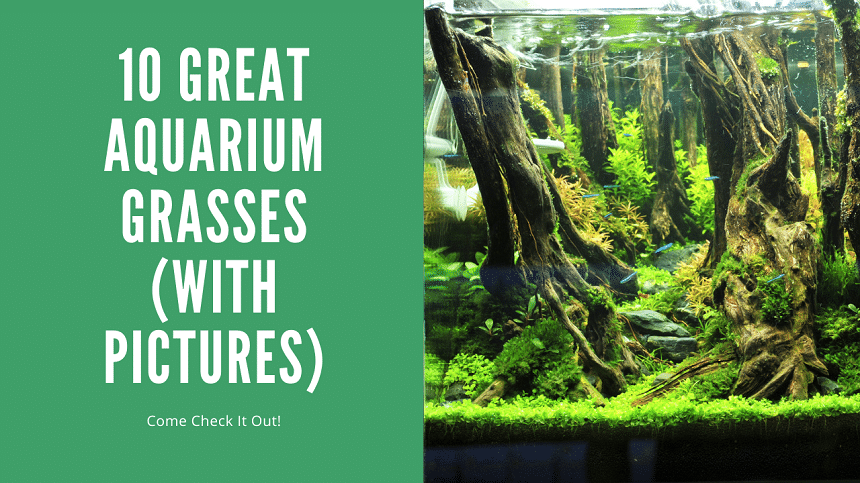
    Aquarium grass and carpeting plants form the cornerstone of many of the most incredible freshwater aquascapes. You’ll find these plants in everything from picturesque, minimalist Iwagumi style layouts to wild-looking nature aquariums, and even carefully ordered Dutch-style planted tanks.

    Carpeting plants are super useful for the foreground of your tank because they tend to stay low and is gradually replaced by taller plants towards the back of the layout. Some species grow taller and make interesting specimen plants for the midground of your tank, especially when grown in tight clumps.

    Other plants like the Vallisneria grow really tall and make awesome background plants. These plants create that densely planted jungle feel and is very handy for hiding hardware like heaters and airlines.

    10 Best Aquarium Grass Species

    With the huge range of aquatic plants available in the hobby, picking out the right aquarium plant species for your tank is pretty tricky. That’s why I’ve put together this list of my top 10 favorite aquarium grass plants to make your life a lot easier. For each species, I’ll provide vital information like:

    • Scientific Name
    • Skill Level
    • Size
    • Lighting
    • Tank Placement
    • Growth Rate
    • CO2 Requirement

    Check out the video below from our YouTube Channel. We go over this in more detail in our blog post below. If you like our content, be sure to subscribe, as we have new videos we publish every week.

    So let’s get started!

    1. Dwarf Hairgrass
    Easy To Grow Carpet!
    Dwarf Hairgrass

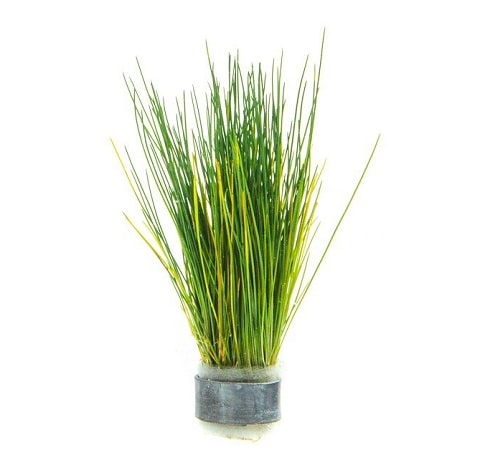
    Dwarf hairgrass is an easy to grow carpet that is great for beginners. Purchase tissue culture plants to ensure pest free plants!

    Click For Best Price Buy On Glass Aqua
    • Scientific Name: Eleocharis pusilla
    • Skill Level: Easy
    • Size: 2-3 Inches
    • Lighting: Moderate
    • Tank Placement: Carpet, Foreground, Midground
    • Growth Rate: Moderate
    • CO2 Requirement: Yes

    Dwarf Hairgrass is the first plant that comes to mind when discussing aquarium grass plants and that’s why it’s the first species on my list! This Australasian plant is easy to grow under moderate light and looks amazing as a carpet in minimalistic aquascapes like Iwagumi.

    Dwarf Hairgrass grows best in an aquarium soil substrate but can also work great in fine gravel or sand substrate enriched with root tabs. It is possible to plant Dwarf Hairgrass in a low-tech setup without CO2 but to achieve a dense carpet, you’re going to want a controlled supply of this important gas.

    2. Dwarf Sagittaria
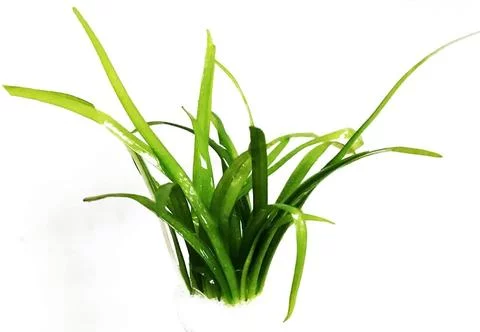
    • Scientific Name: Sagittaria subulata
    • Skill Level: Easy
    • Size: 4-12 Inches
    • Lighting: Moderate-high
    • Tank Placement: Carpet, Foreground, Midground, Background
    • Growth Rate: Moderate/Fast
    • CO2 Requirement: No, recommended

    Dwarf sag is a marsh plant from the Americas that looks amazing in freshwater aquariums. It is not a true grass but with its long narrow leaves, this plant makes a fantastic specimen plant or even a lush carpet option.

    , this popular aquarium plant grows to about 6 inches and is perfect for the midground in most tanks. Dwarf Sagittaria likes high lighting and will grow best with added CO2.

    3. Vals Nana
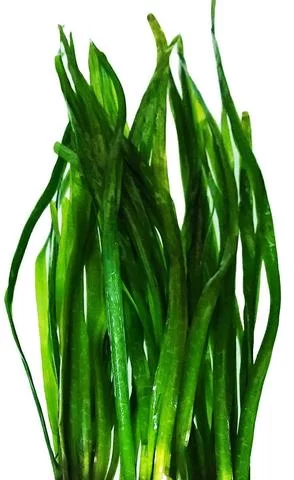
    • Scientific Name: Vallisneria nana
    • Skill Level: Moderate
    • Size: 12-20 inches
    • Lighting: Moderate-High
    • Tank Placement: Background
    • Growth Rate: Fast
    • CO2 Requirement: Recommended

    Vals Nana is a great grass plant for the background of your aquarium. This plant grows fast, and is not suitable for trimming into a lawn, but should rather be used to get a tall, wild grass-type look.

    Vals nana looks similar to Hairgrass will grow taller and can make a very effective green backdrop to a nature-style aquascape.

    4. Eleocharis Belem

    Eleocharis Belem

    Shorter than dwarf grass and with a curly shape, this aquarium grass offers good looks with less maintenance than other grass

    Click For Best Price Buy On Glass Aqua
    • Scientific Name: Eleocharis sp.
    • Skill Level: Easy
    • Size: 2-3 inches
    • Lighting: Moderate
    • Tank Placement: Carpet, Foreground
    • Growth Rate: Moderate
    • CO2 Requirement: Recommended

    This popular Hairgrass form is similar to the well-known Dwarf Hairgrass. This aquatic plant differs in its slightly more curly leaf shape and smaller size. Eleocharis Belem makes a wonderful carpet, especially if you provide it with good light and added CO2.

    5. Narrow-leaf Micro Sword
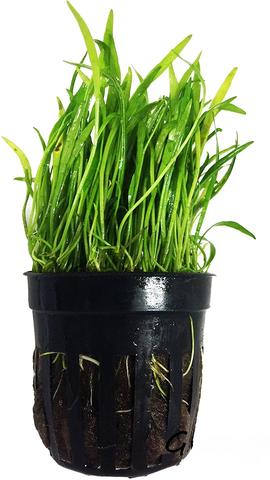
    Micro Amazon Sword

    A mid-ground plant that is fast growing and easy to grow

    Click For Best Price Buy On Amazon
    • Scientific Name: Lilaeopsis mauritiana
    • Skill Level: Easy
    • Size: 1-2.5 inches
    • Lighting: Moderate-High
    • Tank Placement: Foreground
    • Growth Rate: Slow
    • CO2 Requirement: Recommended

    Narrow-leaf Micro Sword is a tropical aquarium plant from the island of Mauritius. This aquatic plant grows slowly and stays small, between 2 and 4 inches in height.

    This makes it a great low-maintenance carpet plant. Good quality light and injected CO2 will help these plants grow faster.

    6. Pygmy Chain Sword

    Pygmy Chain Sword

    A low growing grass light that produces red hues in CO2 and fertilizer powered tanks.

    Click For Best Price Buy On Glass Aqua
    • Scientific Name: Helanthium tenellum
    • Skill Level: Easy
    • Size: 3-4 inches
    • Lighting: Moderate
    • Tank Placement: Carpet, Foreground, Midground
    • Growth Rate: Moderate
    • CO2 Requirement: No

    This low-growing, easy plant from the Americas was previously thought to be a species of Echinodorus. The narrow-leaf variety looks very much like a grass plant, and there is a slightly larger broad-leaved variety available as well.

    Under high light, with fertilizer and CO2, the grass-like narrow-leaved form can take on a unique deep red tone that really stands out. These plants are also known as Dwarf Chain Swords.

    7. Dwarf Four-leaf Clover

    Marsilea Hirsuta

    A round leaf plant that can grow as a carpeting plant. Best grown with CO2 and stronger lighting

    Click For Best Price Buy On Glass Aqua
    • Scientific Name: Marsilea hirsuta
    • Skill Level: Easy
    • Size: 1 inch
    • Lighting: Moderate-High
    • Tank Placement: Carpet, Midground, Foreground
    • Growth Rate: Slow-Moderate
    • CO2 Requirement: No, recommended

    Dwarf water clover has round leaves and might not look much like grass when you take a close look at it. It makes an awesome bright green carpet for the floor of the planted tank though. This plant is easy to grow and works well in a smaller tank.

    If you want that really short, lawn look, however, you’re going to need good light and injected CO2. Under lower light, this aquatic plant grow a bit tall and thin.

    8. Glosso

    Glossostigma Elatinoideas

    A beautiful carpeting plant that is best suited for advanced aquascapers. Grows fast and requires CO2

    Click For Best Price Buy On Glass Aqua
    • Scientific Name: Glossostigma elatinoides
    • Skill Level: Moderate-Advanced
    • Size: 1-2 inches
    • Lighting: High
    • Tank Placement: Carpet, Foreground
    • Growth Rate: Fast
    • CO2 Requirement: Yes

    This beautiful lawn plant from New Zealand is quite a challenge to grow but is an awesome plant for experienced aquarists. It needs a lot of light and access to CO2 to keep it growing low and tight. In the wrong conditions, Glossostima plants tend to grow tall and thin, which isn’t a great look.

    9. Dwarf Baby Tears
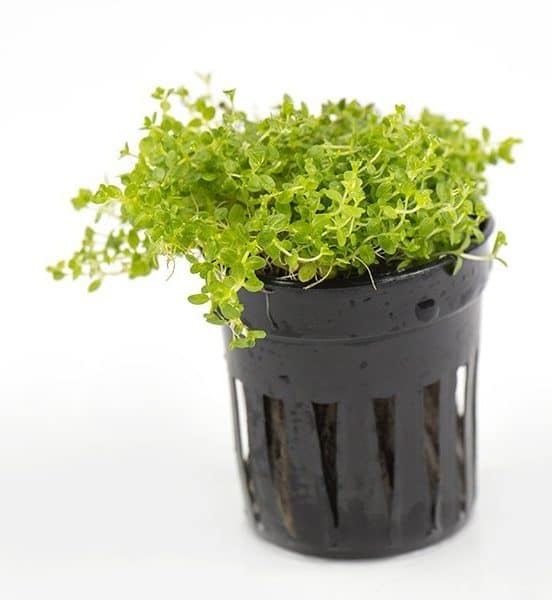
    Baby Tears

    One of the easier carpeting plants available for planted tanks.

    Click For Best Price Buy On Amazon
    • Scientific Name: Hemianthus callitrichoides
    • Skill Level: Moderate-Advanced
    • Size: 1-2 inches
    • Lighting: High
    • Tank Placement: Carpet, Foreground, Midground
    • Growth Rate: Moderate-Fast
    • CO2 Requirement: Yes

    Dwarf Baby Tears is a Cuban plant that is very popular with experienced aquarists who want a very short, tight carpet. Dwarf Baby Tears is tricky for beginners because they need high lighting, CO2, good nutrients, and water flow to stay healthy.

    Regular trimming is also necessary to keep the lower parts of the plant healthy. Dwarf Baby Tears is probably the ultimate carpet plant, are you ready for the challenge?

    10. Monte Carlo
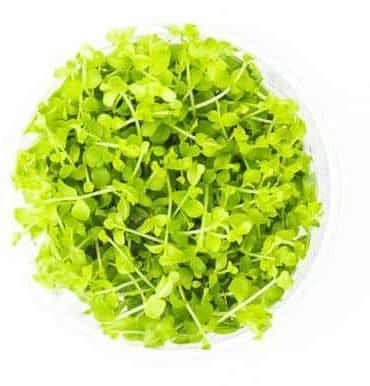
    Monte Carlo Tissue Culture – UNS

    Tissue culture plants are grown in labs and are completely pest free and have great shelf lives

    Click For Best Price Buy On Amazon
    • Scientific Name: Micranthemum tweediei
    • Skill Level: Easy-Moderate
    • Size: 1-2 inches
    • Lighting: Moderate
    • Tank Placement: Carpet, Foreground, Midground
    • Growth Rate: Moderate-Fast
    • CO2 Requirement: Yes

    MicranthemumMonte Carlo’ is a popular Argentinian aquarium plant that looks similar to the previous species, but is a more hardy plant. These bright green carpet plants stay low and spread into a lovely green lawn if you provide them with enough light and CO2.

    It is even possible to grow Monte Carlo plants over rocks and other features in the aquarium as their root system doesn’t necessarily need access to soil.

    Tank Setup

    If you want to grow grass carpet plants in your aquarium, you’ll want to make sure you’re set up for success from the start. Let’s take a look at what you’ll need!

    Lighting

    A good light source is one of the most important keys to success when it comes to growing aquarium grass plants. Although most of the species on this list could technically survive under low light, they will not thrive in these conditions. If you want to grow a dense, short carpet of living plants, high light is the best way to go.

    Medium light is also a good option for many plants, especially if you are OK with taller, thinner plants with a slower growth rate. LED and fluorescent lamps are both great options, but whatever light intensity you choose to run, make sure you pick one with a Kelvin rating of 5500-6500.

    Substrate

    Almost all aquarium grass and carpet plants need substrate to grow. Some plants like Java Moss and Monte Carlo is grown to look like grass if attached to the hardscape though.

    A nutrient-rich plant substrate is the best way to go. I would advise starting out with a good-quality aquarium soil. If you prefer to use an inert substrate like pool filter sand, it is possible to feed the plant’s roots with fertilizer tabs.

    CO2 Injection

    Along with light, water, and nutrients, Carbon dioxide is essential for all plants to live and grow. This gas occurs naturally in your aquarium water, but for many plants, the levels are just too low for healthy growth.

    Pretty much all aquarium plants grow best with increases CO2 levels, so if you want to get more serious about growing aquatic carpet plants, I would definitely suggest setting up a pressurized CO2 injection system.

    It’s not that you can’t grow a carpet without CO2, it just gets very difficult to get good results because the plants will not spread and cover the bottom in the way you want.

    Carbon dioxide is poisonous to your livestock at concentrations of over 30 ppm so make sure you set up a bubble counter and a drop checker to get your levels right and keep them running stable every day. If you are in the market for a quality CO2 system, I recommend the CO2Art brand.

    The Ultimate CO2 Kit
    CO2Art Pro Elite Series Bundle

    Use Offer Code ASD10%Off

    The highest end offering by CO2Art. This package includes everything you need to perform consistent and the highest quality CO2 injection in the industry!

    Click For Best Price

    Your aquarium plant will only be able to use Carbon dioxide while the lights are on, so make sure to set your injection system on a timer that starts up about 2 hours before your lights go on, and then shuts off again at the same time as your lights go off. The early start is to allow the gas to build up to the right concentrations so the plants are ready to grow as soon as the lights come on.

    Filtration & Water Quality

    A good quality filter is one of the most important pieces of hardware in any type of aquarium. Not only do filters keep the water in your tank looking great, but they are also vital for maintaining great water quality.

    The filter media in a mature cycled aquarium houses special beneficial bacteria that turn the harmful toxins in fish waste into nitrates. This keeps your fish healthy and creates an excellent natural source of nutrients for your plants!

    For a tank with a serious grass carpet, I recommend a top quality canister filter. Canister filters have the media capacity to handle the increase bioload of plant waste for large planted tanks and aquascapes.

    Tank Mates

    Grass and carpet plants provide a great natural habitat that bottom-dwelling fish love to explore. Most tropical fish make perfect tankmates for these plants, as long as they enjoy the same water temperature and parameters. There are a few types of fish that will not get along peacefully with your plants though, so here’s a short list of fish to avoid:

    • Silver Dollars
    • Goldfish
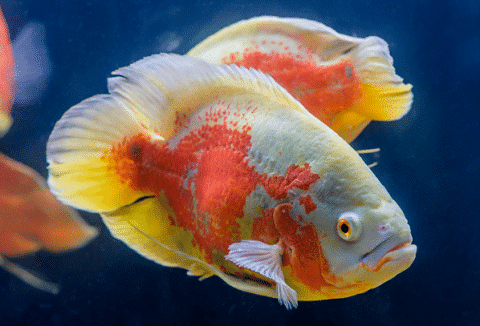
    • Oscars and other large cichlids
    • Buenos Aires Tetras

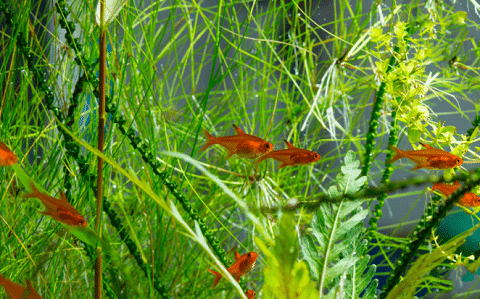
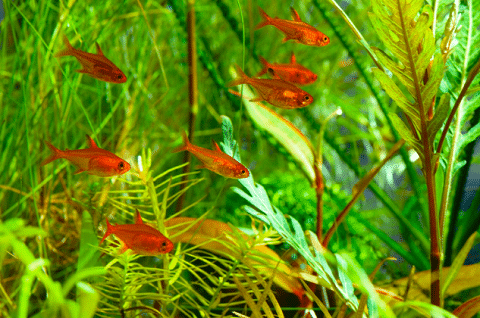
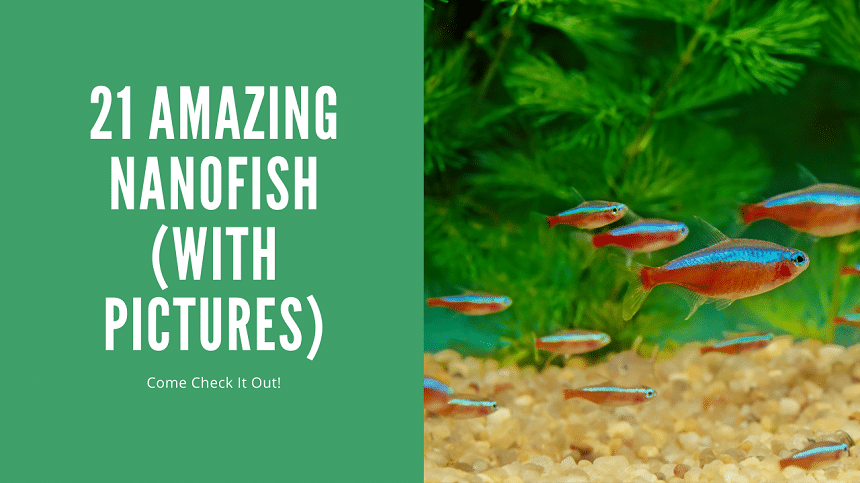
    The best fish for grass and really any type of planted tank are going to be nano fish. These small fish do well in planted tanks because they like to school, they are peaceful, and will not eat your plants. Several examples of these fish would be:

    How To Grow

    Turning a small pot full of aquarium grass plants into a dense carpet at the bottom of the tank is difficult if you don’t know a few tricks. Read on how to learn the secrets to success!

    The Dry Start Method

    Some of the small aquarium grass plants will be much easier to grow using the dry start method, especially if you plan on growing a carpet. The dry start method involves setting up your aquarium, complete with substrate and hardscape, but then only adding enough water to saturate the soil.

    The plants are then planted and allowed to grow and develop healthy root systems until they are firmly attached rooted in the substrate. This can make life a whole lot easier because tiny plants tend to wash loose and drift around in tanks that are already filled with water. Here is a video by JJ Aquariums for a visual.

    This technique is recommended for growing beautiful carpets and works really well with tiny plants like Dwarf Baby Tears, Monte Carlo, Dwarf Four-leaf Clover, and Dwarf Hair Grass. One very important point to remember is that not all plants will survive a dry start. Some aquarium plants like Vallisneria can only be grown submerged under the water.

    Spacing & Propagation

    Planting on a grid is the best way to grow a carpet of aquarium grass plants, without spending a ton of money on enough plants to cover up the bottom of the tank. To do this, separate your tissue culture plants into as many sections as possible. Each section should be a complete plant with some healthy leaves and roots.

    Plant each one out at equal distances from its neighbor. A distance of about 0.5-1 inches will work, but obviously, the closer the spacing, the faster the plants will fill in. Use your aquascaping tweezers or pincettes to gently push each plant into the substrate, leaving a little bit above the soil surface.

    Aquarium grass plants are very easy to propagate because they spread laterally. Trimming the plants often speeds up their spread, and with the right light, access to nutrients, and CO2, you can get really good results. You can take cuttings at any time to replant elsewhere in your tank, just make sure they have some roots and leaves.

    Fertilization

    Fertilizer is a big deal when it comes to growing aquarium grasses. Because of their faster growing nature, they tend to consume nutrients fast and will need supplementation.. You will want an aquarium fertilizer designed for planted tanks. Not all fertilizers are designed for planted tanks and aquascapes as some tend to be newbie friendly.

    If you are attempting a carpet, you will want to go with a fertilizer like APT Complete. This fertilizer is designed for aquascapers and serious planted tank enthusiasts. It’s an all-in-one fertilizer, so the guesswork is taken out for you.

    Editor’s Choice!
    APT Complete

    Editor’s Choice

    Made by an aquascaper for aquascapers. This is the best all around aquarium plant fertilizer on the market. Marco and micronutrients in one bottle!

    Use Coupon Code ASDComplete for 10% off your order!

    Click For Best Price Buy On Amazon

    Trimming

    Regular trimming is very important for maintaining a neat and even carpet at the bottom of the tank. Some plants that stay compact won’t need much attention, apart from keeping them to the areas where you want them.

    Taller plants like dwarf hair grass can benefit from trimming especially while it is still spreading to cover the floor. Trimming these plants actually stimulates them to put their energy into spreading out laterally, rather than growing tall.

    Trimming aquarium grass plants evenly is pretty tricky with a regular pair of scissors. I recommend a sharp pair of curved or double-curved aquascaping scissors for the evenest results.

    Be sure to turn off your filter while trimming and allow the trimmings to float to the surface where you can collect them with a small fine mesh net. You can also siphon out any trimmings that may be drifting in the water.

    Tank Maintenance

    Regular aquarium maintenance is vital for growing healthy aquarium grass and carpeting plants. This means performing regular partial water changes, testing your water parameters, and removing algae when necessary.

    Vacuuming is one part of tank maintenance that is especially important when growing this kind of plant. Unfortunately, uneaten food and waste tend to fall and settle around the root zone of carpeting plants.

    If this kind of waste collects and causes nutrient levels to rise too high, ammonia spikes can occur, creating a dangerous situation for your pets. To prevent this, make sure you suck up as much waste from the plants as possible with your gravel vacuum when removing water for a water change.

    Pests And Other Problems

    Pests like snails often find their way into home aquariums on new plants. The best way to avoid introducing pests to your aquarium is definitely to use tissue culture plants.

    One of the most common problems we see with grass carpet plants is tall, thin growth, and a stubborn refusal to spread! This is typical of light and carbon dioxide deficiency, so consider upgrading to a more high-tech setup, or choose a plant species with lower light needs to get more bushy growth.

    Hair algae is an issue in planted tanks with too much light and nutrients, but not enough CO2. Sometimes a simple fix is to decrease your photoperiod (day length) or add a clean-up crew like Amano shrimp and Otocinclus catfish.

    Where To Buy

    Aquarium grass plants are popular and pretty easy to find at most good fish stores and through online fish stores. When it comes to buying aquarium grass plants, I definitely suggest starting out with tissue culture specimens that are produced by a sterile process.

    FAQS

    Which is good for a tank?

    Choosing a grass plant for your aquarium is all about your goals for the look of your aquascape, and the kind of equipment you have. Any of the 10 species in this list will work great in your planted tank.

    Can I grow it in my fish tank?

    Absolutely you can grow grass in your fish tank. Not just any old grass will do though, you will need to plant an aquatic plant like one of the species described in this article.

    How long does it take to grow?

    Growing speed varies depending on which type of water plants you grow. Regardless of the species though, each type will have a ‘sweet spot’ where the lighting, CO2 levels, and nutrients are perfect for optimum growth.

    Can you put fake plants in a tank?

    Plastic plants are a quick and easy way to green up aquariums. There are pros and cons to this option, but whatever ornament you choose to use in your fish tank, always be sure that it is aquarium safe.

    How do I grow it in my fish tank?

    To grow aquatic grass plants, you will need light, nutrients, substrate, and water with the right temperature and parameters. Read through this article to learn everything you need to know about how to grow your own aquarium grass plants.

    Final Thoughts

    A beautiful aquascape is not complete without some grass and carpet plants. Apart from the obvious aesthetic benefits, these plants are also great for your fish and really satisfying to grow. Use the information in this guide to start growing your very own underwater grass plants. Happy growing!


    ๐ŸŒฟ Want to learn more? This article is part of our complete Planted Tank & Aquascaping Guide. Your ultimate resource for aquarium plants, aquascaping styles, substrates, and more.

  • 7 Best Internal Aquarium Filters โ€“ Reviewed & Tested

    7 Best Internal Aquarium Filters โ€“ Reviewed & Tested

    Internal filters are something I recommend far more often than people expect, especially for smaller tanks and breeding setups. I’ve used them in quarantine tanks and fry tanks where a hang-on-back would create too much flow, and the better models do a surprisingly good job. They’re not glamorous, but they’re practical. and after testing several of them hands-on, I can tell you which ones are actually worth buying.

    Internal filters are one of those underrated filtration options. they’re compact, quiet, and work surprisingly well for small tanks, quarantine setups, and nano builds. I’ve used internal filters extensively in my own quarantine tanks and betta setups over the years, and the quality difference between the good brands and the cheap ones is very noticeable in terms of flow rate consistency and longevity. If you’re setting up a smaller system and want reliable filtration without a hang-on-back cluttering the tank, these are the best options I’ve found.

    With over 25 years of experience in the aquarium hobby, Iโ€™ve assisted countless clients, hobbyists, and readers like you in overcoming their filtration choice anxiety (and believe me, there are a million filters for sale out there). Iโ€™ve personally tested these products in real world scenarios to determine the best internal aquarium filter on the market.

    The Top Picks

    Editor’s Choice
    OASE BioPlus
    • 3 Stages
    • Integrated heater
    Best Value
    Penn-Plax Cascade
    • 3 Stage
    • Large media capacity
    Budget Option
    Tetra Filter
    • 3 Stage
    • Cheap

    Let’s start this off with the best of the best. Without a doubt, my top recommendation is the OASE BioPlus internal filter. It has everything you need – 3 stage filtration, good size, and the only filter available where you can place a heater inside of it.

    Penn-plax offers a great value option that holds a large amount of media for an internal filter. The Tetra internal filter is a hang on the back style filter that offers a well priced filter that is easy to use and maintain.

    The Candidates (The Line Up)

    Now that you know my top picks, let’s look at the full list of products I reviews. I got 7 in total here, all brand names. These are brands I trust and have used over the years. Several of these brand names have received my recommendation as the best filter for other categories. I’ll go into further detail below.

    PictureNameTypeLink
    Editor’s Choice!
    OASE BioPlus Internal Filter

    OASE BioPlus Internal Filter

    • 3 Stage
    • Integrated Heater
    • Corner Fit
    Buy On PetcoBuy On Amazon
    Best Value
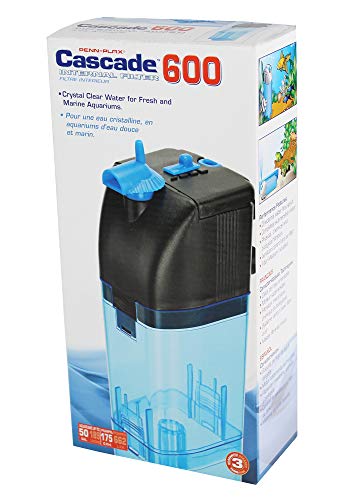
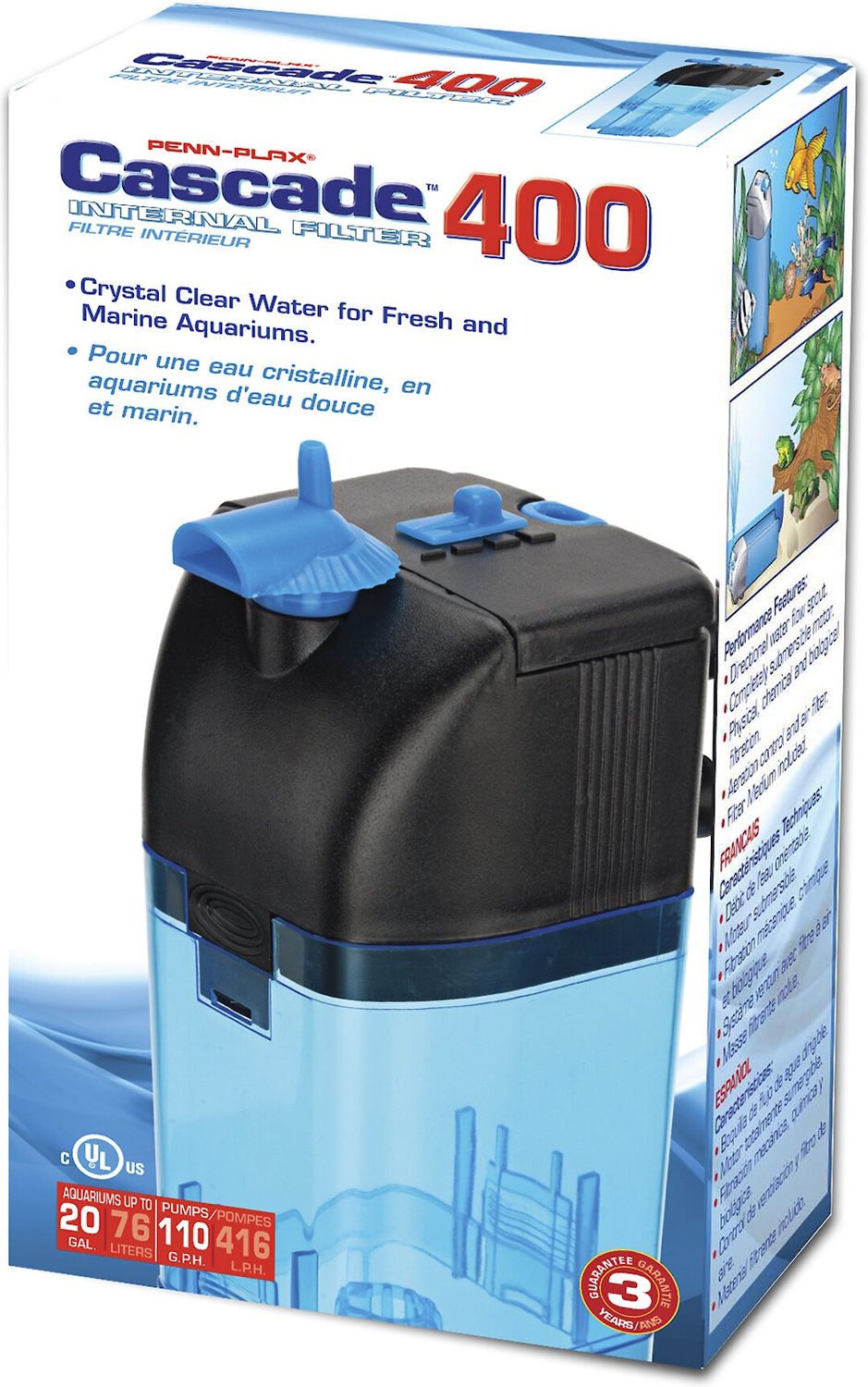
    Penn-Plax Cascade Internal Filter

    Penn-Plax Cascade Internal Filter

    • 3 Stage
    • Large media capacity
    Buy On ChewyBuy On Amazon
    Budget Option
    Whisper Internal Filter

    Whisper Internal Filter

    • 3 Stage
    • Cheap
    Buy On ChewyBuy On Amazon
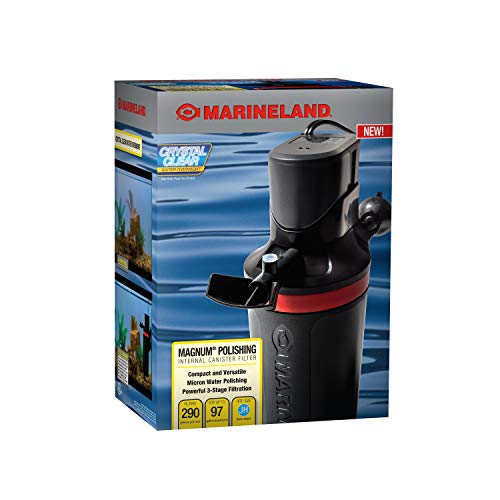
    MarineLand Magnum Polishing Filter

    MarineLand Magnum Polishing Filter

    • Diatom Filter
    • Powerful
    Buy On ChewyBuy On Amazon
    Aqueon Quietflow Internal Filter

    Aqueon Quietflow Internal Filter

    • 3 Stage
    • Works for shrimp and fry
    Buy On ChewyBuy On Amazon
    Fluval U3

    Fluval U3

    • 3 Stage
    • Powerful
    Buy On ChewyBuy On Amazon
    SICCE Shark

    SICCE Shark

    • 3 Stage
    • Reliable
    Buy On Amazon

    The 7 Best Internal Aquarium Filters Of 2023

    Let’s go in-depth about what makes each of these filters stand out from the dozens of others in the hobby. You can check out our video from our YouTube Channel below. We go into more details in our blog post so check out both!

    1. OASE BioPlus

    Editor’s Choice
    OASE Bioplus Thermo

    The Best Internal Filter

    The OASE Bioplus is an internal version of the Biomaster Therm. It’s the only internal filter I trust in aquascapes

    Buy On Amazon Buy On Petco

    If you seen my best canister filter post, you know how much I love the OASE Biomaster Thermo. What if I told you that OASE created an internal version of the Biomaster that offers some of the same great features! Let me introduce you to the OASE Bioplus Thermo.

    This internal aquarium filter is a 3 stage filter that is powered by filter foam and activated carbon foam. You can also switch out one of the foam filters to a 30 ppi fine foam to have a polishing stage. The filter can actually still run when you are replacing media.

    The outlets are designed to skim the surface of the aquarium in order to prevent surface scum build and has and adjustable dial to tune up or down the flow.

    I haven’t even gotten to the best part of this filter! The filter can house an OASE Heat Up aquarium heater on the back. This keeps the heater out of sight and away from your fish. I love this feature because it makes for a clean presentation. It is designed to fit in a corner so it stays out of sight!

    I’ve been really impressed with this filter since seeing it in action at Aquashella earlier this year. It hides so well in aquascapes and looks professional. I almost prefer the look to a power filter. The main con with this filter is the price. it’s more expensive than many hang on back filters, but it’s presentation is so much better. If you are looking for an internal aquarium filter, this is the one to buy!

    Pros and Cons

    Pros
    • Integrated heater
    • Removable mechanical filter chamber
    • Durable – German made
    Cons
    • Expensive
    • Difficult to find at local fish stores

    2. Penn-Plax Cascade

    Best Value
    Penn-Plax Cascade Internal Filter

    This 3 stage internal filter offers one of the largest media capacities for an internal filter

    Buy On Chewy Buy On Amazon

    Penn-plax has the most utilitarian filter on this list. This filter is designed to be an internal canister filter. It holds a ton of media for an internal filter and it’s all in contain form so you can put whatever you want in each chamber.

    It is designed to be completely a submersible filter that can be placed vertically or horizontally. This makes it a great choice if you are planning to use this in a shallow aquarium, paludariums, and turtle tanks. It also comes with a direction flow nozzle so you can turn the flow in any direction you want. This gives this filter more versatility over the BioPlus, which is mainly designed as a fish tank filter.

    The filter can also use a venturi outlet or spray bar to provide oxygen to your water. The Cascade has a flow regulator at the top of the unit so you can adjust the flow of the outlet. The filter is very easy to use and well priced.

    It doesn’t have the best looks, but it is the most versatile filter on this list. Easily the best buy on here if you are looking for bang for the buck.

    Pros and Cons

    Pros
    • 3 stage
    • Large capacity
    • Great price
    Cons
    • Ugly looking
    • Large profile

    3. Tetra Whisper

    Budget Option
    Tetra Whisper Internal Filter

    Tetra’s 3 stage internal filter offering is a great budget option for those looking for value.

    Buy On Petco Buy On Amazon

    If you have been following me for a while, you know that I rarely put Tetra filters on a list. I’m just not a fan of the Tetra filters and believe there are better filters out there. This internal filter, however, is the exception. It is economical and fits the bill perfectly in a small tank.

    The whisper filter offers their traditional “bio-bag” but has a permanent biological filter (they Tetra calls a bio-scrubber) section that makes up for the removable filter cartridge. It is very quiet and easy to use. The instructions are really bad for this filter, so I’m going to post this video by MW Craft Studio on how to install if you do purchase it below.

    What’s there not to like? The main issue is how it mounts. It mounts with a clip instead of a suction cups or magnet. This limits the filter to the top of your tank, which can be a problem if you are using it for shallow setups. I’m also not a fan of filter cartridges, as the expense adds up over time.

    Pros and Cons

    Pros
    • 3 stage
    • Cheap
    • Air driven
    Cons
    • Cartridge based
    • Can only mount with a clip

    4. Marineland Magnum Polishing

    MarineLand Magnum Filter

    This excellent internal filter offers a diatom filter option for extra water polishing.

    Buy on Petco Buy On Amazon

    The Marineland Magnum filter makes this list for it’s unique feature. It has a diatom polish filter option, which is something that has been used clear up water, remove dinos, and even useful in quarantine tanks.

    The filter, when operating normally is a 2 stage filter. It has a filter floss sleeve that you slide into the chamber and a media chamber. You do a bit of biological filtration from the floss, but I wouldn’t rely on that. If you are going to use this as a 3 stage filter, my suggestion would be to add some biological filtration media in the media chamber. It has a splitter in it so you place more than 1 type of media.

    The filter functions off of Marineland’s penguin powerheads, which is has a very reliable motor. It is powerful at 297 gallons per hour and can be tuned down as needed.

    Because it normally operates as a 2 stage filter it doesn’t make my top 3, however, it has a place in many tank setups as a polisher with its diatom option. It also goes on sale often. Definitely look into it when it goes on special.

    Pros and Cons

    Pros
    • Powerful
    • Diatom option
    • Works up to 90 gallons
    Cons
    • Only 2 stage
    • Large

    5. Aqueon Quietflow

    Great For Shrimp Tanks
    Aqueon Submersible Internal Aquarium Filter, 40-gal

    An internal filter that is designed to be used for both shrimp and fish fry. An excellent alternative to traditional sponge filters!

    Buy On Chewy Buy On Amazon

    Finding a filer that works for freshwater shrimp and fish fry can be a challenge! Sure you have sponge filters that do the job, but there is a need for a comprehensive filter that works with these small critters.

    The Aqueon Quietflow internal aquarium filter is an attempt to address this need. It actually does a pretty good at address the need. It has a 3 stage filtration process. With a filter cartridge system handling chemical and a coarse sponge handling mechanical. There is a plastic grid called a Bioholster that is meant to house beneficial bacteria.

    Quietflow Filter Inside

    I like the concept a lot. The main thing that bugs me is the filter cartridge system, but it mostly holds carbon so it’s not as bad as other cartridge systems I’ve seen. The filter can only be mounted at the top of the aquarium. It is not recommended to be submersed. If you are looking at filter for shrimps or fish fry, defiantly give this a look!

    Pros and Cons

    Pros
    • Works for shrimp and fish fry
    • Easy to operate
    • Comes in 10 or 20 gallon size
    Cons
    • Cartridge based
    • Noisy

    6. Fluval U3

    Fluval U3

    This excellent 3 stage filter offers premium filter features and is powerful. Well known in the turtle keeping world.

    Buy On Chewy Buy On Amazon

    The Fluval U3 is arguably the most powerful internal filter on this list. This is an internal filter that is build like Fluval’s C3 series filters. It has a comprehensive 3 stage system. It uses two foam pads, one for mechancial and one for polishing. It has two cartridges for chemical filtration and ceramic rings for biological filtration media.

    Like the Penn-Plex, it is fully submersible filter and can be mounted either horizontal or vertical. The flip top lid allows for easy access when the filter needs to be maintained. It comes with a 3-way flow control and you can attach spray bar to the filter to provide oxygenation.

    Like all Fluval filters, this one is designed in Italy and build to last. It has a solid warranty with Fluval’s brand name. The main thing that pushes me away from putting this at the time is the poly max cartridges. They get expensive over time, so I still prefer to recommend filters that use foam over cartridges as they save an aquarist money over time.

    Pros and Cons

    Pros
    • Italian made
    • Fully submersible
    • 3 stage filtration
    Cons
    • Cartridge based

    7. Sicce Shark

    SICCE Shark

    The Sicce Shark offers Sicce’s legendary reliability and performance in an internal package.

    Buy On Amazon

    What’s a comparision article without a Sicce product ๐Ÿ˜. I love Sicce products. From their aquarium pumps to their skimmers powered by them, Sicce has a history of reliable and well made Italian products. The shark is no exception.

    The shark has what Sicce called a magnetic quick uncoupling system (MCS System). This means that the filter compartments are held by magnets making it easy to remove for maintenance. The filter takes in water from the bottom and has an adjustable intake diameter that can prevent small fish to enter it.

    It also has a water flow regulator on the flow and a venturi feature to add oxygen to the water. It is designed to be modular so you have the freedom of adding whatever filter media you want. Sicce has several types of media you can purchase from them or you can add your own.

    Pros and Cons

    Pros
    • Sicce brand
    • Fully submersible
    • 3 stage filtration
    Cons
    • Large
    • Ugly looking in tank

    What Is Internal Aquarium Filter?

    This is the first question I need to address because there is some misconceptions as to what one is. There are cheap internal filters that run off an air pump. Those are not what I’m going to go through. I feel that sponge filters are far superior to any of the air pump powered internal filters you can purchase.

    I’m focusing on powered internal filters. The ones that run off an impeller. These internal filters are more powerful and versatile than the cheap air powered ones. These internal filters are designed to fit into small spaces and in smaller tanks. They can offer 3 stage filtration and some are designed to keep a low profile so they stay hidden in a tank.

    Our Criteria

    Before I go through a list, let’s talk about my criteria for selecting these filters. I looked at the following when making this list:

    • Features – I want a 3 stage filter or some unique feature that makes it stand out
    • Brand Name – No cheap Chinese brands here. Everything here is brand name, trusted, and back with long warranties
    • Ease of Use – I want plug and play and easy to maintain. No one likes a complex filter. Internal filters are all about simplicity!

    When To Use

    Internal filters have great uses in certain setups. While canister and power filters are better, they do not work for every setup. Let’s talk about good scenarios where an internal filter makes a lot of sense.

    Nano Tanks

    An aquarium that is 20 gallons or under is a great candidate for an internal aquarium filter. Internal filters, when designed correctly like the OASE, can keep a low profile in the tank and keep clutter low. They have enough capacity to handle tanks of this size and are potentially quieter than power filters.

    Shrimp Tanks

    With the correct filter like the Aquaeon model mentioned earlier, internal filters can make great filters for freshwater shrimp tanks. They offer 3 stage filtration, yet are gentle enough to not hurt the small shrimp

    Betta Fish Tanks

    With the long delicate fins of fancier varieties of Bettas, an internal filter makes a lot of sense. I feel the OASE fits them really well because you can set it up in the corner with the heater. Your betta can then have free rein in the aquarium with you having to worry about it’s fins getting caught in the intake and getting to close to the heater.

    Breeder Tanks

    Like shrimp tanks, breeder tank need gentle flow and a gentle filter. An internal aquarium filter can fit the bill if it is built correctly. They offer superior filtration over a sponge filter since they have the ability to filter in 3 stages instead of 2.

    Turtle Tanks

    Submersible filters are great for turtle tanks. You can place them anywhere underwater to get the filtration you need. They will be more quiet than canisters and power filters since they will push water at the water line or below instead of above.

    Axolotl Tanks

    A submersible filter is great for Axolotl tanks. You have to make sure you get an oversized filter given the amount of waste these salamanders create, but you will have a much quieter setup using an internal filter over others. Because you can place them anywhere in the water. you can put them in the area that your Axoloti finds comfortable

    FAQS

    What Is The Quietest One?

    The quietest internal aquarium filter that I’ve used is the Tetra Whisper. It’s combo of low flow and placement makes it very quiet. It’s not the the best filter though. If you want quiet and quality, go with the OASE which is slightly louder.

    How Much Do They Cost?

    A fish tank filter can cost hundreds of dollars to a dozen depending on what you type of filter and size of filter you are shopping for. In general, sponge and internal filters will be the cheapest while canister filters and sumps will be the most expensive. However, if your filter uses cartridges the ongoing cost may be higher than another model that uses foam and sponges.

    Are They Good?

    Not all internal aquarium filters are good. A good internal filter will have 3 stage filtration, a solid warranty, and have a good amount of media capacity to handle a moderate fish load. I only listed good internal filters in this post, anything I felt was average, I left off the list. You are only seeing the best of the best with me.

    Do They Bother Fish?

    Internal filters do not bother fish. In fact, I would say some of the the internal filters on this list do a better job of making fish feel at home than some power filters. The more low profile and low key a filter is, the more comfortable your fish will feel. This is what filters like OASE and Fluval made this list.

    How Often Should I Clean It?

    You should clean the sponges on your filter at least once a month. Do not clean all your stages at once as you can kill a significant amount of bacteria in the process. Rotate the stages as you clean and only use your aquarium water when cleaning.

    Can They Be Submerged?

    Yes, internal filters can be submerged. Most brands will tell you on the box if they can be submerged or not. In my experience, I find the Fluval and the Penn-Plex as the best of the submersible power filters. Both can be placed either vertical or hortizontal.

    Closing Thoughts

    Internal filters, when designed correctly, can provide filtration for any type of aquarium. I hope I have helped with your buyer’s anxiety when it comes to figuring out which filter is best for your needs. Have any questions? Leave a comment below and let’s start a conversation! Thanks for reading!


    ๐Ÿ”ง Want to learn more? This article is part of our complete Aquarium Equipment & Gear Guide. your ultimate resource for filters, heaters, lights, pumps, tanks, and more.

  • Montipora Coral Care – A Complete Guide

    Montipora Coral Care – A Complete Guide

    If your parameters are not stable, this coral will not survive the first month. Corals do not die from wrong numbers. They die from unstable numbers. The difference between a thriving reef and a dying one is consistency, not perfection.

    Stable mediocre parameters beat perfect parameters that swing. Every time.

    What It Is Actually Like Growing Montipora Coral Care to A Complete Guide

    Coral growth is measured in weeks and months, not days. You will stare at your frag daily and see nothing. Then one morning, you notice new polyp extension or a visible encrustation line. That moment is deeply satisfying.

    Corals open and close based on lighting and flow. Learning to read your coral’s polyp extension tells you more about tank conditions than any parameter test.

    Nuisance algae will grow on and around your coral. Keeping it clean without damaging the tissue takes a gentle hand and a turkey baster. This is a regular maintenance task.

    The color payoff is real. A coral that looked brown in the store develops vivid greens, purples, or oranges under proper lighting over weeks. That transformation is what makes reef keeping addictive.

    Table of Contents

    The Montipora Coral Care to A Complete Guide is a go-to recommendation for newer reefers, but it is not bulletproof. Lighting, flow, and placement mistakes kill more frags than disease ever will. After maintaining reef tanks for over two decades, I know exactly where people go wrong with this coral.

    More coral frags die from too much light than too little. That surprises most beginners.

    Corals grow slowly and demand stable conditions for months and years. This is a long-term commitment to water chemistry, lighting schedules, and consistent maintenance.

    Coral keeping is gardening with saltwater. The patience required is identical.

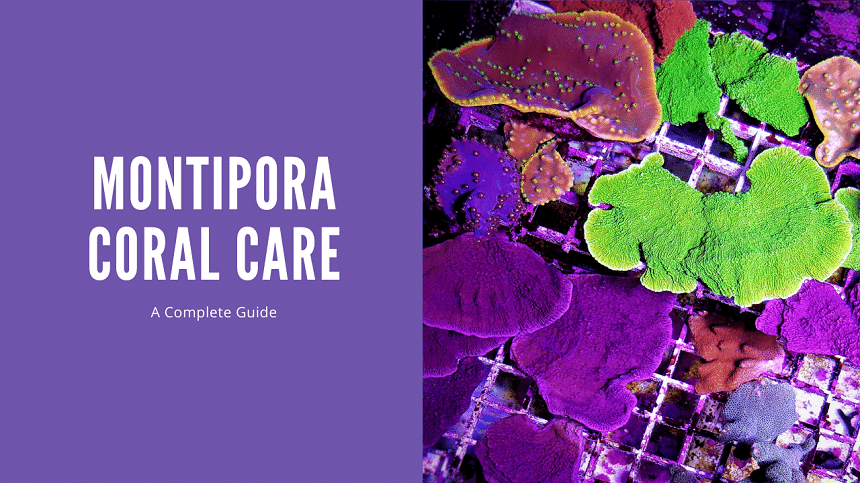
    Do you want to know all about Montipora coral care? If so, this blog post is for you! We cover all the basics in order to keep your corals happy and healthy. There are many different types of Montipora that exist today; however, they all require the same basic care. We’ll cover everything from lighting requirements, parameters, and placement. Don’t worry, it’s easy as 1-2-3! Let’s dive in!

    What Most Care Guides Get Wrong About Montipora Coral Care. A

    Want easy, fast-growing coral? Start with green star polyps or zoanthids. Want a challenge? Get SPS and invest in dosing equipment.

    Many care guides make the montipora coral care. A sound easier than it really is. They’ll list basic parameters and call it a day. In my experience running reef systems, stability matters far more than hitting a perfect number. Flow and placement get glossed over constantly. I’ve seen perfectly healthy montipora coral care. A colonies stress and close up simply because they were in the wrong spot. Getting flow right is half the battle. The other mistake is overfeeding or over-supplementing. More is not better with corals. Clean water and patience will outperform any additive regimen.

    The Reality of Keeping Montipora Coral Care to A Complete Guide

    Lighting is the most common source of coral death. New reefers blast their corals with too much PAR on day one. Corals need to acclimate to your lighting over weeks. Starting at 50% intensity and slowly ramping up prevents bleaching and tissue recession.

    Flow matters as much as light. Dead spots collect detritus on coral tissue and cause tissue necrosis. Too much direct flow strips flesh from the skeleton. Finding the right flow pattern takes observation and adjustment.

    Stability beats perfection. A reef tank with slightly elevated nitrates that stays consistent will grow coral better than a tank with perfect numbers that swings every few days. Corals adapt to stable conditions. They die from instability.

    Biggest Mistake New Owners Make

    Placing a new coral frag in the highest-light spot of the tank immediately. Corals from a store or vendor have been in shipping bags for hours. They need low light and gradual acclimation. Blasting them with full intensity causes bleaching within days.

    Expert Take

    Start your lights at 50% and increase by 10% every two weeks. More corals die from too much light too fast than from any disease I have encountered in 25 years of reef keeping.

    Frequently Asked Questions

    Is Montipora coral good for beginners?

    Montipora is one of the easier SPS corals to keep and is often recommended as a gateway into SPS keeping. While it still requires stable water parameters, strong lighting, and good flow, it is more forgiving than Acropora and other demanding SPS species.

    How fast does Montipora coral grow?

    Montipora is one of the fastest-growing SPS corals. Under ideal conditions with proper lighting, flow, and supplementation, plating varieties can grow several inches per year. Encrusting forms spread gradually across rockwork. Growth rate depends heavily on calcium, alkalinity, and magnesium stability.

    Why is my Montipora turning white?

    White patches on Montipora indicate bleaching from excessive light, rapid parameter swings, or elevated temperatures. STN (slow tissue necrosis) appears as white areas at the base that slowly spread. Check your parameters, reduce lighting intensity if needed, and dip the coral if pests are suspected.

    What lighting does Montipora need?

    Montipora thrives under moderate to high PAR lighting, between 200 to 350 PAR. LED fixtures, T5 fluorescents, and metal halides all work well. Plating Montiporas is placed in the middle zone of the tank, while encrusting varieties do well on rockwork at various heights.

    Can Montipora and Acropora be kept together?

    Yes, Montipora and Acropora can coexist in the same tank since they have similar requirements for light, flow, and water chemistry. However, be aware that Montipora grows faster and can shade or overgrow slower-growing corals if not maintained with regular fragging.

    An Overview On The Montipora Coral

    Scientific NameMontipora spp.
    Common NamesMontipora, vase corals, velvet corals
    FamilyAcroporidae
    OriginWidely found throughout the Indian and Pacific Oceans
    Common ColorsPurples, greens, oranges, reds, blues, yellows
    Care LevelEasy for SPS
    TemperamentPeaceful
    LightingModerate-High (150-200+ PAR)
    Tank PlacementMiddle, Top
    Flow RateModerate – High
    Temperature Range76-82 degrees F
    pH Range8.0. 8.4
    Salinity1.025 or 35 PPT
    Alkalinity8. 12 dKH
    Calcium Level350. 450 PPM
    Magnesium Level1250. 1350 PPM
    PropagationFragging

    Classification

    PhylumCnidaria
    ClassHexacorallia
    OrderScleractinia
    FamilyAcroporidae
    GenusMontipora
    SpeciesOver 85 described species

    Origins And Habitat

    Species of Montipora coral is found at all depths of the reef. They are largely found throughout the Indian and Pacific Oceans, with most specimens within the aquarium hobby originating from waters around Australia and Indonesia.

    These corals are a type of small polyp stony (SPS) coral, which means that they excrete a hard calcium carbonate skeleton that houses photosynthetic zooxanthellae. SPS corals, such as Montipora, are the foundation for coral reefs as they build hard structures that shelter a plethora of life; they have evolved to be able to withstand turbid waters where other soft corals and large polyp stony (LPS) corals would be damaged by strong waves and currents.

    SPS corals also thrive in intense light. Some of the most notable species, like those from the Acropora coral genus, is found at the top of the water column under direct sunlight. Montipora corals are not as demanding when it comes to lighting, but they will still thrive in areas with lots of light available.

    Plating varieties that grow outwards from the reef will also choke out any other corals that might fall in the shadow below them.

    Is This Hard To Keep In The Aquarium?

    In regards to SPS, Montipora is one of the easiest species you can keep in the aquarium. That isn’t to say that they is kept by anyone, though.

    Montipora corals need high lighting, high water flow, and stable water parameters. Though this might sound reasonable for beginners, many hobbyists aren’t at that point with their tanks yet. At the very least, an aquarium should be one year old before attempting to add any SPS. This will allow time for the tank to settle, for algae outbreaks to end, and to develop a true understanding of how this mini-ecosystem works.

    However, if you have successfully kept soft corals and LPS and have seen growth and stability, then you may be ready to try SPS corals. On top of being easy to keep, Montipora coral is a popular entryway SPS species due to the many different varieties, shapes, and colors it’s available in.

    Montipora can come in branching, plating, and encrusting coral varieties in almost all colors. Alongside with birdnest corals, the montipora is a good stepping stone into advanced SPS species like Acropora corals.

    What Does Montipora Coral Look Like?

    What Does A Montipora Coral Look Like

    Montipora is somewhat challenging to identify since it can come in so many varieties and be categorized under many designer names. In general, it’s best to know the general attributes of each type of Montipora coral variety regardless of the color or common name given.

    Branching

    Montipora Digitata

    The most popular branching species of Montipora coral is Montipora digitata. From there, the most common colors of Montipora digitata are orange (‘Forest Fire Montipora digitata’) and green (‘Green Montipora digitata’).

    Like other branching SPS corals, branching Montipora grows into fascinating, complex structures. These corals have thicker branches with antler-like tips. The polyps are very concentrated and can create a very fuzzy appearance. A healthy branching Montipora will have white tips that indicate new growth.

    Though these corals will grow towards the light on their own, new growth will start to shade out any old branches below. Because of this, it’s often necessary to regularly frag and trim the colony for optimal health.

    Plating

    Plating Montipora is probably the most popular variety of this particular coral species and definitely one of the easiest to recognize. Most specimens of plating Montipora coral belong to Montipora capricornis, though true identification is difficult.

    These corals are aptly named after their mostly horizontal circular growth. Plating Montipora corals have a rough texture with polyps that do not extend very far. These corals will continue to expand outwards as far as they can, but will eventually start to plate upwards as well.

    Though plating Montipora coral brings another dimension to the reef aquarium, a colony can take up a lot of space. Due to its outwards growth, it eventually shades out anything that grows below it. This can take a lot of real estate from the rest of the reef; because of this, many hobbyists try to place them as low as lighting allows.

    Encrusting

    Encrustring Montipora

    Encrusting Montipora corals aren’t as popular as branching or plating varieties, but they’re still a good choice for bringing some additional color into the reef aquarium. Most encrusting corals will belong to Montipora verrucosa, though this is not always true.

    This coral has a very hard and bumpy appearance; the individual polyps are barely noticeable. They do not come in as many color options as the previous varieties of Montipora coral and are mostly limited to orange, green, and purple.

    Encrusting Montipora quickly grows over rock and other structures in the aquarium. Though they are not the most obvious coral in the aquarium, they can bring unique color and texture.

    Placement In The Reef Aquarium

    In general, all varieties of Montipora coral is placed in the middle or top of the tank. They need moderate to high light and moderate to high water flow. Based on the setup of the aquarium, this could even allow Montipora to be grown farther down towards the substrate.

    The most important factors about placing Montipora coral are adequate and even water flow, especially with branching varieties. Branching Montipora can quickly create a dense cluster of coral which can lessen water flow. This means that nutrients and gas exchange lessen, which can start to affect the overall health of the coral over time.

    This is solved by adding more water flow or fragging the corals to increase water circulation once again. In general, it is also best to have random water flow throughout the tank rather than unidirectional water flow to keep debris from piling up in one spot. This is achieved with multiple pumps or ones that have a randomized setting.

    Do they Need High Light?

    Yes, Montipora needs high light. As one of the least light-demanding species of SPS, they still need at least 150 PAR with appropriate frequencies and intensities.

    Like other corals, Montipora is acclimated to higher portions of the tank over time and many have successfully been kept at areas receiving 200-300+ PAR. If they are not receiving enough light, they will start to lose their color and may even turn brown; if they are receiving too much light, they will start to bleach.

    A brown Montipora is a sure sign that the coral is not receiving enough light, though this could also be due to other stressors as well. Shadowing is also a problem with SPS corals as they get larger. This is more pronounced when using LED lighting. It’s best to work with a high end LED light like an EcoTech Radion. Or consider a hybrid system when working with a heavily stocked SPS tank.

    Used by World Wide Corals
    EcoTech Radion G5

    Editor’s Choice

    The newest Radion G5 is a massive update to the prior generation. It’s the light of choice for pro level reefers.

    Click For Best Price

    How Do You Place Encrusting?

    Though branching and plating Montipora corals don’t need much special consideration in regards to placement, many hobbyists choose to keep their encrusting species on rock islands.

    While SPS growth isn’t fast at first, it can start to become exponential in a very short period of time. This is especially true with encrusting Montipora that will shamelessly grow over anything that it can, including pest algae and other corals.

    In order to control the spread, many hobbyists dedicate a certain area of the tank just to encrusting Montipora. It is also a popular option to allow it to grow up the wall of the aquarium, though many hobbyists prefer a green star polyp (Pachyclavularia violacea) backdrop instead.

    Temperament In The Aquarium

    One of the best things about Montipora coral is that they are almost completely harmless to other corals. These corals have barely any sting and will not hurt other corals they come into contact with. However, this is not true if they come in contact with other corals.

    SPS are delicate animals. They do not have much ability to sting and will bleach if you look at them the wrong way. Because of this, it is crucial to keep more aggressive corals far away from SPS colonies.

    LPS with long sweeper tentacles are especially to blame as they can quickly hit a branch of SPS and cause injury. Though most Montipora are able to recover from injury, there is time for infection and algae to grow which can negatively impact the overall health of the coral.

    If attempting a mixed reef, make sure that there are distinct zones of aggression, allowing plenty of space for sweeper tentacles and potential growth.

    Care And Maintenance

    Montipora coral does not require a lot of maintenance. If an aquarium is stable, it is most important to keep that stability. When dealing with SPS, that mostly means maintaining water parameters through dosing.

    Because SPS corals build calcium carbonate skeletons, they need a good supply of nutrients, including trace elements and alkalinity and calcium supplementation (like E.S.V). Since Montipora coral is a faster-than-average growing coral, dosing might also be necessary to keep up with growth even if the colony isn’t large and if there aren’t many other SPS in the aquarium.

    Best For Beginners
    E.S.V. B-Ionic

    Great For Beginners

    ESV B-Ionic is a great 2 part solution that works for all levels. Approachable for a beginner to use and can be used for all reef tank builds.

    Click For Best Price Buy On Amazon

    Each system will be different and dosing frequencies and amounts can only be determined by recording and documenting how nutrients are used throughout the tank. It should also be noted that some species of Montipora are much more forgiving of instability and less-than-optimal conditions than others.

    Dosing

    The main parameters you need to dose for successful Montipora coral growth are alkalinity, calcium, magnesium, and trace elements. It is necessary to analyze how these levels change with and in between water changes to determine how much dosing is necessary.

    As new water is circulated throughout the aquarium, nutrients are used for skeletal growth. This depletes nutrients, which can only be added through new water or through dosing; in order to minimalize maintenance and to increase daily stability, it is simpler and more effective to dose.

    Because of this need to dose, many hobbyists equip an auto-doser to their system. These is costly at first, but they will add the exact amount of product needed to maintain ideal levels and eliminate the need for additional upkeep.

    Editor’s Choice!
    Neptune DOS

    The Best Dosing Pump

    With great premium features like the ability to auto change water and an industrial level pump, the DOS is the best piece of equipment you can purchase today for your doing needs.

    Click For Best Price

    If you are running a very clean system in regards to nutrients, then it might also be necessary to dose nitrates and phosphates–though, most reefers are trying to bring these two parameters down instead of increasing them.

    Feeding

    It might seem counterintuitive to feed SPS as they lack fleshy polyps that will quickly accept foods, but SPS actually appreciate broadcast feedings every now and then; target feeding is not recommended and can actually cause the coral to retract.

    Most of the food your coral needs will be given through the photosynthesis processed by symbiotic zooxanthellae. However, you may supplement feedings with amino acids and zooplankton.

    Chemically, amino acids are the backbone of proteins. Increased proteins mean increased growth, which can improve the size, color, and overall health of the coral. On the other hand, zooplankton is processed as regular food.

    As Montipora coral gets most of its ‘nutrition’ from lighting, amino acid and zooplankton supplements are not regularly needed and should not be overdone; some systems that run higher nutrients don’t need them at all. In low nutrient systems, supplemental feedings should be done one to two times a week at the most.

    Again, the schedule will depend on how your system responds.

    What Are Good Tankmates?

    Montipora coral is kept with all reef-safe species. SPS is easily picked at by more advantageous species, like marine angelfish and butterflyfish, so it is best to go with those that are guaranteed to be safe, like:

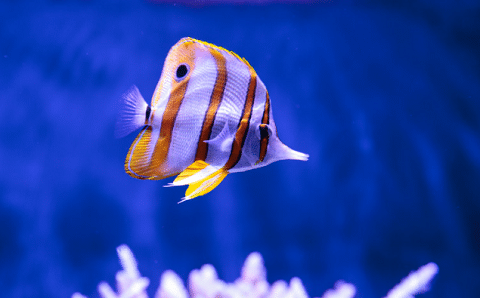
    It is not impossible to keep certain species of butterflyfish with SPS, like the copperband butterfly (Chelmon rostratus), though this will largely depend on the personality of the individual fish.

    It should also be noted that plating Montipora coral can easily be irritated by wandering snails and crabs. Though they shouldn’t cause too much damage, you might want to avoid hermit crabs and larger snails that will unknowingly scrape the top of your Montipora.

    Fragging

    Fragging Montipora coral is easy (video source), especially plating varieties. In some ways, fragging SPS is easier than fragging LPS or soft corals, though the recovery rates is a little trickier.

    In order to frag plating Montipora, simply break the plate up. This is done inside or outside of the tank as long as you have full control over where the break is. A bone cutter can also be used to make smaller, more precise incisions.

    In order to frag branching or encrusting varieties, you will need a bone cutter to split a branch or to get an encrusted piece off the rock. Once done, simply glue the frag to a frag plug or back to a piece of rock in the aquarium.

    A coral dip, like iodine, is recommended to help speed up recovery, though this step is not entirely necessary.

    Pests

    Even though Montipora are some of the easiest SPS to keep, they come with some unique challenges. One of these challenges is that they’re one of the most susceptible corals to bring unwanted pests to the aquarium, namely the Montipora eating nudibranch (For more info, check out my friend Aaron and his video above).

    Montipora eating nudibranchs will evade most coral dips and find their way into the aquarium regardless; some adults may die during the dipping process but eggs largely remain unscathed.

    These invertebrates are small and white. They have several appendages that come out from the sides of their body that facilitate movement. They is found on the glass of the aquarium, in the substrate, or directly on the Montipora coral. It is easiest to find them at night with a flashlight.

    There are a few ways to tell if you’re facing a Montipora nudibranch outbreak. These signs include:

    • Exposed areas of skeleton when there are no signs of aggression from other corals and stable water parameters
    • Random bleached areas of the coral away from the edge
    • Egg clutches on the underside of the coral
    • Visual observation of nudibranchs

    Tanks are especially susceptible to Montipora eating nudibranch if introducing a wild-caught coral. In order to prevent this and to receive a hardier coral in general, it is always best to choose aqua-cultured specimens. Still, there is always the chance that nudibranchs will be introduced from an aqua-cultured setting.

    The best way to avoid Montipora eating nudibranchs is by allowing enough time for quarantine. Several weeks should give enough time to observe the telltale signs of an infestation. Quarantine allows for much more aggressive treatments without having to worry about other more sensitive fish and corals that are waiting in the display.

    Even then, it is possible to find nudibranchs on a quarantined piece of Montipora. At this point, it will take persistence and dedication to get rid of them. There are a few options for dealing with Montipora eating nudibranchs, and, the solution will be a combination of all methods.

    One of the most aggressive ways for eliminating Montipora eating nudibranchs from the aquarium is to persistently dip the coral. This dip should be strong and administered regularly; basically, you want to dip as frequently as you can without risking damaging the coral. At the same time, check the undersides of the coral for eggs and manually remove them.

    In addition to dipping the corals, you may try more organic remedies, such as introducing a wrasse that is a natural predator. In particular, the yellow coris wrasse (Halichoeres chrysus) and the six-line wrasse (Pseudocheilinus hexataenia) have proved to be the most helpful.

    Your tank should be able to accommodate for long-term housing of these species, or plans should be made to safely rehome them after the nudibranchs have been eliminated. It is very unlikely that the yellow coris wrasse will solve this problem alone though and you will need to dip the corals as well.

    Lastly, you need to sacrifice a piece of coral. Experienced keepers have found success in removing all Montipora from the aquarium except for one piece. This piece will act as a lure that is removed once nudibranchs have occupied it. However, as nudibranchs can live in other parts of the aquarium, this method is not always guaranteed to be completely effective.

    Still, Montipora eating nudibranchs are extremely difficult to get rid of and anything is worth a try. Though these invertebrates mainly target plating Montipora, they may also go after encrusting and branching varieties as well.

    Where To Buy

    Montipora corals is purchased at local aquarium stores or online. I will prefer online coral vendors as they will sell what you see is what you get (WYSIWYG), offer guarantees, and have a better reputation for not having corals infected with pests.

    Is the Montipora Coral Care. A Right for You?

    Before you add a montipora coral care. A to your tank, it’s worth asking whether this species actually fits your setup and your goals. Here’s a quick breakdown to help you decide.

    This species is a good fit if:

    • You have an established reef tank with stable parameters. New setups are not the place for corals.
    • You’re committed to regular water testing and maintenance. Reef tanks require more attention than freshwater.
    • Your lighting and flow match what this coral needs. Not all corals want the same intensity.
    • You understand that coral growth is slow. Patience is not optional in reefkeeping.
    • You have a plan for fragging or managing growth if the colony expands beyond its space.
    • You’re not adding it to a tank with known coral pests. Prevention is easier than treatment.

    If most of those points line up with your setup, the montipora coral care. A is worth serious consideration. If several don’t, it’s better to choose a species that matches your tank now rather than trying to make it work.

    How the Montipora Coral Care. A Compares to Similar Species

    Want easy, fast-growing coral? Start with green star polyps or zoanthids. Want a challenge? Get SPS and invest in dosing equipment.

    Choosing between similar species is tricky. Here’s how the montipora coral care. A stacks up against some common alternatives.

    The montipora coral care. A occupies a specific niche in the aquarium hobby, and direct comparisons really depend on what you’re looking for. In my experience, the most common question people ask is whether they should choose the montipora coral care. A or something similar that’s more widely available. The answer comes down to three things: tank size, water parameters, and what other fish you’re keeping. If your setup matches what the montipora coral care. A needs, it’s hard to beat. If not, there are alternatives worth exploring.

    Closing Thoughts

    Montipora is a very popular genus of hard coral to keep due to its hardiness, available varieties, and color selection compared to other species of SPS. Montipora is plating, branching, or encrusting, and requires high lighting and high water flow.

    These corals is more susceptible to pests than other SPS corals, but they are very easy to frag and pretty forgiving when it comes to instability in water chemistry. They are also easy to find and is an inexpensive addition to the aquarium.

    Have a question? Leave a comment below and let’s start a conversation. Welcome to the reef aquarium community :).

  • Fish For A 5 Gallon Tank – 10+ Great Choices (With Pictures)

    Fish For A 5 Gallon Tank – 10+ Great Choices (With Pictures)

    Five-gallon tanks are tricky because the stocking options are genuinely limited. and I see a lot of bad advice online suggesting fish that have no business being in that small a space. I’ve set up 5-gallon tanks myself for bettas and nano fish, and done right they can look absolutely stunning. The key is respecting the volume and sticking to species actually suited for it.

    Are you looking for ideas on which fish to put in your 5-gallon tank? Choosing fish for this aquarium size can take some planning because there aren’t that many species that will do well in such a small tank.

    In this article, I’ll introduce you to 13 of the best fish and shrimp species that you can keep in your 5-gallon aquarium and give you some good advice on setting up and maintaining your nano tank. So let’s get started!

    The 13 Best Fish For A 5 Gallon Tank

    There aren’t many species for freshwater aquariums of this size, but you can still find some great options. Below is my video for you visual learners. I go into more detail in the blog post below. If you like the content, give us a sub on our YouTube channel.

    In this list, I’ll introduce you to the best fish and shrimp species for your 5-gallon aquarium. For each of the species, I’ll provide you with some important information and facts like:

    • Scientific Name
    • Adult Size
    • Care Level
    • Temperament
    • Diet
    • Origin
    • Water Temperature
    • Swimming Level

    As with pretty much every aquarium fish, a larger tank would be better, but all of these awesome animals can do great in a 5-gallon tank if you provide them with the right care.

    So let’s meet the 13 best fish and shrimp!

    1. Betta

    WYSIWYG Available!
    Betta Fish

    Use Coupon Code ASDFISH at Checkout

    Betta Fish are one of the most beautiful varieties of freshwater fish available in the hobby. Easy to care for with plenty of varieties!

    Buy Premium Varieties Buy On Petco Online
    • Scientific Name: Betta splendens
    • Adult Size: 2.5-3 inches
    • Care Level: Moderate
    • Temperament: Agressive
    • Diet: Carnivorous, Feed live/frozen foods, flakes, and pellets
    • Origin: Asia, Thailand, Vietnam, Cambodia
    • Temperature: 75-80ยฐF
    • Swimming Level: Midwater, Top

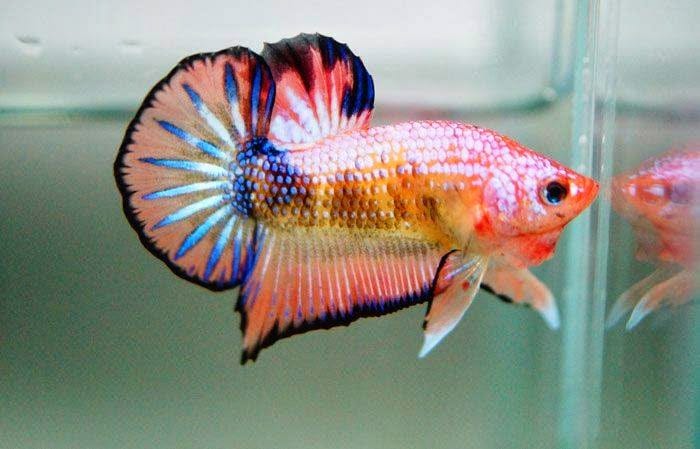
    Betta fish are one of the best freshwater fish for a nano tank and that’s why they are so popular in the fishkeeping hobby. These beautiful fish are available in a bunch of different varieties with different color patterns and fin shapes.

    You might know them as the Siamese fighting fish because the males are really aggressive towards other males, that’s why you should only keep one male in a tank. Bettas have big personalities and make awesome pets.

    They like to play and can even be taught a few simple tricks like jumping right out of the water. A 5-gallon tank is perfect for a betta, just be sure to set it up with a filter and a heater.

    2. Guppy

    Guppy Fish
    • Scientific Name: Poecilia reticulata
    • Adult Size: 2 inches
    • Care Level: Easy
    • Temperament: Peaceful
    • Diet: Carnivorous, Feed live/frozen foods, flakes, and pellets
    • Origin: The Caribbean and Northeastern countries of South America
    • Temperature: 63-82ยฐF
    • Swimming Level: Midwater, Top

    Guppies are an awesome and often overlooked nano fish species that can be kept in a 5-gallon aquarium. These fish come in all sorts of different colors and are really easy to breed because they are livebearers.

    In a 5-gallon tank, the population can grow really quick, so a good option is to keep just a trio of males. The males are usually easy to spot because they are smaller, have longer fins, and are more colorful than the females.

    3. Chili Rasbora

    • Scientific Name: Boraras brigittae
    • Adult Size: 0.8 inch
    • Care Level: Easy
    • Temperament: Peaceful
    • Diet: Carnivorous, Feed live/frozen foods, flakes, and pellets
    • Origin: Southeast Asia
    • Temperature: 68-82ยฐF
    • Swimming Level: Midwater, top

    Chilli, or mosquito rasboras (video source) as they are also known are awesome little fish for a 5-gallon tank. They have really vibrant color and are peaceful enough to keep with inverts like shrimp and snails.

    Chilli rasboras are one of the smallest fish you can get. They do great in a 5-gallon tank and it is best to keep them without other species that might outcompete them for food. They are a great fish for a no heater setup. They are able to thrive in room temperature homes without a heater. They are arguably the best looking coldwater fish you can purchase at this size.

    4. White Cloud Mountain Minnows

    White Cloud Minnow
    • Scientific Name: Tanichthys albonubes
    • Adult Size: 1.5 inches
    • Care Level: Easy
    • Temperament: Peaceful
    • Diet: Carnivorous, Feed live/frozen foods, flakes, and pellets
    • Origin: China
    • Temperature: 58-72ยฐF
    • Swimming Level: Midwater

    White cloud minnows are beautiful and peaceful fish that do best in cooler water than your standard tropical setup. Although these fish will do better in a larger aquarium, 5 gallons is about their minimum tank size.

    A small group of about 4 of these fish can be kept in 5-gallon fish tanks with good filtration and regular maintenance. This is another fish where a heater is not necessary.

    5. Scarlet Badis

    Scarlet Badis
    • Scientific Name: Dario dario
    • Adult Size: 0.5-0.75 inches
    • Care Level: Moderate
    • Temperament: Semi-agressive
    • Diet: Carnivorous, Feed live/frozen foods
    • Origin: India, Asia
    • Temperature: 64-79ยฐF
    • Swimming Level: Bottom, Midwater

    Scarlet Badis are amazing tiny fish with great colors. They are one of the best fish for more experienced fish keepers. Scarlet badis fish don’t feed well on processed food and will need to be fed frozen or live foods to stay healthy.

    They are shy little creatures that aren’t good at competing with other fish, so it is best to keep these little jewels in their own tank and to watch to make sure they are eating well. The perfect setup would be one male with a group of females.

    6. Dwarf Pea Puffer

    • Scientific Name: Carinotetradon travancoricus
    • Adult Size: 1 inch
    • Care Level: Moderate
    • Temperament: Agressive
    • Diet: Carnivorous, feed live and frozen foods
    • Origin: Asia, India
    • Temperature: 72-82ยฐF
    • Swimming Level: Midwater, Top

    Dwarf Pea puffers (video source) are one of the coolest little fish species available in the hobby. These fish have sharp teeth and are true carnivores so it is best to keep them on their own without any other species as tank mates. Shrimp are definitely not safe with these tiny but aggressive fish.

    One of these fish will make a great pet for a 5-gallon tank. Dwarf puffers need live and/or frozen foods like brine shrimp, micro-worms, bloodworms, and snails. These fish love to explore so consider growing some live plants in their tank. Some floating plants will also bring out the best of their personality.

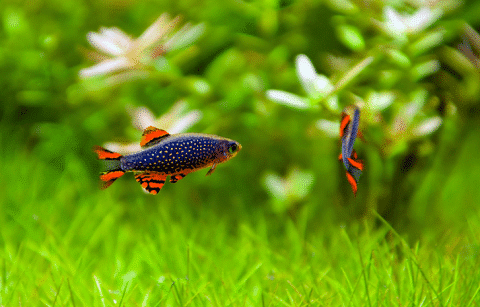
    7. Celestial Pearl Danio

    CELESTIAL <a href=PEARL DANIO” class=”wp-image-546585″/>
    • Scientific Name: Celestichthys margaritatus
    • Adult Size: 0.75 inch
    • Care Level: Moderate
    • Temperament: Peaceful
    • Diet: Omnivorous, Feed live/frozen foods, flakes, and pellets
    • Origin: Asia, Myanmar, Thailand
    • Temperature: 68-78ยฐF
    • Swimming Level: Midwater

    Celestial pearl danios are one of the most popular fish species for small aquariums because they’re just so pretty and interesting to watch. These small fish look amazing in heavily planted nano tanks.

    CPDs are shy little fish that can be kept quite safely with shrimps as tank mates. Adult males have the best colors and can be pretty territorial so make sure there are some live plants in the tank to break up their line of sight with other fish.

    8. Cherry Shrimp

    Beginner Friendly
    Cherry Shrimp

    Great red color and very hardy. Cherry shrimp are the best beginner shrimp for shrimp tanks

    Click For Best Price Buy In Bulk
    • Scientific Name: Neocaridina heteropoda
    • Adult Size: 1.5 inches
    • Care Level: Easy
    • Temperament: Peaceful
    • Diet: Omnivorous, feed shrimp pellets, algae wafers, vegetables
    • Origin: Taiwan, Asia
    • Temperature: 65-85ยฐF
    • Swimming Level: Bottom

    Cherry shrimp are a great alternative to fish for your 5-gallon tank. You can keep quite a few of these peaceful and fascinating little creatures in your tank without overstocking.

    It is best to keep a group of at least ten cherry shrimp together in a shrimp-only tank because most freshwater aquarium fish can potentially injure or eat them. Cherry shrimps are ideal animals for aquascaped planted aquariums.

    9. Amano Shrimp

    • Scientific Name: Caridina multidentata
    • Adult Size: 2.5 inches
    • Care Level: Moderate
    • Temperament: Peaceful
    • Diet: Omnivorous, feed shrimp pellets, algae wafers, vegetables
    • Origin: East Asia
    • Temperature: 65-85ยฐF
    • Swimming Level: Bottom

    Even though Amano shrimp are not as colorful as cherry shrimp, they are one of the best fish tank cleaners and are also super interesting in their own right. Amano shrimp scavenge and love feeding on algae and decaying plant material, so they are perfect for planted tanks.

    Unfortunately, Amano shrimp can easily be hurt by other tank mates. Although there a few fish species that they can be kept with, a shrimp only tank can be great fun too. They will not cross bred with other shrimp types.

    10. Female Betta

    Female Betta Group
    • Scientific Name: Betta splendens
    • Adult Size: 2.5 inches
    • Care Level: Moderate
    • Temperament: Semi-aggressive
    • Diet: Carnivorous, Feed live/frozen foods, flakes, and pellets
    • Origin: Asia, Thailand, Vietnam, Cambodia
    • Temperature: 75-80ยฐF
    • Swimming Level: Midwater, Top

    Female betta fish are a lot less popular in the hobby than males, but they do have a bunch of great advantages. Female bettas are a lot smaller than males, their fins aren’t as big and their colors aren’t as bright. On the plus side, female betta fish tend to be a lot less aggressive than males, which means you can keep more than one of them in the same tank.

    11. Endler’s Livebearer

    Endler's Livebearer
    • Scientific Name: Poecilia wingei
    • Adult Size: 0.75-1.25 inches
    • Care Level: Easy
    • Temperament: Peaceful
    • Diet: Omnivorous, Feed live/frozen foods, flakes, and pellets
    • Origin: Venezuela, South America
    • Temperature: 75-86ยฐF
    • Swimming Level: Midwater, Top

    Endler’s livebearers look a lot like guppies but they are not actually the same fish species. These are peaceful fish, although females can be a little aggressive towards one another if you don’t have enough of them to spread the aggression.

    Livebearers breed very easily in home freshwater aquariums, so you can expect a lot of babies if you keep both males and females together in the same tank. The males are smaller and more colorful than the females, so many aquarists choose to keep males only.

    12. Ember Tetra

    Ember Tetra
    • Scientific Name: Hyphessobrycon amandae
    • Adult Size: 0.8 inches
    • Care Level: Easy
    • Temperament: Peaceful
    • Diet: Carnivorous, Feed live/frozen foods, flakes, and pellets
    • Origin: Brazil, South America
    • Temperature: 68-82ยฐF
    • Swimming Level: Midwater

    Ember tetras are awesome aquarium fish for small tanks. They are peaceful, stay small, and have great colors.

    These fish prefer planted tanks where they can feel more comfortable in their environment. Growing some live aquarium plants can also be very helpful in maintaining good water quality in small setups.

    13. Emerald Dwarf Rasbora

    • Scientific Name: Microrasbora erythromicron
    • Adult Size: 0.8 inches
    • Care Level: Moderate
    • Temperament: Peaceful-Semi-aggressive
    • Diet: Omnivorous, Feed live/frozen foods and sinking pellets
    • Origin: Myanmar, Asia
    • Temperature: 68-75ยฐF
    • Swimming Level: Bottom, Midwater

    The emerald dwarf rasbora (video source) is an amazing fish species for your 5-gallon tank. These little guys need higher pH water to thrive and appreciate a densely planted tank. They can be pretty shy so the live plants will help them to feel more secure and act out their natural behaviors.

    Why Choose A Tank This Small?

    There is a general rule in the fishkeeping hobby that the bigger the tank, the better it is for your fish. Many new fishkeepers think a smaller aquarium is easier to keep than a larger one, but this isn’t actually true.

    Small fish tanks have a number of benefits though, especially if you have limited space or want a tank for your desk. Maintaining a small fish tank can be quite challenging, so I usually recommend these aquariums to more experienced fish keepers.

    The fact is though, that as long as you put in the research, and keep up with your maintenance, there’s no reason you can’t be successful in keeping your pets healthy and your miniature underwater world looking great.

    How To Set Up This Size of Aquarium

    Now that you’ve met some of the best fish for 5-gallon aquariums, it’s time to learn more about setting up their home, so let’s get started! If you want to skip all of this and get a ready-to-run aquarium, I would suggest looking into a Fluval Spec V.

    Editor’s Choice!
    Fluval Spec V

    The Best Betta Fish Tank

    Best filtration, best light, perfect size and with everything you need to get started. It was made for Bettas!

    Buy On Petco Buy on Amazon

    Filtration

    The challenge with keeping a small aquarium is keeping the water healthy and safe for your pets. The smaller the amount of water, the faster things can go wrong in there. Your first line of defense here is good filtration!

    You absolutely have to have a filter for your 5-gallon tank, there’s no getting around it. But what kind of filter should you get? Well, there are many great options out there, including, hang-on back, internal power filters, and sponge filters.

    You can even use a small internal power filter AND a sponge filter, just remember that your space in the tank is limited and you want to keep the current gentle. If you do use a power filter, make sure it is fitted with a pre-filter sponge to avoid your fish or shrimp being sucked up through the intake.

    Heating

    Another important piece of equipment that you will need is a heater. Temperatures will swing quickly in small tanks, and that’s why you need a heater to maintain the stable temperature that your fish prefer. You should also install a thermometer to keep an eye on your heater’s performance.

    Aquarium Maintenance

    The most important part of your tank maintenance routine with a 5-gallon tank is to perform regular water changes. As a rough guide, a water change of 20-30% of the volume of your tank every week or 2 is recommended. The size of the water change and how often you need to do them will vary though depending on a couple of factors like:

    • How heavily stocked your tank is (number and size of fish)
    • The quality of your filtration
    • How many plants do you have in the tank

    When putting new water back into your tank, make sure it’s the same temperature as your aquarium to avoid shocking your livestock. Always treat the water with a conditioner before adding it to your tank to neutralize any harmful chemicals.

    Water Quality

    Performing regular water changes and running a good quality filter are the first steps towards maintaining great water in your 5-gallon aquarium, but there are a few other things you should be doing to keep your water parameters in line.

    Keeping Your Aquarium Clean

    Solid waste tends to build up on the bottom of the tank in time, and this should be cleaned up when you’re doing your water changes. Go ahead and use a gravel vacuum to suck up all that dirt and uneaten food while you’re removing water.

    When it comes to feeding your fish, try not to supply more food than your fish can consume right away (within a few minutes). That way you don’t have to worry about the food rotting away in your small tank.

    Algae is a natural, but sometimes annoying part of fish keeping. You can use an algae scraper to keep your glass clean. Unfortunately, this aquarium is too small to consider an algae clean up crew. The best clean up crew member would be an amano shrimp, however, your Betta will likely hunt it down given the lack of space and stimulation your betta fish will have. You could upgrade to a 10 or 20 gallon tank to recruit clean up members.

    Water Testing

    Testing your water regularly is the best way to monitor your water parameters. The most important things to monitor are ammonia, nitrite, and nitrate levels.

    Keep a close eye on your ammonia and nitrite levels. These should read zero to indicate that the nitrogen cycle is running properly in your small aquarium. Testing is easy with a liquid test kit or some strip tests that you can find at your local fish keeping store.

    Mixing Different Types In the Aquarium

    Due to the size of a 5 gallon aquarium, it is best to stick to one species of fish. The best fish that do well in a tank this size are going to be nano fish. Nano fish are fish that are going to be 2 inches or less in length. Most of these fish are schooling fish. They will need a group of 4 to 6 fish to do well. Because of the schooling requirement, you will be limiting to picking one fish species for your setup.

    Not if you chose a Betta fish, you only be able to house this freshwater aquarium fish. You can add other inverts like aquarium snails, but the fish itself adds a lot of bioload to an already small tank.

    Growing Plants

    Many of the fish on this list will do best in a planted small tank because the structure creates great hiding places and shelter that makes the fish feel more secure. This helps the fish behave more naturally and lowers their stress levels.

    Another huge benefit of keeping fish with live aquatic plants in your freshwater tank is their usefulness in lowering nitrates in the water. This helps keep the water quality good for your pets. Here are a few examples of great plants that would work for nano tank like this:

    If you’ve never tried before, growing live plants can be really easy, so go ahead and check out my aquarium plant growing guides for more information.

    Lighting for a Planted Tank

    If you pick the Fluval 5, you will have the light you need in order to grow low light/low energy plants. If you build your own 5 gallon tank, or want to take a step up to a better light, you can look up specialty planted tank led systems.

    If you are looking for a quick recommendation, consider the Current USA Serene RBG lights. It’s easy to use, has the PAR and spectrum output, and is reasonably affordable.

    Best Value
    Serene RGB Pro LED

    Current USA’s offering into aquascaping is an incredible value. Spectrum, spread, easy to program and great PAR output.

    Click For Best Price Buy On Amazon

    Where To Buy Items

    Most of the fish on this list are easy to find at local aquarium stores, but nano fish can be a little harder to track down sometimes.

    Flipaquatics.com is a trusted online fish supplier that I recommend. They keep pretty much all of the fish on this list!

    They put all their livestock through a 30-day quarantine and have an amazing live arrival guarantee which takes so much of the stress out of transporting small, fragile fish.

    FAQS

    How many pets can you keep in this size aquarium?

    In the aquarium hobby, 5 gallons is considered pretty small, and aquarists need to be careful not to overstock their tank. So how many fish is too many fish in small tanks?

    There is an old rule of thumb that says you can keep 1 inch of fish for every gallon in the tank. This is only a very rough guideline, and depending on your setup, you might be able to keep more fish or less.

    The guideline is a useful start for the fish in this list, as long as you have good filtration, and stay on top of maintenance.

    Is this size of aquarium big enough for 2 fish?

    You can keep 2 fish in a 5-gallon aquarium, provided they are suited for such a small tank. Tiny species like the dwarf rasboras and danios can do great in small schools of 2 or more in a 5-gallon fish tank.

    What varieties can I put in my aquarium?

    Your options are a little limited when it comes to stocking a 5-gallon tank because most of the freshwater fish in the aquarium hobby need a much bigger fish tank. Any of the amazing fish in this list can be kept as long as you have all the necessary equipment and stay on top of your maintenance schedule.

    What else can live in this tank?

    Apart from the great fish on my list, you can also keep red cherry shrimp or other dwarf freshwater shrimp, freshwater snails, or even one or two African dwarf frogs in a 5-gallon tank

    Is this tank big enough for a betta?

    5 gallons is a great size for a betta fish tank. Just remember to pick up a heater and a filter for your betta fish, and keep up with regular tank maintenance to keep your pet happy and healthy.

    Final Thoughts

    Keeping fish in a 5-gallon tank is a fascinating and fun hobby. It does take a little discipline and effort but as long as you stick to the species on this list, and provide them with the care they need, you can create your own amazing miniature aquatic environment.

    Have fun with it, and comment below with any questions! If you are looking for fish for a 10-gallon tank, check out my other post. We also have a list for 20 gallon fish too!


    ๐Ÿ“˜ Want to learn more? This article is part of our complete Freshwater Fish Guide. your ultimate resource for freshwater species, care tips, tank setup, and more.

  • Koi Betta: The Ultimate Guide to the Marble Betta’s 6 Types

    Koi Betta: The Ultimate Guide to the Marble Betta’s 6 Types

    Koi Bettas are bred for their marbled color patterns, and those patterns change. Constantly. The fish you buy is not the fish you will have in six months. If you want a specific look, koi bettas are the wrong choice.

    Koi bettas are a lesson in letting go of expectations. The fish decides what it looks like.

    Koi bettas are genuinely one of the most fascinating fish you can keep. Not just because of their stunning multicolored patterns, but because those patterns can change over time. What most guides don’t mention is that koi bettas are actually marble bettas carrying a genetic quirk called the “jumping gene,” or transposon, that causes pigment cells to shift position as the fish matures. A betta that looks mostly white with orange patches when you buy it might develop deep black marbling over the next year. I’ve watched this happen firsthand and it never stops being interesting. Their care requirements are identical to other betta varieties. Heated filtered tank, quality diet, plenty of hiding spots. But the genetics make them a uniquely rewarding fish to observe long-term. Here are the 6 main types and what sets each apart.

    Species Overview

    The Koi Betta is a fancy variety of your traditional betta fish. What really means them stand out is their coloration.

    Scientific NameBetta splendens
    Common Name (Species)Koi Betta, Marble Betta
    FamilyOsphronemidae
    OriginAsia
    DietOmnivore
    Care LevelEasy
    ActivityActive, social
    SizeUp to 3 inches
    Lifespan2-3 years
    TemperamentPeaceful
    Tank LevelAll Areas
    Minimum Tank Size5 Gallons
    Temperature Range70. 80 Degrees F
    pH Range7 pH
    Filtration/Flow RateClam to Moderate
    Water TypeFreshwater
    BreedingEgg-layers, easy to breed
    CompatibilityPeaceful community species
    Ok For Planted Tanks?Yes

    Origins And Habitat

    Koi Bettas originated from Orville Gulley, a Betta breeder. Both an unusual and intriguing story surrounds these fish. He originally started breeding them in peanut butter jars while in prison!

    The Marble Betta was born from a failed attempt at trying to create the first butterfly black betta. It was discovered that it had the marble gene and after examining this new discovery, Gully submitted some of these new Betta variants to the International Betta Congress, well-known hobbyists, and book authors who have written about Betta fish.

    The Marble Betta became a recognized Betta breed and took on the commercial moniker “Koi Betta” as a trading name since the Betta’s colors and shine resemble that of Koi fish.

    There are no Koi Bettas in the wild as a result of their origins. They are the result of a genetic mutation. The mutation is a jumping gene, a DNA sequence that can change its position within the genome. As a result, the colors of the Koi Betta can change over time as they age.

    Appearance (What Do Koi Betta Fish Look Like?)

    The Koi Betta is a Palkat Betta variety so their shape exhibits a Palkat, however it’s their colors that really stand out. The best way to explain how they look like is to go over all the various varieties of koi bettas.

    Types

    There are 6 types of koi bettas you will see store online or in specialty stores. They are the following:

    • Fancy
    • Galaxy
    • Candy
    • Tiger
    • Nemo Palkat
    • Samurai

    Fancy

    Fancy Marble Plakat Betta

    A Fancy Marble Betta is a fish that exhibits at minimum 3 difference colors

    Galaxy

    Galaxy Koi Betta

    A Galaxy Koi Betta is the most common type you will find. They get the name Galaxy from their iridescent scaling that shimmer when they are moving

    Candy

    Candy Koi Betta Fish

    Candy Koi Bettas are characterized by their black, red, blue or yellow colors. The name comes from looking like a candy treat. Personally, I like to call them ice cream bettas because they remind of sorbert and ice cream bars.

    Tiger

    Tiger Koi Betta

    A tiger betta has a striking yellow body with black or blue colors to compliment it.

    Nemo

    Nemo Koi Betta

    The nemo betta is a marble with orange red and blacks they are the second most popular koi betta you will find

    Samurai

    Samurai Koi Betta

    A Samurai Koi Betta is the rarest of them all. It has the desired dragon scaling with the marble. They come in a variety of colors.

    Note that there is combined varieties in the trade. It’s not uncommon to find a Candy Galaxy Betta has an example. You will also find fancy tail type varieties. Crowntails and halfmoons tend to be the most common. The fancier the fins, the more delicate your betta will be so keep this in mind.

    How Big Can They Get?

    Koi bettas are no different than traditional bettas when it comes to size. They can grow up to 3 inches in length.

    Lifespan

    Just like other Betta fish, the koi betta will have an average lifespan of 2-3 years. Optimal water conditions, low stress, and great nutrition will extend lifespan and quality of life.

    Temperament And Activity Level

    Most Koi Betta fall into the Plakat Betta variety. These betta fish are closer to natural bettas in the wild. As a result, they are more lively and athletic to their fancy finned brothers and sisters. This also makes them more aggressive than the fancy style varieties. This opens them up to larger aquariums and community tanks as they are able to hold their own with more active fish species.

    What Are Good Tank Mates For Them?

    When looking for good tanks mates for your Koi Betta, it is no different than any other betta. You are looking for tank mates that are peaceful, keep to themselves, and enjoy a planted tank setup.

    Good Tank Mates (Species and Inverts)

    The following are excellent choices for your Koi Betta:

    Species To Avoid

    You want to avoid any fish that is semi-aggressive to aggressive. Any fish that can fit your bettas head in its mouth should also be avoided. Examples of fish to avoid would be:

    • Cichlids
    • Aggresive barbs like tiger barbs
    • Fish with long colorful fins

    What Do They Eat?

    There is no specialized diet for a Koi Betta. They are no different than a traditional betta. The same hierarchy is involved with frozen>pellet>flake food. Fish can get bored of eating the same food though. Let’s look at what you can feed your Koi Betta.

    What To Feed Them

    I don’t work with flake food even with bettas. I work with pellet betta fish food at minimum and my go to is Northfin. If I’m going for freeze dried,I prefer feeding my bettas blackworms and soaking with VitaChem to provide extra nutrients for my Betta’s immune system.

    If you are looking for live foods, check with your local fish stores. You might get lucky and find one that offers live blackworms. These are great for bettas. Bloodworms are more available, but blackworms are simply fantastic if you can find them.

    You can order live blackworms online in bulk if you are extra brave with having worms shipped to you ๐Ÿ˜…. Brine shrimp can also work, but lack the nutrient punch that blackworms provide for these freshwater fish.

    Your Betta is also an algae eater, so they will also accept algae wafers.

    How To Set Up A Suitable Tank (Tank Requirements)

    Here’s what you need to keep in mind when setting up your koi bettas’ fish tanks. We also included a video from our YouTube channel for more visuals. Please sure to subscribe to our channel if you like our content. We post new videos every week.

    What Is A Proper Tank Size?

    It would be best to have a new tank of at least 2.5 to 5 gallons for your koi betta fish. Please do not make the mistake of putting these long finned fish in a small bowl, like children’s films and comics; this will stress them out and decrease their lifespan significantly, and they already have a short lifespan.

    Heater

    Koi bettas originate in warm Southeast Asian regions such as Thailand and Indonesia. As such, it’s important to provide a submersible heater in their tank that will allow the water to remain between 76 and 80 degrees F.

    Be careful not to let the temperature get too high. This might cause your koi bettas to age faster. On the other hand, if the temperature is too low, your fish are at greater risk of infections.

    So what do you do? Choose a heater that comes with a thermostat. That way, you don’t have to worry about upsetting the balance.

    Decor

    The decor you choose for your koi betta should be smooth to not hurt your fish. If you’re thinking of installing artificial plants, go for those made of silk. Also, consider installing some tunnels and caves for your koi bettas to hide in.

    Live Aquarium Plants

    The natural habitat of koi betta fish is heavily vegetated. As such, you should provide many plants which your fish can use as hiding or sleeping spots. This is particularly important if you put them in a community tank.

    Substrates

    Gravel and sand are the best substrate choices for koi bettas. However, it would help if you aimed to provide a substrate that promotes the growth of your chosen live plants like an active soil.

    Lighting

    The koi bettas follow a similar schedule as humans; they sleep at night and wake up during the day. Therefore, when it comes to the lighting conditions, you don’t need to put extra effort into creating artificial light for your tank. All you need to do is turn off the lights before heading off to bed.

    Tank Position

    You must be careful with where you place your koi bettas’ tank. If it’s too close to the window, the tank will heat up or cool down too quickly (depending on the season). For the same reasons, avoid putting your koi bettas near sources of heat, such as radiators.

    Additionally, place the tank on a flat and stable surface.

    Water Quality And Tank Conditions

    Water quality is very important for your Koi to be healthy and avoid common fish diseases. Let’s dive into it more below.

    Which Filters Are Most Suitable For This Type of Fish?

    Koi betta fish need gentle filters in their aquarium to emulate their natural habitat. A sponge filter can work great, but may not provide enough filtration in a full planted setup. Adjustable filters are best as this allows for optimal current creation. Power filters is adjusted for lower flow and you can place a sponge on the intake to prevent the filter from suck the fins of your Betta.

    Whatever you do, though, don’t skip out on the filter; it keeps the aquarium water clean and prevents the buildup of toxic waste.

    Water Conditions. Parameters

    To successfully sustain a Betta fish ecosystem, you must keep certain parameters in check. Here’s what you should know:

    Water Temperature

    For Koi Bettas, the ideal water temperature should be around 76 to 80 degrees Fahrenheit. The waters in Vietnam and Indonesia are mainly warm with neutral and slightly acidic conditions. And, to allow the fish to rest and feed on, make sure you change the water at least twice a month and keep some live plants around.

    Water Hardness And pH Range

    Koi betta fishes are used to living in soft water conditions. For pH, you should keep it slightly acidic from 6.0 to 8.0 in the aquarium.

    Not only that, you need to ensure that they can swim up to the aquarium surface to take in oxygen. Koi bettas have respiratory organs using which they can convert oxygen from the air into energy. And so, if the oxygen saturation within the tank is low, they should be able to swim to the surface to obtain it.

    Breeding

    Breeding Betta Fish is a separate post in itself. If you’re looking to breed healthy Marble Bettas, be ready for a slow and nerve-wracking journey. These fishes are easy to breed, but if you want a specific color pattern or variation, you’re going to have to be very selective of the partners selected for the Koi Betta.

    To keep this all in one article, I’m going to supply this great video from Ale’s GuppiLine. I’ll provide some bullet points below to summarize

    The video above covers breeding in general. With Koi Bettas, ss their genes are said to be codominant, pairing them with solid fishes will rarely spawn fishes with unique marble patterns. Almost nine out of 10 times, you are likely to get solid-colored offspring.

    Similarly, if you cross breed two Marble Bettas, it doesn’t necessarily mean your breeding pair will produce a tank full of marble offspring. In fact, the possibilities are endless. Crossing marble genes with one another will give you a range of fry from dark or light solid colors to marbles and sometimes even butterflies.

    When a male koi betta fish is ready to mate, he will start to build bubble nests (a healthy male will also do this sometimes, even when not in mating mode). The male might get aggressive towards a female koi betta fish when she tries to approach his bubble nest.

    How to Distinguish between Male and Female

    How can you tell the gender of your betta fish? For starters, looking at the fins is one way of differentiating male betta from females.

    Female betta fish tend to have smaller fins (by which we mean thinner and sometimes shorter fins) than their male counterparts. However, the fins of females can also be of the same size in length, but male bettas will always have bulkier ventral fins.

    Moreover, the physique of the female betta fish is more streamlined than the male koi betta. You can also look for an egg spot (white lump) which adult female betta fish develop near their ventral fins. Don’t be alarmed if your female Betta doesn’t have one; it simply suggests that they are still very young.

    Furthermore, the body color of male betta fish is comparatively brighter than that of females. Male koi betta have larger heads than females, and they have a curved shape which makes their body appear bulky as opposed to the streamlined look of females.

    Where To Buy

    You will probably find koi bettas listed as an exotic type at your local pet stores. If not, you is able to order them online.

    However, these beautiful fish really deserve to be seen upfront before you purchase them, so we’d suggest finding pet stores where you can do that or a what you see is what you get (WYSIWYG) vendor. You can click on the link below to view WYSWIYG Betta Fish available, which includes Koi Bettas!

    WYSIWYG Available!
    Betta Fish

    Use Coupon Code ASDFISH at Checkout

    Betta Fish are one of the most beautiful varieties of freshwater fish available in the hobby. Easy to care for with plenty of varieties!

    Buy Premium Varieties Buy On Petco Online

    Koi Bettas are one of the more expensive types of Betta Fish. They can go up to $65 apiece, with the lowest price being around $30. The price is even higher if you opt for a breeder quality male.

    Closing Thoughts

    The current popularity of bettas is undeniable. Their wide array of color options and their distinct behavioral traits truly set them apart, as does their hardy build. But the ease of caring for these beautiful fish is what makes them so special. If you are looking for a general overview of Bettas, check out this article.

    Got any questions about Koi Bettas? Leave a comment below and let’s start a conversation!


    ๐Ÿ“˜ Want to learn more? This article is part of our complete Betta Fish Guide. Your ultimate resource for betta care, types, tank setup, feeding, tank mates, and more.
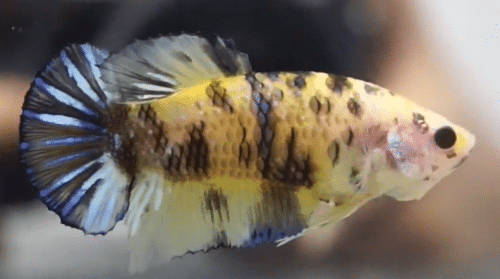
  • 9 Best Bottom Feeder Fish for Freshwater Aquariums (And What They Actually Need)

    9 Best Bottom Feeder Fish for Freshwater Aquariums (And What They Actually Need)

    Bottom feeder fish are some of the most useful additions you can make to a freshwater community tank, and I’ve kept most of the popular species over the years. The biggest misconception I run into is that they’ll “clean the tank” on their own. they won’t. They’re excellent at their specific jobs, but they still need proper feeding, appropriate tankmates, and the right substrate to thrive.

    Bottom feeder fish are among the most misunderstood in the freshwater hobby. and that misunderstanding leads to a lot of preventable problems. After 25 years keeping fish, the thing I hear most often from beginners is that they added a pleco or a cory to “clean up” the tank. It doesn’t work that way. Bottom feeders need to be actively fed just like every other fish, they have specific substrate requirements, and some of them get far larger than their tank can support. This guide covers 9 of the best bottom feeder species for freshwater aquariums, with honest notes on what each one actually needs rather than what the pet store might tell you.

    What Are Bottom Feeders?

    Bottom feeder fish are fish that spend most of their time at the bottom of the tank. Bottom feeders are some of my favorite species out there because they often have very interesting looks and behaviors.

    Some species are fast and active, but many can be pretty inactive and some species are shy and difficult to see. They can be super useful in your aquarium though because they are happy to feed on food that has sunk to the bottom of the tank.

    Each species does have its own preferred diet of course, and it’s important that you make sure that they are well fed (more on this later).

    The Benefits Of Bottom Feeders

    Bottom-feeder species are great for adding activity and life to the bottom of your aquarium. This can make your tank a much more lively environment that is even more fascinating to observe!

    Apart from their interesting looks and behaviors, bottom-feeder fish have a bunch of benefits in the tank. Some species like the Otocinclus catfish are master tank cleaners because they feed on the algae that grow on the walls of fish tanks and the ornaments inside them.

    Other bottom feeders like Cory Catfish feed by searching the substrate and any tight spaces in the aquarium for uneaten food which helps to keep your tank clean.

    The Nine Best to Choose From

    There are so many great bottom feeders out there, but these are definitely the favorites that I can recommend to any fishkeeper. Remember to take note of their needs to make sure they will work out in your tank! I’ve also included a few common bottom feeders that you should avoid.

    Check out our video below from our YouTube channel. If you like this content, subscribe to our channel for additional videos. We are releasing videos every week. We go into more detail in the blog post below.

    1. Corydoras Catfish

    Panda Cory
    • Scientific Name: Corydoras spp.
    • Adult Size: 1-3 Inches
    • Care Level: Easy
    • Temperament: Peaceful
    • Minimum Tank Size: 10 + gallons for dwarf species, 20+ gallons for others
    • Diet: Omnivorous, feed live and frozen foods, Sinking pellets and wafers
    • Origin: South America
    • Temperature: 72 – 82ยฐF
    • Swimming Level: Bottom

    Cory Catfish or Corydoras are great little schooling catfish for the community tank. These bottom feeders for freshwater aquariums are a favorite in the aquarium hobby and there are many different species to choose from.

    Some species like the Dwarf Cory Catfish and the Pygmy Cory Catfish can be kept in nano aquariums as small as a 10 gallon fish tank. Most Corydoras catfish species will prefer a 20 gallon tank or larger though. They are social fish so be sure to keep at least 6 together in the same aquarium.

    Cory cats are great fun to watch as they cruise around the tank together, feeding on food lying on and in the substrate. A common mistake that fishkeepers make is to think that you don’t need to feed these fish. In fact, Cory catfish do best on a balanced diet of dried and live/frozen foods.

    2. Otocinclus Catfish

    Octocinclus Fish
    • Scientific Name: Otocinclus spp.
    • Adult Size: 2 inches
    • Care Level: Moderate
    • Temperament: Peaceful
    • Minimum Tank Size: 10+ gallons
    • Diet: Algae
    • Origin: South America, Venezuela, Argentina
    • Temperature: 70-74ยฐF
    • Swimming Level: Bottom, midwater, Top

    Otos are very peaceful fish for the community tank. These little catfish are algae eaters, which means they are great for keeping your glass and ornaments clean. These nano fish are very popular in the aquarium trade and will do very well as long as you are able to maintain good water quality.

    Mature aquariums with a healthy amount of algae provide the best aquatic environment for this fish species. You can also supplement their diet with algae wafers and slices of vegetables like zucchini.

    3. Dojo Loach

    Dojo Loach
    • Scientific Name: Misgurnus anguillicaudatus
    • Adult Size: 10 inches
    • Care Level: Easy
    • Temperament: Peaceful
    • Minimum Tank Size: 55+ gallons
    • Diet: Omnivorous, feed live and frozen foods, Sinking pellets and wafers
    • Origin: Asia, China, Japan, Korea, Russia
    • Temperature: 59-77ยฐF
    • Swimming Level: Bottom

    Dojo Loaches are great fish for larger aquariums. These fish have the interesting habit of increasing their activity levels when the weather is changing, kind of like your own little weather forecaster! This has earned them the name of weather loach as well.

    Apart from just the regular Dojo Loach, there is also a golden variety available in the hobby. These fish are active bottom feeders that love to search the substrate for uneaten food at the bottom of the tank.

    4. Bristlenose Pleco

    Bristle Nose Pleco
    • Scientific Name: Ancistrus cirrhosus
    • Adult Size: 5 inches
    • Care Level: Easy
    • Temperament: Semi-agressive
    • Minimum Tank Size: 20 + gallons
    • Diet: Vegetarian, Algae
    • Origin: South America
    • Temperature: 73-81ยฐF
    • Swimming Level: Bottom

    Bristlenose Pleco fish are super interesting-looking catfish that fit in perfectly with most community tanks. They are peaceful bottom-dwelling fish, although they do tend to be aggressive towards other members of the same species.

    For this reason, it’s better not to keep more than one adult in the same tank. These amazing bottom dwellers do a great job of keeping the tank clean by searching the substrate for algae and food leftovers.

    5. Clown Pleco

    • Scientific Name: Panaqolus maccus
    • Adult Size: 3.5 inches
    • Care Level: Moderate
    • Temperament: Peaceful
    • Minimum Tank Size: 20+ gallons
    • Diet: Vegetarian, feed vegetables and algae wafers
    • Origin: South America, Venezuela
    • Temperature: 73-82ยฐF
    • Swimming Level: Bottom

    These beautiful bottom-feeder fish (video source) need plenty of driftwood in their tank to feed on. They love slices of vegetables like zucchini and cucumbers and also enjoy frozen foods.

    These fish are very peaceful and do great in community tanks. They do produce quite a lot of waste though so the tank does need to have decent filtration.

    6. Freshwater Shrimp

    Cherry Shrimp
    • Scientific Name: Caridina & Neocaridina spp.
    • Adult Size: 1.5-2 inches
    • Care Level: Easy-Moderate
    • Temperament: Peaceful
    • Minimum Tank Size: 5+ gallons (20+ gallons recommended)
    • Diet: Omnivorous, Algae, Sinking flakes & Pellets
    • Origin: Asia, North America
    • Temperature: 70-74ยฐF
    • Swimming Level: Bottom

    The freshwater shrimp is an amazing aquatic animal that has become incredibly popular in the modern fish-keeping hobby. There are loads of different species available, and some eat algae while others will prefer pellet foods.

    Shrimp will only get along with a few types of fish like Otocinclus catfish. Most carnivorous and omnivorous fish will see your shrimp as a food source, so many hobbyists prefer to keep shrimp-only tanks to be on the safe side.

    7. Kuhli Loach

    Kuhli Loach in Aquarium
    • Scientific Name: Pangio Kuhlii
    • Adult Size: 4 inches
    • Care Level: Moderate
    • Temperament: Peaceful
    • Minimum Tank Size: 20+ gallons
    • Diet: Omnivorous, Feed sinking pellets, wafers, and frozen foods
    • Origin: Southeast Asia
    • Temperature: 73-86ยฐF
    • Swimming Level: Bottom

    Kuhli Loaches are great-looking little bottom feeders. This fish species has some really silly antics and is great fun to watch when not hiding. They are nocturnal fish and tend to hide out during the day so you won’t see them every time you take a look at your tank.

    Kuhli loaches are one of the best bottom-feeder fish in the hobby. They use their whiskers to locate food on the bottom of the tank and do a great job of picking up scraps of uneaten fish food. These fish will do best in a group of at least five. They should be kept on a sand or fine gravel substrate and love plenty of hiding spaces in the tank.

    8. Panda Garra

    • Scientific Name: Garra flavatra
    • Adult Size: 3 inches
    • Care Level: Moderate
    • Temperament: Peaceful
    • Minimum Tank Size: 20+ gallons
    • Diet: Omnivorous, feed wafers, and frozen foods
    • Origin: Southeast Asia
    • Temperature: 70-74ยฐF
    • Swimming Level: Bottom

    Panda Garras are very peaceful fish that prefer high flow tank conditions (video source). They are pretty new to the fish-keeping hobby but already very popular. They are actually Cyprinids from the carp species family.

    Panda Garras get their name from their bold, panda-like stripes. These fish feed on biofilm and algae that grow on rocks at the bottom of the tank, but you should supplement their diet with some frozen foods and wafers for a balanced diet.

    9. Clown Loach

    Clown Loach in Aquarium
    • Scientific Name: Botia macracantha
    • Adult Size: 12 inches
    • Care Level: Moderate
    • Temperament: Peaceful
    • Minimum Tank Size: 100 gallons
    • Diet: Carnivorous
    • Origin: Southeast Asia, Indonesia, Borneo, Malaysia, Sumatra
    • Temperature: 70-74ยฐF
    • Swimming Level: Bottom

    Clown Loaches are a really cute bottom-feeder fish species for large aquariums. They are active but very peaceful fish that are great in community tanks. These fish like to school, so make sure you have at least 4 of them in the same aquarium. They are also great snail eating fish.

    Other Great Types To Consider

    Below is a list of honorable mentions. They are as popular or provide as much utility as the ones above, but are worth mentioning. Check them out below:

    • Synodontis catfish- This is a great bottom feeder for African cichlid tanks in particular.
    • Siamese Algae Eater– These active algae-eaters are great bottom feeders for community tanks. Keep these fish in groups of 5 or more in a 40-gallon tank or larger.
    • Twig Catfish- These are some of the most interesting looking bottom-feeding fish in the hobby. They grow to 6 inches in length but are safe to keep with small, peaceful community fish.
    • Pictus Catfish– These interesting little South American catfish are peaceful but very shy fish. They have pretty big mouths and will eat any small fish in your tank, so make sure they are the smallest fish in the aquarium.
    • Yoyo Loach-These fish have markings on their sides that look just like the word yoyo. They are mostly peaceful but will love snacking on shrimp and snails in the tank.
    • Zebra Loach– These are great little freshwater bottom-feeders for the community tank. The zebra loach is a peaceful fish that grows to just 4 inches or so.

    Bottom Feeders To Avoid

    Not all bottom feeder fish are suitable for your standard home aquarium. The following few species are not great choices for most fishkeepers:

    Common Pleco – Hypostomus plecostomus

    Common Pleco in Aquarium

    The Common Pleco is one of those fish that are probably more popular than they should be. These bottom-feeding fish can grow to sizes of over 20 inches in length which comes as a surprise to many fish keepers.

    This is an easy mistake to make because they usually measure just a few inches in length when you see them at your local fish store. Unfortunately, these fish are often released into local ponds and rivers when they get too big, and they have become quite a nuisance in the wild1.

    They are great fish, but only for keepers with very large tanks who can take care of them properly.

    Chinese Algae Eater – Gyrinocheilus aymonieri

    The Chinese Algae Eater grows to about 10 inches or a little more in length. These fish grow fast and catch a lot of fishkeepers off guard when they get too big for their tank.

    They are good algae eaters but have a tendency to get pretty aggressive towards other fish in the tank. In fact, Chinese algae eaters will even attack other fish to eat the slime coating off of their skin and scales.

    These aren’t very good-looking fish either and you’re much better off choosing another fish from our list!

    Tiger Shovelnose Catfish – Pseudoplatystoma fasciatum

    Tiger Shovelnose Catfish in an Aquarium

    The Tiger Shovelnose Catfish is a really cool-looking fish that many people have made the mistake of buying. It’s hard to imagine that the 4-inch long little cutie you just brought home can grow to over 3 feet in length!

    These catfish are carnivorous and have big mouths. This means the rest of your fish are going to be eaten as soon as the Tiger Shovelnose is big enough to swallow them.

    Avoid this species unless you have a very large aquarium (200 gallons), and are prepared to care for a very large carnivorous catfish!

    How To Set Up Your Tank

    Before buying any bottom-feeding fish, it’s really important to read up on its needs. Here is some basic information on setting up for bottom-feeding fish:

    Filtration

    Running a good quality filter in your aquarium is absolutely essential. Some fishkeepers make the mistake of thinking their bottom feeder fish will keep the tank clean so they don’t need a filter. Big mistake!

    But which kind of filter should you choose? There are many options available, but as a general rule, pick a model that can process all the water in your tank at least 4 times every hour.

    Some bottom-feeder fish like the Panda Garra like a stronger current in the tank, and for them, you can bump up the flow rate to as much as 10 times your tank volume per hour.

    Water Quality

    Good water quality is what keeps fish happy and healthy in your aquarium. Remember, your pets rely on you to provide them with a great environment to live in.

    Once you’ve set up your tank and got your filter running, you’re going to want to start the process of fishless cycling. Once your tank is cycled and you have stocked it with some great fish, you’re going to want to get into the routine of performing a regular partial water change.

    This means taking out a percentage of the water in your tank every week or two and replacing it with new water that you have treated with a conditioner. The amount of water you need to replace is going to depend on a couple of things like:

    • The size of your aquarium
    • How heavily stocked you are
    • The bioload of your fish
    • Whether you have live plants in the tank
    • How powerful your filtration is

    Testing Your Water

    In order to know how stable your water quality is in the aquarium, and whether you’ve successfully cycled the tank, you’re going to need to test for a few parameters on a regular basis.

    This is easy to do using a liquid test kit. Test the water before you do your regular water changes to know whether you’re performing regular and large enough water changes.

    Substrates

    Your choice of substrate can be pretty important for the health of your fish. This is especially true when it comes to bottom dwellers because they spend most of their time down on the bottom of the tank.

    Sure, bottom-feeder fish can be kept in open bottom tanks, but this prevents them from acting out a lot of their natural behaviors and will probably leave them feeling seriously exposed.

    Instead, choose a fine substrate like sand that allows these fish to dig through and forage in safely. Avoid using sharp substrates that can injure your fish.

    Great For Bottom Feeders
    Fine Natural Sand

    Natural sand is excellent for bottom feeder fish to forage around in.

    Click For Best Price Buy On Amazon

    Many bottom-feeder fish like loaches and cory catfish have fine whiskers known as barbels. Sharp gravel can damage these ultra-sensitive structures that are used to feel the substrate to find food.

    Some bottom-feeder fish like the Kuhli Loach do not have scales and can get their skin scratched up on sharp substrates while digging through it. This can cause infections.

    Hiding Places and Decorations

    Bottom-feeder fish are often shy creatures that love having caves and other hiding places to hang out in. You can build your own caves out of rocks if you like, just make sure that your structure is safe and stable.

    Driftwood that has holes in it, clay flowerpots, and purpose-built aquarium cave ornaments are other great ways to provide hiding places for your fish. Some bottom-dwellers, like Kuhli Loaches, will even dig themselves into the substrate to hide away and find shelter.

    The Planted Aquarium

    Growing live plants is a great way to make a really natural and healthy environment for your freshwater bottom-feeders and other fish. Keeping a planted tank can be really easy if you grow plants like Anubias and Java Ferns that don’t need any special equipment. Plants also create great places for your bottom-feeder fish to hide and look for food.

    What To Feed

    Bottom-feeder fish need to be fed a high-quality, balanced diet. Of course, different types of fish have different diets, but here are a few of the best food options available for your fish:

    Frozen foods

    Frozen foods are great for omnivorous and carnivorous bottom-feeder fish. Brine shrimp, bloodworm, and daphnia are all good examples of this food type. Frozen foods should not be the primary food source for your bottom-feeder fish but can be a great supplement.

    Live foods

    Live foods like brine shrimp, daphnia, micro worms, and mosquito larvae are great food sources for carnivorous and omnivorous fish. Fish love live food so much that it usually doesn’t get to the bottom of the tank before your other fish eat it all!

    Live Algae

    Algae eaters like Otocinclus Catfish, Siamese Algae Eaters, and Plecos have a natural diet of algae. This is great because they are able to get a healthy meal and keep your aquarium clean at the same time! Algae grow in all mature fish tanks, especially tanks with bright light and a lot of nutrients in the water.

    Algae Wafers

    Algae wafers can be a great supplementary food source for omnivorous and algae-eating fish like Clown Plecos, Otos, and Siamese Algae Eaters. Look for brands like Hikari when search for a wafer.

    Great For Bottom Feeders!
    Hikari Algae Wafers

    Algae wafers are a great way to directly feed your bottom feeding fish. They are especially effective for larger fish like plecos

    Buy On Amazon Buy On Petco

    Shrimp Food

    Most shrimp are omnivorous creatures and there are plenty of excellent products available that are designed specifically for their needs. Shrimp food is available in gel, pellet, wafer, and stick form.

    Pellets

    These sinking pellets provide balanced nutrition for all sorts of omnivorous aquarium fish. There are plenty of good quality products available on the market, just make sure you choose something that is the right size for your fish.

    Vegetables

    Herbivorous fish like Otos and Bristlenose Plecos love vegetables. Sliced cucumbers and zucchinis are great options, but you can also use blanched peas, broccoli, and cabbage for variety.

    Where To Buy

    Most fish stores have a good variety of bottom-feeding fish for freshwater aquariums. These days, many fishkeepers prefer the convenience of buying online.

    My favorite online retailer is Flipaquatics because they offer a great range of fish at great prices. They also fully quarantine their livestock. They really care for their stock and their 100% live arrival guarantee takes so much of the stress out of buying and transporting new pets. For larger fish, check out the link above for other fish retailers.

    FAQS

    Is this type of fish good?

    Bottom feeder fish are awesome pets that can be very helpful in keeping your freshwater aquarium clean. There are a few types of bottom-feeder fish that you should avoid, but as long as you choose the right kinds for your tank, they will do great!

    Do they eat fish poop?

    Bottom-feeder fish do not eat fish poop, but rather need a good quality balanced diet. Unfortunately, you still need to clean and vacuum your tank, even if you have bottom-feeder fish.

    What do you feed them?

    Different bottom-feeder fish have different diets, depending on their species. Most types of bottom feeders can be fed on granules, pellets, wafers, sliced vegetables, and live and frozen foods.

    What Fish Can Live With This Type?

    Almost all fish can live with bottom feeders. You just have to make sure that they all enjoy the same parameters, are peaceful and are similar in size.

    What is the best bottom cleaner fish?

    There are loads of great bottom-feeder fish available in the fish-keeping hobby. Any of the fish in this list of the 9 best bottom-feeder fish could work awesome in your freshwater aquarium.

    Final Thoughts

    Bottom feeder fish have a place in pretty much any home aquarium. These fish are fun to watch, look great, and work hard to keep your tank clean. If you don’t already have a few bottom feeders in your fish tank, why not pick some from our list and add them to your tank today?

    I hope you’ve enjoyed the article and please comment below if you have any questions!


    ๐Ÿ“˜ Want to learn more? This article is part of our complete Freshwater Fish Guide. your ultimate resource for freshwater species, care tips, tank setup, and more.

  • SPS Coral Types – An Intro To SPS Reefkeeping

    SPS Coral Types – An Intro To SPS Reefkeeping

    If your parameters are not stable, this coral will not survive the first month. Corals do not die from wrong numbers. They die from unstable numbers. The difference between a thriving reef and a dying one is consistency, not perfection.

    Stable mediocre parameters beat perfect parameters that swing. Every time.

    Small polyp stony (SPS) corals are the end goal for many reef hobbyists. In the wild, these corals, like the impressive staghorn coral, define marine ecosystems and house a plethora of life on the reef. In the aquarium, they can bring the same color and depth to the tops of rockwork that other large polyp stony (LPS) corals and soft corals cannot.

    However, SPS corals are regarded as the most challenging species of coral to keep in the home aquarium setting. While it is true that they are more difficult than other types of common coral, they are not completely out of reach for more serious hobbyists.

    What Is The Difference Between Other Corals?

    SPS corals are easy to identify. They completely lack the fleshy, large colony quality that LPS and soft corals have. Instead, SPS corals have a hard branched or plated appearance with individual polyps.

    In the reef aquarium hobby, SPS are to be the most difficult species to keep, with LPS being for intermediate hobbyists, and soft corals being best for beginners. Apart from this, all three have very different anatomy and physiology.

    SPS Corals

    SPS corals, also known as hard corals, are responsible for building the natural reef. These animals excrete calcium carbonate skeletons that make structures for fish and invertebrates to find shelter; symbiotic zooxanthellae are also housed in these skeletons and complete photosynthesis which feeds the coral.

    Taxonomically, SPS corals belong to the Scleractinia order1. From there, they are members of the Hexocorallia subclass which means that their polyp symmetry is divisible by six. Such as they are named, they have very small polyps on the outside of their flesh-covered calcium carbonate skeleton.

    The calcium carbonate skeleton of SPS corals is built to withstand the battering from rough waves at the top of the reef where these corals are found. This also allows them to receive the most direct sunlight as their branches can grow for optimal exposure. This translates to a reef tank setting with the need for higher lighting and increased water flow.

    Soft and LPS Corals

    On the other hand, soft corals and LPS is entirely fleshy, have a calcium carbonate skeleton, or contain sclerites, meaning they contain small pieces of hard internal structure; the main feature of soft corals and LPS corals though, is their very obvious polyps which can extend to impressive sizes.

    Some LPS corals do have a calcium carbonate skeleton, however, the polyps extend outwards and don’t cover all parts of the structure such as they do for SPS. Some soft corals may contain sclerites but are much less structured than LPS overall.

    Both LPS and soft corals are found lower down on the reef where the water current is not as strong and lighting is indirect. This translates into the aquarium with low to moderate lighting and moderate flow requirements for most species within these two categories.

    Keeping Them In The Aquarium

    SPS corals are notoriously known for being difficult to keep. But are they actually that much more demanding than other corals? Yes and no.

    Yes, SPS corals are much more demanding than soft corals and LPS corals, but this doesn’t necessarily mean that they’re all more difficult. The main difference is the setup and the maintenance: SPS corals need a high-tech setup and stable conditions while LPS corals and soft corals can adapt to less optimal conditions.

    A high-tech setup starts with good lighting, water flow, and filtration. SPS corals are some of the most light-demanding corals, and a good light fixture is necessary. This light needs to have a fully programmable spectrum, intensities, and photoperiod at the very least. The EcoTech Radion is a great example of an LED designed for the demands of an SPS tank.

    Used by World Wide Corals
    EcoTech Radion G5

    Editor’s Choice

    The newest Radion G5 is a massive update to the prior generation. It’s the light of choice for pro level reefers.

    Click For Best Price

    Water flow is almost, if not more, important than lighting. Water circulation keeps corals fed and prevents algae from taking over. Many SPS corals grow in tight colonies, which can cause dead zones in the densest parts. Water flow needs to be random in order to keep fresh water pushing past all areas of the colony at all times.

    Though some reef aquarium hobbyists run SPS-dominant reefs with simple filtration, it is also a must to have a sump system. Sumps allow for additional room for beneficial bacteria to grow, increased nutrient export, and adequate aeration. All of these factors play into a more stable system overall.

    Stability is arguably the most difficult part of keeping SPS. These corals are notorious for bleaching and eventually dying when conditions change too quickly. All major water parameters, along with alkalinity, calcium, magnesium, pH, salinity, and temperature all need to be constant for success.

    Many hobbyists regulate these parameters with digital monitors, auto top-offs, and doser pumps, even Calcium reactors for full high end systems. These all get get very expensive over time. However, if you’re willing to spend the money upfront for a top-of-the-line SPS system, then there is a good chance that you will succeed in keeping these corals. Of course, you may do everything right but still have problems.

    Water Parameters

    That being said, what are the perfect water parameters for an SPS reef tank?

    As always, these values can differ between tanks and hobbyists have had luck below and above the listed ranges; if your water parameters and tank conditions do not match these but your corals are healthy, do not attempt to change your system just to meet ‘ideal’ numbers.

    In general, though, these are the accepted ranges for keeping SPS corals:

    • Lighting – High (200+ PAR)
    • Flow Rate – High
    • Temperature Range – 76-82 F
    • pH Range – 8.0-8.4
    • Salinity – 1.025 and 35 PPTย 
    • Alkalinity – 8 dKH
    • Calcium Level – 350-450 PPM
    • Magnesium Level – 1200-1350 in PPM

    Note that many hobbyists keep SPS corals in lighting conditions well over 200 PAR, though this is to be the bare minimum for attempting them at all.

    Temperament In The Aquarium

    One of the good things about SPS is that they are not very aggressive corals. This allows multiple species to be housed very closely together without too many problems; this does not mean that they will not try to sting each other though, so it is always best to be cautious and to trim any corals that grow too close together.

    The main problem with SPS aggression is with other corals. LPS corals with long sweeper tentacles are very capable of stinging sessile SPS, which can quickly cause tissue loss and other damage. To prevent this, simply keep LPS away from SPS, possibly at another level of the tank.

    Though SPS is able to regrow once the problem has been addressed, this still gives time for algae to takeover exposed skeleton which can impact the overall health of the coral.

    What Is The Easiest Type To Keep?

    Though SPS corals are more difficult to keep than most corals, there are a few that are easier than others. This includes Montipora and species from the Pocilloporidae family.

    Frags of these corals are also cheap and easy to find, which can make the transition into keeping these corals a little less daunting.

    When Can You Add Them To The Aquarium?

    SPS corals need stability. The time for each reef aquarium to reach stability differs, but it is advised to not attempt keeping SPS corals until the system is at least one year old.

    This time should allow for water parameters to settle, algae blooms to be controlled, and new soft and LPS coral growth to begin. Also, keep in mind that some species of SPS might do better than others, and do not get discouraged if one species doesn’t grow at all in your tank; this may be temporary, or your system will simply not support that kind of coral.

    Common Types (Different Species)

    SPS corals make up the ‘ideal reef’ that many envision when they think about a coral reef in the ocean; SPS are branching corals that give reefs their signature appearance. However, different species of SPS corals is difficult to tell apart to the untrained eye. This is due to a few reasons.

    One, SPS are sold as small frags, which can make exact identification nearly impossible with such a small sample. Secondly, species of SPS can vary greatly in color and shape across the genus; as we’ll see, Montipora especially can come in several formations.

    It should also be said that SPS-keeping is another level of the aquarium hobby. You will often come across corals that you have never seen before and might never see again. In general, it is best to know the general attributes of each major SPS genus and try to apply them to what you see.

    Montipora

    Montipora Cap Coral

    The Monti Cap coral is a good stepping stone to serious SPS reefkeeping. Becomes large and grows very fast

    Buy On eBay
    • Scientific Name: Montipora spp.
    • Difficulty Level: Easy-Moderate
    • Temperament: Not aggressive
    • PAR Requirements: Moderate (150 PAR)
    • Flow Requirements: Moderate-High
    • Placement: Middle, High
    • Origin: Indo-Pacific

    Montipora is a genus of SPS corals with very diverse members. These corals can come in branching, plating, and encrusting varieties in almost all colors. They are not overly demanding in regards to being an SPS coral, but they do require high lighting, good flow, and stable water parameters just as the other, more advanced corals on this list do.

    The most common types of Montipora to come across are Montipora digitata and plating Montipora.

    Montipora Varieties

    Montipora digitata is a branching variety of Montipora. The two most common colors are orange (‘Forest Fire Montipora digitata‘) and green (‘Green Montipora digitata‘); these corals have been modified to express the best colors and may be assigned a designer name.

    Montipora digitata have thicker branches that sometimes grow together to form antler-like structures. Their polyps are very concentrated and have a soft appearance. The tips of these branches will be bare and white where new skeleton growth is forming.

    In comparison, plating varieties, like Green Montipora digitata, grow outwards in large circular disks. Similarly, the tips of these plates will be white with new growth.

    All varieties of Montipora is attractive to most hobbyists as they’re one of the easiest and fastest species of SPS to keep.

    Pocilloporidae Family

    • Scientific Name: Pocillopora spp., Seriatopora spp., and Stylophora spp.
    • Difficulty Level: Easy-Moderate
    • Temperament: Not aggressive
    • PAR Requirements: Moderate (200+ PAR)
    • Flow Requirements: High
    • Placement: Middle, High
    • Origin: Indo-Pacific

    Members of the Pocilloporidae family are largely known as bird’s nest corals due to their interweaving branching growth. They come in many colors and are said to be even easier to keep than Montipora, but still require SPS growing conditions.

    There are three genera of bird’s nest coral commonly found in the aquarium hobby: Pocillopora, Seriatopora, and Stylophora.

    Pocillopora

    Pocillopora have thick, stubby branches. They have a moderately fuzzy appearance and are most commonly found in greens and purples.

    Due to their thick branching, these corals do best with higher rates of water flow.

    Stylophora

    Stylophora are very similar to Pocillopora. In fact, it is only possible to tell these two corals apart by looking at a full colony.

    Stylophora also have rounded branches with moderately fuzzy polyps. However, the overall appearance of the colony be more orderly and uniform than that of Pocillopora.

    Seriatopora

    Seriatopora are largely known as the true bird’s nest corals of this family as they have pointed tips and very thin branches that create an intricate twig-like cluster of coral. These corals are also most commonly found in pinks, greens, and purple and green combinations; their polyps are much more spread apart than the other related corals.

    Seriatopora are very delicate and need to be handled with care. This can make fragging them very easy but can also make transportation quite difficult for larger colonies.

    Acropora

    Acropora Coral

    Use Coupon Code ASD5 For 5% Off Your Order!

    The Acropora Coral is considered the pinnacle coral to keep in reef tank hobby. Difficult to care for, but extremely rewarding and easy to frag

    Click For Best Price Buy On Unique Corals
    • Scientific Name: Acropora spp.
    • Difficulty Level: Hard
    • Temperament: Not aggressive
    • PAR Requirements: Moderate (200+ PAR)
    • Flow Requirements: High
    • Placement: Middle, High
    • Origin: Indo-Pacific with some species in the Caribbean

    Acropora are the end goal of many intermediate and advanced reefers. These corals are seen as some of the most difficult, yet most rewarding species in all of the hobby. There are many types of Acropora to choose from that come in nearly all colors, including more exclusive designer names.

    Even though there are many different kinds of Acropora, they are still relatively easy to identify. These corals branch and have very identifiable polyps; each polyp has its own little tube that gives the coral a bumpy appearance. The actual polyps is long and stringy or short and flat.

    Acropora are the most difficult because they are easily affected by changes in water parameters. They also demand the most light and water flow out of all these species.

    Closing Thoughts

    SPS corals are thought to be some of the hardest, yet some of the most rewarding species of coral available in the aquarium hobby. Though this is true, their actual requirements aren’t as challenging as you might think. Instead, it’s their need for stability and consistency that can make their care extra difficult.

    Luckily, there are a few easier species, like Montipora spp. And members from the Pocilloporidae family, that can make the transition from LPS corals and soft corals to Acropora a little less intimidating.


    ๐Ÿ“˜ Want to learn more? This article is part of our complete Saltwater Fish & Reef Guide. Your ultimate resource for marine fish, coral care, reef setup, and more.

    References

  • How To Get Rid Of Aiptasia โ€“ Control, Prevention & Removal Guide

    How To Get Rid Of Aiptasia โ€“ Control, Prevention & Removal Guide

    Aiptasia is one of the most frustrating reef pests I’ve dealt with in my 125-gallon reef tank. These pest anemones showed up hitching a ride on live rock, and before I knew it they were spreading to my corals. I’ve personally tested most of the removal methods out there. from Aiptasia-X to peppermint shrimp to berghia nudibranch. and I can tell you firsthand what actually works and what doesn’t. This guide covers everything I’ve learned over 25 years of keeping reef tanks about controlling and eliminating Aiptasia for good.

    Hobbyists have been fighting the battle against Aiptasia for decades, and luckily, several solutions have been found to eradicate Aiptasia once and for all.

    What are Aiptaisa Anemones?

    What Is Aiptasia

    When setting up a new saltwater tank, it can be very exciting to find any signs of unexpected life during the nitrogen cycle and shortly after. Copepods start to show up on the glass and even algae can be an amazing discovery. Until suddenly, you find a small, clear what-seems-to-be coral.

    These ‘corals’ have long and thin tapered tentacles and might even resemble a kind of zoanthid at first. Usually, these tentacles will be attached to an oral disc that emerges from a long, translucent stalk. Sadly, more often than not, this unidentified polyp is actually a kind of pest anemone belonging to the Aiptasia genus.

    The main problem with Aiptasia Anemones is that they are both sexual and asexual; they can quickly split to create exponentially more anemones in a very small period of time. Like other species of anemone, they have stinging cells that can cause damage to nearby coral, fish, and invertebrates.

    They can also grow in very hard-to-reach places in the tank where you might not even see the problem forming. Their tentacles will grow in order to reach light, though their stalks may elongate and emerge from dark crevices within the rockwork.

    Naming And Other Pest Anemones

    In general, all species within the Aiptasia genus are simply referred to as Aiptasia even though there are several other known members; other common names include glass anemone and rock anemone (not to be confused with rock flower anemones of the Phymathidae family).

    Another type of pest anemone, Majano anemones (Anemonia manjano), may also be clumped together when talking about Aiptasia hitchhikers.

    Majano anemones are said to be easier to remove than Aiptasia, but they will both cause a headache at the end of the day. Majano anemones are, in some ways, prettier than Aiptasia and have rounded green tentacles with a purplish-pink oral disc; they are typically larger, have much more opaque flesh, and overall more vibrant colors than Aiptasia.

    Like Aiptasia, Majano anemones can quickly take over a tank and injure other corals and tankmates. Luckily, most of the removal methods are universal for pest anemones.

    How Do They Enter The Aquarium?

    Aiptasia Anemones are present in most aquarium systems. They can be very difficult to notice in dense rockwork and before you know it, you have a tank overrun by them. But how did they get there in the first place?

    These anemones are hitchhikers, just like any other algae or invertebrate that unintentionally enters the aquarium. This means that they can come in on live rock, corals, or even filter media. Once established in the tank, they can then spread to every part of it, including the filtration system and sump.

    In general, it’s not considered as an if these anemones will enter your system but a when.

    How Do You Prevent Them From Entering The Aquarium?

    Though Aiptasia Anemones will find its way into the aquarium if it wants to, there are some ways to protect your system.

    Mainly, observation and preparation are key.

    Observation And Identification

    It might sound simple, but observation is the best way to find and destroy Aiptasia before they get the chance to destroy your reef tank.

    Check and double-check new additions of live rock and coral. Use a flashlight to look in the crevices for any signs of tentacles popping up through the rockwork. Continue to check your tank daily for the next few weeks after a new addition.

    It is easiest to find pest anemones when they are extended in the water instead of when they are emersed. If possible, observe live rock and corals from a quarantine system. From there, use one of the following methods to remove it.

    One of the biggest mistakes beginners make is that they think an Aiptasia is a desirable coral and let it continue to grow. It is important to accurately identify the anemone first in order to go about fixing the problem. More often than not, any ‘lucky’ coral you see on new rock or a coral plug is actually an Aiptasia.

    Quarantine

    That being said, all new live rock and coral should be quarantined. No exceptions.

    Not only does quarantine help prevent disease and illness from entering the aquarium, but it also greatly reduces the risk of inadvertently introducing Aiptasia Anemones as well.

    Allowing two or more weeks of secluded observation will allow most hitchhikers to rear their ugly heads. It is much easier to fix these problems in a controlled setting than having to break down the rockwork and possibly filtration once put into a display. It also means that you can be more vigorous and widespread with treatments, such as chemical solutions.

    Remove Frag Plugs

    Frag Plug

    When buying new corals, they will often come on a frag plug. No matter if these corals were aqua-cultured in a controlled environment or gifted by a trusted fellow hobbyist, this frag plug should always be removed.

    For one reason or another, frag plugs are notorious for carrying in unwanted hitchhikers. Aiptasia are very quick to occupy free real estate and a frag plug is no exception. Most often, these anemones are very tiny and might only be able to be seen under a magnifying glass.

    When in doubt, throw it out.

    Source Rock

    Another way Aiptasia Anemones travels across tanks is by live rock and filter media. Many times, hobbyists share these with each other in order to seed a new tank with beneficial bacteria. Though this usually works flawlessly, there is always the chance that you’re introducing Aiptasia into the system.

    If you’re really worried about introducing pest anemones via live rock or filter media, do not use what has been in another tank. Instead, use brand new dry rock and cycle the tank with another method. This way, there is no chance of having any pests come in.

    The downside to this method is that many of the beneficial hitchhikers are lost as well, like copepods, and will need to be manually introduced later.

    How To Get Rid of Them From Your Aquarium (The Best Ways

    Aiptasia in Reef Tank

    The key to dealing with an Aiptasia outbreak in your aquarium is acting quickly and effectively as soon as you see one appear. The longer you wait to take action, the more chance they have to grow and spread throughout the reef tank.

    There are a few different methods based on the size, type, and amount of pest anemones in your saltwater tank. Whether the method works for you will also depend on several factors and Aiptasia removal could become a regular part of maintenance.

    Here are the best ways to get rid of Aiptasia Anemones from your saltwater aquarium.

    Manual Clean-Up

    Manual removal is one of the easiest methods, but also the least guaranteed way to fully remove Aiptasia from the aquarium. This is because these anemones are capable of growing from the smallest piece of flesh leftover, and it can be very easy to miss; in fact, Aiptasia only need a single remaining cell to regenerate into a new animal.

    For manual removal, you will need to be able to take the piece of rock out of the tank. Once removed, use scissors, razors, bone cutters, and whatever else you need to in order to get every last piece of anemone off of the rock. Some hobbyists split the rock in half entirely to ensure that there is no chance of the anemone coming back.

    Still, it is easy to miss other smaller Aiptasia that might have already propagated or left remnants behind.

    Super Glue (Cyanoacrylate)

    Super glue is one of the easiest and least damaging ways to control Aiptasia Anemones, though this method does not work all of the time.

    This method simply involves coating the anemone in a thick sarcophagus of superglue so that it is unable to extend. Simply remove the affected piece of rock from the aquarium and apply a healthy dollop of glue.

    There are a few problems with this method, though. First, it’s not always feasible to remove the piece of rock from the reef tank. Second, the anemone is very capable of growing around the glue and out through another opening, allowing it to live; some hobbyists have even seen them come out from the other side of the rock if the opportunity presents itself.

    Super glue is most effective for removable pieces of rock and small Aiptasia that can be generously coated and sealed.

    Chemical Products

    There are many chemical solutions on the aquarium market designed to eliminate Aiptasia from the aquarium. This method can be very effective when facing large colonies of pest anemone with sizable individuals.

    Kills Aiptasia
    Aiptasia-X

    A great solution for target elimination of Aiptasia in a reef tank.

    Click For Best Price Buy On Amazon

    One of the most popular Aiptasia removal chemicals is Aiptasia-X by Red Sea. This product needs to be applied to the surface of the oral disc of the anemone, where it is then forced to be ingested. Within a few minutes, the anemone implodes on itself, preventing regrowth and larvae from spreading throughout the rest of the reef aquarium.

    Other popular brands include:

    • Joe’s Juice Aiptasia Eliminator
    • Salifert Aiptasia
    • Blue Life Aiptasia Rx
    • Reef Kalkwasser (calcium hydroxide). Though not a product specifically meant for Aiptaisa, Reef Kalkwasser can be used to create a paste that can cover the disc of the anemone in a similar fashion.

    These chemicals are not effective for all reefers though, and these products can actually harm healthy corals if not applied correctly. The application can also become difficult if the anemone is situated in a hard-to-reach spot where it has time to react and retract. If only a small dosage is received, then the Aiptasia may come back stronger and start to propagate.

    Other DIY Solutions

    If you don’t have immediate access to chemical solutions, then you might need to make your own solution. It should be noted that these methods are very prone to failure and should only be done under close moderation.

    1. Lemon juice. Lemon juice has been used to successfully remove Aiptasia Anemones. Fill a syringe with lemon juice and inject it into the anemone. The acidity will theoretically cause the anemone to die.
    2. Vinegar. Similarly, vinegar can be injected and will kill Aiptasia due to its acidity.
    3. Hydrogen peroxide. Hydrogen peroxide is not likely to work when only applied over the anemone. Instead, it can be used to wipe off the remaining parts of Aiptasia that are leftover from previous attempts of removal.
    4. Boiling water. Boiling water can be mixed with lemon juice or vinegar or used by itself. Again, use a syringe to inject it into the anemone.

    These methods have worked for some hobbyists and completely failed for others. It is necessary to gauge how much solution is entering the system as both lemon juice and vinegar can start to affect pH due to their acidity. Boiling water can also burn nearby fish and invertebrates.

    If able to do so, attempt other methods first as to not encourage propagation from a failed removal.

    Lasers

    Lasers are an expensive solution but can be very effective at reaching hard-to-reach places without having to put your hands in the reef tank. They are a relatively new technology being introduced into the reef aquarium hobby for treating Aiptasia Anemones and come with mixed results that might not make their price worth it.

    These lasers need to be very strong and capable of melting away Aiptasia anemone. The problem with this is that they are also very capable of injuring other corals, fish, and invertebrates in the process.

    Some hobbyists have reported them as being completely ineffective.

    Livestock (Fish And Inverts That Love Eating This Type)

    Adding Aiptasia-eating fish and invertebrates to the tank system is usually a great alternative to the other methods mentioned. However, there is always a risk when adding something new to the tank.

    The main problem with adding additional livestock into the reef aquarium is that many of the species recommended to add cannot discriminate between a coral and an anemone. As a result, they might start to target colonies of desired corals and leave the Aiptasia nice and healthy. It is also possible that your fish or invertebrate will successfully eat Aiptasia and then starts to eat corals, too.

    Regardless, many hobbyists try their luck at adding a new fish or invertebrate species for dealing with Aiptasia problems; some can even arrange temporary housings until the anemones have been eliminated and then pass them along to another hobbyist.

    Here are some of the most common fish and invertebrates species for removing Aiptasia from your saltwater aquarium.

    Butterflyfish (Chaetodontidae family)

    Copper Band Butterfly

    For the most part, nearly all common species of butterflyfish have been used to effectively control Aiptasia populations. It is known that butterflyfish are not considered reef-safe and it should not come as a surprise if the one you add decides to go after corals.

    There are, however, a few species that seem to be more reliable than others. This includes:

    • Copperband butterflyfish (Chelmon rostratus)
    • Klein’s butterfly (Chaetodon kleinii)
    • Pearlscale butterfly (Chaetodon xanthurus)
    • Raccoon butterfly (Chaetodon lunula)

    Of course, always ensure that your setup is appropriate for the species you plan on adding. Tank size, water parameters, and diet should all be arranged to accommodate a new fish.

    Eating Filefish (Monacanthidae family)

    Aptasia Eating Filefish

    Aiptasia Eating Filefish are another popular addition for dealing with Aiptasia, though they are just as likely to nip at corals. Some hobbyists have found that buying captive-bred individuals helps deter coral picking and encourages Aiptasia Anemone hunting.

    Aiptasia Eating Filefish aren’t the prettiest to have in a reef tank display and some species can get very large. However, the most popular Aiptasia-eating species, like the matted filefish (Acreichthys tomentosus), stay small and can quickly take care of a pest anemone problem.

    It is not unheard of for filefish to suddenly start picking at corals, though.

    Peppermint shrimp (Lysmata wurdemanni)

    A group of peppermint shrimp is usually the route most reefers take for dealing with pest anemones as they are small yet effective.

    With multiple individuals, peppermint shrimp can be expensive and their high demand in the hobby can also make them more difficult to obtain. Not to mention that the peppermint shrimp has a very similar appearance to the camel shrimp (Rhynchocinetes durbanensis), which is not reef-safe, and can easily be confused.

    Overall, peppermint shrimp have a very high success rate for dealing with Aiptasia, however, they’ll typically avoid larger ones. They have also been known to graze on zoanthids as well.

    Berghia Nudibranch (Berghia stephanieae)

    If you’re limited on space but still want a natural predator of Aiptasia, Berghia nudibranchs are a great short-term solution.

    These nudibranchs can also be expensive and you will need a good amount of them depending on the size of your saltwater tank. Take into consideration that some fish and other invertebrates might also see them as food in the meantime just as they’re starting to hunt for anemones.

    The main problem with Berghia nudibranchs is that they only eat Aiptasia. This is great in the short term when you are desperate to get rid of all visible anemones, but doesn’t serve as a very long-term solution; once your anemone supply runs out, these nudibranchs will perish.

    Many hobbyists like to pass on their nudibranchs to other tanks suffering from Aiptasia so that they don’t die in the process. They can be very difficult to catch though, and often you will not be able to save them all. If you are interested in purchasing them, I recommend buying them from Salty Underground.

    Closing Thoughts

    Aiptasia are the last thing you want to see in your aquarium but are largely unavoidable. These ugly, fast-growing pest anemones can quickly take over a display and infiltrate filtration systems if left to grow.

    There are many different methods for removing them, including chemical products, more organic solutions, and livestock recommendations. Whatever method you end up choosing, you will most likely need to also use other alternatives and keep on schedule for a few months until there are absolutely no signs of Aiptasia.

    One of the best ways to prevent a pest anemone infestation is by prevention. Even then, it is good to be prepared if one ever happens to enter your system.


    ๐Ÿ“˜ Want to learn more? This article is part of our complete Saltwater Fish & Reef Guide. your ultimate resource for marine fish, coral care, reef setup, and more.
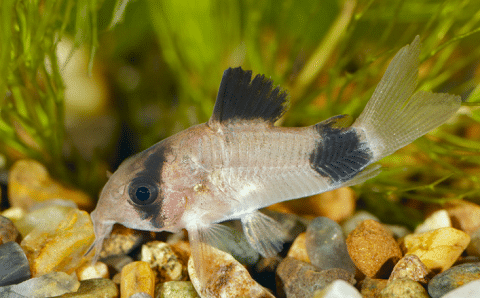
    References

  • Ember Tetra Care Guide: The Perfect Nano Fish for Planted Tanks

    Ember Tetra Care Guide: The Perfect Nano Fish for Planted Tanks

    Table of Contents

    The ember tetra is the definitive nano tank fish. In the right setup with dark substrate, tannins, and proper lighting, they glow like embers in a fire. In a bare, bright tank with hard water, they look like nothing. Setup is everything with this species.

    Ember tetras in the wrong tank are invisible. In the right tank, they are on fire.

    What Most Care Guides Get Wrong About Ember Tetra The Perfect Nano Fish for Planted Tanks

    The most common mistake I see with ember tetra the perfect nano fish for planted tankss is keeping too few. Guides will say “minimum 6” and leave it at that. In reality, these fish behave completely differently in a proper group of 8 to 10 or more. Keeping just 3 or 4 often leads to stress, hiding, and fin nipping that wouldn’t happen in a larger school. Another thing most guides miss is how much lighting and decor affect this species. Ember Tetra The Perfect Nano Fish for Planted Tankss look washed out under bright white LEDs on a light substrate. Dim the lights, add some tannins, use a dark background, and you’ll see colors you didn’t know they had. I’ve also noticed that many care sheets recommend overly broad water parameters. Yes, ember tetra the perfect nano fish for planted tankss are adaptable.
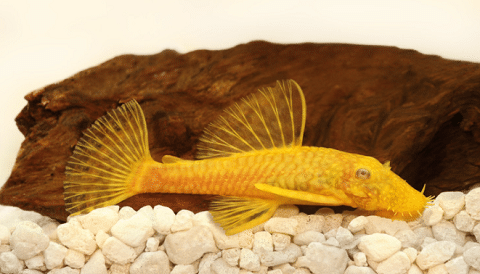
    The Reality of Keeping Ember Tetra

    They look terrible at the fish store. Ember tetras in a bare store tank under bright lights look pale and washed out. This is the number one reason people walk past them. In a planted tank with dark substrate and moderate lighting, they develop an intense orange-red glow that transforms the entire tank. Do not judge this fish by its store appearance.

    Group size matters more than tank size. You can keep embers in a 10-gallon, but the real key is school size. Six is the minimum, but 10 to 15 is where the magic happens. In large groups they school tightly, display brighter color, and exhibit natural foraging behavior that makes them genuinely engaging to watch.

    They are not as fragile as they look. Their tiny size makes people assume they are delicate. They are not. Ember tetras tolerate a reasonable range of water parameters and are hardier than most fish their size. The main thing that kills them is poor acclimation and ammonia spikes in uncycled tanks.

    Biggest Mistake New Owners Make

    Buying 4 or 5 and sticking them in an uncycled tank. They need a mature tank and a proper school. Anything less and you get pale, stressed fish that hide constantly.

    Expert Take

    After 25+ years in this hobby, the ember tetra is still my top recommendation for anyone setting up a planted nano tank. No other fish at this size delivers this combination of color, behavior, and ease of care.

    Species Overview

    Scientific Name Hyphessobrycon Amandae
    Common Names Fire Tetra, Amandaโ€™s, Dwarf Reds, Reds
    Family Characidae
    Origin Brazil
    Diet Omnivore
    Care Level Easy
    Activity Very Active
    Lifespan 2 – 4 Years
    Temperament Peaceful
    Tank Level Midwater
    Minimum Tank Size 10 gallons
    Temperature Range 72 ยฐ to 80 ยฐF
    Water Hardness 4 to 8 dkH
    pH Range 6.5 to 7.5
    Filtration/Water Flow Low
    Water Type Freshwater
    Breeding Egg layer
    Difficulty to Breed Easy
    Compatibility Community tanks
    OK, for Planted Tanks? Yes

    Classification

    Order Characiformes
    Family Characidae
    Genus Hyphessobrycon
    Species H. Amandae (Gery & Uj, 1987)

    Origins and Habitat

    The Ember Tetra was discovered fairly recently in 1987. It was named after Heiko Bleherโ€™s mother, Amanda Bleher1.

    But donโ€™t be fooled.  Heiko Bleher didnโ€™t actually stumble upon this species himself.  Instead, he is known for his work with other South American fish. 

    Now back to the Ember Tetra.  These fish come from Brazil, where they mostly reside in the Araguaia River basin.  Its slow-moving waters contain plant materials that decompose, creating an acidic environment. 

    These stained waters are called โ€˜blackwater.โ€™ This dark color makes it easier for Ember Tetras to hide.  

    As shoaling fish, Ember Tetras live in groups.  However, they are not to be confused with schooling fish.  

    Unlike schooling fish, a group of Ember Tetras doesnโ€™t swim in the same direction.  They just stay close together.    

    Ember Tetras are peaceful and can coexist with many other types of wild fish.  Some of those fish include:

    • Other Tetras
    • Pygmy Rasbora
    • Pleco Catfish  

    By the early 1900s, Ember Tetras had found their way into freshwater fish tanks.  Since then, they have become a top choice for aquarium enthusiasts.  

    And thatโ€™s understandable when you consider the Ember Tetraโ€™s beautiful appearance.  Plus, they are easy to care for.         

    What Does they Look Like?

    Ember Tetra

    Most Ember Tetras are orange, but some have a reddish-orange glow.  In either case, the Ember Tetraโ€™s iridescent scales make this fish shimmer and stand out in an aquarium.     

    Usually, their fins are a bit darker than the rest of their body.  Their bodies are thicker in the front and thin out towards the back.   

    How Big are They?

    These freshwater fish are tiny, making them the perfect size for a nano tank. You can expect your Ember Tetras to be about ยพ to 1 inch long.

    How Long Do They Live?

    With proper care, aquarium Ember Tetras live about 2-4 years. Although some fishkeepers have claimed this species can live for 10 years, that claim has not been proven and is likely inaccurate.   

    Their short life span is one disadvantage of keeping this otherwise fantastic fish.  But you helps your Ember Tetras live as long as possible by giving them:

    • The ideal tank environment
    • A high-quality diet
    • Interactions with other fish

    Later in this article, we will talk more about those important aspects of Ember Tetra care.  

    Ember Tetra Care Guide

    Ember Tetra are peaceful fish, making them a great addition to community tanks.  You can also keep them in a species-specific tank.

    Whether you choose the former or the latter option, Ember Tetras need to live in a group.  The size of the group depends on how big your tank is, but aim for a minimum of 10-15 fish.

    Because they are so easygoing, the males are unlikely to show aggression towards each other.  That makes it easy to put together a group of Ember Tetras.  

    Although they donโ€™t cause trouble, Ember Tetras are active little fish.  They are always swimming around and arenโ€™t afraid to explore their surroundings.  

    While swimming about, they will likely stick to the middle of the tank.  When they want a break, they will seek refuge in the tankโ€™s plants.  Thatโ€™s why you need to add some to your aquarium.  More on that later.  

    And those plants arenโ€™t just a resting spot.  Ember Tetras also have a great time racing through them as they swim after each other.  You will definitely be entertained by these fish!       

    What Are Good Tank Mates for Them?

    Pencilfish

    Although Ember Tetras are fine in a species-specific tank, their bright colors and gentle disposition make them an excellent choice for a community tank.  

    You just have to choose the right tank mates.  When selecting those tank mates, keep the following pointers in mind:

    • Avoid aggressive fish.  Instead, choose fish that have a friendly nature.  
    • Big fish might eat your tiny Ember Tetras.  Thatโ€™s why you need to avoid any species that are larger than Ember Tetras.   
    • Ember Tetras are middle-dwellers, so itโ€™s a good idea to select bottom and/or top dwellers for their tank mates.  

    Best Tank Mates

    Now that weโ€™ve given you some general guidelines, here are some specific ideas for tank mates:

    And if you are looking for some non-fish mates, nerite snails and other small snails are great options.  Many nano fish are compatible with these fish.

    Least Compatible Fish

    Oscar Cichlids in Aquarium

    Here are a few examples of fish you definitely want to keep out of an Ember Tetra tank:

    What Do They Eat?

    Itโ€™s not hard to find foods that Ember Tetras will gobble up.  The hardest part of feeding this fish is making sure the food is small enough for these tiny creatures to consume.

    With that in mind, you need to break up the food into small pieces.  This will help your Ember Tetras eat the food more easily, which prevents other fish from stealing it.  

    Some options include: 

    • Micropellets
    • Crushed up flakes
    • Frozen foods    

    And donโ€™t get upset if you catch your fish nibbling on a tank plant.  They are just enjoying a little snack and wonโ€™t consume enough of the plant to harm it.  A good staple food to consider is Xtreme Aquatic Foods Nano. It’s specially designed for small freshwater fish.

    Great For Nano Fish


    Xtreme Aquatic Foods Nano

    Xtreme Aquatics Nano formula is specially designed for smaller fish and contained a well balance mix of raw ingredients. It is a great staple food for your nano fish.


    Buy On Amazon

    Give Them Live Foods

    Wild Ember Tetras live on a diet of plants and very small prey, such as worms, invertebrates, and zooplankton.  

    Keeping this natural diet in mind, it would be great if you could incorporate some live foods into your Ember Tetrasโ€™ meals.  

    Those foods will add some variety to their diet, which ensures all of their nutritional needs are met.      

    Furthermore, they will also help prevent digestive issues that is caused by consuming too much processed food.   

    Here are some live foods you can give your Ember Tetra:

    • Daphnia
    • Tubifex worms
    • Baby brine shrimp
    • Blood worms
    • Insect larvae
    • Grindal worms
    • Microworms

    You can also find these foods in frozen food form if you shop around locally.

    How Much and How Often to Feed Them

    You should feed your Ember Tetras about 2-4 times each day.  At every meal, carefully avoid overfeeding.

    How can you tell if you are feeding the right foods in the right amounts?  Itโ€™s not hard to find out.  

    All you have to do is observe your fish.  Are they brightly colored?  Are they active?  Do they do be at ease?

    If you can answer yes to those questions, your Ember Tetrasโ€™ diet is meeting their needs.  But if their color begins to fade or they arenโ€™t acting quite right, their diet should be tweaked.    

    Setting Up Your Tank

    Ember Tetra School

    When creating the ideal environment for your fish, you need to keep their natural habitat in mind.  Your goal is to get as close to this habitat as possible.  

    But what exactly does that look like?  Thatโ€™s what we are going to cover in this section.  Read on to learn more.  
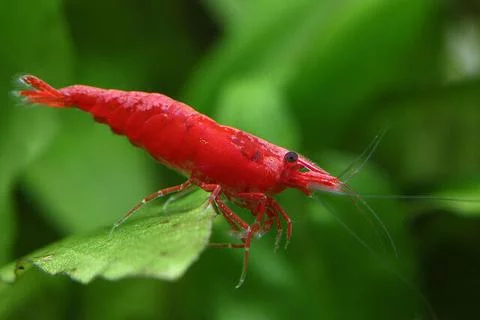
    Tank Size

    Before we talk about the tankโ€™s environment, we need to discuss the tankโ€™s size.  Itโ€™s important to choose the right size because Ember Tetras require space for swimming around.  

    The right size depends on how big the group is.  If you have 5-8 fish, the tank should be at least 10 gallons.    

    For every fish beyond the number 8, increase the tank size by one gallon.  Once you hit the 20-25 fish range, you will need a 20-25 gallon tank.  

    Hereโ€™s a quick tip.  Maximize swimming space by getting a long tank, rather than a tall one.

    Tank Setup

    After you choose the right size you need to set up the tank.  The tank should include plants, substrate, and decor.  Read on to learn more.  
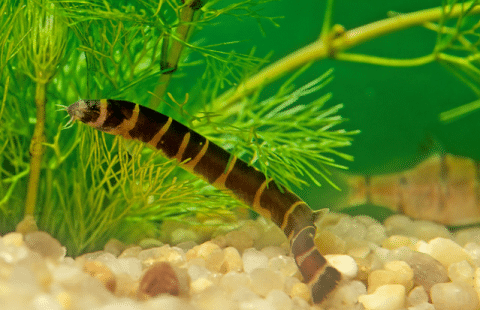
    Plants

    Ember Tetra in Planted Tank

    Ember Tetras need plants.  The total amount depends on how large the tank is and how many fish you have.  

    You certainly donโ€™t want to crowd your fish.  Instead, give them just enough plants to help them feel secure.  
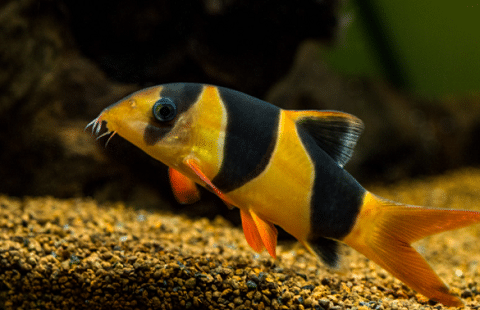
    This will prevent stress.  And when your fish are stress-free, they will stay healthy and beautiful.

    Furthermore, when the tank has the right amount of plants, your Ember Tetra will have a blast swimming through them.  Your fish can also use them as resting spots.      

    As an added bonus, the plants also house bacteria that your little fish can eat, adding extra nutrition to their diet.  

    Some great plants to use are:

    Floating plants work really well with these fish too. They provide another place for them to hide.
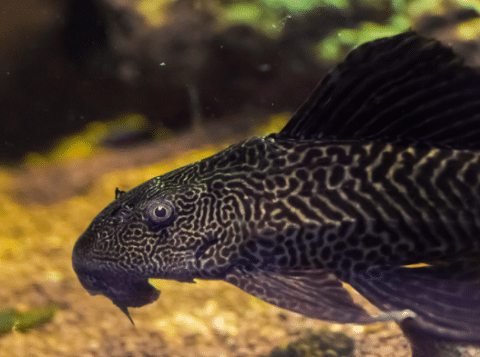
    Substrate

    You can use enriched active soil or mud for substrate.  Whichever one you choose, itโ€™s best to go with a dark color.  This dark tone will make your gorgeous Ember Tetras really stand out!  
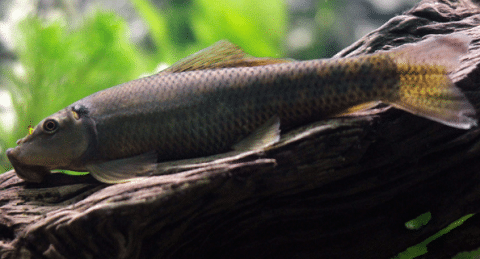
    Decor

    The tankโ€™s finishing touches should include rocks and wood.  Ember tetras are great fish to use in planted aquascapes like Iwagumi and Dutch aquascapes. If you have serious interest in those styles of planted tanks, check out the links.


    Traditional Seiryu Stone

    A go to classic. Highly recommended for Iwagumi aquascapes


    Buy On Buce Plant


    Buy On Glass Aqua

    Water Quality

    Okay, now you know what to put in the tank.  Great!  Next, you need to learn how to maintain ideal water conditions.  

    Letโ€™s get started. 

    Filtration

    Wild Ember Tetras live in slow-moving waters, so itโ€™s necessary to replicate this in your aquarium.  

    That is done by installing a sponge filter.  The filter will keep the water clean while also generating the appropriate water flow.    If you need better filtration because you are using a lot of plants, you can consider putting a sponge on the intake and lowering the flow.

    Water Parameters

    These tiny little freshwater fish canโ€™t handle change very well.  Thatโ€™s why consistency is key when caring for Ember Tetras.  Avoid large fluctuations by keeping a close eye on the tankโ€™s water temperature and pH.  

    Here are the water parameters to aim for:

    • Water Temperature: 72-80 degrees Fahrenheit  
    • pH:  5.5 – 6.7 
    • KH: 4 – 8

    As you can see, Ember Tetras prefer acidic water.  You reduces pH by adding driftwood or Indian almond leaves to the tank.     

    Aquarium Maintenance

    Although Ember Tetras are very easy to care for, they are sensitive and require regular tank maintenance.  If you fall behind, they might end up with health problems.        

    Test Tank Conditions

    Itโ€™s a good idea to get a test kit and test the water about 1-2 times per week.  Taking this step will help you maintain ideal water conditions, allowing your Ember Tetras to thrive.       

    Breeding

    Breeding Ember Tetras is fairly easy.  In fact, some of your fish might breed on their own, without any work on your part.  

    However, the parents and other fish are likely to eat the fry.  Thatโ€™s why itโ€™s best to work through a process that involves your oversight.  Letโ€™s talk about that right now.  If you prefer a video, you can check out the one below by MaFishGuy Aquarium Information.

    Sexing

    First, you will need to select a male and female to place in a separate breeding tank.  Although sexing Ember Tetras is a bit challenging for newbies, donโ€™t let that intimidate you.  

    Just look at the shape and color of the fish.  Females are rounder and males are brighter.   

    Getting Your Fish Ready to Breed

    Ember Tetras are ready to breed when they are about 4-6 months old.  After youโ€™ve picked out a male and female, place them in a separate breeding tank, away from the other fish.  

    The breeding tankโ€™s water conditions should be pretty close to the regular tankโ€™s conditions, with the temperature and pH being on the higher end of the optimal range.

    Get your fish in tip-top shape for breeding by feeding larval brine shrimp every day for two weeks.        

    The Breeding Process

    When the fish are ready to breed, the male will start chasing and nipping the female.  Once the female is carrying eggs, her abdomen will grow larger.  

    This species doesn’t lay its eggs in any particular location.  That means your Ember Tetraโ€™s eggs will sink to the bottom of the tank.  

    If you put mesh fabric or an egg crate in the tank, these barriers will keep the parents from getting to the eggs.  

    Caring for Fry

    After the eggs have been laid, the parents might try to eat them.  Prevent this by removing them from the tank immediately after the female lays the eggs.  

    The eggs will hatch in approximately 2-3 days, giving you about 100 fry. 

    After they hatch, start feeding infusoria.  When they are a week old, give them baby brine shrimp and small worms.  Eventually, you can start feeding crushed fish flakes.   

    Health and Disease

    Thankfully, Ember Tetras donโ€™t typically have a lot of health problems.  While hardy, that doesnโ€™t mean these fish are invincible.  

    If you want to keep them healthy they need high-quality food, the right water conditions, and social interactions with other tetras.

    Evaluating Your Ember Tetrasโ€™ Health

    How can you tell if your Ember Tetras are healthy?  Just take a look at their appearance.  If your fish are brightly colored, they are in great shape!

    On the other hand, a pale fish that acts abnormally isnโ€™t doing too well.  This sick fish is quite vulnerable to attacks and should be removed from the tank.  

    Common Their Health Issues

    Here are the health issues and fish diseases that Ember Tetras are most likely to have:

    • White Spot Disease – This appears as white spots and is caused by stress or poor care.  Prevent this disease by maintaining ideal water conditions.  If the disease occurs, there are products to treat it.    
    • Fungal and Bacterial Infections – These infections is fatal.  Be sure to address the issue immediately!  Signs include rotting fins and cloudy masses.   
    • Impaction – Too much dry food can block the digestive system.  Prevent impaction by including wet food in the diet or soaking dry foods before feeding.      

    Where to Buy

    Many fish stores sell Ember Tetras, making them easy to find.  You will pay about $2 per fish.  Some online fish stores will also sell them. It may make sense to purchase them online if you cannot find a quality local fish store in your area.

    Frequently Asked Questions

    How many can I put in a 10-gallon tank?

    No more than 5-8. Anything above that number may overcrowd the tank. If you want more than 8 fish, you will need a larger tank.

    How many should be in a school?

    Your group of Ember Tetras should consist of at least 10-15 fish. If you want a larger group, be sure to choose a tank thatโ€™s big enough to fit them all.

    Do they like currents?

    Wild Ember Tetras live in slow-moving water. Keep this in mind when choosing a filter.

    How long do Neon and this type live?

    The average lifespan is about 2-4 years, provided the fish are properly cared for. This requires feeding the right diet, maintaining optimal tank conditions, and allowing them to live in a group.

    Will they nip a betta?

    Sometimes an Ember Tetra might try to nip a betta or any other fish with long fins. However, they arenโ€™t known to normally exhibit this behavior.

    Is the Ember Tetra The Perfect Nano Fish for Planted Tanks Right for You?

    Before you add a ember tetra the perfect nano fish for planted tanks to your tank, it’s worth asking whether this species actually fits your setup and your goals. Here’s a quick breakdown to help you decide.

    This species is a good fit if:

    • You have a large enough tank to manage territories. Cramped conditions amplify aggression.
    • You’re comfortable managing aggression through stocking ratios, line of sight breaks, and tank layout.
    • You can commit to regular water changes. These fish produce more waste than many smaller species.
    • You’re not planning a peaceful community tank. Ember Tetra The Perfect Nano Fish for Planted Tankss need tank mates that can hold their own.
    • You enjoy watching active, interactive fish. Cichlids have personality that smaller species simply don’t match.
    • You have backup plans. Sometimes a particular fish just doesn’t work out, and you need a way to rehome it.
    • You’re feeding a varied, high-quality diet. Color and health depend on nutrition.

    If most of those points line up with your setup, the ember tetra the perfect nano fish for planted tanks is worth serious consideration. If several don’t, it’s better to choose a species that matches your tank now rather than trying to make it work.

    What It Is Actually Like Living With Ember Tetra

    A school of 10+ ember tetras in a densely planted tank creates one of the most visually satisfying displays in the hobby. They move through plant stems like little orange sparks drifting through a forest.

    They occupy the middle water column and rarely venture to the surface or bottom. This makes them perfect tank mates for surface dwellers and bottom feeders.

    Their color changes throughout the day. First thing in the morning they are pale, and by afternoon under full lighting they glow their brightest orange-red.

    They are peaceful to the point of being easy targets. Fast or aggressive tank mates will stress them out and fade their color. Keep the tank calm.

    How the Ember Tetra The Perfect Nano Fish for Planted Tanks Compares to Similar Species

    Choosing between similar species is tricky. Here’s how the ember tetra the perfect nano fish for planted tanks stacks up against some common alternatives.

    Ember Tetra The Perfect Nano Fish for Planted Tanks vs. Glowlight Tetra: Both are warm-toned community tetras, but they fill slightly different roles. The ember tetra the perfect nano fish for planted tanks is smaller and can work in nano tanks as small as 10 gallons, while the glowlight tetra is a bit larger and does best in 15+ gallon setups. Color-wise, they complement each other well and is kept together in a mid-sized planted tank. Check out our Glowlight Tetra care guide for a detailed breakdown.

    Ember Tetra The Perfect Nano Fish for Planted Tanks vs. Flame Tetra: Both species occupy a similar niche in community tanks, but they differ in temperament, coloration, and ideal water conditions. The ember tetra the perfect nano fish for planted tanks is a solid choice for hobbyists who want reliable schooling behavior and easy care, while the flame tetra brings a slightly different look and energy to the tank. In my experience, the deciding factor usually comes down to which aesthetic you prefer and what other species are already in the tank. Check out our Flame Tetra care guide for a detailed breakdown.

    Closing Thoughts

    To sum it all up, Ember Tetras are great fish to keep.  They are easy to care for and get along well with many different types of fish.  Plus, their stunning colors will make your aquarium look amazing!

    As long as you continue providing great care, your Ember Tetras will light up the tank.  And thatโ€™s why so many aquarium hobbyists love this species.  

    Check out our tetra tier list video where we rank the most popular tetras in the hobby, including the ember tetra:


    ๐ŸŸ This article is part of our Tetras: Complete A-Z Species Directory. Your guide to every tetra species in the hobby.

  • The Ultimate Guide to Fishless Cycling โ€“ Step-by-Step From a 25-Year Hobbyist

    The Ultimate Guide to Fishless Cycling โ€“ Step-by-Step From a 25-Year Hobbyist

    Fishless cycling is the method I recommend to every new hobbyist, and it’s how I set up tanks myself. The old way. adding a few “hardy” fish and hoping for the best. works, but it puts fish through unnecessary stress during the most toxic phase of a new tank. With fishless cycling you get a fully established tank before a single fish goes in, and that makes all the difference in long-term success.

    The nitrogen cycle is the single most important concept in fishkeeping. get it right before you add fish, and you avoid the most common cause of fish death in new tanks. Fishless cycling lets you establish your beneficial bacteria colony without exposing any fish to toxic ammonia and nitrite spikes, and it’s the method I recommend to every new hobbyist I talk to. I’ve cycled more tanks than I can count over 25 years, and in this guide I break down the process step by step so you can do it confidently and not rush it.

    Why Do We Cycle?

    The first question we should start with is why do we do a cycle anyway? And, what exactly is a cycle? Many newcomers may think you can just put a fish in a tank on day one and everything should work out well. Unfortunately, this can lead to some pretty sad results.

    Biology is the major reason why we need to cycle. It all starts with the nitrogen cycle. Until you have a complete cycle, your aquarium is prone to building up toxic levels of nutrients that can harm, stress, and even kill your fish!

    You want the best for your prized pets, so knowing how the nitrogen cycle works should be the first point of reference we need to understand.

    The Nitrogen Cycle

    There is a great video that really explains the nitrogen cycle in a fun and entertaining way by Girl Talks Fish below that I’ll embed for you. I’ll go more into my boring details below:

    There are 4 stages to the nitrogen cycle that occurs in our aquariums. They are:

    • Stage 1 – Ammonia is excreted as a fish waste product or from decaying matter
    • Stage 2 – Nitrosomonas bacteria convert ammonia to nitrite
    • Stage 3 – Nitrobacter bacteria convert nitrite to nitrate
    • Stage 4 – Plants use nitrates as fertilizer

    I’ll go into further details in a future article. The main thing to take away is if your ecosystem cannot get to at least stage 3 with stability, you will have major uses with fish and invert health in your aquarium. We cycle our aquariums in order to build a balanced ecosystem, one that is suitable for our fish to live in.

    How Does A Fishless Cycle Work?

    Fishless cycling works by using an ammonia source with a combination of beneficial bacteria. As the ammonia is added, the bacteria will consume the ammonia and convert it down to nitrate. Eventually, we get to the point where the aquarium has enough bacteria to handle livestock additions.

    In the old days of aquariums (like when I started ๐Ÿ˜…), it was an acceptable practice to use hardy fish to cycle an aquarium. Oftentimes, these poor sacrificial fish would either not make it, or they would be eaten by the larger display fish the aquarium owner really wanted to keep.

    In saltwater aquariums, the fish people would use for cycles would be damselfish. The hardy little fish would usually survive a cycle but would turn into terrors in a community tank since they are very territorial and are best added last. Check out our video from our YouTube channel for an overview. We go into more detail in our blog post further down. Subscribe if you like our content!

    To avoid fish mortality and unwanted aggression to future tank mates, hobbyists worked to develop more humane and effective techniques to cycle a fish tank. Not only were these new methods humane, but they also were a lot faster than the old methods. It’s all based on the use of nitrifying bacteria.

    What is Nitrifying Bacteria?

    As mentioned in the nitrogen cycle stages, Nitrosomonas and Nitrospira bacteria are the workhorses for turning ammonia into nitrate. These two types of bacteria make all life possible in your aquarium. Without them, the fish tank would get overwhelmed with toxic chemical levels and nothing could live in it.

    Nitrifying bacteria can come from many sources these days. Here are a few common ways of introducing them.

    • Bacteria in a bottle products
    • Introducing any livestock to the tank
    • Live Rock and Live Sand (for saltwater tanks)
    • Live plants (for planted tanks)

    I will go through each way in this article. There are pros and cons to each one and you should choose the one that works best for your situation. As for me, I like bacteria in a bottle. There are many good products these days like Fritz Turbo Start for freshwater tanks and BioSpira for saltwater tanks.

    My Pick For Freshwater Bacteria
    Fritz Turbo Start 700 Freshwater

    Fritz Turbo Start is known in the industry as the fastest acting nitrifying bacteria you can purchase. This 700 version is specialized for freshwater tank and has my highest recommendation

    Buy On Amazon Click For Best Price

    Necessary Equipment

    You actually do not need much to perform a fishless cycle. Depending on what method you use you will need the following:

    • A fish tank
    • An aquarium filter
    • A heater (for tropical tanks)
    • Liquid ammonia OR some other sort of ammonia source
    • Bacteria in a bottle or seeded filtration media (depending on what method you choose)

    Before we talk about methods, let’s discuss the advantages of a fishless cycle vs. a traditional cycle.

    Fishless Cycle vs. Traditional cycle

    Fishless cycling has several advantages over a traditional cycle. Here is a quick list:

    • Fishless cycling is more humane and reduces/eliminates livestock fatalities
    • Cycling with ammonia and bacteria in a bottle is disease-free
    • Fishless cycling is more aggressive and as a result cycles faster than a traditional cycle
    • You will not have any undesirable fish left over after the cycle

    Traditional cycling seems simple at first, but it can actually lead to a number of problems. You will have fish that are stressed and they could get sick as a result, leading to further complications. It’s better to be in control of the entire cycle by fishless cycling in order to start out your fish tank cycled and disease-free.

    Traditional cycling also takes far longer. A typical traditional cycle can take 30 – 45 days, while a fishless cycle can be completed in as little as 7 days and sometimes even quicker! There are way more advantages than disadvantages to using a fishless cycling method over a traditional one, so it’s no wonder nearly everyone these days starts with them.

    Now that we know why fishless cycling is best for us, let’s figure out what cycling method we will use.

    How to fishless cycle

    There are actually several methods you can use when it comes to performing a fishless cycle. Each one has its pros and cons. These methods are:

    • Cycling with ammonia
    • Cycling with fish food
    • The shrimp method
    • Cycling with live plants
    • Cycling with live rock & live sand
    • Cycling by seeding your tank with bacteria

    Each one of these methods will work to cycle your tank, oftentimes much faster than the traditional method. Many of these methods are “sterile” meaning they will not introduce diseases to your aquarium. Let’s dive into each method to learn more!

    1. Using Ammonia

    Cycling with pure ammonia is one of the most popular ways of cycling a new tank without fish. Not just any household ammonia will do though, because these often contain other ingredients that could do a lot of harm.

    For Fishless Cycling
    Dr. Tim s Aquatics Ammonium Chloride

    Ammonia into a tank?!? Sounds crazy doesn’t it. It’s what all the cool kids use to cycle their tanks these days.

    Buy On Amazon Click For Best Price

    For this cycling process, we want to use ammonium chloride. My go-to product for this method is Dr. Tim’s Ammonium Chloride. To use the ammonia method you would need to perform the following steps:

    • Step 1 – Add bacteria in a bottle
    • Step 2 – Add ammonium chloride until you read 2PPM
    • Step 3 – Wait 24 hours
    • Step 4 – Test ammonia and nitrite levels
    • Step 5 – If you are at 0 ammonia and 0 nitrites, add ammonia until you are at 2PPM again
    • Step 6 – Wait 24 hours
    • Step 7 – Test ammonia and nitrite, add ammonia until you are at 2PPM again
    • Step 8 – Wait 24 hours
    • Step 9 – If no ammonia and nitrites, test for nitrates, if high, do a water change to lower levels
    • Step 10 – Time to add fish

    For ammonia and nitrite level testing, a simple API test kit should work and will help you get the job done

    Pros of the Ammonia Approach

    • Easy to do and proven products available
    • Easy to test
    • Completely “sterile” – a great way to start off your tank disease-free
    • No mess method

    Cons of the Ammonia Approach

    • Expensive to do (especially for larger tanks and saltwater)
    • It may take longer than other methods

    2. Using Fish Food To Cycle The Aquarium

    Flake Food

    Using fish food as a cycling method is also a popular alternative in a new tank. This can be done with a combination of flake or pellet food and bacteria in a bottle. All you do is feed the aquarium every day with food and monitor your ammonia levels.

    It’s less of an exact science than the ammonia chloride method, but you can use the fish food you were planning to use from the start. Depending on your budget, you’ll find this a very affordable alternative for individuals who are looking to save a few dollars.

    Pros of Fish Food Approach

    • Cheap
    • You will need the fish food for when you get fish
    • It will get you used to feeding your fish

    Cons of Fish Food Approach

    • Messy
    • Not an exact science
    • It may take some trial and error to get right

    3. The Dead Shrimp Method

    The shrimp method cycling process was originally popularized by Melev’s reef as a safe way of cycling a tank. It involves purchasing a jumbo shrimp at your local supermarket and putting it inside your tank for several days in order to create an ammonia spike.

    Because the shrimp decays in your tank, it creates the opportunity for beneficial bacteria to populate. Due to the total organic chemistry, the dead shrimp method produces more ammonia than the fish feed procedure.

    This method does not require bacteria in a bottle but can be sped up with it. You should leave the shrimp in your tank for at least 2-3 days.

    For a nice video overview, check out this video by Blue Damsel as she explains how she cycled her tank with a shrimp.

    Pros of Shrimp Method

    • Doesn’t require bacteria in a bottle
    • Cheap
    • Only requires one introduction of ammonia

    Cons of Shrimp Method

    • Smelly
    • Can take longer than other methods

    4. Cycling With Live Plants

    Live Plants in Aquarium

    This is an aquascaper’s favorite here for the freshwater aquarium. Cycling with live plants is natural, effective, and kills two birds with one stone. You cycle your new tank, build a great setup, and your tank is ready for lots of fish when the cycle is done.

    There are two ways to do this cycling, you can perform a dry start or you can do a flood/underwater start. Depending on the plants you are planning, a dry start can be the best way to get this done.

    I recommend you start by using an active soil. This soil will introduce the necessary ammonia, which your plants and bacteria will consume.

    Let’s talk about steps:

    • Step 1 – Use an active substrate like Tropical Aquasoil
    • Step 2 – Plant your aquarium plants
    • Step 3 – Fill tank or grow dry if using the dry start method
    • Step 4 – Add bacteria in a bottle to accelerate the cycle process
    • Step 5 – Test every 24 hours to monitor ammonia and nitrite levels
    • Step 6 – Do not add any fish until you read 0 ammonia and nitrite levels for two straight tests
    • Step 7 – Add fish, starting with algae eaters first, then other fish 2-3 weeks later

    By using bacteria in a bottle, you can usually get to Step 7 in about a week sometimes longer.

    Pros of Live Plants Method

    • Works best for aquascapes and planted tanks
    • A healthy way to build a natural tank
    • Fast

    Cons of Live Plants Method

    • Expensive
    • Not ideal for certain fish setups
    • Algae blooms

    5. Cycling With Live Rock & Live Sand (Saltwater Aquariums Only)

    One of the best ways of cycling a marine or reef tank is to use live rock and sand. Of course, ‘live’ rock and sand are not really alive, but rather home to all sorts of bacteria and organisms that have colonized it in nature, or after being seeded in an established aquarium.

    Live rock usually has a very rough and intricate texture, with loads of holes and crevices for life forms to attach themselves. Healthy live rock or sand that has been handled correctly will introduce the beneficial nitrifying bacteria to your tank that maintain your water quality. The other organisms that live in the live rock and substrate will also produce some ammonia which helps in maintaining the cycle.

    Ocean Direct
    Maricultures Florida Live Rock

    An old school solution. Once cured, Dinos tend not to be an issue because of the great biodiversity contained in this rock.

    Click For Best Price

    Let’s talk about the steps:

    • Step 1 – Set up your aquarium, complete with filter, heater, thermometer, and all other necessary hardware. Add water of the correct salinity
    • Step 2 – Let your filter and heater run for a day or so and the water warm up to the right temperature
    • Step 3 – Get your live rock and sand. Use cured live rock that has been kept wet
    • Step 4 – Inspect the live rock or substrate for any unwanted organisms and remove them, but do not sterilize the seeding materials
    • Step 4 – Sprinkle live sand into the floor of the tank and add your live rock
    • Step 5 – Provide an ammonia source like some fish food to help sustain the nitrifying bacteria
    • Step 6 – After a few days, test the water, if you read 0 parts nitrite and ammonia, and some nitrates, your tank is cycled
    • Step 7 – Add fish

    If Ammonia and nitrite are present, your tank is still cycling. This often happens as a result of some of the organisms and bacteria dying off after being move to a new environment. Do a partial water change and retest the water in a few days.

    If you are still reading ammonia and nitrites, it is possible that your live rock was not cured, or the organisms died before getting to your tank. If that is the case, you might need to use one of the other fishless cycle techniques like the ammonia or dead shrimp method.

    Pros of cycling with live rock & live sand

    • The best way to introduce a healthy balanced community of bacteria and micro fauna to a reef tank
    • Very fast results if you have healthy live materials
    • Live rock is home to other beneficial organisms

    Cons of cycling with live rock & live sand

    • Potential to introduce unwanted animals
    • Live rock is expensive
    • If live rock is not handled correctly, bacteria and micro-organisms may not survive

    6. Seeding your tank with beneficial bacteria from an existing system

    Beneficial Bacteria from Existing Filter

    Seeding your new tank with beneficial bacteria from a mature aquarium is the ultimate shortcut to jump-starting the nitrogen cycle in a new aquarium. This is essentially what we are doing by adding live plants or live rock to a new aquarium because they are already home to the bacteria we need.

    In the home aquarium, the most important colony of beneficial bacteria lives in and on your filters media. The filters media is the sponge, foam, floss, or other material that the water flows through or over. These bacteria will colonize the filter quite quickly if they are present on the live rock for example, but there is an even faster way.

    It is possible to seed your filter media directly if you have a mature tank or a friend that does and is willing to help you out. The trick is to make sure your new tank has the same water parameters as the tank where you will be getting your nitrifying bacteria.

    Let’s talk about the steps:

    • Step 1 – Set up your aquarium, complete with all hardware, gravel, decorations, etc., and fill with water. Make sure to use a water conditioner
    • Step 2- Allow your filter to run for a day or so and the heater to warm your water to a stable temperature
    • Step 3 – Add a small piece of filter media from a mature tank to the media compartment of your new filter. You should not remove the new filter media, but rather use both together
    • Step 4 – Add some ammonia to the water in the form of fish food for example
    • Step 4- Test your water. Your ammonia and nitrite levels should read 0 after a week and nitrates should be present
    • Strep 5- Add fish

    Alternative method

    • Step 1 – Set up an extra filter in one of your other tanks or in a friend’s established tank a few weeks before setting up the rest of your new aquarium.
    • Step 2 – Move the now seeded filter over from the established tank over to your new tank once it has been colonized by nitrifying bacteria
    • Step 3 – Add an ammonia source, either from a bottle or from fish food
    • Step 4 – Test your water after a few days. You should note that ammonia and nitrites read 0, but nitrates are present.
    • Step 5 – Add fish

    Pros of seeding from an existing system

    • The fastest way to cycle a new tank. This method can be instant, but take a few days to confirm this by testing to be safe
    • Easy
    • Cost-effective

    Cons of seeding from an existing system

    • Getting hold of some mature filter media can be tricky if you don’t have other tanks or friends in the hobby
    • Possible introduction of disease if the tank getting media from is infected

    The Final Test

    After choosing the fishless cycling method and following the recommended steps, it’s time to find out whether your new tank has cycled successfully! This can be a pretty nerve-wracking time, because you’ve been patient, and you’re probably itching to start adding livestock to your aquarium.

    No matter which method you’ve used, you’re going to need to test the water to know if your tank is cycled. This means you need a test kit that can measure ammonia levels, nitrites, and nitrates. You can use liquid or strip test kits from your local fish store, and follow the instructions on the package. The API Freshwater Master Test Kit is a great option to test all major parameters.

    If after following all the steps of your chosen cycling technique and doing 2 water tests, you measure 0 ammonia, 0 nitrites, and some nitrates, you’ve been successful, and your tank is cycled! The presence of nitrates tells you that both the important types of bacteria you need are thriving in your tank.

    One thing that is very important to note is that nitrates are also toxic to fish, just less so than ammonia and nitrites. I’m sorry to spring this on you so late in the article but hang in there, we’re nearly done!

    The way to manage nitrates is simply to perform regular water changes. Basically, you need to remove enough aquarium water, as often as necessary, to keep your nitrate levels to below 20ppm.

    Can I Add Fish Now?

    Congratulations on completing the fishless cycling process, at this point, you can start to add your first fish!

    Although your tank now has established bacteria colonies, there are only enough of them to fully manage the ammonia level that has been available to them. Adding fish is going to increase the bio-load and the available ammonia levels in your aquarium water pretty quickly, so ideally you want to introduce the fish in stages to avoid overloading the system.

    Let’s imagine you plan on keeping a school of 20 tetras and a clean-up crew and algae eaters in your new tank. Unless you have plenty of live plants in your tank to help in taking up ammonia and nitrates, adding them all at once could cause an ammonia spike that your bacteria aren’t able to manage.

    <a href=Ember Tetra” class=”wp-image-547290″/>

    To avoid this, you could add 6 tetras to start and keep an eye on your nitrates. Perform a weekly water change to keep your nitrate level to below 20ppm and give your bacteria a chance to develop further. Introduce more fish in stages to allow the nitrifying bacteria colonies to grow. Growing live plants is also hugely helpful, because they take nitrates out of the tank water, and turn them into healthy new leaves.

    In some planted aquascapes, fish all added in 2 large stages. However, note that these setups are loaded with lots of plants and lots of filtration. This is an advanced techique that requires research if you want to do this.

    Depending on the type of fish you are looking for, I have many guides. You can check them out below:

    FAQS

    How long does it take to cycle a fishless cycle?

    Depending on the method you use, a fishless cycle will usually take anything from a few days to about 6 weeks before ammonia and nitrite levels drop off. If you’re starting from scratch with something like the fish flakes method, and with all new equipment and sterile gravel, the process can take over a month. If you seed your filter with mature media, the cycle can be instantly ready.

    Should I do a water change first?

    Since cycling is about allowing changes in water chemistry to happen, it would make sense to not interfere while this is happening. If however, your ammonia levels spike too high during your fishless cycle, it’s a good idea to perform a partial water change.

    This is because high ammonia levels can actually slow or stop the cycle. Only a partial water change is necessary though because you do need to have ammonia present for the cycle to happen.

    Is this necessary?

    Fishless cycling is absolutely necessary for the health and well-being of your future pets. Although it does take some patience, safely cycling your tank is the key to success when keeping fish and other live animals.

    Remember, starting up an aquarium is a long-term project, so try not to rush this important first stage. You could use the time while you’re cycling your tank to track down the fish you want and do all the research about their needs and care.

    What are the advantages of this?

    The major advantage of fishless cycling is that it does not stress or kill any fish unnecessarily. Apart from the obvious ethical side to this, it also prevents you from losing money by replacing livestock. Using fish to cycle your tank often leaves you with the problem of what to do with that unwanted fish once the tank is cycled.

    Do I need to add ammonia?

    Yes, the nitrogen cycle does need some form of ammonia to get started and grow your bacteria levels. Avoid using general-purpose household ammonia for this because it often has added chemicals that can affect the process.

    It is best to use a purpose-made product like Dr. Tim’s Ammonium Chloride to add ammonia in its pure form or use something like fish food or a dead shrimp to add this compound to the aquarium water.

    Final Thoughts

    After reading this article, I hope you have a better understanding of why cycling is so important and how to do it safely without the help of hardy fish. I know it can be tough to stay patient when setting up a new tank, but once you understand why we cycle, and the obvious benefits of having a healthy fishless cycled aquarium, the waiting gets a lot easier!


    ๐ŸŸ Want to learn more? This article is part of our complete Aquarium Care Guide. your ultimate resource for water chemistry, maintenance, feeding, disease prevention, and everything you need for a healthy tank.

  • Green Star Polyp Care – A Complete Guide

    Green Star Polyp Care – A Complete Guide

    If your parameters are not stable, this coral will not survive the first month. Corals do not die from wrong numbers. They die from unstable numbers. The difference between a thriving reef and a dying one is consistency, not perfection.

    Stable mediocre parameters beat perfect parameters that swing. Every time.

    What It Is Actually Like Growing Green Star Polyp Care to A Complete Guide

    Coral growth is measured in weeks and months, not days. You will stare at your frag daily and see nothing. Then one morning, you notice new polyp extension or a visible encrustation line. That moment is deeply satisfying.

    Corals open and close based on lighting and flow. Learning to read your coral’s polyp extension tells you more about tank conditions than any parameter test.

    Nuisance algae will grow on and around your coral. Keeping it clean without damaging the tissue takes a gentle hand and a turkey baster. This is a regular maintenance task.

    The color payoff is real. A coral that looked brown in the store develops vivid greens, purples, or oranges under proper lighting over weeks. That transformation is what makes reef keeping addictive.

    Table of Contents

    The Green Star Polyp Care to A Complete Guide is a go-to recommendation for newer reefers, but it is not bulletproof. Lighting, flow, and placement mistakes kill more frags than disease ever will. After maintaining reef tanks for over two decades, I know exactly where people go wrong with this coral.

    More coral frags die from too much light than too little. That surprises most beginners.

    Corals grow slowly and demand stable conditions for months and years. This is a long-term commitment to water chemistry, lighting schedules, and consistent maintenance.

    Coral keeping is gardening with saltwater. The patience required is identical.

    When it comes to Green Star Polyp Care, there isn’t much to it. The main thing is learning how fast it grows, where to place it, and how to control it. It can grow quite large if given the right conditions and some reefers have event used them to create a wall of corals!

    Today’s post is all about the Green Star Poly. Come find out all there is to know about this beautiful creature with our complete guide on how best to take care of your Green Star Polyp. You’ll be glad you did!

    What Most Care Guides Get Wrong About Green Star Polyp Care. A

    Want easy, fast-growing coral? Start with green star polyps or zoanthids. Want a challenge? Get SPS and invest in dosing equipment.

    The biggest mistake I see with green star polyp care. As is underestimating their aggression. Guides will label them “semi-aggressive” and move on. In practice, that label doesn’t tell you much. Tank layout, stocking density, and territory management all play a huge role in whether these fish coexist or constantly fight. Tank size is another area where most guides get it wrong. The minimum listed on most care sheets is exactly that, a minimum. For long-term success, especially if you’re keeping a group, I always recommend going at least one size up from whatever the guide suggests. Finally, diet gets oversimplified. Pellets alone won’t cut it. In my 25+ years keeping fish, I’ve found that variety in diet directly affects color, growth, and overall vitality. Include frozen foods, quality pellets, and occasional vegetable matter for the best results.

    The Reality of Keeping Green Star Polyp Care to A Complete Guide

    Lighting is the most common source of coral death. New reefers blast their corals with too much PAR on day one. Corals need to acclimate to your lighting over weeks. Starting at 50% intensity and slowly ramping up prevents bleaching and tissue recession.

    Flow matters as much as light. Dead spots collect detritus on coral tissue and cause tissue necrosis. Too much direct flow strips flesh from the skeleton. Finding the right flow pattern takes observation and adjustment.

    Stability beats perfection. A reef tank with slightly elevated nitrates that stays consistent will grow coral better than a tank with perfect numbers that swings every few days. Corals adapt to stable conditions. They die from instability.

    Biggest Mistake New Owners Make

    Placing a new coral frag in the highest-light spot of the tank immediately. Corals from a store or vendor have been in shipping bags for hours. They need low light and gradual acclimation. Blasting them with full intensity causes bleaching within days.

    Expert Take

    Start your lights at 50% and increase by 10% every two weeks. More corals die from too much light too fast than from any disease I have encountered in 25 years of reef keeping.

    Frequently Asked Questions

    Are green star polyps good for beginners?

    Green star polyps are one of the best beginner corals available. They are hardy, tolerant of a wide range of lighting and flow conditions, and recover quickly from stress. Their fast growth and bright green coloring make them an encouraging first coral for new reef keepers.

    How fast do green star polyps grow?

    Green star polyps are among the fastest-growing corals in the hobby. They can spread across a rock surface within weeks and will readily colonize adjacent surfaces. This rapid growth is both a benefit and a concern, as they can overgrow and smother other corals if not managed.

    Why are my green star polyps not opening?

    Closed green star polyps are responding to a change in water chemistry, flow, lighting, or the presence of a pest. New polyps may stay closed for several days while acclimating. Check for pest snails, flatworms, or sudden parameter shifts. They also close at night, which is normal behavior.

    Can green star polyps touch other corals?

    Green star polyps will overgrow and smother other corals they come into contact with. They are mildly aggressive and should be placed on isolated rock islands with a clear gap of several inches from other coral colonies. Many reef keepers place them on separate rocks or frag plugs to control their spread.

    Do green star polyps need high light?

    Green star polyps are adaptable to a wide range of lighting conditions, from low to high. They will develop deeper green coloring under moderate lighting and may become lighter or brownish under very intense light. Moderate LED or T5 lighting is ideal for the most vibrant color.

    Species Overview

    Scientific NameBriareum spp. (widely Pachyclavularia violacea)
    Common NamesGreen star polyps (GSP), daisy corals, starburst corals, star corals
    Family
    OriginWidely found throughout the Indo-Pacific1
    Common ColorsGreens, yellows, and browns with purple skeleton
    Care LevelEasy
    TemperamentPeaceful
    LightingModerate-High (50-200+ PAR)
    Tank PlacementBottom, Middle, Top
    Flow RateModerate-High
    Temperature Range76-82 degrees F
    pH Range8.0. 8.4
    Salinity1.025 or 35 PPT
    Alkalinity8. 12 dKH
    Calcium Level350. 450 PPM
    Magnesium Level1250. 1350 PPM
    PropagationCutting/Fragging

    Classification

    OrderAlcyonacea
    FamilyBriareidae
    GenusBriareum
    SpeciesB. Stechei (Kukenthal, 1908)

    Origins And Habitat

    Like many other corals, green star polyps come from the warm waters of the Indo-Pacific in turbid lagoons and along shallow to moderately deep reefs. There, they is found alongside other soft corals, such as Xenia spp. and Clavularia spp..

    Green star polyps are soft corals, meaning they do not have a calcium carbonate skeleton. Instead, they quickly grow as encrusting mats over rocks and other sessile objects.

    Naming

    In general, green star polyps are taxonomically categorized as Pachyclavularia violacea. This is a very broad name for these corals though, and it’s very likely that you have a species that is something other than Pachyclavularia violacea. The Pachyclavularia genus is also synonymous with Briareum and the two is used interchangeably for this species.

    Green star polyps are a type of soft coral (Alcyonacea order) though they contain sclerites, or small pieces of skeleton, within their tissue for structure.

    What Do They Look Like?

    Green Star Polyp

    When fully spread, green star polyps look like a lawn of grass. Individually, they have a white center and eight radial green tentacles. These serrated-like tentacles come out from a purple base with tubes for every polyp.

    When closed, this coral looks like a pointy, purple mat. As we’ll discuss later, these corals will be temperamental and may be closed for extended periods of time if something is unfavorable in the tank.

    Varieties

    There are not many variations of green star polyp and their appearance largely depends on the type of aquarium light being used. Because they are so easy to grow, they are mostly aquacultured.

    There are a few varieties of green star polyp though, mainly with differences between shades of green, tentacle length, and skeleton branching.

    It is very common to come across ‘neon’ varieties of green star polyps where the tentacles are fluorescent green. Other variations might have a more defined white center or more tints of yellow, though the general purple and green coloration stays the same.

    Some variations of green star polyp might also be long-tentacled. It is believed that long green star polyps are hardier and grow faster than shorter ones, which will be confused with galaxea corals (Galaxea fascicularis).

    Within the aquarium, there is also said to be a branching variety of green star polyp. This variety is different from the regular encrusting type and is much more rare and desirable. The problem is that it is very difficult to tell apart from others as there is little difference between small frags and no difference at all between namings.

    Branching green star polyps grow outwards, away from the rock; this means that they don’t necessarily need to grow on top of rock to spread and can create archways and limbs that extend across the reef tank.

    Still, green star polyps have not reached the brand-name-worthiness of other soft corals, which keeps their prices relatively low.

    Galaxea spp.

    To the untrained eye, green star polyps can look very similar to species of Galaxea coral. This is a costly mistake as Galaxea have long sweeper tentacles that can severely damage other corals.

    These two corals look very similar and even have similar care requirements. Overall though, green star polyps are larger, less compact, and have more tapered tips. In a mat, galaxea corals can have a shaggy appearance whereas green star polyps will have a more uniform sway.

    Green Star Polyp Care Guide

    Green Star Polyp Close Up

    Green star polyps are one of the most versatile corals in the aquarium, meaning they is placed almost anywhere. The problem is that they will also spread everywhere they can.

    Green star polyps do best under moderate to high reef lighting with moderate to high flow; they can withstand conditions above and below this, though low light will result in slower or minimal growth and high light can cause bleaching and algae.

    These corals need moderate to high flow in order to keep algae off their purple skeleton. Because green star polyps are so concentrated, water flow needs to be able to remove any waste or debris from the top of the coral.

    If water flow is inadequate, algae can start to build over the opening of the tubes, which prevents the polyps from expanding. Even more so, snails, hermit crabs, and algae-loving fish might start to crawl over or pick at this algae which can result in longer periods of retraction.

    However, you also want to make sure that you don’t place your green star polyps too close to other corals. These corals grow extremely fast and won’t hesitate to grow over and shade out zoanthids or other peaceful corals.

    Because of this, many hobbyists like to keep them on a rock island of their own as they will rarely grow onto the substrate. Another option is to keep them around much more aggressive coral species (like LPS corals) that should fight back any green star polyps that try to invade their space.

    Another popular option for green star polyp placement is the back or the bottom of the reef tank. Many hobbyists choose to create a background of green star polyp or a lawn on a bare bottom setup. It only takes a small piece of frag to have a waving mat of green within a couple of months.

    Temperament In The Aquarium

    Green star polyps will not sting other corals and are very peaceful. However, they are highly invasive and will not hesitate to grow over and shade out other corals.

    As mentioned before, these corals do best when isolated. You do not need to worry about other corals being stung by them, but rather taken over by them. As long as green star polyps are kept away from other, less aggressive corals, then they should stay manageable.

    Though these corals aren’t known to have a powerful sting, it is still recommended to keep them away from other corals at all times to prevent aggression.

    Are They Toxic?

    There is some belief that green star polyps are toxic and can release damaging chemicals into the aquarium when stressed, like zoanthids. However, this is largely a myth and has yet to be proven within the hobby.

    If you are concerned about green star polyps releasing toxins, use gloves when handling and run activated carbon. Otherwise, it is extremely rare, if not impossible, to have any toxin complications due to green star polyps.

    Care And Maintenance

    Green star polyps are one of the easiest corals to care for, though experienced keepers can have difficulty with them due to the reef tank being too clean, inadequate flow, or extreme lighting.

    Otherwise, green star polyp maintenance and upkeep are straightforward.

    Dosing

    Like other corals, green star polyps need available nutrients in the water column. They need nitrates, phosphates, magnesium, calcium, and a stable alkalinity for healthy growth and vibrant colors.

    That being said, these soft corals do not need additional nutrients to be dosed other than what is introduced through feedings and fish waste. In fact, many hobbyists look to slow down green star polyp growth rather than speed it up.

    Feeding

    Many hobbyists choose not to feed their green star polyps as they get the majority of their food through photosynthesis, but they’ll definitely enjoy some supplemented foods every now and then.

    For best results, use a powder or liquid food, like zooplankton; these corals are not able to take in larger foods through their mouths.

    Trimming And Algae

    Green star polyps grow fast, and eventually, you will need to control that growth. Experienced keepers choose to frag these trimmings, though the supply might outweigh the demand.

    These corals is difficult to completely remove from a surface and will often grow back after some time. When you see green star polyps growing somewhere you don’t want them, simply scrape them off and dispose of them. Make sure you get all the pieces as they can reseed themselves elsewhere in the tank.

    Another way to combat green star polyp growth is by shading it out with a larger object. This can affect other corals too if not carefully placed, but it is an effective way to deprive the coral of necessary light for growth.

    At the same time, you will want to look out for algae growing on the mat of the coral. I recommend you use a turkey baster weekly to gently remove any algae or debris that is caught. If you notice that your green star polyps have been closed more than usual lately, it is bothersome algae.

    What Are Good Tankmates?

    Tank Raised Clownfish

    Green star polyps is kept with nearly everything, including not reef-safe species. Here’s how.

    In theory, green star polyps is kept with anything from clownfish and tangs to triggers and angels. This is due to the fact that this coral grows so incredibly fast. There is still the very real possibility that not reef-safe fish will eat green star polyps, but these corals are very likely to bounce right back and make up for what had been lost.

    It should also be noted that green star polyps might not look as appetizing as other fleshy large polyp stony (LPS) corals, so some coral-hungry fish might leave it alone. If you find yourself with a fish that eats everything you put into the tank but you’re still determined to have corals, then get an inexpensive frag of green star polyps and try your luck.

    Fragging

    It should come as no surprise that green star polyps are incredibly easy to frag. The hardest part will be separating the pieces from the rock.

    In order to frag green star polyps, first, find a manageable side of the rock where the mat will be easy to separate. If you can’t find a good place to cut, then choose the best spot and use a scissor, scalpel, or razor blade to cut through and detach the piece from the rock.

    For the most part, it doesn’t matter how big or small of a piece you frag as it will quickly recover and start growing. Simply attach the frag to a frag plug with superglue (cyanoacrylate). You may dip this frag in iodine or a special coral mix, but this is not necessary.

    Place the frag towards the bottom of the reef tank. The polyps should start to open in a few days, though these corals is temperamental after handling. Do not worry as they can survive a couple of weeks of being retracted.

    As mentioned before, your green star polyps may grow too quickly for how much fragging you can manage. These excess corals is moved to the sump to help with nutrient exportation, given to another hobbyist, or disposed of correctly. If you want a video tutorial, you can check out the video below by OceanStateAquaticsTV.

    How Long Does It Take For Them To Spread?

    Green star polyps can cover a rock in a matter of months. Growth may be slow initially and your coral might not even open for a few days when you first introduce it into the reef tank.

    If conditions are right though, you will have new growth almost every day. This is seen on the edges of the mat, where the flesh is light purple or white instead of the dark reddish-purple of the rest of the colony.

    If you find that your green star polyps aren’t opening, try to keep conditions stable. You will want to move them around to new areas of the tank for better flow or lighting, but it is best to leave them where they are until they open. If you see algae starting to grow on top of the mat, gently waft away or turkey baster the algae off.

    At the same time, make sure there are available nutrients in the water column. It is not unheard of for green star polyps to not open when sufficient nutrients aren’t available.

    Is the Green Star Polyp Care. A Right for You?

    Before you add a green star polyp care. A to your tank, it’s worth asking whether this species actually fits your setup and your goals. Here’s a quick breakdown to help you decide.

    This species is a good fit if:

    • You have a large enough tank to manage territories. Cramped conditions amplify aggression.
    • You’re comfortable managing aggression through stocking ratios, line of sight breaks, and tank layout.
    • You can commit to regular water changes. These fish produce more waste than many smaller species.
    • You’re not planning a peaceful community tank. Green Star Polyp Care. As need tank mates that can hold their own.
    • You enjoy watching active, interactive fish. Cichlids have personality that smaller species simply don’t match.
    • You have backup plans. Sometimes a particular fish just doesn’t work out, and you need a way to rehome it.
    • You’re feeding a varied, high-quality diet. Color and health depend on nutrition.

    If most of those points line up with your setup, the green star polyp care. A is worth serious consideration. If several don’t, it’s better to choose a species that matches your tank now rather than trying to make it work.

    How the Green Star Polyp Care. A Compares to Similar Species

    Want easy, fast-growing coral? Start with green star polyps or zoanthids. Want a challenge? Get SPS and invest in dosing equipment.

    Choosing between similar species is tricky. Here’s how the green star polyp care. A stacks up against some common alternatives.

    The green star polyp care. A occupies a specific niche in the aquarium hobby, and direct comparisons really depend on what you’re looking for. In my experience, the most common question people ask is whether they should choose the green star polyp care. A or something similar that’s more widely available. The answer comes down to three things: tank size, water parameters, and what other fish you’re keeping. If your setup matches what the green star polyp care. A needs, it’s hard to beat. If not, there are alternatives worth exploring.

    Closing Thoughts

    Green star polyps are one of the best corals and one of the worst corals. They offer vibrant colors and exciting movement to all levels of the aquarium, but they can easily outcompete other species and be extremely difficult to remove once introduced to the tank.

    They are one of the best beginner corals due to their resilience and relatively low care requirements, but can also make a beautiful backdrop or lawn for more intricate setups.

  • Nano Fish: 21 Amazing Species for Small Aquariums (Expert Picks)

    Nano Fish: 21 Amazing Species for Small Aquariums (Expert Picks)

    Nano fish are one of my favorite topics to talk about, and I say that after 25+ years in this hobby. I’ve set up countless tanks. from sprawling 125-gallon reef systems down to tiny desktop tanks. and there’s something genuinely special about a well-executed nano aquarium. The challenge is picking the right fish. Small tanks are less forgiving on water quality, so you need species that stay small, tolerate stable-but-modest conditions, and actually thrive rather than just survive. In this guide I’m sharing 21 nano fish I’d personally recommend, along with the honest details on what makes each one work (or not) in a small tank.

    Going Nano

    The most obvious reason to get into nano aquariums is to save on space. Once the aquarium ‘bug’ bites, a lot of us want just one more tank. Aquariums are big, heavy, and can be expensive, but they don’t have to be. Welcome to the world of nano aquariums!

    In the aquarium hobby, nano simply means small. There aren’t really any strict rules about what counts as nano and what doesn’t, but generally, a nano species is one that grows about 2 inches or less in length. Nano tanks would be about 20 gallons or less, but again, just think of the word nano as meaning small.

    A common misconception about nano tanks, however, is that they are easier to maintain than larger aquariums. Actually, keeping small tanks with miniature fish can be a very interesting and hands-on hobby. This is because the smaller the aquarium the more sensitive the system will be to changes in water quality.

    21 Best Nano Fish For Your Freshwater Tank

    Of course, not all fish that are 2 inches or less make great aquarium subjects, so I’ve put together a list of 21 awesome nano fish to get you started. All these fish do really well in nano tanks and are pretty easy to find. For each species, I’ll provide a basic description and some important information like:

    • Scientific Name
    • Adult Size
    • Care Level
    • Temperament
    • Minimum Tank Size
    • Diet
    • Origin
    • Temperature
    • Swimming Level

    We have a video below from our YouTube channel. We go into greater detail in the blog post below. If you like our video content, please give us a like and subscribe. We post every week!

    So let’s jump right in and get to know the stars of the nano world!

    1. Neon Tetra

    Neon Tetra
    • Scientific Name: Paracheirodon innesi
    • Adult Size: 1.5 inches
    • Care Level: Easy
    • Temperament: Peaceful
    • Minimum Tank Size: 10 gallons
    • Diet: Carnivorous, feed granules or flakes, live and frozen foods
    • Origin: South America, Brazil, Peru, Colombia
    • Temperature: 70-74ยฐF
    • Swimming Level: Midwater

    You only have to take a look at the stunning Neon Tetra to understand why they are one of the most popular freshwater fish for nano tanks. These stunning South American fish are easy to feed and care for, even if you are a beginner.

    Neon Tetras are peaceful fish that work great in community tanks with aquatic plants. Neons are social little fish, so be sure to keep a group of at least 5 or 6 to keep them happy and confident.

    2. Ember Tetra

    Ember Tetra
    • Scientific Name: Hyphessobrycon amandae
    • Adult Size: 0.8 inches
    • Care Level: Easy
    • Temperament: Peaceful
    • Minimum Tank Size: 10 gallons
    • Diet: Carnivorous, feed granules or flakes, live and frozen foods
    • Origin: South America, Brazil
    • Temperature: 70-74ยฐF
    • Swimming Level: Midwater

    Ember Tetras are active and colorful little shoaling fish that look especially good in planted aquariums. They are great fun to watch as they swim around actively in the nano aquarium. These beginner fish are very peaceful, making them a perfect addition to community tanks.

    3. Harlequin Rasbora

    How Do Harlequin Rasboras Look Like
    • Scientific Name: Rasbora heteromorpha
    • Adult Size: 1.75 inches
    • Care Level: Easy
    • Temperament: Peaceful
    • Minimum Tank Size: 10 gallons
    • Diet: Omnivorous, feed granules or flakes, live and frozen food
    • Origin: Asia, Thailand, Singapore, Malaysia
    • Temperature: 70-74ยฐF
    • Swimming Level: Midwater, Top

    Harlequin Rasboras are neat little shoaling fish for nano tanks. The bold black triangular marking and golden orange colors of these fish look amazing as they move around together. The Harlequin Rasbora is a schooling fish that prefer to be in groups, so keep ten or more if possible.

    4. Cardinal Tetra

    Cardinal Tetra
    • Scientific Name: Paracheirodon axelrodi
    • Adult Size: 1.5 inches
    • Care Level: Easy
    • Temperament: Peaceful
    • Minimum Tank Size: 15+ gallons
    • Diet: Carnivorous, feed granules or flakes, live and frozen food
    • Origin: South America, Brazil
    • Temperature: 74-78ยฐF
    • Swimming Level: Midwater, Top

    The Cardinal Tetra is another great tiny fish for nano tanks. They are often confused with their smaller neon cousins, although cardinals have a lot more red coloration on their sides. A beautiful crimson shade extends from their tails all the way to their gills.

    Cardinal Tetras contrast incredibly in heavily planted natural aquariums and get along perfectly with other small and peaceful tankmates in nano aquariums.

    5. Pygmy Corydoras

    Pygmy Cory
    • Scientific Name: Corydoras pygmaeus
    • Adult Size: 1 inch
    • Care Level: Easy
    • Temperament: Peaceful
    • Minimum Tank Size: 10+ gallons
    • Diet: Omnivorous, feed pellets, wafers, frozen and live foods.
    • Origin: South America, Brazil
    • Temperature: 70-74ยฐF
    • Swimming Level: Bottom

    Pygmy Corydoras are great little nano catfish. Like other schooling fish, they should be kept in groups of 6 individuals or more so that they can display all of their natural social behaviors in the nano aquarium.

    Although these little catfish spend most of their time at the bottom of the nano tank, they will also swim around in the midwater, even making occasional trips up to the surface of the water. Cory cats feed by sifting through the substrate, so use sand instead of any sharp gravel that might hurt them.

    6. Longfin White Cloud Minnow

    • Scientific Name: Tanichthys albonubes
    • Adult Size: 1.5 inches
    • Care Level: Easy
    • Temperament: Peaceful
    • Minimum Tank Size: 10 gallons
    • Diet: Carnivorous, feed granules or flakes, live and frozen foods
    • Origin: Asia, China, Vietnam
    • Temperature: 70-74ยฐF
    • Swimming Level: Midwater

    The Longfin White Cloud Minnow is an even more attractive version of a classic aquarium species. These colorful little fish come from an area known as the white cloud mountain and do best in cooler water than your typical tropical aquarium fish. These fish should be kept in groups of ten or more to really enjoy all they have to offer.

    7. Cherry Barb

    Cherry Barb Tank Mates
    • Scientific Name: Puntius titteya
    • Adult Size: 2 inches
    • Care Level: Easy
    • Temperament: Peaceful
    • Minimum Tank Size: 20 gallons
    • Diet: Omnivorous, feed, live, frozen, and dried foods
    • Origin: Asia, Sri Lanka
    • Temperature: 70-74ยฐF
    • Swimming Level: Midwater

    Although Cherry Barbs are classified as a nano species, they do need a tank of about 20 gallons or more to be at their happiest. Both the males and females have beautiful orange colors, but the males are definitely the more colorful ones, especially when breeding. It is best to keep these barb fish in groups of 6 or more and in a ratio of one male to two females.

    8. Spotted Rasbora

    • Scientific Name: Boraras maculatus
    • Adult Size: 1 inch
    • Care Level: Moderate
    • Temperament: Peaceful
    • Minimum Tank Size: 10 gallons
    • Diet: Carnivorous, feed live or frozen foods and granules
    • Origin: Asia, Malaysia, Indonesia
    • Temperature: 70-74ยฐF
    • Swimming Level: Midwater, Top

    Spotted Rasboras are true nanos (video source). These slim little shoaling fish reach about an inch in length and are some of the smallest freshwater fish in the hobby. Although they are fairly easy to care for, they are shy by nature so keep them only with very calm and peaceful fish, or even better, in large groups with inverts.

    9. Gold White Cloud Minnow

    • Scientific Name: Tanichthys albonubes
    • Adult Size: 1.5 inches
    • Care Level: Easy
    • Temperament: Peaceful
    • Minimum Tank Size: 10 gallon
    • Diet: Live, frozen, and dried foods
    • Origin: Asia, China
    • Temperature: 70-74ยฐF
    • Swimming Level: Midwater

    Gold white clouds are a familiar favorite with even more color than the regular species (video source). These beginner fish get their name from the white cloud mountain region where they were first found in the wild.

    They are shoaling fish that should be kept in cool water tanks, and often do best without heating. These peaceful fish prefer to live in groups of ten or more, although a group of six will also work in a smaller nano aquarium.

    10. Bumblebee Platy

    • Scientific Name: Xiphophorus maculatus
    • Adult Size: 2-3 inches
    • Care Level: Easy
    • Temperament: Peaceful
    • Minimum Tank Size: 15 gallons
    • Diet: Frozen, live, or dried foods
    • Origin: North and South America, Mexico, Nicaragua, Guatemala, and Belize
    • Temperature: 72-80ยฐF
    • Swimming Level: Midwater

    Bumblebee Platys get their name from their boldly contrasting black and yellow markings (video source). They are a great beginner community species for home aquariums.

    Keeping more females than males is generally advised. This gives the females a break from the males’ attention. These fish are livebearers, so you can expect plenty of fry if your fish are happy and healthy.

    11. Celestial Pearl Danio

    CELESTIAL <a href=PEARL DANIO” class=”wp-image-546585″/>
    • Scientific Name: Celestichthys margaritatus
    • Adult Size: 0.75 inches
    • Care Level: Moderate
    • Temperament: Peaceful
    • Minimum Tank Size: 10 gallons
    • Diet: Omnivorous, feed dried, frozen, and live foods
    • Origin: Asia, Myanmar, Thailand
    • Temperature: 70-74ยฐF
    • Swimming Level: Midwater

    Celestial Pearl Danios are often known as CPDs or the Galaxy Rasbora. The popularity of Celestial Pearl Danios is no surprise because they are some of the most stunning nano fish available in the aquarium trade.

    The male fish have bolder markings than the female, but both sexes are really pretty. Celestial Pearl Danios are the perfect species for heavily planted nano tanks.

    12. Chili Rasbora

    • Scientific Name: Boraras brigittae
    • Adult Size: 0.8 inches
    • Care Level: Easy
    • Temperament: Peaceful
    • Minimum Tank Size: 5+ gallons
    • Diet: Carnivorous, feed live, frozen, and dried foods
    • Origin: Asia, Borneo
    • Temperature: 70-74ยฐF
    • Swimming Level: Midwater, Top

    The Chili Rasbora, Boraras brigittae, is a colorful and active micro Rasbora species that grows to less than an inch in length. This makes them perfect for smaller tanks with shrimp (video source).

    They should be kept in groups of at least 6, although a larger tank with an even larger school is a great option too. Chilli Rasboras will feel most at home and look their best in a soft water tank with plenty of aquatic plants.

    13. Red Pencil Fish

    Pencilfish
    • Scientific Name: Nannostomus beckfordi
    • Adult Size: 1.4 inches
    • Care Level: Moderate
    • Temperament: Peaceful
    • Minimum Tank Size: 10 gallons
    • Diet: carnivorous, Feed live, frozen, and dried foods
    • Origin: South America, Brazil, Venezuela, Guyana, Suriname, and French Guiana
    • Temperature: 70-74ยฐF
    • Swimming Level: Midwater, top

    Red Pencil Fish are peaceful community fish that look and feel their best in a nano tank with plenty of live plants and hardscapes like driftwood and rocks. This species of small freshwater fish do great in community aquariums, as long as its nano tank mates are also peaceful and not too big.

    14. Black Neon Tetra

    Black Neon Tetra
    • Scientific Name: Hyphessobrycon herbertaxelrodi
    • Adult Size: 1.5 inches
    • Difficulty Level: Easy
    • Temperament: Peaceful
    • Minimum Tank Size: 20 gallons
    • Diet: Omnivorous, feed, live, frozen, and dried foods
    • Origin: South America, Brazil
    • Temperature: 70-74ยฐF
    • Swimming Level: Midwater

    Black Neon Tetras are hardy freshwater shoaling fish that are a great beginner species. If you’re looking for something a little different from the more popular neons and cardinals, this could be just the fish for you. They are a little larger than some other tetras though, so they should be kept in tank sizes of about 20 gallons or more. On average, Black Neons are hardier than Neons and Cardinal tetras.

    15. Siamese Algae Eater

    Siamese Algae Eater
    • Scientific Name: Crossocheilus oblongus
    • Adult Size: 7 inches
    • Difficulty Level: Easy
    • Temperament: Peaceful
    • Minimum Tank Size: 40 gallons
    • Diet: Herbivorous, feed pellets and wafers
    • Origin: Asia, Malaysia, Thailand
    • Temperature: 61-75ยฐF
    • Swimming Level: Bottom

    The Siamese Algae Eater (SAE) is a great little species that is very useful in the aquarium. They eat algae, which can really help to keep your aquarium looking great.

    Of course, this doesn’t mean you don’t have to feed them regularly as well. SAEs grow to over 6 inches in length, so they do need at least a 40-gallon aquarium to thrive. Not exactly a nano fish, but they work really well in planted tanks.

    16. Clown Killifish

    • Scientific Name: Epiplatys annulatus
    • Adult Size: 1.5 inches
    • Difficulty Level: Moderate
    • Temperament: Peaceful
    • Minimum Tank Size: 5 gallons
    • Diet: Carnivorous, feed live and frozen foods
    • Origin: Africa, Sierra Leone, Guinea, Liberia
    • Temperature: 68-79ยฐF
    • Swimming Level: Top

    If you want a great-looking species of fish for the top water levels of your nano aquarium, the Clown Killifish is a great option (video source). These tiny fish are little predators that like to look for tiny insects on the surface of the water. Clown killifish prefer calm water conditions and should be fed small animal foods like baby brine shrimp.

    17. Glolight Danio

    Glolight Danio
    • Scientific Name: Celestichthys choprae
    • Adult Size: 1.5 inches
    • Difficulty Level: Easy
    • Temperament: Peaceful
    • Minimum Tank Size: 15 gallons
    • Diet: Carnivorous, feed live, frozen, and dried foods
    • Origin: Asia, Myanmar
    • Temperature: 72-80ยฐF
    • Swimming Level: Midwater

    Glolight Danios are gorgeous little fish for nano tanks, with all-natural colors. This relative of the Celestial Pearl Danio is pretty new to the hobby but has really grown in popularity.

    They are an active species that like to be kept in groups of at least 6. Keep these small danio fish in a tank with lots of plants and a dark substrate to really bring out their colors.

    18. Panda Cory

    Panda Cory
    • Scientific Name: Corydoras panda
    • Adult Size: 2 inches
    • Difficulty Level: Easy
    • Temperament: Peaceful
    • Minimum Tank Size: 15 gallons
    • Diet: Omnivorous, feed live, frozen, and dried pellets/tablets
    • Origin: South America, Peru
    • Temperature: 70-74ยฐF
    • Swimming Level: Bottom

    Panda Corys are very distinctive little catfish with their bold black and silvery markings. These active little bottom feeders should be kept in groups so that you can watch them explore the nano tank together with confidence. Panda Corys are very peaceful creatures that work well in community tanks.

    19. Dwarf Honey Red Gourami

    • Scientific Name: Trichogaster chuna/ Colisa chuna
    • Adult Size: 2 inches
    • Difficulty Level: Moderate
    • Temperament: Semi-aggressive when breeding
    • Minimum Tank Size: 15 gallons
    • Diet: Carnivorous, feed frozen, live, or dried foods
    • Origin: Asia, India, Bangladesh, Nepal
    • Temperature: 72-80ยฐF
    • Swimming Level: Midwater

    The Dwarf Honey Red Gourami is an excellent freshwater fish species with some really fascinating behaviors. These labyrinth fish breathe air from the water surface and they are foam nesters. Dwarf Honey Red Gouramis are great in community tanks if they are kept with other small, peaceful species.

    20. Betta Fish

    Betta in Fish Tank
    • Scientific Name: Betta splendens
    • Adult Size: 2.5 inches
    • Difficulty Level: Moderate
    • Temperament: Aggressive
    • Tank Size: 5+ gallons
    • Diet: Carnivorous
    • Origin: Asia, Thailand, Cambodia, Vietnam
    • Temperature: 74-79ยฐF
    • Swimming Level: Midwater

    It’s not difficult to see why Betta fish are some of the most popular aquarium fish of all time. These small freshwater fish look amazing and have heaps of personality, making them really great pets. Caring for Betta fish is not as easy as many people think, so be sure to do your homework before bringing one home. Male bettas also have special consideration for tank mates since they are territorial and will fight with other males.

    21. Otocinclus Catfish

    Octocinclus Fish
    • Scientific Name: Otocinclus spp.
    • Adult Size: 2 inches
    • Difficulty Level: Easy
    • Temperament: Peaceful
    • Tank Size: 10+ gallons
    • Diet: Algae eaters, feed wafers and vegetables like zucchini
    • Origin: South America, Argentina, Venezuela
    • Temperature: 70-74ยฐF
    • Swimming Level: Bottom, midwater, top

    Otocinclus are probably the best algae-eating fish species for small tanks. Their vegetarian diet means they can be kept safely with even the smallest shrimp.

    Otos spend a lot of the time grazing on algae on the walls of the aquarium and other surfaces like driftwood and leaves. They can be very active though and enjoy swimming around at speed in groups of at least 6.

    How To Set Up Your Tank

    If there’s a specific type of fish that has caught your eye, it is best to set up your tank to suit the needs of the species. The minimum tank sizes listed for freshwater fish species are a good guideline, but if you have the space, choose a tank a little larger to make sure they will be comfortable in their new home.

    Filtration

    Good filtration is vitally important for maintaining a healthy environment for the freshwater fish in your nano tank. The general rule is to opt for a filter model that can process the total water volume 4-6 times every hour. For smaller tanks, a power filter may make more sense. When using nano fish in a planted tank or aquascape, a canister filter is a good option to handle the added bioload of plant waste.

    Some species, like Betta fish for example, really don’t enjoy a strong current in small tank sizes so you might want to look at directing the filter’s outflow in a way that breaks up the water flow, use an air-powered filter like a sponge filter. You can also put a sponge on the intake to keep the fish’s long fins from getting caught.

    The Nitrogen Cycle

    One of the most difficult concepts for beginner aquarists is the nitrogen cycle. There are loads of great resources out there to help you understand this process in-depth, but I’ll give you a quick run-down of the basics here.

    A chemical known as ammonia is released into the water in fish waste and uneaten fish food. Before this chemical can be made safe for your fish, it has to go through two changes.

    First, it is changed into a substance known as nitrite (still dangerous) and finally into nitrate (safe). These changes are made by special bacteria that naturally colonize your tank and your filter.

    The process of building up colonies of these helpful bacteria takes a little while, and that’s why you need to cycle your tank for a month or so before introducing your first new fish.

    Water Quality

    Having a good quality filter set up and let your tank cycle fully are the first steps towards maintaining great water conditions in your nano freshwater aquarium. You’ll also need to perform a regular partial water change because the nitrogen cycle and your filter alone often can’t manage all the waste and uneaten food in your fish tank.

    Make sure you use a water conditioner in the new water you’re putting into your aquarium. Some important tips for keeping your water quality high are to make sure to stock your nano tanks appropriately and to be careful not to overfeed your fish.

    Growing live plants can also help to maintain good water quality. Many freshwater plants are really good at absorbing excess nutrients which can really help to maintain good water conditions.

    Substrates

    If you’re keeping an unplanted fish tank, your choice of substrate will mostly come down to what looks best to your eye. Often, darker colored substrates make the beautiful bright colors of freshwater fish like Neon Tetras really pop.

    If you plan on setting up a planted tank, you may as well start out with a great aquarium soil like Fluval Stratum. If you’ve already set up your nano tank with gravel or sand, don’t worry, root-feeding aquarium plants can still be fed with root tabs.

    One specific point to note is that the cories, which are really popular fish, should not be kept over sharp gravel, and they prefer a sand substrate. This is because they like to dig through the sand to look for food, and sharp edges can really damage their mouths.

    Hiding Places

    Providing plenty of hiding places in your nano tank can often help to keep your fish more confident and healthy. Live plants work for this, or you can make a cave with driftwood or rocks.

    An easy alternative is to use a fish-safe aquarium cave ornament. Hiding places gives any fish that are being bullied or harassed a place to rest, and also keeps fry and baby shrimp safe from hungry fish.

    The Planted Aquarium

    Freshwater nano fish are probably the best tank mates for aquarium plants because they don’t do any harm to the plants, and many of these little fish just love swimming through and hiding amongst live plants. Some great plant species for nano tanks include:

    Check out some of my growing guides in the links above for more great information.

    Biotopes

    Creating a biotype is really just the process of trying to recreate the natural look and feel of the environment where your fish naturally originate. A great biotope would be a community tank with live plants and species of fish that occur together in nature. For example, an Amazon river basin biotope could have fish like tetras, pencilfish, and corydoras, with plants like Amazon Sword.

    Where To Buy

    The freshwater nano fish in this list are all very popular and most can be found at your local fish store. Nano species can be pretty fragile little creatures, so I recommend a trusted online retailer.

    FAQs

    How many fish can be in a small tank?

    The number of fish you can keep in nano tanks will depend on the quality of your filtration, and of course the size and number of fish. Some species need a lot more space than others, for various reasons. It is always better to make sure your fish are happy and healthy rather than to try to fit as many fish as possible into the aquarium.

    What do you feed them?

    One of the challenges when it comes to keeping nano species is providing them with the right food. Small fish have small mouths, so dried foods often need to be ground down to a smaller size. You can do this by simply crushing flake foods and pellets, or even using something like a pepper grinder.

    Feeding frozen or live foods like micro-worms and newly hatched brine shrimp are also essential for keeping your omnivorous or carnivorous fish healthy and looking great.

    Do these tanks need filters?

    Good filtration is really important for maintaining good water quality in nano tanks. Unfortunately, some sellers claim that some fish like bettas don’t need filters. Filtration will greatly improve the lifespan and quality of life of your pets.

    What is a nano aquarium?

    Nano tanks are small aquariums. There isn’t really a universally agreed size limit, but you could consider anything below a 20-gallon tank to be nano.

    What does nano stand for?

    In the aquarium world, nano simply means small. Folks may argue about the actual cut-off lines of what’s nano and what isn’t, but as a general rule, think of any micro fish with an adult length of under 2 inches as a nano species.

    Closing thoughts

    Does the world of nano aquariums sound interesting to you? If so, any of the 21 amazing fish species in this list would look great in your own nano aquarium. The possibilities are really endless once you begin to explore the world of miniature fishkeeping. Please comment below if you have any questions. Happy fishkeeping!


    ๐Ÿ“˜ Want to learn more? This article is part of our complete Freshwater Fish Guide. your ultimate resource for freshwater species, care tips, tank setup, and more.