Category: The AquariumStoreDepot.com blog

  • Ich on Betta Fish: My Go-To Treatment and Prevention Tips

    Ich on Betta Fish: My Go-To Treatment and Prevention Tips

    I’ve dealt with ich more times than I can count. both on bettas I kept personally and on fish I cared for during my years at the fish store. The first time you see those white spots on your betta it can look alarming, but the good news is ich is very treatable if you catch it early and act fast. In this guide I’ll walk you through how to diagnose and treat it, and just as importantly, how to prevent it from ever getting into your tank in the first place.

    Key Takeaways

    • Ich is a common illness in betta fish that typically causes white spots on their skin and fins.
    • It is a highly contagious parasitic infection that is fatal to the host fish if left untreated and is easily spread to other tank mates.
    • Ich can be treated using various medications, aquarium salt, and heat treatments. Medications are available from pet stores, veterinarians, and online.
    • Treating aquarium fish without consulting a veterinarian is always risky. Seek assistance if you are not confident in your diagnosis or treatment plan.

    What Is ‘Ich’?

    Ich is a protozoan (single-celled) parasite known scientifically as Ichthyophthirius multifiliis. It is a common infection of Betta fish/ Siamese fighting fish that causes a condition commonly known as white spot disease.

    Ich is fatal if left untreated, so this is an infection that you will need to treat right away. Fortunately, it is often curable if you catch it on time. I’ll cover some treatment options a little later in this guide, but let’s start by getting to know more about the parasite.

    Ichthyophthirius multifiliis Lifecycle

    Ich parasites cannot survive without a freshwater fish to feed on, and their life cycles includes three stages. Understanding this lifecycle is essential for curing your fish and making sure it does not become reinfected.

    Continue reading to learn about the three major life stages of the ich protozoan.

    Life cycle of Ich. The life stages are shown as (A) adult feeding trophont (on fish) with horseshoe-shaped nucleus; (B) Tomites reproducing inside the tomont; (C) infective theronts searching for new fish host.
    Source
    • Trophont – The Feeding Stage

    During the trophont stage, the ich parasite is actively feeding on your fish’s tissues. Unfortunately, the parasite is protected by your betta’s body during this stage, so they are not affected by medicines and other treatments.

    • Tomont – The Reproductive Stage

    Once the ich parasite has finished feeding, it leaves the fish’s body and sinks down to the bottom or attaches to an object in the water. The tomont covers itself in a protective covering called a cyst and then multiplies into hundreds of new parasites. Yikes!

    Experts from the Southern Regional Aquaculture Center report that ich can occasionally form tomonts under the host fish’s mucus layer, which makes them much harder to control.

    • Theront – The Infective Stage

    The developing tomites are still safe from treatment within their protective cyst, but after a few days they hatch out and go in search of a new host. These free swimming parasites are called theronts, and they are not immune to treatment.

    The theronts must find a new fish to feed on to survive and start a new cycle. Therefore, any parasites left in a tank without live fish will eventually die.

    How Does it Spread?

    Ich is highly contagious. It can spread between fish or be introduced on plants or in water that is shared between aquariums. Your betta fish may already have ich when you bring it home from the pet store, or it may catch the parasite from any new fish you add to the tank.

    Diagnosis

    Infected-Betta

    Accurately diagnosing an ich infection requires a microscope and a trained expert, although this widespread freshwater fish illness causes some common symptoms that are usually visible to the naked eye. Let’s take a look at some of the typical signs of ich and symptoms in betta fish.

    Visual Signs

    An ich infection presents with white spots on your fish’s skin and fins, which is why this parasitic infection is often called white spot disease.

    It often shows up first around the gills and fins, but as the infection progresses you may see white spots on any part of the body, including the eye. These white spots are usually quite spread out, rather than clustered in small areas.

    Ich also causes stress which can cause clamped fins and loss of color.

    Behavioral Clues

    Your betta fish may show other symptoms like a lack of appetite and low activity levels. Infected fish will also try to scratch their skin against the substrate or other objects in the aquarium. This is known as flashing and it’s another common sign that your betta fish has ich.

    Treating Ich on Betta Fish

    Where, when, and how to tackle this common fish disease are questions I get frequently. Let’s break down each in detail.

    Where To Treat

    Your first consideration before starting treatment is choosing where to treat your fish. If you have a betta only aquarium without any other animals or live plants, you may simply treat your fish in its tank. However, you may need to move your fish to a separate hospital tank for treatment if you have other animals that are sensitive to ich medications.

    It may also be helpful to move your betta into a smaller hospital tank if your main aquarium is very large. That will give you the freedom to clean the tank more thoroughly and reduce the amount of medication you need to apply.

    Ich is highly contagious, so you should treat all the fish in your aquarium at the same time, even if they don’t look sick.

    When To Treat

    Act fast and begin your ich treatment as soon as possible. This will improve your chances of saving the host fish and preventing the parasite from spreading to other fish in the tank.

    The parasite takes less than a week to complete its life cycle at temperatures in the mid to low 80s, so you can treat this condition relatively quickly in a heated betta aquarium. However, ich cannot be treated during its feeding and reproductive stages so make sure to continue treating for several days to ensure that all the parasites are destroyed.

    How To Treat

    Treating your betta fish with a commercially prepared ich medication is the preferred method and one you can do yourself if you’re comfortable with the process. Some sources state that ich can be controlled through heat treatments alone, and this could be a good option if you don’t have access to medication.

    Continue reading to learn more about these methods.

    ๐Ÿง‚ Mark’s Go-To: Aquarium Salt
    Before I reach for a chemical medication, my first choice for treating ich. especially in a betta tank without live plants. is aquarium salt. It’s effective, inexpensive, and doesn’t leave chemical residues behind. I dose 1 tablespoon per 5 gallons, combined with a temperature raise to around 86ยฐF, and maintain it through the full treatment cycle. The one big caveat: salt is not plant-safe. If your betta is in a planted tank, skip salt and go straight to a medication like Ich-X instead.

    Treating with Medication

    Step 1. Clean the tank

    Start by cleaning your tank thoroughly and doing a large water change to improve your water quality and suck up any free swimming parasites in the water. Use a gravel vacuum to suck up as much waste from the substrate as possible. This helps to remove reproductive tomonts before the free swimming parasites can emerge.

    Next, clean your filter media in old aquarium water and remove any activated carbon media that may soak up your chemical treatments.

    In their guide to Ichthyophthirius multifiliis (White Spot) Infections in Fish, experts from The University of Florida’s IFAS Extension recommend cleaning the tank every second day when treating ich in aquarium fish. Just be sure to treat the new aquarium water with a dechlorinator and warm it to the correct temperature to avoid stressing your fish.

    Step 2. Raise the temperature

    The next step toward treating ich in betta fish is to heat up the tank. Raising the temperature of the aquarium slightly does not necessarily kill the ich parasites, but it does speed up their lifecycle, which is important because they can only be destroyed during the free-swimming stage.

    Betta fish live in tropical climates, but they cannot survive in very hot water. A temperature of 82 – 86 degrees Fahrenheit is generally recommended for betta fish ich treatment. Set your heater to this temperature and use a thermometer to ensure that your water remains within this temperature range.

    You may notice your fish breathing up at the surface after increasing water temperature. Increase oxygenation in your tank by aiming your filter outlet toward the surface or, even better, run an airstone.

    Step 3. Chemical treatment

    Treating ich in betta fish typically involves applying a chemical treatment at regular intervals. The recommended dosages and intervals will vary between products, so always follow the instructions and dosage of your chosen medicine.

    When measuring out the dosage, keep in mind that your tank does not only hold water. A 10-gallon tank may hold just 9 gallons, depending on the amount of substrate and decorations you have added.

    If your fish do not recover after treatment, you may be dealing with a different type of infection. In that case, consult a veterinarian for advice because some other conditions such as epistylis can also cause white spots on tropical fish.

    Choosing Ich Medicine

    There are many ich medications on the market, including popular products like Ich X, Interpet Anti-White Spot, and API Liquid Super Ick Cure. The products may be in liquid or tablet form, and their use and dosage varies.

    Best For Ich
    Hikari USA Ich-X

    Ich-X is the best all around medication when it comes to treating Ich

    Buy On Amazon

    The active ingredients in most ich medications include:

    • Malachite green
    • Formalin
    • Copper Sulphate
    • Aquarium Salt

    Method 2 – Heat Treatment

    According to experts from the University of Florida IFAS Extension, it is possible to treat ich in freshwater aquariums by gradually switching between colder water and higher temperatures.

    Their method involves gradually raising the temperature in the tank to 90 degrees Fahrenheit and keeping it there for a full day or 24 hours. The temperature is then gradually lowered to 70 degrees and held there for 48 hours. This sequence should be repeated for two weeks and combined with regular water changes.

    However, there are risks involved when changing water temperatures in your betta tank. Betta fish are pretty hardy, but they prefer temperatures between about 75 and 82 degrees Fahrenheit for long-term care. Lows of 70ยฐF and highs of 90ยฐF are outside of their comfort range and will cause them additional stress.

    Preventation

    Many new fish keepers discover that their fish is infected with ich parasites in the first few weeks after adopting their new betta fish. Unfortunately, you can’t always tell if your fish is infected when you pick it out at the store, but there are some steps you can take to prevent ich from infecting your pet fish.

    Buy Right

    First off, always buy your fish from a reputable breeder, trusted online retailer, or fish store that takes pride in their livestock. Ask the salesperson if they’ve had any problems with illness recently, and look around for any signs of illness in their tanks. Things like torn fins, heavily breathing, cloudy eyes, or white spots are clear signs. Fish should be eating before you purchase them.

    โš ๏ธ The Two Biggest Mistakes I See: The first is skipping quarantine. Even fish from a good store can carry ich in its dormant stage. you won’t see any white spots until it’s already in your main tank. Running a 2. 4 week quarantine before adding anything new is the single most effective prevention step you can take. The second mistake is buying stressed, low-quality stock from overcrowded tanks. Fish that are already compromised are far more susceptible to ich outbreaks. Buy from reputable sources, and quarantine everything. every time.

    WYSIWYG Available!
    Betta Fish

    Use Coupon Code ASDFISH at Checkout

    Betta Fish are one of the most beautiful varieties of freshwater fish available in the hobby. Easy to care for with plenty of varieties!

    Buy Premium Varieties Buy On Petco Online

    Quarantine

    Ich parasites cannot infect your tank from the air but there’s always a chance of bringing them in with new fish or aquatic plants. Experts from the University of Florida Extension suggest you quarantine new fish for at least a month before adding them to your tank. That way you can keep an eye on them and treat any problems before they spread to your other pets.

    Setting Up A Quarantine Tank

    You can use a plastic container or a glass aquarium as your quarantine tank, but you should run a heater, filter, and airstone to keep your new fish comfortable during this time.

    A new quarantine tank will not be cycled, which can cause dangerous ammonia spikes in the water. Use your water test kit or test strips to monitor water quality and perform water changes when necessary.

    Contain The Infection

    Be careful not to spread the infection if you have more than one aquarium. The parasites can be introduced on equipment like gravel vacuums, aquarium nets, or aquascaping scissors. You should also avoid dumping affected water into or tanks or contaminating or tanks with equipment that has been in the diseased tank. Never dump treated water into local waterways or rivers.

    FAQs

    How do you treat ick on a betta fish?

    A number of medications are available for the treatment of ich on freshwater fish. These products should be used carefully by following the directions on the packaging. You can speed up the treatment process by heating the water in your betta fish tank to 82-86 degrees Fahrenheit, and remove some of the parasites by performing water changes.

    Is Ich fatal to betta fish?

    Betta fish ich is a highly contagious protozoan parasite that is generally fatal if left untreated. However, fish owners can save their pets if they catch the condition early enough and use appropriate medications and treatments.

    What does ick look like on a betta?

    The most common symptom of ich in betta fish is small white spots that look like salt grains. Each white dot is the site where an external parasite is feeding on the fish, causing irritation and a small injury. Infected bettas develop other symptoms like clamped fins and a lack of appetite as the infection affects their immune system.

    Why does my betta have a white spot on his head?

    White spots on a betta fish are often caused by ich. However, a white spot on its head is likely not ich if the spot is larger or fuzzy. These big spots are usually fungal infections or parasitic conditions lie hexamita. Careful observation and taking photos to check with an experienced hobbyist or vet will help determine what it might be.

    Can fish recover from white spot?

    Yes, many fish including Bettas can successfully recover from white spot as long as you treat the condition and catch it early. If you do not treat the condition in time, it’s likely that further damage can be done to the point where a bacterial infection occurs which will ultimately kill your fish. However, in saying that, on the freshwater side of the hobby the outlook is typically good for fish to recover from an ich infection.

    Why is my betta getting white spots?

    Bettas get white spots from being stressed than the parasite infecting them. However, they cannot get infected if the parasite does not exist in the tank. To completely eliminate the chance of ich ever entering your system, you must quarantine all fish, inverts, and plants before they go into your tank. The reality though is that the vast majority of hobbyist will not do this, so keeping stress low and not introducing an already infected fish will lessen your chances.

    Final Thoughts

    Ich is a very common condition that affects betta fish and their tank mates in aquariums all over the world. It is a serious situation, and it can be really distressing to find your pet betta fish covered in tiny white spots. However, betta fish ich is curable, and many fish keepers choose to treat their pets at home with great success.

    Remember to consult a veterinarian if you’re unsure about the diagnosis and treatment plan, and if you are going to treat your own pets, be sure to follow the instructions on the medication.

    Have you treated betta fish ich in your aquarium? Share your experiences in the comments below!


    ๐Ÿ“˜ Want to learn more? This article is part of our complete Betta Fish Guide. your ultimate resource for betta care, types, tank setup, feeding, tank mates, and more.

  • Veiltail Betta Fish Care Guide: What I’ve Learned Keeping the Most Common Betta

    Veiltail Betta Fish Care Guide: What I’ve Learned Keeping the Most Common Betta

    Most Veiltail Betta Fish owners kill their fish slowly without realizing it. Tiny bowls, no heater, zero filtration. I have kept bettas for over 25 years and the difference between a Veiltail Betta Fish surviving and actually thriving is night and day. This is what real Veiltail Betta Fish care looks like.

    Every kid’s first fish should not be a death sentence for the fish.

    If your Veiltail Betta Fish is not flaring, building bubble nests, and actively exploring, something is wrong with the setup.

    A healthy Veiltail Betta Fish lives 3 to 5 years. That means years of weekly water changes, a heated and filtered tank, and a varied diet. This is not a disposable pet.

    A betta in a filtered, heated 5-gallon tank acts like a completely different animal than one sitting in a cup at the pet store. The difference is not subtle. It is dramatic.

    What It Is Actually Like Living With Veiltail Betta Fish

    Your Veiltail Betta Fish will learn to recognize you. It will swim to the front of the tank when you approach, flare at its own reflection, and patrol every inch of its territory like it owns the place. Because in its mind, it does.

    Feeding time is the highlight of the day. Bettas are aggressive eaters that will snatch food from the surface the moment it hits the water. They prefer variety. Pellets one day, frozen bloodworms the next, an occasional freeze-dried daphnia treat.

    Bubble nests appear without warning. Your male will spend hours building and repairing a cluster of bubbles at the surface. This is normal healthy behavior, not a sign that it needs a mate.

    At night, bettas sleep. Sometimes in strange positions. On a leaf, wedged behind a filter, or resting on the substrate. The first time you see it, you will think something is wrong. It is not.

    Table of Contents

    What Most Care Guides Get Wrong About Veiltail Betta Fish

    Want a centerpiece fish for a nano tank? Get a betta. Want a peaceful community schooler? Get ember tetras instead. Want low maintenance? Get neither. Both need real care.

    The most damaging myth about Veiltail Bettas is that their flowing fins are purely decorative. Those long fins create real practical challenges. Strong filter current can exhaust them, sharp decorations tear their fins easily, and they’re significantly slower swimmers. Silk plants and gentle filtration aren’t suggestions, they’re requirements.

    The Reality of Keeping Veiltail Betta Fish

    They are not low-maintenance pets. Bettas need a heater, a filter, and weekly water changes just like any other tropical fish. The myth that they thrive in small, unfiltered containers has killed millions of these fish. A proper betta setup starts at 5 gallons with a gentle filter and a heater set to 78 degrees.

    Aggression varies wildly between individuals. Some bettas tolerate tank mates without issue. Others attack anything that moves, including snails. There is no way to predict this before you try it. Always have a backup plan if your betta turns out to be a loner.

    Fin rot is the number one killer. Poor water quality causes fin rot faster in bettas than in almost any other fish. Those long, flowing fins are bacteria magnets in dirty water. Weekly 25% water changes are not optional. They are the single most important thing you do for this fish.

    Biggest Mistake New Owners Make

    Putting a betta in an unheated bowl and calling it a day. Bettas are tropical fish that need 76 to 82 degrees. Below 74, their immune system shuts down and they stop eating. A $15 heater is the difference between a vibrant fish and a slow death.

    Expert Take

    After 25 years of keeping bettas, the single best upgrade you can make is a quality heater in a 5-gallon filtered tank. Everything else matters less than getting the basics right first.

    Key Takeaways

    • Veiltail bettas are beautiful fish with long, flowing tails that come in many vibrant colors and can live up to 5 years and grow to 3 inches.
    • Like all bettas, they should be kept in adequate spaces, with 5 gallons being the best size for a solo fish
    • To create a suitable habitat for veiltail bettas, replicate their native environment of slow-moving or still waters with warm temperatures & almond leaves help maintain a healthy environment.
    • Bettas are insect eaters and need insect matter and high protein diets. Food like Fluval Bug bites are excellent for them
    • When choosing tank mates be sure to pick nonaggressive fish. Proper care and monitoring is essential for the health of your veiltail betta.

    Species Overview

    Scientific NameBetta splendens
    Common NamesVeiltail Betta Fish, Siamese Fighting Fish
    FamilyOsphronemidae
    OriginThailand (Southeast Asia)
    DietOmnivore
    Care LevelIntermediate 
    ActivitySlow to Moderate
    Lifespan2. 5 years
    TemperamentPeaceful (Aggressive to own kind)
    Tank LevelMiddle to top
    Minimum Tank Size5 gallon
    Water Temperature Range76ยฐ-81ยฐF
    Water Hardness5 to 20 DH
    pH Range6.5. 8.0 (for most varieties)
    Filtration/Water FlowLow
    Water TypeFreshwater
    BreedingEgg-layer
    Difficulty to BreedEasy to breed
    CompatibilityCommunity fish (when with other species)
    OK, for Planted Tanks?Yes

    Classification

    Taxonomic RankClassification
    Common NameVeiltail Betta
    Scientific NameBetta splendens
    OrderAnabantiformes
    FamilyOsphronemidae
    GenusBetta
    SpeciesB. Splendens

    Understanding Them

    Betta splendens, otherwise known as Veiltail bettas or Fancy Bettas, are a popular variety of Siamese Fighting Fish widely recognized for their captivating coloring and long flowing fins. When these beautiful creatures are easy to care for in an aquarium, they must be given proper care to ensure their long term health. It is the most common type of betta you will come across in stores and is very affordable.

    A deeper understanding about where this type of fighting fish originated from can also aid us in caring for them better. Let’s dive into their background further to learn where they came from.

    Origins And Habitant

    Veiltail bettas are a Southeast Asian species found in countries like Thailand, Cambodia, Indonesia and Vietnam. They populate rice paddies in the wild and were originally kept by locals to breed to fight in betting competitions.

    These Siamese Fighting Fish require calm waters with hardly any current for optimal growth, exactly as it is in their natural habitat. To replicate this environment at home when setting up the tank, avoiding too much flow and maintaining an appropriate temperature range should be given top priority. This will ensure the healthy development of veiltail bettas over time.

    The Fighting Formula

    Thailand’s secret, when it came to fighting betta fish, was in the use of almond leaves. The introduction of almond leaves to a betta tank is incredibly beneficial for veiltail bettas. You can help maintain strong and healthy fish by treating water quality through the release of tannins that lower pH levels, thereby creating an ideal environment for these species1.

    The presence of antifungal and antibacterial agents in this natural resource serves as a mild disinfectant within tanks, which toughens the scales & skin of the fish, making them stronger competitors when it comes to fighting diseases or illnesses. Altogether, adding almond leaves to your aquarium will provide significant benefits to keep your finned friends happy & active!

    Appearance

    Veil-Tail-Betta

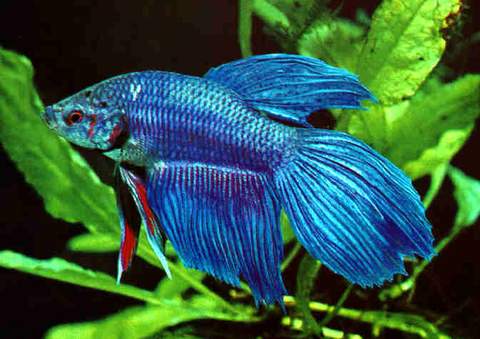
    The veiltail bettas are admired by many due to their long, flowing tails that dangle from the fins. Their magnificence is especially seen in the variety of colors they possess, such as royal blue, turquoise, emerald green, fire engine red, and orange, along with bright yellow and near purple for those looking for something different. The male fish boast spectacular colorings and elongated tails versus female fish that are more plain and have shorter fins.

    ๐Ÿ  Mark’s Take: Those gorgeous fins are also more delicate than most people realize. Veiltails aren’t as hardy as plakat bettas. Those short-finned varieties can handle a lot more. With veiltails, water flow is a bigger deal than it might seem. Even a moderately strong filter output can stress them or cause fin damage over time. I keep a close eye on fin length and watch for any fraying, since that’s the first sign that something is off, whether it’s flow, water quality, or early fin rot.

    Itโ€™s very important when taking care of your precious veiltail betta to watch out for any signs or changes in coloration which might hint at stress levels being too high, or there is underlying health issues requiring medical attention quickly if you hope to provide a healthy life environment.

    Size

    Veiltail bettas range from 3.8 – 7.6 cm (1.5 – 3 inches) in length, with the males being larger than females of this type of fish species. They are the usual size compared to other betta fish species. You may be able to find a giant subtype breed, but most giant types are created from other variants, not the Veiltail. Giants can grow up to 5 inches in length.

    Lifespan

    Caring for veiltail bettas correctly can extend their lives to a span of anywhere from two up to five years or even longer. Establishing and maintaining the ideal environment, providing them with balanced meals, and routinely performing tank maintenance are all key elements in ensuring they remain healthy, which is essential for prolonging the friendship youโ€™ll have with your beautiful fish.

    Behavior And Temperament

    Want a centerpiece fish for a nano tank? Get a betta. Want a peaceful community schooler? Get ember tetras instead. Want low maintenance? Get neither. Both need real care.

    Veiltail bettas are a popular choice for aquarium pets due to their peaceful and calm personalities. They can become aggressive when around other male veiltails in particular. To ensure your tank environment is stress-free, itโ€™s important to select suitable non-aggressive species as companions (more on this later in the post). This helps reduce any potential aggression between fish and encourages harmony among the inhabitants of your aquarium so that everyone remains healthy and happy.

    Veiltail Betta Care

    To ensure a healthy and comfortable living space for your veiltail betta, proper care requires creating an appropriate tank setup with suitable decorations as well as controlling the vital water parameters. These details will play a major role in keeping them healthy and contented.

    The following sections explain how to construct their home properly, pick out adequate furnishings, and regulate essential environmental conditions. All of which are necessary elements for providing the best environment possible for your beloved veiltail betta fish!

    Some advice on how to accommodate them with other fish includes providing plenty of cover such as plants which will create distinct territories lessening any aggression. Keeping male bettas separate from each other so fights donโ€™t occur and selecting tankmates that have similar water temperature requirements along with pH levels. Finally, monitoring all activity carefully around the tank, especially if signs suggesting belligerent behavior start arising between two species living alongside one another.

    Tank Setup And Size

    Having its own tank is essential in providing a comfortable and stress-free environment for your veiltail bettas. This allows them to show off their beautiful colors and fascinating behavior, as well as preserve good health. When setting up the aquarium, it must have at least 4-5 gallons of capacity. Adding a heater will allow you to maintain an ideal temperature between 75ยฐF. 81ยฐF since these species are tropical fish by nature. Also include gentle filtration with slow flow rates that simulate natural conditions being experienced by the veiltail betta wild counterparts.

    Editor’s Choice!
    Fluval Spec V

    The Best Betta Fish Tank

    Best filtration, best light, perfect size and with everything you need to get started. It was made for Bettas!

    Buy On Petco Buy on Amazon

    Important Tank Conditions (Parameters)

    Note while Betta fish do have a labyrinth organ to survive in low oxygen environments, it will still be stressed in poor water. Keep track of these parameters below and consider making a water change if they exceed any of these recommended levels:

    Decorations

    For your veiltail bettaโ€™s tank, make sure to pick out gentle decorations that donโ€™t harm its vulnerable fins. Providing suitable objects can encourage natural behavior and improve the health of your fish by offering stimulating activities – think logs, living or silk fake plants, as well as almond leaves. Creating a pleasant atmosphere for them is key!

    Important Water Parameters

    In order to keep your veiltail betta healthy, it is critical that the water parameters remain within certain ranges. The ideal temperature should be between 75-81ยฐF, with a pH level of 6.8-7.5 and general hardness at 5-20 GH. Regular testing can ensure any potential issues are identified promptly so they is resolved quickly for a safe habitat environment for your fish friend! Monitoring these settings will help you make sure everything stays perfect in this corner of their universe!

    Feeding

    A varied diet is essential for veiltail bettas to get the right amount of nutrients. Feed them twice a day with betta pellets, live food like blood worms and brine shrimp or frozen versions of these foods, as well as insect larvae such as daphnia. Keep in mind not to overfeed since this can lead to several health concerns later on down the line. A carefully balanced meal will help keep your fish happy and healthy overall.

    Choosing Tank Mates for Your Veiltail Betta

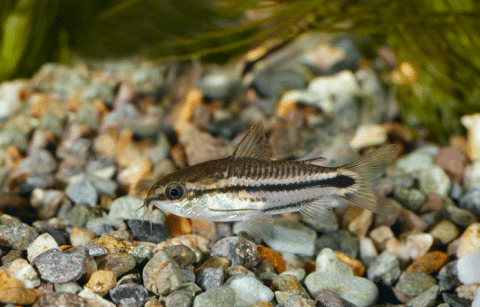
    Pygmy Cory

    When selecting tank mates for your veiltail betta, it is important to consider the fishโ€™s temperament and choose suitable companions. The following are all great non aggressive options, as they will help create a peaceful atmosphere in the aquarium:

    These are just several possibilities for a tank mate. I have a better list in our best betta tank mates post.

    Male bettas often regard these types of fish with hostility. Picking compatible tank mates such as those mentioned before can provide an overall stress free habitat ideal for all your aquatic friends, including your beloved veiltail betta!

    Bad Tank Mates

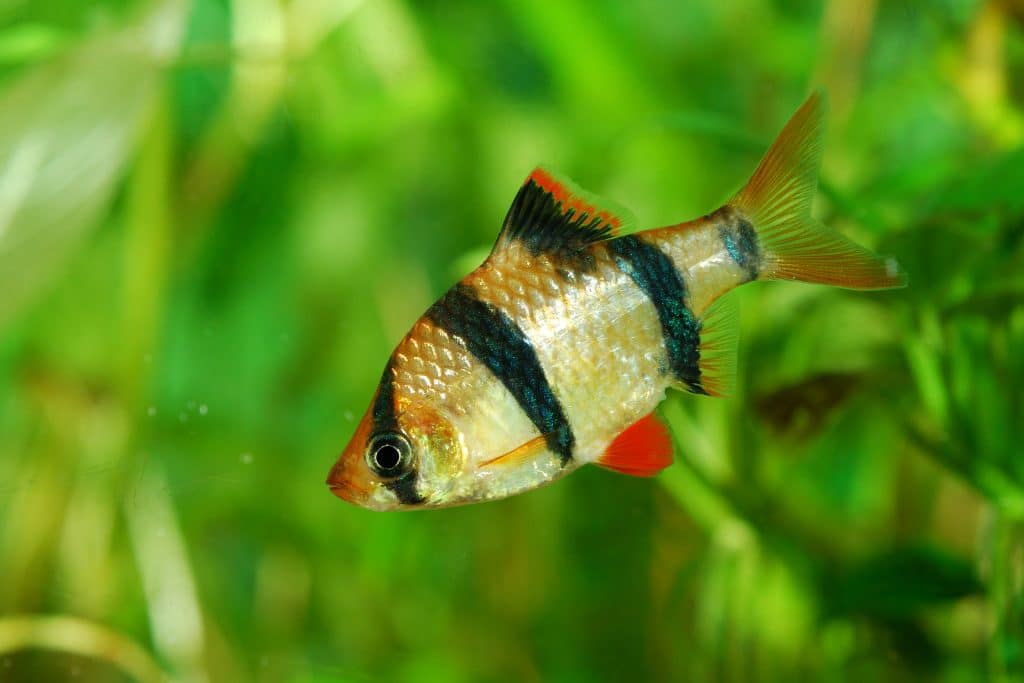
    Tiger Barb Fish

    To ensure peace within the tank environment, steer away from brightly colored or long finned species. After that, avoid these other species as your betta will be bullied or eaten by them:

    Is the Veiltail Betta Fish Right for You?

    Before you add a Veiltail Betta Fish to your tank, here is an honest assessment of what you’re signing up for. I’d rather you know exactly what to expect now than find out the hard way after you’ve already bought one.

    • Experience level: Veiltail Betta Fishs are best suited for intermediate to advanced keepers. They have specific requirements that can overwhelm beginners.
    • Tank size commitment: You’ll need at least 5 gallons, though bigger is always better. Make sure you have room for the tank before buying.
    • Tank mate planning: Veiltail Betta Fishs is territorial, so plan your community carefully. Not every fish will work as a tank mate.
    • Maintenance demands: Expect regular water testing and consistent water changes. Veiltail Betta Fishs are sensitive to parameter fluctuations.
    • Cost to keep: Veiltail Betta Fishs are reasonably affordable. Standard equipment and quality food cover most needs.
    • Time investment: Beyond daily feeding and weekly maintenance, regular observation is the best way to catch health issues early.
    • Long-term commitment: With proper care, Veiltail Betta Fishs can live up to 4 years. Make sure you’re ready for years of consistent care.

    Breeding

    If youโ€™re keen on breeding veiltail bettas, a separate tank should be installed in order to guarantee the safety and comfort of the mating pair. Bubble nests are a key component needed for breeding to occur. The male needs to first build its bubble nest then will attract a female. When she lays her eggs, it is up to the male veiltail betta to guard them and put them into his built bubble nest. To save those little ones from being eaten remove the male once the eggs hatch. The female should be removed once mating occurs, as the male will chase away the female from the nest.

    For the successful raising of fry after they hatch out, we must provide an appropriate food supply and consider foods such as infusoria and baby brine shrimp until the fish are big enough to move onto regular foods.

    Common Health Issues

    Veiltail bettas are known to be hardy. Certain ailments can arise if proper care is not observed. Fin and tail rot, columnaris (mouth fungus), as well as fin rot are the main culprits. Other major diseases like vertical death hang also occur. Cleanliness in their tank environment with correct water parameters and an appropriate diet should work wonders when it comes to avoiding these possible health issues.

    Monitoring for any suspicious changes in behavior or physical appearance of your veiltail betta is essential. A healthy fish that looks cheerful will brighten up any aquarium! I have a full post on common betta fish diseases that you can read up on.

    Purchasing

    Find these betta fish is easy as they are very common in virtually any pet store you visit. However, because they are so common, they can also be sold in poor conditions. If you want a rarer variety, visit a specialized local pet store or consider visiting an online merchant.

    WYSIWYG Available!
    Betta Fish

    Use Coupon Code ASDFISH at Checkout

    Betta Fish are one of the most beautiful varieties of freshwater fish available in the hobby. Easy to care for with plenty of varieties!

    Buy Premium Varieties Buy On Petco Online

    When looking at your potential betta pet, look out for the following:

    • White spots
    • Torn up fins
    • Heavy breathing
    • Obvious loss of colors

    Also, note that specialized fish stores will not put bettas in tiny containers but will have them in separated out tanks. These are better conditions for them to sell as the water is filtered, and the fish is monitored better at the store. My recommendation would be to purchase bettas from a store that sells these fish in separate tanks versus tiny containers, as there is a better chance for you to find a healthy specimen.

    โš ๏ธ Mark’s Tip on Buying: Because veiltails are so common, you’ll often find them sold in individual cups at big box stores. I personally prefer not to buy bettas kept in cups. A betta that’s been housed in a proper tank before purchase is going to be in significantly better condition. When you visit a specialized fish store and see bettas in separated tanks, those are almost always better buys. Look for active fish with intact, fully spread fins and no signs of lethargy or clamping.

    Frequently Asked Questions

    Are veiltail bettas aggressive?

    Veiltail bettas have a relatively low level of aggressiveness, making them favored among those who like to own betta fish. Although they are territorial and is hostile to other creatures in the tank, they are less aggressive than other types of betta fish.

    What is the lifespan of a female veiltail betta fish?

    A female veiltail betta fish can live for a maximum of five to seven years if it is provided with adequate care, which includes feeding them properly and keeping the tank clean. The typical lifespan be 2-4 years. By making sure that your veiltail betta gets everything they need, you are increasing their chances of living longer and healthier lives.

    How big do veiltail fish get?

    Veiltail fancy goldfish can measure between 2-3 inches in length. There are sometimes giant varieties available that could grow as large as 5 inches in length.

    Which betta is more aggressive?

    Plakat bettas, bred for combat and known to be notably hostile due to their temperamental traits, are the most aggressive variety of Bettas. They exhibit more aggress tendencies compared with other breeds.

    How can I tell if my veiltail betta is stressed or sick?

    Monitoring the color and swimming behavior of your veiltail betta is important, as any changes in either is signs that they are stressed or unwell. Heavily breathing and unhealthy looking fins are other signs to watch out for.

    How the Veiltail Betta Fish Compares to Similar Species

    If you’re considering a Veiltail Betta Fish, you’ve probably also looked at the Crowntail Betta. Both fill similar roles, but the differences matter when planning your tank. The Veiltail Betta Fish has its own distinct personality and care needs. In my experience, the choice often comes down to the specific community you’re building and whether your water parameters favor one over the other.

    The Halfmoon Betta is worth considering as well. While the Veiltail Betta Fish and the Halfmoon Betta share some overlap in care, they bring different energy to a tank. If you have the space, keeping both in separate setups gives you a great chance to compare their behavior firsthand.

    Closing Thoughts

    Want a centerpiece fish for a nano tank? Get a betta. Want a peaceful community schooler? Get ember tetras instead. Want low maintenance? Get neither. Both need real care.

    To sum up, veiltail bettas are remarkable creatures sound should be appreciated like any other betta fish breed. Through investigating their origin, habitat needs, behavior and care requirements, we can make sure they have an ideal home environment for them to prosper in. With the correct maintenance of a proper diet and set up your betta will provide you with moments filled with its special beauty as well as amazing behaviors.

    Have you kept this Betta before? If so, let us know in the comments below. We would love to learn more about your experiences with them. Until next time fish keepers!


  • Albino Bristlenose Pleco Care Guide: What You Need to Know Before You Buy

    Albino Bristlenose Pleco Care Guide: What You Need to Know Before You Buy

    The Albino Bristlenose Pleco is the same fish as a regular bristlenose with a color mutation. Same care, same size, same temperament.

    Do not pay a premium for the albino variant expecting different behavior. It is the same fish in a different color.

    Table of Contents

    The Albino Bristlenose Pleco is one of the most commonly misunderstood fish in the aquarium trade. Most people buy one thinking it will clean their tank. It will not. After 25 years of keeping plecos, I know exactly what this fish actually needs and what surprises first-time owners.

    Plecos do not survive on algae alone. Period.

    This is the same fish as a standard bristlenose with a color mutation. Same care, same diet, same temperament. If you already know bristlenose care, you know albino care.

    Depending on the species, this pleco lives 10 to 20 years and may reach sizes that demand a tank upgrade. Think long-term before bringing one home.

    The pleco you see hiding behind the filter during the day is a completely different fish at midnight.

    What Most Care Guides Get Wrong About Albino Bristlenose Pleco

    The most common misconception about Albino Bristlenose Plecos is that they survive on algae alone. They need sinking wafers, blanched vegetables, and driftwood for fiber. The other myth is that albino variants are more delicate than regular bristlenose. In my experience, they’re equally hardy once acclimated.

    The Reality of Keeping Albino Bristlenose Pleco

    Algae is not a diet. Most plecos are omnivores or wood-eaters, not algae eaters. Relying on tank algae to feed your pleco is a recipe for a starving fish. You need to provide sinking wafers, blanched vegetables, and in many cases driftwood for proper nutrition.

    Size varies dramatically by species. A bristlenose stays around 5 inches. A common pleco hits 18 to 24 inches. A royal pleco reaches 17 inches. Knowing the adult size of your specific species before buying is essential.

    They are nocturnal and territorial. Most plecos hide all day and come out at night. If you have multiple plecos, they need separate hiding spots or they will fight. Territorial disputes between plecos cause real injuries.

    Biggest Mistake New Owners Make

    Buying a “pleco” without knowing the species. Common plecos sold at chain stores as 2-inch juveniles grow to nearly 2 feet. Most people do not have a tank large enough for the fish they just bought.

    Expert Take

    Driftwood is not optional for most pleco species. It aids digestion and provides essential fiber. If your pleco does not have wood to rasp on, its long-term health will suffer.

    Key Takeaways

    • Albino Bristlenose Plecos are peaceful, algae eaters that need moderate water flow and a balanced diet for optimal health.
    • They can grow to around 3-5 inches in length with the right care and have a lifespan of up to 7 years.
    • Suitable tank mates include guppies, platys, endlers & corydoras catfish – but avoid African cichlids & large aggressive fish!
    • They originate from South America and prefer a pH range of 6.5 – 7.5

    Species Overview

    Scientific Name Ancistrus sp.
    Common Names Albino Bristlenose Pleco, Albino Bushynose Pleco, Bushy Nose Pleco
    Family Loricariidae
    Origin South America (Amazon River)
    Diet Omnivore
    Care Level Easy
    Activity Slow to Moderate
    Lifespan 5 to 10 years
    Temperament Peaceful (males are territorial against other males)
    Tank Level Bottom Dwellers
    Minimum Tank Size 20 gallons (76 liters)
    Water Temperature Range 72ยฐF to 86ยฐF (22ยฐC to 30ยฐC)
    Water Hardness 6 -10 dKH
    pH Range 6.5 – 7.5
    Filtration/Water Flow Moderate
    Water Type Freshwater
    Breeding Egg layers
    Difficulty to Breed Moderate
    Compatibility Community fish
    OK, for Planted Tanks? Yes

    Classification

    Order Siluriformes
    Family Loricariidae
    Genus Ancistrus
    Species A. Cf. Cirrhosus (albino variant)

    Understanding Them

    Albino Bristlenose Plecos, also known as bristlenose pleco ancistrus, are a peaceful species of freshwater fish native to South America. With their rare albino coloration and low maintenance requirements making them desirable additions to tanks around the world, these aquatic creatures make up for their sparse wild population by helping clean algae from aquariums with ease. Despite being uncommon in nature due to its restricted geographic range and susceptibility to predators, this does not take away from the appeal of having Albino Bristlenose Plecos living among oneโ€™s tank occupants.

    ๐Ÿ  Mark’s Take: What I appreciate about albino bristlenose plecos is how versatile they are. And one thing that surprises a lot of keepers is that they actually do well in African cichlid tanks. The higher pH those setups run doesn’t faze them, and their armored bodies help them hold their own. One thing they genuinely need that often gets skipped: driftwood. Bristlenose plecos rasp on wood as part of their digestion, so a piece of driftwood in the tank isn’t just dรฉcor. It’s important for their gut health. Their coloring is also a real standout; that white and yellow is eye-catching in any tank.

    Origin And Habitat

    These adaptable tropical freshwater fish, which originate from the streams and rivers of South America, are easily acclimatized to different kinds of tank water conditions. They make great inhabitants for aquariums in homes around the globe. Itโ€™s important that their natural habitat is taken into consideration when setting up a tank. Moderate levels of flow should be maintained as these aquatic creatures prefer this kind of environment over anything else.

    To replicate optimal living standards, itโ€™s best to stick with parameters like pH 6.5 – 7.5.

    Fun Fact: "Some Ancistrus can ingest atmospheric air and utilise it through their highly vascularised stomachs. In extreme cases, they can supplement their oxygen intake by swallowing air1." 

    Appearance

    Bristle Nose Pleco

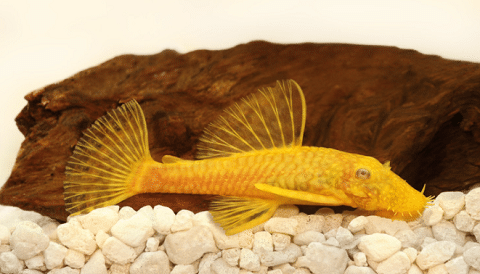
    Albino bristlenose plecos, also known as albino bristlenose catfish, possess a marbled body. To distinct reddish eyes and tentacle-like appendages named โ€œbristlesโ€ that offer protection. Males have longer, more visible bristle tentacles than females. These intriguing creatures are different from other pleco fish species due to their unique looks. The common bristlenose is brown with lighter spots for added interest. These fish will get brighter the healthier they are.

    The fish has a pair of long abdominal fins that are used to land on surfaces and rest. The pectoral fins can also stretch to the surface, make it appear that these fish have legs that can stand them up on surfaces.

    Average Size

    These entrancing fish reach and an adult size of 3-5 inches in length, making them an ideal choice for personal aquariums because they can thrive in tanks of various sizes without taking up too much space.

    Lifespan

    For albino bristlenose plecos, a balanced diet and the right environment will lead to them having an extended life span of up to seven years in your aquarium. On average, these fish live for around five years with proper care.

    Caring for Your Albino Bristlenose Pleco

    To ensure your albino bristlenose plecos live healthy, a balanced diet and a proper environment are paramount components of caring for them. Creating an appropriate habitat with optimal water quality is essential to provide adequate care. Let’s go into tank size, parameters, and the setup itself to learn more about what they need.

    Tank Size Requirements

    For a single Albino Bristlenose Pleco, it is suggested that you use at least 20 gallons for its tank. However, for a community tank setup, my recommendation would be to provide them a 30 gallon tank at a minimum so they have plenty of space. A long tank shape works best in order to maximize the surface space. Picking an appropriate substrate ensures their tentacles remain unharmed as they feed on food found inside the space. Substrates like sand, aquasoil, and gravel work well.

    โš ๏ธ Size Is the Most Common Mistake: Albino bristlenose plecos are regularly sold when they’re small, but they grow to 4. 5 inches. And that adds up fast in a smaller tank. I’ve seen too many people put these in 10-gallon setups thinking they’d stay small. Stick to 20 gallons as a minimum for one fish, and plan for 30+ if you want to breed them. Getting this right from the start saves a lot of rehoming headaches later.

    Water Quality And Tank Parameters

    When it comes to parameters, it is not only important to have the correct parameters, but it is also important to keep them stable. Aim for a pH level between 6.5 and 7.5, a temperature range of 72 – 78ยฐF, with hardness between 6-10 dKH would be optimal for your fishy friend!

    Also, maintain the following nutrient parameters to keep stress low:

    Remember, with these fish, it’s all about stability. Maintain your tank conditions and parameters. Fluctuations will have a negative effect on your fish’s health.

    Creating A Suitable Environment

    Creating a comfy habitat for the Albino Bristlenose Pleco is possible with driftwood, hideaways and objects that have a smooth surface. To make sure theyโ€™re contented and without stress, provide hiding spots such as caves, PVC pipes or other decor items.

    These fish take pleasure in basking around on tank bottoms, which means surface space is highly valued. This is why longer tanks are best suited for them.

    Feeding

    It is essential to feed your Albino Bristlenose Pleco a balanced diet in order for them to remain healthy and content. This aquarium species has an omnivorous appetite, largely consisting of algae and plants. There are a few things I want to address here:

    • Bristlenose plecos will eat surface algae and will eat food that falls to the bottom
    • They will not eat poop – no fish eats poop
    • Algae and leftover food is not enough for them. Cleaner fish need other foods to survive
    • Too much protein in their diets will lead to bloat and other health complications for your Pleco

    Plant Based Diet

    Albino bristlenose plecos naturally consume algae and vegetation in their habitat. In an aquarium, driftwood is used as a source of sustenance for them. Blanched vegetable matter like carrots, cucumbers, zucchini, peas, cabbage leaves, or even parboiled lettuce are great alternatives to provide essential nutrients.

    Of all the vegetables listed, I’m the biggest fan of Zucchini. Albino bristlenose plecos go nuts for them and will happily chew them until there is nothing left. It’s the best set it and forget it food you can use for them aside from wafters.

    Spealing of, adding special types of wafers made from algae is also beneficial for the albino bristlenose plecosโ€™ diet overall.

    Great For Bottom Feeders!


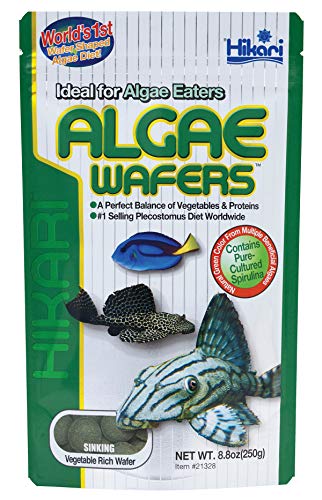
    Hikari Algae Wafers

    Algae wafers are a great way to directly feed your bottom feeding fish. They are especially effective for larger fish like plecos


    Buy On Amazon


    Buy On Petco

    Protein Sources

    Albino Bristlenose Plecos require a mostly plant based diet, with occasional bits of protein to maintain their health. Examples are live bloodworms, black worms, and brine shrimp. It is important to monitor these fish in order for them to be fed adequately without overfeeding, which can lead to digestive issues due to gastrointestinal blockages.

    Behavior And Compatibility

    Albino bristlenose plecos are peaceful fish that is easily kept in a community tank alongside other non-aggressive species. It is important to keep an eye on aggressive or similarly shaped types of fish as they may pose some stress and rivalry for resources among the inhabitants.

    Bristle plecos are noctural fish. They will come out more at night to feed and will take their time during the day to rest in caves or under shelter provided for them. You can use this to your advantage to feed them wafers when your other fish are asleep in the tank.

    Suitable Tank Mates

    Fortunately, there are many great fish compatible with albino bristlenoses like:

    As long as the tankmates aren’t nippy or territorial to the same bottom space of the tank you have a good chance for them to be compatible tank mates

    Bad Tank Mates

    Itโ€™s best to avoid certain species such as African cichlids, angelfish or goldfish due to potential competition around food and territorial disputes. Large aggressive fish should also be avoided as they may attack or attempt to eat the smaller Albino Bristlenose Pleco. Stick to large pleco species for these types of fish instead.

    Also, avoid any fish that are bottom dwellers. Creatures like crustaceans and shrimp will create territorial disputes. Some cichlid species also prefer to be at the bottom, like shell dwelling dwarf cichlids which will become aggressive towards your pleco fish. However, snails are perfectly safe with these plecos. They will not brother or attempt to eat them.

    Is the Albino Bristlenose Pleco Right for You?

    Before you add a Albino Bristlenose Pleco to your tank, here is an honest assessment of what you’re signing up for. I’d rather you know exactly what to expect now than find out the hard way after you’ve already bought one.

    • Experience level: Albino Bristlenose Plecos are best suited for intermediate to advanced keepers. They have specific requirements that can overwhelm beginners.
    • Tank size commitment: You’ll need at least 20 gallons, though bigger is always better. Make sure you have room for the tank before buying.
    • Tank mate planning: Albino Bristlenose Plecos is territorial, so plan your community carefully. Not every fish will work as a tank mate.
    • Maintenance demands: Expect regular water testing and consistent water changes. Albino Bristlenose Plecos are sensitive to parameter fluctuations.
    • Budget reality: Keeping Albino Bristlenose Plecos costs more than typical setups. Budget for ongoing costs, not just the initial purchase.
    • Time investment: Beyond daily feeding and weekly maintenance, regular observation is the best way to catch health issues early.
    • Long-term commitment: With proper care, Albino Bristlenose Plecos can live up to 10 years. Make sure you’re ready for years of consistent care.

    Breeding

    Breeding albino bristlenose plecos is a rewarding experience, especially during the winter months when they spawn. Knowing how to identify their genders and provide them with ideal spawning conditions are important aspects of successfully breeding these fish.

    Here are a few points about the process when it comes to breeding these fish:

    • Fish need to be at least 1 year old in order to breed
    • You will need some form of cave for breeding to take place as the male will need to claim territory
    • Once the male claims a cave, he will attempt to attract the female to it
    • During this time, the female will eat more to gain weight and produce eggs
    • The male will then attract the female and trap her inside the cave
    • The female will then lay the eggs in the cave where the male will guard them until they hatch

    Once the fry venture out of the cave, they is fed the same foods as their parents. The best food to provide would be Zucchini, as the fry will happily eat it.

    A breeding tank should be around 30 gallons in size to give space needed to raise fry. Note that plecos will only guard the eggs until they hatch. After the fry hatch, they are on their own. It is ideal to remove the adults once the fry hatch so that they is raised without the parents. To roughly takes 10 days for the eggs to hatch once they are laid in the cave.

    Note that young fish are more prone to nutrient and pH swings. Extra care should be taken to ensure tank parameters stay ideal.

    Identifying Gender

    It is possible to tell the gender of a fish based on bristle length, with males displaying longer and more obvious bristles than females. Males also have a lot more bristles. The differences between the two will become more obvious as they get older.

    To ensure successful breeding, itโ€™s suggested that one male be matched up with one or two females: this ratio increases chances for healthy offspring from the spawning process. Knowing how to identify your fish by gender can help you achieve these results.

    Common Health Problems

    Albino Bristlenose Plecos is resilient creatures, yet they may still contract diseases if their habitat is not adequately maintained. Keeping a watchful eye on the fish and controlling water quality is key to protecting them from bacterial, fungal, or parasitic infections caused by high ammonia or nitrate concentrations. Thus, itโ€™s essential that regular cleanings of tanks with appropriate levels of these elements in order to support health in Albino bristlenose species (and other types of fish).

    Some common diseases include:

    Also, look for warning signs from your pleco, such as them going to the surface to gulping air. This is them using their breathing ability for survival, which was mentioned earlier. Plecos should not be venturing to the surface unless they are trying to eat something. If you see this behavior, this is a warning sign that parameters are off or there is a lack of oxygen in the tank.

    Frequently Asked Questions

    How big do albino Bristlenose plecos get?

    The Albino Bristlenose Pleco, not growing larger than four inches in a home aquarium, is capable of reaching up to six inches max size in some cases.

    What size tank for albino Bristlenose catfish?

    For optimal breeding, keep your albino bristlenose catfish in a 30-gallon tank with water temperature between 73 and 85 degrees Fahrenheit and pH level of 7.

    How long do Bristlenose plecos live for?

    Your bristlenose pleco is expected to live up to 10 years if it is cared for properly. Taking the appropriate measures with regard to your fishโ€™s care will ensure that you get rewarded with its long lifespan.

    What color are albino Bristlenose plecos?

    The Albino Bristlenose Plecostomus is a freshwater fish species native to South America that has whisker like appendages around its mouth and nose, which help it search for food. It is purely white or with a yellowish hue with red eyes.

    What do Albino Bristlenose Plecos eat?

    Albino Bristlenose Plecos mainly consume algae and plant matter, sometimes supplemented by a bit of protein like bloodworms or brine shrimp. They primarily are plant based and enjoy bleached vegetables like Zucchini.

    Are Albino Plecos Rare?

    Yes, they are pretty rare in the wild. Their genetic mutation makes them easy to spot for predators so they are not as numerous as in the the aquarium hobby.

    How the Albino Bristlenose Pleco Compares to Similar Species

    If you’re considering a Albino Bristlenose Pleco, you’ve probably also looked at the Bristlenose Pleco. Both fill similar roles, but the differences matter when planning your tank. The Albino Bristlenose Pleco has its own distinct personality and care needs. In my experience, the choice often comes down to the specific community you’re building and whether your water parameters favor one over the other.

    The Clown Pleco is worth considering as well. While the Albino Bristlenose Pleco and the Clown Pleco share some overlap in care, they bring different energy to a tank. If you have the space, keeping both in separate setups gives you a great chance to compare their behavior firsthand.

    Closing Thoughts

    Want a small pleco that stays small? Get a bristlenose or clown pleco. Want a show pleco? Get a gold nugget or zebra pleco. Want an algae eater? Get otocinclus. Plecos are not algae cleaners.

    In conclusion Albino Bristlenose Plecos are a charming species of freshwater fish that make an excellent addition to any aquarium. Owing to their attractive looks and amiable character in combination with the low maintenance upkeep required for them. Theyโ€™re ideally suited for both experienced aquarists as well as those just beginning out.

    Have you kept these fish before? Let us know about your experience in the comments below. Thank you for reading and see you next time!

  • 15+ Tall Aquarium Plants: My Favorites and What to Know Before You Plant

    15+ Tall Aquarium Plants: My Favorites and What to Know Before You Plant

    Vallisneria is my favorite tall aquarium plant. I’ve used it more than any other background plant over the years. There’s something about a dense wall of flowing green that just looks right in a freshwater tank, and tall plants deliver that better than anything else. In this guide I’ll share my top picks, what I’ve actually planted and grown, and a few things beginners consistently get wrong before they’ve learned the hard way.

    Key Takeaways

    • Some examples of tall aquarium plants include Amazon Sword, Water Wisteria, Vallisneria, Cabomba, and Hornwort
    • Tall aquarium plants are ideal for the background of the aquarium because they can create a ‘living wall’ that adds depth and hides cables, hardware, and other stuff behind the tank.
    • Most tall aquarium plants grow rooted in the substrate, but some can be attached to the hardscape.
    • Many tall aquarium plants grow fast with minimal care, but some prefer bright light, added CO2, or specific water temperatures and pH levels. Research each plant before planting it in your tank to make sure it will be a good fit.

    15 Tall Aquarium Plants

    Are you ready to learn about 15 awesome tall aquarium plants? Each of these hand-picked choices can grow to over a foot tall under the right conditions (video source from our Channel), just make sure to compare their light and care requirements to make the best choice for your tank.

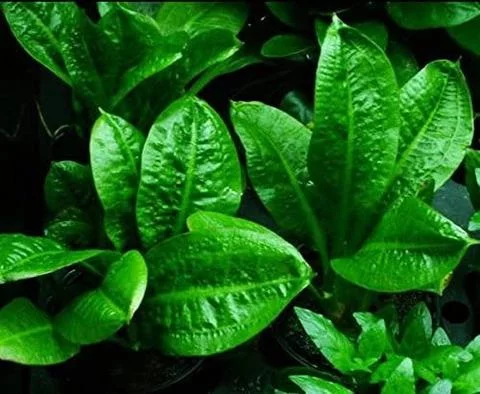
    1. Amazon Sword

    Amazon Sword

    A classic background aquarium plant. Grows large and will be a centerpiece in your aquarium

    Click For Best Price Buy On Amazon
    • Scientific name: Echinodorus sp.
    • Family: Alismataceae
    • Origin: Brazil
    • Difficulty: Easy
    • Light: Moderate
    • Substrate requirement: Yes
    • Fertilizer type: Root tabs/ aquarium soil
    • CO2 requirement: No

    Amazon Sword is a beautiful rosette plant that grows rooted in the substrate. This tall, large-leaved plant is a popular choice for the background of medium-sized tanks, although it can be used in the mid-ground of larger aquariums.

    Amazon swords are great for beginners because they grow at a fast but manageable rate and do not need high lighting conditions or carbon dioxide. Choose these sword plants for a dense, tropical look in your freshwater aquarium.

    2. Water Wisteria

    Water Wisteria

    An easy to grow and great beginner floating plant to try!

    Click For Best Price Buy Tissue Culture
    • Scientific name: Hygrophila difformis
    • Family: Acanthaceae
    • Origin: Asia
    • Difficulty: Easy
    • Light: Low/moderate
    • Substrate requirement: Recommended
    • Fertilizer type: Liquid
    • CO2 requirement: No

    Water wisteria is a fast-growing plant that can be rooted in the substrate or allowed to float in the water column. Its leaves have great texture and interesting roots grow from the nodes to collect nutrients from the water column. This bright green plant makes a great background plant if planted in groups at the back of the tank.

    3. Vallisneria Spiralis

    • Scientific name: Vallisneria spiralis
    • Common names: Straight vallisneria, tape grass
    • Family: Hydrocharitaceae
    • Origin: Europe, Africa, and Asia
    • Difficulty: Moderate
    • Light: Moderate/high
    • Substrate requirement: Yes
    • Fertilizer type: Root tabs/ aquarium soil
    • CO2 requirement: Recommended

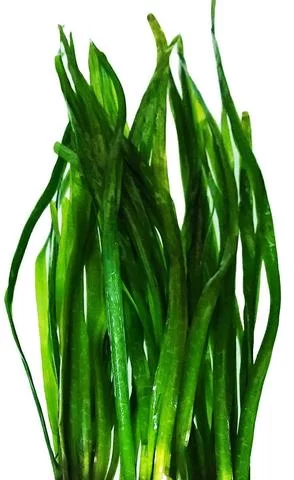
    Straight Vallisneria is an excellent background plant for medium-sized aquariums since it grows to about 2 feet tall. This plant will not grow up out of the water in shallow tanks but rather bend over to grow along the surface, creating a very attractive effect.

    Vallisneria grows rooted in the substrate and should be grown in a fertile substrate to do its best. It grows fast and does require some maintenance since it spreads across the bottom by runners.

    4. Vallisneria Americana

    • Scientific name: Vallisneria americana
    • Common names: Jungle val, wild celery, tape grass
    • Family: Hydrocharitaceae
    • Origin: Asia, Australia, South and North America
    • Difficulty: Moderate
    • Light: Moderate
    • Substrate requirement: Yes
    • Fertilizer type: Root tabs/ aquarium soil
    • CO2 requirement: Recommended

    Vallisneria americana is a tall aquarium plant that grows to about three feet in a nutrient rich substrate. Its bright green leaves may be straight or twisted but are strap-like and extend upwards toward the water’s surface.

    Jungle val is an excellent choice for the background of a large aquarium and can even survive in slightly brackish water.

    ๐ŸŒฟ Mark’s Pick: Vallisneria and Water Sprite
    Vals are my personal favorite tall background plant. I’ve used them more than anything else. They spread naturally through runners, they’re nearly indestructible, and once they’re established you’ll have a dense green wall that looks great and gives fish real cover. Water Sprite is my other go-to: it grows fast, works as both a background stem plant or a floater, and is one of the best natural nitrate consumers you can add. If you’re just getting into planted tanks, start with one of these two.

    5. Cryptocoryne Balansae

    • Scientific name: Cryptocoryne crispatula
    • Family: Araceae
    • Origin: Thailand
    • Difficulty: Easy/intermediate
    • Light: Moderate/high
    • Substrate requirement: Yes
    • Fertilizer type: Root tabs/aquarium soil and liquid fertilizer
    • CO2 requirement: Recommended

    Cryptocoryne balansae is an easy aquarium plant for the background of freshwater aquariums. It can reach a height of nearly two feet and has long, narrow leaves with an attractive wavy texture.

    This cryptocoryne shows optimum growth under high lighting and does well in good water flow. It is native to areas with naturally hard water parameters but does well in slightly acidic to slightly alkaline conditions. Like other crypts, these plants need stable water conditions to avoid suffering ‘crypt melt’.

    6. Cabomba

    • Scientific name: Cabomba aquatica
    • Common names: Fanwort, giant cabomba
    • Family: Cabombaceae
    • Origin: South America
    • Difficulty: Moderate
    • Light: Moderate/high
    • Substrate requirement: Yes
    • Fertilizer type: Liquid fertilizer
    • CO2 requirement: Recommended

    Giant cabomba is a beautiful, fine-textured stem plant with a striking pale green color. It is a hardy plant that can quickly grow to over two feet, although it does best with CO2, regular feeding, and gentle water flow. These are great background plants for larger aquariums with moderate to intense lighting.

    7. Elodea (Anacharis)

    • Scientific name: Egeria densa
    • Common names: Brazilian waterweed
    • Common names: Anacharis
    • Family: Hydrocharitaceae
    • Origin: South America
    • Difficulty: Easy
    • Light: Low/moderate
    • Substrate requirement: No
    • Fertilizer type: Liquid fertilizer
    • CO2 requirement: No

    Elodea is a very easy tall aquarium plant that is perfect for beginner aquarists. This species has a moderate to fast growth rate and can be grown in both cold water and tropical aquariums. This deep green stem plant looks best when planted in clumps at the back of the aquarium.

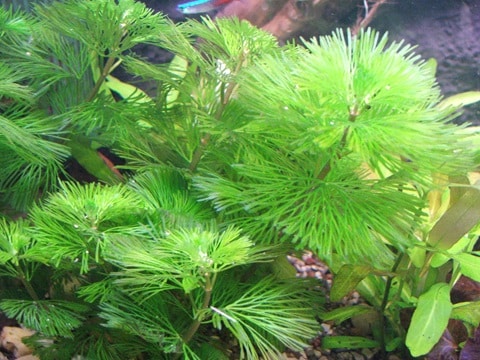
    8. Hornwort

    • Scientific name: Ceratophyllum demersum
    • Common names: Hornwort, coontail
    • Family: Ceratophyllaceae
    • Origin: South America
    • Difficulty: Easy
    • Light: Moderate
    • Substrate requirement: No
    • Fertilizer type: Liquid fertilizer
    • CO2 requirement: No

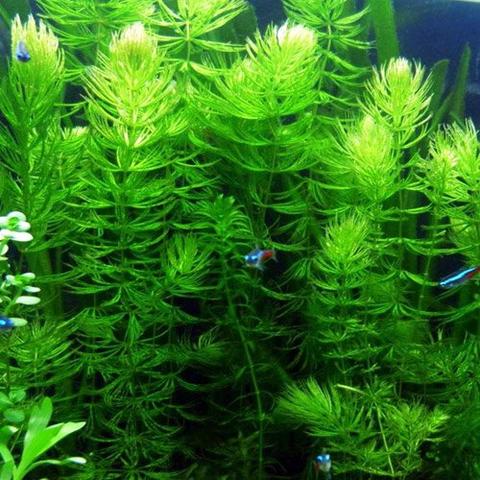
    Hornwort is a hardy, fast-growing stem plant that can reach nearly three feet tall under optimal growth conditions. It can grow floating, anchored with weights, or rooted in the substrate and it is excellent for soaking up excess nutrients in the water and outcompeting nuisance algae.

    Hornwort is tolerant to both cold and tropical water environments and its fine leaf structure makes a great environment for shy fish and breeding projects.

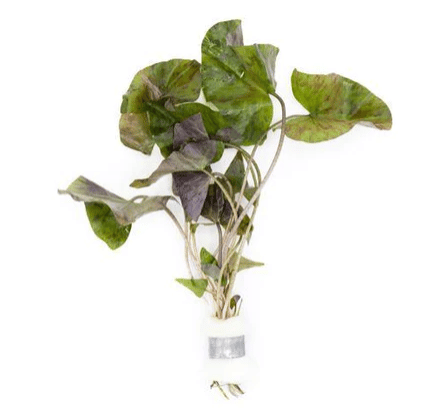
    9. Red Tiger Lotus

    Nymphaea Tiger Lotus

    The Nymphaea Tiger Lotus is a beautiful flowering plant perfect for any aquarium. This plant is easy to care for and will thrive in most aquariums.

    Click For Best Price
    • Scientific name: Nymphaea zenkeri
    • Common names: Egyptian lotus, Egyptian water lily
    • Family: Nymphaeaceae
    • Origin: Africa
    • Difficulty: Easy
    • Light: Moderate
    • Substrate requirement: Yes
    • Fertilizer type: Root tabs, aquarium soil, or liquid fertilizer
    • CO2 requirement: No

    The red tiger lotus is an interesting species that grows from a bulb rooted in the substrate. This beautiful plant has red leaves that grow both in the water and up at the surface.

    These surface floating leaves will produce flowers, but many aquarists prefer to trim off the surface growth of the tiger lotus so it doesn’t block out light to the other plants below.

    10. Ambulia

    Ambulia-Plant
    • Scientific name: Limnophila sessiliflora
    • Common names: Asian Marshweed, Ambulis
    • Family: Plantaginaceae
    • Origin: Southeast Asia
    • Difficulty: Easy
    • Light: Low-moderate
    • Substrate requirement: Yes
    • Fertilizer type: Liquid fertilizer
    • CO2 requirement: No

    Ambulia is a fast-growing stem plant that reaches a height of about 16 inches (40 cm). It has beautiful, fine-textured leaves but tends to look pretty thin unless planted in bunches.

    Fortunately, these beginner friendly background plants are very easy to propagate from cuttings, so you can do a lot with just a few bundles if you have some patience.

    11. Bacopa Monnieri

    • Scientific name: Bacopa monnieri
    • Common names: Moneywort, water hyssop
    • Family: Plantaginaceae
    • Origin: Australia, Asia, Africa, South and North America
    • Difficulty: Easy
    • Light: Moderate/high
    • Substrate requirement: Yes
    • Fertilizer type: Root tabs/ aquarium soil and liquid fertilizer
    • CO2 requirement: No

    Bacopa monnieri is a bright green, upright aquatic plant with succulent stems. These tall aquarium plants are a great choice for the midground of large aquariums or the background of medium-sized tanks.

    Bacopa monnieri can be grown in inert substrates like sand but they do prefer a nutrient-rich substrate and will happily grow above the water’s surface and even produce small white and pink flowers under the right conditions.

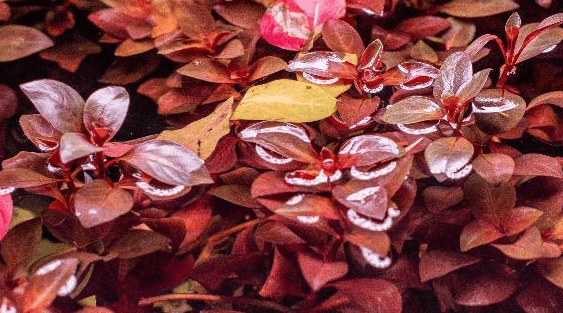
    12. Ludwigia Natans Super Red

    • Scientific name: Ludwigia palustris
    • Common names: Super red ludwigia, water purslane
    • Family: Onagraceae
    • Origin: Worldwide
    • Difficulty: Easy
    • Light: Moderate
    • Substrate requirement: Yes
    • Fertilizer type: Aquarium soil and Liquid fertilizer (preferably high iron for red coloration)
    • CO2 requirement: No

    Ludwigia Natans ‘Super Red’ is one of the few tall aquarium plants with bright red foliage. This attractive species has a fast growth rate and is ideal for beginner aquarists, although it will not develop its best colors in low aquarium light conditions or if provided with low nutrition.

    Grow this plant in a decent aquarium soil and dose regularly with an iron rich fertilizer to encourage that bright red look.

    13. Ludwigia Arcuata

    • Scientific name: Ludwigia arcuata
    • Common names: Needle leaf ludwigia
    • Family: Onagraceae
    • Origin: North America
    • Difficulty: Easy
    • Light: Moderate/high
    • Substrate requirement: Yes
    • Fertilizer type: Root tabs/ aquarium soil and liquid fertilizer
    • CO2 requirement: No

    The needleleaf ludwigia grows to about 20 inches tall, making it a good choice for the background of a medium or tall aquarium. The fine foliage of this popular aquarium plant creates great texture in a planted tank and they provide a great hiding spot for smaller fish and shrimp.

    These plants develop beautiful reddish foliage under high lighting, but they may turn green under dimmer conditions. An iron supplement is also helpful to encourage red foliage.

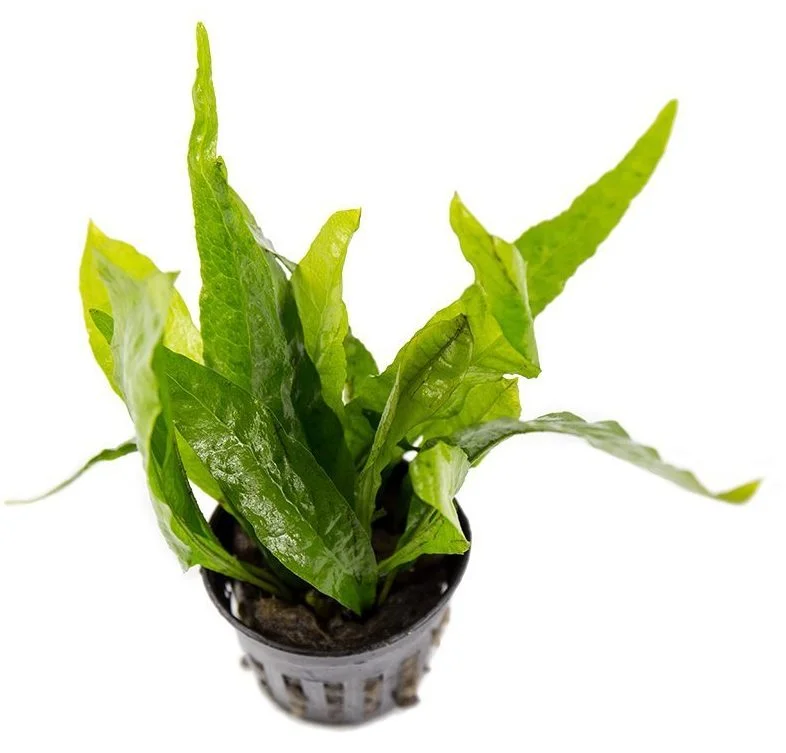
    14. Java Fern

    • Scientific name: Microsorum/leptochilus pteropus
    • Common names: Java Fern
    • Family: Polypodiaceae
    • Origin: Southeast Asia
    • Difficulty: Easy
    • Light: Low light
    • Substrate requirement: No
    • Fertilizer type: Liquid fertilizer
    • CO2 requirement: No

    Unlike the other tall aquarium plants in this list, the ever-popular Java Fern does not grow floating or send roots into the substrate. These epiphytes are found growing on wet rocks and wood in nature, so the best way to grow them in the aquarium is by tying or gluing them to a piece of driftwood or your rockwork.

    Java ferns are slow-growing, undemanding aquarium plants that can grow to about 12 inches tall. They are ideal for the midground of small to medium-sized planted tanks.

    15. Eusteralis Stellata

    • Scientific name: Eusteralis/Pogostemon Stellata
    • Common names: Water star
    • Family: Lamiaceae
    • Origin: Australia and Asia
    • Difficulty: Easy
    • Light: Moderate/high
    • Substrate requirement: Yes
    • Fertilizer type: Liquid fertilizer
    • CO2 requirement: No

    Eusteralis stellata is a tall aquarium plant that is highly sought after for its beautiful foliage. This plant is easy to grow and reaches a height of about 20 inches, making it an ideal background plant.

    This plant species grows narrow, strap-like leaves, with various colors from green to reddish. However, you will need adequate iron levels and bright light to bring out its best colors.

    Other Species

    We usually limit our lists so our posts don’t get too long. Here are other plants that we didn’t cover that you can learn more about below.

    • Anubias barteri
    • Brazilian pennywort
    • Bacopa caroliniana

    16. Lucky Bamboo

    • Scientific Name: Dracaena sanderiana
    • Skill Level: Easy
    • Size: Up to 39 inches
    • Lighting: Low
    • pH: 6.0 – 7.5
    • Growth Rate: Slow to Moderate
    • CO2 Requirement: Optional

    When considering the best tall aquarium plants to purchase, don’t overlook the understated charm of lucky bamboo. Recently gaining traction from TikTok showcases, this plant provides an impressive vertical element to your aquatic setup, inviting your fish to meander through its towering stalks.

    Its robust nature and undemanding care needs make it a favored choice, particularly for its ability to prosper in ambient light alone. Ideal for aquarists seeking a low-light-compatible yet tall plant, lucky bamboo simply requires its leaves to remain above the waterline to thrive.

    Planted Tank Benefits

    Are you still wondering whether live plants are a good idea for your tank? Check out these pros and cons before you make the final decision.

    Pros

    • Tall plants create more depth in your aquascape and can be used to cover the background of your tank or hide equipment like heaters, filters, and cables
    • Live plants add oxygen to the water, creating a healthier environment for your fish and other aquatic pets
    • Tall aquarium plants create a great hiding place for shy fish and shrimp
    • Fast-growing stem plants like water sprite, ambulia, and hornwort are excellent for soaking up excess nutrients in the water and outcompeting nasty algae.

    Cons

    • Live plants need decent lighting and adequate nutrient levels to thrive
    • Omnivorous and herbivorous fish like goldfish and silver dollars will eat and damage live plants
    • Fast growing species may need regular trimming, and plants like vallisneria that spread by runners can cover the bottom of your tank if you don’t keep them in check

    Growing Them

    Tall aquarium plants tend to be very easy to grow. However, each species has its own preferred growing conditions. Let’s take a quick look at the basics of aquarium plant care to get you started in the right way.

    โš ๏ธ Three Mistakes I See With Tall Aquarium Plants: First, people underestimate how large they get. vallisneria can hit 3+ feet and take over a small tank. Match the plant to your tank size. Second, most tall plants. especially stem plants. are heavy feeders and will stall or melt without regular fertilization. Don’t skip ferts and expect them to thrive on fish waste alone. Third, substrate matters more than most guides admit. Root-feeding plants like swords and vals need a nutrient-rich substrate or root tabs to perform at their best.

    Substrate

    Depending on their species, aquarium plants can either float in the water, attach themselves to rocks and driftwood, or grow roots down into the substrate.

    Most popular aquarium substrates like gravel and sand are inert, which means they do not contain or release any nutrients. Fast growing stem plants will happily soak up the nutrients they need from the water column, but root-feeding species like Amazon sword and vallisneria will need access to nutrients at their root zones.

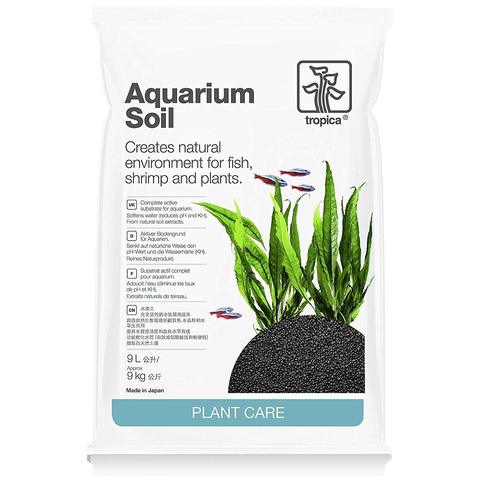
    Tropica Aquarium Soil

    A top grade planted tank substrate from Europe. More natural looking than ADA Soil

    Click For Best Price Buy On Amazon

    You can grow these plants in a nutrient-rich aquarium soil or simply insert root fertilizer tablets around their root zone in a sand substrate.

    Lighting

    Plants need sunlight to grow in nature, but exposing a fish tank to direct sunlight can cause algae problems if you don’t have enough healthy plant growth. The solution is to grow your plants under artificial lights that are designed for planted tanks. Here are some tips on choosing the right lighting:

    • Light intensity decreases with depth, so deep aquariums need stronger lighting than shallow tanks
    • Fluorescent and LED lighting are the best choices for aquariums because they do not create excessive heat and they are relatively energy-efficient
    • Choose a lighting system with a spectrum/temperature of about 5000 – 7000K for a natural looking color and healthy plant growth
    • Your aquarium lights must run on a timer to simulate a natural night/day cycle. about 8 hours per day is recommended.

    For an easy go to, I recommend Current USA’s Serene RGB lights. For more complex and advanced setups, others will turn to T5s, but that is outside of the scope of this post. I prefer to stick to easier to care for plants for ease of success.

    Best Value
    Serene RGB Pro LED

    Current USA’s offering into aquascaping is an incredible value. Spectrum, spread, easy to program and great PAR output.

    Click For Best Price Buy On Amazon

    Feeding

    Plants need nutrients to live and grow. Depending on their species, they may get the nutrients they need from the water, the substrate, or a combination of both.

    Plants will use the nutrients from excess fish food and fish waste and some tanks may not need much fertilizer at all. However, you will see the best results and growth rate by providing a balanced liquid fertilizer, provided your water parameters and lighting are suitable too.

    APT Complete is the best fertilizer product I’ve had the pleasure of using for planted aquariums. It’s created by an expert aquascaper for serious aquascapers. The all in one formula should cover everything you need for all plants on this list.

    Editor’s Choice!
    APT Complete

    Editor’s Choice

    Made by an aquascaper for aquascapers. This is the best all around aquarium plant fertilizer on the market. Marco and micronutrients in one bottle!

    Use Coupon Code ASDComplete for 10% off your order!

    Click For Best Price Buy On Amazon

    CO2 Injection

    All plants require carbon dioxide for healthy growth, and fortunately, there are ways to increase the CO2 levels in your tank to safe, natural levels. Almost all plants will benefit from running a pressurized CO2 system in your planted tank, although each of the 15 species discussed in this article can be grown in low-tech aquariums.

    If you are serious about aquascaping, I would consider a CO2 system. My favorite CO2 system to recommend comes from CO2Art. I’ve been a promoter for their products for several years now. You can get a discount code from me in the offer code in the box below.

    The Ultimate CO2 Kit
    CO2Art Pro Elite Series Bundle

    Use Offer Code ASD10%Off

    The highest end offering by CO2Art. This package includes everything you need to perform consistent and the highest quality CO2 injection in the industry!

    Click For Best Price

    FAQs

    What aquarium plant looks like tall grass?

    Vallisneria, or eel grass, plants look like tall underwater grass plants. These attractive aquarium plants even spread across the bottom of the tank like lawn-grass, although their long, strap-like leaves look best when they are not cut.

    What are high tech aquarium plants?

    High tech aquarium plants are species that need special growing conditions to thrive. These aquarium plants grow best under bright lights and with pressurized carbon dioxide pumped into the water.

    What are tall aquariums good for?

    Tall aquariums are ideal for tall fish species like angelfish, and of course, for tall aquarium plants. While tall aquariums provide less horizontal swimming space for fish, they also take up less floor space in your home, making them ideal for smaller apartments and bedrooms.

    Are live aquarium plants worth it?

    Almost all freshwater fish tanks benefit from live aquarium plants. They benefit your fish and other aquatic animals by increasing oxygen levels, soaking up excess nitrates in the water, and providing a safe place for fish to hide out and breed.

    What are the 5 aquatic plants?

    There are five types of plants that are popular in freshwater aquariums. These are carpet plants (e.g. dwarf baby tears), stem plants (e,g. water sprite), floating plants (e.g. red root floater), rosette plants (e.g. Amazon sword), and epiphytes (e.g. Anubias barteri).

    Final Thoughts

    There’s something really special about a planted tank with a wall of tall aquarium plants in the background, a bunch of smaller plants in the mid-ground and foreground, and some beautiful tropical fish enjoying their vibrant home. Why not plant one or more of the awesome species mentioned in this guide in your own tank?

    Do you have a planted aquarium? Share your favorite tall aquarium plants in the comments!


    ๐ŸŒฟ Want to learn more? This article is part of our complete Planted Tank & Aquascaping Guide. your ultimate resource for aquarium plants, aquascaping styles, substrates, and more.

  • 15+ Types of Blennies: My Favorites and What to Know Before You Buy

    15+ Types of Blennies: My Favorites and What to Know Before You Buy

    Blennies are personality-packed saltwater fish that perch on rocks and watch you back. Most species are reef safe, many eat algae, and they are among the most entertaining fish per dollar.

    Blennies are the fish that watch you while you watch them. The personality is unmatched at their price point.

    Takeaways

    • Blennies are some of the most popular marine aquarium fish due to their hardiness, personalities, and colors as well as their compatibility with tank mates and invertebrates.
    • Some popular choices include the Tail Spot, Lawnmower, Midas, and Stripped blennies
    • Some blennies have been known to pick at corals, so it’s important to choose the right species for your tank.
    • Other blennies are proficient algae eaters and can clear a tank of nuisance algae, like hair algae.
    • Blennies come in all shapes and sizes and are kept in pico, nano, or full reef setups.

    Introduction

    Blennies are some of the most popular fish available in the saltwater aquarium hobby. These fish stay under 5 inches long, have a peaceful demeanor, and are reef safe. This makes them perfect for pico, nano, and full sized setups. All species require at least 10 gallons.

    These fish are enormously varied in coloration, with some being bright yellow and others being pitch black. They are easily recognizable by their slender bodies and short faces with whisker-like appendages. These marine aquarium fish groups are even more identifiable by their unique behavior, including using their pectoral fins to perch on rocks and glide between crevices. These fish are full of personality as they hop from one rock to the next, watching as the world turns around them.

    It’s also something to note that many blennies do not actually have a swim bladder. These blennies exhibit a rock skipper type of behavior, which means rockwork important to have as pat of the tank.

    Some species of blenny excel at eating algae and is used to control growth as long as dietary needs are met in the long term. On the other hand, there are more carnivorous species that require additional protein on top of a plant based diet. Regardless, these fish are hardy and adaptive and will readily accept most live, frozen, and freeze-dried foods.

    Types Of Blennies

    With so many different types of blenny available in the aquarium trade (Our channel source), there is a species that’s right for everyone! Just keep in mind that most blennies do not get along with each other or with similar-looking fish, so it’s best to keep one blenny per tank unless the system is especially large.

    โš ๏ธ Three Things to Know Before Buying a Blenny: First, blennies need plenty of rock and caves. They perch, dart in and out, and will stress out in a sparse tank. Second, most species do best in a mature reef with established algae growth; a brand-new tank with no biofilm is a tough start. Third, never keep two blennies of the same or similar species together. They are highly territorial with each other and will fight. Sometimes to the death. One blenny per tank is the rule.

    1. Lawnmower

    • Scientific Name: Salarias fasciatus
    • Adult Size: 4-5 inches
    • Origin: Indo Pacific
    • Tank Size: 30 gallons

    The lawnmower blenny isn’t the most colorful marine aquarium fish species, but these nano-sized bottom-dwellers are easy to keep in a community tank setup.

    Also known as for it’s more common name the algae blenny or sailfin blenny, lawnmower blennies are a popular addition to aquariums struggling with algae problems. While eager herbivores, the aptly named lawnmower blenny is picky about what kind of algae they eat. This is frustrating to hobbyists looking to eradicate a hair algae problem and their blenny completely ignores it. It should be said that these preferences are largely based on an individual scale.

    The lawnmower blenny originates from the Indo-Pacific and is found around reef ecosystems. They are often found alone but may form pairs in the wild. In the aquarium setting, they are aggressive towards their own species but are completely safe with other reef species.

    2. Tail Spot

    Tailspot-Blenny
    • Scientific Name: Ecsenius stigmatura
    • Size: 2-3 inches
    • Origin: Western Pacific Ocean
    • Tank Size: 10 gallons

    The tail spot blenny is one of the most popular species for the nano aquarium under 40 gallons. These fish stay relatively small and have a beautiful orange-brown coloration that other species can’t offer. The tail spot blenny is obviously named after its small black and white-outlined spot at the base of its tail fin.

    ๐ŸŸ Mark’s Pick: Tailspot Blenny
    The tailspot is my personal favorite and my top recommendation for anyone looking to add a blenny to their reef. I’ve kept them myself. They’re reef-safe, personable, great at grazing surface algae, and they have a big personality for a small fish. Mine would perch on rocks and watch everything going on in the tank. If you want one blenny that checks every box, start here.

    In the aquarium, tail spot blennies offer a burst of personality, which makes them easy to pair with other community saltwater species. However, these fish may become shy if kept with overly active or aggressive fish.

    These fish are labeled as herbivores but rely on small crustaceans and invertebrates for some protein as well. They are not considered algae eaters but may pick at some film algae and other tufts of longer algae that may be present.

    Tail spot blennies originate from the Western Pacific Ocean, along the coasts of the Philippines and Indonesia. There, they are found in sheltered reefs, sometimes in small groups.

    3. Bicolor

    Bicolor-Blenny
    • Scientific Name: Ecsenius bicolor
    • Size: 4 inches
    • Origin: Indo-Pacific
    • Tank Size: 30 gallons

    Similar to the tail spot blenny in personality and color, the bicolor blenny is another popular choice of blenny for reef tanks. These fish are half grey and half orange, which makes them camouflage among the rocks when facing forward and provide a splash of color once they turn away.

    The bicolor blenny is slightly larger than the tail spot blenny and needs a larger tank of 30 gallons or more. It should also be said that these fish have been known to nip at corals, especially if not provided with an adequate diet. Though this may be the result of mistaken identity of algae or messy eating of other food, some blennies might just have an appetite for corals. In general, though, these fish are perfectly reef-safe.

    Bicolor blennies originate from reef systems throughout the Indo-Pacific. They form distinct mating pairs in their natural habitat but can become aggressive towards similar-looking fish in the home aquarium.

    4. Midas

    Midas-Blenny
    • Scientific Name: Ecsenius midas
    • Size: 4-6 inches
    • Origin: Indo-Pacific
    • Tank Size: 30 gallons

    Another fan favorite, the Midas blenny is named after its bright gold appearance. These are one of the most boldly colored blenny species available. They also have a slight eel-like appearance, especially when they swim.

    Unlike the previous blenny species on this list, Midas blennies are omnivores that need a healthy balance between available algae and supplemented protein-based foods. These marine fish are also one of the larger aquarium blennies available, growing to be 6 inches long. While relatively long fish, Mids blennies claim a rock territory and tend to stick with it. They can become aggressive towards other fish that might try to invade their territory, especially in smaller tanks.

    The Midas blenny originates from a variety of reef ecosystems throughout the Indo-Pacific. Interestingly, these fish is found living alongside other similar-looking species and may even change appearance when moving through the water column.

    5. Striped

    Stripped-Blenny
    • Scientific Name: Meiacanthus grammistes
    • Size: 5 inches
    • Origin: Western Pacific Ocean
    • Tank Size: 30 gallons

    Also known as the striped fang blenny, striped blennies are venomous blennies that is safely kept in the home aquarium.

    These are very interesting fish that are harmless unless provoked. Striped fang blennies have fangs along with venom glands that are used to attack predators. This venom causes the predator to relax and release the fish. This unique venom is currently being studied for medical value.

    Otherwise, the striped blenny is a colorful fish with black and white alternating stripes and a faint yellow head. They live throughout the Western Pacific Ocean in schools, though they are mostly kept solitary in the aquarium setting.

    6. Orange Spotted

    Orange-Spot-Blenny
    • Scientific Name: Blenniella chrysospilos
    • Size: 5 inches
    • Origin: Indo-Pacific
    • Tank Size: 30 gallons

    Also known as the red spotted blenny fish, the orange spotted blenny is named after its white and orange-red mottled color. While this might seem like a high-end blenny due to its bright coloration, orange spotted blennies are widely available and affordable. They’re also very hardy and adapt well to full reef setups (image source).

    While a herbivorous species, the orange spotted blenny has been seen picking at some corals from time to time. Like other blennies, this may be an accident or on purpose, and appetite will vary from one fish to the next.

    Orange spotted blennies originate from the Indo-Pacific and feed on coral reefs covered with microalgae. Most often, these fish will claim a hole in their rockwork as their territory and live peacefully with other fish as long as they stay out of their space.

    7. Scooter

    Scooter-Blenny
    • Scientific Name: Synchiropus ocellatus
    • Size: 3-5 inches
    • Origin: Pacific Ocean
    • Tank Size: 30 gallons

    Though these fish are commonly known as scooter blennies, they are actually not true blennies and belong to the Callionymidae family instead. These fish are often seen alongside the red scooter blenny (Synchiropus stellatus) and green mandarin (Synchiropus splendidus).

    In recent years, marine hobbyists have fought to inform novice aquarists about the true care requirements these fish need. Unfortunately, scooter blennies and mandarins are often showcased alongside easy and hardy fish, which makes hobbyists believe that they are also easy to keep. They are also relatively inexpensive, which makes them more appealing.

    The truth is that scooter blennies are very difficult to keep for even the most experienced marine aquarist. These fish require a near-constant supply of copepods and other small invertebrates that they can pick at. In fact, they are named scooter blennies because of the stop-and-go motion they display while hunting for food along the substrate and rockwork.

    To successfully keep a scooter blenny in the saltwater aquarium, the tank must be fully mature and copepods must be farmed. Otherwise, these fish will slowly starve to death.

    8. Starry

    Starry-Blenny
    • Scientific Name: Salarias ramosus
    • Size: 5-6 inches
    • Origin: Western Central Pacific Ocean
    • Tank Size: 30 gallons

    The starry blenny, also known as the snowflake blenny, is a beautiful species of blenny that is easy to find and easy to keep. These fish have a reddish-brown base color that is spotted with tiny white dots that earn them their name.

    These fish are very similar in behavior to the lawnmower blenny and will hop from one rock to the next searching for food. They are mainly herbivorous and get a good amount of their nutrition from the algal films that are already growing in the tank. However, starry blennies will readily accept other common live and frozen foods.

    The starry blenny is native to the Western Central Pacific Ocean. They are found in groups in protected reefs and estuaries but do best as one of the only bottom-dwellers in an aquarium setup.

    9. Smith’s

    • Scientific Name: Meiacanthus smithii
    • Size: 3 inches
    • Origin: Indo-West Pacific
    • Tank Size: 10 gallons

    The life of the party, the Smith’s blenny (video source), also known as the disco blenny, is a small fish that can fit in many reef tank setups. These fish are yellowish-silver with a black stripe that runs along their dorsal fin. Like others in the Meiacanthus taxonomic group, the Smith’s blenny has venomous fangs that it can use to escape predators.

    Smith’s blennies do well in a minimum tank size of 10 gallons as long as there is plenty of live rock for them to hide. Otherwise, they will need at least 30 gallons or more.

    10. Harptail

    • Scientific Name: Meiacanthus mossambicus
    • Size: 3-4 inches
    • Origin: Western Indian Ocean
    • Tank Size: 30 gallons

    Harptails, also known as the Mozambique fangblenny (video from the Basement Reef), are venomous blennies originating from the eastern coast of Africa. They are found on small coral reefs that feature more live rock than coral. These fish use their venom to bite the mouths of other fish if ingested. The predator will then hopefully release the blenny, unharmed.

    Not much is known about the natural behavior of harptail blennies, but they are a good tank mate choice for reef aquariums with minimal invertebrates. While these fish mainly stay in tiny nooks in the rockwork, they will move through the tank looking to eat small crustaceans and other micro food. Harptail blennies are omnivores, but they are more likely to accept brine shrimp and mysis shrimp than blanched vegetables.

    11. Canary

    • Scientific Name: Meiacanthus oualanensis
    • Size: 5 inches
    • Origin: Western Central Pacific Ocean
    • Tank Size: 30 gallons

    The blenny with the brightest color, the canary blenny is a beautiful deep orangey-yellow. Another Meiacanthus spp., the canary blenny has venomous fangs that it can use to escape the mouths of predators. It should be noted that canary blennies can become aggressive fish if kept with other similar-looking species, like the Midas blenny.

    Canary blennies (video source) originate from the Western Central Pacific Ocean, specifically around the coasts of Fiji. They are omnivores and will appreciate a balanced diet of plant- and meat-based foods. High-quality food, like vitamin-enriched brine shrimp, will help increase your blenny’s already vibrant colors.

    12. Blackline

    • Scientific Name: Meiacanthus nigrolineatus
    • Size: 3 inches
    • Origin: Western Indian Ocean
    • Tank Size: 10 gallons

    The backline goby is named after its dark, black line that cuts across the dorsal of the fish. The front of the head is greyish-blue and the tail is pale yellow. This is a smaller species of blenny and can comfortably be kept in a 10 gallon size tank as long as there are plenty of hiding spots. Blackline blennies are reliably reef-safe and are unlikely to pick at present invertebrates.

    These fish are native to the Western Indian Ocean, namely in the Red Sea and the Gulf of Aden. They are a type of fang blenny and are capable of delivering a venomous bite.

    13. Black Sailfin

    Brown coral blenny (Atrosalarias fuscus)
    • Scientific Name: Atrosalarias fuscus
    • Size: 4-5 inches
    • Origin: Indo-Pacific
    • Tank Size: 30 gallons

    The black sailfin blenny moves in the crevices of an aquarium nearly undetected. These fish are very dark brown and sometimes black. They may have some dark red or yellow highlights.

    These fish are most aquarist’s favorite specimens as they can easily tackle a green hair algae problem. However, like most blennies that eat algae, appetite will vary from one individual to the next; while one black sailfin might clear a tank of hair algae, one might leave it untouched in another. That being said, these fish still require a mainly herbivorous diet, supplemented with spirulina and blanched vegetables.

    The black sailfin is native to sheltered reefs and estuarine ecosystems throughout the Indo-Pacific Ocean.

    14. Two Spot

    • Scientific Name: Ecsenius bimaculatus
    • Size: 1-2 inches
    • Origin: Western Pacific Ocean
    • Tank Size: 10 gallons

    The tail spot blenny, also known as the twin spot blenny, is a perfect fish for a nano or pico aquarium. These fish only grow to be a couple of inches big and stick to one spot in the tank, meaning that hobbyists have had luck keeping them in aquariums as small as 5 gallons. Bigger tanks may allow multiple two spots as these fish are peaceful to one another. However, they will easily be outcompeted and intimidated by more active and aggressive species.

    The two spot blenny is specific to parts of the Philippines and northeast Borneo. They are often found alone on shallow reefs and especially find shelter among marine sponges.

    15. Linear

    • Scientific Name: Ecsenius lineatus
    • Size: 3-4 inches
    • Origin: Indo-West Pacific
    • Tank Size: 30 gallons

    The linear blenny is identified by the white line that cuts through the segmented brown patches on its dorsal portion; the underside of the fish is nearly pure white, which is an unusual color to see on a bottom-dweller.

    This species is peaceful and reef-safe like other fish in its own taxonomic group. Some care should be given when placing these fish with corals though as they have been known to nip at small polyp stony (SPS) corals and immature colonies of large polyp stony (LPS) corals.

    The linear blenny is found throughout much of the Indo-West Pacific in distinct pairs. They live in coral-rich shallow waters but may venture to greater depths in varying regions.

    16.Molly Miller

    • Scientific Name: Sartella cristata
    • Size: 4 inches
    • Origin: Carbbean Ocean
    • Tank Size: 30 gallons

    The Molly Miller Blenny (video source) also known as the Combtooth blenny, is a fish with a thick appearance than the others on this list. Their head has two hair like appendages and they have larger eyes. It’s also one of the few fish that are reported to eat Aiptasia as well as cyanobacteria. It’s one of the lesser known blennies that offer a lot of utility to their owners.

    Blenny Vs Goby

    It’s often common to mistaken both of these species if you are new to the hobby, but there are several signs to know that differentiate them. As described by Jeff Kurtz from TFH Magazine:

    Gobies have two distinct dorsal fins while blennies (with exceptions, of course) have one long continuous dorsal fin. The aforementioned cirri can also be a distinguishing characteristic, as they are not present on gobies.

    The pelvic fins of many gobies are fused together. In some species, the fins are fused to the extent that they form a suction disc, which helps secure the fish to its rocky purchase on the reef. However, one could argue that fused pelvic fins are not necessarily easy to spot while looking over a specimen that is resting on the bottom of a tank at your local aquarium store.

    TFH Magazine

    FAQs

    What is the best blenny for a reef tank?

    The best blenny will be the one that fits your tank best. In general, algae blennies, starry blennies, Midas blennies, and tail spot blennies seem to be the most commonly kept.

    There are a few things to consider before choosing a blenny for your tank though, like if the species is known for eating coral and invertebrates, and if they rely on natural-growing algae for a big chunk of their diet.

    What is the best blenny for eating algae?

    Lawnmower blennies are some of the best algae-eating fish available. That being said, some individuals is picky eaters and might not even touch the algae growing in your tank.

    Another good alternative would be the starry blenny.

    Can you have 2 blennies in a tank?

    In general, it’s recommended to only keep one bottom-dwelling species of fish per aquarium, including blennies. Most species of blenny are aggressive towards similar-looking fish in terms of shape and color.

    It is possible to keep a bonded pair of blennies together though, and some hobbyists do keep multiple females or males of the same species together if the tank is big enough.

    What marine fish is similar to the blenny?

    Goby fish are sometimes mistaken as blennies, like the scooter goby. These fish belong to the Gobiidae family and feature the same blunt heads and elongated bodies that blennies do.

    What is the most peaceful blenny?

    Most species of blenny found within the aquarium hobby are peaceful and reef-safe. In fact, some blennies are so peaceful that they get overwhelmed by more active fish, like the two spot blenny.

    As long as you only keep one blenny species in the lower level of the water column, then these fish should get along with the majority of tank mates.

    What type of fish are blennies?

    Blennies are bottom-dwelling fish that belong to the Blenniiformes order. Nearly 900 different species of blenny have been described, though many aquarium blennies originate from the Meiacanthus and Ecsenius genera.

    Only certain members of this family are to be true blennies:

    • Blenniidae
    • Chaenopsidae
    • Clinidae
    • Dactyloscopidae
    • Labrisomidae
    • Tripterygiidae

    What do blenny fish do?

    Many species of blenny are bottom dwelling fish that originate from shallow water ecosystems, often with rich coral life and diversity. These fish swim from one rock to the next, perching and waiting until they find algae to graze on or small invertebrates.

    It is also not uncommon to find a blenny digging a crevice out from between a rock and the substrate as a home base.

    What does a blenny fish eat?

    Some blennies are only herbivores, while others have a meat-dependent omnivorous diet. What your blenny eats will depend entirely on the specific type of blenny. If keeping a mainly herbivorous species, then the aquarium should be mature with algae. Supplemental plant based foods may also need to be given.

    Final Thoughts

    Saltwater blennies are a staple of the marine hobby. These saltwater fish bring life and color to the bottom of the aquarium, get along with most tank mates, and is safely kept with a variety of corals and invertebrates. That being said, some species of blenny have been known to pick at corals, but there are plenty of species that offer algae eating services as well.


    ๐Ÿ“˜ Want to learn more? This article is part of our complete Saltwater Fish & Reef Guide. Your ultimate resource for marine fish, coral care, reef setup, and more.

  • Iridescent Shark: An Honest Care Guide (And Why Most Aquarists Shouldn’t Buy One)

    Iridescent Shark: An Honest Care Guide (And Why Most Aquarists Shouldn’t Buy One)

    The Iridescent Shark: An Honest Care Guide (And Why Most Aquarists Shouldnโ€™t Buy One) is the kind of fish that makes experienced keepers stop and stare. This is not a beginner species. It requires specific conditions, a specific tank, and a keeper who understands what they are signing up for. After 25 years in the hobby, I still consider this one of the most fascinating fish you can own.

    This fish will outgrow your plans. Accept that before you buy it.

    This fish lives a long time, grows large, and demands a dedicated setup. The commitment is real and the costs add up over years, not months.

    Oddball fish are not conversation starters. They are conversation dominators. Guests will stare at this tank for twenty minutes.

    What It Is Actually Like Living With Iridescent Shark: An Honest Care Guide (And Why Most Aquarists Shouldnโ€™t Buy One)

    Oddball fish are the fish that visitors notice first. Nobody glances at this tank and keeps walking. They stop, stare, and ask questions. Be prepared to explain what you are keeping multiple times a week.

    Feeding is an event. Many oddballs are predators that hunt live or frozen food with visible intensity. Watching this fish track and strike at prey is one of the most dramatic moments in fishkeeping.

    These fish grow fast and steadily. One month it fits comfortably. Three months later, you are researching larger tanks. The growth rate catches new owners off guard every single time.

    Oddball fish often recognize their owners. They approach the glass when you enter the room, accept food from your hand, and display behaviors that feel remarkably personal. That connection is why oddball keepers rarely go back to community tanks.

    What Most Care Guides Get Wrong About Iridescent Shark: An Honest

    The most common mistake I see with Iridescent Shark: An Honests is people following outdated care advice that gets recycled from guide to guide. In my 25 plus years in the hobby, hands-on experience often contradicts what you read online. The biggest issue is tank size and group size. Minimum recommendations are exactly that, minimums. The other overlooked factor is acclimation.

    The Reality of Keeping Iridescent Shark: An Honest Care Guide (And Why Most Aquarists Shouldnโ€™t Buy One)

    Tank size requirements are extreme. Most oddball fish grow large, fast, and need significantly more space than beginners expect. A 2-inch juvenile will eventually need hundreds of gallons. Research adult size before purchasing, not juvenile size.

    Diet is specialized. Many oddball fish are predators that need live or frozen foods. Some refuse pellets entirely. Feeding costs for large predatory fish add up quickly over the life of the fish.

    Tankmate compatibility is extremely limited. Most oddball fish are either predators that eat smaller fish or territorial species that attack anything in their space. Community setups require careful size matching.

    Biggest Mistake New Owners Make

    Buying a juvenile oddball fish without understanding its adult size. That cute 3-inch fish at the store will be 18 inches long within two years and need a tank most people cannot afford or fit in their home.

    Expert Take

    Before you buy any oddball fish, look up its adult size and multiply your expected tank cost by three. That is the realistic budget for keeping this fish properly.

    Key Takeaways

    Species Overview

    Scientific NamePangasius hypophthalmus
    Common NamesIridescent Shark, Sutchi Catfish, ID Shark, Sutchi Catfish
    FamilyPangasiidae
    OriginMekong River Basin in Southeast Asia
    DietOmnivore
    Care LevelAdvanced
    ActivityActive
    Life span15 – 20 years
    TemperamentPeaceful (Will eat smaller fish)
    Tank LevelAll
    Minimum Tank Size300 gallons
    Water Temperature Range72ยฐF to 79ยฐF (22ยฐC to 26ยฐC)
    Water Hardness2-20 dKH
    pH Range6.5 – 7.5
    Filtration/Water FlowHigh
    Water TypeFreshwater
    BreedingMostly commerciality
    Difficulty to BreedDifficult
    CompatibilitySimilar sized fish only
    OK, for Planted Tanks?No

    Introduction

    Want a conversation piece? Get this fish. Want easy maintenance? Get community fish instead. There is no middle ground with oddball species.

    The iridescent shark, otherwise known as the sutchi catfish or siamese shark (pangasianodon hypophthalmus) is a species of scaleless freshwater fish native to Southeast Asiaโ€™s Mekong and Chao Phraya river basins. It can grow up to an impressive 52 inches in length with weights over 40 kg, being one of the largest fish available in the aquarium trade.

    Despite its alluring appearance that attracts aquarists from around the world, most home tanks are simply too small for this animal, making it difficult for them to live their full lifespan in captivity due to inadequate space and care needed. Only experienced owners with large tanks should consider adding one of these sharks into their aquariums

    Natural Habitat And Distribution

    Iridescent sharks (also known as iridescent catfish) are found in the depths of Southeast Asia – specifically, Mekong and Chao Phraya rivers. Due to loss of habitat, contamination, as well as overfishing, these creatures now find themselves classified on the IUCN Red Listโ€™s endangered species list. Despite this tough situation they encounter out in nature, iridescent sharks remain popular in aquariums across the world today.

    Researchers and officials from the Wonders of the Mekong said that the Cambodiaโ€™s Upper Mekong River system is likely the last surviving natural habitat for the endangered Pangasianodon hypophthalmus or iridescent shark.

    Fishbio Report

    Their skill for getting around their natural environment even when it is difficult to see relies upon long barbels that produce sensory data, which helps them get by successfully during darker periods. The way they reproduce ties into their home surroundings considerably. Something we look into later throughout our guide.

    Appearance

    The iridescent shark is a captivating species, starting off its life with skin shimmering with an entrancing rainbow of colors that darken to solid grey as they age. Its defining features are the sail shaped dorsal fin and other fins, which become darker in shade. Juveniles will have a black stripe along their lateral line and a second stripe below it. It also has two pairs of barbels attached to their face along with large eyes and forked caudal fin.

    Iridescent-Shark

    A rare variant appears among these sharks. The albino iridescent sharks – completely white in coloration except for bright red eyes, making them highly sought out by aquarists wishing for something different from common aquarium dwellers. The albino iridescent shark care requirements remain unchanged when compared to regular non-albino counterparts, so make sure youโ€™re ready before getting one!

    All the same characteristics give this unique creature great visual appeal. Regardless of whether itโ€™s normal or not, certain shades may set apart some members more than others, like those striking albino versions.

    Size And Growth

    Iridescent sharks can reach up to a formidable 52 inches in length and weigh over 40 kg. They grow at an accelerated rate, quickly reaching adult size in just two or three yearsโ€™ time. Consequently, these large fish need spacious tanks for their optimum welfare and comfort. I have see them outgrow their tanks in less than 4-5 month often times eating smaller fish on the way.

    โš ๏ธ The “Trap Fish” Warning: Iridescent sharks are sold as cute 2. 3 inch juveniles in pet stores, but they grow to over 52 inches and can weigh more than 40 lbs. I consider them a classic trap fish. They’re impulse buys that people take home without understanding what they’re signing up for. Most outgrow their tank within a year or two, and rehoming a 4-foot catfish is genuinely difficult. Unless you already have a 300+ gallon setup or a large pond, I’d recommend skipping this fish entirely and choosing something more appropriately sized.

    Not many aquarists are able to accommodate such sizable creatures when they become adults! Unfortunately, some people buy juvenile iridescent sharks without realizing the space that they will eventually require as adults. Something which often leads to cramped living conditions filled with stress, which can take its toll on the health of the shark catfish, adversely affecting lifespan expectancy.

    It is critical for prospective owners of this species to plan ahead before bringing one home so that you know what level of care (especially concerning adequate housing space) must be offered throughout their entire lifetime; otherwise, rehoming may prove challenging down the line if circumstances change unexpectedly later on.

    Caring for Your Iridescent Shark

    Caring for iridescent sharks requires a spacious, healthy tank with suitable water parameters and an appropriate environment to ensure their wellbeing. When selecting compatible tank mates it is also important to provide them with a balanced diet. In order to give your shark the best care possible these are some of the specifics you should be aware of:

    • Tank size and setup must meet specific guidelines;
    • Water filtration needs constant monitoring as well as careful management when maintaining certain conditions;
    • Feeding recommendations focus on delivering essential nutrients that improve overall health while avoiding overfeeding or malnutrition dangers;

    We’ll go over each point in the sections below.

    Tank Size And Setup

    When it comes to keeping iridescent sharks, a minimum tank size of 300 gallons is a must. For each additional shark, an extra 150 gallons should be provided for optimum comfort and safety. Undersized tanks can lead to harm or stress for the fish. Often fish in undersized tanks will also exhibit aggression.

    ๐ŸŸ Mark’s Honest Take: I’ve never kept an iridescent shark. And that’s a deliberate choice. A 300-gallon tank is roughly 8 feet long. That’s not a home aquarium for most people; that’s a commercial-level setup or a serious enthusiast’s pond. I’ve seen stores sell 2-inch juveniles with no context about what they become, and it’s one of the most common mismatches in the hobby. If you’re committed to this fish, make sure your infrastructure is already in place before you buy. Not after.

    To recreate their natural environment inside your tank use soft substrate like sand or consider a bare bottom setup. These fish are too large for any type of planted tank setup, so consider leaving them out.

    Also, avoid decorations that may injure these animals. These fish are scaleless and are prone to injuries from running into large or sharp objects.

    Water Parameters And Filtration

    While these fish are big and hardy, they still need the proper parameters so they can thrive. Temperature should be kept between 72 to 79ยฐF (22 to 26ยฐC), while the ideal pH level is in a range from 6.5 and 7.5 with general hardness ranging 2-20dGH. Unfortunately, since they require at least room temperature water, they do not do well in outdoor ponds as they will get cooler than that.

    Since these species produce hefty amounts of waste, itโ€™s important for efficient filtration processes to occur regularly. 25% per week through a electric pump or vacuuming system works best at maintaining good quality standards in the aquatic environment which they inhabit.

    This becomes especially important because you have no means of natural denitrification processes without plants so water changes are your best bet.

    Feeding

    It is important to maintain a healthy diet for iridescent sharks, as they need variety. This should include their staple food source of high-quality pellets and occasional supplements of live or frozen organisms such as worms, crickets and feeder fish in order to ensure proper nutrition. As the shark grows older, incorporating vegetable matter into its meals will also be beneficial. Thus itโ€™s recommended that you offer them these fresh foods every two or three days on top of their regular pellet intake so they can remain lively and vibrant within your home aquarium environment!

    Behavior And Socialization

    Iridescent sharks are peaceful and social, living in groups. While they arenโ€™t aggressive by nature, their size can make smaller fish feel intimidated. It is important to choose appropriate tank mates for them so that stress levels remain low. As these fish get larger, they will happily eat any fish that can fit in their mouths making it difficult to house many traditional tropical fish with it.

    Tank Mates

    Arowana Fish

    When it comes to choosing suitable Iridescent Shark tank mates for iridescent sharks, active fish such as:

    Aggressive fish like freshwater stingrays or large predatory cichlids like Oscars and peacock bass should also be considered due to their peaceful nature that wonโ€™t be easily intimidated by the size of an iridescent shark.

    It is important to monitor interactions between your iridescent shark and any new additions you may want in the aquarium, particularly those that will harm them from being too aggressive or small compared its own size. Remember that every fish is different and the temperament listed on our post is different than the fish you actually own.

    Startle Response And Precautions

    Iridescent sharks, due to their lack of sight and heightened sensitivity to noise and sudden movements, have a tendency towards startle reactions that can result in them inadvertently crashing into tank walls or equipment. To keep your fish calm, it is best to create an environment with little sound by placing the aquarium away from bustling areas of your home and approaching any interaction slowly so they are not disturbed. Below is an example of these fish jumping out of their tanks (video source).

    It is not uncommon for these fish to jump out of their tanks when startled. Given their size, they are hard to handle when they do jump out and will often damage lights and covers when they attempt.

    Health Concerns And Disease Prevention

    Want a conversation piece? Get this fish. Want easy maintenance? Get community fish instead. There is no middle ground with oddball species.

    Keeping water quality up is essential for the well being and long life of iridescent sharks. They are at risk for things like fungal infections on their skin as well as โ€œich,โ€ a protozoan parasite, which is caused by poor water conditions, leading to stress and weakened immunity in the fish. Another challenge with these fish is that they are scaleless, they are certain medications that cannot be treated much like clown loaches.

    Monitoring your tankโ€™s water parameters closely should help you identify any signs of illness early so that appropriate treatment options is accessed from either your local fish store or veterinarian. These fish are one of the rare fish that are large enough that a vet may be willing to see them.

    Breeding Challenges And Considerations

    It is an ambitious project to try and breed iridescent sharks in captivity as they are migratory fish that need specific environmental requirements, along with a vast amount of space. In their natural habitat these schooling species count on seasonal changes together with movement patterns for breeding purposes, something difficult to reproduce at home.

    Although the chance of successfully breeding this type of shark in your aquarium is slim, itโ€™s still necessary you give them proper care nonetheless. Considering how awe-inspiring they look plus all its distinctive features, having one or more around will make any tank truly special regardless of whether there are plans for reproduction or not.

    Frequently Asked Questions

    How big can iridescent sharks grow?

    Iridescent sharks, which are quite sizable aquatic creatures, can measure up to 52 inches and weigh more than 40 kgs. These large fish make a definite statement in any environment they inhabit. They will eat any fish they can fit in their mouths!

    What is the minimum tank size for iridescent sharks?

    Itโ€™s best to have a 300 gallon aquarium for iridescent sharks. For some, an indoor pond is best suited for them.

    What do iridescent sharks eat?

    Iridescent sharks are omnivorous, needing a diet composed of top-notch pellets, both frozen and live foods, along with vegetables to remain in good shape. As they get larger, earthworms, mussels, crayfish, and whole shrimp are some great foods to feed.

    Are iridescent sharks aggressive?

    Iridescent sharks are non-threatening animals, with peaceful and social natures. However, they will eat anything that can fit in their mouths including other fish.

    Why is breeding iridescent sharks in captivity difficult?

    It is tricky to cultivate iridescent sharks in captivity due to their nomadic behavior and need for very precise environmental variables as well as ample living quarters.

    Closing Thoughts

    Keeping iridescent sharks is an enjoyable activity for aquarists who are willing to provide them with the necessary environment. Establishing a spacious aquarium and making sure that water parameters remain steady, as well as providing proper nutrition and comprehending their habits, can guarantee these fish a health life.

    Although itโ€™s difficult to breed these stunning creatures in captivity, they represent remarkable pets due to their gentle temperament, which makes them perfect inhabitants of giant tanks. With adequate care, you will be able to relish the dazzling beauty of your iridescent shark friends throughout many years!


    ๐Ÿ“˜ Want to learn more? This article is part of our complete Freshwater Fish Guide. Your ultimate resource for freshwater species, care tips, tank setup, and more.

  • Pet Seahorse Care Guide: What I’ve Learned From Keeping Them at the Fish Store

    Pet Seahorse Care Guide: What I’ve Learned From Keeping Them at the Fish Store

    Seahorses need a species-only tank with gentle flow, live or frozen mysis shrimp multiple times daily, and pristine water quality. They are not decoration. The daily feeding commitment alone eliminates most hobbyists.

    Seahorses require more daily attention than any other marine fish. They are a commitment, not an impulse buy.

    Table of Contents

    The Pet Seahorse is one of the most popular saltwater fish for a reason, but popularity does not mean easy. This fish has specific requirements that reef store employees rarely explain. After 25 years of reef keeping, I know what separates a healthy specimen from a slow decline.

    Saltwater fish do not forgive mistakes the way freshwater fish do.

    Saltwater fish require stable parameters, quality food, and a mature tank. The startup cost and ongoing maintenance are significantly higher than freshwater.

    In saltwater, the tank runs on stability. Every shortcut you take shows up weeks later as a problem.

    What Most Care Guides Get Wrong About Pet Seahorse

    The single most damaging myth about pet seahorses is that they’re beginner saltwater fish. They are absolutely not. In my 25 plus years in the hobby, I would rank seahorses among the most demanding marine animals to keep. They need species-specific tanks with gentle flow and frozen mysis shrimp feedings multiple times daily. Only purchase captive-bred specimens.

    The Reality of Keeping Pet Seahorse

    A mature tank is mandatory. Most saltwater fish need a tank that has been running and stable for at least 3 to 6 months. New tanks have unstable parameters that stress saltwater fish far more than freshwater species.

    Diet is not just flake food. Many saltwater fish need frozen mysis, brine shrimp, or specialty foods to thrive. A pellet-only diet leads to malnutrition, faded colors, and immune suppression. Variety is not optional.

    Quarantine is essential. Marine ich and velvet are common in newly purchased saltwater fish. A proper quarantine tank before adding fish to your display tank prevents devastating disease outbreaks.

    Biggest Mistake New Owners Make

    Skipping quarantine and adding a new saltwater fish directly to the display tank. One infected fish introduces marine ich to your entire system. Treatment in a reef tank is nearly impossible because copper kills corals and invertebrates.

    Expert Take

    Quarantine every new fish for 4 to 6 weeks before adding it to your display. I have never met a serious reefer who regretted quarantining. I have met dozens who regretted skipping it.

    Key Takeaways

    • Choose captive bred seahorses for a healthier aquarium
    • Provide 30 gallons per pair, 24โ€ of vertical space and compatible tank mates
    • Monitor water parameters, feed varied diets & provide preventive care to keep your seahorse healthy

    Species Overview

    Scientific NameHippocampus spp
    Common NamesCommon Seahorse, Yellow Seahorse, Spotted Seahorse
    FamilySyngnathidae
    OriginIndo-Pacific Ocean
    DietCarnivore
    ColorsVarious shades including yellow, brown, and black with potential for white spots
    Care LevelModerate to Advanced
    TemperamentPeaceful
    Minimum Tank Size30 gallons (114 liters) for a pair. A taller tank is preferable.
    Max SizeUp to 8 inches (20 cm)
    Temperature Range72ยฐF to 78ยฐF (22ยฐC to 25.5ยฐC)
    pH Range8.0. 8.4
    Salinity1.025 or 35 PPT
    Reef SafeYes
    Available As Tank Breed?Yes, preferred

    Classification

    OrderSyngnathiformes
    FamilySyngnathidae
    GenusHippocampus
    SpeciesH. Erectus, H. Reidi, H. Kuda (common captive-bred species)

    Choosing the Right Pet Seahorse: Why Captive Bred is Best

    Aquarists are encouraged to opt for captive bred seahorses rather than wild ones. These chosen specimens carry a reduced risk of pathogens and possess higher survival rates compared to their non-captive counterparts caught in nets or the wild. Captive breeding has also made it easier as these magnificent creatures can now easily be acquired from your local fish shop or qualified breeders. (see video from our YouTube Channel)

    Not only does selecting captive bred animals assist with keeping an intact habitat, but they have acclimated better when placed into aquariums. You will find that frozen foods such as mysis shrimp and brine shrimp are more accepted by them, which helps ensure your pet is obtaining all necessary dietary requirements. Ultimately, choose carefully wherever possible. Always pick those born in captivity!

    ๐Ÿ  Mark’s Take: Captive-Bred Only. And Species-Only Tank
    This is non-negotiable: captive-bred seahorses only. Wild-caught specimens almost always struggle to adapt to prepared foods, are far more susceptible to disease, and have a much lower survival rate in home aquariums. Beyond that, seahorses need a species-only setup. Most people try adding them to a community reef and it goes badly. Fast-moving tank mates out-compete them for food, stress them out, and some will nip at them. A dedicated seahorse tank is the right call.

    Creating The Ideal Tank

    The health of your aquatic pets hinges on having a perfect seahorse tank. Make sure to provide ample space. At least 30 gallons per pair is optimal, with 50 or larger being preferable. And adequate vertical height (24โ€ minimum) for courtship rituals. Be cautious when picking compatible fish, as the more aggressive varieties may harm seahorses due to their limited swimming ability. Maintain good water quality through protein skimmers, filter flosses or socks in order to control messy eating habits. Secure steady flow without strong currents that could endanger the safety of your pet seahorses. An aquarium sump is preferred for added stability.

    Tank Size And Vertical Space

    When it comes to seahorse aquariums, a reef tank or other type of fish tank should include plenty of vertical height. This is due to the fact that these fascinating creatures possess small fins which allow them swim in an upright posture through the water column. Allowing sufficient space for this maneuvering eliminates any risk of stress and harm caused by lack of room during their unique movements such as swimming and courtship dancing rituals. Cube aquariums excel for providing that extra height.

    Best Value
    JBJ Flat Panel

    The JBJ Flat Panel is an excellent all in one rimless tank. Well built with a quality stand. It’s one of the best medium size starter tanks you can purchase!

    Click For Best Price

    Maintaining Optimal Water Conditions

    Seahorse keepers must ensure that the aquatic environment for their pet seahorses remains stable and safe. The water temperature should be kept between 68ยฐF to 74ยฐF, while filtration systems are essential as these creatures generate considerable waste due to their continuous feedings.

    Keeping an eye on several water parameters is necessary in creating a beneficial habitat where your pets can live happily. They include pH levels, undetectable ammonia levels, calcium so they can maintain their bodies, alkalinity readings, and salinity values. Quality test kits are essential for monitoring your parameters.

    Editor’s Choice – Saltwater
    Red Sea Marine Care Kit

    The Aquarium Test Kit For Saltwater

    This kit from Red Sea has all the essentials need to start your Saltwater Aquarium journey!

    Buy On Amazon Click For Best Price

    I recommend using a reef specific salt with these animals as these types of salt will maintain stable parameters to maintain their bony plates. You will want to consider an auto top off system to maintain salinity and consider dosing your tank if you plan on maintaining hard corals.

    Best Value
    BrightWell Aquatics NeoMarine Salt

    Best Value

    The salt of choice for World Wide Corals. It is a top tier salt mix with a reasonable price

    Click For Best Price Buy On Amazon

    Temperature Control

    Having an appropriate water temperature is crucial for the health and contentment of your seahorses. Different species need different temperatures: Hippocampus erectus should be kept in a range between 68ยฐF to 74ยฐF, while seahorse species H. Reidi, H. Comes, and H. Kuda thrive best with higher levels around 72ยฐF to 74ยฐF.

    To ensure that you maintain ideal conditions within your home aquarium these aquatic creatures it may be necessary install fans or chillers as additional sources of cooling if things get too hot inside their environment. Your best way to keep them cool is to keep your home cool too, but hotter climate a chiller or fan is going to be needed to maintain the low temperatures.

    Water Parameters And Filtration

    Maintaining proper water parameters in a seahorse aquarium is critical for the health of your seafaring pets. Check regularly on pH, ammonia, calcium and alkalinity as well as salinity levels to ensure that your tank remains habitable.

    Nitrates should be kept at or below 20 ppm in order to help avoid stress. To keep up with optimal water quality for these unique animals itโ€™s beneficial to invest in an effective filtration system using sponges, filter floss and/or socks, which are excellent choices when looking into keeping their home clean & safe from excessive waste buildup within saltwater aquariums housing sea horses.

    Diet And Nutrition

    For your sea creatures to stay healthy, it is essential that they eat a varied and nutritious diet. Seahorses consume different types of food such as mysis shrimp, brine shrimp, and copepods for protein. Feeding them multiple times in one day ensures your seahorse gets the necessary nutrients needed for their wellbeing.

    To provide additional nutrition you can offer fresh seafood like shrimps too. This will also make sure your pet enjoys its meals! The variety of foods consumed by these creatures keeps them contented while preventing any malnutrition issues from arising.

    Hand feeding is recommended if you are comfortable doing it. You can hear the same sentiment from FAMA Magazine below:

    Handfeeding sea horses has several important advantages for both the aquarist and his pampered pets. First of all, it breaks the sea horseโ€™s dependency on live foods, allowing the hobbyist to offer them a wide assortment of nutritious foods that would otherwise have to be excluded from their diet. Unlike live foods and frozen fare, which are limited to prey that is small enough to be swallowed whole, the food that is used for handfeeding is cut into convenient, bite-sized pieces. 

    Pete Giwojna. From the December 1996 issue of Freshwater and Marine Aquarium magazine (FAMA)1

    Quarantine And Conditioning

    When introducing newly acquired seahorses, even captive bred ones, to their permanent tank it is essential that a period of quarantine and conditioning first takes place. This practice helps them acclimate smoothly into the new environment as well as give them time to rebuild lost strength due to transportation stressors. Quarantine also gives pet owners an opportunity for detection and treatment of any health problems before placing in the display aquarium.

    The recommended quarantining duration should be no less than 30 days where closely monitoring activities such feeding behaviors, identifying potential illness can take place beforehand, guaranteeing your seahorseโ€™s health before transferring over to your display tank permanently.

    Selecting Compatible Tank Mates

    Trumpet Coral

    When it comes to the safety and health of your seahorse, having compatible tank mates is essential. To ensure that no harm befalls them, you should make sure to stay away from fast-moving or aggressive fish which could cause distress in their environment. Here are some species I would recommend:

    โš ๏ธ The Biggest Mistake I See: People add seahorses to a community reef assuming that “peaceful” fish will be fine together. They’re not. Seahorses are slow, deliberate hunters that can’t compete with fast-swimming fish for food. They’ll quietly starve. High flow is also a serious stressor; seahorses come from calm, low-current environments and don’t belong in a typical high-flow reef setup. Stick to a species-only tank or pair them only with very slow, calm companions like pipefish or small, non-competitive gobies.

    • Small blennies
    • Clown Gobies, Eel Gobies
    • Dragonets and Scooters
    • Royal Gramma (medium risk)
    • Small cardinalfish (medium risk)
    • Flasher wrasses (medium risk)
    • Young clownfish (not compatible as adults)

    Invertebrates And Coral Compatibility

    Blue Hornet Zoas

    When introducing invertebrates and corals to a seahorse aquarium, it is important to choose species that are compatible with the aquatic mammals. Shrimp and snails should be safe additions but clams or scallops will cause harm. Seahorses can get along fine with most soft coral types such as:

    Some Large Polyp Stony (LPS) varieties are compatible, but avoid any with large mouths or stinging abilities. Euphyllias would be examples of LPS corals that are not compatible with seahorses

    SPS corals are difficult to keep with seahorses do due to the seahorses higher nurient level requirements and the fact that their hitching behavior will bother your SPS corals.

    Is the Pet Seahorse Right for You?

    Before you add a Pet Seahorse to your tank, here is an honest assessment of what you’re signing up for. I’d rather you know exactly what to expect now than find out the hard way after you’ve already bought one.

    • Experience level: Pet Seahorses are best suited for intermediate to advanced keepers. They have specific requirements that can overwhelm beginners.
    • Tank size commitment: You’ll need at least 30 gallons, though bigger is always better. Make sure you have room for the tank before buying.
    • Tank mate planning: Pet Seahorses is territorial, so plan your community carefully. Not every fish will work as a tank mate.
    • Maintenance demands: Expect regular water testing and consistent water changes. Pet Seahorses are sensitive to parameter fluctuations.
    • Budget reality: Keeping Pet Seahorses costs more than typical setups. Budget for ongoing costs, not just the initial purchase.
    • Time investment: Beyond daily feeding and weekly maintenance, regular observation is the best way to catch health issues early.
    • Long-term commitment: These are living animals that depend entirely on you. Make sure you’re ready for the ongoing responsibility.

    Breeding: Tips and Challenges

    Breeding seahorses is an incredibly rewarding experience, offering a unique opportunity to watch the male bear and hatch its eggs. It is important to there are various challenges involved such as maintaining adequate water conditions and supplying enough nourishment for their fry.

    You can read an excerpt from TFH Magazine about breeding. I’ll include a link to their article so you can get more information about them as depth in breeding is outside of this blog post:

    The fishes of the genus Hippocampus, commonly known as seahorses, are reported to frequently reproduce in captivity. Most of the literature is also optimistic about the viability of seahorse fry. However, my experiences with maintaining and reproducing several species of Hippocampus demonstrates that a labor-intensive effort is required to obtain a new generation of adult seahorses, and even then the final outcome is uncertain.

    TFH Magazine2

    Health: Preventive Measures And Treatment

    Having a healthy seahorse aquarium takes proactive steps to avert diseases and have the right medication in your medicine cabinet. Regular water changes, quarantining new arrivals, and keeping space from overcrowding will help minimize illness risks for tank dwellers.

    As well as employing preventive measures, stocking up on medicines can allow you to react quickly when sickness develops. Here are some medications to stock up:

    • Seachem Kanaplex (Anti-bacterial)
    • Seachem Neoplex (experienced keepers recommend Neosporin, but I’ll stick to aquarium-related products) – Antibiotic
    • Seachem Metroplex – Anti Parasitic

    Note that Copper and Chloroquine Phosphate will not work on Seahorses. For hard parasites like Ich your only options are malachite green combos like Kordon Rid Ich and API Super Ich Cure.

    ๐Ÿ“ Mark’s Note on Medications: I spent considerable time researching Chloroquine Phosphate treatments for reef fish. It’s a subject I know well. This warning about CP and copper is important: seahorses are scaleless and extraordinarily sensitive to medications that work fine on other saltwater fish. Before treating a seahorse for anything, research that specific treatment for seahorses. What’s standard for a clownfish is lethal here.

    Frequently Asked Questions

    Can I have a seahorse as a pet?

    Owning seahorses as pets is a very fulfilling experience if you are willing to make the right investments in their aquarium, tankmates, and diet. By providing them with an adequate environment they will become special members of your family!

    How long do seahorses live as pets?

    The life expectancy of seahorses kept as pets can range from three to five years, depending on their size. It is essential to consider this fact when making the decision whether or not one should purchase a pet.

    Do seahorses recognize their owners?

    Seahorses are capable of recognizing their owners, which is evident by their responding to and even initiating greetings. Their ability to remember those they see frequently is impressive!

    Do seahorses need saltwater or freshwater?

    Seahorses require saltwater to thrive, as most of their species are found in the ocean. Although one type can inhabit brackish rivers, it is recommended that they be housed in a specialized salt water tank for optimal safety. They are not compatible with freshwater fish.

    What is the ideal temperature range for a seahorse aquarium?

    When it comes to seahorse aquariums, the preferred temperature range is 68ยฐF to 74ยฐF for optimum conditions. This optimal environment provides these fascinating marine animals with an ideal habitat in

    How the Pet Seahorse Compares to Similar Species

    If you’re considering a Pet Seahorse, you’ve probably also looked at the Pipefish. Both fill similar roles, but the differences matter when planning your tank. The Pet Seahorse has its own distinct personality and care needs. In my experience, the choice often comes down to the specific community you’re building and whether your water parameters favor one over the other.

    The Mandarin Goby is worth considering as well. While the Pet Seahorse and the Mandarin Goby share some overlap in care, they bring different energy to a tank. If you have the space, keeping both in separate setups gives you a great chance to compare their behavior firsthand.

    Closing Thoughts

    Want a hardy first saltwater fish? Get clownfish. Want more personality? Get a six-line wrasse. Want a showstopper? This fish is worth the effort if your tank is ready.

    The experience of caring for captive bred seahorses is highly rewarding. Itโ€™s essential to create an aquarium environment suitable for these extraordinary creatures, with appropriate water conditions, a balanced diet, and compatible tank mates in order to ensure their care needs are met. Dedication and attention are vital components when creating the perfect home for your seahorse pets!

  • Top 10 Saltwater Puffer Fish: My Picks and What You Need to Know Before You Buy

    Top 10 Saltwater Puffer Fish: My Picks and What You Need to Know Before You Buy

    I’ve kept both porcupine and dog face puffers, and they’re some of the most personable fish I’ve ever had in a saltwater tank. They recognize you, they beg for food, and the character they bring is hard to match. But they’re not for everyone. They need serious swimming space, they’re not reef safe, and they can get aggressive. In this guide I’ll walk through the top 10 saltwater puffer types and tell you which ones I’d actually recommend.

    Key Takeaways

    • Saltwater pufferfish are one of the best fish you can have in your saltwater aquarium.
    • These fish are full of personality and relatively easy to keep if dietary and spatial needs is met.
    • Many large species of puffer need several hundred gallon tank systems, but there are also a few that is kept in smaller tanks.
    • Pufferfish are poisonous and have crushing teeth and/or a sharp beak.

    Intro To Species

    Pufferfish are some of the most interesting and fun fish to keep in the freshwater, saltwater, and brackish water aquarium. These fish have big personalities with interesting feeding habits that let them fill up a tank all on their own.

    Saltwater puffers are not community fish. They bite, they destroy, and they eat anything that fits in their beak. The tank you build for a puffer is the puffer’s tank. Everything else is a target.

    Saltwater pufferfish is found in tropical and subtropical oceans around the world. These fish vary greatly in size, with species in the Canthigaster genus staying under 5 inches in length, with most other puffer species surpassing 20 inches.

    In general, pufferfish are hardy fish. They can adapt to most aquarium settings and conditions as long as other major requirements are met, like tank size and diet. The tank size will depend on the specific type of puffer being kept as there are small, medium, and large puffers available within the aquarium hobby. Regardless of size, pufferfish are voracious carnivores that need hard-shelled, high-protein content.

    Saltwater Puffer Fish Types (Top 10)

    There are many different types of pufferfish within the realm of saltwater puffers. Though many of these fish grow to large sizes, some stay medium-sized and even small. This means that there is a puffer right for every fish only aquarium!

    โš ๏ธ What Most Guides Don’t Tell You: Saltwater puffers need significantly more space than most people expect. They’re active, constant swimmers. They’re also not reef safe; they’ll eat corals, inverts, and anything they can fit in their beak. Beyond that, they is surprisingly aggressive with tank mates, even large ones. And during transport or stress, they inflate with air rather than water, which puts real strain on them. These are experienced-hobbyist fish that belong in a large, dedicated FOWLR system. Not a community reef.

    1. Porcupine

    Porcupine-Puffer
    • Scientific Name: Diodon holocanthus
    • Size: 1-2 feet
    • Origin: Worldwide
    • Tank Size: 180+ gallons
    • Available As Tank Bred: No

    The porcupine puffer fish, also known as the long-spine, spiny, or balloon pufferfish, is one of the most recognizable species of puffer due to its spiky appearance. This puffer is a light tan with darker brown and black spots. The lower half is very light tan or white.

    Diodon are some of the larger puffers available, and Diodon holocanthus is no exception. These fish can surpass 2 feet in length but stay a little smaller in aquarium settings. Even though they are poor swimmers, they need a large tank with large tank mates, like mature angelfish and tangs, that won’t get eaten or picked on.

    Porcupine puffers is found around the coasts of most tropical continents, including Australia, Asia, and North America. They is found in a variety of habitats, ranging from muddy substrates to coral reefs.

    2. Stars and Stripes

    Stars-And-Stripes-Puffer
    • Scientific Name: Arothron hispidus
    • Size: 1-2 feet
    • Origin: Indo-Pacific
    • Tank Size: 180+ gallon
    • Available As Tank Bred: No

    The stars and stripes puffer is appropriately named after the light blue spots and light tan stripes over a light tannish-grey body. As the fish matures, the stars and stripes puffer change, and darker bands may develop across the body of the fish.

    The stars and stripes puffer is often sold in small sizes. Don’t let this fool you into thinking it does well in smaller tanks, though! These puffers can grow to be close to 2 feet in length and need a large aquarium setup. Despite their size, stars and stripes puffers is shy. That being said, they still do best in a tank of their own, or with other tank mates that won’t bother them and that won’t be bothered in return.

    These pufferfish originate from the Indo-Pacific in deeper reefs. They have been known to eat coralline algae, but prefer a variety of invertebrates.

    3. Golden

    Golden-Pufferfish-in Aquarium
    • Scientific Name: Arothron meleagris
    • Size: 1-2 feet
    • Origin: Indian and Pacific Oceans
    • Tank Size: 180+ gallons
    • Available As Tank Bred: No

    The golden puffer, also known as the spotted puffer, guinea fowl puffer (sometimes spelled guineafowl puffer), or Arothron puffer, comes in three different color variations. One is dark blue, almost black, and white-spotted. Some are a mottled combination of this dark blue and yellow, while others are fully yellow.

    Another unique feature of these fish is their prominent beaks. These help catch and eat prey, but are especially adapted to scraping food, like corals, off of rock.

    The golden puffer originates from the Indo-Pacific and Eastern Pacific Oceans, in clear lagoons brimming with coral. They eat large amounts of coral and do best when kept in a large aquarium without any invertebrates. Some sources say that these fish can comfortably live in a 125 gallon aquarium, but at least 180 gallons or more is recommended for long-term housing.

    4. Dog Face

    Dogface-Puffer
    • Scientific Name: Arothron nigropunctatus
    • Size: 1 foot
    • Origin: Indo-Pacific
    • Tank Size: 150+ gallons
    • Available As Tank Bred: No

    The dog face puffer is one of the most popular species of saltwater puffer for the saltwater aquarium. Oscar fish (Astronotus ocellatus) is the puppies of the freshwater world, but dog face puffers are the puppers of the saltwater world with eyes and a snout that really look like a dog!

    ๐Ÿก Mark’s Pick: Dog Face (or Go Bold with a Golden)
    I’ve kept both porcupine and dog face puffers, and the dog face is my go-to recommendation if you have the tank space. They’re one of the most interactive fish you’ll ever own. They recognize you, beg for food, and have a personality that’s genuinely hard to match. If you want to go big and you have a truly massive system, the golden puffer is a stunning fish. Just know it’s an advanced keep. Either way, budget for a large FOWLR setup first.

    These puffer fish come in a few different colors, including light tan and yellow. These fish originate from shallow waters near reef slopes. They feed on corals, algae, sponges, and other invertebrates. This makes them not reef-safe.

    However, some hobbyists have had luck keeping a dog face puffer with less aggressive puffer species. They also do well with large angelfish, triggers, and other fast and semi-aggressive fish species. If keeping a dog face puffer with other fish, a tank larger than 150 gallons is strongly recommended.

    5. Saddle Valentini

    Valentini-puffer
    • Scientific Name: Canthigaster valentini
    • Size: 4 inches
    • Origin: Indo-Pacific
    • Tank Size: 30+ gallons
    • Available As Tank Bred: Rarely

    The saddle valentini puffer is one of the smallest pufferfish species available in the saltwater aquarium trade. These fish only grow to be 4 inches big and aren’t overly active, allowing them to live in a 30 gallon aquarium. Because these fish are a manageable size, some hobbyists have begun breeding them, though there haven’t been any fully successful attempts yet.

    The saddle valentini puffer, also known as the black saddle pufferfish, comes from coral reefs throughout the Indo-Pacific. There, they eat small crustaceans and mollusks along with marine worms and algae. Though these fish might seem like they’re more reef-safe than larger species, they do best in a fish only aquarium.

    Interestingly, the saddle valentini puffer is seen shoaling with a similar-looking fish, the black saddle filefish (Paraluteres prionurus).

    6. Central American Sharpnose

    Central-American-Sharpnose-Puffer
    • Scientific Name: Canthigaster punctatissima
    • Size: 3-4 inches
    • Origin: Western Atlantic Ocean
    • Tank Size: 30+ gallons
    • Available As Tank Bred: No

    The Central American sharpnose puffer is one of the most attractive puffer species on this list, with a red body and tightly fitted white spots that cover the body. These are also one of the smallest puffers, only growing to about 3.5 inches in length on average.

    As its name suggests, the Central American sharpnose puffer originates from the western Atlantic Ocean. Unlike the other pufferfish on this list, this Central American species primarily lives among seagrass beds. There, they eat seagrasses, sea urchins, starfish, and algae.

    Central American sharpnose puffers have an absolute minimum tank size of 30 gallons as the only fish in a well-maintained tank. Otherwise, they do best in 55 gallon or larger aquariums.

    7. Blue Spotted Puffer

    Canthigaster solandri
    • Scientific Name: Canthigaster solandri
    • Size: 4-5 inches
    • Origin: Central Pacific Ocean
    • Tank Size: 55+ gallons
    • Available As Tank Bred: No

    Another species of Canthigaster, the blue spotted puffer is a beautiful fish from rocky reefs throughout the Central Pacific Ocean. Interestingly, they were thought to exist in the Indian Ocean, but that species has been reidentified as Peter’s puffer (Canthigaster petersii).

    Similar to the Central American sharpnose, blue spotted puffers have a red body with electric-blue spots and stripes. These fish stay relatively small and have a minimum tank size of 55 gallons. They should not be kept with invertebrates, however, it’s possible to keep them with their own species in larger tanks.

    In the wild, blue spotted puffers are often seen in pairs. These fish are monogamous and may even pair up in the aquarium setting. However, no successful spawnings have been reported.

    8. Scribbled Puffer

    Map-Puffer
    • Scientific Name: Arothron mappa
    • Size: 2+ feet
    • Origin: Indo-Pacific
    • Tank Size: 300+ gallons
    • Available As Tank Bred: No

    The scribbled puffer, more commonly known as the mappa puffer, is one of the largest species of puffer on this list. These saltwater fish grow to be well over 2 feet in length and require a 300 gallon tank or bigger! Because of this, only extreme hobbyists and public aquariums may be able to comfortably house a scribbled puffer.

    Scribbled puffers have an interesting pattern with light squiggles outlined in yellow and black. Their most noticeable feature is their orange eyes!

    The scribbled puffer originates from the Indo-Pacific and lives alone among shallow reefs. Larger individuals find a cave deeper down and take shelter.

    9. Immaculatus Puffer

    • Scientific Name: Arothron immaculatus
    • Size: 1 foot
    • Origin: Indo-West Pacific
    • Tank Size: 125+ gallons
    • Available As Tank Bred: No

    The immaculate puffer (video source) is sometimes mistaken for a dog face puffer. Immaculatus puffers have a similar tan coloration but have a distinctive yellow tail fin that is outlined in black. Other fins may also be black.

    This coloration allows the immaculatus puffer to blend in with its natural surroundings throughout the Indo-West Pacific Ocean, which includes mangrove forests, estuaries, and seagrass beds. This fish has not been bred in the aquarium trade as fry and juveniles often stay in protected areas of brackish water.

    In the aquarium, the immaculatus puffer can grow to an impressive 1 foot. Though one of the smaller types of large puffer available, these puffers still need big tanks to thrive with the minimum being 125 gallons.

    10. Starry Puffer

    Starry-Puffer
    • Scientific Name: Arothron stellatus
    • Adult Size: 2-3 feet
    • Origin: Indo-Pacific
    • Tank Size: 300+ gallons
    • Available As Tank Bred: No

    It’s agreed that starry pufferfish should not be kept by the average saltwater hobbyist. These fish can surpass 3 feet in length and need a monster sized fish tank. That being said, they are readily available and relatively easy to find in most specialized pet stores.

    The starry puffer is named after its black body with tons of tiny white spots; these fish can also have reverse coloration with a white body and black spots or a yellow body with black spots.

    These fish originate from reefs and lagoons around the Indo-Pacific. Juveniles often float into estuaries, where they are further protected from predators.

    Diet

    Both freshwater and saltwater pufferfish are carnivores. These fish mainly rely on crustaceans and other invertebrates as their source of food. Some favorite foods include clams, mussels, squid, shrimp, krill, and sometimes other fish.

    Not only are these foods important for nutritional content, but hard-shelled mollusks keep pufferfish beaks and teeth trimmed. Pufferfish beaks and teeth never stop growing, so they need to keep them filed down by eating hard foods. In the aquarium, this can make for a demanding diet.

    An aquarium diet for puffers should replicate their natural diet as best as possible. This means purchasing a variety of seafood products., it is cheaper and more convenient to go to a local grocery store for restaurant-grade snails, clams, and shrimp. Local fish stores may provide better options for krill, silversides, and seafood blends. Some popular aquarium options are LRS Fish Frenzy Chunky Frozen Food and Rod’s Predator Blend Frozen Food.

    This food is purchased frozen in bulk for longer use; frozen food should be dethawed before being given to fish. Cubes and frozen sheets may be easier to feed to smaller species or juveniles. In addition to meaty foods, pufferfish will also enjoy a sheet of nori from time to time.

    On top of being eager eaters, pufferfish are messy eaters. These fish love sifting through the substrate for their next meal and vigorously cracking open shells to get out the meat. While this is a sign of a healthy puffer, water quality needs to be maintained.

    Water Quality

    As mentioned before, saltwater pufferfish are hardy fish. They can adapt to a broad range of water parameters and don’t stress easily. However, they will quickly succumb to toxic water parameters, with high ammonia, nitrite, and nitrate.

    Saltwater aquariums should be fully cycled with 0 ppm ammonia, 0 ppm nitrite, and minimal nitrates. Pufferfish are tropical fish that need a constant water temperature between 72-80ยฐ F. PH should stay between 8.0-8.4 with alkalinity between 8-12 dkH. Salinity must remain constant between 1.020-1.025.

    Good filtration is a must for saltwater pufferfish. These fish can tolerate a higher water flow, so return rates is strong enough to move leftover food and waste off the substrate. Filtration media, especially filter floss and socks, should be rinsed out weekly or as needed to prevent pieces of food from building up. Water changes are also recommended to help keep nutrients down. A sump is highly recommended for any type of puffer.

    Editor’s Choice!


    Trigger Systems Triton

    The Best Aquarium Sump

    Developed for the triton method and feature rich, this the best overall sump you can purchase today


    Click For Best Price

    Reef Considerations

    In general, saltwater pufferfish are not considered to be reef safe. They will happily eat any present invertebrates and may even go after smaller fish. However, some hobbyists have had luck keeping puffers with hardy, fast-growing corals that can survive being picked at. It’s important to remember that even if your pufferfish doesn’t directly eat corals, then it can also be very challenging to maintain water parameters needed to keep corals happy.

    In general, saltwater pufferfish do best in a fish only aquarium with other large fish. That being said, most pufferfish are aggressive to each other so only one puffer should be kept per tank. This is true unless keeping an extremely large system where each fish has plenty of space.

    Transportation And Acclimation

    Once you know everything that comes along with owning a saltwater pufferfish, you need to know how to bring one home. Transporting and acclimating these fish is slightly more challenging than with other fish, though puffers will adapt quickly once in the tank.

    The main concern when transporting pufferfish is having them inflate. Pufferfish are poisonous when eaten by predators, but inflation is their main defense mechanism. When puffers feel threatened or stressed, these fish intake water to make them look bigger than they really are to predators. Some species of puffer have spikes around their body that make them even more intimidating.

    However, this behavior is not ideal during high periods of stress throughout the transportation and acclimation processes. If pufferfish inflate while outside of water, they intake air instead. When placed back into the water, they may have trouble swimming and might even float to the top.

    If this happens, it’s recommended to observe the fish for a few more minutes. They may be able to pass the air bubble by themselves. If a considerable amount of time has gone by and your fish is still swimming wobbly, then you need to burp your fish. The following excerpt explains the process:

    “If your puffer takes in air or you find one that has, find either a glove or a net to hold the puffer. Take the puffer in your hand using a net or glove, to protect the puffer from oils and other undesirables. You want to position the puffer underwater with its head pointed toward the surface of the water. Carefully take hold of the puffer supporting its entire body.

    To do this and restrict the movement of the fish, hold the head and body, the bones of your hand parallel to the fishโ€™s spine and along its back and the fingers wrapping the head, avoiding the eyes as much as possible. Use your other hand to gently nudge the stomach to help the puffer release the air. Throughout the process, the puffer may attempt to reinflate.

    This is okay because the puffer is underwater and will refill with water, further helping to expel the air. If you need to โ€œburpโ€ a puffer larger than 6 or 7 inches, it may be necessary to enlist the help of a few extra hands. Also, with a large puffer, gloves will work better than a net to hold the puffer.”

    Source – https://www.thepufferforum.com

    To help prevent your fish from filling with air, try to keep your puffer submerged at all times. If your pufferfish has spikes, then a container should be used instead of a net. I found this video from stumperhead on how to burp a puffer. Note he’s not wearing gloves. Wear gloves to be safe!

    Enrichment

    Once your fish has gotten comfortable in its tank, then it’s time to make it feel at home. Pufferfish are very intelligent fish that need a good amount of enrichment to keep them thriving. While food is the main way to keep your fish interested, there are a couple of other ways you can add some fun to your puffer tank:

    1. Interact with your puffer. Pufferfish easily recognize their owners and are very willing to form a relationship. You can use unique signals for feeding times and water changes, letting your fish know what’s coming. Some hobbyists have even trained their puffers to do certain behaviors when someone is close to or in the tank. Just watch your fingers!
    2. Change your puffer’s environment. Another great way to keep your fish guessing is by changing its environment. This can mean moving decorations around or adding new scenery. It can also mean changing the amount and direction of water flow in the aquarium. It should be noted that it is not recommended to change lighting parameters in the aquarium as this can scare fish and cause them to inflate.

    FAQS

    Are saltwater pufferfish aggressive?

    Yes, pufferfish are largely considered to be semi-aggressive to aggressive fish. However, this isn’t because they’re overly territorial.

    Pufferfish are aggressive because their natural diet consists of aquarium life that hobbyists like to keep alive in their tanks, like snails, crabs, corals, and algae. That being said, pufferfish are very capable of using their teeth to damage a finger that gets too close to them or that resembles food.

    How big of a tank do saltwater pufferfish need?

    How big your pufferfish tank needs to be depends on the size of the pufferfish. There are several pufferfish that stay under 5 inches big and need a ‘normal size’ aquarium, smaller than 125 gallons. Many other puffers require monster size aquariums of well over several hundred gallons.

    Are there small saltwater pufferfish?

    Yes! There are a few small saltwater pufferfish that derive from the genus Canthigaster. Some possible options include the saddle valentini puffer (Canthigaster valentini) and the Central American sharpnose puffer (Canthigaster punctatissima).

    What is the best saltwater pufferfish?

    The best saltwater pufferfish is the one that fits your tank size and setup most comfortably. Many pufferfish is kept in the aquarium as long as their basic needs are met.

    Make sure to also consider if the puffer will be kept as the only fish in the tank.

    Are pufferfish poisonous?

    Yes! Almost all pufferfish are poisonous. These fish belong to the Tetraodontidae family, which means that they contain the toxin, tetrodotoxin. The good news is that the fish must be eaten to have an effect.

    Final Thoughts

    Pufferfish are some of the most fascinating and fun fish to keep in the saltwater aquarium hobby. While some hobbyists think these fish need huge setups, there are many other pufferfish species apart from the biggest ones that can comfortably fit in a smaller setup. Just make sure that you’re able to provide longterm housing, diet, and maintenance.

    Also, watch out for their breaks and sharp spines!

  • 10 Types of Fish Tanks: How to Choose the Right Setup for Your Budget

    10 Types of Fish Tanks: How to Choose the Right Setup for Your Budget

    My most rewarding tank setup was my 125-gallon reef. it took years to build and it was worth every bit of it. But I’ve also kept a 65-gallon community freshwater, bettas, and plenty of other setups over the years. The type of tank you choose sets the direction for everything else: your fish choices, your equipment, your budget, your maintenance routine. Getting this decision right from the start makes a real difference. Here’s how I’d break it all down.

    Key Takeaways

    • All-in-one aquariums are ideal for beginners, but careful cleaning is necessary for tanks made of acrylic.
    • A freshwater tropical fish aquarium is a great choice for novice fish keepers, just make sure all the species you keep will get along and stay small enough for your tank size.
    • Basic saltwater aquariums can be suitable for beginners, but more equipment and technical knowledge is needed to keep live corals and sensitive marine fish.
    • All aquariums with live animals should have a quality filtration system to keep a clean and healthy environment for your fish. You’ll also need a heater to maintain warm water for tropical fish and good lighting to grow aquatic plants.

    Top 10 Types Of Fish Tanks

    In this section, we’ll learn about ten awesome types of fish tanks and the species that you can keep in them. Check out the video above from our YouTube Channel and read along! Let’s dive right in!

    ๐ŸŽฏ Mark’s Sizing Rule: Match Your Budget to the Tank
    My biggest advice before you choose a tank type is to match your budget to the setup, not the other way around. I’ve seen plenty of people push for a 75-gallon because it sounds impressive, then cut corners on filtration, lighting, or livestock because the money ran out. A well-equipped 40-gallon is a better experience every time. For freshwater beginners, I recommend starting at 20 gallons. it’s forgiving and affordable to set up right. For saltwater, aim for at least 40 gallons for stability, and push to 75 if your budget genuinely allows it.

    1. Cold Water Aquarium

    Coldwater-Aquarium

    A cold water aquarium is the ideal choice for fish keepers who want to keep goldfish and other types of fish that prefer cooler aquarium water. Unlike tropical fish, coldwater species come from parts of the world where winter temperatures can drop pretty low, so these species do not need a heater to survive in most homes.

    Stocking Options:

    2. Brackish

    Archer-Fish

    Brackish fish live in coastal environments where freshwater rivers and lakes mix with salty water from the ocean. There are many awesome brackish fish to choose from, and most are tropical species that require stable, warm temperatures.

    These fish need aquarium water with a specific gravity of between about 1.005 and 1.012, so you’ll need to prepare their water with reef salt and monitor the salinity with a refractometer to keep them healthy.

    Stocking options:

    • Scats
    • Monos
    • Bumblebee goby
    • Brackish puffer fish species
    • Archer fish

    3. Tropical Community Setup

    Congo-Tetra

    The tropical community setup is probably the most popular choice in the aquarium hobby. This kind of aquarium houses a variety of different freshwater tropical fish together in the same tank.

    However, it’s very important to research each fish carefully because some prefer different water parameters and temperatures while others just don’t get along. Good filtration and heating are very important for this type of fish tank.

    Stocking options:

    4. Freshwater Aggressive

    Wolf-Cichlid

    There’s something really cool about big, aggressive fish, and these species can actually make the best pets! However, choosing their tank mates carefully is important because some of these fish are mean!

    Some experienced fishkeepers know how to mix various aggressive species together in the same tank, but it’s much safer to keep just one aggressive fish in its own tank if you’re just starting out.

    Stocking options:

    5. African Cichlids

    African-Cichlids

    African cichlids are some of the most colorful and fascinating freshwater fish on the planet. Most of the popular aquarium species come from huge East African Lakes like Lake Malawi and Tanganyika, and there are loads of options to choose from.

    These fish are often highly territorial, so you really need to do your research before mixing different species in the same tank. However, you can create a truly stunning display tank if you choose the right fish. African cichlids generally need hard, alkaline water to thrive.

    Stocking options:

    6. Planted Aquarium

    Planted-Aquarium-EI

    Did you know you can grow live plants in an aquarium? Hobbyists worldwide grow all sorts of beautiful aquatic plants in their tanks, often in amazing layouts called aquascapes that look like miniature scenes from nature.

    Whether you’re trying to create a magical underwater world or simply growing a few live plants to improve your water quality and create a more interesting home for your fish, a planted aquarium is always a great option!

    Stocking options:

    • Coldwater species
    • Tropical community species
    • Various aquascapes

    7. Paludarium

    Pal-Setup

    A paludarium is an interesting type of aquarium that includes both underwater and land environments in the same tank. This kind of setup usually imitates a swamp, a river bank, or the shore of a lake. Paludariums are a little more complicated to create, but they can be really fun to build!

    Stocking options:

    • Nano fish in the water section
    • Various aquatic and terrestrial plants
    • Frogs
    • Turtles

    8. Saltwater Aquariums

    Flame Angel

    Aquariums aren’t just for freshwater fish. You can keep all sorts of marine fish in a home aquarium, including some stunning tropical reef fish!

    Keeping a saltwater aquarium is not all that different from keeping freshwater species, although it does require some extra equipment and knowledge to keep the water salinity correct and maintain a healthy aquarium environment for the fish.

    Stocking options:

    • Huge variety of fish species

    9. Reef

    Aquatic_Life_T5_LED_Hybrid_Lights_Reef_Tank_large

    Reef tanks are special saltwater aquariums that recreate the habitat of a tropical coral reef. These tanks are not just about the fish. Instead, reef keepers maintain amazing underwater worlds with many different types of sea creatures.

    Stocking options:

    • Many colorful fish species
    • Live corals
    • Anemones, starfish, shrimp, snails, and other invertebrates

    10. Saltwater Predators

    Clown-Triggerfish

    Not all the colorful saltwater aquarium fishes are friendly creatures like nemo. You can also keep some awesome saltwater predators in a fish tank if you choose their tank mates carefully!

    This kind of tank is usually all about the fish because saltwater predators tend to snack on invertebrates. However, many species can live together with live corals.

    Stocking options:

    • Moray eels
    • Grouper
    • Lionfish
    • Marine pufferfish

    7 Types Of Aquariums You Can Buy

    Choosing which type of fish tank to create involves careful planning and research, especially when it comes to choosing the right fish. However, each kind of setup requires some important equipment, and the first choice you need to make is the actual aquarium and aquarium stand you are going to use.

    Aquarium tanks come in many shapes and sizes, and the materials used to build them vary too. From simple fish bowls to tanks big enough to fill a living room, there’s no limit to the kind of tank you can keep if you have the space and budget!

    Continue reading to learn about seven popular types of aquariums.

    1. Nanos

    Betta-Tank-Setup

    Nano aquariums are simply small tanks up to about 20 gallons or so. These are popular choices for small fish like guppies and betta fish, although there is a long list of amazing nano fish that you can keep and some aquarists even keep saltwater fish and reef tanks in nano aquariums!

    While nano aquariums might be cheaper to buy and easier to clean, they are not necessarily the easiest to maintain, so think twice before buying a tiny tank.

    You can keep invertebrates like snails and shrimp in 1-2 gallon tanks, but 5 gallons is about as small as you can go for fish, and only a few species will thrive in such a small space. However, a 15-gallon tank is great for beginners and allows you to keep many more fish species, including small tropical communities.

    2. All-In-Ones

    Waterbox Nano

    A classy rimless nano reef tank that won’t break the bank! Great design with a well design all in one chamber

    Click For Best Price Buy On Amazon

    Setting up an aquarium from scratch can save you a few dollars and be lots of fun, but buying the right equipment can be tricky if you’re just getting started.

    Fortunately, all-in-one setups with built-in chambers for heating, and filtration are available. The manufacturers put a lot of work into their designs, making these the most stylish and visually appealing options too, and models with built-in aquarium stands and cabinets make organizing your fish tank super convenient.

    All-in-one aquariums come in various shapes and sizes, including nano tanks perfect for shrimp or betta fish, medium setups for community fish, and even bigger tanks large enough for impressive African cichlid or saltwater predator displays.

    3. Reef Ready

    Reef_Ready_Rimless_Aquarium_large-1

    Reef-ready aquariums are a kind of tank designed for saltwater reef tanks. These aquariums may come pre-drilled so you can design and fit your own overflow and sump setup or they may come complete with everything needed for reef tank filtration systems.

    These all-in-one setups take a lot of the hassle and risk out of a complicated DIY job, leaving you more time to research and plan your new reef inhabitants!

    4. Glass And Acrylic

    Back in ancient China, fish were first kept in ponds and water gardens and could only be viewed from above. Thankfully, we have transparent aquarium materials today that give us a much better view!

    Most fish tanks are made from glass or acrylic (a clear plastic-like material), and each material has its own pros and cons. Let’s start with glass, the traditional option.

    • Glass fish tanks
    Low_Iron_vs_Traditional_Glass_Aquariums_large-1

    Glass tanks offer high clarity and visibility making them the best choice for enjoying crystal-clear views of your fish. They are widely available and come in standard sizes, so you can easily find a hood, stand, and equipment to match your setup.

    Glass is relatively scratch-resistant, but it is a brittle material that can crack and break if bumped or filled on an uneven surface. Glass is also a heavy material and this becomes an important consideration for large fish tanks.

    • Acrylic fish tanks

    Acrylic fish tanks come in a much wider range of shapes and sizes than glass tanks, and they are the go-to option when designing custom fish tanks. Acrylic is much lighter and tougher than real glass, although it does not offer the same viewing clarity, and it scratches easily if cleaned carelessly.

    While acrylic tanks may have some important benefits, they generally won’t last as long as a well-cared-for glass tank because they can become scratched and discolored with age.

    5. Cubes And Rectangles

    UNS-Shallow-Rimless-Aquarium

    Most fish tanks are rectangular, and this shape should be your first choice for most aquarium types. Rectangles offer more floor space for aquascaping and more horizontal swimming space for your fish. This is especially important for active, open-water species. Longer tanks also tend to decrease aggression as fish will become more aggressive in small environments. A statement from a study backs up this assertion below:

    Aggressive behavior was not correlated with small-scale changes in either group size or habitat size alone. However, a significant difference was observed in environments sufficiently large and complex: fish spent less time exhibiting aggressive behavior.

    Journal of Applied Animal Welfare Science – Volume 14 Issue 4

    Rectangular tanks are also strong, easy to construct from sheet glass or acrylic, and offer a large surface area for oxygenation. However, don’t be too quick to rule out a cube-shaped aquarium. Cube tanks are also readily available and offer a few benefits over the traditional rectangular tank.

    Firstly, there’s something undeniably elegant about a cube aquarium that makes them really pop. Their symmetrical shape also improves visibility, making them great for positions like the center of a room where you might view them from any direction.

    6. Tall And Shallow Aquariums

    Some common tank sizes come in more than one rectangular shape. A 20-gallon tank, for example, is available in a ‘long’ or ‘high’ shape, while a 40-gallon is available in a ‘long’ or ‘breeder’ shape.

    Long, shallow aquariums are generally the better choice because they offer more swimming distance for your fish and they have a greater surface area for oxygen and carbon dioxide to diffuse into the water. However, ‘high’ and ‘breeder’ tanks need less floor space and work better for some aquascapes and reef layouts.

    7. Rimmed And Rimless

    Rimless_Tank_large-1

    Traditionally, glass aquariums have been built with solid bracing around the top rim for added strength. However, many modern aquariums are designed to be rimless, with no plastic strip along the top edge of the glass.

    There are pros and cons to each design, and depending on your goals you may need to choose one over the other. Let’s take a look at the differences:

    • Rimmed tanks

    They might not look as good, but rimmed tanks are stronger than rimless tanks. They are also cheaper and the top edge of the glass is well protected from chipping. Rimmed tanks are supported by bracing, so they can be made with lighter glass which cuts down on their overall weight too.

    The rim of these tanks also hides the waterline at the top of the tank, an area that often shows hard water stains or bright light when your water level drops between water changes.

    • Rimless tanks

    The benefits of rimless tanks are not that obvious, especially since the hood of your aquarium may cover the rim anyway. However, there are some situations where a rimless tank is the obvious choice.

    Many aquarists prefer to keep open-top aquariums which allow the viewer to see the animals and plant life from a whole other dimension. A rimless tank creates a seamless blend between the walls and the surface of the water, which just looks so much better than a solid rim around the top.

    How To Choose a Fish Tank

    Choosing a fish tank is not something you should rush into. Fish can live for many years, and you’ll need to perform regular maintenance to keep your tank looking its best. So, how do you choose the right kind of tank for your needs?

    Size

    Most people will have limits on the amount of space they have for a tank, and the amount of money they are willing to spend. However, the size and shape of your tank need to be suitable for the kind of fish you plan to keep, so your options will be limited if you choose a very small aquarium.

    โš ๏ธ The Most Common Mistake I See: Choosing a tank size you can’t properly support. Bigger tanks need better filtration, more lighting (especially for reef setups), and more expensive livestock. Going large before you’re ready almost always leads to equipment shortcuts that make the whole experience harder and costlier. Get the size that fits your actual budget first. you can always upgrade later once you understand what you’re doing.

    While a smaller tank is easier to clean, it does require more frequent maintenance, and it can be tough to maintain stable conditions, especially if you keep sensitive types of fish.

    Marine Vs. Freshwater Aquarium

    The bright colors and amazing shapes of a tropical coral reef aquarium make this kind of setup the ultimate display tank. Maintaining a vibrant tropical reef in your home is the pinnacle of achievement in the hobby, but the effort required and the costs involved are not suited to everyone. Fortunately, basic saltwater tanks or a fish-only brackish tank are easier to maintain and can be achieved by a dedicated beginner.

    A freshwater tank can have just as much color, and you can usually find a much wider range of fish species at your local fish store. These aquariums tend to be more forgiving too, since you don’t need to monitor the salinity of the water and it’s often safe to use dechlorinated tap water.

    Placement

    RImless-Setup

    Always choose a location in your home, office, or business before you buy the tank, taking care to consider factors like the distance to the nearest electrical point and faucet/tap, the amount of foot traffic and noise the area gets, and the distance from windows. You should avoid positioning your tank anywhere that receives direct sunlight.

    Fish tanks are surprisingly heavy when full of water, so you’ll need a strong stand to hold a medium-sized tank. However, small nano aquariums can be placed on a solid, level piece of furniture. Get your measuring tape out and make sure your tank will fit into the space you have available.

    Consult a professional to assist in setting up a custom design like a wall aquarium or a very large floor aquarium because they can affect the structure of your building.

    FAQs

    What type of fish tanks are there?

    Choosing types of fish tanks can be tough because there are so many options! Aquariums can be big or small, come in a wide range of shapes, and they can be made of different materials like acrylic or glass.

    Aquariums can also house many different types of fish, ranging from tiny tropical fish to huge saltwater species. Many freshwater fish keepers also plant aquatic plants in their tanks, and saltwater fish keepers can keep live corals and all sorts of interesting saltwater creatures.

    Which type of fish tank is best?

    With so many amazing options available to the modern aquarium hobbyist, choosing just one type of aquarium requires some careful thought.

    If you’re just getting started, consider an all-in-one, medium-sized cabinet aquarium. These types of fish tanks are the easiest to set up and they provide storage space for all your equipment and supplies. Cabinet-style aquariums even blend right into your home like a stylish piece of furniture!

    When it comes to size, larger fish tanks are generally better than smaller tanks because they require less aquarium maintenance to keep the fish healthy. However, very large tanks can be quite a chore to clean, so consider a 20 to 55-gallon starter setup before moving to something very large.

    What are the different types of freshwater aquariums?

    There are many different types of fish tanks that you can create. A tropical fish aquarium is one of the most popular choices, and there are hundreds of different types of fish to choose from in the hobby.

    Freshwater aquariums aren’t only for fish! You can even create a thriving aquatic world by including different forms of aquatic life such as shrimp, snails, and live aquatic plants. Temperature makes a difference too, and aquariums can hold tropical species that prefer warm water or cold water fish like goldfish that prefer a cooler environment.

    Final Thoughts

    The sky is the limit when it comes to setting up fish tanks, and that’s what I love so much about this hobby. From a small glass cube of live aquatic plants to a huge tank full of colorful saltwater predators, anything is possible with the right tank, knowledge, and vision. I hope this guide has helped you learn more about the different types of fish tanks and given you some great ideas for your next aquarium!

    Do you have a dream fish tank that you’d love to create? Tell us about it in the comments below!


    ๐Ÿ”ง Want to learn more? This article is part of our complete Aquarium Equipment & Gear Guide. your ultimate resource for filters, heaters, lights, pumps, tanks, and more.

  • How Big Do Betta Fish Get? Size, Growth, and What Actually Makes a Difference

    How Big Do Betta Fish Get? Size, Growth, and What Actually Makes a Difference

    Iโ€™ve spent over 25 years keeping and working with bettas, and the size question comes up more than almost any other. Most bettas youโ€™ll find at a fish store max out around 2.5 to 3 inches in a home aquarium. but the part that surprises people is the giant betta varieties, which can push close to 5 inches. Thatโ€™s a completely different fish. Understanding betta size matters because it directly affects what tank you need, what you feed them, and whether your fish ever reaches its full potential. Hereโ€™s what Iโ€™ve seen actually make a difference.

    Key Takeaways

    • Most Betta fish species grow to around 2.5 to 3 inches in length maximum.
    • The wild bettas may seem smaller in size than the captive counterparts due to their short finnage.
    • The minimum tank size for healthy growth is at least a five-gallon aquarium.
    • Betta fish care with a balanced diet and a well-maintained clean tank is an essential factor in letting your betta grow to its full size.
    • During the first few days, the baby betta fish solely relies on the nutrients absorbed by the yolk sac and doesn’t need any additional food.

    How Big Do Betta Fish Get?

    As mentioned above, the average size of a full-grown betta fish is around 2.5 to 3 inches in length. However, some betta variants, like the giant betta fish tend to grow larger and can reach an average size of 4 inches in length and more. The size of your betta fish largely depends on many factors, such as water quality, food and diet, and a healthy environment.

    How About In The Wild?

    In their natural habitat, wild betta fish are the same size as their captive counterparts. However, due to their different colorful and body appearance (since wild bettas possess smaller fins), they might appear smaller in size.

    Also, betta fish in the wild, are always in the fight or flight response, hence, always in stress. Therefore, their capacity to grow is not enough as compared to the captive, colorful species of home aquariums.

    What Is The Minimum Tank Size For Them?

    Many aquarists believe that betta fish will grow to the size of their tank. However, this is not the case. Betta fish may require free swimming space because an inadequate living environment may lead to a range of other health issues, including stunted growth in the fish species1

    Generally speaking, a small tank size will hinder the betta fish growth, with internal organs growing to their full potential. This results in various health issues and reduced lifespan

    The minimum recommended tank size for a full-grown betta fish is a 5 gallon tank. The bigger, the better! That’s because smaller tanks accumulate waste products quickly, such as Ammonia, nitrites, and nitrates, that suppress the growth of fish and lead to more susceptible diseases.

    Betta fish living and thriving in larger tanks are known to have a healthy life and larger fins, contributing to their overall size. 

    In my experience, while 5 gallons is the workable minimum for a single betta, I always recommend going larger. a 10 or 20-gallon tank is where bettas really shine. A bigger setup gives you room to add compatible tank mates, and youโ€™ll see your fish behave more naturally with more space to explore. Iโ€™ve seen bettas in properly sized, well-planted tanks develop fins and coloration youโ€™d never get in a cramped setup.

    How Fast Do They Get To Adult Size? 

    Like other fish, betta fish grow the most during their early life stages and reach their full potential after 6 to 7 months of birth. It doesn’t take very long for baby bettas to get to become fully grown betta fish if kept in the right conditions.

    Betta-in-Planted-Aquarium

    However, there are a variety of factors that play a crucial role in their overall growth. For example, water quality and water parameters. 

    After the first few days of hatching, betta fry absorbs the nutrients from the yolk sac and doesn’t need any additional food. However, after a few weeks, they begin to move and eat microscopic food, such as infusoria. During this time period, the growth is quick with high-quality feedings. Once your fish is 1 to 2 months of age, betta fish eat brine shrimp or blood worms

    However, 2 to 3 months is an important age for growth and development. During this time period, betta fish require a high amount of protein to become big with vibrant colors and healthy long fins. 

    After 6 months, the betta fish is considered an adult, and their growth rate will slow down at this point considerably. 

    How To Make Them Grow Faster

    We all know that betta fish are considerably smaller fish than many fish species. However, with the right and healthy fish environment, they get reach their maximum size; 3 inches in length. 

    Of course, to achieve a bigger and more beautiful betta fish, you need to work hard!

    Tank Size

    First of all, consider the tank size. Many pet stores keep betta fish in small containers, cups, or tiny bowl to save space because you can keep a single betta fish in a small container. This practice is detrimental to the mental and physical well-being of your betta fish and may affect their growth adversely. Therefore, it’s essential to provide at least 5-gallon fish tanks for your betta’s healthy survival. 

    Editor’s Choice!
    Fluval Spec V

    The Best Betta Fish Tank

    Best filtration, best light, perfect size and with everything you need to get started. It was made for Bettas!

    Buy On Petco Buy on Amazon

    Clean tank

    Make sure to do 20% water changes every other way for a healthy and bigger Betta fish. That’s because betta fish excrete a lot of waste and a hormone that inhibits their growth. Therefore, removing at least 20% of water every other day is crucial for their maximum growth. 

    Water temperature

    Maintaining a temperature range of 72 to 83 degrees is crucial to keep the body working properly because temperature changes can be stressful to your fish, inhibiting their growth.

    Balanced diet

    A balanced diet is key to the healthy survival of your betta fish. Make sure the diet of your fish contains lots of fiber and protein. You may feed your fish bloodworms, earthworms, freeze-dried bloodworms, and freeze-dried foods to encourage healthy growth. Only feed twice or thrice a day and remove the leftover food to prevent water contamination.

    Water quality

    Besides being a hardy fish, Betta splendens are still prone to many common aquatic diseases. Therefore, pristine water conditions combined with a balanced diet and well-maintained aquariums with live plants or fake plants can lower the stress.

    Lighting conditions

    The right lighting conditions are essential for the proper growth of your betta fish. Make sure to provide a natural light pattern for your bettas. i.e., natural day and light patterns. This means that only natural lighting is not enough.

    Proper artificial lighting that are dimmable or adjustable are highly recommended. Also, it’s important to place your tank in the right location where it doesn’t allow direct sunlight. For example, away from windows and doors because direct exposure to sunlight cause serious issues in water parameters. Ultimately affecting the health of your bettas. Additionally, natural sunlight may encourage algae infestation in your tank.

    Proper filtration

    Many aquarists believe betta fish grow just fine in an unfiltered tank, but I’ve noticed a significant difference in the health and growth of Bettas that grow in a filtered tank.

    I highly suggest installing a filter if your tank is bigger than 5 gallons to keep water conditions pristine and in optimal ranges for proper maintenance.

    Filters reduce the production of harmful bacteria and parasites in your tank and help with oxidation and nitrification.

    Choosing the best filter for your betta fish depends on various factors such as your tank size, the number of fish in your tank, etc. Just remember that Bettas are not good swimmers, so strong water currents may stress them out. Therefore, an adjustable power filter is highly recommended.

    After 25 years in this hobby, the two mistakes I see most often that hold bettas back are buying too small a tank and feeding a poor diet. A betta in a tiny bowl getting flake food is never going to reach its potential. in size or overall health. Quality pellets supplemented with frozen or live food make a real difference in how a betta develops and how big it ultimately gets.

    FAQS

    Do betta fish grow in bigger tanks?

    Even though the tank size doesn’t influence the growth of betta fish much, bigger tanks are still recommended because lack of free swimming space may cause an inadequate living environment for the fish which may lead to many fish diseases, including stunted growth.ย 

    Is it better to have 1 or 2 betta fish?

    If you have a small tank. 5 or 10 gallons, then it’s not recommended to keep more than one betta fish. However, if you have bigger tanks over 20 gallons, you can keep two betta fish in the same tank.ย 

    How big of a tank do I need for a betta fish?

    The minimum tank size for a single betta fish is 5 gallons. However, if you want to keep two or more, you should get a tank bigger than 20 gallons.ย 

    Can betta fish grow bigger?

    When provided with pristine water conditions and balanced food, betta fish grow to its full potential, 3 inches in length. But anything above 3 inches is nearly impossible.ย 

    Can a betta have too big of a tank?

    No. There’s nothing as a huge tank for Betta. Betta splendens are highly active fish with filters and heaters installed for their healthy and happy survival. Therefore, if you can accommodate and afford a bigger tank for your fish, happily provide them with all the space they deserve!

    How big should my betta fish grow when they breed?

    The best time for your betta fish to breed is around 6 to 18 months because they are now adults and in their fittest form.ย 

    Are female betta fish and male betta fish the same size?

    No, upon careful examination, you will notice that male betta fish have thicker bodies and larger fins and bodies than female betta fish. The average size of male bettas is around 2.5 inches to 3 inches. However, female bettas reach a maximum of 2.5 inches in size.ย 

    Final Thoughts 

    How big do bettas get is not a mystery anymore! The average betta fish grows around 3 inches in length, which is quite small as compared to other freshwater fish. However, make sure to provide them with the best water conditions, water temperature, and diet requirements and you’ll have beautiful happy friends for years to come. 


    ๐Ÿ“˜ Want to learn more? This article is part of our complete Betta Fish Guide. your ultimate resource for betta care, types, tank setup, feeding, tank mates, and more.
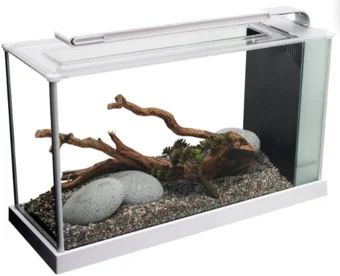
    References

  • Betta Fish Water Guide: What I Use After 25 Years and How to Treat It Right

    Betta Fish Water Guide: What I Use After 25 Years and How to Treat It Right

    Iโ€™ve kept bettas for over 25 years, and water quality is the single biggest variable that separates healthy bettas from struggling ones. My go-to is RO water with remineralization, or distilled water treated the same way. it gives you full control over whatโ€™s in the water rather than relying on whatever comes out of your tap. If youโ€™re looking for the simplest answer, RO water is what I reach for. Hereโ€™s a breakdown of every water source option and how to use each one correctly.

    Key Takeaways

    • Not all water is created equal and a good source of water will impact the success of your betta fish tank.
    • Betta fish water conditions should be slightly acidic with a low general hardness.
    • Tap water, bottled spring water, and well water are some of the most popular source water options for betta fish.
    • The cleanest source waters are reverse osmosis water and reverse osmosis deionized water while the dirtiest come from nearby lakes and rivers.

    Why It Matters

    Like all fish, betta fish need water. Water provides the fish with dissolved oxygen and minerals that are essential for bodily processes. But betta fish can’t live in just any water.

    Betta fish are hardy fish that can adapt to a large range of water conditions. Even these small, endearing fish have limits.

    The best way to understand what kind of water betta fish need to thrive is by looking at their natural habitat. Betta fish live in stagnant, temporary pools throughout Southeast Asia. These floodplains and rice paddies are often filled with organics and other vegetation that lower pH levels and water hardness. The water temperature is nearly constant between 78-80ยฐ F1.

    At the same time, betta fish have been bred in standard aquarium water parameters for decades. Most of these freshwater fish have never experienced those conditions seen in their natural habitat. Still, their bodies are unable to adapt to some of the more extreme parameters outside of their preferred range.

    Many aquarium hobbyists find betta fish success in tap water, well water, distilled water, and bottled water.

    Betta Fish Water Sources

    There are many different types of water for betta fish. One of the most popular options is to use tap water, but the parameters of tap water vary greatly from one location to the next and may not be right for your aquarium. Luckily, there are other inexpensive options that can give the best betta fish water conditions.

    1. Tap Sources

    Tap-Water-Source

    Most hobbyists have access to running tap water. Tap water is convenient and readily available while also being temperature-ready when needed. There are a few problems with tap water, though.

    The parameters of tap water can vary greatly by location. Tap water is a public resource that is influenced by water facility treatments and storage. While water sits in a reservoir, it is influenced by its environment. This means that water parameters like hardness and pH can be changed by factors such as runoff and minerals. Phosphate and silicate may also be introduced, which are often related to algae problems in betta fish tanks.

    Tap water is also heavily processed in order to be safe for consumption. This means that chemicals such as chlorine, chloramine, fluoride, and others are added daily.

    Luckily, aquarium water conditioner products, like SeaChem Prime, remove chlorine and chloramine while detoxifying the ammonia that may come from that reaction. Not every water conditioner will treat tap water in the same way, though.

    Most water conditioner options won’t treat pH or hardness, so those parameters will need to be manually adjusted. That being said, there are many water conditioner brands that offer a stress coat additive that can help protect and repair the fish’s mucus layer. Always make sure you use a condition when using tap water as untreated water can quickly kill your fish!

    Another issue to consider with tap water is the quality of the pipes that the water is traveling through en route to your house. Unfortunately, many pipes contain rust and lead, which could unknowingly leach into the aquarium.

    Pros

    • Readily available and inexpensive
    • Contains important minerals that betta fish need
    • Water temperature can be easily adjusted for immediate use

    Cons

    • Contains harmful chemicals like chlorine and chloramine
    • Influenced by natural factors that can make for unideal parameters for betta fish tanks
    • Affected by water pipes

    2. Bottled Water

    Drinking-Water

    Bottled spring water is one of the oldest sources of water for betta fish. You might’ve been told to use bottled water when you won a goldfish from the fair, and that’s for a reason.

    Bottled water is considered to be one of the most consistent sources of water as it’s been treated to be 100% pure. This water has been specifically filtered to remove harmful chemicals while being adjusted for mineral levels. Bottled water is dechlorinated, but can vary greatly in pH levels across different brands.

    Some aquarium brands have taken the initiative to create specially prepared betta water that meets the parametric needs of bettas. This water is more expensive than usual, and some hobbyists may question how it differs from other popular bottled spring water brands meant for drinking.

    It’s also important to note that while water may be labeled as being purified water, this may be a marketing tactic that makes the water more appealing despite still containing contaminants. Even if using bottled water, it is still necessary to regularly use an aquarium test kit to test water parameters for fluctuations.

    Pros

    • Consistent parameters that meet the water brand’s standards
    • Pre-dechlorinated and filtered
    • Easy to store for long-term use
    • Betta-specific water brands

    Cons

    • Stored in plastic that could leach unknown toxins
    • pH and mineral levels may vary between brands
    • Contributes to single-use plastic waste
    • Expensive

    3. Well Water

    Well-Water

    Well water is one of the most inexpensive options on this list for good source water for betta fish. This water originates from an underground aquifer, which means that it’s affected by environmental factors.

    Again, well water parameters will depend on the minerals and nutrients of the aquifer that holds the water. Because of this, most well water has high hardness, which may need to be adjusted for before use in a betta tank. However, many beneficial natural minerals and nutrients also seep into the water, which can make for a healthy fish.

    Well water is some of the purest water you can get for a betta fish tank as it is untreated and free from chemicals and other additives.

    Pros

    • Contains natural minerals and nutrients that are beneficial to plants and betta fish
    • Relatively consistent water parameters
    • Betta owners have control over additives and parameters at the source
    • Readily available and free

    Cons

    • Needs to be tested and managed by individual hobbyists
    • Parameters and overall water quality are not officially regulated
    • Potential to temporarily dry up or run low during drought

    4. Distilled Water

    Distilled-Water-Facility

    Distillation is the process by which water is boiled and the steam is then collected and cooled. Through this process, this new distilled water is demineralized and purified of most other contaminants.

    For the most part, distilled water has only hydrogen and oxygen bonds. All other minerals and chemicals have likely been removed. While a good source of water, distilled water cannot be used by itself in the aquarium. This is because distilled water lacks important nutrients, like calcium and magnesium, that fish and plants need.

    There are two ways to successfully use distilled water. The first way is to remineralize it, which can be done by adding aquarium-specific liquid or dry products. This is especially appealing for hobbyists keeping sensitive species that need very specific parameters.

    The other way to use distilled water is by mixing it with another type of water that contains minerals, such as tap water or well water. This is especially effective if those sources introduce too many minerals at once, leaving the distilled water to dilute those amounts. This can also be a cost-effective solution for using distilled water as refills can become expensive over time.

    While distilled water usually doesn’t need to be dechlorinated, it is always a good idea to preemptively dose for chlorine and chloramine.

    Pros

    • Base water (hydrogen and oxygen) without minerals or other additives
    • Easy to dose with liquid and dry minerals for betta-specific water parameters
    • Easy to find at grocery stores

    Cons

    • Lacks essential nutrients and minerals necessary for aquatic life
    • Neutral pH which may need to be lowered for some bettas
    • More expensive than other sources of water

    5. Reverse Osmosis Water (RO)

    RO Filter

    Reverse osmosis water, otherwise referred to as RO water, is most commonly used for saltwater aquariums but can be used in betta tanks as well. This type of water is purified by being pressured through a semipermeable membrane that helps remove minerals and other toxins.

    This is the water source I personally use for my bettas. RO water gives you a clean baseline. no chlorine, no chloramines, no unpredictable mineral content. You remineralize it yourself and know exactly what your fish are living in. For bettas especially, that level of control makes a real difference in long-term health.

    While some fish stores may sell pre-processed RO water, most hobbyists install an RO system in their homes, which requires regular filter changes and replacements. Like distilled water, RO water provides a clean slate for hobbyists to add minerals and nutrients to their liking for bettas and other tank mates.

    Pros

    • All-in-one water purification system
    • Purified water with little to no nutrients, minerals, or chemicals
    • Easily remineralized for sensitive species

    Cons

    • Source water parameters need additional configuration
    • Regular filter replacements and other maintenance
    • Start-up costs are high

    6. Reverse Osmosis Deionized Water (RO/DI)

    Best Value
    LiquaGen – 5-Stage RODI

    Best Value

    A complete 5 stage RODI unit without the excessive price

    Buy On Amazon

    Reverse osmosis deionized (RO/DI) water is the purest water you can get for your aquarium. This water is similar to RO water but features an extra deionization stage that nearly eliminates all total dissolved solids (TDS). TDS are any dissolved solids, including most heavy metals, that are present in water. RO/DI water reduces TDS levels to nearly 0 ppm.

    However, betta fish, plants, and invertebrates cannot live in 0 ppm TDS. These levels, along with pH, micro, and macronutrient levels, would need to be adjusted accordingly for a betta. To be the most cost-effective, it’s only recommended to use RO/DI if keeping other fish tank systems or very sensitive species. The trade-off is that RO/DI can be completely customized for the given tank setup.

    Pros

    • All-in-one RO/DI system
    • The purest water with neutral pH, minimal nutrients and minerals, and low TDS
    • Water parameters can be adjusted as needed with dosing and other supplements

    Cons

    • Additional products needed for water parameter configuration
    • Regular maintenance is required for RO/DI system upkeep
    • High start-up cost and continued maintenance expenses

    7. Rain Water

    Rainwater System

    Bettas are hardy fish that can adapt to a wide range of water parameters. So much so that they find themselves in rain-filled puddles that come and go with the wet and dry seasons.

    If bettas can live in these far-from-perfect conditions then can they live in natural rain water?

    It’s not usually recommended to keep any fish in harvested rain water. Rain water can have very different water parameters from your tank as well as from one collection to the next. Harvested rain water is often softer and more acidic than other sources of water, which is ideal for betta fish. However, the exact levels for these parameters may be too extreme or vary too much.

    The bigger concern with using rain water for betta fish is pathogens. Wild betta fish have built up an immunity to naturally borne illnesses in their environment. Most betta fish available at your local pet store have been selectively bred for decades, which means they haven’t had to build up an immunity against those microorganisms and pathogens that might occur in rain water.

    Other unknown factors that could be in rain water include acid rain, fertilizers, pesticides, and other harmful contaminants.

    How to Make Betta Fish Water from Rain Water

    If you’re confident in the quality of your rain water, then there are a few suggested methods to make it safe for betta fish use.

    1. Collect the water from a trusted source. If you live in a polluted area, then the rain water will also likely be polluted. Collect water far from areas of pollution and treat it immediately.
    2. Screen the water. Passing the water through a fine strainer will remove large contaminants, like insect larvae, rocks, decaying organics, and other macroscopic pieces that need to be removed.
    3. Purify the water. There are many ways to purify rain water for betta fish water use: boiling the water, running it through activated carbon, placing a UV sterilizer in the container, or using a RO or RO/DI system. It’s recommended to use at least two of these methods whenever harvesting your own rain water. For good measure, it’s also recommended to use a water conditioner even though chlorine and chloramine might not be present.
    4. Test parameters. Use a trustworthy water test kit to test levels of all the nutrients present, including ammonia, nitrite, nitrate, pH, phosphate, and water hardness.
    5. Adjust the water accordingly. As mentioned before, rain water is typically soft and acidic. You may need to add in additional dosings to raise levels to the desired ranges.

    Pros

    • Easy to collect
    • Soft and acidic to match the preferred parameters of betta fish
    • Often free of harmful substances found in tap water, like chlorine and chloramine

    Cons

    • Contains many unknowns in regard to pathogens and nutrients
    • Rain water parameters can vary greatly
    • Somewhat difficult to make safe for betta fish
    • Limited by rainfall totals

    8 Natural Sources

    Lake Summertime

    If you’re somewhere it doesn’t rain a lot but are surrounded by bodies of water otherwise, you might consider using a local lake or river for your betta fish water. Unfortunately, natural sources cause many of the same problems that rain water can.

    In addition to harmful pathogens, bacteria, and viruses along with fluctuating parameters, natural lakes and rivers can also inadvertently introduce invasive species into your system. Unless you live in a perfectly protected area of wildlife preserve, chances are that there are invasive species at all levels of the food chain. The most common hitchhikers are insects and snails, especially if collecting live plants. However, much more harmful bacteria and viruses can also be introduced into the tank through natural sources.

    While natural water might look safe to use, it can be filled with pollution, fertilizers, and pesticides just as much as rain water can. As mentioned before, the organisms living in these ecosystems have likely built a tolerance to these harmful substances, allowing them to live there indefinitely. Domesticated betta fish, on the other hand, would quickly succumb to untreated water from these locations.

    In general, it is best to keep nature in nature and use tried and true sources of betta fish water.

    The most common water mistake I see. even from experienced keepers. is forgetting to use water conditioner. It sounds basic, but when you get busy and your tank is only 5 or 10 gallons, itโ€™s easy to skip. A small tank with untreated tap water can harm a betta fast. My advice: keep your conditioner right next to the tank so it becomes part of the routine, not an afterthought.

    Pros

    • Using natural sources can make it feel like you’re making a natural aquarium biotope for your fish
    • Free from added chlorine and chloramine

    Cons

    • May contain harmful pathogens and other invasive species
    • Can be affected by pollution, fertilizers, and pesticides
    • Fluctuating water parameters

    FAQS

    What kind of water do you use for betta fish?

    Treated tap water is usually the best type of water to use for betta tanks. Tap water benefits include a relatively neutral pH, the presence of nutrients and minerals, and being readily available for use at any time. If doing frequent water changes, it is also very convenient to be able to adjust the water temperature without an aquarium heater before adding the water to the tank.

    Keep in mind that tap water parameters will vary by location. The parameters mostly affected by geographic location are pH and general hardness. If these levels are too high, you may be left to look for another source of water to use.

    Can betta fish survive in tap water?

    Yes! Betta fish can live in tap water perfectly safe. In fact, tap water is the most preferred water to use for betta fish aquariums.

    However, untreated tap water that hasn’t been dosed with a water conditioner can be deadly for betta fish. Tap water is regularly dosed with chlorine and chloramine which make water safe to drink. Unfortunately, these compounds are deadly to fish and invertebrates and need to be removed.

    How do you prepare the water for a betta fish?

    Depending on what kind of water for betta fish you choose to use, preparation will vary. If using tap water, bottled water, or well water, then you will likely only need to use water conditioners to remove chlorine and chloramine.

    If you decide to go natural with rain water or local rivers and lakes, then a lot more preparation is needed. Treating these sources will take several steps of filtration and processing.

    Though RO and RO/DI water shouldn’t contain harmful chemicals, it is still recommended to treat them as you would treat tap water with a water conditioner. These source waters will also need to be remineralized and adjusted for pH.

    Do betta fish need anything in their water?

    While you might think water is only hydrogen and oxygen, there is a lot more that is necessary for your betta fish’s success. Most importantly, minerals and nutrients, like calcium and magnesium, play important roles in the physiological processes of fish, plants, and invertebrates. Altogether, these minerals and nutrients play into the general hardness levels of the tank water.

    Dissolved oxygen is also essential for aquatic life. Oxygen levels can deteriorate in stagnant conditions or when there is a lot of decay in the ecosystem.

    What is the best bottled water for a fish tank?

    The best bottled water for betta fish is bottled spring water with a relatively neutral pH and soft general hardness. This can be difficult to find as these parameters are not usually listed on the bottles. You may need to purchase several brands of water and test parameters for ones that meet your desired levels.

    There are several aquarium products available for betta-specific water. One of these products is pre conditioned Fritz Betta Water. This water has been treated with a conditioner and has added tannins from Indian almond leaves for lowered pH and general hardness.

    While good in a pinch, these premade waters can become expensive to use over time. In addition, they are easily replicated at home with some extra preparation.

    Can I put spring water in my betta fish tank?

    Yes! The best spring water to put in a betta fish tank has been filtered and bottled. However, if you have a natural freshwater spring by your house, you may be tempted to take it directly from the source, which is not recommended.

    Though this water might look clear and refreshing, there is still a good chance that it contains pathogens and other harmful chemicals that can hurt your fish. If planning to take water from a natural spring, process it as much as you would for water from a lake or river.

    Final Thoughts

    A good fish tank starts with good water. Betta fish prefer slightly acidic and softer water than other tropical fish, so it’s important to pick a water that sets your fish up to thrive.

    In general, the most popular betta fish water is tap water. Well water and bottled water are also good alternatives that provide a good basis for dosing other additives as needed. If you want the purest water possible, RO or RO/DI water will provide a clean slate for however you choose to make your own water!


    ๐Ÿ“˜ Want to learn more? This article is part of our complete Betta Fish Guide. your ultimate resource for betta care, types, tank setup, feeding, tank mates, and more.

  • How To Acclimate Betta Fish: My Preferred Method and the Mistakes to Avoid

    How To Acclimate Betta Fish: My Preferred Method and the Mistakes to Avoid

    Acclimation is one of those steps new fishkeepers often skip because it seems unnecessary. but after 25 years in this hobby, I can tell you it makes a real difference, especially with bettas. My go-to is the drip method. It takes longer, but itโ€™s the gentlest way to introduce a fish to new water, and with bettas, gentle matters. Hereโ€™s how both methods work, which one I reach for, and the mistakes I see most often that stress or kill new fish before they ever settle in.

    Key Takeaways

    • Set up and cycle your betta’s tank long before you buy your fish.
    • Avoid moving a new betta fish directly from its bag or cup and into its new tank. Rather acclimate slowly to help your betta fish survive the change in water parameters.
    • Choose an acclimation method that you feel comfortable with. Different aquarists use different methods, but it’s always best to stay cautious and keep your pet’s safety in mind.
    • Consider quarantining your new betta before adding it to a community tank to protect your other fish from diseases spreading inside their tank.
    • Consult an aquarium specialist if you’re uncertain about how to acclimate and care for your betta.

    Why Do We Need To Do It?

    Moving a new pet fish between the transfer cup or bag it was transported in and the fish tank where it is going to live can be very stressful for your pet1. According to a study by The University of Queensland, fish are subjected to lots of stress when transported, as quoted below:

    Common stressors associated with live transport are inappropriate handling, air exposure, food deprivation, poor water quality, inappropriate transport densities, sudden changes in water temperature, and rapid water movement

    School of Veterinary Science, The University of Queensland

    Being in the aquarium hobby for over 25 years, I’ve seen it all and continue to see Betta fish quickly placed in poor conditions. Part of this issue is how the pet store exhibits these fish in tiny containers when selling them. Every new Betta owner I advised in person I got through these same steps. I hope I can get you in the know how to give your Betta the best start possible in its new home.

    The conditions at the store or breeding facility where you got your betta fish are probably very different from the conditions you will be providing for your new pet. That’s why it’s important to make the transition as smooth as possible.

    The process of carefully introducing your betta to its new home is known as acclimation, and it’s a vital first step!

    The New Tank

    This article is about how to acclimate betta fish, but we can’t move on without (briefly) discussing their new tank setup first. Let’s run through some of the basic requirements for a great betta fish tank setup.

    Tank Size

    Each aquarist has their own preference for tank size, but I recommend a tank of at least 5 gallons for a single betta fish.

    Heating

    Bettas are tropical fish, which means they need warm, stable temperatures in the range of about 76-81 degrees Fahrenheit. You will need a small aquarium heater of 25-50 watts to heat your tank.

    Filtration System

    Your betta tank needs a small aquarium filter to house beneficial bacteria and keep the nitrogen cycle running safely. I recommend a small sponge or HOB filter for a small betta fish tank, but be sure to select a model that fits your tank size.

    Editor’s Choice
    Hikari Bacto Surge Sponge Filter

    The Best Sponge Filter

    With a name brand and high quality reputation, the Bacto Surge separates itself from the pack

    Buy On Chewy Buy On Amazon

    Cycling Your Aquarium

    Many beginner fish keepers add fish to a brand new aquarium without giving the system a chance to cycle. This can lead to a common and dangerous side effect called new tank syndrome, and that’s something you definitely want to avoid!

    There are many ways to cycle your tank, and the process can take several weeks, depending on your chosen method. The idea is to introduce nutrients into your tank water and then allow beneficial bacteria to colonize your filter media and get the nitrogen cycle up and running.

    With a source of ammonia in the water, like some fish food or live plants and some fertilizer, bacteria colonies will begin to develop on their own. However, you can get faster results if you add nitrifying bacteria in a bottle or some filter media from an old tank.

    Whichever method you use, you’ll need to monitor your ammonia, nitrite, and nitrate levels to know when your tank is ready to add fish. Your tank is cycled when it has shown readings of ammonia, and then nitrite, and then finally shows some nitrate but zero ammonia or nitrite.

    Want to learn more about aquarium cycling? Check out my guide to fishless cycling for an in-depth look at this important process!

    Water For Your Aquarium

    Are you wondering which aquarium water to use in your betta tank? It may seem like an obvious question, but many fishkeepers overlook this important choice.

    Tap water is probably fine (depending on your area), but you’re going to want to test your pH, hardness, and nitrate levels to give you a baseline reading.

    Tap water is typically treated with chlorine or other chemicals to keep it safe for human consumption. Unfortunately, this can be harmful to your fish, so make sure you treat your tap water with a water conditioner/de-chlorinator before introducing your fish.

    Don’t worry if your tap water is not suitable for betta fish – there are other options. Rainwater or well water is often suitable for a small tank, but you can also use RO/RODI water. However, RO water contains no minerals, so you’ll need to remineralize it with a product like Seachem Equilibrium and an Alkaline Buffer.

    Water Parameters

    Fish are sensitive creatures and they are affected by all sorts of things that we can’t see. Your betta will do best in the following water parameters:

    • Temperature: 76 – 81ยฐF (24 – 27ยฐC)
    • pH level: 6.5-8
    • Water hardness: 5-20 DH
    • Ammonia: 0 ppm
    • Nitrite: 0 ppm
    • Nitrate: 10-20 ppm

    How to Acclimate Betta Fish To A Community Tank

    Adding a new betta (or any new tank mate) to an established community tank is risky.

    Very often, the betta fish you buy from larger pet stores are not in good condition. They may have been kept in a small cup where the water is not temperature controlled and filtered, and this causes stress, which weakens their condition and can cause infections and illness.

    Unfortunately, these infections can spread to your other fish, and that’s why it’s so important to quarantine and treat new fish before adding them to a community tank.

    Now, this step is optional, especially if you know your fish has been well-cared for and is in great condition. However, if your new pet fish is showing any signs of poor condition, you should definitely quarantine him or her to be on the safe side.

    Setting Up A Quarantine Tank

    A quarantine tank does not need to be a large or carefully decorated aquarium. A plastic tote or a small tank that holds a few gallons of water will work just fine. It does not need any substrate, but it should have its own filter, air stone, heater, and a secure lid to prevent your fish from jumping out.

    Fill your quarantine tank with about 50% water from your community tank and 50% dechlorinated tap water. It’s a good idea to seed the filter with some media from your community tank filtration system to jump-start the nitrogen cycle too.

    Acclimate your betta carefully to the water in your quarantine tank and observe it for 2 to 4 weeks before moving it to the community tank. During this time, you can treat the new fish with aquarium salts and medicate if you notice any signs of illness.

    Avoiding Unwanted Pests

    The water in the tank at your local pet store or in the plastic cup your betta fish came in may contain some things you really don’t want to put in your community tank. Organisms like parasites, invasive plants, or even pest snails can easily go unnoticed, so you want to avoid adding any of the original water to your own tank.

    One simple way to do this is to net your betta out of its plastic bag after acclimation and then add him/her to your aquarium.

    Now that we’ve covered some of the most important concepts you need to know about betta acclimation, let’s dive in and learn about two highly effective methods!

    Method 1: Gradual Water Switch Acclimation

    This is the faster of the two methods and works well for most situations. Use this technique to adjust the water temperature and parameters in the betta’s bag or transfer cup before adding it to its new home.

    This technique is easy to perform but can take an hour or more to do properly, so make sure you don’t have any other commitments.

    Let’s take a look at the basic procedure.

    Supplies needed:

    • Clothes peg
    • Thermometer
    • Small, fine mesh fish net
    • Small cup or jug

    1. Prepare the New Tank

    I’m assuming you already have an aquarium ready for your new pet fish. The aquarium water is cycled, the temperature and parameters are correct, and you already have lighting, substrate, and decorations in place.

    If you don’t yet have a cycled betta aquarium set up, you’re going to need to return your fish or do a fish-in cycle. This is not ideal for the health of your pet but it is possible with careful management of water quality.

    Tips

    • Check out my guides to betta fish care and tank setup to learn how to create a great betta tank!
    • Set up your tank in advance and learn about the nitrogen cycle to avoid new tank syndrome.

    2. Purchase Your New Pet

    Take your fish straight home if you’re collecting your betta from a store. Your fish will be packaged either in a bag or a cup, and you should take great care to keep the container from getting punctured and leaking out.

    I recommend transporting the bag or cup in a small cooler (no ice!) if you need to travel in very high or low temperatures and avoid shaking the container too much in transit.

    Tips

    • Buy from reputable fish retailers and breeders that take good care of their livestock
    • Buy just one male betta fish if you have one aquarium

    3. Float the Bag/Cup

    Once you’re home, go ahead and add the bag or cup to tank so that the temperature can begin to equalize with your tank water. Let it float at the surface but make sure the bag or cup does not leak into your tank. You should open the transfer cup lid or bag and secure it to the side of your tank. Keep the lights low during this process to limit stress on your fish.

    Tips

    • Use a thermometer to measure and compare the water in your tank and in the bag
    • A clothes peg works great for securing a fish bag to the rim of your tank

    4. Add and Remove Water

    Now it’s time to start acclimating your fish. Remove and discard about 20% of the water from the cup/bag and replace it with the same amount of water from your tank.

    Wait 15 minutes or so and repeat the process. Do this four or five times until all the water in the bag is new tank water, and the temperatures are completely equalized.

    • Try to avoid adding any water from a fish store or someone else’s tank to your aquarium.

    5. Transfer Your Pet

    Now you can transfer betta fish to its new home! Remove the betta fish from its bag or cup with a net and add it to the tank. Consider keeping your aquarium lights off for a day or so to let the fish adapt to its new environment in peace.

    Method 2: Drip Method Acclimation

    There is an even smoother betta acclimation process that you can use to minimize the chance of transfer shock. This technique takes a little longer, but many aquarists report excellent results!

    This is the method I personally use. The drip method takes more time but gives your betta the smoothest possible transition. water parameters shift gradually rather than all at once, which reduces stress significantly.

    Let’s take a look at the basic steps of drip flow acclimation. You can also use a kit, though I usually recommend a kit for saltwater fish or inverts.

    Get For Acculimation
    Accudrip Acclimator

    Most of us know that fish and shrimp are sensitive creatures, who don’t do well with sudden changes. The Accudrip Acclimator is here to help adjust your aquatic creatures to new tanks and conditions

    Click For Best Price Buy On Amazon

    Supplies needed:

    • A few feet of airline tubing
    • A T-valve and a bleed valve
    • A plastic container or small bucket
    • Small air pump and airstone
    • Small fine mesh fishnet
    • Thermometer

    1. Tank setup

    Again, I’m assuming you already have a cycled betta tank set up and ready to go for your new pet.

    2. Set Up a Separate Container

    Set your betta fish in its cup or bag in an empty bucket or other plastic or glass container that can hold at least a few gallons. Position your container on the floor below or next to your aquarium, but make sure the bottom of the container is not above your tank’s water level.

    Tips

    • Place a towel around the area and have a few rags nearby in case you spill some water

    3. Aerate the Water

    Drip acclimation can take an hour or more, so it’s a good idea to keep your betta fish oxygenated during the process. Run an airstone in the cup or bag that your betta fish was bought in, but be very careful not to hurt your fish with the stone. You’ll also want a bleed valve on the airline tubing to keep the airflow really low.

    • Do not use a large, powerful air pump for this step
    • The airstone can injure your fish if it moves around in the bag/cup. Secure the airline tubing to the rim of the bucket to prevent movement

    4. Start the Drip

    Add a T-valve (flow control valve) to a length of airline tubing that is long enough to reach from your tank down into your betta’s bag or cup. Suck on the hose to start a siphon, and turn the flow down with your valve to where there’s about one drop per second.

    Tips

    • Secure the airline tubing to the rim of your tank with a clothes peg or your aquarium hood
    • Try to avoid getting tank water in your mouth

    5. Acclimate Your Betta Fish

    Let the tank water drip into your betta’s bag or cup for an hour or two. Don’t worry if the water overflows into the bucket during this process. Once your betta has acclimated to the new water, catch the fish in your net and add it to its new home!

    Common acclimation mistakes to avoid: The biggest one I see is people just dumping the fish straight into the new tank. no acclimation at all. Second is skipping the temperature match, so the fish goes from cold transport water into a warm tank and goes into shock. Third is not knowing the water parameters of either tank beforehand. Take two minutes to test both and youโ€™ll avoid a lot of unnecessary losses.

    Tips

    • Don’t add the old transport cup water back into your tank
    • Top up your tank with new, dechlorinated water instead

    FAQs

    How long does a betta need to acclimate?

    Some fish keepers acclimate their fish for just 15 minutes to equalize the water temperature, while others stretch it out for up to two hours during drip acclimation. In most cases, 30 minutes to an hour is enough to safely acclimate a betta.

    Can I put my betta fish in a new tank right away?

    Many new and experienced fishkeepers simply add bettas directly to their tank, although this can be very risky for the new betta and the other fish. Fish to the newย before cycling shouldn’t be done!

    At the very least, you should float the new betta in its transport bag to slowly equalize the water temperature, although a gradual water switch or drip acclimation process is even better.

    How long can bettas stay in the cup?

    Betta fish might survive a few weeks in a cup, but this is a really unhealthy environment for these beautiful creatures. It’s best to move them from their temporary container to their new tank as soon as possible after slowly acclimating them to the new tank’s water.

    How do you acclimate betta fish?

    You can slowly acclimate your betta fish by floating its open bag or cup at the water’s surface of its new tank. Add a small amount of new water to its bag every 10 – 15 minutes and discard an equal amount of old water from its transport container. Use a net to transfer your betta fish to its new environment after about an hour.

    Do you have to let a betta fish acclimate?

    You should always acclimate a betta so that it can slowly adjust to the conditions of its new home. This will reduce stress and give it a healthy start to its new life in your care.

    Do I have to wait 24 hours before adding betta fish?

    You can add your betta fish to its new surroundings right after acclimation if the water in its new tank is cycled and its temperature and parameters are correct.

    Final Thoughts

    I hope the suggestions in this guide make it easier to acclimate your betta to its new environment! My number one tip to make the process as smooth as possible is to prepare ahead of time. Do this by setting up your betta tank and preparing everything you need for the acclimation process long before you buy your fish.
    If you’re just starting out with betta fish keeping, go ahead and check out some of my other helpful guides on betta fish care, tank mates, tanks set up, and how to cycle your aquarium!


    ๐Ÿ“˜ Want to learn more? This article is part of our complete Betta Fish Guide. your ultimate resource for betta care, types, tank setup, feeding, tank mates, and more.