One of my favorite things about bettas is how expressive they are. even when they’re sleeping. Over the years I’ve watched them tuck under floating plants, wedge into tank corners, or prop themselves on a little leaf hammock completely motionless. I’ve had more than a few customers call me convinced their fish had died overnight, only to find out it was just resting. Bettas are remarkably good at going completely still when they sleep. Here’s what you actually need to know about when, where, and how they do it.
Key Takeaways
Betta fish do, in fact sleep
Bettas like to rest a lot on decor and may appear lazy at times
To encourage activity, place them in a larger tank, add tankmates, and decor for enrichment
Low temperatures can also lead to excessive resting and sleeping – keep temps from 78 – 82 degrees F
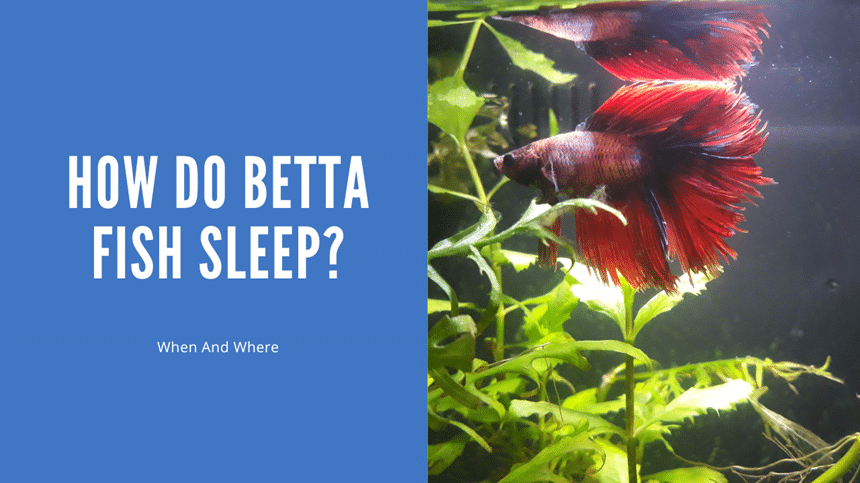
How Do Betta Fish Sleep?
Like all living organisms, betta fish need sleep to function properly1. But of course, the way they sleep is far different than that of humans and other land animals because… well, they live in the sea with no beds, covers, or eyelids.
Though, the Siamese fighting fish are diurnal animals; they sleep at night and are active during the day. they may take short naps during the day for a few minutes. During nap time, Betta fish usually sleep near the bottom of the tank or on a flat surface, mainly on a plant or substrate. Also, unlike many fish, betta don’t have eyelids, so their eyes remain open when betta are sleeping.
Since we know that betta fish is a labyrinth fish with a special organ that allows easy breathing on the surface, you may also find them resting near the water’s surface or between floating plants, sleeping in a tilted position.
🏆 Mark’s Observation: In my experience, bettas strongly prefer sleeping under floating plants or on a leaf hammock placed near the surface. they feel secure with something above them. If your betta doesn’t have either, add a betta hammock or some floating plants like frogbit or water lettuce. You’ll notice a real difference in how settled and relaxed they look at rest. It’s one of the easiest improvements you can make for their wellbeing.
However, if your betta fish is spending too much time on their side or in any one direction, make sure it doesn’t have any underlying medical condition.
All in all, the sight of betta fish sleeping is beautiful and allows you to study your fish’s own sleeping habits and preferences. Some betta fish like to rest in a particular spot or position while some enjoy various sleeping locations. Therefore, it is important to provide your betta fish with a comfortable environment with lots of hiding spots.
Sleeping Or Sick? – How To Tell If They Are
Not sure whether your betta fish is sleeping or sick? Here are some of the ways you can find out if your betta is sleeping.
Gill flaring
One of the most peculiar behaviors of betta fish is gill flaring which attracts many betta owners and other aquarists. Betta fish flare their gills for a variety of reasons. However, a sleeping betta fish might temporarily cease the gill flaring behavior to preserve energy while at rest.
Therefore, if you notice minimal or record gill flaring, know that your betta is taking its power nap!
Breathing rate
One of the most common signs your betta is sleeping is the slowed breathing rate with shallower breathing patterns.
Reduced body movement and activity levels
Like other fish, a sleeping fish tend to move slowly for extended periods of time. Therefore, they show minimal movement and interaction. If you’re a new betta owner, you may find your fish resting with no movement and activity levels. Fret not! They are not dead, just sleeping.
How Long Do They Rest?
Like every human, every individual betta fish is different than others. Therefore, there is no one answer to “How long do betta fish sleep?”
However, betta fish are diurnal animals i.e., they are active throughout the day and sleep at night. Therefore, if you find a betta sleeping a lot during the time, it is not normal behavior and could be a sign of disease or other problems.
On average, betta fish sleep between 8 to 12 hours a day.
The same goes for betta fish. They have such long, flared beautiful wings that it gets tiring to carry them swimming around the fish tank. Therefore, betta fish, in general, fall under the lazy spectrum because they take longer periods of rest and sleep than their counterparts.
Just like betta fish, many varieties of goldfish with long fins and stout compact bodies also take significant time resting in the aquarium.
Therefore, if your water parameters; water flow, and water temperature are within the ideal ranges, the inactivity of your fish is nothing serious. For your betta fish to thrive in your aquarium, the ideal water temperature should be between 78-82F since they are tropical fish and prefer warmer temperatures. If your water is too cold for their liking, bettas sleep more than usual because of slower metabolism and may suffer from health issues.
Reasons why your Betta Fish is Sleeping a lot
If you find your betta fish sleeping a lot during the day time, there can a various reasons:
No Stimulation
It would surprise you but your little guy in the tank gets bored too. And yes, they need a little stimulation activities. You might also try some fish training techniques. In short, if your betta is sleeping a lot, they might just be bored and need a little loving to be active again.
Aquarium lights
Betta fish sleep throughout the night. Therefore, if you leave aquarium lights on during the night, they may disturb the natural sleep pattern of your fish and result in abnormal sleep cycles. Betta loves dark tanks, especially during the nighttime time because their natural habitat is dark and shallow with little water movement. Therefore, it’s crucial to mimic their natural habitat for their better health.
A healthy betta fish needs at least 12 hours of complete darkness each night in a comfortable environment to promote healthy sleep patterns.
⚠️ Three Things That Make or Break Betta Sleep: First, consistent lighting. use a timer for 10-12 hours on, 12-14 hours off, every day. Second, hiding spots near the surface (hammocks, floating plants) so they feel secure enough to fully relax. Third, stable temperature. a drop below 76°F can trigger lethargy that looks like sleep but is actually temperature stress. Get all three right and you’ll have a noticeably more active, healthy fish.
Temperature shock
Many aquarists have a misunderstanding that betta fish hibernate. When in reality, they go into temperature shock if the temperature drops below a certain mark since they are tropical fish.
As a result, they may look like they are sleeping fish, but what actually happens is their metabolism slows down and causes temperature shock. Therefore, maintaining a comfortable water temperature is essential to keeping your betta fish healthy, happy, and thriving in an aquarium setting.
How to Stop Excessive Resting?
Here are a few things you can do to stop reducing your bettas sleeping time.
Make sure the temperature in your tank is within the comfortable range; of 78-82F. If not, you can always install a heater to keep the water warm and easy for your betta fish. I also recommend using an in-tank thermometer for reliable temperature readings.
Besides maintaining the water temperature and water flow, it is crucial to feed a varied diet consisting of live food, frozen food, pellets, and other occasional treats for a complete nutritional profile.
Last, but not least, always call your aquatic veterinarian for a careful examination of your betta fish. The most common fish diseases include mycobacteria and swim bladder disease may cause your fish to be more lazy and lethargic.
How To Distinguish Between a Sleeping Pet and a Dead One
They might just be sleeping… but in some cases, you might mistake a dead betta fish with a sleeping betta fish. Therefore, it’s important to pinpoint the differences between the two. Here are some of the signs of a dead betta fish you should look out for:
If your betta fish stays at the bottom of the tank for several days, chances are they are dead. However, if they have just settled recently, they might just be sleeping peacefully.
If the scales seem pointy and elevated away from the body with a swollen stomach, your betta fish might be just or is near death.
There are white spots around the body with discolored fins. You can use a flashlight to observe the color carefully.
When they don’t even respond during the feed time and are not interested in food.
It is crucial to let your betta fish rest. However, if you find your fish lying motionless for long periods, examine the gills and mouth carefully and observe its breathing patterns. If your betta fish is not breathing and moving, know that it’s dead.
FAQs
How Do You Know If a Betta Fish Is Sleeping?
You can tell if your betta fish is sleeping when there is reduced activity, reduced gill flaring, slowed breathing rate, and shallower breathing patterns. Most importantly, if your betta fish is lying on the bottom of the tank with little to no interaction, it is usually taking its well-deserved rest.
Do Betta Fish Sleep With The Light On?
No. Since betta fish are diurnal fish species; like humans, they sleep through the night and are active during the day. Therefore, if you leave aquarium lights on during the night and day, they may not sleep as betta fish are light sleepers and aquarium lights may disturb their sleep patterns.
Nonetheless, leaving them in a dark aquarium for longer periods of time may turn them lazy, less active, and stressed.
What Do Betta Fish Do When They Are Tired?
Betta fish are active swimmers and they should be actively swimming and roaming around the tank regardless of the weight of their fins. However, if you notice your betta fish is spending more time at the bottom of the tank than usual, this is a sign of lethargy and should never be overlooked.
Does Betta Fish Like Resting On Leaves?
Yes, betta sleeping on leaves is perfectly normal. Betta fish are commonly found resting on large, flat leaves or floating leaves in the tank. Therefore, if you don’t have aquatic plants, you can always get stick-on betta leaf hammocks from pet stores.
How much time does Betta Fish Sleep?
In general, betta fish need at least 12 hours of darkness for a better and healthy life. They sleep during the night and are active during the day. Therefore, turning the tank light off is your best bet if you want your little guy healthy and happy.
Why is my Betta fish so lazy?
Many factors contribute to the lethargy of your betta fish. For example, poor water quality, poor diet, unstable tank water temperature, and water flow. If water parameters are not maintained, betta fish sleeps more than usual and this may affect its overall health. Therefore, it is crucial to monitor the parameters and keep an eye on fish diseases.
Final Thoughts
Betta fish keeping as a leisure hobby is increasing day by day, but taking care of your bettas’ sleep is one way to keep them healthy and active. Other than their diet, water parameters, and water flow, you should also consider keeping your tank clean and taking care of their tank mates. Always go for compatible tank mates such as mystery snails, shrimps, and guppies to reduce stress and increase interactivity.
A betta tank should be well-lit in the daytime and dark throughout the night, so they get enough sleep since they are very light sleepers.
📘 Want to learn more? This article is part of our complete Betta Fish Guide. your ultimate resource for betta care, types, tank setup, feeding, tank mates, and more.
Small tanks are where a lot of beginners start. and where they make their first mistakes, usually by overcrowding or picking fish that will outgrow the setup. I’ve set up tanks as small as 5 gallons and know which species genuinely thrive in tight quarters versus which ones just survive. Here are the 21 I’d actually choose for a small tank.
Are you planning a new fish tank or just looking for a new small fish species to add to an existing community? Choosing new fish is super fun, but it can be tough to make the right choice.
There are hundreds of different species in the fishkeeping hobby, so save yourself the stress and scroll through this list to help make your choice. All the fish mentioned in this guide can be kept in tanks of 15-20 gallons, and some can even live in aquariums as small as 5 gallons.
Ready? Let’s meet the 21 best small fish for freshwater aquariums!
Key Takeaways
Small freshwater fish make fascinating pets, and a well-planned display tank can make a big impact in any space.
Schooling fish are easily stressed if kept alone. They should be kept in groups of at least 5 or 6 of their own species.
Small freshwater fish need good filtration and regular water changes to stay healthy. Tropical species should be kept in a temperature-controlled, heated tank.
Choose peaceful species with similar temperature and water parameter preferences when starting a community tank. Each fish should be comfortable in its new home.
The 21 Best Fish For Small Tanks
It’s time to learn about 21 excellent freshwater fish for small tanks! Take note of their minimum tank size, diet requirements, and other important stats before choosing your next pet. We have a video below from our YouTube Channel, so you can watch along while seeing more details below from our blog!
Diet: Carnivore, feed good quality micro-pellets and live/frozen bloodworms and brine shrimp
Origin: Thailand and other countries in Southeast Asia
Temperature: 76-80 °F
Swimming Level: Mid/upper layers
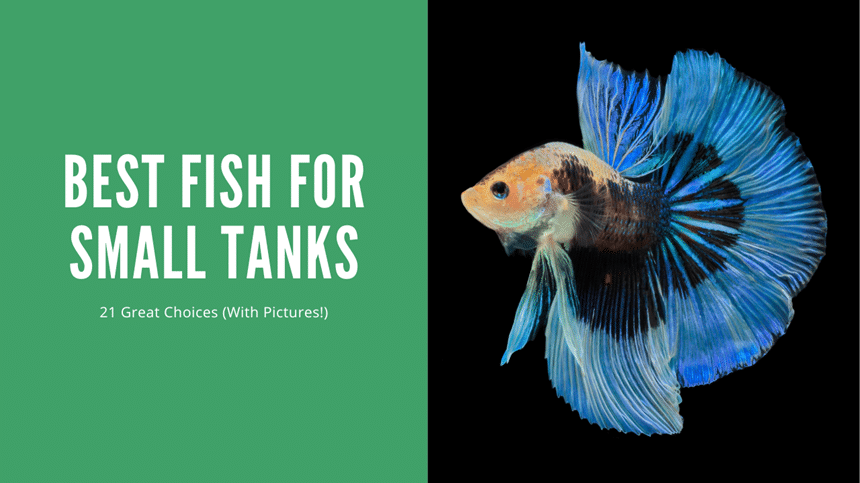
The betta or Siamese fighting fish is a great choice for any freshwater aquarium that holds 5 gallons or more. These popular freshwater fish can live more than three years with good care and their bright colors and fancy fins make them great centerpiece fish.
Bettas get along great with many different tank mates in community setups, just don’t make the mistake of keeping more than one male in the same tank. These guys love to fight!
Diet: Carnivore, feed crushed flake fish food, baby brine shrimp and blood worms
Origin: Thailand
Temperature: 68 – 82°F
Swimming Level: Middle layers
The exclamation point rasbora is an awesome little freshwater nano fish with an orange body and a black exclamation (!) symbol on each side.
These tiny fish are pretty shy (probably because they’re so small) so they need the company of at least 10 of their own kind to form a nice school. Keep these peaceful fish in a densely planted tank to enjoy all they have to offer.
Diet: Carnivore, feed granules and live/frozen foods
Origin: Southeast Asia
Temperature: 68 – 82°F
Swimming Level: Middle and upper layers
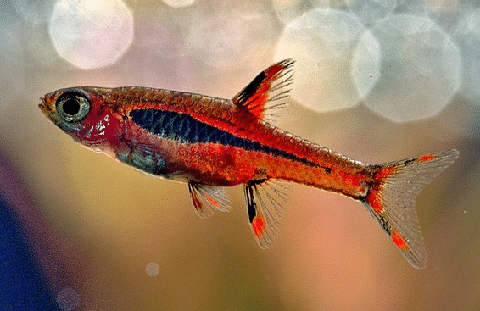
Also known as the mosquito rasbora, these peaceful schooling fish are similar to the exclamation point rasbora but have a redder body color. These are true micro fish that are perfect for small tanks.
While it is possible to keep a small school in a 5-gallon tank, they’ll do much better in a 10 gallon tank with plenty of live aquarium plants.
4. Zebra Danio
Scientific Name: Danio/Brachydanio rerio
Adult Size: 2 inches
Care Level: Beginner
Temperament: Very peaceful
Minimum Tank Size: 10 gallons
Diet: Carnivore, feed good quality dried foods and bloodworms or other insect larvae
Origin: South Asia
Temperature: 66 – 77°F
Swimming Level: Generally middle and upper layers
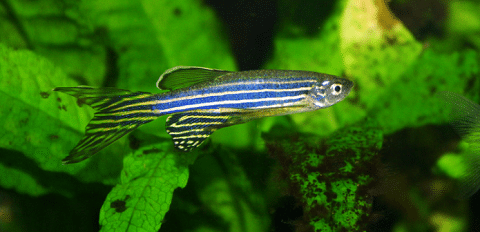
The zebra danio is a great beginner fish species for a small freshwater aquarium. There are many other beautiful danio species (celestial pearl, glowlight, etc.) in the hobby, but the good ol’ zebra fish tends to be the cheapest and most adaptable species.
These small fish are very peaceful and hardy, making them a great small aquarium fish species for a community tank. The minimum tank size for these fish is about 10 gallons, but they’ll be much happier in a 20-gallon tank where there’s plenty of space to swim.
Diet: Omnivore, feed a quality pellet/flake and live/frozen food
Origin: South America
Temperature: 70 – 82°F
Swimming Level: Middle and upper layers
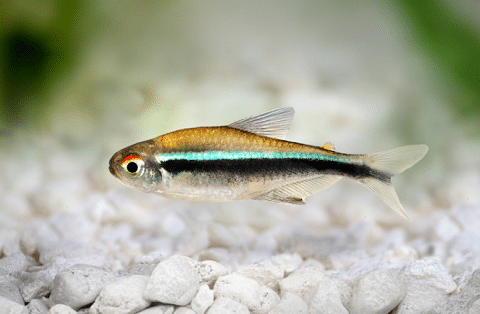
The black neon tetra doesn’t get quite as much love as the regular neons and cardinal tetras, but black neons are actually the better choice for many aquarists because they are so easy to care for. A school of 5 or 6 of these beautiful fish will add constant motion to the open-water areas of a small tropical fish tank.
These guys are pretty hardy, and much more likely to survive some of the common beginner fishkeeping mistakes. They look great too, and they get along perfectly with other peaceful fish.
6. Cory Catfish
Scientific Name: Corydoras spp.
Adult Size: 1-3 inches
Care Level: Beginner/intermediate
Temperament: Very peaceful
Minimum Tank Size: Species-dependent
Diet: Omnivorous, feed sinking tablets/pellets and frozen foods
Origin: South America
Temperature: Species-dependent, most types can be kept in the mid-70s Fahrenheit
Swimming Level: Bottom dweller
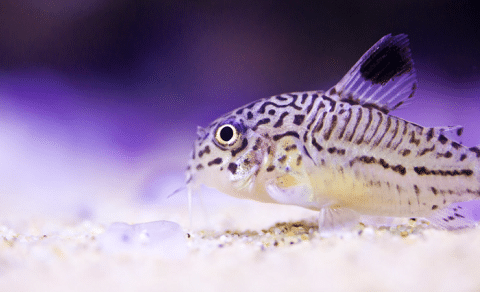
Looking for an interesting bottom dweller for a small community tank? Look no further than the cories, a large group of schooling catfish from South America. These fascinating freshwater fish spend most of their time searching the substrate for food scraps, but every now and then they rocket up to the surface for a gulp of air.
The smallest species (dwarf, pygmy corydoras, etc.) grow to less than an inch and can be kept in a ten-gallon tank, but most species will need an aquarium size of 20 gallons or more.
These peaceful fish will thrive in an unheated aquarium in most homes, although they can be kept with some tropical fish that enjoy water in the low 70’s. The white cloud mountain minnow is a social fish, so you’ll need a school of at least six to keep them confident.
Diet: Omnivore, feed quality fish flakes or micro pellets and live/frozen food
Origin: Sri Lanka
Temperature: 70 – 79°F
Swimming Level: Middle to lower levels
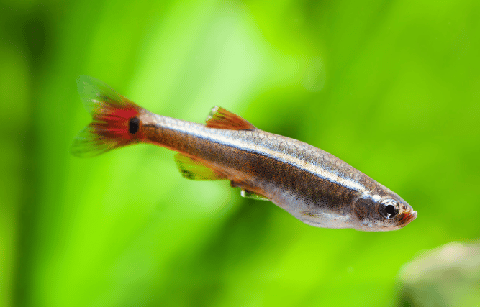
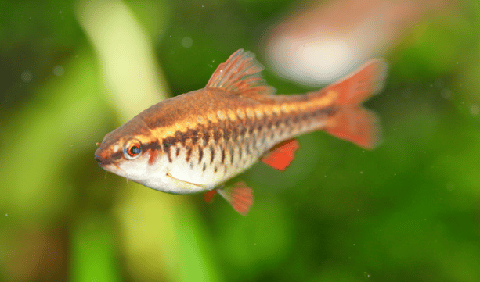
The cherry barb is a beautiful freshwater schooling fish from South Asia with attractive scales and rounded fins. Males develop a beautiful cherry-red color, but the females also have a rich amber/orange shade.
Cherry barbs are great community fish that add life to the lower levels of the aquarium. They get along great with other peaceful fish but will do best in a larger tank (20 gallons+) if they need to share their space with other species. A school of 6 or more is recommended to see them at their best.
Adult Size: 1 – 2 inches, males reach just one inch
Care Level: Beginner
Temperament: Peaceful
Minimum Tank Size: 10 gallons
Diet: Omnivore, provide a quality flake or micro-pellet and occasional frozen/live foods
Origin: Venezuela
Temperature: 64 – 82°F
Swimming Level: All levels but mostly in the upper half
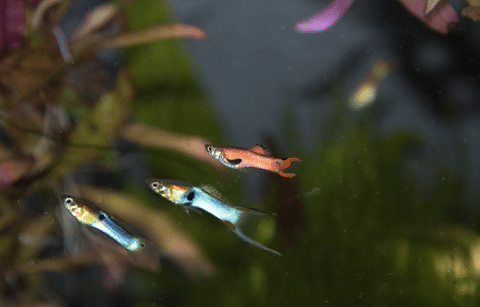
The Endler’s livebearer is a colorful little fish that looks similar to a regular fancy guppy. However, this closely related fish is a smaller species and purebred specimens are much rarer. Ideally, Endlers should not be kept in the same tank as guppies because the two will readily hybridize.
Endlers are confident, active little fish that are very easy to care for. These fish breed easily, so you can expect to see some babies (fry) if you keep males and females together. They’re very peaceful too, so you can keep them with other nano community fish.
Minimum Tank Size: 10 gallons for a single fish, 20 gallons for a pair
Diet: Carnivore, feed a quality micro-pellet or flake, and occasional live/frozen foods
Origin: India and Bangladesh
Temperature: 74-80°F
Swimming Level: Middle and upper layers
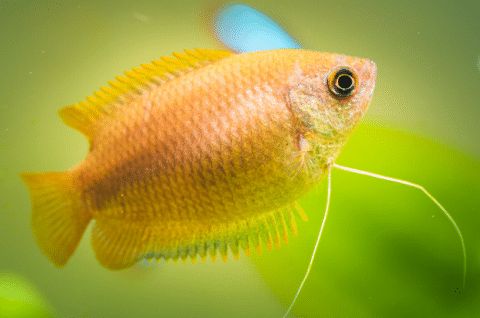
The honey gourami is a small, peaceful fish species that can be kept as a single centerpiece fish or as a pair in a small community fish tank.
The males develop their brightest colors before the breeding season, but these peaceful nano fish are attractive and interesting at any time of the year.
Diet: Carnivore, feed micro-pellets/ flakes and live/frozen foods
Origin: Brazil
Temperature: 72-80°F
Swimming Level: Middle levels
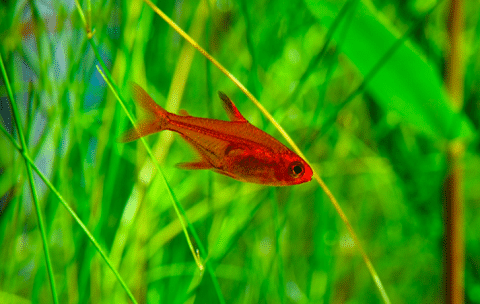
The ember tetra is a nano schooling fish with a deep orange color. These tiny tetras grow to three-quarters of an inch or so, making them a good choice for tanks as small as 5 gallons. However, they will be much better off in a tank of over 10 gallons, especially in a school of 10 or more.
Ember tetras are an option for a small community tank, although they should not be kept with large or aggressive fish due to their small size.
Diet: Omnivorous, feed high-quality dried and live/frozen foods
Origin: Northern South America and the Caribbean
Temperature: 72-82°F
Swimming Level: All levels
Fancy guppies are excellent nano fish for smaller fish tanks, especially if you have naturally hard water. These colorful livebearers are very easy to keep and super easy to breed in a home aquarium.
Guppies come in a variety of colors, and some high-quality strains are very rare and valuable. However, you can usually find some beautiful fancy guppies at your local fish store for a very reasonable price. You can keep only males or groups with three females to one male.
Diet: Omnivore, feed a quality flake food and supplemental live/frozen foods
Origin: Eastern Asia
Temperature: 61 – 75°F
Swimming Level: Middle and upper levels
The Medaka, or Japanese rice fish is becoming increasingly popular in the aquarium trade. They are available in a variety of colors, ranging from white to orange.
These nano fish prefer cool water, making them a great choice for an unheated tank. They can be kept with other peaceful fish like white cloud minnows, just avoid tropical species that need warm water temperatures.
Diet: Omnivore, provide a good quality dried food and frozen/live foods as treats
Origin: Southeastern USA
Temperature: 50 – 72°F
Swimming Level: Middle and upper layers
The rainbow shiner is an awesome native fish species that hails from the United States. They are a pretty new fish species in the fish keeping hobby and difficult to find at most fish stores, but you can often pick them up online. Choose this species as the centerpiece for a cool water stream biotope tank.
In spawning colors, these guys are some of the best-looking fish out there, although not all specimens develop amazing colors, and females are not particularly colorful. Keep a school of at least 6 of these fish in a small cool water tank with good water flow.
15. Spotted Blue-Eye Rainbowfish
Scientific Name: Pseudomugil gertrudae
Adult Size: 1-1.5 inches
Care Level: Beginner/intermediate
Temperament: Peaceful but shy
Minimum Tank Size: 10 gallons
Diet: Omnivore, feed crushed dried foods and small live/frozen foods
Origin: Indonesia and Northern Australia
Temperature: 72-82°F
Swimming Level: Generally in the top and middle levels
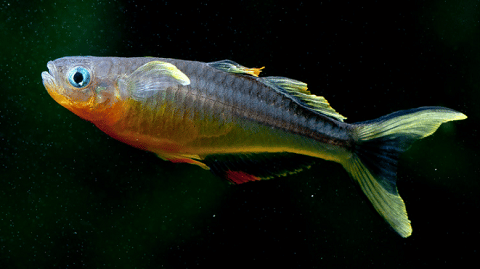
The spotted blue-eye rainbowfish is an interesting nano species that thrives in small planted aquariums. Both sexes are very attractive, although only the males develop large and interesting anal and dorsal fins.
Spotted blue-eye rainbowfish can be pretty shy around other fish, so they’re best kept in their own planted tank. It is possible to keep this species with adult shrimp, but there’s always some risk when keeping fish and inverts together. Keep a shoal of 8 or more of these fish to see their confident natural behaviors.
Diet: Feed good quality dried foods and live/frozen foods
Origin: Brazil, Uraguay, Argentina, Paraguay
Temperature: 70 – 79°F
Swimming Level: Midwater levels
The green fire tetra is an active little South American tetra that will add color and movement to any nano tank. You might find them for sale as Rathbun’s tetra or the redflank bloodfin, but they are all the same awesome nano species.
Unfortunately, green fire tetras have a reputation for fin nipping, so it’s safest to keep them with fast-moving fish that can hold their own, and avoid any species with long, flowing fins.
Diet: Carnivore, feed dried food for nano fish and live/frozen foods
Origin: West Africa
Temperature: 68 – 78°F
Swimming Level: Upper levels
Also known as the banded panchax, these tiny surface dwellers are a great choice for a nano tank full of healthy green plants that mimic their natural forest habitat.
The clown killifish can be kept with other nano fish but will be most comfortable if you keep a school of at least 8 specimens.
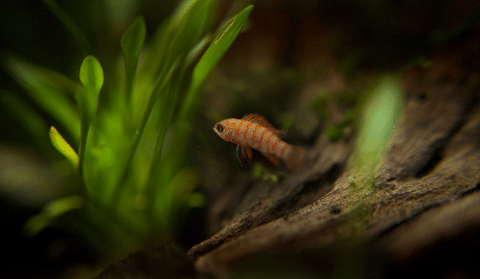
The scarlet badis is a tiny fish species from India that looks similar to a dwarf cichlid. These colorful little fish can be kept in tanks as small as 5 gallons, although maintaining great water quality is much easier in a larger setup.
The scarlet badis is a great choice for fish keepers with a few years of experience. They can be a little fussy around meal times, so you’ll probably need a supply of live or frozen foods to keep them well-fed.
These fish should not be kept with larger, more aggressive species, although they will thrive in a planted tank with other smaller fish like celestial pearl danios (AKA Galaxy Rasbora).
19. Licorice Gourami
Scientific Name: Parosphromenus deissneri
Adult Size: 1.5 inches
Care Level: Intermediate
Temperament: Can be somewhat aggressive
Minimum Tank Size: 5 gallons
Diet: Carnivore, feed live foods like bloodworm and tubifex worm
Origin: Indonesia
Temperature: 72 – 82°F
Swimming Level: Middle layers
The licorice gourami is a fascinating nano fish species for more experienced fish keepers. These fish do well in tanks as small as 5 gallons, but they require soft, acidic water and gentle filtration to simulate their natural habitat.
Licorice gouramis are often kept as a single centerpiece fish due to their slightly aggressive nature, although you can keep them with other small, peaceful fish in a tank with plenty of cover and live plants.
Diet: Algae eater. Can be fed soft greens and algae wafers but requires a source of natural algae
Origin: South America
Temperature: 70 – 77°F
Swimming Level: Feeds on hardscape, glass, and plants at all levels
The otocinclus catfish is one of my favorite nano fish and one of the most useful clean-up crew species in the hobby. However, these little guys have some special requirements, and they rarely survive in a new tank without a steady supply of algae.
Despite their small size, these algae eaters do best in mature tanks of 20 gallons or more that can provide enough natural food to sustain a school of 6 or more. Otos are very peaceful fish that are safe to keep with dwarf shrimp and fish fry.
Diet: Carnivore, feed live snails, and live/frozen brine shrimp
Origin: India
Temperature: 72 – 82°F
Swimming Level: All levels
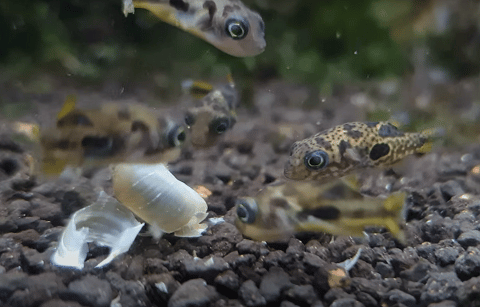
The pea puffer is an adorable little nano fish with a real mean streak! They are a true freshwater species that can be kept in tanks as small as 5 gallons, although 15 gallons or more would be much better for long-term care.
These fish are not ideal for beginners because they prefer a heavily planted tank to feel comfortable in their environment, and they have a pretty specialized diet. A steady supply of live snails is the best food source to keep their sharp teeth worn down, but they will also take frozen bloodworms as an occasional treat.
Other Species To Consider
Fish are not the only things you can keep in a small fish tank. Read on to learn about three other options!
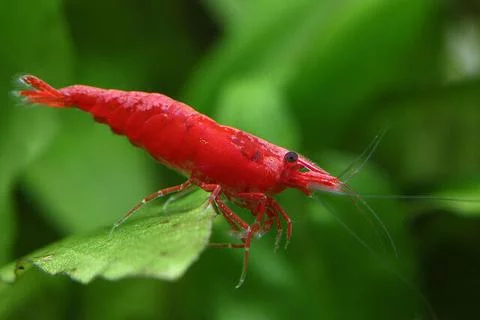
Freshwater aquarium shrimp are a great addition to small tanks and aquascapes. Peaceful, full of personality, and colorful. Many varieties are available.
Keeping freshwater shrimp is a fascinating alternative to small fish species. Sometimes, you can also add these adorable crustaceans to an existing freshwater aquarium, although most popular aquarium fish will try to eat them.
Otocinclus catfish are one of the only fish that won’t eat baby shrimp, although you may get away with keeping large adult shrimp with small nano fish like celestial pearl danios.
Generally, it’s best to keep freshwater shrimp in their own tank of 10 gallons or larger, although some aquarists have success in tanks as small as 2 gallons. Unfortunately, maintaining safe water parameters is very difficult in this volume of water.
Different shrimp species have different care requirements, but all species will do best in a temperature-controlled and filtered aquarium with good-quality shrimp food and regular maintenance.
Snails have really gotten a bad name in the aquarium hobby, but the truth is that these fascinating freshwater invertebrates can be great cleanup crew and some species are really good-looking creatures!
Avoid adding snails like ramshorns and pond snails to your tank if you prefer species that won’t multiply, although these ‘pest’ species tend to limit themselves in well-maintained tanks.
Nerite snails and mystery snails are better choices because they do not breed and actually make pretty interesting display animals.
Want to learn more? Check out my comprehensive aquarium snail guides for much more information on these fascinating creatures!
3. Small Hardy Plants
Have you considered growing live plants in your aquarium? Heads up, the planted tank hobby can be addictive!
There are loads of different aquatic plant species that thrive in small tanks. Many will survive without any special care, but it’s important to select low-tech species if you’re just starting out.
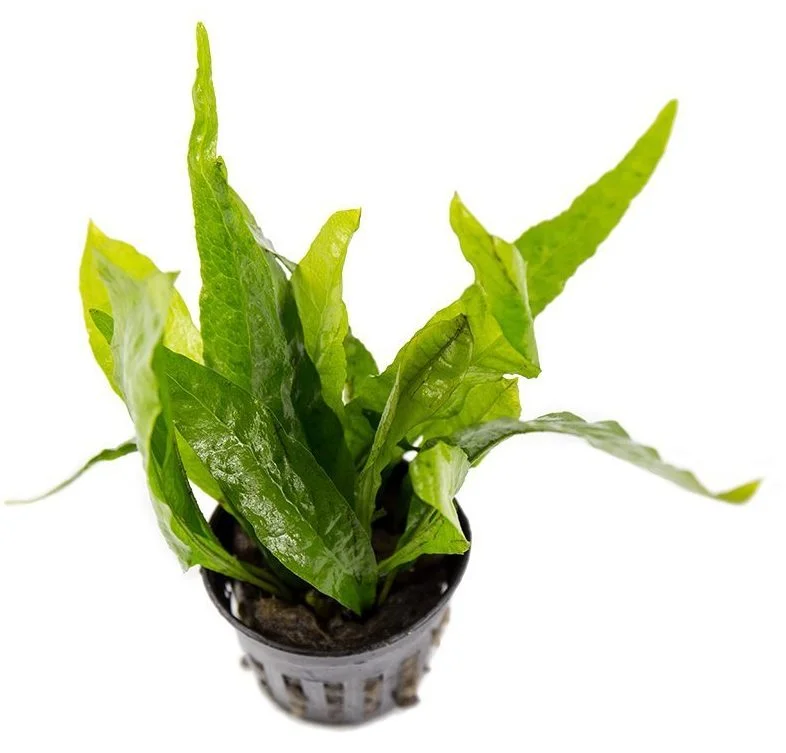
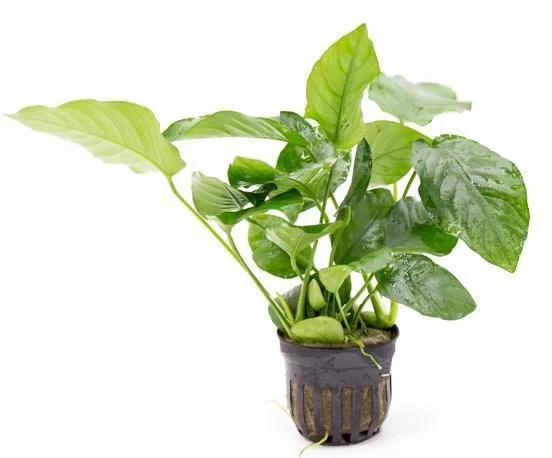
Epiphytes like Java Ferns and Anubias nana petit are great choices because you can grow them right in their pot without any special lighting. However, a much better way to grow these hardy plants is to attach them to a rock or a piece of driftwood using superglue or thread.
Want to learn more about growing live plants? Browse through my extensive collection of detailed guides to get started!
What is a Small Aquarium?
Aquariums in the range of 5 to 20 gallons are generally classified as small tanks. These tanks are ideal for bedrooms, offices, and busy fish rooms. You’ll also see tanks as small as 1 gallon for sale, but avoid these if you’re planning on keeping fish. Anything smaller than about 5 gallons can be very difficult to maintain.
Stocking Your Tank
Test your source water before stocking your tank. Some fish prefer naturally hard water, while others prefer soft and acidic conditions. If your tap water is hard, you may want to choose small livebearers like guppies that thrive in harder water.
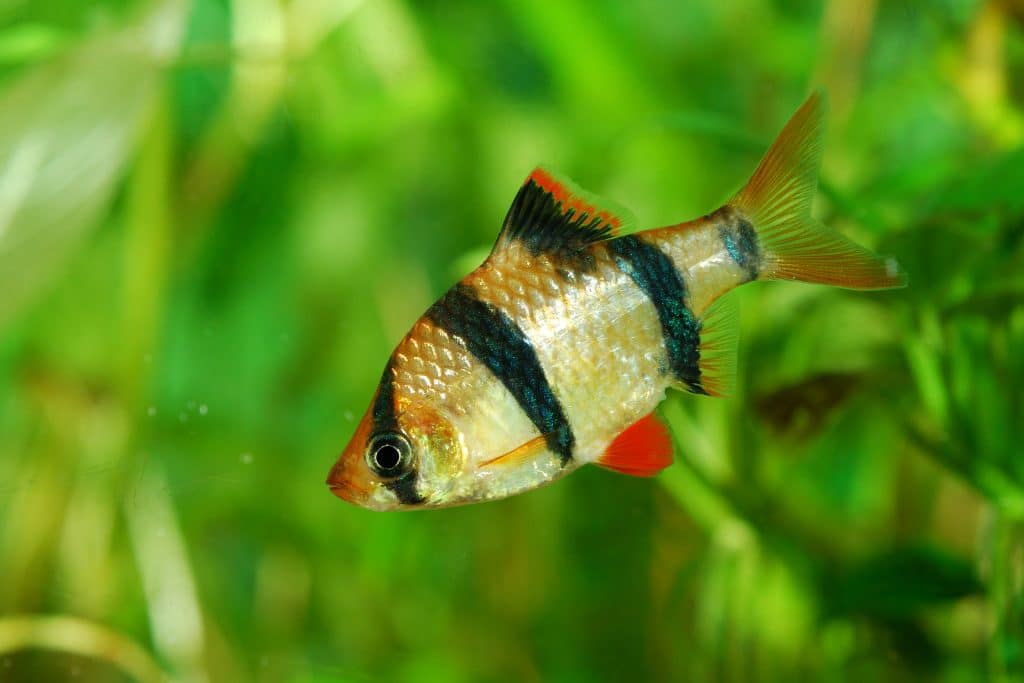
Personality is also vital when choosing small fish for your tank. Avoid mixing small, shy species with more aggressive fish like tiger barbs if you want a peaceful community setup.
Many beginners try to cram as many fish into their tanks as possible, but more fish means more maintenance, and it’s easy to let your water quality slide to dangerous levels in a nano fish tank. Stock your tank lightly for a trouble-free experience.
Essential Equipment Checklist
Heater
Apart from the Japanese ricefish and the white cloud minnow, each of the species in this list will need warm water temperatures to simulate the tropical climate of their natural habitat. Choose a heater model and wattage that fits your tank size.
Filter
All fish need filtered water when kept in small aquariums. Choose a small sponge filter, HOB, or internal power filter that can process your aquarium water volume 4-6 times each hour.
Lighting
Your fish will enjoy a natural day/night cycle to maintain their biological clock. Run your lights for 6-8 hours each day to avoid excess algae growth.
Other Important Supplies
Water test kit
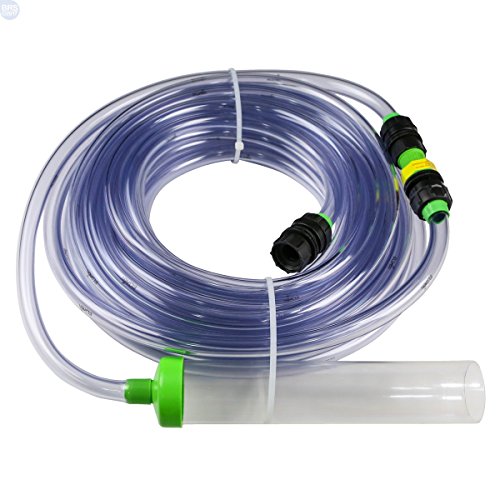
Gravel vacuum
Thermometer
Decorations, hardscape, and Substrate
Quality food
FAQs
Final Thoughts
You don’t need a big tank or a big budget to enjoy the fishkeeping hobby. In fact, all of the small fish species discussed in this article will be right at home in a desktop tank!
That being said, 5 gallons is the smallest size you should consider for any freshwater fish, and 15 gallons (with a good filter) is probably the ideal size for your first nano tank. Lastly, little fish can have BIG personalities, so make sure all your fish species match up in terms of personality and temperament.
Do you keep small aquarium fish? Share your favorite species in the comments below!
I dealt with Columnaris more times than I can count during my years running the local fish store. Customers would come in with a fish showing what looked like mild fin damage or a pale patch near the dorsal. and if we weren’t fast about it, that fish would be gone within 24 to 48 hours. I’ve personally cured fish with this exact protocol, and the one thing I always told people: don’t make the mistake of treating this like an ordinary bacterial infection that a basic salt dip will handle. Columnaris is aggressive, it spreads fast, and it requires a focused, multi-step approach. Here’s exactly what I do.
Key Takeaways
Columnaris is a gram negative bacterial infection that will kill a fish if left untreated
A three prong approach of salt, lower temperature, and Methylene blue is the current go to for curing this disease
Poor water quality and stress are the top reasons for this infection to occur
Once eradicated, a tank can be contaminated again by new introductions in the tank
While it is certainly possible to treat the fish inside your display tank, my preference is to treat them in a quarantine tank. If you cannot set up a quarantine tank in time, you’ll need to treat in the display tank. Note that Methlene blue is known to stain silicone and will affect your system’s beneficial bacteria, which is why I prefer to quarantine.
If you do not quarantine the fish, you should do a 50% water change before any treatment occurs. This will ensure you have ideal water parameters before you add any medications.
In all my years treating Columnaris in-store and at home, quarantine was the single biggest factor in whether a fish survived or not. I always told customers: set up a spare 10-gallon with a sponge filter before you ever need it. not when a fish is already showing symptoms. Once Columnaris gets going, every hour counts. A QT tank that’s already cycled and ready the moment you spot something is the difference between a recoverable situation and watching a fish decline rapidly.
Step 2 – Treat The Tank With Salt
You will need to dose the tank with salt. You’ll need to be quite liberal with the dosage and amp it up to 2 and half tablespoons per gallon or 3 cups per 20 gallons. This is a lot of salt and will harm any plants in the tank. Note that some fish like Plecos are sensitive to salt so you will need to take caution with them. Some snails and shrimp are also not tolerate of salt treatment.
One mistake I see over and over: a hobbyist spots a sick fish, reaches for aquarium salt, doses the tank, and waits. With most freshwater bacterial infections, salt alone goes a long way. Columnaris is not that type of disease. Salt is only one component of a three-part protocol. without quarantine, temperature reduction, and Methylene Blue all working together, you are not treating this infection effectively, and the fish will most likely not survive.
Step 3 – Dose With Methylene Blue
When antibiotics like Triple sulfa were available, this would have been my go to. However, since it is no longer available in the US and is hard to find (and expensive), my recommendation is to use Methylene Blue. While this is primarily used to treat fungal diseases, it is also effective for this treatment procedure because it acts as a disinfectant. Use the recommended dosage as stated on the manufacturer’s bottle
Step 4 – Lower Water Temperature
Columnaris spreads rapidly in higher water temperatures. Therefore, lowering the temperature might help. You want to target a temperature of 70 – 72 degrees Fahrenheit.
However, if your fish is accustomed to higher temperatures, it will take some time to adjust to temperature changes. Thus, I recommend lowering the temperature by only 2F every two hours.
Step 5 – Monitor Water Quality And Observe
Columnaris bacteria thrive on organic waste. Therefore, it is essential to keep your tank clean and maintain the recommended water parameters for your fish. Check your water for ammonia, nitrate, nitrite, KH, and GH, and ensure nothing is affecting your fish adversely.
The observation period for this treatment is 7-10 days. In most cases, if the fish survives, the fish should be cured of columnaris and it should be eliminated from the tank. Anything you use in this tank that is untreated, you will want to sterilize. A solution of bleach or dry out for several days will kill off any remaining infection.
What To Avoid Doing
Don’t ignore the condition – treat it quickly. Don’t wait around!
Avoid doing water changes. If a water change is made, you will need to re-dose the tank
Do not carelessly add fish afterward, consider a quarantine process for new additions going forward to prevent recontamination.
What To Do If Symptoms Are Still Around After 10 Days?
If the infection is stubborn, it’s time to go with a half dosage of meth blue and salt. This is an extreme dosage. Either this will eliminate the disease or your fish will end up passing away. Treatment after 10 days tends to have a low success rate, and we get into a worse case scenario.
Note that this technique I outline does not use antibiotics. There are methods where you can, but I preferred for this post not to include them because the ideal medication isn’t available in the US and this method does have a high success rate.
How To Prevent It
As mentioned earlier, the Columnaris bacteria thrive on organic waste. Therefore, partial water changes every two weeks and regularly test water chemistry to ensure recommended water parameters are some of the best ways to keep the bacterial infection at bay.
Furthermore, the immune system of your fish should be healthy and strong enough to fight off the bacteria. Strong immunity is a result of eliminating stress factors such as bullying and harassment or water fluctuations from your aquarium. It is also recommended to clean up the fish waste and decaying plant matter and gravel to foster a hygienic environment for your fish.
Also, overcrowding, tank size, and tank mates should be taken into consideration because these factors directly impact the stress levels in your fish. Additionally, a balanced diet with occasional treats might help keep the infection at bay.
What Exactly Is This Disease?
Columnaris disease is common among freshwater fish, particularly among livebearers fish such as guppy fish, Molly, etc. This disease is mainly caused by Columnaris bacteria that are long and rod-shaped; appearance-wise.
Name
Flexibacter columnaris
Common Treatments
Salt and antibiotics
Short-Term Treatment
Antibiotics
Causes
Transferred from infected fish, plants, and water
Treatment Time
7 – 10 days
Common Symptoms
Saddleback-like growth, lesions on body, mouth, infected gills
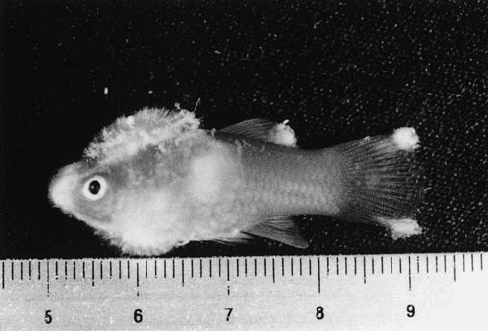
Columnaris disease is commonly known as saddleback disease, guppy disease, cotton wool disease, and cotton mouth disease. In brackish and saltwater the species Flexibacter maritimus is the equivalent and is more severe, though not common to see in aquariums.
Columnaris is often mistaken as a fungal infection because the fish might show signs of mold-like lesions on their bodies. However, Columnaris is caused by bacterial infection and forms lesions that progress gradually and end up killing the entire freshwater fish population in your tank, if left untreated.
Some of the common symptoms of Columnaris are:
Grey or white spots on the head, fins, and gills
Infected gill tissue
Lesions on the body
Lesions on the mouth area or puffy lips
Frayed, bleached out, and ragged fish’s fins
One of the first signs you’ll notice is frayed or ragged fins, commonly referred to as fin rot. However, not all fish experience fin rot and may show some other symptoms. For instance grayish or whitish spots of patches on the head or gills.
Sometimes, the lesions on your fish extend down to the sides, giving it the appearance of a saddle near the dorsal fin, and that’s why the common name for Columnaris disease is “saddleback disease”. Ultimately, as the bacterial infection progresses you may notice some other external changes in your fish such as moldy lesions around the mouth and frayed fins. Once the saddleback symptoms occur, a fish will usually survive 1-2 day days if left untreated until ultimately passing away.
However, not all symptoms are external. Some are behaviors that make your fish look more lethargic and weak, with a loss of appetite and hanging out at the surface of water.
What Are The Causes ?
The main culprit of the cotton wool disease or saddleback disease is a bacterial infection that particularly affects freshwater fish’s gills. Some of the major causes of columnaris disease in freshwater fish are:
1. Poor water quality
One of the main reasons your young fish might get Columnaris is poor water quality that compromises the overall health of your fish.
High levels of ammonia, nitrates, and other pollutants can contaminate your entire tank water and induce stress in fish. Stress messes up the immune system of your fish, making them susceptible to fatal diseases like Columnaris.
2. Stress
As mentioned earlier, stress weakens the immunity system of your fish, making it more prone to diseases. Avoid overcrowding, choose suitable tank mates, and feed a balanced diet to eliminate stress in your aquarium.
3. Injury
Fish with injuries in the form of wounds and lesions are more vulnerable to bacterial infections because Columnaris usually enter the fish through open wounds and lesions on the skin, gills, or fish’s mouth.
4. Fluctuating water temperature
Studies suggest that fluctuating water temperature influences the metabolic rate of bacteria and affects their growth activity1. Columnaris are mostly associated with warmer temperatures. Therefore, maintaining a stable water temperature for specific fish in your aquarium might help prevent Columnaris and bacterial proliferation.
5. Untidy tank
Columnaris bacteria thrive on uneaten food, fish waste, decaying plant matter, dead fish, waste products, and overall a contaminated tank with lots of pollutants. Therefore, it’s crucial to keep your tank clean with pristine water conditions for a healthy ecosystem.
6. Poor nutrition
A balanced diet means a healthy immune system. A healthy immune system means a strong fight against bacterial and fungal infections.
Feeding your fish a varied diet, rich in proteins and occasional treats is important to keep the livestock healthy and happy for a long period of time.
7. Introducing New Livestock To The Tank
If you want to introduce a new fish into your tank, think again!
Because you never know what the fish might bring into your super healthy and playful aquarium. Quarantining a new fish into a separate tank is the most reasonable idea to avoid big problems such as Columnaris and other fish diseases.
How Does It Enter Your Fish’s Body?
Columnaris strikes when the fish’s immune system is not strong enough to fight the bacteria. The bacteria can enter your fish’s body through gills, mouth, or small wounds on the skin. Therefore, the physical health of your fish is trivial to ensure the overall health.
The cotton wool disease or saddle back disease is often spread through contaminated fish nets, containers, and uneaten food. Since the disease is highly contagious, it’s always recommended to sterilize your tank decorations or equipment to keep everything in prime condition.
Conclusion
Columnaris disease is common in freshwater and tropical fish at water temperatures above 15°C or 59°F. At higher water temperatures, the progress of Columnaris disease is faster. Therefore, it is suggested to keep the water temperature low and stable throughout the year. Also, Columnaris bacteria love fish waste, dead fish, and organic waste. Therefore, proper filtration and weekly water changes should be done to prevent Columnaris in the long run. A good quarantine practice should prevent the problem entirely.
Have any questions for me? Leave a comment in the comments below. I’m also leaving an FAQs section asked by some readers so you can review them as well. Thanks for reading and see you next time!
FAQS
How long can a fish survive with Columnaris?
The survival time of a fish with Columnaris depends on a number of factors. For instance, the severity of the infection, the presence of other stressors in your aquarium, and the overall health of your fish. The fish with the strongest immune system fight off the disease better than others. Therefore, it is important to understand the factors that may affect the lifespan of your fish in general.
In some cases, Columnaris can cause instant death of your fish within a short period. It’s especially true if the infection is advanced and not treated properly. However, most cases of Columnaris can be treated successfully if diagnosed early with appropriate treatment.
However, if your fish is already stressed or suffering from other health issues, it may have a hard time fighting off this disease. Therefore, it is important to monitor water quality and perform water changes regularly. Also, feed your fish a balanced, nutritious diet to support a healthy immune system.
All in all, consult a professional before treating your fish or administering any special medicine for Columnaris.
Can fish survive Columnaris?
It depends on many factors such as the severity of the infection, the health of the fish, the effectiveness of the treatment provided, and if it is caught early.
Nonetheless, it is a highly contagious disease that requires swift intervention. Some of the factors that may help in the survival of your fish include:
Early detection by recognizing the symptoms of the diseases and starting the treatment promptly. The longer the infection progresses, the less chances of survival for your fish.
Maintaining aquarium water quality and tank conditions by providing a stress-free environment is essential for the overall immune function of your fish.
Isolating the infected fish from the healthy ones can prevent the spread of the disease for more focused treatment
Is columnaris a fungal or bacterial disease?
Many aquarists confuse Columnaris with a fungal infection. However, the causative agent of Columnaris disease is a bacteria named, Flavobacterium columnare, which is a gram negative bacteria affecting various freshwater fish.
You can easily spot a fish with Columnaris disease by the presence of white, thread-like lesions on the skin, fins, and gills. And while Columnaris is a bacterial infection, it may give birth to many fungal infections.
Can salt cure columnaris?
Yes it can when done correctly. This blog post outlined a simple solution of using a hard dosage of salt to cure columnaris. It can be used to eliminate the disease as long as it is caught early.
How do you diagnose Columnaris disease?
Columnaris disease begins as external infections as lesions on the body surface and gills. However, the type of lesions depends on the fish. In catfish, some of the external symptoms are small and circular lesions with gray blue centers and red margins. However, in scaled fish, the lesions begin on the outer margins of the fins and gradually spread throughout their bodies.
Some behavioral signs of Columnaris include lethargy, loss of appetite, erratic swimming patterns, scratching, and rubbing against the surface to aid discomfort.
One of the obvious areas of examination is the fish’s gills. That’s because Columnaris directly affects the gills and may show signs of inflammation, discoloration, or excessive mucus production.
Is Columnaris treatable?
As fatal and contagious as it may seem, Columnaris is definitely treatable with the right medications, early detection, and prompt intervention.
How to treat columnaris in betta fish?
Treating Columnaris in betta fish is pretty much the same as treating any other fish. Use the same steps outlined in the post for betta fish. It should work the same with them. The main issue with bettas is the water temperatures, but Bettas can tolerate lower temperatures for longer than this treatment calls for.
How to disinfect aquarium equipment after each use?
While treating Columnaris outbreaks in your tropical fish tank, it is recommended to sterilize or disinfect all the tank decorations and other equipment after each use. For this, you can use the commercial treatment of Benzalkonium Chloride solution (Net Soak or Net Dip). Or you can also use hydrogen peroxide, and dip all of your tank decorations in 3% solution.
🐟 Want to learn more? This article is part of our complete Aquarium Care Guide. your ultimate resource for water chemistry, maintenance, feeding, disease prevention, and everything you need for a healthy tank.
Goldfish are surprisingly resilient, but they’re also prone to a specific set of health problems. many of which I’ve dealt with firsthand over 25+ years. The good news is that most goldfish diseases are treatable when caught early, and recognizing the symptoms fast makes all the difference. Here’s what to watch for.
Goldfish have a reputation for being nearly indestructible, but that reputation is largely undeserved. it’s more that goldfish tolerate abuse longer than most fish before showing symptoms. After 25 years in the hobby, I can tell you that the majority of goldfish disease cases I’ve seen trace back to the same root causes: overcrowding, inadequate filtration, and poor water quality. Fix those and most diseases never appear. But when they do show up, early identification is everything. Ich, bacterial infections, and flukes are all treatable if caught early. the same fish that recovers easily in week one often can’t be saved in week four when the infection has progressed. I’ve used everything from salt treatments to Prazi-Pro to API Furan-2 on sick goldfish, and I’ll share what actually works for each condition in this guide.
If you’re able to realize early on the signs and symptoms of disease and illness in your goldfish, then you can start treatment immediately and get your fish on the right track to living a long and healthy life. Otherwise, these sicknesses can be deadly.
Key Takeaways
Goldfish are susceptible to many aquarium diseases, like ich, velvet, and dropsy.
Some of the most common diseases goldfish face are due to bacterial, fungal, and parasitic infections.
Some common symptoms goldfish display may need to be treated alongside the primary infection.
It is important to be able to identify the most common goldfish disease symptoms and have treatments available just in case.
The 14 Most Common Goldfish Diseases
Goldfish can contract the same diseases that most fish can in the aquarium hobby. For the most part, treatments for these coldwater fish are the same as they would be for tropical fish species.
In most cases, discoloration, lethargy, heavy breathing, and loss of appetite can be seen with any disease or ailment.
One of the most common aquarium diseases of all time, ich, plagues goldfish aquarium setups. Ich, scientifically known as Ichthyophthirius multifiliis, is a parasite that affects the gills, skin, and fins of fish. Left untreated, this parasitic infection can quickly lead to death.
Symptoms
Luckily, fish owners have discovered numerous treatments for ich that result in full recovery. The best way to treat ich is through prevention and early detection. Here are some of the symptoms you should look out for when adding new fish to your aquarium:
Flashing and scratching
Small, dispersed white spots all over the body
Heavy breathing
Discoloration
Lethargy
Loss of appetite
The most recognizable symptom of ich is small white spots that cover the entire body, leading to ich also being referred to as white spot disease. These white spots appear as raised bumps over the gills, skin, and fins. They are about the size of a grain of salt and can appear in clusters or more randomly around the body in any amount.
Treatment
While white spots are one of the easiest symptoms of ich to diagnose, the parasite can live undetected in the aquarium for extended periods. In fact, these parasitic infections can be transferred between tanks through shared filter media, substrate, or other decorations. Because of this, the entire tank must be treated, not just the individual fish.
Some of the most popular treatments for ich include:
Raising water temperature alongside frequent water changes
New Life Spectrum Ick Shield
Hikari Ich-X
Seachem ParaGuard
What causes ich?
Parasites cause ich, however, other environmental conditions can determine the severity of the outbreak. Factors such as poor water conditions and the current stress on the fish’s immune system can increase the likelihood of the fish succumbing to the disease. As messy fish that create a lot of ammonia, goldfish are especially susceptible to stress and subsequent disease.
2. Dropsy
Dropsy is another common goldfish disease, but is, unfortunately, not easily treated. While dropsy is usually referred to as a disease, this condition is more like a symptom of a greater underlying problem.
Symptoms
Dropsy displays itself as:
Swelling and bloating, especially in the eyes and abdomen
Outward pointing scales
Clamped fins
Curved spine
Discolored waste
Discoloration
Lethargy
Loss of appetite
In addition to these symptoms, the fish may also show signs of other common goldfish diseases that may be the cause for the onset of dropsy.
Treatment
Treating dropsy is difficult and most cases are fatal. However, dropsy isn’t contagious, though the underlying bacterial, fungal, or parasitic infections may be. Because of this, it’s best to remove the sick goldfish from the aquarium and continue treatment in a quarantine tank system.
Here are some of the treatments you can try to alleviate dropsy symptoms:
Frequent water changes
Epsom/aquarium salt bath
Seachem KanaPlex
Seachem MetroPlex
Fritz Aquatics Maracyn 2
I know both medications are not always available to some, so I’m going to defer to Lori’s Hartland’s experience on how she cured her Goldfish using a triple treatment of Kanaplex, Metroplex & Epsom Salt. Here is the full video below that walks you through her experience. It’s also very important to see her experience with her vet call at 19:06. She had to take a phone consultation, which is going to be what most will get when consulting a vet for a smaller fish.
What causes dropsy?
Dropsy is the secondary onset of symptoms caused by an underlying problem, usually a type of bacterial, fungal, or parasitic infection. The symptomatic swelling is caused by a dysfunction in the kidney or liver.
Because of the stress that the fish’s body is already under, antibiotics are only recommended if the underlying problem can be diagnosed as these medications heavily tax the liver.
3. Swim Bladder Disease
Another one of the most common goldfish diseases, swim bladder disease is challenging to treat but can be lived with. Like dropsy, swim bladder disease is often caused by an underlying problem, though it can be its own symptom.
Swim bladder disease, commonly referred to as swim bladder disorder, is a condition where the fish’s internal swim bladder organ dysfunctions. A healthy swim bladder allows the fish to regulate its orientation within the water column. A dysfunctioning swim bladder can cause the fish to swim upside down, on its side, or sideways.
Symptoms
Along with irregular swimming, the sick goldfish may show signs of:
Swimming upside down or sideways
Floating to the top of the tank or sinking to the bottom
Distended abdomen
Curved spine
Discoloration
Lethargy
Loss of appetite
Treatment
Treatment for these buoyancy disorders is straightforward, but not always guaranteed to work. In some cases, the swim bladder is deformed for life. If this happens, goldfish owners become very innovative and perform surgery or provide a wheelchair for handicapped fish that are unable to regulate their orientation.
Here are some of the best ways to treat a sick fish dealing with swim bladder disorder:
Fasting the goldfish
Feeding peas and sinking foods that prevent the fish from gulping air
Adjusting water parameters
Wheelchair
The last method of treatment you won’t hear much of on many blogs. However, it is a great solution for fancy goldfish. This can be created with airline tubing. The video above from Mark Kennedy shows how to create a swim bladder wheelchair.
What causes swim bladder disorder?
Swim bladder problems can come about due to primary parasitic, fungal, or bacterial infections. Any one of the other common goldfish diseases can cause stress and damage to the swim bladder, resulting in too much gas being created or distributed incorrectly.
Otherwise, the actual disease can be caused by the fish gulping too much air at the top of the aquarium. Irregular digestion from a poor diet or incorrect water temperatures can also cause the swim bladder to create too much gas. Internal injury can also cause permanent damage to the organ.
4. Neurofibroma
One of the less common goldfish diseases to see in the aquarium hobby, neurofibroma is a condition where tumors grow from the nervous system1. These tumors are often benign but can cause some discomfort as your goldfish tries to get around the aquarium.
In most cases, neurofibroma is no cause for concern. These tumors will often grow, fall off, and then regrow. While ugly to look at and sometimes uncomfortable for your goldfish, these tumors are usually not life-threatening.
Symptoms
There are not many symptoms of neurofibroma, but some things to look out for are:
Discolored, raised bumps on the skin and fins
Difficulty swimming
Treatment
While these benign tumors will usually manage themselves, surgical intervention is sometimes necessary. Veterinarians and fish specialists can biopsy the tumor and remove the affected cells. Therefore, the only successful treatment thus far has been:
Surgical treatment and removal
What causes neurofibroma?
It is not fully understood what causes neurofibroma tumors to grow. While some cases may be due to environmental factors, the major key component is likely genetics.
5. Rot (Fin, Tail, Mouth)
Probably the second most common goldfish disease to see in the home aquarium is rot. Rot can affect the fins, tails, and mouths of fish and lead to death in severe cases. Luckily, fin rot is very treatable and highly preventable.
There are two main types of rot, one caused by bacterial infections and the other by fungal infections. Sometimes, these can both happen at the same time and share many of the same symptoms.
Symptoms
Here are some of the most common symptoms to see alongside bacterial and fungal rot:
Clamped fins
Discolored and irritated fins and skin
Frail and fraying fins
Open sores
White, cottony growth for fungal diseases
Discoloration
Lethargy
Loss of appetite
Treatment
Treatment for these bacterial and fungal infections is easy and straightforward. Rot is not necessarily a problem within itself, but is often the result of poor water quality. However, most fishkeepers treat the symptoms alongside the cause.
Here are some reliable treatments for infected fish:
Frequent water changes
Aquarium salt bath
Fritz Aquatics Maracyn 2
Seachem PolyGuard
API MelaFix
What causes rot?
Simply put, rot is the result of goldfish living in poor water quality. Thousands of microorganisms live in our aquariums, some good and some bad. If the goldfish’s immune system is compromised or is physically injured, these microbes can enter the fish’s system, leading to fin rot or infection in other areas of the body.
6. Fungal Infections
The most common fungal infections arise from fin rot. Instead of bacteria infecting the open wounds or compromised sites of the fish, fungus, often from the Saprolegnia and Ichthyophonus genera, takes root and eats away at the fish. Cotton wool disease should not be confused with a fungal infection as those symptoms are caused by bacteria, namely Flavobacterium columnare.
Symptoms
It should be noted that a fungal infection does not necessarily indicate fin rot. Here are some of the symptoms that might appear on a fish’s body that’s struggling with fungus:
Cotton-like growth on the fins and body
Discolored grey or white patches
Ulcers and cysts
Discoloration
Lethargy
Loss of appetite
Treatment
Luckily, many medications target fungal diseases. Still, the best way to prevent and treat these outbreaks is by keeping aquarium water stable and clean. Here are some of the best goldfish fungal treatments available:
Frequent water changes
Aquarium salt
Fritz Aquatics Maracyn 2
API PrimaFix
What causes fungal infections?
Like a bacterial infection, fungal infections are caused by what’s already present in the aquarium. A goldfish tank is filled with good and bad organisms that will take advantage of a sick fish. However, some fungi are only able to thrive when dead and decaying matter is available. Once the dead fish, plant, or invertebrate has been removed and water quality improves, then the fish should start to get better.
7. Velvet
Velvet is a very aggressive disease and quickly causes sudden death for goldfish. This is another parasitic infection caused by dinoflagellate species in the Oodinium genus.
Like ich, these tiny parasite species live in the environment until they’re ready to attach to a fish. Once mature, they inject themselves into the fish’s slime coat. This infection eventually causes the gills and internal organs to inflame, leading to serious tissue damage.
Symptoms
Velvet is also commonly known as rust or gold dust disease due to its appearance on the fish’s skin. Here are the other ways you can diagnose velvet:
Fine white or rust-colored specks/coating that cover the body of the goldfish
Flashing and scratching against aquarium objects
Clamped fins
Abrasions and lesions
Heavy and rapid breathing
Discoloration
Lethargy
Loss of appetite
Treatment
Velvet is very difficult to treat because it progresses so quickly. If it’s caught early, then you may be able to save your goldfish. One of the best prescribed methods of beating velvet is by blacking out the tank by not allowing any light to enter as dinoflagellates are photosynthetic. Here are a few other ways you may help your fish:
Raise the water temperature
Create black-out conditions
Seachem ParaGuard
Seachem Cupramine
What causes velvet?
Velvet is a nasty parasitic infection that is similar to ich but more challenging to treat. This is caused by a photosynthetic dinoflagellate that has three life stages, including one that lives in the substrate, a free-swimming form, and one that requires a host in the form of a fish.
Because of this, velvet can easily be transmitted through sick goldfish or the transfer of aquarium media. The best way to prevent velvet is by observing new fish and using a quarantine tank.
8. Flukes
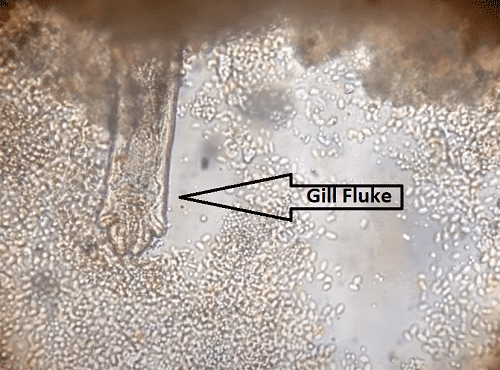
Flukes are very common among goldfish, especially fish that live in outdoor settings. Flukes, also known as trematodes, are types of external or internal parasites that can affect any part of the body. One of the most common flukes to diagnose is gill flukes, which are more difficult to treat.
Symptoms
Internal parasites can be more difficult to diagnose than external ones, but here are some of the warning signs:
Redness and inflammation
Flashing and scratching
Excess mucus secretion
Heavy breathing
Discoloration
Lethargy
Loss of appetite
Treatment
Goldfish suffering from flukes have a relatively high chance of survival as long as treatment is started immediately. Luckily, most of the aquarium treatments available are very effective, and it’s usually not necessary to use more than one method.
Aquarium salt
Seachem Paraguard
Hikari PraziPro
What causes flukes?
Flukes are parasites that are often carried into a tank on other fish and invertebrates. While they’re common to see in the aquarium setting, they thrive in outdoor environments. This is because most flukes require one or two more additional hosts, including birds and snails. This makes transfer from one outdoor system to the next relatively easy.
One of the easiest goldfish diseases to diagnose, anchor worms can be scary to see on your fish. These are a type of crustacean parasite that belongs to the Lernaea genus. Luckily, they are macroscopic external parasites that can easily be seen and diagnosed by the naked eye.
Symptoms
Here are some ways to tell if your fish has an anchor worm infection or not:
Thin white thread-like worms (sometimes Y-shaped) attached to the fish’s skin
Redness and inflammation
Lesions and abrasions
Flashing and scratching
Discoloration
Lethargy
Loss of appetite
Treatment
Treatment for anchor worms can take some trial and error. The best method is to move the affected fish to a quarantine tank, allowing the main goldfish tank to run empty, administering medications, and giving mild salt bath treatments. Here are some of the recommended treatments:
Aquarium salt
Fritz Aquatics Mardel Clout
Seachem Paraguard
Seachem Cupramine
What causes anchor worms?
Like other parasites, anchor worms can enter the aquarium via new fish or used plants and decorations. These parasites undergo several life stages, some of which are free-swimming, making transferral through different media very easy.
10. Ulcers
Ulcers are a big problem for the koi and goldfish industry but are often a sign of a bigger underlying problem. While not usually deadly on their own, ulcers can fester and become a breeding ground for bacterial and fungal infections.
Although ulcers aren’t contagious on their own, most fish exposed to those conditions suffer in one way or another due to environmental factors or secondary infections. The video by ThinFrog above highlights the aliment and how to cure it.
Symptoms
Here are some of the symptoms that might accompany ulcers:
Redness and inflammation
Open sores and lesions sometimes expose the muscle tissue
Cloudy and bulging eyes
Discoloration
Lethargy
Loss of appetite
Treatment
The first step to treating ulcers is finding the underlying problem. Most often, these abrasions come about due to poor water parameters, injury, or other stressors. It is key to treat those problems first, while also providing care to the wounds and preventing further infection from developing.
You can treat ulcers with:
Frequent water changes
Aquarium salt
API MelaFix
Fritz Aquatics Maracyn 2
What causes ulcers?
Ulcers can be caused by any one of the common goldfish diseases on this list. They are often the result of poor water quality, but they can be caused by a previous injury that hasn’t healed properly. Ulcers are often worsened by secondary infections and other goldfish parasites.
One of the less common goldfish diseases, carp pox is mainly seen in koi. This disease is caused by the herpesvirus, also known as the Cyprinid herpesvirus 1 (CyHV-1). As a herpesvirus, symptoms can lay dormant until a certain stressor arises.
Symptoms
Many hobbyists are unfamiliar with carp pox and you might not even know your goldfish is a carrier, so it’s important to be able to identify these symptoms:
Moderately sized milky bumps and lesions on the skin
Bumps around the mouth region
Thickened skin around the fish’s fins
The good news is that carp pox is very survivable as long as a secondary infection doesn’t develop. At the same time, it’s safe to assume that all fish housed with a carrier of carp pox have been exposed to the virus.
Treatment
Unfortunately, there is no treatment for Cyprinid herpesvirus 1 (CyHV-1) and the fish will have the virus for the duration of its life. Raising the water temperature and keeping water parameters good can help bolster your goldfish’s immunity and help deter outbreaks.
What causes carp pox?
Carp pox is caused by Cyprinid herpesvirus 1 (CyHV-1). Fish become infected when the virus sheds off the skin of the infected fish into the water column and the system of another fish.
12. Cloud Eye
Cloudy eyes are rarely a standalone symptom and often indicate a bigger problem at hand. While a cloudy eye may be the result of an injury to the eye, it’s much more likely that the fish is suffering from an underlying infection.
Symptoms
Along with a cloudy eye, your fish may experience:
Cloudy or opaque eye
Bulging or swollen eye
Difficulty swimming and navigating
Blindness
Discoloration
Lethargy
Loss of appetite
Treatment
A cloudy eye should be treated immediately to prevent the goldfish from losing its eyesight. At the same time, the underlying problem should be treated as well. This might include poor water quality or other internal infections.
Some treatments for cloudy eyes include:
Frequent water changes
Removing sharp objects
Aquarium salt
API MelaFix
Seachem KanaPlex
What causes a cloudy eye?
Cloudy eye is the result of some of the most common goldfish diseases, like the ones already on this list. Primary infections can cause the fish’s eye to swell and discolor as a result. However, a cloudy eye can also be due to an injury, so it’s important to get the correct diagnosis to proceed with the right course of treatment.
13. Pop Eye
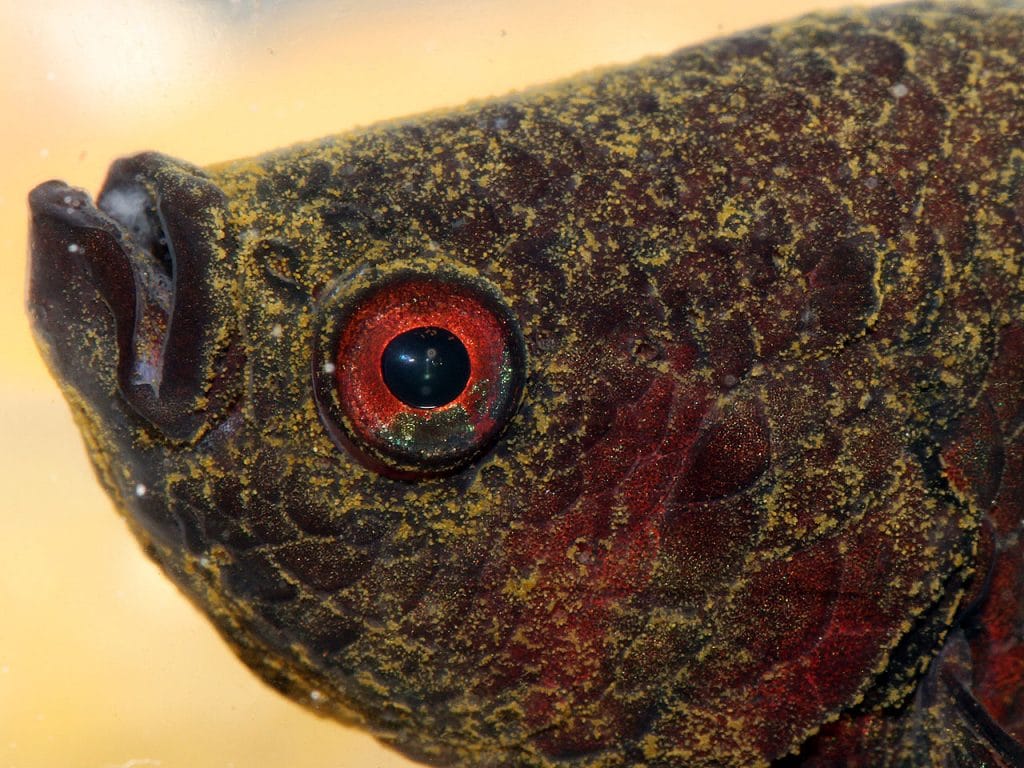
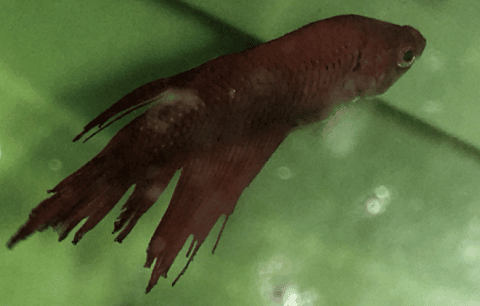
Pop eye usually goes alongside cloudy eye (betta fish shown as I couldn’t find one of a goldfish). Again, this symptom is usually the result of an underlying problem, like an infection, though it can also be due to injury. The difference between pop eye and cloudy eye is that one or both eyes bulge out from the socket. The eyes don’t necessarily need to be discolored but often are.
Symptoms
Here are the main symptoms of pop eye:
Bulging eye or eyes
Disfigured eye socket
Cloudy or filmy eyes
Difficulty swimming and navigating
Blindness
Discoloration
Lethargy
Loss of appetite
Treatment
The treatments for pop eyes are usually the same as for cloudy eyes. It’s important to deter further infection from developing and to figure out the problem at its core. Here are some of the recommended treatments for pop eye:
Frequent water changes
Removing sharp objects
Aquarium salt
API MelaFix
Seachem KanaPlex
What causes pop eye?
Pop eye is most often the result of poor water quality or injury to the eye. Bulging eyes can also come about due to a primary infection, like a parasitic or bacterial infection. Pop eye is often accompanied by cloudy eyes.
14. Bacterial Infections
Our aquariums are filled with bacteria, some good and some bad. If a goldfish is compromised due to stress, injury, or other disease, then bacterial infections will take hold. You can see an example of a bacterial infection from the video by Aquafish Groomer above.
There are many different types of bacterial infections, and some can cause secondary symptoms that will also need to be addressed. It should be noted that a bacterial infection can develop due to one or more of the goldfish diseases on this list.
Symptoms
Here are some of the most common symptoms of bacterial infections seen in goldfish:
Clamped or frayed fins
Difficulty swimming
Redness and inflammation
Discolored or swollen eyes
Abnormal feces
Discoloration
Lethargy
Loss of appetite
Treatment
With careful attention, most hobbyists can narrow down the bacterial infection they’re dealing with so that they can use a specific medication. In some cases, it may be necessary to use a general antibiotic. Some of those include:
API E.M. Erythromycin
API MelaFix
Seachem KanaPlex
Fritz MetroCleanse
What causes bacterial infections?
There are many reasons why a bacterial infection might develop in a fish tank. The main reason is due to a compromised immune system, either due to stress, injury, or another disease.
General bacterial infections can be difficult to treat and it’s best to narrow down the specific type of bacteria you’re dealing with as best as possible. For the most part, though, bacterial infections are not contagious by themselves.
15. Constipation
Constipation is embarrassing but is one of the most common goldfish diseases to treat. Luckily, constipation is pretty easy to treat as long as you give some extra care and attention to your fish.
Symptoms
It might be difficult to tell if your fish is constipated, especially if it’s still asking for food. More food will only cause more damage, so keep a lookout for the following symptoms:
Less frequent waste production
Discolored feces
Abdominal bloating/swelling
Buoyancy disorders
Lethargy
Loss of appetite
Treatment
Once you’ve realized that your fish is having difficulty passing waste, treatment is relatively straightforward. Luckily, constipation doesn’t usually require medication treatment.
Here are some ways to relieve your fish:
Epsom salt bath
Fasting
Feeding peas
Dietary adjustments
Increase water temperature
What causes constipation?
Like other animals, goldfish constipation is largely due to improper digestion. This can be the result of a poor diet that doesn’t meet dietary needs or overfeeding. It can also be due to digestion tract dysfunction, which could be indicative of unfavorable environmental conditions.
FAQs
How do I know if my goldfish has a fungal infection?
The most common symptom of a fungal infection is spider-web, cottony growths that develop on the exterior of the body. This should not be confused with cotton wool disease, which is caused by bacteria.
What does a bacterial infection look like on goldfish?
A goldfish bacterial infection can look like a lot of things, but some common symptoms include redness and inflammation, cloudy eyes, clamped fins, lethargy, and loss of appetite.
What is the virus in goldfish?
Carp, including goldfish and koi, are susceptible to the Cyprinid herpesvirus 1 (CyHV-1).
How do you deworm goldfish?
Though goldfish are unlikely to carry worms, and you are even less likely to diagnose internal worms, a general anti-parasitic medication should help relieve worms.
What are the visible parasites on goldfish?
The most common visible external goldfish parasites are ich, velvet, flukes, and anchor worms.
How do I know if my goldfish has parasites?
Some parasites are visible, like ich and velvet. Some smaller flukes are impossible to see with the naked eye, so you should keep a look out for other common parasitic symptoms, like flashing and scratching, discoloration, and labored breathing.
Final Thoughts
Goldfish are hardy fish but are susceptible to aquarium diseases just like any other domesticated species. Some might say goldfish are especially likely to contract deadly illnesses due to the poor conditions and water quality they’re usually kept in. It’s important to be able to identify the symptoms of some of the most common diseases and have medications on hand when and if the time comes.
Otherwise, make sure to quarantine all new fish and invertebrates to guarantee the most success.
As someone who’s been in the aquarium hobby for over 25 years, I’ve visited a lot of public aquariums. and they’re not all created equal. The famous names get the most attention, but some of the most impressive displays I’ve seen are at lesser-known institutions. To give this question a more objective answer, we ran a study analyzing TripAdvisor reviews from 175 public aquariums across the US, scoring them by the frequency of words like “beautiful,” “breathtaking,” and “picturesque.” The results had some surprises.
How about ones not named Georgia, Sheed, or the Monterey aquarium? I got you covered. A new study by us at Aquarium Store Depot ranked Belle Isle Aquarium in Detroit, MI, as America’s most beautiful aquarium.
We analyzed the number of Tripadvisor reviews1 that contained words such as ‘beautiful,’ ‘breathtaking,’ and ‘picturesque’ for 175 public aquariums across America. Each was then ranked based on the percentage of reviews containing these beauty keywords, to determine America’s most eye-catching aquariums.
Key Takeaways
Belle Isle Aquarium in Detroit, MI, is found to be America’s most beautiful aquarium, with 30.7% of visitor reviews referencing its beauty.
Butterfly House & Aquarium in Sioux Falls, SD, is second, with 30.1% of reviews talking about its beauty.
Birch Aquarium in La Jolla, CA, is third, with 25.8% of reviews mentioning its beauty.
The People’s Choice for 10 Best Aquariums In US
Let’s get straight to our topic and discuss our top ten from this analysis and review. Below is is a video from our YouTube channel. If you like our content, be sure to subscribe. We go into greater detail in the blog post below.
1. Belle Isle – Detroit, Michigan
Topping the list of America’s most beautiful aquariums is Belle Isle Aquarium in Detroit, Michigan, where 30.7% of its reviews contain keywords describing its beauty.
First opened in 1904, it is one of the oldest aquariums in America, hosting more than 200 different saltwater and freshwater species. The historic building hosts tropical fish from all over the world, with the majority of species coming from the Great Lakes region. The aquarium was closed in 2005 but was reopened in 2012 after the community showed there was enough demand to support it.
Second on the list of America’s most beautiful aquariums is the Butterfly House & Aquarium in Sioux Falls, South Dakota, with 30.1% of its reviews containing beauty keywords.
The only public saltwater aquarium in the Dakotas, Butterfly House & Aquarium hosts hundreds of species of fish and corals. The fish on display come from all over the world, ranging from the Indo-Pacific region to the Caribbean. At the aquarium’s Under the Dock exhibit, visitors can see species such as yellow stingrays, horseshoe hawkfish, and princess parrotfish.
3. Birch – La Jolla, California
In third place is Birch Aquarium in La Jolla, California, where beauty keywords featured among 25.8% of its reviews. Birch Aquarium was first established in 1903 and went through a series of relocations until establishing itself at its current location at the University of California, San Diego.
Also known as Scripps Aquarium, it boasts a vast selection of marine life, such as a Loggerhead Sea turtle and a giant Pacific octopus and is home to a huge two-story tall kelp forest.
With 24.6% of its reviews containing beauty keywords, the Point Defiance Zoo & Aquarium in Tacoma, Washington, is the fourth most beautiful aquarium in America.
Featuring species from the Pacific Ocean, Point Defiance is home to animals such as the scalloped hammerhead shark and the giant Pacific octopus. This is in addition to having one of only two jelly globes in the country, which is part of their wider jellyfish display.
5. Seacoast Science Center – Rye, New Hampshire
In fifth is the Seacoast Science Center in Rye, New Hampshire where beauty keywords featured in 23.3% of its reviews. The Seacoast Science Center showcases species from the Gulf of Maine and further afield. Exhibits include tropical reef habitats, interactive edge of the sea touch tanks, and a whale exhibit that is situated underneath a 32-foot whale skeleton suspended from the ceiling.
The sixth most beautiful aquariums in the USA is VIA Aquarium in Schenectady, New York, with 21.7% of its reviews featuring beauty keywords. The VIA Aquarium features 45 exhibits of marine and reptile life.
It offers experiences such as stingray feeding, behind-the-scenes tours to discover how the aquarium runs, and the chance to be a junior aquarist for a day.
7. Sea Life Park Hawaii. Waimānalo, Hawaii
Sea Life Park Hawaii is the seventh most beautiful aquarium in America, with 21.3% of its reviews containing beauty keywords.
It is located on the east coast of the Hawaiian island of O’ahu and features an aquarium, marine mammal park, and bird sanctuary that boasts a wide range of flora and fauna for visitors to experience.
Visitors can also learn about native Hawaiian sharks inside the Shark Cave exhibit and interact with nature’s smartest aquatic marine mammals in the Dolphin Lagoon.
With 20.1% of its reviews containing beauty keywords, Mississippi Aquarium ranks as the eighth most beautiful aquarium in America.
Opened in 2020, the Mississippi Aquarium hosts more than 200 aquatic species across 12 fresh and saltwater exhibits. Species on display include sharks, stingrays, and Atlantic bottlenose dolphins. the latter of which visitors can book an interactive experience with.
9. Branson (At The Boardwalk) – Branson, Missouri
In ninth place is the Aquarium at the Boardwalk in Branson, Missouri where 20.1% of reviews describe its beauty.
Also known as Branson Aquarium, the Aquarium at the Boardwalk boasts many unique ways to experience the aquatic habitats on display, such as underwater tunnels where you can view sharks and stingrays swimming above, as well as their interactive Jelly Infinity room that showcases jellyfish.
10. Cape Cod Museum of Natural History – Brewster, Massachusetts
Rounding out America’s top ten most beautiful aquariums is the Cape Cod Museum of Natural History in Brewster, Massachusetts, where 19.8% of its reviews feature beauty keywords.
The museum and accompanying aquarium showcase the wide variety of flora and fauna that live in the cape’s land and water habitats, with both freshwater and saltwater aquatic species on display. The museum provides plenty of learning opportunities for visitors, especially about horseshoe crabs, which have been a focus of the museum’s conservation efforts through their horseshoe crab head start program.
“The waters of our planet are home to all kinds of weird, wonderful, and beautiful life. While many people might not get the chance to experience this life in its natural habitat, aquaria provide people the opportunity to see the wonders of aquatic life from all over the world, as well as learn of their important conservation and restoration efforts.
“Belle Isle Aquarium is not only one of America’s oldest aquaria but also one the country’s most beautiful to experience. This stands to reason, given that the historic building hosts a range of aquatic life from all over the world, giving visitors the chance to not only admire the exhibits but also to learn about both local Great Lakes species and those from further afield.”
Methodology
Tripadvisor reviews for 175 American aquariums were analyzed to determine the prevalence of keywords in their reviews relating to beauty. These keywords were ‘beautiful,’ ‘breathtaking,’ ‘stunning,’ ‘pretty,’ ‘gorgeous,’ ‘cute,’ ‘picturesque,’ and ‘scenic.’ Aquariums were then ranked according to the percentage of reviews that contained any of these keywords.
Rank
Aquarium
Location
Total Reviews
Beauty Keywords Count
Beauty Keyword Percentage
1.
Belle Isle Aquarium
Detroit, Michigan
127
39
30.7%
2.
Butterfly House & Aquarium
Sioux Falls, South Dakota
521
157
30.1%
3.
Birch Aquarium
La Jolla, California
1,956
504
25.8%
4.
Point Defiance Zoo & Aquarium
Tacoma, Washington
1,012
249
24.6%
5.
Seacoast Science Center
Rye, New Hampshire
150
35
23.3%
6.
VIA Aquarium
Schenectady, New York
143
31
21.7%
7.
Sea Life Park Hawaii
Waimanalo, Hawaii
1,533
327
21.3%
8.
Mississippi Aquarium
Gulfport, Mississippi
134
27
20.1%
9.
Aquarium at the Boardwalk
Branson, Missouri
717
144
20.1%
10.
Cape Cod Museum of Natural History
Brewster, Massachusetts
303
60
19.8%
11.
Long Island Aquarium and Exhibition Center
Riverhead, New York
662
122
18.4%
12.
Moody Gardens
Galveston, Texas
2,841
522
18.4%
13.
Seymour Marine Discovery Center
Santa Cruz, California
257
47
18.3%
14.
Discovery World
Milwaukee, Wisconsin
553
96
17.4%
15.
Waikiki Aquarium
Honolulu, Hawaii
1,822
311
17.1%
16.
Columbus Zoo and Aquarium
Columbus, Ohio
2,704
457
16.9%
17.
Discovery Bay at Minnesota Zoo
Apple Valley, Minnesota
841
141
16.8%
18.
South Carolina Aquarium
Charleston, South Carolina
2,429
406
16.7%
19.
Atlantic City Aquarium
Atlantic City, New Jersey
481
79
16.4%
20.
ECHO, Leahy Center for Lake Champlain
Burlington, Vermont
576
93
16.1%
Aquariums with fewer than 100 total reviews were omitted from the ranking.
Here are other aquariums that missed the list, but are still worth visiting:
Georgia aquarium
Shedd aquarium
Monterey bay aquarium
Audubon aquarium
National aquarium
New England aquarium
Oregon Coast aquarium
New York Aquarium
Seattle Aquarium
Tennessee aquarium
Florida aquarium
Newport aquarium
Dallas World Aquarium
Mystic Aquarium – Functions as a conservation center to protect aquatic animals
Why Is Georgia, Sheed, And Monterey Excluded?
I know I will get this question a lot about this post and study. These three are, without a doubt some of the best aquarium exhibits you can visit in the US. In fact, you can make an argument for the Georgia aquarium being one of the world’s best. However, in this study, I wanted to focus on the smaller aquariums and work on a methodology that would highlight them more. You see these three on EVERY list, so why not work on a method that will highlight many aquariums that are overlooked and are great to visit?
What’s Your Favorite One?
Have you visited an aquarium that you are raving about? Let us know in the comments below. We love to hear about your experiences. Maybe we will go visit one of your choices on our tour of aquariums.
Knowing how to clean betta fish tank setups properly has been part of my routine for a long time, and one habit I picked up from years of saltwater keeping translated directly into my betta maintenance approach: I always prep my water bucket before I start anything else. It sounds minor, but that one habit changes the whole process. the temperature is already matched, the conditioner is already mixed in, and I’m not scrambling when the tank is half-drained. Betta tanks are far simpler than a reef setup, but the fundamentals of water care are exactly the same. Get those right, and your betta will thrive.
Key Takeaways
Regular betta fish tank cleaning is essential for a healthy pet and a beautiful display tank
Clean your betta fish tank when your water parameters deteriorate. Monitor your water chemistry with a test kit to work out the perfect cleaning schedule for your tank.
Aquarium maintenance can be stressful for your fish, so work efficiently but gently when you clean your betta fish tank.
Never remove your fish during regular cleaning and maintenance. Leave your betta to swim in the remaining water while performing a water change.
Why Do I Have To Do This?
Many fish keepers make the mistake of waiting until their betta fish tanklooks bad before cleaning it up, but fish tank cleaning is about more than just aesthetics. Betta fish need a clean and safe environment to live a long and healthy life.
Cleaning a betta fish tank is the perfect opportunity to change out some of the old aquarium water and improve the water quality and parameters in your tank. You might not see the difference in your tank’s water, but your fish will definitely feel it!
When To Work On Your Aquarium
Weekly clean ups and water changes are generally a good idea, but in some cases that might not be enough. Meanwhile, other tanks might only need to be cleaned every second week. So how do you know how often to clean a betta fish aquarium?
Regular Testing for A Science Based Approach
Use your water test kit to take the guesswork out of the equation and give yourself the confidence that you’re caring for your pet just right. If you don’t already have a test kit, pick up a set of test strips or a liquid test kit.
The most important parameters to test for are ammonia, nitrite, nitrate, and pH. Test weekly, at least for the first few months after setting up your betta’s tank.
Water changes should be done based on your water parameters. While there are many blogs and pet sites that will tell you to just make a water change every week or bi-monthly, it’s not the best idea to just go off a rigid schedule. Your water changes should be based on your parameters.
You should know over time with your test results, your tanks nutrient accumulation. This is especially true if you have a heavily planted tank where, depending on the type of plants you have – you may not need to do water changes as often and may actually need to dose nutrients instead!
The Nitrogen Cycle – Watch Those Nitrates
The chemistry of your betta fish tank water changes over time as fish poop, uneaten food, and dead plant matter accumulate in your aquarium water. Unfortunately, water quality gets worse, not better, and it can become dangerous to your fish if you go too long without water changes.
Your ammonia and nitrite levels should always read zero, but your nitrate levels will rise and your pH may drop. Nitrates may be impossible to see or smell, but they make a big difference to your fish. Long-term exposure to high nitrates will stress your betta and even cause serious health problems in some cases.
Clean your betta fish aquarium and perform a partial water change if your nitrates rise above about 40 parts per million or your pH drops below 6.5. Slightly higher nitrate levels aren’t the end of the world, but try to maintain your levels to the ones we mentioned earlier.
As a biofilter cycles, ammonia will rise until sufficient nitrifying bacteria are present to consume the ammonia and convert it to nitrite. Ammonia levels will then begin to decrease while nitrite levels increase. Nitrite levels will continue to increase until sufficient bacteria are present to consume the nitrite and convert it to nitrate. Unless many plants are present, nitrate levels will rise slowly until a water change is performed.
Of course, you want your betta fish tank to look great so that you can enjoy watching your fishy friend. An awesome fish tank also makes any room look so much better if you ask me!
You can clean your betta fish tank to remove unsightly algae even if your water parameters are still safe. However, invading your betta fish’s home to clean too often will cause unnecessary stress on your pet, so it’s best to get on top of the cause of excess algae growth rather than continually clean it.
How To Clean Betta Fish Tank – In 8 Simple Steps
Equipment List
Gravel vacuum, also known as an aquarium siphon (mini size)
Dechlorinator
Algae scraper
Small brush, e.g. soft toothbrush
Two buckets
Thermometer
Heater (if not using tap water and you need to prep the water overnight)
Cleaning Procedure Overview
Basically, you’re going to be removing dirt and water from your betta tank, cleaning the glass and ornaments (if necessary), and then replacing the water you took out with clean new water that has been treated to make it safe for your fish.
You’ll be doing all this with your fish in the aquarium, so you’ll want to work gently to minimize stress on your betta.
It might take 30 minutes or more if this is your first time cleaning a betta tank, but don’t worry, you’ll get much faster with a little experience!
Step 1: Get ready
Start by collecting all the tools you’re going to need and put them all together. That way, you won’t need to go searching for bits and pieces halfway through the cleanup.
Pro tip
You’re probably going to spill a few drops of water, so move any photographs, electrical devices, or anything else around the tank that you don’t want to get wet.
Step 2. Prepare your replacement water
Next up, it’s time to prepare some fresh water in a bucket to replace the amount that you’re going to remove. Many fishkeepers add water straight from the tap before adjusting the temperature and adding water conditioner, but I prefer to get the replacement water just right before adding it to the tank. You can do this by adjusting the temperature in the faucet and using a thermometer to measure the temperature. Aim to match your temperature in the bucket to the display within 1 degree.
Of all eight steps, this is the one I’d tell any keeper to slow down and be thorough on. Temperature and parameter matching is what separates a water change that genuinely helps your fish from one that adds unnecessary stress. My habit. carried over from saltwater. is to prep the bucket well in advance, sometimes the night before, so the water is already at the right temperature and the conditioner has fully mixed before it ever touches the tank. Bettas are tougher than they look, but repeated swings in water conditions wear them down over time.
You might be using tap water, well water, remineralized RO water, or rainwater, but no matter the source, it’s a good idea to get this water up to the same water temperature as your betta tank water. That way, you won’t cause unnecessary temperature stress for your pet. For sources like RO or rainwater you will likely need a heater to heat up the water to the target temperature.
It’s a good idea to test the parameters of your source water before you add it to your tank to give you some baseline readings. Remember, tap water and well water should be treated with a water conditioner, so follow the instructions on the product you have and mix it into the water in the bucket.
And please. don’t skip the water conditioner, not even once. I had a friend I was helping get into the hobby, and they forgot to add dechlorinator during one water change. Just one time. It was enough to lose the fish, and it was genuinely heartbreaking. Chlorine and chloramines in tap water are lethal to bettas, and the damage happens fast. Keep your conditioner right next to your bucket so it’s never an afterthought.
Pro Tip – How much water to change out
You’ll need to do a little math to work out how much new water your tank will need. Use your nitrate levels to guide you in this step. For example, a nitrate level of 20 ppm can be brought down to 10 ppm by performing a 50% water change (if your source water measures 0 ppm nitrates).
However, 25-30 percent water changes are less stressful for your fish. Therefore, a 25% water change when your nitrates get to about 15 ppm is a better choice.
Step 3: Cut the Power
Your next step is to switch off all your electric aquarium equipment because working with electrical equipment and water is never a good idea. While quality aquarium filters and heaters pose little danger, there’s always a chance, so what risk it?
Oh, and you also risk damaging your equipment if it runs out of the water, so double-check that everything is switched off.
Pro Tip – Cleaning and Maintaining Equipment
A clogged aquarium filter will not work effectively. Many aquarium filters are easy to clean and service at home, but it’s a good idea to consult an aquarium specialist if you’re not comfortable with DIY jobs.
I also recommend keeping a spare heater and filter at home in case you get a serious malfunction, especially if you live a long way from the nearest fish store.
Siphon out of the tank as long as the end of the hose is lower than the height of the submerged tube.
Step 4: Clear the glass
There’s nothing worse than a betta tank that’s covered in algae! Fortunately, soft algae are easy to remove from aquarium glass, but you need to take care to avoid scratches. Use a purpose made algae scraper for the best results, although you can also get great results with an algae cleaning pad, a razor blade, or an old credit card.
I love the Flipper. Just put it in your aquarium and clean from the outside. You can even move it to other sides of the tank with its flipper feature. Simply Amazing!
Glass doesn’t scratch easily with these tools, but trapping sand or gravel between your cleaning tool and the glass will leave nasty and permanent damage. Acrylic tanks scratch easily, so use a cleaner specifically designed for this material to avoid damage.
Cleaning the Outside of Your Tank
You’ll also want to clean the outside glass of your betta aquarium whenever necessary. You can do this at any time, so don’t wait for your weekly water change if you see a smudge or some dust on the glass.
You can use warm water, but I find a weak solution of vinegar and water works great for cleaning glass! Simply spray some vinegar water on the glass and wipe it down with dry paper towels to get your betta aquarium looking brand new.
Pro Tip – Buy Right
Look for cleaning equipment designed for small aquariums. Large gravel vacuums and magnetic glass cleaners are awkward to use in small tanks.
Step 5: Tidy Up the Hardscape and Decorations
Over time, dirt and algae can collect on the rocks, driftwood, and ornaments in your aquarium. Clean these items with a soft brush like an old toothbrush.
Items covered in stubborn dirt can be removed from the tank and cleaned separately, just don’t use any harsh chemicals that could be toxic to your betta.
Cleaning Artificial Plants
Artificial plants are a great way to create a more natural look in your tank. However, you will want to clean them and remove algae on a regular basis. Silk plants are the best choice because hard plastic fake plants can damage your fish’s fins.
You can soak your silk plants in mild vinegar water or a dilute mixture of water and hydrogen peroxide to clean off stubborn dirt. Test a small portion of your decoration to make sure they won’t bleach, and be sure to rinse your silk plants carefully before putting them back in your tank.
Pro Tip – Loosen Dirt Before You Siphon
Clean your glass and hardscape before you remove water from your tank. That way, you can suck up the loosened dirt and algae with your gravel vacuum when performing the water change.
Step 6: Siphon
Grab your second bucket and set it next to your betta tank. The bottom of the bucket should be lower than the bottom of your betta fish tank so that your gravity siphon will keep running. Place the end of your gravel vacuum’s hose in the bucket to catch all the water you’re going to suck out of the tank, and then start the siphon.
Suck up water from the substrate level of the tank to remove waste and organic material from between the particles. You’ll notice plenty of debris coming up into the pipe of your gravel vacuum, and that’s OK.
Remove enough water to where you can reach the betta tank without causing any water to spill out. Move on to steps 5 and 6 if you’re going to be cleaning your glass and decorations. Otherwise, continue to remove the same amount of tank water as you will be replacing.
Pro Tip – How to Start a Siphon
Gravel vacuums with built in pumps are the easiest to use. Simply put the pipe section in the water, the end of the hose in the bucket, and squeeze the pump a few times to get the siphon running.
You can start a siphon with standard gravel vacuums by submerging the pipe of your vacuum under the water to fill the thicker pipe section. Once full, lift the pipe section out of the water with the open end facing upwards, watch the water travel down the hose, and then submerge the pipe in the tank before all the water runs out.
If you’ve been quick enough, water should continue to sip
Step 7: Rinse the Filter
Algae often grows on the outer walls of submersible and hang-on-back filters, and this can be cleaned using an aquarium sponge pad.
Cleaning the inside of your filter is not something you need to do too often, but your filter media will clog up with waste eventually, which puts extra strain on the pump in your filter and reduces its effectiveness.
Cleaning your filter media is easy. Simply rinse it out in the bucket full of water that you removed from the tank. Do not wash your filter media in tap water or use any sort of soap or detergent. Remember, your beneficial bacteria live in the filtration media, and killing them would disrupt the nitrogen cycle in your tank!
If you use a cartridge based system, replace it at least monthly. If you have separate chemical filtration replace it at least monthly. Sponges can be cleaned out at any time as long as you clean them in used aquarium water to maintain the bacteria colony.
Step 8: Refill the Aquarium
After removing the old water, and cleaning the glass, equipment, and ornaments, it’s time to add new water to the aquarium.
Adding water to the aquarium too fast will make a big mess. It blows the substrate all over the tank, uproots plants, and kicks a bunch of dirt back up into the water. Pouring water slowly is tough, though, especially when that bucket starts to feel really heavy!
Use a small jug or a large, clean cup to pour the water into the tank in a slow and controlled way. If you have a large rock or other hardscape decoration in the tank, aim the jug over that to prevent a stream of water from reaching the substrate. Alternatively, float a plastic fish bag on the surface of the tank and pour the water onto that to slow the flow.
For larger setups, a return pump is great to use. You can attach a spray bar to diffuse the the water or use the other methods mentioned above.
Useful Tips – How to Minimize Maintenance
Let’s face it, cleaning aquariums isn’t everyone’s idea of a good time. Follow these handy tips to minimize the amount of cleaning and maintenance required in your tank.
Up your filtration
Your betta fish tank needs a filter and a heater. An air powered sponge filter is great for a small tank, but HOB and canister filters work too, just make sure the water flow stays gentle.
Grow some live plants
Fast growing stem plants are the best for soaking up nitrates, but they need regular trimming in a nano betta fish tank. Choose smaller species of Anubias and Cryptocoryne plants for minimal maintenance. They’re not as effective as fast-growing species, but they look great and they will help.
Whatever food your betta fish doesn’t eat will simply go to waste and rot in your tank, causing increased nitrate levels and poor water quality. The correct portion size for one betta fish is roughly equal to the fish’s eye size.
Balance your lighting
Use weak lighting and set your lights on a timer for about six hours per day. This will minimize the growth of algae in your tank. Live plants may require stronger lighting, but healthy plants will mostly outcompete nuisance algae.
Avoid bowls or tiny tanks
Pick out a tank that’s at least 5 gallons to create an awesome home for your fishy friend. Maintaining high water quality in tiny aquariums can be tough, and your fish will definitely appreciate more room!
Clean up crew
Once your tank has matured for at least a few months, you can consider adding a Nerite snail or two to clean the glass for you. These beautiful creatures love to snack on algae, and they don’t breed in fresh water.
For larger tanks with enough room, add a few more snails or consider a small school of otocinclus catfish. They’re more sensitive than snails, but they’re awesome little fish!
Minimizing Stress
Do not remove your fish when cleaning the tank. It just puts a whole lot of unnecessary stress on your betta and can cause injuries. Stressed fish often develop illnesses that can affect them days or even weeks later.
Save your fish net for removing plant trimmings from your tank or for cases when you need to acclimate new fish or move them between your quarantine tank and display aquarium.
Lastly, Betta fish can be very inquisitive and territorial, so take care not to suck your fish into the gravel vacuum. It happens!
FAQs
How often should I clean my betta fish tank?
As a general rule, you can clean your tank lightly once per week. However, its best to do water changes based on your parameters and using water tests to determine if you need to make a water change. Typically, most tanks will need to do water changes once a week or bi-monthly. Tanks with lots of plants may be able to go longer without.
How often do you change water for betta fish?
Each tank is different, so there’s no right or wrong answer. The parameters of your source water (tap, well, rain, etc.) and the amount of fish you keep make a big difference to your water quality.
I recommend a chemistry-based approach. Monitor your water parameters and design a schedule that keeps your nitrate levels below 40 parts per million while keeping your water changes to 30 percent of your tank volume or less.
How do you clean a betta fish tank for beginners?
The best way to clean a betta tank is to clean the glass with an algae scraper and suck out 20-30% of the water from your tank with a gravel vacuum. Suck up the water from the bottom of the tank to remove debris and waste on the substrate.
You can remove dirt and algae from ornaments with a soft toothbrush. Lastly, refill the tank with clean, dechlorinated water.
Is Dawn dish soap safe for betta fish?
Never use soap to clean the inside of your fish tank. Soap residue is potentially harmful to your fish and could disrupt the balanced ecosystem within your tank. Remember, your betta fish shares its home with beneficial bacteria that are crucial for maintaining safe water quality.
How often do you change the water in a betta fish bowl?
You should not keep a betta fish in a bowl, as such a small tank would require frequent cleaning, resulting in serious swings in water quality and high stress for your fish. Pick out at minimum a tank size of 5 gallons from your local fish store or order a complete tank setup online to keep your pet much happier and healthier! That being said while you have a fish in a bowl you’ll want to make water changes every 2-3 days.
How long after cleaning can I put my betta fish in the tank?
You should not remove a betta fish from its tank while cleaning. It’s much safer to leave your pet in its home and work around it gently. If you’ve already taken your betta out of the tank, you may need to acclimate your pet slowly to avoid a temperature shock when returning it to the tank.
Final Thoughts
Betta fish are great low maintenance pets that can live for many years with regular tank cleaning and water changes. Follow this guide’s recommended steps and tips to keep your pet healthy and your tank looking great.
How often do you clean your betta aquarium? Share your routine in the comments below!
📘 Want to learn more? This article is part of our complete Betta Fish Guide. your ultimate resource for betta care, types, tank setup, feeding, tank mates, and more.
Fin rot is one of the most common health issues I see in bettas, and also one of the most commonly misdiagnosed. people often confuse it with mechanical fin damage or fin biting. After keeping bettas for over 25 years, I know exactly what to look for and how to tell the difference so you treat the right problem.
Fin rot and mechanical fin loss look similar but require completely different responses. and treating the wrong one wastes time and can actually stress your fish further. Here’s how I tell them apart after keeping bettas for years: fin rot has a ragged, uneven edge that often shows darkening or discoloration, and it progresses over days if untreated. Mechanical damage from sharp decorations or fin-nipping tank mates tends to have a cleaner tear line with no discoloration, and it doesn’t spread. Fin rot needs treatment. I reach for clean water first, then Kanaplex or API Furan-2 for bacterial cases. Mechanical damage just needs the cause removed; the fins grow back on their own given good water quality. Getting this diagnosis right is step one, and that’s what this article is about.
Key Takeaways
Betta fin rot symptoms include darkened or bloodied fin tips, irregular edges and white spots on the fins.
Identify causes of fin loss in betta fish such as environmental factors, aggressive tank mates and rough handling.
Fin rot is a bacterial infection, fin loss is due to an injury typically. Both can be recovered from, but a serious injury and result in permanent fin loss.
Prevent future issues with regular water changes, monitoring temperature & pH levels, creating a natural environment for your fish, and keeping compatible tankmates.
Betta Fin RotVs Fin Loss – What’s The Difference
Betta fish can suffer from a condition called fin rot, which is caused by either bacterial or fungal infection. Symptoms should be identified as soon as possible to ensure the betta’s recovery. If left untreated, it could lead to deadly complications. Treating and curing this illness in time is key for its successful management. Fin loss occurs due to injury.
Symptoms
When it comes to fin rot, monitoring your betta fish is important as the symptoms may be hard to spot at first. Signs of this condition can include dark or bloody fins, unusual edges on their fins, lethargy, and white spots appearing on the tips and frayed/ragged edges. As time goes by, these issues worsen with shredded flaps along the exterior as well as possible development of sores that look bloodied up while also noticing a marked decrease in length from when they were healthy before.
The symptoms will often go in stages:
Stage 1 – Discoloration on edges of fins
Stage 2 – Ragged fin edges
Stage 3 – Missing fins or tails
If your fish reaches stage 3, there is a high probability of loss of life. Other symptoms include sluggish behavior and lack of appetite.
Causes
Properly managing water temperature and routinely monitoring tank water parameters are key steps to prevent fin rot from developing in betta fish. These factors, such as elevated ammonia levels or pH fluctuations, can be highly toxic and induce stress which makes the fish more prone to this infection. Poor quality of water is also one of the main causes. When these conditions deteriorate, it increases their susceptibility even further.
Betta fish may be subject to physical injury resulting in fin loss due to sharp tank decorations and aggressive tank mates, as well as rough handling. For more serious complications to be prevented, the symptoms of such an issue should be ascertained and its causes identified since it is distinct from fin rot.
Symptoms
It is vital to keep an eye out for any red flags of trouble in your betta fish, especially if their fin loss shows up suddenly. Fin loss is injury related and could become infected. Look around for environment factors that causing the problem.
Causes
In order to stop fin loss in betta fish, it is essential to identify and address the underlying causes. Some of these are sharp tank decorations, aggressive tank mates that exhibit bullying behavior such as chasing or attacking them, and careless handling of the fish itself which can result in physical damage or stress induced fin loss.
The betta fish itself could also be the cause. Some betta fish when bored or stress will bit their own fins and this may cause fin loss or fin rot. The other factor is too much interaction with their reflection, which ends up getting them injured when they try to fight themselves.
Prevention
To decrease the chance of betta fish fin loss, careful monitoring and well chosen tank decorations are key. For decor, look for items that are smooth and if you get fake plants, purchase the silk kind as they will not get caught on your Betta’s fins. Gravel should be smooth, with fine gravel or sand being the most preferable.
Fin loss can be more concerning initially than fin rot because if the injury is severe, the fin may not grow back fully or can get infected. Treat a fin loss injury as stage 3 symptom like you would with fin loss. While they can go back on their own, infection could sink it and monitoring should occur. The good thing with fin loss vs fin rot is that oftentimes times, the fish will still actively eat with the injury.
Treating Rot
Assessing the seriousness of fin rot is essential when determining how best to treat it, as this will ultimately affect your betta’s chances at a full recovery. To address the infection accordingly, different approaches may be necessary depending on its severity.
The first thing to look at are your water parameters. Fin rot is usually caused by poor parameters. Take our your test kit and look for 0 ammonia, 0 nitrites, and under 40 PPM nitrate. You may need to do water changes, feed less, or reduce livestock to get levels where they need to be. Live plants are a great long-term fix but address the immediate issue first before getting into plants.
Mild Cases
When it comes to treating mild fin rot in betta fish, water quality must be improved and monitored. Cleaning the tank is also essential. Regularly performing water changes should be done daily or every other day so as to keep clean waters which can help both remove any toxins that may contribute to fins deteriorating, while promoting healing at the same time.
Also, look at your water flow. If your flow is too strong for your betta this could cause fin rot to occur. Look for sharp decor that may cause injuries. Lastly, check your temperature and see if it is correct. 78 to 80 degrees F is best for them.
If improvements are seen with this disease, then there will no longer be black edges on their fins. A whitish/clear membrane along its edge could form. Similarly, if white areas around those frayed ends have faded away or disappeared all together, these signs point toward recovery from a mild case of fin rot taking place over two up to six weeks duration for full restoration back into healthfulness again!
Severe Cases
In the event of a serious betta fin rot occurrence, it is essential to keep track of water quality and separate the fish in order for medication to be administered appropriately. The first step is to clean out your fish tank to get your nutrient levels in check, as many medications you will use will recommend that you not do water changes during treatment.
Consulting with veterinary or other hobbyist experts before using any antibiotics (i.e., erythromycin) should also be done when treating severe fin rot situations. Treatment should be effective quickly as a fish with fin rot can be afflicted with a secondary infection (due to a weakened immune system) that will often take the fish’s life. A broad spectrum antibiotic is my recommendation when you need to get serious. Erythromycin is a good solution for rot and should be done in a hospital tank. With a hospital tank, you can double up with a product like Ich-X to protect against parasitic infections. Do not use these medications in a planted tank or with inverts as it will damage or kill them.
Make sure you remove any chemical filtration when treating your tank, as they will absorb it. Medication will need to stay in your tank for at least a week without a water change so the antibiotics can do its job. Antibiotics have a tendency to reduce oxygen levels so consider adding an air stone or sponge filter to increase your levels.
Addressing Fin Loss
To successfully treat fin loss in betta fish, a clean and healthy environment is essential. This will aid the healing process as well as reduce any risk of infection.
Treatment
In order to deal with fin loss, a number of steps can be taken. Firstly, it is important that the tank holds clean water as this will aid in betta fish recovery from their fin loss. It’s also essential to use slime coat booster so healthy fins regrowth can occur for your betta fish and ensure any sharp objects or aggressive aquatic life are removed that may cause injury when combatted with weakened fins due to lost ones already present on the creature itself.
Stress coat products along with aquarium salt should also be considered treatments for improving an afflicted fish’s condition while at the same time remembering safety must come first by covering filter intakes with sponges, which could potentially harm their vulnerable fins even more than before initiated help was given forthwith afterwards.
Recovery
The regrowth of betta fish fins post fin loss can take anywhere from a few weeks to months, depending on the seriousness of the injury. Signs pointing towards successful recuperation may consist of renewed fins, healthy edges being restored, and with color vibrancy appearing again. Also, increased energy levels and activity plus no black streaks or discoloration seen on the betta fish’s fins would be good indications, too.
It’s also normal for your Betta’s regenerated fins to be a different color than they originally were as they grow back.
Preventing Future Issues
Ensuring a healthy habitat for betta fish is the best way to stop any kind of fin problems, including rot and loss. To create an ideal environment, carefully consider your tank setup as well as water quality in order to make sure that you have a beautiful and strong betta fish living with you for years on end.
Water Quality
It is important to ensure good water quality in order to prevent potential health problems for betta fish. To be proactive, performing a 25% water change weekly can help maintain the health of your aquatic companion. It’s also essential to keep an eye on and adjust any necessary parameters such as temperature (in between 78-80°F or 25-26°C), pH level, ammonia, nitrite levels, and nitrate concentrations. All ideally towards neutral conditions around 7pH.
Tank Setup
When designing a fish tank for betta fish, it’s important to select appropriate tankmates that are non-aggressive and provide plenty of smooth decorations which can minimize the risk of injury or stress. Live plants are optimal in a betta fish aquarium as they help boost water quality while giving them extra nutrients with natural decor such as driftwood, moss balls, and leaves designed specifically for these species. It is best to avoid aggressive inhabitants like angelfish, barbs and fin nipping tetra species since these fish can harm your Betta.
Choose Shoter Finned Varieties
Bettas with shorter fins are less prone to rot or fin loss. They can swim stronger, tolerate strong water flows, and are injured less by decor. If you want to lessen your chances naturally, consider purchasing a Plakat betta variety, as they tend to be more hardy, active, and less prone to injury or infection.
Frequently Asked Questions
What is the difference between fin rot and torn fin?
Fin rot, caused by bacterial damage, is different from torn fins or fin loss which occur due to physical trauma. Torn fins are often localized and will not exhibit connecting spots like those associated with fin rot. Both conditions can be treated if the proper approach is taken. Fin loss injuries can also result in an infection of parameters are not ideal or if the injury is severe.
What does the beginning of fin rot look like?
Early signs of fin rot include fins that take on a milky, discolored appearance. Fraying can occur at the tail or other parts of the fins as pieces start to come off in an uneven manner. Inflammation around the base may be present with noticeable white, black and brown changes along its edges. All these together could indicate this health condition among fish species.
Why is my betta fish’s fins falling off?
Betta fish may be vulnerable to fin rot, a bacterial or fungal infection caused by poor water quality and tank size. Mishandling and aggressive behavior from other fish can contribute to the onset of this affliction as well as injuries inflicted upon them. Poor care complicates matters for these unfortunate creatures too. thus good maintenance is essential for minimizing any risks in relation to both their health and survival.
Do betta fins grow back after fin rot?
Bettas’ delicate fins can regrow in optimal conditions. Thus, it is essential to keep up with regular water changes and ensure the quality of aquariums’ waters for proper repair of damaged appendages.
Can betta fish recover from fin rot and fin loss?
Betta fish can heal from rot and fin loss provided suitable treatment is provided. With care, these majestic creatures have the ability to recover from fin rot and resultant fin damage.
Closing Thoughts
With all the fancy finned varieties of Bettas available now and with new breeds being introduced, running into fin rot in Bettas is becoming more common. If you set up the right environment, keep healthy parameters, and choose the right tankmates, you should be able to prevent rot or loss from happening.
What’s been your experience with either condition? Let us know in the comments and let’s start a conversation. It’s always great to hear from other betta pet owners.
KH comes up constantly in this hobby, and my approach to managing it has evolved quite a bit over 25 years of keeping both freshwater and reef tanks. In a reef setup, it’s about regular supplementation to keep levels stable. the coral depends on it. In freshwater, the smarter play is usually to stop trying to fight your source water and instead match your fish to what naturally comes out of the tap. That shift in thinking. from “how do I fix my water” to “what fish work best with my water”. makes the hobby a lot less stressful and a lot more successful.
Key Takeaways
KH (Also known as carbonate hardness/ buffering capacity) is one of the most important water parameters in a fish tank.
Aquarium KH levels buffer the pH of your water and help to avoid pH swings that can harm your fish.
KH levels naturally decrease over time, so it’s important to test your tank water regularly.
You can raise or lower KH in your aquarium, but it may be better to choose fish that are suited to your natural water parameters if you’re new to the aquarium hobby.
What Is Aquarium KH?
Aquarium KH measures the concentrations of carbonates and bicarbonate ions dissolved in water. These concentrations vary depending on the geology of your area, so your tap water may have different levels to the next state or town.
You can measure and adjust your KH levels at home using products that are easily available at pet and local fish stores. A range of about 4-8 degrees or 70-140 parts per million is generally recommended for most freshwater aquariums, although different fish and plants have different water parameter needs1.
Why Does It Matter?
Minerals are essential for fish health, but they also play a vital role in regulating your aquarium water chemistry. The minerals that determine your KH levels ‘absorb’ natural acids and prevent them from changing your water chemistry.
Author Note: You can think of KH as a sort of safety net for your aquarium. Without the buffering effect of KH, acids in the water can have immediate effects on your water chemistry, and that can be harmful to your fish.
So, the higher your KH, the more potential it has to neutralize or ‘buffer’ acids in the water before they can affect your pH.
What Is The Difference Between KH and GH?
GH (general hardness) is another important water chemistry parameter that is often confused with KH. While KH is a measure of carbonate and bicarbonate ions, GH describes the levels of magnesium ions and calcium ions dissolved in the water.
General water hardness does not have such a direct effect on pH levels, although hard water typically measures higher on the pH scale.
What is pH?
pH (short for ‘Potential of Hydrogen’) is a chemical measure of the acidity or basicity of a liquid. All liquids have a pH level, including your tank water.
The pH scale ranges from 0 to 14. Aquarium water between 0 and 6 on the pH scale is acidic, and from 8 to 14 is basic. Neutral water is right in the middle at 7 on the pH scale.
You can measure pH at home using an aquarium test kit, and it is possible to adjust your pH levels, although it’s better to aim for a stable pH than to chase a specific number on the scale.
Why Does pH matter?
Each fish and aquatic plant species has a preferred pH range, although many species are pretty adaptable as long you can maintain a stable pH.
Some aquarium fish do well in pH levels as low as 5 (discus) and as high as 8+ (African cichlids), but most freshwater fish prefer a stable pH level between roughly 6.5 and 8.
Maintaining a stable pH level can be difficult if your water has a low KH or buffering capacity, and rapid swings in pH can cause major stress on your fish.
What Affects pH Levels?
KH and pH are usually related in the aquarium, so if you have a low KH, you’re likely to have a low pH too. If you’d like to adjust your pH to keep specific fish species, you’re going to need to change your KH first.
pH levels tend to decrease over time, and the change can happen gradually or even suddenly in the case of a pH crash, but what causes these changes in water chemistry? Let’s take a look at four common causes of aquarium pH shifts.
Nitrates
You’re probably familiar with the aquarium nitrogen cycle, and how beneficial bacteria in your filter convert ammonia from fish waste into nitrite and nitrate. Well, nitrites and nitrates are acidic, which means they lower the pH of your water.
The best way to manage the nitrates in a fish tank is by performing regular water changes to remove them from the system, but you can also reduce the build-up by understocking your tank, growing live aquatic plants, and avoiding overfeeding.
Tannins
Have you ever added a piece of driftwood or some almond leaves to your tank, only to see the water stain yellow or brown?
These leaves can be added to your aquarium to help promote a natural habitat for bettas, shrimp, and other soft-water loving fish. Betta breeders can use these leaves to help encourage breeding behavior.
Tannins are acidic chemical compounds found in plants that can leach into the water, causing the ‘black water’ seen in many tropical freshwater environments. The effect is usually pretty weak, but tannins can reduce the pH in a freshwater aquarium, especially if you have low KH levels.
Carbon Dioxide
Carbon dioxide is acidic, which means it lowers the pH of aquarium water. Many aquarists use pressurized CO2 to increase plant growth, which is perfectly safe as long as the system runs on a timer to switch off at night when plants no longer photosynthesize. During the night, pH levels rise as the CO2 leaves the system.
Substrates and Rockwork
Crushed coral or dolomite substrates and limestone-based rock work like texas holey rock can increase the pH of acidic water.
So now you know why KH is so important for maintaining healthy water chemistry, but how do you manage something you can’t see, touch, or smell?
You can test your water’s KH levels or buffering capacity at home using water test kits. Most strip test kits will measure KH, and these are a good option for testing general water parameters. However, liquid test kits tend to be more accurate, even if they do take a little more effort.
Start by measuring your source water, whether it comes from a tap, a well, or any other source. This will give you a good baseline reading that you can monitor over time.
Now, KH levels tend to decrease over time as acids are released into the water, so you’re going to need to test regularly to find out how long you can go between water changes or treatments. Once a week is a good schedule if you’re starting out with naturally low KH levels.
Suggested Carbonate Hardness
So now that you know what carbonate hardness (KH) is and how to measure it, you’re probably wondering what your levels should be in your tank water. The answer depends on which kind of fish you keep, so keep reading to learn about suggested levels for specific fish types.
Shrimp Tank: 18 ppm or 1 dKH for Caridina shrimp. 54 – 180 ppm/ 3 – 10 dKH for Neocaridina
Typically Community Tank: 70 – 140 ppm/ 4 – 8 dKH
Saltwater Tank: 140 – 2000 ppm/ 8-12 dKH
Author Note: KH is described either as parts per million (PPM) or degrees (dKH/°KH), and one degree is roughly equivalent to 18 ppm.
The figures mentioned above are good general guidelines, but you should definitely research the preferred KH range of each fish species you keep to make sure you can provide a healthy tank environment. Remember, each fish in a community setup should be comfortable in the same tank.
How To Adjust Levels
Sometimes you need to adjust your KH to keep certain fish species or to increase your tank’s ‘safety net’ against pH swings. Continue reading to learn how.
How to increase carbonate hardness
Water Changes
Carbonate hardness naturally decreases over time as acids are neutralized and carbon escapes the tank in the form of carbon dioxide. Performing regular water changes and sucking up decaying organic matter from the substrate will remove acidic nitrates from your water.
Topping up your tank also reintroduces carbonate and bicarbonate ions to increase your KH levels. However, water changes are not going to increase your carbonate hardness above your source water’s (tap, well, etc.) natural KH level.
So how do you increase KH above the levels of your source water? Continue reading to learn about five things you can add to the water to increase your KH.
Alkaline Buffers
Alkaline buffers, like the range produced by Seachem, make raising and maintaining your KH levels very easy. These products provide excellent dosage instructions to make your adjustments much safer and more precise.
After regular water changes, alkaline buffers are the best option for beginners, and you might even find a product designed specifically for the type of fish you keep.
Crushed Coral
Crushed coral is mostly made up of calcium carbonate, which is great for increasing your water’s buffering capacity.
Crushed coral is my go-to recommendation for anyone who needs to raise KH in a freshwater setup. It’s inexpensive, widely available, and low-maintenance. you can mix it into your substrate or tuck a mesh bag of it into your filter’s media basket and let it work passively over time. Unlike baking soda or liquid buffers, it releases slowly and won’t cause sudden swings. I’ve pointed more beginners toward crushed coral than any other KH solution over the years.
It is easy to find and easy to use, simply pick up a bag from your local pet store or order it online and mix it in with your gravel at the bottom of the tank. Alternatively, add some to your filter’s media basket in a mesh bag.
Aragonite and Dolomite Substrate
Aragonite is a natural form of calcium carbonate, which is the same mineral that makes up crushed coral. It has a fine, sand-like texture and it makes an ideal substrate for raising KH levels in African Cichlid tanks.
Dolomite is a mineral composed of calcium magnesium carbonate. It is another popular substrate that raises both the KH and general water hardness of your tank water.
These substrates provide a long-lasting effect, but you can’t remove them without completely draining and re-scaping your tank.
Baking Soda and Soda Ash
Baking soda (sodium bicarbonate) and soda ash (sodium carbonate) are easily available and highly affordable minerals that can be used to raise KH and pH in aquariums.
However, they must be used very carefully since they can cause sudden and powerful swings and may need frequent dosing to maintain stable KH levels. While they can be effective, they are not as safe or easy to use as purpose-made aquarium alkaline buffers.
How to Decrease Carbonate Hardness
Some animals, like Caridina shrimp and discus fish, need very soft water to stay healthy, so what do you do if the KH levels in your source water are too high?
It’s not practical to remove carbonate hardness from your tap water, so your best option may be to cut your high KH water with something with a lower carbonate hardness. If you want to go really low, you may need to switch to a completely different water supply.
Here’s the honest advice I give every beginner dealing with high KH source water: the path of least resistance is almost always choosing fish that prefer those parameters rather than fighting to lower them. African cichlids, guppies, and mollies thrive in hard, high-KH water. and they’re genuinely beautiful, interesting fish. Going to great lengths with RO systems and buffers to chase low-KH conditions for discus or Caridina shrimp is a rewarding challenge when you get it right, but it’s genuinely hard to maintain consistently. Know your source water first, then choose your fish accordingly.
Let’s take a look at some of the best options.
Reverse osmosis water
Reverse osmosis (RO) is a process that removes minerals from water by passing it through a membrane, leaving it with practically no carbonate hardness. It is safe for use in aquariums, but only if you add essential minerals to the water using products like Seachem equilibrium and Alkaline Buffers.
You can also mix RO water with your regular source water to reduce your KH levels, although you’ll need to use your test kit to work out the correct ratio for the type of fish you keep. A 50/50 mix of this pure water and your regular water will halve the KH and GH of your tank water.
Reverse osmosis is often available for sale as drinking water, but using this in your aquarium will become expensive, especially if you have many fish tanks. RO filtration systems have become more affordable and easier to source, so it might make more economic sense to set up your own dedicated system in the long run.
Distilled Water
Distilled water has similar properties to reverse osmosis water but the purification method differs. This water is purified by boiling and collecting the evaporated H2O molecules.
Pure distilled water contains none of the minerals that fish and aquatic plants need for healthy biological functions, so you should not use it without adding minerals or mixing it with tap or well water.
Buying distilled water is a good option for small freshwater tanks, but it will get expensive for larger aquariums.
Organic Matter
You can also decrease your KH levels a little by adding aquasoils, driftwood, and peat moss to your tank, although the effect may last just a few weeks or months.
Reducing the frequency of water changes is another possible option, but you will need to monitor your nitrate levels carefully to prevent any health issues in sensitive fish species.
Acid Buffers
You can also lower the KH levels in your water using purpose-made aquarium products. Acid buffers convert KH into carbon dioxide, which can be great for freshwater aquariums with live aquatic plants.
FAQs
What is KH in fish tanks?
KH (also known as carbonate hardness or buffering capacity) is the measure of carbonates and bicarbonates dissolved in the water. It is an important water parameter in both saltwater aquariums and freshwater aquariums that stabilizes the pH levels.
Is KH and GH the same thing?
GH (general hardness) and KH (carbonate hardness) are both important water parameters, although they have different effects in a fish tank. General hardness measures the dissolved calcium and magnesium ions, rather than the carbonate and bicarbonate ions in the aquarium water. While KH and GH levels tend to be related, you should always test for both.
Which fish can live in high KH?
Many popular aquarium fish thrive in water with high KH levels. African Cichlids, livebearers like guppies and mollies, goldfish, and brackish water fish are all examples of fish that prefer water with high pH, GH, and KH water parameters.
Final Thoughts
KH is an important water parameter that all aquarists should understand, especially when keeping sensitive fish or species with very specific pH requirements. Fortunately, you don’t have to be a qualified chemist to understand the basics of aquarium water chemistry.
A good quality water test kit and half an hour each week for a quick water change is usually all you need. However, there’s also a range of excellent products available to the modern hobbyist that can make managing high or low aquarium KH levels really easy.
How do you manage the KH levels in your aquarium? Let us know in the comments below!
🐟 Want to learn more? This article is part of our complete Aquarium Care Guide. your ultimate resource for water chemistry, maintenance, feeding, disease prevention, and everything you need for a healthy tank.
I’ve kept butterflyfish in my tanks over the years. Raccoon and Copperbands specifically. And while they’re some of the most visually striking fish in the saltwater hobby, they’re genuinely not easy keepers. They’re sensitive, many species will pick at corals, and weaning them onto prepared foods is a real challenge. Honestly, I don’t keep them as often as I used to for those reasons. That said, if you’re set on one, there are species that hold up better than others in the home aquarium. Klein’s butterfly is my top recommendation. It’s about as forgiving as this family gets.
Fun Facts And Takeaways
There are around 130 Butterflyfish species spanning 12 genera1.
There’s a black spot on the back of the butterflyfish to distract the predators.
They live for around 10 years or longer.
Butterflyfish are nocturnal; most active during the night and sleep through the day.
They can change their colors automatically depending on the situation.
Let’s learn more exciting things about the different types of butterflyfish species individually.
TheTop21 Types of Butterfly Fish Species
Here are the 21 common types of butterflyfish species in the aquarium hobby. For each species, I’ll go over key states such as:
⚠️ Before You Buy: The biggest mistake I see is people buying butterflyfish for a reef tank. Most species will nip at corals, anemones, and other invertebrates. And even so-called “reef safe with caution” species are a real risk with LPS and soft corals. On top of that, many butterflyfish are notoriously sensitive and is difficult to wean onto prepared foods. They’re beautiful fish, but they demand more care and the right system.
Scientific Name
Common Name
Size
Origin
Tank Size
Available As Tank Bred
We have a YouTube video from our official channel you can check out below. We go into more details in the blog post below. If you enjoy our content, be sure to subscribe.
1. Heniochus
Scientific Name: Heniochus
Common Name: Longfin Bannerfish, Bannerfish, Pennant Coralfish, Wimple Fish, Featherfin Coralfish, Coachman, Threadback, and Reef Bannerfish
Size: 9.8 inches
Origin: Pacific region and Arabian Gulf or Indo-west Pacific regions
Tank Size: 55 gallons
Available As Tank Bred: Yes.
Heniochus or the false Moorish Idol, also known as Longfin Bannerfish is an enchanting marine fish from the family Chaetodontidae. With a white base and two wide black stripes, the graceful patterns of this fish make it a real eye-catcher in the aquarium hobby. The dorsal fins and caudal fins are yellow with black marks above the eye area. The black and white species of Heniochus are reef-safe and prefer a meaty varied diet.
If you’re someone who is tempted to keep Moorish Idol in the tank, go for Heniochus as it is hardier and easy to care for in aquarium conditions.
2. Klein’s
Scientific Name: Chaetodon Kleinii
Common Name: Sunburst Butterflyfish, Orange Butterflyfish, Bluehead Butterflyfish, Yellowspot Butterflyfish, and Brown Butterflyfish.
Size: 5 inches
Origin: Red Sea, in the Indo-Pacific and Eastern Pacific oceans
Tank Size: 55 Gallons
Available As Tank Bred: Yes
If you fancy a beginner friendly marine fish, I’d vote for Klein’s butterflyfish because it is small and easy to care for. Also, reasonably priced. In the wild, they grow to up to 6 inches in length. However, in captivity, they hardly reach 5 inches, provided that they are taken care of.
🏆 Mark’s Pick: Klein’s is my go-to recommendation for anyone who really wants a butterflyfish. It’s the most beginner-friendly of the bunch. Smaller, hardier than most of its relatives, and less destructive in the right system. If you want something with a bolder, more active presence, the Pyramid butterfly is my other pick. After keeping Raccoon and Copperbands over the years, Klein’s is the one I’d feel comfortable pointing most hobbyists toward.
Appearance wise, they are not the typical flashy and vibrant butterflyfish species as their counterparts. Klein’s butterflyfish has an oval body with brownish yellow color and white bands that run vertically down their oval bodies. They have a protruding snout with a small mouth. Depending on their origin, there are color and pattern variations in the Klein’s fish.
3. Longnose
Scientific Name: Forcipiger Flavissimus
Common Name: Big nose butterflyfish, Forceps butterflyfish, Yellow longnose butterflyfish
Size: 8.7 inches
Origin: Indo-west Pacific and Central Pacific regions
Tank Size: 75 Gallons
Available As Tank Bred: Yes
The Yellow long-nosed butterflyfish have long snouts with strong jaws and a graceful appearance with their distinctive yellow fins and bodies.
The Yellow long nose fish are larger fish reaching over 8.7 inches in length. However, the added length is from the nose!
Because of their color, many aquarists believe they are delicate and fragile. However, it’s quite the opposite. Yellow long nose fish are relatively hardy with great appetite that won’t have problems eating in captivity.
But, they require a big tank of around 75 gallons with some live rock and lots of free swimming space. Nonetheless, they are a great community fish that are peaceful, hardy, and absolutely gorgeous.
4. Pyramid
Scientific Name: Hemitaurichthys Polylepis
Common Name: Yellow Pyramid Butterflyfish
Size: Around 8 inches
Origin: Hawaii, Indonesia, New Caledonia
Tank Size:
Available As Tank Bred: Yes
Want some golden ray of sunshine in your marine aquarium? Let me introduce you to the beautiful Pyramid butterflyfish.
They are peaceful and schooling fish in the wild. Therefore, a couple of fish in your aquarium would thrive together. These are medium sized fish around 5 to 6 inches in length, so you will need a larger tank to keep multiple.
The bodies of Pyramid fish are mostly white with a yellow or golden base color and dark bands or stripes running down vertically. Because of their small size, they have a small mouth with a short snout. The head is mostly brown in color with a broad, white pyramid-shaped pattern on the flanks.
This is also one of the few butterfly fish on this list that are truly reef safe. They are safe around corals and inverts. They eat plankton in the wild and will not seek our most corals.
Fun fact: They are shy fish. Therefore, provide as many hiding places as you can to make them comfortable in their new home.
Common Name: Hawaiian butterflyfish, Tinker’s Butterflyfish
Size:5½ inches
Origin: Tropical reefs around the Indo pacific oceanic regions
Tank Size: 120 gallons
Available As Tank Bred: Yes
Tinkeri or the Hawaiian Butterflyfish are attractive and rare sea creatures with shades of yellow and orange on the face, dorsal fin, and tail. The backs of Tinkeri are back with a yellow tail.
They inhabit shallow reefs and don’t appreciate intense lighting in the aquarium setting. Also, they require an aquarium of 120 gallons or more with lots of hiding places in the form of rocks, and caves.
Tinkeri Butterflyfish are not coral reef safe and should be administered with caution if kept in reef aquariums.
6. Threadfin
Scientific Name: Chaetodon Auriga
Common Name: Auriga Butterflyfish, Cross-stripe Butterfly, Whip Butterflyfish, Threadfin Coralfish, Diagonal Butterflyfish, and Yellow butterflyfish.
Size: 9 inches
Origin: Pacific Region
Tank Size: 125 gallons
Available As Tank Bred: Yes
Threadfin Butterflyfish can seem intimidating due to their huge size but they are the most peaceful fish species that are shy and timid. However, they is aggressive with conspecifics and other species of the same size or color.
The visual aesthetics of Threadfin fish are a sight for sore eyes. They have a bright pearl white body on the front and bright yellow from the rear with several diagonal black lines, creating a masterpiece of a fish.
If you plan to keep it as a community fish, make sure to provide a huge tank to make up for their big size and energy levels.
7. Raccoon
Scientific Name: Chaetodon Lunula
Common Name: Crescent-masked Butterflyfish, Lunula Butterflyfish, Bandit Butterflyfish, Redstriped Butterflyfish, and Spotted Butterflyfish
Size: 7.9 inches
Origin: Indo-Pacific from East Africa to Hawaii, southern Japan, and the Lord Howe and Rapa Islands
Tank Size: 75 Gallons
Available As Tank Bred: Yes
As the name suggests, Raccoon butterflyfish has a mark on their face just like raccoons.
And like raccoons, these fish are famous for their nocturnal behavior, i.e., they stay active throughout the night time and hide during the daylight.
Raccoon butterflyfish are attractive species, especially due to their high-contrast bandit-type color patterns. The best part about these fish is they are easy to care for and appropriate for beginners. Therefore, if you’re looking for a beginner-friendly, fascinating marine fish, Raccoon fish ticks all the right boxes.
This is also a butterfly fish that is reef to use in SPS tanks. They will eat soft corals, but they are known by many hobbyists for not eating SPS corals.
Common Name: Pelewensis Butterflyfish, Dot-Dash Butterflyfish
Size: 4.9 inches
Origin: Reefs of the South Pacific
Tank Size: 55 Gallons
Available As Tank Bred: Yes
Appearance wise, the Sunset butterflyfish resembles a lot of their close cousins: Spot-banded butterflyfish. However, Sunset butterflyfish have a brownish yellow body with deep brown bands running vertically throughout their bodies. Besides yellow coloration, they have an orange area on the caudal peduncle, an orange band edged by black through the eye, and a black spot on the nape. Hence, the name.
Even though hardy, Sunset butterflyfish are recommended for intermediate aquarists because of their varied diet requirements. These fish will gladly accept substitute fish foods along with a protein rich diet, including algae and live meaty foods. Furthermore, the water quality requirements of this fish are not as easy as a beginner friendly fish. Therefore, if you’re an experienced fish keeper, you will enjoy having Sunset butterflyfish in your fish tank.
9. Spotfin
Scientific Name: Chaetodon Ocellatus
Common Name: Butterbun, Common butterflyfish, Katy, School mistress
Size: 3 to 6 inches in length
Origin: Western Atlantic; found in the Bahamas, Gulf of Mexico, and the Caribbean.
Tank Size: 125 Gallons
Available As Tank Bred: Yes
You will normally find these saltwater fish in the sandy bottom around reefs in the Western Atlantic region. The Spotfin butterflyfish has beautiful oval white bodies with captivating yellow fins. At the base of their dorsal fin and face, there is a black bar that looks absolutely stunning combined with the hues of yellow and white.
In the wild, they feed on sea anemones and tube worms. Therefore, in captivity, you can feed them sponge based frozen foods and other live foods, live corals, and stony corals. So, if you’re not willing to get live corals for food, avoid this fish at all costs.
10. Pakistan
Scientific Name: Chaetodon Collare
Common Name: Red-tailed Butterflyfish, Collare Butterflyfish, or Redtail Butterflyfish
Size: 7.9 inches
Origin: Indian and Pacific oceans. Also, found in some regions of the Philippines and Indonesia.
Tank Size: 75 Gallons
Available As Tank Bred: Yes
Pakistan Butterflyfish are popular for their unique and ever-so-gorgeous red tail. Therefore, it is commonly known as the Redtail Butterflyfish.
The average size of these fish is around 7.9 inches. Therefore, it requires a large tank with lots of swimming space and hiding spots. The color and pattern distribution of this fish are incredible. With a chocolate brown body adorned with cross hatch pattern with golden and orange spots, this fish is a vision to behold in your marine aquarium.
However beautiful, Pakistan Butterflyfish are relatively challenging to keep in home aquariums as they are known to eat coral polyps and fan worms in their natural habitat. Therefore, they are best suited for experienced hobbyists.
Common Name: Indian butterflyfish, black and yellow butterflyfish
Size: 5.5 inches
Origin: Western Indian oceans
Tank Size: 55 Gallons
Available As Tank Bred: Yes
Indian Butterflyfish will become your instant favorite as it is a moderately hardy, easy to care for, and peaceful fish. They will even come to the surface to accept food from their owners.
Mitratus have distinctive triangle shaped bodies with protruding a snout and small mouth. The dorsal fin is graced with a rounded tail fin that looks beautiful while swimming.
In the wild, they eat small invertebrates and planktonic animals. However, in captivity, they accept a varied diet with lots of meaty options like frozen foods, dried flakes, brine shrimp, live brine, mysis shrimp, and other foods. Young fish need more frequent feedings of specialized diet than adult fish. As a rule of thumb, feed your adult Indian Butterflyfish twice a day and juveniles, thrice a day.
12. Copperband
Scientific Name: Chelmon rostratus
Common Name: Copper banded butterflyfish, beaked coralfish
Size: 7.8 inches
Origin: Indo pacific region
Tank Size: 70 Gallons
Available As Tank Bred: Yes
Copper band butterflyfish have long snout, elegant form, and striking colors that catch attention instantly. They are known and used to help rid reef aquariums of aiptasia anemones (Racoons are known for doing the same).
Despite their small size, they need a spacious tank because of their activity levels in the open water. Also, they need lots of hiding places such as table corals where they can hide freely or lie motionless.
These fish is challenging to keep for a beginner. Therefore, it is suitable for intermediate to advanced aquarists. There are tank bred species available now and I would highly recommend you find a vendor who has them, as they will adjust to an aquarium environment easier.
Origin: Western Indian Ocean: Red Sea and Gulf of Aden
Tank Size: 100 Gallons
Available As Tank Bred: Yes
Golden Butterflyfish are one of the most popular yet largest species found in the aquarium hobby. Despite their peaceful nature and large size, they are gorgeous with vibrant colors and swimming movements.
Luckily, these fish are moderately hardy and are is kept by someone with experience. They accept a variety of foods including frozen foods, live foods, and other dried food options. However, a bigger tank with lots of hiding places is a prerequisite for Golden fish. They will happily eat any coral, so they are best in fish only tanks.
Common Name: Black-back, Blackback and Black-backed butterflyfish
Size: 6 inches
Origin: Indo-Pacific area from the Red Sea and East Africa to Samoa
Tank Size: 120 gallons
Available As Tank Bred: Yes
If you want to keep a black back butterflyfish, make sure it’s the only one in the tank (unless you can get a mated pair). Also, make sure the tank has numerous hiding places and lots of room to swim freely.
Black back butterflyfish have white bodies with black diagonal lines on the sides yellow fins and yellow faces. They swim gracefully with an intimidating demeanor that screams elegance. It is not reef safe and will consume corals.
Common Name: Blackwedged butterflyfish, Saddle Back Butterflyfish.
Size: 7.8 inches
Origin: Indian oceans
Tank Size: 125 gallons
Available As Tank Bred: Yes
The Falcula Butterflyfish are relatively hardy but semi-aggressive. Therefore, practice caution while keeping it with other fish. In nature, they eat invertebrates. Therefore, they thrive the best in a mature fish setup with lots of live rock and swimming space. Like many on this list, they are not reef safe and will eat just about any coral and even anemones you place in the tank.
Common Name: Bank Butterflyfish, Doubleband Butterflyfish
Size: 6 inches
Origin: Western Central Atlantic: North Carolina and the northeastern Gulf of Mexico to Yucatan in Mexico; unknown in Bahamas and Antilles.
Tank Size: 75 Gallons
Available As Tank Bred: No
Bank Butterflyfish are beautiful, with striking patterns and vibrant coloration. Their white body is meticulously designed with yellow fins and dark bands on their body.
One of the most interesting things about Bank butterflyfish is their mating behavior in which once they find a suitable partner, they stay committed to them during breeding. It is a very expensive fish, often commanding a 4 figure price. They are reef safe with caution and they may pick or eat some corals.
18. Banded
Scientific Name: Chaetodon striatus
Size: 6.5 inches
Origin: the Gulf of Mexico, the Caribbean, and the eastern central Atlantic Ocean close to St. Paul’s Rocks.
Tank Size: 125 gallons
Available As Tank Bred: No
They are super active Butterflyfish species and add a lot of movement and life to your tank. I also suggest keeping them in small groups since they are peaceful with fish of their sizes and colors. However, make sure to add a lot of hiding places in the form of live rocks, so they can hide if they feel threatened.
It is a peaceful fish that as a young fish will act as a cleaner fish eating parasites off other fish. It will eat corals and inverts so house them in a fish only tank.
19. Double Saddle
Scientific Name: Chaetodon ulietensis
Common Name: False Falcula Butterflyfish or Saddled Butterflyfish
Size:6 inches
Origin: Central Indo-Pacific region
Tank Size: 120 gallons
Available As Tank Bred: Yes
They are peaceful and hardy marine fish species that are loved by most aquarists. Double Saddle butterflyfish do great in pairs or alone. However, always introduce them into tanks that have been established for several months.
To keep them healthy and happy, feed them a varied diet, including mysis shrimp, clams, krill, bloodworms, commercially prepared food, and plankton. It should not be placed in a reef tank as it will eat soft and hard corals and anemones.
20. Arabian
Scientific Name: Chaetodon melapterus
Size: 4 to 6 inches
Origin: North Western Indian Ocean
Tank Size: 55 Gallons
Available As Tank Bred: No
Beautiful, small, bright yellow fish with a butterfly pattern that swims close to corals and feeds on invertebrates, algae, and plankton. Since they feed on coral polyps, they are not suitable for a reef tank.
They also will not survive in a tank without a steady diet of coral polyps to eat. If you can get them to eat prepared foods, they are relatively easy to keep. However, many will not. They are best for advanced aquarists and should be only purchased by a vendor that conditions their fish with a quarantine process to ensure they are eating before purchase.
21. Wrought Iron
Scientific Name: Chaetodon daedalmahe
Size: 6 inches
Origin: Western Pacific Ocean, near central and southern Japan
Tank Size: 70 Gallons
Available As Tank Bred: No
As the name suggests, wrought iron butterflyfish (video source) is the most metallic of all the fishes that are fascinating and peaceful simultaneously. Since they can live in pairs or alone, you can keep a group of fish with similar size and temperament in the same aquarium without worry.
They are prized fish and rare. These fish will easily sell for over $2,000 online. They should only be purchased from a vendor that offers a guarantee and quarantines them, given their price tag.
Honorable Mentions
We only included 21 on this list but there are plenty others that you can keep. Here are a few we didnt’ mention that you can look up:
Vegabond butterflyfish
Teardrop butterflyfish
Eastern triangular butterflyfish
FAQs
Are saltwater butterfly fish reefs safe?
, no. Most species of butterflyfish are obligate coral feeders and feed on soft corals and gorgonians. Therefore, they are not reef tank safe. However, there are some species that are reef tank friendly, such as the Copperband butterfly, but nothing is 100%.
What size tank does a saltwater butterflyfish need?
Depending on the species, size, and age of the butterfly fish, the tank requirements are different. However, there’s no doubt that they require a bigger tank of no less than 55 Gallons per fish.
Do butterflyfish live in saltwater?
Yes, Butterflyfish live in saltwater as they are marine fish species found near coral reefs.
Are butterflyfish difficult to keep?
Yes, many species of butterflyfish are meant for more experienced hobbyists. There are some like the longnose that are better for beginners, but for the most part you should consider them moderate to difficult fish. They should be fed a varied diet with lots of careful observation.
What is the difference between a butterflyfish and an angelfish?
Butterflyfish and Angelfish are closely related to each other and are collectively called Coralfish. However, the head of angelfish is blunt while the head of butterflyfish has a beak-like snout. Also, angelfish have one prominent sine on the posterior edge of their gill cover and butterflyfish have spiny dorsal fins.
Are butterflyfish aggressive?
They are timid, shy, and peaceful, but Butterflyfish is extremely territorial and aggressive with other butterflyfish if they come too close. Therefore, caution is recommended.
Final Thoughts
Butterflyfish are beautiful saltwater fish species with lots of variations in colors and patterns. With over 129 species of Butterflyfish, it is overwhelming to choose the best one for your marine tank. Hopefully this list helped.
Have you kept any butterfly fish in your aquarium? If so, let us know in the comments what your experience has been. I’ve personally have kept the Klein’s and a Raccoon butterfly and have had great experiences with both.
📘 Want to learn more? This article is part of our complete Saltwater Fish & Reef Guide. Your ultimate resource for marine fish, coral care, reef setup, and more.
Can You Eat Goldfish? The quick answer is yes, you can. However, eating your pet goldfish might sound repulsive, but there are some genuine reasons why you should.
Goldfish are a fan favorite in the aquarium hobby, but they also have a huge financial, historical, cultural, and ecological importance. For many, these fish are a domesticated species of wild carp that have made their way into the home aquarium, but some see them as a viable source of food while also controlling invasive populations.
Ever wondered about whether or not you could eat a domesticated goldfish? Keep reading to find out why you should or shouldn’t take a bite of your fishy friend!
Key Takeaways
Are goldfish edible? Yes, they are as long as they were raised in controlled conditions.
What do goldfish taste like? Goldfish aren’t the most delicious freshwater fish you can eat, but there are a few reasons why you might change your mind about sampling.
Goldfish are very invasive and some fisheries have taken advantage of their numbers by selling their harvest to commercial food industries.
With the right ingredients, goldfish can taste like a muddy white fish.
The History First
Before deciding whether or not to eat your goldfish, it is important to understand where these freshwater fish came from and why.
Domesticated goldfish (Carassius auratus) are the result of thousands of years of selectively breeding various species of wild Asian carp for desired shapes and colors. These wild fish were kept throughout East Asia in sacred ponds for ornamental purposes as well as cultural and spiritual significance as they were thought to bring prosperity and luck.
Eventually, this new fish became popular in other countries, namely Japan, where the desired traits were bred out even further to create some of the vibrant colors and unique shapes we have today. As the popularity of goldfish increased, European nobility adopted pet goldfish and eventually exported them to North America.
Towards the 1800s, pet goldfish popularity exploded. This gave way to the many popular breeds we have today, but it also helped contribute to the exponential release and rise of goldfish as an invasive species to natural waterways.
Culinary Usage
While goldfish have mostly been seen as pets, close carp relatives have always been on the menu.
Just like goldfish, carp were domesticated for consumption. The harvesting of carp can be dated back to early Chinese and Roman history. Dishes and methods of preparation undoubtedly spread across the world, though they were especially popular in rural areas.
During the early 1900s, goldfish swallowing became a fun party trick fo college students in universities; the challenge was to swallow a live goldfish whole. This tradition of swallowing goldfish still lives among some campuses but has raised questions of ethics and safety. It’s also a very popular dare or bar trick done in colleges (most notably Matt Schulien4).
The most-publicized college fad in history started on March 3, 1939, in the Harvard Union, when freshman Lothrop Withington, Jr., ’42, goaded by a bet with his roomates, downed a goldfish never to be upped again. Pocketing a wager of $10 in good 1939 currency for his efforts, the Yardling thus ushered in a two-month period, which “Time Magazine called “among the maddest in the annals of U.S. Undergraduates.”
Today, carp fisheries are still in business, and dishes, like the Japanese nishikigoi nabe–a koi hot pot–are still popular. In fact, Lake Eerie, Michigan is one of the biggest producers of goldfish and carp meat, which has proven to be a very lucrative bycatch from local fisheries. The practice is starting to pickup in the United States:
In 2015, Michigan and Ohio commercial fishermen netted 113,800 pounds of goldfish in western Lake Erie, the only Great Lake that yields enough to market. Michigan waters produced about 78 percent of that catch, or 88,791 pounds.
The answer is yes, you can eat goldfish. There are actually a few good reasons why you should try eating goldfish, but also a few counterarguments as to why these fish should stay pets.
Reasons For
What makes goldfish different from any other freshwater fish? Anatomically, not much. This means that they’re technically edible and safe to eat as long as they’ve been raised in healthy conditions. While disease and illness are a real concern, whether or not to eat goldfish is largely a question of ethics.
If you need help feeling better about choosing to eat a goldfish, though, here are a few reasons why you might take the chance.
Controlling Populations
The main reason to eat a goldfish is to control wild populations. Goldfish are one of the most invasive species of fish on all continents apart from Antarctica1. These fish reproduce quickly and adapt to imperfect conditions. On top of this, goldfish are regularly added to ponds and rivers by unprepared fish owners. This leads to them quickly outcompeting other native species.
Reproduction
During the peak spawning seasons, goldfish can reproduce almost every 3 weeks. These egg clutches can be anywhere from a few hundred fish to several thousand, depending on the maturity and health of the goldfish. While not all fry survive, many new goldfish enter the ecosystem and take away resources from other species.
Habitat Destruction
If you’ve ever kept a goldfish in an aquarium before, you’ll know that they’re very messy fish. Not only do these fish eat a lot and create a ton of waste in return, but they like to rummage through the substrate and uproot plants and decorations.
Wild goldfish demonstrate these same behaviors. They are ravenous fish that will clear a habitat of its natural resources. In the beginning, this was used as a benefit as goldfish helped eliminate algae from waterways. However, as the fish processed the foods and created waste, they would actually increase the amount of nutrients and subsequent algae in the water.
Not only do invasive goldfish outcompete other species by taking resources, but they also change the makeup of the entire environment.
Hardiness And Adapting
Goldfish are also incredibly hardy and adapting. These fish are a coldwater species that can survive a wide range of temperatures. They are also very prepared to hibernate over long, cold winters. While goldfish will still succumb to high levels of ammonia, nitrite, and nitrate, they are much more hardy than other fish species that might be present.
While it might not seem like a significant amount at the local scale, hundreds if not thousands of ornamental goldfish are released in the wild every year around the world2. This leads to goldfish populations establishing in new ecosystems while also resupplying and adding to already existing ones.
Both these factors, in addition to hobbyist releases, lead to exponential growth in populations. Many ecosystems lack a natural goldfish predator, and so populations are left uncontrolled.
As mentioned before, some fisheries have started harvesting wild goldfish for commercial purposes, but recreational fishermen are also encouraged to try eating wild goldfish they may catch. The hope is that eating goldfish becomes as normalized as eating other freshwater fish species.
Normalizing Eating Goldfish
Another reason to eat goldfish is because there aren’t very many reasons not to if you’re careful. If you consider a goldfish like any other kind of fish species, then there are few differences. The main difference is that some goldfish are raised to be pets while other fish are raised to be food.
The truth is that eating wild carp and goldfish is a cultural norm in some places. Expanding your appetite also helps support goldfish farming and carp fisheries that would otherwise lose profit to unusable bycatch.
Reasons Against
Can you eat goldfish? Yes. But justifying humans eating goldfish is another story.
There are several reasons why you shouldn’t eat goldfish, including taste and proportion, disease and illness, and ethics. Not only are these fish members of the family, but they can also cause problems if not harvested correctly.
Taste And Proportion
One of the main reasons to not eat goldfish is due to their taste. While I’ve never personally tried these fish, I’ve heard goldfish taste similar to the worst parts of a muddy catfish, no matter how much seasoning you use.
This makes sense, though. Members of the carp family are largely bottom-dwelling fish that eat a variety of vegetation, insects, and, sometimes, garbage. These are scavenging fish that will dig through the dirt for food and will likely end up eating some of that dirt along the way, resulting in a muddy taste. Raw fillets are also very smelly, and the smell does not fade even when you cook goldfish.
Not only do goldfish taste muddy, but they’re also very bony fish. These fish vary greatly in size from one individual to the next, meaning that bones can be big or small. Even then, small bones are difficult to remove and often not worth the time of removing. Because of this, it’s often recommended to cook goldfish in a stew or soup to extract the flavor and easily remove the meat. It is safe to say goldfish raw dishes don’t exist and don’t expect goldfish sushi!
Another aspect to consider is that goldfish have very little meat. Even though these fish can surpass a foot in length, the fillets cut are still very small. This, in addition to the muddy taste, smell, and many bones, makes eating a goldfish more work than it’s worth.
However, the cooking process has a lot to do with whether goldfish taste good or bad. As mentioned before, many cultures eat and enjoy goldfish as a food source.
Disease And Illness
One of the main concerns about eating a domesticated or feral goldfish is disease and illness. Like other fish, goldfish carry harmful parasites, diseases, and illnesses – especially if you purchase feeder fish. There is also a risk of salmonella from eating fish from your fish tanks.
If you decide to eat domesticated or wild goldfish, then it definitely shouldn’t be eaten raw. This is because goldfish are known to carry a specific disease, known as fish tuberculosis, caused by a harmful bacteria, Mycobacteriosis spp..3 This can be transferred to humans and cause many complications.
Like other freshwater species, goldfish can also carry harmful parasites. Various worms and parasitic microorganisms are common in wild animals but are also likely to be found in the home aquarium. Consider all the possible illnesses ornamental aquarium species carry, like ich, velvet, and dropsy. All of these conditions can be found dormant or active in goldfish.
As mentioned before, it is also possible that goldfish living in a backyard pond or other outside ecosystem can ingest garbage.
It’s important to keep in mind that almost every fish harvested for commercial foods contains parasites. However, many fish are treated with antibiotics to prevent breakouts.
Ethics
The main reason why people don’t eat live goldfish is largely due to ethics. Whether you win your fish at a fair, catch it in a lake, or buy one from the pet store, these fish were bred to be pets. For too long, these fish were sold with the intent of being kept in a controlled environment. While they can survive and withstand harsher conditions in the wild, this is often seen as inhumane and irresponsible by most fishkeepers.
It’s hard to think about eating a pet, and many fish owners would not even have the thought cross their mind. It is important to understand why some communities may rely on live goldfish as a food source and how their consumption could create a positive impact.
Laws
Even if you wanted to eat a goldfish, it might be illegal where you live. Several countries have laws surrounding animal preparation and consumption, including that of goldfish. Even more countries have strict regulations surrounding catching and harvesting both freshwater and marine life.
If you do intend to eat goldfish, then always check with local laws and regulations.
Bonus – Where To Learn How To Cook Them
Okay so you weighed the options and are curious now. Where do you learn how to cook them? I’ll provide two sources for you. One is by Village Food Village and the other is from the MeatEater. Since I know several readers will be shocked seeing fish that look like their pets get cooked and eaten, I’ll leave you to clicking the links to see the video.
FAQs
Are goldfish good eating?
No, goldfish are not usually good to eat unless the person has been acclimated to the taste. Most foreign goldfish consumers agree that goldfish taste bad. They say they taste like the worst parts of freshwater catfish, with tons of bones and a very fishy smell and taste that does not go away when cooked!
How many edible goldfish should you eat?
I cannot tell you how many goldfish you should eat. There are many factors surrounding the quality of goldfish at hand, including if they had access to healthy vegetation and a controlled environment as well as if they’ve been treated for diseases, like intestinal worms.
Are goldfish and koi the same?
No, goldfish and koi are not the same. Scientifically, goldfish are Carassius auratus, while koi are Cyprinus rubrofuscus. Both these fish share common ancestors, but koi are much larger fish.
Like goldfish, koi were historically raised for commercial food and are still part of some common dishes throughout Asia. Most people say koi fish taste like oily and muddy white fish.
Are goldfish edible?
Yes, goldfish is safe to eat as long as the fish was raised in safe conditions. There are no anatomical features that would make a goldfish inedible, though don’t expect the meat to taste good!
Do Chinese cultures eat goldfish?
Yes, Chinese cultures have and do eat goldfish. More often, carp is more heavily farmed and processed than goldfish, but they are still sometimes eaten in more rural regions.
Do adults eat goldfish?
Yes, adults can eat goldfish. In fact, eating a goldfish is not limited to any age or culture as long as the fish has been fully treated and cooked.
Are wild goldfish good to eat?
Most consumers agree that goldfish taste like the bottom of the ponds they’re found in. However, there are many ways to prepare a goldfish dish so that they take on the desired flavors of the given spices and ingredients. For example, many cultures use goldfish and carp for soups and broths.
Are goldfish edible? Yes. What do goldfish taste like? Well, not the best.
Goldfish have a long history of being beloved pets in the aquarium hobby. These fish were bred over thousands of years for the best colors and patterns, and they largely rely on humans for their livelihood. However, exploding populations and normalized bycatch may just make these fish the next most popular dinner platter.
As long as the goldfish are carefully curated for human consumption, then there is no reason they can’t be eaten. If you’re worried about taste, disease and illness, or just can’t seem to eat your scaly friend, then they still make fantastic pets.
📘 Want to learn more? This article is part of our complete Freshwater Fish Guide. your ultimate resource for freshwater species, care tips, tank setup, and more.
Keyhole cichlids are the most peaceful cichlid in the hobby, and that is exactly why most people fail with them. They get bullied by aggressive tank mates, stressed by fast moving fish, and fade into the background of busy tanks. This fish needs calm, not chaos. I have kept keyholes for years and the biggest mistake is putting them with fish that treat their timidity as an invitation to harass. Get the tank mates right and this fish is a gem. Get them wrong and it hides until it dies. The cichlid that hides behind a leaf when a tetra swims by.
The cichlid that hides behind a leaf when a tetra swims by.
What Most Care Guides Get Wrong About Keyhole Cichlid
The keyhole cichlid is criminally underrated, and the main misconception is that they’re boring. Most people see them in a store tank where they’re washed out, stressed, and hiding, and they pass them by. But in a well-planted tank with proper care, keyhole cichlids develop beautiful gold and cream coloring, and their behavior is endlessly interesting. They’re also the most peaceful cichlid I’ve ever kept. And I mean genuinely peaceful, not “peaceful for a cichlid.” They won’t bother shrimp, they won’t harass other fish, and they won’t destroy your plants. The other myth is that they don’t have personality. Keyholes are shy initially, but once settled in, they become curious, interactive fish that recognize their keepers.
The Reality of Keeping Keyhole Cichlid
Keyholes are genuinely gentle fish, and that gentleness defines everything about how you need to keep them.
They are extremely shy. New keyhole cichlids hide for days or weeks. This is normal and you cannot rush it. Forcing them into the open by removing hiding spots will stress them further. Give them caves, plants, and time.
They cannot handle aggression. Even mildly aggressive tank mates like tiger barbs or some tetras will stress keyholes into declining health. They need tank mates that are genuinely peaceful and non-confrontational.
They color up slowly. Keyholes are not flashy fish when you first get them. The colors develop gradually as they settle in and feel secure. A keyhole that has been in your tank for six months looks completely different from one you just brought home.
They are underrated. Keyholes are one of the most overlooked cichlids in the hobby because they are not aggressive or flashy. But their personality, hardiness, and community compatibility make them excellent fish for the right keeper.
Biggest Mistake New Keyhole Cichlid Owners Make
Keeping them with aggressive or even semi-aggressive tank mates. Keyholes are not equipped to handle confrontation. They shut down, stop eating, and waste away. Choose only the most peaceful community fish as companions.
Expert Take
A pair of keyhole cichlids in a heavily planted 30 gallon with corydoras and small tetras is one of the most peaceful, attractive cichlid setups you can build. If you want cichlid behavior without cichlid aggression, this is your fish.
Key Takeaways
Keyhole Cichlids are sociable, adaptable freshwater fish that can live up to 10 years with proper care.
Create an ideal tank setup by mimicking their natural habitat and providing plenty of cover, such as plants and caves.
These fish prefer calmer waters and an acidic pH
Choose compatible tank mates like corydoras catfish, larger tetras, and angelfish
Species Overview
Scientific Name
Cleithracara maronii
Common Names
Keyhole Cichlid
Family
Cichlidae
Origin
South America, primarily in slow-moving waters of the Orinoco River basin
Diet
Omnivore
Care Level
Easy to Intermediate
Activity
Slow to Moderate
Lifespan
Up to 10 years
Temperament
Peaceful (Mildly aggressive when breeding)
Tank Level
Middle to bottom
Minimum Tank Size
20 gallon (long format) otherwise, 30+ gallons
WaterTemperature Range
74°-80°F
Water Hardness
5 to 20 DH
pH Range
5.0. 7.0
Filtration / Water Movement
Low
Water Type
Freshwater
Breeding
Egg layer
Difficulty to Breed
Easy to breed
Compatibility
Community fish
OK, for Planted Tanks?
Yes
Classification
Order
Cichliformes
Family
Cichlidae
Subfamily
Cichlinae
Genus
Cleithracara
Species
C. Maronii (Steindachner, 1881)
Understanding Them
Keyhole Cichlids are native to the clear coastal creeks and river basins of South America and make great additions to community tanks for all levels of fish keepers. Slow moving water, rich in decaying wood, is what these freshwater creatures prefer along with their regular diet consisting of worms, crustaceans and insects.
🏆 Mark’s Take: From what I’ve heard consistently from fish store colleagues who’ve worked with them. Keyhole Cichlids are one of the most genuinely chill cichlids you can add to a community tank. They don’t carry the popularity of rams or apistogrammas, which is honestly a shame, because they’re easier to keep than either. If you want a cichlid that won’t demolish a planted community setup and gives you minimal stress, this fish deserves to be at the top of your list.
What sets them apart from others is that they can change their coloring pattern depending on threats, which makes them even more appealing! This characteristic of this fish has lead to get the nickname “chamelon cichlid.”
As well as being peaceful by nature, Keyholes also like company so having multiple males or females together. They may have to bicker a little to establish their pecking order, but once they do that they should become peaceful among each other. However, one a breeding pair occurs, more aggression may occur.
Origin And Distribution
Keyhole Cichlids (Cleithracara maronii) have a wide distribution across various coastal regions, including Suriname, French Guiana, Venezuela and Guyana, as well as Trinidad & Tobago. These hardy aquarium fish need plenty of space to thrive. They inhabit small creeks and rivers, which offer the perfect habitat for young fish along with other smaller species.
Average Size
Considering their eventual adult size of 4 to 4.9 inches (10-12.5 cm), it is important for any aquarist to account for an appropriate tank space when setting up a home environment for keyhole cichlids, as they still need adequate room. They will technically qualify as dwarf cichlids to hobbyists and is kept in tanks as small as 20 gallons if the long configuration is used. Fortunately for you, this cichlid species grows slower than most.
⚠️ Size Warning: The label ‘dwarf cichlid’ is misleading here. At 4 to nearly 5 inches, Keyhole Cichlids are on the larger end of what most people expect from a dwarf species. That surprises keepers who assumed they’d stay small like an apistogramma or a pea puffer. This is one of the main reasons hobbyists feel the fish outgrew their plans. A 30-gallon minimum is a much more realistic starting point than the bare minimums you’ll sometimes see listed.
Appearance
Keyhole Cichlids, compared to other dwarf cichlid species, will seem dull in appearance with their muted colors. The body is round and compressed with muted colors that allow it to blend into the surroundings when needed, while there’s a black stripe above the eye, which contrasts effectively against this subtle coloration. The fish will become more yellow with its body color over time as it ages.
Keyholes possess an unmistakable key shaped mark on their head, giving rise to its common name. During mating season, male and female specimens become even more attractive due to changes in color. Males turning white while females take on the black bar design resulting from where they got their title of ‘keyhole cichlid.’ Adding both genders of this fish species is truly captivating for any home aquarium setup making it stand out amongst other similar types of fish.
Males are larger than females while sporting longer dorsal fins compared with a female’s rounder shaped ones. Both sexes hold equal beauty making it difficult not love this unique species!
Lifespan
When taken care of correctly, Keyhole Cichlids can live for 7-10 years in aquariums. This is quite a lengthy lifespan which makes them good companions to fish lovers who are looking for longterm enjoyment as well as educational opportunities.
To maximize the health and lifespan of these cichlids, it’s essential that their environment remains stable with optimal water parameters and few stress factors present.
Ideal Tank Setup For Keyhole Cichlids
Keyhold cichlids will need a tank at minimum of 20 gallons. However, the tall style 20 gallon will not work at this size. You will need at least a 20 gallon tank so you have enough hortizontial space so the fish will not become overly territorial.
On top of this basic setup, cover like plants or caves are essential if they want these species feeling safe, so adding decoration such as driftwood, rocks, & aquatic plants will help recreate a more organic environment similar to their native habitats, make sure not pick bright lighting nor aggressive neighbors which can easily upset them.
Fine grained substrates such as soft sand should be used to replicate their natural setting. Decorations, including driftwood and rocks, can add even more visual appeal, plus provide safe hiding spots in the tank.
This is an excellent cichlid species for a planted tank. They will not eat plants or dig them up. They will also get along with most community fish as long as you don’t keep them with smaller fish that they can fit their mouths. If you want to replicate their natural environment Cabomba or floating varieties are best for them. Heavily planted tanks are encouraged as these are known for being shy fish.
Before you commit to this species, here’s an honest assessment of whether it fits your setup and experience level.
The most peaceful cichlid in the hobby. If you want cichlid personality without any aggression whatsoever, this is your fish.
Excellent for planted community tanks. Won’t uproot plants, won’t eat shrimp, won’t bully tank mates.
Need patience. They’re shy for the first few weeks and need time to settle in before showing their personality.
Not a flashy fish. Their beauty is subtle. Cream and gold tones with the distinctive keyhole marking. If you want bright colors, look elsewhere.
Hardy and forgiving. Tolerant of a range of water conditions and very disease-resistant once established.
Best in groups or pairs. They’re social fish that do better with conspecifics than as singles.
Water Parameters
For your Keyhole Cichlids to stay healthy and happy, it is important to adhere to the required water parameters. The pH should be from 5.0 – 7.0 while they should have a stable temperature of 74-80°F. These fish prefer softer water as well.
Given their higher temperature requirements, they are based setup with a reliable aquarium heater to keep the temperatures stable. In addition, you should also maintain the following nutrient parameters:
Creating a healthy environment for Keyhole Cichlids necessitates the need for efficient filtration, although their response to strong currents is negative. Many power filters and canister filters will be too strong for them and planted aquariums require water that is not compatible with their preference.
To mitigate this, consider keeping a heavily planted tank that will have pockets of lower water flow where your fish can feel safe. Note their colors when they are swimming, if they start to display more black marks on their body, this is a result of their reaction to stress around them. This is sometimes your first warning sign that something is amiss with their environment.
For canister filters, you can use a spray bar attachment to lessen the flow into the tank. The fish is large enough to not get sucked up by intakes, but it is the output speed that will stress them out. Others will use sponge filters, don’t I’m not a fan as I prefer to hide as much equipment as possible in my setups.
Compatible Tank Mates
Being a medium sized fish with a docile demeanor, there is a large amount of potential keyhole cichlid tank mates you can add with your Keyhole Cichlid. Possible tankmates include:
For these fish, make sure they are either smaller or near the same size as your Keyhole cichlid when they are first introduced.
Lastly, due to these fish being naturally shy, it’s could help bring them out if you add dither fish in the tank. Look for dithers that are at least 2.5 inches long to prevent them from getting eaten.
Bad Tankmates
Avoid the following fish as they will be hostile to your Keyhole Cichlid:
There are a few fish I’ll include here as maybe. Sometimes they work, and other times they don’t. It’s up to you if you want to consider them. Just have a backup plan if it doesn’t work out:
Keyhole Cichlids are omnivores and need a diverse diet consisting of both plant and animal based proteins. This mimics their natural habitat, where the primary sources of food are detritus, larvae, as well as small crustaceans such as shrimp.
To deliver that nutrition to them, provide them with varied dry foods like flakes or pellets alongside live insects and frozen items on occasion, all while making sure not to overfeed by monitoring portion size, as food fed should be consumed within two minutes. Ron’s Cichlid food is a great brand of food to use for these fish to ensure they get a good mix of ingredients.
Ron is an African Cichlid breeder with over 25 years in experience who created a line of food that is well balanced. A great option when you can’t use frozen foods.
Breeding Keyhole Cichlids is relatively straightforward since they form pairs and bond for life as monogamous substrate spawners. To raise their success rate, providing an optimal breeding tank with the right water parameters combined with a diet containing live or frozen foods is key having a successful breeding spawn.
Female keyhole cichlids can lay up to 600 eggs at a time and both parents will actively care for their young. These eggs is laid on rocks, driftwood, plants, and even on the aquarium glass itself! A spawning site is recommended to create for them. You use flat pieces of rock, wood, or even title or pots so the fish have something to lay their eggs on.
Parental Care And Fry Development
One of the more noteworthy characteristics of Keyhole Cichlid breeding is that both male and female fish put forth exceptional efforts when it comes to caring for their eggs and larvae. The parents actively protect them from danger, seeing to it they remain safe until hatching occurs (video source).
While these fish will get more aggressive when breeding, they are not as bad as other cichlids. They will often push away a threat versus damaging or attacking tank mates. Even so, to keep fry from being eaten by other tankmates, consider moving the parents to their own breeding tank.
Once hatched, parental care will continue often lasting a few months, as they feed small organisms like infusoria or newly born brine shrimp on behalf of their fry. It is one of the most rewarding things to take part in the hobby.
Health And Disease Prevention
To properly care for Keyhole Cichlids, stay on top of water quality parameters. Some common diseases you may come across are:
Less common ailments include infections like fin rot and columnaris.
Quarantining is your best method of prevent, though I know most hobbyist will not practice this. In the even you do not practice quarantine, keep your tank as stable and stress free as possible.
Frequently Asked Questions
What do keyhole cichlids eat?
Keyhole cichlids are omnivorous, and will eat a variety of food items such as small crustaceans, insects, larvae, worms or small fish. These fish also enjoy eating plant matter. To flakes and pellets that can be bought from the store. Frozen options are great too!
What color are keyhole cichlids?
Keyhole cichlids display a yellow-cream color, but when the fish is stressed it can change to brown. An identifiable feature of these species is their black spot situated at its center that looks like a keyhole.
What cichlids are nice?
Beginners looking for an easy, peaceful fish can find the keyhole cichlid to be a great option. Not needing much space and having hardiness on its side makes it simple to keep this species in aquariums.
What size tank do Keyhole Cichlids need?
Keyhole Cichlids require at least a 20 gallon tank long. If you do not have a long tank, then a 30 gallon would be the minimum tank size.
Are Keyhole Cichlids compatible with other fish species?
Keyhole Cichlids are harmonious with other aquatic life like larger tetras, peaceful barbs, and corydoras. As long as the fish won’t fit in its mouth and it’s hostile, your Keyhole should get along with them.
What It Is Actually Like Living With Keyhole Cichlid
This is the part no other care guide gives you. Forget water parameters for a minute. Here is what it is actually like to share your tank with this species.
They change color with mood. Keyholes shift between pale cream and dark brown depending on their mood. The keyhole-shaped marking on their side becomes more or less prominent. Reading their color is like reading their emotions.
They are gentle parents. Keyhole cichlids are attentive parents, but even their parental aggression is mild by cichlid standards. They escort fry around the tank without the violent territory defense you see in other species.
They thrive in planted tanks. Unlike many cichlids, keyholes leave plants alone. They do not dig, uproot, or eat plants. A densely planted tank is their ideal habitat.
They are slow eaters. Keyholes take their time with food. In a tank with fast, aggressive eaters, they get outcompeted and go hungry. Make sure food reaches them during feeding time.
How the Keyhole Cichlid Compares to Similar Species
The Bolivian ram is the closest comparison. Both are hardy, peaceful South American dwarf cichlids. Bolivian rams are more colorful and slightly more assertive during breeding. Keyhole cichlids are calmer and even more community-compatible. If you want a dwarf cichlid that will absolutely never cause problems in a community tank, the keyhole wins. If you want more color and don’t mind mild breeding aggression, the Bolivian ram is the better pick.
The festivum cichlid is another overlooked South American cichlid worth comparing. Festivums are larger (reaching 6-8 inches) and need more space, but they share the keyhole’s gentle temperament. Both are peaceful enough for community tanks with smaller fish, which is unusual for cichlids of their respective sizes. If you have a larger tank and want a similarly gentle cichlid with more physical presence, the festivum is an excellent option.
Closing Thoughts
Keyhole cichlids are proof that the quietest fish in the room still needs the right room.
Fish keepers of all levels can have a rewarding experience with the Keyhole Cichlids, thanks to their remarkable adaptability and peaceful disposition. If you want to create an environment in which these fish thrive, make sure that your tank is set up according to its natural habitat as well as providing adequate care for them.
Have you kept this fish before? Let us know your experience in the comments below. I love to hear back from my readers. Until next time!
Striped fish make up some of the most recognizable species in the hobby. and a lot of them were regulars at the fish store where I worked for years. Angelfish, zebra danios, black neon tetras. these are fish I cared for, sold, and fielded questions about constantly. What strikes me about this group is just how diverse it is beneath the stripe pattern: some are peaceful schoolers that belong in groups, some are territorial cichlids that need space, and some get significantly larger than people expect from the display tank. This guide covers 25+ of the best, across both freshwater and saltwater.
Key Takeaways
Stripes are just one of the many color patterns freshwater and saltwater fish use to help survive in the wild.
Fish with stripes can be black and white or feature other natural and vibrant colors, depending on the species.
Freshwater and saltwater fish should not be chosen on appearance alone, so make sure to research all the necessary care requirements before bringing home a new addition to your aquarium!
Why Do They Have Them?
Have you ever thought about why animals look the way they do? Animals, including fish, have evolved for millions of years to develop colors and patterns that not only keep them alive but also provide the best success for passing down their genes. This is a phenomenon known as natural selection, where evolutions determine the species’ success, meaning the most opportunistic and successful traits get passed down from one generation to the next.
All this is to say that at one point in evolutionary history, stripes helped the given species survive better.
There are several reasons why fish might have evolved stripes. The first reason is that stripes aid in camouflage. Stripes break up the shape of an otherwise solid colored fish, which can make them nearly invisible to predators. Other stripes can also mimic the environment of the fish, especially if plants or coral are abundant.
Another use of stripes is for communication. This aspect is less understood, but it’s believed that fish can convey aggression, submission, or physical fitness for reproduction. In some cases, fish mimic the stripe patterns of other poisonous or venomous species to scare off potential predators, even if that specific species is harmless.
Lastly, stripes may be selectively bred within the aquarium hobby. Many species, especially freshwater fish, have been modified to express the best colors and patterns. As a result, some fish may display nearly every color and pattern combination imaginable.
Fish With Black Stripes
Here are some of the most popular freshwater and saltwater fish with stripes for the home aquarium!
⚠️ Before You Buy: The biggest mistake I see is people shopping purely based on looks. a striped fish catches their eye and they grab it without checking compatibility, adult size, or whether the species needs a group. Tiger Barbs are notorious fin nippers in the wrong setup. Clown Loaches look small in the store but grow to 12 inches. Many tetras and danios are social fish that are stressed and dull-colored alone. they need 6 or more to thrive. Always research the fish, not just the stripe.
1. Zebra Angelfish
Scientific Name: Pterophyllum scalare
Common Names: Zebra angelfish, Silver zebra angel
Minimum Tank Size: 30 gallons
Adult Size: 6 inches
Temperament: Semi-aggressive
Care Level: Easy
Diet: Omnivore
Origin: Selectively bred
Temperature: 75-82° F
Swimming Level: Middle
Zebra angels are a selectively bred type of freshwater angelfish cichlid, Pterophyllum scalare. These fish have the same care requirements as other varieties of this species but feature a perfectly curated appearance.
The zebra angel is silver with three to five black stripes that run from the dorsal fin to the stomach. These strips are usually solid but might have a misbar, or not-fully-connected, appearance. One special feature about these fish is that a stripe usually runs vertically through the eye, letting the pupil look like a part of the stripe.
2. Zebra Pleco
Scientific Name: Hypancistrus zebra
Common Names: Zebra pleco, Zebra altimira pleco, L-46
Minimum Tank Size: 30 gallons
Adult Size: 3-4 inches
Temperament: Peaceful
Care Level: Moderate
Diet: Omnivore
Origin: Brazil
Temperature: 79-86° F
Swimming Level: Bottom
The zebra pleco is one of the most sought-after species of pleco, and their price tag reflects that. These are extremely unique fish with a pure white base with black stripes across the face, body, and fins.
Though beautiful, this black-striped fish is nocturnal and might stay in the shady areas of the tank throughout the day. The zebra pleco is omnivorous and requires a diet of plant and protein-based foods, though they will not chew on driftwood, unlike other species of pleco.
The skunk cory is one of the lesser common species of Corydoras available in the aquarium hobby, possibly due to its oversimplicity. That isn’t to say that these aren’t great nano fish to keep though!
The skunk cory is named after the singular thin black stripe that runs along either side of the dorsal fin from the head to the end of the tail fin. The rest of the body is a light brown or grey color.
Skunk cories are relatively easy to keep, like other species of cory. They are small, somewhat shy fish that do best with a soft substrate, plenty of hiding spots, and a school of at least 6 or more.
4. Frontosa Cichlid
Scientific Name: Cyphotilapia frontosa
Common Names: Frontosa cichlid, Front cichlid
Minimum Tank Size: 150+ gallons
Adult Size: 1.0-1.5 feet
Temperament: Semi-aggressive
Care Level: Moderate
Diet: Carnivore
Origin: Lake Tanganyika, Africa
Temperature: 72-82° F
Swimming Level: Middle to Bottom
The frontosa cichlid is a large African cichlid that is relatively difficult to keep due to its potential adult size. These are large fish that need to be kept with other fish that are also endemic to Lake Tanganyika as pH needs to be higher, between 7.5 and 9.0.
Frontosa cichlids are labeled as semi-aggressive but are more defensive of their territories than being openly aggressive to each other. It should be noted that these carnivorous fish can eat small fish once they reach larger sizes.
These cichlids vary in appearance, especially if wild-caught from different locations within the lake. In general, frontosas feature five to seven broad black bands on top of a light or pale blue color.
5. Tiger Barb
Scientific Name: Puntius tetrazona
Common Names: Tiger barb, Sumatra barb
Minimum Tank Size: 30 gallons
Adult Size: 2-4 inches
Temperament: Semi-aggressive
Care Level: Moderate
Diet: Omnivore
Origin: Sumatra and Borneo
Temperature: 74-79° F
Swimming Level: Middle
For years, the tiger barb was one of the most popular freshwater fish available in the aquarium trade. These fish are honey-brown with red fins and four black stripes. These fish might look like a species of tetra, but they are semi-aggressive fish that can fin nip and attack other more peaceful species.
A loose schooling fish, tiger barbs must be kept in groups of at least 6 or more. These are active fish that will move together throughout the tank looking for food or possibly to terrorize other fish.
True tiger barbs are naturally colored. However, these fish have been genetically modified to exhibit bright colors by GloFish, like neon yellow, pink, and green. Some barbs keep their stripes while others are solid colors.
6. Zebra Danio
Scientific Name: Danio rerio
Common Names: Zebra danio, Zebrafish, Striped danio
Minimum Tank Size: 10 gallons
Adult Size: 2-4 inches
Temperament: Peaceful
Care Level: Easy
Diet: Omnivore
Origin: Asia
Temperature: 64-75° F
Swimming Level: Top and Middle
Zebra danios are very active striped fish that like to swim in schools at the top of the aquarium. Unlike the other fish listed, zebra danios are a coldwater fish species that prefers subtropical water temperatures.
These fish are torpedo shaped with several horizontal black stripes that run from the end of the tail to the head. These fish are silvery-yellow underneath the stripes, though they might feature more vibrant yellow fins.
Zebra danios are one of the least-demanding fish to keep in the aquarium hobby and easily adapt to a variety of aquarium setups.
7. Siamese Algae Eater
Scientific Name: Crossocheilus siamensis
Common Names: Siamese algae eater, SAE, Siamese flying fox
Minimum Tank Size: 30 gallons
Adult Size: 4-6 inches
Temperament: Peaceful
Care Level: Moderate
Diet: Omnivore but mainly herbivorous
Origin: Southeast Asia
Temperature: 75-79° F
Swimming Level: Bottom
The Siamese algae eater, not to be confused with the more aggressive Chinese algae eater (Gyrinocheilus aymonieri), is one of the best algae eaters for the freshwater aquarium. Siamese algae eaters have a brownish-silver body with one thick black band that goes from the mouth to the base of the forked caudal fin.
These fish have an elongated body that helps them stay suctioned to rocks in their naturally fast-moving water environments. Siamese algae eaters may be present in groups as juveniles but can become slightly territorial as they age.
8. Convict Cichlid
Scientific Name: Amatitlania nigrofasciata
Common Names: Convict cichlid, Black convict cichlid, Zebra cichlid
Minimum Tank Size: 30 gallons
Adult Size: 4-6 inches
Temperament: Aggressive
Care Level: Moderate
Diet: Omnivore
Origin: Central America
Temperature: 72-82° F
Swimming Level: Middle
An aggressive species of Central American cichlid, the convict cichlid is an attractive fish with a deep blue body and mottled vertical black bands. These stripes are not neat, have rigid edges, and might not connect across the width of the fish.
Some special consideration is needed when housing these fish due to their aggressive nature. A minimum tank size of 30 gallons is recommended when keeping one or two, but at least 55 gallons is necessary when keeping other species.
9. Black Neon Tetra
Neon Tetra” class=”wp-image-547312″/>
Scientific Name: Hyphessobrycon herbertaxelrodi
Common Names: Black neon tetra
Minimum Tank Size: 10 gallons
Adult Size: 1-2 inches
Temperament: Peaceful
Care Level: Easy
Diet: Omnivore
Origin: South America
Temperature: 72-77° F
Swimming Level: Middle
Not actually related to the famous neon tetra (Paracheirodon innesi), the black neon tetra is named after the two horizontal black and white stripes that run along the side of the fish; the white stripe is on top of the black stripe. Underneath, the fish is a yellowy-silver.
A type of schooling fish, black neon tetras need to be kept in groups of at least 6 or more. They can be timid with bigger, more active species, but excel in a community tank setting.
🏆 Mark’s Pick: If I had to pick one striped fish that consistently impresses without the drama, it’s the Black Neon Tetra. I cared for a lot of these at the fish store and they’re some of the most reliable, beautiful little fish in the freshwater hobby. peaceful, hardy, and absolutely stunning in a school of 8 or more under good lighting. Zebra Angelfish are another top pick if you want a centerpiece fish with real visual impact, though they need more space and careful tank mate selection.
10. Clown Loach
Scientific Name: Chromobotia macracantha
Common Names: Clown loach, Tiger botia
Minimum Tank Size: 125+ gallons
Adult Size: 1 foot
Temperament: Semi-aggressive
Care Level: Moderate
Diet: Omnivore
Origin: Sumatra and Borneo
Temperature: 72-86° F
Swimming Level: Bottom
The clown loach should not be underestimated. For a long time, these colorful fish were considered to be beginner fish due to their relatively easy care and juvenile size. It wasn’t until recently that hobbyists discovered the true adult size of these fish, which is about a foot or more. Keep in mind that clown loaches like to school and need to be kept in large groups.
Still, the clown loach is one of the most attractive bottom-dwellers for the freshwater aquarium. These are orange fish with black stripes along the sides of their body. The caudal, ventral, and anal fins are typically dark red while the dorsal fin is black.
11. Golden Mbuna
Scientific Name: Melanochromis auratus
Common Names: Golden mbuna
Minimum Tank Size: 55 gallons
Adult Size: 4-5 inches
Temperament: Aggressive
Care Level: Moderate
Diet: Omnivore
Origin: Lake Malawi, Africa
Temperature: 75-82° F
Swimming Level: Middle
The golden mbuna is an attractive African cichlid with varying appearances, but never without stripes! Male golden mbuna cichlids especially change colors between breeding periods. Juvenile males and females typically display a deep yellow base color with horizontal black stripes. A breeding male will invert his colors over a few days, switching to a largely black body, with a silvery dorsal and white lateral line.
Golden mbunas are some of the most aggressive cichlids available and will need appropriate tank mates. Only one male should be kept per tank.
12. Electric Blue Johanni
Scientific Name: Melanochromis johannii
Common Names: Electric blue johanni, Rock-dwelling mbuna
Minimum Tank Size: 55 gallons
Adult Size: 4-5 inches
Temperament: Semi-aggressive
Care Level: Moderate
Diet: Omnivore
Origin: Lake Malawi, Africa
Temperature: 75-82° F
Swimming Level: Middle
Another striped cichlid, the electric blue johanni mbuna isn’t as aggressive as the golden mbuna. This makes them more appropriate for a mbuna community aquarium as long as the tank size allows.
While male electric blue johanni cichlids are striped tropical fish, with a shocking blue base color and vertical bars across their body, females look entirely different. Female electrics are fully yellow, which can make it slightly challenging to identify this species.
13. Demasoni Cichlid
Scientific Name: Pseudotropheus demasoni
Common Names: Demasoni cichlid
Minimum Tank Size: 55 gallons
Adult Size: 3-5 inches
Temperament: Aggressive
Care Level: Moderate
Diet: Omnivore
Origin: Lake Malawi, Africa
Temperature: 75-82° F
Swimming Level: Middle
Specific to the Pombo Rock ecosystem in Tanzania, the Demasoni cichlid isn’t a common fish to see available. These fish stay in rocky areas, rarely swimming into open water. This means the aquarium should be filled with cracks and crevices for them to live.
At first glance, this fish might resemble a front cichlid. These fish are light blue with vertical black stripes. There is no immediately noticeable difference between males and females, though males may be slightly larger and more territorial.
Discus are beautiful fish that have been selectively bred to display a variety of colors and patterns. The royal heckel cross discus is a mixture of orange, red, and blue with several vertical black stripes that vary in width. These are a specific variety of discus, so they may be more difficult to find and more expensive.
Discus are challenging aquarium fish. They do best when kept in small groups in a tank of their own. They are highly sensitive to improper water conditions and usually require more maintenance than other fish.
15. Pencil Fish
Scientific Name: Nannostomus spp.
Common Names: Pencil fish
Minimum Tank Size: 20 gallons
Adult Size: 1-2 inches
Temperament: Peaceful
Care Level: Moderate
Diet: Omnivore
Origin: South America
Temperature: 75. 80° F
Swimming Level: Middle to Top
An unusual schooling fish to find in the average hobbyist’s tank, the pencil fish is named after its swimming behavior that allows them to swim at a 45-degree angle. Pencil fish describes a genus of fish, in which there are almost 20 different species.
Here are some that are available in the aquarium hobby:
Three-lined pencil fish (Nannostomus trifasciatus)
Beckford’s pencil fish (Nannostomus beckfordi)
Purple pencil fish (Nannostomus rubrocaudatus)
These fish mostly feature natural coloration with various browns, yellows, whites, and reds. Most of the species also have one or more horizontal black stripes that trail from the head to the tail.
16. Clown Killifish
Scientific Name: Epiplatys annulatus
Common Names: Clown killifish, Banded panchax
Minimum Tank Size: 10 gallons
Adult Size: 1-2 inches
Temperament: Peaceful
Care Level: Easy
Diet: Omnivore
Origin: West Africa
Temperature: 68-80° F
Swimming Level: Top
Killifish are an often overlooked option for the freshwater aquarium. This black and white fish with red fins looks just like a painted clown face! Sometimes, the white is replaced with a pale yellow.
Clown killis are small and easy-to-keep fish that are relatively forgiving of water parameters. They don’t school, but they like to be kept in small groups with one male and several females. Otherwise, clown killifish excel in a heavily planted aquarium with other peaceful tank mates.
17. Black Banded Leporinus
Scientific Name: Leporinus fasciatus
Common Names: Black banded leporinus, Banded leporinus
Minimum Tank Size: 75 gallons
Adult Size: 1 foot
Temperament: Semi-aggressive
Care Level: Moderate
Diet: Omnivore
Origin: South America
Temperature: 72-82° F
Swimming Level: Middle to Bottom
A very popular fish several years ago, the black banded leporinus is still a favorite fish with black stripes. These black and yellow fish increase stripes as they age, with juveniles having five bands and adults having ten.
These are very interesting fish that can jump high out of the water. Because of this, a tight aquarium hood is necessary. They are also large fish that are aggressive towards their own species and other similar-looking fish. Black banded leporinus originate from high-flow rivers and need similar conditions in the aquarium setting.
18. Convict Tang
Family: Acanthuridae
Size: 8 inches
Origin: Indo-Pacific
Tank Size: 125 gallons
Reef Safe: Yes
Available As Tank Bred: No
Convict tangs are a popular saltwater species, possibly because they don’t look like any other tang. These black and white fish have very delicate black stripes along their body. Some individuals may feature varying shades of yellow along their dorsal regions.
Regardless of their appearance, these are still tangs that require a large tank for swimming and grazing. They are one of the more peaceful species of tang available, and other related species might be overly aggressive. It should also be noted that these fish are often sick or stressed when first introduced into the aquarium.
19. Three And Four-Stripe Damselfish
Family: Pomacentridae
Size: 2-4 inches
Origin: Western Pacific
Tank Size: 10 gallons
Reef Safe: Yes
Available As Tank Bred: Yes
Three and four stripe damselfish are a popular addition to the novice’s saltwater aquarium. These are hardy, inexpensive fish that are almost guaranteed to survive all beginner’s mistakes. However, hobbyists quickly find out that these black and white damsel fish are overly aggressive and often need to be rehomed after a few months.
These are the most pure black and white fish available on this list, with white bodies and three or four broad black stripes accordingly. Aggression levels do not vary much between the two species. If you want a less aggressive damsels, try a yellow tail or azure.
20. Black And Gold Chromis Damsel
Family: Pomacentridae
Size: 3-5 inches
Origin: Indo-West Pacific
Tank Size: 30 gallons
Reef Safe: Yes
Available As Tank Bred: No
The black and gold chromis damsel can look a lot different depending on how old your fish is. As a juvenile, this fish is yellow with black stripes that run parallel along the body. As adults, these fish’s faces turn brown while the end half of their body stays yellow.
Black and gold chromis damsels aren’t commonly seen in the aquarium hobby but should be treated as another species of damsel. That means the same levels of aggression but also the same hardiness and ease of keeping.
21. Lionfish
Family: Scorpaenidae
Size: <18 inches
Origin: Indian and Western Pacific Oceans
Tank Size: 55 gallons
Reef Safe: Yes
Available As Tank Bred: No
There is some discussion about keeping these striped marine fish in the aquarium. The lionfish is native to the Indian and Western Pacific Oceans but has since devastated portions of the Western Atlantic Ocean. Regardless, lionfish are a popular addition to the reef tank; these fish can be kept with colorful corals, but tank mates need to be carefully selected in return.
There are many species of lionfish, but most are red and white striped. This coloration continues to the dorsal spines and other fins.
22. Banded Angelfish
Family: Pomacanthidae
Size: 4-5 inches
Origin: Indo-Pacific
Tank Size: 75 gallons
Reef Safe: With caution
Available As Tank Bred: No
The banded angelfish (video source) is one of the most obvious fish with black stripes on this list! These saltwater angelfish have evenly spaced black and white stripes along the sides of their body. Some individuals have shades of yellow on their bellies.
The banded angelfish is a type of angel, meaning that they may or may not be reef-safe; they may pick at corals and small crustaceans. These black and white fish can be territorial and difficult to feed. Some helpful tips suggest feeding live sponges, making this a difficult fish to keep for inexperienced hobbyists.
If you are looking for a more hardy stripped angelfish (though it’s a yellow not black stripe), you can check out the Asfur Angelfish from the red sea, it gets a lot larger, but adapts better in captivity. A Lamarck Angelfish is also another great alternative.
23. Heniochus Butterflyfish
Family: Chaetodontidae
Size: 8-10 inches
Origin: Indo-Pacific
Tank Size: 125 gallons
Reef Safe: No
Available As Tank Bred: Yes
The heniochus butterflyfish is an unassuming fish with some special requirements. This is a large black and white striped fish originating from the Indo-Pacific region that cannot be kept with corals. Other species should also be added alongside the heniochus butterfly fish or beforehand as these fish can become aggressive.
If you have the space, the heniochus butterflyfish is bold with a white body, two broad vertical black stripes, and yellow fins.
24. Banggai Cardinalfish
Family: Apogonidae
Size: 2-3 inches
Origin: Banggai Islands, Indonesia
Tank Size: 10 gallons
Reef Safe: Yes
Available As Tank Bred: Yes
An endangered species (though all fish purchased now are tank bred), the Banggai cardinal is a beautiful and easy-to-keep small fish with black stripes. These are signature fish of the reef tank and are perfectly compatible with a variety of corals and community fish. These cardinals can be paired and successfully bred at the hobbyist level.
The Banggai cardinal has two high dorsal fins that extend the appearance of their vertical stripes. These dark stripes are also outlined in a pearlescent white, which further accentuates their appearance.
25. Flame Angelfish
Family: Pomacanthidae
Size: 4-6 inches
Origin: Pacific Ocean
Tank Size: 75 gallons
Reef Safe: With Caution
Available As Tank Bred: No
If you’re looking for a fish with less obvious stripes, then the flame angel might spark some ideas. The flame angelfish is a fish with black stripes, but minimally. By this, we mean that the short, mottled black stripes are more like an accent than a feature of this fish’s bright red and orange coloration.
The flame angelfish is a popular reef fish, though not every individual is safe with corals. Otherwise, these saltwater fish are relatively easy to keep as long as they are added last to the aquarium.
Bonus Species
Here are species we run out of space to write but also have black stripes:
Sergeant major
Kribensis
Bolivian Ram
If we miss a fish you like add it in the comments and we will include it when we update the post.
FAQs
What fish has a black stripe?
There are many fish with black stripes! Some popular freshwater fish include the zebra danio, zebra angelfish, and convict cichlid. Some marine life options are the convict tang, lionfish, and the black and white clownfish.
What kind of fish is white with black stripes?
Not all striped fish are black and white, but here are some of the most common species with that color combination: skunk cory, zebra danio, striped damselfish, and Banggai cardinals.
What type of fish has stripes?
Stripes are a common pattern to see on both freshwater and saltwater fish that live among plants or corals. This pattern can help break up the silhouette of the fish, helping protect them from predators.
What is a small freshwater fish with black stripes?
The smallest species of striped freshwater fish on this list is the clown killifish.
What is the black and white striped fish called?
There is no specific name for a black and white striped fish. Sometimes, there is an indication as to the color of the fish in the name, but most times they are named after a behavior, overall color, or scientist.
What is the fish that looks like a zebra?
The zebra pleco looks most like a zebra, with bright white and deep black alternating stripes.
Final Thoughts
Stripes are a great way to add interest and color to a freshwater or saltwater aquarium. While some striped fish are black and white, others feature bright colors and interesting patterns alongside defined lines. Before adding a striped fish to your aquarium, make sure that the species is compatible with the other fish in the aquarium.
🐠
Before you go — free aquarium tips!
Get Mark's weekly fish & reef guides. No fluff, no spam — just real hobby experience from 25+ years in the tank.