Category: The AquariumStoreDepot.com blog

  • 11 Most Popular Types of Koi: A Guide to Varieties, Patterns, and What to Look For

    11 Most Popular Types of Koi: A Guide to Varieties, Patterns, and What to Look For

    Koi are pond fish. Not aquarium fish. They reach 2 to 3 feet long and live 25 years or more. The commitment is closer to owning a dog than keeping a fish tank.

    Koi outlive most pets. Make sure your pond plan matches a 25-year commitment.

    Koi keeping is a hobby within a hobby, and once you go down that rabbit hole it can get seriously deep. I’ve seen vendors at Aquashella selling single fish for thousands of dollars. And the buyers know exactly what they’re looking at. The variety of koi is genuinely staggering, from the classic Kohaku with its white body and red pattern to the metallic Ogon to the butterfly koi that divide opinion in the hobby. What most beginners don’t realize is how different show-quality Japanese koi are from the inexpensive pond-store fish. The bloodlines and growing conditions matter enormously. Here are 11 of the most popular varieties worth knowing, whether you’re starting a pond or shopping more seriously.

    Top 11 different types of Koi fish Varieties

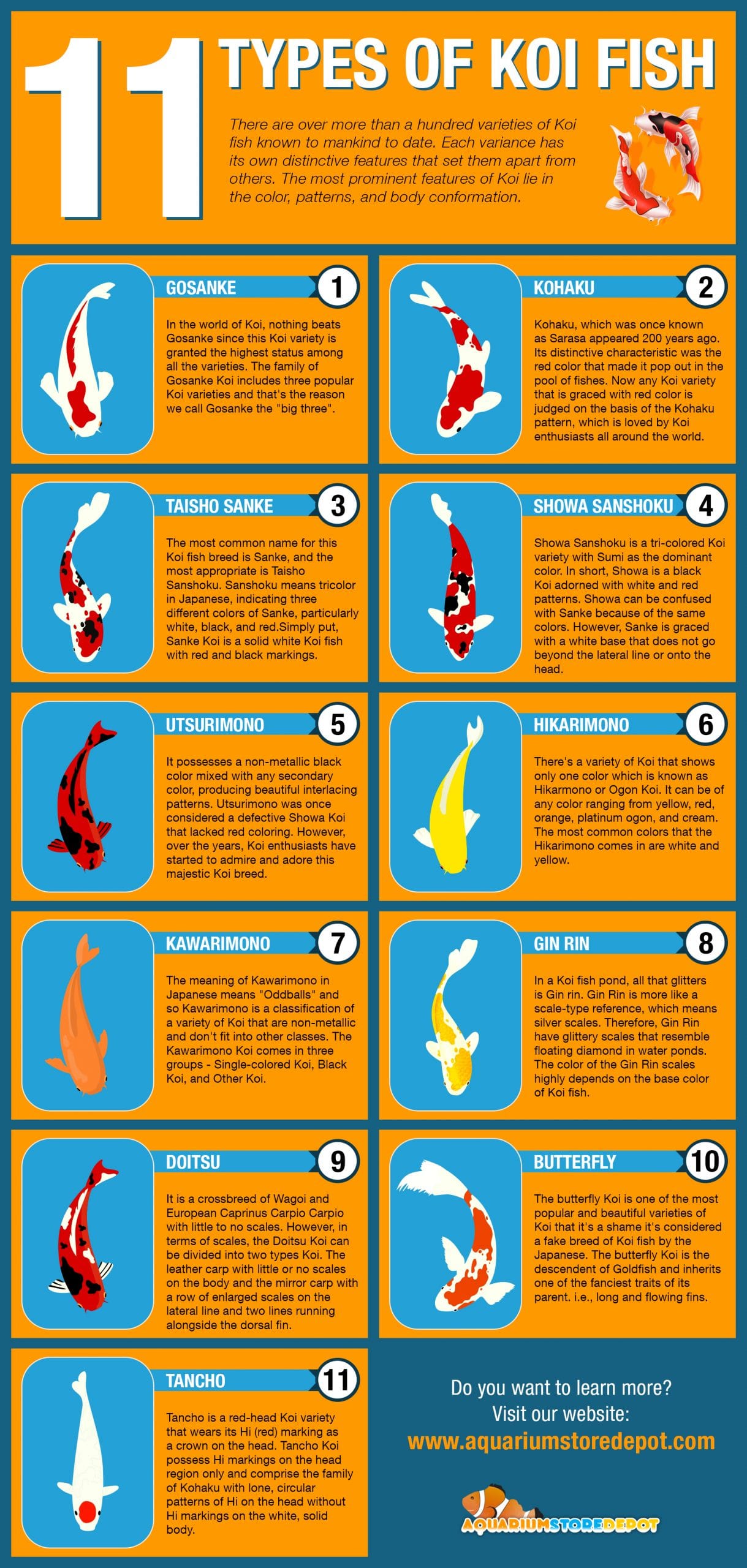
    There are over a hundred Koi varieties. However, I’m listing down 11 of the most popular varieties of Koi fish that have taken the fishing world by storm. Below is a quick infographic. You can see the full site graphic here.
    Types Of Koi

    1. Gosanke

    Gosanki Koi

    When I speak of Koi fish, my mind automatically shifts and pulls me in the direction of Gosanke.

    And I’ll tell you why.

    In the world of Koi, nothing beats Gosanke since this Koi variety is granted the highest status among all the varieties. The family of Gosanke Koi includes three popular Koi varieties and that’s the reason we call Gosanke the “big three”.

    Gosanke Koi is a diverse group of the world’s best koi fish including, Kohaku Koi, Taisho Sanshoku or Taisho Sanke, and Showa Sanshokuall of which are Grand champion winners. The signature colors of Gosanke Koi are red (Hi), black (Sumi), and solid white (Shiroji), where red and white are common among the three varieties. 

    Let’s dissect the characteristics of the three varieties of Gosanke koi fish (Kohaku, Sanke, Showa).

    2. Kohaku

    Kohaku Koi

    If you’re an avid Koi keeper, you know that Koi keeping begins and ends with Kohaku.

    Kohaku, which was once known as Sarasa appeared 200 years ago. Its distinctive characteristic was the red color that made it pop out in the pool of fishes.

    Now any Koi variety that is graced with red color is judged on the basis of the Kohaku pattern, which is loved by Koi enthusiasts all around the world.

    Kohaku Appearance

    Note: There’s no Sumi in Kohaku Koi

    The contemporary Kohaku Koi fish has a solid white (shiroji) body covered with red (hi or beni) markings. However, when the Koi fish is young, the base color (shiroji) may appear translucent or pinkish. The translucency of Shiroji in young Koi fish is ideal as the high-quality Shiroji (white) develops with the time that is seen in Koi competitions. For Koi hobbyists, the white base color holds more importance than the patterned red (hi) because a stunning base color makes the red patterns stand out in the crowd.

    As far as the patterns are concerned, the only color is red (hi or beni). However, beni can further be classified into two hues under some circumstances. The most popular and common color of beni is orange-red or purple-red. The color is transformed into a deep scarlet by maintaining water quality and good nutritional Koi fish food with the right amount of color enhancers.

    Things to look for

    When choosing among a large batch of Kohakus, these are the things to look out for the perfect and healthy fit.

    1. Choose the Koi fish with red (beni) on the head that only goes down about as far as the nostrils
    2. The eyes of Kohaku should be clear with no red markings. However, recent research shows that red can cover one eye but never both the eyes
    3. The base or shiroji should be milky or snowy white with no yellow coloration
    4. The hi around tails and fins should be less
    5. The interior of Hi should have no hues of Shiroji
    6. The quality or depth of beni should be thick; the thicker the Beni, the better

    3. Taisho Sanke

    Taisho Sanke Koi

    This winning breed of Koi fish is a bit confusing to many neophytes because of the three different names; Sanke, Taisho Sanke, and Taisho Sanshoku.

    Whatever the name may be, they all represent Taisho Sanshoku. However, the most common name for this Koi fish breed is Sanke, and the most appropriate is Taisho Sanshoku. Sanshokumeans tricolor in Japanese, indicating three different colors of Sanke, particularly white, black, and red.

    Simply put, Sanke Koi is a solid white (shiroji) Koi fish with red (hi, beni) and black (Sumi) markings. 

    Taisho Sanke appearance

    To find a Taisho Sanke that is both healthy and happy, you need to choose a healthy Kohaku. The Kohaku Koi sets the standard for a wholesome Sanke. The clearer the white (shiroji), the healthier the Sanke Koi.

    The base color of Sanke Koi fish is shiroji (solid, creamy white), which begins at the nose and extends to the tail and fins. The Hi on Sanke is a deep-orange shade rather than Cardinal red. Sanke possesses large, reddish-orange spots that make their color pattern appealing with shiroji between the patches of Hi.

    Whereas, the Sumi be the rarest color on Sanke Koi. The Sumi (black) on Sanke are comparatively smaller than the Hi or Beni, making it a secondary color, while Beni or Shiroji are primary.

    Things to look for

    1. Shiroji should be clean, bright, and not discolored
    2. Sumi should appear as round patches and should be only present above the lateral line
    3. The head should have no Sumi
    4. On Sanke, the red should take up to 70% of Koi, the black about 10%, and the rest should be Shiroji
    5. Avoid Sanke with lots of small, peppery like Sumi markings. It’s a sign of poor quality Koi fish
    6. The fins should be all-white or partial white with black stripes

    4. Showa Sanshoku
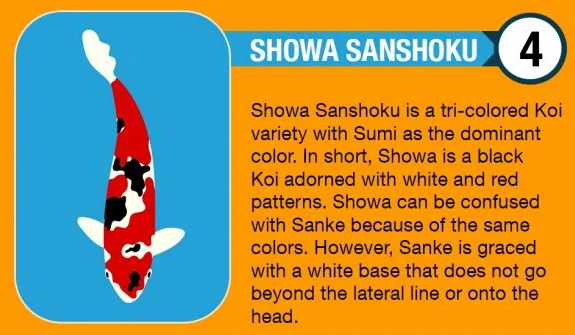
    Show Sanskoku Koi

    Novice Koi keepers often confuse Showa Sanshoku with Sanke because of the uncanny resemblance between the two types of Koi.

    Showa Sanshoku is a tri-colored Koi variety with Sumi as the dominant color. In short, Showa is a black Koi adorned with white (Shiroji) and red (Hi) patterns.

    Appearance

    Appearance-wise, Showa is confused with Sanke because of the same colors. However, Sanke is graced with a white base that does not go beyond the lateral line or onto the head. Alternatively, Showa possesses a black skin that shows through Shiroji and Hi.

    Also, one biggest difference between sanke-showa is the patterns of Showa wrap around.

    The Showa is further classified into seven different types of koi according to their body markings.

    1. Hi Showa with dominant red and black and very little Shiroji (white).
    2. Kindai Showa with 40% white or more, and varying amounts of Hi and Sumi.
    3. Old style Showa is mostly black with scarce Shiroji and Hi as a secondary color.
    4. Doitsu Showa has a shortage of scales except for some broad scales.
    5. Kin Showa has a gold, metallic sheen that sparkles.
    6. Gin Rin Showa has a silver metallic sheen. However, there are some Koi varieties with a combination of gold and silver sheen. The class of Koi is known as Kin Gin Rin.
    7. Ai Showa has blue or deep indigo speckles over the body.

    What to look for

    1. Thick base color with a lustrous appearance
    2. Sumi extends along the body length and extends into the fins moderately
    3. Red in Showa is strong and dense, particularly on the face, back, and tail region
    4. The pattern should be evenly distributed and easy on the eyes with sharp edges between the patterns

    5. Utsurimono
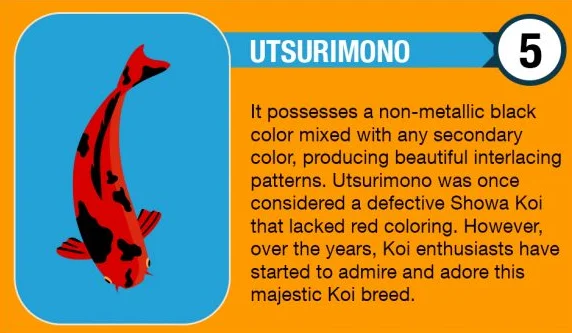
    Utsurimono Koi

    Utsurimono belongs to the same family as Showa Sanshoku. They are graced with a black coat and divided into further categories according to the color of their body markings.

    Utsurimono possesses a non-metallic black color mixed with any secondary color, producing beautiful interlacing patterns.

    Fun fact: Utsurimono was once considered a defective Showa Koi that lacked Hi (red) coloring. However, over the years, Koi enthusiasts have started to admire and adore this majestic Koi breed.

    Appearance

    Like other varieties of Koi, Utsurimono is defined by its distinctive color patterns that leave the fish lovers in awe.

    Appearance-wise, Utsurimono falls under three primary varieties.

    1. Ki Utsuri have a black coat with yellow as an accent color
    2. Hi Utsuri, as the name suggests, Hi utsuri has a black coat accentuated with a scarlet color.
    3. Shiro Utsuri has black skin with crystal white as the accent color. Also, the base of the pectoral fins of Shiro Utsuri is black.

    What to look for

    1. The Sumi of Utsurimono should cover the nose, pectoral fin joints, and side faces
    2. Always look out for four common patterns on the head of Utsurimono, which are the lightning strike, the small black patches, the two distinctly different black patches, and the heavy black pattern. These patterns are then separated by the accent color of the variety
    3. The accent color should be properly distributed as if the black base is wrapped around the accent colors

    6. Hikarimono

    Hikarimono Koi

    Koi fish are known for their bizarre colors but not all Koi fish show various colors at once. There’s a variety of Koi that shows only one color which is known as Hikarmono or Ogon Koi.

    The Ogon Koi is of any color ranging from yellow, red, orange, platinum ogon, and cream. All these Koi colors can either be regular or metallic. However, the most common colors that the Ogon Koi comes in are white and yellow.

    To be sure if you have a pure breed Hikarimono, identify its colors. If there’s more than one color, it’s not a pure breed of Ogon Koi. Suppose you have a platinum ogon, it should only possess one color i.e., platinum. If the color of your Platinum Ogon is not uniform, then it’s not purebred.

    Hikarimono is a hardy Koi fish with a greater lifespan than other varieties. Hence, it’s low-maintenance and easy to breed.

    Hikarimono Koi is classified into 3 sub-categories.

    1. Hikari-Moyo is a metallic breed with patterns
    2. Hikari-Utsuri is a metallic variant of Utsurimono
    3. Hikari- Muji is a metallic version of Mujimono

    7. Kawarimono

    Kawarimono Koi

    The meaning of Kawarimono in Japanese means “Oddballs” and so Kawarimono is a classification of a variety of Koi that are non-metallic and don’t fit into other classes.

    The Kawarimono Koi comes in three groups.

    Single-colored

    The Koi breeds that fall under the single-colored category are called Benigoi, where the Hi (red) covers almost the entire body that looks like a giant goldfish.

    The Single-colored Koi breed features a uniform color tone with red or white-tipped fins and a voluminous body shape.

    Black

    Koi varieties with black color display deep and even Sumi on fins or body. The four main varieties of Koi are.

     a. Karasu has black fins and a body with an orange or white tummy

    b. Hajiro has a black coat with a white nose and white-tipped fins

    c. Hageshiro has a white head to the color combination

    d. Youtsujiro has white fins

    Other Types

    Other odd Koi varieties are Midorigoi (green-colored) and Matsuba Koi (red Koi with dark scales).

    8. Gin rin

    Gin Rin Koi

    In a Koi fish pond, all that glitters is Gin rin.

    Gin Rin or Kin Gin Rin is more like a scale-type reference, which means silver scales. Therefore, Gin Rin have glittery scales that resemble floating diamond in water ponds.

    The color of the Gin Rin scales highly depends on the base color of Koi fish. For example, the Gin Rin reflects golden color when they cover red base (Hi) and silver while covering black or white skin.

    Gin Rin Koi is different from Hikarimono and metallic variety of Koi because Gin Rin are metallic scales whereas, the Hikarimono and metallic variety display a shiny, lustrous coat.

    There are four types of Gin Rin Koi.

    1. Diamond Gin Rin is the most common type with a crackled glass-like appearance
    2. Beta Gin is less common and the surface of skin sparkles like that of a mirror
    3. Pearl Gin is the most unusual type of Gin Rin with raised shiny deposits on the center of scales
    4. Kado Gin Rin is the least preferred type of Koi

    9. Doitsu
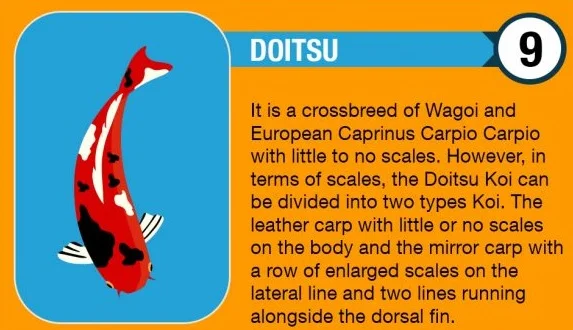
    Doitsu Koi

    Doitsu Koi are a modern addition to the Koi family. It is a crossbreed of Wagoi and European Caprinus Carpio Carpio with little to no scales.

    However, in terms of scales, the Doitsu Koi is divided into two types of Koi.

    1. The leather carp with little or no scales on the body
    2. The mirror carp with a row of enlarged scales on the lateral line and two lines running alongside the dorsal fin

    Furthermore, the types of scales in Doitsu Koi fish is divided into three types.

    1. Kawi Goi
    2. Kagami Goi
    3. Yoroi Goi

    Pto Tip: In competitions, the Doitsu Koi is beat out in shows by the scaled Koi varieties.

    10. Butterfly

    Butterfly Koi

    The butterfly Koi is one of the most popular and beautiful varieties of Koi. It’s a shame that it’s considered a fake breed of Koi fish by the Japanese, which is the reason it’s more famous in the USA than in other parts of the world.

    The butterfly Koi is the descendant of Goldfish and inherits one of the fanciest traits of its parent. I.e., long and flowing fins.

    However, despite being one of the most graceful ornamental fish, it is not suitable for conditions because it deviates from the traditional Koi characteristics.

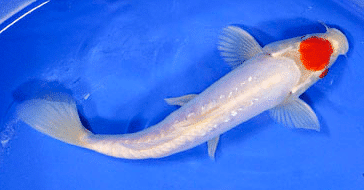
    11. Tancho

    Tancho Koi

    Tancho is a red-head Koi variety that wears its Hi (red) marking as a crown on the head.

    Tancho Koi possess Hi markings on the head region only and comprise the family of Kohaku with lone, circular patterns of Hi on the head without Hi markings on the white, solid body.

    The red spot on the head should be circular and crimson red in color for the ideal Tancho Koi, such as Tancho, Tancho Showa, and Tancho Sanke.

    Most Popular Types For Shows

    Though any Koi fish is truly capable of winning competitions, there are certain groups of Koi fish that are more prevalent for shows than others. They include.

    1. Kohaku 
    2. Sanke
    3. Showa 

    Particularly the Gosanke variety of Koi is the most popular for Koi shows. However, the other classes are that are also in vogue for competitions are Utsuri, Bekko, Shusui, Koromo, Hikari Muji, Hikari Mono, Hikari Utsuri, Kawarigoi, Tancho, Kin Gin Rin. While some shows might also entertain the Doitsu Koi. 

    FAQS

    How many types are there?

    There are over more than a hundred (100) varieties of Koi fish known to mankind to date. Each variance has its own distinctive features that set them apart from others. The most prominent features of Koi lie in the color, patterns, and body conformation.ย 

    What are the three varieties?

    The three varieties of Koi or the “big three” refer to Gosanke, chieflyย Kohaku,ย Taisho Sanshokuย (Sanke), andย Showa Sanshokuย (Showa). These three types of koi out of 100 varieties are highest-rated for their excellence, popularity, and quality.

    What color is most expensive?

    Kohaku Koi, the red and white carp is the most expensive Koi species in the world it was sold for around $2.2 million US dollars in China.

    What is the rarest?

    The rarest Koi fish till date is Ki Utsuri. The group of Utsurimono with yellow patterns over a black, lacquer body.

    What is the biggest type?

    Koi is humongous. However, some Koi grow out to be bigger than the expectations. The same happened in 2007 when the Koi named “Big girl” was in the limelight as the world’s biggest Koi fish. Big Girl weighed around 90lbs and was 1.2m long.

    No other Koi has beaten the the record of monstrous ‘Big Girl‘ so far.

    What are the best to buy?

    Choosing the best Koi for your garden ponds is a nuisance. Because you never know the water quality and nutritional health of your fish before you spend some time with it.

    I don’t recommend buying fish online, no matter how trustworthy the site seems. That’s because you can only check out for abnormalities and problems in person. Therefore, I recommend going to the store and analyzing the water conditions and nutritional needs of the fish before making a purchase.ย 

    I’m an avid Koi keeper, and all my life, I’ve bought my Koi fromย Next Day Koi.ย They have an extensive collection of Koi breeds that are bred for perfection and excellence at reasonable rates. Also, the freedom to pick your own delivery date while ordering is what makesย Next Day Koiย the best bet for an occupied person like me. You can use my promo code ASDEPOT for an extra 10% off!

    Do they grow faster than goldfish?

    Koi are hardy animals that are voracious eaters. Also, they live much longer than goldfish and have a healthier immunity system. As compared to Goldfish, Koi grow at a rapid rate, doubling the Goldfish in their first year.

    How Can You Tell a Male from a Female?

    Here are some pointers to look for when identifying a female or male Koi in the swarm of fish.
    Koi males have more slender bodies than females. A female Koi has a rounded body, especially when she’s carrying eggs.

    The pectoral fins of male Koi are pointed and solid in color. The female possesses rounder fins as compared to its male counterparts.

    The breeding season brings many changes to Koi fish. Therefore, look out for Tubercles (little, white growths on the male head and pectoral fins). Comparatively, female Koi fish don’t develop Tubercles.

    Closing Thoughts

    The Nishikigoi family has over a hundred different types of Koi, capable of animating your garden ponds through their rich, vibrant colors and unique body conformation. We identify the Koi varieties on the basis of their markings, pattern placement, accent colors, and history. This article speaks about nine different Koi varieties, out of which three are prized Koi, ideal for Japanese Koi competitions.
    Koi keeping is a hobby within a hobby, and once you go down that rabbit hole it can get seriously deep. I’ve seen vendors at Aquashella selling single fish for thousands of dollars. And the buyers know exactly what they’re looking at. The variety of koi is genuinely staggering, from the classic Kohaku with its white body and red pattern to the metallic Ogon to the butterfly koi that divide opinion in the hobby. What most beginners don’t realize is how different show-quality Japanese koi are from the inexpensive pond-store fish. The bloodlines and growing conditions matter enormously. Here are 11 of the most popular varieties worth knowing, whether you’re starting a pond or shopping more seriously.

    Top 11 different types of Koi fish Varieties

    There are over a hundred Koi varieties. However, I’m listing down 11 of the most popular varieties of Koi fish that have taken the fishing world by storm. Below is a quick infographic. You can see the full site graphic here.

    Types Of Koi

    1. Gosanke

    Gosanki Koi

    When I speak of Koi fish, my mind automatically shifts and pulls me in the direction of Gosanke.

    And I’ll tell you why.

    In the world of Koi, nothing beats Gosanke since this Koi variety is granted the highest status among all the varieties. The family of Gosanke Koi includes three popular Koi varieties and that’s the reason we call Gosanke the “big three”.

    Gosanke Koi is a diverse group of the world’s best koi fish including, Kohaku Koi, Taisho Sanshoku or Taisho Sanke, and Showa Sanshokuall of which are Grand champion winners. The signature colors of Gosanke Koi are red (Hi), black (Sumi), and solid white (Shiroji), where red and white are common among the three varieties. 

    Let’s dissect the characteristics of the three varieties of Gosanke koi fish (Kohaku, Sanke, Showa).

    2. Kohaku

    Kohaku Koi

    If you’re an avid Koi keeper, you know that Koi keeping begins and ends with Kohaku.

    Kohaku, which was once known as Sarasa appeared 200 years ago. Its distinctive characteristic was the red color that made it pop out in the pool of fishes.

    Now any Koi variety that is graced with red color is judged on the basis of the Kohaku pattern, which is loved by Koi enthusiasts all around the world.

    Kohaku Appearance

    Note: There’s no Sumi in Kohaku Koi

    The contemporary Kohaku Koi fish has a solid white (shiroji) body covered with red (hi or beni) markings. However, when the Koi fish is young, the base color (shiroji) may appear translucent or pinkish. The translucency of Shiroji in young Koi fish is ideal as the high-quality Shiroji (white) develops with the time that is seen in Koi competitions. For Koi hobbyists, the white base color holds more importance than the patterned red (hi) because a stunning base color makes the red patterns stand out in the crowd.

    As far as the patterns are concerned, the only color is red (hi or beni). However, beni can further be classified into two hues under some circumstances. The most popular and common color of beni is orange-red or purple-red. The color is transformed into a deep scarlet by maintaining water quality and good nutritional Koi fish food with the right amount of color enhancers.

    Things to look for

    When choosing among a large batch of Kohakus, these are the things to look out for the perfect and healthy fit.

    1. Choose the Koi fish with red (beni) on the head that only goes down about as far as the nostrils
    2. The eyes of Kohaku should be clear with no red markings. However, recent research shows that red can cover one eye but never both the eyes
    3. The base or shiroji should be milky or snowy white with no yellow coloration
    4. The hi around tails and fins should be less
    5. The interior of Hi should have no hues of Shiroji
    6. The quality or depth of beni should be thick; the thicker the Beni, the better

    3. Taisho Sanke

    Taisho Sanke Koi

    This winning breed of Koi fish is a bit confusing to many neophytes because of the three different names; Sanke, Taisho Sanke, and Taisho Sanshoku.

    Whatever the name may be, they all represent Taisho Sanshoku. However, the most common name for this Koi fish breed is Sanke, and the most appropriate is Taisho Sanshoku. Sanshokumeans tricolor in Japanese, indicating three different colors of Sanke, particularly white, black, and red.

    Simply put, Sanke Koi is a solid white (shiroji) Koi fish with red (hi, beni) and black (Sumi) markings. 

    Taisho Sanke appearance

    To find a Taisho Sanke that is both healthy and happy, you need to choose a healthy Kohaku. The Kohaku Koi sets the standard for a wholesome Sanke. The clearer the white (shiroji), the healthier the Sanke Koi.

    The base color of Sanke Koi fish is shiroji (solid, creamy white), which begins at the nose and extends to the tail and fins. The Hi on Sanke is a deep-orange shade rather than Cardinal red. Sanke possesses large, reddish-orange spots that make their color pattern appealing with shiroji between the patches of Hi.

    Whereas, the Sumi be the rarest color on Sanke Koi. The Sumi (black) on Sanke are comparatively smaller than the Hi or Beni, making it a secondary color, while Beni or Shiroji are primary.

    Things to look for

    1. Shiroji should be clean, bright, and not discolored
    2. Sumi should appear as round patches and should be only present above the lateral line
    3. The head should have no Sumi
    4. On Sanke, the red should take up to 70% of Koi, the black about 10%, and the rest should be Shiroji
    5. Avoid Sanke with lots of small, peppery like Sumi markings. It’s a sign of poor quality Koi fish
    6. The fins should be all-white or partial white with black stripes

    4. Showa Sanshoku

    Show Sanskoku Koi

    Novice Koi keepers often confuse Showa Sanshoku with Sanke because of the uncanny resemblance between the two types of Koi.

    Showa Sanshoku is a tri-colored Koi variety with Sumi as the dominant color. In short, Showa is a black Koi adorned with white (Shiroji) and red (Hi) patterns.

    Appearance

    Appearance-wise, Showa is confused with Sanke because of the same colors. However, Sanke is graced with a white base that does not go beyond the lateral line or onto the head. Alternatively, Showa possesses a black skin that shows through Shiroji and Hi.

    Also, one biggest difference between sanke-showa is the patterns of Showa wrap around.

    The Showa is further classified into seven different types of koi according to their body markings.

    1. Hi Showa with dominant red and black and very little Shiroji (white).
    2. Kindai Showa with 40% white or more, and varying amounts of Hi and Sumi.
    3. Old style Showa is mostly black with scarce Shiroji and Hi as a secondary color.
    4. Doitsu Showa has a shortage of scales except for some broad scales.
    5. Kin Showa has a gold, metallic sheen that sparkles.
    6. Gin Rin Showa has a silver metallic sheen. However, there are some Koi varieties with a combination of gold and silver sheen. The class of Koi is known as Kin Gin Rin.
    7. Ai Showa has blue or deep indigo speckles over the body.

    What to look for

    1. Thick base color with a lustrous appearance
    2. Sumi extends along the body length and extends into the fins moderately
    3. Red in Showa is strong and dense, particularly on the face, back, and tail region
    4. The pattern should be evenly distributed and easy on the eyes with sharp edges between the patterns

    5. Utsurimono

    Utsurimono Koi

    Utsurimono belongs to the same family as Showa Sanshoku. They are graced with a black coat and divided into further categories according to the color of their body markings.

    Utsurimono possesses a non-metallic black color mixed with any secondary color, producing beautiful interlacing patterns.

    Fun fact: Utsurimono was once considered a defective Showa Koi that lacked Hi (red) coloring. However, over the years, Koi enthusiasts have started to admire and adore this majestic Koi breed.

    Appearance

    Like other varieties of Koi, Utsurimono is defined by its distinctive color patterns that leave the fish lovers in awe.

    Appearance-wise, Utsurimono falls under three primary varieties.

    1. Ki Utsuri have a black coat with yellow as an accent color
    2. Hi Utsuri, as the name suggests, Hi utsuri has a black coat accentuated with a scarlet color.
    3. Shiro Utsuri has black skin with crystal white as the accent color. Also, the base of the pectoral fins of Shiro Utsuri is black.

    What to look for

    1. The Sumi of Utsurimono should cover the nose, pectoral fin joints, and side faces
    2. Always look out for four common patterns on the head of Utsurimono, which are the lightning strike, the small black patches, the two distinctly different black patches, and the heavy black pattern. These patterns are then separated by the accent color of the variety
    3. The accent color should be properly distributed as if the black base is wrapped around the accent colors

    6. Hikarimono

    Hikarimono Koi

    Koi fish are known for their bizarre colors but not all Koi fish show various colors at once. There’s a variety of Koi that shows only one color which is known as Hikarmono or Ogon Koi.

    The Ogon Koi is of any color ranging from yellow, red, orange, platinum ogon, and cream. All these Koi colors can either be regular or metallic. However, the most common colors that the Ogon Koi comes in are white and yellow.

    To be sure if you have a pure breed Hikarimono, identify its colors. If there’s more than one color, it’s not a pure breed of Ogon Koi. Suppose you have a platinum ogon, it should only possess one color i.e., platinum. If the color of your Platinum Ogon is not uniform, then it’s not purebred.

    Hikarimono is a hardy Koi fish with a greater lifespan than other varieties. Hence, it’s low-maintenance and easy to breed.

    Hikarimono Koi is classified into 3 sub-categories.

    1. Hikari-Moyo is a metallic breed with patterns
    2. Hikari-Utsuri is a metallic variant of Utsurimono
    3. Hikari- Muji is a metallic version of Mujimono

    7. Kawarimono

    Kawarimono Koi

    The meaning of Kawarimono in Japanese means “Oddballs” and so Kawarimono is a classification of a variety of Koi that are non-metallic and don’t fit into other classes.

    The Kawarimono Koi comes in three groups.

    Single-colored

    The Koi breeds that fall under the single-colored category are called Benigoi, where the Hi (red) covers almost the entire body that looks like a giant goldfish.

    The Single-colored Koi breed features a uniform color tone with red or white-tipped fins and a voluminous body shape.

    Black

    Koi varieties with black color display deep and even Sumi on fins or body. The four main varieties of Koi are.

     a. Karasu has black fins and a body with an orange or white tummy

    b. Hajiro has a black coat with a white nose and white-tipped fins

    c. Hageshiro has a white head to the color combination

    d. Youtsujiro has white fins

    Other Types

    Other odd Koi varieties are Midorigoi (green-colored) and Matsuba Koi (red Koi with dark scales).

    8. Gin rin

    Gin Rin Koi

    In a Koi fish pond, all that glitters is Gin rin.

    Gin Rin or Kin Gin Rin is more like a scale-type reference, which means silver scales. Therefore, Gin Rin have glittery scales that resemble floating diamond in water ponds.

    The color of the Gin Rin scales highly depends on the base color of Koi fish. For example, the Gin Rin reflects golden color when they cover red base (Hi) and silver while covering black or white skin.

    Gin Rin Koi is different from Hikarimono and metallic variety of Koi because Gin Rin are metallic scales whereas, the Hikarimono and metallic variety display a shiny, lustrous coat.

    There are four types of Gin Rin Koi.

    1. Diamond Gin Rin is the most common type with a crackled glass-like appearance
    2. Beta Gin is less common and the surface of skin sparkles like that of a mirror
    3. Pearl Gin is the most unusual type of Gin Rin with raised shiny deposits on the center of scales
    4. Kado Gin Rin is the least preferred type of Koi

    9. Doitsu

    Doitsu Koi

    Doitsu Koi are a modern addition to the Koi family. It is a crossbreed of Wagoi and European Caprinus Carpio Carpio with little to no scales.

    However, in terms of scales, the Doitsu Koi is divided into two types of Koi.

    1. The leather carp with little or no scales on the body
    2. The mirror carp with a row of enlarged scales on the lateral line and two lines running alongside the dorsal fin

    Furthermore, the types of scales in Doitsu Koi fish is divided into three types.

    1. Kawi Goi
    2. Kagami Goi
    3. Yoroi Goi

    Pto Tip: In competitions, the Doitsu Koi is beat out in shows by the scaled Koi varieties.

    10. Butterfly

    Butterfly Koi

    The butterfly Koi is one of the most popular and beautiful varieties of Koi. It’s a shame that it’s considered a fake breed of Koi fish by the Japanese, which is the reason it’s more famous in the USA than in other parts of the world.

    The butterfly Koi is the descendant of Goldfish and inherits one of the fanciest traits of its parent. I.e., long and flowing fins.

    However, despite being one of the most graceful ornamental fish, it is not suitable for conditions because it deviates from the traditional Koi characteristics.

    11. Tancho

    Tancho Koi

    Tancho is a red-head Koi variety that wears its Hi (red) marking as a crown on the head.

    Tancho Koi possess Hi markings on the head region only and comprise the family of Kohaku with lone, circular patterns of Hi on the head without Hi markings on the white, solid body.

    The red spot on the head should be circular and crimson red in color for the ideal Tancho Koi, such as Tancho, Tancho Showa, and Tancho Sanke.

    Most Popular Types For Shows

    Though any Koi fish is truly capable of winning competitions, there are certain groups of Koi fish that are more prevalent for shows than others. They include.

    1. Kohaku 
    2. Sanke
    3. Showa 

    Particularly the Gosanke variety of Koi is the most popular for Koi shows. However, the other classes are that are also in vogue for competitions are Utsuri, Bekko, Shusui, Koromo, Hikari Muji, Hikari Mono, Hikari Utsuri, Kawarigoi, Tancho, Kin Gin Rin. While some shows might also entertain the Doitsu Koi. 

    FAQS

    How many types are there?

    There are over more than a hundred (100) varieties of Koi fish known to mankind to date. Each variance has its own distinctive features that set them apart from others. The most prominent features of Koi lie in the color, patterns, and body conformation.ย 

    What are the three varieties?

    The three varieties of Koi or the “big three” refer to Gosanke, chieflyย Kohaku,ย Taisho Sanshokuย (Sanke), andย Showa Sanshokuย (Showa). These three types of koi out of 100 varieties are highest-rated for their excellence, popularity, and quality.

    What color is most expensive?

    Kohaku Koi, the red and white carp is the most expensive Koi species in the world it was sold for around $2.2 million US dollars in China.

    What is the rarest?

    The rarest Koi fish till date is Ki Utsuri. The group of Utsurimono with yellow patterns over a black, lacquer body.

    What is the biggest type?

    Koi is humongous. However, some Koi grow out to be bigger than the expectations. The same happened in 2007 when the Koi named “Big girl” was in the limelight as the world’s biggest Koi fish. Big Girl weighed around 90lbs and was 1.2m long.

    No other Koi has beaten the the record of monstrous ‘Big Girl‘ so far.

    What are the best to buy?

    Choosing the best Koi for your garden ponds is a nuisance. Because you never know the water quality and nutritional health of your fish before you spend some time with it.

    I don’t recommend buying fish online, no matter how trustworthy the site seems. That’s because you can only check out for abnormalities and problems in person. Therefore, I recommend going to the store and analyzing the water conditions and nutritional needs of the fish before making a purchase.ย 

    I’m an avid Koi keeper, and all my life, I’ve bought my Koi fromย Next Day Koi.ย They have an extensive collection of Koi breeds that are bred for perfection and excellence at reasonable rates. Also, the freedom to pick your own delivery date while ordering is what makesย Next Day Koiย the best bet for an occupied person like me. You can use my promo code ASDEPOT for an extra 10% off!

    Do they grow faster than goldfish?

    Koi are hardy animals that are voracious eaters. Also, they live much longer than goldfish and have a healthier immunity system. As compared to Goldfish, Koi grow at a rapid rate, doubling the Goldfish in their first year.

    How Can You Tell a Male from a Female?

    Here are some pointers to look for when identifying a female or male Koi in the swarm of fish.
    Koi males have more slender bodies than females. A female Koi has a rounded body, especially when she’s carrying eggs.

    The pectoral fins of male Koi are pointed and solid in color. The female possesses rounder fins as compared to its male counterparts.

    The breeding season brings many changes to Koi fish. Therefore, look out for Tubercles (little, white growths on the male head and pectoral fins). Comparatively, female Koi fish don’t develop Tubercles.

    Closing Thoughts

    The Nishikigoi family has over a hundred different types of Koi, capable of animating your garden ponds through their rich, vibrant colors and unique body conformation. We identify the Koi varieties on the basis of their markings, pattern placement, accent colors, and history. This article speaks about nine different Koi varieties, out of which three are prized Koi, ideal for Japanese Koi competitions.
  • Koi vs Goldfish: 7 Key Differences That Determine Which Is Right for Your Pond

    Koi vs Goldfish: 7 Key Differences That Determine Which Is Right for Your Pond

    Koi are pond fish. Not aquarium fish. They reach 2 to 3 feet long and live 25 years or more. The commitment is closer to owning a dog than keeping a fish tank.

    Koi outlive most pets. Make sure your pond plan matches a 25-year commitment.

    Origins

    It’s safe to say that Goldfish are the distant “elder” cousins of Koi fish. I’ll tell you why.

    Goldfish and Koi both originated from East Asia as a result of selective breeding. However, goldfish were bred from a dull olive green colored edible fish, namely ‘Prussian Carp’.

    Whereas, Koi are colorful variants of Amur carp, which emerged in the 1820s. Up until recently, it’s believed that Koi fish have been bred from Common Carp (Cyprinus carpio). Ranger Homesteading has an excellent video below that goes into greater depth about the history of koi fish.

    However, goldfish are a species of their own, while Koi still falls under the Cyprinus carpio category.

    Appearance

    Koi and Goldfish look so much alike when they’re young, wild, and free. However, as they age, things start to change.

    The most significant difference between Koi and goldfish lies in their body shape. Koi are all almost the same size, but goldfish are wider and have an egg-like appearance. However, most goldfish have a variety of body types and shapes depending on their characteristics. They have dorsal fins and tail configurations with round, bulging eyes.

    On the other hand, Koi have a common body shape that remains the same regardless their type with their fins and tail connected. The most interesting trait of Koi is that they possess the same body size even with different color types that leave their owners in awe.

    Appearance-wise, size is the most dominant difference between Koi and goldfish. Goldfish are smaller in size and grow to around 6 inches long. However, in some rare cases, they might grow to be around one foot long.

    Koi, comparatively grow out to be much bigger with an average size of around 20 inches to 25 inches. In some rare cases, Koi are found to be 4 feet long, if given enough food and space.

    Personally, when I was new to fish keeping, I started distinguishing between goldfish and Koi based on their barbels. Barbels are whiskers at the side of the mouth. If the barbels are present, you’ve got Koi. If not, then goldfish.

    Colors

    When it comes to colors, the difference between Koi fish and goldfish are more apparent. That’s because Koi shows a more diverse and striking range of colors than goldfish. This may be because Koi fish are the descents of Common carp, and therefore, show colors in the metallic coloration along with red, orange, yellow, black, and white. The patterns are more unique to Koi due to their selective breeding.

    Contrastingly, goldfish come in red, orange, grey, brown, yellow, white, and black with the exception of gold coloration.

    Fins

    One significant difference between Koi and goldfish lies in the fins and tails.

    Goldfish are graced with two sets of paired fins (pectoral and pelvic) and three sets of single fins (dorsal, caudal, anal). Whereas, the fins of Koi are as simple as a fish’s fin can get.

    There’s an exception in Koi varieties with long, flowy fins, namely Butterfly Koi. And even though, many pond owners love the flowy look of butterfly Koi, Koi enthusiasts do not consider them to be true Koi.

    In addition to that, the distribution of fins in goldfish is highly dependent on the tails. Common goldfish is single-tailed or double-tailed where the single varieties have a single caudal and anal fin and double varieties, such as the fancy goldfish possess two caudal and anal fins. Some goldfish, like the Shubunkin tend to have the fanciest scales and colors that Koi have.

    Lifespan

    Do you know?

    The oldest known Koi in Japan lived for about good 226 years, whereas, the oldest known goldfish lived for about 43 years. Hence, this record speaks volumes about their overall lifespan.

    Koi fish live much longer than goldfish. It is due to the dramatic changes in the body shape of goldfish that lessens their life expectancy.

    The fun part is, both, Koi and goldfish reach their maturity by the age of two or three. However, their lifespan differs from each other. Koi fish are believed to live for about 25 to 35 years or over, while the life expectancy of goldfish is around 5 to 10 years depending on the pond conditions and nutritional analysis.

    Food

    Concerning the matters of food, Koi fish and goldfish are so much similar. They both are omnivorous, lack a traditional stomach, i.e., food passes into the mouth and then straight to the intestine.

    However, due to the variety in body shape and sizes of Koi. Koi Food is tailored for each size – from pellets to food sticks. Also, Koi fish are voracious eaters and might end up eating other small fish in the pond.

    Compared to Koi, goldfish have smaller mouths and pharyngeal teeth to crunch the food into smaller pieces. Like Koi, they are omnivorous and enjoy flakes and small pelleted food.

    Aquarium Life

    One of the most frequently asked questions about Koi and goldfish is about their aquarium life.

    I’ve talked about this before; Koi don’t do well in aquariums. They are born to thrive in garden ponds with at least 200 gallons of water per fish, a capacity of 1000 gallons, and in a pond at least 2 feet in depth.

    Therefore, Koi demands a proper pond with optimal water level and quality. For raising healthy and happy Koi, they should be kept in Ponds, provided that the oxygen levels, diet, and water quality are top-notch.

    On the other hand, goldfish are happy and healthy in aquariums, especially the fancy varieties, which are slower and incompetent than the common goldfish. Furthermore, if you decide to keep your goldfish in indoor aquariums, it’s recommended that you provide them with enough space to move around freely and grow healthily.

    Compatibility with Plants

    Plants With Koi or Goldfish

    If you fancy submerged plants in your garden ponds, this news might disappoint you. Koi do not get along with most aquatic plants. As I mentioned before, Koi are avid eaters with bigger mouths and they ingest small aquatic plants, leaving little to no vegetation behind.

    Goldfish, as opposed to Koi, are fast friends with aquatic plants and will swim around lotus and Lillies merrily, without causing any damage.

    You can keep plants with Koi, but you need to be more selective with the varieties you choose versus with Goldfish.

    Diseases

    Koi are a very hardy breed of fish compared to goldfish, which makes them a perfect fit for extreme weather. However, under circumstances, Koi develop some conditions that might cease their growth and overall performance. Some common Koi diseases are Aeromonas, carp pox, Dropsy, costia, columnaris, and anchor worms. 

    These diseases are either caused by bacteria, viruses, or some parasites, and the best treatment for Koi diseases is isolation. However, the problem is, Koi is a powerful and large breed of fish. It is a nuisance to capture them single-handedly. It’s recommended that you use a net with long handles to reach your Koi without causing much trouble.

    On the other hand, goldfish may be low-maintenance and easy to care for, but they are more sensitive and demand specialized care. This is especially true if you prefer fancy goldfish.

    Some of the most common Goldfish diseases are ich, flukes, fish lice, velvet, fin rot, etc., The treatment of goldfish is much easier than Koi because of the water volume. Also, goldfish are smaller in size and is removed with a regular-sized net.

    FAQs

    I’ve compiled a list of the most frequently asked questions concerning Koi vs Goldfish. Please don’t hesitate to comment if you have more to add.

    Can they survive in the same pond?

    Frankly, yes, under some circumstances.

    As I discussed earlier, Koi are much larger in size than goldfish. Therefore, you would need ample space to fill your ponds with Koi and goldfish, both.
    Furthermore, goldfish enjoy the company of aquatic plants while Koi will enjoy to eating most of them. Hence, there should be a partition for aquatic plants to keep the two breeds catered to and happy.

    The last point is the treatment of diseases. Koi body has different requirements, and since they are graced with larger bodies than goldfish, it is tough to catch and isolate them. Therefore, you need better nets with a solid strategy to deal with such unfortunate situations.

    In addition to these points, despite being hardy and low-maintenance, Koi and goldfish demand proper attention and extensive care. Consequently, you will have to invest more time and knowledge in keeping the two together.

    Other than that, Koi and goldfish get along pretty well and enjoy each other’s company. In fact, many expert Koi enthusiasts love keeping their Koi and goldfish together for ornamental purposes.

    Will koi fish kill goldfish?

    In my years of experience, I’ve never experienced this scenario personally. However, I believe accidents may occur only if you keep the two fish of different sizes together. Koi are greedy and voracious, and they might end up killing fish smaller than them, including goldfish. Therefore, while keeping the two together, be wary of their body size.

    Are koi fish aggressive to Goldfish?

    No, Koi are not aggressive to goldfish. However, there are a few exceptions, such as fancy varieties of goldfish that are unhurried, clumsy, and slow, which might not get along with Koi due to their competence for food and speedy nature. As a rule of thumb, avoid keeping Koi with any small and slow specie

    Koi vs Goldfish. Which Fish Is Right for My Pond? (Main Differences)

    Koi and goldfish, both are a mystical addition to your garden ponds. However, there comes a time when you have to choose between the two.

    So the answer to which is right for your pond lies in your preferences, available space, and time investment.

    Koi offers a rich variety of colors and different sizes to your pond. Yet, they need ample space to thrive and grow happily. You should only consider keeping Koi if you can at least manage 200 gallons of water per fish and have a pond of over 1000 gallons. The fish themselves are also more expensive than goldfish. Since they require large ponds, pond maintenance would require a proper routine with bigger and more expensive equipment to maintain water quality.

    Whereas, Goldfish are much smaller in size and require at least 20 gallons of water. Furthermore, goldfish can thrive in small tanks or aquariums provided that the water quality is excellent. However, due to the varying body shape and configuration, they are slightly more difficult to take care of than Koi.

    All in all, if you have a pond that is less than 1000 gallons, you should go for goldfish.

    Alternatively, if you want a breed hardier than goldfish and you can invest time and money in building a larger pond, Koi would be your best bet.

    Koi vs Goldfish Differences. Which Is The Best Fish For Garden Ponds?

    Apart from body sizes and pond requirements, a few things should be taken into consideration while choosing between the two fish breeds.

    The longevity or life expectancy of Koi is much greater than that of goldfish. Hence, if you’re looking for a long-term investment for your garden ponds, you should definitely opt for Koi.

    Also, if you’re someone who admires a pet’s personality, Koi would be compatible with you. Scientists believe that Koi are more social, smarter, and have more developed personalities than goldfish. And that’s why most fish connoisseurs prefer Koi over goldfish because what’s more rewarding than keeping your fish as companions throughout your life and establishing a healthy relationship with them?

    Nonetheless, both fish make excellent pets that add value, life, and intense colors to your garden ponds.

    Closing Thoughts

    As I promised, after reading this article, you’ll no longer feel the need to ask, Koi vs. Goldfish: which is which?

    Be informed that the major difference between Koi and goldfish lies in the size, lifespan, colors and patterns, appearances, and most importantly, the presence of barbels. Other than that, both are prized pets, loved and adored by pond keepers.


    ๐Ÿ“˜ Want to learn more? This article is part of our complete Freshwater Fish Guide. Your ultimate resource for freshwater species, care tips, tank setup, and more.

  • Butterfly Koi Fish – Care Guide & Where To Buy

    Butterfly Koi Fish – Care Guide & Where To Buy

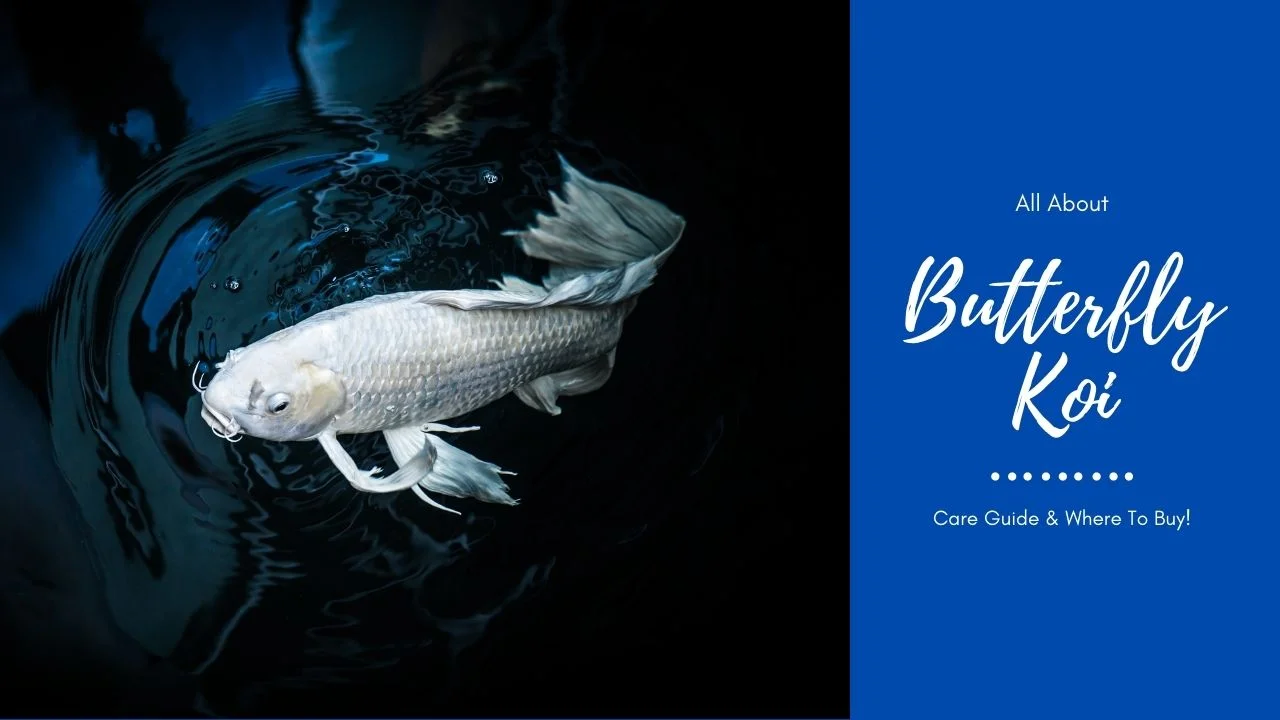
    Butterfly Koi, also known as dragon carp or long-finned Koi are gaining popularity in the fishing hall of fameWith their exotic, flashy colors and dramatic long flowing wings that never stop growing and add opulence to your pond interiors.

    Butterfly Koi Fish are notably amiable, docile, and hardy. The only thing they need is clean water and a balanced diet high in nutrients. However, if you’re new to Koi keeping, chances are you’re in the dark about this hybrid yet graceful breed of long fin Koi that’s taking the koi hobby by storm.

    In this article, I’ll walk you through some basic information about butterfly Koi – from their behavior, care, and recommended intake to their life expectancy and temperament.

    Species Overview

    Scientific NameCyprinus carpio
    Common NameButterfly Koi, Dragon Koi, Long-fin Koi
    FamilyCyprinidae 
    OriginIndonesia
    DietOmnivorous 
    MaintenanceEasy
    Activity LevelVery active, free-swimming carps
    Lifespan25 to 35 years or longer
    Size12 to 15 inches 
    TemperamentAmiable, calm, and peaceful
    Minimum Pond Size1000 gallons
    Water TypeFreshwater
    Pond set-upPlanted heavily in garden ponds
    CompatibilityOther carps, amphibians, and game fish

    The beautiful butterfly Koi or American Koi is one of the hardiest and social Koi breeds sold by Blue Ridge fish hatchery. The scientific name of Dragon Koi is Cyprinus carpio that belongs to the family Cyprinidae. Butterfly Koy is famous for its signature, long-flowing fins that are graced with dozens of rays of cartilage that support the longer fins and radiate outwardly, bringing blissful color to your garden ponds.

    The butterfly Koi comes in various beautiful hues ranging from red, orange, yellow, blue, black, and metallic colors that look nothing less than precious jewels in the fishpond.

    Origin and Habitat

    Butterfly Koi vs. Standard Koi: Whatโ€™s Actually Different

    Butterfly koi and standard koi are the same species โ€” Cyprinus carpio โ€” with identical water, filtration, and feeding requirements. But there are meaningful practical differences worth understanding before choosing one over the other.

    FeatureStandard KoiButterfly Koi
    FinsFixed lengthGrow continuously throughout life โ€” older fish have longer fins
    Body shapeBroader, rounderSlightly slimmer and more elongated
    Show eligibilityEligible for traditional Nishikigoi competitionsExcluded from Japanese koi shows โ€” not considered a true koi breed
    PriceWide range depending on variety and qualityGenerally commands a premium; longer fins = higher price
    Fin maintenanceNo special considerationProne to fin rot; avoid sharp edges in pond; inspect regularly
    Viewing angleBest viewed from aboveStunning from above or the side

    Even though the word Koi is a Japanese word for carps, Butterfly Koi are not true breeds. Hence, they are dismissed from Koi competitions in Japan as they are not considered an original koi type.

    The origin of Butterfly Koi is a debatable topic. Some believe they originated from Indonesia through the interbreeding of Indonesian long-finned wild carp and traditional Koi. Some fish enthusiasts claim that the Blue Ridge fish hatchery bred Koi butterfly under the supervision of Wyatt LefeverThe outcome was a beautiful long fin Koi with vivid colors, resembling the butterflies, and hence the name.

    Speaking of the habitat, I highly recommend that you keep your Butterfly Koi in ponds rather than an aquarium. That’s because they tend to grow much bigger. Also, they are voracious eaters and might need some extra treats and plants to feed on. 

    One main reason to opt for the pond is that they look elegant from the top than their sides, making them a perfect fit for your garden ponds.

    However, you should have plenty of space for your butterfly Koi as they need at least 1000 gallons of water to thrive and survive healthily.

    How Big are Butterfly Koi Fish?

    The bodies of Butterfly Koi fish are slender and skinnier than Japanese Koi. Nevertheless, they usually grow to the same length as their short-finned cousins, i.e., about 12 to 15 inches. However, some dragon Koi might become as big as 3 feet, provided optimum favorable conditions.

    The beauty of Butterfly Koi enhances with time as they grow older and develop graceful, long flowing fins and whiskers. The older the Koi Butterfly, the longer and better their fins and whiskers, and the more graceful they look while swimming.

    How Long Do They Live?

    Since butterfly Koi are a hybrid of traditional Koi and Indonesian carps, they are hardy, robust, and disease resistant, which increases their life expectancy. Most butterfly Koi fish live up to the same age as traditional Koi, i.e.,ย 25 to 30 years.

    What Do They Look like?

    Koi butterfly is a beautiful result of breeding wild carps and traditional Koi. Since they are hybrids, they inherit incredible qualities from both parents โ€” the carp’s long fins and Koi’s vibrant color.ย 

    Furthermore, their bodies are slimmer with long barbels on their face than Japanese Koi. The thing that sets this breed of Koi apart from its short-finned cousins is the lush, flowing, long and delicate fins that are larger in proportion than their standard body size, resembling a butterfly’s wings when in motion.

    Why Butterfly Koi Fins Never Stop Growing

    Most care guides mention that butterfly koi fins keep growing throughout the fishโ€™s life without explaining why โ€” and the biology is genuinely interesting. Standard fish fins stop growing once they reach their genetically programmed length because a regulatory signal tells fin tissue to stop dividing. Butterfly koi carry a mutation that disrupts this stop-signal, so fin tissue continues dividing as long as the fish is healthy and growing. This is why older, well-cared-for butterfly koi command significantly higher prices โ€” those long, flowing fins represent years of uninterrupted growth under good water conditions. It also explains why water quality has a more visible, cumulative effect on butterfly koi than on standard koi: stress and poor conditions show permanently in the fins, which is why fin condition is the single best indicator of a butterfly koiโ€™s history.

    Gold-Butterfly-Koi

    Temperament and Activity Level

    Just like their cousins, butterfly Koi are social, calm, and amiable. Therefore, they are a perfect fit for novice Koi parents. The activity level of Koi depends on fish to fish. Some tend to play, jump, hide all day, while others prefer to stay aloof.

    Good Tank Mates

    Choosing tank mates for Butterfly Koi can be a nuisance because Koi are coldwater fish, and even though friendly, some might turn out to be aggressive with other species.

    Therefore, before selecting tank mates for your butterfly Koi, make sure your fish are not aggressive. Also, you should avoid keeping anti-social fish with Koi as it may cause trouble.

    Also, if you’re keeping Butterfly Koi in the tank, you can choose tropical fish as the temperature can be controlled and maintained in tanks.

    Here’s a list of fish you can keep as good tank mates with Koi.

    Pond-Goldfish-For-Koi
    1. Pond Goldfish
    2. Barbels
    3. Barbs
    4. Catfish (tropical fish that can be kept as Koi tank mate)
    5. Golden Orfe
    6. Tench
    7. Pleco (tropical fish that gets along with butterfly Koi well)

    Fish to avoid

    Due to several reasons, you should avoid the following fish in the same tank or pond as Koi.

    1. Cichlid (aggressive)
    2. Guppies (easy prey for Koi due to their small size)
    3. Danios (too small)
    4. Fancy goldfish (slow-paced)

    What Do they eat? 

    The diet of Butterfly Koi is no hassle. You can feed absolutely anything from you would feed a traditional Koi. However, it is ideal that you feed your butterfly Koi high-quality pellet feed with protein contents of no more than 30%. Pellet Koi Food for butterfly Koi ensures maximum nutrients and a balanced diet keeping them healthy and growing.

    What About Live Foods?

    Koi butterfly loves live treats. They are voracious eaters and can eat everything a human would. From oranges, lettuce, peas, and watermelon to shrimps and algae โ€” you name it.

    How Much And How Often To Feed

    During hot weather, it’s recommended that you feed a Koi butterfly one or two times a day. During winters, you should serve it less because the physical activity level is low, and Koi go into hibernation.

    Pro Tip: It’s advisable not feeding Koi butterfly before and after rains or storms because fish needs Oxygen to digest their food, and in extreme weather conditions, oxygen levels drop down.

    Butterfly Koi Care Requirements

    Since Koi butterfly grows out to become large fish, even up to 40 inches. It’s advisable to have a pond size that can hold at least 1000 gallons or more. Also, butterfly Koi are graceful swimmers and need more room to swim around freely to reach their full potential.

    What Iโ€™ve Observed Handling Koi at Fish Stores

    I havenโ€™t kept butterfly koi in a personal pond, but I spent years handling them in fish store environments โ€” and that perspective is useful for buyers. The most common issue I saw arriving with store inventory was early fin rot: it starts as faint whitening or fraying at the fin edges, easy to miss in a crowded display tank but a red flag for the fishโ€™s recent care. When evaluating butterfly koi to purchase, watch them being fed if possible โ€” fish that arenโ€™t actively competing for food at the surface are often stressed or unwell. And pay close attention to fin symmetry on young fish: asymmetrical fin development at that stage rarely corrects itself as they mature. The most spectacular butterfly koi I handled in store settings were always the ones with the most even, undamaged fin pairs โ€” that symmetry is a sign of consistently good conditions from a young age.

    Pond Sizing Guide: How Many Butterfly Koi Can Your Pond Hold?

    The โ€œ1,000 gallon minimumโ€ figure you see everywhere is a starting point for a single fish, not a full stocking guide. Hereโ€™s a more practical breakdown based on how koi actually grow and how pond filtration works:

    Pond SizeYoung Koi (under 6″)Adult Koi (12″+)Notes
    1,000 gallons4โ€“51โ€“2Absolute minimum; leaves no room for growth or error
    2,500 gallons8โ€“103โ€“5Comfortable for a small koi pond with good filtration
    5,000 gallons15โ€“208โ€“10Recommended for serious keepers; fish can reach full potential
    10,000+ gallons30+15โ€“20Fish display natural schooling behavior; ideal for large butterfly specimens

    Water Quality

    If you want your Koi to be wholesome with lustrous glowing skin, maintain the recommended pond water quality. The ideal temperature Koi can handle is between 33 to 90 degrees Fahrenheit.

    Even though, Koi are coldwater fish. It is crucial to keep the temperature at bay in extreme conditions. You should install a pond de-icer to maintain the water quality if the temperatures drop to 33 degrees Fahrenheit and consider making your pond deeper (3 foot deep at least) in order for your Koi to go dormant safely.

    Furthermore, warmer water can exacerbate other diseases with less dissolved oxygen and more Ammonia that is toxic for your butterfly Koi.

    Therefore, I recommend keeping a check and balance of the water quality and maintaining temperatures between 65 and 75 degrees Fahrenheit. 

    Pond Maintenance

    As air is to humans, so is water to fish. 

    The water quality is essential for maintaining your fish’s overall health. Therefore, pond maintenance is an obligation to do.

    Being a responsible Koi owner, your job is to perform a frequent fish water test to be sure your pond water meets the optimal requirements of your Koi. There are several indicator tests for testing water quality and would help you maintain the pond easily.

    Please note that these tests are not as accurate as the laboratories. However, they are economical and give an estimate of what could be improved.

    Ammonia Testing

    Ammonia is a slow poison for your butterfly Koi. A clean and well-maintained pond should show zero readings of Ammonia.

    To prevent Ammonia from developing in your Butterfly Koi ponds, you should change water as needed and keep performing the tests every week. If you want an overview on how to change water, check out Dee’s Yard’s video below:

    I recommend daily Ammonia tests in new ponds.

    Oxygen Testing (Dissolved)

    You can keep a healthy track of your fishpond’s water temperature with a thermometer โ€” it is essential during hotter months to maintain the temperature.

    Furthermore, the dissolved oxygen test is crucial during warm weather because high temperatures tend to deplete the oxygen levels. Your Koi should not come at the surface of the pond gasping for air.

    Therefore, it’s imperative to add aeration by installing air pumps and a waterfall to maintain a reading of 6.00 ppm or above.

    pH Test

    pH reading of 7.5 to 7.8 is considered ideal for healthy water readings.

    Please note that the readings can fluctuate in a new pond during days and nights. Therefore, you should take the readings in the evenings or mornings.

    Nitrite Test

    Your pond should show a reading of zero for excellent water conditions. If the recordings turn out to be high, discontinue the feedings and change water immediately to avoid harmful diseases.

    I recommend analyzing nitrite readings regularly until and unless they become consistent.

    How To Set Up A Pond

    Seting Up A Pond For Butterfly Koi

    The only thing to consider while setting up Butterfly Koi pond is the water quality and proper aeration. Koi enjoys well-aerated ponds with aquatic plants. However, avoid too much vegetation as it might cause oxygen deficiency for your Koi.

    Here are some significant pointers to consider while setting up a pond for butterfly Koi. 

    1. Feed the Koi two times and carefully monitor their eating habits.
    2. Remove the leftover food so that the pH of the pond remains unaffected.
    3. It is recommended to install nets over the pond to save your Koi from predators

    Health And Disease

    Butterfly Koi are very hardy and can survive extreme conditions provided that the water and pond maintenance is top-notch. You should never worry about the health concerns in Koi if you’re feeding them nutritional food with protein contents.

    However, Koi usually develop diseases over time that are dangerous and fatal.

    Signs Of Poor Health

    Your Koi is struggling with health issues if you find the following symptoms.

    1. Less of appetite
    2. Clamped fins
    3. Ulcers or open wounds
    4. White spots
    5. Self-isolation
    6. Restless and lethargic
    7. Gasting at the pond surface 

    Common Health Issues And Treatment

    There are common health issues that should not concern you much, but the treatment should be carried out to avoid further inconvenience.

    Here are some common issues in Koi with their recommended treatments.

    a. Bacterial infections.

    To treat bacterial infections, isolate your Koi in a quarantine tank to prevent spreading and consult with a vet for recommended treatment.

    b. Parasites.

    To treat parasites, you should manually remove the parasite with the tweezer and ensure that the whole body comes out.

    c. Viruses.

    The treatment of the virus is similar to the treatment of Bacteria and parasites.

    Availability

    Since Koi butterfly is a popular breed, they are readily available from online stores and Koi breeders. However, before investing, it is imperative that you choose the best quality Koi for your valuable garden ponds. Unfortunately, most stores and breeders sell inferior quality fish. Hence you should visit the breeders’ inventory and evaluate the fish. Butterfly koi typically are not cheap, so be wary if prices are too good to be true.

    My Pick!
    Butterfly Koi

    Use Coupon Code: ASDEPOT

    I recommend Next Day Koi for the best quality What You See Is What You Get (WYSIWYG) Butterfly Koi available online. Use our offer code for an extra discount!

    Click For Best Price

    Personally, I trust Next Day Koi for all my Koi fish. The best thing that I love about Next day Koi is that they give you the liberty to choose your own delivery date at unbelievable prices. If you are curious about other places, check out my best places to buy fish online post for recommended places to buy.

    Closing Thoughts

    If you’re considering buying a beautiful butterfly Koi for your garden ponds, don’t worry. They are mystical pets with long and flowing fins that add excellence and value to your pond without demanding much. All you need to do to keep them happy is to maintain their water quality.

    One thing you should be careful about this Koi breed is their long fins. You should never handle them with hands as the fins are delicate and might rot.

  • What’s The Best Place To Buy Fish Online? Here’s My Top 15

    What’s The Best Place To Buy Fish Online? Here’s My Top 15

    I get asked all the time where to buy fish online. and I take this question seriously, because buying from the wrong source is one of the fastest ways to lose fish. I’ve ordered from dozens of online vendors over 25 years, and the difference between a reputable seller and a bad one shows up the moment your box arrives. This guide reflects real experience buying fish for my own tanks.

    Looking for the best place to buy fish online? I get this asked of me a lot and it brings back memories of when I started out in the saltwater tank hobby back in the early 90s. Back then you just went to the local fish store to get your fish, live plants, and corals. I remember there was a store called Flying Fish Express and me told myself how crazy this is that you can get a fish shipped to you overnight.

    I have been have been Been Buying Fish Online For Over 20 Years: I have been embraking on my aquatic journey since the late 90s and have witness the boom of the online fish stores. I have been buying fish online since the late 90s and I have hands on experience working at local fish stores and understand the shipping process from unboxing numerous wholesaler boxers over the years. I developed one of the most comprehensive quarantine processes as documented on my YouTube Channel and have lent my expertise as the technicial editor for two books about freshwater and saltwater fish care (Freshwater Aquarium For Dummies and Saltwater Aquarium For Dummies). My passion for this hobby is why I write on this blog for my readers. I want the best for you and your finned friends.

    No one wants to see a list of 50+ stores to buy fish, you only want the best of the best right?

    My Top Picks

    Let’s get straight to the point with my go to picks. These are the three places I trust the most. I will have others I list in this blog, but these three on the main standouts and cover most of my readers needs.

    Best For Freshwater Fish
    Flip Aquatics
    • Quarantines all livestock
    • Small business
    Best For Plants
    Buce Plant
    • Great tissue culture collection
    • Also sells high end equipment
    Best For Saltwater Fish
    TSM Aquatics
    • Best quarantine process in the business
    • Sells exotic breeds

    My friend Rob, whom I’ve known for several years at Flip Aquatics has the best quarantine process when it comes to the freshwater trade. BucePlant is my go to for freshwater plants and for high end freshwater equipment. TSM Aquatics is the only place I will purchase saltwater fish over $100 now, as their quarantine process is unmatched.

    Since I can only include 3 in my top picks. My post goes into 5 separate categories with top 3s for each. Here are the categories.

    15 Best Place To Buy Fish Online

    Many of these stores I have purchased from personally over the years, and others I have gotten to know from my time in aquarium clubs and with other aquarist friends.

    I included a video from my YouTube Channel. If you like our content, be sure to subscribe as we post new videos every week. We include a summary of the list below and go into more detail in our blog post.

    Top Freshwater Store on the Internet

    Most of us are used to buying freshwater fish at local fish stores since their variety and care are pretty good. After all, most freshwater fish are tank bred these days. There are a few places I would recommend if you are looking online.

    1. Flip Aquatics

    I’m a huge fan of Flip Aquatics. In fact, I’ve known Rob for a few years and have run into him a few times at Aquashella in Chicago and Dallas.

    Mark with Rob at Flip

    Rob started Flip Aquatics in 2010 and has set the standard when it comes to best practices in freshwater fish conditioning. He was the first in the industry to have a full 30-day quarantine process for shrimp. No other retailer on the internet is as robust when it comes to raising and selling properly conditioned shrimp. You can check out his video below from his YouTube channel. He is now the #1 online freshwater fish retail on the internet.

    Rob and his team have also ventured into conditioned nano fish. You can now purchase the following fish types from his store:

    You can also purchase basic supplies and aquarium decor from his store. Rob is a great livestock retailer. Definitely give his store a visit!

    2. Imperial Tropicals

    • US Based
    • Specialized in Cichlids

    This is my go-to for high-quality South American and African Cichlids. They have been around since 1970 and have been one of Florida’s leading tropical fish farms in the US. They have been a wholesaler to fish stores for many years and only recently have decided to branch out and offer their fish to the general public.

    They specialize in African Cichlids, American Cichlids, Rainbow Fish, and Tetras. Their website has a few in construction pages, but they are easy to reach via email and are quick to respond. Because they are mainly a wholesaler, their shipping is expensive, so either order in bulk or order with a friend to keep your shipping costs low. They do not offer a free shipping option so keep that in mind when buying.

    3. King Koi and Goldfish

    Best For Bettas & Goldfish!
    King Koi & Goldfish

    Serving the hobby since 2016, this seller offers one of the most exotic collections of Fancy Goldfish and Bettas available on the internet!

    Click For More Info
    • US Based
    • Betta & Fancy Goldfish focused

    King Koi and Goldfish is a family-owned business that has been operating since 2016. They are known for providing the rarest and most exotic Bettas and Fancy Goldfish on the internet. They even sell rare Ranchu, and show-size Oranda goldfish. They also sell Koi fish, but I do not have familiarity with their Koi Quality. One thing that sets them apart is their quarantine process.

    This is one of the rare online shops that have a large selection of Betta Fish where you do not have to deal with import sellers. It is tough to find a quality what you see is what you get (WYSIWYG) seller of Bettas and King Koi and Goldfish nails it. They work with top breeders to obtain unique Bettas. There is a lot of peace of mind that you aren’t risking it with an overseas seller that may ship fish over under a lot of stress or infected with diseases.

    They will ship orders the next day and will ship to Canada!

    4. Aquabid

    Aquabid

    Aquabid is the eBay of the Freshwater fish trade. Come here to bid on live freshwater fish and shop for exotic imports.

    Click For More Info
    • Auction based
    • Exotic breeds

    Aquabid is the eBay of freshwater fish buying. They have been around for ages, as you can tell by their outdated-looking interface and website. However, this is the place where a lot of folks go when they are looking for rare and what you see is what you get (WYSIWYG) freshwater fish. You can find some rare imported freshwater fish this way, some you typically will not see in stores.

    It is pretty crazy to think about how Aquabid has managed to build its community over time, especially with all the shipping matters when it comes to shipping live aquatic animals. Aquabid’s interface can look odd, but they have been doing it for years and once you get to know the sellers they will be a good source of unique freshwater fish and other livestock.

    Top Place for Freshwater Aquarium Plants

    1. Buceplant

    My Pick
    Buce Plant

    Buce Plant offers a wide variety of aquatic plants for sale. With one of the largest selections in the US, you will find what you need here. They are also a great source for freshwater shrimp!

    Click For More Info
    • Freshwater Plant and Shrimp Focused
    • US Based

    Buceplant is a Freshwater focused aquarium store that sells mainly live freshwater plants and freshwater shrimp. Buce was created by aquascaping hobbyists for the planted tank enthusiast. They are located in Southern California and their name came about because they became the premier Bucephalandra provider locally.

    They offer a variety of high-end cultured live plants and back everything they sell with a guarantee. You can purchase just about any freshwater plant for your aquascaping project and even purchase the stones and aquarium driftwood directly from them. They are also one of the few online sellers that sell the highest-end freshwater equipment brands like UNS Aquariums.

    They also have a stellar freshwater shrimp collection. They have a bunch of varieties including Fire Red Cherry Shrimp and Amano Shrimp. If you are a big aquascaper and looking for a wide variety of plants, this is a great stop! Give them a try!

    2. Aquarium Co-Op

    • Freshwater Plants
    • US Based

    I’m a big fan of Cory. He has one of the most informational YouTube channels on the internet about the freshwater hobby. He covers a lot of basic and intermediate material that really takes the intimidation of the hobby away. He’s been an inspiration of the blog style that I do here to keep things simple and approachable for all. He also owns one of the best local fish stores in the country.

    Cory and his team sell a variety of freshwater plants. They have all the basic beginner aquarium plants and several rare varieties. His team lives this hobby with a passion and it shows with the quality of plants you get from them. Cory has been part of our community for a long-time and he represents an ever shrinking list of online sellers who are truly small businesses. More and more of these online stores are becoming large corporations like Live Aquaria. It’s good to see Cory is still around serving the hobby as one of the little guys.

    3. Amazon

    Amazon!

    They really do sell everything! Amazon has a number of high quality sellers of aquarium plants for sale. My favorites are SoShrimp and GreenPro

    Buy On Amazon
    • Freshwater Plants, Some Livestock
    • US Based

    Amazon would be one of the place of places you won’t think of at first, but there have been a number of high quality sellers such as SoShrimp, GreenPro, and Big Pete’s Aquatics. For fish, Toledo Fish has been a great source of value cost Goldfish and Koi. If you have been a regular Amazon customer (let’s face, most of us are at this point), it doesn’t hurt to look at what is available.

    Where To Get Saltwater Types On the Internet

    Ah, my favorite topic. I am unashamedly a saltwater fish and reef tank junkie. Selecting saltwater fish is a tough job as the quality of livestock varies and there is a risk of diseases that can wipe out your tank. You only want to purchase from a top retailer with a solid history. Here is where I get my fish.

    1. Saltwaterfish.com

    • Saltwater Fish Focused
    • US Based

    Saltwaterfish.com has a great history as an online seller. They have been around since the early days and built their own community with a message board that customers regularly interact with to give advice on saltwater fish keeping. They offer a variety of saltwater fish for sale, corals, live rock, inverts, and even reef tank setup supplies.

    They are a saltwater fish store that will offer you a 15 day live guarantee on fish. These guarantees from sellers like SWF are the reasons why I get so many of my saltwater fish online now. Many local fish stores will not give you this guarantee. It’s the best piece of mind you can get in hobby.

    They ship all their fish via FedEx overnight and you only need to spend $99 to get free shipping. That may seem like a lot, but saltwater fish are expensive. It’s pretty easy to get up to that level with 2 fish, sometimes one. You can see now why that guarantee is really important! No one likes to spend over $100 and have a fish die the next day and your investment just goes up in smoke!

    These people care and it shows with their over 4,200 Trustpilot reviews. Give them a chance when you are shopping. You won’t be disappointed! They are one of the best online fish stores.

    2. Live Aquaria

    Check Out Driver’s Den!
    LiveAquaria.com

    A great source to get pre-conditioned fish through Drivers Den. The original WYSIWYG online fish store dating back to the 90s

    Click For More Info
    • Freshwater, Saltwater, and Ponds
    • US – Based

    Live aquaria got a lot of bad rap when they were acquired by Petco back in 2015. Before they were acquired, they were Flying Fish Express. Yes, that’s right, the original online fish store. Live Aquaria has been shipping fish to customer’s doors since the 90’s. I would consider them the top dog sales wise when it comes to saltwater fish. These days though, I shop with them in only one section. That would be Diver’s Den.

    Diver’s Den would be a what you see is what you get (WYSISYG) shopping section where Live Aquaria displays fish for sale and you get the exact fish in the picture. Each fish is put through Live Aquaria’s quarantine process. While the process is no where near as robust as my quarantine process, it is still one of the best out there in the industry and really the best place to go if you aren’t a fan of quarantining saltwater fish.

    Live Aquaria has expanded into freshwater fish, koi, live plants, and corals over time, all of which are offered via Drivers Den. Their livestock has a guarantee like Saltwaterfish.com. Driver’s Den is more expensive, but if you are willing to spend a little more, this is a great option to look at for high quality saltwater aquarium fish.

    3. TSM Aquatics

    • Saltwater
    • US – Based

    TSM Aquatics is where I refer all my high end clients. If you are looking for the most exotic fish, the newest tank bred varieties, and want the best quarantine process in the industry, TSM is where you go. They are a standard above all other fish stores. They have super rare and exotic saltwater aquarium fish like the Gem Tang, Wrought Iron Butterflyfish, Flame Fairy Wrasses and Crosshatch Triggers!

    All their fish are put through a rigorous quarantine process, the best I have seen in an saltwater fish store. You can even pre-order fish and they will put it through their process and get it ready for you. They are the best full-service fish store you can find today. All their fish are expensive as a result, but for my high-end clients who don’t want to deal with the QT process and want the most exotic fish money can buy this is where you go.

    If you are looking for any single saltwater aquarium fish over $200, I would highly recommend you shop here over any other saltwater fish store.

    Saltwater Corals On the Internet

    Ah my favorite topic. It’s so easy to get lost in that saltwater candy. I’m guilty of impulse buys here, but I’m comfortable to purchase from these three sellers. To me they are the best sources on the internet.

    1. TCK Corals

    TCK Corals is the place to go online to get the rarest and best-looking corals online in my opinion. It’s also the only place I will shop if I’m looking for an exotic bubble tip anemone type like a Black Widow or Rainbow BTA. They sell WYSIWYG corals, so every coral you see in their style is the exact coral. I also like that they are not heavy photoshop issues, an all too common problem I see with online coral dealers.

    Their prices can be pretty expensive, however, they do have frequent specials. They are selling off their reputation. They have been around since 2007, based in NY, and have a stellar rating online as the source to go find the rarest corals and anemones. This is a coral shop you definitely want to visit often!

    2. Ebay

    Ebay can be a tricky place to buy saltwater corals from. You can get some of the most exotic and nice looking corals from there, but there are also a number of bad sellers on their who photoshop like crazy. I am a fan of EBay myself and know the shops to look at. I’ll make your search easier by point you towards the ones I’ve had the best experience with:

    Always do your own research when looking corals on EBay. Check reviews, check around in your local reef clubs, and check forum reviews. A bad coral seller won’t last long, but they will often rebrand to keep selling online.

    3. Unique Corals

    Uniquecorals

    Unique Corals is a family owned coral seller in Van Nuys, CA focused on environmentally responsible livestock collection for reef hobbyists, retail stores, and public aquariums

    Click For More Info

    Unique Coral is a great place to get stock corals and WYSIWYG corals from. They also have bubble-tip anemones for sale, inverts, and some fish for sale on their site. They are also one of the few sellers out there that offers financing on large coral purchases. While I’m personally not a fan of that, I know several reefers like to do this to spread out payments for their builds.

    They are a family owned business with a 6,000 square foot facility in Van Nuys, CA. They supply livestock to hobbyists, fish stores stores, and even public aquariums throughout the country.

    Top Store To Purchase Koi (And Also Pond Goldfish)

    Buying Koi is definitely a high-end hobby. There are some really fancy Koi you can buy these days and not everyone has access to a local garden nursery to get high-quality Koi. Fortunately, I have several I have dealt with over the years.

    1. Next Day Koi

    My Pick!
    Next Day Koi

    Use Coupon Code: ASDEPOT

    Next Day Koi offers WYSIWYG Koi from the best breeders and farms in the country.

    Shop Now
    • Pond Focused
    • US – Based

    Next Day Koi is a e-store that is completely dedicated on shipping you the finest exotic Koi to your door. They focus on WYSIWYG Koi. Every fish you see on their website is exactly the one you will get when you order. They back all their orders with a 14 day live arrival guarantee and will also allow you chose your delivery date.

    I really like that feature about them, as we are all busy people with schedules. It’s a nice feature to pick your date instead of trying to order on the right date to ensure it gets there when you are actually home. They sell a variety of koi including butterfly koi and all the popular koi fish types. They even sell pond goldfish and highly quality koi food.

    You also get a 10% discount from me when you shop with them. Use my offer code ASDEPOT to get 10% off your order!

    2. Kloubec Koi Farm

    Kloubec Koi Farm is a direct dealer of exotic Koi. They have a farm that is 80 acres in size and have been around for over 30 years. They are known as the premier breeder of champion Koi in the US. They produce Koi to many retailers and they have a comprehensive quarantine process. They are also unique in the space as they do not rely on imported Koi. Every Koi you purchase from them was domestically born.

    You actually have two ways you can order from them. You can either order directly on their website or you can shop their EBay store, which you can find bulk packages and super rare Koi for auction. Check out the Ebay store if you are looking for a champion-level Koi fish. The prices can get pretty crazy!

    Internet Stores To Avoid

    There are a few online fish stores I would not recommend. Below are a couple I steer my clients away from

    1. PetSmart

    • Freshwater, tropical, marine
    • US Based

    PetSmart is a source you can get live fish from online, however, I generally avoid it. The livestock quality isn’t that great – especially on the saltwater side. For freshwater, you can get fish from there; however, I would just rather go to other sources I mentioned above online. They do sell aquarium supplies, but honestly, if you are shopping for supplies, it’s best to buy from Chewy, which was the e-commerce subsidiary that they acquired in 2017 and then split off in 2020.

    2. Petco

    • Freshwater, tropical, marine
    • US Based

    Everyone in the US knows about Petco as they are the largest retailer of pet supplies in the country. However, they have issues with quality when it comes to caring for freshwater and marine fish. For marine fish, the tanks in most of their stores simply aren’t designed for them. Many fish you purchase from them will often be very stressed as a result. There are good Petcos though, but usually, there are more bad ones than good ones.

    However, there is one way to purchase from Petco without all the issues that you see in their local stores. That would be purchased directly online. The reason why is the fish purchased from their online store are drop-shipped from the distributors. These distributors are usually going to be the same that many local fish stores in your area are going to use. This is no different than purchasing fish at the local fish store that just got shipped and is still in the bag.

    While it will need conditioning and I recommend quarantining fish shipped overnight, they can be purchased at great prices from Petco. They also have a guarantee on freshwater fish.

    Pro Tip: I'll make it very clear to my readers here that I ONLY recommend purchasing fish from Petco online since I know they dropship from the distributor. Your mile will vary if you purchase in store.

    They are also great for getting supplies in a pitch though. I’ve gone to Petco before in a pinch when my local fish store was closed for supplies. If you are looking for conditioned/quarantined livestock, I would recommend buying from their subsidiary that specializes in it – Live Aquaria.

    Conclusion

    Well, there you have it, folks. That’s my recommended list of the best places to buy fish online. Are you a fan of a store that I left off of the list? Give a comment below and let’s start a discussion. If you are looking for guidance on how to set up your fish tank, I have several guides below that might help get you started.

    Thanks again and see you next time!

  • Reef Tank Setup: 7 Essential Must-Knows for First-Time Reef Keepers

    Reef Tank Setup: 7 Essential Must-Knows for First-Time Reef Keepers

    Setting up a reef tank is one of the most rewarding things you can do in this hobby. and one of the most intimidating if you try to research it online. After 25 years in the saltwater side of this hobby and running a 125-gallon reef of my own, I understand how overwhelming the conflicting advice can be. Everyone has strong opinions on filtration, flow, lighting, and dosing, and beginners often end up paralyzed by contradictory information. In this guide I’m cutting through that noise with 7 things I consider genuinely essential for reef tank success. the fundamentals I wish someone had laid out clearly for me early on.

    Reef Tanks Setup – The 7 Essentials

    I get it, information is everywhere and not all sources of information are good to use either because some innocently tries to give you an answer not really having the knowledge because they want to help or the source of the information is biased with sponsors (looking at you YouTube). I’m completely sponsor free here and while I run a e-commerce shop, I am happy to refer folks to other sites and vendors to get the right equipment for them.

    With saltwater reef tanks, while there isn’t one definitive answer, there are concepts for success. Following these concepts will put you in the best position to succeed. These 7 essentials are:

    1. Figuring out what you want (planning)
    2. Getting the right equipment
    3. Obtaining quality saltwater
    4. Understanding light needs
    5. Knowing the flow you need
    6. Adding livestock
    7. Maintenance

    1. Figuring Out What You Want (Aquarium Planning)

    This part here can cause the biggest buyers anxiety or just get folks spread thin instead of focusing. To have success with a reef tank, you need to be focused on what you want to build. Saltwater fish and corals have various requirements and not coming up with a plan can cause all sorts of problems in the long run. The factors you want to consider are:

    • How big is your space?
    • What is your budget?
    • How much time do you want to put into your tank?

    Yes, just these three. I am not even focusing on what fish you think are pretty or what corals you think look cool. The reason why is because you aren’t grounded to the limitations you have. I don’t want you to overstretch. A saltwater aquarium contains aquatic living beings after all. It’s heartbreaking to lose them, and it does happen often in this hobby for various reasons – with planning or impatience usually being the main culprits.

    How Big Is Your Space?

    This should be the first consideration you should think about setting up your reef aquarium. Where are you going to place your reef tank? If you only have space on a desktop or have an apartment, your choices will be limited. If you have a large space, but your significant other isn’t keen on you taking up a 1/4 of the living room with a massive tank, you are going to want to size down.

    Tanks when it comes to interior design are accents to our home and a place of quiet and serenity for you and guests. You don’t want it be massive to the point where it is creating visual noise in your desired area. It needs to fit and highlight your home.

    In saying this, the largest saltwater aquarium for most people will be a 4 foot long tank. This typically has the best options for builds and livestock and the dimensions make it easier to build a high end setup. A 6 foot long reef tank can do similar in a larger space, but is going to be more expensive, which brings me to the next factor.

    What Is Your Budget?

    Budget is a major limiting factor when it comes to reef aquarium building. It’s a fact that reef tanks are expensive. And it’s not just the equipment, but the fish and corals as well that add up to the space. Think about what you can afford for your initial setup. The general rule of thumb that has worked for me on client builds is $40 per gallon on a quality saltwater aquarium setup.

    So if I take that rule then a 40 gallon reef tank should roughly cost $1600 to get it up and running with a quality setup. Can I go lower than that? Of course I can, but bear in mind we will have livestock to purchase and ongoing maintenance costs. One best practice I like to do with clients is when I get the number they are willing to work with, I try to size down.

    For example, if someone tells me they have a $5000 budget for a 120 gallon reef aquarium, I will try to talk them down to a 75 gallon tank using the same budget. This gives you more wiggle room to purchasing the fish and corals you want and also go up in quality on the equipment you can purchase. This also finally gives you a budget on the most missed part of most hobbyist’s setups – aquarium power outage readiness.

    How Much Time Do You Want To Put Into You Saltwater Aquarium?

    Time and Money In A Reef Tank

    This is the final limiting factor you will need to consider. Reef tanks require maintenance, and the more advance the setup, the more time you are going to be spending maintenance. While larger tanks are more stable and easier to be successful (hence the “bigger is always better” saying in our hobby), they also require more time to maintain.

    A good example of this is comparing the 125 gallon mixed reef tank I had versus my 40 gallon breeder. The 125 gallon reef tank required 20 gallon water changes and needed a 10 gallon auto top off container. I needed a large brute trash can to make water changes and have to had an RODI System on deck to make 0 TDS water. It got to be a chore so I make a DIY water changing station.

    The 40 gallon breeder on the other hand only needed a 5 gallon bucket to change water. I could have purchased water from the fish store at that size or could have used a more budget friendly RODI system.

    The 40 gallon reef aquarium was an all in one so I only need to care about the return pump and wavemakers for maintenance. The 125 gallon had an oversized protein skimmer, a sump, and larger fish that needed to be feed regularly. The corals were more advanced in the 125, requiring a dosing pump and more considered on the fish I selected.

    The 40 gallon was just a softie tank and got to the point where it didn’t really need water changes – a reef tank owner’s dream.

    2. Getting The Right Equipment (Setting Up A Saltwater Aquarium)

    Equipment is critical for your reef tank. With modern reefs, it has gotten to the point where equipment runs off controllers and can do all sorts of automated tasks. With this in mind, it also makes it easy for you to either buy yourself poor or just want to get every new toy manufacturers come up with every year. Here are the basics of what you need to get started. Fortunately, I have buyers guide for each one which I will link to:

    • An Aquarium – Rimless or All-In-One is what most reefers prefer these days. Waterbox Aquariums and Red Sea are the big names in premium ready to run reef tanks.
    • Aquarium Stand – Either buy a high quality one or consider DIY or hiring someone to make one
    • Return Pump – Whether you go all-in-one or with a sump everyone will need one
    • Wavemakers – Corals need flow. Wavemakers are the best source for getting consistent flow to make your corals thrive
    • Lighting – These days Reef LEDS are the rage. Consider a hybrid lighting system if SPS is your thing
    • Heater – An Aquarium Heater and a proper heater controller setup is essential. Always go with a heater controller. Heaters fail too often!
    • Reef Salt – If you want corals, you need the right salt. There is a specialized salt for every build
    • Rocks – Either live rock or dry rock. Personally I recommend a combination of live and dry rock to avoid Dinoflagellates
    • RODI System – For larger reef tanks. Consider a budget system for smaller ones

    Notice I did not include a sump? Since an all-in-one tank doesn’t need an Aquarium Sump it’s off the list. I also left off a Protein Skimmer as smaller tanks do not need one. Protein skimmers are a consideration for larger saltwater aquariums.

    3. Obtaining Quality Saltwater

    Reef tanks need 0 TDS water. Without 0 TDS water, you will run into algae problems – typically hair and cyanobacteria due to the high levels of nutrients you are introducing into your system. There are two ways to obtain this water.

    The first way is to purchase distilled water at a store or RODI water from your local fish store. Some local fish stores will sell you saltwater already mixed. All options work. The main issue you run into is if you have a tank emergency and it’s late at night or weekend, you are out of options.

    That’s why I recommend that every reef tank owner purchase a quality RODI system for their aquarium. It is a one-time investment that will be with you on your entire reef aquarium keeping journey. Even if you decide to get out of the hobby later, you can always convert your system to a drinking water solution just running the RO piece of the system.

    Budget Option
    Aquatic Life RO Buddie

    Budget Option

    Compact and great for smaller tanks. This is the best unit if you live in an apartment or dorm

    Buy On Petco Buy On Amazon

    4. Understanding Light Needs

    Lighting is a major factor with a reef tank. It is also a consistent source of confusion and frustration with every new reef keeper. The main issue I see with out hobby is overbuying LEDs for corals that don’t really need it. I’ll attempt to break it down very simply for you. There are three factors when it comes to lighting that you must know:

    • Intensity
    • Spectrum
    • Coverage

    Light Intensity

    Light intensity with corals is measured in either Lumens or PAR. Most of us use PAR. There are three types of corals in our trade and they will have different PAR requirements they are the following:

    So when you just think about, the highest end corals will generally thrive in environments of 350 PAR. Let’s talk about this for a moment. Many manufacturers just light to boast about their high PAR figures. Really, if you can get consistent PAR, it doesn’t matter how high the PAR stated from the manufacture is. It’s just a number they like to brag about to think it is the best because it’s easier to talk about PAR versus the next factor.

    Spectrum

    Light Spectrum

    Spectrum is the holy grail when it comes to coral. I don’t care how high that PAR number is from the manufactuer. If they get a high PAR number because they use a bunch of white LEDS (a common way of upping PAR), you will not get good results with that light.

    Blues, violets, and UVs speak when it comes to coral grow, and the top manufactures like EcoTech understand this. Other manufactures like Kessil focus on Spectrum primarily over light intensity for this very reason. Spectrum is everything when it comes to coral growth. PAR is easy to manipulate. The only important manufacturer I’ve seen that gets this is Ocean Revive in the budget range, which is why many Coral Growers use them when trying to save money.

    Coverage

    So you got the right PAR and Spectrum, but still have issues? What could be the problem? That would be coverage. This is another major issue with lower quality lighting. They are build off narrow 60 or 90 degree lenses in order to pump up those PAR numbers, which leads to hotspots and board PAR ranges. The high quality manufacturers will use 120 degree lenses and double down on coverage so that PAR spreads more eventually the deeper you do into the tank.

    Despite this, with a reef aquarium that is dominated with SPS corals, you will deal with shadowing with LEDs. This is because LEDs are designed to be a focused light source. To balance out coverage in these systems, a hybrid system is often use that combines T5s and LEDs. This combines the spread of T5 lights with the decrease electricity and maintenance costs of LEDs.

    5. Knowing The Flow You Need

    Corals have various flow needs depending on what type you keep. SPS corals generally need high flow while most soft corals like Zoas and Mushrooms will do flow in lower flow. I’ll break it down simply here:

    • Soft Corals – 15-20 times gallons per hour
    • LPS Corals and Mixed Reefs – 20-30 times
    • SPS Dominated – 45 times and up

    So to provide an example, if you have a 75 gallon mixed reef tank you should be aiming for 1500 gallons an hour in flow as a minimum. You would place corals that want more flow at the top of the aquarium and those that prefer lower flow at the bottom. Flow is primarily regulated by your wavemakers.

    6. Adding Livestock

    Orange Spotted Filefish

    Once you figured out what you can work with and cycled your tank, it’s time to work on adding livestock. The great things about corals is you can add them as soon as your tank is cycled. Fish can as well, but there are other factors to consider.

    Many folks, including myself prefer to quarantine fish. Saltwater diseases are rampant today and getting more mutated with vendors using low doses of cooper in their holding tanks and with the conditions of our oceans with wild caught fish. I actually have a detailed post on How To Quarantine Saltwater Fish. Definitely give that a look!

    You can now purchase quarantined fish online. If you are looking for that, TSM Corals is my go to. They have the more comprehensive quarantine process I have seen in the industry. I use them exclusively for my high end clients. No one likes spending $200 on a fish only to have it die from marine velvet with no guarantee.

    Also check out my article on reef safe fish for good picks.

    7. Aquarium Maintenance

    Now that you got a reef tank going, you have to maintenance. It’s more than just water changes (which in all honestly you can get away with doing less of these or even none when your tank gets older!), you have to maintenance stability in your tank.

    For LPS, SPS, and Mixed reefs, this involves keeping your reef parameters up – Calcium, Alkalinity, and Magnesium. You will need to get on a regular water testing schedule to monitor your levels. You will also want to test for nitrates and phosphates. You keep up your reef parameters with doing. Most of use a two part solution. For nitrates and phosphates, if they are high we can lower with water changes or using media like GFO.

    There are also low nutrient tanks, a common issue a modern reef aquarium where you will actually need to dose phosphate and nitrates to keep your levels healthy in your aquarium.

    Ideal Parameters Are:

    • Alkalinity – 8 – 11 dKH
    • Calcium: 350-450 ppm
    • Magnesium: 1250-1350
    • Phosphate: 0.001 to 0.25 (never go zero)
    • Nitrate: 1 to 10 (for most corals — never go to zero)
    • Salinity: 35 ppt or 1.026 specific gravity

    Dosing can be done by using a dosing pump. There are even dosing systems now like the Neptune Triton that can automate dosing for you while testing your water at the same time! It’s all a matter of how much you want to invest in your tank. I always recommend people get on a regular test schedule with their reef aquarium first before going the automation route. You want to build up the discipline of checking your reef tank so you stay on top of things.

    Budget Option
    Kamoer X1 Micropump

    Budget Option

    The Kamoer X1 is an excellent dosing system that will grow as you build your reef tank. WiFi enabled, user friendly, and easy to use

    Click For Best Price Buy On Amazon

    Reef Tank equipment will need to maintained as well. RODI and white vinegar are the cleaning tools of choice here. Just do a blended solution. a 1 to 10 solution will work for general cleaning and a 50/50 will work for tougher jobs. Just get a bucket, dip your equipment in there. After a few hours, get a brush and scrub off the the parts. If you are dealing with Coralline algae, consider dipping it into the solution overnight.

    Got Any Questions? Ask For Help ๐Ÿ˜

    Got any buyer’s anxiety or not sure what to do? Ask a question in the comments and I will get back to you! I love talking to my readers and seeing them grow on their reef aquarium journey. No question is a silly one. Thanks for reading and see you next time.


    ๐Ÿ“˜ Want to learn more? This article is part of our complete Saltwater Fish & Reef Guide. your ultimate resource for marine fish, coral care, reef setup, and more.

    References

  • Best Aquarium Dosing Pump (2026 reviews) โ€“ 7 To Automate Your Tank!

    Best Aquarium Dosing Pump (2026 reviews) โ€“ 7 To Automate Your Tank!

    Dosing pumps are one of those pieces of equipment that reef keepers either swear by or never bother with. and I understand both camps. When I set up my 125-gallon reef, manually dosing two-part was manageable at first, but as the coral load grew, consistency became critical. A good dosing pump takes the guesswork out of it completely. The difference in stability I saw after switching was noticeable within weeks.

    Looking for the best aquarium dosing pump? It is common to have a lot of buyer anxiety when it comes to buying one. After all, you just graduated into the next level of reefing when you start considering a dosing pump. It is the gateway to advanced reef tanks like LPS and SPS dominated tanks and getting into coral fragging.

    This is an exciting time for you. I’ve been in your shoes when I first started with my favorite tanks, The LPS dominated tank. I was going crazy with euphillyas to the point where I needed to dose regularly to keep up my levels. Over my 25 years of experience keeping saltwater tanks, I’ve seen it all and been through the journey you are going through now.

    Finding the a dosing pump that is right for you involves several factors. My goal with this post is to help guide you in your decision to make an informed buy. Let’s first talk about what to look for.

    What To Look For When Buying An Aquarium Dosing Pump

    Before we start comparing dosing pumps, we need to talk about what to look for when purchasing one. Dosing pumps are precision instruments and not every model can stay accurate for long.

    Dosing pumps are a premium piece of reef aquarium equipment. It is for advanced reefers and can be a expensive purchase. A solid dosing pump has the potential to automate the supplement schedule of your aquarium. Others can even change your water automatically!

    For these dosing pumps I’m reviewing today, this is my criteria:

    • Quality
    • Features and Accessories
    • Brand Name
    • Price

    Dosing Pumps – A Quick Comparison

    Now that we know the criteria I’m looking at, let’s see who makes the cut. The list below are the picks I would be proud to put into my tank setups. They are offered by high quality manufacturers who have been around for years. There is no up and coming venture backed company here. These are all high quality name brand controllers. Let’s continue further below.

    In a hurry? I recommend the Neptune DOS!

    PictureNameTypeLink
    Editor’s Choice
    Neptune DOS
    Neptune DOS
    • Controller Capable
    • Multi-Features
    • Auto Water Changes
    Click For Best Price
    Best Value
    Bubble Magus BM-T11
    Bubble Magus BM-T11
    • 3 Pumps in One
    • User Friendly
    Click For Best Price
    Budget Option
    Kamoer X1
    Kamoer X1
    • Wi-Fi Enabled
    • Price
    Click For Best PriceBuy On Amazon
    GHL Doser GHL Doser
    • WiFi Enabled
    • Lab Accurate
    • German Made
    Click For Best Price
    EcoTech Versa EcoTech Versa
    • Brand Name
    • WiFi Enabled
    Click For Best PriceBuy 4 Head Model
    Kamoer Peristaltic WiFi Pump Kamoer Peristaltic WiFi Pump
    • Quiet
    • Super Accurate
    Click For Best Price
    Jabao Programmable Auto Dosing Pump Jabao Programmable Auto Dosing Pump
    • 4 Pumps
    • Price
    Buy On ChewyBuy On Amazon

    7 Top Reviewed (2023 Update)

    Dosing pumps come in all pieces and quality. Let’s see what these made the cut.

    1. Neptune DOS

    Editor’s Choice!
    Neptune DOS

    The Best Dosing Pump

    With great premium features like the ability to auto change water and an industrial level pump, the DOS is the best piece of equipment you can purchase today for your doing needs.

    Click For Best Price

    The Neptune DOS is the most advanced doser on the market today. It is one of only two dosers on the market that is capable of performing automatic water changes. It is designed to function with the Neptune Apex system, which in my aquarium controller review, was named the best controller you can purchase in our hobby.

    Because the DOS works off a controller, it has the ability to perform multiple functions. Aside from being able to perform automatic water changes, it can provide provide 2 part dosing and any other type doing like trace elements through the controller.

    The DOS separates itself for others with its build quality. The tubing is 3.3mm in diameter, nearly double of the what you see standard. It allows the pump to not only run for shorter amount of time, but also prevent clogging and promotes a longer pump life.

    The main issue with the DOS is it requires you to have a Neptune Controller. It won’t run without one. If you are looking for doser with its own controller included, you can look at the other options I review below.

    Perfect For – The Reef Junkie

    Pros
    • Controller Capable
    • Multiple Features
    • Auto Water Changes
    Cons
    • Price
    • Only Has Two Pumps

    2. Bubble Magus BM-T11

    Best Value
    Bubble Magus Dosing Pump

    Best Value

    The Bubble Magus is a reliable dosing pump with multiple heads. A great way to get started with coral dosing

    Click For Best Price

    The Bubble Magus Dosing Pump is a dosing all in one dosing pump. It is a self run unit that has German-made medical tubing and is easy for a beginner to use.

    The clock feature is easy to setup and program and these units have been known for lasting a long time. They remind me Bubble Magus’ Protein Skimmers, which are seen as value buys in our hobby. Bubble Magus delivers a high end offering with a reasonable price tag with this dosing pump.

    The main issue with this pump is the tubing. While it is German-made, the tubing is thin so it is best to replace it once a year. As long as you do that, you shouldn’t have any issues using this doser for the long-term.

    Amazing For – The Value Hunter

    Pros
    • Multiple Pumps
    • Comes With A Controller
    • Can Link With Multiple Pumps
    Cons
    • Price

    3. Kamoer X1

    Budget Option
    Kamoer X1 Micropump

    Budget Option

    The Kamoer X1 is an excellent dosing system that will grow as you build your reef tank. WiFi enabled, user friendly, and easy to use

    Click For Best Price Buy On Amazon

    I’m a huge fan of the Kamoer X1. When dosers first came out, they were expensive and lacked simplicity. The X1 is the answer to that problem. Not only is it easy to use with its WiFi enabled app, but you can grow with it. The initial investment is very reasonable and as you grow in the hobby you can just buy additional units.

    Kamoer will allow you to chain up to 4 of these units within the mobile app. This gives you the flexibility of not just running two part solution for your corals, but also trace elements and macronutrients for those of you who run a low nutrient reef tank. The fact that you can grow into this system makes it an excellent choice for a beginner.

    The only downfall I can find with this wonderful product is that it only comes with one pump. You have to purchase additional units and pair them. Fortunately, the price for these units are very reasonable.

    Perfect For – The Beginner On A Budget

    Pros
    • Price
    • WiFi Enabled
    • Easy To Use
    Cons
    • Only One Pump

    4. GHL Doser

    The GHL Doser is Germany’s answer to the Neptune DOS. I would argue that this is the best overall doser on this list. It not only comes with 4 dosing heads, but it comes with it’s own controller that is WiFi enabled. The app itself is easy to use and the pumps are powerful. They can push and pull liquids up to 50 feet in length, giving you a lot of flexibility on where you place this pump.

    You can add an additional slave unit to this dosing pump for a total of 8 pump heads all controlled by the mobile app. It has one of the most accurate and reliable doing motors and each pump can be calibrated individually.

    So what keeps it off from my editor’s choice badge? Its the price. It is very expensive, almost double the price of most other dosing pumps available. It tends to be out of the range for most hobbyists. It is worth the investment if you can afford it. It’s the most accurate and reliable dosing pump money can buy.

    Amazing for – Those Looking For The Best Money Can Buy

    Pros
    • Multiple Features
    • WiFi Enabled
    • 4 Heads
    Cons
    • Expensive

    5. EcoTech Versa

    The EcoTech Versa is Ecotech’s Answer to the GHL Dosing Pump. It is a perisaltic pump that is designed to run off Ecotech’s Mobius app. As we have seen in my reef led review post, the mobius app is well designed and easy to use. The dosing pump offers three modes of dosing with automated, continuous, or manual.

    This is a great pump solution if you are already running EcoTech equipment since mobius can run everything for you in the app. The pump system also has nearly limitless expansion. The app will allow you to run 200 versa pumps per system. That number is just unheard of – not even an aquarium controller solution can pull that off! This pump is definitely for the hardcore reefer with multiple tanks or the frag grower.

    The price to start isn’t that bad either for a premium solution. Because you can purchase these on a per unit basis, you can start with two to get you started on a two part dosing solution and still be under $300. Given the brand name and quality, that’s not a bad place to start.

    For – Those Looking A High-End Solution They Can Growth Into

    Pros
    • Intregrates With EcoTech Equipment
    • WiFi Enabled
    • Nearly Limitless Expansion
    Cons
    • Expensive
    • Limited Supply

    6. Kamoer Peristaltic WiFI

    Peristaltic pumps are very popular for advanced reefers and also in the medical industry1. Their biggest selling point is their ability to change flow rates while they are running. They are designed to run constantly.

    This new version model works off a WIFI app, which means it user friendly and easy to use. These pumps work really well with calcium reactors. One of the biggest issues with calcium reactors is frequent adjustments. You will save a bunch of time switching to this solution over other pumps like the Tom Aquatics dosing pumps. Just set it and relax.

    It comes with a heft price tag, but if you are running a calcium reactor, it’s a great choice.

    Perfect For – Those Wanting An Accurate Device or Using A Calcium Reactor

    Pros
    • Peristaltic Pump
    • WiFi Enabled
    Cons
    • Price

    7. Jebao Programmable Auto Device

    The Jebao Dosing Pump is usually what reefers on a budget go for when they looking for cheap dosing pump to get them started. I saved this product for last on my list. You may be wondering why. After all, it has four dosing pumps and has a great price!

    The main thing is that they have a history of bad quality control. Quality can vary when you order an import product and for something like a dosing pump, I would prefer to stick to higher quality brand. I feel the Kamoer X1 is a better buy and easier to use.

    If you are looking for cheap and multiple pump heads, this can be the solution for you. Just make sure you calibrate the pump consistently.

    Amazing For – Those Looking For A Cheap Option

    Pros
    • 4 Dosing Heads
    • Great Price
    Cons
    • Quality
    • Needs To Caliberated Often

    What Kind Of Tanks Will Benefit from This?

    The best aquariums for a dosing pump would be reef tanks that have a heavy need for calcium and alkalinity. These would be aquariums that are dominated by LPS and SPS corals. They are also beneficial for tanks that run on low nutrients. This is a more common issue with modern reef tanks. They often run low on phosphates and nitrates and need to be dosed into other to keep them at stable levels.

    Another good aquarium to use a dosing pump for would be high end planted tanks. You can use a dosing pump to automate your micro and macro nutrient dosing and keep your planted tank stable

    Which One Is Right For Me? ( My Recommendation)

    Editor’s Choice!
    Neptune DOS
    Neptune DOS
    • Controller Capable
    • Multi-Features
    Best Value
    Bubble Magus BM-11
    Bubble Magus BM-11
    • 3 Dosing Heads
    Budget Option
    Kamoer X1
    Kamoer X1
    • Slimmest Design

    The best aquarium dosing pump to buy would the the following three:

    • Neptune DOS – The best overall pump and works directly with the Neptune APEX
    • Bubble Magus – The best value in dosing pumps. Reliable and easy to use
    • Kamoer X1 – The more budget friendly way when it comes to purchasing a dosing pump

    FAQS

    How Do They Work in Tanks?

    Aquarium dosing pumps work by injecting additives to your aquarium on a set schedule. They will often include controllers where you can adjust the injection rate and frequency. Others like the Neptune DOS, work with an aquarium controller and will have more advanced feaures

    Do I Need This Device?

    No, you do not need a dosing pump to run a successful reef tank. In fact, if you lack any hard corals like LPS or SPS corals, you will not need a dosing pump. Dosing pumps are best suited for reef tank owners who run LPS or SPS dominated tanks. You will also need them for mixed reefs as your hard corals get larger over time.

    In saying that, there are many reefers who still manually dose these days. There are also others who upgrade to a calcium reactor. A dosing pump is the easier to use, and most pain free method of the three. They also work with planted tanks for micro and macro nutrient dosing as well as trace elements.

    How Do You Set This Up?

    A dosing pump is very easy to setup. Once you find the doing pump that fits for you, the main thing you will need to do is calibrate it. Every dosing pump has calibration instructions where you run some of your additives through the tubes to determine the flow rate of the pump. Once you calibrate, it’s a matter of knowing your dosing needs and setting up the schedule. Once you set up the dosing schedule, you will want to regularly test your aquarium water in order to see if you need to make any adjustments.

    How Do You Calibrate this Device?

    The best tip with calibration is to calibrate with the fluid you are planning to dose. Do not use water, as it is not the same thickness as the solution you are using. If you use water, you will likely calibrate incorrectly. It’s best to calibrate for 20 minutes into a breaker to get the flow rate. Measure with the breaker to calibrate.

    What’s Your Favorite? (Your Turn!)

    Get a model I missed that you want to talk about? Leave a comment below and let’s start a discussion. I hope this post helped you make an informed decision. See you next time!


    ๐Ÿ”ง Want to learn more? This article is part of our complete Aquarium Equipment & Gear Guide. your ultimate resource for filters, heaters, lights, pumps, tanks, and more.

  • 9 Beautiful Beginner Corals For Reef Tanks

    9 Beautiful Beginner Corals For Reef Tanks

    If your parameters are not stable, this coral will not survive the first month. Corals do not die from wrong numbers. They die from unstable numbers. The difference between a thriving reef and a dying one is consistency, not perfection.

    Stable mediocre parameters beat perfect parameters that swing. Every time.

    But what are these corals? Don’t worry, I have you covered. I have over 20 years of experience as a reefkeeper and have been involved in various client builds. My clients want easy to keep (or they just pay up for monthly maintenance ?). Either way, this post will focus on the easiest and more unique corals for your reef tank.

    So let’s get started shall we?

    The Criteria – How I Selected These Corals

    Every coral on this list I’m going over here was hand picked by me. I used the following criteria to select them:

    • Variety
    • Ease of Care
    • Invasiveness
    • Type

    Variety

    I like colorful colors, and I feel you do too if you are reading this. Variety is everything with a coral reef tank. Hitting all the bright colors in a reef tank makes your tank the envy of your house guests. I put these corals on this list if they had multiple types and colors available. Green is the most plentiful color of corals – and no one wants a green only coral tank.

    Ease of Case

    I prefer corals that are easy to care for. The corals that melt as soon an my Alkalinity swings and are super sensitive to nutrient swings I have not selected. These corals for the most part fall under “bullet-proof” status in our hobby

    Invasiveness

    It would be very easy (and lazy) for me to just make a list and write down corals like Xenia, Green Star Polyps, and other easy to care soft corals. These are easy to grow, but they are also very invasive. They can take over a tank if you let them. You came here for easy to care and pretty – so that’s what I’m delivering.

    Type

    We have three types of corals in our hobby – Soft, LPS, and SPS corals. I have categorized each on this list because I know not everyone want to hear an aquarist tell them to only get soft corals. There are easy to care for corals in every category. Yes, the hard corals will require dosing, but overall these hard corals are forgiving and approachable for beginners

    Easy Corals For Beginners – A Quick Comparison

    I’m going to break down this list by category – Soft corals, LPS, and SPS. I’ll go over each one in detail

    In a hurry? The best beginner coral are Zoas. Shop WYSIYSG or check out eBay Auctions for rare varieties

    PictureNameFeaturesLink
    Best Soft Coral
    Zoanthids
    Zoanthids
    • Soft Coral
    • All Placements
    Click For Best PriceBuy On eBay
    Best LPS Coral
    Frogspawn
    Frogspawn
    • LPS
    • Bottom to Middle Placement
    Click For Best Price
    Best SPS Coral
    Birdnest Coral
    Birdnest Coral
    • SPS
    • Middle to Top placement
    Buy On eBay
    Mushroom Coral Mushroom Coral
    • Soft Coral
    • All Placements
    Click For Best PriceBuy On eBay
    Toadstool Leather Coral Toadstool Leather Coral
    • Soft Coral
    • Middle to Top Placement
    Click For Best Price
    Hammer Coral Hammer Coral
    • LPS
    • Bottom to Middle Placement
    Click For Best Price
    Blasto Coral Blasto Coral
    • Bottom to Middle
    Click For Best Price
    Pocillopora Pocillopora
    • SPS Coral
    • Top to Mid Placement
    Buy On eBay
    Monti Cap Coral Monti Cap Coral
    • SPS Coral
    • Top to Mid Placement
    Buy On eBay

    The 9 Best Beginner Corals For Reef Tanks

    Let’s go over each coral and see why beginners do so well with them!

    1. Zoanthids (AKA Zoas)

    The Zoa is the most amazing coral in our hobby. The basic zoa is cheap, easy to frag, grows fast, and is easy to care for. They are available in any color imaginable. Blues, reds, yellows, orange, purples it’s all there. They are also for all budgets. Some are so cheap and plentiful you can get them from reefing buddies.

    Others can sell for hundreds of dollars for a few polyps! Did I mention they are easy to care for? They can thrive with the most basic reef led and will do fine in mixed reefs or growing with high intensity SPS dominated tanks.

    I feel that every reef tank should have one of these wonderful corals. They offer so much variety and they can be dropped anywhere to accent other corals. Zoas are the best corals for beginners.

    Key Zoanthids Stats:

    • Temperament: Peaceful
    • Lighting: Low
    • Water Flow: Low to Moderate
    • Placement: Anywhere

    2. Frogspawn

    Best LPS Coral
    Frogspawn

    Editor’s Choice

    A readily available, hardy, and beautiful LPS coral. Great for beginners and forgiving

    Shop WYSIWYG Click For Best Price

    The frogspawn is my favorite LPS Coral. It is easy to care for and has a great color combination. There are also exotic varieties like octospawn and orange available if you will willing to pay more. They are forgiving with parameters and do not grow fast to the point where you can keep them without dosing much.

    The only downfall with them is that they are aggressive. They will sting corals near them with their sweeper tentacles. However, there is a trick with this. Frogspawns and hammer corals will not sting each other and will live together. It would be best to place corals that you do not want to overgrow like Zoas near them so they can keep them in check. As long as you can work with their aggressive nature, they make amazing showpieces in a reef tank. When it comes to LPS coral for beginners, the Frogspawn takes the crown.

    Key Frogspawn Stats:

    • Temperament: Aggressive
    • Lighting: Medium
    • Water Flow: Low to Moderate
    • Placement: Middle

    3. Birdsnest

    Best SPS Coral
    Birdsnest Coral

    A Great First Time SPS Coral

    The birdnest offers an introduction to SPS keeping. Forgiving and hardy for an SPS, it will offer you the experience you need to get confident on more difficult corals

    Buy On eBay

    SPS corals are intimating for anyone starting a coral reef tank. Most of the stories of tank crashes and failures come from Acropora corals. There are several varieties of SPS corals that fall under forgiviing. The birdnest coral is the toughest SPS coral you will find in the category. With facilities like ORA producing tank raised corals, they are getting more and more adaptive to home aquaria then ever before

    While they will require dosing to keep reef parameters up, they offer a good introduction to SPS reefing. They come in several colors from greens, pinks, purples, and red. They are a great stepping stone for moving up to the Montipora and Acroporas of the world as you have success with these. They can handle “dirty” water parameters better than all other SPS corals.

    Key Birdnest Stats:

    • Temperament: Peaceful
    • Lighting: High
    • Water Flow: Medium to Strong
    • Placement: Middle to Top

    4. Mushroom

    Mushroom Corals

    Mushroom corals have exploded in variety over the last few years. Multiple colors available and lots of exotic varieties. Affordable and easy to care for!

    Shop WYSIWYG Buy On eBay

    The mushroom coral sometimes will get a bad rap for reefers. This is because Disco mushrooms are so popular for newbies and their invasive nature to reproduce everywhere. These days though, the Mushroom coral has really come into their own, rivaling the Zoa with its variety of colors.

    The main unique mushrooms these days are the Florida Ricordia mushrooms and exotic mushrooms like Jawbreaker Discos and Bounce Mushrooms. The later two are very expensive, but the Ricordia offers a lot of variety and color. They are my favorite mushrooms because they have great colors and are affordable. They also do not reproduce like crazy.

    Give mushroom corals a shot, you won’t be disappointed with their colors and ease of care!

    Key Mushroom Stats:

    • Temperament: Peaceful
    • Lighting: Low
    • Water Flow: Low to Moderate
    • Placement: Anywhere

    5. Toadstool Leather

    Toadstool Leather Coral

    This leather coral offers a showpiece sized coral that is easy to care for. Requires no dosing and thrives in a variety of conditions

    Click For Best Price Buy Japanese Toadstool

    The Toadstool Leather Coral used to be the most prominent coral in the early days of reefing. If you had one of those you were the envy of your reef community. Growing over the size of a dinner plate, these leather corals will become the centerpiece of your reef tank and they are very easy to care for.

    Because they get so large, they also save you a lot of money in the long run since you would need less corals with the space they take.

    Leather corals like the toadstool have taken a backseat over the years with the popularity of designer SPS corals and LPS varieties like Euphyllias. However, they still offer an amazing showpiece coral at a reasonable price and they are easy to care for. They require no dosing whatsoever and are very forgiveness with parameters.

    Key Toadstool Leather Stats:

    • Temperament: Peaceful
    • Lighting: Low to Moderate
    • Water Flow: Moderate to High
    • Placement: Middle to Top

    6. Hammer (Branching Type Only)

    Anemone Look-Alike
    Hammer Coral

    A great anemone lookalike coral. Easy to care for. Look for branching types vs wall type

    Click For Best Price Buy On EBay

    I mentioned the hammer coral as being able live peaceful with frogspawn corals. The hammer coral makes this list for being amazing to look at and being moderately easy to care for. However, you need to have caution when purchasing one.

    This is because hammer corals are sold in either wall or branching varieties. The wall varieties will offer more exotic colors, but are harder to care for. With walls if the colony gets diseases or starts dying, the entire coral will go up in smoke. However, with branching types, you can simply cut off the diseased or dying area and the rest of the colony will keep going.

    Like frogspawn corals, these are aggressive corals that will sting others nearby with their sweeper tentacles. As long as you pair them with the right corals you should be fine. They also do not grow fast so you can work your way into dosing as they grow.

    Key Hammer Stats:

    • Temperament: Peaceful
    • Lighting: Low to Moderate
    • Water Flow: Low to Moderate
    • Placement: Bottom to Middle

    7. Blasto

    Blasto Coral

    An affordable and easy to care for LPS coral. They are a great way to get reds in your reef tank

    Shop WYSIWYG Buy On EBay

    The Blasto Coral lands on this list because of their prominent red colors and ease of care. They also come in oranges now if you are looking at Aussie variety. They are one of the most peaceful LPS corals you can purchase and do not grow fast. Because they do not grow fast, you can ease into reef parameter maintenance. If you are looking for an easy to care for red or orange color, this is a great addition!

    Key Blasto Stats:

    • Temperament: Peaceful
    • Lighting: Low to Moderate
    • Water Flow: Low to Moderate
    • Placement: Bottom to Middle

    8. Pocillopora

    The Pocillopora Coral is a easier to keep SPS coral that offers a fuzzy like look when they are fully expanded. They come in greens, pinks, and purples. Their skelton structure provides a more uniform look over the birdnest which can have sharp branches while the Pocillopora has smooth and thicker branches.

    This is another SPS coral that you use to get your feet wet before attempting harder ones like Acropora. They are also peaceful, won’t bother other corals, and have lower light level requirements than other SPS corals. They are a moderate grower. You will need to get on a dosing schedule to keep one long-term.

    Key Pocillopora Stats:

    • Temperament: Peaceful
    • Lighting: Moderate to High
    • Water Flow: Moderate to High
    • Placement: Middle to Top

    9. Montipora Cap

    Montipora Cap Coral

    The Monti Cap coral is a good stepping stone to serious SPS reefkeeping. Becomes large and grows very fast

    Buy On eBay

    The Monti Cap Coral is the hardest to keep coral on this list. Even with that statement, many experienced SPS keepers say thing coral is un-killable to them. The key thing with selection is to not go for the design Monti Caps. The basic ones like the greens and reds (like the one in the picture) are often hardy and forgiving.

    Plating Montipora make up the majority of reef building corals in the ocean1. It makes sense giving how large they can grow even in a the confines of an aquarium!

    And that size and fast growing rate is what makes easier varieties more difficult is their rate of growth. Their fast growing rate will exhaust calcium quickly, thus bringing down your alkalinity level. If you are not on a proper dosing schedule, this can quickly mean disaster for a first timer.

    They get very large, which will save you money in the run and cutting them up as they get bigger offers the opportunity to community build and get credits from your local fish store. If you are thinking of getting serious about SPS keeping and fragging, this is a good jumping point.

    Key Pocillopora Stats:

    • Temperament: Peaceful
    • Lighting: Moderate to High
    • Water Flow: Moderate to High
    • Placement: Middle to Top

    Frequently Asked Questions (FAQs)

    Here are some common questions I’ve gotten from readers. If I get additional e-mails and comments I find relevant, I will add to this list

    What Is The Hardiest Coral?

    The hardiest coral is going to be a coral that is tank raised and not a designer coral. Saying that, zoas and mushroom corals I would consider the hardiest corals in the hobby. They are happy in lower light environments and they are tolerant of parameter swings and high nutrients. They are as bullet proof as you can get with coral species!

    When Can I Start Adding Corals?

    You can start adding corals as soon as your aquarium completes the nitrogen cycle and the initial algae blooms pass. You do not need to add fish first to the aquarium. Many reefers these days jump straight into corals as soon as they cycle the tank. I would encourage you to do the same if you are shopping for easy to keep corals.

    Are They Easy To Keep?

    Yes, most corals are easy to keep. It’s about selecting the correct ones that do not require intense light, are tolerate of nutrient levels, and are forgiveness with parameter swings. All the corals I listed on this blog post are forgiving for first timers. All corals regardless of have husbandry requirements and water changes should be done regularly if nutrients get high.

    What Are The Hardest Corals To Keep?

    The hardest corals to keep in saltwater reef tanks would be Acropora corals and Non Photosynthetic Corals (NPS) like Tube Corals. Acropora demand stable parameters, high flow, and intense light. NPS corals require consistent manual feeding to keep thriving

    How Long Do They Take To Grow?

    Some corals like SPS corals go very fast in a stable reef tank. Others like Euphillya corals grow at a slower pace. The fastest growing corals would be soft corals like green star polyps and Xenia – both of which were left off this list because they is invasive due to their growth rate.

    Where Should I Put Them In My Tank?

    We define placement for corals in three categories – low, mid, and top. Where you should place your coral will be according to the placement recommendation. Some corals like Zoas is placed anywhere in the aquarium, while others like SPS will prefer the top or middle. These are based off the corals’ water flow and light intensity requirements

    Note – you can always design a reef tank where the top of the aquarium has medium light intensity and medium water flow to suit a mostly LPS or lower light reef tank.

    What Are Your Favorite Corals For Beginners?

    Have any stories of your bulletproof corals that survived a tank crash? Share your stories below and get involved in the discussion, Leave a comment and let’s get a discussion going! Thanks for reading and see you next time!


    ๐Ÿ“˜ Want to learn more? This article is part of our complete Saltwater Fish & Reef Guide. Your ultimate resource for marine fish, coral care, reef setup, and more.

  • The 13 Best Protein Skimmer Reviews For 2026 โ€“ All Tested

    The 13 Best Protein Skimmer Reviews For 2026 โ€“ All Tested

    A protein skimmer is one of the most important pieces of filtration in any saltwater or reef system. and it’s also one of the most confusing to choose. I’ve tested more skimmers than I can count over the years running my 125-gallon reef, and I can tell you the difference between a good one and a mediocre one is night and day. A quality skimmer pulls out dissolved organics before they can break down into nitrate, and that stability shows in your coral health.

    Are you struggling to find a reliable protein skimmer?

    In this blog, we share the best protein skimmers from hand on backs all the way to DC powered skimmers.

    With over 25 years of experience in the aquarium hobby, Iโ€™ve assisted countless clients, hobbyists, and readers like you find reliable equipment that lasts the test of time. Iโ€™ve personally tested these products in real world scenarios to determine the best protein skimmer to buy.

    Things You Need To Know

    • Specialized Aquarium Protein Skimmers are difficult to find locally because local fish stores are limited in what brands they can carry. You will have a better selection of shopping online
    • Many other websites that recommend equipment typically only recommend products from Amazon. We at Aquarium Store Depot send readers to purchase the best products from the best brands at specialized retailers online
    • We thoroughly review every product we recommend or have had field experiences with most of the equipment we recommend. We do not recommend what we do not use or recommend to other aquarium keepers.
    • Our site owner has been in the aquarium since he was 11 and has over 25 years in the industry. We are run by hobbyists for hobbyists

    The Top Picks

    Editor’s Choice
    Nyos Quantum
    • In sump
    • German made
    • Great performance
    Best Value
    Bubble Magus Elite
    • Italian made pump
    • Good looks
    • Value for money
    Budget Option
    Bubble Magus Curve
    • Great price
    • Great reputation

    This is a tough one because there are a lot of high quality protein skimmers out there. I’m actually going to list several here as each of these recommendations would fit different tanks. Before I provide the list I will say I’m a big advocate of Reef Octopus protein skimmers, but they don’t really fit with any of the category winners below:

    The Candidates – A Quick Comparision

    Protein skimmers have a ton of marketing fluff behind them and that makes it difficult to find a protein skimmer that will work for your needs. I’m going to provide a list of recommended skimmers from all price ranges that we known have been part of very successful reef tank builds. I will also list out the only hang on back protein skimmer I recommend.

    PictureNameBest ForLink
    Editor’s Choice
    Nyos Quantum 
    Nyos Quantum 

    In Sump

    Click For Best Price
    Best Value
    Bubble Magus Elite
    Bubble Magus Elite

    In Sump

    Click For Best Price
    Budget Option
    Bubble Magus Curve Series
    Bubble Magus Curve Series

    In Sump

    Click For Best PriceBuy On Amazon
    AquaMaxx HOB 1.5 AquaMaxx HOB 1.5

    Hang On Back

    Click For Best PriceBuy On Amazon
    Reef Glass Nano Protein Skimmer Reef Glass Nano Protein Skimmer

    Hang On Back

    Click For Best Price
    Simplicity DC Protein Skimmers Simplicity DC Protein Skimmers

    In Sump (DC)

    Click For Best PriceBuy On Amazon
    IceCap K-2 IceCap K-2

    In Sump

    Click For Best PriceBuy On Amazon
    IceCap K-1 IceCap K-1

    In Sump

    Click For Best PriceBuy On Amazon
    Red Sea Reef Skimmer Red Sea Reef Skimmer

    In Sump

    Click For Best PriceBuy On Amazon
    Reef Octopus Classic Reef Octopus Classic

    In Sump

    Click For Best PriceBuy On Amazon
    Reef Octopus Essence Reef Octopus Essence

    In Sump

    Click For Best PriceBuy On Amazon
    Reef Octopus Regal Reef Octopus Regal

    In Sump (DC)

    Click For Best PriceBuy On Amazon
    SCA Protein Skimmer SCA Protein Skimmer

    In Sump

    Buy On Amazon

    The Best Protein Skimmer Reviews – 13 in 2023

    1. Nyos Quantum – Excellent Quality Skimmer

    Editor’s Choice!
    NYOS QUANTUM

    The Best Protein Skimmer

    German made, super silent, and world class performance. This is the pinnacle of skimmer technology today!

    Click For Best Price Buy On Amazon

    The Nyos Quantum in my mind is the pinnacle of AC powered protein skimmers. Made in Germany, this skimmer is designed for extreme performance. The German made pump is designed for power and silence, providing one of the quietest protein skimmers available. The skimmer is expertly crafted and designed to last throughout the life of your tank.

    It is built to be disassembled so cleaning and maintaining is very painless with this skimmer. They also to break in very fast, nearly having no break in time! They are equipped with a larger reaction chamber than most on this list. This is the best built needle wheel skimmer I have come across. It has a unique twister bubble plate design that is designed to churn out more bubbles than most other skimmers on this list. It will remove nutrients like crazy out of your aquarium water. They are built for heavy bio load setups.

    ModelNyos Quantum 120Nyos Quantum 160Nyos Quantum 220Nyos Quantum 300
    PictureNyos Quantum 120Nyos Quantum 160Nyos Quantum 220Nyos Quantum 300
    Price$$$$$$$$$$$$$$$$$$
    Gallon Recommendation40-125 Gallons100 – 250 Gallons125 – 500 Gallons250-1000 Gallons
    Air Max (Liters Per Hour)500 l/h1500 l/h2200 l/h2200 l/h
    Power Consumption8 Watts18 Watts22 Watts2 x 22 Watts
    Dimensions (LxWxH) in Inches5.91 x 8.27 x 18.317.29 x 9.85 x 20.8712.2 x 9.25 x 23.813.4 x 16.4 x 26
    Water Level8-10 “8 – 10″8 – 10″8 – 10″

    Quality does come with a price. This is one of the most expensive protein skimmers on the market, but you definitely get what you pay for. If you are looking for very clean aquarium water, this is the skimmer to buy!

    Specifications

    • Footprint – 7.1″ x 9.8″ (For Nyos 160 Model)
    • Height – 20.9″
    • Power Consumption – 18W @120VAC

    Pros

    • German made skimmer
    • Expertly crafted and incredible performance
    • Easily disassembled for cleaning

    Cons

    • Expensive!

    2. Bubble Magus Elite – The Best Value On The Market

    Best Value
    Bubble Magus Elite

    Best Value

    Armed with the world class Sicce pump, this new skimmer from Bubble Magus outperforms many name brand skimmers!

    Click For Best Price

    The Bubble Magus Elite is the best value on protein skimmers on the market today. It has a great price and it is equipped with a high quality Italian made Sicce. The red and black colors have a coolness factor to them. I also like the easy to use dials that adjust the bubble levels in the neck. 

    The elite skimmer is an upgrade to the original Curve Series. It addresses the biggest issue with the original Curve series which was the pump. The pump was okay quality. The upgrade to the Sicce put this on part with high end skimmers. This version addresses the original with a modern design. At the price it sells at, it is a great buy and outperforms many other skimmers above its price range. 

    Specifications

    • Footprint – 7.3″ x 7.1″ (For Elite 5 Model)
    • Height – 18.5″
    • Power Consumption – 18W @120VAC

    Pros

    • Great value!
    • Italian made pump
    • Looks cool

    Cons

    • Mid priced
    • Break in time

    3. Bubble Magus Curve – The Best Bang For the Buck 

    Budget Option
    Bubble Magus Curve

    Budget Option

    Great skimmer for a great price

    Click For Best Price Buy On Amazon

    The original Bubble Magus Curve series protein skimmers are the original bang for the buck protein skimmer. This is the protein skimmer that has been used by many reefers with great results. You can probably call this the Chinese Black Box LED equivalent for protein skimmers.

    This is a very practical and efficient needle wheel skimmer. It is fitted with a needle wheel pump and the modern curve skimmer body that are commonplace with higher end protein skimmers.

    The main con with this unit is the dial in time. They really take their time breaking in and the pump isn’t as high quality as other protein skimmers on this list. But the great thing now is the manufacturer came out with the Elite Protein Skimmers that are armed with a Sicce pump. These elites are now up there with the top brands and deserve your attention! Both models can be equipped with skimmer swabbies that will keep the neck of your collection cup clean.

    Specifications

    • Footprint – 7.28″ x 7.08″ (For Curve 5 Model)
    • Height – 18.5″
    • Power Consumption – 8W @120VAC

    Pros

    • Cheap!
    • Lots of features from higher end skimmer models
    • Elite versions are available for those wanting an Italian made pump

    Cons

    • They take time to break in and can be finicky
    • The original curve’s pump is above average – upgrade to the elites for higher quality

    4. Aquamxx HOB 1.5 – The Best Hang on Back Skimmer on the Market

    Great HOB Skimmer
    AquaMaxx HOB 1.5

    Best HOB Skimmer

    Combines a needle wheel style skimmer in an HOB design

    Click For Best Price Buy On Amazon

    For many years, the Aquamaxx HOB Protein Skimmer has held the title of best hang-on skimmer on the market. This new 1.5 remodel amps up the skimming power to the pinnacle of what HOB skimmers are capable of.  

    Armed with a Sicce rebranded “Shark”pump, this skimmer has all the power that an in-sump skimmer can provide but with the ability to be placed on the back of an aquarium. It is equipped with the same needle wheel impeller that you are used to seeing in their in-sump models. It is even compact enough to fit in larger all in one saltwater aquariums like the Innovative Marine 40.

    The main complaint with this unit is the footprint inside of the tank. It does take away at the aesthetics using an HOB and the price is on par with many in-sump skimmers. It is the choice for HOB skimmers without a doubt! No need to look or find anything else.

    Specifications

    • Footprint – 7.5″ x 3.5″ 
    • Height – 17″
    • Power Consumption – 11W @120V

    Pros

    • Powerful skimmer – the best hang on back protein skimmer
    • Italian pump built to last
    • Compact enough to work in larger all in one systems

    Cons

    • Hang on backs take up space in the fish tank
    • Price

    5. Reef Glass Nano – The Smallest Skimmer Today

    Great For Nano Reefs
    Reef Glass Nano

    The Smallest Skimmer

    Compact size yet effective, The Reef Glass Nano is ideal for Nano Reef Tanks

    Buy On EBay

    Nano Reef tanks have tough when it comes to get a quality skimmer. There is a lack of space and many skimmers that fit are of poor quality. The reef glass skimmer is the smallest protein skimmer you can purchase today and is very effective for its size. It is effective for aquariums up to 30 gallons and is less than an inch and a half thick. It can easily fit in a small reef and be hidding from view behind rockspaces.

    This nano protein skimmer is also small enough to fit in many all in one aquarium chambers. All in one aquariums are great for starting out, but one of the biggest frustrations is finding a skimmer that fits in the chambers. This will fit in even the smallest of all in ones.

    Because of its size, it is an air driven skimmer. This does not make it as powerful as a pump driven skimmer, but given the space restrictions, it still works well. It will outperform all those poor quality seaclones/lee brand skimmers that you will find at chain pet stores.

    Specifications

    • Footprint – 1.25″ x 1.25″ 
    • Height – 11″
    • Power Consumption – Varies

    Pros

    • Cheap!
    • Fits in the smallest aquariums

    Cons

    • Not pump driven
    • No waste collector

    6. Simplicity DC Skimmers – DC Powered

    Simplicity DC Protein Skimmer

    Simplicity offers DC powered skimmers at an entry level price

    Click For Best Price Buy On Amazon

    If you are looking for a DC Protein Skimmer, but do not want to spend an arm and a leg, the Simplicity DC Protein Skimmers are an incredible value. The adjustable speed of the DC speed offers incredible adjust-ability with these skimmers and silent functionality.

    It is simple to use, which makes sense given the name brand and due to the DC pump takes less time to break in than traditional protein skimmers. Simplicity is also known for having great customer service, so you will have a good experience with support versus other value line protein skimmers.

    The price is in line with many mid-grade protein skimmer so you are getting a skimmer with the higher end features of a DC protein skimmer, but with the price of a mid-grade skimmer.

    There are only two things I see as cons with this protein skimmer. The first is that the simplicity protein skimmers body is held together with nylon bolts so it’s not a quick release like the others on this list. The other is the pump itself. The protein skimmer pump is a re-branded Jabeo which makes us question the long term reliability of the pump. The good thing though this also means that the pump is cheap to replace.

    Specifications

    • Footprint – 6.7″ x 6.3″ (For 120DC model)
    • Height – 18.7″
    • Power Consumption – 6-12W @120V

    Pros

    • DC powered skimmer = lots of controlability 
    • Cheap for a DC skimmer!
    • Excellent customer service from Simplicity

    Cons

    • No quick release function for skimmer body
    • DC Pump reliability could be questionable

    7. IceCap K-2 – A Solid Mid-Price Skimmer

    IceCap K2

    Italian made pump and backed by the CoralVue name

    Click For Best Price Buy On Amazon

    The CoralVue IceCap K-1 Skimmers are the main line of CoralVue skimmer offerings. They are mid-priced skimmers that offer a lot of value and features for the money. Like many of the higher end skimmers, this K-1 skimmer is equipped with the iconic Italian made Sicce pump. The skimmer has some extra touches with marking on the collection cup and adjustment dials so you know what levels you have adjusted to. This pipeless design also allows for a quieter operation than lower budget range skimmers.

    It’s overall a really good value, with my only hesitation is that it may be still out of range for some reefers budgets.

    Specifications

    • Footprint – 6.7″ x 8″ (For 160 model)
    • Height – 20″
    • Power Consumption – 15W @120V

    Pros

    • Mid-Priced skimmer with high-end features
    • Italian made Sicce pump
    • Smaller footprint to comparable skimmers

    Cons

    • Still a little out of range for some mid-priced shoppers

    8. IceCap K-1 – An IceCap Skimmer for The Budget-Conscious Reefer

    IceCap K1

    A budget offering from CoralVue. Smaller sizes work great for nano reef tanks

    Click For Best Price Buy On Amazon

    For those of you who like what the IceCap K-2 skimmers offer, but not in their budgets, the IceCap K-1 protein skimmers are a great alternative. The K-1 offers the same features as the K-2 with the exception of the pump. You still get the markings and a professional level adjustable valves.

    While all the features offered are great, you are sacrificing the pump quality. The pump included here is a wavereef pump, which is a step down for the benchmark Sicce pumps that many reef veterans trust. It is nonetheless a great value offer for budget conscious saltwater aquarists.

    Specifications

    • Footprint – 6.7″ x 8″ (For 160 model)
    • Height – 20″
    • Power Consumption – 16W @120V

    Pros

    • A budget conscious, but value loaded skimmer
    • Various models sizes available for all sizes of aquariums
    • Compact Size

    Cons

    • Pump is a wavereef pump – it’s not a Sicce

    9. Red Sea – Skimmer with A Swabbie Feature!

    Red Sea Protein Skimmer

    A high end skimmer with a skimmer swabbie built in

    Click For Best Price Buy On Amazon

    The Red Sea Protein Skimmer has a feature that stands out among all the skimmers listed on this article. It has a built in skimmer swabbie on the collection cup. A skimmer swabbie cleans the inside of the neck of your collection cup allow the skimmer to operate at maximum efficiency.

    Usually, a battery run swabbie can be very expensive to fit on a skimmer and are not available on all brands and models. This skimmer has only built in. It’s a mechanical dial that allows you to clean the neck, but this feature alone is a huge deal if you want to run your skimmer at max capacity. It’s even a bigger deal if you don’t clean out your collection cup often and choose to drain the cup to a bucket or container before disposing. 

    This protein skimmer has highly quality adjustable dials and your benchmark Sicce PSK pump. It is on the pricier size of the skimmers on this list, but that swabbie is a really big deal in my mind and worth the extra money, especially if you don’t like to empty your skimmer collection cup that often.

    Specifications

    • Footprint – 9.1″ x 8.3″ (For RSK 300 model)
    • Height – 21″
    • Power Consumption – 16W @120V

    Pros

    • Skimmer Swabbie!
    • High quality dial for easy adjustments
    • Sicce Pump

    Cons

    • Price
    • Loud

    10. Reef Octopus Classic – Quality Name Brand With High-End Performance

    Reef Octopus Classic

    Reef Octopus is a benchmark in the industry. The next gen classic models offer top of the line performance

    Click For Best Price Buy On Amazon

    Reef Octopus Classic Skimmers have been been unchanged for a very long time. The newest remodel of these skimmers of the classic line is an improvement over the decade old proven reliability of these series of protein skimmers.

    The Reef Octopus brand is well known in the marine reef industry and has a long standing quality reputation among the community. They were the first protein skimmer manufacturers in the world that designed their very own protein skimmer pumps. When you purchase a Reef Octopus, you know you are purchasing a skimmer with a pump specifically designed for the protein skimmer instead of the typical bolted on 3rd party pump that other manufacturers use. It comes equipped with an air silencer, fittings for ratings, and tank water level adjustments so you can cater it to your sump levels.

    Reef Octopus further backs up their product with a 2 year warranty versus your typical 1 year warranty. The also have a Reef Octopus Classic Space Saver Protein Skimmer model for those with small sumps.

    Our only con to report on the classic line is the price. When these new classic models were released that came with an increased price, but you get what you pay for. If you are looking for a more compact model, you can check out their space saver models (The SSS models).

    Specifications

    • Footprint – 10.4″ x 8.1″ (For 152-s model)
    • Height – 20.7″
    • Power Consumption – 11W @120V

    Pros

    • Respected Reef Octopus name and quality
    • Skimmer pump is designed specifically for the skimmer
    • 2 year warranty

    Cons

    • Price

    11. Reef Octopus Essence – High-End with Convenient Features

    Reef Octopus Essence

    Everything we love about Reef Octopus in one simple package

    Click For Best Price Buy On Amazon

    The Reef Octopus Essence series protein skimmer take what we love about the classic series and adds an number of hobby friendly maintenance features.

    The skimmer cup has an easy to use twist and lift feature and there is a detachable silence collar that makes the skimmer super quiet. There are quick release tabs that are very similar to what bubble magus features that allows you easy access to the skimmer body for cleaning. They are designed to have a small footprint so you can fit these in tight spaces and the dials have a nice extra touch of being marked.

    This is a skimmer for those who want simplicity. It does come with a price though as they are more expensive than the reef octopus classic series skimmers. Overall, it’s a great product release by Reef Octopus.

    Specifications

    • Footprint – 8.3″ x 6.9″
    • Height – 20.5″
    • Power Consumption – 11W @120V

    Pros

    • Respected Reef Octopus name and quality
    • Has a number of hobby friendly convenience features
    • 2 year warranty

    Cons

    • Price – more expensive than classic line

    12. Reef Octopus Regal – High-End DC Skimmers for Serious Reefkeepers

    Reef Octopus Regal

    A high end DC powered protein skimmer. Reef octopus spares no expense on this top of the line model

    Click For Best Price Buy On Amazon

    The Reef Octopus Regal Protein Skimmer is a high end DC Powered skimmer. This is the top of the line skimmer series from Reef Octopus and it puts out no stops in providing the best of the best that current skimmer technology has to offer. The heart of the system is the high quality Reef Octopus VarioS DC Pump that is the considered one of the best aquarium return pumps in the industry. 

    This skimmer has the same high quality construction that you would expect from any Reef Octopus skimmer. The DC pump provides enhanced control, performance, and energy efficiency that puts it at another level compared to traditional AC powered options.

    It’s a top of the line protein skimmer, so it commands a top of the line price. Again with Reef Octopus, you get what you pay for. There is also the Regal INT protein skimmer models for those who have additional space in their sumps.

    Specifications

    • Footprint – 11.4″ x 7.5″ (For 150 INT model)
    • Height – 22.6″
    • Power Consumption – 15 – 25W @120V

    Pros

    • DC Powered protein skimmer – enhanced controllability
    • Very powerful and efficient
    • Very high quality DC pump that is built to last

    Cons

    • Price – most expensive protein skimmer on this list

    13. SCA Protein Skimmers – The In Sump for the Ultra Budget Conscious

    SCA Protein Skimmer

    A budget friendly protein skimmer offered by SCA Aquariums

    Buy On Amazon

    The SCA Protein Skimmer is the cheapest in sump protein skimmer on this list and it’s actually a pretty decent skimmer. It powered by an Atman skimmer pump, which is a value pump that is used to replace more expensive skimmer pumps, but it is plenty serviceable here.

    The main value here is the simple construction of the skimmer. It is really simple to setup and use and just has all the bare essentials to get you skimming all the junk out of your tank.

    The main gripes I have with this skimmer is the pump and the the maintenance. The pump isn’t the best and I tend to be bias for Sicce pumps and the body doesn’t have a quick release like the Bubble Magus or Essence skimmers. The atman pump draw a huge amount of power. It draws 28 watts, the highest on our list.

    Specifications

    • Footprint – 9″ x 9.5″ (For 180 model)
    • Height – 18″
    • Power Consumption – 28W @120V

    Pros

    • Cheap!
    • Simple construction and easy to use

    Cons

    • The Atman skimmer is just an average skimmer pump
    • It uses nuts instead of a quick release for the skimmer body

    What is a Protein Skimmer?

    A protein skimmer is a filtration system that removes protein and other organic compounds. It works by relying on a chemical process to remove organic waste from the water column. Waste and dissolved organic compounds will adhere to the surface of air bubbles produced by the protein skimmer and are literally pulled out of your aquarium water by the thousands of bubbles produced by the skimmer. The waste from these bubbles will go to a collection cup where they can be removed by the aquarium keeper. This waste that is produced is called skimmate.

    Along with aquarium usage, protein skimmers are used in commercial applications like municipal water treatment facilities. They have been around for many years and are a tried and true filtration technology.

    Tidal gardens break down protein skimmers in the video below:

    Types

    Protein skimmers are, unfortunately one of the saltwater aquarium products that is plagued with tons of marketing fluff. I’m going to attempt to simplify the discussion by breaking down types of protein skimmers and the differences below:

    Internal

    These are protein skimmers you will typically see in nano tanks. They are usually air stone driven and generally, the quality of them really is not great. Unless you are purchasing a high quality internal skimmer, I would recommend you save your money and opt for high quality live or aquacultured rock.

    Hang On Back – AKA HOB

    A hang on back protein skimmer (HOB) is a skimmer that is designed to work without an aquarium sump. The skimmers will hang on the back of the tank and will pull aquarium water directly out of the display tank. While they are great for smaller tanks or tanks that do not have a sump, they often time are not as powerful and comprehensive compared to in sump protein skimmers. They also tend to leave a pretty sizable footprint in the tank as the pump needs to sit in the display tank, which leaves aesthetics to be desired. Some lower quality HOB skimmers struggle with releasing air bubbles into the aquarium.

    In Sump

    These are where the vast majority of the best protein skimmers fall under. The best manufacturers of skimmers make them to operate inside a sump as many reef tank keepers maintain an large aquarium sump that can hold these units. They offer lots of features like needle wheels, some are DC powered, and others are recirculating protein skimmers which provide even more cleaning power. We highly recommend shopping for an in sump protein skimmer.

    External

    These protein skimmers are usually meant for larger aquariums or commercial applications. They are often sold for aquariums over 300 gallons and most smaller aquarium setups do not have the room to house these. If you are a monster fish keeper with a fish room, a commercial external protein skimmer might be on your radar.

    Do You Really Need One?

    The short answer is no. However, many successful reefers and saltwater aquarium keepers use them because they are excellent tools of filtration and the best protein skimmers can do an incredible job of keeping nitrates and phosphates low when working in conjunction with a refugium or as part of a refugium sump build. Less phosphates and nitrates means you can keep lower levels for your fish and corals or even control your levels and dose up to the levels you prefer to stay at and maintain a healthy low term tank.

    A protein skimmer has been essential to many of the key methods of filtration used by high end reefers today. The skimmer was one of the cornerstones of the Berlin Method that utilized live rock and protein skimmers and still is a preferred method of filtration for large coral sellers like World Wide Corals. The protein skimmer is also a key component of the Triton Method of filtration, which is a high level method of reef keeping that involves a skimmer, a large refugium, dosing of trace elements and supplements in order to keep an aquarium free of water changes.

    So with both of these points stated, I would say it is a recommended piece of equipment for a saltwater aquarium.

    FAQs for Beginners

    The following FAQs are below for common questions. If you have additional questions,  please leave a comment.

    Can a Skimmer Be Used in Freshwater Tanks?

    Generally no. The reason why skimmers do not work in freshwater is due to surface tension. They are best used in environments with a high level of dissolved organics in the water (e.g. – dirty). This means that heavy duty applications are the only realsitic means of use like commercial fish farms or large ponds. For most hobbyists running a freshwater tank, a simple water change is far more convenient and easier to do.

    Will It Reduce Ammonia?

    A protein skimmer will not remove ammonia from a saltwater aquarium directly. However, it will remove harmful organics from your water that will break down into ammonia, nitrite, and nitrate.

    Do They Remove or Reduce Nitrates?

    They do not directly, but they do so indirectly with how they work. Protein skimmers remove dissolved organic compounds out of the water column, which in effect will lower the concentration of nitrates over time. It is common for high end skimmers to run a tank “too clean” so the best answer is – indirectly yes they do.

    Will They Help With My Algae Problem?

    Indirectly yes. Protein skimmers will remove nutrients for algae by removing the organic pollutants from your aquarium water. I still believe that growing a marco source of algae like cheatoย can be very useful in choking out nuisance algae.

    Do You Run a Skimmer All The Time?

    You certainty can run a protein skimmer all the time and most people do. Monitoring your parameters with a quality test kit should give you a better answer though. If your levels are too low for your corals, you might want to consider leaving your skimmer operating less than 24 hours a days. This is easily controlled with an aquarium controller, or plugging your skimmer to a smart power strip, where you can set a schedule for it.

    Is It Necessary To Have One?

    In my opinion, a protein skimmer is not necessary in a saltwater aquarium. It has a great ability to remove organics in your aquarium and as a result will lower your nitrate and phosphate levels since there will be less nutrients in your aquarium. However, there are other natural ways of reducing nitrates and phosphates, with quality dry rock or live rock being the easiest to implement.

    Do Skimmers Add Oxygen?

    Yes, protein skimmers add oxygen in your aquarium. This is done by the air bubbles produced by your pump. The air bubbles inject oxygen in your tank indirectly due to the skimming process. This is a added side benefit to having a protein skimmer in your aquarium.

    Where Should The Bubbles Be In My Skimmer?

    In my opinion, the bubbles should be at the beginning of your collection cup at the neck of your skimmer. As your protein skimmer runs, there will be thicker skim mate that will get pushed to the top of the collection cup. I find this level to be the baseline operating line for most skimmers on the market. You can adjust from this baseline as you see fit. Some people prefer wet skimmate and others dry. Wet skimmate has the advantage of pulling more organics while dry skimmate provides a balance of organics removal and less maintenance.

    How Deep Should The Skimmer Be?

    Most manufacturers will recommend between 8″ to 10″ for a protein skimmer. However, how deep your protein skimmer should be in your sump will depend on your manufacturer specifications. Some protein skimmers can be placed in a shallow depth while others need to be placed in a deep water level. Always read the specs from the manufacturer to make sure you place it at the right level.

    How Often Should You Clean It?

    You should clean the collection cup of your protein skimmer at least every 2-3 days. You may be able to go longer if your collection cup is bigger or you have it connected to a larger container. For the skimmer body, you should clean it every three to six months. The skimmer pump should be cleaned every 2-3 months.

    Where Should I Put A Skimmer In My Sump?

    This is a preference-related question. However, I will state that the worse place to put a protein skimmer would be in the return chamber of your sump. That leaves us with either the first or second chamber and that’s the part that is going to depend on your saltwater tank build.

    Traditionally, a protein skimmer is best placed in the first chamber of your sump. The reason why is your protein skimmer is your first filtration device after your filter socks or media cups (if you use either). This allows for cleaner aquarium water to pass through your other sections in the sump. This is my usual recommended place to put a skimmer.
    There is a newer method of system now called the Trition method that places the protein skimmer in the second chamber. Placing the skimmer in the second chamber allows for a great chance of pops populating in your refugium section and a high volume refugium. Some Triton systems will run socks though and I can tell you from experience that socks love to catch pods so to me if you are going to do Triton you should consider ditching your socks and living with a dirtier looking sump. Check out our best aquarium sump reviews for more info about the best sump available for your reef tank.

    Closing Thoughts

    My goal with these blog posts is to make you as well informed as possible with the products you are looking to purchase so you can make the best decision for your aquarium. I hope I achieved this and you were able to find what you were looking for. If you think I missed something, please feel free to leave a comment. See you next time! 


    ๐Ÿ”ง Want to learn more? This article is part of our complete Aquarium Equipment & Gear Guide. your ultimate resource for filters, heaters, lights, pumps, tanks, and more.

  • The Best Koi Fish – These 8 Will Impress Your Guests!

    The Best Koi Fish – These 8 Will Impress Your Guests!

    Koi are pond fish. Not aquarium fish. They reach 2 to 3 feet long and live 25 years or more. The commitment is closer to owning a dog than keeping a fish tank.

    Koi outlive most pets. Make sure your pond plan matches a 25-year commitment.

    Koi fish is one of the most adorable pets you can own. Their graceful movements by flexing their bodies and tail combined with the outrรฉ colors, charming personality, and incredible social adaptability are some of their glorious traits.

    Koi is wonderful partners for their highly reactive nature. They acknowledge their owners as someone who brings them delicious food. Once they realize this voracious truth, they will greet you with shoaling, vying for treats, and purring for attention, which gives you another reason to domesticate them for the rest of your lives.

    People new to fish keeping often find it arduous to differentiate between hundreds of types of Koi. And this is where Koi fish differs from your usual fish. We classify Koi by their beautiful qualities and phenomenal appearances than scientific classification.

    Our Candidates – A Quick Overview

    Below is a quick table of the best koi fish you can purchase today. I’ll over over each type of Koi and explain what makes each one so special.

    In a hurry? I recommend purchasing all Koi Fish from Next Day Koi, a What You See Is What You Get (WYSIWYG) online seller. Use coupon code ASDEPOT to get 10% off your order!

    PictureNameColorsLink
    Editor’s Choice!
    Gosanke
    Gosanke
    • Various Colors
    Click For Best Price
    Hikarimuji Hikarimuji
    • White, Yellow, Gold
    Click For Best Price
    Utsurimono Utsurimono
    • White, Black, Gold
    Click For Best Price
    Kawarimono Kawarimono
    • Various Colors
    Click For Best Price
    Koromo Koromo
    • Red, Orange, Yellow
    Click For Best Price
    Bekko Bekko
    • White, Black, Yellow, Orange
    Click For Best Price
    Asagi Asagi
    • White, Black, Orange
    Click For Best Price
    Shusui Shusui
    • White, Black, Orange
    Click For Best Price

    The 8 Best Koi Fish For Ponds

    There are over 100+ different types of Koi fish for sale characterized by their body shapes, proportions, color varieties, and scale patterns that make one stand out from the other. Out of those 100+ types, 8 of the most popular and best koi fish for sale are discussed below.

    1. Gosanke

    Editor’s Choice!
    Gosanke

    Editor’s Choice!

    The most popular Koi Fish on the market. Comes in a variety of colors and hardy.

    Click For Best Price

    Gosanke is the tremendous trio of Kohaku, Sanke, and Showa, which are the most popular types of Koi fish. Gosanke is graced with lustrous white skin with red and black patches all over the shiny surface.

    Kohaku is one of the most adored and common varieties of Gosanke in Japan and around the world. All three types of Gosanke are identical in terms of their body size, proportion, and scales. However, the major difference lies in their color patterns. Kohaku is differentiated on the basis of red or orange and white color patterns on their skin, while Sanke and Showa come in a spectrum of red or orange, white, and black spots on their skin.

    Although Sanke and Showa are almost alike, their color patterns differ. The red or orange and black patches on Showa are predominant than Sanke.

    2. Hikarimuji

    Best Sheen
    Hikarimuji

    Best Sheen Of All Koi

    This variety of Koi features metallic scales that reflect light. An excellent way to showcase flashes of colors in your pond!

    Click For Best Price

    Hikarimuji are single colored Koi with metallic scales. They are most known how their scales reflect light. Bringing a flash of colors, This variety of Koi is best for those looking for a solid color Koi to accent other multi color types. Hikarimuji are broken down into other classes of Koi called Ogon, Yamabuki, and Matsuba.

    When selecting a Hikarimuji a solid color pattern and sheen is highly valued. They come in white, yellow, and gold color combinations.

    3. Utsurimono

    Utsurimono

    A koi fish with a unusual color pattern. Placement of the black patches determines it’s rarity

    Click For Best Price

    Utsurimono is one of the most graceful and majestic Koi found to date because of its unusual color patterns and the striking base color.

    Utsurimono, as the name suggests, has a black base body adorned with various color patches. The three beautiful varieties of Utsurimono are Hi, Shiro, and Ki Utsuri, where โ€œHi Koiโ€ showcases a sublime red base, Shiro; white, and Ki; yellow. 

    The three different kinds of Utsurimono would surely steal the limelight of your Koi pond!

    How to Spot the Rarest Utsurimono

    Do you know?

    You can judge the rarest Utsurimono by the placement of Sumi (black patches). Ideally, the black pigments should cover the entire body of Utsurimono Koi fish. However, if the Sumi forms an Ichimatsu (checkered pattern) over the tail and the face is multi-colored, it is the rarest and most valuable Koi fish.

    Ki Utsuriis the rarest type of Utsurimono, with yellow patterns over a jet black body.

    4. Kawarimono

    The Most Friendly Koi
    Kawarimono

    A non metallic Koi fish. Features the Chagoi Koi – known as the most friendly Koi in the Pond trade

    Click For Best Price

    If you think keeping Koi fish as a pet is too mainstream, try keeping one of its unique classes, and you wouldnโ€™t have to worry about a thing.

    Japanese scientists loved carps so much, so they mutated some of them to achieve the colorful, energetic, and friendly carps we now call Koi. However, a few fish deviated from the cause and conformed to their original color and style and showcased sequences of their own conventional patterns and markings, colloquially known as the black Koi.

    Kawarimono is a diverse class of non-metallic Koi fish that is termed as the black sheep of the family because they donโ€™t fit into any other classes of Koi fish.

    Kawarimono is further classified into three categories:

    1. Single-colored koi: Kigoi, Benigoi, Shiro Muji.

    2. Black Koi:Karasu, Kumonryu, Matsukawabake.

    3. Miscellaneous: Matsuba, Midorigoi.

    The friendliest Kawarimono:

    There’s a classification in Kawarimono Koi that is being the most adorable of all the species for its unrivaled aggression at feeding hours and ingenuousness at active hours.

    The uniform brown colored Chagoi Koi is the real McCoy in the world of Kois.

    Chagoi is known for two distinct qualities:

    1. The ability to outgrow other Koi.
    2. Extreme friendliness towards its keeper.

    Fun Fact about Kawarimono

    Scientists made several attempts to achieve the green varieties of Koi fish through Kawarimono mutations, and the research is still in progress. The fish exhibits a green color in the beginning. However, it darkens with time.

    5) Koromo

    Koromo

    And red and white Koi fish. Its name translates to “Robe” in Japanese

    Click For Best Price

    If youโ€™re a connoisseur koi lover, you will adore Koromo Koi.

    Koromo is a Japanese word that means Robe or Garment. And rightfully so, as the Koromo Koi appears to carry a blue scaled veil on top of its regular patterns. Since Koromo has several varieties, letโ€™s discuss the most common one, i.e., Ai Goromo. 

    Its literal meaning is indigo blue in Japan. Therefore, Ai Goromo is an elegant breed of Koi that is graced with a crystal white skin base with intricate deep crimson hi, outlined with dark blue lining across the scales. The dark lining may appear thin in the beginning and turn out dingy when the Koi is older. 

    6) Bekko

    Bekko

    One of the oldest domesticated Koi fish. Two toned in color. A very striking fish to have in your pond

    Click For Best Price

    Bekko is one of the most popular two-tone Koi fish domesticated for ages. Because of Bekko Koiโ€™s two tonal hues, it is quite rare to find, but the fish is stunningly gorgeous and easy on the eyes.

    Bekko is a diverse group of Koi, which is further divided into three types; Shiro, Aka, and Ki. 

    The Bekko Koi has a colored base glorified with black Sumi patterns. The Shiro koi has a white base, Aka; red, and Ki; lemon yellow.

    Ki is the rarest type of Bekko Koi because these are not spawned yet arise from Shiro Bekko, Kigoi or Snake crosses.

    Fun Fact about Bekko

    Did you know?

    Thereโ€™s a variety of Bekko Koi that is completely scaleless, which is known as Doitsu Bekko.

    7) Asagi

    Asagi

    If you are looking to impress your guest – this is the Koi to purchase.

    Click For Best Price

    Asagi is the historic and most beautiful choice for any avid Koi keeper.

    Asagi Koi do not exhibit the same color patterns as most of their family members. They commonly showcase bluish to light blue scales on the upper part of their body. However, the lower part i.e., the belly and mid-lateral portion are accentuated with vivid red markings. The trademark of Asagi Koi is the reticulations formed by their blue scales.

    Fun Fact about Asagi

    If youโ€™re looking for the most impressive Asagi Koi to wow your friends and family, look out for the scales.

    When the back of the Asagi Koi is covered with pale blue scales at the surface and dark blue at the edges. The transition between the two colors stands out, and your Koi pond looks incredibly outstanding. 

    8) Shusui

    Shusui

    A combo of the German mirror carp and Japanese Asagi. One of the most striking scale features available for Koi

    Click For Best Price

    Shusui has inherited some of the most peculiar traits from their progenitors, i.e. German mirror carp and Japanese Asagi. 

    The Shusui Koi is identified with Asagiโ€™s contrasting colors and exclusive scale patterns to either side of the dorsal line that is neat and uniform. Despite the bizarre, colorful patterns swirling around the pond in circles, the scales of Shusui Koi are the most stunning feature on the Koi fish.

    Fun Fact about Shusui

    Sometimes, as Shuisui age, they have a tendency to show black spots around their head region. However, Shusui with the spotless white, pale bluish head is the most valuable kind.

    Selecting Them – How do I choose one?

    So, here are some tips for choosing the best Koi fish for your pond.

    • Find the best koi dealer and take a tour of their koi ponds in order to know the condition of their fish. Talk to the supplier about some knowledgeable stuff that determines his command over Koi fish.  If looking online, a WYSIWYG koi dealer is highly recommended.
    • Before buying Koi, always examine the fish for some signs of illness. Observe the way they swim. Healthy Koi swim peacefully with no jerk movements. 
    • Other places to look for are gills for any respiratory diseases. If the gills exhibit uneven movements, know that the Koi is facing some respiratory distress. 
    • Also, if the fish is lonely, leave it. Lonely Koi is not a healthy Koi. Therefore, always observe how Koi interact with other fish in the pond.

    Follow these tips before choosing Koi for your pond.

    Tips To Help Your Pet Become More Friendly – How to Hand Feed

    Koi is undeniably the most darling fish you’ll ever find. However, if you’re a new parent, you might have a hard time taming them.

    Here are some koi keeping tips to help you settle down with your Koi in the smoothest manner instantly.

    1. Feed your Koi the food it enjoys 2-3 times daily. Ideally, the food should be enriched in proteins.
    2. Koi fish are extremely social creatures. Therefore, the more the merrier. Introduce Chagoi Koi to your pond and see the difference in social adaptability. Do not overcrowd the pond as Koi doesn’t respond well to swarming ponds.
    3. Train the Koi to eat directly out of your hands. First, introduce your hand. Offer it some treats on the edge of the water and wait for the reaction. If the Koi comes to your hand and eat the treats, you’re all set. However, if it is reluctant, leave the treats floating in the water and wait for Koi to eat it. Repeat the same for the following weeks until the day it eventually eats out of your hands.

    If you want a more in-depth explanation, check out this video by Lee Calladine. Also check out our Koi Fish Care guide for extra tips!

    FAQS

    I have compiled a list of frequently asked questions about Koi fish. Please feel free to ask more, and I’ll definitely try to answer them.

    Which Is The Best Koi?

    Well, if youโ€™re new to Koi keeping, the Kohaku Koi is the best option for you. Kohaku Koi is one of the most popular Koi available. It is easily located at a koi dealer and easy to care for. They are part of the Gosanke family

    Which Is The Rarest?

    Thereโ€™s no one answer to this question. The rarest kinds of Koi are the ones that are not bred any more or less of. However,ย Ki Utsuriย is as one of the best and rarest kinds of Koi with a black body graced with patterns of yellow.

    Why are they so special?

    In Japan and China, Koi was raised for consumption. However, with the passage of time, much positive symbolism has been associated with Koi, such as good luck, wealth, health, love, and compassion.

    People tend to spend more on fish if they have a symbolic omen in their patterns and colors.

    Koi are being the most expensive fish to keep because of the care and attention it requires in breeding these fish.

    How Much Do They Cost?

    Depending on their size, proportion, and class, Koi cost around $10 to $1000.

    Where to Buy?

    You would be surprised to know that most of theย wannabe breedersย are opportunists.ย 

    Therefore, do your homework and proper research before buying from any importer or breeder.

    First, the Internet is your friend. Search for the best Koi fish for sale and you will be directed to some website where they breed Koi fish and put it on sale. You can visit their farms and since most of the online shops are credible and deal with the highest quality of Koi, you will get the Koi of your choice at a much more reasonable price than any breeder.

    If shopping online, a what you see is what you get (WYSIWYG) koi dealer is the best route to go. I recommend Next Day Koi as they deliver high quality Koi at great prices. Use the code ASDEPOT to get 10% off your order!

    How Big Do They Get?

    Different types of Koi grow at a different rate. Most domesticated Koi fish grow about 12 to 15 inches long while the Japanese Koi grow 22 to 26 inches long. The jumbo Koi reach their maximum growth at 34 to 36 inches long.

    However, domesticated Koi fish are best suited home ponds and large aquariums.

    Final Thoughts

    Koi fish are the jewels of pond adorned with beautiful colors and intricate scaling patterns. They are an outstanding addition to your home interiors and outdoor patio.

    If youโ€™ve been thinking to buy Koi for your home pond lately, think no more. Iโ€™ve covered seven of the best breeds of Koi fish to get you all sorted.

    Happy Koi Keeping!

  • The 11 Best Aquarium Heaters Of 2026 [Tested & Reviewed]

    The 11 Best Aquarium Heaters Of 2026 [Tested & Reviewed]

    An aquarium heater might seem like a boring purchase, but I’ve seen more fish deaths caused by heater failures than almost anything else. A heater that sticks on can cook your fish overnight; one that fails in winter can crash the tank before you notice. Over 25 years I’ve tested more heaters than I’d like to admit, and I’ve narrowed down what actually matters. accuracy, reliability, and safety shutoffs. These 11 are the ones I’d actually trust in my own tanks.

    Are you struggling with finding a quality aquarium heater?

    In this blog, we share the best products for aquarium heating, from submersible heaters to inline heaters. I also include aquarium controllers in the mix.

    With over 25 years of experience in the aquarium hobby, I’ve assisted countless clients, hobbyists, and readers like you in overcoming their heater woes (and believe me, heaters are a headache with how often they fail). I’ve personally tested these products in real world scenarios to determine the best aquarium heater on the market. Check out our YouTube video below:

    The Top Picks

    I’m going to discuss multiple types of aquarium heaters at this point. But for those in a hurry, here is a quick view of the top 3 three. The answer may surprise you.

    Editor’s Choice!
    Finnex STE Titanium Series
    9.7
    • Japanese Components
    • Indestructible Heater Element
    • Waterproof Controller
    Best Value
    Eheim Jager
    9.5
    • Great Brand
    • Lab Grade Glass
    • Fully Submersible
    Premium Pick
    Helio Heater
    9.1
    • New Technology
    • Ultra Safe
    • 5 Year Warranty

    The best bang for the buck for those who are only able to purchase a single heater would be the Eheim Jager Aquarium Thermostat Heater. If you have medium to large setup, I would recommend the Finnex STE or go up to the Helio Heater if you have a lot invested in a tank (e.g. – a reef tank).

    The Candidates – A Quick Comparison

    There are many aquarium heaters out on the market for various tank size options out there. The list below was handpicked by our years of experience in the hobby and through various client builds. They all have their strengths in particular setups which I will explain below. This post will primarily focus on my aquarium heater reviews for the best fully submersible heater types.

    PictureNameFeaturesLink
    Editor’s Choice
    Finnex STE Titanium Series

    Finnex STE Titanium Series

    • Japanese Components
    • Waterproof Controller
    • Submersible
    • Indestructible
    Click For Best PriceBuy On Amazon
    Best Value
    Eheim Jager Aquarium Thermostat Heater

    Eheim Jager Aquarium Thermostat Heater

    • All Setups
    • German Made
    • Lab Grade Glass.
    • Fully Submersible
    Click For Best PriceBuy On Amazon
    Premium Pick
    Helio Heater

    Helio Heater

    • 5 Year Warranty
    • New Technology
    • Ultra Safe
    Click For Best PriceBuy On Amazon
    BRS Titanium Heater Element

    BRS Titanium Heater Element

    • German Made
    • Reliable
    • Submersible
    • Indestructible
    Click For Best Price
    Cobalt Aquatics Neo-Therm Heaters

    Cobalt Aquatics Neo-Therm Heaters

    • Reef Tanks
    • Compact Design
    • All In One Tanks
    Click For Best PriceBuy On Amazon
    Aqueon Pro Adjustable Heater

    Aqueon Pro Adjustable Heater

    • All Setups
    • Lifetime Warranty
    • Fully Submersible
    Buy On ChewyBuy On Amazon
    Fluval M50

    Fluval M50

    • 3 Year Warranty
    • Fully Submersible
    Buy On AmazonBuy On Petco
    Finnex Deluxe Titanium Tube Heater

    Finnex Deluxe Titanium Tube Heater

    • Large Freshwater & Saltwater Tanks
    • Fully Submersible
    Buy On Amazon
    Finnex Digital Touch Control Titanium Heater

    Finnex Digital Touch Control Titanium Heater

    • All setups
    • Fully Submersible
    Buy On Amazon
    Hydor In-Line External Heaters

    Hydor In-Line External Heaters

    • Canister Filter Setups
    Click For Best PriceBuy On Amazon
    Hygger Titanium Tube Submersible Heater with Controller

    Hygger Titanium Tube Submersible Heater with Controller

    • Controller
    • Budget Friendly
    • Fully Submersible
    Buy On Amazon

    The Best Aquarium Heaters – 11 Best For 2023

    Let’s go into the details and see why each fish tank heater made the cut.

    1. Finnex STE Titanium Series

    Editor’s Choice
    Finnex STE Series

    Best Aquarium Heater

    Finnex has achieved what we as hobbyist have asked for decades. A reliable heater that won’t fail. Japanese components. Receives our top recommendation.

    Click For Best Price Buy On Amazon

    I’ll say it now and I’ll say it later in this post, aquarium heaters as a whole are generally prone to failure and highly unreliable. We as hobbyists, have struggled for years waiting for someone in the market to develop a heater that could be reliable and not destroy our bank account in the process. We finally have a player in the market who has finally delivered that reliable heating unit we have been waiting for.

    The Finnex team at has developed the holy grail, a Controller with Japanese components and a advanced electronic heater element that rids us of all the nightmares of heater failure. What are the factors that scare us as aquarists with fish tank heaters? They are:

    • My heater gets stuck in the on position and fries my tropical fish
    • My heater cracks and explodes, which kills my fish
    • A large fish smacks my heater and cracks it
    • My glass heater is made of cheap glass that breaks over time from the heat stress

    The Finnex team gave me the honor of providing me with a free heater so I could put in my friend Ryan’s tank. I have a video about the entire video below from our YouTube channel.

    Here is what I love about this heater:

    • It’s Japanese made. I know how well Japanese made products are from the team at Tunze and ADA in the aquarium industry
    • It is accurate up to 1 degree – which is a benchmark for any heater controller I use
    • The dual circuitry built into the controller gives you a controller in a controller. The redundancy you need to prevent any type of overheating from failure
    • The controller is waterproof sealed, a step up from the Inkbird controller
    • It is ETL rated

    While it is only covered by a 1 year warranty compared to a 3 year from BRS (more on them below), the Finnex STE is significantly cheaper and the controller is better making this is an overall best buy. I am and continue to be a fan of the BRS heater, however, the Finnex is more approachable. At its price point, it is more accessible to the general fishkeeping hobby, especially freshwater tanks, which I know is nearly 4 times bigger than the saltwater hobby.

    In our review, Ryan and I did notice a problem with the heater. The heater is only designed to be on 30 minutes at a time. Because of this, my typical 3 watt per gallon rule of thumb doesn’t work here. You will need to size up appropriately. In Ryan’s 60 gallon tank, this required us to size up to the 400 watt package in order to achieve a reliable and stable temperature free of temperature fluctuations. Keep this in mind if you have amp concerns with your breaker or your controller if you use an aquarium controller.

    This is the heater setup to purchase if you are looking for a top notch heater that is reasonably priced, won’t fail on you, and a heater that your fish can’t break (since the heater element is made of Titanium).

    Pros

    • Japanese Components
    • Excellent controller with easy set temp features
    • Titanium heating element

    Cons

    • 1 year warranty
    • The controller doesn’t have a low and high temperature alarm
    • It’s expensive compared to other heaters like the Ehiem

    Finnex STE Rating

    9out of 10

    Manufacturer of Origin9
    Brand Name9
    Accurancy9
    Build Quality9

    2. Eheim Jager – Old Faithful with Legendary Brand Name 

    Best Value
    Eheim Jager Aquarium Heater

    Best Value

    Very accurate, durable, and German made. A great value buy for any aquarium

    Click For Best Price Buy On Amazon

    Ah the Eheim Jager Aquarium Thermostat. They have been around seemingly forever and completely unchanged for ages, and there is a good reason why. It is simply a very well-built and reliable heating unit for both freshwater and saltwater tanks. Quality German-made, UL-listed electronics, and a manually adjustable heater gauge are its main features. The Jager aquarium thermostat heater has an accurate temperature sensor up to 0.5 degrees Fahrenheit of the desired temperature.

    This makes it as accurate as the Cobalt Neo-Therms. It also has the ability to be re-calibrated! I has a thermo safety control which automatically shuts off the heater in the event that the tank runs low on water. The indicator light is also easy to see so you know when its working.

    Because it is it a quality manufactured heater, it simply hasn’t been updated in years and looks the part. It is a big and bulky glass tube, it uses old school lab-grade glass, and the adjustable dial itself is cumbersome. However, Eheim’s legendary name brand is behind it and anyone who has been in the aquarium industry knows the great quality and durability that Eheim manufactured products bring. It’s ugly looking and big, but you won’t be disappointed using this as your fish tank heater.

    Pros

    • German-made and Eheim name
    • Accurate up to 0.5 degrees Fahrenheit of set temperature
    • Can be re-calibrated

    Cons

    • Big and bulky submersible heaters
    • Old school lab-grade glass design
    • The water temp dial is a bit clunky

    Eheim Jager Rating

    9.5out of 10

    Manufacturer of Origin10
    Brand Name10
    Accurancy10
    Build Quality8

    3. Innovative Marine Helio

    Premium Pick
    Helio Heater

    The Helio heater by Innovative Marine offers a new heater technology that is safer and more reliable than traditional heating systems

    Click For Best Price Buy On Amazon

    There comes a time with aquarium technology when a major breakthrough is made. We saw this when aquarium return pumps shifted from AC to DC and when we saw the shift from T5s to LEDs in lighting technology.

    We now see the same shift with PTC technology with the Innovative Marine Helio. This heating unit is the first of its kind in the industry. It does not operate like the other heaters on this list that use traditional resistance wires to heater terms. This type of technology is quite old, originating from toasters. That’s right, the same technology used in many aquarium heaters today is no different than what you use to toast your bread!

    The problem with this traditional technology is if these fish tank heaters are exposed to air or become covered in debris, they run the risk of overloading, which leads to the explosions and failures many of us experience hobbyists have dealt with in the past.

    The Helio changes all of this. The PTC technology uses chips that are programmed to heat at predetermined set temperatures. This results in a safer and more reliable heater. It’s all controlled by the Helio controller. Both the heater and temperature control device were heavily researched by the IM team. They looked at how aquaculture facilities managed their aquarium water temperature. As a result, the Helio is developed like a commercial versus hobbyist grade product.

    A new commercial developed product like this demands a very high price. This is the most expensive heater on the list but has the most potential of every heater here. The technology is promising. I see more and more high-end heaters in the future utilizing this technology as it matures, and the price as a result drops as more brands develop it. You will pay a price premium by adopting this technology early.

    Pros

    • German-made and Innovative Marine name
    • Cutting-edge PTC technology
    • 5-year warranty

    Cons

    • Not designed to be used inside display tank
    • Very expensive

    Helio Rating

    9out of 10

    Manufacturer of Origin8
    Brand Name9
    Accurancy9
    Build Quality10

    4. BRS Titanium Element

    Editor’s Choice
    BRS Titanium Heater Element

    Best Aquarium Heater

    The ultimate in heater reliability today. It is the holy grail of high end aquarium heaters. A must for anyone with prized livestock.

    Click For Best Price

    The heating element is made of titanium, which is unbreakable in our hobby and can conduct heat better throughout the body than other materials. It is German-made, a standout among a number of heaters that are now being produced in China.

    When it comes to hearing and accuracy of this heater, the BRS element has been thoroughly tested and will maintain a temperature deviation of 0.5 degrees or less when equipped with a high-quality controller. This ensures that your tank’s temperature will remain stable and keep your aquatic pets healthy.

    Being a titanium heater, the element is more efficient than traditional glass heaters. While it will consume the same base power, the heater is more efficient because the titanium construction will conduct heat better than glass. This will save you on energy costs and reduce the carbon footprint of the heater.

    Being made from titanium, these heaters are the ultimate when it comes to durability. They are virtually unbreakable and will take the more extreme punishment from large fish and won’t explode on you. These fish tank heaters have the confidence of the manufacturer to provide a 3-year warranty.

    Because of their makeup, they require a controller to adjust the temperature. You can either hook it up to an aquarium controller or use the model offered in the link above that connects to an Inkbird. The Inkbird has been a personal mainstay for me over the years, and I feel great using it with this system.

    It’s a pricy heater, but it really is what fish tank owners have been looking for all these years. When you have a tank with hundreds or even thousands of prized tropical fish and corals (or tons of live plants) – you demand a heater that doesn’t fail. The titanium element offers you that peace of mind. It’s a must for anyone with a prized display tank.

    Pros

    • German Made
    • 3-year warranty
    • Works with a controller

    Cons

    • Expensive
    • No models for smaller fish tanks
    • Inkbird controller isn’t as good as the Finnex STE

    BRS Titanium Element Rating

    9.5out of 10

    Manufacturer of Origin10
    Brand Name9
    Accurancy9
    Build Quality10

    5. Cobalt Aquatic Neo-Therm – The Most Accurate on the Market

    Cobalt Aquatics Neo-Therm

    Compact and accurate. This is a great heater if you lack space. Great for all in one tanks

    Buy On Amazon Buy On Chewy

    If you have a system that requires precise constant water temperature with sensitive inverts, corals, or tropical fish like a reef tank, the Cobalt Aquatics Neo Therm Heater can’t be beaten. Cobalt Aquatics computer tested all their Neo therm heaters. They are accurate up to 0.5 degrees Fahrenheit of the set temperature (better than most controllers on the market in fact), the Aquatics Neo Therm heater, to many in the reef aquarium hobby is the go-to – especially in nano tanks. The Neo-Therm is also one of the most compact heaters. It can fit in any all-in-one aquarium or nano tank and will hide well if placed inside the tank. For overall features, this is the best submersible aquarium heater you can buy today.

    It does come with a higher price tag though. The Neo Therm heater is one of the more expensive heaters available and they also only come in smaller wattage sizes, meaning you will need multiple units to run a larger tank.

    Pros

    • Accurate up to 0.5 degrees Fahrenheit!
    • Manual water temperature adjustment dial
    • Compact design – fits in all in one system

    Cons

    • Only available in smaller wattage
    • Expensive

    Neo-Therm Rating

    8.3out of 10

    Manufacturer of Origin7
    Brand Name8
    Accurancy10
    Build Quality8

    6. Aqueon Pro Adjustable – With a Limited Lifetime Warranty 

    Aqueon Pro Heater

    The only heater on the list that offers a lifetime warranty

    Buy On Chewy Buy On Amazon

    If you are looking for a reliable shatterproof adjustable submersible heater, with a limited lifetime warranty, look no further than the Aqueon Pro Adjustable Heater. Aqueon has been in the Aquarium industry for a long time and many of us have trusted them for our tanks as many of the standard tanks old these days are manufactured either by Aqueon or Marineland.

    The Aqueon Pro Adjustable Heater comes with a water temperature dial that is painless to adjust the temperature. Because it’s manual control, it is less prone for its temperature configuration to fail because the setting will not reset during a power outage. The Aqueon Pro is accurate within 1 degree of the desired temperature, which is adequate for most home aquariums, but would be considered suspect in a delicate environment such as a reef tank.

    Pros

    • Lifetime warranty and Aqueon Name
    • Manual water temperature dial that will not reset in a power outage
    • Shatterproof design

    Cons

    • Temperature sensor only accurate up to 1 degree
    • No separate controller for redundancy

    Aqueon Pro Rating

    8.3out of 10

    Manufacturer of Origin8
    Brand Name8
    Accurancy9
    Build Quality8

    7. Fluval M-Series

    Fluval M-Series Aquarium Heater

    Made of Borosilicate glass and backed by a 3-year warranty. The Fluval M-Series is a good value buy that balances performance and cost

    Buy On Amazon Buy On Petco

    The M-Series is Fluval’s value heater offering and one of the common ones you will see at pet stores and local fish stores. If all the heaters you will find at non-specialized pet stores, this will likely be the best glass heater you will find on the rack. It’s made of Borosilicate glass and backed by a 3-year warranty. Fluval has a big presence in our aquarium industry and many of its products are known for their reliability.

    The M-Series is a budget heater. While it is not as high-end as the BRS heater element or as well-built as the Eheim Jager, it is still a competent heater. It’s also smaller and less bulky than the Jager, which makes it more suitable for all-in-one aquarium and smaller tanks.

    While heaters are prone to failure, this is still one of the better ones out there. With proper backup protocols, you should be happy with purchasing an M-Series.

    Pros

    • Good price
    • Hagen/Fluval name
    • Computer calibrated
    • More compact than the Eheim
    • The suction cups work well

    Cons

    • Inferior to the Eheim heater
    • Still prone to break from large fish
    • No separate controller for redundancy

    Fluval M-Series Rating

    8.5out of 10

    Manufacturer of Origin8
    Brand Name10
    Accurancy8
    Build Quality8

    8. Finnex Deluxe Titanium – Great for Monster Fish Keepers

    Finnex Digital Heater

    Titanium Heater with a Digital controller. Excellent for larger tanks

    Buy On Amazon

    For those of us with large tanks over 200 gallons, it is difficult to not only find a high wattage heater, but also a heater that is about to take the punishment of large aggressive fish who may thrash about in the aquarium and knock down rocks and equipment.

    This is where the Finnex Deluxe Titanium Heaters answer the call. It is a titanium-built heater, which makes them virtually indestructible. A titanium heating element is more corrosive resistant than glass heaters, making it ideal for saltwater environments.

    Before I discovered the Inkbird, this was my recommendation for someone who wanted to use titanium heaters. It’s cheaper than the BRS element, though the controller is not as accurate as an APEX or Inkbird.

    However, because there is no adjustment dial on the heater itself, there is no redundancy on the submersible heater to protect against failure. The controller itself is only accurate up to 2 degrees Fahrenheit, which is fine for freshwater fish tanks and fish-only saltwater setups. Reef tank users will want to consider purchasing the Finnex Titanium Heater Rod only and go with a more accurate aquarium heater controller or utilize a high-end controller like an Apex Controller.

    Pros

    • Titanium built design
    • Comes with a digital controller
    • Available in up to 800W

    Cons

    • No adjustment dial on submersible heater itself
    • Controller is accurate only up to 2 degrees Fahrenheit of set temperature
    • Not available in smaller sizes

    Finnex Deluxe Rating

    7.8out of 10

    Manufacturer of Origin7
    Brand Name8
    Accurancy8
    Build Quality8

    9. Finnex Titanium – Titanium for the Rest of Us

    Finnex Titanium Heaters

    A budget version of the Deluxe Finnex heater. This is a titanium heater for the masses!

    Buy On Amazon Click For Best Price

    Titanium heaters are considered better than glass heaters due to the fact that titanium is more corrosive resistant and is nearly indestructible. Our last heater was only available in high wattage, but this variation of Finnex Titanium Heaters is for the rest of us. With very similar pros and cons, this heater will get you a titanium submersible heater at a reasonable price. It also comes with a heater guard to protect fish from touching it.

    Like with most titanium heaters, the heating element does not have a manual adjuster on board. To program to the desired set water temp, you have to use the controller that comes with it.

    This heater is one of the most affordable titanium heater solutions out there that is a name brand. It’s cheaper than both the BRS and digital heater. It also comes in smaller sizes, so you can use them in smaller aquariums. Titanium heaters, in general, will use less electricity than glass heaters since they conduct heat better.

    Pros

    • Titanium built design
    • Comes with a digital controller

    Cons

    • No adjustment dial on the submersible heater itself
    • The controller is accurate only up to 2 degrees Fahrenheit

    Finnex Titanium Ratings

    7.6out of 10

    Manufacturer of Origin7
    Brand Name8
    Accurancy8
    Build Quality7.5

    10. Hydor In-line – A Great Choice For Canister Filter Users

    Hydor In-Line External Heaters

    This In-Line heater is an excellent choice to pair with a canister filter. Keeps your heater out of your display tank!

    Click For Best Price Buy On Amazon

    The Hydor Inline Heaters are the perfect choice for aquarists who own a Canister filter. Because this heater runs through your return line, you do not have to worry about this heater being inside of your fish tank and prone to the abuse some of your fish would cause on it moving rock work or even yourself hitting it accidentally performing maintenance.  It is constructed with Hydor’s patented PTC heating technology. The way the unit works is that it is made of a special polymer that has been printed with aquarium-safe ink. This ink heats up the passing current as the water is transferred into your aquarium. It really is a fascinating technology!

    When it comes to performance, the Hydor heater is a step up to a submersible heater. The PTC technology is unique and new age. It heats water as it passes through. It is more efficient and provides heating that can remain hidden in the tank

    It does come with some major drawbacks though. It must be installed in the vertical position, which can be a problem for those with limited space in their cabinets. It can be only installed with vinyl tubing, making it non-ideal for setups with hard plumbing. It is also only available in up to 300W. You can’t run a second heater inline. However, my personal experience with these heaters is that they do not fail as often as traditional glass heaters.

    Hydor also does not state how accurate the heater is on their specs; a controller is highly recommended. It is a great alternative to a submersible aquarium heater.

    Pros

    • External heater
    • Slick operation and patented technology
    • No risk of heater burn on fish

    Cons

    • No specs from Hydor on how accurate it is
    • Can only be used with vinyl tubing
    • Only available up to 300W

    Hydor Rating

    7.8out of 10

    Manufacturer of Origin7
    Brand Name8
    Accurancy8
    Build Quality8

    11. Hyggar Titanium – New Player on the Market Delivering Budget Items

    Hygger Saltwater Titanium Heaters

    An affordable way to get a titanium heater and heater controller in one package

    Buy On Amazon

    This aquarium heater really surprised us. The Hyggar Titanium Heaters come with a digital temp controller that claims 0.5 degrees of accuracy. That claim would make it one of the most accurate controllers on the market. I would say from testing this product now that it doesn’t have that stated accuracy, but it is a good budget titanium heater. It is cheaper than the BRS, and Finnex heaters.

    Being titanium, it is nearly instructable and is more energy efficient than cheaper glass heaters. It is available in multiple sizes and is compact enough to work in some small tanks.

    They were a newer brand in 2023, but the reviews have been pretty stellar, enough for us to consider them on our list for aquarists looking for an all-in-one solution titanium heater with a controller. They have reached out to use for a sponsored video, but we declined as we prefer to keep our reviews independent.

    Pros

    • Titanium design
    • Controller claimed accuracy of 0.5 degrees

    Cons

    • New manufacturer

    Hyggar Titanium Rating

    7.3out of 10

    Manufacturer of Origin5
    Brand Name6
    Accurancy10
    Build Quality8

    Benefits (Why Do I Need To Purchase One)

    Because most of us in the fish keeping hobby keep tropical fish (saltwater fish), they require the water temperature range to be consistently around 75 – 80 degrees Fahrenheit ( 24 to 27 Celsius). Since we keep aquariums indoors in our home, most people would think that the room temperature of our home could keep our aquariums at a safe water temperature. However, seasons change and there are certain times, like in the winter, when the room temperature in your home can drop below 70 degrees or less in your home putting our precious livestock at risk. They don’t handle temperature changes well.

    The best aquarium heaters not only keep your water temperature up for your tropical fish but are easily adjustable so you can keep your water at the desired tank temperature. They are also accurate to boot. Some will even come equipped with a separate temperature controller so you add redundancy in the event a heater fails.

    What We Looked For

    Figuring out the best aquarium heaters on the market is not easy to do. There are lots of manufacturers out there from many different price points. To filter out the good from the bad here is what we used in our criteria.

    Manufacturer of Origin

    The aquarium industry is loaded with a ton of budget-friendly products, but this also means the quality and reliability of the product could be suspect. It’s very easy to go to places like Amazon and find a cheap Chinese-made heater to work on your tank. However, they typically do not have good quality control and aren’t built to last.

    Heater failure is a serious issue in the hobby. I’m looking for German or Italian made and looking for products with big warranties.

    Brand Name

    Good brands back up their products with warranties and lab tests. Brands like Eheim have stood the test of time and get my vote over budget brands.

    Accuracy

    A heater should be pinpoint accurate and consistent. The best heaters on the market will be within 1 degree accurate and will be easy to calibrate.

    Build Quality

    You want a product that has features like auto shutoff if the heater gets too hot or it runs dry. You want a heater that is more durable materials like titanium or lab-grade glass.

    All these criteria get a rating of 1 to 10 with 1 being the worst and 10 being the best. We take an average score to determine our best heaters. Note that price doesn’t come into the equation. With the exception of heaters on this list, we don’t feel that price is a major determining factor. With these two products that are pricey, if your livestock is expensive, we feel the purchase is justified.

    How to Choose the Right One

    I’ve provided a lot of choices here and it can be frustrating to figure out which one works best. No worries though, let me help you out.

    Sizes

    All the aquarium heaters listed in this blog post come in various sizes. Some like the Eheim Jager Aquarium Thermostat are very bulky while the Cobalt Neo Therm Heaters are very compact in size. If you do not have a sump or canister filter, the size of the heater will come into play as it may stick out like a sore thumb. Smaller heaters are easier to hide and also getting multiple heaters will help with hiding them in the fish tank (redundancy is also another reason to get more than one heater which I’ll explain in further detail).

    Types

    Aquariums

    The type of aquarium you own will help determine what heater you will need. For example, if you have a fish-only freshwater community fish tank with mostly hardy fish, you can likely get by with a single heater and a relatively cheap one.

    If you have larger predator fish like Cichlids or Arowanas, you will want a submersible heater that can take a beating. This is where Titanium heaters can come into play as they are virtually indestructible.

    For those of us who have sensitive inverts or exotic fish as you may have with a saltwater reef aquarium, the accurate and reliable temperature is critical. A swing in temperature range could cost thousands of dollars in lost livestock with such setups. Therefore, as a reef tank owner, it is imperative that we build our heating system with multiple redundancies and safeguards to protect our livestock.

    Heaters

    I did throw out a number of terms when it came to fish tank heater construction so I can be a little more detailed here. A submersible aquarium heater will typically be constructed with the following materials:

    • Glass
    • High-Quality Glass like Quartz or Borosilicate
    • Titanium

    Glass heaters are what you will typically find with value-based brands that are not listed on this list. I have completely ignored these because they are prone to exploding in a fish tank and shattering! Not something you want:

    Exploded Heater

    Highly quality glass like what you see with the Eheim and heaters is durable glass that is resistant to thermal shock and less prone to exploding like above. They can still crack if dropped or hit by a rock, but in normal operation, they should be fine, especially if they are placed in a safe area like a sump.

    Titanium heaters like the Finnex heaters are virtually indestructible and great for tanks with larger fish. They also tend to be the most expensive of the lot.

    Your Budget

    I have listed a number of quality heaters in this post in all ranges of budgets. One thing to note is that many aquariums will run multiple heaters and I am aware that not everyone will have the budget to deploy a multiple heater setup. The heater for bang for the buck I feel is the Eheim heater. Eheim offers a reliable heater with the best mix of quality and price.

    Where to Place It

    It is the best to place your fish tank heater in an area that gets a good amount of flow. This will normally be an area in close proximity to a power head, power filter, or air stone. You also want to keep aesthetics in mind so if you are placing the heater directly into your display, you will want to place the heater behind rock work or plants.

    Placement is even easier with an all-in-one aquarium as there are compartments available in the return section where you can place your submersible aquarium heater in. If you have a sump, it’s even easier can you can place them in your sump after your first chamber.

    How Many Watts Does It Need to Be?

    It is actually a very simple rule of thumb that unfortunately gets confusing if you visit aquarium forums. The rule is 3 watts per gallon of water. The chart below provides a clear breakdown of the common aquarium sizes for reference

    Fish Tank SizesHeater Wattage Needed
    10 G30 Watts
    20G60 Watts
    29G87 Watts
    40G120 Watts
    55G165 Watts
    75G225 Watts
    90G270 Watts
    125G375 Watts
    180G540 Watts
    225G675 Watts
    300G900 Watts

    How To Fool Proof Against Failure

    As I stated when I talked about the BRS heater element, aquarium heaters, unfortunately are prone to a number of failures. These failure points are:

    • The aquarium heater explodes
    • The aquarium heater cracks
    • The aquarium heater’s internal thermometer fails
    • The aquarium heater’s off/on mechanism fails
    • The aquarium heater’s settings reset after a power outage

    That is A LOT of failure points. It’s also a bit scary to know that the #1 tank crash reason are aquarium heater failures. It’s not a disease, it’s not a power outage, but your heater failing. That’s correct, a measly $30 heater can be the cause of you losing hundreds of dollars of fish and pets that you have owned and cherished for many years.

    This is why we recommend purchasing an aquarium heater system. This would encompass:

    • The best fish tank heater from this list
    • Running two heaters instead of one that gets to the recommended wattage level
    • A separate aquarium controller that is accurate at least to 1 degree Fahrenheit and can run both heating and cooling equipment
    • A reasonable piece of cooling equipment that won’t break the bank

    Since I know a number of my readers cannot afford or do not want to pay for the premium of the BRS heater element or Helios, this section of this blog post is to help guide you on setting up a reliable heating system for less money.

    Get A Good One To Start

    I mentioned it early on in the post what my top 3 are. I would stick with those as you can’t go wrong with either. All those heaters met my strict criteria and receive my full recommendation.

    Failsafe #1 – Running Two Instead of One

    Why would we run two heaters? Well, as I mentioned, heaters have many fail points and one of them is the off mechanism failing. This will mean that the heater will stay on and effectively cook your tank. This is the #1 reason for a heater fail. When you purchase two smaller heaters, if one fails at the on position it is not powerful enough to cook your tank inhabitants. It will stay on and you should have ample warning to notice the failure and act accordingly.

    Failsafe #2 – Running a Separate Controller

    Since running two heaters will give you time to act in the event one fails at the on position, you could be out of town or not present for some time to act. This is where a separate aquarium controller comes in. A separate aquarium controller has it’s own temperature sensors or probe and mechanics separate from an aquarium heater. This provides you with an additional fail safe. Now both heaters AND the controller would need to fail at the same time in order for your tank to experience a crash. That is very unlikely to happen.

    The Controllers

    So now let’s talk about aquarium heater controllers. The controllers from Finnex and Hyggar are pretty good, but the Finnex controller is only accurate up to 2 degrees and the Hyggar controllers are new to the market. There is one heater controller that has been around for a while and is trusted in other industries aside from the Aquatic industry – namely aquaponics, and beer brewing.

    The Inkbird Aquarium Controller – The Best Bang for Buck Controller on the Market

    Protects Against Heater Failure!
    Inkbird Heater Controller

    Protect your investment with this heater controller. An excellent choice for small tanks. WiFi models now available!

    Buy On Amazon Click For Best Price

    I know there will be some folks on the comment section who may post and say that I should talk about aquarium controllers, but to me, that is a completely separate subject. Aquarium controllers are very expensive and even an entry-level controller is going to cost over $200, which is going to be out of the range of many readers of this post.

    The inbird is a great budget controller with a large LED display. The Inkbird ITC-308 is a great aquarium heater controller that is accurate up to 1-degree Fahrenheit. It is easy to program and has the ability to not only control heaters but cooling equipment as well. This actually provides a TRIPLE FAIL SAFE as the cooling function will kick off in the event the aquarium gets too warm. If the aquarium gets too hot or cold, the Inkbird can sound an alarm letting you know something is wrong. There is also a wi-fi version available so you can get temperature alerts on your phone if the fish tank gets too warm or too cold!

    HYDROS Control 2 – An Entry Level Controller

    Budget Option
    HYDROS Control 2

    Budget Option

    The Hydros Control 2 kit is very simple to use. It allows you to program the controller without having any prior coding knowledge. 

    Click For Best Price

    The Hydros Control 2 is a step up from the Inkbird. It has the wifi features and more. It can control temperature and a number of devices, detect leaks, and more. It was developed to be a cheaper alternative to the Neptune APEX and a worthy successor to the Reefkeeper entry-level controller.

    This controller provides even better assurance that your temperatures stay stable. I typically go with an inkbird on smaller budget builds, but if I have more budget and my client isn’t looking to get an APEX, this is a definite consideration for me. If you are looking for a compete solution, I would recommend looking into my best aquarium controller post for details about controllers that are able to automate multiple aquarium functions.

    The Cooling Fan – The Final Fail Safe

    Aquarium Cooling Fan

    Aquarium cooling fans are cheap and effective ways of pushing heat away from the aquarium

    Buy On Amazon Click For Best Price

    Since these aquarium heater controllers have the ability to cool down a tank, let’s get a reasonable piece of cooling equipment. An aquarium chiller is going to be out of the budget range of many aquarists so a cooling fan is a good option for us to look into.

    The IPETTITE Aquarium Cooling Fan is a very reasonable piece of equipment when teamed with an aquarium heater controller can provide some cooling in the event your tank gets too warm. It’s not a chiller, but it should get you by in most situations. If you need to take it to another level, you can try looking at my best aquarium chiller post for options regarding chillers.

    Final Solution – Incorporate Replacement In Your Maintenance Cost

    Replacing your heater every year has become a trendy strategy, especially for those who keep expensive setups like reef tanks or aquascapes. When you have invested thousands into a setup, it’s not a big deal in the grand scheme of things to budget $60 a year to replace your heater annually. If you have a setup this expensive, I would recommend this approach but still stick to higher quality heaters. Jagers are a great choice for this method as they are fairly inexpensive to replace. The heating element for the Finnex STE is also reasonably inexpensive to replace.

    FAQS

    Wrapping It All Up

    Well, this was a pretty long post. I hope I was able to provide you with the information you need to make the best-informed purchase. As I stated earlier, there is a reason for these aquarium heaters to be on our best-of lists as they all have their place depending on your aquarium situation and budget.

    If you have any questions, please leave a comment in the comment section. If you have a fish tank heater you feel is the best, drop your thoughts below. Thanks for reading :).


    ๐Ÿ”ง Want to learn more? This article is part of our complete Aquarium Equipment & Gear Guide. your ultimate resource for filters, heaters, lights, pumps, tanks, and more.

  • Best Aquarium Controller (2026 Reviews) โ€“ Tank Automation Is Here!

    Best Aquarium Controller (2026 Reviews) โ€“ Tank Automation Is Here!

    Having your aquarium run automatically is a dream for many fish tank owners. Everyone wants a device that can automate many of the mandate tasks of fish and coral keeping. What if I told you that such devices exist today? They in fact do exist, and many do an excellent job of making your aquarium keeping life easier than ever before! They are called aquarium controllers and the technology is now over 10 years old. But what is the Best Aquarium Controller? There are a number in the market now, and they require a lot of research and development to create a long-standing product.

    In today’s post, I look at the best of the best and tell you which ones are the ones to purchase today. So let’s get started and see what the marketplace offers. You will be excited to see what these things can do now!

    What To Look For When Buying An Aquarium Controller

    Before we start comparing aquarium controllers, we need to talk about what to look for when purchasing one. Controllers are a complex technology and not every company can maintain the product line in the long run.

    A controller is a premium piece of aquarium equipment. It is one of the most expensive devices you can purchase for your tank and for very good reason. They are capable of automating many tasks in your tank.

    For these controllers I’m reviewing today, this is my criteria:

    • Quality
    • Features and Accessories
    • Brand Name
    • Price

    The Candidates

    Now that we know the criteria I’m looking at, let’s see who makes the cut. The list below are the picks I would be proud to put into my tank setups. They are offered by high quality manufacturers who have been around for years. There is no up and coming venture backed company here. These are all high quality name brand controllers. Let’s continue further below.

    In a hurry? I recommend the Neptune Apex!

    PictureNameBest ForLink
    Editior’s Choice
    Neptune Apex
    Neptune Apex
    • Whole Tank Automation
    Click For Best Price
    Best Value
    Neptune ApexEL Controller
    Neptune ApexEL Controller
    • Whole Tank Automation
    Click For Best Price
    Budget Option
    Hydros Contol 2 Starter Pack
    Hydros Contol 2 Starter Pack
    • Whole Tank Automation
    Click For Best Price
    GHL ProfiLux GHL ProfiLux
    • Whole Tank Automation
    Click For Best Price
    Neptune Trident Neptune Trident
    • Dosing Automation
    Click For Best Price
    GHL KH Director GHL KH Director
    • Dosing Automation
    Click For Best Price
    Aqua Logic Aquarium Temperature Controller Aqua Logic Aquarium Temperature Controller
    • Temperature Control
    Click For Best Price
    American Marine Pinpoint pH Controller American Marine Pinpoint pH Controller
    • Calcium Reactors
    • Planted Tanks
    Click For Best PriceBuy On Amazon

    The 8 Best Aquarium Controllers – 2023 Reviews

    Letโ€™s see what these made the cut!

    1. Neptune Apex

    Editorโ€™s Choice!
    Neptune Apex

    Editorโ€™s Choice!

    The Neptune Systems Apex Wi-Fi Controller is the best controller on the market. It integrates with almost all modern reef keeping equipment

    Click For Best Price

    The Neptune APEX was the original aquarium controller released in the United States and continues to be to this day the best controller on the market. What makes it stand out is its ability to integrate with nearly all modern reef keeping equipment today. Every high end manufacturer wants to market as an “APEX Ready” or APEX capable controller. Not having this feature puts them at risk of losing a large amount of sales. This type of brand name recognition makes the APEX the premier controller and the go to for modern tank automation.

    The APEX package comes with four probes out of the box – temperature, salinity, ORP, and pH. The salinity probe is the biggest selling point of this set. A salinity monitor is usually a separate purchase – and it isn’t a cheap add-on. These probes are lab grade and have a longer lifespan due to their double junction construction.

    The new APEX model runs off wi-fi, eliminating the need to have your controller plugged into a laptop to access. You can run it on your desktop, laptop, tablet, even on your phone while you are away from your tank. It is total piece of mind when you can monitor many parameters while you are away. You can even have a maintenance profession log into your console and see your setups.

    The energy bar 8 is an ETL certified power block that holds up to 8 devices. Each outlet has independent monitoring to your console. Each outlet is measure for voltage, which is a key parameter to measure when it comes to equipment. Low output could point to upcoming equipment failure and an early warning sign to replace equipment.

    And this is all just talking about what comes in the box! The APEX has a number of add-ons you can bolt onto the system. Such add-ons include a leak detection kit, dosing automation, flow monitoring, an ATO line, PAR monitoring, and automatic fish feeders. The most recent add-on, the Trident, promising complete dosing automation. This is the holy grail of reef automation. It really is a complete aquarium monitoring system.

    The future is bright with the APEX Neptune. It is a solid investment that comes with you with any aquarium you keep and can even be used to run multiple tanks. The biggest downfall is its price. If you are running an aquarium with prized exotic livestock and corals, the price actually doesn’t seem that bad compared to the value that is housed in the tank.

    Pros & Cons

    Pros
    • Integrates with most aquarium equipment
    • Capable of dosing automation
    • Peace of mind when travel
    Cons
    • Expensive
    • Requires coding knowledge

    2. Neptune ApexEL – A Budget Apex

    Best Value
    Neptune ApexEL

    Best Value

    The Neptune ApexEL line is a budget-friendly aquarium monitoring system. It can add all major Apex add-ons and is equipped with wifi capability.

    Click For Best Price

    The biggest issue with the APEX Neptune is the price. This Neptune ApexEL line is Neptune’s answer for a budget friendly aquarium monitoring system. The APEX EL still has the same great tech with the wifi capability, energy bar 8 hub, and the ability to add all the major Apex add-ons.

    What’s missing from the EL model? It’s three main things:

    • The APEX EL does not have a salinity probe
    • The console hub is missing a 0-10v port which doesn’t it allow it to connect with devices like Kessils and Varios pumps
    • The APEX EL does not have an ORP port or probe

    All three missing items can be added back with add-ons if you chose to purchase them. I feel what is missing is a good sacrfice compared to what is included. The salinity probe, while great to have isn’t completely necessary and is also new technology to the hobby. The missing ports are only a factor if you purchase Kessils. Finally, many reefer tank owners don’t even bother with ORP monitoring, so a missing ORP probe is not a deal breaker.

    This is a great alternative model to the main APEX model. The price can still be too expensive to some. For the price it sells out, there is a lot of value. If you want something cheaper, I have a great option below at #3.

    Pros & Cons

    Pros
    • Cheaper than Apex
    • Can expand with additional modules
    Cons
    • Still expensive
    • Does not come with salinity monitor

    3. Hydros Control 2 – A Modern ReefKeeper Lite

    Budget Option
    HYDROS Control 2

    Budget Option

    The Hydros Control 2 kit is very simple to use. It allows you to program the controller without having any prior coding knowledge. 

    Click For Best Price

    If you reefed in the early mid 2000s, you were treated to this wonderful early level controller called the ReefKeeper Lite. It was praised across the hobby as the bang for the buck controller that would one day save your tank from an aquarium heater malfunction with its temperature controller. It provided the most essential pieces of tank automation to you with its 4 outlet power block. However, the company that created the ReefKeeper Lite – Digital Aquatics, went out of business in 2018. Ever since then the hobby has been search for the next ReefKeeper Lite in a world that was dominated by high end controllers like the Neptune Controller.

    Enter the new kid on the block – the Hydros Control 2 kit. This is CoralVue’s answer to the demand of the return of our beloved ReefKeeper controller. Now with the backing of a major manufacturer like CoralVue, the Hydros as the ability and capability to provide what we love out of the APEX without the crazy APEX price.

    This Control 2 model is the closest match you will find to the old ReefKeepers. With this package you get

    • A 4 outlet power supply
    • Temperature probe
    • WiFi capacbility
    • Hydros Control App

    The Control App is a great step up to what we are used to seeing with the Reefkeeper which was just a simple interface with buttons. The control runs off a mobile app. It allows you to program the controller without coding knowledge. One of the biggest frustrations with high end controllers is they are too complex to use for newcomers. The Hydros app is user friendly

    Hydros Control App

    The price of this controller is more expensive then the original Reefkeeper Lite, however, the value they provide is greater. The price for these I still feel is entry level and a solid investment. The sensor ports currently support optical sensors, leak detectors, water level sensors, flow rate sensors, and switches. This package has incredible value and my #1 pick when it comes to the best budget option for a controller.

    Pros & Cons

    Pros
    • Entry level price
    • Has all the main features included
    • Backed by CoralVue
    Cons
    • Does not come with salinity monitor or pH probe
    • New to market

    4. GHL ProfiLux – Germany’s Answer to the Neptune Apex

    GHL ProfiLux 4

    The GHL ProfiLux is internationally recognized for its reliability and accuracy and reliability. Used by major research institutions and public aquariums

    Click For Best Price

    The GHL ProfiLux is Europe’s version of the Neptune Apex. It is German made and has quickly grabbed market share away from Neptune as Reefers have realized how reliable and durable these controllers are. The controller is globally recognized for its accuracy and reliability, being used in research institutions and public aquariums.

    Aside from the global recognition of the controller, what else makes this controller stand out from the APEX? In short sum, here are the main points:

    • The GHL has future proof internal boards that are replaceable and upgradeable
    • Better detailed control of lighting, temp, pH levels, pumps, etc
    • Easier to program through their logic gate programming
    • Simple yet more durable build quality

    One of the biggest selling points from the GHL controller is how long they last. You will find owners in the community who have been running the same GHL controller for 10 years. They run the older models, not needing to upgrade to the newest model because GHL continues to support the older models with firmware updates. Try to find someone who is still using one of the original APEX models. You will be hard-pressed. Some have failed over time while others have just wanted the latest and greatest.

    German and Italian made products are of the highest quality in the aquarium industry and have been so for many years. It shows again in this controller. It doesn’t beat out the APEX on this round up because of its lack of presence in the United States. Most manufacturers shot for being APEX ready and don’t market to other controllers. It’s also harder to find other aquarists who use these controllers. It’s a niche user base, though a very loyal and happy one. If you want one, be prepared to pay slightly more than you would for the APEX. However, you can expect your controller to last for many years.

    Pros & Cons

    Pros
    • German Made & German Engineering
    • Used in research and museums
    • Easier to program
    Cons
    • More expensive then APEX
    • Not as well known in the US

    5. Neptune Trident – True Dosing Automation Is Here

    Neptune Trident

    The Neptune Trident is a controller that automatizes dosing and monitors the most important 3 parameters of coral reef keeping โ€“ alkalinity, calcium, and magnesium. 

    Click For Best Price

    The Neptune Trident when it was announced created a huge buzz around it. It is a game changer for reef aquariums. This is a Dosing controller that attempts to completely automate dosing and monitor the big 3 parameters of coral reef keeping – alkalinity, calcium, and magnesium. Stability is everything when it comes to a reef tank, especially when you get into more advanced corals like SPS.

    It works by testing your water multiple times a day then adjusting the dosing schedule based on the results. It uses regents in order to test your water. It takes away all the work of having to test your water every week and tests with excellent precision giving accurate readings to the following:

    • Alkalinity: + or – .05 DKH
    • Calcium: + or – 15 PPM
    • Magnesium: + or – 15 PPM

    The Trident interface will also let you know the parameter tests and how much regent you have left. Your reef tank will be its more stable ever with one of these installed in your system.

    The main drawback is its price. The regents also add up in monthly costs. This is the benchmark for doing automation today and well worth the investment

    Pros & Cons

    Pros
    • Works directly with Apex
    • Automations dosing and monitors all main reef parameters
    Cons
      • Expensive
      • Regents add to maintenance costs

    6. GHL KH Director – An Excellent Trident Alternative

    GHL KH Director

    The GHL KH Director monitors the main reef tank parameter for corals โ€“ Alkalinity.

    Click For Best Price

    The GHL KH Director is GHL’s answer to the Neptune trident. It focuses on the primary reef tank parameter monitor for corals – Alkanity. Changes in Alkanity also affect Calcium, so have a device that focuses on Alkanity will also work with keeping Calcium stable as well as pH.

    The KH Director works with Lab-grade accuracy. It can work standalone with a GHL Doser 2 or can work with the ProfiLux controller. I really like how GHL has this flexibility since not everyone wants to get a controller. The GHL Doser 2 is also one of the best and accurate dosers on the market so pairing them together is a solid choice.

    The regents also last much longer than the Trident. A regent will last you up to 3 months while the Tridents only last 1 month and require multiple types of regents. This gives you cheaper ongoing costs over the Trident. It won’t test all the core reef parameters like the Neptune does, but I feel the KH Director is one of the best dosing automation controllers on the market.

    Pros & Cons

    Pros
    • Cheaper than Trident
    • Integrates with GHL controllers
    • Will work with old GHL controllers and dosers
    Cons
    • Expensive
    • Doesn’t do as much as Trident

    7. Aqua Logic

    Aqua Logic Aquarium Temperature Controller

    The Aqua Logic Temperature controller is the best tool available today to prevent your tank against heater failure

    Click For Best Price

    The Aqua Logic Temperature controller makes the list as the premier controller for aquarium heater malfunctional prevention. It only does one job, and it does that job very well.

    Because it only does only function, it is simple to use and easy to install in your system. These are extremely reliable controllers that will last a lifetime. They are not prone to glitches or errors in software because they are based on tried and true technology that originates in the HVAC industry1. It is a commercial level device that has been implemented into home aquarium usage.

    The big con with this product is that it only does one function. Most controllers these days offer temperature controllers as part of their package. It is also expensive for what it does. The link on this product is the single stage controller. The dual stage temperature controller is a more expensive offering.

    Pros & Cons

    Pros
    • Extremely reliable
    • Easy to use
    Cons
    • Won’t control your other equipment
    • Expensive

    8. American Marine Pinpoint pH

    American Marine Pinpoint pH Controller

    The American Marine Pinpoint pH controller is suited to work with equipment such as calcium reactors and CO2 regulators.

    Click For Best Price Buy On Amazon

    The American Marine Pinpoint pH controller is a standalone controller designed to work with equipment like calcium reactors and CO2 regulators. It is accurate within .01 resolution with its lab grade pH probe. They are extremely durable controllers that are designed to work for a lifetime.

    They will shut down equipment if the pH goes out of range and are easy to use and calibrate. They are excellent for what they are designed for and plug and play.

    The main downfall is they are designed for one purpose. They lack the functionality of what modern controller can do. However, these are extremely reliable controllers and if you have one thing you want to monitor like a Calcium reactor or planted tank, this is a great deal for a product that is known to last for many years.

    Pros & Cons

    Pros
    • Good Price
    • Great at it’s job
    • Easy to use
    Cons
    • Modern controllers offer pH monitoring now
    • Only serves one function

    Our Expert Editorโ€™s Choice

    Editor’s Choice!
    Neptune Apex
    Neptune Apex

    The Perfect Aquarium Controller!

    Best Value
    Neptune ApexEL Controller
    Neptune ApexEL Controller

    Best Value for the Money

    Budget Option
    Hydros Control 2. A Modern ReefKeeper Lite
    Hydros Control 2. A Modern ReefKeeper Lite

    Budget Friendly Alternative

    The Neptune continues to be the best overall brand when it comes to aquarium controllers. I highly recommended the Neptune Apex for those looking for full aquarium automation at the highest level. The Neptune ApexEL is a cheaper alternative for those wanting to build up to a premium system over time. The Hydros Control 2 is a new entry level controller which I feel is a reincarnation of the Reefkeeper Lite. It will do everything that budget controller used to do and more!

    Benefits of a Monitoring System

    A controller can have many benefits to your aquarium. The biggest benefit is peace of mind and automation. Many of the controllers I have featured here have reporting dashboards that can be loaded on your smartphone, tablet, or PC. They allow you to monitor many aspects of your tank. If something breaks, the controller will know. If something is not operating correctly, you will usually know from the voltage readers on the Neptune Apex.

    Regarding automation, controllers have come a long way. The biggest need from a controller is temperature automation, as many of the heaters these days are not high quality and a proper monitoring system is required to keep your tank safe. Controllers can also control your reef light, know when you turn on your aquarium chiller, keep your pH stable, monitor your aquarium wavemakers, and automate your dosing schedule and parameter testing.

    The other great benefit is anyone can see your parameters if you grant them access. This is a huge perk if you have a maintenance company working on your aquarium. Some higher end maintenance companies will require you to have a controller for big setups so they can monitor and tweek your tank settings as necessary.

    When used correctly, aquarium controllers can offer a ton of peace of mind and save you from an expensive tank crash. They are stellar investments to protect your prized aquatic pets.

    FAQs

    What is it and what does it do?

    An aquarium controller is a computer device that work on monitoring equipment in your aquarium. It also automates several maintenance tasks and are highly customizable to suit the tank setup and needs. They will typically send alerts and texts to your phone if an issue is detected and can also shut down equipment in an emergency.

    What happened to Digital Aquatics?

    Digital aquatics closed its doors in 2018 and ceased all operations. They were well known for creating entry level aquarium controllers. The new Hydros Control 2 is considered a successor to the Digital Aquatics ReefKeeper as they have a similar price and updated technology

    Do I need one?

    You do not need an aquarium controller to have a success in the hobby. Prior to the controller technology innovation there were many and continue to be many new setups that are successful without a controller. A controller offers a lot of automation and monitoring, which will reduce the maintenance you have to do in the aquarium. It also gives you peace of mind when you are away from the tank. Given the price of livestock these days, the investment is well worth if you have thousands invested in your tank.

    What does an apex unit do?

    An Apex controller can do many things in your aquarium, but it’s best to focus on core functionality to see what makes them so great. They can shut off your heater if it malfunctions, saving you from a tank crash. They can detect leaks, your monitor water level, and shut off equipment or the tank before your home is damaged from a flood of tank water. You can monitor your tank while you are on vacation. You can setup auto dosing to keep your aquarium stable for your precious corals.

    One of the biggest perks if you willing to do a setup is automated water changes. With the proper setup, a controller can automate the water changing function completely making your tank nearly self-running.

    Closing Thoughts

    Controllers are really amazing pieces of equipment. They have made our maintenance lives so much better and I look forward to see more advances with the technology as it matures. I hope you enjoyed this article and it helps you make an informed decision. If you have any questions, please leave a comment below. See ya next time :).


    ๐Ÿ”ง Want to learn more? This article is part of our complete Aquarium Equipment & Gear Guide. your ultimate resource for filters, heaters, lights, pumps, tanks, and more.

  • The 9 Best Aquarium Sump & Refugiums For 2026 โ€“ Tested And Reviewed

    The 9 Best Aquarium Sump & Refugiums For 2026 โ€“ Tested And Reviewed

    Are you struggling with finding a quality aquarium sump or refugium?

    In this blog, we share the best aquarium sump and refugium offerings, from Triton style sumps to 4 stage sumps. Even DIY kits are included.

    With over 25 years of experience in the aquarium hobby, Iโ€™ve assisted countless clients, hobbyists, and readers like you determining their filter needs and also built a few sumps myself for a 40G breeding and 125 G reef tank. Iโ€™ve personally tested these products in real world scenarios to determine the best aquarium sump and refugium on the market.

    The Top Picks

    There are a lot of options presented in this post so you may be wondering what we would recommend. If you are longer for a sump that has everything, I would strongly recommend the Trigger Systems Triton Sumps. The triton is the go to method for premium reefs today and they offer massive value for those in that price range.

    Editor’s Choice
    Trigger Systems Triton
    • Trition setup
    • Size
    • Adjustable baffles
    Best Value
    Trigger Systems Crystal
    • 3 stages
    • Media chambers
    Budget Option
    Fiji Cube DIY Kit
    • DIY Kit
    • 3 stages
    • High quality acrylic construction

    For the budget conscious aquarist, I would recommend the DIY sump and refugium kit by Fiji Cube and pair it with a match dollar per gallon tank at Petco or Pet Smart. You can built a great sump and save quite a bit of money over purchasing a manufactured sump. Sometimes the best aquarium sump is the one you design.

    The Trigger Systems Crystal is a great all around package and has a great name behind it.

    The Candidates

    With all that said, let’s dive in and look at the best aquarium sumps and refugiums available for purchase today. These are the offerings we feature in this post and ones we tested out.

    PictureNameTypeLink
    Editor’s Choice!
    Trigger Systems Triton Sumps
    Trigger Systems Triton Sumps

    Triton Sump

    Click For Best Price
    Best Value
    Trigger Systems Crystal Sumps
    Trigger Systems Crystal Sumps

    Refugium Sump

    Click For Best Price
    Budget Option
    Fiji Cube Refugium Sump Baffle Kit
    Fiji Cube Refugium Sump Baffle Kit

    DIY Sump

    Buy On Amazon
    IceCap Reef Sumps IceCap Reef Sumps

    Refugium Sump

    Click For Best PriceBuy On Amazon
    Trigger Systems Ruby Sumps Trigger Systems Ruby Sumps

    Refugium Sump

    Click For Best PriceBuy On Amazon
    EShopps Advanced Series Sumps EShopps Advanced Series Sumps

    Refugium Sump

    Buy On Amazon
    Fiji Cube Pro Sump Fiji Cube Pro Sump

    Refugium Sump

    Buy On Amazon
    Bubblefin Aquarium Sump Bubblefin Aquarium Sump

    DIY Sump

    Buy On Amazon
    EShopps RS-Reef Sumps EShopps RS-Reef Sumps

    Berlin Sump

    Buy On Amazon

    The Reviews (2023 Update)

    Now that you have seen the list, let us dive in and see what these sumps are all about!

    1. Trigger Systems Triton

    Editor’s Choice!
    Trigger Systems Triton

    The Best Aquarium Sump

    Developed for the triton method and feature rich, this the best overall sump you can purchase today

    Click For Best Price

    The Trigger Systems Triton Sumps are a new concept in sump systems. Sumps first started with Berlin sumps, which was just a sump that had a chamber for a protein skimmer. Then you had the creation of refugium sumps with the skimmer in the first chamber than a small refugium chamber. These were primarily designed for a reef tank to house beneficial organisms. The Triton method is a new reefing method that relies on a larger refugium chamber where the primary filtration method is from the natural filtration of your refugium.

    The Triton sump by Trigger systems delivers on the method. It is feature loaded with probe holders, three drains, and adjustable baffles. The refugium section is oversized to accommodate the needs of the triton method. Trigger is well known for making quality sumps in the reefing screen. This is Trigger systems high end reef sump offering.

    Pros

    • Brand name
    • Quality construction
    • Modern filtration method for today’s reefs

    Cons

    • Expensive
    • Only one color

    2. Trigger Systems Crystal

    Best Value
    Trigger Systems Crystal Sump

    Best Value

    The crystal sumps are the perfect template for a 3 stage sump. Reasonably priced and high quality brand name

    Click For Best Price

    The Trigger Systems Crystal Sumps is a reasonably priced 3 stage sump that everything you need to build out an elite level setup. It comes with two drains to connect your plumbing and comes with a bubble trap to ensure your return pump doesn’t pull our microbubbles. The bubble trap area can actually house media with their included media platforms. This is an added plus as it puts the chemical filtration in the back versus the front.

    Crystal Sump Design

    The filter sock holder is a locking style that keeps filter socks secure and accepts standard 4″ 100 micro socks. Each drain comes with a bulk head at allows you to insert PVC plumbing into it.

    It is a very lean design with a eurobrace to ensure it stays study. This series comes in various sizes, so you can find one that fits in your aquarium stand. It doesn’t have adjustable baffles or probe holders like the Triton to keep costs down. It doesn’t have probe holders, but then can be added easily with accessories in the future

    Pros

    • Reasonable price
    • Has everything you need to get started
    • Brand name

    Cons

    • Still expensive for some
    • No probe holders

    3. Fiji Cube Kit – A Great Do It Yourself Kit

    Budget Option
    Fiji Cube Sump Kit

    Budget Option

    This kit allows you to build a high quality sump on budget

    Buy On Amazon

    I am a big fan of building your own sump, especially if you want to incorporate a sump and refugium in your sump as many sump makers do not have chambers for both. This DIY sump and refugium kit by Fiji Cube really answers the call with a high quality sump kit.

    The dollar per gallon sales from PetSmart and Petco offer a great way to get a cheap sump and Fiji Cube’s kits are meant for either a 20 gallon or 40 gallon aquarium. This 40 gallon gallon kit will handle all medium sized aquariums and is easily adjustable to either be setup as a traditional sump + fuge setup or as a triton setup.

    I really love the three filter sock design, I just wish they would do 55 gallon and 75 gallon sump kits. Fortunately, there is a nice 55 gallon triton sump kit available from Jax.Racks for those of you with 6 foot long tanks.

    Pros

    • DIY Kit allows you to build the best sump setup for your tank
    • Can be setup for either standard Skimmer + Fuge or Triton method
    • Kit + dollar per gallon tank = cheap and great value!

    Cons

    • No drain bulkheads do you need to DIY the drain area to fit
    • Only 20 and 40 gallon aquarium kits available
    • You need to assemble the kit yourself

    4. IceCap – With Auto Top Off Reservoirs Built-In

    IceCap Reef Sump

    A well made 3 stage sump with a built in ATO reservoir

    Click For Best Price Buy On Amazon

    The IceCap sumps are a well designed sump that include a fresh water reservoir so you do not have to maintain a separate reservoir for top off. This sump has dual drains allowing for a bean animal overflow to be connected to it and the covers most for a very clean and professional looking sump. The sump comes with probe holders and the ability to adjust the water level from 5-9 inches.

    This is a great reef sump if you are working with a tight space, or just want a sump with the reservoir built in. The measurement lines on the reservoir is extra helping in determining how much water you have left in the reservoir.

    My only critique on this design is the reservoir sacrifices the ability to hold a refugium. I would have preferred a refugium section over the reservoir myself. Fortunately, their larger IceCap XL Sump models actually do have a refugium section AND a reservoir, making the models a comprehensive package.

    Pros

    • Dual drains so bean animal overflow can be connected to it
    • Has a freshwater reservoir so you do not have to have a separate one
    • Clean and professional looking

    Cons

    • Non XL models do not have a refugium section
    • Refugium is still a little small on the XL models

    5. Trigger Systems Ruby – The Brand Name In These Products

    Trigger Systems Ruby Sump

    Trigger’s best selling reef sump. The benchmark for how all manufacturer sumps are measured

    Click For Best Price

    Trigger Systems really started the cool looking sump craze and has been recognized in the industry for their high quality craftsmanship. This Trigger Systems Ruby Sump offers a true 3 chamber sump. Both the protein skimmer and refugium sections are adequately sized to house both comfortably. It has dual drains like most of the premium sumps we have reviewed here.

    The filter sock holders lock into place so you don’t have to worry about them accidentally falling into your sump. Three probe holders are included in the first chamber and a media chamber is included so you can place carbon before the return section. The design is finished off by a clean red colored euro-braced design. It really is a competent and well rounded design.

    Pros

    • Recognized name brand in the industry
    • Great all around design
    • Nice aesthetics

    Cons

    • Fuge still could be larger, but Trigger does sell Triton sumps
    • Can be on the more expensive side compared to others listed here

    6. EShopps Advanced Series – For the Serious Hobbyist

    EShopps Advanced Sumps

    The premium offering from EShopps. Well constructed and readily available at most local fish stores

    Buy On Amazon Click For Best Price

    The Eshopps Advanced Series Sumps is the 3rd generation advanced series sump from Eshopps. It is a well built sump that incorporates a skimmer and refugium section. What I love about this sump is that it has a two channel design so as one drain goes to the sump while the other goes to the skimmer. This allows for you to have separate drain flows to your skimmer and fuge section. It comes complete with probe holders and a float valve holder. It is a great all round design.

    Because it has two drains on it, it is designed for bean animal overflows. It has a very generous protein skimmer section, which will allow you to add an oversized skimmer. The fuge section is smaller than I would like, but is adequate for this design as it a primarily skimmer run sump so you are definitely going to want to add the best protein skimmer you can afford on this build.

    Pros

    • Two drains so you can use a bean animal overflow
    • Very generous protein skimmer section
    • Is built to use a protein skimmer and refugium

    Cons

    • Models only go up to 36″ in length
    • Refugium section is not that large

    7. Fiji Cube Pro – A Pro Level Reef Unit

    Fiji Cube Sumps

    A very high quality, very flexible pro level aquarium sump. Offers models up to 46 inches long

    Buy On Amazon

    When I first saw Fiji Cube’s Sumps, I immediately feel in love. This is such a clean looking sump and expertly designed. The blue and white design will look great in your cabinet or fish room and they make longer sumps that the other manufacturers do not make.

    Let’s talk about why this sump is so awesome. First is the computer laser cut design. Next is verstalie first chamber than can either hold filter socks or be converted to hold media. The skimmer section is just right, and features a tighter fit so there is less wasted space in the sump. The sump comes with probe holders and all baffles can be adjusted. The water level is adjustable to 12″ – which is the highest level available for sumps on this list and all chambers can be adjusted. I love the extra fit features like the removable lids on every section. It keeps things clean of salt creep and enclosed for less water evaporation and humidity in your cabinet.

    It is a pricy sump given it’s features. If you are looking for that “cool” sump for your setup, this is one of the best ones to purchase.

    Pros

    • Design
    • Lots of sizes – up to 46″ long
    • All baffles are adjustable

    Cons

    • Pricey

    8. Bubblefin DIY – A Cheap Option

    Bubblefin DIY Sump Kit

    A barebones kit that greats you started on building your own sump

    Buy On Amazon

    The Bubblefin DIY Kit is how to get a DIY done on the cheap. It comes with the acryclic baffles to get your started. You can build your sump configuration however you want with this kit. All you need is silicon and a steady hand when placing the baffles. It’s a completely bare bones kit with just baffles, but a lot of DIYers like this option because they can build whatever they want.

    The price of this kit is so affordable, you would have a hard time coming up with something comparable in time and money going to the hardware store and purchasing glass or acrylic baffles.

    The only complaint I have from this kit is it is missing a pipe hold or bulkhead. You can purchase those separate from other vendors online though. It doesn’t have the same features as the Fiji Cube kit, but the price is very hard to beat

    Pros

    • Very cheap!
    • Configure your sump like you want

    Cons

    • Missing filter sock holders and bulkheads

    9. Eshopps RS Series – A Great Entry Level Unit

    EShopps RS Sumps

    An affordable Berlin style sump from EShopps. Readily available at most local fish stores

    Buy On Amazon

    This is the budget offering from Eshopps. The Eshopps RS Series Sumps is most common aquarium sump you will see at local fish stores.

    It is a very basic, no frills sump that gets the job done for those who are starting out or just want a very basic sump. They are best meant for protein skimmer powered Berlin style saltwater aquarium and reef tank setups.

    Pros

    • Simple
    • Cheap
    • Easy to Setup

    Cons

    • Single drain means you cannot setup a bean animal overflow
    • Can only accommodate a protein skimmer
    • Not pretty to look at

    What Is An Aquarium Sump?

    An aquarium sump is a separate aquarium that is plumbed into your main aquarium. They are frequently used in saltwater aquariums and considered the best aquarium filter option. This is because most of the best equipment available is meant to be placed in a sump. The sump is normally placed inside the tank cabinet and other times they are pump to a separate fish room or basement. A separate fish room or basement offers the most accessibility, but mostly common on larger or commercial builds.

    Most of us who will setup a sump are usually going to place the sump inside the cabinet and use a submersible return pump to move water back to the display tank. You can see how a sump is used in a professional environment like Tidal Gardens below:

    Most sumps will be designed with 3 sections:

    • The drain section
    • The flex space section
    • The return section

    The drain section will usually have mechanical filtration either through filter rocks or filter cups that will have sponges or floss with chemical media. In most saltwater setups, this is where you would install the best protein skimmer that works for your setup..

    The flex space section is a section where the a refugium (or fuge for short) would be spaced. Sometimes live or dry rock is placed here along with macroalgae to support microfauna and to remove excessive nitrates and phosphates from the aquarium. In a freshwater setup, this section can be used as a safe place to put freshwater plants like Anubias, Java Fern, Duck Weed, Guppy Grass, Java Moss, and Luffy Marimo Moss Balls are all excellent candidates for a freshwater refugium.

    In reef tanks, there is a new method called the Triton Method that switches the order of the refugium and protein skimmer. The refugium is placed first and the skimmer follows it.

    The also section is the return section, which is where your return pump goes and where your auto top off is placed. This return section is the part of the sump that will have a variable water level so as your water evaporates the water in this section will drop. This will also be the first area of your sump that will fill up if your return pump is shut off.

    What Is A Refugium?

    A refugium is a section in your sump that is reserved as a safe space for micro fauna and macro algae in your aquarium in saltwater tanks and a safe spot for live plants in a freshwater tank. The advantages of a refugium are several:

    • In a saltwater aquarium, this allows you to cultivate beneficial pods that your fish and corals will in turn eat. The pods also act as a clean up crew that eats detritus in the aquarium.
    • Macro algae and live/dry rock can be used in a refugium to house pods and filter out excessive nitrates and phosphates in the aquarium. A large enough refugium in combination with a quality protein skimmer can potentially eliminate water changes.
    • For freshwater tanks, plants can be housed here to act as a filtration device to filter out chemicals and excessive phosphates and nitrates. while not as effective as in saltwater aquariums, they are still useful when a large enough refugium is used.

    How To Select An Aquarium Sump and Refugium (Buying Guide)

    There are A LOT of sumps and refugium designs to chose from. It is pretty overwhelming to figure out what will work best for you. Here are a few factors to consider to help you out:

    • Size – You are limited to the size of your cabinet. The bigger the sump the better if you can fit and manage it.
    • Versatility – Sump designs with multiple chambers and adjustable baffles allow you to work around the design to fit a variety of equipment.
    • Durability – You want your sump to last the life of the tank. It is a pain to replace a size. Consider the following:
      • Acrylic vs. Glass – Acrylic is light and less prone to cracking. Scratching is not as big of a deal with sumps as they are in your display
      • Acrylic vs. PVC – PVC is an even more durable sump design, but very expensive. You can consider a PVC Hybrid that combines both PVC and Acrylic at a lower cost or chose to go all PVC. Either way, the build will likely be a custom aquarium sump
    • Accessories – Features like probe holders and euro bracing make for a cleaner and easier to work with design
    • Ease of Installation – If there are videos or instructions available that makes things a whole lot better. A sump with bulkheads included is also extra nice
    • Aesthetics – You want your sump to look cool right ? ?
    • Low Noise – A bean animal design will have the lowest noise possible.

    Conclusion

    Sump purchasing will drive a lot of buyer anxiety to you. It’s the central operating hub of your reef tank. I hope I helped alleviate your anxiety in your purchasing decision. If you felt I left something out, please leave a comment below. Thanks for reading!


    ๐Ÿ”ง Want to learn more? This article is part of our complete Aquarium Equipment & Gear Guide. your ultimate resource for filters, heaters, lights, pumps, tanks, and more.