Tag: Freshwater

  • Dwarf Sagittaria Care – A Complete Guide

    Dwarf Sagittaria Care – A Complete Guide

    This plant will grow in almost anything. But if you want it to actually look good, you need to understand what it wants. The gap between alive and thriving is lighting, nutrients, and consistency.

    Dwarf sag is the easiest carpet plant that is actually a carpet plant. Everything easier is just moss.

    Any plant stays alive. Making it look good takes understanding.

    Any plant stays alive. Making it look good takes understanding.

    Table of Contents

    The Dwarf Sagittaria Care to A Complete Guide is sold as an easy plant, but easy does not mean neglect-proof. Wrong lighting, wrong substrate, or wrong CO2 approach will turn this plant into a melting mess. After growing aquarium plants for 25 years, I have learned what actually works and what the packaging never tells you.

    Healthy plants grow. If yours is not growing, something fundamental is off.

    This plant thrives when given consistent conditions over weeks and months. Quick fixes do not work in planted tanks. Patience and consistency are the real requirements.

    A well-grown aquarium plant does more for water quality than any filter media you can buy.

    Dwarf Sagittaria, Sagittaria subulata, is one of those great aquarium plants that have a place in just about any aquarium. Today’s post is all about Dwarf Sagittaria care and how to make it thrive in your aquarium. This hardy plant is easy to care for and great for beginners looking to green up their tanks without spending too much on equipment and fertilizers.

    At the same time, more experienced aquarists appreciate the versatility of this plant and the beautiful carpet effect that is created in the aquascape. Read on to learn how to grow and care for this popular plant!

    What Most Care Guides Get Wrong About Dwarf Sagittaria Care. A

    Want the easiest plant? Get java fern or anubias. Want a carpet? Get dwarf sagittaria. Want the best balance of easy and impressive? This plant delivers.

    Most guides treat the dwarf sagittaria care. A like a plug-and-play plant. Just drop it in and it grows. In my experience, that oversimplification leads to a lot of failed attempts. Lighting and nutrient balance matter more than people think. Another common issue is placement. I see people burying rhizome plants or planting stem plants too shallow. Getting the basics of placement right from the start saves you weeks of watching your dwarf sagittaria care. A slowly melt away. The biggest myth is that “low tech” means zero effort. Even easy plants need consistent water changes and some baseline nutrition. I’ve watched dwarf sagittaria care. A thrive in simple setups and die in expensive ones because the fundamentals were ignored.

    The Reality of Growing Dwarf Sagittaria Care to A Complete Guide

    Melting after purchase is normal. Most aquarium plants go through a transition period where emersed-grown leaves die off and submersed growth takes over. This is not a sign of failure. It is the plant adapting. Do not pull it out or move it during this phase.

    Lighting is not one-size-fits-all. Too little light and the plant grows leggy or stops entirely. Too much light without CO2 supplementation causes algae explosions. Match your lighting to your CO2 and fertilization strategy.

    Nutrient deficiencies show up in the leaves. Yellow leaves mean iron or nitrogen deficiency. Holes mean potassium deficiency. Black spots mean phosphate issues. Learning to read your plants saves you from guessing.

    Biggest Mistake New Owners Make

    Cranking up the light intensity without adding CO2 or fertilizers. High light without nutrients does not grow plants faster. It grows algae faster. Balance your light, CO2, and nutrients together or keep all three low.

    Expert Take

    If your plant is not growing, check your lighting duration and nutrient levels before changing anything else. Nine times out of ten, the problem is one of those two factors.

    A Brief Overview Of Dwarf Sagittaria

    Scientific NameSagittaria subulata, Sagittaria pusilla
    Common NamesDwarf Sagittaria, Dwarf Sag, Hudson Sagittaria, Awl-leaf, Awl-leaf Arrowhead
    FamilyAlismataceae
    OriginSouth America and the eastern United States, has become invasive in Great Britain
    Skill LevelEasy
    LightingModerate-high, 60-150+ PAR (Umols)
    Tank PlacementForeground, Mid ground, Background
    Flow RateLow, Moderate, high
    Temperature Range70. 82ยฐF
    Height4 – 12 inches
    pH Range6.0. 8.0
    ProprogationRunners
    Growth RateModerate/ Fast
    Feed TypeRoot Feeder
    Co2 RequirementNo, but recommended

    Classification

    DivisionMagnoliophyta
    ClassLiliopsida
    OrderAlismatales
    FamilyAlismataceae
    GenusSagittaria
    SpeciesS. Subulata (Linnaeus) Buchenau

    Origins And Habitat

    Dwarf Sagittaria is native to the eastern United States of America and parts of South America like Colombia. In nature, it is essentially a marsh plant of coastal areas where it grows both emersed and fully submerged in brackish and freshwater environments.

    Unfortunately, Sagittaria subulata has become an invasive species in some parts of the world, including Great Britain1. Remember to be very careful about disposing of any aquatic plant. Even trimmings can take root if they get into your local waterways.

    What Does Dwarf Sagittaria Look Like?

    What Does Dwarf Sagittaria Look Like

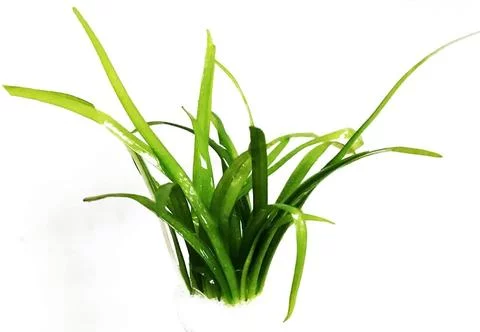
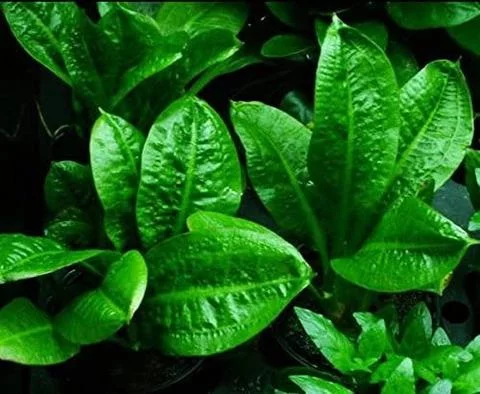
    Dwarf Sagittaria is a green rosette plant that looks a lot like a wide-bladed grass. It gets this grass-like look from its long and flattened leaves that measure just 0.2 inches or so across.

    Sagittaria subulata is a flowering plant, and emersed specimens will grow small white flowers if they are grown in ideal conditions. Some aquarists have even managed to get this plant to flower in their home aquariums.

    Dwarf Sagittaria is pretty variable in size, depending on factors like nutrient and light availability. The leaves can grow up to a foot tall, but mostly this is a small plant that stays below about 6 inches. They develop a pretty extensive white root system in the substrate, that can often be seen up against the glass in your tank.

    Placement And Lighting

    Dwarf Sagittaria is a pretty versatile plant that works well in many different aquascape styles. As a carpeting plant, it is an ideal species for beautiful Iwagumi aquascapes.

    Depending on the conditions in your tank, Sagittaria subulata is small enough to grow as a foreground plant, but it is better in the mid-ground. It looks great when planted in groups.

    Dwarf Sagittarias spaced close together will crowd each other for a dense and interesting effect. In nano tanks, taller specimens can even be used as a background plant. In time, and under decent light, this plant will spread by runners to create a great carpet effect in the aquascape.

    Dwarf Sagittaria doesn’t need high lighting, and decent LED lights are perfectly fine. They will do better under good fluorescent lights though and develop better color in a brighter tank, often developing hints of red on the leaves. If you are planning to use them in an Iwagumi, you should plan on at least moderate lighting with CO2 to keep algae at bay.

    They also will grow more low and compact under higher light, not needing to ‘reach up’ to photosynthesize.

    What Are Good Tank Mates?

    Dwarf Sagittaria is an excellent tank mate for most species of tropical freshwater fish. Sagittaria subulata is very useful in that it provides a perfect habitat for bottom feeders to forage in, while also creating a great place for spawning fish to deposit their eggs. It also makes a good place for small fry and shrimps to escape potential predators.

    This fast-growing plant is also very helpful for soaking up excess nutrients from fish waste and food that can become toxic for your fish and inverts.

    Good Tank Mates

    The list of good tank mates for Dwarf Sagittaria would be a pretty long one, but the following are a couple of great choices:

    Fish Species To Avoid

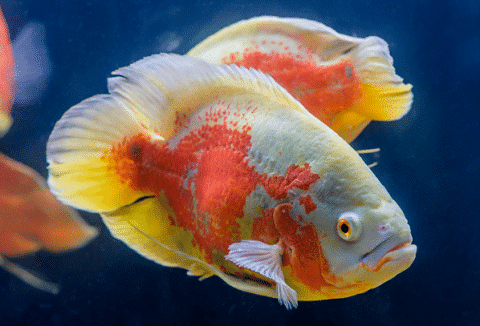
    Unfortunately, some types of fish just don’t get along with Dwarf sags, or other aquatic plants in general. Avoid keeping large cichlid species like oscars with this plant because their love for digging and this plant’s need to stay rooted don’t make a good combination.

    Plant-eating fish like goldfish should also be avoided because they will feed on the leaves of this species.

    Feeding (Fertilization)

    Dwarf Sagittaria does not need fertilizer if grown under low-tech conditions. If, however, you plan on growing this plant to its best potential under good lighting, and with CO2, a nutrient-rich substrate will be necessary. That is because dwarf sags are a root-feeding plant species that gather their nutrients from the substrate.

    The best way to provide nutrients to Sagittaria subulata is to grow them in good quality, enriched aquarium soil like Eco-complete or ADA Soils. Another great option is to provide your sagittarias with root tabs. Root tabs are capsules of a fertilizer that dissolves in the substrate, providing a slow release of nutrients to the plant’s roots, right where they are needed.

    Root tabs are only necessary for inert (without nutrients) substrates like gravel, but they can also be great for topping up old, leached-out aquarium soil. Liquid fertilizers also work well when used with active soils like ADA. For a liquid Fertilizer, check out APT complete.

    Editor’s Choice!
    APT Complete

    Editor’s Choice

    Made by an aquascaper for aquascapers. This is the best all around aquarium plant fertilizer on the market. Marco and micronutrients in one bottle!

    Use Coupon Code ASDComplete for 10% off your order!

    Click For Best Price Buy On Amazon

    If you plan on growing a Dwarf Sagittaria carpet, it is much more practical to start out with an enriched aquarium soil, that way you know that there are plenty of nutrients available for the plant to spread across the bottom of your tank.

    Dosing a liquid iron supplement like Seachem Flourish Iron in the water column is very useful since the Dwarf Sagittaria is known to suffer from an iron deficiency in many home aquariums.

    How Much And How Often To Feed

    Root tabs last for a few months before they need to be replaced, but that will depend on how fast the plant is growing, and the specs of the root tab you use. Root tabs only need to be placed around the root zone.

    CO2 Injection

    While Dwarf Sagittaria can definitely be grown successfully without CO2 injection, this plant will thrive under improved conditions with good lighting and increased carbon dioxide. If you don’t already have a CO2 system, you don’t need to rush out and put one together to keep this plant happy though.

    If you are running carbon dioxide, be sure to keep your levels to a maximum of 30ppm and set your system to run from about 2 hours before your lights go on, and then switch off at the same time as the lights. If you are looking for a high quality CO2 system, check out brands like CO2 art. You can develop a dense carpet with CO2 injection.

    The Ultimate CO2 Kit
    CO2Art Pro Elite Series Bundle

    Use Offer Code ASD10%Off

    The highest end offering by CO2Art. This package includes everything you need to perform consistent and the highest quality CO2 injection in the industry!

    Click For Best Price

    Types

    • Tall Narrowleaf Sagittaria – This form of Dwarf Sagittaria grows taller than the regular variety of Sagittaria subulata, reaching a height of about 20 inches.
    • Broad-leaf Sagittaria – This Sagittaria is actually a different species to the Dwarf Sagittaria. It is correctly known as Sagittaria platyphylla. This species grows to a larger size but has much the same care needs as regular Dwarf Sagittaria.

    Care

    Dwarf Sagittaria is easy to care for and will grow well without much effort from the aquarist. Some trimming and pruning will encourage lateral growth and runners, which is ideal if you’re trying to achieve a Dwarf Sagittaria carpet.

    Unfortunately, trimmed Dwarf Sagittaria leaves will often melt back and die, so it often works out better to trim off the longer leaves completely from their base. You may also want to remove runners as they appear to keep this plant contained where you want it.

    Planted Tank Parameters

    Dwarf Sag Plant

    Dwarf Sagittaria (picture source) does well in a wide range of parameters from soft to hard water (2-15GH). It is a hardy plant that grows well under a variety of conditions and pHs but will do best in fairly neutral conditions from about 6-8. The preferred water temperature range is between 70 and 82ยฐF. If you are planning to keep fish that require a higher temperature like Betta or Discus fish, consider getting an aquarium heater.

    Water Quality

    Maintaining good water quality will benefit all the plant and animal species in your aquarium. One downside to growing a spreading carpeting plant like Dwarf Sagittaria is the potential for fish waste and uneaten food to settle between the leaves of the plant.

    This waste can then decompose, causing nasty spikes in ammonia and nitrites. The best way to avoid this pitfall is to perform regular partial water changes and keep a lightly stocked aquarium, making sure not to overfeed your fish.

    Filtration

    Good filtration is one of the cornerstones of any healthy planted tank. Apart from filtering the system of physical waste particles and impurities, filters also clean the system of biological toxins that is harmful to your aquatic plants and livestock.

    In reality, it is the beneficial bacteria that form colonies inside your filter media that perform this function. These bacteria convert harmful chemicals into harmless compounds through a process known as biological filtration.

    Dwarf Sagittaria has no special filtration needs, per se, but as a general rule, the aquarist should select a filter that will process the volume of their tanks 4-6 times every hour. In a planted aquarium, plants will generate more ammonia than your fish, due to this it is best to step up your filtration.

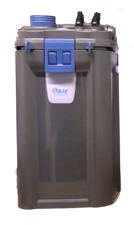
    Planted aquariums with aquascapes and aquascaping styles should consider a high quality filtration unit like a canister filter. The addition bio-capacity will keep ammonia in check and the added flow rate will help with flow. The OASE brand has my highest recommendation.

    Flow

    Dwarf Sagittaria is a hardy plant that grows from a strong set of roots. This makes this species quite comfortable in a range of different current strengths once established in the substrate.

    If you are concerned about the flow in your aquarium being too strong, you can slow the flow by directing the filter’s outlet towards the surface of the tank or against a hardscape feature in the tank to break up the current.

    Aquarium Maintenance

    As mentioned, carpeting species like Dwarf Sagittaria can act as a trap for waste at the bottom of your tank. One important part of maintenance is to vacuum over the plant with your gravel vacuum to remove as much waste as possible from between the leaves. It is best to do this during your weekly water change when you need to remove water from the aquarium anyway.

    Testing Water Conditions

    The best way to monitor the health of the system in your aquarium is through regular testing. This gives you the chance to pick up any potential water quality issues before they can affect your plants and animals.

    The aquarist should test the water they are going to be using in the aquarium before stocking with any plant or fish species. This will give you an idea of the parameters of your local water and help you decide which species are likely to thrive in your tank.

    Water conditions also naturally deteriorate in the home aquarium as waste builds up and that’s why it’s so important to perform regular partial water changes. Go ahead and test your parameters with a liquid test kit just before performing a water change to figure out if you’re doing frequent enough, and big enough changes.

    How To Set Up Your Aquarium Tank

    Dwarf Sagittaria is a plant without any special tank requirements. The most important factor for success if you want to grow Dwarf Sagittaria is to provide it with a layer of substrate to root in. Add 2-3 inches of good quality aquarium soil, coarse sand, or fine gravel.

    The size of your tank isn’t too important because Sagittaria subulata is grown in just about any tank size, from just a few gallons and up. Of course, if the depth of your aquarium is lower than the maximum size of the plant, it need to be trimmed or it will grow up above the water’s surface.

    How To Propagate

    Dwarf Sagittaria propagates very easily. A healthy plant will send out runners that spread themselves around the tank.

    These plantlets is removed and replanted within the tank or in another aquarium.  If you do plan on pinching off young plantlets to replant, wait until they have developed some healthy roots of their own. Here is a good video by Pat’s Fish Tanks that shows how to propagate this plant. Check it out below.

    Health And Disease

    Dwarf Sagittaria is a plant that grows really well, without any major health or disease problems. This hardy species is prone to a few minor issues, however. Let’s take a brief look at what to look out for and how to manage these issues.

    Signs Of Good Health

    A healthy Sagittaria subulata specimen will have bright green leaves and a well-developed system of white roots.

    Signs Of Poor Health

    Plants with yellow, brown, or otherwise discolored leaves are in poor health. Avoid plants that are obviously infested with pests and plants that do not have a healthy root system. Melting, transparent leaves are also a sign of a plant that is not in good health.

    Common Health Issues And Treatment

    One of the most commonly reported problems in Sagittaria subulata is an iron deficiency. The most obvious symptom of iron deficiencies is chlorosis (yellowing leaves). If you notice this happening, use an iron supplement like Seachem Flourish Iron to meet the plant’s needs.

    Another potential problem with Dwarf Sagittaria is leaf melt. Melt is a common condition that affects all sorts of different aquarium species. This happens when plants go into shock after being planted in a tank with very different environmental parameters to what they are used to.

    It is pretty alarming to see the leaves die off and decay, but plants recover well and sprout new leaves. Don’t panic if this happens to your Dwarf Sagittaria, just be sure to remove any dying leaves before they can spoil and decay in your aquarium.

    Melt can also happen if your plants are set too deep in the substrate, so be sure to keep the crown of your Dwarf Sagittaria above the surface of the substrate when first planting.

    Plant Pests

    Plant pests and unwanted inverts often find their way into home aquariums on new plants. Before planting a new species in your tank, take the time to carefully inspect your plants and remove any pests you can find.

    Sagittaria subulata is bleach dipped to kill off any unwanted pests. Prepare a solution of 20 parts water to 1 part bleach and dip your Dwarf Sagittaria in the mixture for about 90 seconds. After dipping, rinse your plant carefully in conditioned water before adding it to your aquarium.

    Alternatively, this species is purchased as a tissue culture specimen that has been raised in a pest-free environment. These specimens come at a slightly higher price, but it’s a fair compromise for healthy, pest-free leaves.

    Where To Buy

    Dwarf Sagittaria is one of the more popular species in the aquarium hobby and it is quite easy to find at your local aquarium and pet stores. A more convenient way to get new plants is to order them online from well-trusted retailers. Online retailers will often have tissue culture varieties available, which will guarantee you a pest free specimen.

    Dwarf Sagittaria

    A great first time beginner plant. Hardy and thrives in low light. Provides a natural looking ground cover

    Click For Best Price Buy On Amazon

    What It Is Actually Like Growing Dwarf Sagittaria Care to A Complete Guide

    The first two weeks after planting are ugly. Emersed-grown leaves melt, new growth starts slow, and your tank looks worse before it looks better. This is normal. Do not rip out the plant and start over.

    Once established, this plant grows. You will be trimming it regularly, replanting cuttings, and giving away excess. The transition from fragile newcomer to aggressive grower happens faster than you expect.

    Algae will try to grow on the leaves. Healthy, fast-growing plants outcompete algae naturally. Slow-growing or struggling plants get covered in it. The plant’s health and algae presence are directly related.

    In the right conditions, aquarium plants produce visible oxygen bubbles called pearling. Watching tiny bubbles stream from the leaves during peak lighting is one of the most rewarding sights in planted tanks.

    FAQS

    Do they need CO2?

    Dwarf Sagittaria doesn’t need added carbon dioxide and is easy to grow in low-tech planted tanks. It responds well to carbon dioxide injection though, and this is definitely recommended for plants that are planted in a nutrient-rich substrate and grown under high light.

    Are they easy to grow?

    Dwarf Sagittaria is a plant that is very easy to grow and care for, which makes it ideal for beginner aquarists. As long as you provide this plant with the substrate that it needs, and the right parameters, you should have no problem growing this species.

    How tall do they get?

    Dwarf Sagittaria is pretty variable in size. This plant can grow to about 12 inches tall, although many specimens stay shorter than that.

    Do they need root tabs?

    Dwarf Sagittaria doesn’t need root tabs but it will need the extra nutrients if it is grown under stronger light and with added carbon dioxide.

    Do they need substrate?

    Dwarf Sagittaria needs a good layer of substrate because it is a root-feeding plant that sends roots down into the soil and spreads by runners.

    Is the Dwarf Sagittaria Care. A Right for You?

    Before you add a dwarf sagittaria care. A to your tank, it’s worth asking whether this species actually fits your setup and your goals. Here’s a quick breakdown to help you decide.

    This species is a good fit if:

    • You want a relatively low-maintenance plant that adds natural texture to your aquascape.
    • Your lighting is at least moderate. Even easy plants need consistent light to grow well.
    • You’re willing to provide basic nutrients, whether through root tabs, liquid fertilizer, or a nutrient-rich substrate.
    • You have a stable tank. Newly cycled tanks with fluctuating parameters can cause melting and die-off.
    • You’re not relying on this plant to solve an algae problem. Plants help with algae over time, but they’re not a quick fix.
    • You’re prepared to trim and maintain. Most aquarium plants grow continuously and need periodic pruning to stay healthy and looking good.

    If most of those points line up with your setup, the dwarf sagittaria care. A is worth serious consideration. If several don’t, it’s better to choose a species that matches your tank now rather than trying to make it work.

    How the Dwarf Sagittaria Care. A Compares to Similar Species

    Want the easiest plant? Get java fern or anubias. Want a carpet? Get dwarf sagittaria. Want the best balance of easy and impressive? This plant delivers.

    Choosing between similar species is tricky. Here’s how the dwarf sagittaria care. A stacks up against some common alternatives.

    The dwarf sagittaria care. A occupies a specific niche in the aquarium hobby, and direct comparisons really depend on what you’re looking for. In my experience, the most common question people ask is whether they should choose the dwarf sagittaria care. A or something similar that’s more widely available. The answer comes down to three things: tank size, water parameters, and what other fish you’re keeping. If your setup matches what the dwarf sagittaria care. A needs, it’s hard to beat. If not, there are alternatives worth exploring.

    Closing Thoughts

    It is easy to see why the Dwarf Sagittaria, Sagittaria subulata, is such a popular plant in the planted aquarium hobby. This easy, low-maintenance plant grows well in almost any tank size, and a variety of parameters, while providing many benefits for its tankmates.

    For beginners or anyone looking for a new carpet plant or something interesting for the midground of your aquarium, look no further, Dwarf Sagittarius is probably the ideal choice.

  • Black Skirt Tetra Care Guide: The Hardy Classic With One Important Warning

    Black Skirt Tetra Care Guide: The Hardy Classic With One Important Warning

    Table of Contents

    The black skirt tetra is one of the hardiest fish in the freshwater hobby. It survives conditions that would kill most tetras. But there is one thing nobody warns you about. They are fin nippers. Keep them in small groups or with long-finned tank mates and you will see the damage fast.

    The black skirt tetra is nearly indestructible. But it will shred any long-finned fish in the tank.

    What Most Care Guides Get Wrong About the Black Skirt Tetra

    The Black Skirt Tetra is sold as a peaceful community fish in every store, and that is only partially true. In a proper school of 6+, they are manageable. But keep just 2 or 3 and they become fin nippers, especially with long-finned tank mates like bettas, angelfish, and fancy guppies. The other misconception is that the GloFish Tetra is a different species. It is not. GloFish Tetras are genetically modified Black Skirt Tetras with fluorescent protein genes inserted. Same fish, different color. The care requirements are identical.

    Black skirt tetras are one of those fish that have been in the hobby so long they’ve become a staple. And for good reason. They’re genuinely hardy, adaptable, and widely available, making them one of the most beginner-friendly tetras around. After 25 years in this hobby, though, I always flag two things before anyone buys them: first, black skirts is persistent fin nippers, which makes them a poor choice for tanks with long-finned bettas or slow-moving angelfish. Second, if you see brightly colored “dyed” versions in the store. Those fish have been through a stressful injection process and typically have shortened lifespans. Stick with the natural black skirt and you’re getting one of the best value-for-money community fish in the hobby.

    The Reality of Keeping Black Skirt Tetra

    They are fin nippers and that is not negotiable. Every care guide says “may nip fins.” No. They nip fins. If you put a betta, angelfish, or fancy guppy in with black skirt tetras, the fins will get shredded. A group of 6+ helps redirect the nipping within the school, but it never goes away completely. Plan your tank mates accordingly.

    The GloFish version is the same fish. GloFish tetras are genetically modified black skirt tetras. Same care, same temperament, same fin-nipping behavior. The only difference is the fluorescent color under blue light. If you bought GloFish thinking they are a different, more peaceful species, they are not.

    Color fades with age and stress. Young black skirt tetras are dark and dramatic. As they age, the black fades to a lighter gray. This is normal, not a disease. Stress, poor water quality, and bright lighting accelerate the fading. Dark substrate and moderate lighting help preserve the color longer.

    Biggest Mistake New Owners Make

    Mixing them with slow-moving, long-finned fish. It happens constantly and it always ends badly. If your tank has bettas, angelfish, or guppies, this is not the tetra for you. Period.

    Expert Take

    The black skirt tetra is my go-to recommendation for anyone who wants a tetra with actual personality. They are hardy enough for beginners and active enough to keep experienced keepers entertained. Just respect the fin-nipping reality and stock accordingly.

    A Brief Overview of Black Skirt Tetra

    Scientific Name Gymnocorymbus ternetzi
    Common Names Black Tetra, Petticoat Tetra, Black Widow Tetra
    Family Characidae
    Origin South America
    Diet Omnivore
    Care Level Easy
    Activity Active
    Lifespan 3 to 5 Years
    Temperament Peaceful
    Tank Level Midwater
    Minimum Tank Size 15 Gallons
    Temperature Range 70. 82ยฐ F
    GH 5-20 dGH
    pH Range 6.0 to 7.5
    Filtration/Water Flow Moderate
    Water Type Freshwater
    Breeding Egg-layer
    Difficulty to Breed Moderate
    Compatibility Compatible with Non-Aggressive Aquarium Fish
    OK, for Planted Tanks? With Caution

    Classification

    Order Characiformes
    Family Characidae
    Genus Gymnocorymbus
    Species G. Ternetzi (Boulenger, 1895)

    Origins and Habitat

    Black skirt tetra (Gymnocorymbus ternetzi) is a prominent member of the Characidae family. We will have to travel deep into the South American basins and rivers to find out their origin history.

    Thatโ€™s because these fish originate from the beautiful freshwater rivers of Paraguay, Brazil, and Northeast Argentina, especially the Paraguay and Guapore River basins.

    The water in these regions is cool, comfortable, and shaded. Thatโ€™s how black skirt tetras like their water.

    They move in schools and prefer swimming near the surface, feeding on small insects, worms, and crustaceans. Nature does have an endless supply of food for them.

    However, the black skirt tetra fish you see on the market today do not come from these wild regions, although thatโ€™s what happened initially.

    Instead, they are bred in captivity for selling by skilled aquarists and aquaculture farms. Some of the variations of this schooling species are genetically modified.

    What Does a Black Skirt Tetra Look Like?

    What Does Black Shirt Tetra Look Like

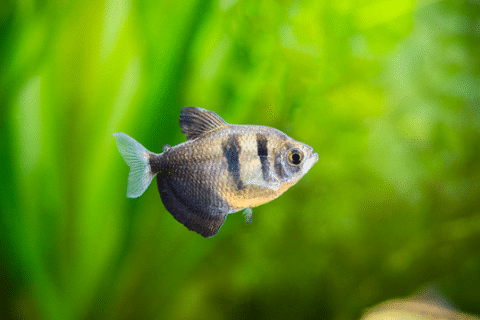
    Every black skirt tetra comes with that stunning tetragonal shape of the Characidae family that people love so much.

    This unique body shape makes black skirt tetras special to many aquarium enthusiasts. Unlike other tetra fish in the Characidae family, they donโ€™t have bright colors.

    Instead, they boast a unique gradient color comprised of black, gray, and silver. There is an appealing translucent hue to make them stand out.

    A brighter and reflective grayish silver color dominates the front part of the body, especially the head. However, the color gradually fades to a darker shade as it moves to the tail, giving the fish a gradient effect.

    The front part of the black skirt tetras is taller than the back. Their tailfin has a forked shape, and itโ€™s pretty thin. The dorsal fin is relatively small too.

    Right on the bottom of the fish, you will notice an oversized anal fin. These fins add to the overall beauty of this amazing fish.

    Black skirt tetras are known for their small size. They grow up to be 1 to 2.5 inches in captivity. Some may reach 3 inches, but that doesnโ€™t happen as often.  

    How Long Do They Live?

    Black skirt tetras have a relatively shorter lifespan. On average, a black skirt tetra will live for up to 3 to 5 years in a well-maintained tank. They have a slightly longer lifespan in their natural habitat, which is about 6 to 7 years at most.

    These fish are affected by the water quality and the overall tank condition. So, their lifespan depends a lot on how well maintained the tetra tank is. You wonโ€™t see them hitting that 5-year mark if you donโ€™t care for them properly and allow them to stay in poor water conditions for too long.

    To ensure they live long enough, monitor the water conditions, change it whenever it gets too polluted, and ensure optimum feeding. Black Skirt Tetras will live the longest in well maintained planted tanks, where shelter is plenty and stress is low.

    Are They Hardy?

    Black Skirt Tetras are exceptionally hardy! They are tough fish prepared to fend off more stresses in aquarium life, which is good news for beginners.

    Even if you make mistakes while learning the ropes of fish keeping, this fish species wonโ€™t give up on you and die like other overly sensitive fish. They can easily adapt to different water parameters. You wonโ€™t have to rely on special caring techniques to make sure they survive.

    They are very friendly and get along with other fish species with ease. You wonโ€™t see them having any trouble competing for food as they are fast swimmers.

    Furthermore, they arenโ€™t all that vulnerable to many freshwater fish diseases as they have strong resistance. They rarely get infected. So, you have less to worry about their health. Black skirt tetras have a pretty low mortality rate too.

    Just because they are hardy fish doesn’t mean you should give them sub-optimum living conditions, they will stress in poor water conditions and need need optimum water temperature for surviving.

    These fish canโ€™t tolerate water thatโ€™s too cold or too hot. So, make sure to change the water regularly, use a good filtration system, and keep the temperature above 70ยฐF and below 85ยฐF. 

    How Do You Tell Male or Female?

    Itโ€™s easy to tell between a male tetra and a female tetra. Of course, you wouldnโ€™t get it the first time, but it wonโ€™t take long to differentiate between the two. The most obvious difference is that a female black skirt tetra is noticeably larger than a male black skirt tetra.

    Female black skirt tetras also have a body thatโ€™s a bit more rounded than their male counterparts.

    You can also tell if the tetra is a male or female by checking the anal fin, although it may be more difficult. Females come with anal fins that run parallel alongside the black stripes on their abdomen.

    Besides having a smaller body, male black skirt tetras often feature white spots on their caudal fin. Their anal fins are smaller but broader than females.

    As for the dorsal fins, they appear more pointed and a bit narrower.

    Can They Live Alone?

    Black widow tetra should never be allowed to live alone. Life in solitude for black skirt tetras is nothing short of a nightmare.

    This is a schooling fish species and prefers staying in groups. In their natural habitat, these fish school in huge numbers, ranging from hundreds to even thousands! If you want to see the potential of a black skirt tetra school in a large aquarium, check out this cinnmatic from Green Aqua. Green Aqua is one of the best channels for professional aquascaping. I highly recommend subscribing to them!

    You canโ€™t expect such a social species to be happy alone, can you? Black Skirt Tetras will become depressed and visibly inactive if you donโ€™t allow them to stay with their friends. Needless to say, they wonโ€™t live long.

    So, please donโ€™t keep them alone. Add more black skirts to the aquarium. They get along easily with other friendly fish species as they are a pretty and active community fish. Make sure the other fish you add are compatible with each other. More on that in the next section.

    Is the Black Skirt Tetra Right for You?

    Before you buy, run through this honest checklist. The Black Skirt Tetra is a great fish for the right keeper, but it is not for everyone.

    • You want a hardy, active tetra with dramatic black flowing fins
    • You can keep a school of 6+ to minimize fin nipping behavior
    • Your tank does NOT include slow-moving, long-finned species like bettas or guppies
    • You have a 20-gallon or larger tank with open swimming space
    • You want a species that is widely available, affordable, and nearly indestructible
    • You do not mind that the black coloring fades somewhat as the fish ages

    What Fish Are Good Tank Mates?

    Being shoaling fish, you should at least keep 5 black skirts together in a single tetra tank. The more, the merrier but donโ€™t stuff them in a small space, though. They will be happier, more comfortable, and live longer when kept in a group.

    Thanks to their friendly nature, you can freely keep them in a community tank. But be careful when choosing tank mates. Itโ€™s easy to pick the right companion, though. Just make sure not to pick aggressive fish because they will bully your precious black skirt tetra.

    Also, you donโ€™t want any fin nippers in a black skirt tetras community tank. Tiger barbs and other fin nippers will target their fins and damage them.

    Ironically, this species of fish also loves fin nipping so, you should avoid other fish with long fins.

    You can keep any peaceful, non-aggressive fish species with black skirts. Itโ€™s even better if they are less active than these fishes. Mid and bottom dwellers are also good options.

    Here are our recommended tank mates for black skirt tetras.

    Avoid fish that are slow with large fins like Betta Fish, they are known for nipping their fins.

    How Many Should Be Kept Together?

    As weโ€™ve mentioned before, black skirt tetras school in huge numbers in the wild. They are incredibly social and thrive the best in groups.

    They hate living alone. Ideally, you should keep at least 5 black tetras together. This will allow them to form a community and feel more confident. When it comes to schooling odd numbers will do better in aquariums.

    If you can add more, thatโ€™s even better. Besides, it will be really fun to watch them swim together, play around, and keep the inside of your tank lively and active.

    What Do They Eat?

    Black skirt tetras in the wild eat whatever they find. From small insects to plants, they will eat all kinds of foods! Similarly, a captive black skirt tetra doesnโ€™t have any special preference. So, you have to decide what you want to feed them. A great staple food to feed them would be Northfin Community Formula.

    Feel free to feed them commercially available dry and frozen foods. However, make sure the fish food is rich in nutrients.

    Some people like to include live foods in their pet fish diet. These schooling fish do be fond of bloodworms, brine shrimp, daphnia, mosquito larvae, etc. The live foods should be fresh and free of harmful bacteria and pathogens. The best way to ensure they are free from harmful pathogens is to culture your own, though that is not for everyone. The frozen food variety is a great choice if you do not want to culture your own live food.

    If you are looking for a good ready to feed staple food, I recommend a pellet food like Northfin community formula. These are pellets that are small enough for nano fish like these tetras while also being free of fillers and high in nutrition. As a rule of thumb, never stick to just one food for your fish. Try to mix it up so they have a well balanced diet.

    Great For Nano Fish


    Northfin Community Formula

    A well balanced pellet fish that is best for community fish. Small enough for nano fish to eat with high quality ingredients


    Buy On Amazon


    Buy On Petco

    Tank Requirements and Care

    You will appreciate how low-maintenance black skirt tetra is. There are aren’t any complicated requirements that you have to follow.

    Make sure the tank is fully cycled before adding them. Black skirts are tough, but no tetra survives ammonia and nitrite spikes in a new tank. Let the nitrogen cycle finish first.

    An entire school of these freshwater fish will easily survive as long as you keep them in the right tank and maintain suitable water parameters. Let’s talk specifics.

    Tank Size

    Although small in size, they need companions to stay happy. The aquarium size for black skirts should be at least 15-gallons.

    But we recommend choosing a 20-gallon fish tank for keeping a small group because these fish are active swimmers and better in a spacious space. Make sure not to overcrowd.

    Water Parameters

    It would be best if you replicated the natural habitat of wild black skirt tetras inside your aquarium. So, the ideal water temperature is anything between 70ยฐF to 82ยฐF. The best temperature would be the middle of this range.

    The water should be slightly acidic, like the water bodies in South America. Maintain a pH level of 6.0 and 7.5, and your fish will be just fine. Also, the water hardness should be 5 to 15 dGH. A great way to keep pH and the water on the softer side is to invest in aquarium driftwood.

    It goes without said that the water should be clean and pollution-free. So, you should invest in a reliable water filtration system and aquarium test kit to monitor levels.

    Plants and Decoration

    Your black skirt tetra will feel more at home if the aquarium looks and feels like their natural habitat.

    The best way to do that is by adding suitable plants and vegetation. Try adding tall and floating plants because they will provide them with natural shelter, allow them to hide when they get spooked, and darken the environment.

    Black skirt tetras mostly keep to the middle and top layer of the aquarium and seldom swim to the bottom. Some great plants to consider investing in that are easy to care for would be:

    So, decorating the bottom of the tank isnโ€™t all that important. However, adding a light sandy substrate constant their colors in an aquascape.  

    Since these pet fish prefer a darker environment, they will be more comfortable using subdued lights.

    How to Set Up Your Fish Tank

    Setting up your aquarium for black skirt tetras is surprisingly easy. Choose the fish tank size according to the number of fish youโ€™re keeping. If youโ€™re starting small, you work with at minimum a 20-gallon fish tank.

    Before adding the water, decorate the aquarium to make it more suitable for black skirt tetra. The goal is to make the inside feel like the water bodies of South America, full of vegetation and life.

    Donโ€™t forget to install a quality filtration system. This will keep the water clean longer and allow your fish to stay comfortable and disease-free.

    After adding the water, test it to see if the temperature and other water parameters are correct. Move onto the water cycling process if everything is perfect for adding the beneficial bacteria.

    Thatโ€™s about it. The tank should now be ready to be the perfect home for your black skirt tetra!

    How to Breed

    Breeding black skirt tetra is a bit difficult as it requires a lot of work. They arenโ€™t known for their parental traits, and they donโ€™t have the slightest care for their eggs and fry. In fact, they may even eat their own eggs if given a chance.

    Thatโ€™s why itโ€™s necessary to breed them in a separate breeding tank. The breeding tank should have the same water quality and similar decoration as the main tank.

    Additionally, you will have to add java moss, spawning mop, net, or artificial grass. These will keep the eggs out of the reach of the adult fish so that they canโ€™t feast on them. It usually takes 2 years for a black tetra to reach adulthood and be sexually mature.

    After setting up the breeding tank, identify the bonded pair and move them into a separate tank.  When breeding, feed the pair lots of protein-rich food.

    Soon enough, the belly of the female will swell up with eggs. A female black skirt tetra can lay up to 1,000 eggs a day!

    The eggs will be scattered all over the place. These eggs are adhesive in nature and stick to the surface. They will sink to the bottom slowly and stick to the java moss, spawning mop, or the net that youโ€™ve laid out before.

    When the breeding process is complete, quickly remove the adult fish from the breeding tank before they start eating the eggs.

    It usually takes 24 to 36 hours for the eggs to hatch. After hatching from the eggs, the fry will feed on the egg sac.

    Wait out a couple of days, and they will be ready to eat fry foods. After the next few weeks, they will grow up to be able to eat baby brine shrimp. Donโ€™t move them into the main tetra tank until they are big enough.

    If you want a new video explanation and video, here is a great video by Mark’s Aquatics explain his process.

    Frequently Asked Questions

    Are black skirt tetras aggressive?

    Black skirt tetras is fin nippers, especially in small groups. Keeping them in schools of at least six reduces nipping behavior significantly. They are best described as semi-aggressive and should not be housed with long-finned or slow-moving fish like bettas or angelfish.

    How big do black skirt tetras get?

    Black skirt tetras reach about 2.5 to 3 inches in captivity. They are a medium-sized tetra that does best in a 20-gallon tank or larger. Their deep body shape makes them appear larger than some other tetras of similar length.

    How many black skirt tetras should be kept together?

    A minimum of six black skirt tetras should be kept together, with larger groups being even better. In a proper school, they are more confident, less nippy, and display better coloring. A group of eight to twelve in a well-planted tank produces the best natural behavior.

    Are GloFish tetras the same as black skirt tetras?

    Yes, GloFish tetras are genetically modified black skirt tetras that contain fluorescent genes. They have the same care requirements, temperament, and lifespan as regular black skirt tetras. The only difference is their fluorescent coloring under certain lighting conditions.

    How long do black skirt tetras live?

    Black skirt tetras typically live 3 to 5 years in captivity with proper care. Some well-maintained specimens can live even longer. They are hardy fish that tolerate a wide range of water conditions, which contributes to their reputation as excellent beginner tetras.

    What It Is Actually Like Living With Black Skirt Tetra

    They patrol the middle of the tank in a loose school, constantly interacting with each other. You will see occasional chasing and fin-flaring within the group. This is normal dominance behavior, not aggression.

    Feeding time is aggressive. These fish hit the surface hard and will outcompete slower feeders for food. If you keep them with timid species, the timid fish will go hungry.

    They are surprisingly aware of their surroundings. Black skirt tetras notice when you approach the tank and will often swim to the front looking for food. They are not shy fish.

    In a properly set up tank with dark substrate and plants, the contrast between their black body and silver accents is striking. Under harsh lighting on light gravel, they look washed out and stressed.

    How the Black Skirt Tetra Compares to Similar Species

    Black Skirt Tetra vs. Serpae Tetra

    Both are semi-aggressive tetras that nip fins. The Serpae Tetra is redder and arguably worse at fin nipping. The Black Skirt Tetra is larger with more dramatic finnage. Both need careful tank mate selection. If you want a dark, flowing-finned look, the Black Skirt wins. If you want bold red, the Serpae wins.

    Black Skirt Tetra vs. Emperor Tetra

    The Emperor Tetra is a more peaceful option with similar size and presence. It has a more refined look with dark coloring and metallic accents. The Black Skirt Tetra is bolder and hardier but nippier. For community tanks with sensitive fish, the Emperor Tetra is the safer choice.

    Final Words

    Black skirt tetras are highly recommended for beginners, but seasoned aquarists can get them too. These fish are pretty fascinating in appearance and fun to have in your community aquarium.

    Leave us a comment below if this information was helpful or leave it at that, we don’t mind either way. Who knows, maybe one day soon we’ll be helping get your future tanks set up too!

    Check out our tetra tier list video where we rank the most popular tetras in the hobby, including the black skirt tetra:


    ๐ŸŸ This article is part of our Tetras: Complete A-Z Species Directory. Your guide to every tetra species in the hobby.

  • Frontosa Cichlid Care – A How To Guide

    Frontosa Cichlid Care – A How To Guide

    Frontosa cichlids are one of the most impressive fish you can keep in a large freshwater tank. That nuchal hump and bold striping make them look like something prehistoric. I’ve seen well-kept frontosas become genuine showstoppers that stop visitors in their tracks. They’re slower moving and more peaceful than most cichlids their size, but they do need significant space and appropriate tank mates from Lake Tanganyika.

    The Reality of Keeping Frontosa Cichlid

    Frontosas are not difficult fish. They are demanding fish. The difference matters.

    They need a huge tank. A group of frontosas needs 125 gallons minimum, and 180 or larger is better. These are 12 to 14 inch fish that live in groups. A 75-gallon tank is not enough no matter what the fish store says.

    Growth is painfully slow. Frontosas take 3 to 5 years to reach full adult size and coloration. The nuchal hump develops gradually. If you want instant gratification, this is the wrong fish. You are investing years before you see the payoff.

    Lake Tanganyika water is mandatory. Hard, alkaline water with a pH of 7.8 to 8.6 and high mineral content. If your tap water is soft and acidic, you need to buffer every water change. There is no faking Tanganyika chemistry.

    They are nocturnal predators. In the wild, frontosas hunt sleeping fish in the dark at depths over 100 feet. In the aquarium, they are most active at dawn and dusk. Do not keep them with small fish. Anything that fits in their mouth becomes food.

    Biggest Mistake New Frontosa Cichlid Owners Make

    Keeping them in a tank that is too small. A single frontosa in a 55-gallon tank looks fine for a year. Then it keeps growing, and growing, and the tank that looked adequate becomes a prison. Frontosas need to be kept in groups of 6 or more, and each fish reaches over a foot long. Plan for the adult size from day one, or you will be scrambling for a bigger tank within two years.

    Expert Take

    Frontosas reward patience like no other fish in the hobby. A mature group in a large tank with proper Tanganyika conditions is one of the most impressive freshwater displays you will ever see. The bold black and white striping, the imposing hump, the dignified slow movement. But getting there takes years of committed care. This is a fish for people who think in decades, not months.

    Species Overview

    Scientific NameCyphotilapia frontosa, Cyphotilapia gibberosa, Paratilapia frontosa, Pelmatochromis frontosus
    Common NamesFrontosa Cichlid, Frontosa, Humphead Cichlid, Front Cichlid, Tanganyika Humphead Cichlid
    FamilyCichlidae
    OriginLake Tanganyika, East Africa
    DietCarnivorous, piscivorous
    Care LevelModerate
    ActivityLow
    Lifespan15+ years
    TemperamentSemi-aggressive
    Tank LevelMidwater
    Minimum Tank Size75 Gallons
    Temperature Range72 – 82ยฐ F
    KH10-20
    pH Range7.8 to 8.2
    Filtration/Water FlowLow to moderate
    Water TypeFreshwater
    BreedingMouth brooder
    Difficulty to BreedModerate
    CompatibilityCompatible with some other rift valley lake cichlids and other large peaceful fish
    OK, for Planted Tanks?Compatible with some plants

    Origins and Habitat

    The Burundi Frontosa Cichlid is endemic to the waters of Lake Tanganyika in the region of East Africa, which means that is the only place in the world where it occurs naturally. This massive rift lake is shared by the African countries of Zambia, The Democratic Republic of the Congo (DRC), Tanzania, and Burundi.

    These fish live in surprisingly deep water compared with most species in the hobby and are usually found at depths of greater than 50ft, but even down to over 300 ft, although they do move towards the surface to hunt.

    At these depths, aquatic plants don’t get enough light to grow so their environment is pretty bare. The habitat where they live consists of rocky areas, with patches of open sand between boulders at the lake bottom.

    Scientists have determined that there are more than one species of Frontosa Cichlid. The 2 best-known species are Cyphotilapia frontosa from the north of the lake, and C. Gibberosa, which is found in the south1.

    What Does the Frontosa Cichlid Look like?

    What Does The Frontosa Cichlid Look Like

    Cyphotilapia frontosa is a large and boldly patterned African cichlid species. One of the most characteristic and recognizable features of this popular fish species is the large hump that mature fish develop on their forehead.

    The hump on the forehead is actually an extension of the dorsal muscles. Both the male and female Frontosa cichlids grow this hump, but it does grow larger in older, dominant males.

    A male frontosa will also grow bigger than females and their pelvic, anal and dorsal fins grow longer with age. Apart from these differences, the male and female look very similar. Juveniles of both male and female Frontosa Cichlids look identical.

    These fish have 5-7 broad, black vertical bars on the sides of their bodies. The body color is white, blue, or sometimes yellowish. The fins are a beautiful light blue color.

    Interestingly, the body color and brightness of these fish can change depending on their mood. Dominant and stressed fish are often a darker color, while males that are ready to spawn will display brighter blue coloration.

    The physical differences between Cyphotilapia frontosa and Cyphotilapia gibberosa are not all that easy to see and consist mostly of differences in the number of scale rows and the proportions of the body and fins.

    There are many different color variants available. These different variants are usually the result of populations from isolated regions in the lake developing distinct colors and markings, although some have been developed in the hobby.

    Some popular variants of Cyphotilapia frontosa and C. Gibberosa include:

    • Burundi Six-stripe Frontosa
    • Zaire Blue frontosa/ Blue Zaire
    • Zambian Blue Frontosa/ Blue Face Frontosa
    • Red Frontosa
    • Tanzanian 7-stripe Frontosa

    Frontosa cichlids are slow growing, long lived predators that need patience most hobbyists do not have. They need massive tanks, stable water chemistry, and years before they show their full potential. Rushing this fish into an undersized setup or unstable tank will stunt growth and shorten a lifespan that should reach 25 years. This is a commitment fish, not a showpiece you add on impulse.

    The Reality of Keeping Frontosa Cichlid Care

    This is not a beginner cichlid. Frontosa Cichlid Care requires specific conditions that casual keepers rarely maintain long-term.

    Water chemistry is non-negotiable. The parameters this species needs are precise. Close enough is not good enough.

    The reward matches the effort. A properly kept Frontosa Cichlid Care is one of the most impressive fish in the hobby. But you earn that result.

    Biggest Mistake New Frontosa Cichlid Care Owners Make

    Treating it like a standard cichlid. Frontosa Cichlid Care has requirements that go beyond basic cichlid care. Generic advice leads to generic failures with this species.

    Expert Take

    Frontosa Cichlid Care is for the keeper who has already succeeded with easier species and wants a real challenge. The payoff is worth it, but only if the fundamentals are already second nature.

    What Is Their Eating Habit?

    The Burundi Frontosa Cichlid is a piscivorous fish species which means they feed on other smaller fish in nature. Frontosas are ambush hunters that rely more on stealth than speed to catch their prey. They also feed on shellfish and other aquatic organisms and are thought to eat some algae and plant matter sometimes as well.

    In the home aquarium, Cyphotilapia frontosa should be fed a balanced diet that is rich in proteins. A high-quality cichlid pellet is the best choice for their regular diet, although juvenile fish will find flake food easier to manage. Ron’s Cichlid food is a great choice as a staple in a cichlid diet.

    Great Balanced Food
    Ron's Cichlid Food

    Ron is an African Cichlid breeder with over 25 years in experience who created a line of food that is well balanced. A great option when you can’t use frozen foods.

    Buy On Amazon

    Other supplementary food options include:

    • Fresh or frozen fish like tilapia. Avoid processed fish products.
    • Bloodworms
    • Brine shrimp
    • Krill
    • Mosquito larvae
    • Mussel meat
    • Occasional vegetable matter like spinach, kale, chopped peas, or spirulina algae wafers

    Even though it may be more convenient, aquarists should avoid feeding bird or mammal meat as these fish are not adapted to digest these forms of protein. Live fish such as feeder fish is fed, but should be avoid as they can spread disease in the aquarium.

    Can They Live Alone?

    It is not recommended to keep Frontosa Cichlids alone. Cyphotilapia frontosa is a social species of fish that can be found in groups of over 1000 individuals in their natural lake habitat.

    Wherever possible, it’s always best to provide your fish with the kind of living conditions they have in nature. This doesn’t only apply to things like water chemistry and flow but also to natural behaviors. They will be most happy if kept in a group where they can display their natural behaviors, and they will probably be more interesting pets for the same reason.

    In the home aquarium setting, it is best to keep a minimum of 6-8 individuals to reduce aggression. The ideal ratio would be 1 male to 6 females.

    That being said, if you really want a Burundi Frontosa Cichlid but you can’t keep the recommended number of individuals, it would be better to keep just one with some other compatible fish. That way you can avoid aggression in a group that is too small.

    How Big Can They Grow? What Tank Size Is Right for Them?

    Although these fish are usually bought as juveniles in the fish store at just 1.5 to 4 inches long, when fully grown they are large African rift lake cichlids that can grow longer than 12 inches.

    Males can reach a maximum of about 13 inches while females are smaller, growing to about 10 inches long. Although juveniles is kept in a 75-gallon aquarium, a group is best kept in a much larger aquarium size of around 150 gallons.

    Fortunately, they are slow-growing fish, so you can definitely start out with a 75 gallon, provided you can commit to upgrading when the time comes. Of course, it is better to start out with the right size aquarium from the beginning though.

    How Long Do They Live?

    The Burundi Frontosa Cichlid is a large slow-growing species, and so it comes as no surprise that they are a long-lived fish species. Frontosas kept in the right aquarium environment, with the right care, can easily live 15 years.

    Some specimens even live for longer than 25 years. For this reason, keeping these fish should definitely be looked at as a long-term commitment.

    Are They Aggressive?

    These fish are classed as semi-aggressive cichlids. This is a little confusing because, on the one hand, you’ll hear about some keepers having problems with aggression, while others describe them as really calm, peaceful fish.

    The key to preventing aggression is to keep these fish in a big enough tank and to keep the right number of individuals.

    They are carnivorous animals that eat other fish in nature, so you shouldn’t be surprised to learn that they will eat other smaller fish in your home aquarium too. The obvious way to prevent this problem is to keep them only with other similarly sized and equally non-aggressive fish.

    As a species, Frontosa Cichlids are not very active, and relatively speaking, they are very peaceful for a cichlid. These fish have a social dominance structure with a dominant male and subordinate males and females. In a larger aquarium, more than one alpha can occur and the pecking order is more complex.

    How Much Do They Cost?

    The price of the Burundi Frontosa Cichlid can vary tremendously depending on the variant and purchase size of the fish. Another important pricing factor is whether the specimen was wild-caught in Lake Tanganyika or tank-bred.

    You can usually expect to pay between $20 and $40 for a small, tank-bred specimen. Wild-caught fish are of course far more expensive and difficult to find.

    Tank Requirements (Care)

    Although Frontosas are fairly easy cichlids to care for, they do have some pretty important aquarium requirements that have to be met. These are not small fish so you will need to be sure you have enough space to house them.

    You’ll also need enough time to keep up with regular water changes, and enough funds to buy a good quality filtration system and good quality nutrition to keep them healthy in the long term.

    Let’s take a closer look at what you’ll need to keep these awesome cichlids.

    Filtration and Water Quality

    As with all the rift valley lake cichlids from Africa, these fish prefer alkaline water chemistry with a high pH of up to about 9. The vast majority of Cyphotilapia frontosa available in the aquarium trade are farmed, however, and have become acclimated to lower pH water conditions.

    The Burundi Frontosa Cichlid needs excellent water quality so it is important to provide excellent filtration and keep up with weekly partial water changes. An external canister filter, sump system, or both are recommended.

    This cichlid is adapted to a lake environment where there is usually little water flow and current so they will do best in aquariums with a lower flow rate. If you have a power filter, you can reduce the flow in your tank by aiming the outflow upwards towards the water surface.

    Your aquarium must be fully cycled before introducing these fish so that the water parameters stay stable and you don’t get any dangerous spikes in ammonia and nitrite levels.

    A weekly 25-50% water change is recommended and the new water added to your tank should be treated with a water conditioner to make it fish safe. Regular vacuuming of the gravel or substrate in your tank is also important for maintaining great quality water.

    Tank Environment

    Frontosa Cichlid with Live Plants

    A rocky habitat with low light will most closely recreate the habitat this African cichlid prefers in the waters of Lake Tanganyika. Make sure to provide plenty of hiding spaces, with at least one for each individual fish.

    Aquarium rocks is arranged to create caves but make sure they are stable for the safety of your fish. Alternatively, old flowerpots make great shelters and can even be used as a breeding site. Use smooth rocks or pots without sharp edges that could damage your fish’s fins though.

    Whatever you use to create shelters in your aquarium, make sure some are large enough to accommodate the dominant male and some are not large enough to accommodate him so that subordinate fish will always have a place to hide if necessary.

    A deep tank is best because this will provide your fish with plenty of swimming space. Crushed coral sand or aragonite makes the best aquarium substrates because they help to maintain the high pH and water hardness that rift valley cichlids prefer. Alternatively, you can use sand or gravel as a substrate.

    Live Plants

    Being a relatively deep water fish species, these cichlids are happy to live in an environment without plants. That being said, it is possible to keep the Burundi Frontosa cichlid in a planted tank. One important point to remember is that Frontosa Cichlids should not be kept in bright light environments and this rules out most plant species.

    Low light aquarium plants like Java Ferns and Anubias that are not rooted, but rather grown attached to aquarium driftwood or rocks are your best bet here. So all in all, Frontosas are not ideal for planted tanks, but it’s not impossible to keep both.

    Editor’s Choice
    Java Fern

    Editor’s Choice

    Hardy, easy to care for, and requires only basic lighting to grow. This is the perfect aquarium plant for beginners!

    Buy On Buce Plant Buy On Glass Aqua

    Tank Mates

    The best tank mates for Frontosas are other peaceful African cichlids from Lake Tanganyika. This is mostly because these fish enjoy the same water conditions. Other fish like Malawi cichlids can also make great tank mates though.

    These fish are piscivorous, which means they feed on smaller fish species in nature. Even if you provide them with high-quality commercial fish food, they will not pass up the opportunity to snack on small fish or inverts so be careful about introducing other fish that are not of a similar size.

    Another point to consider is that Frontosas are very slow growers, so juveniles is outgrown by their tank mates if they are all stocked at the same time.

    Some good tank mates for Cyphotilapia frontosa include:

    How To Breed

    Breeding fish is a post in itself and the Frontosa is no exception. However, the video below from Ricky Kenerly Cichlids is a great overview on how to breed these fish.

    • Fish need to be at least 2-3 years old (They take a while to reach sexual maturity)
    • Stable pH (7.7 – 8.5)
    • Use sandy substrate (for nest building)
    • Diet – be solid on your diet plan. See diet info earlier in the post
    • Focus on smaller water changes to lower stress on your fish
    • Use at least a 55 gallon breeding tank for breeding pairs

    Check it the full video below:

    FAQs

    Are they aggressive?

    The Burundi Frontosa Cichlid is a pretty peaceful fish by cichlid standards. They are usually not aggressive unless they are kept in an aquarium that is too small or kept in groups of less than 6 individuals.

    Why are they so expensive?

    The main reason for the high price of Frontosas is their slow growth rate and the fact that they are only ready to breed at the age of 3 or 4 years. This makes breeding these fish a pretty expensive process and therefore the fish need to be sold at a high price to cover costs.

    What fish can you put with them?

    The best tank mates for Cyphotilapia frontosa are other freshwater fish from Lake Tanganyika since they prefer the same water parameters. Some Malawi cichlids are also compatible with Frontosas.

    Are they hardy?

    Although the Burundi Frontosa Cichlid may look tough and robust, they do need excellent quality water and the right environment or they can be susceptible to health problems.

    How big do they get?

    Cyphotilapia frontosa is a large aquarium fish. This species can reach a length of about 13 inches, although they are slow-growing and take many years to reach their full size.

    What It Is Actually Like Living With Frontosa Cichlid

    Frontosas move like they own the tank. There is no darting, no frantic swimming, no panic. They glide. A group of adult frontosas cruising through a large tank has a presence that no other freshwater fish matches. Visitors who have never cared about fish stop and stare. The bold black and white striping and the massive head hump make them look prehistoric, and that impression only gets stronger as they grow.

    Feeding time is the only time they move with any urgency, and even then it is more of a determined approach than a sprint. They take food with deliberate precision. Watching a 12-inch frontosa cruise over and inhale a chunk of krill is satisfying in a way that watching a school of tetras chase flakes never will be.

    The long game is the hardest part. You buy juveniles that look like undersized, plain striped fish with no hump. For two or three years, you wait. You feed them, maintain their water, and wonder when the transformation will happen. Then slowly, the hump grows, the body fills out, the presence develops. By year five, you have a fish that commands respect from across the room. That wait is what makes frontosas a fish for the patient.

    Final Words

    Frontosa reward patience. If you do not have it, pick a different fish.

    The Burundi Frontosa Cichlid, Cyphotilapia frontosa, is an outstanding aquarium fish that is fairly easy to keep, as long as you can provide it with the space and water quality it deserves. These large and beautiful fish are a firm favorite among aquarists and should be at the top of any fishkeeper’s wish list. Leave us a comment below if you have anything else you want to add about these amazing Aquatic creatures.


    ๐Ÿ“˜ Want to learn more? This article is part of our complete Freshwater Fish Guide. Your ultimate resource for freshwater species, care tips, tank setup, and more.

  • Cryptocoryne Wendtii Care – A How To Guide

    Cryptocoryne Wendtii Care – A How To Guide

    Cryptocoryne wendtii is one of the plants I keep coming back to in my planted tanks, and for good reason. it’s tough, beautiful, and works across a wide range of conditions. I’ve grown it in low-tech tanks with no CO2 and in high-tech setups, and it adapts well either way. The varied leaf colors depending on conditions make it one of the more interesting crypts to experiment with.

    Cryptocoryne wendtii is one of the best low-maintenance aquarium plants in the aquarium hobby. But what are proper Cryptocoryne Wendtii Care routines. This blog post is all about keeping them healthy and happy!

    They are a hardy and adaptable species that come in a wide variety of shapes and colors. These crypts do well under a range of lighting and with or without CO2, making them a great choice for both beginners and more advanced aquarists. Read on to learn more about growing and caring for these popular aquatic plants.

    A Brief Overview

    Scientific Name Cryptocoryne wendtii
    Common Names Wendt’s water trumpet, Wendt’s cryptocoryne, Wendt’s crypt, Sri Lanka Cryptocorynes
    Family Araceae
    Origin Sri Lanka, Asia
    Skill Level Easy
    Lighting low-high, 50-200 PAR (Umols)
    Tank Placement Foreground, Midground & Background
    Flow Rate Low, Moderate
    Temperature Range 68. 82 F
    Height 4 – 14 inches
    pH Range 6.8. 7.2
    Propagation Runners, Division
    Growth Rate Slow, Moderate
    Feed Type Root Feeder
    CO2 Requirement No

    Origins And Habitat

    Cryptocoryne wendtii is an aquatic plant that is native to the northern, western, and central parts of Sri Lanka in Asia. This species has also become established in Florida in the United States. In nature, they grow along shady streams and rivers, either fully submerged or on the banks.

    What Does It Look Like?

    What Does Cryptoryne Wendtii Look Like

    This aquarium plant has an attractive, rosette growth form. They are pretty variable in size and shape depending on location, variety, and lighting.

    The texture of the leaves varies from flattened to undulating margins and there are many different color variations. The leaves can be anything from deep green, through olive to brown. Some varieties even have white, golden yellow, pink, or red hues as well.

    These aquarium plants can grow from 4 inches to over a foot tall. The leaves are often held pretty flat over the substrate or the plants can develop a more upright shape.

    Cryptocoryne wendtii develops a large system of roots but they are not visible above the substrate.

    Placement And Lighting

    Cryptocoryne wendtii looks great in the aquascape, and how you place it will depend on which type you have and the dimensions of your aquarium. In a small tank, this species can take the place of stem plants and be used as a background plant. In a large setup, the smaller green varieties look great in the foreground.

    These crypts look great when planted in groups and some of the more interesting forms such as Cryptocoryne wendtii ‘Gecko’ make a wonderful focal point in the midground.

    They are a popular choice for Dutch-style planted tanks as well as nature aquariums and are especially well suited to tropical Asian and Sri Lanka biotopes.

    Crypt Wendtii is an adaptable aquarium plant that grows well under low light and even high light. LED lights or fluorescent bulbs are both suitable. Just be sure to use a fluorescent bulb of the correct spectrum for healthy plant growth.

    Under stronger light, these aquarium plants will tend to take a more compact growth form and display better color.

    What Are Good Tank Mates?

    Cryptocoryne wendtii can be kept with most peaceful and non-vegetarian freshwater fish species and invertebrates. Just make sure that all the plant and animal species you add to your tank do well in the same parameters before bringing them home.

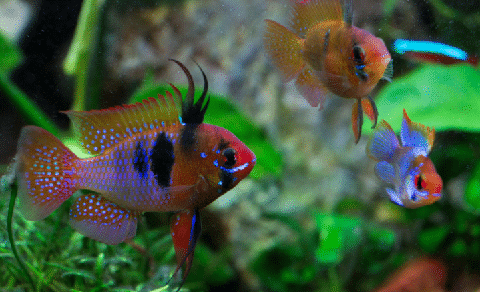
    Blue Ram Cichlid in Planted Tank

    Good Tank Mates

    Some good tank mates for Cryptocoryne wendtii include:

    Fish Species To Avoid

    Once planted, crypts do not like being uprooted and disturbed so avoid keeping large cichlid types like Oscars that shift the substrate as this may dislodge and damage the plants.

    These aquarium plants have been kept successfully with goldfish. Even though they are considered one of the better plants to keep with these fish, goldfish are notorious for damaging plants.

    Every new crypt owner panics when the leaves melt. That is normal. Crypt melt is not death. It is the plant adjusting. The ones who pull the plant out and throw it away are the ones who fail.

    Feeding (Fertilization)

    Crypts are root feeders, which means they will get most of the nutrients they need from a good-quality aquarium substrate. If you grow them in an inert medium like sand or washed gravel, however, you will need to feed these plants with root tabs.

    How Much And How Often To Feed

    Root tabs are capsules of slow-release aquarium fertilizers that are buried in the substrate at the root zone. Crypts are generally slow-growers that don’t need a huge amount of nutrients and therefore your root tabs will probably last a few months before you need to replace them. It is always best to follow the instructions of the specific product you’re using for best results though.

    Apart from supplying nutrients directly to the roots, these plants will also benefit from liquid water column fertilizers like APT Complete from time to time. A great time to dose these supplements is after your weekly water change.

    Editor’s Choice!


    APT Complete

    Editor’s Choice

    Made by an aquascaper for aquascapers. This is the best all around aquarium plant fertilizer on the market. Marco and micronutrients in one bottle!

    Use Coupon Code ASDComplete for 10% off your order!


    Click For Best Price


    Buy On Amazon

    CO2 Injection

    Co2 injection is not required for growing this hardy plant species. However, if you already run a planted aquarium with CO2, you can grow this plant in the same system and they will definitely benefit from it.

    A useful alternative to CO2 injection that could benefit these aquarium plants is a regular dose of a liquid carbon supplement like Seachem Excel.

    Types

    There are many great varieties of this popular plant with different color variations, leaf size, and texture of the leaves.

    • Cryptocoryne wendtii ‘Green’ – This small variety reaches a very manageable size making it a great choice for smaller tanks. The green leaves often grow outwards, virtually flat on the ground, although the plant may reach about 6 inches tall and wide.
    • Cryptocoryne wendtii ‘Brown’ – This popular form reaches about the same size as ‘green’ but features brown or mottled brown foliage with attractive wavy edges.
    • Cryptocoryne wendtii ‘Pink’- This striking form produces bold pink foliage and makes a very interesting specimen. This type will show better color under good light and with added CO2.
    • Cryptocoryne wendtii ‘Gecko’ – This very attractive form has bright foliage with wavy margins and red-brown markings.
    • Cryptocoryne wendtii ‘Florida Sunset’ – This colorful crypt features highly variable foliage that can be marked in pink, white or golden hues. Grow this form under stronger light to bring out its best colors.

    Care

    This crypt is a low-maintenance plant that is easy to grow and care for. The most important key to success is maintaining a stable environment. Let’s take a brief look at how to achieve this in the planted aquarium.

    Planted Tank Parameters

    This plant is adaptable to quite a wide variety of parameters. Like other crypts, they do very well in hard water, but can also be grown in soft water.

    This species prefers neutral water pH but will grow fine in weakly acidic to alkaline parameters. They can be grown in water temperatures between 68 and 82ยฐF, making them ideal plants for both cool water and tropical freshwater fish tanks.

    Water Quality

    This plant prefers good water quality, with stable parameters. Regular partial water changes are one of the most effective and important ways to maintain good water quality. Source water is also a consideration. Hard water can be problematic for plants like crypt wendtii. If you have have really hard source water, you may want to consider an RO system.

    The frequency and volume of your water changes will vary depending on the size and on how heavily stocked your aquarium is. In lightly stocked aquariums with good filtration, a 15-20% water change every week is recommended. Planted tanks with aquascapes tend to lean on changes of up to 50% due to keep their tanks purposely overdosed with fertilizers.

    Filtration 

    Adequate filtration is another vital part of maintaining good water quality in planted aquariums. Contrary to popular belief, filters not only clean the water of physical particles but are also essential for the process of biological filtration.

    During this process, beneficial bacteria convert harmful chemicals from fish waste and food into less harmful compounds. Take care to keep your bacteria colonies safe by not cleaning your filter media with anything other than tank water and never completely replacing all your filter media at the same time.

    In a planted tank setup, plants like cypts will produce more ammonia then fish due to leaf droppings. It is essential to invest in a high quality filtration unit like a canister filter too keep your aquarium from having algae outbreaks.

    Flow

    Since this plant is most adapted to slow-flowing rivers and streams, they will do best in aquariums with low to moderate flow. In the aquarium setting the aquarist can use hardscape features like rocks, driftwood, or ornaments to break up the water flow if needed.

    Aquarium Maintenance

    Aquarium maintenance is a vital part of the hobby and something all aquarists need to keep up with to keep their tanks looking their best and their plants and animals in great health.

    Testing Water Conditions

    Regular testing of your water conditions is an important part of monitoring the health of your aquarium. Fortunately, this is pretty easy with a liquid or strip test kit

    Use your test kit to keep an eye on values like ammonia, nitrites, and nitrates, as well as pH and hardness. A thermometer is also essential to monitor the performance of your heater.

    How To Set Up Your Aquarium

    These popular aquarium plants are hardy and adaptable, which means they will do well in most freshwater aquarium setups. Depending on the variety, these crypts can even be kept in small aquariums of just a few gallons.

    Keep in mind that the smaller your setup, the more difficult it is to maintain stable water conditions as parameters can shift pretty quickly.

    The key is to provide enough open space and substrate at the bottom of the tank to allow them to develop a strong set of roots. It is best to provide 2-3 inches of aquarium soil, sand, or gravel.

    How To Propagate

    Cryptocoryne wendtii is quite easy to propagate, although they are a fairly slow-growing plant. Healthy, mature specimens will send out runners that can be removed and replanted. Here is a great video from Otter Creek Aquatics that shows how to propagate Cryptocoryne Wendtii.

    Crypts don’t particularly enjoy being moved though so it is best to wait until the plantlets have grown a few leaves and roots before replanting as this gives them the best chance at surviving the move.

    Health And Disease

    Signs Of Good Health

    The foliage of healthy Cryptocoryne wendtii plants will vary in color and texture depending on the variety but a fairly dull color is quite normal. The leaves should be firm in texture and the plant should have a robust and healthy root system.

    Signs Of Poor Health

    Look out for plants that have melting or decaying foliage. In the early stages, this will appear as discolored growth that may become somewhat translucent before beginning to decay.

    Leaves that have holes or look like they have been partially eaten might be suffering from a nutrient deficiency.  

    Common Health Issues And Treatment

    One of the most common problems seen in this plant is the dreaded crypt melt. In reality, this is nothing to be too concerned about and happens after planting many different aquatic plant species and common when a new plant is introduced.

    Melt usually happens when plants are grown in new environments. The conditions in the home aquarium are usually very different from the farms where these plants are grown and they need to go through a period of adjustment in order to adapt to the new environment.

    During this time, crypts often lose leaves. Go ahead and remove any dead or dying leaves before they decay in your aquarium because this can affect water quality.

    If the conditions in your aquarium are suitable, they will recover and you should see new growth being produced. They are pretty slow-growing plants of course, but your patience should be rewarded.

    Plant Pests

    Ramshorn Snail

    Pests like snails and parasites are often accidentally introduced to home aquariums when adding new plants. Quarantining or sterilizing new plants with a very mild solution of bleach is one useful technique to avoid this.

    Dipping new plants in a solution of 1 part bleach to 20 parts water can be very effective, just be sure to limit the exposure to 2 minutes or less and then rinse off the plant thoroughly in clean water treated with a dechlorinator.

    An easier way to avoid introducing pests is to start off with tissue culture specimens that are farmed under special, pest-free lab conditions.

    Where To Buy

    This very popular aquarium plant is not difficult to find at pet stores and online fish stores. Trusted online retailers like Buceplant stock a range of different varieties as well as pest-free tissue culture specimens at great prices.

    Low Tech Plant!


    Cryptocoryne Wendtii

    A great low tech plant for multiple aquascape types and setups. Forgiving and hardy, the Cyrptocoryne Wendtii is a great introduction to rooted plants!


    Buy Tissue Culture


    Buy Potted

    FAQS

    How do you grow them?

    Cryptocoryne wendtii is easily grown by planting the roots into a suitable substrate like aquarium soil, or sand or gravel enriched with fertilizer capsules.

    How fast do they grow?

    These are naturally slow-growing plants, that may grow at a faster rate with good quality lighting and CO2 injection.

    Do they need substrate?

    Crypts grow from a well-developed root structure and should be planted in the substrate. Some aquarists have had good success by growing these plants attached to driftwood although this is not usually recommended.

    Do they need to be planted?

    These cryptocorynes need to be planted in the substrate in order to grow well. Trimming the roots before planting them in the substrate can make the task a lot easier. Use your aquascaping tweezers to push the roots into the substrate and take care to keep the plant’s crown clear and exposed.

    Closing Thoughts

    Cryptocoryne wendtii is one plant that all aquarists should consider growing. This undemanding and low-maintenance species has many different aquascaping uses and will thrive under most lighting conditions. Have you ever tried it in your aquarium? If not, leave us a comment below to tell us how this plant looks with your setup!


    ๐ŸŒฟ Want to learn more? This article is part of our complete Planted Tank & Aquascaping Guide. your ultimate resource for aquarium plants, aquascaping styles, substrates, and more.

  • Wakin Goldfish Care Guide: The Traditional Japanese Variety Worth Knowing

    Wakin Goldfish Care Guide: The Traditional Japanese Variety Worth Knowing

    The Wakin Goldfish is not a beginner fish. It is a cold-water species that produces enormous waste, needs real filtration, and outgrows most tanks within a year. I have kept goldfish in ponds and large tanks for over 25 years. Here is the honest care guide most people need before buying one.

    A goldfish in a bowl is not thriving. It is slowly suffocating.

    Goldfish live 10 to 15 years, sometimes longer. This is a decade-long commitment to large water volumes, heavy filtration, and consistent maintenance.

    A goldfish kept properly is more impressive than most tropical fish. The problem is almost nobody keeps them properly.

    Table of Contents

    The Wakin goldfish is one of the oldest domestic goldfish varieties still kept today. And one of the most overlooked by western hobbyists. I’ve covered dozens of goldfish types over the years on our channel, and the Wakin always surprises people who’ve only seen the slow-moving, round-bodied fancy varieties. It has a sleek body like a common goldfish but with a distinctive double tail and often stunning coloration. After 25 years in this hobby, one thing I always make clear: don’t mix Wakin with fancy goldfish. They’re fast, competitive swimmers that will outcompete slower varieties for food every time. This guide covers everything you need to keep Wakin goldfish thriving. Whether in a pond or a large aquarium.

    What Most Care Guides Get Wrong About Wakin Goldfish The Traditional Japanese Variety Worth Knowing

    The biggest mistake I see with wakin goldfish the traditional japanese variety worth knowings is underestimating their aggression. Guides will label them “semi-aggressive” and move on. In practice, that label doesn’t tell you much. Tank layout, stocking density, and territory management all play a huge role in whether these fish coexist or constantly fight. Tank size is another area where most guides get it wrong. The minimum listed on most care sheets is exactly that, a minimum. For long-term success, especially if you’re keeping a group, I always recommend going at least one size up from whatever the guide suggests. Finally, diet gets oversimplified. Pellets alone won’t cut it. In my 25+ years keeping fish, I’ve found that variety in diet directly affects color, growth, and overall vitality. Include frozen foods, quality pellets, and occasional vegetable matter for the best results.

    The Reality of Keeping Wakin Goldfish

    Tank size requirements are not negotiable. A single fancy goldfish needs at minimum 20 gallons. A single-tail variety like a comet needs 40 gallons minimum, and realistically belongs in a pond. The one-gallon-per-inch rule does not apply to goldfish.

    Filtration needs to be oversized. Goldfish produce more ammonia than tropical fish of the same size. Your filter should be rated for at least double your actual tank volume. A 40-gallon tank with goldfish needs filtration rated for 75 to 100 gallons.

    They are cold-water fish that do not need heaters. Goldfish thrive between 65 and 72 degrees. Putting them in a heated tropical tank stresses them and shortens their lifespan. Room temperature water is fine for most homes.

    Biggest Mistake New Owners Make

    Putting a goldfish in a small bowl or tank without filtration. Goldfish produce massive amounts of waste. Without proper filtration, ammonia levels spike within days and the fish suffers organ damage long before it shows visible symptoms.

    Expert Take

    The best goldfish keepers I know run heavy filtration and do large weekly water changes. There is no shortcut or trick that replaces those two fundamentals.

    A Brief Overview of the Wakin Goldfish

    Scientific NameCarassius Auratus Auratus
    Common NamesWakin, watonai
    FamilyCyprinidae
    OriginJapan
    DietOmnivore
    Care LevelModerate
    ActivityActive
    Lifespan10 to 15 Years
    TemperamentPeaceful
    Tank LevelMedium
    Minimum Tank Size30 Gallons
    Temperature Range65ยฐF to 72ยฐF
    KH4-20 dGH
    pH Range6.5 to 7.5
    Filtration/Water FlowModerate
    Water TypeFreshwater
    BreedingEgg layers
    Difficulty to BreedEasy to breed
    CompatibilityCommunity tank or species-only tank. Great with Koi in Ponds
    OK, for Planted Tanks?Mostly no

    Classification

    Taxonomic RankClassification
    Common NameWakin Goldfish
    Scientific NameCarassius auratus
    OrderCypriniformes
    FamilyCyprinidae
    GenusCarassius
    SpeciesC. Auratus

    Origins and Habitat

    Like many other goldfish varieties, the wakin was first bred artificially in Japan in the early 16th century. In its early days, the wakin was a highly prized Japanese goldfish, and only available to the wealthy.

    , aquarists agree that most of the fancy goldfish breeds we know today originated from mutations in the wakin goldfish.

    Like all other goldfish, the wakin is descended from the Chinese gibel carp1.

    What Does Wakin Goldfish Look Like?

    How Does A Wakin Goldfish Look Like

    Similar to common goldfish (picture source), wakin goldfish are physically characterized by a slender and long body shape with no compression. They are classified as a lean bodied or slim-bodied goldfish. These types of goldfish are more atheltic and make for a more sturdy goldfish than other goldfish.

    You will also know wakins by their split tail. However, unlike fancy double-tailed goldfish, these fish have long and flowing double tail. Their caudal fin, which is short, resembles more of a fantail shape. 

    Every wakin goldfish has a unique pattern on its body. In terms of coloration, they come in a wide variety, although they are mainly sought in white, red, or a combination of the two. Additionally, you might find rare colors like calico, yellow, orange and brown, but the rarer the color, the higher the price tag is likely to be.

    And speaking of variations, you might also find the “watonai” variation of wakins, who have flowing tails.

    • How Big are Wakin Goldfish?Add ImageAt a maximum length of 18 inches, wakin goldfish are some of the largest breeds of goldfish youโ€™ll find. Youโ€™re more likely to see them grow to this size if you locate them in a pond instead of in a tank. 
    • How Long Do Wakin Goldfish Live?Add ImageThe average Wakin goldfish can live up to 10 to 15 years, with some exceptions. Those who are carefully looked after can thrive for as long as 20 years! 

    Add New FAQ

    Temperament and Activity Level

    Wakin goldfish are fast and lively fish who enjoy exploring their surroundings. They are mainly peaceful freshwater fish, able to coexist peacefully with most other community fish. That said, you should avoid putting them together with fancy goldfish, since the latter are slow swimmers. As such, theyโ€™ll have to compete for access to food.

    Wakin goldfish are also well-loved for their friendly and curious nature. In fact, once you start feeding them regularly, youโ€™ll start to notice how they rush to the surface of the pond or tank to greet you when feeding time is due.

    What are Good Tank Mates?

    Great Tank Mates

    As fast swimmers, these pet fish are best kept with other fast species such as:

    Besides goldfish, apple snails, ghost shrimps, African dwarf frogs, rosy barbs, and weather loaches.

    Fish Species to Avoid

    , the Wakin goldfish are friendly and playful with most other community fish. However, there are certain fish that don’t get along with them. For instance, you should avoid housing them with aquarium fish species like fancy goldfish as they are slow swimmers and therefore, at a disadvantage during feeding time. You also shouldn’t choose aggressive tank mates for the these fish, such as cichlids

    Just got yourself or considering a Wakin Goldfish? If so, this article about Wakin Goldfish Care will answer all your questions!

    The vivid color, attractive double tail and friendly, curious temperament of the Wakin goldfish (carassius auratus) has led to an increase in its popularity in recent years. Originating in Japan like most other wild carp descended fish, it was the original prototype, of sorts, of many other fancy goldfish breeds.

    Wakin goldfish are a good choice for aquatic pet lovers since they’re not difficult to take care of. Although they are best brought up in a pond, they can also be housed in aquariums. With the right care guidelines, of course.

    How Big Are They?

    At a maximum length of 18 inches, wakin goldfish are some of the largest breeds of goldfish youโ€™ll find. Youโ€™re more likely to see them grow to this size if you locate them in a pond instead of in a tank.ย 

    How Long Do They Live?

    The average Wakin goldfish can live up to 10 to 15 years, with some exceptions. Those who are carefully looked after can thrive for as long as 20 years!ย 

    Temperament and Activity Level

    Wakin goldfish are lean bodied goldfish that are fast and lively fish. They enjoy exploring their surroundings. They are mainly peaceful freshwater fish, able to coexist peacefully with most other community fish. That said, you should avoid putting them together with fancy goldfish, since the latter are slow swimmers. As such, theyโ€™ll have to compete for access to food.

    Wakin goldfish are also well-loved for their friendly and curious nature. In fact, once you start feeding them regularly, youโ€™ll start to notice how they rush to the surface of the pond or tank to greet you when feeding time is due.

    What Do They Eat?

    The Waking Goldfish breed is omnivorous. This means that giving them high quality fish food and a varied diet they need is easy, and you can feed them most low-fat foods.

    You can give them flakes or pellets, but as always, these should not be their only nutrition source. Instead, you should aim to mix it up by introducing vegetables such as lettuce, broccoli, cabbage and shelled peas, and occasionally, chunks of fruits like strawberries and grapes. Also, if you keep them in an aquarium with live plants, donโ€™t be surprised if they start grazing on them.

    Of course, you should always be cautious about overfeeding them, because doing so can lead to the development of one or more of the digestive conditions or swim bladder problems.

    What About Live Foods?

    Brine shrimp, Tubifex worms, blackworms, bloodworms, mosquito larvae, etc. Make good live foods for these fish. Freeze dried and frozen sources of protein will also work.

    How Much and How Often to Feed

    A proper diet is very important for the well-being of your goldfish. Feed them too little and they will fall sick, feed them too much and they will have buoyancy problems.

    The Wakin fish are omnivores which means they can feast on plant and animal matter. While basic store-bought pellets and flakes are a good source of nutrition, try to bring new variations of food. For example, try to drop some lettuce or diced grapes once a week or so and watch how your fish react to it.

    When you’re buying fish food, try to get a mixture of both plant and animal-based varieties. Also, you should choose pellets that sink to the floor rather thank floating on the surface. Goldfish like searching for food at the base of the tank and with variation in the pellets, they won’t get bored.

    You should feed them no more than twice daily and no more than what they can finish off within 3-4 minutes. Remove any leftovers from the water to ensure that the water remains inhabitable.

    Tank Requirements (Care)

    Hereโ€™s what to keep in mind when setting up your wakin tank.

    Tank Size

    Wakin fish can grow quite large and therefore need a lot of room to live freely. A large body also means more waste released into the aquarium. 

    With this in mind, at least a 30 gallon tank is required to house one of these guys, along with an additional 10 gallons of water for each new fish. But there are no limits: the larger the aquarium size, the better. To maximize their happiness and lifespan, outdoor ponds are the best place for a Wakin. You can see a great example of a wakin goldfish tank below by C Lifestyle.

    Tank Setup

    There are some basic elements your tank must have in order for your Wakins to live and thrive. 

    Temperature

    Wakins prefer to live and thrive in cold water; they should be placed in unheated tanks. The ideal water temperature range for them is 65 to 72 degrees F. 

    pH

    Maintain a neutral pH for them between 6.0 and 8.0.

    Ammonia and Nitrate

    Ammonia and nitrate levels should be kept at 0.

    Substrate

    Large, smooth gravel is a good substrate or a fine sandy substrate is best for Wakin goldfish. This is because goldfish love scouring around, they might mistake gravel for food. The wrong gravel size is accidentally shallowed by your goldfish. Caribsea sand is great for goldfish.

    Ideal For Goldfish
    Caribsea Super Naturals Sand

    This sand by Caribsea is perfect for supporting the foraging habit of goldfish. Also works with bottom feeders and discus fish.

    Buy On Amazon Buy On Petco

    Decor

    Using plastic plants along with certain moss types will enhance the look of your aquarium. You can add large stones and small sticks as well to replicate a pond and give your fish plenty of options to play.

    Plants

    Keeping natural vegetation is difficult when it comes to wakin, who love to eat plants. More active ones might even uproot plants. Moreover, many plants wonโ€™t survive in the colder temperatures that wakins like. Knowing this, here are several plants that can take the punishment of these fish or may be ignored entirely:

    If you do not want to deal with the hassle artificial plants is advised. In large commercial size ponds, plants are often omitted

    Filtration

    To deal with the large amounts of goldfish waste, go with a filtration system meant for large tanks. Itโ€™s also advised to get a filtration system with a larger tank capacity than what your setup has. A large power filter is minimum for a Wakin in a aquarium. For ponds, consider a waterfall style filtration system. Large ponds over 1500 gallons will often consider bead filtration for maximum biological filtration.

    Since these fish are large and produce a lot of waste, consider a high end biological media like biohome.

    Editor’s Choice!
    Biohome Ultimate Filter Media

    Editor’s Choice!

    This is the best media you can buy for your aquarium. It does it all – removes ammonia, nitrite, and nitrates

    Buy On Amazon

    How to Breed

    We have certain pointers for those of you who are particularly interested in creating your own Wakin ecosystem. 

    To push your mating, you must first replicate the natural changes they go through in a pond. Firstly, since they mate during spring, dropping the water temperature to 60 or 65 degrees F will signal the fish to procreate.

    You must offer the fish adequate natural vegetation such as the Java moss in order to create suitable egg laying zones. You can also look for artificial spawning mops which do the same job as the moss. You should see fry within 48-72 hours of eggs being laid.

    Note that in larger ponds, Wakin Goldfish breed regularly. If you donโ€™t want an overflowing pond, youโ€™ll have to make regular checks. Larger fish like Koi will eat baby fry.

    Health and Disease

    The best way to keep your fish healthy is with great filtration and a quality diet. Prevention is the best remedy when it comes to health. If you are wondering if your fish is unhealthy, there are some pointers to help.

    Signs of Good Health

    A healthy wakin is one that retains its friendly, lively and curious nature. You will see it frequently dipping in and out of tank and pond decorations, swimming swiftly and actively, and eating large amounts of food in short amounts of time.

    Signs of Poor Health and Treatment

    Unfortunately, like all goldfish varieties, wakins are also susceptible to freshwater fish diseases like ich, fin rot, bacterial infections, fluke, etc. The article I linked to contains a wealth of information on how to identify and cure many common diseases you may come across. Common signs of an ill fish would be:

    • Rapid breathing
    • Flashing or scratching rocks/gravel
    • White and stringy poop
    • Red marks and ulcers
    • Torn or clamped fins
    • White spots (not to be confused with mating white spots of goldfish who are breeding)

    Wakins are less susceptible to bloat and other diseases that plague fancy goldfish.

    Where to Buy (And Cost)

    You can find them for sale online and at many aquarium stores. The main issue you will run into when shopping locally is the quality of Wakins. They are classified as beginner fish and not kept in good conditions. The best place to purchase in my mind is from a garden retailer who specializes in pond fish. Wakin goldfish cost more for at these retailers, but they are of superior quality.

    My favorite of these are NextDayKoi. They offer a variety of quality goldfish that work well in ponds and larger aquariums. You won’t be disappointed ordering from them!

    Wakin Goldfish

    With their elongated bodies and unique fins, Wakins are a flash of color and character to your pond

    Click For Best Price

    Frequently Asked Questions

    How big do these goldfish get?

    In a pond, they might grow to be 18 inches long.

    Are they aggressive?

    They are not aggressive, although they are fast and active fish who should not be kept with slow-moving fish like fancy goldfish

    What do they eat?

    As omnivores, they thrive on a varied diet. Besides flakes and pellets, you should also aim to give them vegetables, fruits, and occasionally live foods.

    Are they rare?

    They arenโ€™t very rare, but not very easy to find either. Especially if you have a small budget, or want special colors on them such as calico and brown, you might have a harder time finding them for sale. The fanciest varieties will often be imported.

    Is it better to keep them in a fish pond or an aquarium?

    Due to their affinity for cold, slow-moving water, they do best in ponds with lots of natural sources of food and of course, space to swim about in. They are also more likely to reach their maximum length of 18 inches if kept in a pond, and breed more easily.

    However, you can also keep them in a tank as long as you closely follow the guidelines weโ€™ve detailed above.

    Is the Wakin Goldfish The Traditional Japanese Variety Worth Knowing Right for You?

    Before you add a wakin goldfish the traditional japanese variety worth knowing to your tank, it’s worth asking whether this species actually fits your setup and your goals. Here’s a quick breakdown to help you decide.

    This species is a good fit if:

    • You have a large enough tank to manage territories. Cramped conditions amplify aggression.
    • You’re comfortable managing aggression through stocking ratios, line of sight breaks, and tank layout.
    • You can commit to regular water changes. These fish produce more waste than many smaller species.
    • You’re not planning a peaceful community tank. Wakin Goldfish The Traditional Japanese Variety Worth Knowings need tank mates that can hold their own.
    • You enjoy watching active, interactive fish. Cichlids have personality that smaller species simply don’t match.
    • You have backup plans. Sometimes a particular fish just doesn’t work out, and you need a way to rehome it.
    • You’re feeding a varied, high-quality diet. Color and health depend on nutrition.

    If most of those points line up with your setup, the wakin goldfish the traditional japanese variety worth knowing is worth serious consideration. If several don’t, it’s better to choose a species that matches your tank now rather than trying to make it work.

    How the Wakin Goldfish The Traditional Japanese Variety Worth Knowing Compares to Similar Species

    Want a pond fish? Get comets or shubunkins. Want an indoor aquarium goldfish? Get fancies and plan for a 40-gallon minimum. Want a low-maintenance pet? Get a betta instead.

    Choosing between similar species is tricky. Here’s how the wakin goldfish the traditional japanese variety worth knowing stacks up against some common alternatives.

    The wakin goldfish the traditional japanese variety worth knowing occupies a specific niche in the aquarium hobby, and direct comparisons really depend on what you’re looking for. In my experience, the most common question people ask is whether they should choose the wakin goldfish the traditional japanese variety worth knowing or something similar that’s more widely available. The answer comes down to three things: tank size, water parameters, and what other fish you’re keeping. If your setup matches what the wakin goldfish the traditional japanese variety worth knowing needs, it’s hard to beat. If not, there are alternatives worth exploring.

    Closing Thoughts

    With adequate amounts of living space, a varied diet and dedicated care, the Wakin goldfish is the new pride and joy of your home aquarium. Although itโ€™s best to put them in ponds, replicating a pond environment is also possible. I hope you found these tips helpful! Please leave your comments below so I can continue providing helpful information about these wonderful fish and others in our hobby.


  • Java Moss Care – A How To Guide

    Java Moss Care – A How To Guide

    This plant will grow in almost anything. But if you want it to actually look good, you need to understand what it wants. The gap between alive and thriving is lighting, nutrients, and consistency.

    Any plant stays alive. Making it look good takes understanding.

    Java moss is a hardy, low-maintenance plant that is grown in just about any type of aquatic environment. If you’re looking to add some diversity to your tank, or you have a new tank and want to fill it with plants from the start, this article has everything you need! Read on for an informative guide on Java Moss care. We will cover everything from proper environment, conditions, trimming, and more! Check it out!

    Species Overview

    Scientific Name Taxiphyllum barbieri
    Common Names Java moss
    Family Hypnaceae
    Origin Southeast Asia
    Skill Level Easy
    Lighting Low-High, 40-200 PAR (Umols)
    Tank Placement Foreground, Midground, Attached, Floating, Carpet
    Flow Rate Moderate
    Temperature Range 64-86ยฐF
    Height Up to 4 inches
    pH Range 5.0. 8.0
    Propagation Division
    Growth Rate Moderate
    Feed Type Column Feeder
    CO2 Requirement No, but recommended

    Origins And Habitat

    Java moss is native to Southeast Asia where it grows in a variety of moist habitats, both above and below the water. This aquatic plant grows on river banks, attached to rocks, wood, and tree trunks.

    What Does It Look Like?

     Java moss is an all-green creeping moss that forms a tangled mass of delicate stems. The stems hold branches that reach nearly an inch in length. You can see videos and clips from it from our YouTube video above.

    The branches are covered in tiny, hollow leaves. Interestingly, Java moss that is grown emersed develops much larger leaves than those grown submerged. The shade of green and the density of the plant varies depending on the strength of the lighting where the plant is growing.

    Java moss does not have true roots and gathers all its nutrients through its leaves and stems in the water column. They do, however, have fine red-brown structures known as rhizoids that work like roots to attach the plant to solid structures.

    Java Moss Care Guide

    Java moss works really well in a variety of aquascapes. This moss adds amazing textures and accents to nature aquariums, especially if grown on hardscape features like driftwood.

    Java moss is one of the most versatile plants in the hobby. The secret to its versatility? Rhizoids.

    These ‘roots’ don’t absorb nutrients but have the function of anchoring the plant. Java moss does not grow from the substrate will anchor itself to just about any solid object with a bit of texture.

    That being said, these plants don’t need to be attached to anything to grow well, and can simply be left to float in the tank. Let’s take a closer look at some of the uses for Java moss in the aquarium.

    Attached To Hardscape

    One of the most popular placements in the planted tank is on hardscape features like driftwood, rocks, or even aquarium decor. Attaching the moss to your hardscape takes a little effort, but it’s really not that difficult.

    Simply tie a clump of Java moss to the object using thread or fishing line. After some time, the moss will attach itself to the object with its roots/rhizoids and the fishing line is removed carefully.

    Java Moss on Driftwood

    Moss Tree

    As strange as it may sound, Java moss makes for a fantastic underwater tree for aquarists. Clumps of moss attached to the ends of an upright branching piece of aquarium driftwood with fishing line can look truly incredible.

    Take your time in selecting a great piece of driftwood because this will make all the difference to the finishing java moss trees. You can find great pieces at aquarium shops or from online stores.

    It is best to use a clear, fine fishing line or a neutral colored thread for a more natural look. The thread or fishing line is carefully removed once the roots of the moss have attached themselves firmly to the driftwood.

    Carpet Or Wall

    Another innovative and interesting way to use this plant is to create a Java moss carpet or moss wall. Java moss is probably your most realistic option for growing carpets in a low-light tank. How to attach the moss to the wall or bottom of the tank takes a little planning, however.

    The secret is to sandwich the moss between two pieces of mesh. Stainless steel or plastic mesh works fine, and if you find that the ‘sandwich’ isn’t staying put on the substrate at the bottom of the tank, put a few stones or aquarium weights between the mesh but under the Java moss to weigh it down.

    The mesh is cut to a shape of your choice to keep the Java moss carpet contained in the area you want it.

    A Java moss wall is made in much the same way as a carpet, except you can use suction cups to attach it to the glass. This technique works really well for creating a natural backdrop in the tank, and that way, you can’t see the suction cups.

    Floating

    The easiest way to use Java moss is simply to toss it in your aquarium and let it grow. Java moss as a floating plant has some pros and cons though.

    On the one hand, floating Java moss is great for providing structure to bare breeding tanks without substrate and creates a safe haven for small fish, fry, and shrimps.

    Java moss can look a little untidy though and if left to drift, there’s a chance it’ll find its way up to the intake of your aquarium filter and cause you some problems.

    Floating Moss Ball

    A more complicated, but very interesting way to grow java moss is to create floating moss ball. You can do this by attaching the moss to a floating object like a wine bottle cork with thread.

    If you attach some clear fishing line to the floating moss ball and anchor it to the bottom of the tank, you can keep your moss ball in place in the midwater.

    Lighting

    Java moss isn’t very particular about lighting. It really doesn’t need much of it, but then, all aquarium plants need light to grow.

    Providing good light will result in brighter, more compact but faster-growing Java moss, but there is a catch. Strong light that isn’t perfectly balanced with nutrients and CO2 could easily result in a clump of algae-covered Java moss in your aquarium.

    What Are Good Tank Mates?

    Java moss is one of the best plants for breeder tanks because it creates a safe environment for small invertebrates and fish eggs and fry. For a very simple set-up, a big bunch of java moss grown as a floating plant in a bare tank works great.

    It’s not only baby fish that enjoy Java moss though. Any small or shy species will enjoy sheltering in a clump of moss.

    The massive surface area of this plant also provides a great area for livestock to forage on biofilm and micro-organisms. Java moss also oxygenates the water in your tank, which is great for your livestock.

    Good Tank Mates

    Just about any tropical or cool water freshwater fish that is not vegetarian is kept with Java moss. Just be sure that the fish enjoys the same parameters as the Java moss.

    Fortunately for aquarists, it is possible to grow Java moss under such a wide range of parameters that compatibility isn’t a problem.

    Some great fish to keep with Java moss include:

    Fish Species To Avoid

    Goldfish and cichlids will have no problem eating your Java moss, or just tearing it up and spreading tiny pieces off this plant all over your tank in the process. If they do not eat your java moss, they can also uproot with their foraging and digging habits.

    Java Moss grows in almost any condition. That is exactly why it takes over tanks when you stop trimming it. Easy does not mean zero maintenance.

    To be on the safe side, avoid keeping any plant-eating fish like silver dollars or plecos as well. Siamese algae eaters are also reported to eat Java moss on occasion, especially the new growth.

    Feeding (Fertilization)

     Java moss is not a very heavy feeder. Speaking, Java moss will not require additional fertilizers, especially if you keep fish in the tank.

    In low light tanks, in particular, the moss will not be able to use excess nutrients and feeding is likely to result in a hair algae problem. In tanks with medium to strong lighting, however, a light application of liquid fertilizer is helpful. If you are planning a mass planted aquascape that included Java Moss, you should consider investing in a quality liquid fertilizer like APT Complete.

    Editor’s Choice!


    APT Complete

    Editor’s Choice

    Made by an aquascaper for aquascapers. This is the best all around aquarium plant fertilizer on the market. Marco and micronutrients in one bottle!

    Use Coupon Code ASDComplete for 10% off your order!


    Click For Best Price


    Buy On Amazon

    CO2 Injection

    The Java moss plant does not need injected CO2 to thrive and grows very well in low-tech aquariums. The amount of carbon dioxide naturally available to plants in the aquarium is sufficient to keep this plant healthy.

    That being said, all plants require CO2 to live and photosynthesize, and added CO2 will improve the growth of Java moss if used correctly.

    How Much CO2 Do You Need?

    If you do run CO2 in your tank, and you keep fish or other aquatic animals, it is important to ensure that your levels never exceed 30 ppm. Above this level, CO2 causes suffocation in your livestock and will result in losses.

    How long Should You Run CO2?

    When you start up your CO2 injection, it takes about 2 hours for the gas to reach optimum levels in the aquarium. Therefore, it is best to start adding CO2 before your lights start up.

    Since plants can’t use carbon dioxide in the absence of light, It is best to shut off your CO2 at the same time as your lights go off, or a little before.

    , you should run your lights for about 8-10 hours per day, which means you should run carbon dioxide for 10-12 hours per day for the best result.

    Types

    Java moss (Taxiphyllum barbieri) is pretty variable in appearance, depending on the water condition in the aquarium. There are a few similar species of moss in the hobby, however. Although they are different species, with different care requirements, they are very similar-looking plants.

    Similar Species

    • Christmas mossVesicularia montagnei
    • Singapore moss – Vesicularia dubyana
    • Weeping moss – Vesicularia ferriei
    • Taiwan moss – Taxiphyllum alternans
    • Peacock moss – Taxiphyllum sp. ‘Peacock’
    • Stringy moss – Leptodictyum riparium
    • Phoenix moss – Fissidens fontanus

    Care

    Java moss care is very easy, provided you grow it in suitable conditions. This plant is trimmed heavily using a pair of aquascaping scissors, but this is quite a messy business.

    The trimmings tend to drift around and look pretty unsightly. Sometimes trimmings will settle somewhere and begin to grow there, making this plant quite difficult to contain if you’re not careful.

    One way to avoid this problem is to ask a friend to vacuum up the Java moss trimmings as you cut them so that they cant drift around. If you can’t find someone willing to stick their hands into your fish tank, you can try multi-tasking. Some people even get creative and attach their aquascaping scissors to the end of the vacuum intake. Here is a great video on java moss trimming by AlanScaping.

    It is wise to switch off your filter while trimming to prevent leaves and branches from getting sucked up. Filters with pre-filter sponges over their intakes are also very handy for planted tanks.

    Vacuuming your Java moss as part of your normal cleaning and maintenance routine is a good idea to remove any detritus that could settle in the moss and result in changes to water quality.

    Java moss carpets made with mesh or moss attached to driftwood can also be removed from the tank and rinsed off using water removed during a water change.

    Planted Tank Parameters

    Java moss isn’t very picky about water parameters. When it comes to pH, Java moss grows fine from 5 through 8 and does well in hard or soft water.

    It is grown over a pretty wide range of temperatures, from 64 right up to 86ยฐF. They do show a preference for slightly cooler conditions, however, and tend to grow best in aquariums from 70-75 ยฐF.

    Water Quality

    Java moss actually helps to improve water quality by soaking up excess nutrients from fish food and waste. This doesn’t mean you don’t have to stay on top of your water quality, however, because nutrient-rich conditions tend to favor algae growth.

    One of the most effective ways for aquarists to maintain good water quality is to perform regular partial water changes. This is important because often your filter alone can’t keep the water safe and harmful chemicals can build up over time.

    Get into the routine of doing a water change regularly every week or two, and always remember to use a water conditioner to make tap water safe for your moss and livestock.

    Filtration

    One of the downsides of Java moss is the tiny leaves and branches getting sucked up into aquarium filters and clogging up the filter media. This is especially likely after trimming your Java moss, or if your plants grow unattached in your tank. Lots of filter maintenance should be done and broken pieces of moss should be removed immediately to prevent excess ammonia production and algae growth. Consider a quality power filter for smaller aquarium or a canister filter for larger setups.

    Flow

     Java moss grows best in tanks with good flow. Not too powerful, but enough to keep water circulating through the plants to provide fresh water to the inner stems and prevent waste from settling on the plants.

    Aquarium Maintenance

    Aquarium maintenance is an essential part of the hobby and is also an important part of growing vibrant and healthy Java moss. Let’s take a closer look at how to maintain your aquarium.

    Testing Water Conditions

    Even though Java moss can grow in a pretty wide range of conditions, it’s always a good idea to test your water regularly. This is pretty quick and easy to do using a simple test kit from your local aquarium store and will help you keep an eye on the health of your aquarium.

    The best time to test is before adding any plants to your aquarium, and then just before each water change. In this way, you’ll know the parameters of your local water, and whether you’re performing water changes often enough.

    How To Set Up Your Tank

     Java moss has no specific tank requirements really. It is such a versatile plant that it can grow in most aquariums, provided your parameters are compatible with its needs. Your choice of substrate is not really important at all.

    If you don’t have any sort of prefilter over the intake of the filter in the tank, consider buying a model that does or you can rig your own if you’re handy. Just be sure that whatever you use does not restrict the flow too much because this will put some strain on the motor and reduce the effectiveness of your filter.

    Java moss is great for just about any tank size, from nano tanks of just a few gallons and up. This moss will spread to dominate a very small tank though so you’ll need to stay on top of trimming.

    How To Propagate

    The Java moss plant is one of the easiest live aquatic plants to propagate. Simply divide the plant by cutting or tearing a few stems off a clump and attach them to the hardscape or allow them to float.

    Health And Disease

    Signs Of Good Health

    Healthy Java moss plants should have a vibrant green coloration and be soft but not fall apart too easily. Out of the water, this plant will be very limp but should have great texture underwater.

    Signs Of Poor Health

    Avoid Java moss that is turning yellow or brown. Adding unhealthy Java moss to your tank that is already brown and falling apart is a bad idea and will probably just result in a mess.

    Common Health Issues And Treatment

    Algae

    One of the most common health issues with Java moss is your carpet getting covered in algae. One way to treat this problem is to dose the affected plant with a weak solution of hydrogen peroxide. Hydrogen peroxide works wonders for killing algae, but it can also kill your fish, inverts if not used carefully.

    A rule to live by when it comes to using chemicals in your fish tank is: use as little as possible to get the job done. Remember, if you haven’t used enough, you can always try again next week, but if you use too much, the results is devastating.

    As with all algae growth issues, it is far more effective to focus on the cause of the problem rather than treating it with chemicals. The most common causes are:

    • Light that is too powerful and/or on for too long each day
    • An imbalance of light, nutrients, and carbon dioxide in the system
    Java Moss and Shrimp

    Algae eating animals is very helpful for algae control in general as well. It must be noted that not all algae eaters will feed on every variety of algae. Some examples of algae eaters include:

    Of course, before adding any algae eater to your tank, make sure your tank is big enough and set up correctly for that species.

    Melt

    It is very common for aquatic plants to ‘melt’ when first introduced to your tank. This happens because the conditions in your tank are different from what the plant has been used to, and it needs to go through an adjustment period.

    While adjusting, Parts of the plant will change color, eventually dying and rotting away. It is better to cut away any dying foliage and remove them from your tank, rather than leaving them to rot and affect your water quality.

    Nutrient Deficiencies

    Java moss does not need much in the way of nutrients, but if you do find your plants are losing color, you may want to try dosing a fertilizer with iron and macronutrients.

    Use fertilizers in moderation though, too much can cause algae problems.

    Plant Pests

    Because of the dense and tangled nature of Java moss, it’s very easy for unwanted pests and parasites to hitch a ride from the farm where they were grown, or your local aquarium store, and into your tank.  

    To prevent this, rinse the plant out with water from your fish tank when you get it home. Never use straight tap water for this because it can contain harmful chemicals that will damage your moss.

    A very weak solution of 20 parts water to one part bleach makes a great pest-killing dip. Dip your moss in the solution for about a minute and then rinse it out carefully and thoroughly in water with a dechlorinator before adding the moss to your aquarium.

    Where To Buy

    Java moss is a very popular in the aquarium trade is widely available. You can pick up this plant pretty cheaply from your local aquarium store. Apart from physically visiting pet stores, a more convenient option is to order your aquarium plants online. The link in the box below will take you to retailers who sell quality Java moss. Check it out!

    FAQS

    Is it good for aquariums?

    Java moss is a great plant for aquariums. It provides a safe refuge for fry and small animals while oxygenating the water and soaking up excess nutrients in the water column.

    How fast does it grow?

    Java moss have a slow to moderate growth rate. The growing speed does vary a lot depending on the conditions in the tank, however. It is possible to speed up Java moss growth with better lighting and CO2 injection and fertilizers, provided you keep everything in balance to avoid algae problems.

    How do you keep this type of moss alive?

    Java moss is a very easy aquarium plant to keep alive. It is tough and adaptable and it thrives in most freshwater aquariums. Make sure your tank setup and parameters match this plant’s needs and you should have no problem.

    Can brown moss turn green again?

    Fully brown Java moss is dead and should be removed from your tank before it breaks apart and rots. Naturally, you want to give your plant the benefit of the doubt of course, and if there are any healthy green branches, they may well pull through and regrow.

    A safe option is to remove the dying moss from your tank and see if you can grow it in a separate container filled with your tank water, that way if it doesn’t bounce back, you won’t have to worry about it spoiling in your tank.

    Closing Thoughts

    Java moss is a really fun and versatile plant that is great for all planted tank enthusiasts, from beginners all the way to professional aquarists.

    Making Java moss grow is as simple as dropping some in the aquarium or as interesting as making moss trees and walls with suction cups. This is definitely one plant that everyone should consider growing.


    ๐ŸŒฟ Want to learn more? This article is part of our complete Planted Tank & Aquascaping Guide. Your ultimate resource for aquarium plants, aquascaping styles, substrates, and more.
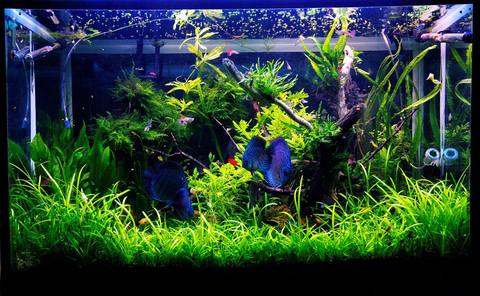
  • How Long Do Goldfish Live? (Its Longer Than You Think!)

    How Long Do Goldfish Live? (Its Longer Than You Think!)

    Goldfish are not easy. They produce more waste than fish three times their price and need more space than most people realize. A single goldfish needs 20 gallons minimum and heavy filtration. Most goldfish deaths come from undersized tanks and inadequate filtration.

    A goldfish kept properly is more impressive than most tropical fish. The problem is almost nobody keeps them properly.

    The appeal of goldfish as pets is undeniable. They’re cute, active, and beautiful, on top of being relatively easy to care for.

    Yet, despite this, something you’ll commonly hear about goldfish is that they don’t live very long. And unfortunately, that’s become true for most goldfish in captivity… But not for the reasons you might believe.

    You see, it’s not that goldfish have inherently short lifespans. It’s that most people, especially those with insufficient fishkeeping knowledge/experience, don’t know what it takes to keep a goldfish alive for its true average lifespan.

    So the question, how long do goldfish live, doesnโ€™t have a straight answer. It all depends on how well theyโ€™re being brought up. Find out more below!

    How Long Do Goldfish Live?

    Assuming that the goldfish is healthy and treated with care, its life expectancy can go up to 15-20 years1.

    There are even records of some slim-bodied goldfish, like the feeder or common goldfish and comet goldfish, living up to 40 years in an outdoor pond, where the natural habitat of a goldfish is most closely mimicked.

    Meanwhile, fancy goldfish lifespan ranges from 7-12 years. This is because compared to slim-bodied goldfish, they are much frailer. Their biological processes are also much easier to disrupt due to their organs being packed into a small, squat, round body.

    Even the bubble eye, which makes certain species like the black moor so popular, is a cause of lower life expectancy. In general, slim bodied goldfish can live longer than fancy ones.

    Lifespan of Different Goldfish Types

    Wondering how long do goldfish live? Here are the average goldfish lifespans of the most commonly sought types of goldfish:

    Goldfish NameGoldfish TypeAverage Lifespan (Tank)Average Lifespan (Pond)
    Common GoldfishSlim-bodied12 – 20 years20 years or more
    Comet GoldfishSlim-bodied10 – 12 years15 – 20 years
    Oranda GoldfishFancy Goldfish10 – 12 years10 – 15 years
    Fantail GoldfishFancy Goldfish10 – 12 years10 – 15 years

    Why Do Goldfish Die So Easily?

    Why Do Goldfish Die So Easily

    If youโ€™ve been paying attention, youโ€™ve figured out by now that the expected lifespan of your goldfish actually exceeds that of your other seemingly smarter and stronger house pets, like your dog or cat.

    Yet, itโ€™s more and more common to see that goldfish kept as pets don’t make it past 5 years of life. And this leaves a lot of confused first-time goldfish owners asking why their goldfish died so soon and how they can ensure a longer lifespan for their other goldfish.

    So, a lot of it comes down to the care and living conditions of the goldfish.

    If you can ensure healthy living conditions and tank or pond water quality for your goldfish, you can expect them to live out their expected lifespan of 15-20 years.

    However, for goldfish cooped up in a little bowl or small tank, kept in unclean water containing significant amounts of waste, or not given a varied diet, the average life expectancy is 2-5 years.

    Whoa, thatโ€™s a lot of information.

    But itโ€™s not even the start.

    Wondering where you went wrong? Find out below.

    How to Increase Goldfish Life Expectancy

    How To Increase Goldfish Life Expectancy

    Like all other beings on the planet, the lifespan of a goldfish is determined by how healthy it is. And ensuring that health is on you who are charged with their care. If you’re new to keeping these fish, don’t freak out. Here is how to extend that lifespan. With lots of care, maybe you to can raise a goldfish like Tish, who was the oldest goldfish. Tished lived to be 43 years! Let’s look at these 9 actionable tips before to get you started right!

    1. Clean the Tank Regularly

    Good water quality is of utmost importance if you want to facilitate a long goldfish lifespan. Especially considering how much waste they produce, itโ€™s crucial to carry out frequent water changes to prevent toxicity. Always do your routine water changes and look into top notch filtration. You should regularly test your water to ensure you maintain lower nitrate levels and not have dangerous levels of ammonia or nitrite.

    Additionally, get used to using your own intuition. Check how the water looks and how it smells. If you feel something is wrong, trust your gut and whip out your water testing kit. Prevention is always better than cure when it comes to the increasing life expectancy of fish.

    2. Feed Your Goldfish a Healthy Diet

    What most people think of as โ€œfish food,โ€ which are pellets and flakes, are actually more proprietary food than anything else.

    So when we say “healthy diet,” we, of course, mean a varied, omnivorous diet. You want to give your goldfish a little bit of everything: pellets and flakes, some vegetables, live foods like worms and shrimp, and even fruit sometimes, to keep health problems at bay.

    There is a comprehensive guide I have posted all about what do goldfish eat. Check out the guide. You will be blow away at what you can feed your goldfish!  

    3. Donโ€™t Overfeed Your Goldfish

    If youโ€™ve had your goldfish a while, you will have noticed by now that they will eat almost anything at any time. In fact, as long as it can fit in their mouth, these omnivorous creatures will attempt to swallow almost any object. All types of goldfish do this.

    Yes, itโ€™s cute watching a goldfish gobble up the food you lovingly give them. But you must not be tempted to overfeed them. Itโ€™s very easy for goldfish to get digestive health problems like bloating and constipation. It might even lead to swim bladder disease.

    As a consequence, this will lead to a reduced goldfish lifespan.

    4. Maintain the Water Temperature

    If you want your fish to live long, you have to try to make sure that your goldfish tank mimics their natural habitat as closely as possible. An important component of this is maintaining the right water temperature.

    For fancy goldfish, the optimum temperature is between 65ยฐ to 72ยฐF, while for slim-bodied goldfish (like the common goldfish), the right temperature range is 60ยฐ to 72ยฐF. Make sure you do proper research on the breed of goldfish you have.

    If the temperature is too high, your goldfish will experience higher metabolism. Although this will cause them to grow bigger at a faster rate, it will shorten their lifespan. If you keep your goldfish in a pond and it freezes over in the winter, consider investing in a pond de-icer.

    5. Give Your Goldfish the Space They Need

    Goldfish in a Pond

    Film, TV, and children’s books have had us believing for years that a goldfish survive in a little fish bowls. This is absolutely incorrect and a sure-fire way to your goldfish to have a short lifespan.

    The average lifespan of a goldfish in the wild is from 20-40 years, mainly because they have a lot of space to swim around in, less stress, and stable conditions.

    So when forced to circle in one spot, e.g., in a bowl, a goldfish gets extremely stressed. And when that stress reaches its apex, your pet could die.

    Not to mention, once again, goldfish produce a lot. And we really mean a lot. Of waste. The smaller their tank, the more quickly and easily it will fill up with toxic goldfish waste and lead to your pet dying.

    That’s why goldfish need a large aquarium size. One goldfish needs at least a 20 gallon fish tank to live in. And for every new goldfish you add, you must add another 10 gallons. So, donโ€™t crowd your goldfish in small tanks.

    6. Provide Adequate Filtration

    This is, of course, true not only for goldfish but for any other pet fish. But given how much these guys love to poop, itโ€™s absolutely essential to providing filtration for your goldfish tanks. A moderate filtration rate should be alright in goldfish tanks. Look to provide a high amount of biological filtration to manage the heavy bioload they add to your tank.

    7. Choose Tank Mates Wisely

    Not all fish should be kept with one another. This includes different goldfish species.

    The bodies of fancy goldfish, as you may already know, are quite weak and slow compared to goldfish with slim bodies. As such, they should not be kept in the same tank because stronger fish almost always prey on weaker ones and will outcompete them for food.

    8. Put Your Goldfish in a Pond

    If you have very delicate fancy goldfish like pearlscales, ignore this bit. Their genetics make it hard for them to survive in ponds.

    On the other hand, if you have long goldfish of the slim-bodied variety, such as common goldfish, comets, and shubunkins, the best thing you can do to increase their lifespan is to put them in a freshwater pond.

    In the wild, goldfish live in freshwater streams and ponds. Seasonal variations, plenty of sunlight, and naturally available sources of varied foods (e.g., plants, insects, larvae) all make an outdoor pond the best place for a goldfish to enjoy a longer lifespan.

    Even some varieties of fancy goldfish, like the fantail variety, is kept in a pond by fish keepers who are willing to put in the extra effort to create healthy conditions for them.

    You might have to use implements such as a pond heater. Adjusting the pH is another concern, as well as preventing predators. Like birds. From feasting on your goldfish (because, after all, being eaten is an effective way to shorten anyone’s lifespan).

    9. Ensure Proper Bacteria Levels

    One of the best ways to ensure a long and healthy life for your goldfish is to allow bacteria to thrive in their tank.

    Why? Because bacteria keep goldfish waste in check.

    Not only do goldfish love to eat and donโ€™t know when to stop eating, they. Quite predictably. Are known to produce very large amounts of waste. And this waste contains toxins like nitrite and ammonia, which, when existing in large amounts in your goldfish tank, can damage your fishโ€™s gills and even cause brain damage.

    The result? Stress, a shortened lifespan, a sick fish, and maybe even death.

    In freshwater bodies, the natural habitat of goldfish, the water conditions include naturally occurring bacteria that break down the goldfish’s waste. In a home aquarium, however, there are no bacteria. That’s why one of the ways of proper care of goldfish is introducing bacteria into their tank. This starts with a proper cycle.

    Hereโ€™s how to do it.

    How to Introduce Healthy Bacteria into Your Goldfish Tank

    Letโ€™s take you through all the necessary steps.

    Step 1: Remove Chlorine from the Tank

    One of the most common mistakes new goldfish owners make in fish care is bringing their goldfish home to an unprepared tank. Some people think itโ€™s as easy as bringing the goldfish home and dumping it/them in the tank.

    This is far from the truth. You need to prep your tank for your goldfish weeks and sometimes even months in advance, depending on the breed and amount of goldfish.

    Start by ridding your goldfishโ€™s new abode of chlorine. Use a conditioner to do this. Although chlorine is helpful in our drinking and bathing water, it inhibits bacteria growth in a fish tank.

    Step 2: Allow Bacteria Into the Fish Tank

    Once the chlorine is out, the bacteria will start pouring in pretty much all on its own. Not only from the air and the water itself but also from the plants and rocks you use to decorate your aquarium. Even commercially sold bacteria culture is easy to access these days. Fritz Turbo Start is my favorite bacteria for freshwater tanks.

    My Pick For Freshwater Bacteria
    Fritz Turbo Start 700 Freshwater

    Fritz Turbo Start is known in the industry as the fastest acting nitrifying bacteria you can purchase. This 700 version is specialized for freshwater tank and has my highest recommendation

    Buy On Amazon Click For Best Price

    But your work for your fish doesnโ€™t end there.

    Step 3: Drop Some Goldfish Food (Or ammonia) in the Tank

    I know, it sounds a little silly right now; why put fish food in a fish tank with no fish?

    Because it allows your bacteria to start doing their job.

    Use fish flakes or pellets for this purpose. When this food disintegrates inside the tank, it will release ammonia. The bacteria, in turn, will consume this ammonia. In a few weeks, you will have a self-sustaining bacteria ecosystem inside your fish tank.

    A more modern technique would be to use ammonia from a manufacturer like Dr. Tim’s Aquatics. This is what I’m used to doing for my fresh only systems. Once you have no ammonia and nitrites reading when you test your water, it’s time to add goldfish!

    Step 4: Make Regular Water Checks

    This is very important if you want to sustain healthy living conditions for your goldfish. Why not get yourself a water testing kit to regularly check water parameters? Itโ€™ll make your life a lot easier. Do your water changes to keep your nitrates down.

    Frequently Asked Questions

    1.   How long can a goldfish live in a bowl?

    If you’re wondering how long can goldfish live in a bowl: not longer than 2 to 3 years. Goldfish bowls are not large enough to sustain a goldfish, which means leaving yours in a bowl will cause your goldfish to be underdeveloped and stressed.

    Consider that a single goldfish requires at least 20 gallons of water to thrive before putting yours in a bowl.

    2.   Why do goldfish die so easily?

    The most common reasons for the lifespan of a goldfish being shortened are ammonia poisoning, excessive nitrate levels, and being kept in a tank that’s too small, among other reasons.

    Therefore, you should make it a point to ensure that your goldfish’s tank water is clean and of good quality and provide them enough space to move around. Remember, one goldfish requires at least 20 gallons of water to thrive.

    3.   How big can a goldfish get?

    In captivity, slim-bodied goldfish can grow up to 10 inches. Fancy goldfish will grow to 6-8 inches. In the wild, these fish might grow up to 12-14 inches in length.

    The largest ever recorded goldfish, owned by a man in the Netherlands, measured 18.7 inches.

    4.   What kind of goldfish live the longest?

    Species of goldfish that live the longest are the common goldfish, shubunkins, and comets. These slim-bodied goldfish types do require a lot of tank space compared to fancy goldfish but have been known to live longer than 10 years.

    5.   What is the average lifespan of a pet goldfish?

    On average, pet goldfish live 10 to 15 years. However, if if they aren’t kept in good housing conditions, they will live no longer than 5 years.

    6.   How long can goldfish go without food?

    Up to 2 weeks, depending on their health.

    Closing Thoughts

    Out of all the aquarium fish varieties you might choose to populate your home, goldfish are known to live the longest, with proper care. So, it really is a crying shame that these fish have developed a reputation for dying easily and quickly.

    Donโ€™t help to keep this idea alive. Whether in a tank or pond, treat your goldfish with love and care, and above all, humanely. And they will stay alive as long as they can to keep making you go awww at all of their little fish antics.

    We hope the tips in our article have helped. We wish your goldfish a long and beautiful life!


    ๐Ÿ“˜ Want to learn more? This article is part of our complete Freshwater Fish Guide. Your ultimate resource for freshwater species, care tips, tank setup, and more.

  • Amazon Sword Care – A How To Guide

    Amazon Sword Care – A How To Guide

    This plant will grow in almost anything. But if you want it to actually look good, you need to understand what it wants. The gap between alive and thriving is lighting, nutrients, and consistency.

    Any plant stays alive. Making it look good takes understanding.

    The Amazon sword is one of the best-known and most popular aquarium plants in the hobby. Amazon Sword Care is great stepping stone for beginners to more advanced plants and looks good in any tank. One of the Amazon sword’s best selling points is its ease of care. These plants thrive in low-tech setups and ask very little of the aquarist in terms of maintenance.

    Most planted tank owners who have an Amazon Sword plant know that they need to be trimmed and shaped. But what else should you do for them? This blog post will tell you all about how to care for your Amazon Swords, from trimming to fertilizing. Don’t worry! It’s a lot easier than it sounds ๐Ÿ˜

    A Brief Overview Of The Amazon Sword

    Scientific Name Echinodorus amazonicus/ Echinodorus bleheri/ Echinodorus grisebachii
    Common Names Amazon sword
    Family Alismataceae
    Origin Brazil, South America
    Skill Level Easy
    Lighting low-high, 40-250 PAR (Umols)
    Tank Placement Mid ground or Background Plant
    Flow Rate Low
    Temperature Range 72. 82 F
    Height 4. 20 inches
    pH Range 6.5 – 7.5
    Propagation Transplant adventitious shoots
    Growth Rate Moderate
    Feed Type Root Feeder
    CO2 Requirement No

    Origins And Habitat

    The Amazon sword plant originates from the Amazon basin in the tropical South American rainforests of Brazil. There they grow in slow-flowing or still waters to a depth of 2-3 feet.

    What Does This Plant Look Like?

    How Does Amazon Sword Look Like

     The Amazon sword is a medium to large freshwater aquarium plant. They have an upright growth form with many leaves growing from a very short stem. The large leaves are held singly on upright leaf stalks. It is classified as a rosette plant1.

    Each leaf has a prominent mid-vein and secondary veins that run more or less parallel with the margin.

    When grown emersed, these plants tend to grow shorter, with smaller and wider leaf blades. Submerged plants in the aquarium have leaves that can measure as much as 16 inches long and 4-8 inches across.

    The leaves are thin but firm and have a deep and dark green color with pointed tips. Amazon swords grow from a well-developed root system. The roots grow by spreading widely in the substrate

    Placement And Lighting

     It is best to plant your Amazon sword plant in the midground or background of a freshwater aquarium. These aquatic plants will grow pretty large so keep this in mind when planning your aquascape.

    In nature, the Amazon sword plant grows in environments with fluctuating water depth so light intensity does vary with seasons and weather conditions. This makes them pretty adaptable to a range of light intensities.

    Amazon swords don’t necessarily need powerful plant lighting but will grow well under a variety of light conditions. Ideally, you want to aim for about 2-3 watts per gallon.

    If you do plan on growing this plant in low light, make sure it is planted in an open area of the tank with good exposure.

    Amazon swords work great in nature aquariums and can also be used as an accent or specimen plant. They are perfect for amazon biotopes.

    What Are Good Tank Mates?

    The Amazon sword plant is a great addition to most nature aquariums and works well with the majority of smaller community fish species.

    When considering new livestock for your aquarium, remember that every species needs to be adapted to the same conditions and parameters.

    Most tropical freshwater aquarium fish that enjoy the same water parameters as the amazon sword will make great tank mates.

    Good Tank Mates

    These plants are often used in South American cichlid and discus tanks. Being a tropical South American plant, they are an obvious choice for Amazon biotopes. Ideal freshwater fish for this style of nature aquarium include:

    Some aquarists keep Amazon sword plants successfully in their goldfish tanks. While this is possible, the temperature preferences of both the goldfish and the plant should be considered.

    Amazon Swords grow enormous. A plant that fits in your hand at the store will dominate a 55 gallon tank within months. Buy one knowing it will take over.

    Goldfish will also feed on the plants to an extent, but fortunately, Amazon swords are robust and produce new leaves quite regularly.

    Fish Species To Avoid

    It is no surprise that freshwater fish like plecos, goldfish, and silver dollars will be very quick to feed on your amazon swords.

    Large fish like Oscars that tend to disturb plants while they feed or for territorial reasons should also be avoided, particularly if the plant is rooted in a loose substrate like sand. African cichlids are also problematic as they will dig out the plant.

    The Amazon sword plant will also be on the menu for ramshorn and bladder snails, but these inverts will only eat leaves that are already unhealthy or decaying.

    Feeding (Fertilization)

     In smaller aquariums, you probably want to avoid growing Amazon swords in a nutrient-rich substrate. By growing them in a low nutrient environment, it will be much easier to keep them to a manageable size.

    For optimum growth, however, regular feeding will definitely be appreciated.

    How Much And How Often To Feed

    Amazon swords are root feeders first and foremost, so provided they are grown in good aquarium soil, feeding will not be strictly needed. If grown in an inert substrate like sand or gravel though, you’ll want to use aquarium fertilizers suited for rooted plants like root tabs.

    Root tabs offer a long-lasting output but their performance does vary so follow the instructions on the product you have and keep an eye on your plant’s performance.

    Even well-balanced aquarium soils will eventually leach out and then supplementing with root tabs is a great option.

    Root-feeding aquatic plants can also benefit from column fertilizers since there are a few important nutrients that root tabs often lack. These are the macro-nutrients of nitrogen, phosphorous, and potassium. Tropica Root Tabs are the best in the business when it comes to a complete and reasonably priced root tab product.

    Providing macro supplements after each weekly water change is recommended for the most vigorous growth and Amazon swords will also benefit from a regular iron supplement.

    CO2 Injection

    The amazon sword plant grows just fine without CO2 injection. Maintaining a healthy aquatic plant is all about balance though, so in some cases, CO2 will be helpful.

    A plant that is grown under strong lighting, for example, may well develop problems with algae growth on the leaf surfaces if not provided with extra carbon dioxide. A CO2 system is a good investment if you are planning a mass planted tank or amazon biotope setup.

    Types

    There are plenty of different Echinodorus plants available in the aquarium trade. Things often get a little confused in the hobby and the true identity of your plant isn’t always that certain.

    There are 3 plant species that are often called Amazon swords. Some say they are all the same, while others argue that each deserves its own name.

    These species are:

    • Echinodorus amazonicus
    • Echinodorus bleheri
    • Echinodorus grisebachii ย 

    Care

    The Amazon sword plant is pretty easy to care for and needs little maintenance once it is established in the home aquarium. Amazon swords do not need much in the way of trimming or pruning.

    You might want to trim some shoots if the plant is taking up too much room in your fish tank, but it is better to make sure your tank is large enough to accommodate this plant before you bring it home.

    If you do trim them, be sure to remove the leaf and stalk completely. Leaves that are cut in half will not survive.

    Like all plants, Amazon swords do have their preferences, so let’s take a closer look at their needs.

    Planted Tank Parameters

    Amazon swords are ideal aquatic plants for tropical aquariums but they can also be grown in slightly cooler water. Their ideal water temperature is anywhere between 72-82 degrees Fahrenheit. You will want to plan a heater if you are keeping fish that like warmer water like Betta Fish or Discus Fish.

    Amazon swords do best in a pretty narrow pH level range and will grow best in water of Ph 6.5-7.5. Water hardness in the range of 8-12ยฐdGH is recommended.

    Water Quality

    Amazon swords are not particularly sensitive to water quality and like most aquarium plants, will improve water quality to an extent by taking up excess nutrients in the system.

    The most important factors for maintaining good water quality in the planted aquarium are:

    • Performing regular partial water changesย 
    • Using a water conditioner when adding new water
    • Cycling your tank before introducing fish
    • Stocking your fish tank with appropriate numbers and sizes of livestock
    • Not overfeeding your fish
    • Using adequate filtration
    • Protecting the beneficial bacteria in your filter media

    Filter

    A quality filter is one of the most important pieces of hardware in the aquarium. This is especially true in planted tanks.

    Amazon swords certainly do their bit in improving water quality in the aquarium, but cannot be considered a substitute for a good filter. Amazon swords have large leaves that can get sucked up against the intake of your filter so bear this in mind when choosing where to plant one. These large leaves can potentially be an ammonia producing factory if they break off and are left unattended. Filtration with lot of biological filtration is recommended. For large scapes, consider a quality canister filter.

    Flow

    The Amazon sword plant does not mind a bit of flow in the water. They are most suited to freshwater tanks with a low to moderate current, however.

    Although this plant is able to survive the stronger currents it experiences in nature during the rainy season, the Amazon sword is not adapted to grow in powerful rivers and will not thrive in those conditions.  

    Aquarium Maintenance

    Maintenance isn’t the most fun side of our hobby, but it is probably the most important. Your Amazon sword plant, like all your other plants and livestock, will look and live far better in a well-maintained tank.

    Testing Water Conditions

    Testing water conditions is an essential part of your regular maintenance routine. This is done quite easily with a test kit from your local pet shop.

    It is best to test your water before bringing an Amazon sword plant home to be sure your water parameters meet their needs.

    Concentrations of nitrates, nitrites, and ammonia can increase in time, especially in heavily stocked or uncycled aquariums. Be sure to test your water just before and just after a water change to get a feel for how stable your water conditions are.

    How To Set Up Your Aquarium Tank

    One very important factor to success when growing the Amazon sword is providing enough substrate depth for the extensive plant roots to develop fully. Aim to provide 2 or 3 inches of substrate for this plant.

    They are naturally adapted to grow in the fertile soils of the Amazon river basin and will therefore appreciate a rich aquarium soil.

    That being said, aquarists with smaller aquariums can also grow this plant in a sand substrate or fine aquarium gravel as this will result in slower growth and a more manageable plant at the end of the day.

    Considering the size that Amazon swords can reach in good conditions, 20 gallon tanks are the minimum recommended size. They can, however, be grown in smaller aquariums but they are likely to dominate something like a 10 gallon aquarium and limit the swimming space for your fish.

    How To Propagate

    Propagating new Amazon swords is very easy if you have a strong, established plant. The secret is to provide the parent plant with a healthy environment and a little time.

    The Amazon sword plant will produce a runner from its crown that extends along the surface of the substrate for a few inches to produce plantlets or daughter plants.

    This happens quite naturally and the plantlets will grow out in their position or they is moved. Wait for the plantlet to develop strong plant roots of its own and some healthy leaves before severing it from the parent plant.

    The plantlets can then be moved and replanted in the substrate as you wish, but be advised that these new plantlets will be more sensitive than mature Amazon swords.

    Health And Disease

    Signs Of Good Health

    Healthy Amazon sword plants will be all green in color and produce new leaves regularly. The plant will have an upright growth form and have leaves that are not dull or see-through.

    The leaves will grow to full size and be free of algae growth. Mature established plants will send out runners that produce daughter plants.

    Signs Of Poor Health

    Amazon sword leaves that are translucent or turn yellow or brown are occasionally noticed. This is often a sign of a mineral deficiency in the water.

    If you notice this problem, try supplementing your plants with iron and macros like nitrogen, potassium, and phosphorous. Any discolored or dying leaves should be removed to prevent ammonia production.

    This problem should not be confused with melt that often happens soon after planting. Here an article from the University of Florida that goes over common fungal issues.

    Common Health Issues And Treatment

    Melt

    Often, many leaves will die off after first planting a new aquarium plant in your tank. This is a common problem that is known as melting.

    It happens for a few reasons but it can happen to even the healthiest Amazon swords, even in ideal water parameters. Melt happens as a result of shock from being set in different conditions to what the plant has been grown or kept in.

    Aquarium plants are often farmed emersed. Once submerged under the water, the existing leaves may not survive this radical change, but this doesn’t mean the entire plant is in trouble., the plant will produce new growth that is adapted to the new conditions.

    It is important to remove melting leaves from your aquarium before they decay and break up in the water. Rotting leaves are not only unsightly, but they can also affect your water quality.

    Even in healthy, established specimens, diseased or unhealthy leaves should be removed. By doing this you can limit the spread of infections to other leaves.

    Algae Growth

    Algae growth on the leaves of your plants is a common but frustrating problem. The most common causes for this issue are:

    • Lighting that is too strong
    • The lighting period is too long
    • The water nutrient levels are too high
    • The nutrient levels and CO2 are too low for the lighting provided

    Unfortunately, removing the algae growth will not solve the problem until the root cause is found and fixed.

    Plant Pests

    Ramshorn Snail

    Some keepers report that the Amazon sword plant is susceptible to damage by some pests such as ramshorn and bladder snails. It is more likely that these snails are feeding on unhealthy, decaying leaves rather than healthy plants, however.

    Snails love aquarium plants because they offer great places to hide and forage. Often, when bringing a new aquarium plant home, you may have a few snails hiding between the leaves that you weren’t aware of.

    If you don’t already have snails in your tank and don’t want to introduce them now, it’s worth carefully inspecting and washing off new Amazon swords before adding them to your aquarium.

    Another, more extreme, but very effective method is to dip your Amazon swords in bleach. This is a risky procedure though because bleach is a harmful chemical for both plants and animals.

    To do this safely, it’s important to use a very mild mixture of bleach and water. 1 part bleach to 20 parts water is a good strength for killing pests without damaging plants.

    Even at this weak level though, prolonged exposure to the bleach will harm your plants so dip them for no longer than 2 minutes and then rinse them off carefully before planting out in your tank.

    Where To Buy These Plants

    Amazon sword plants are one of the most popular aquatic plants in the hobby and not difficult to find at most outlets that sell fish and aquarium plants. If you prefer the convenience of online shopping, Buceplant offers quality tissue culture amazon swords as well as regular farmed plants. This plant is widely cultivated so it should be regularly available.


    Amazon Sword

    A classic background aquarium plant. Grows large and will be a centerpiece in your aquarium


    Click For Best Price


    Buy On Amazon

    FAQS

    Do they need to be planted?

    This species must be planted to grow well in the home aquarium. Suitable aquarium substrates include aqua soils or sand and gravel that are enriched with root tabs.

    Can they grow out of water?

    Amazon swords is grown emersed or partially submerged. In nature, these plants grow only partially underwater and produce flowers that are visited by butterflies!

    In a small, open-topped freshwater tank, Amazon swords may grow large enough to break the surface of the water.

    Do these plants need fertilizer?

    Amazon sword plants will need fertilizer if not grown in a plant substrate with good nutrient content. Using slow-release root tabs is an excellent way of feeding them if you have an inert aquarium substrate like sand or aquarium gravel.

    Can they grow in low light?

    Amazon swords is grown in low-light setups which makes them a great choice for beginners with low-tech setups. In nature, this plant is found growing in both sunny and shady positions which means they are pretty adaptable to lighting in general.

    Do they need soil?

    Planting Amazon swords in soil often brings the best results. That being said, you can also plant Amazon swords in sand or aquarium gravel. If you do go the sand or gravel route, don’t forget to enrich the soil with plant food in the form of root tabs.

    Closing Thoughts

    Whether you’re just starting out with a new aquarium, or you feel like you have space for just one more species in your planted tank, the Amazon sword definitely deserves your attention. The combination of low-tech needs, low maintenance, and really great looks makes this one plant we definitely recommend.

    Have you tried planting an amazon sword? What other plants do you like? Leave us a comment below!


    ๐ŸŒฟ Want to learn more? This article is part of our complete Planted Tank & Aquascaping Guide. Your ultimate resource for aquarium plants, aquascaping styles, substrates, and more.

  • Dwarf Hairgrass Care – An Easy to Follow Guide

    Dwarf Hairgrass Care – An Easy to Follow Guide

    This plant will grow in almost anything. But if you want it to actually look good, you need to understand what it wants. The gap between alive and thriving is lighting, nutrients, and consistency.

    Any plant stays alive. Making it look good takes understanding.

    Dwarf hairgrass, Eleocharis pusilla (parvula), is very popular with aquarists who want a bright and vibrant carpeting plant. In this article, I’ll be explaining the basics Dwarf Hairgrass care. This is a type of grass that’s commonly found in planted aquariums and can create a beautiful underwater landscape for your fish. It’s important to know how to properly maintain the plant so you’re able to enjoy it for longer!

    These aquarium plants are great for beginners, provided they start out with decent lighting, carbon dioxide injection, and the right substrate. Read on to learn how to grow and care for this aquarium grass!

    Species Overview

    Scientific Name Eleocharis Parvula
    Common Names Dwarf Hairgrass, Dwarf Spikerush, Small spikerush
    Family Cyperaceae
    Origin Australasia (Australia)
    Skill Level Easy
    Lighting Low, 35-50 PAR (Umols)
    Tank Placement Foreground, Midground, Carpeting
    Flow Rate Moderate
    Temperature Range 50. 85 F
    Height 2 – 3 inches
    pH Range 6.5 – 7.5
    Propagation Division of runners
    Growth Rate Moderate
    Feed Type Root Feeder
    CO2 Requirement Yes

    Origins And Habitat

    Dwarf hairgrass is an aquarium plant with a confusing heritage. Although this freshwater plant is sold and known as Eleocharis parvula, experts have determined that the popular plant we grow in our home aquariums is, in fact, correctly known as Eleocharis pusilla.

    E. Parvula is a species from North America, Europe, Asia, and South America that prefers brackish conditions in habitats like estuaries and coastal mudflats.

    The dwarf hairgrass that is commonly sold in the aquarium trade is actually a plant from Australia and New Zealand. Dwarf hairgrass natural habitat consists of shallow freshwater environments like wetlands, marshes, and along slow-flowing rivers.

    These aquatic plants are adapted to the fluctuating water levels that result from dry seasons and rainy periods so they can survive underwater or emersed.

    Dwarf Hairgrass Appearance

    What Does Dwarf Hairgrass Look Like

    Dwarf hairgrass (picture source) is a vibrant bright green carpeting plant with fine, slightly curled leaf blades. It creates a very soft, lush green texture on the bottom of the tank.

    Dwarf hairgrass grows very densely in good growing conditions and produces fine white roots. The roots are not visible above the substrate surface but look very interesting if the plant is grown up to the glass of the tank.

    In appearance, the dwarf hairgrass plant is one of the closest matches for the kind of grass we see out on dry land. It is a small species, not growing taller than about 3 inches, and it creates a very dense lawn.

    Placement And Lighting

    Dwarf hair grass is essentially a carpeting plant that can work anywhere on the bottom of the aquarium. In larger tanks, this species also makes a great foreground plant.

    This plant provides a beautiful green look to the aquascape and looks amazing in Iwagumi and minimalist aquascapes. Its grass-like texture makes it an ideal choice for complimenting driftwood bonsais.

    Dwarf hairgrass is mixed with other carpet plant species for nature aquariums but they can outcompete other smaller groundcovers if allowed to.

    Once planted, these aquatic plants will spread widely by runners so keep that in mind when laying out your aquascape.

    In nature, hairgrass is not found growing in the shade, and that is the first clue in how to keep your dwarf hairgrass growing well in your aquarium. It does not need powerful lighting, but it will not do well in low light.

    Use decent lights if you want a dense, vibrant, and healthy carpet, particularly because this is a low-growing carpeting plant, and light intensity diminishes quickly with depth. If you want a lush carpet, you will want to invest in a stronger planted tank light. A good light to look into would be a Chihiros WRGB II or a Twinstar E series.

    Editor’s Choice


    Twinstar LED

    The Best LED for Planted Tanks

    Twinstar nails the spectrum, has the proper spread and comes with a sleek design. Perfect for aquascapers


    Buy On Buce Plant


    Buy On Glass Aqua

    What Are Good Tank Mates?

    Hairgrass has some real benefits for the fish in your aquarium. It oxygenates the water well and creates ideal micro-habitats for fish tank inhabitants.

    As a spreading plant that grows at a healthy rate, dwarf hairgrass is also great for soaking up excess nutrients in the system.

    Good Tank Mates

    Small freshwater fish and shrimp species enjoy foraging and sheltering between the blades of grass. Shrimp are ideal tank mates for this plant because they can really get to work cleaning up around the roots and helping to keep your aquarium clean.

    Most freshwater tropical fish and shrimp species kept in tropical fish tanks make ideal tank mates for dwarf hairgrass. Small fish that forage in the lower levels and on the bottom of the aquarium will enjoy the habitat this plant creates. Great fish to look into would be fish that are nano fish or schooling such as:

    • Black Shirt Tetras
    • Neon Tetras
    • Cherry Barbs
    • Danios
    • Livebearers

    Fish Species To Avoid

    Oscar Cichlids in Aquarium

    Large cichlids like Oscars should be avoided because they will damage this plant when shifting the substrate and rearranging the bottom of the aquarium.

    Dwarf Hairgrass requires CO2 to carpet properly. Without it, you get thin, patchy growth that never fills in. That is not a maybe. That is how the plant works.

    Other small community fish like corydoras can cause some frustration when first establishing dwarf hairgrass because while foraging, they tend to disturb and dislodge the roots from the substrate. Fortunately, root establishment happens pretty quickly and this is just a temporary problem.

    Feeding (Fertilization)

    Since Dwarf hairgrass is primarily a root feeder, a nutrient-rich medium is necessary for a healthy carpet. There are a few options here and the easiest is probably to use a suitable aquarium plant soil.

    You can also plant dwarf hairgrass in inert substrates like sand or fine gravel, but you will need to feed the roots from time to time with root tabs.

    Hair grass will also benefit from column feeding, although this on its own will not be a great substitute for providing nutrients directly to the roots.  Your substrate should be in an aquatic plant soil that absorbs nutrients from aquarium fertilize and the water. Brands like ADA and Tropica are designed for top notch aquascapes.

    For a fertilizer, I would recommend using an all-in-one fertilizer like APT Complete and supplement with root tabs over time.

    Editor’s Choice!


    APT Complete

    Editor’s Choice

    Made by an aquascaper for aquascapers. This is the best all around aquarium plant fertilizer on the market. Marco and micronutrients in one bottle!

    Use Coupon Code ASDComplete for 10% off your order!


    Click For Best Price


    Buy On Amazon

    How Much And How Often To Feed

    Root tabs are capsules of a slow-release fertilizer that are pushed into the substrate at the root zone. These substrate fertilizers provide nutrients for a few months, but it is best to follow the instructions on the specific product that you have to get a rough idea.

    Of course, the rate of nutrient uptake by your hairgrass is going to vary from tank to tank, depending on a couple of different factors. Plant size, species, planting density, carbon dioxide availability, light quality, and aquarium water temperature all play a role in how often you’ll need to add new root tabs.

    CO2 Injection

    It is important for aquarists to remember the 3 basic growing requirements for photosynthesis in plants. These requirements are light, nutrients, and carbon dioxide, and all three are needed in a balanced ratio for optimum plant growth. CO2 and a proper CO2 system are at the heart of lush growth. After all, 50% of our plant’s dry mass is carbon!

    Since dwarf hairgrass grows best under moderate lighting, and with good access to nutrients in the substrate, it will need access to carbon dioxide as well to grow at its best.

    How Much CO2 Do You Need?

    In tanks where fish are kept, carbon dioxide levels must always be kept within a safe range of below 30 ppm. Carbon dioxide levels above this range cause suffocation and is deadly to fish.

    To get your levels right, you’ll need to use a combination of a bubble counter and a drop checker. It takes a little fine-tuning, so start out on the conservative side for the safety of your fish. You should need 1 bubble per second for every 100 liters or 25 gallons of water volume.

    Just be sure you measure your levels well away from where the CO2 enters your tank for accuracy. It also takes a few hours (depending on the volume of your aquarium) for the available CO2 levels in the water to rise.

    How Long Should You Run CO2?

    Hairgrass cannot use CO2 without light so there is no use in running CO2 after your lights have been shut off for the day.

    That being said, when you start up your carbon dioxide for the day, it takes about 2 hours for the water column to accumulate the gas.

    For this reason, your CO2 injection system should run on its own timer that starts up about 2 hours before the lights go on, and then shuts off at the same time as the lights. If you are in the market for a CO2 system, CO2art systems are top notch!

    The Ultimate CO2 Kit


    CO2Art Pro Elite Series Bundle

    Use Offer Code ASD10%Off

    The highest end offering by CO2Art. This package includes everything you need to perform consistent and the highest quality CO2 injection in the industry!


    Click For Best Price

    Types

    There are a few other species of hairgrass available in the aquarium hobby and unfortunately, there is often a lot of confusion over which one is which. Mislabeling of Eleocharis pusillis as Eleocharis parvula is the norm, and confusion with other species like Eleocharis acicularis does happen from time to time.

    Other hairgrass species:

    • Eleocharis ‘belem’ is a shorter growing form that has more curled leaf blades than typical dwarf hairgrass. There is some confusion around the accurate identification of this hairgrass to species level.
    • E. Acicularis- This species has a slightly thicker leaf blade that grows straighter than E. Pusillis. It grows to about 6 inches tall.
    • E. Acicularis ‘Mini’- This dwarf cultivar is excellent for nano aquariums because it is even smaller than E. Pusillis.
    • E. Montevidensis– Giant hairgrass
    • E. Vivipara– Tall hairgrass

    Care

    Dwarf Hairgrass

    Dwarf hairgrass care is really about providing your plant with a decent substrate and enough lighting and CO2.

    While your carpet is becoming established, trimming with a pair of curved or double-curved aquascaping scissors will help to stimulate runners and lateral growth. Trimmed dwarf hairgrass, especially when planted in a grid pattern, looks pretty artificial and unattractive, but hang in there, this plant will close up the gaps.

    Once established, you’ll still want to give it a trim from time to time. A popular technique is to trim shortest in the front, increasing in height towards the back to create depth.

    Varying the heights also creates a more natural and varied look, but you should experiment and find the pattern that best suits your aquascape.

    Being a dense carpet plant, organic material and waste collect around the root zone and can lead to a build-up of organic material that can potentially result in some nasty swings in water quality.

    Situations like this tend to happen in over-stocked, and overfed tanks in particular. Disturbing the carpet to free up debris and vacuuming around the root zone is very helpful, especially after trimming. Fortunately, the cut leaf blades float well after trimming, but being such a fine plant, there will be hundreds if not thousands to collect. A little patience and a fine mesh aquarium net are all that is needed.

    Planted Tank Parameters

    Growing a dwarf hairgrass carpet is most successful in neutral water conditions with a pH of between about 6.5 and 7.5.

    As far as temperature is concerned, this plant grows well in any cool water or tropical freshwater aquarium between 50 and 85ยฐF.

    Carbonate hardness of between 0. 14ยฐdKH, and general hardness of 0. 30ยฐdGH are recommended.

    Dwarf hairgrass is a versatile plant that is used in a variety of different tank setups. Being a small plant that is trimmed, it makes a great choice even for nano tanks.

    It is probably best suited for a tank size of 10 gallons or more because it will spread in time to dominate small tanks. If you like the idea of a full carpet of dwarf hairgrass, it can also be grown in smaller aquariums as well.

    Water Quality

    Dwarf hairgrass is not known to be particularly fussy about water quality. Of course, you should always strive to maintain the best possible water quality for the sake of other plants and fish.

    Be sure to keep the spaces between leaf blades and around the root zone clean by vacuuming when necessary to avoid water quality issues that could affect other species and livestock in your aquarium.

    Filtration

    A healthy carpet doesn’t tend to break up a whole lot, but being such a fine-leaved grass, trimmings is an issue with your filter. Plants that are left to melt and decay can also cause these problems.

    You can simply turn off your filter temporarily when trimming this plant and carefully remove all the trimmings, or consider using a filter with a prefilter sponge fixed to its intake to keep solid debris out. Because an aquarium covered with ground cover like an iwagumi scape will produce a lot of plant waste, this will create a lot of ammonia production. To fight ammonia, you need to have a top notch aquarium filter with lots of biologicial filters. For serious planted tanks, a quality canister filter is highly recommended!

    Flow

    Dwarf hairgrass has no obvious preference when it comes to flow rate. They grow in still water like marshes as well as alongside rivers and are therefore able to grow in still or flowing water.  

    A decent flow will help to distribute dissolved CO2 in your aquarium and for that reason, some current is a good thing. A full aquascape should get 5-10 times turnover. Another reason why I push for high quality canister filters in planted aquariums.

    Aquarium Maintenance

    Regular maintenance is an unavoidable part of keeping a healthy, thriving ecosystem in your aquarium. A dwarf hairgrass carpet does require some focused maintenance in the form of trimming and vacuuming.

    Further than that, standard maintenance is all that is needed.

    Testing Water Conditions

    Test your water parameters regularly using a liquid test kit or strips.

    Nitrate, nitrite, and ammonia levels are the most important levels to test on a regular basis but when first filling your tank, you should take note of your pH and hardness levels as well.

    How To Set Up Your Aquarium Tank

    The most important part of your tank setup for dwarf hairgrass is a good layer of substrate. The Dwarf hairgrass is a root feeder and will grow best in a nutrient-rich substrate.

    Sand or fine gravel also works well as a medium to grow dwarf hairgrass, but because they are inert, you will need to use root tabs.

    Dwarf hairgrass is sold in pots or bare root clumps, and before planting, you should split the bunch up into as many small sections with roots as possible. Take care to not damage the plants and plant out in a grid pattern.

    Planting dwarf hairgrass is easiest with a pair of aquascaping pincettes or tweezers. An offset pair works well to avoid pulling these tiny plugs back out when lifting out the tweezers.

    How To Propagate

    Dwarf hairgrass is a very easy plant to propagate. If your tank conditions are good, the plants will soon send out runners and spread to close the gaps and create a full carpet.

    If you wish to create more plants for planting out in other tanks, simply remove a runner with leaves and roots and replant.

    Health And Disease

    Grass in Aquarium

    Signs Of Good Health

    Healthy dwarf hairgrass has a really vibrant bright green coloration and firm, wiry foliage.

    The leaves of the plant should be able to support themselves when held out of the water. Healthy plants should also have a healthy set of fine white roots.

    Signs Of Poor Health

    Unhealthy dwarf hairgrass plants will turn yellow and then light brown as they melt. The leaf blades become soft and are unable to support their own weight.

    Look for bright green hairgrass with firm, upright leaves and have a strong, healthy root system.

    Common Health Issues And Treatment

    Even the healthiest plants can melt back pretty badly when first planted and this is often because they were farmed emersed.

    Plants that have been grown emersed will need to adjust to growing completely underwater and grow new foliage.

    In this case, stay on top of removing melting leaves from your tank to avoid them from spoiling in your tank or being taken up in your filter.

    This melting can begin at your local aquarium store but avoid purchasing any plants that are clearly showing signs of stress or yellow or brown leaf blades and tips.

    Flowing strands of hair algae flowing on the blades of hairgrass is a frustrating problem. Algae growth is the result of lighting that is too strong or an imbalance of light, nutrients, and carbon dioxide.

    Plants with discolored leaves showing yellow or brown patches are often the result of a lack of macronutrients. Consider fertilizing your substrate if you notice this problem or try dosing with a suitable liquid fertilizer.

    Plant Pests

    When adding a new plant to your aquarium, there is always the chance of accidentally introducing pest animals and even plants.

    As exciting as it is to get started with a new species in your fish tank, resist the urge to plant it right away!

    At the very least, you should take care in inspecting the plant and give it a good rinse. Take this time to remove any dead or dying plant parts while you’re at it.

    Before planting out a hairgrass carpet, the aquarist will separate the plant’s roots into as many little complete plants as possible, taking care not to damage them.

    Splitting the plants up like this gives you the ideal chance to wash off each section and remove any eggs or snails you might find.

    Fortunately, dwarf hairgrass is available as a tissue culture.

    These selections are grown under controlled laboratory conditions and are completely pest-free so you have very little to worry about when planting them in your tank.

    Where To Buy

    Dwarf hairgrass is easy to find at your local fish store, but it’s is difficult to know exactly which Eleocharis species you’re getting sometimes. It also difficult to find a tissue culture variant locally. For this reason, many hobbyist will look to an online fish store to get quality plants.

    A good option is to buy them online from a trusted source like Buceplant.com. That way you know exactly what you’re getting. They have both cuttings and tissue culture available. I recommend going tissue culture.

    Easy To Grow Carpet!


    Dwarf Hairgrass

    Dwarf hairgrass is an easy to grow carpet that is great for beginners. Purchase tissue culture plants to ensure pest free plants!


    Click For Best Price


    Buy On Glass Aqua

    FAQS

    Is it easy to grow?

    A hairgrass carpet pretty is easy to grow if your tank setup is suitable. You should have no problems growing it with fair lighting, injected CO2, and a nutrient-rich substrate.

    Can I grow this plant without CO2?

    Dwarf hairgrass is grown without added CO2, although the results is pretty underwhelming. Added carbon dioxide will definitely improve plant health and vigor.

    Can it grow in gravel?

    You can plant dwarf hairgrass in gravel, although coarse gravel is not an ideal medium. This plant has fine roots and spreads by runners, which means it will struggle to shift the gravel and spread itself.

    Is this plant low light?

    Dwarf hairgrass is one of the better carpet plants for lower light setups, but it is not a true low light plant and will need decent lighting.

    Does it need soil?

    Dwarf hairgrass does need to be planted in some form of substrate. It does not necesarily require soil, but it is a good option. You can also grow dwarf hairgrass in sand or fine gravel if you feed it with root tabs when needed.

    Closing Thoughts

    Dwarf hairgrass are pretty undemanding but really attractive aquarium plants. Melt is a frustration at first but provided your parameters are in order, you will enjoy a vibrant green element in the tank with great movement and texture. These carpeting plants are recommended for any planted tank enthusiast.


    ๐ŸŒฟ Want to learn more? This article is part of our complete Planted Tank & Aquascaping Guide. Your ultimate resource for aquarium plants, aquascaping styles, substrates, and more.
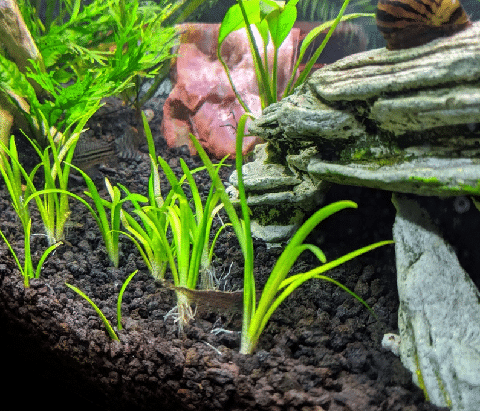
  • What do Goldfish eat? – Everything you need to know about feeding your pet fish

    What do Goldfish eat? – Everything you need to know about feeding your pet fish

    Goldfish are not easy. They produce more waste than fish three times their price and need more space than most people realize. A single goldfish needs 20 gallons minimum and heavy filtration. Most goldfish deaths come from undersized tanks and inadequate filtration.

    A goldfish kept properly is more impressive than most tropical fish. The problem is almost nobody keeps them properly.

    Ever wonder what do goldfish eat? Feeding your pet fish is a daunting task. Whether you have a aquarium or a pond, this post will help you figure out how to feed your little guys! This blog post is for all the goldfish owners in the world who want to know more about feeding their pets and make sure they’re getting everything they need.

    You’ll learn: What type of food do goldfish eat? How often should I feed my fish? What are some common mistakes people make when feeding their pet fish? And much more! So grab a snack (or two) because this long article is full of great information that will answer any questions you may have about feeding your beloved pet friends

    What Do Goldfish Eat in the Wild?

    Understanding the diet of goldfish means studying what they eat in the wild. Doing so will allow you to understand what kind of diet you need to replicate for them.

    As you may already know, goldfish belong to the Cyprinidae family, which means they share ancestry with the carps.

    Carps live in slow-moving waters that are rife with plants and vegetation, floating on the surface or thriving underwater. They also eat any animal matter they can find.

    So, it makes sense why wild goldfish are natural omnivores. It means that in the wild, they eat plant matter as well as animal matter.

    In the wild, plant matter means live plants and algae, while animal matter includes insects, insect larvae, zooplankton, tadpoles, and small crustaceans who make up protein sources. Some goldfish might even eat smaller fish.

    The main takeaway is this: goldfish will eat almost anything, as long as it fits in their mouth! So, you have to be careful with goldfish food because goldfish truly don’t know when to stop eating.

    What to Feed Goldfish

    Let’s break this down to a list than I’ll explain in detail. There are four general categories of food types for goldfish:

    Manufactured Foods

    This is the goldfish food we are most familiar with when we go into a pet store. These would be:

    • Dried pellets
    • Dried flakes
    • Fish Algae wafers

    Lower quality manufactured foods often will have fillers and are not ideal as the primary source of a goldfish’s diet. There are other prepared foods that manufacturers make that fall into our next category.

    Meat (Inverts and Insects)

    Daphnia

    Goldfish love insects and shrimp. These types of food are rich in protein and is given live, frozen, or freeze dried. The best prepared goldfish foods will often contain these:

    • Bloodworms
    • Blackworms
    • Ghost shrimp
    • Brine shrimp
    • Squid
    • Tubifex Worm
    • Daphnia
    • Crickets
    • Mealworms

    Vegetables

    Vegetables are a crucial part of goldfish food. The following are vegetables you can feed your goldfish. It’s always best to steam vegetables to sterilize them prior to putting in your fish tank.

    • Shelled peas
    • Leafy greens such as spinach, lettuce, chard, kale
    • Diced broccoli (microwaved or boiled)
    • Diced corn (microwaved or boiled)
    • Diced carrots (microwaved or boiled)
    • Diced zucchini (microwaved or boiled)
    • Cooked rice

    Don’t believe me? See these Goldfish in action feeding on spinach in Big Fish Little Fish Aquatics video below:

    Aquatic plants are also included in this list. Goldfish eat aquatic plants. The cheapest ones to try are Anacharis and duckweed.

    Fruits

    Yes, goldfish love fruits too! Here are their favorites:

    • Grapes (skinned and chopped)
    • Cucumber slices (boiled or microwaved)
    • Watermelon (sliced)
    • Orange (sliced)
    • Apple
    • Banana
    • Stawberries
    • Raspberries
    • Mangos
    • Pears

    Pros and Cons of Different Food Types

    The diet you can provide adult goldfish pets is divided into four main categories

    • Flake food
    • Pellet Food
    • Frozen Food
    • Live Food

    The last two categories are where vegetables and insects tend to be included. Let us have a look at the benefits and drawbacks of each goldfish food class.

    Flake Food

    Flake Food

    Flake goldfish food is the most commonly sought fish food as it is convenient. It is a mixture of many ingredients.

    It floats in your goldfish tank and gradually falls to the bottom. Dry flake food be very high in protein, which all fish need. However, they should not be the only food you give to your goldfish. Poor quality flake food can contain lots of fillers, which can cause serious health issues for your goldfish such as bloat.

    Pros

    • Affordable and easy to find in any pet store or aquarium supply store
    • It is dispensed through an auto feeder
    • High quality fish flakes is found with a large roster of nutrients
    • Perfect for feeding a large number of fish simultaneously
    • Small size is easy for your goldfish to nibble on

    Cons

    • Does not provide adequate nutrition
    • Cannot be dosed with vitamins
    • Uneaten food will dissolve quickly and pollute the goldfish’s tank water
    • Some fish accidentally gulp large quantities of air along with the food

    Pellet Food

    Like fish flakes, pellet food is available in a large variety and is fed to many different fishes.

    And the more you’re willing to spend; the more nutritious your goldfish’s pellets will be. However, unlike flakes, pellets are heavier and tend to sink instead of float, although you can find floating varieties.

    Pros

    • Their size makes it easier for goldfish to swallow without also ingesting large amounts of air
    • Since fish food pellets tend to sink, they is fed easily to bottom feeders
    • High end food pellets tend to be packed with more nutrition than high end flakes
    • Easier to measure the amount of fish pellets
    • Pellets have a longer shelf life than flakes
    • It can easily be used with good automatic feeders

    Cons

    • Like flakes, pellets can dissolve quickly and pollute the tank water
    • Your fish might accidentally eat substrate when foraging for pellets in it

    There are many solid brands for goldfish pellets like Saki-Hikari, Blue Ridge (for pond goldfish), and Hikari. NorthFin is a great brand to start with as it’s affordable and high quality.

    My Pick
    Northfin Goldfish Formula

    The Best Goldfish Pellet

    Specially designed for goldfish and free from fillers

    Buy On Amazon Buy On Chewy

    Frozen / Freeze Dried Food

    Frozen and freeze dried foods offer some of the best healthy offerings for your fish.Frozen foods are only available at local fish stores. Look for well known brands like Hikari or San Francisco Bay Brand. For freeze dried, I’m a fan of California black worms with vita-chem.

    Pros

    • Frozen and freeze dried food contains a large amount of protein, which your fish needs
    • not mixed with other chemicals/vitamins except phosphorus
    • Strengthens your fish’s immune system
    • It helps to promote a healthy and vivid coloration for your fish

    Cons

    • Prone to dissolving and affecting tank water
    • Frozen food must be stored in a freezer

    Live Food

    Any live food you give your goldfish will probably be their favorite ingredient in their diet. However, it’s important to remember that live food should make up only one part of your fish’s diet and not be the whole of it. Home cultivation of live foods is the safest way to obtain it, but it’s not for everyone.

    Pros

    • Live food is rich in nutritets and promotes healthy gut bacteria.
    • It closely mimic what fish eat in the wild
    • They are natural, not processed
    • It can help you with setting up breeding conditions
    • You can grow and cultivate live food by yourself
    • Great for working with finicky eaters
    • It tastes much better to goldfish compared to processed flakes/pellets

    Cons

    • Live foods are much more expensive than store bought foods (unless you raise your own)
    • It has a short shelf life
    • Messy to cultivate (and likely considered gross by your significant other or roommates ๐Ÿ˜…!)
    • Some live foods can carry and pass on diseases to your fish

    Gel Foods

    A type of fish food recently growing in popularity are gel foods. These fish foods are available in powder form and must be mixed with water to produce a gel like consistency.

    Pros

    • Gel fish foods automatically sink to the bottom of the tank, so your fish are less likely to swallow air when ingesting the food
    • Their moist texture makes gel foods easier for fish to digest
    • They have a high vegetable and protein content
    • Pollutes tank water noticeably less than do other food types
    • It is stored in a fridge for up to 2 weeks

    Cons

    • Gel foods smell bad when boiled
    • Has to be prepared in batches
    • Expensive
    My Pick
    Repashy Goldfish Gel Food

    Gel foods are a new development in the fish food industry. This food by Repashy includes a mix of inverts like krill and plant matter like Spirulina. Give it a try!

    Buy On Amazon

    What Do They Eat Besides Fish Food?

    In terms of “human food,” you can feed your goldfish any of the fruits, vegetables, or live food that we have discussed above.

    Remember that these foods should be offered to your goldfish at least once a week. You can also create your own recipes for your goldfish. We really like this instructional video by ThinFrog for homemade goldfish food. You can even eat this mix yourself ๐Ÿ˜Š

    More importantly, it’s of crucial importance to give them a balanced diet. Read more about that below.

    Diet

    It’s imperative to give your goldfish a varied diet if you want them to be healthy, live long, retain their coloring, and prevent digestive issues like bloat.

    A good staple tank diet can consist of goldfish flakes, pellets, and granules, supplemented with live foods such as brine shrimp, daphnia, and worms (you can find the full list of these foods above).

    The inclusion of vegetables is also essential. Shelled peas, duckweed, shredded lettuce, diced carrots. Goldfish will eat almost anything (once again, the full list is found above)!

    Meanwhile, the freeze-dried food you give to your goldfish will constitute their carbohydrate needs.

    Including floating flakes and sinking pellets in your goldfish diet is a good idea if you have many goldfish in your tank because then all your goldfish can eat equally. Remember, goldfish feed at all aquarium levels.

    Nutrition

    Here’s a breakdown of the nutritional values you should be aiming to fulfill when you feed goldfish.

    Protein

    It is the primary nutrient required by goldfish, who need a large amount of protein in their diet.

    Protein should make up about 30% to 45% of a goldfish’s diet. Balancing proteins with roughage is essential. This can either be achieved with insect and invert chitin or from fruits and vegetables. I covered chitin and roughage in my Malawi Bloat article. The same principles exist with goldfish and matter more due to their genetic modifications.

    Plant protein is easier for your goldfish to digest than animal protein (e.g., brine shrimp), but they do take well to live foods.

    Fat

    A goldfish needs about 5-10% of fat in its diet.

    Vitamins

    Goldfish require the A, D, and K vitamins to grow, as well as folic acid. Thankfully, most goldfish can produce their own required vitamins, but you might have to provide supplements now and then.

    Minerals

    Goldfish need minerals in small quantities. They get it directly from the water, so you don’t have to provide it.

    Carbohydrate and Fiber

    Goldfish require low amounts of fiber and carbohydrates. Carbs will be supplied by the flakes and pellets you give them, and fibers is had from live plants.

    Checking Fish Food Nutrition Contents

    When looking at manufactured foods, it is important to check the nutritional analysis and contents of what you are purchasing. Let’s look at an example from Repashy’s gel formula:

    Sample Nutritional Guide

    Here we see that the protein and fat mix are in the ranges we want. Next we need to look at the ingredients.

    Sample Ingredients Fish Food

    Looking at the ingredients, I see a mix of animal matter (Krill, Squid, Egg, Fly larvae), a mix of veggies (Spirulina, Rice, Kelp), and fruits (Watermelon, Banana). This food is checking off the list of everything we want in a balanced goldfish diet.

    How Often to Feed

    Goldfish owners should feed their pets twice a day, but always according to a set routine. It is important because it helps your goldfish stick to a routine and regulates their diet accordingly.

    When it’s feeding time, it’s also fun to watch the little ones get more active and gather near the usual feeding spot. But don’t get taken in when they do this outside of feeding time, because as we keep saying, one of the big no-nos is overfeeding your goldfish.

    The next question is how much to feed your goldfish. You should only give your goldfish as much food as they can finish within 2-3 minutes; any more than that, and you risk overfeeding them and overloading your filtration.

    The Don’ts of Feeding

    Here are some guidelines on what not to do when feeding your goldfish.

    Do Not Overfeed

    Even if you think your goldfish can eat more after you’ve fed them, resist the urge to give them more food.

    Remember, goldfish are greedy little things, and they don’t know when to stop eating, and they willbloat themselves if you allow it (fish even eat their own fish eggs).

    If you notice that your goldfish are looking a little swollen, you can safely assume that they’re probably bloated.

    Another way of knowing whether you’ve overfed your fish is to look out for a dirty tank. If the tank gets dirty quickly, your fish are producing too much waste.

    Do Not Leave Uneaten Food in the Water

    Remember, goldfish should not be given any more food than they can eat in 2 minutes or less.

    So, if there’s any uneaten food leftover in the aquarium after those 2 minutes are up, you should remove the food manually.

    Otherwise, it will disintegrate and dissolve, affecting water quality and, to an extent, making it uninhabitable. Too much waste in the tank water is one of the leading causes of goldfish death.

    Do Not Feed Too Much in Colder Temperatures

    If the water temperature falls below 45 degrees Fahrenheit or 8 degrees Celsius, feed your goldfish a smaller amount than you would. Goldfish are homoeothermic, meaning they can’t digest food as easily at lower water temperatures. This will apply to goldfish in ponds.

    Do Not Feed Bread

    In film and television, people are often seen feeding goldfish crumbs of bread. Do not do this. Bread swells inside the intestines and causes bloating.

    Do Not Feed Fatty Food

    Mammalian fats, e.g., fat from meat or beef heart, should not be fed to fish as they cannot digest it properly.

    Frequently Asked Questions

    Do they eat mosquito larvae?

    Yes. In the wild, goldfish will readily eat any insect larvae they find, and this, of course, includes mosquitoes.

    Do they eat shrimp?

    They absolutely do! Shrimp are one of their favorite foods and should be offered live, frozen, or freeze dried.

    Do they eat snails?

    They do. If you want to feed your goldfish snails, you have many options to choose from. However, it’s for this very reason that you should not keep snails as pets in the same aquarium as your goldfish.

    How long can they go without food?

    One goldfish will be able to survive from 1 to 2 weeks without being fed. If you’ll be unavailable to feed them for some time, why not get a neighbor or friend to feed them? Alternatively, you can use an automatic fish feeder, but the only type of food they’re compatible with are flakes and pellets.

    Do they have teeth?

    Yes, but they don’t look like what you might expect, and neither are the teeth positioned where you would expect. Goldfish teeth what are called pharyngeal teeth. They are flat in shape and help the goldfish to disintegrate their food. These teeth is found at the back of a goldfish’s throat.

    Do they eat other fish?

    Goldfish aren’t a naturally predatory type of fish, as long as they are well fed. However, since they do eat most things that fit in their mouth, goldfish are liable to eat their smaller tank mates.

    How often should I feed my them?

    Goldfish should be fed 2-3 times a day. Maintaining a routine will allow your aquatic babies to get accustomed to being fed at a certain time and complement their health. Be careful not to overfeed your goldfish because doing so can cause bloat or other illnesses like swim bladder problems.

    Closing Thoughts

    What do goldfish eat? As we’ve seen, goldfish foods come in a huge variety. Don’t just stick to processed food; remember to switch it up and give them a varied diet by including fruits and vegetables. That’s how you get some healthy, happy goldfish.

    And remember, never overfeed, and never leave uneaten food in the tank. Also, look out for large amounts of waste. Leave us comment below if youโ€™ve had any success incorporating these tips into your own routine so that we can share the good news with other goldfish owners out there.


    ๐Ÿ“˜ Want to learn more? This article is part of our complete Freshwater Fish Guide. Your ultimate resource for freshwater species, care tips, tank setup, and more.

  • How to prevent and treat Malawi bloat in your cichlids

    How to prevent and treat Malawi bloat in your cichlids

    Malawi bloat is one of the most dreaded conditions in the African cichlid hobby, and I’ve seen it take fish quickly when it’s not caught early. The insidious part is that by the time the swelling is obvious, you’re often already behind. Understanding the dietary triggers. primarily too much protein and not enough plant matter for mbuna. is the key to prevention, and that’s where most keepers go wrong.

    Malawi Bloat is a term that strikes fear into the hearts of cichlid keepers all over the world. Yes, this is a serious and often fatal illness but you don’t have to lose hope, if caught early enough, treatment is often possible. In this article, we’ll cover the identification, causes, and treatment of this illness so that you know what to look out for, and what to do if it affects your fish.

    Overview of Malawi Bloat

    NameMalawi Bloat
    Common TreatmentsMetronidazole, Epsom salt
    CausesHexmitia and secondary bacterial infections. Poor diet and stress
    Common SymptomsLoss of appetite/spitting out food, Hiding, Stringy white feces, Bloated belly/Dropsy, Lifted scales

    What is Malawi Bloat In Fish?

    Malawi Bloat is a pretty common, but serious illness that mostly affects African cichlids from East African lakes like Lake Malawi and Lake Tanganyika. This problem isn’t limited to African species from the rift lakes, however, and other tropical fish can also be affected.

    Malawi bloat is a disease of the fish’s digestive system that causes swelling and eventually death after a matter of days if left untreated.

    What Does Bloat Look Like?

    In its early stages, Malawi bloat causes some behavioral changes like hiding and a lack of appetite in your cichlid. You might also see, long, stringy white feces hanging from your fish.

    The physical appearance of Malawi cichlid Bloat in its more advanced stages is a bloated/swollen belly that looks like dropsy. The scales of the fish might also lift up, and there might be red markings around its vent. Here is an example of a fish that is recovering from bloat. This was the best video I could find without scaring folks. It’s from Universal Cichlids’ YouTube channel.

    Malawi Bloat isn’t the only cause of a swollen abdomen in cichlids, however, so don’t panic too soon. Often, your fish may simply be overfed or constipated. If a bloated cichlid is still eating, you’re in luck, it is highly unlikely to have Malawi Bloat.

    What Causes Bloat?

    The general consensus on the medical cause of Malawi Bloat is an increase in numbers of a protozoan parasite in the gut of fish. These protozoan parasites, or flagellates as they are also known, are tiny creatures that live in all fish and don’t usually cause any serious harm. The culprit that is to blame for bloat is called Hexmitia. I’ll leave a scholarly article at the bottom of this post that discusses Hexmitia more in detail.

    There is also some reason to believe that Malawi Bloat can progress into a bacterial infection, although this is likely to be a result of the increased parasite load that is already causing illness. Some keepers believe the disease is caused primarily by a bacterial infection like dropsy.

    The fact of the matter is that there isn’t (at the time of writing anyway) a universally accepted cause.

    You may be wondering why parasites and bacteria that occur naturally in your fish could become such a huge problem all of a sudden, and the simple answer is stress. When your fish is under stress, its immune system becomes compromised and parasites and bacteria that are usually kept in check start to multiply.

    There are many possible causes of stress, or stressors, for your fish. Some of the most important stressors are:

    Poor Diet

    Feeding high protein diets to herbivorous fish is thought to be a possible cause of Malawi Bloat. Whether it can be directly linked to the disease is not known for sure, but a poor diet is definitely a stressor in any fish.

    Always research the natural diet of your fish to find out if they are herbivorous, carnivorous, or omnivorous. Remember, if they don’t eat meat in the wild, it shouldn’t be on top of the menu in your tanks. Though this is a highly debated topic regarding protein, the real underlining matter is how much roughage the fish is eating. This can come in the form of protein, such as the chitin from arthropods like brine shrimp and krill.

    I know it can be difficult to work with frozen food, so I can point you to a pellet that works. This fish food is crated by Ron Demers, an African Cichlid breeder with over 25 years experience. He developed his food line to have the balance of proteins, veggies, and minerals. He removes all the fillers that you would get from lower quality foods. This is about as good as you can get with pellet food.

    Great Balanced Food
    Ron's Cichlid Food

    Ron is an African Cichlid breeder with over 25 years in experience who created a line of food that is well balanced. A great option when you can’t use frozen foods.

    Buy On Amazon

    Roughage, like with humans are needed to maintain a healthy digestive system. It would make sense you would want this to for your African cichlids. Manufactured foods like flake food will not contain the essential roughage. You will want to seek out more natural and raw foods.

    Poor Water Quality

    This is a big one folks, and there are quite a few possible causes of poor water conditions in your aquarium.

    Inadequate filtration often causes poor water quality in fish tanks. A good filter in a properly stocked and cycled aquarium should keep your ammonia, nitrite, and nitrate levels in check. A filter that can process 4 to 6 times the volume of your aquarium is generally advised. Cichlids are larger, active, and tough on a bioload. One should be looking at upgrading their filtration with quality biological media and filters with large media capacity like canister filters.

    Even with the right filter, you should be careful not to feed too much fish food and clean your tank regularly. Get into the habit of performing routine partial water change to keep your water conditions safe.

    Water Parameters

    Aquarium water chemistry is very important to keeping healthy, happy cichlids and you should always strive to keep parameters like pH, GH, and KH as close to your fish’s ideal values as possible. Be sure to use a water conditioner when adding new water to your aquarium during a water change and use aquarium salt as little as possible as this is thought to be a possible cause of Malawi Bloat. Keep your nitrates at management levels to also reduce the stress on your fish and monitor with aquarium test kits.

    Other parameters like incorrect water temperature, low oxygen levels, too much water flow, and unnatural and irregular lighting can also be very stressful for your aquarium fish.

    Stocking

    Stocking your tank with incompatible species can be a major source of stress and aggression for your fish. Cichlids tend to be territorial and many species are very aggressive in defending their territories, often injuring or even killing other fish in the tank. This aggression is a major cause of stress.

    When stocking your fish tank, make sure that all the fish in the tank are comfortable in the same water parameters and make sure that the species you choose are compatible. With many cichlids, you will need to get the ratio of males and females right to avoid aggression.

    Tank Layout

    The layout of your tank can also have a pretty big effect on the well-being of your aquarium fish. Species that prefer to live in open water can easily become stressed in a crowded tank for example, or a bare tank without hiding spaces can also cause significant stress to fish that live in very rocky areas with a lot of structure.

    Any one of these stressors could result in complications for your fish, and often the problem can be made even worse by a combination of factors. As a rule, always do your best to limit all of the stressors mentioned here. It could go a long way towards preventing most of the problems you might pick up in your tanks.

    Identification And Symptoms

    In the initial stages of Malawi cichlid Bloat, the signs that you have sick fish are mostly changes in behavior like:

    • Lack of appetite
    • Spitting out food
    • reduced activity
    • Increased breathing rate

    One of the tell-tale symptoms is the feces of the fish will be clear or white-ish and stringy, remaining attached for long periods of time. Normal feces can also occur in long strands but it will be thicker and darker in color. Fish may also struggle to stay right-side-up and may have problems with buoyancy.

    If you notice one or more of these symptoms in your aquarium fish, it’s time to act. By the time the disease becomes physically visible, sadly it’s often too late. When the disease becomes advanced, the gut area will swell up, often massively. This is where the term bloat comes from.

    Other common physical signs of Malawi Bloat are:

    • Ulcers on the skin
    • Red marks around the vent
    • Lifted scales

    Treatment

    If you’ve spotted some of the symptoms of Malawi Bloat in your cichlids, act immediately by moving the infected fish to a hospital tank for treatment. If more than one individual is affected, you may wish to treat the entire tank instead.

    Do a water test to check all parameters and look for any sign of other stressors in the aquarium. Try to fix any problems you find and go ahead and perform a large water change of up to 40% or so.

    Medication

    In the past, aquarists often made use of a product known as Mardel Clout for the treatment of Malawi Bloat. Unfortunately, this product has been discontinued and is no longer available.

    Currently, the most popular medicine for the treatment of Malawi cichlid bloat is Metronidazole, commonly known as Metro. This is an antibiotic that works on certain bacterial and parasitic protozoan infections.

    This drug is commonly sold as Metroplex, Flagyl, or Octozin. It is also used in the treatment of another common parasite-caused illness of freshwater aquarium fish known as hole in the head, or head and lateral line erosion.

    Metronidazole can be administered in two ways, orally, or dosed in the water column. Of course, a sick fish affected by Malawi bloat will not eat and so you’re probably going to need to administer treatment through the water column.

    At the same time, it is a good idea to feed your other fish a medicated food to prevent any more cases or treat them before they get serious. Again, Metronidazole-soaked food is the best option, even if the other fishes aren’t showing any symptoms.

    A great method for preparing medicated food is to use a product like Seachem Metroplex combined with Seachem Focus, which will bind the metroplex with the food and minimize it leaching out in the water. Another great combo is General Cure and Focus.

    Seachem Metronidazole

    Seachem Metro is great to use with focus as a medicated food supplement option

    Buy On Amazon

    To prepare one tablespoon of medicated fish food, Mix one scoop of Metroplex and one scoop of Focus with a little water. Soak your frozen or pellet fish food in the mixture for at least 15 minutes and store this food in a clean container. This medicated fish food can be kept refrigerated or frozen and it should be fed to your fish until any affected fish have recovered, or for up to 3 weeks. Move your affected fish to a hospital tank to keep the disease from spreading and to keep the fish from getting bullied.

    Other Treatments

    You can dissolve Epsom salt into your fish tank water to further assist your fish by decreasing bloating in the digestive system. Use about 1 tablespoon of Epsom salts per 5 gallons of water in your tank but add it gradually to prevent shock.

    You can also feed your fish peas at this time, which should be boiled lightly and allowed to cool. Peas are known to be a natural laxative for fish. During treatment, keep your lights low because this has a calming effect on your fish.

    If you’ve been successful in your treatment, the symptoms like swelling should subside and the scales should flatten out. Once your fishes have regained their normal, healthy appetite and begin to defecate normally again, you know you’re back on track.

    Another great medication that used to be available was Mardel’s Clout. Unfortunately, it has been banned due to having cancer causing agents. Hoping there can be a replacement in the market eventually as this medication used to be the go to when it came to fighting this disease.

    FAQS

    How do you fix bloat?

    The advised treatment for Malawi cichlid bloat is with the use of an antibiotic known as Metronidazole. This can be done after moving the affected fish to a hospital tank or you can medicate all of the fish if there is more than one case.

    You should try to find the root of the problem if possible and perform a partial water change. It is also helpful to dose the water with Epsom salt.

    Is bloat contagious in fish?

    It is unclear as to whether this disease is contagious but it definitely can affect several individuals in the tank at the same time. This could be explained by all your fish being exposed to the same stressors in their environment at the same, or maybe because of an increased load of bacteria and parasites in the system.

    While there isn’t a clear answer at this time, you are recommended to treat all of your fish with Metronidazole soaked fish food, even if they don’t show any symptoms.

    How do you treat dropsy in cichlids?

    Dropsy is a symptom of various conditions (including Malawi Bloat) that is seen as swelling of the abdomen. The best treatment for this symptom is to medicate with a product containing Metronidazole, dose Epsom salt, and feed boiled peas, as you would with Malawi Bloat.

    Will this type of bloat go away?

    Unfortunately, Malawi Bloat will not clear up without treatment. You should act quickly if you identify this disease in your cichlids because once the condition progresses to the point where symptoms are visible, it is often too late.

    How do you stop cichlids from bloating?

    By far the best way to stop cichlids from bloating is to keep them in a healthy environment that is specifically designed for their needs and to feed them correctly. In the case that Malawi cichlid bloat does occur, don’t beat yourself up about it, it is a common condition that even experienced keepers struggle with from time to time.

    The key is to keep an eye on your fish and their behavior and catch the problem early. Once diagnosed, treat the fish with a product containing Metronidazole and dose the water with Epsom salt.

    References & Further Reading

    When it comes to talking about fish diseases, we should use cited scientific articles when available. Here are several to help educate you on bloat and parasites.

    University of Florida – Management of Hexamita in Ornamental Cichlids

    Klinger, R. & Francis-Floyd, R. Introduction To Freshwater Fish Parasites. University Of Florida, IFAS Extension

    Francis-Floyd, R. Stress-Its Role In Fish Disease. University Of Florida, IFAS Extension

    Conclusion

    Malawi Bloat is a serious disease that often affects African cichlids and other aquarium fish. Itโ€™s important to remember that bloat is very scary and can happen at any time. This article has provided you with a number of tips on how to prevent it as well, but if your fish does get bloated there are some medications that will be effective in treating the disease. We encourage everyone who reads this blog post to leave us their thoughts below about what they think causes malawi bloat or anything else they might want more information on. Happy reading!


    ๐Ÿ“˜ Want to learn more? This article is part of our complete Freshwater Fish Guide. your ultimate resource for freshwater species, care tips, tank setup, and more.

  • Goldfish temperature – what, how and why

    Goldfish temperature – what, how and why

    Goldfish are not easy. They produce more waste than fish three times their price and need more space than most people realize. A single goldfish needs 20 gallons minimum and heavy filtration. Most goldfish deaths come from undersized tanks and inadequate filtration.

    A goldfish kept properly is more impressive than most tropical fish. The problem is almost nobody keeps them properly.

    You might not know this, but Goldfish can live in water of different temperatures. But whatโ€™s the range? What temperature is best for a goldfish? Why does it matter so much? Goldfish are some of the hardiest fish you will find, yes. And because of this, they certainly can survive at colder temperatures, but that’s not always the ideal setting for them to thrive in.

    In actuality, putting your goldfish in water of the wrong temperature can have irreversible adverse effects, and might even lead to death. You also have to take other factors into account, such as the species.

    In this article, weโ€™re covering everything you need to know about goldfish temperature. Let’s get started!

    What’s The Best Goldfish Temperature?

    The correct water temperature for a goldfish isnโ€™t so easy to figure out given that they can live in a wide range of temperatures. However, for all intents and purposes I’ll give a quick and general answer:

    The ideal water temperature goldfish will thrive in is between 65 and 72 degrees F / 18 to 24 degrees C.

    Now, the temperature range mentioned above is a general range for all goldfish. But it’s important to remember that these fish are mainly divided into two main categories: fancy and slim-bodied. And knowing about fish types will help you to determine the right water temperature range more easily.

    Letโ€™s have a look at the differences between the two types, and the associated temperature conditions.

    What is a Fancy Breed?

    What is a fancy goldfish

    Also called egg-shaped goldfish, fancy goldfish are characterized by their uniquely beautiful, sometimes bizarre, appearance. These double-tailed fish have round bodies resembling golf balls.

    The main deal with fancy goldfish is that they are more modified. Genetically speaking. Than slim-bodied goldfish. Itโ€™s also important to understand that these fancy fish are much more prone to freshwater fish diseases if their tank environment is incorrect.

    As such, these goldfish need more specific temperature and living conditions, and are better suited to tank living than pond living. They can’t survive in a wide range of temperatures, and as such, they should also not be kept in a tank with overly cold water — or water that is too warm.

    Here are some of the most commonly kept goldfish of the fancy variety:

    What is a Slim-Bodied Breed?

    What is a slim bodied goldfish

    If you know about comets and shubunkins, you already know what slim-bodied goldfish are. They are one of the most popular choices for novice aquarists. They are much more hardy, fast, and athletic than their fancy counterparts. This allows them to do pretty well in varying tank water qualities and cooler tank temperatures. This suitability to various water conditions makes them suitable for living outdoors. In fact, it’s actually recommended to keep certain slim-bodied goldfish in a pond instead of a tank, because they can grow quite large in size.

    Many people wrongly think that slim-bodied goldfish aren’t as attractive as the fancy kind, but this is untrue. You will find many common goldfish with unique and appealing physical traits, such as large nostrils, distinctive head growth, funny eyes and flowing fins. They also come in a variety of colors.

    Here are the best known fish in this category:

    Fancy vs Slim-bodied Temp Requirements

    Slim-bodied vs Fancy Goldfish

    Now that you know more about the differences between fancy and slim-bodied goldfish varieties, you can probably begin to guess that they have differing tank requirements when it comes to water temperature.

    Compared to other fish, goldfish of the slim-bodied variety are much better able to withstand fluctuating temperature changes and environments, such conditions would not only stress out a fancy goldfish but even put them at risk of death.

    So, it ultimately comes down to this:

    Fancy goldfish should be kept at a tank temperature between 65 and 72 degrees Fahrenheit if you want them to have a long and healthy life.

    In contrast, slim-bodied goldfish, as we have already established, are much better able to withstand colder water temperatures resembling those of outdoor ponds. They need a tank temperature between 65 and 72 degrees F, but have the ability to survive winters outdoors and can tolerate higher temperatures better.

    Indoor vs Pond Temp Differences

    Goldfish are exothermic, which means that their surrounding temperature determines their body temperature. They absorb and release energy from and into the water. Which means the bodily functions of this fish are entirely dependent upon the water temperature being correct.

    Digestion, immune system, respiration. These are all metabolic functions that are directly affected by water temp. The higher the goldfish water temperature in your tank, the faster these processes will be.

    So, for goldfish kept in a tank with a temperature of 75 degrees, for example, you’ll have to provide 5-10 times more food than those kept in an outdoor pond where the temperature is as low as, say, 58 degrees. In fact, they can actually get much colder. In this example video below by David Cook, his pond froze over and water temperature was around 41 degrees F. You can see the fish are exhibiting dormancy and we can see slim-bodied goldfish in the pond.

    When it comes to indoor tank temperatures, you also have to take into consideration the toxicity of ammonia concentration. When the water temperature is higher, the likelihood of poisoning from toxicity in the tank is higher. This becomes a bigger issue in aquariums as the overall tank volume is lower.

    Household Temperature Requirements

    Homehold Temperature Requirements

    For fish that youโ€™re keeping in home aquariums, itโ€™s important to take into account the temp range of your household. As a rule, aquarium water is at least 2 degrees warmer than room temperature1, so you need to take steps to cool your aquarium water by other means. This is particularly true if youโ€™re keeping your pet in a warm climate.

    First, ensure that your goldfish tank or tanks are not placed near direct sunlight. Next, you have the option of using your existing air conditioner or ceiling fan to cool the water (in the latter case, itโ€™s recommended to remove the goldfish tank lid to allow the water to cool faster).

    Alternatively, if you have money to spare, you might want to look into investing in an aquarium fan or a mobile AC for your fish. Some people like to float ice packs in their goldfish tank, but we donโ€™t recommend this as it can change the tank temperature too much too fast. And that can lead to temperature shock for your pet.

    Value Priced
    BLACK+DECKER Portable AC

    Mobile AC units are an unconventional, but very effective and cheaper solution over many chiller options

    Buy On Amazon

    Working through your room temperature is the best way to manage heater. An aquarium chiller is a consideration, but very expensive and not as versatile as a mobile AC solution that can function as a backup system in the event your central AC unit goes down.

    Temperature Shock and How to Deal With It

    Sudden tank temperature fluctuations can lead to your fish experiencing temperature shock. Changes of even 2 degrees can shock your fish. So, when youโ€™re performing water changes, itโ€™s crucial that you ensure the new water is within 2 degrees of the old water. For this, itโ€™s recommended that you use a digital aquarium thermometer to measure the water temperature.

    Now, itโ€™s a very important part of goldfish care to know when your fish is suffering from temperature shock. Here are the most common symptoms, which are similar to those of oxygen deficiency:

    • Sitting at the bottom
    • Rapid breathing
    • Lethargy / aimless floating
    • Excess slime production
    • Buoyancy problems
    • Gulping at the surface (insufficient oxygen).

    If you think your fish have been afflicted by temperature shock, donโ€™t do a big water change to set things right. This is counterproductive and actually over-stress your fish anew. Gradually bring the water temperature up if it has gone down.

    In the case of an overheated aquarium, you can follow the steps we outlined in the above section to quickly but manageably bring the temperature back down. This includes using a fan or air conditioner, or floating a frozen pack in the goldfish water. But be careful of not making the situation worse.

    If you live in a climate where you continually face problems of too-hot fish tanks, you might want to consider getting an aquarium chiller for your fish, if you can cover the cost.

    Do They Need an Aquarium Heater?

    Once again, this depends on the type of goldfish you have, as well as your surrounding climate. Fancy varieties can certainly benefit from the stability of an aquarium heater if the temperature fluctuate in your tank, or if your home is located in a cold environment, or ifย  the temperature is below 68 ยฐF (or 20ยฐC).

    You don’t have to get a tank heater for most slim-bodied goldfish. These guys can take good care of themselves and are very adaptable.

    Does Water Temperature Affect Breeding?

    Absolutely. The temperature of goldfish water determines their reproductive abilities. Male fish release higher amounts of androgen, a reproductive hormone, during spring time, and less of it during winter. This is because larvae are more likely to survive in spring temperatures. So it stands to reason that, if youโ€™re interested in goldfish breeding, you need to recreate these environment conditions.

    Start by lowering the temperature gradually to around 54ยฐF or 12ยฐC. Then, to induce breeding, slowly raise the temperature to 68 ยฐF. 74ยฐF (or 20ยฐC. 23ยฐC). This should help you induce breeding behaviors in your goldfish.

    Closing Thoughts

    The water conditions and temperatures at which you keep your aquatic pets greatly impacts their health and capabilities. If you want a more low-maintenance fish, we would not recommend getting yourself a fancy goldfish since they require stricter temperature conditions. But for slim-bodied fish, you should be prepared to keep them in an outdoor pond.

    Also remember that the temperature of the water in your tank should also be suitable for the other fish inhabiting it. So choose your goldfish tank mates wisely.

    If you have any questions about caring for goldfish or want more information on them feel free leave us a comment below!


    ๐Ÿ“˜ Want to learn more? This article is part of our complete Freshwater Fish Guide. Your ultimate resource for freshwater species, care tips, tank setup, and more.