Tag: Freshwater

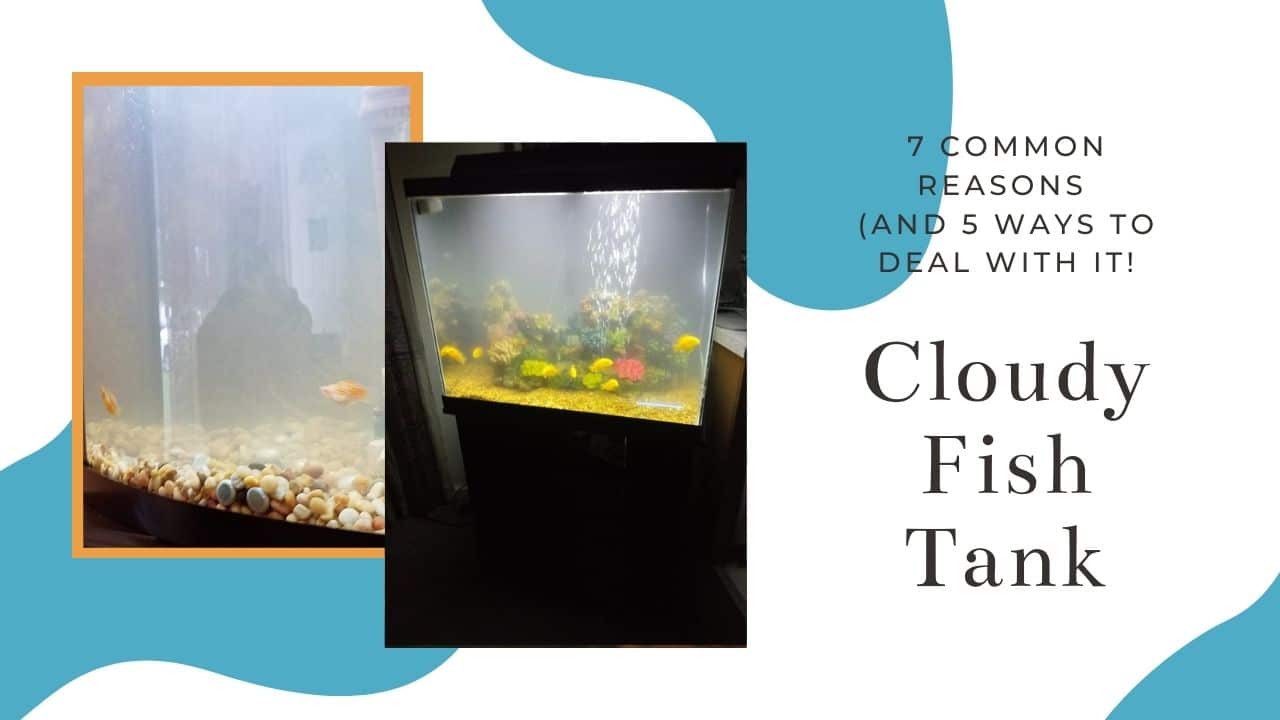
  • Cloudy Fish Tank – 7 Common Reasons (and How To Fix It)

    Cloudy Fish Tank – 7 Common Reasons (and How To Fix It)

    Cloudy water is one of the first problems new fishkeepers run into. and honestly, one that experienced hobbyists still deal with from time to time. I’ve troubleshot this in my own tanks more than once over the years. The frustrating part is that cloudiness has several different causes, and treating the wrong one can make things worse. Once you know how to read the type of cloudiness, though, most cases clear up quickly.

    Dealing with a cloudy fish tank? If you have dealt with this, you will know it is one of the most frustrating things that can happen in the fish tank water. I get your pain, as I have been in the hobby for over 25 years. While the problem is not as common on the saltwater tank side, it is far more common for freshwater tanks.

    There are several reasons for cloudy water in freshwater tanks. In todayโ€™s post, Iโ€™m going to go through the 7 most common reasons for a cloudy fish tank, and 5 ways you can go about resolving the issue. Knowledge is power in this hobby and Iโ€™m here to empower you! Letโ€™s get started.

    Key Takeaways

    • The most common reason for a tank that is murky or water cloudy is having a new tank
    • Proper maintenance and stocking are good ways to prevent a tank from becoming cloudy
    • If your tank needs to be cycled, consider bacteria in bottle products
    • Glass can also make your tank look hazy, clean the inside and outside of your glass

    Why Is My Fish Tank Cloudy? The 7 Most Common Reasons for Cloudy Water

    Murky water sucks. It makes your tank look ugly and unappealing. Fortunately, there are 7 common reasons for it occurring, they are:

    1. You Have A New Tank
    2. You Are Overfeeding Your Fish
    3. You Have Too Many Fish
    4. You Don’t Have Adequate Filtration
    5. There Is A Dead Fish Or Decaying Matter
    6. Your Glass
    7. Your Substrate

    Check out our video from our YouTube channel below. We go into more detail in the blog post. Free to follow along with both.

    1. New Aquarium and Murky Water

    Cloudy water in a fish aquarium and a new tank go hand in hand with our hobby. It is very common for this to happen when you are cycling a tank or have a newly-cycled tank. When you start adding livestock to the tank, you introduce new sources of nutrients and waste to the tank. If you add too fast, the system is thrown off balance.

    As a result of this imbalance, the beneficial nitrifying bacteria in your tank reproduce like crazy in order to digest the excess nutrients. The massive amounts of new bacteria create a cloud, which results in your water looking cloudy. The best way to fix cloudy water issues is patience. Just stop adding fish and let your tank settle down. It should clear up on its own.

    During this time, it is a good choice to do a water test with an aquarium test kit. You will want to look at the big three new tank parameters, which are going to be Ammonia, Nitrite, and Nitrate. Ammonia and nitrite are going to be your biggest concerns with a brand-new tank.

    2. Overfeeding

    If you have an established tank, this is a common reason for tank water in your aquarium to become cloudy. It’s understandable to want to feed your fish all the time. After all, they usually greet you when they see you with their cute little faces. They look at you, and the top of the tank waiting for you to feed them. If you start feeding a lot, your system gets thrown off balance and a bacteria bloom occurs.

    Lay off the feeding for a bit and test your aquarium water. It’s actually a good thing to have your fish go without food for a day to let their digestive systems settle down. Excess food is problematic and can lead to dirty aquarium water. The only fish you don’t want to do this with would be fish that lack stomachs, like goldfish. Look out for automatic fish feeders as it is easy to overfeed with them.

    3. Too Many Fish

    Too many fish in the tank is going to lead to a dirty-looking aquarium. Adding them too fast will also cause the water in the tank to look clouded. Slow yourself down with additions and avoid adding any more fish until you get this problem under control.

    When planning out fish, a really great site to get an overview is AdAdvisor. Just plug in the fish you want to add and run the calculator. As a rule of thumb, you do not want to increase your fish population by 50% and you want to spread out your additions to 4-6 week timelines so your tank has time to balance out. The only time I feel where you can get away from this is if you have done a dry start for a planted aquascape. Here is the link to the calculator.

    4. Inadequate Filtration

    Filtration is a major cause of this problem in an established tank. The main culprit here is going to be your mechanical filtration. Cheaper power filters tend to use coarse foam, which finer particles will pass through. When it comes to canister filters, the issue may be the choice of foam. Fortunately, high-end brands like the Biomaster Thermo will have multiple foam densities you can choose from. If you have a heavily populated tank, you might want to consider going for a finer foam.

    If you are using a power filter, you might want to consider adding a layer of filter to improve your mechanical filtration. I prefer to use the blue floss that is put in canister filters and sumps. You can purchase it in bulk online and then cut it to fit.

    5. Dead Fish Or Matter

    Decaying matter can cause murky water in your tank and will get dirty fast. The biggest piece of decaying matter is going to come from a dead fish. Check your tank every day and see if all the fish you own are accounted for. Sometimes, if your fish are breeding, you may have dead fry that is dirtying up your tank water.

    The other factor is going to be chunks of uneaten fish food and decaying plant matter. Check your substrate for both and trim off any decaying leaves you see on your live plants.

    6. Your Glass

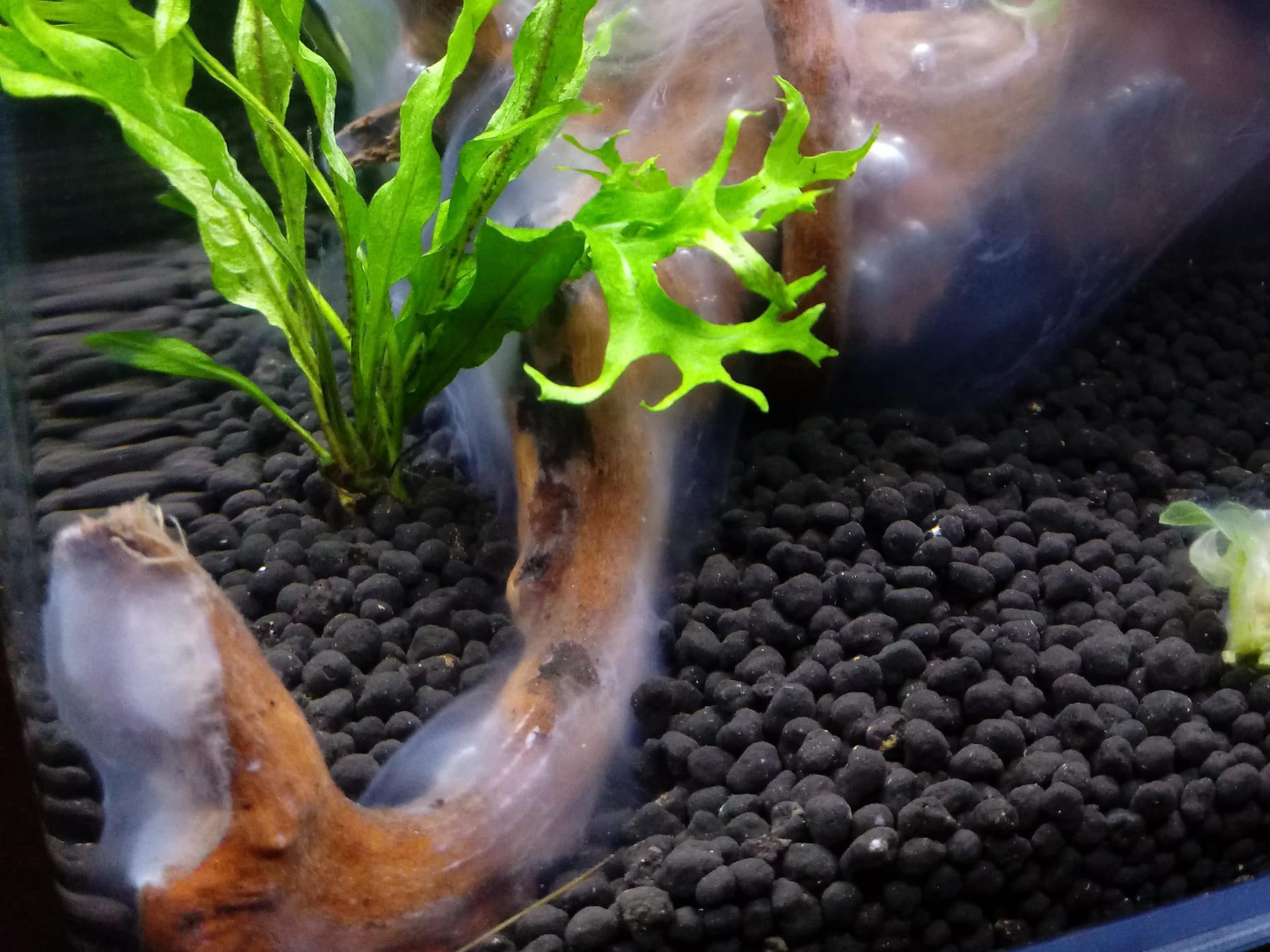
    Your glass can be a source making your tank water look murky. The main cause is from bacterial biofilm. Biofilm looks the most obvious on aquarium driftwood like in the photo below, but it also grows on your glass.

    Biofilm In Aquariums

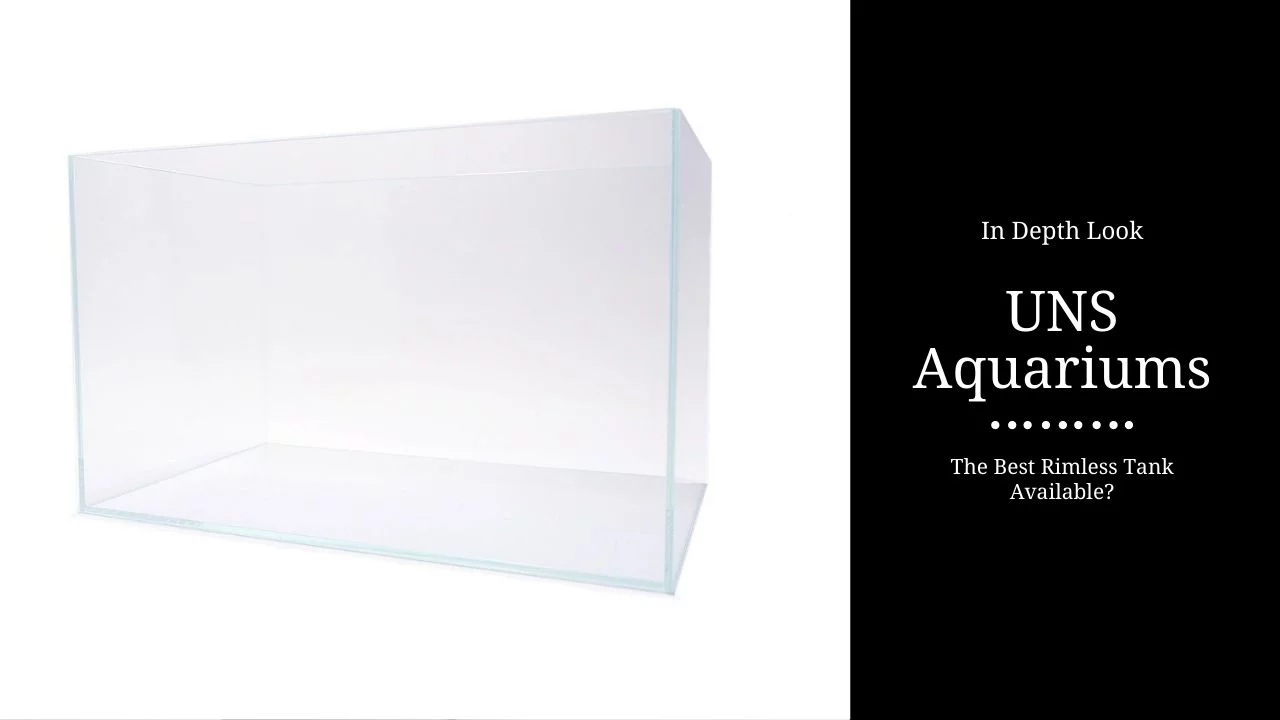
    This biofilm will stick to your glass and give it a cloudy look if left unchecked. On larger fish tanks, your tank will have a slight tint to it that will make it look a little darker. Low iron rimless aquariums and acrylic tanks will have better clarity and show better than traditional glass tanks.

    7. Your Subtrate

    New substrates can cause cloudiness or milky water that will look hazy if they are not rinsed. Always make sure you wash your substrate thoroughly before putting it in your aquarium. The other cause can be an existing substrate that is stirred up. Stirring up too much of your substrate at once can cause the release of additional nutrients, which will cause a bacterial bloom or cause discoloration of your aquarium water causing it to look milky. If you are going to stir your substrate, it is best to do so when gravel vacuuming so you get most of the debris that comes out

    5 Ways To Deal with It

    Alright, so we know the 7 common causes of cloudy aquarium water. Let’s talk about what we can do about it. Itโ€™s actually simpler than you think and here are 5 ways to get rid of it:

    • Proper Tank Maintenance
    • Making Sure Your Glass Is Clean
    • Proper Filtration Maintenance
    • Cycling Your Aquarium
    • Improving Quality Of Light Duration

    1. Proper Aquarium Maintenance

    Dirty Fish Tank

    Proper maintenance on your tank is going to be the #1 solution for white cloudy aquarium water. Most problems in this hobby can be resolved with a water change. A water change can bring balance back into your aquarium and balance the water chemistry. In most cases, clouded water is going to be a result of a bacterial bloom due to spikes in nutrients. Doing a water change will remove these nutrients and get everything in balance. If the problem is more serious, you will need to do more water changes over time to get everything back to where it should be.

    In extreme cases, 40-50% water change every day or every other day is not uncommon when dealing with a serious nutrient spike that causes a tank to become dirty. Gravel vac your substrate. If you have a fine substrate, surface skims it with the gravel vac to remove the top layer of debris.

    2. Making Sure Your Glass Is Clean

    Both the outside and inside of your glass matter. Outside of the tank, water stains on the glass can make your tank look like there is hazy water when trying to look in. Work with a safe cleaner, like white vinegar, or better yet, use a DIYers secret weapon – Magic Erasers!

    Yes, that’s correct. The original Magic Eraser by Mr. Clean has been a blessing for acrylic aquarium owners for many years and goes unnoticed in our hobby. I’ve used it on the outside of the glass with great results. Rumor has it that it works inside the tank as well, but I’m not that brave ?. Still, I’ve had hobby friends tell me that it’s like cleaning with a plastic scraper and is completely safe. I’ve only had personal experience on the outside. For the inside, I prefer a razor blade for glass or a Flipper Cleaner.

    My Pick
    Flipper Algae Scraper

    I love the Flipper. Just put it in your aquarium and clean from the outside. You can even move it to other sides of the tank with its flipper feature. Simply Amazing!

    Click For Best Price Buy On Amazon

    The Flipper is amazing for cleaning the inside of your tank. It’s been my go to for years. It is also a great way to get your kids involved, as they can clean from the outside without having to put their tanks in the tank. There is also a cool factor with flipper the scraper when you move it to the other sides of the tank. It will scrape off the toughest of algae from your glass and make your glass look spotless!

    3. Proper filtration maintenance

    If you slack on filter maintenance, this can lead to dirty tank water problems. Your mechanical filtration is not operating at its maximum efficiency. Get into those filters and replace your filter floss and wash out your sponges. You should be changing out your filter floss every other week. For all the filter media you clean, make sure you clean them out with your tank water. If you use tap water or RO water, you risk losing those beneficial bacterial colonies in the process.

    Clean out the piping in your power filters and the tubing in your canister filters. If you have mechanical filtration, consider replacing it for a fresh set. Sometimes upgrading to a premium chemical filtration media like chemi-pure will help, though it is expensive to do. All this maintenance pays off because your filters will operate at their best, keeping your tank water looking crystal clear.

    4. Cycling Your Aquarium

    If you have a new tank, cycling your aquarium is your first step to avoiding  having a brown water tank. Reduce your feeding and donโ€™t add any more fish until the problem goes away. Test your water for ammonia and nitrite levels and do a water change to reduce the excessive nutrients.

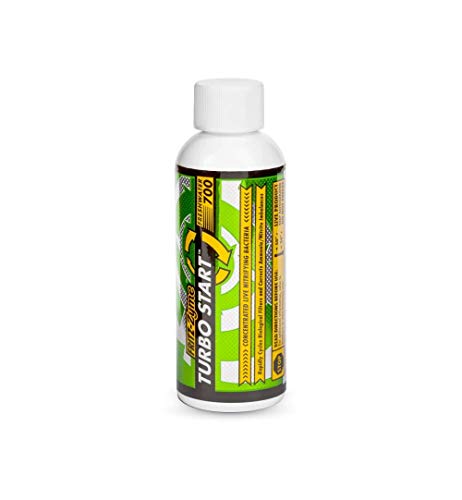
    Another thing you can consider if you have a newer tank is getting used filter media from a disease-free tank. This will import beneficial bacteria that will jump-start the cycle. You can also opt for using beneficial bacteria-in-a-bottle solutions like Fritz Turbo Start 700.

    My Pick For Freshwater Bacteria
    Fritz Turbo Start 700 Freshwater

    Fritz Turbo Start is known in the industry as the fastest acting nitrifying bacteria you can purchase. This 700 version is specialized for freshwater tank and has my highest recommendation

    Buy On Amazon Click For Best Price

    If you are looking for a longer-term solution, a UV Sterilizer is a great addition for not only water clarity purposes but also for disease mitigation. Check out my article on Aquarium UV Steriliziers for more information on what makes a good one. There are many out there, and only a few that I would recommend.

    5. Improve quality of light and Reduce Lighting Times

    Poor lighting can really dull out your aquarium and give it a hazy look. This is more common with LED lighting as the light is more focused than T5 lights. Because the light is focused, it can lead to a disco effect and shadows can dull out your tank. I prefer an LED fixture that expands to the length of the entire tank like the Twin Star or Fluval planted tank led.

    If you have T5s, it may be time to replace the bulbs. Getting new bulbs will brighten up the aquarium and make it look more lively and clearer. T5s in general also tend to display a clearer tank, given their even spread of their light. You can get close to this with LEDs, but only with higher end LEDs, like the ones I mentioned previously.

    Reducing your lighting time can also help. This will slow down the reproduction of algae which will keep your glass and water clear.

    Common Questions (FAQS)

    Why Is My Aquarium this way?

    A tank can get dirty or look clouded for one of the 7 common reasons. You have a new tank, you are overfeeding, you are overfeeding your fish, your tank is overstocked, you do not have enough filtration, there is a dead fish or decaying matter in the tank, your glass needs to be cleaned, or you have put in new substrate.

    Is Dirty Water Bad For Fish?

    The appearance of clear cloudy aquarium water is not bad for a fish, but is a sign of imbalance and possibly a greater problem. The first thing you should do when you see hazy water would be to assess your water quality by testing your aquarium water. Get a baseline of your nutrient levels and take action as needed. Usually a water change will help put things back in balance.

    How Do I Make My Aquarium Water Crystal Clear?

    Great filtration, a good aquarium maintenance schedule, and keeping your stock levels stable are the best ways of making your aquarium water crystal clear. You can also purchase equipment and supplies that can assist greatly like an aquarium UV sterilizer.

    Will A Filter Clear Hazy Water?

    A filter can fix cloudy aquarium water. If your tank is new, your filtration system needs to catch up to balance your tank. If you have a heavily stocked tank, you may lack filtration and may need another filter to alleviate water that looks cloudy or hazy. Other times, the filter is the problem because itโ€™s dirty and needs to be maintained.

    Can Driftwood Make My Aquarium Murky?

    Driftwood can make a tank look cloudy or murky. However, the most common issue with driftwood is it can turn your aquarium water a tea like color due to the release of tannins. Some aquarium owners like this look, I personally donโ€™t. If you want to avoid that tea color, purchase a driftwood with a low tannin count like Manzanita or Tigerwood

    Conclusion – Share Your Experiences

    Implementing a proper aquarium care routine will help to avoid cloudy water tanks. Various types of fish that can also make the water cloudy such as Yellowfish and tropical fish, so you have to make a regular cleaning schedule to maintain your aquarium. Tropical fish also require specific water and temperature conditions, or they will get sick. Sand and other equipment can also affect the water in your aquarium when not properly cleaned.

    Have you dealt with dirty water before? How did you clear it up? Share your experiences below and let’s start a conversation! I hope you found this article helpful. I also love to hear from my readers. We have all dealt with this before and we can work together as a community to help others. Thanks for reading and see you next time!

  • Koi vs Goldfish: 7 Key Differences That Determine Which Is Right for Your Pond

    Koi vs Goldfish: 7 Key Differences That Determine Which Is Right for Your Pond

    Koi are pond fish. Not aquarium fish. They reach 2 to 3 feet long and live 25 years or more. The commitment is closer to owning a dog than keeping a fish tank.

    Koi outlive most pets. Make sure your pond plan matches a 25-year commitment.

    Origins

    It’s safe to say that Goldfish are the distant “elder” cousins of Koi fish. I’ll tell you why.

    Goldfish and Koi both originated from East Asia as a result of selective breeding. However, goldfish were bred from a dull olive green colored edible fish, namely ‘Prussian Carp’.

    Whereas, Koi are colorful variants of Amur carp, which emerged in the 1820s. Up until recently, it’s believed that Koi fish have been bred from Common Carp (Cyprinus carpio). Ranger Homesteading has an excellent video below that goes into greater depth about the history of koi fish.

    However, goldfish are a species of their own, while Koi still falls under the Cyprinus carpio category.

    Appearance

    Koi and Goldfish look so much alike when they’re young, wild, and free. However, as they age, things start to change.

    The most significant difference between Koi and goldfish lies in their body shape. Koi are all almost the same size, but goldfish are wider and have an egg-like appearance. However, most goldfish have a variety of body types and shapes depending on their characteristics. They have dorsal fins and tail configurations with round, bulging eyes.

    On the other hand, Koi have a common body shape that remains the same regardless their type with their fins and tail connected. The most interesting trait of Koi is that they possess the same body size even with different color types that leave their owners in awe.

    Appearance-wise, size is the most dominant difference between Koi and goldfish. Goldfish are smaller in size and grow to around 6 inches long. However, in some rare cases, they might grow to be around one foot long.

    Koi, comparatively grow out to be much bigger with an average size of around 20 inches to 25 inches. In some rare cases, Koi are found to be 4 feet long, if given enough food and space.

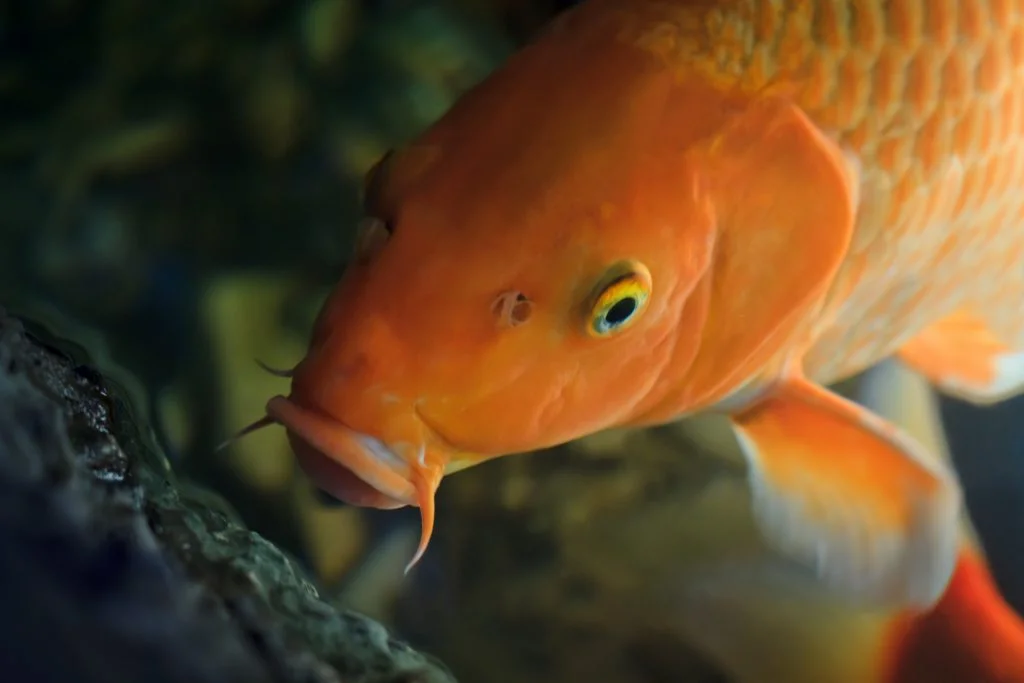
    Personally, when I was new to fish keeping, I started distinguishing between goldfish and Koi based on their barbels. Barbels are whiskers at the side of the mouth. If the barbels are present, you’ve got Koi. If not, then goldfish.

    Colors

    When it comes to colors, the difference between Koi fish and goldfish are more apparent. That’s because Koi shows a more diverse and striking range of colors than goldfish. This may be because Koi fish are the descents of Common carp, and therefore, show colors in the metallic coloration along with red, orange, yellow, black, and white. The patterns are more unique to Koi due to their selective breeding.

    Contrastingly, goldfish come in red, orange, grey, brown, yellow, white, and black with the exception of gold coloration.

    Fins

    One significant difference between Koi and goldfish lies in the fins and tails.

    Goldfish are graced with two sets of paired fins (pectoral and pelvic) and three sets of single fins (dorsal, caudal, anal). Whereas, the fins of Koi are as simple as a fish’s fin can get.

    There’s an exception in Koi varieties with long, flowy fins, namely Butterfly Koi. And even though, many pond owners love the flowy look of butterfly Koi, Koi enthusiasts do not consider them to be true Koi.

    In addition to that, the distribution of fins in goldfish is highly dependent on the tails. Common goldfish is single-tailed or double-tailed where the single varieties have a single caudal and anal fin and double varieties, such as the fancy goldfish possess two caudal and anal fins. Some goldfish, like the Shubunkin tend to have the fanciest scales and colors that Koi have.

    Lifespan

    Do you know?

    The oldest known Koi in Japan lived for about good 226 years, whereas, the oldest known goldfish lived for about 43 years. Hence, this record speaks volumes about their overall lifespan.

    Koi fish live much longer than goldfish. It is due to the dramatic changes in the body shape of goldfish that lessens their life expectancy.

    The fun part is, both, Koi and goldfish reach their maturity by the age of two or three. However, their lifespan differs from each other. Koi fish are believed to live for about 25 to 35 years or over, while the life expectancy of goldfish is around 5 to 10 years depending on the pond conditions and nutritional analysis.

    Food

    Concerning the matters of food, Koi fish and goldfish are so much similar. They both are omnivorous, lack a traditional stomach, i.e., food passes into the mouth and then straight to the intestine.

    However, due to the variety in body shape and sizes of Koi. Koi Food is tailored for each size – from pellets to food sticks. Also, Koi fish are voracious eaters and might end up eating other small fish in the pond.

    Compared to Koi, goldfish have smaller mouths and pharyngeal teeth to crunch the food into smaller pieces. Like Koi, they are omnivorous and enjoy flakes and small pelleted food.

    Aquarium Life

    One of the most frequently asked questions about Koi and goldfish is about their aquarium life.

    I’ve talked about this before; Koi don’t do well in aquariums. They are born to thrive in garden ponds with at least 200 gallons of water per fish, a capacity of 1000 gallons, and in a pond at least 2 feet in depth.

    Therefore, Koi demands a proper pond with optimal water level and quality. For raising healthy and happy Koi, they should be kept in Ponds, provided that the oxygen levels, diet, and water quality are top-notch.

    On the other hand, goldfish are happy and healthy in aquariums, especially the fancy varieties, which are slower and incompetent than the common goldfish. Furthermore, if you decide to keep your goldfish in indoor aquariums, it’s recommended that you provide them with enough space to move around freely and grow healthily.

    Compatibility with Plants

    Plants With Koi or Goldfish

    If you fancy submerged plants in your garden ponds, this news might disappoint you. Koi do not get along with most aquatic plants. As I mentioned before, Koi are avid eaters with bigger mouths and they ingest small aquatic plants, leaving little to no vegetation behind.

    Goldfish, as opposed to Koi, are fast friends with aquatic plants and will swim around lotus and Lillies merrily, without causing any damage.

    You can keep plants with Koi, but you need to be more selective with the varieties you choose versus with Goldfish.

    Diseases

    Koi are a very hardy breed of fish compared to goldfish, which makes them a perfect fit for extreme weather. However, under circumstances, Koi develop some conditions that might cease their growth and overall performance. Some common Koi diseases are Aeromonas, carp pox, Dropsy, costia, columnaris, and anchor worms. 

    These diseases are either caused by bacteria, viruses, or some parasites, and the best treatment for Koi diseases is isolation. However, the problem is, Koi is a powerful and large breed of fish. It is a nuisance to capture them single-handedly. It’s recommended that you use a net with long handles to reach your Koi without causing much trouble.

    On the other hand, goldfish may be low-maintenance and easy to care for, but they are more sensitive and demand specialized care. This is especially true if you prefer fancy goldfish.

    Some of the most common Goldfish diseases are ich, flukes, fish lice, velvet, fin rot, etc., The treatment of goldfish is much easier than Koi because of the water volume. Also, goldfish are smaller in size and is removed with a regular-sized net.

    FAQs

    I’ve compiled a list of the most frequently asked questions concerning Koi vs Goldfish. Please don’t hesitate to comment if you have more to add.

    Can they survive in the same pond?

    Frankly, yes, under some circumstances.

    As I discussed earlier, Koi are much larger in size than goldfish. Therefore, you would need ample space to fill your ponds with Koi and goldfish, both.
    Furthermore, goldfish enjoy the company of aquatic plants while Koi will enjoy to eating most of them. Hence, there should be a partition for aquatic plants to keep the two breeds catered to and happy.

    The last point is the treatment of diseases. Koi body has different requirements, and since they are graced with larger bodies than goldfish, it is tough to catch and isolate them. Therefore, you need better nets with a solid strategy to deal with such unfortunate situations.

    In addition to these points, despite being hardy and low-maintenance, Koi and goldfish demand proper attention and extensive care. Consequently, you will have to invest more time and knowledge in keeping the two together.

    Other than that, Koi and goldfish get along pretty well and enjoy each other’s company. In fact, many expert Koi enthusiasts love keeping their Koi and goldfish together for ornamental purposes.

    Will koi fish kill goldfish?

    In my years of experience, I’ve never experienced this scenario personally. However, I believe accidents may occur only if you keep the two fish of different sizes together. Koi are greedy and voracious, and they might end up killing fish smaller than them, including goldfish. Therefore, while keeping the two together, be wary of their body size.

    Are koi fish aggressive to Goldfish?

    No, Koi are not aggressive to goldfish. However, there are a few exceptions, such as fancy varieties of goldfish that are unhurried, clumsy, and slow, which might not get along with Koi due to their competence for food and speedy nature. As a rule of thumb, avoid keeping Koi with any small and slow specie

    Koi vs Goldfish. Which Fish Is Right for My Pond? (Main Differences)

    Koi and goldfish, both are a mystical addition to your garden ponds. However, there comes a time when you have to choose between the two.

    So the answer to which is right for your pond lies in your preferences, available space, and time investment.

    Koi offers a rich variety of colors and different sizes to your pond. Yet, they need ample space to thrive and grow happily. You should only consider keeping Koi if you can at least manage 200 gallons of water per fish and have a pond of over 1000 gallons. The fish themselves are also more expensive than goldfish. Since they require large ponds, pond maintenance would require a proper routine with bigger and more expensive equipment to maintain water quality.

    Whereas, Goldfish are much smaller in size and require at least 20 gallons of water. Furthermore, goldfish can thrive in small tanks or aquariums provided that the water quality is excellent. However, due to the varying body shape and configuration, they are slightly more difficult to take care of than Koi.

    All in all, if you have a pond that is less than 1000 gallons, you should go for goldfish.

    Alternatively, if you want a breed hardier than goldfish and you can invest time and money in building a larger pond, Koi would be your best bet.

    Koi vs Goldfish Differences. Which Is The Best Fish For Garden Ponds?

    Apart from body sizes and pond requirements, a few things should be taken into consideration while choosing between the two fish breeds.

    The longevity or life expectancy of Koi is much greater than that of goldfish. Hence, if you’re looking for a long-term investment for your garden ponds, you should definitely opt for Koi.

    Also, if you’re someone who admires a pet’s personality, Koi would be compatible with you. Scientists believe that Koi are more social, smarter, and have more developed personalities than goldfish. And that’s why most fish connoisseurs prefer Koi over goldfish because what’s more rewarding than keeping your fish as companions throughout your life and establishing a healthy relationship with them?

    Nonetheless, both fish make excellent pets that add value, life, and intense colors to your garden ponds.

    Closing Thoughts

    As I promised, after reading this article, you’ll no longer feel the need to ask, Koi vs. Goldfish: which is which?

    Be informed that the major difference between Koi and goldfish lies in the size, lifespan, colors and patterns, appearances, and most importantly, the presence of barbels. Other than that, both are prized pets, loved and adored by pond keepers.


    ๐Ÿ“˜ Want to learn more? This article is part of our complete Freshwater Fish Guide. Your ultimate resource for freshwater species, care tips, tank setup, and more.

  • 7 Best Sponge Filters โ€“ Tested and Reviewed for Every Tank Type

    7 Best Sponge Filters โ€“ Tested and Reviewed for Every Tank Type

    Sponge filters are one of the most underappreciated tools in the hobby. simple, cheap, and brutally effective for biological filtration. I use them religiously in my quarantine tanks because they’re gentle on fish, easy to seed with beneficial bacteria from an established tank, and nearly impossible to break. They’re also my top recommendation for betta tanks and shrimp tanks where strong flow from a HOB can be a problem. After testing many brands over the years, there’s a clear difference in sponge density, fit, and airflow efficiency between the best and the rest.

    With over 25 years of experience in the aquarium hobby, Iโ€™ve assisted countless clients, hobbyists, and readers like you in setting up successful aquariums. Iโ€™ve personally tested these products in real world scenarios to determine the best sponge filter on the market.

    The Top Picks

    Editor’s Choice
    Hikari Bacto Surge
    • Name brand
    • Highest quality
    Best Value
    Qanvee Filter
    • Chemical filtration
    • Great price
    Budget Option
    Uxcell Biochemical
    • Well priced
    • Hikari clone

    Let’s get straight to the point and talk about my top picks among the crowd of sponge filters available. So, among all the sponge filters I reviewed, the Hikari Bacto Surge is the clear top pick. It has the best song material and is of the highest quality. The Qanvee offers chemical filtration and a dual sponge setup at a great price. The Uxcell Biochemical is a clone of the Bacto Surge at a much cheaper price (though the sponge material isn’t the same quality. is which one is the best sponge filter? We have several category winners in this review.

    The Candidates – A Quick Overview

    Below is a list of the best sponge filters you can purchase today. I will discuss the pros and cons of each filter below. 

    ImageNameFeaturesLink
    Editor’s Choice
    Hikari Bacto Surge Sponge Filter
    Hikari Bacto Surge Sponge Filter
    • Name Brand
    Buy On ChewyBuy On Amazon
    Best Value
    Qanvee Sponge Filter
    Qanvee Sponge Filter
    • Chemical Filtration
    • Price
    Click For Best PriceBuy On Amazon
    Budget Option
    Uxcell Biochemcial Sponge Filter
    Uxcell Biochemcial Sponge Filter
    • Best price for value
    Buy On Amazon
    Aquarium Technology Hydro-Sponge Filter Aquarium Technology Hydro-Sponge Filter
    • American Made
    Buy On Amazon
    AquaNet Sponge Filter AquaNet Sponge Filter
    • Chemical Filtration
    Buy On Amazon
    Huijukon Air Drive Sponge Filter Huijukon Air Drive Sponge Filter
    • Dual Sponges
    Buy On Amazon
    Huijukon Sponge Filter Kit Huijukon Sponge Filter Kit
    • Includes Air Pump
    Buy On Amazon

    The 7 Best Sponge Filters Reviewed

    Now that you know the 7 I considered and the top choices, let’s look at each one in detail to see what makes these products stand out. Starting with our top choice from Hikari! Check out the video from our YouTube Channel below.

    1. Hikari Bacto Surge – High Quality Name Brand Product

    Editor’s Choice
    Hikari Bacto Surge Sponge Filter

    The Best Sponge Filter

    With a name brand and high quality reputation, the Bacto Surge separates itself from the pack

    Buy On Chewy Buy On Amazon

    The Hikari Bacto Surge Sponge Filter is the name brand sponge filter on this list. Hikari is a highly quality name brand in the industry. They did not cheap out on this filter. The bacto surge filter uses a highly porous sponge filter that maximizes biological filtration for beneficial bacteria that is better than most filters on this list. Because of their construction, it is easy to modify these filters to make them more silent by inserting an air stone inside them.

    Like the Aquarium Technology filter, the Bacto Surge is more expensive than most on this list. Unlike the aquarium technology filter though, this one is more readily available in fish stores.

    Pros

    • Top grade foam material
    • Can be modified to be make more silent
    • Hikari Name

    Cons

    • Expensive
    • No Chemical filtration

    2. Qanvee Bio

    Best Value
    Qanvee Bio Sponge Filter

    Best Value

    Sponge and chemical filtration in one. Qanvee offers great value with their sponge filter

    Buy On Amazon Click For Best Price

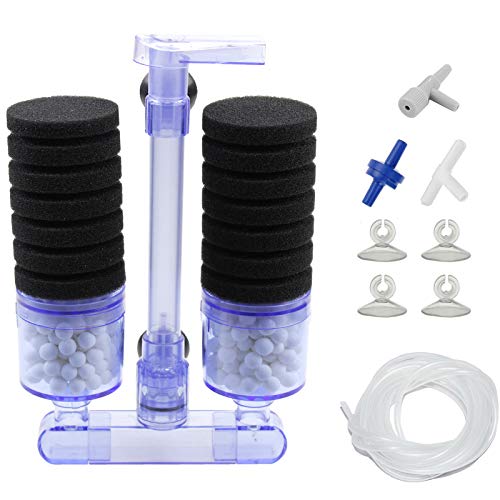
    This style of sponge filter has really grown on me. This double sponge filter from Qanvee has a lot of great features. It has a media chamber that comes with surprisingly good ceramic media. This allows you to use the sponges as a mechanical and the ceramic media as your biological. You can also replace it with carbon and have a 3 stage filter. The telescoping lift tube allows you to quiet down the filter a little. That very welcome considering that you cannot modify these with an airstone. The color is more naturally being dark.

    Overall, this is one of the better buys for a sponge filter.

    Pros

    • Telescoping lift tube
    • Sponge filter can hold chemical media
    • Dual sponge filter

    Cons

    • Can’t be modified
    • Green color

    3. Uxcell Biochemical – A Cheap Hikari Clone

    Budget Option
    Uxcell Biochemcial Sponge Filter

    Budget Option

    A value priced version of the Hikari. This is great for folks looking for a cheap yet quality sponge filter

    Buy On Amazon

    Hikari and Aquarium Technology sponge filters are well constructed and great filtration units. However, they are pricey. What if you could get a similar unit for less? This is where Uxcell comes in with their sponge filter. This is among the cheapest sponge filters on our list and it is well made. It starts off with its superior foam, easily the best among all the value priced brands on our list. You get the advantages of modification with this filter. Dropping in an air stone in the bull eye makes them very quiet 

    The downfalls with this sponge filter? It doesn’t offer an option for chemical filtration and the weighted base is on the cheap. 

    Pros

    • Cheap!
    • Can be modified to be make more silent
    • Best foam among all value priced brands

    Cons

    • No Chemical filtration
    • Lower quality base

    4. Aquarium Technology Hydro – Top Grade

    Aquarium Technology Hydro-Sponge Filter

    An American made, high quality sponge filter. A great choice for those wanting to support a family business

    Buy On Amazon

    Aquarium Technology Hydro-Sponge Filters are one of the best sponge filters available on the market. Founded in 1991 , this Atlanta based company has continued to make high quality sponge filters that can work on small aquariums, large aquariums, and even ponds. It all starts with the patented foam and superior construction. The foam is unique to Aquarium Technologies with a ideal density for both mechanical and biological filtration. This density provides maximum surface area for beneficial bacteria. The construction is american made and expertly engineered with a free standing heavy base that locks securely in place. The base is also easy to take apart so you can accommodate in other spots.

    This construction allows for great flexibility on how you implement filtration. You can modify the install by inserting an air stone to make it extra quiet. If want to increase the flow on the sponge filter, you can power it with an aquarium powerhead instead of an air pump. 

    This well constructed product made by a family based business only has one downfall I can think of. It’s expensive compared to other sponge filters here.

    Pros

    • Top grade foam material
    • Can be modified to be make more silent
    • Larger models can operate via powerhead 

    Cons

    • Expensive
    • No Chemical filtration 

    5. AquaNeat – Dual BioMedia

    Aquaneat Sponge Filter

    A value priced combo sponge filter. Good for those looking for a cheap sponge filter with chemical filtration

    Buy On Amazon

    AquaNet’s Sponge Filter is a unique design as it features a dual media design. It comes with biomedia for these media chambers, but you can switch those out with chemical media and have a full 3 stage filtration unit. The lift tube can be turned 360 degrees as well.

    The suction cups are not the best quality. Several users complained that the unit tends to fall down. They also can’t be modified to be made quieter. 

    Pros

    • Dual biological media
    • Media chamber can hold chemical media
    • Lift tube can be turned 

    Cons

    • Suction cups not the best quality
    • Can’t be modified
    • Odd colors

    6. Huijukon – Dual BioMedia

    Huijukon Air Driven Sponge Filter

    Dual Sponges to make it easier for you clean and maintain. The Huijukon offers excellent value

    Buy On Amazon

    The Huijukon Air Driven Sponge Filter is a great value price sponge filter to consider. The dual sponge filter construction allows you to clean one sponge instead of both which keeps your bacterial losses less during maintenance. I also like the telescoping lift tube that gives you an extra 4 inches. It is small enough to fit in smaller tanks and provides a good amount of filtration.

    Because of its construction, it cannot be modified with an airstone to be made more silent. It also lacks chemical filtration. I’ve seen this sponge filter used a lot in quarantine and breeder tanks. It’s a great sponge filter to consider.

    Pros

    • Telescoping lift tube
    • Dual sponge filter

    Cons

    • Can’t be modified
    • No Chemical filtration

    7. Huijukon Kit – A Great Combo Value

    Huijukon Sponge Filter Kit

    A sponge filter that comes with an air pump

    Buy On Amazon

    Sponge filters are cheap, but somethings getting the air pump is also an added cost that can price you out. Fortunately Huijukon has a great package that addresses this. This combo kit includes an air pump, airline hose and air stone to get you start. To top it off, the sponge filter has a media chamber that allows you to convert the filter to a 3 stage unit.

    Like all suction cup style sponge filters, this cannot be modified. The air pump is also a dual outlet. Given the output of the air pump, I feel it was more appropriate for it to be a single outlet. I do like that it comes with all the accessories though. This is a well priced and competent package.

    Pros

    • Air Pump Included
    • Sponge filter can hold chemical media
    • Dual sponge filter

    Cons

    • Can’t be modified
    • Air pump should be single outlet

    What Is It?

    Sponge Filter Make Up

    A sponge filter is super simple. It literally is a piece of foam that filters your entire fish tank. Some people are taken aback that that really is all there is too. It’s simplicity has to do with it’s foam filter that doubles up as a mechanical and biological filtration unit. A well made sponge filter will be made of the following components.

    Sponge Filter Construction

    1. Foam

    The better the quality sponge filter, the better the foam. This matters a ton in your selection process! The sponge will house the beneficial bacteria that becomes your biological filtration. The best sponge will have more surface area and will have superior biological filtration capacity.

    2. Weighted Base

    This keeps your sponge filter from floating away or getting dragged around by your fish and current. The base can be anchored against gravel or aquarium rocks. Some aquarium sponge filters utilize a suction cup mount instead of a weighted base. Suction cup mounts can come in handy in bare bottom setups.

    3. Strainer and Bulls Eye

    The strainer keeps out detritus and food particles from filtering out of your sponge filter. The bulls eye allows you to connect your airline tubing directly to your sponge filter from your air pump. Some value priced sponge filters will not have this feature. They will have an airline hose connector that sticks out eternally from the filter for you to connect.

    4. Lift Tube

    This moves the water out of the sponge filter to the rest of your fish tank. On higher quality and larger sponge filters, you can use this tube to connect the sponge filter to an aquarium power head. This allows you to have a quieter and more powerful filter. Other sponge filters will have a lift tube that will extend higher so the bubbles made by your air pump will be less disruptive.

    What Are The Benefits Of Having One?

    Sponge filters have a lot going for them that make them super attractive for fish tank keepers.

    1. Easy To Use Biological Filtration

    Nothing is easier than a sponge filter. It just works. If you purchase a high quality sponge filter, you can filter large tanks. In fact, there are many local fish stores that use large high quality sponge filters to save on costs! Imagine that!

    2. Two In One Design

    A sponge filter can handle both mechanical and biological filtration. Any foam will do a great job at mechanically filtering your tank. A good foam will stand out in its biological filtration capacity. They are also very easy to adjust with an air pump. 

    3. They Are Gentle

    If you have fish tank setup with inhabitants that require low current, these are great filters to use. You won’t have to worry about a sponge filter sucking up your baby fish, small fish, aquatic amphibians like axolotls or ornamental shrimp like the Cherry Shrimp.

    4. Very Quick to Cycle

    Because of the flexibility of the foam filter it is very easy to always have a spare foam handy to cycle another tank in an emergency. I’ve also done quick cycles by soaking the sponge in bacteria in a bottle solutions Fritz Turbo Start and got other tanks running.

    5. They are CHEAP!

    Ya I know that should have probably been the 1st reason. I just feel that shouldn’t be your ONLY reason for getting them ?.

    What Are The Disadvantages?

    So we know why they are great. Let’s see where aquarium sponge filters fall short.

    1. They are Big and Ugly

    If you are setting up a simple fish tank or breeder tank looks won’t matter too much. However, these sponge filters are not going to look great if you are doing a grand aquascape or driftwood setup. They are also very large and difficult to hide. 

    2. No Chemical Filtration

    This is a big no go for me. I like having the ability to use chemical media in a pinch whenever it is needed. Not having that in a fish tank is a major issue for me. You can mitigate chemical filtration with lots of quality live plants, but then you will still have #1 to deal with above.

    3. Some Fish Will Try To Eat It

    Because a sponge filter is meant to be placed inside your fish tank, your fish are around it all day. It also traps food particles because it acts as a mechanical filter. If you have a fish like a Pleco or a large hungry aggressive fish they may decide to snack on your sponge filter thinking it would make a niece meal. 

    4. They A Loud And Splash Water Everywhere

    I’m demand a quiet display tank when I setup a fish tank. I don’t want noisy equipment and I quietly don’t want my significant other or hear about my client’s significant other complaining about how the noise the fish tank makes keeps them up at night. Quiet and media are the main reasons I go for high quality filters like canister filters. You will also need to factor in the noise level of the air pump you purchase.

    With their uplift tubes, many sponge filters will splash water everywhere at the top of your aquarium. Water droplets will get all over your aquarium canopy and the back of your walls. Again, I want quiet and clean in a display tank. 

    What Are The Ideal Uses?

    I hit you with a number of disadvantages of using a sponge filter. While they may not be the best choice for a display tank, let’s talk about what types of fish tank they are excellent choices for.

    1. Breeder Tanks

    One of the best applications for a sponge filter is for a breeder fish tank. Because sponger filters are gentle they do an amazing job filtering in a breeder tank. You won’t have to worry about losing your small fish fry to your aquarium filter intake. They deliver great piece of mind in these setups.

    2. Quarantine/Hospital Tanks

    Because sponge filters can be setup and cycled so quick and easy, they are great to use in a quarantine tank. A cycled sponge can provide all the beneficial bacteria and biological filtration capacity for a quarantine tank. Since they do not use chemical filtration you are free to use whatever medication you need without worrying about your media removing or absorbing the medication. The sponge filter is also gentle to your inhabitant keeping stress levels down. 

    3. Freshwater Shrimp Tanks

    Sponge filters are amazing in a Freshwater Shrimp Tank. Because of their makeup, you don’t have to worry about the filter sucking up your shrimp and their babies. Sponge filters will also grow biofilm on the surface of the foam making it food producing resource for your shrimp. It’s no wonder sponge filters are used so much in shrimp tanks!

    4. Betta Fish Tanks

    Betta Fish need calm waters. They also have long fins that can be sucked up by more powerful filters. Betta fish prefer light currents and will usually be housed in smaller tanks. This makes a sponge filter an attractive filtration choice for them.

    5. Small Fish Tanks

    Any aquarium 20 gallons and under is ideal for a sponge filter. This makes maintainance and filteration easy. A good quality sponge filter will have plently of surface area to support the small fish appropriate for a smaller fish tank. 

    How To Make It Quieter

    So I kept mentioning that sponge filters can be modified to be made quieter. This is true for models with weighted bases like the Uxcell, Aquarium Technologies, and Hikari sponge filters. All you need to do is take it apart and insert an air stone in the bull eye. This video by BairCichlids shows you how to make the modification. Once done, your sponge filter will be more quiet and more effective in oxygen delivery.

    Maintenance (How To Clean)

    Sponge filters are super easy to maintain. Because the main piece of the filtration unit is the sponge itself, it is a permanent media. This ends up saving you media on disposable media and mechanical filtration cartridge that you might spend otherwise with an Aquarium Power Filter. The main thing you have to maintain is the sponge. Every month, take it out of of your fish tank and wash it in your aquarium water. DO NOT use tap water when cleaning a sponge filter. Doing so will kill the beneficial bacteria on the sponge.

    The main thing you have to be careful of when removing your sponge is all the particles trapped in the sponge getting released. It is a great idea to take our your sponge when doing a water change so you can get what escapes out of the sponge cleaned out. I would recommend that you get a cover on the sponge when pulling it out. You can use a fish bag or a zip-lock bag when doing this. 

    Once you have your sponge and some of your aquarium water in a separate container put the sponge that and squeeze it several times. This will release all the particles out of the sponge. Replace the water in the container several times only you have fairly clear water after squeezing the sponge. 

    Tips and Tricks

    Here are some more tips and tricks regarding sponge filters.

    Your Aquarium Air Pump Matters A Lot!

    Aquarium air pumps are a huge deal when it comes to the effectiveness of your sponge filter. An air pump is the engine of your sponge filter. You do not want to cheap out on a low quality air pump. Check out our Best Aquarium Air Pump post for details on the best out there. For a value priced air pump, I would recommend the Tetra Whisper. Tetra is best known for their air pump models and the Whisper is a great buy to get your going.

    Consider One For Power Back Up Purposes

    Aquarium power outages suck. They are the #2 tank killer in our hobby. A sponge filter and battery powered air pump can save your livestock in a pitch. If you aren’t in the market for a sponge filter as your main aquarium filter, consider it for your power outage plan. Just have a sponge cycled and ready to go.

    The Material Matters

    The better the sponge material the better the surface area for your beneficial bacteria. All the sponge filters here were selected for a reason.

    FAQS

    What Type Should I Buy?

    The best type of sponge filter is one that has a lot of surface area to house beneficial bacteria. The HHikari Bacto Surge excels by having more surface area than cheaper generic sponge filters available in the hobby.

    Are They Worth It?

    Yes – sponge filters are worth it when they are used in the right conditions. They are best utilized in freshwater shrimp tanks, for raising fry, and for small fish tanks. They also work great in quarantine tanks. While they can be used in display tanks, the general practice is that they are not as there are better filtration units available such as power filters and canisters filters.

    How Often Should You Change It?

    Hopefully never. Sponge filters are meant to be used indefinitely as the sponge houses your bacteria. If you threw away the sponge, you would lose all the bacteria housed in it. It’s best to wash your sponge filter in your aquarium water when it needs to be cleaned, but you should avoid replacing it so you don’t disrupt your aquarium’s biological ecosystem.

    Do They Provide Oxygen?

    Yes, sponge filters provide oxygen in aquariums. In fact, they are one of the best filters to do this because they are hooked to air pumps and change a lot of surface agitation. They can also still provide oxygen during power outages as they can be run with battery powered air pumps when other filters would be offline.

    Closing Thoughts

    Sponge filters are cheap aquarium filters, get the job done, and are very easy to use. It’s not wonder they are one of the most popular filtration units on the market. I hope today’s post helped you make an informed decision on what sponge filter to buy. If you have any questions, please leave them in the comment below. Thanks for reading!


    ๐Ÿ”ง Want to learn more? This article is part of our complete Aquarium Equipment & Gear Guide. your ultimate resource for filters, heaters, lights, pumps, tanks, and more.

  • 8 Best Aquarium Decorations โ€“ Artificial vs Natural (Honest Review)

    8 Best Aquarium Decorations โ€“ Artificial vs Natural (Honest Review)

    Aquarium decorations are one of those topics I have strong opinions on after 25 years in the hobby. My personal preference leans toward natural. driftwood, live rock, and real plants create a more authentic environment that fish actually benefit from behaviorally. That said, I understand artificial decorations have their place, especially in tanks with fish that would destroy live plants or in setups where low maintenance is the priority. This guide covers the best decorations across both categories with honest takes on what actually works for the fish, not just for looks.

    Sometimes, the best part of owning an aquarium isnโ€™t buying it or getting any fancy equipment. As is the case with a home, the best part of owning an aquarium is putting personal touches on it to make something unique. Those aquarium decorations for your fish tank can be very satisfying to set up.

    Finding Great Aquarium Decorations

    Below is a table of our candidates. I stepped out of my comfort zone and looked at both artificial and natural aquarium decorations. This list will cover exclusively artificial decoration. I will have some real decoration links in the reviews for reference. If you are looking for real aquarium stones, aquarium plants, or driftwood, you can check the links below:

    In a hurry? I recommend Current USA Manzanita or their Aquascaping bundle line! Use Coupon Code ASD15  At Checkout!

    PictureNameFeaturesLink
    Editor’s Choice
    Current USA Black Manzanita

    Current USA Black Manzanita

    • Artificial
    • Life-like
    Click For Best PriceBuy On SWA
    Best Value
    Current USA Seiryu Stones

    Current USA Seiryu Stones

    • Artificial
    • Life-like
    Click For Best PriceBuy On Amazon
    Budget Option
    Current USA Fountain Grass

    Current USA Fountain Grass

    • Artificial
    • Life-like
    Click For Best PriceBuy On Amazon
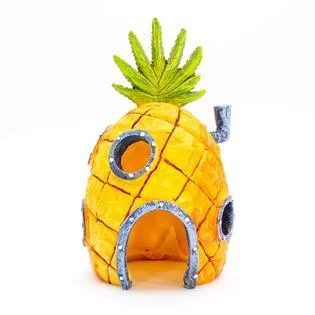
    Penn-Plex SpongeBob Aquarium Ornament

    Penn-Plex SpongeBob Aquarium Ornament

    • Artificial
    • Resin
    Buy On PetcoBuy On Amazon
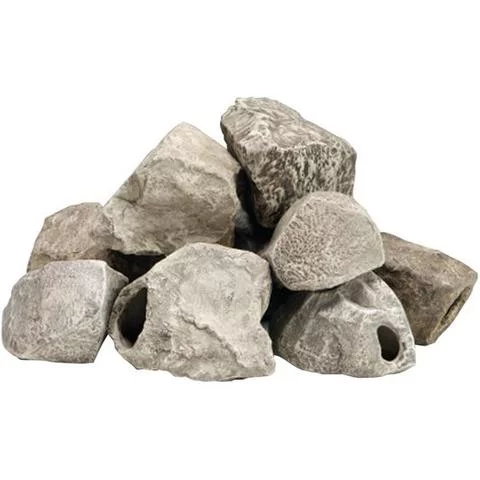
    Underwater Galleries Cichlid Stones

    Underwater Galleries Cichlid Stones

    • Artifical
    • Ceramic
    Buy On Amazon
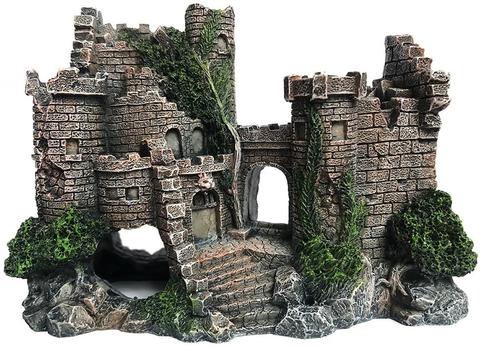
    SLOCME Aquarium Ornaments Resin Castle Decorations

    SLOCME Aquarium Ornaments Resin Castle Decorations

    • Artificial
    • Resin
    Buy On Amazon
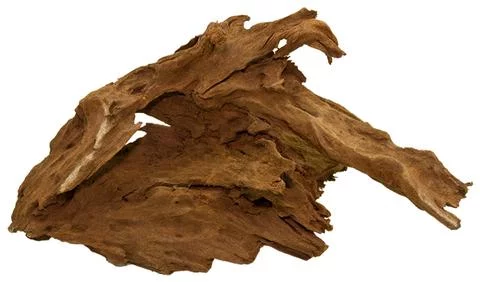
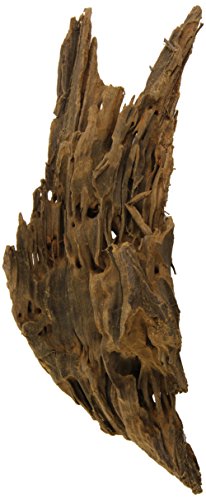
    Estes Gravel Malaysian Driftwood

    Estes Gravel Malaysian Driftwood

    • Natural
    • Driftwood
    Buy On Amazon
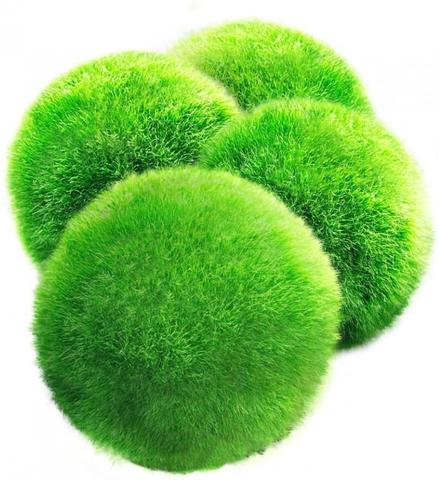
    Marimo Moss Balls

    Marimo Moss Balls

    • Natural
    • Live Plant
    Buy On Amazon
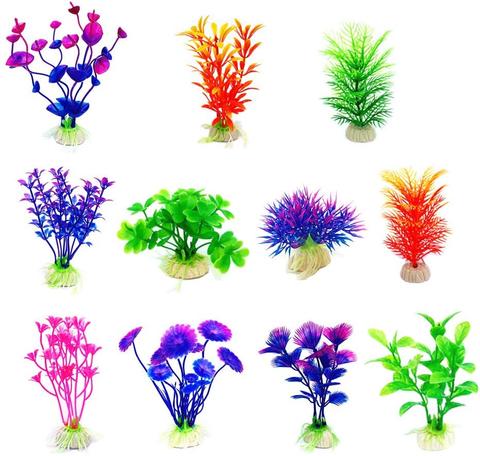
    CousDUoBe Aquarium Decorations

    CousDUoBe Aquarium Decorations

    • Artifical
    • Plastic
    Buy On Amazon

    The 8 Best Aquarium Decorations (2023 Reviews)

    Let’s go into detail about these fish tank decorations. I’ll break down pros and cons below. Check out our video from our YouTube Channel. You can follow along with our blog post below as well.

    1. Current USA Manzanita Wood

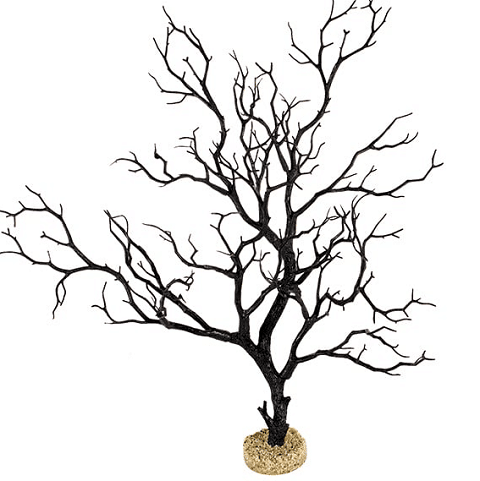
    Gorgeous and unique, Black Manzanita is the perfect thing to give your aquarium a unique natural look. The beautiful wood is 100% artificial but still has a vibrant color and natural look when placed in your fish tank. The tree like structure gives your aquarium fish have plenty of branches to duck in and out of. 

    This Manzanita not only serves as the centerpieces of your aquarium tank but zero tannins being artificial. This driftwood can also be used in dry terrariums and makes a good fixture for reptiles to enjoy. 

    Because it is an artificial wood, so you will not need to soak it for a week before it becomes waterlogged and you won’t have to deal with it floating accidentally. It also do not effect your water chemistry so you can use this on aquarium setups that demand higher pH or hardness like African cichlid tanks

    Another thing I love about this product is that Current USA makes it easy for you to design a scape with it. They built this line consulting with Aquascapers and they even give you templates and videos. Here is one such video that shows you how easy it is to design like a pro with this driftwood. Check it out below!

    I’m tempted to never use driftwood again with setups after seeing these in action. Current USA has done an amazing job at creating artificial pieces that work in planted tanks.

    Pros

    • Unique-looking wood is attractive
    • Beautiful black color
    • Fish can explore the branches
    • No tannins!
    • Doesn’t affect water chemistry!

    Cons

    • Lack of variety

    2. Current USA Seiryu Stones

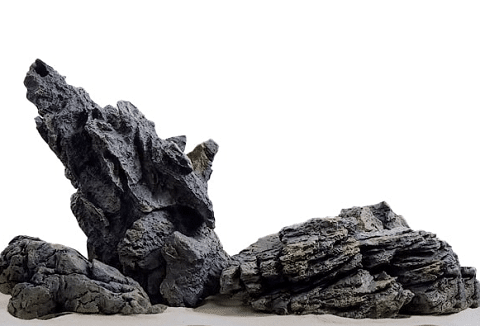
    I use to be a huge adovocate of natural stones vs artifical. That was until I was blown away from Current USA’s Seiryu Stones. These artificial rocks have the sae exotic-look porous rocks that are popular in aquariums as well as for terrariums and bonsai tree displays. These rocks are so life-like, you cannot tell the difference between these and the real thing. They have the same look with the added benefit of being lightweight!

    And lightweight is a huge deal. You will never have to worry about cracking your aquarium if one of these rocks falls and handling these are super easy. They are pre-washed and ready to go out of the box!

    If Seiryu isn’t your fancy, you can also opt for Current’s Ohko stone! These rocks still have the pockets with holes like the real rocks, giving plenty of nooks and crannies for fish to explore. Each rock is lightweight and can be positioned to make interesting structures. 

    The Dragon Rocks are a light tan color and reflect a warm dispersion of light that gives your aquarium tank a natural beauty, something that no other artificial rock offers in the hobby! Did I mention that these rocks do not alter water chemistry?

    Did you ever want to have Seiryu stones in an African Cichlid tank? Well, now you can can with these rocks. You can create the aquascape of your dreams without worrying about having the wrong water chemistry. My creatives juices get fired up just thinking of the possiblities!

    The only downfall that I can see with these rocks is there isn’t the same variety that you would get with the real rocks. However, lack of variety can be a good thing if you are new as designed with templated pieces makes things very easy – especially with Current’s offering of aquascaping bundles.

    Pros

    • Life like rocks
    • Lightweight
    • Doesn’t change water chemistry

    Cons

    • Lack of variety

    3. Current USA Fountain Head Grass

    Budget Option
    Current USA Fountain Grass

    Use Coupon Code ASD15 At Checkout!

    Current USA offers budget conscious life-like artificial plants that can give you the aquascaper look!

    Click For Best Price Buy On Amazon

    Let’s be honest here, artificial plants just aren’t very good looking. Most are made of plastic and clearly look fine to the eye or have weird colors that aren’t natural in natural. They tend to cater to the casual aquarist. Where are the artifical plants for the rest of us?

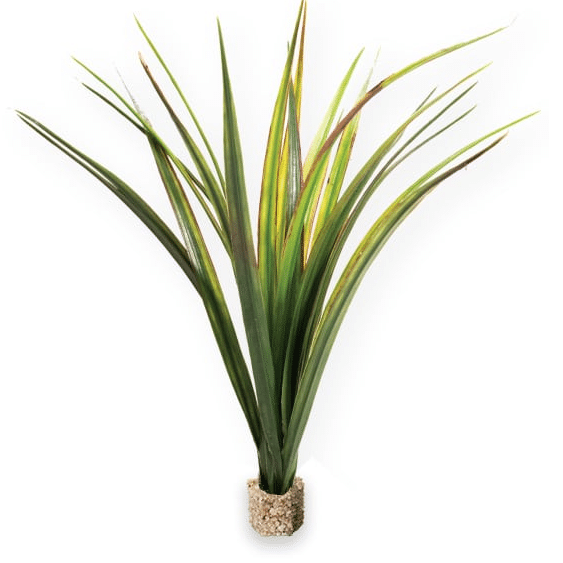
    Current USA has the answer for us with their artificial plant line. This Fountain Grass is my favorite of the bunch. It resembles taller aquarium plants like Vallisneria, They look great on the background, and they relieve you of the headache of plants like this – which is the trimming!

    These plants are affordable, easy to plant, non-toxic, and made in the USA! Can’t get any better than that!

    Pros

    • Life-like
    • Easy to maintain
    • Works in aquascapes
    • Made in the USA

    Cons

    • Won’t compete against algae like real plants will
    • Can get pricey if you need a lot

    4. Penn-Plax SpongeBob Ornament

    Budget Option
    SpongeBob Aquarium Ornament

    Budget Option

    A well priced, charming, and very effective shelter space for your pet fish

    Buy On Petco Buy On Amazon

    Third on our list is this colorful and durable resin aquarium ornament, based on the popular TV show SpongeBob SquarePants. This aquarium ornament is officially licensed by the creators of the show and can give your aquarium a colorful and fun aesthetic while giving your fish a place to explore and home to stay in.

    This fish tank ornament is made from 100% water-safe resin and works for both freshwater and saltwater aquariums. The sturdy base can easily be set in a gravel base so you wonโ€™t have to worry about it floating away. The resin is easy to clean too; just wipe it down with a warm rage periodically and rinse before returning it to the aquarium. 

    This SpongeBob aquarium tank ornament measures just 5 inches high so it will fit in even smaller tanks without taking up too much space near the middle and top. The door opening in the middle is large enough for most small-to-medium fish and smaller fish can swim in and out of the porthole windows. 

    Pros

    • Durable, water-safe resin
    • Sturdy base is easy to set in your aquarium
    • Bright, colorful, and stimulating for fish
    • Multiple entrances/exits for fish to explore 

    Cons

    • Small, not good for bigger fish or larger aquarium tanks
    • Some edges can be sharp

    5. Underwater Galleries Cichlid Stones

    Underwater Galleries Cichlid Stones

    A great decoration for Cichlids and Bettas. Provides private homes for territorial fish

    Buy On Amazon

    Our next items are these Cichlid Aquarium Stones from Underwater Galleries. These aquarium cichlid stones are made from a natural, treated ceramic material that is a good substitute for real rock. Each stone contains a small hollow chamber that fish can hide in. These stones are designed for Cichlids but can be used for virtually any small fish.  

    Each ceramic stone is hollow, so they are light and wonโ€™t cause any damage to aquarium fixtures or glass. The hollow center provides a safe recess for fish and can be a good solution if you have a few larger aggressive fish. The ceramic material is treated to be water-resistant and cleaning is as easy as periodically wiping down with a warm rag.

    These ceramic cichlid stones also have a pre-coating of gravel on the bottom, so they wonโ€™t slide around on the bottom of the aquarium tank. This particular offering comes with 3 sets of stones, each containing a small and large stone. 

    Pros

    • Durable water-safe ceramic material
    • Lightweight and easy to place/move
    • Perfect for small fish when you have larger aggressive fish
    • Precoated gravel base reduces shifting and slipping
    • Won’t scratch aquarium glass 

    Cons

    • Not all species will take well to them
    • Color can fade over time

    6. SLOCME Resin Castle Decoration

    SLOCME Aquarium Ornaments

    Made of water-safe resin. Won’t fad over time and looks great in your aquarium

    Buy On Amazon

    Up next is the elaborate and fancy-looking castle fish tank decoration by SLOCME. This castle fixture is made from 100% water-safe resin that is eco-friendly and wonโ€™t fade in color over time. The castle measures 8โ€ x 3โ€ x 5.8โ€ (LxWxH) and has several holes, gaps, and nooks for your fish to explore and hide in. 

    This resin aquarium sculpture is made with great attention to detail. Each brick in the stone wall is etched with precision and the whole setup can add a flair of sophistication to your tank set up. The resin base is thick and sturdy, so you donโ€™t need any special setup to install it.  

    This fish tank ornament castle can be combined with realistic plant fixtures to make it even more appealing for your fish and viewers. It is small enough that it wonโ€™t crowd your tank for space and has enough vertical clearance that it doesnโ€™t obstruct the top of the tank. It makes a nice home for your aquarium fish.

    Pros

    • Cool, elegant design
    • Sturdy eco friendly resin material
    • Precision etching looks great
    • Good for all kinds of aquatic pets 

    Cons

    • Some sharp edges near the bottom
    • Too small for some fish

    7. Estes Gravel Malaysian Driftwood

    Estes Gravel Malaysian Driftwood

    A budget friendly driftwood that comes in a variety of size ranges

    Buy On Amazon

    Sitting at 5th is this marvelous Malaysian driftwood from Estes. This driftwood has a wonderful natural brown color and helps create a nature-aesthetic in your aquarium tank. These pieces of driftwood are available in large, small, and medium sizes so you are guaranteed to find a version that fits your fish tank. 

    This driftwood isnโ€™t just for looks either. It will release tannins into the water which lower the pH and make the aquarium more suitable for your fish (and also turn your water a tea brown). Driftwood can also soak up excess calcium deposits which also helps control the pH. The brown color is 100% natural and the wood is not treated with any chemicals. 

    It is recommended that you thoroughly wash the wood in warm water before placing it in your aquarium tank to remove any excess dust or dirt. Please note that any piece of wood may differ in shape and cut from that which is shown in the product description. If you are looking for an Aquarium Driftwood piece that doesn’t leech out many tannins, check out spiderwood.

    Pros

    • Beautiful, natural wood
    • Release tannins that regulate water pH
    • Not treated with any chemicals
    • Won’t scratch aquarium glass 

    Cons

    • Can turn water brown
    • Individual pieces differ in shape/cut

    8. Marimo Moss Balls

    These Marimo Moss Balls are a great alternative to traditional plants as an aquarium tank ornament. The moss balls each measure about 2 inches across and do not require any special Planted Tank Light, Aquarium Fertilizer, or CO2 System to flourish. You can keep them in any freshwater aquarium tank. You can even cut them into smaller pieces to propagate your own growth. 

    These marimo moss balls remove nitrogen and phosphates from the aquarium water and can serve as a food source for grazing aquatic pets like shrimp and snails. The vibrant green color is lush and can make your fish tank look more natural. They go well with rocks, plants, wood, and other natural aquarium tank ornaments. 

    Each ball can live for up to a few years too, so you donโ€™t have to worry about replacing them over time. These minimal care moss balls are the perfect gift for any aquarium enthusiast. 

    Pros

    • Requires no light or fertilizer to grow
    • Servers as a food source for some aquatic pets
    • Can be cut into pieces for more propagation 

    Cons

    • Quality control issues
    • Moss fragments can clog tank filters

    9. CousDuoBe 21 pcs. Fish Tank Plants

    CousDUoBe Aquarium Decorations

    A budget friendly way to add colorful artificial plants to your aquarium

    Buy On Amazon

    Last but not least is this 21 piece set of artificial fish tank plants. These plants are all made from a soft, durable, and non-toxic plastic that will not lose color from light or water. Each piece of this set has a unique shape/color, and each one has a solid ceramic base that makes it easy to set up and is sturdy. 

    These artificial aquarium plants can provide a natural-looking environment for your fish, and coupled with other fixtures, can give your aquarium the appearance of a vibrant ecosystem. The plastic edges are soft so you donโ€™t have to worry about scratches when your fish swim close. The plastic material also resists algae formation. 

    Each piece in this set measures between 3โ€-5โ€ so you donโ€™t have to worry about them taking up too much horizontal or vertical space in the aquarium tank. Keep in mind that your color selection is random, so you may get different colors than another person. 

    Pros

    • Bright colors are friendly
    • Safe, rounded edges for fish to swim by
    • Ceramic base makes them sturdy 

    Cons

    • Color assortment is random
    • Some dislike the more vibrant colors

    My recommendation

    For overall best choice, I still feel that Black Manzanita is the best overall as a life-like wood. The Current USA stones are another excellent choice as it is one of the lightest aquarium rocks you can handle and looks great in fish tanks. The fountain grass is an excellent life-like artificial plant that is a favorite of mine and provides hiding spots in your fish tank. All 3 are excellent choices.

    Buying Guide

    Aquarium fish tank decorations come in all kinds of shapes, sizes, colors, and models. When you are shopping for tank ornaments and aquarium decorations, keep the following considerations in mind. 

    Tank Size

    Cramming too many aquarium decorations in a small tank looks ugly and gives your aquatic pets less space to swim around in. Contrary to what a lot of people think, fish need space and stimulation to be healthy and grow properly. 

    When it comes to aquariums, less is often more. A small fish tank should not need more than 1 or 2 eye-catching decorations. Too much and you overwhelm both viewers and your fish. 

    Make sure that each sector of your fish tank has enough space and that the aquarium decorations are not concentrated too much in one spot. Ideally, each sector of the fish tank (bottom, middle, and top will have sufficient space so your fish can swim freely. 

    I recommend keeping a 2:3 ratio of tall to medium height aquarium structures. That means for every two tall structures, you should have about 2 or 3 medium structures to balance out the space. This will keep things uncluttered and provide a structured environment that will make your fish feel more comfortable and at home. 

    Natural vs Non-natural

    Your decorations set the overall look and theme of your fish tank. Do you want your fish tank to have a more natural feel, with plants, wood, and dark gravel? Or would you prefer something a bit more colorful and off the wall? 

    Fortunately, the choice between natural and non-natural decoration styles has no bearing on the health of your fish. Aquarium fish can function perfectly with both natural and non-natural aquarium decorations, so the choice comes down to personal taste. The only thing that matters for the fish is whether they have enough stimulation. 

    Natural decorations like wood, plants, and gravel give your aquarium tank a more demure, sophisticated look that mimics the natural habitat of aquatic pets. Bright, non-natural designs, in contrast, can be used to draw viewer attention to specific fixtures or areas of the tank. Or, you could mix elements to make something unique. There are no wrong answers here. 

    Plants

    Aquatic plants are usually a great aquarium decoration and can add a level of authenticity to your setup. Not only do plants look cool in the water, but they also give your fish more stimulation as they can swim around in the brush, like they would in their natural habitats.

    You can choose between live or artificial plants.  Live plants are great as a fish tank decoration because they add oxygen to the water and remove carbon dioxide/ammonia. Live plants can also reduce algae growth because they compete with algae for resources. The main drawback of live plants in an aquarium is that they take more time and effort to maintain. 

    Artificial plants, on the other hand, are really easy to set up and come in all kinds of shapes and colors. You lose out on the benefit of live plants, but they are much easier to set up, clean, and maintain. You could always opt for a mix of both live and artificial plants for your aquarium fish tank. 

    One word of caution here: If you buy artificial plants, make sure they are soft and donโ€™t have potentially sharp edges. Fish like to swim up in the leaves of plants and sharp artificial leaves can scratch and damage their scales. 

    Lighting

    Lighting is also an important part of aquarium decorations. You need to match the lighting of your aquarium fish tank with the kind of conditions your fish would encounter in their natural habitat. Thankfully, LED tech for aquarium lights have made it much easier to change lights to capture seasonal variations in luminosity. 

    Here is an example of what we mean: Natural sunlight at sea level has about a 5,500K spectrum rating. So, a 5,500K LED lightbulb would be a good choice for shallow water fish. Conversely, a 20,000K lightbulb would be good for mimicking the light spectrum found in deeper waters. 

    There are also actinic bulbs. Actinic bulbs generate large amounts of blue light, which helps live plants photosynthesize and grow. Many aquarium owners dislike actinic bulbs though because of the glare they can produce. 

    Also, make sure the bulbs you pick are not too intense (have a high wattage) Really bright lights drain more power and also can stimulate the growth of algae and other unwanted organisms. 

    FAQ

    Can I use any rock in my tank?

    No, the kind of rock you should use depends on whether you have a saltwater or freshwater tank. For freshwater, the best kinds of rocks to use are shale, slate, basalt, quartz, and igneous (lava) rocks. Avoid rocks with calcium such as limestone, as that can make the water become hard.ย 

    Things are a bit trickier with saltwater tanks. The best rocks for saltwater tanks are reef rocks. rocks that mimic the shape, color, and texture of coral reef. Man-made โ€œReal Reef Rockโ€ is a good choice and is not actually taken from the ocean. Dried coral is also good, but some can be put off by its bleached, white appearance.ย 
    Regardless of which kind of rocks you pick, make sure you thoroughly clean before placing them.ย 

    Is resin safe for fish tanks?

    Yes, in general, polymer resin (PR) materials are completely safe for fish tanks. As long as the resin is cured properly, it wonโ€™t leech any chemicals or toxins in the water. In fact, many popular best fish tank decorations are made from PR resin. If you want to make your own resin decorations at home, be very careful and make sure it cures completely before putting it in the tank.ย 

    On the flip side, you should generally avoid putting plastic decorations in your tank unless they are graded as food safe. Food-safe plastics will be fine in the water. Non-food-safe plastics can degrade and leach toxins in the water. The same holds true for ceramic decorations; only include them if they are โ€œdinnerwareโ€ safe.ย 

    Can you put any wood in a fish tank?

    No, you cannot put just any wood decorations into your fish tank. Wood that is prepared for aquariums is specially treated so it wonโ€™t rot in the water. Untreated wood will degrade and alter the chemistry of the tank, potentially causing harm to your fish.ย 

    Driftwood, on the other hand, is generally safe to put in your aquarium. If you want to include driftwood aquarium decorations, the best kind to get is a hard wood that wonโ€™t decompose as easily.ย 

    How can I make tank ornaments at home?

    You can use practically anything as a decoration as long as it’s safe for the water and your fish. So yes, you can make aquarium decorations at home easily. This means nothing with paint on it and absolutely nothing that has a chemical coating. Some good materials for making home decorations include clay, ceramics, and safe plastic toys. Make sure to thoroughly clean your home DIY fish tank ornaments before putting them in.ย ย 

    Can you put regular toys in a fish tank?

    Sometimes, yes. Regular toys made out of plastics that are non-toxic and kid-safe are generally fine to put in an aquarium. If you are going to put regular toys in your fish tank, avoid painted plastics or anything with adhesive stickers. A great example of aquarium safe toys are Legos. If you are not sure if some plastic is safe, you can always give it a coating of silicone sealing first.ย 

    How can I beautify my fish tank?

    Any way you want! The only limit to decorations is your creativity. As long as your fish/other pets have enough space in the tank and the materials are safe, there are no hard and fast limits about what you can do and what you can use in your fish tank.ย ย 

    Conclusions

    So there you have it, the best fish tank aquarium decorations and fish tank ornaments of 2021. These fish tank decorations are the perfect addition to all kinds of fish tanks and work for any aquarium in any home. No matter which aquarium decorations you choose, you can make something that looks great in your fish tank. The best aquarium decorations for fish tanks not only look good but make your fish feel at home.


    ๐Ÿ”ง Want to learn more? This article is part of our complete Aquarium Equipment & Gear Guide. your ultimate resource for filters, heaters, lights, pumps, tanks, and more.

  • Iwagumi Aquascape โ€“ How To Set One Up (Complete Style Guide)

    Iwagumi Aquascape โ€“ How To Set One Up (Complete Style Guide)

    Iwagumi is one of the most disciplined aquascaping styles out there, and honestly one of the most satisfying to pull off. The minimalist rock-and-carpeting-plant layout looks simple, but the hardscape placement, plant selection, and growth management all take real patience to get right. I’ve watched hobbyists struggle with this style for months before everything clicks. and when it does, the result is stunning. If you’re going to try it, this guide will save you a lot of trial and error.

    The Iwagumi style is one of the most striking and disciplined forms of aquascaping. all stones, minimalist planting, and rigorous use of the golden ratio. I’ve always admired the Iwagumi aesthetic for its serene simplicity, though I’ll be honest: it’s harder to pull off than it looks. The stone placement has to be nearly perfect, the carpeting plants demand CO2 and strong light to fill in properly, and algae control in the early weeks is a real challenge. This guide walks through everything you need to know to set one up the right way.

    Key Takeaways

    • The Iwagumi Aquascape was the beginning of modern aquascaping
    • It is a zen-like style that focuses on ground cover plants and rock placements
    • CO2 is required to get the lush growth needed for this look
    • Fertilization is required to maintain the growth pace of the groundcover plants
    • Better lighting is needed to keep the ground cover from becoming leggy

    The History Of The Iwagumi Aquascape

    Takashi Amano

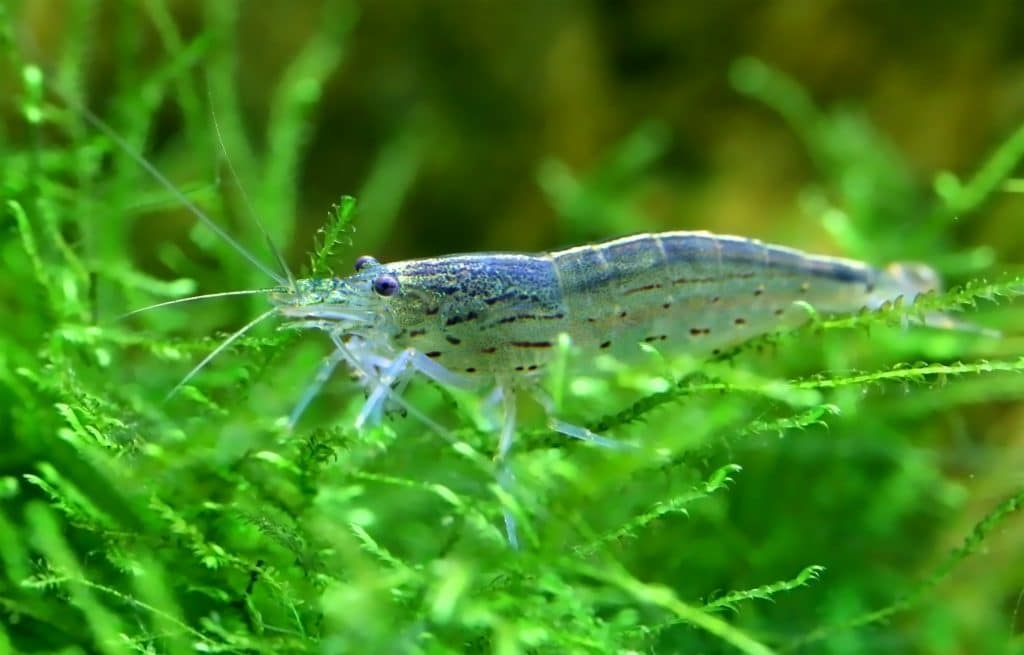
    It originated in Japan by the pioneer Takashi Amano. Amano not only created the Iwagumi Aquascape, but also started Aqua Design Amano (ADA). ADA is considered one of the leading Aquarium Substrate developers and supplies of high end planted tank equipment. Amano is so well regarded in the industry that there are two species of Freshwater Shrimp named after him – the Amano and Yamato Shrimp.

    The Iwagumi Aquascape technique derived from Japanese gardening concepts. The Iwagumi concept was published for the first time in the mid 1980s. His publication was the birth of modern aquascaping in the hobby. Taskahi Amano is considered the father of aquascaping by many on our hobby.

    Concepts of the Iwagumi Aquascape

    The Japanese Iwagumi Aquascape is based on the following principles

    • Only one particular type of stone is used
    • No driftwood or roots are used
    • The main focus of the aquascape are the stones
    • One type of plant
    • One type of fish
    • Does not use an even number of stones – odd number of rocks only

    Stones

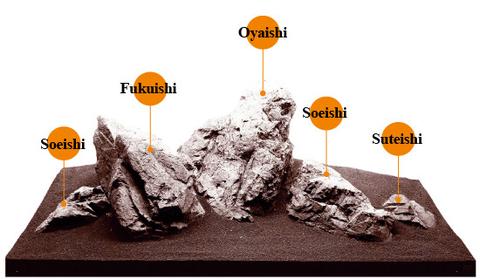
    The Japanese Iwagumi style is primarily focused are on the stones. The aquascape is going to have an odd number of rocks – usually 3-5. The three stone Iwagumi style is known as a Sanzon Iwagumi.

    The Sanzon Style

    Sanzon Iwagumi

    This is a minimal Zen like Japanese style Aquascape. 3 stones are used with one large stone and two smaller flanking stones. The name is likened to Buddhist triads. I’ll focus more on the traditional 5 stone Iwagumi, but want to define the Sanzon for those interested in it.

    Traditional Style Stone Layout

    With a Japanese Iwagumi Aquascape, every stone serves a function and has a name. Because of this, you have to keep in mind the purpose of each stone you select for the scape. The Stones in the traditional Japanese Iwagumi style are:

    • Oyaishi
    • Fukuishi
    • Soeshi
    • Suteishi

    The following picture from Fish-etc.com illustrates the 5 stones:

    Iwagumi Stone Layout

    Oyaishi Stone

    The Oyaishi Stone is your Master Stone or KeyStone. The whole aquascape is centered around it. This is the main focal point of the aquarium. The Oyashi should be tilted. This is to represent the flow of water and create a natural look. It  needs to be 2/3 of the height of the aquarium. This 2/3 ratio is attractive to the human eye as supported by the Rule of Two Thirds.

    Fukuishi Stone

    The secondary stone is name the Fukuishi. It is a visual counterpoint to the main stone. It needs to be placed at the left or right of Oyaishi. It should be of similar texture and same type of stone as the Oyaishi.

    Soeshi Stone

    Third stone is the Soeshi Stone and supports the impression of the main stone. Its role is to support the flow of the Iwagumi by strengthening the presence of the Oyaishi. It should be placed next to the Oyaishi along with the Fukuishi.

    Suteishi Stone

    Final stones in the Iwagumi style are the Suteishi and form the final details of the scape. These are also known as the sacrificial stone as it does not stand out in the aquascape and may actually be hidden by plant growth over time.

    The Rule of Two Thirds

    I mentioned the rule of two thirds earlier in this blog, so now I will explain it. The rule of two thirds was concepted by the ancient Greeks and have been used in all forms of artwork for thousands of years. It provides a guide on achieving balance with a work of art, which in this case includes aquascaping. It is actually easier to achieve this with an aquarium because we will use this rule on a two dimensional layout using the one major viewing angle of the aquarium. This will usually be the front of the tank. I provided a quick explanation video that discusses the rule of two thirds by Julian Discovers. There is no aquarium here, but this video should still help illustrate what it is.

    We start the rule of two thirds by using four lines – two horizontal and two vertical that run through the tank. This splits up the tank into 9 equal sections. Where the lines cross is considered a golden focus of your aquascape. These mark where you should be placing your prominent pieces of your scape like your stones.

    Stone Selection

    Stone selection is everything with the Japanese Iwagumi style. They are your feature pieces. We consider the following factors when selecting our stones:

    • Size
    • Color (Or Colour for our European friends ^_^)
    • Shape
    • Texture

    Size

    Our prominent rocks need to be impactful. The need to be big enough to stand out in our Iwagumi style tank. An Oyaishi that is too small will not complete your scape while too big will overwhelm the entire aquarium. Aim for 2/3 size of your aquarium height for your Oyaishi

    Color

    Seiryu Stone Iwagumi Aquascape

    There three main types of rocks used with traditional Japanese Iwagumi Aquascapes. We have Dragon Stone, which is brown. Seiryu or Mini Landscape rock is grey. There is also Black Seiryu and Millennium Rock available that are a darker grey or closer to black. Iwagumi rocks are expensive, but they are the foundation of your scape. It is worth spending on hardscaping to pull of an award winning look.

    Shape

    Know the feeling of the scape you would like to design. Do you want stream (smooth rock) look or a mountain range effect (jagged edges)?

    Texture

    Are you looking for smooth texture or want rocks with veins? The texture and placement of your rocks will change the feel of the scape. We call this tension vs. harmony.

    Tension vs. Harmony

    Let’s talk about what this is. The purpose of tension is to create visual interest and energy to our aquascape. Too much visual tension will pull the eye in all directions at once and hurt your design. To create tension, we put our stones at right angles or go with stones that are jagged or veiny.

    Harmony is the togetherness and flow of our aquascape. It is smooth and goes with the flow of the water. To achieve harmony we place stones together and utilize stones that are smooth. Too much harmony and we will have a uniform, stale, and boring aquascape. We must mix a balance of tension and harmony in our aquascape to achieve a stunning piece.

    Setting Up

    After we find our rocks, I encourage people to setup a dry scaping area at your shop (if shopping locally) or to have an area setup to do this in your home.  This can be done with cardboard if you don’t have one available

    Start with a even layer of substrate across the aquarium. We will add more substrate after the stones are placed. To add depth, we can add more substrate at the back of the aquarium to create a sloped affect. Our stones and carpeted plants will prevent the substrate from evening out over time

    Next place the Oyaishi. It is critical to place this first when setting up and it should be placed to be in accordance to the rule of two thirds. Place it at one of the focal points and make sure this stone is 2/3 of height of your aquarium and placed so it is about 2/3 of the width of your aquarium.

    Place the Fukuseki then the Soeishi. Place the final piece – the Suteishi last. Pay attention to balance and angles using the tension vs. harmony concepts I explained earlier.

    For an example Aquascape setup. See the video below by Love Aquascaping below:

    Where are you viewing the aquascape. Consider where you are sitting and the viewing angle. Aim your peaks and valleys to your viewing angles. This develops the sense of depth correctly for the viewer of the aquarium. Slopping your aquarium substrate makes the aquarium look more deep than it really is. We want the substrate shallow at the front and deeper in the back.

    Substrate will slope over time. To prevent this, use rocks and carpeting plants as they will hold the substrate down. Position a camera at your normal viewing angle to see scape. You want to aim for a tri-angular affect when viewing your scape.

    Plants

    We have achieved the proper stone structures for the Iwagumi Style – the rocky yet simple landscape. Now it’s time to focus on the Aquarium Plants that fit the Iwagumi best. The main focus for an Iwagumi is on ground cover or carpeting plants. Grassy type plants are also used. Below is a list of suitable plants for an Iwagumi Aquascape:

    Obtaining Your Plants (Tissue Culture vs. Aquacultured)

    Let’s talk about the possible sources of obtaining your plants. In the planted tank industry we have traditional Aquaculture and Tissue Culture. Aquacultured are grown in a grow out tank, purchased from other hobbyists, or grow emerged at a farm. They are hardy plants, but can be prone to pests.

    Monte Carlo Tissue Culture – UNS

    Tissue culture plants are grown in labs and are completely pest free and have great shelf lives

    Click For Best Price Buy On Amazon

    Tissue culture plants are a new development in our industry. These are plants that are grown in a lab. They are free from pests and algae. They have great shelf lives at your retail store, meaning you can purchase them and not have to plant them that day. They are also good value for the money as you can separate the plant bunches. They are worth the consideration and purchase for having that piece of mind of not worrying about pests.

    When you purchase your live plants, you will want to plant densely to start. This prevents algae in the startup phase. It also gives high impact from the start. To pull off a densely planted tank start we must talk about the dry start method.

    The Dry Start Method

    The Dry Start Method or DSM is considered a more advanced technique of starting a planted tank. It was actually originally created for Iwagumi style tanks. The main intention is to create a lush carpet for the tank. We grow plants emerged so their roots take hold. After 4-6 weeks of maturing, the tank can be filled with water. This keeps plants from floating away as their roots have established. Not all plants can be grown emerged so keep that in mind (the plants listed in this blog can be grown emerged). Dwarf baby tears is a common carpeting plant that is used in dry starts.

    There are many benefits to dry starting a tank. We have no algae problems to start. We can take our time and have an easier time planting everything. It’s cheap in the long run and near instant gratification as you start out with a nearly full planted tank to start. You also do not need to cycle the tank as the cycle occurs while you are dry starting.

    The drawbacks is that the dry start method assumes that you are going to use an active soil like ADA Aquasoil. This means that the substrate is going to be expensive. It’s a more advanced technique as you have to keep your plants moist and watch your plants on a daily basis as you dry start. Here is a video from Cichlidscape on how to do the dry start method. A tank that is dry started will mature in only 2 months. It really is that quick!

    Lighting

    Iwagumi style are known for lush growth and landscaping. We are going to want to select a light that encourages a lot of rapid grow because of this. Iwagumis setups are known for not going low on quality. In looking at our Best Planted Tank LEDs, I feel that the Twinstar LEDs are your best options for complete Iwagumi lighting. There are more expensive options, but I feel this is a good balance of expense and quality.

    Editor’s Choice
    Twinstar LED

    The Best LED for Planted Tanks

    Twinstar nails the spectrum, has the proper spread and comes with a sleek design. Perfect for aquascapers

    Buy On Buce Plant Buy On Glass Aqua

    CO2 Systems for Tanks

    Because we are going to do a dry start setup, our plants are going to be matured when we start up the aquarium. Established plants along with the desire of lush growth from an Iwagumi tank requires a full CO2 system setup. You cannot achieve the award winning mature scapes without proper CO2 injection. The carpeted plants we will be using are CO2 hungry. We will want a proper CO2 regulator, CO2 bubble diffusor, and an appropriate sized CO2 canister. Check out our Best CO2 Systems Reviews for insights on CO2 systems and why CO2 is so essential for your success.

    Best Value
    CO2 Art Pro-Elite

    Best Value

    A budget friendly version of the SE series. This has the quality of CO2 art with a great price. Highly recommended!

    Click For Best Price

    Fertilization for Tanks

    The ADA Aquasoil is going to give us an excellent start with our dry start method and will provide a soil for our plants to feed off of. We must however, continue to feed our tanks. Iwagumis have to grow rapidly, full, and lush. Your plants will demand food with them starting out with a combination of established roots, CO2 injection, and high quality light.

    APT Complete comes with my highest recommendation. Don’t even fool around with the chain store stuff with Iwagumis. For Iwagumis, we will use half the recommended doze on the bottle’s instructions to start and adjust from there. APT Complete is an aggressive growth formula — a warm welcome to our Iwagumi demands. To learn more about fertilizers, see the Best Aquarium Plant Fertilizers blog post for details on macro and micro nutrients.

    Editor’s Choice!
    APT Complete

    Editor’s Choice

    Made by an aquascaper for aquascapers. This is the best all around aquarium plant fertilizer on the market. Marco and micronutrients in one bottle!

    Use Coupon Code ASDComplete for 10% off your order!

    Click For Best Price Buy On Amazon

    Fish

    In an Iwagumi tank, the fish are part of your backdrop not the feature. We are not going to seek large fish because of this. We want peaceful schooling fish for our aquascape to complete our work of art. Tetras like neons, cardinal, embers or rummy noses are great. Harlequin Rasboras will also work.

    Fish for Iwagumi Aquascapes

    Filtration

    Iwagumis are high demand tanks. They are simple looking and zen like, but they are high bioload tanks with heavily feed plants. A top of the line filtration unit is a serious consideration here.

    We want the best for an Iwagumi, so I’m going to recommend the Biomaster Thermos Series of Canister Filters. It’s a complete, durable unit with an aquarium heater built into it. It is the go to now for high end planted tanks in today’s age.

    Putting It All Together

    So we have talked about the history and concepts of the Iwagumi, the rock layout, rule of two third, the plants, how to dry start, and the fish. Now it’s time to bring it all together and build a setup. Let’s make a shopping list for you.

    Maintenance Issues

    Plants used in this style of scape are usually heavy root feeders. In the beginning, they will be prone to algae issues. However, using the dry start method will limit our exposure. You may get a diatom outbreak when you come out of the dry start. Diatom blooms are common early on. Consider an Amano shrimp to take care of this as they will eat diatoms and savage for debris in your scape.

    Expect to do big water changes every week and regular pruning. 50% water changes are not uncommon with an Iwagumi. They look surprisingly simple and will be overtime as you get used to the demands of your plant growth, fertilizing, CO2 load, and bioload.

    When cleaning your rocks, a common toothbrush will do the job. Just scrub them and then trim your plants as needed with Pruning Aquascape Tools.

    Closing Throughts

    The Iwagumi Aquascape is my favorite aquascape of all freshwater planted tank setups. There is so much history with it. A complete setup is so zen like, peaceful, simple, yet complex. It is a true work of art. They look like landscape pictures to me or a mountain scape. Building an Iwagumi is definitely something that should be on the bucket list for any aquarium enthusiast. I hope you enjoyed spending some time together with me learning about this wonderful art craft. It truly is that – art. If you have any comments, please leave them in the comments section. Until next time folks. It’s been a pleasure!


    ๐ŸŒฟ Want to learn more? This article is part of our complete Planted Tank & Aquascaping Guide. your ultimate resource for aquarium plants, aquascaping styles, substrates, and more.

  • UNS Aquarium Review – An In-Depth Look

    UNS Aquarium Review – An In-Depth Look

    UNS (Ultum Nature Systems) tanks have become the go-to choice for serious planted tank enthusiasts, and I understand why. The ultra-clear glass, the precise rimless construction, the thoughtful dimensions. these tanks are built for aquascapers who care about the details. I’ve had the opportunity to look closely at several UNS setups and here’s my honest assessment of whether the price premium is justified.

    Are you looking for the finest ultra clear rimless aquariums you can find today? If so you have come to the right place as I do a comprehensive UNS Aquarium Review. Ultum Nature Systems or UNS is at the pinnacle of quality and craftsmanship in the planted tank community. As you may have seen in our Best Rimless Tank round up, they were given my editor’s choice badge for best the best at what they do – making a pure rimless aquarium. I didn’t have as much space as I wanted to talk about their aquariums, so I’ll go in-depth here.

    I will go over the following:

    • Features
    • Craftsmanship
    • Ease of Use
    • Value For Money
    • Product Support
    • Price

    In a hurry? I recommend purchasing the UNS 90U

    UNS Aquarium Features

    Ultum Nature Systems (AKA UNS) are considered the premium rimless aquarium brand in our industry. They are heavily favored when it comes to planted tanks. The main selling point is their extremely precise design.

    Glass Construction

    UNS Aquarium Glass

    The glass on the Ultum Nature Systems have 45 degree mitered edges. They use high-grade german silicone to not only secure the tank but to have a quality view without obstruction. All aquariums come with a black leveling mat. They are made of low iron 91 clarity Diamant glass.

    The use of 91 clarity Diamant glass is another level of quality when it comes to aquariums. It is not your ordinary low iron glass.

    Diamant is typically used in commercial office windows, interior design, furniture, and display cabinets. This type of glass isn’t used in aquariums because of its price. UNS doesn’t skip anything on quality and materials to get the highest clarity glass you can find on the market. They are well known with their UNS Systems brand logo laser etched on the right bottom side of every tank they construct.

    Cabinets

    One of the biggest benefits of purchasing a UNS aquarium is have access to their cabinets. The UNS cabinets are one of the most modern and clean looking stands you will find today. They are made of natural wood materials and come fully assembled out of the box. They are far superior to any stand you can buy standard from a pet store.

    They are designed to house Canister filters and there is a 45 degree mitered cut at the top of the cabinet door to allow for a grip when opening the doors. All the cabinets fit with UNS aquariums.

    Craftsmanship

    UNS Aquarium Tank and Cabinet

    Ultum Nature Systems craftsmanship is the pinnacle of the planted tank community. Their glass construction and materials are top notch and unique in the industry. Few if any manufacturers use a commercial grade Diamant glass to save on materials costs. Each glass tank is laser etched with their trademark UNS brand and the aquariums are designed for clean lines and maximum clarity.

    On the cabinet side, the cabinets are some of the most modern looking and elegant aquarium stands you will find in the industry. They have leveling knobs and are designed to last and look amazing. Everything fits seamlessly and the tanks look like a work on art on top of the cabinet. The black leveling mat is nonexistent when installed correctly.

    Together both the aquariums and cabinets make a high-end design that will make you the envy of all your aquarium friends and be a conversation piece in the living room or office.

    Value for the Money

    Ultum Nature Systems Aquariums come in a variety of sizes designed with the aquascaper in mind. All models have a cabinet available that fits with the tank and made with their low iron diamant glass. I feel the value for the money is great given the quality of these aquariums and the cabinets available for them. UNS has the following model lines for their aquariums:

    • Rimless Cube Glass Aquariums
    • Standard Ultra Clear Rimless Glass Aquariums
    • Shallow Rimless Aquariums
    • All-In-One Aquarium Tanks

    Cube Glass Tanks

    UNS Cube Aquariums are nano square shaped tanks. They can be great for tighter spaces. The small aquariums are perfect for shrimp tanks, betta fish tanks, and stunning mini aquascapes.

    Model16C20C25C30C40C
    PictureUNS 40C AquariumUNS 40C AquariumUNS 40C AquariumUNS 40C AquariumUNS 40C Aquarium
    Price$$$$$$
    Dimensins (LxWxH)6.29 x 6.29 x 6.297.87 x 7.87 x 7.789.84 x 9.84 x 9.8411.81 x 11.81 x 11.8115.75 x 15.75 x 15.75
    Aquarium Volume (Gallons)12.14.17.116.9
    LinkClick for Best PriceClick for Best PriceClick for Best PriceClick for Best PriceClick for Best Price

    Standard Glass Tanks

    These are the most popular styles of aquariums of UNS going from small to over 100 gallons. These are the gold standard for ultra clear glass rimless aquariums for the planted community

    Model60U75P90P90U120P120U180U
    PictureUNS Standard TanksUNS Standard TanksUNS Standard TanksUNS Standard TanksUNS Standard TanksUNS Standard TanksUNS Standard Tanks
    Price$$$$$$$$$$$$$$$$$$$$$$$$$$$$$
    Dimensins (LxWxH)23.62 x 14.17 x 14.1729.52 x 17.72 x 17.7235.43 x 17.72 x 17.7135.43 x 22.04 x 22.0447.24 x 19.69 x 19.6947.24 x 23.62 x 23.6270.86 x 23.62 x 23.62
    Aquarium Volume (Gallons)1936446878114.58156
    LinkClick for Best PriceClick for Best PriceClick for Best PriceClick for Best PriceClick for Best PriceClick for Best PriceClick for Best Price

    Shallow Rimless Tanks

    The shallow rimless line provides longer aquascaping scape as well as swimming space for fish. These are ideal for aquarists looking to maximum tank length and swimming space for their fish while still having a great backdrop for a planted space. They all come with the ultra clear glass that UNS is known for.

    Model25S45S60S75S120S
    PictureUNS Shallow Rimless AquariumUNS Shallow Rimless AquariumUNS Shallow Rimless AquariumUNS Shallow Rimless AquariumUNS Shallow Rimless Aquarium
    Price$$$$$$$$$$$
    Dimensins (LxWxH)9.84 x 9.84 x 4.9217.71 x 11.02 x 7.0923.62 x 14.17 x 7.0929.52 x 17.72 x 11.8147.24 x 23.62 x 14.17
    Aquarium Volume (Gallons)25102668
    LinkClick for Best PriceClick for Best PriceClick for Best PriceClick for Best PriceClick for Best Price

    Ease Of Use

    The aquarium itself is super simple. It’s a clean rimless aquarium that comes with a leveling mat. It’s the cabinets that are the big selling point when you purchase these aquariums. The cabinets come already assembled. This is a big difference between other brands like Red Sea or WaterBox who will have the cabinet come in a kit where you would need to assemble it yourself. This saves you time and risk of error.

    Product Support

    This is a major knock on Ultum Nature Systems. They do not have much in the way of product support. They really rely on their retailers to provide guidance and support for claims. The claims will then run through the retailer. This is why you must purchase these aquariums from an authorized dealer. Most dealers are local fish stores, but a premier online seller of UNS aquariums exists online. That would be BucePlant, who is the go to for advanced freshwater equipment and plants. I would recommend if you are going to purchase a UNS Aquarium aquarium online that you purchase it from BucePlant.

    Price

    UNS due to their unique to the industry leading glass, construction process, and brand name are one of the more expensive pure rimless tanks on the market. There certainty are cheaper brands out there if they are out of your budget range, but the UNS’s premier construction, glass, and brand name really stand out.

    Among cabinets, they are one of the finest cabinets you can purchase outside of getting one custom made. The price for them is worth it. Together as a package, they are an excellent value for a high end aquarium.

    Closing Thoughts

    Ultum Nature Systems aquariums offer a great package for those aquascapers lookers for a high end looking setup. The rimless aquarium is one of the highest quality out there with a unique commercial grade glass type. The cabinets are great looking and designed for planted tanks. If you are looking for a show stopping setup to compliment your home or office, UNS Aquariums are the way to go!

  • CO2Art Pro-Elite Regulator review – AN IN-DEPTH LOOK

    CO2Art Pro-Elite Regulator review – AN IN-DEPTH LOOK

    A quality CO2 regulator is one of the most important investments in a planted tank. it determines whether your CO2 injection is stable, consistent, and safe for your fish. I’ve tested several regulators over the years and the CO2Art Pro-Elite stands out for specific reasons I’ll break down here. This is my honest review after hands-on use.

    Looking for the very best CO2 regulator available for planted tanks today? Well you are in a treat today as I review the CO2 Art Pro-Elite Series CO2 Regulator. I had the pleasure of taking to the CO2Art people about their product and got the full scope on their latest CO2 regulator. If you are a serious aquascaper, or looking to be one, this is the product review for you!

    As a reminder for my viewers, this post will contain affiliate links. An affiliate link means I may earn advertising or referral fees if you make a purchase through my link. With that disclose away let’s get started! Let’s find out what makes CO2Art’s regulator stand out from the crowd!

    My reviews are fairly structured. I’m going to be reviewing the following for this product:

    • Features
    • Craftsmanship
    • Ease of Use
    • Value for Money
    • Product Support
    • Price

    In a hurry? I recommend Purchasing the CO2ART Pro-Elite Combo Bundle!

    CO2Art Pro-Elite Series Regulator Features

    CO2 Art Pro-Series Regulator Series Features

    This is a world class CO2 regulator. It is designed for aquarium safety and precision. The unit can handle systems from nano systems all the way up to 1000 gallons. It is a dual stage regulator. This next gen model now comes with a fully customized solenoid block with a high precision needle value and bubble counter. The System is powered via DC with a power adapter that accepts universal voltage from 100V – 240V. It’s a nice plus from CO2 that they will offer you the plugs for your country and it is a product that is available in both the UK and US.

    Having a dual stage regulator is a great idea for planted tanks because it allows you to directly control the consistently of the pressure of the CO2 system. This is a huge advantage compared to single gauge systems that will run into issues with pressure consistency as the CO2 tank empties. The gauges are very easy to read and the brand dial are nice features they have added to this new generation model. The prior generator had plainer looking gauges and the dial looked more standard like what you would see on a CO2 regulator at a bar.

    The bubble counter and the needle valve on this regulator are top notch. The needle valve is extremely precise. It doesn’t take a ton of them to bed down. It is fast and accurate from the start!

    Craftsmanship

    Let’s talk about the craftsmenship of CO2 products and why they are amazing buys. They are top German quality, reliability built regulators. These are not your budget build short-term warranty regulators that you will find on Amazon. CO2Art backs up this top of the line model with a 10 year warranty. The stainless steel finish is great and the power adapter does a good job of getting too hot in your aquarium cabinet. Nothing in this regulator package looks cheap. No corners were cut with this regulator. Amazing work by the CO2Art team.

    Ease Of Use (Installation)

    CO2 Art Pro Series Ease Of Install

    Installing the CO2Art Pro Series is fairly simple with the YouTube videos that CO2 Art suppliers on their YouTube channel and with their offer of tech support to their customers. They have no problems getting on on customer support ticket to walk you through the process.

    If you are lost on the install – CO2Art offers their instruction manual online here.

    Value For the Money

    The price for these units are not cheap. This top of the line model is up there with similar top end models. What makes their value stand out though is the warranty and customer support behind the product. There is also a wonderful combo package that CO2Art offers that gets you everything you need. This to me makes this Regulator the best value on the market.

    CO2 Art Pro Series Regulator Combo

    This package comes with the following:

    • Pro Series CO2Art Regulator
    • Aluminum Aquarium CO2 bubble Counter
    • CO2 Art Inline Diffusor
    • Aquarium CO2 Drop Checker
    • CO2 Resistant Tubing

    All of these comes together at an excellent price price and backed by a 10 year warranty. Want a better discount? Try my discount code ASD10%Off at checkout.

    Click for Best Price

    Legendary Customer Support

    The biggest differentiating standpoint from CO2Art and every other CO2 regulator seller is their customer support. The customer support is top notch and CO2 offers lifetime technical support for all their customers. The CO2Art team patiently answers all your questions and concerns about install and setup. They will also happily ship this product to multiple countries – US, Canada, UK, Signapore, etc the CO2 will ship internationally. The support team offers you a support portal with online instructions, articles and FAQS. I love their support and they have always been there for me to answer any questions I had.

    Price

    This is the biggest knock on the Pro-Elite Series CO2 Regulator. It is premium priced and may be too expensive for some. CO2Art does offer a more budget friendly version in the Pro-Series Model. You can also purchase the product off Klarna’s pay later program, which will break up the purchase in 4 installments.

    Closing Thoughts

    This is the best CO2 Regulator you can buy today. It has it all. The features, the quality, the customer service, and warranty. You can see the ratings below from me. The product gets my editor’s choice rating. Since I’m open to all reviews, you can leave your own reviews below. This provides the community with an unfiltered source of reviews. If you have any questions, please leave them in the comments below. Thanks for reading!

  • How to Set up a Freshwater Shrimp Tank: The Ultimate Guide

    How to Set up a Freshwater Shrimp Tank: The Ultimate Guide

    A dedicated shrimp tank is different from a fish tank in almost every way. No copper-based medications. No aggressive tankmates. No sudden parameter swings.

    A shrimp tank is not a fish tank with shrimp in it. Build it for the shrimp or watch them die.

    Freshwater Shrimp tanks are getting very popular these days. Shrimp with their small size, active nature, and appealing personality has increased in popularity, especially with nano or smaller tanks. Shrimp tanks have some special considerations though to be successful. They is intimating at first because they is more delicate than fish and require a bit more planning than first.

    That is not to say they are difficult to keep. In fact, most shrimp are relatively easy to keep, they just require proper planning. That’s what this article is for – to get you on the right track. In this article, I will discuss everything you need to know to get started right.

    Key Takeaways

    • A sponge filter is the go-to for most shrimp tank keepers
    • If you are going the planted tank route, you must ensure your substrate and fertilizers do not contain copper as it could kill your shrimp
    • TDS meters are beneficial to determine if your source water is okay. Consider RO or RODI + mineralizing if your TDS is too high
    • Tank mates are tricky as many fish will prey on shrimp. If they don’t prey on the adult shrimp, they will likely eat the baby shrimp

    Freshwater Shrimp Tank Equipment – Getting The Proper Equipment

    Below is a video from our YouTube Channel all about how to setup a freshwater shrimp tank. We go over more details in our blog post below. If you like our content, be sure to subscribe.

    The first step is figuring out what we need exactly to get started. Let’s start with the biggest consideration – the tank itself.

    Tank Size

    Bigger is better and more stable. Although shrimp can technically survive in a very small aquarium, the water is prone to fluctuations in parameters and temperatures. This can lead to premature death of shrimp. Shrimp do not like a lot of parameter fluctuations in their tank. In addition, healthy freshwater shrimp will actively breed, meaning you want a bigger tank to support the offspring.

    Shrimp Tank Size

    There is also a drawback with going too big. Too big with how small the shrimp are will make your aquarium look underwhelming. Due to this, I would recommend not going larger than 40 gallons with 20 – 29 gallons being an ideal sweet spot to start. A 2 foot long tank will be the cheapest overall to setup.

    If you are looking for a cheap used tank, you will need to do some extra diligence when shopping around. Any used tank that has been treated with copper is going to be a major problem with freshwater shrimp. Copper will leech from the silicon seems in a used aquarium and will kill off new additions to your tank. It is critical that you purchase a used tank that has never been treated with copper to ensure long-term success.

    Filtration

    Editor’s Choice
    Hikari Bacto Surge Sponge Filter

    The Best Sponge Filter

    With a name brand and high quality reputation, the Bacto Surge separates itself from the pack

    Buy On Chewy Buy On Amazon

    Freshwater Shrimp filtration gets a little more complicated with shrimp as you have to account for shrimp fry then the general small nature of Shrimp. A filter can easily suck up shrimp babies and even adults. It is easy to modify your filters to prevent this though., shrimps tanks go with one of the following:

    We do not consider Canister Filters with freshwater shrimp. It’s just overkill for this application. Internal filters could work, but the sponge filter is just a great choice to use if you are going internal. If you are going with a Hang On Back Filter, you can’t go wrong with an Hagen Aquaclear Filter.

    • Sponge Filter – Cheap, easy, and not dangerous to shrimp out of the box. Many shrimp breeders use these in their tanks because they are so easy to use and they work!
    • Hang On Back (HOB) Filter – Also known as power filters. These are excellent choices, but you have to modify your intake to prevent any accidents. I would suggest you place a sponge pre-filter on your intake in order to prevent any losses.

    Heating

    An Aquarium Heater is a controversial subject among shrimp keepers, especially those who keep Neocaridina Shrimp, which can live in cooler water. Ideally, you will want your freshwater shrimp in water temperatures of 70 – 79 degrees Fahrenheit though many breeders will say that a heater is not exactly needed with Neocardina shrimp as long as your area does not get too cold during the winter. For heaters, I would recommend Eheim Jagers.

    Substrate

    With Aquarium Substrate, we have to consider either going with an inert or active substrate. An inert substrate will not affect our water parameters, but will require more supplementation to maintain plants. An active substrate is more suited for shrimp that need softer water, like Caridina shrimp. You will also have more success with active substrate growing rooted plants as nutrients will be available through the substrate. If you are going with an active substrate, consider going with ADA Aquasoil or Fluval Stratum, which is designed for freshwater shrimp.

    Best Value
    Fluval Stratum

    Best Value

    A cheaper and beginner friendly alternative to ADA Soil. Also great for shrimp tanks!

    Buy On Petco Buy On Amazon

    If we are looking at shrimp that like KH, like Neocaridina shrimp, you may want to consider an inert substrate. I would recommend CaribSea EcoComplete if you are looking for an inert substrate.

    If you go with an active soil, keep in mind that your cycle time will be longer. Active soil will produce a lot of ammonia when new and freshwater shrimp are very sensitive to ammonia spikes. Be patient with your cycle and introduce your shrimp when parameters have stabilized.

    Plants

    Anubias

    Anubias is hardy and more fish and inverts won’t bother it. An excellent choice for beginners!

    Click For Best Price Buy On Amazon

    Shrimp thrive on planted tanks and there are several good choices for freshwater shrimp. Here are several that will work well with your shrimp inhabitants:

    If you are going with an active substrate, you can consider carpet plants like Monte Carlo. Duckweed and Rotalas do a very good job at protecting your shrimp from high nitrate spikes as they tend to explode in growth when nutrients are high. Also stay on top of your pruning and leaf clean up to prevent decaying matter build up in your aquarium.

    Lighting

    Freshwater Shrimp and lighting is pretty simple. You can use any decent Planted Tank LED system and you should be able to house the main plants listed. For the best features, I would recommend the Serene RGB Pro LED light if it’s in your budget.

    Best Value
    Serene RGB Pro LED

    Current USA’s offering into aquascaping is an incredible value. Spectrum, spread, easy to program and great PAR output.

    Click For Best Price Buy On Amazon

    Test Kits

    There are several parameters we will want to keep an eye when shrimp keeping. These will be:

    • Ammonia
    • Nitrite
    • Nitrate
    • pH
    • GH
    • KH
    • TDS

    Ammonia, Nitrite are very important to measure when you get started with your tank. As you tank matures, you will mostly worry about your nitrate levels. PH, GH, and KH need to be regularly tested in order to ensure they stay stable with your desired shrimp.

    TDS is a new parameter to test when it comes to shrimp keeping. TDS is a measure of total dissolved solids in water. Too much TDS can affect the health of your shrimp and some shrimp are so sensitive, it is more ideal to use water from an RODI System and then re-materialize the water with a supplement like Shrimp Mineral. Below is a chart that lists out the range of TDS levels for specific types of shrimp:

    NameOptimal TDSLimits
    Bamboo Shrimp150. 200100. 300
    Snowball Shrimp150. 20080. 300
    Ghost Shrimp150. 200100. 400
    Amano Shrimp150. 200100. 400
    Cherry Shrimp150. 200100. 400
    Cardinal Shrimp10050. 150
    Blue Tiger Shrimp180. 220100. 300
    My Pick
    HM Digital TDS Meter

    Readily available online, this TDS Meter is perfect for ensuring your levels are optimum for your shrimp

    Buy On Amazon

    TDS Meters are readily available online and do a great job at getting accurate readings for you. Make sure when you are testing for TDS, that you test your other parameters as well. Everything affects TDS so just measuring TDA alone is not sufficient! Check out our posts on Aquarium Test Kits for more recommendations on test kits. For KH and HG tests, an API Test Kit should work for most shrimp keepers.

    Parameters for Neocaridina are as follows:

    • pH: 6.5 – 7.5
    • KH: 1-4
    • GH: 6-8
    • TDS – 80-200
    • Water Temp: 65 – 73 F

    Parameters for Caridina shrimp are as follows:

    • pH: 6.2 – 6.6
    • KH: 2-6
    • GH: 4-8
    • TDS: 80-100
    • Water Temp: 70 – 73 F

    Keep in mind these are general guidelines. Caridina and their bee varieties can have various ideal parameters so you will want to do your research accordingly!

    How To Set Up

    I’m going to borrow a video from my good friend Aaron from Aaron’s Aquatics. This video shows an example setup and the start up process. Aquascaping for Shrimp Tanks are best using the Iwagumi style aquascape. This is because the large rocks create mountain that are still smooth for shrimp to venture around on. Cholla wood is also great to use for shrimp. Aaron’s video also has a few other recommendations like Catappa Leaves.

    Species – Choosing The Right Ones

    So you heard me earlier in this post talk about Neocaridina and Caridina shrimp. I’m going to focus on these two types of shrimp in this post.

    Neocaridina shrimp are going to be hardier than Cardina shrimp. They are a hardwater species and like KH, which means them best for an inert substrate. If the Neocardina shrimp, the Cherry Shrimp is the most beginner friendly and has the most variety.

    Beginner Friendly
    Cherry Shrimp

    Great red color and very hardy. Cherry shrimp are the best beginner shrimp for shrimp tanks

    Click For Best Price Buy In Bulk

    Cherry Shrimp have grades that are easy to follow with Red Cherry being the lowest grade and Painted Fire Red being the highest. Their grades are as follows:

    • Cherry
    • Sakura
    • Fire Red
    • Painted Fire Red

    Each grade is more rare and more expensive than the other. Cherry shrimp will  breed and grow quickly.

    Other examples include Yellow, Blue Dream, and Green. All come from the Neocardina Davidi species. You can get multiple colors, but be aware that over time they will cross bred and you will have hybrids. A variety only tank is more ideal to keep consistent colors.

    Snow White Bee Shrimp

    Caridina shrimp are a soft water, more delicate species of shrimp. They tend to be imported from other countries making them larger when shipped and more prone to die off for a variety of reasons that I will explain later. Caradia shrimp and bring in some exotic colors and adapt better to active soils like ADA Aquasoil because they prefer softer water and tend to fit better in a professional level planted tank because the plants one will go for will demand softer water. Caradina shrimp are highly sensitive to parameter fluctuations and the reason why shrimp tend to get labeled as hard to keep in our industry. One common Caradina shrimp is an Amano shrimp.

    There is another type of shrimp that is available called Sulawesi shrimp. These are exotic shrimp that imported. They have high mortality rates when shipping and are an advanced care shrimp to keep.

    Here is a simple chart below on Neocardina and Caradina shrimp varieties:

    Neo CaridinaCaridina
    CherryTangerie Tigers
    SnowballsRacoon Tigers
    Blue JellyYellow King Kong
    Blue DreamAura Blue
    CarbonBlue Bolts (Crystal/Bee)
    OrangeShadow Panda (Crystal/Bee)
    ChocolateGolden Bee
    Green JadeSnow White

    Sourcing Selections

    When purchasing freshwater aquarium shrimp, sourcing becomes a major component in your success. With shrimp, you have two sources, importing shrimp and homebred shrimp.

    Importing shrimp is what you will find at your local fish stores. If you haven’t seen my Quarantine post, you may not be familiar with the sourcing cycle of imported livestock in our hobby. It is below for your reference:

    The Ornamental Fish Trade Supply Chain

    Imported livestock in general are going to go through multiple distributions to get to your home. This increases stress and the likelihood for diseases. Imported shrimp will also be larger in size, meaning they will have a harder time adapting to captivity. It is common for imported shrimp to experience die off when shipping (picture reference from the University of Florida).

    Homebred shrimp on the other hand are going to be hardier in general. They are used being in captivity and tend to be less prone to diseases. Homebred shrimp can also have issues as well if your breeder is not experienced or they are only a generation or two removed from being imported. In general, it’s going to be better to get your shrimp homebred from a local breeder in your area as they will use the similar source water as you (e.g. – tap water). Check your local aquarium societies and social media groups for sources of homebred shrimp.

    For those who do not have a local breeder available, I would highly recommend Buceplant. They sell a variety of Neocardina shrimp that would all be excellent choices for your shrimp tank.

    Pests – Dealing With Them

    Freshwater aquarium shrimp have pests that we need to deal with. Most will come from freshwater plants we purchase. The main pests are:

    • Planaria
    • Hydra
    • Scuds
    • Dragon Fly Nymphs

    Planaria is a type of flatworm that will attack and eat shrimp. You can use a Planaria Trap or a No Planaria medication to eradicate the problem.

    Hydra is a small aquatic vertebrae. They will sting and poison your shrimp killing them. They can also be treated with No Planaria medication.

    Scuds are especially dangerous for newborn shrimp. It is another hitchhiker from live plants. Manual removal is best for these. The reproduce very fast. Another option is to use Bettas or Killifish as they they will happily eat the scuds. Betta are a wildcard for shrimp tanks. Some people go the nuclear route, remove as many shrimp as they can, drop the Betta in and let it eat all the scuds over time. Once the scuds have been eaten the Betta is removed and the shrimp is reintroduced.

    Dragonfly Nymphs are nasty predators. They will kill and eat your shrimp and will hunt non-stop. Manual removal is your best bet. There are other options you can do, but they will harm your shrimp.

    The best way to deal with pests is prevention though. Consider dipping your plants in a bleach solution (19 parts water to 1 parts bleach) and rising with Prime conditioned water before introducing them into your aquarium or consider quarantining your live plant additions. See the video below from LifeWithPets on how to do a bleach dip for your live plants:

    Compatible Tank Mates

    You may not be interested in shrimp only tanks, so this list of fish will help with picking ones that will work with your shrimp. One thing you will need to keep in mind is if you add fish, it is going to be very likely that the shrimp babies will get eaten so don’t expect to breed shrimp with fish. There are very few fish that will not eat a baby shrimp if given a chance. You can increase your chances of success by choosing a larger species of shrimp like an Amano. Here is a limited selection of small fish that may work in a shrimp tank:

    Neon Tetra

    Feeding

    You need a mix of natural and prepared food to be successful with shrimp tanks. The main natural food we are looking to have available is biofilm. Biofilm is the structure bacteria build to support themselves and grow on surfaces. Shrimp will eat this in the aquarium. Biofilm can grow on your sponger filter, leave litter, mosses, and rocks. The more surface you have available the better for your shrimp. You can also provide “permanent food” like Cholla Wood.

    The next is prepared food. Powered Shrimp Baby Food by GlasGarten is a great choice to sustain shrimp babies. For adult shrimp, commercial shrimp food is available for purchase and will do the trick.

    Shrimp Baby

    This powdered food is perfect for baby shrimp

    Buy On Amazon

    It is also a good idea to use a Feeding Tray when feeding your shrimp. This will prevent excess food getting lost in your substrate and keeping the rest of your aquarium clean from food debris. It’s also a nice way to observe your fish.

    Tank Maintenance

    Shrimp in general are more prone to parameter changes than fish. Staying on top of maintenance is a big deal with shrimp tanks. Many shrimp tanks are also smaller tanks, which make them more susceptible to parameter changes.

    Water Quality

    Shrimp are sensitive to ammonia, nitrite, and higher levels of nitrate. Weekly water changes are especially important with shrimp tanks. Another factor to consider with shrimp tanks is water top off. When water evaporates, parameters can change. Evaporation just pulls out water, but leaves your trace minerals in. You will want to added pure replacement water. This would be something like RODI water or distilled water to replace your evaporated water. You can use an Auto Top Of System to make things easier.

    Shrimp Tank Maintenance Tasks

    Additional tasks aside from water changes and top off water would be once a month filter cleaning. Make sure when you clean your filter media that you use your pulled tank water and squeeze the foam or sponges. This will clean out the debris, but will maintain the bacterial colonies in the media. Sponges should last a very long time and shouldn’t need to be replaced. Don’t replace a sponge unless you absolutely have to, and be very careful if you do because of the bacterial colony loss. It’s better to seed a sponge beforehand if you have to replace a sponge.

    Another key thing to note about shrimp tank is you need to be very careful when you put your hands in your aquarium. Shrimp are very sensitive to toxins. Detergents, chemicals on plants, flea treatments from pets, flea shampoo, and cleaners are prone a risk for your shrimp. Always make sure you wash your hands before putting your hands in your tank. Reef Safe Soap is your friend and a recommended purchase if you are going to handle a shrimp tank.

    Problems – Why They Die

    There a number of challenges one can come across with a Shrimp Tank. I’ll try to cover several of them in this post.

    Parameter Swings

    Shrimp are sensitive to water parameter swings. Having proper tests kits and a TDS meter are you friend. Get in the habit of regularly testing your water on a weekly basis.

    Uncycled Tanks

    Shrimp are very sensitive to ammonia in the aquarium and with their prolific breeding, they can add on to your bioload overtime. If you are using active substrate like ADA Aquasoil, keep in mind that the substrate will generate ammonia when it is first introduced. You will want to give an active soil like this a good two months before introducing shrimp.

    Molting Issues

    A common aliment in beginner shrimp tanks. This indicates a lack of iodine in the tank. Most staple food and powered food will serve this function. Fertilizer that is made for shrimp tanks will also include iodine to help support the shrimp’s molting process. Additional items to add if needed would be montmorillonite material powder that you can readily purchase online.

    Too Many Males

    If you have a shrimp tank with too many males to females, this will present a problem to your population. Males in abundance will overwhelm, stress out, and harass females to the point of death. If you are seeing your females are dropping fast, consider removing a portion of your male population to balance out your numbers. I have provide examples of a female and male shrimp to show you the visual differences. The male is longer while the female has an expanded abdomen section.

    Female Cherry Shrimp
    Male Shrimp

    Aquarium Heaters

    Heater failure is pretty common in our hobby. A failed heater can lead to many shrimp deaths. Heaters will fail on the on position, which will overheat your tank. Consider an Aquarium Heater Controller to prevent a catastrophic event.

    Pests

    As we mentioned earlier, pests are a major problem in shrimp tanks. Consider using a bleach dip to prevent nuisance pests in your tank.

    Toxins

    Toxins – especially copper are especially deadly to shrimp. Make sure if you are using fertilizer that your fertilizer is shrimp safe meaning that there isn’t copper in the mix or purchase a fertilizer specially designed for shrimp. Check our our Aquarium Plant Fertilizer post for recommended products.

    Poor Source Water

    Let’s talk about your source water. In general for freshwater tanks, you is okay using tap water that is treated with a Dechlorinator. If you are going to keep harder to keep shrimp like Caridina shrimp, you will probably need to go with better source water.

    Shrimp are very sensitive to copper levels and high nurtients, things that is present in tap water. You will want to look at your city’s water reports to see what is in your water. RODI water is 99% pure H20 for your aquarium and ideal for sensitive species of shrimp. If you use tap water with Caridina shrimp, it’s possible to get quick die off of your shrimp. If you are using RODI water, you will need to remineralize the water when making water changes. You will want to use a remineralizer supplement in order to get the proper elements in your water changes so your shrimp can stay health.

    Editor’s Choice
    SaltyShrimp – Shrimp Mineral

    Editor’s Choice

    The go to for remineralizing your source water. Highly recommended for all shrimp tank setups

    Buy On Amazon

    Baby Deaths

    Having baby shrimp dying in large numbers can indicate an inadequate source of biofilm for the babies. Focus on building this up in your tank with more rocks, mosses, leave litter, and consider using powdered food to keep them fed.

    Life Span

    Shrimp don’t actually live very long. Most shrimp will live 6-12 months in an aquarium, but they breed a lot. This is also why having a single variety of shrimp is a big deal because generations pass quickly and within a couple of years you will have hybrid shrimps in your tank from the new generations.

    Closing Thoughts

    Glass Feeding Dish For Shrimp Tanks

    Freshwater shrimp tanks are loaded with personality and if bigger shrimp are selected, they is manageable for a beginner. Shrimp tanks are a niche in our hobby with challenge levels for everyone and it is really exciting to have an actively breeding tank.

    They can really be a lot of fun to keep and with their smaller sizes, your wallet will thank you versus going for a much larger tank :). If you have any questions, please leave a comment below. Thank you for reading.

  • The 10 Best Nitrate Removers for Freshwater aquariums (2026 Reviews)

    The 10 Best Nitrate Removers for Freshwater aquariums (2026 Reviews)

    High nitrates are one of the most common problems I see in freshwater tanks. and one of the most misunderstood. Regular water changes are always the foundation, but in heavily stocked or planted tanks, a dedicated nitrate remover can genuinely help bridge the gap between maintenance days. I’ve tested plenty of products and methods over 25 years, and I can tell you which approaches actually move the needle.

    https://youtu.be/E0YnjkKaGn8

    “Help, my nitrate levels are over 50 PPM!” This is a common email or text I get on my live chat. High nitrate levels can be a major problem for freshwater aquarium keepers. In today’s post, I want to talk about the best nitrate remover for freshwater tanks. Nitrates, for some of us, are the bane of our existence. We obsess over the nitrate level in our fish tanks because our local fish store and fish guides told us that high nitrate levels is bad and stresses out our pet fish.

    This is all true, however, instead of stressing out over them let’s talk about how to take proper action in tackling the issue. I want to revisit the nitration cycle and talk about ways to remove and lower nitrates in your aquarium water. I want us to reflect on how we got to this place. Once we know, let’s talk about the best nitrate removers to solve our problem. 

    Revisiting the Nitration Cycle 

    Aquarium Nitrogen Cycle

    Let’s first revisit the nitration cycle. I know some of you reading this already know it, but I also know some of you may not and have become successful by listening to your local fish store on what to buy. Part of having a nitrate problem is because we are out of balance. The nitration cycle has 5 stages:

    1. Nitrogen is introduced with fish food
    2. Ammonia is excreted either by fish waste (fish poop) or decaying material
    3. Nitrosomas bacteria convert Ammonia to Nitrite
    4. Nitrobactor bacteria converts Nitrite to Nitrate
    5. Plants use Nitrates and Ammonium as fertilizer

    The above is the natural way of how an aquatic ecosystem would work. The issue most likely with your aquarium water is that you are missing #5. If you lack live plants, nitrate levels can build up. Also, the stock media from your aquarium filters will not address #5. It is not common for filter makers to provide media that will remove nitrates. This is to keep costs down as the media designed to lower nitrates is more expensive and some buyers may not even want it.

    Ways To Remove It

    So now that we know the cycle, and likely what our deficiency is in the cycle, let’s talk about how to remove nitrates. You can see our video from our YouTube Channel for some visuals.

    1. Water changes

    This is the most common way. Water changes will reduce nitrates in the aquarium environment and bring in clean water to your fish tank. While this is an all-around fix, too many water changes can be disruptive to our closed systems. They are also labor intensive. We do not want to be a slave to the water change. Our goal is to get down to changing the water tank every other week, or every month.

    2. Live Plants

    A large live plant population can actually act as an effective nitrate remover for your aquarium. This works great for planted tank setups. However, I do know many people who have had nitrate problems and cannot have planted tanks. This usually happens when you’ve got fish who eat live aquarium plants, aggressive fish that uproot or damage them, or people who do not want to regularly prune live plants and maintain them.

    3. Reduce livestock

    Sometimes an aquarium has high nitrate levels because the fish tank is overstocked. This is common with people who follow the 1 inch per fish rule. Your biological filtration products are working overtime when your fish tank is overstocked. Other times, you have fish that are hard on your bioload such as gold fish or large aggressive fish.

    4. Filters

    Nitrate removers are filter media designed to remove nitrate from your aquarium either through chemical or biological means. They either come in disposable media or permanent media. They are not dangerous to the inhabitants in your tank, and will reside in your filter compartments. Some nitrate removers have mixed media, meaning that they handle other things aside from nitrate in your tank water. Some will have carbon while others use resin to remove other impurities in your aquarium water.

    A dedicated nitrate removing media is a great way to target the problem immediately, but they need to be replaced regularly. A permanent media will grow anaerobic bacteria in the media. This anaerobic bacteria will consume nitrates in your tank water. If you’ve considered all these ways to reduce nitrates in your aquarium water, and are still at the point where nitrate removers are necessary, then read on for our buying guide.

    The Candidates

    Below is a list of the best nitrate removers for freshwater aquariums. All products here have been selected through our field experience and all are safe to use in a freshwater tank. Each have their pros and cons, which I will discuss below. There is a product for you on this list.

    In a hurry? I recommend Biohome for a permanent solution and Seachem Purigen for a disposable solution.

    PictureNameTypeLink
    Editor’s Choice
    Biohome Ultimate Filter Media
    Biohome Ultimate Filter Media

    Permanent

    Buy On Amazon
    Best Value
    Seachem Purigen
    Seachem Purigen

    Disposable

    Click For Best PriceBuy On Amazon
    Budget Option
    EA Premium Nitrate Reducer
    EA Premium Nitrate Reducer

    Disposable

    Buy On Amazon
    Acurel LLC Nitrate Reducing Media Pad Acurel LLC Nitrate Reducing Media Pad

    Disposable

    Buy On Amazon
    API Nitra-Zorb API Nitra-Zorb

    Disposable

    Buy On AmazonBuy On Chewy
    Boxtech Aquarium Media Boxtech Aquarium Media

    Permanent

    Buy On Amazon
    Dr. Tim's Aquatics All-Natural Aquarium Pearls Dr. Tim’s Aquatics All-Natural Aquarium Pearls

    Permanent

    Buy On Amazon
    IceCap Turf Scrubber IceCap Turf Scrubber

    Permanent

    Buy On Amazon
    Seachem Denitrate Seachem Denitrate

    Permanent

    Buy On Amazon
    Seachem Matrix Seachem Matrix

    Permanent

    Click For Best PriceBuy On Amazon

    The Top 10 Choices (2023 Reviews)

    Let’s go into further detail of each nitrate remover to see why I picked each product.

    1. Bio-Home Ultimate Filter Media – The Best Biological Filtration Media  

    Editor’s Choice!
    Biohome Ultimate Filter Media

    Editor’s Choice!

    This is the best media you can buy for your aquarium. It does it all – removes ammonia, nitrite, and nitrates

    Buy On Amazon

    Bio-Home, in my opinion, is the best biological filtration media you can purchase, and is the best nitrate remover for freshwater tanks. It has the ability to control ammonia, nitrite, and nitrate on it’s own. Bio-Home got its start from PondGuru, one of the bigger Youtubers on pond care. PondGuru developed this product to resolve high nutrient issues in ponds. It also does an amazing job as a nitrate remover for freshwater tanks. I highly recommend it for anyone with a fish-only or lightly planted tank.

    Because it is a biological based filter media, it is permanent in your system and allows for less water changes. You add it in your filter unit and forget about it. The media will house both aerobic and anaerobic bacteria and the mini-version will fit in some power filters. 

    It’s a great biological media, but it has one drawback. It is a very expensive nitrate remover and you will need 2-4 lbs for a mid-sized aquarium. Also, because it is biologically based it will need to establish in your fish tank before it will remove nitrates. Bio-Home offers the following guidelines when trying to figure out how much media you need to purchase.

    EnvironmentAmount of Biohome Required
    Avg Community Tropical Tank1 kg/26 gal (100 lt)
    Avg Cold Water Tank1-1.5 kg/26 gal (100 lt)
    Predator Tank1.5-2 kg/26 gal (100 lt)
    Large Cichlid Tank1.5-2 kg/26 gal (100 lt)
    Malawi/Tanganyikan Tank1.5-2 kg/26 gal (100 lt)
    Avg Mixed Fish Pond1 kg/52 gal (200 lt)
    Avg Koi Pond1 kg/39 gal (150 lt)

    If you want a filter media that will free you of being a slave to constant water changes, this is worth every penny.

    Pros

    • Biological based – permanent
    • less water changes
    • Small enough to fit in power filters

    Cons

    • Expensive
    • Needs to establish in your aquarium water in order to get results

    2. Seachem Purigen – Instant Removal In A Small Package!

    Best Value
    Seachem Purigen

    Best Value

    Seachem is the most effective and quickest way to remove nitrates out of your aquarium

    Buy On Amazon Click For Best Price

    Seachem Purigen is a fast acting nitrate remover that uses resin to remove a number of organic compounds in your aquarium water. It is resin based and its color changes as it depletes. This makes it easy to identify when to replace or recharge the resin. Recharging the resin involves using an unscented bleach solution. The bleach burns off the organics that have been removed from the fish tank.

    This type of regeneration is superior to API’s salt solution of regeneration. A salt based regeneration only replaces the removed ionic compounds. It will not destroy the large compounds that were removed. This can be risky over time as the organics can potentially leech back into your aquarium water over time. You do not really run this risk with Seachem Purigen because the price of this nitrate remover is so reasonable that many who use it don’t even bother to recharge it. It is fast acting and has great field results. 

    Seachem Purigen is easy to find online and at stores. It will also fit in power filters and you do not need that much to get great results for your freshwater aquarium!

    Pros

    • Rechargable
    • Fast acting
    • Good price

    Cons

    • Complex to recharge

    3. EA Premium Pad – Budget Friendly

    Budget Option
    EA Premium Pad

    Budget Option

    A budget friendly, yet effective nitrate removing option. Works great in canister filters

    Buy On Amazon

    If you are looking for a budget friendly nitrate remover, the EA Premium Nitrate Reducer is a great product to look at. Like Acruel’s pad, it works instantly as it is an infused filter pad. I would install this in the second chamber of your canister filter after your mechanical stage. It will work with a power filter, but you may have difficulty getting enough of the product to be effective in smaller filters.

    Make sure you rinse it before putting it into your aquarium. It’s dusty and can cloud up water if you don’t rinse it before it goes into your filter. This is a great nitrate remover for those who need fast results and are on a budget.

    Pros

    • Cheap
    • Works instantly
    • Can be cut to fit

    Cons

    • Dusty – rinse first before using
    • Hard to find locally

    4. Acurel LLC Pad – Great for Canister Filters

    Acurel LLC Nitrate Reducing Pad

    This is the name brand version of the EA Pad. Proven field results and fast acting

    Buy On Amazon

    Acurel’s Nitrate Reducing Pad has been around for years and is well known for quickly taking care of nitrate problems in a freshwater aquarium. It comes in a large 10 x 18 inch pad that you can cut to size. I find this pad works best in a canister filter if the media chambers are large enough to accommodate a pad. I would put this in the chemical media chamber below your carbon media or in-lieu of.

    This nitrate remover has amazing field results. It has taken down nitrate levels in a 180 gallon Cichlid tank from 60-80PPM to 20PPM or less. The biggest problem is that it’s difficult to get enough of the product into a power filter as you need to use a sizable amount of it to get the desired results. It is generally hard to find locally, making this best to purchase online. The price is very reasonable, making this a great nitrate remover if you own a canister filter.

    Pros

    • Can be cut to size
    • Very effective
    • Works quickly

    Cons

    • Not enough surface area to work with most power filters
    • Hard to find locally

    5. API Nitra-Zorb – Resin Based Carbon Replacement

    API NITRA-ZORB

    A readily available and effective nitrate remove. Available online and at any local pet store

    Buy On Amazon Buy On Chewy

    API Nitra-Zorb is a resin based filter media that works to eliminate ammonia, nitrite, nitrate, and harmful chemicals in your aquarium. It is a great all around filter media that replaces carbon in your aquarium. Because it is resin based, it can be recharged. The recharging instructions are simple. You only need aquarium salt and warm tap water to soak the media bag for 2 hours.

    This makes it a really attractive media to buy for nitrate removal since you can buy a bag and reuse it, granted you are willing to recharge it regularly.

    The biggest problem with using Nitra-Zorb as a nitrate remover, is that it is designed for canister filters. The bag can be too large for most power filters. Another concern is that since the bag can handle a complete nitrogen cycle on its own, it can hurt the natural biological filtration that you have set up in your filter or your aquarium plants. I feel that a nitrate remover product should be a supplement for your cycle in your aquarium, and not a replacement.

    Pros

    • Resin based – replaces carbon
    • Media can be reused

    Cons

    • Bag is large and is meant for canister filters
    • Expensive

    6. Boxtech Aquarium Media – MarinePure Like Media That Fits In A Canister Filter

    BoxTech Aquarium Media

    BoxTech is a ceramic media that works to remove nitrates. Best suited for sumps and canister filters

    Buy On Amazon

    In the saltwater aquarium side of the hobby, there is this wonderful product called marinepure that is a ceramic block that acts as a superior biological filtration in sumps. The blocks are massive and have superior surface area. These blocks by BoxTech offer the same advantages as marinepure, but are designed to be small enough to fit in a canister filter. 

    The ceramic block will achieve a full nitrogen cycle removing nitrates. Because it is a permanent solution, you won’t have to worry about replacing media overtime. This is a less expensive long-term nitrate remover for freshwater tanks.

    Unfortunately, like many products on this list, it can be difficult to fit in most power filters. It’s a 3×3 block so it may fit in larger power filters. It will also need to establish in your tank in order to achieve results. 

    Pros

    • Convenient shape – fits in canister filters
    • Incredible surface area for bacteria
    • Permanent

    Cons

    • Won’t fit in most power filters
    • Needs to establish to get results 

    7. Dr. Tim’s Aquatics All-Natural Aquarium Pearls – Designed By A Marine Biologist

    DrTim s Aquatics NP-Active Pearls

    These pearls work to remove both nitrates and phosphates from aquariums. They are best suited for fish only freshwater setups

    Buy On Amazon

    Dr. Tim is well known by keepers of reef aquariums and public aquariums. He has designed unique products that solves issues like cycling a tank. These NP-Active Pearls by Dr. Tim are natural bio-polymers that remove nitrates and phosphates in your aquarium. They work in both freshwater and saltwater aquariums and do a great job.

    Because it is a bio-ball based media, it is best run in a media reactor versus a canister filter or power filter. It will still lower the nitrate level in any of them, it’s just more effective in a media reactor. 

    Pros

    • Permanent
    • Removes phosphate and nitrate
    • Small enough to fit in a power filter

    Cons

    • Expensive
    • Works best in a media reactor

    8. IceCap Turf Scrubber – Uses Algae

    IceCap Turf Scrubber

    Turf scrubbers are well known in saltwater aquariums for removing nitrates and phosphates

    Buy On Amazon

    An algae turf scrubber is well known in the saltwater aquarium hobby for it’s ability to remove nitrates, phosphates, and harmful chemicals in your aquarium. It does this all by growing algae on a mesh sheet. This algae once established will filter all sorts of nutrients out of your aquarium water.

    A good turf scrubber will do wonders to getting your levels down, and have had field results bringing nitrates to nearly undetectable levels. This is all done naturally and is a permanent nitrate removing solution. It will also reduce algae in your display tank since the algae growth in your scrubber will compete with it. IceCap has done an excellent job at making these scrubbers as affordable as possible for hobbyist with a well made solution.

    Turf scrubbers are complex to install and dial in. They require a separate pump and are best run in a sump. They are expensive and you have to remove the algae every 7-14 days. This can be messy and smelly. If you have a sump and some very high nitrate levels, this could be the best nitrate remover for you.

    Pros

    • Reduces nitrates and phosphates naturally
    • Can eliminate nitrates to extreme low levels
    • Reduces algae in display tank

    Cons

    • Complex to install
    • Expensive
    • Maintenance is messy and smelly

    9. Seachem Denitrate

    Seachem Denitrate

    Denitrate is a permanent media that is soley designed to remove nitrates from aquariums

    Buy On Amazon

    Seachem Denitrate is a biological media that has the ability to house anaerobic bacteria. Anaerobic bacteria can survive because of the porous nature of this media. It allows for areas to be depleted of oxygen which is what creates these anaerobic pockets. It functions as both basic biological media and nitrate reducing media since it is a dual purpose media.

    This product from SeaChem is basically the same as SeaChem Matrix, which I will discuss next. The main difference between the two nitrate removers is that the media for SeaChem Denitrate is smaller, making it far easier for your power filters to house it. It is one of the few nitrate removing media here that will fit and be functional in a power filter. There is also a big advantage with SeaChem products in general. They are readily available online and in stores.

    This 1 liter package will work for a larger size tank up to 50 gallons. It is a permanent solution, and the price is reasonable for its capacity. Because it is a permanent nitrate remover solution, it will need to establish first before any results can be seen. To function correctly, SeaChem recommends that you lower the gallons per hour on your filtration unit down to 50 gallons per hour.

    Given its availability, it’s a great choice for your fish tank if you are using a power filter.

    Pros

    • Biological based
    • Fits in power filters
    • Permanent solution

    Cons

    • Needs time to establish

    10. Seachem Matrix – Superior Biological Media Replacement

    Seachem Matrix

    Matrix is a biological media that will provide a complete nitrogen cycle in your aquarium

    Buy On Amazon Click For Best Price

    Seachem Matrix is the flagship biological media product of SeaChem. It offers superior biological filtration that will house both aerobic and anaerobic bacteria species. It is a permanent nitrate reducer solution that is designed to work in canister filters. It is a larger media version of denitrate. This is done on purpose so the inner core can hold more anaerobic bacteria.

    It will take time to establish given its biological nature. It is readily available in stores. This is a great solution if you are starting up a new tank and want to have great biological filter media to start.

    Pros

    • Biological based
    • Permanent solution
    • Reasonable price

    Cons

    • Designed for canister filters
    • Takes time to establish

    Our Expert Pick

    There are two categories when naming a best nitrate remover. We have permanent and disposable solutions. Permanent solutions take time to establish and will solve your problem over time. Disposable solutions will work immediately and require replacement to keep levels down. We also included a video of our channel that summarizes the products from our blog post. Please subscribe if you like our content!

    Best Permanent Product

    This honor goes to Bio-Home Ultimate Filter Media. It has proven field results and does not have a gallon per hour limitation like some of the other permanent solutions out there. They are able to do this because the core of the media will hold anaerobic pockets for nitrate removing bacteria to thrive. I have seen bio-home reduce nitrates in pond filters pushing through 1700+ gallons per hour and still have stellar results. It is worth every penny.

    Best Disposable Product

    This honor goes to Seachem Purigen. The Purigen resin works immediately and is very effective. It changes color so you know when it is time to replace the media. This nitrate remover is so cheap that you don’t have to recharge the product, and you don’t need much of it. This makes it ideal for power filters. It is also readily available online and in most fish stores.  

    Closing Thoughts

    Nitrate reduction can be a tough nut to crack in a non-planted freshwater aquarium. Overstock fish tanks have an even harder time. The great thing is that there are products that are very effective at resolving your issues with your aquarium water. I hope the overview and the product reviews I provided have helped you to make an informed decision. If you have any questions, please leave a comment below. Thank you for reading my buying guide and see you next time!

  • Freshwater Aquarium – Words of Wisdom I Wish I Knew Before I Started

    Freshwater Aquarium – Words of Wisdom I Wish I Knew Before I Started

    Hello again fellow readers. Over the past few years, I have gone through a full dive into the freshwater aquarium hobby. As many of my friends and hobbyists know, I started in the hobby straight into saltwater aquariums and then into reef tanks. A couple of years ago, I posted a big piece of content titled words of wisdom I wish I knew before I started. As I got more into the freshwater side of the hobby, I thought to myself I should do the same with freshwater aquariums.

    Today’s post is going to be a long. Each one of these points can be a post on its own. My purpose is to place all these words of wisdom into a single post so you can reference it to anyone starting out in the freshwater aquarium hobby. I got a video below as well you can check out from our YouTube Channel.

    Key Takeaways

    • Education is the number one factor to have success. Research and trust authoritative blogs and experts in the field
    • Don’t cheap out on your setup, invest in quality equipment
    • Be careful with your livestock choices
    • Be patient with your setup and keep calm when things go wrong
    • Maintain your aquarium and avoid getting multiple fish tanks

    Freshwater Aquarium Words Of Wisdom – What I Wish I Knew Before I Started

    #1 – Educate Yourself

    Educate Yourself

    The freshwater hobby is very broad. I would say it is about 3-4 times more broad than the saltwater aquarium hobby. A saltwater hobbyist goes to corals at the ultimate goal while a freshwater aquarist can have many goals. You can go with a large predator tank, a planted tank, a small betta fish tank, or even a pond. This means that the hobby is always evolving. There are new breakthroughs every day and new subsets of the hobby. Such as in life, dedicate yourself to never stop learning about this hobby if you are passionate about it. Seek blogs like this one, videos, authoritative figures, etc.

    #2 – Patience Is Your Virtue

    Patience with Aquariums

    Read the image above and understand what it comes. Freshwater aquariums is all about doing everything you can to set yourself for success then letting go. You have to be patient about the results after you have taking the actions or setup the proper routines. Impatience will wreck you in this hobby.

    #3 – Know The Nitrogen Cycle

    The nitrogen cycle is the cornerstone piece of knowledge you must have to succeed in the fish hobby. The nitrogen cycle is a 5 stage process:

    1. Nitrogen is introduced with fish food
    2. Ammonia is excreted either by fish or decaying material
    3. Nitrosomas bacteria convert Ammonia to Nitrite
    4. Nitrobactor bacteria converts Nitrite to Nitrate
    5. Plants use Nitrates and Ammonium as fertilizer

    Your aquarium is a closed biosystem. Your biosystem needs to have a balance of enough bacteria to keep levels in check. Knowing your balance will keep you from overstocking and overwhelming your biosystem. You can check out the video below by Girl Talks Fish for a more detailed explanation.


    It is important to know that most stock filtration equipment will not offer you a full nitrogen cycle out of the box. There are two ways to resolve this. Either get live plants or invest in the best nitrate removers for freshwater aquariums. I recommend Biohome Ultimate for permanent solution or Purigen as a disposable solution.

    #4 – Involve Your Family

    Child Fish Tank

    Freshwater Aquariums offer a greater opportunity to get your family or loved ones involved in your hobby. The hobby is easier to understand and perform compared to saltwater aquariums and anyone with proper guidance and training can have fun and get involved. Do not isolate yourself in your hobby or passion. Invite your children if you have them or your loved one into your hobby. You can have reliable tank sitters when you are away and not panic when things go wrong and you are not present to fix them. A family that keeps fish together, stays together.

    #5 – Watch Out For Multiple Tank Syndrome

    Multiple Tank Syndrome

    Freshwater aquariums are more approachable and far easier to get lost in multiple tank syndrome than with saltwater tanks. For one, it’s way easier to handle water changes and multiple tanks since the you do not need a RODI system for the vast majority of setups. The other thing is that the freshwater hobby is so broad. It’s better to have specialty tanks then to attempt mixed community aquariums not to mention the various aquascaping styles with planted tanks.

    Avoid stretching yourself too thin as well as your wallet. Take your time to enjoy your current aquarium and learn from it. When you are ready for the next steps, consider an upgrade and not an additional fish tank.

    #6 – Join A Local Club

    Aquarium Society Meeting

    A local aquarium club or society can be transformation in journey in this hobby. You can meet many people of different backgrounds and experience. One of the biggest benefits to joining a club is the mentorships you can obtain if you are looking for advanced techniques and freshwater fish keeping methods. You can check out a list of local aquarium clubs in our prior blog post.

    #7 – Don’t Take LFS Advice at Full Value

    There is a higher likelihood that you will get a knowledgeable employee at a local fish store (AKA LFS) when it comes to freshwater aquariums. However, remember that the freshwater hobby is vast. It’s very possible that the employee can be an expert on say Discus Tanks and be completely clueless on how to dry start an Iwagumi aquascape. Always do your research, be prepared, and have a plan before you walk into your local fish store.

    #8 – Everyone On A Forum Has An Opinion

    There are many great forums online that you can join to learn more about the hobby. Be careful of bad information and people trying to give you an answer to help but may not know the best answer.

    When it comes to freshwater aquariums I would look at social proof. Is the person giving you advice have the type of tank that you want? Does this person have proven knowledge in the hobby.

    To provide you a good example, there are many blogs on the internet about tank equipment. Some of them are written with bad advice to sell you a product rather than educate you. Others I would have serious doubts if author bio on the bottom is a real person.

    This blog and site was founded by me, Mark Valderrama. I have been featured on NBCNews, Slate, Buzzfeed, and Huffington post regarding care about our hobby. I am the peer adviser of two books written about aquariums, Freshwater Aquariums for Dummies 3rd edition and Saltwater Aquariums for Dummies 3rd edition. I have owned both freshwater fish and saltwater aquariums.

    There are many influencers in the freshwater space, more so than the reefing hobby. Many are true experts in the field versus entertainers. Take your time to do your due diligence.

    #9 – Don’t Overstock

    Overstocked Aquarium

    The general rule you hear in the freshwater hobby is the 1 inch of fish per gallon. I cringe when I hear this rule, because it’s way too broad. Some freshwater fish, like goldfish, are big and bulky, and are hard on a bioload. Other fish, like Cichlids, are territorial and need shelter and space. The 1 inch of fish per gallon is okay for schooling fish like Tetras, but it fails on just about everything else. Too many fish can also lead to poor quality water and a cloudy fish tank.

    If you want to look up stocking levels, I would highly suggest using AqAdvisor as a tool. It will provide a comprehensive calculation for your stock, and allow you to plan correctly for your aquarium.

    #10 – Betta Fish Do Not Belong In A Bowl

    Betta Fish Bowl

    You see Betta all the time at local pet stores in bowls. You also probably see a bunch of Betta Fish Tank sets available at the same said stores. I will tell you right now that this is not healthy long-term for a Betta. Bettas are best served in at least a 5 gallon aquarium. Give your pet Betta a better life by giving it an environment that it would enjoy. Check out our Betta Fish Care guide for more info on these wonderful fish.

    #11 – Goldfish Do Not Belong In A Bowl

    Goldfish Bowl

    This is another soapbox moment for me. Goldfish get large and need a lot of space to get to their full size. A goldfish bowl is not healthy for them long term. They are also freshwater fish that are very hard on a bioload since they eat so much and produce a ton of waste. Treat your pet goldfish to a proper aquarium setup so they can reach their full size and potential. Check out our Goldfish Tank care guide for more info on these popular fish.

    #12 – Leave Large Aggressive Fish For The Vets

    Large Aggressive Fish

    You may walk into this hobby wanting to get large aggressive freshwater fish. After all, many like Arowanas, Oscars, Jewel Cichlids, and Jack Dempsey are very beautiful large fish. The problem with these fish are multiple. They get very large and require very large aquariums. This means you have to invest a lot in getting the proper sized tank for them. They are very aggressive and so you have to be very careful who you house with them. Some of these fish are so aggressive that they have no issues with trying to go after your hands when feeding them! Worse yet, some of these fish are large and powerful enough to crack aquariums that are too small for them. The wolf cichlid is notorious for their super aggressive nature as an example.

    Large fish also require a ton of food. Due to their aggression, they are known for getting wounds from fighting or just thrashing about in your tank. These wounds can lead to infections. Keep large aggressive fish for the experts or those with the budgets you can handle them.

    #13 – Filtration Matters

    Hagen Aquaclear

    It can be really tempting to just buy a cheap filter to get you started on your freshwater aquarium. The hobby makes it very easy to get into with entry level filters or cheap filters made in China. The problem is not all filters are created the same and as your tank matures, you need better filtration. I would recommend at minimum an Aquarium Power Filter for most freshwater aquarium setups and a Canister Filter for planted tanks. Save the sponge filters for specialized tanks like Freshwater Shrimp Tanks or fry raising. There are very good brand names in the freshwater hobby make quality equipment like Hagen and Eheim. Their equipment is built to last for many years.

    #14 – Start Bigger Than Necessary

    Bigger is Better

    If you are starting out in the hobby, the best advice is to buy the biggest tank for your setup that you can afford. The bigger the tank, the more stability you would have. If you are going for a smaller aquarium like a 5 gallon or 10 gallon aquarium, I would suggest going with an all in one aquarium so you have everything setup and ready to go for you. The main issue with smaller tanks is it is hard to grow with them and often times you outgrow the tank quickly or get overzealous and overpopulate the tank.

    #15 – Get A Good Test Kit

    Keeping a successful aquarium means you are in tune with your tank and its water quality parameters. You want to get in the habit of regularly testing your water so you can spot changes in your biosystem before its too late. Not all test kits are created equal. See our post on the Best Freshwater Aquarium Test Kits for our picks. Don’t have time to read that post? No problem, I would recommend the API Freshwater Master Test Kit for most freshwater setups.

    #16 – Get A Good Gravel Vacuum

    Python Cleaner

    The Python is a mainstay in the fish hobby. Easily clean your aquarium by connecting this to your sink!

    Buy On Amazon

    If you have an aquarium substrate, a gravel vacuum is a critical tool. A quality gravel vacuum can pull out all sorts of junk out of your substrate. There are lots of waste that accumulates in your gravel bed and without vacuuming you run of having waste decay and cause nutrient spikes down the road. The best gravel vacuum in my experience is the Python gravel vacuum. It connects directly to your sink and is very convenient to use.

    #17 – Set A Maintenance Schedule

    Set A Schedule

    Setting a maintenance schedule and sticking to it is a long-term habit in our hobby. There are a lot of things to consider when keeping a fish tank, so it’s best to write things down as set reminders for yourself in order to keep up with your tank. Here are suggestions I would have of maintenance tasks to keep track of:

    • Daily
      • Dose fertilizer
      • Check bubble counter and drop checker color
      • Check water level – top off if needed
      • Observe your fish for any obvious signs of disease or stress
    • Weekly
      • Water change 15-20%
      • Check all your equipment to ensure working order
      • Clean glass, hardscape, and plant leaves
      • Trim your live plants if you have them
      • Check CO2 canister – refill as needed
      • Test your water
    • Monthly
      • Clean out your filters – wash down after cleaning with aquarium water
      • Clean pipes and strainers

    Some setups are easier to maintain then others. You can always look into a self cleaning fish tank, if you want something less maintenance heavy. Most will be powered by natural filtration.

    #18 – Have Backup Equipment

    Backup Aquarium Equipment

    The harsh reality of our aquarium equipment is that they are subjected to being in hard conditions being underwater with our livestock. Eventually, equipment does break and they can be expensive to replace. The unfortunate fact is our equipment tends to go down at the worst times. The best way to prevent a disaster is to have a back up plan. Having back up equipment is the best step we can make. Here is backup equipment we want to have in for our freshwater aquarium.

    #19 – Have A Plan When The Power Goes Out

    Power Outage Aquarium

    Fish Tank Power outages are one of the most common cause of tank crashes in our hobby. It is a really helpless feeling when the power is out and you watch all your livestock slowly die because you have no backup plan. Don’t let this be you! Be proactive and develop a plan of action when it happens (because it will!).

    The great thing about freshwater aquariums is that many can get by with a couple of battery powered air pumps. For others with larger aquariums we can consider a battery backup air pump. For those with large investments in their aquariums, you may want to consider a mobile generator or a whole home generator.

    #20 – CO2 Matters (It’s Easier Than You Think!)

    CO2 Aquarium

    As we have learned in our Best CO2 System for Planted Aquarium post, the golden ticket to fast grow in plants is CO2. 50% of your plants dry mass is carbon. A live plant will use 10 times more carbon than any other macro or micro nutrient. Knowing these fact, many hobbyists are still intimated by CO2. Sometimes it’s the cost to setup and other times it’s being intimated by the complexity.

    CO2 systems are much easier to setup and dial than you think. One you have one setup and running, it’s mostly just reading your drop checker and adjusting your inject levels to stay within level. Many hobbyists I talked to post install usually tell me they wish they did it earlier. Take the plunge and get some killer growth in your plants!

    #21 – No CO2? Go Low Tech!

    Low Tech Planted Tank

    Is a CO2 setup out of your budget? If so, pivoting to a low tech planted tank is a great alternative. A low tech tank is a freshwater aquarium with live plants that do not use CO2 injection. Building a thriving low tech tank requires proper selection of live plants. You want to work with plants that do well under low light, will generally feed in the water column, and are hardy. Check out our best low light aquarium plants and best beginner aquarium plants post for a full list of plants that are ideal for low tech. For those who don’t have the time to read, my go to for low tech are Java Fern and Anubias.

    #22 – Not All Fertilizers Are Created Equal

    Editor’s Choice!
    APT Complete

    Editor’s Choice

    Made by an aquascaper for aquascapers. This is the best all around aquarium plant fertilizer on the market. Marco and micronutrients in one bottle!

    Use Coupon Code ASDComplete for 10% off your order!

    Click For Best Price Buy On Amazon

    We learned in our Best Aquarium Plant Fertilizers post that fertilization is one of the 3 cornerstones of planted tank success. Unfortunately, we also learned that fertilizers are not all created equal. The most popular fertilizers sold in planted tanks are usually designed for low tech planted tanks. Those with full planted tanks or high need better fertilizers. In addition, many fertilizers do not have guaranteed analysis info and hide behind their brand names. We swear by APT Complete for our fertilization needs.

    #23 – Red Plants Are Harder To Grow Than Green Plants

    Red Aquarium Plant

    Red plants are typically harder to care for than green plants. This is due to their stronger light requirements, more specific spectrum requirements, and nitrate needs.

    They generally should be avoided by beginners. If you want to try out a red plants, consider an easier to care for species like Cyptocoryne ‘flamingo’ or Red Amazon Swords.

    #24 – A Quality Light Matters For Planted Tanks

    Best Value
    Serene RGB Pro LED

    Current USA’s offering into aquascaping is an incredible value. Spectrum, spread, easy to program and great PAR output.

    Click For Best Price Buy On Amazon

    We learned in our Best LED Lights for Planted Tanks post that lighting is one of the 3 cornerstones of planted tank success. Lighting is broken down into three elements that we need to know are adequate in the lighting fixture we purchase:

    • Spectrum
    • PAR
    • Spread

    We learned that there is an ideal plant spectrum and that different plants have different PAR requirements. Shading can also be problematic with taller plants so spread is a major factor in our decision for our fixture.

    The Serene Pro RGB LED we feel is the best comprehensive planted tank light in the industry. It excels in all 3 elements and will work with most planted tank setups.

    #25 – Dip Your Plants

    Dipping your plants should be something all planted aquarium owners should do before introducing plants in their aquarium. Plants can introduce pests and disease such as snails and parasites like ich and planaria. By using this method by Lifewithpets above, you can eliminate pest hitchikers from your plants. For parasites, you can consider a quarantine period for your plants in a separate tank. You can do even better by select lab grown plants, which tend to be pest and disease free for extra safety.

    #26 – Aquascaping Tools Are Amazing!

    Stainless Steel Aquascaping Tools

    Look cool and get the job done right with these stainless steel aquascaping tools. For for fine detailing on your scape!

    Buy On Amazon

    Proper Aquascaping tools are amazing when it comes to maintaining your planted tank. Curve scissors make it easy to cut down ground cover and smaller plants while prune shares will cut your taller plants. The tweezers are great for moving plants around and handling new arrivals. The substrate spatula is excellent for keeping your substrate tidy and even. I can’t imagine handling a planted tank without one. It’s a must purchase in my mind if you are serious about keeping a planted tank.


    #27 – Not All Substrates Are Created Equal

    Editor’s Choice!
    ADA Aqua Soil

    The Best Planted Tank Substrate

    The world’s standard in active substrates for planted tanks. Created by brand that founded modern aquascaping

    Buy On Amazon

    In our best aquarium substrate for planted tank post, we talked about active vs inactive substrates. Active substrates are ones that alter our water chemistry and break down over time. As this substrate breaks down, they fertilize our aquarium plants. This means active substrate amazing for rooted plants and ground cover. They are also preferred for dry starts as you can grow some plants in the substrate before you flood your tank. This results in healthy plant growth from the start, a short/nearly instant cycle, and less algae problems.

    In contrast, an inactive substrate will not alter your water chemistry. It will not breakdown. However, some inactive substrates are designed to absorb nutrients and still work well for rooted plants. If you are going with a traditional gravel bed, you may want to consider column feeding live plants since it will be more difficult to support root plants in gravel.

    #28 – Driftwood Can Leach Tannins

    In our Best Driftwood for Aquariums post, we talked about tannins and how to prevent your aquarium for getting that unappealing tea color. The best two ways to prevent this are:

    • Select a driftwood with a low tannin count
    • Prep your driftwood properly

    We learned from our post that Manzanita, Spider wood, and Tiger wood have a low amount of tannins and are the preferred driftwood types to work with.

    Prepping your driftwood will also save you a world of headache getting that tea color out. Boil your driftwood until the tea color is gone and use carbon media to get rid of any discoloration that comes from the leftover tannins.

    #29 – Not All Rocks Are Safe For Usage

    Traditional Seiryu Stone

    A go to classic. Highly recommended for Iwagumi aquascapes

    Buy On Buce Plant Buy On Glass Aqua

    In our best rocks for freshwater aquarium post, we learned that not all rocks are safe for aquariums. Some rocks can alter our water chemistry. Some like limestone will raise the pH and hardness, which is great for an African Cichlid Tank, but bad for the majority of tropical freshwater fish. Other rocks, like the ones you can pick up at your local river could contain harmful chemicals or bacteria that can wipe our your tank.The preferred rock for freshwater aquarium is granite and there are many types of available in our hobby. I would recommend Seiryu Rock for most aquarium projects.

    #30 – Learn To Aquascape

    Learning the types of freshwater aquascape styles and how to design them will take your tanks to the next level. If you want to have stunning award winning looking tanks, it all starts with learning how to aquascape. Start by learning the various type of styles and design concepts like the rule of two thirds and tension vs harmony. What makes aquascaping amazing in this hobby is it is all derived from art, photo techniques, and garden scape designs. It is a true art form that is very rewarding when you create a major work of art. You can get started by learning about a few of the aquascape styles below

    Final Thoughts

    That was a long post wasn’t it :). Well, I hope you enjoyed reading and took away some words of wisdom. As always, please share and subscribe to our newsletter. If you have any tips you would like to share, please leave us a comment below. Thanks for reading and see you next time!


    ๐Ÿ“˜ Want to learn more? This article is part of our complete Freshwater Fish Guide. your ultimate resource for freshwater species, care tips, tank setup, and more.

  • 9 Best Driftwood for Aquariums โ€“ Types, Tips & What to Avoid

    9 Best Driftwood for Aquariums โ€“ Types, Tips & What to Avoid

    Driftwood is one of my favorite elements in any aquarium setup. it adds natural structure, gives fish and shrimp places to explore, and anchors plants like Java fern and Anubias beautifully. I’ve used many types over the years in both freshwater and reef setups, from Manzanita branches in planted tanks to spider wood for a more dramatic look. The key things most people don’t consider upfront are tannin leaching, how long different woods take to waterlog, and which types are safest for sensitive fish and shrimp. This guide covers the best driftwood options with all of that in mind.

    With over 25 years of experience in the aquarium hobby, Iโ€™ve assisted countless clients, hobbyists, and readers like you in overcoming their aquascaping setup dilemmas. Iโ€™ve personally used these wood pieces in real world scenarios to determine the best aquarium driftwood in the hobby.

    The Top Picks

    Editor’s Choice
    Manzanita
    • Low tannins
    • Mult size pieces
    Best Value
    Tigerwood
    • Low tannins
    • Show cases available
    Budget Option
    Spiderwood
    • Unique shape
    • Great for smaller tanks

    There are so many quality driftwood to pick here it’s really hard to pick a winner. Let’s separate these into separate categories, as there is a piece for everyone’s needs here.

    The Candidates – A Quick Comparison

    Let’s discuss the list of wood pieces I looked at for this review roundup. Below is the list of products I reviewed for this post.

    PictureNameBest ForLink
    Editor’s Choice!
    Manzanita Driftwood
    Manzanita Driftwood

    Low Tannins

    Click For Best Price
    Best Value
    Tigerwood
    Tigerwood

    Low Tannins

    Click For Best Price
    Budget Option
    Spiderwood
    Spiderwood

    Unique shape

    Click For Best PriceBuy On Amazon
    Buce Plant WSYIWYG Driftwood Buce Plant WSYIWYG Driftwood

    Showpieces

    Click For Best Price
    Bonsai Driftwood Bonsai Driftwood

    Best Shape

    Click For Best Price
    Fluval Mopani Wood Fluval Mopani Wood

    Brand Name

    Buy On Amazon
    Koyal Wholesale California Driftwood Koyal Wholesale California Driftwood

    Brand Name

    Buy On Amazon
    Hamiledyi Driftwood Hamiledyi Driftwood

    Price

    Buy On Amazon
    NiloG Cholla Wood NiloG Cholla Wood

    Best For Shrimp Tanks

    Buy on AmazonClick For Best Price

    The Top 9 Choices (2023 Update)

    Let’s go into further detail with each product

    1. Manzanita – The Ultimate

    Editor’s Choice
    Manzanita Driftwood

    Editor’s Choice

    Manzanita offers it all. Great shape, low tannins, quick to water log and reasonably priced. It’s the ultimate driftwood!

    Click For Best Price Click For Branch Pieces

    Manzanita driftwood is friendliest driftwood to work with in the industry. This wood from Buceplant has it all. It is well priced, looks amazing, and the support team at BucePlant are the best in the business. You can’t go wrong with them. They sell small and medium sizes. These are valued priced pieces that offer all the advantages of Manzanita.

    Like many Manzanita sellers, availability is limited. I would suggest jumping on a purchase if pieces are in stock. 

    Pros

    • Manzanita Driftwood
    • Cheap
    • Large Pieces

    Cons

    • Availability

    2. Tiger Wood – Amazing Showpiece

    More aquascaping goodness with these amazing show pieces by BucePlant. BucePlant arts offers tiger wood in all sizes. This driftwood has thick branches with great shapes that will look great in longer and larger aquariums. Because of tiger wood’s low tannin count and ease to water log, it is easy to prep for aquarium usage.

    Because Buce offers these in all sizes, there is a tigerwood piece available for any aquarium setup

    Pros

    • Amazing show pieces
    • Unique branch structures
    • Easy to prep

    Cons

    • The look is not for everyone

    3. Spider Wood – At a Jaw Dropping Price!

    If you are looking for spider wood, I would highly recommend Buce’s Spider Wood. These pieces are offered at various sizes from 4 – 18″. There are even massive showpieces available for sale on their site that are simply amazing! They are offered at super low prices. It’s really hard to find something of similar quality at the price these are sold for. 

    Pros

    • Exotic looking pieces
    • Great Price
    • Sizable pieces

    Cons

    • The look is not for everyone

    4. Buce WYSIWYG Wood .  Showpieces for Award Winning Aquascapes

    Premium Pick
    Buce WSYSIWYG Driftwood

    What You See Is What You Get!

    Buce offers a WSYSIWYG show pieces. Great for aquascaping. They make your aquascapes pop like no other!

    Click For Best Price

    Are you looking for top quality aquarium driftwood pieces? If so, BucePlant is where you want to go. This is a WYSIWYG vendor with large and impressive show pieces for sale. Every showpiece they offer has low tannins, wonโ€™t alter pH, and easy to place. 

    The other thing I love is this is the only vendor on our list that offers truck style driftwood. If you know anything about nature aquascape, truck style driftwood offers amazing forest like backdrops.

    All the pieces they offer are giant pieces. Make sure you take your measurements on your aquarium before purchasing. 

    This is the some best quality driftwood you can buy online. It has a high price tag as a result and expect slower shipping times due to their size.

    Pros

    • WYSIWYG
    • Lots of selection
    • Gigantic pieces

    Cons

    • Price
    • Slower shipping

    5. Bonsai – Create An Underwater Japanese Garden Today!

    Bonsai Driftwood

    Bonsai driftwood offers a unique looking background in your tank. With the proper plants attached to it you can truly get a forest like look in your tank

    Click For Best Price Buy On Amazon

    These Bonsai Driftwood pieces offered for size are amazing looking in your aquarium. They have the added benefit of lowing your pH and softening your water, making them ideal for the vast majority of planted tank setups

    Bonsai trees cans be different to aquascape. They require a high amount of touch not only to get the moss down correctly, but also to keep them well groomed. If you are up for the challenge and want something stunning, this could be the wood piece for you!

    Pros

    • Amazing looking
    • Lowers pH and softens water

    Cons

    • Takes skill to aquascape properly
    • Price

    6. Fluval Mopani Wood – A Trusted Brand

    Fluval Mopani Driftwood

    Backed by a quality brand name, this Mopani wood are high quality specimens that will show off in your display tank

    Buy On Amazon

    The Fluval name brand enters our list with their Mopani Wood product. This is the same Mopani Wood you saw me explain earlier, but backed by the Fluval name. The result is you get high quality specimens that are well picked by Fluval. You also get a competitive price due to Fluval’s scale of operations. They offer both small and large sizes so you can find the right size for your aquarium in their selection.

    The only thing I do not like is the Mopani wood itself. Mopani is notorious for its tannin leeching. Fluval puts in their product description that it “adds a slight tint water, creating a more natural looking water conditions.” Honestly, that is just covering the for the tannins here. Take your time to prep this wood and have your carbon ready if you want to use this driftwood. They are great looking pieces if you can handle the tannin leeching.

    Pros

    • Fluval Name
    • Well picked specimens
    • Great price

    Cons

    • Tannin leeching from Mopani

    7. Koyal Wholesale California – Old School Bogwood

    Koyal Wholesale California Driftwood with Natural Brown Branches, 12-Inch

    A throwback to the old bogwood setups. Koyal is a name brand and offers driftwood at competitive prices

    Buy On Amazon

    Koyal Wholesale’s driftwood pieces are known in the wedding industry due to the hit wedding TV show My Fair Wedding. However, these pieces are also great for aquariums. This product from Koyal reminds me a lot of the old bogwood pieces that used to be offered at fish stores. There is also a Grapewood Branch variant that is offer that looks more like the the other driftwood pieces on this list.

    Given the popularity and supply of the product, they are offered at a competitive price. They are sold at 12″ pieces, which should be fine for most aquariums. The major complaint with these have been the wood takes a long time to water log and there have been shipping mishaps.

    Pros

    • Old school bogwood look
    • Price

    Cons

    • Shipping issues
    • Takes long to water log

    8. Hamiledyi

    Hamiledyi Driftwood

    A budget friendly driftwood option. Best for smaller tanks

    Buy On Amazon

    If you are looking for budget driftwood these pieces from Hamiledyi are what you are looking for. They are ideal for smaller tanks and the pieces have good variation. The price is very reasonable and wood is lightweight.

    Hamiledyi does not state the origin of this driftwood. From what we know from the review this is a high tannin count wood. It is likely this wood is a variation of Malaysian Driftwood, which is a common wood found  at local fish store. Given it’s budget price, it’s not a finished wood as well. Expect to sand down edges to make it smooth to the touch.

    Pros

    • Small Sizes
    • Good variation
    • Price

    Cons

    • Mixed Driftwood. you do not know the type or source
    • High tannin count
    • Raw wood

    9. NiloG Cholla Wood – The Choice for Freshwater Shrimp Tanks

    Great For Shrimp Tanks!
    Cholla Wood

    Cholla is best known for being an excellent wood for pet shrimp

    Buy On Amazon Click For Best Price

    If you are looking for wood for a shrimp tank, this is the product to buy. This Cholla Wood by NiloG is a great buy. It is cheap and your shrimp will love you for it as they feed off it all day. 

    Cholla wood is not for every fish tank. It decays fast and needs an inhabitant that will happily eat it while it decomposes. This is why they are ideal for species of shrimp like Cherry and Amano Shrimp as they will scavenge off the remains.

    Pros

    • Great for shrimp tanks
    • Cheap

    Cons

    • Decays fast 

    What Is Aquarium Driftwood? 

    Driftwood on Beach

    Aquarium driftwood is wood that has been washed over through a beach, river, or a lake. This driftwood provides shelter and food for inverts and fish in freshwater aquariums. They also provide cover and a source of food for birds that live near the waters. Most driftwood are the remains of trees. Driftwood has also been discussed in Norse mythology. In the mythology, the first humans were formed out of two pieces of driftwood made of ash and elm by the god Odin.

    The Trouble with Tannins

    Tannins Driftwood

    Before I go over the types of aquarium driftwood, let’s talk about what Tannins are a natural compound contained in driftwood. They are released into your aquarium as the driftwood soaks. When tannins are released into your aquarium, the compound will discolor your aqyuarium water. At low levels, it will look like a light yellow color and at high concentrations, it will look like the color of tea (as showed by the fishlore forum member GreeksGills) . While tannins will not harm your fish, it is not very pleasing to the eye. 

    There are ways to mitigate tannins in your aquarium. The first is to boil your driftwood before it goes into your aquarium. You can also add carbon media to remove the discoloration. I will go more into Driftwood prepping later in this post. 

    Types of Aquarium Driftwood

    Before we look at a list of driftwood we can buy, let’s talk about the types of aquarium driftwood available in our hobby. They all have different looks and characteristics.

    Bonsai

    Bonsai Driftwood

    Bonsai Driftwood is a designer driftwood that is handcrafted by artisans to create unique works of art. These wood pieces resemble a bonsai tree. They are amazing piece alone in an aquarium and are eye catching with live plants growing on them. The favorite type of plant to grow on this driftwood are mosses. They are sharp and not ideal for Fancy Goldfish or Betta Fish Care. They are pricey and each piece is unique. They contain a moderate amount of tannins and will lower pH.

    Cholla

    Cholla Driftwood

    Cholla driftwood is one of the cheapest and readily available driftwood you can find. It is native to the Southwest United States. It is actually the dried remains of a Cholla Cactus. It is one of the go to driftwoods for Freshwater Shrimp Tanks. The reason why is because the Cholla wood surface is ideal for harvesting biofilm. It has a moderate tannin count and takes some time to get waterlogged. 

    Manzanita

    Manzanita Driftwood

    Manzanita Driftwood is becoming a highly desired aquarium driftwood for aquascapers. It is wood that comes from shrubs native to Oregon, Texas, California and New Mexico. It has many advantages over other types of driftwood. It has a low tannin count and looks amazing. It has a branch like structure, which creates unique looking scapes. It waterlogs the fastest among all other driftwood available. It is one of the few driftwoods you can buy that is pH neutral. No pH change is a big game changer for those who want driftwood but may have fish that are not compatible with lower pHs. It is very resistant to decomposition. This makes this driftwood very long lasting and strong. 

    It really is in my mind the driftwood of choice. What’s the catch? Well, it’s difficult to find. The best sources are going to be smaller sellers online.

    Mopani

    Mopani Driftwood

    Mopani is a unique looking wood comprised of 2 tone color combinations. It will lower your pH and has a high tannin count. It is becoming a more popular driftwood for aquariums as larger aquarium brands are starting to sell in in stores. It is a readily available driftwood. They are imported from the plains of Namibia by local tribesmen.

    Spider Wood

    Spiderwood

    Spiderwood is well known for its varied branched appearance. It is found in Mongolia and looks like a spider (hence the name). It matures into a beautiful Mahogany color in the aquarium. This wood has a low tannin count and is quick to get water logged. Since this is an imported wood, it is usually on the cheaper end compared to others. 

    Tiger Wood

    Tiger Driftwood

    Tiger wood derived it’s name by its shape. It looks like the strips of a tiger or the claws of one. It is pale in appearance and has a branched look that is thicker than most branch type driftwood. They generally are only available as larger show pieces. This type of driftwood is ideal for attaching ferns and mosses. It has a light amount of tannins and will get waterlogged quickly. 

    How To Prep for Tank Usage

    So now that you know what the best driftwood is to buy, let’s talk about getting them into your aquarium.  There are two things we want to do to prep our driftwood for aquarium usage:

    • Removing Tannins
    • Waterlogging the wood

    There are two options two achieve both. One would be soaking the driftwood. This takes a long time, usually 2-4 weeks. While this may work for very large show pieces, it’s not a fun method for the those of us excited to scape our tanks. Boiling would be our next option and the preferred way of prepping our aquarium driftwood.

    The video below by Long Island Fish Guy illustrates the process. When boiling, you want to boil until you the water in the boil pot is clear. You will also want to utilize carbon media to mitigate any residual leeching of tannins afterwords.

    If you have a large piece of driftwood, you can boil it in sections boil. Put what you can fit in your pot as you go. If the wood is very large, you may have to consider the soaking method

    One thing to note is Tannins do have benefits in an aquarium. It just doesn’t make your aquarium look pleasing to the eye for most. My preference is to purchase driftwood with low tannin count like Manzanita or Spiderwood. This helps with ease of prep and keeps your aquarium clear of that tea color.

    How To Attach Live Plants

    Attaching live plants to your driftwood really makes your aquascape come alive. There are two type of live plants that are ideal for attaching to driftwood.

    For moss, you can use super glue to attach the base of the moss to your driftwood. Below is a great video by Roma Aquatics that shows how to do this. What I love about attaching plants on wood is you can do this outside of your aquarium and take your time with it. 

    The next video by Fishaholic shows how to attach a column feeding live plant to driftwood. This example is Java Fern. You can do this with any other column feeding live plant. Both methods I’m showing here are done with super glue. I prefer this method over fishing line or tiebacks since glue is invisible and easier to work with in my experience. 

    FAQ

    What Kind is Safe For Tanks?

    The safest driftwood are ones sold are pet stores, local fish stores, and online stores. Common trade names that are safe are Manzanita, Tiger, Spider and Bonzai driftwood.

    Which Wood Is Ideal?

    The best wood for driftwood are the ones sold at pet stores. Of these, Manzanita and Tigerwood are the easiest to deal with because they produce low tannins and waterlog quickly

    Is It Good For Freshwater Tanks?

    Yes – driftwood is good for freshwater aquariums. Driftwood lowers the pH and softens the water, which most tropical fish and live plants prefer. Your fish see it as a natural habitant and will feel safe with it around them. You can also attach plants and moss to the driftwood to produce a stunning planted structure!

    Does It Cause Ammonia?

    Driftwood can cause ammonia, if it hasn’t been treated. Untreated wood can contain organic matter that will decay in the aquarium and spike ammonia levels. To avoid this, you can boil driftwood as a safety precaution even if the wood has been treated.

    Closing Thoughts

    Driftwood adds a lot of beauty to your aquarium. I hope through this post I was able to help you make an informed decision on what the driftwood you want to purchase for your aquarium. If you have any questions, please leave them in the comments below. Thank you for reading and see you next time!


    ๐ŸŒฟ Want to learn more? This article is part of our complete Planted Tank & Aquascaping Guide. your ultimate resource for aquarium plants, aquascaping styles, substrates, and more.

  • 9 Best Rocks for Freshwater Aquariums โ€“ Aquascape in Style

    9 Best Rocks for Freshwater Aquariums โ€“ Aquascape in Style

    Rock selection is one of the most important and underappreciated decisions in aquascaping. I’ve spent a lot of time sourcing and working with different rock types for my own tanks, and the wrong choice can actually crash your water chemistry. some rocks leach calcium and raise pH dramatically, which is a serious problem in a planted tank. Beyond chemistry, the right rock defines the entire aesthetic of your aquascape, whether you’re going for a dramatic Seiryu stone Iwagumi or a natural river rock layout. Here’s my breakdown of the best rock types for freshwater aquariums and what you need to know before buying.

    What to Look For When Purchasing A Rock for a Freshwater Aquarium

    In general, the vast majority of freshwater fish and plants prefer softer water and lower pH. Knowing this fact, we want to avoid rocks that are high in calcium. Rocks high in calcium will alter the water chemistry of our aquarium. It will result in our water becoming hard. They also will alter the pH of the aquarium making our aquarium alkaline in nature. That is great for African Cichlids and Saltwater Tanks, but will be disastrous for most tropical fish we can purchase.

    We need to break down rocks further to understand what makes a good freshwater aquarium rock. Let’s dive into the types of rocks.

    The Three Types For Your Tank

    We can separate freshwater aquarium rocks into three categories: igneous, sedimentary, and metamorphic rocks.

    Igneous

    Black Lava Rock

    Igneous rock is any type of crystalline or glassy rock. These are formed by the cooling and solidification of molten earth material. Aquarium rocks in our trade of this type would include dolerite, gabbro, granite, basalt, and lava rock.

    Sedimentary

    Limestone Rock

    Sedimentary rock are rocks that are formed by the accumulation or deposition of small particles and subsequent cementation. Aquarium rocks in our trade of this type would include marl, limestone, sandstone, breccia, conglomerate, and shale.

    Metamorphic

    Slate Stone

    Metamorphic rocks arise from the transformation of existing rock types. The original rock form was subjected to heat and pressure which cause physical or chemical change. Aquarium rocks in our trade of this type would include quartzite, dolomite, marble, schist, slate, and hornfels.

    They Can Alter Chemistry

    Now that I explained the types of rocks, let’s talk about the aquariums rocks that can alter the chemistry of our tanks. We can separate them into two types. 

    • Aquarium Rocks that lower pH and soften water
    • Aquarium Rocks that increase pH and harden water

    If we are looking to lower pH and soften our water, we want to use aquarium rocks like sandstone and basalt. If we are looking to increase pH and harden our water, we want to use aquarium rocks like marble and limestone

    There are also rocks that serve functions with planted aquariums. For example, lava rocks can be used to fertilize aquatics plants. Granite is one of the safest rocks to use in an aquarium due to its neutral nature. It is also one of the heaviest.

    9 That Are Safe For Fresh Tanks

    Now that we have a base understanding of rocks for freshwater aquariums, it’s time to talk about the best ones to buy. Below is a recommended list of the best freshwater aquarium rocks you can purchase online. I’ll go in more detail in my reviews of each.

    In a hurry? I recommend Ohko Dragon Stone!

    PictureNameBest ForLink
    Editor’s Choice!
    Ohko Dragon Stone
    Ohko Dragon Stone

    Planted Tanks

    Click For Best PriceBuy On Glass Aqua
    Best Value
    Black Mountain Seiryu Stone
    Black Mountain Seiryu Stone

    Planted Tanks

    Click For Best Price
    Budget Option
    Black Lava Rock
    Black Lava Rock

    Planted Tanks

    Click For Best Price
    Traditional Seiryu Stone Traditional Seiryu Stone

    Planted Tanks

    Click For Best PriceBuy On Glass Aqua
    Premium Pick!
    Buceplant WYSIWYG Stones
    Buceplant WYSIWYG Stones

    Planted Tanks

    Click For Best Price
    Lifegard Aquatics Redwood Petrified Stone Lifegard Aquatics Redwood Petrified Stone

    Planted Tanks

    Buy On AmazonBuy On Chewy
    Penn-Plax Deco-Replicas Ornament Series Penn-Plax Deco-Replicas Ornament Series

    Cichlids

    Buy On Amazon
    Small World Slate & Stone Rock Small World Slate & Stone Rock

    Freshwater Tanks

    Buy On Amazon
    Texas Holey Rock Texas Holey Rock

    African Cichlids

    Buy On Amazon

    Let’s take a closer look as to why these rocks stand out so much!

    1. Ohko Dragon Stone – Great for Planted Tanks

    Editor’s Choice!
    Ohko Dragon Stone

    Editor’s Choice

    Ohko is the premier aquascaping rock today. Granite based with amazing shapes and selection

    Buy on Buce Plant Buy on Glass Aqua

    Ohko Dragon Stone is one of the preferred aquarium rocks to use in Iwagumi Aquascapes. These rocks are not only beautiful, they are also natural in nature. They will not alter your pH or hardness being granite based. They will look fantastic in any planted tank setup. They are full of holes, nooks and crannies making them very good rocks for natural shelter for your fish.

    These are the hot rocks for pro aquascaping projects these days. Check out the video above from BucePlant to see how amazing they look. Like any preferred aquascaper rock, they do have a higher price tag.

    Pros

    • Rocks do not alter pH or hardness
    • Great looking rocks
    • Lots of sizes available

    Cons

    • Price

    Best For – Planted Tanks

    2. Black Mountain Seiryu Stone – Best Value In Unique-Looking Stones

    Best Vaue
    Black Mountain Seiryu Stone

    Best Value

    With an amazing black and white contrast, black mountain is an excellent choice for any aquascape. It is reasonably priced!

    Click For Best Price

    If you are looking for a unique looking aquarium rock, check out Black Mountain Seiryu Stone. The unique white veins really pop in an aquascape. They will not alter your pH or hardness so you can add them to any aquarium setup. These rocks are hard to find so be on the look out if you like them and want to buy one. The great thing from buying from our link is that Buce sells super high quality Black Seiryu and in packs up to 30lbs! 

    Pros

    • Rocks do not alter pH or hardness
    • Amazing unique look
    • Lots of sizes available

    Cons

    • Availability
    • Price

    Best For – Planted Tanks

    3. Black Lava – A Great Budget Aquascaping Stone

    Budget Option
    Black Lava Rock

    Budget Option

    Great choice for budgets. Won’t alter your chemistry and provides housing for beneficial bacteria

    Click For Best Price

    Quality lava rock is hard to find online. It’s pretty common to see listings of lava rock being used as biomedia or fireplaces. This makes sense given they are great for housing beneficial bacteria and are great stones for fire places. This does limit what you can buy on online though.

    When it comes to aquarium lava rock these Black Lava Rocks by BucePlant are exactly what we are looking for. These are large rocks with unique shapes unlike what you will find at most pet stores. If you are looking to quality lava rock, check out their store and selection.

    Pros

    • Black color works well with aquascapers
    • Price
    • Lava Rock has multiple beneficial properties

    Cons

    • Not as pretty as the major aquascaper rocks

    Best For – Freshwater Tanks

    4. Traditional Seiryu – The Aquascaper’s Choice

    Traditional Seiryu Stone

    A go to classic. Highly recommended for Iwagumi aquascapes

    Buy On Buce Plant Buy On Glass Aqua

    If you want a pro quality aquascaping rock, but the Ohko is out of your budget, I would highly recommend Buce Seiryu Rock.  Seiryu is the godfather of all aquascaping rocks. These are hand picked stones from Buce. With their excellent customer service and high quality reviews, you can’t go wrong with them!

    You will not be disappointed in going with them! Great details and texture comes with these rocks.

    Pros

    • Great rock specimens
    • Great reviews and testimonials
    • Hand picked stones

    Cons

    • Price

    Best For – Planted Tanks 

    5. BucePlant WYSIWYG Stones – For the Pro Aquascapers

    Premium Pick
    Buceplant WYSIWYG Stones

    The Finest Available Online

    Buceplant offers the premium stones online. Showpiece What You See Is What You Got (WYSIWYG) stones. Get your centerpiece today!

    Click For Best Price

    We start off this list with high end aquarium rocks. These rocks offered by BucePlant are what we call in the industry What You See Is What You Get (WYSIWYG) rocks. This seller lists individual rocks or sets of rocks for you to purchase and you get the exact rocks in the picture. This is the best way to get large aquarium rocks for aquascapes if you are looking to do big projects.

    In my mind, WYSIWYG vendors are the sellers to go to if you are looking for a large display stone. These are excellent for planted tanks and highly recommended if they are within your budget.

    Pros

    • You get exactly what you see in the photo (WYSIWYG)
    • Large aquarium rocks available
    • High quality rocks

    Cons

    • Limited quantities
    • Expensive

    Best For – Planted Tanks

    6. Lifegard Aquatics Redwood Petrified Stone – Made For You Aquascape Sets!

    Great For Beginners
    Lifegard Aquatics Redwood Petrified Stone

    A complete set done for you. This is a great choice for someone completely new to aquascaping

    Buy On Amazon Buy On Chewy

    Are you looking for a done for you aquascape set? If so, the Lifegard Aquatics Petrified Wood Sets are right up your ally. These aquarium rocks are sold in packages for specific tank sizes. All you do is order the place for your aquarium and you are good to go. No need to guess or pick rocks. These sets use pertified wood instead of stone. As a result, the look is very unique for your aquascape.

    Lifegard also offers another variant called the Klondike Petrified Stone set if you are looking for a different shade or color. I love these sets for first time aquascapers. It is wood versus stone, which may bother a purist, but not a problem for a newcomer. The price is pretty reasonable as well!

    Pros

    • Will not alter pH or hardness
    • Done for you sets
    • Unique look

    Cons

    • It’s wood versus stone – some purists may not be fans

    Best For – Planted Tanks 

    7. Penn-Plax Deco-Replicas Ornament Series – Great for Territorial Fish

    Penn-Plax Deco Rock

    Simple and designed for Cichlids. These rock provide shelter for your territorial fish

    Buy On Amazon

    Penn-Plax Deco-Replicas Ornament Series are resin ornaments that resemble natural granite. They are great for territorial fish like cichlids. Each aquarium rock acts like an individual home or condo for your fish. Because they are resin based, so they do not affect your water chemistry and are very easy to clean due their smooth outer surface. They are also very easy to stack and create a community of homes. 

    The thing I do not like with these rocks is they are rough on the inside. This is due to their resin makeup. The resin has been smoothed out on the outside but not on the inside. This leads to rough and sharp edges inside the structure. This does not make them safe for delicate species like Betta Fish. You can make them smooth with a file, but given their price point it’s probably better to look at another product if you have delicate fish.

    Pros

    • Cheap
    • Easy to clean
    • Great for territorial fish

    Cons

    • Rough on the inside – not safe for delicate fish like Bettas

    Best For – Cichlids 

    8. Small World Slate & Stone – Slate for a Great Price

    Small World Slate & Stone Rock

    Great price and selection. Small world offers an affordable solution for quality aquarium slate

    Buy On Amazon

    These Slate Aquarium Rocks by Small World are an amazing deal. The product pictured above is the 5-7 inch stone sets. These are high-quality slate pieces sourced from the USA. Small World Slate and Stone is a small family-run business and its customer service is top-notch.

    Slate will not alter your pH or hardness. They are great for Aquascaping and for creating caves and structures. They are also great for reptiles since they hold heat well. Slate is one of the most popular stones for garden and pond hardscaping.

    Slate is easy to break or crack. Be very careful with handling the stones as they can chip easily.

    Pros

    • Good price
    • Will not alter pH or hardness
    • Soured from the USA and small business owned

    Cons

    • Easy to chip or breakย 

    Best For – Freshwater Tanks 

    9. Texas Holey – Perfect for African Cichlids

    Great For African Cichlids
    Texas Holey Rock Natural Limestone

    With its ability to raise pH and hardness, this rock is an excellent choice for African Cichlids

    Buy On Amazon

    If you own African Cichlids, these limestone rocks are perfect for them. Texas Holey Rock has several benefits for African Cichlids. Being made of calcium carbonate, these rocks buffer pH and hardness, which solves your aquarium water chemistry issues with Africans. The holes are great for shelter and curb aggressively in your freshwater tank.

    These rocks are sourced locally in Austin, Texas. The team selects these rocks to take care to find quality specimens for aquarium usage. The Company was built by a Cichlid tank owner who understands the need for quality hardscaping.

    Given their limestone makeup, these rocks are only appropriate for fish that need a higher pH or hard water. The white appearance is also not for everyone. You can mitigate the white look by using low-light aquarium plants like Java Fern, and Java Moss which easily attach to these rocks. 

    Pros

    • Buffers pH and hardness for African Cichlids
    • Hand picked selection
    • Holes are great for shelter

    Cons

    • White appearance is not for everyone
    • Only for fish that need hard water and higher pH

    Best For – African Cichlids 

    Our Expert Pick

    I listed a number of aquarium rock selections. Which one is best for you? I’m going to split these in several categories and explain.

    FAQS

    Which Are Safe For Fresh Tanks?

    The safest rocks are ones you can purchase at a pet store, local fish store, or online. That being said, the best rocks to use are Ohko dragon stone, Seiryu Stone, and Lava Rock. You can also use rocks like slate for building levels and Holey Rock for setups that require hard water or higher pH.

    Can You Put Any Kind In A Fish Tank?

    No. You cannot just put any rock in a fish tank. Some rocks will alter the chemistry of the water like its pH or hardness, which can have negative effects on your fish and plants. Rocks collected from outside or rivers may also contain organic material, which may die off and cause ammonia spikes. It’s best to purchase your rocks from a reputable pet store whether in person or online.

    Can Live Stones Be Used In Fresh Tanks?

    No. Live rock is rock that is either pulled from the oceans or grown aquaculturally to be used in saltwater tanks. They contain saltwater bacteria and organisms, which would die off if placed in a freshwater tank.

    Which Ones Raise the pH in the Tank?

    Rocks that are made of calcium carbonate like limestone will raise the pH in an aquarium. These rocks are ideal for fish that prefer higher pH and hard water like African Cichlids.

    Conclusion

    Aquarium rocks can really be striking backdrops in your fish tank when you find the rest specimens. I hope this post helped you find what you were looking for. If you have any questions, please leave a comment below. Thanks for reading.  


    ๐ŸŒฟ Want to learn more? This article is part of our complete Planted Tank & Aquascaping Guide. your ultimate resource for aquarium plants, aquascaping styles, substrates, and more.