The red eye tetra is one of the toughest community fish you can buy. It tolerates a wide range of water conditions, eats everything, and rarely gets sick. But most people still understock the school and then wonder why they nip fins.
The red eye tetra is bulletproof. But understocking the school turns a peaceful fish into a fin nipper.
The Reality of Keeping Red Eye Tetra
They get bigger than most people expect. Red eye tetras reach about 2.75 inches, which makes them significantly larger than neons, embers, or most popular small tetras. A school of 8 in a 20-gallon takes up real space. Plan accordingly.
Six is survival. Eight to ten is where red eye tetras actually settle down, stop nipping, and start behaving like a school instead of a loose gang looking for trouble.
Fin nipping is a real concern. They are not as bad as serpae tetras, but red eye tetras will nip long-finned fish, especially in small groups. Keep 6+ to manage the nipping and avoid pairing them with bettas, angelfish, or fancy guppies.
They are surprisingly long-lived. Well-maintained red eye tetras regularly reach 5+ years. This is a long-term commitment for a tetra, and they reward consistent care with vibrant color and confident behavior.
Biggest Mistake New Owners Make
Underestimating their size and activity level. People buy them thinking they are a standard small tetra and then realize they need significantly more space and that they are not as peaceful as advertised.
Key Takeaways
Red Eye Tetras grow up to 2 inches and can live up to 5 years
They are peaceful schooling fish that do great in community tanks
They are safe around plants
They need at least a 15 gallon aquarium to maintain a healthy school
Found in South America in Paraguay, eastern Bolivia, eastern Peru, and western Brazil.
Diet
Omnivore
Care Level
Easy
Activity
Active
Lifespan
3 to 5 years
Temperament
Peaceful
Tank Level
Bottom to medium level
Minimum Aquarium Size
15 to 20 gallons
Temperature Range
72 to 79 °F
Water Hardness
5 to 20 dH
pH Range
6 to 8
Filtration/Water Flow
Slow
Water Type
Freshwater
Breeding
Egg layer
Difficulty to Breed
Difficult
Compatibility
Community tanks
OK, for Planted Tanks?
Yes
Classification
Kingdom
Animalia
Phylum
Chordata
Class
Actinopterygii
Order
Characiformes
Family
Characidae
Genus
Moenkhausia
Species
M. Sanctaefilomenae (Steindachner, 1907)
ASD Difficulty Rating: Beginner | 3/10
The red eye tetra is one of the hardiest and most adaptable tetras available. It tolerates a wide range of water parameters and is a solid choice for community tanks of all experience levels.
What Is It?
The red eye tetra is a freshwater aquarium fish with a full body and a typical tetra shape. They reach around 3 inches in length and live up to 5 years in captivity. Red eye tetra is a beginner-friendly fish that feed on animal and plant matter.
Origin and Habitat
The red eye tetra originates from South America in Brazil, Paraguay, and Argentine. However, there are rarely any wild fish available for sale. Because of its popularity, red eye tetras are bred in vast numbers commercially for trade purposes in Asia.
In their natural habitat, they come from clear water with dense vegetation of floating aquarium plants, including Eichhornia and Salvinia. Besides, being a fish from clear waters, the red eye tetras are known to inhabit the cloudy and murky waters of Amazon with heavy plantations.
Appearance
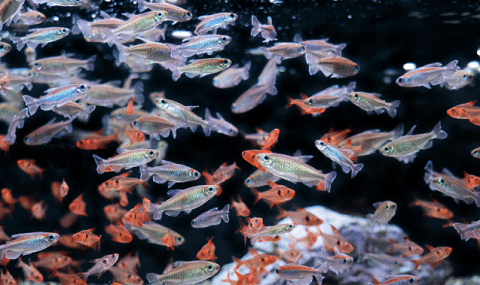
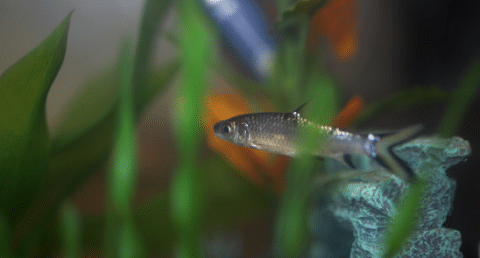
The name, red eye tetra perfectly fits the appearance of these fish since their bodies are shiny and silver in color accentuated by black tails and eyes. Also, the tails of red eye tetra are black with a prominent white border around its edges, making a beautiful outline that grabs attention instantly.
The eyes of red eye tetra have a red outline with the outer rim, bright red, and a black dot on the inside. These colors and markings make red eye tetra a beautiful addition to your aquarium settings.
Average Size
The red eye tetra is a medium-sized fish growing for around 3 inches in the wild and 2 inches in captivity.
Lifespan
If taken good care of, these species of fish can live for up to 5 years in captivity.
Tank Care Guide
Red eye tetras are one of the hardiest tetra species that can live up to 5 years or longer if taken good care of. They are excellent schooling fish and very easy to breed. Thus, the amount of care required to raise a happy and healthy red eye tetra is like any fish that demand nothing but a clean, hygienic aquarium.
If their colors look dull, the tank is wrong, not the fish. Stable water parameters, a proper school size, and some tannin-stained water bring out the best red in their eyes and the silver sheen on their flanks.
Aquarium Setup
If you want to raise a happy and healthy red eye tetra, all you can do is mimic their natural habitat. Red eye tetra thrives in a planted aquarium with low to moderate water flow, a great filtration system, and optimal lighting. Also, since they are schooling fish, the aquarium must have a lot of free swimming space and they should always be kept in a group of 6 or more.
Tank Size
The red eye tetra is an active species of tetra that prefers a tank size of at least 15 gallons if kept in a group of 6. However, if you’re planning to set up a community tank, I recommend a tank size of no less than 20 gallons.
Water Parameters
The Red eye tetra is a tropical freshwater fish that prefers warm, very soft water that is slightly acidic. However, they are known to adapt to hard alkaline water parameters, thus, they can do well in a normal community tank with mixed fish species.
Temperature range: The ideal temperature range for red eye tetras is around 72 to 79 °F
pH range: The optimal pH range of the red eye tetra tank should be between 6 to 8. Always avoid the drastic shift of pH in the red eye tetra fish tank.
Water Hardness: Red eye tetra prefers very soft to hard water. The ideal water hardness should be under 180 ppm.
Hard Rule: Keep red eye tetras in groups of at least 8. Under 6, they show stress behaviors, become nippy with each other and with tank mates, and lose the confident schooling behavior that makes them worth keeping. A proper group is the difference between a restless, aggressive cluster and a cohesive school.
Filtration and Aeration
While installing an aquarium filter, make sure you get one with light currents so there is less water movement since red eye tetra is not a good swimmer and may fall a victim to stress with fast currents. A functional filter with slow water movement is ideal to keep such slow-moving fish happy and thriving.
A good filter will keep your tank clean while an air pump keeps the tank nicely oxygenated, especially if you have fry or a breeding tank with breeding fish. Also, in practice, the water is Chlorine treated which is harmful to your fish.
Thus, I recommend getting a water conditioner to make the water safe without compromising anything.
Pro Tip: You can also place a small net bag filled with aquarium-friendly peat to the filter. This will help in stimulating blackwater conditions loved by the red eye tetra.
Lighting
These fish species are not at all a fan of bright lighting so you should go for a dimly lit aquarium. However, if you have many live plants in the tank, I suggest investing in an adjustable LED light that suffices the needs of aquatic live plants.
Aquatic Plants and Decorations
Since the natural habitat of the red eye tetra is densely populated with aquatic plants, I highly recommend setting up an aquarium with live plants. You can use foreground, midground, and background plants.
However, whatever you choose to do, make sure there’s a lot of swimming space available to them. Red eye tetras are surface or middle dwellers and they prefer free swimming space. You can also keep driftwood, Java moss, and Java fern.
I highly advise keeping driftwood as it gives your tetra tank a more natural feel. Also, driftwood release tannins that help maintain the ideal pH of your Red eye tetra tank.
Substrate
To highlight the beautiful colors and patterns of the Red eye tetra fish, you can use a dark substrate. Also, expert aquarists mostly use river sand as the substrate for red eye tetras.
What People Get Wrong
The most common mistake is underestimating the fin-nipping. Red eye tetras in small groups or with slow, long-finned tank mates will damage fins systematically. Bettas, angelfish, fancy guppies — all of these are at risk. The nipping is not occasional. It is persistent and it causes real damage over time.
The second mistake is keeping too few fish. A group of 4 or 5 red eye tetras is not a school — it is a stressed cluster of fish. Group size of 8 or more is what produces the confident, mid-water schooling behavior. Under that threshold, the fish are skittish and more likely to nip out of stress.
Third: they get overlooked because they do not have neon colors. Under standard pet store lighting, red eye tetras look plain. In a planted tank with warm lighting and dark substrate, the red eye and silver body catch the light in a way that stands out. The setup determines the look.
Community Tank Mates (moenkhausia sanctaefilomenae)
Rd eye tetras are playful, active fish that do pretty well with most fish. However, you have to research well before choosing their tank mates. Red eye tetras are slow-moving fish. Thus, any fish that deviates from this principle would be a problem for your beautiful pets. Also, I won’t suggest getting any long-finned fish as their tank mates provided the fact that they are fin nippers.
The red eye tetra is a schooling fish that should be kept in a group of 6 or more with neutral water conditions. Thus, always keep them in groups and with the same peaceful freshwater fish. If you’re opting for the same species aquarium specimens of the red eye tetra, I recommend getting a tank of at least 15 gallons. The bigger, the better.
However, if you’re going for a community aquarium with other tetra species and freshwater fish, a larger aquarium of 20 gallons should be your bare minimum tank size.
Some of the good tank mates for the red eye tetra (moenkhausia sanctaefilomenae) are:
Avoid keeping your red eye tetras with larger or aggressive fish as they might bully and hurt your red eye tetras.
Pro Tip: If you're building a community aquarium, I prefer keeping a combination of bright-colored fish with red eye tetra to add aesthetic value to their tanks. For example, you can keep bright-colored fish like Serpae tetra or Albino Buenos Aires Tetra and cherry barbs with the red-eyed tetras with live aquarium plants, driftwood, and river sand to spruce up the look of your freshwater aquarium tank.
Breeding
I’ll be very honest – breeding red eye tetras is not a piece of cake.
To breed red eye tetra, you need to maintain the optimal conditions that are super hard to hold, especially in the standard tank. For example, a breeding pair would thrive in very soft water that is slightly acidic with floating plants.
Since the red eye egg tetras are egg scatterers, after successful spawning, they scatter their eggs onto the plants. Thus, floating plants are a requirement for a breeding tank. Therefore, you need separate tanks for a breeding pair of red eyes. Spawning mop material can also be used as shown in the video below by Paul’s Fishroom.
Setting up a separate breeding tank for Red Eye Tetra
As mentioned before, red eye tetras scatter their eggs after successful spawning and usually end up eating them. To set up a separate tank for red eye tetras, you need:
An air powered sponge filter to filter out the toxins
Avoid lighting or adjust the lighting to their lowest level
Add floating plants, java moss, or any other plastic mesh to collect the eggs before the adult fish start eating them. I suggest using spawning mops
Maintain the pH levels and water temperature in your breeding tank. I also suggest adding Indian almond leaf to reduce the pH levels below 7
Keep the adult fish in the breeding tank for at least 2 days and monitor the conditions. Remove the fish if you spot eggs at the bottom of the tank
The female releases about a dozen eggs after each spawn that are translucent and around the size of a grain
The eggs of red eye tetras hatch in around 24 to 48 hours
The newly hatched fry gets its nutrients from the yolk sac and can be found free swimming after two days
Surprisingly, the baby fry of red eye tetras is comparatively bigger than most tetras. Luckily, they are easy to raise unlike most tetra fry
The fry feed on fine live fish food and commercially prepared fry foods. However, during the first few hours of their life, they are fed with infusoria
After 3 days of hatching, you can feed the fry with freshly hatched brine shrimp, crushed flakes, mosquito larvae, micro worms, etc.
To keep the fry healthy, it’s crucial to follow a 25% water change after every 3-4 days.
Food and Diet
Red eye tetras are omnivorous and voracious eaters that feed on a varied diet. Thus, feeding red eye tetras is the easiest job but in moderation. In the wild, the red eye tetra usually feeds on worms, insects, crustaceans and plant matter, etc.
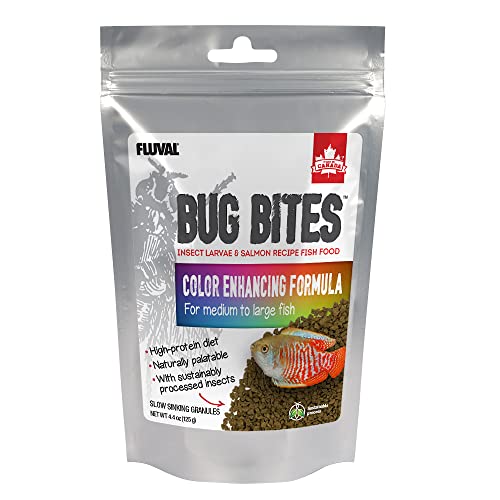
However, in captivity, you can feed them with high-quality flake food, pellet food, freeze-dried and frozen food, live food, spirulina-based food, micro worms, mosquito larvae, bloodworms, daphnia, brine shrimp. Also, dried flake foods and granules with some vegetable matter such as spinach leaves and algae-based food would work wonders on the overall health of your fish. I know that fluval bug bites are a great option for most tropical fish as a food staple.
Since they are voracious eaters, they can eat multiple times a day. However, to keep them healthy and fit, you should always strive to feed them what they can consume in three minutes or less to avoid overfeeding and other freshwater fish diseases. I suggest feeding them twice a day. While the fry needs to be fed thrice a day with a varied fish food diet.
Common Health Problems and Diseases
One of the best companions you can get is a hardy red eye tetra fish with little to no problems in a well-managed and maintained aquarium setting. Make sure to observe clearly whatever you add to your tank as anything new can introduce fish diseases in the aquarium. Therefore, I always advise novice fish keepers to properly clean all the equipment and quarantine the new fish before adding it to the community aquarium.
Always add them to a fully cycled tank. Red eye tetras are tough once established, but ammonia and nitrite in a new setup will still kill them. Let the nitrogen cycle finish before adding any fish.
However, no fish comes with a guarantee, and like other fish, the red eye tetras are vulnerable to such fish diseases:
Skin flukes
Parasitic infestations
Ichthyobodo infection
Parasitic infestations (protozoa, worms, etc.)
Bacterial infections (general)
Bacterial diseases
If by chance, you find an infected fish in the aquarium, I suggest removing it immediately before the virus spreads in the whole community aquarium. Also, to prevent these diseases, always maintain the water temperature, hardness, and pH, and mimic the natural environment of your red eye tetras.
Differences Between Male and Female
Like most tetras, the difference between male red eye tetra and female red eye tetra is almost indistinguishable. However, when the females are full of eggs, they will appear much bulkier and rounder than males.
Whereas, the male red eyes get very colorful when they are ready to mate. It is highly recommended to get bright-colored male fish as a breeder fish.
FAQs
Are They territorial?
No, red eye tetras are peaceful fish suitable for a community aquarium with other like-minded peaceful fish. They are best preferred in a freshwater aquarium with a group of at least 6 or even more. However, when there’s just a pair of red eye tetras, they can become aggressive fish toward other fish for protecting their territory.
Are They schooling fish?
Yes, red eye tetra is a schooling fish that like to move around freely in a group of at least 6 fish or more. However, while adding other fish to the aquarium, make sure you add the ones that compliment the behavior, size, and water parameters of the red eye tetras.
How many of them are in a school?
The red eye tetra is an active, peaceful fish that should be kept in a school of 6 or more with the required plantation, decoration, and water movement.
How many can I put in a 10-gallon tank?
a 10-gallon tank is not suitable for red eye tetras because they appreciate large, open swimming areas. Therefore, if you’re keeping a school of 6 tetras or more, you should go for no less than 15 to 20 gallons tank. However, in a 10-gallon tank, all you can keep is a pair of redeye tetras, which is highly not recommended.
Are They Hardy?
Yes, unlike other tetra species, redeye tetra is a hardy freshwater fish that requires little maintenance and upkeep. Just maintain their water parameters and keep the tank clean to enjoy the company of your beautiful fish for 5 years or (maybe) longer
How often do you feed them?
Redeye tetras are voracious, omnivores that can eat food any time of the day. However, to keep them active and healthy, you need to feed them twice a day.
Do they need an air pump?
Yes, an air pump allows to keep the water oxygenated and redeye tetras appreciate a well-oxygenated tank.
Are they freshwater fish?
Yes, redeye tetras are peaceful, freshwater fish native to South America. They are not aggressive or territorial and will get along with most tropical fish available in the hobby. The main concern is other fish bullying them!
Is the Red Eye Tetra Right for You?
Before you add a red eye tetra to your tank, it’s worth asking whether this species actually fits your setup and your goals. Here’s a quick breakdown to help you decide.
This species is a good fit if:
You have a large enough tank to manage territories. Cramped conditions amplify aggression.
You’re comfortable managing aggression through stocking ratios, line of sight breaks, and tank layout.
You can commit to regular water changes. These fish produce more waste than many smaller species.
You’re not planning a peaceful community tank. Red Eye Tetras need tank mates that can hold their own.
You enjoy watching active, interactive fish. Cichlids have personality that smaller species simply don’t match.
You have backup plans. Sometimes a particular fish just doesn’t work out, and you need a way to rehome it.
You’re feeding a varied, high-quality diet. Color and health depend on nutrition.
If most of those points line up with your setup, the red eye tetra is worth serious consideration. If several don’t, it’s better to choose a species that matches your tank now rather than trying to make it work.
What It Is Actually Like Living With Red Eye Tetra
Red eye tetras are constant swimmers that patrol the middle and upper portions of the tank. They bring energy and movement to any community setup.
The red eye is most vivid in the morning and after water changes. Consistent water quality keeps the eye color bright throughout the day.
They are bold feeders that eat aggressively at the surface. In a mixed community, they will get their share without help.
In a school of 8+, they create an impressive display of synchronized movement with flashes of red eyes catching the light.
How the Red Eye Tetra Compares to Similar Species
Choosing between similar species is tricky. Here’s how the red eye tetra stacks up against some common alternatives.
The red eye tetra occupies a specific niche in the aquarium hobby, and direct comparisons really depend on what you’re looking for. In my experience, the most common question people ask is whether they should choose the red eye tetra or something similar that’s more widely available. The answer usually comes down to three things: tank size, water parameters, and what other fish you’re keeping. If your setup matches what the red eye tetra needs, it’s hard to beat. If not, there are alternatives worth exploring.
Expert Take (Mark Valderrama, AquariumStoreDepot)
The red eye tetra does not get talked about much, but it is one of the best beginner tetras available. It is tough, adapts to a wide range of water parameters, and that red eye and silver body looks sharp in a planted tank. It gets passed over for neons and cardinals, but it is a more durable fish that beginners are more likely to succeed with.
Final Thoughts
The red eye tetra Moenkhausia sanctaefilomenae are popular freshwater fish that are readily available in the aquarium ecosystem. These fish were first found and caught in the wild. However, now, they are bred in Asia as a hobby. Redeye tetras, despite not being flashy, are an interesting addition to your home aquariums.
Recommended Video
Check out our tetra tier list video where we rank the most popular tetras in the hobby, including the red eye tetra:
The congo tetra is the largest commonly kept tetra, and most people put it in tanks that are too small. A full-grown male with flowing fins needs space, current, and a proper school. Cram them into a 20 gallon and you get washed out colors and shredded fins.
A congo tetra in a cramped tank is a shadow of what it should be. Give them space or do not bother.
The Reality of Keeping Congo Tetra
Males need room to develop their fins. Congo tetra males grow long, flowing fin extensions that are the main attraction of this species. In cramped tanks, fin damage from nipping and stress prevents these extensions from developing. You need open swimming space and a proper male-to-female ratio. Aim for 2 females per male to reduce aggression.
They are skittish until they settle in. Newly added Congo tetras are nervous, jumpy, and prone to dashing into the glass. A tight-fitting lid is essential during the first few weeks. Once they settle into a routine, they calm down significantly, but the initial period requires patience.
Water quality shows immediately in their color. Congo tetras in clean, well-maintained water shimmer with iridescent blues, greens, golds, and oranges. In neglected tanks, the color dulls to a flat olive-silver. This fish is a living water quality indicator. If they look dull, your maintenance schedule needs work.
Biggest Mistake New Owners Make
Keeping them in a tank that is too small. A 20-gallon with 4 Congo tetras is a recipe for stressed, dull fish with damaged fins. They need a 40-gallon or larger to reach their full potential.
Key Takeaways
Congo Tetras are larger schooling tetras that do great in medium sized tanks
They are safe around plants
They live up to 5 years and grow up to 4 inches
Species Overview
Scientific Name
Phenacogrammus Interruptus
Common Names
Cango Tetra
Family
Alestidae
Origin
Cango River in Zaire, Central Africa
Diet
Omnivore
Care Level
Easy
Activity
Active
Lifespan
3 to 5 years
Temperament
Peaceful
Tank Level
Middle to top
Minimum Tank Size
20 – 30 gallons
Temperature Range
73° F to 82° F
Water Hardness
3 to 18 KH
pH Range
6.0 to 7.5
Filtration/Water Flow
Moderate to fast
Water Type
Freshwater
Breeding
Egg layer
Difficulty to Breed
Moderate
Compatibility
Community tanks
OK, for Planted Tanks?
Yes
Classification
Kingdom
Animalia
Phylum
Chordata
Class
Actinopterygii
Order
Characiformes
Family
Alestidae
Genus
Phenacogrammus
Species
P. Interruptus (Boulenger, 1899)
ASD Difficulty Rating: Intermediate | 5/10
Congo tetras need clean water, a spacious tank, and a proper school to display their full coloring and fin development. Parameter stability matters more than specific values.
What Is A Congo Tetra?
Congo Tetra, scientifically known as Phenacogrammus Interruptus, is a freshwater fish species. They are part of the Alestidae family from the order Characiformes.
The tetra that looks like a freshwater reef fish, if you earn it.
Congo tetras are professional representatives of peace, grace, and beauty. With originating from a certain point of the ocean world, they are now an important part of aquariums all around the world.
Apart from these visible characteristics, they are largely capable of morphing themselves according to the need of the hour.
As a beginner or seasoned aquarist, adding Congo Tetras to your tank will be worth the time that you devote to their maintenance.
Origin and Habitat
A Congo Tetra was first sighted in 1949 in the Congo River Basin in Zaire, Africa. They got their name from the Belgian-British zoologist George Albert Boulenger.
Because of being tough to breed, they couldn’t mark their existence in the aquarium world until the 1970s.
For a healthy survival in the wild, Congo Tetras hunt down live insects and prefer living in moderate to fast freshwater currents.
Appearance
A Congo Tetra looks absolutely stunning because of its unique and striking color combination and elegant fins. While fish keepers all around the world admire them due to their calm turn of mind, their colorful bodies help them stand out perfectly, too.
Congo Tetras feature a beautiful spectrum throughout their bodies. While their heads and bellies are covered in blue, a red shade laced with a golden touch dominates the middle part.
Their long and flat bodies look considerably smaller than compared to their beautiful extended fins.
A Congo Tetra composes long fins with subtle transparency visible on their fins. And these fins are yet another reason linked directly to their fame and admiration, with the sporty tail fin serving as a prominent characteristic.
Apart from mixed body coloration, you can see a stripe stretched along their midsections. The band starts from their heads and ends at the tails. Since they have long and translucent fins, Congo Tetras are irresistible to watch while swimming.
There is also a visible shimmer on their bodies. The hue that you see depends on the lighting. Because they have a range of colors, the hue can appear bright mauve, or ocean colored apart from blue.
Even though Congo Tetras are slightly big in comparison with other tetras, they look compressed because of the large midsection.
It is easy to discern males and females. Phenacogrammus Interruptus are sexually dimorphic and therefore have visible gender differences.
As with most fish, the male Congo Tetra fish present vibrant body coloration and colossal size. The females are plumper, especially when they are ready to breed.
Other than being taller and vibrant, the male Conga Tetras have larger dorsal fins. These fins give a feathery appearance that looks more beautiful in the water.
You can also see a violet shade on the fins of males with a beautiful white edging, with their tail fin present along the vertical medial line.
Aside from these beautiful physical characteristics, their dark black and red outlined eyes play an important part in adding up to their beauty even further.
Lifespan
While their average lifespan is between 3 to 5 years, reforming their water conditions helps you support them to live longer and healthier. A Congo Tetra does well with a range of foods, but a well-rounded diet is necessary.
Their ideal water temperature is around 73° to 82° F, with a slightly higher pH level.
Stick around till the end because we will go over all the details, including water conditions and dietary requirements step by step.
Average Size
A Congo Tetra is at least 4 inches long. That’s their average adult fish size, however, they can stretch themselves up to 4.2 inches easily in the wild.
If you have farm-bred Congo Tetras, then growing over 3 or 3.5 inches is pretty hard for them.
As compared to other types of tetras, Phenacogrammus Interruptus are bigger and grow to their full length in a brief span of time.
Care Guide
When it comes to starting out as a beginner aquarist and finding a suitable fish, Congo Tetras fit the bill for many requirements.
Only introduce them to a fully cycled, stable aquarium. Congo tetras are sensitive to poor water quality, and an uncycled tank with ammonia or nitrite present will stress them into illness fast.
There are several reasons they are always on the forefront of mind to consider housing in a freshwater aquarium. One prime example is their easy-to-manage care requirements, easy Congo Tetra diet, and overall demands.
In their natural habitat, the fish is pretty skillful to go with fast water currents and enjoy swimming in low water currents simultaneously. It mainly depends on the situation.
In the wild, they love hunting down live insects to sustain themselves. Unlike other fish that are susceptible to aggressive or territorial behavior, Congo Tetras are completely peaceful and schooling fish.
If you thoroughly understand their water conditions and dietary requirements, they can easily stand firmly against the common fish diseases and live longer.
Here are some essential things to consider before having a Congo Tetra.
Aquarium Setup
While thinking about the Congo Tetra tank setup, being well up on their preferred tank conditions is essential.
In the wild, you can find Congo Tetras in the Congo River, Africa. They live in groups in streams, marshes, pools, and tributaries.
Congo Tetras prefer slightly higher pH levels with large vegetation surrounding them. This calm fish can tolerate subtle water changes, but it’s highly recommended to gauge water parameters as per their needs.
Even though they populate areas where the vegetation is tall, mimicking the exact condition, can disturb their free moving.
Phenacogrammus Interruptus live in the upper sections of water, travelling rarely to the bottom. And as because they are active, you need to secure their tank with a lid to avoid any mishaps.
Tank Size
The ideal Congo tetra tank size should be at least 30 gallons. While some people go under the recommended tank size, I would urge you to get a 30-gallon tank to boost tourism within.
Congo Tetras that are not farm-bred can grow up to 4.2 inches, with the captive-bred at least 3.5 inches long. A schooling fish of this adult fish size will never be happy with smaller tanks.
Even if you overlook their size, think about the decorative items and plants you will introduce to their tanks. Smaller tanks will be filled up with that, leaving little space for the fish. However, a 30-gallon tank can easily house fish and other stuff that you put in it.
Water Parameters
Before housing Phenacogrammus Interruptus, you need to understand what Phenacogrammus Interruptus prefer. Because that has a straight connection with their well-being and is an essential part of proper Congo Tetra care.
The water of the Congo river is slightly acidic, with a water temperature ranging between 73° F to 82° f. Their preferred acidic levels shift between 6.0 to 7.5, with water hardness between 3 to 18 KH.
Hard Rule: Keep congo tetras in groups of at least 6, with more females than males. Fewer than 6 and the males stop displaying properly. The fins stay dull and the schooling breaks down. You lose everything that makes this fish worth buying.
Filtration and Aeration
As much as other factors involved in their overall maintenance are important, so are filtration and aeration. To keep the ecosystem of their freshwater aquarium intact, you need a solid filtering system.
The excellent recommendations is a standard canister system or a carbon filtering system. These strong filtration systems will keep the waste levels low and overall water quality up to the mark.
Exposure to bright lighting can significantly disturb their day-to-day activity. Congo Tetras spend most of their time hiding in caves and around plants and neglecting eating and swimming if the lighting is too bright.
Dim light will bring out their proper coloration and motivate them to swim around hassle-free.
Place their freshwater aquarium in a place that is dimly lit. Since monitoring them is important and in subdued light, you can’t do that, use LED bulbs.
Aquatic Plants and Decorations
Your Congo Tetra is a very adaptable fish, but it will not compromise on plants. Plants are not only necessary to make your aquarium beautiful, but they are important to keep oxygen levels up.
While floating aquarium plants will make them feel at home, you are likely to overfill the tank.
Place these plants at a distance so your fish can easily swim around. Another reason you shouldn’t put the plants closely is the inability to see them due to the density of vegetation.
Your Congo Tetra will use these plants to hide while threatened or when the light is beyond their tolerance. So, make sure you have an adequate amount of them in the tank. Also, introduce caves and aquarium rocks as another hideout option for them.
Tank Maintenance
When the water tank contains so many plants and a group of fish, maintaining it becomes a bit tough.
But, don’t worry! Here are some very easy steps that you can follow to keep your aquarium tank clean and new.
How to clean the tank of Congo Tetras?
Start with cleaning the aquarium walls with mild soap.
Weed out the waste plant material and plant new aquarium plants occasionally.
Use lukewarm water to clean the manufactured caves.
Add fresh water to the tank every now and again to avoid excessive algae growth.
Substrate
Congo Tetras stay at the middle and top water levels. But a substrate that resembles their natural habitat, River Congo, will be absolutely recommended.
Since Phenacogrammus Interruptus prefer darker water environments, a dark gravel, sand, or silt substrate will be ideal. You don’t have to add too many rocks because the primary focus should always be on fresh plants.
What People Get Wrong
The most common mistake is buying two or three congo tetras because they are expensive and putting them in a 20-gallon tank. That approach produces stressed, dull fish with poor fin development. Congo tetras need space and numbers — at least 40 gallons (151 liters) and a school of 6 or more to behave and look the way they should.
The second mistake is mixed-gender groups skewed too heavily male. Males in close quarters with not enough females become territorial and aggressive with each other, which causes fin damage and stress. Aim for 2 females per male or a balanced ratio.
Third: tank lighting matters. Congo tetras under harsh blue LED lighting look flat and unremarkable. Under warm white or planted-spectrum lighting, the iridescent blue-gold lateral stripe activates in a way that stops people in their tracks.
Community Tank Mates
A larger group of aquarists prefer housing Congo Tetras because of their calm nature. As a beginner aquarist, handling any aggressive fish will be really hard. Hence, your chances of having a peaceful fish-keeping journey will be ruined.
A Congo Tetra does well with a range of fish species. They are already schooling fish, which means surviving alone is impossible for them.
But, before I give you a list of tank mates, you should know that the male Congo Tetras are delicate. Any fin-nipper will most hunt down their fins, resulting in a serious injury.
Congo Tetra tank mates should align with their size and nature. Here’s a list of some community tank mates to consider:
Breeding Congo Tetras is pretty simple as long as you follow this proper Congo Tetra Guide. It might look complicated to a beginner since no experience gives way to agitation. But it’s easy and interesting.
While many aquarists prefer farm-bred Phenacogrammus Interruptus, you can easily map out all things for proper Congo Tetra breeding in your home aquarium (video source).
To commence the breeding season, get a 20. Gallon separate breeding tank for your male Congo Tetra and female Congo Tetra. Place peat moss at the bottom of the tank and keep the temperature up to 77° F. Also, scale down the lighting if you want to prompt them to breed.
Apart from peat moss, you can introduce breeding mops and plants throughout the tank as a safety measure.
While you are working in all these areas, improving water quality is also important. The best way to do this is to introduce peat moss to the breeding tank and wait for at least 3 days. For filtration, I recommend a small air-powered sponge filter to manage the water aeration and flow.
Once you are satisfied with the overall water quality, separate the intended pair from the rest of the group to add to the breeding tank.
But before you allow them to pair off, keep track of their diet for a span of 2 weeks.
Your Congo Tetras will start spawning the next day of getting in a breeding tank. The male will perform a mesmerizing dance around the female before traveling down to the base of the tank together.
The female will then appear swollen with eggs. They can lay almost 500 eggs in a single spawning round, which is tough to handle. The peat moss will catch the eggs safely where the eggs can lie scattered until they hatch.
Once the female is done laying eggs, separate the pair from the eggs. Because Congo Tetras can eat their own eggs.
Keep the lights subdued because the eggs are super sensitive to strong lighting. The healthy eggs will appear transparent and they require a week to hatch. You can expect them to take another week to become large fry and begin swimming.
Feed the little fry infusoria for a few days, then shift to other foods. To condition them to develop properly, you can start feeding the newly hatched fry baby brine shrimp, lightly crushed flake food, and rotifers.
Pro Tip: To identify infected eggs, look for fungal growth and transparency.
Congo Tetra Food and Diet
Aside from being social and peaceful, they are easy to handle because of their undemanding dietary needs. Congo Tetras are omnivores, which means they sustain themselves on blood worms and insects in the wild.
While insect larvae and blood worms are the base of their diet, eating algae and plant matter is also pretty normal.
You can feed them insect larvae, brine shrimp, flake foods, bloodworms, tubifex, and daphnia in your aquarium. Adding vegetables to their diet will also be good since vegetables are good for providing vitamins. They are very active fish. So, feed them at intervals to make sure they are fed well. Prepare foods like high-quality fish flake food and pellet food work well as staples. Fluval bug bites are a great option.
As a beginner, this is another plus point for you. Because you don’t really have to make any special variations in their diet due to their humble nature.
But while feeding them, make sure the food doesn’t sink to the bottom of the tank. Moreover, feed them food that is small-sized to prompt better digestion and overall health.
Usually, your Congo Tetra will finish its food within 3 minutes. But in case they are exceeding this time frame, pay attention to their daily activities and behavior.
Pro Tip: Nipping at the plant edges is a clear indication that your fish is not getting enough food to stay full. As soon as you notice that, change their timings to ensure they are getting enough food.
Common Health Problems
Congo Tetras are strong fish and do not fall prey to any specific common fish diseases. However, like other fish, they are prone to some common fish ailments caused by unclean water.
In the wild, the water naturally gets clean. But in your aquarium, you need to replicate that condition. This is to ensure that your fish is breathing in a safe aquarium environment free from the waste they produce.
Here are some common diseases with symptoms.
Ich
Ich is a very common fish disease caused by the protozoan Ichthyophthirius multifiliis.
The symptoms are:
White dots on fins, gills, and other body parts
Rubbing the body against rough edges
Flukes
This is another common fish disease caused by parasites.
The symptoms are:
Red spots on the body, especially on the gills
Difficulty in breathing
A large amount of mucus
Products like Prazipro are great for treating this disease.
FAQs
How many Congo Tetras can I put in a 30-gallon tank?
A 30-gallon tank is fine for 2-3 Congo Tetras. But if you have other fish in the tank or 5-6 Congo Tetras together, having a 55-gallon tank is highly recommended.
How big do Congo Tetras get?
The average Congo Tetra size is 4.2 inches in the wild. But fish that are farm-bred do not grow this big. They are around 3 to 3.5 inches long.
Are Congo Tetras hard to keep?
No. Congo Tetras are hugely popular because of their calm nature and the ability to get along with a range of freshwater fish. Their peaceful disposition allows you to have a safe, happy, and outstanding fish-keeping journey as a beginner.
How many Congo Tetras should be kept together?
Congo Tetras are schooling fish that need tank mates to stay active and healthy. Normally, a group of 6 Congo Tetras is perfect to house together. But for that, you need a bigger tank.
Are Congo Tetras fin nippers?
Congo tetras are not fin nippers. In fact, they are prone to fin-nipping fish because of their delicate fins. Especially with male Phenacogrammus Interruptus, you have to be really careful with who is with them in the tank.
How long does it take for Congo Tetras to mature?
Congo Tetras grow really fast as compared to other fish species. It takes a fry Congo Tetra 3 months to reach 2 inches and almost 6 months to become 3 inches long.
Is the Congo Tetra Right for You?
Before you add a congo tetra to your tank, it’s worth asking whether this species actually fits your setup and your goals. Here’s a quick breakdown to help you decide.
This species is a good fit if:
You have a large enough tank to manage territories. Cramped conditions amplify aggression.
You’re comfortable managing aggression through stocking ratios, line of sight breaks, and tank layout.
You can commit to regular water changes. These fish produce more waste than many smaller species.
You’re not planning a peaceful community tank. Congo Tetras need tank mates that can hold their own.
You enjoy watching active, interactive fish. Cichlids have personality that smaller species simply don’t match.
You have backup plans. Sometimes a particular fish just doesn’t work out, and you need a way to rehome it.
You’re feeding a varied, high-quality diet. Color and health depend on nutrition.
If most of those points line up with your setup, the congo tetra is worth serious consideration. If several don’t, it’s better to choose a species that matches your tank now rather than trying to make it work.
What It Is Actually Like Living With Congo Tetra
Male Congo tetras in full display mode are genuinely jaw-dropping. The iridescent colors shift as they swim, creating a rainbow shimmer effect that changes with every angle.
They are mid-water swimmers that occupy the center of the tank. A dark background makes their iridescence pop dramatically.
Feeding time is energetic. Congo tetras are enthusiastic eaters that hit the surface hard. They accept everything from flakes to frozen food.
Males will occasionally flare at each other and display their fin extensions. This is normal social behavior and one of the most entertaining aspects of keeping this species.
How the Congo Tetra Compares to Similar Species
Choosing between similar species is tricky. Here’s how the congo tetra stacks up against some common alternatives.
Congo Tetra vs. Yellow Congo Tetra: Both species occupy a similar niche in community tanks, but they differ in temperament, coloration, and ideal water conditions. The congo tetra is a solid choice for hobbyists who want reliable schooling behavior and easy care, while the yellow congo tetra brings a slightly different look and energy to the tank. In my experience, the deciding factor usually comes down to which aesthetic you prefer and what other species are already in the tank. Check out our Yellow Congo Tetra care guide for a detailed breakdown.
Congo Tetra vs. Diamond Tetra: Both species occupy a similar niche in community tanks, but they differ in temperament, coloration, and ideal water conditions. The congo tetra is a solid choice for hobbyists who want reliable schooling behavior and easy care, while the diamond tetra brings a slightly different look and energy to the tank. In my experience, the deciding factor usually comes down to which aesthetic you prefer and what other species are already in the tank. Check out our Diamond Tetra care guide for a detailed breakdown.
Expert Take (Mark Valderrama, AquariumStoreDepot)
The congo tetra is one of the most visually impressive tetras you can put in a community tank. Males develop long, frayed fins and that iridescent blue-and-gold coloring really pops under the right lighting. They need a bigger tank than most tetras and a proper school. Get those two things right and you have one of the best display fish in the freshwater hobby.
Closing Thoughts
If you’re looking for a beautiful and peaceful fish to add to your community tank or planted aquarium, the Congo Tetra is a great option. These fish are social and thrive when kept in groups, so make sure you have plenty of room in your tank for them! Thanks for reading. We hope you enjoyed this post. Have you kept Congo Tetras before? Let us know your experience in the comments below!
Recommended Video
Check out our tetra tier list video where we rank the most popular tetras in the hobby, including the congo tetra:
Hair algae outbreaks have happened to virtually every planted tank keeper at some point. myself included. The frustrating part is that it usually shows up when a new tank is still getting established and nutrient balances are most unpredictable. In a reef tank, it typically signals excess phosphate or nitrate. In a freshwater planted tank, it’s often a CO2 or lighting issue. The good news: once you address the root cause, it usually doesn’t come back. Here are 7 methods that actually work.
Key Takeaways
Hair Algae is pet algae that grow in high-nutrient environments
The first thing to address with Hair Algae is your source of water
Lots of healthy aquarium plants can choke out hair algae over time
Nerite snails, Molly Fish, and Amano Shrimp eat hair algae
What Is Hair Algae?
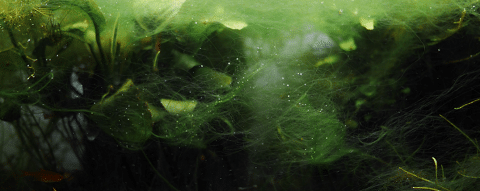
Hair algae is a common type of photosynthetic green algae. This means it needs light, carbon dioxide, and nutrients to grow, just like plants and macroalgae. Algae are a little different from plants in that they do not have roots, stems, or leaves, however.
The most common types of hair algae found in aquariums come from the genus Oedogonium1, but there are many algae species and you’d need a microscope to accurately identify them.
Green hair algae are common in nature and in aquariums where it grows attached to plants, hardscape features, and even on snail shells! It forms long fine strands that often grow in clumps. Fortunately, the types found growing in aquariums tend to be soft and pretty easy to remove.
Is It Bad?
Green hair algae are usually not harmful to your fish or other livestock. In extreme cases, this algae can limit the swimming space in your aquarium and even entangle fish. A blanket of green hair algae growth can cover up your plants or corals (in saltwater), however, and this could kill them in the long run.
While green hair algae itself is not bad, you could look at it as a warning sign. Excess algae growth is actually a useful indicator of other problems that could be really bad for your tank. If you can find the underlying problem, you can usually get rid of green hair algae.
What Causes Hair Algae?
Hair algae is naturally present in just about every aquarium, but it only grows out of control under certain conditions. Algae gets into aquariums with plants and livestock, water, and even through the air around us, so there is little chance of keeping it out of your fish tank forever.
Excess hair algae, and many other types of algae, are very common in new aquariums. Algae growth in new established aquariums will often resolve itself as beneficial bacteria colonies develop and the tank starts to reach an equilibrium.
If hair algae has become a problem in an older aquarium, the following factors (or a combination) could be to blame:
Now that you know a little more about what hair algae are, and what causes it, it’s time to learn how to get rid of it! In this section, I’ll cover 7 effective methods that you can use. Check out the video from our YouTube Channel below. We go over more details in our blog post. Be sure to subscribe if you enjoy our content. We post videos every week!
Some of these methods will treat the algae problem directly, and some will treat the cause. You might need to use several of these techniques to achieve the best results, but remember that getting rid of the algae today is no guarantee that it won’t come back again.
I’ll cover some great tips later in the article for preventing algae from coming back, so make sure you read to the end. For now, though, let’s get right into the 7 best methods for removing green hair algae from fresh and saltwater aquariums!
1. Improve Your Source Water
Your water makes your aquarium. It is the foundation of the entire system, so it’s usually the first place to look when problems start up.
Sometimes your local tap water is unusually high in silicates, nitrates, and phosphates. Nitrate levels of over 20 ppm are often acceptable in freshwater tanks, but you’ll need to have 5 ppm or lower to keep a healthy reef tank. Have your water tested or put together your own comprehensive water test kit to make sure everything checks out.
If you find any red flags, the best solution will be to start using reverse osmosis (RO) water for your freshwater aquarium or reverse osmosis deionized (RODI) water for your reef aquarium. This allows you to lay a solid and safe foundation.
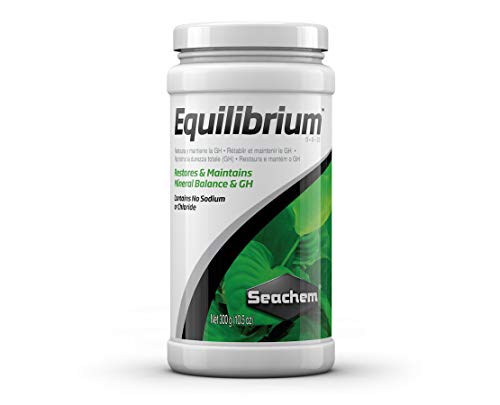
If you do choose to use RO water or distilled water, you’ll want to remineralize your water using products like Seachem Equilibrium. Alternatively, you can mix some tap water with your RO water to restore some of the beneficial minerals and elements that plants and animals need.
Using RO or RODI water isn’t always necessary. You can often solve aquarium water quality problems through better maintenance alone. Regular testing and partial water changes are very important for maintaining high water quality.
High levels of certain nutrients like nitrates and phosphates in a poorly maintained aquarium can cause hair algae growth. These nutrients are vital for the survival of plants and even corals, however, so maintaining the concentrations at a safe level with regular maintenance is the best way to go.
Nitrates and phosphates can come in directly from tap water, but they also build up in aquariums because they are the products of uneaten fish food, fish waste, and decaying plant material. Let’s take a look at two simple strategies to reduce the nutrients in our aquariums.
Limit your nutrient input
The first way to manage the nutrients in your aquarium is to reduce the number of nutrients you add to the system. Here’s how:
Avoid overfeeding your fish
Avoid overstocking your aquarium with too many fish
It’s impossible to keep all nutrients out of your aquarium, or even to keep them completely stable. Your fish and livestock need to be fed regularly and your live plants need to be fed too. So how do you remove the excess nutrients that cause hair algae growth?
Let’s take a look at the most important maintenance steps.
Test your water parameters regularly
Perform regular partial water changes
Remove decaying plant and animal material as soon as possible
Rinse out your filter media when necessary
3. Manual Removal
If you have a hair algae problem in your tank, you’re going to want to get it out of there in one way or another. Algae removal without addressing the root cause is only a temporary solution, of course, but it’s a good start!
Fortunately, green hair algae are pretty easy to remove because it is soft and does not attach very firmly. Use a toothbrush or a small bottle brush/pipe cleaner and twirl the strands on the brush before pulling them up and out of your tank.
If the algae are growing on a loose piece of hardscape like a rock, you can remove the object and clean it in a separate container of water. Scrubbing the algae in your main tank will only result in the algae drifting around and establishing somewhere else.
Hair algae sometimes grow in clumps on the sand or substrate in your tank. You can sift it out with a fine net in this case. Dead and dying hair algae can often be removed by siphoning it out with your gravel vacuum, especially if you brush it loose as you go.
4. Grow More Plants
Green hair algae need all the same things as aquarium plants to live and grow. In fact, all the plants and algae growing in a planted aquarium are in competition with each other for the same resources. Once you understand this simple fact, it’s easy to see how healthy plants can be such a great weapon for fighting algae!
Adding more aquatic plants, especially fast-growing stem plants can starve the algae and wipe it out naturally. If you already have loads of plants, focusing on their health by using good quality lighting, injecting CO2, and providing fertilizers can solve your algae problems.
What about reef tanks?
Regular plants aren’t going to work if you have a reef tank, but you still have options. attractive macro algae like Chaetomorpha can also be used to outcompete pesky hair algae. Before you go dropping macro algae into your aquarium, it’s important to note that these larger algae can also become a nuisance and grow out of control.
The solution is to grow them in your sump (if you provide them with lighting) or set up a refugium where they can grow without cluttering your display tank. Installing an algae scrubber is another great way to help outcompete algae in your tank.
5. Improve And Stabilize Your CO2 Levels
Low or unstable carbon dioxide levels are a major cause of hair algae in planted freshwater tanks. Investing in a quality CO2 injection system isn’t cheap, but the control and results you will see quickly justify the cost!
Just providing carbon dioxide is not the whole story, however. It’s important to have your levels stable and evenly spread out through the water column of your tank. A timing system, that works with your lighting, a diffuser to dissolve the gas into your water, and a bubble counter and drop checker system to measure and maintain stable levels are all very important. Bundles are available to purchase like the set below from our partners CO2Art.
The highest end offering by CO2Art. This package includes everything you need to perform consistent and the highest quality CO2 injection in the industry!
Chemical treatments for green hair algae can be highly effective, but this should always be used as a last resort. Algae control products will only treat the problem temporarily, and some chemicals can be harmful to your livestock.
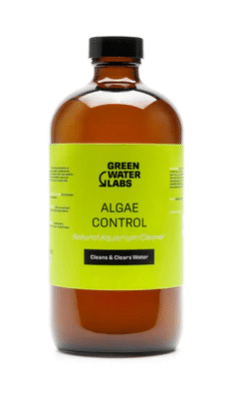
Algaecides like API Algaefix have been used successfully, but these are often not safe to use with shrimp and other crustaceans. For a safer option, non-toxic alternatives like Green Water Labs Algae Control are now available.
Another option is to use a carefully measured dose of hydrogen peroxide as a spot treatment or as a dip for rocks and ornaments. These objects must be rinsed in freshwater before being returned to the tank, however.
7. Use Fish And Inverts To RemoveIt
Algae eaters are a great way to manage stubborn hair algae problems in both fresh and saltwater aquariums. We aquarists are very lucky that there are so many great species available that feed on algae.
Unfortunately, your cleanup crew will not be able to solve the problem if it is caused by a serious imbalance, but they will keep algae under control in most circumstances.
Let’s meet some of the best hair algae eaters that get rid of aquarium algae!
Freshwater hair algae eaters
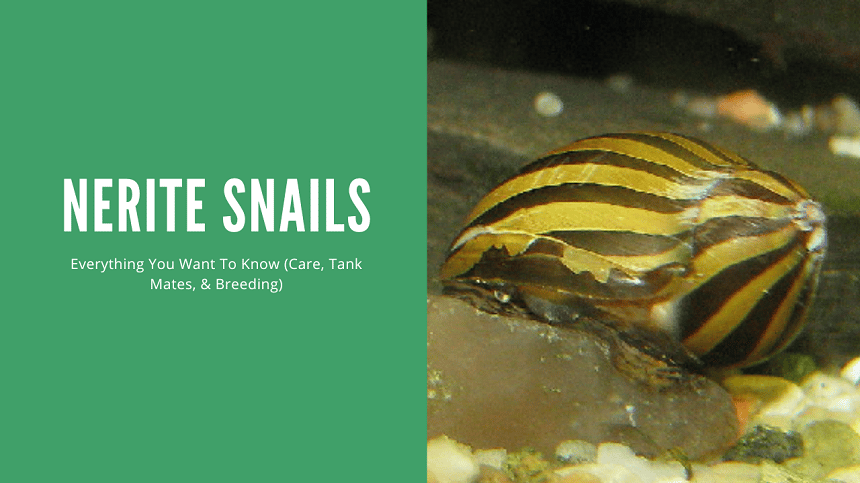
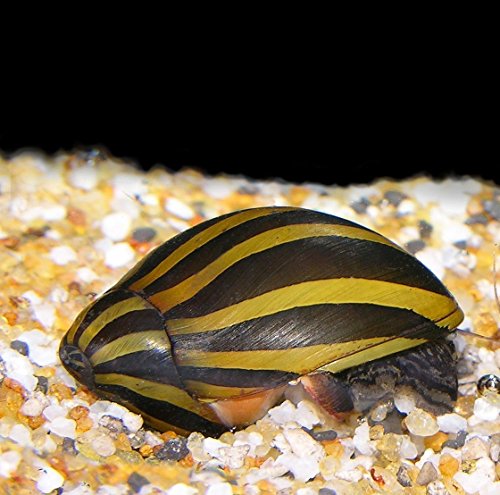
Nerite Snails– Neritina/ Vittina/ Clithon spp.Nerite snails are true superheroes in planted tanks. These inverts add interest to any display tank with their beautiful patterns and shells, but they have much more to offer. Nerites love hair algae. These little snails will work tirelessly to rid your tank of hair algae, and the best part is that they never breed, so they won’t take over. There are other algae-eating snails, but the Nerite tops them all.
Molly Fish – Poecilia sphenops/ P. latipinnaMolly fish deserve a lot of love. These lively livebearers are great fun to breed, and they love to eat soft algae. Molly fish are usually sold as freshwater fish, but they can be kept in saltwater too if you acclimate them!
Amano shrimp – Caridina multidentataAmano shrimp are named after one of the most influential planted tank masters, Takashi Amano. These awesome shrimp could be called the aquascape r’s best friend because they will jump right in and tackle any hair algae problem.
Saltwater eaters
Rabbitfish- Siganus spp.Rabbitfish are great algae-eating fish for reef aquariums. There are many awesome species to choose from, and they can be housed in tanks from about 70 gallons and up. Rabbitfish even eat the similar-looking Bryopsis algae, but beware, they have been known to take a bite out of some corals and inverts from time to time.
Tangs – Zebrasoma spp., Ctenochaetus spp. etcTangs are one of the most popular fish choices for reef aquarium keepers all over the world. As an added benefit, many of the tangs make awesome hair algae eaters. Kole, yellow, and even powder blue tangs are all great examples.
Turbo snails – Astraea tectaTurbo snails are excellent algae grazers for reef tank cleanup crews. These small snails grow to about 2 inches, but they have a big appetite and will keep the glass and rocks of your tank clean.
Trochus snails – Tectus sp.Trochus snails are another excellent green hair algae eater for reef aquariums. These long-lived tropical snails make an excellent investment when putting together a clean-up crew for your reef tank.
Molly Fish – That’s right, Molly fish can be converted over to saltwater. They are argulyable the best algae eater in saltwater tanks. While they aren’t compatible with many other saltwater fish, they are excellent in frag tanks as they keep most algae at bay with their appetite. They require super clean tanks as they have no disease resistance to saltwater pathogens.
How To Prevent
Whether you’re in the process of getting rid of hair algae in your aquarium, or setting up a new tank, knowing how to keep algae from developing can save you the frustration of trying to get rid of it.
Let’s take a look at some of the ways to set yourself up for success.
When to add your clean-up crew
Putting together a small team of algae-eating animals to keep your tank clean is a highly effective way to manage algae in the long run. It’s important to keep the welfare of your pets in mind of course, and many aquarists don’t realize that these animals can starve if you add them to a new tank without any algae.
Consider adding your first algae eaters after a few weeks once your tank is fully cycled and the first algae begin to grow. If your algae eaters manage to clean up all the algae in your tank, you’ll need to feed them a prepared algae food source like gel food, blanched vegetables, or dried seaweed.
Stay on top of maintenance
The aquarium hobby can seem a little demanding sometimes, but if you stay on top of your regular maintenance, you can stop a lot of problems before they even start. You will need a test kit to manage your water quality because you just can’t see the water parameters that cause algae growth.
Monitor your nitrates and phosphates with your test kit regularly to get an idea of how fast they build up in the water. This will help you design a maintenance schedule that is perfect for your tank. Be aware, however, that nutrient levels can build up faster or slower as you make changes to your aquarium like adding new fish or trimming your plants.
Remove excess nutrients in your aquarium water with a weekly or twice monthly water change, and take care to remove as much physical waste from the bottom of your tank as possible too.
Filtration
Inadequate filtration is a common cause of algae problems in both fresh and saltwater aquariums. Your fish tank should have high-quality filtration installed and running before you add all your livestock to get the aquarium cycle up and running. The process can take several weeks, depending on the cycling method you use.
Your filtration system should hold as much filter media as possible to provide plenty of surface area for the beneficial bacteria colonies to develop. Filters need little maintenance in well-run aquariums, but you will need to rinse out the media from time to time as it collects waste. Only rinse your media in tank water and avoid using any harsh chemicals for this job. For freshwater tanks, the canister filter is good too if you are planning a planted tank.
If you have a small reef tank, a protein skimmer could be useful for improving water quality even further.
Lighting
Poor lighting is another leading cause of algae growth in aquariums. This often stems from having too much light, but the type of light you use is also very important. Firstly, your aquarium should never be exposed to natural sunlight. Using artificial light allows you to have much better control and prevent algae growth.
It is best to match the strength of your lighting system to the types of plants you grow. You’ll also want to set your lights on a timer to provide a natural rhythm in the tank and keep your photoperiod to about 6-8 hours per day.
The spectrum of the lights you run is also very important for limiting algae growth. Make sure you’re using lights designed specifically for growing aquarium plants since regular household lamps don’t have the correct light frequency.
Plant Care For Freshwater Aquariums
Aquatic plants can be your best friend when it comes to controlling green algae. Keeping your plants healthy and growing is the key to success for outcompeting string algae, however.
A heavily planted tank with good lighting and stable CO2 injection requires regular fertilizing, trimming, and removal of dying leaves and unhealthy growth. Different plants require different types of fertilizers because some species feed primarily from their roots, while others take up most of their nutrients from the water column.
Grow root-feeding plants in a complete aquarium soil for the best results, or provide root tabs to the root zone if you are growing your plants in an inert substrate. Epiphytes like Anubias and floating plants like Java moss will benefit from a regular dose of a high-quality water column plant food.
FAQs
What causes this type of green algae?
Hair algae growth in aquariums is usually triggered by an imbalance of nutrients, light intensity, and carbon dioxide. Providing excess food to your livestock, especially when coupled with a lack of aquarium maintenance, is another common cause.
How do I get rid of it in my aquarium plants?
You can remove hair algae manually from aquarium plants, but adding a few algae-eating fish can provide a more thorough solution. Trimming plants that are covered in dense clumps of hair algae is also a good option.
How do you get rid of it if it’s stringy?
Stringy green algae can be removed by hand and by scrubbing the objects that it grows on. Chemical treatments with liquid carbon or hydrogen peroxide can also be very effective. Tackling the imbalances that cause the problem is the best way to prevent it from coming back in the future, however.
Is It good for a fish tank?
Small amounts of hair algae are not necessarily bad for your fish tank. These algae help to reduce nutrient levels and provide a food source to many types of animals. Hair algae can be unsightly though, and if you leave it to grow out of control, it can become dangerous to your fish and plants.
Final Thoughts
Hair algae growth in aquariums is a very common issue that affects just about everyone in the aquarium community. Use the 7 tips in this article to get rid of hair algae and get your fish tank looking beautiful again!
Have you managed to get hair algae growth under control in your aquarium? Tell us about your experiences with hair algae in the comments below!
🌿 Want to learn more? This article is part of our complete Planted Tank & Aquascaping Guide. your ultimate resource for aquarium plants, aquascaping styles, substrates, and more.
🐟 Want to learn more? This article is part of our complete Aquarium Care Guide. your ultimate resource for water chemistry, maintenance, feeding, disease prevention, and everything you need for a healthy tank.
After 25 years of watching goldfish keepers make the same mistakes, goldfish are not easy. They produce more waste than fish three times their price and need more space than most people realize. A single goldfish needs 20 gallons minimum and heavy filtration. Most goldfish deaths come from undersized tanks and inadequate filtration.
The minimum tank size for one goldfish is bigger than most people want to hear.
A goldfish kept properly is more impressive than most tropical fish. The problem is almost nobody keeps them properly.
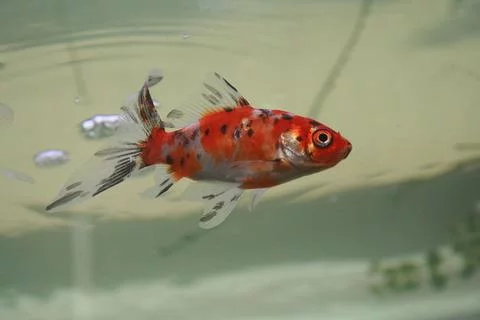
Goldfish tank size is probably the most misunderstood topic in the hobby. The old “one inch per gallon” rule is completely wrong for goldfish. Common and comet goldfish can hit 12+ inches and produce enormous amounts of waste, while even fancy goldfish need far more space than most beginners realize. I’ve seen countless goldfish kept in bowls and small tanks that struggle their whole lives and die young. After 25+ years, here’s the honest breakdown of what size tank goldfish actually need.
Expert Take (Mark Valderrama, AquariumStoreDepot)
The number one cause of premature goldfish death is inadequate tank size. After 25 years, I still see single-tail goldfish in 10-gallon tanks at pet stores, and I still see those fish dead within a year from chronic ammonia exposure and stunted growth. A single common or comet goldfish needs a minimum of 40 gallons (151 L). Fancy goldfish are slightly more manageable, but they still produce enormous waste relative to their size and need much more space than most people plan for.
Key Takeaways
Goldfish grow too large sizes and need aquariums of at least 20 gallons with 40 gallons being preferred
Slim-bodied goldfish grow longer than fancy varieties
All goldfish are hard on a bioload due to their mass
Introduction to Goldfish
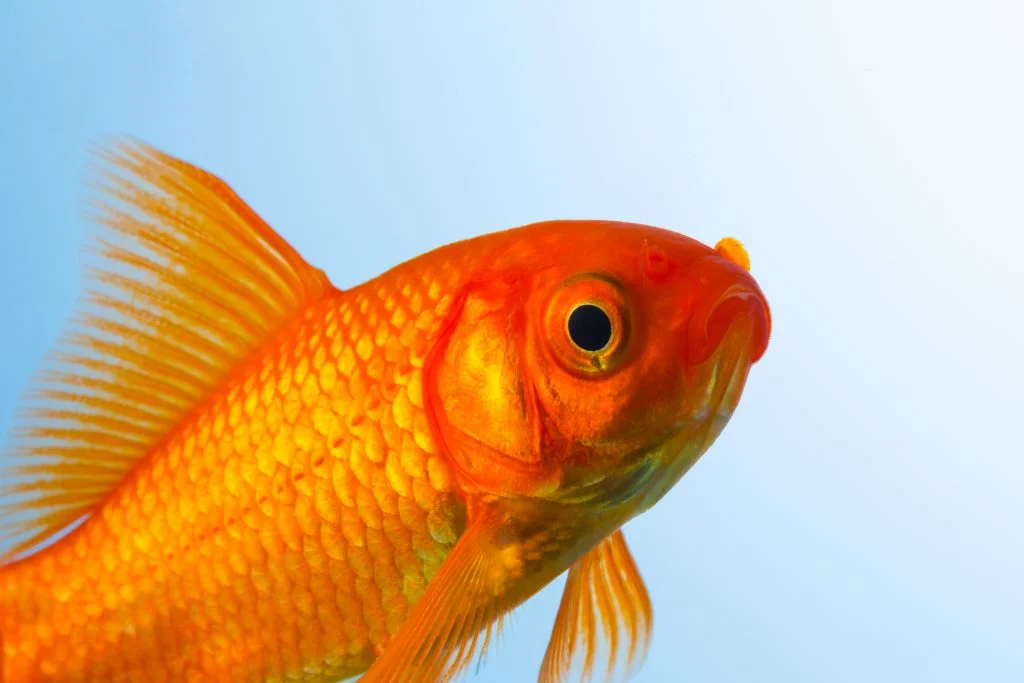
Chances are, you’ve owned a goldfish before. Whether you won one at a local fair or took care of a pet goldfish as a child, these fish have made their way into the homes of many. The problem is that they’re not exactly fish suitable for the home environment, though.
Goldfish are ancient fish. They have domesticated a millennium ago in China and spread worldwide by the early 1800s. Goldfish are the byproduct of mutations from wild carp native to East Asia, more specifically the crucian carp (Carassius carassius).
It is easy to see how bright orange goldfish were derived from their more musky-colored relatives. Crucian carp can range greatly in color, though they always appear in more natural tones. They are commonly found in hues of brown, green, and yellow.
Every now and then, these fish would exhibit exceptional colors, more like the ones we see on typical goldfish today. Practitioners of Buddhism saved and preserved these fish. Over hundreds of years, mutated crucian carp were collected and bred to show the best yellow and orange colors. By the 1600s, even more, desirable traits, like long fins, took shape as more and more enthusiasts moved their goldfish inside from their outdoor ponds.
Today, there are many breeds of goldfish, all considered members of the Carassius auratus species. This species is categorized into two groups: single-tail and double-tail/fancy goldfish.
Single Tail (AKA Slim Bodied)
Single-tail goldfish are some of the most common goldfish to see. These are the typical take-home-from-fair prize fish. Single-tail goldfish are more challenging in some ways than their fancier counterparts due to their immense size and activity. Because of this, they are best kept in outdoor ponds.
Single tail goldfish can grow to be over a foot in length and live up to 40 years. These slim-bodied goldfish are also extremely active and is seen swimming from one side of the tank or pond to the other.
Double-tail goldfish are much more compact and ornate, but don’t be fooled! These round fish are just as messy as single-tail breeds and live almost as long.
Fancy goldfish stay under 10 inches in size. They aren’t as active as single-tail varieties as each breed features some body modification. Whether it be longer fins, eye enhancements, or emphasis on other body parts, fancy goldfish are limited in activity; especially ornate fish might even have difficulty swimming correctly. This makes them ideal for indoor aquariums as opposed to pond setups.
Although goldfish have been domesticated for over 1,000 years, they haven’t lost their spirit. These fish are incredibly active swimmers, rarely standing still. The only reasons they might slow down in activity are due to illness, old age, or hibernation. Look down into a pond during the summer versus the winter and you’re sure to see a difference (video source).
Not only are goldfish incredibly active fish, but they’re also some of the largest and messiest freshwater fish you can get. Remember, common goldfish can well surpass a foot in length. Contrary to popular belief, these fish won’t stop growing depending on the tank size they’re kept in.
As we’ll see, all these reasons make the idea of keeping goldfish in a goldfish bowl completely absurd.
Recommended Tank Size
Quick Answer
Single-tail goldfish (common, comet, shubunkin): 40 gallons (151 L) minimum for the first fish, 10 to 15 gallons more per additional fish. Fancy goldfish (oranda, ryukin, telescope, ranchu): 20 to 30 gallons (75 to 113 L) for the first fish, 10 gallons more per additional fish. Bowls and tanks under 10 gallons are not appropriate for any goldfish at any life stage.
The recommended goldfish tank size depends on the type of goldfish you’re keeping. Single-tail breeds that have large and long bodies need a minimum tank size of 40 gallons per fish. Double-tail breeds that have short and compact bodies need a minimum tank size of 20 gallons per fish.
In many cases, these are only beginning tank sizes. Many single-tail breeds will outgrow this size tank in a few years and will do best in a pond setting long-term. Double tail breeds are successful in a 20-gallon tank for the duration of their lives as long as the tank is never overstocked and regularly cleaned.
What is the Ideal Tank?
Believe it or not, goldfish tanks do best with a bare minimum tank setup. The most important aspect of a goldfish tank is filtration.
In terms of the actual setup and goldfish care, less if more. These fish thrive in a bare-bottom tank with plenty of swimming space. This means no plants or decorations. Trust us, your goldfish would eliminate most plants you decided to put in anyway!
Besides the filtration, additional tank equipment is minimal.
Water Temperature
Goldfish are unique. They are coldwater fish that does best when aquarium water temperatures are between 68 to 74˚F. For most, this means that ambient room temperature will keep the aquarium at the correct temperature.
The bigger concern is maintaining that temperature, though.
Although extremely cold-hardy, goldfish are still susceptible to rapidly changing water temperatures. For this reason, hobbyists may use an aquarium heater to keep the water temperature steady. In contrast, overly hot climates might require the usage of a chiller to keep water temperatures down.
If keeping goldfish in a pond, then there is little need to worry about temperature. A chiller may still be needed, though, the construction of the pond allows for shaded areas and deeper sections for cool pockets of relief. During the winter, goldfish will safely hibernate at the bottom of the pond no matter the temperature of the air outside.
Goldfish Filtration
Probably the most important aspect of owning goldfish: the filtration. While you is able to get by with minimal filtration on tropical community tanks with plenty of live plants, goldfish need heavy equipment.
Not only are goldfish messy eaters that create a lot of waste, but beneficial bacteria also have few places to populate due to the absence of plants, substrate, and decorations.
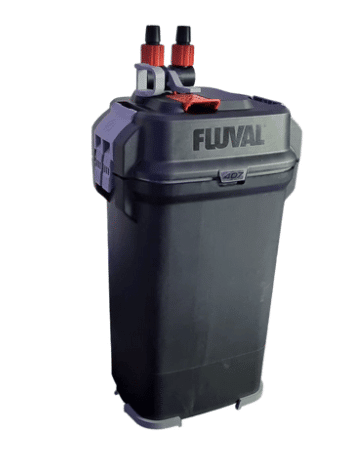
It is strongly recommended to use a canister filter for goldfish tanks to allow for more space for biological, chemical, and mechanical filtration; a hang-on-the-back filter may work, but is oversized in comparison to the tank.
Ideally, goldfish filters should be rated for 10x the hourly turnover or close to that; this means that a 20-gallon tank size would need a filter rated for 200 gallons per hour, and a 40-gallon tank size would need a filter rated for 400 gallons per hour.
In general, canister filters are more efficient than hang-on-the-back ones and only need about a 7-8x turnover, though it’s always best to aim for the full 10x.
Water Parameters
Goldfish need good water quality. They are very likely to succumb to ammonia and nitrite poisoning and need frequent tank maintenance. Ammonia and nitrite should always be 0 ppm. Nitrate should be minimal as live plants can’t be used for export.
Otherwise, goldfish are very adaptive fish. They prefer neutral 7.0 pH conditions, but is kept in slightly hard or soft water. As discussed before, they need a water temperature between 68 to 74˚F, though they can withstand lower temperatures too as long as values don’t fluctuate.
Tank Maintenance
Believe it or not, goldfish are pretty demanding fish. Even though they’re easy to keep, they need good aquarium husbandry.
How much maintenance you need to perform on your goldfish tank largely depends on how many goldfish are in the aquarium and how efficient the filtration is. In general, a weekly water change of about 20-30% is the bare minimum. Some hobbyists perform several smaller water changes of about 10-15% throughout the week instead of doing a large amount all at once.
It is crucial to keep a goldfish tank clean as waste accumulates. The bottom of the aquarium should be vacuumed to remove fish waste and leftover food. The filtration media should also be rinsed out every couple of weeks.
If you start to notice that the tank smells, your fish becomes uninterested in swimming and eating, or red spots become apparent around your fish’s gills, test for ammonia and nitrite immediately. Poor water quality and tank maintenance will lead to excess amounts of ammonia and nitrite which can quickly become deadly in a goldfish tank.
Diet
Goldfish are omnivores. This means that they need a balance of meaty and plant-based foods to give them a happy and healthy life.
Most aquarium companies make goldfish-specific flake and pellet foods. While these will provide your fish with the necessary nutrients to survive, they won’t give your fish different trace elements or the excitement of trying new foods.
The best goldfish diet will have a flake or pellet staple food alongside a variety of live, frozen, and freeze-dried options as well as a selection of fresh vegetables. Goldfish will happily accept various worms and insects along with blanched lettuce and cucumber. Just keep in mind that these foods is messier than simple flake or pellet foods, so leftovers need to be removed.
If you want to make your goldfish tank more natural, then you can include live plants. But wait. Didn’t we say that you can’t keep plants in your goldfish aquarium? That’s true, as long as you don’t mind your goldfish eating them.
Live plants are a great source of food for goldfish. Some species of plant, like anacharis (Elodea spp.), have a fast enough growth rate that they can outcompete your goldfish’s appetite. Some hobbyists even set up separate tanks entirely to grow out fresh greens for their fish.
Tank Mates
The best tank mates for goldfish are other goldfish. There are a few reasons why additional fish species end up being incompatible.
1) Temperature. The biggest problem with finding goldfish tank mates is temperature. These fish are some of the most cold-tolerant in the hobby and not much other fish can compare or adapt.
2) Space. Goldfish need plenty of open swimming space and water volume to dilute their waste. Many breeds of double-tail goldfish are also limited in their maneuverability, which other fish might take advantage of, especially during feeding times.
3) Tank setup. All in all, goldfish have a pretty specific tank setup. Many of the tropical fish commonly kept in the hobby require substrate and decorations to feel safe.
4) Aggression. Goldfish are relatively peaceful fish. However, many hobbyists think they can throw a bottom-dweller into their tank with no repercussions. Sadly, there are many horror stories of pleco species sucking the slime coats off goldfish, which can lead to disease and eventual death.
This isn’t to say that hobbyists haven’t successfully kept additional fish in a goldfish tank. Many goldfish keepers have luck with dojo loaches (Misgurnus anguillicaudatus) and white cloud mountain minnows (Tanichthys albonubes). With more fish also comes the need for a larger aquarium.
FAQs
What size tank do you need for 2?
This depends on the breeds of goldfish you are keeping. If you have two single-tail goldfish, like comet goldfish, then you will need an 80-gallon tank size. If you have two fancy goldfish, like telescope eye goldfish, then you will need a 40-gallon tank size.
What tank size do you need for 3?
Using the same ratio of 40 gallons per single-tail goldfish and 20 gallons per double-tail goldfish (fancy), 3 goldfish would need 120 gallons or 60 gallons respectively.
Is 1 gallon enough?
No! 1 gallon is never enough room for a goldfish due to their size and bioload. Unfortunately, companies target unknowing hobbyists with images and displays of goldfish happily living in small containers. This is the opposite of the truth and all goldfish require an appropriately sized tank to live.
How many is in a 10-gallon tank?
Again, none. The smallest fancy goldfish varieties require at least 20 gallons on their own. Smaller goldfish is grown out in a 10-gallon tank size by experienced hobbyists, but an upgrade will be needed within a couple of months.
Final Thoughts
Goldfish tanks are simple and elegant. But the truth is that these is quite demanding fish and beginners might struggle to meet all their needs.
Most important is a good goldfish tank size. Single-tail breeds need 40 gallons each while double-tail breeds need 20 gallons each. After that, filtration and maintenance will keep your goldfish tank clean and clear of any excess nutrients. Lastly, a well-varied omnivorous diet will keep your fish shining like gold.
Nerite Snails are the best algae eaters in freshwater. They eat every type of algae, they do not reproduce in freshwater, and they work nonstop. The downside is the white eggs they lay everywhere.
Nerites are perfect algae eaters with one flaw. Those white eggs on every surface in your tank.
Hard Rule
Nerite snails cannot breed in freshwater – they require brackish water for larvae to survive. However, they will lay white egg capsules on any surface in freshwater. The eggs will not hatch but do not disappear on their own.
Nerite snails are probably my most-recommended algae-eating invertebrate, and the reason is simple: they’re effective without the usual downsides. They won’t breed out of control in your freshwater tank. Their larvae require saltwater to develop. They won’t touch your live plants, and they come in shell patterns that are genuinely attractive. Zebra and tiger nerites are the most common, but horned nerites and olive nerites are worth tracking down too. Honest caveat: they do leave white egg casings on hard surfaces, which some people find irritating. Here’s the full care guide.
Frequently Asked Questions
Do nerite snails breed in freshwater?
Nerite snails will lay eggs in freshwater, but the eggs will not hatch. The larvae require brackish or saltwater to develop. This makes nerites ideal for planted tanks where you want algae control without worrying about a snail population explosion.
Why do nerite snails lay eggs everywhere?
Female nerite snails lay small white eggs on hard surfaces like glass, rocks, and driftwood. These eggs are infertile in freshwater and will not hatch. Unfortunately, the eggs are hard to remove and is unsightly. This is the most common complaint about keeping nerite snails.
How many nerite snails should I get?
A general guideline is one nerite snail per 5 gallons of tank water. They are efficient algae eaters, and overstocking can lead to starvation once the algae supply runs out. In a 20-gallon tank, 3 to 4 nerites will keep the glass and hardscape clean.
Do nerite snails eat all types of algae?
Nerite snails eat most common types of algae including green spot algae, green dust algae, diatoms, and soft film algae. They are not effective against hair algae or black beard algae. For those types, you will need other solutions like amano shrimp or manual removal.
How long do nerite snails live?
Nerite snails live 1 to 3 years in a freshwater aquarium with good water quality. They are sensitive to copper and low pH, so avoid copper-based medications and maintain a pH above 7.0 for best results. Supplementing with calcium-rich foods helps maintain their shells.
What Most Care Guides Get Wrong About Nerite Snails
The biggest mistake I see with nerite snailss is underestimating their aggression. Guides will label them “semi-aggressive” and move on. In practice, that label doesn’t tell you much. Tank layout, stocking density, and territory management all play a huge role in whether these fish coexist or constantly fight. Tank size is another area where most guides get it wrong. The minimum listed on most care sheets is exactly that, a minimum. For long-term success, especially if you’re keeping a group, I always recommend going at least one size up from whatever the guide suggests. Finally, diet gets oversimplified. Pellets alone won’t cut it. In my 25+ years keeping fish, I’ve found that variety in diet directly affects color, growth, and overall vitality. Include frozen foods, quality pellets, and occasional vegetable matter for the best results.
Key Takeaways
Nerite snails are excellent algae eaters
They will not overpopulate a tank as they require brackish water to successfully breed
They come in a variety of types and are hardy for a snail
They will not harm your plants
ASD Difficulty Rating: Tier 1 – Beginner
Nerite snails are excellent algae grazers that stay small (0.5-1 inch/1-2.5 cm) and will not overpopulate your tank – they can only breed in brackish water. Suitable for freshwater and brackish tanks of any size.
Species Overview
Scientific Name
Neritina spp
Common Names
Nerite snails, nerites
Family
Neritidae
Origin
Coastal regions of the Atlantic, Indian, and Pacific Oceans
Diet
Herbivore
Care Level
Easy
Activity
Low
Lifespan
1-10 years
Temperament
Peaceful
Tank Level
All
Minimum Tank Size
5 gallons
Temperature Range
65-85° F
Water Hardness
10-25 KH
pH Range
6 to 8
Filtration/Water Flow
Slow to moderate
Water Type
Freshwater
Breeding
Egg layer
Difficulty to Breed
Difficult
Compatibility
Community tanks
OK, for Planted Tanks?
Yes
Classification
Phylum
Mollusca
Class
Gastropoda
Order
Cycloneritida
Family
Neritidae
Genus
Neritina / Vittina
Species
Multiple species (N. Natalensis, V. Semiconica, etc.)
Introduction
Nerite snails are an anomaly in the aquarium hobby. They are one of the few species that is kept in entirely freshwater or saltwater conditions as well as mixed salinities in between. Nerites are also one of the best algae-eating species of snail available, making them one of the most popular–and one of the more expensive–types of aquarium snail.
This article will focus only on freshwater nerite snails and their care requirements.
How Long Do They Live?
In general, nerite snails will live for at least one year in the freshwater aquarium. Under ideal conditions, they have been known to live for a decade. How long nerite snails live varies a lot. And hobbyists aren’t necessarily paying attention to how long their snails live.
Nerite snails are hardy, but they is sensitive to ammonia and nitrite in the water column, which means that they need a more established setup.
Are They Good For Your Freshwater Tank?
A nerite snail is one of the best additions you can make to your freshwater aquarium, especially a planted aquarium! These snails have a serious appetite for algae.
Nerite snails are proficient algae eaters. They will eat most species of algae, but are most efficient at cleaning up soft types, like hair algae, green spot algae, and green slime algae. They use their modified tongue, called a radula, covered in tiny teeth that help scrape away microflora.
As we’ll see, nerite snails are largely herbivores. They won’t necessarily clean detritus from fish and other organisms in the tank, but they’ll keep plant surfaces and the sides of the aquarium algae-free.
How To Identify
Snails is hard to tell apart. And the problem is that not all snails are created equally.
Some snails clean algae better while others take care of detritus and even other snails. Freshwater snails can also be expensive, so you definitely want to take the time to understand what the species of snail you want looks like.
Nerite snails are a larger species of snail. There are many species of aquarium snail that belong to the Neritina genus, each with its own identifying characteristics.
No matter the species though, nerite snails grow to be about 1-2 inches on average. These snails have an unbalanced appearance to them, with a rounded shell that tilts into a whorl on the right side. The body of the snail ranges in color from tan to dark brown. Unlike other snails, the body of the snail is concealed completely under the shell even when moving.
Unfortunately, there is no way to tell a male nerite snail apart from a female. Another big difference from other snails is that nerite snails are not hermaphrodites. This, in addition to their need for brackish water conditions, makes breeding nerite snails very difficult for the average hobbyist.
Origin and Habitat
Nerite snails have a wide distribution. Most species originate from the coastal waters of Africa but a few are found in the Caribbean or on the margins of the Pacific Ocean. Nerite snails are intertidal and regularly move between the nearby ocean and freshwater rivers and inlets; it is believed that they prefer brackish water conditions most of all.
This crossover between ecosystems leaves nerite snails with a large assortment of foods to eat. They will regularly be seen munching away at algae on rocks and other structures but will travel across the open sandbed as they grow and reproduce.
Care
In the aquarium, nerite snails are relatively hardy. They aren’t as hardy as something like the bladder snail (Physella acuta) that can survive polluted waters, but nerites can definitely withstand some beginner’s mistakes. Nerite snails are most sensitive to changes in ammonia and nitrite.
Otherwise, nerite snails are easy to care for in the freshwater aquarium. If there are enough algae to graze on, they will live for a relatively long time.
Tank Size
Freshwater snails are often limited in tank size due to their high reproductive rates. Nerite snails do not breed in freshwater, so they are one of the better choices for smaller aquariums.
The general rule for nerite snails is 1 snail for every 5 gallons of water; this means that 1 snail will comfortably fit in a 5-gallon betta tank or other planted aquarium. For larger tanks, the number of nerite snails will be limited by bioload. As these snails don’t reproduce in freshwater, there is no way to unknowingly overstock them as long as there is adequate biological filtration.
Aquarium Setup
Nerite snails is kept in most freshwater tank setups. They excel in planted aquariums with lots of natural algae and microflora that they can graze on, but they’re also suitable for unplanted tanks as long as their dietary needs are met.
Nerite snails aren’t shy, but they’re mostly nocturnal. In fact, nerite snails can sleep for days at a time, only becoming active in short spurts. This means that they prefer to stay somewhere hidden to stay out of reach of predators. Driftwood, plants, rocks, and other aquarium structures can make perfect nooks and crannies for your snail to rest.
Because they’re nocturnal, nerite snails will also prefer dim lighting. The aquarium light may be dimmed or floating live plants and other large plant species may be used to create pockets of shade and refuge throughout the aquarium.
Nerite snails are also intertidal, which means that they regularly move between the water and moist, but not submersed, surfaces. It is not unusual to find a nerite snail at or above the waterline of the tank. They often find their way into the filter and might even crawl onto the outside of the glass. Because of this, it’s strongly recommended to use a fitted aquarium cover.
Water Parameters
Nerite snails need 0 ppm ammonia and 0 ppm nitrite. Any traces of ammonia or nitrite could prove to be deadly to your snails. Like other invertebrates, they also cannot tolerate copper.
Otherwise, these freshwater snails do not need specific water parameters. They are largely tropical species that need a warm water temperature. With proper acclimation, they is kept at slightly cooler or warmer temperatures. Freshwater nerite snails also prefer a near-neutral water pH between 6.5-8.0 but can adapt to more acidic conditions.
Preferred water parameters largely depend on the conditions the snails are originally being kept. Remember, these are brackish water snails that can tolerate higher salinities and subsequent higher pH levels. Brackish water salinity measures at about 1.005 to 1.010 while full saltwater is 1.023 to 1.025.
Like other snails, nerite snails grow with their shells. They use calcium and other minerals available in the water column to continue growing and maintaining their shells. While these minerals are readily available with good source water, they need to be supplemented every now and then through their diet or with calcium blocks.
An injured or nutrient-deficient nerite snail may have noticeable white scrapes and scratches across its shell. These injuries will continue to progress if calcium isn’t made available for repairs.
Filtration and Aeration
Even though nerite snails only grow to be about an inch or two, they can still create a significant amount of bioload that can affect the efficiency of the filtration being used. That being said, they have also been successfully kept in Walstad-method aquariums that rely solely on the biological filtration provided by live plants and bacteria without any additional equipment.
If the overall bioload of the aquarium is on the higher side, then it is beneficial to add aeration for better oxygenation and gas exchange.
Lighting
Remember, nerite snails are nocturnal and have an interesting sleep cycle. Lighting intensity doesn’t matter too much, but these snails definitely need a discernible night and day cycle to keep a semi-regular sleep cycle.
Aquatic Plants and Decorations
Nerite snails absolutely love aquatic plants and decorations! But they’re not entirely necessary for the success of the snail.
Nerite snails eat algae that grow on the surfaces of the tank. That means the more surfaces available, the more food your snail has to choose from. They are unlikely to eat healthy live aquarium plants but will help consume any rotting stems or leaves.
Community Tank Mates
As a larger type of snail, nerite snails are among the best community tank snail species. These snails will keep to themselves and won’t disrupt other peaceful species.
This makes nerite snails completely compatible with:
, betta fish is kept with nerite snails. The problem is that nerite snails can fall off the glass, occasionally landing on their back with their body exposed (yes! These snails can flip themselves back over). A curious or hungry betta may pick at the snail while it’s vulnerable, like other larger and more aggressive fish species.
How Many Should Be Kept Together?
As mentioned before, 1 nerite snail should be kept per every 5 gallons of water. However, you do not need to worry about your snails rapidly reproducing and overpopulating the tank, which leads to less likelihood of adding too many snails. Still, these are larger snails that can produce significant waste in bigger groups and should not be overstocked.
Food and Diet
Nerite snails will feed themselves as long as there is enough algae available in the tank.
There is little need to offer your snails anything additional to eat, though experienced keepers like to feed algae wafers and blanched vegetables, like cucumbers and lettuce; providing fresh vegetables from time to time can help introduce minerals and nutrients that can’t be obtained otherwise.
In the same way, calcium blocks may be added for healthy shells.
Breeding
Breeding nerite snails are extremely difficult for the average hobbyist. This is because it takes several fish tank setups to be successful. In the wild, nerite snails move between freshwater and saltwater. They are most often observed in brackish conditions for reproductive purposes.
Hobbyists seem to have the most breeding success when acclimating or keeping nerite snails in brackish water. When ready, a male and female will breed. The female will lay eggs in a safe area, on the aquarium glass or under a leaf. The nerite snail eggs will hatch after some time into larvae that later develop into recognizable, baby snails.
Nerite snails will not breed in the freshwater aquarium. Female nerite snails may lay their eggs around the aquarium, but they will not hatch. Take this as an indication that your snail is happy and healthy.
Do They Reproduce Asexually?
Many freshwater snails reproduce asexually. Nerite snails are fully sexual, though. This means that both a male and a female are needed to reproduce. This can make breeding these snails even more difficult as there are no observable physical differences between the two sexes. Hobbyists need to use large groups of snails to increase the chances of a male and female meeting and breeding.
4 Types
There are many species of nerite snail, though only a few have made their way into the aquarium hobby. Luckily, there aren’t any big differences between the different types of nerite snails, so you can trust that your aquarium will always get cleaned!
This includes zebra horned nerite snails, zebra nerite snails, tiger nerite snails, and black racer nerite snails.
Unique Traits: Small spikes that outline the whorl
The zebra horned nerite snail (Clithon corona/diadema), also known as the zebra thorned nerite snail, is one of the most interesting-looking snails out of all freshwater snail species!
These are tiny snails, staying under an inch at full size. Zebra horned nerite snails have beautiful alternating black and yellow stripes, which can help bring a pop of color to the bottom of the fish tank. Their most interesting feature is the tiny spikes that outline the whorl of the shell. These are most likely used in defense against aggressive fish and invertebrates.
Unique Traits: Alternating black and yellow zebra pattern
The zebra nerite snail (Vittina natalensis) is probably the most recognizable species of nerite in the aquarium hobby. These snails are large with very smooth shells. Zebra nerite snails are mostly known for the unique pattern on their shells.
The color of the zebra nerite shell can vary from light yellow to warm orange. Every snail will have a zebra-like pattern with alternating black and yellow stripes that meet at the center of the whorl. Though inexpensive, these snails can bring a clean and expensive aesthetic to freshwater tanks.
Color Pattern: Yellow or orange with black patterning
Unique Traits: Simple, uniform black spot patterning
Often sold alongside related zebra nerite snails, the tiger nerite snail (Neritina semiconca) has a beautiful natural appearance. These snails can vary in color intensity, from light yellows to dark browns. They are most easily identifiable by the flake-shaped black specks that run across the front of the shell and onto the whorl.
4. Black Racer
Adult Size: 1 to 1.5 inches
Color Pattern: Black Appearance
Unique Traits: Dark ebony base color with lighter striations
Not the most popular, the black racer nerite snail (often categorized as Neritina pulligera) is actually one of the most common nerite snail species to come across at local fish stores. These snails are plain in color under poor lighting and appear as dark brown or black shells. However, under the right light, this species of nerite snail can become a spectacle with dark greens and browns with lighter colors (video source).
Compared to the other nerite snail species on this list, the black racer nerite snail grow to a larger adult size.
Expert Take
Nerites are one of the few snails I actively recommend. They don’t reproduce in freshwater, they eat algae most fish ignore, and they don’t uproot plants. The downside is the eggs: they leave white calcified dots everywhere, and those eggs never hatch but also never stop coming. — Mark Valderrama, AquariumStoreDepot
The Reality of Keeping Nerite Snail
Nerite snails lay white, rice-like eggs on every hard surface in the tank: glass, rocks, decor, filter intakes, heater tubes. The eggs are cosmetically annoying and nearly impossible to remove without scraping. In a show tank or a heavily planted aquascape, this becomes a real visual problem. In a working planted tank where function matters more than appearance, it is a minor nuisance.
Is the Nerite Snails Right for You?
Before you add a nerite snails to your tank, it’s worth asking whether this species actually fits your setup and your goals. Here’s a quick breakdown to help you decide.
This species is a good fit if:
You have a large enough tank to manage territories. Cramped conditions amplify aggression.
You’re comfortable managing aggression through stocking ratios, line of sight breaks, and tank layout.
You can commit to regular water changes. These fish produce more waste than many smaller species.
You’re not planning a peaceful community tank. Nerite Snailss need tank mates that can hold their own.
You enjoy watching active, interactive fish. Cichlids have personality that smaller species simply don’t match.
You have backup plans. Sometimes a particular fish just doesn’t work out, and you need a way to rehome it.
You’re feeding a varied, high-quality diet. Color and health depend on nutrition.
If most of those points line up with your setup, the nerite snails is worth serious consideration. If several don’t, it’s better to choose a species that matches your tank now rather than trying to make it work.
Avoid If:
You have a display or aquascape tank where egg deposits on glass and hardscape are unacceptable
You keep snail-eating fish like pea puffers, loaches, or cichlids that will make short work of them
You want a snail that will breed in freshwater and self-sustain – nerites require brackish to saltwater for eggs to hatch
You expect them to handle a serious algae outbreak – they graze existing algae, they do not clear infestations
How the Nerite Snails Compares to Similar Species
Choosing between similar species is tricky. Here’s how the nerite snails stacks up against some common alternatives.
The nerite snails occupies a specific niche in the aquarium hobby, and direct comparisons really depend on what you’re looking for. In my experience, the most common question people ask is whether they should choose the nerite snails or something similar that’s more widely available. The answer comes down to three things: tank size, water parameters, and what other fish you’re keeping. If your setup matches what the nerite snails needs, it’s hard to beat. If not, there are alternatives worth exploring.
Final Thoughts
There are many types of nerite snails to choose from. Each one has its own colorful appeal, but they are all excellent algae eaters that will help keep freshwater tanks clean without disrupting any other the tank inhabitants.
One of the best aspects of the nerite snail is that they can’t reproduce in pure freshwater. However, they can still carry a high bio load so it’s important to not overstock a tank.
Walk into any chain pet store and ask for a honey gourami. There’s a good chance you’ll leave with a dwarf gourami instead. I’ve watched it happen at nearly every major chain I’ve worked with over the years. The misidentification is that common, and the consequences are real: dwarf gouramis carry Dwarf Gourami Iridovirus (DGIV) at alarming rates in commercial stock. Honey gouramis don’t. That one difference makes this fish one of the most underrated buys in the hobby.
The fish you think you’re buying and the fish you’re actually buying are often not the same fish.
Get the real thing, set it up correctly, and a honey gourami rewards you with genuine personality, bubble nest breeding behavior, and years of reliable health that commercially bred dwarf gouramis simply can’t match.
Taxonomy note: The honey gourami was classified as Colisa chuna for most of its scientific history. In 2013, Kottelat reclassified several gourami genera and moved this species under Trichogaster, where it now sits alongside the pearl gourami (T. leerii) and three-spot gourami (T. trichopterus). You’ll still see Colisa chuna in older references and some LFS labels. Both names refer to the same fish.
Origin and Natural Habitat
Honey gouramis are native to India and Bangladesh, with populations extending into Nepal. They’re found in the Brahmaputra basin and across slow-moving rivers, seasonal streams, and flooded rice paddies in the Bengal region. First described by Francis Hamilton (also known as Francis Buchanan-Hamilton) in 1822, who initially misidentified males and females as separate species due to their strikingly different coloration.
In the wild, these fish live in heavily vegetated, slow-moving or still water with soft, slightly acidic to neutral chemistry. Think dense floating plant mats, tannin-stained water from leaf litter, and minimal current. That natural habitat tells you everything about what they need in a tank: surface cover, gentle flow, and warm stable temperature. A strong filter outlet and bare top tank are the opposite of what they come from.
Appearance and Identification
Honey gouramis are small, laterally compressed fish with a warm golden-amber to honey-colored body. They have seven fins total: paired pectoral fins, elongated threadlike pelvic fins that function as touch sensors, a long dorsal fin running from the forehead toward the tail, a matching anal fin, and a caudal fin. Those modified pelvic fins are one of the most distinctive features of this fish. Watch them navigate a planted tank and you’ll see them using those feelers constantly, touching plants, decorations, and substrate as they move.
The key visual difference from dwarf gouramis: honey gouramis are narrower-bodied with smaller fins and more subtle coloration. A dwarf gourami shows bold red-and-blue striping or vivid orange-red. A honey gourami is golden-amber with a softer horizontal stripe from eye to tail. If the fish in the store labeled “honey gourami” has intense red or blue striping, it is a dwarf gourami.
Male vs. Female
Sexing honey gouramis is straightforward once you know what to look for. Males develop the warm honey-to-orange coloration as they mature. Females stay silver-gray to pale yellow with a darker horizontal band running from the eye to the caudal peduncle. Females also have rounder, softer fin edges compared to the more pointed dorsal fin on males. Males run slightly larger overall.
In breeding condition, males undergo a dramatic color shift: throat turns deep blue-black, body intensifies to bright orange, and the overall display rivals fish that cost three times as much. Most hobbyists have never seen a male honey gourami in full breeding color because they’ve only encountered them under chain store fluorescent lighting. In a planted tank with natural-spectrum light, the transformation is genuinely striking.
Average Size and Lifespan
Honey gouramis are the smallest commonly kept gourami species. Maximum size is about 2.8 inches (7 cm), with most fish reaching 2 to 2.5 inches (5 to 6.5 cm) at full growth. Full size takes roughly 18 to 24 months.
In a well-maintained aquarium, they live 5 to 8 years. Buy healthy stock from a reputable source, maintain consistent water quality, and 6 to 7 years is realistic. The primary cause of shortened lifespans is disease from poor-quality commercial stock or stress from incompatible tank mates.
Care Guide
ASD Difficulty Rating: Easy (3/10) Honey gouramis tolerate minor water quality fluctuations, accept a wide range of prepared foods, and thrive in a standard planted community setup. The main requirements are getting tank mates right and keeping flow gentle. One of the most forgiving first gourami species at any experience level.
Tank Size
A pair lives comfortably in a 10-gallon (38-liter) tank. For a small group or community setup, 20 gallons (75 liters) is better. These fish spend most of their time in the upper half of the water column, so horizontal footprint matters more than tank depth. A wide, low tank beats a tall, narrow one for this species.
Water Parameters
Temperature
74°F to 82°F (23°C to 28°C)
pH
6.0 to 7.5
Hardness
4 to 15 dKH
Ammonia
0 ppm
Nitrite
0 ppm
Nitrate
Under 30 ppm
Honey gouramis handle a wider parameter range than many soft-water species. Standard neutral tap water at moderate hardness is fine. The parameter that matters most is temperature stability. Their labyrinth organ is sensitive to cold drafts through open tank tops, and temperature swings are a common trigger for respiratory illness in labyrinth fish. Keep the tank covered.
Filtration and Water Flow
Low to moderate flow is essential. These fish come from still and slow-moving water. A strong filter outlet aimed at the surface creates current that stresses them out and keeps them hiding. A sponge filter is ideal for smaller setups. In a 20-gallon-plus tank, use a hang-on-back filter with the outlet angled down the back glass to break up the current. Weekly water changes of 20 to 25% keep nitrates in check without needing aggressive filtration.
Low to moderate lighting is best. Bright light causes honey gouramis to retreat under plants and stay there. Dim the tank, add floating plants to create surface shade, and you’ll see completely different behavior. LED lights on a 6 to 8 hour timer work well. If you have live plants with higher light requirements, lean toward the lower end of their range for the fish’s benefit.
Plants and Decorations
Floating plants are not optional. They give honey gouramis the surface cover they need to feel secure, and males use them as anchor points when building bubble nests during breeding. Java fern, anubias, hornwort, wisteria, and java moss all work well. Keep enough open surface area for the fish to breathe and for the male to access bubble nest sites without fighting through a solid mat of plants.
Fine sand or dark gravel both work. Honey gouramis spend most of their time in the middle to upper water column, so substrate choice is primarily about plant anchoring and aesthetics. A dark substrate brings out their warm golden coloration and reduces stress from light reflection off the tank bottom. Keep it at least 2 inches (5 cm) deep for rooted plants.
Tank Mates
Best Tank Mates
Honey gouramis do best with small, peaceful fish that don’t nip fins or compete aggressively at feeding time. Their threadlike pelvic fins are a direct target for fin nippers. Their calm disposition means they lose any confrontation with assertive fish.
Avoid fin nippers, aggressive feeders, and any fish that will out-compete them at the surface. Bettas and other gourami species are a particular problem. Two labyrinth fish in the same tank almost always results in territorial competition that stresses both fish. The one rule I don’t break: one gourami species per tank.
Honey gouramis are omnivores that lean toward protein in the wild, feeding on small insects and invertebrates at the surface. In the aquarium they accept a wide range of prepared and live foods without much fussing.
My feeding setup after keeping honey gouramis for years: Fluval Bug Bites in the small granule size as the daily staple, with frozen bloodworms two or three times a week. Bug Bites match their natural insect-heavy diet, the small pellet size fits their mouths, and they consistently produce better color in honey gouramis than generic flake food does. Bloodworms are a reliable conditioning trigger when you’re trying to bring a pair into breeding condition.
One practical note: honey gouramis are shy feeders. In a community tank, faster or more assertive fish will outcompete them at feeding time if you’re not paying attention. Feed small amounts two to three times per day, watch that they’re actually eating, and consider target feeding with a turkey baster if they’re consistently losing out to tank mates.
Good food options:
Fluval Bug Bites (small granule) as a daily staple
Frozen or live bloodworms for conditioning and variety
Live or frozen brine shrimp
Daphnia, live or frozen
High-quality micro pellets or flakes as a supplement
Honey gouramis are among the easiest labyrinth fish to breed. They’re sexually dimorphic, spawn willingly once conditioned, and males are attentive nest builders. Compared to betta breeding, which involves managing significant male aggression and immediate female removal, honey gourami breeding is low-stress and manageable even for beginners.
Spawning Tank Setup
A dedicated 10-gallon (38-liter) breeding tank keeps things simple and controlled. Lower the water level to 6 to 7 inches (15 to 18 cm). Shallow water makes bubble nest construction easier for the male and prevents fry from being scattered through too large a water column. Use a sponge filter for gentle filtration that won’t disturb the surface. Add floating plants throughout, but leave gaps for the male to access the top.
Water Conditions for Breeding
Raise temperature to 82°F to 84°F (28°C to 29°C). Keep pH around 7.0 and hardness around 8 dKH. Slightly warmer, softer water triggers spawning behavior more reliably than standard maintenance parameters. A gradual temperature increase over several days is more effective than a sudden jump.
Conditioning and Spawning
Condition the pair with live or frozen foods for one to two weeks before moving them to the breeding tank. When the male is ready, his coloration shifts dramatically: body turns bright orange, throat goes deep blue-black. He starts building a bubble nest among the floating plants, using mucus-coated bubbles to create a stable structure that can hold hundreds of eggs.
Once the nest is built, the male courts the female in tight circles beneath it. When she’s receptive, he wraps around her in a spawning embrace and she releases eggs, which he catches in his mouth and places in the nest. A single spawning produces 100 to 300 eggs. Remove the female after spawning. The male guards the nest and becomes hostile toward her once spawning is complete.
Egg and Fry Care
Eggs hatch in 24 to 36 hours. The male continues guarding and maintaining the nest for the first two to three days. Once fry are free-swimming, remove him. Fry are tiny and need infusoria or commercial liquid fry food for the first week to ten days. After that, baby brine shrimp and micro worms work well. Keep a tight-fitting lid or cover the surface with plastic wrap: young labyrinth fish need warm, moist air to develop their labyrinth organ properly in the first weeks of life. Cold drafts through an open top at this stage can be fatal.
Common Health Issues
Fin Rot
Bacterial fin rot develops in poor water quality. Look for ragged, discolored fin edges, lethargy, and reduced appetite. Treat with a course of antibiotics (Kanaplex or Maracyn) after a water change, and identify the underlying water quality problem. Fin rot doesn’t develop in a consistently well-maintained tank. If it’s recurring, the root issue is water management.
Ich (White Spot Disease)
Ich appears as small white spots scattered across fins and body, with the fish flashing or rubbing against surfaces. Treat with a raised temperature up to 86°F (30°C) combined with a commercial ich medication. Catch it early. Honey gouramis handle ich treatment reasonably well.
Velvet Disease
Velvet produces a fine, dusty gold or rust-colored coating over the body. It’s subtler than ich and easy to mistake for a color change. Affected fish will clamp fins and lose appetite. Treat with copper-based medications. Velvet spreads quickly through a tank, so isolate affected fish immediately and treat the whole system.
Dwarf Gourami Iridovirus (DGIV)
Honey gouramis don’t carry DGIV themselves, but they can be infected through contact with carriers. The virus causes progressive lethargy, color fading, swelling, and eventually death. There is no treatment. This is the primary reason to quarantine all new fish before adding them to a tank with gouramis, and why buying from reputable sources with clean stock matters so much for this species.
What It Is Actually Like Keeping Honey Gouramis
Honey gouramis move slowly and deliberately through the tank, using those threadlike pelvic fins to feel everything they pass. Watch them navigate a planted tank and you’ll see them touching plants, substrate, and decor with those feelers constantly. It’s one of the more genuinely interesting behaviors in freshwater fishkeeping, and it’s something most people have never noticed because they’ve only seen these fish in a bare chain store tank.
Males display regularly in good conditions. Fins spread, colors deepened, swimming in slow tight circles near the surface under the floating plants. In full breeding color, a male honey gourami is striking. The warm orange body paired with that deep blue-black throat is something most hobbyists have never seen because they’ve only encountered them under bad store lighting.
Surface breathing is constant and normal. You’ll see them rise to gulp air several times an hour. This is labyrinth organ function, not a problem. New keepers often panic and add more aeration. Not necessary. Just keep the surface accessible and calm.
They react to you. After a few weeks, they’ll come to the front glass when you approach. They associate you with food quickly, and a well-settled honey gourami in a proper setup is not a shy fish at all. The reputation for shyness comes entirely from stressed fish in wrong setups with too much flow and no surface cover.
Expert Take
I always tell new gourami keepers the same thing: buy from a breeder or a reputable specialty shop, not a chain store. The health and coloration difference is real and significant. Of all the gourami species I’ve kept over 25 years, including pearl, dwarf, and three-spot, honey gouramis are the most consistently peaceful and the most reliable long-term. They don’t carry the iridovirus risk that makes dwarf gouramis a gamble from most importers. If you’ve been burned by sick dwarf gouramis before, start here. You’ll understand why I recommend them the first time you see a male in full breeding color.
Mark Valderrama, AquariumStoreDepot
Common Mistakes to Avoid
Hard Rule: One male per tank. No exceptions. Males recognize each other as competitors and the harassment is persistent, even in larger tanks. It doesn’t look like obvious fighting. It looks like one fish slowly retreating, fading in color over weeks, and eventually getting sick. By the time you notice, the subordinate male is already in serious trouble. One male, with females, or females only.
Buying from a chain store without verification. Ask to see the fish eat. Look for the horizontal dark band on females and the subtle golden-amber body on males. If the fish labeled “honey gourami” has intense red or blue striping, it’s a dwarf gourami. Walk away or buy knowing what you’re actually getting.
No floating plants. A honey gourami without floating cover stays hidden. It’s not optional. Add java moss, hornwort, or frogbit before the fish goes in.
High-flow filtration. A powerhead or a strong HOB outlet keeps honey gouramis pinned to a corner. Drop the flow, diffuse the outlet, match the filtration to the fish’s actual needs.
Mixing gourami or labyrinth fish species. Honey gouramis, bettas, dwarf gouramis, and paradise fish all recognize each other as competitors. Territory competition is constant and subtle. One labyrinth species per tank.
Skipping quarantine. DGIV can arrive on any new fish. A two to four week quarantine tank is the only reliable protection.
Should You Get a Honey Gourami?
Good Fit If:
You want a peaceful labyrinth fish without the iridovirus risk of commercially bred dwarf gouramis
You have a 10 to 30-gallon planted community tank with gentle flow
You’re new to gouramis and want a forgiving first species
Your tank mates are small and calm: small tetras, corys, nano danios, snails, peaceful barbs
You’re interested in observing natural bubble nest breeding behavior in a standard home setup
Avoid If:
You want a bold, high-contrast centerpiece. Honey gouramis are subtle. That’s their identity. They’re not a showpiece in the way a betta or a pearl gourami is.
You have a high-flow tank or a setup without floating plants
You already have bettas, dwarf gouramis, or other gourami or labyrinth species
You have known fin nippers like tiger barbs or serpae tetras in the tank
How It Compares
Honey Gourami vs. Dwarf Gourami: Choose the honey gourami if health and longevity matter more than raw color intensity. Dwarf gouramis are flashier. A fully colored male dwarf gourami is genuinely striking. But commercially bred dwarf gouramis carry DGIV at high rates, and there’s no reliable way to screen for it at purchase. Honey gouramis are hardier, live just as long, and don’t carry the disease. The only real trade-off is that dwarf gouramis have bolder coloration under store conditions. In a well-lit planted tank, the honey gourami holds its own.
Honey Gourami vs. Pearl Gourami: Choose the pearl gourami if you want a larger community showpiece. Pearl gouramis reach 4 to 5 inches (10 to 12 cm), have genuinely spectacular pearl-spotted coloration, and are similarly peaceful. They need more tank volume. Honey gouramis are the right call for smaller setups where a pearl gourami would feel cramped.
Honey Gourami vs. Sparkling Gourami: Choose the sparkling gourami if you have a dedicated nano tank under 10 gallons. Sparklers stay under 1.5 inches (4 cm) and make audible croaking sounds, which is genuinely fascinating. They’re more sensitive than honey gouramis and need very calm, small tank mates. For a general community setup, honey gouramis are the more versatile choice. For a dedicated nano biotope, sparklers have the edge. Note that housing both together in the same tank is not recommended.
Where to Buy
For best health and coloration, buy from a specialty retailer or breeder rather than a chain store. Chain stock often includes mislabeled dwarf gouramis and fish that have been stressed during shipping and holding.
Flip Aquatics – Reputable specialty source for healthy, conditioned honey gouramis and other labyrinth fish
Dan’s Fish – Specialty aquarium fish retailer with consistent stock quality
FAQs
What is the difference between a honey gourami and a dwarf gourami?
Honey gouramis are smaller, narrower, and have more subtle golden-amber coloration. Dwarf gouramis are broader-bodied with bold red-and-blue striping or vivid orange-red coloration. Honey gouramis are also significantly hardier: they don’t carry Dwarf Gourami Iridovirus, which is endemic in commercially bred dwarf gouramis. If the fish in the store has intense red or blue coloring, it is a dwarf gourami, not a honey gourami.
How many honey gouramis should I keep together?
One male with two to three females is the most stable group. Avoid keeping multiple males: they compete persistently in ways that are easy to miss until the subordinate fish is already in decline. A single pair in a 10-gallon or a small group in a 20-gallon are both solid options. Females only is also fine if breeding isn’t your goal.
Can honey gouramis live with bettas?
No. Both are labyrinth fish and recognize each other as competitors. The result is persistent aggression or chronic stress, with the honey gourami usually on the losing end. Keep one labyrinth species per tank.
Why is my honey gourami hiding all the time?
Usually one of three things: not enough floating plant cover, too much water flow, or an assertive tank mate causing stress. Honey gouramis are not naturally shy fish. A hiding honey gourami is telling you something is wrong with the environment. Add floating plants first. That single change fixes the problem in most cases.
Are honey gouramis fin nippers?
No. Honey gouramis are not fin nippers. Their own threadlike pelvic fins make them a target for fin nippers. Don’t keep them with tiger barbs, serpae tetras, or any known fin-nipping species.
Why does my honey gourami keep going to the surface?
This is normal. Honey gouramis are labyrinth fish that breathe air directly from the surface in addition to using their gills. You’ll see them rise to gulp air several times per hour. This is not a sign of low oxygen or a problem. Just make sure the surface is accessible and calm. Strong surface agitation from a filter outlet can stress them by making surface breathing difficult.
Can honey gouramis live in a 5-gallon tank?
No. A 5-gallon tank is too small. They need a minimum of 10 gallons (38 liters) for a pair, and 20 gallons (75 liters) for a community setup. In a 5-gallon, water parameters fluctuate too quickly and there isn’t enough horizontal swimming space for active mid-to-top-level swimmers.
How long do honey gouramis live?
In a well-maintained aquarium, honey gouramis live 5 to 8 years. Buy healthy stock from a reputable source, maintain consistent water quality, and provide appropriate tank mates. A 6 to 7 year lifespan is realistic with proper care. The main causes of shortened lifespans are disease from poor-quality stock and stress from incompatible tank mates.
Closing Thoughts
Every keeper I’ve talked to who has been burned by sick dwarf gouramis should have started with a honey gourami. Less disease risk, genuinely peaceful temperament, real personality in a planted tank, and bubble nest breeding you can observe in a standard home setup. They’re not flashy in the way a betta is flashy. The beauty is more subtle. But watch a male in full breeding color, building a bubble nest under a mat of floating hornwort, and tell me that’s not worth keeping.
Set the tank up right: floating plants, gentle flow, compatible tank mates, one male. Then leave it alone. These fish reward a well-designed environment and patience. They’re not demanding. They’re rewarding. That’s the distinction.
References
Kottelat, M. (2013). The fishes of the inland waters of Southeast Asia: a catalogue and core bibliography of the fishes known to occur in freshwaters, mangroves and estuaries. Raffles Bulletin of Zoology, Supplement 27, 1-663.
Seriously Fish: Trichogaster chuna species profile. seriouslyfish.com
I’ve dealt with snail infestations in just about every tank I’ve owned over 25+ years. Bladder snails, pond snails, Malaysian trumpet snails — you name it. After working through most of the options on this list firsthand, I’ll tell you upfront: assassin snails are the best solution for most tanks, and loaches do solid work too. The rest of the options have real tradeoffs that most articles skip over.
Most people’s first instinct is to grab a clown loach. That’s a mistake. Clown loaches grow to 12 inches (30 cm), need groups of six or more, and eventually need a tank of 125 gallons (473 liters) or more. You don’t fix a snail problem by creating a bigger fish problem. This guide is about what actually works — and what to avoid.
Bladder snails and pond snails hitchhike in on plants, and once they’re established, their breeding rate is relentless. The biological solution is adding something that actively hunts snails, but the key is choosing the right species for your tank size and existing community.
Hard Rule: If you keep freshwater shrimp, nearly every fish on this list will eat them. Assassin snails are your safest bet for shrimp-compatible snail control. No fish option here is truly shrimp-safe.
The 9 Best Species
For each species below, I’ve included the specs you need to decide: scientific name, adult size, temperament, origin, minimum tank size, temperature, pH, planted tank suitability, and shrimp compatibility. Make sure your tank fits before adding any of these.
1. YoYo Loach
Scientific name: Botia almorhae / B. lochata
Adult size: 6 inches (15 cm)
Temperament: Semi-aggressive
Origin: India
Minimum tank size: 55 gallons (208 L)
Temperature: 66-81°F (19-27°C)
pH: 6.0-7.5
Planted tank suitability: Yes, may feed on soft plants
Shrimp compatibility: No
The yoyo loach is one of the more reliable options for snail control, and it’s a good-looking fish too. The name comes from patterns on their bodies that can literally spell out “yo yo.” These are active, curious bottom dwellers that will hunt snails in every corner of the tank — including spots that fish at other levels completely miss.
Yoyo loaches are active schooling fish that need to be kept in groups of at least 6 to avoid aggression. Fewer than that, and you’ll see stress behaviors and fin nipping directed at tank mates. They need a 55-gallon (208-liter) minimum to be comfortable long-term.
The pea puffer is the most effective snail hunter on this list, pound for pound. These tiny predators actively stalk snails and use their beak-like teeth to crush through shells. Feeding on hard-shelled prey isn’t just convenient for them — it’s essential. Their beak-like teeth grow continuously and need snails to stay worn down.
Pea puffers are not community fish. They’re aggressive fin nippers that will harass and injure slower tank mates. The right approach: set up a dedicated pea puffer tank and treat the snail control as a built-in benefit. Check our full guide on pea puffer tank mates for the few species that can coexist with them.
3. Dwarf Chain Loach
Scientific name: Ambastaia sidthimunki
Adult size: 2 inches (5 cm)
Temperament: Peaceful to semi-aggressive
Origin: Thailand
Minimum tank size: 20 gallons (75 L)
Temperature: 68-86°F (20-30°C)
pH: 5.5-7.5
Planted tank suitability: Yes
Shrimp compatibility: No
The dwarf chain loach is one of my favorite freshwater loaches for eating small snails and snail eggs. They’re effective hunters in a compact package, which means they work in tanks as small as 20 gallons (75 liters). They’re also genuinely beautiful fish with intricate chain-link markings, which is reflected in their price — dwarf chains can be pricey compared to other loaches.
Like the yoyo loach, dwarf chain loaches are shoaling fish. Keep at least 6 or you’ll see stress and aggression. Given a proper group and adequate tank space, they’re excellent in community setups and one of the better loach choices for aquarists who don’t have room for a 55-gallon (208-liter) setup.
Minimum tank size: Species dependent, 10-250 gallons
Temperature: 75-80°F (24-27°C)
pH: 6.8-7.8
Planted tank suitability: Yes
Shrimp compatibility: No
Gouramis would not be your first choice for dedicated snail control, but they can definitely help. These carnivores are from the same labyrinth fish family as betta fish, and like bettas, they’ll pick off small snails and snail eggs when they encounter them. Use them for supplemental control, not as your primary snail elimination strategy.
There are many gouramis in the hobby ranging from the giant gourami all the way down to the tiny sparkling gourami. Dwarf gouramis are the most practical choice for most tanks — they come in flame, honey, powder blue, and red varieties and fit comfortably in smaller setups.
5. Bala Shark
Scientific name: Balantiocheilos melanopterus
Adult size: 12-14 inches (30-35 cm)
Temperament: Peaceful
Origin: Southeast Asia
Minimum tank size: 120 gallons (454 L)
Temperature: 68-82°F (20-28°C)
pH: 6.0-8.0
Planted tank suitability: Yes
Shrimp compatibility: No
Bala sharks are omnivores that will eat any snail that fits in their mouths — which makes them useful for snail control in a large tank. The problem is the tank requirement. Bala sharks need 120 gallons (454 liters) minimum and should be kept in schools of at least 5. That’s a significant commitment for moderate snail control.
If you already have bala sharks in a large tank and have a snail problem, they’ll help. Don’t get bala sharks specifically for snail control though. The space and schooling requirements are too high relative to what you get.
Scientific name: Clea helena (formerly Anentome helena)
Adult size: 2-3 inches (5-7 cm)
Temperament: Peaceful
Origin: Southeast Asia
Minimum tank size: 30 gallons (113 L)
Temperature: 68-75°F (20-24°C)
pH: 6.5-8.0
Planted tank suitability: Yes
Shrimp compatibility: Mostly — may occasionally eat shrimp
Ok, so this next species is not a fish — but it’s the most effective snail control option on this entire list. Assassin snails (Clea helena) actively hunt pond snails, ramshorn snails, Malaysian trumpet snails, and other pest species. They’re targeted, they don’t bother your fish, and they breed slowly enough that you’re not trading one pest problem for another. I’ve used them in multiple tanks over the years and they’re consistently the cleanest biological solution to a snail infestation.
Think carefully before adding them if you keep freshwater fish alongside shrimp — assassin snails occasionally eat shrimp, especially when pest snail populations drop. They can also breed in freshwater, so a small population may establish over time. For most tanks, that’s completely manageable. For tanks where you want zero snails permanently, you’ll need to control assassin snail numbers too.
7. African Cichlids
Scientific name: Trematocranus placodon
Adult size: 10 inches (25 cm)
Temperament: Semi-aggressive to aggressive
Origin: Lake Malawi
Minimum tank size: 70 gallons (265 L)
Temperature: 75-82°F (24-28°C)
pH: 7.6-8.8
Planted tank suitability: Possible
Shrimp compatibility: No
Do you have a snail problem in your African cichlid tank? Most African cichlids eat snails opportunistically, but the snail-crusher hap (Trematocranus placodon) is the specialist. Its jaw structure is adapted specifically for crushing snail shells. It’s not easy to find and needs to be stocked carefully around other cichlids, but it’s a legitimate tool for large Malawi setups with persistent snail problems.
8. Goldfish
Scientific name: Carassius auratus
Adult size: 6-8 inches (15-20 cm)
Temperament: Peaceful
Origin: China
Minimum tank size: 20 gallons (75 L)
Temperature: 65-72°F (18-22°C)
pH: 7.0-8.0
Planted tank suitability: Possible, will eat many plants
Shrimp compatibility: No
Goldfish are cold water fish, not tropical — don’t mix them with the other species on this list. What they will do is eat small snails and snail eggs as part of their normal omnivore diet. They’re not dedicated snail hunters, but they’ll opportunistically work through any snails they find. If you have a goldfish tank with a snail problem, the goldfish themselves will help keep numbers down. They won’t eliminate an established infestation on their own, but they make a meaningful dent.
Goldfish are also great cold water companions with several other species. They can be kept solo too, so you don’t need a large group to benefit from their snail-eating behavior.
9. Zebra Loach
Scientific name: Botia striata
Adult size: 3.5 inches (9 cm)
Temperament: Peaceful
Origin: India
Minimum tank size: 20 gallons (75 L)
Temperature: 70-78°F (21-26°C)
pH: 6.0-7.5
Planted tank suitability: Yes, may eat some soft plants
Shrimp compatibility: No
The zebra loach is a great snail-eating fish for a community tank. These stripey bottom feeders stay small enough for a 20-gallon (75-liter) setup and are peaceful enough for most community fish. They actively root through substrate looking for snails, which makes them more thorough than species that only eat snails they happen to stumble across.
They can be boisterous, which may stress shy tank mates. Keep a group of at least 5 or 6. When snails aren’t available, zebra loaches do well on sinking dried foods, live or frozen foods like mosquito larvae, and even blanched vegetables.
Other Species That Eat Snails
The fish listed above are the most reliable options, but they’re not your only choices. Many other freshwater fish eat snails and snail eggs too. Here are eight more species that can help keep snail numbers down:
Clown loach (effective, but grows to 12 inches and needs 125+ gallons eventually)
Snails are not bad for aquariums. In fact, freshwater snails are great for keeping your aquarium clean and healthy. The problem isn’t snails themselves — it’s what an infestation does to the look of a tank you’ve spent time designing. A snail explosion is also a signal that something else is off, usually overfeeding or excess organic buildup.
Not all freshwater aquarium snails are pest snails. Many hobbyists keep ornamental snails because they’re beautiful and fascinating. Some are excellent algae eaters that really do a great job of keeping a tank clean.
Bad Snails (the ones that cause infestations)
These common species breed freely when there’s enough food. Their numbers can explode fast:
Good Choices (ornamental snails that won’t multiply)
A few ornamental snails do not multiply in freshwater aquariums:
Nerite Snails
Nerite snails are excellent algae eaters that do an amazing job of keeping your aquarium glass, plants, and ornaments free of algae. These snails cannot breed in freshwater, so you’ll never have to worry about a nerite infestation.
Mystery Snails
Mystery snails are large ornamental snails that people often keep as pets. They lay eggs above the water surface, so you can often prevent them from breeding simply by keeping your aquarium full.
Alternative Control Methods
Adding snail-eating fish isn’t your only option when it comes to controlling snail populations. Here are some other effective methods:
Keep It Clean
Aquarium snails multiply when there’s excess food in the tank. Their numbers stay manageable in a clean, well-maintained aquarium with careful feeding. Avoid overfeeding, use your aquarium test kit to monitor nitrate levels, and vacuum up waste and leftover food during every water change.
The Lettuce Leaf Trick
Weigh a lettuce leaf down on the substrate before going to bed. By morning it will probably be covered with snails. Remove the leaf and snails from the tank before the leaf starts to decompose. Repeat nightly until numbers drop. Simple, free, and surprisingly effective for moderate infestations.
Pick Them Out
Larger snails can be removed by hand as you see them. You won’t get all the tiny ones, but removing adults slows breeding. Worth doing during every water change until the population is under control.
How to Keep Snails Out of Your Aquarium
Tiny pest snails usually find their way into your fish tank on aquarium plants. Don’t let the risk of introducing snails put you off live plants — they offer too many benefits. Just take a few precautions before adding anything new.
Grow Tissue Culture Plants
The safest way to keep snails out is to use tissue culture plants. These are grown under sterile lab conditions, so they’re pest-free and won’t introduce snails or diseases. Tissue culture plants can be more fragile and more expensive than regular plants, but the extra cost is worth it if you’re maintaining a clean, invert-friendly tank. Buce Plant offers a wide variety:
Buce Plant offers a wide variety of aquatic plants for sale. With one of the largest selections in the US, you will find what you need here. They are also a great source for freshwater shrimp!
If tissue culture plants aren’t available, sterilize regular plants before adding them to your tank. Dipping plants in diluted bleach, hydrogen peroxide, or potassium permanganate kills small pest snails and eggs hiding in the leaves. Rinse thoroughly before adding to your tank.
Chemical Treatments
Chemical treatments like copper sulfate can be highly effective for killing snails, but they’re very dangerous for shrimp and other invertebrates. If you use chemicals, remove all dead snails immediately before they foul your water. The chemical route is not ideal if you keep inverts or a planted tank.
My Honest Rankings: What Actually Works
After 25+ years of dealing with snail outbreaks, here’s my straight take. Assassin snails are genuinely the best all-around solution: targeted, fish-compatible, don’t disrupt your existing community, and breed slowly enough that you’re not trading one pest problem for another. I’ve used them in multiple tanks and they consistently do the job without drama.
Loaches are my second pick — yoyo loaches, dwarf chain loaches, and similar species all do solid work. But they come with the caveat that they need groups and they get big. They’re a long-term commitment, not a quick fix. Most of the other fish on this list fall into the “they’ll help, but they won’t clear an infestation” category for me.
Pea puffers are the one I’d warn against for most setups. Yes, they’ll demolish snails. But they’re too aggressive to coexist with most other fish. I’d only recommend them if you’re setting up a dedicated pea puffer tank where snail control is a side benefit, not the other way around.
ASD Snail Control Ratings
Scored on three dimensions: Snail Control Effectiveness (how reliably it eliminates snails), Community Safety (can it live peacefully with other fish), and Ease of Care (beginner-friendly setup). ASD Overall = average of all three.
Assassin Snail: Control 9/10 | Community Safety 10/10 | Ease 9/10 | Overall: 9.3 — Best all-around choice
YoYo Loach: Control 8/10 | Community Safety 7/10 | Ease 6/10 | Overall: 7.0 — Great but needs a group and grows large
Dwarf Chain Loach: Control 7/10 | Community Safety 8/10 | Ease 7/10 | Overall: 7.3 — Best loach option for smaller tanks
Clown Loach: Control 8/10 | Community Safety 7/10 | Ease 4/10 | Overall: 6.3 — Long-term commitment, needs 125+ gal eventually
Pea Puffer: Control 10/10 | Community Safety 2/10 | Ease 5/10 | Overall: 5.7 — Nuclear option only; dedicated tank required
Expert Take
Expert Take
After 25+ years in this hobby and time managing aquarium stores, my practical recommendation is simple: start with assassin snails. They work, they don’t require any change to your existing tank setup, and they’re compatible with almost every fish community out there. For tanks without shrimp that have room for a proper group, yoyo loaches are a strong second choice — they’re active, interesting fish that do a thorough job.
One thing I always tell people: the real long-term fix for snail infestations is feeding discipline. Most pest snail explosions happen because there’s too much uneaten food hitting the substrate. Fix the feeding habits and the biological controls have a much smaller population to manage. The snail-eating fish or snails do the rest.
Mark Valderrama, AquariumStoreDepot
FAQ
What fish eats pest snails?
Loaches are the most reliable fish for eating pest snails. Yoyo loaches, dwarf chain loaches, zebra loaches, and clown loaches are all effective options. Pea puffers are extremely effective but too aggressive for most community tanks. Bettas and gouramis will snack on tiny snails opportunistically but won’t clear an infestation on their own.
What is the best snail-eating fish overall?
Loaches and pea puffers are the most effective fish for controlling snail populations in freshwater aquariums. Assassin snails (technically not fish) are the most effective overall — they’re targeted, compatible with almost any fish community, and breed slowly enough that they don’t become their own infestation.
What fish will eat snails but not shrimp?
Unfortunately, almost every fish that eats snails will also eat shrimp. Assassin snails are the closest thing to a shrimp-safe solution — they primarily hunt other snails and only occasionally bother shrimp. If keeping shrimp is a priority, assassin snails are your best bet for snail control.
Will clown loaches eat snails?
Yes, clown loaches are well-known snail eaters and very effective at it. The catch: they grow to 12 inches (30 cm), need groups of 6 or more, and eventually require a 125-gallon (473-liter) minimum tank. Most people who buy a clown loach for snail control end up with a long-term commitment they weren’t prepared for. They’re great fish — just go in with your eyes open.
Final Thoughts
Controlling snails in your freshwater aquarium feels like an uphill battle — until you have the right biological control in place. Once that’s working, the problem essentially manages itself.
For most setups, start with assassin snails. For tanks without shrimp that have room for a group, go with yoyo loaches or dwarf chain loaches. For a serious infestation with no community to protect, pea puffers are about as effective as it gets. The biggest mistake I see is hobbyists grabbing a fish that will outgrow their tank or terrorize their other fish. Match the solution to the tank you actually have.
What’s working in your snail battle? Share your experience in the comments below!
The neon tetra is the canary in the coal mine for every aquarium. If your neons are dying, your tank has a problem. No exceptions. Keep fewer than 10 and they stress. Keep them in uncycled water and they drop like flies.
Neon tetras are the canary in the coal mine. If they are dying, your tank has a problem.
ASD Difficulty Rating: Beginner to Intermediate | 4/10
Neon tetras look like an easy fish and they can be, but mass breeding has made modern stock far less robust than it was 20 years ago. They require a fully cycled tank, proper quarantine, and stable water. Get those three things right and they reward you with years of color and movement.
What Care Guides Get Wrong
The most common mistake I see with neon tetras is keeping too few. Guides will say “minimum 6” and leave it at that. In reality, these fish behave completely differently in a proper group of 8 to 10 or more. Keeping just 3 or 4 often leads to stress, hiding, and fin nipping that wouldn’t happen in a larger school. Another thing most guides miss is how much lighting and decor affect this species. Neon tetras look washed out under bright white LEDs on a light substrate. Dim the lights, add some tannins, use a dark background, and you’ll see colors you didn’t know they had. I’ve also noticed that many care sheets recommend overly broad water parameters. Yes, neon tetras are adaptable. But “adaptable” doesn’t mean they’ll thrive in just anything.
The Reality of Keeping Neon Tetra
Mass-bred neons are weaker than they used to be. Decades of commercial breeding in Southeast Asian fish farms have produced neon tetras that are genetically less robust than their predecessors. This is not controversial. It is widely acknowledged across the industry. You need to buy from reputable sources and quarantine properly.
Neon tetra disease is real and there is no cure. Pleistophora hyphessobryconis causes progressive muscle degeneration, color loss, and death. There is no treatment. Infected fish must be removed immediately. This disease is most commonly introduced through sick new additions, which is why quarantine is not optional with neons.
They need more stable conditions than most guides suggest. Neons handle a reasonable parameter range, but they do not handle fluctuations well. A tank that swings between 74 and 80 degrees throughout the day, or pH that drifts with water changes, will slowly kill them. Consistency matters more than hitting exact numbers.
Biggest Mistake New Owners Make
Adding them to a tank that has not finished cycling. Neon tetras are not cycling fish. The ammonia from an incomplete cycle stresses them, weakens their immune system, and opens the door for disease. Wait until your tank is fully established.
Expert Take
Expert Take (Mark Valderrama, AquariumStoreDepot)
In my 25+ years in the hobby, I have watched neon tetras go from one of the hardiest community fish to one of the most fragile. Mass breeding has weakened the genetics, and most losses come from poor acclimation and unstable water, not from the fish being difficult. Buy from a reputable source, quarantine properly, and keep the water stable. Do those three things and neons will live for years.
Hard Rule: Never add neon tetras to an uncycled tank. They are not cycling fish. Ammonia spikes from an incomplete cycle weaken their immune system and open the door to neon tetra disease, which has no cure. Wait until your tank has been running and stable for at least 6 to 8 weeks before adding neons.
Key Takeaways
School size is not optional. Keep 10 or more. Fewer than that leads to stress, hiding, color loss, and fin nipping that disappears in a proper group.
Neon tetra disease has no cure. Quarantine every new batch. One sick fish introduced without quarantine can wipe out your entire school.
Stability matters more than exact numbers. A pH that stays at 7.2 is better than one that swings between 6.5 and 7.5. Consistency keeps neons alive.
They are not cycling fish. Add neon tetras only to fully cycled, established tanks. They are often the first to die in new setups.
Color takes time and conditions. Dark substrate, dim lighting, and tannin-stained water bring out colors you will never see under bright white LEDs on white gravel.
Species Overview
Scientific Name
Paracheirodon innesi
Common Names
Neon Tetra, Neon Fish
Family
Characidae
Origin
Amazon rivers, particularly, Brazil, Colombia, and Venezuela
Diet
Omnivore
Care Level
Intermediate
Activity
Active
Lifespan
Around 8 years
Temperament
Peaceful
Tank Level
Top to mid-dweller
Minimum Tank Size
10 gallons
Temperature Range
70 – 79°F
Water Hardness
10 dGH
pH Range
6 to 7
Filtration/Water Flow
Low to moderate
Water Type
Freshwater
Breeding
Egg layer
Difficulty to Breed
Difficult
Compatibility
Community tanks
OK, for Planted Tanks?
Yes
Classification
Kingdom
Animalia
Phylum
Chordata
Class
Actinopterygii
Order
Characiformes
Family
Characidae
Genus
Paracheirodon
Species
P. Innesi (Myers, 1936)
What Is A Neon Tetra?
Neon Tetra is a small to medium-sized tropical fish that belongs to the Characin Family. They are beautiful freshwater, hardy fish, known for their peaceful nature. Neon Tetras are schooling fish that do well in a group of 10 or more. There are many types of Neon tetras and each of them is equally amazing. They usually come from soft, acidic water from the Amazonia.
Different Types
Here are some of the most common types of Neon Tetra.
True Breeds
True Neon tetra or wild neon tetras are blue and red with silver white color. They possess bright blue color on both of their sides, i.e, from their eyes to the adipose fins. Their body is of red color from the anal fins and exceeding to the tail with transparent fins and tails.
The wild neon tetras or True neon tetra have a silver and white body that grows no longer than 1.2 inches. These are peaceful fish, smaller in size, and enjoys the company of at least 6 other fish. They usually occupy the middle tank levels.
Long Fins
The long fin neon tetra is a captive variety of neon tetras that are similar in appearance to true neon tetra. However, they have long fins twice the length of true neon tetra. Besides the size of their flowy, long fins, the long fins of neon tetra are identical to true neon tetra in terms of their appearance, lifespan, or living water conditions.
Gold Head
Gold neon tetra or glowlight neon tetra has a red and silver body with beautiful blue eyes and a gold-red stripe running from its snout to the tail. Despite their beautiful patterns, they are leucistic, i.e, their bodies are transparent with a peachy silver hue.
Diamond Neon Tetras
These tetra species possess a diamond-shaped patch on the back of their bodies, between their eyes and a dorsal fin. Hence, the name. Diamond Neon tetra is a product of selective breeding and many buyers prefer to buy them with they are adults since juvenile diamond tetras are bland in color. However, as they grow, they develop beautiful colors that are appealing to the eyes with horizontal blue stripes and red stripes down their bodies.
Black
They are commonly called black neons only. These species of neon tetra have a unique and striking appearance with an orange-colored semi-circle above their big eyes. Two horizontal lines run from their gill cover to the caudal fin. One line is black while the other one is bluish white. The entire body of black neon tetra is greyish brown with shimmery marks of yellow and green.
Red
Red neon tetra or Cardinal tetra has an uncanny resemblance to the true neon tetras, but they are slightly longer than the true neons. Cardinal tetras have blue stripes that run from their eyes to the tails. There is a red stripe below the blue stripe which extends from the head to the tail.
Green Tetra
False neon tetra or Green Neon tetras are often confused with their close cousins; Cardinal tetras or true neon tetra because of their overall appearance. They have a light red color on the lower part of the body like neon tetras while the upper part has a bluish-green color that looks gorgeous. The head and back of the green tetras are also green colored, hence, the name.
Origin and Habitat
Neon tetras come from the tropical areas of Amazonia which makes them tropical fish. Neons prefer warm water and they originate from Western Brazil, South America, Southeastern Columbia, and Peru.
However, the wild bred variety of neon tetras lives in headwaters of the River Amazon, Tiger, Napo, and Yarapa. In their natural habitat, they is found in clear water streams or blackwater. But mostly, neon tetra is now commercially bred.
Appearance
Neon tetras are graced with a light blue black and silvery white abdomen. The bodies of Neon tetras are spindle shaped with a blunt nose. From the base of the adipose fin to the close runs an iridescent blue stripe and from the middle body to the base of the caudal fin runs an iridescent red stripe.
The anal fins of Neon tetra are almost transparent and most neon tetras develop an olive green shimmery lining on their backs. The most prominent feature of neon tetras is when at rest, the fish becomes silver and when it is active during the day, it again becomes red and blue.
One thing that surprises new neon tetra owners: these fish lose almost all their color at night. If you check on them with a flashlight after the lights go out, they will look pale and washed out. That is completely normal. If they still look pale during the day with the lights on, that is a sign of stress, disease, or poor water quality. Learn the difference early and you will save yourself a lot of unnecessary worry.
Average Size
The neon tetra is a small, peaceful fish that grows no longer than 1.2 inches in length or 3 centimeters.
Lifespan
Neon tetra species are an investment because they have a great life expectancy when provided with optimal water parameters and tank conditions. A healthy neon tetra lives for up to 8 years or longer in captivity.
Tank Care Guide
Neon tetras are hardy fish that can withstand varying water parameters and tank conditions. However, when it comes to the cleanliness and hygiene of your tank, neon tetras are no exception. Neon tetras need crystal clear, bacteria-free water to do well in your home aquariums.
Therefore, to keep your neon tetra happy and healthy, follow this guide.
Aquarium Setup
Since neon tetra is a schooling fish, they should be kept in a group of 10 fish. However, a group or shoal of at least 10 neon tetras is highly recommended to avoid stress and aggression in your fish. Also, neon tetras live in the mid-upper levels of the tank. Therefore, choose plants and other fish species accordingly.
Tank Size
If you’re keeping neon tetras in small numbers, for example; one or two fish in a single tank, then size doesn’t matter. They are such small fish that can easily fit into a 2 or even 1-gallon tank.
However, as mentioned above, neon tetra is a shoaling fish that enjoys the company of other fish. Therefore, for keeping a group of 10 or more, I recommend a bare minimum of 10-gallon tank size. Also, as they are mid to upper-level swimmers, a taller tank works the best than a wider one.
Water Parameters
In their natural habitat, neon tetra enjoys slightly acidic water with a water temperature of around 70-79°F. The pH of South American regions is more or less 6.8. Thus, they should be provided with similar water parameters to ensure their health.
Water Temperature: The ideal water temperature range is around 73°F to 78°F.
pH range: The recommended pH range for an aquarium tank is between 6 to 7.
Water Hardness: The neon tetra prefers soft and slightly acidic water with a water hardness of no more than 10 dGH.
Filtration and Aeration
Neon tetra, in the wild, is a very hardy fish. However, in captivity, you need to take care of their ecosystem since they develop fatal diseases detrimental to their well-being. Therefore, proper filtration and aeration in a fish tank are essential.
Many aquarists use air pumps to promote aeration. They are okay to use, however, not necessary. If the air pump becomes a necessity, the reason is you have overstocked your fish tank. Air pumps create bubbles in the water and break the surface tension. But there are more easy ways to promote aeration in your tank. These are:
Aquarium Filter: Aquarium filters are excellent to promote aeration and oxygenation in the tank. For maximum aeration, I highly recommend getting a filter that is powerful enough for your neon tetra tank.
Powerheads: Powerheads supplement your aquarium filter and are placed on the side of your tank, connected to an air hose. They add water movement and promote aeration in your fish tank.
Spray Bar Aerators: Spray bar aerators are attached to your filter outlet that sprays the water. They are fitted in the tank horizontally. I highly recommend space bars if you have dead spots in your aquarium.
Best Aquarium Filter for Them
Neon tetras are small fish that need a lot of oxygen in their tank. Without proper aeration and oxygenation, neon tetras will suffocate to death.
The recommended filters for a small fish like neon tetra are a sponge filteror ahang-on back filter. However, if you have a larger community tank with lots of fish and plants, I recommend canister filters.
The best filters for neon tetras are those that perform biological, chemical, and mechanical filtration and provide movement in the water. I also recommend a drip filter that creates a waterfall effect and promotes oxygenation.
Pro Tip: While installing a filter, make sure you cover the intake as neon tetra is a small fish that can easily be sucked into the filter.
Lighting
In their natural habitat, neon tetra lives in brackish or blackwater. And so, thousands of leaves cover the river streams making their ecosystem dimly lit. We also suggest mimicking their natural environment to keep them happy. Thus, a dimly lit aquarium is the best bet for your fish.
If you have aquatic plants, make sure to get those that thrive in low light. Otherwise, you can get floating plants that cast dark shadows on your fish.
Aquatic Plants and Decorations
Neon tetra appreciates a densely vegetated aquarium. Also, aquatic plants help in the breeding tank while mating and spawning. In a community tank, neon tetras like to swim freely in groups where they feel safe. However, when they feel threatened, they like to hide in plants and other decorations. Therefore, aquatic plants are necessary for the neon tetra tank.
I recommend keeping tall plants, i.e, Ludwigia repens, Brazilian pennywort, vallisneria, cabomba, or Cryptocoryne wendtii. Floating plants also add great colors to the aquarium and provide them shade from direct sunlight. I recommend frogbit, dwarf water lettuce, or red river floaters.
Live plants also help filter out the water by removing nitrates from water. Additionally, for plant decors, you can get driftwood, logs, and castle with hiding places and bubbles to adorn your aquarium.
Substrate
Neon tetra fish is not finicky about substrates because they are mid to top level swimmers that rarely settle in the bottom.
However, avoid using Aragonite sand as a tank substrate. That’s because it is made of Calcium Carbonate which will increase the calcium and carbonate levels in your tank and mess up your fish ecosystem. If you opt for a densely planted tank, use a planted tank substrate.
Community Tank Mates neon tetras
The neon tetra is a small and non-aggressive fish that get along with other fish similar in size and temperament. Also, neon tetras are top to mid-level swimming fish, make sure to add the tank mates that are mid to top-level dwellers.
The best community tank mates for neon tetras are:
I don’t recommend keeping neon tetras with large, aggressive fish of around 3 to 4 inches in size that may bully, harm, or eat your neon tetras.
Breeding
Many aquarists struggle breeding neon tetras in their home aquariums because to breed neon tetras, you need special water conditions that should be followed religiously. In a breeding tank, the water temperature should not exceed 75 degrees. Also, the breeding fish in the tank should be separated from other fish. The eggs and fry of neon tetra are photosensitive, therefore, little to no light should be available.
In essence, you cannot breed neon tetras in the same standard tank. Thus, invest in a separate tank to breed neon tetras. The video above by KeepingFishSimple offers a unique method of breeding these fish.
Setting up a separate breeding tank
First of all, before breeding neon tetras, feed them with high-protein live food at least three days prior to breeding. You can feed them brine shrimp, tubifex worms, and bloodworms to achieve initiate the spawning cycle.
Prepare at least a 5 to 10 gallon tank with a lid and leave them in the tank for a full day
Maintain the proper water parameters. The water should be soft and slightly acidic with a pH of 6.0 to 6.2
Install the heater to maintain the water temperature at 75 degrees. Invest in an aquarium thermometer to closely monitor the temperature.
Keep the breeding tank densely vegetated with floating plants like Hornwort as neon tetras are egg scatterers and scatter their eggs onto the plants. Also, keep your tank in a dark or dimly lit room
The eggs of neon tetras release early in the morning and the fish will spray the eggs onto the plants. Once you identify neon tetra eggs, remove the breeding fish from your tank as neon tetras eat their own unhatched eggs
The eggs of neon tetra hatch in around 22 to 30 hours and in 3 to 4 days, the fry will be swimming freely. The neon fry should be fed infusoria or some other liquid-prepared fry food as soon as they start swimming
Once the fry gets bigger, you can switch their diet to freshly hatched brine shrimp, powdered eggs, or fry food
Once the neon tetra fry is almost a month old, you can feed them regular adult neon tetras food
Food and Diet
Neon tetras eat everything since they are omnivorous. In the wild, they eat everything that fits their mouth. Algae, larvae, shrimps, and other food.
However, captive-bred neon has a varied diet that is high in protein to ensure healthy colors and a longer lifespan. I recommend feeding neon tetras with a balanced, high-quality flake or frozen foods, and sinking micro pellets as these fish are small. You can also treat your neons with freeze-dried or frozen foods such as bloodworms or frozen brine shrimp.
Xtreme Aquatics Nano formula is specially designed for smaller fish and contained a well balance mix of raw ingredients. It is a great staple food for your nano fish.
Pro Tip: The fry of neon tetras should be fed with infusoria and after a few weeks, you can feed them baby brine shrimp, powdered eggs, or powdered fry food.
Here’s a list of neon tetra food you can feed neon tetras without worry.
Neon tetras are active shoaling fish and feeding neon tetras every day is highly recommended. You should feed neon tetras at least twice a day. Once in the morning and again in the evening or at night. However, make sure you don’t overfeed them and remove any uneaten food from the fish aquarium.
Common Health Problems and Disease
Though many aquarists believe neon tetras are hardy. However, for novices, it is a challenging pet. That’s because neon tetras are blackwater fish that are easily killed by bacterial infections. Also, overbreeding has led to weaker less hardy strains of neons.
These diseased fish often shows no symptoms of illness. Therefore, neon tetras need crystal clear and clean water that is only possible with mature aquarists in mature aquarium settings with a proper filtration system and substrate that is uncleaned for at least two months.
How To Cope-Up With Disease
Seasoned aquarists seldom experience any neon tetra disease problems because they know how to raise them well. Neon fish thrive in bacteria-free, crystal-clear water with exceptional aeration. However, if you keep neon fish in a tank teeming with bacteria, they will die rapidly because their immune system is vulnerable to bacteria.
Here’s how you can fight neon tetra disease.
Over-filter your tank with a canister, sponge filter, or a hang-on back filter.
Keep your neons in the tanks that are established for over five months.
Keep the water crystal clear and clean. Do regular water cycling and keep track of aeration.
Named after neon tetras, this disease is not only limited to neon tetra fish. However, it was first diagnosed in a neon tetra fish. Unfortunately, it is devastating to have a fish with neon tetra disease in a community tank because it is fatal and affects almost all fish of varying sizes. This disease is spread by a diseased fish in an aquarium. Thus, quarantining your new fish before introducing it to a community tank is the best thing to do.
If you come across any fish with neon tetra disease, remove it from the fish aquarium before it dies. The spores in your aquarium tank cause neon tetra disease. Thus, careful cleaning and regular maintenance are imperative to avoid these diseases,
Symptoms of Neon tetra disease:
Restlessness at night
Erratic fish swimming behavior
Fish becomes inactive and lethargic
Loss of colors on fish’s body
Formation of cysts in muscles
Curved spine
Cotton Wool Disease
The cotton wool disease is caused by fungal infections in the fish. It happens when two fungi, Saprolegnia and Achyla, affect your neon tetra’s immune system. The first sign of the cotton wool disease is the white fluffy appearance like a bulge on their mouth. As the infection worsens, it becomes grey or red in color.
Symptoms of Cotton Wool Disease:
Loss of color around the mouth
The cotton-like abnormal bulge on their mouth
Lethargy and less movement
Loss of appetite and solitary behavior
Fish Tumor
Many aquarists confirmed that neon tetras can get tumors that appear as lumps or bumps on the fish’s body. Therefore, if you notice abnormal growth on your fish’s skin, experts recommend removing it from the tank before it spreads to other fish in the tank.
Symptoms of Fish Tumor
Pea-sized growth on the mouth
Difficulty in breathing and eating
How to Prevent Diseases in This Type of Fish?
Prevention is always better than cure and to keep your neons away from diseases, maintain optimal water conditions and check your fish’s health while buying from the fish store. I highly recommend buying fish from fish farms or a reputable supplier. Once you get your fish, keep it quarantined for at least two weeks before transferring it to the community tank. Also, always get your fish food supplies from a reputable source.
The foremost thing to do is to maintain a healthy environment in your tank. I recommend you clean your aquarium every week. Also, change your water anywhere from 15 to 50 percent depending on your water parameters. This will keep your nitrate levels low and keep your fish healthy.
Differences Between Male and Female
The differences between male and female neons are close to none. However, female fish is bigger and bulkier than males with more round bodies. Also, the male fish has a straight blue line on their bodies while the blue stripe on the female fish is more bent.
FAQs
Are they good for beginners?
Neon tetras are not beginner-friendly. They are excellent for experienced aquarists, only if they dedicate their time to keeping the tank water crystal clear. The thing that most aquarists miss about neon tetra fish is that they come from blackwater in South America. Blackwater is low in bacteria and bacterial diseases. Thus, if you keep your neons in less than ideal conditions, they will be stressed out, become sick and ultimately die. A good alternative to neon fish is black neons, which are hardier than traditional neons.
What do they like in their tank?
Neon tetras are shoaling and schooling fish that enjoys the company of at least 10 fish in their tank. Also, they like lots of aquatic plants, dim lights, slightly acidic water, and water temperature of around 73°F to 78°F. Most importantly, neon tetras like crystal clear, bacteria-free water.
How long do they live?
A healthy neon tetra lives for up to 8 years or longer in captivity.
How many should be kept together?
The neon tetra is a peaceful and active fish that enjoys the most in a group of at least ten fish.
What size tank do they need?
If there’s one or two fish in a tank, a 1-gallon tank would suffice. However, if you’re going for a community tank with a group of 10 or more neon tetras and tank mates, I recommend a bare minimum of 10 gallons. The larger the tank, the better.
Are they hard to keep?
For beginner aquarists, yes, they are hard to keep. However, if you’re a dedicated fish owner who likes keeping the tank top-notch and maintaining the tank environment regularly, neon tetras are easy to care for and hardy.
Are they hard to keep alive?
Neon tetras are fairly easy to keep alive. However, if any of your fish catches the neon tetra disease, it is hard to control the spread of the disease, and eventually, you will have to lose all your fish, if preventive measures are not taken. Unfortunately, the neon tetra disease is incurable, however, you can always remove the infected fish before it spreads the disease in the tank.
Can neon fish live with other fish?
Yes, neon tetra is a schooling and shoaling fish that enjoys with other fish. The best tank mates for neon tetras are Harlequin rasboras, Zebra Danios, Guppies, and Chili Rasboras
How many can I put in a 6-gallon tank?
Neons are not recommended for tanks this same. The best fish for a tank this size will be a sole Betta fish.
Do tetras need acidic water?
Yes, neon tetras need slightly acidic and soft water to thrive in your home aquariums.
Do they need a planted tank?
Not necessarily. However, neons come from South America and the rivers of Amazonian. The water of their natural habitat is slightly acidic, soft, and blackwater, i.e, heavily covered with plants that cast dark shadows on the fish. Therefore, neons appreciate a densely vegetated tank with floating plants and other aquatic plants to scatter their eggs and hide.
What water parameters do they need?
A neon tetra tank should have the following water parameters:
Water Temperature: The ideal water temperature range is around 73°F to 78°F. pH range: The recommended pH range for an aquarium tank is between 6 to 7. Water Hardness: The neon tetra prefers soft and slightly acidic water with a water hardness of no more than 10 dGH.
Is the Neon Tetra Right for You?
Good fit if you:
Have a planted tank with dark substrate and subdued lighting, where neon colors show at their best
Can keep 10 or more in a fully cycled, established tank
Want the classic community schooling display fish at an accessible price point
Have soft to moderately soft water (pH 6.0 to 7.2, GH under 15 dGH)
Are comfortable with basic quarantine protocols before adding new fish
Avoid if you:
Are still cycling your tank or running a setup under 6 to 8 weeks old
Can only keep 6 or fewer due to tank size constraints
Have consistently hard, alkaline tap water you are not prepared to condition
Want a fish that tolerates parameter swings or skipped water changes
Plan to house them with large or aggressive species that will stress the school
What It Is Actually Like Living With Neon Tetra
A large school of healthy neons in a planted tank is still one of the most beautiful freshwater displays you can create. The blue stripe glows under moderate lighting in a way that never gets old.
They are most active during morning and evening hours. Mid-day they will settle into a loose school in the middle of the tank.
Neons are peaceful to a fault. They will not compete with aggressive feeders and can go hungry in a tank with pushy tank mates. Watch feeding time carefully.
In a school of 15 or more, you start to see real schooling behavior rather than just a group of fish swimming near each other. The difference between 6 and 15 is dramatic.
Species Comparison
Choosing between similar species is tricky. Here’s how the neon tetra stacks up against some common alternatives.
Neon Tetra vs. Cardinal Tetra: Both are iconic small tetras with a glowing blue and red stripe, but the cardinal tetra has red coloring that extends the full length of the body, while the neon tetra’s red is limited to the belly. Cardinals are considered slightly more delicate and prefer warmer, softer water. They also will cost more. For most community tanks, either species works beautifully, but if your water is harder or you’re on a budget, the neon tetra is the easier pick. Check out our Cardinal Tetra care guide for a detailed breakdown.
Neon Tetra vs. Green Neon Tetra: The green neon tetra is smaller and more delicate than the neon tetra, staying under an inch in practice. It has a more subtle blue-green stripe and lacks the bold red of the standard neon. Green neons are better suited to nano tanks and blackwater setups, while standard neons are more versatile and widely available. Check out our Green Neon Tetra care guide for a detailed breakdown.
Final Thoughts
There are many types of neons. All with a peaceful nature and vibrant, enchanting colors that are pleasing to the human eyes. The Neon tetra fish is small and colorful that makes a beautiful addition to your home aquariums. However, they come from blackwater that is low of bacteria, so, you should aim to mimic their natural environment to provide them with the best living conditions that they will cherish for the rest of their adorable lives.
Rainbowfish do not show their best colors at the pet store. Juveniles look plain. It takes months of good care before the colors develop.
Judge a rainbowfish by what it becomes, not what it looks like in the store bag. Patience pays off.
Rainbowfish are one of the most underappreciated groups in the freshwater hobby. They don’t get the same attention as bettas or cichlids, but a well-conditioned group of male boesemani rainbowfish under good lighting is genuinely one of the most striking displays you can achieve in a community tank. They’re active, peaceful, and come in a useful range of sizes. From the tiny threadfin rainbowfish to larger Australian species that can anchor a 55-gallon community. I’ve kept several species over the years and they’re consistently reliable. Here are 15 worth knowing about.
An Overview of the Rainbow Fish
Scientific Name
MelanotaeniaSpp
Common Names
Rainbow Fish, Rainbowfish
Family
Melanotaeniidae
Origin
Indonesia, Eastern Australia, Northern Australia, North Carolina
Diet
Omnivore
Care Level
Easy to Moderate
Activity
Active
Lifespan
5 to 8 years
Temperament
Peaceful
Tank Level
Top
Minimum Tank Size
30 gallons
Temperature Range
74° F to 80° F
Water Hardness
10 to 20 KH
pH Range
6.5 – 8.0
Filtration/Water Flow
Moderate to Fast
Water Type
Freshwater
Breeding
Egg Layer
Difficulty to Breed
Easy
Compatibility
Community tanks
OK, for Planted Tanks?
Yes
What is Rainbow Fish?
Rainbow Fish, scientifically known as Melanotaenia, is a part of the Melanotaeniidae family. They love to travel through moderate to strong water currents and prefer living in heavily planted aquariums.
Their peaceful temperament, coupled with their ability to get along with other freshwater fish species, makes them ideal for community tanks.
Experienced aquarists all around the world seek them out. And beginners who are reluctant to take a further step in their fish-keeping journey should definitely give this freshwater fish a try.
Origin and Habitat
Rainbow Fish are native to Australia and Indonesia. They were first sighted in 1903 by a British ichthyologist called Charles Regan Tata. Ever since their discovery, many ichthyologists from different parts of the world have been successful in bringing other Rainbow Fish species to notice.
Their natural habitats are scattered across different regions of Australia and Indonesia. Including the Raja Ampat Islands, Cendrawasih Bay, New Guinea, and other parts of Northern and Eastern Australia.
Because of originating from different international points, their water condition requirements don’t always match.
Appearance
In the aquarium trade, Rainbow Fish are popular because of their multi-colored bodies.
Their body coloring gives them a mesmerizing appearance. While they come in different shapes and sizes and have contrasting water conditions, they are pretty good at scaling up the beauty of your fish tank.
Some types of rainbowfish species stretch themselves up to 4.7 inches, while the other species of rainbowfish can go as big as 7.2 inches. Their body size depends on their type. So, you can’t really form an exclusive idea about their actual sizes.
Rainbow fish have large eyes and elongated premaxillary teeth. They have a pair of top fins, sitting at a little distance from each other, and a pelvic and anal fin. And in most types of rainbowfish, the anal fin appears red.
They have spiny dorsal, anal, and pelvic fins. These spines help them prevent falling prey to any mishap in the wild. The first of the dorsal fins has almost 6 spines on it, while the second has up to 22. And the anal spine comprises almost 30 spines.
You can see their pelvic fin attached to their rose-colored abdomens with a vulnerable sheet of skin that travels the length of their deep-seated ray.
As compared to an adult rainbow Fish, a juvenile rainbow fish has somewhat dim top fins. However, the coloration of the fins becomes vivid once it grows up.
The difference between a male and a female rainbow fish is the deepness of body coloring. The males are dazzling while the females come in duller body shades. Apart from this, females are plumper, while males are slender and have pointed fins.
15 Different Types
Here are some of the most famous rainbow fish types to consider adding to your community fish tanks. Check out the video below from our Official YouTube Channel for a visual treat. If you like our content, be sure to subscribe!
Color Pattern: Silver bodies with black and red spots on fins
Unique Traits: Strands projecting from dorsal fins in males
Among other rainbowfish species, the Threadfin rainbowfish stand out pretty well. Their small-scale bodies with red tints on their fins add up to their uniqueness and aquarium beauty. They are the smallest species in their group you will ever come across.
To differentiate between a male Threadfin Rainbowfish and a female Threadfin Rainbowfish, look at their anal and dorsal fins. The males have filaments sticking out from their anal and dorsal fins, while the females completely lack them.
Pro Tip: Male Threadfin rainbowfish are prone to any fin-nipper fish. So, be really careful while choosing their tank mates.
2. Banded
Scientific Name: Melanotaenia trifasciata
Adult Size: 5 to 6 inches
Color Pattern: Silver bodies with multi-colored stripes
Unique Traits: Thick stripe running the length of the body
Familiar to the freshwaters of Northern Australia, Banded rainbowfish now dominate the community tanks with their captivating appearance (video from Imperial Tropicals).
Banded rainbowfish have wide body frames with a thick red/golden yellow stripe traveling lengthwise down their bodies. They are peaceful and love to swim through soft-moving waters.
3. Murray River
Scientific Name: Melanotaenia fluviatilis
Adult Size: 4 to 4.5 inches
Color Pattern: silver-green bodies with a golden-brown outline
Unique Traits: Silver bodies
Murray River rainbowfish, also known as Australian rainbowfish are native habitats of the rivers of South-eastern Australia. The beautiful color pattern of this Australian rainbow fish makes it mesmerizing and ideal for freshwater tanks.
The Australian rainbowfish has yellow fins which sometimes give reddish or orangish hues. The male fish has gleaming stripes on its back that look more prominent during the spawning season.
4. Boesemani
Scientific Name: Melanotaenia boesemani
Adult Size: 4 to 5 inches
Color Pattern: Blue and golden yellow
Unique Traits: Dual-colored body
With their two-toned wide bodies and deferential nature, The Boesemani rainbowfish is famous in the aquarium trade for the right reasons!
Boesemani rainbowfish are large and thrive in groups in big water tanks. Coming from the regions of Indonesia, the Boesemani rainbow fish prefers warm water temperatures and high pH levels.
5. Red Irian
Scientific Name: Glossolepis incisus
Adult Size: 6 inches
Color Pattern: Red with yellow hues
Unique Traits: Bright body color
Native to New Guinea, the Red Irian rainbowfish is now a favorite fish of aquarists. Their dietary requirements are the same as most tropical fish and they are quite relaxed around their tank mates.
The Red Irian rainbowfish is 6 inches in length, which makes it pretty big. The male fish look vibrant but loses its spark when the female is not around.
6. Desert
Scientific Name: Melanotaenia splendida tatei
Adult Size: 4 inches
Color Pattern: Silver and white body with green tinted fins
Unique Traits: Beautiful-pigmented fins
Desert rainbowfish are hard to find in the aquarium trade (video source). Even though they can easily adapt to different water conditions, desert rainbowfish don’t leave their freshwater habitats.
A desert rainbowfish comes in 3 different shades, ranging from silver to bluish-green., the females have silver-colored bodies with translucent fins. However, the male desert rainbowfish have purple-tinted fins and hues of cyan visible throughout their bodies.
7. Red
Scientific Name: Glossolepis incises
Adult Size: 6 inches
Color Pattern: Red and brown
Unique Traits: Red body
Red rainbowfish or Salmon Red rainbowfish (video source) originate from Indonesia and actively take part in increasing the beauty standard of aquariums around the world. They are beginner-friendlyand have trouble-free care needs overall.
While male Red rainbowfish are red, the females look brown and so do baby red rainbowfish.
Red Rainbowfish float in warm temperatures and can adjust themselves to changing water conditions.
8. Lake Tebera
Scientific Name: Melanotaenia herbertaxelrodi
Adult Size: 4 inches
Color Pattern: Yellow body with a thick black band
Unique Traits: Thick dark stripe
You can say that Lake Tebera rainbowfish and Lake Kutubo rainbowfish are townsfolk. Because both species are native to New Guinea.
Lake Tebera rainbowfish look bright yellow with a dark stripe that runs along the middle of their sides.
9. Celebes
Scientific Name: Marosatherina ladigesi
Adult Size: 3 inches
Color Pattern: Transparent body with a yellow/dark/cobalt band
Unique Traits: Projected strands
Celebes rainbowfish and Threadfine rainbowfish almost look alike. The Celebes rainbowfish has strands sticking out from the dorsal fins that look yellowish-golden.
10. Madagascar
Scientific Name: Bedotia madagascariensis
Adult Size: Around 6 inches
Color Pattern: Silver bodies with flaxen-colored hues
Unique Traits:
They got their name from their native hometown, which is Madagascar (video source). Madagascar rainbowfish have silver bodies mixed with pale yellow hues.
Madagascar rainbowfish are not good at tolerating shifting water conditions. They are used to soft water with low pH levels.
11. Lake Wanam
Scientific Name: Glossolepis wanamensis
Adult Size: 4 inches
Color Pattern:
Unique Traits: Long transparent dorsal fin
Lake Wanam rainbowfish look spectacular (video source). They have charming bodies, which are 4 inches in length. They can withstand slightly different water conditions. But drastic changes in water parameters can put their health in danger.
The male and female Lake Wanam rainbowfish own long and transparent dorsal fins. But you can’t really identify them due to weak information on the subject.
Though the waters of their native home haven’t changed, Lake Wana rainbowfish are virtually going extinct. And therefore, unlike with other fish, running across them is nearly impossible. They are critically endangered species, and maybe that is the reason we can’t find them too often in the aquarium trade.
Color Pattern: Shimmering blue with red/orange fins
Unique Traits: Shimmery body coloring
The Neon rainbowfish or Dwarf Neon rainbowfish, is famous for its sparkling neon blue body color with red and orange fins. Their bodies are wide and they love big tanks to enjoy roaming around.
The easy way to identify a male and a female Neon rainbowfish is to look at their body size. The males have larger bodies while the females have slimmer. Another difference is their slightly contrasting fins. Male Neon rainbowfish have red fins, while the females have orange-tinted fins.
13. Lake Kutubu
Scientific Name: Melanotaenia lacustris
Adult Size: 5 inches
Color Pattern: Cobalt blue, silver, turquoise colored bodies
Unique Traits: Ability to change body color
Lake Kutubu rainbowfish can easily disguise themselves by changing their color. They are the natural inhabitants of Lake Kutubu in New Guinea.
Similar to other species of rainbowfish, the male lake Kutubu rainbowfish has vibrant body shades. They look dazzling blue and have yellow abdomens while the female fish have somber body coloring.
Compared to an adult Lake Kutubu rainbowfish, babies have slimmer bodies.
The Axelrod Rainbowfish (video source), also known as Axelrodi rainbow fish, originates from Papua, New Guinea. This fish is named after the famous tropical fish expert Herbert Axelrod,
The Axelrod Rainbow fish prefer waters that are soft and fresh, resembling their hometown Yungkiri Stream of Papua New Guinea.
They have light silvery bodies, with the males having dark yellow spots on their fins. They also have various small-sized stripes scattered across their bodies.
15. Forktail
Scientific Name: Pseudomugil furcatus
Adult Size: 2.5 inches
Color Pattern: Silver and yellow body with black stripes
Unique Traits: Forked tail
The Forktail rainbow fish is another small freshwater tank fish that looks yellow. They are native to the river called Kwagira of Papua, New Guinea. They have blue eyes and silver-colored bodies, with the males displaying a bright yellow color while spawning.
Also, the females look paler and don’t have sharp dorsal and pectoral fins like the males. But they have yellow fins and outlined bottom and top bodies, giving them a unique characteristic.
Lifespan
The lifespan of rainbow fish varies. Some species live up to 8 years, while others can die as young as 3 in the wild.
Because of hailing from different Indonesian and Australian regions, keeping the fish healthy is important. Especially if they are placed with a different fish species. Some fish can tolerate deviations in water parameters. But the same water conditions is nearly fatal for others.
The average water temperature ranges from 74° F to 80° F with pH levels between 6.5 to 8.0
Average Size
The average size of rainbow fish spans between 2 inches to 7.1 inches. You will find some fish sold at a very young age when their size is under-developing. They take at least 2 years to reach their full length.
Care
This amazing fish is ideal for non-professionals and pros. Replicating their native wild water conditions is also easy, given you have a solid basic understanding.
Almost all types of rainbow fish stay active and explore their surroundings. They are schooling fish and need to be put in a tank with at least 6-7 fish from their species.
Some fish prefer low pH levels, whereas others thrive in slightly high acidic waters. Therefore, before you carry out your plan of keeping them together, make sure they can coexist.
Aquarium Setup
Though some of these fish are good at tolerating shifting water parameters, others are sensitive to changes. To keep your fish healthy and away from stress, try mimicking their natural water conditions in your aquarium.
Almost all rainbowfish species thrive in freshwater. Some are accustomed to higher acidic levels, while some prefer lower pH conditioned waters.
In their native hometown, you can find dense plants surrounding them. These plants work as a shield and shade them.
Also, rainbowfish are surface feeders that spend most of their time exploring the surface. While feeding them, make sure the food doesn’t sink to the bottom of the tank.
To ensure their safety, keep a tight lid on the tank. Because they are large, energetic, stay on the surface, and can leap out of the tank pretty easily.
Tank Size
The minimum tank size is 30 gallons of water. Rainbow fish are schooling fish that need large swimming space to move around with their mates. 55 gallons and up would be preferable if you are looking to school a number of Rainbow fish.
If there are different species in the tank, you will need to add more water to your aquarium. So, it doesn’t really matter whether you own the smallest rainbowfish species or the largest ones, give them enough space to move.
Water Parameters
Right regulations of water are too important for most rainbowfish species to flourish. As said above, some fish of this species can easily withstand slightly different temperatures, pH levels, and water hardness. But a fish like Lake Wanam cannot.
Fish like Madagascar rainbow fish, Boesemani rainbowfish, and Red rainbow fish can adjust themselves to altered water conditions. So, if you are someone who slacks their work, go for these resilient fish.
Keep the water temperature between 74° F to 80° F, water hardness 10 to 20 KH, and pH levels 6.5 to 8.0.
Filtration and Aeration
Fish in groups produce a lot of waste that pollutes the water and damages the water quality. Therefore, installing a strong water filtration system is recommended.
To keep the water quality intact, you can go for the canister filtration system. Also, it should create strong currents to make the fish feel at home.
Make your aquarium dimly lit and add lots of floating plants to it. Rainbowfish love shaded areas and floating plants can give them that.
To see them displaying their colors, you can use color-enhancing light bulbs.
Aquatic Plants And Decorations
A well-planted aquarium is ideal for your rainbowfish. In their natural habitats, the fish live in areas that have dense plants. These plants comfort them and are useful for the fish as a refuge. Introduce caves, thick vegetation, and other hiding spots all throughout the aquarium. Aquarium driftwood and aquascaping rocks are great choices for setting up a nature scape or natural setting.
The best way to clean the tank is to keep changing the water up to 25%. Because low-quality water can damage the beauty of the tank. Always monitor your test levels with quality test kits.
Substrate
The dark substrate will bring out their beautiful coloration and unique patterns on the body. Even though you can use rocks that will work as hidden spots, avoid using jaggy rocks while making their substrate. For planted tanks, a planted tank substrate would be considered ideal for the benefit of your plants. You can top dress a substrate in decorative sand to build pathways.
Community Tankmates
Living in a school of at least 6 is one of their fundamental needs. They appreciate social gatherings and need to be put with their own kind.
You can house and care for different types of rainbowfish completely hassle-free, as long as the species are the same or similar in size. They don’t act aggressively. And because they are surface-feeding fish, they won’t trouble fish staying at the bottom of the tank.
Here’s a list of some most compatible tank mates for your rainbowfish.
Rainbowfish are egg layers and easy to breed. They don’t need separate breeding tanks, but a separate aquarium hobby is good for the safety of the fry.
Crossbreeding can result in discolored and diminutive fry. So, it’s better to form a pair of the same species.
Their breeding season starts once they are put on a protein-based diet, with gradual increases in water temperature. Near spawning, the males become vivid in coloration and speed up their swimming around the females. And some of them grow a prominent lateral stripe. And the females become plumper when they are ready to spawn.
Food and Diet
They go well with almost everything you put in their tank. You can feed them insect larvae, frozen foods, brine shrimp, mosquito larvae, and zooplankton.
You can also give them live foods such as glassworms, bloodworms, and daphnia only once or twice a day.
Pro tip: A rainbowfish takes 3 minutes to eat up its food. So, before feeding again, wait at least 3 minutes.
FAQs
Can I keep two together?
Have at least 6 of them together in your tank. 2 fish isn’t enough to fulfill their social needs. They enjoy the company of their own kind.
What kind of fish are they?
They are friendly, social, and freshwater fish species. Due to their size, they are best for medium to large-sized aquariums.
How fast do they grow?
They take at least 2 years to reach their full length. They are a moderate-growing fish.
Closing Thoughts
Rainbowfish are a great choice for any aquarium, but they really shine in larger tanks. These fish are colorful, social, and peaceful, making them a joy to watch. Have you kept rainbowfish before? Let us know your experience in the comments!
📘 Want to learn more? This article is part of our complete Freshwater Fish Guide. Your ultimate resource for freshwater species, care tips, tank setup, and more.
I’ve transported hundreds of fish over the years. from local fish stores, tradeshows like Aquashella, and private breeders. and how long a fish can safely survive in a bag is one of those questions that doesn’t have a simple answer. It depends on species, water volume, temperature, and whether oxygen was pumped in. Here’s what I’ve learned from real experience about making transport as stress-free as possible.
Fish-in-bag transport is something everyone in this hobby eventually deals with. whether you’re bringing home a new fish from the store or receiving livestock shipped overnight. After 25 years, I’ve had fish bagged for 24-hour flights arrive in perfect shape, and I’ve seen fish die within a couple hours in a compromised bag. Bag condition, temperature stability, oxygen levels, and ammonia buildup all factor in. Here’s the honest answer with the details that actually matter.
Transporting Fish
There is no fancy way to transport fish. Whether you’re a hobbyist or distributor, you’ve most likely received a fish, invertebrate, or plant in a plastic bag filled with water. There must be a better way to transport fish, right?
As with anything in the aquarium hobby, stability is key to making the transportation of fish and invertebrates as easy and stress-free as possible. But the truth is that this process has been nearly perfected and largely results in success.
How Long Can Fish Live In A Bag? (The Quick Answer)
Surprisingly, shipping fish and invertebrates in plastic bags is quite a reliable method that has been used for decades. On average, fish can survive for 6-9 hours in a sealed plastic bag as long as other conditions are met. It is strongly encouraged to only keep fish in a bag for a few hours at most, though.
For overnight shipments from online retailers, fish are prepared to spend at least 24 hours in these conditions by maximizing oxygen and stabilizing temperature. Retailers have perfected these methods so much so that fish can often spend up to a couple of days in transit.
This is in comparison to corals and plants that can withstand even several days or more in a plastic delivery bag when packaged correctly. Unfortunately, other invertebrates do not have such a big window.
Many fish keepers are usually pleasantly surprised that their fish arrive alive even when there has been a delay in delivery. Sometimes though, even an early package can cause dead or damaged fish or invertebrates due to unstable conditions or poor shipment preparation.
Fish Transportation Factors
Hundreds of fish are moved and delivered daily. If they can travel across oceans then your fish can definitely make it home safely from your local pet store. However, it can still be very stressful for freshwater and saltwater fish to make the move from the pet store to the home aquarium.
Here are some of the factors that will affect how your fish does during the trip and just how long you have before you need to release your fish.
Temperature
Temperature is the biggest problem when it comes to keeping fish alive during transportation. Whether it’s for just a couple of hours or it’s for a several-day delivery, the temperature can cause multiple fish and invertebrates to die during the process.
The problem is that tropical fish don’t stop being tropical just because they need to be transported. Most of these fish species need to be kept at a constant water temperature between 72-82° F. Any deviation from this or out-of-range value can cause the fish to die; it should also be noted that hotter water will hold less oxygen than colder water, which can become problematic in places that experience seasonal changes.
Contrary to popular belief though, tropical fish should be shipped at the lowest temperature possible. A lower temperature will slow down metabolic processes, which helps preserve oxygen and water quality.
The simple fix to varying temperatures is using extended release heat or ice packs. These packs are usually good for a couple of days and will help maintain water temperature as long as the fish bag or box is also properly insulated; it is very common for fish to be transported in styrofoam with plenty of padding.
If you’re transporting fish over a short period of time, then an insulated container, like a cooler, may be used to help stabilize and maintain temperatures. In the colder months, it may be worthwhile using a heat pack for extra insulation or simply running the heat in the car. In the warmer months, air conditioning should help keep the water temperature down.
Some pet stores may even deny shipment if temperatures are extreme because of this.
Oxygen
The second problem when it comes to transporting fish is maintaining oxygen levels. Whenever a freshwater or saltwater fish is put into a sealed container, it has the possibility of suffocating due to decreased levels of oxygen and increased levels of carbon dioxide.
As mentioned before, oxygen is affected by water temperature: warmer water holds less oxygen while cooler water holds more oxygen. Ideally, the plastic bag should remain at tropical temperatures with enough oxygen for the shipment.
Oxygen can be difficult to regulate as fish bags are a closed environment. Oxygen is being used by the fish while carbon dioxide is being released back into the water. With no new source of oxygen, the available oxygen can be depleted. Furthermore, carbon dioxide contributes to forming weak acids in the water which lowers water pH.
No matter how you pack your fish, air will always be limited. However, there are a few ways to ensure that your fish have just enough oxygen to make it through their trip.
Use large bags with fewer fish. A bigger bag means more oxygen, especially if you don’t fill up the bag with as many fish. However, this can be heavy and wasteful, making it difficult to ship.
Test water parameters. This might seem like a simple hack, but knowing the parameters of the aquarium water before sending fish out from it can make the move that much safer and easier. Water quality should be near perfect and fish should be healthy and ready for a stressful few days.
Fill the bag with 1/3 water and 2/3 oxygen. This will give a good balance between water and air for gas exchange. Some hobbyists choose to fill their fish bags with pure oxygen, though this isn’t usually necessary for the average hobbyist or aquarium retailer.
For longer, but not overnight, shipments, some hobbyists may choose to bring a battery-operated air pump with them. This facilitates gas exchange, moving in new oxygen into the water and exporting used carbon dioxide. To make this work efficiently, the system must be open, meaning that new air can be diffused at the surface of the water.
Ammonia
Ammonia can quickly kill fish and invertebrates that are stuck in sealed containers. Ammonia is created as a result of metabolic processes as well as fish waste and can become toxic at relatively low concentrations. In a full aquarium setup, ammonia is usually quickly processed and neutralized by beneficial bacteria.
There is no way to stop ammonia from accumulating in a fish bag entirely. However, there are a few ways to lessen how much of these toxic chemicals enter the water during transport.
The best way to stop ammonia from entering the water is by limiting feeding in the days before the shipment. It is recommended to not feed fish at least 72 hours in advance. This will lead to fewer metabolic processes and decreased levels of ammonia being released; the lowered temperature will also help slow the remaining metabolic processes to lessen ammonia export even more.
Another method for safe shipment is using an ammonia neutralizer. This should detoxify ammonia and nitrite for short periods of time. These products can be difficult to dose correctly and are oftentimes unnecessary.
How To Ship A Fish
Whether you’re sending a freshwater or saltwater fish to another hobbyist or purchasing your first coral online, you might be wondering how the process works. Each hobbyist and fish store has his or her own method, but here is a general breakdown for shipping fish, corals, and plants. The video below by Michael’s Fish Room explains how to ship freshwater fish. We will go further in the paragraphs below.
Shipping Fish
Fish are the most time-sensitive in this process. They need large amounts of oxygen, produce a lot of waste, and can get trapped in the corners of a closed container.
A fish bag can be small, medium, or large. Most fish are packaged in small groups or individually depending on the fish species. These bags are often placed together in an insulated styrofoam container with heating pads. It is important that the fish bags stay upright as fish can get caught in the corners.
Live fish shipping is usually overnight or over 2 days. Any more time than this can become dangerous for the fish.
Shipment Containers
The most popular shipment container for fish is a plastic bag in a foam box. Most hobbyists use ice coolers or other temperature-regulated containers for local pickup.
Some retailers have started using a new technology called a breather bag. These bags are designed to allow gas exchange through a semi-permeable surface; both oxygen and carbon dioxide can freely move in and out of the bag.
In most cases, breather bags are not necessary and fish will survive just fine without the extra gas exchange. However, these bags can be good for longer trips and more expensive fish.
It is very common for hobbyists to trade fish, corals, and plants in a ziplock bag. Though ziplock bags are safe enough for fast deliveries, these bags are difficult to fill and don’t provide much leftover room for oxygen. Speaking from experience, they are also very prone to leakage!
Shipping Corals
Believe it or not, corals aren’t as sensitive as fish when it comes to shipping. Corals can live in a bag without light for a couple of days without any damage; they might just take a couple of days to open back up in the new tank.
Pet stores like to use plastic containers, like urine cups, as a way to hold the frag in place for shipping corals. This greatly reduces the likelihood of the coral rolling around in the container, potentially causing damage; soft corals, like zoanthids, are regularly shipped in a regular plastic bag. A great example of a seller shipping corals is FishOfHex. I’ve known him over the years. Travis is one of the good and honest sellers in the industry. Give him a shot if you are looking for quality frags.
While corals aren’t likely to die due to lack of oxygen or high levels of ammonia, they are very sensitive to changes in temperature. Because of this, fish stores monitor the weather very closely and provide plenty of insulation.
Most corals are shipped overnight, though they can safely be transported over the course of 2-3 days.
Shipping Plants
Shipping plants is the easiest process, though freshwater species are still slightly sensitive to extreme temperatures.
Plants can survive in closed containers for longer than is needed for a successful trip. A plant cutting is placed into a plastic bag and given some water, usually through an absorptive sponge around the roots; there is no need to keep the plant submerged in water for transport. Little additional packaging is needed, though a heat or ice pack is added depending on the climate.
Plants can be successfully shipped over the course of 4-7 days. Of course, it is better to receive the plants as soon as possible, but hardier species can definitely live much longer than this without any problems.
How To Acclimate A Shipped Fish
Once your fish arrives, you need to know how to make the transfer to your tank seamless. Acclimating new fish that have been stressed for a few days is a little more involved than simply taking a fish home from the pet store. This is because of ammonia.
When fish are shipped, pH drops due to carbon dioxide entering the system. Eventually, ammonia becomes a less toxic form, called ammonium, at a certain pH level. Fish are able to live in these ammonium conditions longer than they are in water with high concentrations of ammonia.
However, once the bag is opened upon delivery, the carbon dioxide is allowed to escape and the pH rises again, and ammonia quickly spikes. In these moments, the fish can be killed!
For a long time, it was believed that letting fish slowly drip acclimate to the tank water for several hours was the best acclimation practice. We now understand that it’s best to get these shipped fish into the tank immediately. Don’t forget that shipped fish can also carry diseases and should not be placed directly into the main aquarium upon arrival!
Instead, the bag should be floated at the surface of the aquarium water until temperatures match. The fish may then be placed into a quarantine system for at least 2 weeks to observe for signs of illness. Make sure that none of the water that came in the bag enters your aquarium’s system.
Shipped corals may be temperature acclimated, dipped to remove pests, and then added immediately to the aquarium. It’s best to place coral frags on the substrate or on a frag rack in order to monitor health and to understand the coral’s preferences for lighting and flow in the aquarium. Some hobbyists do prefer to quarantine corals. I’m a fan of QT’ing corals, but I know most hobbyists aren’t.
Plants may also be added directly to the aquarium once treated for pests. If you purchase a tissue culture plant, they are disease and pest free. Tissue culture are the best plants to buy for peace of mind.
Many online fish retailers have a dead on arrival (DOA) guarantee which states that aquatic pets that arrive near death or are already dead can be returned for store credit or a full refund. A time limit is often given for this window and the container must be unopened. The DOA may be denied if the weather did not allow for safe delivery, though every retailer is different.
Final Thoughts
The past few years have caused many hobbyists to turn to online stores for saltwater and freshwater fish, corals, and plants. Online stores usually have a bigger selection and lower prices, but the thought of sending something live in the mail can make some hobbyists nervous.
Luckily, with the right packaging and timely delivery, fish survive being shipped just fine.
I’ve been running planted tanks for over 25 years and the fish selection question is one I love talking about, because the wrong choices will destroy a planted tank fast. Some fish dig up roots, others shred leaves, and a few make planting anything nearly impossible. These are the species I’ve kept in my own planted setups that actually work well alongside live plants, and the ones to avoid if you actually want your plants to survive.
Here’s what most planted tank guides get wrong: they list compatible fish without telling you which fish actively benefit from plants, which simply tolerate them, and which will systematically demolish everything you’ve carefully planted. That distinction matters.
EXPERT TAKE | MARK VALDERRAMA
After running planted setups for 25+ years, including active substrate tanks with demanding species like discus and German blue rams, I can tell you this: a planted tank changes how fish behave. Shy species come out more. Schooling fish school tighter. Spawning behavior increases dramatically when fish feel secure. The plants aren’t decoration. They’re part of the environment. Get the stocking right and the whole system comes alive.
Introduction to Planted Aquarium Fish Selection
A planted aquarium requires a different stocking approach than a standard community tank. The plants take center stage. You want fish that complement the layout, won’t uproot stems, won’t eat soft-leaved plants down to stubs, and ideally benefit from the cover and structure the plants provide.
I run planted setups using active substrate capped with sand. Over the years I’ve learned which species work dramatically better in planted environments, not just in terms of plant safety, but in how they behave and look in that setting.
There are three categories worth understanding before you stock:
BucePlant: My go-to source for aquarium plants online. Great selection of tissue cultures, healthy specimens, and reliable shipping.
Seriously Fish. Species profiles for planted tank species. www.seriouslyfish.com
The black neon tetra is the overlooked workhorse of planted tanks. It does not have the flash of a neon or the drama of a cardinal, but it schools tighter, lives longer, and handles a wider range of water conditions than either one. This is the tetra that experienced keepers come back to.
The black neon tetra is what experienced keepers switch to after they get tired of replacing neons.
What Most Care Guides Get Wrong About Black Neon Tetra
The most common mistake I see with black neon tetras is keeping too few. Guides will say “minimum 6” and leave it at that. In reality, these fish behave completely differently in a proper group of 8 to 10 or more. Keeping just 3 or 4 often leads to stress, hiding, and fin nipping that wouldn’t happen in a larger school. Another thing most guides miss is how much lighting and decor affect this species. Black Neon Tetras look washed out under bright white LEDs on a light substrate. Dim the lights, add some tannins, use a dark background, and you’ll see colors you didn’t know they had. I’ve also noticed that many care sheets recommend overly broad water parameters. Yes, black neon tetras are adaptable. But “adaptable” doesn’t mean they’ll thrive in just anything. In my experience, keeping them closer to their natural soft, slightly acidic conditions brings out the best color and longevity.
The Reality of Keeping Black Neon Tetra
The name is misleading. This is not a black version of a neon tetra. It is a completely different species (Hyphessobrycon herbertaxelrodi) with a different look, different behavior, and different care profile. The name causes confusion constantly, but the two fish have nothing in common except the word “neon.”
Setup determines everything about their appearance. On white gravel under bright lights, black neon tetras look gray and unremarkable. On dark substrate with moderate lighting and plants, the iridescent stripe glows and the contrast between the light and dark bands becomes dramatic. This fish rewards a properly designed tank more than almost any other tetra.
They are nearly indestructible. Black neon tetras tolerate a wide range of water parameters, handle temperature swings better than most tetras, and rarely get sick. They are one of the hardiest small tetras available and an excellent choice for newer keepers who want something more refined than a standard neon.
Biggest Mistake New Owners Make
Keeping them in a bare, brightly lit tank and then wondering why they look boring. The entire appeal of this fish depends on the setup. Get the background, substrate, and lighting right and they transform.
An Overview of Black Neon Tetras
Scientific Name
Hyphessobrycon herbertaxelrodi
Common Names
Black Tetra, Neon Black, Neon Tetra (when wrongly identified)
Family
Characidae
Origin
Paraguay Basin, Southern Brazil
Diet
Omnivore
Care Level
Easy
Activity
Active
Lifespan
Up to 5 years
Temperament
Peaceful
Tank Level
Top to mid-dweller
Minimum Tank Size
20 gallons
Temperature Range
71° F to 82° F
Water Hardness
6 KH
pH Range
5.5 to 7.5
Filtration/Water Flow
Low to moderate
Water Type
Freshwater
Breeding
Egg layer
Difficulty to Breed
Easy
Compatibility
Community tanks
OK, for Planted Tanks?
Yes
Classification
Kingdom
Animalia
Phylum
Chordata
Class
Actinopterygii
Order
Characiformes
Family
Characidae
Genus
Hyphessobrycon
Species
H. Herbertaxelrodi (Gery, 1961)
ASD Difficulty Rating: Beginner | 3/10
The black neon tetra is one of the most adaptable tetras in the hobby. It tolerates a wider range of water parameters than neon or cardinal tetras and is a solid choice for community tanks.
What are Black Neon Tetras?
Black Neon Tetras, scientifically recognized as Hyphessobrycon herbertaxelrodi, are part of the Characidae family from the order Characiformes.
In the aquarium trade, their generic names are Black Neon Tetra, Neon Black, or Black Tetra. Regardless of which name of Black Neon tetras you use, they know how to make their way around.
In the wild, the Black Neon tetras sustain themselves on brine shrimp, algae, and bloodworms and prefer traveling through middle and upper levels of water.
Origin and Habitat
Originating from the basins, small rivers, and flooded forests of Brazil and Bolivia, Black Neon Tetras are now housed in aquariums across the world. They were first sighted in 1936 by the American Ichthyologist George Sprague Myers. Ever since their classification, they have never failed to amaze aquarists.
The streams of their natural habitat are stained brown because of tannins or decaying plant matter. In their natural habitat, Black Neon Tetras prefer warmer levels of water, ranging from 70° to 82° F. And stick to small rivers and inlets where, in some localities, you can find dense plants.
The water current of their natural habitat is low-to-moderate and slightly acidic, with a pH level ranging from 5.5 to 7.5.
Appearance
These small, little Black Neon Tetras give a much more beautiful touch to your tank water with their overall body coloring than other tropical fish.
They got their name after their base body color and neon stripes. From the pair of these two bars, the first one is a white stripe that looks shimmery, followed by a thick black stripe.
The foot color of their bodies is velvety black and on top of the base color are two strikingly beautiful-colored bands. These stripes run horizontally from their gill cover to the end of their tail fin. Apart from being beginner-friendly, they seize the attention of aquarists with their physical appearance.
Compared to the small size of the Black Neon Tetra, its transparent fins, including caudal, dorsal, and pelvic pin appear somewhat larger.
The Black neon tetra has a rounded mouth and rounded head and looks sleek in appearance. Female Tetras, however, look fuller from their bottoms and their underbellies look more prominent while being pregnant.
Differentiating a male Black Neon Tetra from a female Black Neon Tetra is almost impossible. They are so small and you can’t see any other apparent sign of gender difference other than knowing the female is larger.
Lifespan
The average lifespan of a Black Neon Tetra is around 5 years in captivity. In their natural habitat, adhering to health and fitness is hard. Therefore, some of them only make it up to a few months.
You can replicate those conditions in the tank. For a healthy lifestyle, give them a good-round diet and a peaceful environment.
The Black Neon Tetra is a hardy fish and can survive uneven water parameters and non-ideal water quality. But, failing at meeting their basic needs can put them through stress and cause fatal diseases.
Average Size
The size they get is around an inch. Some of these fish can grow a maximum size of 1.5 inches in aquariums. In the wild, they can stretch themselves up to 2 and a half inches, but this size is not attained for captive-bred fish to reach.
Care
There are no special care requirements for a Black Neon Tetra. They are very easy-going, suitable for community aquariums, and eat pretty much everything you put in their tank. From flakes, bloodworms, and brine shrimp to frozen-dried food, these beautiful fish prefer a variety of easy-to-get foods to consume.
As long as you understand their natural behavior, needs, and things essential for them to thrive, you will have a good time handling them.
Black Neon Tetras prefer streaming in moderate water currents. The water does not have to be crystal-clear because they live in brown-stained water that is above 70° F and below 82° F in the wild.
Have at least a 20-gallon tank for Dark Neon Tetras. They might look too small for the tank, but they are schooling fish and live in groups of 6 to 10. Larger tanks will allow them to demonstrate their best natural behavior.
Also, a large tank, ideally a Biotope aquarium, can give them enough swimming space to enjoy their me-time and still conduct group gatherings.
Black Neon Tetras sustain themselves on crustaceans, algae, and insect larvae in their natural environment.
They are schooling fish and very amiable, and living alone can easily stress them out. So, keep at least half a dozen of them together, which is actually the bare minimum.
Black Neon Tetras stay active throughout the day and take rest during the night. And it’s very unlikely for them to show signs of aggression or hostility. They prioritize healthy company over solitude and love extending their company with their community tank mates.
Like other fish, Black Neon Tetras are also susceptible to some common diseases. But don’t worry!
Here are some really important things to consider before adding a Black Neon Tetra to your aquarium and how you can avoid unpleasant events in the best way possible.
Aquarium Setup
The key to pleasing your Black neon tetra is to replicate their natural environment as closely as possible.
In the wild, Black Neon Tetras live in small creeks and shallow streams full of plants. These plants provide them shade under where they can rest all through the night. And during the day, they hurtle through acidic water and look around for food.
Black Neon Tetras hardly travel down to the bottom and spend most of their time remaining in the upper levels.
The type of water Black Neon Tetras live in contains decomposed plant matter, which gives way to tannin. The tannin then makes the water brown and highly acidic.
Even if their natural water conditions are not well regulated, try replacing them with something more convenient while constructing their habitat.
Tank Size
To ensure that your Black Neon Tetra is living a quality life, tank size is as important as any other factor involved in their fitness.
Black Neon Tetras live in groups. So technically, they need larger tanks to swing around at their own pace.
The minimum tank size is 20 gallons for a Black Neon Tetra, but the number can go up to 40 gallons if there are other community tank mates with them.
Pro tip: Black Neon Tetras are pros at jumping out of the tank. To ensure their safety and stop them from displaying their jumping skills, secure the tank with a lid.
Water Parameters
Contrary to what most people believe, the water in their native homes is not clean or transparent. Instead, it is tea-colored, high in pH levels, and filled with decaying plant matter.
While creating their aquarium, gauging the right parameters is important to keep your Black Neon Tetra healthy. They prefer swimming in moderate water currents. So, make sure the current is not too low or too high.
The water temperature should be between 70°F to 82°F degrees, with the water hardness around 6Kh. Black Neon Tetras in their habitat survive disturbed acidity levels. To keep these problems away from intruding on your fish, keep the water parameters similar to what they are naturally intimate with.
Pro Tip: A Black Neon Tetra that is newly introduced to the aquarium can have a hard time adapting to the environment. It's better to keep checking on them every now and again and see how they progress through the first days.
Hard Rule: Keep black neon tetras in groups of at least 8. Under 6, they become skittish, stay hidden, and lose their schooling behavior. Bigger groups mean bolder fish and better color display.
Filtration and Aeration
Filtering out the water frequently is another important factor that leads up to their overall physical fitness.
Even though Black Neon Tetras are tiny and don’t produce too much waste, the cumulative waste of 6 to 7 tetras is enough to pollute the water. If you don’t weed out the waste material on time, your Black Neon Tetras will end up with high ammonia and nitrate levels.
Once a week, strain out at least 25% of water and add fresh water to their tanks. Also, purchase a strong filtration system like a hang-on-back filter or a canister filter.
Pro Tip: Keep at least 60% 75% water in your tank while cleaning out the dirt or waste. Drastic changes in water is fatal for your fish.
Lighting
Black Neon Tetras don’t expose themselves to luminous lighting. In fact, Neon Tetra eggs are extremely sensitive to brightness. Also, in the dull light, their bands look more prominent.
So, try to keep the aquarium’s light of your Black Neon Tetras subdued. You can use low LED light to make the tank dimly lit. But make sure the aquarium is not completely deprived of natural lighting because it keeps the plants healthy.
Aquatic Plants and Decorations
As with most Tetras, filling your tank with dense live plants is crucial to making Black Neon Tetras feel at home. The regions they call home contain rotting plants, driftwoods, and twisted roots.
Despite their preference for staying close to the surface of their tank, they still explore their surroundings.
They conduct their family gatherings, do food hunting and keep themselves floating around during the morning hours. To recharge their energy, they travel to the bottom levels at night. Adding caves to the tank will allow them to do that.
Not only these plants will add up to your aquarium beauty, but they will also keep the water oxygenated and free from ammonia.
Pro Tip: Place plants in the tank at a fine distance from one another so the fish can easily roam around and explore.
Tank Maintenance
You don’t need to fuss over cleaning their tanks. It’s easier than you think. Here are some really easy tips to get you started.
How to clean their tank
Start cleaning off debris from the substrate using a gravel vac if the substrate is larger. Skim the surface if you use sand.
Rub the wall sides of the tank with a soft brush. Use a scraper for the rest of the glass
Clean the plants and other decorative items. Use a soft brush for plants and decor
Substrate
Layer the bottom of their tank with dark sand substrate. Introduce plants to the foot of their habitat to give them a homely taste. Leaves, similar to their role in the wild, will make the water brown and increase the pH levels. Change the leaves from time to time and place twisted roots on the sub-substrate, too.
What People Get Wrong
The most common mistake is assuming black neon tetras need the same soft, acidic water as neon or cardinal tetras. They do not. Black neons are far more adaptable. They do fine in pH 5.5 to 7.5 and can handle moderate hardness. That flexibility is actually one of their biggest selling points.
The second issue is group size. Most beginners buy 4 or 5 and wonder why the fish are always hiding. Black neon tetras need a group of at least 8 to feel secure. A school of 10 to 15 fills out a planted tank and shows far more active, confident behavior than a small stressed group.
Third: they get dismissed as a “boring” tetra because they lack the neon’s fluorescent stripe. In the right tank (planted, with a dark substrate and warm lighting) the black neon tetra is genuinely striking. They just need the right setting to show it.
Community Tank Mates
As I mentioned earlier, Black Neon Tetras can easily get along with a variety of fish species. They love being around fish from their tetra species, but you can also pair them up with other fish.
Except for certain situations, they never display aggression or other behavior issues while being with other fish species. But avoid placing them with aggressive fish or any large fish that can turn them into its meal.
Here’s a list of some compatible tank mates from their own species, Tetras.
Housing your little Neon Tetra with any large or aggressive fish is not certainly a good option. The temperament Black Neon Tetras has is quite pleasant, but not every fish can will align with their nature.
Preparing the groundwork to breed them is pretty simple if the water hardness, acidic conditions, and temperature are gauged accurately. The overall water parameters, a diet composed of live foods, and keeping the tank dim are enough to trigger them to breed (video source).
Other Tetras and Black Neon Tetras are alike in spawning. They need open water to release their eggs and milt.
To encourage the spawning season, prepare a separate breeding tank for the male Neon Tetras and the female Neon Tetras. After setting up their breeding tank, cover the surface with a towel or something else suitable for the purpose and raise the temperature. The temperature should be around 79° F to 80° F.
Feeding them live foods, as well as paying attention to other factors important for activating the spawning conditions, holds great importance.
As discussed earlier in the article, the females look fatten from their abdomens, which shows they are pregnant. The only difference between a pregnant female and a non-pregnant fish is the fulness of their abdomens. The former looks more pronounced from the belly.
You don’t need to have a large spawning tank for them to breed. A 5 to 10-gallon tank is enough for the breeding pair.
Black Neon Tetras are egg layers. In the separate tank, the female needs a spawning site for fry to attach. If you don’t have one, you can create it with fine-leaved plants. As an alternative to fine-leaved plants, get a synthetic analog that is easier to clean.
Also, cover the surface with something to protect the eggs from falling. You will also need to protect them from their parents because of their poor parenting instincts.
The mother fish will lay hundreds of eggs and will attach them to the substrate. Within 20 to 30 hours, the eggs will hatch.
Now comes the baby Neon Tetras. Until they are large enough to eat, they will survive on their egg sac. After that, feed them baby brine shrimp and keep them in a different tank until they grow large enough to further grow among the adult Tetras.
Food and Diet
They are pretty good with almost everything you put in their tank. In the wild, they sustain themselves on small crustaceans, filamentous algae, and invertebrates.
In the aquarium, feeding Black Neon Tetras is quite easy. You can give them brine shrimps, very fine fry food, mosquito larvae, or frozen bloodworms.
To keep your fish healthy, adding some vitamins like Vita Chem into their diet will positively affect their overall growth and activity.
Like other tropical fish, Black Neon Tetras are also susceptible to common health problems. They are hardy and can put up with rough conditions, but here are some pathological conditions you will see them fighting with.
Always add them to a fully cycled tank. Black neons are hardy once established, but ammonia or nitrite in a new setup will kill them before you realize something is off.
Ich
Most fish species get infected with Ich due to stress. Larger fish in the tank or not having a home-resembling environment can stress out your Black Neon Tetra.
The symptoms are:
Loss of appetite
White spots on the gills or other body parts
Abnormal hiding behavior
Dropsy
This is another common health problem in tropical fish species.
Symptoms include:
Loss of appetite
Lethargy
Swelling of stomach
Unusual floating at the top
Neon Tetra Disease
Your fish is likely to get infected by a disease called Neon tetra Disease. This disease was first found in Neon Tetras. Fish suffering from Ich are more prone to this ailment.
Symptoms are:
Cysts
Difficulty to swim
Segregation from tank mates
Curving of the spine
From the first two ailments, Neon Tetras can easily get cured, but there’s no cure for Neon Tetra Disease. To stop it from spreading, separate the infected fish from the healthy ones.
FAQs
How many should be together?
Keep at least 6 of them together so they don’t feel alone or stressed.
Do they need a heater?
They don’t usually need a heater if your home stays within 2 degrees if their desired range, but they do come in handy when trying to spawn them.
Is my fish pregnant?
The swollen belly of your fish is a visible sign of pregnancy. If you noticed it, then yes.
Are thy good tank mates?
They are the best tank mates you can add to other tropical fish. They are peaceful, will get along with most fish, and aren’t a danger to eating most fish and inverts.
Is the Black Neon Tetra Right for You?
Before you add a black neon tetra to your tank, it’s worth asking whether this species actually fits your setup and your goals. Here’s a quick breakdown to help you decide.
This species is a good fit if:
You have a large enough tank to manage territories. Cramped conditions amplify aggression.
You’re comfortable managing aggression through stocking ratios, line of sight breaks, and tank layout.
You can commit to regular water changes. These fish produce more waste than many smaller species.
You’re not planning a peaceful community tank. Black Neon Tetras need tank mates that can hold their own.
You enjoy watching active, interactive fish. Cichlids have personality that smaller species simply don’t match.
You have backup plans. Sometimes a particular fish just doesn’t work out, and you need a way to rehome it.
You’re feeding a varied, high-quality diet. Color and health depend on nutrition.
If most of those points line up with your setup, the black neon tetra is worth serious consideration. If several don’t, it’s better to choose a species that matches your tank now rather than trying to make it work.
What It Is Actually Like Living With Black Neon Tetra
Black neon tetras are calm, steady swimmers that stay in the middle column. They do not dash around frantically or hide in corners. Their movement is smooth and predictable, which adds a sense of calm to any tank.
They look best when viewed from the side at eye level. The iridescent stripe catches light at specific angles, creating a shimmer effect that changes as they swim.
They are one of the least demanding tetras when it comes to feeding. Standard flakes, micro pellets, and occasional frozen food keep them in perfect condition.
In mixed tetra tanks, black neons hold their own without being aggressive. They coexist peacefully with virtually every other small community fish.
How the Black Neon Tetra Compares to Similar Species
Choosing between similar species is tricky. Here’s how the black neon tetra stacks up against some common alternatives.
The black neon tetra occupies a specific niche in the aquarium hobby, and direct comparisons really depend on what you’re looking for. In my experience, the most common question people ask is whether they should choose the black neon tetra or something similar that’s more widely available. The answer usually comes down to three things: tank size, water parameters, and what other fish you’re keeping. If your setup matches what the black neon tetra needs, it’s hard to beat. If not, there are alternatives worth exploring.
Expert Take (Mark Valderrama, AquariumStoreDepot)
The black neon tetra is one of the most underrated fish in the hobby. It is tougher than it looks, adapts to a wide range of parameters, and that black-and-white stripe shows up beautifully against a planted background. It does not get the attention of neons or cardinals, but it is genuinely a better choice for beginners who want a tetra that will actually survive and thrive.
Closing Thoughts
Neon tetras are a great choice for any tank, but they is particularly beneficial in planted and community tanks. They are hardy fish that will add color and activity to your tank without disrupting the peace.
Recommended Video
Check out our tetra tier list video where we rank the most popular tetras in the hobby, including the black neon tetra: