AquariumStoreDepot

Tag: Fishkeeping

  • Dragon Scale Betta – Beauty (With A Price?)

    Dragon Scale Betta – Beauty (With A Price?)

    For those who have been mesmerized by a fish with gleaming, dragon-like scales and armor, the Dragon Scale Betta is sure to delight. These freshwater creatures are gaining popularity among aquarium aficionados due to their captivating yet intimidating appearance. However, within that beauty lies the price for their beauty with a condition called Diamond Eye. Are you ready to read about the history, the good, and the ugly? I’ll cover it all today and you can decide if this fish is worth purchasing. Let’s begin!

    Key Takeaways

    • Dragon Scale Bettas have unique features and vibrant colors resembling dragon-like armor.
    • Provide a healthy environment for your fish by setting up a tank of at least 5 gallons, maintaining water parameters & temperature (78-80°F), and feeding them balanced dry/live/frozen foods.
    • Be aware of potential health issues like blindness in Dragon Scale Bettas and learn what to do about it
    • They are available in many finned betta fish varieties such as halfmoon and plakat varieties

    Species Overview

    Scientific NameBetta splendens
    Common NamesDragon Scale Betta, Dragonscale Betta, Samurai Betta, Dragon Betta
    FamilyGourami
    OriginThailand
    DietOmnivore
    Care LevelBeginner
    ActivitySlow to Moderate
    Lifespan2 – 5 years
    TemperamentPeaceful (Aggressive to own kind)
    Tank LevelMiddle to top
    Minimum Tank Size5 gallon
    Water Temperature Range76°-81°F
    Water Hardness5 to 20 DH
    pH Range6.5 – 8.0 (for most varieties)
    Filtration/Water FlowLow
    Water TypeFreshwater
    BreedingEgg-layer
    Difficulty to BreedEasy to breed
    CompatibilityCommunity fish (when with other species)
    OK, for Planted Tanks?Yes

    Introduction

    The majestic Dragon Scale Bettas are a rare and beautiful variation of Betta splendens (also known as siamese fighting fish), bred from different betta species through careful selection. This fish stands out among other types for its shimmering scales and long “streamers,” making them coveted by many aquarists in search of such special beauty. It is one of the few species where the female dragon scale bettas look amazing too. The first dragon scale betta fish were introduced in 2004 in Thailand.

    Owning these delightful creatures can be rather demanding due to possible health issues like blindness that might arise. Which is why it’s important to know how best they should be taken care of before taking on this challenge! In this guide we will learn more about their origins, distinctive traits, and ways you can ensure your beloved dragon scale betta remains safe and healthy.

    Origins And History

    The Betta splendens, known as the Dragon Scale Betta, originated in Southeast Asian countries like Thailand, Vietnam and Cambodia. This variety of betta was not found naturally. It is a result of cross breeding domesticated species with wild strains from the family, such as Betta mahachai back in 2004.

    Dragon Scales have become increasingly sought after for their spectacular appearance due to the line breeding techniques that make them stand out more than your average betta. This results in giving them an almost dragon-like armor look with thicker scales that gleam metallically compared to other members of its breed.

    Unique Features (Appearance)

    Dragon Betta

    Dragon Scale Bettas are quite extraordinary compared to the average betta fish when it comes to their physical appearance due to the shiny armor-like scales that give them a standout out aura rarely seen in other fish. Originally, these bettas showcased red on their bellies and white on top of metallic dragon scale coating – Nowadays they come with multiple colors, marks and tail types!

    It is important to make sure you purchase your Dragon Scale Betta from an experienced breeder so as not to get misled by others who may try passing off regular specimens for true ones possessing this distinct type of scaled armor. These incredible species have earned fame among aquarium enthusiasts, making them highly desirable, and expensive.

    Lifespan

    Dragon Scale Bettas can live an extended life of up to five years if provided the best care. Water quality, diet, and levels of stress are important for their well being. Thus, owners must ensure they keep tanks clean at all times while also maintaining a balanced diet in order to minimize any sources of worry that could affect them negatively.

    Average Size

    Dragon scale Bettas are quite the eye-catching addition to any aquarium thanks to their vibrant colors and metallic scales. These tropical freshwater fish measure between 2 and 3 inches in length (5 – 7.5 centimeters), making them a petite but impressive specimen compared with other bettas of similar size range.

    You can expect these beauties to come in shades ranging from royal blues to whites or blacks for an amazing display piece as your centerpiece!

    Types Of Dragonscale Bettas

    Dragon Scale Bettas are popular for their armor like scales that give them the distinctive “dragon” look. They can also come in a variety of other colors and some even have the marble gene, allowing them to change color over time. When selecting one, it is important to choose according to your preferences as well as the environment you will create for this fish, each type offering its own unique beauty! Here are examples of color types and fin types you can shop for:

    • Plakat Dragon Scale Betta
    • Black Copper Dragon
    • Red Dragon Betta (showed in the featured photo)
    • Blue Dragons – With a true dragon scale having white metallic scales with a blue base color
    • Halfmoon
    • Butterflies
    • Overhalfmoon
    • Fancy Dragons
    • Dragon Platinum

    Caring For Your Dragon Scale Betta

    Caring for your Dragon Scale Betta is essential in order to ensure their optimal health and well being. The setup of the tank, as well as proper filtration and maintenance of water parameters, are just some critical aspects when it comes to providing an ideal environment for these stunning fish.

    Tank Set Up And Size

    A safe environment for a Dragon Scale Betta should be no less than 5-10 gallons, with live plants and hiding spots. By providing more room to swim around in and explore, larger tanks are easier to keep stable as well. Not only do the greenery give your aquarium an attractive look, but they also provide places of refuge while keeping up good water quality as well.

    When setting the decor, watch out for sharp decorations. Fake plastic plants can pose a problem for your Dragon scale betta. Stick to silk plants instead. If you decide to use driftwood, make sure all the edges are smooth. Also, avoid rocks with sharp edges.

    Filtration

    Having a proper filtration system is absolutely essential for Dragon Scale Bettas to thrive in their environment. To ensure this, using either an internal or sponge filter works best due to its minimal current flow that won’t overly stress the scale betta. Remember, it’s important not to have too strong of currents as these fish cannot withstand them.

    Editor’s Choice
    Hikari Bacto Surge Sponge Filter

    The Best Sponge Filter

    With a name brand and high quality reputation, the Bacto Surge separates itself from the pack

    Buy On Chewy Buy On Amazon

    For planted tanks, you will need to put a sponge on the tank filter and give the betta plenty of shelter in the plants so they can live in the slower current sections of the tank and build their nests. It is still possible to keep these fish with a canister and hang on the back filtration if you take the proper precautions and set up the tank correctly.

    Water Parameters And Temperature

    Providing a suitable habitat for your Dragon Scale Betta is fundamental in order to ensure its comfort and good health. The ideal pH level of their aquarium should be within the 6.5-7.2 range with softer water. Acclimatizing them gradually by floating inside the tank while altering small amounts of water at a time can help reach these levels safely. Similarly, stabilizing their temperature needs to occur: an environment that ranges from 75°F – 80°F will facilitate optimal conditions necessary for keeping this kind of scale healthy and relaxed.

    For nutrient parameters, keep to these guidelines below to prevent your fish from getting stressed:

    Always do water changes to maintain these tank conditions. Regularly test your water to keep an eye to ensure nothing is off balance.

    Feeding And Nutrition

    Dragon Scale Bettas are carnivorous, meaning that their diet should be full of rich protein foods. This can be accomplished with live and frozen food items like worms, small crustaceans, insect larvae, or tiny fish such as brine shrimp and mosquito larvae.

    A healthy quantity for your Dragon Scale Betta is two to three pellets per feeding. Make sure you thaw any frozen fare before offering it up so the floating bits won’t end up on the tank floor decaying away! Our recommended staple food is Fluval bug bites, specifically designed for betta fish.

    Social Behavior And Tank Mates

    When it comes to dragon scale bettas, their territorial and aggressive fish behavior is something that needs to be taken into account when choosing compatible tank mates. The dragon scale betta male of this species can show aggression towards other male bettas as well as fish that look like like them. However, other territorial fish will often time be able to bully these fish and due to their flowy fins they are proned to getting nipped.

    It’s important for owners to pick peaceful non-aggressive varieties if they want a successful cohabitation environment with these stunning creatures.

    Compatible Tank Mates

    When it comes to tank mates for your Dragon Scale Betta, you should opt for smaller and placid creatures that won’t cause animosity or agitation in the fish. Some suitable options include:

    Bad Tank Mates

    There are various fish that are ill-suited to be housed with bettas. here are a fish bad choices:

    • Tiger barbs
    • Aggressive and territorial Cichlids
    • Gourami fish
    • Any surface dwelling fish such as hatchet fish
    • Any fish that can fit your dragon bettas in its mouth
    • Any fish that isn’t suited to tropical temperatures (76+ degrees F)

    Breeding Dragon Scale Bettas

    For fish enthusiasts, breeding Dragon Scale Bettas can be an enjoyable experience that comes with its own set of trials and genetic components to think over. The male betta will usually create a bubble nest where he’ll keep the eggs. After this point, he’ll watch the eggs until they hatch. Remove the female dragon scale betta as soon as mating is done and the eggs are placed in the nest.

    It is important to understand that these remarkable dragon-like scales are due only to careful selective breeding procedures, not all fry will possess such characteristics. Even so, if you invest time and energy into correctly executing their reproduction process, it’s achievable to produce offspring possessing those marvelous dragon-like armors – which are what makes them so mesmerizing!

    Potential Health Issues

    When selecting and caring for a Dragon Scale Betta, it is crucial to be aware of the potential health issues. I’ll discuss common fish diseases fish then move on to an aliment related to their breed.

    Like all betta fish species, they are prone to fin rot and tail rot. Ich is another disease you will run into as well as digestive issues or even swim bladder issues. Cover disease in detail in our betta fish disease article.

    Now let’s talk about an aliment that, while not super common, does happen with this breed – that is blindness.

    Blindness (AKA Diamond Eye)

    Caring for a Dragon Scale Betta can be complicated if its scales grow too quickly, as it has the potential to cover up and impair its vision. When selecting your betta fish, ensure both of their eyes are visible with no scaling on or near the face area in order to reduce the risk of blindness.

    However, there is no way to truly predict or prevent blindness from occurring. The fish isn’t truly blind, though. The scales grow over their eye, which blocks their vision. Along with this breed, you will run into this condition with other bettas such as Metallic, marbles, and platinum breeds. I have noticed the industry is starting to relabel this condition as snake eyes to market it as a designer fish. I’ll go further into my beliefs of the ethics of this later in this article.

    What To Do If Your Fish Goes Blind

    There are several things you can do if your Dragon scale betta goes blind. Here are a few things you try to make its life easier:

    • Start conditioning your fish now – feed your Betta fish in the same spot every day
    • Flash a light before feeding and tap the tank – train your fish to know when it’s time to eat
    • User fish feeders – these feeder accessories will force you to place food in the same spot everyday
    • Use high contrast colorful foods – food like bloodworms and colored flakes help a lot
    • Don’t rescape your tank
    • Keep a smooth aquascape to prevent injuries
    • Maintain a low current

    There is one way to cure blindness, which involves removing the overgrown scale. However, this is typically done by Betta breeders. We encourage you to research this procedure carefully and talk to other breeders about this, as it is a tricky procedure that could damage the eye of the fish and cause lots of stress (lots of fatalities occur with inexperienced hobbyists who have tried!).

    Ethics With Diamond Eye Sensitive Fish

    I’ll be honest: this article has been tough to write for me because I really feel for these fish. I know when I write articles and make YouTube videos, there is a high likelihood that you will find my articles in search. I believe it is the responsible thing to let you know about the risk. The practice of breeding this fish is not without controversy. There are several folks in the community who are highly against keeping them. Here is what you can do if you are not comfortable with this fish breed and others who are prone to diamond eye:

    • Stop breeding them
    • Don’t buy them from the pet stores
    • Encourage your store to stop selling them
    • Send a proposal to the IBC to encourage this breed to be disqualified from competitions

    Frequently Asked Questions

    What is dragon scale betta?

    A dragon scale betta is a specific breed of Betta Fish that has scales that resemble dragon like armor. They are specially bred to have this genetic mutation and come in various color variations and tail forms.

    Is dragon betta rare?

    Yes, Dragon Scale Bettas and White Dragon King Crown Bettas are some of the most unusual Betta varieties to obtain. Their distinct look makes them stand out, yet so rare that they are harder to find. They commanded higher prices than more common betta varieties as a result

    What betta fish is the rarest?

    The True Purple Betta is an incredibly rare and highly sought-after species of fish. Its unique coloring makes it particularly desirable to hobbyists, so much so that it can be extremely expensive due to the immense amount of time needed for its creation.

    It takes a considerable level of expertise and dedication in order to successfully produce one, leading many collectors striving after this elusive breed. The result, however. Is truly magnificent, a stunningly vivid purple hue that adds beauty and value on top of what was already great attributes from being part of the betta family making them even more desired by aquarists all over the world.

    What is the ideal tank size for a Dragon Scale Betta?

    A Dragon Scale Betta needs an aquarium that is 5-10 gallons in size to flourish. Larger tanks are preferred if you plan on keeping other fish with them

    What type of filtration is best for a Dragon Scale Betta’s tank?

    Sponge or internal filters are the optimal choices for a dragon scale betta’s tank. They provide an ideal environment to help keep these delicate fish healthy and vibrant!

    Closing Thoughts

    Caring for a Dragon Scale Betta can be challenging but is certainly rewarding. Providing the best possible environment, including appropriate tank size and compatible tankmates, as well as proper nutrition, are essential for this beautiful species to thrive in your aquarium. Taking these steps will ensure that you gain enjoyment from observing their spectacular presence each day they live there.

    Have you kept this fish in the past? Let us know your experience in the comments below. Thanks for reading!

  • Why Do Betta Fish Fight (And How To Stop It)

    Why Do Betta Fish Fight (And How To Stop It)

    Help my Betta Fish are fighting? Why are they so aggressive, why can’t I have more than one male in my tank (pro tip – you can with a big enough tank – more on that later). These are questions I get from my readers every week. It took me a while to approach this subject as I’ve been diving deep into the Betta fish lore.

    So why do betta fish fight? There are multiple reasons, and we will go over the various today (and how to prevent this. Ready to take out your notepad? If so, let’s get started!

    Key Takeaways

    • Betta fish fight for various reasons, including defending territory, breeding behaviors, stress, overcrowding, and lack of food.
    • Many betta fish breeds have been bred to fight originally, and that aggression has not gone away
    • To reduce aggression, provide enough space and hiding places in the tank for betta fish.
    • As a rule of thumb, do not place a male betta fish with another male
    • Create a peaceful environment by understanding triggers, providing ample space & hiding spots, separating male/female after breeding & maintaining good water quality.

    Why Do Betta Fish Fight? (Several Reasons Why)

    Betta fish, also known as Siamese fighting fish, are by nature very hostile due to a combination of their territorial nature and their history of being bred for combat. When two male bettas meet each other, they tend to display gill flaring and flaring of their fins in an attempt to intimidate.

    If neither backdown, the confrontation can result in full blown battle with both trying to bite off one another’s scales or tail fin. Similarly, female betta fish can engage in fights too. Such cases do not possess the same level of aggression that males exhibit towards one another or against any type of aquatic life form. This is mainly because females have a lesser innate hostility than males do, making them less combative when compared to their counterparts.

    We included a video from our YouTube channel so you can follow along. Our blog goes into more detail (and also explains how to keep multiple male bettas). Be sure to subscribe if you enjoy our content as we post new videos every week!

    Territorial Behavior

    The territorial instinct of betta fish can manifest itself when kept in captivity, leading to aggressive behavior towards other fish. In order to provide the necessary security for these aquatic creatures and reduce aggression, larger fish tanks should be used with plenty of plants and decorations that offer places to hide from perceived threats. Betta fish will protect their territory and bubble nest by default due to an innate survival instinct they have developed from their wild living ancestors, so giving them sufficient space is also key.

    Predatory Instincts

    Betta fish have an aggressive nature that is heavily linked to their predatory instincts, derived from being hunters in their natural habitat. These carnivorous creatures primarily feed on zooplankton, small crustaceans, and insect larvae, which has molded them into more dominant creatures with the capabilities to act aggressively for both securing meals and protecting against predators.

    This aggression also applies to other fish who enter its space as betta’s display assertive behavior when threatened or presented with new prey, ultimately leading it to fight until one party gives up or leaves.

    Breeding For Aggression

    Plakat Betta Fish

    Betta splendens, commonly known as betta fish, has had its fighting capabilities developed even more due to selective breeding. There were originally brought in from the wild into Asian towns by folks who worked in the rice paddies.

    In the past, these fish were bred to fight, where they would be pitted against each other, and spectators would bet on the betta fish fights (similar to dog fighting). In order to condition them to fight, they were placed in tannin rich waters for a period of 2 weeks for their pre-fight conditioning. When they would fight, they would be placed back in tannin rich water to heal for another 2 weeks.

    As victors became popular to breed, these more aggressive fish would create other aggressive kin as the strongest and more aggressive were favored. These fights would lead to fatalities or severe injuries. It was quite a brutal scene

    These freshwater creatures were bred for their aggressive nature and found in Southeast Asia, during fights between them it could lead to fatalities or severe injuries. To this day, there is still underground Betta fish fighting occurring in Thailand. It was reported as recently as 2021 per a Vice news report1.

    Fighting no longer occurs for sport legally and for good reason. However, the fighting sport has lead to more aggressive betta fish even as new domesticated breeds were forms throughout the years.

    Male Aggression: Reasons and Risks

    Betta Fish Interacting with Reflection

    Male bettas may engage in fights due to many triggers, like striving for a mate, defending its territory and figuring out dominance hierarchy. These combats could lead to dire consequences as injury or even death of the fish involved.

    Aggression can be regulated with certain precautionary measures, which include having an adequate tank size and providing hiding places along with good water quality maintenance.

    Competition For Mates

    Male bettas often engage in intense fights, known as ‘betta fish fight’ or ‘bettas fight’, for the purpose of establishing dominance and winning a chance to mate. Such battles can sometimes have deadly consequences but allow these male fish an opportunity to pass on their genes through reproducing during such ‘fish fights’.

    To mating opportunities being at stake when betta males go head-to-head in conflict, they are also vying over resources like food that come with territory control.

    Protecting Territory

    Male betta fish possess an inherent desire to protect their territories from potential intruders. These incredibly territorial creatures will resort to aggressive betta fish behavior in order to guard the resources that they consider as theirs and keep control of the space around them.

    In order for these confrontations or even fights between male bettas not to take place, it is essential that enough room be allocated for each individual fish so that each one has its own area which remains undisturbed by any other aquatic creature.

    Consequences Of Fighting

    Betta with Fin Rot

    It is important to be aware of the potential risks for betta fish if they are put in a situation where fighting could occur. Not only can injuries arise from these confrontations, but also other fish watching may enhance hostility and make matters worse. To ensure that your pet remains unharmed, it is essential to understand the triggers of aggression so as to create an environment free from threat. Also, key is monitoring their behavior carefully and acting quickly should any signs manifest during conflict with another fish.

    Female Battles: Causes and Prevention

    Female Betta Group

    When it comes to female betta fish, they are normally not as aggressive as males. Yet fights among them can still occur due to establishing a hierarchy within the group. To prevent these battles amongst your female betta fish, there must be enough space for all of them, and adequate hiding places should also be provided in their environment. Recognizing causes such as overcrowding or lack of shelter will contribute significantly towards having peaceful inhabitants inside an aquarium with multiple females living harmoniously.

    Establishing Hierarchy

    When female bettas are in a group (also called a betta sorority, they may fight to decide who is superior and create an order. This ranking system then keeps the peace between them afterward, although when new females enter it can cause tension as the hierarchy needs reassessing. Having said that, setting up this pecking order helps prevent potential aggression down the line.

    Tips For Preventing Combat Among Females

    It is important to provide female bettas with sufficient living space and places for hiding in order to prevent conflicts among them. This will help the fish feel secure, thus decreasing aggression levels. You will also get less aggression if you purchase your females that were from the same egg batch. Sisters will typically be less aggressive toward their own family. This field evidence has been documented by Betta Fish breeders such as Lisa Hudson, who runs KG Tropicals with her husband, John. She exclusively sells female bettas in Sorority batches, so you have the best chance of success.

    Breeding Aggression

    It can be useful to isolate male and female bettas after breeding since males have a tendency towards being hostile towards females of their species. This is because, in nature, the male will watch over the eggs in their own bubble nest. The nest is a part of their territory. Outside of breeding, males have no interest in female bettas being in their territories. If the female is not removed, there is a chance she should be injured in the process of the male trying to chase her away in a closed environment.

    Signs Of Betta Fish Fighting And How to Intervene

    Fighting Bettas

    In order to prevent betta fish injuries and fatalities, it is essential to recognize signs of fighting. Such behavior can include flaring gills, chasing after each other or lunging, which are all telltale aggressive characteristics in these fish.

    It is important that you separate them immediately if they are displaying any of these behaviors as the best way to keep a safe and peaceful environment for your pet fish. When bettas appear hostile to one another (or other fish), regularly monitoring their actions should be done. This will make sure there aren’t any issues between both sides which could lead into fights again Down the line.

    Recognizing Aggressive Behavior (Warning Signs)

    The escalation of betta fish is usually in stages. You can see some common signs as follows:

    • First, your Betta will flare its fins and gills to appear to look larger and intimidate their threat
    • They will then give the threatened fish a chance to leave their territory
    • If the fish that is identified as a threat does not leave, the betta will start by nipping the fins of the fish first
    • Finally, the betta will begin to circle the fish and proceed to aim for the fish’s body and attack by biting

    In the wild, most fish will simply leave the territory of the betta, so conflicts do not occur commonly. However, in our enclosed environments, fights can happen, and there is no escape for the victim. Betta fish will happily fight to the death to defend their territory or will continue to fight until the intruder leaves.

    Steps To Prevent

    In order to avoid betta fish disputes, it is vital to separate aggressive specimens and supply them with an environment that will let the fish live in harmony. This could be accomplished by relocating the betta or the fish being attacked into isolated aquariums or introducing screens that can divide them visually.

    Keep in mind, however, that the bettas, especially males, have been known to jump past the divider in order to battle the fish they see as a threat. One way to prevent this from happening is to incorporate dividers that are not clear so the fish can’t see each other. If you use separate tanks, space the tanks far enough so the two fish cannot see each other. Betta fish can and will jump if they want to fight the fish on the other side!

    Budget Option
    LifeWithPets Tank Divider

    Budget Option

    A DIYer’s option. Divide your aquarium and house multiple Bettas!

    Buy On Amazon

    Another thing to keep in mind is that we do not want to provoke your Betta fish’s aggressiveness. Decor like mirrors, which can provide entertainment for you as a fishkeeper, can actually induce stress on your fish, and they may accidentally injure themselves. These fish will also try to attack their reflection. Dark aquarium backgrounds can help prevent this behavior.

    What To Do If Aggression Occurs And Injuries Are Inflicted

    Injuries during fights happen. If injuries do occur with either fish (victim or assailant), you will need to separate the fish and monitor both fish carefully. Post fight recovery is important to prevent infection. Here are a few things you can do to help:

    • If your fish can tolerate softer waters, consider a tannin bath using Indian almond leaves. The therapeutic nature of these leaves is helpful for healing.
    • Use aquarium salt – 1 tablespoon of aquarium salt for every 5 gallons will help prevent infection and any stress-related illnesses. Salt will improve gill function, reduce stress, and promote disease recovery
    • Use SeaChem Neoplex – this is known as the Neosporin of the aquarium industry.
    • Use Acriflavine – commonly used in saltwater aquariums in a product called Ruby Reef Rally. This medication is used to disinfect open wounds in fish. A long bath of 3-5 days can be used or a short bath of up to two hours can be done in a bucket.

    Choosing Suitable Tank Mates For Betta Fish

    Black Molly

    The best tank mates would be other species that aren’t too big, intimidating, and don’t look like your betta. Let’s look at a few.

    Compatible Fish Species

    Betta fish require compatible species in order to live harmoniously with each other. Fish that are less likely to induce aggression include:

    We cover several other species in our betta tank mates posts that go into all the care requirements for them. Check it out for more insights!

    Tips For Reducing Betta Fish Aggression

    Betta in Planted Aquarium

    In order to keep the aggression of your betta fish at bay, creating an appropriate habitat for them is vital. This should include adequate tank size with hiding spots and impeccable water quality standards in place. Let’s look into each of these factors below.

    Proper Tank Size

    Having an ample tank size can decrease aggression by allowing betta fish to make their own territories. For solo bettas, a minimum of 5 gallons is encouraged.

    If you want to place them in a community tank, a minimum 10 gallon tank is recommended. Many aquascapes with Bettas and schooling fish will typically be built around a 20 gallon tank in the long format. Betta territories are usually 2×2 spaces, so these dimensions will clearly give your betta and your schooling fish proper space without territory disputes occurring.

    Providing Hiding Spots

    Creating a safe space for your betta fish is the best way to help them feel secure and decrease any possible aggression. Having several hiding spots in their environment, such as plants, caves, rocks, or driftwood, can enable them to create their own territories.

    Avoiding fish that enjoy the top of the tank will also prevent conflicts. Male betta will build bubble nests, so any top dwelling fish will be seen as a threat to their nest.

    Providing various refuge spaces not only gives a sense of protection to your betta, but helps avoid potential conflicts between different species too.

    Maintaining Water Quality

    Keeping the water quality at its best can help reduce stress and aggression in betta fish. By regularly testing ammonia, nitrite levels, pH balance and keeping temperatures on the warmer side (Bettas prefer temperatures around 78 degrees F) will provide a healthy atmosphere for them to reside in.

    I Saved This For Last – How To Keep Multiple Males

    Yes, it can be done! I will get plenty of hate for talking about it, but I’m an aquarist at the end of the day, not some SEO firm pretending to be passionate about this space (you know who you are😉). Let’s talk about this controversial subject and how to pull it off.

    I present to you documented field results by my fellow YouTuber Aussie Aquatics. In the video below, he discusses his 2 year journey of keeping two male betta fish in the same tank. This video below is his part two update. Here are a few insights he provides

    • Males will typically defend a 2 foot long space
    • The purpose of flaring is to chase other fish away from the territory – they don’t want to fight
    • The size and length of a fish tank determines how many male betta fish you can keep
    • His tank is 3 feet long and 135 liters (approx 35 US Gallons)
    • There will still be one dominant male, but the two will tolerate each other and the passive male will yield to the dominant one
    • Breeding farms in Asia will have hundreds of betta fish together in community groups in ponds
    • The minimum length for 2 male bettas to live in the same tank is 3 feet long
    • A heavily planted tank is a must for this to succeed, as this gives plenty of hiding spaces for both fish

    The long awaited video is below:

    There are more and more hobbyists in the pet fish trade reporting success on this once taboo subject. It’s very possible to keep more than one male betta if you have a large enough tank!

    Frequently Asked Questions

    How do I stop my betta fish from fighting?

    To stop your betta fish from fighting, keep only one male per tank and provide a visual barrier between the tanks so they can’t see each other. A dark divider will work as an effective barrier.

    Should I let my betta fish fight?

    It is imperative to remember that betta fish are alive and must be treated with tenderness and reverence. It’s not just inhumane, but it can also result in serious health conditions for the fish if they are allowed to fight each other. Betta fish should never partake in such activity as it could lead them to injury, infection, and even death. One must ensure that no harm comes upon these delicate creatures through fighting.

    How do I stop my betta fish from fighting?

    To stop your betta fish from fighting, keep only one male per tank and provide a visual barrier between the tanks so they can’t see each other. A dark divider will work as an effective barrier.

    Why are my betta fish attacking each other?

    The fighting behavior amongst your betta fish might be caused by them trying to establish their own territories and resources, which is something that occurs in many species of freshwater fish. To tackle this issue, it’s important to recognize what the underlying cause is – whether a natural behavior or due to how they were raised. Providing adequate space for each one and necessary supplies should help with any territorial issues among them.

    How long do betta fighting fish last?

    The typical betta fish lasts only a few minutes or can end immediately. In an enclosed environment, it’s very possible for these fish to fight to the death as the losing fish needs to escape the fought over territory for the fighting to stop.

    Why are betta fish so aggressive?

    Betta fish have long been associated with aggression due to their territorial nature and predatory leanings. This has led to the popular practice of selective breeding, aimed at developing increased combat capabilities in these aquatic creatures. As a result, betta fish now possess more aggressive tendencies, which make them even better suited for fights. It is this enhanced aggressiveness that gives rise to an overall boost in their popularity, as the flaring display is considered attractive looking by some hobbyists.

    Closing Thoughts

    In summary, the causes of aggression in betta fish are multifaceted and based on their natural behaviors such as being territorial, hunting habits, and selective breeding. To maintain harmony among your pet fish, we suggest that you understand why fights happen between them. Also learning more about these vibrant animals can be helpful when trying to promote a safe space for both tank mates and betta fish alike.

    Whether you have long been enamored with this species or are simply getting started, this article gives an insight into making sure all parties within the aquarium enjoy peace. Did anything in this article surprise you? Leave me a comment in the comments below, and let’s talk about it. Until next time!

  • Paradise Fish – A Complete Care Guide

    Paradise Fish – A Complete Care Guide

    For those looking to incorporate a beautiful piece of paradise into their home aquarium, the vibrant and one-of-a-kind Paradise Fish is an ideal choice.

    To help you make sure you know what this fish needs, we’ll take a look at everything from where they come from naturally, what kind of tank environment best suits them, as well as compatible tank mates. Ready to learn about the original fish that started it all? Let’s get started!

    Key Takeaways

    • Paradise fish need at minimum a 15 gallon tank
    • Males may attack other male paradise fish and any fish that looks like them
    • They prefer a meatier diet, which a preference to meaty frozen foods
    • They are easy to breed and breed similar to Betta fish

    Species Overview

    Scientific NameMacropodus opercularis
    Common NamesParadise Fish, Paradise Gourami, Blue Paradise Fish, Chinese Fighting Fish
    FamilyOsphronemidae
    OriginSouth America, Amazon Basin
    DietOmnivorous
    Care DifficultyEasy
    ActivityActive
    Life Expectancy8 – 10 Years
    TemperamentPeaceful – aggressive towards fish that look like them and own kid
    Tank LevelAll
    Minimum Tank Size20 gallons (75 liters) – for community tank 5 gallons if kept solo
    Water Temperature Range60-74 F (16-23 C)
    Water Hardness4 – 18 dKH
    pH Range6.0 – 8.0
    Filtration/Water FlowModerate
    Water TypeFreshwater
    BreedingVia Bubble Nest
    Difficulty to BreedEasy
    CompatibilityCommunity thank with similar sized and temperament fish
    OK, for Planted Tanks?Yes

    Introduction

    Macropodus opercularis, commonly known as Paradise Fish, are a species of native freshwater gourami with vibrant colors and aggressive personalities. Comparable to the Siamese fighting fish due to their combative temperament, they possess long dorsal and anal fins, which make them great centerpiece fish in a smaller aquarium!

    Due to these creatures’ aggressive attitudes toward fish that look like them, it can be difficult to keep them alongside other types of aquatic life. They do best with schooling fish and fish that don’t occupy the same space as them.

    This fight was the genesis of the aquarium industry in the US. Let’s learn more about its origins below.

    Origins And Natural Habitat

    Southeast Asia is home to Paradise Fish, wild paradise fish species that dwell in calm bodies of water with abundant plants. These fish typically inhabit rice paddies, ponds, and streams where they can hide from predators.

    They are known as Chinese Fighting Fish since they were bred for fighting. A popular past time in the 19th and early 20th century was fish fighting, where these fish were used for entertainment. When this activity faded away, the fish was introduced as an ornamental fish. It was first introduced in Europe in 1969 to France. It is considered the original aquarium fish to the west. The OG for that matter.

    Appearance

    Blue Paradise Gourami Fish

    The Blue Paradise Fish have a unique and mesmerizing physical appearance, having an elongated body of blue mixed with reddish-orange hues. The males make quite the statement when they flare their fins to show off the colors in all their intensity during mating. For protection or warning against other fish, these fascinating creatures darken up their coloration while spreading out their fins for intimidation purposes as well. Like many other gouramis, they have a labyrinth organ that allows them to breath air from above the water.

    Not only are they aesthetically captivating, but also that vibrant shade serves a purpose when courting suitable mates. Showing off those ornamental features paired with elaborate dance moves makes them very attractive indeed! This intricate behavior adds character to this amazing breed of aquatic lifeforms, adding yet another layer of fascination towards them, which can be easily spotted in any aquarium setting.

    Types Of Paradise Fish

    There are actually a number of Paradise fish varieties available in the hobby. First, there are two genetically engineered strains for Paradise fish. There is an albino type and a concolor, which is also known as a Black Paradise Fish.

    There are also three gourami species that are commonly labeled as paradise fish, with only the first one listed here is considered the true paradise fish in the hobby:

    • Macropodus Opercularis – sporting a forked tail
    • Macropodus Chinensis – with a round tail
    • Macropodus Cupanus – pointed tail

    Lifespan

    Keeping your Paradise Fish in good condition is key to ensuring a long and healthy life for them. It’s the responsibility of their keeper to create an appropriate environment with stable water conditions, nutritious meals, and reduced levels of stressors that can help these fish live between 8-10 years.

    Ensuring proper water quality should always be prioritized. As it serves as the foundation on which all other efforts lay upon – diet, stress levels, etc. All those elements need to converge in order to provide a suitable habitat for these remarkable creatures!

    Average Size

    The Paradise Fish males, are distinguished by their longer dorsal and anal fins, are larger than female paradise fish and have brighter coloration. The average length of and adult paradise gourmai fish is around 2-3 inches, making them small fish. Thus, when setting up the tank for such fish it is important to take into consideration their potential growth as well as suitable tank mates that will provide sufficient space conducive to thriving.

    Creating The Ideal Paradise Fish Tank Environment

    Paradise Fish in Aquarium

    Creating an appropriate habitat for your Paradise Fish is key to keeping them content and healthy. These fish prefer tanks that are heavily planted, resembling their natural environment, giving plenty of places to hide and explore.

    So when setting up a tank for these little swimmers, one must take into account the following considerations: size of the tank, water parameters, and substrate used in base layer—and plant selection.

    Tank Size And Water Parameters (Tank Conditions)

    When it comes to the tank size for your Paradise Fish, a minimum of 20 gallons is advised if kept in a community tank. They can be keep in tanks as small as 5 gallons if they are kept alone. The environmental factors are just as important in keeping these resilient fish healthy. Optimal temperature levels vary from 60-74°F and pH ranges between 6-8 must also be maintained to make sure they stay happy at home.

    They are considered a cold water fish since they can live in room temperature water. They do best in cooler water and should not require an aquarium heater. For essential water parameters, try to main these levels in your aquarium:

    Substrate And Plants

    When setting up a Paradise Fish tank, it is ideal to include an aquarium substrate that mimics the ground of their natural habitat. Sand can create this realistic atmosphere and act as the perfect background for them. Because they will feel better at home with sand, floating, and plants that feed off the water column are better fits. Here are a few solid choices:

    You can also try Amazon Sword and Vallisneria, but you would need a planted substrate so their roots can take hold. Live plants provide a lot of benefits such as improving water quality whilst also providing protection and security for your fish.

    Water Sprite

    Readily available and easy to grow. This fast growing plant will soak up nutrients and thrive in low light

    Click For Best Price Buy On Amazon

    Diet And Nutrition

    In order to ensure the well-being of your Paradise Fish, it is important that they receive a balanced and nutritious diet. Like bettas, they are insectivores and have a short digestive system. This requires them to have a high protein diet with no fillers. This makes many types of flake food inappropriate for them as a result.

    To guarantee optimal growth and coloration for your tropical fish, an appropriate variety of live or frozen foods should be offered regularly, including brine shrimp, mosquito larvae, daphnia/bloodworms, spirulina flakes & tubifex worms, etc.

    They prefer meaty foods, so frozen is the best choice. You can use a freshwater variety frozen pack from SF Bay or purchase frozen bloodworms. You can also culture your own live food if you are willing to go through with that. If you are looking for a pellet option – consider fluval bug bites as it has the insect matter these fish need.

    As we always recommend, you should keep your paradise fish diet balanced. Always switch out food regularly so you can mix up the different types of food. Mixing up foods will keep your colors in your Paradise fish bold and bright. By offering a mix of different types of fish food – fresh or frozen – you take one major step closer to ensuring ongoing health for those pets.

    Feeding Schedule

    It is essential to maintain a consistent feeding routine for your Paradise Fish in order to meet their nutritional needs. To ensure optimal health and vitality, you should feed them twice a day with only as much food that can be consumed within 1 minute. Extra uneaten foods should be taken out of the tank in order to preserve quality levels.

    A balanced diet including live/frozen options such as brine shrimp, white worms and bloodworms are great sources of protein but also lend vibrant colors which will enrich their appearance, while pellets or flakes provide all the necessary vitamins & minerals they need in terms of healthy growth rate advancement.

    For livefoods, you can cultivate blackworms or consider getting microfauna from a reliable source if you have a planted tank for a natural food source for your fish.

    Choosing Compatible Tank Mates

    Finding the right tank mates for your Paradise Fish can be a difficult task due to their aggressive nature. To ensure that all aquatic inhabitants have their needs met, it is essential to assess both requirements and behavior when deciding on fish species best suited for cohabitation with them. Herein, we will discuss how one should choose compatible aquarium partners for these finned animals as well as provide an overview of ideal companions and those which you should stay away from.

    Ideal Tank Mates

    White Cloud Minnow in Planted Tank

    It is important to choose larger, peaceful fish when looking for paradise fish tank mates. Suitable species include:

    These fish above are large enough not to get bulled and do not look like them to trigger their aggressive behavior. Even though these options are likely compatible with your paradise fish in its environment, it is vital that any interactions between them all still need close monitoring so adjustments can be made if necessary. A balanced mix of different creatures is achievable with continual assessment and an openness to making adaptations as required within the community tank.

    Incompatible Species

    Creating a balanced environment is key for Paradise Fish to thrive, so it’s important not to keep them with other aggressive species or slow-moving fish that have long fins. Examples, aside from the same species may include:

    To ensure your pet has an ideal living space, select suitable companions such as those of its own kind, but avoid any species that might initiate aggression towards them. By doing this you will be able to form a harmonious atmosphere in which they can flourish!

    When it comes to other Paradise fish, unlike Betta Fish males will only fight if kept in a pair of males. Multiple males can live together. You will need a longer tank and plenty of shelter to pull it off.

    Breeding

    Learning how to breed Paradise fish in an aquarium can be a very rewarding experience for any fish enthusiast. If the proper paradise fish care is provided, owners are able to witness the unique courting and spawning processes that end with new generations of dazzlingly colored fish coming into existence (video source).

    Courtship And Spawning

    Raising Paradise Fish in an aquarium requires careful management and attention. To start the breeding process, the male fish builds a bubble nest at the water’s surface and performs courtship dances to attract a receptive female for mating.

    If accepted, they embrace their shared bubbly home and release both eggs and sperm into it so fertilization can take place. It is important that after this happens, separate them because the male will start to become aggressive to the female! The male will can guard the eggs in the bubble nest until they hatch. Once the eggs hatch, it’s time to remove the male. If you don’t remove the male after the fry arrive, they could quickly because snacks for him! With proper care, you’ll successfully raise your own population of these beautiful creatures in no time!

    Common Health Problems

    When it comes to other fish species, labyrinth fish like Paradise Fish can experience health issues if they are not maintained properly. These illnesses include Lymphocystis disease, which causes lumps on the fins and may reduce their ability to swim as well as fin rot or fighting caused by bacterial infections. They can also fall ill to aliments like ich and freshwater velvet.

    Maintaining ideal water quality levels. To provide a balanced diet and keep stress out of the tank environment is necessary so that your Paradise Fish stay healthy. By being attentive and acting quickly on potential problems, you will guarantee these beautiful fishes remain thriving occupants of your aquarium ecosystem!

    Frequently Asked Questions

    Is paradise fish aggressive?

    The Paradise Fish has a reputation for being aggressive and hostile towards other fish, with males particularly intense in their behavior. To ensure that no casualty occurs, one should choose fish which are either quick or large enough to get out of the way, or fish that do not look like before becoming targeted by this species. Both male and female varieties can be very combative, so size is an important factor when selecting suitable tankmates for them.

    Can paradise fish live with other fish?

    Yes, paradise fish can be housed with other fish. They do best with schooling fish that do not look like them. It is possible that some may share their environment with certain types of bigger creatures that don’t pose a danger to them.

    Can paradise fish live with shrimp?

    Although keeping paradise fish with some peaceful invertebrates can be done, there is a risk that they may hunt for dwarf shrimp and other tiny organisms.

    What is the ideal tank size for Paradise Fish?

    A 20 gallon tank is ideal for keeping Paradise Fish healthy and happy, as it provides the optimal care they require. Larger tanks are recommended if you want to keep other fish with them.

    What should I feed my Paradise Fish?

    It is important to ensure your fish get the proper nutrients, and one way of doing this is by feeding them a mixture of live foods such as bloodworms or white worms, frozen options like brine shrimp, and quality pellets/flakes. Live food can provide protein, which helps keep Paradise Fish in good health, while frozen meals are an easy-to-store solution that has a variety of nutritious benefits. Offering both types will give these aquatic animals what they need for happiness!

    Closing Thoughts

    In summary, the amazing coloring and behaviors of Paradise Gouramis make them a highly sought-after addition to any home aquarium. While they can present difficulties for new aquarists due to their feisty character and specific requirements, it is possible to successfully keep this species with attentive care that provides suitable environments, diets & compatible tank mates.

    This guide has been designed in order to offer you all the information needed so that you may confidently take ownership of these truly remarkable creatures and create your own unique ecosystem showcasing them at their very best! We hope you learned a few things and got value out of this post.

    Do you have a paradise fish? Let us know in the comments about your experience with them. We love to hear from our readers. Until next time!

  • The Complete Guide to Serpae Tetra Care

    The Complete Guide to Serpae Tetra Care

    Have you ever considered adding a dash of fiery red to your aquarium? The Serpae Tetra might be just the fish you’re looking for! These vibrant, energetic, and low-maintenance freshwater fish are a great fit for many aquarists. Their peaceful yet lively nature makes them a popular choice for community tanks, but their care requires attention to detail.

    In this complete guide, we’ll explore everything there is to know about Serpae Tetra care and breeding. From their Amazonian origins to ideal tankmates, we’ll make sure you have all the information you need to create a thriving and harmonious environment for these beautiful fish.

    Key Takeaways

    • Serpae tetras are infamous for their fin nipping behavior and are generally not considered a beginner fish
    • With proper care, the lifespan of a Serpae Tetra can be extended up to 7 years
    • They grow up to 2 inches and offer the boldest red among tetra species
    • Choose compatible Tank Mates for your Serpae Tetras like Zebra Danios or Corydoras Catfish. Avoid slower fish or aggressive species for harmony in the aquarium!

    Species Overview

    Scientific NameHyphessobrycon eques
    Common NamesSerpae Tetra, Red Minor Tetra, Jewel Tetra, Callistus Tetra, Blood Tetra, Red Minor Tetra, Blood Characin
    FamilyCharacidae
    OriginSouth America, Amazon Basin
    DietOmnivorous
    Care DifficultyEasy
    ActivityActive
    Life Expectancy5 – 7 Years
    TemperamentPeaceful – will nip fish with long fins
    Tank LevelAll
    Minimum Tank Size20 gallons (75 liters)
    Water Temperature Range72-79 F (22-26 C)
    Water Hardness4 – 18 dKH
    pH Range6 – 7.8
    Filtration/Water FlowModerate
    Water TypeFreshwater
    BreedingEgg Scatterer
    Difficulty to BreedModerate
    CompatibilityCommunity thank with similar sized and temperament fish
    OK, for Planted Tanks?Yes

    Introduction

    Serpae Tetras (Hyphessobrycon eques), also known as Jewel Tetras, Red Minor Tetras, or Callistus Tetras, are stunning freshwater fish that grab attention with their shimmering red and black hues. However, their beauty is not the only factor that makes them so popular among aquarists. These hardy fish are known for their low maintenance and adaptability, making them a great choice for aquarists looking for a red fish.

    Native to the slow-moving backwaters of the Amazon River basin in South America, the Serpae Tetras are schooling fish that thrive in groups of six or more1. While they are generally peaceful, they can sometimes display fin-nipping behavior, especially towards slower-moving fish.

    Their nipping isn’t due to them being aggressive with other fish (though they can be aggressive with their own kind). It’s because they are naturally curious and will get bored if kept in a small group. Their curiosity and hyperactivity will lead to nipping. You will experience similar behavior with Tiger Barbs, so that you will see less nipping with larger schools and in larger tanks.

    In this guide, we’ll delve deeper into the world of Serpae Tetra care. Topics covered include:

    • Natural habitat
    • Appearance
    • Ideal tank conditions
    • Nutrition
    • Tank mates
    • Breeding
    • Common health issues.

    Origin And Natural Habitat

    The Serpae Tetra (also known as jewel tetra) is a fish species native to the Amazon River basin. It is found in countries such as Argentina, Brazil, Paraguay, Peru, and Bolivia. In their natural habitat, these vibrant fish inhabit slow-moving backwaters with dark, murky water and plenty of vegetation (they usually swim around tree roots). When choosing Serpae Tetra tank mates, it’s essential to consider other peaceful and swift-swimming species that can coexist harmoniously in a similar environment.

    Recreating their natural environment in your aquarium is crucial for the well-being of your fish. This includes providing slow-moving water flow, dim lighting, and maintaining suitable water parameters. Blackwater extract, tannins, or peat can be used to replicate the acidic, soft water conditions native to a species’ natural environment. This allows an aquarium to more accurately mirror the fish’s original habitat, providing a better environment for them to live in.

    Appearance & Gender Differences

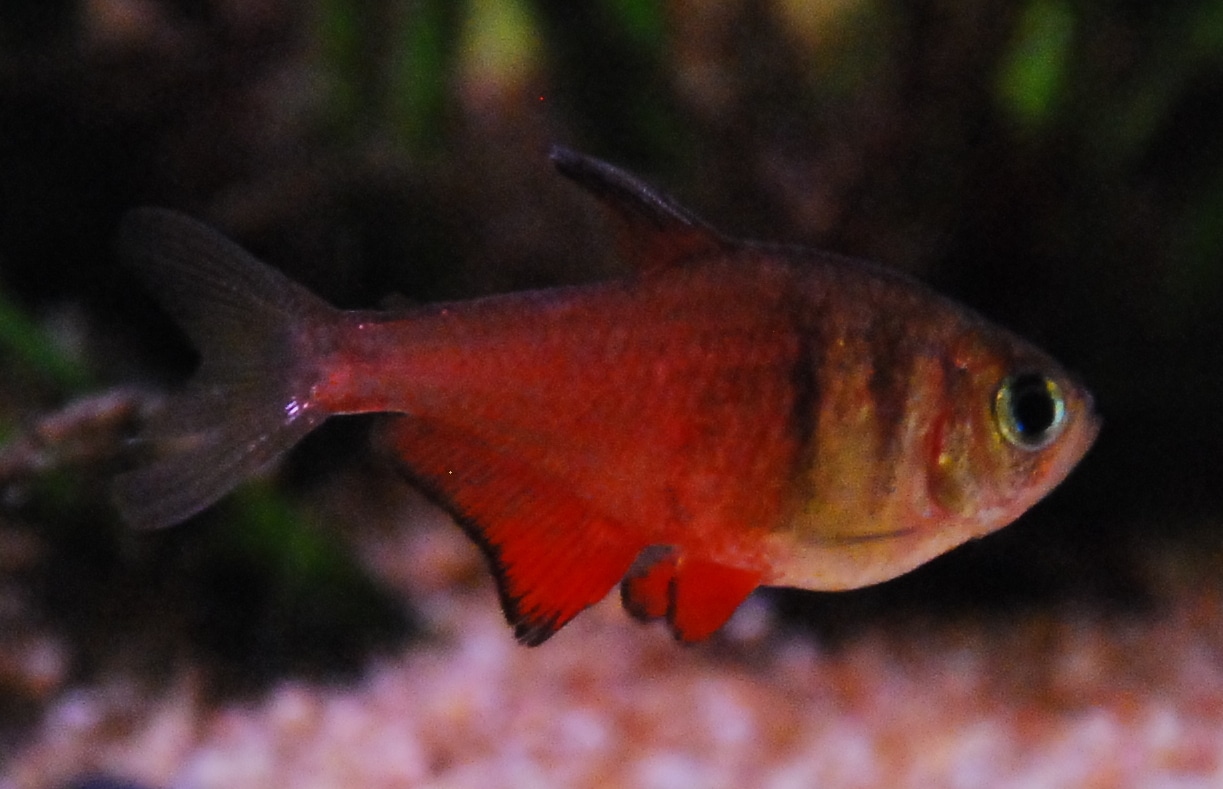
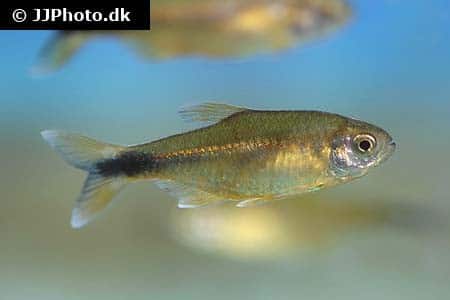
    Serpae Tetra Fish

    Serpae Tetras, including adult serpae tetras, are known for their striking appearance. They have:

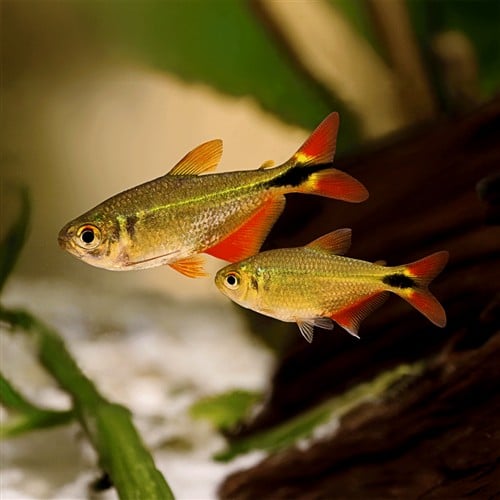
    • A reddish-brown body
    • Shimmering scales that glisten in the light
    • A unique black comma-shaped spot on their sides
    • A square-shaped dorsal fin covered in dark black

    Males and female serpae tetra exhibit some differences in appearance.

    • Males tend to be more brightly colored, and their dorsal fin is almost completely black.
    • In contrast, females have a slightly duller coloration, are plumper, and lack color under their fins.
    • As Serpae Tetras age, their colors may become less intense.

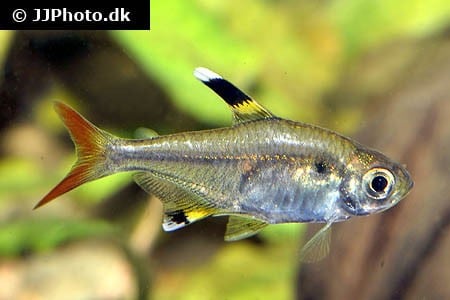
    They are often confused with another similar looking tetra species called the Red Phantom Tetra. The Red Phantom has the same markings and colors. However, Male Serpae have black on their tail fins and is a more robust looking fish with bolder reds. Red phantoms are also more common in the aquarium trade. It’s likely that your fish store mislabels these two fish, so know the differences. Red phantoms are generally considered easier to keep.

    Lifespan

    Serpae Tetras have a lifespan of 5-7 years in captivity, which can be extended with proper care. Factors that can affect their lifespan include unfavorable water conditions, an undersized tank, and an inadequate diet.

    To keep your sheep Tetra healthy, it’s essential to provide a spacious tank, maintain clean water, and feed them a balanced diet.

    Average Size

    Serpae Tetras, also known as long fin red minor, are relatively small fish, with an average adult serpae tetra size of around 2 inches (usually 1.75 inches). Despite their small size, Serpae Tetras are active and lively, making them a captivating addition to any aquarium. They have the boldest red of all tetras.

    Creating The Ideal Serpae Tetra Environment

    Serpae Tetra School

    Creating the perfect environment for your Serpae Tetras is essential to mimic their natural habitat and ensure their health and well-being. This involves providing suitable tank conditions, such as appropriate water parameters, decorations, and plant life.

    In this section, we’ll explore how to create the ideal environment for Serpae Tetra, focusing on tank size, water parameters, and decoration and plant suggestions that will keep your fish happy, healthy, and thriving.

    Tank Size & Water Parameters

    A 20-gallon tank is recommended as the minimum for a group of six Serpae Tetras. It is recommended that you go for a larger tank as having a larger school with help curb nipping and make them calmer.

    In terms of water parameters, Serpae Tetras prefer a temperature range of 72°F to 79°F, a pH level between 6 and 7.8, and a water hardness between 5 and 20 dGH. Maintaining these water conditions is crucial for the well-being of your Serpae Tetras and will help prevent potential health issues. You will also want to monitor these nutrient levels to keep your tetra fish in a low stress environment

    To replicate their natural environment, it’s also essential to provide slow-moving water flow, dim lighting, and dark, sandy substrate in the tank. Adding blackwater extract or peat can help mimic the acidic, soft water conditions found in their native Amazon River basin.

    Decorations & Plant Life

    In addition to maintaining suitable water parameters, providing an appropriate underwater landscape is essential for your Serpae Tetras’ well being. This includes incorporating plenty of vegetation and tank decorations that offer shelter and mimic their natural habitat.

    Some excellent plant choices for a Serpae Tetra tank include Myriophyllum and Java moss, which provide shelter and mimic their native environment. It’s best to avoid plants with coarse leaves or spindly mops, as Serpae Tetra prefer more delicate, fine-leaved plants. Don’t forget to add some floating plants for extra cover and a more natural feel. Here are some solid plants you can add:

    Low light plants are best since they will become reclusive in high light environments.

    Nutrition & Feeding Habits

    As omnivorous fish, Serpae Tetras have a varied diet in the wild, consuming both plant matter and insect larvae. In captivity, it’s essential to provide them with a balanced serpae tetra diet that includes high-quality pellets and flakes, as well as protein-rich treats like blood worms, insect matter, and black worms.

    A great product to try that has insect matter is Fluval Bug Bites. It is better to go with the flake food variety for these fish versus the pellet version due to their size. The more varied and balanced diet you have, the bolder the colors you will get out of your tetras.

    Fluval Bug Bites Flakes

    A flake version of Fluval’s amazing pellet bug bits products. Great for all tropical fish and high in protein.

    Buy On Amazon Buy On Petco

    Feeding Frequency & Portion Sizes

    Feeding your Serpae Tetras multiple times a day is recommended, but it’s crucial to ensure they can consume the food within 1 minute at each feeding. To avoid overfeeding, start with a small amount of food and only add more if they finish it. Overfeeding can lead to excess waste in the tank, affecting water quality and potentially causing health issues for your fish.

    In addition to high-quality flakes or pellets, supplementing your fish’s diet with live or frozen protein sources like bloodworms is a great way to provide them with the nutrients they need to stay healthy and vibrant.

    Tank Mates

    Blue Gourami Fish

    Choosing suitable tank mates for your Serpae Tetras is essential to ensure a peaceful and harmonious community in your aquarium. While Serpae Tetras are generally peaceful fish, they can display fin-nipping behavior, especially towards slower-moving species and though with fancy long fins.

    In this section, we’ll provide tips on selecting the best tank mates for your Serpae Tetras, focusing on species that can coexist peacefully and create a balanced and harmonious environment.

    Good Tank Mates

    Ideal tankmates for Serpae Tetras include:

    Keeping your Serpae Tetras in a school of at least six will help reduce aggression and stress levels, resulting in a more peaceful and harmonious community. You will have the most success if you can put them in a group of 15 or more. They will do best with fast moving fish like danios. Any dither fish should be pretty safe for them.

    Serpaes are also safe around adult freshwater shrimp. They will eat baby shrimp, but full grown adult should be okay.

    When selecting tank mates for your Serpae Tetras, it’s essential to consider the compatibility of their water parameters, dietary requirements, and activity levels. This will help ensure all species in your aquarium can coexist happily and thrive in their shared environment.

    Species To Avoid

    Red Devil Cichlid As An Adult

    When housing Serpae Tetras, it’s important to avoid certain species to prevent potential conflicts. Slow-moving fish with long fins should be avoided, as Serpaes will nip the fines of them. Additionally, larger and more aggressive species, such as large cichlids, should be avoided, as they can cause stress, injury, or even eat your tetras.

    By carefully selecting compatible tank mates for your species, you can create a harmonious and balanced community where all species can thrive and coexist peacefully without the need for a separate tank.

    Breeding

    Breeding Serpae Tetras can be an exciting and rewarding experience for aquarists. To successfully breed these fish, you’ll need to set up a separate breeding tank, condition the adult fish, and care for the eggs and fry as they develop.

    Below is a video by Aquarium Fish DIY that shows a natural way to breeding these fish. Breeding is a separate section that can be a post within itself. To help you learn, I believe a video with the process is best.

    https://youtu.be/5Y7BB6_ZWVU

    Fry can be fed baby brine shrimp, powered flake foods, or infusoria

    Common Health Issues

    Like many freshwater species, Serpae Tetras can be prone to certain health issues, including common ailments such as Ich, fungal infections, and skin flukes. To prevent these health problems, it’s critical to maintain suitable water conditions, monitor water parameters regularly, and provide a balanced diet for your fish.

    If you notice any signs of illness in your Serpae Tetras, you will need to address the issue promptly. This may involve adjusting water parameters, improving tank cleanliness, or providing appropriate treatment for the specific ailment. Some diseases like velvet will require a hospital tank. By staying vigilant and proactive, you can ensure the health and well being of your Serpae Tetras.

    Frequently Asked Questions

    How many serpae tetras should be kept together?

    For optimal living conditions, species should be kept together in a minimum tank size of 20 gallons and a group of 5-7 individuals. It’s best to avoid slow fish that could be targeted for fin nipping. To curb nipping, try to have a larger school. A school of 15 or more of them is recommended to keep nipping at a minimum.

    What fish get along with serpae tetras?

    Serpae tetras can be kept with other fish of a similar or larger size, such as barbs, danios, and larger tetras; or bottom-dwelling catfish and loaches. Fish with long, flowing fins or slow-moving fish like angelfish and bettas should be avoided.

    Pictus catfish and German Blue Rams are also suitable tankmates.

    How big does a serpae tetra get?

    The Serpae tetra typically grows up to 2 inches in length. They are identifiable by their red body and black spot near their gills.

    What is the ideal tank size for a group of Serpae Tetras?

    For a group of six Serpae Tetras, an ideal tank size is 20 gallons. It is recommended that you go larger than this in order to house a larger school of Serpaes.

    How often should Serpae Tetras be fed?

    Feed your Serpae Tetras twice a day to keep them healthy and happy. Feedings should be short so you do not overfeed your fish. Feed them enough food that they can consume in a minute to start.

    Closing Thoughts

    To sum up, Serpae Tetras are vibrant, active, and low-maintenance schooling fish that make a captivating addition to any aquarium. By understanding their natural habitat, appearance, ideal tank conditions, nutrition, tank mates, breeding, and common health issues, you can provide the best possible care for these beautiful fish.

    With proper care and attention to detail, you can create a thriving and harmonious environment for your Serpae Tetras, ensuring that they live a long, healthy, and happy life in your aquarium. Do you have a Serpae tetra school? Let us know in the comments. We love to hear from our readers. Until next time!

  • Lawnmower Blenny – Your Comprehensive Care Guide

    Lawnmower Blenny – Your Comprehensive Care Guide

    The Lawnmower Blenny, also referred to as the sailfin or algae blenny, is a must-have for saltwater aquariums. Not only does this saltwater aquarium fish provide practical benefits such as consuming nuisance algae, but they’re interesting and full of personality, making them an ideal choice for beginners and experienced aquarists alike. Let’s investigate what it takes to create an optimal environment for these blennies so that your tank can remain clean, algae free, and have plenty of character!

    We’ll uncover information on their natural habitat along with identifying unique characteristics common in Lawnmower Blennies. We will look into suitable tank mates alongside reef tank considerations plus warning signs when it comes to health issues. By following our guide, you will be fully prepared before adding one to your own saltwater setup!

    Key Takeaways

    • Lawnmower Blennies are popular saltwater fish that provide algae-eating abilities and lively behavior.
    • They need a 30 gallon tank minimum (55 gallon tank recommended) with live rock, sand substrate, & filter to thrive.
    • While omnivorous in captivity, these blennies need a greens heavy diet to survive
    • Avoid other blennies or aggressive predators for compatible tank mates.

    Species Overview

    Scientific NameSalarias fasciatus
    Common NamesLawnmower Blenny, Algae Blenny, Jewelled Rockskipper, Rock Blenny Family: Blenniidae, Rock Skipper Blenny
    FamilyBlenniidae
    OriginIndo-Pacific
    DietHerbivore (Omnivore in captivity)
    ColorsMottled brown, tan, and white.
    Care LevelEasy
    TemperaturementPeaceful (Semi-aggressive to other bottom dwellers)
    Minimum Tank Size30 gallons (114 liters) 55 Gallons recommended (208 liters)
    Max Size5 inches
    Temperature Range76 – 82 degrees F (24 – 27 C)
    pH Range8.0 – 8.4
    Salinity1.025 or 35 PPT
    Reef SafeYes (May pick at inverts)

    Introduction

    The Salarias fasciatus, also known as the Algae Blenny or Lawnmower Blenny Fish, is a species of saltwater fish commonly found in the Indian Ocean and Red Sea, as well as on the Great Barrier Reef. These unique creatures are an excellent addition to any aquarium due to their ability to consume excess algae, which makes them one of the few cleaner fish you can purchase in the hobby. The blennies provide liveliness similar to its close relatives such as Ecsenius gravieri (Sailfin).

    Beginner aquarists can look after this species with ease because they’re quite hardy. Experienced fish owners will appreciate their attractive features coupled with their lively character.

    Origin And Natural Habitat

    Lawnmowers are native to many areas in the Indian Ocean, Fiji, Red Sea, Great Barrier Reef and other places such as Samoa and Micronesia. These fish normally live on shallow coastal grounds where they swim among rocks and coral rubble, usually alone around a depth of 50 feet.

    To make sure these creatures stay happy when living in home aquariums, it is important to mirror their natural environment – warm water temperature, balanced alkalinity level, moderate lighting, which will let them have access to plenty of filamentous algae for consumption. In the wild, they roam the substrate and rocks for food, primarily eating detritus. Yes, that’s right. While they are called algae blenny commonly by trade, their main diet in the wild is detritus.

    Physical Characteristics

    Saltwater Blenny In Reef Tank

    Lawnmowers (also known as sailfin blenny) are unique in appearance, exhibiting rock and substrate like coloration with comb-like teeth (which is why they are also called combtooth blennies). The fish is also able to change color gradually going from light to dark to blend into the environment.

    Also due to the shape of their specialized teeth, s fasciatus have no trouble scraping surfaces, the aquarium floor, or consuming hair algae making them an efficient eater. They often possess stripes, bands and spots ranging from hues of brown green or cream colors among others.

    Males and females are easy to differentiate with this species. Females will have two spines on their anal fins which will be of differentiating lengths1.

    Behavior And Personality

    Lawnmowers possess a combination of curious and active behaviors. Usually peaceful fish, they can demonstrate aggression towards other algae eaters that encroach their turf. This hostility intensifies with age. They are even known to attack near relatives from different species!

    Besides consuming algae matter, these fish may also enjoy small invertebrates, shellfish eggs or microscopic sponges to an occasional snack on minor snails.

    It is advised to not mix this blenny with other blenny species because they are known for fighting. It is possible to add more than one in a longer tank, but that is usually reversed for tanks 6 feet or longer.

    Life Expectancy

    To provide your lawnmower Blenny with a long and healthy life, it is important to give them the ideal tank conditions, which should be kept clean at all times. Providing a balanced diet that meets their nutritional needs as well as ensuring good water parameters are essential for an extended lifespan. In general, these fish live between 2 to 5 years, depending on how they’re taken care of in captivity. It is not uncommon for them to live longer than this in captivity. They typically live longest in public aquariums or large reef tanks that are established. The longest I’ve personally seen reported was 9 years.

    Average Size

    Lawnmower blennies are an ideal option for saltwater aquarium owners, being a small fish that reaches 4-6 inches in size. They make an excellent tankmate due to their algae eating abilities, and they’re fairly easy to care for. These creatures can happily exist within many different types of tanks.

    Caring For Your Lawnmower Blennies

    For successful lawnmower blenny care, set up a fully-established saltwater aquarium with the correct parameters for them to thrive. This species is considered reef safe, though they may disturb corals with their perching behavior. They will pick at inverts like snails and starfish and have been known to eat small anemone shrimps. To prevent any harm occurring in your reef tank, make sure that this fish has access to plenty of algae as well as supplemental food sources. With proper maintenance, you’ll be able to appreciate their vivid colors and active behavior, which adds life and vibrancy to your marine environment.

    Tank Size And Setup

    A recommended tank size of 55 gallons is necessary to ensure that your lawnmower Blenny (also known as algae blennies) has a healthy environment, plenty of surfaces to graze off of, and optimal water quality. The larger home aquarium provides enough room for natural algae growth, allowing the development of an essential film that helps maintain health levels in fish. Waste can be diluted due to its spaciousness, and stabilized conditions are maintained through utilizing proper filtration.

    When setting up their living space, provide them with live rock structures along with sand substrate. You can add just about any coral you like with these fish. All this creates ideal hiding places as well as enabling certain kinds of algae – to mimic what they would have in nature while making them feel more at home.

    Water Parameters

    For your lawnmower to stay in optimal health, it is necessary for you to maintain the right water parameters. These fish need a pH balance between 8.0 and 8.4. Temperatures of 76°F-82°F. And salinity levels ranging from 1.020, 1.025 or 35 PPT in a reef tank must also be maintained. Keeping an eye on these conditions will ensure that this species has the best chance possible at living its longest life with vitality!

    Maintaining cleanliness within their tank habitat should also be kept up. You should regularly test your water to ensure you have the water chemistry. You will also want to monitor key nutrient levels. Here are some other parameters to watch out for:

    Feeding And Diet

    Lawnmowers are quite efficient in grazing and cleaning your tank’s microalgae. To ensure proper nutrition, they should be provided with various prepared foods like flake food, dried seaweed, algae wafers, as well as brine shrimp or mysis. They will happily eat just about anything in captivity once established, but you will want to keep them with a plant based diet for their health. Here are some foods that work great for them:

    • LRS Foods Herbivore Frenzy
    • Mysis shrimp
    • Masstick
    • Sea Veggies by Two Little Fishies
    • Reef Nutrition Chroma Boost
    • Cultivated live foods like California Blackworms
    • Cobalt Aquatics Marine Vegi Flake and Marine Omni Flake

    Frequency

    Due to the fish’s feeding nature (they take over 3,000 bites a day!), It’s best to keep them well fed. Feeding lawnmower blennies requires feeding at least twice a day to keep them nourished. Grazing foods like Sea Veggies and Masstick are great to use with them so they can freely eat them. Strong filtration will offset the nutrients introduced by the extra food. This is why filtration is so important in reef tanks and why hobbyists go for sumps – as many fish require being constantly fed.

    Tank Mates And Compatibility

    Choosing the right tank mates for a Lawnmower Blenny is essential to ensure harmony in saltwater tanks. While these fish tend to be fairly peaceful, they might get aggressive when provoked or become territorial due to their age.

    Maintaining several hiding spots within your community aquarium will also help reduce any risk of conflict between lawnmower blennies alongside other fishes, allowing everyone room enough while still enjoying being part of a communal setup!

    Good Tank Mates

    Melanurus Wrasse in Reef Tank

    Lawnmowers can be an excellent addition to a saltwater aquarium, as they are compatible with many community fish. These could include:

    • Blue Reef Chromis
    • Royal Gramma Basslet
    • Tang Fish like Yellow Tangs
    • Most wrasses
    • Dwarf angelfish
    • Anthias

    One thing to note about these fish is they are one of the rare fish that get along just fine with damselfish. In nature, they coexist happily in damselfish territories. They actually have a mutually beneficial relationship. The damsels will chase out mid and surface dwelling fish, while the blenny will chase out bottom dwelling fish. They also do not have dietary overlaps. If you are worried about damselfish aggressiveness, blennies tend to fit the bill regarding fit that will be tolerated.

    Tank Mates To Avoid

    Panther Grouper with Cleaner Wrasse

    When considering compatible tankmates for Lawnmower Blennies, aggressive and predatory fish such as Lionfish, Groupers, and Triggerfish should be avoided due to the potential threat they pose. More docile bottom dwellers like Gobies or Dragonets may not fare well either because of their competitive behavior over food resources and territories within the same aquarium.

    Other blennies should be avoided since they can fit. Also, avoid any fish that can fit them into their mouths.

    Common Health Issues And Prevention

    Lawnmower Blennies are resilient saltwater fish species, making them a great addition to aquariums. Like all creatures, they can still be vulnerable to health problems if the environment is not optimal and cleanliness isn’t properly maintained.

    Here are several issues you may run into with this fish:

    Internal parasites are one of the most common issues with these fish due to their feeding nature. To best prep your fish, a quarantine process along with a deworm/internal parasite removal practice of general cure + focus is good to use to clear them of such parasites.

    API General Cure

    A great general medication for various fish diseases. Can be used in water or fed direct with a binder like SeaChem Focus.

    Buy On Amazon Buy On Chewy

    When purchasing this fish, you will need to ask the store you are purchasing from to feed the fish. Do not purchase a lawnmower blenny that is not eating, as its chances of accepting supplemental food in your tank will be low.

    Breeding Challenges

    Capturing Lawnmower. Blennies in captivity can be difficult as they are incredibly territorial and selective when it comes to mate selection. As of now, the majority that is sold commercially have been taken from their wild environment since there isn’t yet a successful protocol for breeding blenny fish in captivity.

    This all changed in June 2023. the Biota Group, one of our leaders in saltwater fish tank breeding, announced a breakthrough that they can now captive bred this amazing fish. It is long overdue, and I’m glad Biota continues to do groundbreaking work in making this hobby more sustainable. I expect tank bred varieties to start arriving in stores by 2024.

    Reef Tank Considerations

    Lawnmowers are believed to be reef safe, although they have been known to nibble on coral polyps if put in an unfavorable situation. To protect the inhabitants of your reef tank, it is essential that you guarantee there is sufficient algae and supplemental foods for them so as to reduce any potential stressors or hunger issues. By providing adequate sustenance and creating a peaceful environment where possible, you can help ensure that no damage will occur due to lawnmowers looking for food elsewhere than what’s available in their natural habitat within your tank.

    Frequently Asked Questions

    Do lawnmower blennies eat hair algae?

    Lawnmower blennies are commonly added to aquariums for their ability to consume hair algae. These small fish effectively feed on the pesky algae, providing a natural solution for this common issue.

    Are lawnmower blennies hard to keep?

    Lawnmower blennies are simple to take care of. Their diet can consist mainly of green algae with some added prepared fish food. The biggest challenge with the lawnmower blenny is getting them to eat supplemental foods. This is why you need to make sure they eat prepared foods at the store before you purchase them.

    Are lawnmower blennies aggressive?

    No, lawnmower blennies are generally peaceful and only display occasional aggression with other fish that look similar to them or those who prefer to swim around the bottom of the tank like dragonettes.

    What do lawnmower blennies eat?

    This herbivorous fish, the Lawnmower Blenny, feeds on a variety of plants including algae and diatoms as well as detrital matter. However, in captivity, they will eat an omnivorous diet. They will eat just about anything once adjusted to your tank.

    Are Lawnmower Blennies suitable for beginner saltwater aquarists?

    For the novice saltwater aquarist, Lawnmower Blennies are a great option due to their robustness and simplicity of care. They remain one of the easiest fish for any beginner in this field.

    Closing Thoughts

    The Lawnmower Blenny is a great choice for any saltwater aquarium due to its algae-eating ability, unique features, and lively personality. To ensure they flourish in the tank, you should make sure that your setup has been fully established with suitable water conditions as well as an assorted diet. When selecting compatible tankmates, be mindful of optimal parameters required for keeping these fish content long term. With proper care and attention provided, this captivating species will become one of the most popular members within your underwater ecosystem!

  • 50 Crazy Betta Fish Facts You Wouldn’t Believe!

    50 Crazy Betta Fish Facts You Wouldn’t Believe!

    When it comes to betta fish, never believe what you hear. Unfortunately, most information surrounding these fighting fish is incorrect. And while a lot of good information is available, new and beginner hobbyists might not know the correct resources to find trusted information.

    We’ve compiled a list of 50 betta fish facts that will introduce you to the truths and requirements surrounding these beautiful fish.

    Key Takeaways

    • There are many facts about betta fish, but not all of them are true.
    • It’s important to do your own research for any pet, especially for bettas where misinformation is easily spread.
    • Online communities, peer-reviewed articles, trusted websites, and fellow hobbyists can help answer questions about bettas and lead you on the path to having a happy and healthy fish!

    How To Research Your Animal

    Before buying any new fish or animal, you should know everything you possibly can about them. This is especially true when talking about betta fish. Unfortunately, there is a ton of misinformation surrounding betta fish and their aquarium husbandry.

    As betta fish (also called siamese fighting fish) are seen as a beginner fish, many new hobbyists rely on local pet stores to relay all the information they need to get their aquarium started. While some store associates give trustworthy information, it’s important to use your own due diligence and research. Never purchase a fish without knowing its care requirements.

    But how do you research bettas and how do you know what’s right information and what’s wrong?

    Research can be tricky, but this hobby is built on the trial and error of its community. To start, make a list of questions you have. Some questions might be:

    • Where do betta fish come from?
    • How big do they get?
    • How big of an aquarium do bettas need?
    • What water parameters do they need?
    • Can they be kept with other fish in the same tank?

    These questions won’t lead you to a single answer. Instead, you’ll find a plethora of stories from hobbyists explaining their personal experiences with keeping these fish over decades. In addition to these firsthand accounts, search for university papers or otherwise published information. It is acceptable to do superficial searches to get started on researching a topic, but you should always cross reference and fully dig into the topic at hand.

    While you’ll find many contradicting answers to your questions, this doesn’t mean that there is no right answer. The community agrees that there are bare minimum requirements for every fish species owned. To see if you fit those requirements, you should assess your budget, time availability, dedication, and intent.

    50 Betta Fish Facts

    Here are some fun facts to get you interested in keeping betta fish (also called Japanese fighting fish) or to remind you just how great these fish are! We have a video just for you from our YouTube Channel and our blog post goes into more detail below. If you enjoy our content, please be sure to subscribe!

    1. Each One has its own unique personality

    No two bettas are the same. Some are curious and friendly while others are lazy and aggressive. There is no telling what kind of personality your fish will have until it gets comfortable in its new home. Keep in mind that a fish’s personality will change given water and tank conditions in addition to tank mate settings.

    2. They were selectively bred for competition

    Dragon Betta

    Almost 1000 years ago, royalty bred these fish for their best colors, tail shapes, and aggression. Through selective breeding, fish enthusiasts gambled wages with their fish in combative competitions. Later, these fish came to signify beauty and extremity in finnage and colors.

    3. They are the national aquatic animal of Thailand

    These fish are loved so much that they have been named the national aquatic animal of Thailand. In fact, some betta fish are bred to resemble the red, white, and blue stripes of Thailand’s flag.

    4. They can be found in almost every color and pattern

    This includes red, blue, green, and purple. In general, blue and red are the most common colors to come across. However, betta enthusiasts continue to push the genetic abilities of these fish, resulting in some unbelievable colors and patterns. Possible finnage has also been explored, resulting in some common occurrences such as crowntail, double tail, and halfmoon.

    5. The rarest color is true albino white

    The true rarest color is actually purple. However, no betta has been produced that is a true purple color. They are usually a lavender color instead.

    On the other hand, albinism is a rare genetic mutation that affects melanin production. This results in less melanin or the complete absence of melanin, leading to a pure white fish with red eyes.

    6. They are best kept in at least 5 gallon aquariums

    Some hobbyists successfully keep them in 3 gallon tanks, but that wouldn’t be my personal recommendation. Instead, a 5 gallon aquarium leaves plenty of room for a betta fish to demonstrate its natural abilities without getting bored or stressed. A couple of snails may also be able to be comfortably kept in this tank size!

    Editor’s Choice!
    Fluval Spec V

    The Best Betta Fish Tank

    Best filtration, best light, perfect size and with everything you need to get started. It was made for Bettas!

    Buy On Petco Buy on Amazon

    7. They need a constant water temperature

    Betta fish are relatively hardy, but they need a constant water temperature between 78 and 80° F. Some hobbyists keep their betta tanks slightly above or below this, but consistency is more important than an exact temperature. To ensure a consistent temperature, it’s always recommended to use an aquarium heater.

    8. They will fight each other and similar-looking creatures to death

    Wild betta fish are naturally aggressive, but they have been selectively bred to demonstrate the most aggressive behaviors possible. In their natural habitat, betta fish are aggressive to fish trying to take their resources away from them, like space, food, and even potential mates. In the aquarium, space is limited, and most fish become a threat.

    While this is especially true for keeping multiple male betta fish in the same aquarium, all betta fish may become aggressive towards similar-looking fish with flowing fins and bright colors. They may also be aggressive towards their own reflection in the glass!

    9. They will flare their gills and fins

    When upset, betta fish will flare their gills and fins to appear larger than they actually are. This can be very stressful for the fish if unwarranted. On the other hand, some hobbyists intentionally make their betta fish flare to provide some stimulation and enrichment. Again, this should be done sparingly to prevent your fish from getting injured.

    10. There are over 70 different species

    There are many bettas within the Betta genus. Many species have started making their way into home aquariums, but many are still unavailable for purchase. Until then, Betta splendens remains the most popular and widely known.

    11. They originate from Thailand

    Thailand was previously named Siam. This, in addition to their aggressive nature, led to their second common name, the Siamese fighting fish.

    12. They can also be found across Southeast Asia

    While they originated in Thailand, many wild species of betta can be found throughout several countries in Southeast Asia, including Indonesia, Malaysia, Vietnam, Cambodia, and Laos.

    13. Betta splendens are found outside of their natural habitat

    For a long time, Betta splendens could only be found in Southeast Asia. However, they have since been discovered in parts of South America, North America, and Australia. This could potentially be due to fish being released from breeding farms and local hobbyists.

    14. They need little to no water movement in the aquarium

    In fact, betta fish do best when there is no water current. In the wild, these fish are found in very slow-moving, shallow conditions. In captivity, they have been bred to exhibit ornamental finnage which can make it difficult for them to swim against excessive water currents.

    15. They need good water quality

    While hardy fish, betta fish require 0 ppm ammonia, 0 ppm nitrite, and low nitrates. In addition to a consistent water temperature, betta fish need constant water parameters that fall within their preferred ranges. Like other fish, bettas are susceptible to ammonia and nitrite poisoning if toxins are allowed to accumulate in the aquarium.

    16. They do best in a planted aquarium

    This fish species shines best in a planted tank that resembles its natural habitat but can be kept in most aquarium setups. This includes tanks with sand and gravel substrate with live plants, artificial ones, or other decorations.

    Betta Tank Setup

    One thing is for sure, though, and that’s that betta fish love to rest on plants and decorations, especially near the surface of the water. Make sure that whatever you plan to decorate your aquarium with is safe for fish to use.

    17. They will not eat live plants

    These are one of the best fish for live plant setups! For the most part, betta fish leave live plants completely alone; these fish are naturally carnivores and won’t be interested in any greens available in the tank. That being said, some betta fish have been known to pick at plants, and some may even nip at plant roots if they’re exposed.

    18. They live in very shallow water

    In the wild, betta fish are found in shallow and often temporary pools and rice paddies. The location of bettas largely depends on the wet and dry seasons, when heavy rain floods forest floors and ditches. Their labyrinth organ and adept ability to jump allow them to survive such harsh conditions.

    19. Some species are listed on the IUCN Red List of Threatened Species

    Unfortunately, several species of betta are listed on the IUCN Red List of Threatened Species1. Some of these species include Betta simplex, Betta pinguis, Betta pardalotos, and Betta channoides. Reasons for being placed on this list include deforestation, habitat loss, and pollution.

    20. There is one breed that looks like a snake

    Not one of the most common species of betta fish to see, the snakehead betta (Betta channoides) looks like a snake! These fish have a very long body with a tapered head that resembles a reptile. Don’t worry, though. They are not dangerous and not any more challenging to keep than other bettas.

    21. Females can be just as aggressive

    Female Betta Fish

    It’s often said that female betta fish are less aggressive than their male counterparts. This is a very large generalization and some female betta fish can actually be more aggressive! This is why it’s still recommended to keep betta fish by themselves in their own tank.

    As we’ll see, some hobbyists have luck keeping all female tanks.

    22. Males are more colorful and slightly larger than females

    Female and male betta fish are pretty easy to tell apart. The biggest difference is that males are much more colorful and slightly larger than females. They also often have flowier tails and fins that can be used to attract females and intimidate predators.

    23. They stay under 3 inches long

    In general, betta fish stay under about 3 inches in length at adult size. However, some betta fish have very impressive finnage that can easily add another 1 to 2 inches in addition to their body length.

    24. The biggest species can grow to be 7 inches long

    Giant Betta

    The biggest species of betta fish is the giant betta (Betta anabatoides), which can grow up to 7 inches long! These fish should be given a little extra room in comparison to their smaller counterparts. In general, a 10 gallon tank size is recommended for one giant betta.

    25. They can live with other fish species in a community tank

    Lambchop Rasbora

    This is only true if personalities match. Some betta fish are simply too aggressive to be kept with other tank mates. However, more docile and accepting individuals have the possibility of being kept in a community with an assortment of tetras, rasboras, and even larger fish.

    26. Some females can be kept together

    A betta sorority isn’t possible for everyone, but some hobbyists have succeeded. A betta sorority is a group of female bettas peacefully living together in the same aquarium. This takes a lot of trial and error and can go very wrong if done incorrectly.

    The keys to having a successful sorority are having a large tank, females that were raised together, and plenty of natural hiding spots and dividers that break up the line of sight.

    27. Selective breeding made them more aggressive

    While betta fish were originally bred for their bright colors, they were also bred to exhibit high levels of aggression. They would then be used to fight against each other in competition. This was a form of gambling common among nobility and royalty.

    That aggression is still present in domesticated bettas. For this reason, it’s strongly believed that wild bettas are less aggressive.

    28. Wild types are much less colorful than their domesticated counterparts

    Wild Betta Fish

    Similarly, domesticated bettas from breeding farms are much more colorful. This is because they have been selectively bred to display the most interesting and brightest colors possible. To this day, betta fish breeders study and manipulate genetics to get the best colors and combinations possible.

    29. Males are responsible for taking care of the fry

    That’s right! Female betta fish are only responsible for getting the eggs ready for fertilization. The male creates the bubble nest, fertilizes the eggs, places the eggs in the nest, and protects the eggs from predators.

    30. Males create bubble nests at the top of the water

    What Is A Bubble Nest

    Using their labyrinth organ, male betta fish blow bubbles at the surface of the water to create mats of bubbles. These are prepared nests, ready to house fertilized eggs once connected with a female. As the eggs are fertilized, the male will catch them and place them into the bubble nest. After a few days, the eggs will hatch and paternal care will end.

    31. Males may create bubble nests outside of reproductive periods

    A bubble nest isn’t a true indicator that your male betta is ready to mate, though. In fact, excessive bubble nest building could be an indication that something is wrong with the tank. The main reason why betta fish have a labyrinth organ is to survive unfavorable conditions. If they start to gasp for air at the surface of the water or make bubbles, it could be a sign that something is wrong with the water parameters.

    At the same time, male betta fish may create bubble nests for enrichment. This could also be a sign that your fish is bored and needs more interaction.

    32. Some species are mouth brooders

    While many betta fish build bubble nests, some are mouth brooders. This means that eggs and fry are raised in and around the mouth of the fish. One species of betta that uses mouth brooding is Betta rubra.

    33. They live to be 2 to 5 years old

    Betta fish aren’t the longest-living fish, but they can keep their owners company for a few years. Keep in mind that adult fish from the pet store are likely a couple of years old already. This can make it seem like they have an even shorter lifespan than 2 to 5 years.

    34. The oldest one in the world lived for 10 years

    While most fish only live to be about 5 years old, many surpass that average! Fish are a long-term commitment and a happy fish will easily live for a long time. Make sure that you set your aquarium up with years, possibly even decades, in mind.

    35. They can make bonds with their owners

    Betta fish are very smart and very curious. They easily recognize their owners and the person who feeds them. It is not uncommon for betta fish to welcome their owners every time they pass the tank; in many instances, they’ll also ask to be fed.

    36. These fish can experience many emotions

    Betta fish can experience a large array of emotions, like happiness, sadness, and boredom. Betta fish are very susceptible to becoming bored, lazy, and overweight. To help keep your fish engaged, make sure to regularly provide changes to the aquarium, like new decorations and toys. An occasional live food snack may also help get your fish to display its natural instincts.

    37. They are very curious and need new stimulation for enrichment

    Betta fish are extremely curious. Perhaps too curious.

    Though solitary fish, bettas love interacting and being mentally stimulated. Things like mirrors, betta logs, and live foods can help bring excitement to your fish’s life. Otherwise, your fish may start to lose its color, lively finnage, and activity level.

    38. They can be trained

    With time and dedication, betta fish can be trained to jump for their food or swim through hoops! Betta fish are very smart, and their inquisitive nature makes them open to trying new things. Hobbyists have had success teaching their fish to do different tricks with a little bit of patience. In fact, there are even betta trick kits available for purchase. Some things you can teach your betta include following your finger, jumping and swimming through hoops, playing soccer, and allowing itself to be petted by its owner.

    39. They are lazy

    Not all betta fish can be acrobats. Some individuals can be pretty lazy and enjoy resting on floating logs and leaves instead of jumping out of the water. This can become problematic if the fish lacks exercise entirely. Betta fish can become overweight, constipated, or develop swim bladder disorder if left understimulated.

    40. They are good jumpers

    A betta tank should always have a secure lid on it as bettas are great jumpers. In the wild, they jump out of the water to move between locations and catch food. In the aquarium, jumping can be a sign of stress due to poor water conditions, stress, or improper care.

    41. They are related to gouramis

    Blue Gourami Fish

    Betta fish are members of the Osphronemidae scientific family. This technically makes them a type of gourami even though they might not look like their aquarium trade counterparts. A fun fact is that gouramis also have labyrinth organs.

    42. They have a labyrinth organ

    This is a modified lung that allows these fish to breathe air from the water’s surface. These fish developed this organ in response to their natural habitats which can quickly evaporate or deteriorate in quality. For instance, a betta fish may find itself in a very small pool which starts to dissipate in oxygen levels. The fish may be able to survive by taking in atmospheric air until conditions improve.

    43. They are mostly carnivorous

    In the wild, betta fish heavily rely on insects for their source of protein. They especially enjoy eating insects from the top of the water. In the aquarium, they’ve adapted to a more omnivorous diet, accepting both meat- and plant-based foods.

    44. One sold for over $1500!

    The most expensive betta fish ever sold was a Thai-colored plakat betta for over $1500. This fish had perfect coloration that resembled the country of Thailand’s flag.

    45. Bettas are greedy

    Betta fish are greedy fish when it comes to feeding time. Only feed bettas when it’s time for them to eat or they will take advantage of every time you pass their tank. A good feeding schedule is about 2 to 3 pellets once or twice a day. Make sure to remove any uneaten food to avoid a messy tank.

    46. A colorful specimen is a happy pet

    Like other animals, betta fish show their best colors when they’re happy and thriving. To get your betta fish to show its best colors, provide them with a high-quality pellet or flake food. Then, ensure that water conditions are the best they can be with regular water testing, water changes, and tank maintenance.

    47. Some may change colors throughout their lifetime

    One breed likely to do this is the black, white, orange, and yellow koi betta. Over their lives, their patterns may change and colors might appear or disappear completely. This is due to the genetic makeup that makes these colors and patterns possible.

    48. There is an organization specifically for them

    There is an organization called The International Betta Congress (IBC) that promotes the spirit of these fish! You can connect with other betta fish keepers and show off your fish.

    49. There are shows and conferences all about them

    Hobbyists can attend conferences and live shows to learn more about their bettas and compete against other hobbyists.

    50. They are hardy, colorful, and personable

    This makes them excellent pets! Just make sure to learn everything possible you can before going out to buy your first betta.

    Common Myths

    We mentioned before that some information available about betta fish is false. Though betta fish awareness has increased in recent years, there is still a lot of misconception surrounding these fish.

    Here are some of the most common betta myths you’ll likely hear at your local pet stores or from a mistrusted site.

    Betta fish can live in small aquariums

    No matter how many times we say it, there will always be someone trying to keep bettas in a small plastic fish bowl. No, betta fish cannot live in the small containers that you see at the pet store.

    The bare minimum tank size for a betta fish is 3 gallons, with most hobbyists recommending at least 5 gallons. Though many stores sell all-in-one 1 gallon betta fish tanks, these kits usually lack the basics for keeping these fish alive past the first few days of having them. In addition, these kits are often overpriced for what you get.

    In the long run, it’s better to buy all pieces separately, so you have full control over making a happy and healthy environment for your fish.

    Betta fish don’t need a heater or filter

    One of the pieces of equipment often lacking in these all-in-one betta kits is an aquarium heater. Or, if they do come with a heater, it’s a small, cheap flat heater that sticks to the side of the tank. While these heaters can work from reputable companies, they’re very prone to malfunctioning. On top of suddenly turning off or heating up too much, they are also impossible to calibrate.

    Editor’s Choice
    Finnex STE Series

    Best Aquarium Heater

    Finnex has achieved what we as hobbyist have asked for decades. A reliable heater that won’t fail. Japanese components. Receives our top recommendation.

    Click For Best Price Buy On Amazon

    Bettas need a constant water temperature between 78-80° F. Though they originate from tropical areas where temperatures rarely fluctuate, they are not able to live under or much above this range.

    While most betta kits include a filter, they’re usually not the best quality. Sometimes, these filters might actually be too powerful, which can knock your fish around the tank and cause injury. Bettas originate from calm, slow-moving waters. In the aquarium, water movement should be minimal to make swimming easy for your fish.

    Again, it is strongly recommended to purchase an aquarium filter separate from any kit package.

    Betta fish can be kept with other fish

    This isn’t completely a myth but shouldn’t be followed by inexperienced hobbyists. Bettas are extremely territorial fish that have been known to fight and kill other fish that come too close to their space in the aquarium. Even if the tank is big enough, the betta may still attack if the other species have a similar appearance.

    If you have a large enough tank, a docile betta, and a list of compatible species that can be kept with a single betta, then you may try introducing tank mates. It should also be noted that the vast majority of wild bettas are much more compatible with themselves and other fish than domesticated betta breeds.

    On the same note, some hobbyists try to keep multiple female betta fishes together in the same tank. This is known as a betta sorority and can be successful in some setups. The secrets to having a successful sorority are having a large tank, plenty of live plants, and multiple female bettas that have grown up around each other or are naturally docile.

    Be prepared that harems can go wrong very quickly and unexpectedly.

    Betta fish can withstand poor water quality

    Because bettas are often sold in tiny containers, new and inexperienced hobbyists sometimes believe they can be kept in those conditions indefinitely. These containers do not have filtration and are not heated, leaving toxic ammonia and other harmful nutrients to accumulate. Though this might not immediately affect the fish, bettas have developed chronic conditions due to poor water quality.

    Like other tropical fish, betta fish need proper nutrients in their aquarium. This means 0 ppm ammonia, 0 ppm nitrites, and less than 40 ppm nitrates. To help maintain these levels, it’s recommended to add live plants and/or perform weekly or biweekly water changes. During these water changes, the substrate should also be vacuumed.

    Betta fish don’t need a high-quality diet

    Betta fish are beautiful fish, but only when given the care they need. Unfortunately, the pet trade can a business that cuts corners around the fish’s health. As a result, fins get torn and colors fade. This doesn’t mean that your fish can’t shine when it arrives in your home aquarium, though.

    Many new hobbyists grab the first food they see on the shelf. This is usually a general tropical fish flake food, but we recommend Fluval bug bites for betta fish. In most cases, low quality flake is like junk food, with many preservatives, artificial dyes, and fillers.

    In the wild, betta fish are carnivores. In the aquarium, they appreciate a wide variety of foods, including live, frozen, and freeze-dried options. If you’ll notice, they have upturned mouths that make it easy for them to breathe air and catch prey on the surface of the water. As a result, some of their favorite snacks are small insects that can bring out their natural hunting instincts.

    Other good options include freeze-dried bloodworms, brine shrimp, and a high-quality flake or pellet food. Make sure to not overfeed your betta. These fish can be very greedy and will ask for food anytime someone passes the tank.

    Betta fish don’t live long

    Though betta fish don’t live as long as some other available tropical fish, bettas can stay with their owners for a reasonably long time. On average, bettas live for 2 to 5 years. The oldest betta fish on record lived to be 10 years old.

    Something to consider is that by the time you introduce an adult betta fish into your home aquarium, that fish is already a couple of years old. This can make it seem like they have short life spans when the fish dies within the next few years.

    Of course, factors like water conditions, diet, and predisposed issues play a part in how long your fish will actually live. But given the space to thrive, these fish will bring color to your tank for years to come.

    Final Thoughts

    There are many interesting facts about betta fish available on the internet, but not all of them are true. In fact, most ‘common knowledge’ about bettas is incorrect and misinformation. The only way to find the truth about these incredible fish is by doing your own research, listening to other hobbyists’ experiences, and finding out what works and doesn’t work for you.

  • Complete Guide to Kribensis Cichlid Care and Breeding

    Complete Guide to Kribensis Cichlid Care and Breeding

    Bring vibrancy and life to your community tank, the Kribensis Cichlid is a beautiful dwarf cichlid species that is perfect for both novice and expert aquarists. In this thorough guide you will learn all about caring for these freshwater fish as well as how to breed them. With this knowledge, you can confidently make the Kribensis Cichlids part of your own aquarium setup!

    Key Takeaways

    • They are easy to care for and one of the easiest cichlids to breed in the hobby
    • Provide a 20-30 gallon tank with live plants, hiding spots, and well balanced diet to keep them healthy & happy.
    • Choose compatible tank mates of similar size. Avoid slow moving or aggressive fish to prevent stress & injury.

    Species Overview

    Scientific NamePelvicachromis pulcher
    Common NamesKribensis Cichlid, Krib, Rainbow Krib, Rainbow Cichlid
    FamilyCichlidae
    OriginWest Africa (Ethipe River in the Niger Delta)
    DietOmnivorous
    Care DifficultyModerate
    ActivityActive
    Life Expectancy5 Years
    TemperamentPeaceful – but semi-aggressive when breeding and against bottom feeders
    Tank LevelAll
    Minimum Tank Size20 gallons (75 liters)
    Water Temperature Range75-79°F (24-26°C)
    Water Hardness5-12 dKH
    pH Range6 – 7
    Filtration/Water FlowModerate
    Water TypeFreshwater
    BreedingOviparous
    Difficulty to BreedEasy
    CompatibilityCommunity thank with similar sized and temperament fish
    OK, for Planted Tanks?Yes

    Introduction

    Kribensis Cichlids, also known as Rainbow Kribs or Rainbows Cichlids, are a type of cichlid found natively in Nigeria and Cameroon. With their beautiful colors and calm temperament when kept with other species inside the same community tank, they make an ideal addition to any home aquarium.

    Provided that proper care is taken, including appropriate breeding management, these colorful creatures can offer a fulfilling experience by introducing some great interactions. They are also great caretakers of their baby fish!

    Origin And Natural Habitat

    Kribensis Cichlids, native to the slow-moving waters of Nigeria and Cameroon. In their natural habitat, they prefer dense vegetation for hiding spots and territory. Setting up an environment similar to what would occur naturally will make sure these colorful cichlids are happy within your aquarium.

    Appearance

    Kribensis Cichlid Male and Female

    The breathtaking appearance of Kribensis Cichlid makes it an extremely desirable species for any community tank. The males and female kribensis are both quite distinct, with the female boasting a shorter rounder body, while also being more colorful along with pointer dorsal, anal, and tail fins. Their trademark is the pink area around their belly. The male kribensis has larger pointed anal fins, is slimmer, and will grow longer than the female. All together, this creates a visually appealing scence in your freshwater habitat. These differences also make it easy to select a pair to breed when purchasing them at a fish store.

    Lifespan

    The Kribensis Cichlid is a beautiful, lively fish that can live up to 5 years in captivity with proper care. To extend their life span and keep them healthy, it’s important to provide a balanced diet, clean water conditions, as well as a low stress environment. The great thing about them is they are pretty tolerant of a variety of conditions and get along with many tankmates, so even novices can keep them healthy for a long time.

    Average Size

    Kribensis Cichlid size varies slightly between males and females. They are a small tropical fish species, with males reaching up to 4 inches and females measuring 3. As they are small, you don’t need too large of a tank to house them. However, they do get aggressive when they are breeding. Have a plan to separate them or consider a larger tank if you want them to care for their young in the display tank.

    Kribensis Cichlid Care Guide

    For Kribensis Cichlid owners, caring for this small fish includes more than just feeding them. Creating the right environment in their tank and making sure appropriate water parameters are met is essential to providing good care of these cichlids. This section covers all aspects of taking care of kribensis cichlids: from selecting a suitable aquarium size to adding decorations and filtration systems.

    All that’s required is finding out what the necessary requirements are, such as substrate types, dimensions, etc. Once those elements have been established, any aquarist can be on his way to building an optimal home for this species! It’s important to stay mindful about keeping up with correct water conditions in order to ensure healthy fishes throughout their lifespan by monitoring ph levels and other readings regularly – given time dedicated towards proper maintenance could result in truly rewarding experiences when dealing with Kribensis communities!

    Tank Size And Dimensions

    When setting up a tank for Kribensis Cichlids, you should consider an aquarium of at least 20-30 gallons. This will ensure they have plenty of space to swim and set up territories accordingly while also providing room to interact peacefully with other fish living in the same area. A longer tank is always better for these fish as they establish their territories near the bottom of the tank.

    A larger tank will also have more stable parameters and reduces hostility between inhabitants if you decide to get any territorial fish – making way for a much healthier environment within the confines of your home.

    Substrate And Decorations

    Creating the ideal environment for your Kribensis Cichlids is important in order to ensure their welfare and joy. Incorporate fine gravel or sand, which reflects its natural habitat accurately. If you choose sand and want to keep plants, you will either want to cap the sandbed with sand or have separate sand and planted substrate sections. Live plants will enhance water quality as well as provide shelter for these fishes if used within the tank of a kribensis cichlid set-up. Here are some great beginner plants to try with them:

    Hiding places such as hollow coconut shells or driftwood have great significance when it comes to providing protection and security along with giving breeding couples a suitable place to lay eggs safely. Position these accessories near the periphery of the aquarium while making sure they are placed wide apart from one another so that each fish can easily create an individual area.

    Editor’s Choice
    Manzanita Driftwood

    Editor’s Choice

    Manzanita offers it all. Great shape, low tannins, quick to water log and reasonably priced. It’s the ultimate driftwood!

    Click For Best Price Click For Branch Pieces

    Water Parameters

    Ensuring your Kribensis Cichlids are living in a secure and healthy environment requires stable water parameters. For optimal results, it is recommended to keep these parameters between 75-79°F for temperature with pH from 6.0 – 7.0 and hardness levels ranging from 5-20 dGH, respectively. Test kits should be used regularly to detect any changes that might impact the health of your fish, thereby allowing you to make timely adjustments as required so they live their best lives free of stress or sickness caused by sudden shifts in chemistry variables. Always test for these other key parameters as well, and consider doing water changes if you are off from these recommended levels.

    Filtration

    A reliable filtration system is essential to keep the water clean and avoid any illnesses in your Kribensis Cichlid tank. Canister filters are ideal in a planted and a community tank environment because they provide efficient biofiltration and maintain stable conditions.

    To guarantee proper operation, remember to regularly check on your filter unit and replace any worn-out components as needed. For a breeding situation, a separate breeding tank with a sponge filter works best as it is gentle enough to be used safely around fry.

    Diet And Feeding

    Kribensis Cichlids need a balanced diet to keep their color scales and healthy energy. This consists of sinking pellets, frozen or freeze-dried foods, and small amounts of veggies.

    Best Flake Formula
    Cobalt Aquatics Cichlid Flakes

    With probiotics and specially formulated for Cichlids, this is bar none the best flake formula available for your Africans

    Buy On Amazon Buy On Chewy

    To keep these fish healthy, feed them properly once daily, offer them tropical flakes combined with cichlid pellets plus occasional treats such as brine shrimp or bloodworms. It’s important that uneaten food be cleared away in order to maintain water quality. Frozen foods can be used as well to enhance diet. Bloodworms and frozen brine shrimp are usually the food of choice when it comes to frozen food.

    Behavior And Compatibility

    Kribensis Cichlids are usually quite gentle and non-aggressive, making them suitable for keeping with various tankmates. However, when it comes to breeding time, they will become territorial over their hideaways or caves. There have been cases posted on fish forums about how all the other fish in the community fish tank would hang out at the edges of the tank after the Kribensis cichlids started to breed in order to avoid their aggression.

    Suitable Tank Mates

    Boesemani Rainbowfish

    When looking for suitable tankmates to house with Kribensis Cichlids, peaceful fish species that are of similar sized such as:

    All these fish are perfectly compatible with the Kribensis cichlid when they are not breeding. However, have a backup plan in the event that dominates the entire tank during this time. The best way to curb this aggression is to temporarily remove the Kribensis Cichlids into a breeding tank until the young have been raised.

    Bad Tank Mates

    Tiger Oscar Fish

    It is not recommended to keep Kribensis Cichlids with timid fish, fish that will fit in its mouth, or overly aggressive fish. To keep with research, here are some obvious examples of fish to avoid:

    • Large cichlids
    • Tiger barbs
    • Most bottom dwellers – Kribs establish territory at the bottom and will attack fish occupying its space
    • Invertebrates – Kribensis Cichlids will happily eat most shrimps and harass snails and large inverts
    • Betta fish – Good chance of getting killed when Kribs are breeding
    • Fish that do not have similar water requirements, like Goldfish
    • Slow moving fish like Discus Fish.

    One thing to note about Kribensis cichlids is when breeding. These fish are such dedicated parents that they will attack fish much larger than them and will happily sacrifice their lives in defense of their youth. Even if the more aggressive fish wins out, it may be wounded enough to be subject to infections. Do not underestimate your kribensis cichlid’s ability to defend its young and breeding grounds!

    Breeding And Fry Care

    Breeding Kribensis Cichlids is an enjoyable activity that can be relatively simple. To ensure successful breeding, it’s necessary to set up a separate tank of at least 20 gallons for the process. Water conditions should also be modified, and care must be taken when dealing with eggs and fry in order to achieve optimal results. We have a video from The Urban Fishkeeper that shows his process how he breeds this fish.

    Taking these steps will increase your chances of success when attempting to breed kribensis cichlids!

    Caring For The Fry

    For your Kribensis Cichlid fry to receive the best care, keep these points in mind: First off, you should ensure a suitable tank size of at least 20-30 gallons and maintain an ideal water temperature between 75-79°F. It is also important that pH levels remain balanced from 6 to 7. You should have sufficient food sources like liquid fish food, baby brine shrimp, or powdered foods available throughout each day so they can grow healthy and strong. Doing regular water changes is necessary, too, since it will help prevent diseases while keeping the quality high within this ecosystem for them over time.

    The fry rearing process is one of the most rewarding experiences in the aquarium trade to have with Kribensis cichlids. Once the eggs hatch, they are one of the most devoted parents and couples you will find in the aquarium hobby. Not only are they fierce defends of their young, as we mentioned previously, but they also work together to raise their young. They will continue to raise their young until they are old enough to fend for themselves. When the young are ready, the parents will chase them away from their territory so they can establish their own territories.

    The couple will continue to say together, being completely monogamous and dedicating themselves to being together and raising more young. They will dedicate themselves to each other for life, staying together until one of them dies.

    That being said, there is a chance that the fish batch may get eaten by the parents. This sometimes happens as the parents are new. Don’t be disappointed if this happens with the first batch. Subsequent batches should be more successful. It’s not common for the couple to have multiple fry batches during their lifespan together. Make sure you have a plan to house the young once they are old enough to be on their own.

    Common Diseases

    Kribensis Cichlids are quite resistant to illness, though they can still contract common freshwater fish diseases which affect freshwater fish. Examples of these include Ich (also known as white spot disease, characterized by spots on the body and fins), Dropsy caused by bacteria infections, and Fin Rot resulting from bacterial infections or fungus.

    To prevent any spread or onset of such illnesses, it is important that one monitors their tank’s water conditions regularly alongside routine maintenance. If symptoms do occur, then isolating affected creatures while treating the entire aquarium with necessary medicines would be essential in protecting Kribensis Cichlid health. Seeking advice from a vet or experienced fish keeper should also be considered for accurate prescription medications so as to keep them safe from being impacted negatively by pathogens present within freshwater habitats.

    A best practice is to quarantine fish, but I understand that many freshwater hobbyists do not do this practice. Always try to purchase from a reputable local store or an online store. Most stores should have a guarantee on their fish.

    Frequently Asked Questions

    How many Kribensis should you keep together?

    To help promote peaceful interaction in your tank, it is advised to keep kribensis in a group or pair composed of more female kribensis cichlids than males. This will enable you to dodge any hostile behavior such as fin nipping that may arise from the fish.

    Are Kribensis good community fish?

    Kribensis are a great choice for any community tank due to their peaceful temperament and compatibility with many other species. As such, they make an ideal addition to virtually every type of community aquarium setup. However, keep in mind that they will become aggressive when they start breeding.

    Can you keep just one Kribensis?

    Having a pair of Kribensis is very desirable because they present stunning colors when they are together. You can still have one by itself if desired.

    What cichlids can I keep with Kribensis?

    It is best to not add any other cichlids when keeping Kribensis. They will fight with many dwarf cichlids like Apistogrammas in the same tank. Many other cichlids are too large for them, like New World cichlids. Others are too aggressive, like African cichlids. Your best bet with a Kribensis cichlid is a Severum.

    What is the ideal tank size for Kribensis Cichlids?

    Kribensis Cichlids need a tank size of around 20-30 gallons for them to feel completely at home. Such an environment is essential in order to make sure they thrive and be comfortable in their habitat. Longer is better, and having a large tank will help with aggression when it comes time for breeding.

    Closing Thoughts

    Kribensis Cichlids bring bright colors and activity to any community tank. To ensure a long life in your aquarium, provide suitable tank setup parameters like temperature and pH balance, offer them an assorted diet, and keep compatible fish as companions. And follow the detailed care guide referenced here. Doing so will help you create a healthy environment for these freshwater beauties that all can enjoy!

    Have you kept a Kribensis cichlid before? Let us know your experience in the comments below. We love to hear from our readers. Until next time!

  • Texas Cichlid: How To Care For The Majestic Lone Star Swimmer!

    Texas Cichlid: How To Care For The Majestic Lone Star Swimmer!

    Enthusiasts are drawn to the world of Texas Cichlids as they provide a unique challenge. These freshwater fish add an interesting sight to any home aquarium, and there’s plenty to learn about what makes them so special. We invite you to come along with us on this journey. Let’s take a look at these amazing creatures!

    Key Takeaways

    • Texas Cichlids are smart, colorful fish that can live over 10 years with proper care.
    • Caring for them requires a 55 gallon tank setup (75 gallon recommended) and maintaining the same conditions as their natural habitat.
    • Feeding should include commercial flakes or pellets supplemented with live foods given in small portions twice daily.
    • They are very aggressive and need large tankmates who can hold their own

    Species Overview

    Scientific NameHerichthys cyanoguttatus
    Common NamesTexas Cichlid, Rio Grande Cichlid, Pearl Cichlid
    FamilyCichlidae
    OriginNorth America (Texas, United States and Northern Mexico)
    DietOmnivorous
    Care DifficultyModerate
    ActivityActive
    Life Expectancy10-15 Years
    TemperamentAggressive
    Tank LevelAll
    Minimum Tank Size55 gallons (208 liters) for a single fish, larger for multiple or if kept with other species.
    Water Temperature Range68-78°F (20 – 25°C)
    Water Hardness5-12 dKH
    pH Range6 – 8
    Filtration/Water FlowStrong
    Water TypeFreshwater
    BreedingOviparous
    Difficulty to BreedModerate
    CompatibilityAggressive tank with similar sized or larger fish
    OK, for Planted Tanks?No

    Introduction

    The ‘Green Texas Cichlid’ or scientifically Herichthys cyanoguttatus, is a fish species native only to the United States of America and found in the Rio Grande near San Antonio. This particular freshwater fish species has earned its reputation for being rather aggressive. Because of its aggressive nature, it’s not a fish that is suited for beginner aquarists.

    Nevertheless, they more than make up these negatives with their savvy abilities- this breed of fish will recognize its owner and often display active behavior when playing around gravel or tearing apart aquascapes. It’s not hard to see why this species stands out: they have brains as much as brawns!

    Origin And Distribution

    The Rio Grande Perch, also called the Texas Cichlid or Rio Grande Cichlid, originates from the Rio Grande River. With their native environment consisting of a soft sandy base with rocks and aquatic plants beneath its surface in water that is slightly acidic, they prove to be remarkably resilient creatures. They are also located in northeast Mexico – where they are known as popular game fish.

    Appearance

    Texas Cichlid

    These remarkable large fish of the cichlid species can be up to 12 inches in length, dominating any aquarium. They have a mostly dark base, with blue and green colored scales that give it a shiny look. Their shine is complimented by their trademark body shape, comprising an expansive dorsal fin accompanied by a broad lateral line. All these elements define this intimidating type of fish that is unrivaled in beauty!

    Types Of Texas Cichlids (And Color Variations)

    There are also multiple types of Texas Cichlids available to purchase at pet stores. There is the electric blue Texas Cichlid, which exhibits a glowing blue shade covered with turquoise dots. There is the green Texas Cichlid with mostly green highlights. The most exotic is called the Red Texas Cichlid. This variety is a hybrid of a blood parrot and a classic Texas Cichlid. Usually, this hybrid is created with the help of a female Red Parrot and a male Texas Cichlid.

    Red Texas Cichlid

    Lifespan

    Texas Cichlids are a valuable addition to an aquarium, as these hardy fish can live for up to 10-15 years if they’re taken care of properly. Regular water changes and a balanced diet are necessary in order to maximize your cichlid’s lifespan – just remember that this isn’t just any short term commitment when it comes to taking on such fish! They live long, and they get large as we will learn below.

    Average Size

    An Adult Texas Cichlid can reach up to a foot in length, and as such need plenty of swimming space when housed. When deciding on the Texas Cichlid tankmates you would like to choose for your aquarium set-up, it’s advisable that they are similar size and temperament since these larger freshwater fish may tend towards aggression with smaller ones.

    A spacious tank is essential if you plan on housing one or more majestic Texas cichlids, while selecting their companions.

    Caring For Your Texas Cichlid

    Caring for Texas Cichlids is a task that must not be taken lightly. These fish need an environment where they feel comfortable and eat a balanced diet in order to remain healthy. Looking after the tank setup, maintaining clean water with regular changes, as well as feeding them correctly should all receive careful consideration. Let’s go into what it takes to make them thrive.

    Tank Requirements

    When it comes to maintaining a home for the Texas Cichlid, tank size is critical. At least 55 gallons of space should be allocated for a single Texas Cichlid in order to provide a sufficient swimming area. For a mixed tank, you should go to at least 75 gallons. Going bigger with your aquarium can also improve outcomes related to aggressive behavior. In nature, they establish large territories. If you can manage a 6 or 8 foot long tank, you will typically see less aggression with this fish.

    The environment should mimic their natural habitat as much as possible. Adding gravel or sand substrate along with rocks that won’t get tossed around or artificial decor you don’t mind getting trashed around will create plenty of spots where they can hide out when needed. Since this species loves digging into things, live plants are not recommended.

    Water Parameters (Living Conditions)

    For a Texas Cichlid to be in good health, its environment should match the conditions of its native habitat. The ideal temperature range is between 68-78°F (though they prefer warmer water temperatures around 78-82). They aren’t too picky about pH having a while range of 6 – 8, while water hardness can range from 5-15 dGH. It’s necessary to keep an eye on these parameters so that any sudden alterations do not cause stress for your fish leading to illness or other issues. It’s vital that cleanliness and proper maintenance occur in order for them to remain healthy and contented. To stay on a solid water change schedule, monitor these two major water conditions:

    Note once your fish is an adult, it can tolerate a much higher range of nitrates level. However, some other fish you may keep may not be as tolerant or may be younger. There are many documented cases of large, aggressive fish being able to thrive on high nitrates. We provide a best practice to follow, which would be one that we would follow in our own tanks.

    Feeding And Nutrition

    Texas Cichlids require a balanced diet for their health and well-being. These omnivorous fish are not fussy eaters, consuming various foods such as crustaceans, eggs, insects, and even plant matter. It is essential that they receive high quality nutrition from commercial flakes or pellets supplemented with live food like larvae and worms two times daily in small portions so they do not overeat. Large pellets and frozen food are best as they get larger. You can also feed the live insects once they become adults.

    Feeding Schedule

    It is essential for Texas Cichlids to maintain a regular feeding schedule. The best approach would be two meals per day in smaller portions to prevent them from overindulging and curb aggression somewhat. Offering a variety of foods to help keep your little Texan friend thriving each and every day.

    Texas Cichlid Behavior And Compatibility

    Texas Cichlids can be fascinating fish to own due to their active swimming, intelligent behavior, and recognition of owners. They are also known for being quite territorial, which means it is not advisable to keep them in a community tank with docile species, as their aggressive nature will cause problems. To lessen this issue, if you still want Texas cichilds in a tank environment, then keeping similar-sized semi-aggressive or more fierce specimens may help maintain balance amongst those living peacefully.

    Ideal Tank Mates

    Jack Dempsey Fish

    Texas Cichlid tank mates can be kept in if they have the fortitude to tolerate their territorial nature. Other cichlids (usually South American Cichlids), sharing a similar disposition, make good companions for this species. Here are a few solid choices to consider:

    Note that you shouldn’t purchase a new fish as a tankmate that is smaller than them. If they are too small, they will be eaten, attacked, or even killed. In much larger tanks, it is possible to get away from this, but we are writing this article assuming that most readers are putting them in 4 foot long tanks.

    Bad Tank Mates

    Leopard Angelfish

    Keeping Texas Cichlids in the same tank can be troublesome, as they tend to exhibit territorial behavior. It’s important to remember that vulnerable and small species should not join them, these fish may easily become prey. Here are some obvious bad examples:

    It is also not best to keep the same species together unless you manage to get a male and female and they pair up.

    Breeding Texas Cichlids

    If you’re ready to take on a challenge, Texas Cichlids breeding can be an exhilarating experience. You need to plan out the process accordingly and closely monitor every step for successful results – from installing the aquarium with sand bedding and flat rock, watching their courting dance along with the color change of male cichlid during this ritual. All are part of what makes these fish so captivating! Ensuring proper care in each stage is vital if one wishes to obtain desired outcomes (video source).

    Females can be differentiated from females as they get older as the female has a black spot on their dorsal fin. Some males may develop a nuchal hump.

    Spawning And Fry Care

    Texas Cichlids have a unique spawning process. The pair clear an area, usually on a flat rock or in the substrate, and lay between 500-1000 eggs that are sticky to the touch and are roughly 2 mm in size. They will stay by these until they hatch before transitioning into providing care for their fry once they reach free swimming stages. One thing to keep in mind with Texas Cichlids in a breeding tank is once the fry are born, the male may push his aggression on the female if there are no other tankmates. In a breedin tank situation, it would be best to remove the male once the fry are born or use a tank separator to keep the male away from the female and the fry.

    Feeding fry is easy as they are born big enough to eat baby brine shrimp. Feed this and powered flakes until they are big enough to eat traditional aquarium food.

    Common Health Issues And Prevention

    When owning a Texas Cichlid, there are certain illnesses that can affect it. Fin Rot and Ich are two of the most frequent issues for these fish, requiring special care to prevent or treat. Fin rot usually isn’t a serious condition with these fish, but their weakened state could make them a target.

    Keeping an orderly tank environment is key in avoiding injuries as well as providing proper conditions with regard to water temperature stability. This helps create a stress-free atmosphere for your pet cichlids and also reduces their risk of getting Ich.

    Injuries are the major thing you will likely deal with aggressive fish. Because they will fight with each other, there is a chance of a severe wound. if this happens, separate the fish and treat it with antibiotics. If treatment does become necessary, then over-the-counter medications should do the trick!

    Frequently Asked Questions

    Are Texas cichlid rare?

    Texas cichlids are quite hard to find in good condition, especially if they reach show quality standards. This makes these specimens rather costly due to the rarity of them being seen available for purchase. Some types, like the Red Texas Cichlid, are considered a rare find in the aquarium trade. The Red Texas Cichlid is the only cichlid species from the Americans that features the color scheme that it displays.

    Are Blue Texas cichlids aggressive?

    Yes, Electric Blue Texas Cichlids can be quite aggressive, although not as aggressive as some of its Central American relatives. It is important to choose tank mates for them with care to avoid any potential bullying and even killing.

    Are Texas cichlids invasive?

    Texas cichlids have unfortunately become an invasive species, having been released or discarded into the wild by their owners and now present in Texas, Louisiana, and Florida1. Scientists also note that these fish can be quite territorial when it comes to other aquatic lifeforms, making them a risk to the environment as well. The aggression displayed towards other fish is still being monitored, but its results are already worrisome.

    Are Texas Cichlids suitable for beginners?

    Due to their aggressive behavior, Texas Cichlids are not recommended for novice aquarists. It’s better to stick to hardy schooling freshwater species or a betta fish if you are considering freshwater fish for the first time. Also, due to their large adult size, they require large tanks, which are outside of the budgets of most beginners.

    How big of a tank do I need for a Texas Cichlid?

    For your Texas Cichlid, it’s important to get the best living situation possible for them. A tank of 55-gallons is the minimum size that should be provided for a single species. If you can find one with a bigger capacity, this will give your fish more room to swim and explore. It’ll also aid in providing better water quality conditions overall as well! As an added precaution, make sure your tank has all of the necessary filters and heating equipment set up properly so they have just what they need when it comes to temperature regulation too.

    Summary

    Texas Cichlids, though quite distinct in their physical features and behavior patterns, can be incredibly rewarding for aquarium owners who are willing to provide them with a large tank that meets their specific needs. Having the knowledge of how best to keep these fish makes it all worth while, they captivate viewers with an unmatched presence and prove themselves as much more than just regular old fish when given the right environment!

    Do you have a Texas Cichlid? Let us know your experience in the comments below! Thanks for reading and see you next time!

  • Rabbit Snail: The Good, The Bad, and The Slimy – All You Need to Know!

    Rabbit Snail: The Good, The Bad, and The Slimy – All You Need to Know!

    The Rabbit Snail is a unique freshwater species gaining popularity in pet stores recently. These captivating snails are quite beautiful with their vibrant colors and shapes. While also playing an important role in keeping aquariums clean, they consume algae and decaying plant materials! Let’s look closer at the world of these special creatures to understand more about them: where did they come from, what varieties exist out there, and how long do they typically live for? What size can we expect?

    Key Takeaways

    • Rabbit Snails are an interesting, colorful addition to any aquarium, with a long lifespan and many varieties.
    • Provide them with a comfortable environment with substrate, greenery & stable water parameters for optimal health.
    • Feed your Rabbit Snail a balanced diet of tank algae & treats while avoiding aggressive species as tank mates.

    Species Overview

    Scientific NameTylomelania
    Common NamesRabbit Snail, Elephant Snail, Rabbit Snails, Sulawesi Snail, Poso Snails
    FamilyPachychilidae
    OriginSulawesi Indonesia
    DietOmnivorous
    Care DifficultyModerate
    ActivityMostly nocturnal
    Life Expectancy1 – 3 Years
    TemperamentPeaceful
    Tank LevelAll
    Minimum Tank Size20 Gallons (75 Liters)
    Water Temperature Range76-86°F (24-30°C)
    Water Hardness2-15 dKH
    pH Range7 – 7.5
    Filtration/Water FlowAll
    Water TypeFreshwater
    BreedingLivebearer
    Difficulty to BreedModerate
    CompatibilityCommunity Tank
    OK, for Planted Tanks?With caution (eats some plants)

    Introduction

    Elephant Snails, also known as Rabbit Snails, are a distinct snail species that aquarium hobbyists find attractive. They have a body and head structure that resembles rabbits or elephants, and they make great tankmates since they’re peaceful creatures that move slowly through the water.

    These are unique looking freshwater snails that won’t overpopulate a tank. In this article, we will walk you through how to properly care for them, how to setup their tanks, and what tank mates work best for them.

    Origins And Habitant

    Rabbit Snails (also known as the Elephant Snail), native to the lakes and streams of Sulawesi in Indonesia, are a unique addition to any aquarium. Found inhabiting an environment abundant with life forms, these snails lend exotic beauty as well as intrigue when they become part of one’s home ecosystem. Wild-caught adults tend not to be too interested in brighter areas, but captively bred juveniles seem more flexible about different lighting conditions – so it’s recommended that shadowy spots be provided for them just in case!

    Unique Features And Appearance

    Rabbit Snails stand out from other freshwater snails with their distinctive appearance. This species is aptly named for its rabbit-like face and wrinkled skin that covers a captivating cone shaped shell that looks like a unicorn horn. The coloring of this special snail varies greatly – brown, dark, whitish or spotted are just some possibilities. Not to be overlooked either is how they use their ventral foot, which protrudes outside the shell as a method of locomotion!

    When considering all these unique features together, it’s easy to see why Rabbit Snails make such wonderful additions to aquariums. A major aspect of them one can’t ignore, though, is found through learning about – surprising enough – their shells! These shells resemble inverted unicorn horns and complement their colors.

    Types Of Rabbit Snails

    There are several rabbit snails available in the hobby. Each type has its own unique shell pattern and color. The yellow or golden rabbit snails are considered the most common.

    • Yellow Poso
    • Chocolate Rabbit Snails
    • Black Rabbit Snails
    • White spotted rabbit snails
    • Golden Spotted
    • Orange Rabbit Snail
    • Red

    All these will be sure to add diversity, as well as joy due to their contrasting colors, which make it easier for viewers to appreciate both the fish around them while admiring your chosen breed!

    Lifespan

    Rabbit snails are known for their long lifespan compared to other snails when in captivity, which could span anywhere from one to three years. The duration of its existence is affected by various elements such as tank size, water quality, and diet. Keeping a safe and healthy environment for these creatures is critical since happy animals usually live longer periods of time. If you notice any foul smell coming from your snail, it would be wise to take prompt action because that may indicate death or some other serious health issue occurring with them.

    Average Size

    Rabbit snails are truly remarkable in size compared to other snails. They will often reach up to 5 inches long and usually grow to 3 inch in length. Various factors like breed, diet, or environment can determine their final dimensions. These gentle giant snails bring great colors while not posing any danger to their tank mates. They do require larger tanks as a result.

    Creating The Ideal Rabbit Snail Environment

    Rabbit snail care is essential for providing a perfect home for your snails. Tank setup, water conditions, and substrate type are all crucial components that will ensure the well-being of these aquatic snails. With an optimal habitat created with your rabbit snails in mind, they can stay happy and healthy!

    Let’s dive into the requirements and what to look out for.

    Tank Requirements

    When it comes to rabbit snails, a larger than is best to consider. Keep rabbit snails in a 20-gallon aquarium should be the minimum considered for these animals, with a larger one being preferred. Make sure there’s an effective lid in place to avoid any of them getting out accidentally. To protect water quality and your snail’s health, make sure you have both a filtration system and some sort of sponge prefilter which will safeguard them from coming into contact with filter tubes or other potential risks inside the tank environment.

    Water Conditions And Temperature

    Rabbit snails need alkaline water to remain in good health and strong shells. The temperature should stay consistent, usually hovering around 76-84 degrees Fahrenheit. pH should remain around 7 – 8.5, with high pH being preferred since that will naturally keep calcium high. A little hardness helps too.

    It’s important for rabbit snail owners to provide them with an environment where both pH level and temperature are fairly stable since this is essential for keeping them healthy and safe from any shell deterioration issues.

    As with all inverts, they are sensitive to copper and high nutrient levels. Test your water frequently and maintain the following parameters:

    Substrate And Greenery

    When creating a habitat for your rabbit snails, a good foundation is essential. For these particular snails, fine sand or gravel works best as their substrate, allowing them to burrow and scavenge around easily. In terms of vegetation, it’s recommended that you include both planted and floating varieties like Anubias, which not only look beautiful but also provide added shelter for the creatures in your aquarium. By crafting an environment with such additions, they will be more inclined to call this place home!

    Anubias

    Anubias is hardy and more fish and inverts won’t bother it. An excellent choice for beginners!

    Click For Best Price Buy On Amazon

    One thing to keep in mind with adult rabbit snails is that they are one of the few creatures you can keep in the aquarium that will try to eat Java Ferns.

    Feeding

    Rabbit snails will eat a variety of foods as they are omnivores. They require both animal and plant foods in their diet for optimal health. While they are great scavengers, they will not be able to get by with that activity. They will need to be given supplemented food in order to thrive

    Rabbit snails enjoy a daily meal of tank algae food treats occasionally throughout the week. Soft plants, fish food, or shrimp pellets make great snacks! Algae wafers are an easy food stable to give them. You can also try blanched vegetables. Cucumbers and carrots work very well as options. Make sure to switch out foods to keep a balanced diet.

    Great For Bottom Feeders!
    Hikari Algae Wafers

    Algae wafers are a great way to directly feed your bottom feeding fish. They are especially effective for larger fish like plecos

    Buy On Amazon Buy On Petco

    Calcium Supplementation

    A key element of the nutrition for rabbit snails is calcium, which helps sustain their shells’ robustness and bolsters their wellness. You can purchase foods online that contain calcium. Some of these are specialty foods that are made only for shrimp and snails. Having harder warm will help as well.

    Tank Mates

    The perfect tank mates for your rabbit snails can hugely benefit their wellbeing and happiness. These quiet animals are usually fine when living with other peaceful creatures such as fish, invertebrates, or fellow rabbit snails. Some species may not get along. Any aggressive type of fish should never reside in the same snail tank alongside assassin snails either. For those looking for ideal roommates for these docile critters, careful consideration must go into selecting suitable individuals from within a range of potentially compatible partners that could share this particular aquatic environment, the Rabbit Snail Tank!

    Compatible Species

    Rabbit snails can peacefully coexist with other community fish, invertebrates and even more of their own kind. An amazing fact about them is they do very well with Sulawesi shrimp. They form symbiotic relationships with these shrimp. It’s really fascinating to see these two species interact!

    Other suitable mates for rabbit snails include:

    Species To Avoid

    Some fish will see your Rabbit Snail as food and prey. Knowing this, here are some fish you will want to avoid:

    To ensure everyone lives harmoniously together, it’s important to do sufficient research before adding any new tenants to cohabitate amongst the rabbit snail party!

    Breeding

    If you are planning to get into Rabbit Snail breeding, it is important to be aware of their breeding practices. Rabbit snails reproduce at a slow rate and give birth live, a unique characteristic among aquarium snails! They usually have one or two babies per reproduction round. Because of this slow reproduction, you are not as risk of having a talk overpopulated with them.

    Once they reach sexual maturity (approximately 1.5 inches long or 1 year), how often the rabbits breed can depend on tank settings, namely water temperature. There is no way to differentiate male and female rabbit snails. If you plan on breeding them, the best way to succeed would be to purchase at least a group of 4. This will give you a good chance of getting at least 1 male and 1 female.

    Let us explore more interesting rabbit snail mating and baby nurturing habits further!

    Caring For Babies

    The young of rabbit snails, commonly referred to as baby rabbit snails, are the cutest things around. They look like a reduced version of an adult snail with their small shell in place. They must be supplied food right after birth so that they can grow into strong and healthy adults. When the Rabbit Snail eggs are laid, a sack envelopes the new snail. The baby snail will develop in the egg sack until it is finally born! Such a site is most unique breeding process you will see among freshwater snails in the hobby (video source).

    These cute little baby snails won’t receive direct care from their parents, but providing them with ideal tank parameters and proper sustenance will ensure that these babies live long, healthy lives.

    Common Health Concerns

    When it comes to health matters, rabbit snails are not immune either. Commonly they suffer from leeches which attach themselves to the inner part of their shell and feed off them causing damages. Shell-related issues can also be a nuisance for these creatures, but with proper diet and clean water conditions shells have been known to heal on their own over time.

    Frequently Asked Questions

    Do rabbit snails clean freshwater tanks?

    Rabbit snails are ideal for keeping aquariums clean since they graze on algae and biofilm that accumulates along the surface. They also help keep the substrate clear by burrowing through it, feeding off any decomposing material. While they are good scavengers and clean animals, they are not compatible with several types of plants. Make sure you do your research on the plants you are planning to keep as your rabbit snail may decide to snack on them!

    Do rabbit snails like sand?

    Rabbits are very fond of sandy substrates as they can easily tunnel through it in search of food. They also enjoy other types of substrate, such as aquasoil and river gravel. All these materials make life more comfortable for rabbit snails when looking to feed themselves well. Their preferred substrate is sand with finer gravel or aquasoil being their second preference.

    Do rabbit snails have live babies?

    Rabbit Snails make a wonderful addition to any aquarium, as they are peaceful creatures. Every 4-6 weeks, the female will release an egg sack with 1 or 2 fully formed baby snails inside. This creamy white pouch is released into the water, and shortly after that, babies emerge, ready to start munching away at anything in sight!

    Raising these snail youngsters requires very little effort since once they come out of their egg sacks all it takes for them to grow big and strong is just food available in plenty! Because of their low production rates, their numbers are easy to control in an aquarium setting.

    Are rabbit snails easy to keep?

    These hardy creatures, Rabbit Snails, are very easy to take care of when provided in the right environment in a well-established aquarium. Having suitable substrate and water parameters is key for maintaining their healthiness and longevity.

    What do rabbit snails eat?

    Rabbit snails are an omnivorous species that consume soft algae, fish or shrimp food as well as decaying vegetation. For feeding, they enjoy algae wafers, specialty made snail foods, and blanched vegetables.

    Closing Thoughts

    Rabbit snails are a stunning addition to any community aquarium, with their incredible colors and beneficial features. Experienced or novice aquarists alike can discover the wonders of owning these gentle giants that provide an ecologically balanced environment for your community tank. Taking care of them is simple. Just ensure you create an appropriate habitat, offer suitable food, and understand some basics about rabbit snail behavior so they can thrive in your home aquarium! With all these traits combined, having one of those aquatic rainbows within reach will undoubtedly make for a delightful experience full of fascination & joy.

  • Green Terror Cichlid: Exotic Pet or Aqua Menace? You Decide!

    Green Terror Cichlid: Exotic Pet or Aqua Menace? You Decide!

    Are you ready to explore the world of green terror cichlid? Let’s take a journey that will bring us from South America’s river basins all the way into your own home aquarium, uncovering their natural environment along with details on how best to keep them healthy, breeding, and who to house them with. Andinoacara rivulatus is an eye-catching addition due to its lush hues of vivid blues and greens paired with bright orange stripes, making these large fish remarkable beyond just looks! So let’s dive in deep now!

    Key Takeaways

    • Green Terror Cichlids require specialized care to stay healthy and happy.
    • Their environment, diet, tank size & layout, water parameters, and compatible tank mates all factor into successfully keeping them.
    • They are very aggressive cichlids and usually grow 8 inches in length. Tank mates must be about to fend for themselves
    • Breeding Green Terrors is possible with knowledge of male/female differences. Health concerns can be prevented with proper care measures.

    Species Overview

    Scientific NameAndinoacara rivulatus
    Common NamesGreen Terror Cichlid, Green Terror, Gold Saum
    FamilyCichlidae
    OriginSouth America, primarily in Peru and Ecuador
    DietOmnivorous
    Care DifficultyModerate
    ActivityActive
    Life Expectancy7-10 Years
    TemperamentAggressive
    Tank LevelAll
    Minimum Tank Size55 gallons (113 liters) recommended 75 gallons (284 liters)
    Water Temperature Range72-80°F (22-26°C)
    Water Hardness5-20 dKH
    pH Range6 – 8
    Filtration/Water FlowModerate
    Water TypeFreshwater
    BreedingSubstrate Spawner
    Difficulty to BreedModerate
    CompatibilityAggressive tank with similar sized or larger fish
    OK, for Planted Tanks?No

    Introduction

    There is no doubt the appeal of Green Terror Cichlids. These freshwater creatures that inhabit sluggish rivers and backwaters found in tropical Peru and Ecuador are incredibly charming to look at with their vivid colors and outstanding fins. Growing up to one foot long when they’re living in the wild makes them a truly exceptional sight!

    Caring for these hardy fish goes beyond appreciating their beauty – it requires knowledge regarding what they need. You also have to know how to deal with its aggressive nature and what fish are best housed with them.

    Origin And Habitat

    Green Terror Cichlids originate from South America, and are typically found in the slow-moving rivers of Peru and Ecuador. Their habitat provides a set of specific conditions essential for their survival. Thus it is very important to re-create this natural environment as accurately as possible within captivity. This means setting up an appropriate tank that closely mirrors the water parameters existing in Green Terrors’ native river basins. They are also very territorial and need their space in order to curb their aggression.

    Appearance

    Green Terror Cichlid in Aquarium

    The Green Terror Cichlids, also known as green terror fish, stand out with their captivating hues of metallic greens and blues. A dash of orange in the form of a stripe makes them truly eye-catching for aquariums. In terms of physical features to distinguish between males and females, males tend to be bulkier and feature a bump on their foreheads, while female colors may seem more muted compared to that seen in the male counterparts.

    There are also two Green Terror types you will see in the hobby. Most of the time, both of these types are labeled as Green Terrors by the fish store. The first is the Gold Saum. This type has Yellow out fins and is considered better looking than your typical Green Terror. The true Green Terror is the other type that you will see, which you can recognize from its white outline on the top fin and tail. Both will grow to the same size and will have similar temperaments.

    Lifespan

    Green Terror Cichlids can live for 7-10 years with the right care and environment. The longevity of these hardy creatures depends on how well they’re looked after as much as their living conditions. Proper upkeep is key. Keeping up to date with water changes while maintaining optimal temperatures plus providing balanced nutrition are all essential in ensuring that your Green Terrors thrive healthily over time.

    Average Size

    Green Terror Cichlids can reach a maximum size of 12 inches in their natural environment, though usually only up to 8 inches in their adult size when kept as pets. Males tend to be bigger than females regardless, and both genders benefit from an appropriately sized habitat that can aid them in reaching their full potential for growth. Their growth rate is considered moderate, but their aggression grows significantly as they get larger.

    Caring For Green Terror Cichlids

    Taking care of Green Terror Cichlids involves much more than providing food and regularly changing their water. It requires the aquarist to understand their lifestyle needs as well as create a suitable habitat for them in order to meet these requirements. The right tank size, proper arrangement within it, conforming with necessary parameters related to water quality, and carefully selecting ideal terror cichlid companions are all critical factors when tending green terror fish. Let’s take a closer look at each element below.

    Tank Setup And Layout

    The healthy growth of Green Terror Cichlids depends on the size of their tank. For a single one, you will need at least 55 gallons, but larger tanks are better if there are more than one fish or a whole community aquarium. To recreate this species’ natural South American environment in your aquarium, use sand as a substrate that replicates river beds and add some rocks and driftwood to provide hiding spots and curb territorial behavior and provide hiding spots when disputes happen—also, place flat rock for an extra touch. You can go with moderate flow to keep the current going in the tank and to encourage strong filtration.

    Great For Large Tanks
    Fluval FX Series

    High flow, large filtration capacity, and quality plumbing – The FX series is designed for monster fish keepers

    Buy On Amazon Click For Best Price

    Water Conditions and Parameters

    To guarantee the safety and comfort of Green Terror Cichlids, it is essential to monitor water quality closely. The preferred temperature range for this freshwater species should be 72-80°F with a pH 6-8 and 5-20 dGH in terms of hardness levels. Aside from these, check these parameters as well:

    Having an adequate test kit at hand can help you regularly assess these parameters in order to keep them within desirable standards. Sudden changes have proven detrimental for your green terror fish as they tend to get stressed out, leading to health issues if not attended to in time.

    Feeding And Nutrition

    Maintaining a proper diet for Green Terror Cichlids is important to keep them healthy. They’re omnivores, so they should be fed with high-quality pellets combined with live or frozen food items. Look for top quality brands like New Life Spectrum, Hikari, or breeder specific food from brands like Ron’s (Ron has food that is for African Cichlids, but they still work great for South American Cichlids). Frozen food should be a mix of foods. Look for products from SF Bay that offer variety or buy separate frozen packs of foods like bloodworms, krill, etc.

    Great Balanced Food
    Ron's Cichlid Food

    Ron is an African Cichlid breeder with over 25 years in experience who created a line of food that is well balanced. A great option when you can’t use frozen foods.

    Buy On Amazon

    Feeding Schedule

    It is recommended to feed your Green Terror Cichlids once or twice daily with a sensible amount of food. Keeping an aggressive fish well feed will curb some aggression. However, it’s necessary to not overfeed so you don’t overwhelm your filtration system and have spikes in hazardous nutrients like Ammonia. Make sure you rotate out foods so your Cichlid can maintain a well balanced diet.

    Behavior And Temperament

    Green Terror Cichlids are known as an aggressive species of freshwater fish. They are infamous for their territorial and combative habits, especially when the breeding season rolls around. During this time, they produce eggs which they will fiercely guard over.

    Green Terror tank mates must be carefully researched and picked. The environment needs to also be suitable and carefully planned out. To ensure such a scenario plays out, one must be aware of how green terror cichlids behave in order to craft a balanced aquarium community.

    Tank Mates And Compatibility

    Jack Dempsey Fish

    Tank mates selection is essential not only due to its importance in avoiding too much aggression between other fish, but also because there could be compatibility issues like extreme differences in temperament or even size so that others might end up becoming potential prey rather than tolerant members of the tank. Here are a few rules of thumb to follow:

    • A Green Terror will openly harass, attack, eat, or kill any fish that is smaller than it once it grows past its juvenile stage
    • They become incredibly aggressive when breeding
    • Always attempt to add your most aggressive fish last in the tank
    • Always have a backup plan if the fish you introduce is harrassed

    That being said, here are some tank mate choices that may work:

    Incompatible Species

    Rasboras

    Green Terrors, with their predatory nature, should not be kept in the same tank as smaller fish such as small schooling fish, which can easily become prey. Livebearers and more docile large fish like Discus Fish will be seen as targets and will be harassed or attacked to death. It is better to introduce large fish of a similar size or larger into your aquarium so that all species may coexist (it will never be peaceful in an aggressive tank, but they will tolerate each other).

    Breeding

    It can be a highly rewarding experience to breed Green Terror Cichlids, as both male and female parents take part in raising the young. Though one must remain vigilant while engaging in this activity due to their aggressive behavior during spawning, if proper care is given it should go off without any problems (video source).

    Male And Female Differences

    During the mating season, you will see that there are some distinct differences between male and female Green Terror Cichlids. The males usually grow to be larger than females, and their colors tend to pop with more vibrancy when compared side-by-side. Also, as the males mature, they form a forehead hump on their head called a nochal hump1. The differences get more noticeable the closer fish is to adulthood.

    In contrast, females can come across as less brilliantly colored, but what makes up for it is their boldness in terms of defending eggs. Although being smaller sized creatures, they possess greater protection instincts which surpass those exhibited by males.

    Breeding Process

    Green Terror cichlids lay their eggs (usually 400 – 600 eggs are laid) on flat surfaces. Once fertilized in open water, the parents attend to them diligently until hatching. The fry emerge after three or four days and should be feed with brine shrimp as well as powdered dry food for optimal growth rate. Young fish can are raised by their parents until they are old enough to venture on their own.

    Health Concerns And Preventative Measures

    The Green Terror Cichlid, a type of freshwater fish, can be affected by various illnesses that are common to the species. To avoid this potential problem, it is essential to ensure high water quality and proper care for these creatures.

    Lymphocystis disease occurs when a virus affects the connective tissues in green terror. Low stress levels and sufficient oxygenation can help prevent its development.

    Another disorder they may contract due to poor conditions is Head & Lateral Line Erosion (HLLE). This condition should not arise if regular maintenance on their environment, such as water changes.

    Another thing to watch out for is infections. Because these fish are aggressive, they will get injured occasionally by their aggressive tankmates. Typically these are minor fin nips. Supreme water quality and diet are paramount to keep them from getting infections. Major wounds should be treated outside of the display tank, as a wounded fish will be seen as a target by their aggression tankmates.

    Frequently Asked Questions

    Is Green Terror cichlid aggressive?

    As Green Terror cichlids age, they become more and more aggressive towards smaller fish. This is why it’s imperative to have an aquarium with other Green Terror or fish of the same size or larger that also shares similar temperaments. Ensuring this will help prevent any altercations between different types of fish in your tank.

    How big does a Green Terror cichlid get?

    The Green Terror Cichlid, native to Central America and found in rivers and streams of Costa Rica, Nicaragua, and Panama, has a vibrant coloration and an active character. This makes it ideal for home aquariums due to its easy care nature. In captivity, they can reach lengths of 8 inches, but if given the proper environment, such as large tanks or wild settings, they have been known to grow up to 12 inches long.

    What fish can be kept with Green Terror?

    Green Terror Cichlids can make good tank mates with Firemouths, Jack Dempseys, Oscars, Texas species of cichlid fish. Silver Dollars can also work as a type of dither fish. The main thing is having fish that are either their size or larger so they won’t bully them.

    What is the personality of a Green Terror?

    The Green Terror is a lively and curious fish, reaching up to 8 inches in length. Though their personality tends to be aggressive as they get older. For tanks containing smaller varieties of fish, it’s important to keep their aggression in mind, as an unsuitable pairing could cause problems down the road.

    What are Green Terror Cichlids’ ideal water parameters?

    Green Terror Cichlids thrive in slightly acidic to slightly alkaline pH environments, water hardness that ranges from soft to moderately hard, and temperatures between 72-80°F. To achieve the optimal habitat for this species of fish, make sure you provide green terror cichlids with all these three parameters!

    Summary

    The Green Terror Cichlids are not only striking for their vibrant colors, but also intriguing due to their unique behavior and characteristics. As long as you can manage their aggressive behavior and have a backup plan if things don’t go well, you can enjoy keeping these fish.

    Have you kept this fish species before? Let us know in the comments below. We love to hear from our readers. Let’s start a conversation. Thank you for reading!

  • Emperor Angelfish – Your Comprehensive Guide to Exceptional Care

    Emperor Angelfish – Your Comprehensive Guide to Exceptional Care

    Welcome to the fascinating world of the Emperor Angelfish (Pomacanthus imperator), a captivating creature that features as the crown jewel in many saltwater tanks. With its striking colors and intricate patterns, no wonder it’s highly sought after among aquarists. But what does it take to provide optimal emperor angelfish care? Let’s dive in and find out!

    Key Takeaways

    • The Emperor Angelfish is a unique species from the Indo-Pacific region with striking physical characteristics.
    • Caring for them requires specific conditions, stable conditions, and a large aquarium
    • They are territorial creatures that will become dominant in a tank.
    • They are typically listed as not Reef safe, but with careful planning, you can keep one in a reef tank
    • Tank bred species are now available and highly recommended to purchase

    Species Overview

    Scientific NamePomacanthus imperator
    Common NamesEmperor Angelfish, Imperator Angelfish
    FamilyPomacanthidae
    OriginIndo-Pacific, Red Sea, Austral Islands, New Caledonia
    DietOmnivore
    ColorsPurplish-pink, blue, yellow, orange, green
    Care LevelModerate
    TemperaturementSemi-aggressive to Aggressive
    Minimum Tank Size125 gallons (473 liters) 200+ Gallons recommended (757 liters)
    Max Size12 inches
    Temperature Range76 – 82 degrees F (24 – 27 C)
    pH Range8.0 – 8.4
    Salinity1.025 or 35 PPT
    Reef SafeWith Caution

    Introduction

    Uniquely colored in yellow and blue, the Imperator Angelfish (otherwise known as Emperor Angelfish) can be found within Indian and Pacific oceans. This species of marine angelfish stands out due to its neon stripes when compared to other members from the same reef tank environment, making them popular among hobbyists all around. Though they appear beautiful, these angelfish are considered prey for larger carnivorous creatures such as sharks or marine mammals like whales & dolphins, which challenges their survival rate in wild ocean water bodies.

    With proper care, you will have no trouble raising one at home inside your own saltwater aquarium set-up! The appropriate conditions must first be met through adequate space along with large shelter spots that can fit its eventual adult size, so it is essential any potential keeper understands what is involved with successfully keeping one.

    Origin And Natural Habitat

    The Emperor Angelfish, which is a fish species that inhabits Indian and Pacific oceans near the equator, can be found in other parts of the world, including East Africa, Japan, The Great Barrier Reef or French Polynesia. Adult emperor angelfish prefer to take cover on calm coral reefs, whereas juvenile ones dwell in shallow rock-filled areas such as reef holes and cavities near ledges at lower levels within surge channels. Regarding reproduction time, the female emperor angelfish releases up to 1000 eggs into the water column for fertilization performed by males.

    Physical Characteristics

    Beautiful Fish - Top 10 Most Beautiful Saltwater Fish Available

    The Emperor Angelfish is easily recognized by its eye-catching appearance of alternating sapphire blue and yellow stripes along the body. The dorsal fin has a white marking, while the caudal fin is transparent. As juveniles, they show a dark navy hue with light blue and white bands that contrast other angelfish in aquaria. As this fish matures it goes through quite an amazing change, transitioning to horizontal streaks of both yellow and deep blue, which marks them apart from all the other species within their family tree.

    Juvenile To Adult Transformation

    Emperor Angelfish Juvenile

    Emperor Angelfish go through a two year-long process of transformation from juvenile to adult, during which their body changes from a dark blue hue with white and light blue stripes to having distinctive yellow and blue horizontal stripes for its distinct adult coloration. This change in habitat is quite remarkable too. The fish shift positions over time, starting near rocks on the shallow reef side before finally settling into the main coral reef as a mature species. Their adaptability speaks volumes about this majestic angelfish!

    Life Expectancy

    It is very attractive to have an Emperor Angelfish due to its extended lifespan. In the wild, these fish can live for over 20 years, but in captivity, this drops slightly between 15-18 years. There are a variety of elements that could potentially impact how long your pet angelfish will last, such as water quality levels and their diet or the level of stress they experience regularly. To make sure that you give them the best chance at living out their full potential, it’s important to pay attention to keeping tank conditions as close as possible to natural ones and also by making sure not to let anything disturb them too much or cause any sort of trauma while under our care.

    Average Size

    In the wild, fully grown Emperor Angelfish can reach up to 15 inches in size in the wild, making them stand out with their bold presence. When kept in an saltwater tank setting, they tend to be a bit smaller at around 12 inches as various factors such as diet and tank size play into this difference. The males are often larger than the females too! Providing a good care regimen for these beautiful fish is key if you want your angels to thrive!

    Caring For Your Emperor Angelfish

    If you wish to properly care for emperor angelfish, the tank needs ample room to swim as well as hiding places and water that meets their specific requirements. Keeping an Emperor Angelfish is quite rewarding, yet challenging too – for this reason, it’s a great idea to purchase one which has grown 4-6 inches in size (a juvenile), showing signs of curiosity instead of looking extremely stressed and confused. Acquiring such fish allows them enough time to adapt faster to their new home.

    The size recommendation is for wild-caught species, which will become less common in the future. Tank bred species can be smaller and are preferred to be purchased over wild caught specimens. More on tank bred availability later in the article.

    Tank Setup And Size

    For a juvenile Emperor Angelfish, setting up an ideal reef tank entails the inclusion of live rock for providing habitat and food as well as plenty of room to swim. A minimum size requirement is 125 gallons, with a recommendation of 200 gallons are best to fully showcase their vibrant colors. Having some spots for hiding would also help emulate their natural environment better. These fish like to hide behind and under rocks when they sleep. Knowing they get a foot long means you will need rock structures that can accommodate their size.

    Lastly, adequate filtration should be established properly within the aquarium system itself so that water quality can remain optimal at all times throughout this fish’s lifecycle. The usual placement for them is in fish only tanks. These tanks are best equipped with aquarium sumps and protein skimmers that can export nutrients and keep the parameters balanced. They can be kept in reef tanks with proper research, which I’ll touch on later in the article.

    Editor’s Choice!
    NYOS QUANTUM

    The Best Protein Skimmer

    German made, super silent, and world class performance. This is the pinnacle of skimmer technology today!

    Click For Best Price Buy On Amazon

    Water Parameters

    The health and welfare of Emperor Angelfish is greatly dependent on correct water parameters that match their ocean environment, which must stay steady. Prior to introducing the angelfish into its new habitat, you should have your tank fully cycled and have a period of around six months for your tank to mature and stabilize before adding them.

    This actually works in your favor, as given the Emperor Angelfish’s temperament, they are best added last. Here are the parameters to stick to when keeping these fish:

    Consistent testing of the water is important. Consider going with a comprehensive water test kit to monitor and do water changes when you are off from these parameters. If you have a reef tank, consider monitoring key reef parameters such as alkalinity, calcium, and magnesium to main the health of your corals and your fish.

    Editor’s Choice – Saltwater
    Red Sea Marine Care Kit

    The Aquarium Test Kit For Saltwater

    This kit from Red Sea has all the essentials need to start your Saltwater Aquarium journey!

    Buy On Amazon Click For Best Price

    Feeding & Diet

    Once the Emperor Angelfish have been settled, it is recommended to feed them one to two meals daily. They need a variety of foods to stay in prime condition. Lack of nutrition is a common cause of stress with these fish. Frozen food is the preference, with pellet foods in between if you need to use an automated feeder when you aren’t available. Here is a list of foods I would recommend:

    • LRS Foods Reef and Herbivore Frenzy
    • Mysis Shrimp
    • Masstick (great for finicky eaters)
    • Sea Veggies by Two Little Fishies
    • Reef Nutrition Chroma Boost – Medium when Juveniles and Large when Adults
    • Cultivated live foods such as California Blackworms

    It’s also good for me to note that your Angelfish will also feed off algae on rocks and fauna growing in your rocks or ones that come from your sump. Consider maintaining a refugium in your sump to cultivate these critters for your fish to always have things to feast on when you aren’t around.

    Remember that you must keep your nutrition intake of your Emperor Angelfish at the highest level possible for them to thrive. Do not skip this step. I’ve seen many Emperors fall ill due to poor nutritional practices by newbie hobbyists. I only list out foods I would trust to feed in my own tanks!

    Behavior & Social Dynamics

    Your Emperor Angelfish as a Juvenile will be considered a great community fish, but as it transitions into an adult, it will push to become the dominant member in your aquarium. These fish prefer solitude, swimming around shallow reefs. Males, in particular, can be hostile and aggressive if they feel their domain is threatened. Don’t assume your Juvenile will remain peaceful forever. They will assert their dominance when they come into their own! Tankmates must be picked out carefully, knowing their eventual adult temperament!

    Choosing Tank Mates

    Tang in Fish Tank

    It is important to select the appropriate tank mates for an Emperor Angelfish. Due to their aggressive adult demeanor, it’s advisable to pair them with larger fish that can defend themselves in a fight. That being said, here are a few safe choices:

    Tank Mates To Avoid

    There are some really poor choices you can make with tank mates if you aren’t careful. To helpful, here are a few obvious bad choices:

    • Other large angelfish species like the Passer or Queen Angelfish
    • Aggressive Triggers like the Clown Trigger
    • Firefish Gobies

    Health Concerns & Disease Prevention

    Emperor Angelfish are just like any other fish and can be subject to health issues, particularly Ich, Marine Velvet, and Head & Lateral Line Erosion Disease. It is important that people become aware of these diseases in order to prevent them from occurring through the use of proper tank conditions and keeping stress levels low for the angelfish.

    The best way to avoid these diseases would be to quarantine your Emperor Angelfish. This is highly recommended. Not only are they sensitive when it comes to accumulating to aquarium life, but they are also pretty expensive and often will be added last. You don’t want your entire livestock collection to be at risk because your Emperor Angelfish came aboard with an infectious disease!

    I have an entire post about the saltwater fish quarantine process that I recommend you review. It goes over how to successfully quarantine. Altnerativally, these fish are so pricey you can often find them available for online retailers that will actually quarantine their fish like TSM Aquatics.

    Breeding Challenges

    Fish like Emperor Angelfish have specific needs to breed in captivity, and the process is not for those looking for an easy endeavor. These fish require precise environmental requirements as well as spacious accommodations. Replicating wild spawning conditions at home isn’t advised due to these needs. The timeframe that this usually takes place over in nature tends to be quite short too, typically happening towards the end of a calendar year, making it difficult to create similar conditions with little time available and limited resources.

    Tank Bred Availability

    You are in luck if you are reading this now because you have the opportunity that many of us who started in this hobby before you never had – the opportunity to purchase a tank bred Emperor Angelfish. In 2023, The Biota Group, one of the premier leaders in saltwater aquaculture, obtained a breakthrough where they successfully captive bred the Emperor Angelfish. This is the same group that brought us the tank bred Yellow Tang, which came at the perfect time, right when Hawaii intuited their bans on collecting the aquatic animal.

    Also, the ban was lifted in early 20231. There is always a possibility that the ban made be done not only for th Yellow Tang, but for the Emperor Angelfish in the future. I have always recommended that you purchase a tank bred species if it is available and stick with only tank bred if you are able to. I’m personally very happy to see Biota’s progress over the years with new fish they have brought into the hobby that we could never get tank bred in the past!

    Reef Tank Considerations

    SPS Corals

    Now to the juicy part of this post. Can an Emperor Angelfish be kept in a Reef Tank? The answer to this question is YES – as long as you are careful about what corals you are keeping. Here are a few other points to consider with Emperor Angelfish:

    • Emperor angelfish will typically eat many ornamental shrimp. They may eat cleaner shrimp, but your risk is lower with that
    • They will pick at many inverts, including crabs
    • They will also pick at fan worms and many beneficial worms in the aquarium
    • They will happily eat your clams – so don’t keep one with them!
    • They won’t touch Anemones

    Now with the invert question out of the way, let’s dive into the answer here. Here are a few general points with the Emperor Angelfish and corals:

    Let’s break down the list:

    Type Of CoralNotes
    SPS CoralsGenerally Safe
    LPS CorasKnown to eat Duncans, Favia, Acan corals
    Soft CoralsThey are known to NOT eat Xenia, Palys, and Leather corals

    Keep in mind that every Emperor Angelfish is different. Some will be coral crazy, and others won’t be. These guidelines are based on what has typically been observed in the hobby.

    Frequently Asked Questions

    Are emperor angelfish easy to keep?

    Emperor angelfish possess an intermediate to advanced difficulty level for care, making them a challenging species for aquarists. Consequently, this makes it unsuitable as a first-time fish to keep in a tank and needs the expertise of experienced enthusiasts so they can remain healthy and active.

    How big does an emperor angelfish get?

    In the open sea, emperor angelfish can become up to 15 inches in length. When kept as pets, they typically reach 12 inches. Properly caring for them and providing suitable tank conditions allows these fish to live between 10-15 years of life. They can easily live over 20 years with the correction care and stability.

    Are emperor angelfish coral safe?

    The emperor angelfish is not usually considered a suitable choice for reef tanks as it has the potential to cause damage, but some fish-keepers have seen success in keeping them with corals – notably small polyp stony (SPS) varieties. Some soft corals have been observed as reef such as leather corals. Every Angelfish is different. Be sure to have a backup plan if they decide to snack on your prized corals.

    What size tank does an emperor angelfish need?

    A minimum tank size of 125 gallons is needed to house an Emperor angelfish on its own, and 200 gallons should be provided if more fish are desired. For larger individuals, it’s suggested to go higher in size for optimal swimming space, to curb aggression, and to supply it with hiding places amongst the rockwork.

    What is the lifespan of an Emperor Angelfish?

    The Emperor Angelfish has the potential to live for up to two decades in its natural habitat and can live for 15-18 years when living under human care. They have been known to live well beyond 20 years with proper care and stability.

    Summary

    Adding an Emperor Angelfish to your saltwater aquarium is a rewarding experience, as these stunning creatures boast vibrant hues and intricate patterns along with fascinating behavior. It does take some effort to care for them correctly. The outcome of having this jewel in its natural environment could be seen long-term if optimal tank conditions are met alongside a healthy diet plan. Allowing it thrive without compromising any essential details ultimately allows one to witness their mesmerizing beauty up close over time.

    Have you kept an Emperor Angelfish in the past? Let us know in the comments and let’s start a conversation. Until next time!

  • Pearl Gourami Care Guide: Tank Size, Tank Mates, Breeding, and Diseases

    Pearl Gourami Care Guide: Tank Size, Tank Mates, Breeding, and Diseases

    The Pearl Gourami is a stunning freshwater fish originating from the heavily vegetated, slow-moving waters of Southeast Asia. It boasts an attractive pearl-like pattern and can adapt to varying tank conditions, making it ideal for any home aquarium! This guide covers all aspects of caring for these remarkable creatures, including their natural habitat, appearance, dietary needs, how to set up your tank accordingly as well as breeding tips.

    Key Takeaways

    • Pearl Gouramis are stunning fish with beautiful patterns & colors, and can live up to 9 years.
    • Create the right tank setup for them – a 30 gallon tank (40 gallon recommended) with plenty of floating plants & dim lighting, along with the correct water parameters for optimal health.
    • Choose peaceful tank mates and provide proper nutrition to ensure healthy fry. Regular maintenance is key in preventing common diseases.

    Species Overview

    Scientific NameTrichopodus leerii
    Common NamesPearl Gourami, Lace Gourami, Mosaic Gourami
    FamilyOsphronemidae
    OriginSoutheast Asia (Thailand, Malysia, Borneo and Sumatra)
    DietOmnivorous
    Care DifficultyModerate
    ActivityActive
    Life Expectancy5 Years
    TemperamentPeaceful
    Tank LevelMid to Top
    Minimum Tank Size30 gallons (113 liters) recommended 40 gallons (151 liters)
    Water Temperature Range75-82°F (24-28°C)
    Water Hardness5-12 dKH
    pH Range6 – 7
    Filtration/Water FlowModerate
    Water TypeFreshwater
    BreedingBubble Nester
    Difficulty to BreedModerate
    CompatibilityCommunity Tanks
    OK, for Planted Tanks?Yes

    Introduction

    These beautiful fish are native to the Indian and Pacific Oceans, and their natural habitats in these regions provide an interesting backdrop for them. They are considered one of the most docile Gourami Fish you can purchase in the hobby. They will get along with a wide variety of fish, and their medium size allows them to be featured as a centerpiece fish in many medium sized tanks.

    Origin And Natural Habitat

    Trichopodus leerii, more commonly known as Pearl Gouramis, originates from parts of Southeast Asia like Thailand, Malaysia and the islands of Borneo. These fish make their home in slow moving waters which plants densely populate. Think lowland swamps and peat swamps, the same environment inhabited by similar fish species such as Lace Gourami.

    Due to this preference for shaded areas with plenty of vegetation, Pearl gouramis require lower pH levels than is typically found in standard freshwater community aquarium set ups, but that doesn’t mean they cannot adapt well! They have proven themselves to be quite hardy when facing less acidic water parameters making them suitable residents even for smaller tanks at home.

    Appearance

    Pearl Gourami Fish

    Pearl Gouramis are a stunning sight to behold. They have a bold pearl like pattern appearance across their body along with a black line. They have long ventral fins that give them effortless movement within their environment. Male gourami differ from females in how they present themselves: males tend to be more colorful around their throat region and have longer dorsal fin points, whereas females appear less vibrant but offer up rounder bodies for a distinct look.

    Lifespan

    Pearl Gouramis can live for up to 9 years when given optimal conditions and care. The usual lifespan in captivity is 4-5 years. Proper maintenance of the fish’s environment will increase its chance of reaching this extended period. Keeping Pearl Gourami healthy means providing suitable habitat, balanced diet, and a low stress environment. Doing so allows them to thrive and reach their full potential life expectancy.

    Average Size

    Pearl Gouramis, which are freshwater fish typically found in home aquariums, can grow to a size of around 4-5 inches. In order for them to thrive and be healthy, it is essential that the tank space provided accommodates their size. Males tend to be slightly larger than females. Keeping an adequate amount of room when housing a group of these attractive creatures will ensure they remain contented inhabitants.

    Types Of Gouramis

    You may be surprised about this, but there are actually two types of Peal Gourami species available in the hobby. The first one featured in our featured photos is the most common type. There is also another type called the Gold Pearl Gourami. While not as common as the Pearl Gourami, they offer colors that are unique and will cohabit with the common Pearl Gourami without any issues.

    Caring For Pearl Gouramis

    Now that we understand the origins of these exquisite fish, it is time to explore how best to take care of them. We will look at what would make an ideal tank setup and size, what water conditions they favor, and discuss their feeding requirements so your aquarium can provide a perfect environment for them.

    Tank Setup And Size

    For an optimal environment for your Pearl Gouramis, the bare minimum is to get a tank of at least 30 gallons (40 gallons is recommended). To best suit these active swimmers, make sure the aquarium has a rectangular shape that provides them with ample space. Create their new home by adding floating plants and dim light (like in their natural habitat) as well as darker substrates such as fine-grained gravel or sand that makes them feel secure. Having hiding spots around the pearl gourami tank also helps create comfort for your fish!

    You will also want to have open spaces at the top of the tank so the fish can use their labyrinth organ and build their bubble nests. Dimmer lights are best. Since they prefer a dimmer environment, you can go with low light plants so you can still keep them in their preferred environment while also keeping plants that are okay with the dimmer environment. Here are some lower light plants to consider:

    Water Wisteria

    An easy to grow and great beginner floating plant to try!

    Click For Best Price Buy Tissue Culture

    Water Parameters

    In order to maintain optimal health and well-being, pearl oysters should have water with a pH level between 6 and 7, temperature ranging from 76°F to 82°F and hardness 5-15 dKH. Although these fish are able to adapt to different environments, changing conditions might be necessary for their survival if needed by monitoring the parameters of your aquarium’s water quality regularly. This will ensure that they stay healthy.

    It is suggested that you do 25% water changes every two weeks in order not only to improve the habitat but also to prevent any problem related to bad conditions as it may affect your gouramis’ state negatively. Keep in mind that water changes should be done to the main parameters. Look out for these parameters and make a water change if these parameters below are out of wack:

    Diet And Feeding

    Pearl Gouramis are omnivores, meaning they consume a mixture of different types of food such as bugs, eggs, algae, and plants. For their diet to be balanced, it should include quality flake feed coupled with live or frozen options like brine shrimp, blackworms or bloodworms. Plus, spinach leaves, or lettuce can also help offer additional nourishment. When feeding them meals, you must do this 1-2 times per day and watch out for any uneaten portions since these may deteriorate the water condition, creating harm to your fish’s health, so keeping track in order to modify accordingly is key!

    Fluval Bug Bites Flakes

    A flake version of Fluval’s amazing pellet bug bits products. Great for all tropical fish and high in protein.

    Buy On Amazon Buy On Petco

    Behavior And Social Dynamics

    To ensure the well-being of Pearl Gouramis in a community tank, it is essential to recognize their behaviors and social dynamics. This article will explain their general personality and attitude as well as how to choose appropriate companions for them.

    Pearl Gourami Fish

    Pearl Gouramis have gentle demeanors that are slightly shy around others. They would rather be with other species members when placed in an aquarium setting. Despite this, though, these fish make excellent additions to peaceful tanks due to being relatively calm temperamentally. Caution should still be taken regarding choosing the correct tank mates so there isn’t any hostility within the environment created by mixing together incompatible species or individuals who exhibit aggressive tendencies towards one another.

    General Behavior And Temperament

    Pearl Gouramis, also called mosaic gourami, are celebrated for their tranquil and sociable disposition. They usually get on well with other fish inhabiting the same tank and enjoy living in communities. That being said, male pearl gouramis can become aggressive during the breeding season, so it is essential to monitor them closely to ensure a peaceful atmosphere within the aquarium habitat.

    These labyrinth fish prefer swimming between the top and middle layers of tanks, where they find floating plants particularly attractive since they offer security when constructing bubble nests which are part of their reproductive period cycles.

    Ideal Tank Mates

    Cherry Barb Profile

    When setting up a tank to house Pearl Gouramis, peaceful fish such as:

    It is also suggested that they are kept in groups. This provides them with an added feeling of security, which reduces their stress levels. They have similar demeanors to the Honey Gourami. They will get along with more fish, but be careful with housing with other Gouramis. With any community tank, though, make sure there is enough space for all of its inhabitants and shelter provided if needed.

    Tank Mates To Avoid

    What Does A Redtail Shark Look Like

    When considering what species to keep with your Pearl Gouramis, you should avoid any fish that are overly aggressive or have a tendency to nibble on fins. It is also not advisable to house larger and hyperactive fish in the same tank as this will cause undue stress for the gouramis. Here are some obvious bad picks:

    By selecting appropriate tank mates carefully, it can help create an environment where everyone thrives peacefully together.

    Breeding

    When it comes to breeding Pearl Gouramis, aquarium hobbyists can expect an enjoyable experience (video source). To start with, the male and female fish must be identified. Male specimens feature more vibrant colors. They are also a bit smaller than females of this species.

    For successful reproduction, certain environmental factors should be considered – temperature control being particularly important for optimal spawning conditions. Lastly, after hatching out young fry from eggs laid by their parents, giving them special attention is necessary in order to ensure healthy growth until they reach the maturity stage themselves one day!

    Identifying Males And Females

    Identifying the sex of Pearl Gouramis adults is often simpler than with juveniles since their visual characteristics and hues become more evident as they grow. This information is critical for creating a compatible breeding couple to make sure everything goes smoothly during the process. Male specimens are much brighter in coloration around their throat area and fins than female specimens, which present muted colors plus rounder body shapes. Also, males have extended pointed dorsal fins, while females do not demonstrate such features.

    Breeding Conditions And Process

    In order to successfully breed pearl gouramis, the ideal environment needs to be set up. The requirements are a separate breeding tank with dim lighting and floating plants for cover as well as live foods present in the water that should remain soft yet slightly acidic at a temperature of around 80°F. This will provide increased chances of eggs being fertilized once they’re laid by the female into what is known as a bubble nest built by her mate -the male Pearl Gourami – amongst those same vegetation pieces used for security purposes earlier mentioned.

    Like with Bettas, the male will guard the eggs in the bubble nest once laid. Remove the female after the eggs are laid. Once the eggs hatch, remove the male to keep them from eating the fry.

    Caring For Fry

    Once the fry has hatched, offering them good nutrition is key to their healthy development. Start feeding with infusoria, then move onto brine shrimp or powdered fish foods tailored for fish fry until they reach about 1 inch in size. When this stage has been reached, it may be time to introduce your Pearl Gourami fries into a community tank that provides optimal care necessary for their long term growth and well being.

    Common Diseases And Prevention

    Pearl Gouramis may sometimes be vulnerable to illnesses, including fin rot – a bacterial infection caused by injury. To avoid such diseases and ensure the good health of these aquarium fish, it’s essential that you maintain excellent water quality in the tank and regularly change the water while also avoiding aggressive fish as tank mates.

    In case your Pearl Gourami does contract this condition, isolation is recommended immediately to protect other inhabitants from contamination. Treatment for infections normally includes antibacterial medication being added into their aquatic environment and consistent monitoring of recovery progress over time.

    Frequently Asked Questions

    Do Pearl Gouramis need to be in a group?

    Pearl Gouramis are best kept in a group, with other fish that they can get along with. Keeping them together is essential to provide these peaceful fish the companionship and interaction it needs within their tank environment. They are best in a group of 5-6.

    How big does a pearl gourami get?

    Pearl gouramis usually reach a body length of 4-5 inches, though their ventral fins can add some extra length. The males are usually larger than the females.

    What fish can you keep with Pearl Gourami?

    Pearl Gouramis are considered great tankmates with a variety of other fish, such as Dwarf Gourami, Emerald Tetra, Bristlenose Plecos, Kuhli Loach and Cherry Barbs plus numerous types of Corydoras species and shrimp.

    What is the ideal tank size for Pearl Gouramis?

    For a small group of pearl gouramis, the tank size should be no less than 30 gallons, with 40 gallons being recommended to maintain a community fish of other fish.

    What are the ideal water parameters for Pearl Gouramis?

    Pearl Gouramis are suited to water with pH values ranging from slightly acidic up to slightly alkaline, along with a temperature between 76-82°F and a hardness of 5-12 dKH.

    Closing Thoughts

    Are you excited to bring Pearl Gouramis into your fish tank? Then this guide is just what you need! These hardy fish possess a peaceful nature that makes them highly suitable for both beginner and expert aquarists. With the right setup, diet, water parameters, and environment in place, these captivating creatures can be part of your home tank for many years.

    Have you kept these standout fish before? If so, let us know in the comments. We love to hear from our readers. Leave a comment, and let’s start a conversation. Until next time!