Tag: Freshwater Fish Profiles

  • Socolof’s Tetra Care: The Lesser Bleeding Heart Guide

    Socolof’s Tetra Care: The Lesser Bleeding Heart Guide

    Table of Contents

    Socolof’s tetra is the lesser-known cousin of the bleeding heart tetra, and in many ways it is the better choice. It is smaller, less aggressive, and more adaptable to a range of water conditions. Keep a school of 8+ and they show excellent group behavior without the attitude problems of their larger relatives.

    Socolof’s tetra is the bleeding heart tetra for people who do not want the aggression.

    The Reality of Keeping Socolof’s Tetra

    Group size is not a suggestion. The minimum school size for socolof’s tetra is not just a guideline. In small groups, these fish lose color, become stressed, and display abnormal behavior. A proper group of 6 to 8+ is where you start to see natural schooling behavior, full color expression, and the confidence that makes them worth keeping.

    Hardy does not mean indestructible. The socolof’s tetra tolerates a range of conditions, but it still needs basic care. Ammonia spikes, dramatic temperature swings, and neglected water changes will catch up to even the toughest species. The difference is margin of error, not immunity.

    Store appearance is not home appearance. Fish in store tanks are stressed, crowded, and under inappropriate lighting. The socolof’s tetra almost always looks better in a properly set up home aquarium than it does at the store. Dark substrate, live plants, and appropriate lighting bring out colors and behaviors you will never see in a retail environment.

    Biggest Mistake New Owners Make

    Buying too few. Three or four fish is not a school. It is a stress group. Get 6 to 8 minimum from the start and you will see a completely different fish than someone keeping a pair.

    Expert Take

    In my 25+ years in the hobby, I have consistently found that the hardiest species are the most underrated. The socolof’s tetra is a perfect example. It is easy to keep, rewarding to watch, and it does not demand the kind of obsessive maintenance that more sensitive species require.

    Key Takeaways

    • Blackwater specialist that thrives in soft, acidic water with tannins
    • Peaceful community fish that does well with other similarly sized species
    • Group of 8 to 10 minimum for best social behavior and coloration
    • 20+ gallons recommended with dim lighting and plenty of wood
    • Eats fruit in the wild, one of the few tetras where fruit is a significant part of the diet
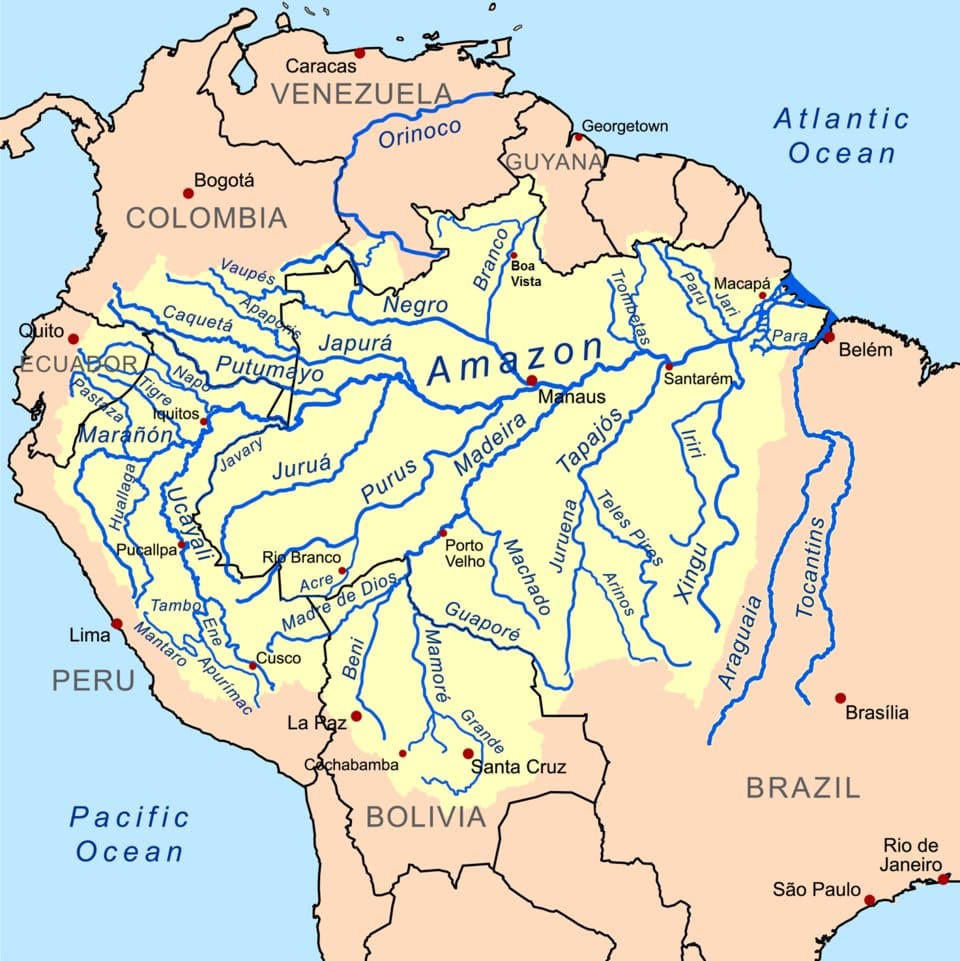
    Map showing the Amazon River Basin in South America
    Map by Kmusser, CC BY-SA 3.0, via Wikimedia Commons

    Species Overview

    Field Details
    Scientific Name Hyphessobrycon socolofi
    Common Names Socolof’s Tetra, Lesser Bleeding Heart Tetra, Spotfin Tetra
    Family Acestrorhamphidae
    Origin Rio Negro basin, Amazonas, Brazil
    Care Level Moderate
    Temperament Peaceful
    Diet Omnivore
    Tank Level Mid
    Maximum Size 2.2 inches (5.6 cm)
    Minimum Tank Size 20 gallons (76 liters)
    Temperature 72-82°F (22-28°C)
    pH 4.0-7.5
    Hardness 1-4 dGH
    Lifespan 3-5 years in captivity
    Breeding Egg scatterer
    Breeding Difficulty Moderate
    Compatibility Community
    OK for Planted Tanks? Yes

    Classification

    Taxonomic Level Classification
    Order Characiformes
    Family Acestrorhamphidae (reclassified from Characidae, Melo et al. 2024)
    Genus Hyphessobrycon
    Species H. socolofi (Weitzman, 1977)

    This species was described by Stanley Weitzman in 1977 and named after Ross Socolof, a Florida-based tropical fish dealer who was instrumental in importing many new species into the aquarium trade during the mid-20th century.

    Note on reclassification: The 2024 phylogenomic study by Melo et al. reorganized the traditional family Characidae into four separate families. Hyphessobrycon was placed in the newly erected family Acestrorhamphidae. FishBase has also begun listing this species under the genus Megalamphodus, reflecting the resurrection of that genus for the bleeding heart tetra group. Older references list it under Characidae. The genus Hyphessobrycon remains widely used in the hobby.

    Origin & Natural Habitat

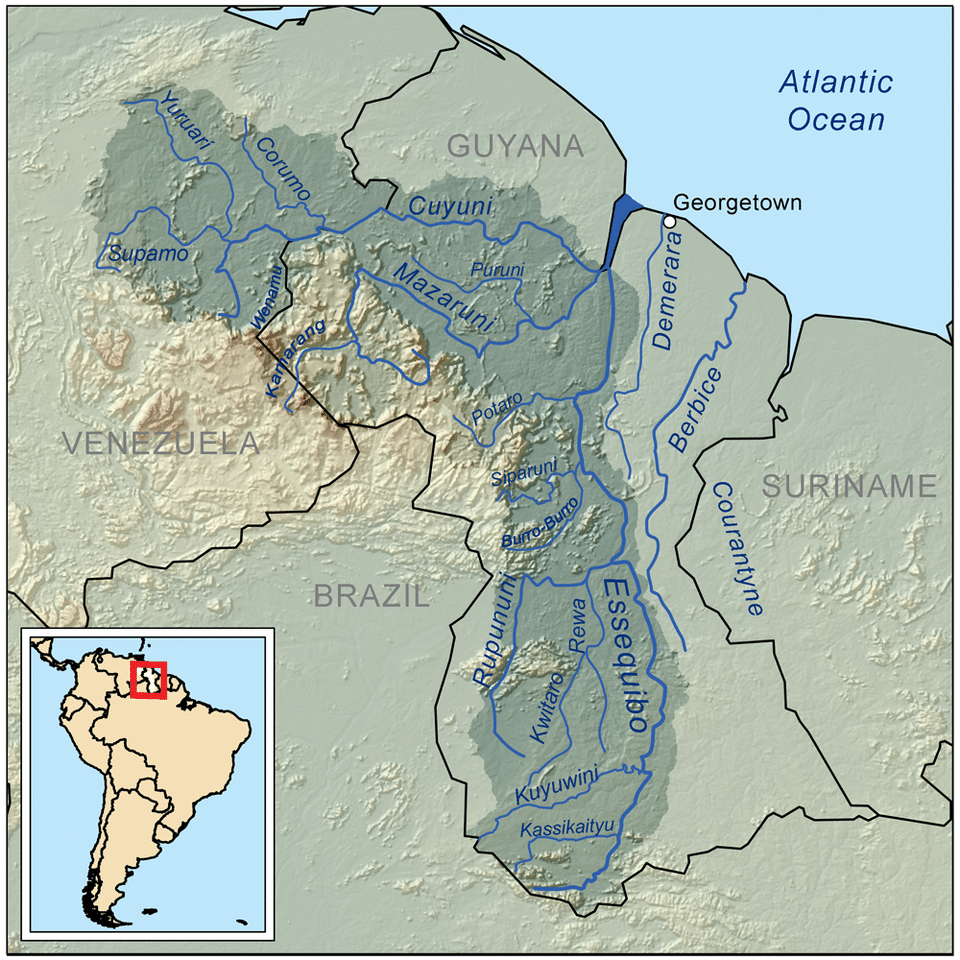
    Map of the Amazon River basin in South America. the Rio Negro basin within this system is the native habitat of Socolof's tetra
    Map of the Amazon River basin. Socolof’s tetra is found in the Rio Negro basin, a major blackwater tributary of the Amazon. Image by Kmusser, CC BY-SA 3.0, via Wikimedia Commons.

    Socolof’s tetra is found in the Rio Negro basin in Amazonas state, Brazil, as well as the Rio Nhamunda tributary system. The Rio Negro is the largest blackwater river in the world, and its dark, acidic, mineral-poor waters define the conditions these fish have adapted to over millennia.

    In the wild, they inhabit sluggish tributaries, side channels, and forest lakes where the water is heavily stained with tannins from decomposing organic matter. The substrate is typically covered in fallen leaves and branches, and the water is extremely soft with a pH that can drop below 5.0. Light penetration is minimal due to the dark water and overhead canopy.

    Understanding these conditions is essential for keeping this species successfully. While they can adapt to a range of water chemistry in captivity, they truly shine in setups that replicate their natural blackwater environment.

    Appearance & Identification

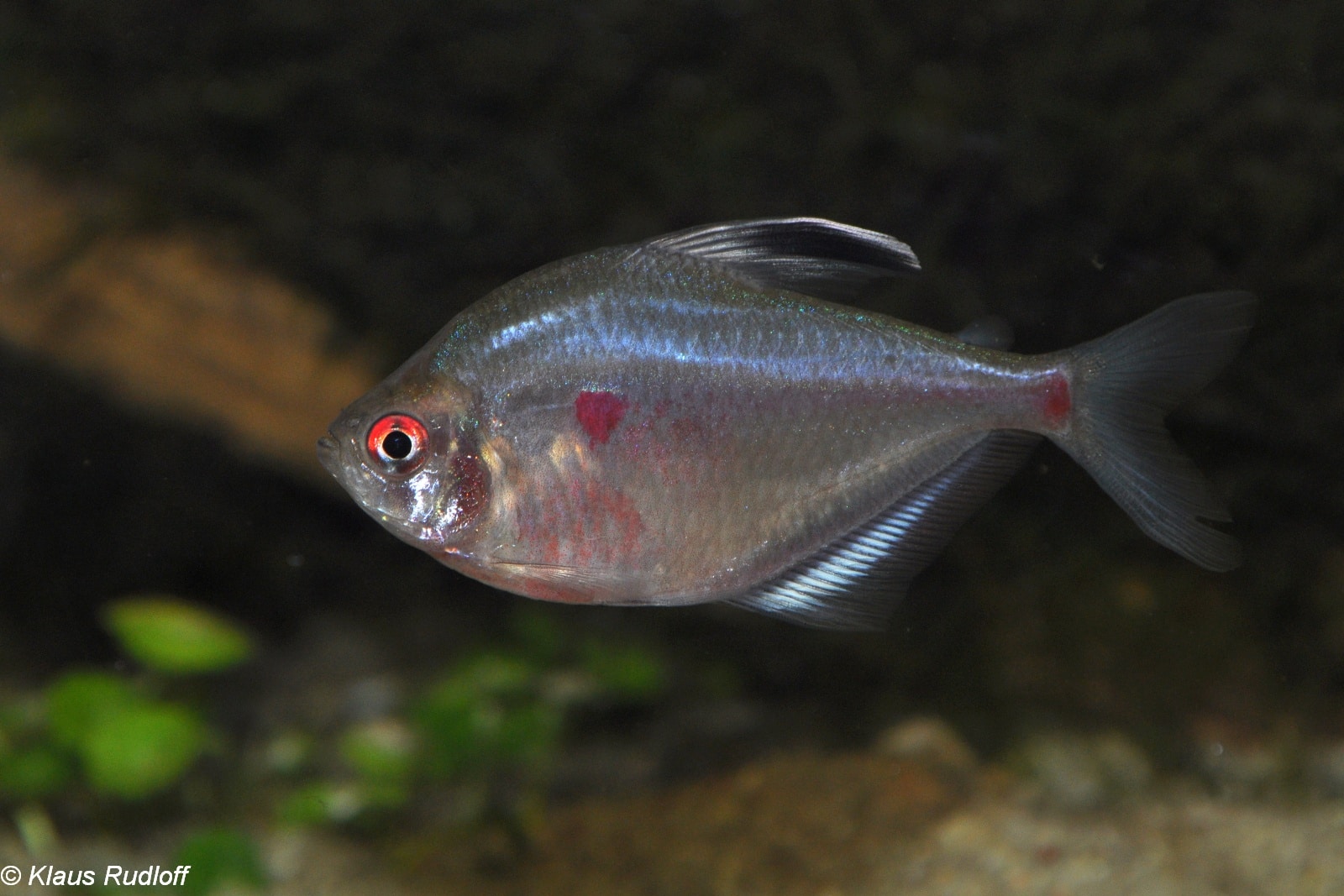
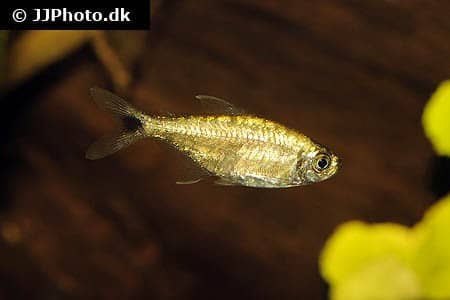
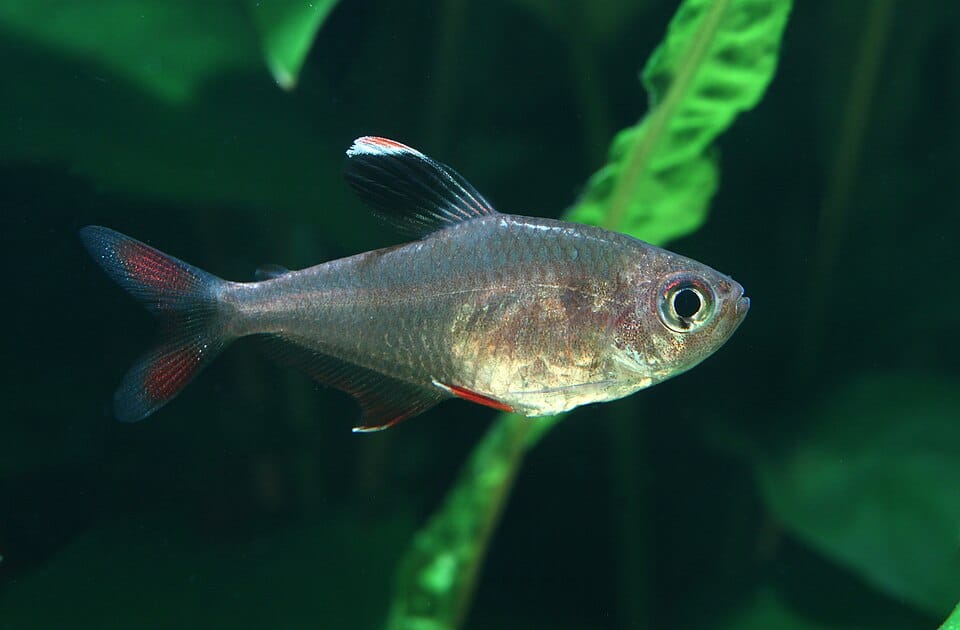
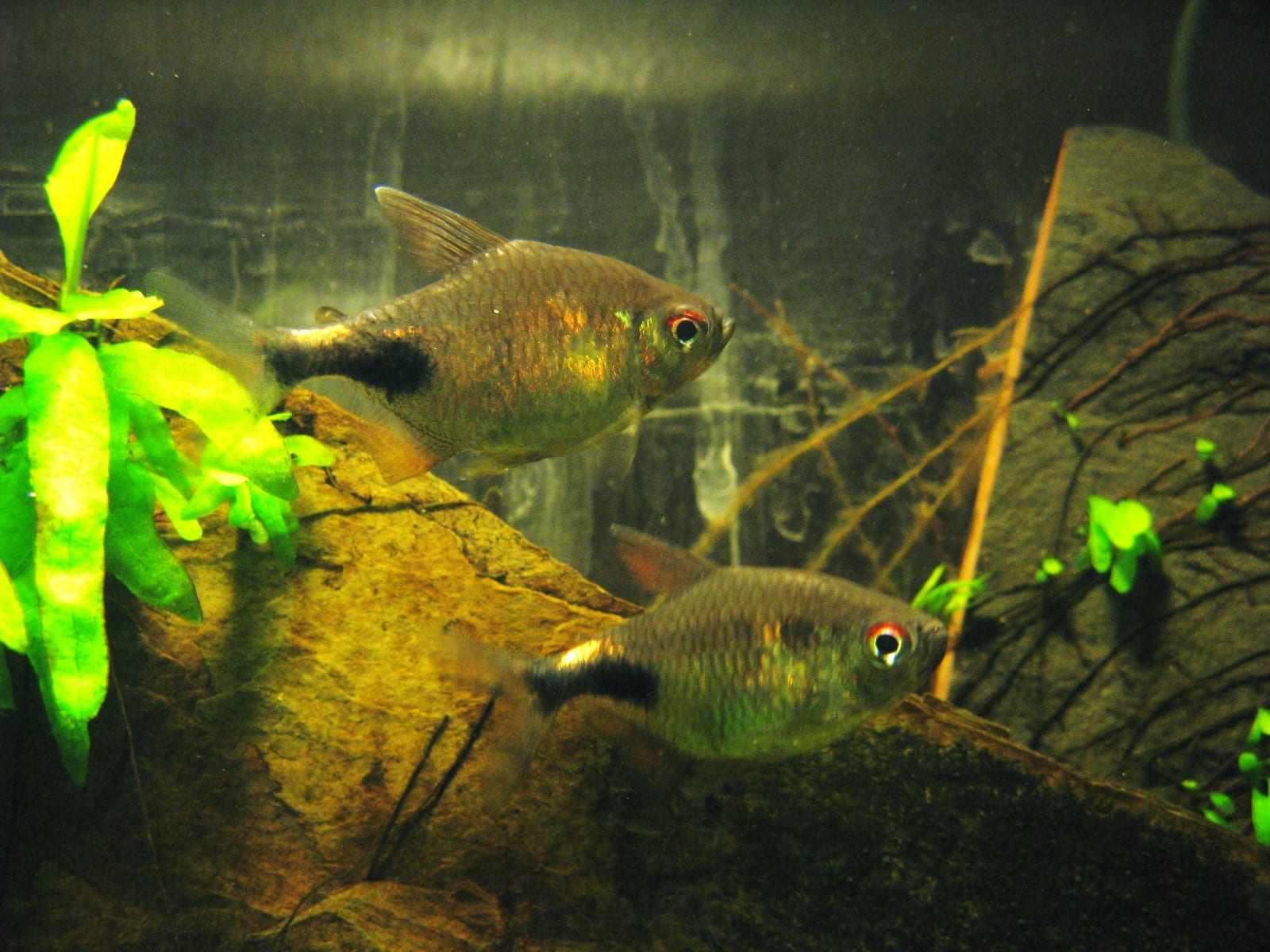
    Socolof’s tetra is a handsome fish with a deep, laterally compressed body typical of the bleeding heart tetra group. The base color is a warm pinkish-silver with iridescent highlights that shift depending on the lighting. The scales have a subtle shimmer that’s most visible under dim conditions.

    The most distinctive feature is a reddish humeral spot behind the gill plate, similar to the bleeding heart tetra’s marking but typically less intense. The dorsal fin often shows dark marking with coloration beneath it, giving rise to the “spotfin” common name.

    Sexual dimorphism is quite noticeable in this species. Males are more intensely colored with extended dorsal, pelvic, and anal fins. Females are rounder-bodied, especially when carrying eggs, and have shorter fins with less vivid coloration. In a well-maintained group, the differences between sexes are easy to spot.

    Average Size & Lifespan

    Socolof’s tetra reaches a maximum standard length of about 2.2 inches (5.6 cm). It’s a medium-sized tetra, larger than neons but smaller than bleeding hearts. In the aquarium, most specimens stay in the 1.5 to 2-inch range.

    With proper care in appropriate water conditions, expect a lifespan of 3 to 5 years. As with most small characins, water quality and diet are the biggest factors in longevity.

    Care Guide

    Tank Size

    A 20-gallon tank is the minimum for a group of 8 to 10 Socolof’s tetras. A tank with a footprint of at least 36 inches long provides adequate swimming space. For larger groups or mixed communities, step up to 30 gallons or more.

    Water Parameters

    Parameter Ideal Range
    Temperature 72-82°F (22-28°C)
    pH 4.0-7.5 (prefers acidic)
    General Hardness 1-4 dGH
    KH 0-4 dKH
    Ammonia / Nitrite 0 ppm
    Nitrate Below 20 ppm

    This is a soft-water specialist. While they can adapt to moderately neutral conditions, they do best in soft, acidic water that mimics their Rio Negro habitat. Use RO/DI water or peat filtration to achieve the right chemistry. Indian almond leaves and driftwood help naturally lower pH and release beneficial tannins.

    Water quality is critical. These fish are intolerant of organic waste buildup. Weekly water changes of 25 to 30 percent are essential, and strong filtration is important. Keep nitrates as low as possible.

    Tank Setup

    A blackwater-style setup is ideal. Use a dark substrate (black sand works beautifully), plenty of driftwood and branches to create shaded areas, and a generous layer of dried leaf litter on the bottom. Low-light plants like Java fern, Anubias, Microsorum, and Cryptocoryne thrive in these conditions.

    Floating plants are highly recommended to dim the lighting. These fish are naturally from very dark habitats, and bright lighting will wash out their colors and make them skittish. The goal is a moody, atmospheric tank where the fish glow against the dark background.

    Tank Mates

    Socolof’s tetra is peaceful and does well in community setups with other species that appreciate similar water conditions.

    Good Tank Mates

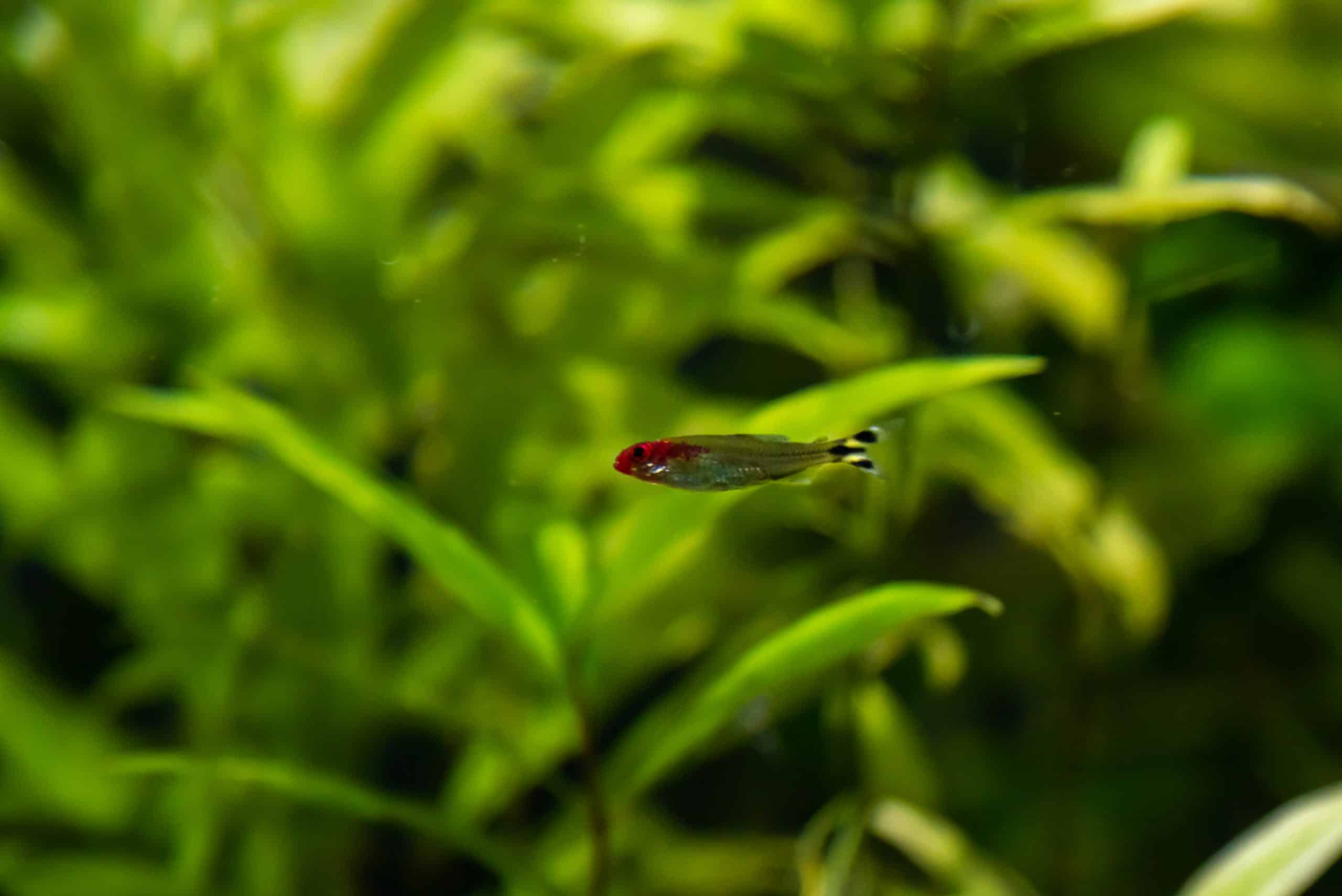
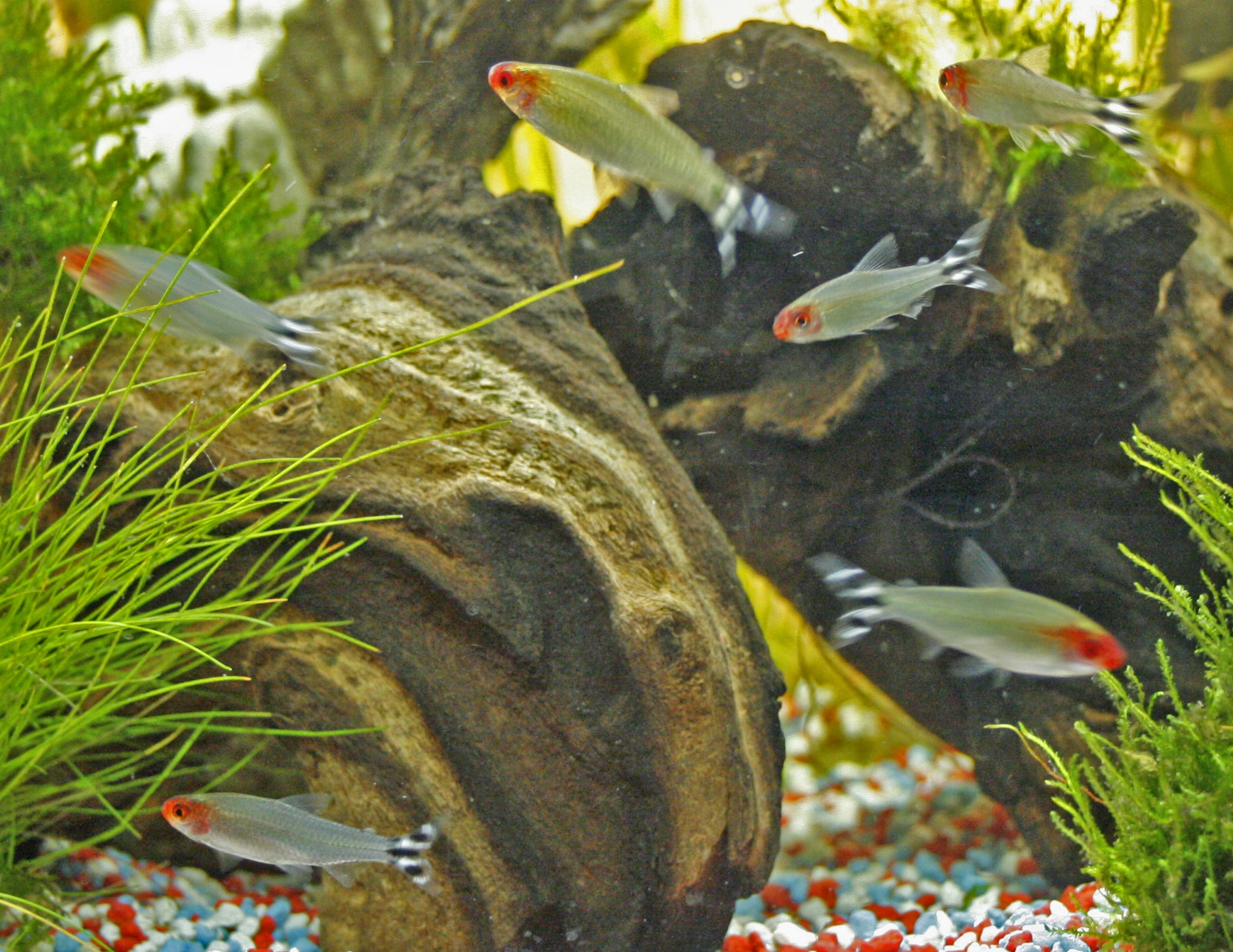
    • Other small to medium tetras (cardinal tetras, rummy nose tetras, ember tetras)
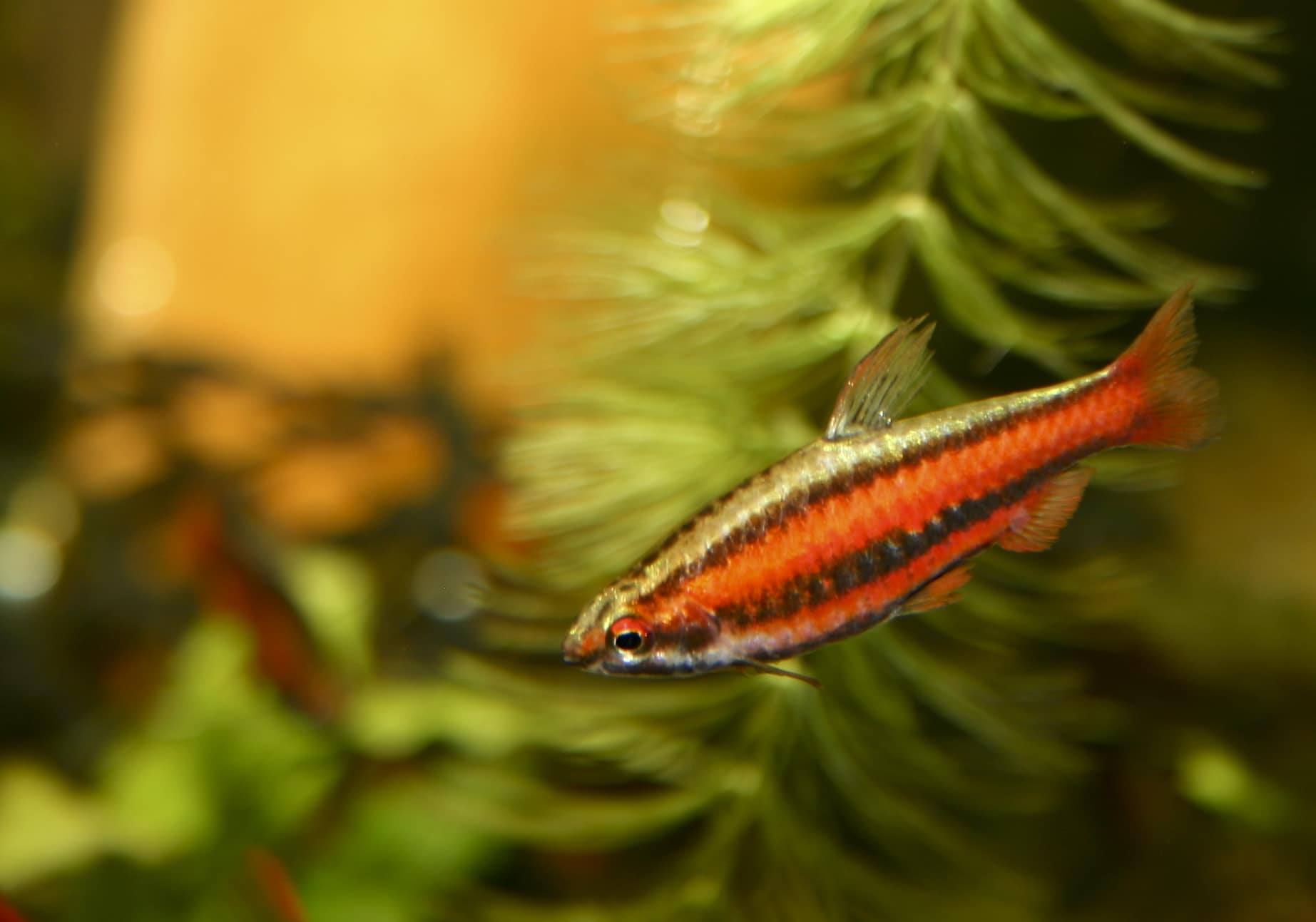
    • Pencilfish (Nannostomus species)
    • Corydoras catfish
    • Small Loricariids (otocinclus, small plecos)
    • Dwarf cichlids (Apistogramma, rams)
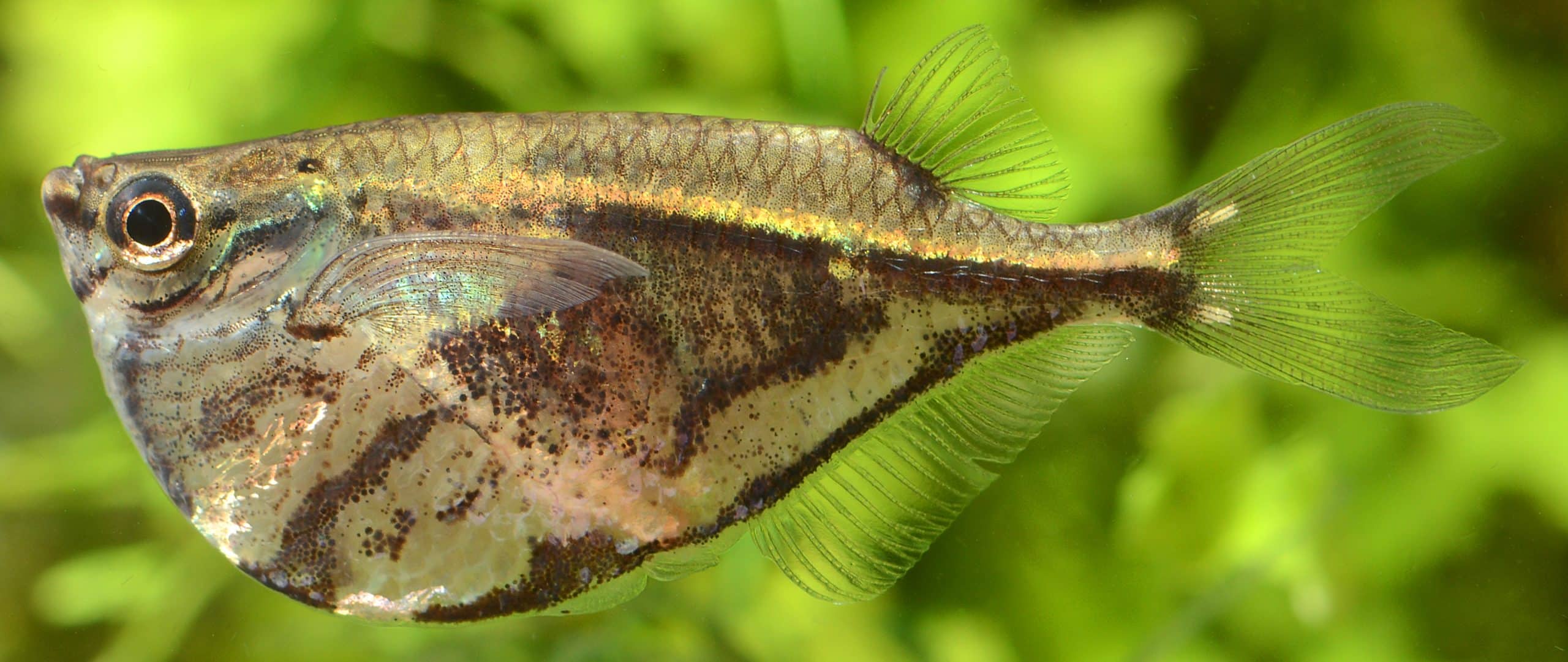
    • Hatchetfish
    • Cherry shrimp, amano shrimp

    Tank Mates to Avoid

    • Large or aggressive species
    • Fish that require hard, alkaline water (African cichlids, livebearers)
    • Very fast or boisterous species that would outcompete them for food

    Food & Diet

    One of the more interesting things about Socolof’s tetra is its wild diet. Unlike most tetras that primarily eat insects, this species feeds heavily on fruit remains that fall into the water, alongside aquatic insects and invertebrates. It’s one of the few tetras where fruit is a significant food source in nature.

    In the aquarium, they’re easy to feed:

    • Staple: High-quality flakes or micro pellets
    • Frozen foods: Bloodworms, daphnia, brine shrimp
    • Live foods: Daphnia, baby brine shrimp, small insects
    • Occasional treats: Small pieces of soft fruit (banana, grape, melon) placed in the tank temporarily

    Feed small amounts two to three times daily. A varied diet with regular frozen and live food supplements brings out the best coloration. If you offer fruit, remove any uneaten pieces within a few hours to prevent water quality issues.

    Breeding & Reproduction

    Socolof’s tetra is an egg scatterer with no parental care. Breeding is possible in captivity with the right conditions.

    Breeding Setup

    • Breeding tank: 10 to 15 gallons
    • Water: Very soft, acidic (pH 5.5 to 6.5, gH under 3)
    • Temperature: 79 to 82°F (26 to 28°C)
    • Decor: Fine-leaved plants or spawning mops
    • Lighting: Very dim
    • Filtration: Gentle sponge filter

    Condition pairs with high-protein live and frozen foods. Spawning typically occurs among plants. Remove adults immediately after spawning, as they will eat the eggs. Eggs hatch in 24 to 36 hours, and fry should be fed infusoria or liquid fry food initially, then baby brine shrimp as they grow.

    Common Health Issues

    • Ich (white spot disease): Can occur after temperature drops or shipping stress. Treat with raised temperature and ich medication.
    • Water quality sensitivity: This species is less tolerant of poor water quality than many tetras. Ammonia or nitrite spikes are particularly dangerous.
    • Stress from improper water chemistry: Keeping them in hard, alkaline water will lead to chronic stress and shortened lifespan.
    • Fin rot: Usually a secondary issue from poor water conditions.

    The key to keeping this species healthy is maintaining stable, soft, acidic water conditions and keeping up with regular water changes. They’re not a difficult fish, but they do need appropriate water chemistry.

    Common Mistakes to Avoid

    • Hard, alkaline water: This is a soft-water species. Keeping them in typical tap water with a pH of 7.5+ and high hardness will stress them.
    • Too much light: Bright lighting washes out their colors and makes them uncomfortable. Dim is better.
    • Too few fish: Keep at least 8, ideally 10+. Small groups lead to shy, stressed behavior.
    • Neglecting water changes: They’re sensitive to organic waste buildup. Consistent maintenance is essential.
    • Expecting them to look like bleeding hearts: They’re related but not identical. Set your expectations for the species they are.

    Where to Buy

    Socolof’s tetra isn’t a common fish at chain pet stores, but it’s available from specialty online retailers who stock unusual species. Check these trusted sources:

    Frequently Asked Questions

    Is Socolof’s tetra the same as a bleeding heart tetra?

    No. They’re closely related and share the same body shape, but they’re different species. Socolof’s tetra (H. socolofi) is sometimes called the “lesser bleeding heart” because it has a similar but less prominent humeral spot.

    Do Socolof’s tetras need soft water?

    Yes. They’re adapted to the extremely soft, acidic blackwater conditions of the Rio Negro basin. While they can tolerate neutral water, they do best with soft, acidic conditions (pH 5.0 to 6.5, gH 1 to 4).

    How many Socolof’s tetras should I keep?

    At least 8, ideally 10 or more. In proper groups, males develop better coloration and display interesting social interactions as they compete for hierarchical position.

    What It Is Actually Like Living With Socolof’s Tetra

    In a proper school, socolof’s tetra display natural movement patterns that are genuinely engaging to watch. The fish interact with each other, establish subtle hierarchies, and move through the tank with purpose.

    They occupy the middle water column during active hours, creating movement and visual interest in the zone where most fishkeepers want action.

    Feeding time is when their personality comes out. They learn your routine quickly and will anticipate feeding before you even open the lid.

    Their color and behavior improve over time as they settle into a stable environment. Fish that have been in the same tank for months look noticeably better than recently added stock.

    They coexist peacefully with virtually every other appropriately-sized community fish. This compatibility makes tank planning straightforward.

    How Socolof’s Tetra Compares to Similar Species

    Socolof’s Tetra vs. Bleeding Heart Tetra

    This is the obvious comparison because Socolof’s tetra is often called the “lesser bleeding heart.” The bleeding heart tetra is larger, showier, and more widely available. It also has more attitude. Males spar regularly and can bully smaller tank mates. Socolof’s tetra gives you a similar look in a smaller, calmer package. If you want the full bleeding heart drama with dominant males flaring at each other, get the original. If you want the aesthetic without the aggression, Socolof’s tetra is the smarter pick for most community tanks. Check out our Bleeding Heart Tetra care guide for more details.

    Socolof’s Tetra vs. Rosy Tetra

    Rosy tetras occupy a similar niche: pink-toned, peaceful, mid-sized schoolers. The rosy tetra is more readily available and has a slightly more refined appearance with its sail-like dorsal fin. Socolof’s tetra has a more robust body and the distinctive dark shoulder spot. Care requirements are nearly identical. In a side-by-side comparison, the rosy tetra is the more elegant fish. Socolof’s tetra is the hardier one. For a blackwater biotope or a tank where you want something slightly different from the usual lineup, Socolof’s tetra has the edge. Check out our Rosy Tetra care guide for more details.

    Closing Thoughts

    Socolof’s tetra is a beautiful fish that deserves a lot more attention from the hobby. In a properly set up blackwater tank with dim lighting, dark substrate, and tannin-stained water, a school of these fish is genuinely captivating. The males develop impressive finnage and coloration that rivals many more popular species.

    They’re not the easiest tetra to keep if your tap water is hard and alkaline, but if you’re already running a soft-water setup or willing to invest in RO filtration, they’re well worth the effort. And the fact that they eat fruit in the wild? That’s just a cool conversation piece that makes them even more interesting.

    Check out our Tetra Tier List video where we rank popular tetra species for the home aquarium:

    References

    • Froese, R. and D. Pauly, Eds. FishBase. Hyphessobrycon socolofi. Accessed 2025.
    • SeriouslyFish. Hyphessobrycon socolofi species profile. Accessed 2025.
    • Melo, B.F, et al. (2024). Phylogenomics of Characidae. Zoological Journal of the Linnean Society, 202(1), 1-37.

    Socolof’s tetra is just one of dozens of tetra species we cover in our complete species directory. Whether you’re into blackwater specialists or beginner-friendly community tetras, our guide has you covered.
    👉 Tetras: Complete A-Z Species Directory

  • Niger Tetra Care: The African Red-Eye Tetra Guide

    Niger Tetra Care: The African Red-Eye Tetra Guide

    Table of Contents

    The niger tetra is a large, tough African tetra that thrives in conditions most tetras cannot handle. It tolerates harder water, higher pH, and temperature swings without missing a beat. The red eye gives it a distinctive look, and the schooling behavior in groups of 8+ is impressive for a fish this size.

    The niger tetra does not care about your water parameters. It thrives in almost anything.

    The Reality of Keeping Niger Tetra

    Group size is not a suggestion. The minimum school size for niger tetra is not just a guideline. In small groups, these fish lose color, become stressed, and display abnormal behavior. A proper group of 6 to 8+ is where you start to see natural schooling behavior, full color expression, and the confidence that makes them worth keeping.

    Tank mate selection requires thought. The niger tetra is not aggressive in the traditional sense, but it is assertive enough to cause problems with the wrong companions. Slow-moving, long-finned species are targets. Fast, short-finned fish of similar size are fine. Plan your community around this reality.

    Hardy does not mean indestructible. The niger tetra tolerates a range of conditions, but it still needs basic care. Ammonia spikes, dramatic temperature swings, and neglected water changes will catch up to even the toughest species. The difference is margin of error, not immunity.

    Store appearance is not home appearance. Fish in store tanks are stressed, crowded, and under inappropriate lighting. The niger tetra almost always looks better in a properly set up home aquarium than it does at the store. Dark substrate, live plants, and appropriate lighting bring out colors and behaviors you will never see in a retail environment.

    Biggest Mistake New Owners Make

    Keeping them with fish small enough to eat. This is a predator. It will eat anything it can fit in its mouth. If you stock smaller fish with a niger tetra, you are feeding it expensive live food.

    Expert Take

    Predatory fish are not for everyone, but the niger tetra is one of the more manageable predatory species in the hobby. If you understand the feeding requirements, the tank mate restrictions, and the space needs, it is a genuinely fascinating fish to keep.

    Key Takeaways

    • African species from Nigeria, not South America like most tetras in the hobby
    • Grows to 3-4 inches, making it one of the larger tetras commonly available
    • Needs a 55-gallon tank minimum with a tight-fitting lid (notorious jumpers)
    • Group of 10 or more recommended for best behavior and coloration
    • IUCN Endangered, making captive-bred specimens especially important for conservation
    Map of the Amazon River Basin and South American river systems
    Map of South American freshwater habitats. Via Wikimedia Commons.

    Species Overview

    Field Details
    Scientific Name Arnoldichthys spilopterus
    Common Names Niger Tetra, African Red-Eye Tetra, Large-Scaled African Characin
    Family Alestidae
    Origin Lower Niger and Ogun rivers, Nigeria
    Care Level Moderate
    Temperament Peaceful but active
    Diet Omnivore
    Tank Level Mid to Top
    Maximum Size 3.5 inches (9 cm)
    Minimum Tank Size 55 gallons (208 liters)
    Temperature 75-82°F (24-28°C)
    pH 6.0-7.5
    Hardness 5-19 dGH
    Lifespan 5-8 years in captivity
    Breeding Egg scatterer
    Breeding Difficulty Moderate
    Compatibility Community (with similarly sized fish)
    OK for Planted Tanks? Yes

    Classification

    Taxonomic Level Classification
    Order Characiformes
    Family Alestidae
    Genus Arnoldichthys
    Species A. spilopterus (Boulenger, 1909)

    The genus Arnoldichthys is monotypic, meaning the niger tetra is the only species it contains. The genus was named in honor of Johann Paul Arnold (1869-1952), a German aquarist and naturalist who was instrumental in establishing the tropical fish hobby in Europe.

    The family Alestidae contains African characins and is distinct from the Neotropical family Characidae. While the 2024 Melo et al. phylogenomic study reorganized the South American Characidae into four families, it did not affect the classification of Alestidae, which has been recognized as a separate family for African characins. Some databases may list this species under Lepidarchidae, reflecting ongoing refinements in African characin taxonomy.

    Origin & Natural Habitat

    Map of the Niger River basin in West Africa. native habitat of the niger tetra
    Map of the Niger River basin in West Africa. The niger tetra is endemic to the lower Niger and Ogun river systems in Nigeria. Image from Wikimedia Commons, CC0 (public domain).

    Unlike the vast majority of tetras in the aquarium hobby, the niger tetra comes from West Africa, not South America. It’s endemic to Nigeria, specifically the lower Niger River and the Ogun River systems. This makes it one of a relatively small number of African characins available to hobbyists.

    In the wild, niger tetras inhabit rivers and streams with moderate flow. The water is typically slightly acidic to neutral, often stained with tannins from surrounding vegetation. They’re pelagic fish, spending most of their time in open water rather than hiding along the bottom or in vegetation.

    It’s worth noting that this species is classified as Endangered by the IUCN. Habitat degradation and pollution in its native range are the primary threats. This makes responsibly sourced captive-bred specimens all the more valuable, both for hobbyists and for the long-term survival of the species.

    Appearance & Identification

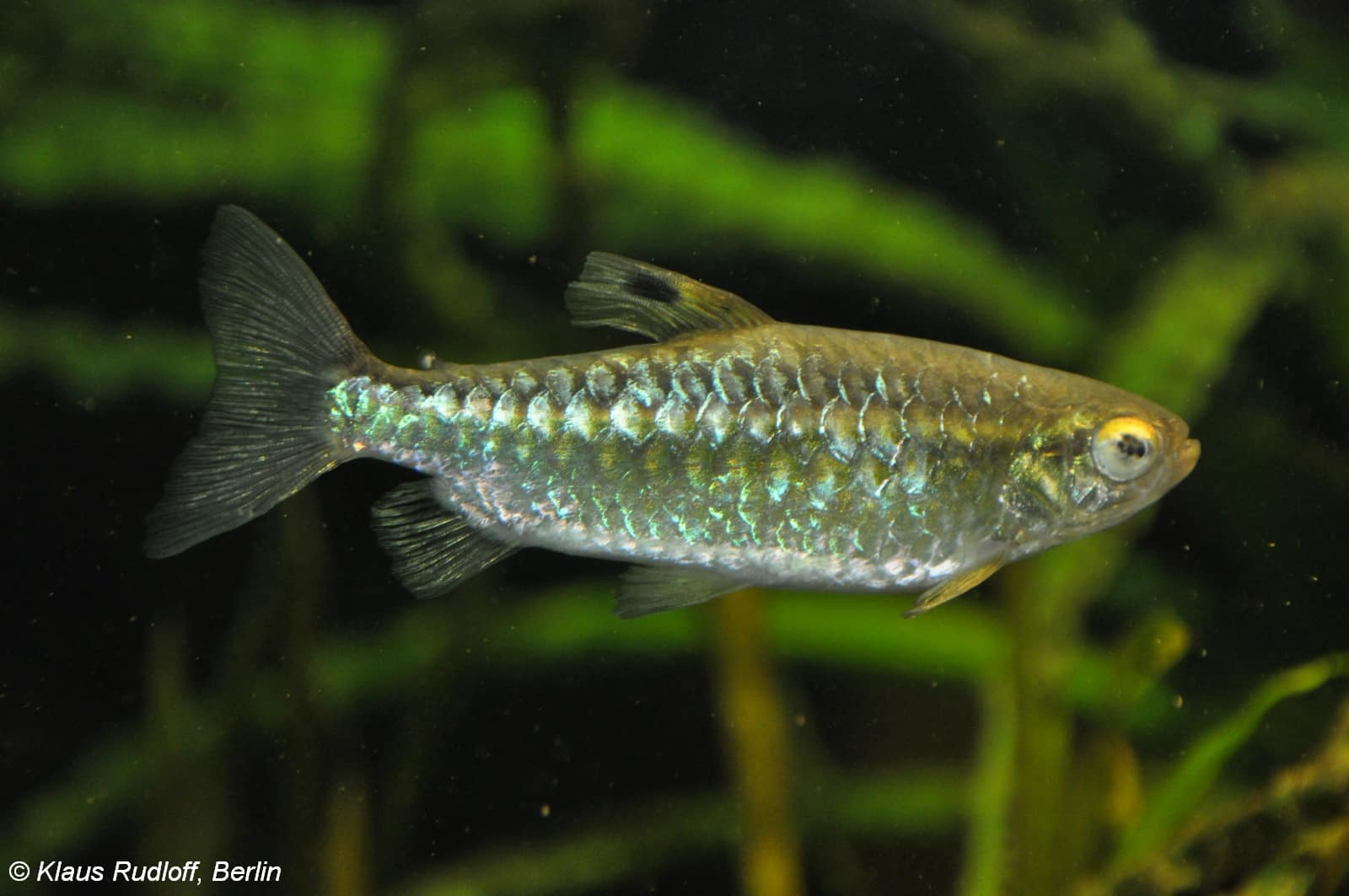
    Niger tetra (Arnoldichthys spilopterus) in an aquarium showing its large iridescent scales and red eye
    Niger tetra (Arnoldichthys spilopterus) displaying its characteristic large scales and red eye. Photo from Wikimedia Commons, CC BY-SA 3.0.

    The niger tetra is a genuinely striking fish when kept in proper conditions. The body is elongated and laterally compressed, covered in large, prominently visible scales that give it a distinctive armored look compared to most small tetras. Each scale catches the light individually, creating an iridescent display that shifts between green, gold, and blue depending on the angle.

    The most immediately recognizable feature is the bright red upper half of the eye, which gives the fish its alternative common name, the “African red-eye tetra.” The body color ranges from olive-green to golden, with a subtle horizontal stripe running along the midline.

    Sexual dimorphism is noticeable in this species. Males are more colorful overall, with brighter iridescence and more vivid fin coloration. The anal fin of males often shows distinct red, yellow, and dark banding that’s less pronounced in females. Females are rounder-bodied, especially when full of eggs.

    Average Size & Lifespan

    Niger tetras are larger than most popular tetra species. They reach 3 to 3.5 inches (7.5 to 9 cm) in standard length, with some specimens pushing closer to 4 inches. That’s significantly bigger than a neon tetra or cardinal tetra, and it’s the main reason they need a larger tank.

    With proper care, expect a lifespan of 5 to 8 years. They’re fairly hardy once established and can live for many years in a well-maintained aquarium.

    Care Guide

    Tank Size

    A 55-gallon tank is the minimum for a group of niger tetras. They’re active, open-water swimmers that need plenty of horizontal swimming space. A 4-foot long tank (48 inches) is the minimum length. For a larger group of 10 or more, consider 75 gallons or bigger.

    A tight-fitting lid is absolutely essential. Niger tetras are notorious jumpers. They will launch themselves out of any gap in the cover, especially when startled or during feeding. This isn’t optional. If your tank has an open top, this is not the fish for you.

    Water Parameters

    Parameter Ideal Range
    Temperature 75-82°F (24-28°C)
    pH 6.0-7.5
    General Hardness 5-19 dGH
    KH 3-10 dKH
    Ammonia / Nitrite 0 ppm
    Nitrate Below 40 ppm

    Niger tetras are fairly adaptable regarding water chemistry. They do well across a broad pH range and handle moderately hard water without issues. The key is consistency. Avoid sudden parameter swings, and maintain a regular water change schedule of 25 to 30 percent weekly.

    A filter that turns over the water 4 to 5 times per hour is recommended. They come from rivers with moderate flow, so a good canister or HOB filter works well. Adding peat filtration or driftwood helps replicate the tannin-stained waters of their natural habitat.

    Tank Setup

    The ideal setup provides a balance of open swimming space and structure. Use driftwood, branches, and roots to create some visual interest and hiding spots, but leave the center of the tank open for schooling. Plants is arranged around the perimeter, with floating plants helping to diffuse the lighting.

    Sand or fine gravel substrate works well. Moderate lighting brings out the best iridescence in their scales without making them skittish. These are naturally open-water fish, so don’t overcrowd the tank with decorations.

    Tank Mates

    Niger tetras are peaceful despite their size. They is kept in community setups with similarly sized or slightly smaller fish. However, their active swimming style means they shouldn’t be housed with shy, slow-moving species that is stressed by the constant movement.

    Good Tank Mates

    • Other African tetras (Congo tetras are an excellent pairing)
    • Medium-sized West African cichlids (kribensis, other Pelvicachromis)
    • Synodontis catfish (smaller species)
    • Larger tetras from South America (emperor tetras, bleeding heart tetras)
    • Rainbowfish
    • Medium-sized barbs
    • Larger Corydoras species
    • Bristlenose plecos

    Tank Mates to Avoid

    • Very small fish (neon tetras, microrasboras) that is intimidated or outcompeted for food
    • Slow-moving, shy species that may be stressed by the active swimming
    • Large aggressive cichlids
    • Fin nippers

    Food & Diet

    Niger tetras are omnivores with a preference for meaty foods. In the wild, their diet consists mainly of insects, small invertebrates, and plant matter. In the aquarium, they’re not picky eaters, but variety is important for health and color.

    • Staple: High-quality flakes or pellets (appropriately sized for their larger mouths)
    • Frozen foods: Bloodworms, brine shrimp, mysis shrimp, daphnia
    • Live foods: Brine shrimp, daphnia, small insects
    • Supplements: Spirulina flakes, blanched vegetables

    Feed two to three times daily. Live and frozen foods are particularly important for bringing out the best coloration. Niger tetras are active feeders and will eagerly come to the surface at feeding time.

    Breeding & Reproduction

    Breeding niger tetras is achievable and reportedly not especially difficult once you get the conditions right, though it’s rarely attempted in the hobby.

    Breeding Setup

    • Breeding tank: 20 to 30 gallons
    • Water: Soft, slightly acidic (pH 6.0 to 6.5)
    • Temperature: 79 to 82°F (26 to 28°C)
    • Decor: Fine-leaved plants or spawning mops
    • Lighting: Subdued
    • Filtration: Gentle sponge filter

    Condition breeding pairs with high-quality live and frozen foods. Females can produce up to 1,000 eggs in a single spawning event, which is impressive for a tetra. Remove the parents after spawning, as they will eat eggs.

    Eggs hatch in 24 to 36 hours. Fry are small and should be fed infusoria or commercially available liquid fry food, then graduated to baby brine shrimp as they grow.

    Common Health Issues

    Niger tetras are hardy once acclimated and not prone to any species-specific diseases. The standard freshwater ailments apply:

    • Ich (white spot disease): Usually stress-related, common after shipping or tank changes. Raise temp to 86°F and treat accordingly.
    • Bacterial infections: Typically follow injuries from jumping or aggression.
    • Fin rot: Water quality issue. Address with water changes and antibacterial treatment if needed.
    • Jumping injuries: The most common “health issue” is death from jumping. A secure lid prevents this entirely.

    Quarantine all new arrivals for 2 to 4 weeks. Maintain stable water conditions and good filtration, and these fish will typically be trouble-free for years.

    Common Mistakes to Avoid

    • No lid: This is the number one killer of niger tetras in home aquariums. They jump. A lot. Cover every gap.
    • Tank too small: They need at least a 4-foot tank. A 20-gallon won’t work for this species.
    • Group too small: Keeping 3 or 4 results in shy, stressed fish. Get 10 or more.
    • Pairing with tiny fish: While not predatory, their size and activity level can stress very small tankmates.
    • Ignoring their endangered status: Try to source captive-bred specimens when possible. Wild-caught fish put additional pressure on an already threatened population.

    Where to Buy

    Niger tetras aren’t as commonly stocked as South American species, but they’re available through specialty retailers. Check these trusted sources:

    When ordering, buy a group of at least 10 at once. They settle in faster and display better schooling behavior when introduced together.

    Frequently Asked Questions

    Are niger tetras aggressive?

    No. They’re peaceful fish that do well in community setups. They’re active swimmers, which can seem boisterous, but they’re not aggressive or fin-nipping.

    How big do niger tetras get?

    They typically reach 3 to 3.5 inches (7.5 to 9 cm), making them one of the larger tetra species commonly available in the hobby.

    Do niger tetras jump?

    Yes, they’re notorious jumpers. A tight-fitting lid with no gaps is absolutely essential. This is one of the most common causes of death with this species in home aquariums.

    Can I keep niger tetras with neon tetras?

    It’s not the best combination. While niger tetras won’t actively hunt neons, the significant size difference and the niger tetra’s active swimming style can stress smaller fish. Pair them with medium-sized species instead.

    Are niger tetras endangered?

    Yes. Arnoldichthys spilopterus is listed as Endangered by the IUCN due to habitat degradation in Nigeria. When possible, look for captive-bred specimens to support conservation efforts.

    What It Is Actually Like Living With Niger Tetra

    In a proper school, niger tetra display natural movement patterns that are genuinely engaging to watch. The fish interact with each other, establish subtle hierarchies, and move through the tank with purpose.

    They spend most of their time near the surface, which fills a level of the tank that many other species ignore. This makes them excellent complements to mid-water and bottom-dwelling fish.

    Feeding time is when their personality comes out. They learn your routine quickly and will anticipate feeding before you even open the lid.

    Their color and behavior improve over time as they settle into a stable environment. Fish that have been in the same tank for months look noticeably better than recently added stock.

    They coexist peacefully with virtually every other appropriately-sized community fish. This compatibility makes tank planning straightforward.

    How the Niger Tetra Compares to Similar Species

    Niger Tetra vs. Congo Tetra

    Both are large African tetras, but they could not be more different in temperament and requirements. Congo tetras are timid, sensitive to water quality, and need soft, acidic water to show their best colors. Niger tetras are bold, tolerant of a wide range of conditions, and thrive in harder, more alkaline water that would stress congos. Congo tetras are the more visually spectacular fish when conditions are perfect. Niger tetras are the more reliable choice for real-world aquariums where conditions are not always perfect. If you have soft water and a calm, well-maintained tank, the congo tetra is the showpiece. If you have harder water or a more boisterous community, the niger tetra will not just survive but thrive. Check out our Congo Tetra care guide for more details.

    Niger Tetra vs. Red Eye Tetra

    The red eye tetra (Moenkhausia sanctaefilomenae) is the South American equivalent of the niger tetra. Both are large, hardy, red-eyed tetras that tolerate a range of conditions. The red eye tetra is more widely available. The niger tetra handles harder water better since it evolved in African rivers, not Amazonian blackwater. In appearance, the red eye tetra has a brighter red eye spot but is otherwise plainer. The niger tetra has a more dramatic overall body color that shifts under different lighting. For a typical community tank, either works. For African cichlid companion setups or hard water tanks, the niger tetra is the clear winner. Check out our Red Eye Tetra care guide for more details.

    Closing Thoughts

    The niger tetra is one of those species that deserves way more recognition in the hobby. It offers everything you’d want in a community tetra: beautiful coloration, active schooling behavior, and a peaceful temperament. The fact that it comes from Africa rather than South America just makes it more interesting.

    Yes, they need a bigger tank than your average tetra, and yes, you absolutely need a secure lid. But if you can meet those two requirements, you’ll be rewarded with a school of genuinely impressive fish that will be a centerpiece of your tank for years. And given their endangered status in the wild, every well-maintained captive population helps ensure this species sticks around for future generations of fishkeepers to enjoy.

    Check out our Tetra Tier List video where we rank popular tetra species for the home aquarium:

    References

    The niger tetra is just one of dozens of tetra species we cover in our complete species directory. From peaceful community favorites to unusual African species like this one, our guide has you covered.
    👉 Tetras: Complete A-Z Species Directory

  • Garnet Tetra Care: The Pretty Tetra That Deserves More Attention

    Garnet Tetra Care: The Pretty Tetra That Deserves More Attention

    Table of Contents

    The garnet tetra is a beautiful mid-size tetra that deserves far more attention than it gets. In proper conditions with soft water and dark substrate, the deep garnet-red body color is unmatched by any other commonly available tetra. The problem is availability. Most stores never stock them.

    The garnet tetra in the right setup rivals any tetra in the hobby for pure color impact.

    The Reality of Keeping Garnet Tetra

    Group size is not a suggestion. The minimum school size for garnet tetra is not just a guideline. In small groups, these fish lose color, become stressed, and display abnormal behavior. A proper group of 6 to 8+ is where you start to see natural schooling behavior, full color expression, and the confidence that makes them worth keeping.

    Tank mate selection requires thought. The garnet tetra is not aggressive in the traditional sense, but it is assertive enough to cause problems with the wrong companions. Slow-moving, long-finned species are targets. Fast, short-finned fish of similar size are fine. Plan your community around this reality.

    Hardy does not mean indestructible. The garnet tetra tolerates a range of conditions, but it still needs basic care. Ammonia spikes, dramatic temperature swings, and neglected water changes will catch up to even the toughest species. The difference is margin of error, not immunity.

    Store appearance is not home appearance. Fish in store tanks are stressed, crowded, and under inappropriate lighting. The garnet tetra almost always looks better in a properly set up home aquarium than it does at the store. Dark substrate, live plants, and appropriate lighting bring out colors and behaviors you will never see in a retail environment.

    Biggest Mistake New Owners Make

    Adding them to a peaceful community tank without researching compatibility. The nipping and chasing will stress your existing fish, and by the time you realize the problem, fin damage is already done.

    Expert Take

    In my 25+ years in the hobby, I have consistently found that the hardiest species are the most underrated. The garnet tetra is a perfect example. It is easy to keep, rewarding to watch, and it does not demand the kind of obsessive maintenance that more sensitive species require.

    Key Takeaways

    • Peaceful and community-friendly – one of the gentlest tetras you can keep
    • Minimum group of 6, but 10 or more really brings out natural schooling behavior
    • 15 to 20 gallons is sufficient for a small school
    • Prefers soft, slightly acidic water – best colors show in blackwater-style setups
    • Easy to feed – accepts flakes, pellets, frozen, and live foods without fuss
    Map showing the Amazon River Basin in South America
    Map by Kmusser, CC BY-SA 3.0, via Wikimedia Commons

    Species Overview

    Field Details
    Scientific Name Hemigrammus pulcher
    Common Names Garnet Tetra, Pretty Tetra
    Family Acestrorhamphidae
    Origin Upper Amazon River basin, Peru
    Care Level Easy
    Temperament Peaceful
    Diet Omnivore
    Tank Level Mid
    Maximum Size 1.8 inches (4.5 cm)
    Minimum Tank Size 15 gallons (57 liters)
    Temperature 74-80°F (23-27°C)
    pH 5.5-7.0
    Hardness 1-12 dGH
    Lifespan 3-5 years in captivity
    Breeding Egg scatterer
    Breeding Difficulty Moderate
    Compatibility Community
    OK for Planted Tanks? Yes

    Classification

    Taxonomic Level Classification
    Order Characiformes
    Family Acestrorhamphidae (reclassified from Characidae, Melo et al. 2024)
    Subfamily Pristellinae
    Genus Hemigrammus
    Species H. pulcher (Ladiges, 1938)

    The genus Hemigrammus is one of the largest in the order Characiformes, containing over 70 described species. Its taxonomy is considered Incertae Sedis (uncertain placement), and many experts expect future revisions will split several species into new genera.

    Note on reclassification: In 2024, a major phylogenomic study (Melo et al.) split the traditional family Characidae into four separate families. The genus Hemigrammus was moved into the newly erected family Acestrorhamphidae under the subfamily Pristellinae. FishBase has also begun listing this species under the genus Holopristis, though Hemigrammus remains the widely used name in the hobby. Some older references still list it under Characidae.

    Origin & Natural Habitat

    Map of the Amazon River basin in South America. native habitat of the garnet tetra
    Map of the Amazon River basin. native range of the garnet tetra. Image by Kmusser, CC BY-SA 3.0, via Wikimedia Commons.

    The garnet tetra is native to the upper Amazon River basin in Peru. It inhabits slow-moving streams and tributaries where the water is typically soft and acidic, stained brown with tannins from decomposing leaf litter and fallen branches.

    These are blackwater habitats with minimal light penetration, dense vegetation along the banks, and a substrate covered in leaves and organic debris. The water chemistry is consistently soft (low mineral content) with a pH that often dips below 6.0. Understanding this natural environment helps explain why garnet tetras look their best in dimly lit, tannin-rich aquariums.

    Appearance & Identification

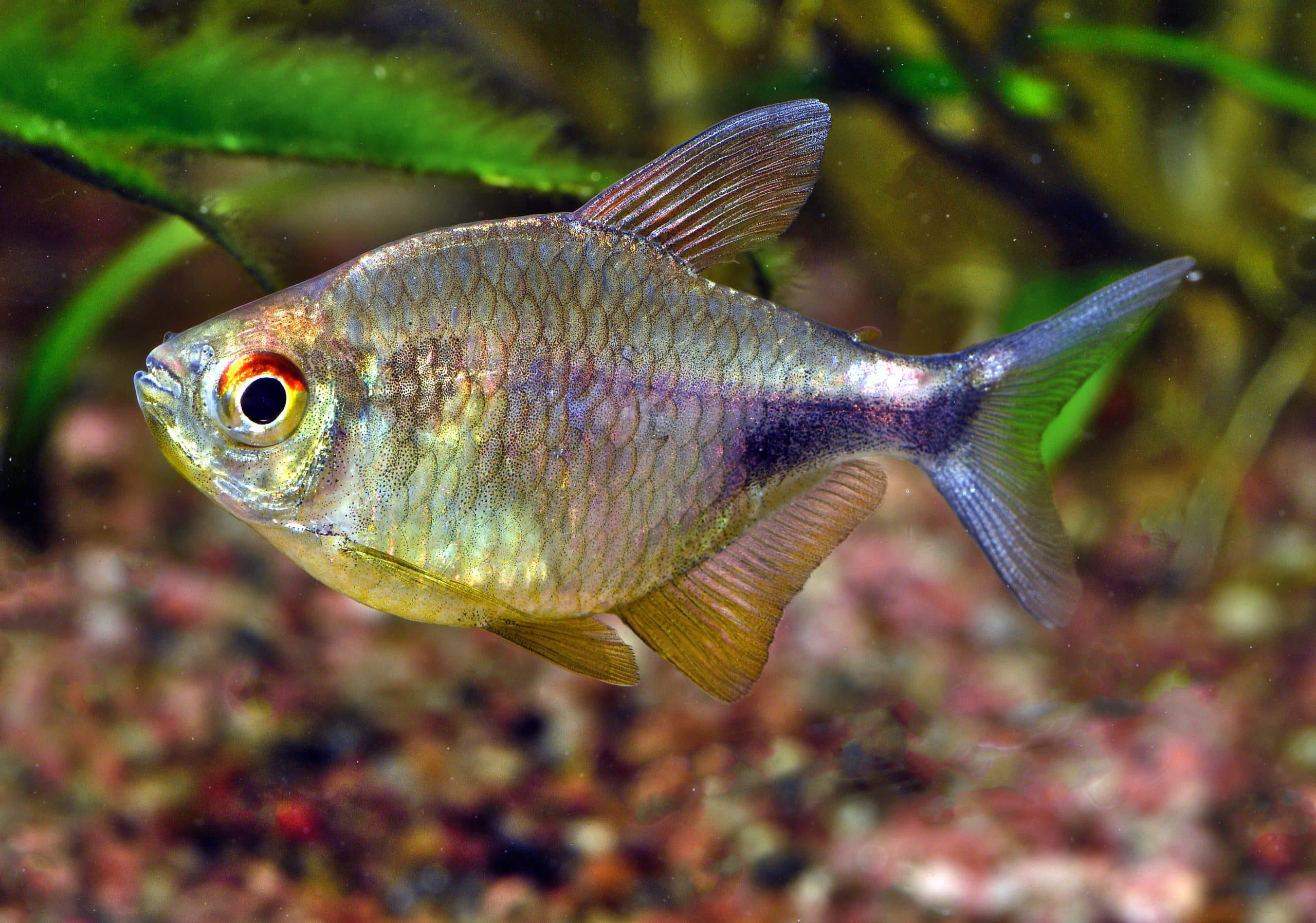
    Garnet tetra (Hemigrammus pulcher) showing its distinctive dark wedge marking and coppery coloration
    Garnet tetra (Hemigrammus pulcher) displaying its characteristic dark wedge marking and warm coppery tones. Photo by Jofre, CC BY-SA 3.0, via Wikimedia Commons.

    The garnet tetra is a subtly beautiful fish. The body has a warm, coppery-amber base color that deepens under proper lighting and in soft water conditions. The scales catch the light with a gentle metallic sheen, giving the fish a polished look that stands out in a planted tank.

    The most distinctive feature is the dark wedge-shaped marking on the posterior half of the body. This dark patch starts just behind the dorsal fin and extends toward the caudal peduncle, creating a bold contrast against the lighter body color. It’s the easiest way to identify this species.

    The upper half of the eye is typically a bright red-orange, which is common in the Hemigrammus genus. The fins are mostly transparent with subtle tinting. Overall, it’s a fish that looks best in groups, where the collective movement of those warm tones and dark markings creates a really appealing effect.

    Sexual dimorphism is subtle. Females are slightly fuller-bodied than males, especially when carrying eggs. Males are a bit slimmer and may show slightly more intense coloration, but the differences aren’t dramatic.

    Average Size & Lifespan

    Garnet tetras are a small species, reaching a maximum size of about 1.8 inches (4.5 cm) in standard length. Most aquarium specimens stay closer to 1.5 inches. They’re right in line with other popular small tetras in terms of size.

    With good water quality and proper diet, expect a lifespan of 3 to 5 years. This is typical for small characins. Stable conditions and a varied diet are the biggest factors in reaching the upper end of that range.

    Care Guide

    Tank Size

    A 15-gallon tank is the minimum for a small group of 6 garnet tetras. For a group of 10 or more (which I’d recommend), aim for 20 gallons or larger. These aren’t the most active swimmers compared to some tetras, but they still appreciate room to school properly.

    Water Parameters

    Parameter Ideal Range
    Temperature 74-80°F (23-27°C)
    pH 5.5-7.0
    General Hardness 1-12 dGH
    KH 1-8 dKH
    Ammonia / Nitrite 0 ppm
    Nitrate Below 30 ppm

    They prefer soft, slightly acidic water, which matches their blackwater origins. Adding Indian almond leaves or driftwood to naturally lower pH and release tannins will bring out the best coloration. They can adapt to neutral conditions, but avoid hard, alkaline water.

    Weekly water changes of 20 to 25 percent keep things in check. Standard sponge or HOB filtration is fine as long as the flow isn’t too strong.

    Tank Setup

    A planted tank with dim lighting is the ideal setup for garnet tetras. Use a dark substrate (black sand or fine gravel) to bring out their warm tones. Add plenty of live plants, driftwood, and dried leaf litter to mimic their natural habitat. Floating plants help diffuse the light and make these naturally shy fish feel more secure.

    Leave some open swimming space in the middle of the tank for schooling. A well-planted perimeter with open center is the classic layout that works for most small tetras, and it works perfectly here.

    Tank Mates

    Garnet tetras are peaceful and do well in community tanks with similarly tempered species. They’re on the shy side, so avoid pairing them with anything large, fast, or aggressive that might intimidate them.

    Good Tank Mates

    • Other small, peaceful tetras (neon tetras, ember tetras, cardinal tetras)
    • Rasboras (harlequin rasboras, chili rasboras)
    • Corydoras catfish
    • Small Loricariids (otocinclus, bristlenose plecos)
    • Dwarf cichlids (Apistogramma, rams)
    • Small gouramis (honey gouramis, sparkling gouramis)
    • Peaceful livebearers
    • Cherry shrimp and amano shrimp
    • Nerite snails, mystery snails

    Tank Mates to Avoid

    • Large or aggressive cichlids
    • Fast, boisterous species like tiger barbs or Buenos Aires tetras
    • Any fish large enough to eat them

    Food & Diet

    Feeding garnet tetras is straightforward. They’re omnivores that accept just about anything offered. In the wild, their diet consists of small invertebrates, worms, crustaceans, and some plant matter.

    In the aquarium, offer a varied diet for the best health and coloration:

    • Staple: High-quality flakes or micro pellets
    • Frozen foods: Bloodworms, daphnia, brine shrimp
    • Live foods: Baby brine shrimp, microworms, daphnia
    • Supplements: Freeze-dried foods, spirulina-based flakes

    Feed small amounts two to three times daily. Their mouths are small, so make sure food particles are appropriately sized. Crushed flakes or micro pellets work better than large pellets.

    Breeding & Reproduction

    Garnet tetras are egg scatterers that is bred in captivity with some preparation. They’re not the easiest tetras to spawn, but it’s certainly achievable.

    Breeding Setup

    • Breeding tank: 10 to 15 gallons
    • Water: Soft, acidic (pH 5.5 to 6.5, gH 1 to 5)
    • Temperature: 80 to 84°F (27 to 29°C)
    • Decor: Fine-leaved plants or spawning mops
    • Lighting: Very dim
    • Filtration: Gentle sponge filter

    Condition breeding pairs with high-protein live and frozen foods for one to two weeks. Introduce the pair to the breeding tank in the evening. Spawning typically occurs in the morning hours.

    Eggs hatch in approximately 24 to 36 hours. Remove the parents immediately after spawning, as they will eat the eggs. Fry become free-swimming in 3 to 4 days and should be fed infusoria or commercially available liquid fry food initially, then baby brine shrimp as they grow.

    Common Health Issues

    Garnet tetras are reasonably hardy, but like all small tetras, they’re susceptible to a few common issues:

    • Ich (white spot disease): The most common problem, usually triggered by temperature swings or stress from transport. Raise temp to 86°F and treat with ich medication.
    • Fin rot: Typically a water quality issue. Increase water change frequency and treat with antibacterial medication if needed.
    • Neon tetra disease: A risk with most small characins. Quarantine new fish for 2 to 4 weeks before adding to the main tank.
    • Stress-related illness: Often caused by keeping them in too-small groups or with aggressive tankmates.

    Prevention comes down to basics: stable water parameters, regular water changes, a varied diet, and keeping them in a properly sized group. Quarantine all new arrivals before introducing them to an established tank.

    Common Mistakes to Avoid

    • Keeping too few: A group of 3 or 4 will be shy and stressed. Get at least 6, ideally 10+.
    • Too much light: These are naturally from dim, shaded habitats. Bright lighting washes out their colors and makes them skittish.
    • Hard, alkaline water: They can tolerate neutral water, but hard alkaline conditions will stress them over time.
    • Boisterous tankmates: They’re shy fish. Keeping them with fast or pushy species defeats the purpose.
    • Skipping quarantine: Small tetras are prone to bringing diseases into established tanks. Always quarantine.

    Where to Buy

    Garnet tetras aren’t as widely available as neons or cardinals, but they is found at specialty retailers and online fish stores. Check these trusted sources:

    Buy a group all at once if possible. Adding individuals one at a time is stressful for both the newcomers and the existing group.

    Frequently Asked Questions

    Are garnet tetras good for beginners?

    Yes. They’re hardy, peaceful, and easy to feed. As long as you provide soft to neutral water and keep them in a proper group, they’re a great choice for newer hobbyists.

    How many garnet tetras should I keep?

    A minimum of 6, but 10 or more is ideal. Larger groups are more confident, school more naturally, and display better coloration.

    What’s the difference between the garnet tetra and the pretty tetra?

    They’re the same fish. “Garnet tetra” and “pretty tetra” are both common names for Hemigrammus pulcher. You also see it listed under the newer genus name Holopristis on some databases.

    Do garnet tetras nip fins?

    No. They’re one of the more peaceful tetra species and are not known for fin nipping. They’re safe with long-finned species like bettas and fancy guppies.

    What It Is Actually Like Living With Garnet Tetra

    In a proper school, garnet tetra display natural movement patterns that are genuinely engaging to watch. The fish interact with each other, establish subtle hierarchies, and move through the tank with purpose.

    They occupy the middle water column during active hours, creating movement and visual interest in the zone where most fishkeepers want action.

    Feeding time is when their personality comes out. They learn your routine quickly and will anticipate feeding before you even open the lid.

    Their color and behavior improve over time as they settle into a stable environment. Fish that have been in the same tank for months look noticeably better than recently added stock.

    They coexist peacefully with virtually every other appropriately-sized community fish. This compatibility makes tank planning straightforward.

    How the Garnet Tetra Compares to Similar Species

    Garnet Tetra vs. Serpae Tetra

    Both are red-toned tetras with a reputation for fin nipping. The serpae tetra is the more common and more aggressive of the two. It actively chases and nips in ways that create real problems in community tanks. The garnet tetra is assertive but less relentlessly aggressive than the serpae. Color-wise, the garnet tetra produces a deeper, richer red under proper conditions, while the serpae tends toward a brighter, more orange-red. If you want red tetras and can manage the aggression, the serpae is easier to find. If you want the deeper color payoff and slightly calmer temperament, the garnet tetra is the upgrade. Check out our Serpae Tetra care guide for more details.

    Garnet Tetra vs. Red Phantom Tetra

    Red phantom tetras are another option for keepers who want red in their tank. The red phantom is smaller, more peaceful, and easier to place in a community. The garnet tetra is larger, bolder, and produces more color intensity when conditions are right. Red phantoms are widely available. Garnet tetras are not. If you can find garnet tetras, they deliver more visual punch per fish. If availability is an issue, red phantoms are the reliable alternative that still brings warmth and red tones to a planted tank. Check out our Red Phantom Tetra care guide for more details.

    Closing Thoughts

    The garnet tetra might not have the instant name recognition of a neon or cardinal tetra, but it’s every bit as worthy of a spot in your tank. That warm coppery glow and the distinctive dark wedge marking give it a look that’s both elegant and understated. In a dimly lit planted tank with tannin-stained water, a school of 10 or more garnet tetras is a genuinely beautiful sight.

    They’re easy to care for, peaceful with nearly everything, and hardy enough to forgive the occasional mistake. If you’re looking for a tetra that’s just a little different from the usual suspects, give the garnet tetra a try. You won’t regret it.

    Check out our Tetra Tier List video where we rank popular tetra species for the home aquarium:

    References

    • Froese, R. and D. Pauly, Eds. FishBase. Hemigrammus pulcher. Accessed 2025.
    • SeriouslyFish. Hemigrammus pulcher species profile. Accessed 2025.
    • Melo, B.F, et al. (2024). Phylogenomics of Characidae. Zoological Journal of the Linnean Society, 202(1), 1-37.

    The garnet tetra is just one of dozens of tetra species we cover in our complete species directory. Whether you’re looking for beginner-friendly community tetras or something more specialized, our guide has you covered.
    👉 Tetras: Complete A-Z Species Directory

  • Glass Bloodfin Tetra Care Guide: Tank Setup, Diet, Tank Mates & More

    Glass Bloodfin Tetra Care Guide: Tank Setup, Diet, Tank Mates & More

    Table of Contents

    The glass bloodfin tetra is a delicate, transparent fish that needs pristine water quality to survive. Ammonia spikes that larger tetras shrug off will kill glass bloodfins overnight. This is a fish for established, well-maintained tanks only.

    Glass bloodfin tetras do not give second chances. One ammonia spike and they are gone.

    The Reality of Keeping Glass Bloodfin Tetra

    Group size is not a suggestion. The minimum school size for glass bloodfin tetra is not just a guideline. In small groups, these fish lose color, become stressed, and display abnormal behavior. A proper group of 6 to 8+ is where you start to see natural schooling behavior, full color expression, and the confidence that makes them worth keeping.

    Tank mate selection requires thought. The glass bloodfin tetra is not aggressive in the traditional sense, but it is assertive enough to cause problems with the wrong companions. Slow-moving, long-finned species are targets. Fast, short-finned fish of similar size are fine. Plan your community around this reality.

    Hardy does not mean indestructible. The glass bloodfin tetra tolerates a range of conditions, but it still needs basic care. Ammonia spikes, dramatic temperature swings, and neglected water changes will catch up to even the toughest species. The difference is margin of error, not immunity.

    Store appearance is not home appearance. Fish in store tanks are stressed, crowded, and under inappropriate lighting. The glass bloodfin tetra almost always looks better in a properly set up home aquarium than it does at the store. Dark substrate, live plants, and appropriate lighting bring out colors and behaviors you will never see in a retail environment.

    Biggest Mistake New Owners Make

    Keeping them with fish small enough to eat. This is a predator. It will eat anything it can fit in its mouth. If you stock smaller fish with a glass bloodfin tetra, you are feeding it expensive live food.

    Expert Take

    Predatory fish are not for everyone, but the glass bloodfin tetra is one of the more manageable predatory species in the hobby. If you understand the feeding requirements, the tank mate restrictions, and the space needs, it is a genuinely fascinating fish to keep.

    Key Takeaways

    • Strikingly transparent body with a vivid red caudal fin that creates an eye-catching contrast
    • Exceptionally long-lived for a tetra – can reach 10 years with proper care, far outlasting most similar species
    • Hardy and beginner-friendly – tolerates a wide range of water conditions and is very forgiving of minor mistakes
    • Active upper-level swimmer – needs a tight-fitting lid because they are known jumpers
    • Keep in groups of 8+ for the best schooling behavior and to see their natural social dynamics
    Map showing the Amazon River Basin in South America
    Map by Kmusser, CC BY-SA 3.0, via Wikimedia Commons

    Species Overview

    Field Details
    Scientific Name Prionobrama filigera
    Common Names Glass Bloodfin Tetra, Glass Bloodfin, Translucent Bloodfin
    Family Characidae
    Origin Amazon River basin (Brazil, Peru, Bolivia, Colombia, Ecuador)
    Care Level Easy
    Temperament Peaceful
    Diet Omnivore
    Tank Level Mid to Top
    Maximum Size 2.5 inches (6 cm)
    Minimum Tank Size 20 gallons (75 liters)
    Temperature 72-82°F (22-28°C)
    pH 6.0-7.5
    Hardness 2-12 dGH
    Lifespan 5-10 years in captivity
    Breeding Egg scatterer
    Breeding Difficulty Moderate
    Compatibility Community
    OK for Planted Tanks? Yes

    Classification

    Rank Name
    Kingdom Animalia
    Phylum Chordata
    Class Actinopterygii
    Order Characiformes
    Family Characidae
    Subfamily Aphyocharacinae
    Genus Prionobrama
    Species P. Filigera

    Prionobrama filigera was described by Cope in 1870. The genus name comes from the Greek “prion” (saw) and “brama” (referring to a bream-like shape), while “filigera” means “thread-bearing,” likely referring to the elongated rays of the anal fin. The species belongs to the subfamily Aphyocharacinae within Characidae, which it shares with the regular bloodfin tetra (Aphyocharax anisitsi). Following the 2024 phylogenomic revision by Melo et al, Aphyocharacinae remains within the family Characidae.

    Origin & Natural Habitat

    Glass bloodfin tetras have one of the widest distributions of any small tetra. They’re found across the Amazon River basin in Brazil, Peru, Bolivia, Colombia, and Ecuador. Unlike many tetras that are confined to specific tributary systems, glass bloodfins turn up in rivers and streams throughout the broader Amazon drainage.

    In the wild, they avoid the main river channels and prefer smaller creeks, tributaries, and flooded forest areas where the current is gentler. The water is warm, soft, and slightly acidic, often stained with tannins from decaying vegetation. They’re typically found in the upper water layers, often near the surface among floating plants and overhanging vegetation. This surface-dwelling tendency is important to understand when setting up their aquarium.

    Map showing the Amazon River basin in South America where glass bloodfin tetras are found across multiple countries
    Glass bloodfin tetras are widely distributed across the Amazon River basin in Brazil, Peru, Bolivia, Colombia, and Ecuador.

    Appearance & Identification

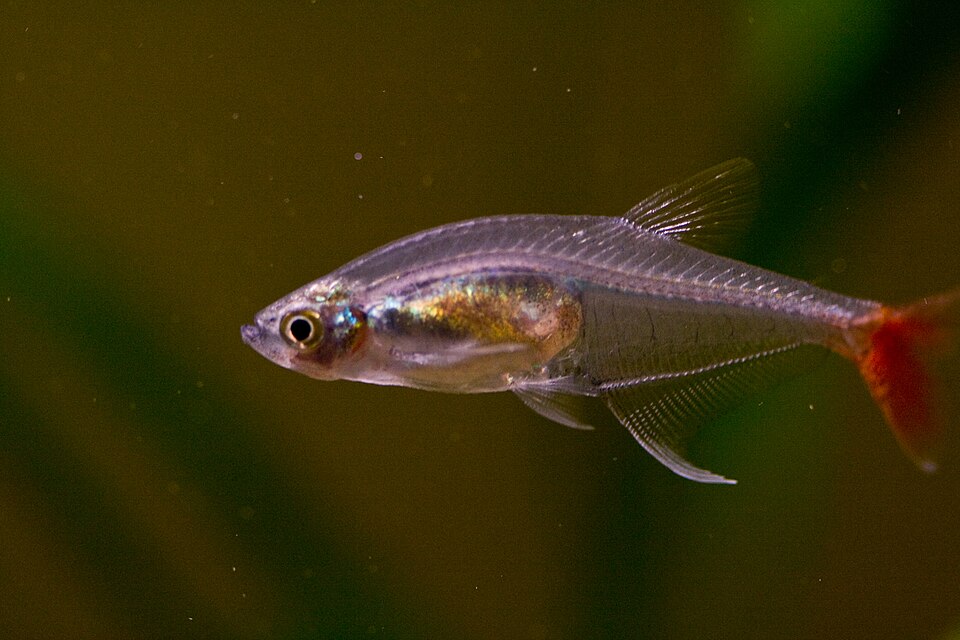
    The glass bloodfin tetra’s defining feature is its remarkable transparency. The body is elongated and laterally compressed, with skin so translucent that you can clearly see the skeleton, swim bladder, and internal organs. Under the right lighting, the scales pick up a subtle silvery-blue iridescence that shimmers as the fish moves, but the overall impression is of a fish made from living glass.

    Glass bloodfin tetra (Prionobrama filigera) showing its transparent body and visible internal organs
    The glass bloodfin tetra’s transparent body lets you see right through to the internal organs and spine. Photo by Chronotopian, CC BY-SA 3.0.

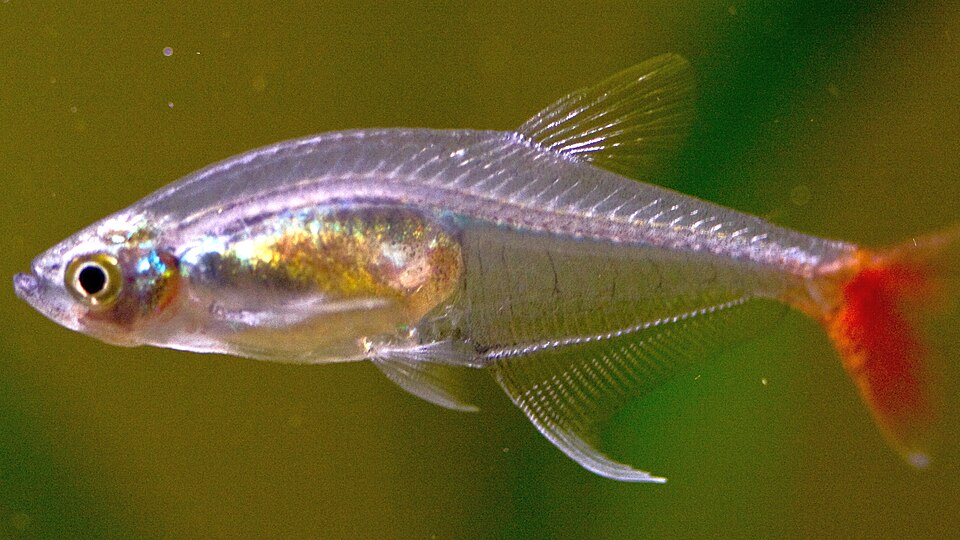
    The caudal fin is where the color is. Both lobes of the tail carry a deep red pigment that stands out dramatically against the clear body. This red coloration extends slightly onto the caudal peduncle. The anal fin is also noteworthy, being quite long and extending much further back than in most tetras. In males, the front edge of the anal fin develops a hooked appearance, which is one of the easiest ways to sex the fish.

    Glass bloodfin tetra showing the distinctive red caudal fin and elongated transparent body
    The vivid red caudal fin provides a striking contrast against the glass-like transparent body. Photo by Chronotopian, CC BY-SA 3.0.

    Males are typically slimmer than females and often display a dark marking on the anal fin. Females have a fuller body, especially when carrying eggs, and lack the hooked anal fin edge. Both sexes show the same transparent body and red tail coloration.

    Average Size & Lifespan

    Glass bloodfin tetras reach about 2.5 inches (6 cm) at full maturity, making them slightly larger than many popular community tetras. They’re longer and more slender than neons or cardinals, with a streamlined body built for active swimming.

    The lifespan is where this species really stands out. Under good conditions, glass bloodfins regularly live 5 to 8 years, with some reports of individuals reaching 10 years. That’s remarkable for a small tetra and means you’re making a longer commitment than with many comparable species. Consistent water quality and a varied diet are the biggest contributors to longevity.

    Care Guide

    Tank Size

    A 20-gallon tank is the minimum for a school of glass bloodfin tetras. These are active, fast-swimming fish that use horizontal space extensively, so a longer tank is preferred over a taller one. A 30 or 40-gallon long tank gives a group of 8-12 plenty of room to cruise and display their natural schooling behavior.

    Water Parameters

    • Temperature: 72-82°F (22-28°C)
    • pH: 6.0-7.5
    • General Hardness (GH): 2-12 dGH
    • Carbonate Hardness (KH): 1-8 dKH

    Glass bloodfins are notably adaptable when it comes to water chemistry. They handle a wider range of parameters than many tetras, which is part of what makes them so beginner-friendly. While they prefer soft, slightly acidic water, tank-bred specimens adapt well to moderate hardness and neutral pH. The broad temperature tolerance is also a plus, making them suitable for both heated tropical tanks and cooler room-temperature setups in warmer climates.

    Tank Setup

    The most important thing with glass bloodfins is a tight-fitting lid. These fish jump. It’s not a maybe, it’s a when. Any gap large enough for them to fit through becomes an escape route, especially during the first few days in a new tank or if they get startled. Make sure every opening is covered, including gaps around filter intakes and airline tubing.

    For the tank itself, provide plenty of open swimming space in the upper and middle areas. Plant the background and sides with tall-growing species, and add some floating plants for partial shade. A dark substrate helps showcase their transparent bodies. Driftwood and leaf litter on the bottom add natural aesthetics and release beneficial tannins. The overall setup should balance open water for swimming with planted areas for security.

    Filtration & Maintenance

    A sponge filter or HOB filter with adjustable flow works well. Glass bloodfins prefer gentle to moderate water movement. Strong currents make them uncomfortable since their natural habitat consists of calm tributaries and creeks. Weekly water changes of 20-25% will keep conditions stable. While they’re hardy, they still respond poorly to ammonia and nitrite, so make sure the tank is fully cycled before adding them.

    Is the Glass Bloodfin Tetra Right for You?

    Glass bloodfin tetras offer a unique transparent aesthetic for attentive keepers. Here’s who should consider them:

    • You’re fascinated by transparent fish. Glass bloodfins let you see their internal anatomy
    • You maintain stable, consistent water parameters without wild swings
    • You want a tighter-schooling species than regular bloodfin tetras
    • You have moderate lighting. Harsh overhead light makes them look washed out
    • You appreciate subtle beauty that reveals itself over time
    • Skip these if you want vivid coloration. Their appeal is translucency, not color

    Tank Mates

    Glass bloodfin tetras are genuinely peaceful community fish. They don’t nip fins, they don’t bully, and they mind their own business in the upper water layers. This makes them compatible with a wide range of tank mates, including some surprisingly large ones.

    Good Tank Mates

    • Other peaceful tetras – cardinal tetras, neon tetras, ember tetras, rummy nose tetras
    • Corydoras catfish – perfect bottom-dwelling companions that stay out of the way
    • Otocinclus – peaceful algae eaters that share similar water preferences
    • Dwarf cichlidsApistogramma, rams, and similar species
    • Discus and angelfish – in suitably large tanks, glass bloodfins coexist well with these larger cichlids
    • Hatchetfish – fellow surface dwellers that share the upper water column peacefully
    • Small peaceful barbs – cherry barbs, gold barbs
    • Dwarf gouramis – calm mid-level companions

    Tank Mates to Avoid

    • Aggressive cichlids – anything territorial or predatory will stress them
    • Large predatory fish – their transparent bodies don’t offer much intimidation factor
    • Very nippy species – their elongated anal fin is a target for fin nippers

    Food & Diet

    Glass bloodfin tetras are easy to feed and not picky at all. A quality flake or micro pellet as the daily staple works perfectly. Supplement regularly with frozen or live foods like brine shrimp, daphnia, bloodworms, and white mosquito larvae. These protein-rich additions help maintain the red coloration in the tail and keep the fish in top condition.

    They feed primarily in the upper and middle water levels. Their mouths are upturned slightly, which makes them well-suited to taking food from the surface. Feed small amounts two to three times daily. Being active swimmers, they burn through calories quickly and benefit from frequent feedings over single large ones.

    Breeding & Reproduction

    Breeding glass bloodfin tetras is achievable but requires some preparation. Set up a dedicated spawning tank (10-15 gallons) with very soft, acidic water (pH 6.0-6.5, GH 1-5) at a temperature around 80-84°F. Keep the lighting dim and add fine-leaved plants or spawning mops for egg deposition. A bare bottom or a layer of marbles helps protect eggs from being eaten.

    Condition breeding pairs with plenty of live and frozen foods for a week or two. When ready to spawn, the female scatters eggs among the plants while the male fertilizes them. Remove the adults immediately after spawning to prevent egg predation. The eggs are light-sensitive, so keep the breeding tank dark or heavily shaded.

    Eggs typically hatch within 24-36 hours, and the fry become free-swimming around day 3-4. Feed infusoria or liquid fry food initially, graduating to baby brine shrimp as the fry grow. The young fish develop their transparent body relatively early, though the red tail coloration fills in gradually over the first few months.

    Common Health Issues

    Glass bloodfin tetras are among the hardier tetras, but they’re not immune to common freshwater diseases. Ich is the most frequent issue, usually appearing after temperature drops or stressful events. The transparent body actually makes disease diagnosis easier than in many fish since you often see internal problems that would be hidden in opaque species.

    Bacterial infections and fin rot can occur in tanks with poor water quality. The elongated anal fin is particularly susceptible to fin rot, so watch for any fraying or discoloration at the edges. Internal parasites will sometimes be spotted through the transparent body wall, appearing as unusual dark masses or stringy white feces.

    Prevention through good water quality, quarantine of new fish, and varied nutrition covers most health concerns. Their hardiness and longevity mean that a healthy glass bloodfin maintained in clean water rarely develops problems.

    Common Mistakes to Avoid

    • No lid on the tank. Glass bloodfins are jumpers. This is the number one cause of lost fish. A tight-fitting lid with no gaps is essential.
    • Strong water current. They come from calm tributaries and dislike strong flow. Dial back the filter output or use a spray bar to diffuse it.
    • Keeping too few. A group of 3-4 won’t school properly and will seem nervous and skittish. Start with at least 8 for confident, natural behavior.
    • Bright lighting without cover. While they’re not as light-sensitive as some tetras, they do look better and act more confidently with some floating plant cover.
    • Underestimating their lifespan. These fish can live a decade. Make sure you’re ready for the commitment before purchasing.

    Where to Buy

    Glass bloodfin tetras are moderately available in the hobby. They’re not as common as neon or cardinal tetras, but specialty shops and online retailers usually stock them. Try Flip Aquatics or Dan’s Fish for tank-bred specimens. Prices typically range from $3-5 per fish, often with discounts for larger groups.

    When buying, look for active fish that are swimming confidently in the upper levels of the tank. The body should be clear and transparent (cloudiness can indicate disease), and the red caudal fin should be vivid. Avoid any fish from tanks with sick-looking inhabitants.

    Frequently Asked Questions

    What’s the difference between a glass bloodfin tetra and a regular bloodfin tetra?

    They’re related but different species. The regular bloodfin tetra (Aphyocharax anisitsi) has a more opaque, silvery body with red on the fins. The glass bloodfin (Prionobrama filigera) is much more transparent with red concentrated primarily on the caudal fin. Glass bloodfins also have a notably longer anal fin and are slightly larger.

    Do glass bloodfin tetras jump?

    Yes, frequently. They are one of the more jump-prone tetra species. A tight-fitting lid is absolutely essential. They’re especially likely to jump when first introduced to a new tank, during water changes, or if startled by sudden movements or sounds.

    How long do glass bloodfin tetras live?

    With proper care, they commonly live 5-8 years, with some reaching 10 years. This is significantly longer than most small tetras like neons (3-5 years) or cardinals (4-5 years). Consistent water quality and varied nutrition are the biggest factors in achieving a long lifespan.

    Can you see the organs inside a glass bloodfin tetra?

    Yes, that’s one of their most distinctive features. Their body is so transparent that you can clearly see the spine, swim bladder, and digestive organs. This transparency actually serves as a health indicator too, since internal problems (like parasites) are often visible through the body wall before external symptoms appear.

    Are glass bloodfin tetras good for beginners?

    Yes, they’re excellent beginner fish. They’re hardy, tolerate a wide range of water conditions, are peaceful, and easy to feed. The only caveat is that they need a secure lid because of their jumping tendency. Beyond that, they’re one of the more forgiving tetras available.

    What It Is Actually Like Living With Glass Bloodfin Tetra

    In a proper school, glass bloodfin tetra display natural movement patterns that are genuinely engaging to watch. The fish interact with each other, establish subtle hierarchies, and move through the tank with purpose.

    They spend most of their time near the surface, which fills a level of the tank that many other species ignore. This makes them excellent complements to mid-water and bottom-dwelling fish.

    Feeding time is when their personality comes out. They learn your routine quickly and will anticipate feeding before you even open the lid.

    Their color and behavior improve over time as they settle into a stable environment. Fish that have been in the same tank for months look noticeably better than recently added stock.

    They coexist peacefully with virtually every other appropriately-sized community fish. This compatibility makes tank planning straightforward.

    How the Glass Bloodfin Tetra Compares to Similar Species

    Glass Bloodfin Tetra vs. Bloodfin Tetra

    Regular bloodfin tetras are significantly hardier and easier to keep. They’re one of the toughest tetras in the hobby, while glass bloodfins are middling in terms of resilience. Bloodfins also have stronger red fin coloration and are more active swimmers. The glass variety trades robustness for transparency. You can literally see their spine and organs. If you want a bloodfin-type tetra for a beginner setup, go with the regular variety. Glass bloodfins are for established tanks where their unique appearance is appreciated. Check out our Bloodfin Tetra care guide for more details.

    Glass Bloodfin Tetra vs. Pristella Tetra

    Pristella tetras also have a semi-transparent body and are sometimes called “x-ray tetras.” Both species offer that see-through quality, but pristellas are hardier and more widely available. Pristellas also add distinct yellow and black fin markings that give them more visual pop. Glass bloodfins are more uniformly transparent with subtle red fin accents. For a beginner who wants a see-through tetra, pristellas win. For someone who’s already kept pristellas and wants a more refined version of that aesthetic, glass bloodfins are the upgrade. Check out our Pristella Tetra care guide for more details.

    Closing Thoughts

    The glass bloodfin tetra is one of those fish that gets better the longer you keep it. Not just because it can live a decade, but because a settled, confident school in a well-designed tank is genuinely captivating. The transparency creates an almost ethereal quality, and watching a group of 10+ cruise through the upper water column with those red tails flashing is a sight that never gets old. They’re hardy, peaceful, and stunning in a way that few other tetras can match. If you’re looking for something a little different from the usual tetra lineup, the glass bloodfin deserves serious consideration.

    Check out our Tetra Tier List video where we rank different tetra species and discuss their pros and cons for the home aquarium.

    References

    • Cope, E.D. (1870). Contribution to the ichthyology of the Marañon. Proceedings of the American Philosophical Society, 11, 559-570.
    • Melo, B.F, Ota, R.P, et al. (2024). Phylogenomics of Characidae, a hyper-diverse Neotropical freshwater fish lineage, with a phylogenetic classification including four families. Zoological Journal of the Linnean Society, 202(1).
    • Froese, R. And D. Pauly, Editors. (2024). Prionobrama filigera. FishBase. fishbase.se
    • Seriously Fish. Prionobrama filigera – Glass Bloodfin Tetra. seriouslyfish.com

    Explore More Tetras

    The glass bloodfin tetra is just one of over 90 tetra species we cover. Visit our complete Tetras A-Z directory to explore care guides for every species in the hobby.

  • Blue Emperor Tetra Care Guide: Tank Setup, Diet, Tank Mates & More

    Blue Emperor Tetra Care Guide: Tank Setup, Diet, Tank Mates & More

    Table of Contents

    The blue emperor tetra is a wild-caught specialty fish that demands specific conditions. Soft water, low pH, dim lighting, and dark substrate. Skip any of these and the blue coloration never develops. This is a fish for experienced keepers who can provide what it needs, not for someone looking for an easy splash of blue.

    Blue emperor tetras in hard water are gray fish. In soft, acidic water, they are electric blue. There is no middle ground.

    The Reality of Keeping Blue Emperor Tetra

    Group size is not a suggestion. The minimum school size for blue emperor tetra is not just a guideline. In small groups, these fish lose color, become stressed, and display abnormal behavior. A proper group of 6 to 8+ is where you start to see natural schooling behavior, full color expression, and the confidence that makes them worth keeping.

    Tank mate selection requires thought. The blue emperor tetra is not aggressive in the traditional sense, but it is assertive enough to cause problems with the wrong companions. Slow-moving, long-finned species are targets. Fast, short-finned fish of similar size are fine. Plan your community around this reality.

    Hardy does not mean indestructible. The blue emperor tetra tolerates a range of conditions, but it still needs basic care. Ammonia spikes, dramatic temperature swings, and neglected water changes will catch up to even the toughest species. The difference is margin of error, not immunity.

    Store appearance is not home appearance. Fish in store tanks are stressed, crowded, and under inappropriate lighting. The blue emperor tetra almost always looks better in a properly set up home aquarium than it does at the store. Dark substrate, live plants, and appropriate lighting bring out colors and behaviors you will never see in a retail environment.

    Biggest Mistake New Owners Make

    Adding them to a peaceful community tank without researching compatibility. The nipping and chasing will stress your existing fish, and by the time you realize the problem, fin damage is already done.

    Expert Take

    In my 25+ years in the hobby, I have consistently found that the hardiest species are the most underrated. The blue emperor tetra is a perfect example. It is easy to keep, rewarding to watch, and it does not demand the kind of obsessive maintenance that more sensitive species require.

    Key Takeaways

    • Stunning sexual dimorphism – males are deep blue-purple with blue adipose fins, females have orange-red adipose fins, making mixed schools visually striking
    • Peaceful and easy to keep – one of the more beginner-friendly tetras with minimal aggression when properly schooled
    • Thrives in subdued lighting – colors wash out under bright lights, so floating plants and a dark substrate are key
    • Keep in groups of 8+ – smaller groups can lead to fin nipping, though this reputation is largely overblown
    • Prolific breeders – one of the easier tetras to breed in captivity with the right conditions
    Map showing the Amazon River Basin in South America
    Map by Kmusser, CC BY-SA 3.0, via Wikimedia Commons

    Species Overview

    Field Details
    Scientific Name Inpaichthys kerri
    Common Names Blue Emperor Tetra, Purple Emperor Tetra, Royal Tetra, Kerri Tetra
    Family Characidae
    Origin Aripuanã River, upper Madeira River basin, Mato Grosso, Brazil
    Care Level Easy
    Temperament Peaceful
    Diet Omnivore
    Tank Level Mid
    Maximum Size 2 inches (5 cm)
    Minimum Tank Size 20 gallons (75 liters)
    Temperature 75-82°F (24-28°C)
    pH 5.5-7.0
    Hardness 1-10 dGH
    Lifespan 4-6 years in captivity
    Breeding Egg scatterer
    Breeding Difficulty Moderate
    Compatibility Community
    OK for Planted Tanks? Yes

    Classification

    Rank Name
    Kingdom Animalia
    Phylum Chordata
    Class Actinopterygii
    Order Characiformes
    Family Characidae
    Genus Inpaichthys
    Species I. Kerri

    Inpaichthys kerri was described by Géry and Junk in 1977. The genus name is derived from INPA (Instituto Nacional de Pesquisas da Amazônia), the Brazilian research institute where the type specimens were housed, combined with the Greek “ichthys” meaning fish. The species name honors Warwick Estevam Kerr, a Brazilian geneticist. Inpaichthys is a monotypic genus, meaning I. Kerri is the only species within it. The genus has remained within the family Characidae following the 2024 phylogenomic revision by Melo et al.

    Origin & Natural Habitat

    The blue emperor tetra is native to the Aripuanã River system, a tributary of the upper Madeira River in Mato Grosso state, northwestern Brazil. This is deep Amazon basin territory, and the fish lives in slow-moving tributaries and small forest streams where the water is warm, soft, and acidic. Heavy canopy cover keeps the environment dimly lit, with the water stained a tea-brown color from tannins released by decomposing leaves and wood.

    The substrate in these habitats is typically soft sand covered with a thick layer of leaf litter. Fallen branches and submerged roots provide shelter and create complex microhabitats. The water flow is gentle, and the overall environment is relatively still compared to the main river channel. This preference for calm, shaded conditions directly informs how to set up their aquarium.

    Map showing the Amazon River basin in South America where blue emperor tetras originate from the Aripuanã River in Mato Grosso, Brazil
    Blue emperor tetras come from the Aripuanã River system in the upper Madeira River basin of Mato Grosso, Brazil.

    Appearance & Identification

    The blue emperor tetra has a laterally compressed, moderately deep body shape typical of many Characidae species. What makes it visually exceptional is the combination of a vibrant blue-purple body color with a prominent dark horizontal stripe running from behind the eye to the caudal peduncle. The body has an iridescent quality that shifts between blue and violet depending on the angle of light.

    Blue emperor tetra (Inpaichthys kerri) displaying its characteristic blue-purple coloration and dark horizontal stripe
    A male blue emperor tetra showing the deep blue-purple coloration and distinctive dark lateral stripe. Photo by Juan R. Lascorz, CC BY-SA 3.0.

    The easiest way to tell males from females is the adipose fin. Males have a blue adipose fin that matches their body color, while females display an orange to reddish adipose fin that contrasts beautifully. Males also are slimmer with more saturated coloration, while females are slightly rounder through the body and carry a softer, more muted version of the same blue-purple tones. In a well-conditioned school, the contrast between the sexes creates a really attractive visual display.

    Blue emperor tetra in a planted aquarium showing its iridescent blue-purple body
    Blue emperor tetras show their best colors in planted tanks with subdued lighting. Photo by Juan R. Lascorz, CC BY-SA 3.0.

    The scales have a subtle metallic sheen, and the fins are mostly translucent with a slight yellowish or bluish tint. The eyes are relatively large and have a silver-green ring. Overall, this is a fish that photographs well but looks even better in person, especially under low-light conditions where the iridescence really comes alive.

    Average Size & Lifespan

    Blue emperor tetras reach a maximum size of about 2 inches (5 cm), with most individuals settling around 1.5 inches in typical aquarium conditions. They’re a compact tetra, roughly the same size as a neon or cardinal tetra but with a slightly deeper body profile.

    With good care, blue emperor tetras can live 4 to 6 years, which is longer than many comparable small tetras. Clean water, varied nutrition, and stress-free conditions (proper school sizes, compatible tank mates) are the biggest factors in reaching the upper end of that range.

    Care Guide

    Tank Size

    A 20-gallon tank is the recommended minimum for a school of blue emperor tetras. They’re not quite as active and frenetic as some tetras (like blue tetras), so they don’t need massive swimming space, but they still appreciate room to move. A longer tank footprint is more valuable than a taller one since they primarily occupy the middle water column.

    Water Parameters

    • Temperature: 75-82°F (24-28°C)
    • pH: 5.5-7.0
    • General Hardness (GH): 1-10 dGH
    • Carbonate Hardness (KH): 1-5 dKH

    Blue emperor tetras prefer soft, acidic water, which reflects their blackwater origins. They can adapt to slightly harder water if introduced gradually, but they won’t thrive in hard, alkaline conditions. If your tap water runs hard, use RO/DI water blended with tap to bring the parameters down. Indian almond leaves and driftwood help naturally buffer the pH toward the acidic range while also releasing tannins that these fish find comforting.

    Tank Setup

    Subdued lighting is critical for blue emperor tetras. Under bright lights, their colors fade and they become visibly stressed. Use floating plants like Amazon frogbit or dwarf water lettuce to diffuse overhead light, and consider a dark substrate (black sand or dark gravel) that doesn’t reflect light upward. The difference in coloration between a well-lit tank and a dimly lit one is dramatic.

    Plant the background and sides densely, leaving open swimming areas in the center. Driftwood, bogwood, and dried leaf litter on the substrate create a natural biotope look that these fish respond to positively. A blackwater setup with tannin-stained water brings out the absolute best in their coloration and closely replicates their natural habitat.

    Filtration & Maintenance

    A standard hang-on-back or sponge filter works well. These fish come from calm waters, so keep the flow rate gentle. Strong currents stress them out and cause them to hide. Weekly water changes of 20-25% are sufficient, using water that matches the tank’s temperature and chemistry. Since they prefer soft, acidic conditions, avoid using filter media that raises pH or hardness (like crusite or coral substrate).

    Is the Blue Emperor Tetra Right for You?

    The blue emperor tetra is a premium species that rewards time and proper setup. Here’s who should be keeping them:

    • You want a tetra with genuine blue coloration. Not many tetras deliver real blue
    • You’re patient enough to wait 4-6 months for full color development
    • You can keep a group of 8+ where male sparring gets distributed across the school
    • You have a 30-gallon or larger tank with both open space and planted refuge areas
    • You want a statement fish that’ll be the centerpiece of a community setup
    • Not ideal for tanks with very timid species. Males display with enough gusto to startle delicate fish

    Tank Mates

    Blue emperor tetras are genuinely a semi-assertive community fish that’s peaceful toward other species but males will spar among themselves. Keep them in groups of 8+ with 2-3 females per male. They have a lingering reputation as fin nippers, but in my experience this almost always traces back to being kept in groups that are too small. A school of 8 or more rarely causes problems with tank mates.

    Good Tank Mates

    • Other small tetras – cardinal tetras, ember tetras, green neon tetras, rummy nose tetras
    • Dwarf cichlidsApistogramma species, ram cichlids (they share similar water parameter preferences)
    • Corydoras catfish – peaceful bottom dwellers that complement the mid-level tetras perfectly
    • Otocinclus – another gentle South American species that shares the same soft water needs
    • Pencilfish – Nannostomus species are ideal companions in a blackwater biotope
    • Hatchetfish – marble or silver hatchetfish occupy the surface level and won’t compete
    • Small rasboras – harlequin rasboras, lambchop rasboras

    Tank Mates to Avoid

    • Large or boisterous fish – blue emperor tetras are easily intimidated by aggressive tank mates
    • Aggressive cichlids – anything territorial enough to chase them will cause chronic stress
    • Very large fish – anything that could eat them (even peaceful large fish pose a predation risk)
    • Hard water species – African cichlids and livebearers that need high pH and hard water are a mismatch

    Food & Diet

    Blue emperor tetras are easy to feed. They’re true omnivores that accept virtually anything offered. A high-quality micro pellet or flake food forms a solid daily base. Supplement two to three times per week with frozen or live foods like brine shrimp, daphnia, bloodworms, or white mosquito larvae. These protein-rich supplements are important for maintaining vibrant coloration and overall health.

    They feed primarily in the mid-water column but will readily take food from the surface. Feed small amounts two to three times daily rather than one big feeding. Their small stomachs process food quickly, so frequent small meals are more efficient than infrequent large ones.

    Breeding & Reproduction

    Blue emperor tetras are among the more breedable tetras in the hobby. They’re prolific egg scatterers when conditions are right. Set up a dedicated breeding tank (10-15 gallons) with very soft, acidic water (pH 5.5-6.0, GH under 3). Keep the lighting dim or use a dark cover to darken the tank. Add fine-leaved plants like java moss or spawning mops for egg deposition.

    Condition a pair or small group with plenty of live and frozen foods for 1-2 weeks. Males will display to females, showing off their deeper coloration and posturing near the plants. Spawning usually occurs in the early morning hours. The female scatters eggs among the plants while the male fertilizes them. A healthy female can deposit up to 100-150 eggs per spawning.

    Remove the adults immediately after spawning as they will eat the eggs. The eggs hatch in 24-36 hours, and the fry become free-swimming around day 3-4. Feed infusoria or commercial liquid fry food for the first week, then transition to freshly hatched baby brine shrimp. The fry grow relatively quickly and begin showing color at around 6-8 weeks.

    Common Health Issues

    Blue emperor tetras are hardy once established, but they is sensitive during acclimatization. Ich is the most common ailment, typically triggered by temperature drops during water changes or the stress of transport. A quarantine period of 2-3 weeks for all new fish prevents introducing diseases into your main display.

    Columnaris (cotton mouth/body fungus) will sometimes appear, particularly in tanks with poor water quality or rapid parameter swings. Neon tetra disease, despite the name, can affect other small characins including blue emperor tetras. Watch for patchy loss of color, white cysts, and erratic swimming. There is no effective treatment for neon tetra disease, so prevention through quarantine is critical.

    The best disease prevention is simple: maintain excellent water quality with regular changes, avoid sudden parameter shifts, feed a varied diet, and quarantine new arrivals. These fish are not fragile, but they do not tolerate negligence well either.

    Common Mistakes to Avoid

    • Bright lighting without cover. Blue emperor tetras need dim conditions to look their best. Without floating plants or diffused lighting, they’ll appear washed out and stressed.
    • Keeping them in hard, alkaline water. They originate from very soft, acidic environments. Water above pH 7.5 or GH above 12 can cause chronic stress and health issues.
    • Too few in the school. Groups under 6 often show more aggression and fin nipping. Invest in at least 8 to see natural, relaxed behavior.
    • Pairing with intimidating tank mates. These are gentle fish that don’t compete well with boisterous or aggressive species. Keep them with equally calm companions.
    • Skipping the acclimation. They is sensitive to sudden parameter changes. Use drip acclimation over 30-60 minutes when introducing them to a new tank.

    Where to Buy

    Blue emperor tetras are becoming increasingly available as their popularity grows. Many local fish stores carry them, and they’re reliably stocked by online retailers. Check Flip Aquatics for tank-bred specimens, or browse Dan’s Fish for quality stock. Expect to pay around $4-7 per fish, with bulk pricing often available for groups of 6 or more.

    When shopping, look for active fish with vivid coloration and clear eyes. Males should show a distinct blue adipose fin. Avoid any fish from tanks where individuals appear lethargic or show signs of disease (white spots, frayed fins, or pale patches).

    Frequently Asked Questions

    What’s the difference between a blue emperor tetra and a regular emperor tetra?

    They’re completely different species in different genera. The regular emperor tetra (Nematobrycon palmeri) is larger, has a distinctive trident-shaped tail, and belongs to a different evolutionary lineage. The blue emperor tetra (Inpaichthys kerri) is smaller, has a more conventional tail shape, and is characterized by its blue-purple body and sexually dimorphic adipose fin coloration.

    Are blue emperor tetras fin nippers?

    They have a mild reputation for occasional nipping, but it’s largely preventable. In groups of 8 or more, fin nipping is rare because any competitive behavior gets directed within the school. Problems typically arise only when they’re kept in groups under 6 or in tanks that are too small.

    Can I keep blue emperor tetras in a blackwater tank?

    Absolutely, and this is where they look their absolute best. A blackwater setup with tannin-stained water, leaf litter, and dim lighting closely replicates their natural habitat. Their blue-purple iridescence against the amber-toned water is stunning. Add Indian almond leaves, driftwood, and a dark substrate for the full effect.

    How can I tell male and female blue emperor tetras apart?

    The adipose fin is the easiest tell. Males have a blue adipose fin, while females have an orange to red-orange adipose fin. Males are also slimmer and show more saturated blue-purple coloring. Females are rounder, especially when full of eggs, with slightly muted tones.

    Do blue emperor tetras need soft water?

    They strongly prefer soft, acidic water and will show their best colors and behavior in these conditions. Tank-bred specimens can tolerate moderate hardness (up to around 10 dGH), but they won’t do well in hard, alkaline water. If your tap water is hard, consider mixing with RO water to bring parameters into range.

    What It Is Actually Like Living With Blue Emperor Tetra

    In a proper school, blue emperor tetra display natural movement patterns that are genuinely engaging to watch. The fish interact with each other, establish subtle hierarchies, and move through the tank with purpose.

    They spend most of their time near the surface, which fills a level of the tank that many other species ignore. This makes them excellent complements to mid-water and bottom-dwelling fish.

    Feeding time is when their personality comes out. They learn your routine quickly and will anticipate feeding before you even open the lid.

    Their color and behavior improve over time as they settle into a stable environment. Fish that have been in the same tank for months look noticeably better than recently added stock.

    They coexist peacefully with virtually every other appropriately-sized community fish. This compatibility makes tank planning straightforward.

    How the Blue Emperor Tetra Compares to Similar Species

    Blue Emperor Tetra vs. Emperor Tetra

    Regular emperor tetras are more widely available, less expensive, and more predictably peaceful. They share the elegant finnage but lean more toward purple-blue iridescence rather than the blue emperor’s deeper, more saturated blue. In terms of behavior, regular emperors are calmer. Better suited for peaceful communities with small tank mates. Blue emperors are the more dramatic choice with more intense color, but they come with more social dynamics to manage. For a mixed community, regular emperors are safer. For a species-focused or semi-assertive community, blue emperors are the showpiece. Check out our Emperor Tetra care guide for more details.

    Blue Emperor Tetra vs. Blue Tetra

    Blue tetras are another option for hobbyists chasing that blue coloration, but they’re a completely different fish in terms of behavior. Blue tetras are larger, more aggressive, and need to be kept with robust tank mates. Blue emperor tetras are the more refined option. They deliver blue coloration in a smaller, more manageable package with less aggression risk. If you have a large tank with bigger fish, blue tetras might work. For a standard community setup, blue emperor tetras are the far better choice. Check out our Blue Tetra care guide for more details.

    Closing Thoughts

    The blue emperor tetra deserves more attention than it gets. In a hobby that sometimes overlooks subtlety in favor of the brightest, boldest fish, the blue emperor offers something different: an understated elegance that reveals itself under the right conditions. Give it a dimly lit, well-planted tank with soft water and a proper school, and it rewards you with coloration that rivals species twice its price. The sexual dimorphism adds a layer of visual interest that most tetras simply can’t match. It’s a fish that gets better the longer you watch it.

    Check out our Tetra Tier List video where we rank different tetra species and discuss their pros and cons for the home aquarium.

    References

    • Géry, J. & Junk, W.J. (1977). Inpaichthys kerri n. G. N. Sp, um novo peixe caracídeo do alto rio Aripuanã, Mato Grosso, Brasil. Acta Amazonica, 7(3), 417-422.
    • Melo, B.F, Ota, R.P, et al. (2024). Phylogenomics of Characidae, a hyper-diverse Neotropical freshwater fish lineage, with a phylogenetic classification including four families. Zoological Journal of the Linnean Society, 202(1).
    • Froese, R. And D. Pauly, Editors. (2024). Inpaichthys kerri. FishBase. fishbase.se
    • Seriously Fish. Inpaichthys kerri – Purple Emperor Tetra. seriouslyfish.com

    Explore More Tetras

    The blue emperor tetra is just one of over 90 tetra species we cover. Visit our complete Tetras A-Z directory to explore care guides for every species in the hobby.

  • Blue Tetra Care Guide: Tank Setup, Diet, Tank Mates & More

    Blue Tetra Care Guide: Tank Setup, Diet, Tank Mates & More

    Table of Contents

    The blue tetra is one of the most nippy schooling tetras in the hobby. Keep fewer than 8 and they terrorize every other fish in the tank. Keep 10+ and they mostly fight among themselves. This is not a peaceful community fish. It is a beautiful bully that only works in the right setup.

    The blue tetra is gorgeous. It is also a bully. Stock accordingly or pay the price.

    The Reality of Keeping Blue Tetra

    Group size is not a suggestion. The minimum school size for blue tetra is not just a guideline. In small groups, these fish lose color, become stressed, and display abnormal behavior. A proper group of 6 to 8+ is where you start to see natural schooling behavior, full color expression, and the confidence that makes them worth keeping.

    Tank mate selection requires thought. The blue tetra is not aggressive in the traditional sense, but it is assertive enough to cause problems with the wrong companions. Slow-moving, long-finned species are targets. Fast, short-finned fish of similar size are fine. Plan your community around this reality.

    Hardy does not mean indestructible. The blue tetra tolerates a range of conditions, but it still needs basic care. Ammonia spikes, dramatic temperature swings, and neglected water changes will catch up to even the toughest species. The difference is margin of error, not immunity.

    Store appearance is not home appearance. Fish in store tanks are stressed, crowded, and under inappropriate lighting. The blue tetra almost always looks better in a properly set up home aquarium than it does at the store. Dark substrate, live plants, and appropriate lighting bring out colors and behaviors you will never see in a retail environment.

    Biggest Mistake New Owners Make

    Adding them to a peaceful community tank without researching compatibility. The nipping and chasing will stress your existing fish, and by the time you realize the problem, fin damage is already done.

    Expert Take

    In my 25+ years in the hobby, I have consistently found that the hardiest species are the most underrated. The blue tetra is a perfect example. It is easy to keep, rewarding to watch, and it does not demand the kind of obsessive maintenance that more sensitive species require.

    Key Takeaways

    • One of the few truly blue freshwater fish available in the hobby, with a striking electric blue-violet iridescence along the body
    • More nippy than most tetras – they need careful tank mate selection and should not be kept with long-finned or slow species
    • Active swimmers that need space – a 20-gallon minimum with plenty of open swimming room
    • Keep in groups of 8+ to reduce aggression and spread out any fin-nipping behavior within the school
    • Best in a dimly lit, planted tank – their blue coloration really pops against darker backgrounds and under subdued lighting
    Map showing the Amazon River Basin in South America
    Map by Kmusser, CC BY-SA 3.0, via Wikimedia Commons

    Species Overview

    Field Details
    Scientific Name Boehlkea fredcochui
    Common Names Blue Tetra, Cochu’s Blue Tetra, Blue King Tetra
    Family Stevardiidae
    Origin Amazon River basin, Peru
    Care Level Easy to Moderate
    Temperament Semi-aggressive (nippy)
    Diet Omnivore
    Tank Level Mid to Top
    Maximum Size 2 inches (5 cm)
    Minimum Tank Size 20 gallons (75 liters)
    Temperature 73-82°F (23-28°C)
    pH 6.0-7.5
    Hardness 5-12 dGH
    Lifespan 3-5 years in captivity
    Breeding Egg scatterer
    Breeding Difficulty Moderate to Difficult
    Compatibility Community (with caveats)
    OK for Planted Tanks? Yes

    Classification

    Rank Name
    Kingdom Animalia
    Phylum Chordata
    Class Actinopterygii
    Order Characiformes
    Family Stevardiidae (formerly Characidae)
    Subfamily Diapominae
    Genus Boehlkea
    Species B. Fredcochui

    Boehlkea fredcochui was originally described by Jacques Géry in 1966 and placed in the family Characidae. The genus was named in honor of Dr. James Böhlke, an ichthyologist at the Academy of Natural Sciences of Philadelphia. The species name honors Fred Cochu, a prominent aquarium fish importer. Following the 2024 phylogenomic revision by Melo et al, the genus Boehlkea has been reclassified into the family Stevardiidae under the subfamily Diapominae. This revision split the former Characidae into four distinct families based on molecular evidence from ultraconserved elements (UCEs).

    Origin & Natural Habitat

    Blue tetras come from the upper Amazon River basin in Peru, where they inhabit tributaries and smaller river systems. They occupy areas with moderate to fast-flowing current, which explains their active swimming behavior in aquariums. The water in their native habitat is typically warm, soft, and slightly acidic, stained brown with tannins from decomposing leaf litter and fallen wood.

    Their natural environment features sandy or muddy substrates with plenty of submerged vegetation, overhanging branches, and leaf debris on the bottom. The forest canopy overhead creates a dimly lit underwater world, which is why blue tetras will show their best colors in subdued lighting conditions.

    Map showing the Amazon River basin in South America where blue tetras are found in Peru
    Blue tetras are native to tributaries in the upper Amazon River basin in Peru.

    Appearance & Identification

    The blue tetra is one of the few genuinely blue freshwater fish available in the hobby, and that alone makes it stand out. The body has an elongated, torpedo-shaped profile that gives it an athletic look, and it carries a brilliant electric blue to blue-violet iridescence that runs along the flanks from the gill plate to the caudal peduncle. Under certain lighting angles, the color can shift from a steel blue to an almost purple shimmer.

    Blue tetra (Boehlkea fredcochui) showing its characteristic electric blue iridescence
    The blue tetra’s electric blue iridescence is especially vivid under subdued lighting. Photo by Axel Zarske & D. Bork, CC BY 4.0.

    The fins are mostly transparent to slightly yellowish, and the tail fin has a subtle reddish or pinkish tint at the base. There’s a faint dark lateral stripe that runs through the body, though the blue iridescence often overpowers it visually. The eyes are relatively large with a silver to gold ring around the iris.

    Sexing blue tetras isn’t too difficult once they’re mature. Males are slimmer and more streamlined with a more intense blue coloration. Females are slightly plumper through the belly (especially when carrying eggs) and may appear a touch less vivid in color, though both sexes share the same basic blue shimmer.

    Average Size & Lifespan

    Blue tetras reach a maximum size of about 2 inches (5 cm) in aquarium conditions. Most individuals will settle around 1.5 to 1.8 inches. They’re a mid-sized tetra, larger than neons but smaller than congos.

    In terms of lifespan, expect 3 to 5 years with proper care. The usual factors apply here: clean water, good nutrition, and low stress from appropriate tank mates and school sizes all contribute to reaching the upper end of that range. Fish kept in understocked schools or in tanks that are too small will live shorter, more stressed lives.

    Care Guide

    Tank Size

    A 20-gallon tank is the minimum for a school of blue tetras. Given how active they are, bigger is always better. These are not the kind of tetras that hover in one spot. They cruise the mid and upper water levels constantly, and they need horizontal swimming space to burn off that energy. A 30 to 40-gallon tank will give a group of 8-10 much more room to spread out, which also helps reduce any nipping behavior.

    Water Parameters

    • Temperature: 73-82°F (23-28°C)
    • pH: 6.0-7.5
    • General Hardness (GH): 5-12 dGH
    • Carbonate Hardness (KH): 1-8 dKH

    Blue tetras are fairly adaptable when it comes to water chemistry, especially tank-bred specimens. Wild-caught fish prefer softer, more acidic water, but most blue tetras in the trade today have been bred in captivity and can handle a wider range of parameters. That said, they do best in soft to moderately hard water with a slightly acidic to neutral pH. Consistent parameters matter more than hitting exact numbers.

    Tank Setup

    The ideal blue tetra setup balances open swimming space with planted areas and cover. Use a dark substrate (black sand or fine dark gravel) to really make their blue coloration pop. Add driftwood and some broad-leaved plants to create shaded areas, and include some floating plants to diffuse the overhead lighting. Blue tetras look washed out under bright lights but absolutely glow under subdued conditions.

    Leave the center and front of the tank relatively open for swimming, with denser planting along the sides and back. A gentle to moderate current from the filter output is appreciated since they come from flowing water habitats. Indian almond leaves or other botanicals are a nice addition to create a more natural blackwater-style environment and help keep the pH naturally stable.

    Filtration & Maintenance

    Standard filtration is fine for blue tetras. A hang-on-back or canister filter that provides gentle to moderate flow works well. They’re not particularly messy fish, but they do appreciate clean, well-oxygenated water. Weekly water changes of 25-30% will keep conditions optimal. Like most tetras, they’re sensitive to ammonia and nitrite spikes, so make sure your tank is fully cycled before adding them.

    Is the Blue Tetra Right for You?

    Blue tetras are for hobbyists who can handle a tetra with attitude. Here’s the honest assessment:

    • You want a tetra with real attitude and presence. These are not wallflowers
    • You keep robust, active tank mates that can hold their own. Barbs, larger tetras, or medium cichlids
    • You have a 30-gallon or larger tank with plenty of space to diffuse territorial behavior
    • You enjoy watching bold, interactive fish behavior rather than passive schooling
    • You keep groups of 8+ to spread aggression and prevent any single fish from being targeted
    • Do NOT get these for a peaceful nano community. They will dominate and stress smaller fish

    Tank Mates

    This is where blue tetras require some extra thought. They have a reputation for nipping, and it’s well deserved. They’re not outright aggressive like some cichlids, but they will chase and nip at slow-moving or long-finned tank mates. The key is choosing companions that are quick, similarly sized, and lack flowing fins that might tempt a blue tetra.

    Good Tank Mates

    • Other robust tetras – serpae tetras, black skirt tetras, bleeding heart tetras, lemon tetras
    • Barbs – cherry barbs, tiger barbs (similar energy level)
    • Rasboras – harlequin rasboras, lambchop rasboras
    • Corydoras catfish – they stay out of the blue tetras’ territory on the bottom
    • Bristlenose plecos – armored and won’t be bothered
    • Loaches – kuhli loaches, yoyo loaches

    Tank Mates to Avoid

    • Bettas – those flowing fins are a magnet for nipping
    • Guppies – their long tails make them targets
    • Angelfish – their trailing fins will get shredded
    • Dwarf shrimp – blue tetras may eat smaller shrimp
    • Very small fish – anything small enough to fit in their mouths becomes a snack
    • Slow-moving species – anything that can’t keep up will get harassed

    The single most effective way to reduce nipping is to keep a large school. In groups of 8 or more, blue tetras will focus their energy on each other rather than bothering tank mates. Smaller groups (under 6) almost always lead to problems.

    Food & Diet

    Blue tetras are unfussy omnivores that will accept just about anything offered. A high-quality micro pellet or flake food should form the base of their diet. Supplement this with regular offerings of frozen or live foods like brine shrimp, daphnia, and bloodworms. These protein-rich foods help bring out the best coloration and keep the fish in peak condition.

    They’re mid-water feeders by preference but will take food from the surface as well. Feed small amounts two to three times per day rather than one large feeding. Their fast metabolism and active lifestyle mean they do better with frequent small meals than infrequent large ones.

    Breeding & Reproduction

    Breeding blue tetras in captivity is possible but considered moderately difficult. Like most characins, they’re egg scatterers with no parental care. To attempt breeding, set up a separate spawning tank (10-15 gallons) with very soft, acidic water (pH around 5.5-6.5, GH under 5) and a temperature around 78-80°F.

    Use fine-leaved plants like java moss or spawning mops to give the eggs something to land on. Dim the lighting significantly or keep the tank dark. Condition a pair with plenty of live and frozen foods for a week or two before introducing them to the breeding tank.

    Spawning typically happens in the morning hours. The female scatters eggs among the plants, and the male fertilizes them. Remove the adults immediately after spawning because they will eat every egg they can find. The eggs hatch in about 24-36 hours, and the fry become free-swimming roughly 3-4 days later. Feed the fry infusoria initially, then move to freshly hatched baby brine shrimp as they grow.

    Common Health Issues

    Blue tetras are reasonably hardy but is susceptible to the usual freshwater diseases if water quality slips. Ich (white spot disease) is the most common issue, typically triggered by temperature fluctuations or stress from transport. Neon tetra disease (Pleistophora) can also affect them, showing up as patchy loss of coloration, cysts, and erratic swimming. Unfortunately, there’s no cure for neon tetra disease, so quarantining new fish for 2-3 weeks is the best prevention strategy.

    Fin rot can occur, especially in tanks with poor water quality. Regular water changes and maintaining proper filtration go a long way toward preventing most health problems. Watch for any signs of lethargy, loss of appetite, or unusual spots on the body. These fish are normally very active, so a blue tetra sitting still is often the first sign that something is wrong.

    Common Mistakes to Avoid

    • Keeping them in small groups. A school of 3-4 blue tetras almost guarantees fin nipping problems. Always keep at least 8, preferably 10+.
    • Pairing them with long-finned fish. Bettas, fancy guppies, and angelfish are asking for trouble. Stick with short-finned, active species.
    • Using bright, harsh lighting. Blue tetras look pale and stressed under intense lighting. Use floating plants and dimmer settings to bring out their best color.
    • Tank too small. These are active fish that need room to swim. Don’t try to cram them into a 10-gallon tank.
    • Adding them to an uncycled tank. Like all tetras, they’re sensitive to ammonia and nitrite. Make sure the tank is fully cycled before adding them.

    Where to Buy

    Blue tetras are moderately available in the hobby. They’re not as commonly stocked as neons or cardinals, but specialty stores and online retailers usually have them. Check out Flip Aquatics for tank-bred specimens, or look at Dan’s Fish for healthy, well-conditioned stock. Expect to pay around $4-6 per fish, with discounts for larger groups.

    When selecting fish at a store, look for active individuals with vibrant blue coloration and no signs of fin damage or white spots. Avoid any fish from tanks where other specimens look sick or lethargic. A healthy blue tetra should be constantly on the move and display a strong iridescent sheen.

    Frequently Asked Questions

    Are blue tetras fin nippers?

    Yes, blue tetras have a well-known tendency to nip fins. This behavior is most pronounced in small groups or when kept with slow-moving, long-finned tank mates. Keeping them in larger schools (8+) significantly reduces nipping because they focus their chasing behavior within the school instead of targeting other species.

    Can blue tetras live with bettas?

    No. This is one of the worst possible combinations. Blue tetras will nip at a betta’s flowing fins relentlessly, causing stress, fin damage, and potential infection. Choose short-finned, fast-moving tank mates instead.

    How many blue tetras should I keep together?

    A minimum of 8 is recommended, with 10-12 being ideal. Larger groups result in more natural schooling behavior and significantly less aggression toward tank mates. In groups under 6, blue tetras become noticeably more nippy and stressed.

    Why do my blue tetras look pale?

    The most common reason is lighting that’s too bright. Blue tetras show their best color under subdued, angled lighting. Adding floating plants, using a dark substrate, and dimming overhead lights can make a dramatic difference. Stress from small group sizes, poor water quality, or incompatible tank mates can also cause color loss.

    Are blue tetras good community fish?

    They is, but with caveats. They work well in communities with other similarly active, short-finned species. Avoid mixing them with anything slow, long-finned, or significantly smaller. When properly schooled and paired with compatible tank mates, they’re a lively addition to a community tank.

    What It Is Actually Like Living With Blue Tetra

    In a proper school, blue tetra display natural movement patterns that are genuinely engaging to watch. The fish interact with each other, establish subtle hierarchies, and move through the tank with purpose.

    They spend most of their time near the surface, which fills a level of the tank that many other species ignore. This makes them excellent complements to mid-water and bottom-dwelling fish.

    Feeding time is when their personality comes out. They learn your routine quickly and will anticipate feeding before you even open the lid.

    Their color and behavior improve over time as they settle into a stable environment. Fish that have been in the same tank for months look noticeably better than recently added stock.

    How the Blue Tetra Compares to Similar Species

    Blue Tetra vs. Blue Emperor Tetra

    Blue emperor tetras deliver blue coloration in a much more community-friendly package. They’re smaller, less aggressive, and work in a wider range of setups. Blue tetras are larger and significantly more assertive. They need tank mates that can handle the pressure. If you want blue and have a peaceful community, blue emperors are the clear choice. If you have a semi-aggressive setup with robust fish and want maximum visual impact, blue tetras fill that niche better. Check out our Blue Emperor Tetra care guide for more details.

    Blue Tetra vs. Colombian Tetra

    Colombian tetras share the blue tetra’s assertive personality and silvery-blue coloration, with the addition of red tail accents. Both species are semi-aggressive and need similar management. Large groups, spacious tanks, and robust tank mates. Colombian tetras are slightly more predictable in behavior and easier to source. Blue tetras have a more pronounced blue sheen when conditions are right. Both are excellent choices for keepers who want a tetra that behaves more like a barb in terms of energy and assertiveness. Check out our Colombian Tetra care guide for more details.

    Closing Thoughts

    The blue tetra is a genuinely special fish if you go into it with realistic expectations. That electric blue coloration is hard to find in freshwater species, and a school of 10+ cruising through a planted tank is a sight that draws attention from across the room. Just respect their nippier nature, give them plenty of space, keep them in good-sized groups, and choose tank mates that can handle a little attitude. Do those things, and you’ll have a stunning, active school that’s hard to beat for sheer visual impact.

    Check out our Tetra Tier List video where we rank different tetra species and discuss their pros and cons for the home aquarium.

    References

    • Géry, J. (1966). A review of certain Tetragonopterinae (Characoidei), with the description of two new genera. Ichthyologica, The Aquarium Journal, 37(5), 211-236.
    • Melo, B.F, Ota, R.P, et al. (2024). Phylogenomics of Characidae, a hyper-diverse Neotropical freshwater fish lineage, with a phylogenetic classification including four families. Zoological Journal of the Linnean Society, 202(1).
    • Froese, R. And D. Pauly, Editors. (2024). Boehlkea fredcochui. FishBase. fishbase.se
    • IUCN Red List of Threatened Species. (2022). Boehlkea fredcochui. Status: Least Concern.

    Explore More Tetras

    The blue tetra is just one of over 90 tetra species we cover. Visit our complete Tetras A-Z directory to explore care guides for every species in the hobby.

  • Gold Tetra Care Guide: Tank Setup, Diet, Tank Mates & More

    Gold Tetra Care Guide: Tank Setup, Diet, Tank Mates & More

    Table of Contents

    The gold tetra gets its metallic sheen from a parasite it picks up in the wild. That is not a joke. The gold coloration comes from guanine crystals deposited under the skin by a trematode parasite. Tank-bred specimens lack the gold color entirely. If you want the real thing, you need wild-caught fish, and they need soft, acidic water.

    The gold tetra’s famous color comes from a parasite. Tank-bred ones are just silver.

    The Reality of Keeping Gold Tetra

    Group size is not a suggestion. The minimum school size for gold tetra is not just a guideline. In small groups, these fish lose color, become stressed, and display abnormal behavior. A proper group of 6 to 8+ is where you start to see natural schooling behavior, full color expression, and the confidence that makes them worth keeping.

    Tank mate selection requires thought. The gold tetra is not aggressive in the traditional sense, but it is assertive enough to cause problems with the wrong companions. Slow-moving, long-finned species are targets. Fast, short-finned fish of similar size are fine. Plan your community around this reality.

    Hardy does not mean indestructible. The gold tetra tolerates a range of conditions, but it still needs basic care. Ammonia spikes, dramatic temperature swings, and neglected water changes will catch up to even the toughest species. The difference is margin of error, not immunity.

    Store appearance is not home appearance. Fish in store tanks are stressed, crowded, and under inappropriate lighting. The gold tetra almost always looks better in a properly set up home aquarium than it does at the store. Dark substrate, live plants, and appropriate lighting bring out colors and behaviors you will never see in a retail environment.

    Biggest Mistake New Owners Make

    Keeping them with fish small enough to eat. This is a predator. It will eat anything it can fit in its mouth. If you stock smaller fish with a gold tetra, you are feeding it expensive live food.

    Expert Take

    Predatory fish are not for everyone, but the gold tetra is one of the more manageable predatory species in the hobby. If you understand the feeding requirements, the tank mate restrictions, and the space needs, it is a genuinely fascinating fish to keep.

    Key Takeaways

    • The gold color comes from a harmless parasite that triggers guanine crystal deposits under the skin – wild-caught fish are gold, tank-bred are more silver
    • One of the few tetras that tolerates mildly brackish water – unusual and makes it versatile
    • Hardy and peaceful – an excellent community fish for most setups
    • Keep in groups of 8-10+ for natural schooling behavior and confidence
    • 20-gallon minimum with soft, slightly acidic water for optimal health
    Map showing the Amazon River Basin in South America
    Map by Kmusser, CC BY-SA 3.0, via Wikimedia Commons

    Species Overview

    Field Details
    Scientific Name Hemigrammus rodwayi
    Common Names Gold Tetra, Golden Tetra, Rodway’s Tetra
    Family Acestrorhamphidae
    Origin Guyana, Suriname, French Guiana, and Amazon basin
    Care Level Easy
    Temperament Peaceful
    Diet Omnivore
    Tank Level Mid
    Maximum Size 2.2 inches (5.5 cm)
    Minimum Tank Size 20 gallons (75 liters)
    Temperature 75-82°F (24-28°C)
    pH 5.5-7.0
    Hardness 1-12 dGH
    Lifespan 3-4 years in captivity
    Breeding Egg scatterer
    Breeding Difficulty Moderate
    Compatibility Community
    OK for Planted Tanks? Yes

    Classification

    Taxonomic Level Classification
    Order Characiformes
    Family Acestrorhamphidae (reclassified from Characidae, Melo et al. 2024)
    Subfamily Pristellinae
    Genus Hemigrammus
    Species H. Rodwayi (Durbin, 1909)

    The gold tetra was described by Marion Durbin in 1909 and named after James Rodway, an English botanist and historian who lived in British Guiana. The genus name Hemigrammus comes from Greek – “hemi” (half) and “gramma” (letter or signal), referring to markings on the body.

    Interestingly, the gold-colored form was once described as a separate species, Hemigrammus armstrongi. It took researchers a while to realize that the “gold” fish and the “silver” fish were the same species – the difference was simply the presence or absence of the trematode parasite.

    Note on reclassification: The 2024 phylogenomic study by Melo et al. Moved the gold tetra from the old family Characidae into the new family Acestrorhamphidae, placed within the subfamily Pristellinae alongside other Hemigrammus species like the glowlight tetra and head-and-tail-light tetra.

    Origin & Natural Habitat

    Map of the Essequibo River basin in Guyana, part of the gold tetra's native range
    Map of the Essequibo River drainage in Guyana. The gold tetra is found across Guyana, Suriname, French Guiana, and parts of the Amazon basin. Image: CC BY-SA 3.0, via Wikimedia Commons.

    The gold tetra has a broad range across northeastern South America, found in Guyana, Suriname, French Guiana, and parts of the Amazon River basin in Brazil and Peru. They’re particularly abundant in coastal creeks and floodplain environments.

    In the wild, gold tetras inhabit slow-moving rivers, tributaries, and floodplain lakes with soft, acidic water. Substrates are typically sandy with abundant leaf litter and submerged wood. Vegetation and overhanging plants provide shade and cover. One unusual aspect of their habitat is that they’re sometimes found in mildly brackish coastal waters – a rare trait among tetras.

    The parasite that produces the golden coloration is found in certain wild habitats, which is why only wild-caught fish from specific areas display the distinctive gold sheen.

    Appearance & Identification

    Gold tetra (Hemigrammus rodwayi) displaying the metallic gold coloration
    Gold tetra showing the characteristic metallic sheen. Wild-caught specimens display a brilliant gold color caused by guanine crystal deposits. Photo: AquariumPhoto.dk

    The gold tetra has a moderately deep, laterally compressed body that’s typical of the Hemigrammus genus. What makes the appearance fascinating is that it varies dramatically depending on the fish’s origin:

    Wild-caught specimens display a stunning metallic gold to brass coloration that covers the entire body. This gold sheen is caused by guanine crystal deposits triggered by a harmless trematode parasite (see the backstory above). The effect is genuinely striking – these fish look like they’ve been dipped in liquid gold.

    Tank-bred specimens are more silvery-grey with a subtle golden undertone but lack the dramatic metallic gold of their wild-caught counterparts. They’re still attractive fish, just not as visually dramatic.

    Both forms show a reddish-orange spot on the caudal peduncle (base of the tail) and may display hints of red in the fins. The eyes often have a red upper portion.

    Male vs. Female

    • Body shape – Females are rounder and deeper-bodied, especially when carrying eggs. Males are slimmer.
    • Coloration – Males may show slightly more intense coloring, but the difference is subtle.
    • Size – Males and females are similar in size, with females sometimes slightly larger.

    Average Size & Lifespan

    Gold tetras reach about 2 to 2.2 inches (5-5.5 cm), making them one of the larger Hemigrammus species. They’re bigger than glowlight tetras and about the same size as head-and-tail-light tetras.

    With proper care, expect a lifespan of 3 to 4 years. Stable water conditions and a varied diet go a long way toward reaching the upper end of that range.

    Care Guide

    Tank Size

    A 20-gallon tank is the recommended minimum for a group of 8-10 gold tetras. They’re active mid-level swimmers that appreciate some horizontal swimming space. A 30-gallon long or larger is ideal for a community setup.

    Water Parameters

    Parameter Ideal Range
    Temperature 75-82°F (24-28°C)
    pH 5.5-7.0
    Hardness 1-12 dGH
    KH 1-8 dKH

    Gold tetras prefer soft, slightly acidic water but are adaptable to moderately hard conditions as well – particularly the tank-bred specimens. One unique trait is their tolerance of mildly brackish water, which is unusual for a tetra. While this doesn’t mean you should add salt to their tank, it does speak to their overall hardiness and adaptability.

    Indian almond leaves and driftwood create ideal soft, tannin-stained conditions that complement the gold coloration nicely.

    Filtration & Water Flow

    Moderate filtration with gentle to moderate flow works well. Standard hang-on-back or canister filters turning over 4-5 times the tank volume per hour are fine. Weekly water changes of 20-25% keep things clean.

    Lighting

    Moderate lighting works best. The metallic gold coloration catches light beautifully under standard planted tank lighting. Floating plants provide natural shade that helps the fish feel secure without killing the visual effect of the gold sheen.

    Plants & Decorations

    A biotope-style setup with sand substrate, driftwood, and dried leaf litter recreates their natural habitat and looks fantastic. Live plants like Java fern, Anubias, Cryptocoryne, and Vallisneria provide structure and cover. A dark substrate makes the gold coloration pop, while a natural leaf-litter bed adds authenticity to the setup.

    Is the Gold Tetra Right for You?

    Gold tetras are one of the most visually unique tetras available, but they need consistent care to look their best. Here’s who should keep them:

    • You want a fish with genuinely unique metallic coloring that’s unlike anything else in the hobby
    • You maintain good water quality with regular water changes. Their gold color depends on it
    • You feed a varied, high-quality diet. Nutrition directly affects their metallic sheen
    • You have a dark substrate and moderate lighting to make their gold really pop
    • You want something unusual that creates a completely different look from typical neon-colored tetras
    • Not the best pick if you will skip water changes. Their signature gold fades with neglect

    Tank Mates

    Best Tank Mates

    • Other peaceful tetras (cardinal tetras, neon tetras, glowlight tetras)
    • Corydoras catfish – ideal bottom-dwelling companions
    • Pencilfish – gentle, from similar habitats
    • Dwarf cichlids (Apistogramma, rams) – great biotope pairing
    • Otocinclus – small, peaceful algae eaters
    • Hatchetfish – surface dwellers that fill a different zone
    • Small rasboras – similarly peaceful schooling fish
    • Bristlenose plecos – peaceful, low-maintenance tank mates

    Tank Mates to Avoid

    • Large aggressive fish – anything that could eat or bully them
    • Fin nippers – will stress them out
    • High-energy, boisterous species – gold tetras are relatively calm and can be outcompeted at feeding time

    Food & Diet

    Gold tetras are omnivorous and easy to feed. They accept dried flakes and granules without issue. Supplement regularly with live or frozen daphnia, baby brine shrimp, bloodworms, and mosquito larvae for the best health and coloration. A varied diet helps maintain whatever gold or metallic sheen the fish has.

    Feeding tip: Feed small portions once or twice daily. Gold tetras are moderate feeders that do well with standard community feeding schedules. Make sure food reaches mid-water where they prefer to feed.

    Breeding & Reproduction

    Gold tetras are egg scatterers that is bred in captivity with the right conditions.

    Spawning Tank Setup

    Set up a separate 10-gallon breeding tank with dim lighting and fine-leaved plants or spawning mops. Water should be very soft and acidic – pH 5.5-6.5, hardness under 5 dGH, temperature 80-84°F. A mesh layer on the bottom prevents egg predation.

    Conditioning & Spawning

    Condition pairs or a small group with plenty of live foods for 1-2 weeks. Spawning is done as pair spawning or group spawning. Eggs are scattered among plants or the spawning mop. Remove adults immediately after spawning.

    Egg & Fry Care

    Eggs hatch in 24-36 hours. Fry become free-swimming 3-4 days later. Feed infusoria initially, then graduate to microworms and baby brine shrimp. Keep lighting dim during the early stages. Note that captive-bred fry will not develop the gold coloration since the trematode parasite is absent in aquarium environments.

    Common Health Issues

    Gold tetras are hardy, though they is slightly more prone to skin issues than some other tetras:

    Ich (White Spot Disease)

    The standard tetra ailment, triggered by temperature fluctuations or stress. Gradually raise temperature to 82°F and treat with standard ich medication.

    Skin Infections

    Gold tetras is slightly more prone to bacterial skin infections, especially wild-caught specimens with the trematode. This is rarely serious but is worth watching for. Use smooth decorations and soft substrates to prevent skin abrasions that leads to infection.

    General Prevention

    Quarantine new fish for 2-3 weeks. Maintain stable water parameters and consistent water changes. A varied diet supports a strong immune system. Use smooth, non-abrasive decorations since these fish is sensitive to skin injuries.

    Common Mistakes to Avoid

    • Expecting gold from tank-bred fish – The most common disappointment. Tank-bred gold tetras are silvery-grey, not gold. The gold coloration only occurs in wild-caught fish infected with a specific harmless trematode. If you want the gold color, specifically seek out wild-caught specimens.
    • Keeping too few – Gold tetras are timid fish that need the security of numbers. A group of 3-4 will hide constantly. Keep 8-10 or more for confident, visible schooling behavior.
    • Rough decorations – Sharp rocks and rough decorations can scratch their skin, potentially leading to infections. Use smooth wood, rounded stones, and soft substrates.
    • Species confusion – Some fish sold as “gold tetras” may actually be Hyphessobrycon saizi, a slimmer species that’s sometimes mixed in shipments. True H. Rodwayi has a deeper body.
    • Hard, alkaline water – While they’re adaptable, gold tetras look and do their best in soft, slightly acidic conditions.

    Where to Buy

    Gold tetras are moderately available at local fish stores and online retailers. Pricing typically runs $3-5 per fish. If you specifically want the metallic gold wild-caught specimens, you need to shop around and ask retailers whether their stock is wild-caught or tank-bred.

    For quality stock with live arrival guarantees, check Flip Aquatics and Dan’s Fish. Both retailers carry gold tetras.

    Frequently Asked Questions

    Why is my gold tetra silver instead of gold?

    Your fish is likely tank-bred. The gold coloration in wild specimens is caused by a harmless trematode parasite that triggers guanine crystal deposits under the skin. Tank-bred fish never encounter this parasite, so they remain silvery-grey with at most a subtle golden undertone. The parasite does not harm the fish and cannot infect other species in your tank.

    Is the gold tetra parasite dangerous?

    No. The trematode metacercariae that cause the gold coloration are completely harmless in an aquarium setting. In the wild, the parasite’s life cycle requires a bird as the next host – since there are no predatory birds in your tank, the cycle can’t complete and the parasite just sits harmlessly under the skin creating that beautiful gold sheen. Wild-caught gold tetras may be slightly more susceptible to skin infections, but the parasite itself causes no problems.

    Can gold tetras live in brackish water?

    Yes, to a degree. Gold tetras are one of the few tetra species that can tolerate mildly brackish conditions in the wild, as they’re sometimes found in coastal creek habitats. This doesn’t mean you should add salt to your tank, but it does speak to their overall hardiness and adaptability compared to most tetras.

    How many gold tetras should I keep?

    A minimum of 8, with 10 or more being ideal. Gold tetras are on the timid side and need the security of a proper school to feel confident enough to swim in the open. Small groups will hide behind decorations and you’ll rarely see them.

    What It Is Actually Like Living With Gold Tetra

    In a proper school, gold tetra display natural movement patterns that are genuinely engaging to watch. The fish interact with each other, establish subtle hierarchies, and move through the tank with purpose.

    They spend most of their time near the surface, which fills a level of the tank that many other species ignore. This makes them excellent complements to mid-water and bottom-dwelling fish.

    Feeding time is when their personality comes out. They learn your routine quickly and will anticipate feeding before you even open the lid.

    Their color and behavior improve over time as they settle into a stable environment. Fish that have been in the same tank for months look noticeably better than recently added stock.

    They coexist peacefully with virtually every other appropriately-sized community fish. This compatibility makes tank planning straightforward.

    How the Gold Tetra Compares to Similar Species

    Gold Tetra vs. Lemon Tetra

    Lemon tetras offer warm yellow tones but through pigmentation rather than the gold tetra’s metallic guanine deposits. This means lemon tetras maintain their color more consistently across different conditions, while gold tetras can fade if care lapses. Lemon tetras are also slightly hardier and more forgiving overall. Both are excellent choices for adding warm tones to a community tank. If you want reliable, consistent color, go with lemon tetras. If you want that jaw-dropping metallic shine that makes people do a double-take, gold tetras are unmatched. Check out our Lemon Tetra care guide for more details.

    Gold Tetra vs. Silver Tetra

    Silver tetras share that metallic quality but in a cooler, mirror-like tone versus the gold tetra’s warm sheen. Both look best under specific lighting conditions with dark substrates. Silver tetras are slightly hardier and grow larger. They’re the more robust choice. Gold tetras are smaller and more delicate but offer a warmer, more unusual coloration. Keeping both species together in a large planted tank creates a stunning warm-and-cool metallic contrast. Check out our Silver Tetra care guide for more details.

    Closing Thoughts

    The gold tetra is one of the most scientifically interesting fish in the freshwater hobby. The fact that its signature look is created by a parasite manipulating its host to become more visible to predators is the kind of story that makes biology endlessly fascinating. And the result is genuinely beautiful – a school of wild-caught gold tetras glowing like brass in a blackwater setup is a sight that stops people in their tracks.

    Even if you end up with the more subdued tank-bred form, the gold tetra is still a hardy, peaceful, and attractive community fish. They pair well with glowlight tetras and head-and-tail-light tetras for a Hemigrammus species tank, or alongside cardinal tetras for a colorful South American community.

    Check out our tetra tier list video where we rank the most popular tetras in the hobby:

    References

    Explore More Tetras

    Looking for more tetra species? Check out our complete Tetras A to Z directory covering every tetra species in the freshwater hobby.

  • Ornate Tetra Care Guide: Tank Setup, Diet, Tank Mates, & More

    Ornate Tetra Care Guide: Tank Setup, Diet, Tank Mates, & More

    Table of Contents

    The ornate tetra is a mid-size schooler that combines the best traits of several popular tetras without the worst problems of any of them. It is hardy enough for beginners, colorful enough for display tanks, and peaceful enough for community setups. The catch is finding them. Most stores do not stock them.

    The ornate tetra does everything well. The only hard part is finding one.

    The Reality of Keeping Ornate Tetra

    Group size is not a suggestion. The minimum school size for ornate tetra is not just a guideline. In small groups, these fish lose color, become stressed, and display abnormal behavior. A proper group of 6 to 8+ is where you start to see natural schooling behavior, full color expression, and the confidence that makes them worth keeping.

    Tank mate selection requires thought. The ornate tetra is not aggressive in the traditional sense, but it is assertive enough to cause problems with the wrong companions. Slow-moving, long-finned species are targets. Fast, short-finned fish of similar size are fine. Plan your community around this reality.

    Hardy does not mean indestructible. The ornate tetra tolerates a range of conditions, but it still needs basic care. Ammonia spikes, dramatic temperature swings, and neglected water changes will catch up to even the toughest species. The difference is margin of error, not immunity.

    Store appearance is not home appearance. Fish in store tanks are stressed, crowded, and under inappropriate lighting. The ornate tetra almost always looks better in a properly set up home aquarium than it does at the store. Dark substrate, live plants, and appropriate lighting bring out colors and behaviors you will never see in a retail environment.

    Biggest Mistake New Owners Make

    Keeping them with fish small enough to eat. This is a predator. It will eat anything it can fit in its mouth. If you stock smaller fish with a ornate tetra, you are feeding it expensive live food.

    Expert Take

    Predatory fish are not for everyone, but the ornate tetra is one of the more manageable predatory species in the hobby. If you understand the feeding requirements, the tank mate restrictions, and the space needs, it is a genuinely fascinating fish to keep.

    Key Takeaways

    • Elegant salmon-pink body with a signature black dorsal fin tipped in white
    • Males display by flaring their fins at rivals – one of the most graceful tetra behaviors to observe
    • Very closely related to the rosy tetra – distinguished primarily by a dark humeral spot behind the gill cover
    • Hardy and peaceful – a reliable community fish for most setups
    • Keep in groups of 8-10+ in a 20-gallon minimum with soft, slightly acidic water
    Map showing the Amazon River Basin in South America
    Map by Kmusser, CC BY-SA 3.0, via Wikimedia Commons

    Species Overview

    Field Details
    Scientific Name Hyphessobrycon bentosi (recently moved to Megalamphodus bentosi)
    Common Names Ornate Tetra, Bentosi Tetra, White Tip Tetra, Bentos Tetra
    Family Acestrorhamphidae
    Origin Lower Amazon basin near Obidos, Brazil
    Care Level Easy
    Temperament Peaceful
    Diet Omnivore
    Tank Level Mid
    Maximum Size 1.8 inches (4.5 cm)
    Minimum Tank Size 20 gallons (75 liters)
    Temperature 68-82°F (20-28°C)
    pH 5.0-7.5
    Hardness 1-12 dGH
    Lifespan 3-5 years in captivity
    Breeding Egg scatterer
    Breeding Difficulty Moderate
    Compatibility Community
    OK for Planted Tanks? Yes

    Classification

    Taxonomic Level Classification
    Order Characiformes
    Family Acestrorhamphidae (reclassified from Characidae, Melo et al. 2024)
    Subfamily Megalamphodinae
    Genus Megalamphodus (revalidated; formerly Hyphessobrycon)
    Species M. Bentosi (Durbin, 1908)

    The ornate tetra was described by Marion Durbin in 1908 and named after Colonel Bentos, a volunteer collector during the 1865-1866 Thayer Expedition to Brazil. The species has a complicated taxonomic history that’s intertwined with its close relative, the rosy tetra. For years, fish imported in 1933 were misidentified and described as Hyphessobrycon ornatus. In the 1960s, they were thought to be the same species, leading to the creation of two subspecies: H. Bentosi bentosi and H. Bentosi ornatus. A 2014 revision by Zarske confirmed that ornatus is actually a synonym of the rosy tetra (M. Rosaceus), not the ornate tetra.

    Note on reclassification: The 2024 phylogenomic study by Melo et al. Moved the ornate tetra into the revalidated genus Megalamphodus within the new family Acestrorhamphidae, subfamily Megalamphodinae. This genus now includes several popular tetras: the rosy tetra, black phantom tetra, red phantom tetra, bleeding heart tetra, and serpae tetra.

    Origin & Natural Habitat

    Map of the Amazon River basin showing the lower Amazon near Obidos, Brazil, where the ornate tetra is found
    Map of the Amazon River basin. The ornate tetra is found in the lower Amazon near Obidos, Para State, Brazil. Image: Wikimedia Commons.

    The ornate tetra is native to the lower Amazon basin in Brazil, with the type locality at Obidos, Para State, located on the main channel of the Amazon between the mouths of the Rio Trombetas and Rio Tapajos. Additional populations have been reported from Peru and French Guiana.

    In the wild, ornate tetras inhabit sluggish tributaries, side channels, and forest lakes away from the main river current. The water is typically soft, acidic, and stained brown with tannins from decomposing leaves and wood. These are shaded, vegetation-rich environments with submerged wood, root tangles, and overhanging riparian plants.

    Most ornate tetras in the aquarium trade today are commercially farm-bred, which makes them hardier and more adaptable to a variety of water conditions compared to wild-caught specimens.

    Appearance & Identification

    Ornate tetra (Hyphessobrycon bentosi) showing the pink body and black-and-white dorsal fin
    Ornate tetra displaying the characteristic pink-salmon body with the black dorsal fin and white tip. Photo by Holger Krisp, CC BY 3.0, via Wikimedia Commons.

    The ornate tetra has a deep, laterally compressed body with a soft salmon-pink to rosy base color and a semi-translucent quality. The most distinctive feature is the dorsal fin, which displays a bold black center with a contrasting white tip – earning the species its “white tip tetra” trade name. The anal and pelvic fins also show white tips or extensions.

    The key identification feature that separates the ornate tetra from the nearly identical rosy tetra is the dark humeral spot – a small, dark mark located just behind the gill cover. The rosy tetra lacks this spot entirely. In practice, this is the most reliable way to tell the two species apart, since their overall body shape, coloration, and fin structure are extremely similar.

    Male vs. Female

    • Dorsal fin – Males develop a longer, more elongated dorsal fin with extended front rays that create an impressive flag-like shape. Females have a shorter, more rounded dorsal fin.
    • Anal fin – Males also show a longer anal fin, often with white edging.
    • Coloration – Males are typically more vivid, especially during displays. The pink tones deepen noticeably.
    • Body shape – Females are rounder and fuller, particularly when carrying eggs.

    Average Size & Lifespan

    Ornate tetras reach about 1.6 to 1.8 inches (4-4.5 cm) in standard length. They’re a medium-small tetra, similar in size to their rosy tetra cousins. Their deep body and flowing fins give them more visual presence than their length alone suggests.

    With proper care, expect a lifespan of 3 to 5 years. Farm-bred specimens are robust and handle aquarium conditions well.

    Care Guide

    Tank Size

    A 20-gallon tank is the recommended minimum for a group of 8-10 ornate tetras. They’re moderate swimmers that appreciate both open space and planted retreats. For a multi-species community, 30 gallons or larger provides more room for everyone to coexist comfortably.

    Water Parameters

    Parameter Ideal Range
    Temperature 72-82°F (22-28°C)
    pH 5.5-7.5
    Hardness 1-12 dGH
    KH 1-8 dKH

    Ornate tetras are adaptable, especially the farm-bred specimens that make up the vast majority of the trade. They do best in soft, slightly acidic water where their pink coloration intensifies noticeably. Hard, alkaline water will wash out their color. Indian almond leaves and driftwood create ideal conditions while staining the water a natural amber that complements their appearance beautifully.

    One important note from Seriously Fish: ornate tetras are intolerant of organic waste buildup. Consistent weekly water changes of 20-25% are essential. Only add them to mature, fully cycled aquariums.

    Filtration & Water Flow

    Moderate filtration with gentle flow works best. A hang-on-back filter or canister turning over 4-5 times the tank volume per hour is ideal. They come from sluggish waters, so don’t blast them with strong currents. A sponge filter also works well, especially in smaller setups.

    Lighting

    Moderate to subdued lighting brings out the best coloration. The pink-salmon body and the translucent quality of their fins are most attractive under gentle, diffused lighting. Floating plants create natural shade that helps them feel secure and look their best.

    Plants & Decorations

    A planted tank with dark substrate is the way to go. Driftwood, dried leaf litter, and live plants create a natural environment that mimics their native habitat and brings out optimal coloration. Java fern, Anubias, Cryptocoryne, and floating plants work well. Leave some open swimming space in the center for the school to congregate and for males to display.

    Is the Ornate Tetra Right for You?

    The ornate tetra is one of the hobby’s best-kept secrets. Here’s who should discover them:

    • You enjoy watching fish develop color over time. Ornate tetras are slow bloomers that reward patience
    • You appreciate subtle color combinations rather than single bold hues
    • You want to keep a larger school (10+) to see their complex social interactions
    • You have a planted tank with soft, slightly acidic water
    • You’re looking for an overlooked species that most hobbyists don’t even know exists
    • Skip if you want instant impact. Ornate tetras need settling-in time before they show their best

    Tank Mates

    Best Tank Mates

    • Other peaceful tetras (cardinal tetras, neon tetras, ember tetras, rosy tetras)
    • Corydoras catfish – ideal bottom-dwelling companions
    • Hatchetfish – surface dwellers from similar habitats
    • Pencilfish – gentle, similarly sized South American fish
    • Dwarf cichlids (rams, Apistogramma) – great biotope pairing
    • Otocinclus – small, peaceful algae eaters
    • Bristlenose plecos – stay out of the way
    • Cherry barbs – similarly peaceful and complementary in color

    Tank Mates to Avoid

    • Aggressive or boisterous species – ornate tetras are easily startled and stressed by rowdy tank mates
    • Very long-finned species – occasional fin nipping is possible, especially in smaller groups
    • Large predatory fish – anything that could eat them

    Food & Diet

    Ornate tetras are omnivorous and accept a wide range of foods. A high-quality flake or micro-pellet makes a good daily staple. Supplement regularly with live or frozen foods like daphnia, baby brine shrimp, bloodworms, and mosquito larvae for the best health and coloration.

    A varied diet is key – fish fed only dry food will look noticeably paler than those getting regular protein-rich supplements. The pink coloration responds well to high-quality, varied feeding.

    Feeding tip: Feed small portions once or twice daily. Ornate tetras are moderate feeders that won’t aggressively dominate mealtimes, but make sure food reaches them if they’re housed with more competitive species.

    Breeding & Reproduction

    Ornate tetras are egg scatterers that is bred in home aquariums with the right setup.

    Spawning Tank Setup

    Set up a separate breeding tank with dim lighting, fine-leaved plants like Java moss, and a mesh grid on the bottom to prevent adults from eating the eggs. Water should be soft and slightly acidic – pH 5.5-6.5, very low hardness, temperature around 80°F. A sponge filter provides gentle circulation.

    Conditioning & Spawning

    Condition a pair or small group with generous live and frozen foods for 1-2 weeks. Males will intensify their displays and flare their dorsal fins. Spawning occurs in dim conditions, with eggs scattered among fine-leaved plants. Remove adults immediately after spawning.

    Egg & Fry Care

    Eggs hatch in 24-36 hours. Fry become free-swimming 3-4 days later. Start with infusoria or very fine dry fry food, then graduate to baby brine shrimp as they grow. Keep lighting dim and water quality pristine. Growth is moderate, with juvenile fish beginning to show adult coloration at around 2-3 months.

    Common Health Issues

    Ornate tetras are hardy once established, but they is sensitive to poor water quality and fluctuating conditions:

    Ich (White Spot Disease)

    The most common disease, typically triggered by temperature swings or stress. Gradually raise the temperature to 82°F and treat with standard ich medication.

    Fin Rot

    Bacterial deterioration of the fins, especially concerning in males with their beautiful elongated finnage. Usually caused by poor water quality or high organic waste levels. Extra water changes and antibacterial treatment if needed.

    General Prevention

    Quarantine new fish for 2-3 weeks. Only add ornate tetras to mature, fully cycled tanks. Maintain consistent water changes – they don’t tolerate waste buildup well. A varied diet supports a strong immune system.

    Common Mistakes to Avoid

    • Adding to new tanks – Ornate tetras should only go in mature, cycled aquariums. They’re sensitive to the unstable conditions in newly set up tanks.
    • Keeping too few – Groups smaller than 6 become timid and stressed. Males need other males to display to. Aim for 8-10 or more for natural behavior.
    • Skipping water changes – They don’t tolerate organic waste accumulation. Consistent weekly water changes are essential, not optional.
    • Confusing with rosy tetras – Check for the humeral spot behind the gill cover. Ornate tetras have it, rosy tetras don’t. Care is virtually identical either way, so it’s more of an identification issue than a practical concern.
    • Bright, unnatural setups – They look washed out in bare tanks with bright lighting and light substrates. Dark substrate, live plants, and diffused lighting bring out their best.

    Where to Buy

    Ornate tetras are widely available at local fish stores and online retailers, often sold under various common names including “bentosi tetra,” “white tip tetra,” or simply “ornate tetra.” Pricing typically runs $4-7 per fish. Most specimens are farm-bred and generally hardy.

    For quality stock with live arrival guarantees, check Flip Aquatics and Dan’s Fish.

    Frequently Asked Questions

    What is the difference between an ornate tetra and a rosy tetra?

    The main difference is the humeral spot – a small dark mark behind the gill cover. The ornate tetra (M. Bentosi) has this spot, while the rosy tetra (M. Rosaceus) lacks it. Geographically, the ornate tetra comes from the lower Amazon basin in Brazil, while the rosy tetra hails from Guyana and Suriname. Care requirements are virtually identical for both species.

    Are ornate tetras the same as white tip tetras?

    Yes. “White tip tetra,” “bentosi tetra,” “bentos tetra,” and “ornate tetra” are all common names for the same species, Megalamphodus bentosi. The “white tip” name refers to the distinctive white tip on the black dorsal fin.

    Are ornate tetras peaceful?

    Yes, they’re generally very peaceful community fish. Males will spar and flare their fins at each other, but this behavior is harmless and actually entertaining to watch. They may occasionally nip at very long-finned species like bettas or fancy guppies, but this tendency is greatly reduced when kept in proper-sized groups of 8-10 or more.

    How many ornate tetras should I keep?

    A minimum of 6, but 8-10 is strongly recommended. Larger groups bring out natural schooling behavior and encourage males to display their impressive dorsal fins. In small groups, they will hide and look stressed.

    What It Is Actually Like Living With Ornate Tetra

    In a proper school, ornate tetra display natural movement patterns that are genuinely engaging to watch. The fish interact with each other, establish subtle hierarchies, and move through the tank with purpose.

    They spend most of their time near the surface, which fills a level of the tank that many other species ignore. This makes them excellent complements to mid-water and bottom-dwelling fish.

    Feeding time is when their personality comes out. They learn your routine quickly and will anticipate feeding before you even open the lid.

    Their color and behavior improve over time as they settle into a stable environment. Fish that have been in the same tank for months look noticeably better than recently added stock.

    They coexist peacefully with virtually every other appropriately-sized community fish. This compatibility makes tank planning straightforward.

    How the Ornate Tetra Compares to Similar Species

    Ornate Tetra vs. Rosy Tetra

    Rosy tetras share warm pink-orange tones with ornate tetras and occupy a similar niche in community tanks. Rosy tetras are more immediately colorful. They look good sooner and maintain color more consistently across different water conditions. Ornate tetras take longer to develop but arguably reach higher peaks of coloration when conditions are perfect. Rosy tetras are also more widely available and less expensive. For most hobbyists, rosy tetras are the practical choice. For the dedicated keeper who wants something less common, ornate tetras are the rewarding alternative. Check out our Rosy Tetra care guide for more details.

    Ornate Tetra vs. Flame Tetra

    Flame tetras offer reliable warm coloration in a smaller, hardier package. They’re one of the most forgiving tetras in the hobby, while ornate tetras need a bit more attention to water quality. Both are excellent community citizens that get along with virtually anything peaceful. Flame tetras are the “just works” option. Ornate tetras are the “I want something different and I’m willing to put in a little extra effort” option. In a well-maintained planted tank, the ornate tetra’s multi-toned coloration is genuinely more interesting than the flame tetra’s uniform orange. Check out our Flame Tetra care guide for more details.

    Closing Thoughts

    The ornate tetra is one of those species that rewards patience and attention to detail. Give them soft water, a planted tank with some tannins, and a proper group of 8-10 fish, and the males will put on fin-flaring displays that rival anything in the tetra world. There’s a reason this species has been a staple in the hobby for nearly a century.

    If you’re a fan of the rosy tetra, the ornate tetra offers an almost identical experience with a slightly different origin story. They mix beautifully with other Megalamphodus species like black phantom tetras for a stunning “phantom and ornate” display tank.

    Check out our tetra tier list video where we rank the most popular tetras in the hobby:

    References

    Explore More Tetras

    Looking for more tetra species? Check out our complete Tetras A to Z directory covering every tetra species in the freshwater hobby.

  • Rosy Tetra Care Guide: Tank Setup, Diet, Tank Mates, & More

    Rosy Tetra Care Guide: Tank Setup, Diet, Tank Mates, & More

    Table of Contents

    The rosy tetra is an underappreciated schooling fish that delivers color, behavior, and hardiness in one package. A mature school with proper lighting shows off pink bodies with dramatic black-edged fins. Keep fewer than 6 and you lose the schooling display. Keep them right and they rival much more expensive species.

    Rosy tetras in a proper school rival fish that cost five times as much. Most people just never give them the chance.

    The Reality of Keeping Rosy Tetra

    Males develop impressive dorsal fins. The extended, flowing dorsal fin on mature males is the rosy tetra’s best feature. It gives the fish a dramatic profile that exceeds what you expect from a standard community tetra. Fin nippers will damage this extension, so choose tank mates carefully.

    The color is subtle but refined. The salmon-pink body color is not flashy, but it is genuinely attractive. It creates a warm tone in the tank that complements planted setups beautifully. The color deepens with quality food and good water conditions.

    They are one of the most peaceful tetras. Rosy tetras rarely cause problems in any community. They are peaceful, non-aggressive, and tolerant of a wide range of tank mates. This makes them one of the safest tetra choices for mixed community tanks.

    Biggest Mistake New Owners Make

    Overlooking them in favor of flashier species. The rosy tetra does not photograph as well as it looks in person. The subtle pink coloring and flowing fins are best appreciated live.

    Expert Take

    The rosy tetra is one of the most reliable, rewarding community tetras available. It does everything well and causes zero problems. For keepers who value consistency and elegance over flash, this is a top choice.

    Key Takeaways

    • Soft pink-salmon coloration with a distinctive black-and-white dorsal fin that makes them instantly recognizable
    • Males develop beautiful flowing fins and display by flaring at rivals – one of the more elegant tetra behaviors
    • Hardy and peaceful – a great community fish that works well with most similarly sized species
    • Keep in groups of 8-10+ for natural schooling behavior and the best male displays
    • 20-gallon minimum with soft, slightly acidic water for optimal coloration
    Map showing the Amazon River Basin in South America
    Map by Kmusser, CC BY-SA 3.0, via Wikimedia Commons

    Species Overview

    Field Details
    Scientific Name Hyphessobrycon rosaceus (recently moved to Megalamphodus rosaceus)
    Common Names Rosy Tetra, White Fin Ornate Tetra
    Family Acestrorhamphidae
    Origin Guyana and Suriname (Essequibo and Suriname River basins)
    Care Level Easy
    Temperament Peaceful
    Diet Omnivore
    Tank Level Mid
    Maximum Size 1.6 inches (4 cm)
    Minimum Tank Size 20 gallons (75 liters)
    Temperature 75-82°F (24-28°C)
    pH 5.5-7.5
    Hardness 1-12 dGH
    Lifespan 3-5 years in captivity
    Breeding Egg scatterer
    Breeding Difficulty Moderate
    Compatibility Community
    OK for Planted Tanks? Yes

    Classification

    Taxonomic Level Classification
    Order Characiformes
    Family Acestrorhamphidae (reclassified from Characidae, Melo et al. 2024)
    Subfamily Megalamphodinae
    Genus Megalamphodus (revalidated; formerly Hyphessobrycon)
    Species M. Rosaceus (Durbin, 1909)

    The rosy tetra was originally described by Marion Durbin in 1909 as Hyphessobrycon rosaceus. The species has a tangled taxonomic history – for years, Hyphessobrycon ornatus was used interchangeably in the hobby, and it took a 2014 revision by Zarske to sort things out and confirm that ornatus is a synonym of rosaceus.

    Note on reclassification: The 2024 phylogenomic study by Melo et al. Moved the rosy tetra into the revalidated genus Megalamphodus within the new family Acestrorhamphidae, subfamily Megalamphodinae. This same genus now includes the red phantom tetra, bleeding heart tetra, serpae tetra, and black phantom tetra. Most hobbyist sources still use Hyphessobrycon rosaceus, but FishBase has already adopted Megalamphodus rosaceus.

    Origin & Natural Habitat

    Map of the Essequibo River basin in Guyana, native habitat of the rosy tetra
    Map of the Essequibo River drainage basin in Guyana. The rosy tetra is native to the Essequibo and Suriname River systems. Image: CC BY-SA 3.0, via Wikimedia Commons.

    The rosy tetra is native to Guyana and Suriname in northern South America, specifically the Essequibo River basin and the Suriname and Corantijn River basins. The type locality is Gluck Island in the Essequibo River, Guyana.

    In the wild, rosy tetras inhabit forested areas where they’re found in sluggish tributaries off the main river channels. The water is typically stained brown with tannins from decaying leaves and wood, making it soft and acidic. These are classic South American blackwater forest stream environments with sandy substrates, abundant leaf litter, and overhanging vegetation providing shade.

    Most rosy tetras available in the aquarium trade today are commercially farm-bred rather than wild-caught, which means they are hardier and more adaptable to a range of water conditions than their wild ancestors.

    Appearance & Identification

    Rosy tetra (Hyphessobrycon rosaceus) displaying pink coloration and black-and-white dorsal fin
    Rosy tetra showing the characteristic pink-salmon body and distinctive black-and-white dorsal fin. Photo: AquariumPhoto.dk

    The rosy tetra has a moderately deep, laterally compressed body with a semi-translucent quality that gives it an almost ethereal appearance. The base color is a soft pink to salmon that deepens and intensifies in good conditions. The body has a warm, rosy glow that’s unlike the bolder colors of most tetras – it’s more subtle and refined.

    The standout feature is the dorsal fin, which displays a distinctive black center or base with a contrasting white tip. In mature males, this fin becomes elongated and flag-like, creating a striking visual when flared during displays. The anal fin is also elongated in males and often shows white edging. The pinkish-red caudal fin may display two small oval red spots.

    One important identification note: the rosy tetra lacks a humeral (shoulder) spot behind the gill cover. This is the key feature that separates it from the very similar ornate tetra (M. Bentosi), which has a visible dark mark in that position.

    Male vs. Female

    • Dorsal fin – Males develop a much longer, more elongated dorsal fin with an extended front ray that creates a dramatic flag-like shape. Females have a shorter, more rounded dorsal fin.
    • Anal fin – Males also have a longer, more extended anal fin with white edging.
    • Coloration – Males display deeper, more intense pink-salmon coloring, especially during courtship and territorial displays.
    • Body shape – Females are rounder and deeper-bodied, particularly when carrying eggs. Males are slimmer.

    Average Size & Lifespan

    Rosy tetras reach about 1.4 to 1.6 inches (3.5-4 cm) in standard length. They’re a medium-small tetra, similar in size to serpae tetras and slightly smaller than bleeding heart tetras. Their deep body shape and flowing fins make them appear a bit larger than they actually are.

    With proper care, expect a lifespan of 3 to 5 years. Farm-bred specimens are robust and long-lived when given stable, clean conditions.

    Care Guide

    Tank Size

    A 20-gallon tank is the recommended minimum for a group of 8-10 rosy tetras. They’re not particularly demanding swimmers, but they do need enough space for males to establish small territories and display without constantly bumping into each other. A 30-gallon or larger tank is ideal for a community setup with other species.

    Water Parameters

    Parameter Ideal Range
    Temperature 75-82°F (24-28°C)
    pH 5.5-7.5
    Hardness 1-12 dGH
    KH 1-8 dKH

    Rosy tetras are adaptable fish, especially the farm-bred specimens that dominate the trade. That said, they’ll show their most vibrant pink coloration in soft, slightly acidic water. Hard, alkaline water will wash out their color noticeably. Indian almond leaves and driftwood help create ideal conditions while also adding tannins that enhance their natural look.

    Filtration & Water Flow

    Moderate filtration with gentle flow is ideal. These fish come from sluggish tributaries and don’t appreciate strong currents. A hang-on-back or sponge filter works well. Canister filters are fine if you baffle the output. Keep up with 20-25% weekly water changes for consistent water quality.

    Lighting

    Moderate to subdued lighting brings out the best in rosy tetras. Their pink coloration and the translucent quality of their bodies are most visible under gentle, diffused light. Floating plants provide natural shade that helps them feel secure and show their best colors.

    Plants & Decorations

    A well-planted tank with a dark substrate is the ideal setup. The dark background makes the soft pink body really stand out. Driftwood, dried leaf litter, and live plants create a natural environment that brings out the best coloration and behavior. Java fern, Cryptocoryne, Anubias, and floating plants all work well. Leave some open swimming space in the middle for the school to move together.

    Is the Rosy Tetra Right for You?

    Rosy tetras are one of the most well-rounded tetras in the hobby. Here’s who should be keeping them:

    • You want warm pink-salmon coloration in a truly peaceful package. No nipping, no aggression
    • You’re looking for a reliable, mid-difficulty tetra that colors up beautifully with good care
    • You keep a planted community tank and want a species that complements every other peaceful fish
    • You can provide a varied diet with color-enhancing foods to bring out their best
    • You want a tetra that’s widely available and affordably priced
    • These work in almost any peaceful community. They’re one of the most versatile tetras available

    Tank Mates

    Best Tank Mates

    • Other peaceful tetras (cardinal tetras, ember tetras, neon tetras)
    • Corydoras catfish – ideal peaceful bottom dwellers
    • Hatchetfish – surface dwellers that fill a different zone
    • Pencilfish – gentle, similarly sized companions
    • Dwarf cichlids (rams, Apistogramma) – great South American community pairing
    • Otocinclus – small, peaceful algae eaters
    • Bristlenose plecos – stay out of the way
    • Angelfish and discus – rosy tetras’ deep body shape makes them less likely to be viewed as food

    Tank Mates to Avoid

    • Aggressive or boisterous species – will stress out the relatively calm rosy tetras
    • Very long-finned species – rosy tetras may occasionally nip at trailing fins, especially in small groups
    • Large predatory fish – anything that could eat them

    Food & Diet

    Rosy tetras are omnivorous and accept a wide variety of foods without fuss. A high-quality flake or micro-pellet forms a solid daily staple. Supplement with live or frozen foods like daphnia, brine shrimp, bloodworms (in moderation), and micro worms for the best health and coloration.

    A varied diet is particularly important for maintaining the rosy-pink coloration. Fish fed only dry food will look washed out compared to those getting regular live and frozen supplements.

    Feeding tip: Feed small portions once or twice daily. Rosy tetras are moderate feeders that won’t out-hustle aggressive eaters, so make sure food reaches the group if they’re in a community with more competitive species.

    Breeding & Reproduction

    Rosy tetras are egg scatterers that is bred in captivity with some preparation. They’re moderately easy to spawn if the water conditions are right.

    Spawning Tank Setup

    Set up a separate 10-gallon breeding tank with dim lighting and fine-leaved plants like Java moss or spawning mops. Water should be very soft and acidic – pH 5.5-6.5, hardness under 5 dGH, temperature 80-84°F. A sponge filter provides gentle circulation.

    Conditioning & Spawning

    Condition a pair or small group with generous live and frozen foods for 1-2 weeks. Males will intensify their displays, flaring their dorsal and anal fins at rivals. Spawning typically occurs in the morning, with eggs scattered among fine-leaved plants.

    Egg & Fry Care

    Remove adults immediately after spawning – they will eat the eggs without hesitation. Eggs hatch in 24-36 hours, and fry become free-swimming 3-4 days later. Feed infusoria initially, then graduate to microworms and baby brine shrimp. Growth is moderate, and juvenile fish begin showing adult coloration at around 2-3 months.

    Common Health Issues

    Rosy tetras are hardy once established, but they is sensitive during initial acclimation. Common health concerns include:

    Ich (White Spot Disease)

    The most common disease, typically triggered by temperature swings or stress. White spots on the body and fins are the telltale sign. Gradually raise temperature to 82°F and treat with standard ich medication.

    Fin Rot

    Bacterial deterioration of the fins, which is especially concerning for males with their beautiful elongated finnage. Usually caused by poor water quality. Improve conditions with extra water changes and treat with antibacterial medication if it doesn’t resolve.

    General Prevention

    Quarantine all new fish for 2-3 weeks. Acclimate rosy tetras slowly, especially if transitioning from soft to harder water or vice versa. Maintain stable parameters and provide a varied diet. Once established, they’re quite resilient.

    Common Mistakes to Avoid

    • Keeping too few – Groups smaller than 6 become timid and stressed. Males need other males to display to. Aim for 8-10 or more.
    • Hard, alkaline water – The rosy-pink coloration fades significantly in hard water. If your tap water is very hard, consider blending with RO water.
    • Confusing with ornate tetras – Most fish sold as “rosy tetra” in stores may actually be ornate tetras (M. Bentosi). Check for a humeral spot behind the gill cover – rosy tetras don’t have one, ornate tetras do. The care is nearly identical either way.
    • Expecting instant color – Newly purchased rosy tetras often look pale and washed out from shipping stress. Give them a few weeks in good conditions and you’ll see a dramatic color transformation.
    • Plain, undecorated tanks – Rosy tetras look terrible in bare tanks. They need plants, driftwood, and a dark substrate to show their best colors.

    Where to Buy

    Rosy tetras are widely available at local fish stores and online retailers. They’re one of the more common tetras in the hobby and are reasonably priced at $3-5 per fish. Most specimens in the trade are farm-bred, which means they are hardy and well-acclimated to aquarium conditions.

    Never add them to an uncycled tank. Rosy tetras need clean, stable water to maintain their color and health. Ammonia or nitrite from a new tank will cause stress and fade their coloring fast.

    For quality stock with live arrival guarantees, check Flip Aquatics and Dan’s Fish.

    Frequently Asked Questions

    What is the difference between a rosy tetra and an ornate tetra?

    They’re extremely similar and frequently confused in the hobby. The main difference is the humeral spot – the ornate tetra (M. Bentosi) has a dark mark behind the gill cover, while the rosy tetra (M. Rosaceus) does not. The ornate tetra also be slightly paler and more transparent. Care requirements are virtually identical for both species, so if you end up with one instead of the other, the good news is that nothing changes in terms of how you keep them.

    Are rosy tetras the same as Hyphessobrycon ornatus?

    Yes and no. Hyphessobrycon ornatus was long used as a separate species name, but a 2014 taxonomic revision confirmed that ornatus is actually a synonym of rosaceus – they’re the same fish. To add to the confusion, both have now been moved to the genus Megalamphodus as of 2024. The name you’ll see most in shops is still “rosy tetra” regardless of which scientific name is on the label.

    Why are my rosy tetras pale?

    Several factors can cause pale coloration. Hard, alkaline water is the most common culprit – rosy tetras need soft, slightly acidic water to display their best pink tones. Stress from a new environment, bright lighting, a light-colored substrate, or a bare tank can also wash them out. A varied diet that includes live and frozen foods alongside quality dry food helps intensify their color. Give new fish 2-3 weeks to settle in before judging their coloration.

    How many rosy tetras should I keep together?

    A minimum of 6, but 8-10 or more is strongly recommended. Larger groups bring out natural schooling behavior and encourage males to display their impressive dorsal fins. In too-small groups, the fish become timid and spend most of their time hiding.

    What It Is Actually Like Living With Rosy Tetra

    Rosy tetras bring a warm, calming presence to any tank. The salmon-pink bodies moving through green plants create a natural, inviting aesthetic.

    Male fin displays are subtle but beautiful. The extended dorsal fin catches light and creates a flowing silhouette that is elegant rather than dramatic.

    They are one of the most trouble-free tetras I have encountered in 25+ years. No aggression, no special demands, just consistent, peaceful behavior.

    They pair beautifully with other pink and warm-toned species for a cohesive color palette.

    How the Rosy Tetra Compares to Similar Species

    Rosy Tetra vs. Ornate Tetra

    Ornate tetras share warm tones with rosy tetras but take longer to develop color and are less widely available. Rosy tetras are the more practical choice for most hobbyists. They color up faster, they’re easier to find, and they’re slightly hardier. Ornate tetras reward patience with arguably more complex coloration, but the difference is subtle. For most community tanks, rosy tetras are the better value and the more reliable performer. Check out our Ornate Tetra care guide for more details.

    Rosy Tetra vs. Bleeding Heart Tetra

    Bleeding heart tetras are the rosy tetra’s larger, more dramatic cousin. Both share warm pink tones, but bleeding hearts add that distinctive red spot and grow significantly bigger. Bleeding hearts need more tank space (30 gallons minimum) and is mildly assertive at feeding time. Rosy tetras are smaller, more peaceful, and work in 20-gallon setups comfortably. If you have the space, bleeding hearts are the more impressive display fish. For smaller tanks or maximum peace, rosy tetras are the smart pick. Check out our Bleeding Heart Tetra care guide for more details.

    Closing Thoughts

    The rosy tetra is the kind of fish that grows on you. It’s not flashy in the same way a serpae or Colombian tetra is, but there’s a quiet elegance to a well-kept school that’s hard to match. Watching mature males flare their flag-like dorsal fins at each other in a planted tank with tannin-stained water is genuinely beautiful.

    Give them soft water, dim lighting, and a natural-looking setup, and the rosy tetra rewards you with some of the most refined aesthetics in the tetra world. They pair beautifully with cardinal tetras for color contrast, or alongside their close relatives like black phantom tetras for a Megalamphodus showcase tank.

    Check out our tetra tier list video where we rank the most popular tetras in the hobby:

    References

    Explore More Tetras

    Looking for more tetra species? Check out our complete Tetras A to Z directory covering every tetra species in the freshwater hobby.

  • Green Neon Tetra Care Guide: Tank Setup, Diet, Tank Mates, & More

    Green Neon Tetra Care Guide: Tank Setup, Diet, Tank Mates, & More

    Table of Contents

    The green neon tetra is the most delicate of the three neon species. It needs soft, acidic water with stable parameters or it will not survive. This is not a beginner fish. It is not even an intermediate fish. It is for experienced keepers with established blackwater or soft water setups.

    Do not even look at green neon tetras until your soft water setup has been stable for six months.

    The Reality of Keeping Green Neon Tetra

    Water chemistry matters more than with neons. Green neon tetras are from blackwater environments and show their best color in soft, acidic water with tannins. In hard, alkaline water, the green stripe fades to a dull silver-blue. If you cannot provide appropriate water chemistry, the visual payoff is not there.

    They stay smaller than neons and cardinals. Maxing out around 0.8 to 1 inch, green neon tetras are true nano fish. This makes them suitable for 10-gallon setups where regular neons and cardinals would be too active.

    They are primarily wild-caught. Most green neon tetras in the trade are wild-caught, which means acclimation is critical. Drip acclimate slowly and avoid adding them to immature tanks. The first week is the highest-risk period.

    Biggest Mistake New Owners Make

    Keeping them in hard, alkaline water and wondering why the green stripe looks blue-gray instead of vivid turquoise-green. This is a soft water fish. Period.

    Expert Take

    The green neon tetra is the ultimate nano schooling fish for dedicated planted tank keepers who maintain soft, acidic water. Nothing else at this size delivers this level of iridescent color.

    Key Takeaways

    • The smallest Paracheirodon at just 1 inch – ideal for nano tanks and aquascapes
    • More blue-green, less red than neon or cardinal tetras, with a brighter, more prominent lateral stripe
    • True blackwater specialist – thrives in soft, acidic water with tannins and dim lighting
    • Keep in groups of 10-20+ for the best visual impact and natural behavior
    • 10-gallon minimum but larger tanks with big schools are far more impressive
    Map showing the Amazon River Basin in South America
    Map by Kmusser, CC BY-SA 3.0, via Wikimedia Commons

    Species Overview

    Field Details
    Scientific Name Paracheirodon simulans
    Common Names Green Neon Tetra, Blue Neon Tetra, False Neon Tetra
    Family Acestrorhamphidae
    Origin Upper Rio Negro (Brazil) and Orinoco basin (Venezuela/Colombia)
    Care Level Moderate
    Temperament Peaceful
    Diet Omnivore (micropredator)
    Tank Level Mid
    Maximum Size 1 inch (2.5 cm)
    Minimum Tank Size 10 gallons (38 liters)
    Temperature 75-84°F (24-29°C)
    pH 3.0-6.5
    Hardness 0-4 dGH
    Lifespan 2-3 years in captivity
    Breeding Egg scatterer
    Breeding Difficulty Difficult
    Compatibility Nano community (with similar-sized fish)
    OK for Planted Tanks? Yes (excellent)

    Classification

    Taxonomic Level Classification
    Order Characiformes
    Family Acestrorhamphidae (reclassified from Characidae, Melo et al. 2024)
    Subfamily Megalamphodinae
    Genus Paracheirodon
    Species P. Simulans (Gery, 1963)

    The green neon tetra was described by Jacques Gery in 1963, originally as Hyphessobrycon simulans. It was later moved to Paracheirodon by Weitzman and Fink in 1983. The species name simulans is Latin for “imitating” – a reference to its resemblance to the other Paracheirodon species. There are only three species in the genus: the neon tetra (P. Innesi), the cardinal tetra (P. Axelrodi), and this species.

    Note on reclassification: The 2024 phylogenomic study by Melo et al. Moved all three Paracheirodon species from the old catch-all family Characidae into the new family Acestrorhamphidae, placed within the subfamily Megalamphodinae. FishBase has already updated to reflect this new classification.

    Origin & Natural Habitat

    Map of the Amazon River basin showing the Rio Negro drainage where the green neon tetra is found
    Map of the Amazon River basin. The green neon tetra is found in the upper Rio Negro drainage (a major northern tributary) and the Orinoco basin. Image: Wikimedia Commons.

    The green neon tetra is found in the upper Rio Negro drainage in Brazil and the Orinoco basin in Venezuela and Colombia. The Rio Negro is famous in the fishkeeping world as the source of some of the most extreme blackwater habitats on the planet – water that looks like dark tea, with pH values as low as 3.0 and virtually zero mineral content.

    In the wild, green neon tetras inhabit slow to moderately flowing blackwater streams with thick overhanging vegetation that blocks most direct sunlight. The water is stained deep brown by tannins from decomposing leaves and wood. Substrates are typically sandy, covered in leaf litter. These are warm, dark, extremely soft environments with almost no dissolved minerals.

    This is important for aquarium care because unlike regular neon tetras (which have been captive-bred for decades and adapted to a wide range of conditions), many green neon tetras in the trade are still wild-caught from these extreme environments. That said, tank-bred specimens are becoming more available and are more adaptable.

    Appearance & Identification

    Green neon tetra (Paracheirodon simulans) showing the turquoise-blue lateral stripe
    Green neon tetra displaying its prominent turquoise-blue lateral stripe with minimal red coloration below. Photo: AquariumPhoto.dk

    At first glance, the green neon tetra looks like a smaller, more intensely blue version of the neon tetra. The body shape is slender and torpedo-like, typical of the genus. The most prominent feature is the brilliant turquoise-blue lateral stripe that runs from the head to the base of the tail. This stripe appears more blue-green (hence the common name) compared to the more pure-blue stripe of neon and cardinal tetras.

    The key visual difference from its relatives is the red coloration – or rather, the lack of it. While neon tetras have a red stripe covering the back half of the body and cardinal tetras have red extending the full length, the green neon tetra shows only a faint reddish or pinkish hint below the blue stripe. In some lighting, it’s barely visible at all. This makes the blue stripe the dominant visual feature, and it’s why a school of green neons looks so clean and cohesive.

    One interesting behavioral note: the iridescent stripe takes about 20-30 minutes to fully “color up” after the aquarium lights turn on each day. When the lights are off, the coloration fades significantly – likely an anti-predator adaptation from their wild habitat.

    How to Tell Green Neons from Neon Tetras and Cardinals

    • Size – Green neons are the smallest at about 1 inch. Neons reach 1.5 inches. Cardinals get to 2 inches.
    • Red coloration – Green neons have minimal red. Neons have red on the back half. Cardinals have red running the full body length.
    • Blue stripe – Green neons have a more turquoise-green tone. Neons and cardinals lean more blue.
    • Body shape – Green neons are slimmer and more delicate overall.

    Male vs. Female

    Sexing green neon tetras is difficult. The most reliable method is body shape – females are slightly rounder and deeper-bodied when carrying eggs. Males are marginally slimmer. There are no significant color differences between the sexes.

    Average Size & Lifespan

    Green neon tetras max out at about 1 inch (2.5 cm), making them the smallest of the three Paracheirodon species and one of the smallest tetras commonly available. Their tiny size makes them perfect for nano tanks and densely planted aquascapes where larger fish would look out of proportion.

    Lifespan is typically 2-3 years in captivity, which is on the shorter end for tetras. Wild-caught specimens may have a shorter aquarium lifespan due to the stress of collection and acclimation to different water conditions.

    Care Guide

    Tank Size

    A 10-gallon tank can house a small school, but a 20-gallon long or larger is much better for creating an impressive display. Because these fish are so tiny, you can keep a large school in a modest tank. A group of 20-30 in a well-planted 20-gallon creates a truly spectacular effect. They’re also popular choices for aquascaping tanks where their small size and tight schooling behavior complement the planted layout perfectly.

    Water Parameters

    Parameter Ideal Range
    Temperature 75-84°F (24-29°C)
    pH 4.0-6.5
    Hardness 0-4 dGH
    KH 0-2 dKH

    This is where green neon tetras differ most from regular neons. They strongly prefer soft, acidic water. While wild-caught specimens can survive in pH as low as 3.0, the practical aquarium range is pH 4.0-6.5. Hardness should be very low, ideally under 4 dGH. Tank-bred specimens are somewhat more adaptable, but you’ll still get the best color and health in soft, acidic conditions.

    Tannins are your friend here. Indian almond leaves, alder cones, driftwood, and peat filtration all help create the blackwater conditions these fish thrive in. The tannin-stained water also makes the iridescent stripe pop even more against the amber background.

    Filtration & Water Flow

    Gentle filtration is essential. These are tiny fish from slow-moving water, and strong currents will exhaust them. A sponge filter is the best option for smaller tanks. If using a hang-on-back or canister filter, baffle the output to reduce flow. Turnover of 3-4 times the tank volume per hour is plenty. Weekly water changes of 15-20% help maintain stability without shocking the system.

    Lighting

    Dim to moderate lighting is strongly recommended. Green neon tetras come from heavily shaded blackwater habitats and can become stressed under bright lights. Floating plants are essential for creating natural shade. The iridescent stripe actually looks more impressive under subdued, angled lighting than under bright overhead lights that wash everything out.

    Plants & Decorations

    A densely planted tank with a dark substrate is the ideal setup. Floating plants for shade, driftwood for tannins, and a bed of dried leaf litter on the bottom create a biotope that closely mimics their natural habitat. Low-light plants like Java moss, Java fern, Anubias, Bucephalandra, and Cryptocoryne work perfectly. These fish look absolutely stunning against a dark, natural backdrop with tannin-stained water.

    Is the Green Neon Tetra Right for You?

    Green neon tetras are blackwater specialists that demand specific conditions. Here’s who should attempt them:

    • You’re committed to maintaining soft, acidic water. PH 5.0-6.5 with very low hardness
    • You want to create an authentic blackwater biotope setup
    • You appreciate the distinction between similar species and want something more specialized than neons
    • You can keep large groups of 15-20. Their schooling behavior in big numbers is mesmerizing
    • You have experience with sensitive species and understand blackwater chemistry
    • Don’t get these if your water is hard and alkaline. They will slowly decline no matter what else you do right

    Tank Mates

    Best Tank Mates

    • Pygmy corydoras (Corydoras pygmaeus, C. Habrosus) – tiny, peaceful bottom dwellers perfect for a nano community
    • Otocinclus – small, gentle algae eaters
    • Other small tetras (ember tetras, cardinal tetras) – similar size and temperament
    • Dwarf rasboras (chili rasbora, strawberry rasbora) – similarly tiny nano fish
    • Sparkling gouramis – small, peaceful centerpiece fish
    • Dwarf shrimp (cherry shrimp, amano shrimp) – generally safe with adult green neons
    • Pencilfish – gentle, similarly sized South American fish

    Tank Mates to Avoid

    • Any fish large enough to eat them – at 1 inch, they’re snack-sized for many common community fish
    • Aggressive or territorial species – even small aggressive fish can stress them out
    • Fast, boisterous swimmers – tiger barbs, giant danios, and similar active species will intimidate and outcompete them
    • Fish requiring hard, alkaline water – the water parameter mismatch makes cohabitation impractical

    Food & Diet

    Green neon tetras are micropredators that feed on tiny insects, worms, and crustaceans in the wild. In the aquarium, they accept a range of foods but perform best with a diet that includes live and frozen offerings.

    Crushed high-quality flakes or micro-pellets work as a daily staple, but make sure the food is small enough for their tiny mouths. Supplement regularly with live or frozen daphnia, baby brine shrimp, cyclops, and micro worms. These protein-rich foods are especially important for maintaining vibrant coloration and overall health.

    Feeding tip: Feed small amounts once or twice daily. Because of their size, it’s easy to overfeed. Watch that food doesn’t sink past them unused, as uneaten food will degrade water quality quickly in the soft, acidic conditions they prefer.

    Breeding & Reproduction

    Breeding green neon tetras in captivity is considered difficult. Unlike regular neon tetras, which have been commercially bred for decades, green neons haven’t been widely bred in home aquariums. Most fish in the trade are wild-caught, though tank-bred specimens are becoming more available from Asian farms.

    Spawning Requirements

    If you want to attempt breeding, set up a separate tank with extremely soft, acidic water (pH 5.0-5.5, near-zero hardness). Dim lighting is essential, and fine-leaved plants or spawning mops provide egg deposition sites. Temperature around 79-82°F. A sponge filter provides gentle circulation without endangering eggs or fry.

    Spawning Behavior

    Condition a group with plenty of live foods. Green neons reportedly spawn better in small groups rather than isolated pairs. Spawning occurs in dim conditions, with eggs scattered among fine-leaved plants. Remove adults after spawning to prevent egg predation.

    Fry Care

    Fry are extremely tiny and require infusoria or similarly microscopic foods for the first week or two. Maintain very dim lighting and pristine water quality. Growth is slow, and raising green neon fry successfully requires patience and attention to water parameters. This is not a beginner breeding project.

    Common Health Issues

    Green neon tetras are more sensitive than regular neons, particularly wild-caught specimens. They should never be added to a new or uncycled aquarium.

    Ich (White Spot Disease)

    The most common ailment, usually triggered by temperature fluctuations or stress from poor acclimation. Treatment with heat (gradually raising to 82°F) combined with a mild ich medication works, but be cautious with dosing – their small size means they’re more sensitive to medications. Half doses are often recommended.

    Neon Tetra Disease

    All Paracheirodon species are susceptible to neon tetra disease, caused by the parasite Pleistophora hyphessobryconis. Symptoms include loss of coloration, visible cysts or lumps under the skin, and erratic swimming. There is no effective treatment, and infected fish should be removed immediately to prevent spread through the school.

    General Prevention

    Quarantine all new fish for at least 2-3 weeks. Maintain stable water parameters – green neons are far more sensitive to fluctuations than common neons. Only add them to mature, fully cycled tanks. Keep water quality high with regular small water changes rather than infrequent large ones that could shock the system.

    Common Mistakes to Avoid

    • Adding to hard, alkaline water – This is the number one mistake. Green neons need soft, acidic water to thrive. Keeping them in pH 7.5+ with high hardness leads to stress, washed-out colors, and shortened lifespans.
    • Adding to new tanks – Never add green neons to an uncycled or newly set up aquarium. They need mature, stable conditions.
    • Keeping too few – A group of 4-5 looks sparse and the fish won’t behave naturally. Aim for 10-20+ for proper schooling behavior and visual impact.
    • Bright lighting without shade – These are forest stream fish accustomed to deep shade. Without floating plants or dim lighting, they’ll be stressed and pale.
    • Mixing with large tank mates – At just 1 inch, they’re food for anything with a mouth big enough. Stick to nano-compatible species.
    • Confusing them with regular neons – Some stores sell green neons at neon tetra prices, but their care requirements are different. Make sure you know what you’re getting.

    Where to Buy

    Green neon tetras are moderately available through online retailers but less commonly stocked at local fish stores compared to regular neons or cardinals. Both wild-caught and tank-bred specimens are available. Tank-bred fish are hardier and adapt better to aquarium conditions. Pricing runs about $3-5 per fish individually, with discounts for larger groups.

    For quality stock with live arrival guarantees, check Flip Aquatics and Dan’s Fish. Both retailers carry green neon tetras and can advise whether their current stock is wild-caught or tank-bred.

    Frequently Asked Questions

    What is the difference between a green neon tetra and a neon tetra?

    Three main differences: size, color, and care requirements. Green neons are smaller (1 inch vs 1.5 inches), have a more turquoise-green stripe with almost no red coloration (neons have a red stripe on the back half), and prefer softer, more acidic water. Regular neon tetras have been captive-bred for decades and are much more adaptable to a range of water conditions.

    Are green neon tetras hard to keep?

    They’re moderate difficulty. If you already have soft, acidic water (naturally or through remineralized RO water), they’re straightforward. The challenge comes if your tap water is hard and alkaline, as they don’t adapt well to those conditions like regular neons do. The key is providing mature, stable, soft water with some tannins.

    Can green neon tetras live with regular neon tetras?

    Yes, they can coexist peacefully since they’re closely related and have similar temperaments. However, the green neons are noticeably smaller and prefer softer, more acidic water. Regular neons are more flexible with parameters. If you’re keeping both, target the green neon’s preferred conditions since regular neons will adapt.

    How many green neon tetras should I keep?

    A minimum of 10, but 15-20 or more is strongly recommended. Their tiny size means a big school doesn’t need a huge tank – a group of 20 works well in a 20-gallon. Large schools produce tight, coordinated schooling behavior that smaller groups simply don’t replicate.

    Are green neon tetras wild-caught?

    Historically, yes – nearly all were wild-caught from Colombia and Brazil. However, tank-bred specimens from Asian farms are becoming increasingly available. Tank-bred fish are hardier and more adaptable to aquarium conditions. When buying, ask your retailer whether their stock is wild-caught or captive-bred, as this affects how sensitive the fish will be during acclimation.

    What It Is Actually Like Living With Green Neon Tetra

    A school of 15+ green neon tetras in a blackwater nano tank is one of the most beautiful small-scale displays in fishkeeping. The green stripe glows with an intensity that is almost bioluminescent under the right conditions.

    They school tighter than regular neons, which makes the visual impact of a large group even more dramatic.

    They are delicate feeders that need small, slow-sinking food. Crush flakes finely or use micro pellets.

    In a tank with tannin-stained water, Indian almond leaves, and soft lighting, they look like they belong in a nature documentary.

    How the Green Neon Tetra Compares to Similar Species

    Green Neon Tetra vs. Diamond Tetra

    Diamond tetras are a completely different aesthetic. Sparkly and iridescent versus the green neon’s clean horizontal stripe. Both can work in soft water, but diamond tetras are far more tolerant of a wider parameter range. Green neons are strict blackwater fish while diamond tetras adapt to moderate conditions. For a soft water tank, both are excellent choices that create different visual effects. Green neons give you a clean, coordinated school. Diamond tetras give you individual sparkle and drama. Check out our Diamond Tetra care guide for more details.

    Green Neon Tetra vs. Costello Tetra

    Costello tetras share the green neon’s preference for soft, acidic conditions but are even rarer and harder to source. Both are excellent blackwater species. Green neons are more visually impactful. That iridescent stripe in a large school creates a stunning display. Costello tetras are subtler and more of a collector’s fish. For visual impact in a blackwater tank, green neons are the winner. For rarity and bragging rights, costello tetras are the deeper cut. Check out our Costello Tetra care guide for more details.

    Closing Thoughts

    The green neon tetra is a specialist’s fish that rewards the right setup with an absolutely breathtaking display. A large school of 20+ in a blackwater-style planted tank with tannin-stained water and dim lighting is one of the most beautiful sights in the nano fishkeeping hobby. That wall of shimmering turquoise-blue is something you have to see in person to fully appreciate.

    They’re not quite as forgiving as regular neon tetras, but if you’re willing to provide soft, acidic water and a mature tank environment, they’re absolutely worth the extra effort. Pair them with pygmy corydoras and some ember tetras for a world-class nano community that captures the magic of a South American blackwater stream.

    Check out our tetra tier list video where we rank the most popular tetras in the hobby:

    References

    Explore More Tetras

    Looking for more tetra species? Check out our complete Tetras A to Z directory covering every tetra species in the freshwater hobby.

  • Colombian Tetra Care Guide: Tank Setup, Diet, Tank Mates, & More

    Colombian Tetra Care Guide: Tank Setup, Diet, Tank Mates, & More

    Table of Contents

    The Colombian tetra is a large, hardy tetra that most people underestimate. It gets bigger than expected, schools aggressively, and needs a 30-gallon minimum to show natural behavior. This fish is not delicate. It is a bruiser in a tetra’s body that thrives in conditions that stress most tetras.

    The Colombian tetra is built like a tank. Treat it like one.

    The Reality of Keeping Colombian Tetra

    They get bigger than most tetras. Colombian tetras reach about 3 inches, putting them in the same size class as bleeding heart tetras and Congo tetras. A small group in a 20-gallon is too cramped. Give them a 30-gallon or larger.

    The iridescence is the selling point. Under the right lighting, Colombian tetras shimmer with a blue-green iridescence across the body. Combined with the red-orange fin accents, the color combination is genuinely impressive. This effect is strongest under moderate, warm-toned lighting.

    They are hardier than Congo tetras. If you want the large, iridescent tetra experience but do not want to deal with the Congo tetra’s higher maintenance requirements, the Colombian tetra is the practical alternative.

    Biggest Mistake New Owners Make

    Not giving them enough space. At 3 inches with an active swimming style, these fish need room. A cramped tank dulls their color and restricts the schooling behavior that makes them impressive.

    Expert Take

    The Colombian tetra is one of the best-kept secrets in the mid-sized tetra category. It delivers impressive color, solid hardiness, and active schooling behavior at a reasonable price point.

    Key Takeaways

    • Stunning blue-and-red coloration – iridescent blue body with vivid red-orange fins that rivals many cichlids
    • Larger than most common tetras at about 2.5 inches, giving them real presence in a community tank
    • Hardy and adaptable – tolerates a wide range of water conditions including moderately hard water
    • Keep in groups of 8-10+ to manage occasional fin-nipping tendencies
    • 30-gallon minimum recommended due to their size and active swimming habits
    Map showing the Amazon River Basin in South America
    Map by Kmusser, CC BY-SA 3.0, via Wikimedia Commons

    Species Overview

    Field Details
    Scientific Name Hyphessobrycon columbianus
    Common Names Colombian Tetra, Red-Blue Colombian Tetra, Colombian Redfin Tetra
    Family Acestrorhamphidae
    Origin Rio Acandi, Choco Department, Colombia
    Care Level Easy
    Temperament Peaceful (occasional fin nipper)
    Diet Omnivore
    Tank Level Mid to Upper
    Maximum Size 2.75 inches (7 cm)
    Minimum Tank Size 30 gallons (115 liters)
    Temperature 68-82°F (20-28°C)
    pH 5.0-7.5
    Hardness 1-10 dGH
    Lifespan 3-5 years in captivity
    Breeding Egg scatterer
    Breeding Difficulty Moderate
    Compatibility Community (with similar-sized fish)
    OK for Planted Tanks? Yes

    Classification

    Taxonomic Level Classification
    Order Characiformes
    Family Acestrorhamphidae (reclassified from Characidae, Melo et al. 2024)
    Subfamily Hyphessobryconinae
    Genus Hyphessobrycon
    Species H. Columbianus (Zarske & Gery, 2002)

    The Colombian tetra was formally described by Zarske and Gery in 2002, but it had been floating around the hobby for several years before that as the unnamed “blue-red Colombian tetra.” Before its official description, it was sometimes misidentified as Hyphessobrycon ecuadorensis. The genus name Hyphessobrycon comes from Greek, meaning roughly “small biter.”

    Note on reclassification: The 2024 phylogenomic study by Melo et al. Moved the Colombian tetra from the old catch-all family Characidae into the new family Acestrorhamphidae, placed within the subfamily Hyphessobryconinae. FishBase has already updated to reflect this new classification.

    Origin & Natural Habitat

    Map of northwestern Colombia showing the Choco region where the Colombian tetra is found
    Map of the Choco region in northwestern Colombia. The Colombian tetra is found in the Rio Acandi drainage near the Panama border. Image by OpenStreetMap contributors & Ccmpg, CC BY-SA 4.0, via Wikimedia Commons.

    The Colombian tetra has one of the most restricted natural ranges of any common aquarium fish. It’s known only from the Rio Acandi in the Choco Department of northwestern Colombia, very close to the Panama border in the Darien region. The type locality is described as a small stream about 6 kilometers downstream from the town of Acandi on Colombia’s Atlantic coast.

    In the wild, these fish inhabit slow-flowing creeks and tributaries with dense marginal vegetation. The water is soft and slightly acidic, sometimes taking on blackwater characteristics from decomposing organic matter. Substrates are sandy, and the fish are typically found in shallow areas with aquatic and marsh plants providing cover.

    Despite this extremely narrow native range, the Colombian tetra is widely available in the aquarium trade because virtually all specimens sold today are farm-raised. The species’ IUCN status is listed as Data Deficient, which means there hasn’t been enough field research to determine whether wild populations are threatened.

    Appearance & Identification

    Colombian tetra (Hyphessobrycon columbianus) displaying blue iridescence and red fins
    Colombian tetra showing the striking combination of blue iridescence and red-orange fins. Photo: AquariumPhoto.dk

    The Colombian tetra has a deep, laterally compressed body that’s noticeably stockier than most small tetras. The base color is silver-grey, but the real show starts with the intense turquoise-blue iridescence that washes across the upper body from the lateral line upward. Under good conditions, this blue can extend across nearly the entire flank, creating a metallic sheen that shifts and changes as the fish moves.

    The fins are the other showstopper. The anal, dorsal, and caudal fins display vivid scarlet-red to orange coloration, often edged with darker borders. The dorsal and caudal fins also show whitish tips. It’s this combination of electric blue body and blood-red fins that earned the species its original trade name of “blue-red Colombian tetra.”

    Male vs. Female

    Sexing Colombian tetras becomes straightforward once the fish mature:

    • Dorsal fin – Males develop an elongated dorsal fin with extended front rays that give it a pointed, flag-like appearance. Females have a more rounded dorsal fin.
    • Coloration – Males display more intense blue iridescence and brighter red fins. Colors become especially vivid when males are displaying to each other.
    • Body shape – Females are rounder and deeper-bodied, particularly when carrying eggs. Males are slimmer and more streamlined.
    • Size – Males are slightly larger overall.

    Average Size & Lifespan

    Colombian tetras reach about 2.5 to 2.75 inches (6.5-7 cm), making them one of the larger commonly available tetra species. They’re bigger than cardinals, neons, and most Hyphessobrycon species, and comparable in size to Buenos Aires tetras. Their stocky body shape makes them appear even more substantial than their length suggests.

    With proper care, expect a lifespan of 3 to 5 years. A varied diet, stable water conditions, and a well-maintained planted tank go a long way toward reaching the upper end of that range.

    Care Guide

    Tank Size

    A 30-gallon tank is the recommended minimum for a group of 8-10 Colombian tetras. They’re larger and more active than most small tetras, so they need more swimming room. A standard 20-gallon can technically work for a small group, but you’ll see better behavior and less fin nipping in a roomier setup. For a mixed community with other species, consider 40 gallons or larger.

    Water Parameters

    Parameter Ideal Range
    Temperature 72-80°F (22-27°C)
    pH 5.0-7.5
    Hardness 1-10 dGH
    KH 1-8 dKH

    Colombian tetras are adaptable and do well across a broad range of conditions. They’ll look their best in soft, slightly acidic water (pH 6.0-7.0), which brings out the most intense blue iridescence. But they’ll also do fine in moderately hard, neutral water. What matters most is consistency – avoid sudden swings in parameters, and they’ll reward you with great color.

    Filtration & Water Flow

    Moderate filtration with 4-5 times the tank volume turnover per hour is ideal. They can handle a bit more current than the more delicate small tetras. A canister or hang-on-back filter works well. Keep up with weekly 20-25% water changes to maintain water quality.

    Lighting

    Moderate lighting is the sweet spot. Too bright and the fish can look washed out; too dim and you’ll miss the iridescent blue effect. Standard planted tank lighting with some floating plants for shade creates ideal viewing conditions. The blue iridescence is most visible under slightly angled or diffused lighting rather than direct overhead blasts.

    Plants & Decorations

    A well-planted tank with dark substrate is the way to go. The dark background makes the blue body and red fins pop dramatically. Dense planting along the back and sides gives the fish retreat areas and helps manage territorial displays between males. Open swimming space in the front and center is important since these are active fish. Driftwood, dried leaf litter, and floating plants add that natural South American stream feel. Amazon swords, Vallisneria, Java fern, and Anubias all work well.

    Is the Colombian Tetra Right for You?

    Colombian tetras are bold, assertive fish for keepers who can match their energy. Here’s who they’re right for:

    • You want a robust, active tetra that dominates the mid-water column with confidence
    • You keep semi-assertive tank mates. Barbs, rainbowfish, or larger tetras
    • You have a 30-gallon or larger tank to accommodate their size and activity level
    • You want a tetra that’s always visible and active. Colombians don’t hide
    • You appreciate blue iridescence combined with red fin accents
    • Not suitable for peaceful nano communities. They’ll bully smaller, gentler species

    Tank Mates

    Best Tank Mates

    • Other robust tetras (Buenos Aires tetras, emperor tetras, bleeding heart tetras)
    • Corydoras catfish – perfect peaceful bottom dwellers
    • Bristlenose plecos – hardy, non-competitive algae eaters
    • Dwarf cichlids (rams, Apistogramma) – great South American pairing
    • Hatchetfish – stay at the surface, out of the way
    • Danios and rasboras – fast-moving, able to hold their own
    • Medium barbs – cherry barbs and similar peaceful species

    Tank Mates to Avoid

    • Long-finned species – bettas, fancy guppies, and angelfish can become targets for fin nipping
    • Very small, delicate fish – tiny species like microrasboras may be intimidated or outcompeted
    • Slow-moving, passive fish – Colombian tetras are active and can stress out timid tank mates

    Food & Diet

    Colombian tetras are omnivorous foragers that accept a wide variety of foods. They’re not picky eaters, which is one of their many beginner-friendly traits.

    A high-quality flake or pellet food makes a solid daily staple. Supplement regularly with live or frozen foods like bloodworms, daphnia, baby brine shrimp, and cyclops. Including some plant-based foods or algae wafers rounds out the diet. A varied diet directly affects coloration – fish fed a mix of live and frozen foods alongside quality dry food will show noticeably more intense blues and reds.

    Feeding tip: Feed once or twice daily in small portions. Colombian tetras are eager, active feeders that can dominate mealtimes. If you’re keeping them with slower-eating species, feed at multiple spots in the tank to make sure everyone gets their share.

    Breeding & Reproduction

    Colombian tetras are egg scatterers that is bred in captivity with a bit of preparation. They’re not as easy to spawn as some of the smaller tetras, but a well-conditioned pair will usually cooperate.

    Spawning Tank Setup

    Set up a separate 10-15 gallon breeding tank with dim lighting and fine-leaved plants like Java moss for egg deposition. A mesh layer on the bottom helps protect eggs. Water should be soft and slightly acidic – pH around 6.0-6.5, temperature 78-80°F. A sponge filter provides gentle filtration without sucking up fry.

    Conditioning & Spawning

    Condition a breeding pair or small group with generous live and frozen food for 1-2 weeks. Males will display intensely, showing off their extended dorsal fins and iridescent coloration. A well-conditioned female can scatter up to 2,000 eggs during a spawning session that may last 2-4 hours.

    Egg & Fry Care

    Remove adults immediately after spawning – they will eat the eggs. Eggs hatch in 24-36 hours, and fry become free-swimming 3-5 days later. Start with infusoria or liquid fry food, then transition to microworms and baby brine shrimp as they grow. Colombian tetra fry grow at a moderate pace and will begin showing hints of adult coloration at around 2-3 months.

    Common Health Issues

    Colombian tetras are robust fish that rarely get sick when kept in clean, stable conditions. That said, they can fall victim to the standard tropical fish ailments:

    Ich (White Spot Disease)

    White spots on the body and fins, usually triggered by temperature fluctuations or stress. Raise the temperature gradually to 82°F and treat with a standard ich medication. Colombian tetras generally recover well.

    Fin Rot

    Bacterial deterioration of the fins, typically caused by poor water quality. Since Colombian tetras have those beautiful red fins, fin rot is especially noticeable and worth catching early. Extra water changes and antibacterial treatment will usually resolve it.

    General Prevention

    Quarantine all new additions for 2-4 weeks. Maintain stable water parameters, perform regular water changes, and provide a varied diet. These are tough fish that bounce back quickly when the underlying issue is corrected.

    Common Mistakes to Avoid

    • Keeping too few – Small groups of 3-4 fish almost always lead to fin nipping problems. The minimum should be 8, and 10-12 is better. Larger groups distribute aggression and reduce nipping dramatically.
    • Pairing with long-finned fish – This is the most common compatibility mistake. Colombian tetras in small groups can become persistent fin nippers, especially toward slow-moving, long-finned species. If you want to keep them with angelfish or similar species, make sure the tetra group is large enough.
    • Tank too small – These aren’t tiny tetras. Cramming them into a 10-gallon tank leads to stress, aggression, and washed-out colors. Give them room to swim.
    • Expecting color from juveniles – Young Colombian tetras look plain and silvery. The electric blue and red coloration develops as they mature. Give them 3-4 months of good care and you’ll be rewarded.
    • Harsh lighting – Bright overhead lights wash out the iridescent blue. Diffused or moderate lighting shows off their best colors.

    Where to Buy

    Colombian tetras are widely available both at local fish stores and through online retailers. Most specimens in the trade are farm-raised, making them consistently available and affordable. Pricing typically runs $4-8 per fish depending on size and retailer.

    Make sure your tank is fully cycled before adding them. Colombians are hardy once established, but ammonia and nitrite in a new tank will cause problems even with tough fish.

    For quality stock with live arrival guarantees, check Flip Aquatics and Dan’s Fish. Dan’s Fish regularly lists them as “Red Blue Colombian Tetra.”

    Frequently Asked Questions

    Are Colombian tetras aggressive?

    Not truly aggressive, but they have a reputation for occasional fin nipping. This behavior is strongly tied to group size. In schools of 8 or fewer, nipping becomes more likely because the fish redirect their energy toward tank mates. In groups of 10-12 or more, the social dynamics within the school keep them occupied, and fin nipping is rarely an issue.

    Why aren’t my Colombian tetras showing color?

    Several factors affect coloration. Young fish haven’t developed full colors yet – give them a few months. Stress from small groups, poor water quality, or harsh lighting can also suppress coloration. Soft, slightly acidic water with a dark substrate and moderate lighting brings out the most intense blue and red. A diet that includes regular live or frozen foods also makes a significant difference.

    Can Colombian tetras live with angelfish?

    It can work, but it’s not guaranteed. The concern is fin nipping of the angelfish’s long flowing fins. Your best bet is keeping a large group (10+) of Colombian tetras to minimize nipping behavior, and providing a tank of at least 55 gallons so everyone has space. In my experience, hobbyists keep this combination successfully, while others report nipping problems. It depends on the individual fish and the tank setup.

    How big do Colombian tetras get?

    About 2.5 to 2.75 inches (6.5-7 cm) total length. This makes them significantly larger than neon tetras (1.5 inches) and similar in size to Buenos Aires tetras. Their stocky body shape makes them appear even bulkier than their measurement suggests.

    What is the difference between Colombian tetra and red-blue Colombian tetra?

    They’re the same species. “Colombian tetra,” “red-blue Colombian tetra,” “Colombian redfin tetra,” and “blue-red Colombian tetra” are all common names for Hyphessobrycon columbianus. Different retailers use different names, but they all refer to the same fish.

    What It Is Actually Like Living With Colombian Tetra

    Colombian tetras are confident, active swimmers that occupy the middle of the tank and create a dynamic, colorful display.

    The iridescence shifts as they move, creating a shimmering effect that catches the eye constantly.

    They are social feeders that eat enthusiastically and compete confidently at the surface.

    In a school of 6 to 8, the combined iridescence and movement creates a display that rivals tanks with much more expensive fish.

    How the Colombian Tetra Compares to Similar Species

    Colombian Tetra vs. Blue Tetra

    Blue tetras are the other assertive blue-toned tetra, and both species attract similar hobbyists. Colombian tetras add distinct red tail accents that blue tetras lack, making them the more colorful option. Behavior-wise, both are semi-aggressive and need robust tank mates. Blue tetras are slightly more confrontational in my experience, while Colombians are more about speed and dominance at feeding time. If you have to choose one, Colombians offer more color variety and are slightly easier to manage in a community. Check out our Blue Tetra care guide for more details.

    Colombian Tetra vs. Silver Tetra

    Silver tetras share the Colombian tetra’s metallic body type but are noticeably less aggressive. If you want that silvery, reflective school effect but in a peaceful community, silver tetras are the safer option. Colombians add more color with their red tails and blue sheen, but they bring more attitude too. Silver tetras are the “look but don’t touch” option, while Colombians are the “own the tank” option. Tank mate selection should drive your choice here. Check out our Silver Tetra care guide for more details.

    Closing Thoughts

    The Colombian tetra is a seriously underrated community fish. When you see a group of 12 or more in a planted tank with dark substrate, the combination of shimmering blue bodies and bright red fins is hard to beat. It’s one of the few tetras that can genuinely compete with cichlids in the visual department.

    The key is keeping them in a large enough group. Do that, and you’ll have a hardy, colorful, active schooling fish that brings life and beauty to any mid-sized community tank. They pair especially well with emperor tetras for a Colombian biotope theme, or alongside bleeding heart tetras for a stunning multi-species South American display.

    Check out our tetra tier list video where we rank the most popular tetras in the hobby, including the Colombian tetra:

    References

    Explore More Tetras

    Looking for more tetra species? Check out our complete Tetras A to Z directory covering every tetra species in the freshwater hobby.

  • Penguin Tetra Care Guide: Tank Setup, Diet, Tank Mates, & More

    Penguin Tetra Care Guide: Tank Setup, Diet, Tank Mates, & More

    Table of Contents

    The penguin tetra is a mid-size schooler that swims at a distinctive 45-degree angle. Keep a school of 8+ and the synchronized angled swimming is one of the most unique displays in the hobby. Keep fewer and they scatter, lose the behavior, and turn into generic silver fish.

    A proper school of penguin tetras swimming at an angle is unlike anything else in the freshwater hobby.

    The Reality of Keeping Penguin Tetra

    They are more active than most mid-sized tetras. Penguin tetras are energetic swimmers that cover the entire tank. They are not the calm, drifting type. If you want constant movement and activity in your community, this species delivers.

    The oblique stripe is the defining feature. The black stripe that extends diagonally from the body into the lower tail lobe is unique among common tetras. It creates a bold, graphic pattern that is immediately recognizable. No other common tetra has this look.

    They are slightly nippy in small groups. In groups of less than 6, penguin tetras become persistent nippers. A proper school of 6 to 8 keeps the nipping within the group and manageable.

    Biggest Mistake New Owners Make

    Keeping too few. A group of 3 or 4 penguin tetras is nippy, stressed, and visually unimpressive. Six to eight fish transforms them into an active, cohesive school with the signature stripe creating a striking visual pattern.

    Expert Take

    The penguin tetra is an excellent mid-sized community tetra that combines a unique visual pattern with hardy care requirements. It deserves more popularity than it gets.

    Key Takeaways

    • Distinctive oblique swimming posture – penguin tetras naturally hover at a slight angle with the head tilted upward
    • Bold black stripe runs from the gill cover through the lower caudal lobe, making them instantly recognizable
    • Extremely hardy and adaptable – tolerates pH from 5.5 to 8.0 and hardness up to 20 dGH
    • Keep in groups of 8-10+ for the best schooling behavior and reduced fin nipping
    • 20-gallon minimum with plenty of plants and swimming space at the mid to upper water column
    Map showing the Amazon River Basin in South America
    Map by Kmusser, CC BY-SA 3.0, via Wikimedia Commons

    Species Overview

    Field Details
    Scientific Name Thayeria boehlkei
    Common Names Penguin Tetra, Hockey Stick Tetra, Blackline Penguinfish
    Family Acestrorhamphidae
    Origin Upper Amazon basin (Peru) and Rio Araguaia (Brazil)
    Care Level Easy
    Temperament Peaceful
    Diet Omnivore
    Tank Level Mid to Upper
    Maximum Size 2.4 inches (6 cm)
    Minimum Tank Size 20 gallons (75 liters)
    Temperature 73-82°F (22-28°C)
    pH 5.5-8.0
    Hardness 1-20 dGH
    Lifespan 3-5 years in captivity
    Breeding Egg scatterer
    Breeding Difficulty Easy to Moderate
    Compatibility Community
    OK for Planted Tanks? Yes

    Classification

    Taxonomic Level Classification
    Order Characiformes
    Family Acestrorhamphidae (reclassified from Characidae, Melo et al. 2024)
    Subfamily Thayeriinae
    Genus Thayeria
    Species T. Boehlkei (Weitzman, 1957)

    The penguin tetra was described by Stanley Weitzman in 1957. The genus Thayeria contains only four species: T. Boehlkei, T. Obliqua (the true penguin tetra, rarely seen in the hobby), T. Ifati, and T. Tapajonica (described in 2017).

    A note on naming: There’s long-standing confusion in the hobby between T. Boehlkei and T. Obliqua. The species you see in virtually every fish store labeled “penguin tetra” is actually T. Boehlkei. The true T. Obliqua is rarely imported. The easiest way to tell them apart is the stripe – in T. Boehlkei, the dark stripe extends the full length of the body from the gill cover to the tail. In T. Obliqua, the stripe fades out before reaching the head.

    Note on reclassification: The 2024 phylogenomic study by Melo et al. Moved the penguin tetra from the old catch-all family Characidae into the new family Acestrorhamphidae, placed within the subfamily Thayeriinae. FishBase has already updated to reflect this new classification.

    Origin & Natural Habitat

    Map of the Amazon River basin in South America, native habitat of the penguin tetra
    Map of the Amazon River basin. The penguin tetra is found in the upper Amazon basin of Peru and the Rio Araguaia drainage in Brazil. Image: Wikimedia Commons.

    The penguin tetra is found across a wide range in South America, primarily in the upper Amazon basin in Peru and the Rio Araguaia system in Brazil. These are two distinct drainage systems, which speaks to the species’ adaptability and why it does so well in a range of aquarium conditions.

    In the wild, penguin tetras inhabit a variety of habitat types. They’re found in slow-moving tributaries, wetland areas with dense submerged vegetation, and jungle streams shaded by thick marginal plants. Water conditions vary depending on location, from soft and acidic blackwater environments to moderately hard, neutral water. Substrates range from sandy bottoms covered in leaf litter to areas with more vegetation.

    This habitat diversity is a big part of why penguin tetras are so tolerant in captivity. They’ve evolved to handle a range of conditions, making them one of the more forgiving tetras when it comes to water parameters.

    Appearance & Identification

    Penguin tetra (Thayeria boehlkei) showing the distinctive black stripe and oblique swimming posture
    Penguin tetra displaying its signature black stripe running from the gill cover to the lower caudal lobe. Photo: AquariumPhoto.dk

    The penguin tetra has a torpedo-shaped, laterally compressed body with a silvery base color that takes on a warm golden-olive tone along the back. The defining feature is the bold black lateral stripe that starts at the gill cover, runs along the lower half of the body, and extends directly into the lower lobe of the caudal fin. This creates that distinctive “hockey stick” pattern that earned the fish one of its common names.

    Above the black stripe, there’s often a thin golden or iridescent line that catches the light nicely. Fins are mostly transparent with a slight yellowish tinge. The overall look is clean and graphic, and a school of 10 or more moving together with their angled swimming posture is genuinely eye-catching.

    The Oblique Swimming Posture

    The most unique behavioral trait of the penguin tetra is its natural oblique swimming posture. These fish rest and hover at a roughly 20-25 degree angle with the head slightly elevated. When startled, they’ll dart horizontally like any other fish, but at rest they return to their signature tilted position. This is completely normal and is what gives them the “penguin” common name – the posture is reminiscent of a penguin standing upright.

    Male vs. Female

    Sexing penguin tetras isn’t as straightforward as some other species, but there are a few clues:

    • Body shape – Females are noticeably rounder and deeper-bodied, especially when carrying eggs.
    • Size – Females are slightly larger overall.
    • Coloration – Males may show slightly more intense coloring, but the difference is subtle.
    • Fin shape – Males can have slightly more pointed anal fins.

    Average Size & Lifespan

    Penguin tetras reach about 2 to 2.4 inches (5-6 cm) in standard length. They’re a medium-sized tetra, noticeably larger than neons or embers but smaller than Congo tetras. Their elongated body shape makes them appear a bit larger than their measurement suggests.

    With proper care, expect a lifespan of 3 to 5 years. In my experience, hobbyists report keeping them beyond 5 years in well-maintained tanks, though 4 years is a good average to aim for.

    Care Guide

    Tank Size

    A 20-gallon tank is the recommended minimum for a group of 8-10 penguin tetras. These are active swimmers that use the mid to upper water column, so they appreciate horizontal swimming space more than height. A standard 20-gallon long is a better choice than a tall tank. For larger groups or community setups, a 30-gallon or bigger gives everyone room to move without feeling crowded.

    Water Parameters

    Parameter Ideal Range
    Temperature 73-82°F (22-28°C)
    pH 5.5-8.0
    Hardness 1-20 dGH
    KH 2-10 dKH

    This is where penguin tetras really shine. Their tolerance range is one of the widest of any popular tetra. A pH from 5.5 all the way up to 8.0 is workable, which means they’ll thrive in soft acidic setups and in moderately hard, alkaline tap water alike. That said, they’ll show their best coloration and be most comfortable in slightly soft, slightly acidic conditions. Stability matters more than hitting a perfect number.

    Filtration & Water Flow

    Moderate flow is ideal. Penguin tetras come from varied habitats including some with gentle currents, so they handle flow well without being strong swimmers that need a powerhead. A standard hang-on-back or canister filter turning over 4-5 times the tank volume per hour works perfectly. Stick with 20-25% weekly water changes.

    Lighting

    Moderate lighting works well. Penguin tetras aren’t as light-sensitive as some of the more deeply forested species like emperor tetras, but they do appreciate some shaded areas created by floating plants. Their silvery coloration and the golden iridescent line above the stripe look great under standard planted tank lighting.

    Plants & Decorations

    A planted tank with open swimming space in the middle and upper areas is the best setup. Dense planting along the back and sides with an open front gives the school room to display while providing retreat areas when they want to rest. Driftwood, some floating plants, and dried leaf litter create a natural Amazonian feel. Java fern, Vallisneria, Amazon swords, and Anubias are all great choices. Just make sure you leave enough open water for swimming – these are more active than many tetras.

    Is the Penguin Tetra Right for You?

    Penguin tetras are one of the hobby’s most distinctive and underappreciated species. Here’s who should keep them:

    • You enjoy watching unique swimming behavior. Their angled posture is fascinating, not a flaw
    • You have a 20-gallon long or equivalent with plenty of horizontal swimming room
    • You want a hardy, forgiving tetra that tolerates a wide range of water conditions
    • You appreciate a species with real character that stands out from the typical tetra swimming pattern
    • You keep a peaceful community and want a mid-tank species that adds visual interest
    • These aren’t for you if the angled swimming bothers you. It’s permanent and non-negotiable

    Tank Mates

    Best Tank Mates

    • Other peaceful tetras (cardinal, flame, rummy-nose, ember tetras)
    • Corydoras catfish – classic bottom-dwelling companion
    • Hatchetfish – share the upper column and come from similar habitats
    • Rasboras – peaceful mid-level schooling fish
    • Dwarf cichlids (rams, Apistogramma) – great South American biotope pairing
    • Bristlenose plecos – peaceful algae eaters that stay out of their way
    • Otocinclus – small, gentle bottom feeders
    • Honey gouramis – calm surface dwellers

    Tank Mates to Avoid

    • Large aggressive cichlids – anything big enough to view them as food
    • Long-finned species in small groups – penguin tetras can occasionally nip flowing fins if kept in too-small groups
    • Very slow or timid species – penguin tetras are active and can outcompete shyer fish at feeding time

    Food & Diet

    Penguin tetras are micropredators in the wild, feeding on small insects, worms, crustaceans, and invertebrates. In the aquarium, they’re enthusiastic eaters that accept just about anything offered.

    A high-quality flake or micro-pellet works well as a daily staple. Supplement regularly with live or frozen foods like daphnia, baby brine shrimp, cyclops, and bloodworms for optimal health and coloration. They’re active feeders that will take food at the surface and in the mid-water column.

    Feeding tip: Feed small portions once or twice daily. Penguin tetras are eager feeders and can outcompete slower tank mates at mealtimes. If you’re keeping them in a community, consider feeding at multiple spots in the tank so everyone gets a share.

    Breeding & Reproduction

    Penguin tetras are among the easier tetras to breed, making them a good choice for hobbyists looking to try spawning egg-scattering characins.

    Spawning Tank Setup

    Set up a separate 10-15 gallon breeding tank with dim lighting, fine-leaved plants like Java moss or spawning mops, and gentle filtration (a sponge filter works well). Use a mesh layer or marbles on the bottom to protect the eggs from being eaten. Water should be soft and slightly acidic – pH around 6.0-6.5, temperature 78-80°F.

    Conditioning & Spawning

    Condition breeding pairs or small groups with plenty of live foods for 1-2 weeks. A well-conditioned female can scatter an impressive number of eggs – some reports suggest females can produce over 1,000 eggs in a single spawning event. Spawning typically happens in the morning.

    Egg & Fry Care

    Remove adults immediately after spawning, as they will eat the eggs if given the chance. Eggs hatch in about 20-24 hours, and fry become free-swimming 3-4 days later. Feed infusoria or liquid fry food initially, then transition to microworms and baby brine shrimp as the fry grow. Fry growth is relatively fast compared to some other tetra species.

    Common Health Issues

    Penguin tetras are hardy, but they’re susceptible to the standard tropical fish diseases:

    Ich (White Spot Disease)

    The most common ailment in any tetra. Look for small white spots on the body and fins, usually triggered by temperature swings or stress from poor water quality. Raise temperature gradually to 82°F and treat with a standard ich medication.

    Neon Tetra Disease

    Despite the name, this parasitic disease (caused by Pleistophora hyphessobryconis) can affect many tetra species including penguin tetras. Symptoms include loss of color, cysts or lumps under the skin, and erratic swimming. Unfortunately, there is no effective treatment. Affected fish should be removed immediately to prevent spread.

    Fin Rot

    Bacterial deterioration of the fins caused by poor water quality. Improve conditions with extra water changes and treat with antibacterial medication if it doesn’t resolve on its own.

    General Prevention

    Quarantine all new fish for 2-4 weeks before adding them to your main tank. Maintain stable water parameters, keep up with regular water changes, and provide a varied diet. Penguin tetras are tough fish when given consistent, clean conditions.

    Common Mistakes to Avoid

    • Keeping too few – Groups smaller than 6 can lead to fin nipping and stressed fish. Aim for 8-10 or more for natural schooling behavior.
    • Thinking the angle is a health problem – New penguin tetra owners sometimes panic about the oblique swimming posture. This is completely normal. Only worry if a fish that was previously swimming at an angle suddenly swims horizontally and appears lethargic.
    • Not enough swimming space – These are more active than many tetras. Tanks that are too heavily decorated without open mid-water areas will frustrate them. Leave open swimming lanes.
    • Mixing with very slow feeders – Penguin tetras are enthusiastic eaters that can dominate feeding time. If you keep them with timid species, make sure food reaches everyone.
    • Confusing species – Make sure you’re getting T. Boehlkei (stripe extends to the gill cover) and not T. Obliqua (shorter stripe). In practice, nearly everything sold as “penguin tetra” is T. Boehlkei, but it’s worth checking.

    Where to Buy

    Penguin tetras are widely available at local fish stores and online retailers. They’re one of the more common tetras in the hobby, so finding them shouldn’t be difficult. Pricing typically runs $3-8 per fish depending on size and source.

    Always add them to a fully cycled tank. Penguin tetras are hardy once settled, but ammonia and nitrite in an uncycled tank will stress them into disease before they ever settle in.

    For quality stock with live arrival guarantees, check Flip Aquatics and Dan’s Fish. Both retailers regularly carry penguin tetras and ship healthy specimens.

    Frequently Asked Questions

    Why does my penguin tetra swim at an angle?

    This is completely normal and healthy behavior. Penguin tetras naturally hover at a 20-25 degree angle with the head slightly elevated. All species in the genus Thayeria share this trait. It’s actually what earned them the “penguin” common name, since the posture resembles a penguin standing upright. If a penguin tetra suddenly stops swimming at an angle and becomes lethargic, that would actually be a cause for concern.

    What is the difference between penguin tetra and hockey stick tetra?

    They’re the same fish. “Penguin tetra” and “hockey stick tetra” are both common names for Thayeria boehlkei. The “hockey stick” name comes from the shape of the black stripe, which runs horizontally along the body then angles down into the lower caudal lobe, forming an L-shape that resembles a hockey stick.

    Are penguin tetras fin nippers?

    They is occasional fin nippers, particularly when kept in small groups. In schools of 8-10 or more, this behavior is greatly reduced because the fish focus their social energy within the group rather than on tank mates. Avoid keeping them with very long-finned species like fancy guppies or betta fish if your school is on the smaller side.

    How many penguin tetras should I keep together?

    A minimum of 6, but 8-10 or more is strongly recommended. Larger groups produce better schooling behavior, reduce fin nipping tendencies, and create a much more impressive visual display. In a 30-gallon or larger tank, a school of 12-15 penguin tetras is stunning.

    Can penguin tetras live in hard water?

    Yes. Penguin tetras tolerate hardness up to 20 dGH, which is much higher than most tetras. While they prefer softer water, they’ll do just fine in moderately hard tap water. This makes them an excellent tetra option for hobbyists whose tap water isn’t naturally soft.

    What It Is Actually Like Living With Penguin Tetra

    A school of penguin tetras in motion is visually engaging because the oblique stripes create a repeating pattern that moves through the tank. It is graphic and distinctive.

    They are active at all levels of the tank, which makes them more dynamic than tetras that stick to one zone.

    Feeding time brings out their assertive side. They hit the surface hard and compete confidently for food.

    They are hardy and adaptable, making them suitable for a wide range of community setups.

    How the Penguin Tetra Compares to Similar Species

    Penguin Tetra vs. Short-stripe Penguin Tetra

    The short-stripe penguin tetra is the more delicate sibling. Same general body shape and swimming angle, but with a shorter marking and higher sensitivity to water quality. Regular penguin tetras are hardier, more forgiving, and better for beginners. Short-stripe penguins need tighter water quality management. If you’re new to penguin tetras, start with the standard variety. If you’ve kept regular penguins successfully and want a more refined challenge, the short-stripe is the natural progression. Check out our Short-stripe Penguin Tetra care guide for more details.

    Penguin Tetra vs. Emperor Tetra

    Emperor tetras share the penguin tetra’s dignified swimming presence but in a completely different style. Emperors swim horizontally with flowing fins, while penguins hover at their signature angle. Both are medium-sized, peaceful, and work well in the same types of community tanks. Emperors are the flashier option with more dramatic coloring and finnage. Penguins are the more behaviorally interesting option. In a tank big enough, keeping both species together creates a fascinating contrast in swimming styles. Check out our Emperor Tetra care guide for more details.

    Closing Thoughts

    The penguin tetra doesn’t get nearly enough credit. It’s hardy enough for beginners, interesting enough for experienced fishkeepers, and has a look and behavior pattern that no other common tetra can match. That angled swimming posture never gets old, and a proper school of 10 or more hovering together in a planted tank is one of those sights that always stops visitors in their tracks.

    If you want a bulletproof tetra that works in a wide range of water conditions and adds genuine character to your community tank, the penguin tetra deserves a spot on your shortlist. They pair beautifully with cardinal tetras or rummy-nose tetras for a multi-species South American community.

    Check out our tetra tier list video where we rank the most popular tetras in the hobby, including the penguin tetra:

    References

    Explore More Tetras

    Looking for more tetra species? Check out our complete Tetras A to Z directory covering every tetra species in the freshwater hobby.