Lake Malawi cichlids are the fish that turned me from a casual hobbyist into someone who needed a dedicated fish room. After 25+ years in this hobby, I still think no other group of freshwater fish can match the sheer explosion of color and personality you get from Malawi cichlids. These fish come from a single lake in East Africa, and yet they have evolved into hundreds of distinct species that look and behave nothing alike. It is one of the most impressive examples of evolution you can keep in a glass box in your living room.
The hobby generally splits Lake Malawi cichlids into three major groups, and understanding the differences matters a lot for stocking. Mbuna are the rock-dwellers. They are compact, aggressive, herbivorous, and constantly defending territory among the rocks. Haps (short for Haplochromis, though most have been reclassified) are open-water swimmers that tend to be larger, more predatory, and generally less aggressive than mbuna. Peacocks (Aulonocara) are the showstoppers. They are the most peaceful group, with males displaying some of the most intense coloration in the freshwater world. Each group has its own care requirements, and mixing them without understanding those differences is the fastest way to end up with stressed or dead fish.
What makes Lake Malawi cichlids so appealing is that they give you saltwater-level color without the saltwater price tag or complexity. A well-stocked Malawi tank with the right lighting can genuinely rival a reef tank for visual impact. The fish are hardy, most are easy to breed, and the community around African cichlid keeping is one of the most passionate in the hobby. The tradeoff is aggression. These are not peaceful community fish. You need to understand territorial behavior, stocking ratios, and species compatibility to make it work, but once you do, it is incredibly rewarding.
At Aquarium Store Depot, we have put together this A-Z species directory covering 28 of the most popular Lake Malawi cichlids in the hobby. Each entry includes a quick overview of size, temperament, and minimum tank requirements. Click any linked name to jump to the full care guide, and check back as we continue adding new species profiles.
A | B | C | D | E | F | G | H | I | J | K | L | M | N | O | P | Q | R | S | T | U | V | W | X | Y | Z
A
Acei Cichlid (Pseudotropheus acei) — Peaceful mbuna with a unique yellow tail-bar pattern that schools in open water. Size: 6 inches (15 cm) | Temperament: Semi-Aggressive | Min Tank: 55 gallons
Auratus (Melanochromis auratus) — One of the most aggressive mbuna in the hobby, with dramatic color reversal between sexes. Size: 4 inches (11 cm) | Temperament: Aggressive | Min Tank: 55 gallons
C
Cobalt Blue Mbuna (Cynotilapia zebroides) — Small, active mbuna that adds bold blue color to rocky setups. Size: 4 inches (10 cm) | Temperament: Semi-Aggressive | Min Tank: 40 gallons
Cobalt Blue Zebra (Metriaclima callainos) — Solid electric blue mbuna, a staple in all-male tanks. Size: 5 inches (13 cm) | Temperament: Aggressive | Min Tank: 55 gallons
D
Deep Water Hap (Placidochromis electra) — Peaceful open-water hap with shimmering blue coloration from deeper lake zones. Size: 7 inches (18 cm) | Temperament: Semi-Aggressive | Min Tank: 75 gallons
Demasoni (Pseudotropheus demasoni) — Tiny but fierce dwarf mbuna that needs large groups to spread aggression. Size: 3 inches (8 cm) | Temperament: Aggressive | Min Tank: 55 gallons
E
Electric Blue Hap (Sciaenochromis fryeri) — Stunning metallic blue predator and one of the most popular haps in the hobby. Size: 7 inches (18 cm) | Temperament: Semi-Aggressive | Min Tank: 75 gallons
Emperor Cichlid (Aulonocara nyassae) — The original peacock cichlid, with deep blue coloring and a regal presence. Size: 6 inches (15 cm) | Temperament: Peaceful | Min Tank: 55 gallons
Eureka Red Peacock (Aulonocara jacobfreibergi) — Vibrant red and blue peacock that is a centerpiece in any Malawi display. Size: 6 inches (15 cm) | Temperament: Peaceful | Min Tank: 55 gallons
F
Flavescent Peacock (Aulonocara stuartgranti) — The most popular and widely available peacock species with dozens of geographic color variants. Size: 6 inches (15 cm) | Temperament: Peaceful | Min Tank: 55 gallons
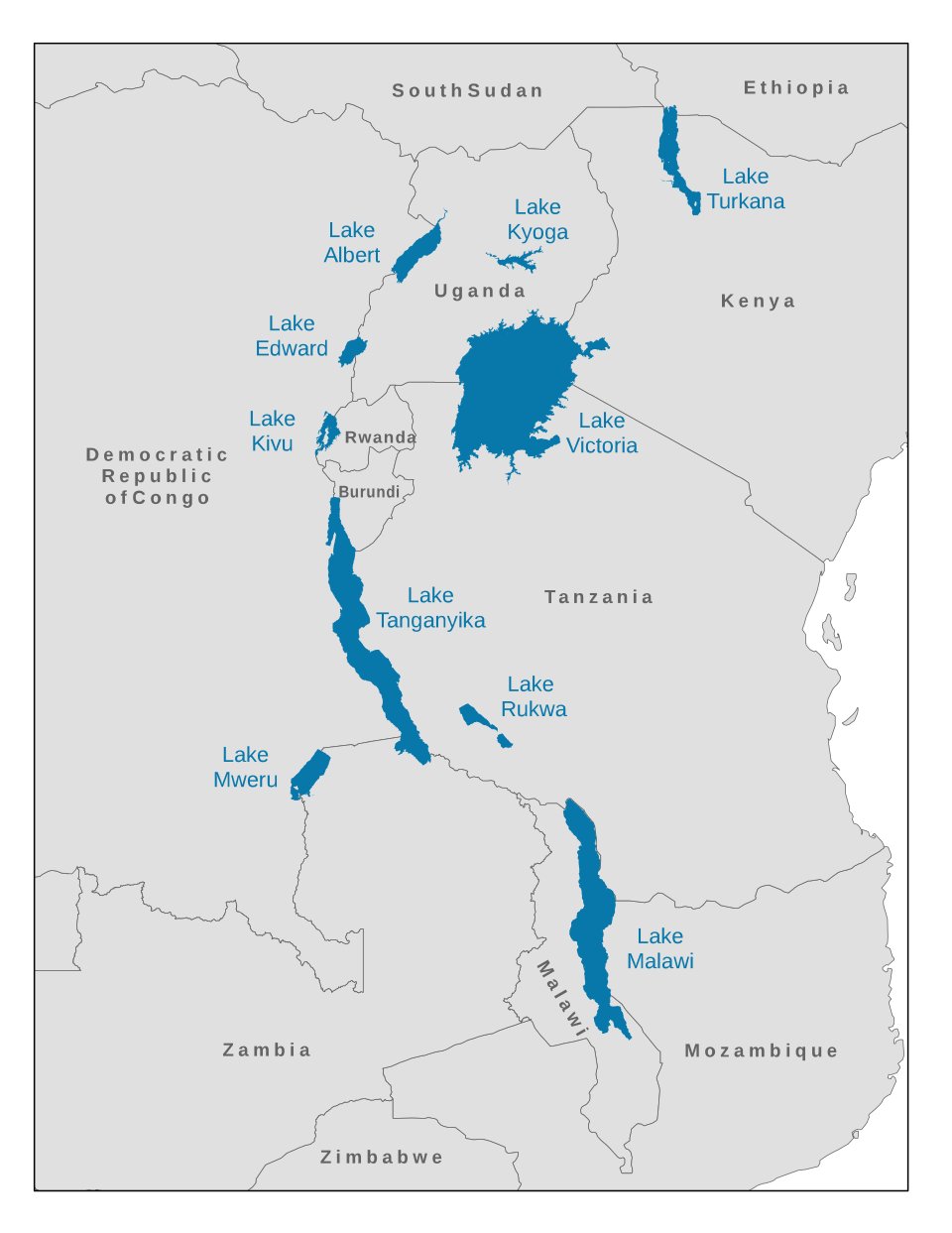
Map of Lake Malawi. Via Wikimedia Commons.
L
Livingstonii (Nimbochromis livingstonii) — A large predatory hap famous for playing dead on the substrate to ambush smaller fish. Size: 10 inches (25 cm) | Temperament: Semi-Aggressive | Min Tank: 125 gallons
M
Maingano (Melanochromis cyaneorhabdos) — Electric blue barred mbuna often confused with Melanochromis johanni. Size: 4 inches (10 cm) | Temperament: Aggressive | Min Tank: 55 gallons
Malawi Eye-Biter (Dimidiochromis compressiceps) — Laterally compressed predator named for its unusual feeding behavior in the wild. Size: 10 inches (25 cm) | Temperament: Aggressive | Min Tank: 125 gallons
Malawi Hawk (Aristochromis christyi) — Large open-water predator that needs serious tank space and experienced keepers. Size: 12 inches (30 cm) | Temperament: Aggressive | Min Tank: 150 gallons
P
Powder Blue Cichlid (Pseudotropheus socolofi) — Hardy, attractive beginner mbuna with consistent powder blue coloring in both sexes. Size: 5 inches (13 cm) | Temperament: Semi-Aggressive | Min Tank: 55 gallons
R
Red Empress (Protomelas taeniolatus) — One of the most colorful haps, with males showing red, blue, and orange across their entire body. Size: 7 inches (18 cm) | Temperament: Semi-Aggressive | Min Tank: 75 gallons
Red Kadango (Copadichromis borleyi) — Peaceful schooling hap with a brilliant red body and blue head in dominant males. Size: 7 inches (18 cm) | Temperament: Peaceful | Min Tank: 75 gallons
Red Zebra (Metriaclima estherae) — Classic orange-red mbuna and one of the most recognizable fish in the African cichlid hobby. Size: 5 inches (13 cm) | Temperament: Aggressive | Min Tank: 55 gallons
Rusty Cichlid (Iodotropheus sprengerae) — Widely considered the most peaceful mbuna, making it a solid choice for beginners. Size: 4 inches (10 cm) | Temperament: Semi-Aggressive | Min Tank: 40 gallons
S
Saulosi Cichlid (Chindongo saulosi) — Sexually dimorphic dwarf mbuna where males turn blue and females stay bright yellow. Size: 3.5 inches (9 cm) | Temperament: Semi-Aggressive | Min Tank: 40 gallons
Scrapermouth Mbuna (Labeotropheus trewavasae) — Algae-grazing specialist with a distinctive underslung mouth built for scraping rocks. Size: 5 inches (13 cm) | Temperament: Aggressive | Min Tank: 55 gallons
Sulfur Head Peacock (Aulonocara maylandi) — Distinctive peacock with a bright yellow blaze across the head and dorsal. Size: 5 inches (13 cm) | Temperament: Peaceful | Min Tank: 55 gallons
Sulphur Crest (Otopharynx lithobates) — Peaceful cave-dwelling hap with a striking yellow head blaze against a dark blue body. Size: 7 inches (18 cm) | Temperament: Semi-Aggressive | Min Tank: 75 gallons
Sunshine Peacock (Aulonocara baenschi) — Bright yellow peacock that is one of the most sought-after Aulonocara in the hobby. Size: 5 inches (13 cm) | Temperament: Peaceful | Min Tank: 55 gallons
T
Big Blue Hap (Tyrannochromis nigriventer) — Massive open-water predator that needs a very large tank and experienced keeper. Size: 12 inches (30 cm) | Temperament: Aggressive | Min Tank: 150 gallons
V
Venustus (Nimbochromis venustus) — Giraffe-patterned predator that develops stunning blue and yellow coloring as it matures. Size: 10 inches (25 cm) | Temperament: Semi-Aggressive | Min Tank: 125 gallons
Y
Yellow Lab Cichlid (Labidochromis caeruleus) — The most popular beginner mbuna, known for bright yellow coloring and a calm temperament rare among rock-dwellers. Size: 4 inches (10 cm) | Temperament: Peaceful | Min Tank: 30 gallons
Species Coming Soon
Lake Malawi is home to hundreds of cichlid species, and the hobby-available list grows every year as new collection points are discovered and breeders work with rarer varieties. We are actively building care guides for additional Malawi species beyond the 28 listed here. Check back regularly as we expand this directory with detailed profiles covering tank setup, feeding, breeding, and compatible tankmates for each species.
Frequently Asked Questions
Are Lake Malawi cichlids aggressive?
Aggression varies significantly across the three major groups. Mbuna are the most aggressive overall. They are territorial rock-dwellers that will chase, lip-lock, and harass tankmates constantly. Haps are moderately aggressive, with most species being semi-aggressive open-water swimmers that do well in mixed hap and peacock setups. Peacocks are the most peaceful group, though males will still spar with each other over territory. The key to managing aggression in any Malawi tank is overstocking to spread it out, providing plenty of rockwork for line-of-sight breaks, and avoiding species that look too similar in color or pattern.
What size tank do I need for Malawi cichlids?
A 55-gallon tank is the practical minimum for most mbuna and peacock setups, though a 75-gallon gives you much more room to work with stocking and aggression management. Smaller mbuna like Yellow Labs, Saulosi, and Rusty Cichlids can work in a 40-gallon, but you will have less flexibility. Haps and larger predatory species like Venustus, Livingstonii, and Malawi Hawks need 125 to 150 gallons minimum because of their adult size and swimming requirements. Bigger is always better with Malawi cichlids because overstocking is a common aggression management strategy, and that demands extra filtration and water volume.
Can you mix Mbuna and Haps in the same tank?
It is generally not recommended, and experienced Malawi keepers almost always advise against it. Mbuna are hyper-territorial herbivores that will harass the more laid-back haps and peacocks. Mbuna also need a different diet (high in spirulina and vegetable matter), while haps and peacocks are omnivores or predators that need more protein. If you mix them, the mbuna will usually dominate feeding time and stress out the haps and peacocks. The one common exception is keeping a few of the more peaceful mbuna like Yellow Labs or Acei Cichlids in a hap and peacock tank, but even that requires careful monitoring. The safest approach is to keep mbuna with mbuna, and haps with peacocks.
What do Malawi cichlids eat?
Diet depends on the group. Mbuna are primarily herbivores and algae grazers in the wild, so they need a diet high in spirulina and vegetable-based foods. Feeding mbuna high-protein foods like bloodworms regularly can cause a potentially fatal condition called Malawi bloat. Haps and peacocks are omnivores to carnivores and do well on quality cichlid pellets supplemented with frozen foods like mysis shrimp, brine shrimp, and krill. Predatory haps like the Malawi Hawk and Eye-Biter need larger protein-rich foods. A quality cichlid-specific pellet should be the staple for all groups, with supplemental feeding adjusted to the species.
What water parameters do Malawi cichlids need?
Lake Malawi is an alkaline, hard-water lake, so these cichlids need a pH between 7.8 and 8.6 and moderate to high water hardness (10 to 20 dGH). Temperature should be kept between 76 and 82 degrees Fahrenheit (24 to 28 degrees Celsius). If your tap water is naturally soft or acidic, you can buffer it with crushed coral, aragonite sand, or a commercial cichlid buffer. The good news is that most municipal tap water in the US is already close to what Malawi cichlids need, making them easier to keep than many soft-water species that demand RO water or peat filtration.
Can Malawi cichlids live with other fish?
Lake Malawi cichlids are best kept with other Malawi cichlids. Their alkaline water requirements, territorial behavior, and aggression levels make them poor candidates for traditional community tanks. That said, some keepers successfully house them with Synodontis catfish (particularly Synodontis multipunctatus, which is also from the East African rift lakes), large Plecos, and sometimes large, fast-moving species that can hold their own. Avoid keeping them with slow-moving, long-finned fish, small tetras, or anything that cannot handle the constant activity and territorial disputes that are normal in a Malawi tank.
Closing Thoughts
Lake Malawi cichlids are the gateway to a completely different side of the freshwater hobby. Once you set up your first Malawi tank and watch a male Peacock display his colors or a group of mbuna battle over a cave, you understand why so many people end up with multiple tanks dedicated to these fish. The combination of color, personality, and hardiness makes them one of the most satisfying groups to keep, even if the aggression management takes some learning.
This directory will continue to grow as we publish more care guides. If there is a Lake Malawi species you want us to cover next, let us know in the comments below.
The coral red pencilfish is one of the most visually striking micro fish in the hobby. Males in breeding color display an intense red that rivals any fish three times their size. But that color only shows in soft, acidic water with dim lighting and a dark substrate. Hard water, bright lights, and the red disappears entirely.
Coral red pencilfish in the wrong water are brown. In the right water, they are the most vivid micro fish you will ever see.
The Reality of Keeping Coral Red Pencilfish
Males are the colorful ones. Female coral red pencilfish are significantly less colorful than males. The intense coral-red coloring is primarily a male trait. A mixed group with more males shows the most color.
They need calm conditions. Like all pencilfish, the coral red needs gentle flow and calm tank mates. Active, boisterous fish stress them into hiding and the color fades. Build the tank around their needs.
Night colors are completely different. Like all Nannostomus species, coral red pencilfish change their color pattern at night. The daytime red fades and is replaced by dark bars. This is normal and one of the most interesting aspects of keeping pencilfish.
Biggest Mistake New Owners Make
Keeping them with active, aggressive tank mates. The coral red pencilfish shows its best color when it feels secure. In a hectic tank, it hides and the red fades to a pale shadow of its potential.
Expert Take (Mark Valderrama, AquariumStoreDepot)
The coral red pencilfish is the best entry point into pencilfish keeping for hobbyists who want both the unique pencilfish behavior and genuine color impact. It delivers both in a way that no other pencilfish does.
Key Takeaways
Arguably the most colorful pencilfish species with striking red and black bands
Males are territorial and display constantly, making them fascinating to watch
Soft, acidic water is essential for health and coloration
Small species (1.2 inches max) suitable for nano tanks of 10+ gallons
Micropredator that prefers live and frozen foods over dry food
Map by Kmusser, CC BY-SA 3.0, via Wikimedia Commons
Species Overview
Field
Details
Scientific Name
Nannostomus mortenthaleri
Common Names
Coral Red Pencilfish, Red Arc Pencilfish, Mortenthal’s Pencilfish
Family
Lebiasinidae
Origin
Rio Nanay basin, Loreto, Peru
Care Level
Moderate
Temperament
Peaceful but territorial among males
Diet
Omnivore (micropredator)
Tank Level
Mid to Top
Maximum Size
1.2 inches (3 cm)
Minimum Tank Size
10 gallons (38 liters)
Temperature
75-82°F (24-28°C)
pH
4.0-7.0
Hardness
0-8 dGH
Lifespan
3-5 years in captivity
Breeding
Egg scatterer
Breeding Difficulty
Moderate to Difficult
Compatibility
Specialist community
OK for Planted Tanks?
Yes
Classification
Taxonomic Level
Classification
Order
Characiformes
Family
Lebiasinidae
Subfamily
Pyrrhulininae
Genus
Nannostomus
Species
N. mortenthaleri (Paepke & Arendt, 2001)
ASD Difficulty Rating: Intermediate | 5/10
Coral red pencilfish need soft, slightly acidic water and peaceful tank mates. The care is straightforward once the setup is right, but wrong companions or wrong parameters undermine their health and color.
This species was described by Hans-Joachim Paepke and Klaus Arendt in 2001, making it one of the most recently described pencilfish species. It was named after Martin Mortenthaler, a Peruvian aquarium fish exporter who first collected and brought the species to scientific attention.
Note on family placement: Pencilfish belong to Lebiasinidae, which is separate from Characidae. This family was not affected by the 2024 Melo et al. revision. Lebiasinidae has been taxonomically stable, and Nannostomus is universally recognized as the pencilfish genus.
Origin & Natural Habitat
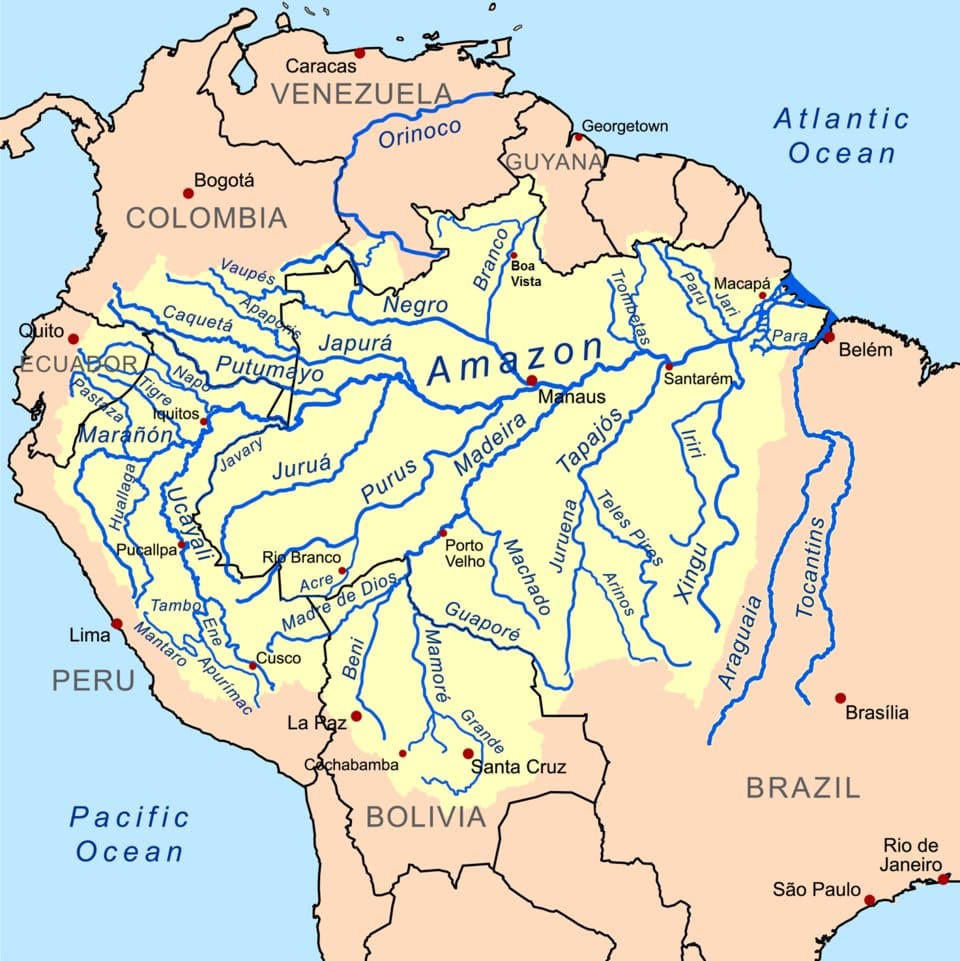
Map of the Amazon River basin. The coral red pencilfish is found only in the Rio Nanay system near Iquitos, Peru, within the upper Amazon. Image by Kmusser, CC BY-SA 3.0, via Wikimedia Commons.
The coral red pencilfish has an extremely limited natural range. It’s found only in the Rio Nanay drainage near Iquitos in Loreto, Peru, within the upper Amazon basin. This restricted distribution makes it one of the more geographically limited aquarium species.
In the wild, they inhabit small, slow-moving forest streams and pools with dense aquatic and riparian vegetation. The water is typically very soft, acidic, and stained with tannins from decomposing plant matter. The substrate is covered in leaf litter, and fallen branches provide additional structure and territories for the fish.
The limited range of this species means wild populations is vulnerable to habitat destruction. Most fish in the aquarium trade are now captive-bred, which is both good for wild populations and beneficial for aquarists since captive-bred fish adapt more readily to aquarium conditions.
Appearance & Identification
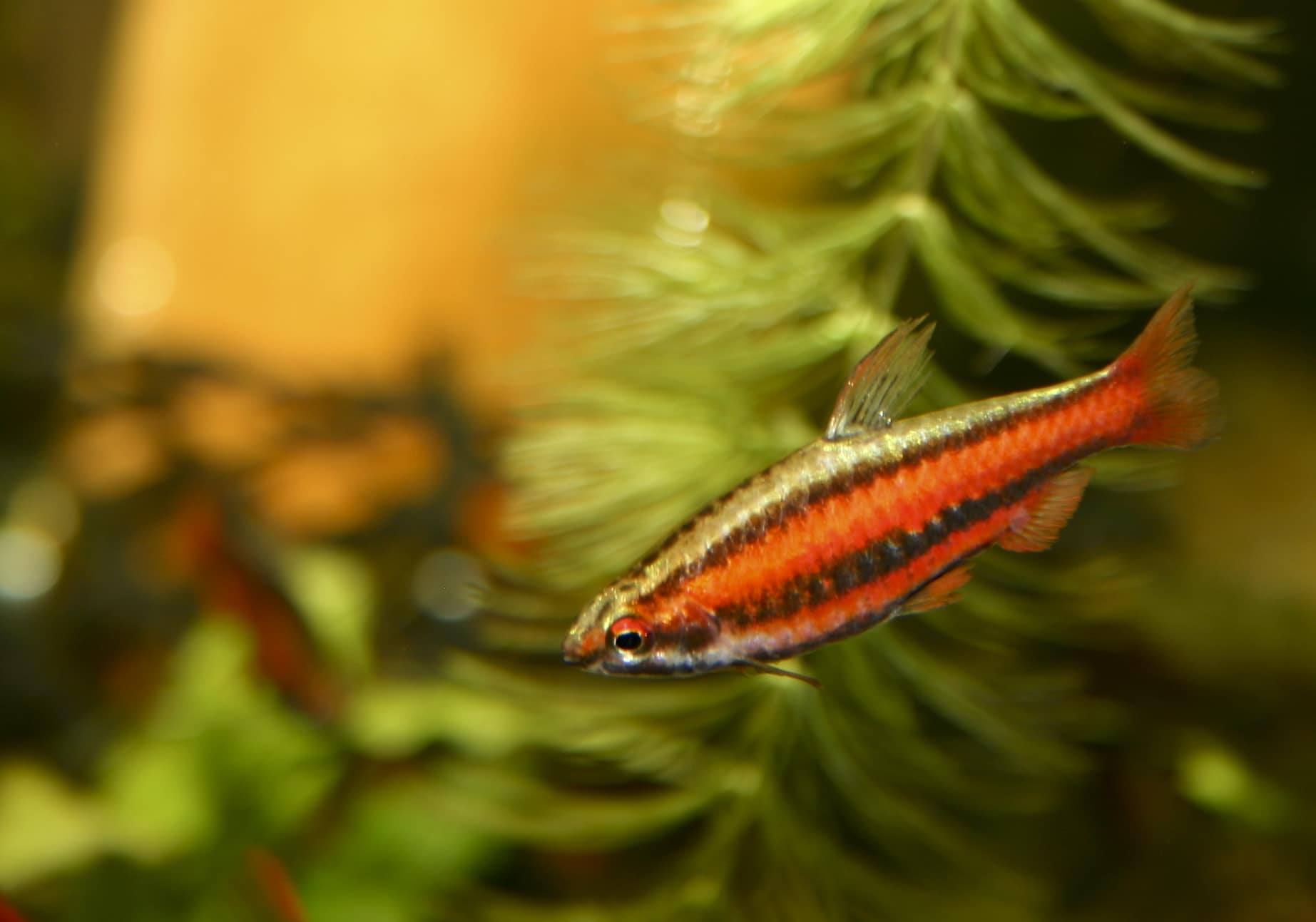
The coral red pencilfish is widely regarded as the most colorful member of the Nannostomus genus. Males display three bold horizontal bands: broad red stripes alternating with black stripes, running the length of the body. The red is an intense coral to crimson that deepens with the fish’s mood and condition. When males are displaying to each other, the coloration reaches its peak intensity.
The body shape is typical of pencilfish: elongated, cylindrical, and streamlined. Like other Nannostomus species, they often hover at an oblique angle in the water, which is a characteristic pencilfish behavior rather than a sign of illness.
Sexual dimorphism is easy to see in this species. Males are brilliantly colored with the full red and black pattern, while females are considerably more subdued. Females show a brownish-olive body with faint striping and lack the intense red coloring. Males also develop slightly more elongated body proportions.
Like all pencilfish, N. mortenthaleri displays a nocturnal color pattern that appears when the lights go off. The bold stripes fade and are replaced by a pattern of vertical bars. This is normal and not a cause for concern.
Average Size & Lifespan
This is a small species, reaching a maximum of about 1.2 inches (3 cm). Their small size makes them suitable for nano and small community tanks, though their water chemistry requirements add complexity to the setup.
With proper care in appropriate water conditions, expect a lifespan of 3 to 5 years. Soft, acidic water, a varied diet, and a well-structured tank are the keys to longevity.
Care Guide
Tank Size
A 10-gallon tank is the minimum for a small group. For a group of 8 to 12 with other small tank mates, a 20-gallon long is ideal. These fish don’t need a lot of swimming space, but territorial males need enough room to establish their own small domains without constant conflict.
Water Parameters
Parameter
Ideal Range
Temperature
75-82°F (24-28°C)
pH
4.0-7.0 (prefers acidic)
General Hardness
0-8 dGH
KH
0-4 dKH
Ammonia / Nitrite
0 ppm
Nitrate
Below 15 ppm
Soft, acidic water brings out the best coloration and supports long-term health. RO/DI water remineralized to target parameters is the most reliable approach. Indian almond leaves, alder cones, and driftwood help naturally acidify the water and release beneficial tannins. The darker and softer the water, the more vivid the reds become.
Water quality must be excellent. These fish are not tolerant of elevated nitrates or organic waste. Small, frequent water changes (15 to 20 percent twice weekly) work better than large weekly changes for maintaining stability.
Hard Rule: Never house coral red pencilfish with fin-nippers or aggressive tank mates. Their slow, deliberate movement and elongated body make them an easy target. Tiger barbs, serpae tetras, and even active danios will stress or injure them in a shared tank. They need genuinely peaceful companions of similar size.
Tank Setup
A well-planted tank with lots of visual barriers is ideal. Use driftwood branches, dense plants, and leaf litter to create separate micro-territories for males. Without adequate structure, dominant males will relentlessly harass subordinates.
Keep the lighting subdued. Floating plants are highly recommended to diffuse light and add security. Low-light plants like Java fern, Anubias, Cryptocoryne, and mosses work well in these conditions.
A dark substrate brings out the best coloring. Black sand is a popular choice that provides excellent contrast with the fish’s red and black pattern.
Is the Coral Red Pencilfish Right for You?
Coral red pencilfish are a premium species that demand premium care. Here’s who should attempt them:
You can provide consistently pristine water quality. weekly water changes are mandatory, not optional
You have a calm, heavily planted nano tank with minimal current
You’re willing to invest in the specific conditions these fish need. soft, acidic water with tannins
You appreciate the unique hovering behavior that sets pencilfish apart from all other small fish
You have experience keeping sensitive species and understand drip acclimation
Don’t get these as your first pencilfish. start with a hardier species like the three-lined pencilfish
What People Get Wrong
The biggest mistake is housing coral red pencilfish with incompatible tank mates. Their slow, deliberate swimming style and elongated fins are a target for any nippy or aggressive species. The peaceful reputation of pencilfish makes people underestimate this risk. Put them with the wrong companions and you will see fading color, hiding behavior, and damaged fins within days.
Second mistake: wrong water chemistry. Coral red pencilfish develop their most intense red coloration in soft, slightly acidic water with pH 5.5 to 7.0 and low hardness. In harder, more alkaline water they remain healthy enough but the color stays muted. The red that makes this species striking requires the right environment to express fully.
Third: keeping too small a group. Pencilfish in groups under 6 are timid and stay near cover. A group of 10 or more shows the active hovering and displaying behavior that makes pencilfish so interesting to watch — males extend their fins, position themselves in mid-water, and interact in ways that small groups never produce.
Tank Mates
Coral red pencilfish is kept in a specialist community with carefully selected tank mates. They’re peaceful toward other species but males are territorial toward each other.
Good Tank Mates
Small, peaceful tetras (ember tetras, green neons, cardinal tetras)
Other Nannostomus species (though avoid similar-looking species to prevent hybridization)
Active, boisterous species that would stress them or outcompete for food
Large or aggressive fish
Species requiring hard, alkaline water
Food & Diet
Coral red pencilfish are micropredators in the wild, feeding on tiny invertebrates, insect larvae, and zooplankton. They have small mouths and prefer small food items.
Best foods: Live baby brine shrimp, daphnia, grindal worms, microworms
Frozen foods: Cyclops, baby brine shrimp, daphnia
Dry foods: High-quality micro pellets or crushed flakes (some individuals accept these, many prefer live/frozen)
Feed small amounts two to three times daily. A diet heavy in live foods brings out the most intense coloration, especially in males. If you want to see these fish at their absolute best, a regular supply of live baby brine shrimp is the way to go.
Breeding & Reproduction
Coral red pencilfish is bred in captivity, though it requires some effort and attention to water conditions.
Breeding Setup
Breeding tank: 5 to 10 gallons with very dim lighting
Water: Very soft, acidic (pH 5.0 to 6.0, near-zero hardness)
Temperature: 79 to 82°F (26 to 28°C)
Decor: Fine-leaved plants like Java moss, or spawning mops
Filtration: Gentle sponge filter
Males court females with intense color displays and body posturing. Eggs are deposited among fine-leaved plants, typically a few at a time over the course of several days. Adults will eat eggs if they find them, so dense plant cover is essential to protect some of the spawn. Eggs hatch in approximately 24 to 36 hours, and fry are extremely tiny, requiring infusoria or paramecium as first food.
Common Health Issues
Water chemistry stress: Keeping them in hard, alkaline water leads to washed-out coloring, stress, and increased disease susceptibility.
Ich and velvet: Can occur during acclimation or after temperature swings.
Starvation: Their small mouths mean they can’t eat large food items. Make sure food is appropriately sized.
Male aggression: Dominant males can harass subordinates in tanks without adequate structure. Provide plenty of visual breaks.
Common Mistakes to Avoid
Hard, neutral water: The most common mistake. These fish need soft, acidic conditions to show their true colors and stay healthy.
Food too large: They have tiny mouths. Standard-sized bloodworms and pellets may be too big. Use micro-sized foods.
Not enough cover: Males need visual barriers to establish territories. Without them, one male will dominate and stress the rest.
Keeping only males: While the males are more colorful, an all-male group leads to constant aggression. Include females to diffuse tension.
Bright lighting: Washes out their coloration and makes them shy. Subdued lighting is essential.
Where to Buy
Coral red pencilfish are a specialty species available from dedicated online retailers and importers. They’re not common at chain pet stores but is found through these trusted sources:
Never add them to a tank that has not fully cycled. Coral red pencilfish are sensitive to water quality swings, and ammonia or nitrite in a new setup is a death sentence for fish this small.
The most common reason is water that’s too hard or alkaline. These fish need soft, acidic water to display their best coloration. Other factors include bright lighting, stress from aggressive tank mates, and a diet lacking in live foods. Fix the water chemistry first, and the color should improve dramatically.
Are coral red pencilfish aggressive?
Males are territorial toward each other, but they’re peaceful toward other species. The territorial displays between males are actually one of the most entertaining aspects of keeping this species. Provide enough structure for each male to claim a small territory, and the aggression stays at the level of displaying and posturing rather than real damage.
Can I keep coral red pencilfish in a nano tank?
Yes. A 10-gallon tank is suitable for a small group of 6 to 8 fish. The main challenge isn’t space but rather maintaining stable, soft, acidic water chemistry in a small volume. Larger tanks are actually easier to manage from a water quality perspective.
What It Is Actually Like Living With Coral Red Pencilfish
Males in full color are genuinely stunning. The coral-red body glowing against green plants and dark substrate creates a display that rivals much more expensive species.
They hover motionless in the water column like all pencilfish, but the intense red coloring makes them much easier to spot and appreciate than subtler Nannostomus species.
The night-time color change is dramatic. Lights-on reveals bright red fish. Lights-off reveals barred, dark-patterned fish. It is like having two species in one.
They pair beautifully with other calm nano fish, small rasboras, and corydoras.
How the Coral Red Pencilfish Compares to Similar Species
Coral Red Pencilfish vs. Three-Lined Pencilfish
Three-lined pencilfish are the gateway into pencilfish keeping. They’re notably hardier than coral reds and more forgiving of less-than-perfect water conditions. The color difference is significant. coral reds offer vivid red coloration that three-lined pencilfish can’t match with their more subdued striped pattern. If you’re new to pencilfish, start with three-lined and learn the unique behavioral patterns and feeding requirements before investing in the more demanding (and more expensive) coral reds. Check out our Three-Lined Pencilfish care guide for more details.
Coral Red Pencilfish vs. Ruby Tetra
Ruby tetras share that deep red coloration and small size, but their behavior is completely different. Ruby tetras school actively while coral red pencilfish hover. Care requirements overlap. both want soft, acidic water. but ruby tetras are notably hardier and more forgiving. If you want red nano fish without the headaches, ruby tetras are the practical choice. Coral red pencilfish are for the hobbyist who specifically wants that unique pencilfish aesthetic and has the skills to maintain it. Check out our Ruby Tetra care guide for more details.
Closing Thoughts
The coral red pencilfish is a tiny fish that delivers an outsized visual impact. A group of males displaying to each other in a dimly lit blackwater tank, with their reds blazing against a dark background, is one of the most beautiful sights in freshwater fishkeeping. It’s the kind of fish that makes you lean in and stare.
The care requirements are specific but not complicated. Soft water, acidic pH, small foods, dim lighting, and plenty of plant cover. If you’re already running a blackwater setup or willing to invest in RO filtration, adding coral red pencilfish is one of the best decisions you can make. They’re small, but they’re absolutely unforgettable.
Recommended Video
Check out our Tetra Tier List video where we rank popular tetra species for the home aquarium:
The marble hatchetfish will jump out of your tank. That is not a possibility. It is a certainty. Any gap in your lid, any space around filter intakes or heater cords, and you will find a dried hatchetfish on the floor. This is the single most important rule for keeping this species alive.
No lid, no hatchetfish. Every keeper learns this rule. The only question is whether you learn it before or after you find one on the floor.
The Reality of Keeping Marble Hatchetfish
The marble hatchetfish is a strict surface-dwelling fish that will jump out of any tank without a tight-fitting lid. That is not a warning you can file away for later. It is the single most important fact about keeping this species. Every hatchetfish keeper has lost at least one fish to jumping. If your lid has gaps around filter intakes, heater cords, or airline tubing, the hatchetfish will find them.
No lid? No hatchetfish. That is the entire discussion.
A tight-fitting lid with every gap sealed. A 20-gallon minimum with calm surface water. Soft, slightly acidic water. A group of 6+. And the discipline to keep that lid on.
The marble hatchetfish is the only commonly available freshwater fish that can genuinely fly. That ability is both its most fascinating feature and its biggest risk in captivity.
Expert Take (Mark Valderrama, AquariumStoreDepot)
Marble hatchetfish are one of the most unique and fascinating species you can keep. The hatchet body shape, the surface-dwelling behavior, and the jumping ability make them unlike anything else in the hobby. Just seal your lid properly.
Key Takeaways
A tight-fitting lid is absolutely non-negotiable because these fish fly out of the water
Surface-dwelling species that spends nearly all its time at the top of the tank
Prefers soft, acidic water with plenty of floating plants
Peaceful schooling fish that should be kept in groups of 6 or more
Insectivore that does best with a diet including floating foods and small insects
Map by Kmusser, CC BY-SA 3.0, via Wikimedia Commons
Species Overview
Field
Details
Scientific Name
Carnegiella strigata
Common Names
Marble Hatchetfish, Marbled Hatchetfish
Family
Gasteropelecidae
Origin
Amazon basin, Guianas, Peru
Care Level
Moderate
Temperament
Peaceful
Diet
Insectivore / Omnivore
Tank Level
Top
Maximum Size
1.4 inches (3.5 cm)
Minimum Tank Size
15 gallons (57 liters)
Temperature
75-82°F (24-28°C)
pH
5.0-7.5
Hardness
2-12 dGH
Lifespan
2-5 years in captivity
Breeding
Egg scatterer
Breeding Difficulty
Difficult
Compatibility
Community
OK for Planted Tanks?
Yes
Classification
Taxonomic Level
Classification
Order
Characiformes
Family
Gasteropelecidae
Genus
Carnegiella
Species
C. strigata (Günther, 1864)
This species was described by Albert Günther in 1864. The genus Carnegiella was named after Margaret Carnegie, daughter of Andrew Carnegie, by Carl Eigenmann in 1909. The family Gasteropelecidae contains only three genera of flying hatchetfishes and is unique among freshwater fish for its members’ ability to achieve true powered flight.
Note on family placement: Gasteropelecidae is separate from Characidae and was not affected by the 2024 Melo et al. revision that reorganized Characidae into four families. The hatchetfish family has been taxonomically stable for decades.
Origin & Natural Habitat
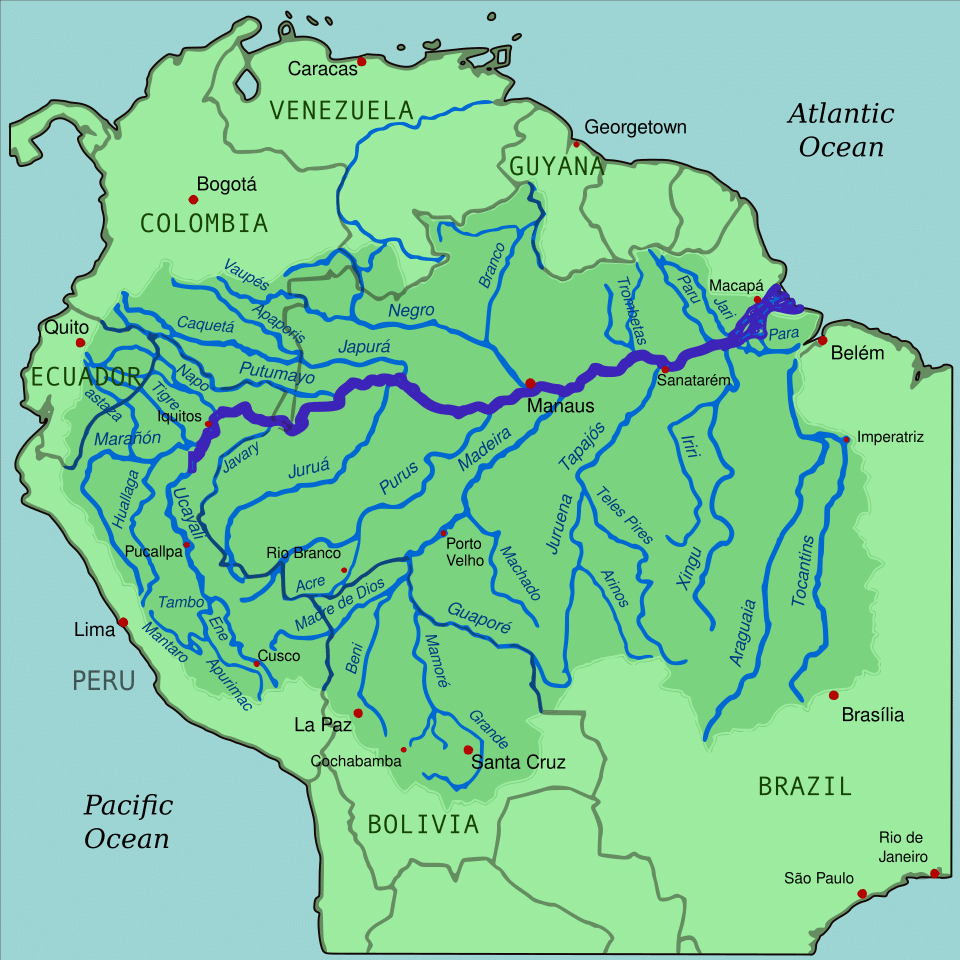
Map of the Amazon River basin. The marble hatchetfish is widely distributed throughout the Amazon basin and its tributaries. Image by Kmusser, CC BY-SA 3.0, via Wikimedia Commons.
The marble hatchetfish has a wide distribution across northern South America. It’s found throughout the Amazon basin in Brazil, Peru, and Colombia, as well as in Guyana, Suriname, and French Guiana. It inhabits a variety of habitat types across this range, but shows a strong preference for forested waterways.
In the wild, marble hatchetfish live in small, slow-moving streams and flooded forest areas with overhanging vegetation. They’re almost exclusively found at the water’s surface, hanging just below the surface film among floating plants and leaf litter. The water in their native habitats is typically soft, acidic, and tannin-stained.
Their position at the surface isn’t random. It’s where they hunt. Insects landing on or flying near the water surface are the primary food source. When startled by predators approaching from below, they launch themselves out of the water using their powerful pectoral muscles and can cover distances of several feet through the air.
The marble hatchetfish is instantly recognizable. Its body is extremely deep and laterally compressed, with a pronounced ventral keel that gives it the “hatchet” profile. The pectoral fins are large, wing-like structures positioned high on the body, and the powerful muscles that drive them make up a significant portion of the fish’s body mass.
The coloring is subtle but attractive. The body is silvery with a pattern of dark brown to black marbled or mottled markings along the flanks, which is where the “marble” name comes from. A dark lateral stripe runs from the gill plate to the caudal peduncle. The overall effect is a well-camouflaged fish when viewed from below against a backdrop of dappled light.
Sexual dimorphism is minimal and difficult to detect. Females may be slightly rounder when viewed from above, especially when carrying eggs, but there are no reliable external differences in coloring or finnage.
Average Size & Lifespan
The marble hatchetfish is a small species, reaching only about 1.4 inches (3.5 cm) in length. Despite their small size, their deep body shape gives them a visual presence that’s larger than you’d expect from a fish under two inches long.
Lifespan in captivity is typically 2 to 5 years, though reaching the upper end requires excellent water quality and a consistent diet. Wild-caught specimens is more sensitive during acclimation than captive-bred fish.
ASD Difficulty Rating: Moderate
Moderate. More sensitive than they look – particularly to water quality swings and temperature fluctuations. The lid requirement is non-negotiable. Beyond that, they are a rewarding, unique surface fish that adds a dimension most community tanks completely miss.
Care Guide
Tank Size
A 15-gallon tank is the minimum for a group of 6 marble hatchetfish, but a 20-gallon long is much better. These fish need horizontal surface area more than depth. A tank with a wide, long footprint gives them more surface territory to patrol. The tank doesn’t need to be tall since they rarely venture below the top third of the water column.
Water Parameters
Parameter
Ideal Range
Temperature
75-82°F (24-28°C)
pH
5.0-7.5 (prefers slightly acidic)
General Hardness
2-12 dGH
KH
1-6 dKH
Ammonia / Nitrite
0 ppm
Nitrate
Below 20 ppm
Marble hatchetfish prefer soft, slightly acidic water but can adapt to a modest range of conditions. They do best with Indian almond leaves and driftwood to naturally lower pH and add tannins. Consistent water quality is critical. They’re more sensitive to parameter swings than many other community fish, so stable conditions and regular water changes are important.
Keep the current gentle. These fish live at the surface in calm water, and strong flow from filters or powerheads will stress them. Point filter outputs toward the glass or use a spray bar to diffuse the flow.
Tank Setup
The most important element is a completely sealed lid. Marble hatchetfish are among the most notorious jumpers in the hobby. They don’t just bump into the lid occasionally. They launch themselves with muscular force. Any gap larger than a few millimeters is a potential escape route. Seal around filter intakes, heater cords, and airline tubing with foam or mesh.
Floating plants are essential. Amazon frogbit, Salvinia, red root floaters, or duckweed give hatchetfish cover at the surface, reduce stress, and dim the lighting below. These fish feel most secure when they have floating vegetation to hide under.
Below the surface, you can set up whatever you like. Planted tanks, driftwood arrangements, and dark substrates all work well. The hatchetfish won’t interact much with the lower levels of the tank, which leaves that space available for mid-level and bottom-dwelling tank mates.
Tank Mates
Marble hatchetfish are peaceful and occupy the top layer of the tank exclusively. This makes them excellent companions for mid-level and bottom-dwelling species since there’s very little territorial overlap.
Large or aggressive surface feeders that would outcompete them
Boisterous or fast-moving species that cause stress
Large cichlids or predatory fish
Food & Diet
In the wild, marble hatchetfish are surface-feeding insectivores. They eat insects that land on the water surface, mosquito larvae, and other small invertebrates found at the air-water interface. This feeding ecology is important to replicate in the aquarium.
Feed foods that float or stay near the surface:
Best foods: Wingless fruit flies, small crickets, mosquito larvae (if safely sourced)
Frozen foods: Bloodworms, daphnia, brine shrimp (offered at the surface)
Dry foods: Floating micro pellets, crushed flakes that stay at the surface
The key is making sure food stays at the surface long enough for them to eat it. These fish rarely chase food below the top inch of water. Sinking pellets and heavy foods will go to waste. Feed small amounts two to three times daily. Wingless fruit flies are arguably the single best food you can offer. They’re easy to culture at home, and hatchetfish go wild for them.
Breeding & Reproduction
Breeding marble hatchetfish in captivity is difficult and rarely accomplished by hobbyists. They’re egg scatterers that release eggs among fine-leaved floating plants at the surface. The eggs sink to the bottom after fertilization.
Breeding Setup
Breeding tank: 10 to 15 gallons with very dim lighting
Water: Very soft, acidic (pH 5.5 to 6.0, gH under 3)
Filtration: Air-driven sponge filter with very gentle flow
Condition pairs with abundant live foods for at least two weeks. Spawning, if it occurs, typically happens in the early morning. Remove adults afterward as they don’t guard eggs. Eggs hatch in about 24 to 36 hours, and fry are extremely small and require infusoria or liquid fry food for the first week or two before graduating to baby brine shrimp.
Most marble hatchetfish in the trade are wild-caught, which speaks to how challenging captive breeding remains for this species.
Common Health Issues
Jumping and escape: The number one cause of loss. An unsecured tank lid will result in dead fish, guaranteed.
Ich (white spot disease): Wild-caught specimens are particularly susceptible during acclimation. Quarantine new arrivals and acclimate slowly.
Sensitivity to water quality: They’re less tolerant of elevated nitrates and parameter swings than many community fish. Keep up with maintenance.
Shipping stress: Wild-caught fish can arrive in poor condition. Buy from reputable sellers and quarantine for at least two weeks.
Once established in a stable tank with appropriate water conditions, marble hatchetfish are reasonably hardy. The critical period is the first few weeks after introduction. If they settle in and start eating well, they typically do fine long-term.
Hard Rule
Marble hatchetfish will jump through any gap in your lid. This is not occasional behavior – it is constant. A loose cover or one with significant openings will result in dead fish on the floor. Seal every gap before you add them to the tank.
Common Mistakes to Avoid
Open-top or poorly sealed tanks: The single most common and most preventable mistake. Seal every gap.
Sinking foods only: They won’t chase food below the surface. Use floating foods or offer food directly at the waterline.
Strong current: Surface turbulence disrupts their feeding and stresses them. Keep flow gentle.
No floating plants: They feel exposed and stressed without cover at the surface. Floating plants are not optional.
Too few fish: Keep at least 6. They’re much less stressed and more active in proper groups.
Skipping quarantine: Wild-caught hatchetfish are common in the trade and often carry parasites. Always quarantine.
Where to Buy
Marble hatchetfish are widely available in the aquarium trade, both at local fish stores and online. Many are wild-caught, so buying from reputable sellers who properly condition their fish is important. Check these trusted sources:
What It Is Actually Like Living With Marble Hatchetfish
The Marble Hatchetfish is more active and aware of its surroundings than most people expect. In a properly set up tank, it shows behaviors that generic care guides never mention.
Feeding becomes a routine both you and the fish look forward to. The Marble Hatchetfish learns your schedule and responds to your presence near the tank within the first few weeks.
Maintenance is consistent, not difficult. Regular water changes and parameter monitoring become second nature. The fish rewards consistent care with better color, more activity, and visible health.
Over time, you notice personality traits unique to your individual fish. Some are bold explorers. Others are cautious observers. That individual personality is what turns casual fishkeeping into a genuine hobby.
Frequently Asked Questions
Can marble hatchetfish really fly?
Yes. Unlike flying fish in the ocean that glide on extended fins, hatchetfish achieve true powered flight by rapidly beating their enlarged pectoral fins. They can cover several feet through the air. This is an escape response triggered by predators or sudden disturbances, and it’s why a secure lid is absolutely essential.
Do marble hatchetfish need to be in groups?
Yes. They’re schooling fish that become stressed and skittish when kept alone or in small numbers. A minimum group of 6 is recommended, and 8 to 10 is even better. In a proper school, they display more natural behavior and spend less time hiding.
Will marble hatchetfish eat regular fish flakes?
Most will accept crushed flakes if they float at the surface long enough. But they do much better with a diet that includes live or frozen foods, especially wingless fruit flies. Variety is important for their long-term health.
Closing Thoughts
The marble hatchetfish occupies a niche in the aquarium that very few other fish can fill. It’s a dedicated surface dweller with a body plan that’s genuinely unlike anything else in freshwater fishkeeping. The fact that it can actually fly makes it one of those species that never gets old to watch or talk about.
The care requirements aren’t complicated, but they are specific. A sealed lid, floating plants, gentle current, and surface-oriented foods. Get those basics right, and you’ll have a group of fascinating little fish patrolling the top of your tank for years. Pair them with tetras and corydoras below, and you’ve got a complete South American community that covers every level of the water column.
Recommended Video
Check out our Tetra Tier List video where we rank popular tetra species for the home aquarium:
Wiest, F.C. (1995). The specialized locomotory apparatus of the freshwater hatchetfish family Gasteropelecidae. Journal of Zoology, 236(4), 571-592.
Explore More Tetras
The marble hatchetfish is just one of dozens of characin species we cover in our complete species directory. Whether you’re into surface specialists or classic community tetras, our guide has you covered.
Loaches are some of the most fascinating, personality-driven fish in the freshwater hobby. I have been keeping and studying these bottom-dwellers for over 25 years, and they never stop surprising me. From the playful antics of Clown Loaches to the quirky burrowing behavior of the Horseface Loach, this group offers something for every type of aquarist.
The fish we call “loaches” span several families. The Botiidae family includes the bold, colorful species like Clown Loaches and Yoyo Loaches that most hobbyists picture first. Cobitidae covers the eel-shaped kuhli loaches and the cold-tolerant Dojo Loach. Gastromyzontidae (sometimes grouped under Balitoridae) contains the flat-bodied hillstream loaches built for fast-flowing water. Nemacheilidae rounds out the group with stream-dwelling species like the Sumo Loach and Zodiac Loach. Despite the family differences, all loaches share a few things in common: they are scaleless or have very reduced scales, they possess barbels around the mouth, and most are bottom-oriented fish that appreciate hiding spots.
Whether you are shopping for a snail-eating workhorse, a peaceful nano species for a planted tank, or a high-flow hillstream oddball, this A-Z directory covers every loach species we have profiled at Aquarium Store Depot. Click any linked name to read the full care guide, and check back as we continue adding new species.
A | B | C | D | E | F | G | H | I | J | K | L | M | N | O | P | Q | R | S | T | U | V | W | X | Y | Z
B
Bengal Loach (Botia dario) — Colorful botiid loach with bold golden and dark blue-gray bands. Size: 6 inches (15 cm) | Temperament: Semi-Aggressive | Min Tank: 30 gallons
Black Kuhli Loach (Pangio oblonga) — Solid chocolate-brown variant of the kuhli family, equally secretive and peaceful. Size: 4 inches (10 cm) | Temperament: Peaceful | Min Tank: 15 gallons
Blue Botia (Yasuhikotakia modesta) — Large, powerful loach with subtle blue-gray coloring and a reputation for aggression. Size: 10 inches (25 cm) | Temperament: Aggressive | Min Tank: 75 gallons
C
Chinese Hillstream Loach (Beaufortia kweichowensis) — Flat-bodied sucker loach built for fast-flowing, oxygen-rich streams. Size: 3 inches (8 cm) | Temperament: Peaceful | Min Tank: 20 gallons
Clown Loach (Chromobotia macracanthus) — The king of loaches with bold orange and black bands, massive personality, and a 20+ year lifespan. Size: 12 inches (30 cm) | Temperament: Peaceful | Min Tank: 125 gallons
D
Dojo Loach (Misgurnus anguillicaudatus) — The weather-predicting eel-shaped loach that thrives in cooler water and tolerates beginner mistakes. Size: 10 inches (25 cm) | Temperament: Peaceful | Min Tank: 55 gallons
Dwarf Chain Loach (Ambastaia sidthimunki) — Tiny, active loach that swims in the midwater column rather than hiding on the bottom. Size: 2.5 inches (6 cm) | Temperament: Peaceful | Min Tank: 20 gallons
G
Gold Zebra Loach (Botia histrionica) — Striking botiid with bold dark and gold banding, active and social in groups. Size: 5 inches (12 cm) | Temperament: Semi-Aggressive | Min Tank: 40 gallons
H
Hillstream Loach (Sewellia lineolata) — Flat, disc-shaped loach built for high-flow environments with intricate spotted patterns. Size: 3 inches (8 cm) | Temperament: Peaceful | Min Tank: 20 gallons
Horseface Loach (Acantopsis choirorhynchos) — Long-snouted burrower that spends most of its time buried in sand substrate. Size: 8 inches (20 cm) | Temperament: Peaceful | Min Tank: 55 gallons
Hovering Zebra Loach (Yunnanilus cruciatus) — Tiny nano loach that hovers in the water column with a distinctive dark-striped pattern. Size: 1.5 inches (4 cm) | Temperament: Peaceful | Min Tank: 10 gallons
J
Java Loach (Pangio semicincta) — Close relative of the kuhli loach with shorter, more widely spaced bands. Size: 3 inches (8 cm) | Temperament: Peaceful | Min Tank: 15 gallons
K
Kuhli Loach (Pangio kuhlii) — The eel-shaped noodle fish beloved for its nocturnal personality and orange-and-brown striped body. Size: 4 inches (10 cm) | Temperament: Peaceful | Min Tank: 15 gallons
L
Lizard Loach (Homaloptera orthogoniata) — Flat-bodied stream loach with lizard-like appearance and high oxygen demands. Size: 5 inches (12 cm) | Temperament: Peaceful | Min Tank: 30 gallons
P
Panda Loach (Yaoshania pachychilus) — Striking black-and-white hillstream species from China that demands cool, fast-flowing water. Size: 2.5 inches (6 cm) | Temperament: Peaceful | Min Tank: 20 gallons
Polka Dot Loach (Botia kubotai) — Eye-catching botiid covered in yellow spots on a dark body, social and active. Size: 5 inches (12 cm) | Temperament: Semi-Aggressive | Min Tank: 40 gallons
R
Reticulated Hillstream Loach (Sewellia sp.) — Intricate net-like pattern variant of the hillstream loach family. Size: 2.5 inches (6 cm) | Temperament: Peaceful | Min Tank: 20 gallons
Rosy Loach (Petruichthys sp. ‘rosy’) — Tiny, colorful nano fish marketed as a loach, perfect for small planted tanks. Size: 1.25 inches (3 cm) | Temperament: Peaceful | Min Tank: 10 gallons
S
Skunk Loach (Yasuhikotakia morleti) — Sleek loach with a bold dark stripe from nose to tail and a feisty attitude. Size: 4 inches (10 cm) | Temperament: Semi-Aggressive | Min Tank: 30 gallons
Yoyo Loach (Botia almorhae) — Energetic, snail-eating loach with distinctive Y-O-Y-O-like markings along its flanks. Size: 6 inches (15 cm) | Temperament: Semi-Aggressive | Min Tank: 40 gallons
Z
Zebra Loach (Botia striata) — Small, peaceful botiid with thin vertical stripes and a calm temperament for a botia. Size: 4 inches (10 cm) | Temperament: Peaceful | Min Tank: 30 gallons
Zodiac Loach (Mesonoemacheilus triangularis) — Beautifully patterned stream loach from India with bold geometric markings. Size: 4 inches (10 cm) | Temperament: Semi-Aggressive | Min Tank: 20 gallons
Species Coming Soon
We are actively working on care guides for more loach species. Loach taxonomy is spread across multiple families, and the hobby continues to discover new species, especially in the hillstream and nemacheilid groups. Check back as we continue expanding this directory with detailed care guides for each species.
Frequently Asked Questions
Are loaches good community fish?
Most loaches do well in community tanks, but it depends on the species. Peaceful options like Kuhli Loaches, Hillstream Loaches, and Dwarf Chain Loaches mix well with tetras, rasboras, and other calm tankmates. Botiid loaches like Yoyo Loaches and Clown Loaches can be semi-aggressive and do best with fish that can handle a little roughhousing. Always research the specific species before adding one to your tank.
Do loaches need to be kept in groups?
Yes, almost all loaches are social fish that should be kept in groups of at least 5 to 6. Keeping them solo or in pairs often leads to stress, hiding, or aggression. When kept in a proper group, loaches are far more active, confident, and fun to watch. The main exception is the Horseface Loach, which is more solitary by nature.
Will loaches eat snails?
Many botiid loaches are excellent snail eaters. Yoyo Loaches, Clown Loaches, Zebra Loaches, and Dwarf Chain Loaches are all popular choices for controlling pest snail populations. Kuhli loaches and hillstream loaches, on the other hand, generally leave snails alone. If snail control is your goal, a group of Yoyo or Dwarf Chain Loaches is usually the most practical option for a standard community tank.
What substrate is best for loaches?
Sand is the go-to substrate for most loaches. Kuhli loaches and Horseface Loaches love to burrow, and sharp gravel can damage their barbels and soft underbellies. Even botiid loaches that do not burrow still spend a lot of time foraging along the bottom, so a smooth sand or fine gravel substrate protects them and encourages natural behavior. Hillstream loaches are the exception. They do fine on smooth river rocks and gravel that mimic their natural stream habitat.
How long do loaches live?
Loaches are surprisingly long-lived compared to many tropical fish. Kuhli Loaches commonly reach 10 years in captivity, and Clown Loaches can live over 20 years with proper care. Even smaller species like Dwarf Chain Loaches and Zebra Loaches typically live 8 to 12 years. This long lifespan is something to plan for, especially with larger species that need big tanks for their entire lives.
Closing Thoughts
Loaches are one of those groups that hook you once you keep your first one. They have more personality than most fish twice their size, and watching a group of them interact is endlessly entertaining. Whether you go with a classic like the Kuhli Loach or take on a project species like the Panda Loach, the key is always the same: give them the right group size, the right substrate, and plenty of hiding spots. Do that, and your loaches will reward you with years of fascinating behavior.
This directory will continue to grow as we publish new care guides. If there is a loach species you want us to cover next, drop a comment below and let us know.
The splash tetra is the only freshwater fish that lays eggs out of the water. The male jumps and deposits eggs on overhanging leaves, then splashes them to keep them moist until they hatch. If you do not have overhanging plants or a low water line, you cannot breed this species. It is that specific.
The splash tetra’s breeding behavior is unique in the entire freshwater world. No other fish does what it does.
The Reality of Keeping Splash Tetra
The breeding behavior is the entire reason to keep this fish. Splash tetras are not the most colorful or dramatic-looking species. Their appeal is entirely behavioral. If you are not interested in observing and potentially witnessing the above-water breeding behavior, there are flashier options.
A proper setup is needed to see the breeding. You need overhanging surfaces above the water level. Emergent plant leaves, driftwood extending above the waterline, or even a strip of plant attached to the lid. Without these surfaces, the fish cannot breed naturally.
The male’s parenting behavior is extraordinary. After the eggs are deposited above water, the male positions himself below and uses his tail to splash droplets of water onto the eggs for 2 to 3 days until they hatch and drop into the water. This dedicated parental care is unique among small aquarium fish.
Biggest Mistake New Owners Make
Keeping them in a sealed tank with no above-water surfaces and then wondering why they never breed. The entire appeal of this species depends on providing the right breeding setup.
Expert Take (Mark Valderrama, AquariumStoreDepot)
The splash tetra is the most unique small fish in the hobby from a behavioral standpoint. If you set up the tank correctly and the pair breeds, witnessing the above-water egg laying and tail-splashing is an experience you will never forget.
Key Takeaways
Unique breeding behavior where eggs are laid above the waterline on overhanging surfaces
Tight-fitting lid is absolutely essential because these fish are powerful jumpers
Peaceful community fish that does well in groups of 6 or more
15+ gallons recommended with floating plants and overhanging vegetation
Micropredator that thrives on small live and frozen foods
Map by Kmusser, CC BY-SA 3.0, via Wikimedia Commons
Species Overview
Field
Details
Scientific Name
Copella arnoldi
Common Names
Splash Tetra, Spraying Characin, Spraying Tetra
Family
Lebiasinidae
Origin
Lower Amazon basin, Guyana, Suriname, French Guiana
Care Level
Moderate
Temperament
Peaceful
Diet
Omnivore (micropredator)
Tank Level
Top to Mid
Maximum Size
3.2 inches (8 cm)
Minimum Tank Size
15 gallons (57 liters)
Temperature
75-84°F (24-29°C)
pH
6.0-7.5
Hardness
2-8 dGH
Lifespan
3-5 years in captivity
Breeding
Egg depositor (above water!)
Breeding Difficulty
Moderate
Compatibility
Community
OK for Planted Tanks?
Yes
Classification
Taxonomic Level
Classification
Order
Characiformes
Family
Lebiasinidae
Subfamily
Pyrrhulininae
Genus
Copella
Species
C. arnoldi (Regan, 1912)
This species was described by Charles Tate Regan in 1912 and named after Johann Paul Arnold (1869-1952), a German aquarist who sent the first specimens to Regan for scientific study. Arnold was an influential figure in the early days of the tropical fish hobby.
Note on family placement: The splash tetra belongs to the family Lebiasinidae, which is separate from Characidae. It was not affected by the 2024 phylogenomic revision by Melo et al. that reorganized Characidae into four families. Lebiasinidae has remained stable taxonomically. Some older references may list this fish under the genus Copeina, but Copella is the current accepted placement.
Origin & Natural Habitat
Map of the Amazon River basin. The splash tetra is found in the lower Amazon basin and coastal drainages of the Guianas. Image by Kmusser, CC BY-SA 3.0, via Wikimedia Commons.
The splash tetra is found across a relatively wide range in northeastern South America. Populations occur in the lower Amazon basin in Brazil (Pará and Amapá states), as well as in Guyana, Suriname, and French Guiana. Some records also place it in coastal drainages of Venezuela near the mouth of the Orinoco River.
In the wild, splash tetras inhabit small streams, tributaries, and forest creeks with overhanging vegetation. That last part is critical to their biology. They specifically seek out habitats where leaves and branches extend over the water surface, because that’s where they lay their eggs. The water is typically soft, slightly acidic, and stained with tannins from decaying plant material.
During the rainy season, many of these habitats flood into the surrounding forest, giving the fish access to additional food sources and spawning sites among the low-hanging foliage.
The splash tetra has a slender, elongated body that sets it apart from the deeper-bodied tetras most hobbyists are familiar with. The base color is brownish to golden with a subtle iridescent sheen. A dark lateral stripe runs from the snout through the eye and along the body, and the scales can show a faint pattern of reddish-brown markings.
The fins are where things get interesting, especially on males. Males develop extended dorsal and anal fins with colorful markings, and the upper lobe of the caudal fin is often elongated. The overall effect is an elegant, streamlined fish that looks built for speed and precision jumping.
Sexual dimorphism is pronounced in this species. Males are noticeably larger, more colorful, and have significantly more developed fins than females. Females are smaller, rounder when carrying eggs, and have more subdued coloration. In a group, the differences are easy to spot once you know what to look for.
Average Size & Lifespan
Males reach up to 3.2 inches (8 cm) in total length, while females stay smaller at around 2.4 inches (6 cm). This makes the splash tetra a medium-sized species that works well in community tanks without dominating the space.
With proper care, expect a lifespan of 3 to 5 years. Good water quality, a varied diet, and appropriate tank conditions are the main factors in reaching the upper end of that range.
ASD Difficulty Rating: Moderate
Moderate. Easy to keep but requires specific tank setup to display the behavior that makes it worth keeping. A tight lid, broad-leaved plants near the surface, and a slightly lowered water level are essential if you want to see the signature above-water egg-laying. Without those conditions, it is just another small tetra.
Care Guide
Tank Size
A 15-gallon tank is the minimum for a small group of splash tetras, but a 20-gallon long or larger is strongly recommended. These fish appreciate horizontal swimming space and a tank footprint of at least 30 inches long. For a mixed community, 30 gallons or more gives everyone room to thrive.
The most important tank feature is a tight-fitting lid. This cannot be overstated. Splash tetras are powerful jumpers by nature. Jumping is literally part of their reproductive behavior. Any gap in your lid is an invitation for a dried-out fish on your floor. If you have an open-top tank, this is not the species for you.
Water Parameters
Parameter
Ideal Range
Temperature
75-84°F (24-29°C)
pH
6.0-7.5
General Hardness
2-8 dGH
KH
1-6 dKH
Ammonia / Nitrite
0 ppm
Nitrate
Below 20 ppm
Splash tetras prefer soft, slightly acidic water, but they’re more adaptable than some of the more demanding blackwater species. Most hobbyists can keep them successfully in moderately soft water with a neutral to slightly acidic pH. Adding Indian almond leaves or driftwood helps create conditions closer to their natural habitat.
Good water quality is important. Perform weekly water changes of 25 to 30 percent, and make sure your filtration is adequate. Some gentle surface agitation is beneficial, but avoid strong currents since these fish naturally inhabit calm waters.
Tank Setup
The ideal splash tetra tank replicates a shallow forest stream with overhanging vegetation. Use a dark substrate to bring out their coloring, and provide plenty of floating plants like Amazon frogbit, Salvinia, or red root floaters. These serve double duty: they dim the lighting (which these fish prefer) and can even serve as potential spawning sites.
Driftwood and root tangles create natural hiding spots and visual barriers. Live plants like Java fern, Anubias, and Cryptocoryne do well in the lower light conditions these fish enjoy. Leave open areas in the middle and top of the tank for swimming.
If you want to observe the breeding behavior (and honestly, why wouldn’t you?), keep the water level a couple of inches below the lid. This gives the fish room to jump and potentially deposit eggs on the underside of the cover glass or on leaves positioned near the surface.
Tank Mates
Splash tetras are peaceful and get along well with other calm community species. They spend most of their time near the surface, so pairing them with mid-level and bottom-dwelling species works particularly well.
Good Tank Mates
Small to medium tetras (cardinal tetras, ember tetras, rummy nose tetras)
Very active, boisterous fish that would outcompete them for food at the surface
Fin nippers that might target the males’ elongated fins
Food & Diet
In the wild, splash tetras are micropredators that feed primarily on small insects, insect larvae, and tiny invertebrates at or near the water surface. They naturally take food from the surface film, and you’ll notice they will feed from the top of the tank rather than chasing food through the water column.
In the aquarium, offer a varied diet:
Staple: High-quality flakes or micro pellets (surface-floating types preferred)
Live foods: Daphnia, baby brine shrimp, wingless fruit flies, grindal worms
Treats: Small crickets, mosquito larvae (if you can source them safely)
Live and frozen foods make a big difference with this species. While they’ll accept quality flakes, you’ll see the best color, health, and behavioral displays when live foods are offered regularly. Feed two to three times daily in small amounts. Because they feed at the surface, make sure food doesn’t sink before they can get to it.
Breeding & Reproduction
This is the section you’ve been waiting for. The splash tetra has one of the most remarkable breeding strategies in the entire freshwater fish world.
The Spawning Behavior
When a pair is ready to spawn, the male courts the female near the surface. Once she’s receptive, both fish jump simultaneously out of the water and stick to the underside of an overhanging leaf, the tank lid, or any solid surface above the waterline. They use their enlarged pelvic fins to cling to the surface for up to 10 seconds while the female deposits a small batch of 6 to 10 eggs, which the male immediately fertilizes.
They repeat this jumping sequence dozens of times until the female has deposited all her eggs, usually 100 to 200 total. The entire process can take a couple of hours.
The Splashing
Here’s where it gets really fascinating. After spawning, the male takes up position below the egg clutch and splashes water up onto the eggs with his tail to keep them from drying out. He does this roughly 38 times per hour, around the clock, for the entire incubation period. Males can remember and tend multiple nest sites simultaneously, visiting each one in sequence to splash water on the eggs.
Eggs typically hatch in 48 to 72 hours. When the fry emerge, they drop down into the water and begin swimming freely. The fry are tiny and should be fed infusoria or liquid fry food for the first few days, then transitioned to baby brine shrimp as they grow.
Breeding Setup Tips
Lower the water level to about 4 inches (10 cm) below the lid to give the fish room to jump
Provide spawning surfaces by taping pieces of plastic or placing broad leaves at an angle near the water surface
Keep the lid tight with a small gap for air exchange
Temperature: 79 to 82°F (26 to 28°C) to trigger spawning
Condition pairs with plenty of live and frozen foods for 2 weeks before breeding
Gentle filtration: A sponge filter is ideal for the breeding tank
Common Health Issues
Jumping injuries and death: The number one health threat is escape. A poorly sealed tank will lead to losses. Always check for gaps around filter intakes, heater cords, and tubing.
Ich (white spot disease): Can occur after temperature fluctuations or shipping stress. Treat with raised temperature and appropriate medication.
Fin damage: Males’ elongated fins can be nipped by aggressive tank mates. Choose companions carefully.
Stress from poor water quality: Like most small characins, they’re sensitive to ammonia and nitrite spikes.
Overall, splash tetras are reasonably hardy once established. The biggest risk factor is jumping, not disease. A secure lid solves 90% of the potential problems with this species.
Hard Rule
Splash tetras require a secure lid with no gaps and a water level lowered 4 to 6 inches (10 to 15 cm) from the top. These fish jump intentionally during spawning – the eggs are deposited on the underside of a leaf above the waterline. Without the right setup, the breeding behavior you are keeping them for will never happen.
Common Mistakes to Avoid
Open-top or poorly sealed tanks: This is the most common and most fatal mistake. These fish will jump, and they will find any gap in your lid.
Keeping only dry foods: While they’ll survive on flakes alone, they won’t thrive. Live and frozen foods are important for this species.
Too few fish: Keep at least 6. Males are more confident and display better in groups.
Strong current: These are calm-water fish. Powerful powerheads and canister filter outputs pointed at the surface will stress them out.
Ignoring the surface zone: Don’t fill the tank to the brim. Leave 2 to 3 inches of airspace between the water and the lid for natural behavior.
Where to Buy
Splash tetras are available from specialty retailers who carry unusual and lesser-known species. They’re not common at chain pet stores, but you can find them through these trusted online sources:
Technically, it belongs to the family Lebiasinidae, not Characidae, so it’s not a “true” tetra in the strict taxonomic sense. But it’s in the same order (Characiformes) and is universally referred to as a tetra in the hobby. The common name has stuck, and most fish stores sell it under the tetra category.
Do splash tetras really jump out of the water to lay eggs?
Yes. Both the male and female leap out of the water together and deposit eggs on surfaces above the waterline. The male then stays below and splashes water up onto the eggs to prevent them from drying out. This has been well-documented scientifically and observed in aquariums for over 100 years.
How do I prevent my splash tetras from jumping out?
Use a tight-fitting glass or acrylic lid with no gaps larger than a few millimeters. Seal around filter intakes, heater cords, and airline tubing with foam or mesh. Jumping is an instinctive behavior for this species, so there’s no way to train them not to do it. The lid is your only defense.
What It Is Actually Like Living With Splash Tetra
Even outside of breeding, splash tetras are active, engaging fish that patrol the upper water column with confidence.
The male’s parenting behavior is one of the most remarkable things you will ever see in a home aquarium. Watching him splash water onto above-water eggs for days is genuinely moving.
They are surface-oriented fish that share the top level with hatchetfish, though they are more active and exploratory.
A pair that bonds and breeds regularly will provide ongoing entertainment and a conversation piece that no other fish can match.
Closing Thoughts
The splash tetra is one of those species that rewards you for paying attention. Sure, it’s a nice-looking fish with attractive finnage and graceful movement. But the real draw is the behavior. Watching a pair coordinate their jumps, seeing eggs appear on the underside of a leaf, and then observing the male’s dedicated splashing routine is genuinely captivating. It’s nature at its most creative.
The care requirements aren’t complicated. Soft water, a secure lid, a varied diet with live foods, and a group of at least six. If you can provide those basics, you’ll have one of the most interesting fish in the hobby. And if you manage to breed them, you’ll have a story that nobody else at your local fish club can match.
Recommended Video
Check out our Tetra Tier List video where we rank popular tetra species for the home aquarium:
References
Froese, R. and D. Pauly, Eds. FishBase. Copella arnoldi. Accessed 2025.
SeriouslyFish. Copella arnoldi species profile. Accessed 2025.
IUCN Red List. Copella arnoldi. Status: Least Concern. Assessed September 2020.
Explore More Tetras
The splash tetra is just one of dozens of tetra species we cover in our complete species directory. Whether you’re looking for surface-dwelling specialists or beginner-friendly community tetras, our guide has you covered.
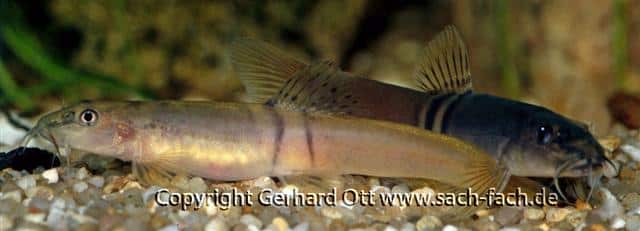
The sumo loach stays small but fights like a fish three times its size. At just 2 inches, it is one of the most territorial micro loaches in the hobby. It will claim a cave, defend it against everything, and make life miserable for any other bottom dweller that wanders too close. If you keep more than one, you need more caves than fish.
Despite the attitude, sumo loaches are fascinating little fish with bold coloration and genuine character. In the right nano or small tank setup, they are endlessly entertaining. This guide covers what it takes to keep them properly, because the sumo loach is two inches of pure territorial determination, and you need to plan around that.
One sumo loach per cave. No exceptions. Ignore that rule and you will learn what two inches of anger looks like.
Named sumo for a reason. This tiny loach picks fights it has no business winning.
The Reality of Keeping Sumo Loach
The sumo loach is a tiny territorial oddball that packs more attitude into its 1.5-inch body than fish three times its size. Males stake out small territories on rocks and driftwood, displaying vibrant coloration and defending their spot against all comers. It is a nano fish with a big fish personality.
Despite the territorial behavior, sumo loaches are not dangerous. Their size means they cannot actually damage anything. The displays are all bluster and color. In a well-structured nano tank with multiple perching spots, the territorial behavior becomes entertainment rather than a problem.
Half-dose medication protocols apply. At this tiny size, the sumo loach is even more sensitive to chemical treatments than larger loach species. Prevention through water quality is the primary healthcare strategy.
Biggest Mistake New Owners Make
Keeping them in a bare tank with no structure. Sumo loaches need rocks, driftwood, and surfaces to perch on and defend. A tank without territory-defining structures gives them nothing to do and nothing to display for. The territorial behavior is the entire appeal of this species, and it requires a structured environment to express.
Expert Take
The sumo loach is the most personality-dense nano fish in the hobby. A group of three males and five females in a 10-gallon tank with flat rocks, driftwood perches, and moderate planting creates a micro-territory drama that rivals African cichlid behavior at a fraction of the tank size. Males color up, display, and defend their rocks with an intensity that has to be seen to be believed.
Key Takeaways
Semi-aggressive and territorial, especially toward their own species and similar-looking bottom dwellers. Keep singly, in pairs, or in groups of 5 or more to spread aggression.
Striking banded pattern with bold dark stripes on a golden-green body, making them one of the most visually appealing small loaches
Needs moderate to strong water flow and excellent water quality to replicate its natural hill stream habitat
Keep in a minimum 20-gallon (76 liter) tank with a wider footprint preferred over tall designs
Extremely rare breeder in captivity, with only a single documented success in home aquariums
Species Overview
Field
Details
Scientific Name
Schistura balteata
Common Names
Sumo Loach, Tri-Band Loach
Family
Nemacheilidae
Origin
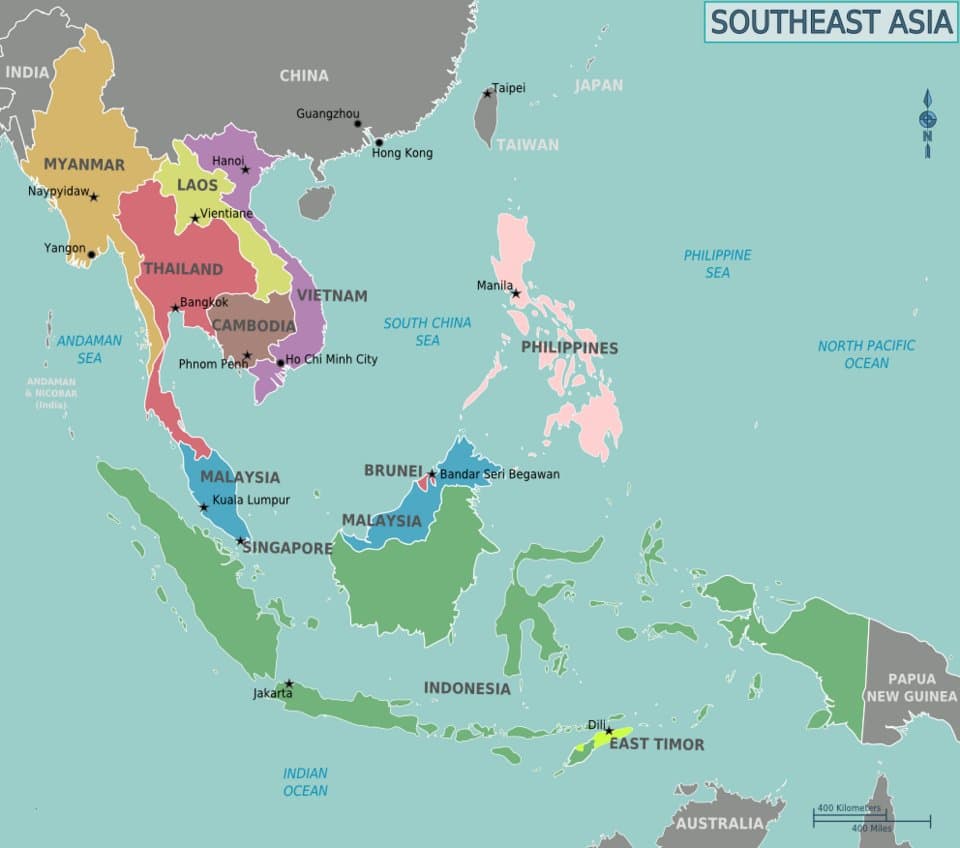
Southern Myanmar and western Thailand
Care Level
Moderate
Temperament
Semi-Aggressive / Territorial
Diet
Omnivore
Tank Level
Bottom
Maximum Size
3 to 4 inches (8 to 10 cm)
Minimum Tank Size
20 gallons (76 liters)
Temperature
72 to 79°F (22 to 26°C)
pH
6.0 to 7.5
Hardness
5 to 15 dGH
Lifespan
3 to 5 years
Breeding
Cave spawner (extremely rare in captivity)
Breeding Difficulty
Extremely Difficult
Compatibility
Community with caution
OK for Planted Tanks?
Yes (though plants aren’t necessary)
Classification
Taxonomic Level
Classification
Order
Cypriniformes
Family
Nemacheilidae
Genus
Schistura
Species
S. Balteata (Rendahl, 1948)
The genus Schistura is one of the largest genera of freshwater fish, containing hundreds of species spread across Asia. It’s worth noting that there are actually two species commonly sold as “sumo loach” in the trade. The original Schistura balteata is sometimes referred to as ‘Sumo I,’ while a similar-looking species traded as Schistura cf. balteata is called ‘Sumo II.’ Both share similar care requirements, but S. Balteata is the larger of the two, reaching up to 4 inches (10 cm) in total length.
Origin & Natural Habitat
Sumo loaches are found in the hill streams of southern Myanmar (Kayin and Mon states) and western Thailand. They inhabit clear, fast-moving waters with substrates of gravel, rocks, and boulders, even in high-gradient streams and cascading sections with little to no vegetation.
These are true stream fish. The water in their natural habitat is clean, well-oxygenated, and flows constantly over rocky surfaces. Vegetation is sparse to nonexistent in the fastest-flowing areas, though some sections of the streams have calmer pockets behind boulders and under overhangs where the fish rest between foraging excursions.
Understanding this habitat explains two of the most important things about sumo loach care: they need clean, flowing water, and they are naturally territorial over prime resting spots among the rocks. In nature, the best sheltered position out of the direct current is prime real estate, and these fish are wired to compete for it.
Map of Southeast Asian freshwater habitats. Via Wikimedia Commons.
Appearance & Identification
The sumo loach is a genuinely eye-catching fish. It has a torpedo-shaped, muscular body that’s noticeably thicker and more robust than most other small loaches, which is where the “sumo” name comes from. The body color ranges from tan to yellowish-green, adorned with bold dark vertical bars or bands that typically span the middle section of the body. The exact number and intensity of these bands can vary depending on the collection locality.
Coloration can vary significantly between individuals and populations. Some specimens show deep orange or reddish tones between the bands, while others are more subdued. The fins may have spotted or striped patterns, and well-conditioned fish in proper setups develop richer, more intense coloration over time. Like most nemacheilid loaches, they have barbels around the mouth that they use for detecting food on the substrate.
Their swimming style is distinctive: short, darting movements between resting spots, punctuated by brief periods of hovering or perching on rocks. When they’re not actively defending territory, they can be surprisingly still, wedged into a crevice with just their head poking out.
Male vs. Female
Feature
Male
Female
Head Shape
Larger, puffier head when mature
Narrower, more streamlined head
Body Shape
Slightly slimmer overall
Rounder, fuller body when carrying eggs
Size
Similar
May appear slightly larger when gravid
Coloration
Often more vivid
Similar but sometimes slightly muted
Sexing sumo loaches is challenging until they’re fully mature. The most reliable difference is that mature males develop a noticeably larger, puffier head compared to females. Females are rounder in the body, especially when carrying eggs. Beyond that, the two sexes look quite similar, and it often takes keeping a group to identify the differences through observation over time.
Average Size & Lifespan
Sumo loaches reach 3 to 4 inches (8 to 10 cm) in length at maturity, with the true S. Balteata (Sumo I) tending toward the larger end. This makes them a medium-small loach, big enough to hold their own in a community but small enough that they don’t need an enormous tank.
With proper care and good water quality, sumo loaches live 3 to 5 years in the aquarium. This is a moderate lifespan that’s typical for Schistura species. Maintaining clean, well-oxygenated water and a varied diet are the biggest factors in helping them reach the upper end of their lifespan.
Care Guide
Tank Size
A minimum of 20 gallons (76 liters) is recommended for a single sumo loach or a compatible pair. If you plan to keep a group of 5 or more (which helps distribute aggression), step up to 30 gallons (114 liters) or larger. Because these are bottom-oriented fish, a wider, shallower tank is much better than a tall one. More floor space means more territories and less conflict.
Each fish needs its own resting spot or shelter, so plan your rockwork and hiding spots accordingly. One cave per loach, plus extras, is a good rule of thumb.
Water Parameters
Parameter
Ideal Range
Temperature
72 to 79°F (22 to 26°C)
pH
6.0 to 7.5
GH
5 to 15 dGH
KH
3 to 8 dKH
Ammonia
0 ppm
Nitrite
0 ppm
Nitrate
Under 20 ppm
Coming from fast-moving streams, sumo loaches are accustomed to pristine water. They don’t tolerate elevated ammonia, nitrite, or nitrate well. Weekly water changes of 30 to 50% are standard for keeping these fish healthy. Consistency in parameters is just as important as hitting the right numbers, so avoid large swings in temperature or pH.
Filtration & Flow
Strong filtration with good water movement is essential. Aim for a turnover rate of 4 to 5 times the tank volume per hour. A canister filter or a powerful hang-on-back filter paired with a powerhead works well. Position the flow so it creates a current across the main swimming and resting areas, but also leave some calmer zones behind rocks or driftwood where the loaches can retreat from the strongest flow.
This combination of high-flow zones and calm pockets mimics their natural habitat, where fast streams have sheltered spots behind boulders. It also gives subordinate fish places to rest without being harassed by the dominant individual.
Lighting
Sumo loaches aren’t particularly fussy about lighting. In nature, they inhabit streams that can range from shaded to exposed. Moderate lighting works well and is sufficient for growing low-demand plants if you choose to include them. They don’t need bright light, and providing some shaded areas through rockwork and driftwood is appreciated.
Plants
Plants aren’t a requirement for sumo loaches, as their natural habitat is typically rocky with sparse vegetation. However, hardy plants that can handle moderate to strong flow work well as part of a river biotope setup. Anubias, Java fern, Bolbitis, and Microsorum species are all good choices because they attach to rocks and driftwood rather than rooting in substrate. Mosses also work well draped over rocks.
Substrate & Decor
A substrate of smooth gravel, pebbles, and sand best replicates the sumo loach’s natural environment. Include plenty of water-worn rocks, cobbles, and flat stones arranged to create caves, crevices, and sheltered resting spots. Each loach will claim a favorite hiding spot, so providing more shelters than you have fish reduces territorial conflict.
Driftwood is also useful for creating barriers and visual breaks between territories. The more complex the bottom structure, the better the loaches will coexist. Avoid smooth, open tank floors with nowhere to hide, as this increases aggression and stress.
Is the Sumo Loach Right for You?
Before you buy, run through this honest checklist. The Sumo Loach is a great fish for the right keeper, but it is not for everyone.
You have a well-decorated tank with plenty of caves, crevices, and hiding spots
You can dedicate at least a 20-gallon tank with multiple sight-line breaks
You want a colorful loach with bold orange and brown patterning
You can keep a group of 5+ to distribute territorial behavior
Your tank does not include other bottom-dwelling territorial fish
You understand this is not a community-friendly species in tight quarters
Tank Mates
Choosing tank mates for sumo loaches requires understanding their territorial nature. They generally leave mid-water and surface fish alone but can be aggressive toward other bottom dwellers, particularly fish with a similar body shape or behavior pattern.
Shoaling mid-water fish work as excellent “dither fish,” which means their active presence in the water column makes the loaches feel more secure and encourages them to come out into the open more frequently.
Tank Mates to Avoid
Other Schistura species or similar nemacheilid loaches (high aggression risk)
Bettas and other fish with long, flowing fins (fin nipping risk)
Very small, placid bottom dwellers (may be bullied)
Slow-moving, timid species
Other territorial bottom dwellers in small tanks
Food & Diet
Sumo loaches are omnivores with a preference for meaty foods. In the wild, they feed on worms, small crustaceans, insect larvae, and zooplankton. In the aquarium, they accept a wide range of foods, but a varied diet keeps them in the best condition.
Ideal foods include:
Frozen foods: Bloodworms, daphnia, brine shrimp, white mosquito larvae
Live foods: Blackworms, brine shrimp, daphnia, small earthworms
While they will eat high-quality dry foods, a diet consisting solely of prepared foods isn’t ideal. Regular offerings of frozen or live foods keep their coloration vibrant and their behavior natural. Feed once or twice daily, offering only what can be consumed in a few minutes. Since they’re bottom feeders, sinking foods are essential so the food actually reaches them before mid-water fish eat everything.
Breeding & Reproduction
Breeding Difficulty
Breeding sumo loaches in captivity is extremely difficult, and most specimens in the trade are wild-caught. There has been only one well-documented case of successful aquarium breeding, making this one of the rarest breeding achievements in the loach hobby.
Breeding Setup
The single documented breeding success occurred in a large river-style aquarium of approximately 150 gallons (567 liters) equipped with a powerful external canister filter. The setup replicated stream conditions with strong flow and abundant rockwork. The breeding pair excavated a cavity beneath a flat rock, sealing themselves inside using pieces of substrate, a behavior unique among commonly kept loaches.
Spawning Conditions
Cave-digging behavior beneath flat rocks appears to be a precursor to spawning. If you observe your sumo loaches actively excavating under rocks, it may indicate breeding readiness. The specific triggers that induce spawning remain largely unknown, though maintaining pristine water conditions, offering live foods regularly, and providing flat rocks over soft substrate are likely contributing factors.
Fry Care
In the documented breeding event, fry were discovered both in the main tank and inside the canister filter, suggesting the tiny larvae were swept into the filter before being noticed. Fry become free-swimming within approximately 24 hours. Given their extremely small size at birth, infusoria and powdered fry food would be appropriate first foods, followed by baby brine shrimp as they grow.
Anyone attempting to breed this species should cover filter intakes with fine sponges and provide plenty of rocky hiding spots where fry can shelter from adults and water current.
Common Health Issues
Ich (White Spot Disease)
Sumo loaches can contract ich, which shows up as small white spots on the body and fins. As with most loaches, use medications labeled safe for scaleless fish at half dose. Raising the temperature to 82°F (28°C) can help accelerate the parasite’s life cycle, but increase aeration simultaneously since warmer water holds less dissolved oxygen.
Territorial Injuries
This is probably the most common health concern specific to sumo loaches. Fish kept in groups of 2 to 4 often develop injuries from territorial disputes, which can include torn fins, scrapes, and bite marks. These wounds can become infected if water quality isn’t maintained. Prevention is better than treatment: keep them singly, in proven compatible pairs, or in groups of 5 or more where aggression is distributed. If injuries do occur, pristine water quality is the best medicine.
Bacterial Infections
Secondary bacterial infections can develop from wounds sustained during territorial scuffles or from poor water quality. Symptoms include redness, swelling, cottony growths, or ulcers on the body. Quarantine affected fish and treat with loach-safe antibacterial medications. Maintaining the clean, well-filtered water these fish require is the best prevention.
Stress from Poor Flow
Sumo loaches kept in tanks with insufficient water movement may show signs of chronic stress, including pale coloration, lethargy, and reduced appetite. They’ve evolved for life in flowing streams, and stagnant conditions aren’t just uncomfortable, they reduce oxygen levels that these fish depend on. If your sumo loach seems sluggish, increasing water flow and aeration should be the first thing you try.
Common Mistakes to Avoid
Keeping groups of 2 to 4. This is the worst possible stocking number. A single fish is fine. A large group of 5 or more distributes aggression. But a small group leads to relentless bullying of subordinate fish.
Not enough hiding spots. Each loach needs at least one shelter it can claim as its own. Insufficient cover leads to constant territorial conflict.
Insufficient water flow. A basic filter with gentle output isn’t enough. These are stream fish that need real current and high oxygen levels.
Keeping them with similar bottom dwellers. Other nemacheilid loaches and similar-looking species are most likely to trigger territorial aggression. Choose mid-water tank mates instead.
Neglecting water changes. Sumo loaches are sensitive to declining water quality. Skipping water changes will lead to health problems.
Tall, narrow tanks. These bottom dwellers need floor space, not height. Always choose wider, shallower tanks.
Where to Buy
Sumo loaches are a specialty species that you’re unlikely to find at big chain pet stores. They pop up periodically at local fish stores with good import connections, but online vendors are your most reliable option. Check out these trusted retailers:
Flip Aquatics. Great source for uncommon loach species with healthy, well-conditioned stock
Dan’s Fish. Carries a wide variety of loaches including hard-to-find species like the sumo loach
Since most sumo loaches are wild-caught, availability can be seasonal. When you find them, buy the quantity you want all at once rather than trying to add individuals to an existing group later, as newcomers often face intense aggression from established residents.
Frequently Asked Questions
Are sumo loaches aggressive?
Semi-aggressive is the best description. They are territorial toward other bottom dwellers, especially similar-looking loaches, and will defend their favorite resting spots. However, they typically ignore mid-water and surface-dwelling fish. The level of aggression depends heavily on stocking numbers and how much cover the tank provides. A single sumo loach in a well-decorated community tank is usually peaceful toward non-competing species.
Can sumo loaches live in a hillstream tank?
Yes, they’re actually a great addition to hillstream-style setups. They appreciate the same strong flow and rocky habitat that hillstream loaches require. Just ensure the tank is large enough for both species to establish territories, and provide plenty of caves and visual barriers. Hillstream loaches like Sewellia occupy different niches (flat surfaces vs. Caves), so they usually coexist well.
How many sumo loaches should I keep?
Either one, a proven compatible pair, or 5 or more. Avoid groups of 2 to 4, as this typically results in one or two dominant fish relentlessly bullying the others. In larger groups of 10 or more, aggression is distributed so thoroughly that individual fish rarely sustain serious harassment. If you can only get a few, a single specimen is actually the safest choice.
Do sumo loaches eat snails?
They’re not known as snail eaters. While they will pick at very small snails, they’re not effective at snail control and shouldn’t be chosen for that purpose. Their diet is primarily worms, insect larvae, and crustaceans in the wild, not mollusks.
Can sumo loaches live with bettas?
This is not recommended. Sumo loaches have been reported to nip at long, flowing fins, and bettas prefer calm, warm water while sumo loaches need cooler temperatures with strong current. The two species have fundamentally incompatible environmental requirements and behavior patterns.
Why is my sumo loach hiding all the time?
Some hiding is normal, as sumo loaches are naturally inclined to wedge themselves into crevices. However, excessive hiding often indicates stress. Common causes include insufficient hiding spots (leading to insecurity), being bullied by a dominant tank mate, or inadequate water flow. Adding dither fish like danios or barbs in the mid-water zone often encourages sumo loaches to come out more frequently.
Both are small loaches suited to nano-ish tanks, but they could not be more different in temperament. The Rosy Loach is genuinely peaceful and works in community setups. The Sumo Loach is territorial and needs more space per individual. If you want a small loach for a peaceful community, the Rosy Loach is the obvious choice. If you want more personality and do not mind planning around aggression, the Sumo Loach delivers.
The Dwarf Chain Loach is more active, more social, and less territorial than the Sumo Loach. It is also easier to keep in community tanks. The Sumo Loach has bolder coloring but demands more careful tank planning. For most fishkeepers, the Dwarf Chain Loach is the easier, more rewarding choice.
What It Is Actually Like Living With Sumo Loach
Watching sumo loaches is like watching a nature documentary in miniature. Males perch on their rocks, fins spread, colors intensified, waiting for a rival to approach. When one does, the display begins. Circling, fin-flaring, and posturing that looks serious but never actually results in injury.
The color change between resting and displaying is dramatic. A male sumo loach at rest is pleasant but unremarkable. A male in display mode turns vibrant, with intensified body color and darkened markings. The transformation is instantaneous when a rival enters its territory.
Females are calmer and less colorful, drifting through territories without triggering the intense displays. They provide the social fabric that keeps the tank dynamic without the territorial tension. A good male-to-female ratio (more females than males) is essential for keeping the peace.
Closing Thoughts
Two inches of fish with two feet of attitude. The sumo loach treats every flat rock like a hill worth dying on.
The sumo loach is the kind of fish that grows on you. That combination of bold banding, stocky build, and unmistakable attitude makes it one of the most characterful small fish you can keep. It’s not the easiest loach for beginners because its territorial nature requires thoughtful planning, but for intermediate to advanced hobbyists who understand how to manage semi-aggressive species, it’s incredibly rewarding.
Give them a well-structured tank with plenty of current, multiple hiding spots, and appropriate stocking, and you’ll get to enjoy one of the most underappreciated loaches in the hobby. There’s something genuinely entertaining about watching a 3-inch fish defend its territory with the confidence of a fish three times its size. That’s the sumo loach in a nutshell.
Keeping sumo loaches or thinking about getting some? Share your experience in the comments below!
Socolof’s tetra is the lesser-known cousin of the bleeding heart tetra, and in many ways it is the better choice. It is smaller, less aggressive, and more adaptable to a range of water conditions. Keep a school of 8+ and they show excellent group behavior without the attitude problems of their larger relatives.
Socolof’s tetra is the bleeding heart tetra for people who do not want the aggression.
The Reality of Keeping Socolof’s Tetra
Group size is not a suggestion. The minimum school size for socolof’s tetra is not just a guideline. In small groups, these fish lose color, become stressed, and display abnormal behavior. A proper group of 6 to 8+ is where you start to see natural schooling behavior, full color expression, and the confidence that makes them worth keeping.
Hardy does not mean indestructible. The socolof’s tetra tolerates a range of conditions, but it still needs basic care. Ammonia spikes, dramatic temperature swings, and neglected water changes will catch up to even the toughest species. The difference is margin of error, not immunity.
Store appearance is not home appearance. Fish in store tanks are stressed, crowded, and under inappropriate lighting. The socolof’s tetra almost always looks better in a properly set up home aquarium than it does at the store. Dark substrate, live plants, and appropriate lighting bring out colors and behaviors you will never see in a retail environment.
Biggest Mistake New Owners Make
Buying too few. Three or four fish is not a school. It is a stress group. Get 6 to 8 minimum from the start and you will see a completely different fish than someone keeping a pair.
Expert Take (Mark Valderrama, AquariumStoreDepot)
In my 25+ years in the hobby, I have consistently found that the hardiest species are the most underrated. The socolof’s tetra is a perfect example. It is easy to keep, rewarding to watch, and it does not demand the kind of obsessive maintenance that more sensitive species require.
Key Takeaways
Blackwater specialist that thrives in soft, acidic water with tannins
Peaceful community fish that does well with other similarly sized species
Group of 8 to 10 minimum for best social behavior and coloration
20+ gallons recommended with dim lighting and plenty of wood
Eats fruit in the wild, one of the few tetras where fruit is a significant part of the diet
Map by Kmusser, CC BY-SA 3.0, via Wikimedia Commons
Acestrorhamphidae (reclassified from Characidae, Melo et al. 2024)
Genus
Hyphessobrycon
Species
H. socolofi (Weitzman, 1977)
This species was described by Stanley Weitzman in 1977 and named after Ross Socolof, a Florida-based tropical fish dealer who was instrumental in importing many new species into the aquarium trade during the mid-20th century.
Note on reclassification: The 2024 phylogenomic study by Melo et al. reorganized the traditional family Characidae into four separate families. Hyphessobrycon was placed in the newly erected family Acestrorhamphidae. FishBase has also begun listing this species under the genus Megalamphodus, reflecting the resurrection of that genus for the bleeding heart tetra group. Older references list it under Characidae. The genus Hyphessobrycon remains widely used in the hobby.
Origin & Natural Habitat
Map of the Amazon River basin. Socolof’s tetra is found in the Rio Negro basin, a major blackwater tributary of the Amazon. Image by Kmusser, CC BY-SA 3.0, via Wikimedia Commons.
Socolof’s tetra is found in the Rio Negro basin in Amazonas state, Brazil, as well as the Rio Nhamunda tributary system. The Rio Negro is the largest blackwater river in the world, and its dark, acidic, mineral-poor waters define the conditions these fish have adapted to over millennia.
In the wild, they inhabit sluggish tributaries, side channels, and forest lakes where the water is heavily stained with tannins from decomposing organic matter. The substrate is typically covered in fallen leaves and branches, and the water is extremely soft with a pH that can drop below 5.0. Light penetration is minimal due to the dark water and overhead canopy.
Understanding these conditions is essential for keeping this species successfully. While they can adapt to a range of water chemistry in captivity, they truly shine in setups that replicate their natural blackwater environment.
Appearance & Identification
Socolof’s tetra is a handsome fish with a deep, laterally compressed body typical of the bleeding heart tetra group. The base color is a warm pinkish-silver with iridescent highlights that shift depending on the lighting. The scales have a subtle shimmer that’s most visible under dim conditions.
The most distinctive feature is a reddish humeral spot behind the gill plate, similar to the bleeding heart tetra’s marking but typically less intense. The dorsal fin often shows dark marking with coloration beneath it, giving rise to the “spotfin” common name.
Sexual dimorphism is quite noticeable in this species. Males are more intensely colored with extended dorsal, pelvic, and anal fins. Females are rounder-bodied, especially when carrying eggs, and have shorter fins with less vivid coloration. In a well-maintained group, the differences between sexes are easy to spot.
Average Size & Lifespan
Socolof’s tetra reaches a maximum standard length of about 2.2 inches (5.6 cm). It’s a medium-sized tetra, larger than neons but smaller than bleeding hearts. In the aquarium, most specimens stay in the 1.5 to 2-inch range.
With proper care in appropriate water conditions, expect a lifespan of 3 to 5 years. As with most small characins, water quality and diet are the biggest factors in longevity.
ASD Difficulty Rating: Beginner
Beginner. One of the hardiest and most tolerant community tetras available. Adapts to a wide range of water parameters, peaceful with virtually all suitable tankmates, and easy to feed. A reliable choice for newer aquarists who want a visually appealing schooling fish without demanding chemistry requirements.
Care Guide
Tank Size
A 20-gallon tank is the minimum for a group of 8 to 10 Socolof’s tetras. A tank with a footprint of at least 36 inches long provides adequate swimming space. For larger groups or mixed communities, step up to 30 gallons or more.
Water Parameters
Parameter
Ideal Range
Temperature
72-82°F (22-28°C)
pH
4.0-7.5 (prefers acidic)
General Hardness
1-4 dGH
KH
0-4 dKH
Ammonia / Nitrite
0 ppm
Nitrate
Below 20 ppm
This is a soft-water specialist. While they can adapt to moderately neutral conditions, they do best in soft, acidic water that mimics their Rio Negro habitat. Use RO/DI water or peat filtration to achieve the right chemistry. Indian almond leaves and driftwood help naturally lower pH and release beneficial tannins.
Water quality is critical. These fish are intolerant of organic waste buildup. Weekly water changes of 25 to 30 percent are essential, and strong filtration is important. Keep nitrates as low as possible.
Tank Setup
A blackwater-style setup is ideal. Use a dark substrate (black sand works beautifully), plenty of driftwood and branches to create shaded areas, and a generous layer of dried leaf litter on the bottom. Low-light plants like Java fern, Anubias, Microsorum, and Cryptocoryne thrive in these conditions.
Floating plants are highly recommended to dim the lighting. These fish are naturally from very dark habitats, and bright lighting will wash out their colors and make them skittish. The goal is a moody, atmospheric tank where the fish glow against the dark background.
Tank Mates
Socolof’s tetra is peaceful and does well in community setups with other species that appreciate similar water conditions.
Good Tank Mates
Other small to medium tetras (cardinal tetras, rummy nose tetras, ember tetras)
Fish that require hard, alkaline water (African cichlids, livebearers)
Very fast or boisterous species that would outcompete them for food
Food & Diet
One of the more interesting things about Socolof’s tetra is its wild diet. Unlike most tetras that primarily eat insects, this species feeds heavily on fruit remains that fall into the water, alongside aquatic insects and invertebrates. It’s one of the few tetras where fruit is a significant food source in nature.
In the aquarium, they’re easy to feed:
Staple: High-quality flakes or micro pellets
Frozen foods: Bloodworms, daphnia, brine shrimp
Live foods: Daphnia, baby brine shrimp, small insects
Occasional treats: Small pieces of soft fruit (banana, grape, melon) placed in the tank temporarily
Feed small amounts two to three times daily. A varied diet with regular frozen and live food supplements brings out the best coloration. If you offer fruit, remove any uneaten pieces within a few hours to prevent water quality issues.
Breeding & Reproduction
Socolof’s tetra is an egg scatterer with no parental care. Breeding is possible in captivity with the right conditions.
Breeding Setup
Breeding tank: 10 to 15 gallons
Water: Very soft, acidic (pH 5.5 to 6.5, gH under 3)
Temperature: 79 to 82°F (26 to 28°C)
Decor: Fine-leaved plants or spawning mops
Lighting: Very dim
Filtration: Gentle sponge filter
Condition pairs with high-protein live and frozen foods. Spawning typically occurs among plants. Remove adults immediately after spawning, as they will eat the eggs. Eggs hatch in 24 to 36 hours, and fry should be fed infusoria or liquid fry food initially, then baby brine shrimp as they grow.
Common Health Issues
Ich (white spot disease): Can occur after temperature drops or shipping stress. Treat with raised temperature and ich medication.
Water quality sensitivity: This species is less tolerant of poor water quality than many tetras. Ammonia or nitrite spikes are particularly dangerous.
Stress from improper water chemistry: Keeping them in hard, alkaline water will lead to chronic stress and shortened lifespan.
Fin rot: Usually a secondary issue from poor water conditions.
The key to keeping this species healthy is maintaining stable, soft, acidic water conditions and keeping up with regular water changes. They’re not a difficult fish, but they do need appropriate water chemistry.
Hard Rule
Keep socolof’s tetras in groups of at least 8. In smaller numbers they school loosely, become more reclusive, and the vibrant coloration never fully develops. Group size is not optional for this species.
Common Mistakes to Avoid
Hard, alkaline water: This is a soft-water species. Keeping them in typical tap water with a pH of 7.5+ and high hardness will stress them.
Too much light: Bright lighting washes out their colors and makes them uncomfortable. Dim is better.
Too few fish: Keep at least 8, ideally 10+. Small groups lead to shy, stressed behavior.
Neglecting water changes: They’re sensitive to organic waste buildup. Consistent maintenance is essential.
Expecting them to look like bleeding hearts: They’re related but not identical. Set your expectations for the species they are.
Where to Buy
Socolof’s tetra isn’t a common fish at chain pet stores, but it’s available from specialty online retailers who stock unusual species. Check these trusted sources:
Is Socolof’s tetra the same as a bleeding heart tetra?
No. They’re closely related and share the same body shape, but they’re different species. Socolof’s tetra (H. socolofi) is sometimes called the “lesser bleeding heart” because it has a similar but less prominent humeral spot.
Do Socolof’s tetras need soft water?
Yes. They’re adapted to the extremely soft, acidic blackwater conditions of the Rio Negro basin. While they can tolerate neutral water, they do best with soft, acidic conditions (pH 5.0 to 6.5, gH 1 to 4).
How many Socolof’s tetras should I keep?
At least 8, ideally 10 or more. In proper groups, males develop better coloration and display interesting social interactions as they compete for hierarchical position.
What It Is Actually Like Living With Socolof’s Tetra
In a proper school, socolof’s tetra display natural movement patterns that are genuinely engaging to watch. The fish interact with each other, establish subtle hierarchies, and move through the tank with purpose.
They occupy the middle water column during active hours, creating movement and visual interest in the zone where most fishkeepers want action.
Feeding time is when their personality comes out. They learn your routine quickly and will anticipate feeding before you even open the lid.
Their color and behavior improve over time as they settle into a stable environment. Fish that have been in the same tank for months look noticeably better than recently added stock.
They coexist peacefully with virtually every other appropriately-sized community fish. This compatibility makes tank planning straightforward.
Closing Thoughts
Socolof’s tetra is a beautiful fish that deserves a lot more attention from the hobby. In a properly set up blackwater tank with dim lighting, dark substrate, and tannin-stained water, a school of these fish is genuinely captivating. The males develop impressive finnage and coloration that rivals many more popular species.
They’re not the easiest tetra to keep if your tap water is hard and alkaline, but if you’re already running a soft-water setup or willing to invest in RO filtration, they’re well worth the effort. And the fact that they eat fruit in the wild? That’s just a cool conversation piece that makes them even more interesting.
Recommended Video
Check out our Tetra Tier List video where we rank popular tetra species for the home aquarium:
Melo, B.F, et al. (2024). Phylogenomics of Characidae. Zoological Journal of the Linnean Society, 202(1), 1-37.
Explore More Tetras
Socolof’s tetra is just one of dozens of tetra species we cover in our complete species directory. Whether you’re into blackwater specialists or beginner-friendly community tetras, our guide has you covered.
Pearl cichlids are one of the hardiest cichlids in the hobby and one of the few that thrive in cooler water. That hardiness makes people underestimate them. They still get big, still get territorial, and still need a proper tank. I have kept geophagus brasiliensis for years and the biggest mistake is treating them as a low maintenance fish you can ignore. They are tolerant of conditions that would kill other cichlids, but tolerant is not the same as thriving. The cichlid that prefers your room temperature to your heater.
The cichlid that prefers your room temperature to your heater.
What Most Care Guides Get Wrong About the Pearl Cichlid
The Pearl Cichlid (Geophagus brasiliensis) is one of the most underrated South American cichlids, and the biggest misconception is about its temperature needs. This is one of the few cichlids that genuinely thrives in cool water, handling temperatures down to 60F without issue. Most guides list it as a standard tropical species needing 76 to 82F, which is misleading. It actually does better in the 65 to 75F range. The other misconception is about aggression. People hear ‘cichlid’ and assume monster aggression. The Pearl Cichlid is moderately aggressive at best, and in the right setup with proper space, it is surprisingly manageable.
What sets this fish apart from many other eartheaters is its adaptability. While some Geophagus species demand warm, soft, acidic water and fall apart at the first sign of trouble, the pearl cichlid thrives across a surprisingly wide range of conditions. It’s found in everything from rivers to coastal lagoons in the wild, and that toughness translates directly to the home aquarium. If you’re looking for a substantial cichlid with personality and serious visual appeal, this is a species worth considering.
The Reality of Keeping Pearl Cichlid
Pearl cichlids are one of the hardiest cichlids you can keep, and one of the few that actually thrives in cooler water.
They handle cold water. Pearl cichlids tolerate temperatures down to 60F. That makes them one of the few cichlids suitable for unheated tanks and outdoor ponds in mild climates.
They get bigger than expected. Reaching 10 to 11 inches, pearl cichlids outgrow most setups that beginners plan for. A 75-gallon is the realistic minimum for adults.
Aggression increases with age. Juveniles are relatively peaceful. Adults become territorial and will bully smaller tank mates. Plan your stocking for the adult temperament, not the juvenile behavior.
They are substrate sifters. Pearl cichlids constantly rework the substrate. Fine sand is the best choice. Gravel gets moved around and can damage their gill rakers.
Biggest Mistake New Pearl Cichlid Owners Make
Keeping them in a tropical community tank at 78F with small fish. Pearl cichlids prefer cooler water and will eat anything they can fit in their mouth once they reach adult size.
Expert Take (Mark Valderrama, AquariumStoreDepot)
After 25+ years in the hobby and time managing fish stores, the pearl cichlid is the eartheater I’ve consistently recommended to people who want something substantial but aren’t ready for the precision water management that other Geophagus species demand. The temperature flexibility is real – no heater required in many homes, and outdoor pond potential in mild climates. The sand-sifting behavior is genuinely entertaining to watch long-term. And that breeding color change – from olive-brown to dark blue-purple in hours – is one of the more dramatic visual events in South American cichlid keeping. Give this fish the tank size it needs, the right temperature, and sand to work with, and you’ll have one of the most rewarding medium-large cichlids in the freshwater hobby.
ASD Difficulty Rating
Easy to Moderate | 3/10
The pearl cichlid is one of the most beginner-accessible medium-large cichlids in the hobby. It tolerates a wide range of water conditions, eats almost anything, and does not require tropical temperatures. The barriers are tank size (75 gallons minimum for a pair), substrate (fine sand only – no gravel), and the understanding that this fish grows to 10 inches and lives 10 to 15 years. Get those three things right and the pearl cichlid handles almost everything else.
Key Takeaways
Hardy and beginner-friendly. One of the most adaptable South American cichlids, tolerating a wide range of water conditions
Stunning iridescent scales give this fish its common name, with colors shifting from green to blue to gold depending on the light
Gets to a decent size. Males can reach 10 inches (25 cm), so plan for at least a 75-gallon tank for a pair
Excellent parents. Both parents guard eggs and fry, making breeding straightforward and rewarding to observe
Semi-aggressive when breeding. Peaceful enough most of the time, but a spawning pair will defend their territory aggressively
Map by Kmusser, CC BY-SA 3.0, via Wikimedia Commons
Species Overview
Field
Details
Scientific Name
Geophagus brasiliensis
Common Names
Pearl Cichlid, Pearl Eartheater, Brazilian Eartheater, Mother of Pearl Eartheater
The pearl cichlid was originally described as Chromis brasiliensis by Quoy and Gaimard in 1824, based on specimens from Rio de Janeiro Bay in Brazil. It was later moved to the genus Geophagus, which means “earth eater” in Greek, referring to the characteristic sand-sifting feeding behavior of the group. Recent molecular studies suggest that G. Brasiliensis is actually part of a species complex, with several genetically distinct populations across its wide range that may eventually be described as separate species.
Origin & Natural Habitat
The pearl cichlid has one of the broadest distributions of any South American cichlid. It ranges from coastal river basins in Bahia state in northeastern Brazil all the way south through southeastern Brazil to Uruguay and northeastern Argentina. Some populations also extend into the Paraguay River basin. This is a fish that naturally occurs across a wide variety of climates, which explains its remarkable adaptability in captivity.
In the wild, pearl cichlids inhabit slow-moving rivers, streams, lakes, and even coastal lagoons with slightly brackish conditions. They’re found over sandy or muddy substrates where they can engage in their characteristic earth-eating behavior, picking up mouthfuls of sediment, sifting out edible material like invertebrates and detritus, and expelling the rest through their gills. Unlike many tropical cichlids, the pearl cichlid experiences seasonal temperature variation in parts of its range, with water temperatures occasionally dropping below 65°F (18°C) during cooler months.
The habitats where pearl cichlids are found often have moderate vegetation, rocky areas, and submerged wood. These structures provide territorial boundaries and spawning sites that are critical to the fish’s natural behavior.
Map of South American freshwater habitats. Via Wikimedia Commons.
Appearance & Identification
The pearl cichlid lives up to its name. Each scale on the body has an iridescent, pearlescent spot that catches the light and creates a shimmering effect across the entire fish. The base color ranges from olive-green to golden-brown, with the iridescent spots creating patterns of blue, green, and gold depending on the lighting angle. A prominent dark spot sits on the mid-body, and a second may appear at the base of the caudal fin.
One of the most fascinating aspects of this species is its ability to dramatically change coloration. During breeding, the body can shift from its typical light olive-brown to an intense dark blue or near-purple, with the iridescent spots becoming even more vivid against the darker background. Outside of breeding, the coloration is more subdued but still attractive. The fins often show red, blue, and green highlights, particularly in mature males.
Male vs. Female
Sexing pearl cichlids becomes easier as they mature. Males grow significantly larger and develop more pronounced features.
Feature
Male
Female
Body Size
Up to 10 inches (25 cm)
Up to 6 inches (15 cm)
Nuchal Hump
Develops a noticeable forehead hump with maturity
No hump or minimal development
Fin Extensions
Longer, more pointed dorsal and anal fins
Shorter, more rounded fins
Coloration
More vivid iridescence, stronger fin coloration
Slightly more subdued, but still iridescent
Body Shape
Deeper bodied, more robust overall
Smaller, more streamlined
Average Size & Lifespan
Males can reach up to 10 inches (25 cm) in length, though 7-8 inches (18-20 cm) is more common in home aquariums. Females stay considerably smaller, maxing out around 6 inches (15 cm). Growth is steady during the first year or two and slows as they reach maturity. This isn’t a fish you’ll outgrow quickly, though. Pearl cichlids grow at a moderate pace compared to some of the faster-growing Central American cichlids.
With proper care, pearl cichlids can live 10-15 years in captivity. That’s a serious commitment and one of the advantages of keeping this species. You get a long-lived companion that develops more personality and better coloration as it matures. Longevity depends heavily on water quality, diet, and stress levels. Fish kept in overcrowded or poorly maintained tanks will have significantly shorter lifespans.
Care Guide
Tank Size
A single pearl cichlid is housed in a 40-gallon (151-liter) tank, but for a pair, you’ll want at least 75 gallons (284 liters). If you’re planning a community setup with other medium-sized cichlids, 125 gallons (473 liters) or larger is the way to go. These fish are active swimmers that need horizontal space, so a standard rectangular tank is preferable to a tall, narrow design.
Pearl cichlids are substrate sifters and diggers. They’ll rearrange your tank regularly, pushing sand around and excavating areas near rocks and driftwood. The larger the tank, the less disruptive this behavior feels and the more territory is available to minimize aggression.
Water Parameters
Parameter
Recommended Range
Temperature
68 to 77°F (20 to 25°C)
pH
6.5 to 7.5
General Hardness
5 to 15 dGH
Ammonia
0 ppm
Nitrite
0 ppm
Nitrate
Below 20 ppm
One of the pearl cichlid’s biggest selling points is its temperature tolerance. Unlike most South American cichlids that need water in the upper 70s to low 80s, this species actually prefers cooler conditions, thriving in the 68-77°F (20-25°C) range. In parts of its natural range, it experiences seasonal temperatures well below what most tropical fish can handle. This makes it an excellent choice for unheated tanks in moderate climates or for fishkeepers who prefer not to run a heater year-round.
Water chemistry is similarly flexible. While slightly acidic to neutral pH is ideal, pearl cichlids tolerate a broader range than most eartheaters. Moderate hardness is fine, and they’ve even been documented in slightly brackish conditions in the wild. Just keep the water clean and consistent, and this fish will reward you.
Hard Rule: Pearl cichlids are not hot-water fish. No exceptions.
Do not run this species above 78°F (26°C) long-term. If you’re used to running your tank at 80°F for discus or other South American cichlids, the pearl cichlid needs a different setup or a different tank. Sustained high temperatures stress this species chronically, and the decline is gradual enough that many keepers never realize the temperature is the cause.
Filtration & Water Flow
Strong, efficient filtration is essential for pearl cichlids. These are messy fish. Between their constant sand-sifting and their solid appetite, they produce more waste than a similarly-sized non-cichlid. A canister filter rated for at least 1.5 times your tank volume is a good starting point. If you’re running a large community tank, consider doubling up on filtration.
Water flow should be gentle to moderate. Pearl cichlids come from slow-moving water in the wild and don’t appreciate being blasted by strong currents. Use spray bars or flow diffusers to spread the output across the tank rather than creating a single strong current. Weekly water changes of 25-30% keep nitrates in check and maintain the water quality these fish need to thrive.
Lighting
Moderate lighting works best for pearl cichlids. They’re not particularly light-sensitive, but the iridescent scales look most impressive under moderate to slightly subdued lighting. Very bright overhead lights can wash out the colors. If you’re running a planted tank, standard plant-growth lighting is perfectly fine. Adding some floating plants to diffuse the light brings out the best in this species while also providing some cover.
Plants & Decorations
Here’s where pearl cichlids get tricky. They love to dig. Anything planted directly in the substrate is at risk of being uprooted during their constant excavation. Your best options are epiphytic plants like java fern, anubias, and bolbitis attached to rocks or driftwood. These are completely safe from the digging behavior. If you want rooted plants, place them in pots buried in the substrate, which provides some protection.
Large rocks, driftwood, and smooth stones create the territorial boundaries that pearl cichlids need. Flat stones are particularly important as they serve as preferred spawning sites. Create several distinct territories with visual barriers so that if you’re keeping a pair, both fish can find their own space when not spawning. Leave plenty of open sand area for natural sifting behavior.
Substrate
Fine sand is the only appropriate substrate for pearl cichlids. Their entire feeding strategy in the wild revolves around picking up mouthfuls of sand, filtering out edible particles, and expelling the rest through their gills. Gravel or coarse substrates can damage the delicate gill filaments and prevent natural feeding behavior. A medium-grain pool filter sand or aquarium sand in a neutral color works perfectly and allows you to watch one of the most entertaining feeding behaviors in the cichlid world.
Is the Pearl Cichlid Right for You?
Before you buy, here is the honest breakdown. The pearl cichlid is one of the most accessible medium-large cichlids in the hobby – but it still has requirements that eliminate it for some setups.
Good fit if:
You have a 75-gallon minimum for a pair, with fine sand substrate for natural sifting behavior
You want a cichlid that tolerates cooler water – no heater required in many homes, outdoor pond potential in mild climates
You can pair it with robust, similarly-sized tank mates: blue acara, angelfish, silver dollars, large plecos
You want a long-term fish – 10 to 15 years with proper care, with dramatic breeding color changes as a bonus
You want a cichlid with genuine personality that responds to your presence at the glass
Think twice if:
Your tank runs above 78°F – this is a hard limit for this species; sustained heat stress leads to gradual decline
Your tank is under 55 gallons – a single adult male reaches 10 inches and needs meaningful horizontal space
You have a planted aquascape with rooted plants – pearl cichlids are committed diggers and will rearrange the substrate indefinitely
You keep small fish under 2 inches – anything that fits in the mouth eventually gets eaten, especially as adults
You run gravel substrate – this is not negotiable; sand only, fine-grained, for gill health and natural feeding behavior
Tank Mates
Pearl cichlids are manageable in a community setting as long as you choose tank mates wisely. Outside of breeding, they’re peaceful toward fish of similar size. The trouble comes when a pair decides to spawn, at which point they becomes highly territorial and drive everything else in the tank into the opposite corner. A larger tank with plenty of visual barriers minimizes the impact of this behavior.
Best Tank Mates
Blue acara (Andinoacara pulcher). Similar size and temperament, a classic pairing with eartheaters
Angelfish. Occupy mid-water and won’t compete directly for bottom territory
Silver dollars. Robust, fast-moving schooling fish that hold their own
Larger tetras (Buenos Aires tetras, Congo tetras). Big enough to avoid predation and fast enough to escape territorial displays
Bristlenose plecos. Bottom-dwelling but armored enough to coexist with moderate cichlid aggression
Large corydoras (Brochis or Corydoras species). Can share the bottom as long as the tank is spacious
Tank Mates to Avoid
Small fish. Anything small enough to fit in the pearl cichlid’s mouth will eventually end up there
Aggressive Central American cichlids. Jack Dempseys, red devils, and similar species will bully pearl cichlids
Multiple male pearl cichlids. Unless the tank is very large (150+ gallons), keeping more than one male leads to constant fighting
Dwarf cichlids. Apistos and rams are too small and will be harassed or eaten
Slow-moving, long-finned species. Fancy guppies, bettas, and similar delicate fish are poor choices
Food & Diet
Pearl cichlids are true omnivores with enthusiastic appetites. In the wild, they sift sand for invertebrates, insect larvae, plant material, and detritus. In captivity, they’ll eat just about anything you offer them. A high-quality cichlid pellet should form the foundation of the diet, supplemented with frozen or live foods for variety and nutrition.
Frozen bloodworms, brine shrimp, mysis shrimp, and chopped earthworms are all eagerly accepted. Vegetable matter is also important for long-term health. Blanched spinach, peas, zucchini slices, and spirulina-based foods round out a balanced diet. Feed 2-3 times daily in moderate amounts. Pearl cichlids will overeat if given the opportunity, so keep portions reasonable.
Avoid mammalian meats like beef heart or chicken. The fats in these foods are not suited to a fish’s digestive system and can cause organ damage over time. Stick to aquatic-based proteins and plant matter for the healthiest fish.
Breeding & Reproduction
Breeding Difficulty
Easy. Pearl cichlids are among the most straightforward South American cichlids to breed. They’re biparental substrate spawners, meaning both parents participate in egg and fry care. If you have a compatible pair and reasonable water conditions, spawning is almost inevitable.
Spawning Tank Setup
A dedicated breeding tank of 55-75 gallons works well for a pair. Keep the setup simple: sand substrate, a few flat rocks or smooth slate pieces as potential spawning sites, and some driftwood for territory markers. A sponge filter provides biological filtration without creating currents that could disturb eggs or fry. Dim lighting encourages natural spawning behavior.
Water Conditions for Breeding
Pearl cichlids aren’t fussy about breeding conditions. Slightly warmer water in the 75-77°F (24-25°C) range, neutral pH around 7.0, and moderate hardness should trigger spawning in a well-conditioned pair. A large water change with slightly cooler water will sometimes jumpstart the process. Clean water with low nitrates is the single most important factor.
Conditioning & Spawning
The best approach is to raise a group of 6-8 juveniles together and let them pair off naturally as they reach 3-4 inches (7-10 cm). Forced pairings can work but carry more risk of aggression. Condition the pair with high-protein foods for a couple of weeks before attempting to trigger spawning.
When ready, both fish clean a flat stone or smooth surface. The female deposits 150-200 eggs in neat rows, and the male fertilizes them. During this process, both fish undergo the dramatic color change the species is known for, shifting to dark blue or purple tones that make the iridescent spots stand out even more intensely.
Egg & Fry Care
Both parents guard the eggs and fan them to keep water flowing over the developing embryos. Eggs hatch in 3-4 days, and the fry become free-swimming 5-6 days later. The parents continue to guard the fry, herding them around the tank and aggressively defending them from any perceived threat. First foods for the fry include freshly hatched baby brine shrimp and finely crushed flake food. The parental care in pearl cichlids is impressive and one of the most enjoyable aspects of breeding this species.
Common Health Issues
Hole in the Head (HITH)
Like many eartheaters, pearl cichlids are susceptible to hole in the head disease, which presents as pitting and erosion around the head and lateral line. This is linked to poor water quality, high nitrate levels, and nutritional deficiency (particularly a lack of vitamin C and trace minerals). Prevention is straightforward: keep the water clean, feed a varied diet, and avoid overreliance on a single food source.
Ich (White Spot Disease)
Ich can strike any freshwater fish, and pearl cichlids are no exception. The characteristic white spots appear after stress events like temperature fluctuations, new tank introductions, or shipping. Treatment involves gradually raising the temperature to 82-84°F (28-29°C) and using a quality ich medication. Pearl cichlids tolerate standard ich treatments well due to their overall hardiness.
Bacterial Infections
Fin rot, body sores, and cloudy eyes can result from bacterial infections, triggered by stress or injuries from tank mate aggression. Good water quality is the best prevention. If infections develop, broad-spectrum antibiotics like kanamycin or erythromycin are effective treatments. Isolate affected fish in a hospital tank when possible.
Internal Parasites
White, stringy feces and gradual weight loss despite normal feeding are signs of internal parasites. This is more common in wild-caught specimens but can occur in tank-raised fish too. Metronidazole treats protozoan parasites effectively, while praziquantel targets intestinal worms. Quarantine all new fish for at least two weeks before adding them to an established tank.
Common Mistakes to Avoid
Using gravel instead of sand. Pearl cichlids are sand sifters. Gravel prevents natural feeding behavior and can damage their gills. Always use fine sand
Keeping the water too warm. Unlike most South American cichlids, pearl cichlids actually prefer cooler temperatures in the 68-77°F range. Running a heater at 80°F+ stresses them over time
Underestimating their adult size. Juveniles at the fish store look manageable, but males approaching 10 inches need serious tank space. Plan for the adult size, not the purchase size
Pairing with small fish. Pearl cichlids will eat anything they can fit in their mouth. Neon tetras, guppies, and other small species are snacks, not tank mates
Ignoring digging behavior. These fish will rearrange your aquascape. Use epiphytic plants on hardscape rather than rooted plants in the substrate, or accept that your layout will change regularly
Keeping multiple males in a small tank. One dominant male will constantly harass subordinates unless the tank is large enough (150+ gallons) to provide separate territories
Where to Buy
Pearl cichlids are reasonably common in the hobby, though they may not be a staple at every local fish store. Specialty cichlid shops and online retailers are your best bet for healthy, well-conditioned specimens. Flip Aquatics is worth checking for availability, and Dan’s Fish is another reliable source for quality freshwater fish with live arrival guarantees.
When selecting pearl cichlids, look for active fish with intact fins, clear eyes, and good iridescence on the scales. Avoid any fish with sunken bellies, clamped fins, or visible lesions. If buying a pair, try to get a male and female that have already been housed together, as pre-established pairs have a much smoother transition into a new tank.
Frequently Asked Questions
Are pearl cichlids good for beginners?
Yes, they’re one of the best medium-sized cichlids for beginners. Their hardiness, temperature tolerance, and willingness to eat a wide variety of foods make them very forgiving. The main requirement is providing a tank large enough for their adult size. If you can handle a 75-gallon setup, a pearl cichlid is an excellent first cichlid.
Can I keep a pearl cichlid in a 55-gallon tank?
A single pearl cichlid can work in a 55-gallon tank, but it’s tight for a pair, especially if they breed. Males can reach 10 inches, and a breeding pair needs enough space to establish a territory without stressing other fish. A 75-gallon is the recommended minimum for a pair, and larger is always better with this species.
Do pearl cichlids need a heater?
It depends on your room temperature. Pearl cichlids thrive in cooler water (68-77°F) than most tropical fish. If your home stays above 68°F year-round, you may not need a heater at all. In cooler climates or homes with significant temperature drops at night, a heater set to around 72-74°F provides stability without overheating.
Are pearl cichlids aggressive?
They’re semi-aggressive. Day to day, they’re fairly peaceful toward similar-sized fish. The aggression ramps up significantly during breeding, when the pair becomes highly territorial. Keeping them with robust tank mates and providing plenty of space and visual barriers keeps aggression manageable.
Can I keep pearl cichlids in a planted tank?
You can, but with limitations. Pearl cichlids are committed diggers that will uproot rooted plants. Stick to epiphytic species like java fern, anubias, and bolbitis attached to rocks and driftwood. Floating plants also work well and are completely safe from digging. If you want rooted plants, use pots to protect the root systems.
Why does my pearl cichlid change color?
Color change is completely normal for this species. Pearl cichlids can shift from light olive-brown to dark blue or purple, especially during breeding, territorial displays, or when stressed. The dramatic darkening during spawning is one of the most visually striking behaviors in the species. If color changes are accompanied by other symptoms like loss of appetite or lethargy, check your water parameters.
What It Is Actually Like Living With a Pearl Cichlid
This is the part the care sheets skip. Here is what actually happens when you keep this species long-term.
Your substrate will not stay the way you arranged it. Pearl cichlids rework the sand constantly. Areas near rocks and driftwood get excavated. Sand piles up in corners. This is not a malfunction – it is their entire feeding strategy. Accept it or don’t get this fish.
Breeding color change is one of the more dramatic events in freshwater fishkeeping. When a pair is ready to spawn, the fish can shift from olive-brown to dark blue-purple in a matter of hours. The iridescent spots become vivid against the dark background. You’ll notice something is different before you even check the tank. That’s your fish telling you they’re spawning.
The size difference between male and female is striking. A mature male at 9 to 10 inches next to a female at 5 to 6 inches – in the same tank, often bonded – is dramatic. People who bought two juveniles of similar size are often surprised when one fish doubles the other in length by adulthood.
Parental behavior is active and visible. When fry are present, both parents herd, guard, and move the school. The female fans the eggs. The male patrols the perimeter. Tank mates that wander too close get driven off decisively. Watching a pearl cichlid pair parent fry is one of the more engaging things you can observe in a freshwater aquarium.
Both have dramatic iridescent coloring and a semi-aggressive temperament, but these are very different fish to live with. The Green Terror runs warm (76 to 82°F), grows more aggressive with age, and is harder to house in a community setting. The pearl cichlid runs cool, stays manageable in the right community setup, and is significantly more beginner-accessible. Choose the pearl cichlid if you want visual impact without committing to a single-species aggressive setup. Choose the Green Terror if you specifically want a dominant fish that defines the tank on its own terms.
Both tolerate cooler water, which puts them in a similar niche for keepers who don’t want tropical temperatures. The Bolivian Ram stays small (3 to 4 inches), works in a 30-gallon community tank, and is peaceful enough for most setups. The pearl cichlid is a completely different scale commitment – 10-inch adults, 75-gallon minimum, moderate cichlid aggression during breeding. Choose the Bolivian Ram if you have a smaller tank or want a true community fish. Choose the pearl cichlid if you want a large, visually dominant centerpiece fish with the same cool-water advantage.
Closing Thoughts
Pearl cichlids survive almost anything. But surviving is not the same as thriving.
The pearl cichlid is one of the unsung heroes of the South American cichlid world. It doesn’t get the hype of discus or the cult following of apistos, but it delivers something those fish often can’t: reliability. This is a fish that looks incredible, displays fascinating parental behavior, tolerates a wide range of conditions, and can live well over a decade in your care.
Set up a 75-gallon or larger tank with a sand substrate, some smooth rocks and driftwood, and a few epiphytic plants. Add a pair of pearl cichlids and some robust mid-water companions. Keep the water clean, the diet varied, and the temperature on the cooler side. You’ll be watching one of the most rewarding South American cichlids in the hobby, and you’ll have years to enjoy it.
The niger tetra is a large, tough African tetra that thrives in conditions most tetras cannot handle. It tolerates harder water, higher pH, and temperature swings without missing a beat. The red eye gives it a distinctive look, and the schooling behavior in groups of 8+ is impressive for a fish this size.
The niger tetra does not care about your water parameters. It thrives in almost anything.
The Reality of Keeping Niger Tetra
Group size is not a suggestion. The minimum school size for niger tetra is not just a guideline. In small groups, these fish lose color, become stressed, and display abnormal behavior. A proper group of 6 to 8+ is where you start to see natural schooling behavior, full color expression, and the confidence that makes them worth keeping.
Tank mate selection requires thought. The niger tetra is not aggressive in the traditional sense, but it is assertive enough to cause problems with the wrong companions. Slow-moving, long-finned species are targets. Fast, short-finned fish of similar size are fine. Plan your community around this reality.
Hardy does not mean indestructible. The niger tetra tolerates a range of conditions, but it still needs basic care. Ammonia spikes, dramatic temperature swings, and neglected water changes will catch up to even the toughest species. The difference is margin of error, not immunity.
Store appearance is not home appearance. Fish in store tanks are stressed, crowded, and under inappropriate lighting. The niger tetra almost always looks better in a properly set up home aquarium than it does at the store. Dark substrate, live plants, and appropriate lighting bring out colors and behaviors you will never see in a retail environment.
Biggest Mistake New Owners Make
Keeping them with fish small enough to eat. This is a predator. It will eat anything it can fit in its mouth. If you stock smaller fish with a niger tetra, you are feeding it expensive live food.
Expert Take (Mark Valderrama, AquariumStoreDepot)
In my 25+ years in the hobby, West African tetras are consistently underrepresented in the freshwater hobby. The niger tetra is one of the most active and visually dynamic schooling fish you can keep – just give them the group size and swimming space they need and they will reward you for it.
Key Takeaways
African species from Nigeria, not South America like most tetras in the hobby
Grows to 3-4 inches, making it one of the larger tetras commonly available
Needs a 55-gallon tank minimum with a tight-fitting lid (notorious jumpers)
Group of 10 or more recommended for best behavior and coloration
IUCN Endangered, making captive-bred specimens especially important for conservation
Map of South American freshwater habitats. Via Wikimedia Commons.
The genus Arnoldichthys is monotypic, meaning the niger tetra is the only species it contains. The genus was named in honor of Johann Paul Arnold (1869-1952), a German aquarist and naturalist who was instrumental in establishing the tropical fish hobby in Europe.
The family Alestidae contains African characins and is distinct from the Neotropical family Characidae. While the 2024 Melo et al. phylogenomic study reorganized the South American Characidae into four families, it did not affect the classification of Alestidae, which has been recognized as a separate family for African characins. Some databases may list this species under Lepidarchidae, reflecting ongoing refinements in African characin taxonomy.
Origin & Natural Habitat
Map of the Niger River basin in West Africa. The niger tetra is endemic to the lower Niger and Ogun river systems in Nigeria. Image from Wikimedia Commons, CC0 (public domain).
Unlike the vast majority of tetras in the aquarium hobby, the niger tetra comes from West Africa, not South America. It’s endemic to Nigeria, specifically the lower Niger River and the Ogun River systems. This makes it one of a relatively small number of African characins available to hobbyists.
In the wild, niger tetras inhabit rivers and streams with moderate flow. The water is typically slightly acidic to neutral, often stained with tannins from surrounding vegetation. They’re pelagic fish, spending most of their time in open water rather than hiding along the bottom or in vegetation.
It’s worth noting that this species is classified as Endangered by the IUCN. Habitat degradation and pollution in its native range are the primary threats. This makes responsibly sourced captive-bred specimens all the more valuable, both for hobbyists and for the long-term survival of the species.
Appearance & Identification
Niger tetra (Arnoldichthys spilopterus) displaying its characteristic large scales and red eye. Photo from Wikimedia Commons, CC BY-SA 3.0.
The niger tetra is a genuinely striking fish when kept in proper conditions. The body is elongated and laterally compressed, covered in large, prominently visible scales that give it a distinctive armored look compared to most small tetras. Each scale catches the light individually, creating an iridescent display that shifts between green, gold, and blue depending on the angle.
The most immediately recognizable feature is the bright red upper half of the eye, which gives the fish its alternative common name, the “African red-eye tetra.” The body color ranges from olive-green to golden, with a subtle horizontal stripe running along the midline.
Sexual dimorphism is noticeable in this species. Males are more colorful overall, with brighter iridescence and more vivid fin coloration. The anal fin of males often shows distinct red, yellow, and dark banding that’s less pronounced in females. Females are rounder-bodied, especially when full of eggs.
Average Size & Lifespan
Niger tetras are larger than most popular tetra species. They reach 3 to 3.5 inches (7.5 to 9 cm) in standard length, with some specimens pushing closer to 4 inches. That’s significantly bigger than a neon tetra or cardinal tetra, and it’s the main reason they need a larger tank.
With proper care, expect a lifespan of 5 to 8 years. They’re fairly hardy once established and can live for many years in a well-maintained aquarium.
ASD Difficulty Rating: Moderate
Moderate. An underappreciated West African community fish that deserves far more attention. Active, personable, and visually striking in a large school. The main demand is adequate swimming space and a group large enough to trigger natural schooling behavior.
Care Guide
Tank Size
A 55-gallon tank is the minimum for a group of niger tetras. They’re active, open-water swimmers that need plenty of horizontal swimming space. A 4-foot long tank (48 inches) is the minimum length. For a larger group of 10 or more, consider 75 gallons or bigger.
A tight-fitting lid is absolutely essential. Niger tetras are notorious jumpers. They will launch themselves out of any gap in the cover, especially when startled or during feeding. This isn’t optional. If your tank has an open top, this is not the fish for you.
Water Parameters
Parameter
Ideal Range
Temperature
75-82°F (24-28°C)
pH
6.0-7.5
General Hardness
5-19 dGH
KH
3-10 dKH
Ammonia / Nitrite
0 ppm
Nitrate
Below 40 ppm
Niger tetras are fairly adaptable regarding water chemistry. They do well across a broad pH range and handle moderately hard water without issues. The key is consistency. Avoid sudden parameter swings, and maintain a regular water change schedule of 25 to 30 percent weekly.
A filter that turns over the water 4 to 5 times per hour is recommended. They come from rivers with moderate flow, so a good canister or HOB filter works well. Adding peat filtration or driftwood helps replicate the tannin-stained waters of their natural habitat.
Tank Setup
The ideal setup provides a balance of open swimming space and structure. Use driftwood, branches, and roots to create some visual interest and hiding spots, but leave the center of the tank open for schooling. Plants is arranged around the perimeter, with floating plants helping to diffuse the lighting.
Sand or fine gravel substrate works well. Moderate lighting brings out the best iridescence in their scales without making them skittish. These are naturally open-water fish, so don’t overcrowd the tank with decorations.
Tank Mates
Niger tetras are peaceful despite their size. They is kept in community setups with similarly sized or slightly smaller fish. However, their active swimming style means they shouldn’t be housed with shy, slow-moving species that is stressed by the constant movement.
Good Tank Mates
Other African tetras (Congo tetras are an excellent pairing)
Medium-sized West African cichlids (kribensis, other Pelvicachromis)
Synodontis catfish (smaller species)
Larger tetras from South America (emperor tetras, bleeding heart tetras)
Rainbowfish
Medium-sized barbs
Larger Corydoras species
Bristlenose plecos
Tank Mates to Avoid
Very small fish (neon tetras, microrasboras) that is intimidated or outcompeted for food
Slow-moving, shy species that may be stressed by the active swimming
Large aggressive cichlids
Fin nippers
Food & Diet
Niger tetras are omnivores with a preference for meaty foods. In the wild, their diet consists mainly of insects, small invertebrates, and plant matter. In the aquarium, they’re not picky eaters, but variety is important for health and color.
Staple: High-quality flakes or pellets (appropriately sized for their larger mouths)
Feed two to three times daily. Live and frozen foods are particularly important for bringing out the best coloration. Niger tetras are active feeders and will eagerly come to the surface at feeding time.
Breeding & Reproduction
Breeding niger tetras is achievable and reportedly not especially difficult once you get the conditions right, though it’s rarely attempted in the hobby.
Breeding Setup
Breeding tank: 20 to 30 gallons
Water: Soft, slightly acidic (pH 6.0 to 6.5)
Temperature: 79 to 82°F (26 to 28°C)
Decor: Fine-leaved plants or spawning mops
Lighting: Subdued
Filtration: Gentle sponge filter
Condition breeding pairs with high-quality live and frozen foods. Females can produce up to 1,000 eggs in a single spawning event, which is impressive for a tetra. Remove the parents after spawning, as they will eat eggs.
Eggs hatch in 24 to 36 hours. Fry are small and should be fed infusoria or commercially available liquid fry food, then graduated to baby brine shrimp as they grow.
Common Health Issues
Niger tetras are hardy once acclimated and not prone to any species-specific diseases. The standard freshwater ailments apply:
Ich (white spot disease): Usually stress-related, common after shipping or tank changes. Raise temp to 86°F and treat accordingly.
Bacterial infections: Typically follow injuries from jumping or aggression.
Fin rot: Water quality issue. Address with water changes and antibacterial treatment if needed.
Jumping injuries: The most common “health issue” is death from jumping. A secure lid prevents this entirely.
Quarantine all new arrivals for 2 to 4 weeks. Maintain stable water conditions and good filtration, and these fish will typically be trouble-free for years.
Hard Rule
Keep niger tetras in groups of at least 8 to 10. In smaller numbers they school loosely, stay stressed, and never display the coordinated group behavior that makes this species worth keeping.
Common Mistakes to Avoid
No lid: This is the number one killer of niger tetras in home aquariums. They jump. A lot. Cover every gap.
Tank too small: They need at least a 4-foot tank. A 20-gallon won’t work for this species.
Group too small: Keeping 3 or 4 results in shy, stressed fish. Get 10 or more.
Pairing with tiny fish: While not predatory, their size and activity level can stress very small tankmates.
Ignoring their endangered status: Try to source captive-bred specimens when possible. Wild-caught fish put additional pressure on an already threatened population.
Where to Buy
Niger tetras aren’t as commonly stocked as South American species, but they’re available through specialty retailers. Check these trusted sources:
When ordering, buy a group of at least 10 at once. They settle in faster and display better schooling behavior when introduced together.
Frequently Asked Questions
Are niger tetras aggressive?
No. They’re peaceful fish that do well in community setups. They’re active swimmers, which can seem boisterous, but they’re not aggressive or fin-nipping.
How big do niger tetras get?
They typically reach 3 to 3.5 inches (7.5 to 9 cm), making them one of the larger tetra species commonly available in the hobby.
Do niger tetras jump?
Yes, they’re notorious jumpers. A tight-fitting lid with no gaps is absolutely essential. This is one of the most common causes of death with this species in home aquariums.
Can I keep niger tetras with neon tetras?
It’s not the best combination. While niger tetras won’t actively hunt neons, the significant size difference and the niger tetra’s active swimming style can stress smaller fish. Pair them with medium-sized species instead.
Are niger tetras endangered?
Yes. Arnoldichthys spilopterus is listed as Endangered by the IUCN due to habitat degradation in Nigeria. When possible, look for captive-bred specimens to support conservation efforts.
What It Is Actually Like Living With Niger Tetra
In a proper school, niger tetra display natural movement patterns that are genuinely engaging to watch. The fish interact with each other, establish subtle hierarchies, and move through the tank with purpose.
They spend most of their time near the surface, which fills a level of the tank that many other species ignore. This makes them excellent complements to mid-water and bottom-dwelling fish.
Feeding time is when their personality comes out. They learn your routine quickly and will anticipate feeding before you even open the lid.
Their color and behavior improve over time as they settle into a stable environment. Fish that have been in the same tank for months look noticeably better than recently added stock.
They coexist peacefully with virtually every other appropriately-sized community fish. This compatibility makes tank planning straightforward.
Closing Thoughts
The niger tetra is one of those species that deserves way more recognition in the hobby. It offers everything you’d want in a community tetra: beautiful coloration, active schooling behavior, and a peaceful temperament. The fact that it comes from Africa rather than South America just makes it more interesting.
Yes, they need a bigger tank than your average tetra, and yes, you absolutely need a secure lid. But if you can meet those two requirements, you’ll be rewarded with a school of genuinely impressive fish that will be a centerpiece of your tank for years. And given their endangered status in the wild, every well-maintained captive population helps ensure this species sticks around for future generations of fishkeepers to enjoy.
Recommended Video
Check out our Tetra Tier List video where we rank popular tetra species for the home aquarium:
IUCN Red List. Arnoldichthys spilopterus. Assessed 2019. Status: Endangered.
Explore More Tetras
The niger tetra is just one of dozens of tetra species we cover in our complete species directory. From peaceful community favorites to unusual African species like this one, our guide has you covered.
The garnet tetra is a beautiful mid-size tetra that deserves far more attention than it gets. In proper conditions with soft water and dark substrate, the deep garnet-red body color is unmatched by any other commonly available tetra. The problem is availability. Most stores never stock them.
The garnet tetra in the right setup rivals any tetra in the hobby for pure color impact.
The Reality of Keeping Garnet Tetra
Group size is not a suggestion. The minimum school size for garnet tetra is not just a guideline. In small groups, these fish lose color, become stressed, and display abnormal behavior. A proper group of 6 to 8+ is where you start to see natural schooling behavior, full color expression, and the confidence that makes them worth keeping.
Tank mate selection requires thought. The garnet tetra is not aggressive in the traditional sense, but it is assertive enough to cause problems with the wrong companions. Slow-moving, long-finned species are targets. Fast, short-finned fish of similar size are fine. Plan your community around this reality.
Hardy does not mean indestructible. The garnet tetra tolerates a range of conditions, but it still needs basic care. Ammonia spikes, dramatic temperature swings, and neglected water changes will catch up to even the toughest species. The difference is margin of error, not immunity.
Store appearance is not home appearance. Fish in store tanks are stressed, crowded, and under inappropriate lighting. The garnet tetra almost always looks better in a properly set up home aquarium than it does at the store. Dark substrate, live plants, and appropriate lighting bring out colors and behaviors you will never see in a retail environment.
Biggest Mistake New Owners Make
Adding them to a peaceful community tank without researching compatibility. The nipping and chasing will stress your existing fish, and by the time you realize the problem, fin damage is already done.
Expert Take (Mark Valderrama, AquariumStoreDepot)
In my 25+ years in the hobby, I have consistently found that the hardiest species are the most underrated. The garnet tetra is a perfect example. It is easy to keep, rewarding to watch, and it does not demand the kind of obsessive maintenance that more sensitive species require.
Key Takeaways
Peaceful and community-friendly – one of the gentlest tetras you can keep
Minimum group of 6, but 10 or more really brings out natural schooling behavior
15 to 20 gallons is sufficient for a small school
Prefers soft, slightly acidic water – best colors show in blackwater-style setups
Easy to feed – accepts flakes, pellets, frozen, and live foods without fuss
Map by Kmusser, CC BY-SA 3.0, via Wikimedia Commons
Species Overview
Field
Details
Scientific Name
Hemigrammus pulcher
Common Names
Garnet Tetra, Pretty Tetra
Family
Acestrorhamphidae
Origin
Upper Amazon River basin, Peru
Care Level
Easy
Temperament
Peaceful
Diet
Omnivore
Tank Level
Mid
Maximum Size
1.8 inches (4.5 cm)
Minimum Tank Size
15 gallons (57 liters)
Temperature
74-80°F (23-27°C)
pH
5.5-7.0
Hardness
1-12 dGH
Lifespan
3-5 years in captivity
Breeding
Egg scatterer
Breeding Difficulty
Moderate
Compatibility
Community
OK for Planted Tanks?
Yes
Classification
Taxonomic Level
Classification
Order
Characiformes
Family
Acestrorhamphidae (reclassified from Characidae, Melo et al. 2024)
Subfamily
Pristellinae
Genus
Hemigrammus
Species
H. pulcher (Ladiges, 1938)
The genus Hemigrammus is one of the largest in the order Characiformes, containing over 70 described species. Its taxonomy is considered Incertae Sedis (uncertain placement), and many experts expect future revisions will split several species into new genera.
Note on reclassification: In 2024, a major phylogenomic study (Melo et al.) split the traditional family Characidae into four separate families. The genus Hemigrammus was moved into the newly erected family Acestrorhamphidae under the subfamily Pristellinae. FishBase has also begun listing this species under the genus Holopristis, though Hemigrammus remains the widely used name in the hobby. Some older references still list it under Characidae.
The garnet tetra is native to the upper Amazon River basin in Peru. It inhabits slow-moving streams and tributaries where the water is typically soft and acidic, stained brown with tannins from decomposing leaf litter and fallen branches.
These are blackwater habitats with minimal light penetration, dense vegetation along the banks, and a substrate covered in leaves and organic debris. The water chemistry is consistently soft (low mineral content) with a pH that often dips below 6.0. Understanding this natural environment helps explain why garnet tetras look their best in dimly lit, tannin-rich aquariums.
Appearance & Identification
Garnet tetra (Hemigrammus pulcher) displaying its characteristic dark wedge marking and warm coppery tones. Photo by Jofre, CC BY-SA 3.0, via Wikimedia Commons.
The garnet tetra is a subtly beautiful fish. The body has a warm, coppery-amber base color that deepens under proper lighting and in soft water conditions. The scales catch the light with a gentle metallic sheen, giving the fish a polished look that stands out in a planted tank.
The most distinctive feature is the dark wedge-shaped marking on the posterior half of the body. This dark patch starts just behind the dorsal fin and extends toward the caudal peduncle, creating a bold contrast against the lighter body color. It’s the easiest way to identify this species.
The upper half of the eye is typically a bright red-orange, which is common in the Hemigrammus genus. The fins are mostly transparent with subtle tinting. Overall, it’s a fish that looks best in groups, where the collective movement of those warm tones and dark markings creates a really appealing effect.
Sexual dimorphism is subtle. Females are slightly fuller-bodied than males, especially when carrying eggs. Males are a bit slimmer and may show slightly more intense coloration, but the differences aren’t dramatic.
Average Size & Lifespan
Garnet tetras are a small species, reaching a maximum size of about 1.8 inches (4.5 cm) in standard length. Most aquarium specimens stay closer to 1.5 inches. They’re right in line with other popular small tetras in terms of size.
With good water quality and proper diet, expect a lifespan of 3 to 5 years. This is typical for small characins. Stable conditions and a varied diet are the biggest factors in reaching the upper end of that range.
ASD Difficulty Rating: Beginner
Beginner. One of the most underrated community tetras in the hobby. Easy water requirements, peaceful temperament, and genuine visual appeal at a fraction of the cost of more famous species. A school of 8 or more in a planted tank is something to see.
Care Guide
Tank Size
A 15-gallon tank is the minimum for a small group of 6 garnet tetras. For a group of 10 or more (which I’d recommend), aim for 20 gallons or larger. These aren’t the most active swimmers compared to some tetras, but they still appreciate room to school properly.
Water Parameters
Parameter
Ideal Range
Temperature
74-80°F (23-27°C)
pH
5.5-7.0
General Hardness
1-12 dGH
KH
1-8 dKH
Ammonia / Nitrite
0 ppm
Nitrate
Below 30 ppm
They prefer soft, slightly acidic water, which matches their blackwater origins. Adding Indian almond leaves or driftwood to naturally lower pH and release tannins will bring out the best coloration. They can adapt to neutral conditions, but avoid hard, alkaline water.
Weekly water changes of 20 to 25 percent keep things in check. Standard sponge or HOB filtration is fine as long as the flow isn’t too strong.
Tank Setup
A planted tank with dim lighting is the ideal setup for garnet tetras. Use a dark substrate (black sand or fine gravel) to bring out their warm tones. Add plenty of live plants, driftwood, and dried leaf litter to mimic their natural habitat. Floating plants help diffuse the light and make these naturally shy fish feel more secure.
Leave some open swimming space in the middle of the tank for schooling. A well-planted perimeter with open center is the classic layout that works for most small tetras, and it works perfectly here.
Tank Mates
Garnet tetras are peaceful and do well in community tanks with similarly tempered species. They’re on the shy side, so avoid pairing them with anything large, fast, or aggressive that might intimidate them.
Good Tank Mates
Other small, peaceful tetras (neon tetras, ember tetras, cardinal tetras)
Rasboras (harlequin rasboras, chili rasboras)
Corydoras catfish
Small Loricariids (otocinclus, bristlenose plecos)
Small gouramis (honey gouramis, sparkling gouramis)
Peaceful livebearers
Cherry shrimp and amano shrimp
Nerite snails, mystery snails
Tank Mates to Avoid
Large or aggressive cichlids
Fast, boisterous species like tiger barbs or Buenos Aires tetras
Any fish large enough to eat them
Food & Diet
Feeding garnet tetras is straightforward. They’re omnivores that accept just about anything offered. In the wild, their diet consists of small invertebrates, worms, crustaceans, and some plant matter.
In the aquarium, offer a varied diet for the best health and coloration:
Staple: High-quality flakes or micro pellets
Frozen foods: Bloodworms, daphnia, brine shrimp
Live foods: Baby brine shrimp, microworms, daphnia
Feed small amounts two to three times daily. Their mouths are small, so make sure food particles are appropriately sized. Crushed flakes or micro pellets work better than large pellets.
Breeding & Reproduction
Garnet tetras are egg scatterers that is bred in captivity with some preparation. They’re not the easiest tetras to spawn, but it’s certainly achievable.
Breeding Setup
Breeding tank: 10 to 15 gallons
Water: Soft, acidic (pH 5.5 to 6.5, gH 1 to 5)
Temperature: 80 to 84°F (27 to 29°C)
Decor: Fine-leaved plants or spawning mops
Lighting: Very dim
Filtration: Gentle sponge filter
Condition breeding pairs with high-protein live and frozen foods for one to two weeks. Introduce the pair to the breeding tank in the evening. Spawning typically occurs in the morning hours.
Eggs hatch in approximately 24 to 36 hours. Remove the parents immediately after spawning, as they will eat the eggs. Fry become free-swimming in 3 to 4 days and should be fed infusoria or commercially available liquid fry food initially, then baby brine shrimp as they grow.
Common Health Issues
Garnet tetras are reasonably hardy, but like all small tetras, they’re susceptible to a few common issues:
Ich (white spot disease): The most common problem, usually triggered by temperature swings or stress from transport. Raise temp to 86°F and treat with ich medication.
Fin rot: Typically a water quality issue. Increase water change frequency and treat with antibacterial medication if needed.
Neon tetra disease: A risk with most small characins. Quarantine new fish for 2 to 4 weeks before adding to the main tank.
Stress-related illness: Often caused by keeping them in too-small groups or with aggressive tankmates.
Prevention comes down to basics: stable water parameters, regular water changes, a varied diet, and keeping them in a properly sized group. Quarantine all new arrivals before introducing them to an established tank.
Hard Rule
Keep garnet tetras in groups of at least 8. Fewer than 6 produces stressed, washed-out fish that hide constantly. The coloration you see at the fish store only develops fully in a proper school.
Common Mistakes to Avoid
Keeping too few: A group of 3 or 4 will be shy and stressed. Get at least 6, ideally 10+.
Too much light: These are naturally from dim, shaded habitats. Bright lighting washes out their colors and makes them skittish.
Hard, alkaline water: They can tolerate neutral water, but hard alkaline conditions will stress them over time.
Boisterous tankmates: They’re shy fish. Keeping them with fast or pushy species defeats the purpose.
Skipping quarantine: Small tetras are prone to bringing diseases into established tanks. Always quarantine.
Where to Buy
Garnet tetras aren’t as widely available as neons or cardinals, but they is found at specialty retailers and online fish stores. Check these trusted sources:
Buy a group all at once if possible. Adding individuals one at a time is stressful for both the newcomers and the existing group.
Frequently Asked Questions
Are garnet tetras good for beginners?
Yes. They’re hardy, peaceful, and easy to feed. As long as you provide soft to neutral water and keep them in a proper group, they’re a great choice for newer hobbyists.
How many garnet tetras should I keep?
A minimum of 6, but 10 or more is ideal. Larger groups are more confident, school more naturally, and display better coloration.
What’s the difference between the garnet tetra and the pretty tetra?
They’re the same fish. “Garnet tetra” and “pretty tetra” are both common names for Hemigrammus pulcher. You also see it listed under the newer genus name Holopristis on some databases.
Do garnet tetras nip fins?
No. They’re one of the more peaceful tetra species and are not known for fin nipping. They’re safe with long-finned species like bettas and fancy guppies.
What It Is Actually Like Living With Garnet Tetra
In a proper school, garnet tetra display natural movement patterns that are genuinely engaging to watch. The fish interact with each other, establish subtle hierarchies, and move through the tank with purpose.
They occupy the middle water column during active hours, creating movement and visual interest in the zone where most fishkeepers want action.
Feeding time is when their personality comes out. They learn your routine quickly and will anticipate feeding before you even open the lid.
Their color and behavior improve over time as they settle into a stable environment. Fish that have been in the same tank for months look noticeably better than recently added stock.
They coexist peacefully with virtually every other appropriately-sized community fish. This compatibility makes tank planning straightforward.
Closing Thoughts
The garnet tetra might not have the instant name recognition of a neon or cardinal tetra, but it’s every bit as worthy of a spot in your tank. That warm coppery glow and the distinctive dark wedge marking give it a look that’s both elegant and understated. In a dimly lit planted tank with tannin-stained water, a school of 10 or more garnet tetras is a genuinely beautiful sight.
They’re easy to care for, peaceful with nearly everything, and hardy enough to forgive the occasional mistake. If you’re looking for a tetra that’s just a little different from the usual suspects, give the garnet tetra a try. You won’t regret it.
Recommended Video
Check out our Tetra Tier List video where we rank popular tetra species for the home aquarium:
Melo, B.F, et al. (2024). Phylogenomics of Characidae. Zoological Journal of the Linnean Society, 202(1), 1-37.
Explore More Tetras
The garnet tetra is just one of dozens of tetra species we cover in our complete species directory. Whether you’re looking for beginner-friendly community tetras or something more specialized, our guide has you covered.
Barbs are some of the most active, colorful, and personality-packed freshwater fish you can keep. These members of the family Cyprinidae (and its recent offshoots) range from the tiny Golden Dwarf Barb at just over an inch to the massive Tinfoil Barb that can reach over a foot in length. The group spans dozens of genera across South and Southeast Asia, with a few species native to Africa.
Whether you are looking for a bold centerpiece school like Tiger Barbs or a subtle nano species like the Drape Fin Barb, this A-Z directory covers every barb species we have profiled at Aquarium Store Depot. Click any linked name to read the full care guide, and check back as we continue adding new species.
A | B | C | D | E | F | G | H | I | J | K | L | M | N | O | P | Q | R | S | T | U | V | W | X | Y | Z
A
Arulius Barb (Dawkinsia tambraparniei) — Large, active barb from southern India with extended dorsal filaments and iridescent scales. Size: 5 inches (12 cm) | Temperament: Semi-Aggressive | Min Tank: 55 gallons
B
Black Ruby Barb (Pethia nigrofasciata) — Deep crimson males with dark vertical bars make this Sri Lankan barb a stunning community tank addition. Size: 2.5 inches (6 cm) | Temperament: Peaceful | Min Tank: 20 gallons
Butterfly Barb (Barbus hulstaerti) — Rare African nano barb with spotted fins and subtle beauty, a true specialist species from the Congo basin. Size: 1.5 inches (4 cm) | Temperament: Peaceful | Min Tank: 10 gallons
C
Checker Barb (Oliotius oligolepis) — Attractive Sumatran barb with a checkerboard-like scale pattern and orange-tipped fins. Size: 2 inches (5 cm) | Temperament: Peaceful | Min Tank: 20 gallons
Cherry Barb (Puntius titteya) — One of the most popular peaceful barbs, males turn a vivid cherry red when in breeding condition. Size: 2 inches (5 cm) | Temperament: Peaceful | Min Tank: 25 gallons
Clown Barb (Barbodes dunckeri) — Large, boldly patterned barb with reddish fins and dark blotches, a showpiece for medium to large planted tanks. Size: 5 inches (13 cm) | Temperament: Peaceful | Min Tank: 30 gallons
Cuming’s Barb (Pethia cumingii) — Attractive Sri Lankan species with two dark spots and golden coloring, a peaceful schooler that deserves more attention. Size: 2 inches (5 cm) | Temperament: Peaceful | Min Tank: 20 gallons
D
Denison Barb (Sahyadria denisonii) — Also called Roseline Shark, this striking Indian torpedo-shaped barb has a bold red and black lateral stripe. Size: 6 inches (15 cm) | Temperament: Peaceful | Min Tank: 55 gallons
Drape Fin Barb (Oreichthys crenuchoides) — Unique Indian species with an elongated dorsal fin that drapes like a flag, a hidden gem for nano setups. Size: 2 inches (5 cm) | Temperament: Peaceful | Min Tank: 15 gallons
F
Filament Barb (Dawkinsia filamentosa) — Larger Indian barb with dramatic dorsal fin filaments on mature males, an active and hardy community fish. Size: 5 inches (13 cm) | Temperament: Peaceful | Min Tank: 75 gallons
Five-Banded Barb (Desmopuntius pentazona) — Small peaceful barb with five vertical black bands on a golden body, sometimes called the Pentazona Barb. Size: 2 inches (5 cm) | Temperament: Peaceful | Min Tank: 20 gallons
G
Gold Barb (Barbodes semifasciolatus) — Hardy golden-yellow barb that thrives in almost any community setup, one of the most beginner-friendly barbs available. Size: 3 inches (8 cm) | Temperament: Peaceful | Min Tank: 30 gallons
Golden Dwarf Barb (Pethia gelius) — Tiny semi-transparent barb with golden highlights, one of the smallest barbs available and perfect for planted nano tanks. Size: 1.5 inches (4 cm) | Temperament: Peaceful | Min Tank: 10 gallons
Greenstripe Barb (Puntius vittatus) — Subtle but attractive Sri Lankan barb with a green-gold lateral stripe and black spot at the tail base. Size: 2 inches (5 cm) | Temperament: Peaceful | Min Tank: 15 gallons
M
Melon Barb (Haludaria fasciata) — Vibrant Indian barb with bold black bands on a reddish-orange body, also known as the Red Panda Barb. Size: 3.5 inches (9 cm) | Temperament: Peaceful | Min Tank: 30 gallons
O
Odessa Barb (Pethia padamya) — Males sport a vivid crimson-red stripe running the length of their body, one of the most colorful barbs in the hobby. Size: 2 inches (5 cm) | Temperament: Peaceful | Min Tank: 20 gallons
R
Rosy Barb (Pethia conchonius) — Classic community barb with rosy pink males, extremely hardy and adaptable to a wide range of conditions. Size: 4 inches (10 cm) | Temperament: Peaceful | Min Tank: 30 gallons
S
Sawbwa Barb (Sawbwa resplendens) — Also called the Asian Rummy Nose, this scaleless Myanmar species has a striking red nose and tail tips. Size: 1.5 inches (4 cm) | Temperament: Peaceful | Min Tank: 10 gallons
Six-Banded Barb (Desmopuntius hexazona) — Close relative of the Five-Banded Barb with an extra vertical bar, a peaceful and colorful nano schooler. Size: 2 inches (5 cm) | Temperament: Peaceful | Min Tank: 20 gallons
Snakeskin Barb (Desmopuntius rhomboocellatus) — Beautifully marked Borneo native with diamond-shaped dark spots creating a snakeskin-like pattern. Size: 2.5 inches (6 cm) | Temperament: Peaceful | Min Tank: 20 gallons
Spanner Barb (Barbodes lateristriga) — Larger barb with bold T-shaped markings, a robust and active swimmer for bigger community tanks. Size: 7 inches (18 cm) | Temperament: Semi-aggressive | Min Tank: 55 gallons
Stoliczkae’s Barb (Pethia stoliczkana) — Also called the Scarlet Barb, this underappreciated species develops beautiful red coloring in mature males. Size: 2 inches (5 cm) | Temperament: Peaceful | Min Tank: 15 gallons
Striped Barb (Desmopuntius johorensis) — Large Borneo barb with bold horizontal stripes, sometimes called the Zebra Barb. Size: 5 inches (13 cm) | Temperament: Peaceful | Min Tank: 40 gallons
T
Ticto Barb (Pethia ticto) — Classic two-spot barb from South Asia, hardy and peaceful with males showing red-tipped fins. Size: 2 inches (5 cm) | Temperament: Peaceful | Min Tank: 15 gallons
Tiger Barb (Puntigrus tetrazona) — The iconic barb with bold black stripes on a golden body, famously nippy but manageable in large groups. Size: 3 inches (8 cm) | Temperament: Semi-aggressive | Min Tank: 20 gallons
Tinfoil Barb (Barbonymus schwanenfeldii) — Massive silver barb with red fins that outgrows most home aquariums, needs 125+ gallons. Size: 14 inches (35 cm) | Temperament: Semi-aggressive | Min Tank: 125 gallons
Species Coming Soon
We are actively working on care guides for more barb species. Barb taxonomy has undergone major revision in recent years, with the old catch-all genus Puntius split into over a dozen new genera including Pethia, Dawkinsia, Haludaria, Sahyadria, Desmopuntius, and others. Check back as we continue expanding this directory with detailed care guides for each species.
Recommended Video
Check out this video covering barb species for your aquarium:
The glass bloodfin tetra is a delicate, transparent fish that needs pristine water quality to survive. Ammonia spikes that larger tetras shrug off will kill glass bloodfins overnight. This is a fish for established, well-maintained tanks only.
Glass bloodfin tetras do not give second chances. One ammonia spike and they are gone.
The Reality of Keeping Glass Bloodfin Tetra
Group size is not a suggestion. The minimum school size for glass bloodfin tetra is not just a guideline. In small groups, these fish lose color, become stressed, and display abnormal behavior. A proper group of 6 to 8+ is where you start to see natural schooling behavior, full color expression, and the confidence that makes them worth keeping.
Tank mate selection requires thought. The glass bloodfin tetra is not aggressive in the traditional sense, but it is assertive enough to cause problems with the wrong companions. Slow-moving, long-finned species are targets. Fast, short-finned fish of similar size are fine. Plan your community around this reality.
Hardy does not mean indestructible. The glass bloodfin tetra tolerates a range of conditions, but it still needs basic care. Ammonia spikes, dramatic temperature swings, and neglected water changes will catch up to even the toughest species. The difference is margin of error, not immunity.
Store appearance is not home appearance. Fish in store tanks are stressed, crowded, and under inappropriate lighting. The glass bloodfin tetra almost always looks better in a properly set up home aquarium than it does at the store. Dark substrate, live plants, and appropriate lighting bring out colors and behaviors you will never see in a retail environment.
Biggest Mistake New Owners Make
Keeping them in groups that are too small. A group of 4 or 5 glass bloodfin tetras does not produce schooling behavior — it produces a stressed cluster of darting fish. Start with a minimum of 8, and aim for 10 or more if the tank size allows.
Expert Take (Mark Valderrama, AquariumStoreDepot)
The glass bloodfin tetra is one of the most active, fast-moving schooling tetras available. A large school of these fish in a planted tank moves with an energy that few other species match. They are underappreciated partly because they are often confused with regular bloodfin tetras, but they are a distinctly different fish with their own visual appeal.
Key Takeaways
Strikingly transparent body with a vivid red caudal fin that creates an eye-catching contrast
Exceptionally long-lived for a tetra – can reach 10 years with proper care, far outlasting most similar species
Hardy and beginner-friendly – tolerates a wide range of water conditions and is very forgiving of minor mistakes
Active upper-level swimmer – needs a tight-fitting lid because they are known jumpers
Keep in groups of 8+ for the best schooling behavior and to see their natural social dynamics
Map by Kmusser, CC BY-SA 3.0, via Wikimedia Commons
Amazon River basin (Brazil, Peru, Bolivia, Colombia, Ecuador)
Care Level
Easy
Temperament
Peaceful
Diet
Omnivore
Tank Level
Mid to Top
Maximum Size
2.5 inches (6 cm)
Minimum Tank Size
20 gallons (75 liters)
Temperature
72-82°F (22-28°C)
pH
6.0-7.5
Hardness
2-12 dGH
Lifespan
5-10 years in captivity
Breeding
Egg scatterer
Breeding Difficulty
Moderate
Compatibility
Community
OK for Planted Tanks?
Yes
Classification
Rank
Name
Kingdom
Animalia
Phylum
Chordata
Class
Actinopterygii
Order
Characiformes
Family
Characidae
Subfamily
Aphyocharacinae
Genus
Prionobrama
Species
P. Filigera
ASD Difficulty Rating: Beginner | 3/10
Glass bloodfin tetras are hardy, active, and adaptable. They are a solid choice for beginner and intermediate community tanks and are more tolerant of water conditions than their elegant appearance suggests.
Prionobrama filigera was described by Cope in 1870. The genus name comes from the Greek “prion” (saw) and “brama” (referring to a bream-like shape), while “filigera” means “thread-bearing,” likely referring to the elongated rays of the anal fin. The species belongs to the subfamily Aphyocharacinae within Characidae, which it shares with the regular bloodfin tetra (Aphyocharax anisitsi). Following the 2024 phylogenomic revision by Melo et al, Aphyocharacinae remains within the family Characidae.
Origin & Natural Habitat
Glass bloodfin tetras have one of the widest distributions of any small tetra. They’re found across the Amazon River basin in Brazil, Peru, Bolivia, Colombia, and Ecuador. Unlike many tetras that are confined to specific tributary systems, glass bloodfins turn up in rivers and streams throughout the broader Amazon drainage.
In the wild, they avoid the main river channels and prefer smaller creeks, tributaries, and flooded forest areas where the current is gentler. The water is warm, soft, and slightly acidic, often stained with tannins from decaying vegetation. They’re typically found in the upper water layers, often near the surface among floating plants and overhanging vegetation. This surface-dwelling tendency is important to understand when setting up their aquarium.
Glass bloodfin tetras are widely distributed across the Amazon River basin in Brazil, Peru, Bolivia, Colombia, and Ecuador.
Appearance & Identification
The glass bloodfin tetra’s defining feature is its remarkable transparency. The body is elongated and laterally compressed, with skin so translucent that you can clearly see the skeleton, swim bladder, and internal organs. Under the right lighting, the scales pick up a subtle silvery-blue iridescence that shimmers as the fish moves, but the overall impression is of a fish made from living glass.
The glass bloodfin tetra’s transparent body lets you see right through to the internal organs and spine. Photo by Chronotopian, CC BY-SA 3.0.
The caudal fin is where the color is. Both lobes of the tail carry a deep red pigment that stands out dramatically against the clear body. This red coloration extends slightly onto the caudal peduncle. The anal fin is also noteworthy, being quite long and extending much further back than in most tetras. In males, the front edge of the anal fin develops a hooked appearance, which is one of the easiest ways to sex the fish.
The vivid red caudal fin provides a striking contrast against the glass-like transparent body. Photo by Chronotopian, CC BY-SA 3.0.
Males are typically slimmer than females and often display a dark marking on the anal fin. Females have a fuller body, especially when carrying eggs, and lack the hooked anal fin edge. Both sexes show the same transparent body and red tail coloration.
Average Size & Lifespan
Glass bloodfin tetras reach about 2.5 inches (6 cm) at full maturity, making them slightly larger than many popular community tetras. They’re longer and more slender than neons or cardinals, with a streamlined body built for active swimming.
The lifespan is where this species really stands out. Under good conditions, glass bloodfins regularly live 5 to 8 years, with some reports of individuals reaching 10 years. That’s remarkable for a small tetra and means you’re making a longer commitment than with many comparable species. Consistent water quality and a varied diet are the biggest contributors to longevity.
Care Guide
Tank Size
A 20-gallon tank is the minimum for a school of glass bloodfin tetras. These are active, fast-swimming fish that use horizontal space extensively, so a longer tank is preferred over a taller one. A 30 or 40-gallon long tank gives a group of 8-12 plenty of room to cruise and display their natural schooling behavior.
Water Parameters
Temperature: 72-82°F (22-28°C)
pH: 6.0-7.5
General Hardness (GH): 2-12 dGH
Carbonate Hardness (KH): 1-8 dKH
Glass bloodfins are notably adaptable when it comes to water chemistry. They handle a wider range of parameters than many tetras, which is part of what makes them so beginner-friendly. While they prefer soft, slightly acidic water, tank-bred specimens adapt well to moderate hardness and neutral pH. The broad temperature tolerance is also a plus, making them suitable for both heated tropical tanks and cooler room-temperature setups in warmer climates.
Hard Rule: Keep glass bloodfin tetras in groups of at least 8. In smaller groups they become hyperactive and stressed, darting erratically rather than schooling. A proper group of 10 or more produces the tight, coordinated schooling behavior that makes these fish worth keeping.
Tank Setup
The most important thing with glass bloodfins is a tight-fitting lid. These fish jump. It’s not a maybe, it’s a when. Any gap large enough for them to fit through becomes an escape route, especially during the first few days in a new tank or if they get startled. Make sure every opening is covered, including gaps around filter intakes and airline tubing.
For the tank itself, provide plenty of open swimming space in the upper and middle areas. Plant the background and sides with tall-growing species, and add some floating plants for partial shade. A dark substrate helps showcase their transparent bodies. Driftwood and leaf litter on the bottom add natural aesthetics and release beneficial tannins. The overall setup should balance open water for swimming with planted areas for security.
Filtration & Maintenance
A sponge filter or HOB filter with adjustable flow works well. Glass bloodfins prefer gentle to moderate water movement. Strong currents make them uncomfortable since their natural habitat consists of calm tributaries and creeks. Weekly water changes of 20-25% will keep conditions stable. While they’re hardy, they still respond poorly to ammonia and nitrite, so make sure the tank is fully cycled before adding them.
Is the Glass Bloodfin Tetra Right for You?
Glass bloodfin tetras offer a unique transparent aesthetic for attentive keepers. Here’s who should consider them:
You’re fascinated by transparent fish. Glass bloodfins let you see their internal anatomy
You maintain stable, consistent water parameters without wild swings
You want a tighter-schooling species than regular bloodfin tetras
You have moderate lighting. Harsh overhead light makes them look washed out
You appreciate subtle beauty that reveals itself over time
Skip these if you want vivid coloration. Their appeal is translucency, not color
What People Get Wrong
The most common confusion is between glass bloodfin tetras and regular bloodfin tetras (Aphyocharax anisitsi). They look similar at a glance but are different species with different behavioral profiles. Glass bloodfin tetras are faster-moving and more active than regular bloodfin tetras, and they show more of the translucent glass-like body that gives them their name.
Second mistake: keeping too few. A group of 4 or 5 glass bloodfin tetras does not produce schooling behavior — it produces a stressed cluster of darting fish. A group of 10 or more schools tightly and creates a visual effect that is far more impressive than the individual fish would suggest.
Third: underestimating their hardiness. Glass bloodfin tetras tolerate a wide range of water conditions and temperatures. They are genuinely easy to keep alive, which means beginners sometimes overlook them for more colorful but demanding species. The combination of hardiness and active schooling behavior makes them one of the best-value tetras available.
Tank Mates
Glass bloodfin tetras are genuinely peaceful community fish. They don’t nip fins, they don’t bully, and they mind their own business in the upper water layers. This makes them compatible with a wide range of tank mates, including some surprisingly large ones.
Good Tank Mates
Other peaceful tetras – cardinal tetras, neon tetras, ember tetras, rummy nose tetras
Corydoras catfish – perfect bottom-dwelling companions that stay out of the way
Otocinclus – peaceful algae eaters that share similar water preferences
Dwarf cichlids – Apistogramma, rams, and similar species
Discus and angelfish – in suitably large tanks, glass bloodfins coexist well with these larger cichlids
Hatchetfish – fellow surface dwellers that share the upper water column peacefully
Small peaceful barbs – cherry barbs, gold barbs
Dwarf gouramis – calm mid-level companions
Tank Mates to Avoid
Aggressive cichlids – anything territorial will stress them
Large fish – their transparent bodies don’t offer much intimidation factor
Very nippy species – their elongated anal fin is a target for fin nippers
Food & Diet
Glass bloodfin tetras are easy to feed and not picky at all. A quality flake or micro pellet as the daily staple works perfectly. Supplement regularly with frozen or live foods like brine shrimp, daphnia, bloodworms, and white mosquito larvae. These protein-rich additions help maintain the red coloration in the tail and keep the fish in top condition.
They feed primarily in the upper and middle water levels. Their mouths are upturned slightly, which makes them well-suited to taking food from the surface. Feed small amounts two to three times daily. Being active swimmers, they burn through calories quickly and benefit from frequent feedings over single large ones.
Breeding & Reproduction
Breeding glass bloodfin tetras is achievable but requires some preparation. Set up a dedicated spawning tank (10-15 gallons) with very soft, acidic water (pH 6.0-6.5, GH 1-5) at a temperature around 80-84°F. Keep the lighting dim and add fine-leaved plants or spawning mops for egg deposition. A bare bottom or a layer of marbles helps protect eggs from being eaten.
Condition breeding pairs with plenty of live and frozen foods for a week or two. When ready to spawn, the female scatters eggs among the plants while the male fertilizes them. Remove the adults immediately after spawning to prevent egg predation. The eggs are light-sensitive, so keep the breeding tank dark or heavily shaded.
Eggs typically hatch within 24-36 hours, and the fry become free-swimming around day 3-4. Feed infusoria or liquid fry food initially, graduating to baby brine shrimp as the fry grow. The young fish develop their transparent body relatively early, though the red tail coloration fills in gradually over the first few months.
Common Health Issues
Glass bloodfin tetras are among the hardier tetras, but they’re not immune to common freshwater diseases. Ich is the most frequent issue, usually appearing after temperature drops or stressful events. The transparent body actually makes disease diagnosis easier than in many fish since you often see internal problems that would be hidden in opaque species.
Bacterial infections and fin rot can occur in tanks with poor water quality. The elongated anal fin is particularly susceptible to fin rot, so watch for any fraying or discoloration at the edges. Internal parasites will sometimes be spotted through the transparent body wall, appearing as unusual dark masses or stringy white feces.
Prevention through good water quality, quarantine of new fish, and varied nutrition covers most health concerns. Their hardiness and longevity mean that a healthy glass bloodfin maintained in clean water rarely develops problems.
Common Mistakes to Avoid
No lid on the tank. Glass bloodfins are jumpers. This is the number one cause of lost fish. A tight-fitting lid with no gaps is essential.
Strong water current. They come from calm tributaries and dislike strong flow. Dial back the filter output or use a spray bar to diffuse it.
Keeping too few. A group of 3-4 won’t school properly and will seem nervous and skittish. Start with at least 8 for confident, natural behavior.
Bright lighting without cover. While they’re not as light-sensitive as some tetras, they do look better and act more confidently with some floating plant cover.
Underestimating their lifespan. These fish can live a decade. Make sure you’re ready for the commitment before purchasing.
Where to Buy
Glass bloodfin tetras are moderately available in the hobby. They’re not as common as neon or cardinal tetras, but specialty shops and online retailers usually stock them. Try Flip Aquatics or Dan’s Fish for tank-bred specimens. Prices typically range from $3-5 per fish, often with discounts for larger groups.
When buying, look for active fish that are swimming confidently in the upper levels of the tank. The body should be clear and transparent (cloudiness can indicate disease), and the red caudal fin should be vivid. Avoid any fish from tanks with sick-looking inhabitants.
Frequently Asked Questions
What’s the difference between a glass bloodfin tetra and a regular bloodfin tetra?
They’re related but different species. The regular bloodfin tetra (Aphyocharax anisitsi) has a more opaque, silvery body with red on the fins. The glass bloodfin (Prionobrama filigera) is much more transparent with red concentrated primarily on the caudal fin. Glass bloodfins also have a notably longer anal fin and are slightly larger.
Do glass bloodfin tetras jump?
Yes, frequently. They are one of the more jump-prone tetra species. A tight-fitting lid is absolutely essential. They’re especially likely to jump when first introduced to a new tank, during water changes, or if startled by sudden movements or sounds.
How long do glass bloodfin tetras live?
With proper care, they commonly live 5-8 years, with some reaching 10 years. This is significantly longer than most small tetras like neons (3-5 years) or cardinals (4-5 years). Consistent water quality and varied nutrition are the biggest factors in achieving a long lifespan.
Can you see the organs inside a glass bloodfin tetra?
Yes, that’s one of their most distinctive features. Their body is so transparent that you can clearly see the spine, swim bladder, and digestive organs. This transparency actually serves as a health indicator too, since internal problems (like parasites) are often visible through the body wall before external symptoms appear.
Are glass bloodfin tetras good for beginners?
Yes, they’re excellent beginner fish. They’re hardy, tolerate a wide range of water conditions, are peaceful, and easy to feed. The only caveat is that they need a secure lid because of their jumping tendency. Beyond that, they’re one of the more forgiving tetras available.
What It Is Actually Like Living With Glass Bloodfin Tetra
In a proper school, glass bloodfin tetra display natural movement patterns that are genuinely engaging to watch. The fish interact with each other, establish subtle hierarchies, and move through the tank with purpose.
They spend most of their time near the surface, which fills a level of the tank that many other species ignore. This makes them excellent complements to mid-water and bottom-dwelling fish.
Feeding time is when their personality comes out. They learn your routine quickly and will anticipate feeding before you even open the lid.
Their color and behavior improve over time as they settle into a stable environment. Fish that have been in the same tank for months look noticeably better than recently added stock.
They coexist peacefully with virtually every other appropriately-sized community fish. This compatibility makes tank planning straightforward.
How the Glass Bloodfin Tetra Compares to Similar Species
Glass Bloodfin Tetra vs. Bloodfin Tetra
Regular bloodfin tetras are significantly hardier and easier to keep. They’re one of the toughest tetras in the hobby, while glass bloodfins are middling in terms of resilience. Bloodfins also have stronger red fin coloration and are more active swimmers. The glass variety trades robustness for transparency. You can literally see their spine and organs. If you want a bloodfin-type tetra for a beginner setup, go with the regular variety. Glass bloodfins are for established tanks where their unique appearance is appreciated. Check out our Bloodfin Tetra care guide for more details.
Glass Bloodfin Tetra vs. Pristella Tetra
Pristella tetras also have a semi-transparent body and are sometimes called “x-ray tetras.” Both species offer that see-through quality, but pristellas are hardier and more widely available. Pristellas also add distinct yellow and black fin markings that give them more visual pop. Glass bloodfins are more uniformly transparent with subtle red fin accents. For a beginner who wants a see-through tetra, pristellas win. For someone who’s already kept pristellas and wants a more refined version of that aesthetic, glass bloodfins are the upgrade. Check out our Pristella Tetra care guide for more details.
Closing Thoughts
The glass bloodfin tetra is one of those fish that gets better the longer you keep it. Not just because it can live a decade, but because a settled, confident school in a well-designed tank is genuinely captivating. The transparency creates an almost ethereal quality, and watching a group of 10+ cruise through the upper water column with those red tails flashing is a sight that never gets old. They’re hardy, peaceful, and stunning in a way that few other tetras can match. If you’re looking for something a little different from the usual tetra lineup, the glass bloodfin deserves serious consideration.
Recommended Video
Check out our Tetra Tier List video where we rank different tetra species and discuss their pros and cons for the home aquarium.
References
Cope, E.D. (1870). Contribution to the ichthyology of the Marañon. Proceedings of the American Philosophical Society, 11, 559-570.
Melo, B.F, Ota, R.P, et al. (2024). Phylogenomics of Characidae, a hyper-diverse Neotropical freshwater fish lineage, with a phylogenetic classification including four families. Zoological Journal of the Linnean Society, 202(1).
Froese, R. And D. Pauly, Editors. (2024). Prionobrama filigera. FishBase. fishbase.se