Author: Mark Valderrama

  • Algae Eaters for Betta Tanks: My 7 Picks After Years of Betta Keeping

    Algae Eaters for Betta Tanks: My 7 Picks After Years of Betta Keeping

    Iโ€™ve kept bettas for years, and algae is something almost every betta keeper deals with eventually. My personal go-to has always been nerite snails โ€” theyโ€™re peaceful, do an excellent job on algae, and wonโ€™t provoke even the most territorial betta. If the tank is big enough, Iโ€™d pair them with an Otocinclus catfish or two for extra coverage. The one thing most people overlook: once you start adding algae eaters, youโ€™re moving into community tank territory โ€” and tank size becomes more important than most people realize.

    Key Takeaways

    • The best algae eaters for Bettas are mystery snails and Otocinclus catfish
    • Some fish are poor choices due to the betta’s aggressive nature or preference for warmer waters
    • Make sure to supplement food with your algae eaters as it’s likely for them to starve without it
    • Consider live plants if you want a more natural way to combat algae by having them outcompete outbreaks

    What Is Algae?

    Algae are plant like organisms that grow their food through photosynthesis. There are many types of algae and some of them are much easier to control than others!

    Algae-In-Tank

    Algae blooms are normal in new tanks that are still going through their first cycle. However, you can expect to see some algae in mature aquariums too.

    There are many ways to control algae growth, ranging from manual scrubbing to growing live plants, but adding a few algae eaters is probably the most interesting method!

    Increasing maintenance, limiting waste products, fish food, and reducing aquarium light duration are also effective techniques that can help you beat algae.

    There’s a lot more to learn about aquarium algae! check out my guide to 10 types of aquarium algae (and how to get rid of them!) for more detailed information.

    What You Need to Know About Temperment

    Betta fish are known for their aggressive nature, but they don’t always deserve this reputation. Many aquarists keep their bettas with a variety of other fish without any problems, although there are always risks involved.

    Veil-Tail-Betta

    You see, betta fish were originally bred for fighting, so it’s no surprise that many individuals still have a mean streak. Some bettas are just more aggressive than others, and it has a lot to do with their own individual personality.

    Tank size matters too, and upgrading to a larger aquarium can help to curb aggressive betta fish behavior. However, you should always have a backup plan in case your betta doesn’t get along with its new algae-busting friends.

    โš ๏ธ The biggest mistake I see: People try to add algae eaters to a 5 or 10-gallon betta tank without realizing theyโ€™re now running a community setup. The moment you add another inhabitant, tank size, filtration, and territorial behavior all become critical factors. My recommendation: if you want algae eaters with your betta, aim for at least a 20-gallon tank.

    Go ahead and check out my guide to the 15 best betta tankmates to learn much more!

    Algae Eater For Betta Tank – 7 Top Picks

    There are many amazing algae eaters in the aquarium hobby, but these seven species are my top picks for your betta fish aquarium! Check out the video from our YouTube Channel and the additional details below from our blog post!

    1. Octocinclus Catfish

    • Scientific name: Otocinclus sp.
    • Difficulty: Moderate
    • Adult size: 1.75 inches
    • Minimum tank size: 10 gallons
    • Temperature: 70 – 77 ยฐF
    • Algae types: Soft green algae and diatoms

    Otocinclus catfish are about the smallest algae-eating fish in the hobby. These nano fish are also known as dwarf suckers for their habit of sucking onto aquarium glass, plants, and hardscape features.

    Otos are extremely peaceful and make excellent algae eaters for betta tanks, although they are not the ideal choice for beginners or aquarists with small tanks. They can be kept in tanks as small as 10 gallons, although 15 gallons or larger would be better.

    If your otocinclus catfish do their job a little too well and eat all the algae in their tank, you’ll need to supplement their diet with algae wafers and some soft greens like zucchini. They are social fish, so pick up a school of five or more.

    2. Nerite Snail

    • Scientific name: Neritina spp., Vittina spp., Clithon spp.
    • Difficulty: Easy
    • Adult size: 0.75 – 1 inch
    • Minimum tank size: 5 gallons
    • Temperature: 70 – 80 ยฐF
    • Algae types: Soft green algae, diatoms, green spot algae

    Nerite snails are the smallest algae eaters and the number one choice for small betta aquariums in the 5-gallon range. These hard-working mollusks are some of the best-looking inverts in the hobby, and they do a terrific job of cleaning algae in an aquarium.

    Nerites breed in brackish water, so there’s no chance of finding any baby snails in your tank. However, they will lay a few eggs here and there. Most betta fish will get along great with nerite snails, but some aggressive fish will nip at nerites.

    ๐Ÿ† My personal pick: Nerites are the algae eater I reach for first in betta tanks โ€” Iโ€™ve used them in my own setups for years. They work even in 5-gallon tanks, they wonโ€™t breed in freshwater, and most bettas leave them completely alone. If your tank is 20 gallons or larger, Iโ€™d add a couple of Otocinclus alongside them for even better algae control.

    3. Mystery Snail

    Mystery-Snail
    • Scientific name: Pomacea bridgesii
    • Difficulty: Easy
    • Adult size: 2 inches
    • Minimum tank size: 5 gallons
    • Temperature: 70 – 80 ยฐF
    • Algae types: Various

    Mystery snails are large aquarium invertebrates that grow to about the size of a golf ball. They come in a variety of cool colors, making them an interesting display animal for your betta tank.

    These snails will eat algae and uneaten food in the tank, so they’re great for keeping your tank clean. However, they are not as good at algae control as their smaller cousin the nerite. If you keep just one, you won’t have to worry about any unsightly eggs, although they can reproduce if you keep two or more.

    Other snail species, like rabbit snails and ramshorn snails, are helpful for algae control, although you might want to avoid species like ramshorns and Malaysian trumpet snails if you don’t like the idea of breeding snails in your tank.

    4. Bristlenose Pleco

    • Scientific name: Ancistrus spp.
    • Difficulty: Easy
    • Adult size: 5 inches
    • Minimum tank size: 20 gallons
    • Temperature: 74 – 80 ยฐF
    • Algae types: Hair algae, cyanobacteria

    Bristlenose plecos are excellent algae eaters for larger betta tanks of at least 20 gallons. They love to eat algae and graze on wood, so make sure there’s plenty of driftwood in the tank.

    Full-grown bristlenose plecos may look kind of scary with their interesting bushy beards, but these fish are very peaceful with other species and they won’t bother your betta fish. On the downside, plecos tend to produce a lot of waste due to their vegetarian diet, so they need decent filtration and regular tank maintenance.

    5. Molly Fish

    Black-Molly
    • Scientific name: Poecilia sphenops
    • Difficulty: Easy
    • Adult size: 3-6 inches
    • Minimum tank size: 20 gallons
    • Temperature: 75 – 80 ยฐF
    • Algae types: Hair algae

    Mollies are live-bearing fish that are surprisingly good at controlling algae! These hardy fish are peaceful but robust enough to hold their own against a grumpy betta.

    However, mollies are one of the larger livebearers, so you’ll need an aquarium of at least 20 gallons to combine these two species. Mollies also need fairly hard, high-pH water, so they will not make good betta tank mates in soft, acidic conditions.

    Mollies are very easy to breed, so you can expect loads of baby fish if you keep males and females together. Choose a couple of males only if you have limited space in your tank.

    6. Hillstream Loach

    Hillstream Loach
    • Scientific name: Sewellia lineolata
    • Difficulty: Moderate
    • Adult size: 2.5 inches
    • Minimum tank size: 20 gallons
    • Temperature: 64 – 80 ยฐF
    • Algae types: Soft green algae and diatoms

    The hillstream loach is one of the most unusual freshwater fish in the aquarium hobby. These little guys look almost like tiny freshwater stingrays, and they love eating algae!

    The hillstream loach is not the ideal tank mate for a betta fish, but you can make it work if you create an environment that favors both of these small fish.

    These voracious algae eaters prefer well-oxygenated, cool water with a rocky bottom, but they can be housed with a betta if your water temperature is kept in the mid-70s Fahrenheit. Adding an airstone for increased oxygenation and water movement will make them feel right at home without creating too much current in the water.

    7. Clown Pleco

    Clown-Pleco
    • Scientific name: Panaqolus maccus
    • Difficulty: Easy
    • Adult size: 3 – 5 inches
    • Minimum tank size: 20 gallons
    • Temperature: 73 – 82 ยฐF
    • Algae types: Biofilm on driftwood

    Clown plecos are not as effective as bristlenose plecos or otocinclus catfish, but their small size and peaceful nature make them great algae eaters for betta aquariums in the 20-gallon range.

    These fish are helpful algae eaters that can effectively clean up a small aquarium, although they spend most of their time feeding on driftwood.

    Others You Think Might Work, But Don’t!

    The recommended species mentioned above are not the only aquarium fish and invertebrates that feed on algae, so you might be wondering why some of the other algae eaters didn’t make the list. Read on to learn why these seven species don’t make good betta fish tank mates.

    1. Guppies and Endlers Livebearers

    Green Guppy

    Keeping guppies with your betta fish can be pretty risky, especially if you have colorful male guppies with big flowing fins. Their similar appearance may trigger some aggressive responses from your betta, but guppies are also known to nip betta fins.

    Guppies will feed on algae, although they don’t eat quite enough to keep a tank clean.

    2. Platies

    Red-Wagtail-Platy

    Platies are beautiful freshwater fish that can actually make good tank mates for your betta fish. Like guppies, these colorful livebearers are known to nip betta fins from time to time, but the main reason to avoid these active fish is their diet.

    Platies can be good algae eaters, but they just aren’t as effective as something like an otocinclus catfish or a nerite snail.

    3. Most Plecos

    Common-Pleco

    Plecostomus catfish are efficient algae eaters, although their size often turns into a problem. Most plecostomus catfish are simply too large to keep in a betta aquarium. Species like the common pleco can reach two feet in length, so adults require an aquarium that holds hundreds of gallons!

    Stick to the bristlenose and clown plecos unless you keep your betta fish in a very large community tank.

    4. Amano Shrimp

    Amano Shrimp Male
    Male Shrimp

    Amano shrimp are one of the best algae eaters for planted freshwater aquariums but they are not the best tank mates for a betta fish.

    Unfortunately, betta fish tend to nip at these gentle crustaceans and they may even eat smaller specimens. Some betta fish will get along great with amano shrimp, but it’s just not worth the risk.

    5. Cherry Shrimp

    Cherry Shrimp

    Adding cherry shrimp to your betta fish tank is probably not going to end well. Betta fish will eat these miniature invertebrates if they can catch them, so it’s really just a matter of time before these colorful shrimp disappear into your betta’s belly.

    Unfortunately, the same goes for other shrimp species like ghost shrimp and young bamboo shrimp. If you would like to attempt keeping shrimp with your betta fish, my recommendation would be to start with a few ghost shrimp or feeder shrimp and see how your fish responds.

    6. Siamese Algae Eater

    Siamese-Algae-Eater

    Siamese algae eaters (SAEs) are avid algae eaters, but you should think twice before adding these active Asian fish to your betta tank.

    Siamese algae eaters grow to 6 inches and they should always be kept in schools, so they need a much bigger aquarium than your average betta fish tank. Siamese Algae eaters also tend to stop eating algae as they mature, and they can get a little aggressive around feeding times.

    7. Chinese Algae Eaters

    Chinese Algae Eater Fish

    The Chinese algae eater is not a smart choice for your betta tank because these freshwater fish can grow to over 10 inches in length and need a tank of at least 55 gallons for long-term care.

    Even if you do keep your betta in such a spacious aquarium, there are more efficient and peaceful options for algae control.

    Cleaner Fish

    Some cleaner fish make great additions to a betta tank, although these helpful bottom feeders are not going to help with your algae problem. Many beginner aquarists assume that bottom feeders eat algae or that they do not need to be fed, but that’s not exactly true.

    Cleaner fish will happily snack on any uneaten betta food that sinks to the bottom, although you’ll still need to feed them a healthy diet. The following cleaner fish can make great tank mates for your betta fish, just don’t expect them to do much about the algae.

    1. Corydoras Catfish

    Panda Cory
    • Scientific name: Corydoras spp.
    • Difficulty: Easy
    • Adult size: 1 – 3 inches (depending on species)
    • Minimum tank size: 30 gallons for most species
    • Temperature: 72 – 78 ยฐF
    • Diet: Omnivorous. Provide a sinking food such as a bottom-feeder tablet

    Corydoras catfish, also known as cories, are gentle bottom dwellers that make great tankmates for betta fish. These schooling fish love to hang out at the bottom of the tank and search through the substrate for tasty morsels.

    Cory catfish are social creatures, so it’s important to buy a school of 5 or more of the same species. Smaller cories are a better fit for most betta aquariums, but keep in mind that the smallest species (dwarf and pygmy cories) tend to hang out in the water column or on plant surfaces more than the bottom of the tank.

    2. Kuhli Loach

    • Scientific name: Pangio kuhlii
    • Difficulty: Easy
    • Adult size: 3 – 4 inches
    • Minimum tank size: 20 gallons
    • Temperature: 73 – 86 ยฐF
    • Diet: Omnivorous. Provide a sinking food such as a bottom-feeder tablet

    Kuhli loaches are small, eel-like bottom dwellers that will search the substrate of your betta tank for uneaten food. These peaceful fish are mostly nocturnal, so you might not see them too much during the day.

    Kuhli loaches are social fish, so you’ll need a small group of four or more. They will burrow into the sand or gravel of your tank, but be sure to add some hiding places like driftwood and rocks to help them feel secure during the day.

    3. Whiptail catfish

    • Scientific name: Farlowella spp.
    • Difficulty: Moderate
    • Adult size: 4 – 6 inches
    • Minimum tank size: 20 gallons
    • Temperature: 72 – 79 ยฐF
    • Diet: Sinking foods and algae

    The whiptail catfish is one of the strangest freshwater fish species, but also one of the most peaceful. These camouflaged fish look just like a twig, which helps them stay hidden from predators in the wild.

    Whiptail catfish are actually good algae eaters in their own right, although you’ll need to supplement their diet with sinking foods like tablets and wafers.

    Other Techniques for Controlling Growth

    Algae eaters can be extremely helpful for cleaning up your betta aquarium, although they are not the only option. Serious algae growth is usually a symptom of an imbalance of light and nutrients and there are a few steps you can take to control this pesky stuff if you have an aggressive betta that doesn’t want to share their tank.

    Try these four techniques for controlling algae growth:

    1. Cut the lights

    Algae tend to thrive in high-light situations, especially if there are plenty of nutrients in the water. Make sure your betta tank is not exposed to any direct sunlight.

    Powerful aquarium lights will also benefit algae, so use a timer to maintain a regular lighting schedule of about 6 hours or so each day.

    2. Grow Live Plants

    Staurogyne Repens Plant

    Live plants look great and create and healthy home for your betta fish. However, their true benefit lies in their algae-fighting abilities!

    Healthy live plants effectively compete with algae and help to soak up excess nutrients in the water, so growing a few fast-growing stem plants can really help with persistent algae problems. However, dead plant matter actually decreases water quality, so take good care of your plants and fertilize them regularly.

    3. More Maintenance

    Poor water quality with high nitrate levels is a common cause of algae blooms. Test your tank water and perform regular water changes to keep your nitrate levels down to 20 parts per million or less.

    You can also clean and remove algae manually during your maintenance routine. Grab your algae scraper and clean the glass before sucking water out of the tank with your gravel vacuum. A toothbrush works great for cleaning ornaments, rocks, and driftwood.

    4. Reduce Feeding

    Excess nutrients from over-feeding fish is one of the leading causes of poor water quality and excessive algae growth. Feed your betta fish once or twice a day and watch to see that your pet is finishing all the food. Uneaten pellets or granules that sink to the bottom will go to waste and increase nitrate and phosphate levels.

    Can you have an algae eater with a betta?

    There are many good algae eaters in the hobby that can live with betta fish, although it’s important to select a species that will be happy in your aquarium. Most algae-eating fish need a tank of at least 20 gallons, so snails may be the best choice if you have a small tank.

    How do I get rid of algae in my betta tank?

    Algae eaters are a great way to manage excess algae, although you can also remove algae manually when cleaning your tank.

    Film algae can be removed from the tank glass with an algae scraper, while soft algae on the substrate can be sucked out with your gravel vacuum. Remove tougher algae on your hardscape with a small brush.

    What is the best bottom feeder for a betta fish tank?

    Corydoras catfish and kuhli loaches are some of my favorite bottom dwellers for large betta fish tanks. Malaysian trumpet snails are a good option for small tanks, although many aquarists prefer to avoid these inverts as they tend to multiply fast in nutrient-rich environments.

    Can you put a betta with a plecostomus?

    Plecos are good algae-eating fish for larger betta aquariums, although it’s important to choose the right species. Smaller species like the bristlenose and clown plecos are ideal for tanks of 30 gallons or more. Avoid larger varieties like the common pleco and sailfin pleco unless you have a very large fish tank.

    How do I control algae in my betta tank?

    Excess light and nutrients are common causes of algae, so make sure you aren’t feeding your fish too much, and avoid positioning your tank in direct sunlight or leaving your tank lights on all day. Good filtration, frequent maintenance, and regular water changes are also vital for keeping a clean tank.

    Final Thoughts

    Algae eaters and bottom dwelling fish are fascinating creatures that can help to keep your betta aquarium looking cleaner for longer. However, you should take your time before choosing your betta clean-up crew and make sure each species will live happily in your tank size and water parameters.

    Have you kept algae eaters in your betta fish aquarium? Share your favorite species in the comments below!


    ๐Ÿ“˜ Want to learn more? This article is part of our complete Betta Fish Guide โ€” your ultimate resource for betta care, types, tank setup, feeding, tank mates, and more.


    ๐ŸŒฟ Want to learn more? This article is part of our complete Planted Tank & Aquascaping Guide โ€” your ultimate resource for aquarium plants, aquascaping styles, substrates, and more.

  • Vegetables for Fish: What I Feed My Tanks After 25 Years (And What to Avoid)

    Vegetables for Fish: What I Feed My Tanks After 25 Years (And What to Avoid)

    Iโ€™ve been feeding vegetables to my fish for years โ€” Nori sheets for saltwater tanks, and cucumbers and romaine lettuce for freshwater setups. Itโ€™s one of the most underrated things you can do for herbivorous and omnivorous fish, and once they find it, they go for it every time. One critical step most people skip: blanching. Leave it out and you risk fouling your water with pesticide residue and disintegrating plant matter. This guide covers what actually works, what doesnโ€™t, and how to prepare it correctly.

    Key Takeaways

    • Aquarium fish can be given an assortment of raw and frozen vegetables!
    • Veggies are a great way to keep fish healthy by introducing vitamins and minerals that aren’t offered in typical fish food.
    • Vegetables can be easily blanched and frozen for easy storage and long-term use.
    • Some fish don’t like vegetables or have never been offered them, so algae wafers are a good alternative instead!

    Vegetables For Fish – Which Are The Best Ones?

    The best vegetable to feed fish (video from our official YouTube Video) is one that will withstand being submerged, at least for an hour or two. This vegetable should not start to disintegrate once a hungry fish starts to get to it. Luckily, a variety of vegetable options can be blanched and eaten by fish.

    A good list of rotating veggies might look like:

    • Broccoli
    • Cucumber
    • Zucchini
    • Yellow squash
    • Spinach
    • Romaine lettuce
    • Carrot
    • Peas
    • Nori (great for saltwater fish)

    Not all fish will like all vegetables, so it might take some time to figure out which ones to include in your feeding rotation. Most hobbyists like to weigh small pieces down with a rubber band around a rock or a suction clip that attaches to the side of the glass.

    ๐Ÿ† My personal picks: For freshwater tanks, cucumbers are my go-to โ€” fish love them, they hold up well submerged, and theyโ€™re easy to prep. For saltwater, Nori (dried seaweed sheets) is the clear winner โ€” tangs and rabbitfish will go absolutely crazy for it on a clip. Iโ€™ve also had great results with romaine lettuce in freshwater setups.

    Does Your Aquatic Pal Need Them?

    Common-Pleco

    Before we even start to discuss how to prepare fresh vegetables for your fish, you need to know if these foods would be similar to something that they would naturally come across in the wild. A carnivorous fish will probably not eat a cucumber, no matter how appealing it might look!

    Most likely, you won’t be able to tell whether a fish is a carnivore, herbivore, or omnivore just by looking at it. There might be some signs, like sharp teeth or a sucker mouth, but even then, you can’t be fully sure. The best way to find out the natural diet of your fish species is by doing research about their natural habitat and hearing experiences from other hobbyists or your local aquarium store.

    Once you’ve established the natural diet of your fish, you can begin catering to it. If it turns out that you have a herbivore fish, then you might start to supplement blanched vegetables into their diet.

    Benefits of Veggies

    There are many benefits to giving vegetables to fish. The main benefit is keeping fish healthy by supplementing vitamins and minerals that aren’t supplied through typical fish food1.

    Spinach Photo

    The other main benefit is enrichment. By now, you’ve probably noticed that your fish waits to be fed at the top of the aquarium anytime you walk by. Feeding time is what they look forward to! Adding veggies is a great way to make feeding time even more exciting and unpredictable while also adding variety and balance to your fish’s diet.

    What Are Blanched Vegetables?

    Simply put, blanching means submerging vegetables or fruits into boiling water for a short period, quickly removing them, and then placing them into a bowl of water with ice. This process only takes a couple of minutes but helps preserve the quality of the vegetable or fruit.

    There are a few ways blanching achieves preservation. First, it inactivates enzymes that would otherwise begin to affect color, taste, and nutritional value over time. Similarly, blanching affects bacteria which would also cause the product to degrade faster.

    Blanching is especially recommended when using vegetables as fish food due to insecticides and other residues. Unfortunately, many unknowns are used to treat food for consumption, so boiling them first reduces the chances of those chemicals entering the aquarium.

    โš ๏ธ The biggest mistake I see: People skip blanching entirely. Raw, unblanched vegetables can foul your water fast as they break down, and youโ€™re putting pesticide residue directly into your tank. Blanching takes about two minutes and makes a real difference โ€” donโ€™t skip it.

    All in all, blanching fresh fruits and vegetables helps preserve them for longer and allows for easy freezing and storage. In the aquarium setting, most hobbyists only offer vegetables as fruits can be messy.

    Can You Serve Them Raw?

    Yes! Tropical fish can be fed raw vegetables. Blanching is recommended for hobbyists who want to keep vegetables on hand for future use. There are a couple of things that need to be considered, though.

    As mentioned before, veggies are often treated with chemicals and other preservatives. These should be thoroughly washed off before being added to the tank. It is also likely that these pieces of raw vegetables will end up floating on the surface of the water, so it might take some extra effort to weigh them down.

    How To Blanch Them

    Blanching Vegetables

    Almost any vegetable can be blanched, but not every blanched vegetable is good for the aquarium. Instead, certain hard vegetables, like broccoli, cucumber, zucchini, and peas, are some of the favorite feeding options for herbivores. This is because other vegetable matter can easily break down and start to affect water quality.

    Vegetables with strong aromas, like brussels sprouts and onions, should be avoided as they can start to affect water conditions as well.

    Buying Them

    This might seem obvious, but you need to purchase your vegetables at the grocery store. Your local fish store will not have fresh vegetables! Now the question comes down to picking the right veggies for your fish.

    Should you buy organic?

    You definitely want to pick the best vegetables possible to feed your fish, and you should be mindful of what you’re putting in the aquarium. However, there is likely little difference between buying organic and using regular produce. The blanching process should hopefully remove any chemicals or additives in either option.

    If you want to feed raw cucumber or another vegetable fresh from the rack, then it may be the better choice to buy organic.

    Preparation

    Depending on what type of vegetables you get for your fish, you might need to do some prep work. Think about how much food you want to give to your fish, for how long, and if you could use the leftovers for your own consumption!

    Some vegetables, like zucchini, cucumber, and broccoli, will need to be cut up into manageable pieces. The goal should be to slice to expose as much of the soft, inside flesh as possible as fish will likely eat these sections first. For something like zucchini, slice each piece to be about 0.5 inches. Most other vegetables, like spinach and lettuce, can be split apart and fed more easily.

    Now, you will want to consider how long you want to serve your fish this food. Fish eat as much as is available, so it’s not recommended to give it all at once. But you don’t want to be feeding the same thing for a month either! Prepare enough food for several feedings. Save some for blanching and save some for the dinner table.

    Blanching Steps

    Now it’s finally time to blanch the veggies. This process is straightforward and easy and almost impossible to mess up.

    1. Bring a pot of water to a rolling boil. The boiling water will activate those processes we talked about earlier!
    2. Fill a separate bowl with water and ice.
    3. Add the sliced vegetables to the boiling water.
    4. Allow them to boil for 1-3 minutes depending on the size of the slices.
    5. Remove the vegetables when they’re crispy. A crunchy vegetable needs more time and a mushy vegetable has gone too long.
    6. Add the veggies to the ice bath. Let them sit in the cold water for a minute or two.
    7. If you’re planning on freezing the vegetables, then wait until they’re completely cooled and dried. Then, store them in a plastic bag in the freezer.

    Feeding Your Fish

    When you’re ready to feed your fish, make sure to fully thaw the frozen vegetable matter. You may need to weigh it down with a rock or clip so that it doesn’t float.

    Allow your fish to eat. It might take some time for them to find and understand that the vegetable matter is food. Snails are also naturally slow!

    After a couple of hours, remove what remains of the veggies. If your fish and snails liked what they were given, you might just find vegetable skin left over.

    How Often To Feed Vegetables?

    How often you feed your fish fresh or frozen vegetables will depend on how many fish are present and their feeding habits.

    If you have a larger tank with lots of tropical fish, shrimp, and snails, then you will need more food to make sure that everyone is getting fed. Always make sure to keep an eye on uneaten food and remove any pieces that could potentially get stuck in the back of the tank.

    In general, fresh and frozen vegetables can be given one to two times a week to create a well-balanced diet.

    Alternatives

    While most aquarium fish enjoy a veggie snack every now and then, some fish simply don’t like vegetables, even if they’re herbivores.

    It makes sense why a carnivorous fish might not eat veggies, but why wouldn’t a herbivore?

    It is possible that your fish was never introduced to any foods other than flake or pellet foods. They might not know how to eat veggies! In cases like this, you can continue to offer your fish fresh vegetables until they take a nibble, or you could settle with a high-quality algae wafer or pellet.

    For saltwater fish, consider a product like Julian Sprung’s Sea-Veggies

    FAQs

    What vegetables can I feed my fish?

    Tropical fish love most vegetables! But every fish will have its own appetite. The best veggies to feed fish include lettuce, peas, zucchini, and cucumber. These can be given raw or frozen as long as they are prepared and thawed before serving.

    Can I feed my fish fruits?

    While fruits can be blanched and stored for serving later, it’s not recommended to give fruits to fish. This is because fruit is high in sugar, which can easily start to affect aquarium water. Because of this, it’s generally recommended to only give fish vegetables.

    How do I make prepared fish foods?

    Feeding vegetables to fish is quick and easy! Depending on the type of veggie you’re giving, you may need to cut it up into small pieces. These pieces can then be washed and added directly to the tank or blanched and saved for later.

    Why didn’t my fish eat vegetables?

    Every fish is different and yours might not enjoy vegetables! Instead, you can supplement those vitamins and minerals with algae wafers or pellets.

    How do I make prepared fish foods?

    Feeding vegetables to fish is quick and easy! Depending on the type of veggie you’re giving, you may need to cut it up into small pieces. These pieces can then be washed and added directly to the tank or blanched and saved for later.

    Why didn’t my fish eat vegetables?

    Every fish is different and yours might not enjoy vegetables! Instead, you can supplement those vitamins and minerals with algae wafers or pellets.

    Can saltwater fish eat vegetables?

    Yes! Saltwater fish can also be given vegetables even though they’re unlikely to experience plant matter in their natural habitats. Because of this, saltwater fish are more likely to ignore vegetable offerings, but some might take a nibble.

    Instead, saltwater fish can be offered different types of macroalgae and seaweed sheets. The most common type of veggie before Nori was popular was romaine lettuce.

    Conclusion

    Most fish love a selection of fresh veggies in addition to their staple fish flakes or pellet, though some fish don’t! These vegetables can be served raw or blanched and frozen for later use. Some options include lettuce, peas, carrots, and broccoli, but an algae wafer will substitute for more picky fish.

    Keep in mind that feeding fresh veggies can be messy and not all fish will enjoy the offer! Uneaten food should be removed if left untouched after a couple of hours.


    ๐ŸŸ Want to learn more? This article is part of our complete Aquarium Care Guide โ€” your ultimate resource for water chemistry, maintenance, feeding, disease prevention, and everything you need for a healthy tank.

  • Zebra Danio Tank Mates: My 21 Picks After Years in the Hobby

    Zebra Danio Tank Mates: My 21 Picks After Years in the Hobby

    Iโ€™ve kept zebra danios and theyโ€™re about as bulletproof as freshwater fish get โ€” hardy, active, and incredibly easy to care for. But that high energy level is exactly what trips people up when selecting tank mates. These fish need space to zoom around, and I wouldnโ€™t attempt a community setup in anything smaller than a 20-gallon tank. Add in their preference for cooler water and you have two things most people donโ€™t think about until itโ€™s too late. In this guide Iโ€™ll walk you through my 21 top picks โ€” and the combinations to avoid.

    Key Takeaways

    • The zebra danio is a hardy, active fish that can be kept with a variety of species.
    • These fish do best in a coldwater setup but can be acclimated to warmer conditions.
    • Some of the best zebra danio tank mates are tetras, rasboras, and corydoras.
    • Tank mate species to avoid include bettas, aggressive cichlids, and fish with large mouths.

    Intro

    Before we can talk about tank mates, we need to understand zebra danio care.

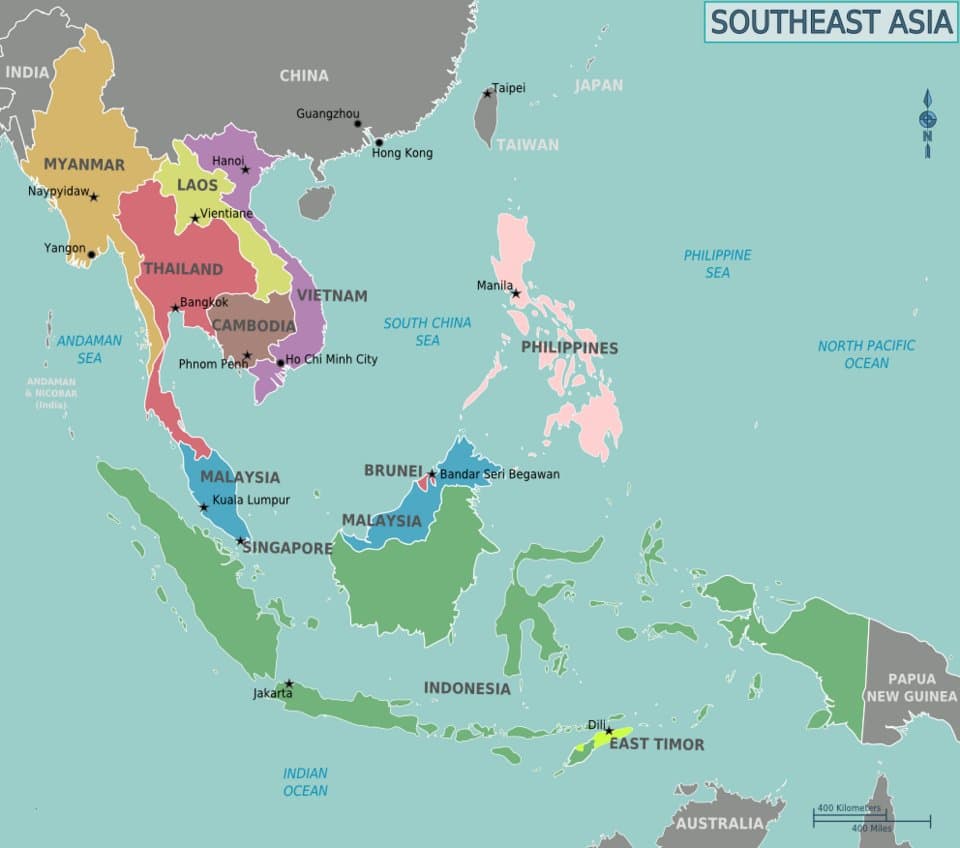
    Zebra danios, scientifically known as Danio rerio, are highly adaptable freshwater fish native to many regions throughout Asia. These fish can be found in cold to hot fast-moving or stagnant conditions across India, Pakistan, Nepal, Bangladesh, and Bhutan; they have been introduced to many other regions of the world, including South America and North America. They usually live alongside vegetation but don’t rely on it for survival1.

    Zebra-Danio

    These freshwater fish grow to be about 1 to 2 inches on average and are named after the alternating silver and bluish-black horizontal stripes along the sides of their body. They have a torpedo-shaped body that helps propel them through the water.

    Zebra danios are a very important species for science. They are considered a scientific model organism, which allows for many avenues of biological study. In fact, a zebra danio has even been sent to outer space! Interestingly, there is also evidence that zebra danios have memory, which means that they may experience some level of consciousness.

    Tank Size

    It is no wonder why the zebra danio is a favorite addition to the aquarium setting due to its high adaptability. These are easy-to-keep fish that bring a lot of movement to the upper portions of the aquarium.

    Zebra danios are a schooling fish, which means that you need to allow space for at least 6 or more individuals. In general, a school of zebra danios can comfortably fit in a 10 gallon aquarium with minimal other fish. However, a 20 gallon long aquarium will allow for a bigger school as well as other tank mates.

    Water Temperature

    One of the most important aspects to keep in mind when keeping zebra danios is their need for cooler water conditions. While these peaceful fish have been documented across a 50 degree range, they seem to do best when the water temperature is kept stable between 65-82ยฐ F.

    โš ๏ธ The biggest tank mate mistake I see: Fishkeepers pair zebra danios with tropical fish that need warmer water, or slow-moving species that canโ€™t handle their energy. Danios are fast and constantly on the move โ€” timid or slow fish will be stressed by them. Always match both temperature range and activity level when choosing tank mates, and remember: nothing smaller than a 20-gallon if you want this to work.

    The Top Zebra Danio Tank Mates

    Now that we have some understanding of where zebra danios come from and how they live in both their natural habitat and in the aquarium, we can start to consider some tank mate options.

    The best zebra danio tank mates will be able to live with an active fish in colder-than-normal water temperatures.

    1. Harlequin Rasboras

    • Scientific Name: Trigonostigma heteromorpha
    • Tank Size: 10 gallons
    • Adult Size: 1-2 inches
    • Water Temperature: 71-80ยฐ F
    • Temperament: Peaceful

    Harlequin rasboras are small, colorful orange and black fish that resemble tetras. They are schooling fish that need to be kept in groups of at least 6 or more. Together, they are active swimmers that will stay in the middle portions of the aquarium.

    With more active fish, like the zebra danio, harlequin rasboras may school tighter together and be less active. However, with a larger tank, the two species will complement each other in terms of activity and color.

    2. Cory Catfish

    Albino Cory Catfish
    • Scientific Name: Corydoras spp.
    • Tank Size: 10 gallons
    • Adult Size: 1-5 inches
    • Water Temperature: 70-80ยฐ F
    • Temperament: Peaceful

    There are many different species of corydoras available in the aquarium hobby, coming in a variety of sizes. These are bottom-dwelling fish that like to school far away from zebra danios at the top of the water column. This distance, in addition to cories preferring slightly cooler-than-normal water conditions, makes them a good pairing for zebra danios.

    ๐Ÿ† My top pick for a zebra danio tank mate: Cory catfish are my go-to recommendation โ€” they occupy the bottom while danios work the top, so thereโ€™s zero competition for space. The shared preference for slightly cooler water makes the parameter match easy too. Iโ€™ve seen this pairing work beautifully, and itโ€™s the first thing I suggest to anyone setting up a danio community tank.

    Some of the most popular Corydoras options include the bronze cory (Corydoras aeneus), pygmy cory (Corydoras pygmaeus), panda cory (Corydoras panda), and Sterba’s cory (Corydoras sterbai).

    3. Mollies

    Sailfin Molly in Aquarium
    • Scientific Name: Poecilia spp.
    • Tank Size: 15 gallons
    • Adult Size: 3-5 inches
    • Water Temperature: 72-82ยฐ F
    • Temperament: Peaceful to semi-aggressive

    Mollies are one of the most popular freshwater fish. Mollies are large fish that come in almost every color, with many different varieties available.

    They not true schooling fish, but they do enjoy the company of at least two to three others. This, in addition to their size, means that they are good feature fish for tanks over 10 gallons.

    It is important to note that while mollies are often seen as community tank fish, they are capable of showing aggression to other fish and each other, especially if there are multiple males in the tank during breeding times. They also prefer the upper portions of the water column. Because of this, it’s important to watch how your mollies and zebra danios interact.

    4. Swordtails

    Swordtail Fish in Planted Tank
    • Scientific Name: Xiphophorus hellerii
    • Tank Size: 20 gallons
    • Adult Size: 3-6
    • Water Temperature: 64-82 ยฐF
    • Temperament: Peaceful to semi-aggressive

    Swordtails are very similar to mollies in terms of color, activity, and behavior. These fish come in all different color variations and are easily recognized by their extended tail fin. They can also be kept in cooler water temperatures.

    These fish are not a schooling species but exhibit shoaling behaviors in small groups with one male and several females. Swordtails are relatively active fish that like to stay in the upper portions of the aquarium. They can become aggressive towards other fish and their own if more than one male is present.

    While swordtails are generally peaceful towards zebra danios, hobbyists should look out for possible fin-nipping and competition during feeding times.

    5. Neon Tetras

    • Scientific Name: Paracheirodon innesi
    • Tank Size: 10 gallons
    • Adult Size: 1.0-1.5 inches
    • Water Temperature: 72-82ยฐ F
    • Temperament: Peaceful, shy

    Neon tetras get along with most freshwater fish, and zebra danios are no exception. These small red and blue fish can be timid, especially when kept in smaller groups. Luckily, they only grow to be about an inch big, which allows for more room for keeping a bigger school. This is necessary as zebra danios can potentially stress them out.

    The good news is that neon tetras and zebra danios generally live in two different areas of the tank. Neon tetras usually stay in the middle and lower portions of the aquarium, away from the hustle and bustle of danios. Still, some extra decorations and hiding spots might encourage your tetras to be more present.

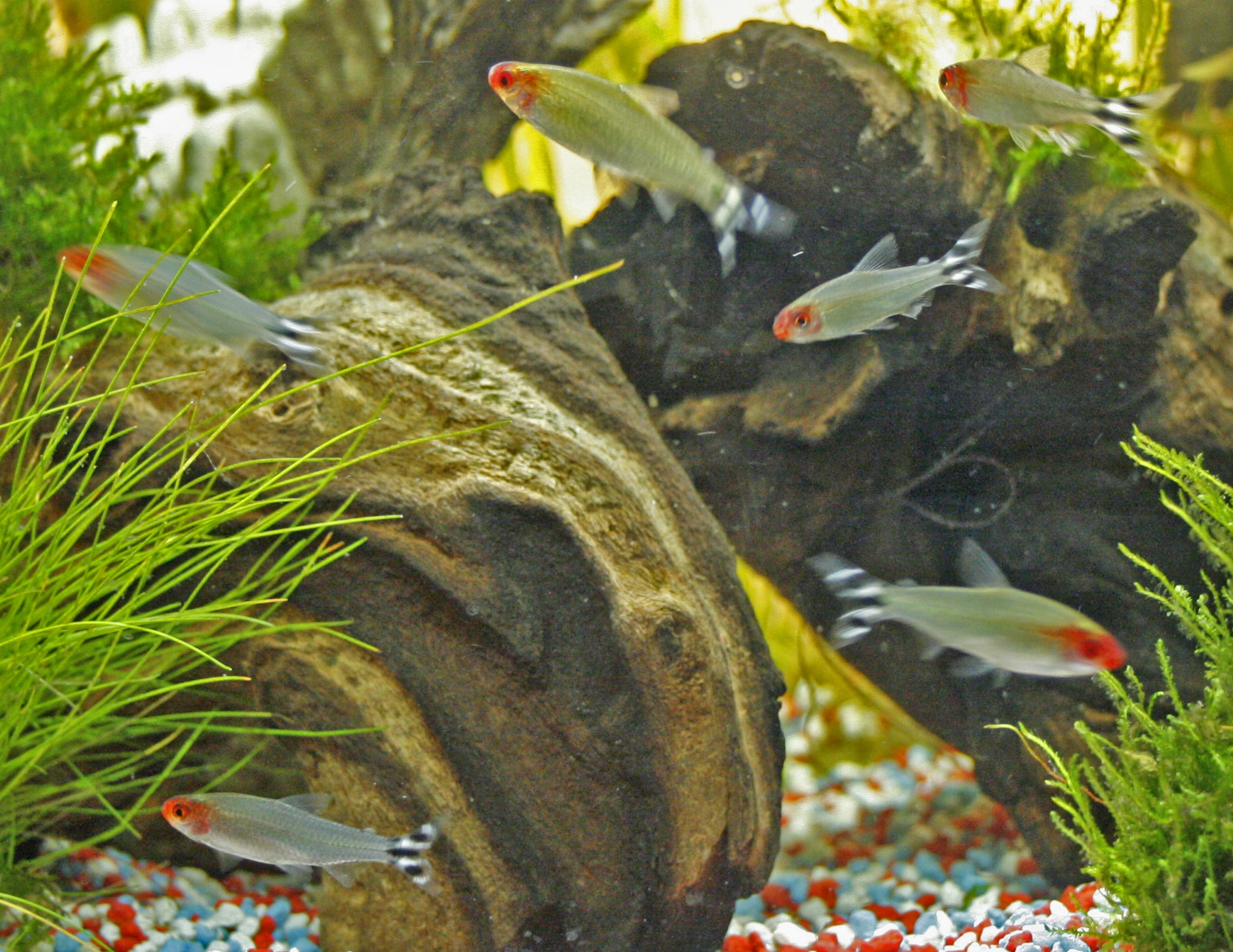
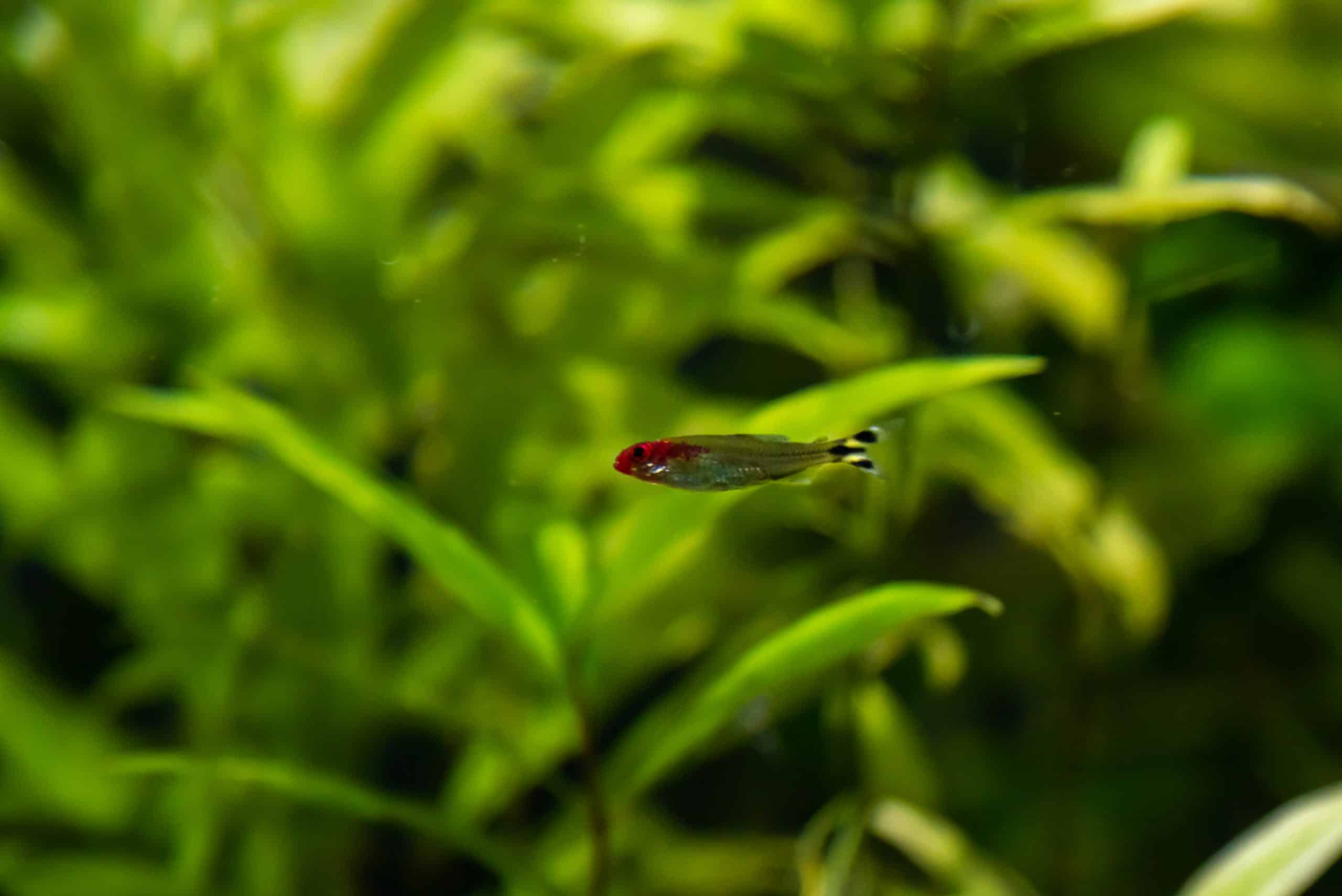
    6. Rummy Nose Tetras

    • Scientific Name: Hemigrammus bleheri
    • Tank Size: 10 gallons
    • Adult Size: 1-2 inches
    • Water Temperature: 75-85ยฐ F
    • Temperament: Peaceful, active

    Rummy nose tetras have a similar appearance and behavior to the zebra danio, but they’re a little more challenging to keep. These peaceful fish are identifiable by their bright red faces and can be seen swimming in schools in the upper portions of the water column.

    While rummy nose tetras make a good option for a zebra danio community tank, they are much more sensitive to incorrect and changing water conditions than other fish species. These fish do especially well in bigger groups in a heavily planted tank.

    7. Apistogrammas

    Apistogramma cacatuoides
    • Scientific Name: Apistogramma spp.
    • Tank Size: 20 gallons
    • Adult Size: 2-3 inches
    • Water Temperature: 72-86ยฐ F
    • Temperament: Semi-aggressive

    If you want another fish species to be the star of your aquarium instead of your zebra danio school, then an Apistogramma cichlid might make the ideal tank mate. These dwarf fish are from South America and are one of the more peaceful species of cichlid available. They have a moderate temperament but will readily tolerate other small, peaceful fish.

    The trick to choosing good Apistogramma tank mates is selecting fish that can’t be mistaken for another cichlid and that stay out of their way during breeding periods. This makes the zebra danio a good option.

    8. Chili Rasboras

    • Scientific Name: Boraras brigittae
    • Tank Size: 10 gallons
    • Adult Size: <1 inch
    • Water Temperature: 70-82 ยฐF
    • Temperament: Peaceful, shy

    If you’re looking for something even smaller than the zebra danio, chili rasboras are about as tiny as you can get. There are a few considerations that will need to be made before making these two tank mates, though.

    Chili rasboras are extremely small fish that grow to be less than an inch big. They love to school at the top of the water column but will scatter if threatened. Unfortunately, this can sometimes become problematic if you have an especially active or bold zebra danio.

    If you find that your chili rasboras are overwhelmed by your zebra danio school, then you may need to increase the size of your rasbora school, add more plants, or reconsider rehoming one of the species.

    9. Ember Tetras

    • Scientific Name: Hyphessobrycon amandae
    • Tank Size: 10 gallons
    • Adult Size: 1 inch
    • Water Temperature: 72-80 ยฐF
    • Temperament: Peaceful

    While not exactly the same, ember tetras are a good (and cheaper) alternative to chili rasboras. These two fish share some of the same orangey-red colors and ember tetras only grow to be a little bigger.

    Unlike chili rasboras, ember tetras are hardy fish that prefer the middle and lower portions of the water column. They take comfort in a school of 6 or more and can withstand the activity of a zebra danio school.

    For most hobbyists, ember tetras are a better addition to the zebra danio community tank than chili rasboras.

    10. White Cloud Minnows

    • Scientific Name: Tanichthys albonubes
    • Tank Size: 10 gallons
    • Adult Size: 1-2 inches
    • Water Temperature: 57-72ยฐF
    • Temperament: Peaceful, active

    White cloud minnows are one of the best zebra danio community tank mate options, period! This is because their tank size, adult size, water temperature, and temperament all align.

    White cloud minnows are not tropical fish and are instead, minnows. This means that they are incredibly hardy fish that can withstand a wide range of water temperatures and parameters. They are also active schooling fish that enjoy their own company and that of other fish species.

    11. Boesemani Rainbowfish

    Boesemani-Fish
    • Scientific Name: Melanotaenia boesemani
    • Tank Size: 40 gallons
    • Adult Size: 4-5 inches
    • Water Temperature: 72โ€“77ยฐ F
    • Temperament: Peaceful, active

    The Boesemani rainbowfish and the zebra danio is an odd pairing, but it’s doable! Both of these species are very active and a larger tank will be needed to comfortably keep both. While zebra danios will mostly stay towards the top of the tank, plenty of room should also be allowed for an active school of rainbowfish in the middle.

    This is an unusual pairing mostly due to color and activity levels. As long as temperatures match and there is room to swim, Boesemani rainbows can live alongside zebras.

    12. Cherry Barbs

    • Scientific Name: Puntius titteya
    • Tank Size: 25 gallons
    • Adult Size: 2 inches
    • Water Temperature: 73โ€“81ยฐ F
    • Temperament: Peaceful, sometimes shy

    Cherry barbs are one of the most ideal tank mates for zebras! Similar in size and activity, these two fish can comfortably live together as cherry barbs prefer the lower areas of the tank.

    That being said, these small barbs can sometimes be shy fish. It’s best to keep these fish in a larger densely planted tank with a good-size school. They can be somewhat sensitive to water parameters, so they should be safely acclimated and kept with good tank husbandry.

    13. Hatchet Fish

    Marble Hachet Fish
    • Scientific Name: Gasteropelecus sternicla
    • Tank Size: 20 gallons
    • Adult Size: 2-3 inches
    • Water Temperature: 72-81ยฐ F
    • Temperament: Peaceful

    If you’re looking for another fish to keep your zebra danios busy at the top of the tank, the hatchet fish will always be found just below the surface. While they don’t have the best vibrant colors, hatchet fish are one of the most interesting-looking fish species available!

    These fish are great for community tanks but need a tight aquarium lid as they’re notorious jumpers.

    14. Kuhli Loach

    • Scientific Name: Pangio kuhlii
    • Tank Size: 20 gallons
    • Adult Size: 3-4 inches
    • Water Temperature: 73-86ยฐ F
    • Temperament: Peaceful

    No matter your tank setup, there is always room for a kuhli loach. These fish are incredibly silly and fit right in at the bottom of a community tank setup.

    Kuhli loaches aren’t true schooling fish, but they thrive in the company of their own. It is important to take careful consideration when introducing kuhli loaches into community tanks as hobbyists sometimes keep them at higher-than-normal water temperatures.

    Always make sure to keep an aquarium lid on to prevent your loaches from escaping!

    15. Platy Fish

    Sunset-Platy
    • Scientific Name: Xiphophorus maculatus
    • Tank Size: 10 gallons
    • Adult Size: 2-3 inches
    • Water Temperature: 64-77 ยฐF
    • Temperament: Peaceful, prolific

    Platy fish are one of the most popular species of freshwater fish for beginner hobbyists and are one of the best tank mates for zebra danios. These community fish are colorful, active, and unbothered by other active species.

    However, platy fish are incredibly prolific and can quickly overpopulate an aquarium. This, in addition to being overall messy fish, can cause water quality problems.

    As long as populations and water quality are kept in check, then platy fish can comfortably live with zebra danios and an assortment of other fish!

    16. Otocinclus

    • Scientific Name: Otocinclus spp.
    • Tank Size: 20 gallons
    • Adult Size: 2-4 inches
    • Water Temperature: 74-79ยฐF
    • Temperament: Peaceful, shy

    Unlike the zebra danio, otocinclus are not beginner fish. In fact, these are some of the most difficult fish to keep due to their constant need for natural algae.

    Otocinclus are smaller fish that rely on each other for safety. They need to be kept in groups of at least 6 or more and need an established aquarium with plenty of natural biofilm. A densely planted tank is a must.

    Because these are some of the most challenging fish to keep and zebra danios are one of the easiest, these two species are not seen together often.

    17. Cardinal Tetras

    • Scientific Name: Paracheirodon axelrodi
    • Tank Size: 10 gallons
    • Adult Size: 1-2 inches
    • Water Temperature: 73-81ยฐ F
    • Temperament: Peaceful

    Slightly larger but more sensitive than neon tetras, cardinal tetras are great tank mates for danios. Cardinal tetras are colorful schooling fish that can be somewhat sensitive to both water quality and overactive tank mates. However, if they’re kept in a big enough school, they will feel safe to explore all corners of the tank, including where your zebra danios like to swim.

    Cardinal tetras don’t have any special considerations, but they do best when acclimated and kept with live plants.

    18. Honey Gourami

    • Scientific Name: Trichogaster chuna
    • Tank Size: 10 gallons
    • Adult Size: 2-3 inches
    • Water Temperature: 74-82ยฐ F
    • Temperament: Peaceful

    The honey gourami is a great feature species for a zebra danio tank. These fish are big and bold but gentle giants. Honey gouramis can be kept alone or in pairs, as long as the tank size allows.

    For the most part, the honey gourami makes a great tank mate for danios. Always make sure to keep an eye out for any potential fin-nipping between the two species. Zebra danios might take some interest in their thread-like pelvic fins.

    19. Nerite Snails

    • Scientific Name: Neritina spp.
    • Tank Size: 10 gallons
    • Adult Size: 1-2 inches
    • Water Temperature: 65-85ยฐ F
    • Temperament: Peaceful

    If you don’t want to keep other fish with your danios, then nerite snails are ideal tank mates! These snails can’t reproduce in freshwater, so you don’t need to worry about them overpopulating. They are also efficient cleaners and will help keep the tank clean of any algae or uneaten food.

    20. Bristle Nose Pleco

    • Scientific Name: Ancistrus cirrhosus
    • Tank Size: 30 gallons
    • Adult Size: 5 inches
    • Water Temperature: 73-80ยฐF
    • Temperament: Peaceful

    If you want a cleanup crew member that’s a little more exciting than a snail, then bristle nose plecos are a great addition to the freshwater aquarium. These plecos grow to reasonable sizes and don’t need a pure vegetation diet. Instead, they’ll help keep the tank clean of leftover food and other organic debris, though they won’t clean up fish waste.

    21. Other Danios

    Leopard

    If you’re a danio fan, then there are a few other species you can safely keep with your zebra danios. While there aren’t many species of danio available in the aquarium hobby, some of the most popular include:

    • Giant danio (Devario aequipinnatus)
    • Pearl danio (Danio albolineatus)
    • Glowlight danio (Danio choprai)
    • Blue danio (Danio kerri)

    Apart from the giant danio, all of these species should have similar tank requirements, though exact specifications are needed.

    Bad Selections

    Though there are many great tank mates for zebra danios, there are a few that will never be compatible. Here are some species to avoid.

    Bettas

    Plakat Betta Fish

    Betta fish are aggressive fish that need their space. The last thing a betta will tolerate is a zebra danio zooming around its territory.

    These two fish are incompatible tank mates due to territorial aggression and overactivity of the Danio that will stress out the Betta.

    Aggressive cichlids

    Texas Cichlid

    For the same reasons, zebra danios will never be compatible with aggressive cichlids, like most African Lake species. Not only will these cichlids see danios as a threat to their territory, but they’ll also see them as food.

    Anything Big

    Arowana Fish

    That brings us to this next generalization. A zebra danio should never be kept with any species that could fit one of these small fish into its mouth.

    A zebra danio can easily entice a predator as it zooms across the tank and be mistaken for food as a result. For this reason, it’s best to keep these danios with similar-sized tank mates.

    FAQs

    What fish can you keep with a zebra danio?

    There are many fish that can be kept with zebra danios, but small tetras, rasboras, catfish, and loaches are some of the best choices! When picking a new fish for your zebra danio tank, water temperature and activity levels are the main factors to take into consideration.

    How many zebra danios should be kept together?

    These danios need to be kept in groups of at least 6 or more. Keeping less than this can cause individuals to become stressed out and reclusive. This might even lead to a premature death.

    Are zebra danios good community fish?

    Yes! Zebra danios are some of the best community fish available. These fish are extremely hardy and can be kept with most community species.

    Are danios fin nippers?

    Zebra danios can be fin nippers. It’s best to avoid long-finned tank mates or to increase the size of the school instead. This should help diffuse possible aggression.

    Can danios go in a tropical tank?

    Yes, zebra danios can be slowly acclimated to a warmer tank even though they prefer cooler temperatures.

    Conclusion

    Zebra danios are widely available fish. While they’re not the most colorful fish, they have bold stripes that catch the eye as they zoom across the tank. These fish are highly active and should be kept with tank mates that can tolerate their behavior. Luckily, many coldwater and freshwater species check this box!

  • How Long Do Fish Live? What Iโ€™ve Learned After 25 Years in the Hobby

    How Long Do Fish Live? What Iโ€™ve Learned After 25 Years in the Hobby

    After 25 years in this hobby, Iโ€™ve seen fish live surprisingly long lives โ€” and heartbreakingly short ones. Koi are the most extreme example: thereโ€™s a famous koi named Hanako that was reportedly over 200 years old. But even in a home aquarium, the difference between a fish living 2 years versus 10 comes down to a handful of key factors. Diet and living conditions are the two biggest ones Iโ€™ve seen in my experience. In this guide Iโ€™ll break down the average lifespans of the most popular aquarium fish โ€” and what actually determines how long they live.

    How Long Do Fish Live (By Category)

    There are over 30,000 fish species on the planet, ranging from tiny nano species to the majestic 60-foot whale shark1. Their lifespans seem to vary as much as their size and appearance, with some species surviving just a few months and others living for centuries! Check our video above for visuals from our YouTube Channel. We go over in more detail in our blog post so you can follow along with both!

    The average aquarium fish lives a few years with good care, although some species can live for a few decades. After reading this guide, you’ll see that there’s a lot of variation between the species.

    Size And Growth

    Unlike humans, fish are indeterminate growers, which means they continue to grow throughout their lives. It can be difficult to guess the age of a fish over at the pet store, but you can bet a large specimen has already reached a good age.

    Scientists have a more precise way of judging a fish’s age. They simply count the rings on their scales, kind of like the way you tell the age of a tree2. Unfortunately, there isn’t a lot of concrete scientific evidence about aquarium fish lifespans out there, so most of what we know comes from the experiences of other fish keepers.

    Of course, many factors can affect how long fish live. For example, a fish that can live for ten years might survive just a few hours in a tank with incorrect water temperature, or it could surprise you and live for 12 years.

    We’ll discuss some of the factors that affect fish longevity later in this post, but for now, let’s go ahead and dive into the average life expectancies of some popular aquarium fish you might consider keeping in your tanks.

    Small Fish Lifespans

    Betta-Fish-Looking-For Food

    Smaller fish tend to have short lifespans, although some nano species can live surprisingly long! You could expect your pets to reach these lifespans with good care and a bit of luck:

    Medium Species

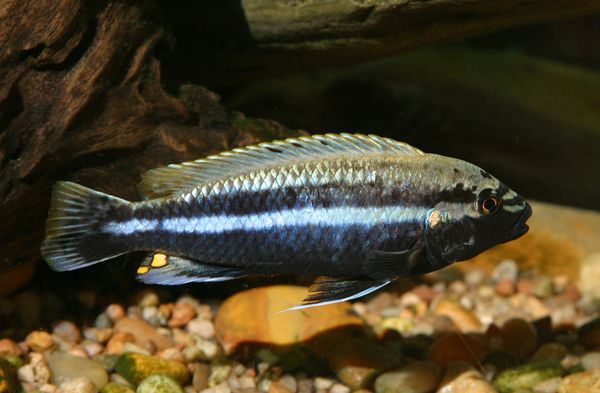
    Lake-Tebera-fish

    The average medium-size fish lifespan is between 5 and 15 years, which makes this group of fish a similar commitment to other popular pets like cats and dogs. Read on to learn about some popular medium aquarium fish lifespans.

    • African Cichlids: 5-10+ years
    • Angelfish: 10-12 years
    • Blood Parrot: 5-15 years
    • Blue Acara: 8-10 years
    • Bristlenose pleco: 10-15 years
    • Common Goldfish: 10-15 years
    • Convict Cichlid: 8-10 years
    • Discus cichlid: 10-18 years
    • Fancy goldfish: 10-15 years
    • Glass catfish: 7-8 years
    • Jack Dempsey: 10-15 years
    • Molly: 3-5 years
    • Rainbowfish: 5-8 years
    • Rainbow shark: 5-8 years
    • Siamese Algae Eater: 5-10 years
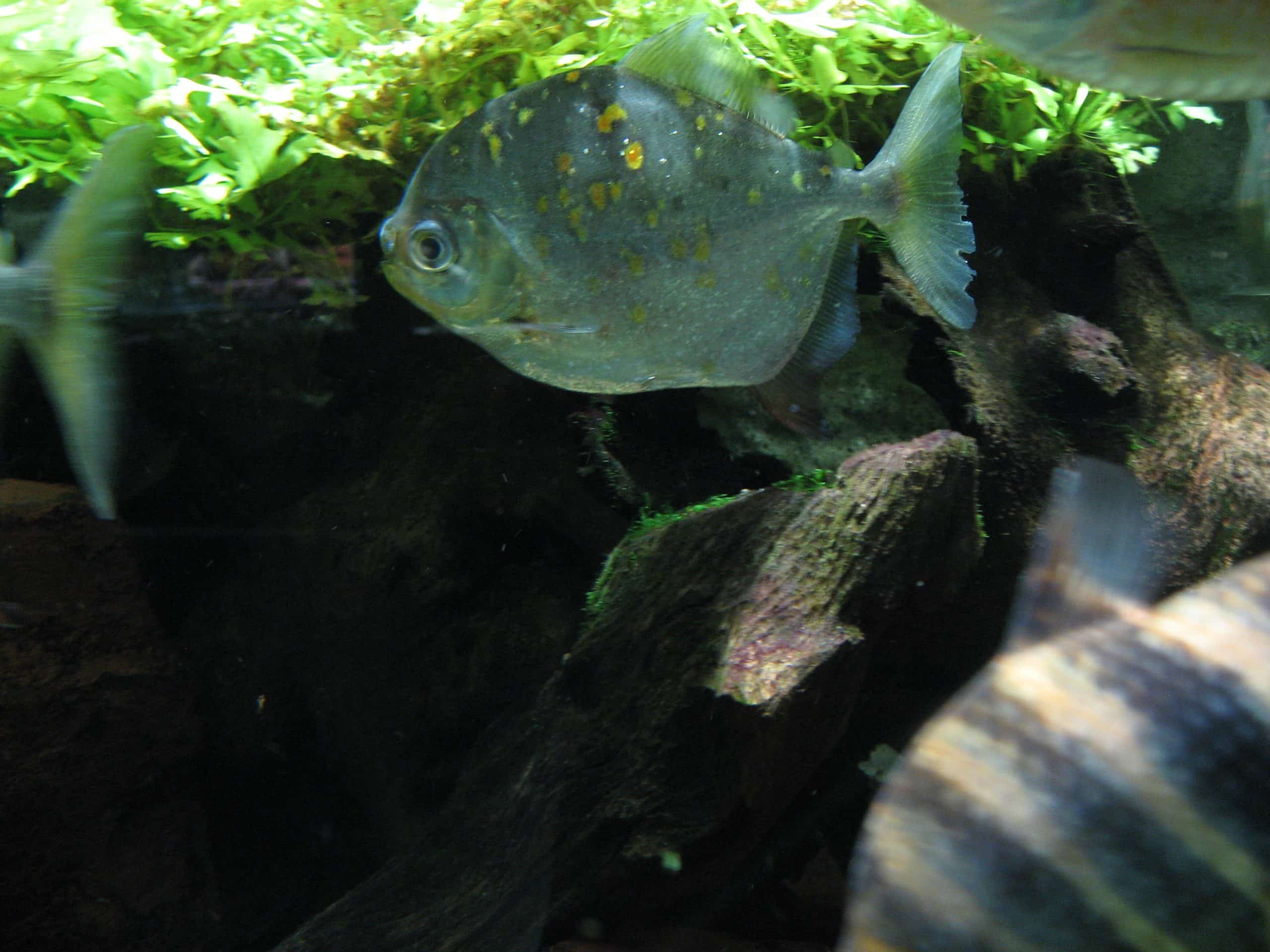
    • Silver dollar: 10 years
    • Swordtails: 3-5 years

    Large Species

    Arowana Fish

    Larger fish tend to live longer, although they need proper care and a suitable aquarium to reach their full potential. Let’s take a look at some big fish lifespans.

    ๐Ÿ’ก A lifespan that still blows my mind: Koi are the most extraordinary example of fish longevity in the hobby. The famous koi Hanako was reportedly over 200 years old when she died in 1977 โ€” verified by scale ring analysis. Most koi in home ponds already live 25โ€“35 years with good care, which is remarkable for any fish. Itโ€™s a powerful reminder of just how much proper conditions matter.

    • Arowana: 10-20 years
    • Bala shark: 10 years
    • Bichirs: 10-15 years
    • Black ghost knife fish: 10-15 years
    • Blood Parrot: 5-15 years
    • Clown loach: 10-15 years
    • Dojo loach/Weather loach: 10-15 years
    • Flowerhorn cichlid: 8-12 years
    • Koi fish: 25-35 years, but can over 60 years!
    • Oscars cichlids: 10-15+ years
    • Plecos: 10-20 years
    • Red-tailed Catfish: 15-20 years
    • Severum: 10 years
    • Tinfoil Barb: 8-10 years
    • Tire track eel: 8-18 years

    Wild Species

    Large Mouth Bass

    Just in case you were wondering how aquarium fish stack up against wild species, here’s a list of some well-known wild fish and their lifespans:

    • Atlantic Salmon: 5-8 years
    • Bluegill Sunfish: 5-8 years
    • Common Carp: 25-50 years
    • Largemouth Bass: 10-15 years
    • Rainbow Trout: 5-7 years
    • Sturgeon: 50-60 years

    Aquarium Invertebrates and Other Aquatic Animals

    Fish are not the only animals that live in fish tanks! Continue reading to learn about some other aquatic pet lifespans.

    • Cherry shrimp: 1-2 years
    • Snails: 1-10 years
    • Dwarf Frogs: 5-15 years
    • Turtles: 20-40 years
    • Axolotls: 10-15 years

    9 Factors that Affect Fish Lifespans

    The lifespans listed above are possible with good care and a healthy specimen, but tropical fish often live a much shorter lifespan than you might expect. There are many factors that can determine your pet’s longevity, and many of them are in your control as a fish keeper.

    Continue reading to learn about nine factors that can increase or decrease aquarium fish longevity.

    1. Age At Purchase

    Guppies Swimming

    This one might seem pretty obvious, but young fish can live longer than old fish.

    Most of the fish you see in the pet store are just a few months old, which means they still have most of their expected lifespan ahead of them. The large, mature specimens you see sometimes are much older, and it can be difficult to tell their age.

    Young fish may be more fragile and susceptible to damage than mature specimens, but if you can get them through the acclimation period and the first few weeks in their new tank, these fish can survive for many years.

    2. Stocking

    Bullying and fighting between the fish in your tank can cause stressful living conditions and reduce your fish’s lifespan. Some fish tend to be more aggressive than others, and you really want to avoid these species when setting up a community tank.

    I recommend stocking your tank with peaceful fish that grow to a similar size. This will also prevent any fish from getting snacked on. Remember, big fish eat little fish!

    3. Physical Size

    Frontosa-Cichlid

    If you’ve already scanned through the list of fish and their lifespans, you probably noticed a general trend. Medium-sized fish live longer than small fish, and big fish live even longer.

    Most small fish live about three to five years, while large species like koi can live for several decades. There are exceptions, of course. Kuhli loaches can live surprisingly long for their size!

    Tank size can play an important role in fish lifespans too. Keeping large fish in a small tank will lead to cramped conditions, poor water quality, and a reduced life expectancy.

    4. Genetic Factors And Fancy Breeds

    What is a fancy goldfish

    Genetics plays a big role in the lifespans of pet fish. Some betta fish live for over four years, although selective breeding has decreased the average lifespan of some varieties.

    Some fancy breeds tend to have shorter lifespans than wild-type fish. This applies to fish like balloon mollies and some fancy goldfish breeds. These fish may be more prone to health issues that affect their internal organs, but they can still lead a full and healthy life with good care.

    5. Water Quality

    Tap-Water-Source

    Poor water quality is probably the leading cause of reduced lifespans in pet fish. Keeping a tank clean and maintaining a healthy environment can be tough for beginner fishkeepers, especially if you start with sensitive fish species.

    Understanding the aquarium nitrogen cycle and testing your aquarium water regularly will help you maintain a suitable environment and keep your fish healthy, but having the right equipment is also crucial. Tropical fish need good filtration and regular aquarium maintenance to keep their water safe and achieve their full potential life span.

    6. Water Parameters

    Poor water quality is a major cause of fish mortality, but even well-maintained aquariums can be dangerous for some fish species.

    Each fish species has evolved to live in a certain range of water chemistry parameters. Some fish are highly adaptable, while others won’t survive unless you recreate their preferred conditions. Of course, freshwater fish should not be mixed with saltwater fish and vice versa!

    I suggest testing the pH level and water hardness of your local water supply before choosing your fish species. It is possible to alter your water chemistry or use bottled or reverse osmosis water in your tanks, but it’s always easiest to choose freshwater fish that will thrive in your local water.

    7. Temperature

    Incorrect water temperature can reduce fish lifespan to just hours, so this is one factor I really can’t stress enough. Tropical freshwater fish come from warm water habitats, so most fish keepers will need an aquarium heater to keep these fish healthy.

    However, you probably won’t need a heater if you live in a tropical region, or keep your home at a constant temperature between about 75 and 80 degrees Fahrenheit. Fish temperature preferences vary depending on the species, so always research the needs of each individual fish species before adding them to a community tank with other fish.

    8. Health Problems

    Fish are susceptible to various illnesses that can reduce their lifespan. Common diseases include bacterial infections, fungal infections, viruses, and parasitic infections like ich that cause white spots.

    Aquarium fish are most vulnerable to health problems when their water quality is low, but they can also develop illnesses when kept in unfavorable water parameters or with unsuitable tank mates.

    Disease outbreaks can occur when you add a new fish to your aquarium, so it’s best to confine new fish to a quarantine tank before introducing them to your community aquarium. That way you can monitor your new pet fish for a few weeks and treat them with veterinary medicine if necessary.

    9. Diet

    Diet quality is another important factor that can increase or decrease your fish’s life expectancy. Different species of fish have different dietary needs, so you may need to provide more than one type of food if you keep multiple species of fish.

    โš ๏ธ The three mistakes I see most often that cut fish lifespans short: First, keeping fish in a tank thatโ€™s too small โ€” chronic stress and stunted growth take years off their lives. Second, poor or monotonous diet โ€” fish need variety and species-appropriate food to thrive. Third, bad tank mates that cause constant stress or injury. Iโ€™ve watched all three of these shorten the lives of fish that could have lived much, much longer.

    Fluval Bug Bites Flakes

    A flake version of Fluval’s amazing pellet bug bits products. Great for all tropical fish and high in protein.

    Buy On Amazon Buy On Petco

    Modern prepared fish foods contain just about everything your fish need to stay healthy, but you can also supplement their diet with some healthy treats. Carnivorous and omnivorous fish love live or frozen foods like bloodworm and brine shrimp, while omnivorous and herbivorous fish species enjoy healthy snacks like peas and zucchini.

    FAQs

    How long does a pet fish live?

    Depending on the species, most pet fish with live between 1 and 15 years with good care. The average nano fish will live between 3 and 5 years, while medium fish species have longer lifespans in the 5-15 year range.

    How long do fish live naturally?

    Fish in the wild probably live shorter lifespans than captive fish because they are exposed to more predators and dangerous environmental factors like floods, droughts, and cold snaps. Captive fish can live a surprisingly long life if kept in a clean tank with stable conditions and a high-quality diet.

    Which fish species has the shortest lifespan?

    According to the Guinness Book of Records, the fish with the shortest lifespan is the seven-figure pygmy goby. These tiny saltwater fish complete their entire life cycle in less than two months!

    In the aquarium hobby, livebearers like guppies and platies tend to have shorter lifespans than similar-sized egg layers like the neon tetra. The average guppy has a lifespan of just two to three years.

    Which fish live the longest?

    The longest-living fish species is the Greenland shark, a species of deep, cold waters in the open ocean. These huge sharks can reach about 23 feet and live for over 400 years! This is one fish you probably don’t want in your home aquarium.

    Which fish has the longest lifespan?

    Goldfish are about the longest-living aquarium fish species, and some specimens will live over 25 years with proper care.

    Koi can live even longer, although these beautiful fish from the carp family are usually housed outdoors in ponds. Their average lifespan is about 25 to 30 years, although one incredible specimen called Hanako is said to have lived for 226 years!

    Final Thoughts

    Fish lifespans vary between species, but you can use this guide to make a pretty educated guess about how long your fish will live. Of course, you’ll need to provide consistent care if you want your pets to reach their full potential, so check out my extensive range of fish care guides for loads of great advice!

    How old is your oldest fish? Let me know in the comments below!


    ๐ŸŸ Want to learn more? This article is part of our complete Aquarium Care Guide โ€” your ultimate resource for water chemistry, maintenance, feeding, disease prevention, and everything you need for a healthy tank.

  • Can Angelfish and Bettas Live Together? Why I Always Tell Customers to Avoid It

    Can Angelfish and Bettas Live Together? Why I Always Tell Customers to Avoid It

    Iโ€™ve never personally attempted this combination โ€” and after 25 years in the hobby, thatโ€™s a deliberate choice. Iโ€™ve heard the aftermath from customers who came into the fish store after things went sideways with this pairing. The core problem is size and temperament: angelfish are significantly larger than bettas, and while bettas have a reputation for aggression, theyโ€™re actually the ones that come off second best when an adult angelfish asserts itself. My advice: skip this combo entirely. This guide explains exactly why โ€” and what to do if youโ€™re already in this situation.

    Key Takeaways

    • Betta fish and angelfish are not recommended as tank mates.
    • Some aquarists may have successfully housed these fish together in larger aquariums (55-gallon +) but it’s important to have a spare tank ready in case you notice any signs of aggression.
    • Bettas can be aggressive, but they are slow swimmers and stay much smaller than angelfish, so they are more likely to be the victim in an aggressive encounter.

    Can Angelfish And Bettas Live Together? – No!!!

    Here’s your quick answer. In the vast majority of cases, Bettas cannot live with Angelfish in the same tank. Now that you know the answer, let’s go into why it doesn’t work.

    Why It Doesn’t Work

    Let’s take a look at some of the issues you’re likely to face.

    Tank Size

    On paper, angelfish and betta fish prefer similar water parameters, so you might think they make ideal tank mates. However, these fish have very different tank size requirements.

    You’ll need at least 20 gallons to house young angelfish and a 55 gallon tank for adults, but just 5 gallons or more to house bettas. So, you definitely can’t add angelfish to a small betta fish tank.

    Aggression

    Both angelfish and bettas can be aggressive fish, depending on their personalities. Both fish also have long fins, so they can be vulnerable to fin nipping.

    However, a full grown angelfish is much larger than a betta fish, so if there’s any aggression, the betta is going to come off second best.

    ๐Ÿšซ From my experience in the trade: This is the core of why the pairing fails. Bettas have a reputation as the aggressor, but next to a full-grown angelfish, that reputation doesnโ€™t hold up. Iโ€™ve had customers come into the store after losing their betta to angelfish aggression they never saw coming. The size difference is just too significant โ€” especially once the angelfish fully matures.

    Angelfish can become especially aggressive during breeding, so if you have males and females, there’s even more risk of them harming your betta fish.

    Illness

    Aggression can turn your community tank into a toxic environment that is as stressful for you as it is for your fish. Unfortunately, aggression also causes illness and even death in pet fish.

    A bullied fish often sustains minor injuries that leave them vulnerable to secondary infections. In some cases, aggressive betta fish or angelfish will even kill their victims outright!

    Betta Basics

    Betta fish (also known as Siamese fighting fish) are small freshwater fish that usually reach about 2.5 inches in length. Today, they are prized for their amazing colors and fancy fins, but these fish were once bred for competitive fighting.

    WYSIWYG Available!
    Betta Fish

    Use Coupon Code ASDFISH at Checkout

    Betta Fish are one of the most beautiful varieties of freshwater fish available in the hobby. Easy to care for with plenty of varieties!

    Buy Premium Varieties Buy On Petco Online

    Bettas have a reputation for aggression, although they can make excellent community fish. A lot depends on their individual personality, but male bettas are likely to fight with their own species if housed in the same tank. It’s always safer to keep just one betta in its own aquarium, or with other compatible species.

    Female bettas are generally regarded as less aggressive than males, although most fishkeepers choose males for their brighter colors and longer fins. You can learn much more about female bettas from my complete female betta care guide.

    Betta fish live in shallow, freshwater habitats and have evolved to breathe air from the surface for survival1. Their hardy nature means they can be kept in tanks as small as 5 gallons, although they require a filter and regular tank maintenance to provide good water quality. Bettas are tropical fish so they also need heated water to stay active and healthy.

    Betta-in-Planted-Aquarium

    Check out my guide to 15 betta fish tank mates (and four to avoid) for advice on some great freshwater fish that can share a tank with a Siamese fighter!

    Facts and Figures

    • Scientific name: Betta splendens
    • Fish family: Osphronemidae
    • Origin: Southeast Asia
    • Diet: Carnivore
    • Temperature: Upper 70s to mid 80s Fahrenheit
    • pH: 6.8 – 7.5
    • Hardness: Soft

    Angelfish in a Nutshell

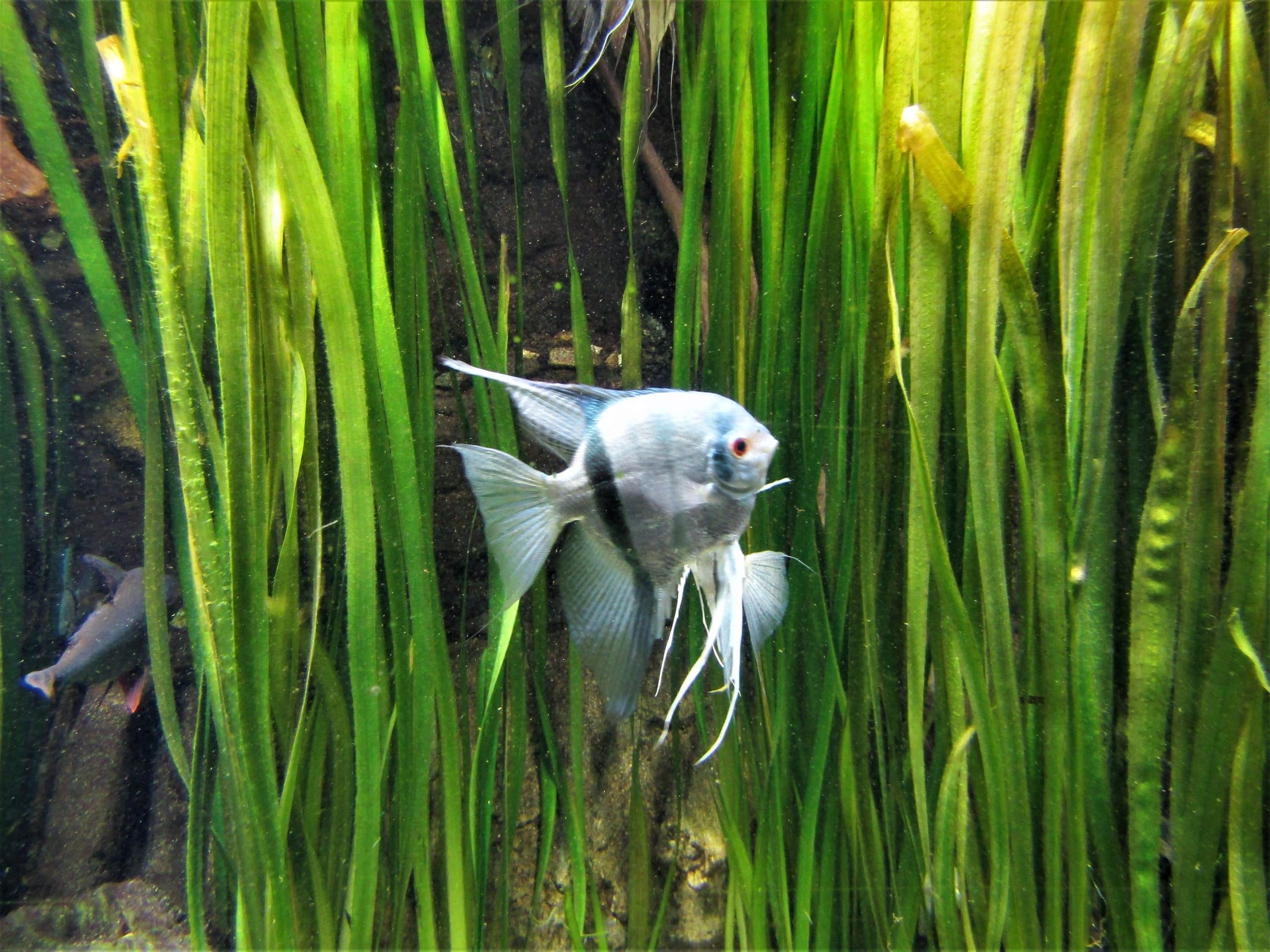
    Angelfish are medium-sized South American fish from the cichlid family. These popular fish come in various color forms, but each breed has that characteristic combination of long dorsal and anal fins.

    Freshwater-Angelfish

    These fins make the angelfish very ‘tall’, so it’s best to keep these freshwater fish in an aquarium with high sides. In terms of size, these fish can reach over 6 inches in length and an impressive 10 inches in height, so a single fish will need a tank of at least 20 gallons, with 55 gallons being better for larger adults.

    While angelfish are relatively peaceful, they are cichlids, and they aren’t always complete angels! These fish are typically classified as semi-aggressive but they can be pretty aggressive when they’re paired up and start breeding.

    Freshwater angelfish are omnivores, and they have a pretty small mouth. However, they will eat nano fish small enough to swallow.

    Looking for some great ideas for angelfish tank mates? Check out my guide to 15 freshwater species that get along with angelfish!

    Facts and Figures:

    • Scientific name: Pterophyllum scalare
    • Fish family: Cichlid family
    • Origin: Amazon river basin in South America
    • Diet: Omnivore
    • Temperature: Upper 70s to lower 80s Fahrenheit
    • pH: 6.8 – 7.8
    • Hardness: Soft

    How To Keep the Peace

    If you already have angelfish and betta fish in the same tank, there are some things you can do to decrease the chance of aggression. Again, there are no guarantees, but a combination of these techniques might help prevent war in your aquarium.

    Go Big

    A lot of compatibility problems are caused by keeping fish in small tanks. When it comes to angelfish and betta fish, your chance of success rises as you get into that 55+ gallon range, but remember, these fish are still not recommended as tank mates. You have safer bets in 6 or 8 foot long tanks, but at that size your Betta will get lost in the visual of the display tank.

    Get the Parameters Right

    Fortunately, bettas and angelfish thrive in similar conditions. Aim for a water temperature in the upper 70s Fahrenheit and a neutral pH around 7 to keep both fish happy. Both angelfish and betta fish prefer water with a low flow, so use an appropriate filter.

    Start With Young Fish

    Young angelfish do not have the same territorial and aggressive drive as breeding adults, so they’re often safer to keep together with bettas. Letting your fish grow up together might also help prevent aggression down the line, but you can still expect some dominance battles as they grow and reach maturity.

    Female Bettas and Single Angelfish

    Female-Betta

    Female bettas are generally less aggressive than males, and their shorter fins are less prone to damage. Paired angelfish can be more aggressive than single specimens, so a combination of one or more female bettas and a single angelfish might work the best, especially when combined with some of the other tips mentioned here.

    Monitor Regularly

    You should check in on aquarium fish every day, but risky combinations like betta fish and angelfish should be observed frequently, especially in the weeks after they are introduced. A community tank with betta fish and angelfish should be positioned somewhere you can monitor it throughout the day.

    Watch out for any signs of aggression so that you can take action before serious injury can happen. Aggression often takes place during feeding times, so be especially alert when your fish are eating.

    Feeding Your Fish

    Adding food to different parts of the tank at the same time can reduce competition and conflict, but you should also be aware that bettas and angelfish have slightly different diets.

    Betta fish are mostly carnivorous and will thrive on a diet of prepared dried food and live/frozen foods. Angelfish are more omnivorous so they need a prepared food suitable for their needs.

    Live Plants

    Live plants are beautiful to look at, fun to grow, and great for the health of your fish. They’re also perfect for breaking up the line of sight in the tank. This means fish are not always visible to each other, which reduces aggression. Large plants also provide hiding places where fish can escape if they feel threatened or are under attack.

    Choose large plants like Amazon swords, vallisneria, and large Java ferns that will grow up into the water column, but don’t be afraid to add a few smaller species and floating plants to make your aquarium an even more natural environment.

    You can also use artificial plants, but avoid firm plastic decorations that can cut and damage your betta fish fins. Live plants are always better for bettas!

    Caves And Structure

    The hardscape in your tank can also play an important role in breaking up line of sight and creating hiding spots. Rocks, driftwood, cave ornaments, and other decorations provide places where fish can set up territories or hide from dominant tank mates.

    Choose fish-safe ornaments that are made for aquariums to avoid introducing any chemicals into your tank. You should also check for any sharp edges that can tear your fish’s fins.

    Dither Fish

    Sometimes, the best way to avoid aggressive behaviors is to add more fish. Dither fish are active species that create movement and make it difficult for an aggressive fish to single out a victim. The best options are active schooling fish that swim at various levels in the tank.

    Busy bottom dwellers like cory catfish, or fast, active fish like rainbowfish make good dither fish, but it’s important to choose other fish that enjoy the same parameters as angelfish and bettas. Avoid nano dither fish that are small enough for angelfish to swallow. You can also try medium sized social fish like molly fish.

    Plan B – What To Do When War Breaks Out

    If it doesn’t work out between your angelfish and betta, you’re going to have an animal welfare issue on your hands, and the best thing to do is separate your fish or find a new home for one of them.

    You may already have a spare tank that you use for quarantining or treating sick fish, but if not, it’s always a good idea to have an emergency option. You could even use a bucket or something similar as a (very) temporary solution, just make sure the container has not been used to hold any toxic chemicals.

    Once your fish are separated, it’s time to come up with a long-term solution. Continue reading to learn about three possible options.

    Try A Tank Separator

    Installing a tank divider will allow you to keep these two species in one aquarium without any drama, but it does limit the swimming space for both fish and all the other species in the tank. Fish tank dividers are available for sale, or you can make your own to save some money for your next tank.

    โœ… If youโ€™re set on keeping both: A tank divider is the one scenario I can honestly endorse. Itโ€™s the only way to have both fish without risking conflict. That said, both fish will have reduced swimming space โ€” so if you go this route, start with at least a 55-gallon tank so each side has enough room to live comfortably.

    Budget Option
    LifeWithPets Tank Divider

    Budget Option

    A DIYer’s option. Divide your aquarium and house multiple Bettas!

    Buy On Amazon

    With your fish separated in a single tank, you can start creating hiding spaces, adding more structure to break up their line of sight, and introducing live aquarium plants and dither fish.

    If your fish still don’t get along after making some changes in the tank, you’re going to want to try one of these next options for a long-term solution.

    Start A New Aquarium

    Angelfish need much larger tanks than bettas, but you can create a great new home for a single betta fish in a tank as small as 5 gallons. This is usually the easiest and most cost-effective option, but it will limit your options for adding other species.

    Male bettas are happy to live in their own tanks, but you’ll want to step up to a ten-gallon or larger if you plan on giving him some tank mates. Female betta fish can also be kept in their own tank, or you can keep a sorority of females in a larger aquarium.

    There are great betta tank kits available, but you can also put your own tank together. Just don’t forget the heater and filter!

    Starting a new tank is easier when you already have a cycled aquarium because you can seed your new filter with beneficial bacteria from the old tank to give the nitrogen cycle a jump start. However, you’ll still need to monitor your water parameters regularly, so keep that water test kit handy.

    Check out my guide to fish-in cycling to make the transition as smooth as possible!

    Rehoming

    If your new angelfish isn’t getting along with your betta (or vice versa), and you don’t have the space for another aquarium, you might be able to return the fish to your local fish store. Call ahead and speak to someone at the store before taking your fish on another road trip.

    Depending on their policy, you might not get a refund, but that’s still better than letting your fish get hurt. If the store has a no-return policy, you might want to ask any other fish keeping friends if they have space for a new fish or even put your pet up for sale to a good home.

    Final Thoughts

    So now you know why keeping angelfish and bettas together is a bad idea. Hopefully, you’ve also picked up some useful tips on how to keep the peace if you find yourself housing both species in the same tank.

    While some fishkeepers have managed to keep these fish together successfully, I do not recommend trying it yourself. Rather check out my guides to angelfish tank mates and betta fish tank mates for some much safer options!


    ๐Ÿ“˜ Want to learn more? This article is part of our complete Betta Fish Guide โ€” your ultimate resource for betta care, types, tank setup, feeding, tank mates, and more.


    ๐Ÿ“˜ Want to learn more? This article is part of our complete Freshwater Fish Guide โ€” your ultimate resource for freshwater species, care tips, tank setup, and more.

  • Fish Tank Ideas: 30+ Setups That Have Inspired My Own Builds

    Fish Tank Ideas: 30+ Setups That Have Inspired My Own Builds

    I’ve been keeping fish for over 25 years, and few things in this hobby beat the moment a tank design truly clicks. Aquascapes, cichlid rockscapes, and nano planted betta tanks have all inspired setups in my own fishroom over the years โ€” and they still do. If you’re looking for your next build or just some inspiration for what’s possible, this is one of my favorite topics to cover. Here are 30+ fish tank ideas from across the hobby that I keep coming back to.

    Key Takeaways

    • Designing an aquarium is a great chance to let your creativity run wild and create something truly unique. However, drawing some inspiration from other setups can be very helpful.
    • Aquarium decorations are a great way to add some style and personality to your aquarium, but live plants and natural materials like wood are the best choice for nature-style fish tanks.
    • Stick to hardscape and decorations designed specifically for aquariums. Natural decorations like rocks can be used if you clean them carefully, but some natural materials like sea shells and limestone can change your water chemistry.
    • Be sure to include a filtration system if you’re creating a shrimp or fish tank, and a heater if you’re keeping tropical species.
    • Don’t be afraid to think out of the box! Paludariums and emersed planted tanks are excellent aquarium ideas.

    Nano Fish Tank Ideas

    In the aquarium hobby, small aquariums are usually referred to as nano tanks. How small is small? Well, the definition varies, but you can call anything smaller than about 20 gallons a nano tank.

    There are many different nano tank styles, ranging from species-only setups to thriving communities. Continue reading for some nano tank inspiration!

    10-gallon Nano Betta Fish Tank Idea

    Betta fish are one of the most popular nano fish in the hobby, but we see them in tiny bowls and other containers way too often. This beautiful 10-gallon nano betta fish tank deserves a round of applause1!

    The combination of live aquatic plants, driftwood, hardscape, and a little beach area gives this tank a feeling of balance and tranquility. I bet that’s one happy betta.

    5-Gallon Betta Setup

    You can also go a little smaller for a single betta, although you’ll still need a filtration system and a heater. Maintaining high water quality will also become more challenging, but regular water changes and cleaning will keep your fish happy and healthy.

    At 5 gallons, this well-planned fish tank is about the smallest you should go for bettas or other live fish. However, you can make a nano tank look much roomier than it really is by decorating it carefully.

    Notice how the dark substrate makes the plants stand out even more? Black sand or gravel can also make fish look brighter and it’s great for some shy fish species that prefer a dark habitat.

    ๐Ÿ† My Pick: If I had to recommend one starting point for beginners who want to build something beautiful without overwhelming themselves, it’s the natural planted betta tank. The footprint is small, the cost is manageable, and the results can look incredible. I’ve set up many of these over the years and they never get old โ€” it’s the best entry point into seriously impressive aquarium design.

    Community Aquarium

    It is possible to keep multiple nano fish species together in a small tank, but you’ll need to step up to an aquarium in the 15 to 20-gallon range to house your fish safely.

    This elegant tank is home to multiple fish species and some beautiful aquatic plants. Most fish that grow to about 2.5 inches or less can be kept in this tank size, although it’s important to research the minimum school size and parameters of each species.

    Themed

    There are some awesome aquarium decorations out there for setting up a themed fish tank. Check out these fun but contrasting examples from across the web!

    Spongebob

    Spongebob-themed aquarium decorations can turn a nano tank into a fun and exciting fish tank, especially for the kids. This themed aquarium looks just like a scene from the popular TV show, and those yellow fish fit right in!

    Bamboo Forest

    Looking for something a little more zen? Check out this peaceful betta tank, complete with its own bamboo forest. This fish tank theme is perfect for your work desk, especially if you have a stressful job.

    Planted Aquariums

    If you ask me, all freshwater aquariums should include some live plants! Live plants have many benefits for your fish, and they look great too! Let’s take a look at some amazing planted tank eye candy.

    Submerged Bonsai

    Plants dominate this incredible aquascape, although its creator has chosen to create a scene that looks more like a dry landscape than an underwater scene!

    It would take many years to grow an actual bonsai that looks this good, but by cleverly planting a small plant like Anubias barteri var. nana on a great piece of driftwood, you can achieve much faster results.

    The addition of carpet plants and that inviting clearing under the ‘tree’ make this peaceful scene really aesthetic. Can you picture a few shrimp or a betta hanging out under the shade of those branches?

    Dutch Style

    This amazing Dutch style planted fish tank ticks all the right boxes for aquarists who like a lot of color! This orderly aquascaping style requires dedication and a real eye for design, but the results are incredible.

    โš ๏ธ A Word of Caution: The biggest mistake I see people make when trying to recreate a tank they found online is skipping the research on plants and aquascape layout concepts. Aquascaping has its own language โ€” rule of thirds, foreground/midground/background layers, plant selection based on light and CO2 requirements. If you dive in without understanding these principles first, you’ll spend a lot of money on plants that die and layouts that fall apart. Study the style you love before you buy anything.

    The rimless tank and open-top design add another dimension of viewing pleasure to this tank. Sometimes, plants look the best when viewed from above!

    Dutch-style planted tanks are all about the plants, but that doesn’t mean you can’t add some movement. The vertical bars on those angelfish really complement this tank!

    Emersed Growth

    There’s something special about a planted tank with emerging plants. This stunning aquarium is a true underwater paradise, complete with lush vegetation growing out of the water, just as it does in nature.

    Many common aquarium plants, including Ludwigia and Rotala, can be grown emersed in a hoodless tank with suspended lighting.

    Fish safety is an important consideration when planning an open-top fish tank. Fish are surprisingly good at jumping out of tanks, so it’s a good idea to cover the top with some kind of screen.

    Paludariums

    Giving your plants the freedom to grow up and out of the water creates a unique look, but you can go even further and create a truly amphibious tank. Paludariums, like this exquisite example, include an underwater section and a land section.

    Depending on the size and design of your paludarium, you could house aquatic life like fish, shrimp like red cherry shrimp, or dwarf frogs in the water. The land section is great for frogs, and turtles that like to spend time in and out of the water.

    The land section of your paludarium could take the form of an island that sticks out of the water in the center, or you could add a simple shelf, complete with some rocks, soil, and plants.

    The Living Wall

    A planted wall is another spectacular design, although this limits some of the animals you can keep. This example provides some swimming space for shrimp or nano fish, and plenty of planting space for those awesome tropical plants.

    African Cichlids

    African cichlid tanks are the ultimate choice for freshwater aquarists who want a large tank that bursts with color and movement. Although you can grow some plants in African cichlid tanks, these setups are usually all about the fish.

    Rock Pile

    Some fishkeepers house African cichlids in pretty open, bare-bottom fish tanks, but if you ask me, these fish look so much better with some dramatic rocky hardscape!

    This tank creates wonderful cichlid habitats and makes a bold statement as a display tank. The white sand contrasts with the round rocks to make this simple but effective tank really pop.

    Just make sure you secure round rocks properly if you set up a tank like this, they could easily injure your fish or crack your tank if they come tumbling down.

    Rock Walls

    When we talk about aquarium hardscape, most people think of arranging and stacking rocks or driftwood on the bottom of the fish tank. However, the back and side walls can be used to create an amazing effect.

    You could simply use a life-like stick-on aquarium background, or go this route and create something with real texture!

    Angelfish

    Angelfish are stunning freshwater cichlids that come from South America. These distinctive fish have a very ‘tall’ body shape, so they need a tank with some real height.

    These fish thrive in planted tanks and can be housed with many other peaceful community fish in a big enough aquarium – just avoid tiny tank mates that your angels might see as a tasty snack.

    Altum Angel Aquarium

    This gorgeous designer fish tank is home to a big group of Altum angelfish, a large species native to the Rio Negro and Orinoco rivers in South America. The dramatic driftwood contrasts against a backlit background to make an aquarium that no one is walking by without stopping to stare!

    Aquascapes

    Most aquascapes include live plants, but you can also create a stunning scene by arranging hardscape features like rocks and driftwood. Let’s take a look at some interesting aquascapes.

    Forest Scapes

    This inspiring aquascape looks just like a forest scene from the great outdoors, complete with mountains! This kind of project takes real dedication and a lot of experience, but the results are absolutely amazing.

    Iwagumi

    This iwagumi masterpiece by George Farmer highlights the simple beauty of this unique aquascape design. Each rock is carefully arranged in the frame to create a simplistic yet bold look, and the dense carpet of plants only adds to its appeal.

    This type of fish tank looks best with a small group of schooling fish like neon tetras, which create the effect of a flock of birds flying over the aquascape.

    The Nature Aquarium

    This jaw-dropping tank is a prime example of a nature aquarium. The style was popularized by the legendary Takashi Amano, a pioneering aquascaper from Japan. The style aims to create a unique natural world, rather than recreating a scene directly from nature.

    A variety of different plant types are used in this style, but hardscape features like rocks, roots, and driftwood are equally important in creating different zones and textures in the tank.

    Glofish Tanks

    Have you ever heard of Glofish? These neon-colored fish were originally genetically modified to identify toxins in water, but today they are very popular in the aquarium hobby for their vibrant colors.

    Neon Glow

    Glofish come in exotic colors like sunburst orange, electric green, and galactic purple, and they include popular species like corydoras catfish, tetras, danios, and rainbow sharks. These fish really stand out under blue LED lighting, and so do the special glofish gravels, aquarium decorations, and artificial plants.

    Nano Glofish Setup

    Glofish tanks are a perfect idea for the kid’s room or anyone who loves bright colors! This low-maintenance example shows off the amazing colors you can achieve with the right lighting and some cool glofish tetras.

    Goldfish

    The goldfish is another freshwater species that looks nothing like their wild ancestors. Hundreds of years of selective breeding have created the amazing variety of fancy goldfish breeds we know today.

    Some people still think goldfish can live in little fish bowls, but these fish actually grow surprisingly large, so they need a fish tank of at least 30 gallons for long-term care.

    Keeping goldfish is all about the fish. These adorable underwater pets have a long lifespan, and it’s really rewarding to watch them grow and thrive in a healthy fish tank.

    The Minimalist

    Many aquarists choose to keep their goldfish in open, minimalist tanks like this setup because they are easy to clean and place all the attention on the tank inhabitants. The addition of that long airstone adds another layer of interest to this fish tank while increasing oxygen levels in the water.

    Eastern Elegance

    This 60-gallon goldfish aquarium still has a low-maintenance design but includes a little more structure, including some great aquarium decorations that reflect the goldfish’s east Asian origins.

    60 gallons is a great size for two or three fancy goldfish, and you could even consider some goldfish tank mates in a tank of this size.

    Check out my guide to 11 goldfish tank mates for some great goldfish companions!

    Nature Style Goldfish Aquarium

    Unfortunately, goldfish love to snack on most plants, but that doesn’t mean you can’t create a natural home for your fishy friends. Some attractive river stones and soft artificial plants or tough live plants like Java fern and Anubias look great in a goldfish tank.

    Big Tank Inspirations

    Most of us can only dream of the kinds of tanks in this next section. Oh well, it doesn’t mean we can’t drool over them! Keep reading to learn about some amazing aquariums from across the world.

    Outdoor Koi Pond with Glass Front

    Don’t have space in your home for a big fish tank? These fish-lovers went ahead and designed a Koi tank/pond hybrid, which combines the best of both worlds!

    Large koi are traditionally viewed from above, but this stylish setup allows you to enjoy your fish from every angle.

    Kanye West’s Bathtub Aquarium

    Stepping back inside, Kanye West’s super-stylish bath-tub tank is a great example of creative aquariums.

    This tank helps you feel like you’re swimming in nature, every time you take a bath. The tank is filled with some awesome fancy goldfish.

    The Mirage

    Now, if money or space isn’t a problem, you might want to go with an aquarium like this beauty from the Mirage in Las Vegas. This mega 20,000-gallon fish tank is home to over 80 species of saltwater fish from tropical waters across the globe.

    Atlantis The Palm

    Some hotels go one step further, and let their guests view their amazing aquariums from within their suites! The Lost Chambers Aquarium in Atlantis Dubai allows viewers to enjoy sightings of over 60,000 ocean animals in the Ambassador Lagoon, all from their own suite!

    Final Thoughts

    So there you have it, 25 fantastic fish tank ideas that you can use to design your next aquarium. You could choose a nano-themed aquarium filled with cool decorations, an aesthetic nature aquascape full of aquatic life, or splash out on an impressive celebrity-style installation – the choice is yours!

    Which of these 25 fish tank styles do you like the most? Share your view in the comments below!


    ๐Ÿ”ง Want to learn more? This article is part of our complete Aquarium Equipment & Gear Guide โ€” your ultimate resource for filters, heaters, lights, pumps, tanks, and more.

  • GloFish With Betta: Why It Almost Never Works (And the One Exception I’d Try)

    GloFish With Betta: Why It Almost Never Works (And the One Exception I’d Try)

    I’ve been asked about GloFish and bettas more times than I can count, and my answer is almost always the same โ€” it’s not a combination I’d recommend. Most GloFish varieties come from species that are either semi-aggressive, too active, or have water requirements that don’t align with betta needs. The one exception I’d genuinely consider? GloFish Cory Catfish. Here’s why I draw the line there and what to watch out for if you’re thinking about this pairing.

    Key Takeaways

    • The only GloFish that is compatible with a betta are GloFish cories.
    • Bettas have particular requirements that do not mix well with other GloFish, like tank size, aggression, and overall compatibility.
    • Many GloFish, like tetras, are known nippers and are ill-suited for a slow-moving, long-finned betta.
    • Another alternative to getting an entirely new fish species is getting a GloFish betta instead!

    The Quick Answer – Glofish With Bettas Generally Don’t Work

    The answer is mostly no. Many of the GloFish species available are incompatible with betta fish due to overactivity, aggression, or other behaviors that we will go over in this post. That being said, the GloFish corydoras are one of the most successful pairings.

    What Are GloFish?

    If you’ve ever gone to your local fish store, you might’ve seen blacked-out tanks with various fluorescent pink, yellow, orange, blue, and red fish. These are often different tetra, danio, barb, shark, and cory catfish species. You might find yourself asking what these fish are, whether or not they are safe to keep, and if they can be kept with your other community fish.

    Glo-Fish

    GloFish are genetically modified fish that have been fundamentally altered to express their trademarked bright colors. Contrary to popular belief, GloFish are not injected with artificial dyes and do not have genetic defects, though consumers should be wary of off-market fakes.

    Instead, GloFish DNA has been altered to express certain colorful traits that get passed down from one generation to the next, meaning that their colors will never fade. It should be noted that breeding GloFish is trademarked and should not be intentionally tried in the aquarium setting.

    In general, GloFish are no more or less ‘safe’ to keep than the wild-type variety of the given species. In most cases, bright individuals are just as hardy and adaptable as their regular-colored counterparts. There is a lot of discussion about the ethics of GloFish and what their adaptation could mean for the future of fishkeeping.

    GloFish can safely be kept with a variety of tropical fish species. However, this isn’t usually done as they require special lighting, like a black light, for best viewing, which isn’t always best for other species. Because of this, many hobbyists set up a GloFish-only tank with a variety of compatible species.

    Things To Consider

    Pairing any fish with a male or female betta can be tricky. These are individualistic fish with varying temperaments. Whether or not your betta fish can be kept with other fish will depend solely on the personality of your fish.

    There are a few ways to increase the likelihood of success, though.

    Water Temperature

    Betta fish enjoy a stable water temperature between 78 to 80ยฐ F. Most tropical fish options fall within this range, but some popular GloFish options, like zebra danios, do not.

    Aquarium Size

    No, betta fish cannot live in a bowl with GloFish. In fact, bettas should never be kept in anything smaller than a 5 gallon fish tank, with 3 gallons being regarded as the absolute minimum.

    While a single male or female betta fish might be happy in a small tank, any addition of a tank mate will call for a larger tank due to the betta fish’s natural aggression and territorial behavior.

    Unfortunately, most GloFish varieties grow to be over 2 inches big and often need to be in a group, so a minimal 20 gallon aquarium is necessary to prevent territories from overlapping.

    Temperament

    In addition to tank size, temperaments will be the determining factor as to whether or not your betta fish will get along with other fish species. Male and female bettas, also known as Siamese fighting fish, are naturally aggressive fish as they try to protect their territories. They are usually willing to attack and sometimes kill intruders, especially if they have vibrant colors.

    On top of aggression, overactivity can be a problem for slower-moving bettas. Many of the GloFish species available are active swimmers, which can easily outcompete a long-finned male betta, especially during feeding times.

    โš ๏ธ Biggest Mistake: The most common error I see is people not knowing the original species behind the GloFish they’re buying. GloFish Danios are one of the worst choices โ€” danios are naturally fast, relentlessly active schoolers, and that constant darting motion stresses bettas out significantly. Many other GloFish varieties come from semi-aggressive base species with zero natural compatibility with bettas. Always look up the base species before adding anything to a betta tank.

    The ideal temperament match would be a relatively docile betta with other shy but present fish.

    Competition

    All in all, a betta fish pairing is based on compatibility and competition. Water parameters must match and temperaments should align for different species to live in the same tank.

    Though you might want your fish to interact together in the fish tank, it’s actually more ideal if they completely ignore each other.

    Why Cories Work

    Corydoras are one of the most popular freshwater fish available, with many different species coming in all shapes and sizes. These fish range anywhere from under an inch long to some reaching almost 5 inches.

    GloFish cories are typically derived from the bronze or green cory, Corydoras aeneus, which are arguably the most popular species available. Bronze cories grow to be about 2.5 inches long. They typically need a 20 gallon aquarium as they are schooling fish that need to be kept in groups of at least 6 or more. Corydoras are most active at the bottom of the aquarium, so a longer aquarium is better than a taller one.

    Betta fish are known for their aggression and low-level activity. Any other fish that enters their territory, has similar coloration, or otherwise disrupts their natural float-through-life attitude can greatly stress them out. This is why GloFish cories can make great tank mates for bettas!

    Corydoras are generally peaceful fish that stick with their schools at the bottom of the aquarium. This leaves a ton of space in between your betta fish, who usually likes to live in the upper portions of the aquarium, and your bottom-dwellers. However, this pairing cannot be kept in a regular 5 gallon tank meant for a solitary betta.

    ๐Ÿ† Mark’s Take: Cories are the rare GloFish exception that actually makes sense with a betta. They’re peaceful, they school at the bottom of the tank, and bettas naturally claim the top and middle โ€” so they occupy completely different zones without ever needing to interact. I’ve seen this work well because neither fish has a reason to bother the other. Just make sure you have at least a 20 gallon tank and a group of 6+ cories so they feel secure enough to stay calm.

    Instead, a GloFish betta pairing will require at least a 20 gallon long tank with a 30 gallon increasing the chances of the two species living peacefully. Adding a soft substrate along with lots of plants and structures will also keep your corydoras interested and sheltered while also giving your betta surfaces to rest and explore, which will help keep these two worlds separate.

    With the right setup, GloFish cories and male or female bettas can live peacefully together in the same tank.

    Why These Others Do Not Work

    But what if corydoras aren’t your first choice for a GloFish-betta tank setup? Like any other fish pairing, there are reasons why some species get along and others don’t.

    While it might be tempting to try adding one of the species below, there are many reasons why these tank mates are less common or just won’t work in the long term.

    Pristella Tetras

    GloFish tetras are a modification of the pristella tetra (Pristella maxillaris). These are big, middle-water-column swimming fish that are active and come in a lot of bright colors. Right off the bat, all three of these considerations are reasons why these GloFish tetras are not compatible tank mates.

    As mentioned before, bettas live in the upper portions of the aquarium. Though not active swimmers, they like to have a wide array of surfaces available for resting, when they want it. GloFish are active loose schooling fish that will happily spread out across the middle and upper layers of the water column, leaving a betta fish to hide or become overly aggressive. Bettas might also flare at and attack timid GloFish due to their bright colors.

    Another important aspect to consider is feeding time. GloFish tetras can be hasty feeders that can easily outcompete a slower-swimming betta. Even if you were somehow able to happily house both of these species together, special attention would need to be given to ensure that both fish were getting enough to eat.

    Long Fin Tetras

    Longfin Tetras

    Longfin Tetras are a variety of blackskirt tetra. Available in several colors. Don’t house with nippy fish

    Buy On Petco Online

    GloFish long fin tetras are another popular option of bright-colored fish, but an even worse option than pristella tetras! These GloFish are altered black skirt tetras (Gymnocorymbus ternetzi). They have long-flowing fins that become a target for both each other and for bettas.

    For the most part, long fin tetras have the same behavior as pristella tetras. At first, long fins might even seem more relaxed, but don’t be fooled. These fish are known fin-nippers and will go after each other and slow-moving species. This makes bettas a prime target for harassment. Even if you luck out and get a docile school of GloFish tetras, a betta fish might try to nip at their fins instead.

    Danios

    Danios

    Danios are the original fish that started it all. Great dither fish. Gets along with many fish. Should be housed in at minimum 10 gallons and in a group

    Buy On Petco Online

    Danios are some of the best beginner fish, but there is little to no compatibility between them and bettas.

    GloFish danios are a type of Danio rerio. These fish originate from fast-flowing, coldwater environments where they like to swim against the current at the surface of the water. These water conditions need to be matched in the aquarium setting. That means a lower water temperature, moderate water flow, and plenty of room to zigzag around.

    As you can see, these conditions directly contrast those required for bettas. Even if you were able to acclimate GloFish danios to similar water conditions needed by betta fish, there is still a huge difference between activity levels. Simply put, these neon zebra danios require different water parameters and are too active to safely be kept with bettas.

    Barbs

    Tiger Barb

    Tiger barbs are one of the more aggressive fish available. Should kept in groups of 12 to curb aggression. Should not be housed with fish with long fins.

    Buy On Petco Online

    GloFish barbs are one of the coolest-looking GloFish species due to the contrast created by their black vertical bars. These are tiger barbs (Puntius tetrazona), a long-term favorite in the aquarium hobby. However, these are often misunderstood fish even though they’re one of the top beginner choices.

    Tiger barbs were long sold as a community fish. While there are ways to increase the chances of tiger barbs living harmoniously with other peaceful species, like by keeping them in a large tank with plenty of schoolmates, these needs are often not met. This can lead to frenzy-like behavior that confuses and stresses out other fish. They are also notorious fin nippers.

    Because of their high potential to be semi-aggressive, GloFish barbs are not compatible tank mates for bettas.

    Sharks

    A common tank mate for barbs but not for bettas are sharks. Most often, rainbow sharks (Epalzeorhynchos frenatum) are altered for GloFish gene expression.

    These are relatively large fish that can grow up to 6 inches long. They are not schooling fish and only one can be safely kept per every 55 gallons.

    While GloFish sharks stay at the bottom of the tank like corydoras, they are very territorial and will chase away any fish that tries to stay in the bottom portions of the aquarium. This, in addition to their need for a larger aquarium, makes them impractical to keep with male or female bettas.

    Other Fish To Consider

    While many of the GloFish species available aren’t compatible with bettas, there are many traditional tropical fish that can fill the space instead.

    Neon Tetras

    The neon tetra is one of the most popular freshwater fish, period. These are small schooling fish that can comfortably fit in a 10 gallon aquarium alongside a betta fish as long as there are plenty of hiding places.

    Chili Rasboras

    These are very tiny fish that might be bullied by a more assertive betta. Chili rasboras only grow to be about an inch long and prefer to stay toward the upper portions of the water column. If you plan on keeping a school of rasboras with a betta, the betta should be slightly more tolerant of an active fish that swims at the surface.

    Ember Tetras

    Ember tetras are similar to neon tetras and should be compatible with most friendly female or male bettas. One benefit to ember tetras is that they’re slightly smaller than neons, which means that you could potentially fit more in a tank.

    GloFish Bettas

    If you want to skip tank mates altogether, then GloFish bettas have grown in popularity over the past couple of years. GloFish produces these fish, but they only come in a bright neon yellow for right now. They have the same care requirements as regular Betta splendens, but glow in the dark!

    Does keeping a GloFish betta mean that you can keep a bigger variety of GloFish species?

    Unfortunately, no. GloFish bettas are regular bettas, just with altered genes. They still need special consideration regarding tank size and aggression. However, it is possible to keep a GloFish betta and a school of GloFish corydoras together.

    Important Note: Glofish Bettas are no longer available at retail stores as Glofish stopped selling the fish. Your best option is to purchase one from a fellow hobbyist.

    Conclusion

    GloFish are genetically modified fish that can make good tank mates for betta fish, especially neon corydoras. Like any other fish pairing, tank size, aggression, and overall compatibility still need to be considered whenever trying to keep a different species with bettas. In most cases, GloFish corydoras are the most successful as they are peaceful, stay at the bottom of the tank, and don’t outcompete bettas during feeding times.

  • Here Are The Top 12 Smallest Goldfish (With Pictures!)

    Here Are The Top 12 Smallest Goldfish (With Pictures!)

    Not all goldfish get huge โ€” that’s one of the biggest misconceptions in the hobby. After keeping multiple goldfish varieties over the years, I can tell you there are breeds that stay compact enough for a 20-30 gallon tank without compromising their health. These are the 12 smallest varieties worth considering.

    If youโ€™re in search of the smallest goldfish for your compact tank, youโ€™ve come to the right place. This article lists the top breeds that donโ€™t just fit inโ€”they thrive in smaller aquatic environments. Get ready to explore options that celebrate size in small packages, tailored for limited spaces.

    Key Takeaways

    • The smallest goldfish varieties, like Pompon or Bubble Eye goldfish, are ideal for medium sized tanks, offering a diverse range of colors, shapes, and need specific care for their vibrant looks and delicate health
    • Even though considered small for their species, all goldfish require ample space (at least 20 gallons per fish), high water quality, a stable temperature, and it have peaceful, slow-moving tank mates.
    • Goldfish care involves more than just feeding; they require regular water changes, a good filtration system, and a tank free from sharp objects that can harm their unique features.

    Top 12 Smallest Goldfish Breeds

    While most types of goldfish are admittedly large and more suited for larger aquariums, these fish listed on this list are some of the smallest breeds you can find.

    Note that there is not a smaller breed listed for slim-bodied goldfish. Slim-bodied goldfish do get longer than the fancy varieties and have larger tank requirements. Stick to fancy breeds if you have a smaller tank or plan to keep your fish in an aquariums versus a pond. Slim-bodied goldfish make excellent choices for ponds either on their own or with Koi fish.

    1. Pom Pom

    • Goldfish Type: Fancy
    • Adult Size: 4 โ€“ 6 inches
    • Color Pattern: Various
    • Unique Traits: Ball-shaped nasal growth

    The Pompom Goldfish is certainly a peculiar sight with their adorable ball-like growths on top of their nose. Given their delicate nasal septas, you should make sure that they are kept away from any kind of danger and sharp objects that may harm them.

    These friendly creatures prefer to be around companions so itโ€™s best if multiple goldfish live together as swimming in groups encourages their activity levels.

    2. Bubble Eye

    • Goldfish Type: Fancy
    • Adult Size: 3 โ€“ 5 inches
    • Color Pattern: Various
    • Unique Traits: Huge bubble eyes

    Introducing the Bubble Eye Goldfish, a captivating breed that stands out for its peculiar physical characteristics. This type of goldfish can be up to five inches long and their hues range from solid red to fascinating two-tone combinations – giving your aquarium an eye-catching splash of color! They also have bubble sacs located below their eyes adding more uniqueness.

    It is important to note that Bubble Eyes need extra care in order for them to stay healthy since they are quite fragile creatures. Make sure you provide everything these fish require so as not neglecting any vital aspect in terms of nourishment and water quality if you want them swimming around with vigor all year round!

    3. Pearlscale

    Pearscale-Goldfish
    • Goldfish Type: Fancy
    • Adult Size: Up to 8 inches
    • Color Pattern: Various
    • Unique Traits: Golfball-shaped body, with prominent domed scales

    Pearlscale Goldfish is a fantastic pick for aspiring goldfish hobbyists. These gentle fish are known for their signature pearl-like scale patterns and can grow up to can average of 4 – 5 inches in size. As one of the delicate fancy varieties, these beautiful creatures require special care when it comes to water conditions inside an aquarium if you want them to thrive.

    Their scales create a golfball like texture. The breed can also include single or double tails.

    4. Celestial Eye

    • Goldfish Type: Fancy
    • Adult Size: 5 โ€“ 6 inches
    • Color Pattern: Orange, white, or orange and white
    • Unique Traits: Upward-facing eyes and no dorsal fin

    The Celestial Eye Goldfish is quite the handful when it comes to upkeep, their eyes point upwards and require dim illumination for protection from damage. Their environment should have excellent water quality at all times, as they are a delicate species and donโ€™t fare well in unstable atmospheres.

    Having peaceful tank mates will ensure that your pet has minimal stress. Not only do these fish offer an intriguing look, but can really set off any aquarium design you may create with them around! They are best housed in environments with lots of open space and smooth decor, like silk artificial plants, as their eyes are easily injured.

    5. Veiltail

    Veiltail-Goldfish
    • Goldfish Type: Fancy
    • Adult Size: 8 โ€“ 12 inches
    • Color Pattern: Various
    • Unique Traits: Extra-long tail with square edge and sail-like dorsal fin

    Beauty and elegance are embodied in a Veiltail Goldfish, renowned for its flowing fins. There are an American created breed, first introduced to the aquarium trade in the 1890s.

    This would be considered one of the hardier varieties of fancies you can purchase. It’s also one of the originals given how long it has been breed. It is the largest goldfish on this list, but has been know to live in smaller environments and live a very long time.

    6. Butterfly

    • Goldfish Type: Fancy
    • Adult Size: 5 โ€“ 8 inches
    • Color Pattern: Various
    • Unique Traits: Butterfly-shaped double tail and telescope eyes

    Desired by goldfish aficionados, butterfly tail goldfish are a small type of fish that can bring natural beauty into your home if they receive the correct care.

    With their spectacular tails resembling those of butterflies, these little creatures come in a variety of patterns, including calico. They come with a high dorsal fin and will also have telescope eyes. It’s one of the more unique looking breeds out there.

    7. Eggfish

    • Goldfish Type: Fancy
    • Adult Size: 6 โ€“ 8 inches
    • Color Pattern: Various
    • Unique Traits: Egg-shaped body

    A special breed of fancy goldfish, the Eggfish Goldfish has an oblong shape with no dorsal fin and is considered a luxury item. These peaceful fish should be kept in tanks alongside slower-moving tankmates. Despite their costliness, these beautiful creatures are sure to bring delight to any aquarium they grace!

    8. Ranchu

    Ranchu-Goldfish
    • Goldfish Type: Fancy
    • Adult Size: 6 โ€“ 8 inches
    • Color Pattern: Various
    • Unique Traits: Lack of dorsal fin and highly arched and rounded body

    Ranchu Goldfish are highly valued and resilient despite their delicate nature. Adaptable to a variety of tankmates in clean water conditions, they make for ideal aquatic companions if kept in smaller aquariums. Noted for its rounded back and large head with fleshy features, the Ranchu Goldfish is an attractive addition to any home setup.

    9. Lionhead Goldfish

    Lionhead-Goldfish
    • Goldfish Type: Fancy
    • Adult Size: 6 โ€“ 8 inches
    • Color Pattern: Various
    • Unique Traits: Known for its pronounced “wen” or head growth that covers the top of the head and gill plates

    The Lionhead Goldfish is a type of small fish distinguished by its exceptional raspberry-like protrusion atop the head. They are an interesting novelty to have in your aquarium, but not recommended for inexperienced aquarists since they require special care and attention.

    These particular goldfish guarantee to draw interest when guests come over, who can resist such unique creatures?

    10. Telescope Goldfish

    Black-moor-goldfish in aquarium
    • Goldfish Type: Fancy
    • Adult Size: 6 โ€“ 8 inches
    • Color Pattern: Various
    • Unique Traits: Large protruding eyes that resemble telescopes

    The Telescope Goldfish, related to its comet goldfish family, is a resilient and adaptive small breed with big eyes that need extra attention. If youโ€™re looking for something new in your petite aquarium tank setup then the hardy telescope goldfish might be just what youโ€™re after! One thing to note is that they are one of the more delicate goldfish varieties due to their sensitive eyes.

    11. Fantail Goldfish

    Fantail-Goldfish
    • Goldfish Type: Fancy
    • Adult Size: 6 โ€“ 8 inches
    • Color Pattern: Various
    • Unique Traits: Split caudal or tail fin that forms its fan shape

    Featuring a distinct, beautiful forked tail and round shape, the Fancy Tail Goldfish is sure to bring life and energy into any aquarium. Their sociability enables them to not only coexist with other fish, but thrive in their presence as well! Fantail Goldfish can be caught. Be kept on their own or even within groups of tankmates โ€“ making these lively creatures an ideal addition no matter what type of setup you choose.

    12. Oranda Goldfish

    Oranda-Goldfish
    • Goldfish Type: Fancy
    • Adult Size: 6 โ€“ 8 inches
    • Color Pattern: Various
    • Unique Traits: Known for its wen that covers the head. Body is deep and rounded similar to a Ryukin

    Finally, the Oranda Goldfish is a fragile breed which has a protrusion on its head. Their tanks must be managed properly and they need compatible fish mates to stay healthy. As such, adding this ornate species to your little aquarium will undoubtedly give it sophistication.

    Other Considerations

    While these goldfish breed didn’t make the list, you can definitely consider them:

    • Celestial goldfish
    • Ryukin goldfish
    • Tosakin goldfish
    • Shubunkin goldfish (for outdoor ponds)

    Understanding Their Characteristics

    When diving into the depths of tiny goldfish breeds, itโ€™s like unearthing a trove of dazzling colors and captivating shapes. Among these aquatic jewels are two varieties โ€“ Slim-bodied and Fancy goldfish โ€“ known for their compatibility with small aquariums as well as distinct characteristics that make them stand out from other fish in this environment.

    Gallery-Of-Gold-fish

    From body shape to swimming habits, each breed has its own needs when being cared for. Yet all share attributes such as size appropriateness for aquaria, making it possible to appreciate different traits across multiple kinds of small goldfish breeds without taking up too much space!

    Size And Growth Potential

    The amazing thing about small goldfish breeds is their size and potential to grow. In spite of being so tiny for a goldfish they still get large for a freshwater fish.

    Their growth depends on tank maintenance, food quality and water conditions: thus providing an appropriate habitat is essential for these little fellowsโ€™ flourishing. Unfortunately enough, if those mini fish are held in confined aquariums, this could potentially stunt their development rate.

    Appearance And Color Patterns

    Goldfish breeds, especially those of small sizes, can be captivating in their diversity. Each has its own characteristics like the Celestial Goldfishโ€™s pointed eyes and tall head growth on an Oranda, long fins with a Veiltail breed, or delicate Bubble Eye goldfish pouches. All these features make them interesting to watch and visually appealing.

    In terms of coloration, we are presented with spectacles from metallic red to bright yellow as well as a range that goes from solid through calico patterns along all goldfish species, including Bubble Eyes, which stand out among other members of this family.

    Small goldfish have managed to maintain variety between each type due exclusively to their uniqueness when compared not only within different individual breeds but also throughout many varieties, showcasing multiple nuances that make them desirable for aquariums around the world!

    Care Requirements

    Small goldfish breeds demand more than just an aquarium and some food. Special attention is required for them to be healthy and grow properly. The quality of their living environment is essential in this matter. They must have at least 20 gallons of water, regular replacement with fresh treated H2O, a reliable filter system, and a suitable temperature (between 60ยฐF โ€“ 70ยฐF).

    Diet-wise, they should alternate between live foods, pellets plus flakes so that their health stays optimal alongside their spirits lifted, Common Goldfish might seem common but tending to these fish calls for exceptional care measures!

    Tank Setup and Maintenance

    Keep small goldfish breeds healthy and happy requires special care when setting up and managing their tank. From sizing the aquarium to maintaining water quality, there is a lot of planning involved in creating an ideal environment for your little fish friends.

    Your setup should include selecting proper filtration systems and decorations that wonโ€™t harm delicate creatures or cause potential dangers within the confines of your petโ€™s home. Itโ€™s important to monitor levels such as pH regularly throughout all stages of maintenance and adjustment – not just during setup!

    Tank Size Recommendations

    Itโ€™s best to provide a 20-30 gallon tank for your small goldfish, as this allows them ample room in which to swim and prevents overcrowding issues that could cause distress or illness. While you may initially think 10 gallons is sufficient, the larger size will prove more beneficial for their well being.

    Water Conditions And Filtration

    Caring for small goldfish means regularly checking water pH and ammonia levels, along with making sure that the temperature is in range of 68ยฐ to 74ยฐF. A reliable filter system should also be used to keep pollutants from accumulating and consequently harming aquatic life. Maintaining a balanced environment within these parameters helps ensure that your pet stays healthy throughout its lifetime.

    Decoration And Hiding Places

    Creating an environment conducive to your small goldfishโ€™s health requires more than just decorations. Offering secure and suitable hiding spots and selecting pleasing dรฉcor for the tank can make a world of difference for your little fish.

    Great For Delicate Fins!
    Marina Naturals Plants

    Silk plants that are designed to be gentle on fish with fancy fins like Bettas and Fancy Goldfish

    Buy On Amazon

    Including plants, rocks or maybe some fun accessories will not only give the aquarium an attractive look, but also be essential in creating a healthy habitat that is stimulating and comfortable for its inhabitant.

    Choosing Compatible Tank Mates

    When deciding on which tank mates to house with your small goldfish, it is as important as the size of the aquarium and monitoring water quality. Though these mini fish seem uncomplicated, choosing an inappropriate partner can cause distress and even lead to death. The following tips should help you select suitable companions for your little swimmers.

    Peaceful And Slow Swimming Fish

    When caring for small goldfish, it is wise to choose peaceful and slower-moving tank mates. These fish are not likely to fight with the Goldfish over food or space in the aquarium, making a healthy aquatic environment.

    Good companions include:

    All these species can live harmoniously together in one ecosystem when they meet basic requirements such as proper dieting and water parameters of pH level maintenance.

    Avoiding Aggressive Companions

    It is of the utmost importance to stay away from fish which display aggressive or quickly moving behaviour, as this could cause distress and injury for your small goldfish. Certain species like:

    With Betta Fish, the goldfish will actually harass and possibility even eat the Betta!

    Monitoring And Adjusting Tank Dynamics

    Goldfish are generally messy creatures and are hard on your bioload. Because of this, it’s important to monitor your tank parameters such as ammonia, nitrites, and nitrates.

    Other things to watch out for are pH and temperature. You can monitor your temperature with a thermometer or use an aquarium controller to keep your temperature stable. You can also use test kits to monitor the other parameters in your tank.

    Summary

    While still large compared to other tropical fish available, it is possible to find smaller goldfish that you can place in a reasonably sized aquarium. If you want to keep a smaller tank, it is usually a better idea to opt for small fish instead. Either way, I have some FAQs to help you out on your journey.

    Frequently Asked Questions

    Is there a dwarf goldfish?

    A specific type of small-sized goldfish, Carassius praecipuus, native to central Laos, has recently been identified. This species can be distinguished by its diminutive size. With other varieties of the same fish.

    What is the smallest size goldfish tank?

    For the best possible environment for goldfish, it is recommended to obtain a 20-gallon tank at minimum. As they grow in size and number, you may need an even bigger aquarium such as one that holds 50 gallons of water or more, up to 100 gallon tanks are available.

    Itโ€™s important not to overlook how ammonia buildup can stress out fish living conditions. Hence, offering them enough space where they can thrive comfortably should be taken into consideration when setting up their home.

    What is the lifespan of a mini goldfish?

    Given the right environment, such as a pond or aquarium, mini goldfish have a potential lifespan of up to 20 years. If kept in an undersized bowl, their life expectancy is drastically reduced – usually only lasting 3-9 months due to poor water quality and space limitations.

    Can you buy small goldfish?

    You can purchase small goldfish from pet shops at different costs, with rarer species coming with a greater price tag. Prices of these fish may range anywhere between $5 and $100.

    How big do small goldfish usually get?

    Small goldfish breeds usually remain on the small side, typically reaching a size of 2-6 inches. Among them, Pompon Goldfish are especially miniature at an average length of only 5 inches. Consequently, they donโ€™t get very big in general.

  • Fish In Cycling: The Emergency Guide I’ve Walked Countless Customers Through

    Fish In Cycling: The Emergency Guide I’ve Walked Countless Customers Through

    Over the years, I’ve had countless customers reach out to me in a panic โ€” fish dying, tank cloudy, water parameters all over the place. Most of the time, they’d skipped cycling or didn’t even know what it was. Fish-in cycling is the method you use when there’s no other choice and livestock is already in the tank. It’s not ideal, but it’s survivable if you know what you’re doing. Here’s exactly what I walk people through when they find themselves in this situation.

    Key Takeaways

    • Adding fish to a new aquarium is never recommended, but you should know what to do in case it happens to you.
    • Fish-in cycles are dangerous due to ammonia, nitrite, and nitrate that are left unprocessed because beneficial bacteria aren’t present in the aquarium yet.
    • Regularly testing water parameters, daily water changes, limited feedings, adding fish slowly, adding plants, and dosing bacteria can all help in reducing the negative effects of a fish-in cycle.

    The Aquarium Cycle

    The aquarium nitrogen cycle is a complicated process in which bacteria grow and populate an aquatic system to sustain life. Bacteria take toxic ammonia and nitrite levels and convert them into safer nitrates. Cycling an aquarium without fish can take up to 6 weeks, but is usually finished between 2 to 4.

    The main reason why hobbyists wait to add fish until after the nitrogen cycle is because fish create a large amount of ammonia through waste and respiration. This becomes a problem as the population of bacteria in a new aquarium can’t keep up with the demand. As a result, ammonia levels spike, followed by nitrite levels, and eventually nitrates. This can lead to water parameters literally off the charts!

    Even when an aquarium is freshly cycled, most hobbyists wait several weeks or months for the tank to reach stability, only adding a couple of fish here and there. This ensures that the bacteria populations grow alongside the increasing influx of ammonia.

    Reasons Why It Isn’t the Best Practice

    While fish-in cycling is generally looked down upon in the aquarium hobby, it can sometimes be an honest mistake. Unfortunately, many new hobbyists are eager to start their tanks and rely on only one source of information or don’t do any research at all!

    If the only source of information is an employee at a local pet store, then the information might be incorrect or outdated. This is especially true if the employee works based on commission, where they are especially eager to sell the new hobbyists as much as they can, including a bag full of fish. Lack of research can also lead to impulsive buys and sudden fish deaths.

    Are there any benefits to fish-in cycling?

    No, there aren’t any benefits to fish-in cycling. An aquarium can only complete the nitrogen cycle with time and other methods won’t make a bacteria population grow any faster.

    If you’ve already started fish-in cycling though, then you’ll want to be prepared for the next steps.

    How To Successfully Pull Off Fish In Cycling (In 7 Steps)

    Remember, it’s not recommended to do fish-in cycling for your aquarium, but it’s best to be prepared if you find yourself in this situation.

    Here is how to handle an uncycled tank safely that already has fish in it!

    1. Test Water Parameters

    The most important aspect of any aquarium cycling is testing water parameters, even more so for fish-in cycling as fish can easily be affected by unsuitable conditions. In a fishless cycle, water parameters can largely be left uncontrolled, but fish need stability and nontoxic conditions.

    While there are no acceptable ammonia and nitrite levels for fish, it’s best to keep both under 1.0 ppm to keep fish safe; this should be enough to keep the nitrogen cycle going while making more tolerable conditions for your fish.

    Along with ammonia and nitrite, nitrate levels should also be tested daily. Nitrate might take longer to appear in the aquarium as it’s one of the last compounds created by the nitrogen cycle. In general, nitrate levels can reach moderately high levels before they become toxic to fish, but a water change will be needed to reduce levels once past 20.0 to 40.0 ppm.

    Another crucial water parameter to test is pH. Water’s pH can be difficult to control, and it’s usually best to leave it untouched. However, if your tank is experiencing daily swings of 0.5 to 1.0, then some moderation will be needed.

    2. Water Changes

    More than likely, you will need to do many water changes between the time of the first fish being added and several weeks after the cycle has officially finished. Water changes are the best way of having an immediate effect on water parameters, so long as the source water is reliable.

    Depending on what your testing kit reads, you may need to do water changes once or twice a day until the parameters stabilize. How often a water change is needed will depend mostly on ammonia and nitrite levels, but nitrate can also become deadly at high levels and under extended exposure.

    How To Make A Water Change

    If you find your aquarium has nitrite or ammonia levels above 1.0 to 2.0 ppm, then a water change is needed. However, a large water change can also stress out fish and disrupt beneficial bacteria even more than they already are. Because of this, it’s recommended to do smaller, more consistent water changes.

    In general, one or two 25% water changes throughout the day will help keep levels manageable, though this will be different with every fish tank. If ammonia, nitrite, or nitrate levels skyrocket, then it may be necessary to complete a near-100% water change.

    Keep in mind that bacteria mostly colonize filter media and don’t live in the water column, so replacing the water is safe as long as the source water is safe.

    3. Source Water

    Understanding your source water is important for all stages of your fish tank’s life. Whether you decide to use tap water, distilled water, RO water, or RO/DI water, you should always know its baseline parameters.

    Unfortunately, many tap water options contain ammonia as a byproduct of chloramine treatment. Products like Seachem Prime can help detoxify harmful compounds. Increasing or lowering pH may also be necessary depending on the origin of the tap water.

    4. Add Fish Slowly

    The worst thing you can do for any new tank is add too many fish too quickly. Adding a lot of fish at once causes ammonia spikes due to the additional bioload and the bacteria’s inability to process increased amounts.

    โš ๏ธ The #1 Killer: In my experience helping customers through this, overstocking is the thing that turns a manageable fish-in cycle into a full wipeout. Too many fish means too much ammonia, and beneficial bacteria simply can’t multiply fast enough to keep up. If you’re stuck cycling with fish, fewer fish in the tank dramatically increases your chances of pulling it off. If that means temporarily rehoming some fish, it’s worth it โ€” you can add them back once the cycle is established.

    Adding a few hardy fish that can withstand less than ideal aquarium conditions is also a good way to give your tank a better chance of surviving its first few weeks. If able, add new fish the second day after the tank is set up. This will allow for some parameters, like water temperature, to stabilize. Even then, it is likely you will lose a few fish.

    If you’ve already added all the fish you’re ever going to get into a brand new, day-one, uncycled tank, then you will want to test water parameters daily–if not several times a day–and follow the other protocols on this list.

    5. Feeding

    Another way to make the cycling process safer is by limiting feeding. During this time, fish will naturally be stressed and won’t need to eat as often as they usually do. Limiting the amount and frequency of feeding also has a few other benefits to keeping toxic levels down.

    In any established tank, overfeeding can cause ammonia or nitrite to spike. This is because uneaten food breaks down like any other organic in the aquarium, causing it to contribute to ammonia, nitrite, and nitrate levels. This is also why leftover food should be removed from the tank within 5 minutes of being offered. To help prevent overfeeding and increasing waste load, only a flake or two should be offered at any given time.

    Even though your fish might ask you for food, most aquarium species are hardy fish that can easily go several days without feeding. For an uncycled aquarium, it’s recommended to only feed one small portion every other day. This will also naturally decrease the amount of waste entering the system as less fish food is being processed.

    6. Add Plants

    Aquatic plants benefit any freshwater system, but they’re especially helpful when trying to keep toxic compounds out of an uncycled tank. The main reasons for having a planted tank include processing waste, increasing oxygen levels, and introducing pre-established beneficial bacteria colonies.

    In order to grow, plants process nutrients from the water column and the substrate. These essential nutrients just so happen to be nitrate and some parts of ammonia and nitrite. Plants can be used to decrease the impact of ammonia buildup, though how much will depend on how many plants are added. There are also some plants that are more suited for nutrient reduction, such as Azolla, Hornwort, and Watersprite

    A planted aquarium will also have more available oxygen than one without plants. In addition to nutrients, live plants also require carbon dioxide to complete photosynthesis. Oxygen is a byproduct of this process and is introduced into the water column. Additional oxygen is crucial for fish experiencing ammonia or nitrite poisoning as those compounds can start to burn the gills and affect breathing ability.

    Lastly, adding plants will help transfer some beneficial bacteria from one cycled aquarium to an uncycled one via plants. Many bacteria will be lost in the transfer, but some should be able to be established in the new uncycled tank. This should help increase beneficial bacterial growth and population.

    7. Add Beneficial Bacteria

    Bottled beneficial bacteria is a relatively new product available at most local fish stores. Often, these products are advertised as being able to instantly cycle an aquarium, making conditions safe for the immediate addition of fish. While bottled bacteria should help introduce bacteria into the aquarium, it doesn’t guarantee that they’ll actually grow.

    My Pick For Freshwater Bacteria
    Fritz Turbo Start 700 Freshwater

    Fritz Turbo Start is known in the industry as the fastest acting nitrifying bacteria you can purchase. This 700 version is specialized for freshwater tank and has my highest recommendation

    Buy On Amazon Click For Best Price

    The idea behind bottled beneficial bacteria is that you’re instantly introducing a colony of bacteria that can process fish waste and other contaminants1. This doesn’t mean that you’re skipping the nitrogen cycle, but rather that you’re facilitating the bacterial growth necessary to complete it.

    For some tanks, this works. But for others, it’s a false promise. While it won’t hurt your aquarium to dose beneficial bacteria during the cycling process, continue to follow the other recommendations on this list for extra security.

    ๐Ÿ† Mark’s Take: When customers call me in a panic about an uncycled tank, my three-part answer is always the same: dose a quality bottled bacteria product, stay on top of daily water changes to knock back ammonia, and reduce your fish load if you can. Those three things together give you the best shot at getting through this without losing fish. Don’t try to ride it out with just one of the three โ€” you need all of them working together.

    Other Tips And Tricks

    The best way to safely make it through having fish in an uncycled tank is by monitoring it and making changes gradually. Remember that making big changes on top of already stressful conditions will only make things worse.

    A few tips to getting through an uncycled fish tank emergency, on top of the other methods on this list, include: adding filter media from another cycled aquarium and asking your local fish if they’ll hold your fish for you.

    As mentioned before, most of the bacteria that live in an aquarium grow within the filter cartridge and media. The easiest way to introduce, and sometimes even complete aquarium cycling, is by transplanting media from an already-established tank to the new one.

    Some hobbyists also transfer ‘aquarium gunk’, which is the sludge-like organic matter often at the bottom of the tank or filter, which is teeming with biodiversity and bacteria. This transfer will effectively allow beneficial bacteria to continue processing the new tank just as it was in the previous one.

    If everything on this list fails and your new fish are gasping for air, then it might not be too late to ask your local fish store or a fellow hobbyist for help. Many aquarium stores are willing to help out their patrons in regards to quarantining a few fish. They may provide a space for fish to stay while the aquarium cycling continues. If not, a fellow hobbyist may also have the means to make accommodations.

    FAQS

    What does a fish-in cycle mean?

    A fish-in cycle means that fish are present in the tank during the initial nitrogen cycle. This is often a fishless process as fish depend on beneficial bacteria to make the aquarium safe; fish produce toxic ammonia, nitrite, and nitrate that need to be processed by bacteria for safe conditions.

    Fish-in cycles were once a popular method due to a lack of research and bad information. Information about the aquarium industry and husbandry was difficult to come by, and many store employees were–and still are–uneducated about the true process.

    How long should a fish-in cycle take?

    A fish-in cycle can take a week but it can also take two months. How long your tank takes to cycle will depend on how quickly your bacteria can grow, which varies from tank to tank.

    A fish-in cycle should be fast but as thorough as possible; while you want conditions to be safe as soon as possible, you also want to give your bacteria time to grow and colonize the aquarium for future stability.

    In general, a fish-in cycle can become a ‘ghost’ cycle in as little as a week, especially if it is a heavily planted aquarium. A ghost cycle is when the nitrogen cycle is happening in the aquarium, but goes undetected due to ammonia, nitrite, and nitrate being processed faster than can be tested. As mentioned above, plants take up nutrients, decreasing their presence in the tank water. This can make it seem like it’s a fully cycled tank, but the process is still happening.

    Can I add fish during cycling?

    It is not recommended to add fish during a cycle, but you might find yourself in this scenario. Check water parameters, change water as necessary, add only a few fish at a time or stop entirely, make feeding adjustments, add plants, and dose bottled bacteria.

    Which fish are best for cycling?

    If you must add fish to a new tank, then it’s best to add extremely hardy species, like danios, guppies, and platys.

    Should I do water changes during a fish-in cycle?

    Yes! Water changes are the best way to keep parameters in check at any stage of a new tank. Especially in a fish-in cycle, testing water parameters and performing water changes as necessary to keep ammonia, nitrite, and nitrate levels down may just be what keeps your fish alive.

    Final Thoughts

    It is never recommended to add fish to a completely new tank, but you might not have known or were given bad information. Luckily, there are a few ways to mitigate the harsh effects of ammonia, nitrite, and nitrate created by more fish waste and respiration. Some of these methods include water changes, limited feeding, and dosing bottled bacteria. If all else fails, you may ask your local fish store or a fellow hobbyist to hold your fish while the cycle continues.

  • Why There Are No Fish For 1 Gallon Tanks That You Can Keep

    Why There Are No Fish For 1 Gallon Tanks That You Can Keep

    I get asked regularly about stocking 1-gallon tanks, and my answer is always honest: there are no fish that can be kept humanely in a 1-gallon aquarium. After 25 years in this hobby I’ve seen the results of trying โ€” stressed, short-lived fish in inadequate conditions. This guide explains why, and what the actual minimum tank sizes are.

    Are you considering buying a 1-gallon fish tank? A compact aquarium is an attractive idea for many fishkeepers, but such a small tank is not a wise choice for a beginner.

    Read this article to explore the potential uses for a 1-gallon fish tank and learn why there are no suitable fish for 1 gallon tank setups. Let’s dive in!

    Key Takeaways

    • A 1 gallon fish tank or bowl is too small to keep live aquarium fish long-term. They may survive, but they will not thrive in such a cramped space.
    • It is possible to keep nano fish like bettas in a 1-gallon tank as a temporary solution, although you need to keep a close eye on water parameters and perform frequent water changes. A heavily planted small tank will help you maintain stable water parameters.
    • Experienced aquarists may attempt to keep fish in micro aquariums, but there’s no good reason to attempt this with live animals. A 5-gallon tank is the minimum recommended size for a fish tank, although larger tanks in the 15 to the 20-gallon range are better for beginners.
    • Live plants are a better choice for a 1 gallon tank, although small snail species and ghost shrimp or neocaridina/ red cherry shrimp can also be kept in small tanks.

    Can You Keep Fish in a 1 Gallon Tank?

    Before we go into too much detail, let’s start off with the big question โ€” Can fish live in a one-gallon tank? The simple answer is yes, but as you’ll learn, there’s a lot more to this question than a simple yes or no.

    The next question we need to ask is, should fish live in a one-gallon tank, and the answer is no, at least not in the long term.

    Read on as we explore some of the reasons why such a small tank is just not enough space for pet fish.

    The Natural Habitat Debate

    Sure, many fish live in very small ponds in nature. Betta fish are known to survive in shallow ditches, and some killifish even complete their entire lifecycles in large rain puddles!

    However, even the smallest of these ponds and puddles are much larger than a gallon. Shallow freshwater ecosystems are also usually well-vegetated and complete with organisms that help to maintain water quality. Recreating a functional ecosystem is possible in aquariums but very difficult in a micro setup.

    Aquarium Size and Swimming Space

    One-gallon fish tanks measure about 8 inches long, 6 inches wide, and about 5 inches tall (20x15x13cm). 1-gallon bowls are more common than tanks, and these typically have a diameter of about 8 inches.

    That’s really not a lot of space for a fish to swim, so immediately, you run into potential problems for active swimming fish like zebra danios. It’s also important to note that most small fish live in schools or shoals in nature, so it’s best to keep them in groups of six or more.

    Hardware And Decorations

    Most fish prefer some sort of cover in their tank, like caves where they can hide or plants where they can shelter. However, your space is already pretty limited in a 1-gallon tank, so everything you add to the tank decreases the space for your fish.

    The small size of this tank also makes it difficult to find aquarium equipment like heaters and filters.

    Water Quality

    Maintaining high water quality and stable water parameters is your number-one goal as a fishkeeper. Water quality tends to decrease over time, and at a certain point, fish become sick and even perish in bad water. Now, even large aquariums need regular maintenance, but things can go bad very quickly in a small tank!

    As uneaten food and fish waste collects in a fish tank, ammonia accumulates in the water before being converted into nitrite and then nitrate. Ammonia and nitrite are highly toxic to fish, so without a functioning colony of beneficial bacteria in a properly cycled tank, your pets are likely to get sick.

    It is possible to cycle a micro aquarium, but such a small tank would be in a delicate balance and very sensitive to increased nutrient levels and other disturbances.

    What Can You Keep in a Small Aquarium?

    Many small fish and invertebrates are suitable for small aquariums, although 5 gallons is the smallest you want to go for long-term care.

    That being said, many species can survive in a 1-gallon tank, but they are not likely to enjoy the experience! That means a 1-gallon setup is usually only recommended as a temporary solution and not as your pet’s forever home.

    Nano Species

    School of Rasboras

    Nano fish are small species, usually growing to less than about 2 inches. The smallest nano species in the fish keeping hobby grow to about 0.75 inches or so, but even larger species like the betta fish are often kept in tiny tanks.

    Let’s take a look at a few small fish species and discuss whether they are suitable for a small one-gallon tank.

    • Betta Fish

    The betta, or Siamese fighting fish, is usually the first choice for fish keepers who want a tiny tank, but a 1-gallon tank is simply too small for an adult betta fish. Sure, these popular fish are often sold in tiny tubs or cups in the aquarium trade, but if you look a little closer, those fish don’t look very happy or healthy!

    WYSIWYG Available!
    Betta Fish

    Use Coupon Code ASDFISH at Checkout

    Betta Fish are one of the most beautiful varieties of freshwater fish available in the hobby. Easy to care for with plenty of varieties!

    Buy Premium Varieties Buy On Petco Online

    A 5-gallon aquarium with a filter and a heater is a much better long-term solution for betta fish care, and really is the minimum tank size you should consider for these beautiful fish.

    • White Cloud Minnows

    White cloud mountain minnows are popular cool-water nano fish for smaller tanks. These freshwater aquarium fish max out at about an inch and a half, and their hardy nature makes them a great choice for a beginner.

    However, white clouds are not recommended for tanks smaller than five gallons, and ten gallons is actually their recommended minimum tank size.

    • Japanese Rice Fish

    Japanese rice fish, also known as Medaka, are tiny fish that are often kept in small aquariums. Like most other nano fish, they could certainly survive in a tiny one-gallon tank, but it would be very difficult to keep them healthy, and that’s why they’re much better off in a ten-gallon aquarium.

    • Neon Tetras

    Neon tetras may be small (up to 1.5 inches), but these stunning schooling fish from South America need a bigger tank than you might think. In fact, 10 gallons is the smallest you’d want to go for these active swimmers, but 15 to 20 gallons is a much better option.

    • Least Killifish

    The least killifish is a truly tiny creature, and one of the species with the smallest tank requirements in the hobby. Males grow to less than an inch, and females grow a little more than an inch.

    A pair of least killifish can be kept in a tank as small as 3 gallons or so, but again, a larger tank in the 5- 10 gallon range would be better.

    Invertebrates

    Invertebrates (mollusks, crustaceans, etc.) are a popular choice for a smaller aquarium due to their small size and low bioload. Let’s take a look at some popular inverts that can survive in a smaller tank.

    • Snails

    Snails are popular freshwater aquarium pets that don’t need a huge tank to thrive. However, a 1-gallon tank is a little too small for some species.

    You could attempt a 1-gallon setup for small species like bladder snails, but larger aquariums are necessary for bigger species and assassin snails.

    • Shrimp

    It is possible to keep shrimp in a 1-gallon size tank, but you run the same water quality risks as when keeping fish. A few ghost shrimp could work in a 1-gallon tank with live plants and careful monitoring, but a larger aquarium is always a better bet.

    Live Plants

    Live aquarium plants are a great option for a small space, and have the added benefit of stabilizing water parameters, which is great if you do need to keep any invertebrates or fish in the tank temporarily.

    Many aquarium plants grow too large for a 1-gallon tank or bowl, so make sure you choose miniature species. The following popular aquarium plants are suitable for a small tank:

    What To Do With Them?

    The question of keeping fish in a 1-gallon tank mostly centers around ethics. Remember, the simple answer is that a small fish will survive in a 1-gallon tank, and maybe even live a full and healthy life if you’re experienced and dedicated enough to perform frequent water quality maintenance.

    However, you should also ask yourself why you’re keeping fish in the first place and whether survival is enough or if you want your pets to be as comfortable as possible. Looking at it from this perspective, there are just a few scenarios where you might consider keeping fish in such a small environment.

    Read on to learn when you could keep fish in a one-gallon aquarium and discover alternative options for your tiny tank.

    Connect Multiple Aquariums

    There is one scenario that would theoretically allow you to keep a few species permanently in 1-gallon aquariums, but this is something only experienced aquarists should attempt.

    Without going into too much detail, it is possible to plumb multiple tanks together and use a central sump system to pump water through all of them. Ten one-gallon tanks connected would allow you to keep multiple small tanks with small fish while having a better chance of maintaining good water parameters.

    It’s important to remember that each fish will still be confined to its own tank, so this is only a good option for the smallest nanofish and species that do not need much swimming space. You’ll also need excellent filtration to maintain good water quality, and some live plants will also help to stabilize the system.

    Possible species for a multiple-tank setup include:

    Parasites and infections spread easily in this kind of setup, so it’s important to quarantine any fish before adding them to the system. This usually involves keeping new fish in a separate cycled tank for three or four weeks to observe their condition and medicate if necessary.

    Temporary Housing

    It’s always handy to have a spare tank on hand for emergencies. If a new fish in your community tank turns out to be a bully, or if one of the other fish is getting picked on, you may need to move one to a separate tank while considering your options.

    Small tanks are also useful for quarantining or medicating sick fish outside of their regular tank. This is especially useful when using medications that are harmful to other animals in a community tank.

    You could also use a tiny tank as a temporary housing solution when remodeling one of your larger tanks, but you’ll need to pay close attention to your water parameters and quality. Overfeeding is one of the biggest dangers when moving your fish to a very small tank because excess nutrients from uneaten food can cause rapid changes in water quality.

    It is especially important to understand the nitrogen cycle before attempting to keep anything in a small tank, whether it’s a long-term or just a temporary solution. You’ll also need a reliable test kit to monitor your water parameters and develop a water change schedule.

    Growing Live Food

    A one-gallon tank might be too small for fish, but this tank size is pretty handy for growing your own fish food. Culturing live food is a great idea for feeding picky fish like the scarlet badis and pea puffer.

    You could try breeding bladder snails, daphnia, or even mosquito larvae to provide your fish with a free and healthy food source. Just make sure none of those mosquitos escape! Infusoria is a great starter food for fish fry that you can grow in a small tank.

    You can also grow algae on rocks if you keep your tank in a sunny area. This is a great natural food source for algae eaters like the otocinclus catfish and some of the Southeast Asian gobies.

    Try A Terrarium

    You could also try something completely different with a one-gallon fish tank and convert it into a terrarium. Miniature cacti or other succulent plants look great in small glass enclosures, but almost any small plant could survive with the right soil, nutrients, and light.

    You’ll still need to water your plants, but they’ll be much easier to care for than live fish in such a tiny space!

    FAQs

    What fish can live in a one-gallon tank?

    Pretty much any small fish can survive in a 1-gallon tank for as long as you can maintain suitable water quality. However, a one-gallon tank is really too small for the long-term care of any fish species, especially if you care about the welfare of your pets.

    Can a betta live in a 1-gallon tank?

    Betta fish will survive in a one-gallon fish tank, although they will be very cramped and difficult to care for in the long-term. A five-gallon aquarium is the minimum recommended size for a betta fish tank.

    How many guppies can live in a 1-gallon tank?

    You could keep a single male guppy in a 1-gallon aquarium, although it would be much better to keep a small group of five or six in a decent 15-gallon tank with filtration and heating.

    What is the best fish for a small aquarium?

    Each fish keeper has their own favorite small fish species, but I do not recommend keeping any freshwater aquarium fish in a tank size smaller than 5 gallons. This tank size will make a great home for bettas and killifish.

    Step up to a 15-gallon aquarium to keep even more fish like small tetras, rasboras, and honey gouramis. At this tank size, you can even keep a small community and observe the interesting behavior of happy schooling fish!

    Can 2 goldfish live in a 1-gallon tank?

    Goldfish need a surprisingly large aquarium for long-term survival. A pair of adult goldfish requires at least 30 gallons, so a 1-gallon tank or bowl just isn’t going to work!

    Can snails live in a 1-gallon tank?

    Like all aquatic creatures, snails produce waste that can accumulate and affect water quality. Many aquarium snail species are very hardy, but you’d still need to clean their tank regularly and perform a few water changes each week to keep their water quality high. Small species like bladder snails could be an interesting option for a 1-gallon aquarium.

    Final Thoughts

    Unfortunately, a one gallon aquarium is just too small for keeping fish. However, there are a few things you can do with such a small tank, so don’t be too quick to put your tiny aquarium up for sale! Micro setups are great for growing plants, growing live food, or housing fish for short periods in emergencies.

    Do you have a one-gallon aquarium? Let us know what you keep in your tiny tank!

  • 15 Fish That Look Like Snakes: My Picks From 25 Years in the Hobby

    15 Fish That Look Like Snakes: My Picks From 25 Years in the Hobby

    Snake-like fish are one of those categories that genuinely surprises new hobbyists โ€” the variety out there is wild, and they add a completely different visual element to any tank. Of the fish on this list, moray eels are the ones I’ve personally kept over the years. They’re endlessly fascinating but come with their own unique demands. If you’re drawn to the elongated, serpentine look, there are options here for every skill level and tank setup โ€” but keep one rule in mind across almost all of them: always cover your tank.

    Key Takeaways

    • Most snake like fish species are eel shaped fish that are found in both; freshwater habitats and saltwater habitats.
    • Most species of snake looking fish including Zebra moray and Snakeheads are medium to large sized fish and are agggressive
    • There are smaller peaceful fish like the Kuhli Loach that work in community thank

    15 Fish That Look Like Snakes

    1. Kuhli Loach

    • Scientific Name: Pangio kuhlii
    • Difficulty Level: Easy 
    • Temperament: Peaceful and sociable 
    • Adult Size: 3 to 5 inches
    • Minimum Tank Size: At least 20 gallons for 3 to 5 individuals 
    • Diet: Omnivores 
    • Origin: Southeast Asia
    • Temperature: 75ยฐF to 82ยฐF

    The reason why I put Kuhli Loaches in the first place is because their slender body looks exactly like a snake. Despite their body shape, their behavior tends to be like a snake because they are nocturnal, active, and super sneaky creatures.

    Kuhli Loaches are beginner friendly fish species that are hardy and easy to keep in a freshwater fish aquarium. Therefore, if you’re new to aquarium hobby, you should definitely pet these amazing creatures. 

    Make sure to add lots of hiding places and sandy, soft substrate to make them feel at home!

    ๐Ÿ† My Top Pick: If you want a genuinely snake-like fish that won’t cause trouble in a community tank, the Kuhli Loach is where I’d start. They’re peaceful, hardy, and beginner-friendly โ€” and their slender, banded body makes them one of the most convincingly snake-like fish you can keep alongside other species. Just do your research on tank mates and keep them with calm, non-aggressive fish.

    2. Rope Fish

    • Scientific Name: Erpetoichthys calabaricus
    • Difficulty Level: Intermediate 
    • Temperament: Peaceful and sociable 
    • Adult Size: 2 feet 
    • Minimum Tank Size: 50 gallons
    • Diet: Carnivores
    • Origin: West & Central Africa
    • Temperature: 73ยฐ to 82ยฐF

    The Rope fish, commonly known as the Reedfish or snake fish, looks like a combo of fish, eel, and snake. Like a snake, the Rope fish can live inside and outside of water because it possesses lungs. Like eels and snails, they have long cylindrical bodies with dorsal finlets that resemble a rope. 

    They get large reaching around 20 inches with a maximum size of around 36 inches. Therefore, you need a large size tank mainly because of their nocturnal leaping activities. 

    โš ๏ธ Universal Warning for This Entire List: Almost every fish on this list is an escape artist. Kuhli Loaches, Rope Fish, Fire Eels, Tire Track Eels โ€” they will find any gap in your lid and be on the floor by morning. This is the most common way hobbyists lose these fish. Always use a tight-fitting lid with no gaps around heaters, filters, or air lines. This is non-negotiable with any eel-bodied species.

    3. Fire Eel

    Fire-Eel
    • Scientific Name: Mastacembelus Erythrotaenia
    • Difficulty Level: Difficult 
    • Temperament: Semi-aggressive 
    • Adult Size: 20 to 40 inches 
    • Minimum Tank Size:
    • Diet: Omnivores 
    • Origin: Southeast Asia
    • Temperature: 24-28โ„ƒ

    Contrary to its name, the Fire eel is not a true eel. They are one of the most common freshwater fish species with protruding snouts as eels. Mostly, they gain their popularity because of their unique color and big size, reaching around 40 inches in length.

    Like a snake, they have those creepy sneaky vibes with no abdominal fins on their long cylindrical bodies with dark brown or gray color. 

    Though they rarely bite, Fire eels are particularly dangerous because of their spines and toxins. Therefore, proper caution and care are essential, especially with kids.

    4. Snakeskin Discus

    Snakeskin-Discus
    • Scientific Name: Symphysodon spp.
    • Difficulty Level: Difficult
    • Temperament: Semi-aggressive
    • Adult Size: 6 to 8 inches
    • Minimum Tank Size: 50 gallons
    • Diet: Omnivores
    • Origin: South America 
    • Temperature: 82-88ยฐF

    A gift of selective breeding, the Snakeskin discus looks nothing like a snake. However, their spotted appearance with thin striations and intricate scale patterns resembles the skin of snakes. Hence, the name.

    With a beautiful and eye catching appearance and a peaceful nature, the coloration varies with Snakeskin Discusโ€”red, brown, and blue, which all are phenomenal looking. Therefore, Snakeskin Discus makes a fitting choice for many aquarium enthusiasts. 

    However, they have special requirements to meet for their happy and healthy survival. Thus, maintaining the water quality and temperature is essential. Check out my discus guide for more tips on how to properly keep them.

    5. Tire Track Eel

    • Scientific Name: Mastacembelus Favus
    • Difficulty Level: Intermediate
    • Temperament: Semi-aggressive
    • Adult Size: 28 inches
    • Minimum Tank Size: 80 gallons
    • Diet: Carnivores
    • Origin: Riverine fauna of India, Bangladesh, Pakistan, and Sri Lanka.
    • Temperature: 72-82ยฐF

    Long cylindrical bodies, irregular dark brown patterns, and zig zag markings with snout-like faces with no pelvic fins make the Tire Track Eel a fitting match for a snake. 

    Also known as the ZigZag Eel or Reticulated Spiny Eel, they are a popular freshwater aquarium fish with shy and timid personalities. Mostly active during the night time, the Tire Track Eels are usually found burrowing in the substrate and other decors. 

    Therefore, choosing a sandy and soft substrate with lots of tank decors, such as large pieces of driftwood, smooth rock caves, PVC pipes, and plant thickets, are essential to keep them happy and healthy. 

    6. Snakeskin Barb

    • Scientific Name: Puntius rhomboocellatus
    • Difficulty Level: Intermediate
    • Temperament: Semi-aggressive
    • Adult Size: 2 inches
    • Minimum Tank Size: 60-gallon tank
    • Diet: Omnivores 
    • Origin: Borneo, Indonesia
    • Temperature: 73 to 82 degrees Fahrenheit

    At first glance, you will not relate Snakeskin barb to snakes. However, upon careful observation, you’ll notice that Snakeskin Barbs have Python like markings all over their bodies that earn the name. 

    The Snakeskin barbs are barb fish that are relatively small fish and thrive in a group of 6 to 8 fish species. 

    They are an ideal choice for experienced aquarists who appreciate some mid and upper level activities in their freshwater fish aquarium.

    7. Northern Snakehead fish

    • Scientific Name: Channa Argus
    • Difficulty Level: Difficult
    • Temperament: Aggressive, predatory 
    • Adult Size: 40″ long
    • Minimum Tank Size: 500 gallons
    • Diet: Carnivores 
    • Origin: China, Southern Siberia, and North Korea
    • Temperature: 41 to 60ยฐ F

    Northern snakehead fish is named after the snake like head shape that hunts in packs. Northern snake eels are one of the largest freshwater habitats that are usually found in cool waters and can endure massive temperature changes ranging from 32ยฐ to 85ยฐF, which is insane1.

    However, they are legally banned in the United States, Europe, and Australia, so you need a special permit to own one in your home aquarium. 

    8. Senegalus Eel 

    Bichir
    • Scientific Name: Polypterus senegalus
    • Difficulty Level: Intermediate 
    • Temperament: Semi-aggressive 
    • Adult Size: 20 inches
    • Minimum Tank Size: 90 gallons
    • Diet: Carnivore 
    • Origin: Egypt, Kenya, Nigeria, and Senegal
    • Temperature: 75-82ยฐ F

    If you’re someone who’s obsessed with snakes and dinosaurs, you should definitely check out the Senegalus Eel, also commonly known as the Dinosaur Bichir.

    Dinosaur Bichirs are large sized fish that require a tank size of a minimum 90 gallons. However, if your Senegalus Eel is a juvenile, you can keep it in a 40 gallon tank and upgrade later. However, make sure to provide them with optimal water conditions and a varied diet that compliments their active nature. 

    9. Cobra Guppy 

    Cobra Guppies
    • Scientific Name: Poecilia reticulata
    • Difficulty Level: Easy
    • Temperament: Peaceful and easy going 
    • Adult Size: 2 to 3 inches
    • Minimum Tank Size: 10 gallons
    • Diet: Omnivores 
    • Origin: Northeast South America
    • Temperature: 70ยฐF to 81ยฐF

    When it comes to exotic freshwater fish, cobra guppies are one of the fanciest and most beautiful exotic fish you’ll ever find. The coloration varies from Red to yellow, blue, white, black, Albino and blue, and Goldโ€”Each one is beautiful in its own unique way. 

    These guppy fish get their name because of their distinctive body markings that resemble the hood of a cobra. Since they are hardy fish that are also active swimmers, they are excellent for beginner aquarists as long as you provide them with a well maintained aquarium with a good oxygen supply and water quality. 

    10. Pipefish

    Pipefish
    • Scientific Name: Syngnathinae
    • Difficulty Level: Difficult 
    • Temperament: Depends on species 
    • Adult Size: 8 inches
    • Minimum Tank Size: 30 Gallons
    • Diet: Carnivore 
    • Origin: Atlantic and Pacific Oceans
    • Temperature: 72.0 to 77.0ยฐ F
    • Reef Safe: Depends on species
    • Available As Tank Bred: Yes

    Pipefish look more like seahorses than snakes with an extraordinary ability to camouflage in the background of their environment. 

    The long snouts and bony rings around their bodies make them unique looking fish that change color to blend in with their surroundings. 

    Though, smaller in size than other average marine creatures, Pipe fishes are difficult to keep and require an experienced aquarist’s skills for a better life. Therefore, if you’re a beginner, Pipe fish are not recommended.

    11. Moray Eel 

    Morary Eel In Tank
    • Scientific Name: Gymnothorax kidako
    • Difficulty Level: Intermediate 
    • Temperament: Large, aggressive, predatory
    • Adult Size: 39.4 inches
    • Minimum Tank Size: 160 Gallons
    • Diet: Carnivore 
    • Origin: Western Central Pacific
    • Temperature: 66.0 to 78.0ยฐ F
    • Reef Safe: With caution (Requires specialized filtration and lighting equipment)
    • Available As Tank Bred: Yes

    Many people believe that eels are just sea snakes with gills. However, true aquarists know that eels are basically snake shaped fish that are a rare beauty in the aquarium hobby, just like the Moray eel.

    Frankly speakingโ€”the Moray eel just looks like a cross between a snake and an eel with no pectoral fins or pelvic fins. Also, there are small holes in the elongated gill openings but they don’t possess any bony plate covers like most fish. They possess a continuous dorsal fin and anal fin but no scales. 

    However, if you’re willing to keep a Moray eel, make sure to provide plenty of space. They get large and are aggressive. They are a better fit for experienced hobbyists.

    12. Bichir

    • Scientific Name: Polypterus bichir
    • Difficulty Level: Intermediate 
    • Temperament: Semi-aggressive
    • Adult Size: 1 to 2.5 feet
    • Minimum Tank Size: 90 gallons
    • Diet: Carnivores 
    • Origin: Northeast Africa
    • Temperature: 74ยฐF to 82ยฐF

    Bichirs are one of the most fantastic fish that are ancient and add a very sophisticated appeal to your tank. 

    In fact, it is one of my favorite larger sized fish that looks like a snake. 

    Granted, they come from shallow water, their eyesight is terrible and they have to rely on other senses to navigate properly and find food. 

    One of the most interesting features of Bichirs is the presence of lungs that allow them to come to the water’s surface to get oxygen. While easy to keep, Bichirs are very hard to breed.

    13. Banded Snake Eel (Ophichthidae)

    • Scientific Name: Myrichthys colubrinus
    • Difficulty Level: Easy
    • Temperament: Somewhat aggressive
    • Adult Size: 4 feet
    • Minimum Tank Size: 150+ gallons tank
    • Diet: Small fishes, crabs and shrimps
    • Origin: Indo-Pacific
    • Temperature: 82 ยฐF
    • Reef Safe: Yes
    • Available As Tank Bred: Yes

    Snake eels stay true to their name by the way they burrow very fast with the tips of their tails just like a snake. As nocturnal as they are, they remain hidden during the day in the soft substrate and come out at night to hunt. 

    Maintenance wise, they are easy to keep and feed. Just provide them with optimal normal saltwater fish parameters including pH, saliny, temperature, and water movement, and they are good to go!

    14. Snakeskin Gourami

    Snakeskin Gourami
    • Scientific Name: Trichopodus pectoralis
    • Difficulty Level: Easy
    • Temperament: Peaceful
    • Adult Size: 9.8 inches
    • Minimum Tank Size: 35 Gallons
    • Diet: Omnivore 
    • Origin: Asia
    • Temperature: 72.0 to 86.0ยฐ F

    The Snakeskin Gourami might not be the most common freshwater fish as other fish in the Gourami family, but the scales and patterns on their bodies bear a striking resemblance to that of a snake. 

    In their native land, they are sought after as a good food fish and cultivated for purpose. However, in the aquarium hobby, they are one of the more peaceful gourami fish that are hardy and easy to breed. Hence, perfect for beginner aquarists. 

    15. Orangethroat Pikeblenny

    • Scientific Name: Chaenopsis alepidota
    • Difficulty Level: Easy
    • Temperament: Peaceful
    • Adult Size: 6 inches
    • Minimum Tank Size: 20+ gallons tank
    • Diet: Small fish, crustaceans
    • Origin: Eastern Pacific Ocean
    • Temperature: 82.4 ยฐF
    • Reef Safe: Yes
    • Available As Tank Bred: Yes

    The Orangethorat Pikeblenny is one of the hardiest saltwater fish that looks like and is found in coastal shallows.

    In the aquarium hobby, they are hardy fish species that should be kept with other peaceful tank mates with lots and lots of hiding places.

    However, make sure to house only one Pikeblenny in an aquarium. They will fight amongst members of their own species.

    Fun Fact: An Orangethroat PikeBlenny (Chaenopsis alepidota), displays its colors to attract a mate.

    FAQS

    What kind of fish looks like a snake?

    Some freshwater and saltwater fish that look like a snake are Moray eels, Orangethorat Pikeblenny, Snake eels, Northern pike, Dragon goby, Zebra moray, and Bichirs with elongated body.ย 

    What is a long, thin fish that looks like a snake?

    Most eel shaped fish have long, laterally compressed body that looks like a snake.ย 

    What is a saltwater snake like fish?

    Ophichthidae or Banded snake eels are saltwater snake like fish.ย Moray eels are another example and are readily available at specialized fish stores.

    What is the black fish that looks like a snake?

    Snakehead fish are black head fish that look like a snake.ย 

    Final Thoughts

    Snakes are sneaky little creatures that are curious and confident. No wonder why many people insist on keeping snakes as pets. 

    If you’re a seasoned aquarist who loves snakes but cannot keep them as pets, you can definitely go for any snake like fish from the list above and have fun with them!

  • 15 Small Pleco Species That Won’t Outgrow Your Tank

    15 Small Pleco Species That Won’t Outgrow Your Tank

    Plecos are one of the most misrepresented fish in the hobby โ€” beginners get sold common plecos for small tanks all the time, not realizing they’ll hit 18 inches or more. I’ve kept several pleco species over the years and the smaller varieties are genuinely some of the most useful fish in a community tank. These are the 15 I’d actually recommend.

    The “pleco problem” in the hobby is real: that little 2-inch fish at the pet store labeled “algae eater” is almost certainly a common pleco that will hit 18 to 24 inches within a few years and eat everything in sight except the algae you actually want eliminated. I’ve seen these fish abandoned in public ponds because their owners had no idea what they’d bought. The good news is that small pleco species โ€” bristlenoses, clown plecos, zebra plecos, and a dozen others โ€” stay under 5 or 6 inches, work in standard community tanks, and in many cases are better algae eaters per inch than the common pleco anyway. Bristlenose plecos, for example, are rasp-mouth machines that will clean glass and driftwood more efficiently than almost anything else their size. Here are 15 small pleco species worth knowing.

    It’s not uncommon to think this since you may have heard how big some species get. In today’s blog post, I will focus on small pleco species. These plecos are some of the smallest pleco species in the hobby and will fit in many community tanks. There are many options for you to choose from, but I’m focusing on my top 15, all with key info and photos to help you pick the best one for you!

    Key Takeaways

    • There are over 150 pleco species, with several being under 6 inches in size
    • Several examples clude Zebra, Clown, and Bristlenose plecos
    • Make sure to provide the right environment and nutrition to ensure these fish thrive in your aquarium and community
    • Most plecos are peaceful, but may be aggressive towards members of their own species or other bottom dwellers

    The Top 15 Small Pleco Species

    Finding the perfect small pleco species for your fish tank is an enjoyable experience. Plecos are not only attractive, but also aid in preserving a healthy aquatic atmosphere. Below, we present 15 tiny pleco varieties that make suitable companions for those with limited tank size – from popular Bristlenose to eye-catching Zebra ones!

    Take note of the following key states that I will provide for each pleco fish breed:

    • Common Name
    • L-Number
    • Scientific Name
    • Origin
    • Adult Size
    • Minimum Tank Size
    • Care Level
    • Temperament
    • pH
    • Temperature

    1. Bristlenose

    • Common Names: Bushynose pleco, bristlenose pleco, Bristlenose catfish
    • L-Number: Ancistrus sp.3
    • Scientific Name: Ancistrus cirrhosus
    • Origin: Argentina
    • Adult Size: 3.5 โ€“ 5 inches
    • Minimum Tank Size: 20 gallons
    • Care Level: Easy
    • Temperament: Peaceful
    • pH: 5.5-7.5
    • Temperature: 70-79 ยฐF

    Aquarium aficionados will love the Bristlenose Pleco, an armored catfish species known for its remarkable appearance. This Ancistrus genus member is native to South Americaโ€™s Amazon River basin and features small bristles on its snout, a unique trait that sets it apart from other plecos. You can find these fish in calico, piebald, albino and super-red color variations for those who want some added diversity among their tank inhabitants.

    When housing your new Bristolenese Pleco friend, you should consider at least 20 gallons of space but if possible go with a larger 30 or 40 gallon breeder Tank due to having more bottom surface space. Make sure there are plenty of places where they can hide along with heavily oxygenated water currents necessary for optimal health. They love to munch on driftwood so try adding it so they have sometime to graze on.

    Their gentle nature of this suckermouth catfish makes them ideal cohabitants inside community aquariums plus they will consume any algae!

    2. Clown

    Clown-Pleco
    • Common Names: Clown Pleco, Clown Panaque
    • L-Number: L-104
    • Scientific Name: Panaqolus maccus
    • Origin: Venezuela
    • Adult Size: 3.5 inches
    • Minimum Tank Size: 20 gallons
    • Care Level: Easy
    • Temperament: Peaceful
    • pH: 6.8-7.6
    • Temperature: 73-82ยฐF

    Clown Plecos, scientifically known as Panaqolus maccus and able to grow up to 3.5 inches in size, are often seen as a captivating addition for smaller tanks due to their eye-catching colorings and algae eating habits. They enjoy living with schooling fish, small cichlids, and tetras without any negative interactions because of their peaceful nature.

    In order to keep them healthy, it is essential that driftwood be present within the tank, which serves not only aesthetic purposes but also nutritional benefits since they primarily feed on various types of woods found amongst underwater aquatic habitats. Vegetables such as squash or cucumber should also make additions. At the same time, frozen foods and wafers can be added to their feeding schedule.

    Overall, clown plecos makes these fish relatively easy long-term care companions that require very little maintenance outside careful provisioning once settled into its new environment.!

    3. Zebra

    Zebra-Pleco
    • Common Names: Zebra pleco
    • L-Number: L046
    • Scientific Name: Hypancistrus zebra
    • Origin: Brazil
    • Adult Size: 3.2 inches
    • Minimum Tank Size: 15 gallons
    • Care Level: Moderate-advanced
    • Temperament: Peaceful
    • pH: 6-7.5
    • Temperature: 79-86ยฐF

    The Zebra Pleco is a remarkable species of peaceful and carnivorous fish known for its black and white striped pattern. At most, these plecos grow to 3.5 inches making them an ideal size for aquariums alike! To ensure they stay comfortable, the tank should emulate their natural habitat which includes driftwood, rocks with rounded edges as well as sand-based substrate complete with strong currents and high oxygen levels.

    Itโ€™s crucial that this tiny creature receives plenty of meaty foods such as bloodworms in order to feed adequately on the proteins needed due to their strict carnivore dieting habits (yes they are primarily a carnivore!). If all these prerequisites are met, you will be rewarded handsomely when your zebra pleco morphs into an attractive focal point in your aquarium! Keep in mind that zebra plecos are one of the most expensive pleco breeds you can purchase in the hobby.

    4. Blue Black Beggini

    • Common Names: Blue Panaque, Flyer Pleco
    • L-Number: L235
    • Scientific Name: Panaque sp
    • Origin: Brazil, specifically found in the Rio Xingu
    • Adult Size: 3.2 inches
    • Minimum Tank Size: 50 gallons
    • Care Level: Moderate
    • Temperament: Peaceful
    • pH: 5.5 to 7.5
    • Temperature: 73ยฐF to 84ยฐF

    The Blue Black Beggini, with its particular dull charcoal black shade tinged with blue hues, is a captivating species that can grow up to 3.2 inches in size when bred correctly. It makes an attractive choice for aquarists wanting something unique and simple to care for.

    To look after the stunning pleco optimally one should maintain a pH level of 6.0 -6.5 (though it can adapt to a larger range) and give it an assortment of vegetation. They are a great addition to community tanks when kept with similar sized fish.

    5. Pitbull

    • Common Names: Pitbull Pleco
    • L-Number: LDA 25
    • Scientific Name: Parotocinclus jumbo
    • Origin: South America, specifically found in the Rio Tocantins basin in Brazil
    • Adult Size: They are relatively small, typically reaching about 2-2.5 inches (5-6.5 cm) in length.
    • Minimum Tank Size: A minimum of 20 gallons (75 liters)
    • Care Level: Easy to Moderate
    • Temperament: Peaceful
    • pH: 6.4 to 7.6
    • Temperature: The ideal temperature range is between 68ยฐF to 78ยฐF.

    The Pitbull Pleco, a South American species that can reach up to 2.3 inches in size, is an excellent choice for those with minimal room in their aquariums. In order to house it in the perfect environment and enough space, itโ€™s ideal to put them into a 20-gallon tank, which should have driftwood, rounded stones, and hiding spots included.

    Its diet typically consists of algae, but pitbull plecos can benefit from treats such as bloodworms or shrimp pellets once in a while too! In the wild they live in shallow low current waters with rocky bottoms.

    6. Gold Spot Dwarf

    • Common Names: Gold Spot Pleco
    • L-Number: L001
    • Scientific Name: Pterygoplichthys joselimaianus
    • Origin: Brazil
    • Adult Size: 2″
    • Minimum Tank Size: 20 gallons
    • Care Level: Moderate
    • Temperament: Peaceful
    • pH: 5.8 to 7.5
    • Temperature: 71ยฐF to 82ยฐF

    The Gold Spot Dwarf Pleco is an attractive, small species that stands out with its dark base color and yellow markings on its body. These omnivorous plecos make a great addition to community tanks as they can live in harmony alongside small tetras and other fish varieties.

    To keep this gold spot dwarf healthy, itโ€™s important to have the correct environment. Specifically maintaining pH levels between 6.4 – 7.5 (I included a larger range in the states as they can adapt) and temperatures of 68-78ยฐF. With proper care, any tank can become more vibrant by housing one of these unique plecos!

    7. Queen Arabesque Pleco

    • Common Names: Queen Arabesque Pleco
    • L-Number: L260
    • Scientific Name: Hypancistrus sp.
    • Origin: South America, specifically from the Rio Tapajรณs basin in Brazil
    • Adult Size: 3.5 inches
    • Minimum Tank Size: 20 to 30 gallons (75 to 114 liters)
    • Care Level: Moderate
    • Temperament: Peaceful
    • pH: 6.4 to 7.6
    • Temperature: Ideal temperature range is between 73ยฐF and 82ยฐF (25ยฐC to 28ยฐC).

    The Queen Arabesque Pleco is an eye-catching species that will reach 3.5 inches in length at full size. Characterized by its intricate pattern and peaceful demeanour, this pleco requires strong water flow with high oxygen levels to do well in a tank setup. Hiding spots are also necessary for it to thrive so they feel safe from potential predators or disturbances from other inhabitants of the aquarium habitat.

    When selecting food options, focus on providing them with meaty meals such as bloodworms, mussel pellets and shrimp flakes. They are sensitive to high nitrates so water needs to be kept extra pristine. When paired correctly with compatible tankmates they will blossom into an impressive centerpiece!

    8. Alenquer Tiger

    • Common Names: Alenquer Tiger Pleco, Tangerine Tiger Pleco
    • L-Number: L397
    • Scientific Name: Panaqolus sp.
    • Origin: Typically found in the rivers near Alenquer, Brazil.
    • Adult Size: 4″ inches
    • Minimum Tank Size: 30 gallons (113 liters)
    • Care Level: Moderate
    • Temperament: Peaceful
    • pH: 6.4 to 7.7
    • Temperature: 75ยฐF and 86ยฐF

    The Alenquer Tiger, also known as the Tangerine Tiger Pleco, is a captivating fish with its distinctive orange and black stripes. It grows up to 4 inches in size and has been successfully bred for aquariums, making it an attractive addition. To ensure your algae remains healthy, the aquarium needs an environment with pH 6.4 – 7.7 along with food like algae wafers intermixed with meaty items.

    9. King Tiger

    • Common Names: King Tiger Pleco
    • L-number: L066
    • Scientific Name: Hypancistrus sp
    • Origin: This species is native to the rivers of Brazil, particularly in the Amazon River basin.
    • Adult Size: 4-6 inches.
    • Minimum Tank Size: 30 gallons
    • Care Level: Moderate
    • Temperament: Peaceful
    • pH: 5.8 to 7.0
    • Temperature: 77ยฐF and 84ยฐF

    The King Tiger Pleco, a species of small plecos bigger that only get to 4-6 inches, is distinguished by its light base and tiger like dark lines with transparent fins. These curious creatures should be provided with an aquarium that features great water circulation as well as ample oxygen levels. Also, they will need a meaty diet such as bloodworms, mussels or shrimp pellets for optimal care.

    This pleco is often compared to other L species, but this is the original. Other similar plecos include L333, L399, and L401

    10. Rubbernose

    • Common Names: Rubbernose Pleco, Rubberlip Pleco
    • L-Number: L187
    • Scientific Name: Chaetostoma milesi (There’s some debate on the exact scientific classification, but this is commonly accepted.)
    • Origin: South America, particularly found in the Andean river systems in Colombia and Venezuela
    • Adult Size: 4-5 inches
    • Minimum Tank Size: 20 gallon long, otherwise 30 gallons
    • Care Level: Moderate
    • Temperament: Peaceful
    • pH: 6.8 to 7.8
    • Temperature: 66ยฐF and 77ยฐF

    The Rubbernose Pleco (video source), also known as the Rubber Lip Pleco or Lip Pleco, is a small species that can be maintained in a 20 gallon long aquarium. These fish are quite lively when searching for food and need plenty of room to swim around horizontally, adding an enjoyable element to any tank system.

    Their diet should include various kinds of hair algae, and they can even eat Black Beard Algae. They can be trained to eat wafers, but this species will generally prefer live and frozen foods.

    11. Leopard Frog

    • Common Names: Leopard Frog Pleco, Imperial Tiger Pleco
    • Scientific Name: Peckoltia compta
    • L-Number: L134
    • Origin: Amazon Basin, specifically from the lower and middle stretches of the Tapajรณs River in Brazil
    • Adult Size: 3.5 – 4.5 inches
    • Minimum Tank Size: 30 gallons
    • Care Level: Moderate
    • Temperament: Peaceful
    • pH: 5.0 to 7.4
    • Temperature: Ideal temperature range is between 75F and 82ยฐF

    This species of pleco is captivating, distinguishable by its starkly contrasting black and white stripes. A manageable 3.5 inches in size when fully grown, the Leopard Frog Pleco can be a great addition to any tank environment that resembles their native deep river channels – with sand-filled substrate areas coupled with rocks and driftwood for them to hide among. They enjoy high protein food such as bloodworms as much as veggies like cucumber slices. They do great with small to medium sized fish.

    12. Dwarf Snowball

    • Common Names: Dwarf Snowball Pleco, Snowball Pleco
    • Scientific Name: Hypancistrus contradens
    • L-Number: L102
    • Origin: South America, specifically found in the Rio Negro basin in Brazil
    • Adult Size: Up to 6 inches
    • Minimum Tank Size: 30 gallons
    • Care Level: Moderate
    • Temperament: Peaceful
    • pH: 5.4 to 7.6
    • Temperature: Ideal temperature range is between 72ยฐF and 86ยฐF

    The Dwarf Snowball Pleco (video source) is one of the largest on this list growing to just under 6 inches in length. It stands out with a dark base coloration and spots along its fins and body. This omnivorous pleco can thrive when living alongside small tetras or other smaller fish species, making it suitable for adding to any community aquarium setup.

    They prefer a strong current so they should be housed with other fish that prefer stronger water flow.

    13. Angelicus Pleco

    • Common Names: Angelicus Pleco
    • Scientific Name: Panaque angelicus (sometimes listed under Peckoltia angelicus)
    • L-Number: L004
    • Origin: South America, specifically the river basins of Brazil and possibly Venezuela.
    • Adult Size: 4 inches
    • Minimum Tank Size: 30 gallon tank
    • Care Level: Moderate
    • Temperament: Peaceful
    • pH: 6.6 to 7.6
    • Temperature: The ideal temperature range is between 75ยฐF and 82ยฐF

    Angelicus Pleco (video source) is a beautiful fish that can reach up to 4 inches in size and has an intriguing spot pattern on its body. It must live in water with strong currents and high levels of oxygen for optimal health, making it ideal for aquarists looking to add strong swimming fish like rainbowfish.

    They don’t eat plants and aren’t large enough to uproot them. Care should be take to make sure they get enough food to eat.

    14. Fine Spotted Pleco

    • Common Names: Fine Spotted Pleco, Starlight Bristlenose Pleco
    • Scientific Name: Hypancistrus sp.
    • L-Number: L262
    • Origin: South America, specifically found in the Rio Negro basin in Brazil
    • Adult Size: 3.5 inches
    • Minimum Tank Size: 30 gallons
    • Care Level: Moderate
    • Temperament: Peaceful
    • pH: 6.0 to 7.5
    • Temperature: 76ยฐF to 82ยฐF

    The Fine Spotted Pleco is a small species that reaches no more than 3.5 inches, making it suitable for limited tank sizes and ideal to include in community tanks. This attractive fish can be identified by its light base color with dark lines as well as transparent fins.

    They require plenty of oxygen-rich water flow plus an omnivorous diet consisting mostly of meaty food items such as bloodworms, mussels and shrimp pellets as they are carnivores. They will do well with similar sized fish.

    15. Starlight Pleco

    • Common Names: Starlight Pleco, White Seam Pleco
    • Scientific Name: Ancistrus dolichopterus
    • L-Number: L183
    • Origin: Manaus, Brazil
    • Adult Size: 4.5 inches
    • Minimum Tank Size: 30 gallons
    • Care Level: Moderate
    • Temperament: Peaceful
    • pH: 5.0 to 6.5
    • Temperature: 73ยฐF and 83ยฐF

    The Starlight Pleco is a fascinating species that can reach up to 4.5 inches in length and boasts attractive patterning on its body with trademark white highlights on it’s dorsal and tail fins. This peaceful fish will need conditions with high oxygen levels as well as good water flow, making them ideal for any aquarist looking for something out of the ordinary!

    Like most Plecos on this list, they are omnivores and appreciate vegetables from time to time. They are appropriate with most community fish as long as they aren’t very large or overly territorial.

    Others

    We only kept our list to 15. However, there are a lot more. If we missed anything and if you have a species you would like mentioned,, drop us a comment below, and we will add it to our list.

    • Gold spot dwarf plecos
    • Rubber lipped pleco
    • Candy striped pleco

    Frequently Asked Questions

    What do plecos eat?

    Plecos are freshwater catfish that sport an armored plate covering and suction-cup type mouths. Feeding on algae, debris from the bottom of a tank and scavenging for other food sources, they need additional sustenance like shrimp, bloodworms, as well as kale or zucchini in order to be truly healthy, not forgetting their beloved algae wafers!

    How big do plecos get?

    Plecos are long-lived fish that typically grow to about 18 inches, though some species like Hypostomus and Hypopostomus can grow larger – up to 12โ€ and will need an aquarium of at least 75 gallons.

    Otocinclus, on the other hand, are perfectly content in a 10-gallon tank. Learn more about these distinctive fish.

    What are the dietary requirements of small pleco species?

    Small pleco species need a combination of protein-rich foods and algae for their nutrition, ensuring they get the right balance. Such food sources provide variety to these small plecosโ€™ diets while meeting all their dietary requirements.

    Can small pleco species coexist with other fish in a community tank?

    Small plecos can be kept with other fish in a community tank, as long as compatible species are chosen. As such, these types of plecos have the ability to coexist peacefully with their aquarium mates.

    Closing Thoughts

    If youโ€™re looking to add a touch of beauty and fascination to your aquatic life, small plecos provide the perfect option. With 15 distinct species available for aquarium enthusiasts of any level, these tiny fish come with unique characteristics and requirements that must be taken into account when creating their ideal tank setup.

    Providing adequate care, environment and nutrition are crucial in order to ensure a thriving community. By understanding each species needs, we can ensure they live happily within our underwater haven!

    From visually appealing specimens through to functional varieties – itโ€™s essential careful planning is involved in setting up optimum home aquariums for these magnificent creatures so that all may benefit from their presence throughout its lifespan. After all, who doesnโ€™t want amazing pleco friends swimming around?