Table of Contents
- Key Takeaways
- Species Overview
- Classification
- Origin & Natural Habitat
- Appearance & Identification
- Average Size & Lifespan
- Care Guide
- Tank Mates
- Food & Diet
- Breeding & Reproduction
- Common Health Issues
- Common Mistakes to Avoid
- Where to Buy
- Frequently Asked Questions
- What It Is Actually Like Living With Bucktooth Tetra
- How the Bucktooth Tetra Compares to Similar Species
- Closing Thoughts
- Recommended Video
- References
The bucktooth tetra is a scale eater. It does not just nip fins. It rips scales off other fish and eats them. This is not a community fish under any circumstances. Anyone who tells you otherwise has never actually kept one long-term. It is a fascinating predator that belongs in a species-only tank.
The bucktooth tetra eats scales off living fish. It is not nippy. It is a predator. Plan your tank accordingly.
The Reality of Keeping Bucktooth Tetra
Scale eating is not a behavior problem. It is the diet. Exodon paradoxus has evolved to eat the scales of other fish. This is not aggression that you can manage with group size or tank mate selection. It is a feeding strategy. The fish will attack the flanks of other species to strip and consume scales.
A large group in a species tank is the only reliable approach. In a species-only tank with 12+ individuals, the scale-eating behavior is directed within the group and distributes the damage. Individual fish recover between attacks and the group stays viable. Mixing with other species results in dead tank mates.
They are stunningly active. Despite the predatory diet, bucktooth tetras are incredibly active, fast-swimming fish that create a dynamic, energetic display. A large species-only school is genuinely impressive to watch.
Biggest Mistake New Owners Make
Adding them to a mixed community tank. The scale eating starts immediately and it does not stop. Every other fish in the tank will be attacked, injured, and eventually killed. This is a species-only fish for almost all keepers.
Expert Take
The bucktooth tetra is a fascinating species for advanced keepers who want something truly different. A large school in a species tank is one of the most dynamic displays in the hobby. But you must respect the scale-eating reality and stock accordingly.
Key Takeaways
- Not a community fish – this is a scale-eating predator best kept in a species-only tank
- Minimum group of 12, but 25 to 50 is far better to spread aggression and prevent cannibalism
- 55 gallons minimum for a small group, but bigger is always better with this species
- Extremely active swimmers that need a long, wide tank with open swimming space
- Monotypic genus – the only species in Exodon, named for its outward-facing teeth
Species Overview
| Field | Details |
|---|---|
| Scientific Name | Exodon paradoxus |
| Common Names | Bucktooth Tetra, Bucktoothed Tetra, Scale-Eating Tetra |
| Family | Characidae |
| Origin | Amazon and Tocantins River basins; also Guyana |
| Care Level | Moderate to Challenging |
| Temperament | Aggressive (species-only recommended) |
| Diet | Carnivore / Lepidophagous (scale eater) |
| Tank Level | Mid to Top |
| Maximum Size | 3 inches (7.5 cm) |
| Minimum Tank Size | 55 gallons (208 liters) |
| Temperature | 73-82°F (23-28°C) |
| pH | 5.5-7.5 |
| Hardness | 0-20 dGH |
| Lifespan | 5-8 years in captivity |
| Breeding | Egg scatterer |
| Breeding Difficulty | Difficult |
| Compatibility | Species-only |
| OK for Planted Tanks? | Yes (plants around perimeter) |
Classification
| Taxonomic Level | Classification |
|---|---|
| Order | Characiformes |
| Family | Characidae |
| Subfamily | Exodontinae |
| Genus | Exodon |
| Species | E. paradoxus (Müller & Troschel, 1844) |
The genus Exodon is monotypic, meaning the bucktooth tetra is the only species it contains. The name comes from the Greek words exos (outside) and odous (teeth), referring to the distinctive outward-pointing teeth that make this fish such an effective scale eater.
Note on reclassification: The 2024 phylogenomic study by Melo et al. reorganized the traditional family Characidae into four separate families. Exodon remained within Characidae (sensu stricto) under the subfamily Exodontinae. Some older references may group it differently, but its placement within Characidae appears stable.
Origin & Natural Habitat
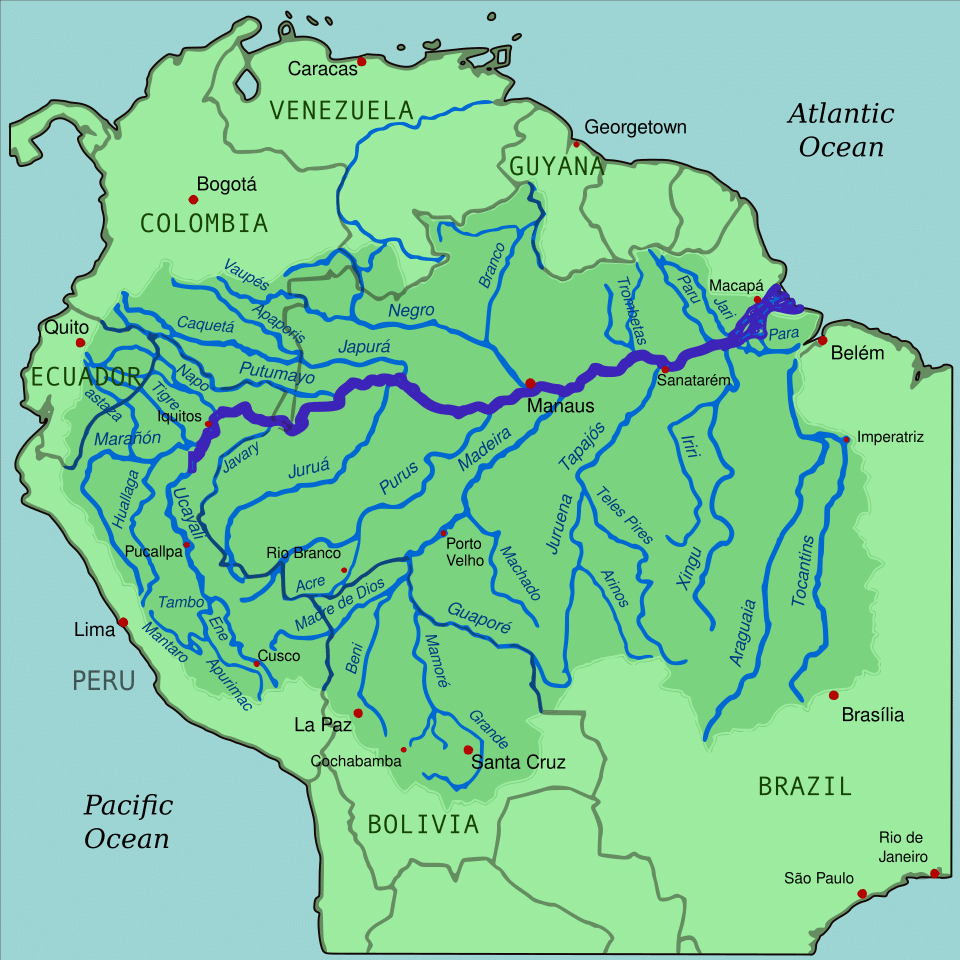
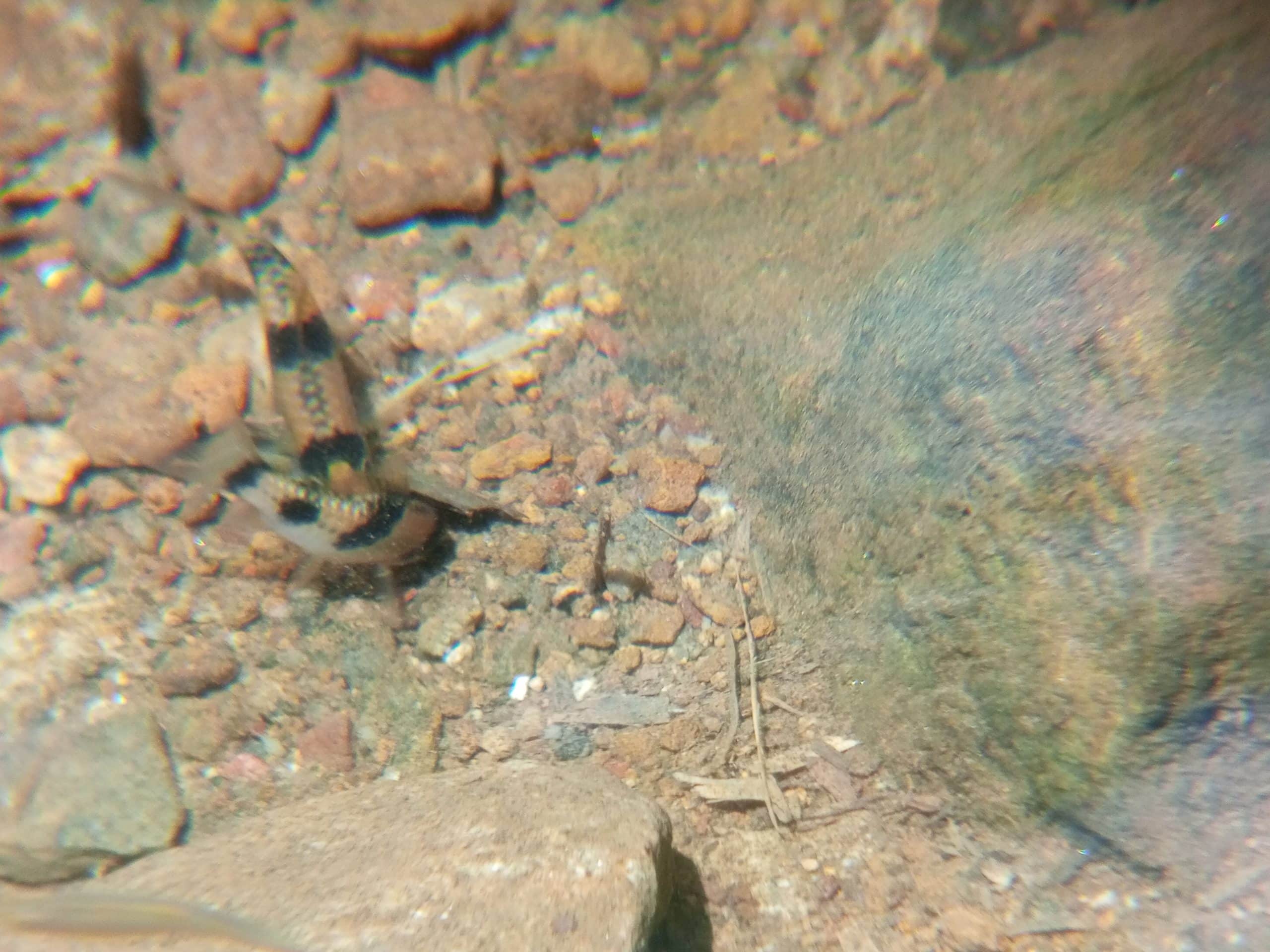
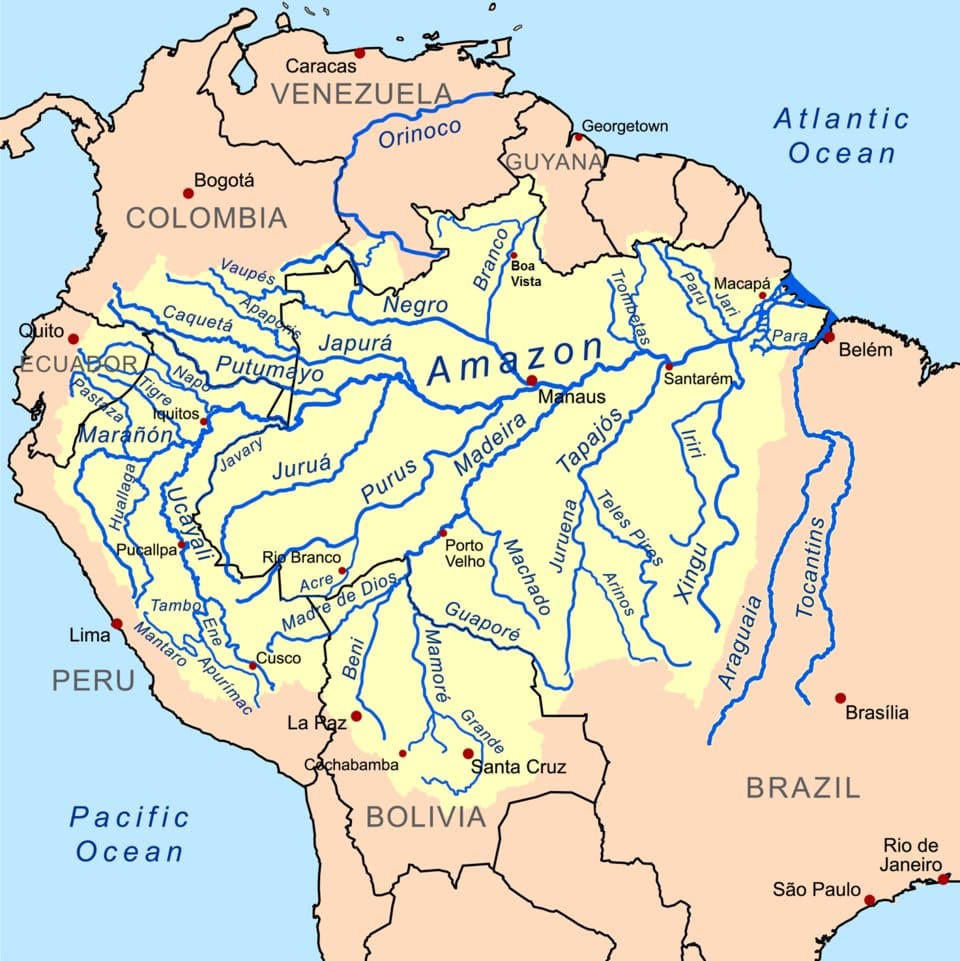
The bucktooth tetra has a wide distribution across South America. It’s found throughout the Amazon River basin, the Tocantins River basin, and in rivers throughout Guyana. That’s a massive range, and it tells you something about how adaptable this species is.
In the wild, they inhabit a variety of freshwater habitats, from main river channels to tributaries and floodplain areas. They will prefer areas with moderate current, and they’re a pelagic species, meaning they spend most of their time swimming in open water rather than hiding near the substrate or in vegetation. This is important to keep in mind when setting up their tank.
Wild water conditions range from soft and acidic blackwater streams to more neutral clearwater habitats. The fact that they thrive across such a broad range of conditions in nature makes them relatively flexible in terms of water chemistry in the aquarium, as long as extremes are avoided.
Appearance & Identification
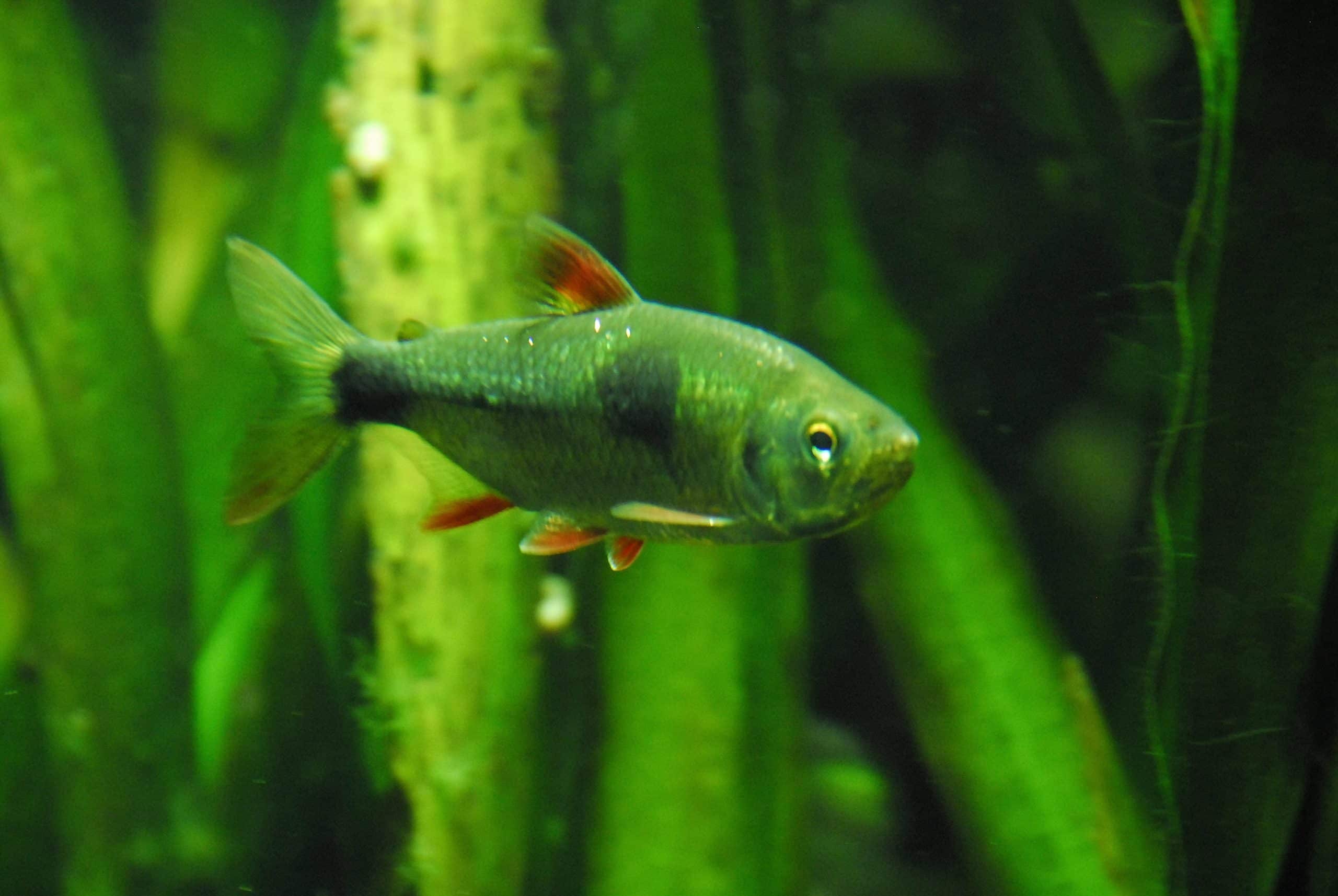
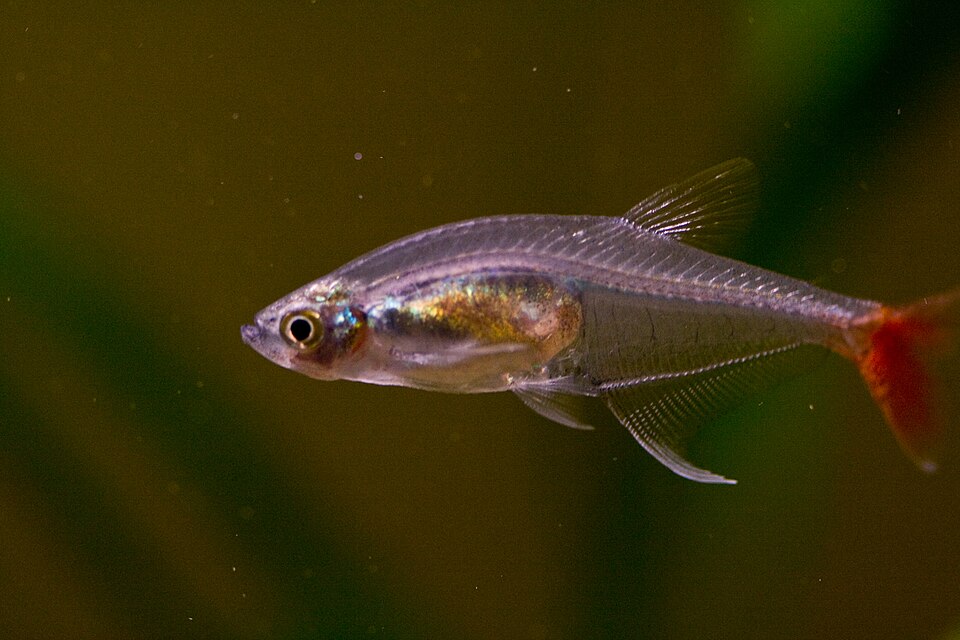
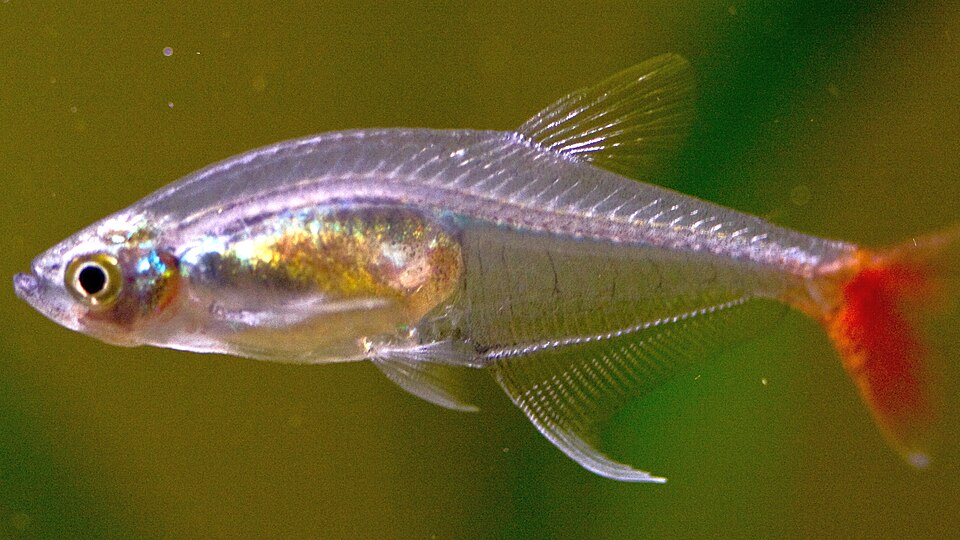
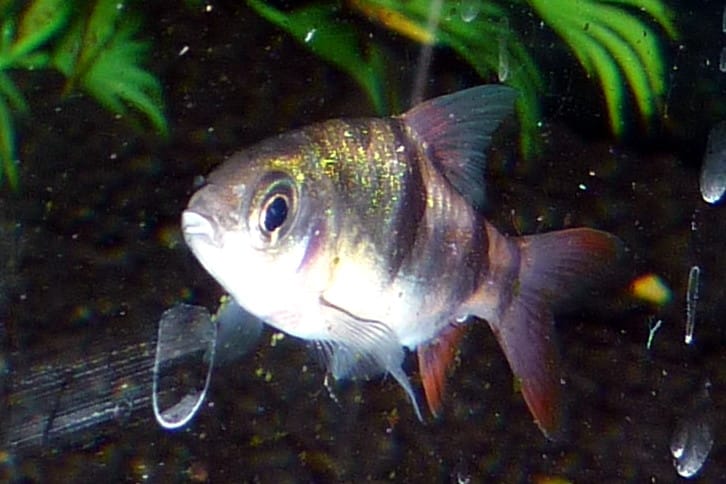
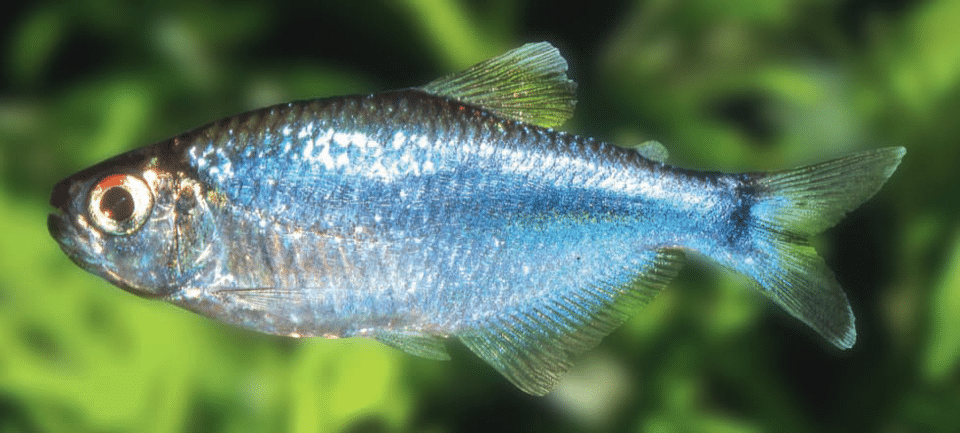
The bucktooth tetra is a genuinely attractive fish. The body is laterally compressed with a classic tetra shape, and the scales have a bright metallic silver sheen with golden and greenish-yellow reflections. Under aquarium lighting, a school of these fish flashes like a collection of tiny mirrors.
The most identifiable feature is the two prominent dark spots. One sits behind the gill plate on the mid-body, and the second is at the base of the caudal fin. The fins often have a reddish or orange-red tinge, particularly the caudal and anal fins. The dorsal fin can show some red coloration as well.
Then there are the teeth. The genus name literally means “outside teeth,” and you can see why. They have small but visible outward-pointing teeth that are specially designed for prying scales off other fish. It’s a remarkable adaptation that makes them incredibly effective predators.
Sexual dimorphism is minimal. Females are slightly larger and rounder when full of eggs, but there’s no reliable color difference between males and females. Most aquarists can’t tell them apart, and honestly, it doesn’t matter much unless you’re trying to breed them.
Average Size & Lifespan
Bucktooth tetras reach about 2.5 to 3 inches (6 to 7.5 cm) in the aquarium. FishBase records the maximum standard length at 7.5 cm. Some sources mention they will reach larger sizes, but in practice, most captive specimens top out around 3 inches.
With proper care, you can expect a lifespan of 5 to 8 years. in my experience, hobbyists have reported specimens living closer to 10 years, but that’s on the high end. Good water quality, a varied diet, and keeping them in a sufficiently large group all contribute to longevity.
Care Guide
Tank Size
The minimum tank size for bucktooth tetras is 55 gallons for a group of about 12. But honestly, bigger is better with this species. A 75 or 125-gallon tank gives them the swimming room they need and allows you to keep a larger group, which actually reduces aggression within the school.
The tank shape matters more than volume. These are extremely active open-water swimmers, so a long, wide tank is far more important than a tall one. A standard 55-gallon (48 inches long) is the bare minimum, but a 6-foot tank is ideal for a group of 25 or more.
Water Parameters
| Parameter | Ideal Range |
|---|---|
| Temperature | 73-82°F (23-28°C) |
| pH | 5.5-7.5 |
| General Hardness | 0-20 dGH |
| KH | 2-12 dKH |
| Ammonia / Nitrite | 0 ppm |
| Nitrate | Below 40 ppm |
Bucktooth tetras are fairly adaptable when it comes to water chemistry. They tolerate a broad pH range and can handle both soft and moderately hard water. The key is stability. Avoid sudden swings in any parameter, and maintain a consistent water change schedule.
Weekly water changes of 25 to 30 percent are recommended. These fish are heavy eaters and produce a fair amount of waste, so strong filtration is important. A canister filter rated for your tank size (or one size up) works well.
Tank Setup
Sand substrate works best. Add driftwood branches and roots to create visual barriers and break up sight lines, which helps reduce aggression. Plants are beneficial but should be arranged around the perimeter of the tank to leave plenty of open swimming space in the center.
Hardy plant species like Java fern, Anubias, and Vallisneria work well since the fish won’t bother them. Floating plants helps diffuse the lighting, which brings out better coloration. Moderate lighting is fine.
A tight-fitting lid is essential. Bucktooth tetras can and will jump, especially when startled or during feeding frenzies.
Tank Mates
Let me be blunt here: a species-only tank is the safest approach. The bucktooth tetra is a lepidophagous predator, meaning it eats the scales of other fish. It’s not a matter of whether they’ll attack tankmates. It’s a matter of when. They will strip scales and fins from any silver-colored or shiny fish with ruthless efficiency.
Why Most Tankmates Don’t Work
Bucktooth tetras hunt cooperatively in packs. A group of them will swarm a target fish, with individual members darting in to bite off scales while the prey is distracted. Even larger fish aren’t safe. The result is a stressed, scale-less fish that dies from secondary infections.
Possible Exceptions
If you absolutely must keep tankmates, the only fish that have shown some success are:
- Armored catfish (Loricariids) such as plecos, whose bony plates provide protection against scale-eating
- Larger loaches that are scaleless and less attractive as targets
- Larger characins like Anostomus species that are fast enough to avoid sustained attacks
Even with these options, there are no guarantees. The safest setup is always a species-only tank with a large group. Keep them in a school of 12 at the absolute minimum, but 25 to 50 is the real target. In smaller groups, dominant individuals will pick off the weakest members one by one until only a handful remain.
Food & Diet
In the wild, the bucktooth tetra is famously lepidophagous, which means it feeds on the scales of other fish. This is a specialized feeding strategy shared by only a handful of fish species worldwide. Research has shown they even display jaw laterality, meaning individual fish will attack from either the left or right side, similar to handedness in humans.
In the aquarium, they’re actually not difficult to feed at all. They eagerly accept a wide variety of meaty foods:
- Frozen foods: Bloodworms, brine shrimp, mysis shrimp, chopped prawns
- Live foods: Earthworms, blackworms, feeder insects
- Prepared foods: High-quality flakes, pellets, and freeze-dried foods
- Occasional treats: Chopped fish fillet, mussel, lancefish
Feed them two to three times daily in smaller portions rather than one large feeding. This helps reduce competition and aggression during feeding time. And trust me, feeding time with bucktooth tetras is an event. The entire school goes into a frenzy the moment food hits the water. It’s one of the most entertaining things about keeping them.
Breeding & Reproduction
Breeding bucktooth tetras in captivity is possible but challenging. They’re egg scatterers, and the main difficulty is that the parents (and every other fish in the tank) will eagerly eat both eggs and fry.
Breeding Setup
- Breeding tank: 20 to 30 gallons, separate from the main tank
- Water: Soft, slightly acidic (pH 6.0 to 6.5, gH 1 to 5)
- Temperature: Around 80°F (27°C)
- Decor: Fine-leaved plants or spawning mops to catch eggs
- Filtration: Gentle sponge filter only
Condition a selected pair or small group with high-protein foods for one to two weeks before introducing them to the breeding tank. A large water change with slightly cooler water helps trigger spawning. Eggs typically hatch in 2 to 3 days, and fry become free-swimming a few days after that.
Remove the adults immediately after spawning to prevent egg predation. Fry are extremely small and should be fed infusoria initially, then transitioned to baby brine shrimp. Be warned that cannibalism among the fry is common, so even from the start, you’ll see attrition.
Common Health Issues
Bucktooth tetras are actually fairly hardy once established in an aquarium. They’re not particularly prone to any species-specific diseases, but they can develop the standard freshwater ailments:
- Ich (white spot disease): The most common issue, especially after shipping or introduction to a new tank. Raise temperature to 86°F and treat with ich medication.
- Fin rot: Usually caused by poor water quality or injuries from aggression within the group.
- Bacterial infections: Can result from wounds sustained during intra-group fighting.
- Internal parasites: Particularly in wild-caught specimens. Quarantine all new arrivals.
The biggest health risk is actually aggression-related injuries. In undersized groups, dominant fish will attack weaker members, causing wounds that become infected. This is why group size matters so much. A group of 25 or more distributes aggression effectively, and injuries drop dramatically.
Common Mistakes to Avoid
- Keeping them in a community tank: This is the number one mistake. They will destroy any standard community fish.
- Too small of a group: A group of 6 is a recipe for disaster. They need at least 12, ideally 25 or more.
- Tank too small: These are hyperactive swimmers. A 20-gallon tank won’t cut it.
- No lid: They jump. A tight-fitting cover is non-negotiable.
- Assuming they’re peaceful because they’re “tetras”: The tetra label is misleading here. These fish are predators.
- Underfeeding: Hungry bucktooth tetras become even more aggressive toward each other. Keep them well-fed.
Where to Buy
Bucktooth tetras are available from specialty online retailers. Most local fish stores don’t carry them regularly because of their aggressive nature, so online ordering is typically the way to go.
When ordering, try to buy a group of at least 12 at once. Adding small numbers to an existing group can result in the newcomers being targeted and killed. It’s better to start with a full school from the beginning.
Frequently Asked Questions
Are bucktooth tetras actually aggressive?
Yes, extremely. They’re one of the most aggressive tetra species available in the hobby. They eat the scales off other fish and will attack tankmates relentlessly. They should only be kept in species-only setups.
How many bucktooth tetras should I keep together?
At least 12, but 25 to 50 is much better. Larger groups distribute aggression more evenly and significantly reduce the risk of weaker individuals being bullied to death.
Can bucktooth tetras live with other fish?
Generally, no. The only fish that have shown some compatibility are armored catfish like plecos and certain scaleless species. Any silver or shiny fish will be targeted for scale eating.
Why do bucktooth tetras eat scales?
It’s a specialized feeding adaptation called lepidophagy. Their outward-facing teeth are specifically designed to scrape scales off other fish. Fish scales are high in protein and readily available in the wild, making this a viable food source. Research has even shown that individual fish develop a preferred attacking side, similar to being right or left-handed.
What size tank do bucktooth tetras need?
A minimum of 55 gallons for a small group of 12. For larger groups (25+), aim for 75 to 125 gallons or more. These are very active swimmers that need plenty of horizontal swimming space.
What It Is Actually Like Living With Bucktooth Tetra
A school of 12+ bucktooth tetras is one of the most frenetic, high-energy displays in freshwater fishkeeping. They never stop moving.
Feeding time is explosive. The entire school attacks food with coordinated intensity that is genuinely impressive.
The within-school scale eating looks alarming but is sustainable in large groups. Scales regrow between attacks and the damage distributes across many individuals.
They require heavy feeding to reduce scale-eating intensity. Underfed bucktooth tetras attack each other more aggressively.
How the Bucktooth Tetra Compares to Similar Species
Bucktooth Tetra vs. Serpae Tetra
Serpae tetras are often called aggressive, and they are by community tetra standards. But comparing a serpae to a bucktooth is like comparing a housecat to a wolf. Serpae tetras nip fins. Bucktooth tetras rip scales off living fish and eat them. Serpae aggression can be managed with group size and tank mate selection. Bucktooth aggression cannot be managed because it is not aggression. It is feeding. Serpaes belong in communities with robust tank mates. Bucktooth tetras belong in species-only tanks. There is no overlap between these two fish despite both being called “aggressive tetras.” Check out our Serpae Tetra care guide for more details.
Bucktooth Tetra vs. Red-Bellied Piranha
This comparison sounds extreme, but it is relevant. Both are predatory characins that require species-appropriate setups. Red-bellied piranhas are chunk feeders that attack prey directly. Bucktooth tetras are scale specialists that parasitize living fish without killing them outright. Piranhas need much larger tanks but are actually easier to manage since their diet is straightforward. Bucktooth tetras need species-only tanks where the scale-eating distributes across the group. Both are fascinating predators for advanced keepers. Neither belongs in a standard community. The piranha is the bigger commitment. The bucktooth tetra is the weirder one. Check out our Red-Bellied Piranha care guide for more details.
Closing Thoughts
The bucktooth tetra is one of those fish that challenges everything you think you know about tetras. It’s not peaceful. It’s not a community fish. And it requires a commitment to keeping a large group in a big tank. But if you’re an experienced hobbyist looking for something genuinely different, a large school of Exodon paradoxus is hard to beat.
There’s something captivating about watching a pack of 30 or 40 of these fish swarm around the tank. They’re smart, coordinated, and constantly active. It’s the closest thing to keeping piranhas without actually keeping piranhas. Just make sure you understand the commitment before you buy them, because once you have a school of bucktooth tetras, your options for adding other fish are basically zero.
Recommended Video
Check out our Tetra Tier List video where we rank popular tetra species for the home aquarium:
References
- Froese, R. and D. Pauly, Eds. FishBase. Exodon paradoxus. Accessed 2025.
- SeriouslyFish. Exodon paradoxus species profile. Accessed 2025.
- Melo, B.F, et al. (2024). Phylogenomics of Characidae. Zoological Journal of the Linnean Society, 202(1), 1-37.
- Hata, H, Yasugi, M, & Hori, M. (2011). Jaw Laterality and Related Handedness in the Hunting Behavior of a Scale-Eating Characin, Exodon paradoxus. PLoS ONE, 6(12), e29349.
Explore More Tetras
The bucktooth tetra is just one of dozens of tetra species we cover in our complete species directory. Whether you’re looking for peaceful community tetras or something more unusual like the bucktooth, our guide has you covered.